EP3813614B1 - Grinder, coffee machine and method for grinding coffee beans - Google Patents
Grinder, coffee machine and method for grinding coffee beans Download PDFInfo
- Publication number
- EP3813614B1 EP3813614B1 EP19749192.1A EP19749192A EP3813614B1 EP 3813614 B1 EP3813614 B1 EP 3813614B1 EP 19749192 A EP19749192 A EP 19749192A EP 3813614 B1 EP3813614 B1 EP 3813614B1
- Authority
- EP
- European Patent Office
- Prior art keywords
- grinding
- grinder
- force
- grinding tool
- coffee
- Prior art date
- Legal status (The legal status is an assumption and is not a legal conclusion. Google has not performed a legal analysis and makes no representation as to the accuracy of the status listed.)
- Active
Links
Images


Classifications
-
- A—HUMAN NECESSITIES
- A47—FURNITURE; DOMESTIC ARTICLES OR APPLIANCES; COFFEE MILLS; SPICE MILLS; SUCTION CLEANERS IN GENERAL
- A47J—KITCHEN EQUIPMENT; COFFEE MILLS; SPICE MILLS; APPARATUS FOR MAKING BEVERAGES
- A47J42/00—Coffee mills; Spice mills
- A47J42/12—Coffee mills; Spice mills having grinding discs
- A47J42/18—Adjusting mechanisms
-
- A—HUMAN NECESSITIES
- A23—FOODS OR FOODSTUFFS; TREATMENT THEREOF, NOT COVERED BY OTHER CLASSES
- A23F—COFFEE; TEA; THEIR SUBSTITUTES; MANUFACTURE, PREPARATION, OR INFUSION THEREOF
- A23F5/00—Coffee; Coffee substitutes; Preparations thereof
- A23F5/08—Methods of grinding coffee
-
- A—HUMAN NECESSITIES
- A47—FURNITURE; DOMESTIC ARTICLES OR APPLIANCES; COFFEE MILLS; SPICE MILLS; SUCTION CLEANERS IN GENERAL
- A47J—KITCHEN EQUIPMENT; COFFEE MILLS; SPICE MILLS; APPARATUS FOR MAKING BEVERAGES
- A47J31/00—Apparatus for making beverages
- A47J31/42—Beverage-making apparatus with incorporated grinding or roasting means for coffee
-
- A—HUMAN NECESSITIES
- A47—FURNITURE; DOMESTIC ARTICLES OR APPLIANCES; COFFEE MILLS; SPICE MILLS; SUCTION CLEANERS IN GENERAL
- A47J—KITCHEN EQUIPMENT; COFFEE MILLS; SPICE MILLS; APPARATUS FOR MAKING BEVERAGES
- A47J31/00—Apparatus for making beverages
- A47J31/44—Parts or details or accessories of beverage-making apparatus
- A47J31/52—Alarm-clock-controlled mechanisms for coffee- or tea-making apparatus ; Timers for coffee- or tea-making apparatus; Electronic control devices for coffee- or tea-making apparatus
- A47J31/525—Alarm-clock-controlled mechanisms for coffee- or tea-making apparatus ; Timers for coffee- or tea-making apparatus; Electronic control devices for coffee- or tea-making apparatus the electronic control being based on monitoring of specific process parameters
- A47J31/5251—Alarm-clock-controlled mechanisms for coffee- or tea-making apparatus ; Timers for coffee- or tea-making apparatus; Electronic control devices for coffee- or tea-making apparatus the electronic control being based on monitoring of specific process parameters of pressure
-
- A—HUMAN NECESSITIES
- A47—FURNITURE; DOMESTIC ARTICLES OR APPLIANCES; COFFEE MILLS; SPICE MILLS; SUCTION CLEANERS IN GENERAL
- A47J—KITCHEN EQUIPMENT; COFFEE MILLS; SPICE MILLS; APPARATUS FOR MAKING BEVERAGES
- A47J42/00—Coffee mills; Spice mills
- A47J42/02—Coffee mills; Spice mills having grinding cones
- A47J42/08—Adjusting mechanisms
-
- A—HUMAN NECESSITIES
- A47—FURNITURE; DOMESTIC ARTICLES OR APPLIANCES; COFFEE MILLS; SPICE MILLS; SUCTION CLEANERS IN GENERAL
- A47J—KITCHEN EQUIPMENT; COFFEE MILLS; SPICE MILLS; APPARATUS FOR MAKING BEVERAGES
- A47J42/00—Coffee mills; Spice mills
- A47J42/12—Coffee mills; Spice mills having grinding discs
- A47J42/16—Coffee mills; Spice mills having grinding discs mechanically driven
-
- A—HUMAN NECESSITIES
- A47—FURNITURE; DOMESTIC ARTICLES OR APPLIANCES; COFFEE MILLS; SPICE MILLS; SUCTION CLEANERS IN GENERAL
- A47J—KITCHEN EQUIPMENT; COFFEE MILLS; SPICE MILLS; APPARATUS FOR MAKING BEVERAGES
- A47J42/00—Coffee mills; Spice mills
- A47J42/12—Coffee mills; Spice mills having grinding discs
- A47J42/20—Grinding discs
-
- A—HUMAN NECESSITIES
- A47—FURNITURE; DOMESTIC ARTICLES OR APPLIANCES; COFFEE MILLS; SPICE MILLS; SUCTION CLEANERS IN GENERAL
- A47J—KITCHEN EQUIPMENT; COFFEE MILLS; SPICE MILLS; APPARATUS FOR MAKING BEVERAGES
- A47J42/00—Coffee mills; Spice mills
- A47J42/38—Parts or details
- A47J42/44—Automatic starting or stopping devices; Warning devices
-
- A—HUMAN NECESSITIES
- A47—FURNITURE; DOMESTIC ARTICLES OR APPLIANCES; COFFEE MILLS; SPICE MILLS; SUCTION CLEANERS IN GENERAL
- A47J—KITCHEN EQUIPMENT; COFFEE MILLS; SPICE MILLS; APPARATUS FOR MAKING BEVERAGES
- A47J42/00—Coffee mills; Spice mills
- A47J42/38—Parts or details
- A47J42/46—Driving mechanisms; Coupling to drives
-
- B—PERFORMING OPERATIONS; TRANSPORTING
- B02—CRUSHING, PULVERISING, OR DISINTEGRATING; PREPARATORY TREATMENT OF GRAIN FOR MILLING
- B02C—CRUSHING, PULVERISING, OR DISINTEGRATING IN GENERAL; MILLING GRAIN
- B02C25/00—Control arrangements specially adapted for crushing or disintegrating
-
- A—HUMAN NECESSITIES
- A47—FURNITURE; DOMESTIC ARTICLES OR APPLIANCES; COFFEE MILLS; SPICE MILLS; SUCTION CLEANERS IN GENERAL
- A47J—KITCHEN EQUIPMENT; COFFEE MILLS; SPICE MILLS; APPARATUS FOR MAKING BEVERAGES
- A47J2202/00—Devices having temperature indicating means
Definitions
- the invention relates to a grinder for grinding coffee beans according to the preamble of claim 1 and a method for grinding coffee beans and a coffee machine, in particular a fully automatic coffee machine.
- the right fineness of the coffee powder is a prerequisite for successful coffee preparation. It specifies the speed at which the water can flow through the coffee powder and the period of time that aromas and flavors can be released from the coffee powder. This time is called the extraction time and represents a quality criterion for the appropriate extraction of the flavors and aromas of the respective coffee beverage.
- the extraction intensity of a coffee drink is significantly influenced by the degree of grinding of the coffee grounds.
- the degree of grinding describes the fineness with which the beans are ground.
- a fineness distribution occurs, i.e. not all coffee particles have the same size but are subject to a grain size distribution that is typical for coffee.
- the median X50 [ ⁇ m] of the fineness distribution is a proven parameter for assessing the fineness of the ground coffee. It designates the value of the particle size that lies in the middle of the quantity distribution (e.g. an idealized sphere diameter in measuring devices with the laser diffraction principle). This means that half of all particles are smaller and the other half are larger than the median.
- the finer the grind the greater the total surface area of the particles and therefore also the contact time of the water with the coffee powder.
- a balanced relationship between aroma and strength is achieved when around 18 to 22% of the aroma substances are released from the coffee.
- the optimal contact time for espresso preparation is in the range of 25-30s and for filter coffee several minutes. Under-extraction leads to a coffee that is too acidic and over-extraction to a too-bitter coffee taste.
- the appropriate degree of grinding of an espresso powder is a median of a maximum of 350 ⁇ m, that of a cafe crème at 550 ⁇ m and that of a filter grind at 700 ⁇ m.
- the degree of grinding of the coffee powder can usually be adjusted in coffee machines with grinders. High-quality machines even allow the grinder to be continuously adjusted and compensate for undesirable boundary conditions (e.g. thermal expansion, grinding disc wear, etc.) by readjusting the grinder components. Some systems use the extraction time of the coffee beverage as an indirect feature to check the appropriate grind setting.
- the grinder for a coffee machine which has a first grinding disc which can be driven about an axis of rotation via a drive means and has a second grinding disc.
- the second grinding disk is fastened in a screw-in part which can be screwed into a housing and can be rotated with respect to the housing by adjustment means.
- the adjustment means are designed coaxially to the screw-in drive wheel, which interacts with an adjusting wheel that can be rotated via adjusting means.
- the grinder also has a feed opening for feeding in the coffee beans to be ground and a removal opening for removing the coffee ground between the two grinding discs.
- the grinder has a central adjustment option for adjusting the grinding gap, which works steplessly.
- a grinding apparatus comprising a grinding chamber through which objects pass and are ground, the grinding chamber having a uniform height; a first milling head having a first milling surface; a second milling head having a second milling surface; and biasing means biasing the grinding surfaces together so that the grinding surfaces are parallel in use to define the grinding chamber.
- a grinding system includes a grinding device for grinding objects; a base on which the grinding device is placed; a container for receiving the ground objects; and a heating means for heating the container.
- the invention therefore has the task of further developing a generic grinder in a functionally advantageous manner.
- the invention solves this problem by a grinder with the features of claim 1, the coffee machine of claim 15 and the method with the features of claims 16 and 20.
- a grinder for grinding coffee beans is created, the grinder having a first grinding tool and a second grinding tool that form a grinding gap, the second grinding tool being relative to the first grinding tool when the grinder is in operation (i.e. during the grinding of coffee beans).
- the grinding mechanism having at least one force-generating device for applying a force F, which can preferably also be adjusted during operation, to the first grinding tool or the second grinding tool and which is transmitted to the coffee beans, with the force F being directed in such a way that it pushes the respective grinding tool, which is acted upon by the force F, in the direction of the other grinding tool.
- the force can be measured during operation, but also when the grinding tools are at a standstill or not during operation.
- the grinder has at least one force measuring device with at least one force sensor, with the at least one force sensor being directly or indirectly connected to the grinding tool.
- a force sensor can be an inexpensive, high-quality component available on the market. Different versions are suitable for this, such as hydraulic pressure sensors, load cells and the like.
- the grinder according to the invention is used for or is designed for grinding coffee beans. It can be used as a stand-alone device or integrated into a coffee machine, e.g. a fully automatic coffee machine.
- the grinder includes a first grinding tool and a second grinding tool.
- the grinding tools form a grinding gap or delimit such a grinding gap from opposite sides. This can be designed flat or increasing towards the middle. It preferably defines a plane, preferably a plane of symmetry.
- the second milling tool is rotatable relative to the first milling tool, in particular rotatably driven by a drive unit such as a motor.
- the grinder also has at least one force-generating device for applying a force F to the first grinding tool or second grinding tool, which force is transmitted to the coffee beans to be ground.
- a force F to the first grinding tool or second grinding tool, which force is transmitted to the coffee beans to be ground.
- the force F is directed in such a way that it presses the respective grinding tool, which is acted upon by the force F, in particular axially in the direction of the respective other grinding tool.
- the force-generating device thus presses the two grinding tools together and not away from one another, as is known from the prior art.
- a product-specific degree of grinding is set by the application of force with an adjustable process force.
- a product-specific grinding degree setting or changeover takes place automatically.
- This grinding degree setting can be carried out extremely quickly with the invention, for example to switch from a grinding degree setting for an espresso to a grinding degree setting for a cafe change cream. Since the setting or changeover is very quick, it may even be possible to do without a second grinder in a fully automatic coffee machine.
- the invention according to claim 20 creates an advantageous method for preparing a coffee with a coffee machine, in particular with a fully automatic coffee machine, and with a grinder according to one of the preceding claims related thereto, in which coffee beans are ground with the grinder and in which in a brewing unit the coffee beans and water a coffee of a certain type is prepared, characterized in that depending on the type of coffee before grinding when changing the type of coffee (depending on the amount of water and amount of ground coffee and possibly depending on additives such as milk) - e.g. when changing from an espresso to a cafe crème, the degree of grinding is automatically adjusted or changed.
- one of the two grinding tools can stand still and the second of the two grinding tools can be operated in a rotatable manner by a drive unit, e.g. a motor.
- a drive unit e.g. a motor.
- both grinding tools can also rotate, in particular in opposite directions to one another.
- the force-generating device can act both on the first and on the second grinding tool, so that the force is distributed more evenly. However, it is structurally simpler if the force-generating device only acts on one grinding tool, in particular the stationary one of the two grinding tools.
- a force-generating device can act on the first grinding tool and on the second grinding tool.
- the force-generating device has at least one spring and a device for adjusting a prestressing force of the spring, in particular in the form of a servomotor.
- This variant is structurally particularly easy to implement and it is easy to control and/or regulate.
- grinding tools hereinafter also synonymously referred to as "cutting tools"
- cutting tools driven or stationary grinding tool - has a degree of freedom in the direction of the process force and is actively subjected to a force in this direction.
- the force can be adjusted automatically (e.g. motorized) or manually (e.g. setting wheel).
- motorized adjustment e.g. a control loop is conceivable, with the degree of grinding being changed if the last extraction times deviate from the target outflow time.
- the constructive implementation of a force control can be realized in different ways.
- One possibility is to compress a mechanical spring by a certain distance x with a known force-displacement characteristic.
- the direction of force generation is based on a fluid principle of action. Since the distance between the grinding tools or cutting tools in the disc grinder only has to change slightly by up to 0.2 mm depending on the process force during grinding, hydraulic solutions with liquids with higher compression moduli are also possible to control the force. Even then, there would be a dampening effect on grinding in the system.
- a rubber membrane can be used to apply force, which is filled with water via an adjustable pressure reducer.
- a hydraulic water system is already present in coffee machines and could be used to regulate the degree of grinding.
- the force-generating device can also advantageously be based on an electromagnetic principle of action.
- the movable cutting tool carrier is pressed against the fixed one due to a variable magnetic force. Since the magnetic force changes as the distance between the armature and the yoke increases, a balance of forces can also occur in an electromagnetic system between the cutting tools during the grinding process.
- the grinder can also be designed in different ways, for example as a disk or cone grinder.
- the force-generating device can have at least one compression spring, with the grinding gap extending over a plane E and with the compression spring exerting an axial force perpendicular to plane E on the first and/or second grinding tool.
- springs in particular compression springs, can also be provided. These can be arranged symmetrically around the axis of rotation, which is formed by the rotating grinding tool, in order to achieve an optimally distributed application of force.
- a coil spring is preferred as the compression spring for the present application.
- springs or spring assemblies of other types can also be used.
- the force-generating device can have a device for setting a pretensioning force of the spring, in particular the compression spring, in particular in the form of a servomotor.
- This servomotor is preferably an actuator which is controlled and/or regulated by a control and/or evaluation unit.
- the type of coffee beans can be specified by manual adjustment or can be determined based on the power of the motor for driving the grinding tool or grinding tools.
- the corresponding force-displacement characteristic is also specified as a dataset, so that the spring force can be adjusted in a targeted manner by an actuator depending on the determined force to be applied.
- the temperature of the grinder or the degree of wear can be determined and the force to be applied can be adjusted accordingly through a setpoint/actual value comparison.
- the different sizes can also be combined within the framework of a weighting, e.g.
- the grinder can optionally have a temperature sensor for determining the thermal expansion of the grinder and for controlling the force-generating device in order to adapt the degree of grinding.
- the size of the process force can be adjusted depending on the type of coffee beans, the power of the grinder motor, the temperature of the grinder and/or the previous grinding cycles.
- the grinder in the embodiment according to the invention has at least one force measuring device with at least one force sensor, the at least one force sensor being directly or indirectly connected to the grinding tool.
- a force sensor can be an inexpensive, high-quality component available on the market. Different versions are suitable for this, such as hydraulic pressure sensors, load cells and the like.
- a desired degree of fineness of the material to be ground can also be taken into account.
- Corresponding data sets according to the degree of fineness or degree of grinding can be stored on the control and/or evaluation unit.
- the grinder has a stop, in particular an adjustable stop, for setting a minimum degree of grinding.
- the axially movable tool part or the corresponding grinding tool is pressed against a stop.
- This end stop can be adjusted before the grinder is put into operation and at the same time defines the minimum degree of grinding to be produced.
- force is applied, ideally there should only be a minimal gap between the cutting tools. If a greater contact pressure is specified later than the process force during the grinding process, a material to be ground with the fineness of this grinding disc gap is produced.
- the touch point (beginning of audible grinding noises) of grinding disc grinders is an indicator of the zero point of the grinder.
- this is heavily dependent on the axial run-out of the grinding discs and the individual hearing sensitivity of the mill fitter.
- a suitable objective setting of the zero point can be done, for example, via an optional device for detecting a specific electrical continuity of the lower and upper pane (electrical conductivity measurement).
- an optional device for detecting a specific electrical continuity of the lower and upper pane electrical conductivity measurement.
- grinding beans with respect to this reference point would still cause differences in the fineness distribution, because the accuracy of the gap is directly related to the run-out tolerances of the discs.
- the use of this zero point definition for a force-controlled grinding degree setting has considerable advantages, because the subsequent fineness setting is only force-dependent and the stop only serves to prevent the touching point from being exceeded.
- such a construction leads to the avoidance of excessively finely adjusted grinders and overloading of the drive. Too fine a degree of grinding can lead to undesirably long extraction times, especially when making filter coffee.
- manufacturing tolerances in the structure of the grinder can also be compensated for in this way.
- an end stop can be realized via a threaded mount on one of the grinding disc carriers.
- the carrier can then be rotated up to the touching point of the cutting tools and then fixed in this position. In this way, a minimum degree of fineness can be adjusted in terms of design, so that the cutting tools cannot grind against one another.
- the method according to the invention can also be further optimized by appropriate options. It can be provided that a blockage of the cutting tools caused by dirt in the beans (pieces of wood, stones) can be released by removing the application of force. This is a simple and effective solution to the cutting tool jamming problem.
- the grinder can be designed as a disk, roller or cone grinder.
- the setting of the magnitude of the process force is regulated by a control loop, the control loop having the control and/or evaluation unit and at least one force measuring device with at least one force sensor.
- Yet another embodiment is designed in such a way that the at least one force sensor is connected to the control and/or evaluation unit and forms a measuring device of a control loop which has the control and/or evaluation unit.
- the control and/or evaluation unit can have a computer whose programming can be extended by one or more control programs.
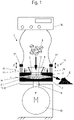
- the grinder 1 shows a schematic sectional front view of the inventive device, in the form of a grinder 1 for grinding coffee beans 5 .
- the grinder 1 has a first grinding tool 2 .
- the first grinding tool 2 is rotatably mounted in a housing, not shown here. In this respect, the first grinding tool 2 is stationary while the grinding mechanism 1 is in operation.
- the first grinding tool 2 is designed here as a grinding disk and accordingly has a cylindrical envelope geometry and a central opening 3 .
- the grinding tool 2 can also be designed differently, e.g. as a grinding cone.
- a filling funnel 4 can pass through the opening 3 .
- Coffee beans 5 to be ground are fed to the device 1 through the hopper 4 and the opening 3 .
- the grinder 1 can also be provided for grinding other luxury or foodstuffs, but it is preferably provided for grinding coffee beans 5 .
- the hopper 4 is advantageously designed in such a way that unwanted bridging of the coffee beans 5 in the hopper 4 is prevented.
- the first painting tool 2 has a conical depression 6 on its side facing away from the hopper 4 .
- the depression 6 has at least one cutting edge 7 .
- the grinder 1 has a second grinding tool 8 .
- the second grinding tool 8 is arranged coaxially to the first grinding tool 2 and below the first grinding tool 2 .
- the term “below” refers to the drawing level of the 1 .
- the second grinding tool 8 is rotatably mounted in a housing, not shown here. In this respect, the second grinding tool 8 rotates while the grinding mechanism 1 is in operation.
- the second grinding tool 8 also has a cylindrical envelope geometry.
- the second grinding tool 8 can also be designed differently, e.g. as a grinding cone.
- the second milling tool is rotatable relative to the first milling tool.
- the second grinding tool 8 is non-rotatably connected to a drive shaft 9 of a motor 10, so that the second grinding tool 8 is rotated during operation of the grinder 1, while the first grinding tool 2 is stationary.
- the first grinding tool can also be rotatable or rotated during operation, while the second grinding tool 8 is stationary. It is also possible for both grinding tools to be rotatable--for example in opposite directions of rotation and/or at different speeds, so that there is always a relative movement between the two grinding tools 2, 8.
- a shaftless direct drive is also possible, in which one of the grinding tools 2, 8 is the rotor of the motor 10, or an indirect drive, in which the motor 10 acts on one of the grinding tools 2, 8 via a gear.
- the second grinding tool 8 has a conical depression 11 on its side facing away from the motor 10 .
- the depression 11 has at least one cutting edge 12 .
- the conical indentation 6 of the first grinding tool 2 and the conical indentation 11 of the second grinding tool 8 thus form a type of double-conical grinding chamber 13 which opens out into a grinding gap 14 on its outer circumference.
- a collecting device (not shown here) can be connected to the grinding gap 14, which collects the coffee beans, preferably coffee powder, emerging from the grinding gap 14 and feeds them to an extraction process.
- the grinder 1 also has at least one power generation device 15 .
- the force generating device 15 acts here on the first grinding tool 2.
- a respective force F acts continuously - i.e. during operation while one or both grinding tools rotate - on coffee beans located between the first grinding tool 2 and the second grinding tool 8. This is advantageous, but not mandatory.
- the force-generating device 15 can also act on the second rotatable grinding tool 8 or on both grinding tools 2, 8.
- the force-generating device 15 here comprises two compression springs 16, which can be pretensioned by an appropriate device 17, for example by a servomotor, by a variable pretensioning path X, so that the respective force F acting on the first grinding disc 2 and thus - during operation - on the coffee beans acts, is changeable or adjustable in its amount.
- the force generating device 15 can also be used differently than in 1 be executed shown. What is important here is the effect of the force, with the magnitude of the force F preferably being variable or adjustable. In this case, the force generating device 15 can also be designed so that the amount of force F automatically and / or is infinitely regulated depending on the overriding operating parameters of a coffee machine.
- the force acting on the coffee beans through the grinder 1 can advantageously be set by the force generating device depending on the coffee beans 5 to be ground and the desired degree of grinding C.
- data sets regarding the degree of grinding C and the type of beans and the force to be generated by the force generating device are preferably stored in a data memory of a control and/or evaluation unit 18 for controlling a coffee machine and in particular the grinder 1 .
- the aforementioned control and/or evaluation unit 18 can be assigned to the grinder 1 or be part of a coffee machine, e.g. a fully automatic coffee machine.
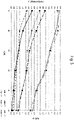
- a setting of the degree of grinding C can therefore be regulated bean-specifically (e.g. hard/strongly roasted beans vs. less strongly roasted cafe Creme beans). See also 3 .
- the type of bean can also be determined by the power difference in the grinding power, by means of which the motor 10 is operated.
- the force-controlled adjustment of the degree of grinding C enables permanent reproducibility of the degree of grinding C, even in the event of grinding tool wear.
- a characteristic curve for wear over time depending on the bean type can be stored.
- the number of grinds can be weighted differently depending on the type of beans used.
- the device 17 can be readjusted.
- the power-controlled setting of the degree of grinding C can advantageously compensate for thermal expansion effects, in particular of the grinding tools 2 and 8 .
- a temperature sensor (not shown) can detect the heat of the coffee beans as they leave the grinder 1 and adjust the force of the force-generating device, in particular the prestressing force of the compression springs, accordingly, taking into account the thermal expansion coefficient of the material of the grinding tools.
- the grinding mechanism 1 described here opens up the possibility of changing the degree of grinding C of coffee beans, including espresso beans, in a force-controlled manner via the force-generating device 15 .
- the inventive idea is based on a relationship between the force F acting on the grinding tools 2, 8 and the resulting particle size distribution of the coffee beans.
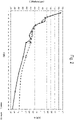
- connection between a fixed geometry of the grinding tools 2, 8 and the resulting connection between the magnitude of the force and the degree of grinding C can be determined empirically (see 2 ). The knowledge gained from this can be used to adjust the freeness C of the device 1 permanently and precisely. If the amounts of the forces are known, they can be calculated in certain Gradations can be specified in order to create a specific degree of grinding C (see 3 ).
- the upper grinding disk 2 was subjected to different forces F and then three grindings were carried out with the Bacio Nero bean.
- the coffee powder was then measured using a particle measuring device (measurement based on laser diffraction).
- the different grinding samples correspond to the three characteristic curves of fineness measurement 1-3, whereby the median of the fineness distribution (degree of grinding C) is used as a characteristic.
- the grinding capacity O of the device 1 was noted, i.e. the output grinding quantity of the device 1 per second.
- the device 1 was driven by the motor 10 with the power supply 230V, 50Hz for 5s each time.
- a bean-specific force F can be deduced with which a desired particle size distribution or a desired degree of grinding C is achieved.
- the force F can then be regulated in order to set the desired particle size distribution or the desired degree of grinding C for the current roast and bean.
- the system automatically adjusts it by a factor that depends on the degree of grinding. That is, the force F is adjusted in order to then obtain a desired particle size distribution or a desired degree of grinding C again.
- the grinding capacity O of the device 1 can be determined using methods that are already known: An indirect possibility is to deduce a weight of the coffee powder provided for the extraction process from a cake height of the coffee powder located in the extraction process with a predetermined contact force. A piston coffee machine offers this possibility due to the brewing unit that is already present. Since the activation time of the grinder is specified, the grinding capacity O can then be inferred.
- a direct possibility is to weigh out the coffee powder. This can be automated by grinding into a grounds drawer and checking it with a load cell.
- a further possible application of a power-controlled adjustment of the degree of grinding C is the combination of the device 1 with a regulation of the contact time between the brewing water and the coffee powder.
- a constant quantity of coffee powder with an identical degree of grinding C must be flowed through by a specified quantity of water over a certain period of time.
- Other framework conditions such as water temperature, contact pressure and brewing pressure must also remain as constant as possible during the brewing process so that the swelling behavior of the coffee comparable and thus a contact time between the brewing water and the coffee powder remains identical.
- 4 12 is a schematic sectional front view of a variant of a grinder 1 according to the invention for grinding coffee beans figure 1 .
- a rolling element 19 can be arranged between the grinding tool 2 and the compression springs 16 in each case. It can also be a roller bearing, for example a ball bearing or a needle bearing with a roller cage, with the compression spring resting on the roller cage. This can extend coaxially to the hopper 4 .
- the rolling element bearing enables the grinding tool 2 to rotate without the connection point of the respective compression spring also rotating.
- the force can also be applied to a rotating tool element and, for example, a force can also be applied to both tool elements.
- figure 5 is the front view of the grinder according to the invention figure 1 shown with a force sensor device 20 .
- the force sensor device 20 is arranged in cooperation with one of the grinding tools 2, 8. In this case, two or more force sensor devices 20 can be provided.
- the force sensor device 20 has at least one force sensor 21, 22.
- a first force sensor device 20 with a first force sensor 21 interacts with the stationary grinding tool 8
- a second force sensor device 20 with a second force sensor 22 interacting with the first grinding tool 2 .
- Each force sensor 21, 22 can be directly or indirectly connected to the associated grinding tool 2, 8.
- the force sensor 21, 22 can, for example, be a pressure sensor (e.g. a load cell, a hydraulic pressure sensor), which in each case detects the force during a grinding process by direct or indirect measurement.
- a pressure sensor e.g. a load cell, a hydraulic pressure sensor
- the force measuring device 20 is connected to the control and/or evaluation unit 18 and forms a measuring device of a control loop.
- the control and/or evaluation unit 18 has at least one setpoint/actual value comparator and a manipulated variable generator, which is coupled to an electric adjustment of the fineness of the grinder 1, which is not shown but is easy to imagine.
- the grinder 1 Since the axial force-fineness relationship of different beans of a grinder can be determined empirically, the grinder 1 is able to set the desired degree of grinding via the electrical fineness adjustment and to regulate this against disruptive factors (temperature, changing beans, changing the grinding discs) with this control circuit.
Landscapes
- Engineering & Computer Science (AREA)
- Food Science & Technology (AREA)
- Mechanical Engineering (AREA)
- Life Sciences & Earth Sciences (AREA)
- Chemical & Material Sciences (AREA)
- Polymers & Plastics (AREA)
- Apparatus For Making Beverages (AREA)
- Tea And Coffee (AREA)
Description
Die Erfindung betrifft ein Mahlwerk zum Mahlen von Kaffeebohnen nach dem Oberbegriff des Anspruchs 1 sowie ein Verfahren zum Mahlen von Kaffeebohnen und eine Kaffeemaschine, insbesondere einen Kaffeevollautomaten.The invention relates to a grinder for grinding coffee beans according to the preamble of
Die passende Feinheit des Kaffeepulvers ist Voraussetzung für eine gelungene Kaffeezubereitung. Sie gibt vor, mit welcher Geschwindigkeit das Wasser durch das Kaffeepulver hindurchfließen kann und in welchem Zeitraum Aromen und Geschmackstoffe aus dem Kaffeepulver herausgelöst werden können. Diese Zeit nennt man Extraktionszeit und sie stellt ein Qualitätskriterium für die passende Extraktion der Geschmacks- und Aromastoffe des jeweiligen Kaffeegetränks dar.The right fineness of the coffee powder is a prerequisite for successful coffee preparation. It specifies the speed at which the water can flow through the coffee powder and the period of time that aromas and flavors can be released from the coffee powder. This time is called the extraction time and represents a quality criterion for the appropriate extraction of the flavors and aromas of the respective coffee beverage.
Die Extraktionsintensität eines Kaffeegetränks wird neben Anpressdruck, Wassertemperatur, Wasserqualität und Bohneneigenschaften maßgebend durch den Mahlgrad des Kaffeemehls beeinflusst. Der Mahlgrad beschreibt, mit welcher Feinheit die Bohne gemahlen wird. Beim Mahlvorgang von Kaffeebohnen entsteht eine Feinheitsverteilung, d.h. nicht alle Kaffeepartikel haben die identische Größe sondern unterliegen einer für Kaffee typischen Korngrößenverteilung. Der Median X50 [µm] der Feinheitsverteilung ist dabei eine bewährte Messgröße, um die Feinheit des Kaffeemehls zu beurteilen. Er bezeichnet den Wert der Partikelgröße, der in der Mitte der Mengenverteilung liegt (bei Messgeräten mit Laserbeugungsprinzip z.B. ein idealisierter Kugeldurchmesser). D.h. eine Hälfte aller Partikel ist kleiner und die andere Hälfte größer als der Median.In addition to contact pressure, water temperature, water quality and bean properties, the extraction intensity of a coffee drink is significantly influenced by the degree of grinding of the coffee grounds. The degree of grinding describes the fineness with which the beans are ground. During the grinding process of coffee beans, a fineness distribution occurs, i.e. not all coffee particles have the same size but are subject to a grain size distribution that is typical for coffee. The median X50 [µm] of the fineness distribution is a proven parameter for assessing the fineness of the ground coffee. It designates the value of the particle size that lies in the middle of the quantity distribution (e.g. an idealized sphere diameter in measuring devices with the laser diffraction principle). This means that half of all particles are smaller and the other half are larger than the median.
Je feiner eine Mahlung, desto größer ist die Partikelgesamtoberfläche und demnach auch die Kontaktzeit des Wassers mit dem Kaffeepulver. Ein ausgewogenes Verhältnis zwischen Aroma und Stärke entsteht, wenn etwa 18 bis 22% der Aromastoffe aus dem Kaffee gelöst werden. Die optimale Kontaktzeit bei einer Espressozubereitung liegt im Bereich 25-30s und bei einem Filterkaffee bei mehreren Minuten. Unterextraktion führt zu einem zu saurem und Überextraktion zu einem zu bitteren Kaffeegeschmack. Der passende Mahlgrad eines Espressopulvers liegt bei einem Median von maximal 350µm, die eines Cafe Creme bei 550 µm und die einer Filtermahlung bei 700 µm.The finer the grind, the greater the total surface area of the particles and therefore also the contact time of the water with the coffee powder. A balanced relationship between aroma and strength is achieved when around 18 to 22% of the aroma substances are released from the coffee. The optimal contact time for espresso preparation is in the range of 25-30s and for filter coffee several minutes. Under-extraction leads to a coffee that is too acidic and over-extraction to a too-bitter coffee taste. The appropriate degree of grinding of an espresso powder is a median of a maximum of 350 µm, that of a cafe crème at 550 µm and that of a filter grind at 700 µm.
Der Mahlgrad des Kaffeepulvers kann in Kaffeemaschinen mit Mahlwerk in der Regel eingestellt werden. Hochwertige Maschinen lassen sogar eine stufenlose Verstellung des Mahlwerks zu und kompensieren ungewünschte Randbedingungen (z.B. Wärmeausdehnung, Mahlscheibenverschleiß etc.) über eine Nachjustierung der Mahlwerkskomponenten. Einige Systeme nutzen dabei die Extraktionszeit des Kaffeegetränks als indirektes Merkmal, um die passende Mahlgradeinstellung zu überprüfen.The degree of grinding of the coffee powder can usually be adjusted in coffee machines with grinders. High-quality machines even allow the grinder to be continuously adjusted and compensate for undesirable boundary conditions (e.g. thermal expansion, grinding disc wear, etc.) by readjusting the grinder components. Some systems use the extraction time of the coffee beverage as an indirect feature to check the appropriate grind setting.
Für die Zubereitung eines qualitativ hochwertigen Kaffeegetränks spielt die passende und produktbezogene Mahlgradeinstellung eine übergeordnete Rolle.For the preparation of a high-quality coffee drink, the appropriate and product-related grind setting plays a major role.
Aus dem Stand der Technik sind im Wesentlichen zwei bewährte Bauarten von Kaffeemahlwerken bekannt, die in Kaffeemaschinen eingesetzt werden. Zum einen Scheibenmahlwerke und zum anderen Kegelmahlwerke. Beide Mahlwerksarten haben gemein, dass sie aus zwei Mahlwerkzeugen bestehen, wobei eines dieser Werkzeuge fixiert ist und das andere angetrieben wird. Durch die Rotationsbewegung des einen Mahlwerkzeugs werden die Bohnen in einen Mahlspalt eingezogen und über die sich verjüngenden Mahlspaltweite immer feiner gemahlen. Der kleinste Abstand der beiden Mahlwerkzeuge ist maßgebend für den erzeugten Mahlgrad des Kaffeepulvers. Um den Mahlgrad zu verändern, kann das fixierte Werkzeug relativ zum rotierenden Werkzeug verstellt werden, sodass der Abstand variiert wird. Es handelt sich bei diesen Systemen um geometriebasierende Verfahren zur Mahlgradveränderung.Essentially two proven designs of coffee grinders that are used in coffee machines are known from the prior art. On the one hand disc grinders and on the other hand conical grinders. Both types of grinders have in common that they consist of two grinding tools, one of which is fixed and the other is driven. The rotating movement of one grinding tool pulls the beans into a grinding gap and grinds finer and finer over the narrowing grinding gap width. The smallest distance between the two grinding tools is decisive for the degree of grinding of the coffee powder. To change the degree of grinding, the fixed tool can be adjusted relative to the rotating tool so that the distance is varied. These systems are geometry-based processes for changing the freeness.
So ist es nach der technischen Lehre der
Das Dokument
Ein bestehendes Problem dieser Mahlwerkssysteme ist die Bestimmung eines Nullpunktes, bei dem ein minimaler Feinheitsgrad definiert werden kann. Nur wenn dies gelingt, kann direkt und präzise in Relation zu diesem Nullpunkt ein für das Produkt passender Mahlgrad eingestellt werden. Voraussetzung dafür sind besonders hohe Fertigungsgenauigkeiten beim Gesamtaufbau des Mahlwerks (z.B. hohe Planlaufgenauigkeit im Scheibenmahlwerk).An existing problem of these grinder systems is the determination of a zero point at which a minimum degree of fineness can be defined. Only if this succeeds can a degree of grinding suitable for the product be set directly and precisely in relation to this zero point. The prerequisite for this is particularly high manufacturing accuracy in the overall structure of the grinder (e.g. high axial run-out accuracy in the disc grinder).
Außerdem können in herkömmlichen Kaffeemahlwerken Störeinflüsse wie Wärmeausdehnung der Mahlwerkskomponenten, Mahlscheibenverschleiß, Bohnenwechsel etc. nur indirekt kompensiert werden (z.B. über Auswertung der Extraktionszeit). Insbesondere Wärmeeinflüsse führen zu veränderlichen Mahlgraden und unterschiedlichem Quellverhalten des Kaffeepulvers in der Brüheinheit und sind damit Hauptursache von schwankenden Auslaufzeiten.In addition, in conventional coffee grinders, disruptive influences such as thermal expansion of the grinder components, grinding disc wear, changing beans, etc. can only be compensated for indirectly (e.g. by evaluating the extraction time). In particular, the influence of heat leads to changing degrees of grinding and different swelling behavior of the coffee powder in the brewing unit and is therefore the main cause of fluctuating flow times.
Dieser Sachverhalt führt dazu, dass oftmals lange Einstellzyklen erforderlich sind, um ein Mahlwerk einer Kaffeemaschine ideal auf das gewünschte Produkt und Geschmacksprofil abzustimmen. Weiterhin kann der Mahlgrad in der Regel nur für ein bestimmtes Produkt eingestellt und auf dieses reguliert werden.This situation means that long adjustment cycles are often required in order to ideally match a grinder of a coffee machine to the desired product and flavor profile. Furthermore, the degree of grinding can usually only be set and regulated for a specific product.
Die Erfindung hat daher die Aufgabe, ein gattungsgemäßes Mahlwerk funktional vorteilhaft weiterzuentwickeln.The invention therefore has the task of further developing a generic grinder in a functionally advantageous manner.
Die Erfindung löst diese Aufgabe durch ein Mahlwerk mit den Merkmalen des Anspruchs 1, die Kaffeemaschine des Anspruchs 15 und die Verfahren mit den Merkmalen der Ansprüche 16 und 20.The invention solves this problem by a grinder with the features of
Nach Anspruch 1 wird ein Mahlwerk zum Mahlen von Kaffeebohnen geschaffen, wobei das Mahlwerk ein erstes Mahlwerkzeug und ein zweites Mahlwerkzeug aufweist, die einen Mahlspalt ausbilden, wobei das zweite Mahlwerkzeug im Betrieb des Mahlwerks (also während des Mahlens von Kaffeebohnen) relativ zu dem ersten Mahlwerkzeug drehbar ist bzw. gedreht wird, wobei das Mahlwerk wenigstens eine Krafterzeugungseinrichtung aufweist, zum Aufbringen einer vorzugsweise auch im Betrieb einstellbaren Kraft F auf das erste Mahlwerkzeug oder das zweite Mahlwerkzeug, welche auf die Kaffeebohnen übertragen wird, wobei die Kraft F derart gerichtet ist, dass sie das jeweilige Mahlwerkzeug, das mit der Kraft F beaufschlagt wird, in Richtung des jeweils anderen Mahlwerkzeugs drückt. Die Kraft kann im Betrieb aber auch bei Stillstand der Mahlwerkzeuge bzw. nicht im Betrieb vorgenommen werden Erfindungsgemäß ist vorgesehen, dass das Mahlwerk mindestens eine Kraftmesseinrichtung mit mindestens einem Kraftsensor aufweist, wobei der mindestens eine Kraftsensor mit dem Mahlwerkzeug direkt oder indirekt in Verbindung steht. Ein solcher Kraftsensor kann ein auf dem Markt verfügbares kostengünstiges Bauteil hoher Qualität sein. Hierzu eignen sich unterschiedliche Ausführungen wie z.B. hydraulische Drucksensoren, Kraftmessdose u.dgl. mehr.According to
Das erfindungsgemäße Mahlwerk dient zum bzw. ist zum Mahlen von Kaffeebohnen ausgelegt. Es kann als Stand-Alone Gerät oder aber integriert in einer Kaffeemaschine, z.B. einem Kaffeevollautomaten genutzt werden.The grinder according to the invention is used for or is designed for grinding coffee beans. It can be used as a stand-alone device or integrated into a coffee machine, e.g. a fully automatic coffee machine.
Das Mahlwerk umfasst ein erstes Mahlwerkzeug und ein zweites Mahlwerkzeug.The grinder includes a first grinding tool and a second grinding tool.
Die Mahlwerkzeuge bilden einen Mahlspalt aus bzw. begrenzen von gegenüberliegenden Seiten her einen solchen Mahlspalt. Dieser kann eben oder zur Mitte hin zunehmend ausgebildet sein. Er definiert vorzugsweise eine Ebene, vorzugsweise eine Symmetrieebene.The grinding tools form a grinding gap or delimit such a grinding gap from opposite sides. This can be designed flat or increasing towards the middle. It preferably defines a plane, preferably a plane of symmetry.
Das zweite Mahlwerkzeug ist dabei relativ zu dem ersten Mahlwerkzeug drehbar, insbesondere durch eine Antriebseinheit wie z.B. einen Motor drehbar angetrieben.The second milling tool is rotatable relative to the first milling tool, in particular rotatably driven by a drive unit such as a motor.
Das Mahlwerk weist zudem wenigstens eine Krafterzeugungseinrichtung auf, zum Aufbringen einer Kraft F auf das erste Mahlwerkzeug oder zweite Mahlwerkzeug, welche auf die zu mahlenden Kaffeebohnen übertragen wird. Somit kommt zum Eigengewicht der Mahlwerkzeuge noch eine weitere im Betrieb des Mahlwerks einstellbare Kraft hinzu, welche durch die Krafterzeugungseinrichtung beaufschlagt wird. Dabei ist die Kraft F derart gerichtet, dass sie das jeweilige Mahlwerkzeug, das mit der Kraft F beaufschlagt wird, insbesondere axial in Richtung des jeweils anderen Mahlwerkzeugs drückt. Die Krafterzeugungseinrichtung drückt die beiden Mahlwerkzeuge also zusammen und nicht - wie aus dem Stand der Technik bekannt, voneinander weg.The grinder also has at least one force-generating device for applying a force F to the first grinding tool or second grinding tool, which force is transmitted to the coffee beans to be ground. Thus, in addition to the own weight of the grinding tools, there is another force that can be set during operation of the grinding mechanism and that is acted upon by the force-generating device. In this case, the force F is directed in such a way that it presses the respective grinding tool, which is acted upon by the force F, in particular axially in the direction of the respective other grinding tool. The force-generating device thus presses the two grinding tools together and not away from one another, as is known from the prior art.
Die Kraftbeaufschlagung ersetzt quasi die Abstützung des Mahlwerkzeuges an einem Widerlager - mit einer einstellbaren Kraft kann ein produktspezifisch optimaler und auch bei geänderten Prozessbedingungen weitestgehend gleichbleibender Mahlgrad erreicht werden.The application of force virtually replaces the support of the grinding tool on an abutment - with an adjustable force, a product-specific optimal degree of grinding that remains largely constant even when process conditions change can be achieved.
Es kann vorteilhaft vorgesehen sein, dass durch die Kraftbeaufschlagung mit einer einstellbaren Prozesskraft ein produktspezifischer Mahlgrad eingestellt wird. Insofern kann auch vorgesehen sein, dass bei einem Wechsel der Art des Kaffees bzw. der Produktsorte (z.B. von Espresso auf Cafe Creme) beim Produktbezug an einem Kaffeevollautomaten, in welchen die Mühle integriert ist, automatisch eine produktspezifische Mahlgradeinstellung bzw. -umstellung erfolgt. Diese Mahlgradeinstellung ist mit der Erfindung außerordentlich schnell durchführbar, beispielweise um von einer Mahlgradeinstellung für einen Espresso auf eine Mahlgradeinstellung für einen Cafe Creme zu wechseln. Da die Einstellung bzw. Umstellung sehr schnell geht, kann ggf. in einem Kaffeevollautomaten sogar auf eine zweite Mühle verzichtet werden.It can advantageously be provided that a product-specific degree of grinding is set by the application of force with an adjustable process force. In this respect, it can also be provided that when the type of coffee or the type of product (e.g. from espresso to cafe crème) is changed when the product is purchased from a fully automatic coffee machine in which the grinder is integrated, a product-specific grinding degree setting or changeover takes place automatically. This grinding degree setting can be carried out extremely quickly with the invention, for example to switch from a grinding degree setting for an espresso to a grinding degree setting for a cafe change cream. Since the setting or changeover is very quick, it may even be possible to do without a second grinder in a fully automatic coffee machine.
Entsprechend schafft die Erfindung nach Anspruch 20 ein vorteilhaftes Verfahren zum Zubereiten eines Kaffees mit einer Kaffeemaschine, insbesondere mit einem Kaffeevollautomaten, und mit einem Mahlwerk nach einem der darauf bezogenen vorhergehenden Ansprüche, bei dem mit dem Mahlwerk Kaffeebohnen gemahlen werden und bei dem in einer Brüheinheit aus den Kaffeebohnen und Wasser ein Kaffee einer bestimmten Art zubereitet wird, dadurch gekennzeichnet, dass je nach Art des Kaffees vor dem Mahlen bei einem Wechsel der Art des Kaffees (je nah Wassermenge und Menge an gemahlenem Kaffee und ggf. in Abhängigkeit von Zusatzstoffen wie Milch) - z.B. bei einem Wechsel von einem Espresso auf einen Cafe Creme-, automatisch eine Mahlgradeinstellung bzw. -umstellung erfolgt.Accordingly, the invention according to
Während des Betriebs des Mahlwerks kann eines der beiden Mahlwerkzeuge still stehen und das zweite der beiden Mahlwerkzeug durch eine Antriebseinheit z.B. einen Motor drehbar betrieben sein. Es können allerdings auch beide Mahlwerkzeuge rotieren, insbesondere gegenläufig zueinander.During the operation of the grinding mechanism, one of the two grinding tools can stand still and the second of the two grinding tools can be operated in a rotatable manner by a drive unit, e.g. a motor. However, both grinding tools can also rotate, in particular in opposite directions to one another.
Die Krafterzeugungseinrichtung kann sowohl auf das erste als auch auf das zweite Mahlwerkzeug wirken, so dass eine gleichmäßigere Kraftverteilung erfolgt. Konstruktiv einfacher ist es jedoch, wenn die Krafterzeugungseinrichtung lediglich auf ein Mahlwerkzeug, insbesondere das still stehende der beiden Mahlwerkzeuge, einwirkt.The force-generating device can act both on the first and on the second grinding tool, so that the force is distributed more evenly. However, it is structurally simpler if the force-generating device only acts on one grinding tool, in particular the stationary one of the two grinding tools.
Weiterhin kann auch jeweils eine Krafterzeugungseinrichtung auf das erste Mahlwerkzeug und auf das zweite Mahlwerkzeug wirken.Furthermore, a force-generating device can act on the first grinding tool and on the second grinding tool.
Dabei kann nach einer Variante vorgesehen sein, dass die Krafterzeugungseinrichtung wenigstens eine Feder und eine Vorrichtung zur Einstellung einer Vorspannkraft der Feder, insbesondere in Form eines Stellmotors, aufweist. Diese Variante ist konstruktiv besonders leicht umsetzbar und sie ist gut steuer- und/oder regelbar.According to one variant, it can be provided that the force-generating device has at least one spring and a device for adjusting a prestressing force of the spring, in particular in the form of a servomotor. This variant is structurally particularly easy to implement and it is easy to control and/or regulate.
Es sei dazu grundsätzlich angemerkt, dass es nicht primär wesentlich ist, welches der Mahlwerkzeuge (im Anschluss auch synonym "Schnittwerkzeuge" genannt) - angetriebenes oder feststehendes Mahlwerkzeug - einen Freiheitsgrad in Prozesskraftrichtung aufweist und in dieser Richtung aktiv mit einer Kraft beaufschlagt wird.It should be noted in principle that it is not primarily important which of the grinding tools (hereinafter also synonymously referred to as "cutting tools") - driven or stationary grinding tool - has a degree of freedom in the direction of the process force and is actively subjected to a force in this direction.
Die Kraftverstellung kann automatisch (z.B. motorisch) oder manuell (z.B. Stellrad) erfolgen. Bei motorischer Verstellung ist eine Regelschleife denkbar, wobei der Mahlgrad verändert wird, wenn die letzten Extraktionszeiten von der Sollauslaufzeit abweichen.The force can be adjusted automatically (e.g. motorized) or manually (e.g. setting wheel). In the case of motorized adjustment, a control loop is conceivable, with the degree of grinding being changed if the last extraction times deviate from the target outflow time.
Die konstruktive Umsetzung einer Kraftsteuerung lässt sich auf unterschiedlichen Wegen realisieren. Eine Möglichkeit ist das Zusammendrücken einer mechanischen Feder um einen bestimmten Weg x mit bekannter Kraft- Weg- Kennlinie.The constructive implementation of a force control can be realized in different ways. One possibility is to compress a mechanical spring by a certain distance x with a known force-displacement characteristic.
Allerdings gibt es auch weitere Lösungen zur Beaufschlagung eines der Schnittwerkzeuge mit einer definierten Kraft. Zunächst ist hier ein pneumatischer Ansatz denkbar, wobei ein Mahlscheibenträger aktiv mit variablem Luftdruck gegen den anderen gedrückt werden kann. Eine passive Variante wäre eine Gasdruckfeder mit fester Kraft- Weg- Kennlinie, wobei dann im Mahlwerk nur ein bestimmter Mahlgrad einstellbar wäre. Federn sind jedoch auch mit veränderlichem Gasdruck erhältlich.However, there are also other solutions for applying a defined force to one of the cutting tools. First of all, a pneumatic approach is conceivable here, whereby one grinding disc carrier can be actively pressed against the other with variable air pressure. A passive variant would be a gas pressure spring with a fixed force-displacement characteristic, in which case only a certain degree of grinding would be adjustable in the grinder. However, springs are also available with variable gas pressure.
Alternativ kann aber auch vorgesehen sein, dass die Krafterzeugungsrichtung auf einem fluiden Wirkprinzip basiert. Da sich der Abstand der Mahlwerkzeuge bzw. Schnittwerkzeuge im Scheibenmahlwerk in Abhängigkeit der Prozesskraft beim Mahlen nur geringfügig bis zu 0,2 mm verändern muss, sind zur Steuerung der Kraft auch hydraulische Lösungen mit Flüssigkeiten höherer Kompressionsmodule möglich. Selbst dann wäre im System eine dämpfende Wirkung beim Mahlen vorhanden. So kann eine Gummimembran zur Kraftbeaufschlagung dienen, die über einen regelbaren Druckminderer mit Wasser befüllt wird. Ein hydraulisches Wassersystem ist in Kaffeemaschinen ohnehin vorhanden und könnte zur Mahlgradregulierung genutzt werden.Alternatively, it can also be provided that the direction of force generation is based on a fluid principle of action. Since the distance between the grinding tools or cutting tools in the disc grinder only has to change slightly by up to 0.2 mm depending on the process force during grinding, hydraulic solutions with liquids with higher compression moduli are also possible to control the force. Even then, there would be a dampening effect on grinding in the system. A rubber membrane can be used to apply force, which is filled with water via an adjustable pressure reducer. A hydraulic water system is already present in coffee machines and could be used to regulate the degree of grinding.
Weiter kann die Krafterzeugungseinrichtung auch vorteilhaft auf einem elektromagnetischen Wirkprinzip basieren. Bei dieser Lösung wird der bewegliche Schnittwerkzeugträger aufgrund einer veränderlichen Magnetkraft gegen den feststehenden gedrückt. Da sich die Magnetkraft mit steigendem Abstand zwischen Anker und Joch verändert, kann sich auch in einem elektromagnetischen System ein Kräftegleichgewicht beim Mahlprozess zwischen den Schnittwerkzeugen einstellen.Furthermore, the force-generating device can also advantageously be based on an electromagnetic principle of action. With this solution, the movable cutting tool carrier is pressed against the fixed one due to a variable magnetic force. Since the magnetic force changes as the distance between the armature and the yoke increases, a balance of forces can also occur in an electromagnetic system between the cutting tools during the grinding process.
Das Mahlwerk kann ebenfalls auf verschiedene Weise, so vorteilhaft als Scheiben- oder Kegelmahlwerk ausgeführt sein.The grinder can also be designed in different ways, for example as a disk or cone grinder.
Die Krafterzeugungseinrichtung kann entsprechend zu den vorstehenden Ausgestaltungen zumindest eine Druckfeder aufweisen, wobei der Mahlspalt sich über eine Ebene E erstreckt und wobei die Druckfeder eine Axialkraft senkrecht zur Ebene E auf das erste und/oder zweite Mahlwerkzeug ausübt.Corresponding to the above configurations, the force-generating device can have at least one compression spring, with the grinding gap extending over a plane E and with the compression spring exerting an axial force perpendicular to plane E on the first and/or second grinding tool.
Es können auch mehrere Federn, insbesondere Druckfedern, vorgesehen sein. Diese können symmetrisch um die Rotationsachse, welche durch das drehende Mahlwerkzeug gebildet wird, angeordnet sein um eine optimal verteilte Kraftbeaufschlagung zu erreichen.Several springs, in particular compression springs, can also be provided. These can be arranged symmetrically around the axis of rotation, which is formed by the rotating grinding tool, in order to achieve an optimally distributed application of force.
Als Druckfeder für die vorliegende Anwendung ist eine Schraubenfeder bevorzugt. Es sind aber auch Federn oder Federpakete anderer Bauart einsetzbar.A coil spring is preferred as the compression spring for the present application. However, springs or spring assemblies of other types can also be used.
Die Krafterzeugungseinrichtung kann eine Vorrichtung zur Einstellung einer Vorspannkraft der Feder, insbesondere der Druckfeder, insbesondere in Form eines Stellmotors, aufweisen. Dieser Stellmotor ist vorzugsweise ein Stellglied, welches durch eine Steuer- und/oder Auswerteeinheit gesteuert und/oder geregelt wird.The force-generating device can have a device for setting a pretensioning force of the spring, in particular the compression spring, in particular in the form of a servomotor. This servomotor is preferably an actuator which is controlled and/or regulated by a control and/or evaluation unit.
Die Einstellung des Stellmotors kann in Abhängigkeit von
- a) den Kaffeebohnen, insbesondere der Bohnenart und deren Röstgrad,
- b) der Temperatur des Mahlwerks
und/oder - c) eines Verschleißgrades des Mahlwerks
- a) the coffee beans, in particular the type of beans and their degree of roasting,
- b) the temperature of the grinder
and or - c) a degree of wear of the grinder
Beispielsweise kann die Art der Kaffeebohnen durch manuelle Einstellung vorgegeben werden oder anhand der Leistung des Motors zum Antrieb des Mahlwerkzeugs oder der Mahlwerkzeuge bestimmt werden. Dabei wird die ermittelte Leistung im Rahmen eines Ist-/Sollwertabgleichs mit einem auf der Steuer- und/oder Auswerteeinheit hinterlegtem Datensatz bezüglich der Leistung in Abhängigkeit zur zu beaufschlagenden Kraft zum Erreichen eines bestimmten Mahlgrades oder bezüglich eines Bohnentyps in Abhängigkeit zur zu beaufschlagenden Kraft zum Erreichen eines bestimmten Mahlgrades.For example, the type of coffee beans can be specified by manual adjustment or can be determined based on the power of the motor for driving the grinding tool or grinding tools. In this case, the power determined as part of an actual/target value comparison with an on the control and/or evaluation unit stored data set relating to the performance as a function of the force to be applied to achieve a specific degree of grinding or with regard to a type of bean as a function of the force to be applied to achieve a specific degree of grinding.
Nach einer weiteren Variante kann vorgesehen sein, dass bei Verwendung einer Feder auch die entsprechende Kraft-Weg-Kennlinie als Datensatz vorgegeben ist, so dass eine gezielte Anpassung der Federkraft durch ein Stellglied in Abhängigkeit von der ermittelten zu beaufschlagenden Kraft erfolgen kann.According to a further variant, it can be provided that when using a spring, the corresponding force-displacement characteristic is also specified as a dataset, so that the spring force can be adjusted in a targeted manner by an actuator depending on the determined force to be applied.
Analog kann auch die Temperatur des Mahlwerks oder der Verschleißgrad (Anzahl der Mahlvorgänge) bestimmt und durch einen Soll-/lstwertvergleich die zu beaufschlagende Kraft entsprechend angepasst werden.Similarly, the temperature of the grinder or the degree of wear (number of grinding processes) can be determined and the force to be applied can be adjusted accordingly through a setpoint/actual value comparison.
Es können auch die unterschiedlichen Größen im Rahmen einer Gewichtung z.B. Anzahl der Mahlvorgänge mit Gewichtung nach Bohnenart miteinander kombiniert werden, um ein präziseres Verschleißverhalten abzubilden.The different sizes can also be combined within the framework of a weighting, e.g.
Das Mahlwerk kann optional einen Temperatursensor aufweisen, zur Ermittlung der Wärmeausdehnung des Mahlwerks und zur Steuerung der Krafterzeugungseinrichtung um eine Anpassung des Mahlgrades zu erreichen.The grinder can optionally have a temperature sensor for determining the thermal expansion of the grinder and for controlling the force-generating device in order to adapt the degree of grinding.
Ein erfindungsgemäßes Verfahren zum Mahlen von Kaffeebohnen für die Zubereitung eines koffeinhaltigen Heißgetränks, insbesondere mittels eines erfindungsgemäßen Mahlwerks umfasst zumindest die folgenden Schritte:
- I. Aufnahme von Kaffeebohnen in einen Mahlspalt zwischen zwei Mahlwerkzeugen;
- II. Beaufschlagen zumindest eines der beiden Mahlwerkzeuge mit einer einstellbaren Prozesskraft in Richtung des jeweils anderen Mahlwerkzeugs durch eine Krafterzeugungseinrichtung; und
- III. Ausgabe des Kaffeemehls bzw. des Mahlgutes mit einem definierten Mahlgrad.
- I. Recording coffee beans in a grinding gap between two grinding tools;
- II. Applying an adjustable process force to at least one of the two grinding tools in the direction of the other grinding tool by a force-generating device; and
- III. Output of the ground coffee or ground coffee with a defined degree of grinding.
Vorteilhaft kann die Größe der Prozesskraft in Abhängigkeit von der Art der Kaffeebohnen, der Leistung des Motors des Mahlwerks, der Temperatur des Mahlwerks und/oder der vorangegangenen Mahldurchgänge eingestellt werden.Advantageously, the size of the process force can be adjusted depending on the type of coffee beans, the power of the grinder motor, the temperature of the grinder and/or the previous grinding cycles.
Dazu weist das Mahlwerk in erfindungsgemäß Ausführung mindestens eine Kraftmesseinrichtung mit mindestens einem Kraftsensor auf, wobei der mindestens eine Kraftsensor mit dem Mahlwerkzeug direkt oder indirekt in Verbindung steht. Ein solcher Kraftsensor kann ein auf dem Markt verfügbares kostengünstiges Bauteil hoher Qualität sein. Hierzu eignen sich unterschiedliche Ausführungen wie z.B. hydraulische Drucksensoren, Kraftmessdose u.dgl. mehr.For this purpose, the grinder in the embodiment according to the invention has at least one force measuring device with at least one force sensor, the at least one force sensor being directly or indirectly connected to the grinding tool. Such a force sensor can be an inexpensive, high-quality component available on the market. Different versions are suitable for this, such as hydraulic pressure sensors, load cells and the like.
Bei der Einstellung der Größe der Prozesskraft kann zusätzlich ein gewünschter Feinheitsgrad des Mahlgutes berücksichtigt werden. Entsprechende Datensätze nach Feinheitsgrad bzw. Mahlgrad können auf der Steuer- und/oder Auswerteeinheit hinterlegt sein.When setting the size of the process force, a desired degree of fineness of the material to be ground can also be taken into account. Corresponding data sets according to the degree of fineness or degree of grinding can be stored on the control and/or evaluation unit.
Beim Mahlvorgang wird durch das Schneiden der Bohnen eine Kraft erzeugt, mit der die Schnittwerkzeuge (Mahlscheiben) auseinander gedrückt werden. Je stärker die Kraftbeaufschlagung durch die Prozesskraft bzw. entgegenwirkende Krafterzeugungseinrichtung ist, desto feiner wird der Mahlgrad. Falls keine Bohnen mehr vorhanden sind, werden die scheibenartigen Mahlwerkzeuge mit der Anpresskraft gegeneinander verspannt. Da die Mahlwerkzeuge in der Regel so konzipiert sind, dass sie nicht ineinander verhaken können, kann es folglich nicht zum Ausfall des Mahlwerks kommen.During the grinding process, cutting the beans generates a force that pushes the cutting tools (grinding discs) apart. The greater the force applied by the process force or counteracting force-generating device, the finer the degree of grinding. If there are no more beans, the disc-like grinding tools are clamped against each other with the contact pressure. Since the grinding tools are usually designed in such a way that they cannot get caught in one another, the grinding mechanism cannot fail.
Allerdings könnte es im Störfall eines leeren Bohnenbehälters zu Schleifgeräuschen und Beschädigungen an der Planoberfläche der Mahlscheiben kommen. Außerdem kann es zu unerwünschten Wärmeeffekten kommen, die sich negativ auf die Qualität der Kaffeemahlung auswirken können. Bei Kegelmahlwerken könnte es sogar zur Blockade der Schnittwerkzeuge kommen. Zur Lösung dieses Problems kann vorteilhaft vorgesehen ein, dass das Mahlwerk einen Anschlag, insbesondere einen einstellbaren Anschlag, zur Einstellung eines minimalen Mahlgrades aufweist.However, in the event of an empty bean container, there could be grinding noises and damage to the flat surface of the grinding discs. Undesirable heat effects can also occur, which can have a negative impact on the quality of the coffee grind. In the case of conical grinders, the cutting tools could even become blocked. To solve this problem, it can advantageously be provided that the grinder has a stop, in particular an adjustable stop, for setting a minimum degree of grinding.
Es kann insofern insbesondere vorgesehen sein, dass der axial bewegliche Werkzeugteil bzw. das entsprechende Mahlwerkzeug gegen einen Anschlag gepresst wird. Dieser Endanschlag ist vor Inbetriebnahme des Mahlwerks einstellbar und definiert gleichzeitig den minimal zu erzeugenden Mahlgrad. Bei Kraftbeaufschlagung darf idealerweise nur noch ein minimaler Spalt zwischen den Schnittwerkzeugen vorhanden sein. Wird später eine größere Anpresskraft vorgegeben als die Prozesskraft beim Mahlvorgang, wird ein Mahlgut mit der Feinheit dieses Mahlscheibenspalts erzeugt.In this respect, it can be provided in particular that the axially movable tool part or the corresponding grinding tool is pressed against a stop. This end stop can be adjusted before the grinder is put into operation and at the same time defines the minimum degree of grinding to be produced. When force is applied, ideally there should only be a minimal gap between the cutting tools. If a greater contact pressure is specified later than the process force during the grinding process, a material to be ground with the fineness of this grinding disc gap is produced.
In der Praxis ist der Touchierpunkt (Beginn hörbarer Schleifgeräusche) von Mahlscheibenmahlwerken ein Indikator für den Nullpunkt des Mahlwerks. Dieser ist jedoch stark abhängig von dem Planlauf der Mahlscheiben und dem individuellen Hörempfinden des Mühlenmonteurs.In practice, the touch point (beginning of audible grinding noises) of grinding disc grinders is an indicator of the zero point of the grinder. However, this is heavily dependent on the axial run-out of the grinding discs and the individual hearing sensitivity of the mill fitter.
Eine geeignete objektive Einstellung des Nullpunkts kann z.B. über eine optionale Einrichtung zur Erkennung eines bestimmten elektrischen Durchgangs der unteren und oberen Scheibe erfolgen (elektrische Leitfähigkeitsmessung). In herkömmlichen Chargen von Mahlwerken würde die Vermahlung von Bohnen bzgl. dieses Referenzpunkts immer noch Unterschiede in der Feinheitsverteilung hervorrufen, weil die Genauigkeit des Spalts direkt mit dem Planlauftoleranzen der Scheiben zusammenhängt. Der Einsatz dieser Nullpunktsdefinition bei einer kraftgesteuerten Mahlgradeinstellung hat jedoch erhebliche Vorteile, denn die spätere Feinheitseinstellung ist lediglich kraftabhängig und der Anschlag dient lediglich dazu, ein Überschreiten des Touchierpunkts zu verhindern. Weiterhin führt eine derartige Konstruktion zur Vermeidung von zu fein eingestellten Mahlwerken und Überlastung des Antriebs. Ein zu feiner Mahlgrad kann insbesondere bei der Erstellung von Filterkaffee zu unerwünscht langen Extraktionszeiten führen. Schließlich können dadurch auch Fertigungstoleranzen im Aufbau des Mahlwerks ausgeglichen werden.A suitable objective setting of the zero point can be done, for example, via an optional device for detecting a specific electrical continuity of the lower and upper pane (electrical conductivity measurement). In conventional batches of grinders, grinding beans with respect to this reference point would still cause differences in the fineness distribution, because the accuracy of the gap is directly related to the run-out tolerances of the discs. However, the use of this zero point definition for a force-controlled grinding degree setting has considerable advantages, because the subsequent fineness setting is only force-dependent and the stop only serves to prevent the touching point from being exceeded. Furthermore, such a construction leads to the avoidance of excessively finely adjusted grinders and overloading of the drive. Too fine a degree of grinding can lead to undesirably long extraction times, especially when making filter coffee. Finally, manufacturing tolerances in the structure of the grinder can also be compensated for in this way.
Konstruktiv kann ein Endanschlag über eine Gewindeaufnahme eines der Mahlscheibenträger realisiert werden. Der Träger kann dann bis auf den Touchierpunkt der Schnittwerkzeuge verdreht und anschließend in dieser Stellung fixiert werden. Somit kann eine minimale Feinheitsstufe konstruktiv einstellbar gestaltet werden, sodass die Schnittwerkzeuge nicht aufeinander schleifen können.Structurally, an end stop can be realized via a threaded mount on one of the grinding disc carriers. The carrier can then be rotated up to the touching point of the cutting tools and then fixed in this position. In this way, a minimum degree of fineness can be adjusted in terms of design, so that the cutting tools cannot grind against one another.
Das erfindungsgemäße Verfahren kann ebenfalls durch entsprechende Optionen weiter optimiert werden. So kann vorgesehen sein, dass eine durch Verunreinigungen in den Bohnen (Holzstücke, Steine) hervorgerufene Blockade der Schnittwerkzeuge durch Wegnahme der Kraftbeaufschlagung gelöst werden kann. Dies ist eine einfache und effektive Lösung des Problems der Schnittwerkzeugblockade.The method according to the invention can also be further optimized by appropriate options. It can be provided that a blockage of the cutting tools caused by dirt in the beans (pieces of wood, stones) can be released by removing the application of force. This is a simple and effective solution to the cutting tool jamming problem.
Das Mahlwerk kann nach vorteilhaften Varianten als Scheiben- oder Walzen- oder Kegelmahlwerk ausgeführt sein.According to advantageous variants, the grinder can be designed as a disk, roller or cone grinder.
In einer Ausführung des Verfahrens ist es vorgesehen, dass die Einstellung der Größe der Prozesskraft durch einen Regelkreis geregelt wird, wobei der Regelkreis die Steuer- und/oder Auswerteeinheit und mindestens eine Kraftmesseinrichtung mit mindestens einem Kraftsensor aufweist. Damit ergibt sich der Vorteil, eine direkte Regelung des Mahlwerks bzgl. der Partikelfeinheit zu ermöglichen.In one embodiment of the method, it is provided that the setting of the magnitude of the process force is regulated by a control loop, the control loop having the control and/or evaluation unit and at least one force measuring device with at least one force sensor. This results in the advantage of enabling direct regulation of the grinder with regard to particle fineness.
Eine noch weitere Ausführung ist so gestaltet, dass der mindestens eine Kraftsensor mit der Steuer- und/oder Auswerteeinheit verbunden ist und eine Messeinrichtung eines Regelkreises bildet, welcher die Steuer- und/oder Auswerteeinheit aufweist. Die Steuer- und/oder Auswerteeinheit kann einen Rechner aufweisen, dessen Programmierung durch ein oder mehrere Regelprogramme erweitert werden kann.Yet another embodiment is designed in such a way that the at least one force sensor is connected to the control and/or evaluation unit and forms a measuring device of a control loop which has the control and/or evaluation unit. The control and/or evaluation unit can have a computer whose programming can be extended by one or more control programs.
Es ergeben sich die Vorteile:
- Kompensation von Wärmeausdehnungseffekten
- Schnelle Erstjustierung eines Mahlwerks (insbesondere bei Mahlwerkzeugwechsel) Feinheitsanpassung bei Bohnenwechsel
- Compensation for thermal expansion effects
- Fast initial adjustment of a grinder (especially when changing grinding tools) Fineness adjustment when changing beans
Weitere vorteilhafte Ausgestaltungen sind den übrigen Unteransprüchen zu entnehmen.Further advantageous configurations can be found in the remaining dependent claims.
Nachfolgend wird die Erfindung anhand eines Ausführungsbeispiels unter Bezug auf die Zeichnungen näher beschrieben. Die Figuren dienen nur zur näheren Erläuterung der Erfindung und sind nicht beschränkend für die Erfindung. Einzelne beschriebene Merkmale können im Rahmen des allgemeinen Fachwissens auch für sich genommen in weitere Ausführungsvarianten übertragen werden. Es zeigen:
- Figur 1:
- eine schematische Vorderansicht im Schnitt einer Variante eines erfindungsgemäßen Mahlwerks zum Mahlen von Kaffeebohnen;
- Figur 2:
- ein Diagramm, in dem Ergebnisse einer Mahlversuchsreihe dargestellt sind;
- Figur 3:
- ein weiteres Diagramm, in dem Ergebnisse einer Mahlversuchsreihe dargestellt sind;
- Figur 4:
- eine schematische Vorderansicht im Schnitt einer Variante eines erfindungsgemäßen Mahlwerks zum Mahlen von
Kaffeebohnen nach Figur 1 ; und - Figur 5:
- die Vorderansicht des erfindungsgemäßen Mahlwerks nach
Figur 1 mit einer Kraftsensoreinrichtung
- Figure 1:
- a schematic front view in section of a variant of a grinder according to the invention for grinding coffee beans;
- Figure 2:
- a diagram in which results of a grinding test series are shown;
- Figure 3:
- another diagram showing the results of a series of grinding tests;
- Figure 4:
- a schematic front view in section of a variant of a grinder according to the invention for grinding coffee beans
figure 1 ; and - Figure 5:
- the front view of the grinder according to the invention
figure 1 with a force sensor device
Das erste Mahlwerkzeug 2 ist hier als Mahlscheibe ausgeführt und weist demnach eine zylindrische Hüllgeometrie sowie einen zentrischen Durchbruch 3 auf. Das Mahlwerkzeug 2 kann auch anders, z.B. als Mahlkegel ausgeführt sein. Der Durchbruch 3 kann durch einen Einfülltrichter 4 durchgriffen sein. Durch den Einfülltrichter 4 und dem Durchbruch 3 werden der Vorrichtung 1 zu mahlende Kaffeebohnen 5 zugeführt. Das Mahlwerk 1 kann auch zum Mahlen anderer Genuss- oder Lebensmittel vorgesehen sein, bevorzugt ist sie jedoch zum Mahlen von Kaffeebohnen 5 vorgesehen. Der Einfülltrichter 4 ist vorteilhaft derart gestaltet, dass eine unerwünschte Brückenbildung der Kaffeebohnen 5 im Einfülltrichter 4 verhindert ist.The
Dis erste Malwerkzeug 2 weist an ihrer dem Einfülltrichter 4 abgewandten Seite eine kegelförmige Einsenkung 6 auf. Die Einsenkung 6 weist wenigstens eine Mahlschneide 7 auf.The
Das Mahlwerk 1 weist ein zweites Mahlwerkzeug 8 auf. Das zweite Mahlwerkzeug 8 ist koaxial zum ersten Mahlwerkzeug 2 und unterhalb des ersten Mahlwerkzeugs 2 angeordnet. Der Begriff "unterhalb" bezieht sich auf die Zeichenebene der
Das zweite Mahlwerkzeug 8 weist ebenfalls eine zylindrische Hüllgeometrie auf. Das zweite Mahlwerkzeug 8 kann auch anders, z.B. als Mahlkegel ausgeführt sein. Das zweite Mahlwerkzeug ist relativ zu dem ersten Mahlwerkzeug drehbar. Hier ist das zweite Mahlwerkzeug 8 mit einer Antriebswelle 9 eines Motors 10 drehfest verbunden, so dass das zweite Mahlwerkzeug 8 im Betrieb des Mahlwerks1 in eine Drehbewegung versetzt wird, während das erste Mahlwerkzeug 2 still steht.The
Dies ist vorteilhaft, aber nicht zwingend. Alternativ kann auch das erste Mahlwerkzeug im Betrieb drehbar sein bzw. gedreht werden, während das zweite Mahlwerkzeug 8 still steht. Es ist auch möglich, dass beide Mahlwerkzeuge drehbar sind -z.B. in gegenläufiger Drehrichtung und /oder mit unterschiedlichen Geschwindigkeiten, so dass stets eine Relativbewegung zwischen beiden Mahlwerkzeugen 2, 8 stattfindet. Alternativ ist auch ein wellenloser Direktantrieb möglich, bei dem eines der Mahlwerkzeuge 2, 8 der Läufer des Motors 10 ist, oder ein indirekter Antrieb, bei dem der Motor 10 über ein Getriebe auf eines der Mahlwerkzeuge 2, 8 wirkt.This is advantageous but not mandatory. Alternatively, the first grinding tool can also be rotatable or rotated during operation, while the
Das zweite Mahlwerkzeug 8 weist an seinem dem Motor 10 abgewandten Seite eine kegelförmige Einsenkung 11 auf. Die Einsenkung 11 weist wenigstens eine Mahlschneide 12 auf.The
Die kegelförmige Einsenkung 6 des ersten Mahlwerkzeuges 2 und die kegelförmige Einsenkung 11 des zweite Mahlwerkzeuges 8 bilden somit eine Art doppelkegelförmige Mahlkammer 13, die an ihrem Außenumfang in einem Mahlspalt 14 ausmündet. An dem Mahlspalt 14 kann sich eine Auffangvorrichtung (hier nicht dargestellt) anschließen, die das aus dem Mahlspalt 14 austretende Kaffeebohnen -vorzugsweise Kaffeepulver- auffängt und einem Extraktionsprozess zuführt.The conical indentation 6 of the
Das Mahlwerk 1 weist weiterhin wenigstens eine Krafterzeugungseinrichtung 15 auf. Die Krafterzeugungseinrichtung 15 wirkt hier auf das erste Mahlwerkzeug 2. Dadurch wirkt eine jeweilige Kraft F stetig - d.h. im Betrieb während sich eines oder beide Mahlwerkzeuge drehen - auf zwischen dem ersten Mahlwerkzeug 2 und dem zweiten Mahlwerkzeug 8 befindliche Kaffeebohnen. Dies ist vorteilhaft, jedoch nicht zwingend. Die Krafterzeugungseinrichtung 15 kann auch auf das zweite drehbare Mahlwerkzeug 8 oder auf beide Mahlwerkzeuge 2, 8 wirken.The
Die Krafterzeugungseinrichtung 15 umfasst hier zwei Druckfedern 16, die durch eine entsprechende Vorrichtung 17, beispielsweise durch einen Stellmotor, um einen veränderbaren Vorspannweg X vorgespannt werden können, so dass die jeweilige Kraft F, die auf die erste Mahlscheibe 2 und damit - im Betrieb - auf die Kaffeebohnen wirkt, in ihrem Betrag veränderlich bzw. einstellbar ist.The force-generating
Die Krafterzeugungseinrichtung 15 kann auch anders als in
Dadurch ist es vorteilhaft möglich, eine definierte Voreinstellung eines Mahlgrades C vorzunehmen, da die Kraft F mit dem Mahlgrad C -also die Größenverteilung der gemahlenen Mahlgutpartikel, gekennzeichnet durch die Partikelgröße des 50%-Medians- des Kaffeemehls korreliert, was im Folgenden noch erläutert wird.This makes it advantageously possible to carry out a defined presetting of a degree of grinding C, since the force F correlates with the degree of grinding C - i.e. the size distribution of the ground particles of ground material, characterized by the particle size of the 50% median - of the ground coffee, which will be explained below .
Ferner kann die auf die Kaffeebohnen durch das Mahlwerk 1 wirkende Kraft abhängig von den zu mahlenden Kaffeebohnen 5 und dem gewünschten Mahlgrad C vorteilhaft durch die Krafterzeugungseinrichtung eingestellt werden. Vorzugsweise sind hierfür Datensätze hinsichtlich des Mahlgrades C und des Bohnentyps und der zu erzeugenden Kraft durch die Krafterzeugungseinrichtung auf einem Datenspeicher einer Steuer- und/oder Auswerteeinheit 18 zur Steuerung einer Kaffeemaschine und insbesondere des Mahlwerks 1 hinterlegt. Die vorgenannte Steuer- und/oder Auswerteeinheit 18 kann dem Mahlwerk 1 zugeordnet oder Teil einer Kaffeemaschine z.B. eines Kaffeevollautomaten sein.Furthermore, the force acting on the coffee beans through the
Eine Einstellung des Mahlgrads C lässt sich also bohnenspezifisch regeln (z.B. harte/stark geröstete Bohnen vs. weniger stark gerösteter Cafe Creme- -Bohnen). Siehe dazu auch
Alternativ kann die Bohnenart auch durch den Leistungsunterschied der Mahlleistung, mittels welcher der Motor 10 betrieben wird, bestimmt werden.Alternatively, the type of bean can also be determined by the power difference in the grinding power, by means of which the
Weiterhin kann durch die kraftgesteuerte Einstellung des Mahlgrades C eine dauerhafte Reproduzierbarkeit des Mahlgrads C auch im Falle von Mahlwerkzeugverschleiß ermöglicht werden. Hierfür kann eine Kennlinie zum zeitlichen Verschleiß je nach Bohnentyp hinterlegt werden. Die Anzahl der Mahlvorgänge kann je nach verwendetem Bohnentyp verschieden gewichtet werden. Somit nach beispielsweise 100 Mahlvorgängen eines "harten" Bohnentyps kann eine Nachjustierung durch die Vorrichtung 17 erfolgen.Furthermore, the force-controlled adjustment of the degree of grinding C enables permanent reproducibility of the degree of grinding C, even in the event of grinding tool wear. For this purpose, a characteristic curve for wear over time depending on the bean type can be stored. The number of grinds can be weighted differently depending on the type of beans used. Thus after, for example, 100 grinding processes of a “hard” type of bean, the
Ebenso kann durch die kraftgesteuerte Einstellung des Mahlgrades C vorteilhaft eine Kompensation von Wärmeausdehnungseffekten insbesondere der Mahlwerkzeuge 2 und 8 erfolgen. Hierfür kann ein nicht dargestellter Temperatursensor die Wärme der Kaffeebohnen beim Verlassen des Mahlwerks 1 erfassen und unter Berücksichtigung der Wärmeausdehnungskoeffizienten des Materials der Mahlwerkzeuge die Kraft der Krafterzeugungseinrichtung, insbesondere die Vorspannkraft der Druckfedern, entsprechend justieren.Likewise, the power-controlled setting of the degree of grinding C can advantageously compensate for thermal expansion effects, in particular of the
Weiterhin haben Fertigungsungenauigkeiten der Mahlwerkzeuge 2, 8, wie z.B. Planlauftoleranzen der Mahlwerkzeuge 2, 8 einen deutlich geringeren Störeinfluss auf die "Mahlgradnullstellung" der Mahlwerks 1 als in anderen Mahlvorrichtungen.Furthermore, manufacturing inaccuracies in the
Folglich ergeben sich vorteilhaft geringere Schwankungen einer Mahlleistung O des Mahlwerks 1 und des erzeugten Mahlgrads C während des Betriebs der Mahlwerks 1.Consequently, there are advantageously smaller fluctuations in a grinding capacity O of the
Das hier beschriebene Mahlwerk 1 eröffnet die Möglichkeit, den Mahlgrad C von Kaffeebohnen, einschließlich Espressobohnen, über die Krafterzeugungseinrichtung 15 kraftgesteuert zu verändern.The grinding
Der erfinderische Gedanke basiert auf einem Zusammenhang zwischen der auf die Mahlwerkzeuge 2, 8 wirkenden Kraft F und der daraus resultierenden Verteilung der Partikelgröße der Kaffeebohnen. Je enger der Mahlspalt 14 ist, desto feiner wird das erzeugte Mahlgut und desto größer ist auch die Kraft -F, mit der die Mahlwerkzeuge 2, 8 auseinander gedrückt werden. Bei Ausführungen nach dem Stand der Technik wird diese Kraft über das obere Mahlwerkzeug vom Mahlgehäuse aufgenommen.The inventive idea is based on a relationship between the force F acting on the
Der Zusammenhang zwischen einer festgelegten Geometrie der Mahlwerkzeuge 2, 8 und den daraus resultierenden Zusammenhang zwischen dem Betrag der Kraft und dem Mahlgrad C lässt sich empirisch ermitteln (siehe
Gleichzeitig wurde die Mahlleistung O der Vorrichtung 1 notiert, d.h. die Ausgabemahlmenge der Vorrichtung 1 je Sekunde. Die Vorrichtung 1 wurde durch den Motor 10 mit der Spannungsversorgung 230V, 50Hz für jeweils 5s lang angesteuert.At the same time, the grinding capacity O of the
Versuche haben demnach gezeigt, dass eine gute Korrelation zwischen Mahlleistung O und Mahlgrad C einer Bohne existiert, sofern die Fertigungsgenauigkeit der Mahlwerkzeuge 2, 8 innerhalb einer gewissen Toleranz liegt (siehe
Unter dieser Voraussetzung lässt sich auf eine bohnenspezifische Kraft F schließen, mit der eine gewünschte Partikelgrößenverteilung bzw. ein gewünschter Mahlgrad C erreicht wird. Mit Hilfe einer Datenbank, in der das Verhalten einer Referenzröstung und -bohne abgelegt ist, kann dann eine Regelung der Kraft F erfolgen, um die gewünschte Partikelgrößenverteilung bzw. den gewünschten Mahlgrad C für die aktuelle Röstung und Bohne einzustellen. Sobald sich die Mahlleistung O zu einer zugehörigen Kraft F verändert, weil eine andere Bohne oder Röstung verwendet wird oder sich die Charge einer Röstung oder Bohnensorte anders vermahlen lässt, regelt das System eigenständig um einen mahlgradabhängigen Faktor nach. D.h. die Kraft F wird angepasst, um dann wieder eine gewünschte Partikelgrößenverteilung bzw. einen gewünschten Mahlgrad C zu erhalten.Under this condition, a bean-specific force F can be deduced with which a desired particle size distribution or a desired degree of grinding C is achieved. With the help of a database in which the behavior of a reference roast and bean is stored, the force F can then be regulated in order to set the desired particle size distribution or the desired degree of grinding C for the current roast and bean. As soon as the grinding capacity O becomes an associated Force F changes because a different bean or roast is used or because the batch of a roast or type of bean can be ground differently, the system automatically adjusts it by a factor that depends on the degree of grinding. That is, the force F is adjusted in order to then obtain a desired particle size distribution or a desired degree of grinding C again.
Weiterhin ist zur Voreinstellung eines Kaffeevollautomaten eine mahlwerkspezifische Bestimmung des Zusammenhangs von Mahlleistung O zum Mahlgrad C denkbar. So lässt sich für ein bestimmtes Mahlwerk und der darin zu vermahlenen Röstung oder Bohnensorte eine erhöhte Genauigkeit generieren, um einen geforderten Mahlgrad C bei einem vorgegebenen Betrag der Kraft F einzustellen.Furthermore, a grinder-specific determination of the relationship between the grinding capacity O and the degree of grinding C is conceivable for the presetting of a fully automatic coffee machine. In this way, increased accuracy can be generated for a specific grinder and the roast or type of bean to be ground in it in order to set a required degree of grinding C with a predetermined amount of force F.
Die Mahlleistung O der Vorrichtung 1 kann über bereits bekannte Verfahren ermittelt werden:
Eine indirekte Möglichkeit ist, über eine Kuchenhöhe des im Extraktionsprozess befindlichen Kaffeepulvers bei einer vorgegebenen Anpresskraft auf eine Einwaage des für den Extraktionsprozess bereitgestellten Kaffeepulvers zu schließen. Eine Kolbenkaffeemaschine bietet diese Möglichkeit aufgrund der ohnehin vorhandenen Brüheinheit. Da die Ansteuerzeit des Mahlwerks vorgegeben wird, kann dann auf die Mahlleistung O geschlossen werden.The grinding capacity O of the
An indirect possibility is to deduce a weight of the coffee powder provided for the extraction process from a cake height of the coffee powder located in the extraction process with a predetermined contact force. A piston coffee machine offers this possibility due to the brewing unit that is already present. Since the activation time of the grinder is specified, the grinding capacity O can then be inferred.
Eine direkte Möglichkeit ist das Auswiegen des Kaffeepulvers. Dies kann automatisiert werden, indem in eine Satzschublade eingemahlen und diese mit einer Wägezelle kontrolliert wird.A direct possibility is to weigh out the coffee powder. This can be automated by grinding into a grounds drawer and checking it with a load cell.
Eine weitere Anwendungsmöglichkeit einer kraftgesteuerten Einstellung des Mahlgrades C ist die Kombination der Vorrichtung 1 mit einer Regelung der Kontaktzeit zwischen Brühwasser und Kaffeepulver. Zur Erzeugung einer konstanten Getränkequalität mit gleich bleibendem Anteil an gelösten Aromastoffen muss eine gleichbleibende Menge des Kaffeepulvers mit identischem Mahlgrad C von einer vorgegeben Wassermenge in einer gewissen Zeit durchströmt werden. Weitere Rahmenbedingungen wie Wassertemperatur, Anpressdruck und Brühdruck müssen beim Brühvorgang ebenfalls bestmöglich konstant bleiben, damit das Quellverhalten des Kaffees vergleichbar und damit eine Kontaktzeit zwischen dem Brühwasser und dem Kaffeepulver identisch bleibt.A further possible application of a power-controlled adjustment of the degree of grinding C is the combination of the
Denkbar ist auch die weitere Variante des erfindungsgemäßen Mahlwerks 1 wie in
Dadurch kann die Kraftbeaufschlagung auch auf ein rotierendes Werkzeugelement erfolgen und beispielsweise auch eine Kraftbeaufschlagung auf beide Werkzeugelemente.As a result, the force can also be applied to a rotating tool element and, for example, a force can also be applied to both tool elements.
In
Die Kraftsensoreinrichtung 20 ist in Zusammenwirkung mit einem der Mahlwerkzeuge 2, 8 angeordnet. Dabei können zwei oder mehr Kraftsensoreinrichtungen 20 vorgesehen sein. Die Kraftsensoreinrichtung 20 weist zumindest einen Kraftsensor 21, 22 auf.The
So ist hier gezeigt, dass eine erste Kraftsensoreinrichtung 20 mit einem ersten Kraftsensor 21 mit dem stillstehenden Mahlwerkzeug 8 in Zusammenwirkung steht, wobei eine zweite Kraftsensoreinrichtung 20 mit einem zweiten Kraftsensor 22 mit dem ersten Mahlwerkzeug 2 in Zusammenwirkung steht.It is shown here that a first
Jeder Kraftsensor 21, 22 kann mit dem zugehörigen Mahlwerkzeug 2, 8 direkt oder indirekt in Verbindung stehen.Each
Der Kraftsensor 21, 22 kann z.B. ein Drucksensor (beispielsweise eine Kraftmessdose, ein hydraulischer Drucksensor) sein, der jeweils die Kraft während eines Mahlvorgangs durch direkte oder indirekte Messung erfasst.The
Die Kraftmesseinrichtung 20 ist mit der Steuer- und/oder Auswerteeinheit 18 verbunden und bildet eine Messeinrichtung eines Regelkreises. Dabei weist die Steuer- und/oder Auswerteeinheit 18 zumindest einen Soll-/lstwertvergleicher und einen Stellgrößengenerator auf, welcher mit einer nicht gezeigten, aber leicht vorstellbaren elektrischen Feinheitsverstellung des Mahlwerks 1 gekoppelt ist.The
Da der Axialkraft-Feinheitszusammenhang verschiedener Bohnen eines Mahlwerks empirisch ermittelt werden kann, ist das Mahlwerk 1 über die elektrische Feinheitsverstellung in der Lage, gewünschte Mahlgrade einzustellen und diese gegenüber Störfaktoren (Temperatur, Bohnenwechsel, Mahlscheibentausch) mit diesem Regelkreis zu regeln.Since the axial force-fineness relationship of different beans of a grinder can be determined empirically, the
Es ergeben sich die Vorteile:
- Kompensation von Wärmeausdehnungseffekten
- Schnelle Erstjustierung eines Mahlwerks (insbesondere bei Mahlwerkzeugwechsel)
- Feinheitsanpassung bei Bohnenwechsel
- Direkte Regelung des Mahlwerks 1 bzgl. der Partikelfeinheit (vgl. indirekte Regelung über Extraktionszeit des Kaffeekuchens)
- Compensation for thermal expansion effects
- Fast initial adjustment of a grinder (especially when changing grinding tools)
- Fineness adjustment when changing beans
- Direct control of
grinder 1 with regard to the fineness of the particles (cf. indirect control via the extraction time of the coffee cake)
- 11
- Mahlwerkgrinder
- 22
- Mahlwerkzeuggrinding tool
- 33
- Durchbruchbreakthrough
- 44
- Einfülltrichterhopper
- 55
- Kaffeebohnecoffee bean
- 66
- Einsenkungdepression
- 77
- Mahlschneidegrinding edge
- 88th
- Mahlwerkzeuggrinding tool
- 99
- Antriebswelledrive shaft
- 1010
- Motorengine
- 1111
- Einsenkungdepression
- 1212
- Mahlschneidegrinding edge
- 1313
- Mahlkammergrinding chamber
- 1414
- Mahlspaltmilling gap
- 1515
- Krafterzeugungseinrichtungpower generation device
- 1616
- Druckfedercompression spring
- 1717
- Vorrichtungcontraption
- 1818
- Steuer- und/oder AuswerteeinheitControl and/or evaluation unit
- 1919
- Wälzkörperrolling elements
- 2020
- Kraftsensoreinrichtungforce sensor device
- 2121
- Sensorsensor
- 2222
- Sensorsensor
- Ff
- Kraftpower
- XX
- Vorspannwegpreload path
- CC
- Mahlgraddegree of grinding
- OO
- Mahlleistunggrinding capacity
Claims (21)
- Grinder (1) for grinding coffee beans (5), wherein the grinder (1) comprises a first grinding tool (2) and a second grinding tool (8) forming a grinding gap (14), wherein during operation of the grinder the second grinding tool (8) is rotatable relative to the first grinding tool (2) or rotates relative thereto, wherein the grinder (1) comprises at least one force generation device (15) for applying a force F, which is also adjustable during operation of the grinder, to the first grinding tool (2) or the second grinding tool (8), which force F is transmitted to the coffee beans, wherein the force F is directed in such a way that it presses the respective grinding tool, to which the force F is applied, in the direction of the respective other grinding tool, characterized in that the grinder (1) has at least one force measuring device (20) having at least one force sensor (21, 22), wherein the at least one force sensor (21, 22) is connected directly or indirectly to the grinding tool (2, 8).
- Grinder (1) according to claim 1, characterized in that during operation of the grinder (1) one of the two grinding tools (2 or 8) stands still and the second of the two grinding tools (2 or 8) is rotatably driven by a drive unit, in particular a motor (10).
- Grinder (1) according to one of the preceding claims, characterized in that the force generation device (15) acts upon the first and/or the second grinding tool (2).
- Grinder (1) according to one of the preceding claims, characterized in that a force generation device (15) acts in each case upon the first grinding tool (2) and upon the second grinding tool (8).
- Grinder (1) according to one of the preceding claims, characterized in that the grinder (1) is designed as a disc or roller or cone grinder.
- Grinder (1) according to one of the preceding claims, characterized in that the force generation device (15) has a spring, in particular a pressure spring (16), wherein the grinding gap (14) extends over a plane E and wherein the spring exerts an axial force perpendicularly to the plane E on the first and/or second grinding tool (2, 8).
- Grinder (1) according to one of the preceding claims, characterized in that the force generation device (15) comprises at least one spring and a device (17) for setting a pretensioning force of the spring, in particular in the form of a servomotor.
- Grinder (1) according to one of the preceding claims, characterized in that the force generation device (15) is based on a pneumatic operating principle.
- Grinder (1) according to one of the preceding claims, characterized in that the force generation device (15) is based on a fluid operating principle.
- Grinder (1) according to one of the preceding claims, characterized in that the force generation device (15) is based on an electromagnetic operating principle.
- Grinder (1) according to one of the preceding claims, characterized in that the grinder (1) is operated for setting a pretensioning force of the spring by a control and/or evaluation unit (18) as a function ofa) the coffee beans, in particular the type of beans and their degree of roasting,b) the temperature of the grinder (1)
and/orc) a degree of wear of the grinder (1). - Grinder (1) according to one of the preceding claims, characterized in that the grinder (1) has a temperature sensor for determining the thermal expansion of the grinder (1) and for controlling and/or regulating the force generation device (15).
- Grinder (1) according to one of the preceding claims, characterized in that it has a stop, in particular an adjustable stop, for setting a minimum grinding degree.
- Grinder (1) according to claim 1, characterized in that the at least one force sensor (21, 22) is connected to a control and/or evaluation unit (18) and forms a measuring device of a control loop which comprises the control and/or evaluation unit (18).
- Coffee machine, in particular fully automatic coffee machine, having at least one grinder (1) according to one of the preceding claims.
- Method for grinding coffee beans for the preparation of a caffeinated hot beverage, by means of a grinder (1) having a first grinding tool (2) and a second grinding tool (8) forming a grinding gap (14), wherein during operation of the grinder the second grinding tool (8) is rotatable relative to the first grinding tool (2) or rotates relative thereto, wherein the grinder (1) has at least one force generation device (15) for applying a force F, which can also be adjusted during operation of the grinder, to the first grinding tool (2) or the second grinding tool (8), which force F is transmitted to the coffee beans, wherein the force F is directed in such a way that it presses the respective grinding tool to which the force F is applied in the direction of the respective other grinding tool, in particular by means of a grinder with the steps of:I. picking up coffee beans in a grinding gap (14) between two grinding tools (2 and 8);II. applying a process force, which is preferably also adjustable during operation, to at least one of the two grinding tools (2 or 8) in the direction of the respective other grinding tool by a force generation device (15); andIII. output of ground coffee with a defined grinding degree,wherein a product-specific degree of grinding is set by the application of force with an adjustable force on a fully automatic coffee machine, characterized in that the grinder (1) has at least one force measuring device (20) having at least one force sensor (21, 22), wherein the at least one force sensor (21, 22) is directly or indirectly connected to the grinding tool (2, 8).
- Method according to claim 16, characterized in that the setting of the magnitude of the process force is carried out as a function of the type of coffee beans, the power of a motor (10) of the grinder (1), the temperature of the grinder (1) and/or the number of previous grinding passes.
- Method according to claim 16 or 17, characterized in that a desired grinding degree of the ground product is additionally taken into account when setting the magnitude of the process force.
- Method according to one of claims 16 to 18, characterized in that a blockage of the cutting tools caused by impurities in the beans (pieces of wood, stones) is dissolved by removing the application of force.
- Method for preparing coffee with a coffee machine, in particular with a fully automatic coffee machine, and with a grinder (1) according to one of the preceding claims 1 to 14 referring thereto, in which coffee beans are ground with the grinder and in which coffee of a specific type is prepared in a brewing unit from the ground coffee beans or the ground coffee obtained in this way and water, characterized in that, depending on the type of coffee, a grinding degree is automatically set or changed over before grinding when the type of coffee is changed - e.g. from espresso to cafe creme.
- Method according to one of claims 16 to 20, characterized in that the setting of the magnitude of the process force is controlled by a control loop, wherein the control loop comprises a control and/or evaluation unit (18) and the at least one force measuring device (20) having the at least one force sensor (21, 22).
Applications Claiming Priority (2)
| Application Number | Priority Date | Filing Date | Title |
|---|---|---|---|
| DE102018115735 | 2018-06-29 | ||
| PCT/EP2019/067132 WO2020002493A1 (en) | 2018-06-29 | 2019-06-27 | Grinder, coffee machine and method for grinding coffee beans |
Publications (2)
| Publication Number | Publication Date |
|---|---|
| EP3813614A1 EP3813614A1 (en) | 2021-05-05 |
| EP3813614B1 true EP3813614B1 (en) | 2022-08-31 |
Family
ID=67539397
Family Applications (1)
| Application Number | Title | Priority Date | Filing Date |
|---|---|---|---|
| EP19749192.1A Active EP3813614B1 (en) | 2018-06-29 | 2019-06-27 | Grinder, coffee machine and method for grinding coffee beans |
Country Status (4)
| Country | Link |
|---|---|
| US (1) | US12082743B2 (en) |
| EP (1) | EP3813614B1 (en) |
| JP (1) | JP7337854B2 (en) |
| WO (1) | WO2020002493A1 (en) |
Families Citing this family (14)
| Publication number | Priority date | Publication date | Assignee | Title |
|---|---|---|---|---|
| DE102019122996A1 (en) * | 2019-08-27 | 2021-03-04 | Melitta Professional Coffee Solutions GmbH & Co. KG | Grinder and coffee maker with such a grinder |
| DE102020109527A1 (en) * | 2020-04-06 | 2021-10-07 | Melitta Professional Coffee Solutions GmbH & Co. KG | Grind adjustment arrangement with a coffee machine, coffee machine of such an arrangement, and method for adjusting the grinding degree |
| DE102020122938B4 (en) | 2020-09-02 | 2023-01-05 | Melitta Europa Gmbh & Co. Kg | grinder and coffee maker |
| ES2925319B2 (en) * | 2021-03-31 | 2023-05-25 | Himikode Tech S L | CONTROL PROCEDURE FOR COFFEE GRINDERS |
| GB2605990B (en) * | 2021-04-20 | 2024-10-30 | Kopi Concepts Ltd | A coffee grinder |
| CN113812866A (en) * | 2021-10-19 | 2021-12-21 | 王力咖啡(上海)有限公司 | Coffee bean grinding machine capable of adjusting fineness |
| CN114668289B (en) * | 2022-03-15 | 2024-04-05 | 南京领阳电子科技有限公司 | A motor speed regulating device suitable for coffee bean grinder |
| CN115553637B (en) * | 2022-10-13 | 2024-04-23 | 广东格米莱智能科技有限公司 | Control method for particle size of coffee powder for full-automatic coffee machine |
| IT202300006561A1 (en) * | 2023-04-03 | 2024-10-03 | Giudice Giuseppe Del | SEMI-AUTOMATIC DEVICE FOR CHOPPING HERBS AND SIMILAR PRODUCTS |
| WO2025155323A1 (en) | 2024-01-18 | 2025-07-24 | Sharkninja Operating Llc | Preventing coffee bean grinder jamming |
| US12369744B1 (en) | 2024-01-18 | 2025-07-29 | Sharkninja Operating Llc | Preparation of beverage machines for cold beverage brewing |
| WO2025155321A1 (en) | 2024-01-18 | 2025-07-24 | Sharkninja Operating Llc | Suggesting coffee bean grind size for beverage machines |
| DE102024202105A1 (en) * | 2024-03-06 | 2025-09-11 | Wmf Gmbh | Method for producing a coffee grinder and coffee grinder |
| CN119425923B (en) * | 2024-12-25 | 2025-07-01 | 云南省农业科学院热带亚热带经济作物研究所 | Coffee bean particle screening device and use method |
Family Cites Families (9)
| Publication number | Priority date | Publication date | Assignee | Title |
|---|---|---|---|---|
| FR560932A (en) * | 1923-01-12 | 1923-10-12 | Advanced training at crushing mills | |
| DE1607532B1 (en) | 1967-09-07 | 1972-04-27 | Licentia Gmbh | DEVICE FOR FINE ADJUSTMENT OF THE DISTANCE BETWEEN THE GRINDING UNITS OF AN ELECTRIC MOTOR DRIVEN GRINDING COFFEE GRINDER |
| DE3503010A1 (en) | 1985-01-30 | 1986-07-31 | Reiff, Peter, 7614 Gengenbach | Grain mill, in particular for domestic use |
| ATE541492T1 (en) | 2009-08-21 | 2012-02-15 | Schaerer Ag | GRINDER FOR A COFFEE MACHINE |
| IT1397305B1 (en) | 2009-12-01 | 2013-01-04 | Mazzer Luigi S R L | LOCKING DEVICE FOR THE MICROMETRIC ADJUSTMENT OF THE COFFEE GRINDING. |
| CN201676715U (en) | 2010-05-14 | 2010-12-22 | 汕头市捷成食品添加剂有限公司 | Ball grinder |
| CN105163631A (en) | 2014-03-27 | 2015-12-16 | 广州市拓璞电器发展有限公司 | Milling device |
| DE102015109921A1 (en) | 2015-06-22 | 2016-12-22 | Melitta Professional Coffee Solutions GmbH & Co. KG | Method for producing a coffee beverage |
| JP6823447B2 (en) | 2016-12-15 | 2021-02-03 | ツインバード工業株式会社 | Mill blade and mill equipment |
-
2019
- 2019-06-27 US US16/972,338 patent/US12082743B2/en active Active
- 2019-06-27 JP JP2020570108A patent/JP7337854B2/en active Active
- 2019-06-27 EP EP19749192.1A patent/EP3813614B1/en active Active
- 2019-06-27 WO PCT/EP2019/067132 patent/WO2020002493A1/en not_active Ceased
Also Published As
| Publication number | Publication date |
|---|---|
| US12082743B2 (en) | 2024-09-10 |
| EP3813614A1 (en) | 2021-05-05 |
| US20210235934A1 (en) | 2021-08-05 |
| WO2020002493A1 (en) | 2020-01-02 |
| JP7337854B2 (en) | 2023-09-04 |
| JP2021528140A (en) | 2021-10-21 |
Similar Documents
| Publication | Publication Date | Title |
|---|---|---|
| EP3813614A1 (en) | Grinder, coffee machine and method for grinding coffee beans | |
| WO2021037546A1 (en) | Grinder and coffee machine having such a grinder | |
| EP3108776B1 (en) | Method for creating a coffee drink | |
| EP2488076B1 (en) | Espresso machine or fully automatic coffee machine having automatic determination of the grain size distribution and/or the degree of grinding of ground coffee | |
| DE69904745T2 (en) | DEVICE FOR GRINDING, PORTIONING AND WRITING OF COFFEE | |
| EP3349626B1 (en) | Method and device for preparing a coffee drink | |
| EP3349625B1 (en) | Brewing apparatus for preparing a hot beverage | |
| EP2457475B1 (en) | Brewing method | |
| EP3146874A1 (en) | Method for creating a coffee drink in a brewing device of a coffee machine and coffee machine for carrying out the method | |
| WO2011020771A1 (en) | Crushing gear for a coffee machine | |
| EP2578121B1 (en) | Coffee machine and method for operating a coffee machine | |
| EP2597961B1 (en) | Grinding of coffee beans | |
| WO2021204682A1 (en) | Grind size adjustment assembly comprising a coffee machine, coffee machine of an assembly of this type, and method for adjusting the grind size | |
| EP2874749B1 (en) | Comminution of grinding stock in a vertical roller mill | |
| DE102018218506B4 (en) | Method for adapting a compression force acting on a grist in a coffee machine and a coffee machine | |
| EP2654530B1 (en) | Method for metering coffee grounds | |
| DE2145096C (en) | Device for automatic grinding gap control in a mill | |
| DE2145096B1 (en) | DEVICE FOR AUTOMATIC GRINDING GAP CONTROL IN A MILL | |
| DE102023108959A1 (en) | Grinding unit for beverage preparation device with grinding degree adjustment | |
| EP4598708A1 (en) | Plate grinding/polishing device | |
| EP4427580A1 (en) | Grinding device for cutter blades of a cutter, cutter and method for grinding the cutter blades of a cutter | |
| DD269315B1 (en) | ACCESSORY FOR FOOD CLEANER |
Legal Events
| Date | Code | Title | Description |
|---|---|---|---|
| STAA | Information on the status of an ep patent application or granted ep patent |
Free format text: STATUS: UNKNOWN |
|
| STAA | Information on the status of an ep patent application or granted ep patent |
Free format text: STATUS: THE INTERNATIONAL PUBLICATION HAS BEEN MADE |
|
| PUAI | Public reference made under article 153(3) epc to a published international application that has entered the european phase |
Free format text: ORIGINAL CODE: 0009012 |
|
| STAA | Information on the status of an ep patent application or granted ep patent |
Free format text: STATUS: REQUEST FOR EXAMINATION WAS MADE |
|
| 17P | Request for examination filed |
Effective date: 20210106 |
|
| AK | Designated contracting states |
Kind code of ref document: A1 Designated state(s): AL AT BE BG CH CY CZ DE DK EE ES FI FR GB GR HR HU IE IS IT LI LT LU LV MC MK MT NL NO PL PT RO RS SE SI SK SM TR |
|
| DAV | Request for validation of the european patent (deleted) | ||
| DAX | Request for extension of the european patent (deleted) | ||
| STAA | Information on the status of an ep patent application or granted ep patent |
Free format text: STATUS: EXAMINATION IS IN PROGRESS |
|
| 17Q | First examination report despatched |
Effective date: 20211020 |
|
| GRAP | Despatch of communication of intention to grant a patent |
Free format text: ORIGINAL CODE: EPIDOSNIGR1 |
|
| STAA | Information on the status of an ep patent application or granted ep patent |
Free format text: STATUS: GRANT OF PATENT IS INTENDED |
|
| INTG | Intention to grant announced |
Effective date: 20220314 |
|
| GRAS | Grant fee paid |
Free format text: ORIGINAL CODE: EPIDOSNIGR3 |
|
| GRAA | (expected) grant |
Free format text: ORIGINAL CODE: 0009210 |
|
| STAA | Information on the status of an ep patent application or granted ep patent |
Free format text: STATUS: THE PATENT HAS BEEN GRANTED |
|
| AK | Designated contracting states |
Kind code of ref document: B1 Designated state(s): AL AT BE BG CH CY CZ DE DK EE ES FI FR GB GR HR HU IE IS IT LI LT LU LV MC MK MT NL NO PL PT RO RS SE SI SK SM TR |
|
| REG | Reference to a national code |
Ref country code: CH Ref legal event code: EP Ref country code: GB Ref legal event code: FG4D Free format text: NOT ENGLISH |
|
| REG | Reference to a national code |
Ref country code: AT Ref legal event code: REF Ref document number: 1514670 Country of ref document: AT Kind code of ref document: T Effective date: 20220915 |
|
| REG | Reference to a national code |
Ref country code: DE Ref legal event code: R096 Ref document number: 502019005511 Country of ref document: DE |
|
| REG | Reference to a national code |
Ref country code: IE Ref legal event code: FG4D Free format text: LANGUAGE OF EP DOCUMENT: GERMAN |
|
| REG | Reference to a national code |
Ref country code: LT Ref legal event code: MG9D |
|
| REG | Reference to a national code |
Ref country code: NL Ref legal event code: MP Effective date: 20220831 |
|
| PG25 | Lapsed in a contracting state [announced via postgrant information from national office to epo] |
Ref country code: SE Free format text: LAPSE BECAUSE OF FAILURE TO SUBMIT A TRANSLATION OF THE DESCRIPTION OR TO PAY THE FEE WITHIN THE PRESCRIBED TIME-LIMIT Effective date: 20220831 Ref country code: RS Free format text: LAPSE BECAUSE OF FAILURE TO SUBMIT A TRANSLATION OF THE DESCRIPTION OR TO PAY THE FEE WITHIN THE PRESCRIBED TIME-LIMIT Effective date: 20220831 Ref country code: NO Free format text: LAPSE BECAUSE OF FAILURE TO SUBMIT A TRANSLATION OF THE DESCRIPTION OR TO PAY THE FEE WITHIN THE PRESCRIBED TIME-LIMIT Effective date: 20221130 Ref country code: LV Free format text: LAPSE BECAUSE OF FAILURE TO SUBMIT A TRANSLATION OF THE DESCRIPTION OR TO PAY THE FEE WITHIN THE PRESCRIBED TIME-LIMIT Effective date: 20220831 Ref country code: LT Free format text: LAPSE BECAUSE OF FAILURE TO SUBMIT A TRANSLATION OF THE DESCRIPTION OR TO PAY THE FEE WITHIN THE PRESCRIBED TIME-LIMIT Effective date: 20220831 Ref country code: FI Free format text: LAPSE BECAUSE OF FAILURE TO SUBMIT A TRANSLATION OF THE DESCRIPTION OR TO PAY THE FEE WITHIN THE PRESCRIBED TIME-LIMIT Effective date: 20220831 |
|
| PG25 | Lapsed in a contracting state [announced via postgrant information from national office to epo] |
Ref country code: PL Free format text: LAPSE BECAUSE OF FAILURE TO SUBMIT A TRANSLATION OF THE DESCRIPTION OR TO PAY THE FEE WITHIN THE PRESCRIBED TIME-LIMIT Effective date: 20220831 Ref country code: IS Free format text: LAPSE BECAUSE OF FAILURE TO SUBMIT A TRANSLATION OF THE DESCRIPTION OR TO PAY THE FEE WITHIN THE PRESCRIBED TIME-LIMIT Effective date: 20221231 Ref country code: HR Free format text: LAPSE BECAUSE OF FAILURE TO SUBMIT A TRANSLATION OF THE DESCRIPTION OR TO PAY THE FEE WITHIN THE PRESCRIBED TIME-LIMIT Effective date: 20220831 Ref country code: GR Free format text: LAPSE BECAUSE OF FAILURE TO SUBMIT A TRANSLATION OF THE DESCRIPTION OR TO PAY THE FEE WITHIN THE PRESCRIBED TIME-LIMIT Effective date: 20221201 |
|
| PG25 | Lapsed in a contracting state [announced via postgrant information from national office to epo] |
Ref country code: SM Free format text: LAPSE BECAUSE OF FAILURE TO SUBMIT A TRANSLATION OF THE DESCRIPTION OR TO PAY THE FEE WITHIN THE PRESCRIBED TIME-LIMIT Effective date: 20220831 Ref country code: RO Free format text: LAPSE BECAUSE OF FAILURE TO SUBMIT A TRANSLATION OF THE DESCRIPTION OR TO PAY THE FEE WITHIN THE PRESCRIBED TIME-LIMIT Effective date: 20220831 Ref country code: PT Free format text: LAPSE BECAUSE OF FAILURE TO SUBMIT A TRANSLATION OF THE DESCRIPTION OR TO PAY THE FEE WITHIN THE PRESCRIBED TIME-LIMIT Effective date: 20230102 Ref country code: ES Free format text: LAPSE BECAUSE OF FAILURE TO SUBMIT A TRANSLATION OF THE DESCRIPTION OR TO PAY THE FEE WITHIN THE PRESCRIBED TIME-LIMIT Effective date: 20220831 Ref country code: DK Free format text: LAPSE BECAUSE OF FAILURE TO SUBMIT A TRANSLATION OF THE DESCRIPTION OR TO PAY THE FEE WITHIN THE PRESCRIBED TIME-LIMIT Effective date: 20220831 Ref country code: CZ Free format text: LAPSE BECAUSE OF FAILURE TO SUBMIT A TRANSLATION OF THE DESCRIPTION OR TO PAY THE FEE WITHIN THE PRESCRIBED TIME-LIMIT Effective date: 20220831 |
|
| PG25 | Lapsed in a contracting state [announced via postgrant information from national office to epo] |
Ref country code: SK Free format text: LAPSE BECAUSE OF FAILURE TO SUBMIT A TRANSLATION OF THE DESCRIPTION OR TO PAY THE FEE WITHIN THE PRESCRIBED TIME-LIMIT Effective date: 20220831 Ref country code: EE Free format text: LAPSE BECAUSE OF FAILURE TO SUBMIT A TRANSLATION OF THE DESCRIPTION OR TO PAY THE FEE WITHIN THE PRESCRIBED TIME-LIMIT Effective date: 20220831 |
|
| REG | Reference to a national code |
Ref country code: DE Ref legal event code: R097 Ref document number: 502019005511 Country of ref document: DE |
|
| PG25 | Lapsed in a contracting state [announced via postgrant information from national office to epo] |
Ref country code: NL Free format text: LAPSE BECAUSE OF FAILURE TO SUBMIT A TRANSLATION OF THE DESCRIPTION OR TO PAY THE FEE WITHIN THE PRESCRIBED TIME-LIMIT Effective date: 20220831 Ref country code: AL Free format text: LAPSE BECAUSE OF FAILURE TO SUBMIT A TRANSLATION OF THE DESCRIPTION OR TO PAY THE FEE WITHIN THE PRESCRIBED TIME-LIMIT Effective date: 20220831 |
|
| PLBE | No opposition filed within time limit |
Free format text: ORIGINAL CODE: 0009261 |
|
| STAA | Information on the status of an ep patent application or granted ep patent |
Free format text: STATUS: NO OPPOSITION FILED WITHIN TIME LIMIT |
|
| 26N | No opposition filed |
Effective date: 20230601 |
|
| PG25 | Lapsed in a contracting state [announced via postgrant information from national office to epo] |
Ref country code: SI Free format text: LAPSE BECAUSE OF FAILURE TO SUBMIT A TRANSLATION OF THE DESCRIPTION OR TO PAY THE FEE WITHIN THE PRESCRIBED TIME-LIMIT Effective date: 20220831 |
|
| PG25 | Lapsed in a contracting state [announced via postgrant information from national office to epo] |
Ref country code: MC Free format text: LAPSE BECAUSE OF FAILURE TO SUBMIT A TRANSLATION OF THE DESCRIPTION OR TO PAY THE FEE WITHIN THE PRESCRIBED TIME-LIMIT Effective date: 20220831 |
|
| PG25 | Lapsed in a contracting state [announced via postgrant information from national office to epo] |
Ref country code: MC Free format text: LAPSE BECAUSE OF FAILURE TO SUBMIT A TRANSLATION OF THE DESCRIPTION OR TO PAY THE FEE WITHIN THE PRESCRIBED TIME-LIMIT Effective date: 20220831 |
|
| REG | Reference to a national code |
Ref country code: BE Ref legal event code: MM Effective date: 20230630 |
|
| GBPC | Gb: european patent ceased through non-payment of renewal fee |
Effective date: 20230627 |
|
| PG25 | Lapsed in a contracting state [announced via postgrant information from national office to epo] |
Ref country code: LU Free format text: LAPSE BECAUSE OF NON-PAYMENT OF DUE FEES Effective date: 20230627 |
|
| REG | Reference to a national code |
Ref country code: IE Ref legal event code: MM4A |
|
| PG25 | Lapsed in a contracting state [announced via postgrant information from national office to epo] |
Ref country code: LU Free format text: LAPSE BECAUSE OF NON-PAYMENT OF DUE FEES Effective date: 20230627 |
|
| PG25 | Lapsed in a contracting state [announced via postgrant information from national office to epo] |
Ref country code: IE Free format text: LAPSE BECAUSE OF NON-PAYMENT OF DUE FEES Effective date: 20230627 |
|
| PG25 | Lapsed in a contracting state [announced via postgrant information from national office to epo] |
Ref country code: IE Free format text: LAPSE BECAUSE OF NON-PAYMENT OF DUE FEES Effective date: 20230627 Ref country code: GB Free format text: LAPSE BECAUSE OF NON-PAYMENT OF DUE FEES Effective date: 20230627 |
|
| PG25 | Lapsed in a contracting state [announced via postgrant information from national office to epo] |
Ref country code: FR Free format text: LAPSE BECAUSE OF NON-PAYMENT OF DUE FEES Effective date: 20230630 Ref country code: BE Free format text: LAPSE BECAUSE OF NON-PAYMENT OF DUE FEES Effective date: 20230630 |
|
| PG25 | Lapsed in a contracting state [announced via postgrant information from national office to epo] |
Ref country code: BG Free format text: LAPSE BECAUSE OF FAILURE TO SUBMIT A TRANSLATION OF THE DESCRIPTION OR TO PAY THE FEE WITHIN THE PRESCRIBED TIME-LIMIT Effective date: 20220831 |
|
| PG25 | Lapsed in a contracting state [announced via postgrant information from national office to epo] |
Ref country code: BG Free format text: LAPSE BECAUSE OF FAILURE TO SUBMIT A TRANSLATION OF THE DESCRIPTION OR TO PAY THE FEE WITHIN THE PRESCRIBED TIME-LIMIT Effective date: 20220831 |
|
| PGFP | Annual fee paid to national office [announced via postgrant information from national office to epo] |
Ref country code: DE Payment date: 20250630 Year of fee payment: 7 |
|
| PG25 | Lapsed in a contracting state [announced via postgrant information from national office to epo] |
Ref country code: CY Free format text: LAPSE BECAUSE OF FAILURE TO SUBMIT A TRANSLATION OF THE DESCRIPTION OR TO PAY THE FEE WITHIN THE PRESCRIBED TIME-LIMIT; INVALID AB INITIO Effective date: 20190627 |
|
| REG | Reference to a national code |
Ref country code: AT Ref legal event code: MM01 Ref document number: 1514670 Country of ref document: AT Kind code of ref document: T Effective date: 20240627 |
|
| PG25 | Lapsed in a contracting state [announced via postgrant information from national office to epo] |
Ref country code: HU Free format text: LAPSE BECAUSE OF FAILURE TO SUBMIT A TRANSLATION OF THE DESCRIPTION OR TO PAY THE FEE WITHIN THE PRESCRIBED TIME-LIMIT; INVALID AB INITIO Effective date: 20190627 |
|
| PGFP | Annual fee paid to national office [announced via postgrant information from national office to epo] |
Ref country code: IT Payment date: 20250624 Year of fee payment: 7 |
|
| PG25 | Lapsed in a contracting state [announced via postgrant information from national office to epo] |
Ref country code: AT Free format text: LAPSE BECAUSE OF NON-PAYMENT OF DUE FEES Effective date: 20240627 |
|
| PGFP | Annual fee paid to national office [announced via postgrant information from national office to epo] |
Ref country code: CH Payment date: 20250701 Year of fee payment: 7 |
|
| PG25 | Lapsed in a contracting state [announced via postgrant information from national office to epo] |
Ref country code: TR Free format text: LAPSE BECAUSE OF FAILURE TO SUBMIT A TRANSLATION OF THE DESCRIPTION OR TO PAY THE FEE WITHIN THE PRESCRIBED TIME-LIMIT Effective date: 20220831 |
|
| PGFP | Annual fee paid to national office [announced via postgrant information from national office to epo] |
Ref country code: AT Payment date: 20260410 Year of fee payment: 5 |