EP3810285B1 - Verbindungen zur modulierung des sphingosin-signalwegs für die behandlung von krebs - Google Patents
Verbindungen zur modulierung des sphingosin-signalwegs für die behandlung von krebs Download PDFInfo
- Publication number
- EP3810285B1 EP3810285B1 EP18924932.9A EP18924932A EP3810285B1 EP 3810285 B1 EP3810285 B1 EP 3810285B1 EP 18924932 A EP18924932 A EP 18924932A EP 3810285 B1 EP3810285 B1 EP 3810285B1
- Authority
- EP
- European Patent Office
- Prior art keywords
- ozanimod
- shows
- treatment
- cells
- results
- Prior art date
- Legal status (The legal status is an assumption and is not a legal conclusion. Google has not performed a legal analysis and makes no representation as to the accuracy of the status listed.)
- Active
Links
Images










Classifications
-
- C—CHEMISTRY; METALLURGY
- C07—ORGANIC CHEMISTRY
- C07D—HETEROCYCLIC COMPOUNDS
- C07D271/00—Heterocyclic compounds containing five-membered rings having two nitrogen atoms and one oxygen atom as the only ring hetero atoms
- C07D271/02—Heterocyclic compounds containing five-membered rings having two nitrogen atoms and one oxygen atom as the only ring hetero atoms not condensed with other rings
- C07D271/06—1,2,4-Oxadiazoles; Hydrogenated 1,2,4-oxadiazoles
-
- A—HUMAN NECESSITIES
- A61—MEDICAL OR VETERINARY SCIENCE; HYGIENE
- A61K—PREPARATIONS FOR MEDICAL, DENTAL OR TOILETRY PURPOSES
- A61K31/00—Medicinal preparations containing organic active ingredients
- A61K31/33—Heterocyclic compounds
- A61K31/395—Heterocyclic compounds having nitrogen as a ring hetero atom, e.g. guanethidine or rifamycins
- A61K31/41—Heterocyclic compounds having nitrogen as a ring hetero atom, e.g. guanethidine or rifamycins having five-membered rings with two or more ring hetero atoms, at least one of which being nitrogen, e.g. tetrazole
- A61K31/4245—Oxadiazoles
-
- A—HUMAN NECESSITIES
- A61—MEDICAL OR VETERINARY SCIENCE; HYGIENE
- A61P—SPECIFIC THERAPEUTIC ACTIVITY OF CHEMICAL COMPOUNDS OR MEDICINAL PREPARATIONS
- A61P35/00—Antineoplastic agents
- A61P35/02—Antineoplastic agents specific for leukemia
Definitions
- the invention as defined in the claims relates to the field of pharmaceutical treatment of pancreatic cancer.
- Sphingosine-1-phosphate was discovered to be a bioactive signaling molecule over 20 years ago. Studies have since identified two related kinases, sphingosine kinase 1 and 2 (a/k/a sphingosine kinase "type I” and “type II” respectively, and SphK1 and SphK2 respectively), which catalyze the phosphorylation of sphingosine to S1P. Extracellular S1P can bind to and activate each of five S1P-specific, G protein-coupled receptors (designated S1PR 1-5 ) to regulate cellular and physiological processes in an autocrine or paracrine manner.
- S1PR 1-5 G protein-coupled receptors
- WO 2018093591 A1 describes a therapeutic agent in combination with ozanimod (RPC-1063) for use in treating leukemia or lymphoma.
- One embodiment of the invention provides ozanimod or a pharmaceutically acceptable salt thereof for use in the treatment of pancreatic cancer in a mammalian subject, such as a human.
- Another embodiment of the invention provides ozanimod or a pharmaceutically acceptable salt thereof in combination with SK1-I or a pharmaceutically acceptable salt thereof for use in the treatment of pancreatic cancer in a mammalian subject, such as a human.
- a related embodiment of the invention provides a pharmaceutical composition comprising a therapeutically effective amount of ozanimod or a pharmaceutically acceptable salt thereof for use in the treatment of pancreatic cancer in a mammalian subject, such as a human patient.
- Another embodiment of the invention provides a pharmaceutical composition comprising a therapeutically effective amount of ozanimod or a pharmaceutically acceptable salt thereof for use in the treatment of pancreatic cancer in a mammalian subject, such as a human, further comprising a therapeutically effective amount of SK1-I or a pharmaceutically acceptable salt thereof.
- Ozanimod is a sphingosine-1-phosphate receptor agonist of the sphingosine-1-phosphate receptor-1 (S1P 1 ) and the sphingosine-1-phosphate receptor-5 (S1P 5 ).
- a sphingosine kinase type I inhibitor such as SK1-I is disclosed in U.S. Patent No. 8,372,888 and/or 8,314,151 .
- Immune checkpoint inhibitors which may be monoclonal antibodies, can be one or more selected from the group consisting of: PD-1 inhibitors such as mAbs Pembrolizumab (Keytruda ® ) and Nivolumab (Opdivo ® ); PD-L1 inhibitors such as mAbs Atezolizumab (Tecentriq ® ), Avelumab (Bavencio ® ), and Durvalumab (Imfinzi ® ); and CTLA-4 inhibitors such as mAb Ipilimumab (Yervoy ® ), and V-domain Ig Suppressor of T Cell Activation (VISTA) inhibitors such as mAb JNJ-61610588 (ImmuNext Inc.).
- PD-1 inhibitors such as mAbs Pembrolizumab (Keytruda ® ) and Nivolumab (Opdivo ® ); PD-L1 inhibitors such as mAbs Atez
- the invention provides as defined in the claims, new therapeutic uses of sphingosine kinase-1 inhibitor SK1-I and selective sphingosine-1-phosphate receptor agonist ozanimod for treating pancreatic cancer.
- Sphingosine kinase 1 inhibitors described herein may include any of those disclosed in U.S. Patent Nos. 8,372,888 and/or 8,314,151 or pharmaceutically acceptable salts thereof.
- the sphingosine kinase I inhibitor used in accordance with the present invention as defined is the claims is (E,2R,3S)-2-(methylamino)-5-(4-pentylphenyl)pent-4-ene-1,3-diol (also known as SK1-I), or a pharmaceutically acceptable salt thereof such as a hydrochloride salt.
- the structure of SK1-I is shown below.
- a sphingosine kinase I inhibitor described may be a compound having the structure or a pharmaceutically acceptable salt of the compound such as a hydrochloride salt.
- a sphingosine kinase I inhibitor described may be a compound having the structure
- a sphingosine kinase I inhibitor described may be a compound having the structure
- Sphingosine-1-phosphate receptor agonists described may be any of those disclosed in any of U.S. Pub. Nos. 20110172202 , 20130231326 , and 20150299149 , or pharmaceutically acceptable salts thereof.
- the agonists may be agonists of one or both of sphingosine-1-phosphate receptor-1 (S1P 1 ) and sphingosine-1-phosphate receptor-5 (S1P 5 ) and may have little or at least no substantial agonist activity against other sphingosine-1-phosphate receptors (in a mammal such as a human).
- the sphingosine-1-phosphate receptor agonist used in accordance with the present invention as defined in the claims is 5-[3-[(1S)-1-(2-hydroxyethylamino)-2,3-dihydro-1H-inden-4-yl]-1,2,4-oxadiazol-5-yl]-2-propan-2-yloxybenzonitrile (also known as ozanimod and RPC1063) or a pharmaceutically acceptable salt thereof such as a hydrochloride salt.
- ozanimod is shown below.
- a sphingosine-1-phosphate receptor agonist described may be etrasimod or a pharmaceutically acceptable salt thereof such as a hydrochloride salt.
- a pharmaceutically acceptable salt thereof such as a hydrochloride salt. The structure of etrasimod is shown below.
- a sphingosine-1-phosphate receptor agonist described may be amiselimod or a pharmaceutically acceptable salt thereof such as a hydrochloride salt.
- the structure of amiselimod is shown below.
- ABC294640 (also known as Yeliva ® ) used in the experiments presented herein is a reported sphingosine kinase-2 selective inhibitor, namely the compound (7S)-3-(4-chlorophenyl)-N-(pyridin-4-ylmethyl)adamantane-1-carboxamide.
- the structure of ABC294640 is shown below.
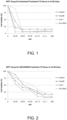
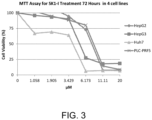
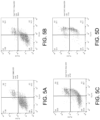
- MTT cell viability assays evaluating the effect of different concentrations of each of ozanimod, ABC294640 and SK1-I on four human hepatocellular carcinoma cell lines, Hep G2, Hep 3B, Huh 7 and PLC-PRF5 were performed. These four cell lines were selected for the study because they are among HCC cell lines whose gene expression profiles most closely resemble those of primary HCC tumors. See Chen et al., BMC Medical Genomics 2015, 8(Suppl 2):S5 . The following concentrations of the compounds were tested. Ozanimod: 200 ⁇ M, 111.1 ⁇ M, 61.73 ⁇ M, 34.29 ⁇ M, 19.05 ⁇ M, 10.58 ⁇ M, and 0 ⁇ M.
- ABC294640 200 ⁇ M, 111.1 ⁇ M, 61.73 ⁇ M, 34.29 ⁇ M, 19.05 ⁇ M, 10.58 ⁇ M, and 0 ⁇ M.
- SK1-I 20 ⁇ M, 11.11 ⁇ M, 6.173 ⁇ M, 3.429 ⁇ M, 1.905 ⁇ M, 1.058 ⁇ M, and 0 ⁇ M.
- FIGS. 1-3 The results of these 72-hour treatment MTT assays are shown in FIGS. 1-3 as follows.
- FIG. 1 shows the MTT assay data (72 hours) for ozanimod for the four human hepatocellular carcinoma cell lines.
- FIG. 2 shows the MTT assay data (72 hours) for ABC294640 for the four human hepatocellular carcinoma cell lines.
- FIG. 3 shows the MTT assay data (72 hours) for SK1-I for the four human hepatocellular carcinoma cell lines.
- FIG. 4A shows MTT assay data (48 hours) for various concentrations of SK1-I for three human hepatocellular carcinoma cell lines, Hep G2, Huh 7, and PLC-PRF5.
- FIG. 4B shows MTT assay data (48 hours) for various concentrations of PF-543, a super potent SphK1 inhibitor ( see Schnute et al., Biochem. J. (2012) 444, 79-88 ), for the same three human hepatocellular carcinoma cell lines shown in FIG. 4A .
- This data shows that SK1-I is more effective at killing hepatocellular carcinoma cells than PF-543 despite the latter drug's much greater potency in inhibiting SphK1.
- Apoptosis/necrosis assays evaluating the effect of different concentrations of each of ozanimod, ABC294640 and SK1-I on the four human hepatocellular carcinoma cell lines, Hep G2, Hep 3B, Huh 7 and PLC-PRF5 were also performed.
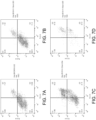
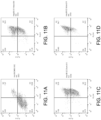
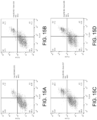
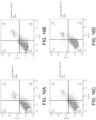
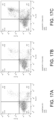
- FIGS. 5-16 present graphs plotting the data from these 24-hour apoptosis assays for the different concentrations of compounds and no-drug control for the various cell lines.
- Channel FL2 picks up the apoptosis signal and channel FL3 picks up the necrosis signal.
- Data points in Quadrant 3 (Q3) in the graphs corresponds to cells undergoing apoptosis (cells positive for the apoptosis detection reagent of the assay).
- Data points in Quadrant 2 (Q2) in the graphs corresponds to cells that are positive for the apoptosis detection reagent and positive for the necrosis detection reagent of the assay (indicative of late-stage apoptosis).
- FIGS. 5A-D show the apoptosis assay data for various concentrations of SK1-I and no-drug control for Huh7 cells.
- FIG. 5A shows the results for no-drug control.
- FIG. 5B shows the results for treatment with 10 ⁇ M SK1-I.
- FIG. 5C shows the results for treatment with 20 ⁇ M SK1-I.
- FIG. 5D shows the results for treatment with 40 ⁇ M SK1-I.
- SK1-I strongly induced apoptosis in the Huh7 cells.
- FIGS. 6A-D show the apoptosis assay data for various concentrations of SK1-I and no-drug control for PLC-PRF5 cells.
- FIG. 6A shows the results for no-drug control.
- FIG. 6B shows the results for treatment with 10 ⁇ M SK1-I.
- FIG. 6C shows the results for treatment with 20 ⁇ M SK1-I.
- FIG. 6D shows the results for treatment with 40 ⁇ M SK1-I.
- SK1-I strongly induced apoptosis in the PLC-PRF5 cells.
- FIGS. 7A-D show the apoptosis assay data for various concentrations of SK1-I and no-drug control for Hep 3B cells.
- FIG. 7A shows the results for no-drug control.
- FIG. 7B shows the results for treatment with 10 ⁇ M SK1-I.
- FIG. 7C shows the results for treatment with 20 ⁇ M SK1-I.
- FIG. 7D shows the results for treatment with 40 ⁇ M SK1-I.
- SK1-I strongly induced apoptosis in the Hep 3B cells.
- FIGS. 8A-D show the apoptosis assay data for various concentrations of SK1-I and no-drug control for Hep G2 cells.
- FIG. 8A shows the results for no-drug control.
- FIG. 8B shows the results for treatment with 10 ⁇ M SK1-I.
- FIG. 8C shows the results for treatment with 20 ⁇ M SK1-I.
- FIG. 8D shows the results for treatment with 40 ⁇ M SK1-I.
- SK1-I strongly induced apoptosis in the Hep G2 cells.
- FIGS. 9A-D show the apoptosis assay data for various concentrations of ozanimod and no-drug control for Huh7 cells.
- FIG. 9A shows the results for no-drug control.
- FIG. 9B shows the results for treatment with 5 ⁇ M ozanimod.
- FIG. 9C shows the results for treatment with 10 ⁇ M ozanimod.
- FIG. 9D shows the results for treatment with 20 ⁇ M ozanimod.
- Ozanimod strongly induced apoptosis in the Huh7 cells.
- FIGS. 10A-D show the apoptosis assay data for various concentrations of ozanimod and no-drug control for PLC-PRF5 cells.
- FIG. 10A shows the results for no-drug control.
- FIG. 10B shows the results for treatment with 5 ⁇ M ozanimod.
- FIG. 10C shows the results for treatment with 10 ⁇ M ozanimod.
- FIG. 10D shows the results for treatment with 20 ⁇ M ozanimod.
- Ozanimod strongly induced apoptosis in the PLC-PRF5 cells.
- FIGS. 11A-D show the apoptosis assay data for various concentrations of ozanimod and no-drug control for Hep 3B cells.
- FIG. 11A shows the results for no-drug control.
- FIG. 11B shows the results for treatment with 10 ⁇ M ozanimod.
- FIG. 11C shows the results for treatment with 20 ⁇ M ozanimod.
- FIG. 11D shows the results for treatment with 40 ⁇ M ozanimod.
- Ozanimod strongly induced apoptosis in the Hep 3B cells.
- FIGS. 12A-D show the apoptosis assay data for various concentrations of ozanimod and no-drug control for Hep G2 cells.
- FIG. 12A shows the results for no-drug control.
- FIG. 12B shows the results for treatment with 10 ⁇ M ozanimod.
- FIG. 12C shows the results for treatment with 20 ⁇ M ozanimod.
- FIG. 12D shows the results for treatment with 40 ⁇ M ozanimod.
- Ozanimod strongly induced apoptosis in the Hep G2 cells.
- FIGS. 13A-D show the apoptosis assay data for various concentrations of ABC294640 and no-drug control for Huh7 cells.
- FIG. 13A shows the results for no-drug control.
- FIG. 13B shows the results for treatment with 10 ⁇ M ABC294640.
- FIG. 13C shows the results for treatment with 20 ⁇ M ABC294640.
- FIG. 13D shows the results for treatment with 40 ⁇ M ABC294640.
- ABC294640 failed to induce apoptosis in the Huh7 cells.
- FIGS. 14A-D show the apoptosis assay data for various concentrations of ABC294640 and no-drug control for PLC-PRF5 cells.
- FIG. 14A shows the results for no-drug control.
- FIG. 14B shows the results for treatment with 10 ⁇ M ABC294640.
- FIG. 14C shows the results for treatment with 20 ⁇ M ABC294640.
- FIG. 14D shows the results for treatment with 40 ⁇ M ABC294640.
- ABC294640 did not substantially induce apoptosis in the PLC-PRF5 cells.
- FIGS. 15A-D show the apoptosis assay data for various concentrations of ABC294640 and no-drug control for Hep 3B cells.
- FIG. 15A shows the results for no-drug control.
- FIG. 15B shows the results for treatment with 10 ⁇ M ABC294640.
- FIG. 15C shows the results for treatment with 20 ⁇ M ABC294640.
- FIG. 15D shows the results for treatment with 40 ⁇ M ABC294640.
- ABC294640 did not substantially induce apoptosis in the Hep 3B cells.
- FIGS. 16A-D show the apoptosis assay data for various concentrations of ABC294640 and no-drug control for Hep G2 cells.
- FIG. 16A shows the results for no-drug control.
- FIG. 16B shows the results for treatment with 10 ⁇ M ABC294640.
- FIG. 16C shows the results for treatment with 20 ⁇ M ABC294640.
- FIG. 16D shows the results for treatment with 40 ⁇ M ABC294640.
- ABC294640 failed to induce apoptosis in the Hep G2 cells.
- FIGS. 17A-C show apoptosis assay data for various concentrations of SK1-I and no-drug control for Jurkat cells (human T-cell leukemia cell line).
- FIG. 17A shows the results for no-drug control.
- FIG. 17B shows the results for treatment with 10 ⁇ M SK1-I.
- FIG. 17C shows the results for treatment with 20 ⁇ M SK1-I.
- SK1-I strongly induced apoptosis in the Jurkat cells.
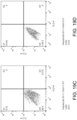
- FIGS. 18A-C show apoptosis assay data for various concentrations of ozanimod and no-drug control for Jurkat cells.
- FIG. 18A shows the results for no-drug control.
- FIG. 18B shows the results for treatment with 5 ⁇ M ozanimod.
- FIG. 18C shows the results for treatment with 10 ⁇ M ozanimod.
- Ozanimod strongly induced apoptosis in the Jurkat cells.
- the Hepatocyte Maintenance Medium was replaced before treatment with drug or no-drug control, and the hepatocytes were treated with 0 ⁇ M (no-drug control), 10 ⁇ M, 20 ⁇ M, or 40 ⁇ M SK1-I or 0 ⁇ M, 2.5 ⁇ M, 5 ⁇ M, or 10 ⁇ M ozanimod for 24 hours under incubation.
- the cells were then harvested and analyzed using the GFP Certified ® Apoptosis/Necrosis detection kit. The results are shown in FIGS. 19A-D for SK1-I and FIGS. 20A-D for ozanimod as follows.
- FIGS. 19A-D show apoptosis assay data for various concentrations of SK1-I and no-drug control for primary human hepatocytes.
- FIG. 19A shows the results for no-drug control.
- FIG. 19B shows the results for treatment with 10 ⁇ M SK1-I.
- FIG. 19C shows the results for treatment with 20 ⁇ M SK1-I.
- FIG. 19D shows the results for treatment with 40 ⁇ M SK1-I.
- SK1-I did not induce apoptosis of the primary human hepatocytes at any concentration tested.
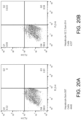
- FIGS. 20A-D show apoptosis assay data for various concentrations of ozanimod and no-drug control for primary human hepatocytes.
- FIG. 20A shows the results for no-drug control.
- FIG. 20B shows the results for treatment with 2.5 ⁇ M ozanimod.
- FIG. 20C shows the results for treatment with 5 ⁇ M ozanimod.
- FIG. 20D shows the results for treatment with 10 ⁇ M ozanimod.
- Ozanimod did not induce apoptosis of the primary human hepatocytes at any concentration tested.
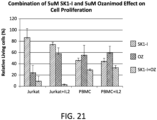
- FIG. 21 shows the cell viability effects of 5 ⁇ M SK1-I alone, 5 ⁇ M ozanimod alone, and the combination of 5 ⁇ M SK1-I and 5 ⁇ M ozanimod on Jurkat cells, Jurkat cells cultured with IL-2, PBMCs, and PBMCs cultured with IL-2.
- the data shows, for example, that ozanimod strongly decreases viability of Jurkat cells without IL-2 and the combination of SK1-I and ozanimod even more dramatically decreases viability of Jurkat cells both without and with IL-2, while the combination of agents was not nearly as detrimental to peripheral blood mononuclear cells (PBMC) irrespective of IL-2.
- PBMC peripheral blood mononuclear cells
- FIG. 22A shows the cell viability effects of different concentrations of SK1-I and ozanimod, each alone and in combination, on pancreatic cell line PanC-1 cells.
- FIG. 22B shows the cell viability effects of different concentrations of SK1-I and ozanimod, each alone and in combination, on pancreatic cancer cell line BxPC-3 cells.
- the therapeutic use may further include one or more immune checkpoint inhibitors which may be monoclonal antibodies (mABs).
- the immune checkpoint inhibitor may be selected from the group consisting of the following: PD-1 inhibitors such as mAbs Pembrolizumab (Keytruda ® ) and Nivolumab (Opdivo ® ); PD-L1 inhibitors such as mAbs Atezolizumab (Tecentriq ® ), Avelumab (Bavencio ® ), and Durvalumab (Imfinzi ® ); and CTLA-4 inhibitors such as mAb Ipilimumab (Yervoy ® ); and V-domain Ig Suppressor of T Cell Activation (VISTA) inhibitors such as mAb JNJ-61610588 (ImmuNext Inc.) is/are to be co-administered.
- PD-1 inhibitors such as mAbs Pembrolizumab (Keytruda ®
- Immune checkpoint inhibitors may, for example, be administered by injection in the dosages described herein and/or at the currently approved dosages for said inhibitors.
- the amount of compound that is effective for use in the treatment or prevention of a condition may be determined by standard techniques.
- in vitro and/or in vivo assays may optionally be employed to help identify optimal dosage ranges.
- the precise dose to be employed will also depend on, e.g., the route of administration and the seriousness of the condition and can be decided according to the judgment of a practitioner and/or each patient's circumstances.
- an effective dosage is to be administered once per month until the condition is abated. In another aspect, the effective dosage is to be administered once per week, or twice per week or three times per week until the condition is abated. An effective dosage may, for example, be administered at least once daily or at least or at least once every two-days, or at least once every three days, four days, five days, six days or seven days. In another aspect, an effective dosage amount is to be administered about every 24 h until the condition is abated. In another aspect, an effective dosage amount is to be administered about every 12 h until the condition is abated. In another aspect, an effective dosage amount is to be administered about every 8 h until the condition is abated. In another aspect an effective dosage amount is to be administered about every 6 h until the condition is abated. In another aspect, an effective dosage amount is to be administered about every 4 h until the condition is abated.
- the therapeutically effective doses/amounts of the pharmaceutical compounds disclosed herein may be expressed in terms of the amount of the compound(s) or pharmaceutically acceptable salts thereof administered per unit body weight of the subject per day of treatment, or the total amount administered per day of treatment.
- a daily dose may, for example, be at least 0.005 mg/kg of body weight, at least 0.01 mg/kg of body weight, at least 0.025 mg/kg of body weight, at least 0.05 mg/kg of body weight, at least 0.1 mg/kg of body weight, at least 0.2 mg/kg of body weight, at least 0.3 mg/kg of body weight, at least 0.4 mg/kg of body weight, at least 0.5 mg/kg of body weight, at least 0.6 mg/kg of body weight, at least 0.7 mg/kg of body weight, at least 0.8 mg/kg of body weight, at least 0.9 mg/kg of body weight, at least 1 mg/kg of body weight, at least 1.5 mg/kg of body weight, at least 2 mg/kg of body weight, at least 2.5 mg/kg of
- a total daily dose may, for example, be in the range of 0.005 mg/kg to 5 mg/kg or any subrange or value therein, such as 0.025 to 5 mg/kg body weight, such as 0.05 to 5 mg/kg body weight.
- a total daily dose may, for example be in the range of 0.1 mg to 1,000 mg total or any subrange or value therein, such as 0.1 mg to 1,000 mg, such as 0.1 mg to 100 mg, such as 0.1 mg to 50 mg, such as 0.5 mg to 50 mg, such as 1.0 mg to 50 mg, such as 5 mg to 50 mg, or 0.1 mg to 10 mg, such as 0.5 mg to 10 mg.
- SK1-I and related SphK1 inhibitors disclosed U.S. Patent Nos.
- a daily dose for human subjects may, for example, also be in the range of 0.5 mg/kg to 5 mg/kg or any subrange or value therein, such as 1 mg/kg to 4 mg/kg, such as 1 mg/kg to 3 mg/kg, or, for example, a total daily dose of 5 mg to 50 mg or any subrange or value therein, such as 10 mg to 40 mg, such as 20 mg to 40 mg.
- a daily dose for human subjects may, for example, also be in the range of 0.5 mg/kg to 5 mg/kg or any subrange or value therein, such as 1 mg/kg to 4 mg/kg, such as 1 mg/kg to 3 mg/kg, or, for example, a total daily dose of 5 mg to 50 mg or any subrange or value therein, such as 10 mg to 40 mg, such as 20 mg to 40 mg.
- ozanimod its active metabolites and related sphingosine-1-phosphate receptor agonists disclosed in U.S. Pub Nos.
- a daily dose for human subjects may, for example, also be in the range of 1 mg to 50 mg or any subrange or value therein, or 0.1 mg to 10 mg or any subrange or value therein, such as 0.1 mg to 5 mg, such as 0.5 to 5 mg, such as 0.5 mg to 2.5 mg, such as 0.5 mg to 1.5 mg.
- a pharmaceutical composition may, for example, include a daily dose amount of the compound as set forth herein.
- the duration of treatment by administration of a therapeutic compound or combination may continue for a plurality of days, such as for at least one week, at least two weeks, at least three weeks, at least four weeks, at least two months, at least three months, at least four months, at least five months, at least six months, at least seven months, at least eight months, at least nine months, at least 10 months, at least 11 months, at least 12 months, at least 1 1 ⁇ 2 years, at least 2 years, at least three years, at least four years, or may continue indefinitely.
- co-administration and co-administering mean that each of the things being co-administered is to be administered to a subject in such temporal proximity that each (or its active metabolite(s)) is present in active form in the subject for an at least partially overlapping period of time.
- co-administration may include, simultaneous administration, such as when the things being administered are part of the same pharmaceutical composition, or sequential administration of the things being co-administered, for example, within the same day of each other, within 12 hours of each other, within 6 hours of each other, within 3 hours of each other, within 1 hours of each other, or within 15 minutes of each other.
- the things being administered may be administered by the same route, such as by oral ingestion or injection, or by different routes.
- salts include hydrochloride, citrate, glycolate, fumarate, malate, tartrate, mesylate, esylate, cinnamate, isethionate, sulfate, phosphate, diphosphate, nitrate, hydrobromide, hydroiodide, succinate, formate, acetate, dichloroacetate, lactate, p-toluenesulfonate, pamitate, pidolate, pamoate, salicylate, 4-aminosalicylate, benzoate, 4-acetamido benzoate, glutamate, aspartate, glycolate, adipate, alginate, ascorbate, besylate, camphorate, camphorsulfonate, camsylate, caprate, caproate, cyclamate, laurylsulfate, edisylate, gentisate, galactarate, glucept
Landscapes
- Health & Medical Sciences (AREA)
- Chemical & Material Sciences (AREA)
- Organic Chemistry (AREA)
- General Health & Medical Sciences (AREA)
- Public Health (AREA)
- Veterinary Medicine (AREA)
- Medicinal Chemistry (AREA)
- Animal Behavior & Ethology (AREA)
- Life Sciences & Earth Sciences (AREA)
- Pharmacology & Pharmacy (AREA)
- Oncology (AREA)
- Nuclear Medicine, Radiotherapy & Molecular Imaging (AREA)
- Hematology (AREA)
- Chemical Kinetics & Catalysis (AREA)
- General Chemical & Material Sciences (AREA)
- Epidemiology (AREA)
- Acyclic And Carbocyclic Compounds In Medicinal Compositions (AREA)
Claims (8)
- Ozanimod oder ein pharmazeutisch verträgliches Salz davon zur Verwendung bei der Behandlung von Pankreaskrebs in einem Säugerindividuum.
- Hydrochloridsalz von Ozanimod zur Verwendung nach Anspruch 1.
- Ozanimod oder ein pharmazeutisch verträgliches Salz davon in Kombination mit SK1-I oder einem pharmazeutisch verträglichen Salz davon zur Verwendung nach Anspruch 1.
- Hydrochloridsalz von Ozanimod in Kombination mit dem Hydrochloridsalz von SK1-I zur Verwendung nach Anspruch 1.
- Pharmazeutische Zusammensetzung, umfassend eine therapeutisch wirksame Menge von Ozanimod oder ein pharmazeutisch verträgliches Salz davon zur Verwendung bei der Behandlung von Pankreaskrebs in einem Säugerindividuum.
- Pharmazeutische Zusammensetzung zur Verwendung nach Anspruch 5, des Weiteren umfassend eine therapeutisch wirksame Menge von SK1-I oder ein pharmazeutisch verträgliches Salz davon.
- Pharmazeutische Zusammensetzung zur Verwendung nach Anspruch 5 oder 6, des Weiteren umfassend mindestens einen pharmazeutisch verträglichen Exzipienten.
- Verbindung oder Zusammensetzung zur Verwendung nach einem der Ansprüche 1 bis 4, wobei das Säugerindividuum ein Mensch ist.
Applications Claiming Priority (2)
| Application Number | Priority Date | Filing Date | Title |
|---|---|---|---|
| US16/017,303 US10675255B2 (en) | 2017-06-23 | 2018-06-25 | Sphingosine pathway modulating compounds for the treatment of cancers |
| PCT/US2018/067131 WO2020005313A1 (en) | 2018-06-25 | 2018-12-21 | Sphingosine pathway modulating compounds for the treatment of cancers |
Publications (3)
| Publication Number | Publication Date |
|---|---|
| EP3810285A1 EP3810285A1 (de) | 2021-04-28 |
| EP3810285A4 EP3810285A4 (de) | 2022-03-09 |
| EP3810285B1 true EP3810285B1 (de) | 2025-02-12 |
Family
ID=68986831
Family Applications (1)
| Application Number | Title | Priority Date | Filing Date |
|---|---|---|---|
| EP18924932.9A Active EP3810285B1 (de) | 2018-06-25 | 2018-12-21 | Verbindungen zur modulierung des sphingosin-signalwegs für die behandlung von krebs |
Country Status (3)
| Country | Link |
|---|---|
| EP (1) | EP3810285B1 (de) |
| CA (1) | CA3124986A1 (de) |
| WO (1) | WO2020005313A1 (de) |
Family Cites Families (7)
| Publication number | Priority date | Publication date | Assignee | Title |
|---|---|---|---|---|
| JP2009545630A (ja) * | 2006-08-04 | 2009-12-24 | プリーシス・ファーマシューティカルズ・インコーポレイテッド | 化合物 |
| US8372888B2 (en) * | 2008-04-29 | 2013-02-12 | Enzo Therapeutics, Inc. | Sphingosine kinase type 1 inhibitors, compositions and processes for using same |
| US8314151B2 (en) | 2008-04-29 | 2012-11-20 | Enzo Therapeutics, Inc. | Sphingosine kinase type 1 inhibitors, and processes for using same |
| MX2012005560A (es) | 2009-11-13 | 2012-10-05 | Receptos Inc | Moduladores selectivos del receptor de esfingosina 1 fosfato y metodos de sintesis quiral. |
| CA3033863C (en) * | 2016-08-18 | 2021-09-14 | Memorial Sloan Kettering Cancer Center | Inhibition of sphingosine 1-phosphate receptor for treatment and prevention of lymphedema |
| WO2018093591A1 (en) | 2016-11-03 | 2018-05-24 | Juno Therapeutics, Inc. | Combination therapy of a cell based therapy and a microglia inhibitor |
| CA3061201A1 (en) * | 2017-06-23 | 2018-12-27 | Enzo Biochem, Inc. | Sphingosine pathway modulating compounds for the treatment of cancers |
-
2018
- 2018-12-21 WO PCT/US2018/067131 patent/WO2020005313A1/en not_active Ceased
- 2018-12-21 EP EP18924932.9A patent/EP3810285B1/de active Active
- 2018-12-21 CA CA3124986A patent/CA3124986A1/en active Pending
Also Published As
| Publication number | Publication date |
|---|---|
| EP3810285A1 (de) | 2021-04-28 |
| WO2020005313A1 (en) | 2020-01-02 |
| CA3124986A1 (en) | 2020-01-02 |
| EP3810285A4 (de) | 2022-03-09 |
Similar Documents
| Publication | Publication Date | Title |
|---|---|---|
| US10646459B2 (en) | Sphingosine pathway modulating compounds for the treatment of cancers | |
| EP2720696B1 (de) | Kombination aus panobinostat und ruxolitinib bei der behandlung von krebs wie etwa einem myeloproliferativen neoplasma | |
| US20230092181A1 (en) | Intermittent dosing of mdm2 inhibitor | |
| Siddiqui-Jain et al. | CK2 inhibitor CX-4945 suppresses DNA repair response triggered by DNA-targeted anticancer drugs and augments efficacy: mechanistic rationale for drug combination therapy | |
| US9408847B2 (en) | Combination therapy | |
| JP2022017495A (ja) | 癌を治療するための併用療法 | |
| Dorasamy et al. | Synergistic inhibition of melanoma xenografts by Brequinar sodium and Doxorubicin | |
| US20250009748A1 (en) | Combination therapy using substituted pyrimidin-4(3h)-ones and sotorasib | |
| CA2459822A1 (en) | Treatment of chronic myelogenous leukemia, resistant or intolerant to sti571, involving homoharringtonine alone or combined with other agents | |
| Plosker et al. | Nilotinib | |
| EP3810285B1 (de) | Verbindungen zur modulierung des sphingosin-signalwegs für die behandlung von krebs | |
| US10881643B2 (en) | Sphingosine pathway modulating compounds for the treatment of cancers | |
| US20100226919A1 (en) | Antitumoral Treatments | |
| HK1193045B (en) | Combination of panobinostat and ruxolitinib in the treatment of cancer such as a myeloproliferative neoplasm |
Legal Events
| Date | Code | Title | Description |
|---|---|---|---|
| STAA | Information on the status of an ep patent application or granted ep patent |
Free format text: STATUS: THE INTERNATIONAL PUBLICATION HAS BEEN MADE |
|
| PUAI | Public reference made under article 153(3) epc to a published international application that has entered the european phase |
Free format text: ORIGINAL CODE: 0009012 |
|
| STAA | Information on the status of an ep patent application or granted ep patent |
Free format text: STATUS: REQUEST FOR EXAMINATION WAS MADE |
|
| 17P | Request for examination filed |
Effective date: 20210122 |
|
| AK | Designated contracting states |
Kind code of ref document: A1 Designated state(s): AL AT BE BG CH CY CZ DE DK EE ES FI FR GB GR HR HU IE IS IT LI LT LU LV MC MK MT NL NO PL PT RO RS SE SI SK SM TR |
|
| AX | Request for extension of the european patent |
Extension state: BA ME |
|
| DAV | Request for validation of the european patent (deleted) | ||
| DAX | Request for extension of the european patent (deleted) | ||
| REG | Reference to a national code |
Ref country code: DE Ref legal event code: R079 Free format text: PREVIOUS MAIN CLASS: A61P0035020000 Ref country code: DE Ref legal event code: R079 Ref document number: 602018079197 Country of ref document: DE Free format text: PREVIOUS MAIN CLASS: A61P0035020000 Ipc: A61K0031424500 |
|
| A4 | Supplementary search report drawn up and despatched |
Effective date: 20220207 |
|
| RIC1 | Information provided on ipc code assigned before grant |
Ipc: C07D 271/06 20060101ALI20220201BHEP Ipc: C07C 215/28 20060101ALI20220201BHEP Ipc: A61P 35/02 20060101ALI20220201BHEP Ipc: A61K 31/4245 20060101AFI20220201BHEP |
|
| STAA | Information on the status of an ep patent application or granted ep patent |
Free format text: STATUS: EXAMINATION IS IN PROGRESS |
|
| 17Q | First examination report despatched |
Effective date: 20231221 |
|
| GRAP | Despatch of communication of intention to grant a patent |
Free format text: ORIGINAL CODE: EPIDOSNIGR1 |
|
| STAA | Information on the status of an ep patent application or granted ep patent |
Free format text: STATUS: GRANT OF PATENT IS INTENDED |
|
| INTG | Intention to grant announced |
Effective date: 20240902 |
|
| GRAS | Grant fee paid |
Free format text: ORIGINAL CODE: EPIDOSNIGR3 |
|
| RAP3 | Party data changed (applicant data changed or rights of an application transferred) |
Owner name: DIAMOND, PAUL Owner name: DONEGAN, JAMES J. Owner name: ELAZAR, RABBANI Owner name: ENZO BIOCHEM, INC. |
|
| GRAA | (expected) grant |
Free format text: ORIGINAL CODE: 0009210 |
|
| STAA | Information on the status of an ep patent application or granted ep patent |
Free format text: STATUS: THE PATENT HAS BEEN GRANTED |
|
| AK | Designated contracting states |
Kind code of ref document: B1 Designated state(s): AL AT BE BG CH CY CZ DE DK EE ES FI FR GB GR HR HU IE IS IT LI LT LU LV MC MK MT NL NO PL PT RO RS SE SI SK SM TR |
|
| REG | Reference to a national code |
Ref country code: GB Ref legal event code: FG4D |
|
| REG | Reference to a national code |
Ref country code: CH Ref legal event code: EP |
|
| REG | Reference to a national code |
Ref country code: DE Ref legal event code: R096 Ref document number: 602018079197 Country of ref document: DE |
|
| REG | Reference to a national code |
Ref country code: IE Ref legal event code: FG4D |
|
| REG | Reference to a national code |
Ref country code: NL Ref legal event code: MP Effective date: 20250212 |
|
| PG25 | Lapsed in a contracting state [announced via postgrant information from national office to epo] |
Ref country code: RS Free format text: LAPSE BECAUSE OF FAILURE TO SUBMIT A TRANSLATION OF THE DESCRIPTION OR TO PAY THE FEE WITHIN THE PRESCRIBED TIME-LIMIT Effective date: 20250512 |
|
| PG25 | Lapsed in a contracting state [announced via postgrant information from national office to epo] |
Ref country code: FI Free format text: LAPSE BECAUSE OF FAILURE TO SUBMIT A TRANSLATION OF THE DESCRIPTION OR TO PAY THE FEE WITHIN THE PRESCRIBED TIME-LIMIT Effective date: 20250212 |
|
| PG25 | Lapsed in a contracting state [announced via postgrant information from national office to epo] |
Ref country code: PL Free format text: LAPSE BECAUSE OF FAILURE TO SUBMIT A TRANSLATION OF THE DESCRIPTION OR TO PAY THE FEE WITHIN THE PRESCRIBED TIME-LIMIT Effective date: 20250212 |
|
| PG25 | Lapsed in a contracting state [announced via postgrant information from national office to epo] |
Ref country code: ES Free format text: LAPSE BECAUSE OF FAILURE TO SUBMIT A TRANSLATION OF THE DESCRIPTION OR TO PAY THE FEE WITHIN THE PRESCRIBED TIME-LIMIT Effective date: 20250212 |
|
| REG | Reference to a national code |
Ref country code: LT Ref legal event code: MG9D |
|
| PG25 | Lapsed in a contracting state [announced via postgrant information from national office to epo] |
Ref country code: IS Free format text: LAPSE BECAUSE OF FAILURE TO SUBMIT A TRANSLATION OF THE DESCRIPTION OR TO PAY THE FEE WITHIN THE PRESCRIBED TIME-LIMIT Effective date: 20250612 Ref country code: NO Free format text: LAPSE BECAUSE OF FAILURE TO SUBMIT A TRANSLATION OF THE DESCRIPTION OR TO PAY THE FEE WITHIN THE PRESCRIBED TIME-LIMIT Effective date: 20250512 |
|
| PG25 | Lapsed in a contracting state [announced via postgrant information from national office to epo] |
Ref country code: NL Free format text: LAPSE BECAUSE OF FAILURE TO SUBMIT A TRANSLATION OF THE DESCRIPTION OR TO PAY THE FEE WITHIN THE PRESCRIBED TIME-LIMIT Effective date: 20250212 |
|
| PG25 | Lapsed in a contracting state [announced via postgrant information from national office to epo] |
Ref country code: HR Free format text: LAPSE BECAUSE OF FAILURE TO SUBMIT A TRANSLATION OF THE DESCRIPTION OR TO PAY THE FEE WITHIN THE PRESCRIBED TIME-LIMIT Effective date: 20250212 |
|
| PG25 | Lapsed in a contracting state [announced via postgrant information from national office to epo] |
Ref country code: PT Free format text: LAPSE BECAUSE OF FAILURE TO SUBMIT A TRANSLATION OF THE DESCRIPTION OR TO PAY THE FEE WITHIN THE PRESCRIBED TIME-LIMIT Effective date: 20250612 Ref country code: LV Free format text: LAPSE BECAUSE OF FAILURE TO SUBMIT A TRANSLATION OF THE DESCRIPTION OR TO PAY THE FEE WITHIN THE PRESCRIBED TIME-LIMIT Effective date: 20250212 |
|
| PG25 | Lapsed in a contracting state [announced via postgrant information from national office to epo] |
Ref country code: BG Free format text: LAPSE BECAUSE OF FAILURE TO SUBMIT A TRANSLATION OF THE DESCRIPTION OR TO PAY THE FEE WITHIN THE PRESCRIBED TIME-LIMIT Effective date: 20250212 Ref country code: GR Free format text: LAPSE BECAUSE OF FAILURE TO SUBMIT A TRANSLATION OF THE DESCRIPTION OR TO PAY THE FEE WITHIN THE PRESCRIBED TIME-LIMIT Effective date: 20250513 |
|
| REG | Reference to a national code |
Ref country code: AT Ref legal event code: MK05 Ref document number: 1765442 Country of ref document: AT Kind code of ref document: T Effective date: 20250212 |
|
| PG25 | Lapsed in a contracting state [announced via postgrant information from national office to epo] |
Ref country code: SE Free format text: LAPSE BECAUSE OF FAILURE TO SUBMIT A TRANSLATION OF THE DESCRIPTION OR TO PAY THE FEE WITHIN THE PRESCRIBED TIME-LIMIT Effective date: 20250212 |
|
| PG25 | Lapsed in a contracting state [announced via postgrant information from national office to epo] |
Ref country code: SM Free format text: LAPSE BECAUSE OF FAILURE TO SUBMIT A TRANSLATION OF THE DESCRIPTION OR TO PAY THE FEE WITHIN THE PRESCRIBED TIME-LIMIT Effective date: 20250212 |
|
| PG25 | Lapsed in a contracting state [announced via postgrant information from national office to epo] |
Ref country code: DK Free format text: LAPSE BECAUSE OF FAILURE TO SUBMIT A TRANSLATION OF THE DESCRIPTION OR TO PAY THE FEE WITHIN THE PRESCRIBED TIME-LIMIT Effective date: 20250212 |
|
| PG25 | Lapsed in a contracting state [announced via postgrant information from national office to epo] |
Ref country code: IT Free format text: LAPSE BECAUSE OF FAILURE TO SUBMIT A TRANSLATION OF THE DESCRIPTION OR TO PAY THE FEE WITHIN THE PRESCRIBED TIME-LIMIT Effective date: 20250212 |
|
| PG25 | Lapsed in a contracting state [announced via postgrant information from national office to epo] |
Ref country code: AT Free format text: LAPSE BECAUSE OF FAILURE TO SUBMIT A TRANSLATION OF THE DESCRIPTION OR TO PAY THE FEE WITHIN THE PRESCRIBED TIME-LIMIT Effective date: 20250212 |
|
| PG25 | Lapsed in a contracting state [announced via postgrant information from national office to epo] |
Ref country code: EE Free format text: LAPSE BECAUSE OF FAILURE TO SUBMIT A TRANSLATION OF THE DESCRIPTION OR TO PAY THE FEE WITHIN THE PRESCRIBED TIME-LIMIT Effective date: 20250212 Ref country code: CZ Free format text: LAPSE BECAUSE OF FAILURE TO SUBMIT A TRANSLATION OF THE DESCRIPTION OR TO PAY THE FEE WITHIN THE PRESCRIBED TIME-LIMIT Effective date: 20250212 |
|
| PG25 | Lapsed in a contracting state [announced via postgrant information from national office to epo] |
Ref country code: RO Free format text: LAPSE BECAUSE OF FAILURE TO SUBMIT A TRANSLATION OF THE DESCRIPTION OR TO PAY THE FEE WITHIN THE PRESCRIBED TIME-LIMIT Effective date: 20250212 |
|
| PG25 | Lapsed in a contracting state [announced via postgrant information from national office to epo] |
Ref country code: SK Free format text: LAPSE BECAUSE OF FAILURE TO SUBMIT A TRANSLATION OF THE DESCRIPTION OR TO PAY THE FEE WITHIN THE PRESCRIBED TIME-LIMIT Effective date: 20250212 |
|
| REG | Reference to a national code |
Ref country code: DE Ref legal event code: R097 Ref document number: 602018079197 Country of ref document: DE |
|
| PLBE | No opposition filed within time limit |
Free format text: ORIGINAL CODE: 0009261 |
|
| STAA | Information on the status of an ep patent application or granted ep patent |
Free format text: STATUS: NO OPPOSITION FILED WITHIN TIME LIMIT |
|
| PGFP | Annual fee paid to national office [announced via postgrant information from national office to epo] |
Ref country code: GB Payment date: 20251229 Year of fee payment: 8 |
|
| PGFP | Annual fee paid to national office [announced via postgrant information from national office to epo] |
Ref country code: FR Payment date: 20251226 Year of fee payment: 8 |
|
| 26N | No opposition filed |
Effective date: 20251113 |
|
| PGFP | Annual fee paid to national office [announced via postgrant information from national office to epo] |
Ref country code: DE Payment date: 20251229 Year of fee payment: 8 |