EP3801005B1 - Vorrichtung zur fliegenbekämpfung - Google Patents
Vorrichtung zur fliegenbekämpfung Download PDFInfo
- Publication number
- EP3801005B1 EP3801005B1 EP19724529.3A EP19724529A EP3801005B1 EP 3801005 B1 EP3801005 B1 EP 3801005B1 EP 19724529 A EP19724529 A EP 19724529A EP 3801005 B1 EP3801005 B1 EP 3801005B1
- Authority
- EP
- European Patent Office
- Prior art keywords
- bovine
- image
- fly
- flies
- infestation
- Prior art date
- Legal status (The legal status is an assumption and is not a legal conclusion. Google has not performed a legal analysis and makes no representation as to the accuracy of the status listed.)
- Active
Links
Images



Classifications
-
- A—HUMAN NECESSITIES
- A01—AGRICULTURE; FORESTRY; ANIMAL HUSBANDRY; HUNTING; TRAPPING; FISHING
- A01K—ANIMAL HUSBANDRY; AVICULTURE; APICULTURE; PISCICULTURE; FISHING; REARING OR BREEDING ANIMALS, NOT OTHERWISE PROVIDED FOR; NEW BREEDS OF ANIMALS
- A01K29/00—Other apparatus for animal husbandry
- A01K29/005—Monitoring or measuring activity
-
- A—HUMAN NECESSITIES
- A01—AGRICULTURE; FORESTRY; ANIMAL HUSBANDRY; HUNTING; TRAPPING; FISHING
- A01K—ANIMAL HUSBANDRY; AVICULTURE; APICULTURE; PISCICULTURE; FISHING; REARING OR BREEDING ANIMALS, NOT OTHERWISE PROVIDED FOR; NEW BREEDS OF ANIMALS
- A01K29/00—Other apparatus for animal husbandry
-
- A—HUMAN NECESSITIES
- A01—AGRICULTURE; FORESTRY; ANIMAL HUSBANDRY; HUNTING; TRAPPING; FISHING
- A01N—PRESERVATION OF BODIES OF HUMANS OR ANIMALS OR PLANTS OR PARTS THEREOF; BIOCIDES, e.g. AS DISINFECTANTS, AS PESTICIDES OR AS HERBICIDES; PEST REPELLANTS OR ATTRACTANTS; PLANT GROWTH REGULATORS
- A01N29/00—Biocides, pest repellants or attractants, or plant growth regulators containing halogenated hydrocarbons
-
- B—PERFORMING OPERATIONS; TRANSPORTING
- B64—AIRCRAFT; AVIATION; COSMONAUTICS
- B64C—AEROPLANES; HELICOPTERS
- B64C39/00—Aircraft not otherwise provided for
- B64C39/02—Aircraft not otherwise provided for characterised by special use
- B64C39/024—Aircraft not otherwise provided for characterised by special use of the remote controlled vehicle type, i.e. RPV
-
- G—PHYSICS
- G06—COMPUTING OR CALCULATING; COUNTING
- G06F—ELECTRIC DIGITAL DATA PROCESSING
- G06F18/00—Pattern recognition
-
- G—PHYSICS
- G06—COMPUTING OR CALCULATING; COUNTING
- G06N—COMPUTING ARRANGEMENTS BASED ON SPECIFIC COMPUTATIONAL MODELS
- G06N3/00—Computing arrangements based on biological models
- G06N3/02—Neural networks
- G06N3/08—Learning methods
-
- G—PHYSICS
- G06—COMPUTING OR CALCULATING; COUNTING
- G06Q—INFORMATION AND COMMUNICATION TECHNOLOGY [ICT] SPECIALLY ADAPTED FOR ADMINISTRATIVE, COMMERCIAL, FINANCIAL, MANAGERIAL OR SUPERVISORY PURPOSES; SYSTEMS OR METHODS SPECIALLY ADAPTED FOR ADMINISTRATIVE, COMMERCIAL, FINANCIAL, MANAGERIAL OR SUPERVISORY PURPOSES, NOT OTHERWISE PROVIDED FOR
- G06Q30/00—Commerce
- G06Q30/06—Buying, selling or leasing transactions
- G06Q30/0601—Electronic shopping [e-shopping]
- G06Q30/0631—Recommending goods or services
-
- G—PHYSICS
- G06—COMPUTING OR CALCULATING; COUNTING
- G06Q—INFORMATION AND COMMUNICATION TECHNOLOGY [ICT] SPECIALLY ADAPTED FOR ADMINISTRATIVE, COMMERCIAL, FINANCIAL, MANAGERIAL OR SUPERVISORY PURPOSES; SYSTEMS OR METHODS SPECIALLY ADAPTED FOR ADMINISTRATIVE, COMMERCIAL, FINANCIAL, MANAGERIAL OR SUPERVISORY PURPOSES, NOT OTHERWISE PROVIDED FOR
- G06Q50/00—Information and communication technology [ICT] specially adapted for implementation of business processes of specific business sectors, e.g. utilities or tourism
- G06Q50/02—Agriculture; Fishing; Forestry; Mining
-
- G—PHYSICS
- G06—COMPUTING OR CALCULATING; COUNTING
- G06T—IMAGE DATA PROCESSING OR GENERATION, IN GENERAL
- G06T7/00—Image analysis
- G06T7/0002—Inspection of images, e.g. flaw detection
- G06T7/0004—Industrial image inspection
-
- G—PHYSICS
- G06—COMPUTING OR CALCULATING; COUNTING
- G06T—IMAGE DATA PROCESSING OR GENERATION, IN GENERAL
- G06T7/00—Image analysis
- G06T7/10—Segmentation; Edge detection
- G06T7/11—Region-based segmentation
-
- H—ELECTRICITY
- H04—ELECTRIC COMMUNICATION TECHNIQUE
- H04N—PICTORIAL COMMUNICATION, e.g. TELEVISION
- H04N7/00—Television systems
- H04N7/18—Closed-circuit television [CCTV] systems, i.e. systems in which the video signal is not broadcast
-
- B—PERFORMING OPERATIONS; TRANSPORTING
- B64—AIRCRAFT; AVIATION; COSMONAUTICS
- B64U—UNMANNED AERIAL VEHICLES [UAV]; EQUIPMENT THEREFOR
- B64U2101/00—UAVs specially adapted for particular uses or applications
- B64U2101/30—UAVs specially adapted for particular uses or applications for imaging, photography or videography
-
- B—PERFORMING OPERATIONS; TRANSPORTING
- B64—AIRCRAFT; AVIATION; COSMONAUTICS
- B64U—UNMANNED AERIAL VEHICLES [UAV]; EQUIPMENT THEREFOR
- B64U2101/00—UAVs specially adapted for particular uses or applications
- B64U2101/30—UAVs specially adapted for particular uses or applications for imaging, photography or videography
- B64U2101/31—UAVs specially adapted for particular uses or applications for imaging, photography or videography for surveillance
-
- B—PERFORMING OPERATIONS; TRANSPORTING
- B64—AIRCRAFT; AVIATION; COSMONAUTICS
- B64U—UNMANNED AERIAL VEHICLES [UAV]; EQUIPMENT THEREFOR
- B64U2101/00—UAVs specially adapted for particular uses or applications
- B64U2101/40—UAVs specially adapted for particular uses or applications for agriculture or forestry operations
-
- G—PHYSICS
- G06—COMPUTING OR CALCULATING; COUNTING
- G06T—IMAGE DATA PROCESSING OR GENERATION, IN GENERAL
- G06T2207/00—Indexing scheme for image analysis or image enhancement
- G06T2207/20—Special algorithmic details
- G06T2207/20081—Training; Learning
-
- G—PHYSICS
- G06—COMPUTING OR CALCULATING; COUNTING
- G06T—IMAGE DATA PROCESSING OR GENERATION, IN GENERAL
- G06T2207/00—Indexing scheme for image analysis or image enhancement
- G06T2207/20—Special algorithmic details
- G06T2207/20084—Artificial neural networks [ANN]
-
- G—PHYSICS
- G06—COMPUTING OR CALCULATING; COUNTING
- G06T—IMAGE DATA PROCESSING OR GENERATION, IN GENERAL
- G06T2207/00—Indexing scheme for image analysis or image enhancement
- G06T2207/30—Subject of image; Context of image processing
- G06T2207/30181—Earth observation
- G06T2207/30188—Vegetation; Agriculture
-
- G—PHYSICS
- G06—COMPUTING OR CALCULATING; COUNTING
- G06T—IMAGE DATA PROCESSING OR GENERATION, IN GENERAL
- G06T2207/00—Indexing scheme for image analysis or image enhancement
- G06T2207/30—Subject of image; Context of image processing
- G06T2207/30242—Counting objects in image
Definitions
- the present invention relates to an apparatus for fly management, to a device for fly management, to a system for fly management, to a method for fly management, as well as to a computer program element and a computer readable medium.
- the general background of this invention is the control of flies for the cattle industry, in both beef cattle and dairy cow environments.
- Certain flies such as horn flies, stable flies, face flies and horse flies take multiple blood meals from beef cattle and dairy cows, hereafter referred to as cattle or bovine animals, each day.
- Infested cattle react by licking affected areas, switching their tails and twitching their flanks.
- lesions resulting from such bites can lead to secondary infections and to cosmetic defects to the animals hide.
- the growth rates of infested cattle is decreased significantly with respect to non-infested cattle, lactation rates are also much lower and lower quality hides impact the leather industry.
- US2018/000575Al describes that parasites are detected and ameliorative actions taken using unmanned aerial vehicles equipped with sensors and equipment for dispensing treatment materials. Physical characteristic data obtained by the sensors is supplemented using a risk management module that increases the confidence level that the diagnosis of a particular parasite on an animal is correct. The risk management module may further be used to assess additional factors, such as the potential harm in applying a selected treatment, in the decision of whether or not to take ameliorative action.
- an apparatus for fly management comprising:
- the input unit is configured to provide the processing unit with at least one image of an agricultural environment, wherein the agricultural environment contains a plurality of bovine animals.
- the at least one image comprises image data of at least a part of at least one bovine animal of the plurality of bovine animals.
- the processing unit is configured to determine a number of flies in the image data of the at least a part of at least one bovine animal.
- the processing unit is configured to determine information relating to fly infestation of the plurality of bovine animals, the determination comprising utilisation of the determined number of flies.
- the output unit is configured to output an indication relating to a treatment for fly infestation of the plurality of bovine animals based on the determined information relating to fly infestation of the plurality of bovine animals.
- imagery of cattle or indeed one cow/steer is analysed to detect flies, and this is used to provide a farmer with objective information as to whether all the cattle in an area should be treated for fly infestation or not. It can be difficult for a farmer to determine if their cattle should be treated for fly infestation, and this provides a simple manner to automatically raise the alarm to the farmer that action is required, or conversely that no action at that time is required.
- a fly diagnostic technology is provided that provides for better cattle management decisions with respect to fly infestation.
- the image data of at least a part of at least one bovine animal comprises image data other than image data of a bovine animal that is contiguous to the bovine animal.
- image data around one or more cattle is being analysed in addition to image data of that one or more cattle, and in this way flies that are on the one or more cattle and flies that are in flight around the one or more cattle can be counted.
- the processing unit is configured to identify at least one particular type of fly in the image data of the at least a part of at least one bovine animal.
- the determined number of flies in the image data of the at least a part of at least one bovine animal can then be a number of flies in the image data of the at least a part of at least one bovine animal that are the at least one particular type of fly.
- the decision to apply a fly treatment can take into account the types of flies in evidence. In this manner, a higher detrimental financial impact associated with certain flies with respect to other flies can be addressed by identifying those flies and applying a treatment, when that treatment would not be applied if a less aggressive or detrimental fly was present. Also, the specific fly treatment to be applied can account for the type or types of flies in evidence.
- determination of the number of flies in the image comprises implementation of an image processing algorithm to analyse the image data of the at least a part of at least one bovine animal.
- the image processing algorithm comprises a machine learning algorithm.
- the machine learning algorithm is a neural network.
- the machine learning algorithm is a trained machine learning algorithm.
- the machine learning training can comprise utilization of ground truth data and associated imagery.
- subsequent training of the machine learning algorithm comprises utilization of the image data of the at least a part of at least one bovine animal.
- the machine learning algorithm can continue to improve.
- the subsequent training comprises utilization of the determined number of flies.
- a farmer or user could agree or disagree or not totally agree with the indication provided.
- This enables the effect of false positives to be mitigated, where for example mud droplets on cattle that leads to the image processing algorithm to count too many flies, could lead to a too higher infestation level and/or number of flies (such as an average number) being presented to the farmer.
- the farmer using their experience could query this result, and either that image data could be discarded from the training set or used with to adjust the weights within the neural network layers in order that such mud dots could better be differentiated from flies.
- a more and more robust diagnostic tool is developed with time.
- a pixel in the image data of the at least a part of at least one bovine animal projected back to the at least part of the at least one bovine animal is less than or equal to 2mm.
- flies are imaged at an appropriate resolution level to be able to differentiate flies from other objects and even if at a high enough resolution to differentiate one fly from another.
- an appropriate resolution level to be able to differentiate flies from other objects and even if at a high enough resolution to differentiate one fly from another.
- having 5 or more pixels covering a length and/or width of a fly can enable efficient detection/identification.
- the indication relating to the treatment for fly infestation of the plurality of bovine animals comprises an indication of a defined infestation level of a plurality of possible infestation levels.
- the indication relating to the treatment for fly infestation of the plurality of bovine animals comprises a message that the plurality of bovine animals need to be treated for fly infestation.
- the processing unit is configured to identify at least one chemical product useable for treatment for fly infestation.
- the indication relating to the treatment for fly infestation of the plurality of bovine animals can comprise a message relating to the at least one chemical product useable for treatment for fly infestation.
- the input unit is configured to enable a user to input information relating to at least one previous chemical product used for treatment of fly infestation in the agricultural environment.
- Identification of the at least one chemical product useable for treatment for fly infestation can comprise utilisation of the information relating to at least one previous chemical product used for treatment of fly infestation in the agricultural environment.
- the indication relating to the treatment for fly infestation of the plurality of bovine animals comprises a message that the plurality of bovine animals need not be treated for fly infestation.
- determination of the information relating to fly infestation of the plurality of bovine animals comprises utilization of a threshold number of flies.
- the at least one image comprises a plurality of images.
- the at least one part of the at least one bovine animal can comprise a plurality of parts of the at least one bovine animal.
- Each image of the plurality of images can be associated with a different part of the plurality of parts.
- the determined number of flies in the image data of the at least a part of at least one bovine animal can comprise a number of flies in each image of the plurality of images.
- the determination of information relating to fly infestation of the plurality of bovine animals comprises a statistical analysis of the number of flies in each image of the plurality of images.
- a better appreciation of potential fly infestation can be determined, through for example a deselection of outlier cases, either where some images have a statistically significant much higher or much lower number than the average and are not then taken into consideration.
- a returned average value can have an associated error margin, determined from the standard deviation divided by the square root of the number of images analysed and this can be used to determine a confidence level. For example, if an indication is over a threshold level but has a large error margin due to large fluctuations of fly numbers in the imagery, this could be indicated to the farmer who can then make an advised decision as to how to proceed. Similarly, if the numbers of flies per image are within a consistent range, leading to a returned indication with a low margin of error this can be used to enable a farmer to initiate treatment, even when a threshold has just been reached.
- the at least one bovine animal comprises at least two bovine animals.
- a first part of the plurality of parts can be associated with a first bovine animal of the at least one bovine animal and a second part of the plurality of parts can be associated with a second bovine animal of the at least one bovine animal.
- imagery that could be of just one cow/cattle/steer now includes a number of cows/cattle/steers in order to better determine if there is a fly problem with a herd of cattle.
- each part of the plurality of parts is associated with a different bovine animal.
- At least one first image of the plurality of images was acquired on a different day to at least one second image of the plurality of images.
- the processing unit is configured to implement a segmentation algorithm to analyse the at least one image to determine the image data of the at least a part of at least one bovine animal.
- the segmentation algorithm is configured to determine at least one area of the at least one image that has image data of an object other than one or more flies and wherein that object is other than the at least one bovine. Determination of the image data of the at least a part of at least one bovine animal can comprise a deselection of the at least one area from the at least one image.
- image data such as muddy patches on a cow or a branding mark on the cow or image data of plants in front of the cow can be identified, and not be included in the imagery that is then analysed to determine a number of flies in evidence. This improves the speed and accuracy of such a determination, and helps to mitigate false positives.
- the processing unit is configured to detect the at least one bovine animal, the detection comprising analysis of the at least one image.
- analysis of the at least one image to detect the at least one bovine animal comprises utilization of an object detection algorithm.
- a device for fly management comprising:
- the camera and apparatus are housed within the housing.
- the camera is configured to acquire the at least one image of the agricultural environment.
- a farmer can walk around a field and acquire imagery of and around the cattle, and be provided with an indication as to whether to treat the cattle for fly infestation or not.
- the input unit is configured to provide the processing unit with at least one start image.
- the at least one start image comprises image data of a number of bovine animals.
- the number of bovine animals comprises the at least one bovine animal.
- the processing unit is configured to select the at least one bovine animal, the selection comprising analysis of the at least one start image.
- the farmer can be informed as to where in a herd of cows or cattle they could acquire imagery.
- the farmer can be informed to acquire imagery of cows/cattle spaced throughout a herd in order to obtain a better statistical appreciation of the fly situation, rather than acquiring imagery from the first few cows encountered that can result in an artificially low or high average number of flies per cow in the field.
- the output unit is configured to present to a user of the device at least one indication relating to the selected at least one bovine animal.
- the output unit comprises a visual display unit.
- the visual display unit is configured to display the at least one start image with the at least one indication relating to the selected at least one bovine highlighted on the at least one start image.
- the input unit is configured to enable a user to input a command instruction to apply a treatment for fly infestation to the plurality of bovine animals in response to the output of the indication relating to a treatment for fly infestation of the plurality of bovine animals on the output unit.
- the device is configured to transmit the command instruction to at least one fly infestation treatment application unit.
- the farmer is provided with an indication as to the fly problem, but they then have control over, and a simple means of initiating, the automated treatment of the cows/cattle in the field.
- a system for fly management comprising:
- the camera, and first transceiver are housed in the housing.
- the processing unit and second transceiver are not housed in the housing.
- the camera is configured to acquire at least one image of an agricultural environment.
- the agricultural environment contains a plurality of bovine animals.
- the at least one image comprises image data of at least a part of at least one bovine animal of the plurality of bovine animals.
- the first transceiver is configured to transmit the at least one image and the second transceiver is configured to receive the at least one image.
- the second transceiver is configured to provide the processing unit with the at least one image.
- the processing unit is configured to determine a number of flies in the image data of the at least a part of at least one bovine animal.
- the processing unit is configured to determine information relating to fly infestation of the plurality of bovine animals, the determination comprising utilisation of the determined number of flies.
- the system comprises at least one fly infestation treatment application unit.
- the at least one fly infestation treatment application unit is configured to apply a treatment for fly infestation to the plurality of bovine animals on the basis of the determined information relating to fly infestation of the plurality of bovine animals.
- the system comprises an output unit housed within the housing.
- the second transceiver is configured to transmit the information relating to fly infestation of the plurality of bovine animals and the first transceiver is configured to receive the information relating to fly infestation of the plurality of bovine animals.
- the output unit is configured to output an indication relating to a treatment for fly infestation of the plurality of bovine animals based on the determined information relating to fly infestation of the plurality of bovine animals.
- the system comprises an input unit housed within the housing.
- the input unit is configured to enable a user to input a command instruction to apply a treatment for fly infestation to the plurality of bovine animals in response to the output of the indication relating to a treatment for fly infestation of the plurality of bovine animals on the output unit.
- the first transceiver is configured to send the command instruction to the at least one fly infestation treatment application unit.
- a method for fly management comprising:
- a computer program element for controlling an apparatus according as described above and/or a device as described above and/or a system as described above, which when executed by a processor is configured to carry out the method as described above.
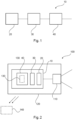
- Fig. 1 shows an example of an apparatus 10 for fly management.
- the apparatus 10 comprises an input unit 20, a processing unit 30, and an output unit 40.
- the input unit 20 is configured to provide the processing unit 30 with at least one image of an agricultural environment.
- the agricultural environment contains a plurality of bovine animals.
- Bovine animals here refers to cows, cattle, steers, bison, buffalo.
- the at least one image comprises image data of at least a part of at least one bovine animal of the plurality of bovine animals.
- the processing unit 30 is configured to determine a number of flies in the image data of the at least a part of at least one bovine animal.
- the processing unit 30 is configured also to determine information relating to fly infestation of the plurality of bovine animals, the determination comprising utilisation of the determined number of flies.
- the output unit 40 is configured to output an indication relating to a treatment for fly infestation of the plurality of bovine animals based on the determined information relating to fly infestation of the plurality of bovine animals
- the at least one image was acquired by a camera of a handheld device.
- the at least one image was acquired by a camera of a smart phone.
- the at least one image was acquired by a camera with a zoom lens capability.
- the at least one image was acquired by a camera fixedly mounted in the agricultural environment.
- the at least one image was acquired by a camera of an unmanned aerial vehicle (UAV).
- UAV unmanned aerial vehicle
- the image data of at least a part of at least one bovine animal comprises image data other than image data of a bovine animal that is contiguous to the bovine animal.
- the processing unit is configured to identify at least one particular type of fly in the image data of the at least a part of at least one bovine animal.
- the determined number of flies in the image data of the at least a part of at least one bovine animal can then be a number of flies in the image data of the at least a part of at least one bovine animal that are the at least one particular type of fly.
- determination of the number of flies in the image comprises implementation of an image processing algorithm to analyse the image data of the at least a part of at least one bovine animal.
- the image processing algorithm comprises a machine learning algorithm.
- the machine learning algorithm comprises a decision tree algorithm.
- a machine learning model is used to find correlations between imagery of and around cattle with ground truth numbers of flies, and between imagery of and around cattle with ground truth information relating to the types of flies present, and imagery of and around cattle with ground truth information relating to features such as mud, plants, that are in the imagery.
- a machine learning approach trained in this way can be used to process imagery and determine the number of flies present and the types of flies, taking into account other features in the imagery such as plants and mud patches.
- TensorFlow may be used for this purpose.
- TensorFlow is an open-source software library for dataflow programming across a range of tasks. It is a symbolic math library, and is also used for machine learning applications such as neural networks.
- TensorFlow was developed by the Google Brain team for internal Google use. It was released under the Apache 2.0 open source license on November 9, 2015.
- the machine learning algorithm is a neural network.
- the neural network in a deep learning neural network comprises at least one hidden layer.
- the machine learning algorithm is a trained machine learning algorithm, wherein the machine learning training comprises utilization of ground truth data and associated imagery.
- the machine learning algorithm has been taught on the basis of a plurality of images.
- the machine learning algorithm has been taught on the basis of a plurality of images containing imagery of at least one type of fly, and that contains imagery having no flies.
- the machine learning algorithm is provided with the number of flies, including the number zero, as a ground truth number for associated imagery.
- imagery of flies on and around cattle is provided as well as imagery of cattle hide having no flies and areas next to cattle having no flies.
- the imagery has imagery of objects other than flies, such as spots of mud, plants etc.
- the locations as well as numbers of flies is provided as ground truth information along with the associated imagery.
- the identification of different types of flies in imagery is provided as ground truth information.
- all imagery is provided having been taken over a range of daylight and weather conditions.
- subsequent training of the machine learning algorithm comprises utilization of the image data of the at least a part of at least one bovine animal.
- the subsequent training comprises utilization of the determined number of flies.
- the input unit is configured to receive from a user a validation of the indication relating to a treatment for fly infestation of the plurality of bovine animals, and wherein the subsequent training comprises utilization of the validation.
- a pixel in the image data of the at least a part of at least one bovine animal projected back to the at least part of the at least one bovine animal is less than or equal to 2mm.
- the projection of the pixel at the object plane is less than or equal to 1.5mm.
- the projection of the pixel at the object plane is less than or equal to 1.0mm.
- the projection of the pixel at the object plane is less than or equal to 0.75mm.
- the projection of the pixel at the object plane is less than or equal to 0.5mm.
- the projection of the pixel at the object plane is less than or equal to 0.25mm.
- the indication relating to the treatment for fly infestation of the plurality of bovine animals comprises an indication of a defined infestation level of a plurality of possible infestation levels.
- the indication relating to the treatment for fly infestation of the plurality of bovine animals comprises a message that the plurality of bovine animals need to be treated for fly infestation.
- the processing unit is configured to identify at least one chemical product useable for treatment for fly infestation.
- the indication relating to the treatment for fly infestation of the plurality of bovine animals can then comprise a message relating to the at least one chemical product useable for treatment for fly infestation.
- the input unit is configured to enable a user to input information relating to at least one previous chemical product used for treatment of fly infestation in the agricultural environment.
- Identification of the at least one chemical product that could now be used for treatment for fly infestation comprises utilisation of the information relating to at least one previous chemical product used for treatment of fly infestation in the agricultural environment.
- the indication relating to the treatment for fly infestation of the plurality of bovine animals comprises a message that the plurality of bovine animals need not be treated for fly infestation.
- determination of the information relating to fly infestation of the plurality of bovine animals comprises utilization of a threshold number of flies.
- the at least one image comprises a plurality of images, wherein the at least one part of the at least one bovine animal comprises a plurality of parts of the at least one bovine animal.
- Each image of the plurality of images is associated with a different part of the plurality of parts.
- the determined number of flies in the image data of the at least a part of at least one bovine animal can then comprise a number of flies in each image of the plurality of images.
- the at least one bovine animal comprises at least two bovine animals.
- a first part of the plurality of parts can then be associated with a first bovine animal of the at least one bovine animal and a second part of the plurality of parts can be associated with a second bovine animal of the at least one bovine animal.
- each part of the plurality of parts is associated with a different bovine animal.
- images of two bovine animals are acquired and analysed.
- images of four bovine animals are acquired and analysed.
- images of eight bovine animals are acquired and analysed.
- images of more than eight bovine animals are acquired and analysed.
- At least one first image of the plurality of images was acquired on a different day to at least one second image of the plurality of images.
- each image of the plurality of images was acquired on a different day.
- the processing unit is configured to implement a segmentation algorithm to analyse the at least one image to determine the image data of the at least a part of at least one bovine animal.
- the segmentation algorithm is configured to determine at least one area of the at least one image that has image data of an object other than one or more flies and wherein that object is other than the at least one bovine. Determination of the image data of the at least a part of at least one bovine animal can then comprises a deselection of the at least one area from the at least one image.
- the segmentation algorithm is trained on the basis of imagery having flies and having objects other than flies, such as mud patches, and plants imaged.
- the segmentation algorithm is comprised with the image processing algorithm such as the neural network based image processing algorithm.
- the processing unit is configured to detect the at least one bovine animal, the detection comprising analysis of the at least one image.
- analysis of the at least one image to detect the at least one bovine animal comprises utilization of an object detection algorithm.
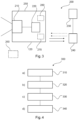
- Fig. 2 shows an example of a device 100 for fly management.
- the device 100 comprises a camera 110, an apparatus 10 for fly management as described above with reference to Fig. 1 , and a housing 120.
- the camera 110 and apparatus 10 are housed within the housing 120.
- the camera 110 is configured to acquire the at least one image of the agricultural environment.
- the device is a hand-held device.
- the device is a smart phone.
- the device has a camera with a zoom lens capability.
- the device is fixedly mounted in the agricultural environment.
- the device is an unmanned aerial vehicle (UAV).
- UAV unmanned aerial vehicle
- the UAV is configured to carry out a fly infestation treatment of one or more bovine animals.
- the fly infestation treatment comprises application of a chemical product to the one or more bovine animals.
- the input unit 20 of the apparatus 10 is configured to provide the processing unit 30 of the apparatus with at least one start image.
- the at least one start image comprises image data of a number of bovine animals.
- the number of bovine animals comprises the at least one bovine animal.
- the processing unit is configured to select the at least one bovine animal, the selection comprising analysis of the at least one start image.
- the output unit 40 of the apparatus 10 is configured to present to a user of the device at least one indication relating to the selected at least one bovine animal.
- the output unit comprises a visual display unit 130.
- the visual display unit is configured to display the at least one start image with the at least one indication relating to the selected at least one bovine highlighted on the at least one start image.
- the input unit is configured to enable a user to input a command instruction to apply a treatment for fly infestation to the plurality of bovine animals in response to the output of the indication relating to a treatment for fly infestation of the plurality of bovine animals on the output unit.
- the device is configured to transmit the command instruction to at least one fly infestation treatment application unit 140.
- the at least one fly infestation treatment application unit comprises one or more unmanned aerial vehicles.
- Fig. 3 shows an example of a system 200 for fly management.
- the system 200 comprises a camera 210, a first transceiver 220, a processing unit 230, a second transceiver 240, and a housing 250.
- the camera 210, and first transceiver 220 are housed in the housing 250.
- the processing unit 230 and second transceiver 240 are not housed in the housing 250.
- the camera 210 is configured to acquire at least one image of an agricultural environment.
- the agricultural environment contains a plurality of bovine animals.
- the at least one image comprises image data of at least a part of at least one bovine animal of the plurality of bovine animals.
- the first transceiver 220 is configured to transmit the at least one image and the second transceiver 240 is configured to receive the at least one image.
- the second transceiver 240 is configured to provide the processing unit 230 with the at least one image.
- the processing unit 230 is configured to determine a number of flies in the image data of the at least a part of at least one bovine animal.
- the processing unit 230 is configured also to determine information relating to fly infestation of the plurality of bovine animals, the determination comprising utilisation of the determined number of flies.
- the system comprises at least one fly infestation treatment application unit 260.
- the at least one fly infestation treatment application unit is configured to apply a treatment for fly infestation to the plurality of bovine animals on the basis of the determined information relating to fly infestation of the plurality of bovine animals.
- the second transceiver is configured to send a command instruction to the at least one fly infestation treatment unit to apply a treatment for fly infestation to the plurality of bovine animals.
- the system comprises an output unit 270 housed within the housing.
- the second transceiver is configured to transmit the information relating to fly infestation of the plurality of bovine animals and the first transceiver is configured to receive the information relating to fly infestation of the plurality of bovine animals.
- the output unit is configured to output an indication relating to a treatment for fly infestation of the plurality of bovine animals based on the determined information relating to fly infestation of the plurality of bovine animals.
- the system comprises an input unit 280 housed within the housing.
- the input unit is configured to enable a user to input a command instruction to apply a treatment for fly infestation to the plurality of bovine animals in response to the output of the indication relating to a treatment for fly infestation of the plurality of bovine animals on the output unit.
- the first transceiver is configured to send the command instruction to the at least one fly infestation treatment application unit.
- the at least one fly infestation treatment application unit comprises one or more unmanned aerial vehicle.
- the at least one image was acquired by a camera of a handheld device.
- the at least one image was acquired by a camera of a smart phone.
- the at least one image was acquired by a camera with a zoom lens capability.
- the at least one image was acquired by a camera fixedly mounted in the agricultural environment.
- the at least one image was acquired by a camera of an unmanned aerial vehicle (UAV).
- UAV unmanned aerial vehicle
- the image data of at least a part of at least one bovine animal comprises image data other than image data of a bovine animal that is contiguous to the bovine animal.
- the processing unit is configured to identify at least one particular type of fly in the image data of the at least a part of at least one bovine animal.
- the determined number of flies in the image data of the at least a part of at least one bovine animal can then be a number of flies in the image data of the at least a part of at least one bovine animal that are the at least one particular type of fly.
- determination of the number of flies in the image comprises implementation of an image processing algorithm to analyse the image data of the at least a part of at least one bovine animal.
- the image processing algorithm comprises a machine learning algorithm.
- the machine learning algorithm is a neural network.
- the neural network in a deep learning neural network comprises at least one hidden layer.
- the machine learning algorithm is a trained machine learning algorithm, wherein the machine learning training comprises utilization of ground truth data and associated imagery.
- subsequent training of the machine learning algorithm comprises utilization of the image data of the at least a part of at least one bovine animal.
- the subsequent training comprises utilization of the determined number of flies.
- the input unit is configured to receive from a user a validation of the indication relating to a treatment for fly infestation of the plurality of bovine animals, and wherein the subsequent training comprises utilization of the validation.
- a pixel in the image data of the at least a part of at least one bovine animal projected back to the at least part of the at least one bovine animal is less than or equal to 2mm.
- the projection of the pixel at the object plane is less than or equal to 1.5mm.
- the projection of the pixel at the object plane is less than or equal to 1.0mm.
- the projection of the pixel at the object plane is less than or equal to 0.75mm.
- the projection of the pixel at the object plane is less than or equal to 0.5mm.
- the projection of the pixel at the object plane is less than or equal to 0.25mm.
- the indication relating to the treatment for fly infestation of the plurality of bovine animals comprises an indication of a defined infestation level of a plurality of possible infestation levels.
- the indication relating to the treatment for fly infestation of the plurality of bovine animals comprises a message that the plurality of bovine animals need to be treated for fly infestation.
- the processing unit is configured to identify at least one chemical product useable for treatment for fly infestation.
- the indication relating to the treatment for fly infestation of the plurality of bovine animals can then comprise a message relating to the at least one chemical product useable for treatment for fly infestation.
- the input unit is configured to enable a user to input information relating to at least one previous chemical product used for treatment of fly infestation in the agricultural environment. Identification of the at least one chemical product useable for treatment for fly infestation can then comprise utilisation of the information relating to at least one previous chemical product used for treatment of fly infestation in the agricultural environment.
- the indication relating to the treatment for fly infestation of the plurality of bovine animals comprises a message that the plurality of bovine animals need not be treated for fly infestation.
- determination of the information relating to fly infestation of the plurality of bovine animals comprises utilization of a threshold number of flies.
- the at least one image comprises a plurality of images, wherein the at least one part of the at least one bovine animal comprises a plurality of parts of the at least one bovine animal.
- Each image of the plurality of images can be associated with a different part of the plurality of parts.
- the determined number of flies in the image data of the at least a part of at least one bovine animal can then comprises a number of flies in each image of the plurality of images.
- determination of information relating to fly infestation of the plurality of bovine animals comprises a statistical analysis of the number of flies in each image of the plurality of images.
- the at least one bovine animal comprises at least two bovine animals.
- a first part of the plurality of parts can be associated with a first bovine of the at least one bovine and a second part of the plurality of parts can be associated with a second bovine of the at least one bovine.
- each part of the plurality of parts is associated with a different bovine animal.
- At least one first image of the plurality of images was acquired on a different day to at least one second image of the plurality of images.
- the processing unit is configured to implement a segmentation algorithm to analyse the at least one image to determine the image data of the at least a part of at least one bovine animal.
- the segmentation algorithm is configured to determine at least one area of the at least one image that has image data of an object other than one or more flies and wherein that object is other than the at least one bovine. Determination of the image of the at least a part of at least one bovine animal can then comprise a deselection of the at least one area from the at least one image.
- the input unit is configured to provide the processing unit with at least one start image, wherein the at least one start image comprises image data of a number of bovine animals.
- the number of bovine animals comprises the at least one bovine animal.
- the first transceiver is configured to transmit the at least one start image and the second transceiver is configured to receive the at least one start image.
- the second transceiver is configured to provide the processing unit with the at least one start image.
- the processing unit is configured to select the at least one bovine animal, the selection comprising analysis of the at least one start image.
- the processing unit is configured to generate at least one indication relating to the at least one bovine.
- the second transceiver is configured to transmit at least one indication relating to the selected at least one bovine and the first transceiver is configured to receive the at least one indication relating to the selected at least one bovine.
- the output unit is configured to present to a user of the device the at least one indication relating to the selected at least one bovine animal.
- the output unit comprises a visual display unit.
- the visual display unit is configured to display the at least one start image with the at least one indication relating to the selected at least one bovine highlighted on the at least one start image.
- the processing unit is configured to detect the at least one bovine animal, the detection comprising analysis of the at least one image.
- analysis of the at least one image to detect the at least one bovine animal comprises utilization of an object detection algorithm.
- Fig. 3 shows a method 300 for fly management, wherein step d) is optional.
- the method 300 comprises:
- the method comprises step d), the outputting 340 by an output unit an indication relating to a treatment for fly infestation of the plurality of bovine animals based on the determined information relating to fly infestation of the plurality of bovine animals.
- the at least one image was acquired by a camera of a handheld device.
- the at least one image was acquired by a camera of a smart phone.
- the at least one image was acquired by a camera with a zoom lens capability.
- the at least one image was acquired by a camera fixedly mounted in the agricultural environment.
- the at least one image was acquired by a camera of an unmanned aerial vehicle (UAV).
- UAV unmanned aerial vehicle
- the image data of at least a part of at least one bovine animal comprises image data other than image data of a bovine animal that is contiguous to the bovine animal.
- determination of the number of flies in the image comprises implementation of an image processing algorithm to analyse the image data of the at least a part of at least one bovine animal.
- the image processing algorithm comprises a machine learning algorithm.
- the machine learning algorithm is a neural network.
- the neural network in a deep learning neural network comprises at least one hidden layer.
- the machine learning algorithm is a trained machine learning algorithm.
- the machine learning training can comprise utilization of ground truth data and associated imagery.
- subsequent training of the machine learning algorithm comprises utilization of the image data of the at least a part of at least one bovine animal.
- the subsequent training comprises utilization of the determined number of flies.
- the input unit is configured to receive from a user a validation of the indication relating to a treatment for fly infestation of the plurality of bovine animals.
- the subsequent training can comprise utilization of the validation.
- a pixel in the image data of the at least a part of at least one bovine animal projected back to the at least part of the at least one bovine animal is less than or equal to 2mm.
- the projection of the pixel at the object plane is less than or equal to 1.5mm.
- the projection of the pixel at the object plane is less than or equal to 1.0mm.
- the projection of the pixel at the object plane is less than or equal to 0.75mm.
- the projection of the pixel at the object plane is less than or equal to 0.5mm.
- the projection of the pixel at the object plane is less than or equal to 0.25mm.
- the indication relating to the treatment for fly infestation of the plurality of bovine animals comprises an indication of a defined infestation level of a plurality of possible infestation levels.
- the indication relating to the treatment for fly infestation of the plurality of bovine animals comprises a message that the plurality of bovine animals need to be treated for fly infestation.
- the processing unit is configured to identify at least one chemical product useable for treatment for fly infestation.
- the indication relating to the treatment for fly infestation of the plurality of bovine animals can then comprise a message relating to the at least one chemical product useable for treatment for fly infestation.
- the input unit is configured to enable a user to input information relating to at least one previous chemical product used for treatment of fly infestation in the agricultural environment.
- Identification of the at least one chemical product useable for treatment for fly infestation can comprise utilisation of the information relating to at least one previous chemical product used for treatment of fly infestation in the agricultural environment.
- the indication relating to the treatment for fly infestation of the plurality of bovine animals comprises a message that the plurality of bovine animals need not be treated for fly infestation.
- determination of the information relating to fly infestation of the plurality of bovine animals comprises utilization of a threshold number of flies.
- the at least one image comprises a plurality of images.
- the at least one part of the at least one bovine animal comprises a plurality of parts of the at least one bovine animal.
- Each image of the plurality of images can be associated with a different part of the plurality of parts.
- the determined number of flies in the image data of the at least a part of at least one bovine animal can comprise a number of flies in each image of the plurality of images.
- the determination of information relating to fly infestation of the plurality of bovine animals comprises a statistical analysis of the number of flies in each image of the plurality of images.
- the at least one bovine animal comprises at least two bovine animals.
- a first part of the plurality of parts can be associated with a first bovine animal of the at least one bovine animal and a second part of the plurality of parts can be associated with a second bovine animal of the at least one bovine animal.
- each part of the plurality of parts is associated with a different bovine animal.
- images of two bovine animals are acquired and analysed.
- images of four bovine animals are acquired and analysed.
- images of eight bovine animals are acquired and analysed.
- images of more than eight bovine animals are acquired and analysed.
- At least one first image of the plurality of images was acquired on a different day to at least one second image of the plurality of images.
- the processing unit is configured to implement a segmentation algorithm to analyse the at least one image to determine the image data of the at least a part of at least one bovine animal.
- the segmentation algorithm is configured to determine at least one area of the at least one image that has image data of an object other than one or more flies and wherein that object is other than the at least one bovine. Determination of the image data of the at least a part of at least one bovine animal can comprise a deselection of the at least one area from the at least one image.
- the processing unit is configured to detect the at least one bovine animal, the detection comprising analysis of the at least one image.
- analysis of the at least one image to detect the at least one bovine animal comprises utilization of an object detection algorithm.
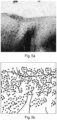
- Fig. 5a is an image of a cow infested with flies and fig. 5b is a representation of that image.
- a cow's back is shown, with flies on the cow's hide and flies flying around the cow.
- the skilled person will be aware of such situations, with flies infesting cattle.
- Fig. 5 serves to indicate the problem that the described apparatus, device, system and method address, in that fly infestation is problematic and can be at levels less than that shown, and still be economically detrimental.
- 200 flies per cattle for beef cattle and 50 flies per cattle for dairy cattle are rule of thumb threshold levels, as an average level for the animals in a herd, above which a treatment should be applied to mitigate the economic impact.
- an image processing system utilizing a neural network is used to count flies, and even identify those flies on a particular cow/cattle.
- Fig. 6 shows steps involved in training of the neural network. It has been found that a fly on, and indeed around a cow (see Fig. 5 ) should be imaged at a resolution such that an image of a fly has at least 5 pixels extending in a length direction of the fly. Thus, the required image resolution at the imaged cow/steer/cattle depends upon the particular fly species prevalent at an area. For example, flies that are 1cm in length need to be imaged at a resolution at the cow of better than or equal to 2mm in order that at least 5 pixels extend over the length of the fly.
- a whole cow can be imaged and indeed even more than one cow/steer and have imagery of flies at the required resolution. It is preferred to use imaging systems with detectors having larger numbers of pixels, and then have imagery at the cow with a resolution of 0.5mm in order that all different types of flies can be imaged at the correct resolution and with the whole cow imaged as well. However, only a part of a cow need be imaged, and as discussed above a resolution of 2mm at the cow can be used with certain fly species.
- imagery of the cow is acquired, and an area of interest with flies in evidence is selected by a user.
- the user identifies a series of areas in this image area, some having flies and others not having flies; and image area with a fly is indicated in fig. 6 and others also have flies and some do not have flies.
- This image data for all areas is fed to the neural network along with the ground truth data as to whether there is a fly present for each of those areas.
- the user actually inputs the species of fly present. This process is conducted for different fly species residing on and around cows having different coloured hides, and for different breeds of cattle, at different times of day and for different lighting conditions.
- imagery of flies In addition to imagery of flies, imagery of mud spots, and other marks that could possibly be mistaken for flies is also fed into the neural network along with the ground truth information that no fly is present. Additionally, imagery with two on three flies or more in close proximity and indeed even touching is fed to the neural network, again along with ground truth information relating to the number and type of this fly species.
- Fig. 7 shows one example, of how the apparatus, device, system and method operate.
- Fig. 7a shows imagery with fig. 7b showing a schematic representation of that imagery.
- a UAV is flying within a field with cattle present, and is acquiring imagery at a resolution as discussed above commensurate for fly counting analysis.
- the imagery can be saved or sent for analysis by an example of the described apparatus, that counts flies over a number of the cattle present in order to gain an understanding of fly infestation within the herd.
- Action can then be taken.
- the UAV can acquire imagery to be similarly analysed by a processing unit, thereby forming part of an example of the described system.
- the UAV can however acquire imagery and analyse the imagery itself, and be an example of the described device.
- a UAV acquiring imagery it could be a handheld unit having a camera, and that unit can then acquire imagery to be processed by for an example of the apparatus, or the unit can be an example of a part of the system, or be an example of the device as described.
- Fig. 8 indeed shows such a handheld unit, in the form of a smart phone having a camera with sufficient resolution to acquire the prerequisite imagery.
- a first step, as shown in Fig. 8 is operation by a segmentation algorithm to cut out the cow from the background imagery for further processing.
- the cut out imagery can, if necessary, include the area around the cow in order to count flies that are in flight, as shown in Fig. 5 . However, it is not necessary to count such flies in flight.
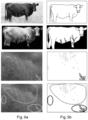
- Fig. 9 shows more detail relating to the image processing.
- Fig. 9a shows imagery, with fig. 9b showing schematic representations of that imagery.
- a farmer has acquired an image of a cow.
- the cow has flies on its hide, but are not clearly visible in this image.
- He first acquired an image of a number of cows, and superimposed on that image was an indication of the cows he should acquire imagery of in order to obtain better statistics on the fly numbers. Therefore, for example he acquired an image of 40 cattle, with 4 of those highlighted to him in order to acquire an image at a required resolution image (e.g. a close up image), with those 4 being at different positions within the herd.
- a required resolution image e.g. a close up image
- the above described segmentation algorithm has cut the cow out from the background, and has removed a certain amount of "noisy" imagery, being that with plants in the foreground that cover parts of the cow.
- a next step of image processing has identified a part of the cow to be used to count flies.
- this image is shown at a higher magnification than the top two images, and the edge of the cow is outside of the frame. However, now the flies can be seen.
- This identification of the part of the cow can be based on a selection of a part of the cow known to attract flies such as the flank, or can be based on a first detection of what could be flies, or a mixture of both techniques.
- objects have been identified that are not flies. These are the part of the top of grass in the bottom right of the frame, and a scar on the cow's hide on the left of the image. Therefore, in order to optimize the accuracy of fly counting, these objects are deselected from the imagery as shown in the bottom image in bold outline, and only the remaining part of the cow is image processed to determine the number of flies (the area bounded with a hashed line).
- Fig. 10a shows an image of the detected flies for an appropriate part of a cow, with Fig. 10b showing a schematic representation of that image.
- the part of the cow having used for fly counting has been selected as discussed above.
- the other cows imaged by the farmer are also processed in a similar manner. An average number of flies is then calculated, and this number can be scaled if necessary to take into account the area imaged. If a threshold number of flies per cattle is reached, taking into account whether the cattle are beef or dairy cows, and taking into account the type of flies present, an indication is provided to the farmer to apply a fly treatment to the herd.
- the farmer is provided with an indication as to a severity of the infestation. For example, if the threshold level has just been exceeded a scale can be presented to the farmer providing this information in a simple to interpret visual manner. Such as a temperature scale at level 7 - of possible indications ranging from 1-20, illuminated in amber. If, however the threshold level was grossly exceeded, then the temperature scale could be at a higher level of 19-20, illuminated in red, thereby indicating to the farmer that action is required immediately. The farmer is actually presented with a bar extending over the scale, centered at 7 but extending from 6.5 to 7.5. This provides to the farmer an indication of the accuracy of the determined infestation level.
- the position of the centre of the bar is determined from an average of the numbers of flies per image, and the width of the bar either side of the centre is determined from the standard deviation of the number of flies per image divided by the square root of the number of images - an error on a mean.
- the visual presentation is continually being updated as imagery is acquired, with the position of the centre of the bar varying with the mean of the number of flies, and the size of the bar decreasing as the error decrease with an increasing number of images taken.
- the farmer also has a simple way to determine if he has acquired enough images to provide him with an accurate appreciation of the fly infestation of his herd, and can if necessary continue to acquire imagery of cattle in the field until a returned result is provided with an error margin (the size of the bar centred at the number 7 for example) that enables the farmer to determine if action is required or not.
- an error margin the size of the bar centred at the number 7 for example
- a simple time history for the farmer can be provided.
- the threshold level may not have been met, with an indication level of 6 in a yellow-amber colour indicated. However, 10 days earlier the indication level was 1, and five days earlier the indication level was 3.
- a simple temporal graph is presented to the farmer, with days on the x-axis and infestation level on the y-axis.
- the farmer is presented with information indicating that a problem is developing, and can decide to initiate treatment for fly infestation.
- the farmer is presented first an indication on the smart phone that treatment is required as discussed above, and this can also provide an indication of the severity of the infestation and temporal information. He is also presented with a proposed active ingredient/product to be used. The farmer can then undertake the work himself. However, in this instance he pushes a button on the phone to activate the remote treatment of the herd by a fleet of UAVs.
- UAV can be the same as that shown in Fig. 7 , which has a chemical spray unit in addition to an imaging camera system. Indeed, this whole process of acquiring and analyzing imagery to determine if a fly treatment is necessary and then applying that treatment can be undertaken by the UAV with other UAVs if necessary, without the farmer's intervention being required.
- a computer program or computer program element is provided that is characterized by being configured to execute the method steps of the method according to one of the preceding embodiments, on an appropriate apparatus, device or system.
- the computer program element might therefore be stored on a computer unit, which might also be part of an embodiment.
- This computing unit may be configured to perform or induce performing of the steps of the method described above. Moreover, it may be configured to operate the components of the above described apparatus and/or system.
- the computing unit can be configured to operate automatically and/or to execute the orders of a user.
- a computer program may be loaded into a working memory of a data processor. The data processor may thus be equipped to carry out the method according to one of the preceding embodiments.
- This exemplary embodiment of the invention covers both, a computer program that right from the beginning uses the invention and computer program that by means of an update turns an existing program into a program that uses invention.
- the computer program element might be able to provide all necessary steps to fulfill the procedure of an exemplary embodiment of the method as described above.
- a computer readable medium such as a CD-ROM, USB stick or the like
- the computer readable medium has a computer program element stored on it which computer program element is described by the preceding section.
- a computer program may be stored and/or distributed on a suitable medium, such as an optical storage medium or a solid state medium supplied together with or as part of other hardware, but may also be distributed in other forms, such as via the internet or other wired or wireless telecommunication systems.
- a suitable medium such as an optical storage medium or a solid state medium supplied together with or as part of other hardware, but may also be distributed in other forms, such as via the internet or other wired or wireless telecommunication systems.
- the computer program may also be presented over a network like the World Wide Web and can be downloaded into the working memory of a data processor from such a network.
- a medium for making a computer program element available for downloading is provided, which computer program element is arranged to perform a method according to one of the previously described embodiments of the invention.
Landscapes
- Engineering & Computer Science (AREA)
- Life Sciences & Earth Sciences (AREA)
- Environmental Sciences (AREA)
- Theoretical Computer Science (AREA)
- Physics & Mathematics (AREA)
- General Physics & Mathematics (AREA)
- Business, Economics & Management (AREA)
- Animal Husbandry (AREA)
- Biodiversity & Conservation Biology (AREA)
- Computer Vision & Pattern Recognition (AREA)
- Health & Medical Sciences (AREA)
- General Health & Medical Sciences (AREA)
- Accounting & Taxation (AREA)
- Finance (AREA)
- Agronomy & Crop Science (AREA)
- Evolutionary Computation (AREA)
- General Engineering & Computer Science (AREA)
- Data Mining & Analysis (AREA)
- Artificial Intelligence (AREA)
- Biophysics (AREA)
- Economics (AREA)
- Marketing (AREA)
- General Business, Economics & Management (AREA)
- Strategic Management (AREA)
- Software Systems (AREA)
- Pest Control & Pesticides (AREA)
- Dentistry (AREA)
- Wood Science & Technology (AREA)
- Zoology (AREA)
- Multimedia (AREA)
- Mathematical Physics (AREA)
- Development Economics (AREA)
- Aviation & Aerospace Engineering (AREA)
- Signal Processing (AREA)
- Quality & Reliability (AREA)
- Computing Systems (AREA)
- Bioinformatics & Computational Biology (AREA)
- Bioinformatics & Cheminformatics (AREA)
- Evolutionary Biology (AREA)
- Mining & Mineral Resources (AREA)
Claims (38)
- Eine Vorrichtung (10) zur Fliegenbekämpfung, die Folgendes aufweist:- eine Eingabeeinheit (20);- eine Verarbeitungseinheit (30); und- eine Ausgabeeinheit (40);wobei die Eingabeeinheit konfiguriert ist, die Verarbeitungseinheit mit mindestens einem Bild einer landwirtschaftlichen Umgebung zu versorgen, wobei die landwirtschaftliche Umgebung eine Vielzahl von Rindern enthält;wobei das mindestens eine Bild Bilddaten von mindestens einem Teil mindestens eines Rindes aus der Vielzahl von Rindern aufweist;wobei die Verarbeitungseinheit konfiguriert ist, eine Anzahl von Fliegen in den Bilddaten des mindestens einen Teils des mindestens einen Rindes zu bestimmen;wobei die Verarbeitungseinheit konfiguriert ist, Informationen in Bezug auf den Fliegenbefall der mehreren Rinder zu bestimmen, wobei die Bestimmung die Verwendung der bestimmten Anzahl von Fliegen umfasst; undwobei die Ausgabeeinheit konfiguriert ist, auf der Grundlage der ermittelten Informationen über den Fliegenbefall der mehreren Rinder einen Hinweis auf eine Behandlung für den Fliegenbefall der mehreren Rinder auszugeben.
- Vorrichtung nach Anspruch 1, wobei die Bilddaten von mindestens einem Teil mindestens eines Rindes andere Bilddaten als die Bilddaten eines an das Rind angrenzenden Rindes aufweisen.
- Vorrichtung nach einem der Ansprüche 1 bis 2, wobei die Verarbeitungseinheit konfiguriert ist, mindestens eine bestimmte Fliegenart in den Bilddaten des mindestens einen Teils des mindestens einen Rindes zu identifizieren, und wobei die bestimmte Anzahl von Fliegen in den Bilddaten des mindestens einen Teils des mindestens einen Rindes eine Anzahl von Fliegen in den Bilddaten des mindestens einen Teils des mindestens einen Rindes ist, die die mindestens eine bestimmte Fliegenart sind.
- Vorrichtung nach einem der Ansprüche 1 bis 3, wobei die Bestimmung der Anzahl der Fliegen auf dem Bild die Anwendung eines Bildverarbeitungsalgorithmus zur Analyse der Bilddaten des mindestens einen Teils des mindestens einen Rindes umfasst.
- Vorrichtung nach Anspruch 4, wobei der Bildverarbeitungsalgorithmus einen maschinellen Lernalgorithmus aufweist.
- Vorrichtung nach Anspruch 5, wobei der maschinelle Lernalgorithmus ein neuronales Netz ist.
- Vorrichtung nach einem der Ansprüche 5-6, wobei der maschinelle Lernalgorithmus ein trainierter maschineller Lernalgorithmus ist, wobei das maschinelle Lerntraining die Verwendung von Grundwahrheitsdaten und zugehörigem Bildmaterial umfasst.
- Vorrichtung nach Anspruch 7, wobei das anschließende Training des maschinellen Lernalgorithmus die Verwendung der Bilddaten des mindestens einen Teils des mindestens einen Rindes umfasst.
- Vorrichtung nach Anspruch 8, wobei das anschließende Training die Verwendung der ermittelten Anzahl von Fliegen umfasst.
- Vorrichtung nach einem der Ansprüche 8 bis 9, wobei die Eingabeeinheit konfiguriert ist, von einem Benutzer eine Validierung der Anzeige in Bezug auf eine Behandlung für Fliegenbefall der Vielzahl von Rindern zu empfange, und wobei das anschließende Training die Verwendung der Validierung umfasst.
- Vorrichtung nach einem der Ansprüche 1 bis 10, wobei ein Pixel in den Bilddaten des mindestens einen Teils des mindestens einen Rindes, das auf den mindestens einen Teil des mindestens einen Rindes zurückprojiziert wird, weniger als oder gleich 2 mm beträgt.
- Vorrichtung nach einem der Ansprüche 1 bis 11, wobei die Angabe zur Behandlung des Fliegenbefalls der Vielzahl von Rindern die Angabe eines definierten Befallsgrades aus einer Vielzahl möglicher Befallsgrade umfasst.
- Vorrichtung nach einem der Ansprüche 1 bis 12, wobei der Hinweis auf die Behandlung des Fliegenbefalls der Vielzahl von Rindern eine Meldung aufweist, dass die Vielzahl von Rindern gegen Fliegenbefall behandelt werden muss.
- Vorrichtung nach einem der Ansprüche 1 bis 13, wobei die Verarbeitungseinheit konfiguriert ist, mindestens ein chemisches Produkt zu identifizieren, das zur Behandlung von Fliegenbefall verwendet werden kann, und wobei der Hinweis in Bezug auf die Behandlung von Fliegenbefall der Vielzahl von Rindern eine Meldung in Bezug auf das mindestens eine chemische Produkt aufweist, das zur Behandlung von Fliegenbefall verwendet werden kann.
- Vorrichtung nach Anspruch 14, wobei die Eingabeeinheit so konfiguriert ist, dass sie es einem Benutzer ermöglicht, Informationen in Bezug auf mindestens ein früheres chemisches Produkt einzugeben, das zur Behandlung von Fliegenbefall in der landwirtschaftlichen Umgebung verwendet wurde, und wobei die Identifizierung des mindestens einen chemischen Produkts, das zur Behandlung von Fliegenbefall verwendet werden kann, die Verwendung der Informationen in Bezug auf mindestens ein früheres chemisches Produkt umfasst, das zur Behandlung von Fliegenbefall in der landwirtschaftlichen Umgebung verwendet wurde.
- Vorrichtung nach einem der Ansprüche 1 bis 12, wobei der Hinweis auf die Behandlung der Vielzahl von Rindern gegen Fliegenbefall eine Meldung aufweist, dass die Vielzahl von Rindern nicht gegen Fliegenbefall behandelt werden muss.
- Vorrichtung nach einem der Ansprüche 1 bis 16, wobei die Bestimmung der Information über den Fliegenbefall der Vielzahl von Rindern die Verwendung einer Schwellenzahl von Fliegen umfasst.
- Vorrichtung nach einem der Ansprüche 1-17, wobei das mindestens eine Bild eine Vielzahl von Bildern aufweist, wobei der mindestens eine Teil des mindestens einen Rindes eine Vielzahl von Teilen des mindestens einen Rindes aufweist, und wobei jedes Bild der Vielzahl von Bildern einem anderen Teil der Vielzahl von Teilen zugeordnet ist, wobei die bestimmte Anzahl von Fliegen in den Bilddaten des mindestens einen Teils des mindestens einen Rindes eine Anzahl von Fliegen in jedem Bild der Vielzahl von Bildern aufweist.
- Vorrichtung nach Anspruch 18, wobei die Bestimmung der Informationen bezüglich des Fliegenbefalls der mehreren Rinder eine statistische Analyse der Anzahl der Fliegen in jedem Bild der mehreren Bilder umfasst.
- Vorrichtung nach einem der Ansprüche 18-19, wobei das mindestens eine Rind mindestens zwei Rinder umfasst, und wobei ein erster Teil der Vielzahl von Teilen einem ersten Rind des mindestens einen Rindes zugeordnet ist und ein zweiter Teil der Vielzahl von Teilen einem zweiten Rind des mindestens einen Rindes zugeordnet ist.
- Vorrichtung nach einem der Ansprüche 18 bis 20, wobei jedes Teil der Vielzahl von Teilen einem anderen Rind zugeordnet ist.
- Vorrichtung nach einem der Ansprüche 18-21, wobei mindestens ein erstes Bild aus der Vielzahl der Bilder an einem anderen Tag als mindestens ein zweites Bild aus der Vielzahl der Bilder aufgenommen wurde.
- Vorrichtung nach einem der Ansprüche 1-22, wobei die Verarbeitungseinheit konfiguriert ist, einen Segmentierungsalgorithmus zu implementieren, um das mindestens eine Bild zu analysieren und die Bilddaten des mindestens einen Teils des mindestens einen Rindes zu bestimmen.
- Vorrichtung nach Anspruch 23, wobei der Segmentierungsalgorithmus konfiguriert ist, um mindestens einen Bereich des mindestens einen Bildes zu bestimmen, der Bilddaten eines anderen Objekts als einer oder mehrerer Fliegen aufweist, und wobei dieses Objekt ein anderes als das mindestens eine Rind ist, und wobei die Bestimmung der Bilddaten des mindestens einen Teils des mindestens einen Rindes eine Abwahl des mindestens einen Bereichs aus dem mindestens einen Bild umfasst.
- Vorrichtung nach einem der Ansprüche 1-24, wobei die Verarbeitungseinheit konfiguriert ist, das mindestens eine Rind zu erkennen, wobei die Erkennung die Analyse des mindestens einen Bildes umfasst.
- Vorrichtung nach Anspruch 25, wobei die Analyse des mindestens einen Bildes zur Erkennung des mindestens einen Rindes die Verwendung eines Objekterkennungsalgorithmus umfasst.
- Eine Vorrichtung (100) für das Fliegenmanagement, die Folgendes aufweist:- eine Kamera (110);- eine Vorrichtung (10) zum Fliegenmanagement nach einem der Ansprüche 1-26; und- ein Gehäuse (120);wobei die Kamera und die Vorrichtung in dem Gehäuse untergebracht sind; undwobei die Kamera konfiguriert ist, das mindestens eine Bild der landwirtschaftlichen Umgebung aufzunehmen.
- Vorrichtung nach Anspruch 27, wobei die Eingabeeinheit (20) konfiguriert ist, der Verarbeitungseinheit (30) mindestens ein Startbild bereitzustellen, wobei das mindestens eine Startbild Bilddaten einer Anzahl von Rindern aufweist, wobei die Anzahl von Rindern das mindestens eine Rind umfasst, und wobei die Verarbeitungseinheit konfiguriert ist, das mindestens eine Rind auszuwählen, wobei die Auswahl eine Analyse des mindestens einen Startbildes umfasst.
- Vorrichtung nach Anspruch 28, wobei die Ausgabeeinheit (40) konfiguriert ist, einem Benutzer der Vorrichtung mindestens eine Anzeige bezüglich des ausgewählten mindestens einen Rindes zu präsentieren.
- Vorrichtung nach Anspruch 29, wobei die Ausgabeeinheit eine visuelle Anzeigeeinheit (130) aufweist, und wobei die visuelle Anzeigeeinheit konfiguriert ist, das mindestens eine Startbild anzuzeigen, wobei die mindestens eine Angabe, die sich auf das ausgewählte mindestens eine Rind bezieht, in dem mindestens einen Startbild hervorgehoben ist.
- Vorrichtung nach einem der Ansprüche 27-30, wobei die Eingabeeinheit konfiguriert ist, es einem Benutzer zu ermöglichen, eine Befehlsanweisung einzugeben, um eine Behandlung gegen Fliegenbefall auf die Vielzahl von Rindern als Reaktion auf die Ausgabe der Anzeige bezüglich einer Behandlung gegen Fliegenbefall der Vielzahl von Rindern auf der Ausgabeeinheit anzuwenden, und wobei die Vorrichtung konfiguriert ist, die Befehlsanweisung an mindestens eine Behandlungseinheit (140) gegen Fliegenbefall zu übertragen.
- Ein System (200) für das Fliegenmanagement, das Folgendes aufweist:- eine Kamera (210);- einen ersten Transceiver (220);- eine Verarbeitungseinheit (230);- einen zweiten Transceiver (240); und- ein Gehäuse (250);wobei die Kamera und der erste Transceiver in dem Gehäuse untergebracht sind;wobei die Verarbeitungseinheit und der zweite Transceiver nicht in dem Gehäuse untergebracht sind;wobei die Kamera konfiguriert ist, mindestens ein Bild einer landwirtschaftlichen Umgebung zu erfassen, wobei die landwirtschaftliche Umgebung eine Vielzahl von Rindern enthält, wobei das mindestens eine Bild Bilddaten von mindestens einem Teil mindestens eines Rindes der Vielzahl von Rindern aufweist;wobei der erste Transceiver konfiguriert ist, das mindestens eine Bild zu senden, und der zweite Transceiver konfiguriert ist, das mindestens eine Bild zu empfangen, und wobei der zweite Transceiver konfiguriert ist, der Verarbeitungseinheit das mindestens eine Bild zu liefern;wobei die Verarbeitungseinheit konfiguriert ist, eine Anzahl von Fliegen in den Bilddaten des mindestens einen Teils des mindestens einen Rindes zu bestimmen; undwobei die Verarbeitungseinheit konfiguriert ist, Informationen in Bezug auf den Fliegenbefall der mehreren Rinder zu bestimmen, wobei die Bestimmung die Verwendung der bestimmten Anzahl von Fliegen umfasst.
- System nach Anspruch 32, wobei das System mindestens eine Fliegenbefall-Behandlungsapplikationseinheit (260) aufweist, und wobei die mindestens eine Fliegenbefall-Behandlungsapplikationseinheit konfiguriert ist, auf der Grundlage der ermittelten Informationen bezüglich des Fliegenbefalls der mehreren Rinder eine Behandlung für Fliegenbefall auf die mehreren Rinder anzuwenden.
- System nach einem der Ansprüche 32-33, wobei das System eine Ausgabeeinheit (270) aufweist, die in dem Gehäuse untergebracht ist, und wobei der zweite Transceiver konfiguriert ist, die Informationen bezüglich des Fliegenbefalls der Vielzahl von Rindern zu senden, und der erste Transceiver konfiguriert ist, die Informationen bezüglich des Fliegenbefalls der Vielzahl von Rindern zu empfangen; und wobei die Ausgabeeinheit konfiguriert ist, auf der Grundlage der ermittelten Informationen über den Fliegenbefall der Vielzahl von Rindern einen Hinweis auf eine Behandlung des Fliegenbefalls der Vielzahl von Rindern auszugeben.
- System nach Anspruch 34, wenn es von Anspruch 33 abhängt, wobei das System eine Eingabeeinheit (280) aufweist, die in dem Gehäuse untergebracht ist, und wobei die Eingabeeinheit konfiguriert ist, einen Benutzer in die Lage zu versetzen, eine Befehlsanweisung einzugeben, um eine Behandlung gegen Fliegenbefall auf die Vielzahl von Rindern als Reaktion auf die Ausgabe des Hinweises bezüglich einer Behandlung gegen Fliegenbefall der Vielzahl von Rindern auf der Ausgabeeinheit anzuwenden, und wobei der erste Transceiver konfiguriert ist, die Befehlsanweisung an die mindestens eine Behandlungseinheit gegen Fliegenbefall zu senden.
- Verfahren (300) zum Fliegenmanagement, umfassend:a) Bereitstellen (310) einer Verarbeitungseinheit mit mindestens einem Bild einer landwirtschaftlichen Umgebung, wobei die landwirtschaftliche Umgebung eine Vielzahl von Rindern enthält; und wobei das mindestens eine Bild Bilddaten von mindestens einem Teil mindestens eines Rindes der Vielzahl von Rindern aufweist;b) Bestimmen (320) einer Anzahl von Fliegen in den Bilddaten des mindestens einen Teils des mindestens einen Rindes durch die Verarbeitungseinheit; undc) Bestimmen (330) von Informationen über den Fliegenbefall der Vielzahl von Rindern durch die Verarbeitungseinheit, wobei die Bestimmung die Verwendung der bestimmten Anzahl von Fliegen umfasst.
- Computerprogrammelement zur Steuerung eines Geräts nach einem der Ansprüche 1 bis 16 und/oder einer Vorrichtung nach einem der Ansprüche 27 bis 31 und/oder eines Systems nach einem der Ansprüche 32 bis 35, das bei Ausführung durch einen Prozessor konfiguriert ist, das Verfahren nach Anspruch 36 durchzuführen.
- Computerlesbares Medium, auf dem das Computerprogrammelement nach Anspruch 37 gespeichert ist.
Applications Claiming Priority (2)
| Application Number | Priority Date | Filing Date | Title |
|---|---|---|---|
| EP18174587.8A EP3574751A1 (de) | 2018-05-28 | 2018-05-28 | Vorrichtung zur fliegenbekämpfung |
| PCT/EP2019/063092 WO2019228861A1 (en) | 2018-05-28 | 2019-05-21 | Apparatus for fly management |
Publications (2)
| Publication Number | Publication Date |
|---|---|
| EP3801005A1 EP3801005A1 (de) | 2021-04-14 |
| EP3801005B1 true EP3801005B1 (de) | 2025-05-07 |
Family
ID=62455381
Family Applications (2)
| Application Number | Title | Priority Date | Filing Date |
|---|---|---|---|
| EP18174587.8A Ceased EP3574751A1 (de) | 2018-05-28 | 2018-05-28 | Vorrichtung zur fliegenbekämpfung |
| EP19724529.3A Active EP3801005B1 (de) | 2018-05-28 | 2019-05-21 | Vorrichtung zur fliegenbekämpfung |
Family Applications Before (1)
| Application Number | Title | Priority Date | Filing Date |
|---|---|---|---|
| EP18174587.8A Ceased EP3574751A1 (de) | 2018-05-28 | 2018-05-28 | Vorrichtung zur fliegenbekämpfung |
Country Status (18)
| Country | Link |
|---|---|
| US (1) | US11464211B2 (de) |
| EP (2) | EP3574751A1 (de) |
| JP (1) | JP7386814B2 (de) |
| KR (1) | KR102761793B1 (de) |
| CN (1) | CN112153892B (de) |
| AR (1) | AR115444A1 (de) |
| AU (1) | AU2019275912B2 (de) |
| CL (1) | CL2020003054A1 (de) |
| CR (1) | CR20200635A (de) |
| ES (1) | ES3037272T3 (de) |
| IL (1) | IL278890A (de) |
| MX (1) | MX2020012807A (de) |
| NZ (1) | NZ769338A (de) |
| PE (1) | PE20210534A1 (de) |
| PH (1) | PH12020552030A1 (de) |
| SG (1) | SG11202011020UA (de) |
| WO (1) | WO2019228861A1 (de) |
| ZA (1) | ZA202007952B (de) |
Families Citing this family (3)
| Publication number | Priority date | Publication date | Assignee | Title |
|---|---|---|---|---|
| US10936870B2 (en) * | 2018-07-05 | 2021-03-02 | Iron Ox, Inc. | Method for selectively deploying sensors within an agricultural facility |
| US12360044B2 (en) * | 2018-12-19 | 2025-07-15 | InnerPlant, Inc. | Method for identifying stressors in an agricultural environment based on characteristics of microbe sensors |
| NL2028234B1 (nl) * | 2021-05-18 | 2022-12-02 | Lely Patent Nv | Camerainrichting voor bewaken en herkennen van dieren of delen daarvan, alsmede veestal daarmee |
Family Cites Families (24)
| Publication number | Priority date | Publication date | Assignee | Title |
|---|---|---|---|---|
| US2639259A (en) * | 1948-07-20 | 1953-05-19 | Union Carbide & Carbon Corp | Insecticides |
| US3265568A (en) * | 1962-03-12 | 1966-08-09 | Exxon Research Engineering Co | Wax-water emulsions containing pyrethrum in the phase |
| JP2001005974A (ja) * | 1999-06-17 | 2001-01-12 | Matsushita Electric Ind Co Ltd | 物体認識方法及び物体認識装置 |
| US6746682B2 (en) * | 2001-09-26 | 2004-06-08 | Julio Angel Daffunchio | Biological control of horn flies |
| IL150915A0 (en) | 2002-07-25 | 2003-02-12 | Vet Tech Ltd | Imaging system and method for body condition evaluation |
| US7496228B2 (en) * | 2003-06-13 | 2009-02-24 | Landwehr Val R | Method and system for detecting and classifying objects in images, such as insects and other arthropods |
| EP2013823A1 (de) * | 2006-03-28 | 2009-01-14 | The University Court Of The University Of Edinburgh | Verfahren zum automatischen charakterisieren des verhaltens eines oder mehrerer objekte |
| US9052740B2 (en) * | 2013-03-12 | 2015-06-09 | Qualcomm Incorporated | Adaptive data path for computer-vision applications |
| US20150193971A1 (en) * | 2014-01-03 | 2015-07-09 | Motorola Mobility Llc | Methods and Systems for Generating a Map including Sparse and Dense Mapping Information |
| JP2016019505A (ja) * | 2014-07-15 | 2016-02-04 | 近藤電子株式会社 | 害虫発生推定装置 |
| IL236606B (en) * | 2015-01-11 | 2020-09-30 | Gornik Amihay | Standards and methods for agricultural monitoring |
| AU2015387254B2 (en) * | 2015-03-13 | 2019-03-14 | Telefonaktiebolaget Lm Ericsson (Publ) | Device for handheld operation and method thereof |
| CN104835164B (zh) * | 2015-05-11 | 2017-07-28 | 京东方科技集团股份有限公司 | 一种双目摄像头深度图像的处理方法及装置 |
| US9836839B2 (en) * | 2015-05-28 | 2017-12-05 | Tokitae Llc | Image analysis systems and related methods |
| JP6824199B2 (ja) * | 2015-07-01 | 2021-02-03 | ヴァイキング ジェネティクス エフエムベーア | 背の画像に基づき個々の動物を識別するシステム及び方法 |
| SG10201506012SA (en) * | 2015-07-31 | 2017-02-27 | Accenture Global Services Ltd | Inventory, growth, and risk prediction using image processing |
| US20170071164A1 (en) * | 2015-09-11 | 2017-03-16 | Flysorter, LLC | Insect singulating device |
| US10176588B2 (en) * | 2015-09-14 | 2019-01-08 | Sightline Innovation Inc. | System and method for specular surface inspection |
| CN205455287U (zh) * | 2016-02-26 | 2016-08-17 | 广州翼鲲生物科技有限公司 | 用于牧场虫害防控的系统 |
| EP3279831A1 (de) * | 2016-08-03 | 2018-02-07 | Bayer CropScience AG | Erkennung von unkraut in einer natürlichen umgebung mittels eines digitalen bildes |
| US9943387B2 (en) * | 2016-06-29 | 2018-04-17 | International Business Machines Corporation | Unmanned aerial vehicle-based system for livestock parasite amelioration |
| WO2018049289A1 (en) * | 2016-09-09 | 2018-03-15 | Cibo Technologies, Inc. | Systems for adjusting agronomic inputs using remote sensing, and related apparatus and methods |
| SG10201911099QA (en) * | 2016-09-20 | 2020-01-30 | Univ Nanyang Tech | Co-crystals of nurr1-lbd in complex with a cyclopentenone prostaglandin and modulators of nurr1 |
| ES2956102T3 (es) * | 2016-10-28 | 2023-12-13 | Verily Life Sciences Llc | Modelos predictivos para clasificar visualmente insectos |
-
2018
- 2018-05-28 EP EP18174587.8A patent/EP3574751A1/de not_active Ceased
-
2019
- 2019-05-21 US US17/056,747 patent/US11464211B2/en active Active
- 2019-05-21 JP JP2020565838A patent/JP7386814B2/ja active Active
- 2019-05-21 PE PE2020001923A patent/PE20210534A1/es unknown
- 2019-05-21 ES ES19724529T patent/ES3037272T3/es active Active
- 2019-05-21 MX MX2020012807A patent/MX2020012807A/es unknown
- 2019-05-21 NZ NZ769338A patent/NZ769338A/en unknown
- 2019-05-21 CN CN201980035823.9A patent/CN112153892B/zh active Active
- 2019-05-21 WO PCT/EP2019/063092 patent/WO2019228861A1/en not_active Ceased
- 2019-05-21 EP EP19724529.3A patent/EP3801005B1/de active Active
- 2019-05-21 AU AU2019275912A patent/AU2019275912B2/en active Active
- 2019-05-21 SG SG11202011020UA patent/SG11202011020UA/en unknown
- 2019-05-21 KR KR1020207036192A patent/KR102761793B1/ko active Active
- 2019-05-21 CR CR20200635A patent/CR20200635A/es unknown
- 2019-05-28 AR ARP190101453A patent/AR115444A1/es active IP Right Grant
-
2020
- 2020-11-22 IL IL278890A patent/IL278890A/en unknown
- 2020-11-25 PH PH12020552030A patent/PH12020552030A1/en unknown
- 2020-11-25 CL CL2020003054A patent/CL2020003054A1/es unknown
- 2020-12-18 ZA ZA2020/07952A patent/ZA202007952B/en unknown
Also Published As
| Publication number | Publication date |
|---|---|
| CN112153892A (zh) | 2020-12-29 |
| CN112153892B (zh) | 2024-01-30 |
| IL278890A (en) | 2021-01-31 |
| AU2019275912B2 (en) | 2024-03-21 |
| JP2021525422A (ja) | 2021-09-24 |
| US20210204521A1 (en) | 2021-07-08 |
| EP3574751A1 (de) | 2019-12-04 |
| SG11202011020UA (en) | 2020-12-30 |
| PE20210534A1 (es) | 2021-03-17 |
| JP7386814B2 (ja) | 2023-11-27 |
| ES3037272T3 (en) | 2025-09-30 |
| ZA202007952B (en) | 2025-06-25 |
| PH12020552030A1 (en) | 2021-08-02 |
| MX2020012807A (es) | 2021-02-15 |
| KR20210014122A (ko) | 2021-02-08 |
| CR20200635A (es) | 2021-03-01 |
| NZ769338A (en) | 2024-12-20 |
| AU2019275912A1 (en) | 2020-11-12 |
| KR102761793B1 (ko) | 2025-02-03 |
| CA3098953A1 (en) | 2019-12-05 |
| WO2019228861A1 (en) | 2019-12-05 |
| AR115444A1 (es) | 2021-01-20 |
| US11464211B2 (en) | 2022-10-11 |
| BR112020024144A2 (pt) | 2021-03-02 |
| CL2020003054A1 (es) | 2021-06-11 |
| EP3801005A1 (de) | 2021-04-14 |
Similar Documents
| Publication | Publication Date | Title |
|---|---|---|
| US10002416B2 (en) | Inventory, growth, and risk prediction using image processing | |
| AU2019275912B2 (en) | Apparatus for fly management | |
| EP4228404B1 (de) | Behandlungssystem zur unkrautspezifischen behandlung | |
| US20210357643A1 (en) | Method for determining distribution information, and control method and device for unmanned aerial vehicle | |
| CN114206110A (zh) | 用于生成用于利用农业设备来处理田地的应用地图的方法 | |
| EP3516580B1 (de) | Bekämpfung von schadorganismen | |
| US20180092336A1 (en) | Autonomous mobile beehives | |
| US20210084885A1 (en) | Apparatus for spray management | |
| Rozenbaum et al. | Machine learning-based bee recognition and tracking for advancing insect behavior research | |
| CA3098953C (en) | Apparatus for fly management | |
| Christensen et al. | Sensing for weed detection | |
| RU2798879C2 (ru) | Устройство для борьбы с летающими насекомыми | |
| Tscharke et al. | Growth recorded automatically and continuously by a machine vision system for finisher pigs | |
| BR112020024144B1 (pt) | Aparelho, dispositivo, sistema e método para gerenciamento de mosca | |
| Negrete | Artificial vision in mexican agriculture for identification of diseases, pests and invasive plants | |
| US10913533B2 (en) | Remote control system, remote control method and program | |
| Charitha et al. | Detection of Weed Plants Using Image Processing and Deep Learning Techniques | |
| Majewski et al. | Improved Pest Detection in Insect Larvae Rearing with Pseudo-Labelling and Spatio-Temporal Masking | |
| WO2025132878A1 (en) | Method for generating control data for dose adaptation for an application device for applying a crop protection product | |
| Segaran et al. | Nesting waterbird colony population size monitoring using automated counts on drone imagery | |
| RU2020141627A (ru) | Устройство для борьбы с летающими насекомыми | |
| IT202000004561A1 (it) | Sistema interattivo per la previsione e la cura di fitopatologie | |
| Mare | UFOs are becoming UAVs & technology |
Legal Events
| Date | Code | Title | Description |
|---|---|---|---|
| STAA | Information on the status of an ep patent application or granted ep patent |
Free format text: STATUS: UNKNOWN |
|
| STAA | Information on the status of an ep patent application or granted ep patent |
Free format text: STATUS: THE INTERNATIONAL PUBLICATION HAS BEEN MADE |
|
| PUAI | Public reference made under article 153(3) epc to a published international application that has entered the european phase |
Free format text: ORIGINAL CODE: 0009012 |
|
| STAA | Information on the status of an ep patent application or granted ep patent |
Free format text: STATUS: REQUEST FOR EXAMINATION WAS MADE |
|
| 17P | Request for examination filed |
Effective date: 20201104 |
|
| AK | Designated contracting states |
Kind code of ref document: A1 Designated state(s): AL AT BE BG CH CY CZ DE DK EE ES FI FR GB GR HR HU IE IS IT LI LT LU LV MC MK MT NL NO PL PT RO RS SE SI SK SM TR |
|
| AX | Request for extension of the european patent |
Extension state: BA ME |
|
| DAV | Request for validation of the european patent (deleted) | ||
| DAX | Request for extension of the european patent (deleted) | ||
| P01 | Opt-out of the competence of the unified patent court (upc) registered |
Effective date: 20230527 |
|
| GRAP | Despatch of communication of intention to grant a patent |
Free format text: ORIGINAL CODE: EPIDOSNIGR1 |
|
| STAA | Information on the status of an ep patent application or granted ep patent |
Free format text: STATUS: GRANT OF PATENT IS INTENDED |
|
| INTG | Intention to grant announced |
Effective date: 20241127 |
|
| GRAS | Grant fee paid |
Free format text: ORIGINAL CODE: EPIDOSNIGR3 |
|
| GRAA | (expected) grant |
Free format text: ORIGINAL CODE: 0009210 |
|
| STAA | Information on the status of an ep patent application or granted ep patent |
Free format text: STATUS: THE PATENT HAS BEEN GRANTED |
|
| AK | Designated contracting states |
Kind code of ref document: B1 Designated state(s): AL AT BE BG CH CY CZ DE DK EE ES FI FR GB GR HR HU IE IS IT LI LT LU LV MC MK MT NL NO PL PT RO RS SE SI SK SM TR |
|
| REG | Reference to a national code |
Ref country code: GB Ref legal event code: FG4D |
|
| REG | Reference to a national code |
Ref country code: CH Ref legal event code: EP |
|
| REG | Reference to a national code |
Ref country code: DE Ref legal event code: R096 Ref document number: 602019069617 Country of ref document: DE |
|
| REG | Reference to a national code |
Ref country code: IE Ref legal event code: FG4D |
|
| PGFP | Annual fee paid to national office [announced via postgrant information from national office to epo] |
Ref country code: DE Payment date: 20250520 Year of fee payment: 7 |
|
| RAP4 | Party data changed (patent owner data changed or rights of a patent transferred) |
Owner name: ELANCO ANIMAL HEALTH GMBH |
|
| PGFP | Annual fee paid to national office [announced via postgrant information from national office to epo] |
Ref country code: GB Payment date: 20250619 Year of fee payment: 7 Ref country code: ES Payment date: 20250623 Year of fee payment: 7 |
|
| REG | Reference to a national code |
Ref country code: DE Ref legal event code: R081 Ref document number: 602019069617 Country of ref document: DE Owner name: ELANCO ANIMAL HEALTH GMBH, DE Free format text: FORMER OWNER: ANMELDERANGABEN UNKLAR / UNVOLLSTAENDIG, 80297 MUENCHEN, DE Ref country code: DE Ref legal event code: R081 Ref document number: 602019069617 Country of ref document: DE Owner name: ELANCO ANIMAL HEALTH GMBH, DE Free format text: FORMER OWNER: BAYER ANIMAL HEALTH GMBH, 51373 LEVERKUSEN, DE |
|
| PGFP | Annual fee paid to national office [announced via postgrant information from national office to epo] |
Ref country code: FR Payment date: 20250619 Year of fee payment: 7 |
|
| REG | Reference to a national code |
Ref country code: NL Ref legal event code: MP Effective date: 20250507 |
|
| REG | Reference to a national code |
Ref country code: ES Ref legal event code: FG2A Ref document number: 3037272 Country of ref document: ES Kind code of ref document: T3 Effective date: 20250930 |
|
| PG25 | Lapsed in a contracting state [announced via postgrant information from national office to epo] |
Ref country code: PT Free format text: LAPSE BECAUSE OF FAILURE TO SUBMIT A TRANSLATION OF THE DESCRIPTION OR TO PAY THE FEE WITHIN THE PRESCRIBED TIME-LIMIT Effective date: 20250908 Ref country code: FI Free format text: LAPSE BECAUSE OF FAILURE TO SUBMIT A TRANSLATION OF THE DESCRIPTION OR TO PAY THE FEE WITHIN THE PRESCRIBED TIME-LIMIT Effective date: 20250507 |
|
| REG | Reference to a national code |
Ref country code: LT Ref legal event code: MG9D |
|
| PG25 | Lapsed in a contracting state [announced via postgrant information from national office to epo] |
Ref country code: GR Free format text: LAPSE BECAUSE OF FAILURE TO SUBMIT A TRANSLATION OF THE DESCRIPTION OR TO PAY THE FEE WITHIN THE PRESCRIBED TIME-LIMIT Effective date: 20250808 Ref country code: NO Free format text: LAPSE BECAUSE OF FAILURE TO SUBMIT A TRANSLATION OF THE DESCRIPTION OR TO PAY THE FEE WITHIN THE PRESCRIBED TIME-LIMIT Effective date: 20250807 |
|
| PG25 | Lapsed in a contracting state [announced via postgrant information from national office to epo] |
Ref country code: NL Free format text: LAPSE BECAUSE OF FAILURE TO SUBMIT A TRANSLATION OF THE DESCRIPTION OR TO PAY THE FEE WITHIN THE PRESCRIBED TIME-LIMIT Effective date: 20250507 Ref country code: PL Free format text: LAPSE BECAUSE OF FAILURE TO SUBMIT A TRANSLATION OF THE DESCRIPTION OR TO PAY THE FEE WITHIN THE PRESCRIBED TIME-LIMIT Effective date: 20250507 |
|
| PGFP | Annual fee paid to national office [announced via postgrant information from national office to epo] |
Ref country code: IT Payment date: 20250731 Year of fee payment: 7 |
|
| REG | Reference to a national code |
Ref country code: AT Ref legal event code: MK05 Ref document number: 1791392 Country of ref document: AT Kind code of ref document: T Effective date: 20250507 |
|
| PG25 | Lapsed in a contracting state [announced via postgrant information from national office to epo] |
Ref country code: BG Free format text: LAPSE BECAUSE OF FAILURE TO SUBMIT A TRANSLATION OF THE DESCRIPTION OR TO PAY THE FEE WITHIN THE PRESCRIBED TIME-LIMIT Effective date: 20250507 |
|
| PG25 | Lapsed in a contracting state [announced via postgrant information from national office to epo] |
Ref country code: HR Free format text: LAPSE BECAUSE OF FAILURE TO SUBMIT A TRANSLATION OF THE DESCRIPTION OR TO PAY THE FEE WITHIN THE PRESCRIBED TIME-LIMIT Effective date: 20250507 |
|
| PG25 | Lapsed in a contracting state [announced via postgrant information from national office to epo] |
Ref country code: AT Free format text: LAPSE BECAUSE OF FAILURE TO SUBMIT A TRANSLATION OF THE DESCRIPTION OR TO PAY THE FEE WITHIN THE PRESCRIBED TIME-LIMIT Effective date: 20250507 |
|
| PG25 | Lapsed in a contracting state [announced via postgrant information from national office to epo] |
Ref country code: RS Free format text: LAPSE BECAUSE OF FAILURE TO SUBMIT A TRANSLATION OF THE DESCRIPTION OR TO PAY THE FEE WITHIN THE PRESCRIBED TIME-LIMIT Effective date: 20250807 |
|
| PG25 | Lapsed in a contracting state [announced via postgrant information from national office to epo] |
Ref country code: IS Free format text: LAPSE BECAUSE OF FAILURE TO SUBMIT A TRANSLATION OF THE DESCRIPTION OR TO PAY THE FEE WITHIN THE PRESCRIBED TIME-LIMIT Effective date: 20250907 |
|
| PG25 | Lapsed in a contracting state [announced via postgrant information from national office to epo] |
Ref country code: LV Free format text: LAPSE BECAUSE OF FAILURE TO SUBMIT A TRANSLATION OF THE DESCRIPTION OR TO PAY THE FEE WITHIN THE PRESCRIBED TIME-LIMIT Effective date: 20250507 |
|
| REG | Reference to a national code |
Ref country code: CH Ref legal event code: H13 Free format text: ST27 STATUS EVENT CODE: U-0-0-H10-H13 (AS PROVIDED BY THE NATIONAL OFFICE) Effective date: 20251223 |
|
| PG25 | Lapsed in a contracting state [announced via postgrant information from national office to epo] |
Ref country code: SM Free format text: LAPSE BECAUSE OF FAILURE TO SUBMIT A TRANSLATION OF THE DESCRIPTION OR TO PAY THE FEE WITHIN THE PRESCRIBED TIME-LIMIT Effective date: 20250507 Ref country code: DK Free format text: LAPSE BECAUSE OF FAILURE TO SUBMIT A TRANSLATION OF THE DESCRIPTION OR TO PAY THE FEE WITHIN THE PRESCRIBED TIME-LIMIT Effective date: 20250507 |
|
| PG25 | Lapsed in a contracting state [announced via postgrant information from national office to epo] |
Ref country code: LU Free format text: LAPSE BECAUSE OF NON-PAYMENT OF DUE FEES Effective date: 20250521 |
|
| PG25 | Lapsed in a contracting state [announced via postgrant information from national office to epo] |
Ref country code: CH Free format text: LAPSE BECAUSE OF NON-PAYMENT OF DUE FEES Effective date: 20250531 |
|
| PG25 | Lapsed in a contracting state [announced via postgrant information from national office to epo] |
Ref country code: CZ Free format text: LAPSE BECAUSE OF FAILURE TO SUBMIT A TRANSLATION OF THE DESCRIPTION OR TO PAY THE FEE WITHIN THE PRESCRIBED TIME-LIMIT Effective date: 20250507 |
|
| PG25 | Lapsed in a contracting state [announced via postgrant information from national office to epo] |
Ref country code: EE Free format text: LAPSE BECAUSE OF FAILURE TO SUBMIT A TRANSLATION OF THE DESCRIPTION OR TO PAY THE FEE WITHIN THE PRESCRIBED TIME-LIMIT Effective date: 20250507 |
|
| PG25 | Lapsed in a contracting state [announced via postgrant information from national office to epo] |
Ref country code: RO Free format text: LAPSE BECAUSE OF FAILURE TO SUBMIT A TRANSLATION OF THE DESCRIPTION OR TO PAY THE FEE WITHIN THE PRESCRIBED TIME-LIMIT Effective date: 20250507 Ref country code: SK Free format text: LAPSE BECAUSE OF FAILURE TO SUBMIT A TRANSLATION OF THE DESCRIPTION OR TO PAY THE FEE WITHIN THE PRESCRIBED TIME-LIMIT Effective date: 20250507 |
|
| REG | Reference to a national code |
Ref country code: BE Ref legal event code: MM Effective date: 20250531 |
|
| REG | Reference to a national code |
Ref country code: DE Ref legal event code: R097 Ref document number: 602019069617 Country of ref document: DE |
|
| PG25 | Lapsed in a contracting state [announced via postgrant information from national office to epo] |
Ref country code: MC Free format text: LAPSE BECAUSE OF FAILURE TO SUBMIT A TRANSLATION OF THE DESCRIPTION OR TO PAY THE FEE WITHIN THE PRESCRIBED TIME-LIMIT Effective date: 20250507 |
|
| PLBE | No opposition filed within time limit |
Free format text: ORIGINAL CODE: 0009261 |
|
| STAA | Information on the status of an ep patent application or granted ep patent |
Free format text: STATUS: NO OPPOSITION FILED WITHIN TIME LIMIT |
|
| REG | Reference to a national code |
Ref country code: CH Ref legal event code: L10 Free format text: ST27 STATUS EVENT CODE: U-0-0-L10-L00 (AS PROVIDED BY THE NATIONAL OFFICE) Effective date: 20260318 |
|
| PG25 | Lapsed in a contracting state [announced via postgrant information from national office to epo] |
Ref country code: IE Free format text: LAPSE BECAUSE OF NON-PAYMENT OF DUE FEES Effective date: 20250521 |
|
| 26N | No opposition filed |
Effective date: 20260210 |
|
| PG25 | Lapsed in a contracting state [announced via postgrant information from national office to epo] |
Ref country code: BE Free format text: LAPSE BECAUSE OF NON-PAYMENT OF DUE FEES Effective date: 20250531 |