EP3800757B1 - Power storage system and self-starting method therefor - Google Patents
Power storage system and self-starting method therefor Download PDFInfo
- Publication number
- EP3800757B1 EP3800757B1 EP20745042.0A EP20745042A EP3800757B1 EP 3800757 B1 EP3800757 B1 EP 3800757B1 EP 20745042 A EP20745042 A EP 20745042A EP 3800757 B1 EP3800757 B1 EP 3800757B1
- Authority
- EP
- European Patent Office
- Prior art keywords
- single rack
- relay
- high voltage
- power
- circuit breaker
- Prior art date
- Legal status (The legal status is an assumption and is not a legal conclusion. Google has not performed a legal analysis and makes no representation as to the accuracy of the status listed.)
- Active
Links
Images

Classifications
-
- H—ELECTRICITY
- H02—GENERATION; CONVERSION OR DISTRIBUTION OF ELECTRIC POWER
- H02J—ELECTRIC POWER NETWORKS; CIRCUIT ARRANGEMENTS OR SYSTEMS FOR SUPPLYING OR DISTRIBUTING ELECTRIC POWER; SYSTEMS FOR STORING ELECTRIC ENERGY
- H02J1/00—Circuit arrangements for DC mains or DC distribution networks
- H02J1/10—Parallel operation of DC sources
- H02J1/102—Parallel operation of DC sources being switching converters
-
- H—ELECTRICITY
- H02—GENERATION; CONVERSION OR DISTRIBUTION OF ELECTRIC POWER
- H02J—ELECTRIC POWER NETWORKS; CIRCUIT ARRANGEMENTS OR SYSTEMS FOR SUPPLYING OR DISTRIBUTING ELECTRIC POWER; SYSTEMS FOR STORING ELECTRIC ENERGY
- H02J3/00—Circuit arrangements for AC mains or AC distribution networks
- H02J3/38—Arrangements for feeding a single network from two or more generators or sources in parallel; Arrangements for feeding already energised networks from additional generators or sources in parallel
- H02J3/381—Dispersed generators
-
- H—ELECTRICITY
- H02—GENERATION; CONVERSION OR DISTRIBUTION OF ELECTRIC POWER
- H02J—ELECTRIC POWER NETWORKS; CIRCUIT ARRANGEMENTS OR SYSTEMS FOR SUPPLYING OR DISTRIBUTING ELECTRIC POWER; SYSTEMS FOR STORING ELECTRIC ENERGY
- H02J7/00—Circuit arrangements for charging or discharging batteries or for supplying loads from batteries
- H02J7/50—Circuit arrangements for charging or discharging batteries or for supplying loads from batteries acting upon multiple batteries simultaneously or sequentially
- H02J7/585—Sequential battery discharge in systems with a plurality of batteries
-
- H—ELECTRICITY
- H02—GENERATION; CONVERSION OR DISTRIBUTION OF ELECTRIC POWER
- H02J—ELECTRIC POWER NETWORKS; CIRCUIT ARRANGEMENTS OR SYSTEMS FOR SUPPLYING OR DISTRIBUTING ELECTRIC POWER; SYSTEMS FOR STORING ELECTRIC ENERGY
- H02J7/00—Circuit arrangements for charging or discharging batteries or for supplying loads from batteries
- H02J7/60—Circuit arrangements for charging or discharging batteries or for supplying loads from batteries including safety or protection arrangements
- H02J7/64—Circuit arrangements for charging or discharging batteries or for supplying loads from batteries including safety or protection arrangements against overvoltage
-
- H—ELECTRICITY
- H02—GENERATION; CONVERSION OR DISTRIBUTION OF ELECTRIC POWER
- H02J—ELECTRIC POWER NETWORKS; CIRCUIT ARRANGEMENTS OR SYSTEMS FOR SUPPLYING OR DISTRIBUTING ELECTRIC POWER; SYSTEMS FOR STORING ELECTRIC ENERGY
- H02J7/00—Circuit arrangements for charging or discharging batteries or for supplying loads from batteries
- H02J7/855—Circuit arrangements for charging or discharging batteries or for supplying loads from batteries with circuits adapted for supplying loads from the battery
-
- H—ELECTRICITY
- H02—GENERATION; CONVERSION OR DISTRIBUTION OF ELECTRIC POWER
- H02J—ELECTRIC POWER NETWORKS; CIRCUIT ARRANGEMENTS OR SYSTEMS FOR SUPPLYING OR DISTRIBUTING ELECTRIC POWER; SYSTEMS FOR STORING ELECTRIC ENERGY
- H02J2207/00—Details of circuit arrangements for charging or discharging batteries or supplying loads from batteries
- H02J2207/10—Control circuit supply, e.g. means for supplying power to the control circuit
-
- H—ELECTRICITY
- H02—GENERATION; CONVERSION OR DISTRIBUTION OF ELECTRIC POWER
- H02J—ELECTRIC POWER NETWORKS; CIRCUIT ARRANGEMENTS OR SYSTEMS FOR SUPPLYING OR DISTRIBUTING ELECTRIC POWER; SYSTEMS FOR STORING ELECTRIC ENERGY
- H02J3/00—Circuit arrangements for AC mains or AC distribution networks
- H02J3/28—Arrangements for balancing of the load in networks by storage of energy
- H02J3/32—Arrangements for balancing of the load in networks by storage of energy using batteries or super capacitors with converting means
Definitions
- the present invention relates to the field of energy storage technologies, and in particular, to an energy storage system and a self-start method thereof.
- energy of an energy storage system comes from solar and wind energy, and after being converted into electric energy by an energy conversion device, is supplied to a grid for use or stored in an energy storage system for storage.
- references KR 10 2015 0 081 987 A and KR 10 2015 0 138 900 A disclose energy storage systems of the generic kind.
- embodiments of the present invention provide an energy storage system and a self-start method thereof, to resolve a prior-art problem that an energy storage system cannot self-start when there is no external power supply.
- Power conversion system Power Conversion System, PCS for short;
- FIG. 1 is a schematic diagram of an energy storage system.
- the energy storage system includes n single racks. Due to a size of the figure, FIG. 1 shows the first single rack and the n th single rack, components of other n-2 single racks and a connection relationship between the components are similar to those of the first single rack and the n th single rack.
- the power conversion system PCS is based on photovoltaic PV or wind energy.
- the host computer may be an industrial computer, a touchscreen, a PC, or the like.
- the energy storage system includes a power conversion system, a DC bus, n single racks, a host computer, and a master battery management unit, n is a natural number, and n is greater than 1.
- the host computer is connected to each of the n single racks.
- the master battery management unit is connected to each of the n single racks.
- Each of the n single racks includes a first miniature circuit breaker, a DC/DC power module, a slave battery management unit, a wake-up relay, a main positive high voltage relay, a main negative high voltage relay, a CSC module, and a battery box, where the first miniature circuit breaker is connected to both the DC/DC power module and the battery box, the wake-up relay is connected to each of the DC/DC power module, the slave battery management unit, and the CSC module, the DC/DC power module is connected to each of the first miniature circuit breaker, the wake-up relay, and the slave battery management unit, the main positive high voltage relay is connected to the battery box, and the main negative high voltage relay is connected to the battery box.
- a single rack, meeting a preset condition, of the energy storage system is determined first.
- the preset condition may be voltage being highest, or voltage being greater than specified voltage. It is assumed that the single rack, meeting the preset condition, of the energy storage system is a single rack b, a first miniature circuit breaker of the single rack b is closed, and a DC/DC power module of the single rack b receives power from a battery group (the battery group is located in a battery box), and outputs the power to the master battery management unit, the host computer, and a slave battery management unit of the single rack b.
- the slave battery management unit of the single rack b controls a wake-up relay of the single rack b to be closed, so that CSC-b1 to CSC-bm modules (a CSC module of the single rack b) start to work after being awakened, thereby completing start-up of the single rack b.
- the single rack b is controlled to be powered on at high voltage (that is, a main positive high voltage relay of the single rack b and a main negative high voltage relay of the single rack b are closed), the DC bus is controlled to be energized, and the PCS is controlled to be energized.
- the k th single rack is used as an example.
- a DC/DC power module of the k th single rack receives power from the DC bus and outputs the power to a slave battery management unit of the k th single rack.
- the slave battery management unit of the k th single rack controls a wake-up relay of the k th single rack to be closed, so that CSC-k1 to CSC-km modules (a CSC module of the k th single rack) start to work after being awakened, thereby completing start-up of the k th single rack.
- the PCS controls the k th single rack to complete high voltage power-on (that is, a main positive high voltage relay of the k th single rack and a main negative high voltage relay of the k th single rack are closed).
- the target single rack When the power conversion system has no power input, the target single rack, meeting the preset condition, of the energy storage system is determined, and the first miniature circuit breaker of the target single rack is closed.
- the DC/DC power module of the target single rack receives power from a battery group and outputs the power to the master battery management unit, the host computer, and the slave battery management unit of the target single rack.
- the slave battery management unit of the target single rack controls the wake-up relay of the target single rack to be closed, so that the CSC module of the target single rack starts to work after being awakened, thereby completing start-up of the target single rack.
- the target single rack Through the host computer, the target single rack is controlled to be powered on at high voltage, the DC bus is controlled to be energized, and the PCS is controlled to be energized.
- the PCS controls other single racks to complete high voltage power-on. This resolves the prior-art problem that an energy storage system cannot self-start when there is no external power supply, and implements that the
- each of the n single racks further includes a release and a release relay.
- the release relay is connected to each of the slave battery management unit, the DC/DC power module, and the release.
- Functions of the release and the release relay are to open the first miniature circuit breaker of the single rack.
- the PCS controls the single racks to complete high voltage power-on in sequence. After high voltage power-on is successfully completed, the system operator needs to manually open the first miniature circuit breaker of the single rack b. At this point, the energy storage system completes self-start and is powered by a battery.
- the slave battery management unit of the single rack b When the system operator forgets to manually open the first miniature circuit breaker of the single rack b, the slave battery management unit of the single rack b continuously performs detection on a switching status of the first miniature circuit breaker of the single rack b. If it is detected that the first miniature circuit breaker of the single rack b is not opened, after a period of time (the time may be set based on a specific application scenario), the slave battery management unit of the single rack b controls a release relay of the single rack b to be closed. After being energized, a release of the single rack b performs an action of opening the first miniature circuit breaker of the single rack b. If the first miniature circuit breaker of the single rack b is still in a closed state after the release action, alarm information is sent to instruct the system operator to perform troubleshooting.
- each of the n single racks further includes a second miniature circuit breaker.
- One end of the second miniature circuit breaker is connected to the power conversion system, and the other end of the second miniature circuit breaker is connected to the DC/DC power module.
- the system further includes a main isolation switch.
- One end of the main isolation switch is connected to the power conversion system, and the other end of the main isolation switch is connected to each of the n single racks.
- each of the n single racks further includes a circuit breaker and an isolation switch.
- One end of the circuit breaker is connected to the main isolation switch, and the other end of the circuit breaker is connected to the isolation switch.
- One end of the isolation switch is connected to the circuit breaker, and the other end of the isolation switch is connected to both the main positive high voltage relay and the main negative high voltage relay.
- the isolation switch has four poles. A first pole is connected to the main positive high voltage relay, a second pole is connected to a first pole of the circuit breaker, a third pole is connected to the main negative high voltage relay, and a fourth pole is connected to a third pole of the circuit breaker.
- the circuit breaker has four poles.
- the first pole is connected to the second pole of the isolation switch, a second pole is connected to a fourth pole of the main isolation switch, the third pole is connected to the fourth pole of the isolation switch, and a fourth pole is connected to a third pole of the main isolation switch.
- the first miniature circuit breaker has four poles. A first pole is connected to a positive electrode of the battery box, a second pole is connected to a diode, a third pole is connected to a negative electrode of the battery box, and a fourth pole is connected to the DC/DC power module. The fourth pole is further connected to a third pole of the second miniature circuit breaker.
- the second miniature circuit breaker has four poles.
- a first pole is connected to a diode
- the third pole is connected to the fourth pole of the first miniature circuit breaker
- one of a second pole and a fourth pole is connected to a positive electrode of the PCS, and the other one is connected to a negative electrode of the PCS.
- the second pole is connected to a second pole of the main isolation switch
- the fourth pole is connected to a first pole of the main isolation switch.
- the diode connected to the second pole of the first miniature circuit breaker is not a same diode as the diode connected to the first pole of the second miniature circuit breaker.
- the main isolation switch has four poles.
- the first pole is connected to each of fourth poles of second miniature circuit breakers of the n single racks
- the second pole is connected to each of second poles of the second miniature circuit breakers of the n single racks
- the third pole is connected to each of fourth poles of circuit breakers of the n single racks
- the fourth pole is connected to each of second poles of the circuit breakers of the n single racks.
- one of the first pole and the second pole is connected to the positive electrode of the PCS, and the other one is connected to the negative electrode of the PCS.
- each of the n single racks further includes a high voltage precharge relay and a precharge resistor.
- the high voltage precharge relay is connected in series with the precharge resistor, and then the high voltage precharge relay and the precharge resistor in series connection are connected in parallel with the main positive high voltage relay.
- each of the n single racks further includes a fuse.
- One end of the fuse is connected to the main positive high voltage relay, and the other end of the fuse is connected to the battery box.
- a main negative high voltage relay of the single rack k is closed, then a high voltage precharge relay of the single rack k is closed, and then a main positive high voltage relay of the single rack k is closed, and finally the high voltage precharge relay of the single rack k is opened.
- a slave battery management unit of the single rack x When a single rack x triggers over-discharge protection, a slave battery management unit of the single rack x first controls a main positive high voltage relay and a main negative high voltage relay of the single rack x to be opened, and then controls a wake-up relay of the single rack x to be opened.
- CSC-x1 to CSC-xm modules (a CSC module of the single rack x) stop working after a wake-up signal disappears, so that the single rack x exits a system, but other single racks and the system work normally, thereby implementing protection for the single rack.
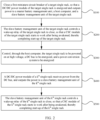
- FIG. 2 is a flowchart of a self-start method of an energy storage system. This method is applied to the foregoing energy storage system. As shown in FIG. 2 , the method includes the following steps.
- Step S 100 Close a first miniature circuit breaker of a target single rack, so that a DC/DC power module of the target single rack is energized and outputs power to a master battery management unit, a host computer, and a slave battery management unit of the target single rack, where the target single rack is a single rack, meeting a preset condition, of the energy storage system.
- Step S200 The slave battery management unit of the target single rack controls a wake-up relay of the target single rack to be closed, so that a CSC module of the target single rack starts to work after being awakened, thereby completing start-up of the target single rack.
- Step S300 Control, through the host computer, the target single rack to be powered on at high voltage, a DC bus to be energized, and a power conversion system to be energized.
- Step S400 A DC/DC power module of a k th single rack receives power from the DC bus, and outputs the power to a slave battery management unit of the k th single rack, where k is a natural number between 1 and n, and the k th single rack is any single rack of the energy storage system except for the target single rack.
- Step S500 The slave battery management unit of the k th single rack controls a wake-up relay of the k th single rack to be closed, so that a CSC module of the k th single rack starts to work after being awakened, thereby completing start-up of the k th single rack.
- a main isolation switch, n circuit breakers (110 to n10 in FIG. 1 ), n isolation switches (109 to n09 in FIG. 1 ), and n second miniature circuit breakers of the energy storage system (102 to n02 in FIG. 1 ) are all closed.
- the following describes a self-start process of the energy storage system in two scenarios.
- Scenario 1 The power conversion system PCS has power input.
- a single rack 1 is used as an example to describe a start-up process of a single rack.
- a DC/DC power module of the single rack 1 receives power from the PCS, and outputs the power to the master battery management unit, the host computer, and a slave battery management unit of the single rack 1.
- the slave battery management unit of the single rack 1 controls a wake-up relay of the single rack 1 to be closed, so that CSC-11 to CSC-bm modules (a CSC module of the single rack 1) start to work after being awakened, thereby completing start-up of the single rack 1.
- Other single racks complete start-up following a same process. After being started, the energy storage system is powered by the power conversion system PCS.
- Scenario 2 The power conversion system PCS has no power input.
- a single rack, meeting a preset condition, of the energy storage system is determined first.
- the preset condition may be voltage being highest, or voltage being greater than specified voltage. It is assumed that the single rack, meeting the preset condition, of the energy storage system is a single rack b, a first miniature circuit breaker of the single rack b is closed, and a DC/DC power module of the single rack b receives power from a battery group (the battery group is located in a battery box), and outputs the power to the master battery management unit, the host computer, and a slave battery management unit of the single rack b.
- the slave battery management unit of the single rack b controls a wake-up relay of the single rack b to be closed, so that CSC-b1 to CSC-bm modules (a CSC module of the single rack b) start to work after being awakened, thereby completing start-up of the single rack b.
- the single rack b is controlled to be powered on at high voltage (that is, a main positive high voltage relay of the single rack b and a main negative high voltage relay of the single rack b are closed), the DC bus is controlled to be energized, and the PCS is controlled to be energized.
- the k th single rack is used as an example.
- a DC/DC power module of the k th single rack receives power from the DC bus and outputs the power to a slave battery management unit of the k th single rack.
- the slave battery management unit of the k th single rack controls a wake-up relay of the k th single rack to be closed, so that CSC-k1 to CSC-km modules (a CSC module of the k th single rack) start to work after being awakened, thereby completing start-up of the k th single rack.
- the PCS controls the k th single rack to complete high voltage power-on (that is, a main positive high voltage relay of the k th single rack and a main negative high voltage relay of the k th single rack are closed).
- the target single rack When the power conversion system has no power input, the target single rack, meeting the preset condition, of the energy storage system is determined, and the first miniature circuit breaker of the target single rack is closed.
- the DC/DC power module of the target single rack receives power from a battery group and outputs the power to the master battery management unit, the host computer, and the slave battery management unit of the target single rack.
- the slave battery management unit of the target single rack controls the wake-up relay of the target single rack to be closed, so that the CSC module of the target single rack starts to work after being awakened, thereby completing start-up of the target single rack.
- the target single rack Through the host computer, the target single rack is controlled to be powered on at high voltage, the DC bus is controlled to be energized, and the PCS is controlled to be energized.
- the PCS controls other single racks to complete high voltage power-on. This resolves the prior-art problem that an energy storage system cannot self-start when there is no external power supply, and implements that the
- the self-start method of the energy storage system further includes step S600 in addition to steps S100 to S500.
- Step S600 The slave battery management unit of the target single rack performs detection on a switching status of the first miniature circuit breaker of the target single rack; if it is detected that the first miniature circuit breaker of the target single rack is not opened, after preset time, the slave battery management unit of the target single rack controls a release relay of the target single rack to be closed; and after the release is energized, a release of the target single rack performs an action of opening the first miniature circuit breaker of the target single rack.
- Functions of the release and the release relay are to open the first miniature circuit breaker of the single rack.
- the PCS controls the single racks to complete high voltage power-on in sequence. After high voltage power-on is successfully completed, the system operator needs to manually open the first miniature circuit breaker of the single rack b. At this point, the energy storage system completes self-start and is powered by a battery.
- the slave battery management unit of the single rack b When the system operator forgets to manually open the first miniature circuit breaker of the single rack b, the slave battery management unit of the single rack b continuously performs detection on a switching status of the first miniature circuit breaker of the single rack b. If it is detected that the first miniature circuit breaker of the single rack b is not opened, after a period of time (the time may be set based on a specific application scenario), the slave battery management unit of the single rack b controls a release relay of the single rack b to be closed. After being energized, a release of the single rack b performs an action of opening the first miniature circuit breaker of the single rack b. If the first miniature circuit breaker of the single rack b is still in a closed state after the release action, alarm information is sent to instruct the system operator to perform troubleshooting.
- the self-start method of the energy storage system further includes step S700 in addition to steps S100 to S600.
- Step S700 When an x th single rack triggers over-discharge protection, a slave battery management unit of the x th single rack first controls a main positive high voltage relay of the x th single rack and a main negative high voltage relay of the x th single rack to be opened, and then controls a wake-up relay of the x th single rack to be opened, where the x th single rack is any single rack of the energy storage system.
- a slave battery management unit of the single rack x When a single rack x triggers over-discharge protection, a slave battery management unit of the single rack x first controls a main positive high voltage relay and a main negative high voltage relay of the single rack x to be opened, and then controls a wake-up relay of the single rack x to be opened.
- CSC-x1 to CSC-xm (a CSC module of the single rack x) stop working after a wake-up signal disappears, so that the single rack x exits a system, but other single racks and the system work normally, thereby implementing protection for the single rack.
- Black start of the energy storage system is implemented (that is, self-start of the energy storage system is completed without an external power supply). If the energy storage system includes a plurality of single racks, a single rack with highest voltage of the energy storage system is properly selected as a power supply source for black start of the energy storage system. This can achieve a specific balance effect.
Landscapes
- Engineering & Computer Science (AREA)
- Power Engineering (AREA)
- Charge And Discharge Circuits For Batteries Or The Like (AREA)
- Direct Current Feeding And Distribution (AREA)
Description
- The present invention relates to the field of energy storage technologies, and in particular, to an energy storage system and a self-start method thereof.
- In a joint energy storage application scenario, energy of an energy storage system comes from solar and wind energy, and after being converted into electric energy by an energy conversion device, is supplied to a grid for use or stored in an energy storage system for storage.
- At present, in a design of an energy storage system, if energy input from solar and wind energy cannot meet power consumption of the system itself, the energy storage system cannot be started, resulting in that externally available power held by the energy storage system cannot be normally output.
- References
KR 10 2015 0 081 987 A KR 10 2015 0 138 900 A - In view of this, embodiments of the present invention provide an energy storage system and a self-start method thereof, to resolve a prior-art problem that an energy storage system cannot self-start when there is no external power supply.
- The invention is defined in the appended claims.
- To describe the technical solutions of the present disclosure more clearly, the following briefly describes the accompanying drawings required for describing the embodiments.
-
FIG. 1 is a schematic diagram of an optional energy storage system; and -
FIG. 2 is a flowchart of a self-start method. - Power conversion system: Power Conversion System, PCS for short;
- PV: Photovoltaic, photovoltaic;
- MBMU: Master Battery Management Unit, master battery management unit;
- SBMU: Slave Battery Management Unit, slave battery management unit;
- DC/DC: DC conversion module, configured to convert high voltage direct current into low voltage direct current, for example, converting about 400-volt direct current into 24-volt direct current; and
- CSC: Cell Supervisor Circuit, cell supervisory circuit.
-
FIG. 1 is a schematic diagram of an energy storage system. The energy storage system includes n single racks. Due to a size of the figure,FIG. 1 shows the first single rack and the nth single rack, components of other n-2 single racks and a connection relationship between the components are similar to those of the first single rack and the nth single rack. - Denotations of numbers in
FIG. 1 are as follows: - 10: DC bus;
- 20: main isolation switch;
- 101: first miniature circuit breaker of the first single rack;
- 102: second miniature circuit breaker of the first single rack;
- 103: wake-up relay of the first single rack;
- 104: main positive high voltage relay of the first single rack;
- 105: main negative high voltage relay of the first single rack;
- 106: release of the first single rack;
- 107: release relay of the first single rack;
- 108: high voltage precharge relay of the first single rack;
- 109: isolation switch of the first single rack;
- 110: circuit breaker of the first single rack;
- 111: fuse of the first single rack;
- 112: diode of the first single rack;
- 113: precharge resistor of the first single rack;
- n01: first miniature circuit breaker of the nth single rack;
- n02: second miniature circuit breaker of the nth single rack;
- n03: wake-up relay of the nth single rack;
- n04: main positive high voltage relay of the nth single rack;
- n05: main negative high voltage relay of the nth single rack;
- n06: release of the nth single rack;
- n07: release relay of the nth single rack;
- n08: high voltage precharge relay of the nth single rack;
- n09: isolation switch of the nth single rack;
- n10: circuit breaker of the nth single rack;
- n11: fuse of the nth single rack;
- n12: diode of the nth single rack; and
- n13: precharge resistor of the nth single rack.
- The power conversion system PCS is based on photovoltaic PV or wind energy. The host computer may be an industrial computer, a touchscreen, a PC, or the like.
- As shown in
FIG. 1 , the energy storage system includes a power conversion system, a DC bus, n single racks, a host computer, and a master battery management unit, n is a natural number, and n is greater than 1. - The host computer is connected to each of the n single racks.
- The master battery management unit is connected to each of the n single racks.
- Each of the n single racks includes a first miniature circuit breaker, a DC/DC power module, a slave battery management unit, a wake-up relay, a main positive high voltage relay, a main negative high voltage relay, a CSC module, and a battery box, where the first miniature circuit breaker is connected to both the DC/DC power module and the battery box, the wake-up relay is connected to each of the DC/DC power module, the slave battery management unit, and the CSC module, the DC/DC power module is connected to each of the first miniature circuit breaker, the wake-up relay, and the slave battery management unit, the main positive high voltage relay is connected to the battery box, and the main negative high voltage relay is connected to the battery box. When the power conversion system PCS has no power input:
a single rack, meeting a preset condition, of the energy storage system is determined first. For example, the preset condition may be voltage being highest, or voltage being greater than specified voltage. It is assumed that the single rack, meeting the preset condition, of the energy storage system is a single rack b, a first miniature circuit breaker of the single rack b is closed, and a DC/DC power module of the single rack b receives power from a battery group (the battery group is located in a battery box), and outputs the power to the master battery management unit, the host computer, and a slave battery management unit of the single rack b. - The slave battery management unit of the single rack b controls a wake-up relay of the single rack b to be closed, so that CSC-b1 to CSC-bm modules (a CSC module of the single rack b) start to work after being awakened, thereby completing start-up of the single rack b.
- Through the host computer, the single rack b is controlled to be powered on at high voltage (that is, a main positive high voltage relay of the single rack b and a main negative high voltage relay of the single rack b are closed), the DC bus is controlled to be energized, and the PCS is controlled to be energized.
- For other single racks, the kth single rack is used as an example. A DC/DC power module of the kth single rack receives power from the DC bus and outputs the power to a slave battery management unit of the kth single rack.
- The slave battery management unit of the kth single rack controls a wake-up relay of the kth single rack to be closed, so that CSC-k1 to CSC-km modules (a CSC module of the kth single rack) start to work after being awakened, thereby completing start-up of the kth single rack.
- The PCS controls the kth single rack to complete high voltage power-on (that is, a main positive high voltage relay of the kth single rack and a main negative high voltage relay of the kth single rack are closed).
- After high voltage power-on, a system operator manually opens the first miniature circuit breaker of the single rack b. At this point, the energy storage system completes self-start and is powered by a battery.
- When the power conversion system has no power input, the target single rack, meeting the preset condition, of the energy storage system is determined, and the first miniature circuit breaker of the target single rack is closed. The DC/DC power module of the target single rack receives power from a battery group and outputs the power to the master battery management unit, the host computer, and the slave battery management unit of the target single rack. The slave battery management unit of the target single rack controls the wake-up relay of the target single rack to be closed, so that the CSC module of the target single rack starts to work after being awakened, thereby completing start-up of the target single rack. Through the host computer, the target single rack is controlled to be powered on at high voltage, the DC bus is controlled to be energized, and the PCS is controlled to be energized. The PCS controls other single racks to complete high voltage power-on. This resolves the prior-art problem that an energy storage system cannot self-start when there is no external power supply, and implements that the energy storage system self-starts without an external power supply.
- Optionally, each of the n single racks further includes a release and a release relay. The release relay is connected to each of the slave battery management unit, the DC/DC power module, and the release.
- Functions of the release and the release relay are to open the first miniature circuit breaker of the single rack.
- The PCS controls the single racks to complete high voltage power-on in sequence. After high voltage power-on is successfully completed, the system operator needs to manually open the first miniature circuit breaker of the single rack b. At this point, the energy storage system completes self-start and is powered by a battery.
- When the system operator forgets to manually open the first miniature circuit breaker of the single rack b, the slave battery management unit of the single rack b continuously performs detection on a switching status of the first miniature circuit breaker of the single rack b. If it is detected that the first miniature circuit breaker of the single rack b is not opened, after a period of time (the time may be set based on a specific application scenario), the slave battery management unit of the single rack b controls a release relay of the single rack b to be closed. After being energized, a release of the single rack b performs an action of opening the first miniature circuit breaker of the single rack b. If the first miniature circuit breaker of the single rack b is still in a closed state after the release action, alarm information is sent to instruct the system operator to perform troubleshooting.
- Optionally, each of the n single racks further includes a second miniature circuit breaker. One end of the second miniature circuit breaker is connected to the power conversion system, and the other end of the second miniature circuit breaker is connected to the DC/DC power module.
- Optionally, the system further includes a main isolation switch. One end of the main isolation switch is connected to the power conversion system, and the other end of the main isolation switch is connected to each of the n single racks.
- Optionally, each of the n single racks further includes a circuit breaker and an isolation switch. One end of the circuit breaker is connected to the main isolation switch, and the other end of the circuit breaker is connected to the isolation switch. One end of the isolation switch is connected to the circuit breaker, and the other end of the isolation switch is connected to both the main positive high voltage relay and the main negative high voltage relay.
- The isolation switch has four poles. A first pole is connected to the main positive high voltage relay, a second pole is connected to a first pole of the circuit breaker, a third pole is connected to the main negative high voltage relay, and a fourth pole is connected to a third pole of the circuit breaker.
- The circuit breaker has four poles. The first pole is connected to the second pole of the isolation switch, a second pole is connected to a fourth pole of the main isolation switch, the third pole is connected to the fourth pole of the isolation switch, and a fourth pole is connected to a third pole of the main isolation switch.
- The first miniature circuit breaker has four poles. A first pole is connected to a positive electrode of the battery box, a second pole is connected to a diode, a third pole is connected to a negative electrode of the battery box, and a fourth pole is connected to the DC/DC power module. The fourth pole is further connected to a third pole of the second miniature circuit breaker.
- The second miniature circuit breaker has four poles. A first pole is connected to a diode, the third pole is connected to the fourth pole of the first miniature circuit breaker, and one of a second pole and a fourth pole is connected to a positive electrode of the PCS, and the other one is connected to a negative electrode of the PCS. In addition, the second pole is connected to a second pole of the main isolation switch, and the fourth pole is connected to a first pole of the main isolation switch. It should be noted that the diode connected to the second pole of the first miniature circuit breaker is not a same diode as the diode connected to the first pole of the second miniature circuit breaker.
- The main isolation switch has four poles. The first pole is connected to each of fourth poles of second miniature circuit breakers of the n single racks, the second pole is connected to each of second poles of the second miniature circuit breakers of the n single racks, the third pole is connected to each of fourth poles of circuit breakers of the n single racks, and the fourth pole is connected to each of second poles of the circuit breakers of the n single racks. In addition, one of the first pole and the second pole is connected to the positive electrode of the PCS, and the other one is connected to the negative electrode of the PCS.
- Optionally, each of the n single racks further includes a high voltage precharge relay and a precharge resistor. The high voltage precharge relay is connected in series with the precharge resistor, and then the high voltage precharge relay and the precharge resistor in series connection are connected in parallel with the main positive high voltage relay.
- Optionally, each of the n single racks further includes a fuse. One end of the fuse is connected to the main positive high voltage relay, and the other end of the fuse is connected to the battery box.
- In a process of controlling high voltage power-on of the single rack, first the main negative high voltage relay is closed, then the high voltage precharge relay is closed, and then the main positive high voltage relay is closed, and finally the high voltage precharge relay is opened. An advantage of doing so is to prevent other components of the single rack from being damaged by excessive current in the process of high voltage power-on.
- For example, in a process of controlling high voltage power-on of a single rack k, first a main negative high voltage relay of the single rack k is closed, then a high voltage precharge relay of the single rack k is closed, and then a main positive high voltage relay of the single rack k is closed, and finally the high voltage precharge relay of the single rack k is opened.
- When a single rack x triggers over-discharge protection, a slave battery management unit of the single rack x first controls a main positive high voltage relay and a main negative high voltage relay of the single rack x to be opened, and then controls a wake-up relay of the single rack x to be opened. CSC-x1 to CSC-xm modules (a CSC module of the single rack x) stop working after a wake-up signal disappears, so that the single rack x exits a system, but other single racks and the system work normally, thereby implementing protection for the single rack.
-
FIG. 2 is a flowchart of a self-start method of an energy storage system. This method is applied to the foregoing energy storage system. As shown inFIG. 2 , the method includes the following steps. -
Step S 100. Close a first miniature circuit breaker of a target single rack, so that a DC/DC power module of the target single rack is energized and outputs power to a master battery management unit, a host computer, and a slave battery management unit of the target single rack, where the target single rack is a single rack, meeting a preset condition, of the energy storage system. - Step S200. The slave battery management unit of the target single rack controls a wake-up relay of the target single rack to be closed, so that a CSC module of the target single rack starts to work after being awakened, thereby completing start-up of the target single rack.
- Step S300. Control, through the host computer, the target single rack to be powered on at high voltage, a DC bus to be energized, and a power conversion system to be energized.
- Step S400. A DC/DC power module of a kth single rack receives power from the DC bus, and outputs the power to a slave battery management unit of the kth single rack, where k is a natural number between 1 and n, and the kth single rack is any single rack of the energy storage system except for the target single rack.
- Step S500. The slave battery management unit of the kth single rack controls a wake-up relay of the kth single rack to be closed, so that a CSC module of the kth single rack starts to work after being awakened, thereby completing start-up of the kth single rack. Before the energy storage system is started, a main isolation switch, n circuit breakers (110 to n10 in
FIG. 1 ), n isolation switches (109 to n09 inFIG. 1 ), and n second miniature circuit breakers of the energy storage system (102 to n02 inFIG. 1 ) are all closed. - The following describes a self-start process of the energy storage system in two scenarios.
- A single rack 1 is used as an example to describe a start-up process of a single rack. A DC/DC power module of the single rack 1 receives power from the PCS, and outputs the power to the master battery management unit, the host computer, and a slave battery management unit of the single rack 1. The slave battery management unit of the single rack 1 controls a wake-up relay of the single rack 1 to be closed, so that CSC-11 to CSC-bm modules (a CSC module of the single rack 1) start to work after being awakened, thereby completing start-up of the single rack 1. Other single racks complete start-up following a same process. After being started, the energy storage system is powered by the power conversion system PCS.
- A single rack, meeting a preset condition, of the energy storage system is determined first. For example, the preset condition may be voltage being highest, or voltage being greater than specified voltage. It is assumed that the single rack, meeting the preset condition, of the energy storage system is a single rack b, a first miniature circuit breaker of the single rack b is closed, and a DC/DC power module of the single rack b receives power from a battery group (the battery group is located in a battery box), and outputs the power to the master battery management unit, the host computer, and a slave battery management unit of the single rack b.
- The slave battery management unit of the single rack b controls a wake-up relay of the single rack b to be closed, so that CSC-b1 to CSC-bm modules (a CSC module of the single rack b) start to work after being awakened, thereby completing start-up of the single rack b.
- Through the host computer, the single rack b is controlled to be powered on at high voltage (that is, a main positive high voltage relay of the single rack b and a main negative high voltage relay of the single rack b are closed), the DC bus is controlled to be energized, and the PCS is controlled to be energized.
- For other single racks, the kth single rack is used as an example. A DC/DC power module of the kth single rack receives power from the DC bus and outputs the power to a slave battery management unit of the kth single rack.
- The slave battery management unit of the kth single rack controls a wake-up relay of the kth single rack to be closed, so that CSC-k1 to CSC-km modules (a CSC module of the kth single rack) start to work after being awakened, thereby completing start-up of the kth single rack.
- The PCS controls the kth single rack to complete high voltage power-on (that is, a main positive high voltage relay of the kth single rack and a main negative high voltage relay of the kth single rack are closed).
- After high voltage power-on, a system operator manually opens the first miniature circuit breaker of the single rack b. At this point, the energy storage system completes self-start and is powered by a battery.
- When the power conversion system has no power input, the target single rack, meeting the preset condition, of the energy storage system is determined, and the first miniature circuit breaker of the target single rack is closed. The DC/DC power module of the target single rack receives power from a battery group and outputs the power to the master battery management unit, the host computer, and the slave battery management unit of the target single rack. The slave battery management unit of the target single rack controls the wake-up relay of the target single rack to be closed, so that the CSC module of the target single rack starts to work after being awakened, thereby completing start-up of the target single rack. Through the host computer, the target single rack is controlled to be powered on at high voltage, the DC bus is controlled to be energized, and the PCS is controlled to be energized. The PCS controls other single racks to complete high voltage power-on. This resolves the prior-art problem that an energy storage system cannot self-start when there is no external power supply, and implements that the energy storage system self-starts without an external power supply.
- In an optional implementation, the self-start method of the energy storage system further includes step S600 in addition to steps S100 to S500.
- Step S600. The slave battery management unit of the target single rack performs detection on a switching status of the first miniature circuit breaker of the target single rack; if it is detected that the first miniature circuit breaker of the target single rack is not opened, after preset time, the slave battery management unit of the target single rack controls a release relay of the target single rack to be closed; and after the release is energized, a release of the target single rack performs an action of opening the first miniature circuit breaker of the target single rack.
- Functions of the release and the release relay are to open the first miniature circuit breaker of the single rack.
- The PCS controls the single racks to complete high voltage power-on in sequence. After high voltage power-on is successfully completed, the system operator needs to manually open the first miniature circuit breaker of the single rack b. At this point, the energy storage system completes self-start and is powered by a battery.
- When the system operator forgets to manually open the first miniature circuit breaker of the single rack b, the slave battery management unit of the single rack b continuously performs detection on a switching status of the first miniature circuit breaker of the single rack b. If it is detected that the first miniature circuit breaker of the single rack b is not opened, after a period of time (the time may be set based on a specific application scenario), the slave battery management unit of the single rack b controls a release relay of the single rack b to be closed. After being energized, a release of the single rack b performs an action of opening the first miniature circuit breaker of the single rack b. If the first miniature circuit breaker of the single rack b is still in a closed state after the release action, alarm information is sent to instruct the system operator to perform troubleshooting.
- In an optional implementation, the self-start method of the energy storage system further includes step S700 in addition to steps S100 to S600.
- Step S700. When an xth single rack triggers over-discharge protection, a slave battery management unit of the xth single rack first controls a main positive high voltage relay of the xth single rack and a main negative high voltage relay of the xth single rack to be opened, and then controls a wake-up relay of the xth single rack to be opened, where the xth single rack is any single rack of the energy storage system.
- When a single rack x triggers over-discharge protection, a slave battery management unit of the single rack x first controls a main positive high voltage relay and a main negative high voltage relay of the single rack x to be opened, and then controls a wake-up relay of the single rack x to be opened. CSC-x1 to CSC-xm (a CSC module of the single rack x) stop working after a wake-up signal disappears, so that the single rack x exits a system, but other single racks and the system work normally, thereby implementing protection for the single rack.
- Black start of the energy storage system is implemented (that is, self-start of the energy storage system is completed without an external power supply). If the energy storage system includes a plurality of single racks, a single rack with highest voltage of the energy storage system is properly selected as a power supply source for black start of the energy storage system. This can achieve a specific balance effect.
Claims (10)
- An energy storage system, wherein the system comprises:a power conversion system, PCS, for converting electrical energy from photovoltaic, PV, or wind energy;a DC bus connected to the PCS for energizing the PCS;n single racks, wherein n is a natural number, and n is greater than 1;a host computer, connected to each of the n single racks; anda master battery management unit, MBMU" connected to each of the n single racks, whereineach of the n single racks comprises a first miniature circuit breaker (101, n01), a DC/DC power module, a slave battery management unit, SBMU, a wake-up relay (103, n03), a main positive high voltage relay (104, n04), a main negative high voltage relay (105, n05), a cell supervisory circuit, CSC, module, and a battery box including a battery group and comprising a positive and a negative electrode,wherein in each of the n single racks:the DC/DC power module is connected to the DC-Bus (10) for receiving power from the DC-Bus (10)the DC/DC power module is connected to the battery group included in the battery box via the first miniature circuit breaker (101, n01) and is configured to receive power from the battery group when the first miniature circuit breaker (101, n01) is closed;the DC/DC power module is connected to the SBMU, the host computer and the MBMU and is configured to provide power to each of them when the DC/DC power module receives power from the battery group included in the battery box via the closed first miniature circuit breaker (101, n01),the SMBU, when receiving power from the DC/DC power module, being configured to close the wake-up relay (103, n03) for connecting the DC/DC power module to the CSC module via the wake-up relay (103, n03) for providing power to the CSC;the main positive high voltage relay (104, n04) is connected to the positive electrode of the battery group included in the battery box, and the main negative high voltage relay (105, n05) is connected to the negative electrode of the battery group included in the battery box, wherein the host computer, when receiving power from the DC/DC power module, being configured to close the main positive voltage relay (104, n04) and the main negative voltage relay (105, n05), and wherein the battery box is configured to to provide power to the DC-Bus via the closed main positive voltage relay (104, n04) and the closed main negative voltage relay (105, n05).
- The system according to claim 1, wherein each of the n single racks further comprises:a release (106, n06); anda release relay (107, n07), connected to each of the DC/DC power module and the release (106, n06), wherein the release relay is controllable by the slave battery management unit (SBMU) to be closed, and wherein the release is configured to perform an action of opening the first miniature circuit breaker (101, n01) when the release relay is closed under control of the (SBMU).
- The system according to claim 1, wherein each of the n single racks further comprises:
a second miniature circuit breaker (102, n02), one end of which is connected to the power conversion system (PCS), and the other end of which is connected to the DC/DC power module. - The system according to any one of claims 1 to 3, wherein the system further comprises:
a main isolation switch (20), one end of which is connected to the power conversion system, and the other end of which is connected to each of the n single racks. - The system according to claim 4, wherein each of the n single racks further comprises:a circuit breaker (110, n10), one end of which is connected to the main isolation switch (20), and the other end of which is connected to an isolation switch (109, n09); andthe isolation switch (109, n09), one end of which is connected to the circuit breaker (110, n10), and the other end of which is connected to both the main positive high voltage relay (104, n04) and the main negative high voltage relay (105, n05).
- The system according to claim 5, wherein each of the n single racks further comprises:
a high voltage precharge relay (108, n08) and a precharge resistor (113, n13), wherein the high voltage precharge relay (108, n08) is connected in series with the precharge resistor (113, n13), and then the high voltage precharge relay (108, n08) and the precharge resistor (113, n13) in series connection are connected in parallel with the main positive high voltage relay (104, n04). - The system according to claim 1, wherein each of the n single racks further comprises:
a fuse (111, n11), which is interconnected into the connection between the main positive high voltage relay (104, n04) and the positive electrode of the battery group included in the battery box. - A method to self-start an energy storage system according to claim 1, wherein the method comprises:closing the first miniature circuit breaker (10, n01) of a target single rack, so that the DC/DC power module of the target single rack is energized and outputs power to the master battery management unit, MBMU, the host computer, and the slave battery management unit, SBMU, of the target single rack, wherein the target single rack is a single rack, meeting a preset condition, of the energy storage system;controlling, by the SBMU of the target single rack, a wake-up relay (103, n03) of the target single rack to be closed, so that the cell supervisory circuit, CSC, module of the target single rack starts to work after being awakened, thereby completing start-up of the target single rack;controlling, through the host computer, the main positive high voltage relay (104, n04) and the main negative high voltage relay (105, n05) to be closed so that the target single rack gets powered on at high voltage, making the DC bus (10) to be energized, and the power conversion system, PCS, to be energized;receiving, by the DC/DC power module of a kth single rack, power from the DC bus (10), and outputting the power to the SBMU of the kth single rack, wherein k is a natural number between 1 and n, and the kth single rack is any single rack of the energy storage system except for the target single rack; andcontrolling, by the SBMU of the kth single rack, the wake-up relay (103, n03) of the kth single rack to be closed, so that the CSC module of the kth single rack starts to work after being awakened, thereby completing start-up of the kth single rack.
- The method according to claim 8, wherein the energy storage system is configured according to claim 2, and wherein the method further comprises:
performing, by the slave battery management unit (SBMU) of the target single rack, detection on a switching status of the first miniature circuit breaker (101, n01) of the target single rack; if it is detected that the first miniature circuit breaker (101, n01) of the target single rack is not opened, controlling, by the slave battery management unit (SBMU) of the target single rack after preset time, the release relay (107, n07) of the target single rack to be closed; and performing, by a release (106, n06) of the target single rack after the release (106, n06) is energized, an action of opening the first miniature circuit breaker (101, n01) of the target single rack. - The method according to claim 8 or 9, wherein the method further comprises:
when an xth single rack triggers over-discharge protection, controlling, by a slave battery management unit (SBMU) of the xth single rack, the main positive high voltage relay (104, n04) of the xth single rack and the main negative high voltage relay (105, n05) of the xth single rack to be opened first, and then the wake-up relay (103, n03) of the xth single rack to be opened, wherein the xth single rack is any single rack of the energy storage system.
Applications Claiming Priority (2)
| Application Number | Priority Date | Filing Date | Title |
|---|---|---|---|
| CN201910069315.4A CN111478380B (en) | 2019-01-24 | 2019-01-24 | Energy storage system and its self-starting method |
| PCT/CN2020/073248 WO2020151665A1 (en) | 2019-01-24 | 2020-01-20 | Power storage system and self-starting method therefor |
Publications (3)
| Publication Number | Publication Date |
|---|---|
| EP3800757A1 EP3800757A1 (en) | 2021-04-07 |
| EP3800757A4 EP3800757A4 (en) | 2021-11-10 |
| EP3800757B1 true EP3800757B1 (en) | 2024-05-01 |
Family
ID=71736613
Family Applications (1)
| Application Number | Title | Priority Date | Filing Date |
|---|---|---|---|
| EP20745042.0A Active EP3800757B1 (en) | 2019-01-24 | 2020-01-20 | Power storage system and self-starting method therefor |
Country Status (6)
| Country | Link |
|---|---|
| US (1) | US11777309B2 (en) |
| EP (1) | EP3800757B1 (en) |
| CN (1) | CN111478380B (en) |
| ES (1) | ES2994588T3 (en) |
| HU (1) | HUE067146T2 (en) |
| WO (1) | WO2020151665A1 (en) |
Families Citing this family (13)
| Publication number | Priority date | Publication date | Assignee | Title |
|---|---|---|---|---|
| CN111478380B (en) * | 2019-01-24 | 2021-07-30 | 宁德时代新能源科技股份有限公司 | Energy storage system and its self-starting method |
| CN112311015B (en) * | 2020-11-19 | 2025-04-11 | 西安热工研究院有限公司 | A device and method for inputting a black start release grid-connected signal to an excitation and speed regulator system |
| CN114977351A (en) * | 2021-02-27 | 2022-08-30 | 华为数字能源技术有限公司 | Energy storage system and black start method |
| CN114094673B (en) * | 2021-12-06 | 2025-05-27 | 中国科学院青岛生物能源与过程研究所 | A multi-power supply system with current wake-up function and control method thereof |
| CN114094713B (en) * | 2021-12-17 | 2025-04-22 | 深圳市华宝新能源股份有限公司 | Energy storage power supply and control method thereof |
| CN114465303A (en) * | 2022-01-10 | 2022-05-10 | 福建时代星云科技有限公司 | Energy storage battery protection system for taking electricity through battery direct current side |
| EP4386932A4 (en) * | 2022-01-19 | 2025-08-13 | Lg Energy Solution Ltd | ENERGY STORAGE SYSTEM |
| US12512522B2 (en) | 2022-08-23 | 2025-12-30 | GE Grid GmbH | Systems and methods for self-derived auxiliary power for energy storage systems |
| CN116054423A (en) * | 2023-04-03 | 2023-05-02 | 宁德时代新能源科技股份有限公司 | Energy storage system and energy storage power station |
| CN119369984B (en) * | 2023-07-27 | 2026-01-13 | 宁德时代新能源科技股份有限公司 | Method for powering up battery system, battery system and power utilization device |
| CN117833398A (en) * | 2023-12-22 | 2024-04-05 | 爱士惟科技股份有限公司 | A battery awakening method for energy storage converter |
| CN117879017A (en) * | 2024-03-12 | 2024-04-12 | 宁德时代新能源科技股份有限公司 | Energy storage system control method and energy storage system |
| CN119171579B (en) * | 2024-09-23 | 2025-04-01 | 上海伊莱诺瓦储能技术有限公司 | Emergency starting method for energy storage cabinet |
Family Cites Families (17)
| Publication number | Priority date | Publication date | Assignee | Title |
|---|---|---|---|---|
| CA2787764C (en) * | 2010-01-21 | 2018-08-14 | ePower Engine Systems, L.L.C. | Hydrocarbon fueled-electric series hybrid propulsion systems |
| TW201225480A (en) * | 2010-12-13 | 2012-06-16 | Hon Hai Prec Ind Co Ltd | Power supply of data center |
| CN102280879B (en) * | 2011-08-01 | 2013-12-18 | 沈阳融华新能源电气有限公司 | Method and system for regulating power of large-scale energy storage power station of wind farm |
| CN202798128U (en) * | 2012-09-17 | 2013-03-13 | 周锡卫 | Independent photovoltaic power supply system with self-starting function |
| CN103516045B (en) * | 2013-10-15 | 2015-08-05 | 国家电网公司 | A kind of booting-self controller method of portable electric power system |
| KR101563075B1 (en) * | 2014-01-07 | 2015-10-23 | 에스케이이노베이션 주식회사 | Apparatus and method for balancing of battery rack in energy storage system |
| KR20150138900A (en) * | 2014-05-30 | 2015-12-11 | 주식회사 코캄 | Battery system for controlling a bus line impedance of batter rack |
| US20160109916A1 (en) * | 2014-10-17 | 2016-04-21 | University Of Florida Research Foundation, Incorporated | Method and apparatus for sustainable scale-out datacenters |
| US9960698B2 (en) * | 2014-12-22 | 2018-05-01 | Flex Power Control, Inc. | Reliable AC-DC power converter with high voltage DC link |
| CN104682431B (en) * | 2015-02-16 | 2017-04-19 | 江苏中天科技股份有限公司 | Self-starting method and self-starting system of energy storage converter |
| CN104967214B (en) * | 2015-06-04 | 2017-06-27 | 南京理工大学 | A microgrid system based on VACON industrial frequency converter |
| CN106300329B (en) * | 2016-08-30 | 2019-02-01 | 中国科学院上海微系统与信息技术研究所 | Photovoltaic autonomous intelligence power supply system and method for supplying power to |
| CN206759309U (en) * | 2016-12-08 | 2017-12-15 | 珠海清英加德智能装备有限公司 | A kind of battery energy storage converting means |
| CN107749632B (en) * | 2017-10-18 | 2020-06-02 | 珠海格力电器股份有限公司 | Energy storage system and control method thereof |
| CN108683202B (en) * | 2018-04-12 | 2022-05-06 | 浙江正泰电器股份有限公司 | Energy storage system |
| CN108695870B (en) * | 2018-04-19 | 2021-03-19 | 宁德时代新能源科技股份有限公司 | Integrated charging and energy storage system |
| CN111478380B (en) * | 2019-01-24 | 2021-07-30 | 宁德时代新能源科技股份有限公司 | Energy storage system and its self-starting method |
-
2019
- 2019-01-24 CN CN201910069315.4A patent/CN111478380B/en active Active
-
2020
- 2020-01-20 ES ES20745042T patent/ES2994588T3/en active Active
- 2020-01-20 HU HUE20745042A patent/HUE067146T2/en unknown
- 2020-01-20 EP EP20745042.0A patent/EP3800757B1/en active Active
- 2020-01-20 WO PCT/CN2020/073248 patent/WO2020151665A1/en not_active Ceased
- 2020-12-21 US US17/129,609 patent/US11777309B2/en active Active
Also Published As
| Publication number | Publication date |
|---|---|
| US20210111558A1 (en) | 2021-04-15 |
| CN111478380B (en) | 2021-07-30 |
| EP3800757A4 (en) | 2021-11-10 |
| ES2994588T3 (en) | 2025-01-27 |
| CN111478380A (en) | 2020-07-31 |
| HUE067146T2 (en) | 2024-10-28 |
| EP3800757A1 (en) | 2021-04-07 |
| US11777309B2 (en) | 2023-10-03 |
| WO2020151665A1 (en) | 2020-07-30 |
Similar Documents
| Publication | Publication Date | Title |
|---|---|---|
| EP3800757B1 (en) | Power storage system and self-starting method therefor | |
| JP6480096B2 (en) | Power control system, power control apparatus, and control method for power control system | |
| CN106877311B (en) | A direct current photovoltaic power generation system | |
| EP3203598B1 (en) | Medium and high voltage grid-connected power generation system, medium and high voltage grid-connected system | |
| EP3264550A1 (en) | Access control method for parallel direct current power supplies and device thereof | |
| WO2017163625A1 (en) | Power generation system, power conditioner, power control device, power control method, and power control program | |
| US12199559B2 (en) | Solar power generation system | |
| JPWO2016157874A1 (en) | Power supply device control method, power supply device, and power supply system | |
| WO2019051321A1 (en) | Power control systems and methods for integrating auxiliary power systems | |
| US11043813B2 (en) | Method for black starting a power supply installation, bidirectional inverter, and power supply installation with a bidirectional inverter | |
| JP6199804B2 (en) | Power control system, power control system control method, and power control apparatus | |
| CN118432010A (en) | A photovoltaic inverter | |
| CN117294127A (en) | Control method of power conversion equipment, power conversion equipment and energy storage system | |
| KR102093447B1 (en) | The battery protection system and method of operating the same | |
| JP2016092850A (en) | Control method of power supply system, power supply apparatus and power supply system | |
| US20200274350A1 (en) | Emergency shutdown of an energy supply unit | |
| KR102178447B1 (en) | An micro-grid system with un-interrutable power supply | |
| CN109818569B (en) | Parallel type turn-off system for photovoltaic module and method for restarting after turn-off | |
| CN110797965B (en) | Electricity conversion structure and method | |
| CN112952995A (en) | Dual-redundancy power supply system for BMS power supply | |
| CN214626498U (en) | Dual-redundancy power supply system for BMS power supply | |
| JP6671979B2 (en) | Power supply switching device | |
| CN111800083B (en) | A conversion device, system and method for photovoltaic power station | |
| CN205017040U (en) | Photovoltaic energy storage inverter auxiliary power system | |
| CN2445496Y (en) | Spare power supply switching device |
Legal Events
| Date | Code | Title | Description |
|---|---|---|---|
| STAA | Information on the status of an ep patent application or granted ep patent |
Free format text: STATUS: THE INTERNATIONAL PUBLICATION HAS BEEN MADE |
|
| PUAI | Public reference made under article 153(3) epc to a published international application that has entered the european phase |
Free format text: ORIGINAL CODE: 0009012 |
|
| STAA | Information on the status of an ep patent application or granted ep patent |
Free format text: STATUS: REQUEST FOR EXAMINATION WAS MADE |
|
| 17P | Request for examination filed |
Effective date: 20201230 |
|
| AK | Designated contracting states |
Kind code of ref document: A1 Designated state(s): AL AT BE BG CH CY CZ DE DK EE ES FI FR GB GR HR HU IE IS IT LI LT LU LV MC MK MT NL NO PL PT RO RS SE SI SK SM TR |
|
| AX | Request for extension of the european patent |
Extension state: BA ME |
|
| REG | Reference to a national code |
Ref country code: DE Ref legal event code: R079 Free format text: PREVIOUS MAIN CLASS: H02J0003320000 Ipc: H02J0007000000 Ref country code: DE Ref legal event code: R079 Ref document number: 602020030179 Country of ref document: DE Free format text: PREVIOUS MAIN CLASS: H02J0003320000 Ipc: H02J0007000000 |
|
| A4 | Supplementary search report drawn up and despatched |
Effective date: 20211007 |
|
| RIC1 | Information provided on ipc code assigned before grant |
Ipc: H02J 3/32 20060101ALI20211002BHEP Ipc: H02J 7/00 20060101AFI20211002BHEP |
|
| DAV | Request for validation of the european patent (deleted) | ||
| DAX | Request for extension of the european patent (deleted) | ||
| STAA | Information on the status of an ep patent application or granted ep patent |
Free format text: STATUS: EXAMINATION IS IN PROGRESS |
|
| 17Q | First examination report despatched |
Effective date: 20220818 |
|
| GRAP | Despatch of communication of intention to grant a patent |
Free format text: ORIGINAL CODE: EPIDOSNIGR1 |
|
| STAA | Information on the status of an ep patent application or granted ep patent |
Free format text: STATUS: GRANT OF PATENT IS INTENDED |
|
| INTG | Intention to grant announced |
Effective date: 20240222 |
|
| GRAS | Grant fee paid |
Free format text: ORIGINAL CODE: EPIDOSNIGR3 |
|
| GRAA | (expected) grant |
Free format text: ORIGINAL CODE: 0009210 |
|
| STAA | Information on the status of an ep patent application or granted ep patent |
Free format text: STATUS: THE PATENT HAS BEEN GRANTED |
|
| AK | Designated contracting states |
Kind code of ref document: B1 Designated state(s): AL AT BE BG CH CY CZ DE DK EE ES FI FR GB GR HR HU IE IS IT LI LT LU LV MC MK MT NL NO PL PT RO RS SE SI SK SM TR |
|
| REG | Reference to a national code |
Ref country code: GB Ref legal event code: FG4D |
|
| REG | Reference to a national code |
Ref country code: CH Ref legal event code: EP |
|
| REG | Reference to a national code |
Ref country code: IE Ref legal event code: FG4D |
|
| REG | Reference to a national code |
Ref country code: DE Ref legal event code: R096 Ref document number: 602020030179 Country of ref document: DE |
|
| REG | Reference to a national code |
Ref country code: DE Ref legal event code: R081 Ref document number: 602020030179 Country of ref document: DE Owner name: CONTEMPORARY AMPEREX TECHNOLOGY (HONG KONG) LI, HK Free format text: FORMER OWNER: CONTEMPORARY AMPEREX TECHNOLOGY CO., LIMITED, NINGDE, FUJIAN, CN |
|
| REG | Reference to a national code |
Ref country code: NL Ref legal event code: FP |
|
| REG | Reference to a national code |
Ref country code: LT Ref legal event code: MG9D |
|
| REG | Reference to a national code |
Ref country code: NL Ref legal event code: PD Owner name: CONTEMPORARY AMPEREX TECHNOLOGY (HONG KONG) LIMITED; CN Free format text: DETAILS ASSIGNMENT: CHANGE OF OWNER(S), ASSIGNMENT; FORMER OWNER NAME: CONTEMPORARY AMPEREX TECHNOLOGY CO., LIMITED Effective date: 20240819 |
|
| REG | Reference to a national code |
Ref country code: GB Ref legal event code: 732E Free format text: REGISTERED BETWEEN 20240822 AND 20240828 |
|
| REG | Reference to a national code |
Ref country code: HU Ref legal event code: GB9C Owner name: CONTEMPORARY AMPEREX TECHNOLOGY (HONG KONG) LIMITED, HK Free format text: FORMER OWNER(S): CONTEMPORARY AMPEREX TECHNOLOGY CO., LIMITED, CN Ref country code: HU Ref legal event code: FH1C Free format text: FORMER REPRESENTATIVE(S): DANUBIA SZABADALMI ES JOGI IRODA KFT., HU Representative=s name: DANUBIA SZABADALMI ES JOGI IRODA KFT., HU |
|
| RAP2 | Party data changed (patent owner data changed or rights of a patent transferred) |
Owner name: CONTEMPORARY AMPEREX TECHNOLOGY(HONG KONG) LIMITED |
|
| PG25 | Lapsed in a contracting state [announced via postgrant information from national office to epo] |
Ref country code: IS Free format text: LAPSE BECAUSE OF FAILURE TO SUBMIT A TRANSLATION OF THE DESCRIPTION OR TO PAY THE FEE WITHIN THE PRESCRIBED TIME-LIMIT Effective date: 20240901 |
|
| PG25 | Lapsed in a contracting state [announced via postgrant information from national office to epo] |
Ref country code: BG Free format text: LAPSE BECAUSE OF FAILURE TO SUBMIT A TRANSLATION OF THE DESCRIPTION OR TO PAY THE FEE WITHIN THE PRESCRIBED TIME-LIMIT Effective date: 20240501 |
|
| PG25 | Lapsed in a contracting state [announced via postgrant information from national office to epo] |
Ref country code: HR Free format text: LAPSE BECAUSE OF FAILURE TO SUBMIT A TRANSLATION OF THE DESCRIPTION OR TO PAY THE FEE WITHIN THE PRESCRIBED TIME-LIMIT Effective date: 20240501 Ref country code: FI Free format text: LAPSE BECAUSE OF FAILURE TO SUBMIT A TRANSLATION OF THE DESCRIPTION OR TO PAY THE FEE WITHIN THE PRESCRIBED TIME-LIMIT Effective date: 20240501 |
|
| PG25 | Lapsed in a contracting state [announced via postgrant information from national office to epo] |
Ref country code: GR Free format text: LAPSE BECAUSE OF FAILURE TO SUBMIT A TRANSLATION OF THE DESCRIPTION OR TO PAY THE FEE WITHIN THE PRESCRIBED TIME-LIMIT Effective date: 20240802 |
|
| PG25 | Lapsed in a contracting state [announced via postgrant information from national office to epo] |
Ref country code: PT Free format text: LAPSE BECAUSE OF FAILURE TO SUBMIT A TRANSLATION OF THE DESCRIPTION OR TO PAY THE FEE WITHIN THE PRESCRIBED TIME-LIMIT Effective date: 20240902 |
|
| PG25 | Lapsed in a contracting state [announced via postgrant information from national office to epo] |
Ref country code: PL Free format text: LAPSE BECAUSE OF FAILURE TO SUBMIT A TRANSLATION OF THE DESCRIPTION OR TO PAY THE FEE WITHIN THE PRESCRIBED TIME-LIMIT Effective date: 20240501 |
|
| REG | Reference to a national code |
Ref country code: HU Ref legal event code: AG4A Ref document number: E067146 Country of ref document: HU |
|
| PG25 | Lapsed in a contracting state [announced via postgrant information from national office to epo] |
Ref country code: LV Free format text: LAPSE BECAUSE OF FAILURE TO SUBMIT A TRANSLATION OF THE DESCRIPTION OR TO PAY THE FEE WITHIN THE PRESCRIBED TIME-LIMIT Effective date: 20240501 |
|
| PG25 | Lapsed in a contracting state [announced via postgrant information from national office to epo] |
Ref country code: PT Free format text: LAPSE BECAUSE OF FAILURE TO SUBMIT A TRANSLATION OF THE DESCRIPTION OR TO PAY THE FEE WITHIN THE PRESCRIBED TIME-LIMIT Effective date: 20240902 Ref country code: PL Free format text: LAPSE BECAUSE OF FAILURE TO SUBMIT A TRANSLATION OF THE DESCRIPTION OR TO PAY THE FEE WITHIN THE PRESCRIBED TIME-LIMIT Effective date: 20240501 Ref country code: NO Free format text: LAPSE BECAUSE OF FAILURE TO SUBMIT A TRANSLATION OF THE DESCRIPTION OR TO PAY THE FEE WITHIN THE PRESCRIBED TIME-LIMIT Effective date: 20240801 Ref country code: LV Free format text: LAPSE BECAUSE OF FAILURE TO SUBMIT A TRANSLATION OF THE DESCRIPTION OR TO PAY THE FEE WITHIN THE PRESCRIBED TIME-LIMIT Effective date: 20240501 Ref country code: IS Free format text: LAPSE BECAUSE OF FAILURE TO SUBMIT A TRANSLATION OF THE DESCRIPTION OR TO PAY THE FEE WITHIN THE PRESCRIBED TIME-LIMIT Effective date: 20240901 Ref country code: HR Free format text: LAPSE BECAUSE OF FAILURE TO SUBMIT A TRANSLATION OF THE DESCRIPTION OR TO PAY THE FEE WITHIN THE PRESCRIBED TIME-LIMIT Effective date: 20240501 Ref country code: GR Free format text: LAPSE BECAUSE OF FAILURE TO SUBMIT A TRANSLATION OF THE DESCRIPTION OR TO PAY THE FEE WITHIN THE PRESCRIBED TIME-LIMIT Effective date: 20240802 Ref country code: FI Free format text: LAPSE BECAUSE OF FAILURE TO SUBMIT A TRANSLATION OF THE DESCRIPTION OR TO PAY THE FEE WITHIN THE PRESCRIBED TIME-LIMIT Effective date: 20240501 Ref country code: BG Free format text: LAPSE BECAUSE OF FAILURE TO SUBMIT A TRANSLATION OF THE DESCRIPTION OR TO PAY THE FEE WITHIN THE PRESCRIBED TIME-LIMIT Effective date: 20240501 Ref country code: RS Free format text: LAPSE BECAUSE OF FAILURE TO SUBMIT A TRANSLATION OF THE DESCRIPTION OR TO PAY THE FEE WITHIN THE PRESCRIBED TIME-LIMIT Effective date: 20240801 |
|
| P01 | Opt-out of the competence of the unified patent court (upc) registered |
Free format text: CASE NUMBER: APP_52982/2024 Effective date: 20240923 |
|
| REG | Reference to a national code |
Ref country code: AT Ref legal event code: PC Ref document number: 1683745 Country of ref document: AT Kind code of ref document: T Owner name: CONTEMPORARY AMPEREX TECHNOLOGY (HONG KONG) LI, HK Effective date: 20240923 |
|
| REG | Reference to a national code |
Ref country code: BE Ref legal event code: PD Owner name: CONTEMPORARY AMPEREX TECHNOLOGY (HONG KONG) LIMITED; CN Free format text: DETAILS ASSIGNMENT: CHANGE OF OWNER(S), ASSIGNMENT; FORMER OWNER NAME: CONTEMPORARY AMPEREX TECHNOLOGY CO., LIMITED Effective date: 20240807 |
|
| PG25 | Lapsed in a contracting state [announced via postgrant information from national office to epo] |
Ref country code: DK Free format text: LAPSE BECAUSE OF FAILURE TO SUBMIT A TRANSLATION OF THE DESCRIPTION OR TO PAY THE FEE WITHIN THE PRESCRIBED TIME-LIMIT Effective date: 20240501 |
|
| PG25 | Lapsed in a contracting state [announced via postgrant information from national office to epo] |
Ref country code: EE Free format text: LAPSE BECAUSE OF FAILURE TO SUBMIT A TRANSLATION OF THE DESCRIPTION OR TO PAY THE FEE WITHIN THE PRESCRIBED TIME-LIMIT Effective date: 20240501 |
|
| PG25 | Lapsed in a contracting state [announced via postgrant information from national office to epo] |
Ref country code: CZ Free format text: LAPSE BECAUSE OF FAILURE TO SUBMIT A TRANSLATION OF THE DESCRIPTION OR TO PAY THE FEE WITHIN THE PRESCRIBED TIME-LIMIT Effective date: 20240501 |
|
| PG25 | Lapsed in a contracting state [announced via postgrant information from national office to epo] |
Ref country code: RO Free format text: LAPSE BECAUSE OF FAILURE TO SUBMIT A TRANSLATION OF THE DESCRIPTION OR TO PAY THE FEE WITHIN THE PRESCRIBED TIME-LIMIT Effective date: 20240501 Ref country code: SK Free format text: LAPSE BECAUSE OF FAILURE TO SUBMIT A TRANSLATION OF THE DESCRIPTION OR TO PAY THE FEE WITHIN THE PRESCRIBED TIME-LIMIT Effective date: 20240501 |
|
| REG | Reference to a national code |
Ref country code: ES Ref legal event code: FG2A Ref document number: 2994588 Country of ref document: ES Kind code of ref document: T3 Effective date: 20250127 |
|
| PG25 | Lapsed in a contracting state [announced via postgrant information from national office to epo] |
Ref country code: SM Free format text: LAPSE BECAUSE OF FAILURE TO SUBMIT A TRANSLATION OF THE DESCRIPTION OR TO PAY THE FEE WITHIN THE PRESCRIBED TIME-LIMIT Effective date: 20240501 |
|
| PG25 | Lapsed in a contracting state [announced via postgrant information from national office to epo] |
Ref country code: SM Free format text: LAPSE BECAUSE OF FAILURE TO SUBMIT A TRANSLATION OF THE DESCRIPTION OR TO PAY THE FEE WITHIN THE PRESCRIBED TIME-LIMIT Effective date: 20240501 Ref country code: SK Free format text: LAPSE BECAUSE OF FAILURE TO SUBMIT A TRANSLATION OF THE DESCRIPTION OR TO PAY THE FEE WITHIN THE PRESCRIBED TIME-LIMIT Effective date: 20240501 Ref country code: RO Free format text: LAPSE BECAUSE OF FAILURE TO SUBMIT A TRANSLATION OF THE DESCRIPTION OR TO PAY THE FEE WITHIN THE PRESCRIBED TIME-LIMIT Effective date: 20240501 Ref country code: EE Free format text: LAPSE BECAUSE OF FAILURE TO SUBMIT A TRANSLATION OF THE DESCRIPTION OR TO PAY THE FEE WITHIN THE PRESCRIBED TIME-LIMIT Effective date: 20240501 Ref country code: DK Free format text: LAPSE BECAUSE OF FAILURE TO SUBMIT A TRANSLATION OF THE DESCRIPTION OR TO PAY THE FEE WITHIN THE PRESCRIBED TIME-LIMIT Effective date: 20240501 Ref country code: CZ Free format text: LAPSE BECAUSE OF FAILURE TO SUBMIT A TRANSLATION OF THE DESCRIPTION OR TO PAY THE FEE WITHIN THE PRESCRIBED TIME-LIMIT Effective date: 20240501 |
|
| REG | Reference to a national code |
Ref country code: DE Ref legal event code: R097 Ref document number: 602020030179 Country of ref document: DE |
|
| PG25 | Lapsed in a contracting state [announced via postgrant information from national office to epo] |
Ref country code: IT Free format text: LAPSE BECAUSE OF FAILURE TO SUBMIT A TRANSLATION OF THE DESCRIPTION OR TO PAY THE FEE WITHIN THE PRESCRIBED TIME-LIMIT Effective date: 20240501 |
|
| PLBE | No opposition filed within time limit |
Free format text: ORIGINAL CODE: 0009261 |
|
| STAA | Information on the status of an ep patent application or granted ep patent |
Free format text: STATUS: NO OPPOSITION FILED WITHIN TIME LIMIT |
|
| 26N | No opposition filed |
Effective date: 20250204 |
|
| PG25 | Lapsed in a contracting state [announced via postgrant information from national office to epo] |
Ref country code: SI Free format text: LAPSE BECAUSE OF FAILURE TO SUBMIT A TRANSLATION OF THE DESCRIPTION OR TO PAY THE FEE WITHIN THE PRESCRIBED TIME-LIMIT Effective date: 20240501 |
|
| REG | Reference to a national code |
Ref country code: CH Ref legal event code: PL |
|
| PG25 | Lapsed in a contracting state [announced via postgrant information from national office to epo] |
Ref country code: SE Free format text: LAPSE BECAUSE OF FAILURE TO SUBMIT A TRANSLATION OF THE DESCRIPTION OR TO PAY THE FEE WITHIN THE PRESCRIBED TIME-LIMIT Effective date: 20240501 |
|
| PG25 | Lapsed in a contracting state [announced via postgrant information from national office to epo] |
Ref country code: LU Free format text: LAPSE BECAUSE OF NON-PAYMENT OF DUE FEES Effective date: 20250120 Ref country code: MC Free format text: LAPSE BECAUSE OF FAILURE TO SUBMIT A TRANSLATION OF THE DESCRIPTION OR TO PAY THE FEE WITHIN THE PRESCRIBED TIME-LIMIT Effective date: 20240501 |
|
| PG25 | Lapsed in a contracting state [announced via postgrant information from national office to epo] |
Ref country code: CH Free format text: LAPSE BECAUSE OF NON-PAYMENT OF DUE FEES Effective date: 20250131 |
|
| PG25 | Lapsed in a contracting state [announced via postgrant information from national office to epo] |
Ref country code: IE Free format text: LAPSE BECAUSE OF NON-PAYMENT OF DUE FEES Effective date: 20250120 |
|
| PGFP | Annual fee paid to national office [announced via postgrant information from national office to epo] |
Ref country code: NL Payment date: 20260128 Year of fee payment: 7 |
|
| PGFP | Annual fee paid to national office [announced via postgrant information from national office to epo] |
Ref country code: HU Payment date: 20251229 Year of fee payment: 7 |
|
| PGFP | Annual fee paid to national office [announced via postgrant information from national office to epo] |
Ref country code: GB Payment date: 20260123 Year of fee payment: 7 |
|
| PGFP | Annual fee paid to national office [announced via postgrant information from national office to epo] |
Ref country code: ES Payment date: 20260203 Year of fee payment: 7 |
|
| PGFP | Annual fee paid to national office [announced via postgrant information from national office to epo] |
Ref country code: DE Payment date: 20260126 Year of fee payment: 7 |
|
| PGFP | Annual fee paid to national office [announced via postgrant information from national office to epo] |
Ref country code: AT Payment date: 20260123 Year of fee payment: 7 |
|
| PGFP | Annual fee paid to national office [announced via postgrant information from national office to epo] |
Ref country code: BE Payment date: 20260122 Year of fee payment: 7 |
|
| PGFP | Annual fee paid to national office [announced via postgrant information from national office to epo] |
Ref country code: FR Payment date: 20260129 Year of fee payment: 7 |