EP3799480B1 - Netzwerkzugriffskontrollverfahren, -gerät und -vorrichtung - Google Patents
Netzwerkzugriffskontrollverfahren, -gerät und -vorrichtung Download PDFInfo
- Publication number
- EP3799480B1 EP3799480B1 EP20188920.1A EP20188920A EP3799480B1 EP 3799480 B1 EP3799480 B1 EP 3799480B1 EP 20188920 A EP20188920 A EP 20188920A EP 3799480 B1 EP3799480 B1 EP 3799480B1
- Authority
- EP
- European Patent Office
- Prior art keywords
- instance
- type
- accessed
- network slice
- network
- Prior art date
- Legal status (The legal status is an assumption and is not a legal conclusion. Google has not performed a legal analysis and makes no representation as to the accuracy of the status listed.)
- Active
Links
Images





Classifications
-
- H—ELECTRICITY
- H04—ELECTRIC COMMUNICATION TECHNIQUE
- H04W—WIRELESS COMMUNICATION NETWORKS
- H04W8/00—Network data management
- H04W8/02—Processing of mobility data, e.g. registration information at HLR [Home Location Register] or VLR [Visitor Location Register]; Transfer of mobility data, e.g. between HLR, VLR or external networks
- H04W8/08—Mobility data transfer
- H04W8/14—Mobility data transfer between corresponding nodes
-
- H—ELECTRICITY
- H04—ELECTRIC COMMUNICATION TECHNIQUE
- H04L—TRANSMISSION OF DIGITAL INFORMATION, e.g. TELEGRAPHIC COMMUNICATION
- H04L41/00—Arrangements for maintenance, administration or management of data switching networks, e.g. of packet switching networks
- H04L41/08—Configuration management of networks or network elements
- H04L41/0894—Policy-based network configuration management
-
- H—ELECTRICITY
- H04—ELECTRIC COMMUNICATION TECHNIQUE
- H04W—WIRELESS COMMUNICATION NETWORKS
- H04W12/00—Security arrangements; Authentication; Protecting privacy or anonymity
- H04W12/08—Access security
-
- H—ELECTRICITY
- H04—ELECTRIC COMMUNICATION TECHNIQUE
- H04W—WIRELESS COMMUNICATION NETWORKS
- H04W48/00—Access restriction; Network selection; Access point selection
- H04W48/16—Discovering, processing access restriction or access information
-
- H—ELECTRICITY
- H04—ELECTRIC COMMUNICATION TECHNIQUE
- H04W—WIRELESS COMMUNICATION NETWORKS
- H04W48/00—Access restriction; Network selection; Access point selection
- H04W48/17—Selecting a data network PoA [Point of Attachment]
-
- H—ELECTRICITY
- H04—ELECTRIC COMMUNICATION TECHNIQUE
- H04W—WIRELESS COMMUNICATION NETWORKS
- H04W48/00—Access restriction; Network selection; Access point selection
- H04W48/18—Selecting a network or a communication service
-
- H—ELECTRICITY
- H04—ELECTRIC COMMUNICATION TECHNIQUE
- H04W—WIRELESS COMMUNICATION NETWORKS
- H04W60/00—Affiliation to network, e.g. registration; Terminating affiliation with the network, e.g. de-registration
-
- H—ELECTRICITY
- H04—ELECTRIC COMMUNICATION TECHNIQUE
- H04W—WIRELESS COMMUNICATION NETWORKS
- H04W76/00—Connection management
- H04W76/10—Connection setup
- H04W76/11—Allocation or use of connection identifiers
-
- H—ELECTRICITY
- H04—ELECTRIC COMMUNICATION TECHNIQUE
- H04W—WIRELESS COMMUNICATION NETWORKS
- H04W8/00—Network data management
- H04W8/18—Processing of user or subscriber data, e.g. subscribed services, user preferences or user profiles; Transfer of user or subscriber data
-
- H—ELECTRICITY
- H04—ELECTRIC COMMUNICATION TECHNIQUE
- H04W—WIRELESS COMMUNICATION NETWORKS
- H04W48/00—Access restriction; Network selection; Access point selection
- H04W48/08—Access restriction or access information delivery, e.g. discovery data delivery
- H04W48/14—Access restriction or access information delivery, e.g. discovery data delivery using user query or user detection
-
- H—ELECTRICITY
- H04—ELECTRIC COMMUNICATION TECHNIQUE
- H04W—WIRELESS COMMUNICATION NETWORKS
- H04W84/00—Network topologies
- H04W84/02—Hierarchically pre-organised networks, e.g. paging networks, cellular networks, WLAN [Wireless Local Area Network] or WLL [Wireless Local Loop]
- H04W84/04—Large scale networks; Deep hierarchical networks
- H04W84/042—Public Land Mobile systems, e.g. cellular systems
Definitions
- the present invention relates to the field of communications technologies, and in particular, to a network access control method, apparatus, and device.
- a public land mobile network (Public Land Mobile Network, PLMN for short) is a network that is established and operated to provide a land mobile communications service for the public.
- PLMN Public Land Mobile Network
- the PLMN may be divided into a plurality of network slices, and each network slice provides a corresponding network service.
- One PLMN may include a plurality of network slices.
- a plurality of network function (Network Function, NF for short) instances may be deployed in each network slice, and each NF instance may provide one type of network service for a user.
- NF Network Function
- When providing a cross-PLMN roaming service for a user for example, a terminal device of a server provided by a Chinese operator is located in a foreign country, an NF instance in a PLMN may need to access a to-be-accessed NF instance in another PLMN.
- an NF instance in a PLMN can access an NF instance in another PLMN only based on an NF type of the to-be-accessed NF instance.
- WO 2017-113109 A1 discloses that additional information, such as an association between the slice ID or type and the PLMN ID may also be included in the MIB or SIB.
- XP051310204 discloses that S-NSSAIs with PLMN-specific values are associated to the PLMN ID of the PLMN that assigns it.
- CN 106572516A discloses a network slice selection method.
- Embodiments of the present invention provide a network access control method, apparatus, and device, to improve access reliability of NF instances between different PLMNs.
- the present invention is defined by the independent claims. Additional features of the invention are provided in the dependent claims. In the following, parts of the description and drawings referring to embodiments which are not covered by the claims are not presented as embodiments of the invention, but as examples useful for understanding the invention.
- an embodiment of the present invention provides a network access control method.
- the method may include: when a first NF instance needs to access an NF instance of an NF type of a to-be-accessed NF instance in a second PLMN, sending, by the first NF instance, a discovery request to a first NFRF, where the discovery request includes an identifier of the second PLMN and the NF type of the to-be-accessed NF instance; obtaining, by the first NFRF, a to-be-accessed network slice identifier; requesting a second NFRF in the second PLMN for instance information of a second NF instance corresponding to the NF type of the to-be-accessed NF instance and the to-be-accessed network slice identifier; and sending the instance information to the first NF instance, so that the first NF instance accesses the second NF instance based on the instance information.
- the first NFRF is set for a first PLMN, and the first NFRF manages an NF instance in the first PLMN.
- the second NFRF is set for the second PLMN, and the second NFRF manages an NF instance in the second PLMN.
- the first NF instance may obtain the instance information of the second NF instance based on the first NFRF and the second NFRF, and access the second NF instance based on the instance information of the second NF instance, so that an NF instance in a PLMN can accurately access an NF instance in another PLMN, thereby improving access reliability of NF instances in different PLMNs.
- the first NFRF may obtain the to-be-accessed network slice identifier corresponding to the to-be-accessed NF instance, send an obtaining request to the second NFRF, where the obtaining request includes the NF type of the to-be-accessed NF instance and the to-be-accessed network slice identifier, and receive the instance information of the second NF instance corresponding to the NF type of the to-be-accessed NF instance and the to-be-accessed network slice identifier that are sent by the second NFRF.
- the to-be-accessed network slice identifier is a type of a to-be-accessed network slice; or the to-be-accessed network slice identifier is a combination of a type of a to-be-accessed network slice and a tenant identifier.
- the first NFRF may obtain the to-be-accessed network slice identifier corresponding to the to-be-accessed NF instance by using the following two feasible implementations.
- the discovery request includes the to-be-accessed network slice identifier; and correspondingly, the first NFRF may obtain the to-be-accessed network slice identifier from the discovery request.
- the first NF instance determines the to-be-accessed network slice identifier corresponding to the to-be-accessed NF instance, and adds the to-be-accessed network slice identifier to the discovery request, so that the first NFRF can quickly obtain the to-be-accessed network slice identifier.
- the first NFRF obtains a function type corresponding to the first NF instance, and determines the to-be-accessed network slice identifier based on the function type corresponding to the first NF instance.
- the first NFRF may obtain a first network slice type of a first network slice to which the first NF instance belongs; determine, based on the function type corresponding to the first NF instance, a second network slice type, in the second PLMN, that corresponds to the first network slice type; and determine the second network slice type as the to-be-accessed network slice identifier.
- the first network slice type of the first network slice to which the first NF instance belongs is determined as the second network slice type, where a slice type of a network function corresponding to the first function type is the same in all PLMNs.
- a policy management unit is requested for the second network slice type, where a slice type of a network function corresponding to the second function type is different in different PLMNs.
- a slice type obtaining request may be sent to the policy management unit, where the network slice obtaining request includes the first network slice type and the identifier of the second PLMN; and the second network slice type, in the second PLMN, that is sent by the policy management unit and that corresponds to the first network slice type is received.
- the first NFRF can accurately obtain the to-be-accessed network slice identifier corresponding to the to-be-accessed NF instance based on the function type corresponding to the first NF instance, thereby further improving the access reliability of NF instances in different PLMNs.
- the instance information includes an address of the second NF instance; and correspondingly, the sending the instance information to the first NF instance includes: sending the instance information to the first NF instance, so that the first NF instance accesses the second NF instance based on the address of the second NF instance in the instance information.
- the sending the instance information to the first NF instance includes: sending instance information of the second NF instances to the first NF instance, so that the first NF instance determines a target second NF instance in the second NF instances, and accesses the target second NF instance based on an address of the target second NF instance.
- the instance information includes load information of the second NF instances, so that the first NF instance determines the target second NF instance in a plurality of second NF instances based on the load information of the second NF instances, and accesses the target second NF instance based on the address of the target second NF instance.
- the obtaining request may further include an NF type of the first NF instance, so that the second NFRF verifies the NF type of the first NF instance before sending the instance information of the second NF instance to the first NFRF, thereby ensuring access security of NF instances in different PLMNs.
- the added NF instance may be registered in the NFRF.
- the method specifically includes: receiving an NF registration request, where the NF registration request includes instance information of a to-be-registered NF instance and slice information of a network slice to which the to-be-registered NF instance belongs; and generating instance information of the to-be-registered NF instance based on the instance information of the to-be-registered NF instance and the slice information of the network slice to which the to-be-registered NF instance belongs.
- the instance information of the to-be-registered NF instance includes at least one of an identifier of the to-be-registered instance, an NF type of the to-be-registered instance, and an address of the to-be-registered instance; and the slice information of the target network slice includes at least one of an identifier of the target network slice and a type of the target network slice.
- an embodiment of the present invention provides a network access control method.
- the method is performed by a second NFRF in a second PLMN.
- the method may include: receiving, by the second NFRF, an obtaining request sent by a first NFRF, where the obtaining request includes a type of a to-be-accessed network function NF instance and a to-be-accessed network slice identifier; obtaining, based on the obtaining request, instance information of a second NF instance corresponding to the NF type of the to-be-accessed NF instance and the to-be-accessed network slice identifier; and sending the instance information of the second NF instance to the first NFRF.
- the second NFRF can manage an NF instance in the second PLMN.
- the second NFRF may obtain the instance information of the second NF instance corresponding to the NF type of the to-be-accessed NF instance and the to-be-accessed network slice identifier, and send the instance information of the second NF instance to the first NFRF, so that a first NF instance in a first PLMN may access the second NF instance, thereby improving access reliability of NF instances in different PLMNs.
- the second NFRF obtains, based on the obtaining request by using the following implementation, the instance information of the second NF instance corresponding to the NF type of the to-be-accessed NF instance and the to-be-accessed network slice identifier: obtaining an address and load information of the second NF instance corresponding to the NF type of the to-be-accessed NF instance and the to-be-accessed network slice identifier.
- the method before the obtaining an address and load information of the second NF instance corresponding to the NF type of the to-be-accessed NF instance and the to-be-accessed network slice identifier, the method further includes:
- the obtaining request further includes an NF type of the first NF instance; and correspondingly, before the obtaining, based on the obtaining request, instance information of a second NF instance corresponding to the NF type of the to-be-accessed NF instance and the to-be-accessed network slice identifier, the method further includes:
- an embodiment of the present invention provides a network control method.
- the method may include: when a first NF instance needs to access an NF instance of an NF type of a to-be-accessed NF instance in a second PLMN, obtaining, by the first NF instance, the NF type of the to-be-accessed NF instance and a to-be-accessed network slice identifier of a network slice to which the to-be-accessed NF instance belongs; sending a discovery request to a first network function management module NFRF, where the sending request includes an identifier of the second PLMN, the NF type of the to-be-accessed NF instance, and the to-be-accessed network slice identifier, so that the first NFRF requests a second NFRF in the second PLMN for instance information of a second NF instance corresponding to the NF type of the to-be-accessed NF instance and the to-be-accessed network slice identifier; and receiving, by the first NF instance, the instance information of the second
- the first NF instance before sending the discovery request, the first NF instance first obtains the to-be-accessed network slice identifier, and adds the to-be-accessed network slice identifier to the discovery request sent to the first NFRF instance, so that the second NFRF can obtain the instance information of the second NF instance based on the NF type of the to-be-accessed NF instance and the to-be-accessed network slice identifier, and the first NF instance may access the second NF instance in the second PLMN.
- the first NF instance may obtain, by using the following implementation, the to-be-accessed network slice identifier of the network slice to which the to-be-accessed NF instance belongs:
- the first network slice type of the first network slice to which the first NF instance belongs is determined as the second network slice type, where a slice type of a network function corresponding to the first function type is the same in all PLMNs.
- a policy management unit is requested for the second network slice type, where a slice type of a network function corresponding to the second function type is different in different PLMNs.
- the first NF instance may send a slice type obtaining request to the policy management unit, where the network slice obtaining request includes the first network slice type and the identifier of the second PLMN; and receive the second network slice type, in the second PLMN, that is sent by the policy management unit and that corresponds to the first network slice type.
- an embodiment of the present invention provides a network access control apparatus, where the network access control apparatus is applied to a first NFRF in a first PLMN, and the apparatus includes a receive module, a processing module, and a transmit module, where
- the network access control apparatus shown in this embodiment of the present invention may perform the technical solutions shown in the foregoing method embodiments.
- An implementation principle and a beneficial effect of the apparatus are similar to those of the foregoing method embodiments. Details are not described herein again.
- the to-be-accessed network slice identifier is a type of the to-be-accessed network slice; or the to-be-accessed network slice identifier is a combination of a type of the to-be-accessed network slice and a tenant identifier.
- the discovery request includes the to-be-accessed network slice identifier; and correspondingly, the processing module is specifically configured to: obtain the to-be-accessed network slice identifier from the discovery request.
- processing module is specifically configured to:
- processing module is specifically configured to:
- processing module is specifically configured to:
- the transmit module is further configured to send a slice type obtaining request to the policy management unit, where the network slice obtaining request includes the first network slice type and the identifier of the second PLMN; and the receive module is further configured to receive the second network slice type, in the second PLMN, that is sent by the policy management unit and that corresponds to the first network slice type.
- the instance information includes an address of the second NF instance; and correspondingly, the transmit module is specifically configured to: send the instance information to the first NF instance, so that the first NF instance accesses the second NF instance based on the address of the second NF instance in the instance information.
- a quantity of second NF instances corresponding to the NF type of the to-be-accessed NF instance is greater than 1; and correspondingly, the transmit module is specifically configured to: send instance information of the second NF instances to the first NF instance, so that the first NF instance determines a target second NF instance in the second NF instances, and accesses the target second NF instance based on an address of the target second NF instance.
- the instance information includes load information of the second NF instances, so that the first NF instance determines the target second NF instance in a plurality of second NF instances based on the load information of the second NF instances, and accesses the target second NF instance based on the address of the target second NF instance.
- the method further includes:
- the instance information of the to-be-registered NF instance includes at least one of an identifier of the to-be-registered instance, an NF type of the to-be-registered instance, and an address of the to-be-registered instance; and the slice information of the target network slice includes at least one of an identifier of the target network slice and a type of the target network slice.
- the network access control apparatus shown in this embodiment of the present invention may perform the technical solutions shown in the foregoing method embodiments.
- An implementation principle and a beneficial effect of the apparatus are similar to those of the foregoing method embodiments. Details are not described herein again.
- an embodiment of the present invention provides another network access control apparatus, where the network control apparatus is applied to a second NFRF in a second PLMN, and the apparatus includes a receive module, a processing module, and a transmit module, where
- the network access control apparatus shown in this embodiment of the present invention may perform the technical solutions shown in the foregoing method embodiments.
- An implementation principle and a beneficial effect of the apparatus are similar to those of the foregoing method embodiments. Details are not described herein again.
- the processing module is specifically configured to: obtain an address and load information of the second NF instance corresponding to the NF type of the to-be-accessed NF instance and the to-be-accessed network slice identifier.
- processing module is further configured to:
- the obtaining request further includes the NF type of the first NF instance; and correspondingly, the processing module is further configured to:
- the transmit module is further configured to: if it is determined that the first NF type set does not include the NF type of the first NF instance, send limited access prompt information to the first NFRF, so that the first NFRF sends the limited access prompt information to the first NF instance.
- the network access control apparatus shown in this embodiment of the present invention may perform the technical solutions shown in the foregoing method embodiments.
- An implementation principle and a beneficial effect of the apparatus are similar to those of the foregoing method embodiments. Details are not described herein again.
- an embodiment of the present invention provides still another network control apparatus, where the network control apparatus is applied to a first NF instance, and the apparatus includes a processing module, a transmit module, and a receive module, where
- the network access control apparatus shown in this embodiment of the present invention may perform the technical solutions shown in the foregoing method embodiments.
- An implementation principle and a beneficial effect of the apparatus are similar to those of the foregoing method embodiments. Details are not described herein again.
- the processing module is specifically configured to:
- processing module is specifically configured to:
- the transmit module is further configured to send a slice type obtaining request to the policy management unit, where the network slice obtaining request includes the first network slice type and the identifier of the second PLMN; and the receive module is further configured to receive the second network slice type, in the second PLMN, that is sent by the policy management unit and that corresponds to the first network slice type.
- the network access control apparatus shown in this embodiment of the present invention may perform the technical solutions shown in the foregoing method embodiments.
- An implementation principle and a beneficial effect of the apparatus are similar to those of the foregoing method embodiments. Details are not described herein again.
- an embodiment of the present invention provides a network access control device, where the network access control device is applied to a first NFRF in a first PLMN, and the device includes a receiver, a processor, a transmitter, a memory, and a communications bus, where the memory is configured to store a program, the communications bus is configured to implement a communications connection between elements, and the processor may read the program in the memory and perform a corresponding operation, where
- the network access control device shown in this embodiment of the present invention may perform the technical solutions shown in the foregoing method embodiments.
- An implementation principle and a beneficial effect of the apparatus are similar to those of the foregoing method embodiments. Details are not described herein again.
- the to-be-accessed network slice identifier is a type of the to-be-accessed network slice; or the to-be-accessed network slice identifier is a combination of a type of the to-be-accessed network slice and a tenant identifier.
- the discovery request includes the to-be-accessed network slice identifier; and correspondingly, the processor is specifically configured to: obtain the to-be-accessed network slice identifier from the discovery request.
- the processor is specifically configured to:
- the processor is specifically configured to:
- the processor is specifically configured to:
- the transmitter is further configured to send a slice type obtaining request to the policy management unit, where the network slice obtaining request includes the first network slice type and the identifier of the second PLMN; and the receiver is further configured to receive the second network slice type, in the second PLMN, that is sent by the policy management unit and that corresponds to the first network slice type.
- the instance information includes an address of the second NF instance; and correspondingly, the transmitter is specifically configured to: send the instance information to the first NF instance, so that the first NF instance accesses the second NF instance based on the address of the second NF instance in the instance information.
- a quantity of second NF instances corresponding to the NF type of the to-be-accessed NF instance is greater than 1; and correspondingly, the transmitter is specifically configured to: send instance information of the second NF instances to the first NF instance, so that the first NF instance determines a target second NF instance in the second NF instances, and accesses the target second NF instance based on an address of the target second NF instance.
- the instance information includes load information of the second NF instances, so that the first NF instance determines the target second NF instance in a plurality of second NF instances based on the load information of the second NF instances, and accesses the target second NF instance based on the address of the target second NF instance.
- the method further includes:
- the instance information of the to-be-registered NF instance includes at least one of an identifier of the to-be-registered instance, an NF type of the to-be-registered instance, and an address of the to-be-registered instance; and the slice information of the target network slice includes at least one of an identifier of the target network slice and a type of the target network slice.
- the network access control device shown in this embodiment of the present invention may perform the technical solutions shown in the foregoing method embodiments.
- An implementation principle and a beneficial effect of the apparatus are similar to those of the foregoing method embodiments. Details are not described herein again.
- an embodiment of the present invention provides a network access control device, where the network access control device is applied to a second network function manager NFRF in a second public land mobile network PLMN, and the apparatus includes a receiver, a processor, and a transmitter, where
- the network access control device shown in this embodiment of the present invention may perform the technical solutions shown in the foregoing method embodiments.
- An implementation principle and a beneficial effect of the device are similar to those of the foregoing method embodiments. Details are not described herein again.
- the processor is specifically configured to: obtain an address and load information of the second NF instance corresponding to the NF type of the to-be-accessed NF instance and the to-be-accessed network slice identifier.
- the processor is further configured to:
- the obtaining request further includes an NF type of a first NF instance; and correspondingly, the processor is further configured to:
- the transmitter is further configured to: if it is determined that the first NF type set does not include the NF type of the first NF instance, send limited access prompt information to the first NFRF, so that the first NFRF sends the limited access prompt information to the first NF instance.
- the network access control device shown in this embodiment of the present invention may perform the technical solutions shown in the foregoing method embodiments.
- An implementation principle and a beneficial effect of the device are similar to those of the foregoing method embodiments. Details are not described herein again.
- an embodiment of the present invention provides a network control device, where the network control device is applied to a first network function NF instance, and the apparatus includes a processor, a transmitter, and a receiver, where
- the network access control device shown in this embodiment of the present invention may perform the technical solutions shown in the foregoing method embodiments.
- An implementation principle and a beneficial effect of the device are similar to those of the foregoing method embodiments. Details are not described herein again.
- the processor is specifically configured to:
- the processor is specifically configured to:
- the transmitter is further configured to send a slice type obtaining request to the policy management unit, where the network slice obtaining request includes the first network slice type and the identifier of the second PLMN; and the receiver is further configured to receive the second network slice type, in the second PLMN, that is sent by the policy management unit and that corresponds to the first network slice type.
- the network access control device shown in this embodiment of the present invention may perform the technical solutions shown in the foregoing method embodiments.
- An implementation principle and a beneficial effect of the device are similar to those of the foregoing method embodiments. Details are not described herein again.
- an embodiment of the present invention provides a network control system.
- the network control system includes the network control device according to the seventh aspect to the ninth aspect.
- the first NFRF is disposed in the first PLMN
- the second NFRF is disposed in the second PLMN
- the first NFRF is configured to store the instance information of the NF instances in the first PLMN
- the second NFRF is configured to store the instance information of the NF instances in the second PLMN.
- the first NF instance may obtain the instance information of the second NF instance based on the first NFRF and the second NFRF, and access the second NF instance based on the instance information of the second NF instance, so as to ensure that the first NF instance in the first PLMN may access an NF instance in the second PLMN, thereby improving the access reliability of NF instances in different PLMNs.
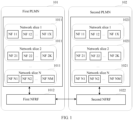
- FIG. 1 is a schematic diagram of an application scenario of a network access control method according to an embodiment of the present invention.
- a first PLMN 101 and a second PLMN 102 are included.
- the first PLMN 101 includes a plurality of network slices 1011 and a first NFRF 1012
- the second PLMN 102 includes a plurality of network slices 1021 and a second NFRF 1022.
- a plurality of NF instances are disposed in each network slice.
- the first NFRF 1012 may manage the NF instances in the network slices 1011 of the first PLMN 101
- the second NFRF 1022 may manage the NF instances in the network slices 1021 of the second PLMN 102.
- the NF instance in the first PLMN 101 may obtain, by using the first NFRF 1012 and the second NFRF 1022, information of the NF instance that needs to be accessed in the second PLMN 102 (for example, a type of a network slice to which the NF instance belongs), and access, based on the information of the NF instance that needs to be accessed, the NF instance that needs to be accessed.
- information of the NF instance that needs to be accessed in the second PLMN 102 for example, a type of a network slice to which the NF instance belongs
- a scenario in which the NF instance in the first PLMN 101 needs to access the NF instance in the second PLMN may be: A SIM card used by a terminal device is provided by an operator corresponding to the second PLMN, and if the terminal device is located in the first PLMN, when a service needs to be provided for the terminal device, an NF instance in the first PLMN 101 needs to access an NF instance in the second PLMN, and the NF instance in the first PLMN 101 interacts with the NF instance in the second PLMN, to provide the service for the terminal device.
- the scenario in which the NF instance in the first PLMN 101 needs to access the NF instance in the second PLMN may further include another scenario. This is not specifically limited in the present invention.
- a corresponding NFRF is disposed for each PLMN, and the NFRF may manage NF instances in network slices of the PLMN, so that an NF instance in a PLMN may access an NF instance in another PLMN by using the NFRF, thereby improving access reliability of NF instances in different PLMNs.
- first PLMN and the second PLMN in this embodiment of this application are substantially the same.
- a PLMN corresponding to the terminal device after roaming is referred to as the first PLMN
- a PLMN corresponding to the terminal device before the roaming is referred to as the second PLMN.
- the first PLMN may alternatively be a PLMN corresponding to another terminal device before roaming
- the second PLMN may alternatively be a PLMN corresponding to the another terminal device after the roaming.
- an NFRF corresponding to the first PLMN is referred to as the first NFRF
- an NFRF corresponding to the second PLMN is referred to as the second NFRF
- an NF in the first PLMN is referred to as a first NF
- an NF in the second PLMN is referred to as a second NF.
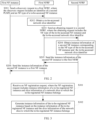
- FIG. 2 is a schematic flowchart 1 of a network access control method according to an embodiment of the present invention. Referring to FIG 2 , the method may include the following steps:
- the first NFRF is an NFRF corresponding to a first PLMN
- the first NF instance is any NF instance in any network slice of the first PLMN
- the second NFRF is an NFRF corresponding to the second PLMN
- the first PLMN and the second PLMN are different PLMNs.
- the first NF instance sends a discovery request to the first NFRF.
- the discovery request includes the identifier of the second PLMN and the NF type of the to-be-accessed NF instance.
- the discovery request is used to request access to the NF instance in the second PLMN.
- the NF type of the NF instance is a type of a network function owned by the NF instance, for example, a mobility management function, a packet data session connection management function, a user authentication function, and a policy management function.
- the first NFRF After the first NFRF receives the discovery request sent by a first NF, the first NFRF obtains the identifier of the second PLMN and the NF type of the to-be-accessed NF instance from the discovery request, and determines the second NFRF corresponding to the identifier of the second PLMN and an identifier of a network slice to which an NF instance corresponding to the to-be-accessed NF instance belongs (the to-be-accessed network slice identifier). The first NFRF sends the obtaining request to the second NFRF.
- the obtaining request includes the NF type of the to-be-accessed NF instance and the to-be-accessed network slice identifier.
- the to-be-accessed network slice identifier may be a type of a to-be-accessed network slice, or the to-be-accessed network slice identifier may be a combination of a type of a to-be-accessed network slice and a tenant identifier.
- the to-be-accessed network slice is a network slice rented to a tenant
- the to-be-accessed network slice identifier may be the combination of the type of the to-be-accessed network slice and the tenant identifier.
- the to-be-accessed network slice is a general network slice (a non-rental network slice) of an operator
- the to-be-accessed network slice identifier may be the type of the to-be-accessed network slice.
- the second NFRF After the second NFRF receives the obtaining request sent by the first NFRF, the second NFRF obtains, based on the obtaining request, the instance information of the second NF instance corresponding to the NF type of the to-be-accessed NF instance and the to-be-accessed network slice identifier.
- the second NFRF stores instance information of all NF instances in all network slices of the second PLMN.
- the second NFRF may obtain, from the stored instance information based on the NF type of the to-be-accessed NF instance and the to-be-accessed network slice identifier, the instance information of the second NF instance corresponding to the NF type of the to-be-accessed NF instance and the to-be-accessed network slice identifier.
- the instance information may include address information, load information, and the like of the NF instances.
- Content included in the instance information may be set depending on an actual requirement. This is not specifically limited in the present invention.
- a quantity of second NF instances obtained by the second NFRF may be 1 or more.
- the second NFRF After the second NFRF obtains the instance information of the second NF instance, the second NFRF sends the instance information of the second NF instance to the first NFRF, so that the first NFRF sends the instance information to the first NF instance, and the first NF instance accesses the second NF instance based on the received instance information.
- the instance information of the second NF instance includes an address of the second NF instance.
- the first NF instance may access the second NF instance based on the address of the second NF instance in the instance information.
- the first NF instance may access the second NF instance directly based on instance information of the second NF instance.
- the second NFRF may select a target second NF instance from a plurality of second NF instances, and access the target second NF instance based on instance information of the target second NF instance.
- the instance information may further include the load information of the second NF instances, so that the first NF instance may select a target second NF instance based on the load information of the second NF instances.
- the first NF instance may determine a second NF instance with minimum load as the target second NF instance.
- the instance information may further include priorities of the second NF instances, so that the first NF instance may select a target second NF instance based on the priorities of the second NF instances.
- the first NF instance may determine a second NF instance with a highest priority as the target second NF instance.
- the instance information does not include information of the second NF instances, for example, the load information and the priorities, the first NF instance may alternatively determine any one of the second NF instances as the target second NF instance.
- the first NFRF is disposed in the first PLMN
- the second NFRF is disposed in the second PLMN
- the first NFRF is configured to store the instance information of the NF instances in the first PLMN
- the second NFRF is configured to store the instance information of the NF instances in the second PLMN.
- the first NF instance may obtain the instance information of the second NF instance by using the first NFRF and the second NFRF, and access the second NF instance based on the instance information of the second NF instance, so as to ensure that the first NF instance in the first PLMN may access an NF instance in the second PLMN, thereby improving access reliability of NF instances in different PLMNs.
- the added NF instance may be registered in the NFRF.
- the NFRF may be an NFRF corresponding to any PLMN. A process in which the NF instance is registered in the NFRF is described below in detail by using an embodiment shown in FIG 3 .
- FIG. 3 is a schematic flowchart of a method for registering an NF instance in an NFRF according to an embodiment of the present invention. Referring to FIG 3 , the method may include the following steps:
- each network slice in a PLMN may correspond to a slice management unit.
- the user may input an NF registration request by using a slice management unit, so that the slice management unit sends the NF registration request to an NFRF.
- the NF registration request includes instance information of the to-be-registered NF instance and slice information of the network slice to which the to-be-registered NF instance belongs.
- the instance information of the to-be-registered NF instance includes at least one of an identifier of the to-be-registered instance, an NF type of the to-be-registered instance, and an address of the to-be-registered instance; and the slice information of the target network slice includes at least one of an identifier of the target network slice and a type of the target network slice.
- the NFRF After receiving the NF registration request, the NFRF generates instance information of the to-be-registered NF instance based on the instance information of the to-be-registered NF instance and the slice information of the network slice to which the to-be-registered NF instance belongs, where the instance information and the slice information are in the registration request.
- the NFRF may feed back the generated instance information of the to-be-registered NF instance to the slice management unit.
- the NFRF may store the instance information of the to-be-registered NF instance in a form, such as a table.
- Table 1 illustrates only an example of a form in which the NFRF stores the instance information of the NF instances in the PLMN and content included in the instance information, and is not intended to limit the storage form and the content included in the instance information.
- the storage form and the content included in the instance information may be set depending on an actual requirement.
- the added NF instance is registered in the NFRF, so that the NFRF generates the instance information of the added NF instance. In this way, it can be ensured that the NFRF can store the instance information of the NF instances in the PLMN.
- the first NFRF may obtain the to-be-accessed network slice identifier corresponding to the to-be-accessed NF instance by using the following two feasible implementations: In one feasible implementation, when the first NF instance sends the discovery request to the first NFRF, the first NF instance obtains the to-be-accessed network slice identifier, and adds the to-be-accessed network slice identifier to the discovery request, so that the first NFRF can obtain the to-be-accessed network slice identifier from the discovery request.
- the first NFRF determines the to-be-accessed network slice identifier based on a function type corresponding to the first NF instance.
- the first NF instance or the first NFRF may obtain the to-be-accessed network slice identifier by using the following feasible implementation. Specifically, refer to an embodiment shown in FIG 4 .
- FIG. 4 is a schematic flowchart of a method for obtaining a to-be-accessed network slice identifier according to an embodiment of the present invention. Referring to FIG 4 , the method may include the following steps:
- S403 Determine the first network slice type as a second network slice type, in a second PLMN, that corresponds to the first network slice type.
- S404 Send a slice type obtaining request to a policy management unit, where the network slice obtaining request includes the first network slice type and an identifier of the second PLMN.
- S405 Receive the second network slice type, in the second PLMN, that is sent by the policy management unit and that corresponds to the first network slice type.
- S406 Determine the second network slice type as a to-be-accessed network slice identifier.
- the embodiment shown in FIG 4 may be executed by the first NF instance or a first NFRF.
- the first NF instance may obtain the to-be-accessed network slice identifier by using the method shown in the embodiment of FIG 4 .
- the discovery request received by the first NFRF does not include the to-be-accessed network slice identifier
- the first NFRF may obtain the to-be-accessed network slice identifier by using the method shown in the embodiment of FIG 4 .
- the function type corresponding to the first NF instance is first obtained.
- the function type may include the first function type and a second function type.
- a slice type of a network function corresponding to the first function type is the same in all PLMNs, and a slice type of a network function corresponding to the second function type is different in different PLMNs.
- a function type is attribute information of an NF instance.
- a function type of a second NF instance may be obtained from attribute information of the first NF instance.
- the function type corresponding to the first NF instance After the function type corresponding to the first NF instance is obtained, it is determined whether the function type corresponding to the first NF instance is the first function type.
- the function type corresponding to the first NF instance is the first function type
- the first network slice type of the first network slice to which the first NF instance belongs is obtained
- the first network slice type is determined as the second network slice type, in the second PLMN, that corresponds to the first network slice type
- the second network slice type is determined as the to-be-accessed network slice identifier.
- the policy management unit is requested for the second network slice type, in the second PLMN, that corresponds to the first network slice type.
- a slice type obtaining request may be sent to the policy management unit.
- the network slice obtaining request includes the first network slice type and the identifier of the second PLMN, and the second network slice type, in the second PLMN, that is sent by the policy management unit and that corresponds to the first network slice type is received.
- the policy management unit stores a correspondence between network slices in different PLMNs.
- Table 2 Correspondence between network slices in different PLMNs PLMN 1 - network slice 1 PLMN 2 - network slice 1 PLMN 1 - network slice 2 PLMN 2 - network slice 3 PLMN 1 - network slice 3 PLMN 2 - network slice 2 ... ... PLMN 1 - network slice 1 PLMN 3 - network slice 2 PLMN 1 - network slice 2 PLMN 3 - network slice 1 PLMN 1 - network slice 3 PLMN 3 - network slice 4 ... ...
- Table 2 illustrates only an example of the correspondence between network slices in different PLMNs and a storage form of the policy management unit for the correspondence, and is not intended to limit the correspondence and the storage form of the correspondence.
- the correspondence and the storage form of the correspondence may be set according to an actual requirement.
- the to-be-accessed network slice identifier corresponding to the to-be-accessed NF instance may be accurately obtained based on the function type corresponding to the first NF instance, thereby further improving access reliability of NF instances in different PLMNs.
- the first NFRF obtains the instance information of the second NF instance corresponding to the NF type of the to-be-accessed NF instance and the to-be-accessed network slice identifier, whether the first NF instance has permission to access the to-be-accessed NF instance (the second NF instance) may be further verified. Specifically, refer to an embodiment shown in FIG 5 .
- FIG. 5 is a schematic flowchart of a method for verifying access permission of a first NF instance according to an embodiment of the present invention. Referring to FIG 5 , the method may include the following steps:
- the first NF type set includes the NF type of the first NF instance, perform S503.
- the first NF type set does not include the NF type of the first NF instance, perform S504.
- S503 Obtain instance information of a second NF instance corresponding to an NF type of the to-be-accessed NF instance and a to-be-accessed network slice identifier.
- S504 Send limited access prompt information to a first NFRF, so that the first NFRF sends the limited access prompt information to the first NF instance.
- an obtaining request sent by the first NFRF to a second NFRF further includes the NF type of the first NF instance.
- the second NFRF first obtains the first NF type set corresponding to the to-be-accessed NF instance, where each NF type in the first NF type set is an NF type of an NF instance allowed to access the to-be-accessed NF instance, and determines whether the first NF type set includes the NF type of the first NF instance.
- the first NF type set includes the NF type of the first NF instance, it indicates that the first NF instance has permission to access the to-be-accessed NF instance.
- the second NFRF instance continues to obtain the instance information of the second NF instance corresponding to the NF type of the to-be-accessed NF instance and the to-be-accessed network slice identifier.
- the first NF type set does not include the NF type of the first NF instance, it indicates that the first NF instance has no permission to access the to-be-accessed NF instance.
- the second NFRF sends the limited access prompt information to the first NFRF, so that the first NFRF sends the limited access prompt information to the first NF instance.
- a discovery request sent by a first NF instance to a first NFRF includes the to-be-accessed network slice identifier.
- a discovery request sent by a first NF instance to a first NFRF does not include a to-be-accessed network slice identifier, and the to-be-accessed network slice identifier is obtained by the first NFRF.
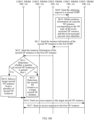
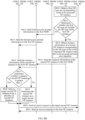
- FIG. 6A and FIG 6B are a schematic flowchart 2 of a network access control method according to an embodiment of the present invention. Referring to FIG 6A and FIG 6B , the method may include the following steps:
- the first NF instance determines a first network slice type as a second network slice type, in a second PLMN, that corresponds to the first network slice type.
- the first NF instance sends a network slice identifier obtaining request to a policy management unit, where the network slice obtaining request includes a first network slice type and an identifier of a second PLMN.
- the policy management unit sends, to the first NF instance, a second network slice type, in the second PLMN, that corresponds to the first network slice type.
- the first NF instance determines the second network slice type as a to-be-accessed network slice identifier.
- the first NF instance sends a discovery request to a first NFRF, where the discovery request includes the identifier of the second PLMN, an NF type of a to-be-accessed NF instance, and the to-be-accessed network slice identifier.
- the first NFRF obtains the NF type of the to-be-accessed NF instance and the to-be-accessed network slice identifier from the discovery request, and generates an obtaining request, where the obtaining request includes the NF type of the to-be-accessed NF instance and the to-be-accessed network slice identifier.
- the first NFRF sends the obtaining request to a second NFRF corresponding to the identifier of the second PLMN.
- the second NFRF obtains, based on the obtaining request, instance information of a second NF instance corresponding to the NF type of the to-be-accessed NF instance and the to-be-accessed network slice identifier.
- the second NFRF sends the instance information of the second NF instance to the first NFRF.
- the first NFRF sends the instance information of the second NF instance to the first NF instance.
- the first NF instance determines whether a quantity of second NF instances is greater than 1.
- the first NF instance selects a target second NF instance from a plurality of second NF instances.
- the first NF instance determines the second NF instance as a target second NF instance.
- S616 The first NF instance sends an access request to the target second NF instance.
- S617 The second NF instance sends an access response to the first NF instance.
- the first NF instance when the first NF instance needs to access an NF instance in the second PLMN, the first NF instance sends the discovery request to the first NFRF.
- the first NF instance first determines an identifier of a network slice corresponding to the to-be-accessed NF instance (the to-be-accessed network slice identifier). Specifically, the first NF instance determines the to-be-accessed network slice identifier by performing S601 to S606. It should be noted that, for specific descriptions of S601 to S606, reference may be made to S401 to S407. Details are not described herein again.
- the first NFRF After receiving the discovery request, the first NFRF obtains the NF type of the to-be-accessed NF instance and the to-be-accessed network slice identifier from the discovery request, generates the obtaining request including the NF type of the to-be-accessed NF instance and the to-be-accessed network slice identifier, and sends the obtaining request to the second NFRF corresponding to the identifier of the second PLMN.
- the second NFRF obtains, based on the obtaining request, the instance information of the second NF instance corresponding to the NF type of the to-be-accessed NF instance and the to-be-accessed network slice identifier, and sends the instance information of the second NF instance to the first NFRF.
- the second PLMN may determine, based on the obtaining request, a quantity of second NF instances corresponding to the NF type of the to-be-accessed NF instance and the to-be-accessed network slice identifier; if the quantity of the second NF instances is 1, determine that the instance information of the second NF instance includes an address of the second NF instance; or if the quantity of the second NF instances is greater than 1, determine that the instance information of the second NF instance includes an address of each second NF instance and load information of the second NF instance.
- the first NFRF After receiving the instance information of the second NF instance, the first NFRF sends the instance information of the second NF instance to the first NF instance.
- the instance information may include the address of the second NF instance, the load information, a priority, and the like. Specific content included in the instance information may be set according to an actual requirement.
- the first NF instance determines whether the quantity of the second NF instances is greater than 1. If the quantity of the second NF instances is greater than 1, the first NF instance selects the target second NF instance from a plurality of second NF instances. Optionally, the first NF instance may determine an instance with minimum load as the target second NF instance.
- the first NF instance directly determines the second NF instance as the target second NF instance, and sends the access request to the target second NF instance. After receiving the access response of the second NF instance, the first NF instance may access the second NF instance.
- the first NF determines the to-be-accessed network slice identifier, to reduce load of the first NFRF, and improve efficiency of obtaining the instance information of the second NF instance by the first NFRF.
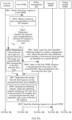
- FIG. 7A and FIG 7B are a schematic flowchart 3 of a network access control method according to an embodiment of the present invention. Referring to FIG 7A and FIG 7B , the method may include the following steps:
- the first NFRF determines a first network slice type as a second network slice type, in the second PLMN, that corresponds to the first network slice type.
- the first NFRF sends a network slice identifier obtaining request to a policy management unit, where the network slice obtaining request includes a to-be-accessed first network slice type and the identifier of the second PLMN.
- the policy management unit sends, to the first NFRF, a second network slice type, in the second PLMN, that corresponds to the first network slice type.
- the first NFRF determines the second network slice type as a to-be-accessed network slice identifier.
- the first NFRF generates an obtaining request based on the NF type of the to-be-accessed NF instance and the to-be-accessed network slice identifier, where the obtaining request includes the NF type of the to-be-accessed NF instance and the to-be-accessed network slice identifier.
- the first NFRF sends the obtaining request to a second NFRF corresponding to the identifier of the second PLMN.
- the second NFRF obtains, based on the obtaining request, instance information of a second NF instance corresponding to the NF type of the to-be-accessed NF instance and the to-be-accessed network slice identifier.
- the second NFRF sends the instance information of the second NF instance to the first NFRF.
- the first NFRF sends the instance information of the second NF instance to the first NF instance.
- the first NF instance determines whether a quantity of second NF instances is greater than 1.
- the first NF instance selects a target second NF instance from a plurality of second NF instances.
- the first NF instance determines the second NF instance as a target second NF instance.
- S716 The first NF instance sends an access request to the target second NF instance.
- S717 The second NF instance sends an access response to the first NF instance.
- the first NF instance when needing to access an NF instance in the second PLMN, the first NF instance sends the discovery request to the first NFRF.
- the discovery request includes the identifier of the second PLMN and the NF type of the to-be-accessed NF instance.
- the first NFRF After receiving the discovery request, to obtain an NF instance corresponding to the NF type of the to-be-accessed NF instance, the first NFRF needs to determine an identifier of a network slice corresponding to the to-be-accessed NF instance (the to-be-accessed network slice identifier). Specifically, the first NFRF determines the to-be-accessed network slice identifier by performing S702 to S707. It should be noted that, for specific descriptions of S702 to S707, reference may be made to S401 to S407, and for specific descriptions of S709 to S717, reference may be made to S609 to S617. Details are not described herein again.
- the first NFRF determines the to-be-accessed network slice identifier, and there is no need to make a relatively large number of improvements to a function and a structure of a first NF, thereby reducing costs.
- the obtaining request may further include an NF type of the first NF instance, so that the second NFRF first verifies the NF type of the first NF instance before providing the instance information of the second NF instance for the first NF.
- this implementation is described in detail by using an embodiment shown in FIG 8A and FIG 8B .
- FIG. 8A and FIG 8B are a schematic flowchart 4 of a network access control method according to an embodiment of the present invention. Referring to FIG 8A and FIG 8B , the method may include the following steps:
- the first NFRF determines a first network slice type as a second network slice type, in the second PLMN, that corresponds to the first network slice type.
- the first NFRF sends a network slice identifier obtaining request to a policy management unit, where the network slice obtaining request includes a to-be-accessed first network slice type and the identifier of the second PLMN.
- the first NFRF receives a second network slice type, in the second PLMN, that is sent by the policy management unit and that corresponds to the first network slice type.
- the first NFRF determines the second network slice type as a to-be-accessed network slice identifier.
- the first NFRF generates an obtaining request based on the NF type of the to-be-accessed NF instance, the to-be-accessed network slice identifier, and an NF type of the first NF instance, where the obtaining request includes the NF type of the to-be-accessed NF instance, the to-be-accessed network slice identifier, and the NF type of the first NF instance.
- the first NFRF sends the obtaining request to a second NFRF corresponding to the identifier of the second PLMN.
- the second NFRF obtains a first NF type set corresponding to the to-be-accessed NF instance, where each NF type in the first NF type set is an NF type of an NF instance allowed to access the to-be-accessed NF instance.
- the second NFRF determines whether the first NF type set includes the NF type of the first NF instance.
- the first NF type set includes the NF type of the first NF instance, perform S814 to S821.
- the first NF type set does not include the NF type of the first NF instance, perform S812 and S813.
- the second NFRF sends limited access prompt information to the first NFRF.
- the first NFRF sends the limited access prompt information to the first NF instance.
- the second NFRF obtains, based on the obtaining request, instance information of a second NF instance corresponding to the NF type of the to-be-accessed NF instance and the to-be-accessed network slice identifier.
- the second NFRF sends the instance information of the second NF instance to the first NFRF.
- the first NFRF sends the instance information of the second NF instance to the first NF instance.
- the first NF instance determines whether a quantity of second NF instances is greater than 1.
- the first NF instance selects a target second NF instance from a plurality of second NF instances.
- the first NF instance determines the second NF instance as a target second NF instance.
- S820 The first NF instance sends an access request to the target second NF instance.
- the second NF instance sends an access response to the first NF instance.
- the first NFRF generates the obtaining request based on the NF type of the to-be-accessed NF instance, the to-be-accessed network slice identifier, and the NF type of the first NF instance, where the obtaining request includes the NF type of the to-be-accessed NF instance, the to-be-accessed network slice identifier, and the NF type of the first NF instance, and sends the obtaining request to the second NFRF.
- the second NFRF obtains the first NF type set corresponding to the to-be-accessed NF instance, and determines whether the first NF type set includes the NF type of the first NF instance.
- the first NF type set includes the NF type of the first NF instance, it indicates that the first NF instance has permission to access the to-be-accessed NF instance. Perform S814 to S821. For specific descriptions of S814 to S821, refer to S710 to S716. Details are not described herein again.
- the first NF type set does not include the NF type of the first NF instance, it indicates that the first NF instance has no permission to access the to-be-accessed NF instance.
- the second NFRF sends the limited access prompt information to the first NFRF, and the first NFRF sends the limited access prompt information to the first NF instance, to prompt that the first NF has no permission to access an NF instance corresponding to the NF type of the to-be-accessed NF instance.
- the second NFRF before providing the instance information of the NF instance in the second PLMN for the first NF instance, the second NFRF first verifies whether the first NF instance has access permission; and when determining that the first NF instance has the access permission, provides the instance information of the NF instance in the second PLMN for the first NF instance, thereby improving access security of NF instances across PLMNs.
- the first NFRF when sending the obtaining request to the second NFRF, may also add the NF type of the first NF instance and the NF type of the to-be-accessed NF instance (excluding the to-be-accessed network slice identifier) to the obtaining request, so that the second NFRF obtains the first network slice type of the first network slice to which the first NF instance belongs, requests the policy management unit for the second network slice type, in the second PLMN, that corresponds to the first network slice type, and determines the second network slice type as the to-be-accessed network slice identifier.
- a process in which the second NFRF requests the policy management unit for the second network slice type is the same as a process in which the first NFRF requests the policy management unit for the second network slice type. Details are not described herein again.
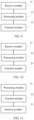
- FIG. 9 is a schematic structural diagram of a network access control apparatus according to an embodiment of the present invention.
- the network access control apparatus is applied to a first NFRF in a first PLMN.
- the apparatus includes a receive module 11, a processing module 12, and a transmit module 13.
- the receive module 11 is configured to receive a discovery request sent by a first network function NF instance, where the discovery request includes an identifier of a second PLMN and an NF type of a to-be-accessed NF instance.
- the processing module 12 is configured to obtain a to-be-accessed network slice identifier.
- the transmit module 13 is configured to send an obtaining request to a second NFRF corresponding to the identifier of the second PLMN, where the obtaining request includes the NF type of the to-be-accessed NF instance and the to-be-accessed network slice identifier.
- the receive module 11 is configured to receive instance information of a second NF instance corresponding to the NF type of the to-be-accessed NF instance and the to-be-accessed network slice identifier that are sent by the second NFR.
- the transmit module 13 is configured to send the instance information to the first NF instance.
- the network access control apparatus shown in this embodiment of the present invention may perform the technical solutions shown in the foregoing method embodiments.
- An implementation principle and a beneficial effect of the apparatus are similar to those of the foregoing method embodiments. Details are not described herein again.
- the to-be-accessed network slice identifier is a type of the to-be-accessed network slice; or the to-be-accessed network slice identifier is a combination of a type of the to-be-accessed network slice and a tenant identifier.
- the discovery request includes the to-be-accessed network slice identifier; and correspondingly, the processing module 12 is specifically configured to: obtain the to-be-accessed network slice identifier from the discovery request.
- processing module 12 is specifically configured to:
- processing module 12 is specifically configured to:
- processing module 12 is specifically configured to:
- the transmit module 13 is further configured to send a slice type obtaining request to the policy management unit, where the network slice obtaining request includes the first network slice type and the identifier of the second PLMN; and the receive module 11 is further configured to receive the second network slice type, in the second PLMN, that is sent by the policy management unit and that corresponds to the first network slice type.
- the instance information includes an address of the second NF instance; and correspondingly, the transmit module 13 is specifically configured to: send the instance information to the first NF instance, so that the first NF instance accesses the second NF instance based on the address of the second NF instance in the instance information.
- a quantity of second NF instances corresponding to the NF type of the to-be-accessed NF instance is greater than 1; and correspondingly, the transmit module 13 is specifically configured to: send instance information of the second NF instances to the first NF instance, so that the first NF instance determines a target second NF instance in the second NF instances, and accesses the target second NF instance based on an address of the target second NF instance.
- the instance information includes load information of the second NF instances, so that the first NF instance determines the target second NF instance in a plurality of second NF instances based on the load information of the second NF instances, and accesses the target second NF instance based on the address of the target second NF instance.
- the method further includes:
- the instance information of the to-be-registered NF instance includes at least one of an identifier of the to-be-registered instance, an NF type of the to-be-registered instance, and an address of the to-be-registered instance; and the slice information of the target network slice includes at least one of an identifier of the target network slice and a type of the target network slice.
- the network access control apparatus shown in this embodiment of the present invention may perform the technical solutions shown in the foregoing method embodiments.
- An implementation principle and a beneficial effect of the apparatus are similar to those of the foregoing method embodiments. Details are not described herein again.
- FIG. 10 is a schematic structural diagram of another network access control apparatus according to an embodiment of the present invention.
- the network control apparatus is applied to a second NFRF in a second PLMN.
- the apparatus includes a receive module 21, a processing module 22, and a transmit module 23.
- the receive module 21 is configured to receive an obtaining request sent by a first NFRF, where the obtaining request includes an NF type of the to-be-accessed network function NF instance and the to-be-accessed network slice identifier.
- the processing module 22 is configured to obtain, based on the obtaining request, instance information of a second NF instance corresponding to the NF type of the to-be-accessed NF instance and the to-be-accessed network slice identifier.
- the transmit module 23 is configured to send the instance information of the second NF instance to the first NFRF.
- the network access control apparatus shown in this embodiment of the present invention may perform the technical solutions shown in the foregoing method embodiments.
- An implementation principle and a beneficial effect of the apparatus are similar to those of the foregoing method embodiments. Details are not described herein again.
- the processing module 22 is specifically configured to: obtain an address and load information of the second NF instance corresponding to the NF type of the to-be-accessed NF instance and the to-be-accessed network slice identifier.
- processing module 22 is further configured to:
- the obtaining request further includes the NF type of the first NF instance; and correspondingly, the processing module 22 is further configured to:
- the transmit module 23 is further configured to: if it is determined that the first NF type set does not include the NF type of the first NF instance, send limited access prompt information to the first NFRF, so that the first NFRF sends the limited access prompt information to the first NF instance.
- the network access control apparatus shown in this embodiment of the present invention may perform the technical solutions shown in the foregoing method embodiments.
- An implementation principle and a beneficial effect of the apparatus are similar to those of the foregoing method embodiments. Details are not described herein again.
- FIG. 11 is a schematic structural diagram of still another network control apparatus according to an embodiment of the present invention.
- the network control apparatus is applied to a first NF instance.
- the apparatus includes a processing module 31, a transmit module 32, and a receive module 33.
- the processing module 31 is configured to obtain an NF type of a to-be-accessed NF instance and a to-be-accessed network slice identifier of a network slice to which the to-be-accessed NF instance belongs.
- the transmit module 32 is configured to send a discovery request to a first network function management module NFRF, where the sending request includes an identifier of a second PLMN, the NF type of the to-be-accessed NF instance, and the to-be-accessed network slice identifier, so that the first NFRF requests a second NFRF in the second PLMN for instance information of a second NF instance corresponding to the NF type of the to-be-accessed NF instance and the to-be-accessed network slice identifier.
- the receive module 33 is configured to receive the instance information of the second NF instance sent by the first NFRF.
- the network access control apparatus shown in this embodiment of the present invention may perform the technical solutions shown in the foregoing method embodiments.
- An implementation principle and a beneficial effect of the apparatus are similar to those of the foregoing method embodiments. Details are not described herein again.
- processing module 31 is specifically configured to:
- processing module 31 is specifically configured to:
- the transmit module 32 is further configured to send a slice type obtaining request to the policy management unit, where the network slice obtaining request includes the first network slice type and the identifier of the second PLMN; and the receive module 33 is further configured to receive the second network slice type, in the second PLMN, that is sent by the policy management unit and that corresponds to the first network slice type.
- the network access control apparatus shown in this embodiment of the present invention may perform the technical solutions shown in the foregoing method embodiments.
- An implementation principle and a beneficial effect of the apparatus are similar to those of the foregoing method embodiments. Details are not described herein again.
- FIG. 12 is a schematic structural diagram of a network access control device according to an embodiment of the present invention.
- the network access control device is applied to a first NFRF in a first PLMN.
- the device includes a receiver 41, a processor 42, a transmitter 43, a memory 44, and a communications bus 45.
- the memory 44 is configured to store a program
- the communications bus 45 is configured to implement a communications connection between elements
- the processor 42 may read the program in the memory 44 and perform a corresponding operation.
- the receiver 41 is configured to receive a discovery request sent by a first network function NF instance, where the discovery request includes an identifier of a second PLMN and an NF type of a to-be-accessed NF instance.
- the processor 42 is configured to obtain a to-be-accessed network slice identifier.
- the transmitter 43 is configured to send an obtaining request to a second NFRF corresponding to the identifier of the second PLMN, where the obtaining request includes the NF type of the to-be-accessed NF instance and the to-be-accessed network slice identifier.
- the receiver 41 is configured to receive instance information of a second NF instance corresponding to the NF type of the to-be-accessed NF instance and the to-be-accessed network slice identifier that are sent by the second NFR.
- the transmitter 43 is configured to send the instance information to the first NF instance.
- the network access control device shown in this embodiment of the present invention may perform the technical solutions shown in the foregoing method embodiments.
- An implementation principle and a beneficial effect of the device are similar to those of the foregoing method embodiments. Details are not described herein again.
- the to-be-accessed network slice identifier is a type of the to-be-accessed network slice; or the to-be-accessed network slice identifier is a combination of a type of the to-be-accessed network slice and a tenant identifier.
- the discovery request includes the to-be-accessed network slice identifier; and correspondingly, the processor 42 is specifically configured to: obtain the to-be-accessed network slice identifier from the discovery request.
- the processor 42 is specifically configured to:
- the processor 42 is specifically configured to:
- the processor 42 is specifically configured to:
- the transmitter 43 is further configured to send a slice type obtaining request to the policy management unit, where the network slice obtaining request includes the first network slice type and the identifier of the second PLMN; and the receiver 41 is further configured to receive the second network slice type, in the second PLMN, that is sent by the policy management unit and that corresponds to the first network slice type.
- the instance information includes an address of the second NF instance; and correspondingly, the transmitter 43 is specifically configured to: send the instance information to the first NF instance, so that the first NF instance accesses the second NF instance based on the address of the second NF instance in the instance information.
- a quantity of second NF instances corresponding to the NF type of the to-be-accessed NF instance is greater than 1; and correspondingly, the transmitter 43 is specifically configured to: send instance information of the second NF instances to the first NF instance, so that the first NF instance determines a target second NF instance in the second NF instances, and accesses the target second NF instance based on an address of the target second NF instance.
- the instance information includes load information of the second NF instances, so that the first NF instance determines the target second NF instance in a plurality of second NF instances based on the load information of the second NF instances, and accesses the target second NF instance based on the address of the target second NF instance.
- the method further includes:
- the instance information of the to-be-registered NF instance includes at least one of an identifier of the to-be-registered instance, an NF type of the to-be-registered instance, and an address of the to-be-registered instance; and the slice information of the target network slice includes at least one of an identifier of the target network slice and a type of the target network slice.
- the network access control device shown in this embodiment of the present invention may perform the technical solutions shown in the foregoing method embodiments.
- An implementation principle and a beneficial effect of the device are similar to those of the foregoing method embodiments. Details are not described herein again.
- FIG. 13 is a schematic structural diagram of another network access control device according to an embodiment of the present invention.
- the network access control device is applied to a second NFRF in a second PLMN.
- the device includes a receiver 51, a processor 52, a transmitter 53, a memory 54, and a communications bus 55.
- the memory 54 is configured to store a program
- the communications bus 55 is configured to implement a communications connection between elements
- the processor 52 may read the program in the memory 54 and perform a corresponding operation.
- the receiver 51 is configured to receive an obtaining request sent by a first NFRF, where the obtaining request includes an NF type of the to-be-accessed network function NF instance and the to-be-accessed network slice identifier.
- the processor 52 is configured to obtain, based on the obtaining request, instance information of a second NF instance corresponding to the NF type of the to-be-accessed NF instance and the to-be-accessed network slice identifier.
- the transmitter 53 is configured to send the instance information of the second NF instance to the first NFRF.
- the network access control device shown in this embodiment of the present invention may perform the technical solutions shown in the foregoing method embodiments.
- An implementation principle and a beneficial effect of the device are similar to those of the foregoing method embodiments. Details are not described herein again.
- the processor 52 is specifically configured to: obtain an address and load information of the second NF instance corresponding to the NF type of the to-be-accessed NF instance and the to-be-accessed network slice identifier.
- processor 52 is further configured to:
- the obtaining request further includes the NF type of the first NF instance; and correspondingly, the processor 52 is further configured to:
- the transmitter 53 is further configured to: if it is determined that the first NF type set does not include the NF type of the first NF instance, send limited access prompt information to the first NFRF, so that the first NFRF sends the limited access prompt information to the first NF instance.
- the network access control device shown in this embodiment of the present invention may perform the technical solutions shown in the foregoing method embodiments.
- An implementation principle and a beneficial effect of the device are similar to those of the foregoing method embodiments. Details are not described herein again.
- FIG. 14 is a schematic structural diagram of still another network access control device according to an embodiment of the present invention.
- the network access control device is applied to a first NF instance.
- the device includes a processor 61, a transmitter 62, a receiver 63, a memory 64, and a communications bus 65.
- the memory 64 is configured to store a program
- the communications bus 65 is configured to implement a communications connection between elements
- the processor 61 may read the program in the memory 64 and perform a corresponding operation.
- the processor 61 is configured to obtain an NF type of a to-be-accessed NF instance and a to-be-accessed network slice identifier of a network slice to which the to-be-accessed NF instance belongs.
- the transmitter 62 is configured to send a discovery request to a first network function management module NFRF, where the sending request includes an identifier of a second PLMN, the NF type of the to-be-accessed NF instance, and the to-be-accessed network slice identifier, so that the first NFRF requests a second NFRF in the second PLMN for instance information of a second NF instance corresponding to the NF type of the to-be-accessed NF instance and the to-be-accessed network slice identifier.
- the receiver 63 is configured to receive the instance information of the second NF instance sent by the first NFRF.
- the network access control device shown in this embodiment of the present invention may perform the technical solutions shown in the foregoing method embodiments.
- An implementation principle and a beneficial effect of the device are similar to those of the foregoing method embodiments. Details are not described herein again.
- the processor 61 is specifically configured to:
- the processor 61 is specifically configured to:
- the transmitter 62 is further configured to send a slice type obtaining request to the policy management unit, where the network slice obtaining request includes the first network slice type and the identifier of the second PLMN; and the receiver 63 is configured to receive the second network slice type, in the second PLMN, that is sent by the policy management unit and that corresponds to the first network slice type.
- the network access control device shown in this embodiment of the present invention may perform the technical solutions shown in the foregoing method embodiments.
- An implementation principle and a beneficial effect of the device are similar to those of the foregoing method embodiments. Details are not described herein again.
- An embodiment of the present invention provides a network control system.
- the network control system includes the network control devices shown in the embodiments of FIG 12 to FIG 14 .
- the program may be stored in a computer readable storage medium. When the program runs, the steps of the method embodiments are performed.
- the foregoing storage medium includes any medium that can store program code, such as a ROM, a RAM, a magnetic disk, or an optical disc.
Landscapes
- Engineering & Computer Science (AREA)
- Computer Networks & Wireless Communication (AREA)
- Signal Processing (AREA)
- Computer Security & Cryptography (AREA)
- Databases & Information Systems (AREA)
- Mobile Radio Communication Systems (AREA)
- Data Exchanges In Wide-Area Networks (AREA)
- Computer And Data Communications (AREA)
Claims (12)
- Netzwerkzugriffssteuerverfahren, das Folgendes umfasst:Empfangen (201), durch ein erstes Netzwerkfunktionsverwaltungsmodul in einem ersten öffentlichen terrestrischen Mobilfunknetz bzw. PLMN, einer Entdeckungsanforderung von einer ersten Netzwerkfunktions- bzw. NF-Instanz in dem ersten PLMN, wobei die Entdeckungsanforderung eine Kennung eines zweiten PLMN, einen NF-Typ einer NF-Instanz, auf die zugegriffen werden soll, und eine Netzwerk-Slice-Kennung, auf die zugegriffen werden soll, umfasst, wobei der NF-Typ der NF-Instanz, auf die zugegriffen werden soll, eine Mobilitätsverwaltungsfunktion, eine Benutzerauthentifizierungsfunktion oder eine Richtlinienverwaltungsfunktion ist; Senden (203), durch das erste Netzwerkfunktionsverwaltungsmodul, einer Erhalteanforderung an ein zweites Netzwerkfunktionsverwaltungsmodul in dem zweiten PLMN, wobei die Erhalteanforderung den NF-Typ der NF-Instanz, auf die zugegriffen werden soll, und die Netzwerk-Slice-Kennung, auf die zugegriffen werden soll, umfasst;Empfangen (205), durch das erste Netzwerkfunktionsverwaltungsmodul, von Instanzinformationen von mindestens einer zweiten NF-Instanz, die dem NF-Typ der NF-Instanz, auf die zugegriffen werden soll, und der Netzwerk-Slice-Kennung, auf die zugegriffen werden soll, entsprechen, von dem zweiten Netzwerkfunktionsverwaltungsmodul,Senden (206), durch das erste Netzwerkfunktionsverwaltungsmodul, der Instanzinformationen der mindestens einen zweiten NF-Instanz an die erste NF-Instanz.
- Netzwerkzugriffssteuerverfahren nach Anspruch 1, wobei
die Netzwerk-Slice-Kennung, auf die zugegriffen werden soll, ein Typ eines Netzwerk-Slice, auf das zugegriffen werden soll, ist. - Netzwerkzugriffssteuerverfahren nach Anspruch 1 oder 2, wobei eine Menge der mindestens einen zweiten NF-Instanz größer als 1 ist.
- Netzwerkzugriffssteuerverfahren, das Folgendes umfasst:Senden (201), durch eine erste Netzwerkfunktions- bzw. NF-Instanz in einem ersten öffentlichen terrestrischen Mobilfunknetz bzw. PLMN, einer Entdeckungsanforderung an ein erstes Netzwerkfunktionsverwaltungsmodul in dem ersten PLMN, wobei die Entdeckungsanforderung eine Kennung eines zweiten PLMN, einen NF-Typ einer NF-Instanz, auf die zugegriffen werden soll, und eine Netzwerk-Slice-Kennung, auf die zugegriffen werden soll, umfasst, wobei der NF-Typ einer NF-Instanz, auf die zugegriffen werden soll, eine Mobilitätsverwaltungsfunktion, eine Benutzerauthentifizierungsfunktion oder eine Richtlinienverwaltungsfunktion ist;Empfangen (201), durch das erste Netzwerkfunktionsverwaltungsmodul, der Entdeckungsanforderung von der ersten NF-Instanz;Senden (203), durch das erste Netzwerkfunktionsverwaltungsmodul einer Erhalteanforderung an ein zweites Netzwerkfunktionsverwaltungsmodul in dem zweiten PLMN, wobei die Erhalteanforderung den NF-Typ einer NF-Instanz, auf die zugegriffen werden soll, und die Netzwerk-Slice-Kennung, auf die zugegriffen werden soll, umfasst;Empfangen (205), durch das erste Netzwerkfunktionsverwaltungsmodul, von Instanzinformationen von mindestens einer zweiten NF-Instanz, die dem NF-Typ einer NF-Instanz, auf die zugegriffen werden soll, und der Netzwerk-Slice-Kennung, auf die zugegriffen werden soll, entsprechen, von dem zweiten Netzwerkfunktionsverwaltungsmodul;Senden (206), durch das erste Netzwerkfunktionsverwaltungsmodul, der Instanzinformationen der mindestens einen zweiten NF-Instanz an die erste NF-Instanz;Empfangen (205), durch die erste NF-Instanz, der Instanzinformationen der mindestens einen zweiten NF-Instanz von dem ersten Netzwerkfunktionsverwaltungsmodul.
- Netzwerkzugriffssteuerverfahren nach Anspruch 1, wobei
die Netzwerk-Slice-Kennung, auf die zugegriffen werden soll, ein Typ eines Netzwerk-Slice, auf das zugegriffen werden soll, ist. - Netzwerkzugriffssteuerverfahren nach Anspruch 1 oder 2, wobei eine Menge der mindestens einen zweiten NF-Instanz größer als 1 ist.
- Erstes Netzwerkfunktionsverwaltungsmodul, das Mittel umfasst, die zum Durchführen der Schritte des Verfahrens nach einem der Ansprüche 1 bis 3 ausgelegt sind.
- Netzwerkzugriffssteuersystem, das Folgendes umfasst:ein erstes Netzwerkfunktionsverwaltungsmodul, ausgelegt zum Durchführen des Verfahrens nach einem der Ansprüche 1 bis 3; unddie erste NF-Instanz, ausgelegt zum Senden der Entdeckungsanforderung an das erste Netzwerkfunktionsverwaltungsmodul; und Empfangen der Instanzinformationen der mindestens einen zweiten NF-Instanz von dem ersten Netzwerkfunktionsverwaltungsmodul.
- Produkt, das einen oder mehrere greifbare computerlesbare nicht-flüchtige Speicher beinhaltet, umfassend computerausführbare Anweisungen, die bei Ausführung durch einen mit einem ersten Netzwerkfunktionsverwaltungsmodul assoziierten Computer bewirken, dass das erste Netzwerkfunktionsverwaltungsmodul die Schritte des Verfahrens nach einem der Ansprüche 1 bis 3 ausführt.
- Produkt, das einen oder mehrere greifbare computerlesbare nicht-flüchtige Speicher beinhaltet, umfassend computerausführbare Anweisungen, die bei Ausführung durch einen mit einem zweiten Netzwerkfunktionsverwaltungsmodul assoziierten Computer bewirken, dass das zweite Netzwerkfunktionsverwaltungsmodul die folgenden Schritte ausführt:Empfangen einer Erhalteanforderung von einem ersten Netzwerkfunktionsverwaltungsmodul, wobei die Erhalteanforderung einen Netzwerkfunktions- bzw. NF-Typ einer NF-Instanz, auf die zugegriffen werden soll, und eine Netzwerk-Slice-Kennung, auf die zugegriffen werden soll, umfasst, wobei der NF-Typ der NF-Instanz, auf die zugegriffen werden soll, eine Mobilitätsverwaltungsfunktion, eine Benutzerauthentifizierungsfunktion oder eine Richtlinienverwaltungsfunktion ist;Erhalten, basierend auf der Erhalteanforderung, von Instanzinformationen von mindestens einer zweiten NF-Instanz, wobei die Instanzinformationen der mindestens einen zweiten NF-Instanz dem NF-Typ der NF-Instanz, auf die zugegriffen werden soll, und der Netzwerk-Slice-Kennung, auf die zugegriffen werden soll, entsprechen; undSenden der Instanzinformationen der mindestens einen zweiten NF-Instanz an das erste Netzwerkfunktionsverwaltungsmodul.
- Produkt nach Anspruch 10, wobei
die Netzwerk-Slice-Kennung, auf die zugegriffen werden soll, ein Typ eines Netzwerk-Slice ist. - Produkt nach Anspruch 10 oder 11, wobei eine Menge der mindestens einen zweiten NF-Instanz größer als 1 ist.
Priority Applications (1)
| Application Number | Priority Date | Filing Date | Title |
|---|---|---|---|
| EP20188920.1A EP3799480B1 (de) | 2016-10-09 | 2016-10-09 | Netzwerkzugriffskontrollverfahren, -gerät und -vorrichtung |
Applications Claiming Priority (3)
| Application Number | Priority Date | Filing Date | Title |
|---|---|---|---|
| EP16918158.3A EP3525522B1 (de) | 2016-10-09 | 2016-10-09 | Netzwerkzugriffskontrollverfahren, |
| EP20188920.1A EP3799480B1 (de) | 2016-10-09 | 2016-10-09 | Netzwerkzugriffskontrollverfahren, -gerät und -vorrichtung |
| PCT/CN2016/101529 WO2018064824A1 (zh) | 2016-10-09 | 2016-10-09 | 网络访问控制方法、装置及设备 |
Related Parent Applications (2)
| Application Number | Title | Priority Date | Filing Date |
|---|---|---|---|
| EP16918158.3A Division-Into EP3525522B1 (de) | 2016-10-09 | 2016-10-09 | Netzwerkzugriffskontrollverfahren, |
| EP16918158.3A Division EP3525522B1 (de) | 2016-10-09 | 2016-10-09 | Netzwerkzugriffskontrollverfahren, |
Publications (2)
| Publication Number | Publication Date |
|---|---|
| EP3799480A1 EP3799480A1 (de) | 2021-03-31 |
| EP3799480B1 true EP3799480B1 (de) | 2024-08-21 |
Family
ID=61830796
Family Applications (2)
| Application Number | Title | Priority Date | Filing Date |
|---|---|---|---|
| EP20188920.1A Active EP3799480B1 (de) | 2016-10-09 | 2016-10-09 | Netzwerkzugriffskontrollverfahren, -gerät und -vorrichtung |
| EP16918158.3A Active EP3525522B1 (de) | 2016-10-09 | 2016-10-09 | Netzwerkzugriffskontrollverfahren, |
Family Applications After (1)
| Application Number | Title | Priority Date | Filing Date |
|---|---|---|---|
| EP16918158.3A Active EP3525522B1 (de) | 2016-10-09 | 2016-10-09 | Netzwerkzugriffskontrollverfahren, |
Country Status (7)
| Country | Link |
|---|---|
| US (2) | US10743247B2 (de) |
| EP (2) | EP3799480B1 (de) |
| JP (1) | JP6768942B2 (de) |
| KR (1) | KR102181956B1 (de) |
| CN (2) | CN109845190B (de) |
| RU (1) | RU2709286C1 (de) |
| WO (1) | WO2018064824A1 (de) |
Families Citing this family (5)
| Publication number | Priority date | Publication date | Assignee | Title |
|---|---|---|---|---|
| EP3799480B1 (de) * | 2016-10-09 | 2024-08-21 | Huawei Technologies Co., Ltd. | Netzwerkzugriffskontrollverfahren, -gerät und -vorrichtung |
| CN108243106B (zh) * | 2016-12-23 | 2020-09-04 | 华为技术有限公司 | 控制网络切片的方法、转发设备、控制设备和通信系统 |
| CN112788585B (zh) * | 2020-12-28 | 2021-11-02 | 广州爱浦路网络技术有限公司 | 一种5g核心网中nf切换方法、装置及存储介质 |
| US12382415B1 (en) * | 2021-05-20 | 2025-08-05 | T-Mobile Innovations Llc | Network function registration with network repository functions |
| US12349050B2 (en) * | 2022-01-18 | 2025-07-01 | Oracle International Corporation | Methods, systems, and computer readable media for prioritizing among alternate network function (NF) instances |
Family Cites Families (25)
| Publication number | Priority date | Publication date | Assignee | Title |
|---|---|---|---|---|
| GB0108041D0 (en) * | 2001-03-30 | 2001-05-23 | Nokia Networks Oy | Presence service in IP multimedia |
| US7873357B2 (en) * | 2004-11-04 | 2011-01-18 | Telefonaktiebolaget L M Ericsson (Publ) | Selective disablement of mobile communication equipment capabilities |
| WO2008051021A1 (en) * | 2006-10-26 | 2008-05-02 | Ktfreetel Co., Ltd. | Private mobile network integration service system using public land mobile network and call processing method therefof |
| US20110149968A1 (en) * | 2009-12-21 | 2011-06-23 | Electronics And Telecommunications Research Institute | Method for controlling internet network |
| CN103477673B (zh) * | 2011-04-21 | 2017-03-08 | 诺基亚通信公司 | 自组织网络中的协调 |
| CN104662988B (zh) * | 2013-01-30 | 2019-04-19 | 华为技术有限公司 | 网络功能的通知处理方法、装置和系统 |
| CN103269282A (zh) * | 2013-04-25 | 2013-08-28 | 杭州华三通信技术有限公司 | 网络配置自动部署方法和装置 |
| WO2014205786A1 (zh) * | 2013-06-28 | 2014-12-31 | 华为技术有限公司 | 任播服务注册、实现方法及装置、交换设备和系统 |
| CN104811328B (zh) | 2014-01-27 | 2018-08-10 | 新华三技术有限公司 | 虚拟网络资源管理方法及装置 |
| WO2015174989A1 (en) * | 2014-05-15 | 2015-11-19 | Hewlett-Packard Development Company, L.P. | Network traffic tuning |
| CN104253866B (zh) * | 2014-09-20 | 2018-03-27 | 华为技术有限公司 | 虚拟网络功能网元的软件部署方法、系统及相关设备 |
| WO2016082143A1 (zh) | 2014-11-27 | 2016-06-02 | 华为技术有限公司 | 虚拟网络策略的配置方法、系统及其虚拟网元和网管系统 |
| KR20170105582A (ko) * | 2015-01-20 | 2017-09-19 | 후아웨이 테크놀러지 컴퍼니 리미티드 | Nfv 및 sdn과 연동하기 위한 sdt를 위한 시스템들 및 방법들 |
| US9392471B1 (en) * | 2015-07-24 | 2016-07-12 | Viavi Solutions Uk Limited | Self-optimizing network (SON) system for mobile networks |
| US10425830B2 (en) * | 2015-09-07 | 2019-09-24 | Electronics And Telecommunications Research Institute | Mobile communication network system and method for composing network component configurations |
| US10129108B2 (en) * | 2015-11-13 | 2018-11-13 | Huawei Technologies Co., Ltd. | System and methods for network management and orchestration for network slicing |
| EP3398305B1 (de) * | 2015-12-29 | 2021-10-27 | Telefonaktiebolaget LM Ericsson (PUBL) | Verfahren und architektur für virtualisierten netzwerkdienst |
| EP3398361B1 (de) * | 2015-12-29 | 2020-05-13 | Telefonaktiebolaget LM Ericsson (PUBL) | Netzwerkknoten und darin ausgeführte verfahren zur ermöglichung der kommunikation in einem kommunikationsnetzwerk |
| WO2017197273A1 (en) * | 2016-05-12 | 2017-11-16 | Convida Wireless, Llc | Connecting to virtualized mobile core networks |
| CN105813195B (zh) * | 2016-05-13 | 2019-05-17 | 电信科学技术研究院有限公司 | 一种按需为终端选择移动性管理机制的方法及装置 |
| CN106210042B (zh) * | 2016-07-11 | 2019-06-18 | 清华大学 | 一种基于端到端网络切片的用户服务请求选择方法 |
| CN109952741A (zh) * | 2016-10-05 | 2019-06-28 | 康维达无线有限责任公司 | 服务实例化的能力暴露 |
| KR102559755B1 (ko) | 2016-10-06 | 2023-07-26 | 삼성전자 주식회사 | 네크워크 슬라이스를 지원하는 로밍 환경에서 단말의 attach 및 home routed PDU session 생성 방법 |
| EP3523924A1 (de) * | 2016-10-06 | 2019-08-14 | Convida Wireless, LLC | Sitzungsverwaltung mit weiterleitung und abrechnung für die indirekte verbindung für internet-der-dinge-anwendungen im 3gpp-netz |
| EP3799480B1 (de) | 2016-10-09 | 2024-08-21 | Huawei Technologies Co., Ltd. | Netzwerkzugriffskontrollverfahren, -gerät und -vorrichtung |
-
2016
- 2016-10-09 EP EP20188920.1A patent/EP3799480B1/de active Active
- 2016-10-09 CN CN201680089757.XA patent/CN109845190B/zh active Active
- 2016-10-09 EP EP16918158.3A patent/EP3525522B1/de active Active
- 2016-10-09 JP JP2019518956A patent/JP6768942B2/ja active Active
- 2016-10-09 CN CN202110027483.4A patent/CN112887962B/zh active Active
- 2016-10-09 WO PCT/CN2016/101529 patent/WO2018064824A1/zh not_active Ceased
- 2016-10-09 RU RU2019113932A patent/RU2709286C1/ru active
- 2016-10-09 KR KR1020197013371A patent/KR102181956B1/ko active Active
-
2019
- 2019-04-09 US US16/379,394 patent/US10743247B2/en active Active
-
2020
- 2020-07-29 US US16/942,025 patent/US11997489B2/en active Active
Also Published As
| Publication number | Publication date |
|---|---|
| EP3525522B1 (de) | 2020-12-09 |
| EP3799480A1 (de) | 2021-03-31 |
| JP6768942B2 (ja) | 2020-10-14 |
| JP2019530374A (ja) | 2019-10-17 |
| EP3525522A4 (de) | 2019-08-14 |
| KR102181956B1 (ko) | 2020-11-23 |
| US20190239150A1 (en) | 2019-08-01 |
| US10743247B2 (en) | 2020-08-11 |
| CN112887962B (zh) | 2022-04-29 |
| WO2018064824A1 (zh) | 2018-04-12 |
| CN109845190B (zh) | 2021-01-15 |
| RU2709286C1 (ru) | 2019-12-17 |
| EP3525522A1 (de) | 2019-08-14 |
| KR20190064631A (ko) | 2019-06-10 |
| CN112887962A (zh) | 2021-06-01 |
| BR112019006929A2 (pt) | 2019-07-02 |
| US11997489B2 (en) | 2024-05-28 |
| CN109845190A (zh) | 2019-06-04 |
| US20200359220A1 (en) | 2020-11-12 |
Similar Documents
| Publication | Publication Date | Title |
|---|---|---|
| EP3958643B1 (de) | Kommunikationsverfahren, -vorrichtung und -system | |
| US12256005B2 (en) | Communication system, method, and apparatus | |
| US11272439B2 (en) | Core network selection method, apparatus, and system | |
| EP3720048B1 (de) | Erfassung von benutzerrichtlinien | |
| EP3358887B1 (de) | Benutzergeräteregistrierungsverfahren für netzwerkschichtauswahl sowie netzwerksteuergerät und netzwerkkommunikationssystem mit verwendung davon | |
| EP3799480B1 (de) | Netzwerkzugriffskontrollverfahren, -gerät und -vorrichtung | |
| EP2983399B1 (de) | Verfahren, vorrichtung und system zur näherungsdienstautorisierung | |
| EP3651432B1 (de) | Auswahl der ip-version | |
| US11503496B2 (en) | Data processing method and apparatus | |
| EP4561136A1 (de) | Kommunikationsverfahren und kommunikationsvorrichtung | |
| KR20220152950A (ko) | 네트워크 슬라이스 승인 제어(nsac) 발견 및 로밍 향상들 | |
| EP3435727B1 (de) | Zugangsverfahren, -vorrichtung, und -system | |
| EP4525499A1 (de) | Kommunikationsverfahren und -vorrichtung | |
| EP2922325A1 (de) | Verfahren und vorrichtung zur kommunikationssicherheitsverarbeitung | |
| EP4661339A1 (de) | Kommunikationsverfahren und kommunikationsvorrichtung | |
| EP4618521A1 (de) | Kommunikationsverfahren und kommunikationsvorrichtung | |
| BR112019006929B1 (pt) | Método de controle de acesso à rede, aparelho, e dispositivo |
Legal Events
| Date | Code | Title | Description |
|---|---|---|---|
| PUAI | Public reference made under article 153(3) epc to a published international application that has entered the european phase |
Free format text: ORIGINAL CODE: 0009012 |
|
| STAA | Information on the status of an ep patent application or granted ep patent |
Free format text: STATUS: THE APPLICATION HAS BEEN PUBLISHED |
|
| AC | Divisional application: reference to earlier application |
Ref document number: 3525522 Country of ref document: EP Kind code of ref document: P |
|
| AK | Designated contracting states |
Kind code of ref document: A1 Designated state(s): AL AT BE BG CH CY CZ DE DK EE ES FI FR GB GR HR HU IE IS IT LI LT LU LV MC MK MT NL NO PL PT RO RS SE SI SK SM TR |
|
| STAA | Information on the status of an ep patent application or granted ep patent |
Free format text: STATUS: REQUEST FOR EXAMINATION WAS MADE |
|
| STAA | Information on the status of an ep patent application or granted ep patent |
Free format text: STATUS: EXAMINATION IS IN PROGRESS |
|
| 17P | Request for examination filed |
Effective date: 20210930 |
|
| RBV | Designated contracting states (corrected) |
Designated state(s): AL AT BE BG CH CY CZ DE DK EE ES FI FR GB GR HR HU IE IS IT LI LT LU LV MC MK MT NL NO PL PT RO RS SE SI SK SM TR |
|
| 17Q | First examination report despatched |
Effective date: 20211102 |
|
| GRAP | Despatch of communication of intention to grant a patent |
Free format text: ORIGINAL CODE: EPIDOSNIGR1 |
|
| STAA | Information on the status of an ep patent application or granted ep patent |
Free format text: STATUS: GRANT OF PATENT IS INTENDED |
|
| INTG | Intention to grant announced |
Effective date: 20240402 |
|
| GRAS | Grant fee paid |
Free format text: ORIGINAL CODE: EPIDOSNIGR3 |
|
| GRAA | (expected) grant |
Free format text: ORIGINAL CODE: 0009210 |
|
| STAA | Information on the status of an ep patent application or granted ep patent |
Free format text: STATUS: THE PATENT HAS BEEN GRANTED |
|
| AC | Divisional application: reference to earlier application |
Ref document number: 3525522 Country of ref document: EP Kind code of ref document: P |
|
| AK | Designated contracting states |
Kind code of ref document: B1 Designated state(s): AL AT BE BG CH CY CZ DE DK EE ES FI FR GB GR HR HU IE IS IT LI LT LU LV MC MK MT NL NO PL PT RO RS SE SI SK SM TR |
|
| REG | Reference to a national code |
Ref country code: GB Ref legal event code: FG4D |
|
| REG | Reference to a national code |
Ref country code: CH Ref legal event code: EP |
|
| REG | Reference to a national code |
Ref country code: IE Ref legal event code: FG4D |
|
| REG | Reference to a national code |
Ref country code: DE Ref legal event code: R096 Ref document number: 602016089063 Country of ref document: DE |
|
| REG | Reference to a national code |
Ref country code: LT Ref legal event code: MG9D |
|
| REG | Reference to a national code |
Ref country code: NL Ref legal event code: MP Effective date: 20240821 |
|
| PG25 | Lapsed in a contracting state [announced via postgrant information from national office to epo] |
Ref country code: NO Free format text: LAPSE BECAUSE OF FAILURE TO SUBMIT A TRANSLATION OF THE DESCRIPTION OR TO PAY THE FEE WITHIN THE PRESCRIBED TIME-LIMIT Effective date: 20241121 |
|
| REG | Reference to a national code |
Ref country code: AT Ref legal event code: MK05 Ref document number: 1716799 Country of ref document: AT Kind code of ref document: T Effective date: 20240821 |
|
| PG25 | Lapsed in a contracting state [announced via postgrant information from national office to epo] |
Ref country code: NL Free format text: LAPSE BECAUSE OF FAILURE TO SUBMIT A TRANSLATION OF THE DESCRIPTION OR TO PAY THE FEE WITHIN THE PRESCRIBED TIME-LIMIT Effective date: 20240821 Ref country code: FI Free format text: LAPSE BECAUSE OF FAILURE TO SUBMIT A TRANSLATION OF THE DESCRIPTION OR TO PAY THE FEE WITHIN THE PRESCRIBED TIME-LIMIT Effective date: 20240821 Ref country code: GR Free format text: LAPSE BECAUSE OF FAILURE TO SUBMIT A TRANSLATION OF THE DESCRIPTION OR TO PAY THE FEE WITHIN THE PRESCRIBED TIME-LIMIT Effective date: 20241122 Ref country code: PL Free format text: LAPSE BECAUSE OF FAILURE TO SUBMIT A TRANSLATION OF THE DESCRIPTION OR TO PAY THE FEE WITHIN THE PRESCRIBED TIME-LIMIT Effective date: 20240821 Ref country code: PT Free format text: LAPSE BECAUSE OF FAILURE TO SUBMIT A TRANSLATION OF THE DESCRIPTION OR TO PAY THE FEE WITHIN THE PRESCRIBED TIME-LIMIT Effective date: 20241223 |
|
| PG25 | Lapsed in a contracting state [announced via postgrant information from national office to epo] |
Ref country code: BG Free format text: LAPSE BECAUSE OF FAILURE TO SUBMIT A TRANSLATION OF THE DESCRIPTION OR TO PAY THE FEE WITHIN THE PRESCRIBED TIME-LIMIT Effective date: 20240821 |
|
| PG25 | Lapsed in a contracting state [announced via postgrant information from national office to epo] |
Ref country code: LV Free format text: LAPSE BECAUSE OF FAILURE TO SUBMIT A TRANSLATION OF THE DESCRIPTION OR TO PAY THE FEE WITHIN THE PRESCRIBED TIME-LIMIT Effective date: 20240821 |
|
| PG25 | Lapsed in a contracting state [announced via postgrant information from national office to epo] |
Ref country code: AT Free format text: LAPSE BECAUSE OF FAILURE TO SUBMIT A TRANSLATION OF THE DESCRIPTION OR TO PAY THE FEE WITHIN THE PRESCRIBED TIME-LIMIT Effective date: 20240821 Ref country code: IS Free format text: LAPSE BECAUSE OF FAILURE TO SUBMIT A TRANSLATION OF THE DESCRIPTION OR TO PAY THE FEE WITHIN THE PRESCRIBED TIME-LIMIT Effective date: 20241221 |
|
| PG25 | Lapsed in a contracting state [announced via postgrant information from national office to epo] |
Ref country code: HR Free format text: LAPSE BECAUSE OF FAILURE TO SUBMIT A TRANSLATION OF THE DESCRIPTION OR TO PAY THE FEE WITHIN THE PRESCRIBED TIME-LIMIT Effective date: 20240821 |
|
| PG25 | Lapsed in a contracting state [announced via postgrant information from national office to epo] |
Ref country code: RS Free format text: LAPSE BECAUSE OF FAILURE TO SUBMIT A TRANSLATION OF THE DESCRIPTION OR TO PAY THE FEE WITHIN THE PRESCRIBED TIME-LIMIT Effective date: 20241121 Ref country code: ES Free format text: LAPSE BECAUSE OF FAILURE TO SUBMIT A TRANSLATION OF THE DESCRIPTION OR TO PAY THE FEE WITHIN THE PRESCRIBED TIME-LIMIT Effective date: 20240821 |
|
| PG25 | Lapsed in a contracting state [announced via postgrant information from national office to epo] |
Ref country code: RS Free format text: LAPSE BECAUSE OF FAILURE TO SUBMIT A TRANSLATION OF THE DESCRIPTION OR TO PAY THE FEE WITHIN THE PRESCRIBED TIME-LIMIT Effective date: 20241121 Ref country code: PT Free format text: LAPSE BECAUSE OF FAILURE TO SUBMIT A TRANSLATION OF THE DESCRIPTION OR TO PAY THE FEE WITHIN THE PRESCRIBED TIME-LIMIT Effective date: 20241223 Ref country code: PL Free format text: LAPSE BECAUSE OF FAILURE TO SUBMIT A TRANSLATION OF THE DESCRIPTION OR TO PAY THE FEE WITHIN THE PRESCRIBED TIME-LIMIT Effective date: 20240821 Ref country code: NO Free format text: LAPSE BECAUSE OF FAILURE TO SUBMIT A TRANSLATION OF THE DESCRIPTION OR TO PAY THE FEE WITHIN THE PRESCRIBED TIME-LIMIT Effective date: 20241121 Ref country code: NL Free format text: LAPSE BECAUSE OF FAILURE TO SUBMIT A TRANSLATION OF THE DESCRIPTION OR TO PAY THE FEE WITHIN THE PRESCRIBED TIME-LIMIT Effective date: 20240821 Ref country code: LV Free format text: LAPSE BECAUSE OF FAILURE TO SUBMIT A TRANSLATION OF THE DESCRIPTION OR TO PAY THE FEE WITHIN THE PRESCRIBED TIME-LIMIT Effective date: 20240821 Ref country code: IS Free format text: LAPSE BECAUSE OF FAILURE TO SUBMIT A TRANSLATION OF THE DESCRIPTION OR TO PAY THE FEE WITHIN THE PRESCRIBED TIME-LIMIT Effective date: 20241221 Ref country code: HR Free format text: LAPSE BECAUSE OF FAILURE TO SUBMIT A TRANSLATION OF THE DESCRIPTION OR TO PAY THE FEE WITHIN THE PRESCRIBED TIME-LIMIT Effective date: 20240821 Ref country code: GR Free format text: LAPSE BECAUSE OF FAILURE TO SUBMIT A TRANSLATION OF THE DESCRIPTION OR TO PAY THE FEE WITHIN THE PRESCRIBED TIME-LIMIT Effective date: 20241122 Ref country code: FI Free format text: LAPSE BECAUSE OF FAILURE TO SUBMIT A TRANSLATION OF THE DESCRIPTION OR TO PAY THE FEE WITHIN THE PRESCRIBED TIME-LIMIT Effective date: 20240821 Ref country code: ES Free format text: LAPSE BECAUSE OF FAILURE TO SUBMIT A TRANSLATION OF THE DESCRIPTION OR TO PAY THE FEE WITHIN THE PRESCRIBED TIME-LIMIT Effective date: 20240821 Ref country code: BG Free format text: LAPSE BECAUSE OF FAILURE TO SUBMIT A TRANSLATION OF THE DESCRIPTION OR TO PAY THE FEE WITHIN THE PRESCRIBED TIME-LIMIT Effective date: 20240821 Ref country code: AT Free format text: LAPSE BECAUSE OF FAILURE TO SUBMIT A TRANSLATION OF THE DESCRIPTION OR TO PAY THE FEE WITHIN THE PRESCRIBED TIME-LIMIT Effective date: 20240821 |
|
| PG25 | Lapsed in a contracting state [announced via postgrant information from national office to epo] |
Ref country code: SM Free format text: LAPSE BECAUSE OF FAILURE TO SUBMIT A TRANSLATION OF THE DESCRIPTION OR TO PAY THE FEE WITHIN THE PRESCRIBED TIME-LIMIT Effective date: 20240821 Ref country code: RO Free format text: LAPSE BECAUSE OF FAILURE TO SUBMIT A TRANSLATION OF THE DESCRIPTION OR TO PAY THE FEE WITHIN THE PRESCRIBED TIME-LIMIT Effective date: 20240821 Ref country code: DK Free format text: LAPSE BECAUSE OF FAILURE TO SUBMIT A TRANSLATION OF THE DESCRIPTION OR TO PAY THE FEE WITHIN THE PRESCRIBED TIME-LIMIT Effective date: 20240821 |
|
| PG25 | Lapsed in a contracting state [announced via postgrant information from national office to epo] |
Ref country code: EE Free format text: LAPSE BECAUSE OF FAILURE TO SUBMIT A TRANSLATION OF THE DESCRIPTION OR TO PAY THE FEE WITHIN THE PRESCRIBED TIME-LIMIT Effective date: 20240821 |
|
| PG25 | Lapsed in a contracting state [announced via postgrant information from national office to epo] |
Ref country code: CZ Free format text: LAPSE BECAUSE OF FAILURE TO SUBMIT A TRANSLATION OF THE DESCRIPTION OR TO PAY THE FEE WITHIN THE PRESCRIBED TIME-LIMIT Effective date: 20240821 |
|
| PG25 | Lapsed in a contracting state [announced via postgrant information from national office to epo] |
Ref country code: SK Free format text: LAPSE BECAUSE OF FAILURE TO SUBMIT A TRANSLATION OF THE DESCRIPTION OR TO PAY THE FEE WITHIN THE PRESCRIBED TIME-LIMIT Effective date: 20240821 |
|
| REG | Reference to a national code |
Ref country code: DE Ref legal event code: R097 Ref document number: 602016089063 Country of ref document: DE |
|
| REG | Reference to a national code |
Ref country code: CH Ref legal event code: PL |
|
| PLBE | No opposition filed within time limit |
Free format text: ORIGINAL CODE: 0009261 |
|
| STAA | Information on the status of an ep patent application or granted ep patent |
Free format text: STATUS: NO OPPOSITION FILED WITHIN TIME LIMIT |
|
| PG25 | Lapsed in a contracting state [announced via postgrant information from national office to epo] |
Ref country code: MC Free format text: LAPSE BECAUSE OF FAILURE TO SUBMIT A TRANSLATION OF THE DESCRIPTION OR TO PAY THE FEE WITHIN THE PRESCRIBED TIME-LIMIT Effective date: 20240821 |
|
| PG25 | Lapsed in a contracting state [announced via postgrant information from national office to epo] |
Ref country code: BE Free format text: LAPSE BECAUSE OF NON-PAYMENT OF DUE FEES Effective date: 20241031 Ref country code: LU Free format text: LAPSE BECAUSE OF NON-PAYMENT OF DUE FEES Effective date: 20241009 |
|
| PG25 | Lapsed in a contracting state [announced via postgrant information from national office to epo] |
Ref country code: FR Free format text: LAPSE BECAUSE OF NON-PAYMENT OF DUE FEES Effective date: 20241021 |
|
| PG25 | Lapsed in a contracting state [announced via postgrant information from national office to epo] |
Ref country code: CH Free format text: LAPSE BECAUSE OF NON-PAYMENT OF DUE FEES Effective date: 20241031 |
|
| 26N | No opposition filed |
Effective date: 20250522 |
|
| REG | Reference to a national code |
Ref country code: BE Ref legal event code: MM Effective date: 20241031 |
|
| PG25 | Lapsed in a contracting state [announced via postgrant information from national office to epo] |
Ref country code: SE Free format text: LAPSE BECAUSE OF FAILURE TO SUBMIT A TRANSLATION OF THE DESCRIPTION OR TO PAY THE FEE WITHIN THE PRESCRIBED TIME-LIMIT Effective date: 20240821 |
|
| PGFP | Annual fee paid to national office [announced via postgrant information from national office to epo] |
Ref country code: IT Payment date: 20250922 Year of fee payment: 10 |
|
| PGFP | Annual fee paid to national office [announced via postgrant information from national office to epo] |
Ref country code: GB Payment date: 20250904 Year of fee payment: 10 |
|
| PG25 | Lapsed in a contracting state [announced via postgrant information from national office to epo] |
Ref country code: IE Free format text: LAPSE BECAUSE OF NON-PAYMENT OF DUE FEES Effective date: 20241009 |
|
| PGFP | Annual fee paid to national office [announced via postgrant information from national office to epo] |
Ref country code: DE Payment date: 20250902 Year of fee payment: 10 |
|
| PG25 | Lapsed in a contracting state [announced via postgrant information from national office to epo] |
Ref country code: CY Free format text: LAPSE BECAUSE OF FAILURE TO SUBMIT A TRANSLATION OF THE DESCRIPTION OR TO PAY THE FEE WITHIN THE PRESCRIBED TIME-LIMIT; INVALID AB INITIO Effective date: 20161009 |
|
| PG25 | Lapsed in a contracting state [announced via postgrant information from national office to epo] |
Ref country code: HU Free format text: LAPSE BECAUSE OF FAILURE TO SUBMIT A TRANSLATION OF THE DESCRIPTION OR TO PAY THE FEE WITHIN THE PRESCRIBED TIME-LIMIT; INVALID AB INITIO Effective date: 20161009 |