EP3798256A1 - Agricultural film and plant growing method - Google Patents
Agricultural film and plant growing method Download PDFInfo
- Publication number
- EP3798256A1 EP3798256A1 EP20806412.1A EP20806412A EP3798256A1 EP 3798256 A1 EP3798256 A1 EP 3798256A1 EP 20806412 A EP20806412 A EP 20806412A EP 3798256 A1 EP3798256 A1 EP 3798256A1
- Authority
- EP
- European Patent Office
- Prior art keywords
- agricultural film
- procedure
- sulfur
- test specimen
- general formula
- Prior art date
- Legal status (The legal status is an assumption and is not a legal conclusion. Google has not performed a legal analysis and makes no representation as to the accuracy of the status listed.)
- Granted
Links
Images


Classifications
-
- C—CHEMISTRY; METALLURGY
- C08—ORGANIC MACROMOLECULAR COMPOUNDS; THEIR PREPARATION OR CHEMICAL WORKING-UP; COMPOSITIONS BASED THEREON
- C08K—Use of inorganic or non-macromolecular organic substances as compounding ingredients
- C08K5/00—Use of organic ingredients
- C08K5/04—Oxygen-containing compounds
- C08K5/13—Phenols; Phenolates
- C08K5/134—Phenols containing ester groups
- C08K5/1345—Carboxylic esters of phenolcarboxylic acids
-
- A—HUMAN NECESSITIES
- A01—AGRICULTURE; FORESTRY; ANIMAL HUSBANDRY; HUNTING; TRAPPING; FISHING
- A01G—HORTICULTURE; CULTIVATION OF VEGETABLES, FLOWERS, RICE, FRUIT, VINES, HOPS OR SEAWEED; FORESTRY; WATERING
- A01G13/00—Protection of plants
- A01G13/30—Ground coverings
- A01G13/32—Mats; Nets; Sheets or films
- A01G13/33—Sheets or films
-
- C—CHEMISTRY; METALLURGY
- C08—ORGANIC MACROMOLECULAR COMPOUNDS; THEIR PREPARATION OR CHEMICAL WORKING-UP; COMPOSITIONS BASED THEREON
- C08J—WORKING-UP; GENERAL PROCESSES OF COMPOUNDING; AFTER-TREATMENT NOT COVERED BY SUBCLASSES C08B, C08C, C08F, C08G or C08H
- C08J5/00—Manufacture of articles or shaped materials containing macromolecular substances
- C08J5/18—Manufacture of films or sheets
-
- C—CHEMISTRY; METALLURGY
- C08—ORGANIC MACROMOLECULAR COMPOUNDS; THEIR PREPARATION OR CHEMICAL WORKING-UP; COMPOSITIONS BASED THEREON
- C08K—Use of inorganic or non-macromolecular organic substances as compounding ingredients
- C08K5/00—Use of organic ingredients
- C08K5/16—Nitrogen-containing compounds
- C08K5/34—Heterocyclic compounds having nitrogen in the ring
- C08K5/3412—Heterocyclic compounds having nitrogen in the ring having one nitrogen atom in the ring
- C08K5/3432—Six-membered rings
- C08K5/3435—Piperidines
-
- C—CHEMISTRY; METALLURGY
- C08—ORGANIC MACROMOLECULAR COMPOUNDS; THEIR PREPARATION OR CHEMICAL WORKING-UP; COMPOSITIONS BASED THEREON
- C08L—COMPOSITIONS OF MACROMOLECULAR COMPOUNDS
- C08L23/00—Compositions of homopolymers or copolymers of unsaturated aliphatic hydrocarbons having only one carbon-to-carbon double bond; Compositions of derivatives of such polymers
- C08L23/02—Compositions of homopolymers or copolymers of unsaturated aliphatic hydrocarbons having only one carbon-to-carbon double bond; Compositions of derivatives of such polymers not modified by chemical after-treatment
- C08L23/04—Homopolymers or copolymers of ethene
- C08L23/08—Copolymers of ethene
- C08L23/0807—Copolymers of ethene with unsaturated hydrocarbons only containing four or more carbon atoms
- C08L23/0815—Copolymers of ethene with unsaturated hydrocarbons only containing four or more carbon atoms with aliphatic 1-olefins containing one carbon-to-carbon double bond
-
- C—CHEMISTRY; METALLURGY
- C08—ORGANIC MACROMOLECULAR COMPOUNDS; THEIR PREPARATION OR CHEMICAL WORKING-UP; COMPOSITIONS BASED THEREON
- C08J—WORKING-UP; GENERAL PROCESSES OF COMPOUNDING; AFTER-TREATMENT NOT COVERED BY SUBCLASSES C08B, C08C, C08F, C08G or C08H
- C08J2323/00—Characterised by the use of homopolymers or copolymers of unsaturated aliphatic hydrocarbons having only one carbon-to-carbon double bond; Derivatives of such polymers
- C08J2323/02—Characterised by the use of homopolymers or copolymers of unsaturated aliphatic hydrocarbons having only one carbon-to-carbon double bond; Derivatives of such polymers not modified by chemical after treatment
- C08J2323/04—Homopolymers or copolymers of ethene
- C08J2323/06—Polyethene
-
- C—CHEMISTRY; METALLURGY
- C08—ORGANIC MACROMOLECULAR COMPOUNDS; THEIR PREPARATION OR CHEMICAL WORKING-UP; COMPOSITIONS BASED THEREON
- C08J—WORKING-UP; GENERAL PROCESSES OF COMPOUNDING; AFTER-TREATMENT NOT COVERED BY SUBCLASSES C08B, C08C, C08F, C08G or C08H
- C08J2323/00—Characterised by the use of homopolymers or copolymers of unsaturated aliphatic hydrocarbons having only one carbon-to-carbon double bond; Derivatives of such polymers
- C08J2323/02—Characterised by the use of homopolymers or copolymers of unsaturated aliphatic hydrocarbons having only one carbon-to-carbon double bond; Derivatives of such polymers not modified by chemical after treatment
- C08J2323/04—Homopolymers or copolymers of ethene
- C08J2323/08—Copolymers of ethene
-
- C—CHEMISTRY; METALLURGY
- C08—ORGANIC MACROMOLECULAR COMPOUNDS; THEIR PREPARATION OR CHEMICAL WORKING-UP; COMPOSITIONS BASED THEREON
- C08J—WORKING-UP; GENERAL PROCESSES OF COMPOUNDING; AFTER-TREATMENT NOT COVERED BY SUBCLASSES C08B, C08C, C08F, C08G or C08H
- C08J2431/00—Characterised by the use of copolymers of compounds having one or more unsaturated aliphatic radicals, each having only one carbon-to-carbon double bond, and at least one being terminated by an acyloxy radical of a saturated carboxylic acid, or carbonic acid, or of a haloformic acid
- C08J2431/02—Characterised by the use of omopolymers or copolymers of esters of monocarboxylic acids
- C08J2431/04—Homopolymers or copolymers of vinyl acetate
Definitions
- the present invention relates to an agricultural film and a method for growing a plant.
- Patent Document 1 discloses an agricultural film containing a hindered amine light stabilizer (such as claim 4 of Patent Document 1) .
- Patent Document 1 Japanese Unexamined Patent Publication No. 2015-198579
- a growing method such as a sulfur fumigation method or a spraying method of a sulfur-containing chemical solution such as a sulfur flowable agent may be adopted for the purpose of preventing diseases of plants (agricultural crops).
- sulfur contained in the fumigation or chemical solution may reduce weather resistance of agricultural films.
- the present inventors have found that long-term light resistance of the agricultural film can be stably evaluated by using a degree of difficulty in absorbing sulfur in the agricultural film (that is, a sulfur uptake amount) as an index. Then, the present inventors have found that long-term weather resistance and transparency of the agricultural film can be improved in a case where, in a case where a sulfur uptake amount is defined as ⁇ W and a thickness of the agricultural film is defined as H1, ⁇ W/H1 is adopted as an index of the sulfur uptake amount, and the upper limit and the lower limit of the index are set within an appropriate range.
- the present invention has been completed based on these findings.
- an agricultural film including:
- ⁇ W/H1 is equal to or more than 2.80 ppm/ ⁇ m and equal to or less than 4.70 ppm/ ⁇ m, in a case where a sulfur uptake amount measured according to Procedure A is defined as ⁇ W and a thickness of the agricultural film is defined as H1.
- the agricultural film is cut out to produce a strip-shaped film test specimen A having a length of 13 cm and a width of 2.5 cm.
- test specimen A is immersed in distilled water having a liquid temperature of 25°C, taken out of the distilled water, and then dried.
- a vinyl greenhouse having a closed space having a substantially rectangular parallelepiped shape with a length of 50 cm, a width of 56 cm, and a height of 60 cm is prepared. Then, a stirrer is installed on a top surface inside the vinyl greenhouse, a heating device is installed on a bottom surface inside the vinyl greenhouse, and an aluminum foil tray is disposed on the heating device. Four of the test specimens A are installed in a suspended state inside the vinyl greenhouse.
- the test specimen A is irradiated by a xenon lamp having an irradiation intensity of 60 W/m 2 under conditions of a temperature of 65°C and a relative humidity of 50%.
- nitric acid solution 200 mg of a sample obtained by cutting the test specimen A in a plate thickness direction is added to 5 g of a 70% nitric acid to obtain a nitric acid solution.
- the nitric acid solution is subjected to a pretreatment for liquefying the sample using a microwave wet decomposition method to obtain a measurement solution.
- the content of elemental sulfur in the obtained measurement solution is measured using an ICP emission spectrometer.
- a method for growing a plant including:
- an agricultural film having excellent long-term weather resistance and excellent transparency, and a method for growing a plant using the same.
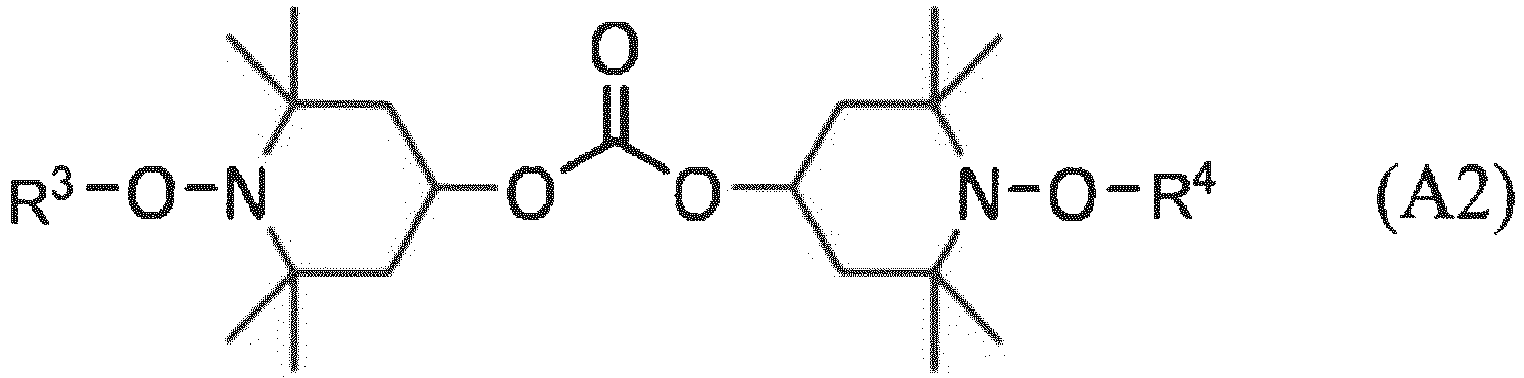
- the agricultural film of the present embodiment is provided with a layer containing one or two or more hindered amine light stabilizers selected from the group consisting of a compound represented by General Formula (A1) and a compound represented by General Formula (A2), and a synergist containing one or two or more selected from benzoate compounds represented by General Formula (B) (hereinafter, referred to as a weather resistant layer).
- a layer containing one or two or more hindered amine light stabilizers selected from the group consisting of a compound represented by General Formula (A1) and a compound represented by General Formula (A2)
- a synergist containing one or two or more selected from benzoate compounds represented by General Formula (B) hereinafter, referred to as a weather resistant layer.
- the weather resistant layer may contain one or two or more hindered amine light stabilizers selected from the group consisting of the compound represented by General Formula (A1) and the compound represented by General Formula (A2).
- R 1 and R 2 may be the same or different from each other and each independently represent an alkyl group having 1 to 8 carbon atoms or a 1-(n-propoxy)-2,2,6,6-tetramethylpiperidin-4-yl group.
- n is an integer of 0 or more.
- the numerical value of n may be, for example, 0 to 10, and may be 0 to 6.
- the hindered amine light stabilizer may include one or two or more compounds having different n values and represented by General Formula (A1) .
- Examples of the alkyl group having 1 to 8 carbon atoms, which is represented by R 1 and R 2 include methyl, ethyl, propyl, isopropyl, butyl, sec-butyl, tert-butyl, pentyl, tert-pentyl, hexyl, heptyl, octyl, and 1,1,3,3 -tetramethylbutyl.
- propyl, isopropyl, butyl, sec-butyl, or tert-butyl is preferable, and butyl is particularly preferable.
- R 3 and R 4 may be the same or different from each other and each independently represent an alkyl group having 1 to 20 carbon atoms.
- alkyl group having 1 to 20 carbon atoms which is represented by R 3 and R 4 , include methyl, ethyl, propyl, butyl, pentyl, hexyl, heptyl, octyl, 2-ethylhexyl, nonyl, decyl, undecyl, dodecyl, tridecyl, tetradecyl, pentadecyl, hexadecyl, heptadecyl, and octadecyl.
- octyl, 2-ethylhexyl, nonyl, decyl, undecyl, dodecyl, tridecyl, tetradecyl, pentadecyl, hexadecyl, heptadecyl, or octadecyl is preferable, octyl, 2-ethylhexyl, nonyl, decyl, undecyl, dodecyl, tridecyl, or tetradecyl is more preferable, and undecyl is particularly preferable.
- An example of the compound represented by General Formula (A1) may include the following compound A1.
- n is an integer of 0 or more.
- the numerical value of n may be, for example, 0 to 10, and may be 0 to 6.
- the hindered amine light stabilizer may include one or two or more compounds A1 having different n values.
- An example of the compound represented by General Formula (A2) may include the following compound A2.
- the weather resistant layer may contain at least one benzoate compound represented by General Formula (B) as the synergist. These compounds may be used alone or in combination of two or more thereof.
- R 5 and R 6 may be the same or different from each other and each independently represent an alkyl group having 1 to 8 carbon atoms
- R 7 represents an alkyl group having 1 to 30 carbon atoms, an aryl group having 6 to 30 carbon atoms, or an alkylaryl group having 7 to 30 carbon atoms.
- Examples of the alkyl group having 1 to 8 carbon atoms which is represented by R 5 and R 6 , include methyl, ethyl, propyl, isopropyl, butyl, sec-butyl, tert-butyl, pentyl, tert-pentyl, hexyl, heptyl, octyl, and 1,1,3,3-tetramethylbutyl.
- isopropyl, sec-butyl, tert-butyl, tert-pentyl, or 1,1,3,3-tetramethylbutyl is preferable, and tert-butyl or tert-pentyl is more preferable.
- Examples of the alkyl group having 1 to 30 carbon atoms, which is represented by R 7 include methyl, ethyl, propyl, butyl, pentyl, hexyl, heptyl, octyl, 2-ethylhexyl, nonyl, decyl, undecyl, dodecyl, tridecyl, tetradecyl, pentadecyl, hexadecyl, heptadecyl, and octadecyl.
- octyl, 2-ethylhexyl, nonyl, decyl, undecyl, dodecyl, tridecyl, tetradecyl, pentadecyl, hexadecyl, heptadecyl, or octadecyl is preferable, and dodecyl, tridecyl, tetradecyl, pentadecyl, hexadecyl, heptadecyl, or octadecyl is more preferable.
- the aryl group represented by R 7 may be, for example, phenyl.
- alkylaryl group represented by R 7 examples include methylphenyl, butylphenyl, 2,4-di-tert-butylphenyl, 2,4-di-tert-amylphenyl, 2,4-dicumylphenyl, and 2,4-di-tert-butyl-5-methylphenyl.
- 2,4-di-tert-butylphenyl, 2,4-di-tert-amylphenyl, 2,4-dicumylphenyl, or 2,4-di-tert-butyl-5-methylphenyl is preferable, 2,4-di-tert-butylphenyl or 2,4-di-tert-amylphenyl is more preferable, and 2,4-di-tert-butylphenyl is particularly preferable.
- R 7 in General Formula (B) may be an arylalkyl group having 7 to 30 carbon atoms, specifically, an arylalkyl group such as phenylmethyl.
- Examples of the benzoate compound represented by General Formula (B) include the following compound Nos. 7 to 15. These compounds may be used alone or in combination of two or more thereof.
- benzoate compound represented by General Formula (B) is not limited to the following compounds.
- the benzoate compound represented by General Formula (B) may include at least one of the following compound B1 or compound B2.
- the weather resistant layer of the agricultural film may include a thermoplastic resin.
- thermoplastic resin examples include thermoplastic resins, such as polyolef ins or copolymers thereof, including ⁇ -olefin polymers such as polypropylene, high density polyethylene, low density polyethylene, linear low density polyethylene, polybutene-1, and poly-4-methylpentene, ethylene-vinyl acetate copolymers, ethylene-vinyl alcohol copolymers, ethylene-acrylic acid ester copolymers, and ethylene-propylene copolymers; halogen-containing resins such as polyvinyl chloride, polyvinylidene chloride, chlorinated polyethylene, chlorinated polypropylene, polyvinylidene fluoride, chlorinated rubbers, vinyl chloride-vinyl acetate copolymers, vinyl chloride-ethylene copolymers, vinyl chloride-vinyl idene chloride copolymers, vinyl chloride-vinyl idene chloride-vinyl acetate terpolymers, vinyl chloride-acryl
- polyolefin resins such as polyethylene, ethylene-vinyl acetate copolymers, ethylene-vinyl alcohol copolymers, and ethylene-acrylic acid ester copolymers may be used.
- thermoplastic resin ⁇ -olefin polymers, blended products or copolymers of polyethylene and other ⁇ -olefin polymers, copolymers of ⁇ -olefin polymers such as polyethylene and ethylene-vinyl acetate, or blended products or copolymers with polyolefins such as ethylene-propylene copolymers may be used as the thermoplastic resin.
- thermoplastic resin may include at least one of linear low density polyethylene or low density polyethylene.
- the lower limit of total content of the hindered amine light stabilizer and the synergist (benzoate compound) in the weather resistant layer is, for example, equal to or more than 0.01 parts by mass, preferably equal to or more than 0.2 parts by mass, and more preferably equal to or more than 0.8 parts by mass with respect to 100 parts by mass of the thermoplastic resin.
- the upper limit thereof is, for example, equal to or less than 10 parts by mass, preferably equal to or less than 3 parts by mass, and more preferably equal to or less than 1 part by mass. Light resistance can be improved by setting the total content of the hindered amine light stabilizer and the synergist within such a range.
- the content of the hindered amine light stabilizer in terms of mass in the weather resistant layer is defined as X, and the content of the synergist in terms of mass is defined as Y.
- X and Y in the weather resistant layer may be configured to satisfy, for example, 0.2/0.8 ⁇ X/Y ⁇ 0.95/0.05, preferably 0.3/0.7 ⁇ X/Y ⁇ 0.7/0.3, and more preferably 0.4/0.6 ⁇ X/Y ⁇ 0.6/0.4.
- Long-term light resistance can be improved by setting X/Y to be equal to or less than the above upper limit value.
- Transparency and long-term light resistance can be improved by setting X/Y to be equal to or more than the above lower limit value.
- the weather resistant layer may contain other additives commonly used for the agricultural films within a range that does not impair the effects of the present invention, in addition to the hindered amine light stabilizer, the benzoate compound as the synergist, and the thermoplastic resin.
- the other additives may be configured so as not to include a benzophenone-based ultraviolet absorber, a benzotriazole-based ultraviolet absorber, a triazine-based ultraviolet absorber, or the like.
- Thickness of an agricultural film 100 is not particularly limited and is, for example, 10 ⁇ m to 1 mm, preferably 30 ⁇ m to 500 ⁇ m, and more preferably 50 ⁇ m to 300 ⁇ m.
- Fig. 1(A) and 1(B) are cross-sectional diagrams showing an example of the configuration of the agricultural film of the present embodiment.
- the agricultural film 100 of Fig. 1(A) includes at least one layer (weather resistant layer 10) containing the hindered amine light stabilizer and the synergist described above.
- the agricultural film 100 may include a single or a plurality of the weather resistant layers 10 inside in a thickness direction.
- the agricultural film 100 may be configured of a multilayer film including one or two or more other layers (base layer 20) in addition to the weather resistant layer 10, as shown in Fig. 1(B) .
- the multilayer film may have two or more layers, for example, three layers, four layers, five or more layers, or seven or more layers.
- the upper limit of number of laminated layers in multilayer film is riot particularly limited and may be, for example, equal to or less than 10 layers.
- the base layer 20 may be provided on one surface of the weather resistant layer 10, and the base layer 20 and the surface layer may be provided as other layers on each of the one surface and the other surface of the weather resistant layer 10.
- the other layer may have a configuration that does not contain both the hindered amine light stabilizer and the synergist described above, and may include only either one of the hindered amine light stabilizer and the synergist, and may contain only one of them or may not contain both of them.
- the other layer may be configured of the above-mentioned thermoplastic resin, and may contain the following other additives as necessary.
- linear low density polyethylene, low density polyethylene, or the like may be used as the thermoplastic resin for the other layer.
- General agricultural films are used in various situations such as for greenhouse forming materials.
- a growing method such as a method of carrying out sulfur fumigation in a greenhouse or a method of spraying a chemical solution containing sulfur on a plant may be adopted for the purpose of preventing diseases of plants (agricultural crops).
- sulfur contained in the fumigation or chemical solution may reduce weather resistance of agricultural films.
- the synergist suppresses the salt formation between sulfur and the hindered amine light stabilizer, which thus can suppress the incorporation or absorption of sulfur in the agricultural film.
- the present inventors have found a new characteristic of the agricultural film that is the ability to suppress sulfur absorption.
- the long-term light resistance of the agricultural film 100 can be stably evaluated by using a degree of difficulty in absorbing sulfur in the agricultural film 100 (that is, the sulfur uptake amount) as an index.
- the present inventors have found that the weather resistance and transparency of the agricultural film can be improved in a case where, in a case where the sulfur uptake amount measured according to Procedure A is defined as ⁇ W, the thickness of the agricultural film 100 is defined as H1, and the thickness of the weather resistant layer 10 is defined as H2, ( ⁇ W ⁇ (H2/H1))/H2, that is, ⁇ W/H1 is adopted as an index of the sulfur uptake amount, and the upper limit and the lower limit of the index are set within an appropriate range.
- the agricultural film 100 is cut out to produce a strip-shaped film test specimen A having a length of 13 cm and a width of 2.5 cm.
- the agricultural film 100A is immersed in distilled water having a liquid temperature of 25°C, taken out of the distilled water, and then dried.
- a vinyl greenhouse having a closed space having a substantially rectangular parallelepiped shape with a length of 50 cm, a width of 56 cm, and a height of 60 cm is prepared. Then, a stirrer is installed on a top surface inside the vinyl greenhouse, a heating device is installed on a bottom surface inside the vinyl greenhouse, and an aluminum foil tray is disposed on the heating device. Four of the test specimens A are installed in a suspended state inside the vinyl greenhouse.
- the test specimen A is irradiated by a xenon lamp having an irradiation intensity of 60 W/m 2 under conditions of a temperature of 65°C and a relative humidity of 50%.
- nitric acid solution 200 mg is added to 5 g of a 70% nitric acid to obtain a nitric acid solution.
- the nitric acid solution is subjected to a pretreatment for liquefying the sample using a microwave wet decomposition method to obtain a measurement solution.
- the content of elemental sulfur in the obtained measurement solution is measured using an ICP emission spectrometer.
- the content of elemental sulfur in the measurement solution is defined as the content (ppm) of elemental sulfur in the agricultural film 100.
- the sulfur uptake amount measured according to Procedure A is defined as ⁇ W
- the thickness of the agricultural film 100 is defined as H1
- the thickness of the layer containing the hindered amine light stabilizer and the synergist is defined as H2.
- the agricultural film 100 is configured so as to satisfy that ( ⁇ W ⁇ (H2/H1))/H2, that is, ⁇ W/H1 is equal to or more than 2.80 ppm/ ⁇ m and equal to or less than 4.70 ppm/ ⁇ m, preferably equal to or more than 2.81 ppm/ ⁇ m and equal to or less than 4.60 ppm/ ⁇ m, and more preferably equal to or more than 2.82 ppm/ ⁇ m and equal to or less than 4.50 ppm/ ⁇ m.
- ⁇ W ⁇ (H2/H1))/H2 is equal to or more than 2.80 ppm/ ⁇ m and equal to or less than 4.70 ppm/ ⁇ m, preferably equal to or more than 2.81 ppm/ ⁇ m and equal to or less than 4.60 ppm/ ⁇ m, and more preferably equal to or more than 2.82 ppm/ ⁇ m and equal to or less than 4.50 ppm/ ⁇ m.
- a film thickness ratio in the weather resistant layer 10 included in the entire agricultural film 100 is calculated by H2/H1 in the expression represented by ( ⁇ W ⁇ (H2/H1))/H2, and the sulfur uptake amount per unit thickness in the weather resistant layer 10 is calculated by 1/H2.
- Long-term weather resistance can be improved by setting the upper limit of ⁇ W/H1 to be equal to or less than the above upper limit value. Specifically, the deterioration of the long-term weather resistance of the agricultural film 100 can be suppressed even in a case where the sulfur fumigation or sulfur spraying is carried out singly or plural times at the time of growing a plant.
- the transparency of the agricultural film 100 can be improved, thus making it possible to realize an agricultural film suitable for a greenhouse, by setting the lower limit of ⁇ W/H1 to be equal to or more than the above lower limit value.
- long-term weather resistance of the agricultural film 100 can be improved.
- T 290 /T 340 it has been found in the agricultural film 100 that an agricultural film with excellent plant growth ability and suitable for growing plants such as agricultural crops can be realized by setting T 290 /T 340 to be equal to or more than a predetermined value, in a case where a light transmittance of 290 nm is defined as T 290 and a light transmittance of 340 nm is defined as T 340 , the light transmittance being measured according to Procedure B.
- the light transmittance of 290 nm is defined as T 290 and the light transmittance of 340 nm is defined as T 340 , the light transmittance being measured according to Procedure B.
- the agricultural film 100 is configured so as to satisfy that T 290 /T 340 is equal to or more than 0.76 and equal to or less than 1.00, preferably equal to or more than 0.80 and equal to or less than 1.00, and more preferably equal to or more than 0.85 and equal to or less than 0.99.
- T 290 /T 340 is equal to or more than 0.76 and equal to or less than 1.00, preferably equal to or more than 0.80 and equal to or less than 1.00, and more preferably equal to or more than 0.85 and equal to or less than 0.99.
- UV-B region of 280 nm to 315 nm is considered to be a wavelength region required for the growth of agricultural crops, prevention of diseases, prevention of pest damage occurrence, and the like. Therefore, setting T 290 /T 340 to be equal to or more than the above lower limit value makes it possible to enhance the plant growing ability of the agricultural film 100.
- Procedure B for measuring the light transmittance of the agricultural film 100 will be described.
- light transmittance T 660 at 660 nm in the agricultural film 100 is, for example, equal to or more than 80%, preferably equal to or more than 85%, and more preferably equal to or more than 86%. Therefore, the agricultural film 100 can have excellent light transmittance in a wide wavelength range.
- the ⁇ W/H1 and the light transmittance can be controlled by appropriately selecting the type and formulation amount of each component contained in the agricultural film, the method for preparing the agricultural film, and the like.
- appropriate selection of types and composition ratios of the hindered amine light stabilizer and the benzoate compound, addition methods thereof, and the like are mentioned as factors for setting the ⁇ W/H1 and the light transmittance within a desired numerical range.
- the agricultural film 100 can be used for various purposes such as a material for forming various agricultural and horticultural facilities such as a greenhouse, a material for protecting soil, or a storage material for storing soil or the like. Above all, the agricultural film 100 is preferably used for forming a greenhouse.
- the resin composition for forming an agricultural film includes one or two or more hindered amine light stabilizers selected from the group consisting of the above-mentioned compound represented by General Formula (A1) and the above-mentioned compound represented by General Formula (A2), a synergist containing one or two or more selected from the above-mentioned benzoate compounds represented by General Formula (B), and the above-mentioned thermoplastic resin.
- a resin composition includes one or two or more hindered amine light stabilizers selected from the group consisting of the above-mentioned compound represented by General Formula (A1) and the above-mentioned compound represented by General Formula (A2), a synergist containing one or two or more selected from the above-mentioned benzoate compounds represented by General Formula (B), and the above-mentioned thermoplastic resin.
- the formulation ratio of the above-mentioned components in the resin composition for example, the formulation ratio in the light resistant layer described in the agricultural film may be adopted.
- the resin composition may contain other additives commonly used for agricultural films within a range that does not impair the effects of the present invention, in addition to the above-mentioned components.
- additives examples include a phenolic antioxidant, a phosphorus-based antioxidant, a sulfur-based antioxidant, other hindered amine compounds, a nucleating agent, a processability improver, a filler, a plasticizer, a metal soap, an infrared absorber, an antistatic agent, an anti-fogging agent, an anti-misting agent, and a mildew-proofing agent. These compounds may be used alone or in combination of two or more thereof.
- phenolic antioxidant examples include 2,6-di-tert-butyl-p-cresol, 2,6-diphenyl-4-octadecyloxyphenol, stearyl(3,5-di-tert-butyl-4-hydroxyphenyl)propionate, distearyl(3,5-di-tert-butyl-4-hydroxybenzyl)phosphonate, tridecyl-3,5-di-tert-butyl-4-hydroxybenzylthioacetate, thiodiethylenebis[(3,5-di-tert-butyl-4-hydroxyphenyl)propionate], 4,4'-thiobis(6-tert-butyl-m-cresol), 2-octylthio-4, 6-di(3,5-di-tert-butyl-4-hydroxyphenoxy)-s-triazin e, 2,2'-methylenebis(4-methyl-6-tert-butylphenol), bis[3,3-bis(4-
- Examples of the phosphorus-based antioxidant include triphenyl phosphite, tris(2,4-di-tert-butylphenyl)phosphite, tris(2,5-di-tert-butylphenyl)phosphite, tris(nonylphenyl)phosphite, tris(dinonylphenyl)phosphite, tris(mono-di mixed nonylphenyl) phosphite, diphenyl acid phosphite, 2,2'-methylenebis(4,6-di-tert-butylphenyl)octylphosphite, diphenyldecylphosphite, diphenyloctylphosphite, di(nonylphenyl)pentaerythritol diphosphite, phenyldiisodecylphosphite, tributylphosphit
- sulfur-based antioxidant examples include dialkylthiodipropionates such as dilauryl, dimyristyl, myristyl stearyl, and distearyl esters of thiodipropionic acid, and ⁇ -alkyl mercaptopropionic acid esters of polyols such as pentaerythritol tetra( ⁇ -dodecylmercaptopropionate) .
- hindered amine compounds examples include hindered amine compounds such as 2,2,6,6-tetramethyl-4-piperidyl stearate, 1,2,2,6,6-pentamethyl-4-piperidyl stearate, 2,2,6,6-tetramethyl-4-piperidyl benzoate, bis(2,2,6,6-tetramethyl-4-piperidyl) sebacate, bis(1,2,2,6,6-pentamethyl-4-piperidyl) sebacate, tetrakis(2,2,6,6-tetramethyl-4-piperidylbutane tetracarboxylate, tetrakis(1,2,2,6,6-pentamethyl-4-piperidylbutane tetracarboxylate, bis(2,2,6,6-tetramethyl-4-piperidyl)-di(tridecyl)-1,2,3,4-butane tetracarboxylate, bis(1,2,2,6,6-pentamethyl-4-piperidyl
- nucleating agent examples include aromatic carboxylic acid metal salts such as p-t-butyl aluminum benzoate and sodium benzoate; acidic phosphoric acid ester metal salts such as sodium bis(2,4-di-tert-butylphenyl)phosphate, lithium bis(2,4-di-tert-butylphenyl)phosphate, and sodium-2,2'-methylenebis(4,6-di-tert-butylphenyl)phosphate; and polyhydric alcohol derivatives such as dibenzylidene sorbitol and bis(methylbenzylidene) sorbitol.
- aromatic carboxylic acid metal salts such as p-t-butyl aluminum benzoate and sodium benzoate
- acidic phosphoric acid ester metal salts such as sodium bis(2,4-di-tert-butylphenyl)phosphate, lithium bis(2,4-di-tert-butylphenyl)phosphate, and sodium-2,2'-methylene
- the processability improver can be appropriately selected from known processability improvers and, for example, ethylenebisstearic acid amide or erucic acid amide may be used.
- the filler examples include calcium carbonate, calcium oxide, calcium hydroxide, zinc hydroxide, zinc carbonate, zinc sulfide, magnesium oxide, magnesium hydroxide, magnesium carbonate, aluminum oxide, aluminum hydroxide, mineral silicates such as sodium alumina silicate, hydrocalumite, aluminum silicate, magnesium silicate, calcium silicate, and zeolite, activated clay, talc, clay, red iron oxide, asbestos, antimony trioxide, silica, glass beads, mica, sericite, glass flakes, asbestos, wollastonite, potassium titanate, PMF (mineral fiber), gypsum fiber[satin spar], zonolite, MOS (Magnesium Hydroxide Sulfate Hydrate, fibrous magnesium compound), phosphate fiber, glass fiber, carbon fiber, aramid fiber, and cellulose nanofiber.
- an inorganic filler may be used.
- the filler is preferably surface-treated with a titanium-based surface treatment agent, a silane-based surface treatment agent, or the like in
- plasticizer examples include phthalic acid ester, dibasic acid ester, chlorinated paraffin, polyester, epoxidized ester, phosphoric acid ester, and trimellitic acid ester.
- a salt of a metal such as magnesium, calcium, aluminum, or zinc with a saturated or unsaturated fatty acid such as lauric acid, myristic acid, palmitic acid, stearic acid, behenic acid, or oleic acid is used.
- the metal soap is used regardless of moisture content, melting point, particle size, composition of fatty acid, whether the production method is a double decomposition method by the reaction of a fatty acid salt of an alkali metal and a metal (hydr)oxide or a direct method in which a neutralization reaction of a fatty acid and a metal (hydr) oxide is carried out in the presence or absence of a solvent, or even in a case where there is an excess of either fatty acid or metal.
- Examples of the infrared absorber include hydrotalcite compounds and lithium aluminum composite hydroxides. These compounds may be used alone or in combination of two or more thereof.
- the hydrotalcite compound may be a natural product or a synthetic product, or may be a compound modified with an alkali metal such as lithium.
- Preferred is a compound having a composition represented by General Formula: Zn x Mg y Al 2 (OH) 2 (x+y+2) CO 3 ⁇ nH 2 O (where x is 0 to 3, y is 1 to 6, x+y is 4 to 6, and n is 0 to 10), which can be used regardless of the presence or absence of water of crystallization or the presence or absence of a surface treatment.
- the hydrotalcite compound may be one obtained by dehydrating water of crystallization, which may be coated with a higher fatty acid such as stearic acid, a higher fatty acid metal salt such as an alkali metal salt of oleic acid, an organic sulfonic acid metal salt such as an alkali metal salt of dodecylbenzene sulfonic acid, higher fatty acid amide, higher fatty acid ester, wax, or the like.
- hydrotalcite compound examples include natural hydrotalcite and commercially available products under the trade names of DHT-4A (manufactured by Kyowa Chemical Industry Co. , Ltd.), MAGCLEAR (manufactured by Toda Kogyo Corp.), MAGCELLER (manufactured by Kyowa Chemical Industry Co., Ltd.), and STABIACE HT-P (manufactured by Sakai Chemical Industry Co., Ltd.).
- lithium aluminum composite hydroxide examples include OPTIMA-SS (manufactured by Toda Kogyo Corp.) and MIZUKALAK (manufactured by Mizusawa Industrial Chemicals, Ltd.).
- antistatic agent examples include cationic antistatic agents such as fatty acid quaternary ammonium ion salts and polyamine quaternary salts; anionic antistatic agents such as higher alcohol phosphate ester salts, higher alcohol EO adducts, polyethylene glycol fatty acid esters, anionic type alkyl sulfonic acid salts, higher alcohol sulfuric acid ester salts, higher alcohol ethylene oxide adduct sulfuric acid ester salts, and higher alcohol ethylene oxide adduct phosphoric acid ester salts; nonionic antistatic agents such as polyhydric alcohol fatty acid esters, polyglycol phosphoric acid esters, and polyoxyethylene alkyl allyl ethers; amphoteric alkyl betaines such as alkyldimethylaminoacetic acid betaines; and amphoteric antistatic agents such as imidazoline type amphoteric activators.
- anionic antistatic agents such as higher alcohol phosphate ester salts, higher alcohol EO a
- anti-fogging agent examples include sorbitan-based surfactants such as sorbitan fatty acid esters, for example, sorbitan monopalmitate, sorbitan monostearate, sorbitan monopalmitate, sorbitan monomontanate, sorbitan monooleate, and sorbitan dioleate, and alkylene oxide adducts thereof; glycerin-based surfactants such as glycerin fatty acid esters, for example, glycerin monopalmitate, glycerin monostearate, diglycerin distearate, triglycerin monostearate, tetraglycerin dimontanate, glycerin monooleate, diglycerin monooleate, diglycerin sesquioleate, tetraglycerin monooleate, hexaglycerin monooleate, hexaglycerin trioleate, tetraglycerin trioleate
- anti-misting agent examples include fluorine compounds having a perfluoroalkyl group, ⁇ -hydrofluoroalkyl group, or the like (especially fluorine-based surfactants), and silicone compounds having an alkylsiloxane group (especially silicone-based surfactants).
- mildew-proofing agent examples include organic mildew-proofing agents such as nitrogen-containing sulfur-containing mildew-proofing agents, organic bromine-based mildew-proofing agents, nitrogen-containing mildew-proofing agents, and arsenic-based mildew-proofing agents, and inorganic mildew-proofing agents such as silver compounds.
- the method for producing an agricultural film according to the present embodiment includes a molding step of molding a resin composition into a film.
- a known method is used in the molding step, and a melt extrusion molding method such as an inflation method or a die method, a solution casting method, a calender method, a coextrusion method by an inflation method, a die method or the like, a multilayer processing method, a laminating method, an internal or external heating method, or the like may be used.
- a melt extrusion molding method such as an inflation method or a die method, a solution casting method, a calender method, a coextrusion method by an inflation method, a die method or the like, a multilayer processing method, a laminating method, an internal or external heating method, or the like may be used.
- a melt extrusion molding method such as an inflation method or a die method, a solution casting method, a calender method, a coextrusion method by an inflation method, a die method or the like, a multilayer processing method, a laminating method, an internal or external heating method, or the like may be used
- the method for producing an agricultural film may further include a mixing step of mixing the above-mentioned components to obtain a resin composition.
- the mixing step for example, there is a method of premixing the components using various mixers such as a tumbler and a Henschel mixer, and then melt-kneading the components with a Banbury mixer, a roll, a Brabender, a single-screw kneading extruder, a twin-screw kneading extruder, a kneader, or the like.
- various mixers such as a tumbler and a Henschel mixer
- the resin composition may be produced without premixing the respective components, or by premixing only a part of the components, supplying the mixture to an extruder using a feeder and then melt-kneading the mixture.
- the resin composition may also be produced by using a resin composition which is obtained by premixing a part of the components, supplying the mixture to an extruder and then melt-kneading the mixture, as a masterbatch, mixing again with other components, and then melt-kneading the mixture.
- the synthetic resin used in the mixing/kneading step may have a predetermined shape such as a powder shape or a pellet shape, or a fibrous shape.
- the method of improving an ability of an agricultural film to suppress sulfur absorption can improve the ability of the agricultural film 100 to suppress sulfur absorption by adding a benzoate compound as a synergist to a hindered amine light stabilizer.
- predetermined hindered amine light stabilizer and the predetermined benzoate compound those described in the agricultural film are used.
- a method for growing a plant using the agricultural film 100 can be provided.
- the method for growing a plant may include a step of disposing the agricultural film 100 in an agricultural or horticultural facility, a step of disposing a plant in the agricultural or horticultural facility, and a step of carrying out sulfur fumigation in the agricultural or horticultural facility.
- This makes it possible to realize an agricultural or horticultural facility with excellent long-term light resistance.
- a greenhouse is used as the agricultural or horticultural facility.
- the agricultural film is cut out to produce a strip-shaped film test specimen A having a length of 13 cm and a width of 2.5 cm.
- test specimen A is immersed in distilled water having a liquid temperature of 25°C, taken out of the distilled water, and then dried.
- a vinyl greenhouse having a closed space having a substantially rectangular parallelepiped shape with a length of 50 cm, a width of 56 cm, and a height of 60 cm is prepared. Then, a stirrer is installed on a top surface inside the vinyl greenhouse, a heating device is installed on a bottom surface inside the vinyl greenhouse, and an aluminum foil tray is disposed on the heating device. Four of the test specimens A are installed in a suspended state inside the vinyl greenhouse.
- the test specimen A is irradiated by a xenon lamp having an irradiation intensity of 60 W/m 2 under conditions of a temperature of 65°C and a relative humidity of 50%.
- nitric acid solution 200 mg of a sample obtained by cutting the test specimen A in a plate thickness direction is added to 5 g of nitric acid to obtain a nitric acid solution.
- the nitric acid solution is subjected to a pretreatment for liquefying the sample using a microwave wet decomposition method to obtain a measurement solution.
- the content of elemental sulfur in the obtained measurement solution is measured using an ICP emission spectrometer.
- thermoplastic resin linear low density polyethylene
- a hindered amine light stabilizer of the following compound A1 0.8 parts by mass of a benzoate compound of the following chemical formula B1 as a synergist
- 0.05 parts by mass of a phenolic antioxidant stearyl(3,5-di-tert-butyl-4-hydroxyphenyl)propionate
- 0.05 parts by mass of a phosphorus-based antioxidant tris(2, 4-di-tert-butylphenyl) phosphite
- metal soap calcium stearate
- Pelletized resin compositions were obtained by mixing and extrusion of resin composition components in the same manner as in Test Example 1, except that the thermoplastic resin, the hindered amine light stabilizer, and the benzoate compound were used in accordance with the formulation ratios shown in Table 1.
- the compound A1 used was crushed in a mortar and allowed to stand overnight in a desiccator.
- the compound A2 was added using a liquid addition device.
- thermoplastic resin (Thermoplastic resin)
- Test Example 14 Thermosetting resin Linear low density polyethylene Parts by mass 100 100 100 100 100 100 100 100 100 100 100 90 80 70 100 100 100 Low density polyethylene 100 Ethylene-vinyl acetate copolymer resin mass 10 20 30 Hindered amine light stabilizer Compound A1 0.2 0.5 0.8 0.95 0.5 0.5 0.5 0.5 0.99 0.1 Compound A2 0.5 0.75 1.0 Benzoate compound Compound B1 0.8 0.5 0.2 0.05 0.5 0.75 1.0 0.5 0.5 0.5 0.5 0.01 0.9 Compound B2 0.5 Amount of sulfur before sulfur fumiqation S 0 ppm 5 5 5 5 5 5 5 5 5 5 5 5 Amount of sulfur after sulfur fumiqation S 1 146 181 205 230 185 213 192 190 171 187 197 174 245 140
- extrusion was carried out under conditions of a resin temperature: 190°C, a torque: 50 to 70 N ⁇ m, and an extrusion rate: 1.5 kg/h to produce single-layer agricultural films 1 to 14 having a thickness of 50 ⁇ m.
- the thickness H1 of the agricultural film was 50 ⁇ m
- the thickness H2 of the layer containing the hindered amine light stabilizer and the synergist was 50 ⁇ m. The thickness was measured using a digital microscope on a cut surface obtained by cutting the agricultural film in a plate thickness direction.
- the obtained pellet was formed into a film by inflation molding using a ring die having a diameter of 25 mm and a slit width of 0.8 mm, and then the obtained film was wound up by a film take-up device manufactured by SUMTAK Corporation.
- the conditions of the extrusion section were a processing temperature of 190°C and a screw rotation speed of 60 rpm, and the winding speed was adjusted so as to obtain an agricultural film having a film thickness of 50 ⁇ m.
- the sulfur uptake amount and the light transmittance of the obtained agricultural film were measured according to the following procedures.
- the content (ppm) of the elemental sulfur in the agricultural film before the sulfur fumigation treatment was measured according to the following order of (1), (2), (4), and (5) .
- the measured value is defined as S 0 .
- the content (ppm) of the elemental sulfur in the agricultural film after the sulfur fumigation treatment was measured according to the following order of (1), (2), (3), (4), and (5) .
- the measured value is defined as S 1 . Note that S 1 was an average value of four measured values.
- the agricultural film was cut out to produce a strip-shaped film test specimen A having a length of 13 cm and a width of 2.5 cm.
- test specimen A 3 L of distilled water having a liquid temperature of 25°C, and a stirrer chip were put in a beaker having a diameter of 18 cm and stirred with a stirrer for 5 minutes.
- the test specimen A immersed in distilled water was taken out, and the moisture on the surface thereof was wiped off with KIMWIPE. After that, the test specimen A was dried by holding it in a suspended state for 30 minutes.
- Fig. 2 shows an outline of fumigation equipment 200 used for the sulfur fumigation treatment.
- a vinyl greenhouse 210 (Portable Fume Hood ECONO HOOD, manufactured by AS ONE Corporation) having a closed space having a substantially rectangular parallelepiped shape with a length of 50 cm, a width of 56 cm, and a height of 60 cm was prepared.
- a stirrer 220 (Three-One Motor BL1200, manufactured by Shinto Scientific Co. , Ltd.) was installed on a top surface 212 inside the vinyl greenhouse 210, and a heating device (hot plate 230) was installed on a bottom surface 214 inside the vinyl greenhouse 210.
- an aluminum foil tray 240 (bottom area: 16 cm 2 , width: 4 cm, depth: 4 cm, height: 2 cm) was disposed in the center of the hot plate 230 (C-MAG hot plate HP4, manufactured by IKA Company) .
- test specimens A (test specimen 250) were installed in a suspended state inside the vinyl greenhouse 210.
- Four of the test specimens 250 were arranged so as to be appropriately separated from each other and to be located at approximately half the height of the vinyl greenhouse 210.
- test specimen A was irradiated by a xenon lamp having a UV irradiation intensity of 60 W/m 2 and a wavelength of 300 to 400 nm for 120 hours using a xenon weather resistance tester under conditions of a black panel temperature of 65°C and a relative humidity of 50%, and using a borosilicate filter.
- nitric acid solution 200 mg was added to 5 g of a 70% nitric acid to obtain a nitric acid solution.
- the nitric acid solution was subjected to a pretreatment for liquefying the sample using a microwave wet decomposition apparatus (TOPwave, manufactured by Analytik Jena AG) under conditions of a temperature of 230°C and a pressure of 40 bar for 1 hour to obtain a measurement solution.
- TOPwave microwave wet decomposition apparatus
- the content of elemental sulfur in the obtained measurement solution was measured using an ICP emission spectrometer (SPS 3500, manufactured by SII Nano Technology Inc.).
- Fig. 3(A),3(B) and 3(C) show diagrams for illustrating a procedure of pretreatment of a test specimen whose light transmittance is to be measured.
- Fig. 4 shows an outline of a spectrophotometer for measuring the transmittance of the test specimen.
- the film was cut out to produce a strip-shaped film test specimen B (test specimen 310) having a length of 10 cm and a width of 5 cm ( Fig. 3(A) ).
- test specimen 310 was immersed in liquid paraffin 320 (manufactured by FUJIFILM Wako Pure Chemical Industries, Ltd.) ( Fig. 3(B) ) .
- test specimen 310 was taken out from the liquid paraffin 320 and held in a suspended state in the atmosphere for 30 minutes ( Fig. 3(C) ).
- the pretreated test specimen 310 was placed on a spectrophotometer 300 (UV-visible near-infrared spectrophotometer V-750, manufactured by JASCO Corporation) shown in Fig. 4 .
- the spectrophotometer 300 includes a light source 330 and a detector 340.
- an entrance aperture 370 provided in a first slit
- a test specimen 310 installed in the first slit on the side opposite to the light source 330 so as to cover the entrance aperture 370, an empty cell holder 350, and an exit aperture 380 provided in a second slit.
- the light ray 360 irradiated from the light source 330 passes through the entrance aperture 370, the test specimen 310, the empty cell holder 350, and the exit aperture 380 to reach the detector 340.
- the light transmittance (%) of the test specimen 310 at each wavelength in a case where the wavelength of the light ray 360 was varied from 200 nm to 700 nm was measured using the spectrophotometer 300 of Fig. 4 .
- the obtained measured values were normalized such that the light transmittance at 400 nm was 85%.
- Table 1 shows the value of Tx in a case where the light transmittance at a wavelength of Xnm after normalization is defined as Tx (%).
- the obtained agricultural films 1 to 14 were used as the agricultural films of Examples 1 to 12 in Table 2, and the obtained agricultural films 13 and 14 were used as the agricultural films of Comparative Examples 1 and 2 in Table 2.
- An accelerated weathering test was carried out in accordance with ISO4892-2, by irradiating the agricultural films of Examples and Comparative Examples by a xenon lamp having a UV irradiation intensity of 60 W/m 2 and a wavelength of 300 to 400 nm for 120 hours under conditions of a black panel temperature of 65°C and a relative humidity of 50%, and using a borosilicate filter. At this time, 120 minutes was set as one cycle, and a light irradiation cycle of irradiation with light for 102 minutes and then irradiation with light for 18 minutes together with water spraying was carried out for 60 cycles in total for 120 hours.
- a residual tensile strength ratio (%) of each film at a test speed of 500 mm/min was measured in accordance with JIS K7161-1 using AG-Xplus (manufactured by Shimadzu Corporation) .
- the residual tensile strength ratio (%) was defined as a rate of decrease in tensile strength in a case where the tensile strength of the film before the accelerated weathering test was taken as 100%.
- Haze (haze value: %) was measured in accordance with JIS K7136 for the agricultural films of Examples and Comparative Examples.
- the haze values of the agricultural films 1 to 12 of Examples 1 to 12 were low enough to be used without any practical problems.
- the haze value of the agricultural film 14 of Comparative Example 2 was significantly higher than that of each Example (Table 1) .
- thermoplastic resin linear low density polyethylene
- a hindered amine light stabilizer of the compound A1 0.1 parts by mass of a benzoate compound represented by the chemical formula B1
- an ultraviolet absorber triazine-based UV absorber, 2,4-bis(2,4-dimethylphenyl)-6-(2-hydroxy-4-n-octyloxyphenyl)-1,3 , 5-triazine, CYASORB UV1164, manufactured by Cytec Industries Inc.
- a rocking mixer manufactured by Aichi Electric Co., Ltd.
- TEX-28V twin-screw extruder
- the granulated pellets were dried at 60°C for 8 hours using a hot
- an agricultural film 15 having a thickness of 50 ⁇ m was produced in the same manner as in the section of ⁇ Production of agricultural film>.
- the light transmittance was measured at a wavelength of 200 nm to 700 nm in the same manner as in the section of (Light transmittance). The obtained measured values were normalized such that the light transmittance at 400 nm was 85%.
- the agricultural film 15 exhibited a light transmittance T 290 at 290 nm of 53.1%, a light transmittance T 340 at 340 nm of 71.2%, and a T 290/ T 340 of 0.75.
- Examples 1 to 12 had excellent long-term weather resistance as compared with Comparative Example 1 and had excellent transparency as compared with Comparative Example 2.
- Such agricultural films are suitable as members used for growing agricultural crops or plants, and can be used particularly as materials for greenhouses.
- the ability of the agricultural film to suppress sulfur absorption can be improved by appropriately blending the hindered amine light stabilizer and the benzoate compound. Therefore, the agricultural films of the Examples can be suitably used for sulfur fumigation/sulfur spraying or the like carried out in a case of growing plants or agricultural crops.
Landscapes
- Chemical & Material Sciences (AREA)
- Health & Medical Sciences (AREA)
- Chemical Kinetics & Catalysis (AREA)
- Medicinal Chemistry (AREA)
- Polymers & Plastics (AREA)
- Organic Chemistry (AREA)
- Environmental Sciences (AREA)
- Manufacturing & Machinery (AREA)
- General Health & Medical Sciences (AREA)
- Toxicology (AREA)
- Life Sciences & Earth Sciences (AREA)
- Engineering & Computer Science (AREA)
- Materials Engineering (AREA)
- Protection Of Plants (AREA)
- Compositions Of Macromolecular Compounds (AREA)
- Greenhouses (AREA)
- Catching Or Destruction (AREA)
- Manufacture Of Macromolecular Shaped Articles (AREA)
Abstract
Description
- The present invention relates to an agricultural film and a method for growing a plant.
- Various developments have been made so far for an agricultural film. For example, a technique described in Patent Document 1 is known as this type of technique. Patent Document 1 discloses an agricultural film containing a hindered amine light stabilizer (such as claim 4 of Patent Document 1) .
- [Patent Document 1] Japanese Unexamined Patent Publication No.
2015-198579 - However, as a result of study conducted by the present inventors, it has been found for the agricultural film disclosed in Patent Document 1 above that there is room for improvement in terms of long-term weather resistance and transparency.
- In agricultural work, a growing method such as a sulfur fumigation method or a spraying method of a sulfur-containing chemical solution such as a sulfur flowable agent may be adopted for the purpose of preventing diseases of plants (agricultural crops).
- However, sulfur contained in the fumigation or chemical solution may reduce weather resistance of agricultural films.
- As a result of extensive studies in view of such circumstances, the present inventors have found that combined use of a predetermined hindered amine light stabilizer and a predetermined benzoate compound as a synergist thereof suppresses deterioration of weather resistance in an agricultural film provided with a layer containing these compounds. Although a detailed mechanism for such an effect is not clear, it is considered that the synergist suppresses the salt formation between sulfur and the hindered amine light stabilizer, which thus can suppress the incorporation or absorption of sulfur in the agricultural film.
- Focusing on the characteristic that sulfur is less likely to be absorbed in the weather resistant layer of the agricultural film and as a result of repeated studies, the present inventors have found that long-term light resistance of the agricultural film can be stably evaluated by using a degree of difficulty in absorbing sulfur in the agricultural film (that is, a sulfur uptake amount) as an index. Then, the present inventors have found that long-term weather resistance and transparency of the agricultural film can be improved in a case where, in a case where a sulfur uptake amount is defined as ΔW and a thickness of the agricultural film is defined as H1, ΔW/H1 is adopted as an index of the sulfur uptake amount, and the upper limit and the lower limit of the index are set within an appropriate range.
- The present invention has been completed based on these findings.
- According to the present invention, there is provided an agricultural film including:
- a layer containing one or two or more hindered amine light stabilizers selected from the group consisting of a compound represented by General Formula (A1) and a compound represented by General Formula (A2), and
- a synergist containing one or two or more selected from benzoate compounds represented by General Formula (B),


- ΔW/H1 is equal to or more than 2.80 ppm/µm and equal to or less than 4.70 ppm/µm, in a case where a sulfur uptake amount measured according to Procedure A is defined as ΔW and a thickness of the agricultural film is defined as H1.
-
- Procedure A1: using the agricultural film, a content (ppm) of an elemental sulfur in the agricultural film before a sulfur fumigation treatment is measured according to an order of (1), (2), (4), and (5), and the measured value is defined as S0.
- Procedure A2: using the agricultural film to be measured in Procedure A1, a content (ppm) of the elemental sulfur in the agricultural film after the sulfur fumigation treatment is measured according to an order of (1), (2), (3), (4), and (5), and the measured value is defined as S1. Note that S1 is an average value of four measured values.
- Procedure A3: using S0 obtained in Procedure A1 and S1 obtained in Procedure A2, a sulfur uptake amount (ppm) of the agricultural film is calculated based on Expression (I).

- The agricultural film is cut out to produce a strip-shaped film test specimen A having a length of 13 cm and a width of 2.5 cm.
- The test specimen A is immersed in distilled water having a liquid temperature of 25°C, taken out of the distilled water, and then dried.
- A vinyl greenhouse having a closed space having a substantially rectangular parallelepiped shape with a length of 50 cm, a width of 56 cm, and a height of 60 cm is prepared. Then, a stirrer is installed on a top surface inside the vinyl greenhouse, a heating device is installed on a bottom surface inside the vinyl greenhouse, and an aluminum foil tray is disposed on the heating device. Four of the test specimens A are installed in a suspended state inside the vinyl greenhouse.
- Then, the following sulfur fumigation operation is repeated four times.
- 120 mg of powdery sulfur is put into the tray. Subsequently, a rotation speed of the stirrer is set to 180 rpm, and the tray is heated at 190°C for 4 hours.
- Light irradiation is carried out on the test specimen A for 102 minutes under the following conditions and subsequently, water is sprayed on the test specimen A for 18 minutes together with the light irradiation under the following conditions. This operation for a total of 120 minutes is carried out as one cycle for a total of 60 cycles, whereby a surface treatment for a total of 120 hours is carried out on the test specimen A.
- The test specimen A is irradiated by a xenon lamp having an irradiation intensity of 60 W/m2 under conditions of a temperature of 65°C and a relative humidity of 50%.
- 200 mg of a sample obtained by cutting the test specimen A in a plate thickness direction is added to 5 g of a 70% nitric acid to obtain a nitric acid solution. The nitric acid solution is subjected to a pretreatment for liquefying the sample using a microwave wet decomposition method to obtain a measurement solution. The content of elemental sulfur in the obtained measurement solution is measured using an ICP emission spectrometer.
- In addition, according to the present invention, there is provided a method for growing a plant, including:
- a step of disposing the agricultural film in a greenhouse;
- a step of disposing a plant in the greenhouse; and
- a step of carrying out sulfur fumigation in the greenhouse.
- According to the present invention, there are provided an agricultural film having excellent long-term weather resistance and excellent transparency, and a method for growing a plant using the same.
-
-
Fig. 1(A) and 1(B) are cross-sectional diagrams showing an example of a configuration of an agricultural film of the present embodiment. -
Fig. 2 is a diagram for illustrating an outline of fumigation equipment used for a sulfur fumigation treatment. -
Fig. 3 (A), 3(B) and 3(C) are diagrams illustrating a procedure of a pretreatment of a test specimen whose light transmittance is to be measured. -
Fig. 4 is a diagram for illustrating an outline of a principle of measuring a light transmittance of a test specimen using a spectrophotometer. - Hereinafter, embodiments of the present invention will be described with reference to the accompanying drawings. In all the drawings, the same constituent elements will be given the same reference numeral, and the description thereof will not be repeated. In addition, the figure is a schematic diagram and does not match an actual dimensional ratio.
- In the present embodiment, description will be given by defining the front, rear, left, right, upper, and lower directions as shown in the figure. However, this is provided for the sake of convenience in order to simply describe a relative relationship of the constituent elements. Therefore, it does not limit the direction in which a product embodying the present invention is produced or used.
- The agricultural film of the present embodiment will be described.
- The agricultural film of the present embodiment is provided with a layer containing one or two or more hindered amine light stabilizers selected from the group consisting of a compound represented by General Formula (A1) and a compound represented by General Formula (A2), and a synergist containing one or two or more selected from benzoate compounds represented by General Formula (B) (hereinafter, referred to as a weather resistant layer).
- The weather resistant layer may contain one or two or more hindered amine light stabilizers selected from the group consisting of the compound represented by General Formula (A1) and the compound represented by General Formula (A2).

1-(n-propoxy)-2,2,6,6-tetramethylpiperidin-4-yl group. - In General Formula (A1), n is an integer of 0 or more. The numerical value of n may be, for example, 0 to 10, and may be 0 to 6. The hindered amine light stabilizer may include one or two or more compounds having different n values and represented by General Formula (A1) . Examples of the alkyl group having 1 to 8 carbon atoms, which is represented by R1 and R2, include methyl, ethyl, propyl, isopropyl, butyl, sec-butyl, tert-butyl, pentyl, tert-pentyl, hexyl, heptyl, octyl, and 1,1,3,3 -tetramethylbutyl. Among these, propyl, isopropyl, butyl, sec-butyl, or tert-butyl is preferable, and butyl is particularly preferable.

- In General Formula (A2), R3 and R4 may be the same or different from each other and each independently represent an alkyl group having 1 to 20 carbon atoms. Examples of the alkyl group having 1 to 20 carbon atoms, which is represented by R3 and R4, include methyl, ethyl, propyl, butyl, pentyl, hexyl, heptyl, octyl, 2-ethylhexyl, nonyl, decyl, undecyl, dodecyl, tridecyl, tetradecyl, pentadecyl, hexadecyl, heptadecyl, and octadecyl. Among these, octyl, 2-ethylhexyl, nonyl, decyl, undecyl, dodecyl, tridecyl, tetradecyl, pentadecyl, hexadecyl, heptadecyl, or octadecyl is preferable, octyl, 2-ethylhexyl, nonyl, decyl, undecyl, dodecyl, tridecyl, or tetradecyl is more preferable, and undecyl is particularly preferable.
- An example of the compound represented by General Formula (A1) may include the following compound A1. In the compound A1, n is an integer of 0 or more. The numerical value of n may be, for example, 0 to 10, and may be 0 to 6. The hindered amine light stabilizer may include one or two or more compounds A1 having different n values.

- An example of the compound represented by General Formula (A2) may include the following compound A2.

- The weather resistant layer may contain at least one benzoate compound represented by General Formula (B) as the synergist. These compounds may be used alone or in combination of two or more thereof.

- In General Formula (B), R5 and R6 may be the same or different from each other and each independently represent an alkyl group having 1 to 8 carbon atoms, and R7 represents an alkyl group having 1 to 30 carbon atoms, an aryl group having 6 to 30 carbon atoms, or an alkylaryl group having 7 to 30 carbon atoms.
- Examples of the alkyl group having 1 to 8 carbon atoms, which is represented by R5 and R6, include methyl, ethyl, propyl, isopropyl, butyl, sec-butyl, tert-butyl, pentyl, tert-pentyl, hexyl, heptyl, octyl, and 1,1,3,3-tetramethylbutyl. Among these, isopropyl, sec-butyl, tert-butyl, tert-pentyl, or 1,1,3,3-tetramethylbutyl is preferable, and tert-butyl or tert-pentyl is more preferable.
- Examples of the alkyl group having 1 to 30 carbon atoms, which is represented by R7, include methyl, ethyl, propyl, butyl, pentyl, hexyl, heptyl, octyl, 2-ethylhexyl, nonyl, decyl, undecyl, dodecyl, tridecyl, tetradecyl, pentadecyl, hexadecyl, heptadecyl, and octadecyl. Among these, octyl, 2-ethylhexyl, nonyl, decyl, undecyl, dodecyl, tridecyl, tetradecyl, pentadecyl, hexadecyl, heptadecyl, or octadecyl is preferable, and dodecyl, tridecyl, tetradecyl, pentadecyl, hexadecyl, heptadecyl, or octadecyl is more preferable.
- The aryl group represented by R7 may be, for example, phenyl.
- Examples of the alkylaryl group represented by R7 include methylphenyl, butylphenyl, 2,4-di-tert-butylphenyl, 2,4-di-tert-amylphenyl, 2,4-dicumylphenyl, and 2,4-di-tert-butyl-5-methylphenyl. Among these, 2,4-di-tert-butylphenyl, 2,4-di-tert-amylphenyl, 2,4-dicumylphenyl, or 2,4-di-tert-butyl-5-methylphenyl is preferable, 2,4-di-tert-butylphenyl or 2,4-di-tert-amylphenyl is more preferable, and 2,4-di-tert-butylphenyl is particularly preferable.
- In addition, R7 in General Formula (B) may be an arylalkyl group having 7 to 30 carbon atoms, specifically, an arylalkyl group such as phenylmethyl.
- Examples of the benzoate compound represented by General Formula (B) include the following compound Nos. 7 to 15. These compounds may be used alone or in combination of two or more thereof.
- However, the benzoate compound represented by General Formula (B) is not limited to the following compounds.

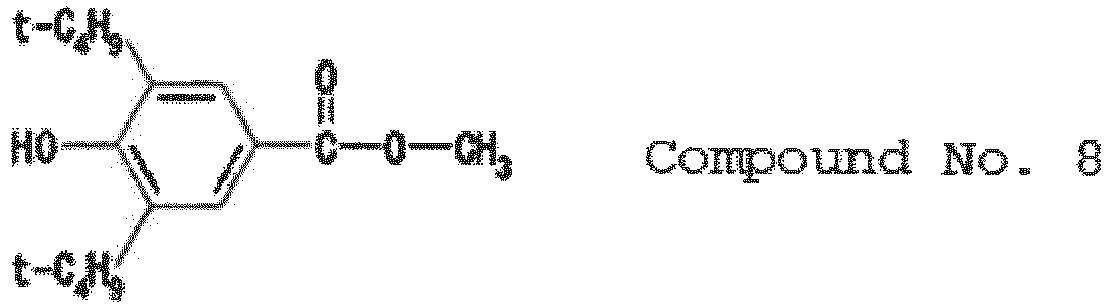


- Among the above compounds, the benzoate compound represented by General Formula (B) may include at least one of the following compound B1 or compound B2.


- The weather resistant layer of the agricultural film may include a thermoplastic resin.
- Examples of the thermoplastic resin include thermoplastic resins, such as polyolef ins or copolymers thereof, including α-olefin polymers such as polypropylene, high density polyethylene, low density polyethylene, linear low density polyethylene, polybutene-1, and poly-4-methylpentene, ethylene-vinyl acetate copolymers, ethylene-vinyl alcohol copolymers, ethylene-acrylic acid ester copolymers, and ethylene-propylene copolymers; halogen-containing resins such as polyvinyl chloride, polyvinylidene chloride, chlorinated polyethylene, chlorinated polypropylene, polyvinylidene fluoride, chlorinated rubbers, vinyl chloride-vinyl acetate copolymers, vinyl chloride-ethylene copolymers, vinyl chloride-vinyl idene chloride copolymers, vinyl chloride-vinyl idene chloride-vinyl acetate terpolymers, vinyl chloride-acrylic acid ester copolymers, vinyl chloride-maleic acid ester copolymers, and vinyl chloride-cyclohexyl maleimide copolymers; petroleum resins; coumarone resins; polystyrene; polyvinyl acetate; acrylic resins; copolymers of either or both of styrene and α-methylstyrene with other monomer (s), (for example, maleic anhydride, phenylmaleimide, methyl methacrylate, butadiene, and acrylonitrile), such as AS resins, ABS resins, MBS resins, and heat resistant ABS resins; polymethyl methacrylate; polyvinyl alcohols; polyvinyl formal; polyvinyl butyral; linear polyesters such as polyethylene terephthalate and polytetramethylene terephthalate; polyphenylene oxide; polyamides such as polycaprolactam and polyhexamethylene adipamide; polycarbonate; branched polycarbonate; polyacetal; polyphenylene sulfide; polyurethane; and cellulosic resins; and mixtures thereof; or phenol resins, urea resins, melamine resins, epoxy resins, and unsaturated polyester resins. These compounds may be used alone or in combination of two or more thereof. Among these, polyolefin resins such as polyethylene, ethylene-vinyl acetate copolymers, ethylene-vinyl alcohol copolymers, and ethylene-acrylic acid ester copolymers may be used.
- In addition, α-olefin polymers, blended products or copolymers of polyethylene and other α-olefin polymers, copolymers of α-olefin polymers such as polyethylene and ethylene-vinyl acetate, or blended products or copolymers with polyolefins such as ethylene-propylene copolymers may be used as the thermoplastic resin.
- Above all, the thermoplastic resin may include at least one of linear low density polyethylene or low density polyethylene.
- The lower limit of total content of the hindered amine light stabilizer and the synergist (benzoate compound) in the weather resistant layer is, for example, equal to or more than 0.01 parts by mass, preferably equal to or more than 0.2 parts by mass, and more preferably equal to or more than 0.8 parts by mass with respect to 100 parts by mass of the thermoplastic resin. On the other hand, the upper limit thereof is, for example, equal to or less than 10 parts by mass, preferably equal to or less than 3 parts by mass, and more preferably equal to or less than 1 part by mass. Light resistance can be improved by setting the total content of the hindered amine light stabilizer and the synergist within such a range.
- The content of the hindered amine light stabilizer in terms of mass in the weather resistant layer is defined as X, and the content of the synergist in terms of mass is defined as Y.
- At this time, X and Y in the weather resistant layer may be configured to satisfy, for example, 0.2/0.8 ≤ X/Y ≤ 0.95/0.05, preferably 0.3/0.7 ≤ X/Y ≤ 0.7/0.3, and more preferably 0.4/0.6 ≤ X/Y ≤ 0.6/0.4. Long-term light resistance can be improved by setting X/Y to be equal to or less than the above upper limit value. Transparency and long-term light resistance can be improved by setting X/Y to be equal to or more than the above lower limit value.
- The weather resistant layer may contain other additives commonly used for the agricultural films within a range that does not impair the effects of the present invention, in addition to the hindered amine light stabilizer, the benzoate compound as the synergist, and the thermoplastic resin. The other additives may be configured so as not to include a benzophenone-based ultraviolet absorber, a benzotriazole-based ultraviolet absorber, a triazine-based ultraviolet absorber, or the like.
- Thickness of an
agricultural film 100 is not particularly limited and is, for example, 10 µm to 1 mm, preferably 30 µm to 500 µm, and more preferably 50 µm to 300 µm. -
Fig. 1(A) and 1(B) are cross-sectional diagrams showing an example of the configuration of the agricultural film of the present embodiment. - The
agricultural film 100 ofFig. 1(A) includes at least one layer (weather resistant layer 10) containing the hindered amine light stabilizer and the synergist described above. Theagricultural film 100 may include a single or a plurality of the weatherresistant layers 10 inside in a thickness direction. - In addition, the
agricultural film 100 may be configured of a multilayer film including one or two or more other layers (base layer 20) in addition to the weatherresistant layer 10, as shown inFig. 1(B) . The multilayer film may have two or more layers, for example, three layers, four layers, five or more layers, or seven or more layers. The upper limit of number of laminated layers in multilayer film is riot particularly limited and may be, for example, equal to or less than 10 layers. - In addition, the
base layer 20 may be provided on one surface of the weatherresistant layer 10, and thebase layer 20 and the surface layer may be provided as other layers on each of the one surface and the other surface of the weatherresistant layer 10. Unlike the weatherresistant layer 10, the other layer may have a configuration that does not contain both the hindered amine light stabilizer and the synergist described above, and may include only either one of the hindered amine light stabilizer and the synergist, and may contain only one of them or may not contain both of them. - The other layer may be configured of the above-mentioned thermoplastic resin, and may contain the following other additives as necessary. For example, linear low density polyethylene, low density polyethylene, or the like may be used as the thermoplastic resin for the other layer.
- General agricultural films are used in various situations such as for greenhouse forming materials.
- In agricultural work, a growing method such as a method of carrying out sulfur fumigation in a greenhouse or a method of spraying a chemical solution containing sulfur on a plant may be adopted for the purpose of preventing diseases of plants (agricultural crops).
- However, sulfur contained in the fumigation or chemical solution may reduce weather resistance of agricultural films.
- Although the detailed mechanism for such an effect is not clear, it is considered that the sulfur adhering to or transferred into the agricultural film is oxidized to be acidified and forms a salt with the hindered amine light stabilizer to deactivate the function of the light stabilizer, so weather resistance cannot be maintained.
- In addition, such a phenomenon of deterioration of weather resistance is remarkably observed in a case where sulfur fumigation is carried out in the greenhouse.
- As a result of extensive studies in view of such circumstances, the present inventors have found that combined use of a predetermined hindered amine light stabilizer and a predetermined benzoate compound as a synergist suppresses the deterioration of weather resistance in the agricultural film provided with a layer containing these compounds. At this time, it has been found that the characteristic that makes it difficult for sulfur to be absorbed inside the agricultural film was expressed.
- Although a detailed mechanism for such an effect is not clear, it is considered that the synergist suppresses the salt formation between sulfur and the hindered amine light stabilizer, which thus can suppress the incorporation or absorption of sulfur in the agricultural film.
- As a result of the above, the present inventors have found a new characteristic of the agricultural film that is the ability to suppress sulfur absorption.
- As a result of repeated studies based on such findings, it has been found that the long-term light resistance of the
agricultural film 100 can be stably evaluated by using a degree of difficulty in absorbing sulfur in the agricultural film 100 (that is, the sulfur uptake amount) as an index. Then, the present inventors have found that the weather resistance and transparency of the agricultural film can be improved in a case where, in a case where the sulfur uptake amount measured according to Procedure A is defined as ΔW, the thickness of theagricultural film 100 is defined as H1, and the thickness of the weatherresistant layer 10 is defined as H2, (ΔW × (H2/H1))/H2, that is, ΔW/H1 is adopted as an index of the sulfur uptake amount, and the upper limit and the lower limit of the index are set within an appropriate range. - Hereinafter, Procedure A for calculating ΔW (sulfur uptake amount) of the
agricultural film 100 will be described. -
- Procedure A1: using the
agricultural film 100, the content (ppm) of the elemental sulfur in theagricultural film 100 before the sulfur fumigation treatment is measured according to the following order of (1), (2), (4), and (5), and the measured value is defined as S0. - Procedure A2: using the
agricultural film 100 to be measured in Procedure A1, the content (ppm) of the elemental sulfur in theagricultural film 100 after the sulfur fumigation treatment is measured according to the following order of (1), (2), (3), (4), and (5), and the measured value is defined as S1. Note that S1 is an average value of four measured values. - Procedure A3: using S0 obtained in Procedure A1 and S1 obtained in Procedure A2, the sulfur uptake amount (ppm) of the
agricultural film 100 is calculated based on Expression (I).
- The
agricultural film 100 is cut out to produce a strip-shaped film test specimen A having a length of 13 cm and a width of 2.5 cm. - The agricultural film 100A is immersed in distilled water having a liquid temperature of 25°C, taken out of the distilled water, and then dried.
- A vinyl greenhouse having a closed space having a substantially rectangular parallelepiped shape with a length of 50 cm, a width of 56 cm, and a height of 60 cm is prepared. Then, a stirrer is installed on a top surface inside the vinyl greenhouse, a heating device is installed on a bottom surface inside the vinyl greenhouse, and an aluminum foil tray is disposed on the heating device. Four of the test specimens A are installed in a suspended state inside the vinyl greenhouse.
- Then, the following sulfur fumigation operation is repeated four times.
- 120 mg of powdery sulfur is put into the tray. Subsequently, a rotation speed of the stirrer is set to 180 rpm, and the tray is heated at 190°C for 4 hours.
- Light irradiation is carried out on the test specimen A for 102 minutes under the following conditions and subsequently, water is sprayed on the test specimen A for 18 minutes together with the light irradiation under the following conditions. This operation for a total of 120 minutes is carried out as one cycle for a total of 60 cycles, whereby a surface treatment for a total of 120 hours is carried out on the test specimen A.
- The test specimen A is irradiated by a xenon lamp having an irradiation intensity of 60 W/m2 under conditions of a temperature of 65°C and a relative humidity of 50%.
- According to the knowledge of the present inventors, it was found that variations in measurement of the content of the elemental sulfur contained in the film can be reduced by carrying out an appropriate surface treatment after sulfur fumigation. Although the detailed mechanism for such an effect is not clear, it is considered that the sulfur adhering to the film surface can be appropriately removed by the surface treatment. In addition, it has been found that not only light irradiation but also water spraying is an important factor for this surface treatment.
- 200 mg of a sample obtained by cutting the test specimen A in a plate thickness direction is added to 5 g of a 70% nitric acid to obtain a nitric acid solution. The nitric acid solution is subjected to a pretreatment for liquefying the sample using a microwave wet decomposition method to obtain a measurement solution. The content of elemental sulfur in the obtained measurement solution is measured using an ICP emission spectrometer. The content of elemental sulfur in the measurement solution is defined as the content (ppm) of elemental sulfur in the
agricultural film 100. - According to the knowledge of the present inventors, it has been found that variations in the measurement of the elemental sulfur content can be reduced by using a new vinyl greenhouse at an appropriate timing, in a case where the vinyl greenhouse has been used multiple times for a sulfur fumigation operation.
- The sulfur uptake amount measured according to Procedure A is defined as ΔW, the thickness of the
agricultural film 100 is defined as H1, and the thickness of the layer containing the hindered amine light stabilizer and the synergist (the weather resistant layer 10) is defined as H2. - At this time, the
agricultural film 100 is configured so as to satisfy that (ΔW × (H2/H1))/H2, that is, ΔW/H1 is equal to or more than 2.80 ppm/µm and equal to or less than 4.70 ppm/µm, preferably equal to or more than 2.81 ppm/µm and equal to or less than 4.60 ppm/µm, and more preferably equal to or more than 2.82 ppm/µm and equal to or less than 4.50 ppm/µm. - Here, a film thickness ratio in the weather
resistant layer 10 included in the entireagricultural film 100 is calculated by H2/H1 in the expression represented by (ΔW × (H2/H1))/H2, and the sulfur uptake amount per unit thickness in the weatherresistant layer 10 is calculated by 1/H2. - Long-term weather resistance can be improved by setting the upper limit of ΔW/H1 to be equal to or less than the above upper limit value. Specifically, the deterioration of the long-term weather resistance of the
agricultural film 100 can be suppressed even in a case where the sulfur fumigation or sulfur spraying is carried out singly or plural times at the time of growing a plant. - On the other hand, the transparency of the
agricultural film 100 can be improved, thus making it possible to realize an agricultural film suitable for a greenhouse, by setting the lower limit of ΔW/H1 to be equal to or more than the above lower limit value. In addition, long-term weather resistance of theagricultural film 100 can be improved. - In addition, according to the knowledge of the present inventors, it has been found in the
agricultural film 100 that an agricultural film with excellent plant growth ability and suitable for growing plants such as agricultural crops can be realized by setting T290/T340 to be equal to or more than a predetermined value, in a case where a light transmittance of 290 nm is defined as T290 and a light transmittance of 340 nm is defined as T340, the light transmittance being measured according to Procedure B. - The light transmittance of 290 nm is defined as T290 and the light transmittance of 340 nm is defined as T340, the light transmittance being measured according to Procedure B.
- At this time, the
agricultural film 100 is configured so as to satisfy that T290/T340 is equal to or more than 0.76 and equal to or less than 1.00, preferably equal to or more than 0.80 and equal to or less than 1.00, and more preferably equal to or more than 0.85 and equal to or less than 0.99. Generally, UV-B region of 280 nm to 315 nm is considered to be a wavelength region required for the growth of agricultural crops, prevention of diseases, prevention of pest damage occurrence, and the like. Therefore, setting T290/T340 to be equal to or more than the above lower limit value makes it possible to enhance the plant growing ability of theagricultural film 100. - Hereinafter, Procedure B for measuring the light transmittance of the
agricultural film 100 will be described. -
- Procedure B1: using the
agricultural film 100 to be measured in Procedure A, the film is cut out to produce a strip-shaped film test specimen B having a length of 10 cm and a width of 5 cm. Subsequently, the test specimen B is immersed in liquid paraffin, and the taken-out test specimen B is held in a suspended state for 30 minutes to carry out a pretreatment on the test specimen B. - Procedure B2: the test specimen B pretreated in Procedure B1 is placed in a spectrophotometer, and a light transmittance (%) is measured at a wavelength of 200 nm to 700 nm. The obtained measured value is normalized such that a light transmittance at 400 nm is 85%. The light transmittance at a wavelength of Xnm after normalization is expressed as Tx (%).
- In addition, light transmittance T660 at 660 nm in the
agricultural film 100 is, for example, equal to or more than 80%, preferably equal to or more than 85%, and more preferably equal to or more than 86%. Therefore, theagricultural film 100 can have excellent light transmittance in a wide wavelength range. - In the present embodiment, for example, the ΔW/H1 and the light transmittance can be controlled by appropriately selecting the type and formulation amount of each component contained in the agricultural film, the method for preparing the agricultural film, and the like. Above all, for example, appropriate selection of types and composition ratios of the hindered amine light stabilizer and the benzoate compound, addition methods thereof, and the like are mentioned as factors for setting the ΔW/H1 and the light transmittance within a desired numerical range.
- The
agricultural film 100 can be used for various purposes such as a material for forming various agricultural and horticultural facilities such as a greenhouse, a material for protecting soil, or a storage material for storing soil or the like. Above all, theagricultural film 100 is preferably used for forming a greenhouse. - Next, a resin composition for forming an agricultural film according to the present embodiment, which is used to form the
agricultural film 100, will be described. - The resin composition for forming an agricultural film (hereinafter, simply referred to as a resin composition) includes one or two or more hindered amine light stabilizers selected from the group consisting of the above-mentioned compound represented by General Formula (A1) and the above-mentioned compound represented by General Formula (A2), a synergist containing one or two or more selected from the above-mentioned benzoate compounds represented by General Formula (B), and the above-mentioned thermoplastic resin.
- As to the formulation ratio of the above-mentioned components in the resin composition, for example, the formulation ratio in the light resistant layer described in the agricultural film may be adopted.
- The resin composition may contain other additives commonly used for agricultural films within a range that does not impair the effects of the present invention, in addition to the above-mentioned components.
- Examples of other additives include a phenolic antioxidant, a phosphorus-based antioxidant, a sulfur-based antioxidant, other hindered amine compounds, a nucleating agent, a processability improver, a filler, a plasticizer, a metal soap, an infrared absorber, an antistatic agent, an anti-fogging agent, an anti-misting agent, and a mildew-proofing agent. These compounds may be used alone or in combination of two or more thereof.
- Examples of the phenolic antioxidant include 2,6-di-tert-butyl-p-cresol, 2,6-diphenyl-4-octadecyloxyphenol, stearyl(3,5-di-tert-butyl-4-hydroxyphenyl)propionate, distearyl(3,5-di-tert-butyl-4-hydroxybenzyl)phosphonate, tridecyl-3,5-di-tert-butyl-4-hydroxybenzylthioacetate, thiodiethylenebis[(3,5-di-tert-butyl-4-hydroxyphenyl)propionate], 4,4'-thiobis(6-tert-butyl-m-cresol), 2-octylthio-4, 6-di(3,5-di-tert-butyl-4-hydroxyphenoxy)-s-triazin e, 2,2'-methylenebis(4-methyl-6-tert-butylphenol), bis[3,3-bis(4-hydroxy-3-tert-butylphenyl)butyric acid]glycol ester, 4,4'-butylidenebis(2,6-di-tert-butylphenol), 4,4'-butylidenebis(6-tert-butyl-3-methylphenol), 2,2'-ethylidenebis(4,6-di-tert-butylphenol), 1,1,3-tris(2-methyl-4-hydroxy-5-tert-butylphenyl)butane, bis[2-tert-butyl-4-methyl-6-(2-hydroxy-3-tert-butyl-5-methylbenz yl)phenyl]terephthalate, 1,3,5-tris(2,6-dimethyl-3-hydroxy-4-tert-butylbenzyl)isocyanurat e, 1,3,5-tris(3,5-di-tert-butyl-4-hydroxybenzyl)isocyanurate, 1,3,5-tris(3,5-di-tert-butyl-4-hydroxybenzyl)-2,4,6-trimethylben zene,
1,3,5-tris[(3,5-di-tert-butyl-4-hydroxyphenyl)propionyloxyethyl] isocyanurate,
tetrakis[methylene-3-(3',5'-di-tert-butyl)-4'-hydroxyphenyl)prop ionate]methane,
2-tert-butyl-4-methyl-6-(2-acryloyloxy-3-tert-butyl-5-methylbenz yl)phenol,
3,9-bis[2-(3-tert-butyl-4-hydroxy-5-methylhydrocinnamoyloxy)-1,1 -dimethylethyl]-2,4,8,10-tetraoxaspiro[5.5]undecane, triethylene glycolbis[β-(3-tert-butyl-4-hydroxy-5-methylphenyl)propionate], and tocophenol. - Examples of the phosphorus-based antioxidant include triphenyl phosphite, tris(2,4-di-tert-butylphenyl)phosphite, tris(2,5-di-tert-butylphenyl)phosphite, tris(nonylphenyl)phosphite, tris(dinonylphenyl)phosphite, tris(mono-di mixed nonylphenyl) phosphite, diphenyl acid phosphite, 2,2'-methylenebis(4,6-di-tert-butylphenyl)octylphosphite, diphenyldecylphosphite, diphenyloctylphosphite,
di(nonylphenyl)pentaerythritol diphosphite,
phenyldiisodecylphosphite, tributylphosphite,
tris(2-ethylhexyl)phosphite, tridecylphosphite,
trilaurylphosphite, dibutyl acid phosphite, dilauryl acid phosphite, trilauryl trithiophosphite, bis(neopentyl
glycol)-1,4-cyclohexanedimethyldiphosphite,
bis(2,4-di-tert-butylphenyl)pentaerythritol diphosphite, bis(2,5-di-tert-butylphenyl)pentaerythritol diphosphite, bis(2,6-di-tert-butyl-4-methylphenyl)pentaerythritol diphosphite, bis(2,4-dicumylphenyl)pentaerythritol diphosphite, distearyl pentaerythritol diphosphite, tetra(C12-15 mixed
alkyl)-4,4'-isopropylidene diphenylphosphite,
bis[2,2'-methylenebis(4,6-diamylphenyl)]-isopropylidene diphenyl phosphite,
tetratridecyl-4,4'-butylidenebis(2-tert-butyl-5-methylphenol) dip hosphite,
hexa(tridecyl)-1,1,3-tris(2-methyl-5-tert-butyl-4-hydroxyphenyl) butane triphosphite, tetrakis(2,4-di-tert-butylphenyl)biphenylene diphosphonite,
tris(2-[(2,4,7,9-tetrakis-tert-butyldibenzo[d,f] [1,3,2]dioxaphos phepin-6-yl)oxy] ethyl)amine,
2-(1,1-dimethylethyl)-6-methyl-4-[3-[[2,4,8,10-tetrakis(1,1-dime thylethyl)dibenzo[d,f][1,3,2]dioxaphosphepin-6-yl]oxy]propyl]phe nol, 9,10-dihydro-9-oxa-10-phosphaphenanthrene-10-oxide, and 2-butyl-2-ethylpropanediol-2,4,6-tri-tert-butylphenol monophosphite. - Examples of the sulfur-based antioxidant include dialkylthiodipropionates such as dilauryl, dimyristyl, myristyl stearyl, and distearyl esters of thiodipropionic acid, and β-alkyl mercaptopropionic acid esters of polyols such as pentaerythritol tetra(β-dodecylmercaptopropionate) .
- Examples of other hindered amine compounds include hindered amine compounds such as 2,2,6,6-tetramethyl-4-piperidyl stearate, 1,2,2,6,6-pentamethyl-4-piperidyl stearate,
2,2,6,6-tetramethyl-4-piperidyl benzoate,
bis(2,2,6,6-tetramethyl-4-piperidyl) sebacate,
bis(1,2,2,6,6-pentamethyl-4-piperidyl) sebacate,
tetrakis(2,2,6,6-tetramethyl-4-piperidylbutane tetracarboxylate, tetrakis(1,2,2,6,6-pentamethyl-4-piperidylbutane tetracarboxylate, bis(2,2,6,6-tetramethyl-4-piperidyl)-di(tridecyl)-1,2,3,4-butane tetracarboxylate,
bis(1,2,2,6,6-pentamethyl-4-piperidyl)-di(tridecyl)-1,2,3,4-buta ne tetracarboxylate,
bis(1,2,2,6,6-pentamethyl-4-piperidyl)-2-butyl-2-(3,5-di-tert-bu tyl-4-hydroxybenzyl) malonate,
1-(2-hydroxyethyl)-2,2,6,6-tetramethyl-4-piperidinol/diethyl succinate polycondensate,
1,6-bis(2,2,6,6-tetramethyl-4-piperidylamino)hexane/dibromoethan e polycondensate,
1,6-bis(2,2,6,6-tetramethyl-4-piperidylamino)hexane/2,4-dichloro -6-morpholino-s-triazine polycondensate,
1,6-bis(2,2,6,6-tetramethyl-4-piperidylamino)hexane/2,4-dichloro -6-tert-octylamino-s-triazine polycondensate,
1,5,8,12-tetrakis[2,4-bis(N-butyl-N-(2,2,6,6-tetramethyl-4-piper idyl)amino)-s-triazin-6-yl]-1,5,8,12-tetraazadodecane, 1,5,8,12-tetrakis[2,4-bis(N-butyl-N-(1,2,2,6,6-pentamethyl-4-pip eridyl)amino)-s-triazin-6-yl]-1,5,8,12-tetraazadodecane, 1,6,11-tris[2,4-bis(N-butyl-N-(2,2,6,6-tetramethyl-4-piperidyl)a mino)-s-triazin-6-ylaminoundecane, and
1,6(1,2,2,6,6-pentamethyl-4-piperidyl)amino) -s-triazin-6-ylaminoundecane. - Examples of the nucleating agent include aromatic carboxylic acid metal salts such as p-t-butyl aluminum benzoate and sodium benzoate; acidic phosphoric acid ester metal salts such as sodium bis(2,4-di-tert-butylphenyl)phosphate, lithium
bis(2,4-di-tert-butylphenyl)phosphate, and
sodium-2,2'-methylenebis(4,6-di-tert-butylphenyl)phosphate; and polyhydric alcohol derivatives such as dibenzylidene sorbitol and bis(methylbenzylidene) sorbitol. - The processability improver can be appropriately selected from known processability improvers and, for example, ethylenebisstearic acid amide or erucic acid amide may be used.
- Examples of the filler include calcium carbonate, calcium oxide, calcium hydroxide, zinc hydroxide, zinc carbonate, zinc sulfide, magnesium oxide, magnesium hydroxide, magnesium carbonate, aluminum oxide, aluminum hydroxide, mineral silicates such as sodium alumina silicate, hydrocalumite, aluminum silicate, magnesium silicate, calcium silicate, and zeolite, activated clay, talc, clay, red iron oxide, asbestos, antimony trioxide, silica, glass beads, mica, sericite, glass flakes, asbestos, wollastonite, potassium titanate, PMF (mineral fiber), gypsum fiber[satin spar], zonolite, MOS (Magnesium Hydroxide Sulfate Hydrate, fibrous magnesium compound), phosphate fiber, glass fiber, carbon fiber, aramid fiber, and cellulose nanofiber. Among these, an inorganic filler may be used. The filler is preferably surface-treated with a titanium-based surface treatment agent, a silane-based surface treatment agent, or the like in order to improve an affinity with a resin.
- Examples of the plasticizer include phthalic acid ester, dibasic acid ester, chlorinated paraffin, polyester, epoxidized ester, phosphoric acid ester, and trimellitic acid ester.
- As the metal soap, for example, a salt of a metal such as magnesium, calcium, aluminum, or zinc with a saturated or unsaturated fatty acid such as lauric acid, myristic acid, palmitic acid, stearic acid, behenic acid, or oleic acid is used. The metal soap is used regardless of moisture content, melting point, particle size, composition of fatty acid, whether the production method is a double decomposition method by the reaction of a fatty acid salt of an alkali metal and a metal (hydr)oxide or a direct method in which a neutralization reaction of a fatty acid and a metal (hydr) oxide is carried out in the presence or absence of a solvent, or even in a case where there is an excess of either fatty acid or metal.
- Examples of the infrared absorber include hydrotalcite compounds and lithium aluminum composite hydroxides. These compounds may be used alone or in combination of two or more thereof.
- The hydrotalcite compound may be a natural product or a synthetic product, or may be a compound modified with an alkali metal such as lithium. Preferred is a compound having a composition represented by General Formula: ZnxMgyAl2 (OH)2(x+y+2) CO3·nH2O (where x is 0 to 3, y is 1 to 6, x+y is 4 to 6, and n is 0 to 10), which can be used regardless of the presence or absence of water of crystallization or the presence or absence of a surface treatment.
- The hydrotalcite compound may be one obtained by dehydrating water of crystallization, which may be coated with a higher fatty acid such as stearic acid, a higher fatty acid metal salt such as an alkali metal salt of oleic acid, an organic sulfonic acid metal salt such as an alkali metal salt of dodecylbenzene sulfonic acid, higher fatty acid amide, higher fatty acid ester, wax, or the like.
- Examples of the hydrotalcite compound include natural hydrotalcite and commercially available products under the trade names of DHT-4A (manufactured by Kyowa Chemical Industry Co. , Ltd.), MAGCLEAR (manufactured by Toda Kogyo Corp.), MAGCELLER (manufactured by Kyowa Chemical Industry Co., Ltd.), and STABIACE HT-P (manufactured by Sakai Chemical Industry Co., Ltd.).
- Examples of the lithium aluminum composite hydroxide include OPTIMA-SS (manufactured by Toda Kogyo Corp.) and MIZUKALAK (manufactured by Mizusawa Industrial Chemicals, Ltd.).
- Examples of the antistatic agent include cationic antistatic agents such as fatty acid quaternary ammonium ion salts and polyamine quaternary salts; anionic antistatic agents such as higher alcohol phosphate ester salts, higher alcohol EO adducts, polyethylene glycol fatty acid esters, anionic type alkyl sulfonic acid salts, higher alcohol sulfuric acid ester salts, higher alcohol ethylene oxide adduct sulfuric acid ester salts, and higher alcohol ethylene oxide adduct phosphoric acid ester salts; nonionic antistatic agents such as polyhydric alcohol fatty acid esters, polyglycol phosphoric acid esters, and polyoxyethylene alkyl allyl ethers; amphoteric alkyl betaines such as alkyldimethylaminoacetic acid betaines; and amphoteric antistatic agents such as imidazoline type amphoteric activators.
- Examples of the anti-fogging agent include sorbitan-based surfactants such as sorbitan fatty acid esters, for example, sorbitan monopalmitate, sorbitan monostearate, sorbitan monopalmitate, sorbitan monomontanate, sorbitan monooleate, and sorbitan dioleate, and alkylene oxide adducts thereof; glycerin-based surfactants such as glycerin fatty acid esters, for example, glycerin monopalmitate, glycerin monostearate, diglycerin distearate, triglycerin monostearate, tetraglycerin dimontanate, glycerin monooleate, diglycerin monooleate, diglycerin sesquioleate, tetraglycerin monooleate, hexaglycerin monooleate, hexaglycerin trioleate, tetraglycerin trioleate, tetraglycerin monolaurate, and hexaglycerin monolaurate, and alkylene oxide adducts thereof; polyethylene glycol-based surfactants such as polyethylene glycol monopalmitate and polyethylene glycol monostearate; alkylene oxide adducts of alkylphenols; esters of sorbitan/glycerin condensates with organic acids; and nonionic surfactants such as polyoxyethylene alkylamines, for example, polyoxyethylene (2 mol) stearylamine, polyoxyethylene (4 mol) stearylamine, polyoxyethylene (2 mol) stearylamine monostearate, and polyoxyethylene (4 mol) laurylamine monostearate, and fatty acid esters thereof.
- Examples of the anti-misting agent include fluorine compounds having a perfluoroalkyl group, ω-hydrofluoroalkyl group, or the like (especially fluorine-based surfactants), and silicone compounds having an alkylsiloxane group (especially silicone-based surfactants).
- Examples of the mildew-proofing agent include organic mildew-proofing agents such as nitrogen-containing sulfur-containing mildew-proofing agents, organic bromine-based mildew-proofing agents, nitrogen-containing mildew-proofing agents, and arsenic-based mildew-proofing agents, and inorganic mildew-proofing agents such as silver compounds.
- The method for producing an agricultural film according to the present embodiment includes a molding step of molding a resin composition into a film.
- A known method is used in the molding step, and a melt extrusion molding method such as an inflation method or a die method, a solution casting method, a calender method, a coextrusion method by an inflation method, a die method or the like, a multilayer processing method, a laminating method, an internal or external heating method, or the like may be used. This gives a single or multiple layer agricultural film.
- In addition, the method for producing an agricultural film may further include a mixing step of mixing the above-mentioned components to obtain a resin composition.
- For the mixing step, for example, there is a method of premixing the components using various mixers such as a tumbler and a Henschel mixer, and then melt-kneading the components with a Banbury mixer, a roll, a Brabender, a single-screw kneading extruder, a twin-screw kneading extruder, a kneader, or the like.
- Alternatively, the resin composition may be produced without premixing the respective components, or by premixing only a part of the components, supplying the mixture to an extruder using a feeder and then melt-kneading the mixture. Alternatively, the resin composition may also be produced by using a resin composition which is obtained by premixing a part of the components, supplying the mixture to an extruder and then melt-kneading the mixture, as a masterbatch, mixing again with other components, and then melt-kneading the mixture.
- In addition, the synthetic resin used in the mixing/kneading step may have a predetermined shape such as a powder shape or a pellet shape, or a fibrous shape.
- According to the present embodiment, it is possible to provide a method of improving an ability of an agricultural film to suppress sulfur absorption. The method of improving an ability of an agricultural film to suppress sulfur absorption can improve the ability of the
agricultural film 100 to suppress sulfur absorption by adding a benzoate compound as a synergist to a hindered amine light stabilizer. - As the predetermined hindered amine light stabilizer and the predetermined benzoate compound, those described in the agricultural film are used.
- According to the present embodiment, a method for growing a plant using the
agricultural film 100 can be provided. The method for growing a plant may include a step of disposing theagricultural film 100 in an agricultural or horticultural facility, a step of disposing a plant in the agricultural or horticultural facility, and a step of carrying out sulfur fumigation in the agricultural or horticultural facility. This makes it possible to realize an agricultural or horticultural facility with excellent long-term light resistance. For example, a greenhouse is used as the agricultural or horticultural facility. - Although the embodiments of the present invention have been described above, these embodiments are only examples of the present invention, and various configurations other than the above-mentioned configurations can be adopted. In addition, the present invention is not limited to the above-mentioned embodiments, and includes modifications and improvements as long as the object of the present invention can be achieved.
- Hereinafter, examples of a reference mode will be additionally described.
- 1. An agricultural film including a layer containing a hindered amine light stabilizer selected from at least one of the compound A1 and the compound A2, and
a synergist containing one or two or more selected from the benzoate compounds represented by General Formula (B),
(in General Formula (B), R5 and R6 each independently represent an alkyl group having 1 to 8 carbon atoms, and R7 represents an alkyl group having 1 to 30 carbon atoms, an aryl group having 6 to 30 carbon atoms, or an alkylaryl group having 7 to 30 carbon atoms.),
in which ΔW/H1 is equal to or more than 2.80 ppm/µm and equal to or less than 4.70 ppm/µm, in a case where a sulfur uptake amount measured according to Procedure A is defined as ΔW, a thickness of the agricultural film is defined as H1, and a thickness of the layer is defined as H2, and
T290/T340 is equal to or more than 0.76 and equal to or less than 1.00, in a case where the light transmittance of 290 nm is defined as T290 and the light transmittance of 340 nm is defined as T340, the light transmittance being measured according to Procedure B. -
- Procedure A1: using the agricultural film, a content (ppm) of an elemental sulfur in the agricultural film before a sulfur fumigation treatment is measured according to an order of (1), (2), (4), and (5), and the measured value is defined as S0.
- Procedure A2: using the agricultural film to be measured in Procedure A1, a content (ppm) of the elemental sulfur in the agricultural film after the sulfur fumigation treatment is measured according to an order of (1), (2), (3), (4), and (5), and the measured value is defined as S1. Note that S1 is an average value of four measured values.
- Procedure A3: using S0 obtained in Procedure A1 and S1 obtained in Procedure A2, a sulfur uptake amount (ppm) of the agricultural film is calculated based on Expression (I).

- The agricultural film is cut out to produce a strip-shaped film test specimen A having a length of 13 cm and a width of 2.5 cm.
- The test specimen A is immersed in distilled water having a liquid temperature of 25°C, taken out of the distilled water, and then dried.
- A vinyl greenhouse having a closed space having a substantially rectangular parallelepiped shape with a length of 50 cm, a width of 56 cm, and a height of 60 cm is prepared. Then, a stirrer is installed on a top surface inside the vinyl greenhouse, a heating device is installed on a bottom surface inside the vinyl greenhouse, and an aluminum foil tray is disposed on the heating device. Four of the test specimens A are installed in a suspended state inside the vinyl greenhouse.
- Then, the following sulfur fumigation operation is repeated four times.
- 120 mg of powdery sulfur is put into the tray. Subsequently, a rotation speed of the stirrer is set to 180 rpm, and the tray is heated at 190°C for 4 hours.
- Light irradiation is carried out on the test specimen A for 102 minutes under the following conditions and subsequently, water is sprayed on the test specimen A for 18 minutes together with the light irradiation under the following conditions. This operation for a total of 120 minutes is carried out as one cycle for a total of 60 cycles, whereby a surface treatment for a total of 120 hours is carried out on the test specimen A.
- The test specimen A is irradiated by a xenon lamp having an irradiation intensity of 60 W/m2 under conditions of a temperature of 65°C and a relative humidity of 50%.
- 200 mg of a sample obtained by cutting the test specimen A in a plate thickness direction is added to 5 g of nitric acid to obtain a nitric acid solution. The nitric acid solution is subjected to a pretreatment for liquefying the sample using a microwave wet decomposition method to obtain a measurement solution. The content of elemental sulfur in the obtained measurement solution is measured using an ICP emission spectrometer.
-
- Procedure B1: using the agricultural film to be measured in Procedure A, the film is cut out to produce a strip-shaped film test specimen B having a length of 10 cm and a width of 5 cm. Subsequently, the test specimen B is immersed in liquid paraffin, and the taken-out test specimen B is held in a suspended state for 30 minutes to carry out a pretreatment on the test specimen B.
- Procedure B2: the test specimen B pretreated in Procedure B1 is placed in a spectrophotometer, and a light transmittance (%) is measured at a wavelength of 200 nm to 700 nm. The obtained measured value is normalized such that a light transmittance at 400 nm is 85%. The light transmittance at a wavelength of Xnm after normalization is expressed as Tx (%).
- 2. The agricultural film according to 1,
in which a light transmittance T660 at 660 nm in the agricultural film, as measured according to Procedure B, is equal to or more than 80%. - 3. The agricultural film according to 1 or 2,
in which the benzoate compound includes the compound B1 or the compound B2. - 4. The agricultural film according to any one of 1 to 3,
in which X and Y satisfy 0.2/0.8 ≤ X/Y ≤ 0.95/0.05, in a case where the content of the hindered amine light stabilizer in the layer is defined as X and the content of the synergist in the layer is defined as Y. - 5. The agricultural film according to any one of 1 to 4,
in which the layer contains a thermoplastic resin. - 6. The agricultural film according to 5,
in which the thermoplastic resin contains linear low density polyethylene or low density polyethylene. - 7. The agricultural film according to 5 or 6,
in which the content of the hindered amine light stabilizer and the synergist in the layer is equal to or more than 0.01 parts by mass and equal to or less than 10 parts by mass with respect to 100 parts by mass of the thermoplastic resin. - 8. The agricultural film according to any one of 1 to 7,
in which the agricultural film is used for forming a greenhouse. - 9. A resin composition for forming an agricultural film, which is used for forming the agricultural film according to any one of 1 to 8.
- 10. A method of improving an ability of an agricultural film to suppress sulfur absorption, including adding a benzoate compound as a synergist to a hindered amine light stabilizer to improve the ability of the agricultural film to suppress sulfur absorption.
- 11. A method for growing a plant, including
a step of disposing the agricultural film according to any one of 1 to 8 in a greenhouse,
a step of disposing a plant in the greenhouse, and
a step of carrying out sulfur fumigation in the greenhouse.
- 2. The agricultural film according to 1,
- Hereinafter, the present invention will be described in detail with reference to examples, but the present invention is not limited to the description of these examples.
- 100 parts by mass of a thermoplastic resin (linear low density polyethylene), 0.2 parts by mass of a hindered amine light stabilizer of the following compound A1, 0.8 parts by mass of a benzoate compound of the following chemical formula B1 as a synergist, 0.05 parts by mass of a phenolic antioxidant (stearyl(3,5-di-tert-butyl-4-hydroxyphenyl)propionate), 0.05 parts by mass of a phosphorus-based antioxidant (tris(2, 4-di-tert-butylphenyl) phosphite), and 0.05 parts by mass of a metal soap (calcium stearate) were mixed for 30 minutes using a rocking mixer (manufactured by Aichi Electric Co., Ltd.), and then the mixture was granulated using a twin-screw extruder (TEX-28V, manufactured by Nikko TPK Shoji Co., Ltd.) under conditions of an extrusion temperature of 190°C and a screw rotation speed of 150 rpm. The granulated pellets were dried at 60°C for 8 hours using a hot air dryer (WINDY OVEN WFO-1001SD, manufactured by EYELA). In this way, a pelletized resin composition was obtained.
- Pelletized resin compositions were obtained by mixing and extrusion of resin composition components in the same manner as in Test Example 1, except that the thermoplastic resin, the hindered amine light stabilizer, and the benzoate compound were used in accordance with the formulation ratios shown in Table 1.
- The compound A1 used was crushed in a mortar and allowed to stand overnight in a desiccator. The compound A2 was added using a liquid addition device.
- Information on raw materials in Table 1 is shown below.
-
- Linear low density polyethylene (NF464N, density: 0.918 kg/m3, manufactured by Japan Polyethylene Corporation)
- Low density polyethylene (NUC-8230, density: 0.928 kg/m3, manufactured by NUC Corporation)
- Ethylene-vinyl acetate copolymer resin (ULTRASEN 630, density: 0.936 kg/m3, manufactured by Tosoh Corporation)
-


-


[Table 1] Unit Test Example 1 Test Example 2 Test Example 3 Test Example 4 Test Example 5 Test Example 6 Test Example 7 Test Example 8 Test Example 9 Test Example 10 Test Example 11 Test Example 12 Test Example 13 Test Example 14 Thermosetting resin Linear low density polyethylene Parts by mass 100 100 100 100 100 100 100 100 90 80 70 100 100 Low density polyethylene 100 Ethylene-vinyl acetate copolymer resin mass 10 20 30 Hindered amine light stabilizer Compound A1 0.2 0.5 0.8 0.95 0.5 0.5 0.5 0.5 0.5 0.99 0.1 Compound A2 0.5 0.75 1.0 Benzoate compound Compound B1 0.8 0.5 0.2 0.05 0.5 0.75 1.0 0.5 0.5 0.5 0.5 0.01 0.9 Compound B2 0.5 Amount of sulfur before sulfur fumiqation S0 ppm 5 5 5 5 5 5 5 5 5 5 5 5 5 5 Amount of sulfur after sulfur fumiqation S1 146 181 205 230 185 213 192 190 171 187 197 174 245 140 Sulfur uptake amount ΔW = (S1-S0) ppm 141 176 200 225 180 208 187 185 166 182 192 169 240 135 ΔW/H1 ppm/µm 2.82 3.52 4.00 4.50 3.60 4.16 3.74 3.70 3.32 3.64 3.84 3.38 4.80 2.70 T290 (@290nm) % 77.1 74.0 72.1 77.5 78.4 78.6 78.5 73.3 72.4 75.7 76.2 78.5 75.4 79.5 Light transmittance T340 (@340nm) % 82.5 81.3 80.7 83.8 82.4 83.3 82.7 83.7 80.7 82.3 82.6 83.0 82.4 83.6 T290/T340 0.93 0.91 0.89 0.92 0.95 0.94 0.95 0.88 0.90 0.92 0.92 0.95 0.92 0.95 T450 (@450nm) % 86.1 86.2 87.2 85.8 86.6 86.7 86.3 86.0 86.8 86.5 86.3 85.9 86.3 85.9 T660 (@660nm) % 82.0 90.5 90.7 86.8 89.7 91.7 89.1 91.6 91.0 89.0 89.0 87.5 88.8 86.4 Haze % 29.6 24.3 27.5 25.0 26.1 27.3 28.0 26.3 10.8 20.3 15.1 13.6 24.6 61.0 - Using the pelletized resin compositions obtained in Test Examples 1 to 14 and using an inflation molding machine, extrusion was carried out under conditions of a resin temperature: 190°C, a torque: 50 to 70 N·m, and an extrusion rate: 1.5 kg/h to produce single-layer agricultural films 1 to 14 having a thickness of 50 µm. At this time, the thickness H1 of the agricultural film was 50 µm, and the thickness H2 of the layer containing the hindered amine light stabilizer and the synergist was 50 µm. The thickness was measured using a digital microscope on a cut surface obtained by cutting the agricultural film in a plate thickness direction.
- Here, detailed production conditions of the agricultural film are as follows.
- In a LABO PLASTOMILL 4C150-01 (manufactured by Toyo Seiki Co. , Ltd.) which has an extrusion section of ϕ20 mm and L/D = 25 (full flight screw CR = 2.0), the obtained pellet was formed into a film by inflation molding using a ring die having a diameter of 25 mm and a slit width of 0.8 mm, and then the obtained film was wound up by a film take-up device manufactured by SUMTAK Corporation. The conditions of the extrusion section were a processing temperature of 190°C and a screw rotation speed of 60 rpm, and the winding speed was adjusted so as to obtain an agricultural film having a film thickness of 50 µm.
- The sulfur uptake amount and the light transmittance of the obtained agricultural film were measured according to the following procedures.
- Using the obtained agricultural film, the content (ppm) of the elemental sulfur in the agricultural film before the sulfur fumigation treatment was measured according to the following order of (1), (2), (4), and (5) . The measured value is defined as S0.
- Using the agricultural film for which the content of elemental sulfur before the sulfur fumigation treatment is measured in Procedure A1, the content (ppm) of the elemental sulfur in the agricultural film after the sulfur fumigation treatment was measured according to the following order of (1), (2), (3), (4), and (5) . The measured value is defined as S1. Note that S1 was an average value of four measured values.
- Then, using S0 obtained in Procedure A1 and S1 obtained in Procedure A2, the sulfur uptake amount ΔW (ppm) of the agricultural film was calculated based on Expression (I).

- The agricultural film was cut out to produce a strip-shaped film test specimen A having a length of 13 cm and a width of 2.5 cm.
- The test specimen A, 3 L of distilled water having a liquid temperature of 25°C, and a stirrer chip were put in a beaker having a diameter of 18 cm and stirred with a stirrer for 5 minutes. The test specimen A immersed in distilled water was taken out, and the moisture on the surface thereof was wiped off with KIMWIPE. After that, the test specimen A was dried by holding it in a suspended state for 30 minutes.
-
Fig. 2 shows an outline offumigation equipment 200 used for the sulfur fumigation treatment. - First, a vinyl greenhouse 210 (Portable Fume Hood ECONO HOOD, manufactured by AS ONE Corporation) having a closed space having a substantially rectangular parallelepiped shape with a length of 50 cm, a width of 56 cm, and a height of 60 cm was prepared.
- Then, a stirrer 220 (Three-One Motor BL1200, manufactured by Shinto Scientific Co. , Ltd.) was installed on a
top surface 212 inside thevinyl greenhouse 210, and a heating device (hot plate 230) was installed on abottom surface 214 inside thevinyl greenhouse 210. Then, an aluminum foil tray 240 (bottom area: 16 cm2, width: 4 cm, depth: 4 cm, height: 2 cm) was disposed in the center of the hot plate 230 (C-MAG hot plate HP4, manufactured by IKA Company) . On the other hand, four of the test specimens A (test specimen 250) were installed in a suspended state inside thevinyl greenhouse 210. Four of thetest specimens 250 were arranged so as to be appropriately separated from each other and to be located at approximately half the height of thevinyl greenhouse 210. - Then, the following sulfur fumigation operation was repeated four times.
- First, 120 mg of
powdery sulfur 260 was put into thetray 250. Subsequently, thestirrer 220 was rotated at a rotation speed of 180 rpm, and in that state, thetray 240 was heated at 190°C for 4 hours using thehot plate 230. At this time, the temperature of thehot plate 230 was elevated from 20°C to 190°C in about 4 minutes. Then, thehot plate 230 was stopped to complete the heating, and naturally cooled to room temperature over about 30 minutes. - Light irradiation was carried out on the test specimen A for 102 minutes under the following conditions and subsequently, water was sprayed on the test specimen A for 18 minutes together with the light irradiation under the following conditions. This operation for a total of 120 minutes was carried out as one cycle for a total of 60 cycles, whereby a surface treatment for a total of 120 hours was carried out on the test specimen A.
- The test specimen A was irradiated by a xenon lamp having a UV irradiation intensity of 60 W/m2 and a wavelength of 300 to 400 nm for 120 hours using a xenon weather resistance tester under conditions of a black panel temperature of 65°C and a relative humidity of 50%, and using a borosilicate filter.
- 200 mg of a sample obtained by cutting the test specimen A in a plate thickness direction was added to 5 g of a 70% nitric acid to obtain a nitric acid solution. The nitric acid solution was subjected to a pretreatment for liquefying the sample using a microwave wet decomposition apparatus (TOPwave, manufactured by Analytik Jena AG) under conditions of a temperature of 230°C and a pressure of 40 bar for 1 hour to obtain a measurement solution.
- The content of elemental sulfur in the obtained measurement solution was measured using an ICP emission spectrometer (SPS 3500, manufactured by SII Nano Technology Inc.).
-
Fig. 3(A),3(B) and 3(C) show diagrams for illustrating a procedure of pretreatment of a test specimen whose light transmittance is to be measured.Fig. 4 shows an outline of a spectrophotometer for measuring the transmittance of the test specimen. - First, using the agricultural film to be measured in the section of <Measurement of sulfur uptake amount>, the film was cut out to produce a strip-shaped film test specimen B (test specimen 310) having a length of 10 cm and a width of 5 cm (
Fig. 3(A) ). - Then, the
test specimen 310 was immersed in liquid paraffin 320 (manufactured by FUJIFILM Wako Pure Chemical Industries, Ltd.) (Fig. 3(B) ) . - After that, the
test specimen 310 was taken out from theliquid paraffin 320 and held in a suspended state in the atmosphere for 30 minutes (Fig. 3(C) ). - The pretreated
test specimen 310 was placed on a spectrophotometer 300 (UV-visible near-infrared spectrophotometer V-750, manufactured by JASCO Corporation) shown inFig. 4 . Thespectrophotometer 300 includes alight source 330 and adetector 340. - In the
spectrophotometer 300, between thelight source 330 and thedetector 340 are arranged anentrance aperture 370 provided in a first slit, atest specimen 310 installed in the first slit on the side opposite to thelight source 330 so as to cover theentrance aperture 370, anempty cell holder 350, and anexit aperture 380 provided in a second slit. - The
light ray 360 irradiated from thelight source 330 passes through theentrance aperture 370, thetest specimen 310, theempty cell holder 350, and theexit aperture 380 to reach thedetector 340. - The light transmittance (%) of the
test specimen 310 at each wavelength in a case where the wavelength of thelight ray 360 was varied from 200 nm to 700 nm was measured using thespectrophotometer 300 ofFig. 4 . - Then, the obtained measured values were normalized such that the light transmittance at 400 nm was 85%.
- Table 1 shows the value of Tx in a case where the light transmittance at a wavelength of Xnm after normalization is defined as Tx (%).
- Based on the above measurement results of the sulfur uptake amount and the light transmittance, the obtained agricultural films 1 to 14 were used as the agricultural films of Examples 1 to 12 in Table 2, and the obtained agricultural films 13 and 14 were used as the agricultural films of Comparative Examples 1 and 2 in Table 2.
- The agricultural films of Examples and Comparative Examples were evaluated based on the following evaluation items. The results are shown in Table 2.
[Table 2] Example 1 Example 2] Example 3 Example 4 Example 5 I Example 6 Example 7. Example 8 Example 9 Example 10 Example 11 Example 12 Comparative Example 1 Comparative Example 2 Agricultural film (Test Example) 1 2 3 4 5 6 7 8 9 10 11 12 13 14 Long-term weather resistance ○ ○ ○ ○ ○ ○ ○ ○ ○ ○ ○ ○ × × Transparency ○ ○ ○ ○ ○ ○ ○ ○ ○ ○ ○ ○ ○ × - An accelerated weathering test was carried out in accordance with ISO4892-2, by irradiating the agricultural films of Examples and Comparative Examples by a xenon lamp having a UV irradiation intensity of 60 W/m2 and a wavelength of 300 to 400 nm for 120 hours under conditions of a black panel temperature of 65°C and a relative humidity of 50%, and using a borosilicate filter. At this time, 120 minutes was set as one cycle, and a light irradiation cycle of irradiation with light for 102 minutes and then irradiation with light for 18 minutes together with water spraying was carried out for 60 cycles in total for 120 hours.
- During the accelerated weathering test, the (sulfur fumigation operation) was carried out once every 120 hours in the same manner as in the section of (3): Sulfur fumigation treatment.
- Then, at 0 h, 840 h, 1200 h, and 2040 h of the accelerated weathering test, a residual tensile strength ratio (%) of each film at a test speed of 500 mm/min was measured in accordance with JIS K7161-1 using AG-Xplus (manufactured by Shimadzu Corporation) . The residual tensile strength ratio (%) was defined as a rate of decrease in tensile strength in a case where the tensile strength of the film before the accelerated weathering test was taken as 100%.
- As a result, at 1200 hours of the accelerated weathering test, the residual tensile strength ratio of Comparative Example 1 was lower than those of Examples 1 to 12 and Comparative Example 2, and at 2040 hours of the accelerated weathering test, the residual tensile strength ratios of Comparative Example 1 and Comparative Example 2 were lower than those of Examples 1 to 12. Therefore, it was shown that the agricultural films of Examples 1 to 12 had excellent long-term weather resistance as compared with Comparative Examples 1 and 2.
- Haze (haze value: %) was measured in accordance with JIS K7136 for the agricultural films of Examples and Comparative Examples. The haze values of the agricultural films 1 to 12 of Examples 1 to 12 were low enough to be used without any practical problems. On the other hand, the haze value of the agricultural film 14 of Comparative Example 2 was significantly higher than that of each Example (Table 1) .
- In addition, the surfaces of the agricultural films of Examples 1 to 12 and Comparative Example 2 were observed. As a result, no bloom was observed on the surfaces of the agricultural films of Examples 1 to 12, but bloom was observed on the surfaces of the agricultural film of Comparative Example 2.
- Therefore, in the agricultural film 14 of Comparative Example 2, it is presumed that the haze value was increased due to the bloom from the layer containing the hindered amine light stabilizer and the synergist.
- 100 parts by mass of a thermoplastic resin (linear low density polyethylene), 0.4 parts by mass of a hindered amine light stabilizer of the compound A1, 0.1 parts by mass of a benzoate compound represented by the chemical formula B1, and 0.05 parts by mass of an ultraviolet absorber (triazine-based UV absorber, 2,4-bis(2,4-dimethylphenyl)-6-(2-hydroxy-4-n-octyloxyphenyl)-1,3 , 5-triazine, CYASORB UV1164, manufactured by Cytec Industries Inc.) were mixed for 30 minutes using a rocking mixer (manufactured by Aichi Electric Co., Ltd.), and then the mixture was granulated using a twin-screw extruder (TEX-28V, manufactured by Nikko TPK Shoji Co., Ltd.) under conditions of an extrusion temperature of 190°C and a screw rotation speed of 150 rpm. The granulated pellets were dried at 60°C for 8 hours using a hot air dryer (WINDY OVEN WFO-1001SD, manufactured by EYELA) . In this way, a pelletized resin composition was obtained.
- Using the obtained pelletized resin composition, an agricultural film 15 having a thickness of 50 µm was produced in the same manner as in the section of <Production of agricultural film>.
- With respect to the agricultural film 15, the light transmittance was measured at a wavelength of 200 nm to 700 nm in the same manner as in the section of (Light transmittance). The obtained measured values were normalized such that the light transmittance at 400 nm was 85%.
- As a result, the agricultural film 15 exhibited a light transmittance T290 at 290 nm of 53.1%, a light transmittance T340 at 340 nm of 71.2%, and a T290/T340 of 0.75.
- It was shown that the agricultural films of Examples 1 to 12 had excellent long-term weather resistance as compared with Comparative Example 1 and had excellent transparency as compared with Comparative Example 2. Such agricultural films are suitable as members used for growing agricultural crops or plants, and can be used particularly as materials for greenhouses.
- In addition, the ability of the agricultural film to suppress sulfur absorption can be improved by appropriately blending the hindered amine light stabilizer and the benzoate compound. Therefore, the agricultural films of the Examples can be suitably used for sulfur fumigation/sulfur spraying or the like carried out in a case of growing plants or agricultural crops.
- This application claims the priority on the basis of Japanese Patent Application No.
2019-090149 filed on May 10, 2019 -
- 10
- weather resistant layer
- 20
- base layer
- 100
- agricultural film
- 200
- fumigation equipment
- 210
- vinyl greenhouse
- 212
- top surface
- 214
- bottom surface
- 220
- stirrer
- 230
- hot plate
- 240
- tray
- 250
- test specimen
- 260
- sulfur
- 300
- spectrophotometer
- 310
- test specimen
- 320
- liquid paraffin
- 330
- light source
- 340
- detector
- 350
- cell holder
- 360
- light ray
- 370
- entrance aperture
- 380
- exit aperture
Claims (11)
- An agricultural film comprising:a layer containing one or two or more hindered amine light stabilizers selected from the group consisting of a compound represented by General Formula (A1) and a compound represented by General Formula (A2), anda synergist containing one or two or more selected from benzoate compounds represented by General Formula (B),


 wherein AW/H1 is equal to or more than 2.80 ppm/µm and equal to or less than 4.70 ppm/µm, in a case where a sulfur uptake amount measured according to Procedure A is defined as ΔW and a thickness of the agricultural film is defined as H1,
<Procedure A>Procedure A1: using the agricultural film, the content (ppm) of an elemental sulfur in the agricultural film before a sulfur fumigation treatment is measured according to an order of (1), (2), (4), and (5), and the measured value is defined as S0;Procedure A2: using the agricultural film to be measured in Procedure A1, a content (ppm) of the elemental sulfur in the agricultural film after the sulfur fumigation treatment is measured according to an order of (1), (2), (3), (4), and (5), and the measured value is defined as S1, provided that S1 is an average value of four measured values; andProcedure A3: using S0 obtained in Procedure A1 and S1 obtained in Procedure A2, a sulfur uptake amount (ppm) of the agricultural film is calculated based on Expression (I), (1): preparation of test specimen
the agricultural film is cut out to produce a strip-shaped film test specimen A having a length of 13 cm and a width of 2.5 cm;(2): washing treatment
the test specimen A is immersed in distilled water having a liquid temperature of 25°C, taken out of the distilled water, and then dried;(3): sulfur fumigation treatment
a vinyl greenhouse having a closed space having a substantially rectangular parallelepiped shape with a length of 50 cm, a width of 56 cm, and a height of 60 cm is prepared, then, a stirrer is installed on a top surface inside the vinyl greenhouse, a heating device is installed on a bottom surface inside the vinyl greenhouse, an aluminum foil tray is disposed on the heating device, four of the test specimens A are installed in a suspended state inside the vinyl greenhouse, and
then, the following sulfur fumigation operation is repeated four times;
(sulfur fumigation operation)
120 mg of powdery sulfur is put into the tray, and subsequently, a rotation speed of the stirrer is set to 180 rpm, and the tray is heated at 190°C for 4 hours;(4): surface treatment
light irradiation is carried out on the test specimen A for 102 minutes under the following conditions and subsequently, water is sprayed on the test specimen A for 18 minutes together with the light irradiation under the following conditions, and this operation for a total of 120 minutes is carried out as one cycle for a total of 60 cycles, whereby a surface treatment for a total of 120 hours is carried out on the test specimen A;
(conditions of light irradiation)
the test specimen A is irradiated by a xenon lamp having an irradiation intensity of 60 W/m2 under conditions of a temperature of 65°C and a relative humidity of 50%; and(5): measurement of elemental sulfur content
200 mg of a sample obtained by cutting the test specimen A in a plate thickness direction is added to 5 g of a 70% nitric acid to obtain a nitric acid solution, the nitric acid solution is subjected to a pretreatment for liquefying the sample using a microwave wet decomposition method to obtain a measurement solution, and the content of elemental sulfur in the obtained measurement solution is measured using an ICP emission spectrometer. - The agricultural film according to claim 1,
wherein T290/T340 is equal to or more than 0.76 and equal to or less than 1.00, in a case where a light transmittance of 290 nm is defined as T290 and a light transmittance of 340 nm is defined as T340, the light transmittance being measured according to Procedure B,
<Procedure B>
Procedure B1: using the agricultural film to be measured in Procedure A, the film is cut out to produce a strip-shaped film test specimen B having a length of 10 cm and a width of 5 cm, and subsequently, the test specimen B is immersed in liquid paraffin, and the taken-out test specimen B is held in a suspended state for 30 minutes to carry out a pretreatment on the test specimen B; and
Procedure B2: the test specimen B pretreated in Procedure B1 is placed in a spectrophotometer, a light transmittance (%) is measured at a wavelength of 200 nm to 700 nm, the obtained measured value is normalized such that a light transmittance at 400 nm is 85%, and a light transmittance at a wavelength of Xnm after normalization is expressed as Tx (%). - The agricultural film according to claim 1 or 2,
wherein a light transmittance T660 at 660 nm in the agricultural film, as measured according to Procedure B, is equal to or more than 80%. - The agricultural film according to any one of claims 1 to 3,wherein the compound represented by General Formula (A1) includes the following compound A1, andthe compound represented by General Formula (A2) includes the following compound A2.

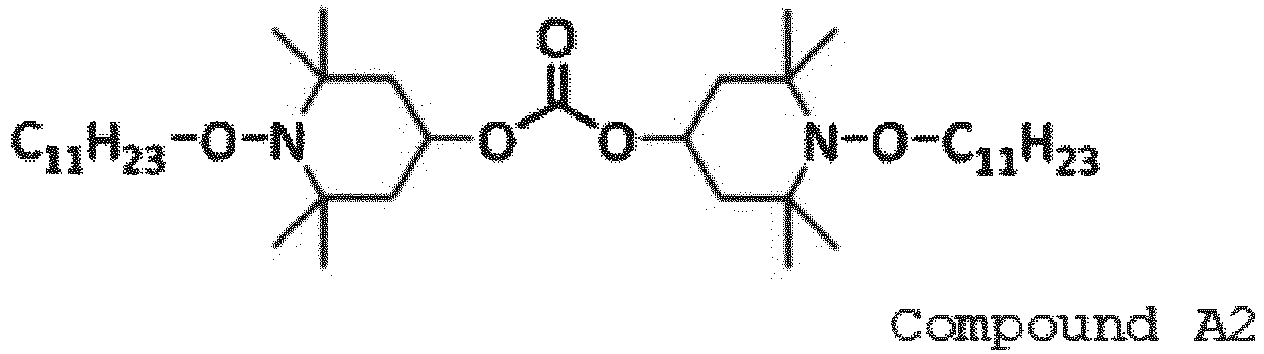
- The agricultural film according to any one of claims 1 to 4,
wherein the benzoate compound represented by General Formula (B) includes at least one of the following compound B1 or compound B2.

- The agricultural film according to any one of claims 1 to 5,
wherein X and Y satisfy 0.2/0.8 ≤ X/Y ≤ 0.95/0.05, in a case where the content of the hindered amine light stabilizer in terms of mass in the layer is defined as X and the content of the synergist in terms of mass in the layer is defined as Y. - The agricultural film according to any one of claims 1 to 6,
wherein the layer contains a thermoplastic resin. - The agricultural film according to claim 7,
wherein the thermoplastic resin contains linear low density polyethylene or low density polyethylene. - The agricultural film according to claim 7 or 8,
wherein a total content of the hindered amine light stabilizer and the synergist in the layer is equal to or more than 0.01 parts by mass and equal to or less than 10 parts by mass with respect to 100 parts by mass of the thermoplastic resin. - The agricultural film according to any one of claims 1 to 9,
wherein the agricultural film is used for forming a greenhouse. - A method for growing a plant, comprising:a step of disposing the agricultural film according to any one of claims 1 to 10 in a greenhouse;a step of disposing a plant in the greenhouse; anda step of carrying out sulfur fumigation in the greenhouse.
Applications Claiming Priority (2)
| Application Number | Priority Date | Filing Date | Title |
|---|---|---|---|
| JP2019090149A JP6602501B1 (en) | 2019-05-10 | 2019-05-10 | Agricultural film and plant growing method |
| PCT/JP2020/018391 WO2020230664A1 (en) | 2019-05-10 | 2020-05-01 | Agricultural film and plant growing method |
Publications (3)
| Publication Number | Publication Date |
|---|---|
| EP3798256A1 true EP3798256A1 (en) | 2021-03-31 |
| EP3798256A4 EP3798256A4 (en) | 2022-05-11 |
| EP3798256B1 EP3798256B1 (en) | 2024-10-23 |
Family
ID=68462311
Family Applications (1)
| Application Number | Title | Priority Date | Filing Date |
|---|---|---|---|
| EP20806412.1A Active EP3798256B1 (en) | 2019-05-10 | 2020-05-01 | Agricultural film and method for growing plant |
Country Status (6)
| Country | Link |
|---|---|
| EP (1) | EP3798256B1 (en) |
| JP (1) | JP6602501B1 (en) |
| CN (1) | CN112513161A (en) |
| ES (1) | ES2991434T3 (en) |
| MX (1) | MX2021001150A (en) |
| WO (1) | WO2020230664A1 (en) |
Cited By (1)
| Publication number | Priority date | Publication date | Assignee | Title |
|---|---|---|---|---|
| EP3835061A4 (en) * | 2019-08-09 | 2021-11-17 | Adeka Corporation | FILM FOR AGRICULTURAL USE, COMPOSITION OF RESIN FOR FORMING A FILM FOR AGRICULTURAL USE, AND PROCESS FOR GROWING A PLANT USING THE SAME |
Families Citing this family (2)
| Publication number | Priority date | Publication date | Assignee | Title |
|---|---|---|---|---|
| JP6602501B1 (en) * | 2019-05-10 | 2019-11-06 | 株式会社Adeka | Agricultural film and plant growing method |
| JP7463316B2 (en) * | 2021-05-08 | 2024-04-08 | 大倉工業株式会社 | A method for producing recycled raw materials, and a method for producing a film using the recycled raw materials obtained by the method. |
Family Cites Families (26)
| Publication number | Priority date | Publication date | Assignee | Title |
|---|---|---|---|---|
| JPS6185111A (en) * | 1984-10-03 | 1986-04-30 | 山陽利器株式会社 | Drive mechanism of reciprocal reaper |
| JPH06327361A (en) * | 1993-05-20 | 1994-11-29 | Mitsubishi Kasei Corp | Soil covering |
| JPH07188473A (en) * | 1993-12-27 | 1995-07-25 | Mitsui Petrochem Ind Ltd | Agricultural material |
| JP3524227B2 (en) * | 1995-07-12 | 2004-05-10 | 旭電化工業株式会社 | Agricultural film composition |
| JPH10195258A (en) * | 1997-01-08 | 1998-07-28 | Asahi Denka Kogyo Kk | Agricultural film composition |
| JP2000159940A (en) * | 1998-11-27 | 2000-06-13 | Asahi Denka Kogyo Kk | Polyolefin resin composition |
| JP4190093B2 (en) * | 1999-06-24 | 2008-12-03 | 株式会社Adeka | Piperidine derivative polymer and polymer composition containing the same |
| JP4428597B2 (en) * | 2000-02-18 | 2010-03-10 | 株式会社Adeka | Synthetic resin composition and use thereof |
| JP2003231777A (en) * | 2002-02-07 | 2003-08-19 | Mitsui Chemicals Inc | Polyolefin resin composition for agricultural film and agricultural film |
| JP2003286412A (en) * | 2002-03-28 | 2003-10-10 | Asahi Denka Kogyo Kk | Synthetic resin composition |
| JP3872999B2 (en) * | 2002-04-04 | 2007-01-24 | 日本ポリプロ株式会社 | Polypropylene resin composition excellent in yellowing of coating film and automobile exterior parts using the same |
| JP2003325060A (en) * | 2002-05-14 | 2003-11-18 | Mitsubishi Chem Mkv Co | Agricultural polyolefin resin film |
| JP4155788B2 (en) * | 2002-10-15 | 2008-09-24 | 株式会社Adeka | Stabilizer for polymer compound and polymer compound composition containing the same |
| JP2006342257A (en) * | 2005-06-09 | 2006-12-21 | Adeka Corp | Aluminum pigment compounded resin composition |
| JP5283153B2 (en) * | 2007-10-25 | 2013-09-04 | 株式会社Adeka | Synthetic resin composition and automotive interior / exterior material |
| JP5478013B2 (en) * | 2007-12-18 | 2014-04-23 | 株式会社Adeka | Olefin-based elastic resin composition |
| KR101032197B1 (en) * | 2010-12-29 | 2011-05-02 | 김용태 | Composition for producing artificial straw and method of manufacturing artificial straw |
| JP6143326B2 (en) * | 2013-01-25 | 2017-06-07 | 株式会社Adeka | Resin composition |
| JP2015198579A (en) | 2014-04-04 | 2015-11-12 | 積水フィルム株式会社 | Agricultural film |
| CN106471049B (en) * | 2014-05-01 | 2018-12-14 | 塞特工业公司 | The stabilization composition of ultraviolet light and thermal degradation is resisted for stabilization material |
| ES2743478T3 (en) * | 2014-06-24 | 2020-02-19 | Dow Global Technologies Llc | Polyolefin photovoltaic backsheet comprising a stabilized polypropylene layer |
| CN105218856B (en) * | 2015-07-31 | 2018-03-20 | 新秀化学(烟台)有限公司 | Precipitation-resistant efficient polypropylene weather-resistant master batch |
| CN107286550A (en) * | 2017-05-19 | 2017-10-24 | 合肥市惠科精密模具有限公司 | A kind of preparation method of the antistatic filter coating of TFT LCD screens |
| JP2019090149A (en) | 2017-11-10 | 2019-06-13 | 日本化薬株式会社 | Pretreatment agent for printing |
| JP6602501B1 (en) * | 2019-05-10 | 2019-11-06 | 株式会社Adeka | Agricultural film and plant growing method |
| JP6630461B1 (en) * | 2019-08-09 | 2020-01-15 | 株式会社Adeka | Agricultural film, agricultural film-forming resin composition, and plant growing method using the same |
-
2019
- 2019-05-10 JP JP2019090149A patent/JP6602501B1/en active Active
-
2020
- 2020-05-01 CN CN202080004103.9A patent/CN112513161A/en active Pending
- 2020-05-01 WO PCT/JP2020/018391 patent/WO2020230664A1/en not_active Ceased
- 2020-05-01 MX MX2021001150A patent/MX2021001150A/en unknown
- 2020-05-01 EP EP20806412.1A patent/EP3798256B1/en active Active
- 2020-05-01 ES ES20806412T patent/ES2991434T3/en active Active
Cited By (1)
| Publication number | Priority date | Publication date | Assignee | Title |
|---|---|---|---|---|
| EP3835061A4 (en) * | 2019-08-09 | 2021-11-17 | Adeka Corporation | FILM FOR AGRICULTURAL USE, COMPOSITION OF RESIN FOR FORMING A FILM FOR AGRICULTURAL USE, AND PROCESS FOR GROWING A PLANT USING THE SAME |
Also Published As
| Publication number | Publication date |
|---|---|
| JP6602501B1 (en) | 2019-11-06 |
| WO2020230664A1 (en) | 2020-11-19 |
| ES2991434T3 (en) | 2024-12-03 |
| MX2021001150A (en) | 2021-04-13 |
| EP3798256A4 (en) | 2022-05-11 |
| JP2020184899A (en) | 2020-11-19 |
| CN112513161A (en) | 2021-03-16 |
| EP3798256B1 (en) | 2024-10-23 |
Similar Documents
| Publication | Publication Date | Title |
|---|---|---|
| EP3143086B1 (en) | Stabilised resin composition | |
| EP3798256B1 (en) | Agricultural film and method for growing plant | |
| EP2716734A1 (en) | Flame-retardant agent and flame-retardant resin composition | |
| EP2949697A1 (en) | Resin composition | |
| EP2980129B1 (en) | Resin additive masterbatch and polyolefin resin composition to which said resin additive masterbatch has been admixed | |
| KR101777275B1 (en) | Synthetic resin composition and automotive interior/exterior material | |
| EP2868694B1 (en) | Cellulose ester-based resin composition | |
| EP3835061A1 (en) | Film for agricultural use, resin composition for forming film for agricultural use, and method for growing plant using same | |
| CN101965382B (en) | Synthetic resin composition, and automotive interior/exterior material comprising the same | |
| KR20150033605A (en) | Mixed pellet | |
| JP5478012B2 (en) | Resin composition and resin molded product | |
| JP6731100B1 (en) | Method for improving the ability of agricultural films to suppress sulfur absorption | |
| KR100670468B1 (en) | Resin composition for agricultural film | |
| EP4678699A1 (en) | Resin additive, composition, molded article and compound | |
| JP2003286412A (en) | Synthetic resin composition | |
| JP2004210987A (en) | Molded article with improved weather resistance and resin composition thereof | |
| JP2020037603A (en) | Polyolefin-based resin composition and molded article thereof | |
| JP2019044063A (en) | Crystallization retarder, polyolefin resin composition containing the same and molded article thereof | |
| JP2025061829A (en) | Resin composition, molded article, and method for producing resin composition | |
| JP2007254533A (en) | Synthetic resin composition |
Legal Events
| Date | Code | Title | Description |
|---|---|---|---|
| STAA | Information on the status of an ep patent application or granted ep patent |
Free format text: STATUS: THE INTERNATIONAL PUBLICATION HAS BEEN MADE |
|
| PUAI | Public reference made under article 153(3) epc to a published international application that has entered the european phase |
Free format text: ORIGINAL CODE: 0009012 |
|
| STAA | Information on the status of an ep patent application or granted ep patent |
Free format text: STATUS: REQUEST FOR EXAMINATION WAS MADE |
|
| 17P | Request for examination filed |
Effective date: 20201223 |
|
| AK | Designated contracting states |
Kind code of ref document: A1 Designated state(s): AL AT BE BG CH CY CZ DE DK EE ES FI FR GB GR HR HU IE IS IT LI LT LU LV MC MK MT NL NO PL PT RO RS SE SI SK SM TR |
|
| AX | Request for extension of the european patent |
Extension state: BA ME |
|
| A4 | Supplementary search report drawn up and despatched |
Effective date: 20220412 |
|
| RIC1 | Information provided on ipc code assigned before grant |
Ipc: A01G 13/02 20060101ALI20220406BHEP Ipc: A01G 9/14 20060101ALI20220406BHEP Ipc: C08J 5/18 20060101ALI20220406BHEP Ipc: C08L 101/00 20060101ALI20220406BHEP Ipc: C08L 23/06 20060101ALI20220406BHEP Ipc: C08K 5/3435 20060101ALI20220406BHEP Ipc: C08K 5/134 20060101AFI20220406BHEP |
|
| DAV | Request for validation of the european patent (deleted) | ||
| DAX | Request for extension of the european patent (deleted) | ||
| STAA | Information on the status of an ep patent application or granted ep patent |
Free format text: STATUS: EXAMINATION IS IN PROGRESS |
|
| 17Q | First examination report despatched |
Effective date: 20230126 |
|
| P01 | Opt-out of the competence of the unified patent court (upc) registered |
Effective date: 20230424 |
|
| GRAP | Despatch of communication of intention to grant a patent |
Free format text: ORIGINAL CODE: EPIDOSNIGR1 |
|
| STAA | Information on the status of an ep patent application or granted ep patent |
Free format text: STATUS: GRANT OF PATENT IS INTENDED |
|
| INTG | Intention to grant announced |
Effective date: 20240514 |
|
| GRAS | Grant fee paid |
Free format text: ORIGINAL CODE: EPIDOSNIGR3 |
|
| GRAA | (expected) grant |
Free format text: ORIGINAL CODE: 0009210 |
|
| STAA | Information on the status of an ep patent application or granted ep patent |
Free format text: STATUS: THE PATENT HAS BEEN GRANTED |
|
| AK | Designated contracting states |
Kind code of ref document: B1 Designated state(s): AL AT BE BG CH CY CZ DE DK EE ES FI FR GB GR HR HU IE IS IT LI LT LU LV MC MK MT NL NO PL PT RO RS SE SI SK SM TR |
|
| REG | Reference to a national code |
Ref country code: GB Ref legal event code: FG4D |
|
| REG | Reference to a national code |
Ref country code: CH Ref legal event code: EP |
|
| REG | Reference to a national code |
Ref country code: DE Ref legal event code: R096 Ref document number: 602020039985 Country of ref document: DE |
|
| REG | Reference to a national code |
Ref country code: IE Ref legal event code: FG4D |
|
| REG | Reference to a national code |
Ref country code: ES Ref legal event code: FG2A Ref document number: 2991434 Country of ref document: ES Kind code of ref document: T3 Effective date: 20241203 |
|
| REG | Reference to a national code |
Ref country code: LT Ref legal event code: MG9D |
|
| REG | Reference to a national code |
Ref country code: NL Ref legal event code: MP Effective date: 20241023 |
|
| REG | Reference to a national code |
Ref country code: AT Ref legal event code: MK05 Ref document number: 1734812 Country of ref document: AT Kind code of ref document: T Effective date: 20241023 |
|
| PG25 | Lapsed in a contracting state [announced via postgrant information from national office to epo] |
Ref country code: NL Free format text: LAPSE BECAUSE OF FAILURE TO SUBMIT A TRANSLATION OF THE DESCRIPTION OR TO PAY THE FEE WITHIN THE PRESCRIBED TIME-LIMIT Effective date: 20241023 |
|
| PG25 | Lapsed in a contracting state [announced via postgrant information from national office to epo] |
Ref country code: NL Free format text: LAPSE BECAUSE OF FAILURE TO SUBMIT A TRANSLATION OF THE DESCRIPTION OR TO PAY THE FEE WITHIN THE PRESCRIBED TIME-LIMIT Effective date: 20241023 |
|
| PG25 | Lapsed in a contracting state [announced via postgrant information from national office to epo] |
Ref country code: IS Free format text: LAPSE BECAUSE OF FAILURE TO SUBMIT A TRANSLATION OF THE DESCRIPTION OR TO PAY THE FEE WITHIN THE PRESCRIBED TIME-LIMIT Effective date: 20250223 Ref country code: PT Free format text: LAPSE BECAUSE OF FAILURE TO SUBMIT A TRANSLATION OF THE DESCRIPTION OR TO PAY THE FEE WITHIN THE PRESCRIBED TIME-LIMIT Effective date: 20250224 Ref country code: HR Free format text: LAPSE BECAUSE OF FAILURE TO SUBMIT A TRANSLATION OF THE DESCRIPTION OR TO PAY THE FEE WITHIN THE PRESCRIBED TIME-LIMIT Effective date: 20241023 |
|
| PG25 | Lapsed in a contracting state [announced via postgrant information from national office to epo] |
Ref country code: FI Free format text: LAPSE BECAUSE OF FAILURE TO SUBMIT A TRANSLATION OF THE DESCRIPTION OR TO PAY THE FEE WITHIN THE PRESCRIBED TIME-LIMIT Effective date: 20241023 |
|
| PG25 | Lapsed in a contracting state [announced via postgrant information from national office to epo] |
Ref country code: BG Free format text: LAPSE BECAUSE OF FAILURE TO SUBMIT A TRANSLATION OF THE DESCRIPTION OR TO PAY THE FEE WITHIN THE PRESCRIBED TIME-LIMIT Effective date: 20241023 |
|
| PG25 | Lapsed in a contracting state [announced via postgrant information from national office to epo] |
Ref country code: NO Free format text: LAPSE BECAUSE OF FAILURE TO SUBMIT A TRANSLATION OF THE DESCRIPTION OR TO PAY THE FEE WITHIN THE PRESCRIBED TIME-LIMIT Effective date: 20250123 |
|
| PG25 | Lapsed in a contracting state [announced via postgrant information from national office to epo] |
Ref country code: LV Free format text: LAPSE BECAUSE OF FAILURE TO SUBMIT A TRANSLATION OF THE DESCRIPTION OR TO PAY THE FEE WITHIN THE PRESCRIBED TIME-LIMIT Effective date: 20241023 Ref country code: AT Free format text: LAPSE BECAUSE OF FAILURE TO SUBMIT A TRANSLATION OF THE DESCRIPTION OR TO PAY THE FEE WITHIN THE PRESCRIBED TIME-LIMIT Effective date: 20241023 Ref country code: GR Free format text: LAPSE BECAUSE OF FAILURE TO SUBMIT A TRANSLATION OF THE DESCRIPTION OR TO PAY THE FEE WITHIN THE PRESCRIBED TIME-LIMIT Effective date: 20250124 |
|
| PG25 | Lapsed in a contracting state [announced via postgrant information from national office to epo] |
Ref country code: PL Free format text: LAPSE BECAUSE OF FAILURE TO SUBMIT A TRANSLATION OF THE DESCRIPTION OR TO PAY THE FEE WITHIN THE PRESCRIBED TIME-LIMIT Effective date: 20241023 |
|
| PG25 | Lapsed in a contracting state [announced via postgrant information from national office to epo] |
Ref country code: RS Free format text: LAPSE BECAUSE OF FAILURE TO SUBMIT A TRANSLATION OF THE DESCRIPTION OR TO PAY THE FEE WITHIN THE PRESCRIBED TIME-LIMIT Effective date: 20250123 |
|
| PG25 | Lapsed in a contracting state [announced via postgrant information from national office to epo] |
Ref country code: SM Free format text: LAPSE BECAUSE OF FAILURE TO SUBMIT A TRANSLATION OF THE DESCRIPTION OR TO PAY THE FEE WITHIN THE PRESCRIBED TIME-LIMIT Effective date: 20241023 |
|
| PG25 | Lapsed in a contracting state [announced via postgrant information from national office to epo] |
Ref country code: DK Free format text: LAPSE BECAUSE OF FAILURE TO SUBMIT A TRANSLATION OF THE DESCRIPTION OR TO PAY THE FEE WITHIN THE PRESCRIBED TIME-LIMIT Effective date: 20241023 |
|
| PG25 | Lapsed in a contracting state [announced via postgrant information from national office to epo] |
Ref country code: EE Free format text: LAPSE BECAUSE OF FAILURE TO SUBMIT A TRANSLATION OF THE DESCRIPTION OR TO PAY THE FEE WITHIN THE PRESCRIBED TIME-LIMIT Effective date: 20241023 |
|
| PG25 | Lapsed in a contracting state [announced via postgrant information from national office to epo] |
Ref country code: RO Free format text: LAPSE BECAUSE OF FAILURE TO SUBMIT A TRANSLATION OF THE DESCRIPTION OR TO PAY THE FEE WITHIN THE PRESCRIBED TIME-LIMIT Effective date: 20241023 |
|
| REG | Reference to a national code |
Ref country code: DE Ref legal event code: R097 Ref document number: 602020039985 Country of ref document: DE |
|
| PG25 | Lapsed in a contracting state [announced via postgrant information from national office to epo] |
Ref country code: SK Free format text: LAPSE BECAUSE OF FAILURE TO SUBMIT A TRANSLATION OF THE DESCRIPTION OR TO PAY THE FEE WITHIN THE PRESCRIBED TIME-LIMIT Effective date: 20241023 |
|
| PG25 | Lapsed in a contracting state [announced via postgrant information from national office to epo] |
Ref country code: CZ Free format text: LAPSE BECAUSE OF FAILURE TO SUBMIT A TRANSLATION OF THE DESCRIPTION OR TO PAY THE FEE WITHIN THE PRESCRIBED TIME-LIMIT Effective date: 20241023 |
|
| PG25 | Lapsed in a contracting state [announced via postgrant information from national office to epo] |
Ref country code: IT Free format text: LAPSE BECAUSE OF FAILURE TO SUBMIT A TRANSLATION OF THE DESCRIPTION OR TO PAY THE FEE WITHIN THE PRESCRIBED TIME-LIMIT Effective date: 20241023 |
|
| PLBE | No opposition filed within time limit |
Free format text: ORIGINAL CODE: 0009261 |
|
| STAA | Information on the status of an ep patent application or granted ep patent |
Free format text: STATUS: NO OPPOSITION FILED WITHIN TIME LIMIT |
|
| PG25 | Lapsed in a contracting state [announced via postgrant information from national office to epo] |
Ref country code: SE Free format text: LAPSE BECAUSE OF FAILURE TO SUBMIT A TRANSLATION OF THE DESCRIPTION OR TO PAY THE FEE WITHIN THE PRESCRIBED TIME-LIMIT Effective date: 20241023 |
|
| 26N | No opposition filed |
Effective date: 20250724 |
|
| PGFP | Annual fee paid to national office [announced via postgrant information from national office to epo] |
Ref country code: ES Payment date: 20250630 Year of fee payment: 6 |
|
| REG | Reference to a national code |
Ref country code: DE Ref legal event code: R119 Ref document number: 602020039985 Country of ref document: DE |
|
| REG | Reference to a national code |
Ref country code: CH Ref legal event code: H13 Free format text: ST27 STATUS EVENT CODE: U-0-0-H10-H13 (AS PROVIDED BY THE NATIONAL OFFICE) Effective date: 20251223 |
|
| PG25 | Lapsed in a contracting state [announced via postgrant information from national office to epo] |
Ref country code: LU Free format text: LAPSE BECAUSE OF NON-PAYMENT OF DUE FEES Effective date: 20250501 |
|
| PG25 | Lapsed in a contracting state [announced via postgrant information from national office to epo] |
Ref country code: CH Free format text: LAPSE BECAUSE OF NON-PAYMENT OF DUE FEES Effective date: 20250531 |
|
| GBPC | Gb: european patent ceased through non-payment of renewal fee |
Effective date: 20250501 |
|
| REG | Reference to a national code |
Ref country code: BE Ref legal event code: MM Effective date: 20250531 |
|
| PG25 | Lapsed in a contracting state [announced via postgrant information from national office to epo] |
Ref country code: MC Free format text: LAPSE BECAUSE OF FAILURE TO SUBMIT A TRANSLATION OF THE DESCRIPTION OR TO PAY THE FEE WITHIN THE PRESCRIBED TIME-LIMIT Effective date: 20241023 |
|
| PG25 | Lapsed in a contracting state [announced via postgrant information from national office to epo] |
Ref country code: GB Free format text: LAPSE BECAUSE OF NON-PAYMENT OF DUE FEES Effective date: 20250501 |
|
| PG25 | Lapsed in a contracting state [announced via postgrant information from national office to epo] |
Ref country code: IE Free format text: LAPSE BECAUSE OF NON-PAYMENT OF DUE FEES Effective date: 20250501 Ref country code: DE Free format text: LAPSE BECAUSE OF NON-PAYMENT OF DUE FEES Effective date: 20251202 |
|
| PG25 | Lapsed in a contracting state [announced via postgrant information from national office to epo] |
Ref country code: BE Free format text: LAPSE BECAUSE OF NON-PAYMENT OF DUE FEES Effective date: 20250531 |
|
| PG25 | Lapsed in a contracting state [announced via postgrant information from national office to epo] |
Ref country code: FR Free format text: LAPSE BECAUSE OF NON-PAYMENT OF DUE FEES Effective date: 20250531 |