EP3796524B1 - Engine-and-electric-machine assembly - Google Patents
Engine-and-electric-machine assembly Download PDFInfo
- Publication number
- EP3796524B1 EP3796524B1 EP20193048.4A EP20193048A EP3796524B1 EP 3796524 B1 EP3796524 B1 EP 3796524B1 EP 20193048 A EP20193048 A EP 20193048A EP 3796524 B1 EP3796524 B1 EP 3796524B1
- Authority
- EP
- European Patent Office
- Prior art keywords
- engine
- electric machine
- electric
- rotor
- extension section
- Prior art date
- Legal status (The legal status is an assumption and is not a legal conclusion. Google has not performed a legal analysis and makes no representation as to the accuracy of the status listed.)
- Active
Links
Images


Classifications
-
- F—MECHANICAL ENGINEERING; LIGHTING; HEATING; WEAPONS; BLASTING
- F02—COMBUSTION ENGINES; HOT-GAS OR COMBUSTION-PRODUCT ENGINE PLANTS
- F02B—INTERNAL-COMBUSTION PISTON ENGINES; COMBUSTION ENGINES IN GENERAL
- F02B63/00—Adaptations of engines for driving pumps, hand-held tools or electric generators; Portable combinations of engines with engine-driven devices
- F02B63/04—Adaptations of engines for driving pumps, hand-held tools or electric generators; Portable combinations of engines with engine-driven devices for electric generators
-
- B—PERFORMING OPERATIONS; TRANSPORTING
- B60—VEHICLES IN GENERAL
- B60K—ARRANGEMENT OR MOUNTING OF PROPULSION UNITS OR OF TRANSMISSIONS IN VEHICLES; ARRANGEMENT OR MOUNTING OF PLURAL DIVERSE PRIME-MOVERS IN VEHICLES; AUXILIARY DRIVES FOR VEHICLES; INSTRUMENTATION OR DASHBOARDS FOR VEHICLES; ARRANGEMENTS IN CONNECTION WITH COOLING, AIR INTAKE, GAS EXHAUST OR FUEL SUPPLY OF PROPULSION UNITS IN VEHICLES
- B60K6/00—Arrangement or mounting of plural diverse prime-movers for mutual or common propulsion, e.g. hybrid propulsion systems comprising electric motors and internal combustion engines
- B60K6/20—Arrangement or mounting of plural diverse prime-movers for mutual or common propulsion, e.g. hybrid propulsion systems comprising electric motors and internal combustion engines the prime-movers consisting of electric motors and internal combustion engines, e.g. HEVs
- B60K6/22—Arrangement or mounting of plural diverse prime-movers for mutual or common propulsion, e.g. hybrid propulsion systems comprising electric motors and internal combustion engines the prime-movers consisting of electric motors and internal combustion engines, e.g. HEVs characterised by apparatus, components or means specially adapted for HEVs
- B60K6/40—Arrangement or mounting of plural diverse prime-movers for mutual or common propulsion, e.g. hybrid propulsion systems comprising electric motors and internal combustion engines the prime-movers consisting of electric motors and internal combustion engines, e.g. HEVs characterised by apparatus, components or means specially adapted for HEVs characterised by the assembly or relative disposition of components
- B60K6/405—Housings
-
- H—ELECTRICITY
- H02—GENERATION; CONVERSION OR DISTRIBUTION OF ELECTRIC POWER
- H02K—DYNAMO-ELECTRIC MACHINES
- H02K1/00—Details of the magnetic circuit
- H02K1/06—Details of the magnetic circuit characterised by the shape, form or construction
- H02K1/22—Rotating parts of the magnetic circuit
- H02K1/28—Means for mounting or fastening rotating magnetic parts on to, or to, the rotor structures
- H02K1/30—Means for mounting or fastening rotating magnetic parts on to, or to, the rotor structures using intermediate parts, e.g. spiders
-
- B—PERFORMING OPERATIONS; TRANSPORTING
- B60—VEHICLES IN GENERAL
- B60K—ARRANGEMENT OR MOUNTING OF PROPULSION UNITS OR OF TRANSMISSIONS IN VEHICLES; ARRANGEMENT OR MOUNTING OF PLURAL DIVERSE PRIME-MOVERS IN VEHICLES; AUXILIARY DRIVES FOR VEHICLES; INSTRUMENTATION OR DASHBOARDS FOR VEHICLES; ARRANGEMENTS IN CONNECTION WITH COOLING, AIR INTAKE, GAS EXHAUST OR FUEL SUPPLY OF PROPULSION UNITS IN VEHICLES
- B60K6/00—Arrangement or mounting of plural diverse prime-movers for mutual or common propulsion, e.g. hybrid propulsion systems comprising electric motors and internal combustion engines
- B60K6/20—Arrangement or mounting of plural diverse prime-movers for mutual or common propulsion, e.g. hybrid propulsion systems comprising electric motors and internal combustion engines the prime-movers consisting of electric motors and internal combustion engines, e.g. HEVs
- B60K6/22—Arrangement or mounting of plural diverse prime-movers for mutual or common propulsion, e.g. hybrid propulsion systems comprising electric motors and internal combustion engines the prime-movers consisting of electric motors and internal combustion engines, e.g. HEVs characterised by apparatus, components or means specially adapted for HEVs
- B60K6/36—Arrangement or mounting of plural diverse prime-movers for mutual or common propulsion, e.g. hybrid propulsion systems comprising electric motors and internal combustion engines the prime-movers consisting of electric motors and internal combustion engines, e.g. HEVs characterised by apparatus, components or means specially adapted for HEVs characterised by the transmission gearings
-
- H—ELECTRICITY
- H02—GENERATION; CONVERSION OR DISTRIBUTION OF ELECTRIC POWER
- H02K—DYNAMO-ELECTRIC MACHINES
- H02K11/00—Structural association of dynamo-electric machines with electric components or with devices for shielding, monitoring or protection
- H02K11/20—Structural association of dynamo-electric machines with electric components or with devices for shielding, monitoring or protection for measuring, monitoring, testing, protecting or switching
- H02K11/21—Devices for sensing speed or position, or actuated thereby
-
- H—ELECTRICITY
- H02—GENERATION; CONVERSION OR DISTRIBUTION OF ELECTRIC POWER
- H02K—DYNAMO-ELECTRIC MACHINES
- H02K7/00—Arrangements for handling mechanical energy structurally associated with dynamo-electric machines, e.g. structural association with mechanical driving motors or auxiliary dynamo-electric machines
- H02K7/003—Couplings; Details of shafts
-
- H—ELECTRICITY
- H02—GENERATION; CONVERSION OR DISTRIBUTION OF ELECTRIC POWER
- H02K—DYNAMO-ELECTRIC MACHINES
- H02K7/00—Arrangements for handling mechanical energy structurally associated with dynamo-electric machines, e.g. structural association with mechanical driving motors or auxiliary dynamo-electric machines
- H02K7/10—Structural association with clutches, brakes, gears, pulleys or mechanical starters
-
- H—ELECTRICITY
- H02—GENERATION; CONVERSION OR DISTRIBUTION OF ELECTRIC POWER
- H02K—DYNAMO-ELECTRIC MACHINES
- H02K7/00—Arrangements for handling mechanical energy structurally associated with dynamo-electric machines, e.g. structural association with mechanical driving motors or auxiliary dynamo-electric machines
- H02K7/18—Structural association of electric generators with mechanical driving motors, e.g. with turbines
- H02K7/1807—Rotary generators
- H02K7/1815—Rotary generators structurally associated with reciprocating piston engines
-
- B—PERFORMING OPERATIONS; TRANSPORTING
- B60—VEHICLES IN GENERAL
- B60K—ARRANGEMENT OR MOUNTING OF PROPULSION UNITS OR OF TRANSMISSIONS IN VEHICLES; ARRANGEMENT OR MOUNTING OF PLURAL DIVERSE PRIME-MOVERS IN VEHICLES; AUXILIARY DRIVES FOR VEHICLES; INSTRUMENTATION OR DASHBOARDS FOR VEHICLES; ARRANGEMENTS IN CONNECTION WITH COOLING, AIR INTAKE, GAS EXHAUST OR FUEL SUPPLY OF PROPULSION UNITS IN VEHICLES
- B60K6/00—Arrangement or mounting of plural diverse prime-movers for mutual or common propulsion, e.g. hybrid propulsion systems comprising electric motors and internal combustion engines
- B60K6/20—Arrangement or mounting of plural diverse prime-movers for mutual or common propulsion, e.g. hybrid propulsion systems comprising electric motors and internal combustion engines the prime-movers consisting of electric motors and internal combustion engines, e.g. HEVs
- B60K6/42—Arrangement or mounting of plural diverse prime-movers for mutual or common propulsion, e.g. hybrid propulsion systems comprising electric motors and internal combustion engines the prime-movers consisting of electric motors and internal combustion engines, e.g. HEVs characterised by the architecture of the hybrid electric vehicle
- B60K6/48—Parallel type
- B60K2006/4825—Electric machine connected or connectable to gearbox input shaft
-
- B—PERFORMING OPERATIONS; TRANSPORTING
- B60—VEHICLES IN GENERAL
- B60K—ARRANGEMENT OR MOUNTING OF PROPULSION UNITS OR OF TRANSMISSIONS IN VEHICLES; ARRANGEMENT OR MOUNTING OF PLURAL DIVERSE PRIME-MOVERS IN VEHICLES; AUXILIARY DRIVES FOR VEHICLES; INSTRUMENTATION OR DASHBOARDS FOR VEHICLES; ARRANGEMENTS IN CONNECTION WITH COOLING, AIR INTAKE, GAS EXHAUST OR FUEL SUPPLY OF PROPULSION UNITS IN VEHICLES
- B60K6/00—Arrangement or mounting of plural diverse prime-movers for mutual or common propulsion, e.g. hybrid propulsion systems comprising electric motors and internal combustion engines
- B60K6/20—Arrangement or mounting of plural diverse prime-movers for mutual or common propulsion, e.g. hybrid propulsion systems comprising electric motors and internal combustion engines the prime-movers consisting of electric motors and internal combustion engines, e.g. HEVs
- B60K6/22—Arrangement or mounting of plural diverse prime-movers for mutual or common propulsion, e.g. hybrid propulsion systems comprising electric motors and internal combustion engines the prime-movers consisting of electric motors and internal combustion engines, e.g. HEVs characterised by apparatus, components or means specially adapted for HEVs
- B60K6/26—Arrangement or mounting of plural diverse prime-movers for mutual or common propulsion, e.g. hybrid propulsion systems comprising electric motors and internal combustion engines the prime-movers consisting of electric motors and internal combustion engines, e.g. HEVs characterised by apparatus, components or means specially adapted for HEVs characterised by the motors or the generators
-
- B—PERFORMING OPERATIONS; TRANSPORTING
- B60—VEHICLES IN GENERAL
- B60Y—INDEXING SCHEME RELATING TO ASPECTS CROSS-CUTTING VEHICLE TECHNOLOGY
- B60Y2200/00—Type of vehicle
- B60Y2200/90—Vehicles comprising electric prime movers
- B60Y2200/92—Hybrid vehicles
-
- H—ELECTRICITY
- H02—GENERATION; CONVERSION OR DISTRIBUTION OF ELECTRIC POWER
- H02K—DYNAMO-ELECTRIC MACHINES
- H02K7/00—Arrangements for handling mechanical energy structurally associated with dynamo-electric machines, e.g. structural association with mechanical driving motors or auxiliary dynamo-electric machines
- H02K7/006—Structural association of a motor or generator with the drive train of a motor vehicle
-
- Y—GENERAL TAGGING OF NEW TECHNOLOGICAL DEVELOPMENTS; GENERAL TAGGING OF CROSS-SECTIONAL TECHNOLOGIES SPANNING OVER SEVERAL SECTIONS OF THE IPC; TECHNICAL SUBJECTS COVERED BY FORMER USPC CROSS-REFERENCE ART COLLECTIONS [XRACs] AND DIGESTS
- Y02—TECHNOLOGIES OR APPLICATIONS FOR MITIGATION OR ADAPTATION AGAINST CLIMATE CHANGE
- Y02T—CLIMATE CHANGE MITIGATION TECHNOLOGIES RELATED TO TRANSPORTATION
- Y02T10/00—Road transport of goods or passengers
- Y02T10/60—Other road transportation technologies with climate change mitigation effect
- Y02T10/62—Hybrid vehicles
Definitions
- the present disclosure relates to a powertrain assembly, and particularly relates to an engine-and-electric-machine assembly, which is used to drive a vehicle or generate electricity.
- Hybrid power vehicles have the advantages of energy saving, emission reduction and long endurance mileage, and are electric vehicles that are suitable for sustainable development.
- the engine-and-electric-machine assemblies of hybrid-powered vehicles are mostly the simple mechanical integration of the engine and the electric machine, wherein the rear end of the engine is connected to a flywheel, and the input shaft of the electric machine is connected to the flywheel via a torsional shock absorber, which has the disadvantages such as low integration level, too many components, high mass/weight, large volume, low reliability and high cost. They cannot satisfy the requirements to become full-scale production, and are difficult to meet miniaturization and light weight targets of the drive systems.
- a range extender that has a higher level of integration has already been disclosed.
- the engine 8 is in the fuel mode.
- the electric machine 9 may be an electric generator or an ISG electric machine, and may also be an electric motor.
- a crankshaft 7 is provided in the engine 8.
- the crankshaft 7 is provided with an extension section 7-3 that extends out to the exterior of the engine 8.
- the extension section 7-3 forms a rotation shaft 6 of the electric machine 9.
- a rotor 3 of the electric machine 9 is mounted on the extension section 7-3.
- the rotor of the electric machine 9 and the rotation shaft 6 are connected via a key, for example a spline or a flat key, or by interference fitting.
- a key for example a spline or a flat key, or by interference fitting.
- the crankshaft 7 has a key slot on the extension section 7-3. If the connection is via a spline, an external spline may be on the extension section 7-3, and the internal spline on the rotor of the electric machine 9, or vice versa.
- the range extender adopts a structure that integrates the engine and the electric machine as one system, which improves the integration level of the engine-and-electric-machine assembly, and effectively reduces the weight and the volume of the engine-and-electric-machine assembly.
- the transmission connecting structure is still required to be improved.
- Japanese patent application JP2005057832A European Patent application EP3225447A1
- U.S. patent application US2003/102764A1 also disclose that the engine and the electric machine are integrated in various ways, but the transmission connecting structure between the engine and the electric machine still remains to be improved.
- the present disclosure provides an engine-and-electric-machine assembly, which, by connecting the rotor of the electric machine and the crankshaft of the engine by using a flange, instead of using a key connecting structure, can improve the strength of the connection between the rotor and the crankshaft, and optimize the moment of inertia of the transmission structure between the rotor and the crankshaft.
- the present disclosure provides an engine-and-electric-machine assembly, comprising an engine and an electric machine, a crankshaft being provided in the engine, the crankshaft comprising a main body and an extension section that extends out to the exterior of the engine, the extension section forming a rotation shaft of the electric machine, a rotor of the electric machine being mounted on the extension section, and a transition section being provided between the main body of the crankshaft and the extension section, wherein the rotor of the electric machine is connected to the transition section via a flange structure.
- the transition section is provided with an end face that faces the rotor of the electric machine, and the rotor of the electric machine is connected to the end face of the transition section via the flange structure.
- the rotor of the electric machine comprises an iron-core support, a plurality of main connecting holes are provided at a middle part of the iron-core support, a plurality of secondary connecting holes are correspondingly provided at the end face of the transition section, and the main connecting holes and the secondary connecting holes are aligned and are fastened together by using bolts.
- a protrusion that faces the transition section is provided at the middle part of the iron-core support, and the main connecting holes are provided at the protrusion.
- a sleeve is provided at a middle part of the iron-core support, and the sleeve is interference-fitted to the extension section when the rotor of the electric machine is mounted on the extension section to guarantee that the sleeve is concentric with the rotation diameters sequentially and gradually decrease from a position of the extension section that is connected to the transition section to a tip of the extension section, the sleeve is interference-fitted to a first stepped section of the stepped sections, and an auxiliary bearing is mounted and fixed to one of the middle stepped sections to support the rotation shaft.
- the main connecting holes are unthreaded holes
- the secondary connecting holes are threaded holes
- a quantity of the main connecting holes and the secondary connecting holes is 6-12.
- a sleeve is provided at a middle part of the iron-core support, and the sleeve is transition-fitted or clearance-fitted to the extension section when the rotor of the electric machine is mounted on the extension section.
- the transition section comprises a main body and a flange, the flange faces the rotor of the electric machine, a connecting neck is provided between the main body and the flange, and the diameter of the connecting neck is less than the diameter of the main body and the diameter of the flange.
- the engine-and-electric-machine assembly by employing the above structure configuration, has the following advantages:
- the present disclosure by connecting the rotor of the electric machine and the crankshaft of the engine by using the flange structure, improves the strength of the connection between the rotor and the crankshaft, optimizes the moment of inertia of the transmission structure between the rotor and the crankshaft, prevents connection failure due to key damage, and increases the service life of the assembly.
- the present disclosure can provide the cooling fluid to the electric machine, thereby improving the energy usage ratio of the powertrain assembly.
- the cooling-fluid pump does not require a power source for driving, which saves the energy consumption of the vehicle, highly integrates the pump, and reduces the manufacturing cost.
- an engine-and-electric-machine assembly comprises an engine 8 and an electric machine 9.
- the engine 8 is in the fuel mode.
- the electric machine 9 may be an electric generator or an ISG electric machine, and may also be an electric motor.
- a crankshaft 7 is provided in the engine 8.
- the crankshaft 7 is provided with an extension section 7-3 that extends to the exterior of the engine 8.
- the extension section 7-3 forms a rotation shaft 6 of the electric machine 9.
- a rotor 3 of the electric machine 9 is mounted on the extension section 7-3.
- the tip of the rotation shaft 6 is connected to a cooling-fluid pump.
- the rotor of the cooling-fluid pump is mounted and fixed to the rotation shaft 6. While the rotation shaft 6 is rotating, the rotation shaft 6 drives the cooling-fluid pump to operate, to provide cooling fluid to the electric machine 9.
- the cooling fluid may be oil or water.
- the cooling-fluid pump may be a cycloid-rotor/gerotor pump. As shown in Figs. 3 and 4 , the rotor 13 of the cooling-fluid pump is mounted and fixed to a fourth stepped section 6-4 of the rotation shaft 6, and a stator 14 of the cooling-fluid pump is mounted and fixed to a housing 2. When the crankshaft 7 is rotating, the crankshaft 7 can drive the cooling-fluid pump to operate, to cause the cooling fluid to enter the housing of the electric machine 9, to cool the electric machine 9.
- a transition section 7-2 is provided between a main body 7-1 of the crankshaft 7 and the extension section 7-3.
- the rotor of the electric machine 9 is fastened together to an end face of the transition section 7-2 via a flange structure.
- the end face of the transition section 7-2 is a flush face, which can guarantee that, after the mounting of the rotor of the electric machine 9, the rotor does not incline.
- the transition section 7-2 is originally provided for a sealing structure.
- a dual oil seal 12 seals a spacing between the transition section 7-2 and a sealing slot on the cylinder block 1, thereby sealing the engine 8 and the electric machine 9 in both directions.
- the rotor of the electric machine 9 comprises an iron-core support 17.
- a winding or a magnetic steel is provided on the circumference of the iron-core support 17.
- a plurality of main connecting holes are provided at the middle part of the iron-core support 17.
- a plurality of secondary connecting holes are correspondingly provided at the end face of the transition section 7-2.
- the main connecting holes and the secondary connecting holes are aligned and are fastened together by using bolts.
- the main connecting holes are unthreaded holes.
- the secondary connecting holes are threaded holes.
- the quantity of the main connecting holes and the secondary connecting holes may be selected to be 6-12.
- a protrusion that faces the transition section 7-2 is provided at the middle part of the iron-core support 17, and the main connecting holes are provided at the protrusion. Therefore, the winding of the rotor and the stator are not required to be provided leftwardly, thereby avoiding the other components inside the electric machine 9, to leave the room for the installation of the other components.
- a sleeve 17-1 is provided at the middle part of the iron-core support 17.
- the sleeve 17-1 is interference-fitted to the extension section 7-3 when the rotor of the electric machine 9 is mounted to the extension section 7-3 to guarantee that the sleeve 17-1 is concentric with the rotation shaft 6.
- the sleeve 17-1 may be heated to cause the inner diameter of the sleeve 17-1 to be greater than the external diameter of the extension section 7-3, and after the assembly is cooled the interference fitting between the sleeve 17-1 and the extension section 7-3 can be formed.
- a synchro-resolver rotor 15 is mounted and fixed to the sleeve 17-1.
- the synchro-resolver stator 16 is required to be mounted and fixed on the housing 2.
- the synchro-resolver rotor 15 may also be mounted and fixed to the extension section 7-3, in which case the length of the sleeve 17-1 may be reduced appropriately.
- the extension section 7-3 is provided with a first stepped section 6-1, a second stepped section 6-2, a third stepped section 6-3 and a fourth stepped section 6-4, whose diameters sequentially and gradually decrease from the position of the extension section 7-3 that is connected to the transition section 7-2 to the tip of the extension section 7-3.
- the sleeve 17-1 is interference-fitted to the first stepped section 6-1.
- An auxiliary bearing 5 is mounted and fixed to the third stepped section 6-3 to support the rotation shaft 6.
- the rotor of the cooling-fluid pump is mounted and fixed to the fourth stepped section 6-4.
- the synchro-resolver rotor 15 may be mounted and fixed to the second stepped section 6-2, and, if the fourth stepped section 6-4 can protrude out of the cooling-fluid pump, may also be mounted and fixed to the tail end of the fourth stepped section 6-4.
- the rotor 13 of the cooling-fluid pump is connected and fixed to the fourth stepped section 6-4 via a flat key or a spline, or by interference fitting.
- the sleeve 17-1 and the extension section 7-3 may be connected by transition fitting or clearance fitting, whereby the sleeve 17-1 and the extension section 7-3 can be more easily assembled.
- the sleeve 17-1 may be heated to cause the inner diameter of the sleeve 17-1 to be greater than the external diameter of the extension section 7-3, and after the assembly is cooled the transition fitting or clearance fitting between the sleeve 17-1 and the extension section 7-3 can be formed.
- the engine 8 and the electric machine 9 are integrated, and do not have the components for the connection between an electric machine and an engine in conventional solutions, such as a flywheel and a torsional shock absorber, which results in less component parts, a smaller volume, a lighter weight and a more compact structure.
- the engine 8 and the electric machine 9 are provided adjacent, and the left end of the housing 2 is directly mounted to the cylinder block 1 of the engine, and, particularly, mounted to a front flange face of the cylinder block 1, to form a connection face and a sealing face.
- the electric machine 9 is further provided with a right end cap 10, and the housing 2 of the electric machine 9 is manufactured integrally with the right end cap 10.
- Such a design can simplify the housing structure of the electric machine 9, and further improve the integration level.
- a left end cap is eliminated, which can reduce the axial length of the engine-and-electric-machine assembly.
- a flange is provided at one end of the housing 2 of the electric machine 9 that is connected to the cylinder block 1 of the engine 8, and is connected to the cylinder block 1 of the engine 8 via bolts, and the cylinder block 1 of the engine 8 is required to be provided with threaded holes.
- a sealing structure is provided at the connection, for example a sealing ring, to seal the interior of the housing of the electric machine 9.
- a dual oil seal 12 is provided at the position where the engine 8 and the electric machine 9 abut, to seal bidirectionally the engine 8 and the electric machine 9.
- the dual oil seal 12 may be provided on the cylinder block 1 of the engine 8, and correspondingly the cylinder block 1 of the engine 8 is required to be provided with a sealing slot to mount the sealing element.
- the dual oil seal 12 seals a spacing between the transition section 7-2 and the sealing slot on the cylinder block 1, thereby sealing bidirectionally the engine 8 and the electric machine 9.
- a bearing seat is provided at the right end cap 10 of the electric machine 9, and is used to mount the auxiliary bearing 5 to support the rotation shaft 6 of the electric machine 9.
- the auxiliary bearing 5 and the rotation shaft 6 are connected by transition fitting or interference fitting, to reduce the radial runout of the rotor 3, to guarantee that the air gap of the electric machine does not vary greatly.
- the crankshaft 7 is provided with a sliding bearing 11 at the position where the engine 8 and the electric machine 9 abut.
- the sliding bearing 11 may be considered as a bearing used commonly by the crankshaft 7 and the rotation shaft 6.
- the electric machine 9 may be a permanent magnet electric machine, an induction electric machine, a hybrid excited electric machine or a switch reluctance electric machine, and the stator 4 of the electric machine 9 may employ a distributed winding or a concentrated winding.
- An oil channel or a water channel is provided inside the housing 2 of the electric machine 9, wherein if the cooling mode is oil cooling an oil channel is required to be provided, and if the cooling mode is water cooling a water channel is required to be provided.
- Radiating ribs may be provided on the outer side of the housing 2 of the electric machine 9, to improve the effect of heat dissipation.
- the present embodiment by connecting the rotor of the electric machine and the crankshaft of the engine by using the flange structure, improves the strength of the connection between the rotor and the crankshaft, and optimizes the moment of inertia of the transmission structure between the rotor and the crankshaft.
- the present embodiment can provide the cooling fluid to the electric machine, thereby improving the energy usage ratio of the powertrain assembly.
- the cooling-fluid pump does not require a power source for driving, which saves the energy consumption of the vehicle, highly integrates the pump, and reduces the manufacturing cost.
- the transition section 7-2 comprises a main body and a flange, the flange faces the rotor of the electric machine 9, a connecting neck is provided between the main body and the flange, and the diameter of the connecting neck is less than the diameter of the main body and the diameter of the flange.
- the secondary connecting holes are provided at the end face of the flange that faces the rotor support 17, and the rotor support 17 is fastened to the flange via bolts.
- the length of the transition section 7-2 is larger than that of the transition section 7-2 of the first embodiment to some extent, and therefore the rotor support 17 is not required to be provided with a protrusion.
- the connecting neck can reduce the weight of the transition section 7-2 while satisfying the structural strength.
Landscapes
- Engineering & Computer Science (AREA)
- Power Engineering (AREA)
- Chemical & Material Sciences (AREA)
- Combustion & Propulsion (AREA)
- Mechanical Engineering (AREA)
- Transportation (AREA)
- General Engineering & Computer Science (AREA)
- Microelectronics & Electronic Packaging (AREA)
- Connection Of Motors, Electrical Generators, Mechanical Devices, And The Like (AREA)
- Hybrid Electric Vehicles (AREA)
- Shafts, Cranks, Connecting Bars, And Related Bearings (AREA)
Description
- The present disclosure relates to a powertrain assembly, and particularly relates to an engine-and-electric-machine assembly, which is used to drive a vehicle or generate electricity.
- Hybrid power vehicles have the advantages of energy saving, emission reduction and long endurance mileage, and are electric vehicles that are suitable for sustainable development. Currently, the engine-and-electric-machine assemblies of hybrid-powered vehicles are mostly the simple mechanical integration of the engine and the electric machine, wherein the rear end of the engine is connected to a flywheel, and the input shaft of the electric machine is connected to the flywheel via a torsional shock absorber, which has the disadvantages such as low integration level, too many components, high mass/weight, large volume, low reliability and high cost. They cannot satisfy the requirements to become full-scale production, and are difficult to meet miniaturization and light weight targets of the drive systems.
- In the prior art, a range extender that has a higher level of integration has already been disclosed. As shown in
Figs. 1 and 2 , it is particularly an engine-and-electric-machine assembly, comprising anengine 8 and anelectric machine 9. Theengine 8 is in the fuel mode. Theelectric machine 9 may be an electric generator or an ISG electric machine, and may also be an electric motor. Acrankshaft 7 is provided in theengine 8. Thecrankshaft 7 is provided with an extension section 7-3 that extends out to the exterior of theengine 8. The extension section 7-3 forms arotation shaft 6 of theelectric machine 9. Arotor 3 of theelectric machine 9 is mounted on the extension section 7-3. - The rotor of the
electric machine 9 and therotation shaft 6 are connected via a key, for example a spline or a flat key, or by interference fitting. As shown inFig. 2 , thecrankshaft 7 has a key slot on the extension section 7-3. If the connection is via a spline, an external spline may be on the extension section 7-3, and the internal spline on the rotor of theelectric machine 9, or vice versa. - The range extender adopts a structure that integrates the engine and the electric machine as one system, which improves the integration level of the engine-and-electric-machine assembly, and effectively reduces the weight and the volume of the engine-and-electric-machine assembly. However, the transmission connecting structure is still required to be improved.
- In addition, Japanese patent application
JP2005057832A EP3225447A1 and U.S. patent applicationUS2003/102764A1 also disclose that the engine and the electric machine are integrated in various ways, but the transmission connecting structure between the engine and the electric machine still remains to be improved. - With regards to the above mentioned problems in the prior art, the present disclosure provides an engine-and-electric-machine assembly, which, by connecting the rotor of the electric machine and the crankshaft of the engine by using a flange, instead of using a key connecting structure, can improve the strength of the connection between the rotor and the crankshaft, and optimize the moment of inertia of the transmission structure between the rotor and the crankshaft.
- To achieve the above objectives, the technical solutions of the present disclosure are realized as follows:
The present disclosure provides an engine-and-electric-machine assembly, comprising an engine and an electric machine, a crankshaft being provided in the engine, the crankshaft comprising a main body and an extension section that extends out to the exterior of the engine, the extension section forming a rotation shaft of the electric machine, a rotor of the electric machine being mounted on the extension section, and a transition section being provided between the main body of the crankshaft and the extension section, wherein the rotor of the electric machine is connected to the transition section via a flange structure. - Optionally, the transition section is provided with an end face that faces the rotor of the electric machine, and the rotor of the electric machine is connected to the end face of the transition section via the flange structure.
- Optionally, the rotor of the electric machine comprises an iron-core support, a plurality of main connecting holes are provided at a middle part of the iron-core support, a plurality of secondary connecting holes are correspondingly provided at the end face of the transition section, and the main connecting holes and the secondary connecting holes are aligned and are fastened together by using bolts.
- Optionally, a protrusion that faces the transition section is provided at the middle part of the iron-core support, and the main connecting holes are provided at the protrusion.
- Optionally, a sleeve is provided at a middle part of the iron-core support, and the sleeve is interference-fitted to the extension section when the rotor of the electric machine is mounted on the extension section to guarantee that the sleeve is concentric with the rotation diameters sequentially and gradually decrease from a position of the extension section that is connected to the transition section to a tip of the extension section, the sleeve is interference-fitted to a first stepped section of the stepped sections, and an auxiliary bearing is mounted and fixed to one of the middle stepped sections to support the rotation shaft.
- Optionally, the main connecting holes are unthreaded holes, the secondary connecting holes are threaded holes, and a quantity of the main connecting holes and the secondary connecting holes is 6-12.
- Optionally, a sleeve is provided at a middle part of the iron-core support, and the sleeve is transition-fitted or clearance-fitted to the extension section when the rotor of the electric machine is mounted on the extension section.
- The transition section comprises a main body and a flange, the flange faces the rotor of the electric machine, a connecting neck is provided between the main body and the flange, and the diameter of the connecting neck is less than the diameter of the main body and the diameter of the flange.
- The engine-and-electric-machine assembly, by employing the above structure configuration, has the following advantages:
The present disclosure, by connecting the rotor of the electric machine and the crankshaft of the engine by using the flange structure, improves the strength of the connection between the rotor and the crankshaft, optimizes the moment of inertia of the transmission structure between the rotor and the crankshaft, prevents connection failure due to key damage, and increases the service life of the assembly. - By connecting the rotation shaft of the electric machine and the cooling-fluid pump, wherein the cooling-fluid pump may be an oil pump or a water pump and the rotation shaft drives the cooling-fluid pump to operate while rotating, the present disclosure can provide the cooling fluid to the electric machine, thereby improving the energy usage ratio of the powertrain assembly.
- The cooling-fluid pump does not require a power source for driving, which saves the energy consumption of the vehicle, highly integrates the pump, and reduces the manufacturing cost.
-
-
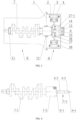
Fig. 1 is a schematic diagram of a connecting structure of an engine and an electric machine in the prior art; -
Fig. 2 is a schematic structural diagram of a crankshaft in the prior art; -
Fig. 3 is a schematic diagram of the connecting structure of the engine and the electric machine according to the first embodiment of the present disclosure not part of the invention; -
Fig. 4 is a schematic structural diagram of the crankshaft according to the first embodiment of the present disclosure not part of the invention; -
Fig. 5 is a schematic diagram of the connecting structure of the engine and the electric machine according to the second embodiment of the present disclosure; and -
Fig. 6 is a schematic structural diagram of the crankshaft according to the second embodiment of the present disclosure.
in the drawings: 1. cylinder block; 2. housing; 3. rotor; 4. stator; 5. auxiliary bearing; 6. rotation shaft; 6-1. first stepped section; 6-2. second stepped section; 6-3. third stepped section; 6-4. fourth stepped section; 7. crankshaft; 7-1. main body; 7-2. transition section; 7-3. extension section; 8. engine; 9. electric machine; 10. right end cap; 11. sliding bearing; 12. dual oil seal; 13. rotor of cooling-fluid pump; 14. stator of cooling-fluid pump; 15. synchro-resolver rotor; 16. synchro-resolver stator; 17. iron-core support; and 17-1. sleeve. - The exemplary embodiments of the present disclosure will be described in further detail below by referring to the drawings. Although the drawings illustrate the exemplary embodiments of the present disclosure, it should be understood that the present disclosure can be implemented in various forms, which should not be limited by the embodiments illustrated herein. In contrast, the purpose of providing those embodiments is to more clearly understand the present disclosure, and to completely convey the scope of the present disclosure to a person skilled in the art.
- As shown in
Figs. 3 and 4 , in the first embodiment of the present disclosure, not part of invention an engine-and-electric-machine assembly comprises anengine 8 and anelectric machine 9. Theengine 8 is in the fuel mode. Theelectric machine 9 may be an electric generator or an ISG electric machine, and may also be an electric motor. - A
crankshaft 7 is provided in theengine 8. Thecrankshaft 7 is provided with an extension section 7-3 that extends to the exterior of theengine 8. The extension section 7-3 forms arotation shaft 6 of theelectric machine 9. Arotor 3 of theelectric machine 9 is mounted on the extension section 7-3. - The tip of the
rotation shaft 6 is connected to a cooling-fluid pump. The rotor of the cooling-fluid pump is mounted and fixed to therotation shaft 6. While therotation shaft 6 is rotating, therotation shaft 6 drives the cooling-fluid pump to operate, to provide cooling fluid to theelectric machine 9. - The cooling fluid may be oil or water. The cooling-fluid pump may be a cycloid-rotor/gerotor pump. As shown in
Figs. 3 and 4 , therotor 13 of the cooling-fluid pump is mounted and fixed to a fourth stepped section 6-4 of therotation shaft 6, and astator 14 of the cooling-fluid pump is mounted and fixed to ahousing 2. When thecrankshaft 7 is rotating, thecrankshaft 7 can drive the cooling-fluid pump to operate, to cause the cooling fluid to enter the housing of theelectric machine 9, to cool theelectric machine 9. - A transition section 7-2 is provided between a main body 7-1 of the
crankshaft 7 and the extension section 7-3. The rotor of theelectric machine 9 is fastened together to an end face of the transition section 7-2 via a flange structure. The end face of the transition section 7-2 is a flush face, which can guarantee that, after the mounting of the rotor of theelectric machine 9, the rotor does not incline. - The transition section 7-2 is originally provided for a sealing structure. A
dual oil seal 12 seals a spacing between the transition section 7-2 and a sealing slot on thecylinder block 1, thereby sealing theengine 8 and theelectric machine 9 in both directions. By connecting the transition section 7-2 via the flange, the strength of the connection between thecrankshaft 7 and the rotor of theelectric machine 9 can be improved. - Particularly, the rotor of the
electric machine 9 comprises an iron-core support 17. A winding or a magnetic steel is provided on the circumference of the iron-core support 17. A plurality of main connecting holes are provided at the middle part of the iron-core support 17. A plurality of secondary connecting holes are correspondingly provided at the end face of the transition section 7-2. The main connecting holes and the secondary connecting holes are aligned and are fastened together by using bolts. The main connecting holes are unthreaded holes. The secondary connecting holes are threaded holes. The quantity of the main connecting holes and the secondary connecting holes may be selected to be 6-12. - As shown in
Fig. 3 , in order to access the transition section 7-2 to facilitate the connection, a protrusion that faces the transition section 7-2 is provided at the middle part of the iron-core support 17, and the main connecting holes are provided at the protrusion. Therefore, the winding of the rotor and the stator are not required to be provided leftwardly, thereby avoiding the other components inside theelectric machine 9, to leave the room for the installation of the other components. - A sleeve 17-1 is provided at the middle part of the iron-
core support 17. Preferably, the sleeve 17-1 is interference-fitted to the extension section 7-3 when the rotor of theelectric machine 9 is mounted to the extension section 7-3 to guarantee that the sleeve 17-1 is concentric with therotation shaft 6. - In order to facilitate the assembling, before the rotor of the electric machine is mounted to the extension section 7-3, the sleeve 17-1 may be heated to cause the inner diameter of the sleeve 17-1 to be greater than the external diameter of the extension section 7-3, and after the assembly is cooled the interference fitting between the sleeve 17-1 and the extension section 7-3 can be formed.
- In order to detect the rotation angle of the rotor of the
electric machine 9, a synchro-resolver rotor 15 is mounted and fixed to the sleeve 17-1. The synchro-resolver stator 16 is required to be mounted and fixed on thehousing 2. The synchro-resolver rotor 15 may also be mounted and fixed to the extension section 7-3, in which case the length of the sleeve 17-1 may be reduced appropriately. - As shown in
Fig. 4 , the extension section 7-3 is provided with a first stepped section 6-1, a second stepped section 6-2, a third stepped section 6-3 and a fourth stepped section 6-4, whose diameters sequentially and gradually decrease from the position of the extension section 7-3 that is connected to the transition section 7-2 to the tip of the extension section 7-3. The sleeve 17-1 is interference-fitted to the first stepped section 6-1. Anauxiliary bearing 5 is mounted and fixed to the third stepped section 6-3 to support therotation shaft 6. The rotor of the cooling-fluid pump is mounted and fixed to the fourth stepped section 6-4. Optionally, the synchro-resolver rotor 15 may be mounted and fixed to the second stepped section 6-2, and, if the fourth stepped section 6-4 can protrude out of the cooling-fluid pump, may also be mounted and fixed to the tail end of the fourth stepped section 6-4. - Particularly, the
rotor 13 of the cooling-fluid pump is connected and fixed to the fourth stepped section 6-4 via a flat key or a spline, or by interference fitting. - Optionally, the sleeve 17-1 and the extension section 7-3 may be connected by transition fitting or clearance fitting, whereby the sleeve 17-1 and the extension section 7-3 can be more easily assembled. Also in order to facilitate the assembling, before the rotor of the electric machine is mounted to the extension section 7-3, the sleeve 17-1 may be heated to cause the inner diameter of the sleeve 17-1 to be greater than the external diameter of the extension section 7-3, and after the assembly is cooled the transition fitting or clearance fitting between the sleeve 17-1 and the extension section 7-3 can be formed.
- In the present embodiment, the
engine 8 and theelectric machine 9 are integrated, and do not have the components for the connection between an electric machine and an engine in conventional solutions, such as a flywheel and a torsional shock absorber, which results in less component parts, a smaller volume, a lighter weight and a more compact structure. - In order to further reduce the parts and reduce the weight, in the present embodiment, the
engine 8 and theelectric machine 9 are provided adjacent, and the left end of thehousing 2 is directly mounted to thecylinder block 1 of the engine, and, particularly, mounted to a front flange face of thecylinder block 1, to form a connection face and a sealing face. - The
electric machine 9 is further provided with aright end cap 10, and thehousing 2 of theelectric machine 9 is manufactured integrally with theright end cap 10. Such a design can simplify the housing structure of theelectric machine 9, and further improve the integration level. - In the electric machine 9 a left end cap is eliminated, which can reduce the axial length of the engine-and-electric-machine assembly.
- As shown in
Fig. 3 , a flange is provided at one end of thehousing 2 of theelectric machine 9 that is connected to thecylinder block 1 of theengine 8, and is connected to thecylinder block 1 of theengine 8 via bolts, and thecylinder block 1 of theengine 8 is required to be provided with threaded holes. A sealing structure is provided at the connection, for example a sealing ring, to seal the interior of the housing of theelectric machine 9. - A
dual oil seal 12 is provided at the position where theengine 8 and theelectric machine 9 abut, to seal bidirectionally theengine 8 and theelectric machine 9. Thedual oil seal 12 may be provided on thecylinder block 1 of theengine 8, and correspondingly thecylinder block 1 of theengine 8 is required to be provided with a sealing slot to mount the sealing element. - As shown in
Fig. 4 , thedual oil seal 12 seals a spacing between the transition section 7-2 and the sealing slot on thecylinder block 1, thereby sealing bidirectionally theengine 8 and theelectric machine 9. - As shown in
Fig. 3 , a bearing seat is provided at theright end cap 10 of theelectric machine 9, and is used to mount theauxiliary bearing 5 to support therotation shaft 6 of theelectric machine 9. Theauxiliary bearing 5 and therotation shaft 6 are connected by transition fitting or interference fitting, to reduce the radial runout of therotor 3, to guarantee that the air gap of the electric machine does not vary greatly. - The
crankshaft 7 is provided with a slidingbearing 11 at the position where theengine 8 and theelectric machine 9 abut. The slidingbearing 11 may be considered as a bearing used commonly by thecrankshaft 7 and therotation shaft 6. - In the present embodiment, the
electric machine 9 may be a permanent magnet electric machine, an induction electric machine, a hybrid excited electric machine or a switch reluctance electric machine, and thestator 4 of theelectric machine 9 may employ a distributed winding or a concentrated winding. - An oil channel or a water channel is provided inside the
housing 2 of theelectric machine 9, wherein if the cooling mode is oil cooling an oil channel is required to be provided, and if the cooling mode is water cooling a water channel is required to be provided. - Radiating ribs may be provided on the outer side of the
housing 2 of theelectric machine 9, to improve the effect of heat dissipation. - The present embodiment, by connecting the rotor of the electric machine and the crankshaft of the engine by using the flange structure, improves the strength of the connection between the rotor and the crankshaft, and optimizes the moment of inertia of the transmission structure between the rotor and the crankshaft.
- By connecting the rotation shaft of the electric machine and the cooling-fluid pump, wherein the cooling-fluid pump may be an oil pump or a water pump and the rotation shaft drives the cooling-fluid pump to operate while rotating, the present embodiment can provide the cooling fluid to the electric machine, thereby improving the energy usage ratio of the powertrain assembly.
- The cooling-fluid pump does not require a power source for driving, which saves the energy consumption of the vehicle, highly integrates the pump, and reduces the manufacturing cost.
-
Figs. 5 and 6 show the second embodiment of the present disclosure. In the present embodiment, the transition section 7-2 comprises a main body and a flange, the flange faces the rotor of theelectric machine 9, a connecting neck is provided between the main body and the flange, and the diameter of the connecting neck is less than the diameter of the main body and the diameter of the flange. - As shown in
Fig. 6 , the secondary connecting holes are provided at the end face of the flange that faces therotor support 17, and therotor support 17 is fastened to the flange via bolts. - In the present embodiment, the length of the transition section 7-2 is larger than that of the transition section 7-2 of the first embodiment to some extent, and therefore the
rotor support 17 is not required to be provided with a protrusion. - The connecting neck can reduce the weight of the transition section 7-2 while satisfying the structural strength.
- The other structures of the engine-and-electric-machine assembly of the second embodiment of the present disclosure are the same as those of the first embodiment, and are not described repeatedly here.
- The above are merely particular embodiments of the present disclosure. By the information of the present disclosure, a person skilled in the art can make other modifications or variations on the basis of the above embodiments. A person skilled in the art should understand that the above particular descriptions are only for the purpose of interpreting the present disclosure better, and the protection scope of the present disclosure shall be subjected to the protection scope of the claims.
Claims (9)
- An engine-and-electric-machine assembly, comprising an engine (8) and an electric machine (9), a crankshaft (7) being provided in the engine (8), the crankshaft (7) comprising a main body (7-1) and an extension section (7-3) that extends out to the exterior of the engine (8), the extension section (7-3) forming a rotation shaft (6) of the electric machine (9), a rotor (3) of the electric machine (9) being mounted on the extension section (7-3), and a transition section (7-2) being provided between the main body (7-1) of the crankshaft (7) and the extension section (7-3), wherein the rotor (3) of the electric machine (9) is fastened to the transition section (7-2) via a flange structure; characterised in that the transition section (7-2) comprises a main body and a flange, the flange faces the rotor (3) of the electric machine (9), a connecting neck is provided between the main body and the flange, and the diameter of the connecting neck is less than the diameter of the main body and the diameter of the flange.
- The engine-and-electric-machine assembly according to claim 1, characterized in that: the transition section (7-2) is provided with an end face that faces the rotor (3) of the electric machine (9), and the rotor (3) of the electric machine (9) is connected to the end face of the transition section (7-2) via the flange structure.
- The engine-and-electric-machine assembly according to claim 2, characterized in that: the rotor (3) of the electric machine (9) comprises an iron-core support (17), a plurality of main connecting holes are provided at a middle part of the iron-core support (17), a plurality of secondary connecting holes are correspondingly provided at the end face of the transition section (7-2), and the main connecting holes and the secondary connecting holes are aligned and are fastened together by using bolts.
- The engine-and-electric-machine assembly according to claim 3, characterized in that: a protrusion that faces the transition section (7-2) is provided at the middle part of the iron-core support (17), and the main connecting holes are provided at the protrusion.
- The engine-and-electric-machine assembly according to claim 2, characterized in that: a sleeve (17-1) is provided at a middle part of the iron-core support (17), and the sleeve (17-1) is interference-fitted to the extension section (7-3) when the rotor (3) of the electric machine (9) is mounted on the extension section (7-3) to guarantee that the sleeve (17-1) is concentric with the rotation shaft (6).
- The engine-and-electric-machine assembly according to claim 5, characterized in that: a synchro-resolver rotor (15) is mounted and fixed to the sleeve (17-1), or a synchro-resolver rotor (15) is mounted and fixed to the extension section (7-3).
- The engine-and-electric-machine assembly according to claim 5, characterized in that: the extension section (7-3) is provided with a plurality of stepped sections whose diameters sequentially and gradually decrease from a position of the extension section (7-3) that is connected to the transition section (7-2) to a tip of the extension section (7-3), the sleeve (17-1) is interference-fitted to a first stepped section (6-1) of the stepped sections, and an auxiliary bearing (5) is mounted and fixed to one of the middle stepped sections to support the rotation shaft (6).
- The engine-and-electric-machine assembly according to claim 2, characterized in that: the main connecting holes are unthreaded holes, the secondary connecting holes are threaded holes, and a quantity of the main connecting holes and the secondary connecting holes is 6-12.
- The engine-and-electric-machine assembly according to claim 2, characterized in that: a sleeve (17-1) is provided at a middle part of the iron-core support (17), and the sleeve (17-1) is transition-fitted or clearance-fitted to the extension section (7-3) when the rotor (3) of the electric machine (9) is mounted on the extension section (7-3).
Applications Claiming Priority (1)
| Application Number | Priority Date | Filing Date | Title |
|---|---|---|---|
| CN201910882435.6A CN110571976B (en) | 2019-09-18 | 2019-09-18 | Engine and motor assembly |
Publications (2)
| Publication Number | Publication Date |
|---|---|
| EP3796524A1 EP3796524A1 (en) | 2021-03-24 |
| EP3796524B1 true EP3796524B1 (en) | 2023-07-26 |
Family
ID=68780878
Family Applications (1)
| Application Number | Title | Priority Date | Filing Date |
|---|---|---|---|
| EP20193048.4A Active EP3796524B1 (en) | 2019-09-18 | 2020-08-27 | Engine-and-electric-machine assembly |
Country Status (5)
| Country | Link |
|---|---|
| US (1) | US11554655B2 (en) |
| EP (1) | EP3796524B1 (en) |
| JP (1) | JP7094332B2 (en) |
| CN (1) | CN110571976B (en) |
| WO (1) | WO2021051794A1 (en) |
Families Citing this family (5)
| Publication number | Priority date | Publication date | Assignee | Title |
|---|---|---|---|---|
| CN110571976B (en) * | 2019-09-18 | 2024-07-05 | 精进电动科技股份有限公司 | Engine and motor assembly |
| CN110601451B (en) | 2019-09-18 | 2024-07-05 | 精进电动科技股份有限公司 | An engine and motor assembly |
| CN112810461A (en) * | 2021-03-23 | 2021-05-18 | 一汽解放汽车有限公司 | Range extender assembly and vehicle |
| JP2023132739A (en) * | 2022-03-11 | 2023-09-22 | 株式会社デンソー | rotating electric machine |
| CN116146591A (en) * | 2023-02-28 | 2023-05-23 | 哈尔滨东安汽车动力股份有限公司 | A new energy engine crankshaft with integrated motor rotor |
Family Cites Families (19)
| Publication number | Priority date | Publication date | Assignee | Title |
|---|---|---|---|---|
| JPS59123446A (en) | 1982-12-28 | 1984-07-17 | Toshiba Corp | Fixing method of motor shaft and rotor |
| US6727632B2 (en) * | 2001-11-27 | 2004-04-27 | Denso Corporation | Flat rotary electric machine |
| JP3661634B2 (en) * | 2001-11-27 | 2005-06-15 | 株式会社デンソー | Double-sided gap type rotating electric machine |
| EP1488121A1 (en) * | 2002-03-26 | 2004-12-22 | ZF Sachs AG | Device for coupling a housing arrangement of a coupling device to a rotor arrangement of an electric machine |
| JP2005057832A (en) * | 2003-08-05 | 2005-03-03 | Honda Motor Co Ltd | Electric motor and hybrid vehicle equipped with the same |
| JP4568496B2 (en) * | 2003-12-18 | 2010-10-27 | 富士重工業株式会社 | Torque converter |
| JP3908219B2 (en) | 2003-12-22 | 2007-04-25 | 本田技研工業株式会社 | Hybrid vehicle electric motor |
| JP3868974B2 (en) * | 2005-03-30 | 2007-01-17 | 本田技研工業株式会社 | Hybrid vehicle drive device and method of manufacturing hybrid vehicle drive device |
| JP5263253B2 (en) * | 2010-10-04 | 2013-08-14 | 株式会社デンソー | Multi-gap rotating electric machine |
| JP5913160B2 (en) | 2013-03-11 | 2016-04-27 | トヨタ自動車株式会社 | Rotating electric machine rotor and rotating electric machine |
| JP6428696B2 (en) * | 2016-03-31 | 2018-11-28 | 株式会社豊田自動織機 | Rotation sensor mounting structure for hybrid power unit motor |
| CN206135580U (en) * | 2016-08-31 | 2017-04-26 | 宁波菲仕电机技术有限公司 | Synchronous servo motor low inertia rotor structure of permanent magnetism |
| CN206727746U (en) * | 2017-03-28 | 2017-12-08 | 浙江吉利新能源商用车有限公司 | A kind of generator and distance increasing unit for range extender of electric vehicle |
| US20180370346A1 (en) * | 2017-06-23 | 2018-12-27 | Hyundai Motor Company | Integrated alternator |
| CN109017262B (en) * | 2018-08-31 | 2024-05-14 | 精进电动科技股份有限公司 | Engine and motor assembly and vehicle driving device |
| CN208939735U (en) * | 2018-11-01 | 2019-06-04 | 绍兴市卓力转轴有限公司 | A kind of integral air conditioner fan machine shaft |
| CN110571976B (en) * | 2019-09-18 | 2024-07-05 | 精进电动科技股份有限公司 | Engine and motor assembly |
| CN211063482U (en) * | 2019-09-18 | 2020-07-21 | 精进电动科技股份有限公司 | An engine and motor assembly |
| CN110601451B (en) * | 2019-09-18 | 2024-07-05 | 精进电动科技股份有限公司 | An engine and motor assembly |
-
2019
- 2019-09-18 CN CN201910882435.6A patent/CN110571976B/en active Active
-
2020
- 2020-04-15 WO PCT/CN2020/084918 patent/WO2021051794A1/en not_active Ceased
- 2020-08-27 EP EP20193048.4A patent/EP3796524B1/en active Active
- 2020-09-10 US US17/017,005 patent/US11554655B2/en active Active
- 2020-09-15 JP JP2020154522A patent/JP7094332B2/en active Active
Also Published As
| Publication number | Publication date |
|---|---|
| US20210078401A1 (en) | 2021-03-18 |
| WO2021051794A1 (en) | 2021-03-25 |
| EP3796524A1 (en) | 2021-03-24 |
| JP7094332B2 (en) | 2022-07-01 |
| CN110571976B (en) | 2024-07-05 |
| US11554655B2 (en) | 2023-01-17 |
| JP2021048763A (en) | 2021-03-25 |
| CN110571976A (en) | 2019-12-13 |
Similar Documents
| Publication | Publication Date | Title |
|---|---|---|
| EP3796524B1 (en) | Engine-and-electric-machine assembly | |
| EP3795820B1 (en) | Engine-and-electric-machine assembly | |
| EP3778280B1 (en) | Engine and electric motor assembly, and vehicle driving device | |
| KR100942857B1 (en) | Generator / Motor on Engine | |
| JP3968337B2 (en) | Especially for automotive drive systems | |
| CN107196450B (en) | Hub motor | |
| CN210733819U (en) | An integrated electric wheel system and electric vehicle | |
| CN107453538B (en) | Hub motor with stand column | |
| CN211063482U (en) | An engine and motor assembly | |
| CN108599451A (en) | A kind of augmentation of heat transfer structure of hub motor for electric automobile | |
| CN114744826B (en) | An outer rotor generator for range extender | |
| CN211063494U (en) | Engine and motor assembly | |
| CN208931121U (en) | An engine and motor assembly and a vehicle drive | |
| CN112065576A (en) | A connection structure of an engine and a generator, a range extender and a vehicle | |
| CN222750276U (en) | Generator assembly and vehicle | |
| CN221652398U (en) | Range extender generator structure with coaxial rotor | |
| CN223387411U (en) | Connection structure of axial flux motor and range-extended engine | |
| CN221042620U (en) | Hollow hub motor | |
| US20200303972A1 (en) | Motor for vehicle | |
| CN212125428U (en) | In-wheel motor and electric motor car | |
| CN119099371A (en) | Range extender assembly and vehicle | |
| CN101546938A (en) | Integral structure motor used for hybrid vehicle |
Legal Events
| Date | Code | Title | Description |
|---|---|---|---|
| PUAI | Public reference made under article 153(3) epc to a published international application that has entered the european phase |
Free format text: ORIGINAL CODE: 0009012 |
|
| STAA | Information on the status of an ep patent application or granted ep patent |
Free format text: STATUS: REQUEST FOR EXAMINATION WAS MADE |
|
| 17P | Request for examination filed |
Effective date: 20200827 |
|
| AK | Designated contracting states |
Kind code of ref document: A1 Designated state(s): AL AT BE BG CH CY CZ DE DK EE ES FI FR GB GR HR HU IE IS IT LI LT LU LV MC MK MT NL NO PL PT RO RS SE SI SK SM TR |
|
| AX | Request for extension of the european patent |
Extension state: BA ME |
|
| RBV | Designated contracting states (corrected) |
Designated state(s): AL AT BE BG CH CY CZ DE DK EE ES FI FR GB GR HR HU IE IS IT LI LT LU LV MC MK MT NL NO PL PT RO RS SE SI SK SM TR |
|
| STAA | Information on the status of an ep patent application or granted ep patent |
Free format text: STATUS: EXAMINATION IS IN PROGRESS |
|
| 17Q | First examination report despatched |
Effective date: 20210416 |
|
| GRAP | Despatch of communication of intention to grant a patent |
Free format text: ORIGINAL CODE: EPIDOSNIGR1 |
|
| STAA | Information on the status of an ep patent application or granted ep patent |
Free format text: STATUS: GRANT OF PATENT IS INTENDED |
|
| INTG | Intention to grant announced |
Effective date: 20230214 |
|
| GRAS | Grant fee paid |
Free format text: ORIGINAL CODE: EPIDOSNIGR3 |
|
| GRAA | (expected) grant |
Free format text: ORIGINAL CODE: 0009210 |
|
| STAA | Information on the status of an ep patent application or granted ep patent |
Free format text: STATUS: THE PATENT HAS BEEN GRANTED |
|
| P01 | Opt-out of the competence of the unified patent court (upc) registered |
Effective date: 20230530 |
|
| AK | Designated contracting states |
Kind code of ref document: B1 Designated state(s): AL AT BE BG CH CY CZ DE DK EE ES FI FR GB GR HR HU IE IS IT LI LT LU LV MC MK MT NL NO PL PT RO RS SE SI SK SM TR |
|
| REG | Reference to a national code |
Ref country code: CH Ref legal event code: EP |
|
| REG | Reference to a national code |
Ref country code: DE Ref legal event code: R096 Ref document number: 602020014342 Country of ref document: DE |
|
| REG | Reference to a national code |
Ref country code: IE Ref legal event code: FG4D |
|
| REG | Reference to a national code |
Ref country code: LT Ref legal event code: MG9D |
|
| REG | Reference to a national code |
Ref country code: NL Ref legal event code: MP Effective date: 20230726 |
|
| REG | Reference to a national code |
Ref country code: AT Ref legal event code: MK05 Ref document number: 1593092 Country of ref document: AT Kind code of ref document: T Effective date: 20230726 |
|
| PG25 | Lapsed in a contracting state [announced via postgrant information from national office to epo] |
Ref country code: NL Free format text: LAPSE BECAUSE OF FAILURE TO SUBMIT A TRANSLATION OF THE DESCRIPTION OR TO PAY THE FEE WITHIN THE PRESCRIBED TIME-LIMIT Effective date: 20230726 |
|
| PG25 | Lapsed in a contracting state [announced via postgrant information from national office to epo] |
Ref country code: GR Free format text: LAPSE BECAUSE OF FAILURE TO SUBMIT A TRANSLATION OF THE DESCRIPTION OR TO PAY THE FEE WITHIN THE PRESCRIBED TIME-LIMIT Effective date: 20231027 |
|
| PG25 | Lapsed in a contracting state [announced via postgrant information from national office to epo] |
Ref country code: IS Free format text: LAPSE BECAUSE OF FAILURE TO SUBMIT A TRANSLATION OF THE DESCRIPTION OR TO PAY THE FEE WITHIN THE PRESCRIBED TIME-LIMIT Effective date: 20231126 |
|
| PG25 | Lapsed in a contracting state [announced via postgrant information from national office to epo] |
Ref country code: SE Free format text: LAPSE BECAUSE OF FAILURE TO SUBMIT A TRANSLATION OF THE DESCRIPTION OR TO PAY THE FEE WITHIN THE PRESCRIBED TIME-LIMIT Effective date: 20230726 Ref country code: RS Free format text: LAPSE BECAUSE OF FAILURE TO SUBMIT A TRANSLATION OF THE DESCRIPTION OR TO PAY THE FEE WITHIN THE PRESCRIBED TIME-LIMIT Effective date: 20230726 Ref country code: PT Free format text: LAPSE BECAUSE OF FAILURE TO SUBMIT A TRANSLATION OF THE DESCRIPTION OR TO PAY THE FEE WITHIN THE PRESCRIBED TIME-LIMIT Effective date: 20231127 Ref country code: NO Free format text: LAPSE BECAUSE OF FAILURE TO SUBMIT A TRANSLATION OF THE DESCRIPTION OR TO PAY THE FEE WITHIN THE PRESCRIBED TIME-LIMIT Effective date: 20231026 Ref country code: LV Free format text: LAPSE BECAUSE OF FAILURE TO SUBMIT A TRANSLATION OF THE DESCRIPTION OR TO PAY THE FEE WITHIN THE PRESCRIBED TIME-LIMIT Effective date: 20230726 Ref country code: LT Free format text: LAPSE BECAUSE OF FAILURE TO SUBMIT A TRANSLATION OF THE DESCRIPTION OR TO PAY THE FEE WITHIN THE PRESCRIBED TIME-LIMIT Effective date: 20230726 Ref country code: IS Free format text: LAPSE BECAUSE OF FAILURE TO SUBMIT A TRANSLATION OF THE DESCRIPTION OR TO PAY THE FEE WITHIN THE PRESCRIBED TIME-LIMIT Effective date: 20231126 Ref country code: HR Free format text: LAPSE BECAUSE OF FAILURE TO SUBMIT A TRANSLATION OF THE DESCRIPTION OR TO PAY THE FEE WITHIN THE PRESCRIBED TIME-LIMIT Effective date: 20230726 Ref country code: GR Free format text: LAPSE BECAUSE OF FAILURE TO SUBMIT A TRANSLATION OF THE DESCRIPTION OR TO PAY THE FEE WITHIN THE PRESCRIBED TIME-LIMIT Effective date: 20231027 Ref country code: FI Free format text: LAPSE BECAUSE OF FAILURE TO SUBMIT A TRANSLATION OF THE DESCRIPTION OR TO PAY THE FEE WITHIN THE PRESCRIBED TIME-LIMIT Effective date: 20230726 Ref country code: AT Free format text: LAPSE BECAUSE OF FAILURE TO SUBMIT A TRANSLATION OF THE DESCRIPTION OR TO PAY THE FEE WITHIN THE PRESCRIBED TIME-LIMIT Effective date: 20230726 |
|
| PG25 | Lapsed in a contracting state [announced via postgrant information from national office to epo] |
Ref country code: PL Free format text: LAPSE BECAUSE OF FAILURE TO SUBMIT A TRANSLATION OF THE DESCRIPTION OR TO PAY THE FEE WITHIN THE PRESCRIBED TIME-LIMIT Effective date: 20230726 |
|
| REG | Reference to a national code |
Ref country code: CH Ref legal event code: PL |
|
| PG25 | Lapsed in a contracting state [announced via postgrant information from national office to epo] |
Ref country code: LU Free format text: LAPSE BECAUSE OF NON-PAYMENT OF DUE FEES Effective date: 20230827 |
|
| PG25 | Lapsed in a contracting state [announced via postgrant information from national office to epo] |
Ref country code: ES Free format text: LAPSE BECAUSE OF FAILURE TO SUBMIT A TRANSLATION OF THE DESCRIPTION OR TO PAY THE FEE WITHIN THE PRESCRIBED TIME-LIMIT Effective date: 20230726 |
|
| REG | Reference to a national code |
Ref country code: DE Ref legal event code: R097 Ref document number: 602020014342 Country of ref document: DE |
|
| PG25 | Lapsed in a contracting state [announced via postgrant information from national office to epo] |
Ref country code: SM Free format text: LAPSE BECAUSE OF FAILURE TO SUBMIT A TRANSLATION OF THE DESCRIPTION OR TO PAY THE FEE WITHIN THE PRESCRIBED TIME-LIMIT Effective date: 20230726 Ref country code: RO Free format text: LAPSE BECAUSE OF FAILURE TO SUBMIT A TRANSLATION OF THE DESCRIPTION OR TO PAY THE FEE WITHIN THE PRESCRIBED TIME-LIMIT Effective date: 20230726 Ref country code: LU Free format text: LAPSE BECAUSE OF NON-PAYMENT OF DUE FEES Effective date: 20230827 Ref country code: ES Free format text: LAPSE BECAUSE OF FAILURE TO SUBMIT A TRANSLATION OF THE DESCRIPTION OR TO PAY THE FEE WITHIN THE PRESCRIBED TIME-LIMIT Effective date: 20230726 Ref country code: EE Free format text: LAPSE BECAUSE OF FAILURE TO SUBMIT A TRANSLATION OF THE DESCRIPTION OR TO PAY THE FEE WITHIN THE PRESCRIBED TIME-LIMIT Effective date: 20230726 Ref country code: DK Free format text: LAPSE BECAUSE OF FAILURE TO SUBMIT A TRANSLATION OF THE DESCRIPTION OR TO PAY THE FEE WITHIN THE PRESCRIBED TIME-LIMIT Effective date: 20230726 Ref country code: CZ Free format text: LAPSE BECAUSE OF FAILURE TO SUBMIT A TRANSLATION OF THE DESCRIPTION OR TO PAY THE FEE WITHIN THE PRESCRIBED TIME-LIMIT Effective date: 20230726 Ref country code: SK Free format text: LAPSE BECAUSE OF FAILURE TO SUBMIT A TRANSLATION OF THE DESCRIPTION OR TO PAY THE FEE WITHIN THE PRESCRIBED TIME-LIMIT Effective date: 20230726 Ref country code: MC Free format text: LAPSE BECAUSE OF FAILURE TO SUBMIT A TRANSLATION OF THE DESCRIPTION OR TO PAY THE FEE WITHIN THE PRESCRIBED TIME-LIMIT Effective date: 20230726 Ref country code: CH Free format text: LAPSE BECAUSE OF NON-PAYMENT OF DUE FEES Effective date: 20230831 |
|
| REG | Reference to a national code |
Ref country code: BE Ref legal event code: MM Effective date: 20230831 |
|
| REG | Reference to a national code |
Ref country code: IE Ref legal event code: MM4A |
|
| PLBE | No opposition filed within time limit |
Free format text: ORIGINAL CODE: 0009261 |
|
| STAA | Information on the status of an ep patent application or granted ep patent |
Free format text: STATUS: NO OPPOSITION FILED WITHIN TIME LIMIT |
|
| 26N | No opposition filed |
Effective date: 20240429 |
|
| PG25 | Lapsed in a contracting state [announced via postgrant information from national office to epo] |
Ref country code: IE Free format text: LAPSE BECAUSE OF NON-PAYMENT OF DUE FEES Effective date: 20230827 |
|
| PG25 | Lapsed in a contracting state [announced via postgrant information from national office to epo] |
Ref country code: IE Free format text: LAPSE BECAUSE OF NON-PAYMENT OF DUE FEES Effective date: 20230827 Ref country code: SI Free format text: LAPSE BECAUSE OF FAILURE TO SUBMIT A TRANSLATION OF THE DESCRIPTION OR TO PAY THE FEE WITHIN THE PRESCRIBED TIME-LIMIT Effective date: 20230726 |
|
| PG25 | Lapsed in a contracting state [announced via postgrant information from national office to epo] |
Ref country code: BE Free format text: LAPSE BECAUSE OF NON-PAYMENT OF DUE FEES Effective date: 20230831 |
|
| PG25 | Lapsed in a contracting state [announced via postgrant information from national office to epo] |
Ref country code: BG Free format text: LAPSE BECAUSE OF FAILURE TO SUBMIT A TRANSLATION OF THE DESCRIPTION OR TO PAY THE FEE WITHIN THE PRESCRIBED TIME-LIMIT Effective date: 20230726 |
|
| PG25 | Lapsed in a contracting state [announced via postgrant information from national office to epo] |
Ref country code: BG Free format text: LAPSE BECAUSE OF FAILURE TO SUBMIT A TRANSLATION OF THE DESCRIPTION OR TO PAY THE FEE WITHIN THE PRESCRIBED TIME-LIMIT Effective date: 20230726 |
|
| PG25 | Lapsed in a contracting state [announced via postgrant information from national office to epo] |
Ref country code: CY Free format text: LAPSE BECAUSE OF FAILURE TO SUBMIT A TRANSLATION OF THE DESCRIPTION OR TO PAY THE FEE WITHIN THE PRESCRIBED TIME-LIMIT; INVALID AB INITIO Effective date: 20200827 |
|
| PG25 | Lapsed in a contracting state [announced via postgrant information from national office to epo] |
Ref country code: HU Free format text: LAPSE BECAUSE OF FAILURE TO SUBMIT A TRANSLATION OF THE DESCRIPTION OR TO PAY THE FEE WITHIN THE PRESCRIBED TIME-LIMIT; INVALID AB INITIO Effective date: 20200827 |
|
| PGFP | Annual fee paid to national office [announced via postgrant information from national office to epo] |
Ref country code: DE Payment date: 20250812 Year of fee payment: 6 |
|
| PGFP | Annual fee paid to national office [announced via postgrant information from national office to epo] |
Ref country code: IT Payment date: 20250808 Year of fee payment: 6 |
|
| PGFP | Annual fee paid to national office [announced via postgrant information from national office to epo] |
Ref country code: GB Payment date: 20250826 Year of fee payment: 6 |
|
| PGFP | Annual fee paid to national office [announced via postgrant information from national office to epo] |
Ref country code: FR Payment date: 20250828 Year of fee payment: 6 |
|
| PG25 | Lapsed in a contracting state [announced via postgrant information from national office to epo] |
Ref country code: TR Free format text: LAPSE BECAUSE OF FAILURE TO SUBMIT A TRANSLATION OF THE DESCRIPTION OR TO PAY THE FEE WITHIN THE PRESCRIBED TIME-LIMIT Effective date: 20230726 |