EP3796418B1 - Battery, and battery diaphragm and manufacturing method therefor - Google Patents
Battery, and battery diaphragm and manufacturing method therefor Download PDFInfo
- Publication number
- EP3796418B1 EP3796418B1 EP19802545.4A EP19802545A EP3796418B1 EP 3796418 B1 EP3796418 B1 EP 3796418B1 EP 19802545 A EP19802545 A EP 19802545A EP 3796418 B1 EP3796418 B1 EP 3796418B1
- Authority
- EP
- European Patent Office
- Prior art keywords
- battery
- battery separator
- dispersion solution
- dip coating
- nanowires
- Prior art date
- Legal status (The legal status is an assumption and is not a legal conclusion. Google has not performed a legal analysis and makes no representation as to the accuracy of the status listed.)
- Active
Links
Images

Classifications
-
- H—ELECTRICITY
- H01—ELECTRIC ELEMENTS
- H01M—PROCESSES OR MEANS, e.g. BATTERIES, FOR THE DIRECT CONVERSION OF CHEMICAL ENERGY INTO ELECTRICAL ENERGY
- H01M10/00—Secondary cells; Manufacture thereof
- H01M10/05—Accumulators with non-aqueous electrolyte
- H01M10/052—Li-accumulators
- H01M10/0525—Rocking-chair batteries, i.e. batteries with lithium insertion or intercalation in both electrodes; Lithium-ion batteries
-
- H—ELECTRICITY
- H01—ELECTRIC ELEMENTS
- H01M—PROCESSES OR MEANS, e.g. BATTERIES, FOR THE DIRECT CONVERSION OF CHEMICAL ENERGY INTO ELECTRICAL ENERGY
- H01M50/00—Constructional details or processes of manufacture of the non-active parts of electrochemical cells other than fuel cells, e.g. hybrid cells
- H01M50/40—Separators; Membranes; Diaphragms; Spacing elements inside cells
- H01M50/403—Manufacturing processes of separators, membranes or diaphragms
-
- H—ELECTRICITY
- H01—ELECTRIC ELEMENTS
- H01M—PROCESSES OR MEANS, e.g. BATTERIES, FOR THE DIRECT CONVERSION OF CHEMICAL ENERGY INTO ELECTRICAL ENERGY
- H01M50/00—Constructional details or processes of manufacture of the non-active parts of electrochemical cells other than fuel cells, e.g. hybrid cells
- H01M50/40—Separators; Membranes; Diaphragms; Spacing elements inside cells
- H01M50/409—Separators, membranes or diaphragms characterised by the material
- H01M50/411—Organic material
- H01M50/414—Synthetic resins, e.g. thermoplastics or thermosetting resins
- H01M50/417—Polyolefins
-
- H—ELECTRICITY
- H01—ELECTRIC ELEMENTS
- H01M—PROCESSES OR MEANS, e.g. BATTERIES, FOR THE DIRECT CONVERSION OF CHEMICAL ENERGY INTO ELECTRICAL ENERGY
- H01M50/00—Constructional details or processes of manufacture of the non-active parts of electrochemical cells other than fuel cells, e.g. hybrid cells
- H01M50/40—Separators; Membranes; Diaphragms; Spacing elements inside cells
- H01M50/409—Separators, membranes or diaphragms characterised by the material
- H01M50/411—Organic material
- H01M50/429—Natural polymers
-
- H—ELECTRICITY
- H01—ELECTRIC ELEMENTS
- H01M—PROCESSES OR MEANS, e.g. BATTERIES, FOR THE DIRECT CONVERSION OF CHEMICAL ENERGY INTO ELECTRICAL ENERGY
- H01M50/00—Constructional details or processes of manufacture of the non-active parts of electrochemical cells other than fuel cells, e.g. hybrid cells
- H01M50/40—Separators; Membranes; Diaphragms; Spacing elements inside cells
- H01M50/409—Separators, membranes or diaphragms characterised by the material
- H01M50/431—Inorganic material
-
- H—ELECTRICITY
- H01—ELECTRIC ELEMENTS
- H01M—PROCESSES OR MEANS, e.g. BATTERIES, FOR THE DIRECT CONVERSION OF CHEMICAL ENERGY INTO ELECTRICAL ENERGY
- H01M50/00—Constructional details or processes of manufacture of the non-active parts of electrochemical cells other than fuel cells, e.g. hybrid cells
- H01M50/40—Separators; Membranes; Diaphragms; Spacing elements inside cells
- H01M50/409—Separators, membranes or diaphragms characterised by the material
- H01M50/431—Inorganic material
- H01M50/434—Ceramics
-
- H—ELECTRICITY
- H01—ELECTRIC ELEMENTS
- H01M—PROCESSES OR MEANS, e.g. BATTERIES, FOR THE DIRECT CONVERSION OF CHEMICAL ENERGY INTO ELECTRICAL ENERGY
- H01M50/00—Constructional details or processes of manufacture of the non-active parts of electrochemical cells other than fuel cells, e.g. hybrid cells
- H01M50/40—Separators; Membranes; Diaphragms; Spacing elements inside cells
- H01M50/409—Separators, membranes or diaphragms characterised by the material
- H01M50/44—Fibrous material
-
- H—ELECTRICITY
- H01—ELECTRIC ELEMENTS
- H01M—PROCESSES OR MEANS, e.g. BATTERIES, FOR THE DIRECT CONVERSION OF CHEMICAL ENERGY INTO ELECTRICAL ENERGY
- H01M50/00—Constructional details or processes of manufacture of the non-active parts of electrochemical cells other than fuel cells, e.g. hybrid cells
- H01M50/40—Separators; Membranes; Diaphragms; Spacing elements inside cells
- H01M50/409—Separators, membranes or diaphragms characterised by the material
- H01M50/449—Separators, membranes or diaphragms characterised by the material having a layered structure
-
- H—ELECTRICITY
- H01—ELECTRIC ELEMENTS
- H01M—PROCESSES OR MEANS, e.g. BATTERIES, FOR THE DIRECT CONVERSION OF CHEMICAL ENERGY INTO ELECTRICAL ENERGY
- H01M50/00—Constructional details or processes of manufacture of the non-active parts of electrochemical cells other than fuel cells, e.g. hybrid cells
- H01M50/40—Separators; Membranes; Diaphragms; Spacing elements inside cells
- H01M50/409—Separators, membranes or diaphragms characterised by the material
- H01M50/449—Separators, membranes or diaphragms characterised by the material having a layered structure
- H01M50/451—Separators, membranes or diaphragms characterised by the material having a layered structure comprising layers of only organic material and layers containing inorganic material
-
- H—ELECTRICITY
- H01—ELECTRIC ELEMENTS
- H01M—PROCESSES OR MEANS, e.g. BATTERIES, FOR THE DIRECT CONVERSION OF CHEMICAL ENERGY INTO ELECTRICAL ENERGY
- H01M50/00—Constructional details or processes of manufacture of the non-active parts of electrochemical cells other than fuel cells, e.g. hybrid cells
- H01M50/40—Separators; Membranes; Diaphragms; Spacing elements inside cells
- H01M50/409—Separators, membranes or diaphragms characterised by the material
- H01M50/449—Separators, membranes or diaphragms characterised by the material having a layered structure
- H01M50/454—Separators, membranes or diaphragms characterised by the material having a layered structure comprising a non-fibrous layer and a fibrous layer superimposed on one another
-
- H—ELECTRICITY
- H01—ELECTRIC ELEMENTS
- H01M—PROCESSES OR MEANS, e.g. BATTERIES, FOR THE DIRECT CONVERSION OF CHEMICAL ENERGY INTO ELECTRICAL ENERGY
- H01M50/00—Constructional details or processes of manufacture of the non-active parts of electrochemical cells other than fuel cells, e.g. hybrid cells
- H01M50/40—Separators; Membranes; Diaphragms; Spacing elements inside cells
- H01M50/463—Separators, membranes or diaphragms characterised by their shape
-
- H—ELECTRICITY
- H01—ELECTRIC ELEMENTS
- H01M—PROCESSES OR MEANS, e.g. BATTERIES, FOR THE DIRECT CONVERSION OF CHEMICAL ENERGY INTO ELECTRICAL ENERGY
- H01M50/00—Constructional details or processes of manufacture of the non-active parts of electrochemical cells other than fuel cells, e.g. hybrid cells
- H01M50/40—Separators; Membranes; Diaphragms; Spacing elements inside cells
- H01M50/489—Separators, membranes, diaphragms or spacing elements inside the cells, characterised by their physical properties, e.g. swelling degree, hydrophilicity or shut down properties
-
- H—ELECTRICITY
- H01—ELECTRIC ELEMENTS
- H01M—PROCESSES OR MEANS, e.g. BATTERIES, FOR THE DIRECT CONVERSION OF CHEMICAL ENERGY INTO ELECTRICAL ENERGY
- H01M50/00—Constructional details or processes of manufacture of the non-active parts of electrochemical cells other than fuel cells, e.g. hybrid cells
- H01M50/40—Separators; Membranes; Diaphragms; Spacing elements inside cells
- H01M50/489—Separators, membranes, diaphragms or spacing elements inside the cells, characterised by their physical properties, e.g. swelling degree, hydrophilicity or shut down properties
- H01M50/491—Porosity
-
- H—ELECTRICITY
- H01—ELECTRIC ELEMENTS
- H01M—PROCESSES OR MEANS, e.g. BATTERIES, FOR THE DIRECT CONVERSION OF CHEMICAL ENERGY INTO ELECTRICAL ENERGY
- H01M50/00—Constructional details or processes of manufacture of the non-active parts of electrochemical cells other than fuel cells, e.g. hybrid cells
- H01M50/60—Arrangements or processes for filling or topping-up with liquids; Arrangements or processes for draining liquids from casings
- H01M50/609—Arrangements or processes for filling with liquid, e.g. electrolytes
-
- Y—GENERAL TAGGING OF NEW TECHNOLOGICAL DEVELOPMENTS; GENERAL TAGGING OF CROSS-SECTIONAL TECHNOLOGIES SPANNING OVER SEVERAL SECTIONS OF THE IPC; TECHNICAL SUBJECTS COVERED BY FORMER USPC CROSS-REFERENCE ART COLLECTIONS [XRACs] AND DIGESTS
- Y02—TECHNOLOGIES OR APPLICATIONS FOR MITIGATION OR ADAPTATION AGAINST CLIMATE CHANGE
- Y02E—REDUCTION OF GREENHOUSE GAS [GHG] EMISSIONS, RELATED TO ENERGY GENERATION, TRANSMISSION OR DISTRIBUTION
- Y02E60/00—Enabling technologies; Technologies with a potential or indirect contribution to GHG emissions mitigation
- Y02E60/10—Energy storage using batteries
-
- Y—GENERAL TAGGING OF NEW TECHNOLOGICAL DEVELOPMENTS; GENERAL TAGGING OF CROSS-SECTIONAL TECHNOLOGIES SPANNING OVER SEVERAL SECTIONS OF THE IPC; TECHNICAL SUBJECTS COVERED BY FORMER USPC CROSS-REFERENCE ART COLLECTIONS [XRACs] AND DIGESTS
- Y02—TECHNOLOGIES OR APPLICATIONS FOR MITIGATION OR ADAPTATION AGAINST CLIMATE CHANGE
- Y02P—CLIMATE CHANGE MITIGATION TECHNOLOGIES IN THE PRODUCTION OR PROCESSING OF GOODS
- Y02P70/00—Climate change mitigation technologies in the production process for final industrial or consumer products
- Y02P70/50—Manufacturing or production processes characterised by the final manufactured product
Definitions
- the present disclosure relates to the field of batteries, and in particular to a battery, a battery separator (or diaphragm), and a method for manufacturing the same.
- the lithium ion battery is a secondary battery currently widely applied.
- the lithium ion battery operates mainly by movement of lithium ions between positive and negative electrodes.
- Li + is reversibly intercalated into and deintercalated from the two electrodes during charging and discharging processes.
- Li + is deintercalated from the positive electrode and intercalated into the negative electrode through an electrolyte so that the negative electrode is in a lithium-rich state.
- higher charging capacity is obtained when more lithium ions are intercalated into the negative electrode.
- the lithium ions intercalated into a carbon layer of the negative electrode are deintercalated therefrom and then move back to the positive electrode through the electrolyte. Higher discharging capacity is obtained when more lithium ions move back to the positive electrode.
- the lithium ion batteries have the advantages such as high operating voltage of unit cells, high specific energy, long cycle life, low self-discharge, no pollution, and no memory effect. Therefore, they are widely applied to mobile phones, portable devices, automobiles, aviation, scientific research, entertainment, military, and other modern electronic fields and are gradually replacing conventional batteries.
- a lithium ion battery is mainly composed of four major materials, including a positive electrode material, a negative electrode material, a separator, and an electrolyte.
- the separator plays a very important role in terms of the battery's performance.
- the battery separator refers to a layer of diaphragm material between the positive and negative electrodes of the battery, and is usually called a battery separator.
- the main function of the battery separator is to isolate the positive and negative electrodes from each other and to prevent electrons in the battery from freely passing therethrough, while allowing ions in the electrolyte to pass freely between the positive and negative electrodes.
- CN107342386A discloses a preparation method of a high-temperature-resistant low-resistivity lithium ion battery diaphragm, and belongs to the technical field of battery diaphragms.
- a slurry layer is coated on one side end face or two side end faces of a basal membrane; then, after the slurry layer is dried, the high-temperature-resistant low-resistivity lithium ion battery diaphragm is obtained; the slurry layer is ceramic slurry or carbon nano tube modified ceramic slurry; and furthermore, the carbon nano tube modified ceramic slurry is at least coated on one side end face of the basal membrane.
- CN106684298A describes a lithium-ion battery separator which comprises a positive insulating layer, a negative insulating layer and a porous conductive layer arranged between the positive insulating layer and the negative insulating layer, wherein the porous conductive layer is at least one of a graphene layer, a carbon fiber layer, a carbon nanotube layer and a conductive carbon layer.
- CN107565081A relates to a hydroxyapatite super-long nanowire-based high-temperature-resistant battery diaphragm which comprises 0.1-100wt% of hydroxyapatite super-long nanowire, 0-30wt% of inorganic additive and 0-50wt% of fiber additive, preferably, 1-99wt% of hydroxyapatite super-long nanowire, 0-30wt% of inorganic additive and 1-50wt% of fiber additive, that improves the electrolyte wettability and absorptivity of the battery diaphragm, and reinforces the performance and the safety of the battery.
- the ion conductivity of the battery separator is directly related to the overall performance of the battery. Its function of isolating the positive and negative electrodes from each other allows for a limited increase in current in case of overcharging or temperature increment of the battery, thereby preventing explosion of the battery caused by short circuit of the battery.
- the battery separator has a protective function due to its self-closable micropores to safely protect a user and a device using the battery.
- Polyolefin materials are widely used for making a microporous separator because of their advantages such as low price, good mechanical strength and chemical stability, good overall performance, and low cost. However, their further applications to batteries are restricted due to their shortcomings in thermal stability.
- the present disclosure provides a battery separator as defined in claim 1, preferred embodiments are defined in dependent claims 2 and 3.
- the present disclosure further provides a method for manufacturing the battery separator as defined in claim 4, preferred embodiments are defined in dependent claims 5-7.
- the present disclosure further discloses a battery as defined in claim 8, preferred embodiments are defined in dependent claims 9 and 10.
- the battery separator according to the present disclosure has a composite structure, which is an innovation over the prior art battery separators and is improved in terms of thermal stability by using a modification material. Further, the modification material is used in the form of nanowires. This can avoid the problem of an increase in thickness and weight of the separator caused by the introduction of the modification material, thereby achieving effects of thermal stability and less increment of thickness and weight of the battery separator.
- Reference Numerals 100-first element; 200-second element; 300-porous structure; 401-storage tank; 402-tensioning system; 403-dip coating roller; 4031-hollow cavity; 4032-pore channel.
- battery separators especially polyolefin separators applied to lithium ion batteries (including primary batteries and secondary batteries), often have defects of poor thermal stability. It is often necessary to make an improvement on the basis of prior art separators in order to modify the separators to improve their thermal stability.
- inorganic materials such as aluminum oxide
- the inventors have also found that the prior art coating method would cause adverse effects to some characteristics of an adjusted separator, for example, a significant increase in thickness and weight, which in turn leads to a decrease in the performance of the separator when in use.
- a material capable of improving the thermal stability of a separator is used in the form of nanowires and loaded on the original material of the separator, in order to achieve both desired thermal stability of the separator and no significant increase in thickness and weight of the separator.
- one-dimensional nanowires are used as the coating material (e.g., achieved by coating).
- the one-dimensional nanowires have much smaller sizes and densities than inorganic materials, and thus they can be controlled to a smaller thickness.
- the one-dimensional nanowires have the potential to impart new characteristics to the separator or improve the existing characteristics of the separator due to their unique structural features and interface effects.
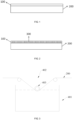
- FIGS. 1 to 6 Reference can be made to FIGS. 1 to 6 .
- this embodiment provides a battery separator which is a multi-layered composite combination.
- the battery separator has a composite structure including a first element 100 and a second element 200. Further, the above structure of the battery separator may be modified as required.
- the battery separator has a composite structure including the first element 100 and the second element 200, and meanwhile the first element has a porous structure 300 having a plurality of pores.
- FIGS. 1 and 2 merely schematically show the structure of the battery separator, but the absolute thickness of the first element, the absolute thickness of the second element, and the relative magnitude and ratio relations between the thicknesses of the two elements may not be determined according to the dimensions and scale illustrated in the figures. However, the thickness of the first element of the battery separator is significantly smaller than the thickness of the second element.
- the first element has a thickness of 0.01 to 0.8 micrometer ( ⁇ m), or the thickness of the first element is selected from any value of 0.03 ⁇ m, 0.05 ⁇ m, 0.08 ⁇ m, 0.1 ⁇ m, 0.4 ⁇ m, 0.6 ⁇ m, 0.8 ⁇ m, or any numerical value in a range determined between any two of the above values. Furthermore, the thickness of the first element may be standardized and verified according to specific product parameter requirements and test effects, and is not specifically limited in the embodiments of the present disclosure.
- the first element is formed by nanowires. Therefore, based on difference in properties of the first element and the nanowires and the difficulty levels of the methods for manufacturing the same, in combination with the consideration of the performance of the battery separator, the size of the nanowires is defined as below.
- the nanowire has a length-to-diameter ratio of greater than 50, for example, a length-to-diameter ratio of 146, 138, 127, or the like. Further, the length-to-diameter ratio of the nanowire may be adjusted by controlling a proper length and diameter of the nanowire.
- the nanowire has a diameter of 1 to 100 nm and a length of 0.1 to 100 ⁇ m. In some specific optional examples, the nanowire has a diameter of 100 nm and a length of 5 ⁇ m.
- the material of the battery separator may be selected from many choices and may be selected depending on specific practical situations.
- the first element is made of a modification material provided to improve the thermal stability of the separator, and the first element is a stack of nanowires distributed in one or more layers.
- the first element is present in the form of a thin film (film layer, diaphragm) and has a thickness of the order of sub-microns or microns as described previously.
- the aforementioned first element is a stack of nanowires, While the stack of nanowires may exist in various ways.
- the first element may be a single-layer stacked structure having a thickness equal to a nanowire diameter, wherein the nanowires are arranged in an array.
- the nanowires in the same column are arranged in sequence in an end-to-end manner.
- the transverse direction multiple columns of nanowires are arranged side by side.
- the nanowires are stacked in a criss-crossed manner.
- the nanowires are stacked in a randomly crossed manner.
- the stacking of the nanowires may be defined by the method for manufacturing the battery separator, which is not specifically limited in the embodiments of the present disclosure. Further, a stack composed of nanowires may have two layers, three layers, or even more layers, and each layer may be made by the same or a different method and stacked in the same or a different form.
- the first element produced by a stack appropriately formed by nanowires has the characteristics of high porosity, uniform pore size, light weight, and high strength. Therefore, the nanowire coating has the characteristics of thin thickness and light weight while solving the problem of thermal stability of polyolefin separators, which is in conformity with the development direction of lightweight and high energy of batteries.
- the aforementioned first element having pores may be formed by stacking nanowires on the second element.
- the poress may be formed without being produced artificially and actively in the process of manufacturing the battery separator, or the poress may also be considered to be purposefully controlled (distribution density, distribution mode, pore size) and formed.
- the formation of the poress is controlled so as to adjust the effect of the battery separator having the first element and the second element on the movement of ions when the battery separator is used in a battery.
- the modification material is selected from one or more of carbon nanotubes, silver nanowires, boron carbide nanowires, nanocellulose, copper hydroxide nanowires, silicon monoxide nanowires.
- the second element is made of a base (or substrate) material provided as a main body of the separator, and the first element is loaded on the second element and supported by the second element.
- the aforementioned main body of the separator may be the separator itself in the prior art battery separator technology.
- a separator for isolating electrons and allowing ions to pass therethrough is provided and used as a main body and exerts its corresponding effects on electrons and ions.
- the base material for making the second element is selected from polyolefins, such as polyethylene (PE), polypropylene (PP), etc.
- an embodiment of the present disclosure further provides a battery, which may be a primary battery or a secondary battery, and may, for example, be a rechargeable lithium ion battery.
- the battery has a housing in which the above-mentioned battery separator and positive and negative electrodes separated by the battery separator are disposed. A positive electrode region is formed between the positive electrode and the battery separator, and a negative electrode region is formed between the negative electrode and the battery separator. The same electrolyte is injected into the positive electrode region and the negative electrode region.
- a method for manufacturing a battery separator is further provided.
- the manufacturing method includes following steps: Step S101: providing a dispersion solution in which nanowires are dispersed in a dispersant.
- the nanowires are preferably fully dispersed in the dispersant, and the dispersant is generally a poor solvent for the nanowires in order to maintain the structure of the nanowires. Namely, the dispersant does not significantly dissolve the nanowires to destroy their nanostructures.
- the nanowires are also preferably dispersed uniformly in the dispersant, rather than being aggregated in the dispersant.
- the dispersion solution may be selected to be present and used in the form of a suspension liquid, a turbid liquid, or an emulsion.
- water is selected and used as the dispersant, and carbon nanotubes are selected as the nanowires.
- the carbon nanotubes may be uniformly dispersed in water by vibration modes such as ultrasonic treatment and high speed stirring.
- the dispersion solution is easily prepared and used on site, which can avoid the problem of uneven distribution of nanowires in the dispersant.
- the dispersion solutions may be prepared in advance or outsourced and used.
- the nanowires may be contained in the dispersion solution at a concentration of 0.01 to 50 wt%, for example, 0.1 to 43 wt%, 3 to 36 wt%, 14 to 29 wt%, or the like.
- the material of the nanowires may be selected as described previously, and therefore will not be described repeatedly here.
- an adhesive may usually be added to the dispersant in order to improve the bonding strength between the first element and the second element.
- the adhesive is usually compatible with the dispersant. Namely, a phenomenon affecting the uniform distribution of the nanowires, such as a significant delamination will not occur.
- the dispersant may be selected from one or more of water, ethanol, acetone, and N-methylpyrrolidone.
- the adhesive may be selected from one or more of polyvinyl alcohol, polyacrylonitrile, polyacrylic acid, styrene butadiene rubber, carboxymethyl cellulose, polyvinylidene fluoride, polyvinylpyrrolidone, and polyimide.
- the adhesive may be contained at a concentration by mass of 0.01 to 49%, 5 to 37%, 11 to 27%, 16 to 20%, or the like.
- an auxiliary agent including glycerin, sodium butylbenzenesulfonate, propylene glycol, and polyoxyethylene sulfide, may be added as a wetter to the dispersant.
- Step S102 transferring the dispersion solution to a surface of the second element, and removing the dispersant in the dispersion solution from the surface of the second element so that the nanowires are loaded on the surface of the second element in a layered manner.
- the dispersion solution is transferred to the surface of the second element by dip coating method, which includes: dipping the second element in the dispersion solution at a first given speed and withdrawing the second element from the dispersion solution at a second given speed under a condition where the second element is tensioned by being stretched.
- the nanowires in the dispersion solution and/or the optionally added adhesive are bonded to the second element by the actions such as chemical action, adsorption action, and capillary phenomenon; then, removing the dispersant in the dispersion solution from the surface of the second element in an appropriate manner while leaving the nanowires on the surface of the second element.
- the dispersion solution is transferred to the second element by a film formation apparatus.
- the general structure of the film formation apparatus may be depicted below with reference to FIG. 3 .
- the film formation apparatus includes a liquid storage tank 401 which is configured to store the dispersion solution.
- the film formation apparatus includes a tensioning system 402.
- the tensioning system includes a plurality of rollers. In FIG. 3 , the tensioning system includes three rollers, wherein one of the rollers is distributed between the other two rollers, and a triangular shape may be formed by the center points of the projections of the three rollers on a plane.
- the second element of the battery separator is tensioned by the tensioning system.
- the tensioning system includes at least one dip coating roller 403 (i.e., the roller located in the middle as described above) configured to dip the second element 200 in the dispersion solution.
- the dip coating roller is partially or entirely immersed in the dispersion solution (by an immersed depth ranging from 1/4 of its radius to its entirety in one example).
- the immersed depth of the dip coating roller may be achieved by a moving mechanism (not shown in the figure), which enables the dip coating roller to move relative to the dispersion solution in an appropriate manner, for example, to move vertically.
- the tensioning system may properly release the second element so as to adjust the immersed depth of the dip coating roller without moving the positions of the two rollers other than the dip coating roller.
- all of the three rollers constituting the tensioning system are movable, so that it is easier to control the adjustment of the immersed depth of the dip coating roller.
- the dip coating roller 403 has a hollow cavity 4031, and the dip coating roller has pore channels 4032 communicating with the hollow cavity and extending to its surface.
- the second element is in contact with the surface of the dip coating roller in such a manner that their surfaces are attached to each other, and the hollow cavity is held at a given vacuum at 0.01 to 0.1 MPa.
- a vacuum generator configured to generate a desired vacuum degree in the dip coating roller is not shown in the figures, and may be selected from commercially available devices such as a vacuum pump.
- the dispersion solution is more easily adsorbed by and bonded to the surface of the second element under the action of negative pressure.
- the porosity, pore size, and pore distribution of the first element can also be adjusted by controlling the pore channels of the dip coating roller to achieve the desired effect.
- the thickness of the first element can be adjusted by adjusting the concentration of the nanowires in the dispersion solution, the immersed depth of the dip coating roller in the dispersion solution, and the vacuum degree of the dip coating roller.
- concentration of the nanowires in the dispersion solution the concentration of the nanowires in the dispersion solution
- immersed depth of the dip coating roller in the dispersion solution the immersed depth of the dip coating roller in the dispersion solution
- vacuum degree of the dip coating roller The inventors have found that a greater solution concentration results in a thicker coating, a deeper immersed depth results in a thicker coating, and a higher vacuum degree results in a thicker coating.
- the battery separator is a sheet structure having a multilayered film structure, wherein the second element constitutes a base film, and the first element constitutes a surface film.
- One or a plurality of layers of surface films may be provided.
- the surface films may be distributed on the two sides of the base film in the thickness direction and the same or a different number of layers of surface films may be distributed on each side, or the surface films may be distributed on either of the two sides of the base film in the thickness direction.
- Table 1 A number of examples of battery separators are listed in Table 1 below, including their raw materials, process methods, and properties. Table 1. Manufacturing and Properties of Battery Separators Group Substrate Material Nanowire Material Dispersant Roller Speed (m/min) Immersed Depth (Diameter) Vacuum Degree (Mpa) Dispersion Solution Concentration Thickness ( ⁇ m) Thermal Stability at 150 °C for 1 h Ex. 1 PE Carbon N-methyl pyrrolidone 30 1/4 0.05 10% 0.1 TD 0.1% Nanotubes Diameter MD 0.1 % Ex. 2 PP Boron Carbide Acetone 20 1/4 0.1 0.1% 0.01 TD 0.5% Nanowires Diameter MD 0.5% Ex. 3 PE Nanocellulose Water 50 1/2 0.1 50% 0.2 TD 0.01% Diameter MD 0.1% Ex. 4 PP Hydroxyapatite Ethanol 10 Fully 0..1 80% 0.8 TD 0.01% Nanowires Immersed MD 0.1%
- the batteries in Examples 1-4 and Comparative Examples 1-6 have the same main structure, each including a positive electrode, a negative electrode, an electrolyte, and a separator.
- the main differences between the batteries lie in that the separators of the batteries in Examples 1-4 are made by using the method proposed in the embodiment of the present disclosure and are loaded with nanowire coatings, whereas the separators of the batteries in Comparative Examples 1-4 are commercially available products and loaded with coatings of granular substances of the order of millimeters, and the separators of the batteries of Comparative Examples 5-6 are commercially available products and are not loaded with substances for forming coatings.
- the substrates of the battery separators in the respective examples and comparative examples such as polyethylene films and polypropylene films, are all commercially available products.
- the polyethylene film and the polypropylene film may, for example, be made by a wet non-weaving process.
- the battery separators according to the embodiments of the present disclosure are significantly improved in terms of thermal stability, and also the battery capacity retention rates of the batteries using the battery separators are improved to some extent.
- TD represents the thermal stability ((heat shrinkage rate) of the separator in the transverse direction
- MD represents the thermal stability (heat shrinkage rate) in the longitudinal direction.
- the battery separator according to the present disclosure has a composite structure, which is an innovation over the prior art battery separators and is improved in terms of thermal stability by using a modification material.
- the modification material is used in the form of nanowires, which can avoid the problem of an increase in thickness and weight of the separator caused by the introduction of the modification material, thereby achieving the effects of thermal stability, and less increment of thickness and weight of the battery separator.
Landscapes
- Chemical & Material Sciences (AREA)
- Chemical Kinetics & Catalysis (AREA)
- Electrochemistry (AREA)
- General Chemical & Material Sciences (AREA)
- Engineering & Computer Science (AREA)
- Inorganic Chemistry (AREA)
- Manufacturing & Machinery (AREA)
- Materials Engineering (AREA)
- Ceramic Engineering (AREA)
- Cell Separators (AREA)
Description
- This application claims priority to
Chinese Patent Application No. 2018104718423, filed with the Chinese Patent Office on May 16, 2018 - The present disclosure relates to the field of batteries, and in particular to a battery, a battery separator (or diaphragm), and a method for manufacturing the same.
- The lithium ion battery is a secondary battery currently widely applied. The lithium ion battery operates mainly by movement of lithium ions between positive and negative electrodes. Li+ is reversibly intercalated into and deintercalated from the two electrodes during charging and discharging processes. During the charging, Li+ is deintercalated from the positive electrode and intercalated into the negative electrode through an electrolyte so that the negative electrode is in a lithium-rich state. Moreover, higher charging capacity is obtained when more lithium ions are intercalated into the negative electrode. During the discharging, on the contrary, the lithium ions intercalated into a carbon layer of the negative electrode are deintercalated therefrom and then move back to the positive electrode through the electrolyte. Higher discharging capacity is obtained when more lithium ions move back to the positive electrode.
- The lithium ion batteries have the advantages such as high operating voltage of unit cells, high specific energy, long cycle life, low self-discharge, no pollution, and no memory effect. Therefore, they are widely applied to mobile phones, portable devices, automobiles, aviation, scientific research, entertainment, military, and other modern electronic fields and are gradually replacing conventional batteries.
- A lithium ion battery is mainly composed of four major materials, including a positive electrode material, a negative electrode material, a separator, and an electrolyte. As one of its important constituent parts, the separator plays a very important role in terms of the battery's performance. The battery separator refers to a layer of diaphragm material between the positive and negative electrodes of the battery, and is usually called a battery separator. The main function of the battery separator is to isolate the positive and negative electrodes from each other and to prevent electrons in the battery from freely passing therethrough, while allowing ions in the electrolyte to pass freely between the positive and negative electrodes.
- For example,
CN107342386A discloses a preparation method of a high-temperature-resistant low-resistivity lithium ion battery diaphragm, and belongs to the technical field of battery diaphragms. A slurry layer is coated on one side end face or two side end faces of a basal membrane; then, after the slurry layer is dried, the high-temperature-resistant low-resistivity lithium ion battery diaphragm is obtained; the slurry layer is ceramic slurry or carbon nano tube modified ceramic slurry; and furthermore, the carbon nano tube modified ceramic slurry is at least coated on one side end face of the basal membrane. - For example,
CN106684298A describes a lithium-ion battery separator which comprises a positive insulating layer, a negative insulating layer and a porous conductive layer arranged between the positive insulating layer and the negative insulating layer, wherein the porous conductive layer is at least one of a graphene layer, a carbon fiber layer, a carbon nanotube layer and a conductive carbon layer. - For example,
CN107565081A relates to a hydroxyapatite super-long nanowire-based high-temperature-resistant battery diaphragm which comprises 0.1-100wt% of hydroxyapatite super-long nanowire, 0-30wt% of inorganic additive and 0-50wt% of fiber additive, preferably, 1-99wt% of hydroxyapatite super-long nanowire, 0-30wt% of inorganic additive and 1-50wt% of fiber additive, that improves the electrolyte wettability and absorptivity of the battery diaphragm, and reinforces the performance and the safety of the battery. - The ion conductivity of the battery separator is directly related to the overall performance of the battery. Its function of isolating the positive and negative electrodes from each other allows for a limited increase in current in case of overcharging or temperature increment of the battery, thereby preventing explosion of the battery caused by short circuit of the battery. The battery separator has a protective function due to its self-closable micropores to safely protect a user and a device using the battery. Polyolefin materials are widely used for making a microporous separator because of their advantages such as low price, good mechanical strength and chemical stability, good overall performance, and low cost. However, their further applications to batteries are restricted due to their shortcomings in thermal stability.
- The information disclosed in the Background Art section is only intended to facilitate understanding of the overall background art of the present disclosure, and shall not be deemed as admitting or implying in any form that the information constitutes the prior art well known to those skilled in the art.
- The present disclosure provides a battery separator as defined in claim 1, preferred embodiments are defined in dependent claims 2 and 3.
- The present disclosure further provides a method for manufacturing the battery separator as defined in claim 4, preferred embodiments are defined in dependent claims 5-7.
- The present disclosure further discloses a battery as defined in claim 8, preferred embodiments are defined in dependent claims 9 and 10.
- The battery separator according to the present disclosure has a composite structure, which is an innovation over the prior art battery separators and is improved in terms of thermal stability by using a modification material. Further, the modification material is used in the form of nanowires. This can avoid the problem of an increase in thickness and weight of the separator caused by the introduction of the modification material, thereby achieving effects of thermal stability and less increment of thickness and weight of the battery separator.
- In order to more clearly illustrate technical solutions of embodiments of the present disclosure, drawings required for use in the embodiments will be described briefly below.
- It is to be understood that the drawings below are merely illustrative of some embodiments of the present disclosure, and therefore should not be considered as limitations on its scope. It will be understood by those of ordinary skill in the art that other relevant drawings can also be obtained from these drawings without any inventive effort.
-
FIG. 1 is a schematic structural view of a first battery separator according to an embodiment of the present disclosure; -
FIG. 2 is a schematic structural view of a second battery separator according to an embodiment of the present disclosure; -
FIG. 3 is a schematic structural view of a film formation apparatus for making the second battery separator according to an embodiment of the present disclosure; -
FIG. 4 shows a schematic structural view, from a first perspective, of a dip coating roller of the film formation apparatus ofFIG. 3 ; -
FIG. 5 shows a schematic structural view, from a second perspective, of the dip coating roller of the film formation apparatus ofFIG. 3 ; and -
FIG. 6 is a schematic sectional structural view of the dip coating roller of the film formation apparatus ofFIG. 3 taken along an axial direction. - Reference Numerals: 100-first element; 200-second element; 300-porous structure; 401-storage tank; 402-tensioning system; 403-dip coating roller; 4031-hollow cavity; 4032-pore channel.
- In order to further clarify the objects, technical solutions, and advantages of the embodiments of the present disclosure, the technical solutions of the embodiments of the present disclosure will be described below clearly and completely with reference to the drawings of the embodiments of the present disclosure. It is apparent that the embodiments to be described are some, but not all of the embodiments of the present disclosure. Generally, the components of the embodiments of the present disclosure, as described and illustrated in the figures herein, may be arranged and designed in a wide variety of different configurations. Thus, the following detailed description of the embodiments of the present disclosure, as represented in the figures, is not intended to limit the scope of the present disclosure as claimed, but is merely representative of selected embodiments of the present disclosure.
- In the prior art, battery separators, especially polyolefin separators applied to lithium ion batteries (including primary batteries and secondary batteries), often have defects of poor thermal stability. It is often necessary to make an improvement on the basis of prior art separators in order to modify the separators to improve their thermal stability. In practice, the inventors have found that coating the surfaces of the prior art (battery) separators with inorganic materials such as aluminum oxide is a simple and efficient method that can improve the thermal stability of the separators.
- However, the inventors have also found that the prior art coating method would cause adverse effects to some characteristics of an adjusted separator, for example, a significant increase in thickness and weight, which in turn leads to a decrease in the performance of the separator when in use.
- In this embodiment, a material capable of improving the thermal stability of a separator is used in the form of nanowires and loaded on the original material of the separator, in order to achieve both desired thermal stability of the separator and no significant increase in thickness and weight of the separator. In this embodiment, one-dimensional nanowires are used as the coating material (e.g., achieved by coating). The one-dimensional nanowires have much smaller sizes and densities than inorganic materials, and thus they can be controlled to a smaller thickness.
- In addition, the one-dimensional nanowires have the potential to impart new characteristics to the separator or improve the existing characteristics of the separator due to their unique structural features and interface effects.
- Reference can be made to
FIGS. 1 to 6 . - As shown in
FIG. 1 , this embodiment provides a battery separator which is a multi-layered composite combination. The battery separator has a composite structure including afirst element 100 and asecond element 200. Further, the above structure of the battery separator may be modified as required. For example, inFIG. 2 , the battery separator has a composite structure including thefirst element 100 and thesecond element 200, and meanwhile the first element has aporous structure 300 having a plurality of pores. - In addition, it should be appreciated that
FIGS. 1 and 2 merely schematically show the structure of the battery separator, but the absolute thickness of the first element, the absolute thickness of the second element, and the relative magnitude and ratio relations between the thicknesses of the two elements may not be determined according to the dimensions and scale illustrated in the figures. However, the thickness of the first element of the battery separator is significantly smaller than the thickness of the second element. - The first element has a thickness of 0.01 to 0.8 micrometer (µm), or the thickness of the first element is selected from any value of 0.03 µm, 0.05 µm, 0.08 µm, 0.1 µm, 0.4 µm, 0.6 µm, 0.8 µm, or any numerical value in a range determined between any two of the above values. Furthermore, the thickness of the first element may be standardized and verified according to specific product parameter requirements and test effects, and is not specifically limited in the embodiments of the present disclosure.
- Further, the first element is formed by nanowires. Therefore, based on difference in properties of the first element and the nanowires and the difficulty levels of the methods for manufacturing the same, in combination with the consideration of the performance of the battery separator, the size of the nanowires is defined as below. The nanowire has a length-to-diameter ratio of greater than 50, for example, a length-to-diameter ratio of 146, 138, 127, or the like. Further, the length-to-diameter ratio of the nanowire may be adjusted by controlling a proper length and diameter of the nanowire. The nanowire has a diameter of 1 to 100 nm and a length of 0.1 to 100 µm. In some specific optional examples, the nanowire has a diameter of 100 nm and a length of 5 µm.
- The material of the battery separator may be selected from many choices and may be selected depending on specific practical situations.
- Here, the first element is made of a modification material provided to improve the thermal stability of the separator, and the first element is a stack of nanowires distributed in one or more layers. Generally, in terms of macroscopic morphology, the first element is present in the form of a thin film (film layer, diaphragm) and has a thickness of the order of sub-microns or microns as described previously.
- In addition, the aforementioned first element is a stack of nanowires, While the stack of nanowires may exist in various ways. For example, the first element may be a single-layer stacked structure having a thickness equal to a nanowire diameter, wherein the nanowires are arranged in an array. In the longitudinal direction, the nanowires in the same column are arranged in sequence in an end-to-end manner. In the transverse direction, multiple columns of nanowires are arranged side by side. Optionally, in some examples, the nanowires are stacked in a criss-crossed manner. Optionally, in some other examples, the nanowires are stacked in a randomly crossed manner. The stacking of the nanowires may be defined by the method for manufacturing the battery separator, which is not specifically limited in the embodiments of the present disclosure. Further, a stack composed of nanowires may have two layers, three layers, or even more layers, and each layer may be made by the same or a different method and stacked in the same or a different form.
- The first element produced by a stack appropriately formed by nanowires has the characteristics of high porosity, uniform pore size, light weight, and high strength. Therefore, the nanowire coating has the characteristics of thin thickness and light weight while solving the problem of thermal stability of polyolefin separators, which is in conformity with the development direction of lightweight and high energy of batteries.
- In addition, the aforementioned first element having pores may be formed by stacking nanowires on the second element. In other words, the poress may be formed without being produced artificially and actively in the process of manufacturing the battery separator, or the poress may also be considered to be purposefully controlled (distribution density, distribution mode, pore size) and formed. The formation of the poress, such as in terms of pore size, porosity, and so on, is controlled so as to adjust the effect of the battery separator having the first element and the second element on the movement of ions when the battery separator is used in a battery.
- In light of the above, the modification material is selected from one or more of carbon nanotubes, silver nanowires, boron carbide nanowires, nanocellulose, copper hydroxide nanowires, silicon monoxide nanowires.
- The second element is made of a base (or substrate) material provided as a main body of the separator, and the first element is loaded on the second element and supported by the second element. It should be noted that the aforementioned main body of the separator may be the separator itself in the prior art battery separator technology. In this embodiment, a separator for isolating electrons and allowing ions to pass therethrough is provided and used as a main body and exerts its corresponding effects on electrons and ions.
- As described previously, there are many choices for the modification material for making the first element. Correspondingly, the base material for making the second element is selected from polyolefins, such as polyethylene (PE), polypropylene (PP), etc.
- Based on the above battery separator, an embodiment of the present disclosure further provides a battery, which may be a primary battery or a secondary battery, and may, for example, be a rechargeable lithium ion battery. The battery has a housing in which the above-mentioned battery separator and positive and negative electrodes separated by the battery separator are disposed. A positive electrode region is formed between the positive electrode and the battery separator, and a negative electrode region is formed between the negative electrode and the battery separator. The same electrolyte is injected into the positive electrode region and the negative electrode region.
- In an embodiment of the present disclosure, corresponding to the above battery separator, a method for manufacturing a battery separator is further provided.
- The manufacturing method includes following steps:
Step S101: providing a dispersion solution in which nanowires are dispersed in a dispersant. - Here, the nanowires are preferably fully dispersed in the dispersant, and the dispersant is generally a poor solvent for the nanowires in order to maintain the structure of the nanowires. Namely, the dispersant does not significantly dissolve the nanowires to destroy their nanostructures.
- In addition, the nanowires are also preferably dispersed uniformly in the dispersant, rather than being aggregated in the dispersant. In some examples, the dispersion solution may be selected to be present and used in the form of a suspension liquid, a turbid liquid, or an emulsion.
- In some embodiments of the present disclosure, as an example, water is selected and used as the dispersant, and carbon nanotubes are selected as the nanowires. The carbon nanotubes may be uniformly dispersed in water by vibration modes such as ultrasonic treatment and high speed stirring. Generally, the dispersion solution is easily prepared and used on site, which can avoid the problem of uneven distribution of nanowires in the dispersant. However, in some cases without high requirements or for dispersion solutions with good dispersion uniformity and stability, the dispersion solutions may be prepared in advance or outsourced and used. In addition, the nanowires may be contained in the dispersion solution at a concentration of 0.01 to 50 wt%, for example, 0.1 to 43 wt%, 3 to 36 wt%, 14 to 29 wt%, or the like.
- The material of the nanowires may be selected as described previously, and therefore will not be described repeatedly here.
- In some improved solutions, an adhesive may usually be added to the dispersant in order to improve the bonding strength between the first element and the second element. Moreover, the adhesive is usually compatible with the dispersant. Namely, a phenomenon affecting the uniform distribution of the nanowires, such as a significant delamination will not occur.
- For example, in this embodiment, the dispersant may be selected from one or more of water, ethanol, acetone, and N-methylpyrrolidone. Accordingly, the adhesive may be selected from one or more of polyvinyl alcohol, polyacrylonitrile, polyacrylic acid, styrene butadiene rubber, carboxymethyl cellulose, polyvinylidene fluoride, polyvinylpyrrolidone, and polyimide. The adhesive may be contained at a concentration by mass of 0.01 to 49%, 5 to 37%, 11 to 27%, 16 to 20%, or the like.
- Further, an auxiliary agent, including glycerin, sodium butylbenzenesulfonate, propylene glycol, and polyoxyethylene sulfide, may be added as a wetter to the dispersant.
- Step S102: transferring the dispersion solution to a surface of the second element, and removing the dispersant in the dispersion solution from the surface of the second element so that the nanowires are loaded on the surface of the second element in a layered manner.
- Here, the dispersion solution is transferred to the surface of the second element by dip coating method, which includes:
dipping the second element in the dispersion solution at a first given speed and withdrawing the second element from the dispersion solution at a second given speed under a condition where the second element is tensioned by being stretched. When the second element is passing through the dispersion solution, the nanowires in the dispersion solution and/or the optionally added adhesive are bonded to the second element by the actions such as chemical action, adsorption action, and capillary phenomenon; then, removing the dispersant in the dispersion solution from the surface of the second element in an appropriate manner while leaving the nanowires on the surface of the second element. - The dispersion solution is transferred to the second element by a film formation apparatus. The general structure of the film formation apparatus may be depicted below with reference to
FIG. 3 . - The film formation apparatus includes a
liquid storage tank 401 which is configured to store the dispersion solution. - The film formation apparatus includes a
tensioning system 402. The tensioning system includes a plurality of rollers. InFIG. 3 , the tensioning system includes three rollers, wherein one of the rollers is distributed between the other two rollers, and a triangular shape may be formed by the center points of the projections of the three rollers on a plane. The second element of the battery separator is tensioned by the tensioning system. The tensioning system includes at least one dip coating roller 403 (i.e., the roller located in the middle as described above) configured to dip thesecond element 200 in the dispersion solution. The dip coating roller is partially or entirely immersed in the dispersion solution (by an immersed depth ranging from 1/4 of its radius to its entirety in one example). - The immersed depth of the dip coating roller may be achieved by a moving mechanism (not shown in the figure), which enables the dip coating roller to move relative to the dispersion solution in an appropriate manner, for example, to move vertically. Also, the tensioning system may properly release the second element so as to adjust the immersed depth of the dip coating roller without moving the positions of the two rollers other than the dip coating roller. Optionally, in some examples, all of the three rollers constituting the tensioning system are movable, so that it is easier to control the adjustment of the immersed depth of the dip coating roller.
- The
dip coating roller 403 has ahollow cavity 4031, and the dip coating roller haspore channels 4032 communicating with the hollow cavity and extending to its surface. The second element is in contact with the surface of the dip coating roller in such a manner that their surfaces are attached to each other, and the hollow cavity is held at a given vacuum at 0.01 to 0.1 MPa. A vacuum generator configured to generate a desired vacuum degree in the dip coating roller is not shown in the figures, and may be selected from commercially available devices such as a vacuum pump. - In this way, when the second element is passing through the dispersion solution, the dispersion solution is more easily adsorbed by and bonded to the surface of the second element under the action of negative pressure. On the other hand, the porosity, pore size, and pore distribution of the first element can also be adjusted by controlling the pore channels of the dip coating roller to achieve the desired effect.
- In addition, the thickness of the first element can be adjusted by adjusting the concentration of the nanowires in the dispersion solution, the immersed depth of the dip coating roller in the dispersion solution, and the vacuum degree of the dip coating roller. The inventors have found that a greater solution concentration results in a thicker coating, a deeper immersed depth results in a thicker coating, and a higher vacuum degree results in a thicker coating.
- In addition, it should be noted that, in an embodiment of the present disclosure, the battery separator is a sheet structure having a multilayered film structure, wherein the second element constitutes a base film, and the first element constitutes a surface film. One or a plurality of layers of surface films may be provided. When a plurality of layers of surface films are provided, the surface films may be distributed on the two sides of the base film in the thickness direction and the same or a different number of layers of surface films may be distributed on each side, or the surface films may be distributed on either of the two sides of the base film in the thickness direction.
- A number of examples of battery separators are listed in Table 1 below, including their raw materials, process methods, and properties.
Table 1. Manufacturing and Properties of Battery Separators Group Substrate Material Nanowire Material Dispersant Roller Speed (m/min) Immersed Depth (Diameter) Vacuum Degree (Mpa) Dispersion Solution Concentration Thickness (µm) Thermal Stability at 150 °C for 1 h Ex. 1 PE Carbon N-methyl pyrrolidone 30 1/4 0.05 10% 0.1 TD 0.1% Nanotubes Diameter MD 0.1 % Ex. 2 PP Boron Carbide Acetone 20 1/4 0.1 0.1% 0.01 TD 0.5% Nanowires Diameter MD 0.5% Ex. 3 PE Nanocellulose Water 50 1/2 0.1 50% 0.2 TD 0.01% Diameter MD 0.1% Ex. 4 PP Hydroxyapatite Ethanol 10 Fully 0..1 80% 0.8 TD 0.01% Nanowires Immersed MD 0.1% - Batteries are made by using the battery separators manufactured in the above Examples 1-4, and their electrical properties are tested. The test results are shown in Table 2 below.
Table 2. Properties of Batteries Using the Battery Separators Battery Separator Type Separator Coating Thickness (µm) Thermal Stability of the Separator at 150 °C for 1 h Battery Capacity Retention Rate (%) Example 1 (PE) 0.1 TD 0.1% 99 MD 0.1% Example 2 (PP) 0.01 TD 0.5% 98.5 MD 0.5% Example 3 (PE) 0.2 TD 0.01% 99.2 MD 0.1% Example 4 (PP) 0.8 TD 0.01% 99.3 MD 0.1% Comparative Example 1 (PE) 2 TD 0.7% 97 MD 1.1% Comparative Example 2 (PE) 2 TD 1% 97.2 MD 1.5% Comparative Example 3 (PP) 2 TD 0.8% 96.5 MD 1.2% Comparative Example 4 (PP) 2 TD 0.9% 96.8% MD 1.3% Comparative Example 5 (PE) 0 TD50% 93.7% MD40% Comparative Example 6 (PP) 0 TD90% 94.1% MD40% - In Table 2, the batteries in Examples 1-4 and Comparative Examples 1-6 have the same main structure, each including a positive electrode, a negative electrode, an electrolyte, and a separator.
- The main differences between the batteries lie in that the separators of the batteries in Examples 1-4 are made by using the method proposed in the embodiment of the present disclosure and are loaded with nanowire coatings, whereas the separators of the batteries in Comparative Examples 1-4 are commercially available products and loaded with coatings of granular substances of the order of millimeters, and the separators of the batteries of Comparative Examples 5-6 are commercially available products and are not loaded with substances for forming coatings. The substrates of the battery separators in the respective examples and comparative examples, such as polyethylene films and polypropylene films, are all commercially available products. The polyethylene film and the polypropylene film may, for example, be made by a wet non-weaving process.
- As can be seen from Tables 1 and 2 above, the battery separators according to the embodiments of the present disclosure are significantly improved in terms of thermal stability, and also the battery capacity retention rates of the batteries using the battery separators are improved to some extent. In Tables 1 and 2 above, TD represents the thermal stability ((heat shrinkage rate) of the separator in the transverse direction, and MD represents the thermal stability (heat shrinkage rate) in the longitudinal direction.
- The above description is merely illustrative of optional embodiments of the present disclosure and is not intended to limit the present disclosure. It will be understood by those skilled in the art that various modifications and variations can be made to the present disclosure.
- The battery separator according to the present disclosure has a composite structure, which is an innovation over the prior art battery separators and is improved in terms of thermal stability by using a modification material. Further, the modification material is used in the form of nanowires, which can avoid the problem of an increase in thickness and weight of the separator caused by the introduction of the modification material, thereby achieving the effects of thermal stability, and less increment of thickness and weight of the battery separator.
Claims (10)
- A battery separator, having a composite structure comprising a first element (100) and a second element (200), the battery separator comprising:the first element (100), made of a modification material provided to improve thermal stability of the battery separator, wherein the first element (100) is a stack of nanowires distributed in one or more layers; andthe second element (200) made of a base material provided as a main body of the battery separator, wherein the first element (100) is loaded on the second element (200) and supported by the second element (200);characterized in that the first element (100) has a thickness of 0.01 to 0.8 µm, the nanowire has a length-to-diameter ratio of greater than 50, the nanowire has a diameter of 1 to 100 nm and a length of 0.1 to 100 µm;the modification material comprises one or more of a carbon nanotube, a silver nanowire, a boron carbide nanowire, nanocellulose, a copper hydroxide nanowire and a silicon monoxide nanowire; andthe base material is an organic polymer material, the organic polymer material comprises polyolefin.
- The battery separator according to claim 1, wherein the polyolefin comprises polyethylene.
- The battery separator according to claim 1, wherein the first element (100) is in a porous structure (300).
- A method for manufacturing a battery separator of claim 1, wherein the manufacturing method comprises steps of:providing a dispersion solution in which the nanowires are dispersed in a dispersant; andtransferring the dispersion solution onto a surface of the second element (200), and removing the dispersant in the dispersion solution from the surface of the second element (200) so that the nanowires are loaded on the surface of the second element (200) in the layered manner;characterized in that the dispersed solution is transferred to the surface of the second element (200) by dip coating, and the dip coating method comprises:dipping the second element (200) into the dispersion solution at a first given speed and withdrawing the second element (200) from the dispersion solution at a second given speed under a condition where the second element (200) is tensioned by being stretched,the second element (200) is tensioned by a tensioning system (402) consisting of a plurality of rollers, wherein the tensioning system (402) has at least one dip coating roller (403) configured to dip the second element (200) into the dispersion solution, and the dip coating roller (403) is partially or entirely immersed in the dispersion solution;the dip coating roller (403) has a hollow cavity (4031), and the dip coating roller (403) has pore channels (4032) communicating with the hollow cavity (4031) and extending to its surface, the second element (200) is in contact with the surface of the dip coating roller (403) in such a manner that the surface of the dip coating roller (403) and the surface of the second element (200) are attached to each other, and the hollow cavity (4031) is held at a given vacuum degree, and the vacuum degree is 0.01 to 0.1 MPa.
- The method for manufacturing a battery separator according to claim 4, wherein the dispersant comprises one or more of water, ethanol, acetone, and N-methylpyrrolidone; and
the dispersion solution further contains an adhesive; preferably, the adhesive comprises one or more of polyvinyl alcohol, polyacrylonitrile, polyacrylic acid, styrene butadiene rubber, carboxymethyl cellulose, polyvinylidene fluoride, polyvinylpyrrolidone, and polyimide; and more preferably, the dispersion solution further comprises an auxiliary agent. - The method for manufacturing a battery separator according to claim 4 or 5, wherein mass concentration of the nanowires in the dispersion solution is 0.01 to 50% and mass concentration of the adhesive is 0.01 to 49%.
- The method for manufacturing a battery separator according to any one of claims 4 to 6, wherein the dispersion solution is transferred to the surface of the second element (200) by means of coating, and preferably, the coating comprises spin coating, or blade coating, or dip coating.
- A battery, characterized by having the battery separator according to any one of claim 1 to 3,
preferably, the battery is a lithium ion battery. - The battery according to claim 8, wherein the lithium ion battery is a rechargeable lithium ion battery; and
the battery comprises a housing in which the battery separator and positive and negative electrodes separated by the battery separator are disposed; a positive electrode region is formed between the positive electrode and the battery separator, and a negative electrode region is formed between the negative electrode and the battery separator. - The battery according to claim 9, wherein same electrolyte is injected into the positive electrode region and the negative electrode region.
Applications Claiming Priority (2)
| Application Number | Priority Date | Filing Date | Title |
|---|---|---|---|
| CN201810471842.3A CN108630871B (en) | 2018-05-16 | 2018-05-16 | Battery, battery diaphragm and preparation method thereof |
| PCT/CN2019/085704 WO2019218888A1 (en) | 2018-05-16 | 2019-05-06 | Battery, and battery diaphragm and manufacturing method therefor |
Publications (3)
| Publication Number | Publication Date |
|---|---|
| EP3796418A1 EP3796418A1 (en) | 2021-03-24 |
| EP3796418A4 EP3796418A4 (en) | 2021-07-28 |
| EP3796418B1 true EP3796418B1 (en) | 2024-07-31 |
Family
ID=63693479
Family Applications (1)
| Application Number | Title | Priority Date | Filing Date |
|---|---|---|---|
| EP19802545.4A Active EP3796418B1 (en) | 2018-05-16 | 2019-05-06 | Battery, and battery diaphragm and manufacturing method therefor |
Country Status (10)
| Country | Link |
|---|---|
| US (2) | US20200411829A1 (en) |
| EP (1) | EP3796418B1 (en) |
| JP (1) | JP7648384B2 (en) |
| KR (1) | KR102475114B1 (en) |
| CN (1) | CN108630871B (en) |
| DK (1) | DK3796418T3 (en) |
| FI (1) | FI3796418T3 (en) |
| HU (1) | HUE068641T2 (en) |
| PL (1) | PL3796418T3 (en) |
| WO (1) | WO2019218888A1 (en) |
Families Citing this family (13)
| Publication number | Priority date | Publication date | Assignee | Title |
|---|---|---|---|---|
| CN108630871B (en) * | 2018-05-16 | 2021-05-28 | 深圳市星源材质科技股份有限公司 | Battery, battery diaphragm and preparation method thereof |
| CN111224157A (en) * | 2020-03-17 | 2020-06-02 | 北京化工大学 | Composite polymer gel electrolyte and preparation method and application thereof |
| CN117254093A (en) * | 2020-06-19 | 2023-12-19 | 珠海冠宇电池股份有限公司 | Batteries and preparation methods and electrical equipment |
| CN113013549B (en) * | 2021-01-28 | 2021-11-02 | 清华大学 | Coating material for lightweight lithium ion battery separator and preparation method thereof, and lightweight lithium ion battery composite separator |
| KR20220132309A (en) * | 2021-03-23 | 2022-09-30 | 에스케이이노베이션 주식회사 | Composite separator and electrochemical device using same |
| CN113140872B (en) * | 2021-04-14 | 2022-10-14 | 湖南农业大学 | Double-sided asymmetric lithium battery composite coating diaphragm, production process and lithium battery |
| CN113540697B (en) * | 2021-06-28 | 2022-09-09 | 合肥国轩高科动力能源有限公司 | A kind of composite diaphragm and preparation method thereof |
| KR20230065150A (en) * | 2021-11-04 | 2023-05-11 | 에스케이이노베이션 주식회사 | Composite separator, manufacturing method thereof, and electrochemical device comprising same |
| CN116111106B (en) * | 2021-11-10 | 2025-06-24 | 中国科学院大连化学物理研究所 | Application of a hydroxyapatite separator in lead-carbon batteries |
| KR102617166B1 (en) * | 2021-12-21 | 2023-12-21 | 주식회사 엘지에너지솔루션 | Separator for an electrochemical device, and electrochemical device comprising the same |
| US20250226530A1 (en) * | 2022-03-24 | 2025-07-10 | Celgard, Llc | Coated separator with ceramic micro-wires |
| CN115799610B (en) * | 2023-02-06 | 2023-05-02 | 星源材质(南通)新材料科技有限公司 | Composite membrane and preparation method thereof, PVDF microporous membrane coated with lithium salt grafted carbon nano tube and solid-state battery |
| CN117613513A (en) * | 2023-12-04 | 2024-02-27 | 江苏恩捷新材料科技有限公司 | A lithium-ion battery composite separator and its preparation method |
Family Cites Families (22)
| Publication number | Priority date | Publication date | Assignee | Title |
|---|---|---|---|---|
| JP5844067B2 (en) | 2011-05-02 | 2016-01-13 | 株式会社ダイセル | Non-woven fiber laminate, method for producing the same, and separator |
| CN102769116B (en) * | 2012-08-09 | 2015-07-01 | 常州大学 | Lithium ion battery membrane with porous composite coating and preparation method thereof |
| JP5920479B2 (en) * | 2012-09-28 | 2016-05-25 | 日産自動車株式会社 | Coating device |
| JPWO2014091856A1 (en) * | 2012-12-12 | 2017-01-05 | 日本電気株式会社 | Separator, electrode element, power storage device, and method for manufacturing the separator |
| CN103236512A (en) * | 2013-04-19 | 2013-08-07 | 厦门大学 | Ceramic diaphragm and application of same to lithium ion battery |
| WO2014179725A1 (en) * | 2013-05-03 | 2014-11-06 | The Board Of Trustees Of The Leland Stanford Junior University | Improving rechargeable battery safety by multifunctional separators and electrodes |
| JP6445273B2 (en) * | 2013-08-14 | 2018-12-26 | 三菱製紙株式会社 | Lithium ion battery separator coating liquid and lithium ion battery separator |
| CN104157812B (en) * | 2014-04-23 | 2017-08-25 | 华南理工大学 | Lithium ion battery separator and preparation method thereof and lithium ion battery |
| US20150318532A1 (en) * | 2014-05-05 | 2015-11-05 | Board Of Regents, The University Of Texas System | Bifunctional separators for lithium-sulfur batteries |
| JP6428536B2 (en) * | 2014-08-29 | 2018-11-28 | 日産自動車株式会社 | Manufacturing apparatus for sheet material on which coating film is formed, and method for manufacturing sheet material on which coating film is formed |
| CN105529425B (en) * | 2014-11-19 | 2017-04-12 | 比亚迪股份有限公司 | Ceramic diaphragm and preparation method and application thereof |
| JP6152184B2 (en) | 2015-03-13 | 2017-06-21 | 住友化学株式会社 | Separator winding body, battery manufacturing method, and separator winding body manufacturing method |
| KR20160133275A (en) * | 2015-05-12 | 2016-11-22 | 주식회사 엘지화학 | Separator for electrochemical device, coated with cellulose nanofiber and Method of making the same |
| CN105140451A (en) * | 2015-07-06 | 2015-12-09 | 佛山荷韵特种材料有限公司 | Lithium-ion battery diaphragm and preparation method thereof |
| CN105185940B (en) * | 2015-10-23 | 2018-10-09 | 旭成(福建)科技股份有限公司 | The preparation method and applications of polyolefin/nano crystal fibre element composite diaphragm |
| CN105374971A (en) | 2015-11-30 | 2016-03-02 | 江苏华东锂电技术研究院有限公司 | Li-ion battery diaphragm and preparation method thereof |
| CN107785522B (en) * | 2016-08-29 | 2021-05-14 | 比亚迪股份有限公司 | Lithium ion battery diaphragm, lithium ion battery and preparation method thereof |
| CN106299222B (en) * | 2016-09-05 | 2019-05-07 | 东莞新能源科技有限公司 | Diaphragm and secondary battery thereof |
| CN106684298B (en) * | 2017-01-22 | 2020-03-31 | 湖南立方新能源科技有限责任公司 | Application method of lithium ion battery |
| CN107342386A (en) * | 2017-07-03 | 2017-11-10 | 河北金力新能源科技股份有限公司 | A kind of preparation method of high temperature resistant low-resistivity lithium ion battery separator |
| CN107565081B (en) * | 2017-07-11 | 2019-11-19 | 中国科学院上海硅酸盐研究所 | A hydroxyapatite ultra-long nanowire-based high temperature resistant battery separator and its application |
| CN108630871B (en) * | 2018-05-16 | 2021-05-28 | 深圳市星源材质科技股份有限公司 | Battery, battery diaphragm and preparation method thereof |
-
2018
- 2018-05-16 CN CN201810471842.3A patent/CN108630871B/en active Active
-
2019
- 2019-05-06 HU HUE19802545A patent/HUE068641T2/en unknown
- 2019-05-06 EP EP19802545.4A patent/EP3796418B1/en active Active
- 2019-05-06 US US16/975,206 patent/US20200411829A1/en not_active Abandoned
- 2019-05-06 FI FIEP19802545.4T patent/FI3796418T3/en active
- 2019-05-06 KR KR1020207024767A patent/KR102475114B1/en active Active
- 2019-05-06 DK DK19802545.4T patent/DK3796418T3/en active
- 2019-05-06 WO PCT/CN2019/085704 patent/WO2019218888A1/en not_active Ceased
- 2019-05-06 PL PL19802545.4T patent/PL3796418T3/en unknown
- 2019-05-06 JP JP2020566870A patent/JP7648384B2/en active Active
-
2024
- 2024-12-23 US US18/999,115 patent/US20250132459A1/en active Pending
Also Published As
| Publication number | Publication date |
|---|---|
| US20200411829A1 (en) | 2020-12-31 |
| JP7648384B2 (en) | 2025-03-18 |
| KR20200110801A (en) | 2020-09-25 |
| EP3796418A1 (en) | 2021-03-24 |
| CN108630871A (en) | 2018-10-09 |
| DK3796418T3 (en) | 2024-09-23 |
| EP3796418A4 (en) | 2021-07-28 |
| CN108630871B (en) | 2021-05-28 |
| WO2019218888A1 (en) | 2019-11-21 |
| FI3796418T3 (en) | 2024-09-09 |
| PL3796418T3 (en) | 2024-11-04 |
| HUE068641T2 (en) | 2025-01-28 |
| KR102475114B1 (en) | 2022-12-06 |
| JP2021514111A (en) | 2021-06-03 |
| US20250132459A1 (en) | 2025-04-24 |
Similar Documents
| Publication | Publication Date | Title |
|---|---|---|
| EP3796418B1 (en) | Battery, and battery diaphragm and manufacturing method therefor | |
| US8697290B2 (en) | Laminated battery cell comprising multilayer composite separator and methods for creating the same | |
| CN101326658B (en) | Organic/inorganic composite separator with morphological gradient, manufacturing method thereof, and electrochemical device comprising the same | |
| Jeong et al. | Evaporation-induced, close-packed silica nanoparticle-embedded nonwoven composite separator membranes for high-voltage/high-rate lithium-ion batteries: Advantageous effect of highly percolated, electrolyte-philic microporous architecture | |
| US10680224B2 (en) | Polyolefin multilayer microporous film, method for producing same, and cell separator | |
| CN102859625B (en) | There is the electrochemical capacitor containing lithium electrolyte | |
| KR101423296B1 (en) | Porous separators for secondary battery comprising cellulose fibers and silica and preparation method thereof | |
| KR101676688B1 (en) | Micro porous hybrid separator, method for manufacturing the same and electrochemical device containing the same | |
| An et al. | Multilayered separator based on porous polyethylene layer, Al2O3 layer, and electro-spun PVdF nanofiber layer for lithium batteries | |
| KR20100098498A (en) | Batteries having inorganic/organic porous films | |
| JP2008179903A (en) | Porous membrane, separator for electrochemical device, method for producing porous membrane, non-aqueous electrolyte battery, and method for producing non-aqueous electrolyte battery | |
| US9825269B2 (en) | Porous polyolefin separator and method for manufacturing the same | |
| KR100406689B1 (en) | Multicomponent composite film for electrochemical device and method for preparing the same | |
| JP2023532498A (en) | Separation membrane and lithium secondary battery containing the same | |
| TW201601369A (en) | Flexible porous membrane | |
| JP2023525824A (en) | SECONDARY BATTERY SEPARATOR MANUFACTURING METHOD, SEPARATOR MANUFACTURED BY METHOD, AND SECONDARY BATTERY HAVING THE SAME | |
| CN111244369B (en) | Polyolefin microporous membrane | |
| JP7673180B2 (en) | Separator for electrochemical device and method for producing same | |
| CN112567556A (en) | Composite membrane and preparation method thereof | |
| KR102460963B1 (en) | Composite separator, lithium battery including the same, and method of preparing the composite separator | |
| KR102143361B1 (en) | Method of Manufacturing Separator for Electrochemical Devices | |
| JP6659755B2 (en) | Wound body | |
| KR20210104054A (en) | Manufacturing method of porous layer, laminate, separator for nonaqueous electrolyte secondary battery, and nonaqueous electrolyte secondary battery | |
| KR20150106802A (en) | Porous polyolefin separator and a method for preparing the same | |
| KR102711658B1 (en) | Cellulose acetate containing plasticizer coated on polypropylene separator and the battery containing the separator |
Legal Events
| Date | Code | Title | Description |
|---|---|---|---|
| STAA | Information on the status of an ep patent application or granted ep patent |
Free format text: STATUS: THE INTERNATIONAL PUBLICATION HAS BEEN MADE |
|
| PUAI | Public reference made under article 153(3) epc to a published international application that has entered the european phase |
Free format text: ORIGINAL CODE: 0009012 |
|
| STAA | Information on the status of an ep patent application or granted ep patent |
Free format text: STATUS: REQUEST FOR EXAMINATION WAS MADE |
|
| 17P | Request for examination filed |
Effective date: 20200821 |
|
| AK | Designated contracting states |
Kind code of ref document: A1 Designated state(s): AL AT BE BG CH CY CZ DE DK EE ES FI FR GB GR HR HU IE IS IT LI LT LU LV MC MK MT NL NO PL PT RO RS SE SI SK SM TR |
|
| AX | Request for extension of the european patent |
Extension state: BA ME |
|
| REG | Reference to a national code |
Ref country code: DE Ref legal event code: R079 Free format text: PREVIOUS MAIN CLASS: H01M0002160000 Ipc: H01M0050454000 Ref document number: 602019056199 Country of ref document: DE |
|
| STAA | Information on the status of an ep patent application or granted ep patent |
Free format text: STATUS: EXAMINATION IS IN PROGRESS |
|
| A4 | Supplementary search report drawn up and despatched |
Effective date: 20210624 |
|
| RIC1 | Information provided on ipc code assigned before grant |
Ipc: H01M 50/454 20210101AFI20210618BHEP Ipc: H01M 50/431 20210101ALI20210618BHEP |
|
| 17Q | First examination report despatched |
Effective date: 20210706 |
|
| DAV | Request for validation of the european patent (deleted) | ||
| DAX | Request for extension of the european patent (deleted) | ||
| GRAP | Despatch of communication of intention to grant a patent |
Free format text: ORIGINAL CODE: EPIDOSNIGR1 |
|
| STAA | Information on the status of an ep patent application or granted ep patent |
Free format text: STATUS: GRANT OF PATENT IS INTENDED |
|
| INTG | Intention to grant announced |
Effective date: 20240328 |
|
| GRAS | Grant fee paid |
Free format text: ORIGINAL CODE: EPIDOSNIGR3 |
|
| GRAA | (expected) grant |
Free format text: ORIGINAL CODE: 0009210 |
|
| STAA | Information on the status of an ep patent application or granted ep patent |
Free format text: STATUS: THE PATENT HAS BEEN GRANTED |
|
| AK | Designated contracting states |
Kind code of ref document: B1 Designated state(s): AL AT BE BG CH CY CZ DE DK EE ES FI FR GB GR HR HU IE IS IT LI LT LU LV MC MK MT NL NO PL PT RO RS SE SI SK SM TR |
|
| REG | Reference to a national code |
Ref country code: CH Ref legal event code: EP Ref country code: GB Ref legal event code: FG4D |
|
| REG | Reference to a national code |
Ref country code: DE Ref legal event code: R096 Ref document number: 602019056199 Country of ref document: DE |
|
| REG | Reference to a national code |
Ref country code: IE Ref legal event code: FG4D |
|
| REG | Reference to a national code |
Ref country code: FI Ref legal event code: FGE |
|
| REG | Reference to a national code |
Ref country code: DK Ref legal event code: T3 Effective date: 20240917 |
|
| REG | Reference to a national code |
Ref country code: SE Ref legal event code: TRGR |
|
| P01 | Opt-out of the competence of the unified patent court (upc) registered |
Free format text: CASE NUMBER: APP_51024/2024 Effective date: 20240909 |
|
| REG | Reference to a national code |
Ref country code: LT Ref legal event code: MG9D |
|
| REG | Reference to a national code |
Ref country code: NL Ref legal event code: MP Effective date: 20240731 |
|
| PG25 | Lapsed in a contracting state [announced via postgrant information from national office to epo] |
Ref country code: PT Free format text: LAPSE BECAUSE OF FAILURE TO SUBMIT A TRANSLATION OF THE DESCRIPTION OR TO PAY THE FEE WITHIN THE PRESCRIBED TIME-LIMIT Effective date: 20241202 |
|
| REG | Reference to a national code |
Ref country code: AT Ref legal event code: MK05 Ref document number: 1709370 Country of ref document: AT Kind code of ref document: T Effective date: 20240731 |
|
| PG25 | Lapsed in a contracting state [announced via postgrant information from national office to epo] |
Ref country code: PT Free format text: LAPSE BECAUSE OF FAILURE TO SUBMIT A TRANSLATION OF THE DESCRIPTION OR TO PAY THE FEE WITHIN THE PRESCRIBED TIME-LIMIT Effective date: 20241202 |
|
| PG25 | Lapsed in a contracting state [announced via postgrant information from national office to epo] |
Ref country code: NL Free format text: LAPSE BECAUSE OF FAILURE TO SUBMIT A TRANSLATION OF THE DESCRIPTION OR TO PAY THE FEE WITHIN THE PRESCRIBED TIME-LIMIT Effective date: 20240731 Ref country code: GR Free format text: LAPSE BECAUSE OF FAILURE TO SUBMIT A TRANSLATION OF THE DESCRIPTION OR TO PAY THE FEE WITHIN THE PRESCRIBED TIME-LIMIT Effective date: 20241101 |
|
| PG25 | Lapsed in a contracting state [announced via postgrant information from national office to epo] |
Ref country code: BG Free format text: LAPSE BECAUSE OF FAILURE TO SUBMIT A TRANSLATION OF THE DESCRIPTION OR TO PAY THE FEE WITHIN THE PRESCRIBED TIME-LIMIT Effective date: 20240731 |
|
| PG25 | Lapsed in a contracting state [announced via postgrant information from national office to epo] |
Ref country code: LV Free format text: LAPSE BECAUSE OF FAILURE TO SUBMIT A TRANSLATION OF THE DESCRIPTION OR TO PAY THE FEE WITHIN THE PRESCRIBED TIME-LIMIT Effective date: 20240731 |
|
| PG25 | Lapsed in a contracting state [announced via postgrant information from national office to epo] |
Ref country code: AT Free format text: LAPSE BECAUSE OF FAILURE TO SUBMIT A TRANSLATION OF THE DESCRIPTION OR TO PAY THE FEE WITHIN THE PRESCRIBED TIME-LIMIT Effective date: 20240731 Ref country code: IS Free format text: LAPSE BECAUSE OF FAILURE TO SUBMIT A TRANSLATION OF THE DESCRIPTION OR TO PAY THE FEE WITHIN THE PRESCRIBED TIME-LIMIT Effective date: 20241130 |
|
| PG25 | Lapsed in a contracting state [announced via postgrant information from national office to epo] |
Ref country code: HR Free format text: LAPSE BECAUSE OF FAILURE TO SUBMIT A TRANSLATION OF THE DESCRIPTION OR TO PAY THE FEE WITHIN THE PRESCRIBED TIME-LIMIT Effective date: 20240731 |
|
| PG25 | Lapsed in a contracting state [announced via postgrant information from national office to epo] |
Ref country code: ES Free format text: LAPSE BECAUSE OF FAILURE TO SUBMIT A TRANSLATION OF THE DESCRIPTION OR TO PAY THE FEE WITHIN THE PRESCRIBED TIME-LIMIT Effective date: 20240731 Ref country code: RS Free format text: LAPSE BECAUSE OF FAILURE TO SUBMIT A TRANSLATION OF THE DESCRIPTION OR TO PAY THE FEE WITHIN THE PRESCRIBED TIME-LIMIT Effective date: 20241031 |
|
| REG | Reference to a national code |
Ref country code: HU Ref legal event code: AG4A Ref document number: E068641 Country of ref document: HU |
|
| PG25 | Lapsed in a contracting state [announced via postgrant information from national office to epo] |
Ref country code: RS Free format text: LAPSE BECAUSE OF FAILURE TO SUBMIT A TRANSLATION OF THE DESCRIPTION OR TO PAY THE FEE WITHIN THE PRESCRIBED TIME-LIMIT Effective date: 20241031 Ref country code: NL Free format text: LAPSE BECAUSE OF FAILURE TO SUBMIT A TRANSLATION OF THE DESCRIPTION OR TO PAY THE FEE WITHIN THE PRESCRIBED TIME-LIMIT Effective date: 20240731 Ref country code: LV Free format text: LAPSE BECAUSE OF FAILURE TO SUBMIT A TRANSLATION OF THE DESCRIPTION OR TO PAY THE FEE WITHIN THE PRESCRIBED TIME-LIMIT Effective date: 20240731 Ref country code: IS Free format text: LAPSE BECAUSE OF FAILURE TO SUBMIT A TRANSLATION OF THE DESCRIPTION OR TO PAY THE FEE WITHIN THE PRESCRIBED TIME-LIMIT Effective date: 20241130 Ref country code: HR Free format text: LAPSE BECAUSE OF FAILURE TO SUBMIT A TRANSLATION OF THE DESCRIPTION OR TO PAY THE FEE WITHIN THE PRESCRIBED TIME-LIMIT Effective date: 20240731 Ref country code: GR Free format text: LAPSE BECAUSE OF FAILURE TO SUBMIT A TRANSLATION OF THE DESCRIPTION OR TO PAY THE FEE WITHIN THE PRESCRIBED TIME-LIMIT Effective date: 20241101 Ref country code: ES Free format text: LAPSE BECAUSE OF FAILURE TO SUBMIT A TRANSLATION OF THE DESCRIPTION OR TO PAY THE FEE WITHIN THE PRESCRIBED TIME-LIMIT Effective date: 20240731 Ref country code: BG Free format text: LAPSE BECAUSE OF FAILURE TO SUBMIT A TRANSLATION OF THE DESCRIPTION OR TO PAY THE FEE WITHIN THE PRESCRIBED TIME-LIMIT Effective date: 20240731 Ref country code: AT Free format text: LAPSE BECAUSE OF FAILURE TO SUBMIT A TRANSLATION OF THE DESCRIPTION OR TO PAY THE FEE WITHIN THE PRESCRIBED TIME-LIMIT Effective date: 20240731 |
|
| PGFP | Annual fee paid to national office [announced via postgrant information from national office to epo] |
Ref country code: SE Payment date: 20250327 Year of fee payment: 7 |
|
| PG25 | Lapsed in a contracting state [announced via postgrant information from national office to epo] |
Ref country code: RO Free format text: LAPSE BECAUSE OF FAILURE TO SUBMIT A TRANSLATION OF THE DESCRIPTION OR TO PAY THE FEE WITHIN THE PRESCRIBED TIME-LIMIT Effective date: 20240731 Ref country code: SM Free format text: LAPSE BECAUSE OF FAILURE TO SUBMIT A TRANSLATION OF THE DESCRIPTION OR TO PAY THE FEE WITHIN THE PRESCRIBED TIME-LIMIT Effective date: 20240731 |
|
| PGFP | Annual fee paid to national office [announced via postgrant information from national office to epo] |
Ref country code: DK Payment date: 20250327 Year of fee payment: 7 Ref country code: FI Payment date: 20250325 Year of fee payment: 7 |
|
| PGFP | Annual fee paid to national office [announced via postgrant information from national office to epo] |
Ref country code: NO Payment date: 20250328 Year of fee payment: 7 |
|
| PG25 | Lapsed in a contracting state [announced via postgrant information from national office to epo] |
Ref country code: EE Free format text: LAPSE BECAUSE OF FAILURE TO SUBMIT A TRANSLATION OF THE DESCRIPTION OR TO PAY THE FEE WITHIN THE PRESCRIBED TIME-LIMIT Effective date: 20240731 |
|
| PG25 | Lapsed in a contracting state [announced via postgrant information from national office to epo] |
Ref country code: CZ Free format text: LAPSE BECAUSE OF FAILURE TO SUBMIT A TRANSLATION OF THE DESCRIPTION OR TO PAY THE FEE WITHIN THE PRESCRIBED TIME-LIMIT Effective date: 20240731 |
|
| PGFP | Annual fee paid to national office [announced via postgrant information from national office to epo] |
Ref country code: FR Payment date: 20250327 Year of fee payment: 7 |
|
| PG25 | Lapsed in a contracting state [announced via postgrant information from national office to epo] |
Ref country code: SK Free format text: LAPSE BECAUSE OF FAILURE TO SUBMIT A TRANSLATION OF THE DESCRIPTION OR TO PAY THE FEE WITHIN THE PRESCRIBED TIME-LIMIT Effective date: 20240731 |
|
| PGFP | Annual fee paid to national office [announced via postgrant information from national office to epo] |
Ref country code: GB Payment date: 20250327 Year of fee payment: 7 |
|
| REG | Reference to a national code |
Ref country code: DE Ref legal event code: R097 Ref document number: 602019056199 Country of ref document: DE |
|
| PLBE | No opposition filed within time limit |
Free format text: ORIGINAL CODE: 0009261 |
|
| STAA | Information on the status of an ep patent application or granted ep patent |
Free format text: STATUS: NO OPPOSITION FILED WITHIN TIME LIMIT |
|
| 26N | No opposition filed |
Effective date: 20250501 |
|
| PGFP | Annual fee paid to national office [announced via postgrant information from national office to epo] |
Ref country code: PL Payment date: 20250428 Year of fee payment: 7 Ref country code: DE Payment date: 20250320 Year of fee payment: 7 |
|
| PGFP | Annual fee paid to national office [announced via postgrant information from national office to epo] |
Ref country code: HU Payment date: 20250430 Year of fee payment: 7 |
|
| PGFP | Annual fee paid to national office [announced via postgrant information from national office to epo] |
Ref country code: IT Payment date: 20250325 Year of fee payment: 7 |
|
| PGFP | Annual fee paid to national office [announced via postgrant information from national office to epo] |
Ref country code: CH Payment date: 20250602 Year of fee payment: 7 |
|
| PG25 | Lapsed in a contracting state [announced via postgrant information from national office to epo] |
Ref country code: LU Free format text: LAPSE BECAUSE OF NON-PAYMENT OF DUE FEES Effective date: 20250506 |
|
| REG | Reference to a national code |
Ref country code: BE Ref legal event code: MM Effective date: 20250531 |
|
| PG25 | Lapsed in a contracting state [announced via postgrant information from national office to epo] |
Ref country code: MC Free format text: LAPSE BECAUSE OF FAILURE TO SUBMIT A TRANSLATION OF THE DESCRIPTION OR TO PAY THE FEE WITHIN THE PRESCRIBED TIME-LIMIT Effective date: 20240731 |
|
| PG25 | Lapsed in a contracting state [announced via postgrant information from national office to epo] |
Ref country code: IE Free format text: LAPSE BECAUSE OF NON-PAYMENT OF DUE FEES Effective date: 20250506 |
|
| PG25 | Lapsed in a contracting state [announced via postgrant information from national office to epo] |
Ref country code: BE Free format text: LAPSE BECAUSE OF NON-PAYMENT OF DUE FEES Effective date: 20250531 |