EP3795368B1 - Montage d'une jante de roue de véhicule automobile et d'un disque de frein sur un système de guidage en rotation - Google Patents
Montage d'une jante de roue de véhicule automobile et d'un disque de frein sur un système de guidage en rotation Download PDFInfo
- Publication number
- EP3795368B1 EP3795368B1 EP20197568.7A EP20197568A EP3795368B1 EP 3795368 B1 EP3795368 B1 EP 3795368B1 EP 20197568 A EP20197568 A EP 20197568A EP 3795368 B1 EP3795368 B1 EP 3795368B1
- Authority
- EP
- European Patent Office
- Prior art keywords
- rim
- brake disc
- mounting
- assembly according
- diameter
- Prior art date
- Legal status (The legal status is an assumption and is not a legal conclusion. Google has not performed a legal analysis and makes no representation as to the accuracy of the status listed.)
- Active
Links
Images
Classifications
-
- B—PERFORMING OPERATIONS; TRANSPORTING
- B60—VEHICLES IN GENERAL
- B60B—VEHICLE WHEELS; CASTORS; AXLES FOR WHEELS OR CASTORS; INCREASING WHEEL ADHESION
- B60B27/00—Hubs
- B60B27/0047—Hubs characterised by functional integration of other elements
- B60B27/0052—Hubs characterised by functional integration of other elements the element being a brake disc
-
- B—PERFORMING OPERATIONS; TRANSPORTING
- B60—VEHICLES IN GENERAL
- B60B—VEHICLE WHEELS; CASTORS; AXLES FOR WHEELS OR CASTORS; INCREASING WHEEL ADHESION
- B60B3/00—Disc wheels, i.e. wheels with load-supporting disc body
- B60B3/14—Attaching disc body to hub ; Wheel adapters
- B60B3/16—Attaching disc body to hub ; Wheel adapters by bolts or the like
-
- B—PERFORMING OPERATIONS; TRANSPORTING
- B60—VEHICLES IN GENERAL
- B60B—VEHICLE WHEELS; CASTORS; AXLES FOR WHEELS OR CASTORS; INCREASING WHEEL ADHESION
- B60B2900/00—Purpose of invention
- B60B2900/10—Reduction of
- B60B2900/111—Weight
-
- F—MECHANICAL ENGINEERING; LIGHTING; HEATING; WEAPONS; BLASTING
- F16—ENGINEERING ELEMENTS AND UNITS; GENERAL MEASURES FOR PRODUCING AND MAINTAINING EFFECTIVE FUNCTIONING OF MACHINES OR INSTALLATIONS; THERMAL INSULATION IN GENERAL
- F16D—COUPLINGS FOR TRANSMITTING ROTATION; CLUTCHES; BRAKES
- F16D65/00—Parts or details
- F16D65/02—Braking members; Mounting thereof
- F16D65/12—Discs; Drums for disc brakes
- F16D65/123—Discs; Drums for disc brakes comprising an annular disc secured to a hub member; Discs characterised by means for mounting
-
- Y—GENERAL TAGGING OF NEW TECHNOLOGICAL DEVELOPMENTS; GENERAL TAGGING OF CROSS-SECTIONAL TECHNOLOGIES SPANNING OVER SEVERAL SECTIONS OF THE IPC; TECHNICAL SUBJECTS COVERED BY FORMER USPC CROSS-REFERENCE ART COLLECTIONS [XRACs] AND DIGESTS
- Y02—TECHNOLOGIES OR APPLICATIONS FOR MITIGATION OR ADAPTATION AGAINST CLIMATE CHANGE
- Y02T—CLIMATE CHANGE MITIGATION TECHNOLOGIES RELATED TO TRANSPORTATION
- Y02T10/00—Road transport of goods or passengers
- Y02T10/80—Technologies aiming to reduce greenhouse gasses emissions common to all road transportation technologies
- Y02T10/86—Optimisation of rolling resistance, e.g. weight reduction
Definitions
- the invention relates to an assembly comprising a motor vehicle wheel rim and a brake disc mounted on a rotation guidance system.
- the guidance system comprises a hub intended to be mounted in rotation relative to a fixed member by means of at least one row of rolling bodies, the hub being provided with means for associating the rim/disc assembly and the fixed member being provided with means of association with a suspension element of the vehicle.
- the hub has a shank from which extends radially a flange provided with interfaces for fixing the rim and the brake disc, for example in the form of fixing holes by screwing, said flange being arranged to transmit the rolling forces and withstand the braking forces, in particular with respect to the transmission to the rim of the braking forces exerted by the disc.
- the document WO2018134384 proposes a fixing flange formed of a plurality of lugs which are spaced angularly by recesses, said lugs each having a rim fixing hole and a brake disc fixing hole by means of screws making it possible to exert a force axial tightening of respectively the rim and the disc on the dropouts.
- the lugs can incorporate the geometry of a brake disc fixing sleeve, in particular by radially and axially offsetting the disc fixing holes with respect to the rim fixing holes.
- This embodiment allows in particular the use of a disc having a geometry of crown in order to reduce the weight of the assembly but also to limit noise and to improve the robustness as well as the axial compactness of the hub / disc connection.
- the force transmitted to the hub by the disc can lead to relative slippage between said hub and the rim, said slippage shearing the clamping screws with a risk of breakage.
- the invention aims to improve the prior art by proposing in particular an assembly comprising a motor vehicle wheel rim and a brake disc which are mounted on a hub for guiding in rotation having tabs, in which the immobilization in rotation of the rim on said dropouts is made more reliable in order to limit their relative slippage, in particular induced by braking forces.
- the invention proposes an assembly comprising a motor vehicle wheel rim and a brake disc mounted on a rotation guidance system comprising a hub intended to be mounted in rotation about an axis with respect to a member fixed, said hub having a shank from which extends radially a fixing flange of said rim and of said brake disc, said flange being formed of a plurality of lugs which are spaced angularly by recesses, said lugs each having an interface fixing of the rim and a fixing interface of the brake disc defining respectively a fixing diameter of the rim and a fixing diameter of the brake disc around the axis of rotation, said fixing diameter of the brake disc being greater to said rim attachment diameter, the lugs having side walls which are circumferentially facing respectively complementary walls of the rim so to be able to immobilize said rim in rotation on said tabs.
- an assembly comprising a motor vehicle wheel rim 1 and a brake disc 2 mounted on a system for guiding the rim 1/disc 2 assembly in rotation is described below.
- the system comprises a hub 3 intended to be mounted in rotation about an axis X with respect to a fixed member by means of at least one row of rolling bodies.
- the terms “exterior” and “interior” are defined with respect to the rotational drive axis X, respectively for a location remote from and close to said axis.
- the hub 3 has a barrel 4 which comprises an outer wall 4a on which can be arranged at least one rolling track to form, with a rolling track carried by the fixed member, a path for a row of sliding bodies as described previously.
- a raceway can be formed directly on the outer wall 4a, or on a ring which is attached to said outer wall, then immobilized axially on the inner side by a collar 5 which can be made by crimping.
- the terms “external” and “internal” are defined with respect to the interior of the motor vehicle to designate a position respectively distant from and close to said interior, and in particular close respectively to the bottom and top of the figure 1c .
- the terms “radial” and “axial” are defined with respect to the rotation drive axis X, respectively perpendicularly and along this axis.
- the system may comprise a bowl for transmitting a motor torque to the hub, said bowl being actuated in rotation by the motor of the vehicle and comprising in particular a constant velocity joint (CVJ) for example of the Rzeppa type.
- CVJ constant velocity joint
- the system comprises meshing means 7 which are reciprocally formed in a bore 6 of the barrel 4 and on an end piece of the bowl.
- the end piece and the bore 6 may have a complementary cylindrical geometry, the meshing means comprising two sets 7 of axial splines formed respectively in the said bore and on the said end piece to be engaged one inside the other when said tip is mounted in said bore.
- the hub 3 also has a flange 8 for fixing the rim 1 and the brake disc 2, said flange extending radially from the barrel 4.
- the fixing flange 8 extends from an outer peripheral zone 9 of the barrel 4.
- the flange 8 is formed of a plurality of lugs 10 which are spaced angularly by recesses 11. The fact of providing a flange 8 with a discontinuous circumferential structure makes it possible to significantly reduce the weight of the hub 3, and therefore the total weight of the assembly.
- each leg 10 has two side walls 12a which are each connected to a side wall 12a of an adjacent leg 10 by a radial concave wall 12b formed in the flange 8, said concave wall defining with said side walls the recesses 11 between said legs adjacent.
- the flange 8 has five fixing lugs 10 which are equidistributed angularly around the axis of rotation X.
- each of the interfaces comprises a fixing orifice 13, 14 in which screws, studs or nut/threaded rod assemblies (not shown) are intended to engage in order to fix rim 1 and the brake disc 2 by axial tightening on the tabs 10.
- the interfaces for fixing rim 1 and brake disc 2 respectively define a diameter Dj for fixing rim 1 and a diameter D d for fixing brake disc 2 around the axis X, the fixing diameter D d of the brake disc 2 being greater than the fixing diameter Dj of the rim 1.
- the fixing holes 13, 14 are centered on the respective diameters.
- each of the lugs 10 has, relative to the barrel 4, a proximal part 10a on which is formed an interface comprising an orifice 13 for fixing the rim 1 and a distal part 10b on which is formed an interface comprising an orifice 14 for fixing the brake disc 2, the parts 10a, 10b being connected by a connecting part 10c which is arranged to offset axially and radially said proximal and distal parts with respect to each other.
- the connection part 10c is inclined with respect to the axial direction by having two angled connection ends with respectively a proximal part 10a and a distal part 10b extending radially.
- the brake disc 2 comprises a friction ring 2a having an inner edge 15 from which extend lobes 2b each provided with a fixing orifice 16, the lobes 2b being formed in the radial continuity of the inner edge 15.
- a such an arrangement of the brake disc 2 and of the hub 3 makes it possible to limit the noise resulting from their attachment.
- Other methods of fixing the brake disc 2 on the interface of the tabs 10 are possible, for example by trapping the end of said tabs in notches of said disc, notches closed by a plate or a crown fixed by screws in said disk. This type of assembly makes it possible to reduce the deformations of the tabs 10 linked to expansion.
- each lobe 2b is arranged in axial support respectively on a distal part 10b of a tab 10 by axially aligning their respective fixing holes 14, 16. Next, a screw is engaged in each set of holes 14, 16.
- the distal walls 10b each have an internal radial wall 17 on which a complementary wall 18 of the brake disc 2 bears axially.
- the complementary walls 18 are each formed on an outer radial wall of a lobe 2b, the radial walls 17, 18 each extending around the fixing orifice 14, 16 respectively of a distal part 10b and a 2b lobe.
- the internal radial walls 17 are arranged around the barrel 4, which makes it possible to arrange the meshing function of the hub 3 substantially at the same axial level as the function of fixing the brake disc 2.
- the meshing function of the hub 3 substantially at the same axial level as the function of fixing the brake disc 2.
- the proximal parts 10a each have an outer radial wall 19 on which a complementary wall 20 of said rim bears axially.
- the brake disc 2 is fixed to walls 17 which are separate from the walls 19 for fixing the rim 1 makes it possible to reduce the requirements for flapping on the walls 19, and therefore to facilitate their production.
- rim 1 has a central plate 21 in which orifices 22 for fixing to hub 1 are formed, said plate having a radial annular wall 21a on which complementary walls 20 are formed, each surrounding an orifice 22 respectively.
- each of the proximal parts 10a is connected to the shaft 4 of so as to be offset from the outer side of said barrel 4, in particular thanks to a particular arrangement of the outer peripheral zone 9 from which the flange 8 extends.
- Each of the tabs 10 has a wall 23 defining between them a diameter D c around the axis of rotation X, the rim 1 having complementary walls 24 which are mounted on said walls to ensure the centering of said rim along the diameter D c .
- the centering diameter D c of the rim 1 is between the diameter D d of the fixing of the brake disc 2 and the diameter Dj of the fixing of the rim 1, which makes it possible to limit the axial size of the centering function of said rim.
- the centering walls 23 are formed at the level of the connecting parts 10c.
- each centering wall 23 of a lug 10 is formed on the outer end of a connecting part 10c, so as to be arranged in the outer extension of the outer radial wall 19.
- the tabs 10 each have a shoulder formed by a radial wall 25 and an axial centering wall 23, the rim 1 having a complementary shoulder whose radial wall 26 is facing axially from the radial wall 25 of said tab and whose the axial wall 24 is centered on the axial wall 23 of said tab.
- the periphery of the central plate 21 is equipped with an annular rim 21b which extends axially, and on which the complementary centering walls 24 are formed.
- the tabs 10 further have side walls 27 which face circumferentially respectively with complementary walls 28 of rim 1 so as to be able to immobilize said rim in rotation on said dropouts, in particular by providing just sufficient circumferential clearance for the arrangement of rim 1 on legs 10.
- the side walls 27 are formed at the level of the connection parts 10c, and in particular on the inner ends of said parts.
- the functions of centering and of immobilization in rotation of the rim 1 are thus carried out substantially at the same place, which not only makes it possible to simplify the production of the assembly, but also to reduce the overall size of said assembly.
- the rim 1 has at least one housing 29 in which a lug 10 is arranged, the complementary walls 28 laterally bordering said housing.
- a housing 29 is provided for each of the legs 10.
- each housing 29 opens internally into the annular rim 21b and comprises a bottom 31 on the inner end of which the complementary radial wall 26 is formed, in order to form, with the facing axial wall 24, the complementary centering shoulder of rim 1.
- a branch 30 is formed in the radial extension of each of the orifices 22 of the central plate 21, so as to arrange each housing 29 radially facing respectively an orifice 22.
- Such an arrangement facilitates the alignment of the orifices 13, 22 for fixing the rim 1, but also to locate the rotational immobilization forces of said rim at the level of said orifices, in order to better protect the screws against the risk of damage.
Landscapes
- Engineering & Computer Science (AREA)
- Mechanical Engineering (AREA)
- Braking Arrangements (AREA)
- Arrangement Or Mounting Of Propulsion Units For Vehicles (AREA)
Description
- L'invention concerne un montage comprenant une jante de roue de véhicule automobile et un disque de frein montés sur un système de guidage en rotation.
- Le système de guidage comprend un moyeu destiné à être monté en rotation par rapport à un organe fixe par l'intermédiaire d'au moins une rangée de corps roulants, le moyeu étant pourvu de moyens d'association de l'ensemble jante / disque et l'organe fixe étant pourvu de moyens d'association à un élément de suspension du véhicule.
- Selon une réalisation, le moyeu présente un fût depuis lequel s'étend radialement une bride pourvue d'interfaces de fixation de la jante et du disque de frein, par exemple sous la forme d'orifices de fixation par vissage, ladite bride étant agencée pour transmettre les efforts de roulage et supporter les efforts de freinage, notamment relativement à la transmission à la jante des efforts de freinage exercés par le disque.
- Pour réduire la masse tout en résistant à ces efforts, le document
WO2018134384 propose une bride de fixation formée d'une pluralité de pattes qui sont espacées angulairement par des évidements, lesdites pattes présentant chacune un orifice de fixation de la jante et un orifice de fixation du disque de frein au moyen de vis permettant d'exercer un effort de serrage axial de respectivement la jante et le disque sur les pattes. - En outre, les pattes peuvent intégrer la géométrie d'un manchon de fixation du disque de frein, notamment en décalant radialement et axialement les orifices de fixation du disque par rapport aux orifices de fixation de la jante. Cette réalisation permet notamment l'utilisation d'un disque présentant une géométrie de couronne afin de diminuer le poids du montage mais également de limiter le bruit et d'améliorer la robustesse ainsi que la compacité axiale de la liaison moyeu / disque.
- Toutefois, un tel montage conduit à serrer la jante au moyen des vis sur des parois discrètes formées sur les pattes, ce qui réduit leur surface de frottement par rapport à une surface annulaire continue, et donc induit un risque de glissement relatif.
- En particulier, en cas de freinage, l'effort transmis au moyeu par le disque peut conduire à un glissement relatif entre ledit moyeu et la jante, ledit glissement venant contraindre en cisaillement les vis de serrage avec un risque de casse.
- L'invention vise à perfectionner l'art antérieur en proposant notamment un montage comprenant une jante de roue de véhicule automobile et un disque de frein qui sont montés sur un moyeu de guidage en rotation présentant des pattes, dans lequel l'immobilisation en rotation de la jante sur lesdites pattes est fiabilisée afin de limiter leur glissement relatif, notamment induit par les efforts de freinage.
- A cet effet, l'invention propose un montage comprenant une jante de roue de véhicule automobile et un disque de frein montés sur un système de guidage en rotation comprenant un moyeu destiné à être monté en rotation autour d'un axe par rapport à un organe fixe, ledit moyeu présentant un fût depuis lequel s'étend radialement une bride de fixation de ladite jante et dudit disque de frein, ladite bride étant formée d'une pluralité de pattes qui sont espacées angulairement par des évidements, lesdites pattes présentant chacune une interface de fixation de la jante et une interface de fixation du disque de frein définissant respectivement un diamètre de fixation de la jante et un diamètre de fixation du disque de frein autour de l'axe de rotation, ledit diamètre de fixation du disque de frein étant supérieur audit diamètre de fixation de la jante, les pattes présentant des parois latérales qui sont en regard circonférentiel avec respectivement des parois complémentaires de la jante de sorte à pouvoir immobiliser en rotation ladite jante sur lesdites pattes.
- D'autres objets et avantages de l'invention apparaîtront dans la description qui suit, faite en référence aux figures annexées, dans lesquelles :
- [
Fig.1a ], - [
Fig.1b ], - [
Fig.1c ], et - [
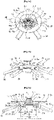
Fig.1d ] sont des représentations d'un montage selon un mode de réalisation de l'invention, respectivement en perspective en vue interne (figure 1a ) et de côté (figure 1b ), en coupe longitudinale (figure 1c ) et transversale (figure 1d ) ; - [
Fig.2 ] et - [
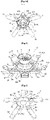
Fig.3 ] sont des représentations en perspective en vue interne respectivement du moyeu (figure 2 ) et de la jante de roue (figure 3 ) du montage desfigures 1a, 1b, 1c et1d . - En relation avec ces figures, on décrit ci-dessous un montage comprenant une jante 1 de roue de véhicule automobile et un disque de frein 2 montés sur un système de guidage en rotation de l'ensemble jante 1 / disque 2.
- Le système comprend un moyeu 3 destiné à être monté en rotation autour d'un axe X par rapport à un organe fixe par l'intermédiaire d'au moins une rangée de corps roulants. Dans la description, les termes « extérieur » et « intérieur » sont définis par rapport à l'axe X d'entrainement en rotation, respectivement pour une localisation éloignée et proche dudit axe.
- Le moyeu 3 présente un fût 4 qui comprend une paroi extérieure 4a sur laquelle peut être disposée au moins une piste de roulement pour former, avec une piste de roulement portée par l'organe fixe, un chemin pour une rangée de corps coulants tels que décrit précédemment. En particulier, une telle piste de roulement peut être formée directement sur la paroi extérieure 4a, ou sur une bague qui est rapportée sur ladite paroi extérieure, puis immobilisée axialement du côté interne par une collerette 5 qui peut être réalisée par sertissage.
- Dans la description, les termes « externe » et « interne » sont définis par rapport à l'intérieur du véhicule automobile pour désigner une position respectivement éloignée et proche dudit intérieur, et notamment proche respectivement du bas et du haut de la
figure 1c . Par ailleurs, les termes « radial » et « axial » sont définis par rapport à l'axe X d'entrainement en rotation, respectivement perpendiculairement et suivant cet axe. - Pour permettre l'entraînement en rotation de la roue, notamment dans le cas d'une roue motrice, le système peut comprendre un bol de transmission d'un couple moteur au moyeu, ledit bol étant actionné en rotation par le moteur du véhicule et comprenant notamment un joint homocinétique (CVJ) par exemple de type Rzeppa.
- Pour assurer la transmission du couple de rotation entre le bol et le moyeu 3, le système comprend des moyens d'engrènement 7 qui sont formés réciproquement dans un alésage 6 du fût 4 et sur un embout du bol. En particulier, l'embout et l'alésage 6 peuvent présenter une géométrie cylindrique complémentaire, les moyens d'engrènement comprenant deux ensembles 7 de cannelures axiales formés respectivement dans ledit alésage et sur ledit embout pour être engagés l'un dans l'autre lorsque ledit embout est monté dans ledit alésage.
- Le moyeu 3 présente en outre une bride 8 de fixation de la jante 1 et du disque de frein 2, ladite bride s'étendant radialement depuis le fût 4. En particulier, comme représenté notamment sur la
figure 1c , la bride de fixation 8 s'étend depuis une zone périphérique externe 9 du fût 4. - La bride 8 est formée d'une pluralité de pattes 10 qui sont espacées angulairement par des évidements 11. Le fait de prévoir une bride 8 avec une structure circonférentielle discontinue permet de réduire de façon importante le poids du moyeu 3, et donc le poids total du montage.
- En relation avec les
figures 1d et 2 , chaque patte 10 présente deux parois latérales 12a qui sont chacune raccordées à une paroi latérale 12a d'une patte 10 adjacente par une paroi concave radiale 12b formée dans la bride 8, ladite paroi concave délimitant avec lesdites parois latérales les évidements 11 entre lesdites pattes adjacentes. Dans le mode de réalisation représenté, la bride 8 présente cinq pattes de fixation 10 qui sont équiréparties angulairement autour de l'axe de rotation X. - Pour permettre la fixation de la jante 1 et du disque 2 sur la bride 8, les pattes 10 présentent chacune une interface pour la fixation de ladite jante et une interface pour la fixation dudit disque. Dans le mode de réalisation représenté, chacune des interfaces comprend un orifice 13, 14 de fixation dans lesquels des vis, des goujons ou des ensembles écrous / tiges filetées (non représentés) sont destinés à venir s'engager pour fixer respectivement la jante 1 et le disque de frein 2 par serrage axial sur les pattes 10.
- Les interfaces de fixation de la jante 1 et du disque de frein 2 définissent respectivement un diamètre Dj de fixation de la jante 1 et un diamètre Dd de fixation du disque de frein 2 autour de l'axe X, le diamètre Dd de fixation du disque de frein 2 étant supérieur au diamètre Dj de fixation de la jante 1. Dans le mode de réalisation représenté, les orifices 13, 14 de fixation sont centrés sur les diamètres respectifs.
- En particulier, chacune des pattes 10 présente, par rapport au fût 4, une partie proximale 10a sur laquelle est formé une interface comprenant un orifice 13 de fixation de la jante 1 et une partie distale 10b sur laquelle est formé une interface comprenant un orifice 14 de fixation du disque de frein 2, les parties 10a, 10b étant reliées par une partie de raccordement 10c qui est agencée pour décaler axialement et radialement lesdites parties proximale et distale l'une par rapport à l'autre. De façon avantageuse, la partie de raccordement 10c est inclinée par rapport à la direction axiale en présentant deux extrémités coudées de raccordement avec respectivement une partie proximale 10a et une partie distale 10b s'étendant radialement.
- En relation avec les
figures 1a, 1b, et 1c , le disque de frein 2 comprend une couronne de friction 2a présentant un bord intérieur 15 depuis lequel s'étendent des lobes 2b pourvus chacun d'un orifice 16 de fixation, les lobes 2b étant formés dans la continuité radiale du bord intérieur 15. Un tel agencement du disque de frein 2 et du moyeu 3 permet de limiter les bruits issus de leur fixation. D'autres modes de fixation du disque de frein 2 sur l'interface des pattes 10 sont possibles, par exemple en emprisonnant l'extrémité desdites pattes dans des encoches dudit disque, encoches refermées par une plaque ou une couronne fixée par des vis dans ledit disque. Ce type de montage permet de réduire les déformations des pattes 10 liées à la dilatation. - Pour assurer le montage du disque de frein 2 sur le moyeu 3, chaque lobe 2b est disposé en appui axial sur respectivement une partie distale 10b d'une patte 10 en alignant axialement leurs orifices 14, 16 de fixation respectifs. Ensuite, une vis est engagée dans chaque ensemble d'orifices 14, 16.
- Par ailleurs, les parois distales 10b présentent chacune une paroi radiale interne 17 sur laquelle une paroi complémentaire 18 du disque de frein 2 est en appui axial. Dans le mode de réalisation représenté, les parois complémentaires 18 sont formées chacune sur une paroi radiale externe d'un lobe 2b, les parois radiales 17, 18 s'étendant chacune autour de l'orifice de fixation 14, 16 de respectivement une partie distale 10b et un lobe 2b.
- En particulier, les parois radiales internes 17 sont disposées autour du fût 4, ce qui permet de disposer la fonction d'engrènement du moyeu 3 sensiblement au même niveau axial que la fonction de fixation du disque de frein 2. Ainsi, il est possible de réduire l'encombrement axial de ces fonctions, et donc l'encombrement axial global du montage.
- Pour permettre la fixation de la jante 1 sur le moyeu 3, les parties proximales 10a présentent chacune une paroi radiale externe 19 sur laquelle une paroi complémentaire 20 de ladite jante est en appui axial. De façon avantageuse, le fait que le disque de frein 2 soit fixé sur des parois 17 qui sont distinctes des parois 19 de fixation de la jante 1 permet de diminuer les exigences de battement sur les parois 19, et donc d'en faciliter leur réalisation.
- En relation avec les
figures 1a ,1d et 3 , la jante 1 présente un plateau central 21 dans lequel des orifices 22 de fixation au moyeu 1 sont formés, ledit plateau présentant une paroi annulaire radiale 21a sur laquelle les parois complémentaires 20 sont formées en entourant chacune respectivement un orifice 22. - De façon avantageuse, les parois radiales externes 19 du moyeu 3 sont disposées en saillie externe du fût 4, ce qui permet de faciliter la fixation sur elles de la jante 1. Pour ce faire, chacune des parties proximales 10a est raccordée au fût 4 de sorte à être décalée du côté externe dudit fût 4, notamment grâce à un agencement particulier de la zone périphérique externe 9 depuis laquelle s'étend la bride 8.
- Chacune des pattes 10 présente une paroi 23 définissant entre elles un diamètre Dc autour de l'axe de rotation X, la jante 1 présentant des parois complémentaires 24 qui sont montées sur lesdites parois pour assurer le centrage de ladite jante suivant le diamètre Dc.
- De façon avantageuse, le diamètre Dc de centrage de la jante 1 est compris entre le diamètre Dd de fixation du disque de frein 2 et le diamètre Dj de fixation de la jante 1, ce qui permet de limiter l'encombrement axial de la fonction de centrage de ladite jante.
- Dans le mode de réalisation représenté, les parois de centrage 23 sont formées au niveau des parties de raccordement 10c. En particulier, chaque paroi de centrage 23 d'une patte 10 est formée sur l'extrémité externe d'une partie de raccordement 10c, de manière à être disposée dans le prolongement extérieur de la paroi radiale externe 19. Ainsi, on rapproche axialement et radialement les fonctions de fixation et de centrage de la jante 1, ce qui permet de limiter l'encombrement global du montage.
- Les pattes 10 présentent chacune un épaulement formé d'une paroi radiale 25 et d'une paroi axiale 23 de centrage, la jante 1 présentant un épaulement complémentaire dont la paroi radiale 26 est en regard axial de la paroi radiale 25 de ladite patte et dont la paroi axiale 24 est centrée sur la paroi axiale 23 de ladite patte.
- Dans le mode de réalisation représenté, la périphérie du plateau central 21 est équipée d'un rebord annulaire 21b qui s'étend axialement, et sur lequel sont formées les parois complémentaires 24 de centrage.
- Pour limiter les risques de déplacement relatif entre la jante 1 et le moyeu 3 durant la rotation, notamment durant les phases de freinage, et donc les risques d'endommagement du montage, notamment au niveau des vis de fixation de ladite jante, les pattes 10 présentent en outre des parois latérales 27 qui sont en regard circonférentiel avec respectivement des parois complémentaires 28 de la jante 1 de sorte à pouvoir immobiliser en rotation ladite jante sur lesdites pattes, notamment en prévoyant un jeu circonférentiel juste suffisant à la disposition de la jante 1 sur les pattes 10.
- Dans le mode de réalisation représenté, les parois latérales 27 sont formées au niveau des parties de raccordement 10c, et notamment sur les extrémités intérieures desdits parties. En particulier, les fonctions de centrage et d'immobilisation en rotation de la jante 1 sont ainsi réalisées sensiblement au même endroit, ce qui permet non seulement de simplifier la réalisation du montage, mais également de réduire l'encombrement global dudit montage.
- Toutefois, ces deux fonctions sont indépendantes l'une de l'autre, et peuvent être réalisées en deux endroits différents du montage, suivant des variantes de réalisation non représentées.
- Pour permettre son immobilisation en rotation sur le moyeu 3, la jante 1 présente au moins un logement 29 dans lequel une patte 10 est disposée, les parois complémentaires 28 bordant latéralement ledit logement. Dans le mode de réalisation représenté, un logement 29 est prévu pour chacune des pattes 10.
- En relation avec les figures, la périphérie du plateau central 21 est prolongée radialement par des branches 30 de la jante 1, un logement 29 étant formé sur respectivement chacune desdites branches. En particulier, chaque logement 29 débouche intérieurement dans le rebord annulaire 21b et comprend un fond 31 sur l'extrémité intérieure duquel est formée la paroi radiale complémentaire 26, afin de former, avec la paroi axiale 24 en regard, l'épaulement complémentaire de centrage de la jante 1.
- De façon avantageuse, une branche 30 est formée dans le prolongement radial de chacun des orifices 22 du plateau central 21, de manière à disposer chaque logement 29 en regard radial de respectivement un orifice 22. Un tel agencement permet de faciliter l'alignement des orifices 13, 22 pour la fixation de la jante 1, mais également de localiser les efforts d'immobilisation en rotation de ladite jante au niveau desdits orifices, afin de mieux protéger les vis contre les risques d'endommagement.
Claims (12)
- Montage comprenant une jante (1) de roue de véhicule automobile et un disque de frein (2) montés sur un système de guidage en rotation comprenant un moyeu (3) destiné à être monté en rotation autour d'un axe (X) par rapport à un organe fixe, ledit moyeu présentant un fût (4) depuis lequel s'étend radialement une bride (8) de fixation de ladite jante et dudit disque de frein, ladite bride étant formée d'une pluralité de pattes (10) qui sont espacées angulairement par des évidements (11), lesdites pattes présentant chacune une interface de fixation de la jante (1) et une interface de fixation du disque de frein (2) définissant respectivement un diamètre (Dj) de fixation de la jante (1) et un diamètre (Dd) de fixation du disque de frein (2) autour de l'axe de rotation (X), ledit diamètre de fixation du disque de frein (2) étant supérieur audit diamètre de fixation de la jante (1), ledit montage étant caractérisé en ce que les pattes (10) présentent des parois latérales (27) qui sont en regard circonférentiel avec respectivement des parois complémentaires (28) de la jante (1) de sorte à pouvoir immobiliser en rotation ladite jante sur lesdites pattes.
- Montage selon la revendication 1, caractérisé en ce que la jante (1) présente au moins un logement (29) dans lequel une patte (10) est disposée, les parois complémentaires (28) bordant latéralement ledit logement.
- Montage selon la revendication 2, caractérisé en ce que la jante (1) présente un plateau central (21) dans lequel des orifices de fixation (22) sont formés, la périphérie du plateau (21) étant prolongée radialement par des branches (30) de la jante (1), un logement (29) étant formé sur respectivement chacune desdites branches.
- Montage selon l'une quelconque des revendications 1 à 3, caractérisé en ce que chacune des pattes (10) présente, par rapport au fût (4), une partie proximale (10a) sur laquelle est formé l'interface de fixation de la jante (1) et une partie distale (10b) sur laquelle est formé l'interface de fixation du disque de frein (2), lesdites parties étant reliées par une partie de raccordement (10c) qui est agencée pour décaler axialement et radialement lesdites parties l'une par rapport à l'autre.
- Montage selon la revendication 4, caractérisé en ce que les parois latérales (27) sont formées au niveau des parties de raccordement (10c).
- Montage selon l'une quelconque des revendications 1 à 5, caractérisé en ce que chacune des pattes (10) présente une paroi (23) définissant entre elles un diamètre (Dc) autour de l'axe de rotation (X) et en ce que la jante (1) présente des parois complémentaires (24) qui sont montées sur lesdites parois pour assurer le centrage de ladite jante suivant le diamètre (Dc).
- Montage selon la revendication 6 lorsqu'elle dépend de la revendication 4, caractérisé en ce que les parois de centrage (23) sont formées au niveau des parties de raccordement (10c).
- Montage selon l'une des revendications 6 ou 7, caractérisé en ce que le diamètre (Dc) de centrage de la jante (1) est compris entre le diamètre (Dd) de fixation du disque de frein (2) et le diamètre (Dj) de fixation de ladite jante.
- Montage selon l'une quelconque des revendications 4 à 8, caractérisé en ce que les parties proximales (10a) présentent chacune une paroi radiale externe (19) sur laquelle une paroi complémentaire (20) de la jante (1) est en appui axial.
- Montage selon l'une quelconque des revendications 4 à 9, caractérisé en ce que les parties distales (10b) présentent chacune une paroi radiale interne (17) sur laquelle une paroi complémentaire (18) du disque de frein (2) est en appui axial.
- Montage selon l'une quelconque des revendications 1 à 10, caractérisé en ce qu'il comprend des vis, des goujons ou des ensembles écrous / tiges filetées engagés dans respectivement un orifice (13, 14) de fixation pour fixer respectivement la jante (1) et le disque de frein (2) par serrage axial sur les pattes (10).
- Montage selon l'une quelconque des revendications 1 à 11, caractérisé en ce que le disque de frein (2) comprend une couronne de friction (2a) présentant un bord intérieur (15) depuis lequel s'étendent des lobes (2b) pourvus chacun d'un orifice de fixation (16), lesdits lobes étant formés dans la continuité radiale dudit bord intérieur
Applications Claiming Priority (1)
| Application Number | Priority Date | Filing Date | Title |
|---|---|---|---|
| FR1910466A FR3101017B1 (fr) | 2019-09-23 | 2019-09-23 | Montage d’une jante de roue de véhicule automobile et d’un disque de frein sur un système de guidage en rotation |
Publications (2)
| Publication Number | Publication Date |
|---|---|
| EP3795368A1 EP3795368A1 (fr) | 2021-03-24 |
| EP3795368B1 true EP3795368B1 (fr) | 2022-08-24 |
Family
ID=68987955
Family Applications (1)
| Application Number | Title | Priority Date | Filing Date |
|---|---|---|---|
| EP20197568.7A Active EP3795368B1 (fr) | 2019-09-23 | 2020-09-22 | Montage d'une jante de roue de véhicule automobile et d'un disque de frein sur un système de guidage en rotation |
Country Status (2)
| Country | Link |
|---|---|
| EP (1) | EP3795368B1 (fr) |
| FR (1) | FR3101017B1 (fr) |
Citations (1)
| Publication number | Priority date | Publication date | Assignee | Title |
|---|---|---|---|---|
| EP0834670B1 (fr) * | 1996-10-01 | 2001-05-30 | SKF INDUSTRIE S.p.A. | Moyeu de roue ou ensemble de moyeu à montage et démontage améliorés d'un élément de frein |
Family Cites Families (2)
| Publication number | Priority date | Publication date | Assignee | Title |
|---|---|---|---|---|
| US7850251B1 (en) * | 2008-09-05 | 2010-12-14 | Robert Bosch Gmbh | Wheel hub and brake rotor assembly |
| DE102017112275B4 (de) | 2017-01-23 | 2018-10-31 | Hirschvogel Umformtechnik Gmbh | Radnabe, System aus Radnabe und Bremsscheibe |
-
2019
- 2019-09-23 FR FR1910466A patent/FR3101017B1/fr not_active Expired - Fee Related
-
2020
- 2020-09-22 EP EP20197568.7A patent/EP3795368B1/fr active Active
Patent Citations (1)
| Publication number | Priority date | Publication date | Assignee | Title |
|---|---|---|---|---|
| EP0834670B1 (fr) * | 1996-10-01 | 2001-05-30 | SKF INDUSTRIE S.p.A. | Moyeu de roue ou ensemble de moyeu à montage et démontage améliorés d'un élément de frein |
Also Published As
| Publication number | Publication date |
|---|---|
| FR3101017B1 (fr) | 2022-05-27 |
| FR3101017A1 (fr) | 2021-03-26 |
| EP3795368A1 (fr) | 2021-03-24 |
Similar Documents
| Publication | Publication Date | Title |
|---|---|---|
| FR2738775A1 (fr) | Moyeu de roue motrice pour vehicule automobile | |
| FR2661475A1 (fr) | Combinaison de vilebrequin et de volant d'inertie. | |
| FR2745235A1 (fr) | Accouplement en rotation d'une bride de roue a un organe de sortie d'un joint d'articulation d'une transmission | |
| FR2561333A1 (fr) | Couvercle tulipe pour joint homocinetique tripode, et joint le comportant | |
| EP3795368B1 (fr) | Montage d'une jante de roue de véhicule automobile et d'un disque de frein sur un système de guidage en rotation | |
| FR2768794A1 (fr) | Embrayage de verrouillage pour un appareil d'accouplement hydrocinetique, notamment de vehicule automobile | |
| WO1999001682A1 (fr) | Appareil d'accouplement hydrocinetique a embrayage de verrouillage, pour vehicule automobile | |
| EP3795372B1 (fr) | Montage d'une jante de roue de véhicule automobile et d'un disque de frein sur un système de guidage en rotation | |
| FR2689191A1 (fr) | Friction d'embrayage, notamment pour véhicule industriel. | |
| WO1997038232A1 (fr) | Croisillon pour joint de transmission et joint de transmission correspondant | |
| FR3005124A1 (fr) | Montage d’un systeme d’entrainement en rotation d’une roue de vehicule automobile dans un pivot | |
| WO2001081792A1 (fr) | Appareil d'accouplement hydrocinetique, notamment pour vehicule automobile | |
| EP2799246B1 (fr) | Montage d un ensemble disque de frein / jante de roue de véhicule automobile sur un système d entraînement en rotation dudit ensemble | |
| EP3795369A1 (fr) | Moyeu destiné à être monté en rotation autour d'un axe par rapport à un organe fixe | |
| EP1707843A1 (fr) | Double volant amortisseur pour véhicule automobile | |
| FR2793295A1 (fr) | Appareil d'accouplement hydrocinetique d'encombrement reduit, notamment pour vehicule automobile | |
| FR2905155A1 (fr) | Frein a disque comportant un axe dont une portee presente une section de profil non circulaire | |
| FR3096098A1 (fr) | Système d’entraînement en rotation d’une roue de véhicule automobile | |
| EP1348611B1 (fr) | Dispositif de fixation de pivot de roue de véhicule automobile | |
| EP0836685B1 (fr) | Montage de butee de debrayage | |
| EP0260196A1 (fr) | Dispositif de liaison entre un groupe moto-propulseur et un arbre de transmission de véhicule | |
| FR2990254A1 (fr) | Systeme d'entrainement en rotation d'une roue de vehicule automobile | |
| FR2990255A1 (fr) | Systeme d'entrainement en rotation d'une roue de vehicule automobile | |
| FR3108216A1 (fr) | Ensemble pour un dispositif de mobilite comprenant une machine electrique et une transmission | |
| FR3096104A1 (fr) | Montage d’un ensemble disque de frein / roue de véhicule automobile sur un système d’entraînement en rotation |
Legal Events
| Date | Code | Title | Description |
|---|---|---|---|
| PUAI | Public reference made under article 153(3) epc to a published international application that has entered the european phase |
Free format text: ORIGINAL CODE: 0009012 |
|
| STAA | Information on the status of an ep patent application or granted ep patent |
Free format text: STATUS: THE APPLICATION HAS BEEN PUBLISHED |
|
| AK | Designated contracting states |
Kind code of ref document: A1 Designated state(s): AL AT BE BG CH CY CZ DE DK EE ES FI FR GB GR HR HU IE IS IT LI LT LU LV MC MK MT NL NO PL PT RO RS SE SI SK SM TR |
|
| AX | Request for extension of the european patent |
Extension state: BA ME |
|
| STAA | Information on the status of an ep patent application or granted ep patent |
Free format text: STATUS: REQUEST FOR EXAMINATION WAS MADE |
|
| 17P | Request for examination filed |
Effective date: 20210921 |
|
| RBV | Designated contracting states (corrected) |
Designated state(s): AL AT BE BG CH CY CZ DE DK EE ES FI FR GB GR HR HU IE IS IT LI LT LU LV MC MK MT NL NO PL PT RO RS SE SI SK SM TR |
|
| GRAP | Despatch of communication of intention to grant a patent |
Free format text: ORIGINAL CODE: EPIDOSNIGR1 |
|
| STAA | Information on the status of an ep patent application or granted ep patent |
Free format text: STATUS: GRANT OF PATENT IS INTENDED |
|
| INTG | Intention to grant announced |
Effective date: 20220314 |
|
| GRAS | Grant fee paid |
Free format text: ORIGINAL CODE: EPIDOSNIGR3 |
|
| GRAA | (expected) grant |
Free format text: ORIGINAL CODE: 0009210 |
|
| STAA | Information on the status of an ep patent application or granted ep patent |
Free format text: STATUS: THE PATENT HAS BEEN GRANTED |
|
| AK | Designated contracting states |
Kind code of ref document: B1 Designated state(s): AL AT BE BG CH CY CZ DE DK EE ES FI FR GB GR HR HU IE IS IT LI LT LU LV MC MK MT NL NO PL PT RO RS SE SI SK SM TR |
|
| REG | Reference to a national code |
Ref country code: CH Ref legal event code: EP |
|
| REG | Reference to a national code |
Ref country code: DE Ref legal event code: R096 Ref document number: 602020004669 Country of ref document: DE |
|
| REG | Reference to a national code |
Ref country code: IE Ref legal event code: FG4D Free format text: LANGUAGE OF EP DOCUMENT: FRENCH |
|
| REG | Reference to a national code |
Ref country code: AT Ref legal event code: REF Ref document number: 1513394 Country of ref document: AT Kind code of ref document: T Effective date: 20220915 |
|
| REG | Reference to a national code |
Ref country code: LT Ref legal event code: MG9D |
|
| REG | Reference to a national code |
Ref country code: NL Ref legal event code: MP Effective date: 20220824 |
|
| PG25 | Lapsed in a contracting state [announced via postgrant information from national office to epo] |
Ref country code: SE Free format text: LAPSE BECAUSE OF FAILURE TO SUBMIT A TRANSLATION OF THE DESCRIPTION OR TO PAY THE FEE WITHIN THE PRESCRIBED TIME-LIMIT Effective date: 20220824 Ref country code: RS Free format text: LAPSE BECAUSE OF FAILURE TO SUBMIT A TRANSLATION OF THE DESCRIPTION OR TO PAY THE FEE WITHIN THE PRESCRIBED TIME-LIMIT Effective date: 20220824 Ref country code: PT Free format text: LAPSE BECAUSE OF FAILURE TO SUBMIT A TRANSLATION OF THE DESCRIPTION OR TO PAY THE FEE WITHIN THE PRESCRIBED TIME-LIMIT Effective date: 20221226 Ref country code: NO Free format text: LAPSE BECAUSE OF FAILURE TO SUBMIT A TRANSLATION OF THE DESCRIPTION OR TO PAY THE FEE WITHIN THE PRESCRIBED TIME-LIMIT Effective date: 20221124 Ref country code: NL Free format text: LAPSE BECAUSE OF FAILURE TO SUBMIT A TRANSLATION OF THE DESCRIPTION OR TO PAY THE FEE WITHIN THE PRESCRIBED TIME-LIMIT Effective date: 20220824 Ref country code: LV Free format text: LAPSE BECAUSE OF FAILURE TO SUBMIT A TRANSLATION OF THE DESCRIPTION OR TO PAY THE FEE WITHIN THE PRESCRIBED TIME-LIMIT Effective date: 20220824 Ref country code: LT Free format text: LAPSE BECAUSE OF FAILURE TO SUBMIT A TRANSLATION OF THE DESCRIPTION OR TO PAY THE FEE WITHIN THE PRESCRIBED TIME-LIMIT Effective date: 20220824 Ref country code: FI Free format text: LAPSE BECAUSE OF FAILURE TO SUBMIT A TRANSLATION OF THE DESCRIPTION OR TO PAY THE FEE WITHIN THE PRESCRIBED TIME-LIMIT Effective date: 20220824 |
|
| REG | Reference to a national code |
Ref country code: AT Ref legal event code: MK05 Ref document number: 1513394 Country of ref document: AT Kind code of ref document: T Effective date: 20220824 |
|
| PG25 | Lapsed in a contracting state [announced via postgrant information from national office to epo] |
Ref country code: PL Free format text: LAPSE BECAUSE OF FAILURE TO SUBMIT A TRANSLATION OF THE DESCRIPTION OR TO PAY THE FEE WITHIN THE PRESCRIBED TIME-LIMIT Effective date: 20220824 Ref country code: IS Free format text: LAPSE BECAUSE OF FAILURE TO SUBMIT A TRANSLATION OF THE DESCRIPTION OR TO PAY THE FEE WITHIN THE PRESCRIBED TIME-LIMIT Effective date: 20221224 Ref country code: HR Free format text: LAPSE BECAUSE OF FAILURE TO SUBMIT A TRANSLATION OF THE DESCRIPTION OR TO PAY THE FEE WITHIN THE PRESCRIBED TIME-LIMIT Effective date: 20220824 Ref country code: GR Free format text: LAPSE BECAUSE OF FAILURE TO SUBMIT A TRANSLATION OF THE DESCRIPTION OR TO PAY THE FEE WITHIN THE PRESCRIBED TIME-LIMIT Effective date: 20221125 |
|
| PG25 | Lapsed in a contracting state [announced via postgrant information from national office to epo] |
Ref country code: SM Free format text: LAPSE BECAUSE OF FAILURE TO SUBMIT A TRANSLATION OF THE DESCRIPTION OR TO PAY THE FEE WITHIN THE PRESCRIBED TIME-LIMIT Effective date: 20220824 Ref country code: RO Free format text: LAPSE BECAUSE OF FAILURE TO SUBMIT A TRANSLATION OF THE DESCRIPTION OR TO PAY THE FEE WITHIN THE PRESCRIBED TIME-LIMIT Effective date: 20220824 Ref country code: ES Free format text: LAPSE BECAUSE OF FAILURE TO SUBMIT A TRANSLATION OF THE DESCRIPTION OR TO PAY THE FEE WITHIN THE PRESCRIBED TIME-LIMIT Effective date: 20220824 Ref country code: DK Free format text: LAPSE BECAUSE OF FAILURE TO SUBMIT A TRANSLATION OF THE DESCRIPTION OR TO PAY THE FEE WITHIN THE PRESCRIBED TIME-LIMIT Effective date: 20220824 Ref country code: CZ Free format text: LAPSE BECAUSE OF FAILURE TO SUBMIT A TRANSLATION OF THE DESCRIPTION OR TO PAY THE FEE WITHIN THE PRESCRIBED TIME-LIMIT Effective date: 20220824 Ref country code: AT Free format text: LAPSE BECAUSE OF FAILURE TO SUBMIT A TRANSLATION OF THE DESCRIPTION OR TO PAY THE FEE WITHIN THE PRESCRIBED TIME-LIMIT Effective date: 20220824 |
|
| REG | Reference to a national code |
Ref country code: DE Ref legal event code: R097 Ref document number: 602020004669 Country of ref document: DE Ref country code: BE Ref legal event code: MM Effective date: 20220930 |
|
| PG25 | Lapsed in a contracting state [announced via postgrant information from national office to epo] |
Ref country code: SK Free format text: LAPSE BECAUSE OF FAILURE TO SUBMIT A TRANSLATION OF THE DESCRIPTION OR TO PAY THE FEE WITHIN THE PRESCRIBED TIME-LIMIT Effective date: 20220824 Ref country code: MC Free format text: LAPSE BECAUSE OF FAILURE TO SUBMIT A TRANSLATION OF THE DESCRIPTION OR TO PAY THE FEE WITHIN THE PRESCRIBED TIME-LIMIT Effective date: 20220824 Ref country code: EE Free format text: LAPSE BECAUSE OF FAILURE TO SUBMIT A TRANSLATION OF THE DESCRIPTION OR TO PAY THE FEE WITHIN THE PRESCRIBED TIME-LIMIT Effective date: 20220824 |
|
| PG25 | Lapsed in a contracting state [announced via postgrant information from national office to epo] |
Ref country code: LU Free format text: LAPSE BECAUSE OF NON-PAYMENT OF DUE FEES Effective date: 20220922 Ref country code: AL Free format text: LAPSE BECAUSE OF FAILURE TO SUBMIT A TRANSLATION OF THE DESCRIPTION OR TO PAY THE FEE WITHIN THE PRESCRIBED TIME-LIMIT Effective date: 20220824 |
|
| PLBE | No opposition filed within time limit |
Free format text: ORIGINAL CODE: 0009261 |
|
| STAA | Information on the status of an ep patent application or granted ep patent |
Free format text: STATUS: NO OPPOSITION FILED WITHIN TIME LIMIT |
|
| PG25 | Lapsed in a contracting state [announced via postgrant information from national office to epo] |
Ref country code: IE Free format text: LAPSE BECAUSE OF NON-PAYMENT OF DUE FEES Effective date: 20220922 Ref country code: FR Free format text: LAPSE BECAUSE OF NON-PAYMENT OF DUE FEES Effective date: 20221024 |
|
| 26N | No opposition filed |
Effective date: 20230525 |
|
| PG25 | Lapsed in a contracting state [announced via postgrant information from national office to epo] |
Ref country code: SI Free format text: LAPSE BECAUSE OF FAILURE TO SUBMIT A TRANSLATION OF THE DESCRIPTION OR TO PAY THE FEE WITHIN THE PRESCRIBED TIME-LIMIT Effective date: 20220824 |
|
| PG25 | Lapsed in a contracting state [announced via postgrant information from national office to epo] |
Ref country code: BE Free format text: LAPSE BECAUSE OF NON-PAYMENT OF DUE FEES Effective date: 20220930 |
|
| PGFP | Annual fee paid to national office [announced via postgrant information from national office to epo] |
Ref country code: DE Payment date: 20230920 Year of fee payment: 4 |
|
| PG25 | Lapsed in a contracting state [announced via postgrant information from national office to epo] |
Ref country code: CY Free format text: LAPSE BECAUSE OF FAILURE TO SUBMIT A TRANSLATION OF THE DESCRIPTION OR TO PAY THE FEE WITHIN THE PRESCRIBED TIME-LIMIT Effective date: 20220824 |
|
| REG | Reference to a national code |
Ref country code: CH Ref legal event code: PL |
|
| PG25 | Lapsed in a contracting state [announced via postgrant information from national office to epo] |
Ref country code: MK Free format text: LAPSE BECAUSE OF FAILURE TO SUBMIT A TRANSLATION OF THE DESCRIPTION OR TO PAY THE FEE WITHIN THE PRESCRIBED TIME-LIMIT Effective date: 20220824 Ref country code: IT Free format text: LAPSE BECAUSE OF FAILURE TO SUBMIT A TRANSLATION OF THE DESCRIPTION OR TO PAY THE FEE WITHIN THE PRESCRIBED TIME-LIMIT Effective date: 20220824 Ref country code: HU Free format text: LAPSE BECAUSE OF FAILURE TO SUBMIT A TRANSLATION OF THE DESCRIPTION OR TO PAY THE FEE WITHIN THE PRESCRIBED TIME-LIMIT; INVALID AB INITIO Effective date: 20200922 |
|
| PG25 | Lapsed in a contracting state [announced via postgrant information from national office to epo] |
Ref country code: CH Free format text: LAPSE BECAUSE OF NON-PAYMENT OF DUE FEES Effective date: 20230930 |
|
| PG25 | Lapsed in a contracting state [announced via postgrant information from national office to epo] |
Ref country code: CH Free format text: LAPSE BECAUSE OF NON-PAYMENT OF DUE FEES Effective date: 20230930 Ref country code: BG Free format text: LAPSE BECAUSE OF FAILURE TO SUBMIT A TRANSLATION OF THE DESCRIPTION OR TO PAY THE FEE WITHIN THE PRESCRIBED TIME-LIMIT Effective date: 20220824 |
|
| PG25 | Lapsed in a contracting state [announced via postgrant information from national office to epo] |
Ref country code: MT Free format text: LAPSE BECAUSE OF FAILURE TO SUBMIT A TRANSLATION OF THE DESCRIPTION OR TO PAY THE FEE WITHIN THE PRESCRIBED TIME-LIMIT Effective date: 20220824 |
|
| REG | Reference to a national code |
Ref country code: DE Ref legal event code: R119 Ref document number: 602020004669 Country of ref document: DE |
|
| GBPC | Gb: european patent ceased through non-payment of renewal fee |
Effective date: 20240922 |
|
| PG25 | Lapsed in a contracting state [announced via postgrant information from national office to epo] |
Ref country code: DE Free format text: LAPSE BECAUSE OF NON-PAYMENT OF DUE FEES Effective date: 20250401 |
|
| PG25 | Lapsed in a contracting state [announced via postgrant information from national office to epo] |
Ref country code: GB Free format text: LAPSE BECAUSE OF NON-PAYMENT OF DUE FEES Effective date: 20240922 |
|
| PG25 | Lapsed in a contracting state [announced via postgrant information from national office to epo] |
Ref country code: TR Free format text: LAPSE BECAUSE OF FAILURE TO SUBMIT A TRANSLATION OF THE DESCRIPTION OR TO PAY THE FEE WITHIN THE PRESCRIBED TIME-LIMIT Effective date: 20220824 |