EP3793580B1 - Probiotischer stamm lactobacillus kefiri sgl 13 und seine verwendung zur vorbeugung und behandlung von darmentzündung und zur vorbeugung von darmneoplasmen - Google Patents
Probiotischer stamm lactobacillus kefiri sgl 13 und seine verwendung zur vorbeugung und behandlung von darmentzündung und zur vorbeugung von darmneoplasmen Download PDFInfo
- Publication number
- EP3793580B1 EP3793580B1 EP19730543.6A EP19730543A EP3793580B1 EP 3793580 B1 EP3793580 B1 EP 3793580B1 EP 19730543 A EP19730543 A EP 19730543A EP 3793580 B1 EP3793580 B1 EP 3793580B1
- Authority
- EP
- European Patent Office
- Prior art keywords
- kefiri
- sgl
- intestinal
- strain
- composition
- Prior art date
- Legal status (The legal status is an assumption and is not a legal conclusion. Google has not performed a legal analysis and makes no representation as to the accuracy of the status listed.)
- Active
Links
Images

Classifications
-
- A—HUMAN NECESSITIES
- A23—FOODS OR FOODSTUFFS; TREATMENT THEREOF, NOT COVERED BY OTHER CLASSES
- A23L—FOODS, FOODSTUFFS OR NON-ALCOHOLIC BEVERAGES, NOT OTHERWISE PROVIDED FOR; PREPARATION OR TREATMENT THEREOF
- A23L33/00—Modifying nutritive qualities of foods; Dietetic products; Preparation or treatment thereof
- A23L33/10—Modifying nutritive qualities of foods; Dietetic products; Preparation or treatment thereof using additives
- A23L33/135—Bacteria or derivatives thereof, e.g. probiotics
-
- A—HUMAN NECESSITIES
- A61—MEDICAL OR VETERINARY SCIENCE; HYGIENE
- A61K—PREPARATIONS FOR MEDICAL, DENTAL OR TOILETRY PURPOSES
- A61K35/00—Medicinal preparations containing materials or reaction products thereof with undetermined constitution
- A61K35/66—Microorganisms or materials therefrom
- A61K35/74—Bacteria
- A61K35/741—Probiotics
- A61K35/744—Lactic acid bacteria, e.g. enterococci, pediococci, lactococci, streptococci or leuconostocs
- A61K35/747—Lactobacilli, e.g. L. acidophilus or L. brevis
-
- C—CHEMISTRY; METALLURGY
- C12—BIOCHEMISTRY; BEER; SPIRITS; WINE; VINEGAR; MICROBIOLOGY; ENZYMOLOGY; MUTATION OR GENETIC ENGINEERING
- C12N—MICROORGANISMS OR ENZYMES; COMPOSITIONS THEREOF; PROPAGATING, PRESERVING, OR MAINTAINING MICROORGANISMS; MUTATION OR GENETIC ENGINEERING; CULTURE MEDIA
- C12N1/00—Microorganisms; Compositions thereof; Processes of propagating, maintaining or preserving microorganisms or compositions thereof; Processes of preparing or isolating a composition containing a microorganism; Culture media therefor
- C12N1/20—Bacteria; Culture media therefor
- C12N1/205—Bacterial isolates
-
- C—CHEMISTRY; METALLURGY
- C12—BIOCHEMISTRY; BEER; SPIRITS; WINE; VINEGAR; MICROBIOLOGY; ENZYMOLOGY; MUTATION OR GENETIC ENGINEERING
- C12R—INDEXING SCHEME ASSOCIATED WITH SUBCLASSES C12C - C12Q, RELATING TO MICROORGANISMS
- C12R2001/00—Microorganisms ; Processes using microorganisms
- C12R2001/01—Bacteria or Actinomycetales ; using bacteria or Actinomycetales
- C12R2001/225—Lactobacillus
Definitions
- the present invention relates to the probiotic strain Lactobacillus kefiri SGL 13 and use thereof, alone or in association with prebiotics and plant extracts, for making a food and pharmaceutical composition for use as supplement, medical or pharmaceutical device.
- the use of the probiotic strain Lactobacillus kefiri SGL 13 in the prevention and treatment of intestinal inflammation is also described.
- Kefir granules represent a complex composition of microbial species such as the predominance of lactic acid bacteria, acetic bacteria, yeasts and fungi. These granules, if used to ferment milk, produce a healthy drink called "Kefir" that has been used for centuries in Caucasian countries and nowadays is spread all over the world, with healthy effects on populations using it regularly. In fact, several beneficial properties, such as immunostimulant, antimicrobial, anti-inflammatory and anticancer, have been associated with the consumption of kefir. Therefore, the study of probiotic properties of microorganisms isolated from kefir constitutes a field of great interest for the development of functional foods.
- Microbial species present in kefir granules include: homofermentative and heterofermentative lactic bacteria, and lactose fermenting and non-fermenting yeasts. Lactobacillus paracasei ssp. paracasei, Lactobacillus acidophilus, Lactobacillus delbrueckii ssp. bulgaricus, Lactobacillus plantarum and L . kefiranofaciens are the predominant species in kefir granules. However, these species represent only 20% of the lactobacilli in the final fermented drink, since 80% is comprised of Lactobacillus kefiri.
- L. kefiri IM002 strain is able to attenuate the pro-inflammatory response induced by Salmonella Typhimurium in intestinal epithelial cells HT-29, by reducing the secretion of IL-8, one of the main mediators of the inflammatory response.
- the treated animals show an increase in the levels of anti-inflammatory IL-10, as well as of the chemokine CXCL-1 (functionally analogous to human IL-8) involved in the recruitment of neutrophils from the lamina intestinal to the epithelium, and essential in the protection from dextran sodium sulfate (DSS) induced colitis.
- IL-10 anti-inflammatory IL-10
- CXCL-1 chemokine CXCL-1
- WO2017/137920 describes a L.kefiri strain which adheres to and protects enterocytes from cytokine-induced inflammation.
- L. kefiri like many other lactobacilli, is able to prevent invasion by some enteropathogens at the intestinal level, on the one hand exploiting the adhesion properties to the epithelium, thus reducing the binding sites for pathogens, and on the other hand through an aggregation mechanism with the pathogens themselves.
- Adhesion to the mucosa lining the intestinal tract is the first step required for a probiotic to interact with host cells and trigger a particular response.
- EPS exopolysaccharides
- lactic ferments and in particular by those species originating kefir granules, have a crucial role not only for fermented products (wherein they determine consistency, texture and rheological properties) but also in biofilm prevention processes, antioxidant activity, anticancer, and immunomodulatory properties.
- EPS are long saccharide chains whose main components are monosaccharides, such as glucose, galactose, fructose, and mannose. To date, the mechanisms by which these molecules implement their beneficial properties are still unclear, but there are numerous evidences that part of probiotic effects of lactic bacteria are attributable to surface bioactive compounds, such as EPS.
- S-layers proteins known as S-layers.
- S-layer proteins proteins known as S-layers.
- S-layer proteins The presence of S-layer proteins in L. kefiri has been demonstrated.
- Several studies demonstrate that an involvement of such proteins is at the basis of probiotic properties of some L. kefiri strains. In particular, they are able to prevent Salmonella enterica invasion of Caco-2 cells and inhibit the cytotoxic effect of Clostridium difficile toxins on Vero cells.
- SCFAs short chain fatty acids
- L . kefiri is able to induce apoptosis in human gastric adenocarcinoma (AGS) cells, in a dosedependent manner, without interfering with the peripheral blood mononuclear cells.
- AGS cells treated with L. kefiri there is a reduced expression of Bcl-2 and a decrease in the mitochondrial membrane potential with consequent release of proapoptotic molecules causing the activation of caspases and eventually leading to apoptosis.
- Andrographolide is the major active component of this phytocomplex, and it is present mainly in the bush leaves. It is a diterpene lactone traditionally used in northern Europe for treatment and prophylaxis of colds. Despite secondary activities as antibacterial, antiviral, immunostimulant, hepatoprotectant and anti-carcinogen have been widely documented, its main function remains the anti-inflammatory one. Andrographolide prevents the activation of various inflammatory signaling pathways, such as the MAPK/ERK TLR3-dependent or the JAK/STAT stimulated by the IPN- ⁇ .
- Kefir has a sour taste, and from the caloric point of view it has the disadvantage that being necessary an intake of several times a day to get a benefit, it can cause an unwanted weight gain.
- kefir contains very variable amounts of fat, depending on the type of kefir, and mainly saturated fats.
- the intake of often caloric sugars and flavoring is required.
- the uncontrolled fermentation of kefir granules does not guarantee standardization of the yeast titer and the species represented.
- the object of the present invention is therefore to provide an alternative to kefir drink, which has the same advantages from the health benefits point of view, but which does not have the known disadvantages of the product, guaranteeing a correct taxonomic definition of the yeasts, a correct titer and standardization of intake.
- the object of the present invention is to provide a bacterial strain belonging to the Lactobacillus kefiri species, wherein said strain is L. kefiri SGL 13 deposited with accession number DSM 27331 on 13/06/2013 at the International Depositary Authority Leibniz-Institut DSMZ - Deutsche Sammlung von Mikroorganismen und Zellkulturen GmbH.
- the L. kefiri SGL 13 DSM 27331, strain was deposited in the name of MD'E srl, via Vietnameseonale 339, Castelnuovo Vomano (TE) 64020 Italy, which together with Sintal Dietetics is part of the same network of companies.
- the invention concerns a composition
- a composition comprising the bacterial strain L. kefiri SGL 13, optionally added with pharmacologically acceptable excipients.
- the invention further concerns a composition
- a composition comprising the bacterial strain L. kefiri SGL 13, and a plant extract of Andrographis paniculata and/or one or more prebiotics, optionally added with pharmacologically acceptable excipients.
- the invention relates to the composition comprising the bacterial strain L. kefiri SGL 13, for use as a medicament.
- said medicament is for use in the treatment and prevention of intestinal inflammations.
- the object of the present invention is to provide a bacterial strain belonging to the Lactobacillus kefiri species, wherein said strain is L. kefiri SGL 13 deposited with accession number DSM 27331 on 13/06/2013 at the International Depositary Authority Leibniz-Institut DSMZ - Deutsche Sammlung von Mikroorganismen und Zellkulturen GmbH.
- the invention concerns a composition
- a composition comprising the bacterial strain L. kefiri SGL 13, optionally added with pharmacologically acceptable excipients.
- the bacterial strain L. kefiri SGL 13 is advantageously prepared in the form of a composition.
- Suitable compositions may be in the form of powders, capsules, tablets, granulates, drops and syrups, chewing gum.
- the ranges of use of the ferment are from 1 billion/dose to 20 billion/dose, preferably such a range is from 200 billion/dose to 20 billion/dose, more preferably from 50 billion/dose to 40 billion/dose.
- the invention further concerns a composition comprising the bacterial strain L. kefiri SGL 13, and a plant extract.
- said plant extract is an extract of Andrographis paniculata, Turmeric, Boswellia serrata, tocotrienols (extracted also from vegetables rich in vitamin E having antioxidant activity), fennel ( Foeniculum vulgare ), licorice ( Glycyrrhiza glabra ), ginger ( Zingiber officinale ), Lemon Balm ( Melissa officinalis ), Marshmallow ( Althaea officinalis ), mint ( Mentha L .), thyme ( Thymus L .) and rosemary ( Rosmarinus officinalis, essential oils OE or dry extracts ES), green tea.
- Andrographis paniculata, Turmeric, Boswellia serrata, tocotrienols extracted also from vegetables rich in vitamin E having antioxidant activity
- fennel Foeniculum vulgare
- licorice Glycyrrhiza glabra
- ginger Zingiber officinale
- Lemon Balm Melissa officinalis
- said plant extract is an extract of Andrographis paniculata.
- compositions may simple be premixed powders, finished pharmaceutical forms: capsules, tablets, sachets, drops and syrups, chewing gum.
- the ranges of use of the ferment are from 1 billion/dose to 20 billion/dose for the ferment, and from 0.1 g/dose to 1 g/dose for the extract of Andrographis paniculata.
- composition comprising the bacterial strain L. kefiri SGL 13 may further comprise one or more prebiotics or said composition may further comprise a plant extract and one or more prebiotics.
- said prebiotic is selected from the group consisting in GOS (gluco-oligosaccharides), FOS (fructo-oligosaccharides), Guar Fiber, Inulin, MOS (mannan-oligosaccharides), pectins, Glucomannan.
- compositions comprising:
- compositions according to the invention may be in a solid or liquid form.
- the dosages are in a range from 1 billion/dose to 20 billion/dose for ferments, preferably this range is from 200 billion/dose to 20 billion/dose, more preferably from 50 billion/dose to 40 billion/dose, in a range from 0.1 g/dose to 5 g/dose for the prebiotics, and in a range from 0.1 g/dose to 1 g/dose for the extract of Andrographis paniculata.
- compositions according to the invention can be employed for use as a medicament.
- compositions according to the present invention have an anti-inflammatory, immunomodulatory and antitumor action, in fact they allow to modulate the immune and inflammatory responses at the level of the intestinal mucosa and at a systemic level, in order to guarantee the maintenance of the gastrointestinal homeostasis thus preventing the onset of intestinal cancer diseases.
- Suitable compositions may be in the form of powders, capsules, tablets, granulates, drops and syrups, chewing gum.
- said medicament is for use in the treatment and prevention of intestinal inflammation and in the treatment and prevention of intestinal neoplasms.
- said intestinal inflammations may be selected from the group consisting of ischaemic colitis, lymphocytic colitis, ulcerative colitis, diversion colitis, paucities, Chron's disease, and enterocolitis such as necrotizing enterocolitis and all acute and chronic intestinal inflammatory diseases in general (IBDs).
- the present work relates to the identification and characterization of the probiotic properties of the L. kefiri SGL 13 strain and use thereof for the therapeutic purposes specified above.
- compositions according to the invention can be further employed for food use and as a supplement.
- Suitable food compositions may be in the form of a beverage, preferably fruit juice, coffee, tea, and a soft drink.
- the invention further concerns a medical or pharmaceutical device comprising the compositions comprising:
- compositions comprising the associations of L. kefiri SGL 13 and plant extract of Andrographis paniculata and one or more prebiotics allow to enhance the beneficial effects of the formulation resulting from the association.
- the strain was isolated from kefir granules. The granules were resuspended in milk, incubated for 30 minutes at 37°C on selective LAMVAB (LV) medium for vancomycin-resistant lactobacilli.
- the solution A was prepared by dissolving the following components in 500 mL of distilled water: MRS Broth 52.2 g/L L-Cysteine 0.25 g/L Bromocresol Green (0.25% in ethanol) 3 ml/L
- Solution A was brought to pH 5 with 4 N HCl and sterilized in autoclave at 110°C for 30 minutes.
- the solution B was prepared by re-suspending 18 g of agar in 500 mL of distilled water, also sterilized at 110°C for 30 minutes. After being cooled down to 55°C, solutions A and B were joined. Before being poured into the plate, agar medium was added with 20 mg/L vancomycin.
- the strain was isolated from kefir granules by using selective LAMVAB (LV) medium for vancomycin-resistant lactobacilli. After incubation at 37°C in anaerobiosis, o/n, different types of colonies were observed on the LV plates; those with a rod-shaped morphology under an optical microscope were rubbed again on MRS agar plates added with 0.05% cysteine, in order to obtain isolated cultures each of a single strain from each other.
- LAMVAB LAMVAB
- L. kefiri colonies are medium size, opaque with a whiter central dot in the center, regular and convex colonies; the morphology of the microorganism under the microscope can be described as micro-organisms in the shape of a short, thick and regular rod.
- the isolated strain was initially identified by growing it on a selective LAMVAB medium, as described in the previous paragraph, and direct observation of the morphology of the plate-grown colonies and cell morphology following observation by light microscopy.
- Lactobacilli strains selected by isolation with the LV medium were taxonomically classified by the study of the entire 16S gene. A region about 1500 bp long was amplified using generic primers for eubacteria, sequenced, and then aligned using BLAST with public databases. The results enabled a certain classification with its ascription to the Lactobacillus kefiri species.
- the Maldi Tof results shown below provided additional support to the strain identification.
- the L. kefiri SGL 13 strain was deposited at the European International Collection DSMZ, an organization recognized with the IDA ( International Depositary Authority ) status, with a "patent deposit” having the following data: L. kefiri SGL 13 DSM 27331, on 13/06/2013.
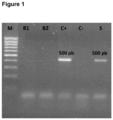
- microorganism was amplified with species-specific primers, verifying the positivity by the appearance of the amplicon of the expected size of 500 bp.
- Figure 1 shows the result of amplification of L. kefiri SGL 13 with species-specific primers.
- microorganism genome was extracted using commercial kits (Macherey Nagel, Düren, Germany) following manufacturer's indications. DNA was used in the concentration of 50-100 ng for the amplification reaction of 16S gene. Amplification reactions were performed using Biometra T-professional thermocycler (Biometra, Göttingen, Germany). The amplification conditions used were those that gave the best yields of amplified gene. All reactions were carried out in a final volume of 25 ⁇ L.
- the fragment of about 1550 bp was sequenced (MWG Biotech, Ebersberg, Germany) and was aligned with Blast database (NCBI, nucleotide blast) to obtain the correct identification of the species.
- the same DNA was used as a template for a species-specific primer set for L. kefiri SGL 13. These primers produce a fragment of about 500 bp if the amplified DNA belongs to the species in question.
- the primers, the thermocycle and the amplicon are shown below.
- Primer Lk1 5'-CAACAATCAAAGGGGTTGTTG-3' (SEQ ID NO:3)
- Thermocycle 95°C 10' 95°C 1' 48°C 1' 72°C 1' 72°C 5' 15°C ⁇ Amplicon: 500 bp
- the visualization of the amplification products was carried out by electrophoretic run on agarose gel (1-2%). This analysis was carried out by loading on the gel a volume of the reaction mixture of 10-15 ⁇ L, in parallel with the molecular weight marker (MassRuler TM Low Range DNA Ladder, Fermentas).
- the sample was prepared as follows: a bacterial culture of L. kefiri SGL 13 grown overnight was collected in order to have a sufficient number of cells for detection (5 billion). The cell pellet was washed with saline solution to remove residues of fermented medium and resuspended in 300 ⁇ L of distilled water and 900 ⁇ L of pure ethanol. The suspension was well homogenized. The sample was then centrifuged at 13,000 rpm for 2 minutes and air-dried after removing the supernatant. The sample was stored at -20°C pending analysis.
- the sample was resuspended with 50 ⁇ L of 70% formic acid. After resuspension, additional 50 ⁇ L of acetonitrile were added and the whole was vigorously stirred. The sample was then centrifuged for 2 minutes at 13,000 rpm. 1 ⁇ L of supernatant was placed onto the center of a spot of a disposable Maldi plate and air-dried. The addition of 1 ⁇ L of matrix made of organic materials ( ⁇ -cyano-4-hydroxycinnamic acid) started the Maldi Tof analysis.
- Maldi Tof MS was performed with a MicroFlex LT system using the conditions included in the user manual.
- the ions generated by a nitrogen laser, at a 337 nm wavelength, were linearly captured in a mass range of 2 to 20 KDa.
- the instrument is connected to the Biotyper 2.0 software (Bruker Daltonics) capable of acquiring incoming data, elaborate them in mass spectra and compare them with reference spectra present in the internal database (3,740 spectra of 319 genres and 1,946 different species). For each 24-sample plate, a standard test was included to calibrate and validate the analysis.
- the degree of correspondence with the typical spectrum for each microorganism present in the database determines the attribution of a so-called "score value” expressing the degree of certainty for the proposed identification of the species under examination. Scores with a value greater than 2,000 are considered reliable for identification at the species level, values between 1,700 and 1,900 give a certain identification at the genus level.
- the strain was analyzed in triple on 3 different bacterial cultures.
- L. kefiri SGL 13 genome was fully sequenced by preparing two libraries analyzed on the Illumina HiSEq2500 platform and on the PacBio RS platform.
- the strain was grown in MRS medium at 37°C per 24 ore in order to extract the DNA.
- Genomic DNA was extracted with the Wizard purification kit (Promega), according to the manufacturer's instructions.
- the first step to obtain a de-novo genome assembly is the improvement of the quality of the Illumina FASTQ sequences by trimming low quality bases thanks to the program bbduk, a component of the BBMap 34.46 programs suite.
- the sequences thus filtered were combined and aggregated in contigs using ABySS 1.5.1.
- the contigs were linked up and placed inside super-scaffolds thanks to CLR reads obtained from PacBio, which provide information on the continuity of each contig with respect to the others, within the genome.
- This alignment operation was performed with BLASR.
- the estimate of orientation, order and distance between individual contigs was obtained using SSPACE-LongRead scaffolder 1.0.
- the missing regions within the super-scaffolds were (partially) closed automatically using GapFiller 1.10 program.
- the method exploits the size of the insert between the reads obtained by sequencing on Illumina the platform.
- the genome was annotated using the Prokka software.
- L. kefiri SGL 13 genome was assembled in 10 final scaffolds, it has an approximate size of about 2,408,480 bp with an average GC content of 41.9%.
- the genome contains 3271 genes of which 1609 have a known function.
- the European Food Safety Authority (EFSA) document on probiotic safety recommends that commercial strains do not exhibit transferable antibiotic resistance. Therefore SGL 13 can be considered safe for human consumption and may be used in combination with antibiotics without any risk of transferability of antibiotic resistance and, due to its probiotic properties, this strain represents a good candidate for the production of a product based on this lactic ferment.
- EFSA European Food Safety Authority
- Gram staining is a type of differential staining that allows to classify bacteria in Gram-positive and Gram-negative.
- This identification test which was carried out using the Gram Color Kit (Liofilchem, Teramo, Italy), is divided into 4 steps, spaced by washings with distilled water, each of them involving treatment with a particular reagent that is allowed to act for about 1 minute on a slide surface on which a loop of cells from a culture on solid medium, dissolved with a drop of sterile water, was previously deposited.
- the suspension thus obtained was heat fixed with a Bunsen burner.
- Gram-positive bacteria appear purple in color, while Gram-negative bacteria are red or pink.
- the biochemical profile of the L. kefiri SGL 13 strain was also analyzed by Gram staining, catalase test, oxidase test and API 50CH system.
- This assay serves to verify the presence of catalase enzyme, able to detoxify hydrogen peroxide, in a bacterial culture.
- a loop of cells from a culture on solid medium were dissolved in a drop of 30% hydrogen peroxide. Immediate appearance of effervescence is indicative of catalase presence.
- Effervescence is due to the oxygen that develops in the reaction: 2 H 2 O 2 ⁇ H 2 O + O 2
- the oxidase assay is an enzymatic test used to detect the presence of cytochrome oxidase enzyme in bacteria. It is positive for aerobic and facultative anaerobic bacteria.
- Oxidase Test Discs Liofilchem, Teramo, Italy
- i.e. 3 mm diameter paper discs impregnated with tetramethyl-p-phenylenediamine dihydrochloride (Kovacs reagent) were used. The disc was moistened with 2 drops of distilled water and rubbed with a loop of a pure colony.
- the development of a blue color within 30 seconds demonstrates the oxidation of the substrate contained in the disk.
- the microorganism is oxidasepositive, conversely, if no color development occurs, the microorganism will be oxidase-negative.
- API 50 CH gallery system was used with API 50 CHL (BioMérieux, Milano, Italy) inoculum medium.
- the gallery consists of 50 microtubes containing dehydrated substrates for detection of enzymatic activity and fermentation of sugars.
- the bacterial suspension having a turbidity of 2 McFarland, was distributed in the microtubes, and anaerobiosis was obtained by covering them with sterile paraffin oil.
- Substrate metabolism by the bacterium during the incubation period at 37°C is highlighted by a color change in the medium, following acidification of the medium. Reading of the reaction results was performed on the basis of a reading table where the results were recorded, and the identification was performed using a computer software (www.apiweb.biomerieux.com).
- a pepsin solution consisting of 3 g/L of pepsin, derived from pig gastric mucosa (Sigma-Aldrich, St. Louis, MO), was obtained by dissolving powdered pepsin in 0.5% NaCl (w/v) sterile saline solution, and the pH was adjusted to 3. Starting from cultures grown overnight in 10 mL of MRS broth medium supplemented with 0.05% of L-cysteine, at 37°C for about 18 hours, in the presence of O 2 , about 10 9 cells/mL were harvested by centrifugation at 4,000 rpm for 10 minutes.
- the cells thus pelleted were washed with a 0.09% NaCl (w/v) sterile saline solution and subjected to the same centrifugation cycle. The washing was repeated a second time under the same conditions.
- the strain under examination was inoculated into two 0.5% (w/v) sterile saline solutions (w/v), at pH 3, one containing pepsin and one without it (control sample). The samples were incubated under the same conditions described above.
- the resistance of the treated strain was expressed as a percentage of survival over the control.
- pancreatin solution consisting of 1 g/L pancreatin from pig pancreas (Sigma-Aldrich), was obtained by dissolving the powder in 0.5% NaCl (w/v) sterile saline solution, and the pH was adjusted to 8. Starting from cultures grown overnight in 10 mL of MRS broth medium supplemented with 0.05% of L-cysteine, at 37°C for about 18 hours in the presence of O 2 , about 10 9 cells/mL were harvested by centrifugation at 4,000 rpm for 10 minutes. With the same centrifugation cycle, the cells were washed with a 0.09% NaCl (w/v) sterile saline solution.
- the cells were neutralized by washing with a sterile phosphate buffer (PBS - 8 g/L NaCl, 0.2 g/L KCl, 1.44 g/L Na 2 HPO 4 , 0.24 g/L KH 2 PO 4 ) at pH 7 and, to simulate passage through the intestine, they were resuspended in 10 mL of pancreatin solution at pH 8.
- the suspension was incubated in anaerobiosis at 37°C for 4 hours, and the number of CFU/mL at 0, 60 and 240 minutes was estimated by plate count.
- pancreatin To monitor growth in the absence of pancreatin, the strain under evaluation was inoculated into two 0.5% (w/v) sterile saline solutions, at pH 8, one containing pancreatin and one without it (control sample). The samples were incubated under the same conditions described above.
- the resistance of the treated strain was expressed as a percentage of survival over the control.
- the solutions were incubated in anaerobiosis at 37°C for 24h; for each inoculum the optical density at 600 nm was recorded at 0h, 2h and 24h, while the estimate of the CFU number/mL was performed at 0h and 24h, by plate count.
- the microorganism was tested in order to ensure its gastro-intestinal transit and guarantee it could survive and reach, remaining fully viable, the intestinal section where it must perform its physiological activity.
- L. kefiri SGL 13 showed a good tolerance to the gastro-intestinal environment.
- the results showed a good survival rate after 1h, and also after 4h of incubation, in the presence of pancreatin at pH 8.
- Similar results were obtained after 1 hour and 30 minutes and after 2 hours and 30 minutes of incubation, in the presence of pepsin at pH 3.
- Table 2 L. kefiri SGL 13 resistance to pepsin and pancreatin LOG 10 CFU/mL L.
- the microorganism is slightly affected by the presence of bile salts at concentrations higher than 2% (about 10 times higher than physiological ones), showing nevertheless a good survival even in the presence of 3% of the same. Results are shown in Table 3. This makes it suitable for use as a probiotic.
- Table 3 L. kefiri SGL 13 resistance to bile salts LOG 10 CFU/mL L. kefiri SGL 13 Bile Salts t0 t24h Growth 0% 6.65 ⁇ 0.28 7.90 ⁇ 0.27 Normal 0.5% 6.82 ⁇ 0.26 7.25 ⁇ 0.25 Normal 1% 6.69 ⁇ 0.28 7.23 ⁇ 0.28 Normal 2% 6.46 ⁇ 0.27 6.89 ⁇ 0.28 Slight decrease 3% 6.48 ⁇ 0.27 6.85 ⁇ 0.25 Slight decrease
- L. kefiri SGL 13 shows a good tolerance to high salt concentrations, as its survival is guaranteed up to 6% of NaCl, at higher concentrations (10%) the growth rate undergoes a decrease of about one logarithmic unit.
- Table 5 L. kefiri SGL 13 resistance to high salts concentrations LOG 10 CFU/mL L. kefiri SGL 13 NaCl t0 t24h Growth 0% 6.31 ⁇ 0.10 8.18 ⁇ 0.15 Normal 2% 6.48 ⁇ 0.06 7.95 ⁇ 0.10 Normal 6% 6.48 ⁇ 0.05 6.26 ⁇ 0.18 Slight decrease 10% 6.55 ⁇ 0.06 5.37 ⁇ 0.20 1 Log decrease
- the adherent enteropathogens Salmonella Typhimurium and E. coli ETEC H10407 were used as positive controls, while the non-adherent E. coli B44 strain was used as negative control.
- the adhesion activity of the L. kefiri SGL 13 strain to the human enterocyte line HT29 was evaluated by counting the number of microorganisms adhered to HT29 cells by Real time PCR. The result obtained was 9.32E+3/100 HT29 cells, L. kefiri SGL 13 may be therefore considered a strongly-adhesive strain (adhesion reference value Salmonella 6.77E+5/100 HT29 cells and 157 of E. coli B44/100 HT29 cells).
- MIC Test Strip Liofilchem
- the kit consists of paper strips impregnated with a predetermined gradient of antibiotic concentrations, consisting of 15 dilutions in the range of dilutions used in conventional methods for MIC determination.
- the cultures in stationary phase were diluted in MRD buffer (Liofilchem) in order to have a turbidity equal to McFarland 3 standard. 100 ⁇ L of this solution were spatulated on the surface of MRS agar medium supplemented with 0.05% of L-cysteine in plate, in order to produce a homogeneous growth. After allowing the agar surface to dry completely, the strip was placed in the center of the plate with the MIC values facing upward. The plates thus prepared were incubated, with the lid facing upward, in aerobiosis, at 37°C for 48 hours.
- MRD buffer Liofilchem
- the kit strip When the kit strip is applied to the inoculated surface of plated agarized medium, the pre-defined gradient is released by the strip to the medium, therefore, after the incubation, an elliptical, symmetrical, and centered along the strip inhibition area can be observed.
- the MIC value expressed in ⁇ g/mL, was read at the intersection point between the edge of the inhibition ellipse and the paper strip.
- Table 6 reported below shows the resistance profile to antibiotics tested against the L. kefiri SGL 13 strain, by using the MIC Test Strip.
- Table 6 L. kefiri SGL 13 antibiotic resistance profile ANTIBIOTIC FAMILY MECHANISM OF ACTION MIC ( ⁇ g/mL) Amoxicillin ⁇ -lactamase Wall synthesis inhibitor 0.38 Ampicillin ⁇ -lactamase Wall synthesis inhibitor 0.19 Clindamycin Lincosamide Protein synthesis inhibitor 0.023 Chloramphenicol Macrolide Protein synthesis inhibitor 3 Ciprofloxacina Quinolone DNA synthesis inhibitor >32 Erythromycin Macrolide Protein synthesis inhibitor 0.19 Gentamycin Aminoglycoside Protein synthesis inhibitor 1 Kanamycin Aminoglycoside Protein synthesis inhibitor 32 Rifampicin Rifampicin Protein synthesis inhibitor 0.19 Streptomycin Aminoglycoside Protein synthesis inhibitor 16 Sulfamethoxazole Sulfamide DNA synthesis inhibitor 12 Tetracycline Tetracycline
- the anti-inflammatory capacity of L. kefiri SGL 13 was tested using the human enterocyte line HT-29.
- the appropriate dose of LPS in order to obtain an inflammatory response with this cell line was evaluated. So, a dose-response curve was performed by growing HT-29 cells in DMEM, with 10-15% fetal bovine serum, 1% L-glutamine, 1% Penicillin and Streptomycin, at 37°C and 5% CO2 for 2-3 days. At confluence, the cells were stimulated with increasing LPS concentrations from 1 ng/mL to 1000 ng/mL for 22 hours
- co-culture tests were carried out, in which the confluent HT-29 cells were preincubated for 2 hours with Lactobacillus kefiri 1 ⁇ 10 +9 CFU/well, both as viable and thermally inactivated form, and subsequently stimulated with LPS for another 22 hours.
- Example 8 Animal experimentation: association of L. kefiri SGL 13 and extract of Andrographis paniculata in the prevention and treatment of intestinal inflammations
- Experimentation aims to evaluate di efficacy of a supplement prototype based on L. kefiri SGL 13 and a plant extract of Andrographis paniculata in reducing intestinal inflammation induced in C57BL/6 mice by administration of 1.5% dextran sodium sulfate (DSS) in drinking water.
- DSS dextran sodium sulfate
- the present project aims to evaluate the efficacy of their association as a useful supplement and aid to traditional therapies for intestinal inflammations.
- mice divided into 4 experimental groups will be used: first group (negative control), second group (toxicity test) fed with supplement prototype, third group (positive control) subjected to treatment with 1.5% DSS and fourth group (effectiveness test) subjected to treatment with 1.5% DSS plus supplement prototype.
- the experimentation will last 38 days in total and will be organized into 4 separate phases: acclimation of the animals to housing conditions (1 week), administration of the supplement prototype (1 week), inflammation induction using 1.5% DSS (9 days), interruption of the treatment with 1.5% DSS (2 weeks) and animals sacrifice.
- the objects that the project aims to achieve are as follows:
- the DAI score, and index of progression of the degree of intestinal inflammation based on the simultaneous evaluation of three different parameters: feces consistency, presence of blood and loss of weight, will also be calculated.
- liver liver, spleen, small intestine, large intestine.
- the absence of toxicity and alterations following the administration of the supplement prototype will be verified.
- the increase in weight vs. the controls will be assessed.
- anatomo-pathological alterations will be evaluated and the secretory IgA assay will be performed, while in the large intestine the following assays will be performed in addition to anatomo-pathological alterations: Myeloperoxidase (MPO), Cyclooxygenase-2 (COX-2), Inducible Nitric Oxide Synthase (i-NOS).
- MPO Myeloperoxidase
- COX-2 Cyclooxygenase-2
- i-NOS Inducible Nitric Oxide Synthase
- the advantages achieved by the bacterial strain of the present invention are apparent.
- the bacterial strain Lactobacillus kefiri SGL 13 has been shown to be surprisingly and advantageously suitable for the preparation of compositions for medical use in the treatment of intestinal inflammations and as compositions with probiotic activity.
Landscapes
- Life Sciences & Earth Sciences (AREA)
- Health & Medical Sciences (AREA)
- Chemical & Material Sciences (AREA)
- Engineering & Computer Science (AREA)
- Wood Science & Technology (AREA)
- Genetics & Genomics (AREA)
- Organic Chemistry (AREA)
- Biotechnology (AREA)
- Zoology (AREA)
- Bioinformatics & Cheminformatics (AREA)
- Microbiology (AREA)
- General Health & Medical Sciences (AREA)
- Medicinal Chemistry (AREA)
- Mycology (AREA)
- Virology (AREA)
- General Engineering & Computer Science (AREA)
- Biomedical Technology (AREA)
- Tropical Medicine & Parasitology (AREA)
- Biochemistry (AREA)
- Pharmacology & Pharmacy (AREA)
- Polymers & Plastics (AREA)
- Food Science & Technology (AREA)
- Molecular Biology (AREA)
- Nutrition Science (AREA)
- Epidemiology (AREA)
- Animal Behavior & Ethology (AREA)
- Public Health (AREA)
- Veterinary Medicine (AREA)
- Coloring Foods And Improving Nutritive Qualities (AREA)
- Medicines Containing Material From Animals Or Micro-Organisms (AREA)
- Micro-Organisms Or Cultivation Processes Thereof (AREA)
- Medicines Containing Plant Substances (AREA)
Claims (13)
- Bakterienstamm, der zur Spezies Lactobacillus kefiri gehört, wobei der Stamm L kefiri SGL 13 ist, der am 13. Juni 2013 unter der Hinterlegungsnummer DSM 27331 hinterlegt wurde.
- Zusammensetzung, die den Bakterienstamm nach Anspruch 1 umfasst.
- Zusammensetzung nach Anspruch 2, die ferner einen Pflanzenextrakt umfasst.
- Zusammensetzung nach Anspruch 3, wobei der Pflanzenextrakt ein Extrakt von Andrographis paniculata ist.
- Zusammensetzung nach einem der Ansprüche 2 bis 4, die ferner ein Präbiotikum umfasst.
- Zusammensetzung nach einem der Ansprüche 2 bis 5 und pharmakologisch verträgliche Hilfsstoffe.
- Zusammensetzung nach einem der Ansprüche 2 bis 6, wobei die Zusammensetzung probiotische Aktivität aufweist.
- Zusammensetzung nach einem der Ansprüche 2 bis 7, wobei die Zusammensetzung in fester oder flüssiger Form vorliegt.
- Zusammensetzung nach einem der Ansprüche 2 bis 8, wobei die Zusammensetzung eine Lebensmittelzusammensetzung ist.
- Zusammensetzung nach einem der Ansprüche 2 bis 9 zur Verwendung als Medikament.
- Zusammensetzung nach einem der Ansprüche 2 bis 10 zur Verwendung bei der Vorbeugung und Behandlung von Darmentzündungen und bei der Behandlung und Vorbeugung von Darmneoplasmen.
- Zusammensetzung zur Verwendung nach Anspruch 11, wobei die Darmentzündungen ausgewählt sind aus der Gruppe, bestehend aus ischämischer Kolitis, lymphozytärer Kolitis, ulzerativer Kolitis, Diversionskolitis, Mangelerscheinungen, Morbus Crohn und Enterokolitis, wie nekrotisierender Enterokolitis, und allen akuten und chronisch-entzündlichen Darmerkrankungen im Allgemeinen (CED).
- Medizinische Vorrichtung, die einen Bakterienstamm, der zur Spezies Lactobacillus kefiri gehört, umfasst, wobei der Stamm L. kefiri SGL 13 ist, der am 13. Juni 2013 unter der Hinterlegungsnummer DSM 27331 hinterlegt wurde.
Applications Claiming Priority (2)
| Application Number | Priority Date | Filing Date | Title |
|---|---|---|---|
| IT102018000005359A IT201800005359A1 (it) | 2018-05-14 | 2018-05-14 | Ceppo probiotico Lactobacillus kefiri SGL 13 e suo uso per la prevenzione e il trattamento delle infiammazioni intestinali e nella prevenzione delle neoplasie intestinali |
| PCT/IB2019/053971 WO2019220329A1 (en) | 2018-05-14 | 2019-05-14 | Probiotic strain lactobacillus kefiri sgl 13 and use thereof for the prevention and treatment of intestinal inflammation and in the prevention of intestinal neoplasms |
Publications (3)
| Publication Number | Publication Date |
|---|---|
| EP3793580A1 EP3793580A1 (de) | 2021-03-24 |
| EP3793580C0 EP3793580C0 (de) | 2024-07-31 |
| EP3793580B1 true EP3793580B1 (de) | 2024-07-31 |
Family
ID=63312243
Family Applications (1)
| Application Number | Title | Priority Date | Filing Date |
|---|---|---|---|
| EP19730543.6A Active EP3793580B1 (de) | 2018-05-14 | 2019-05-14 | Probiotischer stamm lactobacillus kefiri sgl 13 und seine verwendung zur vorbeugung und behandlung von darmentzündung und zur vorbeugung von darmneoplasmen |
Country Status (3)
| Country | Link |
|---|---|
| EP (1) | EP3793580B1 (de) |
| IT (1) | IT201800005359A1 (de) |
| WO (1) | WO2019220329A1 (de) |
Families Citing this family (2)
| Publication number | Priority date | Publication date | Assignee | Title |
|---|---|---|---|---|
| CN112940970B (zh) * | 2021-02-09 | 2023-01-24 | 中国科学院近代物理研究所 | 一种肠道益生菌及其在治疗肿瘤和替代抗生素中的应用 |
| CN113930357B (zh) * | 2021-09-24 | 2023-03-10 | 河北农业大学 | 一株高加索酸奶乳杆菌hba20及其高产slp的方法 |
Family Cites Families (2)
| Publication number | Priority date | Publication date | Assignee | Title |
|---|---|---|---|---|
| CN104560793A (zh) * | 2014-12-17 | 2015-04-29 | 石家庄君乐宝乳业有限公司 | 开菲尔乳杆菌kl22、其筛选方法及应用 |
| PE20190122A1 (es) * | 2016-02-12 | 2019-01-17 | Probiotical Spa | Uso de cepas bacterianas pertenecientes a la especie lactobacillus kefiri en pediatria para generar y/o mantener un estado de homeostasis |
-
2018
- 2018-05-14 IT IT102018000005359A patent/IT201800005359A1/it unknown
-
2019
- 2019-05-14 EP EP19730543.6A patent/EP3793580B1/de active Active
- 2019-05-14 WO PCT/IB2019/053971 patent/WO2019220329A1/en not_active Ceased
Also Published As
| Publication number | Publication date |
|---|---|
| EP3793580C0 (de) | 2024-07-31 |
| EP3793580A1 (de) | 2021-03-24 |
| WO2019220329A8 (en) | 2020-10-01 |
| WO2019220329A1 (en) | 2019-11-21 |
| IT201800005359A1 (it) | 2019-11-14 |
Similar Documents
| Publication | Publication Date | Title |
|---|---|---|
| AU2021282468B2 (en) | Novel lactic acid bacteria and use thereof | |
| US20230355690A1 (en) | Method of treatment with lactic acid bacteria | |
| KR102166461B1 (ko) | 장관 면역조절 기능과 염증성 장 질환의 예방 또는 치료 활성을 갖는 락토바실러스 람노서스 균주 | |
| US10405569B2 (en) | Lanctobacillus plantarum HAC01 strain having anti-inflammatory efficacy and metabolic disease alleviating efficacy and use thereof | |
| US10967013B2 (en) | Lactic acid bacterium for prophylaxis or treatment of a stress-induced disorder and a composition containing the same | |
| KR102543494B1 (ko) | 신규 프로바이오틱스 및 이의 용도 | |
| KR102249260B1 (ko) | 신규 유산균 및 이의 용도 | |
| El-Naggar | Comparative study of probiotic cultures to control the growth of Escherichia coli O157: H7 and Salmonella typhimurium | |
| EP3018199B1 (de) | Zusammensetzung mit einem bakterium der gattung lactobacillus | |
| CN111565581A (zh) | Iv型过敏用组合物 | |
| EP3578637A1 (de) | Neuartige milchsäurebakterien und verwendung davon | |
| WO2019220329A1 (en) | Probiotic strain lactobacillus kefiri sgl 13 and use thereof for the prevention and treatment of intestinal inflammation and in the prevention of intestinal neoplasms | |
| US9387229B2 (en) | Reuterin-producing Lactobacillus brevis | |
| EP4375365A1 (de) | Neuer lactobacillus paracasei-atg-e1-stamm oder zusammensetzung damit zur prävention oder behandlung von atemwegserkrankungen | |
| EP3547851B1 (de) | L. salivarius sgl03: probiotische aktivitäten und produktion von antimikrobiellen proteinen | |
| EP3793372B1 (de) | Lactobacillus amylovorus sgl 14: probiotische aktivität und reduktion von enteralen oxalaten | |
| JP7195714B2 (ja) | 炎症性腸疾患用組成物 | |
| RU2776223C2 (ru) | Новые молочнокислые бактерии и их применение | |
| NZ762407B2 (en) | Novel lactic acid bacteria and use thereof |
Legal Events
| Date | Code | Title | Description |
|---|---|---|---|
| STAA | Information on the status of an ep patent application or granted ep patent |
Free format text: STATUS: UNKNOWN |
|
| STAA | Information on the status of an ep patent application or granted ep patent |
Free format text: STATUS: THE INTERNATIONAL PUBLICATION HAS BEEN MADE |
|
| PUAI | Public reference made under article 153(3) epc to a published international application that has entered the european phase |
Free format text: ORIGINAL CODE: 0009012 |
|
| STAA | Information on the status of an ep patent application or granted ep patent |
Free format text: STATUS: REQUEST FOR EXAMINATION WAS MADE |
|
| 17P | Request for examination filed |
Effective date: 20201211 |
|
| AK | Designated contracting states |
Kind code of ref document: A1 Designated state(s): AL AT BE BG CH CY CZ DE DK EE ES FI FR GB GR HR HU IE IS IT LI LT LU LV MC MK MT NL NO PL PT RO RS SE SI SK SM TR |
|
| AX | Request for extension of the european patent |
Extension state: BA ME |
|
| DAV | Request for validation of the european patent (deleted) | ||
| DAX | Request for extension of the european patent (deleted) | ||
| RAP1 | Party data changed (applicant data changed or rights of an application transferred) |
Owner name: NUTRACEUTICAL TECHNOLOGY PHARMA BIOTECH S.R.L. |
|
| P01 | Opt-out of the competence of the unified patent court (upc) registered |
Effective date: 20230530 |
|
| STAA | Information on the status of an ep patent application or granted ep patent |
Free format text: STATUS: EXAMINATION IS IN PROGRESS |
|
| GRAP | Despatch of communication of intention to grant a patent |
Free format text: ORIGINAL CODE: EPIDOSNIGR1 |
|
| STAA | Information on the status of an ep patent application or granted ep patent |
Free format text: STATUS: GRANT OF PATENT IS INTENDED |
|
| 17Q | First examination report despatched |
Effective date: 20240219 |
|
| RAP3 | Party data changed (applicant data changed or rights of an application transferred) |
Owner name: NUTRACEUTICAL TECHNOLOGY PHARMA BIOTECH S.R.L. |
|
| INTG | Intention to grant announced |
Effective date: 20240320 |
|
| GRAS | Grant fee paid |
Free format text: ORIGINAL CODE: EPIDOSNIGR3 |
|
| GRAA | (expected) grant |
Free format text: ORIGINAL CODE: 0009210 |
|
| STAA | Information on the status of an ep patent application or granted ep patent |
Free format text: STATUS: THE PATENT HAS BEEN GRANTED |
|
| AK | Designated contracting states |
Kind code of ref document: B1 Designated state(s): AL AT BE BG CH CY CZ DE DK EE ES FI FR GB GR HR HU IE IS IT LI LT LU LV MC MK MT NL NO PL PT RO RS SE SI SK SM TR |
|
| REG | Reference to a national code |
Ref country code: CH Ref legal event code: EP Ref country code: GB Ref legal event code: FG4D |
|
| REG | Reference to a national code |
Ref country code: DE Ref legal event code: R096 Ref document number: 602019056092 Country of ref document: DE |
|
| REG | Reference to a national code |
Ref country code: IE Ref legal event code: FG4D |
|
| U01 | Request for unitary effect filed |
Effective date: 20240812 |
|
| P04 | Withdrawal of opt-out of the competence of the unified patent court (upc) registered |
Free format text: CASE NUMBER: APP_48688/2024 Effective date: 20240826 |
|
| U07 | Unitary effect registered |
Designated state(s): AT BE BG DE DK EE FI FR IT LT LU LV MT NL PT RO SE SI Effective date: 20240902 |
|
| P05 | Withdrawal of opt-out of the competence of the unified patent court (upc) changed |
Free format text: CASE NUMBER: APP_48688/2024 Effective date: 20240902 |
|
| PG25 | Lapsed in a contracting state [announced via postgrant information from national office to epo] |
Ref country code: NO Free format text: LAPSE BECAUSE OF FAILURE TO SUBMIT A TRANSLATION OF THE DESCRIPTION OR TO PAY THE FEE WITHIN THE PRESCRIBED TIME-LIMIT Effective date: 20241031 |
|
| PG25 | Lapsed in a contracting state [announced via postgrant information from national office to epo] |
Ref country code: PL Free format text: LAPSE BECAUSE OF FAILURE TO SUBMIT A TRANSLATION OF THE DESCRIPTION OR TO PAY THE FEE WITHIN THE PRESCRIBED TIME-LIMIT Effective date: 20240731 Ref country code: GR Free format text: LAPSE BECAUSE OF FAILURE TO SUBMIT A TRANSLATION OF THE DESCRIPTION OR TO PAY THE FEE WITHIN THE PRESCRIBED TIME-LIMIT Effective date: 20241101 |
|
| PG25 | Lapsed in a contracting state [announced via postgrant information from national office to epo] |
Ref country code: IS Free format text: LAPSE BECAUSE OF FAILURE TO SUBMIT A TRANSLATION OF THE DESCRIPTION OR TO PAY THE FEE WITHIN THE PRESCRIBED TIME-LIMIT Effective date: 20241130 |
|
| PG25 | Lapsed in a contracting state [announced via postgrant information from national office to epo] |
Ref country code: HR Free format text: LAPSE BECAUSE OF FAILURE TO SUBMIT A TRANSLATION OF THE DESCRIPTION OR TO PAY THE FEE WITHIN THE PRESCRIBED TIME-LIMIT Effective date: 20240731 |
|
| PG25 | Lapsed in a contracting state [announced via postgrant information from national office to epo] |
Ref country code: ES Free format text: LAPSE BECAUSE OF FAILURE TO SUBMIT A TRANSLATION OF THE DESCRIPTION OR TO PAY THE FEE WITHIN THE PRESCRIBED TIME-LIMIT Effective date: 20240731 Ref country code: RS Free format text: LAPSE BECAUSE OF FAILURE TO SUBMIT A TRANSLATION OF THE DESCRIPTION OR TO PAY THE FEE WITHIN THE PRESCRIBED TIME-LIMIT Effective date: 20241031 |
|
| PG25 | Lapsed in a contracting state [announced via postgrant information from national office to epo] |
Ref country code: RS Free format text: LAPSE BECAUSE OF FAILURE TO SUBMIT A TRANSLATION OF THE DESCRIPTION OR TO PAY THE FEE WITHIN THE PRESCRIBED TIME-LIMIT Effective date: 20241031 Ref country code: PL Free format text: LAPSE BECAUSE OF FAILURE TO SUBMIT A TRANSLATION OF THE DESCRIPTION OR TO PAY THE FEE WITHIN THE PRESCRIBED TIME-LIMIT Effective date: 20240731 Ref country code: NO Free format text: LAPSE BECAUSE OF FAILURE TO SUBMIT A TRANSLATION OF THE DESCRIPTION OR TO PAY THE FEE WITHIN THE PRESCRIBED TIME-LIMIT Effective date: 20241031 Ref country code: IS Free format text: LAPSE BECAUSE OF FAILURE TO SUBMIT A TRANSLATION OF THE DESCRIPTION OR TO PAY THE FEE WITHIN THE PRESCRIBED TIME-LIMIT Effective date: 20241130 Ref country code: HR Free format text: LAPSE BECAUSE OF FAILURE TO SUBMIT A TRANSLATION OF THE DESCRIPTION OR TO PAY THE FEE WITHIN THE PRESCRIBED TIME-LIMIT Effective date: 20240731 Ref country code: GR Free format text: LAPSE BECAUSE OF FAILURE TO SUBMIT A TRANSLATION OF THE DESCRIPTION OR TO PAY THE FEE WITHIN THE PRESCRIBED TIME-LIMIT Effective date: 20241101 Ref country code: ES Free format text: LAPSE BECAUSE OF FAILURE TO SUBMIT A TRANSLATION OF THE DESCRIPTION OR TO PAY THE FEE WITHIN THE PRESCRIBED TIME-LIMIT Effective date: 20240731 |
|
| PG25 | Lapsed in a contracting state [announced via postgrant information from national office to epo] |
Ref country code: SM Free format text: LAPSE BECAUSE OF FAILURE TO SUBMIT A TRANSLATION OF THE DESCRIPTION OR TO PAY THE FEE WITHIN THE PRESCRIBED TIME-LIMIT Effective date: 20240731 |
|
| PG25 | Lapsed in a contracting state [announced via postgrant information from national office to epo] |
Ref country code: CZ Free format text: LAPSE BECAUSE OF FAILURE TO SUBMIT A TRANSLATION OF THE DESCRIPTION OR TO PAY THE FEE WITHIN THE PRESCRIBED TIME-LIMIT Effective date: 20240731 |
|
| PG25 | Lapsed in a contracting state [announced via postgrant information from national office to epo] |
Ref country code: SK Free format text: LAPSE BECAUSE OF FAILURE TO SUBMIT A TRANSLATION OF THE DESCRIPTION OR TO PAY THE FEE WITHIN THE PRESCRIBED TIME-LIMIT Effective date: 20240731 |
|
| U20 | Renewal fee for the european patent with unitary effect paid |
Year of fee payment: 7 Effective date: 20250407 |
|
| PLBE | No opposition filed within time limit |
Free format text: ORIGINAL CODE: 0009261 |
|
| STAA | Information on the status of an ep patent application or granted ep patent |
Free format text: STATUS: NO OPPOSITION FILED WITHIN TIME LIMIT |
|
| 26N | No opposition filed |
Effective date: 20250501 |
|
| REG | Reference to a national code |
Ref country code: CH Ref legal event code: H13 Free format text: ST27 STATUS EVENT CODE: U-0-0-H10-H13 (AS PROVIDED BY THE NATIONAL OFFICE) Effective date: 20251223 |
|
| PG25 | Lapsed in a contracting state [announced via postgrant information from national office to epo] |
Ref country code: CH Free format text: LAPSE BECAUSE OF NON-PAYMENT OF DUE FEES Effective date: 20250531 |
|
| GBPC | Gb: european patent ceased through non-payment of renewal fee |
Effective date: 20250514 |
|
| PG25 | Lapsed in a contracting state [announced via postgrant information from national office to epo] |
Ref country code: MC Free format text: LAPSE BECAUSE OF FAILURE TO SUBMIT A TRANSLATION OF THE DESCRIPTION OR TO PAY THE FEE WITHIN THE PRESCRIBED TIME-LIMIT Effective date: 20240731 |
|
| PG25 | Lapsed in a contracting state [announced via postgrant information from national office to epo] |
Ref country code: GB Free format text: LAPSE BECAUSE OF NON-PAYMENT OF DUE FEES Effective date: 20250514 |
|
| PG25 | Lapsed in a contracting state [announced via postgrant information from national office to epo] |
Ref country code: IE Free format text: LAPSE BECAUSE OF NON-PAYMENT OF DUE FEES Effective date: 20250514 |
|
| U20 | Renewal fee for the european patent with unitary effect paid |
Year of fee payment: 8 Effective date: 20260410 |
|
| PG25 | Lapsed in a contracting state [announced via postgrant information from national office to epo] |
Ref country code: CY Free format text: LAPSE BECAUSE OF FAILURE TO SUBMIT A TRANSLATION OF THE DESCRIPTION OR TO PAY THE FEE WITHIN THE PRESCRIBED TIME-LIMIT Effective date: 20240731 |