EP3791939A1 - Information processing device and program - Google Patents
Information processing device and program Download PDFInfo
- Publication number
- EP3791939A1 EP3791939A1 EP19800882.3A EP19800882A EP3791939A1 EP 3791939 A1 EP3791939 A1 EP 3791939A1 EP 19800882 A EP19800882 A EP 19800882A EP 3791939 A1 EP3791939 A1 EP 3791939A1
- Authority
- EP
- European Patent Office
- Prior art keywords
- ability value
- game
- player
- partial
- information processing
- Prior art date
- Legal status (The legal status is an assumption and is not a legal conclusion. Google has not performed a legal analysis and makes no representation as to the accuracy of the status listed.)
- Granted
Links
Images




Classifications
-
- A—HUMAN NECESSITIES
- A63—SPORTS; GAMES; AMUSEMENTS
- A63F—CARD, BOARD, OR ROULETTE GAMES; INDOOR GAMES USING SMALL MOVING PLAYING BODIES; VIDEO GAMES; GAMES NOT OTHERWISE PROVIDED FOR
- A63F13/00—Video games, i.e. games using an electronically generated display having two or more dimensions
- A63F13/70—Game security or game management aspects
- A63F13/79—Game security or game management aspects involving player-related data, e.g. identities, accounts, preferences or play histories
- A63F13/798—Game security or game management aspects involving player-related data, e.g. identities, accounts, preferences or play histories for assessing skills or for ranking players, e.g. for generating a hall of fame
-
- A—HUMAN NECESSITIES
- A63—SPORTS; GAMES; AMUSEMENTS
- A63F—CARD, BOARD, OR ROULETTE GAMES; INDOOR GAMES USING SMALL MOVING PLAYING BODIES; VIDEO GAMES; GAMES NOT OTHERWISE PROVIDED FOR
- A63F13/00—Video games, i.e. games using an electronically generated display having two or more dimensions
- A63F13/70—Game security or game management aspects
- A63F13/75—Enforcing rules, e.g. detecting foul play or generating lists of cheating players
-
- A—HUMAN NECESSITIES
- A63—SPORTS; GAMES; AMUSEMENTS
- A63F—CARD, BOARD, OR ROULETTE GAMES; INDOOR GAMES USING SMALL MOVING PLAYING BODIES; VIDEO GAMES; GAMES NOT OTHERWISE PROVIDED FOR
- A63F13/00—Video games, i.e. games using an electronically generated display having two or more dimensions
- A63F13/70—Game security or game management aspects
- A63F13/71—Game security or game management aspects using secure communication between game devices and game servers, e.g. by encrypting game data or authenticating players
-
- A—HUMAN NECESSITIES
- A63—SPORTS; GAMES; AMUSEMENTS
- A63F—CARD, BOARD, OR ROULETTE GAMES; INDOOR GAMES USING SMALL MOVING PLAYING BODIES; VIDEO GAMES; GAMES NOT OTHERWISE PROVIDED FOR
- A63F13/00—Video games, i.e. games using an electronically generated display having two or more dimensions
- A63F13/70—Game security or game management aspects
- A63F13/79—Game security or game management aspects involving player-related data, e.g. identities, accounts, preferences or play histories
- A63F13/795—Game security or game management aspects involving player-related data, e.g. identities, accounts, preferences or play histories for finding other players; for building a team; for providing a buddy list
Definitions
- the present invention relates to an information processing device and a program.
- Patent Document 1 discloses a matching server that calculates the rating indicating the level of an ability of a player based on the records in the past games of the player.
- the ability value of each player calculated in this manner is used, for example, in a handicap system in which, when a plurality of players compete each other, a given score is provided to a player having a lower ability value in advance.
- Patent Document 1 Patent Publication JP-A-2011-217763
- An information processing device is an information processing device that is connected to a storage unit that stores records of a player in individual games and is used for calculating an ability value corresponding to valid proficiency of the player, the information processing device including: a first partial ability value calculation unit that calculates a first partial ability value based on the records in at least one first game performed in a state where given reliability confirmation processing is not executed; a second partial ability value calculation unit that calculates a second partial ability value based on the records in at least one second game performed in a state where the given reliability confirmation processing is executed; and a player ability value calculation unit that calculates the ability value of the player based on the first partial ability value and the second partial ability value.
- the ability value of the player is calculated based on the highly reliable record in a game. Therefore, it is possible to prevent a player from participating in a game event while lowering his or her rating deliberately. Moreover, the ability value of the player participating in a game event while lowering his or her rating can be quickly corrected to an ability value that reflects the valid proficiency during the game event.
- an information processing device capable of preventing a player from participating in a game event while lowering his or her rating deliberately.
- an information processing device capable of quickly correcting an ability value of a player who participates in a game event while lowering his or her rating deliberately to an ability value which reflects his or her valid proficiency during the game event.
- FIG. 1 is a network configuration diagram illustrating an example of a game system 1 according to a first embodiment of the present invention.
- a case in which the game system 1 is applied to a dart game will be described as an example.
- the game system 1 can be applied to any other games.
- the game system 1 includes a server 10 and a plurality of game devices 20.
- the game devices 20 are communicably connected to the server 10 via a communication network 2 such as the Internet.
- FIG. 2 is a block diagram illustrating a functional configuration of the server 10.
- the server 10 is an example of an information processing device and includes a server communication unit 11, a server storage unit 12, and a server processing unit 13.
- the server communication unit 11 includes a communication interface circuit for connecting the server 10 to the communication network 2 and communicates with the communication network 2.
- the server communication unit 11 supplies data received from the game device 20 and the like to the server processing unit 13. Moreover, the server communication unit 11 transmits the data supplied from the server processing unit 13 to the game device 20 and the like.
- the server storage unit 12 includes at least one of a magnetic tape device, a magnetic disk device, and an optical disc device, for example.
- the server storage unit 12 stores computer programs (an operating system program, a driver program, and an application program) used for processing in the server processing unit 13, a record table to be described later, and various pieces of data related to processing.
- the server storage unit 12 stores a game program and the like for playing a dart game as an application program.
- the game program may be executed by the server 10 and may be executed jointly by the server 10 and the game device 20.
- the computer program may be installed from a computer-readable portable recording medium such as, for example, a CD-ROM or a DVD-ROM into the server storage unit 12 using a known setup program or the like.
- the server processing unit 13 includes one or a plurality of processors and the peripheral circuits thereof.
- the server processing unit 13 is a CPU, for example, and controls the overall operation of the server 10 in an integrated manner.
- the server processing unit 13 controls the operation of the server communication unit 11 and the like so that various processes of the server 10 are executed in an appropriate order based on the programs and the like stored in the server storage unit 12.
- the server processing unit 13 executes the processing based on the programs (an operating system program, a driver program, an application program, and the like) stored in the server storage unit 12.
- the server processing unit 13 includes a game processing unit 131 and an ability value calculation processing unit 132.
- the ability value calculation processing unit 132 includes a determining unit 1321, a first partial ability value calculation unit 1322, a second partial ability value calculation unit 1323, and an ability value calculation unit 1324. These respective units are functional modules realized by programs executed by a processor included in the server processing unit 13.
- the game processing unit 131 executes the progress of a dart game in an integrated manner as well as executing given reliability confirmation processing related to a player.
- the ability value calculation processing unit 132 calculates an ability value corresponding to valid proficiency of the player based on the game record of the player.
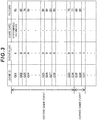
- FIG. 3 is a diagram illustrating an example of a record table for managing the records in each game of a particular player.
- the record table stores pieces of information including a "game ID”, an "event flag”, a "game date”, and a "record” in correlation with each other for each game played by the player.
- pieces of information related to each game are arranged in chronological order.
- the "game ID” is information for identifying a game.
- the “event flag” is information indicating whether the game is a game (a first game) performed in a state where given reliability confirmation processing is not executed or a game (a second game) performed in a state where the given reliability confirmation processing is executed. Specifically, as illustrated in FIG. 3 , an event flag related to a game (for example, a game before a given game event) performed in a state where the reliability confirmation processing is not executed is "0", and an event flag related to a game (for example, a game during a given game event) performed in a state where the reliability confirmation processing is executed is "1".
- the "game date” is information indicating the data when the game was played.
- the “record” is information indicting the record in the game of the player.
- a “record” calculation method may employ any method depending on the type of a game. For example, in the case of dart games, the record may be calculated depending on the results of throwing of darts into sections such as single, double, triple, and bull.
- FIG. 4 is a block diagram illustrating a functional configuration of the game device 20.
- the game device 20 is a game device for allowing a player to play a dart game.
- the game device 20 includes a game device communication unit 21, a game device storage unit 22, an operating unit 23, a display unit 24, a card slot CS, a card RW unit 25, a dartboard DB, a detection unit 26, a coin insert unit 27, and a game device processing unit 28.
- the game device communication unit 21 includes a communication interface circuit for connecting the game device 20 to the communication network 2 and communicates with the communication network 2.
- the game device communication unit 21 supplies data received from the server 10, the other game devices 20 and the like via the communication network 2 to the game device processing unit 28.
- the game device communication unit 21 transmits data supplied from the game device processing unit 28 to the server 10, the other game devices 20, and the like via the communication network 2.
- the game device storage unit 22 includes at least one of a magnetic tape device, a magnetic disk device, and an optical disc device, for example.
- the game device storage unit 22 stores an operating system program, a driver program, an application program, data, and the like used for processing in the game device processing unit 28.
- the game device storage unit 22 stores a program and the like for playing a dart game as an application program.
- the computer program may be installed from a computer-readable portable recording medium such as, for example, a CD-ROM or a DVD-ROM into the game device storage unit 22 using a known setup program or the like.
- the computer program may be installed in the game device storage unit 22 by being downloaded from the server 10 or the other information processing device via the communication network 2 or the like.
- the operating unit 23 is a unit for allowing a player to perform various operations and is realized by operation buttons and the like provided on an operation panel, for example.
- the operating unit 23 receives operations of a player and transmits signals corresponding to the operations to the game device processing unit 28 and the like.
- the display unit 24 may be any device as long as it can display videos, images, and the like, and is a liquid crystal display, an organic electro-luminescence (EL) display, or the like, for example.
- the display unit 24 may be integrated with the operating unit 23 as a liquid-crystal touch panel display, for example.
- the display unit 24 displays images and videos corresponding to the data supplied from the game device processing unit 28.
- the card slot CS is an insertion slot for inserting a game card possessed by a player.
- Four card slots CS are provided in the game device 20 so that a maximum of four players can play the game. More than four card slots CS may be provided so that more than four players can play the game.
- the card RW unit 25 can read a card ID and the like recorded in the game card possessed by a player and can write information and the like obtained as the game result in the game card.
- the dartboard DB is a board serving as the target of a dart game.
- the dartboard DB is segmented into a plurality of target areas and a number of fine holes are formed in each of the target areas. The tip of the dart thrown by a player is received in any one of a number of holes formed in the target area.
- the detection unit 26 includes a membrane switch provided to correspond to each of the target areas to detect the dart stuck in the target area and a vibration sensor provided to detect the thrown dart deviating the target area.
- the detection unit 26 detects where in the target area the dart is stuck or not based on the signals of the membrane switch and the vibration sensor and transmits a detection signal to the game device processing unit 28.
- the coin insert unit 27 includes an insertion slot into which a coin is inserted and a sensor that detects the coin inserted through the insertion slot.
- a player can play the game by inserting a given number of coins through the coin insertion slot.
- the game device 20 may be configured such that the game can be played without inserting any coin through the coin insertion slot.
- the game device processing unit 28 includes a plurality of processors and the peripheral circuits thereof.
- the game device processing unit 28 is a CPU, for example, and controls the overall operation of the game device 20 in an integrated manner.
- the game device processing unit 28 controls the operation of the game device communication unit 21 and the like so that various processes of the game device 20 are executed in an appropriate order based on the programs and the like stored in the game device storage unit 22.
- FIG. 5 is a flowchart illustrating an example of game progress processing during a game event being held.
- a case in which a plurality of players serving as competition counterparts plays a dart game commonly using one game device 20 will be described as an example.
- the flowchart can be similarly applied to a case where respective players play the dart game using individual game devices 20.
- the game processing unit 131 of the server 10 transmits an entry reception instruction to a given game device 20.
- the entry reception processing includes screen data and the like for displaying an entry reception screen on the display unit 24 of the game device 20.
- the game device processing unit 28 of the game device 20 performs various processes necessary for entry reception such as displaying the entry reception screen on the display unit 24.
- the game device processing unit 28 may read data related to the entry reception screen from the game device storage unit 22 and display the entry reception screen on the display unit 24.
- the game device processing unit 28 of the game device 20 receives entry operations of a plurality of players serving as competition counterparts. Specifically, the entry operation is performed in such a way that each player inserts his or her card into the card slot CS and inputs necessary information using the operating unit 23.
- the game device processing unit 28 of the game device 20 transmits entry information including information such as a player ID related to each player to the server 10 via the game device communication unit 21.
- the entry information includes information indicating the game being played during a game event.
- the game processing unit 131 of the server 10 upon receiving the entry information from the game device 20, performs authentication processing on the player based on the entry information. Specifically, the game processing unit 131 performs the authentication processing by determining whether the received player IDs of the players are the competition counterparts of the game scheduled in the game event, for example. In the authentication processing, the game processing unit 131 executes reliability confirmation processing of checking whether the reliability of a player included in the entry information is high based on the above-described information indicating that the game during a game event. Although a method of the reliability confirmation processing is not particularly limited, advance entry information received before a game event is held may be compared with the entry information received in step S103, for example.
- step S104 the game processing unit 131 of the server 10 transmits a game start instruction to the game device 20.
- the game device processing unit 28 of the game device 20 Upon receiving the game start instruction from the server 10, the game device processing unit 28 of the game device 20 executes dart game progress processing.
- the dart game progress processing the dart game progresses when players throw darts on the dartboard DB of the game device 20 sequentially.
- the game device processing unit 28 of the game device 20 transmits game result information indicating the results of the game to the server 10.
- the game processing unit 131 of the server 10 stores the game results included in the game result information in the server storage unit 12.
- the game processing unit 131 records an event flag depending on whether the game is during a game event and registers the game results in the "record" of the record table stored in the server storage unit 12.
- the ability value calculation processing unit 132 of the server 10 calculates an ability value corresponding to the valid proficiency of each player based on the record table stored in the server storage unit 12 and the game progress processing ends.
- FIG. 6 is a flowchart illustrating an example of ability value calculation processing of step S109. (Step S200)
- the determining unit 1321 of the ability value calculation processing unit 132 of the server processing unit 13 determines whether the number of games played by the player during the game event is equal to or larger than a given specified number of games T by referring to the record table stored in the server storage unit 12. In this case, for example, the determining unit 1321 counts how many games having the event flag of "1" are consecutive in the latest games registered in the record table and regards the counted number of games as the number of games played during the game event.
- the given specified number of games T is not particularly limited.
- a first partial ability value calculation unit 1322 of the ability value calculation processing unit 132 calculates a first partial ability value.
- the first partial ability value is calculated based on the records of a plurality of games (first games) having the event flag of 0 before the game event was performed as the game played in a state where given reliability confirmation processing is not executed.
- the number of the plurality of games is not particularly limited.
- the plurality of games may be a plurality of latest games.
- the first partial ability value may be a weighted average of the records of a plurality of games.
- all weighting coefficients may be 1 (in the case of simple average), and the weighting coefficient of the record related to a new game may be increased, for example.
- a second partial ability value calculation unit 1323 of the ability value calculation processing unit 132 calculates a second partial ability value.
- the second partial ability value is calculated based on the records of a plurality of games (second games) during a game event as the games performed in a state where given reliability confirmation processing is executed.
- the plurality of games is not particularly limited, and may be all games having the event flag of 1 during the game event and may be a plurality of latest games.
- the second partial ability value may be a weighted average of the records of a plurality of games. In this case, although setting of the weighting coefficients of the records is not particularly limited, all weighting coefficients may be 1 (in the case of simple average), and the weighting coefficient of the record related to a new game may be increased, for example.
- the ability value calculation unit 1324 of the ability value calculation processing unit 132 calculates the ability value of the player based on the first partial ability value calculated in step S201 and the second partial ability value calculated in step S202.
- the ability value can be calculated before a game during a game event is performed, and the ability value is calculated with highly reliable data as the game event progresses. Therefore, even when a player lowers his or her rating deliberately before a game event starts, since the ability value approaches the valid proficiency of the player as the game event progresses, it is possible to prevent the player from lowering his or her rating deliberately before a game event starts. Moreover, the ability value of the player participating in a game event while lowering his or her rating can be quickly corrected to an ability value that reflects the valid proficiency during a game event.
- step S200 when the determining unit 1321 determines that the number of games played by the player during the game event is equal to or larger than the given specified number of games T (step S200: Yes), the ability value calculation unit 1324 calculates the ability value based on the game during the game event.
- the ability value calculation unit 1324 may calculate the second partial ability value according to the method similar to that of step S203 and regards the second partial ability value as the ability value.
- the ability value calculation unit 1324 may calculate the ability value based on a game during the game event according to another method. In this way, the ability value calculation processing ends.
- the information processing device calculates the first partial ability value based on the record in at least one first game performed in a state where given reliability confirmation processing is not executed, calculates the second partial ability value based on the record in at least one second game performed in a state where the given reliability confirmation processing is executed, and calculates the ability value of the player based on the first and second ability values. Therefore, the ability value of the player is calculated based on the highly reliable record in the game. Therefore, it is possible to prevent a player from participating in a game event while lowering his or her rating deliberately. Moreover, the ability value of the player participating in a game event while lowering his or her rating can be quickly corrected to an ability value that reflects the valid proficiency during a game event.
- the ability value P can be calculated by any calculation equation as long as it is based on the first and second partial ability values.
- the ability value P since the ability value P never falls below the first partial ability value P1, it is possible to prevent the rating from being lowered deliberately even during a game event as well as before the game event. Specifically, it is possible to prevent an unfair behavior such as playing with less effort deliberately in an early stage of a game event and playing with the actual ability in a final stage of the game event.
- the present invention is not limited to the above-described embodiment but can be implemented in various other forms without departing from the spirit of the present invention. Therefore, the embodiment is a simple example only in all respects and is not construed as limiting.
- the above-described processing steps may be executed in any order or in parallel within a range where any inconsistency is created in the processing content.
- another step may be added between the processing steps.
- a step described as one step may be executed in a plurality of divided steps, and steps described as a plurality of divided steps may be grasped as one step.
Landscapes
- Engineering & Computer Science (AREA)
- Multimedia (AREA)
- Business, Economics & Management (AREA)
- Computer Security & Cryptography (AREA)
- General Business, Economics & Management (AREA)
- Theoretical Computer Science (AREA)
- Management, Administration, Business Operations System, And Electronic Commerce (AREA)
Abstract
Description
- The present invention relates to an information processing device and a program.
- In recent years, in competition games, an ability value indicating the proficiency of a player is calculated according to records of the player. For example,
Patent Document 1 discloses a matching server that calculates the rating indicating the level of an ability of a player based on the records in the past games of the player. - The ability value of each player calculated in this manner is used, for example, in a handicap system in which, when a plurality of players compete each other, a given score is provided to a player having a lower ability value in advance.
- Patent Document 1: Patent Publication
JP-A-2011-217763 - However, a game event in which a plurality of players compete each other sequentially to determine the ranks among the plurality of players is sometimes performed. However, the presence of a player who lowers his or her rating lower than his or her actual ability by repeatedly playing with less effort deliberately, and in this state, participates in a game event in which many players participate to and obtain handicap unfairly in the game event has been a problem.
- Therefore, an object of the present invention is to provide an information processing device capable of preventing a player from participating in a game event while lowering his or her rating deliberately. Another object of the present invention is to provide an information processing device capable of quickly correcting an ability value of a player who participates in a game event while lowering his or her rating deliberately to an ability value which reflects his or her valid proficiency during the game event.
- An information processing device according to an aspect of the present invention is an information processing device that is connected to a storage unit that stores records of a player in individual games and is used for calculating an ability value corresponding to valid proficiency of the player, the information processing device including: a first partial ability value calculation unit that calculates a first partial ability value based on the records in at least one first game performed in a state where given reliability confirmation processing is not executed; a second partial ability value calculation unit that calculates a second partial ability value based on the records in at least one second game performed in a state where the given reliability confirmation processing is executed; and a player ability value calculation unit that calculates the ability value of the player based on the first partial ability value and the second partial ability value.
- According to this aspect, the ability value of the player is calculated based on the highly reliable record in a game. Therefore, it is possible to prevent a player from participating in a game event while lowering his or her rating deliberately. Moreover, the ability value of the player participating in a game event while lowering his or her rating can be quickly corrected to an ability value that reflects the valid proficiency during the game event.
- According to the present invention, it is possible to provide an information processing device capable of preventing a player from participating in a game event while lowering his or her rating deliberately. Moreover, according to the present invention, it is possible to provide an information processing device capable of quickly correcting an ability value of a player who participates in a game event while lowering his or her rating deliberately to an ability value which reflects his or her valid proficiency during the game event.
-
-
FIG. 1 is a network configuration diagram illustrating an example of agame system 1 according to a first embodiment of the present invention. -
FIG. 2 is a block diagram illustrating a functional configuration of aserver 10. -
FIG. 3 is a diagram illustrating an example of a record table for managing the records in each game of a particular player. -
FIG. 4 is a block diagram illustrating a functional configuration of agame device 20. -
FIG. 5 is a flowchart illustrating an example of game progress processing during a game event being held. -
FIG. 6 is a flowchart illustrating an example of ability value calculation processing. - Preferred embodiments of the present invention will be described with reference to the accompanying drawings (in the drawings, those denoted by the same reference numerals have the same or similar configuration).
-
FIG. 1 is a network configuration diagram illustrating an example of agame system 1 according to a first embodiment of the present invention. Hereinafter, a case in which thegame system 1 is applied to a dart game will be described as an example. However, thegame system 1 can be applied to any other games. - The
game system 1 includes aserver 10 and a plurality ofgame devices 20. Thegame devices 20 are communicably connected to theserver 10 via acommunication network 2 such as the Internet. -
FIG. 2 is a block diagram illustrating a functional configuration of theserver 10. Theserver 10 is an example of an information processing device and includes aserver communication unit 11, aserver storage unit 12, and aserver processing unit 13. - The
server communication unit 11 includes a communication interface circuit for connecting theserver 10 to thecommunication network 2 and communicates with thecommunication network 2. Theserver communication unit 11 supplies data received from thegame device 20 and the like to theserver processing unit 13. Moreover, theserver communication unit 11 transmits the data supplied from theserver processing unit 13 to thegame device 20 and the like. - The
server storage unit 12 includes at least one of a magnetic tape device, a magnetic disk device, and an optical disc device, for example. Theserver storage unit 12 stores computer programs (an operating system program, a driver program, and an application program) used for processing in theserver processing unit 13, a record table to be described later, and various pieces of data related to processing. For example, theserver storage unit 12 stores a game program and the like for playing a dart game as an application program. The game program may be executed by theserver 10 and may be executed jointly by theserver 10 and thegame device 20. The computer program may be installed from a computer-readable portable recording medium such as, for example, a CD-ROM or a DVD-ROM into theserver storage unit 12 using a known setup program or the like. - The
server processing unit 13 includes one or a plurality of processors and the peripheral circuits thereof. Theserver processing unit 13 is a CPU, for example, and controls the overall operation of theserver 10 in an integrated manner. Theserver processing unit 13 controls the operation of theserver communication unit 11 and the like so that various processes of theserver 10 are executed in an appropriate order based on the programs and the like stored in theserver storage unit 12. Theserver processing unit 13 executes the processing based on the programs (an operating system program, a driver program, an application program, and the like) stored in theserver storage unit 12. - The
server processing unit 13 includes agame processing unit 131 and an ability valuecalculation processing unit 132. The ability valuecalculation processing unit 132 includes a determiningunit 1321, a first partial abilityvalue calculation unit 1322, a second partial abilityvalue calculation unit 1323, and an abilityvalue calculation unit 1324. These respective units are functional modules realized by programs executed by a processor included in theserver processing unit 13. Thegame processing unit 131 executes the progress of a dart game in an integrated manner as well as executing given reliability confirmation processing related to a player. The ability valuecalculation processing unit 132 calculates an ability value corresponding to valid proficiency of the player based on the game record of the player. -
FIG. 3 is a diagram illustrating an example of a record table for managing the records in each game of a particular player. The record table stores pieces of information including a "game ID", an "event flag", a "game date", and a "record" in correlation with each other for each game played by the player. In the example illustrated inFIG. 3 , pieces of information related to each game are arranged in chronological order. - The "game ID" is information for identifying a game. The "event flag" is information indicating whether the game is a game (a first game) performed in a state where given reliability confirmation processing is not executed or a game (a second game) performed in a state where the given reliability confirmation processing is executed. Specifically, as illustrated in
FIG. 3 , an event flag related to a game (for example, a game before a given game event) performed in a state where the reliability confirmation processing is not executed is "0", and an event flag related to a game (for example, a game during a given game event) performed in a state where the reliability confirmation processing is executed is "1". The "game date" is information indicating the data when the game was played. The "record" is information indicting the record in the game of the player. A "record" calculation method may employ any method depending on the type of a game. For example, in the case of dart games, the record may be calculated depending on the results of throwing of darts into sections such as single, double, triple, and bull. -
FIG. 4 is a block diagram illustrating a functional configuration of thegame device 20. Thegame device 20 is a game device for allowing a player to play a dart game. Thegame device 20 includes a gamedevice communication unit 21, a gamedevice storage unit 22, an operatingunit 23, adisplay unit 24, a card slot CS, acard RW unit 25, a dartboard DB, adetection unit 26, acoin insert unit 27, and a gamedevice processing unit 28. - The game
device communication unit 21 includes a communication interface circuit for connecting thegame device 20 to thecommunication network 2 and communicates with thecommunication network 2. The gamedevice communication unit 21 supplies data received from theserver 10, theother game devices 20 and the like via thecommunication network 2 to the gamedevice processing unit 28. Moreover, the gamedevice communication unit 21 transmits data supplied from the gamedevice processing unit 28 to theserver 10, theother game devices 20, and the like via thecommunication network 2. - The game
device storage unit 22 includes at least one of a magnetic tape device, a magnetic disk device, and an optical disc device, for example. The gamedevice storage unit 22 stores an operating system program, a driver program, an application program, data, and the like used for processing in the gamedevice processing unit 28. For example, the gamedevice storage unit 22 stores a program and the like for playing a dart game as an application program. The computer program may be installed from a computer-readable portable recording medium such as, for example, a CD-ROM or a DVD-ROM into the gamedevice storage unit 22 using a known setup program or the like. Alternatively, the computer program may be installed in the gamedevice storage unit 22 by being downloaded from theserver 10 or the other information processing device via thecommunication network 2 or the like. - The operating
unit 23 is a unit for allowing a player to perform various operations and is realized by operation buttons and the like provided on an operation panel, for example. The operatingunit 23 receives operations of a player and transmits signals corresponding to the operations to the gamedevice processing unit 28 and the like. - The
display unit 24 may be any device as long as it can display videos, images, and the like, and is a liquid crystal display, an organic electro-luminescence (EL) display, or the like, for example. Thedisplay unit 24 may be integrated with the operatingunit 23 as a liquid-crystal touch panel display, for example. Thedisplay unit 24 displays images and videos corresponding to the data supplied from the gamedevice processing unit 28. - The card slot CS is an insertion slot for inserting a game card possessed by a player. Four card slots CS are provided in the
game device 20 so that a maximum of four players can play the game. More than four card slots CS may be provided so that more than four players can play the game. - The
card RW unit 25 can read a card ID and the like recorded in the game card possessed by a player and can write information and the like obtained as the game result in the game card. - The dartboard DB is a board serving as the target of a dart game. The dartboard DB is segmented into a plurality of target areas and a number of fine holes are formed in each of the target areas. The tip of the dart thrown by a player is received in any one of a number of holes formed in the target area.
- The
detection unit 26 includes a membrane switch provided to correspond to each of the target areas to detect the dart stuck in the target area and a vibration sensor provided to detect the thrown dart deviating the target area. Thedetection unit 26 detects where in the target area the dart is stuck or not based on the signals of the membrane switch and the vibration sensor and transmits a detection signal to the gamedevice processing unit 28. - The
coin insert unit 27 includes an insertion slot into which a coin is inserted and a sensor that detects the coin inserted through the insertion slot. In thegame device 20, a player can play the game by inserting a given number of coins through the coin insertion slot. Thegame device 20 may be configured such that the game can be played without inserting any coin through the coin insertion slot. - The game
device processing unit 28 includes a plurality of processors and the peripheral circuits thereof. The gamedevice processing unit 28 is a CPU, for example, and controls the overall operation of thegame device 20 in an integrated manner. The gamedevice processing unit 28 controls the operation of the gamedevice communication unit 21 and the like so that various processes of thegame device 20 are executed in an appropriate order based on the programs and the like stored in the gamedevice storage unit 22. -
FIG. 5 is a flowchart illustrating an example of game progress processing during a game event being held. Hereinafter, a case in which a plurality of players serving as competition counterparts plays a dart game commonly using onegame device 20 will be described as an example. However, the flowchart can be similarly applied to a case where respective players play the dart game usingindividual game devices 20. - First, the
game processing unit 131 of theserver 10 transmits an entry reception instruction to a givengame device 20. Here, the entry reception processing includes screen data and the like for displaying an entry reception screen on thedisplay unit 24 of thegame device 20. - Subsequently, upon receiving the entry reception processing from the
server 10, the gamedevice processing unit 28 of thegame device 20 performs various processes necessary for entry reception such as displaying the entry reception screen on thedisplay unit 24. The gamedevice processing unit 28 may read data related to the entry reception screen from the gamedevice storage unit 22 and display the entry reception screen on thedisplay unit 24. - Subsequently, the game
device processing unit 28 of thegame device 20 receives entry operations of a plurality of players serving as competition counterparts. Specifically, the entry operation is performed in such a way that each player inserts his or her card into the card slot CS and inputs necessary information using theoperating unit 23. - Subsequently, when all entry operations of a plurality of players serving as competition counterparts are received, the game
device processing unit 28 of thegame device 20 transmits entry information including information such as a player ID related to each player to theserver 10 via the gamedevice communication unit 21. Here, the entry information includes information indicating the game being played during a game event. - Subsequently, upon receiving the entry information from the
game device 20, thegame processing unit 131 of theserver 10 performs authentication processing on the player based on the entry information. Specifically, thegame processing unit 131 performs the authentication processing by determining whether the received player IDs of the players are the competition counterparts of the game scheduled in the game event, for example. In the authentication processing, thegame processing unit 131 executes reliability confirmation processing of checking whether the reliability of a player included in the entry information is high based on the above-described information indicating that the game during a game event. Although a method of the reliability confirmation processing is not particularly limited, advance entry information received before a game event is held may be compared with the entry information received in step S103, for example. - Subsequently, when the authentication processing in step S104 is successful, the
game processing unit 131 of theserver 10 transmits a game start instruction to thegame device 20. - Upon receiving the game start instruction from the
server 10, the gamedevice processing unit 28 of thegame device 20 executes dart game progress processing. In the dart game progress processing, the dart game progresses when players throw darts on the dartboard DB of thegame device 20 sequentially. - Subsequently, when the dart game progress processing ends, the game
device processing unit 28 of thegame device 20 transmits game result information indicating the results of the game to theserver 10. - Subsequently, upon receiving the game result information from the
game device 20, thegame processing unit 131 of theserver 10 stores the game results included in the game result information in theserver storage unit 12. In this case, thegame processing unit 131 records an event flag depending on whether the game is during a game event and registers the game results in the "record" of the record table stored in theserver storage unit 12. - Subsequently, the ability value
calculation processing unit 132 of theserver 10 calculates an ability value corresponding to the valid proficiency of each player based on the record table stored in theserver storage unit 12 and the game progress processing ends. -
FIG. 6 is a flowchart illustrating an example of ability value calculation processing of step S109. (Step S200) - First, the determining
unit 1321 of the ability valuecalculation processing unit 132 of theserver processing unit 13 determines whether the number of games played by the player during the game event is equal to or larger than a given specified number of games T by referring to the record table stored in theserver storage unit 12. In this case, for example, the determiningunit 1321 counts how many games having the event flag of "1" are consecutive in the latest games registered in the record table and regards the counted number of games as the number of games played during the game event. The given specified number of games T is not particularly limited. - When the determining
unit 1321 determines that the number of games played by the player during the game event is not equal to or larger than the given specified number of games T (is smaller than the given specified number of games T) (step S200: No), a first partial abilityvalue calculation unit 1322 of the ability valuecalculation processing unit 132 calculates a first partial ability value. Here, the first partial ability value is calculated based on the records of a plurality of games (first games) having the event flag of 0 before the game event was performed as the game played in a state where given reliability confirmation processing is not executed. The number of the plurality of games is not particularly limited. Moreover, the plurality of games may be a plurality of latest games. Furthermore, the first partial ability value may be a weighted average of the records of a plurality of games. In this case, although setting of the weighting coefficients of the records is not particularly limited, all weighting coefficients may be 1 (in the case of simple average), and the weighting coefficient of the record related to a new game may be increased, for example. - Subsequently, a second partial ability
value calculation unit 1323 of the ability valuecalculation processing unit 132 calculates a second partial ability value. Here, the second partial ability value is calculated based on the records of a plurality of games (second games) during a game event as the games performed in a state where given reliability confirmation processing is executed. The plurality of games is not particularly limited, and may be all games having the event flag of 1 during the game event and may be a plurality of latest games. Moreover, the second partial ability value may be a weighted average of the records of a plurality of games. In this case, although setting of the weighting coefficients of the records is not particularly limited, all weighting coefficients may be 1 (in the case of simple average), and the weighting coefficient of the record related to a new game may be increased, for example. - Subsequently, the ability
value calculation unit 1324 of the ability valuecalculation processing unit 132 calculates the ability value of the player based on the first partial ability value calculated in step S201 and the second partial ability value calculated in step S202. The ability value may be a weighted average of the first and second partial ability values. For example, when n is the number of games played by the player during the given game event, T is the number of a given specified games, P1 is the first partial ability value, and P2 is the second partial ability value, the ability value P may be calculated as P = {(T - n)P1 + nP2}/T (provided that T ≥ n). According to the method of calculating the ability value P according to this equation, the ability value can be calculated before a game during a game event is performed, and the ability value is calculated with highly reliable data as the game event progresses. Therefore, even when a player lowers his or her rating deliberately before a game event starts, since the ability value approaches the valid proficiency of the player as the game event progresses, it is possible to prevent the player from lowering his or her rating deliberately before a game event starts. Moreover, the ability value of the player participating in a game event while lowering his or her rating can be quickly corrected to an ability value that reflects the valid proficiency during a game event. - In step S200, when the determining
unit 1321 determines that the number of games played by the player during the game event is equal to or larger than the given specified number of games T (step S200: Yes), the abilityvalue calculation unit 1324 calculates the ability value based on the game during the game event. For example, the abilityvalue calculation unit 1324 may calculate the second partial ability value according to the method similar to that of step S203 and regards the second partial ability value as the ability value. Alternatively, the abilityvalue calculation unit 1324 may calculate the ability value based on a game during the game event according to another method. In this way, the ability value calculation processing ends. - As described above, the information processing device according to the first embodiment of the present invention calculates the first partial ability value based on the record in at least one first game performed in a state where given reliability confirmation processing is not executed, calculates the second partial ability value based on the record in at least one second game performed in a state where the given reliability confirmation processing is executed, and calculates the ability value of the player based on the first and second ability values. Therefore, the ability value of the player is calculated based on the highly reliable record in the game. Therefore, it is possible to prevent a player from participating in a game event while lowering his or her rating deliberately. Moreover, the ability value of the player participating in a game event while lowering his or her rating can be quickly corrected to an ability value that reflects the valid proficiency during a game event.
- The ability value P can be calculated by any calculation equation as long as it is based on the first and second partial ability values. For example, the ability value P may be calculated as P = min[P1, {(T - n)P1 + nP2}/T]. Here, "min" represents taking the smallest value among a plurality of values in the parentheses. That is, P = min[P1, {(T - n)P1 + nP2}/T] represents taking the smallest value among P1 and {(T-n)P1 +nP2}/T. According to this equation, since the ability value P never falls below the first partial ability value P1, it is possible to prevent the rating from being lowered deliberately even during a game event as well as before the game event. Specifically, it is possible to prevent an unfair behavior such as playing with less effort deliberately in an early stage of a game event and playing with the actual ability in a final stage of the game event.
- The present invention is not limited to the above-described embodiment but can be implemented in various other forms without departing from the spirit of the present invention. Therefore, the embodiment is a simple example only in all respects and is not construed as limiting. For example, the above-described processing steps may be executed in any order or in parallel within a range where any inconsistency is created in the processing content. Moreover, another step may be added between the processing steps. Moreover, a step described as one step may be executed in a plurality of divided steps, and steps described as a plurality of divided steps may be grasped as one step.
-
- 1
- Game system
- 2
- Communication network
- 10
- Server
- 11
- Server communication unit
- 12
- Server storage unit
- 13
- Server processing unit
- 131
- Game processing unit
- 132
- Ability value calculation processing unit
- 1321
- Determining unit
- 1322
- First partial ability value calculation unit
- 1323
- Second partial ability value calculation unit
- 1324
- Ability value calculation unit
- 20
- Game device
- 21
- Game device communication unit
- 22
- Game device storage unit
- 23
- Operating unit
- 24
- Display unit
- 25
- Card RW unit
- 26
- Detection unit
- 27
- Coin insert unit
- 28
- Game device processing unit
- CS
- Card slot
- DB
- Dartboard
Claims (9)
- An information processing device that is connected to a storage unit that stores records of a player in individual games and is used for calculating an ability value corresponding to valid proficiency of the player, the information processing device comprising:a first partial ability value calculation unit that calculates a first partial ability value based on the records in at least one first game performed in a state where given reliability confirmation processing is not executed;a second partial ability value calculation unit that calculates a second partial ability value based on the records in at least one second game performed in a state where the given reliability confirmation processing is executed; anda player ability value calculation unit that calculates the ability value of the player based on the first partial ability value and the second partial ability value.
- The information processing device according to claim 1, further comprising a reliability authentication processing unit that executes the given reliability confirmation processing.
- The information processing device according to claim 1, wherein the first partial ability value calculation unit calculates a weighted average of the records in the at least one first game as the first partial ability value.
- The information processing device according to any one of claims 1 to 3, wherein the second partial ability value calculation unit calculates a weighted average of the records in the at least one second game as the second partial ability value.
- The information processing device according to any one of claims 1 to 4, wherein the player ability value calculation unit calculates a weighted average of the first partial ability value and the second partial ability value as the ability value.
- The information processing device according to claim 5, wherein the player ability value calculation unit calculates, as the ability value, a value P represented by an expression:

- The information processing device according to claim 5, wherein the player ability value calculation unit calculates, as the ability value, a value P represented by an expression:

- The information processing device according to any one of claims 1 to 7, wherein the given reliability confirmation processing is executed in a game included in a given game event.
- A program for causing a computer connected to a storage unit that stores records of a player in individual games to function as:means for calculating a first partial ability value based on the records in at least one first game performed in a state where given reliability confirmation processing is not executed;means for calculating a second partial ability value based on the records in at least one second game performed in a state where the given reliability confirmation processing is executed; andmeans for calculating an ability value corresponding to valid proficiency of the player based on the first partial ability value and the second partial ability value.
Applications Claiming Priority (2)
| Application Number | Priority Date | Filing Date | Title |
|---|---|---|---|
| JP2018092590A JP7105606B2 (en) | 2018-05-11 | 2018-05-11 | Information processing device and program |
| PCT/IB2019/055140 WO2019215711A1 (en) | 2018-05-11 | 2019-06-19 | Information processing device and program |
Publications (4)
| Publication Number | Publication Date |
|---|---|
| EP3791939A1 true EP3791939A1 (en) | 2021-03-17 |
| EP3791939A4 EP3791939A4 (en) | 2021-12-22 |
| EP3791939C0 EP3791939C0 (en) | 2025-08-06 |
| EP3791939B1 EP3791939B1 (en) | 2025-08-06 |
Family
ID=68467316
Family Applications (1)
| Application Number | Title | Priority Date | Filing Date |
|---|---|---|---|
| EP19800882.3A Active EP3791939B1 (en) | 2018-05-11 | 2019-06-19 | Information processing device and program |
Country Status (5)
| Country | Link |
|---|---|
| EP (1) | EP3791939B1 (en) |
| JP (1) | JP7105606B2 (en) |
| ES (1) | ES3045098T3 (en) |
| SG (1) | SG11202009983VA (en) |
| WO (1) | WO2019215711A1 (en) |
Family Cites Families (6)
| Publication number | Priority date | Publication date | Assignee | Title |
|---|---|---|---|---|
| JP4192401B2 (en) * | 2000-05-15 | 2008-12-10 | カシオ計算機株式会社 | Communication battle system and server device |
| JP4932331B2 (en) * | 2006-05-31 | 2012-05-16 | 株式会社ドワンゴ | Rating program, method and apparatus |
| JP2009160117A (en) * | 2007-12-28 | 2009-07-23 | Sega Corp | GAME SYSTEM CONTROL PROGRAM, PROGRAM RECORDING MEDIUM, GAME SYSTEM, SERVER DEVICE, AND GAME SYSTEM CONTROL METHOD |
| JP5541955B2 (en) | 2010-04-02 | 2014-07-09 | 株式会社タイトー | Matching program, matching server, and game system |
| JP5518547B2 (en) * | 2010-04-02 | 2014-06-11 | 株式会社タイトー | Matching program, matching server, and game system |
| KR101286759B1 (en) * | 2011-12-09 | 2013-07-23 | (주)네오위즈게임즈 | Method for providing on-line sports game supplying rating and prediction information and system there of |
-
2018
- 2018-05-11 JP JP2018092590A patent/JP7105606B2/en active Active
-
2019
- 2019-06-19 WO PCT/IB2019/055140 patent/WO2019215711A1/en not_active Ceased
- 2019-06-19 EP EP19800882.3A patent/EP3791939B1/en active Active
- 2019-06-19 SG SG11202009983VA patent/SG11202009983VA/en unknown
- 2019-06-19 ES ES19800882T patent/ES3045098T3/en active Active
Also Published As
| Publication number | Publication date |
|---|---|
| WO2019215711A1 (en) | 2019-11-14 |
| EP3791939A4 (en) | 2021-12-22 |
| ES3045098T3 (en) | 2025-11-27 |
| EP3791939C0 (en) | 2025-08-06 |
| JP7105606B2 (en) | 2022-07-25 |
| SG11202009983VA (en) | 2020-11-27 |
| JP2019195592A (en) | 2019-11-14 |
| EP3791939B1 (en) | 2025-08-06 |
Similar Documents
| Publication | Publication Date | Title |
|---|---|---|
| US7549929B1 (en) | Determining a bowling game score | |
| JP6511537B2 (en) | Dart game cheating determination method and server | |
| US20230364506A1 (en) | Server device and event data processing method | |
| TW201538216A (en) | Darts gaming device and program | |
| JP4980638B2 (en) | PROGRAM, INFORMATION STORAGE MEDIUM, GAME DEVICE, AND GAME DEVICE MANAGEMENT DEVICE | |
| EP3791939B1 (en) | Information processing device and program | |
| CN111587135B (en) | Information processing device, game device, and game system | |
| CN111587136B (en) | game device | |
| US11040280B2 (en) | Game processing method and information processing device | |
| TWI870351B (en) | Information processing device and recording medium | |
| KR101297741B1 (en) | Method and apparatus for providing record of team in online game | |
| TWI922894B (en) | Game systems, game devices, and programs | |
| EP4667069A1 (en) | Game system, game device, and program | |
| JP2009160117A (en) | GAME SYSTEM CONTROL PROGRAM, PROGRAM RECORDING MEDIUM, GAME SYSTEM, SERVER DEVICE, AND GAME SYSTEM CONTROL METHOD | |
| JP2025139304A (en) | Throwing game device, information processing device, information processing method, and program | |
| US7204413B2 (en) | Judgment systems and methods | |
| Kuzhii et al. | THE ANTICHEAT DEVELOPMENT IN THE COUNTER-STRIKE MAIN SERIES | |
| JP2025084604A (en) | Information processing program, information processing method, and information processing device | |
| HK40029096A (en) | Information processing device, game device, and game system | |
| JP4405735B2 (en) | Amusement center data management device | |
| HK40026675A (en) | Game device | |
| KR20170103144A (en) | System and method for providing an item between games |
Legal Events
| Date | Code | Title | Description |
|---|---|---|---|
| STAA | Information on the status of an ep patent application or granted ep patent |
Free format text: STATUS: THE INTERNATIONAL PUBLICATION HAS BEEN MADE |
|
| PUAI | Public reference made under article 153(3) epc to a published international application that has entered the european phase |
Free format text: ORIGINAL CODE: 0009012 |
|
| STAA | Information on the status of an ep patent application or granted ep patent |
Free format text: STATUS: REQUEST FOR EXAMINATION WAS MADE |
|
| 17P | Request for examination filed |
Effective date: 20201204 |
|
| AK | Designated contracting states |
Kind code of ref document: A1 Designated state(s): AL AT BE BG CH CY CZ DE DK EE ES FI FR GB GR HR HU IE IS IT LI LT LU LV MC MK MT NL NO PL PT RO RS SE SI SK SM TR |
|
| AX | Request for extension of the european patent |
Extension state: BA ME |
|
| A4 | Supplementary search report drawn up and despatched |
Effective date: 20211124 |
|
| RIC1 | Information provided on ipc code assigned before grant |
Ipc: G06Q 50/10 20120101ALI20211118BHEP Ipc: A63F 13/798 20140101ALI20211118BHEP Ipc: A63F 13/75 20140101ALI20211118BHEP Ipc: A63B 71/06 20060101AFI20211118BHEP |
|
| DAV | Request for validation of the european patent (deleted) | ||
| DAX | Request for extension of the european patent (deleted) | ||
| STAA | Information on the status of an ep patent application or granted ep patent |
Free format text: STATUS: EXAMINATION IS IN PROGRESS |
|
| 17Q | First examination report despatched |
Effective date: 20240208 |
|
| GRAP | Despatch of communication of intention to grant a patent |
Free format text: ORIGINAL CODE: EPIDOSNIGR1 |
|
| STAA | Information on the status of an ep patent application or granted ep patent |
Free format text: STATUS: GRANT OF PATENT IS INTENDED |
|
| INTG | Intention to grant announced |
Effective date: 20250210 |
|
| GRAS | Grant fee paid |
Free format text: ORIGINAL CODE: EPIDOSNIGR3 |
|
| GRAA | (expected) grant |
Free format text: ORIGINAL CODE: 0009210 |
|
| STAA | Information on the status of an ep patent application or granted ep patent |
Free format text: STATUS: THE PATENT HAS BEEN GRANTED |
|
| RAP3 | Party data changed (applicant data changed or rights of an application transferred) |
Owner name: KABUSHIKI KAISHA DARTSLIVE D/B/ADARTSLIVE CO., LTD. Owner name: SEGA CORPORATION |
|
| AK | Designated contracting states |
Kind code of ref document: B1 Designated state(s): AL AT BE BG CH CY CZ DE DK EE ES FI FR GB GR HR HU IE IS IT LI LT LU LV MC MK MT NL NO PL PT RO RS SE SI SK SM TR |
|
| REG | Reference to a national code |
Ref country code: GB Ref legal event code: FG4D |
|
| REG | Reference to a national code |
Ref country code: CH Ref legal event code: EP |
|
| REG | Reference to a national code |
Ref country code: DE Ref legal event code: R096 Ref document number: 602019073740 Country of ref document: DE |
|
| REG | Reference to a national code |
Ref country code: IE Ref legal event code: FG4D |
|
| U01 | Request for unitary effect filed |
Effective date: 20250806 |
|
| U07 | Unitary effect registered |
Designated state(s): AT BE BG DE DK EE FI FR IT LT LU LV MT NL PT RO SE SI Effective date: 20250818 |
|
| REG | Reference to a national code |
Ref country code: ES Ref legal event code: FG2A Ref document number: 3045098 Country of ref document: ES Kind code of ref document: T3 Effective date: 20251127 |
|
| PG25 | Lapsed in a contracting state [announced via postgrant information from national office to epo] |
Ref country code: IS Free format text: LAPSE BECAUSE OF FAILURE TO SUBMIT A TRANSLATION OF THE DESCRIPTION OR TO PAY THE FEE WITHIN THE PRESCRIBED TIME-LIMIT Effective date: 20251206 |
|
| PG25 | Lapsed in a contracting state [announced via postgrant information from national office to epo] |
Ref country code: NO Free format text: LAPSE BECAUSE OF FAILURE TO SUBMIT A TRANSLATION OF THE DESCRIPTION OR TO PAY THE FEE WITHIN THE PRESCRIBED TIME-LIMIT Effective date: 20251106 |
|
| PG25 | Lapsed in a contracting state [announced via postgrant information from national office to epo] |
Ref country code: HR Free format text: LAPSE BECAUSE OF FAILURE TO SUBMIT A TRANSLATION OF THE DESCRIPTION OR TO PAY THE FEE WITHIN THE PRESCRIBED TIME-LIMIT Effective date: 20250806 |
|
| PG25 | Lapsed in a contracting state [announced via postgrant information from national office to epo] |
Ref country code: GR Free format text: LAPSE BECAUSE OF FAILURE TO SUBMIT A TRANSLATION OF THE DESCRIPTION OR TO PAY THE FEE WITHIN THE PRESCRIBED TIME-LIMIT Effective date: 20251107 |
|
| PG25 | Lapsed in a contracting state [announced via postgrant information from national office to epo] |
Ref country code: PL Free format text: LAPSE BECAUSE OF FAILURE TO SUBMIT A TRANSLATION OF THE DESCRIPTION OR TO PAY THE FEE WITHIN THE PRESCRIBED TIME-LIMIT Effective date: 20250806 |
|
| PG25 | Lapsed in a contracting state [announced via postgrant information from national office to epo] |
Ref country code: RS Free format text: LAPSE BECAUSE OF FAILURE TO SUBMIT A TRANSLATION OF THE DESCRIPTION OR TO PAY THE FEE WITHIN THE PRESCRIBED TIME-LIMIT Effective date: 20251106 |
|
| PG25 | Lapsed in a contracting state [announced via postgrant information from national office to epo] |
Ref country code: SM Free format text: LAPSE BECAUSE OF FAILURE TO SUBMIT A TRANSLATION OF THE DESCRIPTION OR TO PAY THE FEE WITHIN THE PRESCRIBED TIME-LIMIT Effective date: 20250806 |
|
| PG25 | Lapsed in a contracting state [announced via postgrant information from national office to epo] |
Ref country code: CZ Free format text: LAPSE BECAUSE OF FAILURE TO SUBMIT A TRANSLATION OF THE DESCRIPTION OR TO PAY THE FEE WITHIN THE PRESCRIBED TIME-LIMIT Effective date: 20250806 |
|
| PG25 | Lapsed in a contracting state [announced via postgrant information from national office to epo] |
Ref country code: SK Free format text: LAPSE BECAUSE OF FAILURE TO SUBMIT A TRANSLATION OF THE DESCRIPTION OR TO PAY THE FEE WITHIN THE PRESCRIBED TIME-LIMIT Effective date: 20250806 |