EP3786971A1 - Fortschrittsmanager in einem tragbaren benutzergerät - Google Patents
Fortschrittsmanager in einem tragbaren benutzergerät Download PDFInfo
- Publication number
- EP3786971A1 EP3786971A1 EP20194130.9A EP20194130A EP3786971A1 EP 3786971 A1 EP3786971 A1 EP 3786971A1 EP 20194130 A EP20194130 A EP 20194130A EP 3786971 A1 EP3786971 A1 EP 3786971A1
- Authority
- EP
- European Patent Office
- Prior art keywords
- exercise
- user device
- performance
- handheld user
- detected
- Prior art date
- Legal status (The legal status is an assumption and is not a legal conclusion. Google has not performed a legal analysis and makes no representation as to the accuracy of the status listed.)
- Withdrawn
Links
Images

Classifications
-
- A—HUMAN NECESSITIES
- A63—SPORTS; GAMES; AMUSEMENTS
- A63B—APPARATUS FOR PHYSICAL TRAINING, GYMNASTICS, SWIMMING, CLIMBING, OR FENCING; BALL GAMES; TRAINING EQUIPMENT
- A63B24/00—Electric or electronic controls for exercising apparatus of preceding groups; Controlling or monitoring of exercises, sportive games, training or athletic performances
- A63B24/0003—Analysing the course of a movement or motion sequences during an exercise or trainings sequence, e.g. swing for golf or tennis
-
- A—HUMAN NECESSITIES
- A63—SPORTS; GAMES; AMUSEMENTS
- A63B—APPARATUS FOR PHYSICAL TRAINING, GYMNASTICS, SWIMMING, CLIMBING, OR FENCING; BALL GAMES; TRAINING EQUIPMENT
- A63B24/00—Electric or electronic controls for exercising apparatus of preceding groups; Controlling or monitoring of exercises, sportive games, training or athletic performances
- A63B24/0003—Analysing the course of a movement or motion sequences during an exercise or trainings sequence, e.g. swing for golf or tennis
- A63B24/0006—Computerised comparison for qualitative assessment of motion sequences or the course of a movement
-
- A—HUMAN NECESSITIES
- A63—SPORTS; GAMES; AMUSEMENTS
- A63B—APPARATUS FOR PHYSICAL TRAINING, GYMNASTICS, SWIMMING, CLIMBING, OR FENCING; BALL GAMES; TRAINING EQUIPMENT
- A63B24/00—Electric or electronic controls for exercising apparatus of preceding groups; Controlling or monitoring of exercises, sportive games, training or athletic performances
- A63B24/0062—Monitoring athletic performances, e.g. for determining the work of a user on an exercise apparatus, the completed jogging or cycling distance
-
- A—HUMAN NECESSITIES
- A63—SPORTS; GAMES; AMUSEMENTS
- A63B—APPARATUS FOR PHYSICAL TRAINING, GYMNASTICS, SWIMMING, CLIMBING, OR FENCING; BALL GAMES; TRAINING EQUIPMENT
- A63B71/00—Games or sports accessories not covered in groups A63B1/00 - A63B69/00
- A63B71/06—Indicating or scoring devices for games or players, or for other sports activities
- A63B71/0619—Displays, user interfaces and indicating devices, specially adapted for sport equipment, e.g. display mounted on treadmills
- A63B71/0622—Visual, audio or audio-visual systems for entertaining, instructing or motivating the user
-
- G—PHYSICS
- G06—COMPUTING OR CALCULATING; COUNTING
- G06T—IMAGE DATA PROCESSING OR GENERATION, IN GENERAL
- G06T7/00—Image analysis
- G06T7/0002—Inspection of images, e.g. flaw detection
-
- G—PHYSICS
- G06—COMPUTING OR CALCULATING; COUNTING
- G06T—IMAGE DATA PROCESSING OR GENERATION, IN GENERAL
- G06T7/00—Image analysis
- G06T7/20—Analysis of motion
- G06T7/246—Analysis of motion using feature-based methods, e.g. the tracking of corners or segments
-
- G—PHYSICS
- G06—COMPUTING OR CALCULATING; COUNTING
- G06V—IMAGE OR VIDEO RECOGNITION OR UNDERSTANDING
- G06V40/00—Recognition of biometric, human-related or animal-related patterns in image or video data
- G06V40/20—Movements or behaviour, e.g. gesture recognition
- G06V40/23—Recognition of whole body movements, e.g. for sport training
-
- G—PHYSICS
- G09—EDUCATION; CRYPTOGRAPHY; DISPLAY; ADVERTISING; SEALS
- G09B—EDUCATIONAL OR DEMONSTRATION APPLIANCES; APPLIANCES FOR TEACHING, OR COMMUNICATING WITH, THE BLIND, DEAF OR MUTE; MODELS; PLANETARIA; GLOBES; MAPS; DIAGRAMS
- G09B19/00—Teaching not covered by other main groups of this subclass
- G09B19/003—Repetitive work cycles; Sequence of movements
- G09B19/0038—Sports
-
- G—PHYSICS
- G16—INFORMATION AND COMMUNICATION TECHNOLOGY [ICT] SPECIALLY ADAPTED FOR SPECIFIC APPLICATION FIELDS
- G16H—HEALTHCARE INFORMATICS, i.e. INFORMATION AND COMMUNICATION TECHNOLOGY [ICT] SPECIALLY ADAPTED FOR THE HANDLING OR PROCESSING OF MEDICAL OR HEALTHCARE DATA
- G16H20/00—ICT specially adapted for therapies or health-improving plans, e.g. for handling prescriptions, for steering therapy or for monitoring patient compliance
- G16H20/30—ICT specially adapted for therapies or health-improving plans, e.g. for handling prescriptions, for steering therapy or for monitoring patient compliance relating to physical therapies or activities, e.g. physiotherapy, acupressure or exercising
-
- A—HUMAN NECESSITIES
- A63—SPORTS; GAMES; AMUSEMENTS
- A63B—APPARATUS FOR PHYSICAL TRAINING, GYMNASTICS, SWIMMING, CLIMBING, OR FENCING; BALL GAMES; TRAINING EQUIPMENT
- A63B24/00—Electric or electronic controls for exercising apparatus of preceding groups; Controlling or monitoring of exercises, sportive games, training or athletic performances
- A63B24/0003—Analysing the course of a movement or motion sequences during an exercise or trainings sequence, e.g. swing for golf or tennis
- A63B24/0006—Computerised comparison for qualitative assessment of motion sequences or the course of a movement
- A63B2024/0009—Computerised real time comparison with previous movements or motion sequences of the user
-
- A—HUMAN NECESSITIES
- A63—SPORTS; GAMES; AMUSEMENTS
- A63B—APPARATUS FOR PHYSICAL TRAINING, GYMNASTICS, SWIMMING, CLIMBING, OR FENCING; BALL GAMES; TRAINING EQUIPMENT
- A63B24/00—Electric or electronic controls for exercising apparatus of preceding groups; Controlling or monitoring of exercises, sportive games, training or athletic performances
- A63B24/0003—Analysing the course of a movement or motion sequences during an exercise or trainings sequence, e.g. swing for golf or tennis
- A63B24/0006—Computerised comparison for qualitative assessment of motion sequences or the course of a movement
- A63B2024/0012—Comparing movements or motion sequences with a registered reference
-
- A—HUMAN NECESSITIES
- A63—SPORTS; GAMES; AMUSEMENTS
- A63B—APPARATUS FOR PHYSICAL TRAINING, GYMNASTICS, SWIMMING, CLIMBING, OR FENCING; BALL GAMES; TRAINING EQUIPMENT
- A63B24/00—Electric or electronic controls for exercising apparatus of preceding groups; Controlling or monitoring of exercises, sportive games, training or athletic performances
- A63B24/0003—Analysing the course of a movement or motion sequences during an exercise or trainings sequence, e.g. swing for golf or tennis
- A63B24/0006—Computerised comparison for qualitative assessment of motion sequences or the course of a movement
- A63B2024/0012—Comparing movements or motion sequences with a registered reference
- A63B2024/0015—Comparing movements or motion sequences with computerised simulations of movements or motion sequences, e.g. for generating an ideal template as reference to be achieved by the user
-
- A—HUMAN NECESSITIES
- A63—SPORTS; GAMES; AMUSEMENTS
- A63B—APPARATUS FOR PHYSICAL TRAINING, GYMNASTICS, SWIMMING, CLIMBING, OR FENCING; BALL GAMES; TRAINING EQUIPMENT
- A63B24/00—Electric or electronic controls for exercising apparatus of preceding groups; Controlling or monitoring of exercises, sportive games, training or athletic performances
- A63B24/0062—Monitoring athletic performances, e.g. for determining the work of a user on an exercise apparatus, the completed jogging or cycling distance
- A63B2024/0068—Comparison to target or threshold, previous performance or not real time comparison to other individuals
-
- A—HUMAN NECESSITIES
- A63—SPORTS; GAMES; AMUSEMENTS
- A63B—APPARATUS FOR PHYSICAL TRAINING, GYMNASTICS, SWIMMING, CLIMBING, OR FENCING; BALL GAMES; TRAINING EQUIPMENT
- A63B24/00—Electric or electronic controls for exercising apparatus of preceding groups; Controlling or monitoring of exercises, sportive games, training or athletic performances
- A63B24/0062—Monitoring athletic performances, e.g. for determining the work of a user on an exercise apparatus, the completed jogging or cycling distance
- A63B2024/0071—Distinction between different activities, movements, or kind of sports performed
-
- A—HUMAN NECESSITIES
- A63—SPORTS; GAMES; AMUSEMENTS
- A63B—APPARATUS FOR PHYSICAL TRAINING, GYMNASTICS, SWIMMING, CLIMBING, OR FENCING; BALL GAMES; TRAINING EQUIPMENT
- A63B71/00—Games or sports accessories not covered in groups A63B1/00 - A63B69/00
- A63B71/06—Indicating or scoring devices for games or players, or for other sports activities
- A63B71/0619—Displays, user interfaces and indicating devices, specially adapted for sport equipment, e.g. display mounted on treadmills
- A63B71/0622—Visual, audio or audio-visual systems for entertaining, instructing or motivating the user
- A63B2071/0625—Emitting sound, noise or music
- A63B2071/063—Spoken or verbal instructions
-
- A—HUMAN NECESSITIES
- A63—SPORTS; GAMES; AMUSEMENTS
- A63B—APPARATUS FOR PHYSICAL TRAINING, GYMNASTICS, SWIMMING, CLIMBING, OR FENCING; BALL GAMES; TRAINING EQUIPMENT
- A63B71/00—Games or sports accessories not covered in groups A63B1/00 - A63B69/00
- A63B71/06—Indicating or scoring devices for games or players, or for other sports activities
- A63B71/0619—Displays, user interfaces and indicating devices, specially adapted for sport equipment, e.g. display mounted on treadmills
- A63B2071/065—Visualisation of specific exercise parameters
-
- A—HUMAN NECESSITIES
- A63—SPORTS; GAMES; AMUSEMENTS
- A63B—APPARATUS FOR PHYSICAL TRAINING, GYMNASTICS, SWIMMING, CLIMBING, OR FENCING; BALL GAMES; TRAINING EQUIPMENT
- A63B2220/00—Measuring of physical parameters relating to sporting activity
- A63B2220/05—Image processing for measuring physical parameters
-
- A—HUMAN NECESSITIES
- A63—SPORTS; GAMES; AMUSEMENTS
- A63B—APPARATUS FOR PHYSICAL TRAINING, GYMNASTICS, SWIMMING, CLIMBING, OR FENCING; BALL GAMES; TRAINING EQUIPMENT
- A63B2220/00—Measuring of physical parameters relating to sporting activity
- A63B2220/80—Special sensors, transducers or devices therefor
- A63B2220/806—Video cameras
-
- G—PHYSICS
- G06—COMPUTING OR CALCULATING; COUNTING
- G06T—IMAGE DATA PROCESSING OR GENERATION, IN GENERAL
- G06T2207/00—Indexing scheme for image analysis or image enhancement
- G06T2207/30—Subject of image; Context of image processing
- G06T2207/30196—Human being; Person
-
- G—PHYSICS
- G06—COMPUTING OR CALCULATING; COUNTING
- G06T—IMAGE DATA PROCESSING OR GENERATION, IN GENERAL
- G06T2207/00—Indexing scheme for image analysis or image enhancement
- G06T2207/30—Subject of image; Context of image processing
- G06T2207/30221—Sports video; Sports image
-
- G—PHYSICS
- G16—INFORMATION AND COMMUNICATION TECHNOLOGY [ICT] SPECIALLY ADAPTED FOR SPECIFIC APPLICATION FIELDS
- G16H—HEALTHCARE INFORMATICS, i.e. INFORMATION AND COMMUNICATION TECHNOLOGY [ICT] SPECIALLY ADAPTED FOR THE HANDLING OR PROCESSING OF MEDICAL OR HEALTHCARE DATA
- G16H50/00—ICT specially adapted for medical diagnosis, medical simulation or medical data mining; ICT specially adapted for detecting, monitoring or modelling epidemics or pandemics
- G16H50/20—ICT specially adapted for medical diagnosis, medical simulation or medical data mining; ICT specially adapted for detecting, monitoring or modelling epidemics or pandemics for computer-aided diagnosis, e.g. based on medical expert systems
Definitions
- the present disclosure presents a method, a handheld user device, and a computer program for an advancement manager in a handheld user device.
- One objective is to enable physiologically correct training of an exercise with the aid of a virtual trainer.
- a method for an advancement manager in a handheld user device is performed in a handheld user device.
- the method comprises detecting an exercise of a person in front of a camera of the handheld user device, wherein the exercise is a trained exercise, determining, when a stability of the detected exercise is within a first threshold, a performance of the detected exercise as correct, and otherwise determine the performance as incorrect, verifying that the performance determined as incorrect occurs in a subsequent repetition of the detected exercise before providing a correction indication, and providing the correction indication towards a user interface (UI) of the handheld user device for the verified incorrect performance.
- UI user interface
- the method may further comprise determining a weight of an exercise equipment present in the detected exercise, wherein the first threshold is dependent of the determined weight.
- the exercise may be detected by image recognition.
- the stability may be determined by detecting movement of one or more reference points of the person in front of the camera.
- the first threshold may be a distance unit in a first dimension based on a normalized value of a distance in a second dimension.
- the performance of the detected exercise may be determined as correct when also a speed of the detected exercise is below a second threshold.
- the second threshold may be a predetermined value.
- a performance of the detected exercise may be determined as correct when also a relative position of two or more reference points of the person in front of the camera is within a predetermined interval.
- the first threshold may dependent of an exercise history of the person in front of the camera.
- the correction indication may be an image, or a video, displayed on a display of the handheld user device, and/or a voice message played by a speaker of the handheld user device.
- the method may further comprise providing an advancement indication towards the UI for the detected exercise.
- a set of repetitions of the detected exercise may be started upon the detected exercise.
- the handheld user device comprises a camera, a UI, a processing circuitry, and a computer program product.
- the computer program product stores instructions that, when executed by the processing circuitry, causes the handheld user device to detect an exercise of a person in front of the camera, wherein the exercise is a trained exercise, determine, when a stability of the detected exercise is within a first threshold, a performance of the detected exercise as correct, verify that the performance determined as incorrect occurs in a subsequent repetition of the detected exercise before providing a correction indication, and otherwise determine the performance as incorrect, and to provide the correction indication towards the UI for the verified incorrect performance.
- a computer program for an advancement manager in a handheld user device comprises computer program code which, when run in a handheld user device, causes the handheld user device to detect an exercise of a person in front of a camera of the handheld user device, wherein the exercise is a trained exercise, determine, when a stability of the detected exercise is within a first threshold, a performance of the detected exercise as correct, verifying that the performance determined as incorrect occurs in a subsequent repetition of the detected exercise before providing a correction indication, and otherwise determine the performance as incorrect, and to provide a correction indication towards a user interface, UI, of the handheld user device for the verified incorrect performance.
- UI user interface
- FIG. 1 shows an environment wherein methods presented herein may be implemented.
- a handheld user device 1 is in connectivity with a base station 2 of a radio communication network, which in turn is connected to the Internet 3, which e.g. allows use of cloud services for the handheld user device 1.
- the base station 2 may e.g. be part of a cellular network such as 4G, or part of a wireless connection such as WiFi.
- a virtual trainer is implemented by an interactive program run on the handheld user device 1.
- the handheld user device is a wireless device, such as a smartphone.
- the interactive program may e.g. be controlled by voice, gestures, or touch controls, or a combination thereof.
- a workout program including a collection of exercises, may be selected by a user.
- An exercise may e.g. be split squats, shoulder press or kettlebell swings.
- the user may start working out by doing one or more exercises of a workout program, which are identified by the virtual trainer by a combination of pose estimation and object tracking.
- the user positions the handheld user device 1 on a wall or other surface, or on a tripod, such that a camera of the handheld user device 1 can record a workout program of the user in front of the camera.
- a sticky glass or mirror case, such as a nanocase may be used to position the handheld user device 1 on a wall or other surface.
- the user then positions himself in front of the camera and starts the virtual trainer, to e.g. train a set of split squats.
- the virtual trainer may be configured to instruct the user to stand in front of the camera, such that relevant reference points of the user can be identified during exercises.
- Such reference points may include nose, neck, right shoulder, right elbow, right hand, left shoulder, left elbow, left hand, right hip, right knee, right foot, left hip, left knee, left foot, right eye, left eye, right ear and left ear.
- a positioning system may for example aim to position the user such that all or a certain subset of the previous joints can be identified.
- An exercise may comprise one or more of a set of a specific number of repetitions, e.g. 10 repetitions of lunges.
- An exercise may alternatively comprise one or more of a set of as many repetitions as possible during a specific time period, e.g. as many squat jumps as possible during 60 s.
- an exerciser may comprise a specific number of repetitions during a specific time period, wherein any time left after the specific number of repetitions have been performed can be used to rest, e.g. perform 4 rounds of 10 push-ups within a minute and rest for the remainder of each minute.
- a specific time period of rest may be added after each set, before a workout is advanced to a subsequent set.
- the subsequent set may be started when a first repetition of that expected exercise is detected.
- the user may be prompted to start the expected exercise after a time period of rest or the preceding exercise was completed.
- Advancement indications may be provided to the user whether the performance is determined correct or not.
- the camera may be a video camera, such as an RGB video camera.
- the handheld user device 1 may be connected to a server in the cloud, the server including a database of workout program movements or exercises that is used to detect and perform workout program or exercise recognition.
- the movement database stores sequences of images and threshold values for particular series of workout programs or exercises used by the virtual trainer.
- the workout program or exercise movement database can be shared by other interactive training servers to improve machine learning identification.
- the database contains descriptions on when to determine movements of a workout program or an exercise to be physiologically correct. These descriptions can be either in the form of rules where one or more reference point positions are expected to be positioned in relation to another position, or in the form of machine learned models that has been trained to identify when an advancement or repetition should be deemed made.
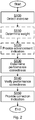
- a method for an advancement manager in a handheld user device is presented with reference to Fig. 2 .
- the method is performed in a handheld user device 1.
- an exercise of a person in front of a camera of the handheld user device is detected.
- the exercise is a trained exercise.
- a weight of an exercise equipment present in the detected exercise is determined.
- the first threshold is dependent of the determined weight.
- an advancement indication is provided towards a user interface (UI) of the handheld user device for the detected exercise.
- UI user interface
- processing block S130 when a stability of the detected exercise is within a first threshold, a performance of the detected exercise is determined as correct, and otherwise the performance is determined as incorrect.
- processing block S140 it is verified that the performance determined as incorrect in processing block S130 occurs also in a subsequent repetition of the detected exercise before providing a correction indication in processing block S150.
- processing block S150 the correction indication is provided towards the UI of the handheld user device for the verified incorrect performance.
- the exercise may e.g. be detected by image recognition and also by pose position identification, object identification and tracking, a combination thereof, or by manual entry into the virtual trainer.
- Image recognition may be used to joints in a picture, and a sequence of such pictures are analysed to recognise an exercise.
- the stability may in processing block S130 be determined by detecting movement of one or more reference points of the person in front of the camera in two dimensions x and y.
- the detection of movement may be made by image recognition.
- the first threshold may e.g. be a distance unit in the x dimension based on a normalized value of a distance in the y dimension, or vice versa.
- the normalized value in the y dimension may be a normalized distance between two or more joints. For a shoulderpress exercise, where the wrist moves less than e.g. 0.2 of the elbow to wrist distance in the x dimension, the exercise may be determined to be stable and therefore correctly performed.
- the performance of the detected exercise may in processing block S130 be determined as correct when also a speed of the detected exercise is below a second threshold.
- the speed may be determined by detecting the position of a reference point of the person in front of the camera and detecting the number of pixels moved per second in the x or y dimension or Euclidean distance. The detection of number of moved pixels may be made by image recognition.
- the second threshold may be a predetermined value based on training knowledge.
- a performance of the detected exercise may in processing block S130 be determined as correct when also a relative position of two or more reference points of the person in front of the camera is within a predetermined interval.
- the predetermined interval may be based on training knowledge.
- the first threshold may be dependent of an exercise history of the person in front of the camera.
- the correction indication may in processing block S150 be an image, or a video, displayed on a display of the handheld user device, and/or a voice message played by a speaker of the handheld user device.
- a repetition number may be increased in processing block S120.
- a predetermined number of repetitions have been reached, a first set is completed.
- a second set of repetitions may follow.
- the predetermined number of repetitions may initially be selected for each exercise, and later be adjusted by the advancement manager.
- Detection of an exercise may e.g. be by detecting a movement of a reference point such as the nose. The movement may be a distance e.g. from y to y-0.2.
- a specific time period of rest may be added after each set, before a workout is advanced to a subsequent set.
- the subsequent set may be started when a first repetition of an expected exercise is detected in processing block S110.
- the user may be prompted to start the expected exercise after a time period of rest or the preceding exercise was completed.
- Advancement indications may be provided to the user whether the performance is determined correct or not.
- a corrective information may be sent to the UI to be visually shown on the display and/or via voice, e.g. stating "Please keep your feet hip width apart”.
- a corrective information may be visually shown on the display and/or via voice, e.g. illustrating a speed meter or stating "Please slow down pace of repetitions”.
- a corrective information may be visually shown on the display and/or via voice, e.g. stating "Keep your knee above your foot”.
- a user may choose to display a camera view at any time which shows the image the camera is capturing.
- the user may opt to show the pose skeleton imposed on top of the body.
- Fig. 3 illustrates a smartphone 1 with a camera 46 and a display 47.
- the display 47 illustrates a picture of how the advancement manager may be displayed.
- a first box 40 shows the number of correctly performed movements of the exercise, e.g. split squats.
- a second box 41 shows the weight of training equipment when used. The weight may e.g. be identified via image recognition or via manual entry.
- the third box 43 shows which exercise that is being performed.
- a fourth 44, a fifth 45 and a sixth 46 box show how many repetitions have been correctly performed for corresponding first, second and third training set of the exercise.
- the rest of the display shows an image of the person 49 standing in front of the camera 46.
- An overlay over the image of the person 49 shows points 48 of the person identified by the virtual trainer.
- the points include nose, neck, right shoulder, right elbow, right hand, left shoulder, left elbow, left hand, right hip, right knee, right foot, left hip, left knee, left foot, right eye, left eye, right ear
- Fig. 4 illustrates some functional blocks of the virtual trainer.
- a processor and/or a graphical processing unit 10 of the smartphone 1 is connected to a memory 12, which is used to record video of the video camera 46 to be displayed on the display 47.
- the processor is also connected to an exercise database 13, which is used to determine exercise advancement and to store exercise history.
- the exercise database can be used to classify a user's movements between pose positions as a particular exercise, by comparing the user's movements to a known set of exercise catalogued and stored in an exercise library. For each exercise in the library, baseline or "ground truth” data has first been generated in a preprocessing step for each exercise. The "ground truth” data can then be used as a baseline against which a user's movements are compared in order to classify the movements as a particular exercise. Data characterizing the relative positions of the feature points of interest over several images in a sequence can be used for the comparison. Each exercise in the library may have a sequence of images covering a period of time required to perform the exercise, with a uniform time lapse occurring between images in the sequence.
- Each exercise may be associated with a minimum number of sequential images sufficient to capture the entire movement of the exercise.
- a quick movement like a finger snap requires fewer sequential images
- a movement that takes a longer time to perform, for example, a handshake requires more sequential images.
- the exercise should e.g. differentiate for non-exercise activities such as drinking water or walking around. This may e.g. be performed by detecting an exercise' start position and end position, and when a user is not in motion therebetween any movement is ignored.
- an advancement may be determined to have been made.
- the exercise is determined to not have been correctly performed, i.e. being incorrect. This may result in that an advancement of the exercise will not be displayed or may result in that a counter for the exercise is advanced similarly as for a correct exercise.
- An overlay may be presented to indicate the incorrectness by colour or other highlighting. The display of the recorded person and the overly may alternatively only display the overlay when incorrectly performed.
- An exercise may be considered as movements between two different exercise positions. An exercise may be considered incorrect when one of the two exercise positions are incorrect.
- the feet should e.g. be in line with the shoulders and hips, before a squat exercise.
- An exercise may also be considered incorrect when one reference point is incorrect with regards to another reference point.
- the knee should e.g. be outside the vertical ankle hip line during a squat exercise.
- Exercise details such as number of repetitions and equipment weight, may be selected or may be recommended the virtual trainer, e.g. based on weight, length, age of the person in front of the camera and more importantly on historic data such as weights, number of repetitions, speed and stability for previous exercises. For example, if a user has managed to do 10 squats with a 20kg kettlebell 3 workouts in a row, it may be time to increase to 12 reps or increase to 22 kg. This information may be stored in a database for each user after each workout. A progression manager program may calculate the appropriate weight and number of repetitions before each exercise.
- An exercise recommendation for a person may be based or adjusted on observed movability, weaknesses and/or imbalances.
- An exercise may comprise one or more of a set of a specific number of repetitions, e.g. 10 repetitions of lunges.
- An exercise may alternatively comprise one or more of a set of as many repetitions as possible during a specific time period, e.g. as many squat jumps as possible during 60 s.
- an exerciser may comprise a specific number of repetitions during a specific time period, wherein any time left after the specific number of repetitions have been performed can be used to rest, e.g. perform 4 rounds of 10 push-ups within a minute and rest for the remainder of each minute.
- a specific time period of rest may be added after each set, before a workout is advanced to a subsequent set.
- the subsequent set may be started when a first repetition of an expected exercise is detected.
- Advancement indications may be provided to the user whether the performance is determined correct or not.
- the handheld user device 1 comprises a camera 46, a UI 11, a processing circuitry 10, and a computer program product.
- the computer program product stores instructions that, when executed by the processing circuitry, causes the handheld user device to detect an exercise of a person in front of the camera, wherein the exercise is a trained exercise, determine, when a stability of the detected exercise is within a first threshold, a performance of the detected exercise as correct, and otherwise determine the performance as incorrect, verifying that the performance determined as incorrect occurs in a subsequent repetition of the detected exercise before providing a correction indication, and to provide the correction indication towards the UI for the verified incorrect performance.
- the handheld user device may be used with or without cordless headphones.
- Exercise history may be obtained by accessing a database comprising data such as each users weight and number of repetitions performed for each exercise performed previously.
- the stability may be determined by analysing relevant joints movement smoothness. For example, in a shoulder press, if one arm is not able to push up the weight at the same speed as the other or that the path the weight takes is different from the first repetitions, the exercise may be determined not sufficiently stable.
- the speed may be determined by measuring the movement of a joint in x/y in number of pixels per time unit.
- a repetition number may be increased on the display.
- a first set is completed.
- a second set of repetitions may follow on the display, and the start of the set may be when an expected exercise is detected.
- Fig. 5 is a schematic diagram showing some components of the handheld user device 1.
- the processing circuitry 10 may be provided using any combination of one or more of a suitable central processing unit, CPU, multiprocessing circuitry, microcontroller, digital signal processing circuitry, DSP, application specific integrated circuit, graphics processing unit, GPU, etc., capable of executing software instructions of a computer program 14 stored in a memory.
- the memory can thus be considered to be or form part of the computer program product 12.
- the processing circuitry 10 may be configured to execute methods described herein with reference to Fig. 2 .
- the memory may be any combination of read and write memory, RAM, and read only memory, ROM.
- the memory may also comprise persistent storage, which, for example, can be any single one or combination of magnetic memory, optical memory, solid state memory or even remotely mounted memory.
- a second computer program product 13 in the form of a data memory may also be provided, e.g. for reading and/or storing data during execution of software instructions in the processing circuitry 10.
- the data memory can be any combination of read and write memory, RAM, and read only memory, ROM, and may also comprise persistent storage, which, for example, can be any single one or combination of magnetic memory, optical memory, solid state memory or even remotely mounted memory.
- the data memory may e.g. hold other software instructions 15, to improve functionality for the handheld user device 1.
- the handheld user device 1 may further comprise an input/output (I/O) interface 11 including e.g. a user interface.
- the handheld user device 1 may further comprise a receiver configured to receive signalling from other devices, and a transmitter configured to transmit signalling to other devices (not illustrated).
- Other components of the handheld user device 1 are omitted in order not to obscure the concepts presented herein.
- Fig. 6 is a schematic diagram showing some components of a cloud server 3.
- the processing circuitry or graphical processing unit 30 may be provided using any combination of one or more of a suitable central processing unit, CPU, multiprocessing circuitry, microcontroller, digital signal processing circuitry, DSP, application specific integrated circuit, graphics processing unit, GPU, etc., capable of executing software instructions of a computer program 34 stored in a memory.
- the memory can thus be considered to be or form part of the computer program product 32.
- the processing circuitry 30 may be configured to execute methods described herein with reference to Fig. 2 .
- the memory may be any combination of read and write memory, RAM, and read only memory, ROM.
- the memory may also comprise persistent storage, which, for example, can be any single one or combination of magnetic memory, optical memory, solid state memory or even remotely mounted memory.
- a second computer program product 33 in the form of a data memory may also be provided, e.g. for reading and/or storing data during execution of software instructions in the processing circuitry 30.
- the data memory can be any combination of read and write memory, RAM, and read only memory, ROM, and may also comprise persistent storage, which, for example, can be any single one or combination of magnetic memory, optical memory, solid state memory or even remotely mounted memory.
- the data memory may e.g. hold other software instructions 35, to improve functionality for the handheld user device 3.
- the cloud server 3 may further comprise an input/output (I/O) interface 31 including e.g. a user interface.
- the cloud server 3 may further comprise a receiver configured to receive signalling from other devices, and a transmitter configured to transmit signalling to other devices (not illustrated).
- Other components of the cloud server 3 are omitted in order not to obscure the concepts presented herein.
- a database 33 of the cloud server 3 may be a position database used by the handheld user device 1.
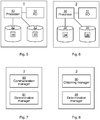
- a handheld user device 1 for an advancement manager comprises a communication manager unit 80 for providing a correction indication towards a UI of the handheld user device for verified incorrect performance.
- the handheld user device 1 also comprises a determination manager 81 for detecting an exercise of a person in front of a camera of the handheld user device, wherein the exercise is a trained exercise, for determining, when a stability of the detected exercise is within a first threshold, a performance of the detected exercise as correct, and otherwise determine the performance as incorrect, and for verifying that the performance determined as incorrect also occurs in subsequent repetition of the detected exercise before providing the correction indication.
- Fig. 7 is a schematic diagram showing functional blocks of the handheld user device 1.
- the modules may be implemented as only software instructions such as a computer program executing in the cache server or only hardware, such as application specific integrated circuits, field programmable gate arrays, discrete logical components, transceivers, etc. or as a combination thereof. In an alternative embodiment, some of the functional blocks may be implemented by software and other by hardware.
- the modules correspond to the process blocks in the method illustrated in Fig. 2 , comprising a communication manager unit 80 and a determination manger unit 81.
- modules are implemented by a computer program, it shall be understood that these modules do not necessarily correspond to process modules, but can be written as instructions according to a programming language in which they would be implemented, since some programming languages do not typically contain process modules.
- the communication manager 80 is for an advancement manager in a handheld user device.
- This module corresponds to the processing blocks S120 and S150 of Fig. 2 .
- This module can e.g. be implemented by the processing circuitry 10 of Fig. 5 , when running the computer program.
- the determination manager 81 is for an advancement manager in a handheld user device.
- This module corresponds to the processing blocks S100, S110, S130 and S140 of Fig. 2 .
- This module can e.g. be implemented by the processing circuitry 10 of Fig. 5 , when running the computer program.
- Fig. 8 is a schematic diagram showing functional blocks of the cloud server 3.
- the modules may be implemented as only software instructions such as a computer program executing in the cache server or only hardware, such as application specific integrated circuits, field programmable gate arrays, discrete logical components, transceivers, etc. or as a combination thereof. In an alternative embodiment, some of the functional blocks may be implemented by software and other by hardware.
- the modules correspond to the process blocks in the method illustrated in Fig. 2 , comprising an obtaining manager unit 90 and a determination manger unit 91.
- modules are implemented by a computer program, it shall be understood that these modules do not necessarily correspond to process modules, but can be written as instructions according to a programming language in which they would be implemented, since some programming languages do not typically contain process modules.
- the obtaining manager 90 is for an advancement manager in a handheld user device.
- This module corresponds to the processing blocks S120 and S150 of Fig. 2 .
- This module can e.g. be implemented by the processing circuitry 30 of Fig. 6 , when running the computer program.
- the determination manager 91 is for an advancement manager in a handheld user device.
- This module corresponds to the processing blocks S100, S110, S130 and S140 of Fig. 2 .
- This module can e.g. be implemented by the processing circuitry 30 of Fig. 5 , when running the computer program.
- Computer programs have been describes as implemented in a handheld device or in a cloud server.
- One part of a computer programs may alternatively be implemented in the handheld device whereas other parts of the computer program may be implemented in the cloud server.
Landscapes
- Engineering & Computer Science (AREA)
- Health & Medical Sciences (AREA)
- General Health & Medical Sciences (AREA)
- Physical Education & Sports Medicine (AREA)
- Physics & Mathematics (AREA)
- Theoretical Computer Science (AREA)
- General Physics & Mathematics (AREA)
- Multimedia (AREA)
- Computer Vision & Pattern Recognition (AREA)
- Business, Economics & Management (AREA)
- Human Computer Interaction (AREA)
- Epidemiology (AREA)
- Psychiatry (AREA)
- Educational Administration (AREA)
- Educational Technology (AREA)
- Public Health (AREA)
- Primary Health Care (AREA)
- Medical Informatics (AREA)
- Entrepreneurship & Innovation (AREA)
- Social Psychology (AREA)
- Biophysics (AREA)
- Life Sciences & Earth Sciences (AREA)
- Quality & Reliability (AREA)
- Measurement Of The Respiration, Hearing Ability, Form, And Blood Characteristics Of Living Organisms (AREA)
- User Interface Of Digital Computer (AREA)
- Medical Treatment And Welfare Office Work (AREA)
Applications Claiming Priority (1)
| Application Number | Priority Date | Filing Date | Title |
|---|---|---|---|
| SE1950996A SE1950996A1 (en) | 2019-09-02 | 2019-09-02 | Advancement manager in a handheld user device |
Publications (1)
| Publication Number | Publication Date |
|---|---|
| EP3786971A1 true EP3786971A1 (de) | 2021-03-03 |
Family
ID=72355754
Family Applications (1)
| Application Number | Title | Priority Date | Filing Date |
|---|---|---|---|
| EP20194130.9A Withdrawn EP3786971A1 (de) | 2019-09-02 | 2020-09-02 | Fortschrittsmanager in einem tragbaren benutzergerät |
Country Status (3)
| Country | Link |
|---|---|
| US (1) | US20210060385A1 (de) |
| EP (1) | EP3786971A1 (de) |
| SE (1) | SE1950996A1 (de) |
Cited By (2)
| Publication number | Priority date | Publication date | Assignee | Title |
|---|---|---|---|---|
| US20220358309A1 (en) * | 2021-05-04 | 2022-11-10 | Tencent America LLC | Vision-based motion capture system for rehabilitation training |
| DE102023129563A1 (de) * | 2023-10-26 | 2025-04-30 | Ottobock Se & Co. Kgaa | Verfahren, Vorrichtung und Computerprogramm zum Bewerten eines Bewegungsablaufes |
Families Citing this family (3)
| Publication number | Priority date | Publication date | Assignee | Title |
|---|---|---|---|---|
| CN118212693A (zh) * | 2019-08-18 | 2024-06-18 | 聚好看科技股份有限公司 | 显示设备及界面显示方法 |
| US11334978B2 (en) | 2019-11-22 | 2022-05-17 | Sony Interactive Entertainment Inc. | Recommendation engine for comparing physical activity to ground truth |
| KR102947564B1 (ko) * | 2020-10-27 | 2026-04-02 | 엘지전자 주식회사 | 인공지능 기반의 운동 코칭 장치 |
Citations (2)
| Publication number | Priority date | Publication date | Assignee | Title |
|---|---|---|---|---|
| EP2652658A1 (de) * | 2010-12-13 | 2013-10-23 | NIKE International Ltd. | Verarbeitung von daten eines sich sportlich betätigenden benutzers zur schätzung des energieverbrauchs |
| US20150317515A1 (en) * | 2013-05-30 | 2015-11-05 | Atlas Wearables, Inc. | Portable computing device and analyses of personal data captured therefrom |
Family Cites Families (17)
| Publication number | Priority date | Publication date | Assignee | Title |
|---|---|---|---|---|
| US20090156364A1 (en) * | 2007-12-18 | 2009-06-18 | International Business Machines Corporation | Exercise regime management tool |
| US8113991B2 (en) * | 2008-06-02 | 2012-02-14 | Omek Interactive, Ltd. | Method and system for interactive fitness training program |
| US9283429B2 (en) * | 2010-11-05 | 2016-03-15 | Nike, Inc. | Method and system for automated personal training |
| EP2649588A4 (de) * | 2010-12-07 | 2014-04-16 | Movement Training Systems Llc | Systeme und verfahren für leistungstraining |
| US9154739B1 (en) * | 2011-11-30 | 2015-10-06 | Google Inc. | Physical training assistant system |
| GB201310523D0 (en) * | 2013-06-13 | 2013-07-24 | Biogaming Ltd | Personal digital trainer for physio-therapeutic and rehabilitative video games |
| WO2015108700A1 (en) * | 2014-01-14 | 2015-07-23 | Zsolutionz, LLC | Sensor-based evaluation and feedback of exercise performance |
| US20180374383A1 (en) * | 2017-06-22 | 2018-12-27 | Jeffrey THIELEN | Coaching feedback system and method |
| US9789360B1 (en) * | 2015-02-24 | 2017-10-17 | Gary L. Schaffer | Apparatus for monitoring exercise efficiency and usage |
| US20200054928A1 (en) * | 2016-01-16 | 2020-02-20 | Sasken Communication Technologies Ltd | Body movement analysis for bowling activity in a sport |
| US11511156B2 (en) * | 2016-03-12 | 2022-11-29 | Arie Shavit | Training system and methods for designing, monitoring and providing feedback of training |
| US20180020954A1 (en) * | 2016-07-20 | 2018-01-25 | L & C Orthopedics, Llc | Method and system for automated biomechanical analysis of bodily strength and flexibility |
| EP3500950B1 (de) * | 2016-08-19 | 2026-05-06 | 6Degrees Ltd. | Messung und analyse von körperlicher betätigung |
| CN110622212B (zh) * | 2017-05-15 | 2022-11-18 | 富士通株式会社 | 表演显示方法以及表演显示装置 |
| US11514813B2 (en) * | 2018-10-05 | 2022-11-29 | International Business Machines Corporation | Smart fitness system |
| KR20200095195A (ko) * | 2019-01-31 | 2020-08-10 | (주)유인케어 | Rgb-d 카메라를 이용한 재활훈련 시스템 및 방법 |
| KR102031243B1 (ko) * | 2019-07-17 | 2019-10-11 | 정재훈 | 스마트 프리웨이트 트레이닝 동작 인식 장치 및 그 방법 |
-
2019
- 2019-09-02 SE SE1950996A patent/SE1950996A1/en not_active Application Discontinuation
-
2020
- 2020-09-02 US US17/010,279 patent/US20210060385A1/en not_active Abandoned
- 2020-09-02 EP EP20194130.9A patent/EP3786971A1/de not_active Withdrawn
Patent Citations (2)
| Publication number | Priority date | Publication date | Assignee | Title |
|---|---|---|---|---|
| EP2652658A1 (de) * | 2010-12-13 | 2013-10-23 | NIKE International Ltd. | Verarbeitung von daten eines sich sportlich betätigenden benutzers zur schätzung des energieverbrauchs |
| US20150317515A1 (en) * | 2013-05-30 | 2015-11-05 | Atlas Wearables, Inc. | Portable computing device and analyses of personal data captured therefrom |
Non-Patent Citations (1)
| Title |
|---|
| ANONYMOUS: "Kinect", 26 August 2019 (2019-08-26), XP055764436, Retrieved from the Internet <URL:https://en.wikipedia.org/w/index.php?title=Kinect&oldid=912635538> [retrieved on 20210113] * |
Cited By (4)
| Publication number | Priority date | Publication date | Assignee | Title |
|---|---|---|---|---|
| US20220358309A1 (en) * | 2021-05-04 | 2022-11-10 | Tencent America LLC | Vision-based motion capture system for rehabilitation training |
| US12033435B2 (en) * | 2021-05-04 | 2024-07-09 | Tencent America LLC | Vision-based motion capture system for rehabilitation training |
| DE102023129563A1 (de) * | 2023-10-26 | 2025-04-30 | Ottobock Se & Co. Kgaa | Verfahren, Vorrichtung und Computerprogramm zum Bewerten eines Bewegungsablaufes |
| WO2025088128A1 (de) | 2023-10-26 | 2025-05-01 | Ottobock Se & Co. Kgaa | Verfahren, vorrichtung und computerprogramm zum bewerten eines bewegungsablaufes |
Also Published As
| Publication number | Publication date |
|---|---|
| SE1950996A1 (en) | 2021-03-03 |
| US20210060385A1 (en) | 2021-03-04 |
Similar Documents
| Publication | Publication Date | Title |
|---|---|---|
| US20210060385A1 (en) | Advancement Manager In A Handheld User Device | |
| US12157035B2 (en) | Method and system for monitoring and feed-backing on execution of physical exercise routines | |
| CN109191588B (zh) | 运动教学方法、装置、存储介质及电子设备 | |
| US9589207B2 (en) | Jump shot and athletic activity analysis system | |
| KR102320960B1 (ko) | 사용자 신체 맞춤형 홈 트레이닝 동작 안내 및 교정 시스템 | |
| US9154739B1 (en) | Physical training assistant system | |
| CN113409651B (zh) | 直播健身方法、系统、电子设备、存储介质 | |
| US11992745B2 (en) | Method and system for assessing and improving wellness of person using body gestures | |
| CN107920783A (zh) | 监测与用户身体活动关联的运动和取向模式的系统和方法 | |
| CN110782482A (zh) | 运动评估方法、装置、计算机设备及存储介质 | |
| KR102251315B1 (ko) | 운동 트레이닝 시스템 | |
| US20240198177A1 (en) | Exercise instruction and feedback systems and methods | |
| JP2020174910A (ja) | 運動支援システム | |
| CN107694046A (zh) | 一种健身运动训练方法、装置及计算机可读存储介质 | |
| US11547904B2 (en) | Exercise assisting device and exercise assisting method | |
| US20250022317A1 (en) | Repetition counting within connected fitness systems | |
| KR102095647B1 (ko) | 스마트기기를 이용한 동작 비교장치 및 동작 비교장치를 통한 댄스 비교방법 | |
| KR102356685B1 (ko) | 온라인 그룹을 기반으로 하는 홈 트레이닝 제공 시스템 및 그 방법 | |
| CN115439879A (zh) | 体育项目的测试方法、装置、设备及存储介质 | |
| KR20210067718A (ko) | 골프 스윙 동작 피드백 제공 장치 및 방법 | |
| US20140073383A1 (en) | Method and system for motion comparison | |
| KR20230102011A (ko) | 스포츠 퍼포먼스 분석 및 코칭 시스템 및 그 방법 | |
| CN111986260A (zh) | 一种图像处理的方法、装置及终端设备 | |
| KR20220056967A (ko) | Ai에 기반하여 클라이밍 경로를 안내하고 등반 결과를 평가하는 클라이밍 서포트 시스템 및 방법 | |
| CN113298013A (zh) | 运动动作矫正方法、装置、存储介质及电子设备 |
Legal Events
| Date | Code | Title | Description |
|---|---|---|---|
| PUAI | Public reference made under article 153(3) epc to a published international application that has entered the european phase |
Free format text: ORIGINAL CODE: 0009012 |
|
| STAA | Information on the status of an ep patent application or granted ep patent |
Free format text: STATUS: THE APPLICATION HAS BEEN PUBLISHED |
|
| AK | Designated contracting states |
Kind code of ref document: A1 Designated state(s): AL AT BE BG CH CY CZ DE DK EE ES FI FR GB GR HR HU IE IS IT LI LT LU LV MC MK MT NL NO PL PT RO RS SE SI SK SM TR |
|
| AX | Request for extension of the european patent |
Extension state: BA ME |
|
| STAA | Information on the status of an ep patent application or granted ep patent |
Free format text: STATUS: THE APPLICATION IS DEEMED TO BE WITHDRAWN |
|
| 18D | Application deemed to be withdrawn |
Effective date: 20210904 |