EP3786012B1 - Spurhaltung für autonome fahrzeuge - Google Patents
Spurhaltung für autonome fahrzeuge Download PDFInfo
- Publication number
- EP3786012B1 EP3786012B1 EP19194353.9A EP19194353A EP3786012B1 EP 3786012 B1 EP3786012 B1 EP 3786012B1 EP 19194353 A EP19194353 A EP 19194353A EP 3786012 B1 EP3786012 B1 EP 3786012B1
- Authority
- EP
- European Patent Office
- Prior art keywords
- vehicle
- predefined
- trajectory
- criterion
- stop
- Prior art date
- Legal status (The legal status is an assumption and is not a legal conclusion. Google has not performed a legal analysis and makes no representation as to the accuracy of the status listed.)
- Active
Links
Images

Classifications
-
- G—PHYSICS
- G06—COMPUTING OR CALCULATING; COUNTING
- G06V—IMAGE OR VIDEO RECOGNITION OR UNDERSTANDING
- G06V20/00—Scenes; Scene-specific elements
- G06V20/50—Context or environment of the image
- G06V20/56—Context or environment of the image exterior to a vehicle by using sensors mounted on the vehicle
- G06V20/588—Recognition of the road, e.g. of lane markings; Recognition of the vehicle driving pattern in relation to the road
-
- B—PERFORMING OPERATIONS; TRANSPORTING
- B60—VEHICLES IN GENERAL
- B60T—VEHICLE BRAKE CONTROL SYSTEMS OR PARTS THEREOF; BRAKE CONTROL SYSTEMS OR PARTS THEREOF, IN GENERAL; ARRANGEMENT OF BRAKING ELEMENTS ON VEHICLES IN GENERAL; PORTABLE DEVICES FOR PREVENTING UNWANTED MOVEMENT OF VEHICLES; VEHICLE MODIFICATIONS TO FACILITATE COOLING OF BRAKES
- B60T8/00—Arrangements for adjusting wheel-braking force to meet varying vehicular or ground-surface conditions, e.g. limiting or varying distribution of braking force
- B60T8/17—Using electrical or electronic regulation means to control braking
- B60T8/1755—Brake regulation specially adapted to control the stability of the vehicle, e.g. taking into account yaw rate or transverse acceleration in a curve
- B60T8/17557—Brake regulation specially adapted to control the stability of the vehicle, e.g. taking into account yaw rate or transverse acceleration in a curve specially adapted for lane departure prevention
-
- B—PERFORMING OPERATIONS; TRANSPORTING
- B60—VEHICLES IN GENERAL
- B60K—ARRANGEMENT OR MOUNTING OF PROPULSION UNITS OR OF TRANSMISSIONS IN VEHICLES; ARRANGEMENT OR MOUNTING OF PLURAL DIVERSE PRIME-MOVERS IN VEHICLES; AUXILIARY DRIVES FOR VEHICLES; INSTRUMENTATION OR DASHBOARDS FOR VEHICLES; ARRANGEMENTS IN CONNECTION WITH COOLING, AIR INTAKE, GAS EXHAUST OR FUEL SUPPLY OF PROPULSION UNITS IN VEHICLES
- B60K35/00—Instruments specially adapted for vehicles; Arrangement of instruments in or on vehicles
- B60K35/20—Output arrangements, i.e. from vehicle to user, associated with vehicle functions or specially adapted therefor
- B60K35/28—Output arrangements, i.e. from vehicle to user, associated with vehicle functions or specially adapted therefor characterised by the type of the output information, e.g. video entertainment or vehicle dynamics information; characterised by the purpose of the output information, e.g. for attracting the attention of the driver
-
- B—PERFORMING OPERATIONS; TRANSPORTING
- B60—VEHICLES IN GENERAL
- B60T—VEHICLE BRAKE CONTROL SYSTEMS OR PARTS THEREOF; BRAKE CONTROL SYSTEMS OR PARTS THEREOF, IN GENERAL; ARRANGEMENT OF BRAKING ELEMENTS ON VEHICLES IN GENERAL; PORTABLE DEVICES FOR PREVENTING UNWANTED MOVEMENT OF VEHICLES; VEHICLE MODIFICATIONS TO FACILITATE COOLING OF BRAKES
- B60T7/00—Brake-action initiating means
- B60T7/12—Brake-action initiating means for automatic initiation; for initiation not subject to will of driver or passenger
- B60T7/22—Brake-action initiating means for automatic initiation; for initiation not subject to will of driver or passenger initiated by contact of vehicle, e.g. bumper, with an external object, e.g. another vehicle, or by means of contactless obstacle detectors mounted on the vehicle
-
- B—PERFORMING OPERATIONS; TRANSPORTING
- B60—VEHICLES IN GENERAL
- B60W—CONJOINT CONTROL OF VEHICLE SUB-UNITS OF DIFFERENT TYPE OR DIFFERENT FUNCTION; CONTROL SYSTEMS SPECIALLY ADAPTED FOR HYBRID VEHICLES; ROAD VEHICLE DRIVE CONTROL SYSTEMS FOR PURPOSES NOT RELATED TO THE CONTROL OF A PARTICULAR SUB-UNIT
- B60W10/00—Conjoint control of vehicle sub-units of different type or different function
- B60W10/18—Conjoint control of vehicle sub-units of different type or different function including control of braking systems
-
- B—PERFORMING OPERATIONS; TRANSPORTING
- B60—VEHICLES IN GENERAL
- B60W—CONJOINT CONTROL OF VEHICLE SUB-UNITS OF DIFFERENT TYPE OR DIFFERENT FUNCTION; CONTROL SYSTEMS SPECIALLY ADAPTED FOR HYBRID VEHICLES; ROAD VEHICLE DRIVE CONTROL SYSTEMS FOR PURPOSES NOT RELATED TO THE CONTROL OF A PARTICULAR SUB-UNIT
- B60W20/00—Control systems specially adapted for hybrid vehicles
- B60W20/10—Controlling the power contribution of each of the prime movers to meet required power demand
- B60W20/11—Controlling the power contribution of each of the prime movers to meet required power demand using model predictive control [MPC] strategies, i.e. control methods based on models predicting performance
-
- B—PERFORMING OPERATIONS; TRANSPORTING
- B60—VEHICLES IN GENERAL
- B60W—CONJOINT CONTROL OF VEHICLE SUB-UNITS OF DIFFERENT TYPE OR DIFFERENT FUNCTION; CONTROL SYSTEMS SPECIALLY ADAPTED FOR HYBRID VEHICLES; ROAD VEHICLE DRIVE CONTROL SYSTEMS FOR PURPOSES NOT RELATED TO THE CONTROL OF A PARTICULAR SUB-UNIT
- B60W20/00—Control systems specially adapted for hybrid vehicles
- B60W20/50—Control strategies for responding to system failures, e.g. for fault diagnosis, failsafe operation or limp mode
-
- B—PERFORMING OPERATIONS; TRANSPORTING
- B60—VEHICLES IN GENERAL
- B60W—CONJOINT CONTROL OF VEHICLE SUB-UNITS OF DIFFERENT TYPE OR DIFFERENT FUNCTION; CONTROL SYSTEMS SPECIALLY ADAPTED FOR HYBRID VEHICLES; ROAD VEHICLE DRIVE CONTROL SYSTEMS FOR PURPOSES NOT RELATED TO THE CONTROL OF A PARTICULAR SUB-UNIT
- B60W30/00—Purposes of road vehicle drive control systems not related to the control of a particular sub-unit, e.g. of systems using conjoint control of vehicle sub-units
- B60W30/08—Active safety systems predicting or avoiding probable or impending collision or attempting to minimise its consequences
- B60W30/09—Taking automatic action to avoid collision, e.g. braking and steering
-
- B—PERFORMING OPERATIONS; TRANSPORTING
- B60—VEHICLES IN GENERAL
- B60W—CONJOINT CONTROL OF VEHICLE SUB-UNITS OF DIFFERENT TYPE OR DIFFERENT FUNCTION; CONTROL SYSTEMS SPECIALLY ADAPTED FOR HYBRID VEHICLES; ROAD VEHICLE DRIVE CONTROL SYSTEMS FOR PURPOSES NOT RELATED TO THE CONTROL OF A PARTICULAR SUB-UNIT
- B60W30/00—Purposes of road vehicle drive control systems not related to the control of a particular sub-unit, e.g. of systems using conjoint control of vehicle sub-units
- B60W30/08—Active safety systems predicting or avoiding probable or impending collision or attempting to minimise its consequences
- B60W30/095—Predicting travel path or likelihood of collision
-
- B—PERFORMING OPERATIONS; TRANSPORTING
- B60—VEHICLES IN GENERAL
- B60W—CONJOINT CONTROL OF VEHICLE SUB-UNITS OF DIFFERENT TYPE OR DIFFERENT FUNCTION; CONTROL SYSTEMS SPECIALLY ADAPTED FOR HYBRID VEHICLES; ROAD VEHICLE DRIVE CONTROL SYSTEMS FOR PURPOSES NOT RELATED TO THE CONTROL OF A PARTICULAR SUB-UNIT
- B60W30/00—Purposes of road vehicle drive control systems not related to the control of a particular sub-unit, e.g. of systems using conjoint control of vehicle sub-units
- B60W30/08—Active safety systems predicting or avoiding probable or impending collision or attempting to minimise its consequences
- B60W30/095—Predicting travel path or likelihood of collision
- B60W30/0953—Predicting travel path or likelihood of collision the prediction being responsive to vehicle dynamic parameters
-
- B—PERFORMING OPERATIONS; TRANSPORTING
- B60—VEHICLES IN GENERAL
- B60W—CONJOINT CONTROL OF VEHICLE SUB-UNITS OF DIFFERENT TYPE OR DIFFERENT FUNCTION; CONTROL SYSTEMS SPECIALLY ADAPTED FOR HYBRID VEHICLES; ROAD VEHICLE DRIVE CONTROL SYSTEMS FOR PURPOSES NOT RELATED TO THE CONTROL OF A PARTICULAR SUB-UNIT
- B60W30/00—Purposes of road vehicle drive control systems not related to the control of a particular sub-unit, e.g. of systems using conjoint control of vehicle sub-units
- B60W30/08—Active safety systems predicting or avoiding probable or impending collision or attempting to minimise its consequences
- B60W30/095—Predicting travel path or likelihood of collision
- B60W30/0956—Predicting travel path or likelihood of collision the prediction being responsive to traffic or environmental parameters
-
- B—PERFORMING OPERATIONS; TRANSPORTING
- B60—VEHICLES IN GENERAL
- B60W—CONJOINT CONTROL OF VEHICLE SUB-UNITS OF DIFFERENT TYPE OR DIFFERENT FUNCTION; CONTROL SYSTEMS SPECIALLY ADAPTED FOR HYBRID VEHICLES; ROAD VEHICLE DRIVE CONTROL SYSTEMS FOR PURPOSES NOT RELATED TO THE CONTROL OF A PARTICULAR SUB-UNIT
- B60W30/00—Purposes of road vehicle drive control systems not related to the control of a particular sub-unit, e.g. of systems using conjoint control of vehicle sub-units
- B60W30/10—Path keeping
- B60W30/12—Lane keeping
-
- B—PERFORMING OPERATIONS; TRANSPORTING
- B60—VEHICLES IN GENERAL
- B60W—CONJOINT CONTROL OF VEHICLE SUB-UNITS OF DIFFERENT TYPE OR DIFFERENT FUNCTION; CONTROL SYSTEMS SPECIALLY ADAPTED FOR HYBRID VEHICLES; ROAD VEHICLE DRIVE CONTROL SYSTEMS FOR PURPOSES NOT RELATED TO THE CONTROL OF A PARTICULAR SUB-UNIT
- B60W50/00—Details of control systems for road vehicle drive control not related to the control of a particular sub-unit, e.g. process diagnostic or vehicle driver interfaces
- B60W50/0097—Predicting future conditions
-
- B—PERFORMING OPERATIONS; TRANSPORTING
- B60—VEHICLES IN GENERAL
- B60W—CONJOINT CONTROL OF VEHICLE SUB-UNITS OF DIFFERENT TYPE OR DIFFERENT FUNCTION; CONTROL SYSTEMS SPECIALLY ADAPTED FOR HYBRID VEHICLES; ROAD VEHICLE DRIVE CONTROL SYSTEMS FOR PURPOSES NOT RELATED TO THE CONTROL OF A PARTICULAR SUB-UNIT
- B60W50/00—Details of control systems for road vehicle drive control not related to the control of a particular sub-unit, e.g. process diagnostic or vehicle driver interfaces
- B60W50/02—Ensuring safety in case of control system failures, e.g. by diagnosing, circumventing or fixing failures
-
- B—PERFORMING OPERATIONS; TRANSPORTING
- B60—VEHICLES IN GENERAL
- B60W—CONJOINT CONTROL OF VEHICLE SUB-UNITS OF DIFFERENT TYPE OR DIFFERENT FUNCTION; CONTROL SYSTEMS SPECIALLY ADAPTED FOR HYBRID VEHICLES; ROAD VEHICLE DRIVE CONTROL SYSTEMS FOR PURPOSES NOT RELATED TO THE CONTROL OF A PARTICULAR SUB-UNIT
- B60W60/00—Drive control systems specially adapted for autonomous road vehicles
- B60W60/001—Planning or execution of driving tasks
- B60W60/0015—Planning or execution of driving tasks specially adapted for safety
-
- B—PERFORMING OPERATIONS; TRANSPORTING
- B60—VEHICLES IN GENERAL
- B60W—CONJOINT CONTROL OF VEHICLE SUB-UNITS OF DIFFERENT TYPE OR DIFFERENT FUNCTION; CONTROL SYSTEMS SPECIALLY ADAPTED FOR HYBRID VEHICLES; ROAD VEHICLE DRIVE CONTROL SYSTEMS FOR PURPOSES NOT RELATED TO THE CONTROL OF A PARTICULAR SUB-UNIT
- B60W60/00—Drive control systems specially adapted for autonomous road vehicles
- B60W60/005—Handover processes
- B60W60/0059—Estimation of the risk associated with autonomous or manual driving, e.g. situation too complex, sensor failure or driver incapacity
-
- B—PERFORMING OPERATIONS; TRANSPORTING
- B60—VEHICLES IN GENERAL
- B60K—ARRANGEMENT OR MOUNTING OF PROPULSION UNITS OR OF TRANSMISSIONS IN VEHICLES; ARRANGEMENT OR MOUNTING OF PLURAL DIVERSE PRIME-MOVERS IN VEHICLES; AUXILIARY DRIVES FOR VEHICLES; INSTRUMENTATION OR DASHBOARDS FOR VEHICLES; ARRANGEMENTS IN CONNECTION WITH COOLING, AIR INTAKE, GAS EXHAUST OR FUEL SUPPLY OF PROPULSION UNITS IN VEHICLES
- B60K2360/00—Indexing scheme associated with groups B60K35/00 or B60K37/00 relating to details of instruments or dashboards
- B60K2360/16—Type of output information
- B60K2360/175—Autonomous driving
-
- B—PERFORMING OPERATIONS; TRANSPORTING
- B60—VEHICLES IN GENERAL
- B60T—VEHICLE BRAKE CONTROL SYSTEMS OR PARTS THEREOF; BRAKE CONTROL SYSTEMS OR PARTS THEREOF, IN GENERAL; ARRANGEMENT OF BRAKING ELEMENTS ON VEHICLES IN GENERAL; PORTABLE DEVICES FOR PREVENTING UNWANTED MOVEMENT OF VEHICLES; VEHICLE MODIFICATIONS TO FACILITATE COOLING OF BRAKES
- B60T2201/00—Particular use of vehicle brake systems; Special systems using also the brakes; Special software modules within the brake system controller
- B60T2201/08—Lane monitoring; Lane Keeping Systems
- B60T2201/089—Lane monitoring; Lane Keeping Systems using optical detection
-
- B—PERFORMING OPERATIONS; TRANSPORTING
- B60—VEHICLES IN GENERAL
- B60T—VEHICLE BRAKE CONTROL SYSTEMS OR PARTS THEREOF; BRAKE CONTROL SYSTEMS OR PARTS THEREOF, IN GENERAL; ARRANGEMENT OF BRAKING ELEMENTS ON VEHICLES IN GENERAL; PORTABLE DEVICES FOR PREVENTING UNWANTED MOVEMENT OF VEHICLES; VEHICLE MODIFICATIONS TO FACILITATE COOLING OF BRAKES
- B60T2210/00—Detection or estimation of road or environment conditions; Detection or estimation of road shapes
- B60T2210/30—Environment conditions or position therewithin
- B60T2210/32—Vehicle surroundings
-
- B—PERFORMING OPERATIONS; TRANSPORTING
- B60—VEHICLES IN GENERAL
- B60W—CONJOINT CONTROL OF VEHICLE SUB-UNITS OF DIFFERENT TYPE OR DIFFERENT FUNCTION; CONTROL SYSTEMS SPECIALLY ADAPTED FOR HYBRID VEHICLES; ROAD VEHICLE DRIVE CONTROL SYSTEMS FOR PURPOSES NOT RELATED TO THE CONTROL OF A PARTICULAR SUB-UNIT
- B60W2420/00—Indexing codes relating to the type of sensors based on the principle of their operation
- B60W2420/40—Photo, light or radio wave sensitive means, e.g. infrared sensors
- B60W2420/403—Image sensing, e.g. optical camera
-
- B—PERFORMING OPERATIONS; TRANSPORTING
- B60—VEHICLES IN GENERAL
- B60W—CONJOINT CONTROL OF VEHICLE SUB-UNITS OF DIFFERENT TYPE OR DIFFERENT FUNCTION; CONTROL SYSTEMS SPECIALLY ADAPTED FOR HYBRID VEHICLES; ROAD VEHICLE DRIVE CONTROL SYSTEMS FOR PURPOSES NOT RELATED TO THE CONTROL OF A PARTICULAR SUB-UNIT
- B60W2420/00—Indexing codes relating to the type of sensors based on the principle of their operation
- B60W2420/40—Photo, light or radio wave sensitive means, e.g. infrared sensors
- B60W2420/408—Radar; Laser, e.g. lidar
-
- B—PERFORMING OPERATIONS; TRANSPORTING
- B60—VEHICLES IN GENERAL
- B60W—CONJOINT CONTROL OF VEHICLE SUB-UNITS OF DIFFERENT TYPE OR DIFFERENT FUNCTION; CONTROL SYSTEMS SPECIALLY ADAPTED FOR HYBRID VEHICLES; ROAD VEHICLE DRIVE CONTROL SYSTEMS FOR PURPOSES NOT RELATED TO THE CONTROL OF A PARTICULAR SUB-UNIT
- B60W2420/00—Indexing codes relating to the type of sensors based on the principle of their operation
- B60W2420/54—Audio sensitive means, e.g. ultrasound
-
- B—PERFORMING OPERATIONS; TRANSPORTING
- B60—VEHICLES IN GENERAL
- B60Y—INDEXING SCHEME RELATING TO ASPECTS CROSS-CUTTING VEHICLE TECHNOLOGY
- B60Y2300/00—Purposes or special features of road vehicle drive control systems
- B60Y2300/08—Predicting or avoiding probable or impending collision
- B60Y2300/095—Predicting travel path or likelihood of collision
- B60Y2300/0952—Predicting travel path or likelihood of collision the prediction being responsive to vehicle dynamic parameters
-
- B—PERFORMING OPERATIONS; TRANSPORTING
- B60—VEHICLES IN GENERAL
- B60Y—INDEXING SCHEME RELATING TO ASPECTS CROSS-CUTTING VEHICLE TECHNOLOGY
- B60Y2300/00—Purposes or special features of road vehicle drive control systems
- B60Y2300/10—Path keeping
- B60Y2300/12—Lane keeping
Definitions
- the present invention relates to autonomous driving (AD) and advanced driver-assistance systems (ADAS). More specifically, the present invention relates to road modelling for vehicles.
- AD autonomous driving
- ADAS advanced driver-assistance systems
- AD autonomous driving
- ADAS advanced driver-assistance systems
- Lane departures are a critical issue in AD systems and proper solutions to mitigate the risk of lane departures are of utmost importance. Therefore, for all lane support systems or any other steering system, precise and reliable generation of a road model is an important function.
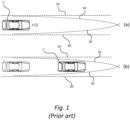
- FIG. 1 (a) illustrates a top view of a vehicle 1' traveling within a lane, defined by the left and right lane markers 2a', 2b', and a lane trace projection 3a', 3b' defining the generated lane representation 3a', 3b' where the lines 3a', 3b' intersect a distance in front of the vehicle 1'. Since the reliability of the lane marker measurements (made by on board sensors) decreases with distance from the vehicle 1', the lane trace projections 3a', 3b' are increasingly curved inwards with increasing distance.
- sensors e.g. forward vision, surround vision, LIDAR, radar, map, IMU sensors, etc.
- a strategy to mitigate the risk of the vehicle 1' inadvertently exiting the lane is to define a requirement that the vehicle 1' is able to come to a full stop within the currently available description 3a', 3b' of the target path (e.g. of the lane).
- This requirement (the vehicle 1' coming to a full stop within the available lane description) must be fulfilled at all times and all situations which results in strict requirements on in-vehicle systems and devices.
- the uncertainty or confidence levels of the lane trace estimate 3a', 3b' will limit the available distance for the vehicle 1' to come to a full stop. Consequently, the possible top speed of the vehicle is drastically limited which negatively impacts practicality and user experience of autonomous driving features.
- the allowable vehicle top speed becomes a critical design parameter to consider for road modelling solutions since increasing the allowable top speed may drastically increase the requirements on system software and hardware.
- US 2017/015288A1 discloses a safety stoppage device for a brake system of an autonomous vehicle, and in particular to a solution to safely handle a situation where a fault due to electromagnetic compatibility problems renders control system of an autonomous vehicle unable to continue ongoing performance of autonomous driving.
- a system for a lane keeping feature of a vehicle as defined by claim 1.
- a drivable area comprises a left and a right boundary extending along a direction of travel of the vehicle.
- the drivable area can be construed as a lane tracking or lane tracing feature having two projections representing the lane geometry in the surrounding environment of the vehicle.
- the left and right boundaries i.e. left and right lane traces
- the increasing uncertainty of the lane boundaries' (e.g. lane markers) location is an underlying factor as to why the projected lane traces taper inwards with the distance from the vehicle.
- the lane traces may be construed as a plurality of points distributed along each detected lane boundary, where each point is associated with a confidence level (e.g. a confidence distribution, a confidence function, a confidence value, etc.).
- the predefined safety requirement criterion is in the present context to be understood as a probability of dangerous failure rate limit associated with a safety standard or a risk classification scheme such as e.g. Automotive Safety Integrity Level (ASIL) requirements. For example, for safety critical functions an ASIL D requirement may be applied which can be translated into a probability of dangerous failure rate limit of 10 -9 h.
- ASIL Automotive Safety Integrity Level
- the predefined availability criterion is in the present context a user defined or designer defined metric which will be further explained below.
- the predefined confidence criterion is the resulting requirement on the back-up stop feature, which also dictates a probability of dangerous failure rate limit.
- the stringent requirements on the back-up stop trajectory planning have a limiting function on the achievable top speed of the vehicle, impairing the user experience of autonomous or semi-autonomous vehicles.
- the safety requirements may be based on an Automotive Safety Integrity Level (ASIL) of the trajectory planning module in the form of a probability of dangerous failure rate limit, which is generally in the range of 10 7 - 10 9 .
- ASIL requirements dictate that the vehicle shall not unintentionally go out of "lane” more than once per 10 7 - 10 9 hours, both for the nominal trajectory and the back-up stop trajectory (sometimes called safe stop trajectory).
- the vehicle is not allowed to deviate from either of the trajectories when executed (e.g. stop or move outside of the planned area) more than once per 10 7 - 10 9 hours since this may have devastating consequences. For example, if the vehicle would come to a stop in an opposing lane and cause a head-on collision with another vehicle.
- the present inventors realized that in order to allow a longer stopping distance, and thereby a higher allowable top speed, one should ease the requirement of frequency of stops in lane.
- a predefined availability criterion for the nominal trajectory i.e. a type of metric defining that there is an updated trajectory available in a subsequent time step with a certain probability
- the integrity level (i.e. safety requirement criterion) for the back-up stop feature can be alleviated by the same order of magnitude according to the following insight.
- a predefined availability criterion for the nominal trajectory i.e. a type of metric defining that there is an updated trajectory available in a subsequent time step with a certain probability
- the integrity level i.e. safety requirement criterion
- the proposed solution allows an autonomous vehicle to operate at higher top speeds without introducing stricter requirements to e.g. sensor hardware and software (which adds significant cost).
- the confidence criterion that the back-up stop manoeuvre keeps the vehicle within the projected drivable area can be reduced by the same order of magnitude as the predefined frequency of stops. For example from 10 -8 to 10 -4 if the predefined frequency of stops is once per 10 4 hours.
- the reduced confidence criterion will enable for a longer stopping distance that will in turn allow for higher allowable top speeds.
- the reliability requirements can be spread out.
- the present inventors realized that by "moving" a part of the requirements from the back-up stop trajectory planning module, and thereby offloading some of the "burden" to other parts of the system the total integrity levels can still be fulfilled. More specifically, one can define a quality metric related to the components or modules that control the probability of triggering a stopping manoeuvre (e.g.
- the road estimation module and perception system and associated sensors which in turn will affect the likelihood of causing an actuation of the back-up stop trajectory wherefore the requirements on the same can be eased.
- the integrity level (ASIL grade) of the back-up stop system can be maintained at the required high level while still achieving useful top speeds (excess of 50 km/h).
- the predefined availability criterion can in other words be construed as a quality management metric stating that the nominal trajectory will only be unavailable once per e.g. 10 4 hours, meaning that the vehicle can operate based on the nominal trajectory for 10 000 hours before it will be forced to perform a back-up stop. Note that the nominal trajectory and back-up stop trajectory must be available (so that back-up stop trajectory can be executed in case the nominal becomes unavailable). Thus, the back-up stop will only be triggered once per 10 4 hours wherefore one can reduce the predefined safety requirement criterion by the same magnitude, which results in a reduced predefined confidence criterion for the back-up stop trajectory.
- a perception system is in the present context to be understood as a system responsible for acquiring raw sensor data from on-board sensors such as cameras, LIDARs and RADARs, ultrasonic sensors, and converting this raw data into scene understanding.
- a third aspect of the present invention there is provided a method for a lane keeping feature of a vehicle as defined by claim 9.
- non-transitory is intended to describe a computer-readable storage medium (or “memory”) excluding propagating electromagnetic signals, but are not intended to otherwise limit the type of physical computer-readable storage device that is encompassed by the phrase computer-readable medium or memory.
- the terms “non-transitory computer readable medium” or “tangible memory” are intended to encompass types of storage devices that do not necessarily store information permanently, including for example, random access memory (RAM).
- Program instructions and data stored on a tangible computer-accessible storage medium in non-transitory form may further be transmitted by transmission media or signals such as electrical, electromagnetic, or digital signals, which may be conveyed via a communication medium such as a network and/or a wireless link.
- the term “non-transitory”, as used herein is a limitation of the medium itself (i.e., tangible, not a signal) as opposed to a limitation on data storage persistency (e.g., RAM vs. ROM).
- the present invention is related to an autonomous (or semi-autonomous) vehicle's capability to detect, and more specifically handle, rare, hazardous events in a safe manner.
- the hazardous events may be internal to the vehicle system, for example in the form of sensor malfunctions, hardware malfunctions, software bugs, etc., or external, e.g. dangerous situations caused by surrounding traffic. These events cause violations of the nominal operational conditions, must be detected and countered by appropriate actions in order to fulfil safety requirements.
- the present invention is focused on hazardous internal events, and trajectory planning features.
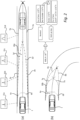
- Fig. 2 shows two schematic drawings (a) and (b) which illustrate a top view perspective of a vehicle 1 on a road segment with projected trajectories.
- the trajectories define a time-dependent path in the traveling direction of the vehicle with left and right boundaries based on information associated with the determined drivable area 20a, 20b.
- the topmost drawing (a) illustrates a back-up stop trajectory (may also be referred to as a safe stop trajectory) with a left boundary 5a and a right boundary 5b relative to a prior art back-up stop trajectory with left and right boundaries 3a, 3b.
- the bottom drawing (b) illustrates high-confidence parts of the nominal trajectory to satisfy a dynamic requirement (i.e. a requirement of keep the vehicle within the lane whilst operating under normal conditions) of the trajectory planning module.
- a control system for trajectory planning of an autonomous vehicle has two requirements, a dynamic requirement and a "safe stop” or "back-up stop” requirement.
- the dynamic requirement dictates that the control system must be able to keep the vehicle within the boundaries of the drivable area (e.g. within the lane). More specifically, the control system shall guarantee that the vehicle, within the capabilities of the vehicle platform, can keep the vehicle within the current lane (e.g. handle any upcoming curve with sufficiently high confidence).
- the safe stop requirement dictates that the vehicle must be able to stop within the boundaries of the drivable area (e.g. within the lane) to a predefined probability.
- Fig. 2 (a) illustrates the safe stop requirement, where the left boundary 5a and the right boundary 5b describe the lane ahead of the vehicle 1 with uncertainty increasing with the distance from the vehicle 1 as illustrated by the confidence distributions 21a-d. Therefore, the vehicle 1 must be able to come to standstill within the currently available description of the drivable area 20a.
- the drivable area is illustrated as a lane 20a, but can also be in the form of a path from a lane to a shoulder of the road, or to a roadside parking area.
- the safe stop trajectory can include any path which avoids the vehicle coming to a stand-still in an area outside of a target path of the vehicle 1.
- the confidence levels are here illustrated as confidence distributions 21a-d, but may, as already realized by the skilled artisan, be provided in other formats such as a confidence value, a confidence range, a confidence function, etc.
- a consumer acceptable number of unplanned "back-up stops” is somewhere in the range of 1/10 3 h -1/10 5 h, such as for example 1/10 4 .
- the reduced severity of the lane prediction will enable a longer stopping distance, as indicated by the difference between the prior art boundaries 3a, 3b and the projected lane boundaries 5a, 5b of the proposed solution. This is because the safety requirement criterion that the stop manoeuvre keeps the vehicle 1 in drivable area 20a can be reduced the same orders of magnitude as the frequency of stops.
- the system can be arranged to utilize only a sub-portion of the nominal trajectory, i.e. only the portion where the boundaries are associated with a high confidence value 21a-d, as illustrated in Fig. 2 (a) .
- a safety requirement that the system shall guarantee that the vehicle 1, within the capabilities of the vehicle platform stays within the boundaries of a target path such as e.g. handling any upcoming curve with sufficiently high confidence.
- Fig. 2 (b) illustrates these sub-portions of the nominal trajectory with high confidence values and their associated boundary projections 6a, 6b, 7a, 7b, 8a, 8b.
- the present invention is at least partly based on the insight that the trajectory planning problem can be split into two parts.
- a longer stopping distance is enabled by defining a value of frequency of stops, which in turn is enabled by the predefined availability criterion.
- the predefined availability criterion allows the system to rely on a high-confidence sub-portion 6a, 6b, 7a, 7b, 8a, 8b of the nominal trajectory since it is assumed that a new road model is generated in a subsequent time step.
- the predefined availability criterion also specifies that a back-up stop trajectory is available at all times. In other words, there is a "high-confidence" nominal trajectory and a "sufficient confidence" back-up stop trajectory available at all times.
- the block diagram in Fig. 2 illustrates how a regulatory performance requirement (here exemplified as an ASIL requirement) affects the safety requirement criterion for the nominal trajectory planning and for the back-up stop trajectory planning.
- ASIL is merely used as an example of a risk classification scheme, and that other and future risk classification schemes are analogously applicable.
- the performance requirement is in the present example derived from ASIL, but other standards are analogously applicable.
- the nominal trajectory is under a requirement defining that the vehicle may not unintentionally move out of the lane while the trajectory planning is active more than once per 10 8 h.
- the proposed system is designed such that an availability criterion is provided which states that an updated road model, from which it is possible to derive a nominal as well as a back-up stop trajectory, is provided in a subsequent step with a predefined certainty. More specifically, the system is allowed to fail providing an updated road model in a subsequent time step only once per 10 4 h. Consequently, one can alleviate the (confidence) requirement for the safe stop function by the same order of magnitude since the overall system will still fulfil the general criterion of achieving a probability of dangerous failure rate limit of less than 10 -8 h.
- Fig. 3 is a schematic block diagram illustrating a system for controlling a lane keeping feature of a vehicle.
- the system disclosed herein is analogously suitable for any ADAS or AD feature dealing with road modelling and the associated trajectory planning.
- the lane keeping feature has a predefined safety requirement criterion (e.g. ASIL C or ASIL D) for keeping the vehicle within bounds while the lane keeping feature is active.
- the system has a road estimation module 21 and a trajectory planning module 22.
- the road estimation module is configured to receive sensor data 25 comprising information about a surrounding environment of the vehicle.
- the sensor data may be obtained from a perception system of the vehicle or directly from one or more sensors connected to the system.
- a perception system is in the present context to be understood as a system responsible for acquiring raw sensor data from on-board sensors such as cameras, LIDARs and RADARs, ultrasonic sensors, and converting this raw data into scene understanding.
- the road estimation module is further configured to determine a drivable area based on the sensor data 25.
- the drivable area left boundary and a right boundary extending along a direction of travel of the vehicle.
- Each boundary comprises a plurality of points distributed along each boundary, and each point is associated with a confidence level (e.g. a confidence distribution). Normally, the confidence level decreases with the distance away from the vehicle.
- the trajectory planning module 22 is configured to receive the drivable area from the road estimation module 21.
- the trajectory planning module 22 is further configured to determine or generate a nominal trajectory based on the received drivable area, wherein the nominal trajectory is determined based on the predefined safety requirement criterion and a predefined availability criterion.
- the trajectory planning module 22 is configured to also determine a back-up stop trajectory (also known as a safe stop trajectory) for the vehicle based on the received drivable area.
- the back-up stop trajectory is determined based on a predefined confidence criterion. More specifically, the predefined confidence criterion is dependent on a predefined value of frequency of back-up stops that is based on the predefined availability criterion for the nominal trajectory.
- the predefined availability criterion is a parameter that is a newly introduced system design aspect, and can be said to introduce a "guarantee" that a new or updated trajectory (nominal and back-up stop) is produced at a subsequent time step.
- This insight that lead to this design consideration in the form of an availability parameter has some advantageous consequences in the form of an alleviated back-up stop confidence criterion.
- the trajectory planning module 22 may comprise a number of sub modules as illustrated in the schematic drawing of Fig. 3 .
- the trajectory planning module may comprise a separate module for nominal trajectory planning 28 and back-up stop planning 27.
- the trajectory planning module may comprise a safety monitor 26.
- the safety monitor 26 is preferably configured to detect errors and generate suitable commands to mitigate dangerous situations.
- the safety monitor 26 is preferably in the form of a high integrity component dedicated for safety only.
- the safety monitor 26 is configured to receive and monitor a status of internal components.
- the trajectory planning module 22 can be said to comprise two separate channels, one for nominal planning and one for safety. This provides a higher availability of the back-up stop capability. Accordingly, the sensor data 25 comprising information about the surrounding environment of the vehicle is preferably received independently in each channel.
- the system furthermore has a vehicle control module 23 configured to obtain the nominal trajectory and the back-up stop trajectory, and to send a control signal to at least one actuator (here represented as a vehicle platform 24) in order to manoeuvre the vehicle based on the determined nominal trajectory or the back-up stop trajectory.
- a vehicle control module 23 configured to obtain the nominal trajectory and the back-up stop trajectory, and to send a control signal to at least one actuator (here represented as a vehicle platform 24) in order to manoeuvre the vehicle based on the determined nominal trajectory or the back-up stop trajectory.
- control module 23 may be comprised by the vehicle platform 24.
- vehicle platform may comprise one or more storage devices for storing the back-up stop trajectory generated by the trajectory planning module 22, which is executed upon activation by a safety monitor 26.
- the road estimation module 21 receives the sensor observations 25 and generates a drivable area for the vehicle.
- the drivable area is defined by one or more boundaries which are associated with a confidence level.
- the drivable area may be in the form of a lane, and the boundaries may be the left and right lane markings. Accordingly, the road estimation module 21 is capable to define lane boundaries close to the vehicle with a higher accuracy than lane boundaries far from the vehicle.
- the trajectory planning module 22 obtains this drivable area and generates a trajectory for the vehicle (e.g. in the form of a path and acceleration data) which is restricted by a safety requirement criterion dictating that the vehicle must stay within the boundaries of the drivable area (e.g.
- the trajectory planning module 22 computes a nominal trajectory and a back-up stop trajectory, where only a sub-portion of the nominal trajectory is used to satisfy the dynamic requirement as discussed in the foregoing, enabled by the predefined availability criterion. Moreover, the predefined availability criterion results in a relieved safety requirement criterion for the back-up stop function, which herein is defined as a "predefined confidence criterion".
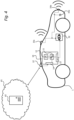
- Fig. 4 is a schematic side view of a vehicle 1 comprising a system 10 for controlling a lane keeping feature according to any one of the embodiments disclosed herein.
- the vehicle 1 further comprises a perception system 32 connected to a plurality of sensor devices 33a-c.
- the perception system is responsible for acquiring raw sensor data from the sensor devices 33a-c, which may be in the form of cameras, LIDARs, RADARs, ultrasonic sensors, accelerometers, gyroscopes, or any other automotive grade sensor, and converting this raw data into scene understanding.
- the vehicle 1 may naturally also comprise other suitable support systems such as a localization system, an inertial measurement unit (IMU), and the like.
- IMU inertial measurement unit
- the system 10 comprises one or more processors 11, a memory 12, a sensor interface 13 and a communication interface 14.
- the processor(s) 11 may also be referred to as a control circuit 11 or control circuitry 11.
- the control circuitry 11 is configured to execute instructions stored in the memory 12 to perform a method for controlling a lane keeping feature of a vehicle according to any one of the embodiments disclosed herein.
- the memory 12 of the control device 10 can include one or more (non-transitory) computer-readable storage mediums, for storing computer-executable instructions, which, when executed by one or more computer processors 11, for example, can cause the computer processors 11 to perform the techniques described herein.
- the memory 12 optionally includes high-speed random access memory, such as DRAM, SRAM, DDR RAM, or other random access solid-state memory devices; and optionally includes non-volatile memory, such as one or more magnetic disk storage devices, optical disk storage devices, flash memory devices, or other non-volatile solid-state storage devices.
- the different modules of the system 10 may comprise independent control circuitry 11, memory devices 12, sensor interfaces 13 and communication interfaces 14 or be configured to as software modules within a common hardware device.
- the vehicle 1 may be connected to external network(s) 41 via for instance a wireless link (e.g. for retrieving map data).
- a wireless link e.g. for retrieving map data
- the same or some other wireless link may be used to communicate with other vehicles in the vicinity of the vehicle 1 or with local infrastructure elements.
- Cellular communication technologies may be used for long range communication such as to external networks and if the cellular communication technology used have low latency it may also be used for communication between vehicles, vehicle to vehicle (V2V), and/or vehicle to infrastructure, V2X.
- Examples of cellular radio technologies are GSM, GPRS, EDGE, LTE, 5G, 5G NR, and so on, also including future cellular solutions.
- LAN Wireless Local Area
- ETSI IEEE 802.11 based solutions.
- ETSI is working on cellular standards for vehicle communication and for instance 5G is considered as a suitable solution due to the low latency and efficient handling of high bandwidths and communication channels.
- the system 1 may be arranged to perform some or all of the method steps by means of resources 42 remote to the vehicle 1, by so-called cloud computing solution.
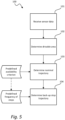
- Fig. 5 is a schematic flow chart representation of a method 100 for controlling a lane keeping feature of a vehicle in accordance with an embodiment of the present invention.
- the lane keeping feature has a predefined safety requirement criterion for keeping the vehicle within bounds while the lane keeping feature is active.
- the method 100 comprises a step of receiving 101 sensor data (originating from one or more sensor devices of the vehicle).
- the sensor data comprises information about a surrounding environment of the vehicle.
- the method 100 further comprises determining 102 a drivable area based on the received sensor data.
- the drivable area comprises a left boundary and a right boundary extending along a direction of travel of the vehicle. Stated differently, the drivable area is defined by one or more boundaries.
- Each boundary comprises (or is based on) a plurality of points distributed along each boundary, where each point is associated with a confidence level.
- the confidence level can be understood as a value describing a probability that the representation of the boundary is located at exactly the same location as the boundary in the surrounding area of the vehicle. For example, if the boundaries are assumed to be lane boundaries, then the confidence level defines the probability that the "perceived" boundaries (and the subsequent projected lane traces) are located at the same position as the actual lane markings upon which the lane traces are based.
- the method 100 further comprises determining 103 a nominal trajectory based on the received drivable area.
- the nominal trajectory is determined further based on the predefined safety requirement criterion and a predefined availability criterion.
- the predefined safety requirement criterion is dictated based on regulatory integrity levels, while the predefined availability criterion is a well-considered quality management metric.
- the method 100 comprises determining 104 a back-up stop trajectory (may also be referred to as a safe stop trajectory) for the vehicle based on the drivable area.
- the back-up stop trajectory is determined further based on a predefined confidence criterion.
- the predefined confidence criterion is however dependent on a predefined value of frequency of back-up stops that in turn is based on the predefined availability criterion for the nominal trajectory.
- the predefined confidence criterion for the back-up stop trajectory is computed based on the overall safety requirement criterion and the predefined value of frequency of back-up stops.
- QM quality management
- Executable instructions for performing these functions are, optionally, included in a non-transitory computer-readable storage medium or other computer program product configured for execution by one or more processors.
- a non-transitory computer-readable storage medium storing one or more programs configured to be executed by one or more processors of a vehicle control system, the one or more programs comprising instructions for performing the method according to any one of the above-discussed embodiments.
- a cloud computing system can be configured to perform any of the methods presented herein.
- the cloud computing system may comprise distributed cloud computing resources that jointly perform the methods presented herein under control of one or more computer program products.
- a computer-accessible medium may include any tangible or non-transitory storage media or memory media such as electronic, magnetic, or optical media-e.g., disk or CD/DVD-ROM coupled to computer system via bus.
- tangible and non-transitory are intended to describe a computer-readable storage medium (or “memory”) excluding propagating electromagnetic signals, but are not intended to otherwise limit the type of physical computer-readable storage device that is encompassed by the phrase computer-readable medium or memory.
- the terms “non-transitory computer-readable medium” or “tangible memory” are intended to encompass types of storage devices that do not necessarily store information permanently, including for example, random access memory (RAM).
- Program instructions and data stored on a tangible computer-accessible storage medium in non-transitory form may further be transmitted by transmission media or signals such as electrical, electromagnetic, or digital signals, which may be conveyed via a communication medium such as a network and/or a wireless link.
- transmission media or signals such as electrical, electromagnetic, or digital signals, which may be conveyed via a communication medium such as a network and/or a wireless link.
- the processor(s) 11 may be or include any number of hardware components for conducting data or signal processing or for executing computer code stored in memory 12.
- the system 10 has an associated memory 12, and the memory 12 may be one or more devices for storing data and/or computer code for completing or facilitating the various methods described in the present description.
- the memory may include volatile memory or non-volatile memory.
- the memory 12 may include database components, object code components, script components, or any other type of information structure for supporting the various activities of the present description. According to an exemplary embodiment, any distributed or local memory device may be utilized with the systems and methods of this description.
- the memory 12 is communicably connected to the processor 11 (e.g., via a circuit or any other wired, wireless, or network connection) and includes computer code for executing one or more processes described herein.
- the sensor interface 13 may also provide the possibility to acquire sensor data directly (form the sensors 33a-c) or via dedicated sensor control circuitry 32 in the vehicle 1.
- the communication/antenna interface 14 may further provide the possibility to send output to a remote location (e.g. remote server 42) by means of the antenna 37.
- some sensors in the vehicle may communicate with the system 10 using a local network setup, such as CAN bus, I2C, Ethernet, optical fibres, and so on.
- the communication interface 14 may be arranged to communicate with other control functions of the vehicle and may thus be seen as control interface also; however, a separate control interface (not shown) may be provided.
- Local communication within the vehicle may also be of a wireless type with protocols such as WiFi, LoRa, Zigbee, Bluetooth, or similar mid/short range technologies.
- parts of the described solution may be implemented either in the vehicle, in a system located external the vehicle, or in a combination of internal and external the vehicle; for instance in a server 42 in communication with the vehicle, a so called cloud solution.
- sensor data may be sent to an external system and that system performs the step to determine a drivable area.
- the drivable area may further be based on a location of the vehicle 1 and from sensor observations obtained from other vehicles.
Landscapes
- Engineering & Computer Science (AREA)
- Transportation (AREA)
- Mechanical Engineering (AREA)
- Automation & Control Theory (AREA)
- Human Computer Interaction (AREA)
- Combustion & Propulsion (AREA)
- Chemical & Material Sciences (AREA)
- Multimedia (AREA)
- Theoretical Computer Science (AREA)
- Physics & Mathematics (AREA)
- General Physics & Mathematics (AREA)
- Health & Medical Sciences (AREA)
- Biomedical Technology (AREA)
- General Health & Medical Sciences (AREA)
- Traffic Control Systems (AREA)
Claims (13)
- System zum Steuern eines Spurhaltemerkmals eines Fahrzeugs (1), wobei das Spurhaltemerkmal ein vordefiniertes Sicherheitsanforderungskriterium zum Halten des Fahrzeugs innerhalb von Grenzen aufweist, während das Spurhaltemerkmal aktiv ist, wobei das System Folgendes umfasst:ein Straßenschätzmodul (21), das zu Folgendem konfiguriert ist:Empfangen von Sensordaten, die Informationen über eine umliegende Umgebung des Fahrzeugs umfassen; undBestimmen eines befahrbaren Bereichs (20a) basierend auf den Sensordaten, wobei der befahrbare Bereich eine linke Grenze (5a) und eine rechte Grenze (5b) umfasst, die sich entlang einer Fahrtrichtung des Fahrzeugs erstrecken, wobei jede Grenze eine Vielzahl von Punkten umfasst, die entlang jeder Grenze verteilt ist, wobei jeder Punkt einem Konfidenzniveau (21a-d) zugeordnet ist;ein Trajektorieplanungsmodul (22), das zu Folgendem konfiguriert ist:Empfangen des bestimmten befahrbaren Bereichs;Bestimmen einer Nominaltrajektorie basierend auf dem empfangenen befahrbaren Bereich, wobei die Nominaltrajektorie ferner basierend auf dem vordefinierten Sicherheitsanforderungskriterium und einem vordefinierten Verfügbarkeitskriterium bestimmt wird, wobei das vordefinierte Verfügbarkeitskriterium eine Wahrscheinlichkeit dafür definiert, dass eine aktualisierte Nominaltrajektorie in einem nachfolgenden Zeitschritt nicht verfügbar ist;Bestimmen einer Reservestopptrajektorie für das Fahrzeug basierend auf dem empfangenen befahrbaren Bereich, wobei die Reservestopptrajektorie ferner basierend auf einem vordefinierten Konfidenzkriterium bestimmt wird;wobei das vordefinierte Konfidenzkriterium von dem vordefinierten Sicherheitsanforderungskriterium und einem vordefinierten Häufigkeitswert von Reservestopps abhängig ist, wobei der vordefinierte Häufigkeitswert von Reservestopps auf dem vordefinierten Verfügbarkeitskriterium für die Nominaltrajektorie basiert.
- System nach Anspruch 1, ferner umfassend:
ein Fahrzeugsteuermodul (23), das zu Folgendem konfiguriert ist:Erlangen der bestimmten Nominaltrajektorie und der bestimmten Reservestopptrajektorie; undSenden eines Steuersignals an mindestens einen Aktor (24), um das Fahrzeug basierend auf der bestimmten Nominaltrajektorie oder der Reservestopptrajektorie zu manövrieren. - System nach einem der vorhergehenden Ansprüche, wobei die Nominaltrajektorie auf einer ersten Teilmenge von Punkten der Vielzahl von Punkten basiert, wobei die erste Teilmenge von Punkten einem Konfidenzniveau über einem ersten vordefinierten Schwellenwert zugeordnet ist.
- System nach Anspruch 3, wobei die Reservestopptrajektorie auf einer zweiten Teilmenge von Punkten der Vielzahl von Punkten basiert, wobei die zweite Teilmenge von Punkten einem Konfidenzniveau über einem zweiten vordefinierten Schwellenwert zugeordnet ist, wobei der zweite vordefinierte Schwellenwert niedriger als der erste vordefinierte Schwellenwert ist.
- System nach einem der vorhergehenden Ansprüche, wobei die Reservestopptrajektorie einen ersten Zeithorizont aufweist und die Nominaltrajektorie einen zweiten Zeithorizont aufweist, wobei der erste Zeithorizont länger als der zweite Zeithorizont ist.
- System nach einem der vorhergehenden Ansprüche, wobei der vordefinierte Häufigkeitswert von Stopps in einer Spur in dem Bereich von einem Stopp pro 103 h bis einem Stopp pro 105 h liegt.
- System nach einem der vorhergehenden Ansprüche, wobei das vordefinierte Verfügbarkeitskriterium in dem Bereich von einmal pro 103 h nicht verfügbar bis einmal pro 105 h nicht verfügbar liegt.
- Fahrzeug (1), umfassend:ein Wahrnehmungssystem (32), das mindestens einen Sensor (33a-c) zum Überwachen einer umliegenden Umgebung des Fahrzeugs umfasst;ein System (10) nach einem der vorhergehenden Ansprüche.
- Verfahren zum Steuern eines Spurhaltemerkmals eines Fahrzeugs (1), wobei das Spurhaltemerkmal ein vordefiniertes Sicherheitsanforderungskriterium zum Halten des Fahrzeugs innerhalb von Grenzen aufweist, während das Spurhaltemerkmal aktiv ist, wobei das Verfahren Folgendes umfasst:Empfangen von Sensordaten, die Informationen über eine umliegende Umgebung des Fahrzeugs umfassen;Bestimmen eines befahrbaren Bereichs (20a) basierend auf den Sensordaten, wobei der befahrbare Bereich eine linke Grenze (5a) und eine rechte Grenze (5b) umfasst, die sich entlang einer Fahrtrichtung des Fahrzeugs erstrecken, wobei jede Grenze eine Vielzahl von Punkten umfasst, die entlang jeder Grenze verteilt ist, wobei jeder Punkt einem Konfidenzniveau (21a-d) zugeordnet ist;Bestimmen einer Nominaltrajektorie basierend auf dem befahrbaren Bereich, wobei die Nominaltrajektorie ferner basierend auf dem vordefinierten Sicherheitsanforderungskriterium und einem vordefinierten Verfügbarkeitskriterium bestimmt wird, wobei das vordefinierte Verfügbarkeitskriterium eine Wahrscheinlichkeit dafür definiert, dass eine aktualisierte Nominaltrajektorie in einem nachfolgenden Zeitschritt nicht verfügbar ist;Bestimmen einer Reservestopptrajektorie für das Fahrzeug basierend auf dem befahrbaren Bereich, wobei die Reservestopptrajektorie ferner basierend auf einem vordefinierten Konfidenzkriterium bestimmt wird;wobei das vordefinierte Konfidenzkriterium von dem vordefinierten Sicherheitsanforderungskriterium und einem vordefinierten Häufigkeitswert von Reservestopps abhängig ist, wobei der vordefinierte Häufigkeitswert von Reservestopps auf dem vordefinierten Verfügbarkeitskriterium für die Nominaltrajektorie basiert.
- Verfahren nach Anspruch 9, ferner umfassend:
Senden eines Steuersignals an mindestens einen Aktor (24), um das Fahrzeug basierend auf der bestimmten Nominaltrajektorie oder der Reservestopptrajektorie zu manövrieren. - Verfahren nach Anspruch 9 oder 10, wobei der vordefinierte Häufigkeitswert von Stopps in einer Spur in dem Bereich von einem Stopp pro 103 h bis einem Stopp pro 105 h liegt.
- Verfahren nach einem der Ansprüche 9-11, wobei das vordefinierte Verfügbarkeitskriterium in dem Bereich von einmal pro 103 h nicht verfügbar bis einmal pro 105 h nicht verfügbar liegt.
- Nichttransitorisches computerlesbares Speichermedium, das ein oder mehrere Programme speichert, die dazu konfiguriert sind, durch einen oder mehrere Prozessoren (11) eines Fahrzeugsteuersystems ausgeführt zu werden, wobei das eine oder die mehreren Programme Anweisungen zum Durchführen des Verfahrens nach einem der Ansprüche 9-12 umfassen.
Priority Applications (3)
| Application Number | Priority Date | Filing Date | Title |
|---|---|---|---|
| EP19194353.9A EP3786012B1 (de) | 2019-08-29 | 2019-08-29 | Spurhaltung für autonome fahrzeuge |
| US17/002,952 US11587331B2 (en) | 2019-08-29 | 2020-08-26 | Lane keeping for autonomous vehicles |
| CN202010894304.2A CN112440996B (zh) | 2019-08-29 | 2020-08-31 | 用于自主车辆的车道保持 |
Applications Claiming Priority (1)
| Application Number | Priority Date | Filing Date | Title |
|---|---|---|---|
| EP19194353.9A EP3786012B1 (de) | 2019-08-29 | 2019-08-29 | Spurhaltung für autonome fahrzeuge |
Publications (2)
| Publication Number | Publication Date |
|---|---|
| EP3786012A1 EP3786012A1 (de) | 2021-03-03 |
| EP3786012B1 true EP3786012B1 (de) | 2024-10-23 |
Family
ID=67810396
Family Applications (1)
| Application Number | Title | Priority Date | Filing Date |
|---|---|---|---|
| EP19194353.9A Active EP3786012B1 (de) | 2019-08-29 | 2019-08-29 | Spurhaltung für autonome fahrzeuge |
Country Status (3)
| Country | Link |
|---|---|
| US (1) | US11587331B2 (de) |
| EP (1) | EP3786012B1 (de) |
| CN (1) | CN112440996B (de) |
Families Citing this family (6)
| Publication number | Priority date | Publication date | Assignee | Title |
|---|---|---|---|---|
| CN115140037B (zh) * | 2021-03-31 | 2025-08-12 | 上海汽车集团股份有限公司 | 一种确定车辆行驶边界的方法及装置 |
| DE102022205084B3 (de) * | 2022-05-20 | 2023-10-12 | Volkswagen Aktiengesellschaft | Verfahren, Computerprogramm und Vorrichtung zur Umfeldwahrnehmung im Fahrzeug sowie entsprechendes Fahrzeug |
| CN115447609B (zh) * | 2022-09-16 | 2025-05-30 | 魔门塔(苏州)科技有限公司 | 自动驾驶功能的切换方法、装置、存储介质以及车辆 |
| EP4478304A1 (de) * | 2023-06-13 | 2024-12-18 | Zenseact AB | Modellbasierte strassenschätzung |
| CN116572995B (zh) * | 2023-07-11 | 2023-12-22 | 小米汽车科技有限公司 | 车辆的自动驾驶方法、装置及车辆 |
| EP4667313A1 (de) * | 2024-06-18 | 2025-12-24 | Volvo Truck Corporation | Bestimmung von fahrzeugsteuerungsparametern mittels prädiktiver optimierung mit verbesserter einschränkung |
Citations (1)
| Publication number | Priority date | Publication date | Assignee | Title |
|---|---|---|---|---|
| US20060015252A1 (en) * | 2004-07-15 | 2006-01-19 | Mitsubishi Denki Kabushiki Kaisha | Lane recognition image processing apparatus |
Family Cites Families (16)
| Publication number | Priority date | Publication date | Assignee | Title |
|---|---|---|---|---|
| US20130286198A1 (en) * | 2012-04-25 | 2013-10-31 | Xerox Corporation | Method and system for automatically detecting anomalies at a traffic intersection |
| US8996197B2 (en) * | 2013-06-20 | 2015-03-31 | Ford Global Technologies, Llc | Lane monitoring with electronic horizon |
| US9523984B1 (en) * | 2013-07-12 | 2016-12-20 | Google Inc. | Methods and systems for determining instructions for pulling over an autonomous vehicle |
| WO2015189847A1 (en) * | 2014-06-10 | 2015-12-17 | Mobileye Vision Technologies Ltd. | Top-down refinement in lane marking navigation |
| US20160231746A1 (en) * | 2015-02-06 | 2016-08-11 | Delphi Technologies, Inc. | System And Method To Operate An Automated Vehicle |
| DE102015209467A1 (de) * | 2015-05-22 | 2016-11-24 | Continental Teves Ag & Co. Ohg | Verfahren zur Schätzung von Fahrstreifen |
| EP3118703B1 (de) * | 2015-07-13 | 2018-05-23 | Volvo Car Corporation | Sicherheitstoppvorrichtung und verfahren für einen sicherheitstopp eines autonomen fahrzeuges |
| JP6429202B2 (ja) * | 2016-02-10 | 2018-11-28 | 本田技研工業株式会社 | 車両、車両制御装置、車両制御方法、および車両制御プログラム |
| EP3291202B1 (de) * | 2016-08-29 | 2019-04-17 | Volvo Car Corporation | Verfahren zur strassenfahrzeugtrajektorieplanung |
| JP6543828B2 (ja) * | 2017-06-01 | 2019-07-17 | 本田技研工業株式会社 | 車両制御システム、車両制御方法、および車両制御プログラム |
| FR3067683A1 (fr) * | 2017-06-16 | 2018-12-21 | Peugeot Citroen Automobiles Sa | Proposition d'architecture pour la securisation des fonctions vehicule adaptee au vehicule autonome. |
| DE102017214531A1 (de) * | 2017-08-21 | 2019-02-21 | Bayerische Motoren Werke Aktiengesellschaft | Verfahren und Vorrichtung zum Betreiben eines Kraftfahrzeugs in einem automatisierten Fahrbetrieb sowie Kraftfahrzeug |
| WO2019094843A1 (en) * | 2017-11-10 | 2019-05-16 | Nvidia Corporation | Systems and methods for safe and reliable autonomous vehicles |
| DE102018117278A1 (de) * | 2018-07-17 | 2020-01-23 | Knorr-Bremse Systeme für Nutzfahrzeuge GmbH | Adaptives Spurhaltesystem |
| US11520345B2 (en) * | 2019-02-05 | 2022-12-06 | Nvidia Corporation | Path perception diversity and redundancy in autonomous machine applications |
| US11187542B2 (en) * | 2019-02-26 | 2021-11-30 | Here Global B.V. | Trajectory time reversal |
-
2019
- 2019-08-29 EP EP19194353.9A patent/EP3786012B1/de active Active
-
2020
- 2020-08-26 US US17/002,952 patent/US11587331B2/en active Active
- 2020-08-31 CN CN202010894304.2A patent/CN112440996B/zh active Active
Patent Citations (1)
| Publication number | Priority date | Publication date | Assignee | Title |
|---|---|---|---|---|
| US20060015252A1 (en) * | 2004-07-15 | 2006-01-19 | Mitsubishi Denki Kabushiki Kaisha | Lane recognition image processing apparatus |
Also Published As
| Publication number | Publication date |
|---|---|
| CN112440996A (zh) | 2021-03-05 |
| US11587331B2 (en) | 2023-02-21 |
| EP3786012A1 (de) | 2021-03-03 |
| US20210064888A1 (en) | 2021-03-04 |
| CN112440996B (zh) | 2025-08-22 |
Similar Documents
| Publication | Publication Date | Title |
|---|---|---|
| EP3786012B1 (de) | Spurhaltung für autonome fahrzeuge | |
| EP4118504B1 (de) | Verfahren und systeme zur fahrzeugwegplanung | |
| US20210094581A1 (en) | Autonomous driving apparatus and method | |
| US10121376B2 (en) | Vehicle assistance | |
| US12377837B2 (en) | Path planning in autonomous driving environments | |
| US12233888B2 (en) | Method and system for development and verification of autonomous driving features | |
| CN112440990B (zh) | 用于自主和半自主车辆的路径规划 | |
| EP3915851B1 (de) | System und verfahren zur schätzung der übernahmezeit | |
| US12246756B2 (en) | Methods and systems for hand-over from and ads feature to a driver of a vehicle | |
| US20200174113A1 (en) | Omnidirectional sensor fusion system and method and vehicle including the same | |
| EP3792125B1 (de) | Sichere trajektorienverfolgung in unbestimmten umgebungen | |
| CN113557173A (zh) | 外界感测信息处理装置 | |
| CN115087573A (zh) | 一种关键目标选取方法、装置及系统 | |
| US20210064042A1 (en) | Path planning for autonomous and semi-autonomous vehicles | |
| EP4056441B1 (de) | Back propagations-basierte adas/ad-bewegungsplanung und -steuerung | |
| US20230221432A1 (en) | Sensor recognition integration device | |
| CN112810620A (zh) | 覆盖相邻车道相对速度的运行设计域验证 | |
| US11753014B2 (en) | Method and control unit automatically controlling lane change assist | |
| CN112009496B (zh) | 用于自主车辆控制的安全架构 | |
| US20250296627A1 (en) | Steering interventions for vehicles | |
| EP4624292A1 (de) | Lenkeingriffe für fahrzeuge | |
| US12001850B2 (en) | Method for determining functional safety of reset, and electronic device for executing same | |
| US20250033666A1 (en) | System and method for controlling vehicle |
Legal Events
| Date | Code | Title | Description |
|---|---|---|---|
| PUAI | Public reference made under article 153(3) epc to a published international application that has entered the european phase |
Free format text: ORIGINAL CODE: 0009012 |
|
| STAA | Information on the status of an ep patent application or granted ep patent |
Free format text: STATUS: THE APPLICATION HAS BEEN PUBLISHED |
|
| AK | Designated contracting states |
Kind code of ref document: A1 Designated state(s): AL AT BE BG CH CY CZ DE DK EE ES FI FR GB GR HR HU IE IS IT LI LT LU LV MC MK MT NL NO PL PT RO RS SE SI SK SM TR |
|
| AX | Request for extension of the european patent |
Extension state: BA ME |
|
| STAA | Information on the status of an ep patent application or granted ep patent |
Free format text: STATUS: REQUEST FOR EXAMINATION WAS MADE |
|
| 17P | Request for examination filed |
Effective date: 20210902 |
|
| RBV | Designated contracting states (corrected) |
Designated state(s): AL AT BE BG CH CY CZ DE DK EE ES FI FR GB GR HR HU IE IS IT LI LT LU LV MC MK MT NL NO PL PT RO RS SE SI SK SM TR |
|
| STAA | Information on the status of an ep patent application or granted ep patent |
Free format text: STATUS: EXAMINATION IS IN PROGRESS |
|
| 17Q | First examination report despatched |
Effective date: 20221219 |
|
| GRAP | Despatch of communication of intention to grant a patent |
Free format text: ORIGINAL CODE: EPIDOSNIGR1 |
|
| STAA | Information on the status of an ep patent application or granted ep patent |
Free format text: STATUS: GRANT OF PATENT IS INTENDED |
|
| RIC1 | Information provided on ipc code assigned before grant |
Ipc: B60W 20/11 20160101ALI20240419BHEP Ipc: B60K 35/28 20240101ALI20240419BHEP Ipc: B60W 50/00 20060101ALI20240419BHEP Ipc: B60W 50/02 20120101ALI20240419BHEP Ipc: B60T 7/22 20060101ALI20240419BHEP Ipc: B60W 60/00 20200101ALI20240419BHEP Ipc: B60W 30/095 20120101ALI20240419BHEP Ipc: B60W 20/50 20160101ALI20240419BHEP Ipc: B60W 30/09 20120101ALI20240419BHEP Ipc: G05D 1/00 20060101ALI20240419BHEP Ipc: B60W 10/18 20120101ALI20240419BHEP Ipc: B60W 30/12 20200101ALI20240419BHEP Ipc: B60T 8/1755 20060101AFI20240419BHEP |
|
| INTG | Intention to grant announced |
Effective date: 20240514 |
|
| GRAS | Grant fee paid |
Free format text: ORIGINAL CODE: EPIDOSNIGR3 |
|
| GRAA | (expected) grant |
Free format text: ORIGINAL CODE: 0009210 |
|
| STAA | Information on the status of an ep patent application or granted ep patent |
Free format text: STATUS: THE PATENT HAS BEEN GRANTED |
|
| RAP3 | Party data changed (applicant data changed or rights of an application transferred) |
Owner name: ZENUITY AB |
|
| AK | Designated contracting states |
Kind code of ref document: B1 Designated state(s): AL AT BE BG CH CY CZ DE DK EE ES FI FR GB GR HR HU IE IS IT LI LT LU LV MC MK MT NL NO PL PT RO RS SE SI SK SM TR |
|
| P01 | Opt-out of the competence of the unified patent court (upc) registered |
Free format text: CASE NUMBER: APP_52393/2024 Effective date: 20240918 |
|
| REG | Reference to a national code |
Ref country code: GB Ref legal event code: FG4D |
|
| REG | Reference to a national code |
Ref country code: CH Ref legal event code: EP |
|
| REG | Reference to a national code |
Ref country code: DE Ref legal event code: R096 Ref document number: 602019060722 Country of ref document: DE |
|
| REG | Reference to a national code |
Ref country code: IE Ref legal event code: FG4D |
|
| REG | Reference to a national code |
Ref country code: LT Ref legal event code: MG9D |
|
| REG | Reference to a national code |
Ref country code: NL Ref legal event code: MP Effective date: 20241023 |
|
| REG | Reference to a national code |
Ref country code: AT Ref legal event code: MK05 Ref document number: 1734606 Country of ref document: AT Kind code of ref document: T Effective date: 20241023 |
|
| PG25 | Lapsed in a contracting state [announced via postgrant information from national office to epo] |
Ref country code: NL Free format text: LAPSE BECAUSE OF FAILURE TO SUBMIT A TRANSLATION OF THE DESCRIPTION OR TO PAY THE FEE WITHIN THE PRESCRIBED TIME-LIMIT Effective date: 20241023 |
|
| PG25 | Lapsed in a contracting state [announced via postgrant information from national office to epo] |
Ref country code: NL Free format text: LAPSE BECAUSE OF FAILURE TO SUBMIT A TRANSLATION OF THE DESCRIPTION OR TO PAY THE FEE WITHIN THE PRESCRIBED TIME-LIMIT Effective date: 20241023 |
|
| PG25 | Lapsed in a contracting state [announced via postgrant information from national office to epo] |
Ref country code: HR Free format text: LAPSE BECAUSE OF FAILURE TO SUBMIT A TRANSLATION OF THE DESCRIPTION OR TO PAY THE FEE WITHIN THE PRESCRIBED TIME-LIMIT Effective date: 20241023 Ref country code: IS Free format text: LAPSE BECAUSE OF FAILURE TO SUBMIT A TRANSLATION OF THE DESCRIPTION OR TO PAY THE FEE WITHIN THE PRESCRIBED TIME-LIMIT Effective date: 20250223 Ref country code: PT Free format text: LAPSE BECAUSE OF FAILURE TO SUBMIT A TRANSLATION OF THE DESCRIPTION OR TO PAY THE FEE WITHIN THE PRESCRIBED TIME-LIMIT Effective date: 20250224 |
|
| PG25 | Lapsed in a contracting state [announced via postgrant information from national office to epo] |
Ref country code: FI Free format text: LAPSE BECAUSE OF FAILURE TO SUBMIT A TRANSLATION OF THE DESCRIPTION OR TO PAY THE FEE WITHIN THE PRESCRIBED TIME-LIMIT Effective date: 20241023 |
|
| PG25 | Lapsed in a contracting state [announced via postgrant information from national office to epo] |
Ref country code: BG Free format text: LAPSE BECAUSE OF FAILURE TO SUBMIT A TRANSLATION OF THE DESCRIPTION OR TO PAY THE FEE WITHIN THE PRESCRIBED TIME-LIMIT Effective date: 20241023 |
|
| PG25 | Lapsed in a contracting state [announced via postgrant information from national office to epo] |
Ref country code: ES Free format text: LAPSE BECAUSE OF FAILURE TO SUBMIT A TRANSLATION OF THE DESCRIPTION OR TO PAY THE FEE WITHIN THE PRESCRIBED TIME-LIMIT Effective date: 20241023 |
|
| PG25 | Lapsed in a contracting state [announced via postgrant information from national office to epo] |
Ref country code: NO Free format text: LAPSE BECAUSE OF FAILURE TO SUBMIT A TRANSLATION OF THE DESCRIPTION OR TO PAY THE FEE WITHIN THE PRESCRIBED TIME-LIMIT Effective date: 20250123 |
|
| PG25 | Lapsed in a contracting state [announced via postgrant information from national office to epo] |
Ref country code: AT Free format text: LAPSE BECAUSE OF FAILURE TO SUBMIT A TRANSLATION OF THE DESCRIPTION OR TO PAY THE FEE WITHIN THE PRESCRIBED TIME-LIMIT Effective date: 20241023 Ref country code: GR Free format text: LAPSE BECAUSE OF FAILURE TO SUBMIT A TRANSLATION OF THE DESCRIPTION OR TO PAY THE FEE WITHIN THE PRESCRIBED TIME-LIMIT Effective date: 20250124 Ref country code: LV Free format text: LAPSE BECAUSE OF FAILURE TO SUBMIT A TRANSLATION OF THE DESCRIPTION OR TO PAY THE FEE WITHIN THE PRESCRIBED TIME-LIMIT Effective date: 20241023 |
|
| PG25 | Lapsed in a contracting state [announced via postgrant information from national office to epo] |
Ref country code: PL Free format text: LAPSE BECAUSE OF FAILURE TO SUBMIT A TRANSLATION OF THE DESCRIPTION OR TO PAY THE FEE WITHIN THE PRESCRIBED TIME-LIMIT Effective date: 20241023 |
|
| PG25 | Lapsed in a contracting state [announced via postgrant information from national office to epo] |
Ref country code: RS Free format text: LAPSE BECAUSE OF FAILURE TO SUBMIT A TRANSLATION OF THE DESCRIPTION OR TO PAY THE FEE WITHIN THE PRESCRIBED TIME-LIMIT Effective date: 20250123 |
|
| PG25 | Lapsed in a contracting state [announced via postgrant information from national office to epo] |
Ref country code: SM Free format text: LAPSE BECAUSE OF FAILURE TO SUBMIT A TRANSLATION OF THE DESCRIPTION OR TO PAY THE FEE WITHIN THE PRESCRIBED TIME-LIMIT Effective date: 20241023 |
|
| PG25 | Lapsed in a contracting state [announced via postgrant information from national office to epo] |
Ref country code: DK Free format text: LAPSE BECAUSE OF FAILURE TO SUBMIT A TRANSLATION OF THE DESCRIPTION OR TO PAY THE FEE WITHIN THE PRESCRIBED TIME-LIMIT Effective date: 20241023 |
|
| PGFP | Annual fee paid to national office [announced via postgrant information from national office to epo] |
Ref country code: GB Payment date: 20250616 Year of fee payment: 7 |
|
| PG25 | Lapsed in a contracting state [announced via postgrant information from national office to epo] |
Ref country code: EE Free format text: LAPSE BECAUSE OF FAILURE TO SUBMIT A TRANSLATION OF THE DESCRIPTION OR TO PAY THE FEE WITHIN THE PRESCRIBED TIME-LIMIT Effective date: 20241023 |
|
| PGFP | Annual fee paid to national office [announced via postgrant information from national office to epo] |
Ref country code: FR Payment date: 20250618 Year of fee payment: 7 |
|
| PG25 | Lapsed in a contracting state [announced via postgrant information from national office to epo] |
Ref country code: RO Free format text: LAPSE BECAUSE OF FAILURE TO SUBMIT A TRANSLATION OF THE DESCRIPTION OR TO PAY THE FEE WITHIN THE PRESCRIBED TIME-LIMIT Effective date: 20241023 |
|
| REG | Reference to a national code |
Ref country code: DE Ref legal event code: R097 Ref document number: 602019060722 Country of ref document: DE |
|
| PG25 | Lapsed in a contracting state [announced via postgrant information from national office to epo] |
Ref country code: SK Free format text: LAPSE BECAUSE OF FAILURE TO SUBMIT A TRANSLATION OF THE DESCRIPTION OR TO PAY THE FEE WITHIN THE PRESCRIBED TIME-LIMIT Effective date: 20241023 |
|
| PG25 | Lapsed in a contracting state [announced via postgrant information from national office to epo] |
Ref country code: CZ Free format text: LAPSE BECAUSE OF FAILURE TO SUBMIT A TRANSLATION OF THE DESCRIPTION OR TO PAY THE FEE WITHIN THE PRESCRIBED TIME-LIMIT Effective date: 20241023 |
|
| PG25 | Lapsed in a contracting state [announced via postgrant information from national office to epo] |
Ref country code: IT Free format text: LAPSE BECAUSE OF FAILURE TO SUBMIT A TRANSLATION OF THE DESCRIPTION OR TO PAY THE FEE WITHIN THE PRESCRIBED TIME-LIMIT Effective date: 20241023 |
|
| PLBE | No opposition filed within time limit |
Free format text: ORIGINAL CODE: 0009261 |
|
| STAA | Information on the status of an ep patent application or granted ep patent |
Free format text: STATUS: NO OPPOSITION FILED WITHIN TIME LIMIT |
|
| PG25 | Lapsed in a contracting state [announced via postgrant information from national office to epo] |
Ref country code: SE Free format text: LAPSE BECAUSE OF FAILURE TO SUBMIT A TRANSLATION OF THE DESCRIPTION OR TO PAY THE FEE WITHIN THE PRESCRIBED TIME-LIMIT Effective date: 20241023 |
|
| 26N | No opposition filed |
Effective date: 20250724 |
|
| PGFP | Annual fee paid to national office [announced via postgrant information from national office to epo] |
Ref country code: DE Payment date: 20250714 Year of fee payment: 7 |
|
| REG | Reference to a national code |
Ref country code: CH Ref legal event code: H13 Free format text: ST27 STATUS EVENT CODE: U-0-0-H10-H13 (AS PROVIDED BY THE NATIONAL OFFICE) Effective date: 20260324 |
|
| PG25 | Lapsed in a contracting state [announced via postgrant information from national office to epo] |
Ref country code: MC Free format text: LAPSE BECAUSE OF FAILURE TO SUBMIT A TRANSLATION OF THE DESCRIPTION OR TO PAY THE FEE WITHIN THE PRESCRIBED TIME-LIMIT Effective date: 20241023 |
|
| PG25 | Lapsed in a contracting state [announced via postgrant information from national office to epo] |
Ref country code: LU Free format text: LAPSE BECAUSE OF NON-PAYMENT OF DUE FEES Effective date: 20250829 |
|
| PG25 | Lapsed in a contracting state [announced via postgrant information from national office to epo] |
Ref country code: CH Free format text: LAPSE BECAUSE OF NON-PAYMENT OF DUE FEES Effective date: 20250831 |