EP3783587A2 - Simulation von flugzeugdaten für taktisches training - Google Patents
Simulation von flugzeugdaten für taktisches training Download PDFInfo
- Publication number
- EP3783587A2 EP3783587A2 EP20192219.2A EP20192219A EP3783587A2 EP 3783587 A2 EP3783587 A2 EP 3783587A2 EP 20192219 A EP20192219 A EP 20192219A EP 3783587 A2 EP3783587 A2 EP 3783587A2
- Authority
- EP
- European Patent Office
- Prior art keywords
- aircraft
- data
- simulated
- adversary
- live
- Prior art date
- Legal status (The legal status is an assumption and is not a legal conclusion. Google has not performed a legal analysis and makes no representation as to the accuracy of the status listed.)
- Granted
Links
Images


Classifications
-
- G—PHYSICS
- G09—EDUCATION; CRYPTOGRAPHY; DISPLAY; ADVERTISING; SEALS
- G09B—EDUCATIONAL OR DEMONSTRATION APPLIANCES; APPLIANCES FOR TEACHING, OR COMMUNICATING WITH, THE BLIND, DEAF OR MUTE; MODELS; PLANETARIA; GLOBES; MAPS; DIAGRAMS
- G09B9/00—Simulators for teaching or training purposes
- G09B9/003—Simulators for teaching or training purposes for military purposes and tactics
-
- G—PHYSICS
- G06—COMPUTING OR CALCULATING; COUNTING
- G06F—ELECTRIC DIGITAL DATA PROCESSING
- G06F30/00—Computer-aided design [CAD]
- G06F30/10—Geometric CAD
- G06F30/15—Vehicle, aircraft or watercraft design
-
- G—PHYSICS
- G09—EDUCATION; CRYPTOGRAPHY; DISPLAY; ADVERTISING; SEALS
- G09B—EDUCATIONAL OR DEMONSTRATION APPLIANCES; APPLIANCES FOR TEACHING, OR COMMUNICATING WITH, THE BLIND, DEAF OR MUTE; MODELS; PLANETARIA; GLOBES; MAPS; DIAGRAMS
- G09B9/00—Simulators for teaching or training purposes
- G09B9/006—Simulators for teaching or training purposes for locating or ranging of objects
-
- G—PHYSICS
- G09—EDUCATION; CRYPTOGRAPHY; DISPLAY; ADVERTISING; SEALS
- G09B—EDUCATIONAL OR DEMONSTRATION APPLIANCES; APPLIANCES FOR TEACHING, OR COMMUNICATING WITH, THE BLIND, DEAF OR MUTE; MODELS; PLANETARIA; GLOBES; MAPS; DIAGRAMS
- G09B9/00—Simulators for teaching or training purposes
- G09B9/02—Simulators for teaching or training purposes for teaching control of vehicles or other craft
- G09B9/08—Simulators for teaching or training purposes for teaching control of vehicles or other craft for teaching control of aircraft, e.g. Link trainer
- G09B9/085—Special purpose teaching, e.g. alighting on water, aerial photography
-
- G—PHYSICS
- G09—EDUCATION; CRYPTOGRAPHY; DISPLAY; ADVERTISING; SEALS
- G09B—EDUCATIONAL OR DEMONSTRATION APPLIANCES; APPLIANCES FOR TEACHING, OR COMMUNICATING WITH, THE BLIND, DEAF OR MUTE; MODELS; PLANETARIA; GLOBES; MAPS; DIAGRAMS
- G09B9/00—Simulators for teaching or training purposes
- G09B9/02—Simulators for teaching or training purposes for teaching control of vehicles or other craft
- G09B9/08—Simulators for teaching or training purposes for teaching control of vehicles or other craft for teaching control of aircraft, e.g. Link trainer
- G09B9/16—Ambient or aircraft conditions simulated or indicated by instrument or alarm
-
- G—PHYSICS
- G09—EDUCATION; CRYPTOGRAPHY; DISPLAY; ADVERTISING; SEALS
- G09B—EDUCATIONAL OR DEMONSTRATION APPLIANCES; APPLIANCES FOR TEACHING, OR COMMUNICATING WITH, THE BLIND, DEAF OR MUTE; MODELS; PLANETARIA; GLOBES; MAPS; DIAGRAMS
- G09B9/00—Simulators for teaching or training purposes
- G09B9/02—Simulators for teaching or training purposes for teaching control of vehicles or other craft
- G09B9/08—Simulators for teaching or training purposes for teaching control of vehicles or other craft for teaching control of aircraft, e.g. Link trainer
- G09B9/30—Simulation of view from aircraft
- G09B9/301—Simulation of view from aircraft by computer-processed or -generated image
-
- G—PHYSICS
- G09—EDUCATION; CRYPTOGRAPHY; DISPLAY; ADVERTISING; SEALS
- G09B—EDUCATIONAL OR DEMONSTRATION APPLIANCES; APPLIANCES FOR TEACHING, OR COMMUNICATING WITH, THE BLIND, DEAF OR MUTE; MODELS; PLANETARIA; GLOBES; MAPS; DIAGRAMS
- G09B9/00—Simulators for teaching or training purposes
- G09B9/02—Simulators for teaching or training purposes for teaching control of vehicles or other craft
- G09B9/08—Simulators for teaching or training purposes for teaching control of vehicles or other craft for teaching control of aircraft, e.g. Link trainer
- G09B9/44—Simulators for teaching or training purposes for teaching control of vehicles or other craft for teaching control of aircraft, e.g. Link trainer providing simulation in a real aircraft flying through the atmosphere without restriction of its path
-
- H—ELECTRICITY
- H04—ELECTRIC COMMUNICATION TECHNIQUE
- H04W—WIRELESS COMMUNICATION NETWORKS
- H04W4/00—Services specially adapted for wireless communication networks; Facilities therefor
- H04W4/30—Services specially adapted for particular environments, situations or purposes
- H04W4/40—Services specially adapted for particular environments, situations or purposes for vehicles, e.g. vehicle-to-pedestrians [V2P]
Definitions
- one or more "live force” aircraft are deployed in a training range (e.g., military range) with "adversary” aircraft as part of a training program for tactics training of pilots of the "live force” aircraft against the adversary aircraft.
- the adversary aircraft used in a training program may include aircraft that is available in an inventory (e.g., older aircraft, decommissioned aircraft, unmanned aircraft, minimalistic aircraft, etc.).
- the adversary aircraft may not be representative (e.g., physically or in electronic spectrum) of what a live force pilot may face in a "real-life" combat scenario, as representative aircraft may not be available for training for a variety of reasons.
- the adversary aircraft may include a device to emit electromagnetic signals to allow the live force aircraft to detect and track the adversary aircraft.
- a computer-implemented method includes receiving, via an airborne network and by a computing device associated with a live-force aircraft in a training environment, simulated data representing simulated attributes of an adversary aircraft, wherein the simulated data is packet based; and executing, by the computing device, one or more operations based on receiving the simulated data for creating a training simulation for the live-force aircraft, wherein the training simulation includes the adversary aircraft with the simulated attributes.
- a computer program product comprising a computer readable storage medium having program instructions embodied therewith.
- the program instructions are executable by a computing device to cause the computing device to: receive, via an airborne network and by a computing device associated with a live-force aircraft in a training environment, simulated data representing simulated attributes of an adversary aircraft, wherein the simulated data is packet based; and execute one or more operations based on receiving the simulated data for creating a training simulation for the live-force aircraft, wherein the training simulation includes the adversary aircraft with the simulated attributes.
- a system in another example, includes a processor, a computer readable memory and a computer readable storage medium associated with a computing device; program instructions to receive, via an airborne network and by a computing device associated with a live-force aircraft in a training environment, simulated data representing simulated attributes of an adversary aircraft, wherein the simulated data is packet based; and program instructions to execute one or more operations based on receiving the simulated data for creating a training simulation for the live-force aircraft, wherein the training simulation includes the adversary aircraft with the simulated attributes.
- the program instructions are stored on the computer readable storage medium for execution by the processor via the computer readable memory.
- the adversary aircraft may not be representative (e.g., physically or in electronic spectrum) of what a live force pilot may face in a "real-life" combat scenario, as representative "real-life” adversary aircraft may not be available for training for a variety of reasons.
- inexpensive, decommissioned, and/or other types of aircraft e.g., Beechcraft, Learjet, etc.
- other types of aircraft e.g., Beechcraft, Learjet, etc.
- non-representative adversary aircrafts may be less effective than if more representative or realistic adversary aircraft were used.
- the non-representative adversary aircraft may appear differently in the electronic instrumentation of the live force aircraft.
- electronic emissions, physical representations, heat signatures, and/or other types of signatures of the non-representative adversary aircraft may not accurately represent those of what a pilot may face in a real-life combat situation.
- electronic emissions by the non-representative adversary aircraft may be detected by unauthorized observers.
- examples of the present disclosure may replace the electronic emissions of the non-representative adversary aircraft with simulated packet-based adversary aircraft data in which the simulated adversary aircraft data more closely represent the attributes of a real-life adversary aircraft than that of the signals emitted by the non-representative adversary aircraft. That is examples of the present disclosure may include a system to simulate attributes of a live adversary aircraft such that the adversary aircraft has the appearance (e.g., within instrumentation of the live-force aircraft) of a more realistic combat aircraft present in a real-life combat situation.
- the simulated data may be generated as datagram or packets transmittable over a packet based airborne network.
- the simulated aircraft data may be transmitted to a live-force aircraft in a training environment such that the combat and/or electronic display systems of the live-force aircraft operate as if the adversary aircraft has the attributes of a real-life adversary aircraft.
- tactics development and tactical/combat training of a live-force pilot is improved, as the pilot has the opportunity to train against aircraft that appears to have the attributes of a real-life adversary aircraft that may be faced in a real-life combat situation.
- relatively inexpensive, available, and relatively abundant, non-representative aircraft may still be used in a training program, as the non-representative aircraft may appear, in the instrumentation of live-force aircraft, to represent a real-life adversary aircraft.
- the simulated data may be packet-based data transmitted over a packet-based network (e.g., an Internet Protocol (IP) network, a local airborne network, or the like).
- IP Internet Protocol
- the simulated data may be encrypted and the training network within which the simulated data is transmitted may be secured using any number of network security techniques (e.g., media access control filtering/blocking, firewalls, passwords, etc.). Additional security measures may be taken to safeguard encryption and decryption keys, and prevent unauthorized access to the training network (e.g., hardware encryption, using any class of encryptors). In this way, detection of training aircraft (e.g., live-force aircraft and/or adversary aircraft) by unauthorized parties is prevented.
- training aircraft e.g., live-force aircraft and/or adversary aircraft
- a live-force aircraft may receive sensor data in addition to the simulated data.
- the sensor data may include or consist of sensor controls data.
- the sensor data may be inconsistent with the simulated data.
- the sensor data may identify the actual or non-simulated attributes of adversary aircraft (e.g., size, dimensions, shape, heat signature, etc.), whereas the simulated data may identify the simulated attributes representing a realistic or simulated adversary aircraft.
- the sensor data may be merged with the simulated data. The merged data may include a portion of the real sensor data, and a portion of simulated data to more closely resemble a real-life combat scenario.
- the simulated data may be used to "fill the gap" or supplement the sensor data to create a real-life combat scenario.
- the systems of the live-force aircraft may execute and process instructions based on the merged data, giving the pilot a more realistic combat training environment.
- the systems of the live-force aircraft may execute instructions to display the merged data, track the adversary aircraft based on the merged data, etc.
- the simulated data may be generated by an aircraft data system on board an adversary aircraft.
- a portion of the simulated data may be based on real data (e.g., non-simulated data), such as the real geographic position of the adversary aircraft. That is, the simulated data may include the real position of the adversary aircraft, but simulated data regarding the adversary aircraft's heat signature, electronic emissions signature, physical properties (e.g., size, shape, dimensions, etc.), or the like.
- an adversary aircraft may not necessarily be present, and a simulated training data application may be implemented on a computing device (e.g., a desktop, server, laptop, mobile device, augmented reality device, etc.).
- simulated training data may be generated and transmitted without the use an adversary aircraft.
- the instrumentation systems of the live-force aircraft may detect simulated aircraft (e.g., the position, movements, and attributes of simulated aircraft) for the purposes of tactical aircraft training.
- simulated data may represent other types of vehicles other than aircraft, such as tanks or ground vehicles, structures, etc.
- Examples of the disclosure may include a system, a method, and/or a computer program product at any possible technical detail level of integration
- the computer program product may include a computer readable storage medium (or media) having computer readable program instructions thereon for causing a processor to carry out examples of the present disclosure
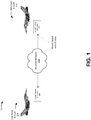
- FIG. 1 shows an overview of an example environment.
- a training environment 10 may include a live-force aircraft 100, an adversary aircraft 115, and an airborne network 120.
- the training environment may include any number of live-force aircrafts 100 and adversary aircrafts 115, however, for simplicity and illustrative purposes, one of each live-force aircraft 100 and adversary aircraft 115 is shown.
- the adversary aircraft 115 may be non-representative of an adversary aircraft that may be present in a real-life combat situation, but is being used for training purposes due to availability.
- each of the each live-force aircraft 100 and adversary aircraft 115 may include an aircraft training data system 105 whereby packet-based aircraft data may be exchanged via the airborne network 120. More specifically, the aircraft training data system 105 of the adversary aircraft 115 may transmit simulated aircraft data to the aircraft training data system 105 of the live-force aircraft 100.
- the simulated aircraft data may represent the attributes of a real-life adversary aircraft that may be present in a live combat situation.
- the aircraft training data system 105 of the live-force aircraft 100 may receive the simulated aircraft data and operate based on the simulated aircraft data (e.g., display the simulated aircraft data, operate weapons, navigations, and/or flight systems based on the simulated aircraft data, etc.). In this way, a pilot of the live-force aircraft 100 may experience a more realistic combat scenario during training programs.
- the aircraft training data system 105 of the live-force aircraft 100 may translate its actual (e.g., non-simulated) system, navigation, position, and/or sensor data into a packet-based format and transmit this packet-based aircraft data through the airborne network 120 for receipt by the aircraft training data system 105 of the adversary aircraft 115. Additionally, or alternatively, the packet-based aircraft data transmitted by the live-force aircraft 100 may be received by other aircraft and/or other computing devices connected to the airborne network 120.
- aircraft data (e.g., both simulated and non-simulated aircraft data) may be transmitted and communicated across the airborne network 120 without the risk of the data being intercepted by unauthorized parties, which may be possible in systems in which the adversary aircraft 115 implements emitters for detection by the live-force aircraft 100.
- aircraft data in the form of packet-based data
- multiple different aircraft and computing devices on the airborne network 120 may each discover and observe the aircraft data in a secure manner.
- the airborne network 120 may include network nodes, and network devices to form a network (e.g., a packet based network via which multiple different aircraft training data systems 105 and other computing devices may communicate). Additionally, or alternatively, the airborne network 120 may include one or more wired and/or wireless networks.
- the airborne network 120 may include a cellular network (e.g., a second generation (2G) network, a third generation (3G) network, a fourth generation (4G) network, a fifth generation (5G) network, a long-term evolution (LTE) network, a global system for mobile (GSM) network, a code division multiple access (CDMA) network, an evolution-data optimized (EVDO) network, or the like), a public land mobile network (PLMN), and/or another network.
- a cellular network e.g., a second generation (2G) network, a third generation (3G) network, a fourth generation (4G) network, a fifth generation (5G) network, a long-term evolution (LTE) network, a global system for mobile (GSM) network, a code division multiple access (CDMA) network, an evolution-data optimized (EVDO) network, or the like
- 2G second generation
- 3G third generation
- 4G fourth generation
- 5G fifth generation
- LTE long-term evolution
- the network 240 may include a local area network (LAN), a wide area network (WAN), a metropolitan network (MAN), the Public Switched Telephone Network (PSTN), an ad hoc network, a managed Internet Protocol (IP) network, a virtual private network (VPN), an intranet, the Internet, a fiber optic-based network, and/or a combination of these or other types of networks.
- the airborne network 120 may include, at least in part, copper transmission cables, optical transmission fibers, wireless transmission, routers, firewalls, switches, gateway computers and/or edge servers.
- the quantity of devices and/or networks in the environment 10 is not limited to what is shown in FIG. 1 .
- the environment 10 may include additional devices, aircraft, and/or networks; fewer devices and/or networks; different devices and/or networks; or differently arranged devices and/or networks than illustrated in FIG. 1 .
- one or more of the devices of the environment 10 may perform one or more functions described as being performed by another one or more of the devices of the environment 10.
- Devices of the environment 10 may interconnect via wired connections, wireless connections, or a combination of wired and wireless connections.
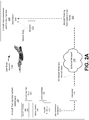
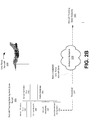
- FIGS. 2A and 2B illustrates example components and data flows between devices in environment 10 of FIG. 1 . More specifically, FIG. 2A illustrates example components for generating a simulated training environment by communicating packet-based simulated aircraft data between aircraft across an airborne network 120. As described herein, simulated aircraft data may be converted into a packet-based format and received by a live-force aircraft 100 for during a training operation.
- an adversary aircraft training data system 105 may transmit simulated adversary aircraft data to a live-force aircraft training data system 105.
- the adversary aircraft training data system 105 may be implemented in a live adversary aircraft 115. Additionally, or alternatively, the adversary aircraft training data system 105 may be implemented in a ground-based or non-aircraft computer system.
- the adversary aircraft training data system 105 may generate the simulated adversary aircraft data based on aircraft position data 202, sensor data 204 (that may include or consist of sensor controls data), sensor models 206, entity database 208, and/or aircraft attributes 210.
- a data conversion component 212 may be implemented to convert the data from the aircraft position data 202, sensor data and/or sensor controls data 204, sensor models 206, entity database 208, and/or aircraft attributes 210 into packet-based data for transmission via the airborne network 120.
- the aircraft position data 202 may be based on non-simulation data of a live adversary aircraft 115.
- the aircraft position data 202 may be obtained from aircraft navigational/positional devices that track the real-time position of the live adversary aircraft 115.
- the aircraft position data 205 may be simulated.
- the sensor data and/or sensor controls data 204 may include non-simulated sensor data and sensor controls data from sensors implemented on a live adversary aircraft 115, or simulated sensor data and/or sensor controls data when the aircraft training data system 105 is implemented on a non-aircraft training system.
- the sensor control may be on board the live adversary aircraft 115, or remote controlled (e.g., wirelessly remote controlled from a cockpit of the live adversary aircraft 115).
- the sensor data may be received the adversary aircraft 115 or remotely received (e.g., from a ground system or airborne system).
- the sensor models 206 may include any number of modeled sensor data, including threat awareness data, RADAR data, Radar Warning Receive (RWR) data, etc.
- the entity database 208 may store data identifying other entities (e.g., aircraft, structures, vehicles, etc.) detected within the airborne network 120.
- the aircraft attributes 210 may include simulated attributes of an aircraft that may resemble a real-life combat aircraft. For example, the aircraft attributes 210 may identify an aircraft type, model, dimensions, size, shape, design, etc. Additionally, or alternatively, the aircraft attributes may identify electronic emissions signatures, heat signatures, or the like.
- the aircraft attributes 210 may be provided via user input (e.g., by an operator or training personnel). For example, the aircraft attributes 210 may be set to resemble a particular type of aircraft to train against.
- a data conversion component 212 may convert and package data from the aircraft position data 202, sensor data and/or sensor controls data 204, sensor models 206, entity database 208, and/or aircraft attributes 210 into simulated adversary aircraft data.
- the simulated adversary aircraft data may be transmitted to other devices on the airborne network 120 (e.g., via a transceiver 214). In the example of FIG. 2A , the simulated adversary aircraft data may be transmitted to a live-force aircraft training data system 105.
- the live-force aircraft training data system 105 may provide the simulated adversary aircraft data to an aircraft instrumentation and controls system 110.
- the aircraft instrumentation and controls system 110 may also receive data from sensors 112 implemented on the live-force aircraft 100.
- a portion of the data from the sensors 112 may conflict or be inconsistent with the simulated adversary aircraft data.
- the sensor data may identify the actual or non-simulated attributes of adversary aircraft (e.g., size, dimensions, shape, heat signature, etc.), whereas the simulated data may identify the simulated attributes representing a realistic or simulated adversary aircraft.
- the aircraft instrumentation and controls system 110 may implement data fusion 114 to fuse or merge the sensor data with the simulated adversary aircraft data.
- the data fusion 114 may filter, discard, and/or override a portion of the conflicting sensor data such that the aircraft instrumentation and controls system 110 receives the simulated data.
- the data fusion 114 may retain sensor data that does not conflict with the simulated adversary aircraft data, and may override sensor data that conflicts with the simulated adversary aircraft data.
- the aircraft instrumentation and controls system 110 may receive a complete set of merged data that includes non-conflicting sensor data as well as simulated adversary aircraft data to create the "appearance" and simulated scenario of a realistic adversary aircraft that may be present in a combat scenario.
- any number of rules may be implemented to define the manner in which the data fusion 114 is to modify, filter, and/or override the sensor data with consideration to the simulated aircraft data.
- the aircraft instrumentation and controls system 110 may execute any number of instructions or operations based on the merged data. For example, the aircraft instrumentation and controls system 110 may display the merged data such that live adversary aircraft 115 has the attributes (e.g., appearance, electronic emissions signature, heat signature, etc.) of a realistic adversary aircraft. Further, any combat tactics, weapons systems, and/or maneuvers controlled by the aircraft instrumentation and controls system 110 (e.g., automatically or manually) may be executed based on the simulated attributes and simulated data. In this way, aircraft tactics training may more realistically reassembled a real-life combat scenario.
- live adversary aircraft 115 has the attributes (e.g., appearance, electronic emissions signature, heat signature, etc.) of a realistic adversary aircraft.
- any combat tactics, weapons systems, and/or maneuvers controlled by the aircraft instrumentation and controls system 110 e.g., automatically or manually
- aircraft tactics training may more realistically reassembled a real-life combat scenario.
- the live-force aircraft 100 may also generate and transmit non-simulated aircraft data to other aircraft data systems 105 in the airborne network 120 (e.g., implemented either in other aircraft or ground systems).
- the analytics data from the live-force aircraft 100 may be received and used as part of training or analysis.
- a live-force aircraft training data system 105 may generate packet-based non-simulated live force aircraft data in a similar manner as simulated adversary aircraft is generated by an adversary aircraft training data system 105 as discussed in FIG. 2A .
- the live-force aircraft training data system 105 may convert aircraft position data 202, sensor data and/or sensor controls data 204, sensor models 206, entity database 208, and/or aircraft attributes 210 into packet-based data for transmission via the airborne network 120.
- multiple different aircraft training data systems 105 may receive the non-simulated live-force aircraft data.
- the non-simulated live-force aircraft data may be received and used by other live-force aircraft 100 and/or by live adversary aircraft 115 (e.g., for displaying the non-simulated live-force aircraft data in instrumentation/display systems, etc.). Additionally, or alternatively, the non-simulated live-force aircraft data may be stored for analysis at a later time.
- a centralized server receive simulated and/or non-simulated aircraft data for dissemination, or each individual aircraft training data system 105 may receive simulated and/or non-simulated aircraft data
- FIG. 3 shows an example flowchart of a process for receiving and using simulated aircraft data for realistic aircraft tactics training.
- the steps of FIG. 3 may be implemented in the environment of FIG. 1 , for example, and are described using reference numbers of elements depicted in FIG. 1 .
- the flowchart illustrates the architecture, functionality, and operation of possible examples of systems, methods, and computer program products according to various examples of the present disclosure.
- process 300 may be executed or performed by an aircraft training data system 105.
- process 300 may include receiving simulated data (block 310).
- the aircraft training data system 105 e.g., implemented in a live-force aircraft 100
- the simulated data may represent simulated attributes of live adversary aircraft and/or attributes of simulated adversary aircraft.
- Process 300 may also include receiving sensor data (block 320).
- the aircraft training data system 105 may receive sensor data from one or more sensors 112 implemented by the live-force aircraft 100.
- the sensor data may be non-simulated sensor readings representing attributes of surrounding live adversary aircraft (e.g., electronic emissions data, electronic signature data, heat signature data, aircraft size, shape, dimensions, etc.).
- Process 300 may further include comparing the sensor data and the simulated data (block 330).
- the aircraft training data system 105 may compare the sensor data (e.g., non-simulated data) with the simulated data. From the comparison, the aircraft training data system 105 may identify inconsistences or differences between the sensor data and the simulated data.
- the sensor data may identify the actual or non-simulated attributes of adversary aircraft (e.g., size, dimensions, shape, heat signature, etc.), whereas the simulated data may identify the simulated attributes representing a realistic or simulated adversary aircraft.
- Process 300 may also include merging the sensor and simulated data (block 340).
- the aircraft training data system 105 may merge the sensor and simulated data (e.g., using data fusion 114).
- the data fusion 114 may filter, discard, and/or override a portion of the conflicting sensor data such that an aircraft instrumentation and controls system 110 of the aircraft training data system 105 receives the simulated data.
- the data fusion 114 may retain sensor data that does not conflict with the simulated adversary aircraft data, and may override sensor data that conflicts with the simulated adversary aircraft data.
- the aircraft instrumentation and controls system 110 may receive a complete set of merged data that includes non-conflicting sensor data as well as simulated adversary aircraft data to create the "appearance" and simulated scenario of a realistic adversary aircraft that may be present in a combat scenario.
- any number of rules may be implemented to define the manner in which the data fusion 114 is to modify, filter, and/or override the sensor data with consideration to the simulated aircraft data.
- a representation of the live adversary aircraft may be digitally transformed (e.g., from the point of view of the instrumentation in the live-force aircraft) into a realistic combat adversary aircraft (e.g., an aircraft having the simulated attributes consistent with attributes of an aircraft present in a combat situation). That is, the simulated data may transform a digital representation of the live adversary aircraft such that the live adversary aircraft has the attributes (e.g., appearance, heat signature, electronic signature, size, shape, dimensions, etc.) of a realistic combat adversary aircraft.
- Process 300 may further include executing operations based on the merged data (block 350).
- the aircraft instrumentation and controls system 110 of the aircraft training data system 105 may execute any number of instructions or operations based on the merged data.
- the aircraft instrumentation and controls system 110 may display the merged data such that a digital representation of the live adversary aircraft 115 has the attributes (e.g., appearance, electronic emissions signature, heat signature, etc.) of a realistic combat adversary aircraft.
- any combat tactic operations, weapons system operations, instrumentation displays, and/or maneuvering operations controlled by the aircraft instrumentation and controls system 110 e.g., automatically or manually
- the aircraft training data system 105 may translate live-force aircraft data of the live force aircraft 100 into data transmittable via an IP network (e.g., the airborne network 120).
- the aircraft training data system 105 may translate live-force aircraft data, such as sensor readings, position, speed, trajectory, mission and aircraft commands, etc. into packetized data for transmission to other aircraft training data systems 105 throughout the airborne network 120.
- live-force aircraft data such as sensor readings, position, speed, trajectory, mission and aircraft commands, etc.
- packetized data for transmission to other aircraft training data systems 105 throughout the airborne network 120.
- the operations of the live-force aircraft 100 may be seen and observed by other computing devices, simulators, and/or other aircraft training data systems 105 on the airborne network 120).
- aircraft data since aircraft data is transmitted via a secure airborne network 120 versus through electronic emission signals, the aircraft data may not be accessible by unauthorized parties.
- FIG. 4 shows an example training environment.
- a training environment 400 may include a live-force aircraft 100 and an adversary aircraft 115.
- the adversary aircraft 115 may be a live, non-simulated aircraft, but may implement an aircraft training data system 105 to simulate one or more of its attributes such that the adversary aircraft 115 has the appearance (e.g., within instrumentation of the live-force aircraft 100) of a more realistic combat aircraft present in a real-life combat situation.
- the training environment 400 may further include phantom or simulated live-force aircraft 100-1, and phantom or simulated adversary aircraft 115-1.
- Phantom aircraft may not be physically present, but may appear within a display and/or other instrumentation systems of the live-force aircraft 100. Phantom aircraft may be generated by any aircraft training data system 105 on the airborne network 120. For example, a training aircraft training data system 105 may generate simulated packetized aircraft data, and transmit the data over the airborne network 120 as IP data. Additionally, or alternatively, the phantom live-force aircraft 100-1 and/or the phantom adversary aircraft 115-1 may be simulated aircraft that is being controlled by an individual using a ground-based aircraft simulator. That is, the phantom aircraft may be purely simulated and computer-controlled, or may be simulated and operator controlled.
- the training environment 400 may include any number of live aircraft with simulated attributes and/or simulated phantom aircraft for creating a variety of training simulations. Further, any number of operations may be executed based on the simulated data included in the training environment 400 (e.g., operations to adjust digital representations of live and/or phantom adversary aircrafts, adjusting combat operations by the live-force aircraft 100, etc.).
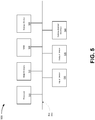
- FIG. 5 illustrates example components of a device 500 that may be used within training environments 10 or 400.
- device 500 may correspond to the aircraft training data system 105, the aircraft instrumentation and controls system 110, and/or any types of computing devices implemented by the live-force aircraft 100.
- Each of the aircraft training data system 105, the aircraft instrumentation and controls system 110 may include one or more devices 500 and/or one or more components of device 500.
- device 500 may include a bus 505, a processor 510, a main memory 515, a read only memory (ROM) 520, a storage device 525, an input device 530, an output device 535, and a communication interface 540.
- a bus 505 a processor 510, a main memory 515, a read only memory (ROM) 520, a storage device 525, an input device 530, an output device 535, and a communication interface 540.
- ROM read only memory
- Bus 505 may include a path that permits communication among the components of device 500.
- Processor 510 may include a processor, a microprocessor, an application specific integrated circuit (ASIC), a field programmable gate array (FPGA), or another type of processor that interprets and executes instructions.
- Main memory 515 may include a random access memory (RAM) or another type of dynamic storage device that stores information or instructions for execution by processor 510.
- ROM 520 may include a ROM device or another type of static storage device that stores static information or instructions for use by processor 510.
- Storage device 525 may include a magnetic storage medium, such as a hard disk drive, or a removable memory, such as a flash memory.
- Input device 530 may include a component that permits an operator to input information to device 500, such as a control button, a keyboard, a keypad, or another type of input device.
- Output device 535 may include a component that outputs information to the operator, such as a light emitting diode (LED), a display, or another type of output device.
- Communication interface 540 may include any transceiver-like component that enables device 500 to communicate with other devices or networks.
- communication interface 540 may include a wireless interface, a wired interface, or a combination of a wireless interface and a wired interface.
- communication interface 540 may receiver computer readable program instructions from a network and may forward the computer readable program instructions for storage in a computer readable storage medium (e.g., storage device 525).
- Device 500 may perform certain operations, as described in detail below. Device 500 may perform these operations in response to processor 510 executing software instructions contained in a computer-readable medium, such as main memory 515.
- a computer-readable medium may be defined as a non-transitory memory device and is not to be construed as being transitory signals per se, such as radio waves or other freely propagating electromagnetic waves, electromagnetic waves propagating through a waveguide or other transmission media (e.g., light pulses passing through a fiber-optic cable), or electrical signals transmitted through a wire.
- a memory device may include memory space within a single physical storage device or memory space spread across multiple physical storage devices.
- the software instructions may be read into main memory 515 from another computer-readable medium, such as storage device 525, or from another device via communication interface 540.
- the software instructions contained in main memory 515 may direct processor 510 to perform processes that will be described in greater detail herein.
- hardwired circuitry may be used in place of or in combination with software instructions to implement processes described herein.
- examples described herein are not limited to any specific combination of hardware circuitry and software.
- device 500 may include additional components, fewer components, different components, or differently arranged components than are shown in FIG. 5 .
- These computer readable program instructions may be provided to a processor of a general-purpose computer, special purpose computer, or other programmable data processing apparatus to produce a machine, such that the instructions, which execute via the processor of the computer or other programmable data processing apparatus, create means for implementing the functions/acts specified in the flowchart and/or block diagram block or blocks.
- These computer readable program instructions may also be stored in a computer readable storage medium that can direct a computer, a programmable data processing apparatus, and/or other devices to function in a particular manner, such that the computer readable storage medium having instructions stored therein comprises an article of manufacture including instructions which implement examples of the function/act specified in the flowchart and/or block diagram block or blocks.
- each block in the flowchart or block diagrams may represent a module, segment, or portion of instructions, which comprises one or more executable instructions for implementing the specified logical function(s).
- the functions noted in the blocks may occur out of the order noted in the Figures.
- two blocks shown in succession may, in fact, be executed concurrently (or substantially concurrently), or the blocks may sometimes be executed in the reverse order, depending upon the functionality involved.
- Examples of the disclosure may include a system, a method, and/or a computer program product at any possible technical detail level of integration
- the computer program product may include a computer readable storage medium (or media) having computer readable program instructions thereon for causing a processor to carry out or execute examples and/or processes of the present disclosure
- the computer readable program instructions may be assembler instructions, instruction-set-architecture (ISA) instructions, machine instructions, machine dependent instructions, microcode, firmware instructions, state-setting data, configuration data for integrated circuitry, or either source code or object code written in any combination of one or more programming languages, including an object oriented programming language such as Smalltalk, C++, or the like, and procedural programming languages, such as the "C" programming language or similar programming languages.
- the computer readable program instructions may execute entirely on a user's computer, partly on the user's computer, as a stand-alone software package, partly on the user's computer and partly on a remote computer or entirely on the remote computer or server.
- electronic circuitry including, for example, programmable logic circuitry, field-programmable gate arrays (FPGA), or programmable logic arrays (PLA) may execute the computer readable program instructions by utilizing state information of the computer readable program instructions to personalize the electronic circuitry, in order to perform examples of the present disclosure.
- FPGA field-programmable gate arrays
- PLA programmable logic arrays
- the computer readable program instructions may also be loaded onto a computer, other programmable data processing apparatus, or other device to cause a series of operational steps to be performed on the computer, other programmable apparatus or other device to produce a computer implemented process, such that the instructions which execute on the computer, other programmable apparatus, or other device implement the functions/acts specified in the flowchart and/or block diagram block or blocks.
- a service provider could offer to perform the processes described herein.
- the service provider can create, maintain, deploy, support, etc., the computer infrastructure that performs the process steps of the disclosure for one or more customers. These customers may be, for example, any business that uses technology.
- the service provider can receive payment from the customer(s) under a subscription and/or fee agreement and/or the service provider can receive payment from the sale of advertising content to one or more third parties.
Landscapes
- Engineering & Computer Science (AREA)
- Theoretical Computer Science (AREA)
- Physics & Mathematics (AREA)
- General Physics & Mathematics (AREA)
- Business, Economics & Management (AREA)
- Educational Administration (AREA)
- Educational Technology (AREA)
- Aviation & Aerospace Engineering (AREA)
- Geometry (AREA)
- Computer Hardware Design (AREA)
- Automation & Control Theory (AREA)
- Signal Processing (AREA)
- Computational Mathematics (AREA)
- Mathematical Analysis (AREA)
- Mathematical Optimization (AREA)
- Pure & Applied Mathematics (AREA)
- Computer Networks & Wireless Communication (AREA)
- Evolutionary Computation (AREA)
- General Engineering & Computer Science (AREA)
- Management, Administration, Business Operations System, And Electronic Commerce (AREA)
- Traffic Control Systems (AREA)
- Fire-Extinguishing By Fire Departments, And Fire-Extinguishing Equipment And Control Thereof (AREA)
- User Interface Of Digital Computer (AREA)
Applications Claiming Priority (1)
| Application Number | Priority Date | Filing Date | Title |
|---|---|---|---|
| US16/547,032 US11482128B2 (en) | 2019-08-21 | 2019-08-21 | Simulating aircraft data for tactics training |
Publications (3)
| Publication Number | Publication Date |
|---|---|
| EP3783587A2 true EP3783587A2 (de) | 2021-02-24 |
| EP3783587A3 EP3783587A3 (de) | 2021-03-31 |
| EP3783587B1 EP3783587B1 (de) | 2023-12-06 |
Family
ID=72193373
Family Applications (1)
| Application Number | Title | Priority Date | Filing Date |
|---|---|---|---|
| EP20192219.2A Active EP3783587B1 (de) | 2019-08-21 | 2020-08-21 | Simulation von flugzeugdaten für taktisches training |
Country Status (3)
| Country | Link |
|---|---|
| US (1) | US11482128B2 (de) |
| EP (1) | EP3783587B1 (de) |
| CN (1) | CN112417581B (de) |
Families Citing this family (1)
| Publication number | Priority date | Publication date | Assignee | Title |
|---|---|---|---|---|
| CN111221352B (zh) * | 2020-03-03 | 2021-01-29 | 中国科学院自动化研究所 | 基于多无人机协同博弈对抗的控制系统 |
Family Cites Families (20)
| Publication number | Priority date | Publication date | Assignee | Title |
|---|---|---|---|---|
| US9099009B2 (en) | 2009-12-01 | 2015-08-04 | The Boeing Company | Performance-based simulation system for an aircraft |
| US9230446B1 (en) | 2009-12-01 | 2016-01-05 | The Boeing Company | Integrated live and simulation environment system for an aircraft |
| US8616884B1 (en) * | 2009-12-01 | 2013-12-31 | The Boeing Company | Integrated live and simulation environment system for an aircraft |
| US8986011B1 (en) | 2010-09-13 | 2015-03-24 | The Boeing Company | Occlusion server for an integrated live and simulation environment for an aircraft |
| US8616883B2 (en) | 2010-12-15 | 2013-12-31 | The Boeing Company | Simulation control system for an integrated live and simulation environment for an aircraft |
| US9646417B1 (en) | 2011-01-28 | 2017-05-09 | The Boeing Company | Augmented reality system for field training |
| US9799229B2 (en) | 2012-12-13 | 2017-10-24 | The Boeing Company | Data sharing system for aircraft training |
| US9368043B1 (en) | 2013-08-07 | 2016-06-14 | Rockwell Collins, Inc. | Training target tagging system and related method |
| US9596212B2 (en) | 2013-11-11 | 2017-03-14 | The Boeing Company | Apparatus, method, and system for hardware-based filtering in a cross-domain infrastructure |
| US9677840B2 (en) * | 2014-03-14 | 2017-06-13 | Lineweight Llc | Augmented reality simulator |
| US10964226B2 (en) | 2015-01-19 | 2021-03-30 | The Boeing Company | Instructional assessment system for a vehicle |
| EP3082000B1 (de) * | 2015-04-15 | 2020-06-10 | dSPACE digital signal processing and control engineering GmbH | Verfahren und system zum testen eines mechatronischen systems |
| CN105243173A (zh) * | 2015-08-25 | 2016-01-13 | 中国民航科学技术研究院 | 基于性能的导航飞行程序计算机虚拟环境仿真校验系统 |
| US10043311B2 (en) * | 2015-09-16 | 2018-08-07 | The Boeing Company | Immersive design management system |
| CN105224741B (zh) * | 2015-09-28 | 2019-02-15 | 河南理工大学 | 电动汽车驱动系统电磁辐射测试规划方法 |
| US20170294135A1 (en) | 2016-04-11 | 2017-10-12 | The Boeing Company | Real-time, in-flight simulation of a target |
| CN106934136A (zh) * | 2017-03-02 | 2017-07-07 | 西安电子科技大学 | 一种细长型飞行器的振动试验仿真系统及方法 |
| US10420999B2 (en) * | 2017-03-27 | 2019-09-24 | Intel Corporation | Sensor-derived object flight performance tracking |
| US11069254B2 (en) | 2017-04-05 | 2021-07-20 | The Boeing Company | Method for simulating live aircraft infrared seeker obscuration during live, virtual, constructive (LVC) exercises |
| CN108701164A (zh) * | 2017-08-25 | 2018-10-23 | 深圳市大疆创新科技有限公司 | 获得飞行模拟数据的方法、装置、存储介质及设备 |
-
2019
- 2019-08-21 US US16/547,032 patent/US11482128B2/en active Active
-
2020
- 2020-08-18 CN CN202010830556.9A patent/CN112417581B/zh active Active
- 2020-08-21 EP EP20192219.2A patent/EP3783587B1/de active Active
Also Published As
| Publication number | Publication date |
|---|---|
| CN112417581A (zh) | 2021-02-26 |
| US20210056861A1 (en) | 2021-02-25 |
| EP3783587B1 (de) | 2023-12-06 |
| EP3783587A3 (de) | 2021-03-31 |
| US11482128B2 (en) | 2022-10-25 |
| CN112417581B (zh) | 2026-02-06 |
Similar Documents
| Publication | Publication Date | Title |
|---|---|---|
| Hentati et al. | Simulation tools, environments and frameworks for UAV systems performance analysis | |
| US8010327B2 (en) | Composite assets for use in multiple simulation environments | |
| KR101797208B1 (ko) | L-v-c 운용 시스템, 이를 이용한 무인기 훈련/실험 방법 | |
| US8336775B2 (en) | Aerospace-ground integration testbed | |
| US11087633B2 (en) | Simulation server capable of interacting with a plurality of simulators to perform a plurality of simulations | |
| CN104471627B (zh) | 嵌入式模拟方法及相关系统 | |
| CN108701421A (zh) | 能通过与计算设备的交互来配置课程计划的事件的模拟服务器 | |
| CN108701424A (zh) | 基于模拟数据的课程计划事件和模拟服务器 | |
| Viertler et al. | Requirements and design challenges in rotorcraft flight simulations for research applications | |
| US10356217B2 (en) | Virtual weather generation | |
| EP3783587B1 (de) | Simulation von flugzeugdaten für taktisches training | |
| CN108701422A (zh) | 能向计算设备发送表示模拟事件差异的视觉警报的模拟服务器 | |
| Barreto et al. | Developing a complex simulation environment for evaluating cyber attacks | |
| KR20110050298A (ko) | 다중 비행 시뮬레이션 시스템 | |
| Fokina et al. | Application of a visualization environment for the mission performance evaluation of civilian UAS | |
| CN118259600A (zh) | 无人机仿真与训练方法、装置以及模拟训练系统 | |
| Bucceroni et al. | A multi-perspective virtual reality visualization of unmanned aerial systems in the US national airspace | |
| Clark et al. | Advanced distributed simulation for the Australian Defence Force | |
| Silva et al. | AsaFG: A Human-in-the-Loop Integration Module for Air Combat Simulations | |
| Peinecke et al. | Real-time simulation of combined short-wave and long-wave infrared vision on a head-up display | |
| Wicker | NAWCAD Pioneers Innovation in Teletest and Maintenance. | |
| Ellis | Automate Model Data into a Physics-Based Analytic Software | |
| Vadivel et al. | Integrating Synthetic Vision Systems with Mixed Reality: Enhancing Pilot Situational Awareness through HoloLens 2 in Critical Flight Scenarios | |
| Ouerghi | Modeling airport ground operations using Discrete Event Simulation (DES) and X3D visualization | |
| Simi et al. | Enabling Situational Awareness and Network Centric Operations for Systems utilizing FACETM Open Systems Architectures |
Legal Events
| Date | Code | Title | Description |
|---|---|---|---|
| PUAI | Public reference made under article 153(3) epc to a published international application that has entered the european phase |
Free format text: ORIGINAL CODE: 0009012 |
|
| STAA | Information on the status of an ep patent application or granted ep patent |
Free format text: STATUS: THE APPLICATION HAS BEEN PUBLISHED |
|
| AK | Designated contracting states |
Kind code of ref document: A2 Designated state(s): AL AT BE BG CH CY CZ DE DK EE ES FI FR GB GR HR HU IE IS IT LI LT LU LV MC MK MT NL NO PL PT RO RS SE SI SK SM TR |
|
| AX | Request for extension of the european patent |
Extension state: BA ME |
|
| PUAL | Search report despatched |
Free format text: ORIGINAL CODE: 0009013 |
|
| AK | Designated contracting states |
Kind code of ref document: A3 Designated state(s): AL AT BE BG CH CY CZ DE DK EE ES FI FR GB GR HR HU IE IS IT LI LT LU LV MC MK MT NL NO PL PT RO RS SE SI SK SM TR |
|
| AX | Request for extension of the european patent |
Extension state: BA ME |
|
| RIC1 | Information provided on ipc code assigned before grant |
Ipc: G09B 9/44 20060101AFI20210219BHEP Ipc: G09B 9/00 20060101ALI20210219BHEP |
|
| STAA | Information on the status of an ep patent application or granted ep patent |
Free format text: STATUS: REQUEST FOR EXAMINATION WAS MADE |
|
| 17P | Request for examination filed |
Effective date: 20210930 |
|
| RBV | Designated contracting states (corrected) |
Designated state(s): AL AT BE BG CH CY CZ DE DK EE ES FI FR GB GR HR HU IE IS IT LI LT LU LV MC MK MT NL NO PL PT RO RS SE SI SK SM TR |
|
| RAP3 | Party data changed (applicant data changed or rights of an application transferred) |
Owner name: THE BOEING COMPANY |
|
| GRAP | Despatch of communication of intention to grant a patent |
Free format text: ORIGINAL CODE: EPIDOSNIGR1 |
|
| STAA | Information on the status of an ep patent application or granted ep patent |
Free format text: STATUS: GRANT OF PATENT IS INTENDED |
|
| INTG | Intention to grant announced |
Effective date: 20230713 |
|
| P01 | Opt-out of the competence of the unified patent court (upc) registered |
Effective date: 20230801 |
|
| GRAS | Grant fee paid |
Free format text: ORIGINAL CODE: EPIDOSNIGR3 |
|
| GRAA | (expected) grant |
Free format text: ORIGINAL CODE: 0009210 |
|
| STAA | Information on the status of an ep patent application or granted ep patent |
Free format text: STATUS: THE PATENT HAS BEEN GRANTED |
|
| AK | Designated contracting states |
Kind code of ref document: B1 Designated state(s): AL AT BE BG CH CY CZ DE DK EE ES FI FR GB GR HR HU IE IS IT LI LT LU LV MC MK MT NL NO PL PT RO RS SE SI SK SM TR |
|
| REG | Reference to a national code |
Ref country code: GB Ref legal event code: FG4D |
|
| REG | Reference to a national code |
Ref country code: CH Ref legal event code: EP |
|
| REG | Reference to a national code |
Ref country code: DE Ref legal event code: R096 Ref document number: 602020022206 Country of ref document: DE |
|
| REG | Reference to a national code |
Ref country code: IE Ref legal event code: FG4D |
|
| REG | Reference to a national code |
Ref country code: LT Ref legal event code: MG9D |
|
| PG25 | Lapsed in a contracting state [announced via postgrant information from national office to epo] |
Ref country code: GR Free format text: LAPSE BECAUSE OF FAILURE TO SUBMIT A TRANSLATION OF THE DESCRIPTION OR TO PAY THE FEE WITHIN THE PRESCRIBED TIME-LIMIT Effective date: 20240307 |
|
| REG | Reference to a national code |
Ref country code: NL Ref legal event code: MP Effective date: 20231206 |
|
| PG25 | Lapsed in a contracting state [announced via postgrant information from national office to epo] |
Ref country code: LT Free format text: LAPSE BECAUSE OF FAILURE TO SUBMIT A TRANSLATION OF THE DESCRIPTION OR TO PAY THE FEE WITHIN THE PRESCRIBED TIME-LIMIT Effective date: 20231206 |
|
| PG25 | Lapsed in a contracting state [announced via postgrant information from national office to epo] |
Ref country code: ES Free format text: LAPSE BECAUSE OF FAILURE TO SUBMIT A TRANSLATION OF THE DESCRIPTION OR TO PAY THE FEE WITHIN THE PRESCRIBED TIME-LIMIT Effective date: 20231206 |
|
| PG25 | Lapsed in a contracting state [announced via postgrant information from national office to epo] |
Ref country code: LT Free format text: LAPSE BECAUSE OF FAILURE TO SUBMIT A TRANSLATION OF THE DESCRIPTION OR TO PAY THE FEE WITHIN THE PRESCRIBED TIME-LIMIT Effective date: 20231206 Ref country code: GR Free format text: LAPSE BECAUSE OF FAILURE TO SUBMIT A TRANSLATION OF THE DESCRIPTION OR TO PAY THE FEE WITHIN THE PRESCRIBED TIME-LIMIT Effective date: 20240307 Ref country code: ES Free format text: LAPSE BECAUSE OF FAILURE TO SUBMIT A TRANSLATION OF THE DESCRIPTION OR TO PAY THE FEE WITHIN THE PRESCRIBED TIME-LIMIT Effective date: 20231206 Ref country code: BG Free format text: LAPSE BECAUSE OF FAILURE TO SUBMIT A TRANSLATION OF THE DESCRIPTION OR TO PAY THE FEE WITHIN THE PRESCRIBED TIME-LIMIT Effective date: 20240306 |
|
| REG | Reference to a national code |
Ref country code: AT Ref legal event code: MK05 Ref document number: 1639177 Country of ref document: AT Kind code of ref document: T Effective date: 20231206 |
|
| PG25 | Lapsed in a contracting state [announced via postgrant information from national office to epo] |
Ref country code: NL Free format text: LAPSE BECAUSE OF FAILURE TO SUBMIT A TRANSLATION OF THE DESCRIPTION OR TO PAY THE FEE WITHIN THE PRESCRIBED TIME-LIMIT Effective date: 20231206 |
|
| PG25 | Lapsed in a contracting state [announced via postgrant information from national office to epo] |
Ref country code: SE Free format text: LAPSE BECAUSE OF FAILURE TO SUBMIT A TRANSLATION OF THE DESCRIPTION OR TO PAY THE FEE WITHIN THE PRESCRIBED TIME-LIMIT Effective date: 20231206 Ref country code: RS Free format text: LAPSE BECAUSE OF FAILURE TO SUBMIT A TRANSLATION OF THE DESCRIPTION OR TO PAY THE FEE WITHIN THE PRESCRIBED TIME-LIMIT Effective date: 20231206 Ref country code: NO Free format text: LAPSE BECAUSE OF FAILURE TO SUBMIT A TRANSLATION OF THE DESCRIPTION OR TO PAY THE FEE WITHIN THE PRESCRIBED TIME-LIMIT Effective date: 20240306 Ref country code: NL Free format text: LAPSE BECAUSE OF FAILURE TO SUBMIT A TRANSLATION OF THE DESCRIPTION OR TO PAY THE FEE WITHIN THE PRESCRIBED TIME-LIMIT Effective date: 20231206 Ref country code: LV Free format text: LAPSE BECAUSE OF FAILURE TO SUBMIT A TRANSLATION OF THE DESCRIPTION OR TO PAY THE FEE WITHIN THE PRESCRIBED TIME-LIMIT Effective date: 20231206 Ref country code: HR Free format text: LAPSE BECAUSE OF FAILURE TO SUBMIT A TRANSLATION OF THE DESCRIPTION OR TO PAY THE FEE WITHIN THE PRESCRIBED TIME-LIMIT Effective date: 20231206 |
|
| PG25 | Lapsed in a contracting state [announced via postgrant information from national office to epo] |
Ref country code: IS Free format text: LAPSE BECAUSE OF FAILURE TO SUBMIT A TRANSLATION OF THE DESCRIPTION OR TO PAY THE FEE WITHIN THE PRESCRIBED TIME-LIMIT Effective date: 20240406 |
|
| PG25 | Lapsed in a contracting state [announced via postgrant information from national office to epo] |
Ref country code: AT Free format text: LAPSE BECAUSE OF FAILURE TO SUBMIT A TRANSLATION OF THE DESCRIPTION OR TO PAY THE FEE WITHIN THE PRESCRIBED TIME-LIMIT Effective date: 20231206 Ref country code: CZ Free format text: LAPSE BECAUSE OF FAILURE TO SUBMIT A TRANSLATION OF THE DESCRIPTION OR TO PAY THE FEE WITHIN THE PRESCRIBED TIME-LIMIT Effective date: 20231206 |
|
| PG25 | Lapsed in a contracting state [announced via postgrant information from national office to epo] |
Ref country code: SK Free format text: LAPSE BECAUSE OF FAILURE TO SUBMIT A TRANSLATION OF THE DESCRIPTION OR TO PAY THE FEE WITHIN THE PRESCRIBED TIME-LIMIT Effective date: 20231206 |
|
| PG25 | Lapsed in a contracting state [announced via postgrant information from national office to epo] |
Ref country code: SM Free format text: LAPSE BECAUSE OF FAILURE TO SUBMIT A TRANSLATION OF THE DESCRIPTION OR TO PAY THE FEE WITHIN THE PRESCRIBED TIME-LIMIT Effective date: 20231206 Ref country code: SK Free format text: LAPSE BECAUSE OF FAILURE TO SUBMIT A TRANSLATION OF THE DESCRIPTION OR TO PAY THE FEE WITHIN THE PRESCRIBED TIME-LIMIT Effective date: 20231206 Ref country code: RO Free format text: LAPSE BECAUSE OF FAILURE TO SUBMIT A TRANSLATION OF THE DESCRIPTION OR TO PAY THE FEE WITHIN THE PRESCRIBED TIME-LIMIT Effective date: 20231206 Ref country code: IT Free format text: LAPSE BECAUSE OF FAILURE TO SUBMIT A TRANSLATION OF THE DESCRIPTION OR TO PAY THE FEE WITHIN THE PRESCRIBED TIME-LIMIT Effective date: 20231206 Ref country code: IS Free format text: LAPSE BECAUSE OF FAILURE TO SUBMIT A TRANSLATION OF THE DESCRIPTION OR TO PAY THE FEE WITHIN THE PRESCRIBED TIME-LIMIT Effective date: 20240406 Ref country code: EE Free format text: LAPSE BECAUSE OF FAILURE TO SUBMIT A TRANSLATION OF THE DESCRIPTION OR TO PAY THE FEE WITHIN THE PRESCRIBED TIME-LIMIT Effective date: 20231206 Ref country code: CZ Free format text: LAPSE BECAUSE OF FAILURE TO SUBMIT A TRANSLATION OF THE DESCRIPTION OR TO PAY THE FEE WITHIN THE PRESCRIBED TIME-LIMIT Effective date: 20231206 Ref country code: AT Free format text: LAPSE BECAUSE OF FAILURE TO SUBMIT A TRANSLATION OF THE DESCRIPTION OR TO PAY THE FEE WITHIN THE PRESCRIBED TIME-LIMIT Effective date: 20231206 |
|
| PG25 | Lapsed in a contracting state [announced via postgrant information from national office to epo] |
Ref country code: PT Free format text: LAPSE BECAUSE OF FAILURE TO SUBMIT A TRANSLATION OF THE DESCRIPTION OR TO PAY THE FEE WITHIN THE PRESCRIBED TIME-LIMIT Effective date: 20240408 Ref country code: PL Free format text: LAPSE BECAUSE OF FAILURE TO SUBMIT A TRANSLATION OF THE DESCRIPTION OR TO PAY THE FEE WITHIN THE PRESCRIBED TIME-LIMIT Effective date: 20231206 |
|
| PG25 | Lapsed in a contracting state [announced via postgrant information from national office to epo] |
Ref country code: PT Free format text: LAPSE BECAUSE OF FAILURE TO SUBMIT A TRANSLATION OF THE DESCRIPTION OR TO PAY THE FEE WITHIN THE PRESCRIBED TIME-LIMIT Effective date: 20240408 Ref country code: PL Free format text: LAPSE BECAUSE OF FAILURE TO SUBMIT A TRANSLATION OF THE DESCRIPTION OR TO PAY THE FEE WITHIN THE PRESCRIBED TIME-LIMIT Effective date: 20231206 |
|
| REG | Reference to a national code |
Ref country code: DE Ref legal event code: R097 Ref document number: 602020022206 Country of ref document: DE |
|
| PG25 | Lapsed in a contracting state [announced via postgrant information from national office to epo] |
Ref country code: DK Free format text: LAPSE BECAUSE OF FAILURE TO SUBMIT A TRANSLATION OF THE DESCRIPTION OR TO PAY THE FEE WITHIN THE PRESCRIBED TIME-LIMIT Effective date: 20231206 |
|
| PLBE | No opposition filed within time limit |
Free format text: ORIGINAL CODE: 0009261 |
|
| STAA | Information on the status of an ep patent application or granted ep patent |
Free format text: STATUS: NO OPPOSITION FILED WITHIN TIME LIMIT |
|
| PG25 | Lapsed in a contracting state [announced via postgrant information from national office to epo] |
Ref country code: SI Free format text: LAPSE BECAUSE OF FAILURE TO SUBMIT A TRANSLATION OF THE DESCRIPTION OR TO PAY THE FEE WITHIN THE PRESCRIBED TIME-LIMIT Effective date: 20231206 |
|
| PG25 | Lapsed in a contracting state [announced via postgrant information from national office to epo] |
Ref country code: SI Free format text: LAPSE BECAUSE OF FAILURE TO SUBMIT A TRANSLATION OF THE DESCRIPTION OR TO PAY THE FEE WITHIN THE PRESCRIBED TIME-LIMIT Effective date: 20231206 Ref country code: DK Free format text: LAPSE BECAUSE OF FAILURE TO SUBMIT A TRANSLATION OF THE DESCRIPTION OR TO PAY THE FEE WITHIN THE PRESCRIBED TIME-LIMIT Effective date: 20231206 |
|
| 26N | No opposition filed |
Effective date: 20240909 |
|
| REG | Reference to a national code |
Ref country code: CH Ref legal event code: PL |
|
| PG25 | Lapsed in a contracting state [announced via postgrant information from national office to epo] |
Ref country code: LU Free format text: LAPSE BECAUSE OF NON-PAYMENT OF DUE FEES Effective date: 20240821 |
|
| PG25 | Lapsed in a contracting state [announced via postgrant information from national office to epo] |
Ref country code: MC Free format text: LAPSE BECAUSE OF FAILURE TO SUBMIT A TRANSLATION OF THE DESCRIPTION OR TO PAY THE FEE WITHIN THE PRESCRIBED TIME-LIMIT Effective date: 20231206 Ref country code: CH Free format text: LAPSE BECAUSE OF NON-PAYMENT OF DUE FEES Effective date: 20240831 |
|
| REG | Reference to a national code |
Ref country code: BE Ref legal event code: MM Effective date: 20240831 |
|
| PG25 | Lapsed in a contracting state [announced via postgrant information from national office to epo] |
Ref country code: BE Free format text: LAPSE BECAUSE OF NON-PAYMENT OF DUE FEES Effective date: 20240831 |
|
| PG25 | Lapsed in a contracting state [announced via postgrant information from national office to epo] |
Ref country code: IE Free format text: LAPSE BECAUSE OF NON-PAYMENT OF DUE FEES Effective date: 20240821 |
|
| PG25 | Lapsed in a contracting state [announced via postgrant information from national office to epo] |
Ref country code: FI Free format text: LAPSE BECAUSE OF FAILURE TO SUBMIT A TRANSLATION OF THE DESCRIPTION OR TO PAY THE FEE WITHIN THE PRESCRIBED TIME-LIMIT Effective date: 20231207 |
|
| PGFP | Annual fee paid to national office [announced via postgrant information from national office to epo] |
Ref country code: DE Payment date: 20250827 Year of fee payment: 6 |
|
| PGFP | Annual fee paid to national office [announced via postgrant information from national office to epo] |
Ref country code: GB Payment date: 20250827 Year of fee payment: 6 |
|
| PGFP | Annual fee paid to national office [announced via postgrant information from national office to epo] |
Ref country code: FR Payment date: 20250825 Year of fee payment: 6 |
|
| PG25 | Lapsed in a contracting state [announced via postgrant information from national office to epo] |
Ref country code: CY Free format text: LAPSE BECAUSE OF FAILURE TO SUBMIT A TRANSLATION OF THE DESCRIPTION OR TO PAY THE FEE WITHIN THE PRESCRIBED TIME-LIMIT; INVALID AB INITIO Effective date: 20200821 |
|
| PG25 | Lapsed in a contracting state [announced via postgrant information from national office to epo] |
Ref country code: HU Free format text: LAPSE BECAUSE OF FAILURE TO SUBMIT A TRANSLATION OF THE DESCRIPTION OR TO PAY THE FEE WITHIN THE PRESCRIBED TIME-LIMIT; INVALID AB INITIO Effective date: 20200821 |