EP3782857B1 - Vehicle and vehicle starting control method and system - Google Patents
Vehicle and vehicle starting control method and system Download PDFInfo
- Publication number
- EP3782857B1 EP3782857B1 EP19788270.7A EP19788270A EP3782857B1 EP 3782857 B1 EP3782857 B1 EP 3782857B1 EP 19788270 A EP19788270 A EP 19788270A EP 3782857 B1 EP3782857 B1 EP 3782857B1
- Authority
- EP
- European Patent Office
- Prior art keywords
- vehicle
- verification
- control unit
- key
- verification information
- Prior art date
- Legal status (The legal status is an assumption and is not a legal conclusion. Google has not performed a legal analysis and makes no representation as to the accuracy of the status listed.)
- Active
Links
Images


Classifications
-
- B—PERFORMING OPERATIONS; TRANSPORTING
- B60—VEHICLES IN GENERAL
- B60R—VEHICLES, VEHICLE FITTINGS, OR VEHICLE PARTS, NOT OTHERWISE PROVIDED FOR
- B60R16/00—Electric or fluid circuits specially adapted for vehicles and not otherwise provided for; Arrangement of elements of electric or fluid circuits specially adapted for vehicles and not otherwise provided for
- B60R16/02—Electric or fluid circuits specially adapted for vehicles and not otherwise provided for; Arrangement of elements of electric or fluid circuits specially adapted for vehicles and not otherwise provided for electric constitutive elements
- B60R16/03—Electric or fluid circuits specially adapted for vehicles and not otherwise provided for; Arrangement of elements of electric or fluid circuits specially adapted for vehicles and not otherwise provided for electric constitutive elements for supply of electrical power to vehicle subsystems or for
-
- B—PERFORMING OPERATIONS; TRANSPORTING
- B60—VEHICLES IN GENERAL
- B60W—CONJOINT CONTROL OF VEHICLE SUB-UNITS OF DIFFERENT TYPE OR DIFFERENT FUNCTION; CONTROL SYSTEMS SPECIALLY ADAPTED FOR HYBRID VEHICLES; ROAD VEHICLE DRIVE CONTROL SYSTEMS FOR PURPOSES NOT RELATED TO THE CONTROL OF A PARTICULAR SUB-UNIT
- B60W20/00—Control systems specially adapted for hybrid vehicles
-
- B—PERFORMING OPERATIONS; TRANSPORTING
- B60—VEHICLES IN GENERAL
- B60R—VEHICLES, VEHICLE FITTINGS, OR VEHICLE PARTS, NOT OTHERWISE PROVIDED FOR
- B60R25/00—Fittings or systems for preventing or indicating unauthorised use or theft of vehicles
-
- B—PERFORMING OPERATIONS; TRANSPORTING
- B60—VEHICLES IN GENERAL
- B60W—CONJOINT CONTROL OF VEHICLE SUB-UNITS OF DIFFERENT TYPE OR DIFFERENT FUNCTION; CONTROL SYSTEMS SPECIALLY ADAPTED FOR HYBRID VEHICLES; ROAD VEHICLE DRIVE CONTROL SYSTEMS FOR PURPOSES NOT RELATED TO THE CONTROL OF A PARTICULAR SUB-UNIT
- B60W10/00—Conjoint control of vehicle sub-units of different type or different function
- B60W10/04—Conjoint control of vehicle sub-units of different type or different function including control of propulsion units
- B60W10/06—Conjoint control of vehicle sub-units of different type or different function including control of propulsion units including control of combustion engines
-
- B—PERFORMING OPERATIONS; TRANSPORTING
- B60—VEHICLES IN GENERAL
- B60W—CONJOINT CONTROL OF VEHICLE SUB-UNITS OF DIFFERENT TYPE OR DIFFERENT FUNCTION; CONTROL SYSTEMS SPECIALLY ADAPTED FOR HYBRID VEHICLES; ROAD VEHICLE DRIVE CONTROL SYSTEMS FOR PURPOSES NOT RELATED TO THE CONTROL OF A PARTICULAR SUB-UNIT
- B60W10/00—Conjoint control of vehicle sub-units of different type or different function
- B60W10/04—Conjoint control of vehicle sub-units of different type or different function including control of propulsion units
- B60W10/08—Conjoint control of vehicle sub-units of different type or different function including control of propulsion units including control of electric propulsion units, e.g. motors or generators
-
- B—PERFORMING OPERATIONS; TRANSPORTING
- B60—VEHICLES IN GENERAL
- B60W—CONJOINT CONTROL OF VEHICLE SUB-UNITS OF DIFFERENT TYPE OR DIFFERENT FUNCTION; CONTROL SYSTEMS SPECIALLY ADAPTED FOR HYBRID VEHICLES; ROAD VEHICLE DRIVE CONTROL SYSTEMS FOR PURPOSES NOT RELATED TO THE CONTROL OF A PARTICULAR SUB-UNIT
- B60W10/00—Conjoint control of vehicle sub-units of different type or different function
- B60W10/10—Conjoint control of vehicle sub-units of different type or different function including control of change-speed gearings
-
- B—PERFORMING OPERATIONS; TRANSPORTING
- B60—VEHICLES IN GENERAL
- B60W—CONJOINT CONTROL OF VEHICLE SUB-UNITS OF DIFFERENT TYPE OR DIFFERENT FUNCTION; CONTROL SYSTEMS SPECIALLY ADAPTED FOR HYBRID VEHICLES; ROAD VEHICLE DRIVE CONTROL SYSTEMS FOR PURPOSES NOT RELATED TO THE CONTROL OF A PARTICULAR SUB-UNIT
- B60W10/00—Conjoint control of vehicle sub-units of different type or different function
- B60W10/24—Conjoint control of vehicle sub-units of different type or different function including control of energy storage means
-
- B—PERFORMING OPERATIONS; TRANSPORTING
- B60—VEHICLES IN GENERAL
- B60W—CONJOINT CONTROL OF VEHICLE SUB-UNITS OF DIFFERENT TYPE OR DIFFERENT FUNCTION; CONTROL SYSTEMS SPECIALLY ADAPTED FOR HYBRID VEHICLES; ROAD VEHICLE DRIVE CONTROL SYSTEMS FOR PURPOSES NOT RELATED TO THE CONTROL OF A PARTICULAR SUB-UNIT
- B60W50/00—Details of control systems for road vehicle drive control not related to the control of a particular sub-unit, e.g. process diagnostic or vehicle driver interfaces
- B60W50/04—Monitoring the functioning of the control system
-
- B—PERFORMING OPERATIONS; TRANSPORTING
- B60—VEHICLES IN GENERAL
- B60R—VEHICLES, VEHICLE FITTINGS, OR VEHICLE PARTS, NOT OTHERWISE PROVIDED FOR
- B60R16/00—Electric or fluid circuits specially adapted for vehicles and not otherwise provided for; Arrangement of elements of electric or fluid circuits specially adapted for vehicles and not otherwise provided for
- B60R16/02—Electric or fluid circuits specially adapted for vehicles and not otherwise provided for; Arrangement of elements of electric or fluid circuits specially adapted for vehicles and not otherwise provided for electric constitutive elements
-
- B—PERFORMING OPERATIONS; TRANSPORTING
- B60—VEHICLES IN GENERAL
- B60W—CONJOINT CONTROL OF VEHICLE SUB-UNITS OF DIFFERENT TYPE OR DIFFERENT FUNCTION; CONTROL SYSTEMS SPECIALLY ADAPTED FOR HYBRID VEHICLES; ROAD VEHICLE DRIVE CONTROL SYSTEMS FOR PURPOSES NOT RELATED TO THE CONTROL OF A PARTICULAR SUB-UNIT
- B60W2540/00—Input parameters relating to occupants
- B60W2540/12—Brake pedal position
-
- B—PERFORMING OPERATIONS; TRANSPORTING
- B60—VEHICLES IN GENERAL
- B60W—CONJOINT CONTROL OF VEHICLE SUB-UNITS OF DIFFERENT TYPE OR DIFFERENT FUNCTION; CONTROL SYSTEMS SPECIALLY ADAPTED FOR HYBRID VEHICLES; ROAD VEHICLE DRIVE CONTROL SYSTEMS FOR PURPOSES NOT RELATED TO THE CONTROL OF A PARTICULAR SUB-UNIT
- B60W2540/00—Input parameters relating to occupants
- B60W2540/16—Ratio selector position
Definitions
- This application relates to the field of vehicle technology, and in particular, to a start control method for a vehicle, a start control system of a vehicle, and a vehicle.
- an entire start process is usually started after the user enters the vehicle, depresses a brake pedal, and presses a start button.
- a brake pedal For a vehicle in the related art, an entire start process is usually started after the user enters the vehicle, depresses a brake pedal, and presses a start button.
- WO 2013/186615 A1 shows a communication system includes checking means for performing a check to detect whether a mobile device carried by a user of a vehicle is in the vehicle via wireless communication between an onboard device and the mobile device when a door of the vehicle has changed from being open to being closed; detecting means for detecting an operating state of an onboard electrical load when the check is performed by the checking means; and changing means for changing a maximum value of a number of rechecks, which is the number of times the check is allowed to be repeatedly performed by the checking means, according to the operating state of the onboard electrical load detected by the detecting means, when it has not been detected that the mobile device is in the vehicle by the check performed by the checking means.
- a first objective of this application is to provide a start control method for a vehicle to effectively reduce a time for a user to wait for a vehicle to start.
- a second objective of this application is to provide a start control system of a vehicle.
- a third objective of this application is to provide a vehicle.
- a start control method for a vehicle according to claim 1 is proposed.
- the start control method for a vehicle when the door of the vehicle is in the open state and the key is in the vehicle, the first high-voltage module group of the vehicle is controlled to perform power on, the door is changed from the open state to the closed state, and the brake pedal of the vehicle is depressed and the key is in the vehicle, a second high-voltage module group of the vehicle is controlled, according to a start instruction, to perform power on, so that the first high-voltage module group is controlled in advance, by using a time for a user to open and close the door, to perform power on, reducing a time for the user to start the vehicle after a start instruction is input, effectively shortening a time for the user to wait for the vehicle to start, and improving user experience.
- the body control module controls the first high-voltage module group of the vehicle to perform power on, and when the door is changed from the open state to the closed state, and the brake pedal of the vehicle is depressed and the key is in the vehicle, the body control module controls, according to a start instruction, a second high-voltage module group of the vehicle, to perform power on, so that the first high-voltage module group is controlled in advance, by using a time for a user to open and close the door, to perform power on, reducing a time for the user to start the vehicle after inputting a start instruction, effectively shortening a time for the user to wait for the vehicle to start, and improving user experience.
- a vehicle including the start control system of the vehicle according to claim 9 is proposed.
- the first high-voltage module group is controlled in advance, by making full use of a time for the user to open and close the door, to perform power on, reducing the time for the user to start the vehicle after inputting a start instruction, effectively shortening a time for the user to wait for the vehicle to start, and improving user experience.
- a vehicle, a start control method for the vehicle, and a start control system of the vehicle are described below according to embodiments of this application with reference to the drawings.
- FIG. 1 is a flowchart of a start control method for a vehicle according to an embodiment of this application. As shown in FIG. 1 , the start control method for the vehicle includes the following steps.
- a door state signal may be collected through a body control module (BCM), and it is determined, according to the door state signal, whether the door is in the open state.
- BCM body control module
- the vehicle When a driver unlocks the door with the key, the vehicle is in an OFF gear in a non-anti-theft state, that is, the vehicle is in a power-off state.
- the body control module BCM may collect the door state signal, and determines, according to the door state signal, that the door is open, that is, in the open state.
- the body control module (BCM) may send a request for searching for the key to the key controller (IK).
- the key controller (IK) starts to detect the strength of the signal sent by the key, and determines, according to the strength of the signal, whether the key is in the vehicle. For example, the key may transmit a preset signal in real time or at a preset time interval.
- the key controller (IK) may detect the preset signal after receiving the request for searching for the key, and obtain strength of the detected preset signal. If the strength is greater than preset strength, it is determined that the key is in the vehicle.
- the key controller (IK) may send information that the key is in the vehicle to the body control module (BCM), and the body control module may determine that the key is in the vehicle.
- BCM body control module
- S2 Control, if the key is in the vehicle, a first high-voltage module group of the vehicle to perform power on.
- the first high-voltage module group includes a vehicle control unit, a battery management system, and a motor controller.
- the first high-voltage module group includes the vehicle control unit, the battery management system, and the motor controller.
- the controlling a first high-voltage module group of the vehicle to perform power on includes:
- the power-on self-check is a routine procedure for self-check after the power on is performed.
- each of the vehicle control unit, the battery management system, and the motor controller may perform power-on self-check according to a preset self-check program to detect whether there is a power on failure.
- the body control module may connect the vehicle control unit (VCU), the battery management system (BMS), and the motor controller to a power supply circuit after detecting that the door is open and it is determined that the key is in the vehicle.
- the vehicle control unit (VCU), the battery management system (BMS), and the motor controller may be connected to the power supply circuit by controlling closing of a control relay.
- the vehicle control unit (VCU), the battery management system (BMS), and the motor controller perform power on self-inspection respectively after being connected to the power supply circuit.
- the vehicle control unit (VCU) sends pre-charge permission information to the battery management system (BMS), the battery management system (BMS) starts pre-charging and pulls in a main contactor upon completion of the pre-charging.
- the battery management system (BMS) may control pull-in of the main contactor, so that the vehicle control system (VCU), the battery management system (BMS), and the motor controller enter a pre-charging state, and pulls in the main contactor upon completion of the pre-charging, so that the vehicle control unit (VCU), the battery management system (BMS), and the motor controller supply power normally.
- a time from opening to closing of the door is fully used to control high-voltage modules with a long pre-charging time including the vehicle control unit, the battery management system, and the motor controller to enter the pre-charging state in advance.
- the door state signal may be collected through the body control module (BCM), and it is determined, according to the door state signal, whether the door is in a closed state. After the driver closes the door, such as a door (which may be the left front door) corresponding to the driving position, the body control module (BCM) may collect the door state signal and determine, according to the door state signal, that the door is closed.
- the method further includes:
- a steering shaft transmits a steering torque applied to a steering wheel by a driver to a steering gear.
- the steering shaft When the steering shaft is locked, rotational movement of the steering shaft is restricted, and the steering torque of the steering wheel cannot be transmitted to the steering gear, so that the vehicle cannot be driven.
- the steering shaft When the steering shaft is unlocked, the steering shaft may rotate, the steering torque of the steering wheel may be transmitted to the steering gear, so that the vehicle may be driven.
- the body control module (BCM) may collect a door signal and determine that the door is in a closed state. At this time, the body control module (BCM) supplies power to the steering shaft lock (ECL) and sends an unlocking instruction to the steering shaft lock.
- the steering shaft lock (ECL) may perform code matching verification with the key controller according to the unlocking instruction.
- the steering shaft lock (ECL) may send code matching verification information to the key controller (IK).
- the code matching verification information may include a verification password, or may include a vehicle identification code and a verification password
- the key controller (IK) may determine the code matching verification information, for example, determining whether the code matching verification information sent by the steering shaft lock (ECL) is consistent with code matching verification information pre-stored in the key controller (IK) itself. If yes, it is determined that the code matching succeeds.
- the key controller (IK) may obtain an unlocking permission signal as a feedback to the steering shaft lock (ECL) after the code matching succeeds, and the steering shaft lock (ECL) may be unlocked according to the unlocking permission signal. After the steering shaft lock is successfully unlocked, the steering shaft may rotate. If the code matching fails, the steering shaft lock (ECL) remains in a locked state.
- an illegal key may be effectively prevented from starting the vehicle to ensure that the vehicle may be started by using a key paired with the vehicle.
- a brake pedal sensor may be disposed at the brake pedal, and a signal of the brake pedal sensor may be collected through the body control module (BCM) to determine a state of the brake pedal.
- the body control module (BCM) may determine, by collecting a signal from the pedal sensor, that the brake pedal is depressed by collecting signal from the pedal sensor.
- the body control module (BCM) When detecting that the brake pedal is depressed, the body control module (BCM) further sends a request for searching for the key to the key controller (IK), and the key controller (IK) determines, according to strength of the signal sent by the key, whether the key is in the vehicle. After detecting that the key is in the vehicle, the key controller (IK) may send information that the key is in the vehicle to the body control module (BCM), and the body control module may determine that the key is in the vehicle.
- the brake pedal When the door is in a closed state, the brake pedal is depressed and the key is in the vehicle, it is detected, through the body control module (BCM), whether a start button is pressed. If the start button is pressed, it is determined that a start instruction is received, and the body control module (BCM) may control a second high-voltage module group to perform power on.
- BCM body control module
- the controlling, according to the start instruction, a second high-voltage module group of the vehicle to perform power on includes:
- the body control module (BCM) may supply power to the steering shaft lock (ECL) and send an unlocking state determining signal to the steering shaft lock (ECL). If the steering shaft lock (ECL) is in an unlocked state, an unlocking state signal is sent to the body control module (BCM). If the steering shaft lock (ECL) is in a locked state, the steering shaft lock (ECL) may send code matching verification information to the key controller (IK).
- the code matching verification information may include a verification password, or may include a vehicle identification code and a verification password
- the key controller (IK) may determine the code matching verification information, for example, determining whether the code matching verification information sent by the steering shaft lock (ECL) is consistent with code matching verification information pre-stored in the key controller (IK) itself. If yes, it is determined that the code matching succeeds.
- the key controller (IK) may obtain an unlocking permission signal as a feedback to the steering shaft lock (ECL) after the code matching succeeds, and the steering shaft lock (ECL) may be unlocked according to the unlocking permission signal. After the steering shaft lock is unlocked successfully, the steering shaft lock (ECL) may send an unlocking state signal to the body control module (BCM).
- an illegal key may be effectively prevented from starting the vehicle to ensure that the vehicle may be started by using a key paired with the vehicle.
- the second high-voltage module group may include a transmission control unit and an engine control module
- the controlling a second high-voltage module group to perform power on includes: controlling the transmission control unit and the engine control module to perform power-on self-check.
- BCM body control module
- TCU transmission control unit
- ECM engine control module
- the time may be shortened to 0.95s (3.46s in related technologies), effectively shortening a time for the user to wait for the vehicle to start, and greatly improving user experience of start by the user.
- the high-voltage module in the embodiment of this application is opposite to a low-voltage module.
- a module whose required power supply voltage is equivalent to a voltage of a power battery may be regarded as the high-voltage module
- a module whose required power supply voltage is equivalent to a voltage of a battery may be regarded as the low-voltage module.
- the voltage of the power battery is greater than the voltage of the battery, the voltage of the power battery may reach about 400V, and the voltage of the battery may be kept at 12V or 24V.
- the method further includes:
- the transmission control unit (TCU) may send a gear position signal to the body control module (BCM), and the body control module (BCM) determines, according to the gear position signal, that the vehicle is in the P gear (parking gear) or the N gear (neutral gear), and then control the vehicle to enter a start permission state.
- BCM body control module
- the controlling the vehicle to enter a start permission state includes:
- the body control module may send a start request to the vehicle control unit (VCU).
- the vehicle control unit (VCU) sends first verification information to a key controller (IK) after receiving the start request.
- the first verification information may include a first random number and a first encrypted number.
- the key controller (IK) performs verification according to the first verification information. After determining that the verification succeeds, the key controller (IK) sends verification success information to the vehicle control unit (VCU) and sends second verification information to the vehicle control unit (VCU) and the motor controller.
- the second verification information may include a second random number and a second encrypted number. After determining that the verification fails, the key controller (IK) may send verification failure information to the vehicle control unit (VCU) and not send the second verification information.
- the vehicle control unit (VCU) performs verification according to the second verification information, and sends verification success information to the key controller (IK) after the verification succeeds, and the motor controller performs verification according to the second verification information, and sends verification success information to the key controller (IK) after the verification succeeds.
- the motor controller may further send verification success information to the vehicle control unit (VCU) after it is determined that the verification succeeds.
- the vehicle control unit (VCU) After both the vehicle control unit (VCU) and the motor controller perform verification successfully, the vehicle control unit (VCU) sends a start permission signal to the body control module (BCM) and the battery manage system (BMS).
- the battery management system (BMS) feeds back a discharge permission signal to the vehicle control unit (VCU), so that the vehicle control unit (VCU) works, and the body control module (BCM) allows the vehicle to enter an OK gear, and the start is over.
- the vehicle enters the OK gear the vehicle is powered on, preparation for the start is completed, and the vehicle may be driven according to a user instruction.
- the body control module (BCM) determines that the start fails and returns to an ON gear.
- the battery management system (BMS) does not receive a start permission signal, the battery management system controls the power battery to prohibit discharge.
- the key controller (IK) performing verification according to the first verification information may include: the key controller (IK) decrypts a first encrypted number according to ta received first random number to obtain a corresponding account and password, and then authenticates the decrypted account and password to determine legitimacy and accuracy of the account and password. For example, at least one account and a password corresponding to each account may be pre-stored in the key controller (IK). When the decrypted account is consistent with the account pre-stored in the key controller (IK) and the decrypted password is consistent with a password corresponding to the account in the key controller (IK), legitimacy of the account and the password is determined, and the key controller (IK) determines that the verification succeeds.
- a method for performing verification by the vehicle control unit (VCU)/motor controller according to the second verification information is basically the same as the previous method for performing, by a key controller (IK), verification according to the first verification information, and is not described in detail herein any more.
- the controlling the vehicle to enter a start permission state includes:
- the body control module (BCM) may send a start request to the vehicle control unit (VCU).
- the vehicle control unit (VCU) sends first verification information to a key controller (IK) after receiving the start request.
- the first verification information may include a first random number and a first encrypted number.
- the key controller (IK) performs verification according to the first verification information. After determining that the verification succeeds, the key controller (IK) sends verification success information to the vehicle control unit (VCU) and sends second verification information to the vehicle control unit (VCU) and the motor controller.
- the second verification information may include a second random number and a second encrypted number. After determining that the verification fails, the key controller (IK) may send verification failure information to the vehicle control unit (VCU) and not send the second verification information.
- the vehicle control unit (VCU) performs verification according to the second verification information, and sends verification success information to the key controller (IK) after the verification succeeds, and the motor controller performs verification according to the second verification information, and sends verification success information to the key controller (IK) after the verification succeeds.
- the motor controller may further send verification success information to the vehicle control unit (VCU) after it is determined that the verification succeeds.
- the vehicle control unit (VCU) After the vehicle control unit (VCU) and the motor controller perform verification successfully, the vehicle control unit (VCU) sends third verification information to the engine control module (ECM), and the motor controller sends fourth verification information to the engine control module (ECM).
- the third verification information includes a third random number and a third encrypted number.
- the fourth verification information includes a fourth random number and a fourth encrypted number.
- the engine control module (ECM) performs verification according to the third verification information and performs verification according to the fourth verification information. After performing verification successfully according to the third verification information and the fourth verification information, the engine control module (ECM) sends verification success information to the vehicle control unit (VCU) and the motor controller, respectively.
- the vehicle control unit (VCU) After receiving the verification success information, the vehicle control unit (VCU) sends a start permission signal to the body control module (BCM) and the battery manage system (BMS).
- the battery management system (BMS) feeds back a discharge permission signal to the vehicle control unit (VCU), so that the vehicle control unit (VCU) works, and the body control module (BCM) allows the vehicle to enter an OK gear, and the start is over.
- the vehicle enters the OK gear the vehicle is powered on, preparation for the start is completed, and the vehicle may be driven according to a user instruction.
- the body control module (BCM) determines that the start fails and returns to an ON gear.
- the battery management system (BMS) does not receive a start permission signal, the battery management system controls the power battery to prohibit discharge.
- the key controller (IK) performing verification according to the first verification information may include: the key controller (IK) decrypts the first encrypted number according to the received first random number to obtain a corresponding account and password, and then authenticates the decrypted account and password to determine legitimacy and accuracy of the account and password. For example, at least one account and a password corresponding to each account are pre-stored in the key controller (IK). When the decrypted account is consistent with the account pre-stored in the key controller (IK) and the decrypted password is consistent with a password corresponding to the account in the key controller (IK), legitimacy of the account and password is determined, and the key controller (IK) determines that the verification succeeds.
- a method for performing verification according to the second verification information, the third verification information, and the fourth verification information is basically the same as the previous method for performing verification according to the first verification information, and is not described in detail herein any more.
- first random number, the second random number, the third random number, and the fourth random number may be randomly generated data
- first encrypted number, the second encrypted number, the third encrypted number, and the fourth encrypted number may be data encrypted through a corresponding random number according to a preset encryption rule.
- the body control module collects a door state signal to determine that the door is open, and detects whether a key is in the vehicle.
- the VCU, the BMS, and the motor controller performs power-on self-check, and the BMS performs pre-charging.
- the BCM supplies power to the ECL and sends an unlocking signal to the ECL, and the ECL performs unlocking according to the unlocking signal.
- the user depresses a brake pedal and presses a start button, the user determines a state of the ECL.
- a first high-voltage module group is controlled in advance, by making full use of a time for the user to open and close the door, to perform power on, and a preparation before start is made, reducing the time for the user to start the vehicle after inputting a start instruction, effectively shortening a time for the user to wait for the vehicle to start, and speeding up start of the vehicle by the user, and improving user experience.
- the start control method for a vehicle may be roughly divided into a phase for the user to open the door, a phase for the user to close the door, and a start phase.
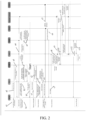
- a control flow of the phase for the user to open the door, the phase for the user to close the door, and the start phase is described in detail below with reference to FIG. 2 .
- the start control method for a vehicle when the door of the vehicle is in the open state and the key is in the vehicle, the first high-voltage module group of the vehicle is controlled to perform power on, and when the door is changed from the open state to the closed state, and the brake pedal of the vehicle is depressed and the key is in the vehicle, a second high-voltage module group of the vehicle is controlled, according to a start instruction, to perform power on, so that the first high-voltage module group is controlled in advance, by using a time for a user to open and close the door, to perform power on, reducing a time for the user to start the vehicle after inputting a start instruction, effectively shortening a time for the user to wait for the vehicle to start, and improving user experience.
- an embodiment of this application further provides a start control system of a vehicle.
- FIG. 3 is a schematic block diagram of a start control system of a vehicle according to an embodiment of this application.
- the start control system 200 for the vehicle includes: a first high-voltage module group 10, a second high-voltage module group 20, a key controller 30, and a body control module 40.
- the key controller 30 is configured to detect whether a key is in the vehicle.
- the body control module 40 is configured to determine a position of the key through the key controller 30; when determining that the key is in the vehicle, the body control module is configured to control the first high-voltage module group 10 to perform power on; when the door of the vehicle is changed from the open state to a closed state, the body control module is configured to determine the position of the key through the key controller 30 and detect a state of a brake pedal of the vehicle; and when the brake pedal of the vehicle is depressed and the key is in the vehicle, the body control module is configured to control, according to a start instruction, the second high-voltage module group 20 to perform power on.
- the first high-voltage module group 10 includes a vehicle control unit, a battery management system, and a motor controller.
- the first high-voltage module group 10 includes a vehicle control unit, a battery management system, and a motor controller.
- the body control module 40 is configured control the vehicle control unit, the battery management system, and the motor controller to perform power-on self-check, respectively.
- the vehicle control unit is configured to control, after the power-on self-check is completed, the battery management system to perform pre-charging, and the battery management system pulls in a main contactor upon completion of the pre-charging.
- the body control module 40 is further configured to supply power to a steering shaft lock of the vehicle, and control the steering shaft lock to perform code matching verification with the key controller 30 of the vehicle, and control the steering shaft lock to be unlocked after the code matching verification succeeds.
- the body control module 40 is further configured to, after receiving a start instruction, supply power to the steering shaft lock of the vehicle and determine a state of the steering shaft lock, and if the steering shaft lock is in a locked state, control the steering shaft lock to perform code matching verification with the key controller 30 of the vehicle, and after the code matching verification succeeds, control the steering shaft lock to be unlocked, and after the steering shaft lock is unlocked, control the second high-voltage module group 20 of the vehicle to perform power on.
- the second high-voltage module group 20 includes a transmission control unit and an engine control module.
- the body control module 40 is configured to control the transmission control unit and the engine control module to perform power-on self-check.
- the body control module 40 is further configured to determine a gear position of the vehicle, and control, when the vehicle is in a P gear or an N gear, the vehicle to enter a start permission state.
- the body control module 40 is configured to control the vehicle control unit to send first verification information to the key controller 30.
- the key controller 30 performs verification according to the first verification information, and sends second verification information to the vehicle control unit and the motor controller after the verification succeeds, and the vehicle control unit and the motor controller perform verification according to the second verification information.
- the body control module 40 is further configured to control, after both the vehicle control unit and the motor controller perform verification successfully, the vehicle to enter the start permission state.
- the body control module 40 is configured to control the vehicle control unit to send the first verification information to the key controller 30.
- the key controller 30 performs verification according to the first verification information, and sends the second verification information to the vehicle control unit and the motor controller after the verification succeeds, the vehicle control unit and the motor controller perform verification according to the second verification information, and after both the vehicle control unit and the motor controller perform verification successfully, the vehicle control unit sends third verification information to the engine control module, the motor controller sends fourth verification information to the engine control module, and the engine control module performs verification according to the third verification information and the fourth verification information, respectively.
- the body control module 40 is configured to control, after the engine control module performs verification successfully according to both the third verification information and the fourth verification information, the vehicle to enter the start permission state.
- the body control module controls the first high-voltage module group of the vehicle to perform power on, and when the door is changed from the open state to the closed state, and the brake pedal of the vehicle is depressed and the key is in the vehicle, the body control module controls, according to a start instruction, a second high-voltage module group of the vehicle to perform power on, so that the first high-voltage module group is controlled in advance, by using the time for the user to open and close the door, to perform power on, reducing a time for the user to start the vehicle after inputting a start instruction, effectively shortening a time for the user to wait for the vehicle to start, and improving user experience.
- this application further provides a vehicle.
- FIG. 4 is a schematic block diagram of a vehicle according to an embodiment of this application. As shown in FIG. 4 , a vehicle 100 includes a start control system 200 of the vehicle of the foregoing embodiment.
- the first high-voltage module group is controlled in advance, by making full use of a time for the user to open and close the door, to perform power on, reducing the time for the user to start the vehicle after inputting a start instruction, effectively shortening a time for the user to wait for the vehicle to start, and improving user experience.
- description of reference terms such as "one embodiment”, “some embodiments”, “example”, “specific example” or “some examples” means including specific features, structures, materials, or features described in the embodiment or example in at least one embodiment or example of this application.
- schematic descriptions of the foregoing terms do not necessarily directed at a same embodiment or example.
- the described specific features, structures, materials, or features can be combined in a proper manner in any one or more embodiments or examples.
- a person skilled in the art can combine or group different embodiments or examples that are described in this specification and features of the different embodiments or examples.
- first and second are only used to describe the objective and cannot be understood as indicating or implying relative importance or implying a quantity of the indicated technical features. Therefore, features defining “first” and “second” can explicitly or implicitly include at least one of the features. In description of this application, “multiple” means at least two, such as two and three unless it is specifically defined otherwise.
- Any process or method description described in a flowchart or in another manner can be understood as a module, segment, or part representing codes including one or more executable instructions for implementing specific logical functions or steps of a process.
- a range of preferred implementations of the present disclosure include another implementation, and functions can be executed not according to the shown or discussed sequence, including according to a basically simultaneous manner according to involved functions or an opposite sequence, which should be understood by a person skilled in the art of the embodiments of this application.
- a sequenced list that may be considered as executable instructions used for implementing logical functions, may be specifically implemented in any computer readable medium to be used by an instruction execution system, apparatus, or device (for example, a computer-based system, a system including a processor, or another system that can obtain an instruction from the instruction execution system, apparatus, or device and execute the instruction) or to be used by combining such instruction execution systems, apparatuses, or devices.
- a "computer-readable medium" may be any apparatus that can include, store, communicate, propagate, or transmit the program for use by the instruction execution system, apparatus, or device or in combination with the instruction execution system, apparatus, or device.
- the computer-readable medium includes the following: an electrical connection (electronic apparatus) having one or more wires, a portable computer diskette (magnetic apparatus), a random access memory (RAM), a read-only memory (ROM), an erasable programmable read-only memory (EPROM or flash memory), an optical fiber apparatus, and a portable compact disk read-only memory (CDROM).
- the computer readable medium may even be a piece of paper for printing the program, or another proper medium, because, for example, optical scanning may be performed on the paper or another medium, and then processing is performed by performing editing and decryption, or in another proper manner to obtain the program in an electronic manner. Then the program is stored in a computer memory.
- parts of this application may be implemented by using hardware, software, firmware, or combinations thereof.
- a plurality of steps or methods may be implemented by using software or firmware that are stored in a memory and are executed by a proper instruction execution system.
- implementation may be performed by any one of the following technologies well known in the art or a combination thereof: a discrete logic circuit of a logic gate circuit for realizing a logic function for a data signal, an application-specific integrated circuit having a suitable combined logic gate circuit, a programmable gate array (PGA), and a field programmable gate array (FPGA).
- PGA programmable gate array
- FPGA field programmable gate array
- a person of ordinary skill in the art may understand that all or some of the steps of the method embodiments may be implemented by a program instructing relevant hardware.
- the program may be stored in a computer-readable storage medium. When the program is run, one or a combination of the steps of the method embodiments are performed.
- functional units in the embodiments of this application may be integrated into one processing module, or each of the units may exist alone physically, or two or more units are integrated into one module.
- the integrated module may be implemented in a hardware form, or may be implemented in a form of a software functional module.
- the integrated module may be implemented in a hardware form, or may be implemented in a form of a software functional module.
- the aforementioned storage medium may be a read-only memory, a magnetic disk, or an optical disc.
Landscapes
- Engineering & Computer Science (AREA)
- Mechanical Engineering (AREA)
- Chemical & Material Sciences (AREA)
- Combustion & Propulsion (AREA)
- Transportation (AREA)
- Automation & Control Theory (AREA)
- Human Computer Interaction (AREA)
- Lock And Its Accessories (AREA)
Description
- This application relates to the field of vehicle technology, and in particular, to a start control method for a vehicle, a start control system of a vehicle, and a vehicle.
- For a vehicle in the related art, an entire start process is usually started after the user enters the vehicle, depresses a brake pedal, and presses a start button. However, an applicant finds the following problem in the related art: pre-charging time of some high-voltage modules is long, and a time for the user to wait for the vehicle to start is long after the start button is pressed, so that user experience is affected.
-
WO 2013/186615 A1 shows a communication system includes checking means for performing a check to detect whether a mobile device carried by a user of a vehicle is in the vehicle via wireless communication between an onboard device and the mobile device when a door of the vehicle has changed from being open to being closed; detecting means for detecting an operating state of an onboard electrical load when the check is performed by the checking means; and changing means for changing a maximum value of a number of rechecks, which is the number of times the check is allowed to be repeatedly performed by the checking means, according to the operating state of the onboard electrical load detected by the detecting means, when it has not been detected that the mobile device is in the vehicle by the check performed by the checking means. - This application is intended to resolve at least resolve one of technical problems in foregoing technology to some extent. Accordingly, a first objective of this application is to provide a start control method for a vehicle to effectively reduce a time for a user to wait for a vehicle to start.
- A second objective of this application is to provide a start control system of a vehicle.
- A third objective of this application is to provide a vehicle.
- In order to achieve the foregoing objective, in a first aspect, a start control method for a vehicle according to
claim 1 is proposed. - In the start control method for a vehicle according to the invention, when the door of the vehicle is in the open state and the key is in the vehicle, the first high-voltage module group of the vehicle is controlled to perform power on, the door is changed from the open state to the closed state, and the brake pedal of the vehicle is depressed and the key is in the vehicle, a second high-voltage module group of the vehicle is controlled, according to a start instruction, to perform power on, so that the first high-voltage module group is controlled in advance, by using a time for a user to open and close the door, to perform power on, reducing a time for the user to start the vehicle after a start instruction is input, effectively shortening a time for the user to wait for the vehicle to start, and improving user experience.
- In order to achieve the foregoing objective, in a second aspect, a start control system of a vehicle according to claim 5 is proposed.
- In the start control system of a vehicle according to the invention, when the door of the vehicle is in the open state and the key is in the vehicle, the body control module controls the first high-voltage module group of the vehicle to perform power on, and when the door is changed from the open state to the closed state, and the brake pedal of the vehicle is depressed and the key is in the vehicle, the body control module controls, according to a start instruction, a second high-voltage module group of the vehicle, to perform power on, so that the first high-voltage module group is controlled in advance, by using a time for a user to open and close the door, to perform power on, reducing a time for the user to start the vehicle after inputting a start instruction, effectively shortening a time for the user to wait for the vehicle to start, and improving user experience.
- In order to achieve the foregoing objective, in a third aspect, a vehicle including the start control system of the vehicle according to claim 9 is proposed.
- For the vehicle according to the invention, by using the start control system of the foregoing embodiment, the first high-voltage module group is controlled in advance, by making full use of a time for the user to open and close the door, to perform power on, reducing the time for the user to start the vehicle after inputting a start instruction, effectively shortening a time for the user to wait for the vehicle to start, and improving user experience.
- Other aspects and advantages of this application will be given in the following description, some of which will become apparent from the following description or may be learned from practices of this application.
-
-
FIG. 1 is a flowchart of a start control method for a vehicle according to an embodiment of this application; -
FIG. 2 is a flowchart of the start control method for a vehicle according to a specific embodiment of this application; -
FIG. 3 is a schematic block diagram of a start control system of a vehicle according to an embodiment of this application; and -
FIG. 4 is a schematic block diagram of a vehicle according to an embodiment of this application. - The following describes embodiments of this application in detail. Examples of the embodiments are shown in the accompanying drawings, and same or similar reference signs in all the accompanying drawings indicate same or similar components or components having same or similar functions. The embodiments described below with reference to the accompanying drawings are exemplary, and are intended to explain this application and cannot be construed as a limitation to this application.
- A vehicle, a start control method for the vehicle, and a start control system of the vehicle are described below according to embodiments of this application with reference to the drawings.
-
FIG. 1 is a flowchart of a start control method for a vehicle according to an embodiment of this application. As shown inFIG. 1 , the start control method for the vehicle includes the following steps. - S1: When a door of the vehicle is in an open state, determine a position of a key.
- A door state signal may be collected through a body control module (BCM), and it is determined, according to the door state signal, whether the door is in the open state.
- When a driver unlocks the door with the key, the vehicle is in an OFF gear in a non-anti-theft state, that is, the vehicle is in a power-off state. At this time, if the door is open, for example, a door (which may be a left front door) corresponding to a driving position is open, the body control module (BCM) may collect the door state signal, and determines, according to the door state signal, that the door is open, that is, in the open state.
- According to an embodiment of this application, it may be determined, according to strength of a signal sent by the key, whether the key is in the vehicle. After detecting that the door is open, the body control module (BCM) may send a request for searching for the key to the key controller (IK). The key controller (IK) starts to detect the strength of the signal sent by the key, and determines, according to the strength of the signal, whether the key is in the vehicle. For example, the key may transmit a preset signal in real time or at a preset time interval. The key controller (IK) may detect the preset signal after receiving the request for searching for the key, and obtain strength of the detected preset signal. If the strength is greater than preset strength, it is determined that the key is in the vehicle.
- After detecting that the key is in the vehicle, the key controller (IK) may send information that the key is in the vehicle to the body control module (BCM), and the body control module may determine that the key is in the vehicle.
- S2: Control, if the key is in the vehicle, a first high-voltage module group of the vehicle to perform power on.
- The first high-voltage module group includes a vehicle control unit, a battery management system, and a motor controller.
- The first high-voltage module group includes the vehicle control unit, the battery management system, and the motor controller. The controlling a first high-voltage module group of the vehicle to perform power on includes:
- controlling the vehicle control unit, the battery management system, and the motor controller to perform power-on self-check, respectively; and
- after the power-on self-check is completed, controlling, by the vehicle control unit, the battery management system to perform pre-charging, and the battery management system pulling in the main contactor upon completion of pre-charging.
- It may be understood that the power-on self-check is a routine procedure for self-check after the power on is performed. In other words, each of the vehicle control unit, the battery management system, and the motor controller may perform power-on self-check according to a preset self-check program to detect whether there is a power on failure.
- The body control module (BCM) may connect the vehicle control unit (VCU), the battery management system (BMS), and the motor controller to a power supply circuit after detecting that the door is open and it is determined that the key is in the vehicle. The vehicle control unit (VCU), the battery management system (BMS), and the motor controller may be connected to the power supply circuit by controlling closing of a control relay. The vehicle control unit (VCU), the battery management system (BMS), and the motor controller perform power on self-inspection respectively after being connected to the power supply circuit. After the self-check is completed, the vehicle control unit (VCU) sends pre-charge permission information to the battery management system (BMS), the battery management system (BMS) starts pre-charging and pulls in a main contactor upon completion of the pre-charging. The battery management system (BMS) may control pull-in of the main contactor, so that the vehicle control system (VCU), the battery management system (BMS), and the motor controller enter a pre-charging state, and pulls in the main contactor upon completion of the pre-charging, so that the vehicle control unit (VCU), the battery management system (BMS), and the motor controller supply power normally.
- Accordingly, a time from opening to closing of the door is fully used to control high-voltage modules with a long pre-charging time including the vehicle control unit, the battery management system, and the motor controller to enter the pre-charging state in advance.
- S3: When the door of the vehicle is changed from an open state to a closed state, determine the position of the key and detecting a state of a brake pedal of the vehicle.
- The door state signal may be collected through the body control module (BCM), and it is determined, according to the door state signal, whether the door is in a closed state. After the driver closes the door, such as a door (which may be the left front door) corresponding to the driving position, the body control module (BCM) may collect the door state signal and determine, according to the door state signal, that the door is closed. According to an embodiment of this application, after the door of the vehicle is in the closed state, the method further includes:
- supplying power to a steering shaft lock of the vehicle;
- controlling the steering shaft lock to perform code matching verification with the key controller of the vehicle; and
- after the code matching verification is performed successfully, controlling the steering shaft lock to be unlocked.
- It should be noted that a steering shaft transmits a steering torque applied to a steering wheel by a driver to a steering gear. When the steering shaft is locked, rotational movement of the steering shaft is restricted, and the steering torque of the steering wheel cannot be transmitted to the steering gear, so that the vehicle cannot be driven. When the steering shaft is unlocked, the steering shaft may rotate, the steering torque of the steering wheel may be transmitted to the steering gear, so that the vehicle may be driven.
- In other words, after the driver closes the door, the body control module (BCM) may collect a door signal and determine that the door is in a closed state. At this time, the body control module (BCM) supplies power to the steering shaft lock (ECL) and sends an unlocking instruction to the steering shaft lock. The steering shaft lock (ECL) may perform code matching verification with the key controller according to the unlocking instruction. The steering shaft lock (ECL) may send code matching verification information to the key controller (IK). The code matching verification information may include a verification password, or may include a vehicle identification code and a verification password, and the key controller (IK) may determine the code matching verification information, for example, determining whether the code matching verification information sent by the steering shaft lock (ECL) is consistent with code matching verification information pre-stored in the key controller (IK) itself. If yes, it is determined that the code matching succeeds. Furthermore, the key controller (IK) may obtain an unlocking permission signal as a feedback to the steering shaft lock (ECL) after the code matching succeeds, and the steering shaft lock (ECL) may be unlocked according to the unlocking permission signal. After the steering shaft lock is successfully unlocked, the steering shaft may rotate. If the code matching fails, the steering shaft lock (ECL) remains in a locked state.
- Accordingly, an illegal key may be effectively prevented from starting the vehicle to ensure that the vehicle may be started by using a key paired with the vehicle.
- S4: If the brake pedal of the vehicle is depressed and the key is in the vehicle, control, according to a start instruction, a second high-voltage module group of the vehicle to perform power on.
- A brake pedal sensor may be disposed at the brake pedal, and a signal of the brake pedal sensor may be collected through the body control module (BCM) to determine a state of the brake pedal. When the driver enters the vehicle and depresses the brake pedal, the body control module (BCM) may determine, by collecting a signal from the pedal sensor, that the brake pedal is depressed by collecting signal from the pedal sensor.
- When detecting that the brake pedal is depressed, the body control module (BCM) further sends a request for searching for the key to the key controller (IK), and the key controller (IK) determines, according to strength of the signal sent by the key, whether the key is in the vehicle. After detecting that the key is in the vehicle, the key controller (IK) may send information that the key is in the vehicle to the body control module (BCM), and the body control module may determine that the key is in the vehicle.
- When the door is in a closed state, the brake pedal is depressed and the key is in the vehicle, it is detected, through the body control module (BCM), whether a start button is pressed. If the start button is pressed, it is determined that a start instruction is received, and the body control module (BCM) may control a second high-voltage module group to perform power on.
- According to an embodiment of this application, the controlling, according to the start instruction, a second high-voltage module group of the vehicle to perform power on includes:
- after receiving the start instruction, supplying power to the steering shaft lock of the vehicle and determining a state of the steering shaft lock;
- if the steering shaft lock is in a locked state, controlling the steering shaft lock to perform code matching verification with the key controller of the vehicle;
- after the code matching verification is performed successfully, controlling the steering shaft lock to be unlocked; and
- after the steering shaft lock is unlocked, controlling the second high-voltage module group of the vehicle to perform power on.
- In other words, after it is determined that the start instruction is received and before the second high-voltage module group is controlled to perform power on, the body control module (BCM) may supply power to the steering shaft lock (ECL) and send an unlocking state determining signal to the steering shaft lock (ECL). If the steering shaft lock (ECL) is in an unlocked state, an unlocking state signal is sent to the body control module (BCM). If the steering shaft lock (ECL) is in a locked state, the steering shaft lock (ECL) may send code matching verification information to the key controller (IK). The code matching verification information may include a verification password, or may include a vehicle identification code and a verification password, and the key controller (IK) may determine the code matching verification information, for example, determining whether the code matching verification information sent by the steering shaft lock (ECL) is consistent with code matching verification information pre-stored in the key controller (IK) itself. If yes, it is determined that the code matching succeeds. Furthermore, the key controller (IK) may obtain an unlocking permission signal as a feedback to the steering shaft lock (ECL) after the code matching succeeds, and the steering shaft lock (ECL) may be unlocked according to the unlocking permission signal. After the steering shaft lock is unlocked successfully, the steering shaft lock (ECL) may send an unlocking state signal to the body control module (BCM).
- Accordingly, an illegal key may be effectively prevented from starting the vehicle to ensure that the vehicle may be started by using a key paired with the vehicle.
- According to an embodiment of this application, the second high-voltage module group may include a transmission control unit and an engine control module, and the controlling a second high-voltage module group to perform power on includes:
controlling the transmission control unit and the engine control module to perform power-on self-check. - After the body control module (BCM) detects that the door is closed and determines that the key is in the vehicle, it is determined whether a start instruction is received. If the start instruction is received and the steering shaft lock (ECL) is in the unlocked state, high-voltage modules such as an transmission control unit (TCU) and an engine control module (ECM) may be connected to the power supply circuit, and high-voltage modules such as the transmission control unit (TCU) and the engine control module (ECM) may be closed by closing the relay, and the high-voltage modules such as the transmission control unit (TCU) and the engine control module (ECM) perform power-on self-check after being connected to the power supply circuit.
- Accordingly, after the user inputs the start instruction, remaining high-voltage modules are controlled to perform power on, effectively reducing a time for the user to start the vehicle after entering the start instruction. For example, the time may be shortened to 0.95s (3.46s in related technologies), effectively shortening a time for the user to wait for the vehicle to start, and greatly improving user experience of start by the user.
- It should be noted that the high-voltage module in the embodiment of this application is opposite to a low-voltage module. For example, a module whose required power supply voltage is equivalent to a voltage of a power battery may be regarded as the high-voltage module, and a module whose required power supply voltage is equivalent to a voltage of a battery may be regarded as the low-voltage module. The voltage of the power battery is greater than the voltage of the battery, the voltage of the power battery may reach about 400V, and the voltage of the battery may be kept at 12V or 24V.
- According to an embodiment of this application, after the second high-voltage module group is controlled to perform power on, the method further includes:
- determining a gear position of the vehicle; and
- when the vehicle is in a P gear or an N gear, controlling the vehicle to enter a start permission state.
- In other words, after the high-voltage modules such as the transmission control unit (TCU) and the engine control module (ECM) complete power-on self-check, the transmission control unit (TCU) may send a gear position signal to the body control module (BCM), and the body control module (BCM) determines, according to the gear position signal, that the vehicle is in the P gear (parking gear) or the N gear (neutral gear), and then control the vehicle to enter a start permission state.
- According to a specific embodiment of this application, the controlling the vehicle to enter a start permission state includes:
- sending, by the vehicle control unit, first verification information to the key controller;
- performing, by the key controller, verification according to the first verification information, and sending second verification information to the vehicle control unit and the motor controller after the verification succeeds;
- performing, by the vehicle control unit and the motor controller, verification according to the second verification information; and
- after both the vehicle control unit and the motor controller perform verification successfully, controlling the vehicle to enter the start permission state.
- For example, when the vehicle is a pure electric vehicle, and when the body control module (BCM) determines that the vehicle is in a P (parking gear) or an N (neutral gear) according to the gear position signal, the body control module may send a start request to the vehicle control unit (VCU). The vehicle control unit (VCU) sends first verification information to a key controller (IK) after receiving the start request. The first verification information may include a first random number and a first encrypted number. The key controller (IK) performs verification according to the first verification information. After determining that the verification succeeds, the key controller (IK) sends verification success information to the vehicle control unit (VCU) and sends second verification information to the vehicle control unit (VCU) and the motor controller. The second verification information may include a second random number and a second encrypted number. After determining that the verification fails, the key controller (IK) may send verification failure information to the vehicle control unit (VCU) and not send the second verification information.
- The vehicle control unit (VCU) performs verification according to the second verification information, and sends verification success information to the key controller (IK) after the verification succeeds, and the motor controller performs verification according to the second verification information, and sends verification success information to the key controller (IK) after the verification succeeds. In some embodiments, the motor controller may further send verification success information to the vehicle control unit (VCU) after it is determined that the verification succeeds.
- After both the vehicle control unit (VCU) and the motor controller perform verification successfully, the vehicle control unit (VCU) sends a start permission signal to the body control module (BCM) and the battery manage system (BMS). The battery management system (BMS) feeds back a discharge permission signal to the vehicle control unit (VCU), so that the vehicle control unit (VCU) works, and the body control module (BCM) allows the vehicle to enter an OK gear, and the start is over. After the vehicle enters the OK gear, the vehicle is powered on, preparation for the start is completed, and the vehicle may be driven according to a user instruction.
- It should be noted that after waiting for a preset time such as 5s (calculated from a moment when the body control module (BCM) sends a start request to the vehicle control unit (VCU)), if a start permission signal is not received, the body control module (BCM) determines that the start fails and returns to an ON gear. After waiting for a preset time such as 5s (calculated from a moment when the body control module (BCM) sends a start request to the vehicle control unit (VCU)), if the battery management system (BMS) does not receive a start permission signal, the battery management system controls the power battery to prohibit discharge.
- It may be understood that the key controller (IK) performing verification according to the first verification information may include: the key controller (IK) decrypts a first encrypted number according to ta received first random number to obtain a corresponding account and password, and then authenticates the decrypted account and password to determine legitimacy and accuracy of the account and password. For example, at least one account and a password corresponding to each account may be pre-stored in the key controller (IK). When the decrypted account is consistent with the account pre-stored in the key controller (IK) and the decrypted password is consistent with a password corresponding to the account in the key controller (IK), legitimacy of the account and the password is determined, and the key controller (IK) determines that the verification succeeds. Similarly, a method for performing verification by the vehicle control unit (VCU)/motor controller according to the second verification information is basically the same as the previous method for performing, by a key controller (IK), verification according to the first verification information, and is not described in detail herein any more. According to another specific embodiment of this application, the controlling the vehicle to enter a start permission state includes:
- sending, by the vehicle control unit, first verification information to the key controller;
- performing, by the key controller, verification according to the first verification information, and sending second verification information to the vehicle control unit and the motor controller after the verification succeeds;
- performing, by the vehicle control unit and the motor controller, verification according to the second verification information; and
- after both the vehicle control unit and the motor controller perform verification successfully, sending, by the vehicle control unit, third verification information to the engine control module, and sending, by the motor controller, fourth verification information to the engine control module; and
- performing, by the engine control module, verification according to the third verification information and the fourth verification information, respectively, and controlling the vehicle to enter a start permission state after the verification succeeds.
- For example, when the vehicle is a hybrid electric vehicle, and when determining that the vehicle is in a P (parking gear) or an N (neutral gear) according to the gear position signal, the body control module (BCM) may send a start request to the vehicle control unit (VCU). The vehicle control unit (VCU) sends first verification information to a key controller (IK) after receiving the start request. The first verification information may include a first random number and a first encrypted number. The key controller (IK) performs verification according to the first verification information. After determining that the verification succeeds, the key controller (IK) sends verification success information to the vehicle control unit (VCU) and sends second verification information to the vehicle control unit (VCU) and the motor controller. The second verification information may include a second random number and a second encrypted number. After determining that the verification fails, the key controller (IK) may send verification failure information to the vehicle control unit (VCU) and not send the second verification information.
- The vehicle control unit (VCU) performs verification according to the second verification information, and sends verification success information to the key controller (IK) after the verification succeeds, and the motor controller performs verification according to the second verification information, and sends verification success information to the key controller (IK) after the verification succeeds. In some embodiments, the motor controller may further send verification success information to the vehicle control unit (VCU) after it is determined that the verification succeeds.
- After the vehicle control unit (VCU) and the motor controller perform verification successfully, the vehicle control unit (VCU) sends third verification information to the engine control module (ECM), and the motor controller sends fourth verification information to the engine control module (ECM). The third verification information includes a third random number and a third encrypted number. The fourth verification information includes a fourth random number and a fourth encrypted number. The engine control module (ECM) performs verification according to the third verification information and performs verification according to the fourth verification information. After performing verification successfully according to the third verification information and the fourth verification information, the engine control module (ECM) sends verification success information to the vehicle control unit (VCU) and the motor controller, respectively. After receiving the verification success information, the vehicle control unit (VCU) sends a start permission signal to the body control module (BCM) and the battery manage system (BMS). The battery management system (BMS) feeds back a discharge permission signal to the vehicle control unit (VCU), so that the vehicle control unit (VCU) works, and the body control module (BCM) allows the vehicle to enter an OK gear, and the start is over. After the vehicle enters the OK gear, the vehicle is powered on, preparation for the start is completed, and the vehicle may be driven according to a user instruction.
- It should be noted that after waiting for a preset time such as 5s (calculated from a moment when the body control module (BCM) sends a start request to the vehicle control unit (VCU)), if a start permission signal is not received, the body control module (BCM) determines that the start fails and returns to an ON gear. After waiting for a preset time such as 5s (calculated from a moment when the body control module (BCM) sends a start request to the vehicle control unit (VCU)), if the battery management system (BMS) does not receive a start permission signal, the battery management system controls the power battery to prohibit discharge.
- It may be understood that the key controller (IK) performing verification according to the first verification information may include: the key controller (IK) decrypts the first encrypted number according to the received first random number to obtain a corresponding account and password, and then authenticates the decrypted account and password to determine legitimacy and accuracy of the account and password. For example, at least one account and a password corresponding to each account are pre-stored in the key controller (IK). When the decrypted account is consistent with the account pre-stored in the key controller (IK) and the decrypted password is consistent with a password corresponding to the account in the key controller (IK), legitimacy of the account and password is determined, and the key controller (IK) determines that the verification succeeds. Similarly, a method for performing verification according to the second verification information, the third verification information, and the fourth verification information is basically the same as the previous method for performing verification according to the first verification information, and is not described in detail herein any more.
- It should be noted that the first random number, the second random number, the third random number, and the fourth random number may be randomly generated data, and the first encrypted number, the second encrypted number, the third encrypted number, and the fourth encrypted number may be data encrypted through a corresponding random number according to a preset encryption rule.
- Accordingly, in the start control method for a vehicle according to an embodiment of this application, when a user opens a door, the body control module (BCM) collects a door state signal to determine that the door is open, and detects whether a key is in the vehicle. When the key is detected in the vehicle, the VCU, the BMS, and the motor controller performs power-on self-check, and the BMS performs pre-charging. When the user closes the door, the BCM supplies power to the ECL and sends an unlocking signal to the ECL, and the ECL performs unlocking according to the unlocking signal. After the user depresses a brake pedal and presses a start button, the user determines a state of the ECL. When the ECL is unlocked, the TCU and ECM perform power-on self-check. Therefore, a first high-voltage module group is controlled in advance, by making full use of a time for the user to open and close the door, to perform power on, and a preparation before start is made, reducing the time for the user to start the vehicle after inputting a start instruction, effectively shortening a time for the user to wait for the vehicle to start, and speeding up start of the vehicle by the user, and improving user experience.
- As described above, the start control method for a vehicle according to an embodiment of this application may be roughly divided into a phase for the user to open the door, a phase for the user to close the door, and a start phase. A control flow of the phase for the user to open the door, the phase for the user to close the door, and the start phase is described in detail below with reference to
FIG. 2 . - (1) The phase for the user to open the door:
- Step a1: The user unlocks a vehicle, the vehicle is in an OFF gear in a non-anti-theft state, and a left front door is opened.
- Step a2: A body control module (BCM) collects a door state signal and sends a request for searching for a key to a key controller (IK).
- Step a3: After detecting that the key is in the vehicle, the key controller (IK) feeds back, to the body control module (BCM), information that the key is in the vehicle.
- Step a4: The body control module (BCM) determines that the key is in the vehicle, and pulls in IG3 and IG4 relays to connect the vehicle control unit (VCU), the battery management system (BMS), and the motor controller to a power supply circuit, and the vehicle control unit (VCU), the battery management system (BMS), and the motor controller performs power-on self-check.
- Step a5: After the self-check is completed, the vehicle control unit (VCU) sends pre-charging permission information to the battery management system (BMS), and the battery management system (BMS) starts pre-charging and pulls in a main contactor upon completion of the pre-charging.
- (2) The phase for the user closes the door:
- Step b1: After the user closes the left front door, the body control module (BCM) collects a door signal and determines that the door is in a closed state and the vehicle is in an OFF gear in the non-anti-theft state at this time.
- Step b2: The body control module (BCM) supplies power to a steering shaft lock (ECL) and sends an unlocking instruction to the steering shaft lock (ECL).
- Step b3: The steering shaft lock (ECL) sends code matching verification information to the key controller (IK), and the key controller (IK) determines, according to the code matching verification information, whether the code matching succeeds.
- Step b4: The key controller (IK) feeds back a verification result to the steering shaft lock (ECL), that is, feeding back an unlocking permission signal to the steering shaft lock (ECL) after the code matching succeeds;
- Step b5: The steering shaft lock ECL executes the unlocking permission signal, and the unlocking succeeds.
- (3) Start stage:
- Step c1: The user enters the vehicle and depresses a brake pedal, and the body control module (BCM) collects brake pedal sensor information, and sends, to the key controller (IK), a request for searching for a key.
- Step c2: After detecting that the key is in the vehicle, the key controller (IK) feeds back, to the body control module (BCM), information that the key is in the vehicle, and the body control module (BCM) determines that the key is in the vehicle.
- Step c3: The user presses a start button, the body control module (BCM) supplies power to the steering shaft lock (ECL), and sends an unlocking state determining signal to the steering shaft lock (ECL).
- Step c4: If the steering shaft lock (ECL) is in an unlocked state, send an unlocked state signal to the body control module (BCM); and if the steering shaft lock (ECL) is in the locked state, code matching verification information is sent to the key controller (IK). The key controller (IK) performs determining according to the code matching verification information and controls the steering shaft lock (ECL) to be unlocked after code matching succeeds, and sends the unlocked state signal to the body control module (BCM) after unlocking.
- Step c5: The body control module (BCM) controls IG1, IG2, and ACC relays to pull in to connect high-voltage modules such as a transmission control unit (TCU) and an engine control module (ECM) to the power supply circuit, and the high-voltage modules such as the transmission control unit (TCU) and the engine control module (ECM) perform power-on self-check.
- Step c6: The transmission control unit (TCU) sends a gear position signal to the body control module (BCM).
- Step c7: The body control module (BCM) determines that the vehicle is in a P gear or an N gear at this time, and the body control module (BCM) sends a start request to the vehicle control unit (VCU).
- Step c8: After receiving the start request, the vehicle control unit (VCU) sends first verification information (including a first random number and a first encrypted number) to the key controller (IK) for verification.
- Step c9: After performing verification successfully, the key controller (IK) sends the second verification information (including a second random number and a second encrypted number) to the vehicle control unit (VCU) and the motor controller (that is, the electric control in
FIG. 2 ). - Step c10: After performing verification and determination, the vehicle control unit and the motor controller sends information about decoding success to the key controller (IK).
- Step c11: If the vehicle is a hybrid electric vehicle (HEV), the vehicle control unit (VCU) sends third verification information (including a third random number and a third encrypted number) to the engine control module, and the motor controller sends fourth verification information (including a fourth random number and a fourth encrypted number) to the engine control module, and after the engine control module (ECM) performs verification and determining, the engine control module sends verification success information to the vehicle control unit (VCU) and the motor controller.
- Step c12: After receiving the verification success, the vehicle control unit (VCU) sends start permission information to the body control module (BCM) and the battery management system (BMS).
- Step c13: The battery management system (BMS) feeds back discharging permission, and the body control module (BCM) allows the vehicle to enter an OK gear, and the start is over.
- Based on the foregoing, in the start control method for a vehicle according to the embodiment of this application, when the door of the vehicle is in the open state and the key is in the vehicle, the first high-voltage module group of the vehicle is controlled to perform power on, and when the door is changed from the open state to the closed state, and the brake pedal of the vehicle is depressed and the key is in the vehicle, a second high-voltage module group of the vehicle is controlled, according to a start instruction, to perform power on, so that the first high-voltage module group is controlled in advance, by using a time for a user to open and close the door, to perform power on, reducing a time for the user to start the vehicle after inputting a start instruction, effectively shortening a time for the user to wait for the vehicle to start, and improving user experience.
- Based on the foregoing embodiment, an embodiment of this application further provides a start control system of a vehicle.
-
FIG. 3 is a schematic block diagram of a start control system of a vehicle according to an embodiment of this application. As shown inFIG. 3 , thestart control system 200 for the vehicle includes: a first high-voltage module group 10, a second high-voltage module group 20, akey controller 30, and abody control module 40. - The
key controller 30 is configured to detect whether a key is in the vehicle. When a door of the vehicle is in an open state, thebody control module 40 is configured to determine a position of the key through thekey controller 30; when determining that the key is in the vehicle, the body control module is configured to control the first high-voltage module group 10 to perform power on; when the door of the vehicle is changed from the open state to a closed state, the body control module is configured to determine the position of the key through thekey controller 30 and detect a state of a brake pedal of the vehicle; and when the brake pedal of the vehicle is depressed and the key is in the vehicle, the body control module is configured to control, according to a start instruction, the second high-voltage module group 20 to perform power on. - The first high-
voltage module group 10 includes a vehicle control unit, a battery management system, and a motor controller. - The first high-
voltage module group 10 includes a vehicle control unit, a battery management system, and a motor controller. When the first high-voltage module group 10 of the vehicle is controlled to perform power on, thebody control module 40 is configured control the vehicle control unit, the battery management system, and the motor controller to perform power-on self-check, respectively. The vehicle control unit is configured to control, after the power-on self-check is completed, the battery management system to perform pre-charging, and the battery management system pulls in a main contactor upon completion of the pre-charging. - According to an embodiment of this application, after the door of the vehicle is in the closed state, the
body control module 40 is further configured to supply power to a steering shaft lock of the vehicle, and control the steering shaft lock to perform code matching verification with thekey controller 30 of the vehicle, and control the steering shaft lock to be unlocked after the code matching verification succeeds. - According to an embodiment of this application, the
body control module 40 is further configured to, after receiving a start instruction, supply power to the steering shaft lock of the vehicle and determine a state of the steering shaft lock, and if the steering shaft lock is in a locked state, control the steering shaft lock to perform code matching verification with thekey controller 30 of the vehicle, and after the code matching verification succeeds, control the steering shaft lock to be unlocked, and after the steering shaft lock is unlocked, control the second high-voltage module group 20 of the vehicle to perform power on. - According to an embodiment of this application, the second high-
voltage module group 20 includes a transmission control unit and an engine control module. When the second high-voltage module group 20 is controlled to perform power on, thebody control module 40 is configured to control the transmission control unit and the engine control module to perform power-on self-check. - According to an embodiment of this application, after the second high-
voltage module group 20 is controlled to perform power on, thebody control module 40 is further configured to determine a gear position of the vehicle, and control, when the vehicle is in a P gear or an N gear, the vehicle to enter a start permission state. - According to an embodiment of this application, the
body control module 40 is configured to control the vehicle control unit to send first verification information to thekey controller 30. Thekey controller 30 performs verification according to the first verification information, and sends second verification information to the vehicle control unit and the motor controller after the verification succeeds, and the vehicle control unit and the motor controller perform verification according to the second verification information. Thebody control module 40 is further configured to control, after both the vehicle control unit and the motor controller perform verification successfully, the vehicle to enter the start permission state. - According to an embodiment of this application, the
body control module 40 is configured to control the vehicle control unit to send the first verification information to thekey controller 30. Thekey controller 30 performs verification according to the first verification information, and sends the second verification information to the vehicle control unit and the motor controller after the verification succeeds, the vehicle control unit and the motor controller perform verification according to the second verification information, and after both the vehicle control unit and the motor controller perform verification successfully, the vehicle control unit sends third verification information to the engine control module, the motor controller sends fourth verification information to the engine control module, and the engine control module performs verification according to the third verification information and the fourth verification information, respectively. Thebody control module 40 is configured to control, after the engine control module performs verification successfully according to both the third verification information and the fourth verification information, the vehicle to enter the start permission state. - It should be noted that the foregoing explanation of the embodiment of the start control method for a vehicle is also applicable to the start control system of the vehicle this embodiment, and is not described in detail herein any more.
- Based on the foregoing, in the start control system of a vehicle according to the embodiment of this application, when the door of the vehicle is in the open state and the key is in the vehicle, the body control module controls the first high-voltage module group of the vehicle to perform power on, and when the door is changed from the open state to the closed state, and the brake pedal of the vehicle is depressed and the key is in the vehicle, the body control module controls, according to a start instruction, a second high-voltage module group of the vehicle to perform power on, so that the first high-voltage module group is controlled in advance, by using the time for the user to open and close the door, to perform power on, reducing a time for the user to start the vehicle after inputting a start instruction, effectively shortening a time for the user to wait for the vehicle to start, and improving user experience.
- In order to implement the foregoing embodiment, this application further provides a vehicle.
-
FIG. 4 is a schematic block diagram of a vehicle according to an embodiment of this application. As shown inFIG. 4 , avehicle 100 includes astart control system 200 of the vehicle of the foregoing embodiment. - For the vehicle according to the embodiment of this application, by using the start control system of the foregoing embodiment, the first high-voltage module group is controlled in advance, by making full use of a time for the user to open and close the door, to perform power on, reducing the time for the user to start the vehicle after inputting a start instruction, effectively shortening a time for the user to wait for the vehicle to start, and improving user experience.
- In description of the specification, description of reference terms such as "one embodiment", "some embodiments", "example", "specific example" or "some examples" means including specific features, structures, materials, or features described in the embodiment or example in at least one embodiment or example of this application. In this specification, schematic descriptions of the foregoing terms do not necessarily directed at a same embodiment or example. In addition, the described specific features, structures, materials, or features can be combined in a proper manner in any one or more embodiments or examples. In addition, in a case that is not mutually contradictory, a person skilled in the art can combine or group different embodiments or examples that are described in this specification and features of the different embodiments or examples.
- In addition, terms "first" and "second" are only used to describe the objective and cannot be understood as indicating or implying relative importance or implying a quantity of the indicated technical features. Therefore, features defining "first" and "second" can explicitly or implicitly include at least one of the features. In description of this application, "multiple" means at least two, such as two and three unless it is specifically defined otherwise.
- Any process or method description described in a flowchart or in another manner can be understood as a module, segment, or part representing codes including one or more executable instructions for implementing specific logical functions or steps of a process. In addition, a range of preferred implementations of the present disclosure include another implementation, and functions can be executed not according to the shown or discussed sequence, including according to a basically simultaneous manner according to involved functions or an opposite sequence, which should be understood by a person skilled in the art of the embodiments of this application.
- The logic and/or steps shown in the flowcharts or described in any other manner herein, for example, a sequenced list that may be considered as executable instructions used for implementing logical functions, may be specifically implemented in any computer readable medium to be used by an instruction execution system, apparatus, or device (for example, a computer-based system, a system including a processor, or another system that can obtain an instruction from the instruction execution system, apparatus, or device and execute the instruction) or to be used by combining such instruction execution systems, apparatuses, or devices. In the context of this specification, a "computer-readable medium" may be any apparatus that can include, store, communicate, propagate, or transmit the program for use by the instruction execution system, apparatus, or device or in combination with the instruction execution system, apparatus, or device. More specific examples (a nonexhaustive list) of the computer-readable medium include the following: an electrical connection (electronic apparatus) having one or more wires, a portable computer diskette (magnetic apparatus), a random access memory (RAM), a read-only memory (ROM), an erasable programmable read-only memory (EPROM or flash memory), an optical fiber apparatus, and a portable compact disk read-only memory (CDROM). In addition, the computer readable medium may even be a piece of paper for printing the program, or another proper medium, because, for example, optical scanning may be performed on the paper or another medium, and then processing is performed by performing editing and decryption, or in another proper manner to obtain the program in an electronic manner. Then the program is stored in a computer memory.
- It should be understood that parts of this application may be implemented by using hardware, software, firmware, or combinations thereof. In the foregoing implementations, a plurality of steps or methods may be implemented by using software or firmware that are stored in a memory and are executed by a proper instruction execution system. For example, if hardware is used for implementation, same as in another implementation, implementation may be performed by any one of the following technologies well known in the art or a combination thereof: a discrete logic circuit of a logic gate circuit for realizing a logic function for a data signal, an application-specific integrated circuit having a suitable combined logic gate circuit, a programmable gate array (PGA), and a field programmable gate array (FPGA).
- A person of ordinary skill in the art may understand that all or some of the steps of the method embodiments may be implemented by a program instructing relevant hardware. The program may be stored in a computer-readable storage medium. When the program is run, one or a combination of the steps of the method embodiments are performed.
- In addition, functional units in the embodiments of this application may be integrated into one processing module, or each of the units may exist alone physically, or two or more units are integrated into one module. The integrated module may be implemented in a hardware form, or may be implemented in a form of a software functional module. The integrated module may be implemented in a hardware form, or may be implemented in a form of a software functional module.
- The aforementioned storage medium may be a read-only memory, a magnetic disk, or an optical disc. Although the embodiments of this application are shown and described above, it can be understood that, the foregoing embodiments are exemplary, and cannot be construed as a limitation to this application. Within the scope of the present invention as defined by the claims, a person of ordinary skill in the art may make changes, modifications, replacement, and variations to the foregoing embodiments.
Claims (9)
- A start control method for a vehicle (100), comprising the following steps:(S1) when a door of the vehicle is in an open state, determining a position of a key;(S2) controlling, if the key is in the vehicle, a first high-voltage module group (10) of the vehicle to perform power on; and(S4) when the door of the vehicle is changed from the open state to a closed state, determining the position of the key and detecting a state of a brake pedal of the vehicle; and(S4) if the brake pedal of the vehicle is depressed and the key is in the vehicle, controlling, according to a start instruction, a second high-voltage module group (20) of the vehicle to perform power on, wherein the first high-voltage module group comprises a vehicle control unit, a battery management system, and a motor controller, wherein the controlling a first high-voltage module group of the vehicle to perform power on comprises:controlling the vehicle control unit, the battery management system, and the motor controller to respectively perform power-on self-check; andafter the power-on self-check is completed, controlling, by the vehicle control unit, the battery management system to perform pre-charging, and the battery management system pulling in a main contactor upon completion of the pre-charging, wherein the second high-voltage module group comprises a transmission control unit and an engine control module, and the controlling a second high-voltage module group to perform power on comprises: controlling the transmission control unit and the engine control module to perform power-on self-check.
- The start control method for a vehicle according to claim 1, after the controlling the second high-voltage module group to perform power on, further comprising:determining a gear position of the vehicle; andcontrolling, when the vehicle is in a P gear or an N gear, the vehicle to enter a start permission state.
- The start control method for a vehicle according to claim 2, wherein the controlling the vehicle to enter a start permission state comprises:sending, by the vehicle control unit, first verification information to the key controller (30);performing, by the key controller, verification according to the first verification information, and sending second verification information to the vehicle control unit and the motor controller after the verification succeeds;performing, by the vehicle control unit and the motor controller, verification according to the second verification information; andafter both the vehicle control unit and the motor controller perform verification successfully, controlling the vehicle to enter the start permission state.
- The start control method for a vehicle according to claim 2 or 3, wherein the controlling the vehicle to enter a start permission state comprises:sending, by the vehicle control unit, first verification information to the key controller;performing, by the key controller, verification according to the first verification information, and sending second verification information to the vehicle control unit and the motor controller after the verification succeeds;performing, by the vehicle control unit and the motor controller, verification according to the second verification information; andafter both the vehicle control unit and the motor controller perform verification successfully, sending, by the vehicle control unit, third verification information to the engine control module, and sending, by the motor controller, fourth verification information to the engine control module; andperforming, by the motor controller, verification according to the third verification information and the fourth verification information, respectively, and controlling the vehicle to enter a start permission state after the verification succeeds.
- A start control system of a vehicle (200), comprising:a first high-voltage module group (10) and a second high-voltage module group (20);a key controller (30) configured to detect whether a key is in the vehicle; anda body control module (40) configured to: when a door of the vehicle is in an open state, determine a position of the key through the key controller; when determining that the key is in the vehicle, control the first high-voltage module group to perform power on; when the door of the vehicle is changed from the open state to a closed state, determine the position of the key through the key controller and detect a state of a brake pedal of the vehicle; and when the brake pedal of the vehicle is depressed and the key is in the vehicle, control, according to a start instruction, the second high-voltage module group to perform power on, wherein the first high-voltage module group comprises a vehicle control unit, a battery management system, and a motor controller, wherein when the first high-voltage module group of the vehicle is controlled to perform power on,the body control module is configured to control the vehicle control unit, the battery management system, and the motor controller to perform power-on self-check, respectively; andthe vehicle control unit is configured to control, after the power-on self-check is completed, the battery management system to perform pre-charging, and the battery management system pulls in a main contactor upon completion of the pre-charging, wherein the second high-voltage module group comprises a transmission control unit and an engine control module, when the second high-voltage module group is controlled to perform power on,the body control module being configured to control the transmission control unit and the engine control module to perform power-on self-check.
- The start control system of a vehicle according to claim 5, wherein after the second high-voltage module group is controlled to perform power on, the body control module is further configured to determine a gear position of the vehicle, and control, when the vehicle is in a P gear or an N gear, the vehicle to enter a start permission state.
- The start control system of a vehicle according to claim 6, whereinthe body control module is configured to control the vehicle control unit to send first verification information to the key controller, wherein the key controller performs verification according to the first verification information, and sends second verification information to the vehicle control unit and the motor controller after the verification succeeds, and the vehicle control unit and the motor controller perform verification according to the second verification information; andthe body control module is further configured to control, after both the vehicle control unit and the motor controller perform verification successfully, the vehicle to enter the start permission state.
- The start control system of a vehicle according to claim 6 or 7, whereinthe body control module is configured to control the vehicle control unit to send the first verification information to the key controller, wherein the key controller performs verification according to the first verification information, and sends the second verification information to the vehicle control unit and the motor controller after the verification succeeds, the vehicle control unit and the motor controller perform verification according to the second verification information, and after both the vehicle control unit and the motor controller perform verification successfully, the vehicle control unit sends third verification information to the engine control module, the motor controller sends fourth verification information to the engine control module, and the motor controller performs verification according to the third verification information and the fourth verification information, respectively; andthe body control module is configured to control, after the motor controller performs verification successfully according to both the third verification information and the fourth verification information, the vehicle to enter the start permission state.
- A vehicle, comprising the start control system of a vehicle according to any of claims 5 to 8.
Applications Claiming Priority (2)
| Application Number | Priority Date | Filing Date | Title |
|---|---|---|---|
| CN201810360318.9A CN110386082B (en) | 2018-04-20 | 2018-04-20 | Vehicle and starting control method and system thereof |
| PCT/CN2019/083263 WO2019201306A1 (en) | 2018-04-20 | 2019-04-18 | Vehicle and vehicle starting control method and system |
Publications (3)
| Publication Number | Publication Date |
|---|---|
| EP3782857A1 EP3782857A1 (en) | 2021-02-24 |
| EP3782857A4 EP3782857A4 (en) | 2021-06-23 |
| EP3782857B1 true EP3782857B1 (en) | 2025-06-04 |
Family
ID=68240458
Family Applications (1)
| Application Number | Title | Priority Date | Filing Date |
|---|---|---|---|
| EP19788270.7A Active EP3782857B1 (en) | 2018-04-20 | 2019-04-18 | Vehicle and vehicle starting control method and system |
Country Status (7)
| Country | Link |
|---|---|
| US (1) | US12065121B2 (en) |
| EP (1) | EP3782857B1 (en) |
| CN (1) | CN110386082B (en) |
| ES (1) | ES3034059T3 (en) |
| HU (1) | HUE072459T2 (en) |
| PL (1) | PL3782857T3 (en) |
| WO (1) | WO2019201306A1 (en) |
Families Citing this family (16)
| Publication number | Priority date | Publication date | Assignee | Title |
|---|---|---|---|---|
| CN113386703B (en) * | 2020-03-12 | 2022-06-28 | 北京新能源汽车股份有限公司 | Vehicle control method and device, vehicle and equipment |
| CN111572494A (en) * | 2020-05-26 | 2020-08-25 | 北京罗克维尔斯科技有限公司 | Vehicle control method and device |
| CN114439623B (en) * | 2020-10-30 | 2022-12-02 | 上海汽车集团股份有限公司 | Vehicle engine control method and vehicle body control module |
| CN114368352A (en) * | 2021-04-07 | 2022-04-19 | 长城汽车股份有限公司 | Method and device for quickly starting vehicle |
| CN113090403A (en) * | 2021-04-21 | 2021-07-09 | 宝能(广州)汽车研究院有限公司 | Vehicle starting control method and device, vehicle and storage medium |
| CN113232624B (en) * | 2021-06-22 | 2022-10-14 | 广州小鹏汽车科技有限公司 | Vehicle control method and device, electronic controller and vehicle |
| CN113515034B (en) * | 2021-06-25 | 2022-12-16 | 际络科技(上海)有限公司 | State machine control method, device, system and storage medium |
| CN113942462A (en) * | 2021-11-04 | 2022-01-18 | 长春一汽富晟集团有限公司 | High-voltage method for driving door of new energy automobile |
| CN114834374A (en) * | 2022-04-27 | 2022-08-02 | 北京汽车研究总院有限公司 | Vehicle power-on control method and related device |
| CN114954010A (en) * | 2022-06-30 | 2022-08-30 | 四川野马汽车股份有限公司 | Electric vehicle power-off control method and system based on user power-off intention recognition |
| US12338665B2 (en) * | 2022-07-07 | 2025-06-24 | Fca Us Llc | High voltage system to expedite propulsion readiness for electrified powertrain vehicles |
| CN115506679A (en) * | 2022-09-14 | 2022-12-23 | 重庆长安汽车股份有限公司 | Method, system, vehicle and storage medium for realizing automatic switching of vehicle door state |
| CN116039604A (en) * | 2023-01-04 | 2023-05-02 | 长城汽车股份有限公司 | A vehicle starting method, device, electronic equipment and readable storage medium |
| US12377811B2 (en) | 2023-02-28 | 2025-08-05 | Honda Motor Co., Ltd. | Keyless dual power system control for electric motor vehicles |
| CN116620102B (en) * | 2023-06-06 | 2026-01-06 | 上海伊控动力系统有限公司 | Methods, devices, computer equipment and storage media for automatic power-on of new energy vehicles |
| CN117141399B (en) * | 2023-10-08 | 2026-01-02 | 中国第一汽车股份有限公司 | Vehicle power-on methods, devices and vehicles |
Citations (1)
| Publication number | Priority date | Publication date | Assignee | Title |
|---|---|---|---|---|
| US20150140995A1 (en) * | 2012-06-12 | 2015-05-21 | Toyota Jidosha Kabushiki Kaisha | Communication system, communication method, and controller |
Family Cites Families (29)
| Publication number | Priority date | Publication date | Assignee | Title |
|---|---|---|---|---|
| JPH0665538B2 (en) * | 1985-10-29 | 1994-08-24 | 白木金属工業株式会社 | Electronic key equipment for automobiles |
| US5485376A (en) * | 1991-06-14 | 1996-01-16 | Nissan Motor Co., Ltd. | Steering wheel posture control system |
| US6496100B1 (en) * | 1998-09-09 | 2002-12-17 | Siemens Vdo Automotive Corporation | Remote control key system having keyless entry functions and a vehicle immobilizing function in common keyhead |
| US6727800B1 (en) * | 2000-11-01 | 2004-04-27 | Iulius Vivant Dutu | Keyless system for entry and operation of a vehicle |
| JP4075604B2 (en) | 2002-12-18 | 2008-04-16 | トヨタ自動車株式会社 | Engine control device |
| KR100520451B1 (en) | 2003-07-21 | 2005-10-13 | 인하대학교 산학협력단 | Controller for engine start and door lock of a car using keypad |
| CN1715629A (en) | 2004-06-28 | 2006-01-04 | 马自达汽车株式会社 | Vehicle control system |
| JP4479573B2 (en) * | 2005-04-13 | 2010-06-09 | トヨタ自動車株式会社 | Vehicle anti-theft device |
| DE102005031186C5 (en) | 2005-07-01 | 2021-02-18 | Huf Hülsbeck & Fürst Gmbh & Co. Kg | Intelligent actuator |
| JP4890993B2 (en) * | 2006-08-02 | 2012-03-07 | 株式会社東海理化電機製作所 | Storage battery device for electric vehicle |
| JP4317861B2 (en) * | 2006-08-31 | 2009-08-19 | 株式会社東海理化電機製作所 | Hybrid vehicle travel mode setting device |
| GB0712394D0 (en) | 2007-06-27 | 2007-08-01 | Modec Ltd | Control system for a battery powered vehicle |
| CN101318489B (en) | 2008-05-07 | 2011-09-21 | 中国科学院电工研究所 | Vehicle battery management system control method |
| US20110068895A1 (en) | 2009-09-23 | 2011-03-24 | Gee Tom S | Control of a Vehicle Having a Passive Entry-Passive Start Function |
| US8924057B2 (en) | 2010-03-19 | 2014-12-30 | GM Global Technology Operations LLC | Method for starting a hybrid vehicle |
| CN102834287B (en) | 2010-03-25 | 2015-02-04 | 万国卡车知识产权有限公司 | Battery power management system |
| CN102862549B (en) * | 2011-07-04 | 2014-12-17 | 上海华普汽车有限公司 | Starting system and starting method without keys |
| KR20130043535A (en) | 2011-10-20 | 2013-04-30 | 주식회사대성엘텍 | Booting time shortening method of multi media device for vehicles |
| EP2808204B1 (en) * | 2012-01-25 | 2017-12-13 | Toyota Jidosha Kabushiki Kaisha | Vehicle remote operation information provision device, vehicle-mounted remote operation information acquisition device, and vehicle remote operation system comprising these devices |
| US20130193920A1 (en) | 2012-01-26 | 2013-08-01 | Lear Corporation | Apparatus and method of dual use resistor for battery disconnect |
| CN102815274B (en) * | 2012-06-28 | 2014-09-17 | 东南(福建)汽车工业有限公司 | Management method for bus-mastering system of finished automobile |
| GB2515799A (en) | 2013-07-04 | 2015-01-07 | Jaguar Land Rover Ltd | Vehicle control system |
| DE102014202416A1 (en) | 2014-02-11 | 2015-08-13 | Robert Bosch Gmbh | Safety device for a contactor |
| US9914416B2 (en) | 2014-03-31 | 2018-03-13 | Ford Global Technologies, Llc | System and method for closing a contactor on early wake to improve vehicle start time |
| CN106696899B (en) * | 2015-07-13 | 2019-10-29 | 深圳市一体数科科技有限公司 | A kind of vehicle one-touch starting method and system and car-mounted terminal |
| CN106218552B (en) | 2016-07-29 | 2018-06-15 | 北京车和家信息技术有限公司 | Control method, apparatus, equipment and the vehicle of the powering mode of vehicle |
| JP6399064B2 (en) * | 2016-09-07 | 2018-10-03 | トヨタ自動車株式会社 | User specific system |
| CN107521456A (en) | 2017-09-29 | 2017-12-29 | 深圳市京弘全智能科技股份有限公司 | A kind of vehicle starting device with automatic identification function |
| US11479207B2 (en) * | 2019-03-21 | 2022-10-25 | The Regents Of The University Of Michigan | Controlling battery output power to prevent vehicle theft |
-
2018
- 2018-04-20 CN CN201810360318.9A patent/CN110386082B/en active Active
-
2019
- 2019-04-18 WO PCT/CN2019/083263 patent/WO2019201306A1/en not_active Ceased
- 2019-04-18 ES ES19788270T patent/ES3034059T3/en active Active
- 2019-04-18 HU HUE19788270A patent/HUE072459T2/en unknown
- 2019-04-18 US US17/048,784 patent/US12065121B2/en active Active
- 2019-04-18 PL PL19788270.7T patent/PL3782857T3/en unknown
- 2019-04-18 EP EP19788270.7A patent/EP3782857B1/en active Active
Patent Citations (1)
| Publication number | Priority date | Publication date | Assignee | Title |
|---|---|---|---|---|
| US20150140995A1 (en) * | 2012-06-12 | 2015-05-21 | Toyota Jidosha Kabushiki Kaisha | Communication system, communication method, and controller |
Also Published As
| Publication number | Publication date |
|---|---|
| WO2019201306A1 (en) | 2019-10-24 |
| EP3782857A4 (en) | 2021-06-23 |
| HUE072459T2 (en) | 2025-11-28 |
| US12065121B2 (en) | 2024-08-20 |
| PL3782857T3 (en) | 2025-09-22 |
| CN110386082B (en) | 2021-08-10 |
| ES3034059T3 (en) | 2025-08-12 |
| EP3782857A1 (en) | 2021-02-24 |
| US20210146911A1 (en) | 2021-05-20 |
| CN110386082A (en) | 2019-10-29 |
Similar Documents
| Publication | Publication Date | Title |
|---|---|---|
| EP3782857B1 (en) | Vehicle and vehicle starting control method and system | |
| CN110901585B (en) | Vehicle induction power-on method without starting switch and system thereof | |
| CN106515661B (en) | A kind of control method and system that pure electric automobile starts without key | |
| JP7243465B2 (en) | vehicle system | |
| US20160244022A1 (en) | Vehicle control action sequence for operator authentication | |
| CN109641569B (en) | vehicle remote control system | |
| CN108638866B (en) | Power-on and power-off control method, device and system for electric automobile | |
| CN111907470B (en) | Control method of vehicle, electronic device, and computer-readable storage medium | |
| EP3789894B1 (en) | Vehicle operation device, vehicle operation method, and vehicle operation program | |
| WO2022213874A1 (en) | Method and apparatus for quick starting of vehicle | |
| EP4506215B1 (en) | Vehicle traveling control method and apparatus, and electronic device | |
| US10454213B2 (en) | Failure detection method in charging connector locking system | |
| CN114312657A (en) | Remote starting method and system of vehicle, storage medium and vehicle | |
| CN112098726B (en) | A self-learning method for motor zero angle | |
| CN113787925A (en) | Control method, device and system of electronic lock | |
| JP4464716B2 (en) | Drive system and automobile equipped with the same | |
| CN119497682A (en) | High-voltage systems to accelerate vehicle propulsion readiness for electrified powertrains | |
| US8305202B2 (en) | Antitheft apparatus for equipment with prime mover | |
| JP6461272B1 (en) | Control device | |
| KR101063583B1 (en) | ESCL control system and method | |
| CN116373788B (en) | Vehicle anti-theft methods and devices | |
| CN118790193A (en) | A pure electric vehicle electric control method, pure electric vehicle and storage medium | |
| CN118618261A (en) | Car portable starting method, device, electronic equipment and storage medium | |
| CN113911066B (en) | Electric automobile anti-theft control method and related equipment | |
| JP2005245082A (en) | Drive system and automobile equipped with the same |
Legal Events
| Date | Code | Title | Description |
|---|---|---|---|
| STAA | Information on the status of an ep patent application or granted ep patent |
Free format text: STATUS: THE INTERNATIONAL PUBLICATION HAS BEEN MADE |
|
| PUAI | Public reference made under article 153(3) epc to a published international application that has entered the european phase |
Free format text: ORIGINAL CODE: 0009012 |
|
| STAA | Information on the status of an ep patent application or granted ep patent |
Free format text: STATUS: REQUEST FOR EXAMINATION WAS MADE |
|
| 17P | Request for examination filed |
Effective date: 20201021 |
|
| AK | Designated contracting states |
Kind code of ref document: A1 Designated state(s): AL AT BE BG CH CY CZ DE DK EE ES FI FR GB GR HR HU IE IS IT LI LT LU LV MC MK MT NL NO PL PT RO RS SE SI SK SM TR |
|
| AX | Request for extension of the european patent |
Extension state: BA ME |
|
| A4 | Supplementary search report drawn up and despatched |
Effective date: 20210525 |
|
| RIC1 | Information provided on ipc code assigned before grant |
Ipc: B60R 16/02 20060101AFI20210518BHEP Ipc: B60R 16/03 20060101ALI20210518BHEP Ipc: B60R 25/00 20130101ALI20210518BHEP Ipc: B60W 20/00 20160101ALI20210518BHEP |
|
| DAV | Request for validation of the european patent (deleted) | ||
| DAX | Request for extension of the european patent (deleted) | ||
| STAA | Information on the status of an ep patent application or granted ep patent |
Free format text: STATUS: EXAMINATION IS IN PROGRESS |
|
| 17Q | First examination report despatched |
Effective date: 20240517 |
|
| GRAP | Despatch of communication of intention to grant a patent |
Free format text: ORIGINAL CODE: EPIDOSNIGR1 |
|
| STAA | Information on the status of an ep patent application or granted ep patent |
Free format text: STATUS: GRANT OF PATENT IS INTENDED |
|
| INTG | Intention to grant announced |
Effective date: 20241204 |
|
| GRAS | Grant fee paid |
Free format text: ORIGINAL CODE: EPIDOSNIGR3 |
|
| GRAA | (expected) grant |
Free format text: ORIGINAL CODE: 0009210 |
|
| STAA | Information on the status of an ep patent application or granted ep patent |
Free format text: STATUS: THE PATENT HAS BEEN GRANTED |
|
| AK | Designated contracting states |
Kind code of ref document: B1 Designated state(s): AL AT BE BG CH CY CZ DE DK EE ES FI FR GB GR HR HU IE IS IT LI LT LU LV MC MK MT NL NO PL PT RO RS SE SI SK SM TR |
|
| REG | Reference to a national code |
Ref country code: GB Ref legal event code: FG4D |
|
| REG | Reference to a national code |
Ref country code: CH Ref legal event code: EP |
|
| REG | Reference to a national code |
Ref country code: DE Ref legal event code: R096 Ref document number: 602019070793 Country of ref document: DE |
|
| REG | Reference to a national code |
Ref country code: IE Ref legal event code: FG4D |
|
| REG | Reference to a national code |
Ref country code: NL Ref legal event code: FP |
|
| P01 | Opt-out of the competence of the unified patent court (upc) registered |
Free format text: CASE NUMBER: APP_27735/2025 Effective date: 20250611 |
|
| REG | Reference to a national code |
Ref country code: ES Ref legal event code: FG2A Ref document number: 3034059 Country of ref document: ES Kind code of ref document: T3 Effective date: 20250812 |
|
| PG25 | Lapsed in a contracting state [announced via postgrant information from national office to epo] |
Ref country code: FI Free format text: LAPSE BECAUSE OF FAILURE TO SUBMIT A TRANSLATION OF THE DESCRIPTION OR TO PAY THE FEE WITHIN THE PRESCRIBED TIME-LIMIT Effective date: 20250604 |
|
| REG | Reference to a national code |
Ref country code: LT Ref legal event code: MG9D |
|
| PG25 | Lapsed in a contracting state [announced via postgrant information from national office to epo] |
Ref country code: GR Free format text: LAPSE BECAUSE OF FAILURE TO SUBMIT A TRANSLATION OF THE DESCRIPTION OR TO PAY THE FEE WITHIN THE PRESCRIBED TIME-LIMIT Effective date: 20250905 Ref country code: NO Free format text: LAPSE BECAUSE OF FAILURE TO SUBMIT A TRANSLATION OF THE DESCRIPTION OR TO PAY THE FEE WITHIN THE PRESCRIBED TIME-LIMIT Effective date: 20250904 |
|
| PG25 | Lapsed in a contracting state [announced via postgrant information from national office to epo] |
Ref country code: BG Free format text: LAPSE BECAUSE OF FAILURE TO SUBMIT A TRANSLATION OF THE DESCRIPTION OR TO PAY THE FEE WITHIN THE PRESCRIBED TIME-LIMIT Effective date: 20250604 |
|
| PG25 | Lapsed in a contracting state [announced via postgrant information from national office to epo] |
Ref country code: HR Free format text: LAPSE BECAUSE OF FAILURE TO SUBMIT A TRANSLATION OF THE DESCRIPTION OR TO PAY THE FEE WITHIN THE PRESCRIBED TIME-LIMIT Effective date: 20250604 |
|
| PG25 | Lapsed in a contracting state [announced via postgrant information from national office to epo] |
Ref country code: RS Free format text: LAPSE BECAUSE OF FAILURE TO SUBMIT A TRANSLATION OF THE DESCRIPTION OR TO PAY THE FEE WITHIN THE PRESCRIBED TIME-LIMIT Effective date: 20250904 |
|
| PG25 | Lapsed in a contracting state [announced via postgrant information from national office to epo] |
Ref country code: LV Free format text: LAPSE BECAUSE OF FAILURE TO SUBMIT A TRANSLATION OF THE DESCRIPTION OR TO PAY THE FEE WITHIN THE PRESCRIBED TIME-LIMIT Effective date: 20250604 |
|
| REG | Reference to a national code |
Ref country code: HU Ref legal event code: AG4A Ref document number: E072459 Country of ref document: HU |
|
| PG25 | Lapsed in a contracting state [announced via postgrant information from national office to epo] |
Ref country code: PT Free format text: LAPSE BECAUSE OF FAILURE TO SUBMIT A TRANSLATION OF THE DESCRIPTION OR TO PAY THE FEE WITHIN THE PRESCRIBED TIME-LIMIT Effective date: 20251006 |
|
| REG | Reference to a national code |
Ref country code: AT Ref legal event code: MK05 Ref document number: 1800057 Country of ref document: AT Kind code of ref document: T Effective date: 20250604 |
|
| PG25 | Lapsed in a contracting state [announced via postgrant information from national office to epo] |
Ref country code: IS Free format text: LAPSE BECAUSE OF FAILURE TO SUBMIT A TRANSLATION OF THE DESCRIPTION OR TO PAY THE FEE WITHIN THE PRESCRIBED TIME-LIMIT Effective date: 20251004 |
|
| PG25 | Lapsed in a contracting state [announced via postgrant information from national office to epo] |
Ref country code: AT Free format text: LAPSE BECAUSE OF FAILURE TO SUBMIT A TRANSLATION OF THE DESCRIPTION OR TO PAY THE FEE WITHIN THE PRESCRIBED TIME-LIMIT Effective date: 20250604 Ref country code: SM Free format text: LAPSE BECAUSE OF FAILURE TO SUBMIT A TRANSLATION OF THE DESCRIPTION OR TO PAY THE FEE WITHIN THE PRESCRIBED TIME-LIMIT Effective date: 20250604 |
|
| PG25 | Lapsed in a contracting state [announced via postgrant information from national office to epo] |
Ref country code: CZ Free format text: LAPSE BECAUSE OF FAILURE TO SUBMIT A TRANSLATION OF THE DESCRIPTION OR TO PAY THE FEE WITHIN THE PRESCRIBED TIME-LIMIT Effective date: 20250604 |
|
| PG25 | Lapsed in a contracting state [announced via postgrant information from national office to epo] |
Ref country code: EE Free format text: LAPSE BECAUSE OF FAILURE TO SUBMIT A TRANSLATION OF THE DESCRIPTION OR TO PAY THE FEE WITHIN THE PRESCRIBED TIME-LIMIT Effective date: 20250604 |
|
| PG25 | Lapsed in a contracting state [announced via postgrant information from national office to epo] |
Ref country code: RO Free format text: LAPSE BECAUSE OF FAILURE TO SUBMIT A TRANSLATION OF THE DESCRIPTION OR TO PAY THE FEE WITHIN THE PRESCRIBED TIME-LIMIT Effective date: 20250604 Ref country code: SK Free format text: LAPSE BECAUSE OF FAILURE TO SUBMIT A TRANSLATION OF THE DESCRIPTION OR TO PAY THE FEE WITHIN THE PRESCRIBED TIME-LIMIT Effective date: 20250604 |
|
| REG | Reference to a national code |
Ref country code: DE Ref legal event code: R097 Ref document number: 602019070793 Country of ref document: DE |
|
| PLBE | No opposition filed within time limit |
Free format text: ORIGINAL CODE: 0009261 |
|
| STAA | Information on the status of an ep patent application or granted ep patent |
Free format text: STATUS: NO OPPOSITION FILED WITHIN TIME LIMIT |
|
| PG25 | Lapsed in a contracting state [announced via postgrant information from national office to epo] |
Ref country code: DK Free format text: LAPSE BECAUSE OF FAILURE TO SUBMIT A TRANSLATION OF THE DESCRIPTION OR TO PAY THE FEE WITHIN THE PRESCRIBED TIME-LIMIT Effective date: 20250604 |
|
| REG | Reference to a national code |
Ref country code: CH Ref legal event code: L10 Free format text: ST27 STATUS EVENT CODE: U-0-0-L10-L00 (AS PROVIDED BY THE NATIONAL OFFICE) Effective date: 20260416 |