EP3781241B1 - Flüssigkeitsbeatmungsgerät zur induktion von atemzugvolumenflüssigkeitsbeatmung und/oder hypothermie - Google Patents
Flüssigkeitsbeatmungsgerät zur induktion von atemzugvolumenflüssigkeitsbeatmung und/oder hypothermie Download PDFInfo
- Publication number
- EP3781241B1 EP3781241B1 EP19789212.8A EP19789212A EP3781241B1 EP 3781241 B1 EP3781241 B1 EP 3781241B1 EP 19789212 A EP19789212 A EP 19789212A EP 3781241 B1 EP3781241 B1 EP 3781241B1
- Authority
- EP
- European Patent Office
- Prior art keywords
- liquid
- oxygenator
- breathable liquid
- expiratory
- ventilator
- Prior art date
- Legal status (The legal status is an assumption and is not a legal conclusion. Google has not performed a legal analysis and makes no representation as to the accuracy of the status listed.)
- Active
Links
Images









Classifications
-
- A—HUMAN NECESSITIES
- A61—MEDICAL OR VETERINARY SCIENCE; HYGIENE
- A61M—DEVICES FOR INTRODUCING MEDIA INTO, OR ONTO, THE BODY; DEVICES FOR TRANSDUCING BODY MEDIA OR FOR TAKING MEDIA FROM THE BODY; DEVICES FOR PRODUCING OR ENDING SLEEP OR STUPOR
- A61M16/00—Devices for influencing the respiratory system of patients by gas treatment, e.g. ventilators; Tracheal tubes
- A61M16/0054—Liquid ventilation
-
- A—HUMAN NECESSITIES
- A61—MEDICAL OR VETERINARY SCIENCE; HYGIENE
- A61F—FILTERS IMPLANTABLE INTO BLOOD VESSELS; PROSTHESES; DEVICES PROVIDING PATENCY TO, OR PREVENTING COLLAPSING OF, TUBULAR STRUCTURES OF THE BODY, e.g. STENTS; ORTHOPAEDIC, NURSING OR CONTRACEPTIVE DEVICES; FOMENTATION; TREATMENT OR PROTECTION OF EYES OR EARS; BANDAGES, DRESSINGS OR ABSORBENT PADS; FIRST-AID KITS
- A61F7/00—Heating or cooling appliances for medical or therapeutic treatment of the human body
- A61F7/0085—Devices for generating hot or cold treatment fluids
-
- A—HUMAN NECESSITIES
- A61—MEDICAL OR VETERINARY SCIENCE; HYGIENE
- A61F—FILTERS IMPLANTABLE INTO BLOOD VESSELS; PROSTHESES; DEVICES PROVIDING PATENCY TO, OR PREVENTING COLLAPSING OF, TUBULAR STRUCTURES OF THE BODY, e.g. STENTS; ORTHOPAEDIC, NURSING OR CONTRACEPTIVE DEVICES; FOMENTATION; TREATMENT OR PROTECTION OF EYES OR EARS; BANDAGES, DRESSINGS OR ABSORBENT PADS; FIRST-AID KITS
- A61F7/00—Heating or cooling appliances for medical or therapeutic treatment of the human body
- A61F7/12—Devices for heating or cooling internal body cavities
-
- A—HUMAN NECESSITIES
- A61—MEDICAL OR VETERINARY SCIENCE; HYGIENE
- A61M—DEVICES FOR INTRODUCING MEDIA INTO, OR ONTO, THE BODY; DEVICES FOR TRANSDUCING BODY MEDIA OR FOR TAKING MEDIA FROM THE BODY; DEVICES FOR PRODUCING OR ENDING SLEEP OR STUPOR
- A61M16/00—Devices for influencing the respiratory system of patients by gas treatment, e.g. ventilators; Tracheal tubes
- A61M16/0003—Accessories therefor, e.g. sensors, vibrators, negative pressure
-
- A—HUMAN NECESSITIES
- A61—MEDICAL OR VETERINARY SCIENCE; HYGIENE
- A61M—DEVICES FOR INTRODUCING MEDIA INTO, OR ONTO, THE BODY; DEVICES FOR TRANSDUCING BODY MEDIA OR FOR TAKING MEDIA FROM THE BODY; DEVICES FOR PRODUCING OR ENDING SLEEP OR STUPOR
- A61M16/00—Devices for influencing the respiratory system of patients by gas treatment, e.g. ventilators; Tracheal tubes
- A61M16/0051—Devices for influencing the respiratory system of patients by gas treatment, e.g. ventilators; Tracheal tubes with alarm devices
-
- A—HUMAN NECESSITIES
- A61—MEDICAL OR VETERINARY SCIENCE; HYGIENE
- A61M—DEVICES FOR INTRODUCING MEDIA INTO, OR ONTO, THE BODY; DEVICES FOR TRANSDUCING BODY MEDIA OR FOR TAKING MEDIA FROM THE BODY; DEVICES FOR PRODUCING OR ENDING SLEEP OR STUPOR
- A61M16/00—Devices for influencing the respiratory system of patients by gas treatment, e.g. ventilators; Tracheal tubes
- A61M16/0057—Pumps therefor
- A61M16/0072—Tidal volume piston pumps
-
- A—HUMAN NECESSITIES
- A61—MEDICAL OR VETERINARY SCIENCE; HYGIENE
- A61M—DEVICES FOR INTRODUCING MEDIA INTO, OR ONTO, THE BODY; DEVICES FOR TRANSDUCING BODY MEDIA OR FOR TAKING MEDIA FROM THE BODY; DEVICES FOR PRODUCING OR ENDING SLEEP OR STUPOR
- A61M16/00—Devices for influencing the respiratory system of patients by gas treatment, e.g. ventilators; Tracheal tubes
- A61M16/021—Devices for influencing the respiratory system of patients by gas treatment, e.g. ventilators; Tracheal tubes operated by electrical means
- A61M16/022—Control means therefor
- A61M16/024—Control means therefor including calculation means, e.g. using a processor
-
- A—HUMAN NECESSITIES
- A61—MEDICAL OR VETERINARY SCIENCE; HYGIENE
- A61M—DEVICES FOR INTRODUCING MEDIA INTO, OR ONTO, THE BODY; DEVICES FOR TRANSDUCING BODY MEDIA OR FOR TAKING MEDIA FROM THE BODY; DEVICES FOR PRODUCING OR ENDING SLEEP OR STUPOR
- A61M16/00—Devices for influencing the respiratory system of patients by gas treatment, e.g. ventilators; Tracheal tubes
- A61M16/08—Bellows; Connecting tubes ; Water traps; Patient circuits
- A61M16/0816—Joints or connectors
- A61M16/0833—T- or Y-type connectors, e.g. Y-piece
-
- A—HUMAN NECESSITIES
- A61—MEDICAL OR VETERINARY SCIENCE; HYGIENE
- A61M—DEVICES FOR INTRODUCING MEDIA INTO, OR ONTO, THE BODY; DEVICES FOR TRANSDUCING BODY MEDIA OR FOR TAKING MEDIA FROM THE BODY; DEVICES FOR PRODUCING OR ENDING SLEEP OR STUPOR
- A61M16/00—Devices for influencing the respiratory system of patients by gas treatment, e.g. ventilators; Tracheal tubes
- A61M16/08—Bellows; Connecting tubes ; Water traps; Patient circuits
- A61M16/0883—Circuit type
- A61M16/0891—Closed circuit, e.g. for anaesthesia
-
- A—HUMAN NECESSITIES
- A61—MEDICAL OR VETERINARY SCIENCE; HYGIENE
- A61M—DEVICES FOR INTRODUCING MEDIA INTO, OR ONTO, THE BODY; DEVICES FOR TRANSDUCING BODY MEDIA OR FOR TAKING MEDIA FROM THE BODY; DEVICES FOR PRODUCING OR ENDING SLEEP OR STUPOR
- A61M16/00—Devices for influencing the respiratory system of patients by gas treatment, e.g. ventilators; Tracheal tubes
- A61M16/10—Preparation of respiratory gases or vapours
- A61M16/1005—Preparation of respiratory gases or vapours with O2 features or with parameter measurement
-
- A—HUMAN NECESSITIES
- A61—MEDICAL OR VETERINARY SCIENCE; HYGIENE
- A61M—DEVICES FOR INTRODUCING MEDIA INTO, OR ONTO, THE BODY; DEVICES FOR TRANSDUCING BODY MEDIA OR FOR TAKING MEDIA FROM THE BODY; DEVICES FOR PRODUCING OR ENDING SLEEP OR STUPOR
- A61M16/00—Devices for influencing the respiratory system of patients by gas treatment, e.g. ventilators; Tracheal tubes
- A61M16/10—Preparation of respiratory gases or vapours
- A61M16/1045—Devices for humidifying or heating the inspired gas by using recovered moisture or heat from the expired gas
-
- A—HUMAN NECESSITIES
- A61—MEDICAL OR VETERINARY SCIENCE; HYGIENE
- A61M—DEVICES FOR INTRODUCING MEDIA INTO, OR ONTO, THE BODY; DEVICES FOR TRANSDUCING BODY MEDIA OR FOR TAKING MEDIA FROM THE BODY; DEVICES FOR PRODUCING OR ENDING SLEEP OR STUPOR
- A61M16/00—Devices for influencing the respiratory system of patients by gas treatment, e.g. ventilators; Tracheal tubes
- A61M16/10—Preparation of respiratory gases or vapours
- A61M16/1075—Preparation of respiratory gases or vapours by influencing the temperature
-
- A—HUMAN NECESSITIES
- A61—MEDICAL OR VETERINARY SCIENCE; HYGIENE
- A61M—DEVICES FOR INTRODUCING MEDIA INTO, OR ONTO, THE BODY; DEVICES FOR TRANSDUCING BODY MEDIA OR FOR TAKING MEDIA FROM THE BODY; DEVICES FOR PRODUCING OR ENDING SLEEP OR STUPOR
- A61M16/00—Devices for influencing the respiratory system of patients by gas treatment, e.g. ventilators; Tracheal tubes
- A61M16/20—Valves specially adapted to medical respiratory devices
- A61M16/201—Controlled valves
- A61M16/202—Controlled valves electrically actuated
-
- A—HUMAN NECESSITIES
- A61—MEDICAL OR VETERINARY SCIENCE; HYGIENE
- A61M—DEVICES FOR INTRODUCING MEDIA INTO, OR ONTO, THE BODY; DEVICES FOR TRANSDUCING BODY MEDIA OR FOR TAKING MEDIA FROM THE BODY; DEVICES FOR PRODUCING OR ENDING SLEEP OR STUPOR
- A61M19/00—Local anaesthesia; Hypothermia
-
- A—HUMAN NECESSITIES
- A61—MEDICAL OR VETERINARY SCIENCE; HYGIENE
- A61F—FILTERS IMPLANTABLE INTO BLOOD VESSELS; PROSTHESES; DEVICES PROVIDING PATENCY TO, OR PREVENTING COLLAPSING OF, TUBULAR STRUCTURES OF THE BODY, e.g. STENTS; ORTHOPAEDIC, NURSING OR CONTRACEPTIVE DEVICES; FOMENTATION; TREATMENT OR PROTECTION OF EYES OR EARS; BANDAGES, DRESSINGS OR ABSORBENT PADS; FIRST-AID KITS
- A61F7/00—Heating or cooling appliances for medical or therapeutic treatment of the human body
- A61F2007/0059—Heating or cooling appliances for medical or therapeutic treatment of the human body with an open fluid circuit
- A61F2007/0063—Heating or cooling appliances for medical or therapeutic treatment of the human body with an open fluid circuit for cooling
- A61F2007/0064—Heating or cooling appliances for medical or therapeutic treatment of the human body with an open fluid circuit for cooling of gas
-
- A—HUMAN NECESSITIES
- A61—MEDICAL OR VETERINARY SCIENCE; HYGIENE
- A61F—FILTERS IMPLANTABLE INTO BLOOD VESSELS; PROSTHESES; DEVICES PROVIDING PATENCY TO, OR PREVENTING COLLAPSING OF, TUBULAR STRUCTURES OF THE BODY, e.g. STENTS; ORTHOPAEDIC, NURSING OR CONTRACEPTIVE DEVICES; FOMENTATION; TREATMENT OR PROTECTION OF EYES OR EARS; BANDAGES, DRESSINGS OR ABSORBENT PADS; FIRST-AID KITS
- A61F7/00—Heating or cooling appliances for medical or therapeutic treatment of the human body
- A61F2007/0086—Heating or cooling appliances for medical or therapeutic treatment of the human body with a thermostat
-
- A—HUMAN NECESSITIES
- A61—MEDICAL OR VETERINARY SCIENCE; HYGIENE
- A61F—FILTERS IMPLANTABLE INTO BLOOD VESSELS; PROSTHESES; DEVICES PROVIDING PATENCY TO, OR PREVENTING COLLAPSING OF, TUBULAR STRUCTURES OF THE BODY, e.g. STENTS; ORTHOPAEDIC, NURSING OR CONTRACEPTIVE DEVICES; FOMENTATION; TREATMENT OR PROTECTION OF EYES OR EARS; BANDAGES, DRESSINGS OR ABSORBENT PADS; FIRST-AID KITS
- A61F7/00—Heating or cooling appliances for medical or therapeutic treatment of the human body
- A61F7/12—Devices for heating or cooling internal body cavities
- A61F2007/126—Devices for heating or cooling internal body cavities for invasive application, e.g. for introducing into blood vessels
-
- A—HUMAN NECESSITIES
- A61—MEDICAL OR VETERINARY SCIENCE; HYGIENE
- A61M—DEVICES FOR INTRODUCING MEDIA INTO, OR ONTO, THE BODY; DEVICES FOR TRANSDUCING BODY MEDIA OR FOR TAKING MEDIA FROM THE BODY; DEVICES FOR PRODUCING OR ENDING SLEEP OR STUPOR
- A61M16/00—Devices for influencing the respiratory system of patients by gas treatment, e.g. ventilators; Tracheal tubes
- A61M16/0003—Accessories therefor, e.g. sensors, vibrators, negative pressure
- A61M16/0009—Accessories therefor, e.g. sensors, vibrators, negative pressure with sub-atmospheric pressure, e.g. during expiration
-
- A—HUMAN NECESSITIES
- A61—MEDICAL OR VETERINARY SCIENCE; HYGIENE
- A61M—DEVICES FOR INTRODUCING MEDIA INTO, OR ONTO, THE BODY; DEVICES FOR TRANSDUCING BODY MEDIA OR FOR TAKING MEDIA FROM THE BODY; DEVICES FOR PRODUCING OR ENDING SLEEP OR STUPOR
- A61M16/00—Devices for influencing the respiratory system of patients by gas treatment, e.g. ventilators; Tracheal tubes
- A61M16/04—Tracheal tubes
- A61M16/0463—Tracheal tubes combined with suction tubes, catheters or the like; Outside connections
-
- A—HUMAN NECESSITIES
- A61—MEDICAL OR VETERINARY SCIENCE; HYGIENE
- A61M—DEVICES FOR INTRODUCING MEDIA INTO, OR ONTO, THE BODY; DEVICES FOR TRANSDUCING BODY MEDIA OR FOR TAKING MEDIA FROM THE BODY; DEVICES FOR PRODUCING OR ENDING SLEEP OR STUPOR
- A61M16/00—Devices for influencing the respiratory system of patients by gas treatment, e.g. ventilators; Tracheal tubes
- A61M16/20—Valves specially adapted to medical respiratory devices
- A61M16/201—Controlled valves
-
- A—HUMAN NECESSITIES
- A61—MEDICAL OR VETERINARY SCIENCE; HYGIENE
- A61M—DEVICES FOR INTRODUCING MEDIA INTO, OR ONTO, THE BODY; DEVICES FOR TRANSDUCING BODY MEDIA OR FOR TAKING MEDIA FROM THE BODY; DEVICES FOR PRODUCING OR ENDING SLEEP OR STUPOR
- A61M16/00—Devices for influencing the respiratory system of patients by gas treatment, e.g. ventilators; Tracheal tubes
- A61M16/20—Valves specially adapted to medical respiratory devices
- A61M16/208—Non-controlled one-way valves, e.g. exhalation, check, pop-off non-rebreathing valves
-
- A—HUMAN NECESSITIES
- A61—MEDICAL OR VETERINARY SCIENCE; HYGIENE
- A61M—DEVICES FOR INTRODUCING MEDIA INTO, OR ONTO, THE BODY; DEVICES FOR TRANSDUCING BODY MEDIA OR FOR TAKING MEDIA FROM THE BODY; DEVICES FOR PRODUCING OR ENDING SLEEP OR STUPOR
- A61M16/00—Devices for influencing the respiratory system of patients by gas treatment, e.g. ventilators; Tracheal tubes
- A61M16/0003—Accessories therefor, e.g. sensors, vibrators, negative pressure
- A61M2016/0027—Accessories therefor, e.g. sensors, vibrators, negative pressure pressure meter
-
- A—HUMAN NECESSITIES
- A61—MEDICAL OR VETERINARY SCIENCE; HYGIENE
- A61M—DEVICES FOR INTRODUCING MEDIA INTO, OR ONTO, THE BODY; DEVICES FOR TRANSDUCING BODY MEDIA OR FOR TAKING MEDIA FROM THE BODY; DEVICES FOR PRODUCING OR ENDING SLEEP OR STUPOR
- A61M16/00—Devices for influencing the respiratory system of patients by gas treatment, e.g. ventilators; Tracheal tubes
- A61M16/0003—Accessories therefor, e.g. sensors, vibrators, negative pressure
- A61M2016/003—Accessories therefor, e.g. sensors, vibrators, negative pressure with a flowmeter
- A61M2016/0033—Accessories therefor, e.g. sensors, vibrators, negative pressure with a flowmeter electrical
- A61M2016/0036—Accessories therefor, e.g. sensors, vibrators, negative pressure with a flowmeter electrical in the breathing tube and used in both inspiratory and expiratory phase
-
- A—HUMAN NECESSITIES
- A61—MEDICAL OR VETERINARY SCIENCE; HYGIENE
- A61M—DEVICES FOR INTRODUCING MEDIA INTO, OR ONTO, THE BODY; DEVICES FOR TRANSDUCING BODY MEDIA OR FOR TAKING MEDIA FROM THE BODY; DEVICES FOR PRODUCING OR ENDING SLEEP OR STUPOR
- A61M2202/00—Special media to be introduced, removed or treated
- A61M2202/02—Gases
-
- A—HUMAN NECESSITIES
- A61—MEDICAL OR VETERINARY SCIENCE; HYGIENE
- A61M—DEVICES FOR INTRODUCING MEDIA INTO, OR ONTO, THE BODY; DEVICES FOR TRANSDUCING BODY MEDIA OR FOR TAKING MEDIA FROM THE BODY; DEVICES FOR PRODUCING OR ENDING SLEEP OR STUPOR
- A61M2202/00—Special media to be introduced, removed or treated
- A61M2202/04—Liquids
- A61M2202/0468—Liquids non-physiological
- A61M2202/0476—Oxygenated solutions
-
- A—HUMAN NECESSITIES
- A61—MEDICAL OR VETERINARY SCIENCE; HYGIENE
- A61M—DEVICES FOR INTRODUCING MEDIA INTO, OR ONTO, THE BODY; DEVICES FOR TRANSDUCING BODY MEDIA OR FOR TAKING MEDIA FROM THE BODY; DEVICES FOR PRODUCING OR ENDING SLEEP OR STUPOR
- A61M2205/00—General characteristics of the apparatus
- A61M2205/33—Controlling, regulating or measuring
- A61M2205/3331—Pressure; Flow
- A61M2205/3344—Measuring or controlling pressure at the body treatment site
-
- A—HUMAN NECESSITIES
- A61—MEDICAL OR VETERINARY SCIENCE; HYGIENE
- A61M—DEVICES FOR INTRODUCING MEDIA INTO, OR ONTO, THE BODY; DEVICES FOR TRANSDUCING BODY MEDIA OR FOR TAKING MEDIA FROM THE BODY; DEVICES FOR PRODUCING OR ENDING SLEEP OR STUPOR
- A61M2205/00—General characteristics of the apparatus
- A61M2205/33—Controlling, regulating or measuring
- A61M2205/3368—Temperature
-
- A—HUMAN NECESSITIES
- A61—MEDICAL OR VETERINARY SCIENCE; HYGIENE
- A61M—DEVICES FOR INTRODUCING MEDIA INTO, OR ONTO, THE BODY; DEVICES FOR TRANSDUCING BODY MEDIA OR FOR TAKING MEDIA FROM THE BODY; DEVICES FOR PRODUCING OR ENDING SLEEP OR STUPOR
- A61M2205/00—General characteristics of the apparatus
- A61M2205/35—Communication
- A61M2205/3546—Range
- A61M2205/3561—Range local, e.g. within room or hospital
-
- A—HUMAN NECESSITIES
- A61—MEDICAL OR VETERINARY SCIENCE; HYGIENE
- A61M—DEVICES FOR INTRODUCING MEDIA INTO, OR ONTO, THE BODY; DEVICES FOR TRANSDUCING BODY MEDIA OR FOR TAKING MEDIA FROM THE BODY; DEVICES FOR PRODUCING OR ENDING SLEEP OR STUPOR
- A61M2205/00—General characteristics of the apparatus
- A61M2205/36—General characteristics of the apparatus related to heating or cooling
- A61M2205/3606—General characteristics of the apparatus related to heating or cooling cooled
-
- A—HUMAN NECESSITIES
- A61—MEDICAL OR VETERINARY SCIENCE; HYGIENE
- A61M—DEVICES FOR INTRODUCING MEDIA INTO, OR ONTO, THE BODY; DEVICES FOR TRANSDUCING BODY MEDIA OR FOR TAKING MEDIA FROM THE BODY; DEVICES FOR PRODUCING OR ENDING SLEEP OR STUPOR
- A61M2205/00—General characteristics of the apparatus
- A61M2205/36—General characteristics of the apparatus related to heating or cooling
- A61M2205/362—General characteristics of the apparatus related to heating or cooling by gas flow
-
- A—HUMAN NECESSITIES
- A61—MEDICAL OR VETERINARY SCIENCE; HYGIENE
- A61M—DEVICES FOR INTRODUCING MEDIA INTO, OR ONTO, THE BODY; DEVICES FOR TRANSDUCING BODY MEDIA OR FOR TAKING MEDIA FROM THE BODY; DEVICES FOR PRODUCING OR ENDING SLEEP OR STUPOR
- A61M2205/00—General characteristics of the apparatus
- A61M2205/36—General characteristics of the apparatus related to heating or cooling
- A61M2205/366—General characteristics of the apparatus related to heating or cooling by liquid heat exchangers
-
- A—HUMAN NECESSITIES
- A61—MEDICAL OR VETERINARY SCIENCE; HYGIENE
- A61M—DEVICES FOR INTRODUCING MEDIA INTO, OR ONTO, THE BODY; DEVICES FOR TRANSDUCING BODY MEDIA OR FOR TAKING MEDIA FROM THE BODY; DEVICES FOR PRODUCING OR ENDING SLEEP OR STUPOR
- A61M2205/00—General characteristics of the apparatus
- A61M2205/50—General characteristics of the apparatus with microprocessors or computers
- A61M2205/502—User interfaces, e.g. screens or keyboards
-
- A—HUMAN NECESSITIES
- A61—MEDICAL OR VETERINARY SCIENCE; HYGIENE
- A61M—DEVICES FOR INTRODUCING MEDIA INTO, OR ONTO, THE BODY; DEVICES FOR TRANSDUCING BODY MEDIA OR FOR TAKING MEDIA FROM THE BODY; DEVICES FOR PRODUCING OR ENDING SLEEP OR STUPOR
- A61M2205/00—General characteristics of the apparatus
- A61M2205/50—General characteristics of the apparatus with microprocessors or computers
- A61M2205/52—General characteristics of the apparatus with microprocessors or computers with memories providing a history of measured variating parameters of apparatus or patient
-
- A—HUMAN NECESSITIES
- A61—MEDICAL OR VETERINARY SCIENCE; HYGIENE
- A61M—DEVICES FOR INTRODUCING MEDIA INTO, OR ONTO, THE BODY; DEVICES FOR TRANSDUCING BODY MEDIA OR FOR TAKING MEDIA FROM THE BODY; DEVICES FOR PRODUCING OR ENDING SLEEP OR STUPOR
- A61M2205/00—General characteristics of the apparatus
- A61M2205/58—Means for facilitating use, e.g. by people with impaired vision
- A61M2205/583—Means for facilitating use, e.g. by people with impaired vision by visual feedback
-
- A—HUMAN NECESSITIES
- A61—MEDICAL OR VETERINARY SCIENCE; HYGIENE
- A61M—DEVICES FOR INTRODUCING MEDIA INTO, OR ONTO, THE BODY; DEVICES FOR TRANSDUCING BODY MEDIA OR FOR TAKING MEDIA FROM THE BODY; DEVICES FOR PRODUCING OR ENDING SLEEP OR STUPOR
- A61M2209/00—Ancillary equipment
- A61M2209/08—Supports for equipment
- A61M2209/084—Supporting bases, stands for equipment
-
- A—HUMAN NECESSITIES
- A61—MEDICAL OR VETERINARY SCIENCE; HYGIENE
- A61M—DEVICES FOR INTRODUCING MEDIA INTO, OR ONTO, THE BODY; DEVICES FOR TRANSDUCING BODY MEDIA OR FOR TAKING MEDIA FROM THE BODY; DEVICES FOR PRODUCING OR ENDING SLEEP OR STUPOR
- A61M2210/00—Anatomical parts of the body
- A61M2210/10—Trunk
- A61M2210/1025—Respiratory system
- A61M2210/1032—Trachea
-
- A—HUMAN NECESSITIES
- A61—MEDICAL OR VETERINARY SCIENCE; HYGIENE
- A61M—DEVICES FOR INTRODUCING MEDIA INTO, OR ONTO, THE BODY; DEVICES FOR TRANSDUCING BODY MEDIA OR FOR TAKING MEDIA FROM THE BODY; DEVICES FOR PRODUCING OR ENDING SLEEP OR STUPOR
- A61M2230/00—Measuring parameters of the user
- A61M2230/20—Blood composition characteristics
- A61M2230/202—Blood composition characteristics partial carbon oxide pressure, e.g. partial dioxide pressure (P-CO2)
-
- A—HUMAN NECESSITIES
- A61—MEDICAL OR VETERINARY SCIENCE; HYGIENE
- A61M—DEVICES FOR INTRODUCING MEDIA INTO, OR ONTO, THE BODY; DEVICES FOR TRANSDUCING BODY MEDIA OR FOR TAKING MEDIA FROM THE BODY; DEVICES FOR PRODUCING OR ENDING SLEEP OR STUPOR
- A61M2230/00—Measuring parameters of the user
- A61M2230/20—Blood composition characteristics
- A61M2230/205—Blood composition characteristics partial oxygen pressure (P-O2)
-
- A—HUMAN NECESSITIES
- A61—MEDICAL OR VETERINARY SCIENCE; HYGIENE
- A61M—DEVICES FOR INTRODUCING MEDIA INTO, OR ONTO, THE BODY; DEVICES FOR TRANSDUCING BODY MEDIA OR FOR TAKING MEDIA FROM THE BODY; DEVICES FOR PRODUCING OR ENDING SLEEP OR STUPOR
- A61M2230/00—Measuring parameters of the user
- A61M2230/20—Blood composition characteristics
- A61M2230/208—Blood composition characteristics pH-value
-
- A—HUMAN NECESSITIES
- A61—MEDICAL OR VETERINARY SCIENCE; HYGIENE
- A61M—DEVICES FOR INTRODUCING MEDIA INTO, OR ONTO, THE BODY; DEVICES FOR TRANSDUCING BODY MEDIA OR FOR TAKING MEDIA FROM THE BODY; DEVICES FOR PRODUCING OR ENDING SLEEP OR STUPOR
- A61M2230/00—Measuring parameters of the user
- A61M2230/40—Respiratory characteristics
- A61M2230/46—Resistance or compliance of the lungs
Definitions
- the present invention relates to the field of artificial ventilators and, more particularly, to airway pressure and lung temperature.
- TLV Total liquid ventilation
- PFC perfluorocarbon
- the present invention aims at providing at least partial solutions to problems that are seen as limiting such deployment and use.
- a first aspect of the present invention is directed to a ventilator for liquid ventilation of a mammal comprising: ventilator for liquid ventilation of a mammal comprising:
- the targeted EEBLV is between 10 and 20 ml/Kg for a respiratory frequency of between 2 and 8 rpm and a tidal volume of breathable liquid of between 4 to 10 mL/Kg.
- the negative threshold of the pressure P is equal or inferior to about -50 cmH 2 O and the given expiratory period of time during which the pumping assembly pumps the breathable liquid out of the lungs allows removing at least 80% of the targeted tidal expiratory volume of the breathable liquid.
- the ventilator further comprises a reservoir located at a level below the mammal and fluidly connected to the pumping assembly, wherein the control unit is further configured to open in real-time the respiratory circuit when the pressure P reaches a critical pressure inferior to about -130 cmH 2 O or superior to about +130 cmH 2 O in order to generate a low negative pressure P (such as a negative pressure P close to 0 cmH 2 O) to drain the breathable liquid from the lungs by gravity towards the reservoir.
- a critical pressure inferior to about -130 cmH 2 O or superior to about +130 cmH 2 O in order to generate a low negative pressure P (such as a negative pressure P close to 0 cmH 2 O) to drain the breathable liquid from the lungs by gravity towards the reservoir.
- the ventilator further comprises an alarm unit operatively connected to the control unit for triggering an alarm when the critical pressure is reached.
- the pressure of the respiratory flow is measured at the mouth of the mammal.
- the pumping assembly comprises:
- the ventilator further comprises a cooling unit fluidly connected to the oxygenator, the cooling unit producing a cooling fluid at a cooling temperature for cooling and/or maintaining an inspiratory temperature of the breathable liquid going through the oxygenator before being driven to the mammal's lungs.
- the cooling unit is in fluid communication with the oxygenator for receiving the cooling fluid therefrom, the cooling fluid being then cooled while going through the cooling unit; the ventilator further comprising a pump in fluid communication with the cooling unit and the oxygenator for pumping back the cooling fluid from the cooling unit to the oxygenator where the cooling fluid thermally exchanges with the breathable liquid of the ventilator circulating in the oxygenator for cooling the breathable liquid before the re-instillation of the breathable liquid into the mammal's lung.
- the ventilator further comprises a temperature sensor for measuring an expiratory temperature of the breathable liquid pumped out of the mammal's lungs, the temperature sensor being operatively connected to the control unit, the control unit being further configured to adjust the cooling temperature of the cooling fluid by controlling the pump and therefore controlling a flow of cooling fluid going through the cooling unit and the oxygenator in order to adjust the temperature of the breathable liquid in function of the measured expiratory temperature.
- controlling the pump consists in turning on the pump during a first pre-set period of time and turning off the pump during a first pre-set period of time to control the flow of cooling liquid.
- the breathable liquid may preferably comprises perflurocarbons, or PFC, and the mammal is preferably a human.
- TLV total liquid ventilation
- the invention consists in integrating the concept of TLV using liquid volumes below FRC using a new liquid ventilator.
- the technology has been up-scaled to confirm that TLV at residual volumes below FRC can provide a safe procedure while enabling the full potential of TLV in a mammal such as humans or adult-sized animals.
- Such tidal liquid ventilation strongly differs from the previously known TLV approach, opening promising perspectives for a safer clinical translation.
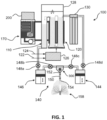
- the ventilator (100) for liquid ventilation of a mammal comprises a liquid circuit forming a loop, and including first a reservoir (110) configured to contain a breathable liquid (BL), and an oxygenator (120) fluidly connected to the reservoir (110) for oxygenating the breathable liquid.
- the reservoir (110) and the oxygenator (120) may alternatively form a unique assembly where the reservoir is integrated into the oxygenator. In another embodiment, there is no reservoir (not illustrated).
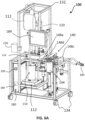
- the ventilator (100) as shown on Figures 6A and 6B may have a pair of pockets suspended in a upper section of the ventilator for containing the BL that will be distributed into the ventilator at the beginning of the ventilation process. Also, the ventilator is supported by a frame (112) that can be moved thanks to a plurality of wheels (134). The ventilator may also have a first scale (114) located under the reservoir (110) and/or a second scale (114) located under the oxygenator (120). The scales are operatively connected to the control unit (180) in order to determine in real-time the amount of BL contained in the reservoir and/or the oxygenator and to calculate therefore the volume of BL in the mammal's lungs.
- the oxygenator is configured to receive a mixture of air (122) and dioxygen - O2 gas (124) pre-mixed in a gas blender (126).
- the ventilator may also comprise a gas condenser (128) typically located above the reservoir, or adjacent a top section of the oxygenator, for condensing the breathable liquid (BL) and limits its loss.
- the ventilator (100) may optionally comprises a filtering unit (130) upstream the oxygenator for filtering the breathable liquid (BL) before entering the oxygenator. Reservoirs, oxygenators, gas blender, filters, tubing and condenser such as those known in the art of TLV technology can be used in connection with the present invention.
- the ventilator (100) also comprises a pumping assembly (140) operatively connected to the reservoir (110) and the oxygenator (120) for pumping the breathable liquid (BL).
- the pumping assembly may comprise a Y connector (300) comprising a junction for connecting the pumps to a proximal end (152) of an endotracheal tube (150) having a distal end (154) insertable in the mammal's trachea (156).
- the pumping assembly (140) comprises a first expiratory pump (144) fluidly connected to the Y connector (300) for pumping the breathable liquid out of the lungs (158) toward the filter (130) and then the oxygenator (120) before reaching the optional reservoir (110) where a reserve of oxygenated breathable liquid may be stored.
- the pump assembly (140) then also comprises an inspiratory pump (146) fluidly connected to the reservoir (110) for injecting the oxygenated breathable liquid pre-stored in the reservoir into the lungs through the Y connector (150) closing as such the loop circuit of the ventilator.
- the pumping assembly further comprises a plurality of valves (148), typically four valves (148a, 148b, 148c, 148d), which in connection with the two pumps (144, 146), the tubes and Y connector, allow driving the breathable liquid (BL) going through the expiratory and inspiratory pumps and guiding the breathable liquid to the lungs.
- a plurality of valves typically four valves (148a, 148b, 148c, 148d), which in connection with the two pumps (144, 146), the tubes and Y connector, allow driving the breathable liquid (BL) going through the expiratory and inspiratory pumps and guiding the breathable liquid to the lungs.
- the ventilator (100) is connected to the patient via the Y-connector (300).
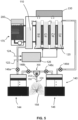
- the four pinch valves (148a, 148b, 148c, 148d) are programmed to guide the liquid flow (BL) to the lungs (158).
- the valves (148b) and (148d) are open and the valves (148a) and (148c) are closed.
- the inspiratory pump (146) inserts the respiratory PFC (BL) through the endotracheal tube (150) to the lungs (158). Hence the liquid arrives directly to the lung (158) from the reservoir (110) at the controlled temperature Tres.
- the expiratory pump (144) returns a tidal volume of liquid (previously expired from the lung (158)) to the oxygenator (120).
- the valves (148b) and (148d) are closed, and the valves (148a) and (148c) are open.
- the expiratory pump (144) withdraws the liquid (e.g. PFC) through the endotracheal tube (150) from the lungs (158).
- the inspiratory pump (146) is filled with a tidal volume of liquid (BL) pumped from the reservoir (110).
- the liquid temperature that directly arrives from the lung (158) is measured at the patient connector location (300).
- this temperature measurement at the Y-connector (300) can be used to calculate an indirect measurement of the lung temperature TL, as detailed and explained in international patent application no. WO 2014/205548 A1 (Nadeau et al), published on December 31, 2014 , the content of which is incorporated herein by reference.
- the function of the oxygenator (120) is to oxygenate the liquid (BL) and to control its temperature. Dioxygen (O2) and carbon dioxide (CO2) concentrations in the PFOB is monitored and controlled by the gas mixer (See 126, Fig. 1 ). Water flowing within the double walls of the oxygenator (120) is used for cooling the liquid (e.g. PFC) inside the oxygenator before its re instillation into the lungs.
- a cooling fluid (CF) such as one comprising cold water, is pumped from a cooling system (200) to the oxygenator (120) at a controlled mass flow rate with a pump (210).
- the liquid ventilator is designed to initiate liquid ventilation with a breathable liquid (e.g. PFC) at a controlled hospital room temperature (e.g. about 20 °C) and with a global volume of liquid such that no heat extraction from the liquid (BL) is required during the first 2 min. There is no need for a cooling power control during the first instillation of liquid and the start of liquid ventilation.
- a breathable liquid e.g. PFC
- BL liquid
- BL liquid
- the ventilator (100) also comprises a pressure sensor (160) operatively connected to the respiratory circuit and configured to measure a pressure of a respiratory flow of the breathable liquid.
- the pressure sensor can measure the pressure at the mouth of the patient.
- the pressure sensor can be located inside the Y-connector (300) together with a temperature sensor.
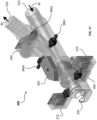
- FIG 17 is a detailed perspective view of a Y-connector in accordance of a preferred embodiment of the invention.
- the Y-connector (300) comprises an inspiratory liquid port (310) for receiving the breathable liquid (BL), e.g. PFC, from the reservoir (110) and/or the oxygenator (120), an expiratory liquid port (320) for returning the BL to the oxygenator (120), an endotracheal tube port (330), ETT port, for connection of the endotracheal tube ETT (150), aBL temperature sensor (340), and avalve (350), such as arotary valve, allowing an user to select TLV by connecting the liquid ports (310) and (320), to the ETT port (330).
- BL breathable liquid
- PFC e.g. PFC
- the rotary valve (350) is mechanically connected to a rotation sensor (360) in order to measure the state of the rotary valve (350).
- the ETT port (330) comprises a first parietal pressure sensor (370) to measure the parietal pressure P of the flow in the ETT port.
- a second measure of the parietal pressure can be obtained with a second pressure sensor (372) located in front of the first parietal pressure sensor (370).
- the temperature sensor (340) is connected to the Y-connector via different connecting ports, either located in the expiratory circuit (380a), the inspiratory circuit (380b, as represented on the figure 17 ), or connected to both the inspiratory and expiratory circuits (380c).
- the BL temperature sensor (340) and the parietal pressure sensors (370, 372) are operably connected to the ventilator control unit VCU (180).
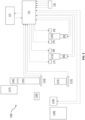
- the ventilator further comprises a control unit (180) operatively connected to the pressure sensor (160) and the different elements of the pumping assembly (140) for controllably exchanging the breathable liquid between the oxygenator and the mammal's lungs while controlling the expiratory flow of the breathable liquid pumped out of the lungs.
- the control unit (180) comprises a processor (182) for effecting in real-time a pressure P calculated from the measured pressure, e.g. at the mouth of the mammal or patient.
- the processor (182) allows reducing in real-time the expiratory flow of the breathable liquid according to a factor R while pumping the breathable liquid out of the lungs during a given expiratory period of time in order to maintain a targeted end-expiratory breathable liquid volume, or EEBLV, in the mammal's lungs.
- the negative threshold of the pressure P is equal or inferior to about - 50 cmH 2 O and the given expiratory period of time during which the pumping assembly pumps the breathable liquid out of the lungs allows removing at least 80% of the targeted tidal expiratory volume of the breathable liquid.
- the EEBLV is typically between 10 and 20 ml/Kg for a respiratory frequency of between 2 and 8 bpm (breath per minute), preferably 4 to 6 bpm, and a tidal volume of breathable liquid of between 4 to 10 mL/Kg. More details are presented in the examples of the present description.
- control unit (180) is a computer equipped with a processor (182), a graphic user interface or GUI (184) for entering data and displaying measurements, traces and results, and a ventilator control unit in real-time or VCU (186). Pumps, valves and sensors of the ventilator are operatively connected to the processor.
- the reservoir (110) of the ventilator as illustrated on Figures 6A is fluidly connected to the pumping assembly, and is preferably located at a level below the mammal or patient to take advantage of the gravitational force or gravity. Reference can be made to the table or surface on which the mammal or human is laid on during the ventilation procedure.
- the control unit (180) may be then further configured to open in real-time the pumping the respiratory circuit when the pressure P reaches a critical pressure inferior to about -130 cmH 2 O or superior to about +130 cmH 2 O. When the circuit is opened, the breathable liquid can be evacuated from the lungs by gravity towards the reservoir (110).
- the ventilator may then further comprise an alarm unit (190) operatively connected to the control unit for triggering an alarm when the critical pressure is calculated by the processor of the control unit.
- the ventilator (100) may further comprise a cooling unit (200) operatively connected to the oxygenator (120) for cooling and/or maintaining a temperature of the breathable liquid going through the oxygenator before being driven to the reservoir and going through the pumping assembly and mammal's lungs.
- a cooling unit (200) operatively connected to the oxygenator (120) for cooling and/or maintaining a temperature of the breathable liquid going through the oxygenator before being driven to the reservoir and going through the pumping assembly and mammal's lungs.
- the cooling unit (200) can be a container or bath 210 having a upper access door 212 to allow pouring water into the container.
- the cooling unit can be controlled by a bath control system 214, preferably operatively connected to the control unit of the ventilator, as better explained herein after.
- the liquid (BL) is a perfluorocarbon or PFC.
- a method (1000) for liquid ventilation of a mammal comprising the steps of:
- the EEBLV is between 10 and 20 ml/Kg for a respiratory frequency of between 2 and 8 rpm and a tidal volume of breathable liquid of between 4 and 10 mL/Kg.
- the negative threshold of the pressure P is equal or inferior to about -50 cmH 2 O (1350), and the given expiratory period of time during which the breathable liquid is pumped out of the lungs allows removing at least 80% of the tidal volume of the breathable liquid.
- the method (1000) further comprises the step of evacuating the breathable liquid from the mammal's lungs (1500) when the pressure P is a critical value inferior to about -130 cmH 2 O (1360) or superior to about +130 cmH 2 O (1370.
- the method may further comprises the step of triggering an alarm when the critical value is reached.
- the method (1000) further comprises the step of cooling and/or maintaining a temperature of the breathable liquid while pumping the breathable liquid in and out of the lungs of the mammal.
- the step of cooling and/or maintaining the temperature of the breathable liquid comprises:
- the method (1000) further comprising the steps of:
- the step of adjusting the temperature of the cooling fluid consists in maintaining a flow of the cooling fluid during a first pre-set period of time, or stopping said flow during a second pre-set period of time, when the cooling fluid thermally exchanges with the breathable liquid.
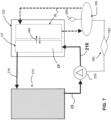
- FIG. 2 schematically represents the different components of a ventilator equipped with a cooling unit in accordance with a preferred embodiment of the invention, and in which:
- the apparatus (200) comprising a cooling unit (210) configured to produce a cooling fluid (CF) at a cooling temperature when the cooling fluid circulates through the cooling unit.
- the cooling fluid may comprise water, preferably cold water at a temperature, preferably between - 10 °C and +20 °C, and all values in between.
- the cooling unit being in fluid communication (216) with an oxygenator (120) of a liquid ventilator (100) for receiving the cooling fluid therefrom (216).
- the apparatus also comprises a controllable pumping unit (230) in fluid communication with the oxygenator (120) and the cooling unit (210).
- the controllable pumping unit (230) is configured to pump back the cooling fluid (CF) from the cooling unit to the oxygenator module (120) where the cooling fluid (CF) thermally exchanges (240) with a breathable liquid (BL) of the liquid ventilator (100) circulating in the oxygenator module for controlling an inspiratory temperature of the breathable liquid oxygenated by the oxygenator before the re-instillation of the cooled oxygenated breathable liquid into the mammal's lung.
- the breathable liquid typically comprises perflurocarbons, or PFC.
- the liquid ventilator (100) comprises a temperature sensor (260) for measuring in real-time an expiratory temperature of the breathable liquid pumped out of the mammal's lungs, the temperature sensor being operatively connected to the controllable pumping unit (230) to modify a flow of the cooling fluid and therefore to adjust the inspiratory temperature of the breathable liquid in function of the measured expiratory temperature.
- Figure 8(A) is an example of algorithm for the control of the pumping unit (230), which consists in turning on the pumping unit during a first pre-set period of time, e.g. 20 sec., and turning off the pumping unit during a second pre-set period of time, e.g. 30 sec., to control the flow of cooling liquid going through the cooling unit and the oxygenator.
- Figure 8(B) is an example of how the control unit controls the pumping assembly to reach and maintain a target temperature of the expiratory flow around 31 °C.
- the pumping unit can be configured to pump the cooling fluid at a controlled mass flow rate in order to control a cooling power of the thermal exchange in the oxygenator.
- the pump is then operatively connected to a processor module of the liquid ventilator configured to control the mass flow rate of the cooling fluid and as such to vary the temperature of the breathable liquid in the oxygenator.
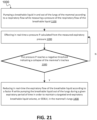
- a method for induction of hypothermia in a mammal, such as a human, is illustrated on Figure 23 .
- the method (2000) comprises the steps of:
- the step of modifying the flow of the cooling fluid circulating through the cooling unit and the oxygenator (2400) consists in circulating the cooling fluid during a first pre-set period of time, e.g. 20 s, and stopping the circulation of the cooling liquid during a second pre-set period of time, e.g. 30 s, as illustrated on Figure 8 .
- the method may further comprise the step of varying a mass flow rate of the cooling liquid circulating into the oxygenator for controlling a cooling power of the thermal exchange in the oxygenator.
- the method (2000) then further comprises the step of varying the temperature of the breathable liquid circulating in the oxygenator by varying the mass flow rate of the cooling liquid circulating in the cooling unit.
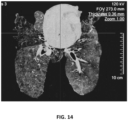
- lung volume has been assessed by chest computerized tomography (CT-scan) in four anesthetized piglets.
- PEEP 0 and 5 cmH 2 O
- TLV was induced with perfluoctylbromide (PFOB) TLV.
- PFOB perfluoctylbromide
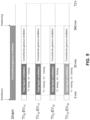
- Fig. 9 the evaluation of the two selected EEBLV levels was crossed with two different levels of tidal volume (TV) set at either 8 or 16 ml/kg (TV 8 -EV 15 , TV 16 -EV 15 , TV 8 - EV 30 , TV 16 -EV 30 groups, respectively).
- End-inspiratory alveolar pause pressure also increased along with TV and EEBLV in the different groups, achieving a maximal value - 20 cmH 2 O in TV8-EV30. Blood oxygenation and pH were not significantly modified during TLV in the different groups vs Sham animals.
- the histological examinations of the lungs confirmed severe pulmonary alterations in the TV 16 -EV 30 as compared to all other groups. Indeed, we observed normal appearance in the Sham, TV 5 -EV 15 , TV 16 -EV 15 and TV 8 -EV 30 groups. We only observed nonspecific foci of infection in some areas. In the TV 16 -EV 30 , we observed typical alterations of diffuse alveolar damage including severe alveolitis, alveolar hemorrhage and hyaline membranes. Some areas showed alveolar or bronchiolar dilation with a typical "balloon-like" pattern compatible with overdistension in the latter group.
- Total (or tidal) liquid ventilation necessitates a dedicated mechanical system in order to ventilate completely filled lungs with a tidal volume of breathable liquid (BL).
- the liquid ventilator inserts and withdraws the tidal volume Vtof BL from the lungs in order to ensure that the amount of breathable liquid in the lungs at the end of expiration phase (EEBLV) is closed to the targeted EEBLV specified by the clinician.
- the measurement of EEBLV can be obtained by monitoring the patient's weight, end-expiratory pressure or liquid volume in the ventilator.
- the volume of BL in the oxygenator may be measured using a scale (114) (see Fig.
- the ventilator control unit VCU
- Vprim the primary volume of BL
- Vprim the initial volume of BL in the liquid ventilator before the TLV
- the requested correction of EEBLV, ⁇ V[k] is the BL volume to retrieve from (if negative) or to add into (if positive) the lungs during one cycle.
- the targeted inspiratory and expiratory volume is computed with the targeted tidal volume, Vt[k], and the requested correction ⁇ V[k].
- the EEBLV is estimated from the amount of liquid in the reservoir.
- the Modification of EEBLVref by the user the user modify the value the EEBLVref in order to increase EEBLV from 10 mL/Kg to 15 mL/Kg (800 mL to 1200 mL) and after, the user decreases the EEBLVref from 15 mL/Kg to 10 mL/Kg.
- Figures 15 and 16 provides respiratory cycles data when a collapse of the trachea occurs.
- Figure 15 shows an experiment with a pig of 73 Kg, using the up-scaled ventilator ( Figures 5 and 6 ) during 60 s from the time 1450 s.
- the dashed line of pressure ( Fig. 15 A ) corresponds to the limit of collapse at -250 cmH 2 O
- the dashed line of frequency ( Fig. 15C ) shows the targeted frequency at 6 bpm
- the dashed line of EEBLV Fig. 15D ) shows the targeted EELV at 800 mL.
- EEBLV 800 mL/Kg (10.9 mL/Kg) ( Fig.
- the pressure drop is measured at the Y-connector and the airway collapse is detected by the ventilator once the pressure reaches the airway collapse pressure limit.
- the expiratory flow is automatically reduced to cease the airway collapse, and thus to prevent a total airway collapse.
- the flow reduction is proportional to the reduction ratio of the airway collapse control RatioCC which is set by the user. If the airway collapse is happening during the exponential phase of the expiration, the remaining expiratory time is extended by a ratio equal to the inverse of RatioCC. Then, the expiratory flow profile is recalculated as a ramp down profile to complete the expiration of the tidal volume.
- the expiratory time is not modified and the expiratory flow profile is reduced by a ratio equal to RatioCC. Moreover, once the airway collapse is detected, an alarm is activated to warn the operator that the ventilation parameters need to be adapted in order to prevent the airway collapse phenomenon on the next expiration.
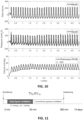
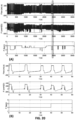
- Figures 19 and 20 shows signals measured during one hour of liquid ventilation (A) on a pig (60-80 kg) using the up-scaled ventilator ( Figures 5 and 6 ) and the same signals during one minute from the time 138 seconds (or 2.3 minutes) of the liquid ventilation ( Fig. 19B ) and during one minute from the time 2433 seconds (or 40.55 minutes) of the liquid ventilation.
- Pressure in cmH 2 O Fig. 19B and 20B ) with plain line : pressure measured at the Y connector and dashed line : limit collapse set at different values.
- Instantaneous frequency F in breath per minute or bpm
- Fig. 19C and 20C with plain line : F realized by the liquid ventilator, and dashed line : F desired frequency is set by the user.
- Figure 19B show the same signals during one minute from the time 2.3 minutes of the liquid ventilation.
- the dashed line of pressure corresponds to the limit of collapse set at -250 cmH 2 O, and the dashed line shows the desired frequency is set at 6 bpm. From 0 to 24 (s) : normal liquid ventilation 3 cycles without collapse.
- the measured frequency (F) is equal to the desired frequency set at 6 bpm (cycle of 10 s).
- the expiratory profile allows to avoid the collapse, because the pressure measured at the Y-connector is below -250 cmH 2 O.
- the expiratory time is 7 s.
- the inspiratory time is 3 s. From 24 s to 60 s : 3 collapus are detected.
- the pressure measured at the Y-connector is below -250 cmH 2 O (value set by the operator).
- the expiratory flow is automatically decreased from -140 mL/s to -70 mL/s and the expiratory time is increased to 1 Is. So, the estimated instantaneous frequency decreases from 6 bpm to 4 bpm (at time 34 s).
- Figure 20 shows signals measured during one minute from the time 40.55 minutes of the liquid ventilation. From 0 to 30 (s) : collapus are detected. At these moments, the pressure measured at the Y-connector is below -250 cmH 2 O (value set by the operator). At 4.2 s, the expiratory flow is automatically decreased from -120 mL/s to -60 mL/s and the expiratory time is increased to 1 ls. So, the estimated instantaneous frequency is 4 bpm instead of the target 6 bpm. From 30 s: normal liquid ventilation without collapse because the pressure measured at the Y-connector is below -250 cmH 2 O. The expiratory time is 7 s. The inspiratory time is 3 s. So, the measured frequency (F) is equal to the desired frequency set at 6 bpm (cycle of 10 s).
- Pulmonary gas exchanges were not modified during TLV as compared to conventional mechanical ventilation, as shown by arterial blood pH and partial pressure of O 2 and CO 2 ( Fig. 13 ).
- blood oxygen saturation remained above 97-98% in all animals from the first day after TLV to the end of the follow-up, showing a long-term pulmonary tolerance of the procedure.
- CT-scan imaging of explanted lungs did not show any visible macroscopic foci of PFC residues since the entire lung parenchyma was diffusely hypoattenuating.
- a new approach for TLV through incomplete lung filling with PFC below FRC and subsequent tidal liquid ventilation is disclosed. This represents a radical paradigm shift as compared to previous beliefs, that considered that lungs should be primarily completely filled with PFC and fully degassed since the filling phase.
- This lung-conservative approach of TLV was further automatized with an up-scaled device for large animals continuously controlling EEBLV below FRC ranges. Partial liquid ventilation was tested in humans but the largest trial raised skepticism regarding the actual safety of this procedure. Those negative results were poorly deciphered a posteriori and it was often overstated that any way of liquid ventilation enhanced trauma risks by itself, regardless its exact way of induction.
- TLV with an accurate and reliable control of lung volumes of perfluorocarbons below FRC could provide the full potential of TLV in a novel and safe manner, despite incomplete initial degassing.
- the disclosed methods, ventilators and apparatus for inducing hypothermia may be customized to offer valuable solutions to existing needs and problems of related to the lack of maturity of current liquid ventilation technology.
- Various network links may be implicitly or explicitly used in the context of the present invention. While a link may be depicted as a wireless link, it could also be embodied as a wired link using a coaxial cable, an optical fiber, a category 5 cable, and the like. A wired or wireless access point (not shown) may be present on the link between. Likewise, any number of routers (not shown) may be present and part of the link, which may further pass through the Internet.
- the present invention is not affected by the way the different modules exchange information between them.
- the memory module and the processor module of the control unit could be connected by a parallel bus, but could also be connected by a serial connection or involve an intermediate module (not shown) without affecting the teachings of the present invention.
- a method is generally conceived to be a self-consistent sequence of steps leading to a desired result. These steps require physical manipulations of physical quantities. Usually, though not necessarily, these quantities take the form of electrical or magnetic/ electromagnetic signals capable of being stored, transferred, combined, compared, and otherwise manipulated. It is convenient at times, principally for reasons of common usage, to refer to these signals as bits, values, parameters, items, elements, objects, symbols, characters, terms, numbers, or the like. It should be noted, however, that all of these terms and similar terms are to be associated with the appropriate physical quantities and are merely convenient labels applied to these quantities.
Landscapes
- Health & Medical Sciences (AREA)
- Veterinary Medicine (AREA)
- Public Health (AREA)
- Engineering & Computer Science (AREA)
- General Health & Medical Sciences (AREA)
- Biomedical Technology (AREA)
- Heart & Thoracic Surgery (AREA)
- Animal Behavior & Ethology (AREA)
- Life Sciences & Earth Sciences (AREA)
- Anesthesiology (AREA)
- Hematology (AREA)
- Pulmonology (AREA)
- Emergency Medicine (AREA)
- Vascular Medicine (AREA)
- Physics & Mathematics (AREA)
- Thermal Sciences (AREA)
- Thermotherapy And Cooling Therapy Devices (AREA)
- External Artificial Organs (AREA)
- Measurement Of The Respiration, Hearing Ability, Form, And Blood Characteristics Of Living Organisms (AREA)
Claims (13)
- Beatmungsgerät (100) zur Flüssigkeitsbeatmung eines Säugetiers, umfassend:- einen Atemkreislauf, der einen Beatmungskreislauf und einen Ausatmungskreislauf definiert und Folgendes umfasst:- ein Sauerstoffgerät (120) zur Sauerstoffanreicherung einer atembaren Flüssigkeit; und- eine Pumpanordnung (140), die operativ mit dem Sauerstoffgerät verbunden ist, um die atembaren Flüssigkeit durch den Atemkreislauf in die Lunge des Säugetiers und aus dieser herauszupumpen;- einen Drucksensor (160), der operativ mit dem Atemkreislauf verbunden und dazu konfiguriert ist, einen Druck eines Atemflusses der atembaren Flüssigkeit zu messen; und- eine Steuereinheit (180), die operativ mit dem Drucksensor und der Pumpanordnung verbunden ist, um die atembaren Flüssigkeit zwischen dem Sauerstoffgerät und der Lunge des Säugetiers gesteuert auszutauschen, während der Ausatmungsfluss der aus der Lunge gepumpten atembaren Flüssigkeit gesteuert wird;dadurch gekennzeichnet, dass die Steuereinheit einen Prozessor (182) für Folgendes umfasst:
Herbeiführen eines Drucks P in Echtzeit, der aus dem gemessenen Druck berechnet wird; und wenn der Druck P einen negativen Schwellenwert erreicht, der auf einen Kollaps der Luftröhre des Säugetiers hinweist, Reduzieren des Ausatmungsflusses der atembaren Flüssigkeit in Echtzeit um 50 %, während die atembare Flüssigkeit über eine längere Ausatmungszeitspanne aus der Lunge gepumpt wird, um ein angestrebtes endexspiratorisches atembares Flüssigkeitsvolumen (EEBLV) in der Lunge des Säugetiers aufrechtzuerhalten. - Beatmungsgerät nach Anspruch 1, wobei das angestrebte EEBLV zwischen 10 und 20 mL/Kg für eine Atemfrequenz zwischen 2 und 8 U/min und ein Atemzugvolumen der atembaren Flüssigkeit zwischen 4 und 10 mL/Kg liegt.
- Beatmungsgerät nach Anspruch 1 oder 2, wobei der negative Schwellenwert des Drucks P gleich oder kleiner als etwa -50 cmH20 ist und die gegebene Ausatmungszeitspanne, während der die Pumpanordnung die atembare Flüssigkeit aus der Lunge pumpt, das Entfernen von mindestens 80 % des angestrebten Atemzugsvolumens der atembaren Flüssigkeit ermöglicht.
- Beatmungsgerät nach einem der Ansprüche 1 bis 3, ferner umfassend ein Reservoir (110), das sich auf einer Ebene unterhalb des Säugetiers befindet und fluidisch mit der Pumpanordnung verbunden ist, wobei die Steuereinheit ferner dazu konfiguriert ist, den Atemkreislauf in Echtzeit zu öffnen, wenn der Druck P einen kritischen Druck von weniger als etwa -130 cmH2O oder höher als etwa +130 cmH2O erreicht, um einen geringen Unterdruck P zu erzeugen, um die atembare Flüssigkeit mittels der Schwerkraft aus der Lunge in Richtung des Reservoirs abzulassen.
- Beatmungsgerät nach Anspruch 4, ferner umfassend eine Alarmeinheit (190), die operativ mit der Steuereinheit verbunden ist, um einen Alarm auszulösen, wenn der kritische Druck erreicht wird.
- Beatmungsgerät nach einem der Ansprüche 1 bis 5, wobei der Druck des Atemflusses am Mund des Säugetiers gemessen wird.
- Beatmungsgerät nach einem der Ansprüche 1 bis 6, wobei die Pumpanordnung Folgendes umfasst:einen Y-Verbinder (300), der eine Verbindungsstelle zum Verbinden der Pumpanordnung mit einem proximalen Ende eines Endotrachealtubus (150) umfasst, der ein distales Ende aufweist, das in die Luftröhre des Säugetiers einführbar ist;eine Ausatmungspumpe, die fluidisch mit der Verbindungsstelle des Y-Verbinders und dem Sauerstoffgerät vorgeschaltet verbunden ist;eine Beatmungspumpe (146), die fluidisch mit der Verbindungsstelle des Y-Verbinders und dem Sauerstoffgerät nachgeschaltet verbunden ist; undeine Vielzahl von Ventilen (148a, 148b, 148c, 148d), wobei jedes Ventil unabhängig von der Steuereinheit gesteuert wird, um die durch die Ausatmungs- und Beatmungspumpen fließende atembare Flüssigkeit anzutreiben und die atembare Flüssigkeit zur Lunge zu leiten.
- Beatmungsgerät nach einem der Ansprüche 1 bis 7, ferner umfassend eine Kühleinheit (200), die fluidisch mit dem Sauerstoffgerät verbunden ist, wobei die Kühleinheit ein Kühlfluid mit einer Kühltemperatur zum Kühlen und/oder Aufrechterhalten einer Beatmungstemperatur der durch das Sauerstoffgerät fließenden atembaren Flüssigkeit erzeugt, bevor diese in die Lunge des Säugetiers getrieben wird.
- Beatmungsgerät nach Anspruch 8, wobei die Kühleinheit in Fluidverbindung mit dem Sauerstoffgerät steht, um das Kühlfluid von dort aufzunehmen, wobei das Kühlfluid dann abgekühlt wird, während es durch die Kühleinheit fließt; wobei das Beatmungsgerät ferner eine Pumpe in Fluidverbindung mit der Kühleinheit und dem Sauerstoffgerät umfasst, um das Kühlfluid von der Kühleinheit zum Sauerstoffgerät zurück zu pumpen, wo das Kühlfluid mit der atembaren Flüssigkeit des Beatmungsgeräts, die im Sauerstoffgerät zirkuliert, thermisch auszutauschen, um die atembare Flüssigkeit vor der erneuten Einführung der atembaren Flüssigkeit in die Lunge des Säugetiers zu kühlen.
- Beatmungsgerät nach Anspruch 9, ferner umfassend einen Temperatursensor (340) zum Messen einer Ausatmungstemperatur der atembaren Flüssigkeit, die aus der Lunge des Säugetiers gepumpt wird, wobei der Temperatursensor operativ mit der Steuereinheit verbunden ist, wobei die Steuereinheit ferner dazu konfiguriert ist, die Pumpe zu steuern und daher einen Fluss des Kühlfluids zu steuern, der durch die Kühleinheit und das Sauerstoffgerät fließt, um die Temperatur der eingeatmeten atembaren Flüssigkeit in Abhängigkeit von der gemessenen Ausatmungstemperatur anzupassen.
- Beatmungsgerät nach Anspruch 10, wobei das Steuern der Pumpe darin besteht, die Pumpe während einer ersten voreingestellten Zeitspanne einzuschalten und während einer zweiten voreingestellten Zeitspanne auszuschalten, um den Fluss der Kühlflüssigkeit zu steuern.
- Beatmungsgerät nach einem der Ansprüche 1 bis 11, wobei die atembare Flüssigkeit Perfluorcarbone oder PFC umfasst.
- Beatmungsgerät nach einem der Ansprüche 1 bis 12, wobei das Säugetier ein Mensch ist.
Applications Claiming Priority (3)
| Application Number | Priority Date | Filing Date | Title |
|---|---|---|---|
| EP18020155 | 2018-04-17 | ||
| EP18020156 | 2018-04-17 | ||
| PCT/CA2019/050450 WO2019200459A1 (en) | 2018-04-17 | 2019-04-12 | Liquid ventilator and method to induce tidal liquid ventilation and/or hyporthermia |
Publications (4)
| Publication Number | Publication Date |
|---|---|
| EP3781241A1 EP3781241A1 (de) | 2021-02-24 |
| EP3781241A4 EP3781241A4 (de) | 2022-02-23 |
| EP3781241B1 true EP3781241B1 (de) | 2024-03-20 |
| EP3781241C0 EP3781241C0 (de) | 2024-03-20 |
Family
ID=68239327
Family Applications (1)
| Application Number | Title | Priority Date | Filing Date |
|---|---|---|---|
| EP19789212.8A Active EP3781241B1 (de) | 2018-04-17 | 2019-04-12 | Flüssigkeitsbeatmungsgerät zur induktion von atemzugvolumenflüssigkeitsbeatmung und/oder hypothermie |
Country Status (7)
| Country | Link |
|---|---|
| US (1) | US12083271B2 (de) |
| EP (1) | EP3781241B1 (de) |
| JP (1) | JP7386843B2 (de) |
| KR (1) | KR102774314B1 (de) |
| CN (1) | CN112770800B (de) |
| CA (1) | CA3097435A1 (de) |
| WO (1) | WO2019200459A1 (de) |
Families Citing this family (6)
| Publication number | Priority date | Publication date | Assignee | Title |
|---|---|---|---|---|
| CN110987077B (zh) * | 2019-12-18 | 2022-03-11 | 脉象医疗科技(苏州)有限公司 | 一种制氧机自动测试系统及方法 |
| CN111324154B (zh) * | 2020-01-20 | 2022-06-24 | 深圳市科曼医疗设备有限公司 | 混合腔压力控制方法、呼吸机设备和计算机可读存储介质 |
| EP4142841A4 (de) * | 2020-04-29 | 2024-05-22 | LifeAir Medical Corporation | Beatmungssystem mit abnehmbaren atemwegen |
| US12257385B2 (en) * | 2021-09-29 | 2025-03-25 | Alcor Life Extension Foundation, Inc. | Liquid ventilation system |
| CN114028208B (zh) * | 2021-11-26 | 2025-02-14 | 查显进 | 亚低温氧疗仪 |
| EP4647097A1 (de) * | 2024-05-07 | 2025-11-12 | Orixha | Verbinder für flüssigkeitsbelüftung |
Family Cites Families (12)
| Publication number | Priority date | Publication date | Assignee | Title |
|---|---|---|---|---|
| US5437272A (en) * | 1991-05-01 | 1995-08-01 | Alliance Pharmaceutical Corp. | Perfluorocarbon associated gas exchange |
| US5335650A (en) * | 1992-10-13 | 1994-08-09 | Temple University - Of The Commonwealth System Of Higher Education | Process control for liquid ventilation and related procedures |
| AU2002362045A1 (en) * | 2001-12-04 | 2003-06-17 | Minnesota High-Tech Resources, Llc | Breathable gas mixtures to change body temperature |
| CA2451261C (en) | 2002-11-29 | 2018-01-16 | Universite De Sherbrooke | Method and apparatus for conducting total liquid ventilation with control of residual volume and ventilation cycle profile |
| US7909031B2 (en) * | 2005-06-09 | 2011-03-22 | Temple Univesity - Of The Commonwealth System of Higher Education | Process for transient and steady state delivery of biological agents to the lung via breathable liquids |
| CA2623756A1 (en) * | 2005-09-20 | 2007-03-29 | Lutz Freitag | Systems, methods and apparatus for respiratory support of a patient |
| US7810497B2 (en) * | 2006-03-20 | 2010-10-12 | Ric Investments, Llc | Ventilatory control system |
| DE102010048916B4 (de) | 2010-10-11 | 2016-03-10 | Technische Universität Dresden | Vorrichtung zur Beatmung |
| CN102451506B (zh) * | 2010-10-19 | 2015-04-08 | 袁含光 | 一种呼吸机气流控制装置 |
| US9439804B2 (en) | 2011-03-03 | 2016-09-13 | Renaud Tissier | Method and system for treatment of a body of a mammal in cardiac arrest |
| ES2891330T3 (es) | 2013-06-25 | 2022-01-27 | Socpra Sciences Et Genie Sec | Medición indirecta de presión y temperatura en un sistema de ventilación de líquido total |
| CN103585707A (zh) * | 2013-11-25 | 2014-02-19 | 姜力骏 | 一种完全液体通气呼吸机 |
-
2019
- 2019-04-12 KR KR1020207032986A patent/KR102774314B1/ko active Active
- 2019-04-12 EP EP19789212.8A patent/EP3781241B1/de active Active
- 2019-04-12 CA CA3097435A patent/CA3097435A1/en active Pending
- 2019-04-12 US US17/048,263 patent/US12083271B2/en active Active
- 2019-04-12 CN CN201980040240.5A patent/CN112770800B/zh active Active
- 2019-04-12 WO PCT/CA2019/050450 patent/WO2019200459A1/en not_active Ceased
- 2019-04-12 JP JP2021506017A patent/JP7386843B2/ja active Active
Also Published As
| Publication number | Publication date |
|---|---|
| KR102774314B1 (ko) | 2025-03-05 |
| EP3781241A4 (de) | 2022-02-23 |
| EP3781241A1 (de) | 2021-02-24 |
| WO2019200459A1 (en) | 2019-10-24 |
| US12083271B2 (en) | 2024-09-10 |
| CA3097435A1 (en) | 2019-10-24 |
| CN112770800A (zh) | 2021-05-07 |
| EP3781241C0 (de) | 2024-03-20 |
| KR20210095997A (ko) | 2021-08-04 |
| CN112770800B (zh) | 2024-08-09 |
| JP2021531137A (ja) | 2021-11-18 |
| US20210077759A1 (en) | 2021-03-18 |
| JP7386843B2 (ja) | 2023-11-27 |
Similar Documents
| Publication | Publication Date | Title |
|---|---|---|
| EP3781241B1 (de) | Flüssigkeitsbeatmungsgerät zur induktion von atemzugvolumenflüssigkeitsbeatmung und/oder hypothermie | |
| JP7518142B2 (ja) | エクスビボ肺ケアのためのシステムおよび方法 | |
| US5575283A (en) | Device for determining an opening pressure in the lungs | |
| US10518049B2 (en) | System for automated adjustment of a pressure set by a ventilation device | |
| JPH08501969A (ja) | 液体換気のためのプロセス制御 | |
| US10688238B2 (en) | Anesthesia system for cardiopulmonary bypass machine | |
| WO2021071366A1 (en) | Flow therapy system and method | |
| Santanilla et al. | Mechanical ventilation | |
| Nielsen et al. | An experimental study of different ventilatory modes in piglets in severe respiratory distress induced by surfactant depletion | |
| US8408202B2 (en) | Open-circuit liquid ventilator | |
| BR112019015177A2 (pt) | Dispositivos e métodos para ventilação de um paciente | |
| KR20200021647A (ko) | 인공 호흡기의 흡입산소농도의 자동 제어 방법 | |
| US10661037B2 (en) | Indirect measurement in a total liquid ventilation system | |
| Bouchard et al. | Pressure estimator of airway narrowing in Total Liquid Ventilation: first results in guinea pigs | |
| Bendel‐Stenzel et al. | Dynamics of spontaneous breathing during patient‐triggered partial liquid ventilation | |
| Tobias | Conventional mechanical ventilation | |
| JP2002136596A (ja) | 麻酔装置 | |
| Powner et al. | Using pressure-limited mechanical ventilation in caring for organ donors | |
| Pant et al. | Ventilation and Ventilatory Modes | |
| Pierce | Protocols for practice: Traditional and nontraditional modes of mechanical ventilation | |
| Bull | Some special considerations in neonatal anaesthesia | |
| Bohn | Fluid, electrolyte and respiratory management | |
| Inselman et al. | Mechanical ventilation in the neonate | |
| Aitken | Sample proofs@ Elsevier Australia | |
| Redding et al. | Alterations in gas exchange associated with lobar atelectasis in young piglets |
Legal Events
| Date | Code | Title | Description |
|---|---|---|---|
| STAA | Information on the status of an ep patent application or granted ep patent |
Free format text: STATUS: THE INTERNATIONAL PUBLICATION HAS BEEN MADE |
|
| PUAI | Public reference made under article 153(3) epc to a published international application that has entered the european phase |
Free format text: ORIGINAL CODE: 0009012 |
|
| STAA | Information on the status of an ep patent application or granted ep patent |
Free format text: STATUS: REQUEST FOR EXAMINATION WAS MADE |
|
| 17P | Request for examination filed |
Effective date: 20201117 |
|
| AK | Designated contracting states |
Kind code of ref document: A1 Designated state(s): AL AT BE BG CH CY CZ DE DK EE ES FI FR GB GR HR HU IE IS IT LI LT LU LV MC MK MT NL NO PL PT RO RS SE SI SK SM TR |
|
| AX | Request for extension of the european patent |
Extension state: BA ME |
|
| DAV | Request for validation of the european patent (deleted) | ||
| DAX | Request for extension of the european patent (deleted) | ||
| RAP1 | Party data changed (applicant data changed or rights of an application transferred) |
Owner name: SOCPRA SCIENCES ET GENIE S.E.C Owner name: ECOLE NATIONALE VETERINAIRE D'ALFORT Owner name: INSTITUT NATIONAL DE LA SANTE ET DE LA RECHERCHE MEDICALE Owner name: UNIVERSITE PARIS EST CRETEIL VAL DE MARNE |
|
| A4 | Supplementary search report drawn up and despatched |
Effective date: 20220126 |
|
| RIC1 | Information provided on ipc code assigned before grant |
Ipc: A61M 16/04 20060101ALI20220120BHEP Ipc: A61M 16/08 20060101ALI20220120BHEP Ipc: A61M 16/20 20060101ALI20220120BHEP Ipc: A61M 16/14 20060101ALI20220120BHEP Ipc: A61M 16/10 20060101ALI20220120BHEP Ipc: A61M 16/00 20060101AFI20220120BHEP |
|
| STAA | Information on the status of an ep patent application or granted ep patent |
Free format text: STATUS: EXAMINATION IS IN PROGRESS |
|
| 17Q | First examination report despatched |
Effective date: 20220620 |
|
| GRAP | Despatch of communication of intention to grant a patent |
Free format text: ORIGINAL CODE: EPIDOSNIGR1 |
|
| STAA | Information on the status of an ep patent application or granted ep patent |
Free format text: STATUS: GRANT OF PATENT IS INTENDED |
|
| INTG | Intention to grant announced |
Effective date: 20231004 |
|
| GRAS | Grant fee paid |
Free format text: ORIGINAL CODE: EPIDOSNIGR3 |
|
| GRAA | (expected) grant |
Free format text: ORIGINAL CODE: 0009210 |
|
| STAA | Information on the status of an ep patent application or granted ep patent |
Free format text: STATUS: THE PATENT HAS BEEN GRANTED |
|
| AK | Designated contracting states |
Kind code of ref document: B1 Designated state(s): AL AT BE BG CH CY CZ DE DK EE ES FI FR GB GR HR HU IE IS IT LI LT LU LV MC MK MT NL NO PL PT RO RS SE SI SK SM TR |
|
| RAP3 | Party data changed (applicant data changed or rights of an application transferred) |
Owner name: UNIVERSITE PARIS EST CRETEIL VAL DE MARNE Owner name: INSTITUT NATIONAL DE LA SANTE ET DE LA RECHERCHE MEDICALE Owner name: ECOLE NATIONALE VETERINAIRE D'ALFORT Owner name: SOCPRA SCIENCES ET GENIE S.E.C |
|
| REG | Reference to a national code |
Ref country code: GB Ref legal event code: FG4D |
|
| REG | Reference to a national code |
Ref country code: CH Ref legal event code: EP |
|
| REG | Reference to a national code |
Ref country code: IE Ref legal event code: FG4D |
|
| REG | Reference to a national code |
Ref country code: DE Ref legal event code: R096 Ref document number: 602019048669 Country of ref document: DE |
|
| U01 | Request for unitary effect filed |
Effective date: 20240404 |
|
| U07 | Unitary effect registered |
Designated state(s): AT BE BG DE DK EE FI FR IT LT LU LV MT NL PT SE SI Effective date: 20240412 |
|
| PG25 | Lapsed in a contracting state [announced via postgrant information from national office to epo] |
Ref country code: GR Free format text: LAPSE BECAUSE OF FAILURE TO SUBMIT A TRANSLATION OF THE DESCRIPTION OR TO PAY THE FEE WITHIN THE PRESCRIBED TIME-LIMIT Effective date: 20240621 |
|
| PG25 | Lapsed in a contracting state [announced via postgrant information from national office to epo] |
Ref country code: HR Free format text: LAPSE BECAUSE OF FAILURE TO SUBMIT A TRANSLATION OF THE DESCRIPTION OR TO PAY THE FEE WITHIN THE PRESCRIBED TIME-LIMIT Effective date: 20240320 Ref country code: RS Free format text: LAPSE BECAUSE OF FAILURE TO SUBMIT A TRANSLATION OF THE DESCRIPTION OR TO PAY THE FEE WITHIN THE PRESCRIBED TIME-LIMIT Effective date: 20240620 |
|
| PG25 | Lapsed in a contracting state [announced via postgrant information from national office to epo] |
Ref country code: RS Free format text: LAPSE BECAUSE OF FAILURE TO SUBMIT A TRANSLATION OF THE DESCRIPTION OR TO PAY THE FEE WITHIN THE PRESCRIBED TIME-LIMIT Effective date: 20240620 Ref country code: NO Free format text: LAPSE BECAUSE OF FAILURE TO SUBMIT A TRANSLATION OF THE DESCRIPTION OR TO PAY THE FEE WITHIN THE PRESCRIBED TIME-LIMIT Effective date: 20240620 Ref country code: HR Free format text: LAPSE BECAUSE OF FAILURE TO SUBMIT A TRANSLATION OF THE DESCRIPTION OR TO PAY THE FEE WITHIN THE PRESCRIBED TIME-LIMIT Effective date: 20240320 Ref country code: GR Free format text: LAPSE BECAUSE OF FAILURE TO SUBMIT A TRANSLATION OF THE DESCRIPTION OR TO PAY THE FEE WITHIN THE PRESCRIBED TIME-LIMIT Effective date: 20240621 |
|
| U20 | Renewal fee for the european patent with unitary effect paid |
Year of fee payment: 6 Effective date: 20240625 |
|
| PG25 | Lapsed in a contracting state [announced via postgrant information from national office to epo] |
Ref country code: IS Free format text: LAPSE BECAUSE OF FAILURE TO SUBMIT A TRANSLATION OF THE DESCRIPTION OR TO PAY THE FEE WITHIN THE PRESCRIBED TIME-LIMIT Effective date: 20240720 |
|
| PG25 | Lapsed in a contracting state [announced via postgrant information from national office to epo] |
Ref country code: SM Free format text: LAPSE BECAUSE OF FAILURE TO SUBMIT A TRANSLATION OF THE DESCRIPTION OR TO PAY THE FEE WITHIN THE PRESCRIBED TIME-LIMIT Effective date: 20240320 |
|
| PG25 | Lapsed in a contracting state [announced via postgrant information from national office to epo] |
Ref country code: ES Free format text: LAPSE BECAUSE OF FAILURE TO SUBMIT A TRANSLATION OF THE DESCRIPTION OR TO PAY THE FEE WITHIN THE PRESCRIBED TIME-LIMIT Effective date: 20240320 |
|
| PG25 | Lapsed in a contracting state [announced via postgrant information from national office to epo] |
Ref country code: CZ Free format text: LAPSE BECAUSE OF FAILURE TO SUBMIT A TRANSLATION OF THE DESCRIPTION OR TO PAY THE FEE WITHIN THE PRESCRIBED TIME-LIMIT Effective date: 20240320 |
|
| PG25 | Lapsed in a contracting state [announced via postgrant information from national office to epo] |
Ref country code: PL Free format text: LAPSE BECAUSE OF FAILURE TO SUBMIT A TRANSLATION OF THE DESCRIPTION OR TO PAY THE FEE WITHIN THE PRESCRIBED TIME-LIMIT Effective date: 20240320 |
|
| PG25 | Lapsed in a contracting state [announced via postgrant information from national office to epo] |
Ref country code: SK Free format text: LAPSE BECAUSE OF FAILURE TO SUBMIT A TRANSLATION OF THE DESCRIPTION OR TO PAY THE FEE WITHIN THE PRESCRIBED TIME-LIMIT Effective date: 20240320 |
|
| PG25 | Lapsed in a contracting state [announced via postgrant information from national office to epo] |
Ref country code: SM Free format text: LAPSE BECAUSE OF FAILURE TO SUBMIT A TRANSLATION OF THE DESCRIPTION OR TO PAY THE FEE WITHIN THE PRESCRIBED TIME-LIMIT Effective date: 20240320 Ref country code: SK Free format text: LAPSE BECAUSE OF FAILURE TO SUBMIT A TRANSLATION OF THE DESCRIPTION OR TO PAY THE FEE WITHIN THE PRESCRIBED TIME-LIMIT Effective date: 20240320 Ref country code: RO Free format text: LAPSE BECAUSE OF FAILURE TO SUBMIT A TRANSLATION OF THE DESCRIPTION OR TO PAY THE FEE WITHIN THE PRESCRIBED TIME-LIMIT Effective date: 20240320 Ref country code: PL Free format text: LAPSE BECAUSE OF FAILURE TO SUBMIT A TRANSLATION OF THE DESCRIPTION OR TO PAY THE FEE WITHIN THE PRESCRIBED TIME-LIMIT Effective date: 20240320 Ref country code: IS Free format text: LAPSE BECAUSE OF FAILURE TO SUBMIT A TRANSLATION OF THE DESCRIPTION OR TO PAY THE FEE WITHIN THE PRESCRIBED TIME-LIMIT Effective date: 20240720 Ref country code: ES Free format text: LAPSE BECAUSE OF FAILURE TO SUBMIT A TRANSLATION OF THE DESCRIPTION OR TO PAY THE FEE WITHIN THE PRESCRIBED TIME-LIMIT Effective date: 20240320 Ref country code: CZ Free format text: LAPSE BECAUSE OF FAILURE TO SUBMIT A TRANSLATION OF THE DESCRIPTION OR TO PAY THE FEE WITHIN THE PRESCRIBED TIME-LIMIT Effective date: 20240320 |
|
| REG | Reference to a national code |
Ref country code: CH Ref legal event code: PL |
|
| REG | Reference to a national code |
Ref country code: DE Ref legal event code: R097 Ref document number: 602019048669 Country of ref document: DE |
|
| PG25 | Lapsed in a contracting state [announced via postgrant information from national office to epo] |
Ref country code: MC Free format text: LAPSE BECAUSE OF FAILURE TO SUBMIT A TRANSLATION OF THE DESCRIPTION OR TO PAY THE FEE WITHIN THE PRESCRIBED TIME-LIMIT Effective date: 20240320 |
|
| PLBE | No opposition filed within time limit |
Free format text: ORIGINAL CODE: 0009261 |
|
| STAA | Information on the status of an ep patent application or granted ep patent |
Free format text: STATUS: NO OPPOSITION FILED WITHIN TIME LIMIT |
|
| PG25 | Lapsed in a contracting state [announced via postgrant information from national office to epo] |
Ref country code: MC Free format text: LAPSE BECAUSE OF FAILURE TO SUBMIT A TRANSLATION OF THE DESCRIPTION OR TO PAY THE FEE WITHIN THE PRESCRIBED TIME-LIMIT Effective date: 20240320 Ref country code: CH Free format text: LAPSE BECAUSE OF NON-PAYMENT OF DUE FEES Effective date: 20240430 |
|
| 26N | No opposition filed |
Effective date: 20241223 |
|
| PG25 | Lapsed in a contracting state [announced via postgrant information from national office to epo] |
Ref country code: IE Free format text: LAPSE BECAUSE OF NON-PAYMENT OF DUE FEES Effective date: 20240412 |
|
| U20 | Renewal fee for the european patent with unitary effect paid |
Year of fee payment: 7 Effective date: 20250425 |
|
| PGFP | Annual fee paid to national office [announced via postgrant information from national office to epo] |
Ref country code: GB Payment date: 20250423 Year of fee payment: 7 |
|
| PG25 | Lapsed in a contracting state [announced via postgrant information from national office to epo] |
Ref country code: CY Free format text: LAPSE BECAUSE OF FAILURE TO SUBMIT A TRANSLATION OF THE DESCRIPTION OR TO PAY THE FEE WITHIN THE PRESCRIBED TIME-LIMIT; INVALID AB INITIO Effective date: 20190412 |
|
| PG25 | Lapsed in a contracting state [announced via postgrant information from national office to epo] |
Ref country code: HU Free format text: LAPSE BECAUSE OF FAILURE TO SUBMIT A TRANSLATION OF THE DESCRIPTION OR TO PAY THE FEE WITHIN THE PRESCRIBED TIME-LIMIT; INVALID AB INITIO Effective date: 20190412 |