EP3778290B1 - Train control system and train control method - Google Patents
Train control system and train control method Download PDFInfo
- Publication number
- EP3778290B1 EP3778290B1 EP19777735.2A EP19777735A EP3778290B1 EP 3778290 B1 EP3778290 B1 EP 3778290B1 EP 19777735 A EP19777735 A EP 19777735A EP 3778290 B1 EP3778290 B1 EP 3778290B1
- Authority
- EP
- European Patent Office
- Prior art keywords
- train
- speed
- pattern
- brake notch
- deceleration
- Prior art date
- Legal status (The legal status is an assumption and is not a legal conclusion. Google has not performed a legal analysis and makes no representation as to the accuracy of the status listed.)
- Active
Links
Images



Classifications
-
- B—PERFORMING OPERATIONS; TRANSPORTING
- B60—VEHICLES IN GENERAL
- B60L—PROPULSION OF ELECTRICALLY-PROPELLED VEHICLES; SUPPLYING ELECTRIC POWER FOR AUXILIARY EQUIPMENT OF ELECTRICALLY-PROPELLED VEHICLES; ELECTRODYNAMIC BRAKE SYSTEMS FOR VEHICLES IN GENERAL; MAGNETIC SUSPENSION OR LEVITATION FOR VEHICLES; MONITORING OPERATING VARIABLES OF ELECTRICALLY-PROPELLED VEHICLES; ELECTRIC SAFETY DEVICES FOR ELECTRICALLY-PROPELLED VEHICLES
- B60L15/00—Methods, circuits, or devices for controlling the traction-motor speed of electrically-propelled vehicles
- B60L15/20—Methods, circuits, or devices for controlling the traction-motor speed of electrically-propelled vehicles for control of the vehicle or its driving motor to achieve a desired performance, e.g. speed, torque, programmed variation of speed
- B60L15/2009—Methods, circuits, or devices for controlling the traction-motor speed of electrically-propelled vehicles for control of the vehicle or its driving motor to achieve a desired performance, e.g. speed, torque, programmed variation of speed for braking
-
- B—PERFORMING OPERATIONS; TRANSPORTING
- B61—RAILWAYS
- B61L—GUIDING RAILWAY TRAFFIC; ENSURING THE SAFETY OF RAILWAY TRAFFIC
- B61L15/00—Indicators provided on the vehicle or train for signalling purposes
- B61L15/0062—On-board target speed calculation or supervision
-
- B—PERFORMING OPERATIONS; TRANSPORTING
- B60—VEHICLES IN GENERAL
- B60L—PROPULSION OF ELECTRICALLY-PROPELLED VEHICLES; SUPPLYING ELECTRIC POWER FOR AUXILIARY EQUIPMENT OF ELECTRICALLY-PROPELLED VEHICLES; ELECTRODYNAMIC BRAKE SYSTEMS FOR VEHICLES IN GENERAL; MAGNETIC SUSPENSION OR LEVITATION FOR VEHICLES; MONITORING OPERATING VARIABLES OF ELECTRICALLY-PROPELLED VEHICLES; ELECTRIC SAFETY DEVICES FOR ELECTRICALLY-PROPELLED VEHICLES
- B60L2200/00—Type of vehicles
- B60L2200/26—Rail vehicles
-
- B—PERFORMING OPERATIONS; TRANSPORTING
- B60—VEHICLES IN GENERAL
- B60L—PROPULSION OF ELECTRICALLY-PROPELLED VEHICLES; SUPPLYING ELECTRIC POWER FOR AUXILIARY EQUIPMENT OF ELECTRICALLY-PROPELLED VEHICLES; ELECTRODYNAMIC BRAKE SYSTEMS FOR VEHICLES IN GENERAL; MAGNETIC SUSPENSION OR LEVITATION FOR VEHICLES; MONITORING OPERATING VARIABLES OF ELECTRICALLY-PROPELLED VEHICLES; ELECTRIC SAFETY DEVICES FOR ELECTRICALLY-PROPELLED VEHICLES
- B60L2240/00—Control parameters of input or output; Target parameters
- B60L2240/10—Vehicle control parameters
- B60L2240/12—Speed
-
- B—PERFORMING OPERATIONS; TRANSPORTING
- B60—VEHICLES IN GENERAL
- B60L—PROPULSION OF ELECTRICALLY-PROPELLED VEHICLES; SUPPLYING ELECTRIC POWER FOR AUXILIARY EQUIPMENT OF ELECTRICALLY-PROPELLED VEHICLES; ELECTRODYNAMIC BRAKE SYSTEMS FOR VEHICLES IN GENERAL; MAGNETIC SUSPENSION OR LEVITATION FOR VEHICLES; MONITORING OPERATING VARIABLES OF ELECTRICALLY-PROPELLED VEHICLES; ELECTRIC SAFETY DEVICES FOR ELECTRICALLY-PROPELLED VEHICLES
- B60L2240/00—Control parameters of input or output; Target parameters
- B60L2240/60—Navigation input
- B60L2240/62—Vehicle position
-
- B—PERFORMING OPERATIONS; TRANSPORTING
- B60—VEHICLES IN GENERAL
- B60L—PROPULSION OF ELECTRICALLY-PROPELLED VEHICLES; SUPPLYING ELECTRIC POWER FOR AUXILIARY EQUIPMENT OF ELECTRICALLY-PROPELLED VEHICLES; ELECTRODYNAMIC BRAKE SYSTEMS FOR VEHICLES IN GENERAL; MAGNETIC SUSPENSION OR LEVITATION FOR VEHICLES; MONITORING OPERATING VARIABLES OF ELECTRICALLY-PROPELLED VEHICLES; ELECTRIC SAFETY DEVICES FOR ELECTRICALLY-PROPELLED VEHICLES
- B60L2260/00—Operating Modes
- B60L2260/40—Control modes
- B60L2260/50—Control modes by future state prediction
-
- Y—GENERAL TAGGING OF NEW TECHNOLOGICAL DEVELOPMENTS; GENERAL TAGGING OF CROSS-SECTIONAL TECHNOLOGIES SPANNING OVER SEVERAL SECTIONS OF THE IPC; TECHNICAL SUBJECTS COVERED BY FORMER USPC CROSS-REFERENCE ART COLLECTIONS [XRACs] AND DIGESTS
- Y02—TECHNOLOGIES OR APPLICATIONS FOR MITIGATION OR ADAPTATION AGAINST CLIMATE CHANGE
- Y02T—CLIMATE CHANGE MITIGATION TECHNOLOGIES RELATED TO TRANSPORTATION
- Y02T10/00—Road transport of goods or passengers
- Y02T10/60—Other road transportation technologies with climate change mitigation effect
- Y02T10/64—Electric machine technologies in electromobility
-
- Y—GENERAL TAGGING OF NEW TECHNOLOGICAL DEVELOPMENTS; GENERAL TAGGING OF CROSS-SECTIONAL TECHNOLOGIES SPANNING OVER SEVERAL SECTIONS OF THE IPC; TECHNICAL SUBJECTS COVERED BY FORMER USPC CROSS-REFERENCE ART COLLECTIONS [XRACs] AND DIGESTS
- Y02—TECHNOLOGIES OR APPLICATIONS FOR MITIGATION OR ADAPTATION AGAINST CLIMATE CHANGE
- Y02T—CLIMATE CHANGE MITIGATION TECHNOLOGIES RELATED TO TRANSPORTATION
- Y02T10/00—Road transport of goods or passengers
- Y02T10/60—Other road transportation technologies with climate change mitigation effect
- Y02T10/72—Electric energy management in electromobility
-
- Y—GENERAL TAGGING OF NEW TECHNOLOGICAL DEVELOPMENTS; GENERAL TAGGING OF CROSS-SECTIONAL TECHNOLOGIES SPANNING OVER SEVERAL SECTIONS OF THE IPC; TECHNICAL SUBJECTS COVERED BY FORMER USPC CROSS-REFERENCE ART COLLECTIONS [XRACs] AND DIGESTS
- Y02—TECHNOLOGIES OR APPLICATIONS FOR MITIGATION OR ADAPTATION AGAINST CLIMATE CHANGE
- Y02T—CLIMATE CHANGE MITIGATION TECHNOLOGIES RELATED TO TRANSPORTATION
- Y02T90/00—Enabling technologies or technologies with a potential or indirect contribution to GHG emissions mitigation
- Y02T90/10—Technologies relating to charging of electric vehicles
- Y02T90/16—Information or communication technologies improving the operation of electric vehicles
Definitions
- the present invention relates to a train control system and a train control method, and is suitably applicable thereto for executing train stop control based on the number of brake notches, for example.
- control fixed position stop control
- vehicle characteristic data indicating train vehicle characteristics
- the present invention has been made in consideration of the above-described problem. It is an object of the present invention to propose the train control system and the train control method, capable of accurately stopping the train at the target stop position.
- the present invention provides a train control system for executing control of stopping a train according to claim 1.
- the present invention provides a train control method for executing control of stopping a train according to claim 5.
- Fig. 1 shows an overall structure of a train control system 1 according to a first embodiment.
- the train control system 1 allows execution of control (fixed position stop control) for stopping a train 100 at a target stop point as a target point at which the train 100 is stopped.
- control fixed position stop control
- the train 100 includes a speed detection unit 101 capable of detecting a current speed of the train 100, a position detection unit 102 capable of detecting a current position of the train 100, a control unit 103 for calculating the number of brake notches for braking the train 100 from the information on the speed of the train 100, which has been detected by the speed detection unit 101, and the position of the train 100, which has been detected by the position detection unit 102, and a brake output unit 104 for operating the brake of the train 100 (executing control for stopping the train 100) based on the number of brake notches outputted from the control unit 103.
- the control unit 103 calculates a target speed pattern (an example of target speed information) that prescribes the relationship between the distance to the target stop point and the speed of the train 100 utilizing the deceleration corresponding to the predetermined number of brake notches.
- a target speed pattern an example of target speed information
- the control unit 103 stores the brake notch pattern (an example of the brake notch information) that prescribes the relationship of a difference (speed difference) between the speed specified from the target speed pattern and the speed of the train 100 with the number of outputted brake notches (stored in the memory).
- the brake notch pattern an example of the brake notch information
- the single brake notch pattern (predetermined brake notch pattern) prescribed based on the predetermined number of brake notches, or the respective brake notch patterns (the respective brake notch patterns for correction) prescribed based on the corresponding numbers of brake notches in addition to the predetermined brake notch pattern.
- the control unit 103 compares the speed change rate (deceleration of the brake notch as a design value) at the speed of the target speed pattern per unit time, and the speed change rate (deceleration of the train 100) at the speed of the train 100 per unit time. If it is determined that the comparison result is within a predetermined tolerance range, the brake notch pattern used for determining the number of brake notches is corrected to be consistent with the actual deceleration of the train 100. For example, if the deceleration of the train 100 is lower than the deceleration of the target speed pattern, the control unit 103 corrects the brake notch pattern so that the braking force to the train 100 is increased.
- the control unit 103 corrects the brake notch pattern so that the braking force to the train 100 is reduced.
- the above-described correction allows the train 100 to be accurately stopped at the target stop position.
- step S13 the control unit 103 calculates the difference (speed difference) between the current speed of the train 100, which has been detected by the speed detection unit 101 and the speed of the target speed pattern corresponding to the current position of the train 100, which has been detected by the position detection unit 102. For example, it is possible to calculate the speed difference by subtracting the speed of the target speed pattern from the current speed of the train 100.
- step S14 the control unit 103 executes the brake processing. More specifically, the control unit 103 determines the number of brake notches to be outputted based on the brake notch pattern, the speed specified from the target speed pattern, the current speed of the train 100, and the calculated speed difference. When the number of brake notches is determined, the control unit 103 outputs the determined number of brake notches to the brake output unit 104. Based on the number of brake notches outputted from the control unit 103, the brake output unit 104 controls braking to the train 100.
- step S17 the control unit 103 determines whether or not the current deceleration of the train 100 and the deceleration of the target speed pattern are within a predetermined tolerance range (coincided or not). If it is determined that they are coincided, the control unit 103 proceeds the processing to step S18. If it is determined that they are not coincided, the control unit 103 proceeds the processing to step S19.
- step S19 the control unit 103 determines whether or not the fixed position stop control is to be finished. More specifically, the control unit 103 determines whether or not the train 100 has been stopped. If it is determined that the fixed position stop control is to be finished, the control unit 103 finishes execution of the fixed position stop control. If it is determined that the fixed position stop control is not to be finished, the control unit 103 proceeds the processing to step S13.
- Fig. 3 is a view showing a relationship (an example) between the speed of the train 100 and the distance to a target stop point 301 under the fixed position stop control.
- Fig. 4 is a view showing an example of correction of a brake notch pattern 401.
- the position detection unit 102 of the train 100 transmits the position information to the control unit 103.
- the control unit 103 determines to start execution of the fixed position stop control (step S11), and arithmetically obtains the target speed pattern 302 for stopping the train at the target stop point 301 based on the position information (step S12).
- control unit 103 executes the similar processing, and the train 100 has reached a first point 306.
- the control unit 103 sets the number of brake notches (any one of the numbers of brake notches from "1" to "3") corresponding to the calculated speed difference from the brake notch pattern 401 (step S14). Then it is determined to output the set number of brake notches (step S15).
- control unit 103 executes the similar processing, and the train 100 has reached a second point 307.
- the speed difference becomes "0".
- the number of brake notches is set to "4" from the brake notch pattern 401 (step S14). It is determined to output the set number "4" of brake notches (step S15).
- the control unit 103 then calculates the current deceleration of the train 100 (step S16).
- the target speed pattern 302 is calculated utilizing the deceleration corresponding to the number "4" of brake notches. Therefore, when outputting the number "4" of brake notches, the train is decelerated along the target speed pattern 302. In this case, however, the deceleration corresponding to the number "4" of brake notches of the train 100 is supposed to be lower than the deceleration corresponding to the number "4" of brake notches as the designed value (condition (c)). Therefore, the speed of the train 100 may exceed the speed of the target speed pattern 302 without securing sufficient deceleration force.
- step S17 the control unit 103 determines that the calculated deceleration and the deceleration of the target speed pattern 302 do not coincide with each other (step S17). The processing then proceeds to step S19. The control unit 103 determines whether the train 100 has been stopped (step S19). As the train 100 is not stopped, the processing proceeds to step S13.
- control unit 103 executes the similar processing, and the train 100 has reached a third point 308.
- the control unit 103 sets the number of brake notches (any one of numbers of brake notches from "5" to "7") corresponding to the calculated speed difference from the brake notch pattern 401. It is then determined to output the set number of brake notches (step S15). It is assumed that at the third point 308, the control unit 103 outputs "5" as the number of brake notches.
- the control unit 103 calculates the current deceleration of the train 100 (step S16). It is assumed that a value 309 (within the predetermined tolerance range) which is the same as the deceleration corresponding to the number "4" of brake notches as the designed value is derived from output of the number "5" of brake notches. In this case, the control unit 103 determines that the calculated deceleration coincides with the deceleration of the target speed pattern 302 (step S17). The processing then proceeds to step S18.
- the number of brake notches corresponding to the deceleration of the target speed pattern 302 is "5".
- the control unit 103 corrects the brake notch pattern 401 to a brake notch pattern 402 to be consistent with the number "5" of brake notches (step S18).
- the brake notch pattern 401 is a predetermined function, taking the predetermined number of brake notches ("4" in this example) as an intercept when there is no speed difference.
- control unit 103 parallely shifts the predetermined function in a parallel direction, taking the most recently set number of brake notches ("5" in this example) as the intercept so that the braking force to the train 100 is increased. Subsequent to correction, in step S14, the control unit 103 sets the number of brake notches using the brake notch pattern 402. The above-described correction allows a corrected speed 310 of the train 100 to pursue (follow) the target speed pattern 302.
- control unit 103 determines whether the train 100 has been stopped (step S19). As the train 100 is not stopped, the processing proceeds to step S13.
- the actual deceleration corresponding to the outputted number of brake notches is measured, and the brake notch pattern is corrected based on the actual deceleration. This makes it possible to improve accuracy in the fixed position stop control. Furthermore, the speed of the train 100 may be controlled along the target speed pattern. This makes it possible to avoid circumstances that may deteriorate riding comfort of the train 100.
- the embodiment allows execution of the fixed position stop control in accordance with vehicle characteristics.
- the present invention is not limited to the one as described above, but may be widely applied to various train control systems and train control methods.
- the information of the program, the table, the file and the like for implementing the respective functions as described above may be stored in the storage device, for example, a memory, a hard disk, an SSD (Solid State Drive) and the like, or the recording medium, for example, an IC card, an SD card, a DVD and the like.
- the storage device for example, a memory, a hard disk, an SSD (Solid State Drive) and the like, or the recording medium, for example, an IC card, an SD card, a DVD and the like.
- the method of detecting the speed of the train 100 by the speed detection unit 101 may be implemented in a non-restrictive manner.
- a compact speed generator may be attached to the axle to measure the generated voltage, frequency and the like.
- the method that counts the gear of the drive unit by magnetic induction, and any other method are implementable.
Landscapes
- Engineering & Computer Science (AREA)
- Mechanical Engineering (AREA)
- Power Engineering (AREA)
- Transportation (AREA)
- Electric Propulsion And Braking For Vehicles (AREA)
Description
- The present invention relates to a train control system and a train control method, and is suitably applicable thereto for executing train stop control based on the number of brake notches, for example.
- In order to stop the train at an intended stop point (target stop point), control (fixed position stop control) has been conventionally executed to stop the train at the target stop point utilizing vehicle characteristic data indicating train vehicle characteristics.
- Recently, the technique for stopping the train at the target stop point has been disclosed (see patent literature 1) in which the brake notch is selected to allow the train speed to follow the target speed pattern utilizing a pattern (target speed pattern) indicating a relationship between the train speed calculated based on the vehicle characteristic data and the distance to the target stop point. While the train is running at decelerating speeds (deceleration speed running), the above-described control is repeatedly executed in accordance with a predetermined control cycle. This makes it possible to stop the train at the position near the target stop point.
-
- Patent Literature 1:
Japanese Patent Laid-Open No. 2007-53845 - Patent Literature 2:
WO 2011/055470 proposes a fixed position stop support system. - Patent Literature 3:
GB A 2474934 - The technique as disclosed in the patent literature 1 is implemented by executing the fixed position stop control in accordance with the target speed pattern calculated based on the vehicle characteristic data. In the case of large error between the characteristic set as the vehicle characteristic data and the actual vehicle characteristic, prediction accuracy utilizing the vehicle characteristic data is deteriorated, thus degrading the stop control performance. For example, the temporary increase in the boarding rate in excess of the limit of the load compensating device will make a value of the actual deceleration smaller than the deceleration based on the vehicle characteristic data. This may deteriorate the stop control accuracy.
- The present invention has been made in consideration of the above-described problem. It is an object of the present invention to propose the train control system and the train control method, capable of accurately stopping the train at the target stop position.
- In order to solve the above-described problems, in a first aspect, the present invention provides a train control system for executing control of stopping a train according to claim 1.
- In a second aspect, the present invention provides a train control method for executing control of stopping a train according to claim 5.
- The above-described structure corrects the brake notch pattern to be consistent with the actual deceleration of the train. This makes it possible to stop the train at the target stop position accurately.
- The present invention is capable of executing the fixed position stop control in accordance with the vehicle characteristics.
-
-
Fig. 1 is a view showing an example of a structure constituting a train control system according to a first embodiment. -
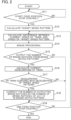
Fig. 2 is a view showing an example of a flowchart of a fixed position stop control processing according to the first embodiment. -
Fig. 3 is a view showing a relationship between the train speed and the distance to a target stop point under the fixed position stop control according to the first embodiment. -
Fig. 4 is a view showing an example of a brake notch pattern correction according to the first embodiment. - An embodiment of the present invention will be described referring to the drawings.
-
Fig. 1 shows an overall structure of a train control system 1 according to a first embodiment. The train control system 1 allows execution of control (fixed position stop control) for stopping atrain 100 at a target stop point as a target point at which thetrain 100 is stopped. - The
train 100 includes aspeed detection unit 101 capable of detecting a current speed of thetrain 100, aposition detection unit 102 capable of detecting a current position of thetrain 100, acontrol unit 103 for calculating the number of brake notches for braking thetrain 100 from the information on the speed of thetrain 100, which has been detected by thespeed detection unit 101, and the position of thetrain 100, which has been detected by theposition detection unit 102, and abrake output unit 104 for operating the brake of the train 100 (executing control for stopping the train 100) based on the number of brake notches outputted from thecontrol unit 103. - The
control unit 103 is constituted by a calculator (computer) with a CPU for executing processing, a memory for storing the information, and the like. Functions of the control unit 103 (calculation unit, determination unit, correction unit, and the like) may be implemented by executing the program read into the memory by the CPU (software), by hardware such as an exclusive circuit, and by combination of the software and the hardware. The function of thecontrol unit 103 may be partially implemented by other computer communicable with thecontrol unit 103. - The
control unit 103 calculates a target speed pattern (an example of target speed information) that prescribes the relationship between the distance to the target stop point and the speed of thetrain 100 utilizing the deceleration corresponding to the predetermined number of brake notches. - The
control unit 103 stores the brake notch pattern (an example of the brake notch information) that prescribes the relationship of a difference (speed difference) between the speed specified from the target speed pattern and the speed of thetrain 100 with the number of outputted brake notches (stored in the memory). - It is possible to provide the single brake notch pattern (predetermined brake notch pattern) prescribed based on the predetermined number of brake notches, or the respective brake notch patterns (the respective brake notch patterns for correction) prescribed based on the corresponding numbers of brake notches in addition to the predetermined brake notch pattern.
- The
control unit 103 measures actual vehicle characteristics of thetrain 100 which is running at decelerating speeds (operation section, distance between stations, gradient (gradient in the section of the relevant railroad route), train speed, rolling stock type, train type, boarding rate), and controls the deceleration based on the measured vehicle characteristics so that thetrain 100 is stopped at the target stop position accurately. - For example, the
control unit 103 compares the speed change rate (deceleration of the brake notch as a design value) at the speed of the target speed pattern per unit time, and the speed change rate (deceleration of the train 100) at the speed of thetrain 100 per unit time. If it is determined that the comparison result is within a predetermined tolerance range, the brake notch pattern used for determining the number of brake notches is corrected to be consistent with the actual deceleration of thetrain 100. For example, if the deceleration of thetrain 100 is lower than the deceleration of the target speed pattern, thecontrol unit 103 corrects the brake notch pattern so that the braking force to thetrain 100 is increased. For example, if the deceleration of thetrain 100 is higher than the deceleration of the target speed pattern, thecontrol unit 103 corrects the brake notch pattern so that the braking force to thetrain 100 is reduced. The above-described correction allows thetrain 100 to be accurately stopped at the target stop position. -
Fig. 2 is an example of a flowchart relating to the fixed position stop control processing to be executed by thecontrol unit 103. - The
control unit 103 determines whether or not the fixed position stop control is to be started (step S11). More specifically, thecontrol unit 103 determines whether or not the train has passed over a ground unit indicating a position (control start position) at which the fixed position stop control is started. If it is determined that the fixed position stop control is to be started, thecontrol unit 103 proceeds the processing to step S12. If it is determined that the fixed position stop control is not to be started, thecontrol unit 103 executes the processing in step S11 again. - In step S12, the
control unit 103 calculates the target speed pattern at the deceleration corresponding to the predetermined number of brake notches based on the control start position and the target stop point. - In step S13, the
control unit 103 calculates the difference (speed difference) between the current speed of thetrain 100, which has been detected by thespeed detection unit 101 and the speed of the target speed pattern corresponding to the current position of thetrain 100, which has been detected by theposition detection unit 102. For example, it is possible to calculate the speed difference by subtracting the speed of the target speed pattern from the current speed of thetrain 100. - In step S14, the
control unit 103 executes the brake processing. More specifically, thecontrol unit 103 determines the number of brake notches to be outputted based on the brake notch pattern, the speed specified from the target speed pattern, the current speed of thetrain 100, and the calculated speed difference. When the number of brake notches is determined, thecontrol unit 103 outputs the determined number of brake notches to thebrake output unit 104. Based on the number of brake notches outputted from thecontrol unit 103, thebrake output unit 104 controls braking to thetrain 100. - In step S15, the
control unit 103 determines whether or not the number of brake notches has been outputted from the brake notch pattern (whether or not the number of brake notches has been outputted to the brake output unit 104). If it is determined that the number of brake notches has been outputted to thebrake output unit 104, thecontrol unit 103 proceeds the processing to step S16. If it is determined that the number of brake notches has not been outputted to thebrake output unit 104, thecontrol unit 103 proceeds the processing to step S19. - In step S16, based on the current speed of the
train 100, which has been detected by thespeed detection unit 101, thecontrol unit 103 calculates the current deceleration of thetrain 100. - In step S17, the
control unit 103 determines whether or not the current deceleration of thetrain 100 and the deceleration of the target speed pattern are within a predetermined tolerance range (coincided or not). If it is determined that they are coincided, thecontrol unit 103 proceeds the processing to step S18. If it is determined that they are not coincided, thecontrol unit 103 proceeds the processing to step S19. - In step S18, based on the outputted number of brake notches, the
control unit 103 changes the brake notch pattern. For example, thecontrol unit 103 corrects the outputted number of brake notches as the number of brake notches corresponding to ΔV=0 of the brake notch pattern (the base brake notch pattern is parallely shifted). For example, thecontrol unit 103 is configured to use the brake notch pattern for correction, which is provided corresponding to the outputted number of brake notches. - The processing to be executed in steps S17 and S18 is not limited to the one as described above. For example, in addition to, or instead of steps S17 and S18, the
control unit 103 determines whether or not the deceleration of thetrain 100 has a limiting value (maximum value or minimum value). If it is determined that the limiting value exists, in step S18, the number of brake notches at the deceleration of thetrain 100, which is the closest to the deceleration of the brake notch pattern is specified. It is then possible to change the brake notch pattern based on the specified number of brake notches. Execution of the processing appropriately allows thetrain 100 to stop at the target stop point based on the optimal deceleration among those variable in spite of the determination that there is no coincided deceleration, for example. - In step S19, the
control unit 103 determines whether or not the fixed position stop control is to be finished. More specifically, thecontrol unit 103 determines whether or not thetrain 100 has been stopped. If it is determined that the fixed position stop control is to be finished, thecontrol unit 103 finishes execution of the fixed position stop control. If it is determined that the fixed position stop control is not to be finished, thecontrol unit 103 proceeds the processing to step S13. - A specific explanation of the fixed position stop control will be made referring to
Figs. 2 to 4 .Fig. 3 is a view showing a relationship (an example) between the speed of thetrain 100 and the distance to atarget stop point 301 under the fixed position stop control.Fig. 4 is a view showing an example of correction of abrake notch pattern 401. - An explanation will be made by taking the case under the following conditions (A) to (C) as an example.
- It is assumed that the number of brake notches of the
train 100 is in the range from "1" to "7". - It is assumed that a
target speed pattern 302 is calculated utilizing the deceleration corresponding to the number "4" of brake notches as the deceleration corresponding to the predetermined number of brake notches. - The deceleration of the
train 100 varies with a condition of an overhead wire voltage, and a condition of a load compensating device due to the boarding rate. For example, it is assumed that the deceleration of thetrain 100 corresponding to the predetermined number of brake notches is lower than the rated deceleration (deceleration corresponding to the predetermined number of brake notches when designing (designed value of deceleration)) because of a large number of passengers on thetrain 100. - When the
train 100 passes over aground unit 304 at acontrol start point 303 indicating the position from where the fixed position stop control is started, theposition detection unit 102 of thetrain 100 transmits the position information to thecontrol unit 103. Based on the received position information, thecontrol unit 103 determines to start execution of the fixed position stop control (step S11), and arithmetically obtains thetarget speed pattern 302 for stopping the train at thetarget stop point 301 based on the position information (step S12). - The
control unit 103 compares the speed of the train 100 (train speed 305) at thecontrol start point 303 with the speed of thetarget speed pattern 302 to calculate the speed difference (step S13). Thecontrol unit 103 then executes the brake processing (step S14). - At this time, at the
control start point 303, as the relationship of the speed of thetarget speed pattern 302 > the speed of thetrain 100 is established, and the calculated speed difference is smaller than the speed difference corresponding to the number "1" of brake notches, thecontrol unit 103 determines not to set (select) nor output the number of brake notches (step S15). The processing then proceeds to step S19. Thecontrol unit 103 determines whether thetrain 100 has been stopped (step S19). Actually, thetrain 100 is not stopped, and accordingly, the processing proceeds to step S13. - It is assumed that the
control unit 103 executes the similar processing, and thetrain 100 has reached afirst point 306. At thefirst point 306, as the relationship of the speed of thetarget speed pattern 302 > the speed of thetrain 100 is established, and the calculated speed difference is within a speed difference range corresponding to the number of brake notches from "1" to "3", thecontrol unit 103 sets the number of brake notches (any one of the numbers of brake notches from "1" to "3") corresponding to the calculated speed difference from the brake notch pattern 401 (step S14). Then it is determined to output the set number of brake notches (step S15). - The
control unit 103 calculates the current deceleration of the train 100 (step S16), and compares the deceleration of thetarget speed pattern 302 with the deceleration of the train 100 (step S17). At this time, it is assumed that thetarget speed pattern 302 is calculated utilizing the deceleration corresponding to the number "4" of brake notches (condition (B)). Any one of the numbers of brake notches from "1" to "3" is outputted, and the deceleration of thetrain 100 is lower than the deceleration as the designed value (condition (C)). As both decelerations do not coincide with each other, the processing proceeds to step S19. Thecontrol unit 103 determines whether thetrain 100 has been stopped (step S19). As thetrain 100 is not stopped, the processing proceeds to step S13. - It is assumed that the
control unit 103 executes the similar processing, and thetrain 100 has reached asecond point 307. At thesecond point 307, as the speed of thetarget speed pattern 302 is equal to the speed oftrain 100, the speed difference becomes "0". The number of brake notches is set to "4" from the brake notch pattern 401 (step S14). It is determined to output the set number "4" of brake notches (step S15). Thecontrol unit 103 then calculates the current deceleration of the train 100 (step S16). - It is normally assumed that the
target speed pattern 302 is calculated utilizing the deceleration corresponding to the number "4" of brake notches. Therefore, when outputting the number "4" of brake notches, the train is decelerated along thetarget speed pattern 302. In this case, however, the deceleration corresponding to the number "4" of brake notches of thetrain 100 is supposed to be lower than the deceleration corresponding to the number "4" of brake notches as the designed value (condition (c)). Therefore, the speed of thetrain 100 may exceed the speed of thetarget speed pattern 302 without securing sufficient deceleration force. - As the estimated deceleration of the
train 100 cannot be secured, thecontrol unit 103 determines that the calculated deceleration and the deceleration of thetarget speed pattern 302 do not coincide with each other (step S17). The processing then proceeds to step S19. Thecontrol unit 103 determines whether thetrain 100 has been stopped (step S19). As thetrain 100 is not stopped, the processing proceeds to step S13. - It is assumed that the
control unit 103 executes the similar processing, and thetrain 100 has reached athird point 308. At thethird point 308, as the relationship of the speed of thetarget speed pattern 302 < the speed of thetrain 100 is established, and the calculated speed difference is within the speed difference range corresponding to the number of brake notches from "5" to "7", thecontrol unit 103 sets the number of brake notches (any one of numbers of brake notches from "5" to "7") corresponding to the calculated speed difference from thebrake notch pattern 401. It is then determined to output the set number of brake notches (step S15). It is assumed that at thethird point 308, thecontrol unit 103 outputs "5" as the number of brake notches. - The
control unit 103 calculates the current deceleration of the train 100 (step S16). It is assumed that a value 309 (within the predetermined tolerance range) which is the same as the deceleration corresponding to the number "4" of brake notches as the designed value is derived from output of the number "5" of brake notches. In this case, thecontrol unit 103 determines that the calculated deceleration coincides with the deceleration of the target speed pattern 302 (step S17). The processing then proceeds to step S18. - According to the
brake notch pattern 401, the number of brake notches is "4" in the case of ΔV = 0. Meanwhile, the number of brake notches corresponding to the deceleration of thetarget speed pattern 302 is "5". Accordingly, thecontrol unit 103 corrects thebrake notch pattern 401 to abrake notch pattern 402 to be consistent with the number "5" of brake notches (step S18). In other words, thebrake notch pattern 401 is a predetermined function, taking the predetermined number of brake notches ("4" in this example) as an intercept when there is no speed difference. If it is determined that the deceleration of thetrain 100 and the deceleration of thetarget speed pattern 302 are within the predetermined tolerance range, thecontrol unit 103 parallely shifts the predetermined function in a parallel direction, taking the most recently set number of brake notches ("5" in this example) as the intercept so that the braking force to thetrain 100 is increased. Subsequent to correction, in step S14, thecontrol unit 103 sets the number of brake notches using thebrake notch pattern 402. The above-described correction allows a correctedspeed 310 of thetrain 100 to pursue (follow) thetarget speed pattern 302. - Then the
control unit 103 determines whether thetrain 100 has been stopped (step S19). As thetrain 100 is not stopped, the processing proceeds to step S13. - In this example, the explanation has been made on the case in which the deceleration outputted from the
train 100 is lower than the one as the designed value. It is also possible to execute the fixed position stop control as well in the case in which the deceleration outputted from thetrain 100 is higher than the one as the designed value. - In the actual train operation, the actual deceleration corresponding to the outputted number of brake notches is measured, and the brake notch pattern is corrected based on the actual deceleration. This makes it possible to improve accuracy in the fixed position stop control. Furthermore, the speed of the
train 100 may be controlled along the target speed pattern. This makes it possible to avoid circumstances that may deteriorate riding comfort of thetrain 100. - Subsequent to the brake notch pattern correction, the
control unit 103 repeatedly executes the processing for correcting the brake notch pattern based on the speed of thetrain 100 detected by thespeed detection unit 101 until thetrain 100 is stopped. This makes it possible to cope with change in conditions, for example, rain, strong wind, variation in the railway track (being consistent with change in the vehicle characteristics realtime). It is therefore possible to avoid deterioration in accuracy of the fixed position stop control owing to change in the vehicle characteristics. - The embodiment allows execution of the fixed position stop control in accordance with vehicle characteristics.
- In the embodiment as described above, the explanation has been made on the case in which the present invention is applied to the train control system 1. The present invention is not limited to the one as described above, but may be widely applied to various train control systems and train control methods.
- In the above-described embodiment, the explanation has been made on a linear function as the brake notch pattern. The present invention is not limited to the one as described above, but may be any other function, for example, a quadratic function, a step function, and an exponential function as the brake notch pattern.
- In the above-described embodiment, the explanation has been made on the case in which upon output of the number of brake notches from the brake notch pattern, the brake notch pattern is corrected by comparison between the deceleration of the
train 100 and the deceleration of the target speed pattern. The present invention is not limited to the one as described above. In addition to or instead of the above-described case, it is possible to correct the brake notch pattern by comparison between the deceleration of thetrain 100 and the deceleration of the target speed pattern on a regular basis. - The information of the program, the table, the file and the like for implementing the respective functions as described above may be stored in the storage device, for example, a memory, a hard disk, an SSD (Solid State Drive) and the like, or the recording medium, for example, an IC card, an SD card, a DVD and the like.
- The method of detecting the speed of the
train 100 by thespeed detection unit 101 may be implemented in a non-restrictive manner. For example, a compact speed generator may be attached to the axle to measure the generated voltage, frequency and the like. Furthermore, the method that counts the gear of the drive unit by magnetic induction, and any other method are implementable. - The method of detecting the position of the
train 100 by theposition detection unit 102 may be implemented in the non-restrictive manner. For example, it is possible to implement the method for detecting the failure in the flow of the signal current to the relay resulting from the short-circuit of both rails caused by the axle of thetrain 100 that enters into the section where the signal current has been applied to the rail. It is also possible to implement the method of detecting the specific electric wave generated by the device attached to thetrain 100 at a ground side or via GPS (Global Positioning System) in the manner. - The above-described structure may be appropriately modified so long as the structure does not deviate from the scope of the present invention.
-
- 1: train control system,
- 100: train,
- 101: speed detection unit,
- 102: position detection unit,
- 103: control unit,
- 104: brake output unit
Claims (5)
- A train control system (1) for executing control of stopping a train (100) based on a brake notch position for braking the train, comprising:a speed detection unit (101) for detecting a current speed of the train;a position detection unit (102) for detecting a current position of the train;a calculation unit for calculating a target speed pattern prescribing a relationship between a distance to a target stop point indicating a target point at which the train is to be stopped and a speed of the train, and for calculating a speed difference indicating a difference between a speed specified from the target speed pattern based on the current position of the train and the current speed of the train;a determination unit for determining the brake notch position to be outputted based on a brake notch pattern prescribing a relationship of a speed difference between the speed specified from the target speed pattern and the current speed of the train with the brake notch position as a predetermined function in which a predetermined brake notch position is an intercept if there is no speed difference calculated by the calculation unit; anda correction unit for determining whether or not a deceleration derived from the target speed pattern and a deceleration of the train are within a predetermined tolerance range,wherein if the correction unit determines that said decelerations are within the predetermined tolerance range, the correction unit parallely shifts the predetermined function to correct the brake notch pattern, taking the brake notch position most recently determined by the determination unit as the intercept,wherein if the correction unit determines that said decelerations are not within the predetermined tolerance range, the correction unit determines whether or not the deceleration of the train has a limiting value, such that if it is determined that the limiting value exists , the correction unit specifies the brake notch position indicating the deceleration which is the closest to the deceleration derived from the target speed pattern , and parallely shifts the predetermined function to correct the brake notch pattern, taking the specified brake notch position as the intercept, andwherein the determination unit subsequently sets the brake notch position to be outputted based on the function parallely shifted by the correction unit.
- The train control system (1) according to claim 1, wherein if the deceleration of the train is lower than the deceleration derived from the
target speed pattern, the correction unit corrects the brake notch pattern to increase a braking force to the train. - The train control system (1) according to claim 1, wherein if the deceleration of the train is higher than the deceleration derived from the
target speed pattern, the correction unit corrects the brake notch pattern to reduce a braking force to the train. - The train control system (1) according to claim 1, wherein the correction unit corrects the brake notch pattern based on the speed of the train to be detected by the speed detection unit until the train is stopped.
- A train control method for executing control of stopping a train (100) based on a brake notch position for braking the train, the method comprising:a first step in which a speed detection unit (101) detects a current speed of the train;a second step in which a position detection unit (102) detects a current position of the train;a third step in which a calculation unit calculates a target speed pattern prescribing a relationship between a distance to a target stop point indicating a target point at which the train is stopped and a speed of the train, and calculates a speed difference indicating a difference between a speed specified from the target speed pattern based on the current position of the train and the current speed of the train;a fourth step in which a determination unit determines the brake notch position to be outputted based on a brake notch pattern prescribing a relationship of a speed difference between the speed specified from the target speed pattern and the current speed of the train with the brake notch position as a predetermined function in which a predetermined brake notch position is an intercept if there is no speed difference calculated by the calculation unit,; anda fifth step in which a correction unit determines whether or not a deceleration derived from the target speed pattern and a deceleration of the train are within a predetermined tolerance range,wherein if the correction unit determines that said decelerations are within the predetermined tolerance range, the correction unit parallely shifts the predetermined function to correct the brake notch pattern, taking the brake notch position most recently determined by the determination unit as the intercept,wherein if the correction unit determines that said decelerations are not within the predetermined tolerance range, the correction unit determines whether or not the deceleration of the train has a limiting value, such that if it is determined that the limiting value exists , the correction unit specifies the brake notch position indicating the deceleration which is the closest to the deceleration derived from the target speed pattern, and parallely shifts the predetermined function to correct the brake notch pattern, taking the specified brake notch position as the intercept, andwherein the determination unit subsequently sets the brake notch position to be outputted based on the function parallely shifted by the correction unit.
Applications Claiming Priority (2)
| Application Number | Priority Date | Filing Date | Title |
|---|---|---|---|
| JP2018060079 | 2018-03-27 | ||
| PCT/JP2019/003929 WO2019187643A1 (en) | 2018-03-27 | 2019-02-04 | Train control system and train control method |
Publications (3)
| Publication Number | Publication Date |
|---|---|
| EP3778290A1 EP3778290A1 (en) | 2021-02-17 |
| EP3778290A4 EP3778290A4 (en) | 2021-12-29 |
| EP3778290B1 true EP3778290B1 (en) | 2023-12-06 |
Family
ID=68061286
Family Applications (1)
| Application Number | Title | Priority Date | Filing Date |
|---|---|---|---|
| EP19777735.2A Active EP3778290B1 (en) | 2018-03-27 | 2019-02-04 | Train control system and train control method |
Country Status (3)
| Country | Link |
|---|---|
| EP (1) | EP3778290B1 (en) |
| JP (1) | JP7015907B2 (en) |
| WO (1) | WO2019187643A1 (en) |
Families Citing this family (2)
| Publication number | Priority date | Publication date | Assignee | Title |
|---|---|---|---|---|
| WO2022043964A1 (en) * | 2020-08-31 | 2022-03-03 | Faiveley Transport Italia S.P.A. | Braking system for at least one railway vehicle and railway signaling architecture |
| JP7585098B2 (en) * | 2021-03-08 | 2024-11-18 | 株式会社東芝 | Train control device and control method |
Family Cites Families (8)
| Publication number | Priority date | Publication date | Assignee | Title |
|---|---|---|---|---|
| JPS619102A (en) * | 1984-06-20 | 1986-01-16 | Hitachi Ltd | Brake control device for electric vehicles |
| JP3340550B2 (en) * | 1994-03-07 | 2002-11-05 | 株式会社日立製作所 | Train automatic driving device |
| JP4664730B2 (en) * | 2005-05-10 | 2011-04-06 | 株式会社東芝 | Vehicle fixed position stop automatic control device and vehicle driving support device. |
| JP4414383B2 (en) | 2005-08-17 | 2010-02-10 | 三菱電機株式会社 | Automatic train driving device and adjustment method thereof |
| JP4948251B2 (en) * | 2007-04-27 | 2012-06-06 | 三菱電機株式会社 | Automatic train driving device and automatic train driving simulation device |
| JP2011087364A (en) * | 2009-10-14 | 2011-04-28 | Hitachi Ltd | Automatic train drive unit and constant position stop device |
| JPWO2011055470A1 (en) | 2009-11-09 | 2013-03-21 | 三菱電機株式会社 | Fixed position stop support system |
| WO2016035597A1 (en) * | 2014-09-05 | 2016-03-10 | 三菱電機株式会社 | Automated train operation system |
-
2019
- 2019-02-04 WO PCT/JP2019/003929 patent/WO2019187643A1/en not_active Ceased
- 2019-02-04 JP JP2020510344A patent/JP7015907B2/en active Active
- 2019-02-04 EP EP19777735.2A patent/EP3778290B1/en active Active
Also Published As
| Publication number | Publication date |
|---|---|
| JPWO2019187643A1 (en) | 2020-12-03 |
| EP3778290A4 (en) | 2021-12-29 |
| WO2019187643A1 (en) | 2019-10-03 |
| EP3778290A1 (en) | 2021-02-17 |
| JP7015907B2 (en) | 2022-02-03 |
Similar Documents
| Publication | Publication Date | Title |
|---|---|---|
| US20130096741A1 (en) | Apparatus and method for controlling train speed | |
| US11396313B2 (en) | Traffic system, control method, and program | |
| US9975563B2 (en) | Vehicle control device, transport system, vehicle control method, and program | |
| US20200122759A1 (en) | Method and apparatus for generating movement authority for train, train-mounted atp and zc | |
| JP6814658B2 (en) | Vehicle control device, vehicle control method, program | |
| US10363948B2 (en) | Train control device, train control method and computer program product | |
| EP3778290B1 (en) | Train control system and train control method | |
| CN116215600B (en) | Method and device for controlling standard alignment and parking of railway vehicle and computer storage medium | |
| CN117125489A (en) | Magnetic levitation conveying system braking method and device, magnetic levitation conveying system and storage medium | |
| EP3238980B1 (en) | Automatic train operating device, automatic train control method, and program | |
| CN111232019A (en) | Traction brake distribution method, device, system, medium and railway vehicle | |
| KR101571221B1 (en) | Apparatus and Method for Controlling Train Driving | |
| EP4606677A1 (en) | Method and system for on-board train control device to confirm release speed and monitoring location | |
| EP3939820B1 (en) | Train control device and train control method | |
| JP3232428B2 (en) | Automatic train control device | |
| JP7770967B2 (en) | Train operation control device, train operation control method and program | |
| AU2021375837A1 (en) | Vehicle speed calculation device and vehicle speed calculation method | |
| EP3421286B1 (en) | Speed control device, wireless train control system, and speed control method | |
| JP2001063538A (en) | Automatic vehicle control device | |
| CN113997982B (en) | A method and device for setting an auxiliary parking area | |
| KR102916284B1 (en) | Method And Apparatus for Moving Block Train Control System Based on Relative Braking Model | |
| KR101577122B1 (en) | Systems and Method for Stopping Train on Stop Position | |
| JP7721419B2 (en) | Train control device and train control method | |
| JP2013095169A (en) | Ground device, onboard device and vehicle control device | |
| KR102741275B1 (en) | Apparatus and method for train movement information analysis using ktcs on-board signaling device, train control system using the same |
Legal Events
| Date | Code | Title | Description |
|---|---|---|---|
| STAA | Information on the status of an ep patent application or granted ep patent |
Free format text: STATUS: THE INTERNATIONAL PUBLICATION HAS BEEN MADE |
|
| PUAI | Public reference made under article 153(3) epc to a published international application that has entered the european phase |
Free format text: ORIGINAL CODE: 0009012 |
|
| STAA | Information on the status of an ep patent application or granted ep patent |
Free format text: STATUS: REQUEST FOR EXAMINATION WAS MADE |
|
| 17P | Request for examination filed |
Effective date: 20200707 |
|
| AK | Designated contracting states |
Kind code of ref document: A1 Designated state(s): AL AT BE BG CH CY CZ DE DK EE ES FI FR GB GR HR HU IE IS IT LI LT LU LV MC MK MT NL NO PL PT RO RS SE SI SK SM TR |
|
| AX | Request for extension of the european patent |
Extension state: BA ME |
|
| DAV | Request for validation of the european patent (deleted) | ||
| DAX | Request for extension of the european patent (deleted) | ||
| REG | Reference to a national code |
Ref country code: DE Ref legal event code: R079 Free format text: PREVIOUS MAIN CLASS: B60L0015400000 Ipc: B61L0003000000 Ref country code: DE Ref legal event code: R079 Ref document number: 602019042859 Country of ref document: DE Free format text: PREVIOUS MAIN CLASS: B60L0015400000 Ipc: B61L0003000000 |
|
| A4 | Supplementary search report drawn up and despatched |
Effective date: 20211129 |
|
| RIC1 | Information provided on ipc code assigned before grant |
Ipc: B60L 15/20 20060101ALI20211123BHEP Ipc: B61L 3/00 20060101AFI20211123BHEP |
|
| GRAP | Despatch of communication of intention to grant a patent |
Free format text: ORIGINAL CODE: EPIDOSNIGR1 |
|
| STAA | Information on the status of an ep patent application or granted ep patent |
Free format text: STATUS: GRANT OF PATENT IS INTENDED |
|
| INTG | Intention to grant announced |
Effective date: 20230717 |
|
| GRAS | Grant fee paid |
Free format text: ORIGINAL CODE: EPIDOSNIGR3 |
|
| GRAA | (expected) grant |
Free format text: ORIGINAL CODE: 0009210 |
|
| STAA | Information on the status of an ep patent application or granted ep patent |
Free format text: STATUS: THE PATENT HAS BEEN GRANTED |
|
| AK | Designated contracting states |
Kind code of ref document: B1 Designated state(s): AL AT BE BG CH CY CZ DE DK EE ES FI FR GB GR HR HU IE IS IT LI LT LU LV MC MK MT NL NO PL PT RO RS SE SI SK SM TR |
|
| REG | Reference to a national code |
Ref country code: GB Ref legal event code: FG4D |
|
| REG | Reference to a national code |
Ref country code: CH Ref legal event code: EP |
|
| REG | Reference to a national code |
Ref country code: DE Ref legal event code: R096 Ref document number: 602019042859 Country of ref document: DE |
|
| REG | Reference to a national code |
Ref country code: IE Ref legal event code: FG4D |
|
| REG | Reference to a national code |
Ref country code: LT Ref legal event code: MG9D |
|
| PG25 | Lapsed in a contracting state [announced via postgrant information from national office to epo] |
Ref country code: GR Free format text: LAPSE BECAUSE OF FAILURE TO SUBMIT A TRANSLATION OF THE DESCRIPTION OR TO PAY THE FEE WITHIN THE PRESCRIBED TIME-LIMIT Effective date: 20240307 |
|
| REG | Reference to a national code |
Ref country code: NL Ref legal event code: MP Effective date: 20231206 |
|
| PG25 | Lapsed in a contracting state [announced via postgrant information from national office to epo] |
Ref country code: LT Free format text: LAPSE BECAUSE OF FAILURE TO SUBMIT A TRANSLATION OF THE DESCRIPTION OR TO PAY THE FEE WITHIN THE PRESCRIBED TIME-LIMIT Effective date: 20231206 |
|
| PG25 | Lapsed in a contracting state [announced via postgrant information from national office to epo] |
Ref country code: ES Free format text: LAPSE BECAUSE OF FAILURE TO SUBMIT A TRANSLATION OF THE DESCRIPTION OR TO PAY THE FEE WITHIN THE PRESCRIBED TIME-LIMIT Effective date: 20231206 |
|
| PG25 | Lapsed in a contracting state [announced via postgrant information from national office to epo] |
Ref country code: LT Free format text: LAPSE BECAUSE OF FAILURE TO SUBMIT A TRANSLATION OF THE DESCRIPTION OR TO PAY THE FEE WITHIN THE PRESCRIBED TIME-LIMIT Effective date: 20231206 Ref country code: GR Free format text: LAPSE BECAUSE OF FAILURE TO SUBMIT A TRANSLATION OF THE DESCRIPTION OR TO PAY THE FEE WITHIN THE PRESCRIBED TIME-LIMIT Effective date: 20240307 Ref country code: ES Free format text: LAPSE BECAUSE OF FAILURE TO SUBMIT A TRANSLATION OF THE DESCRIPTION OR TO PAY THE FEE WITHIN THE PRESCRIBED TIME-LIMIT Effective date: 20231206 Ref country code: BG Free format text: LAPSE BECAUSE OF FAILURE TO SUBMIT A TRANSLATION OF THE DESCRIPTION OR TO PAY THE FEE WITHIN THE PRESCRIBED TIME-LIMIT Effective date: 20240306 |
|
| REG | Reference to a national code |
Ref country code: AT Ref legal event code: MK05 Ref document number: 1638130 Country of ref document: AT Kind code of ref document: T Effective date: 20231206 |
|
| PG25 | Lapsed in a contracting state [announced via postgrant information from national office to epo] |
Ref country code: NL Free format text: LAPSE BECAUSE OF FAILURE TO SUBMIT A TRANSLATION OF THE DESCRIPTION OR TO PAY THE FEE WITHIN THE PRESCRIBED TIME-LIMIT Effective date: 20231206 |
|
| PG25 | Lapsed in a contracting state [announced via postgrant information from national office to epo] |
Ref country code: SE Free format text: LAPSE BECAUSE OF FAILURE TO SUBMIT A TRANSLATION OF THE DESCRIPTION OR TO PAY THE FEE WITHIN THE PRESCRIBED TIME-LIMIT Effective date: 20231206 Ref country code: RS Free format text: LAPSE BECAUSE OF FAILURE TO SUBMIT A TRANSLATION OF THE DESCRIPTION OR TO PAY THE FEE WITHIN THE PRESCRIBED TIME-LIMIT Effective date: 20231206 Ref country code: NO Free format text: LAPSE BECAUSE OF FAILURE TO SUBMIT A TRANSLATION OF THE DESCRIPTION OR TO PAY THE FEE WITHIN THE PRESCRIBED TIME-LIMIT Effective date: 20240306 Ref country code: NL Free format text: LAPSE BECAUSE OF FAILURE TO SUBMIT A TRANSLATION OF THE DESCRIPTION OR TO PAY THE FEE WITHIN THE PRESCRIBED TIME-LIMIT Effective date: 20231206 Ref country code: LV Free format text: LAPSE BECAUSE OF FAILURE TO SUBMIT A TRANSLATION OF THE DESCRIPTION OR TO PAY THE FEE WITHIN THE PRESCRIBED TIME-LIMIT Effective date: 20231206 Ref country code: HR Free format text: LAPSE BECAUSE OF FAILURE TO SUBMIT A TRANSLATION OF THE DESCRIPTION OR TO PAY THE FEE WITHIN THE PRESCRIBED TIME-LIMIT Effective date: 20231206 |
|
| PG25 | Lapsed in a contracting state [announced via postgrant information from national office to epo] |
Ref country code: IS Free format text: LAPSE BECAUSE OF FAILURE TO SUBMIT A TRANSLATION OF THE DESCRIPTION OR TO PAY THE FEE WITHIN THE PRESCRIBED TIME-LIMIT Effective date: 20240406 |
|
| PG25 | Lapsed in a contracting state [announced via postgrant information from national office to epo] |
Ref country code: AT Free format text: LAPSE BECAUSE OF FAILURE TO SUBMIT A TRANSLATION OF THE DESCRIPTION OR TO PAY THE FEE WITHIN THE PRESCRIBED TIME-LIMIT Effective date: 20231206 Ref country code: CZ Free format text: LAPSE BECAUSE OF FAILURE TO SUBMIT A TRANSLATION OF THE DESCRIPTION OR TO PAY THE FEE WITHIN THE PRESCRIBED TIME-LIMIT Effective date: 20231206 |
|
| PG25 | Lapsed in a contracting state [announced via postgrant information from national office to epo] |
Ref country code: SK Free format text: LAPSE BECAUSE OF FAILURE TO SUBMIT A TRANSLATION OF THE DESCRIPTION OR TO PAY THE FEE WITHIN THE PRESCRIBED TIME-LIMIT Effective date: 20231206 |
|
| PG25 | Lapsed in a contracting state [announced via postgrant information from national office to epo] |
Ref country code: SM Free format text: LAPSE BECAUSE OF FAILURE TO SUBMIT A TRANSLATION OF THE DESCRIPTION OR TO PAY THE FEE WITHIN THE PRESCRIBED TIME-LIMIT Effective date: 20231206 Ref country code: SK Free format text: LAPSE BECAUSE OF FAILURE TO SUBMIT A TRANSLATION OF THE DESCRIPTION OR TO PAY THE FEE WITHIN THE PRESCRIBED TIME-LIMIT Effective date: 20231206 Ref country code: RO Free format text: LAPSE BECAUSE OF FAILURE TO SUBMIT A TRANSLATION OF THE DESCRIPTION OR TO PAY THE FEE WITHIN THE PRESCRIBED TIME-LIMIT Effective date: 20231206 Ref country code: IS Free format text: LAPSE BECAUSE OF FAILURE TO SUBMIT A TRANSLATION OF THE DESCRIPTION OR TO PAY THE FEE WITHIN THE PRESCRIBED TIME-LIMIT Effective date: 20240406 Ref country code: EE Free format text: LAPSE BECAUSE OF FAILURE TO SUBMIT A TRANSLATION OF THE DESCRIPTION OR TO PAY THE FEE WITHIN THE PRESCRIBED TIME-LIMIT Effective date: 20231206 Ref country code: CZ Free format text: LAPSE BECAUSE OF FAILURE TO SUBMIT A TRANSLATION OF THE DESCRIPTION OR TO PAY THE FEE WITHIN THE PRESCRIBED TIME-LIMIT Effective date: 20231206 Ref country code: AT Free format text: LAPSE BECAUSE OF FAILURE TO SUBMIT A TRANSLATION OF THE DESCRIPTION OR TO PAY THE FEE WITHIN THE PRESCRIBED TIME-LIMIT Effective date: 20231206 |
|
| PG25 | Lapsed in a contracting state [announced via postgrant information from national office to epo] |
Ref country code: PL Free format text: LAPSE BECAUSE OF FAILURE TO SUBMIT A TRANSLATION OF THE DESCRIPTION OR TO PAY THE FEE WITHIN THE PRESCRIBED TIME-LIMIT Effective date: 20231206 Ref country code: PT Free format text: LAPSE BECAUSE OF FAILURE TO SUBMIT A TRANSLATION OF THE DESCRIPTION OR TO PAY THE FEE WITHIN THE PRESCRIBED TIME-LIMIT Effective date: 20240408 |
|
| PG25 | Lapsed in a contracting state [announced via postgrant information from national office to epo] |
Ref country code: PT Free format text: LAPSE BECAUSE OF FAILURE TO SUBMIT A TRANSLATION OF THE DESCRIPTION OR TO PAY THE FEE WITHIN THE PRESCRIBED TIME-LIMIT Effective date: 20240408 Ref country code: PL Free format text: LAPSE BECAUSE OF FAILURE TO SUBMIT A TRANSLATION OF THE DESCRIPTION OR TO PAY THE FEE WITHIN THE PRESCRIBED TIME-LIMIT Effective date: 20231206 |
|
| REG | Reference to a national code |
Ref country code: DE Ref legal event code: R119 Ref document number: 602019042859 Country of ref document: DE |
|
| PG25 | Lapsed in a contracting state [announced via postgrant information from national office to epo] |
Ref country code: MC Free format text: LAPSE BECAUSE OF FAILURE TO SUBMIT A TRANSLATION OF THE DESCRIPTION OR TO PAY THE FEE WITHIN THE PRESCRIBED TIME-LIMIT Effective date: 20231206 |
|
| REG | Reference to a national code |
Ref country code: CH Ref legal event code: PL |
|
| PG25 | Lapsed in a contracting state [announced via postgrant information from national office to epo] |
Ref country code: DK Free format text: LAPSE BECAUSE OF FAILURE TO SUBMIT A TRANSLATION OF THE DESCRIPTION OR TO PAY THE FEE WITHIN THE PRESCRIBED TIME-LIMIT Effective date: 20231206 |
|
| PLBE | No opposition filed within time limit |
Free format text: ORIGINAL CODE: 0009261 |
|
| STAA | Information on the status of an ep patent application or granted ep patent |
Free format text: STATUS: NO OPPOSITION FILED WITHIN TIME LIMIT |
|
| PG25 | Lapsed in a contracting state [announced via postgrant information from national office to epo] |
Ref country code: LU Free format text: LAPSE BECAUSE OF NON-PAYMENT OF DUE FEES Effective date: 20240204 |
|
| PG25 | Lapsed in a contracting state [announced via postgrant information from national office to epo] |
Ref country code: CH Free format text: LAPSE BECAUSE OF NON-PAYMENT OF DUE FEES Effective date: 20240229 |
|
| PG25 | Lapsed in a contracting state [announced via postgrant information from national office to epo] |
Ref country code: SI Free format text: LAPSE BECAUSE OF FAILURE TO SUBMIT A TRANSLATION OF THE DESCRIPTION OR TO PAY THE FEE WITHIN THE PRESCRIBED TIME-LIMIT Effective date: 20231206 |
|
| PG25 | Lapsed in a contracting state [announced via postgrant information from national office to epo] |
Ref country code: SI Free format text: LAPSE BECAUSE OF FAILURE TO SUBMIT A TRANSLATION OF THE DESCRIPTION OR TO PAY THE FEE WITHIN THE PRESCRIBED TIME-LIMIT Effective date: 20231206 Ref country code: LU Free format text: LAPSE BECAUSE OF NON-PAYMENT OF DUE FEES Effective date: 20240204 Ref country code: DK Free format text: LAPSE BECAUSE OF FAILURE TO SUBMIT A TRANSLATION OF THE DESCRIPTION OR TO PAY THE FEE WITHIN THE PRESCRIBED TIME-LIMIT Effective date: 20231206 Ref country code: CH Free format text: LAPSE BECAUSE OF NON-PAYMENT OF DUE FEES Effective date: 20240229 |
|
| 26N | No opposition filed |
Effective date: 20240909 |
|
| REG | Reference to a national code |
Ref country code: BE Ref legal event code: MM Effective date: 20240229 |
|
| PG25 | Lapsed in a contracting state [announced via postgrant information from national office to epo] |
Ref country code: DE Free format text: LAPSE BECAUSE OF NON-PAYMENT OF DUE FEES Effective date: 20240903 |
|
| PG25 | Lapsed in a contracting state [announced via postgrant information from national office to epo] |
Ref country code: BE Free format text: LAPSE BECAUSE OF NON-PAYMENT OF DUE FEES Effective date: 20240229 |
|
| PG25 | Lapsed in a contracting state [announced via postgrant information from national office to epo] |
Ref country code: FR Free format text: LAPSE BECAUSE OF NON-PAYMENT OF DUE FEES Effective date: 20240206 |
|
| PG25 | Lapsed in a contracting state [announced via postgrant information from national office to epo] |
Ref country code: IE Free format text: LAPSE BECAUSE OF NON-PAYMENT OF DUE FEES Effective date: 20240204 |
|
| PG25 | Lapsed in a contracting state [announced via postgrant information from national office to epo] |
Ref country code: IE Free format text: LAPSE BECAUSE OF NON-PAYMENT OF DUE FEES Effective date: 20240204 Ref country code: FR Free format text: LAPSE BECAUSE OF NON-PAYMENT OF DUE FEES Effective date: 20240206 Ref country code: DE Free format text: LAPSE BECAUSE OF NON-PAYMENT OF DUE FEES Effective date: 20240903 Ref country code: BE Free format text: LAPSE BECAUSE OF NON-PAYMENT OF DUE FEES Effective date: 20240229 |
|
| PG25 | Lapsed in a contracting state [announced via postgrant information from national office to epo] |
Ref country code: CY Free format text: LAPSE BECAUSE OF FAILURE TO SUBMIT A TRANSLATION OF THE DESCRIPTION OR TO PAY THE FEE WITHIN THE PRESCRIBED TIME-LIMIT; INVALID AB INITIO Effective date: 20190204 |
|
| PG25 | Lapsed in a contracting state [announced via postgrant information from national office to epo] |
Ref country code: HU Free format text: LAPSE BECAUSE OF FAILURE TO SUBMIT A TRANSLATION OF THE DESCRIPTION OR TO PAY THE FEE WITHIN THE PRESCRIBED TIME-LIMIT; INVALID AB INITIO Effective date: 20190204 |
|
| PG25 | Lapsed in a contracting state [announced via postgrant information from national office to epo] |
Ref country code: FI Free format text: LAPSE BECAUSE OF FAILURE TO SUBMIT A TRANSLATION OF THE DESCRIPTION OR TO PAY THE FEE WITHIN THE PRESCRIBED TIME-LIMIT Effective date: 20231207 |
|
| PG25 | Lapsed in a contracting state [announced via postgrant information from national office to epo] |
Ref country code: TR Free format text: LAPSE BECAUSE OF FAILURE TO SUBMIT A TRANSLATION OF THE DESCRIPTION OR TO PAY THE FEE WITHIN THE PRESCRIBED TIME-LIMIT Effective date: 20231206 |
|
| PGFP | Annual fee paid to national office [announced via postgrant information from national office to epo] |
Ref country code: GB Payment date: 20260119 Year of fee payment: 8 |
|
| PGFP | Annual fee paid to national office [announced via postgrant information from national office to epo] |
Ref country code: IT Payment date: 20260126 Year of fee payment: 8 |