EP3777353B1 - Verfahren zur betriebsmittelplanung, netzwerkknoten und nutzergerät - Google Patents
Verfahren zur betriebsmittelplanung, netzwerkknoten und nutzergerät Download PDFInfo
- Publication number
- EP3777353B1 EP3777353B1 EP19799003.9A EP19799003A EP3777353B1 EP 3777353 B1 EP3777353 B1 EP 3777353B1 EP 19799003 A EP19799003 A EP 19799003A EP 3777353 B1 EP3777353 B1 EP 3777353B1
- Authority
- EP
- European Patent Office
- Prior art keywords
- scheduling
- information
- time
- radio resources
- scheduling information
- Prior art date
- Legal status (The legal status is an assumption and is not a legal conclusion. Google has not performed a legal analysis and makes no representation as to the accuracy of the status listed.)
- Active
Links
Images



Classifications
-
- H—ELECTRICITY
- H04—ELECTRIC COMMUNICATION TECHNIQUE
- H04W—WIRELESS COMMUNICATION NETWORKS
- H04W72/00—Local resource management
- H04W72/50—Allocation or scheduling criteria for wireless resources
- H04W72/535—Allocation or scheduling criteria for wireless resources based on resource usage policies
-
- H—ELECTRICITY
- H04—ELECTRIC COMMUNICATION TECHNIQUE
- H04W—WIRELESS COMMUNICATION NETWORKS
- H04W72/00—Local resource management
- H04W72/20—Control channels or signalling for resource management
- H04W72/23—Control channels or signalling for resource management in the downlink direction of a wireless link, i.e. towards a terminal
-
- H—ELECTRICITY
- H04—ELECTRIC COMMUNICATION TECHNIQUE
- H04W—WIRELESS COMMUNICATION NETWORKS
- H04W56/00—Synchronisation arrangements
- H04W56/004—Synchronisation arrangements compensating for timing error of reception due to propagation delay
- H04W56/0045—Synchronisation arrangements compensating for timing error of reception due to propagation delay compensating for timing error by altering transmission time
-
- H—ELECTRICITY
- H04—ELECTRIC COMMUNICATION TECHNIQUE
- H04W—WIRELESS COMMUNICATION NETWORKS
- H04W72/00—Local resource management
- H04W72/12—Wireless traffic scheduling
- H04W72/1263—Mapping of traffic onto schedule, e.g. scheduled allocation or multiplexing of flows
-
- H—ELECTRICITY
- H04—ELECTRIC COMMUNICATION TECHNIQUE
- H04W—WIRELESS COMMUNICATION NETWORKS
- H04W72/00—Local resource management
- H04W72/50—Allocation or scheduling criteria for wireless resources
- H04W72/56—Allocation or scheduling criteria for wireless resources based on priority criteria
- H04W72/566—Allocation or scheduling criteria for wireless resources based on priority criteria of the information or information source or recipient
-
- H—ELECTRICITY
- H04—ELECTRIC COMMUNICATION TECHNIQUE
- H04W—WIRELESS COMMUNICATION NETWORKS
- H04W76/00—Connection management
- H04W76/20—Manipulation of established connections
- H04W76/27—Transitions between radio resource control [RRC] states
-
- H—ELECTRICITY
- H04—ELECTRIC COMMUNICATION TECHNIQUE
- H04W—WIRELESS COMMUNICATION NETWORKS
- H04W72/00—Local resource management
- H04W72/04—Wireless resource allocation
- H04W72/044—Wireless resource allocation based on the type of the allocated resource
- H04W72/0446—Resources in time domain, e.g. slots or frames
Definitions
- the application relates to wireless communication, and more particularly to methods, a network node and a user equipment for resource scheduling.
- NR new radio
- SPS semi-persistent scheduling
- the scheduling is performed in each transmission time interval (TTI).
- TTI transmission time interval
- WO2018027992A1 discloses a resource scheduling method, a scheduler, a base station, a terminal, and a system, belong to the technical field of wireless communication.
- the method is applied to a scheduler of a base station, and includes: receiving SPS configuration information sent by an RRC layer, the SPS configuration information including a period of SPS, the period of the SPS being used for indicating a time interval between two adjacent scheduling sub-frames; determining an sTTI resource activated in a target scheduling sub-frame according to the SPS configuration information and reference information; providing an activation parameter to a physical laver according to the sTTI resource activated in the target scheduling sub-frame, so that the physical layer generates an activation notification containing the activation parameter and send it to the terminal.
- US20160227556A1 discloses a method and an apparatus for controlling data transmission on a radio communication network.
- the method includes: acquiring, by a base station, transmission attribute information, where the transmission attribute information includes attribute information of to-be-transmitted data and scheduling attribute information of the base station; and judging whether the acquired scheduling attribute information of the base station meets a preset scheduling condition; and if yes, the base station sends a scheduling suspension message and/or a scheduling start message to a terminal according to the transmission attribute information.
- WO2018/036433 A1 discloses an information transmitting and receiving method.
- the information transmitting and receiving method comprises: configuring semi-persistent scheduling (SPS) information indicating N transmission opportunities in a SPS cycle, wherein the N transmission opportunities comprise M transmission opportunities used to transmit data by a transmitting end, N is an integer exceeding 1, M is an integer, and 0 ⁇ M ⁇ N; and transmitting, to a terminal, the semi-persistent scheduling information.
- SPS semi-persistent scheduling
- a network node for resource scheduling according to independent claim 7 a method for resource scheduling of a user equipment, UE, according to independent claim 8 and a UE for resource scheduling according to independent claim 13 are provided.
- PDCCH Physical downlink control channel
- DCI downlink control information
- OFDM orthogonal frequency division multiplexing
- Subframe The LTE frame structures are of two types based on topology, either frequency division duplexing (FDD) or time division duplexing (TDD). Total Frame duration is about 10ms. There are total 10 subframes in a frame. Each subframe is composed of 2 time slots.
- FDD frequency division duplexing
- TDD time division duplexing
- TTI is a parameter related to encapsulation of data from higher layers into frames for transmission on the radio link layer.
- DCI refer to downlink (DL) control information transmitted from the gNB to the UE, and can be carried on PDCCH.
- DCI includes but not limit to uplink (UL)/DL resource allocation, hybrid automatic repeat request (HARQ) information, power control information, and the like.
- UE In order to receive physical downlink shared channel (PDSCH) or transmit physical uplink shared channel (PUSCH), generally, UE has to receive and decode PDCCH in which DCI is carried. DCI defines how to transmit PDSCH or PUSCH in air interfaces. UE obtains from DCI resource allocation information for scheduled PDSCH or PUSCH. DCI may include allocation information for both time domain resource and frequency domain resource. As can be seen, PDCCH carries all allocation information for both the downlink and uplink shared channels, that is, PDSCH and PUSCH, respectively.
- NR new radio
- SPS semi-persistent scheduling
- each new data packet has a control signaling, such as PDCCH, to indicate resources and a transmission mode.
- PDCCH control signaling
- UE receives downlink data and transmits uplink data according to the PDCCH delivered by the gNB in each TTI.
- each allocation is carried as a DCI and the size of the DCI depends upon several factors including whether it is for uplink or downlink allocation. Since the PDCCH is limited in size (generally, 3 OFDM symbol times), there is a limit as to how many DCIs can be carried in a subframe (1 ms). In order to support more allocations, without increasing the size of the PDCCH, SPS is proposed. Compared with dynamic scheduling, SPS can significantly reduce control channel overhead for applications that require persistent radio resource allocations such as VoIP.
- gNB pre-configures SPS function for a specific UE via configuring information such as SPS-Config, then the gNB will use a PDCCH scrambled with SPS C-RNTI (cell radio network temporary identifier) to activate the SPS function and allocate SPS resources.
- the UE can use the SPS resources periodically for data transmission or reception, and the gNB does not have to transmit a PDCCH or DCI indicative of resources allocated in subsequent SPS subframes.
- the SPS function is pre-configured by gNB with the SPS C-RNTI (allocation ID) and a periodicity. Once pre-configured, if the UE were to receive an allocation (DL/UL) using the SPS C-RNTI, then this one allocation would repeat according to the pre-configured periodicity.
- resources can be scheduled periodically through PDCCH or radio resource control (RRC).
- RRC radio resource control
- For the PDCCH it will configure periodicity in advance and will provide specific radio resource for the UE. Only after receiving the PDCCH, the UE will use the resource indicated in the PDCCH to periodically transmit data in downlink or uplink (DL/UL).
- For the RRC it will configure the periodicity and resource together to the UE, and UE will use the specific resource to transmit data in the periodicity configured by the RRC.
- the UE still have to monitor PDCCH for dynamic scheduling. If the UE receives a PDCCH scrambled by C-RNTI in the SPS subframe, i.e., dynamic scheduling, the resources allocated by the PDCCH will replace SPS resources in the current subframe since the dynamic scheduling has a higher priority than SPS. But the PDCCH for dynamic scheduling is valid only for the current subframe and will not affect subsequent subframes.
- SPS deactivation is also required. Once SPS service is finished, gNB will use another PDDCH scrambled with SPS C-RNTI to release the SPS resources.
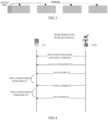
- SPS activation, SPS deactivation, and switching between dynamic scheduling and SPS are further illustrated in FIG.5 .
- SPS is activated and SPS resources are allocated with a PDCCH scrambled by SRS C-RNTI.
- UE can use the SPS allocated to transmit or receive data.
- subframe C a PDCCH for dynamic scheduling is received and in subframe D, the SPS resources are covered by the dynamic resources because the dynamic scheduling has higher priority than SPS, but the dynamic scheduling will not affect subsequent SPS scheduling, consequently, in subframe E, SPS resources are used again.
- subframe F a PDCCH for releasing SPS resources is received and at this time, this round of SPS scheduling is finished.
- the PDCCH for releasing SPS resources can be occurred in any subframe.
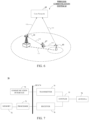
- FIG. 6 illustrates system architecture of a wireless communication system involved in this application.
- the wireless communication system can work in the high frequency band and can be a LTE system, 5G system, NR system, M2M (Machine to Machine) system, and the like.
- the wireless communication system 60 may include a master node (MN) 61, a secondary node (SN) 63, one or more terminal device 67, and a core network 65.
- the terminal device 67 establishes connection with the MN 61 the SN 63respectively.
- the MN 61and the SN 63 are network equipment.
- the MN 61 or the SN 63 can be a base transceiver station (BTS) in a time division synchronous code division multiple access(TD-SCDMA) system, an eNB in a LTE system, a gNB in a NR system.
- BTS base transceiver station
- TD-SCDMA time division synchronous code division multiple access
- eNB in a LTE system
- gNB in a NR system.
- the MN 61 or the SN 63 can be an access point (AP), a central unit, or other network entities, and may include all or part of the functions of the above network entities.
- AP access point
- the terminal device 67 can be distributed over the entire wireless communication system 60, and can be stable or mobile.
- the terminal device 67 can be implemented as a mobile device, a mobile station, a mobile unit, a M2M terminal, a wireless unit, a remote unit, an user gent, a mobile client, and the like.
- FIG. 7 is a diagram illustrating MN or SN (collectively known as a network node) according to an implementation.
- Network node 70 can be functioned an eNB or gNB illustrated in FIG.6 .
- the network node 70 includes one or more network device processors 71, a memory 72, a communication interface 73, a transmitter 75, and a receiver 76. These components may be connected via a bus 74 or other means.
- the network node 70 may further include a coupler 77 and an antenna 78 connected to the coupler 77.
- Communication interface 73 can be a LTE (4G) communication interface, a 5G communication interface, or a future new air interface. Communication interface 73 may be used for network node 70 to communicate with other communication devices, such as user equipment of FIG.6 or other network devices. The network node 70 may also be equipped with a wired interface for wired communication.
- LTE (4G) communication interface a LTE (4G) communication interface
- 5G communication interface a 5G communication interface
- Communication interface 73 may be used for network node 70 to communicate with other communication devices, such as user equipment of FIG.6 or other network devices.
- the network node 70 may also be equipped with a wired interface for wired communication.
- Transmitter 75 may be used to transmit signals output from network device processor 71, such as perform signal modulation.
- the transmitter 75 can be configured to transmit control message in various manners given later.
- Receiver 76 can be used for receiving and/or processing of signals received via antenna 78, for example, signal demodulation.
- the transmitter 75 and the receiver 76 can be considered as a wireless modem.
- more than one transmitter 75 can be provided.
- more than one receiver 76 can be provided.
- Network device processor 71 can be responsible for wireless channel management, communication link establishment, and cell switching control for users within a control area. Network device processor 71 can also read and execute computer readable instructions such as those stored in memory 72 which is coupled thereto. Memory 72 is configured to store various software programs and/or instructions, operating systems, and network communication programs or protocols. Memory 72 may include high speed random access memory (RAM), and can also include non-transitory memory, such as one or more disk storage devices, flash memory devices, or other nonvolatile solid-state storage devices.
- RAM high speed random access memory
- non-transitory memory such as one or more disk storage devices, flash memory devices, or other nonvolatile solid-state storage devices.
- the structure illustrated in FIG.7 can be equally applies to terminals which can communicate with the network node.
- the receiver 76, the communication interface 73, and/or the antenna 78 can be applied to receive the control message from the network node, the receiver 76 may further demodulate the information and forward the demodulated information to the processor 71 for a subsequent process or may store the demodulated information in the memory 72.
- gNB is taken as an example of the MN 61 or the SN 63 which can carry out resource scheduling for the UE.
- a method for scheduling resource is provided.
- the method is applicable to a network node such as the gNB illustrated in FIG.7 .
- a network node such as the gNB illustrated in FIG.7 .
- signaling/data which will definitely transmitted later, for example, RRC reconfiguration, connection setup, handover complete, connection establishment complete, connection resume complete, etc.
- RRC reconfiguration connection setup
- handover complete connection establishment complete
- connection resume complete etc.
- radio resources scheduled for UE are obtained, and scheduling information, which contains the scheduled radio resources, is transmitted to the UE.
- the scheduling information is configured to instruct the UE to use the scheduled radio resources to transmit or receive data after a predetermined time or after a time indicated by the scheduling information.
- Such communication between the gNB and the UE is illustrated in FIG.8 .
- the radio resources thus allocated can be used for uplink transmission or downlink transmission.
- the UE can use the resources thus allocated for UE feedback, such as complete message for connection request, handover, and the like, or even packet data.
- the scheduling information can be carried by downlink control information or RRC signaling.
- the scheduling information may further includes all information for specific radio resources which are the same as existing LTE or NR specification, for example, a flag or filed such as Config_UL or Config_DL indicative of UL resource or DL resource respectively, or information indicative of a location of the scheduled radio resources.
- the predetermined time can be determined in advance in various manners.
- the predetermined time can be determined by the gNB and the UE in advance through negotiation.
- the predetermined time can be generally specified in specification or standard. In this way, the gNB and UE can both know the resources will be there after, e.g. 4ms (the predetermined time).
- the UE since the predetermined time is both known to the gNB and the UE, once the scheduling information is received, the UE will be aware of data transmission using the scheduled radio resources after the predetermined time.
- the scheduling information can further include time information, which, as the name suggests, is configured to instruct the UE to use the scheduled radio resources to transmit or receive data at a time indicated by the time information.
- time information is for indicating when the resources are activated, or, when the resources allocated by the network side are activated for use.
- time information it can be timer or offset related, which will be detailed below.
- the time information is timer related. Specifically, the time information is configured to trigger a timer configured at the UE and instruct the UE to use the scheduled radio resources to transmit or receive data when the timer expires.
- the timer can be configured to have a duration such as several (x ms) millisecond.
- the UE will start the timer and when the timer expires, the UE can use the scheduled radio resources for data transmission.
- the timer is not necessarily configured at the UE.
- the time information per se can be the timer and in this case, once the scheduling information is received, the UE obtains from the scheduling information the timer to start the same, and can use the scheduled radio resources for data transmission when the timer expires.
- the time information can be a time offset, which is configured to instruct the UE to use the scheduled radio resource to transmit or receive data at a time indicated by the time offset, that is, transmit or receive data when the time offset elapsed.
- the time offset when the time offset elapsed, the resource is activated.
- Both the timer and the time offset contribute to advantages of the disclosure and can be chosen according to message design.
- the network side could provide the scheduling information for the signaling/data which will happen some time later, e.g. several (x ms) millisecond.
- the time information can also be configured to instruct the deactivation (that is, release time) of the scheduled radio resource.
- Timer A and Timer B are provided, with Timer A indicates the activation time and Timer B indicates the deactivation time.
- Timer B has duration longer than Timer A.
- Timer A and Timer B both starts when the scheduling information containing the time information is received at the UE.
- Timer A expires, the resource is activated, which means that the UE can use the resource to transmit or receive data. Since Timer B has duration longer than Timer A, Timer B expires later than Timer A.
- Timer B expires, the resource allocated is no longer available for the UE and is released. As such, the scheduling is deactivated.
- Timer A and Timer B a time window is defined, and UE can use resources allocated for data transmission or reception within the time window.
- the UE determines the scheduled radio resources and use the scheduled radio resources to transmit or receive data after a predetermined time or after a time indicated by the scheduling information.
- the predetermined time can be negotiated by the gNB and the UE in advance or can be defined in specification or standard of communication industry.
- the time indicated by the scheduling information can be a timer or offset for example.
- the timer is trigged when the scheduling information is received, and similarly, the time offset starts when the scheduling information is received. Accordingly, the UE can transmit or receive data when the timer expires or when the time offset is elapsed.
- Design of the scheduling scheme of the disclosure also takes compatibility with existing scheduling schemes into consideration, such that the scheduling scheme provided herein can be used in parallel or together with existing scheduling schemes such as SPS scheduling without conflict.
- the scheduling information transmitted to the UE may further contain a periodicity and a flag (specifically, SPS flag), for example, in addition to the timer (time information).
- the periodicity can be treated as time domain resource to distinguish from the frequency domain resource.
- the flag is for indicating that the resource allocated or to be allocated is periodically scheduled according to the periodicity after activation of the resource.
- the UE can use the resource allocated for UL/DL transmission, and then the UE can continue to use the resource periodically according to the periodicity, for example, every 5ms.
- the UE may still have to monitor other scheduling on PDCCH for example.
- a SPS scheduling or dynamic scheduling PDCCH is received.
- the priority for each scheduling scheme for example, as one possibility, the dynamic scheduling has the top priority, then the SPS scheduling, and the pre-scheduling scheme according to the implementations of the disclosure as the lowest priority.
- the dynamic scheduling has the top priority, followed by the pre-scheduling scheme according to the implementations of the disclosure, and at the end, the SPS scheduling.
- the priority for the pre-scheduling scheme related to the scheduling information is predefined with respect to the priority of at least one of semi-persistent scheduling and dynamic scheduling.
- the scheduling scheme has a priority lower than the SPS scheduling
- the SPS scheduling PDCCH if a SPS scheduling PDCCH is received, the SPS scheduling will take over the pre-scheduling provide herein. But if the timer is set to have duration long enough, the SPS scheduling may be released before the timer expires, then the pre-scheduling scheme can be recovered to wait for the timer to expire.
- the dynamic scheduling will take over the pre-scheduling provide herein.
- the dynamic scheduling acts only on the current subframe without affecting subsequent subframes, if the timer is still in process when the dynamic scheduling is finished, the pre-scheduling of the disclosure can be recovered and the resource will be activated when the timer expires, as described above.
- the network node here is a gNB for example.
- the gNB provided herein can be configured to obtain radio resources scheduled for UE, and to transmit to the UE scheduling information, which contains the scheduled radio resources and is configured to instruct the UE to use the scheduled radio resources to transmit or receive data after a predetermined time or after a time indicated by the scheduling information.
- the gNB can be structured to have a transmitter or a transceiver, which can transmit messages, signaling, or data via PDCCH.
- the gNB can be structured as that illustrated in FIG.7 .
- the User equipment provided herein can be configured to receive the scheduling information and decode the same.
- the scheduling information contains scheduled radio resources and is configured to instruct the UE to use the scheduled radio resources to transmit or receive data after a predetermined time or after a time indicated by the scheduling information.
- the UE can be structured as that illustrated in FIG.7 .
- the UE can be structured to have a receiver or a transceiver.
- the receiver or transceiver can have a message parsing function for example.
- this disclosure provides methods and equipment for scheduling for some signaling/data which will happen definitely in future.
- a computer program to instruct related hardware, and the program can be stored in a non-transitory computer readable storage medium.
- a non-transitory computer readable storage medium is provided.
- the non-transitory computer readable storage medium is configured to store at least one computer readable program which, when executed by a computer, cause the computer to carry out all or part of the operations of the method for pre-scheduling resource of the disclosure.
- Examples of the non-transitory computer readable storage medium include but are not limited to read only memory (ROM), random storage memory (RAM), disk or optical disk, and the like.
Landscapes
- Engineering & Computer Science (AREA)
- Computer Networks & Wireless Communication (AREA)
- Signal Processing (AREA)
- Mobile Radio Communication Systems (AREA)
Claims (13)
- Verfahren zur Ressourcenplanung eines Netzwerkknotens (61, 63, 70), umfassend:Erhalten von Funkressourcen, die für ein Benutzergerät (User Equipment, UE) (67) geplant sind; undÜbertragen von Planungsinformationen an das UE,wobei die Planungsinformationen die geplanten Funkressourcen umfassen und konfiguriert sind, um eine Aktivierungszeit der geplanten Funkressourcen anzugeben,wobei die Planungsinformationen ferner konfiguriert sind, um das UE anzuweisen, die geplanten Funkressourcen zu verwenden, um Daten nach einem vorbestimmten Zeitpunkt oder nach der durch die Planungsinformationen angegebenen Aktivierungszeit zu übertragen oder zu empfangen, unddadurch gekennzeichnet, dass:
eine Priorität für ein Vorplanungsschema, das sich auf die Planungsinformationen bezieht, in Bezug auf eine Priorität von zumindest einer von einer semi-persistenten Planung und einer dynamischen Planung vordefiniert wird. - Verfahren nach Anspruch 1, wobei die Planungsinformationen ferner Zeitinformationen umfassen und wobei die Zeitinformationen konfiguriert sind, um das UE anzuweisen, die geplanten Funkressourcen zu verwenden, um Daten zu einem durch die Zeitinformationen angegebenen Zeitpunkt zu übertragen oder zu empfangen.
- Verfahren nach Anspruch 2, wobei es sich bei den Zeitinformationen um einen Zeitversatz handelt, und
wobei der Zeitversatz konfiguriert ist, um das UE anzuweisen, die geplante Funkressource zu verwenden, um Daten zu einem durch den Zeitversatz angegebenen Zeitpunkt zu übertragen oder zu empfangen. - Verfahren nach einem der Ansprüche 1 bis 3, wobei die Planungsinformationen in einem Steuerkanal der physischen Schicht übertragen werden.
- Verfahren nach einem der Ansprüche 1 bis 3, wobei die Planungsinformationen durch Downlink-Steuerinformations- oder Funkressourcensteuerungs- (Radio Resource Control, RRC)-Signalisierung transportiert werden.
- Verfahren nach einem der Ansprüche 1 bis 3, wobei die Planungsinformationen ferner mindestens einen Standort der geplanten Funkressourcen und einen Typ der geplanten Funkressourcen umfassen.
- Netzwerkknoten (61, 63, 70) zur Ressourcenplanung, umfassend:einen Prozessor (71);einen Speicher (72) zum Speichern computerlesbarer Anweisungen, die bei Ausführung durch den Prozessor (72) mit dem Prozessor (72) betreibbar sind, um das Verfahren nach einem der Ansprüche 1 bis 6 durchzuführen.
- Verfahren zur Ressourcenplanung, das an einem Benutzergerät (UE) (67) durchgeführt wird und umfasst:Empfangen von Planungsinformationen von einem Netzwerkknoten (61, 63, 70),wobei die Planungsinformationen von dem Netzwerkknoten bestimmte geplante Funkressourcen umfassen und konfiguriert sind, um eine Aktivierungszeit der geplanten Funkressourcen anzugeben,wobei die Planungsinformationen ferner konfiguriert sind, um das UE anzuweisen, die geplanten Funkressourcen zu verwenden, um Daten nach einem vorbestimmten Zeitpunkt oder nach der durch die Planungsinformationen angegebenen Aktivierungszeit zu übertragen oder zu empfangen, unddadurch gekennzeichnet, dass:
eine Priorität für ein Vorplanungsschema, das sich auf die Planungsinformationen bezieht, in Bezug auf eine Priorität von zumindest einer von einer semi-persistenten Planung und einer dynamischen Planung vordefiniert wird. - Verfahren nach Anspruch 8, ferner umfassend:
Übertragen oder Empfangen von Daten mit den geplanten Funkressourcen nach dem vorbestimmten Zeitpunkt oder nach dem durch die Planungsinformationen angegebenen Zeitpunkt. - Verfahren nach Anspruch 8, wobei die Planungsinformationen ferner Zeitinformationen umfassen, wobei das Verfahren ferner umfasst:
Übertragen oder Empfangen von Daten auf den geplanten Funkressourcen zu einem durch die Zeitinformationen angegebenen Zeitpunkt. - Verfahren nach Anspruch 10, wobei es sich bei den Zeitinformationen um einen Zeitversatz handelt, und
wobei der Zeitversatz konfiguriert ist, um das UE anzuweisen, die geplante Funkressource zu verwenden, um Daten zu einem durch den Zeitversatz angegebenen Zeitpunkt zu übertragen oder zu empfangen. - Verfahren nach einem der Ansprüche 8 bis 11, wobei die Planungsinformationen ferner mindestens einen Standort der geplanten Funkressourcen und einen Typ der geplanten Funkressourcen umfassen.
- Benutzergerät (67) zur Ressourcenplanung, umfassend:einen Prozessor (71);einen Speicher (72) zum Speichern computerlesbarer Anweisungen, die bei Ausführung durch den Prozessor (71) mit dem Prozessor (71) betreibbar sind, um das Verfahren nach einem der Ansprüche 8 bis 12 durchzuführen.
Applications Claiming Priority (2)
| Application Number | Priority Date | Filing Date | Title |
|---|---|---|---|
| US201862667502P | 2018-05-05 | 2018-05-05 | |
| PCT/CN2019/082915 WO2019214405A1 (en) | 2018-05-05 | 2019-04-16 | Method for resource scheduling and network node |
Publications (3)
| Publication Number | Publication Date |
|---|---|
| EP3777353A1 EP3777353A1 (de) | 2021-02-17 |
| EP3777353A4 EP3777353A4 (de) | 2021-06-09 |
| EP3777353B1 true EP3777353B1 (de) | 2023-11-01 |
Family
ID=68467261
Family Applications (1)
| Application Number | Title | Priority Date | Filing Date |
|---|---|---|---|
| EP19799003.9A Active EP3777353B1 (de) | 2018-05-05 | 2019-04-16 | Verfahren zur betriebsmittelplanung, netzwerkknoten und nutzergerät |
Country Status (8)
| Country | Link |
|---|---|
| US (1) | US11723055B2 (de) |
| EP (1) | EP3777353B1 (de) |
| JP (1) | JP7403471B2 (de) |
| KR (1) | KR102831560B1 (de) |
| CN (1) | CN111279753B (de) |
| AU (1) | AU2019267724A1 (de) |
| TW (1) | TW201947983A (de) |
| WO (1) | WO2019214405A1 (de) |
Families Citing this family (3)
| Publication number | Priority date | Publication date | Assignee | Title |
|---|---|---|---|---|
| WO2020019258A1 (zh) * | 2018-07-26 | 2020-01-30 | 北京小米移动软件有限公司 | 下行控制信息发送方法、接收方法、装置及存储介质 |
| JP7416206B2 (ja) * | 2019-08-16 | 2024-01-17 | 富士通株式会社 | 上りリンク信号の送受信方法及び装置 |
| CN120075845A (zh) * | 2021-01-15 | 2025-05-30 | 华为技术有限公司 | 一种参数的传输方法和装置 |
Citations (3)
| Publication number | Priority date | Publication date | Assignee | Title |
|---|---|---|---|---|
| WO2018036433A1 (zh) * | 2016-08-25 | 2018-03-01 | 中兴通讯股份有限公司 | 信息发送、接收方法及装置、基站、终端 |
| WO2019099827A1 (en) * | 2017-11-17 | 2019-05-23 | Qualcomm Incorporated | Methods for beam determination after beam pair link indication |
| EP3755039A1 (de) * | 2018-02-15 | 2020-12-23 | Ntt Docomo, Inc. | Benutzerendgerät und drahtloskommunikationsverfahren |
Family Cites Families (15)
| Publication number | Priority date | Publication date | Assignee | Title |
|---|---|---|---|---|
| CN101965037B (zh) * | 2009-07-22 | 2013-01-30 | 电信科学技术研究院 | 一种非连续接收处理方法及设备 |
| US8625442B2 (en) * | 2010-08-19 | 2014-01-07 | Motorola Mobility Llc | Method and apparatus for determining when to use contention-based access for transmitting data in a wireless network |
| CN103209489B (zh) * | 2012-01-17 | 2017-04-12 | 华为技术有限公司 | 数据的传输方法、基站和用户设备 |
| EP4207668A1 (de) | 2013-01-11 | 2023-07-05 | InterDigital Patent Holdings, Inc. | System und verfahren zur adaptiven modulation |
| CN104604287B (zh) * | 2013-08-30 | 2019-04-23 | 华为技术有限公司 | 一种无线通信网络数据传输的控制方法及装置 |
| US10448448B2 (en) * | 2015-09-18 | 2019-10-15 | Sharp Kabushiki Kaisha | Terminal device that stops an uplink transmission after considering a timer as being expired, base station device that considers an uplink transmission stopped after considering a timer as being expired, and communication method and integrated circuit corresponding to same |
| PL3403450T3 (pl) * | 2016-01-11 | 2020-05-18 | Telefonaktiebolaget Lm Ericsson (Publ) | Sposób sterowania działaniami trybu połączenia DRX |
| US10595309B2 (en) * | 2016-05-04 | 2020-03-17 | Intel IP Corporation | Downlink control channel transmissions |
| CN109314881B (zh) * | 2016-06-30 | 2022-07-05 | 夏普株式会社 | 终端装置、基站装置、通信方法 |
| JP6492167B2 (ja) * | 2016-08-12 | 2019-03-27 | 北京小米移動軟件有限公司Beijing Xiaomi Mobile Software Co.,Ltd. | リソーススケジューリング方法、スケジューラ、基地局、端末、システム、プログラム及び記憶媒体 |
| US11252717B2 (en) * | 2016-09-02 | 2022-02-15 | Huawei Technologies Co., Ltd. | Co-existence of latency tolerant and low latency communications |
| KR102685320B1 (ko) * | 2017-02-10 | 2024-07-17 | 삼성전자 주식회사 | 이동 통신 시스템에서 다중연결을 사용한 핸드오버 시 보안키를 처리하는 방법 및 장치 |
| EP3603227B1 (de) * | 2017-03-22 | 2023-06-21 | InterDigital Patent Holdings, Inc. | Dynamisches interferenzmanagement in nr-dynamischen tdd-systemen |
| US10681648B2 (en) * | 2018-01-10 | 2020-06-09 | Comcast Cable Communications, Llc | Power control for channel state information |
| US10779276B2 (en) * | 2018-03-30 | 2020-09-15 | Apple Inc. | Self-contained slot and slot duration configuration in NR systems |
-
2019
- 2019-04-16 EP EP19799003.9A patent/EP3777353B1/de active Active
- 2019-04-16 WO PCT/CN2019/082915 patent/WO2019214405A1/en not_active Ceased
- 2019-04-16 CN CN201980004899.5A patent/CN111279753B/zh active Active
- 2019-04-16 AU AU2019267724A patent/AU2019267724A1/en not_active Abandoned
- 2019-04-16 JP JP2020561876A patent/JP7403471B2/ja active Active
- 2019-04-16 KR KR1020207032479A patent/KR102831560B1/ko active Active
- 2019-05-02 TW TW108115187A patent/TW201947983A/zh unknown
-
2020
- 2020-11-02 US US17/086,810 patent/US11723055B2/en active Active
Patent Citations (5)
| Publication number | Priority date | Publication date | Assignee | Title |
|---|---|---|---|---|
| WO2018036433A1 (zh) * | 2016-08-25 | 2018-03-01 | 中兴通讯股份有限公司 | 信息发送、接收方法及装置、基站、终端 |
| US20190191416A1 (en) * | 2016-08-25 | 2019-06-20 | Zte Corporation | Method for receiving information, base station, and terminal |
| WO2019099827A1 (en) * | 2017-11-17 | 2019-05-23 | Qualcomm Incorporated | Methods for beam determination after beam pair link indication |
| EP3711186A1 (de) * | 2017-11-17 | 2020-09-23 | QUALCOMM Incorporated | Verfahren zur strahlbestimmung nach einer strahlpaarverbindungsanzeige |
| EP3755039A1 (de) * | 2018-02-15 | 2020-12-23 | Ntt Docomo, Inc. | Benutzerendgerät und drahtloskommunikationsverfahren |
Also Published As
| Publication number | Publication date |
|---|---|
| WO2019214405A1 (en) | 2019-11-14 |
| AU2019267724A1 (en) | 2020-11-26 |
| US11723055B2 (en) | 2023-08-08 |
| US20210051687A1 (en) | 2021-02-18 |
| TW201947983A (zh) | 2019-12-16 |
| JP2021522741A (ja) | 2021-08-30 |
| CN111279753B (zh) | 2022-11-08 |
| KR102831560B1 (ko) | 2025-07-09 |
| EP3777353A4 (de) | 2021-06-09 |
| EP3777353A1 (de) | 2021-02-17 |
| KR20210003151A (ko) | 2021-01-11 |
| JP7403471B2 (ja) | 2023-12-22 |
| CN111279753A (zh) | 2020-06-12 |
Similar Documents
| Publication | Publication Date | Title |
|---|---|---|
| CN114208084B (zh) | 用于确定无线通信中的harq定时的方法和装置 | |
| US10750534B2 (en) | Method and apparatus to receive and transmit data in a mobile communication system | |
| KR101967540B1 (ko) | 무선 통신 시스템에서 랜덤 액세스 절차의 Msg3 전송을 개선하기 위한 방법 및 장치 | |
| US11877278B2 (en) | Sidelink DRX timer-based power-saving method and device of power-saving terminal in NR V2X | |
| US11917611B2 (en) | Method and apparatus for receiving UE to perform power saving operation based on PSFCH in NR V2X | |
| CN105122917B (zh) | 动态tdd配置用户设备和方法 | |
| EP4266762A1 (de) | Verfahren und vorrichtung zur durchführung eines drx-betriebs auf basis von ressourcenzuweisungsinformationen in nr v2x | |
| US10182372B2 (en) | Method for transmitting D2D signal in wireless communication system and device therefor | |
| CN106416392B (zh) | 无线通信系统中控制用于终端之间的直接通信的定时提前的方法及其设备 | |
| EP4412375A1 (de) | Verfahren und vorrichtung zur aktivierung und inaktivierung eines bandbreitenteils in einem drahtloskommunikationssystem | |
| WO2017166386A1 (zh) | 一种资源管理方法及相关设备 | |
| US11723055B2 (en) | Method for resource scheduling and network node | |
| US20240389115A1 (en) | Method and device for operating sl drx active time of mode 1 terminal in nr v2x | |
| CN116848906A (zh) | 在无线通信系统中的drx操作方法及设备 | |
| EP4391656A1 (de) | Sl-drx-betriebsverfahren und vorrichtung auf der basis einer sidelink-übertragungsstatusanzeige in nr v2x | |
| US20240397578A1 (en) | Method and device for performing wireless communication related to sl drx in nr v2x | |
| US12004056B2 (en) | Method and apparatus for configuring SL DRX pattern to solve the half-duplex problem in NR V2X | |
| JP2023536002A (ja) | データ送信のための方法および装置 | |
| US20240414739A1 (en) | Method and device for selecting resource in nr v2x in consideration of sl drx active time | |
| US12526875B2 (en) | Method and device for selecting transmission resource on basis of SL DRX HARQ RTT timer operation of reception device in NR V2X | |
| US20240357701A1 (en) | Method and device for setting common sl drx configuration for pc5 unicast in nr v2x | |
| US20250024466A1 (en) | Method and apparatus for performing wireless communication related to sl drx in nr v2x | |
| EP4304293A1 (de) | Verfahren und vorrichtung zur rekonfiguration einer sldrx-konfiguration in nr v2x | |
| EP4462943A1 (de) | Verfahren und vorrichtung zum betrieb eines sl-drx-timers eines endgeräts, das eine dcr-nachricht in nr v2x empfängt | |
| US20250358831A1 (en) | Method and device for configuring parameter related to sl drx operation in nr v2x |
Legal Events
| Date | Code | Title | Description |
|---|---|---|---|
| STAA | Information on the status of an ep patent application or granted ep patent |
Free format text: STATUS: THE INTERNATIONAL PUBLICATION HAS BEEN MADE |
|
| PUAI | Public reference made under article 153(3) epc to a published international application that has entered the european phase |
Free format text: ORIGINAL CODE: 0009012 |
|
| STAA | Information on the status of an ep patent application or granted ep patent |
Free format text: STATUS: REQUEST FOR EXAMINATION WAS MADE |
|
| 17P | Request for examination filed |
Effective date: 20201104 |
|
| AK | Designated contracting states |
Kind code of ref document: A1 Designated state(s): AL AT BE BG CH CY CZ DE DK EE ES FI FR GB GR HR HU IE IS IT LI LT LU LV MC MK MT NL NO PL PT RO RS SE SI SK SM TR |
|
| AX | Request for extension of the european patent |
Extension state: BA ME |
|
| A4 | Supplementary search report drawn up and despatched |
Effective date: 20210510 |
|
| RIC1 | Information provided on ipc code assigned before grant |
Ipc: H04W 52/02 20090101AFI20210503BHEP Ipc: H04W 72/04 20090101ALN20210503BHEP |
|
| DAV | Request for validation of the european patent (deleted) | ||
| DAX | Request for extension of the european patent (deleted) | ||
| STAA | Information on the status of an ep patent application or granted ep patent |
Free format text: STATUS: EXAMINATION IS IN PROGRESS |
|
| 17Q | First examination report despatched |
Effective date: 20220131 |
|
| REG | Reference to a national code |
Ref country code: DE Ref legal event code: R079 Free format text: PREVIOUS MAIN CLASS: H04W0052020000 Ipc: H04W0072230000 Ref country code: DE Ref legal event code: R079 Ref document number: 602019040676 Country of ref document: DE Free format text: PREVIOUS MAIN CLASS: H04W0052020000 Ipc: H04W0072230000 |
|
| GRAP | Despatch of communication of intention to grant a patent |
Free format text: ORIGINAL CODE: EPIDOSNIGR1 |
|
| STAA | Information on the status of an ep patent application or granted ep patent |
Free format text: STATUS: GRANT OF PATENT IS INTENDED |
|
| RIC1 | Information provided on ipc code assigned before grant |
Ipc: H04W 72/0446 20230101ALN20230728BHEP Ipc: H04W 72/23 20230101AFI20230728BHEP |
|
| INTG | Intention to grant announced |
Effective date: 20230814 |
|
| GRAS | Grant fee paid |
Free format text: ORIGINAL CODE: EPIDOSNIGR3 |
|
| GRAA | (expected) grant |
Free format text: ORIGINAL CODE: 0009210 |
|
| STAA | Information on the status of an ep patent application or granted ep patent |
Free format text: STATUS: THE PATENT HAS BEEN GRANTED |
|
| AK | Designated contracting states |
Kind code of ref document: B1 Designated state(s): AL AT BE BG CH CY CZ DE DK EE ES FI FR GB GR HR HU IE IS IT LI LT LU LV MC MK MT NL NO PL PT RO RS SE SI SK SM TR |
|
| REG | Reference to a national code |
Ref country code: GB Ref legal event code: FG4D |
|
| REG | Reference to a national code |
Ref country code: CH Ref legal event code: EP |
|
| REG | Reference to a national code |
Ref country code: IE Ref legal event code: FG4D |
|
| REG | Reference to a national code |
Ref country code: DE Ref legal event code: R096 Ref document number: 602019040676 Country of ref document: DE |
|
| P01 | Opt-out of the competence of the unified patent court (upc) registered |
Effective date: 20240110 |
|
| REG | Reference to a national code |
Ref country code: LT Ref legal event code: MG9D |
|
| REG | Reference to a national code |
Ref country code: NL Ref legal event code: MP Effective date: 20231101 |
|
| PG25 | Lapsed in a contracting state [announced via postgrant information from national office to epo] |
Ref country code: GR Free format text: LAPSE BECAUSE OF FAILURE TO SUBMIT A TRANSLATION OF THE DESCRIPTION OR TO PAY THE FEE WITHIN THE PRESCRIBED TIME-LIMIT Effective date: 20240202 |
|
| PG25 | Lapsed in a contracting state [announced via postgrant information from national office to epo] |
Ref country code: IS Free format text: LAPSE BECAUSE OF FAILURE TO SUBMIT A TRANSLATION OF THE DESCRIPTION OR TO PAY THE FEE WITHIN THE PRESCRIBED TIME-LIMIT Effective date: 20240301 |
|
| PG25 | Lapsed in a contracting state [announced via postgrant information from national office to epo] |
Ref country code: LT Free format text: LAPSE BECAUSE OF FAILURE TO SUBMIT A TRANSLATION OF THE DESCRIPTION OR TO PAY THE FEE WITHIN THE PRESCRIBED TIME-LIMIT Effective date: 20231101 |
|
| REG | Reference to a national code |
Ref country code: AT Ref legal event code: MK05 Ref document number: 1628692 Country of ref document: AT Kind code of ref document: T Effective date: 20231101 |
|
| PG25 | Lapsed in a contracting state [announced via postgrant information from national office to epo] |
Ref country code: NL Free format text: LAPSE BECAUSE OF FAILURE TO SUBMIT A TRANSLATION OF THE DESCRIPTION OR TO PAY THE FEE WITHIN THE PRESCRIBED TIME-LIMIT Effective date: 20231101 |
|
| PG25 | Lapsed in a contracting state [announced via postgrant information from national office to epo] |
Ref country code: AT Free format text: LAPSE BECAUSE OF FAILURE TO SUBMIT A TRANSLATION OF THE DESCRIPTION OR TO PAY THE FEE WITHIN THE PRESCRIBED TIME-LIMIT Effective date: 20231101 |
|
| PG25 | Lapsed in a contracting state [announced via postgrant information from national office to epo] |
Ref country code: ES Free format text: LAPSE BECAUSE OF FAILURE TO SUBMIT A TRANSLATION OF THE DESCRIPTION OR TO PAY THE FEE WITHIN THE PRESCRIBED TIME-LIMIT Effective date: 20231101 |
|
| PG25 | Lapsed in a contracting state [announced via postgrant information from national office to epo] |
Ref country code: NL Free format text: LAPSE BECAUSE OF FAILURE TO SUBMIT A TRANSLATION OF THE DESCRIPTION OR TO PAY THE FEE WITHIN THE PRESCRIBED TIME-LIMIT Effective date: 20231101 Ref country code: LT Free format text: LAPSE BECAUSE OF FAILURE TO SUBMIT A TRANSLATION OF THE DESCRIPTION OR TO PAY THE FEE WITHIN THE PRESCRIBED TIME-LIMIT Effective date: 20231101 Ref country code: IS Free format text: LAPSE BECAUSE OF FAILURE TO SUBMIT A TRANSLATION OF THE DESCRIPTION OR TO PAY THE FEE WITHIN THE PRESCRIBED TIME-LIMIT Effective date: 20240301 Ref country code: GR Free format text: LAPSE BECAUSE OF FAILURE TO SUBMIT A TRANSLATION OF THE DESCRIPTION OR TO PAY THE FEE WITHIN THE PRESCRIBED TIME-LIMIT Effective date: 20240202 Ref country code: ES Free format text: LAPSE BECAUSE OF FAILURE TO SUBMIT A TRANSLATION OF THE DESCRIPTION OR TO PAY THE FEE WITHIN THE PRESCRIBED TIME-LIMIT Effective date: 20231101 Ref country code: BG Free format text: LAPSE BECAUSE OF FAILURE TO SUBMIT A TRANSLATION OF THE DESCRIPTION OR TO PAY THE FEE WITHIN THE PRESCRIBED TIME-LIMIT Effective date: 20240201 Ref country code: AT Free format text: LAPSE BECAUSE OF FAILURE TO SUBMIT A TRANSLATION OF THE DESCRIPTION OR TO PAY THE FEE WITHIN THE PRESCRIBED TIME-LIMIT Effective date: 20231101 Ref country code: PT Free format text: LAPSE BECAUSE OF FAILURE TO SUBMIT A TRANSLATION OF THE DESCRIPTION OR TO PAY THE FEE WITHIN THE PRESCRIBED TIME-LIMIT Effective date: 20240301 |
|
| PG25 | Lapsed in a contracting state [announced via postgrant information from national office to epo] |
Ref country code: SE Free format text: LAPSE BECAUSE OF FAILURE TO SUBMIT A TRANSLATION OF THE DESCRIPTION OR TO PAY THE FEE WITHIN THE PRESCRIBED TIME-LIMIT Effective date: 20231101 Ref country code: RS Free format text: LAPSE BECAUSE OF FAILURE TO SUBMIT A TRANSLATION OF THE DESCRIPTION OR TO PAY THE FEE WITHIN THE PRESCRIBED TIME-LIMIT Effective date: 20231101 Ref country code: PL Free format text: LAPSE BECAUSE OF FAILURE TO SUBMIT A TRANSLATION OF THE DESCRIPTION OR TO PAY THE FEE WITHIN THE PRESCRIBED TIME-LIMIT Effective date: 20231101 Ref country code: NO Free format text: LAPSE BECAUSE OF FAILURE TO SUBMIT A TRANSLATION OF THE DESCRIPTION OR TO PAY THE FEE WITHIN THE PRESCRIBED TIME-LIMIT Effective date: 20240201 Ref country code: LV Free format text: LAPSE BECAUSE OF FAILURE TO SUBMIT A TRANSLATION OF THE DESCRIPTION OR TO PAY THE FEE WITHIN THE PRESCRIBED TIME-LIMIT Effective date: 20231101 Ref country code: HR Free format text: LAPSE BECAUSE OF FAILURE TO SUBMIT A TRANSLATION OF THE DESCRIPTION OR TO PAY THE FEE WITHIN THE PRESCRIBED TIME-LIMIT Effective date: 20231101 |
|
| PG25 | Lapsed in a contracting state [announced via postgrant information from national office to epo] |
Ref country code: DK Free format text: LAPSE BECAUSE OF FAILURE TO SUBMIT A TRANSLATION OF THE DESCRIPTION OR TO PAY THE FEE WITHIN THE PRESCRIBED TIME-LIMIT Effective date: 20231101 |
|
| PG25 | Lapsed in a contracting state [announced via postgrant information from national office to epo] |
Ref country code: CZ Free format text: LAPSE BECAUSE OF FAILURE TO SUBMIT A TRANSLATION OF THE DESCRIPTION OR TO PAY THE FEE WITHIN THE PRESCRIBED TIME-LIMIT Effective date: 20231101 |
|
| PG25 | Lapsed in a contracting state [announced via postgrant information from national office to epo] |
Ref country code: SK Free format text: LAPSE BECAUSE OF FAILURE TO SUBMIT A TRANSLATION OF THE DESCRIPTION OR TO PAY THE FEE WITHIN THE PRESCRIBED TIME-LIMIT Effective date: 20231101 |
|
| PG25 | Lapsed in a contracting state [announced via postgrant information from national office to epo] |
Ref country code: SM Free format text: LAPSE BECAUSE OF FAILURE TO SUBMIT A TRANSLATION OF THE DESCRIPTION OR TO PAY THE FEE WITHIN THE PRESCRIBED TIME-LIMIT Effective date: 20231101 Ref country code: SK Free format text: LAPSE BECAUSE OF FAILURE TO SUBMIT A TRANSLATION OF THE DESCRIPTION OR TO PAY THE FEE WITHIN THE PRESCRIBED TIME-LIMIT Effective date: 20231101 Ref country code: IT Free format text: LAPSE BECAUSE OF FAILURE TO SUBMIT A TRANSLATION OF THE DESCRIPTION OR TO PAY THE FEE WITHIN THE PRESCRIBED TIME-LIMIT Effective date: 20231101 Ref country code: EE Free format text: LAPSE BECAUSE OF FAILURE TO SUBMIT A TRANSLATION OF THE DESCRIPTION OR TO PAY THE FEE WITHIN THE PRESCRIBED TIME-LIMIT Effective date: 20231101 Ref country code: DK Free format text: LAPSE BECAUSE OF FAILURE TO SUBMIT A TRANSLATION OF THE DESCRIPTION OR TO PAY THE FEE WITHIN THE PRESCRIBED TIME-LIMIT Effective date: 20231101 Ref country code: CZ Free format text: LAPSE BECAUSE OF FAILURE TO SUBMIT A TRANSLATION OF THE DESCRIPTION OR TO PAY THE FEE WITHIN THE PRESCRIBED TIME-LIMIT Effective date: 20231101 |
|
| REG | Reference to a national code |
Ref country code: DE Ref legal event code: R097 Ref document number: 602019040676 Country of ref document: DE |
|
| PLBE | No opposition filed within time limit |
Free format text: ORIGINAL CODE: 0009261 |
|
| STAA | Information on the status of an ep patent application or granted ep patent |
Free format text: STATUS: NO OPPOSITION FILED WITHIN TIME LIMIT |
|
| 26N | No opposition filed |
Effective date: 20240802 |
|
| PG25 | Lapsed in a contracting state [announced via postgrant information from national office to epo] |
Ref country code: SI Free format text: LAPSE BECAUSE OF FAILURE TO SUBMIT A TRANSLATION OF THE DESCRIPTION OR TO PAY THE FEE WITHIN THE PRESCRIBED TIME-LIMIT Effective date: 20231101 |
|
| PG25 | Lapsed in a contracting state [announced via postgrant information from national office to epo] |
Ref country code: SI Free format text: LAPSE BECAUSE OF FAILURE TO SUBMIT A TRANSLATION OF THE DESCRIPTION OR TO PAY THE FEE WITHIN THE PRESCRIBED TIME-LIMIT Effective date: 20231101 |
|
| PG25 | Lapsed in a contracting state [announced via postgrant information from national office to epo] |
Ref country code: MC Free format text: LAPSE BECAUSE OF FAILURE TO SUBMIT A TRANSLATION OF THE DESCRIPTION OR TO PAY THE FEE WITHIN THE PRESCRIBED TIME-LIMIT Effective date: 20231101 |
|
| PG25 | Lapsed in a contracting state [announced via postgrant information from national office to epo] |
Ref country code: MC Free format text: LAPSE BECAUSE OF FAILURE TO SUBMIT A TRANSLATION OF THE DESCRIPTION OR TO PAY THE FEE WITHIN THE PRESCRIBED TIME-LIMIT Effective date: 20231101 |
|
| REG | Reference to a national code |
Ref country code: CH Ref legal event code: PL |
|
| PG25 | Lapsed in a contracting state [announced via postgrant information from national office to epo] |
Ref country code: LU Free format text: LAPSE BECAUSE OF NON-PAYMENT OF DUE FEES Effective date: 20240416 |
|
| REG | Reference to a national code |
Ref country code: BE Ref legal event code: MM Effective date: 20240430 |
|
| PG25 | Lapsed in a contracting state [announced via postgrant information from national office to epo] |
Ref country code: LU Free format text: LAPSE BECAUSE OF NON-PAYMENT OF DUE FEES Effective date: 20240416 |
|
| PG25 | Lapsed in a contracting state [announced via postgrant information from national office to epo] |
Ref country code: BE Free format text: LAPSE BECAUSE OF NON-PAYMENT OF DUE FEES Effective date: 20240430 |
|
| PG25 | Lapsed in a contracting state [announced via postgrant information from national office to epo] |
Ref country code: BE Free format text: LAPSE BECAUSE OF NON-PAYMENT OF DUE FEES Effective date: 20240430 Ref country code: CH Free format text: LAPSE BECAUSE OF NON-PAYMENT OF DUE FEES Effective date: 20240430 |
|
| PG25 | Lapsed in a contracting state [announced via postgrant information from national office to epo] |
Ref country code: IE Free format text: LAPSE BECAUSE OF NON-PAYMENT OF DUE FEES Effective date: 20240416 |
|
| PGFP | Annual fee paid to national office [announced via postgrant information from national office to epo] |
Ref country code: DE Payment date: 20250417 Year of fee payment: 7 |
|
| PGFP | Annual fee paid to national office [announced via postgrant information from national office to epo] |
Ref country code: FR Payment date: 20250430 Year of fee payment: 7 |
|
| PG25 | Lapsed in a contracting state [announced via postgrant information from national office to epo] |
Ref country code: CY Free format text: LAPSE BECAUSE OF FAILURE TO SUBMIT A TRANSLATION OF THE DESCRIPTION OR TO PAY THE FEE WITHIN THE PRESCRIBED TIME-LIMIT; INVALID AB INITIO Effective date: 20190416 |
|
| PG25 | Lapsed in a contracting state [announced via postgrant information from national office to epo] |
Ref country code: RO Free format text: LAPSE BECAUSE OF FAILURE TO SUBMIT A TRANSLATION OF THE DESCRIPTION OR TO PAY THE FEE WITHIN THE PRESCRIBED TIME-LIMIT Effective date: 20231101 |
|
| PG25 | Lapsed in a contracting state [announced via postgrant information from national office to epo] |
Ref country code: HU Free format text: LAPSE BECAUSE OF FAILURE TO SUBMIT A TRANSLATION OF THE DESCRIPTION OR TO PAY THE FEE WITHIN THE PRESCRIBED TIME-LIMIT; INVALID AB INITIO Effective date: 20190416 |
|
| PG25 | Lapsed in a contracting state [announced via postgrant information from national office to epo] |
Ref country code: FI Free format text: LAPSE BECAUSE OF FAILURE TO SUBMIT A TRANSLATION OF THE DESCRIPTION OR TO PAY THE FEE WITHIN THE PRESCRIBED TIME-LIMIT Effective date: 20231101 |
|
| PGFP | Annual fee paid to national office [announced via postgrant information from national office to epo] |
Ref country code: GB Payment date: 20260327 Year of fee payment: 8 |