EP3774518B1 - Verfahren und system zum betrieb eines tragflügelbretts - Google Patents
Verfahren und system zum betrieb eines tragflügelbretts Download PDFInfo
- Publication number
- EP3774518B1 EP3774518B1 EP19777269.2A EP19777269A EP3774518B1 EP 3774518 B1 EP3774518 B1 EP 3774518B1 EP 19777269 A EP19777269 A EP 19777269A EP 3774518 B1 EP3774518 B1 EP 3774518B1
- Authority
- EP
- European Patent Office
- Prior art keywords
- board
- user
- hand controller
- speed
- operating
- Prior art date
- Legal status (The legal status is an assumption and is not a legal conclusion. Google has not performed a legal analysis and makes no representation as to the accuracy of the status listed.)
- Active
Links
Images




Classifications
-
- B—PERFORMING OPERATIONS; TRANSPORTING
- B63—SHIPS OR OTHER WATERBORNE VESSELS; RELATED EQUIPMENT
- B63B—SHIPS OR OTHER WATERBORNE VESSELS; EQUIPMENT FOR SHIPPING
- B63B32/00—Water sports boards; Accessories therefor
- B63B32/10—Motor-propelled water sports boards
-
- B—PERFORMING OPERATIONS; TRANSPORTING
- B63—SHIPS OR OTHER WATERBORNE VESSELS; RELATED EQUIPMENT
- B63B—SHIPS OR OTHER WATERBORNE VESSELS; EQUIPMENT FOR SHIPPING
- B63B32/00—Water sports boards; Accessories therefor
- B63B32/60—Board appendages, e.g. fins, hydrofoils or centre boards
-
- B—PERFORMING OPERATIONS; TRANSPORTING
- B63—SHIPS OR OTHER WATERBORNE VESSELS; RELATED EQUIPMENT
- B63H—MARINE PROPULSION OR STEERING
- B63H21/00—Use of propulsion power plant or units on vessels
- B63H21/12—Use of propulsion power plant or units on vessels the vessels being motor-driven
- B63H21/17—Use of propulsion power plant or units on vessels the vessels being motor-driven by electric motor
-
- B—PERFORMING OPERATIONS; TRANSPORTING
- B63—SHIPS OR OTHER WATERBORNE VESSELS; RELATED EQUIPMENT
- B63B—SHIPS OR OTHER WATERBORNE VESSELS; EQUIPMENT FOR SHIPPING
- B63B32/00—Water sports boards; Accessories therefor
- B63B32/60—Board appendages, e.g. fins, hydrofoils or centre boards
- B63B32/64—Adjustable, e.g. by adding sections, by removing sections or by changing orientation or profile
-
- B—PERFORMING OPERATIONS; TRANSPORTING
- B63—SHIPS OR OTHER WATERBORNE VESSELS; RELATED EQUIPMENT
- B63H—MARINE PROPULSION OR STEERING
- B63H21/00—Use of propulsion power plant or units on vessels
- B63H21/21—Control means for engine or transmission, specially adapted for use on marine vessels
-
- B—PERFORMING OPERATIONS; TRANSPORTING
- B63—SHIPS OR OTHER WATERBORNE VESSELS; RELATED EQUIPMENT
- B63H—MARINE PROPULSION OR STEERING
- B63H21/00—Use of propulsion power plant or units on vessels
- B63H21/21—Control means for engine or transmission, specially adapted for use on marine vessels
- B63H21/213—Levers or the like for controlling the engine or the transmission, e.g. single hand control levers
-
- G—PHYSICS
- G05—CONTROLLING; REGULATING
- G05D—SYSTEMS FOR CONTROLLING OR REGULATING NON-ELECTRIC VARIABLES
- G05D1/00—Control of position, course, altitude or attitude of land, water, air or space vehicles, e.g. using automatic pilots
-
- G—PHYSICS
- G05—CONTROLLING; REGULATING
- G05D—SYSTEMS FOR CONTROLLING OR REGULATING NON-ELECTRIC VARIABLES
- G05D1/00—Control of position, course, altitude or attitude of land, water, air or space vehicles, e.g. using automatic pilots
- G05D1/20—Control system inputs
- G05D1/22—Command input arrangements
- G05D1/221—Remote-control arrangements
-
- B—PERFORMING OPERATIONS; TRANSPORTING
- B63—SHIPS OR OTHER WATERBORNE VESSELS; RELATED EQUIPMENT
- B63H—MARINE PROPULSION OR STEERING
- B63H21/00—Use of propulsion power plant or units on vessels
- B63H21/21—Control means for engine or transmission, specially adapted for use on marine vessels
- B63H2021/216—Control means for engine or transmission, specially adapted for use on marine vessels using electric control means
-
- G—PHYSICS
- G08—SIGNALLING
- G08C—TRANSMISSION SYSTEMS FOR MEASURED VALUES, CONTROL OR SIMILAR SIGNALS
- G08C17/00—Arrangements for transmitting signals characterised by the use of a wireless electrical link
- G08C17/02—Arrangements for transmitting signals characterised by the use of a wireless electrical link using a radio link
-
- G—PHYSICS
- G08—SIGNALLING
- G08C—TRANSMISSION SYSTEMS FOR MEASURED VALUES, CONTROL OR SIMILAR SIGNALS
- G08C2201/00—Transmission systems of control signals via wireless link
- G08C2201/30—User interface
-
- G—PHYSICS
- G08—SIGNALLING
- G08C—TRANSMISSION SYSTEMS FOR MEASURED VALUES, CONTROL OR SIMILAR SIGNALS
- G08C2201/00—Transmission systems of control signals via wireless link
- G08C2201/50—Receiving or transmitting feedback, e.g. replies, status updates, acknowledgements, from the controlled devices
-
- G—PHYSICS
- G08—SIGNALLING
- G08C—TRANSMISSION SYSTEMS FOR MEASURED VALUES, CONTROL OR SIMILAR SIGNALS
- G08C2201/00—Transmission systems of control signals via wireless link
- G08C2201/50—Receiving or transmitting feedback, e.g. replies, status updates, acknowledgements, from the controlled devices
- G08C2201/51—Remote controlling of devices based on replies, status thereof
-
- G—PHYSICS
- G08—SIGNALLING
- G08C—TRANSMISSION SYSTEMS FOR MEASURED VALUES, CONTROL OR SIMILAR SIGNALS
- G08C2201/00—Transmission systems of control signals via wireless link
- G08C2201/60—Security, fault tolerance
-
- G—PHYSICS
- G08—SIGNALLING
- G08C—TRANSMISSION SYSTEMS FOR MEASURED VALUES, CONTROL OR SIMILAR SIGNALS
- G08C2201/00—Transmission systems of control signals via wireless link
- G08C2201/90—Additional features
- G08C2201/91—Remote control based on location and proximity
Definitions
- the present invention generally relates to a method and system for operating a hydrofoil board.
- Hydrofoil boards are a style of watercraft taking the general appearance of a surfboard or stand-up paddle board, with a hydrofoil motor. By this arrangement, the hydrofoil board is capable of hydrofoiling such that the board is raised above the surface of the water. Hydrofoil boards may reduce the drag and provide for fast and exciting travel over a water surface. However, some users may find the act of riding and controlling a hydrofoil board challenging.
- WO 2018/191157 A1 discloses a waterproof wireless controller that can be used in watersports or other activities and can be completely submerged without water intrusion or loss of function.
- the controller disclosed comprises a housing with a water-tight cavity, a computer comprising a processor and a memory disposed inside of the water-tight cavity, a wireless transmitter coupled to the computer, and a throttle mechanism comprising a sensor coupled to the computer and a trigger, wherein the sensor is disposed inside the water-tight cavity and the trigger is disposed outside of the water-tight cavity.
- the computer can be configured to receive a first signal corresponding to movement of the trigger relative to the sensor, and in response to the first signal, direct the wireless transmitter to transmit a second signal configured to change the output of a motor that is wirelessly coupled to the wireless controller.
- US 2015/104985 A1 discloses a method for controlling a hydrofoil board powered by a motor driven propeller in conjunction with a hand controller and a system for a user to operate a hydrofoil board on which said user is standing.
- the board may be driven by a propulsion source, which may be a motor driven propeller.
- the motor driven propeller may be controlled by a user operated controller, such as a hand controller, which a user may hold in their grip while riding the board.
- the operation of the board according to the method includes certain operating pre-sets.
- the hand controller may facilitate the selection of these operating pre-sets.
- the method may include a first operating pre-set where the board is brought up to a speed below that for hydrofoiling and a second operating pre-set where the board is brought up to a speed sufficient for the board to begin hydrofoiling. Once the second operating pre-set has been selected, thus accelerating the board to a speed sufficient to begin hydrofoiling, the speed of the board may be controlled, preferably via the hand controller, according to user preference.
- the method includes a first operating pre-set, where the board is brought up to a speed less than that required for hydrofoiling, which may be termed a first speed.
- the first operating pre-set may be suitable for allowing a user to balance themselves on the board prior to the board hydrofoiling.
- the user who may be lying on the stationary board in a prone position, may select the first operating pre-set via the hand controller, such that the propulsion source is supplied sufficient power to bring the board up to a first speed.
- the user may adjust their position, if desired, to their preferred riding stance in preparation for hydrofoiling, for example kneeling or standing.
- the method includes a second operating pre-set, where the board is brought up to a speed sufficient to begin hydrofoiling, which may be termed the second speed.
- the second operating pre-set may be selected after a user has balanced themselves in their chosen riding stance, for example a standing position, with the board moving at a first speed. Once the board has reached the second speed, the user may shift their weight backwardly, thereby altering the angle of attack of the submerged hydrofoil attached to the board. By this action, the board may begin hydrofoiling, and as such, may rise above the water surface.
- the speed of the board may be adjusted according to user preference. For example, after the second operating pre-set has been selected and the user is riding the now hydrofoiling board, the user may wish to increase speed in order to increase their sense of thrill. Similarly, the rider may wish to decrease their speed.
- the hand controller may be used to increase and decrease the speed of the board after it has begun to hydrofoil.
- the controller is a hand controller, having a user interface which may include an input device and an output device.
- the user interface may include a trigger style actuator located on a pistol style handle of the hand controller.
- the user interface may also include one or more buttons actuatable by the thumb of a user having grip of the handle.
- the buttons may include a button with a "+" indicia and a button with a "-" indicia.
- the hand controller is used in conjunction with the board to achieve the method in the following manner. Firstly, with the board stationary and the user balanced thereon, the hand controller trigger is fully engaged to select a first operating pre-set, wherein the board is accelerated up to the first speed. Alternatively, in an example not in accordance with the appended claims, the board may be more gradually brought up to the first speed through a gradual application of the trigger by the user until it is fully engaged.
- the user orientates themselves on the board in their preferred riding stance for hydrofoiling, for example, in a standing position, while maintaining engagement of the trigger.
- this removes any risk of bumping the throttle, which could vary the power or speed and cause a potential crash.
- the user places the board in the second operating pre-set by actuating a button on the hand controller, thereby causing the board to accelerate up to the second speed.
- the user may shift their weight backwardly in relation to the board thereby causing the board to begin hydrofoiling and lift above the surface of the water.
- the hand controller may have a button for increasing speed and a button for decreasing speed, which may correspond to buttons with "+" and "-" indicia respectively, by way of example.
- the speed may be reduced by partially releasing the trigger.
- the act of riding a hydrofoil may be broken into distinct steps, thus making the act of riding a hydrofoil board simpler and more accessible to a variety of users.
- the trigger of the hand controller may then act as a "deadman's switch" such that the trigger must remain engaged in order for the board to remain under power.
- the user having actuated the trigger to place the board in the first operating pre-set, may maintain their grip on the trigger while actuating the button to place the board in the second operating pre-set.
- the user may continue to maintain their grip on the trigger while adjusting the speed of the board via the requisite buttons on the hand controller.
- the trigger may act as a switch, while in other embodiments the reduction in power may be gradual corresponding to a degree to which the trigger is released.
- the first and second speeds are selected according to the weight of a user.
- the first speed is selected to be less than a hydrofoiling speed for the specific weight of the user and the specific board design
- the second speed is selected to be suitable for hydrofoiling for the specific weight of the user and the specific board design.
- the user select their weight and the type of board used via the hand controller, such that the first and second speeds are determined via a processing system.
- the first speed will be selected to be less than a hydrofoiling speed
- the second speed is selected to be sufficient for hydrofoiling for a user's specific weight, and for a specific board design.
- the user may be able to initially choose a first speed that they know is less than a hydrofoiling speed. For example, this may be a third or fourth level out of ten options.
- they want to begin hydrofoiling they can then increase the speed to a level they know is sufficient for hydrofoiling, such as a level eight or nine for example, by repeatedly pressing the appropriate button on the hand controller.
- the user may also select desired acceleration/power curves for the board.
- a beginner rider may wish for gentle acceleration of the board, thus allowing them to focus on obtaining and maintaining their balance on the board.
- the beginner may wish for the board to accelerate smoothly and slowly from a stationary position up to the first speed.
- the user may also wish for the board to accelerate smoothly and slowly from the first speed to a second speed.
- the user may also wish for the board to accelerate smoothly and slowly in reaction to the speed adjusting buttons being activated after the board has reached the second speed.
- a more advance rider may wish for a more aggressive transition between speeds, for instance, in order to increase their sense of thrill in riding the board.
- acceleration curves may be selected and customized via the hand controller. In another embodiment, such acceleration curves may be selected using externally connected hardware, such as a laptop or mobile application.
- the speed of the board may be measured and controlled via a GPS.
- the GPS may be incorporated into the hand controller and/or into the board.
- the GPS may communicate with the propulsion source of the board such that the speed of the board is monitored and controlled by the GPS.
- the propulsion source will increase the speed of the board until the speed associated with that operating pre-set has been achieved, wherein the speed is measured by the GPS.
- the GPS may also communicate with the hand controller in order to display the speed of the board on the output device.
- the GPS may also communicate with the propulsion source of the board so as to be used to throttle the power or speed down for different locations where regulations require limited power or speed limits.
- the GPS may also be used to throttle the power when the battery charge is low, battery temperature is high or any other potential problems with the system are detected.
- the operating pre-sets may control the power of the motor rather than the speed of the board. That is, in each of the embodiment described above, the system may control the power of the motor to be constant or limited, rather than adjusting the power in order to control the speed as described.
- the method may include a first operating pre-set where the motor is brought up to a power level below that for hydrofoiling and a second operating pre-set where the motor is brought up to a power level sufficient for the board to begin hydrofoiling.
- the power level of the motor may be controlled, preferably via the hand controller, according to user preference.
- the method may optionally also include a "wave mode" that can be selected when hydrofoiling, whereby the power is smoothly lowered to a pre-determined low power setting for wave riding, and then resetting the power to its level from before entering the wave mode.
- a wave mode that can be selected when hydrofoiling, whereby the power is smoothly lowered to a pre-determined low power setting for wave riding, and then resetting the power to its level from before entering the wave mode.
- the hand controller may be fitted with an inertial measurement unit (IMU).
- the board may be fitted with an IMU.
- the IMUs of the hand controller and the board may be used to elicit a response if normal operating parameters are not met.
- the IMUs of the hand controller and the board may elicit a safety response, such as cutting power to the propulsion source of the board, should the IMUs detect that certain normal operating parameters are not met.
- the IMUs detect that the board is at an angle on an axis that would indicate that the board is not riding on the water, power may be cut to the propulsion source. Further, if the motor data and average direction of travel between the hand controller and the board as measured by their respective IMUs are not in sync, it would be surmised that the rider has fallen off the board and power to the propulsion source may be cut.
- the hand controller and/or board may include a processor and memory for calculating and storing various data during riding. This data may then be presented to the user by an output on the hand controller.
- the processor may dynamically calculate remaining distance and time left while riding, using battery data supplied by a battery management system and other relevant information.
- the processor may also calculate live efficiency in watt hours per kilometre (Wh/km) to help users maximise their ride time and/or distance.
- Other information may also be calculated and displayed, including diagnostic information such as motor rpm, battery temperature and power consumption, board angle and GPS speed, thereby helping the user to monitor their ride.
- the above data may also be logged in a memory for later viewing or to be transferred to a remote computer system such as through a phone application or other separate hardware and/or software.
- a remote computer system such as through a phone application or other separate hardware and/or software.
- external systems may be used to update settings or profiles of the board.
- a user may input the relevant design parameters such that the first and second speeds are determined.
- the user may also input their desired acceleration/power curves such that the responsiveness of the board is determined.
- a second step denoted as 2 the user may mount the board and select the first operating pre-set via the hand controller such that the board will accelerate up to the first speed according to the selected acceleration curve.
- a third step denoted as 3 the user may alter their riding stance, for example, to a standing stance, and select the second operating pre-set via the hand controller such that the board will accelerate up to a second speed.
- a fourth step denoted as 4 the user may shift their weight backwardly such that the board will begin hydrofoiling and rise above the surface of the water.
- a fifth step denoted as 5 the user may adjust the speed of the hydrofoiling board via the hand controller.
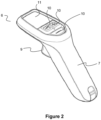
- the hand controller 6 has a handle 7, allowing the hand controller 6 to be gripped by the user.
- the handle 7 may have a lanyard (not-shown) for placement about the wrist of the user so as to tether the hand controller 6 to the user's wrist should they lose grip of the handle 7.
- the handle 7 is in the form of a pistol style grip having an actuator in the form of a trigger 9 accessible by the finger of the user having grip of the handle 7.
- the trigger 9 can act as an accelerator or throttle, whereby variable levels of power/speed can be indicated by partially pressing the trigger 9.
- the hand controller 6 also has actuators in the form of buttons 10 that can be pressed by the thumb of the user having grip of the handle 7.
- the hand controller 6 has a display screen 11 at a top portion, which is proximate to the buttons 10, such that the user having grip of the handle 7 can conveniently glance at the screen 11.
- the screen 11 may display certain outputs, such as speed of the board, distance travelled, battery life remaining, riding time remaining and the like. These metrics may be accessible via a number of display screen layouts that can be scrolled to by the user using their thumb and a mode button 10, for example.
- the hand controller 6 is small enough to allow single handed operation. That is, the trigger 9 can be operated by the user simultaneously to pressing one or more of the buttons 10 while having grip of the handle 7. In fact, the controller 6 is small enough that most riders will be able to use the palm of their hand to press on the board to stand up without the controller 6 hitting the board.
- the hand controller 6 is water proof and uses a Hall Effect sensor for the throttle, thereby allowing the trigger 9 to be movable while maintaining the water proof nature of the main housing of the hand controller 6. It will be appreciated, however, that alternative forms of sensor could be used in alternative embodiments. Additionally, the controller 6 includes a moulded foam insert that ensures the controller 6 will float in water in the event that it is dropped.
- the hand controller 6 preferably also includes a buzzer and/or vibrator.
- the buzzer and/or vibrator can be used to alert the rider to pop up warnings on the display screen 11 when riding. These warnings may indicate such states as: half board battery; low board battery; empty battery; low controller battery; high temperature; high current; and new maximum speed.
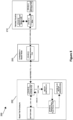
- the system 200 may be used to perform the method as herein before described.
- the system 200 includes a hand controller 210 that is in communication with a receiver 220, which in turn is in communication with a propulsion control unit 230.
- the hand controller 210 may be a portable, user-operated controller that may allow a user to communicate with the propulsion control unit 230 via the receiver 220, and to remotely operate and/or control the propulsion control unit 230.
- the hand controller 210 has a housing which includes a user interface for the input of commands by a user.
- the user interface may include one or more push-buttons, such as a "plus” button, a "minus” button, and a "mode/menu” button.
- the housing may further include a display screen to display settings of the system 200 to the user.
- the display screen may include an organic light-emitting diode (OLED) display screen, or a passive-matrix OLED (PMOLED) display screen, or any other type of electronic display screen.
- the housing may include a touch display which may provide a user interface and display information to the user.
- the housing of the hand controller 210 is waterproof.
- the hand controller 210 may further include one or more motion sensors for sensing a motion and/or orientation of the hand controller 210.
- the one or more motion sensors may include an inertial measurement unit, accelerometer, a gyroscope, or any other motion sensor.
- the motion sensor is a six-axis motion sensor including a three-axis gyroscope and a three-axis accelerometer.
- the hand controller 210 may further include a communications unit for communicating with the receiver 220.
- the communications unit is a wireless communications unit, such as a Bluetooth module, configured to communicate wirelessly with the receiver 220.
- the hand controller 210 may further include an antenna to facilitate wireless communication between the wireless communications unit and the receiver 220.
- the processing system may also optionally facilitate a user inputting certain parameters to affect the performance of the board, such as user weight and acceleration/power curves as hereinbefore described.
- the processing system may take the form of an example processing system 100 as illustrated in Figure 4 and described in more detail below.
- the hand controller 210 further includes a processing system configured to receive user input commands from the user interface, to receive motion and/or orientation data from the one or more motion sensors, to operate the display screen to display settings of the system 200, and to send data and/or command signals to the propulsion control unit 230 via the receiver 220.
- a processing system configured to receive user input commands from the user interface, to receive motion and/or orientation data from the one or more motion sensors, to operate the display screen to display settings of the system 200, and to send data and/or command signals to the propulsion control unit 230 via the receiver 220.
- the hand controller 210 is battery-powered.
- the hand controller 210 further includes a battery, such as a lithium-polymer battery.
- the battery is a rechargeable battery.
- the hand controller 210 further includes charging circuitry for charging the battery, such as a USB port and USB charging circuitry.
- the battery may be used to power at least the processing system and the display screen of hand controller 210.
- the hand controller 210 may further include one or more power converters to adjust or condition a battery output power for powering the processing system, the display screen, and any other device of the hand controller 210.
- the hand controller 210 may further include an ignition circuit to turn on or off the processing system.
- the ignition circuit may include a magnetic sensor, such as a Hall Effect sensor, within the housing, and one or more magnets mounted to the exterior of the housing to activate and/or deactivate the hand controller 210.
- the receiver 220 may be configured to be embedded within the hydrofoil board. In other examples, the receiver 220 may be configured to be fixed, or attached, to the hydrofoil board. In some examples, the receiver 220 may be embedded within or fixed to a front or tip portion of the hydrofoil board, such as the "nose" of the hydrofoil board.
- the receiver 220 may include a housing. Preferably, though not necessarily, the housing is waterproof.
- the receiver 220 may include a communications unit for communicating with the hand controller 210.
- the communications unit may be a wireless communications unit, such as a Bluetooth module, configured to communicate wirelessly with the hand controller 210.
- the receiver 220 may further include an antenna to facilitate wireless communication between the wireless communications unit and the hand controller 210.
- the receiver 220 may further include an ignition circuit to turn on or off the processing system.
- the ignition circuit may include a magnetic sensor, such as a Hall Effect sensor, within the housing.
- the receiver 220 further includes light-emitting diodes (LEDs) for providing visual cues of a status of the receiver 220, such as whether the receiver 220 is active or inactive.
- LEDs light-emitting diodes
- a magnet is included in the butt of the hand controller 210 that is used to activate a magnetic sensor in the receiver 220 on the board. This can serve as a safety feature to arm the board motor. This same system can also be used to put the board in a pairing mode. Lights on the receiver 220 on the board may change colour and/or use a flashing pattern to signify the status of the hand controller connection and state of use. Similarly, the hand controller may provide a visual indication and/or vibration when the board is activated in this way and armed and ready for use.
- the receiver 220 may further include a positioning system to locate the receiver 220 in a spatial frame of reference.
- the positioning system is a GPS receiver, or a GPS module connected to a GPS antenna, for receiving information from GPS satellites and calculating the geographical position of the receiver 220.
- the receiver 220 may further include a processing system configured to receive user input commands from the user interface, to receive position data from the positioning system, and to calculate a velocity of the receiver 220 from the position data.
- the processing system is further configured to operate the LEDs.
- the processing system may take the form of the example processing system 100.
- the receiver 220 may further include a connector to enable a wired connection to the propulsion control unit 230.
- the processing system may be further configured to send data to the propulsion control unit 230 through the connector.
- the propulsion control unit 230 is configured to supply a power signal to the receiver 220 through the connector.
- the receiver 220 may further include one or more power converters to adjust or condition the power signal from the connector for powering the processing system and any other device of the receiver 220.
- the receiver 220 including the integrated components such as the magnetic ignition switch, GPS and GPS antennae and the Bluetooth antennae may be located in the nose/forward portion of the board.
- the nose portion of the board may be more likely to remain above the water surface when a user positions themselves on the board.
- This arrangement may provide for more optimal transmission between the receiver 220 and the hand controller 210 as well as for better GPS reception. Even in a stationary position, a user lying on the board in a prone position generally orientates themselves toward the back of the board, which may cause the front of the board to raise above the water surface, such that placement of the receiver 220 in the nose of the board may provide a more reliable control link when first providing power to the propulsion source.
- the propulsion control unit 230 may be configured to be housed within the hydrofoil board and to be coupled to a propulsion source.
- the propulsion control unit may be drivingly coupled to a propeller of the hydrofoil board.
- the propulsion control unit 230 is mounted to a tail portion of the hydrofoil board, where the propeller is located.
- the propulsion control unit 230 may include a motor controller operatively connected to a motor for driving the propeller.
- the motor may be a three-phase brushless DC motor.
- the propulsion control unit 230 may further include a processing system configured to receive a first user input from the hand controller 210, selecting one of a plurality of operating pre-sets of operation of the propulsion control unit 230.
- the processing system may be further configured to operate the motor through the motor controller according to the selected operating pre-set.
- the operating pre-sets may be selected by the user via the user interface of the hand controller 210.
- the operating pre-sets may correspond to different styles of operation of the board.
- one such operating pre-set may correspond to the method of operating the board as hereinbefore described.
- the propulsion control unit 230 may further include a battery module, including a battery and a battery management system, for powering the processing system, the motor controller, and any other device of the propulsion control unit 230.
- the propulsion control unit 230 may further include one or more power converters to adjust or condition a power signal from the battery module.
- the propulsion control unit 230 is connected to the receiver 220 through a wire, or cable, connected to the connector of the receiver 220.
- the battery module of the propulsion control unit 230 may further be configured to supply power to the receiver 220 through the wire or cable.
- the propulsion control unit 230 and/or the receiver 220 may communicate with the hand controller 210, for instance, to display information drawn from the system 200 on the screen of the hand controller.
- the battery management system of the propulsion control unit 230 may communicate to provide such output on the screen of the hand controller 210 as battery life remaining and dynamic range information.
- the GPS integrated with the receiver 220 may communicate to provide such output on the screen of the hand controller 210 as the speed of the board and the distance travelled.
- a first user selected operating mode of operation may correspond to the method for operating the board as hereinbefore described. If the user wanted to use the board according to this operating mode, they may select the operating mode using the user interface of the hand controller. The user may also optionally be able to select their weight and configure the acceleration/power curves by which they wish the propulsion source to perform and select parameters relating to the type of the board used. A processing system of the system 200 may then use these user inputs to determine the first and second speed of the first operating pre-set. The rider could then ride the board according to the first operating mode.
- the acceleration/power curves mapping the action of the trigger to the power of the propulsion source via the system 200 may be user configurable. The user may select a certain acceleration curve depending on their preference, for example an advanced user may select an aggressive curve to increase the propulsion sources response to the trigger so as to increase the thrill of the riding experience.
- Such an operating mode may be analogous to a geared arrangement, wherein the user can actuate a button on the hand controller so as to communicate with the propulsion source and GPS to increase the speed of the board by a certain amount. The user may then actuate the button again to further increase the speed of the board by a certain amount and so on. Similarly, the user may actuate a button to decrease the board by a certain amount.
- the hand controller may include buttons marked with a "-" and a "+” indicia for decreasing and increasing the speed of the board incrementally as described.
- the system may include 10 speeds or gears, 20 speeds or gears, or more or less speeds or gears as may be convenient or desirable for operation of the board.
- a wave mode may be activated by pressing and/or holding the "-" button to smoothly shift power back to a pre-determined low power setting for wave riding, and then tapping the "+” button to reset the power to its level from before entering the wave mode.
- Such an operating mode may be analogous to a geared arrangement, wherein the user can actuate a button on the hand controller so as to communicate with the propulsion source and GPS to increase the speed of the board by a certain amount. The user may then actuate the button again to further increase the speed of the board by a certain amount and so on. Similarly, the user may actuate a button to decrease the board by a certain amount.
- the system may be configurable such that the amount and rate of speed increase and decrease experienced by the board in response to actuation of the relevant button can be varied.
- the system 200 may use the GPS in order to measure the speed such that the propulsion control unit may control the propulsion source to achieve the correct speed, as is the case with the other operating modes.
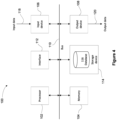
- the processing system 100 generally includes at least one processor 102, or processing unit or plurality of processors, memory 104, at least one input device 106 and at least one output device 108, all coupled together via a bus or group of buses 110.
- the input device 106 and the output device 108 could be the same device.
- An interface 112 can also be provided for coupling the processing system 100 to one or more peripheral devices.
- the interface 112 could be a PCI card or PC card.
- At least one storage device 114 which houses at least one database 116 can also be provided.
- the memory 104 can be any form of memory device, for example, volatile or non-volatile memory, solid state storage devices, magnetic devices, etc.
- the processor 102 could include more than one distinct processing device, for example to handle different functions within the processing system 100.
- the input device 106 receives input data 118 and can include, for example, a keyboard, a pointer device such as a pen-like device or a mouse, audio receiving device for voice controlled activation such as a microphone, data receiver or antenna such as a modem or wireless data adaptor, data acquisition card, etc.
- the input data 118 could come from different sources, for example keyboard instructions in conjunction with data received via a network.
- the output device 108 produces or generates output data 120 and can include, for example, a display device or monitor in which case the output data 120 is visual, a printer in which case the output data 120 is printed, a port for example a USB port, a peripheral component adaptor, a data transmitter or antenna such as a modem or wireless network adaptor, etc.
- the output data 120 could be distinct and derived from different output devices, for example a visual display on a monitor in conjunction with data transmitted to a network. The user could view the data output, or an interpretation of the data output, on, for example, a monitor or using a printer.
- the storage device 114 can be any form of data or information storage means, for example, volatile or non-volatile memory, solid state storage devices, magnetic devices, etc.
- the processing system 100 is adapted to allow data or information to be stored in and/or retrieved from, via wired or wireless communication means, the at least one database 116.
- the interface 112 may allow wired and/or wireless communication between the processing unit 102 and peripheral components that may serve a specialised purpose.
- the processor 102 receives instructions as input data 118 via the input device 106 and can display processed results or other output to a user by utilising the output device 108. More than one input device 106 and/or output device 108 can be provided. It should be appreciated that the processing system 100 may be any form of terminal, server, specialised hardware, or the like.
- FIG. 5 shown is a block diagram of an embodiment of the system 200 providing some additional details of the hand controller 210, the receiver 220 and the propulsion control unit 230.
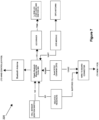
- FIG. 6 shown is a block diagram of an embodiment of the hand controller 210 providing some additional details.
- FIG 7 shown is a block diagram of an embodiment of the receiver 220 providing some additional details.
- FIG 8 shown is a block diagram of an embodiment of the propulsion control unit 230.
Landscapes
- Engineering & Computer Science (AREA)
- Chemical & Material Sciences (AREA)
- Ocean & Marine Engineering (AREA)
- Mechanical Engineering (AREA)
- Combustion & Propulsion (AREA)
- Physics & Mathematics (AREA)
- General Physics & Mathematics (AREA)
- Automation & Control Theory (AREA)
- Remote Sensing (AREA)
- Radar, Positioning & Navigation (AREA)
- Aviation & Aerospace Engineering (AREA)
- Computer Networks & Wireless Communication (AREA)
- Motorcycle And Bicycle Frame (AREA)
- Toys (AREA)
- Control Of Position, Course, Altitude, Or Attitude Of Moving Bodies (AREA)
- Other Liquid Machine Or Engine Such As Wave Power Use (AREA)
- Control Of Electric Motors In General (AREA)
- Domestic Plumbing Installations (AREA)
Claims (10)
- Verfahren zum Steuern eines Hydrofoilboards durch einen motorgetriebenen Propeller in Verbindung mit einer Handsteuerung (6, 210) mit einer Schnittstelle, umfassend mindestens einen Regler, wie z. B. einen Auslöser (9), zum Regulieren der Motorleistung und mindestens einen Schaltknopf (10) zum Annehmen von Betriebsvoreinstellungen, die von dem Benutzer ausgewählt werden können, umfassend:eine erste Betriebsvoreinstellung, wobei die Motorleistung auf einen ersten Höchstwert begrenzt ist, der einer ersten Geschwindigkeit entspricht, die niedriger ist als jene, die erforderlich ist, damit das Board auf der Tragfläche fährt und sich von der Wasseroberfläche abhebt; undeine zweite Betriebsvoreinstellung, wobei die Motorleistung auf einen zweiten Höchstwert begrenzt ist, der einer zweiten Geschwindigkeit entspricht, die ausreichend ist, damit das Board auf der Tragfläche fährt und sich von der Wasseroberfläche abhebt, wobei der Benutzer sein Gewicht und die Art des verwendeten Boards über die Handsteuerung (6, 210) auswählt, sodass die erste und die zweite Geschwindigkeit über ein Verarbeitungssystem der Handsteuerung (6, 210) bestimmt werden; undwobei die Handsteuerung (6, 210) in Verbindung mit dem Board verwendet wird, um das Verfahren auf die folgende Weise zu erreichen:a) bei stationärem Board und darauf balancierendem Benutzer wird der Regler vollständig in die erste Betriebsvoreinstellung betätigt, wobei das Board auf die erste Geschwindigkeit beschleunigt wird;b) sobald sich der Benutzer mit dem Board auf der ersten Geschwindigkeit komfortabel ist, richtet er sich auf dem Board in seiner bevorzugten Fahrposition für das Tragflächenfahren aus, während er den Regler weiterhin betätigt;c) wenn der Benutzer in seiner bevorzugten Position zum Tragflächenfahren ausgerichtet ist, wählt der Benutzer die zweite Betriebsvoreinstellung mit dem Schaltknopf (10) aus, wodurch das Board auf die zweite Geschwindigkeit beschleunigt wird; undd) wenn das Board die zweite Geschwindigkeit erreicht hat, kann der Benutzer sein Gewicht in Bezug auf das Board nach hinten verlagern, wodurch das Board anfängt, auf der Tragfläche zu fahren und sich über die Wasseroberfläche abhebt.
- Verfahren nach Anspruch 1, wobei der Regler gleichzeitig mit einem Umschalten zwischen den Betriebsvoreinstellungen durch den Benutzer betätigt werden kann.
- Verfahren nach einem der vorherigen Ansprüche, wobei zehn oder mehr Betriebsvoreinstellungen bereitgestellt sind.
- System (200) für einen Benutzer zum Betreiben eines Hydrofoilboards, auf dem der Benutzer steht, das System (200) umfassend:eine Antriebssteuereinheit (230), umfassend einen Empfänger (220), einen Prozessor (102), eine Motorsteuerung und eine Antriebsquelle; undeine Handsteuerung (6, 210), umfassend einen Prozessor (102), einen Sender, eine Schnittstelle und einen Reglersensor, wobei die Handsteuerung (6, 210) konfiguriert ist, um eine erste Benutzereingabe über den Reglersensor und eine zweite Benutzereingabe über die Schnittstelle zu empfangen und Signale unter Verwendung des Senders an den Empfänger der Antriebssteuereinheit (230) zu senden, wobei die erste Benutzereingabe ein variabler Reglerwert ist und die zweite Benutzereingabe die Auswahl einer aus einer Vielzahl von Betriebsvoreinstellungen der Antriebssteuereinheit ist;dadurch gekennzeichnet, dass:als Reaktion auf die Benutzereingaben die Antriebssteuereinheit (230) die Antriebsquelle entsprechend dem gewählten Reglerwert nur bis zu einem Höchstwert antreibt, der durch die gewählte Betriebsvoreinstellung bestimmt ist,wobei die Vielzahl von Betriebsvoreinstellungen Folgendes umfasst:eine erste Betriebsvoreinstellung, wobei die Leistung der Antriebsquelle auf einen ersten Höchstwert begrenzt ist, der einer ersten Geschwindigkeit entspricht, die geringer ist als jene, die erforderlich ist, damit das Board auf der Tragfläche fährt und sich von der Wasseroberfläche abhebt; undeine zweite Betriebsvoreinstellung, bei der die Leistung der Antriebsquelle auf einen zweiten Höchstwert ansteigen kann, der einer zweiten Geschwindigkeit entspricht, die geeignet ist, damit das Board auf der Tragfläche fährt und sich von der Wasseroberfläche abhebt, undwobei die erste und zweite Geschwindigkeit über den Prozessor (102) der Handsteuerung (6, 210) abhängig von dem Benutzergewicht und der Art des verwendeten Boards bestimmt werden.
- System nach Anspruch 4, ferner umfassend einen Empfänger, der konfiguriert ist, um Signale zwischen der Handsteuerung (6, 210) und der Antriebssteuereinheit (230) zu empfangen und zu senden.
- Verfahren nach Anspruch 5, wobei sich der Empfänger an einem vorderen Abschnitt des Boards befindet.
- System nach einem der Ansprüche 4 bis 6, wobei die Handsteuerung (6, 210) einen Ausgang umfasst, der konfiguriert ist, um eine oder mehrere Leistungs- und/oder Diagnosedaten anzuzeigen, die ausgewählt sind aus der Gruppe, bestehend aus:
Boardgeschwindigkeit; verbleibende Fahrstrecke; verbleibende Fahrzeit; Batterietemperatur; Batterieladung; und Stromverbrauchsrate. - System nach einem der Ansprüche 4 bis 7, wobei die Antriebsquelle aufgrund der Nähe und/oder relativen Bewegung der Handsteuerung (6, 210) und des Boards deaktiviert wird.
- System nach einem der Ansprüche 4 bis 8, wobei die Betriebsvoreinstellung automatisch basierend auf dem geografischen Standort des Boards geändert werden kann.
- System nach einem der Ansprüche 4 bis 9, wobei die Handsteuerung ferner einen Ausgang in Form eines Summers und/oder eines Vibrators umfasst.
Priority Applications (1)
| Application Number | Priority Date | Filing Date | Title |
|---|---|---|---|
| EP23201867.1A EP4324734A3 (de) | 2018-03-26 | 2019-03-25 | Verfahren und system zum betrieb eines tragflügelbretts |
Applications Claiming Priority (2)
| Application Number | Priority Date | Filing Date | Title |
|---|---|---|---|
| AU2018901001A AU2018901001A0 (en) | 2018-03-26 | A method and system for operating a hydrofoil board | |
| PCT/AU2019/050262 WO2019183668A1 (en) | 2018-03-26 | 2019-03-25 | A method and system for operating a hydrofoil board |
Related Child Applications (1)
| Application Number | Title | Priority Date | Filing Date |
|---|---|---|---|
| EP23201867.1A Division EP4324734A3 (de) | 2018-03-26 | 2019-03-25 | Verfahren und system zum betrieb eines tragflügelbretts |
Publications (4)
| Publication Number | Publication Date |
|---|---|
| EP3774518A1 EP3774518A1 (de) | 2021-02-17 |
| EP3774518A4 EP3774518A4 (de) | 2022-01-05 |
| EP3774518B1 true EP3774518B1 (de) | 2023-10-11 |
| EP3774518C0 EP3774518C0 (de) | 2023-10-11 |
Family
ID=68059402
Family Applications (2)
| Application Number | Title | Priority Date | Filing Date |
|---|---|---|---|
| EP23201867.1A Pending EP4324734A3 (de) | 2018-03-26 | 2019-03-25 | Verfahren und system zum betrieb eines tragflügelbretts |
| EP19777269.2A Active EP3774518B1 (de) | 2018-03-26 | 2019-03-25 | Verfahren und system zum betrieb eines tragflügelbretts |
Family Applications Before (1)
| Application Number | Title | Priority Date | Filing Date |
|---|---|---|---|
| EP23201867.1A Pending EP4324734A3 (de) | 2018-03-26 | 2019-03-25 | Verfahren und system zum betrieb eines tragflügelbretts |
Country Status (10)
| Country | Link |
|---|---|
| US (4) | US11453465B2 (de) |
| EP (2) | EP4324734A3 (de) |
| JP (1) | JP7472030B2 (de) |
| CN (1) | CN113302123B (de) |
| AU (2) | AU2019240755B2 (de) |
| CA (1) | CA3101023A1 (de) |
| DE (2) | DE202019005907U1 (de) |
| ES (1) | ES2967666T3 (de) |
| SG (1) | SG11202009485RA (de) |
| WO (1) | WO2019183668A1 (de) |
Families Citing this family (16)
| Publication number | Priority date | Publication date | Assignee | Title |
|---|---|---|---|---|
| US10597118B2 (en) | 2016-09-12 | 2020-03-24 | Kai Concepts, LLC | Watercraft device with hydrofoil and electric propeller system |
| SG11202009485RA (en) * | 2018-03-26 | 2020-10-29 | Fliteboard Pty Ltd | A method and system for operating a hydrofoil board |
| WO2021191729A1 (en) * | 2020-03-27 | 2021-09-30 | Fly 4 All Sa | Hydrofoil with autopilot configuration |
| US10946939B1 (en) | 2020-04-22 | 2021-03-16 | Kai Concepts, LLC | Watercraft having a waterproof container and a waterproof electrical connector |
| US12246811B2 (en) | 2020-04-22 | 2025-03-11 | Kai Concepts, LLC | Watercraft device with a handheld controller |
| US11897583B2 (en) | 2020-04-22 | 2024-02-13 | Kai Concepts, LLC | Watercraft device with hydrofoil and electric propulsion system |
| CN117222578A (zh) * | 2021-02-19 | 2023-12-12 | 斐特宝得有限公司 | 用于动力船只中的无线通信的装置和方法 |
| US11485457B1 (en) | 2021-06-14 | 2022-11-01 | Kai Concepts, LLC | Hydrojet propulsion system |
| US11878775B2 (en) | 2021-07-13 | 2024-01-23 | Kai Concepts, LLC | Leash system and methods of use |
| ES3053143T3 (en) * | 2021-11-10 | 2026-01-19 | Kai Concepts Llc | Watercraft device with a handheld controller |
| USD1071828S1 (en) | 2022-09-27 | 2025-04-22 | Fliteboard Pty Ltd | Hydrofoil fuselage |
| WO2024173165A2 (en) * | 2023-02-14 | 2024-08-22 | Kai Concepts, LLC | Watercraft device with a handheld controller |
| US12668328B1 (en) * | 2023-06-28 | 2026-06-30 | Brunswick Corporation | Hydrofoil apparatuses, systems, and methods for marine vessels |
| CN117037459A (zh) * | 2023-08-23 | 2023-11-10 | 一诺仪器(中国)有限公司 | 一种无线控制器 |
| USD1099051S1 (en) * | 2023-09-15 | 2025-10-21 | Fliteboard Pty Ltd | Hand controller |
| WO2026060761A1 (zh) * | 2024-09-23 | 2026-03-26 | 北京踏浪智行科技有限公司 | 一种水上运动设备及其检测方法和控制方法 |
Citations (1)
| Publication number | Priority date | Publication date | Assignee | Title |
|---|---|---|---|---|
| WO2018191157A1 (en) * | 2017-04-10 | 2018-10-18 | MHL Custom, Inc. | Wireless controller |
Family Cites Families (24)
| Publication number | Priority date | Publication date | Assignee | Title |
|---|---|---|---|---|
| US5309859A (en) * | 1993-04-13 | 1994-05-10 | Miller Richard T | Hydrofoil device |
| JP2002154479A (ja) * | 2000-11-20 | 2002-05-28 | Yamaha Motor Co Ltd | エンジン付サーフボードのリモコンシステム及び送信機 |
| US7047901B2 (en) * | 2003-01-17 | 2006-05-23 | Shane Chen | Motorized hydrofoil device |
| TW200716441A (en) * | 2005-10-21 | 2007-05-01 | Joy Ride Technology Co Ltd | A submersible thruster and surfboard equipped with the submersible thruster |
| JP2007314084A (ja) * | 2006-05-26 | 2007-12-06 | Yamaha Marine Co Ltd | 滑走艇の運転制御装置 |
| TW200831353A (en) * | 2007-01-16 | 2008-08-01 | Joy Ride Technology Co Ltd | Electric surfboard |
| US9607506B1 (en) * | 2007-04-20 | 2017-03-28 | Lloyd Douglas Manning | Wearable wireless controller |
| NZ603898A (en) * | 2010-07-01 | 2015-03-27 | Boomerboard Llc | Motorized watercraft system with interchangeable motor module |
| WO2013036536A2 (en) * | 2011-09-07 | 2013-03-14 | Boomerboard, Llc | Inflatable watercraft with battery powered motorized cassette |
| US10532797B2 (en) * | 2012-06-05 | 2020-01-14 | Steven John Derrah | Retractable drive for a powered surfboard |
| WO2015033032A1 (fr) | 2013-09-06 | 2015-03-12 | Personal Water Craft Product | Procédé et système de pilotage plurimodal d' un actionneur d'une unité depuis un dispositif de consigne distant |
| US9359044B2 (en) | 2013-10-10 | 2016-06-07 | Jacob Willem Langelaan | Weight-shift controlled personal hydrofoil watercraft |
| DE102014005314A1 (de) * | 2014-04-10 | 2015-10-15 | Lionel Descho | Tragflächenwasserfahrzeug mit Antriebseinheit |
| CN204056245U (zh) * | 2014-07-16 | 2014-12-31 | 九江海神摩托艇制造有限公司 | 一种动力冲浪板 |
| CN106081001A (zh) * | 2016-06-14 | 2016-11-09 | 安徽美吉动力科技有限公司 | 一种智能冲浪板手把 |
| US10597118B2 (en) * | 2016-09-12 | 2020-03-24 | Kai Concepts, LLC | Watercraft device with hydrofoil and electric propeller system |
| US10683075B2 (en) * | 2016-10-12 | 2020-06-16 | R&D Sports LLC | Personal watercraft for amplifying manual rowing or paddling with propulsion |
| CN106864717B (zh) * | 2017-01-23 | 2018-11-09 | 东莞亿动智能科技有限公司 | 水下推进器及其控制系统和控制方法 |
| DE202017103703U1 (de) * | 2017-06-21 | 2017-07-12 | Ellergon Antriebstechnik Gesellschaft M.B.H. | Elektrisch angetriebenes Hydrofoil |
| CN207010363U (zh) * | 2017-07-14 | 2018-02-13 | 邓柏权 | 电动冲浪板用无线充电防水遥控手柄 |
| SG11202009485RA (en) * | 2018-03-26 | 2020-10-29 | Fliteboard Pty Ltd | A method and system for operating a hydrofoil board |
| US10994815B2 (en) * | 2018-12-04 | 2021-05-04 | Shelby Jean Wengreen | Self-balancing surfboard |
| US10358194B1 (en) * | 2018-12-04 | 2019-07-23 | Shelby Jean Wengreen | Self-balancing surfboard |
| US12246811B2 (en) * | 2020-04-22 | 2025-03-11 | Kai Concepts, LLC | Watercraft device with a handheld controller |
-
2019
- 2019-03-25 SG SG11202009485RA patent/SG11202009485RA/en unknown
- 2019-03-25 DE DE202019005907.5U patent/DE202019005907U1/de active Active
- 2019-03-25 ES ES19777269T patent/ES2967666T3/es active Active
- 2019-03-25 DE DE202019005881.8U patent/DE202019005881U1/de active Active
- 2019-03-25 CN CN201980034865.0A patent/CN113302123B/zh active Active
- 2019-03-25 CA CA3101023A patent/CA3101023A1/en active Pending
- 2019-03-25 EP EP23201867.1A patent/EP4324734A3/de active Pending
- 2019-03-25 AU AU2019240755A patent/AU2019240755B2/en active Active
- 2019-03-25 JP JP2020552002A patent/JP7472030B2/ja active Active
- 2019-03-25 US US17/042,088 patent/US11453465B2/en active Active
- 2019-03-25 WO PCT/AU2019/050262 patent/WO2019183668A1/en not_active Ceased
- 2019-03-25 EP EP19777269.2A patent/EP3774518B1/de active Active
-
2022
- 2022-08-09 US US17/883,769 patent/US11760444B2/en active Active
-
2023
- 2023-02-23 AU AU2023201074A patent/AU2023201074A1/en not_active Abandoned
- 2023-08-21 US US18/452,927 patent/US12043351B2/en active Active
-
2024
- 2024-06-20 US US18/748,697 patent/US12391342B2/en active Active
Patent Citations (1)
| Publication number | Priority date | Publication date | Assignee | Title |
|---|---|---|---|---|
| WO2018191157A1 (en) * | 2017-04-10 | 2018-10-18 | MHL Custom, Inc. | Wireless controller |
Non-Patent Citations (1)
| Title |
|---|
| ANONYMOUS: "Ergonomic, simple, waterproof remote control", FOIL.ZONE, 1 January 2018 (2018-01-01), XP093014084, Retrieved from the Internet <URL:https://foil.zone/t/ergonomic-simple-waterproof-remote-control/1015> [retrieved on 20230116] * |
Also Published As
| Publication number | Publication date |
|---|---|
| AU2023201074A1 (en) | 2023-03-23 |
| DE202019005881U1 (de) | 2022-12-05 |
| US12391342B2 (en) | 2025-08-19 |
| CA3101023A1 (en) | 2019-10-03 |
| US20240343351A1 (en) | 2024-10-17 |
| EP4324734A2 (de) | 2024-02-21 |
| JP2021519239A (ja) | 2021-08-10 |
| AU2019240755B2 (en) | 2022-12-08 |
| US20240043100A1 (en) | 2024-02-08 |
| AU2019240755A1 (en) | 2020-11-26 |
| US11453465B2 (en) | 2022-09-27 |
| JP7472030B2 (ja) | 2024-04-22 |
| ES2967666T3 (es) | 2024-05-03 |
| EP4324734A3 (de) | 2024-05-15 |
| WO2019183668A1 (en) | 2019-10-03 |
| US20230068276A1 (en) | 2023-03-02 |
| CN113302123A (zh) | 2021-08-24 |
| SG11202009485RA (en) | 2020-10-29 |
| US11760444B2 (en) | 2023-09-19 |
| NZ769368A (en) | 2025-03-28 |
| DE202019005907U1 (de) | 2023-03-29 |
| EP3774518A1 (de) | 2021-02-17 |
| CN113302123B (zh) | 2023-10-24 |
| EP3774518C0 (de) | 2023-10-11 |
| EP3774518A4 (de) | 2022-01-05 |
| US12043351B2 (en) | 2024-07-23 |
| US20210107601A1 (en) | 2021-04-15 |
Similar Documents
| Publication | Publication Date | Title |
|---|---|---|
| US12043351B2 (en) | Method and system for operating a hydrofoil board | |
| US20240140562A1 (en) | Apparatus and method for wireless communication in powered watercraft | |
| US7905440B2 (en) | Fishing reel, fishing data display device, and fishing data display system | |
| US11459068B2 (en) | Motorized surfboard fin and remote control | |
| US12570386B2 (en) | Watercraft device with a handheld controller | |
| CA3029938A1 (en) | Gesturing for control input for a vehicle | |
| EP3265355A1 (de) | Handhaltbares für ein motorisiertes rad | |
| US11155327B1 (en) | Trolling motor and foot pedal for trolling motor | |
| EP4180316A1 (de) | Wasserfahrzeugvorrichtung mit einer handsteuerung | |
| US20250289548A1 (en) | Device for steering a trolling motor and method of the same | |
| KR101706770B1 (ko) | 자전거용 스마트 장갑 | |
| US12045050B2 (en) | Gesturing for control input for a vehicle | |
| CN117222578A (zh) | 用于动力船只中的无线通信的装置和方法 | |
| US20250289555A1 (en) | Detachable control module for a marine device | |
| US20220395761A1 (en) | Drag racing stability management for a model vehicle | |
| WO2025171432A1 (en) | Hydrofoil watercraft | |
| WO2026044355A1 (en) | Motor controller |
Legal Events
| Date | Code | Title | Description |
|---|---|---|---|
| REG | Reference to a national code |
Ref country code: DE Ref legal event code: R138 Ref document number: 202019005907 Country of ref document: DE Free format text: GERMAN DOCUMENT NUMBER IS 602019039207 Ref country code: DE Ref legal event code: R138 Ref document number: 202019005881 Country of ref document: DE Free format text: GERMAN DOCUMENT NUMBER IS 602019039207 |
|
| STAA | Information on the status of an ep patent application or granted ep patent |
Free format text: STATUS: THE INTERNATIONAL PUBLICATION HAS BEEN MADE |
|
| PUAI | Public reference made under article 153(3) epc to a published international application that has entered the european phase |
Free format text: ORIGINAL CODE: 0009012 |
|
| STAA | Information on the status of an ep patent application or granted ep patent |
Free format text: STATUS: REQUEST FOR EXAMINATION WAS MADE |
|
| 17P | Request for examination filed |
Effective date: 20201026 |
|
| AK | Designated contracting states |
Kind code of ref document: A1 Designated state(s): AL AT BE BG CH CY CZ DE DK EE ES FI FR GB GR HR HU IE IS IT LI LT LU LV MC MK MT NL NO PL PT RO RS SE SI SK SM TR |
|
| AX | Request for extension of the european patent |
Extension state: BA ME |
|
| TPAC | Observations filed by third parties |
Free format text: ORIGINAL CODE: EPIDOSNTIPA |
|
| DAV | Request for validation of the european patent (deleted) | ||
| DAX | Request for extension of the european patent (deleted) | ||
| REG | Reference to a national code |
Ref legal event code: R079 Free format text: PREVIOUS MAIN CLASS: B63B0035790000 Ref country code: DE Ref legal event code: R079 Ref document number: 602019039207 Country of ref document: DE Free format text: PREVIOUS MAIN CLASS: B63B0035790000 Ipc: B63B0001240000 |
|
| A4 | Supplementary search report drawn up and despatched |
Effective date: 20211207 |
|
| RIC1 | Information provided on ipc code assigned before grant |
Ipc: B63B 32/10 20200101ALI20211201BHEP Ipc: G08C 17/02 20060101ALI20211201BHEP Ipc: B63B 1/24 20200101AFI20211201BHEP |
|
| GRAP | Despatch of communication of intention to grant a patent |
Free format text: ORIGINAL CODE: EPIDOSNIGR1 |
|
| STAA | Information on the status of an ep patent application or granted ep patent |
Free format text: STATUS: GRANT OF PATENT IS INTENDED |
|
| TPAC | Observations filed by third parties |
Free format text: ORIGINAL CODE: EPIDOSNTIPA |
|
| TPAC | Observations filed by third parties |
Free format text: ORIGINAL CODE: EPIDOSNTIPA |
|
| INTG | Intention to grant announced |
Effective date: 20221125 |
|
| GRAJ | Information related to disapproval of communication of intention to grant by the applicant or resumption of examination proceedings by the epo deleted |
Free format text: ORIGINAL CODE: EPIDOSDIGR1 |
|
| STAA | Information on the status of an ep patent application or granted ep patent |
Free format text: STATUS: REQUEST FOR EXAMINATION WAS MADE |
|
| STAA | Information on the status of an ep patent application or granted ep patent |
Free format text: STATUS: EXAMINATION IS IN PROGRESS |
|
| 17Q | First examination report despatched |
Effective date: 20230123 |
|
| INTC | Intention to grant announced (deleted) | ||
| GRAP | Despatch of communication of intention to grant a patent |
Free format text: ORIGINAL CODE: EPIDOSNIGR1 |
|
| STAA | Information on the status of an ep patent application or granted ep patent |
Free format text: STATUS: GRANT OF PATENT IS INTENDED |
|
| INTG | Intention to grant announced |
Effective date: 20230512 |
|
| P01 | Opt-out of the competence of the unified patent court (upc) registered |
Effective date: 20230515 |
|
| GRAS | Grant fee paid |
Free format text: ORIGINAL CODE: EPIDOSNIGR3 |
|
| RAP3 | Party data changed (applicant data changed or rights of an application transferred) |
Owner name: FLITEBOARD PTY LTD |
|
| GRAA | (expected) grant |
Free format text: ORIGINAL CODE: 0009210 |
|
| STAA | Information on the status of an ep patent application or granted ep patent |
Free format text: STATUS: THE PATENT HAS BEEN GRANTED |
|
| AK | Designated contracting states |
Kind code of ref document: B1 Designated state(s): AL AT BE BG CH CY CZ DE DK EE ES FI FR GB GR HR HU IE IS IT LI LT LU LV MC MK MT NL NO PL PT RO RS SE SI SK SM TR |
|
| REG | Reference to a national code |
Ref country code: GB Ref legal event code: FG4D |
|
| REG | Reference to a national code |
Ref country code: CH Ref legal event code: EP |
|
| REG | Reference to a national code |
Ref country code: DE Ref legal event code: R096 Ref document number: 602019039207 Country of ref document: DE |
|
| REG | Reference to a national code |
Ref country code: IE Ref legal event code: FG4D |
|
| U01 | Request for unitary effect filed |
Effective date: 20231107 |
|
| U07 | Unitary effect registered |
Designated state(s): AT BE BG DE DK EE FI FR IT LT LU LV MT NL PT SE SI Effective date: 20231113 |
|
| P04 | Withdrawal of opt-out of the competence of the unified patent court (upc) registered |
Effective date: 20231108 |
|
| U1N | Appointed representative for the unitary patent procedure changed after the registration of the unitary effect |
Representative=s name: VOSSIUS & PARTNER PATENTANWAELTE RECHTSANWAELTE MBB; DE |
|
| PG25 | Lapsed in a contracting state [announced via postgrant information from national office to epo] |
Ref country code: GR Free format text: LAPSE BECAUSE OF FAILURE TO SUBMIT A TRANSLATION OF THE DESCRIPTION OR TO PAY THE FEE WITHIN THE PRESCRIBED TIME-LIMIT Effective date: 20240112 |
|
| PG25 | Lapsed in a contracting state [announced via postgrant information from national office to epo] |
Ref country code: IS Free format text: LAPSE BECAUSE OF FAILURE TO SUBMIT A TRANSLATION OF THE DESCRIPTION OR TO PAY THE FEE WITHIN THE PRESCRIBED TIME-LIMIT Effective date: 20240211 |
|
| PG25 | Lapsed in a contracting state [announced via postgrant information from national office to epo] |
Ref country code: IS Free format text: LAPSE BECAUSE OF FAILURE TO SUBMIT A TRANSLATION OF THE DESCRIPTION OR TO PAY THE FEE WITHIN THE PRESCRIBED TIME-LIMIT Effective date: 20240211 Ref country code: GR Free format text: LAPSE BECAUSE OF FAILURE TO SUBMIT A TRANSLATION OF THE DESCRIPTION OR TO PAY THE FEE WITHIN THE PRESCRIBED TIME-LIMIT Effective date: 20240112 |
|
| U20 | Renewal fee for the european patent with unitary effect paid |
Year of fee payment: 6 Effective date: 20240325 |
|
| REG | Reference to a national code |
Ref country code: ES Ref legal event code: FG2A Ref document number: 2967666 Country of ref document: ES Kind code of ref document: T3 Effective date: 20240503 |
|
| PG25 | Lapsed in a contracting state [announced via postgrant information from national office to epo] |
Ref country code: RS Free format text: LAPSE BECAUSE OF FAILURE TO SUBMIT A TRANSLATION OF THE DESCRIPTION OR TO PAY THE FEE WITHIN THE PRESCRIBED TIME-LIMIT Effective date: 20231011 Ref country code: PL Free format text: LAPSE BECAUSE OF FAILURE TO SUBMIT A TRANSLATION OF THE DESCRIPTION OR TO PAY THE FEE WITHIN THE PRESCRIBED TIME-LIMIT Effective date: 20231011 Ref country code: NO Free format text: LAPSE BECAUSE OF FAILURE TO SUBMIT A TRANSLATION OF THE DESCRIPTION OR TO PAY THE FEE WITHIN THE PRESCRIBED TIME-LIMIT Effective date: 20240111 Ref country code: HR Free format text: LAPSE BECAUSE OF FAILURE TO SUBMIT A TRANSLATION OF THE DESCRIPTION OR TO PAY THE FEE WITHIN THE PRESCRIBED TIME-LIMIT Effective date: 20231011 |
|
| REG | Reference to a national code |
Ref country code: DE Ref legal event code: R097 Ref document number: 602019039207 Country of ref document: DE |
|
| PG25 | Lapsed in a contracting state [announced via postgrant information from national office to epo] |
Ref country code: CZ Free format text: LAPSE BECAUSE OF FAILURE TO SUBMIT A TRANSLATION OF THE DESCRIPTION OR TO PAY THE FEE WITHIN THE PRESCRIBED TIME-LIMIT Effective date: 20231011 |
|
| PG25 | Lapsed in a contracting state [announced via postgrant information from national office to epo] |
Ref country code: SK Free format text: LAPSE BECAUSE OF FAILURE TO SUBMIT A TRANSLATION OF THE DESCRIPTION OR TO PAY THE FEE WITHIN THE PRESCRIBED TIME-LIMIT Effective date: 20231011 |
|
| PG25 | Lapsed in a contracting state [announced via postgrant information from national office to epo] |
Ref country code: SM Free format text: LAPSE BECAUSE OF FAILURE TO SUBMIT A TRANSLATION OF THE DESCRIPTION OR TO PAY THE FEE WITHIN THE PRESCRIBED TIME-LIMIT Effective date: 20231011 Ref country code: SK Free format text: LAPSE BECAUSE OF FAILURE TO SUBMIT A TRANSLATION OF THE DESCRIPTION OR TO PAY THE FEE WITHIN THE PRESCRIBED TIME-LIMIT Effective date: 20231011 Ref country code: RO Free format text: LAPSE BECAUSE OF FAILURE TO SUBMIT A TRANSLATION OF THE DESCRIPTION OR TO PAY THE FEE WITHIN THE PRESCRIBED TIME-LIMIT Effective date: 20231011 Ref country code: CZ Free format text: LAPSE BECAUSE OF FAILURE TO SUBMIT A TRANSLATION OF THE DESCRIPTION OR TO PAY THE FEE WITHIN THE PRESCRIBED TIME-LIMIT Effective date: 20231011 |
|
| PLBE | No opposition filed within time limit |
Free format text: ORIGINAL CODE: 0009261 |
|
| STAA | Information on the status of an ep patent application or granted ep patent |
Free format text: STATUS: NO OPPOSITION FILED WITHIN TIME LIMIT |
|
| 26N | No opposition filed |
Effective date: 20240712 |
|
| REG | Reference to a national code |
Ref country code: CH Ref legal event code: PL |
|
| PG25 | Lapsed in a contracting state [announced via postgrant information from national office to epo] |
Ref country code: MC Free format text: LAPSE BECAUSE OF FAILURE TO SUBMIT A TRANSLATION OF THE DESCRIPTION OR TO PAY THE FEE WITHIN THE PRESCRIBED TIME-LIMIT Effective date: 20231011 |
|
| PG25 | Lapsed in a contracting state [announced via postgrant information from national office to epo] |
Ref country code: MC Free format text: LAPSE BECAUSE OF FAILURE TO SUBMIT A TRANSLATION OF THE DESCRIPTION OR TO PAY THE FEE WITHIN THE PRESCRIBED TIME-LIMIT Effective date: 20231011 |
|
| P05 | Withdrawal of opt-out of the competence of the unified patent court (upc) changed |
Free format text: CASE NUMBER: APP_586072/2023 Effective date: 20231113 |
|
| PG25 | Lapsed in a contracting state [announced via postgrant information from national office to epo] |
Ref country code: IE Free format text: LAPSE BECAUSE OF NON-PAYMENT OF DUE FEES Effective date: 20240325 |
|
| PG25 | Lapsed in a contracting state [announced via postgrant information from national office to epo] |
Ref country code: IE Free format text: LAPSE BECAUSE OF NON-PAYMENT OF DUE FEES Effective date: 20240325 Ref country code: CH Free format text: LAPSE BECAUSE OF NON-PAYMENT OF DUE FEES Effective date: 20240331 |
|
| U20 | Renewal fee for the european patent with unitary effect paid |
Year of fee payment: 7 Effective date: 20250324 |
|
| PG25 | Lapsed in a contracting state [announced via postgrant information from national office to epo] |
Ref country code: CY Free format text: LAPSE BECAUSE OF FAILURE TO SUBMIT A TRANSLATION OF THE DESCRIPTION OR TO PAY THE FEE WITHIN THE PRESCRIBED TIME-LIMIT; INVALID AB INITIO Effective date: 20190325 |
|
| PG25 | Lapsed in a contracting state [announced via postgrant information from national office to epo] |
Ref country code: HU Free format text: LAPSE BECAUSE OF FAILURE TO SUBMIT A TRANSLATION OF THE DESCRIPTION OR TO PAY THE FEE WITHIN THE PRESCRIBED TIME-LIMIT; INVALID AB INITIO Effective date: 20190325 |
|
| PG25 | Lapsed in a contracting state [announced via postgrant information from national office to epo] |
Ref country code: TR Free format text: LAPSE BECAUSE OF FAILURE TO SUBMIT A TRANSLATION OF THE DESCRIPTION OR TO PAY THE FEE WITHIN THE PRESCRIBED TIME-LIMIT Effective date: 20231011 |
|
| PGFP | Annual fee paid to national office [announced via postgrant information from national office to epo] |
Ref country code: GB Payment date: 20260318 Year of fee payment: 8 |
|
| U20 | Renewal fee for the european patent with unitary effect paid |
Year of fee payment: 8 Effective date: 20260316 |
|
| PGFP | Annual fee paid to national office [announced via postgrant information from national office to epo] |
Ref country code: ES Payment date: 20260415 Year of fee payment: 8 |