EP3771251B1 - Method for switching between network elements and network element selection, user equipment, network element - Google Patents
Method for switching between network elements and network element selection, user equipment, network element Download PDFInfo
- Publication number
- EP3771251B1 EP3771251B1 EP18912579.2A EP18912579A EP3771251B1 EP 3771251 B1 EP3771251 B1 EP 3771251B1 EP 18912579 A EP18912579 A EP 18912579A EP 3771251 B1 EP3771251 B1 EP 3771251B1
- Authority
- EP
- European Patent Office
- Prior art keywords
- information
- network element
- guti
- message
- network
- Prior art date
- Legal status (The legal status is an assumption and is not a legal conclusion. Google has not performed a legal analysis and makes no representation as to the accuracy of the status listed.)
- Active
Links
Images


Classifications
-
- H—ELECTRICITY
- H04—ELECTRIC COMMUNICATION TECHNIQUE
- H04W—WIRELESS COMMUNICATION NETWORKS
- H04W36/00—Hand-off or reselection arrangements
- H04W36/12—Reselecting a serving backbone network switching or routing node
-
- H—ELECTRICITY
- H04—ELECTRIC COMMUNICATION TECHNIQUE
- H04W—WIRELESS COMMUNICATION NETWORKS
- H04W36/00—Hand-off or reselection arrangements
- H04W36/34—Reselection control
- H04W36/38—Reselection control by fixed network equipment
- H04W36/385—Reselection control by fixed network equipment of the core network
-
- H—ELECTRICITY
- H04—ELECTRIC COMMUNICATION TECHNIQUE
- H04W—WIRELESS COMMUNICATION NETWORKS
- H04W36/00—Hand-off or reselection arrangements
- H04W36/0005—Control or signalling for completing the hand-off
-
- H—ELECTRICITY
- H04—ELECTRIC COMMUNICATION TECHNIQUE
- H04W—WIRELESS COMMUNICATION NETWORKS
- H04W36/00—Hand-off or reselection arrangements
- H04W36/06—Reselecting a communication resource in the serving access point
-
- H—ELECTRICITY
- H04—ELECTRIC COMMUNICATION TECHNIQUE
- H04W—WIRELESS COMMUNICATION NETWORKS
- H04W48/00—Access restriction; Network selection; Access point selection
- H04W48/18—Selecting a network or a communication service
-
- H—ELECTRICITY
- H04—ELECTRIC COMMUNICATION TECHNIQUE
- H04W—WIRELESS COMMUNICATION NETWORKS
- H04W60/00—Affiliation to network, e.g. registration; Terminating affiliation with the network, e.g. de-registration
-
- H—ELECTRICITY
- H04—ELECTRIC COMMUNICATION TECHNIQUE
- H04W—WIRELESS COMMUNICATION NETWORKS
- H04W76/00—Connection management
- H04W76/10—Connection setup
- H04W76/11—Allocation or use of connection identifiers
-
- H—ELECTRICITY
- H04—ELECTRIC COMMUNICATION TECHNIQUE
- H04W—WIRELESS COMMUNICATION NETWORKS
- H04W76/00—Connection management
- H04W76/20—Manipulation of established connections
- H04W76/25—Maintenance of established connections
-
- H—ELECTRICITY
- H04—ELECTRIC COMMUNICATION TECHNIQUE
- H04W—WIRELESS COMMUNICATION NETWORKS
- H04W36/00—Hand-off or reselection arrangements
- H04W36/0005—Control or signalling for completing the hand-off
- H04W36/0011—Control or signalling for completing the hand-off for data sessions of end-to-end connection
- H04W36/0022—Control or signalling for completing the hand-off for data sessions of end-to-end connection for transferring data sessions between adjacent core network technologies
-
- H—ELECTRICITY
- H04—ELECTRIC COMMUNICATION TECHNIQUE
- H04W—WIRELESS COMMUNICATION NETWORKS
- H04W36/00—Hand-off or reselection arrangements
- H04W36/13—Cell handover without a predetermined boundary, e.g. virtual cells
Definitions
- the present disclosure relates to the field of information processing technology, and in particular, to a method for selection of a core network element, User Equipment (UE), and a computer storage medium.
- UE User Equipment
- RAN Radio Access Network
- AMF Access and Mobility Management Function
- NAS Non-Access Stratum
- 5G 5-th Generation
- 4G 4-th Generation
- GUIs Global Unique Temporary Identities
- GRE encapsulation for NAS signalling proposes that GRE encapsulation or any other type of encapsulation is not needed when sending NAS messages between the UE and N31WF.
- Document WO 2018/208371 A1 discloses a method that may be performed by a UE and includes receiving an indication that a network slice is not available, entering a connection management idle (CM-IDLE) state, and initiating a registration procedure with an access and mobility management function (AMF) subsequent to entering the CM-IDLE state.
- CM-IDLE connection management idle
- AMF access and mobility management function
- embodiments of the disclosure provide a method for handover between network elements, a method for network element selection, User Equipment (UE), a network element and a computer storage medium.
- UE User Equipment
- the handover between network elements may be implemented immediately without being limited by the current process of the UE. For instance, the UE is redirected to improve the processing efficiency of the UE.
- the embodiment not being part of the present invention provides a method for handover between network elements, applied to User Equipment (UE), the method including: initiating a request message to a network side, where the request message includes information of a second network element, which is carried in an Access Stratum (AS), so that the network side is capable of transmitting the request message to a corresponding network element according to the information of the second network element; the request message further comprises at least one of information of a first network element or the information of the second network element, which is carried in a Non-Access Stratum (NAS).
- AS Access Stratum
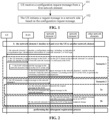
- FIG. 1 The technical solution provided by this embodiment not being part of the present invention is as illustrated in FIG. 1 , which includes the following operations.
- the UE receives a configuration request message from the first network element.
- the UE initiates a request message to a network side based on the configuration request message.
- the configuration request message comprises at least one of registration type, identification information of the second network element, an indication of a Globally Unique Temporary Identity (GUTI) required to be used by the AS, NAS type used, message type used, or information used to find the AMF or Mobility Management Entity (MME) (requested network slice information or GUTI information).
- GUI Globally Unique Temporary Identity
- MME Mobility Management Entity
- the GUTI required to be used by the AS includes at least part of information of a GUTI corresponding to the second network element.
- the registration type includes one of initial registration, registration update, or emergency registration.
- the NAS type includes 5GC-NAS or EPC-NAS.
- the first network element is a RAN base station.
- the first network element is assumed to be a network element 1 in the figure.
- the network element 1 when the network element 1 decides to hand over the UE to another network element, the network element 1 (which can specifically be the AMF) transmits the configuration request message, where the configuration request message may include the following items: 1) request message type (Initial/Update/Emergency); 2) an indication of identification information of a target network element-2, or an indication of a GUTI required to be used by the AS (including the information of the target network element-2, instead of the information of the network element-1); 3) NAS type (5GC-NAS or EPC-NAS); 4) information used to find the AMF/MMF.
- request message type Initial/Update/Emergency
- an indication of identification information of a target network element-2 or an indication of a GUTI required to be used by the AS (including the information of the target network element-2, instead of the information of the network element-1)
- 3) NAS type (5GC-NAS or EPC-NAS)
- the UE uses a 4G-NAS message or a 5G-NAS message according to the indication; if there is an indication of 4G-NAS, the UE needs to map the 5G-GUTI into 4G-GUTI or use an International Mobile Subscriber Identity (IMSI), and transmits a 4G-type message (e.g. Attach request/Tracking Area Update (TAU) Request).
- IMSI International Mobile Subscriber Identity
- TAU Track Area Update
- parameters of the AS may include a GUTI-1 and/or a requested Single Network Slice Selection Assistance Information (S-NSSAI), such as the information of the first network element; parameters of the NAS may include a GUTI-1, such as the information of the second network element.
- S-NSSAI Single Network Slice Selection Assistance Information
- first indication information is carried in the AS to instruct the RAN base station to select a core network element according to at least one of requested network slice information or GUTI information. Specifically, in the message transmitted by the UE, it is indicated that the RAN side determines a routing core network element according to specified information, and then transmits the NAS message to a specified core network element, where the specified information includes network slice information or GUTI information of AS.
- GUTI information is not carried in the AS; or, when GUTI information is carried in the AS, network slice information is not carried in the AS. That is, only one of the requested network slice information or the GUTI information is carried in the AS.
- the registration request message is transmitted in plaintext, and when the GUTI information is included in the registration request message, it is already capable of finding the specific core network element according to the GUTI information, and it is thus unnecessary to carry the requested S-NSSAI, so as to avoid the security risks of exposing the requested S-NSSAI.
- the situation where only the requested network slice information rather than the GUTI is carried is similar to the above-mentioned, and it will not be repeated here.
- the first network element on the network side selects the core network element based on the network slice information, it may be determined which core network element is to be selected according to which core network element supports the corresponding S-NASSI.
- the network slice supported by each core network element it may be informed to the first network element by the core network element, or, it may also be acquired from the core network element by the first network element, which will not be described here in detail.
- the first network element on the network side selects the core network element based on at least part of the GUTI information, it may be directly determining which core network element is to be selected according to the information contained in the GUTI.
- the composition of the GUTI can be illustrated in FIG. 10 , which shows 4G-GUTI and 5G-GUTI.
- the GUTI is composed of a globally unique MME identifier and an M-TMSI, and the globally unique MME identifier is composed of an MCC, an MNC, an MME group ID and an MME code.
- the first network element is capable of determining the core network element to be selected, according to the content included in the GUTI.
- the 5G-GUTI may be composed of an MMC, an MNC, an AMF area ID, an AMF Set ID, an AMF pointer and 5G-TMSI, and the first network element is capable of determining the core network element to be selected, according to the composition content of the GUTI.
- the request message initiated to the network side includes at least one of: registration update request message, initial registration request message, attach request message, or location update message.
- initiating the request message to the network side further includes: initiating, to the first network element, a routing NAS message or an N2 message.
- Part or all of information that is based on the GUTI of the second network element is carried in the AS, and at least one of the following is used in the NAS: part or all of information of a GUTI of the first network element, or part or all of information of the GUTI or SUbscription Permanent Identifier (SUPI) information mapped from the GUTI of the first network element and used on the second network element.
- SUPI SUbscription Permanent Identifier
- the (at least part of) GUTI including the information of the network element-2 is added into the AS, but the (at least part of) GUTI including the information of the network element-1 is still used in the NAS.
- the RAN routes the request message to the correct network element-2 based on the GUTI information of the AS. And the RAN transmits the request message to the network element-2, then according to the GUTI of the NAS, the network element-2 finds the network element-1 to perform the remaining registration request process.
- the request message includes: part or all of GUTI information of the first network element, which is contained in both the AS and the NAS.
- the normal request message is transmitted to the network side by the UE. That is, the same GUTI information (the GUTI information of the network element-1) is included in both the AS and the NAS. And the RAN transmits this message to the network element-1.
- the network element-1 provides the information of the network element-2 (that is, the second network element) to the RAN, and performs an indirect redirection. Then, with the information of the network element-2 being carried, the RAN transmits the request message to the network element-2. After that, the remaining registration request process is performed.
- the network element-1 directly transmits the message to the network element-2, which specifically transmits the request message and other necessary additional messages to the network element-2. Then, the network element-2 notifies the RAN of a change of tunnel endpoint(s), and performs the subsequent registration process.
- Scenario 3 is directed to a manner in which the UE does not need to be triggered by the network side but initiates an indication to the network side by itself. For example, as illustrated in FIG. 15 , the UE transmits a first message (including the information of the AS and the NAS) to the network-side RAN.
- a first message including the information of the AS and the NAS
- the GUTI corresponding to the first network element is included in the AS, and the GUTI corresponding to the second network element is included in the NAS.
- indication information is included in the AS, which instructs the RAN to use at least one of the requested network slice information or the GUTI information, so as to determine the routing core network element, and transmit the NAS information to the core network element.
- the base station selects the correct core network element according to the AS message in the first message, and transmits the NAS message to the correct core network element.
- the RAN base station may transmit the second message (which carries the transmitted NAS message) to the core network element.
- the UE itself triggers the trigger condition for transmission of the indication to the network-side RAN, and the indication may be transmitted based on the configuration of the UE, for example, when the timing duration of a current timer of the UE reaches a threshold value, etc., which will not be described here in detail.
- Scenario 4 is directed to a manner in which the UE is triggered by the network side, such that the UE initiates a request to the network side.
- the network side may trigger the UE to start transmitting the request message.
- the manner to trigger the UE may be that the network side transmits a configuration request message to the UE.
- the UE receives the configuration request message from the first network element; based on the configuration request message, the UE initiates the request message to the network side.
- the handover between network elements may be implemented immediately without being limited by the current process of the UE (for instance, the UE is redirected). And then the processing efficiency of the UE can be improved.
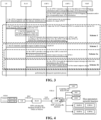
- the embodiment not being part of the present invention provides a specific implementation for handover between network elements, which includes the following operations.
- an AFM-1 (which could be understood as the first network element) searches a Network Slice Selection Function (NSSF) for allowed S-NSSAI/Mapping information and/or corresponding target AFM information. Then, the NSSF replies with the allowed S-NSSAI/Mapping information and/or the corresponding target AFM information.
- NSSF Network Slice Selection Function
- the AFM-1 transmits configuration information to the UE, which includes an indication of re-registration initial/update, and also includes identification information of a target AFM-2 (that is, the second network element) or identification information of the AFM-1.
- the UE transmits registration request message to the RAN, where the 5G-GUTI based on AFM-2 is carried in the AS, and the 5G-GUTI from the AFM-1 is still used in the NAS.
- the RAN transmits the message to the AFM-2 based on the 5G-GUTI of the AS. Then, the RAN transmits the registration request message to the AFM-2, and according to the 5G-GUTI of the NAS, the network element-2 finds the network element-1 to perform the remaining registration request process.
- the UE transmits the registration request (update) message to the AMF-1; that is, the UE transmits a registration update request message to the first network element, or, the UE transmits an initial registration request message.
- the AMF-1 provides a message of the AMF-2 to the RAN; then the RAN transmits this registration request message to the AFM-2.
- the AFM-1 forwards the registration request message and other slice information to the AFM-2. Then, the AFM-2 notifies the RAN of a change of tunnel endpoint(s), and performs the subsequent registration process.
- a 5G network slice is an important 5G function.
- NSSAI is introduced, and different NSSAI for different UEs is provided by the network.
- only one piece of NSSAI is configured on one UE, where one piece of NSSAI includes one or more pieces of Single-NSSAI (S-NSSAI), and each piece of S-NSSAI corresponds to a network slice.
- S-NSSAI Single-NSSAI
- the UE needs to register to the 5G network through the registration process firstly, and then the UE is capable of performing relevant 5G services.
- the UE transmits the requested S-NSSAI to the RAN and the AFM, then the AMF transmits the S-NSSAI to the NSSF in order to acquire the Allowed S-NSSAI, after that, the AFM returns the Allowed S-NSSAI to the UE through a Registration Accept message,.
- the UE subsequently carries the S-NSSAI (one of multiple pieces of Allowed NSSAI) in a Protocol Data Unit (PDU) session request message, and the network-side AMF transmits, according to the S-NSSAI carried by the UE, a request to query the NSSF for the corresponding NSI-ID (Network Slice Instance-ID). Then the AFM transmits the NSI-ID returned from NSSF to the Repository Function (NRF). And the NRF returns corresponding Session Management Function (SMF) information to the AMF, so that the AMF finds a corresponding SMF network element according to the SMF information and then generates a corresponding PDU session.
- S-NSSAI Service Data Unit
- the NSSAI is divided into the following three types.
- Requested S-NSSAI it is transmitted in the UE registration request message and the information is used for indicating which S-NSSAI the UE applies for.
- the RAN can also transmit, according to the information, the NAS message of the UE to a specific AMF (which supports the requested S-NSSAI);
- Subscribed NSSAI this is the NSSAI that the network side subscribes for the user.
- UDM Unified Data Management
- UCU UE Configuration Update
- the AMF may determine which are allowed to be used according to the Allowed S-NSSAI required by the UE in the registration request message. And the Allowed NSSAI will be sent back to the UE in a Registration accept message. The UE subsequently carries S-NSSAI of the Allowed NSSAI in the PDU session establishment request message to establish the corresponding PDU session.
- this embodiment not being part of the present invention provides a specific implementation for handover between network elements, which includes the following operations.
- the RAN notifies the AMF of a Master Node change on the RAN side (for example, from gNB to eNB). Then the AMF decides to trigger the handover of a Core Network (CN), for example, handover from the AFM to the MME.
- CN Core Network
- the AMF can be understood as the first network element
- the MME can be understood as the second network element.
- the AMF transmits a configuration message to the UE, including an indication of re-registration (initial/update), an identification information of the target MME, and a 4G-NAS message to be used.
- the UE transmits a TAU request message to the RAN.
- the mapped 4G-GUTI based on MME is carried in the AS, and the 5G-GUTI or the mapped 4G-GUTI is used in the NAS.
- the RAN transmits this message to the MME based on the GUTI of the AS.
- the RAN transmits the TAU request message to the MME, and the MME finds, according to the GUTI information of the NAS, the AMF to perform the remaining TAU process.
- the UE transmits an attach request message to the AMF.
- the AMF provides MME information to the RAN, and the RAN transmits the attach request message to the MME.
- the AMF forwards the attach request message and other necessary information to the MME. Then the MME notifies the RAN of a change of tunnel endpoint(s) and performs the subsequent attach TAU process.
- the Registration request message will contain the requested S-NSSAI, and Registration Type (which is equal to Initial/Update/Emergency).
- the RAN node can determine, according to the requested S-NSSAI, to which AMF the NAS message of the UE is transmitted.
- FIG. 7 and FIG. 8 respectively show the PDU Session establishment process for the UE and the UE configuration process.
- the UE reports S-NSSAI, DNN, Access Type, PDU Session ID, etc. to the network side. And the network establishes the required PDU session for the UE.
- FIG. 8 shows the following.
- the AMF determines that the UE configuration is to be updated or a re-registration is required.
- the AMF transmits a configuration update instruction to the UE.
- the UE transmits the configuration update completion to the AMF; then the UE can initialize the registration process; the AMF does not trigger the Access Network (AN) release process; or, the AMF triggers an AN release process. Thereafter, the UE initializes the registration process.
- AN Access Network
- the Initial AMF receives the NAS message, it triggers the redirection process to redirect the NAS message of the UE to a Target AMF, that is, let another AMF serve the UE.
- the original AMF triggers a redirection to the target AMF after receiving the NAS message, where 5G GUTI and 4G GUTI are shown in FIG. 10 .
- the embodiment not being part of the invention provides a method for handover between network elements, applied to the first network element. As illustrated in FIG. 11 , the method includes the following operations.
- a configuration request message is transmitted to the UE.
- the configuration request message comprises at least one of registration type, identification information of the second network element, an indication of a GUTI required to be used by the AS, NAS type used, message type used.
- the GUTI required to be used by the AS includes at least part of information of a GUTI corresponding to the second network element.
- the registration type includes one of initial registration, registration update, or emergency registration.
- the NAS type includes 5GC-NAS or EPC-NAS.
- the first network element is assumed to be a network element-1 in the figure.
- the network element 1 when the network element 1 decides to hand over the UE to another network element, the network element 1 (which can specifically be the AMF) transmits the configuration request message.
- the configuration request message may include the following items: 1) request message type (Initial/Update/Emergency); 2) an indication of identification information of a target network element-2, or an indication of a GUTI required to be used by the AS (including the information of the target network element-2, instead of the information of the network element-1); 3) NAS type (5GC-NAS or EPC-NAS); 4) information used to find the AMF/MMF.
- the content of the AS and the NAS may be illustrated in FIG. 14 .
- parameters of the AS may include a GUTI-1, such as the information of the first network element
- parameters of the NAS may include a GUTI-1, such as the information of the second network element.
- a GUTI pointing to the network element-2 is added and included in the AS, and a GUTI pointing to the network element-1 is still included in the NAS.
- the UE uses a 4G-NAS message or a 5G-NAS message according to the indication; if there is an indication of 4G-NAS, the UE needs to map the 5G-GUTI into 4G-GUTI or use an International Mobile Subscriber Identity (IMSI), and transmits a 4G-type message (e.g. Attach request/TAU Request).
- IMSI International Mobile Subscriber Identity
- UE will instruct the RAN side to determine the routing core network element according to specified information. Then, a NAS message will be transmitted to a specified core network element, and the specified information includes network slice information or GUTI information of AS.
- the registration request message is transmitted in plaintext, and when the GUTI information is included in the registration request message, it is already capable of finding the specific core network element according to the GUTI information, and it is thus unnecessary to carry the requested S-NSSAI, so as to avoid the security risks of exposing the requested S-NSSAI.
- the situation where only the requested network slice information rather than the GUTI is carried is similar to the above-mentioned, and it will not be repeated here.
- the first network element on the network side selects the core network element based on the network slice information, it may be determined which core network element is to be selected according to which core network element supports the corresponding S-NASSI.
- the network slice supported by each core network element it may be informed to the first network element by the core network element, or, it may also be acquired from the core network element by the first network element, which will not be described here in detail.
- the first network element on the network side selects the core network element based on at least part of the GUTI information, it may be directly determining which core network element is to be selected according to the information contained in the GUTI.
- the composition of the GUTI can be illustrated in FIG. 10 , which shows 4G-GUTI and 5G-GUTI.
- the GUTI is composed of a globally unique MME identifier and an M-TMSI, and the globally unique MME identifier is composed of an MCC, an MNC, an MME group ID and an MME code.
- the first network element is capable of determining the core network element to be selected, according to the content included in the GUTI.
- the 5G-GUTI may be composed of an MMC, an MNC, an AMF area ID, an AMF Set ID, an AMF pointer and 5G-TMSI, and the first network element is capable of determining the core network element to be selected, according to the composition content of the GUTI.
- the UE side transmits a registration request, an attachment request, or a location update message to the network side.
- Part or all of the information that is based on the GUTI of the second network element is carried in the AS, and one of the following is used in the NAS: part or all of information of a GUTI of the first network element, or part or all of information of the GUTI or SUPI information mapped from the GUTI of the first network element and used on the second network element.
- the method further includes the following.
- the registration request message from the UE is received.
- Part or all of the information that is based on the GUTI of the second network element is carried in the AS, and one of the following is used in the NAS: part or all of information of a GUTI of the first network element, or part or all of information of the GUTI or SUPI information mapped from the GUTI of the first network element and used on the second network element.
- the network side routes to the second network element for processing, according to the part or all of the information that is in the AS and based on the GUTI of the second network element.
- the first request message from the UE is received, and part or all of the information that is based on the GUTI of the second network element is carried in both the AS and the NAS.
- the network side routes to the second network element for processing, according to the part or all of the information that is in the AS and based on the GUTI of the second network element.
- the first request message may be a TAU request message.
- the (at least part of) GUTI including the information of the network element-2 is added into the AS, but the (at least part of) GUTI including the information of the network element-1 is still used in the NAS.
- the RAN routes the request message to the correct network element-2 based on the GUTI information of the AS. And the RAN transmits the request message to the network element-2, then according to the GUTI of the NAS, the network element-2 finds the network element-1 to perform the remaining registration request process.
- the request message includes: part or all of GUTI information of the first network element, which is contained in both the AS and the NAS.
- the method further includes: receiving a request message from the UE.
- the request message includes at least the information of the second network element carried in the AS.
- the message of the second network element is provided to the third network element, such that the third network element may transmit the request message to the second network element.
- the normal request message is transmitted to the network side by the UE. That is, the same GUTI information (the GUTI information of the network element-1) is included in both the AS and the NAS. And the RAN transmits this message to the network element-1.
- a request message from the UE is received.
- the request message includes at least the information of the second network element carried in the AS.
- the message of the second network element is provided to the third network element, such that the third network element may transmit the request message to the second network element.
- the network element-1 provides the information of the network element-2 (that is, the second network element) to the RAN, and performs an indirect redirection. Then, with the information of the network element-2 being carried, the RAN transmits the request message to the network element-2. After that, the remaining registration request process is performed.
- a request message from the UE is received.
- the request message is forwarded to the second network element, such that the second network element notifies the third network element to change the tunnel endpoint.
- the network element-1 directly transmits the message to the network element-2, which specifically transmits the request message and other necessary additional messages to the network element-2. Then, the network element-2 notifies the RAN of a change of tunnel endpoint(s), and performs the subsequent registration process.
- Scenario 3 is directed to a manner in which the UE does not need to be triggered by the network side but initiates an indication to the network side by itself. For example, as illustrated in FIG. 15 , the UE transmits a first message (including the information of the AS and the NAS) to the network-side RAN.
- a first message including the information of the AS and the NAS
- the GUTI corresponding to the first network element is included in the AS, and the GUTI corresponding to the second network element is included in the NAS.
- indication information is included in the AS, which instructs the RAN to use at least one of the requested network slice information or the GUTI information, so as to determine the routing core network element, and transmit the NAS information to the core network element.
- the base station selects the correct core network element according to the AS message in the first message, and transmits the NAS message to the correct core network element.
- the RAN base station may transmit the second message (which carries the transmitted NAS message) to the core network element.
- the UE itself triggers the trigger condition for transmission of the indication to the network-side RAN, and the indication may be transmitted based on the configuration of the UE, for example, when the timing duration of a current timer of the UE reaches a threshold value, etc., which will not be described here in detail.
- Scenario 4 is directed to a manner in which the UE is triggered by the network side, such that the UE initiates a request to the network side.
- the network side may trigger the UE to start transmitting the request message.
- the manner to trigger the UE may be that the network side transmits a configuration request message to the UE.
- the UE receives the configuration request message from the first network element; based on the configuration request message, the UE initiates the request message to the network side.
- the handover between network elements may be implemented immediately without being limited by the current process of the UE (for instance, the UE is redirected). And then the processing efficiency of the UE can be improved.
- the embodiment not being part of the present invention provides User Equipment (UE), including a first communication unit.
- UE User Equipment
- the first communication unit is configured to initiate a request message to a network side, where the request message comprises information of a second network element, which is carried in an AS, so that the network side is capable of transmitting the request message to a corresponding network element according to the information of the second network element; the request message further comprises at least one of information of a first network element or the information of the second network element, which is carried in a NAS.
- the first communication unit is further configured to receive the configuration request message from the first network element.
- the configuration request message comprises at least one of registration type, identification information of the second network element, an indication of a GUTI required to be used by the AS, NAS type used, message type used.
- the GUTI required to be used by the AS includes at least part of information of a GUTI corresponding to the second network element.
- the registration type includes one of initial registration, registration update, or emergency registration.
- the NAS type includes 5GC-NAS or EPC-NAS.
- the first network element is a RAN base station.
- the first network element is assumed to be a network element-1 in the figure.
- the network element 1 when the network element 1 decides to hand over the UE to another network element, the network element 1 (which can specifically be the AMF) transmits the configuration request message.
- the configuration request message may include the following items: 1) request message type (Initial/Update/Emergency); 2) an indication of identification information of a target network element-2, or an indication of a GUTI required to be used by the AS (including the information of the target network element-2, instead of the information of the network element-1); 3) NAS type (5GC-NAS or EPC-NAS); 4) information used to find the AMF/MMF.
- a GUTI pointing to the network element-2 is added and included in the AS, and a GUTI pointing to the network element-1 is still included in the NAS.
- the UE uses a 4G-NAS message or a 5G-NAS message according to the indication; if there is an indication of 4G-NAS, the UE needs to map the 5G-GUTI into 4G-GUTI or use an International Mobile Subscriber Identity (IMSI), and transmits a 4G-type message (e.g. Attach request/TAU Request).
- IMSI International Mobile Subscriber Identity
- first indication information is carried in the AS to instruct the RAN base station to select a core network element according to at least one of requested network slice information or GUTI information. Specifically, in the message transmitted by the UE, it is indicated that the RAN side determines a routing core network element according to specified information, and then transmits the NAS message to a specified core network element, where the specified information includes network slice information or GUTI information of AS.
- GUTI information is not carried in the AS; or, when GUTI information is carried in the AS, network slice information is not carried in the AS. That is, only one of the requested network slice information or the GUTI information is carried in the AS.
- the registration request message is transmitted in plaintext, and when the GUTI information is included in the registration request message, it is already capable of finding the specific core network element according to the GUTI information, and it is thus unnecessary to carry the requested S-NSSAI, so as to avoid the security risks of exposing the requested S-NSSAI.
- the situation where only the requested network slice information rather than the GUTI is carried is similar to the above-mentioned, and it will not be repeated here.
- the first network element on the network side selects the core network element based on the network slice information, it may be determined which core network element is to be selected according to which core network element supports the corresponding S-NASSI.
- the network slice supported by each core network element it may be informed to the first network element by the core network element, or, it may also be acquired from the core network element by the first network element, which will not be described here in detail.
- the first network element on the network side selects the core network element based on at least part of the GUTI information, it may be directly determining which core network element is to be selected according to the information contained in the GUTI.
- the composition of the GUTI can be illustrated in FIG. 10 , which shows 4G-GUTI and 5G-GUTI.
- the GUTI is composed of a globally unique MME identifier and an M-TMSI, and the globally unique MME identifier is composed of an MCC, an MNC, an MME group ID and an MME code.
- the first network element is capable of determining the core network element to be selected, according to the content included in the GUTI.
- the 5G-GUTI may be composed of an MMC, an MNC, an AMF area ID, an AMF Set ID, an AMF pointer and 5G-TMSI, and the first network element is capable of determining the core network element to be selected, according to the composition content of the GUTI.
- the first communication unit initiates the request message to the network side, where the request message includes at least one of registration update request message, initial registration request message, attach request message, or location update message.
- initiating the request message to the network side further includes: initiating, to the first network element, a routing NAS message or an N2 message.
- the registration request, the attachment request, or the location update message may be transmitted to the network side.
- Part or all of the information that is based on the GUTI of the second network element is carried in the AS, and one of the following is used in the NAS: part or all of information of a GUTI of the first network element, or part or all of information of the GUTI or SUPI information mapped from the GUTI of the first network element and used on the second network element.
- the (at least part of) GUTI including the information of the network element-2 is added into the AS, but the (at least part of) GUTI including the information of the network element-1 is still used in the NAS.
- the RAN routes the request message to the correct network element-2 based on the GUTI information of the AS. And the RAN transmits the request message to the network element-2, then according to the GUTI of the NAS, the network element-2 finds the network element-1 to perform the remaining registration request process.
- the request message includes: part or all of GUTI information of the first network element, which is contained in both the AS and the NAS.
- the normal request message is transmitted to the network side by the UE. That is, the same GUTI information (the GUTI information of the network element-1) is included in both the AS and the NAS. And the RAN transmits this message to the network element-1.
- the network element-1 provides the information of the network element-2 (that is, the second network element) to the RAN, and performs an indirect redirection. Then, with the information of the network element-2 being carried, the RAN transmits the request message to the network element-2. After that, the remaining registration request process is performed.
- the network element-1 directly transmits the message to the network element-2, which specifically transmits the request message and other necessary additional messages to the network element-2. Then, the network element-2 notifies the RAN of a change of tunnel endpoint(s), and performs the subsequent registration process.
- Scenario 3 is directed to a manner in which the UE does not need to be triggered by the network side but initiates an indication to the network side by itself. For example, as illustrated in FIG. 15 , the UE transmits a first message (including the information of the AS and the NAS) to the network-side RAN.
- a first message including the information of the AS and the NAS
- the GUTI corresponding to the first network element is included in the AS, and the GUTI corresponding to the second network element is included in the NAS.
- indication information is included in the AS, which instructs the RAN to use at least one of the requested network slice information or the GUTI information, so as to determine the routing core network element, and transmit the NAS information to the core network element.
- the base station selects the correct core network element according to the AS message in the first message, and transmits the NAS message to the correct core network element.
- the RAN base station may transmit the second message (which carries the transmitted NAS message) to the core network element.
- the UE itself triggers the trigger condition for transmission of the indication to the network-side RAN, and the indication may be transmitted based on the configuration of the UE, for example, when the timing duration of a current timer of the UE reaches a threshold value, etc., which will not be described here in detail.
- Scenario 4 is directed to a manner in which the UE is triggered by the network side, such that the UE initiates a request to the network side.
- the network side may trigger the UE to start transmitting the request message.
- the manner to trigger the LTE may be that the network side transmits a configuration request message to the UE.
- the UE receives the configuration request message from the first network element; based on the configuration request message, the UE initiates the request message to the network side.
- the handover between network elements may be implemented immediately without being limited by the current process of the UE (for instance, the UE is redirected). And then the processing efficiency of the UE can be improved.
- the embodiment not being part of the invention provides a first network element, which includes a second processing unit and a second communication unit.
- the second processing unit 1201 is configured to determine to switch the UE to the second network element.
- the second communication unit 1202 is configured to transmit a configuration request message to the UE.
- the configuration request message comprises at least one of registration type, identification information of the second network element, an indication of a GUTI required to be used by the AS, NAS type used, message type used.
- the GUTI required to be used by the AS includes at least part of information of a GUTI corresponding to the second network element.
- the registration type includes one of initial registration, registration update, or emergency registration.
- the NAS type includes 5GC-NAS or EPC-NAS.
- the first network element is assumed to be a network element-1 in the figure.
- the network element 1 when the network element 1 decides to hand over the UE to another network element, the network element 1 (which can specifically be the AMF) transmits the configuration request message.
- the configuration request message may include the following items: 1) request message type (Initial/Update/Emergency); 2) an indication of identification information of a target network element-2, or an indication of a GUTI required to be used by the AS (including the information of the target network element-2, instead of the information of the network element-1); 3) NAS type (5GC-NAS or EPC-NAS); 4) information used to find the AMF/MMF.
- a GUTI pointing to the network element-2 is added and included in the AS, and a GUTI pointing to the network element-1 is still included in the NAS.
- the UE uses a 4G-NAS message or a 5G-NAS message according to the indication; if there is an indication of 4G-NAS, the UE needs to map the 5G-GUTI into 4G-GUTI or use an International Mobile Subscriber Identity (IMSI), and transmits a 4G-type message (e.g. Attach request/TAU Request).
- IMSI International Mobile Subscriber Identity
- UE will instruct the RAN side to determine the routing core network element according to specified information. Then, a NAS message will be transmitted to a specified core network element, and the specified information includes network slice information or GUTI information of AS.
- the UE side transmits a registration request, an attachment request, or a location update message to the network side.
- Part or all of the information that is based on the GUTI of the second network element is carried in the AS, and one of the following is used in the NAS: part or all of information of a GUTI of the first network element, or part or all of information of the GUTI or SUPI information mapped from the GUTI of the first network element and used on the second network element.
- the second communication unit 1202 receives the registration request message from the UE.
- Part or all of the information that is based on the GUTI of the second network element is carried in the AS, and one of the following is used in the NAS: part or all of information of a GUTI of the first network element, or part or all of information of the GUTI or SUPI information mapped from the GUTI of the first network element and used on the second network element.
- the second processing unit 1201 routes to the second network element for processing, according to the part or all of the information that is based on the GUTI of the second network element.
- the second communication unit 1202 receives the first request message from the UE. And part or all of information that is based on the GUTI of the second network element is carried in both the AS and the NAS.
- the first request message may be a TAU request message.
- the second processing unit 1201 routes to the second network element for processing, according to the part or all of the information that is based on the GUTI of the second network element.
- the (at least part of) GUTI including the information of the network element-2 is added into the AS, but the (at least part of) GUTI including the information of the network element-1 is still used in the NAS.
- the RAN routes the request message to the correct network element-2 based on the GUTI information of the AS. And the RAN transmits the request message to the network element-2, then according to the GUTI of the NAS, the network element-2 finds the network element-1 to perform the remaining registration request process.
- the request message includes: part or all of GUTI information of the first network element, which is contained in both the AS and the NAS.
- the second communication unit 1202 receives the request message from the UE.
- the request message includes at least the information of the second network element carried in the AS.
- the message of the second network element is provided to the third network element, such that the third network element may transmit the request message to the second network element.
- the normal request message is transmitted to the network side by the UE. That is, the same GUTI information (the GUTI information of the network element-1) is included in both the AS and the NAS. And the RAN transmits this message to the network element-1.
- the second communication unit 1202 receives the request message from the UE.
- the request message includes at least the information of the second network element carried in the AS.
- the message of the second network element is provided to the third network element, such that the third network element may transmit the request message to the second network element.
- the network element-1 provides the information of the network element-2 (that is, the second network element) to the RAN, and performs an indirect redirection. Then, with the information of the network element-2 being carried, the RAN transmits the request message to the network element-2. After that, the remaining registration request process is performed.
- the second communication unit 1202 receives the request message from the UE and then forwards the request message to the second network element, such that the second network element notifies the third network element to change the tunnel endpoint.
- the network element-1 directly transmits the message to the network element-2, which specifically transmits the request message and other necessary additional messages to the network element-2. Then, the network element-2 notifies the RAN of a change of tunnel endpoint(s), and performs the subsequent registration process.
- Scenario 3 is directed to a manner in which the UE does not need to be triggered by the network side but initiates an indication to the network side by itself. For example, as illustrated in FIG. 15 , the UE transmits a first message (including the information of the AS and the NAS) to the network-side RAN.
- a first message including the information of the AS and the NAS
- the GUTI corresponding to the first network element is included in the AS, and the GUTI corresponding to the second network element is included in the NAS.
- indication information is included in the AS, which instructs the RAN to use at least one of the requested network slice information or the GUTI information, so as to determine the routing core network element, and transmit the NAS information to the core network element.
- the base station selects the correct core network element according to the AS message in the first message, and transmits the NAS message to the correct core network element.
- the RAN base station may transmit the second message (which carries the transmitted NAS message) to the core network element.
- the UE itself triggers the trigger condition for transmission of the indication to the network-side RAN, and the indication may be transmitted based on the configuration of the UE, for example, when the timing duration of a current timer of the UE reaches a threshold value, etc., which will not be described here in detail.
- Scenario 4 is directed to a manner in which the UE is triggered by the network side, such that the UE initiates a request to the network side.
- the network side may trigger the UE to start transmitting the request message.
- the manner to trigger the UE may be that the network side transmits a configuration request message to the UE.
- the UE receives the configuration request message from the first network element; based on the configuration request message, the UE initiates the request message to the network side.
- the handover between network elements may be implemented immediately without being limited by the current process of the UE (for instance, the UE is redirected). And then the processing efficiency of the UE can be improved.
- the embodiment of the disclosure provides a method for network element selection, applied to the UE, which includes the following.
- the network slice information is carried in at least one of the AS or the NAS, but the GUTI information will not be carried.
- the network slice information carried in at least one of the AS or the NAS is configured to instruct the first network element to select the core network element according to this network slice information.
- the GUTI information is carried in at least one of the AS or the NAS, but the network slice information will not be carried.
- the GUTI information carried in at least one of the AS or the NAS is configured to instruct the first network element to select the core network element according to this GUTI information.
- the network slice information carried in at least one of the AS or the NAS allows the first network element to select the core network element according to this network slice information.
- the GUTI information carried in at least one of the AS or the NAS allows the first network element to select the core network element according to this GUTI information.
- this embodiment is aimed at the scenario that there are the network slice information (e.g. S-NSSAI) and the GUTI information at the same time. And only one of the network slice information or the GUTI information will be transmitted.
- the network slice information e.g. S-NSSAI
- information is selected to be transmitted to the network side, particularly, it may be transmitted randomly; or it may be transmitted according to a preset selection rule, such as, preferred GUTI information or preferentially selected network slice information.
- the second message is one of registration request message, session setup message, session modification message, or location update message.
- the first network element is an RAN base station.
- the network slice information is carried in at least one of the AS or the NAS, but the GUTI information will not be carried.
- the network slice information carried in at least one of the AS or the NAS is configured to instruct the first network element to select the core network element according to this network slice information.
- the GUTI information carried in at least one of the AS or the NAS is configured to instruct the first network element to select the core network element according to this GUTI information.
- the network slice information in this embodiment may be the requested S-NSSAI.
- the routed core network element is determined according to specified information.
- the core network element may be selected according to one of the network slice information or GUTI information carried in at least one of the AS and the NAS.
- the specific information carried by the UE in at least one of the AS or NAS, may be indicated by the network side.
- the method further includes:
- the second indication information is configured to instruct the network slice information or the GUTI information to be carried in at least one of the AS or the NAS
- the instruction may be implemented by a designated field in the second indication information.
- one of the bits in this information may be set as the indication field, when the specific bit is equal to 0, it can be used to indicate the network slice information to be carried, and when the specific bit is equal to 1, it can be used to indicate the GUTI information to be carried.
- the specific bit is equal to 1
- the corresponding solution will not repeat here again.
- the UE will determine the information carried in at least one of the AS or the NAS.
- only one of the network slice information or the GUTI information is carried in at least one of the AS or the NAS. Therefore, the provided method can minimize the security risks of privacy exposure, because of only one of the S-NSSAI or the GUTI information to be carried.
- the registration request message is transmitted in plaintext, and when the GUTI information is included in the registration request message, it is already capable of finding the specific core network element according to the GUTI information, and it is thus unnecessary to carry the requested S-NSSAI, so as to avoid the security risks of exposing the requested S-NSSAI.
- the situation where only the requested network slice information rather than the GUTI is carried is similar to the above-mentioned, and it will not be repeated here.
- the second message is initiated to the network side, where the second message is one of registration request message, session setup message, session modification message, or location update message.
- Part or all of the GUTI information is carried in at least one of the AS or the NAS. Or part or all of the requested network slice information is carried in at least one of the AS or the NAS.
- the first network element e.g. the base station
- network slice information is introduced, for example in particular, Network Slicing Selection Assistant Information.
- different NSSAI for different UEs is provided by the network, where only one piece of NSSAI is configured on one UE.
- one piece of NSSAI includes one or more pieces of Single-NSSAI (S-NSSAI), and each piece of S-NSSAI corresponds to a network slice.
- S-NSSAI Single-NSSAI
- the requested S-NSSAI is transmitted in the UE registration request message and the information is used for indicating which S-NSSAI the UE applies for.
- the RAN can also transmit, according to the information, the NAS message of the LTE to a specific AMF (which supports the requested S-NSSAI).
- the first network element on the network side (for example, the RAN base station) selects the core network element based on the network slice information, it may be determined which core network element is to be selected according to which core network element supports the corresponding S-NASSI. With regard to the network slice supported by each core network element, it may be informed to the first network element by the core network element, or, it may also be acquired from the core network element by the first network element, which will not be described here in detail.
- the first network element on the network side selects the core network element based on at least part of the GUTI information, it may be directly determining which core network element is to be selected according to the information contained in the GUTI.
- the composition of the GUTI can be illustrated in FIG. 10 , which shows 4G-GUTI and 5G-GUTI.
- the GUTI is composed of a globally unique MME identifier and an M-TMSI, and the globally unique MME identifier is composed of an MCC, an MNC, an MME group ID and an MME code.
- the first network element is capable of determining the core network element to be selected, according to the content included in the GUTI.
- the 5G-GUTI may be composed of an MMC, an MNC, an AMF area ID, an AMF Set ID, an AMF pointer and 5G-TMSI, and the first network element is capable of determining the core network element to be selected, according to the composition content of the GUTI.
- the handover between network elements may be implemented immediately without being limited by the current process of the UE. And then the processing efficiency of the UE can be improved.
- the embodiment not being part of the invention provides a method for network element selection, applied to the first network element, which includes the following.
- the core network element When receiving the second message from the UE, it will receive the network slice information carried in at least one of the AS or the NAS, where the GUTI information are not carried. Then, the core network element may be selected according to this network slice information.
- the UE When receiving the second message from the UE, it will receive the GUTI information carried in at least one of the AS or the NAS, where the network slice information are not carried. Then, the core network element may be selected according to this GUTI information.
- This embodiment not being part of the invention is aimed at the scenario that there are the network slice information (e.g. S-NSSAI) and the GUTI information at the same time. And only one of the network slice information or the GUTI information will be transmitted.
- the network slice information e.g. S-NSSAI
- the GUTI information only one of the network slice information or the GUTI information will be transmitted.
- information is selected to be transmitted to the network side, particularly, it may be transmitted randomly; or it may be transmitted according to a preset selection rule, such as, preferred GUTI information or preferentially selected network slice information.
- the second message is one of: registration request message, session setup message, session modification message, or location update message.
- the first network element is an RAN base station.
- the network slice information is carried in at least one of the AS or the NAS, but the GUTI information will not be carried.
- the network slice information carried in at least one of the AS or the NAS is configured to instruct the first network element to select the core network element according to this network slice information.
- the GUTI information carried in at least one of the AS or the NAS is configured to instruct the first network element to select the core network element according to this GUTI information.
- the network slice information in this embodiment not being part of the invention may be the requested S-NSSAI.
- the routed core network element is determined according to specified information.
- the core network element may be selected according to one of the network slice information or GUTI information carried in at least one of the AS and the NAS.
- the specific information carried by the UE in at least one of the AS or NAS, may be indicated by the network side.
- the method further includes:
- the second indication information is configured to instruct the network slice information or the GUTI information to be carried in at least one of the AS or the NAS
- the instruction may be implemented by a designated field in the second indication information.
- one of the bits in this information may be set as the indication field, when the specific bit is equal to 0, it can be used to indicate the network slice information to be carried, and when the specific bit is equal to 1, it can be used to indicate the GUTI information to be carried.
- the specific bit is equal to 1
- the corresponding solution will not repeat here again.
- the UE will determine the information carried in at least one of the AS or the NAS.
- only one of the network slice information or the GUTI information is carried in at least one of the AS or the NAS. Therefore, the provided method can minimize the security risks of privacy exposure, because of only one of the S-NSSAI or the GUTI information to be carried.
- the registration request message is transmitted in plaintext, and when the GUTI information is included in the registration request message, it is already capable of finding the specific core network element according to the GUTI information, and it is thus unnecessary to carry the requested S-NSSAI, so as to avoid the security risks of exposing the requested S-NSSAI.
- the situation where only the requested network slice information rather than the GUTI is carried is similar to the above-mentioned, and it will not be repeated here.
- the second message is initiated to the network side, where the second message is one of registration request message, session setup message, session modification message, or location update message.
- Part or all of the GUTI information is carried in at least one of the AS or the NAS. Or part or all of the requested network slice information is carried in at least one of the AS or the NAS.
- the first network element e.g. the base station
- network slice information is introduced, for example in particular, Network Slicing Selection Assistant Information.
- different NSSAI for different UEs is provided by the network, where only one piece of NSSAI is configured on one UE.
- one piece of NSSAI includes one or more pieces of Single-NSSAI (S-NSSAI), and each piece of S-NSSAI corresponds to a network slice.
- S-NSSAI Single-NSSAI
- the requested S-NSSAI is transmitted in the UE registration request message and the information is used for indicating which S-NSSAI the UE applies for.
- the RAN can also transmit, according to the information, the NAS message of the UE to a specific AMF (which supports the requested S-NSSAI).
- the first network element on the network side (for example, the RAN base station) selects the core network element based on the network slice information, it may be determined which core network element is to be selected according to which core network element supports the corresponding S-NASSI. With regard to the network slice supported by each core network element, it may be informed to the first network element by the core network element, or, it may also be acquired from the core network element by the first network element, which will not be described here in detail.
- the first network element on the network side selects the core network element based on at least part of the GUTI information, it may be directly determining which core network element is to be selected according to the information contained in the GUTI.
- the composition of the GUTI can be illustrated in FIG. 10 , which shows 4G-GUTI and 5G-GUTI.
- the GUTI is composed of a globally unique MME identifier and an M-TMSI, and the globally unique MME identifier is composed of an MCC, an MNC, an MME group ID and an MME code.
- the first network element is capable of determining the core network element to be selected, according to the content included in the GUTI.
- the 5G-GUTI may be composed of an MMC, an MNC, an AMF area ID, an AMF Set ID, an AMF pointer and 5G-TMSI, and the first network element is capable of determining the core network element to be selected, according to the composition content of the GUTI.
- the handover between network elements may be implemented immediately without being limited by the current process of the UE. And then the processing efficiency of the UE can be improved.
- the embodiment of the disclosure provides a UE, including a third communication unit.
- the third communication unit is configured to: when transmitting a second message and if there are network slice information and GUTI information a third communication unit, carry the network slice information in at least one of an AS or a NAS, and not carry the GUTI information; or, when transmitting a second message, if there is network slice information and GUTI information, carry the GUTI information in at least one of the AS or the NAS, and not carry the network slice information.
- the network slice information carried in at least one of the AS or the NAS allows the first network element to select the core network element according to this network slice information.
- the GUTI information carried in at least one of the AS or the NAS allows the first network element to select the core network element according to this GUTI information.
- this embodiment is aimed at the scenario that there are the network slice information (e.g. S-NSSAI) and the GUTI information at the same time. And only one of the network slice information or the GUTI information will be transmitted.
- the network slice information e.g. S-NSSAI
- information is selected to be transmitted to the network side, particularly, it may be transmitted randomly; or it may be transmitted according to a preset selection rule, such as, preferred GUTI information or preferentially selected network slice information.
- the network slice information may be carried in at least one of the AS or the NAS, but the GUTI information will not be carried.
- the network slice information carried in at least one of the AS or the NAS is configured to instruct the first network element to select the core network element according to this network slice information.
- the third communication unit is configured to: when transmitting a second message, carry the GUTI information in at least one of an AS or a NAS, and not carry the network slice information.
- the GUTI information carried in at least one of the AS or the NAS is configured to instruct the first network element to select the core network element according to this GUTI information.
- the second message is one of: registration request message, session setup message, session modification message, or location update message.
- the first network element is an RAN base station.
- the network slice information is carried in at least one of the AS or the NAS, but the GUTI information will not be carried.
- the network slice information carried in at least one of the AS or the NAS is configured to instruct the first network element to select the core network element according to this network slice information.
- the GUTI information carried in at least one of the AS or the NAS is configured to instruct the first network element to select the core network element according to this GUTI information.
- the network slice information in this embodiment may be the requested S-NSSAI.
- the routed core network element is determined according to specified information.
- the core network element may be selected according to one of the network slice information or GUTI information carried in at least one of the AS and the NAS.
- the specific information carried by the UE in at least one of the AS or NAS may be indicated by the network side.
- the method further includes: receiving second indication information from a network side, where the second indication information is configured to instruct the network slice information or the GUTI information to be carried in at least one of the AS or the NAS.
- the instruction may be implemented by a designated field in the second indication information.
- one of the bits in this information may be set as the indication field, when the specific bit is equal to 0, it can be used to indicate the network slice information to be carried, and when the specific bit is equal to 1, it can be used to indicate the GUTI information to be carried.
- the specific bit is equal to 1
- the corresponding solution will not repeat here again.
- the UE will determine the information carried in at least one of the AS or the NAS.
- only one of the network slice information or the GUTI information is carried in at least one of the AS or the NAS. Therefore, the provided method can minimize the security risks of privacy exposure, because of only one of the S-NSSAI or the GUTI information to be carried.
- the registration request message is transmitted in plaintext, and when the GUTI information is included in the registration request message, it is already capable of finding the specific core network element according to the GUTI information, and it is thus unnecessary to carry the requested S-NSSAI, so as to avoid the security risks of exposing the requested S-NSSAI.
- the situation where only the requested network slice information rather than the GUTI is carried is similar to the above-mentioned, and it will not be repeated here.
- the second message is initiated to the network side, where the second message is one of registration request message, session setup message, session modification message, or location update message.
- Part or all of the GUTI information is carried in at least one of the AS or the NAS. Or part or all of the requested network slice information is carried in at least one of the AS or the NAS.
- the first network element e.g. the base station
- the handover between network elements may be implemented immediately without being limited by the current process of the UE. And then the processing efficiency of the UE can be improved.
- the embodiment provides a first network element, as illustrated in FIG. 17 , which includes a fourth communication unit and a fourth processing unit.
- the fourth communication unit 1701 is configured to receive a second message from UE, where the UE carries network slice information in at least one of an AS or a NAS, and does not carry GUTI information.
- the fourth processing unit 1702 is configured to select a core network element according to the network slice information.
- the fourth communication unit 1701 is configured to receive a second message from UE, where the UE carries GUTI information in at least one of the AS or the NAS, and does not carry network slice information
- the fourth processing unit 1702 is configured to select a core network element according to the GUTI information.
- This embodiment is aimed at the scenario that there are the network slice information (e.g. S-NSSAI) and the GUTI information at the same time. And only one of the network slice information or the GUTI information will be transmitted.
- the network slice information e.g. S-NSSAI
- information is selected to be transmitted to the network side, particularly, it may be transmitted randomly; or it may be transmitted according to a preset selection rule, such as, preferred GUTI information or preferentially selected network slice information.
- the second message is one of: registration request message, session setup message, session modification message, or location update message.
- the first network element is an RAN base station.
- the network slice information is carried in at least one of the AS or the NAS, but the GUTI information will not be carried.
- the network slice information carried in at least one of the AS or the NAS is configured to instruct the first network element to select the core network element according to this network slice information.
- the GUTI information carried in at least one of the AS or the NAS is configured to instruct the first network element to select the core network element according to this GUTI information.
- the network slice information in this embodiment may be the requested S-NSSAI.
- the routed core network element is determined according to specified information.
- the core network element may be selected according to one of the network slice information or GUTI information carried in at least one of the AS and the NAS.
- the specific information carried by the UE in at least one of the AS or NAS, may be indicated by the network side.
- the fourth communication unit transmits second indication information from a network side, where the second indication information is configured to instruct the network slice information or the GUTI information to be carried in at least one of the AS or the NAS.
- the instruction may be implemented by a designated field in the second indication information.
- one of the bits in this information may be set as the indication field, when the specific bit is equal to 0, it can be used to indicate the network slice information to be carried, and when the specific bit is equal to 1, it can be used to indicate the GUTI information to be carried.
- the specific bit is equal to 1
- the corresponding solution will not repeat here again.
- the UE will determine the information carried in at least one of the AS or the NAS.
- only one of the network slice information or the GUTI information is carried in at least one of the AS or the NAS. Therefore, the provided method can minimize the security risks of privacy exposure, because of only one of the S-NSSAI or the GUTI information to be carried.
- the registration request message is transmitted in plaintext, and when the GUTI information is included in the registration request message, it is already capable of finding the specific core network element according to the GUTI information, and it is thus unnecessary to carry the requested S-NSSAI, so as to avoid the security risks of exposing the requested S-NSSAI.
- the situation where only the requested network slice information rather than the GUTI is carried is similar to the above-mentioned, and it will not be repeated here.
- the second message is initiated to the network side, where the second message is one of: registration request message, session setup message, session modification message, or location update message.
- Part or all of the GUTI information is carried in at least one of the AS or the NAS. Or part or all of the requested network slice information is carried in at least one of the AS or the NAS.
- the first network element e.g. the base station
- the S-NSSAI and the GUTI exist at the same time, both of them are transmitted to the network side by the UE, and then the network side performs subsequent processing.
- another processing manner is provided in the embodiment, where only one of the S-NSSAI or the GUTI is transmitted; furthermore, the embodiment provides a method of carrying only one of the S-NSSAI or the GUTI information, thus it is possible to minimize the security risks of privacy exposure.
- the handover between network elements may be implemented immediately without being limited by the current process of the UE. And then the processing efficiency of the UE can be improved.
- the hardware composition architecture includes: at least one processor 1301, memory 1302, and at least one network interface 1303.
- Various components are coupled together via the bus system 1304. Understandably, the bus system 1304 is used to implement connection and communication between these components.
- the bus system 1304 also includes a power bus, a control bus, and a status signal bus.
- the various busses are illustrated in FIG. 13 as the bus system 1304.
- the memory 408 may be either a volatile memory or a nonvolatile memory, or can include both volatile and nonvolatile memory.
- the memory 1302 stores the following elements: executable modules or data structures, or their subsets, or their extensions:
- the processor 1301 is configured to be capable of processing the operations of any one of the aforementioned methods in the embodiments not being part of the invention 1-3, 6 or 7, which will not be repeated here again.
- the embodiment of the disclosure provides a computer storage medium having stored thereon computer-executable instructions that, when executed, cause the operations of any one of the aforementioned methods in the embodiments 1-3, 6 or 7 to be performed.
- the above devices further provided in the embodiments of the disclosure can be stored in a computer readable storage medium if being realized in the manner of the software function module and sold or used as an independent product.
- the computer software product is stored in a storage medium and includes several instructions for a computer device (which may be a personal computer, a server, or a network device, etc.) to perform all or part of the methods described in the embodiments of the present disclosure.
- the aforementioned storage medium includes various media that can store program codes, such as a U disk, a mobile hard disk, a Read Only Memory (ROM), a magnetic disk, or an optical disk. As such, the present disclosure is not limited to any specific combination of hardware and software.
Landscapes
- Engineering & Computer Science (AREA)
- Computer Networks & Wireless Communication (AREA)
- Signal Processing (AREA)
- Computer Security & Cryptography (AREA)
- Mobile Radio Communication Systems (AREA)
- Data Exchanges In Wide-Area Networks (AREA)
Applications Claiming Priority (2)
| Application Number | Priority Date | Filing Date | Title |
|---|---|---|---|
| PCT/CN2018/081102 WO2019183885A1 (zh) | 2018-03-29 | 2018-03-29 | 网元间切换的方法、用户设备、网元及计算机存储介质 |
| PCT/CN2018/109538 WO2019184293A1 (zh) | 2018-03-29 | 2018-10-09 | 网元间切换及网元选择的方法、用户设备、网元 |
Publications (3)
| Publication Number | Publication Date |
|---|---|
| EP3771251A1 EP3771251A1 (en) | 2021-01-27 |
| EP3771251A4 EP3771251A4 (en) | 2021-07-28 |
| EP3771251B1 true EP3771251B1 (en) | 2023-05-10 |
Family
ID=68059151
Family Applications (1)
| Application Number | Title | Priority Date | Filing Date |
|---|---|---|---|
| EP18912579.2A Active EP3771251B1 (en) | 2018-03-29 | 2018-10-09 | Method for switching between network elements and network element selection, user equipment, network element |
Country Status (9)
| Country | Link |
|---|---|
| US (1) | US11490308B2 (https=) |
| EP (1) | EP3771251B1 (https=) |
| JP (1) | JP2021519545A (https=) |
| KR (1) | KR20200138337A (https=) |
| CN (2) | CN111247834A (https=) |
| AU (1) | AU2018416927A1 (https=) |
| MX (1) | MX2020010216A (https=) |
| SG (1) | SG11202009678YA (https=) |
| WO (2) | WO2019183885A1 (https=) |
Families Citing this family (8)
| Publication number | Priority date | Publication date | Assignee | Title |
|---|---|---|---|---|
| KR102216156B1 (ko) | 2017-11-13 | 2021-02-16 | 엘지전자 주식회사 | 무선 통신 시스템에서 액세스의 전환에 관련된 신호 송수신 방법 및 이를 위한 장치 |
| CN114615023A (zh) * | 2018-09-05 | 2022-06-10 | 华为技术有限公司 | 一种通信的方法及相关的装置 |
| CN111866974B (zh) * | 2019-04-29 | 2022-12-06 | 华为技术有限公司 | 用于移动注册的方法和装置 |
| CN113498060B (zh) * | 2020-04-07 | 2023-02-17 | 大唐移动通信设备有限公司 | 一种控制网络切片认证的方法、装置、设备及存储介质 |
| CN116530153A (zh) * | 2020-10-30 | 2023-08-01 | 三星电子株式会社 | 用于管理amf重新分配的方法和装置 |
| US20220232363A1 (en) * | 2021-01-16 | 2022-07-21 | Samsung Electronics Co., Ltd. | Telecommunication network following a disaster condition |
| CN113950141B (zh) * | 2021-11-30 | 2023-05-26 | 新华三技术有限公司 | 一种终端ue注册方法、装置及设备 |
| WO2025044063A1 (en) * | 2023-08-31 | 2025-03-06 | Huawei Technologies Co., Ltd. | Data processing method and related products |
Citations (1)
| Publication number | Priority date | Publication date | Assignee | Title |
|---|---|---|---|---|
| WO2018208371A1 (en) * | 2017-05-08 | 2018-11-15 | Qualcomm Incorporated | Mobility between areas with heterogeneous network slices |
Family Cites Families (14)
| Publication number | Priority date | Publication date | Assignee | Title |
|---|---|---|---|---|
| CN101026861A (zh) * | 2006-02-23 | 2007-08-29 | 华为技术有限公司 | 一种移动台与演进分组核心网间连接建立的方法 |
| CN101415176B (zh) * | 2007-10-16 | 2011-11-09 | 华为技术有限公司 | 一种终端进行位置更新的方法、系统及装置 |
| WO2010044730A2 (en) * | 2008-10-15 | 2010-04-22 | Telefonaktiebolaget L M Ericsson (Publ) | Method and apparatus for mobility selection of voice over the evolved packet system |
| CN101765094B (zh) * | 2008-12-22 | 2012-07-04 | 华为技术有限公司 | 实现用户设备切换的方法、装置及系统 |
| US8842633B2 (en) * | 2009-05-04 | 2014-09-23 | Blackberry Limited | Systems and methods for mobile stations to identify radio access technologies |
| CN102869122B (zh) | 2011-07-05 | 2018-08-28 | 北京三星通信技术研究有限公司 | 避免切换失败的方法 |
| CN103188650B (zh) | 2011-12-28 | 2016-03-23 | 电信科学技术研究院 | 网关选择方法和设备 |
| EP2645803B1 (en) * | 2012-03-27 | 2019-07-31 | BlackBerry Limited | Enb storing rrc configuration information at another network component |
| US9642077B2 (en) | 2013-10-23 | 2017-05-02 | Cisco Technology, Inc. | Node selection in virtual evolved packet core |
| CN106375987B (zh) | 2015-07-22 | 2021-08-20 | 中兴通讯股份有限公司 | 一种网络切片的选择方法及系统 |
| CN107277883A (zh) * | 2016-04-08 | 2017-10-20 | 电信科学技术研究院 | 在多网络切片的网络中路由消息的方法、设备及系统 |
| CN106572516B (zh) * | 2016-09-28 | 2021-02-12 | 华为技术有限公司 | 一种网络切片选择方法、终端设备及网络设备 |
| BR112019016017A2 (pt) * | 2017-02-03 | 2020-03-31 | Telefonaktiebolaget Lm Ericsson (Publ) | Acesso a um sistema de comunicação que emprega fatiamento de rede com base em categoria de acesso pré-configurada |
| CN107071799B (zh) * | 2017-02-16 | 2019-12-06 | 北京小米移动软件有限公司 | 网络切片配置方法及装置、无线接入网ran节点和终端 |
-
2018
- 2018-03-29 WO PCT/CN2018/081102 patent/WO2019183885A1/zh not_active Ceased
- 2018-10-09 AU AU2018416927A patent/AU2018416927A1/en not_active Abandoned
- 2018-10-09 WO PCT/CN2018/109538 patent/WO2019184293A1/zh not_active Ceased
- 2018-10-09 JP JP2020552377A patent/JP2021519545A/ja not_active Withdrawn
- 2018-10-09 CN CN201880067676.9A patent/CN111247834A/zh active Pending
- 2018-10-09 MX MX2020010216A patent/MX2020010216A/es unknown
- 2018-10-09 CN CN202010525109.2A patent/CN111787577B/zh active Active
- 2018-10-09 EP EP18912579.2A patent/EP3771251B1/en active Active
- 2018-10-09 KR KR1020207031150A patent/KR20200138337A/ko not_active Withdrawn
- 2018-10-09 SG SG11202009678YA patent/SG11202009678YA/en unknown
-
2020
- 2020-09-17 US US17/024,638 patent/US11490308B2/en active Active
Patent Citations (1)
| Publication number | Priority date | Publication date | Assignee | Title |
|---|---|---|---|---|
| WO2018208371A1 (en) * | 2017-05-08 | 2018-11-15 | Qualcomm Incorporated | Mobility between areas with heterogeneous network slices |
Also Published As
| Publication number | Publication date |
|---|---|
| US20210007027A1 (en) | 2021-01-07 |
| WO2019183885A1 (zh) | 2019-10-03 |
| KR20200138337A (ko) | 2020-12-09 |
| AU2018416927A1 (en) | 2020-11-12 |
| EP3771251A4 (en) | 2021-07-28 |
| MX2020010216A (es) | 2020-11-09 |
| SG11202009678YA (en) | 2020-10-29 |
| US11490308B2 (en) | 2022-11-01 |
| CN111787577B (zh) | 2022-06-28 |
| WO2019184293A1 (zh) | 2019-10-03 |
| CN111787577A (zh) | 2020-10-16 |
| CN111247834A (zh) | 2020-06-05 |
| EP3771251A1 (en) | 2021-01-27 |
| JP2021519545A (ja) | 2021-08-10 |
Similar Documents
| Publication | Publication Date | Title |
|---|---|---|
| EP3771251B1 (en) | Method for switching between network elements and network element selection, user equipment, network element | |
| AU2023202706B2 (en) | Privacy indicators for controlling authentication requests | |
| US11812503B2 (en) | Mobility management processing method and apparatus | |
| EP3622738B1 (en) | Indicator for determination of key for processing message in communication system | |
| EP2497287B1 (en) | Node selection in a communication network | |
| US20130189955A1 (en) | Method for context establishment in telecommunication networks | |
| US11991609B2 (en) | Method and nodes for handling connectivity to a data network | |
| HK40110139A (en) | Privacy indicators for controlling authentication requests | |
| WO2025219833A1 (en) | Enhanced handover procedures in communication network environment | |
| CN118741552A (zh) | 一种通信方法及装置 | |
| WO2025219832A1 (en) | Enhanced handover procedures in communication network environment | |
| WO2024166071A1 (en) | Conditional configuration activation for secondary access node in dual connectivity communication network | |
| CN117376888A (zh) | 一种用户设备识别方法、装置和网络设备 |
Legal Events
| Date | Code | Title | Description |
|---|---|---|---|
| STAA | Information on the status of an ep patent application or granted ep patent |
Free format text: STATUS: THE INTERNATIONAL PUBLICATION HAS BEEN MADE |
|
| PUAI | Public reference made under article 153(3) epc to a published international application that has entered the european phase |
Free format text: ORIGINAL CODE: 0009012 |
|
| STAA | Information on the status of an ep patent application or granted ep patent |
Free format text: STATUS: REQUEST FOR EXAMINATION WAS MADE |
|
| 17P | Request for examination filed |
Effective date: 20201019 |
|
| AK | Designated contracting states |
Kind code of ref document: A1 Designated state(s): AL AT BE BG CH CY CZ DE DK EE ES FI FR GB GR HR HU IE IS IT LI LT LU LV MC MK MT NL NO PL PT RO RS SE SI SK SM TR |
|
| AX | Request for extension of the european patent |
Extension state: BA ME |
|
| RIC1 | Information provided on ipc code assigned before grant |
Ipc: H04W 36/12 20090101AFI20210409BHEP Ipc: H04W 36/00 20090101ALN20210409BHEP |
|
| DAV | Request for validation of the european patent (deleted) | ||
| DAX | Request for extension of the european patent (deleted) | ||
| A4 | Supplementary search report drawn up and despatched |
Effective date: 20210628 |
|
| RIC1 | Information provided on ipc code assigned before grant |
Ipc: H04W 36/12 20090101AFI20210622BHEP Ipc: H04W 36/00 20090101ALN20210622BHEP |
|
| STAA | Information on the status of an ep patent application or granted ep patent |
Free format text: STATUS: EXAMINATION IS IN PROGRESS |
|
| 17Q | First examination report despatched |
Effective date: 20220225 |
|
| REG | Reference to a national code |
Ref country code: DE Ref legal event code: R079 Free format text: PREVIOUS MAIN CLASS: H04W0036060000 Ipc: H04W0036120000 Ref document number: 602018049869 Country of ref document: DE |
|
| GRAP | Despatch of communication of intention to grant a patent |
Free format text: ORIGINAL CODE: EPIDOSNIGR1 |
|
| STAA | Information on the status of an ep patent application or granted ep patent |
Free format text: STATUS: GRANT OF PATENT IS INTENDED |
|
| RIC1 | Information provided on ipc code assigned before grant |
Ipc: H04W 36/00 20090101ALN20230201BHEP Ipc: H04W 36/12 20090101AFI20230201BHEP |
|
| RIC1 | Information provided on ipc code assigned before grant |
Ipc: H04W 36/00 20090101ALN20230208BHEP Ipc: H04W 36/12 20090101AFI20230208BHEP |
|
| GRAS | Grant fee paid |
Free format text: ORIGINAL CODE: EPIDOSNIGR3 |
|
| INTG | Intention to grant announced |
Effective date: 20230302 |
|
| GRAA | (expected) grant |
Free format text: ORIGINAL CODE: 0009210 |
|
| STAA | Information on the status of an ep patent application or granted ep patent |
Free format text: STATUS: THE PATENT HAS BEEN GRANTED |
|
| AK | Designated contracting states |
Kind code of ref document: B1 Designated state(s): AL AT BE BG CH CY CZ DE DK EE ES FI FR GB GR HR HU IE IS IT LI LT LU LV MC MK MT NL NO PL PT RO RS SE SI SK SM TR |
|
| REG | Reference to a national code |
Ref country code: GB Ref legal event code: FG4D |
|
| REG | Reference to a national code |
Ref country code: AT Ref legal event code: REF Ref document number: 1567973 Country of ref document: AT Kind code of ref document: T Effective date: 20230515 Ref country code: CH Ref legal event code: EP |
|
| REG | Reference to a national code |
Ref country code: DE Ref legal event code: R096 Ref document number: 602018049869 Country of ref document: DE |
|
| REG | Reference to a national code |
Ref country code: IE Ref legal event code: FG4D |
|
| P01 | Opt-out of the competence of the unified patent court (upc) registered |
Effective date: 20230525 |
|
| REG | Reference to a national code |
Ref country code: LT Ref legal event code: MG9D |
|
| REG | Reference to a national code |
Ref country code: NL Ref legal event code: MP Effective date: 20230510 |
|
| REG | Reference to a national code |
Ref country code: AT Ref legal event code: MK05 Ref document number: 1567973 Country of ref document: AT Kind code of ref document: T Effective date: 20230510 |
|
| PG25 | Lapsed in a contracting state [announced via postgrant information from national office to epo] |
Ref country code: SE Free format text: LAPSE BECAUSE OF FAILURE TO SUBMIT A TRANSLATION OF THE DESCRIPTION OR TO PAY THE FEE WITHIN THE PRESCRIBED TIME-LIMIT Effective date: 20230510 Ref country code: PT Free format text: LAPSE BECAUSE OF FAILURE TO SUBMIT A TRANSLATION OF THE DESCRIPTION OR TO PAY THE FEE WITHIN THE PRESCRIBED TIME-LIMIT Effective date: 20230911 Ref country code: NO Free format text: LAPSE BECAUSE OF FAILURE TO SUBMIT A TRANSLATION OF THE DESCRIPTION OR TO PAY THE FEE WITHIN THE PRESCRIBED TIME-LIMIT Effective date: 20230810 Ref country code: NL Free format text: LAPSE BECAUSE OF FAILURE TO SUBMIT A TRANSLATION OF THE DESCRIPTION OR TO PAY THE FEE WITHIN THE PRESCRIBED TIME-LIMIT Effective date: 20230510 Ref country code: ES Free format text: LAPSE BECAUSE OF FAILURE TO SUBMIT A TRANSLATION OF THE DESCRIPTION OR TO PAY THE FEE WITHIN THE PRESCRIBED TIME-LIMIT Effective date: 20230510 Ref country code: AT Free format text: LAPSE BECAUSE OF FAILURE TO SUBMIT A TRANSLATION OF THE DESCRIPTION OR TO PAY THE FEE WITHIN THE PRESCRIBED TIME-LIMIT Effective date: 20230510 |
|
| PG25 | Lapsed in a contracting state [announced via postgrant information from national office to epo] |
Ref country code: RS Free format text: LAPSE BECAUSE OF FAILURE TO SUBMIT A TRANSLATION OF THE DESCRIPTION OR TO PAY THE FEE WITHIN THE PRESCRIBED TIME-LIMIT Effective date: 20230510 Ref country code: PL Free format text: LAPSE BECAUSE OF FAILURE TO SUBMIT A TRANSLATION OF THE DESCRIPTION OR TO PAY THE FEE WITHIN THE PRESCRIBED TIME-LIMIT Effective date: 20230510 Ref country code: LV Free format text: LAPSE BECAUSE OF FAILURE TO SUBMIT A TRANSLATION OF THE DESCRIPTION OR TO PAY THE FEE WITHIN THE PRESCRIBED TIME-LIMIT Effective date: 20230510 Ref country code: LT Free format text: LAPSE BECAUSE OF FAILURE TO SUBMIT A TRANSLATION OF THE DESCRIPTION OR TO PAY THE FEE WITHIN THE PRESCRIBED TIME-LIMIT Effective date: 20230510 Ref country code: IS Free format text: LAPSE BECAUSE OF FAILURE TO SUBMIT A TRANSLATION OF THE DESCRIPTION OR TO PAY THE FEE WITHIN THE PRESCRIBED TIME-LIMIT Effective date: 20230910 Ref country code: HR Free format text: LAPSE BECAUSE OF FAILURE TO SUBMIT A TRANSLATION OF THE DESCRIPTION OR TO PAY THE FEE WITHIN THE PRESCRIBED TIME-LIMIT Effective date: 20230510 Ref country code: GR Free format text: LAPSE BECAUSE OF FAILURE TO SUBMIT A TRANSLATION OF THE DESCRIPTION OR TO PAY THE FEE WITHIN THE PRESCRIBED TIME-LIMIT Effective date: 20230811 |
|
| PG25 | Lapsed in a contracting state [announced via postgrant information from national office to epo] |
Ref country code: FI Free format text: LAPSE BECAUSE OF FAILURE TO SUBMIT A TRANSLATION OF THE DESCRIPTION OR TO PAY THE FEE WITHIN THE PRESCRIBED TIME-LIMIT Effective date: 20230510 |
|
| PG25 | Lapsed in a contracting state [announced via postgrant information from national office to epo] |
Ref country code: SK Free format text: LAPSE BECAUSE OF FAILURE TO SUBMIT A TRANSLATION OF THE DESCRIPTION OR TO PAY THE FEE WITHIN THE PRESCRIBED TIME-LIMIT Effective date: 20230510 |
|
| PG25 | Lapsed in a contracting state [announced via postgrant information from national office to epo] |
Ref country code: SM Free format text: LAPSE BECAUSE OF FAILURE TO SUBMIT A TRANSLATION OF THE DESCRIPTION OR TO PAY THE FEE WITHIN THE PRESCRIBED TIME-LIMIT Effective date: 20230510 Ref country code: SK Free format text: LAPSE BECAUSE OF FAILURE TO SUBMIT A TRANSLATION OF THE DESCRIPTION OR TO PAY THE FEE WITHIN THE PRESCRIBED TIME-LIMIT Effective date: 20230510 Ref country code: RO Free format text: LAPSE BECAUSE OF FAILURE TO SUBMIT A TRANSLATION OF THE DESCRIPTION OR TO PAY THE FEE WITHIN THE PRESCRIBED TIME-LIMIT Effective date: 20230510 Ref country code: EE Free format text: LAPSE BECAUSE OF FAILURE TO SUBMIT A TRANSLATION OF THE DESCRIPTION OR TO PAY THE FEE WITHIN THE PRESCRIBED TIME-LIMIT Effective date: 20230510 Ref country code: DK Free format text: LAPSE BECAUSE OF FAILURE TO SUBMIT A TRANSLATION OF THE DESCRIPTION OR TO PAY THE FEE WITHIN THE PRESCRIBED TIME-LIMIT Effective date: 20230510 Ref country code: CZ Free format text: LAPSE BECAUSE OF FAILURE TO SUBMIT A TRANSLATION OF THE DESCRIPTION OR TO PAY THE FEE WITHIN THE PRESCRIBED TIME-LIMIT Effective date: 20230510 |
|
| REG | Reference to a national code |
Ref country code: DE Ref legal event code: R097 Ref document number: 602018049869 Country of ref document: DE |
|
| PLBE | No opposition filed within time limit |
Free format text: ORIGINAL CODE: 0009261 |
|
| STAA | Information on the status of an ep patent application or granted ep patent |
Free format text: STATUS: NO OPPOSITION FILED WITHIN TIME LIMIT |
|
| 26N | No opposition filed |
Effective date: 20240213 |
|
| PG25 | Lapsed in a contracting state [announced via postgrant information from national office to epo] |
Ref country code: SI Free format text: LAPSE BECAUSE OF FAILURE TO SUBMIT A TRANSLATION OF THE DESCRIPTION OR TO PAY THE FEE WITHIN THE PRESCRIBED TIME-LIMIT Effective date: 20230510 |
|
| PG25 | Lapsed in a contracting state [announced via postgrant information from national office to epo] |
Ref country code: SI Free format text: LAPSE BECAUSE OF FAILURE TO SUBMIT A TRANSLATION OF THE DESCRIPTION OR TO PAY THE FEE WITHIN THE PRESCRIBED TIME-LIMIT Effective date: 20230510 Ref country code: IT Free format text: LAPSE BECAUSE OF FAILURE TO SUBMIT A TRANSLATION OF THE DESCRIPTION OR TO PAY THE FEE WITHIN THE PRESCRIBED TIME-LIMIT Effective date: 20230510 Ref country code: MC Free format text: LAPSE BECAUSE OF FAILURE TO SUBMIT A TRANSLATION OF THE DESCRIPTION OR TO PAY THE FEE WITHIN THE PRESCRIBED TIME-LIMIT Effective date: 20230510 |
|
| REG | Reference to a national code |
Ref country code: CH Ref legal event code: PL |
|
| REG | Reference to a national code |
Ref country code: BE Ref legal event code: MM Effective date: 20231031 |
|
| PG25 | Lapsed in a contracting state [announced via postgrant information from national office to epo] |
Ref country code: LU Free format text: LAPSE BECAUSE OF NON-PAYMENT OF DUE FEES Effective date: 20231009 |
|
| PG25 | Lapsed in a contracting state [announced via postgrant information from national office to epo] |
Ref country code: LU Free format text: LAPSE BECAUSE OF NON-PAYMENT OF DUE FEES Effective date: 20231009 |
|
| PG25 | Lapsed in a contracting state [announced via postgrant information from national office to epo] |
Ref country code: CH Free format text: LAPSE BECAUSE OF NON-PAYMENT OF DUE FEES Effective date: 20231031 |
|
| PG25 | Lapsed in a contracting state [announced via postgrant information from national office to epo] |
Ref country code: CH Free format text: LAPSE BECAUSE OF NON-PAYMENT OF DUE FEES Effective date: 20231031 |
|
| PG25 | Lapsed in a contracting state [announced via postgrant information from national office to epo] |
Ref country code: BE Free format text: LAPSE BECAUSE OF NON-PAYMENT OF DUE FEES Effective date: 20231031 |
|
| PG25 | Lapsed in a contracting state [announced via postgrant information from national office to epo] |
Ref country code: IE Free format text: LAPSE BECAUSE OF NON-PAYMENT OF DUE FEES Effective date: 20231009 |
|
| PG25 | Lapsed in a contracting state [announced via postgrant information from national office to epo] |
Ref country code: IE Free format text: LAPSE BECAUSE OF NON-PAYMENT OF DUE FEES Effective date: 20231009 |
|
| PG25 | Lapsed in a contracting state [announced via postgrant information from national office to epo] |
Ref country code: BG Free format text: LAPSE BECAUSE OF FAILURE TO SUBMIT A TRANSLATION OF THE DESCRIPTION OR TO PAY THE FEE WITHIN THE PRESCRIBED TIME-LIMIT Effective date: 20230510 |
|
| PG25 | Lapsed in a contracting state [announced via postgrant information from national office to epo] |
Ref country code: BG Free format text: LAPSE BECAUSE OF FAILURE TO SUBMIT A TRANSLATION OF THE DESCRIPTION OR TO PAY THE FEE WITHIN THE PRESCRIBED TIME-LIMIT Effective date: 20230510 |
|
| PG25 | Lapsed in a contracting state [announced via postgrant information from national office to epo] |
Ref country code: CY Free format text: LAPSE BECAUSE OF FAILURE TO SUBMIT A TRANSLATION OF THE DESCRIPTION OR TO PAY THE FEE WITHIN THE PRESCRIBED TIME-LIMIT; INVALID AB INITIO Effective date: 20181009 |
|
| PG25 | Lapsed in a contracting state [announced via postgrant information from national office to epo] |
Ref country code: HU Free format text: LAPSE BECAUSE OF FAILURE TO SUBMIT A TRANSLATION OF THE DESCRIPTION OR TO PAY THE FEE WITHIN THE PRESCRIBED TIME-LIMIT; INVALID AB INITIO Effective date: 20181009 |
|
| PG25 | Lapsed in a contracting state [announced via postgrant information from national office to epo] |
Ref country code: TR Free format text: LAPSE BECAUSE OF FAILURE TO SUBMIT A TRANSLATION OF THE DESCRIPTION OR TO PAY THE FEE WITHIN THE PRESCRIBED TIME-LIMIT Effective date: 20230510 |
|
| PGFP | Annual fee paid to national office [announced via postgrant information from national office to epo] |
Ref country code: DE Payment date: 20251027 Year of fee payment: 8 |
|
| PGFP | Annual fee paid to national office [announced via postgrant information from national office to epo] |
Ref country code: GB Payment date: 20251024 Year of fee payment: 8 |
|
| PGFP | Annual fee paid to national office [announced via postgrant information from national office to epo] |
Ref country code: FR Payment date: 20251028 Year of fee payment: 8 |