EP3769355B1 - Spannungsquelle mit einem elektrolyten, der aluminium- und siliziumoxide enthält, und verfahren zur herstellung der spannungsquelle - Google Patents
Spannungsquelle mit einem elektrolyten, der aluminium- und siliziumoxide enthält, und verfahren zur herstellung der spannungsquelle Download PDFInfo
- Publication number
- EP3769355B1 EP3769355B1 EP19722660.8A EP19722660A EP3769355B1 EP 3769355 B1 EP3769355 B1 EP 3769355B1 EP 19722660 A EP19722660 A EP 19722660A EP 3769355 B1 EP3769355 B1 EP 3769355B1
- Authority
- EP
- European Patent Office
- Prior art keywords
- voltage source
- electrolyte
- aluminium
- binder composition
- weight
- Prior art date
- Legal status (The legal status is an assumption and is not a legal conclusion. Google has not performed a legal analysis and makes no representation as to the accuracy of the status listed.)
- Active
Links
Images

Classifications
-
- H—ELECTRICITY
- H01—ELECTRIC ELEMENTS
- H01M—PROCESSES OR MEANS, e.g. BATTERIES, FOR THE DIRECT CONVERSION OF CHEMICAL ENERGY INTO ELECTRICAL ENERGY
- H01M4/00—Electrodes
- H01M4/02—Electrodes composed of, or comprising, active material
- H01M4/06—Electrodes for primary cells
-
- C—CHEMISTRY; METALLURGY
- C04—CEMENTS; CONCRETE; ARTIFICIAL STONE; CERAMICS; REFRACTORIES
- C04B—LIME, MAGNESIA; SLAG; CEMENTS; COMPOSITIONS THEREOF, e.g. MORTARS, CONCRETE OR LIKE BUILDING MATERIALS; ARTIFICIAL STONE; CERAMICS; REFRACTORIES; TREATMENT OF NATURAL STONE
- C04B12/00—Cements not provided for in groups C04B7/00 - C04B11/00
- C04B12/005—Geopolymer cements, e.g. reaction products of aluminosilicates with alkali metal hydroxides or silicates
-
- H—ELECTRICITY
- H01—ELECTRIC ELEMENTS
- H01M—PROCESSES OR MEANS, e.g. BATTERIES, FOR THE DIRECT CONVERSION OF CHEMICAL ENERGY INTO ELECTRICAL ENERGY
- H01M10/00—Secondary cells; Manufacture thereof
- H01M10/05—Accumulators with non-aqueous electrolyte
- H01M10/056—Accumulators with non-aqueous electrolyte characterised by the materials used as electrolytes, e.g. mixed inorganic/organic electrolytes
- H01M10/0561—Accumulators with non-aqueous electrolyte characterised by the materials used as electrolytes, e.g. mixed inorganic/organic electrolytes the electrolyte being constituted of inorganic materials only
- H01M10/0562—Solid materials
-
- C—CHEMISTRY; METALLURGY
- C04—CEMENTS; CONCRETE; ARTIFICIAL STONE; CERAMICS; REFRACTORIES
- C04B—LIME, MAGNESIA; SLAG; CEMENTS; COMPOSITIONS THEREOF, e.g. MORTARS, CONCRETE OR LIKE BUILDING MATERIALS; ARTIFICIAL STONE; CERAMICS; REFRACTORIES; TREATMENT OF NATURAL STONE
- C04B28/00—Compositions of mortars, concrete or artificial stone, containing inorganic binders or the reaction product of an inorganic and an organic binder, e.g. polycarboxylate cements
- C04B28/006—Compositions of mortars, concrete or artificial stone, containing inorganic binders or the reaction product of an inorganic and an organic binder, e.g. polycarboxylate cements containing mineral polymers, e.g. geopolymers of the Davidovits type
-
- C—CHEMISTRY; METALLURGY
- C04—CEMENTS; CONCRETE; ARTIFICIAL STONE; CERAMICS; REFRACTORIES
- C04B—LIME, MAGNESIA; SLAG; CEMENTS; COMPOSITIONS THEREOF, e.g. MORTARS, CONCRETE OR LIKE BUILDING MATERIALS; ARTIFICIAL STONE; CERAMICS; REFRACTORIES; TREATMENT OF NATURAL STONE
- C04B28/00—Compositions of mortars, concrete or artificial stone, containing inorganic binders or the reaction product of an inorganic and an organic binder, e.g. polycarboxylate cements
- C04B28/02—Compositions of mortars, concrete or artificial stone, containing inorganic binders or the reaction product of an inorganic and an organic binder, e.g. polycarboxylate cements containing hydraulic cements other than calcium sulfates
-
- C—CHEMISTRY; METALLURGY
- C04—CEMENTS; CONCRETE; ARTIFICIAL STONE; CERAMICS; REFRACTORIES
- C04B—LIME, MAGNESIA; SLAG; CEMENTS; COMPOSITIONS THEREOF, e.g. MORTARS, CONCRETE OR LIKE BUILDING MATERIALS; ARTIFICIAL STONE; CERAMICS; REFRACTORIES; TREATMENT OF NATURAL STONE
- C04B28/00—Compositions of mortars, concrete or artificial stone, containing inorganic binders or the reaction product of an inorganic and an organic binder, e.g. polycarboxylate cements
- C04B28/02—Compositions of mortars, concrete or artificial stone, containing inorganic binders or the reaction product of an inorganic and an organic binder, e.g. polycarboxylate cements containing hydraulic cements other than calcium sulfates
- C04B28/021—Ash cements, e.g. fly ash cements ; Cements based on incineration residues, e.g. alkali-activated slags from waste incineration ; Kiln dust cements
-
- C—CHEMISTRY; METALLURGY
- C04—CEMENTS; CONCRETE; ARTIFICIAL STONE; CERAMICS; REFRACTORIES
- C04B—LIME, MAGNESIA; SLAG; CEMENTS; COMPOSITIONS THEREOF, e.g. MORTARS, CONCRETE OR LIKE BUILDING MATERIALS; ARTIFICIAL STONE; CERAMICS; REFRACTORIES; TREATMENT OF NATURAL STONE
- C04B28/00—Compositions of mortars, concrete or artificial stone, containing inorganic binders or the reaction product of an inorganic and an organic binder, e.g. polycarboxylate cements
- C04B28/02—Compositions of mortars, concrete or artificial stone, containing inorganic binders or the reaction product of an inorganic and an organic binder, e.g. polycarboxylate cements containing hydraulic cements other than calcium sulfates
- C04B28/04—Portland cements
-
- C—CHEMISTRY; METALLURGY
- C04—CEMENTS; CONCRETE; ARTIFICIAL STONE; CERAMICS; REFRACTORIES
- C04B—LIME, MAGNESIA; SLAG; CEMENTS; COMPOSITIONS THEREOF, e.g. MORTARS, CONCRETE OR LIKE BUILDING MATERIALS; ARTIFICIAL STONE; CERAMICS; REFRACTORIES; TREATMENT OF NATURAL STONE
- C04B35/00—Shaped ceramic products characterised by their composition; Ceramics compositions; Processing powders of inorganic compounds preparatory to the manufacturing of ceramic products
- C04B35/01—Shaped ceramic products characterised by their composition; Ceramics compositions; Processing powders of inorganic compounds preparatory to the manufacturing of ceramic products based on oxide ceramics
- C04B35/10—Shaped ceramic products characterised by their composition; Ceramics compositions; Processing powders of inorganic compounds preparatory to the manufacturing of ceramic products based on oxide ceramics based on aluminium oxide
-
- E—FIXED CONSTRUCTIONS
- E04—BUILDING
- E04B—GENERAL BUILDING CONSTRUCTIONS; WALLS, e.g. PARTITIONS; ROOFS; FLOORS; CEILINGS; INSULATION OR OTHER PROTECTION OF BUILDINGS
- E04B1/00—Constructions in general; Structures which are not restricted either to walls, e.g. partitions, or floors or ceilings or roofs
-
- H—ELECTRICITY
- H01—ELECTRIC ELEMENTS
- H01M—PROCESSES OR MEANS, e.g. BATTERIES, FOR THE DIRECT CONVERSION OF CHEMICAL ENERGY INTO ELECTRICAL ENERGY
- H01M10/00—Secondary cells; Manufacture thereof
- H01M10/04—Construction or manufacture in general
-
- H—ELECTRICITY
- H01—ELECTRIC ELEMENTS
- H01M—PROCESSES OR MEANS, e.g. BATTERIES, FOR THE DIRECT CONVERSION OF CHEMICAL ENERGY INTO ELECTRICAL ENERGY
- H01M10/00—Secondary cells; Manufacture thereof
- H01M10/05—Accumulators with non-aqueous electrolyte
-
- H—ELECTRICITY
- H01—ELECTRIC ELEMENTS
- H01M—PROCESSES OR MEANS, e.g. BATTERIES, FOR THE DIRECT CONVERSION OF CHEMICAL ENERGY INTO ELECTRICAL ENERGY
- H01M10/00—Secondary cells; Manufacture thereof
- H01M10/05—Accumulators with non-aqueous electrolyte
- H01M10/056—Accumulators with non-aqueous electrolyte characterised by the materials used as electrolytes, e.g. mixed inorganic/organic electrolytes
-
- H—ELECTRICITY
- H01—ELECTRIC ELEMENTS
- H01M—PROCESSES OR MEANS, e.g. BATTERIES, FOR THE DIRECT CONVERSION OF CHEMICAL ENERGY INTO ELECTRICAL ENERGY
- H01M10/00—Secondary cells; Manufacture thereof
- H01M10/05—Accumulators with non-aqueous electrolyte
- H01M10/056—Accumulators with non-aqueous electrolyte characterised by the materials used as electrolytes, e.g. mixed inorganic/organic electrolytes
- H01M10/0561—Accumulators with non-aqueous electrolyte characterised by the materials used as electrolytes, e.g. mixed inorganic/organic electrolytes the electrolyte being constituted of inorganic materials only
-
- H—ELECTRICITY
- H01—ELECTRIC ELEMENTS
- H01M—PROCESSES OR MEANS, e.g. BATTERIES, FOR THE DIRECT CONVERSION OF CHEMICAL ENERGY INTO ELECTRICAL ENERGY
- H01M10/00—Secondary cells; Manufacture thereof
- H01M10/36—Accumulators not provided for in groups H01M10/05-H01M10/34
-
- H—ELECTRICITY
- H01—ELECTRIC ELEMENTS
- H01M—PROCESSES OR MEANS, e.g. BATTERIES, FOR THE DIRECT CONVERSION OF CHEMICAL ENERGY INTO ELECTRICAL ENERGY
- H01M4/00—Electrodes
- H01M4/02—Electrodes composed of, or comprising, active material
- H01M4/06—Electrodes for primary cells
- H01M4/08—Processes of manufacture
-
- H—ELECTRICITY
- H01—ELECTRIC ELEMENTS
- H01M—PROCESSES OR MEANS, e.g. BATTERIES, FOR THE DIRECT CONVERSION OF CHEMICAL ENERGY INTO ELECTRICAL ENERGY
- H01M4/00—Electrodes
- H01M4/02—Electrodes composed of, or comprising, active material
- H01M4/13—Electrodes for accumulators with non-aqueous electrolyte, e.g. for lithium-accumulators; Processes of manufacture thereof
- H01M4/134—Electrodes based on metals, Si or alloys
-
- H—ELECTRICITY
- H01—ELECTRIC ELEMENTS
- H01M—PROCESSES OR MEANS, e.g. BATTERIES, FOR THE DIRECT CONVERSION OF CHEMICAL ENERGY INTO ELECTRICAL ENERGY
- H01M50/00—Constructional details or processes of manufacture of the non-active parts of electrochemical cells other than fuel cells, e.g. hybrid cells
- H01M50/40—Separators; Membranes; Diaphragms; Spacing elements inside cells
- H01M50/403—Manufacturing processes of separators, membranes or diaphragms
-
- H—ELECTRICITY
- H01—ELECTRIC ELEMENTS
- H01M—PROCESSES OR MEANS, e.g. BATTERIES, FOR THE DIRECT CONVERSION OF CHEMICAL ENERGY INTO ELECTRICAL ENERGY
- H01M50/00—Constructional details or processes of manufacture of the non-active parts of electrochemical cells other than fuel cells, e.g. hybrid cells
- H01M50/40—Separators; Membranes; Diaphragms; Spacing elements inside cells
- H01M50/409—Separators, membranes or diaphragms characterised by the material
- H01M50/431—Inorganic material
- H01M50/434—Ceramics
-
- H—ELECTRICITY
- H01—ELECTRIC ELEMENTS
- H01M—PROCESSES OR MEANS, e.g. BATTERIES, FOR THE DIRECT CONVERSION OF CHEMICAL ENERGY INTO ELECTRICAL ENERGY
- H01M50/00—Constructional details or processes of manufacture of the non-active parts of electrochemical cells other than fuel cells, e.g. hybrid cells
- H01M50/50—Current conducting connections for cells or batteries
- H01M50/543—Terminals
- H01M50/547—Terminals characterised by the disposition of the terminals on the cells
- H01M50/548—Terminals characterised by the disposition of the terminals on the cells on opposite sides of the cell
-
- H—ELECTRICITY
- H01—ELECTRIC ELEMENTS
- H01M—PROCESSES OR MEANS, e.g. BATTERIES, FOR THE DIRECT CONVERSION OF CHEMICAL ENERGY INTO ELECTRICAL ENERGY
- H01M50/00—Constructional details or processes of manufacture of the non-active parts of electrochemical cells other than fuel cells, e.g. hybrid cells
- H01M50/50—Current conducting connections for cells or batteries
- H01M50/543—Terminals
- H01M50/547—Terminals characterised by the disposition of the terminals on the cells
- H01M50/55—Terminals characterised by the disposition of the terminals on the cells on the same side of the cell
-
- H—ELECTRICITY
- H01—ELECTRIC ELEMENTS
- H01M—PROCESSES OR MEANS, e.g. BATTERIES, FOR THE DIRECT CONVERSION OF CHEMICAL ENERGY INTO ELECTRICAL ENERGY
- H01M50/00—Constructional details or processes of manufacture of the non-active parts of electrochemical cells other than fuel cells, e.g. hybrid cells
- H01M50/50—Current conducting connections for cells or batteries
- H01M50/543—Terminals
- H01M50/552—Terminals characterised by their shape
- H01M50/553—Terminals adapted for prismatic, pouch or rectangular cells
-
- H—ELECTRICITY
- H01—ELECTRIC ELEMENTS
- H01M—PROCESSES OR MEANS, e.g. BATTERIES, FOR THE DIRECT CONVERSION OF CHEMICAL ENERGY INTO ELECTRICAL ENERGY
- H01M50/00—Constructional details or processes of manufacture of the non-active parts of electrochemical cells other than fuel cells, e.g. hybrid cells
- H01M50/50—Current conducting connections for cells or batteries
- H01M50/543—Terminals
- H01M50/552—Terminals characterised by their shape
- H01M50/559—Terminals adapted for cells having curved cross-section, e.g. round, elliptic or button cells
-
- C—CHEMISTRY; METALLURGY
- C04—CEMENTS; CONCRETE; ARTIFICIAL STONE; CERAMICS; REFRACTORIES
- C04B—LIME, MAGNESIA; SLAG; CEMENTS; COMPOSITIONS THEREOF, e.g. MORTARS, CONCRETE OR LIKE BUILDING MATERIALS; ARTIFICIAL STONE; CERAMICS; REFRACTORIES; TREATMENT OF NATURAL STONE
- C04B2103/00—Function or property of ingredients for mortars, concrete or artificial stone
- C04B2103/10—Accelerators; Activators
-
- C—CHEMISTRY; METALLURGY
- C04—CEMENTS; CONCRETE; ARTIFICIAL STONE; CERAMICS; REFRACTORIES
- C04B—LIME, MAGNESIA; SLAG; CEMENTS; COMPOSITIONS THEREOF, e.g. MORTARS, CONCRETE OR LIKE BUILDING MATERIALS; ARTIFICIAL STONE; CERAMICS; REFRACTORIES; TREATMENT OF NATURAL STONE
- C04B2111/00—Mortars, concrete or artificial stone or mixtures to prepare them, characterised by specific function, property or use
- C04B2111/00034—Physico-chemical characteristics of the mixtures
- C04B2111/00215—Mortar or concrete mixtures defined by their oxide composition
-
- C—CHEMISTRY; METALLURGY
- C04—CEMENTS; CONCRETE; ARTIFICIAL STONE; CERAMICS; REFRACTORIES
- C04B—LIME, MAGNESIA; SLAG; CEMENTS; COMPOSITIONS THEREOF, e.g. MORTARS, CONCRETE OR LIKE BUILDING MATERIALS; ARTIFICIAL STONE; CERAMICS; REFRACTORIES; TREATMENT OF NATURAL STONE
- C04B2111/00—Mortars, concrete or artificial stone or mixtures to prepare them, characterised by specific function, property or use
- C04B2111/00474—Uses not provided for elsewhere in C04B2111/00
- C04B2111/00853—Uses not provided for elsewhere in C04B2111/00 in electrochemical cells or batteries, e.g. fuel cells
-
- C—CHEMISTRY; METALLURGY
- C04—CEMENTS; CONCRETE; ARTIFICIAL STONE; CERAMICS; REFRACTORIES
- C04B—LIME, MAGNESIA; SLAG; CEMENTS; COMPOSITIONS THEREOF, e.g. MORTARS, CONCRETE OR LIKE BUILDING MATERIALS; ARTIFICIAL STONE; CERAMICS; REFRACTORIES; TREATMENT OF NATURAL STONE
- C04B2111/00—Mortars, concrete or artificial stone or mixtures to prepare them, characterised by specific function, property or use
- C04B2111/10—Compositions or ingredients thereof characterised by the absence or the very low content of a specific material
-
- H—ELECTRICITY
- H01—ELECTRIC ELEMENTS
- H01M—PROCESSES OR MEANS, e.g. BATTERIES, FOR THE DIRECT CONVERSION OF CHEMICAL ENERGY INTO ELECTRICAL ENERGY
- H01M2220/00—Batteries for particular applications
- H01M2220/10—Batteries in stationary systems, e.g. emergency power source in plant
-
- H—ELECTRICITY
- H01—ELECTRIC ELEMENTS
- H01M—PROCESSES OR MEANS, e.g. BATTERIES, FOR THE DIRECT CONVERSION OF CHEMICAL ENERGY INTO ELECTRICAL ENERGY
- H01M2300/00—Electrolytes
- H01M2300/0017—Non-aqueous electrolytes
- H01M2300/0065—Solid electrolytes
- H01M2300/0068—Solid electrolytes inorganic
- H01M2300/0071—Oxides
-
- Y—GENERAL TAGGING OF NEW TECHNOLOGICAL DEVELOPMENTS; GENERAL TAGGING OF CROSS-SECTIONAL TECHNOLOGIES SPANNING OVER SEVERAL SECTIONS OF THE IPC; TECHNICAL SUBJECTS COVERED BY FORMER USPC CROSS-REFERENCE ART COLLECTIONS [XRACs] AND DIGESTS
- Y02—TECHNOLOGIES OR APPLICATIONS FOR MITIGATION OR ADAPTATION AGAINST CLIMATE CHANGE
- Y02E—REDUCTION OF GREENHOUSE GAS [GHG] EMISSIONS, RELATED TO ENERGY GENERATION, TRANSMISSION OR DISTRIBUTION
- Y02E60/00—Enabling technologies; Technologies with a potential or indirect contribution to GHG emissions mitigation
- Y02E60/10—Energy storage using batteries
-
- Y—GENERAL TAGGING OF NEW TECHNOLOGICAL DEVELOPMENTS; GENERAL TAGGING OF CROSS-SECTIONAL TECHNOLOGIES SPANNING OVER SEVERAL SECTIONS OF THE IPC; TECHNICAL SUBJECTS COVERED BY FORMER USPC CROSS-REFERENCE ART COLLECTIONS [XRACs] AND DIGESTS
- Y02—TECHNOLOGIES OR APPLICATIONS FOR MITIGATION OR ADAPTATION AGAINST CLIMATE CHANGE
- Y02P—CLIMATE CHANGE MITIGATION TECHNOLOGIES IN THE PRODUCTION OR PROCESSING OF GOODS
- Y02P40/00—Technologies relating to the processing of minerals
- Y02P40/10—Production of cement, e.g. improving or optimising the production methods; Cement grinding
-
- Y—GENERAL TAGGING OF NEW TECHNOLOGICAL DEVELOPMENTS; GENERAL TAGGING OF CROSS-SECTIONAL TECHNOLOGIES SPANNING OVER SEVERAL SECTIONS OF THE IPC; TECHNICAL SUBJECTS COVERED BY FORMER USPC CROSS-REFERENCE ART COLLECTIONS [XRACs] AND DIGESTS
- Y02—TECHNOLOGIES OR APPLICATIONS FOR MITIGATION OR ADAPTATION AGAINST CLIMATE CHANGE
- Y02P—CLIMATE CHANGE MITIGATION TECHNOLOGIES IN THE PRODUCTION OR PROCESSING OF GOODS
- Y02P70/00—Climate change mitigation technologies in the production process for final industrial or consumer products
- Y02P70/50—Manufacturing or production processes characterised by the final manufactured product
-
- Y—GENERAL TAGGING OF NEW TECHNOLOGICAL DEVELOPMENTS; GENERAL TAGGING OF CROSS-SECTIONAL TECHNOLOGIES SPANNING OVER SEVERAL SECTIONS OF THE IPC; TECHNICAL SUBJECTS COVERED BY FORMER USPC CROSS-REFERENCE ART COLLECTIONS [XRACs] AND DIGESTS
- Y02—TECHNOLOGIES OR APPLICATIONS FOR MITIGATION OR ADAPTATION AGAINST CLIMATE CHANGE
- Y02W—CLIMATE CHANGE MITIGATION TECHNOLOGIES RELATED TO WASTEWATER TREATMENT OR WASTE MANAGEMENT
- Y02W30/00—Technologies for solid waste management
- Y02W30/50—Reuse, recycling or recovery technologies
- Y02W30/91—Use of waste materials as fillers for mortars or concrete
Definitions
- the present description relates to infrastructure. Specifically, the description relates to ways of using large voltage sources as a part of built environment.
- Concrete is a very common building material, but there are also problems in its use. Sand that could be used for concrete is beginning to run out globally, while also water with sufficiently low salinity needed for concrete may be a scarce good in some parts of the world. In the manufacture of Portland cement, large amounts carbon dioxide are released, which speeds up the climate change. Concrete is also rather limited as a building material, i.e. it may not be utilized for much more than to provide structural strength.
- An objective of the present invention is to propose an alternative for concrete that will provide sufficient structural strength without the downsides of concrete.
- Another objective of the invention is to disclose a new way to generate and/or store electricity.
- the objectives of the invention are achieved by using a mixture which is hardenable to a solid form and in which the main components are aluminium and silicon oxides, and electrically conductive terminals arranged in contact with the mixture.
- a structural element obtained this way is, on the one hand, a voltage source forming a secondary battery, but on the other hand it may also be a part of built environment.
- the voltage source of the present invention is defined in claim 1.
- the invention also relates to a method as defined in claim 4.
- Fig. 1 shows a voltage source including a first terminal 101 and a second terminal 102 with an electrolyte 103 between them.
- Terminals 101 and 102 are made from a material having good electrical conductivity such as metal or carbon.
- the electrolyte 103 is a mixture in which the main components are aluminium and silicon oxides. By main component it is meant that the combined proportion of said aluminium and silicon oxides, in percent by weight, in the electrolyte 103 is greater than the proportion of any other component used for its manufacture.
- Terminals 101 and 102 and the electrolyte 103 jointly form an electrochemical cell that may be used, under some conditions, either as a primary battery or as a secondary battery, i.e. a rechargeable battery. These conditions will be discussed in more detail below.
- binder composition may mean a composition that is suited for manufacturing the hardenable electrolyte mixture or paste, particularly when mixed together with an aggregate and optionally a solvent such as water or an aqueous solution.
- the binder composition may comprise SiO 2 and Al 2 O 3 , optionally in a mixture with one or more other components.
- the components of the binder composition such as SiO 2 and Al 2 O 3 , may react and harden, and during hardening bind to the aggregate, whereby a hardened material is formed.
- the binder composition may be cementitious. It may be used in the same way as traditional cement, or it may be used to replace traditional cement (e.g. Portland cement) at least in part in concrete or mortar mixes.
- traditional cement e.g. Portland cement
- the binder compositions described herein may have a low carbon footprint, and their manufacture may require a relatively low amount of energy, particularly compared to traditional cement. Hardened materials and products obtained by using the binder compositions may withstand salts and/or high temperatures relatively well during their manufacture, and even during their entire lifetime.
- SiO 2 and Al 2 O 3 in the binder composition may react with each other when they are present in the hardenable mixture, and form polymer chains or structures resembling polymer chains. These structures may be created e.g. when the binder composition contains ash recovered from a power plant or an incineration plant, which may be bottom or fly ash.
- silicon-oxygen-silicon bonds and/or silicon-oxygen-aluminium bonds may additionally or instead be created.
- the hardenable mixture contains a solvent which is an aqueous solution including salts, such as an aqueous solution containing sodium chloride, or for instance seawater, sodium and/or chlorides or other salts may also participate in the reaction and/or be present in the structure.
- a solvent which is an aqueous solution including salts, such as an aqueous solution containing sodium chloride, or for instance seawater
- sodium and/or chlorides or other salts may also participate in the reaction and/or be present in the structure.
- the binder composition contains ash that includes calcium, calcination may also take place.
- the binder composition according to one or more embodiments described in this disclosure does not necessarily require the presence of water to provide the reaction and subsequent hardening; water or other suitable solvent may nevertheless facilitate the starting of the reaction.
- Water or other suitable solvent may also be mixed in the hardenable mixture to obtain a pastelike or a mass-like hardenable mixture that is suitable for casting. It has further been observed that the hardenable mixture may harden even under conditions where additional activator is not added and/or when the pH of the hardenable mixture is not strongly alkaline. For example an alkaline activator, such as an alkaline hydroxide component, does not necessarily need to be added.
- an activator such as a strongly alkaline hydroxide activator
- the need to additionally use an activator may be reduced, or the need for an activator may even be avoided altogether, which may render processing and manufacture of the binder composition and the hardenable mixture much simpler and safer, and also reduce costs.
- an activator such as a strongly alkaline hydroxide activator
- the weight ratio SiO 2 :Al 2 O 3 may be about 10:1 - about 1:2. Increasing the relative amount of SiO 2 may increase the compression strength of the hardened material obtained by means of the binder composition. Increasing the relative amount of Al 2 O 3 may, on the other hand, increase the tensile strength and/or thermal resistance of the hardened material obtained by means of the binder composition. In a well-suited binder composition the weight ratio SiO 2 :Al 2 O 3 may be for example about 5:1 - about 1:1 or about 4:1 - about 2:1.
- the compression strength of the material or product obtained by hardening the hardenable mixture may be measured e.g. in MPas.
- the compression strength may be measured e.g. according to standards EN 12350-1, EN 12390-2 and/or EN 12390-3.
- the binder composition may comprise substantially pure SiO 2 and substantially pure Al 2 O 3 as a mixture in a desired weight ratio.
- substantially pure SiO 2 may comprise at least 90 weight-%, or at least 95 weight-% SiO 2 .
- substantially pure Al 2 O 3 may comprise at least 90 weight-%, or at least 95 weight-% Al 2 O 3 .
- various industrial by-products and/or recycled materials may additionally or alternatively be used. Such industrial by-products and/or recycled materials may comprise SiO 2 and/or Al 2 O 3 . If desired, they may be processed, fractionated, and/or blended before forming the binder composition to provide the binder composition as intended.
- the binder composition may be included in the binder composition at least partly in a reactive form. At least part of the silicon in the binder composition may be in a reactive form.
- the material comprising silicon or SiO 2 is at least partly in the form of particles having a substantially spherical structure. This type of silicon is obtained for example by separating silicon containing particles from coal bottom ash or other suitable material and by grinding the silicon containing particles to a desired particle size e.g. by a pin mill or by jet pulverization. So-called reactive silicon can be generated for example by heating blast furnace slag, i.a., to 1100 degrees.
- SiO 2 or the whole binder composition may be in the form of particles, the particle diameter of the particles being less than or equal to about 20 ⁇ m. In one embodiment the particle diameter of the particles may be 1 - 20 ⁇ m. In such particles, silicon may be in a reactive form. When silicon is in a reactive form, the hardening reaction can be efficiently initiated.
- the binder composition may comprise at least one material containing SiO 2 and/or Al 2 O 3 selected from the following: SiO 2 , Al 2 O 3 , ash, fly ash, slag, SiO 2 containing mineral, Al 2 O 3 containing mineral, tailings, side-stream material from a chemical pulping process, boiler bed sand, coal bottom ash, red mud (bauxite), and all of their mixtures and combinations.
- the ash may be ash that is obtainable by burning or combustion of coal, biomass (for example wood-based biomass) and/or waste, for example municipal waste.
- the ash may comprise SiO 2 and/or Al 2 O 3 .
- the fly ash may be obtainable by combustion of coal, biomass (for example wood-based biomass) or oil shale and/or waste, for example municipal waste.
- the fly ash may comprise SiO 2 and/or Al 2 O 3 .
- the binder composition comprises fly ash, it may comprise for example at least 40 weight-%, or at least 50 weight-%, or at least 60 weight-%, or at least 70 weight-%, or at least 80 weight-% fly ash or a fraction/fractions obtainable from fly ash.
- the slag may be slag obtainable as a byproduct from the manufacture of iron or steel.
- the slag may for example comprise or be ground-granulated blast-furnace slag (GGBS).
- GGBS slag may be obtained e.g. by quenching the molten iron slag from a blast furnace in water or steam.
- Such slag may be obtainable as a glassy, granular product that may be dried or ground or otherwise comminuted.
- the slag may comprise SiO 2 and/or Al 2 O 3 .
- the SiO 2 containing mineral and/or the Al 2 O 3 containing mineral may comprise or be for example the following: belite, alite, clinker, calcium silicate, or all of their mixtures or combinations. However, it may be desirable to use a mineral not containing large amounts of CaO.
- the tailings may comprise or be materials left over from a process of separating a valuable fraction from ore gangue.
- the tailings may comprise SiO 2 and/or Al 2 O 3 .
- the side-stream material from a chemical pulping process may be e.g. green liquor dregs.
- the coal bottom ash may be understood as ash formed on the bottom of a coal-fired furnace.
- the coal bottom ash may comprise SiO 2 and/or Al 2 O 3 . SiO 2 may also be separated or concentrated from it.
- the at least one material containing SiO 2 and/or Al 2 O 3 or any of its mixtures or combinations may be comminuted. It may for example be comminuted by at least one of the following methods: grinding, milling (for example by a pin mill or by jet pulverization), crushing or cutting. By means of comminution, particles with a desired particle size or a desired particle size distribution may be obtained. Alternatively or additionally, at least one material containing SiO 2 and/or Al 2 O 3 may be fractionated into two or more fractions, for example on the basis of particle size, e.g. by sieving. The particles may be for example separated or concentrated into a SiO 2 enriched fraction and/or another Al 2 O 3 enriched fraction. Such fractions, or generally two or more materials may then be mixed in proportions giving a desired weight ratio SiO 2 :Al 2 O 3 , or otherwise a desired composition for the binder.
- the binder composition may also comprise other components or admixtures, for example an accelerator, a retarder, an air entraining agent, a defoamer, a plasticizer, a pigment, a corrosion inhibitor, a bonding agent, a pumping aid or any of their mixtures or combinations.
- an accelerator for example an accelerator, a retarder, an air entraining agent, a defoamer, a plasticizer, a pigment, a corrosion inhibitor, a bonding agent, a pumping aid or any of their mixtures or combinations.
- the raw material or raw materials of the binder composition may be selected to provide a desired composition. If necessary, one or more secondary raw materials may be used. A person skilled in the art is able to select the suitable raw materials and secondary raw materials, if they are used, to provide a suitable composition.
- the binder composition may comprise at most about 40 weight-% clinker.
- the clinker may refer to Portland clinker. Minimizing the amount of clinker and/or CaO in the binder composition may be desirable for example to reduce the carbon footprint in the manufacture of the binder composition. Further, the presence of CaO in the binder composition is typically not necessary for obtaining the hardenable mixture.
- the binder composition comprises at most about 30 weight-%, or at most about 25 weight-%, or at most about 20 weight-%, or at most about 15 weight-%, or at most about 10 weight-% clinker.
- weight-% may be understood as a percentage by weight of the total dry weight, for example the total dry weight of the binder composition.
- the binder composition may comprise at most about 40 weight-% CaO. In one embodiment the binder composition comprises at most about 30 weight-%, or at most about 25 weight-%, or at most about 20 weight-%, or at most about 15 weight-%, or at most about 10 weight-% CaO.
- SiO 2 and Al 2 O 3 may form at least about 40 weight-% of the binder composition.
- at least about 40 weight-% of the binder composition may consist of SiO 2 and Al 2 O 3 present in the composition.
- SiO 2 and Al 2 O 3 may form at least about 50 weight-%, or at least about 60 weight-%, or at least about 70 weight-%, or at least about 80 weight-%, or at least about 90 weight-%, or at least about 95 weight-% of the binder composition.
- the binder composition may also consist of SiO 2 and Al 2 O 3 .
- SiO 2 and/or Al 2 O 3 or the whole binder composition may be in the form of particles, the particle diameter of the particles being less than or equal to about 20 ⁇ m. In one embodiment the particle diameter of the particles may be 1 - 20 ⁇ m.
- SiO 2 and/or Al 2 O 3 or the whole binder composition may be in the form of particles, the average particle diameter of the particles being at most about 20 pm, or at most about 15 ⁇ m.
- silicon may be in a reactive form.
- the binder composition may comprise at most about 3 weight-%, or at most about 1 weight-% carbon.
- the amount of carbon in the binder composition may be determined for example by determining its loss on ignition. If necessary, carbon may be removed from the materials of the binder composition.
- the description also relates to a hardenable mixture comprising the binder composition according to one or more embodiments described in this disclosure.
- the binder composition may be provided as a mixture with an aggregate and optionally a solvent in the hardenable mixture.
- the hardenable mixture may be a hardenable paste, particularly when it contains a solvent in a mixture with the binder composition and an aggregate. It may be for example a cementitious hardenable mixture or paste, such as a cementitious hardenable concrete mixture or paste.
- the hardenable mixture may be a concrete mixture, a mortar mixture, or a plaster mixture. It may also be a concrete-type mixture, for example a polymer concrete mixture.
- the hardenable mixture may be a dry mixture, for example a dry concrete mix or other dry product.
- a solvent may be added in a desired proportion to this type of dry mixture before hardening.
- the aggregate may be any suitable aggregate of bulking material.
- the aggregate may for example comprise or be at least one of the following: sand, gravel, angular rock, crushed stone, filler, slag, artificial (man-made) aggregate or all of their mixtures or combinations.
- the aggregate may be fine, coarse, or any of their mixtures or combinations.
- the aggregate and its coarseness may be selected e.g. based on the purpose of use of the hardenable mixture, the specific composition of the binder composition, the hardening conditions of the hardenable mixture, etc.
- the solvent may comprise or be for example water, an aqueous solution containing one or more salts, or any of their mixtures or combinations.
- the hardenable mixture is not necessarily particularly sensitive to the presence of salts, unlike e.g. traditional concrete.
- salt water such as seawater
- the salt content of the aqueous solution containing one or more salts may be at least 0.5 ppt (salt content corresponding to brackish water), or at least 10 ppt, or at least 30 ppt (salt content corresponding to saline water).
- the salt content of the aqueous solution containing one or more salts may be at most or at least 10 %.
- the salt content is not specifically limited, but the aqueous solution may in some embodiments be even saturated or close to saturation in terms of salt or salts.
- the salts are not specifically limited - they may include chlorides such as NaCl, KCl, MgCl 2 and CaCl 2 , sulphates such as MgSO4 ⁇ 7H 2 O, CuSO4 ⁇ 5H 2 O, ZnSO4 ⁇ 7H 2 O and FeSO4 ⁇ 7H 2 O, NaH 2 PO4, KH 2 PO4 and other soluble phosphate, hydrogen phosphate and dihydrogen phosphate salts, bicarbonates such as NaHCO 3 , nitrates such as Ca(NO 3 ) 2 and Fe(NO 3 ) 3 ⁇ 9H 2 O, ammonium salts such as NH4Cl, citrates such as sodium citrate, acetates, etc.
- chlorides such as NaCl, KCl, MgCl 2 and CaCl 2
- sulphates such as MgSO4 ⁇ 7H 2 O, CuSO4 ⁇ 5H 2 O, ZnSO4 ⁇ 7H 2 O and FeSO4 ⁇ 7H 2 O
- the hardenable mixture may also comprise for example fibre, such as steel fibre, aramid fibre, basalt fibre, carbon fibre or synthetic fibre, e.g. polymer or polypropene fibre or glass fibre.
- basalt fibre is not sensitive to salt stress, whereby the solvent used in the hardenable mixture may contain one or more salts.
- the pH of the hardenable mixture may be e.g. 0 - 14.
- the pH may depend e.g. on the raw material and/or composition of the binder composition. If the binder composition or the hardenable mixture contains a separate alkaline activator, the hardenable mixture may have a relatively high pH.
- the pH of the hardenable mixture may be for example higher than 11 or 12. However, in embodiments where no additional activator is added, the pH of the hardenable mixture may be lower.
- the pH of the hardenable mixture may be for example a pH of at most 11, or at most 10, or at most 9, or at most 8, or 6 - 11, or 6 - 9.
- the pH of the hardenable mixture may be one of the pH values mentioned herein in the initial stage of hardening of the hardenable mixture.
- the binder composition is itself basic to some extent, such as binder compositions comprising e.g. ash, fly ash, coal bottom ash
- the raw material of the binder composition may as such raise the pH of the hardenable mixture.
- the pH of the hardenable mixture may be for example at most 13.
- the binder composition or the hardenable mixture does not comprise an additional activator.
- additional activator may be understood as referring to a component or an agent which is added in addition to the raw material or raw materials and optionally a secondary raw material or secondary raw materials of the binder composition, the aggregate and/or the solvent, for the purpose of activating the binder composition, for example by raising the pH of the hardenable mixture, so as to activate the reactions causing the mixture to harden. It is also possible that the activator affects the reactivity of the reactants through the ions it contains.
- alkaline activator may, at least in some embodiments, be understood as meaning an alkaline activator.
- alkaline activators may be lye, hydroxides, e.g. sodium hydroxide (NaOH), potassium hydroxide (KOH), lithium hydroxide (LiOH), or all of their mixtures and combinations.
- the alkaline activator may comprise or be an aqueous hydroxide solution.
- the additional activator may, at least in some embodiments, be understood as meaning sodium sulphate (Na 2 SO4), sodium carbonate (Na 2 CO 3 ), potassium sulphate (K 2 SO4), potassium carbonate (K 2 CO 3 ), or all of their mixtures or combinations.
- Particle diameters of the particles and their distribution may be measured for example by means of laser diffraction, such as by a Coulter LS particle analyzer.
- laser diffraction a group of particles is illuminated with monochromatic light.
- the particles scatter the light.
- the scattering and its nature may depend on the size and refractive index of the particles.
- Particle size distribution may be calculated based on the detected scattering pattern.
- the description also relates to a method for manufacturing the hardenable mixture according to one or more embodiments described in this disclosure.
- the method may comprise mixing the binder composition according to one or more embodiments described in this disclosure with an aggregate and optionally a solvent.
- the aggregate and the solvent may be any aggregate or solvent described in this disclosure.
- no additional activator is added to the hardenable mixture before hardening the hardenable mixture.
- an alkaline activator added such as alkaline silicate activator and/or alkaline hydroxide activator, is not added to the hardenable mixture before hardening the hardenable mixture.
- the additional activator/activator may be any activator described in this disclosure.
- the pH of the hardenable mixture may be any pH described in this disclosure.
- the description also relates to a hardened material or product formed by hardening the hardenable mixture according to one or more embodiments described in this disclosure.
- the description also relates to a method for manufacturing the hardened material or product according to one or more embodiments described in this disclosure.
- the method may comprise manufacturing the hardenable mixture according to one or more embodiments of the hardenable mixture or method described in this disclosure, forming the material or product into a desired shape and allowing the material or product to harden.
- Hardening may be allowed to proceed at a suitable temperature. Depending e.g. on the exact composition of the binder composition and/or the hardenable mixture, the temperature may be equally high or higher than room temperature, or even lower. The temperature may nevertheless be higher than room temperature. Such a temperature and/or heating of the hardenable mixture and/or material or product may accelerate the hardening. The hardenable mixture may be heated e.g. to above 40 °C to accelerate the hardening.
- Hardening may be allowed to proceed for a desired period of time. Typically, concrete mixtures or concrete-type hardenable mixtures continue to harden for a long time, even after full compression strength has been reached. The desired period of time may be e.g. at least 28 days. However, hardening of the hardenable mixture or product cast in a mould may be allowed to proceed for a shorter time before removing it from the mould, such that the hardening of the mixture or material may continue after it has been removed from the mould.
- the description also relates to a material or product obtainable by a method according to one or more embodiments described in this disclosure.
- a voltage source applying the principle illustrated in Fig. 1 , in which the electrolyte is solid material formed by allowing aluminium and silicon oxides to react with each other, so that following this reaction the electrolyte hardens to a solid form. Because of the solid state of the electrolyte, this type of voltage source has a remarkable structural strength, due to which it is possible to be used as a part of built environment.
- the resulting voltage source is a so-called voltaic cell, and it is arranged to operate at least as a primary battery.
- the voltage that appears between terminals 101 and 102 depends on the position of the terminal materials in the electropotential series of metals.
- aluminium was tested as the material for the first terminal 101 and graphite chalk for the second terminal 102.
- the second terminal 102 is about 1.5 volts more positive than the first terminal 101.
- a voltage source in which the terminals are different materials can be charged by connecting the terminals to a current source with a voltage higher than the spontaneous voltage electrochemically appearing between the terminals.
- two voltage sources were charged, both with the first terminal 101 made of aluminium.
- the second terminal 102 was either graphite chalk or steel. With a charging voltage of 30 volts the value of charging current was initially about 1 ampere, but decreased within a few minutes so as to settle to a level of slightly below 0.5 ampere. Charging was continued for some minutes, after which the charging current source was removed, and voltage between the terminals of the voltage source was measured. Directly after charging the voltage was about 2.5 volts, and even after 12 hours it was about 2 volts.
- Fig. 2, 3 and 4 illustrate some small prototypes manufactured for the purposes of the research relating to the invention.
- the voltage source is generally shaped as a cylinder, and an electrolyte 103 is located inside an aluminium tube operating as a first terminal 101.
- a rod-shaped graphite chalk operating as a second terminal 102 is concentrically positioned in the aluminium tube, such that the assembly is axially symmetrical relative to axis 201.
- the outer diameter of the aluminium tube is about 25mm, its wall thickness is about 2mm and its length is about 30mm.
- the thickness of the graphite chalk is about 8mm.
- the prototype shown in Fig. 3 differs from that shown in Fig. 2 in terms of its length only. Measurements for the voltage sources illustrated in Fig.
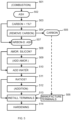
- FIG. 5 illustrates some steps of a method that may be used for manufacturing the voltage source described above.
- a preparatory step 501 includes combustion of waste or other energy source in a power plant or an incineration plant so as to obtain ash 502.
- step 503 the carbon content of ash is detected. If it is higher than about 1 percent by weight, in step 504 the carbon content of ash is reduced by a chemical, electrical and/or specific-weight-based method, so that the carbon content of the ash is decreased to a value of no more than one percent by weight of the ash.
- Removed carbon 505 may be recovered and it may be used for manufacturing the terminals as represented by step 506.
- step 510 water is added to carbondepleted ash 507.
- the removal of carbon can be performed before or after adding water, depending on the method used for removing the carbon.
- the proportion of amorphous silicon may be analyzed in step 508, and if it is detected to be too low, the proportion of amorphous silicon may be increased or an additional activator may be added to ash in step 509.
- the ratio between aluminium and silicon contents in the electrolyte should preferably be about one to three, expressed as molar concentration.
- the ratio of aluminium to silicon in the electrolyte may be analyzed in step 511. If it is detected to be far from the optimum, the method may include step 512 of adding silicon oxide and/or aluminium oxide obtained from another source to the electrolyte. By such addition of silicon and/or aluminium oxide, the ratio between aluminium and silicon contents in said electrolyte is transferred closer to one to three, expressed as molar concentration. Steps 511 and 512, if applied, may also be carried out before adding water in step 510, for example while analyzing the proportion of amorphous silicon in step 508.
- Step 513 represents installation of the terminals in their place in the electrolyte. Installation of the terminals as such may already be carried out much before this, for example so that the terminals are disposed in their place in the mould in which the electrolyte will be cast after mixing with water (step 510). Fig. 5 also includes step 514 in which the electrolyte hardens and reaches the required structural strength.
- water has no other purpose than to start the reaction.
- water may be removed from the electrolyte, if necessary, for example by evaporating. If needed, the evaporation of water may be accelerated by heating, for example by subjecting the electrolyte to infrared or microwave radiation, or even by conducting electrical current through the electrolyte, as it is electrically conductive to some degree.
- the voltage sources described above may be used as any voltage source, i.e. they may be connected in parallel and series in various configurations so as to achieve desired current delivery capacity and output voltage.
- ash recovered from a power plant or an incineration plant compared to most other materials is its low price. As ash has commonly been considered waste, the price may even be negative, which means that the operator of a power plant or an incineration plant may be willing to pay other parties for receiving the ash while committing to take care of it according to waste treatment regulations.
- the part of the terminals in the total structure of the voltage source is small, and if necessary, they may be manufactured from the carbon separated from ash in order to reduce the carbon content in the ash to a sufficiently low level for providing the hardening reaction.
- the voltage source may be built very large and/or they can be manufactured in very large quantities at a very affordable price. This affordability compensates for the fact that the voltage source does not match the traditional rechargeable and single-use batteries in terms of performance. It is even possible to build the voltage source so large that it also becomes a part of built environment.
- Built environment refers to the ensemble of all artificially created, fixed, physical structures for improving people's standard of living, comfort and operating conditions.
- the parts of built environment that the voltage source as described above may form include for example buildings, parts of buildings, furniture, fences, railings, barriers, towers, terraces, bridges, roads and environmental art.
- the voltage source may be or it may be formed for example into an element.
- the element may be for example a building element, such as a wall element, a hollow-core slab element, a façade element, a column element or a beam element; or an infrastructure element, such as a road or a street construction element, a bridge element, a railing element, a retaining wall element, an edge beam, a tunnel element, a railroad tie, a pier element, an agricultural element or a foundation element.
- the voltage source may also be or it may be formed for example into a balcony, a road structure, a base, a mine protection barrier, a foundation, a noise wall, a post, a container, a yard slab, or a cable trough.
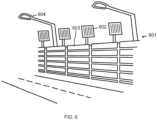
- the invention can be used to build for example a noise barrier 601 as shown in Fig. 6 , with solar panels 602 attached to it in order to generate an electric current for charging the noise barrier itself; the noise barrier's own physical structure may thus function as a solar panel battery, when the voltage sources as described above are used as components in it.
- these components may be for example horizontal elements 603 with embedded terminals connected to each other and to a suitable charge and discharge control circuit to provide desired electrical properties.
- the terminals and the control circuit as such are not illustrated in Fig. 6 .
- Electrical energy stored in the noise barrier may be conducted, during a dark season, for example to lights 604 that illuminate the same drive way that is separated from a residential area by the noise barrier 601.
Landscapes
- Chemical & Material Sciences (AREA)
- Chemical Kinetics & Catalysis (AREA)
- Engineering & Computer Science (AREA)
- Electrochemistry (AREA)
- General Chemical & Material Sciences (AREA)
- Ceramic Engineering (AREA)
- Inorganic Chemistry (AREA)
- Manufacturing & Machinery (AREA)
- Structural Engineering (AREA)
- Materials Engineering (AREA)
- Organic Chemistry (AREA)
- Physics & Mathematics (AREA)
- Condensed Matter Physics & Semiconductors (AREA)
- General Physics & Mathematics (AREA)
- Life Sciences & Earth Sciences (AREA)
- General Life Sciences & Earth Sciences (AREA)
- Architecture (AREA)
- Geochemistry & Mineralogy (AREA)
- Geology (AREA)
- Combustion & Propulsion (AREA)
- Environmental & Geological Engineering (AREA)
- Electromagnetism (AREA)
- Civil Engineering (AREA)
- Curing Cements, Concrete, And Artificial Stone (AREA)
- Compositions Of Oxide Ceramics (AREA)
- Electric Double-Layer Capacitors Or The Like (AREA)
- Secondary Cells (AREA)
- Processing Of Solid Wastes (AREA)
Claims (6)
- Spannungsquelle mit zwei elektrisch leitenden Anschlüssen (101, 102), zwischen denen sich ein Elektrolyt (103) befindet, wobei der Elektrolyt (103) ein Gemisch ist, in dem die Hauptbestandteile in Gewichtsprozent Aluminium- und Siliziumoxide sind, dadurch gekennzeichnet, dass die Anschlüsse (101, 102) aus demselben Material bestehen, wobei die Spannungsquelle so angeordnet ist, dass sie als Sekundärbatterie, d.h. wiederaufladbare Batterie, arbeitet.
- Spannungsquelle nach Anspruch 1, dadurch gekennzeichnet, dass der Elektrolyt (103) ein festes Material ist, das gebildet wird, indem man Aluminium- und Siliziumoxide miteinander reagieren lässt, so dass der Elektrolyt nach dieser Reaktion zu einer festen Form aushärtet.
- Spannungsquelle nach einem der vorhergehenden Ansprüche, dadurch gekennzeichnet, dass sie mindestens eines der folgenden Elemente bildet: ein Gebäude, einen Gebäudeteil, ein Möbel, einen Zaun, ein Geländer, eine Barriere, einen Turm, eine Terrasse, eine Brücke, eine Straße, Umweltkunst, ein Wandelement, ein Hohlkörperplattenelement, ein Fassadenelement, ein Säulenelement, ein Balkenelement, ein Weg- oder Straßenbauelement, ein Brückenelement, ein Schienenelement, ein Stützmauerelement, ein Randbalken, ein Tunnelelement, ein Eisenbahnschwellenelement, ein Pfeilerelement, ein landwirtschaftliches Element, ein Fundamentelement, ein Balkon, ein Straßenbauwerk, ein Sockel, eine Minenschutzwand, ein Fundament, eine Lärmschutzwand, ein Pfosten, ein Container, eine Hofplatte, ein Kabeltrog.
- Verfahren zur Herstellung einer Spannungsquelle, dadurch gekennzeichnet, dass ein Elektrolyt zwischen zwei Anschlüssen gebildet wird, indem Aluminium- und Siliziumoxide als Hauptkomponenten in Gewichtsprozent verwendet werden und Wasser (510) mit den Aluminium- und Siliziumoxiden gemischt wird.
- Verfahren nach Anspruch 4, dadurch gekennzeichnet, dass Meerwasser mit den Aluminium- und Siliziumoxiden gemischt wird.
- Verfahren nach einem der Ansprüche 4 oder 5, dadurch gekennzeichnet, dass dem Elektrolyten mindestens eines der folgenden Elemente zugesetzt wird (509): amorphes Silizium, zusätzlicher Aktivator.
Applications Claiming Priority (2)
| Application Number | Priority Date | Filing Date | Title |
|---|---|---|---|
| FI20185262A FI128119B (fi) | 2018-03-20 | 2018-03-20 | Jännitelähde, jonka elektrolyytissä on alumiinin ja piin oksideja, ja menetelmä jännitelähteen valmistamiseksi |
| PCT/FI2019/050216 WO2019180312A1 (en) | 2018-03-20 | 2019-03-13 | Voltage source with an electrolyte containing aluminium and silicon oxides, and method for manufacturing the voltage source |
Publications (3)
| Publication Number | Publication Date |
|---|---|
| EP3769355A1 EP3769355A1 (de) | 2021-01-27 |
| EP3769355B1 true EP3769355B1 (de) | 2023-06-14 |
| EP3769355C0 EP3769355C0 (de) | 2023-06-14 |
Family
ID=66440074
Family Applications (1)
| Application Number | Title | Priority Date | Filing Date |
|---|---|---|---|
| EP19722660.8A Active EP3769355B1 (de) | 2018-03-20 | 2019-03-13 | Spannungsquelle mit einem elektrolyten, der aluminium- und siliziumoxide enthält, und verfahren zur herstellung der spannungsquelle |
Country Status (6)
| Country | Link |
|---|---|
| US (1) | US20210119249A1 (de) |
| EP (1) | EP3769355B1 (de) |
| AU (1) | AU2019239819B2 (de) |
| ES (1) | ES2953565T3 (de) |
| FI (1) | FI128119B (de) |
| WO (1) | WO2019180312A1 (de) |
Families Citing this family (4)
| Publication number | Priority date | Publication date | Assignee | Title |
|---|---|---|---|---|
| US11220017B2 (en) | 2018-08-01 | 2022-01-11 | The Green Twist LLC | Cutting device |
| FI130600B (fi) * | 2021-10-14 | 2023-12-07 | Fatec Oy | Nesteen avulla kovetettava seos, menetelmä seoksen valmistamiseksi ja seoksen käyttö |
| EP4273898A1 (de) * | 2022-05-05 | 2023-11-08 | KayHan Swiss GmbH | Polymere synthetische stones mit der fähigkeit, elektrische energie zu speichern, und ihre herstellung |
| WO2025163926A1 (ja) * | 2024-01-31 | 2025-08-07 | 日本国土開発株式会社 | 帯電デバイスおよび帯電方法 |
Family Cites Families (3)
| Publication number | Priority date | Publication date | Assignee | Title |
|---|---|---|---|---|
| US9680135B2 (en) * | 2010-09-02 | 2017-06-13 | Intellectual Discovery Co., Ltd. | Pouch-type flexible film battery |
| CN103283077B (zh) * | 2010-12-10 | 2017-03-01 | 株式会社半导体能源研究所 | 蓄电装置及该蓄电装置的制造方法 |
| WO2017222895A1 (en) * | 2016-06-23 | 2017-12-28 | Government Of The United States As Represented By The Secretary Of The Air Force | Bendable creasable, and printable batteries with enhanced safety and high temperature stability - methods of fabrication, and methods of using the same |
-
2018
- 2018-03-20 FI FI20185262A patent/FI128119B/fi active IP Right Grant
-
2019
- 2019-03-13 ES ES19722660T patent/ES2953565T3/es active Active
- 2019-03-13 US US16/981,799 patent/US20210119249A1/en active Pending
- 2019-03-13 EP EP19722660.8A patent/EP3769355B1/de active Active
- 2019-03-13 WO PCT/FI2019/050216 patent/WO2019180312A1/en not_active Ceased
- 2019-03-13 AU AU2019239819A patent/AU2019239819B2/en active Active
Non-Patent Citations (1)
| Title |
|---|
| SEBASTIAN ROSS ET AL: "Lithium conductivity in glasses of the Li2O?Al2O3?SiO2 system", PHYSICAL CHEMISTRY CHEMICAL PHYSICS, vol. 17, no. 1, 3 November 2014 (2014-11-03), pages 465 - 474, XP055667495, ISSN: 1463-9076, DOI: 10.1039/C4CP03609C * |
Also Published As
| Publication number | Publication date |
|---|---|
| FI20185262A1 (fi) | 2019-09-21 |
| AU2019239819A1 (en) | 2020-10-29 |
| EP3769355A1 (de) | 2021-01-27 |
| FI128119B (fi) | 2019-10-15 |
| AU2019239819B2 (en) | 2024-03-21 |
| WO2019180312A1 (en) | 2019-09-26 |
| ES2953565T3 (es) | 2023-11-14 |
| EP3769355C0 (de) | 2023-06-14 |
| US20210119249A1 (en) | 2021-04-22 |
Similar Documents
| Publication | Publication Date | Title |
|---|---|---|
| EP3769355B1 (de) | Spannungsquelle mit einem elektrolyten, der aluminium- und siliziumoxide enthält, und verfahren zur herstellung der spannungsquelle | |
| Asha et al. | Experimental study on concrete with bamboo leaf ash | |
| CN106830777B (zh) | 生活垃圾焚烧残渣制备的再生回填混凝土及其应用 | |
| Juan et al. | Re-use of ceramic wastes in construction | |
| CN101805161B (zh) | 钻井固体废弃物制免烧砖胶结剂 | |
| CN103787602A (zh) | 一种超细再生粉体复合地质聚合物胶凝材料 | |
| CN109455998A (zh) | 一种钢管纤维自应力再生骨料混凝土柱的制作工艺 | |
| Haldive et al. | Experimental study on combined effect of fly ash and pond ash on strength and durability of concrete | |
| Javadabadi et al. | Sustainable concrete: A review | |
| CN110903046B (zh) | 一种用电解金属锰浸出渣制备建筑胶凝材料的方法 | |
| Lăzărescu et al. | Alternative Concrete–Geopolymer Concrete: Emerging Research and Opportunities | |
| CN101172799A (zh) | 一种天然活性的火山灰质混凝土掺合料及应用 | |
| WO2019170963A1 (en) | Binder composition and hardenable mixture | |
| CN108264323A (zh) | 用粉煤灰和脱硫石膏制备的隔墙条板及其制备方法 | |
| JPH0826794A (ja) | セメントの製造方法 | |
| CN117682836A (zh) | 一种用工业废石膏无害化固化制环境友好型工艺石的方法 | |
| EP3769354B1 (de) | Spannungsquelle mit einem aschehaltigen elektrolyten und verfahren zur herstellung der spannungsquelle | |
| KR101679396B1 (ko) | 산업 부산물을 이용한 석산 채움재 조성물 | |
| KR102776643B1 (ko) | 하이볼륨 콘크리트 조성물 및 그를 이용한 콘크리트 2차 제품 | |
| Krstic et al. | Macro-and Micro-structure Evaluations of Recycled Post-consumer Glass Cementitious Material for Concrete | |
| Vijayan et al. | Mechanical Strength of Concrete using Bottom Ash as Fine Aggregate | |
| Nkomo et al. | The effect of fly ash on the workability and mechanical properties of concrete slabs: A review | |
| Chen et al. | Experimental Study on the Optimization of Crushed Limestone Sand as Partial Replacement of Sea Sand in Concrete | |
| Hussein et al. | Sudanese sugar cane bagasse ash: a valuable by-product for concrete | |
| RU2721566C1 (ru) | Состав закладочной смеси |
Legal Events
| Date | Code | Title | Description |
|---|---|---|---|
| STAA | Information on the status of an ep patent application or granted ep patent |
Free format text: STATUS: UNKNOWN |
|
| STAA | Information on the status of an ep patent application or granted ep patent |
Free format text: STATUS: THE INTERNATIONAL PUBLICATION HAS BEEN MADE |
|
| PUAI | Public reference made under article 153(3) epc to a published international application that has entered the european phase |
Free format text: ORIGINAL CODE: 0009012 |
|
| STAA | Information on the status of an ep patent application or granted ep patent |
Free format text: STATUS: REQUEST FOR EXAMINATION WAS MADE |
|
| 17P | Request for examination filed |
Effective date: 20201016 |
|
| AK | Designated contracting states |
Kind code of ref document: A1 Designated state(s): AL AT BE BG CH CY CZ DE DK EE ES FI FR GB GR HR HU IE IS IT LI LT LU LV MC MK MT NL NO PL PT RO RS SE SI SK SM TR |
|
| AX | Request for extension of the european patent |
Extension state: BA ME |
|
| DAV | Request for validation of the european patent (deleted) | ||
| DAX | Request for extension of the european patent (deleted) | ||
| REG | Reference to a national code |
Ref country code: DE Ref legal event code: R079 Ref document number: 602019031015 Country of ref document: DE Free format text: PREVIOUS MAIN CLASS: H01M0002140000 Ipc: H01M0050403000 |
|
| GRAP | Despatch of communication of intention to grant a patent |
Free format text: ORIGINAL CODE: EPIDOSNIGR1 |
|
| STAA | Information on the status of an ep patent application or granted ep patent |
Free format text: STATUS: GRANT OF PATENT IS INTENDED |
|
| RIC1 | Information provided on ipc code assigned before grant |
Ipc: C04B 111/10 20060101ALN20221129BHEP Ipc: C04B 111/00 20060101ALN20221129BHEP Ipc: H01M 50/559 20210101ALI20221129BHEP Ipc: H01M 50/553 20210101ALI20221129BHEP Ipc: C04B 12/00 20060101ALI20221129BHEP Ipc: H01M 10/36 20100101ALI20221129BHEP Ipc: H01M 10/04 20060101ALI20221129BHEP Ipc: C04B 28/00 20060101ALI20221129BHEP Ipc: H01M 50/55 20210101ALI20221129BHEP Ipc: H01M 50/548 20210101ALI20221129BHEP Ipc: H01M 50/434 20210101ALI20221129BHEP Ipc: H01M 50/403 20210101AFI20221129BHEP |
|
| INTG | Intention to grant announced |
Effective date: 20230104 |
|
| GRAS | Grant fee paid |
Free format text: ORIGINAL CODE: EPIDOSNIGR3 |
|
| GRAA | (expected) grant |
Free format text: ORIGINAL CODE: 0009210 |
|
| STAA | Information on the status of an ep patent application or granted ep patent |
Free format text: STATUS: THE PATENT HAS BEEN GRANTED |
|
| AK | Designated contracting states |
Kind code of ref document: B1 Designated state(s): AL AT BE BG CH CY CZ DE DK EE ES FI FR GB GR HR HU IE IS IT LI LT LU LV MC MK MT NL NO PL PT RO RS SE SI SK SM TR |
|
| REG | Reference to a national code |
Ref country code: CH Ref legal event code: EP |
|
| P01 | Opt-out of the competence of the unified patent court (upc) registered |
Effective date: 20230523 |
|
| REG | Reference to a national code |
Ref country code: DE Ref legal event code: R096 Ref document number: 602019031015 Country of ref document: DE |
|
| REG | Reference to a national code |
Ref country code: AT Ref legal event code: REF Ref document number: 1579905 Country of ref document: AT Kind code of ref document: T Effective date: 20230715 |
|
| U01 | Request for unitary effect filed |
Effective date: 20230614 |
|
| U07 | Unitary effect registered |
Designated state(s): AT BE BG DE DK EE FI FR IT LT LU LV MT NL PT SE SI Effective date: 20230619 |
|
| P04 | Withdrawal of opt-out of the competence of the unified patent court (upc) registered |
Effective date: 20230623 |
|
| REG | Reference to a national code |
Ref country code: LT Ref legal event code: MG9D |
|
| REG | Reference to a national code |
Ref country code: NO Ref legal event code: T2 Effective date: 20230614 |
|
| REG | Reference to a national code |
Ref country code: ES Ref legal event code: FG2A Ref document number: 2953565 Country of ref document: ES Kind code of ref document: T3 Effective date: 20231114 |
|
| PG25 | Lapsed in a contracting state [announced via postgrant information from national office to epo] |
Ref country code: RS Free format text: LAPSE BECAUSE OF FAILURE TO SUBMIT A TRANSLATION OF THE DESCRIPTION OR TO PAY THE FEE WITHIN THE PRESCRIBED TIME-LIMIT Effective date: 20230614 Ref country code: HR Free format text: LAPSE BECAUSE OF FAILURE TO SUBMIT A TRANSLATION OF THE DESCRIPTION OR TO PAY THE FEE WITHIN THE PRESCRIBED TIME-LIMIT Effective date: 20230614 Ref country code: GR Free format text: LAPSE BECAUSE OF FAILURE TO SUBMIT A TRANSLATION OF THE DESCRIPTION OR TO PAY THE FEE WITHIN THE PRESCRIBED TIME-LIMIT Effective date: 20230915 |
|
| PG25 | Lapsed in a contracting state [announced via postgrant information from national office to epo] |
Ref country code: SK Free format text: LAPSE BECAUSE OF FAILURE TO SUBMIT A TRANSLATION OF THE DESCRIPTION OR TO PAY THE FEE WITHIN THE PRESCRIBED TIME-LIMIT Effective date: 20230614 |
|
| PG25 | Lapsed in a contracting state [announced via postgrant information from national office to epo] |
Ref country code: IS Free format text: LAPSE BECAUSE OF FAILURE TO SUBMIT A TRANSLATION OF THE DESCRIPTION OR TO PAY THE FEE WITHIN THE PRESCRIBED TIME-LIMIT Effective date: 20231014 |
|
| PG25 | Lapsed in a contracting state [announced via postgrant information from national office to epo] |
Ref country code: SM Free format text: LAPSE BECAUSE OF FAILURE TO SUBMIT A TRANSLATION OF THE DESCRIPTION OR TO PAY THE FEE WITHIN THE PRESCRIBED TIME-LIMIT Effective date: 20230614 Ref country code: SK Free format text: LAPSE BECAUSE OF FAILURE TO SUBMIT A TRANSLATION OF THE DESCRIPTION OR TO PAY THE FEE WITHIN THE PRESCRIBED TIME-LIMIT Effective date: 20230614 Ref country code: RO Free format text: LAPSE BECAUSE OF FAILURE TO SUBMIT A TRANSLATION OF THE DESCRIPTION OR TO PAY THE FEE WITHIN THE PRESCRIBED TIME-LIMIT Effective date: 20230614 Ref country code: IS Free format text: LAPSE BECAUSE OF FAILURE TO SUBMIT A TRANSLATION OF THE DESCRIPTION OR TO PAY THE FEE WITHIN THE PRESCRIBED TIME-LIMIT Effective date: 20231014 Ref country code: CZ Free format text: LAPSE BECAUSE OF FAILURE TO SUBMIT A TRANSLATION OF THE DESCRIPTION OR TO PAY THE FEE WITHIN THE PRESCRIBED TIME-LIMIT Effective date: 20230614 |
|
| PG25 | Lapsed in a contracting state [announced via postgrant information from national office to epo] |
Ref country code: PL Free format text: LAPSE BECAUSE OF FAILURE TO SUBMIT A TRANSLATION OF THE DESCRIPTION OR TO PAY THE FEE WITHIN THE PRESCRIBED TIME-LIMIT Effective date: 20230614 |
|
| REG | Reference to a national code |
Ref country code: DE Ref legal event code: R097 Ref document number: 602019031015 Country of ref document: DE |
|
| PLBE | No opposition filed within time limit |
Free format text: ORIGINAL CODE: 0009261 |
|
| STAA | Information on the status of an ep patent application or granted ep patent |
Free format text: STATUS: NO OPPOSITION FILED WITHIN TIME LIMIT |
|
| U20 | Renewal fee for the european patent with unitary effect paid |
Year of fee payment: 6 Effective date: 20240322 |
|
| 26N | No opposition filed |
Effective date: 20240315 |
|
| REG | Reference to a national code |
Ref country code: CH Ref legal event code: PL |
|
| PG25 | Lapsed in a contracting state [announced via postgrant information from national office to epo] |
Ref country code: MC Free format text: LAPSE BECAUSE OF FAILURE TO SUBMIT A TRANSLATION OF THE DESCRIPTION OR TO PAY THE FEE WITHIN THE PRESCRIBED TIME-LIMIT Effective date: 20230614 |
|
| GBPC | Gb: european patent ceased through non-payment of renewal fee |
Effective date: 20240313 |
|
| PG25 | Lapsed in a contracting state [announced via postgrant information from national office to epo] |
Ref country code: MC Free format text: LAPSE BECAUSE OF FAILURE TO SUBMIT A TRANSLATION OF THE DESCRIPTION OR TO PAY THE FEE WITHIN THE PRESCRIBED TIME-LIMIT Effective date: 20230614 |
|
| P05 | Withdrawal of opt-out of the competence of the unified patent court (upc) changed |
Free format text: CASE NUMBER: APP_528263/2023 Effective date: 20230619 |
|
| PG25 | Lapsed in a contracting state [announced via postgrant information from national office to epo] |
Ref country code: GB Free format text: LAPSE BECAUSE OF NON-PAYMENT OF DUE FEES Effective date: 20240313 |
|
| PG25 | Lapsed in a contracting state [announced via postgrant information from national office to epo] |
Ref country code: IE Free format text: LAPSE BECAUSE OF NON-PAYMENT OF DUE FEES Effective date: 20240313 |
|
| PG25 | Lapsed in a contracting state [announced via postgrant information from national office to epo] |
Ref country code: IE Free format text: LAPSE BECAUSE OF NON-PAYMENT OF DUE FEES Effective date: 20240313 Ref country code: GB Free format text: LAPSE BECAUSE OF NON-PAYMENT OF DUE FEES Effective date: 20240313 Ref country code: CH Free format text: LAPSE BECAUSE OF NON-PAYMENT OF DUE FEES Effective date: 20240331 |
|
| U20 | Renewal fee for the european patent with unitary effect paid |
Year of fee payment: 7 Effective date: 20250317 |
|
| PGFP | Annual fee paid to national office [announced via postgrant information from national office to epo] |
Ref country code: ES Payment date: 20250403 Year of fee payment: 7 |
|
| PG25 | Lapsed in a contracting state [announced via postgrant information from national office to epo] |
Ref country code: CY Free format text: LAPSE BECAUSE OF FAILURE TO SUBMIT A TRANSLATION OF THE DESCRIPTION OR TO PAY THE FEE WITHIN THE PRESCRIBED TIME-LIMIT; INVALID AB INITIO Effective date: 20190313 |
|
| PG25 | Lapsed in a contracting state [announced via postgrant information from national office to epo] |
Ref country code: HU Free format text: LAPSE BECAUSE OF FAILURE TO SUBMIT A TRANSLATION OF THE DESCRIPTION OR TO PAY THE FEE WITHIN THE PRESCRIBED TIME-LIMIT; INVALID AB INITIO Effective date: 20190313 |
|
| PG25 | Lapsed in a contracting state [announced via postgrant information from national office to epo] |
Ref country code: TR Free format text: LAPSE BECAUSE OF FAILURE TO SUBMIT A TRANSLATION OF THE DESCRIPTION OR TO PAY THE FEE WITHIN THE PRESCRIBED TIME-LIMIT Effective date: 20230614 |
|
| PGFP | Annual fee paid to national office [announced via postgrant information from national office to epo] |
Ref country code: NO Payment date: 20260323 Year of fee payment: 8 |
|
| U20 | Renewal fee for the european patent with unitary effect paid |
Year of fee payment: 8 Effective date: 20260311 |