EP3769007B1 - Multifunktionale strassenlampe - Google Patents
Multifunktionale strassenlampe Download PDFInfo
- Publication number
- EP3769007B1 EP3769007B1 EP18743872.6A EP18743872A EP3769007B1 EP 3769007 B1 EP3769007 B1 EP 3769007B1 EP 18743872 A EP18743872 A EP 18743872A EP 3769007 B1 EP3769007 B1 EP 3769007B1
- Authority
- EP
- European Patent Office
- Prior art keywords
- lamp
- network
- data
- compartments
- processing
- Prior art date
- Legal status (The legal status is an assumption and is not a legal conclusion. Google has not performed a legal analysis and makes no representation as to the accuracy of the status listed.)
- Active
Links
Images





Classifications
-
- F—MECHANICAL ENGINEERING; LIGHTING; HEATING; WEAPONS; BLASTING
- F21—LIGHTING
- F21V—FUNCTIONAL FEATURES OR DETAILS OF LIGHTING DEVICES OR SYSTEMS THEREOF; STRUCTURAL COMBINATIONS OF LIGHTING DEVICES WITH OTHER ARTICLES, NOT OTHERWISE PROVIDED FOR
- F21V23/00—Arrangement of electric circuit elements in or on lighting devices
- F21V23/003—Arrangement of electric circuit elements in or on lighting devices the elements being electronics drivers or controllers for operating the light source, e.g. for a LED array
- F21V23/007—Arrangement of electric circuit elements in or on lighting devices the elements being electronics drivers or controllers for operating the light source, e.g. for a LED array enclosed in a casing
- F21V23/009—Arrangement of electric circuit elements in or on lighting devices the elements being electronics drivers or controllers for operating the light source, e.g. for a LED array enclosed in a casing the casing being inside the housing of the lighting device
-
- F—MECHANICAL ENGINEERING; LIGHTING; HEATING; WEAPONS; BLASTING
- F21—LIGHTING
- F21S—NON-PORTABLE LIGHTING DEVICES; SYSTEMS THEREOF; VEHICLE LIGHTING DEVICES SPECIALLY ADAPTED FOR VEHICLE EXTERIORS
- F21S8/00—Lighting devices intended for fixed installation
- F21S8/08—Lighting devices intended for fixed installation with a standard
- F21S8/085—Lighting devices intended for fixed installation with a standard of high-built type, e.g. street light
- F21S8/086—Lighting devices intended for fixed installation with a standard of high-built type, e.g. street light with lighting device attached sideways of the standard, e.g. for roads and highways
-
- F—MECHANICAL ENGINEERING; LIGHTING; HEATING; WEAPONS; BLASTING
- F21—LIGHTING
- F21V—FUNCTIONAL FEATURES OR DETAILS OF LIGHTING DEVICES OR SYSTEMS THEREOF; STRUCTURAL COMBINATIONS OF LIGHTING DEVICES WITH OTHER ARTICLES, NOT OTHERWISE PROVIDED FOR
- F21V23/00—Arrangement of electric circuit elements in or on lighting devices
- F21V23/04—Arrangement of electric circuit elements in or on lighting devices the elements being switches
- F21V23/0435—Arrangement of electric circuit elements in or on lighting devices the elements being switches activated by remote control means
-
- F—MECHANICAL ENGINEERING; LIGHTING; HEATING; WEAPONS; BLASTING
- F21—LIGHTING
- F21V—FUNCTIONAL FEATURES OR DETAILS OF LIGHTING DEVICES OR SYSTEMS THEREOF; STRUCTURAL COMBINATIONS OF LIGHTING DEVICES WITH OTHER ARTICLES, NOT OTHERWISE PROVIDED FOR
- F21V23/00—Arrangement of electric circuit elements in or on lighting devices
- F21V23/04—Arrangement of electric circuit elements in or on lighting devices the elements being switches
- F21V23/0442—Arrangement of electric circuit elements in or on lighting devices the elements being switches activated by means of a sensor, e.g. motion or photodetectors
-
- F—MECHANICAL ENGINEERING; LIGHTING; HEATING; WEAPONS; BLASTING
- F21—LIGHTING
- F21V—FUNCTIONAL FEATURES OR DETAILS OF LIGHTING DEVICES OR SYSTEMS THEREOF; STRUCTURAL COMBINATIONS OF LIGHTING DEVICES WITH OTHER ARTICLES, NOT OTHERWISE PROVIDED FOR
- F21V23/00—Arrangement of electric circuit elements in or on lighting devices
- F21V23/04—Arrangement of electric circuit elements in or on lighting devices the elements being switches
- F21V23/0442—Arrangement of electric circuit elements in or on lighting devices the elements being switches activated by means of a sensor, e.g. motion or photodetectors
- F21V23/0464—Arrangement of electric circuit elements in or on lighting devices the elements being switches activated by means of a sensor, e.g. motion or photodetectors the sensor sensing the level of ambient illumination, e.g. dawn or dusk sensors
-
- F—MECHANICAL ENGINEERING; LIGHTING; HEATING; WEAPONS; BLASTING
- F21—LIGHTING
- F21V—FUNCTIONAL FEATURES OR DETAILS OF LIGHTING DEVICES OR SYSTEMS THEREOF; STRUCTURAL COMBINATIONS OF LIGHTING DEVICES WITH OTHER ARTICLES, NOT OTHERWISE PROVIDED FOR
- F21V23/00—Arrangement of electric circuit elements in or on lighting devices
- F21V23/04—Arrangement of electric circuit elements in or on lighting devices the elements being switches
- F21V23/0442—Arrangement of electric circuit elements in or on lighting devices the elements being switches activated by means of a sensor, e.g. motion or photodetectors
- F21V23/0471—Arrangement of electric circuit elements in or on lighting devices the elements being switches activated by means of a sensor, e.g. motion or photodetectors the sensor detecting the proximity, the presence or the movement of an object or a person
-
- F—MECHANICAL ENGINEERING; LIGHTING; HEATING; WEAPONS; BLASTING
- F21—LIGHTING
- F21V—FUNCTIONAL FEATURES OR DETAILS OF LIGHTING DEVICES OR SYSTEMS THEREOF; STRUCTURAL COMBINATIONS OF LIGHTING DEVICES WITH OTHER ARTICLES, NOT OTHERWISE PROVIDED FOR
- F21V23/00—Arrangement of electric circuit elements in or on lighting devices
- F21V23/04—Arrangement of electric circuit elements in or on lighting devices the elements being switches
- F21V23/0442—Arrangement of electric circuit elements in or on lighting devices the elements being switches activated by means of a sensor, e.g. motion or photodetectors
- F21V23/0471—Arrangement of electric circuit elements in or on lighting devices the elements being switches activated by means of a sensor, e.g. motion or photodetectors the sensor detecting the proximity, the presence or the movement of an object or a person
- F21V23/0478—Arrangement of electric circuit elements in or on lighting devices the elements being switches activated by means of a sensor, e.g. motion or photodetectors the sensor detecting the proximity, the presence or the movement of an object or a person by means of an image recording device, e.g. a camera
-
- F—MECHANICAL ENGINEERING; LIGHTING; HEATING; WEAPONS; BLASTING
- F21—LIGHTING
- F21V—FUNCTIONAL FEATURES OR DETAILS OF LIGHTING DEVICES OR SYSTEMS THEREOF; STRUCTURAL COMBINATIONS OF LIGHTING DEVICES WITH OTHER ARTICLES, NOT OTHERWISE PROVIDED FOR
- F21V23/00—Arrangement of electric circuit elements in or on lighting devices
- F21V23/04—Arrangement of electric circuit elements in or on lighting devices the elements being switches
- F21V23/0442—Arrangement of electric circuit elements in or on lighting devices the elements being switches activated by means of a sensor, e.g. motion or photodetectors
- F21V23/0485—Arrangement of electric circuit elements in or on lighting devices the elements being switches activated by means of a sensor, e.g. motion or photodetectors the sensor sensing the physical interaction between a user and certain areas located on the lighting device, e.g. a touch sensor
-
- F—MECHANICAL ENGINEERING; LIGHTING; HEATING; WEAPONS; BLASTING
- F21—LIGHTING
- F21W—INDEXING SCHEME ASSOCIATED WITH SUBCLASSES F21K, F21L, F21S and F21V, RELATING TO USES OR APPLICATIONS OF LIGHTING DEVICES OR SYSTEMS
- F21W2131/00—Use or application of lighting devices or systems not provided for in codes F21W2102/00-F21W2121/00
- F21W2131/10—Outdoor lighting
- F21W2131/103—Outdoor lighting of streets or roads
-
- F—MECHANICAL ENGINEERING; LIGHTING; HEATING; WEAPONS; BLASTING
- F21—LIGHTING
- F21Y—INDEXING SCHEME ASSOCIATED WITH SUBCLASSES F21K, F21L, F21S and F21V, RELATING TO THE FORM OR THE KIND OF THE LIGHT SOURCES OR OF THE COLOUR OF THE LIGHT EMITTED
- F21Y2115/00—Light-generating elements of semiconductor light sources
- F21Y2115/10—Light-emitting diodes [LED]
Definitions
- the invention relates to the public lighting sector and, in particular, it relates to a new led light lamp post integrated with functionalities of public interest, for example, connectivity, telecommunication and environmental monitoring functions, and a smart system comprising several lamp posts.
- LEDs Light Emitting Diodes
- illuminating bodies with LEDs for street lighting are increasingly evolving, mainly due to the greater energy efficiency with respect to a conventional lamp but also to the possibility to adjust the light intensity in real time by means of remote control systems which allow to increase energy savings.
- Smart City applications i.e., applications useful and of interest in the city environment, are increasingly widespread and manage issues such as security, remote control, city traffic, parking and the analysis of environmental parameters inside a city.
- WO2014141312 it is disclosed a street LED lamp applied to a supporting pole, comprising one or more housing compartments provided with antennas and a remote control card connected to the LED light and to said power supply for the processing of the radio signal.
- the present invention relates to an illuminating body with LEDs (Light Emitting Diodes) with a street function, integrating therein apparatuses for receiving, transmitting and processing the signal, merely by way of explanation and not by way of limitation, of the UMTS, LTE, Wi-Fi, 5G type...
- a buffer battery rechargeable by means of the electricity grid or other available energy sources, for example, photovoltaic panels
- the signal processing, transmission and reception part will always be powered in the event of power failures.
- a lamp post may be imagined, including a 5G base transceiver station device with video cameras integrated for managing the security services of a third-party operator, with an on-site data processing system used to create cryptocurrencies.
- Each of these services will provide for contractual conditions between the public lighting network operator and the third-party operators for each individual service, which will determine service level obligations connected to related business models.
- the algorithm will have to improve the efficiency of the set of services included in the pole by using the historical experience thereof (therefore, the learning level thereof), the data originating from the network and all the useful information in the system.
- the smart lamp post in addition to having the lighting part, provides for a modular mechanical component which grants the pole the possibility of being used only for controlled LED lighting services, or for advanced services with different levels and degrees of integration (for example, 5G DAS or 4G multi-operator base transceiver station, Internet of Things services, video surveillance services, independent data processing, management of secure computing applications, cryptocurrencies, etc.).
- the infrastructure may be modified by adding or removing modules, even during steps following the first installation. Thereby, an efficient and optimized use of the integrated lamp system is ensured, also allowing the operator to change the configuration of such infrastructure and the related services set-up in a smart and independent manner.
- a specific self-adaptive algorithm will, in fact, comprise the mechanical changes and set itself in time, optimizing the modified infrastructural layout.
- the device allows to be placed even in environments where the visual impact in terms of landscape must be mitigated.
- an illuminating body with LEDs of the street type is shown, integrating the light intensity control electronics of the lamp therein and providing connectivity services such as, merely by way of explanation and not by way of limitation, UMTS, LTE, Wi-Fi, 5G, etc. by virtue of micro and/or pico cells installed at the base of the lighting pole and/or inside the lamp shell.
- connectivity services such as, merely by way of explanation and not by way of limitation, UMTS, LTE, Wi-Fi, 5G, etc.
- the street lamp post is particularly adapted to be used for this type of services, in fact:
- the remote control system inserted into the lighting apparatus allows to constantly power the LED lamps and to vary the light intensity only under particular environmental conditions and therefore to keep the part of the electronic apparatuses in charge of the connectivity powered, unlike what occurs with common non-remotely controlled lamps. Furthermore, in the event of sudden electrical power supply failures, the system, by virtue of a buffer battery, will keep the part dedicated to wireless services active. This battery may also be recharged by means of the main power supply, when present, or by means of other energy sources, such as for example, merely by way of explanation and not by way of limitation, photovoltaic panels.
- the invention By means of the invention, it is therefore possible to dynamically manage the power supply of the lamp and grant the connectivity and the service levels of each individual mobile operator, so as provide the user with a system as user-friendly as possible. Furthermore, the system will also grant several telephone operators the sharing of technological resources, so as to transmit UMTS, LTE, 5G, etc. signals on the same micro or pico cell, thus reducing the waste of hardware resources in play and also reducing the visual impact that a base transceiver station may have, even if small in size.
- the computing capacity is an essential element both for the correct management of the power supply of the various modules, as well as for the on-site processing of the data useful for the construction of an advanced architecture of innovative technological services.
- each smart lamp post will have an own processing capacity and a connectivity synchronized with the other smart lamp posts in the network, becoming a node of a single data center, capable of self-configuring itself and of self-processing the various information.
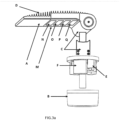
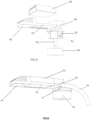
- the intent is to use mechanical elements ( Figure 1-8 ) capable of granting a performance in terms of the fluid dynamics of the pole, and a correct communication of the systems in the frequency range from 100 MHz to 10 GHz, optimizing the energy consumption of each component by means of adaptive machine learning algorithms.
- Such algorithms must take into account both the actual power supply stage of the system, and the general information relating to the quality of service originating from the central systems, as well as the bandwidth and processing capacities.
- New generation mobile network architectures provide for the remote distribution of the computing capacity thereof, so as to grant communication latencies of below a millisecond.
- Such network organizations introduce considerable complexities, both in terms of the communication between the various levels of the local or central network and in terms of the positioning of the radio stations in the area.
- such infrastructure requires a strong capillarity and distribution, a continuous exchange of information between the surrounding microcells and a continuous management of energy resources and consumption.
- the body of the lamp and of the pole may take different shapes and sizes accordingly, depending on the applications in which they will be used, and will include:
- the illuminating body of the present invention offers a Wi-Fi coverage in the 2.4GHz bandwidth.
- Connectivity is brought to the pole by means of a fiber optic connection or by means of a 5GHz radio link, with the antennas preferably installed inside the illuminating body.
- the connection will arrive directly to the control board which will sort the traffic to the Wi-Fi router board.
- a micro or pico cell for connectivity provided by mobile operators will be installed, enclosed inside a vandal-resistant box and IP67.
- the signal routed by the radio station will be sent by means of an IP65 low power splitter to the multi-directional antennas installed at 120° to cover three sectors contained inside the plastic compartment, which does not shield the electromagnetic radiation. All electronic components will be electronically powered by means of an apparatus shared with the illuminating part and connected to the electricity grid. In the event of power failures, the system will continue to operate by virtue of a rechargeable buffer battery, by means of the primary power supply network.
- the illuminating part will be connected to the remote control for the management of the light intensity.
- the illuminating body described in the present invention will provide the connectivity required for nowadays evolution of interconnected systems and, being based on LED technology, it will allow considerable energy savings. Finally, by virtue of the discreet line thereof, with antennas hidden inside the plastic compartment, it will perfectly fit into the urban context without creating visual discomfort within the surrounding landscape.
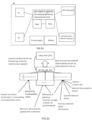
- Each point of the aforesaid network, data transmission and data reception architectures must manage information by means of machine learning, artificial intelligence and information sharing mechanisms, both with the various elements inside the individual pole, and with the various network levels, from the local one (therefore from surrounding microcells) up to the central cloud system ( Figure 9 ).
- the invention also assigns the data processing capacity management to the smart pole, by means of fog computing techniques and architectures based on artificial intelligence algorithms ( Figure 10 ).
- Such processing element requires the creation of a smart power supply system which will provide for a buffer battery for the connection to the services even in the event of power failure, and, above all, the use of the processing itself for the power consumption efficiency improvement, respecting the service levels managed by each individual operator (such as, for example, 5G connectivity, Internet of Things or Smart City services and cloud services).
- the system will grant the possibility for several telephone or cloud services operators to use and share the same technological resources, for example, the use of a base transceiver station to transmit signals in a 5G or 4.5G architecture or the virtual machines of a data processing system.
- the invention provides for the use of individual light poles for different applications, both related to radio connectivity, and related to Internet of Things services, as well as cloud services. All this by optimizing the size of the lamp post with respect to the conventional needs of Smart City applications and the position of the sites, both for communication and for data processing.
- the system simplifies, modulates and makes the lamp post versatile, so as to manage the different applications and the different advanced services even in the steps following the first installation, as well as the relative positioning of the individual components of the architecture.
- the data processing system also directly manages the energy consumption optimization by managing the various elements of the system in an integrated manner, granting the level of quality of services requested by the operators, allowing the use of excess power resources to charge the buffer battery and using the further excess resources for computational calculations of private (such as, for example, cryptocurrencies) or public use (such as, for example, scientific calculations).
- private such as, for example, cryptocurrencies
- public use such as, for example, scientific calculations
- the structure of point C indicated in Figures 4, 5 , 6, 7 is made of two telescopic guides in aluminum or another material having the same weight-strength ratio features.
- the guides are formed by two telescopic underguides which may be extended or shortened in accordance with the various electronic components (radio station or plastic compartment) which will be installed.
- the infrastructure of a city including 10,000 lamp posts may be imagined to provide for, for only 10% of these, the application of data processing services, and for only 5%, the use for 4G/5G connectivity services, and for a further 2% smart city services, such as video surveillance, traffic control, analysis of environmental parameters.
- the system will be mechanically and electronically configured in accordance with such infrastructural features and with the relative quality of service needs of such configuration, which may be modified at any time.
- the self-adaptive algorithm will indicate the best system configuration to reduce consumption and grant the service levels requested, and also to independently manage the modifications of these configurations, both infrastructural-mechanical (for example, adding or removing a module on a lamp post) and with respect to the services active on each individual lamp post on the system.
- Figures 9 , 10 , 11 , 12 describe instead the overall algorithm, starting from the system architecture and the functional block diagram of the algorithm.
- the lamp post XN upon granting the minimum mandatory service levels, must inform on the best configuration of the system in terms of technological set-up and computing power, based on previous historical experience and the status of the surrounding lamp posts.
- the algorithm will inform on the best possible configuration, to best improve the cost (energy consumption, bandwidth) and revenue efficiency (business models, technological set-up).
- the algorithm will decide if at that time (T) and in the near future (T + M) it will be more convenient to spend computing power and the relative consumption on one service rather than another one, or evaluate new services proposed by the central system, perhaps more performing with respect to the previous ones, and will self-configure itself based on these. Furthermore, it may also decide not to use the available resources because at that time it might be more convenient to save energy. Finally, in some cases, it may request to be replaced/reconfigured manually with different mechanics, which will allow the system to activate more services.
- the algorithm self-learns from historical data, therefore, it may be represented as a system which learns from historical data and processes current data.
- the time interval T modifiable over time, may be set depending on the specific needs and depending on the technological features of the current and future system.
- the algorithm is influenced by the algorithm itself up to the previous time T-K, where K is the memory time of the system.
- the prediction will instead also concern the time T+J, where J is the level of accuracy and reliability of the algorithm, and will have to be manually modified by the infrastructure operator as soon as the reliability and the self-learning of the algorithm require so.
- the method implemented by means of the algorithm preferably comprises the following steps:
- step a) for the acquisition of data originating from the surrounding lamp posts the current mechanical configuration of the various lamp posts, the technological set-up, the various data processing and network bandwidth usage capacities are acquired.
- the surrounding lamp posts will be warned that at that time the apparatus may not send data or process some thereof.
- the mechanical configuration may need be replaced manually with a different one, which will allow the system to activate more services.
- step e) for processing said data by means of the formula AIx x 1 , x 2 , ... Xn f ⁇ 1 M ⁇ m ⁇ Alm x 1 , x 2 , ... xn + g ⁇ 1 M ⁇ p Gp x 1 , x 2 , ... Xn + h t , y1 , y 2 , ... . , yr + QoS z 1 , z 2 , ... .. , zs each element to be applied for the self-adaptive efficiency improvement is listed below, in which:
- the parameter AIx(x1, x2, ... Xn) is compared with the values of Alx(T-1) ... Alx (T-K), processed from previous experiences, so that the parameter AIx(x1, x2, ... Xn) is selected (step g) to implement, by means of the latter, the management of services, of power/mechanical, computing and available bandwidth resources, so as to achieve an autonomous decision-making performance which meets users real needs expectations.
- the functions f(x), g(x), h(x), Alx(x) are based on self-learning algorithms already known in the background art, in which the best conditions, in terms of consumption and business models applied to the sector in terms of cost-revenue optimization, are self-learned.
- the algorithm of the invention will have to improve the efficiency of the set of services included in the pole by using the historical experience thereof (therefore, the learning level thereof), the data originating from the network and all the useful information in the system.
- F(x) is affected by the values of the surrounding lamp posts from 1 to M and by the weights which are affected by how the lamp post was previously configured T-K.
- Parameter Xn the algorithm provides for the addition of new evaluation parameters with machine learning techniques Reference parameter n Improved revenue-costs efficiency and active services
- QoS (z) is required to set the quality of service levels defined by the operators which use the system. The function must simply select the maximum selected services levels.
- QoS (z1,...zs) Acquired parameters (to be considered) Reference parameters (numeral or percentage values) Action originating from the comparison between parameters and reference parameters Quality of service No. 1 - z1 Increasing number from 1 to 10 corresponding to a level of quality of service defined by type of service The greatest by type of service should be chosen Quality of service No. 2 - z2 Increasing number from 1 to 10 corresponding to a level of quality of service defined by type of service The greatest by type of service should be chosen Quality of service No.
- g (x1, xn), g2 (x1, xn) are self-adaptive functions that take into account the conditions of use and operation of the network in the surrounding lamp posts Gp(x1,...xn) also in accordance with the experience acquired with respect to the network configurations Bp themselves.
- h (t, y1,...yr) are the central system settings of limits imposed by the system and processed in accordance with the system experiences and the analysis of the data originating from the system.
- the functions g(x1,xn), g2 (x1, xn) are still affected by the setting defined by the central system. In such sense, these bind the parameters themselves defined in the function.
- Parameter Xn the algorithm provides for the addition of new evaluation parameters with machine learning techniques Reference parameter n Improved efficiency in terms of network functionality
- h(t, y1,...yr) Acquired parameters (to be considered)
- Reference parameters numbereral or percentage values
- Action originating from the comparison between parameters and reference parameters Variation over time of the network architecture
- Type of architecture number corresponding to type)/months
- Select most used architecture Network throughput /service active over time MB/sec/month average Define the most common Throughput on average Active services for the same consumption No.
- the lamp post and the system of the invention achieve important advantages.
- Things and are further capable of providing new services for data processing, sensor management and endpoint development of blockchain technologies.
Landscapes
- Engineering & Computer Science (AREA)
- General Engineering & Computer Science (AREA)
- Microelectronics & Electronic Packaging (AREA)
- Human Computer Interaction (AREA)
- Circuit Arrangement For Electric Light Sources In General (AREA)
- Arrangement Of Elements, Cooling, Sealing, Or The Like Of Lighting Devices (AREA)
Claims (9)
- Verfahren für die Energieverwaltung eines Straßenbeleuchtungsnetzwerks umfassend eine Vielzahl von miteinander verbundenen Straßenlaternenpfählen, die an einem Stützmast angebracht sind, wobei die Laternenpfähle ein Beleuchtungselement (A) mit LED-Licht,ein oder mehrere Fächer, die von nicht-leitfähigen Materialien eingeschlossen sind,mindestens einen Wi-Fi-Transceiver (P) für Konnektivität, der in eines der Fächer in einem LED-Lampenkörper des Beleuchtungselements eingesetzt ist und für die Verbindung mit einem Benutzer zugänglich ist,mindestens eine Wi-Fi-Transceiver-Antenne (F), die in eines oder mehrere der Fächer eingesetzt ist,eine elektrische Stromversorgung, die mindestens mit dem Beleuchtungselement mit LED-Licht verbunden ist,mindestens eine Fernbedienungskarte, die in ein oder mehrere Fächer eingesetzt ist, die betriebsmäßig mindestens mit dem Beleuchtungselement mit LED-Licht und mit der Stromversorgung für die Steuerung und die integrierte Verwaltung des Beleuchtungselements mit LED-Licht und die Verarbeitung eines Funksignals, das von den Antennen empfangen wird, verbunden ist,mindestens einen Umgebungssensor, der in ein oder mehrere der Fächer eingesetzt ist, der vorzugsweise aus optischen Sensoren wie Videokameras, akustischen Sensoren, Luftqualitätssensoren, Anwesenheitssensoren, Bewegungssensoren wie Gyroskope ausgewählt ist,wobei die Fächer modulare Fächer sind und mindestens zwei der Transceiver, Transceiver-Antennen und Umgebungssensoren durch austauschbare Befestigungsmittel in die Fächer eingesetzt sind,eine Verarbeitungseinheit, die betriebsmäßig mindestens mit dem Beleuchtungselement mit LED-Licht, dem mindestens einen Wi-Fi-Transceiver, der mindestens einen Wi-Fi-Transceiver-Antenne, dem mindestens einen Umgebungssensor, der elektrischen Stromversorgung und der mindestens einen Fernbedienungskarte verbunden ist, wobei die Verarbeitungseinheit eingerichtet ist, um ein Verarbeitungsprogramm für die Konfiguration und die dynamische Optimierung von mindestens dem Betrieb des Beleuchtungselements mit LED-Licht, der Energieeffizienzverbesserung des Beleuchtungsnetzwerks;der Effizienzverbesserung der Rechenressourcen gemäß den angeforderten Diensten, die zu einem gegebenen Zeitpunkt aktiv sind, auszuführen,dadurch gekennzeichnet, dass die Verarbeitungseinheit von mindestens einem Laternenpfahl die folgenden Schritte implementiert:Erfassen einer Sequenz von Daten in Verbindung mit verschiedenen Betriebsparametern jedes Laternenpfahls, wie etwa die aktuelle mechanische Konfiguration, die Datenverarbeitungskapazität, die Netzwerklastkapazität, die Datenübertragungskapazität;Erhalten von Informationen von umgebenden Laternenpfählen in Verbindung mitder Datenverarbeitungskapazität davon und insbesondere der Verwendung des bordeigenen Speichers und der Verwendung aufgrund der Verarbeitung der Verarbeitungseinheit;der Netzwerklastkapazität und insbesondere der Bandbreitennutzung und der relativen Restverfügbarkeit;der Datenübertragungskapazität und insbesondere der Möglichkeit der Übertragung der Daten, die von dem Computer verarbeitet werden;Verarbeiten der erfassten und erhaltenen Daten zum Berechnen eines Parameters Alx (T), der mit den Laternenpfählen des Netzwerks und mit dem Niveau der Energieeffizienzverbesserung, die durch das Netzwerk erreicht wird, verknüpft ist;Vergleichen des berechneten aktuellen Werts des Parameters Alx mit mindestens einem Wert, der zu einem früheren Zeitpunkt verarbeitet wurde;wenn der aktuelle Wert des Parameters Alx größer als der vorherige Wert ist, Beibehalten und Verwenden des aktuellen Werts von Alx, ansonsten Verwerfen und Verwenden des vorherigen Werts von Alx, der basierend auf den vergangenen Erfahrungen der umgebenden Laternenpfähle berechnet wurde.
- Verfahren nach Anspruch 1, wobei der Verarbeitungsschritt durch einen Algorithmus vom selbstadaptiven Typ implementiert wird.
- Verfahren nach einem der Ansprüche 1-2, wobei der Verarbeitungsschritt von mindestens zwei Laternenpfählen synchronisiert ausgeführt wird.
- Verfahren nach Anspruch 1, wobei in mindestens einem der Fächer der Laternenpfähle mindestens eine Telekommunikationsvorrichtung für die Mehrfach-Betreiber-Verwaltung aufgenommen ist, vorzugsweise vom DAS-, 5G-, 4G-Mehrfach-Betreiber-Typ, und in einem anderen der Fächer eine integrierte Datenverarbeitungsvorrichtung, wie etwa eine 5G-Basis-Transceiver-Station, ein DAS, Internet-der-Dinge-Dienste, Videoüberwachungsdienste, unabhängige Datenverarbeitung, Verwaltung von sicheren Rechenanwendungen, Kryptowährungen, aufgenommen ist, wobei die Datenverarbeitungsvorrichtung betriebsmäßig mit der mindestens einen Telekommunikationsvorrichtung verbunden ist, um integrierte Daten zu erhalten und zu verarbeiten.
- Verfahren nach einem der vorherigen Ansprüche, bei welchem die Laternenpfähle ein Kunststofffach aus nicht-abschirmendem Material in Form eines Kragens ohne Löcher umfassen, das an den Stützmast geklemmt ist und Antennen enthält, die in der Lage sind, ein Funksignal zu senden und empfangen.
- Verfahren nach Anspruch 5, wobei die Antennen drei Antennen sind, die in einem Winkel von 120 Grad positioniert sind, um drei Sektoren in einem Winkel von 360 ° abzudecken.
- Verfahren nach einem der vorherigen Ansprüche 5-6, wobei die Stange mit Konnektivität versehen ist, die durch eine Glasfaserverbindung oder durch eine 5GHz-Funkverbindung zu der Stange gebracht wird.
- Verfahren nach Anspruch 1, wobei das Computerprogramm von mindestens einem Laternenpfahl, wenn es ausgeführt wird, vor Ort die Informationen, die von dem Beleuchtungsnetzwerk und den verbundenen Laternenpfählen stammen, durch intelligente Algorithmen analysiert, welche die Verlaufsdaten des Netzwerks berücksichtigen.
- Verfahren nach Anspruch 1, wobei jeder Laternenpfahl mit einer eigenen Verarbeitungseinheit und mit Mitteln für die synchronisierte Verbindung mit den anderen intelligenten Laternenpfählen in dem Netzwerk ausgestattet ist, um jeweils einen Knoten eines einzelnen Rechenzentrums zu bilden, das in der Lage ist, sich selbst zu konfigurieren und die verschiedenen einzelnen Informationen selbst zu verarbeiten.
Applications Claiming Priority (1)
| Application Number | Priority Date | Filing Date | Title |
|---|---|---|---|
| PCT/IT2018/000063 WO2019211881A1 (en) | 2018-05-04 | 2018-05-04 | Multi-functional road lamp |
Publications (3)
| Publication Number | Publication Date |
|---|---|
| EP3769007A1 EP3769007A1 (de) | 2021-01-27 |
| EP3769007C0 EP3769007C0 (de) | 2025-01-22 |
| EP3769007B1 true EP3769007B1 (de) | 2025-01-22 |
Family
ID=62986148
Family Applications (1)
| Application Number | Title | Priority Date | Filing Date |
|---|---|---|---|
| EP18743872.6A Active EP3769007B1 (de) | 2018-05-04 | 2018-05-04 | Multifunktionale strassenlampe |
Country Status (4)
| Country | Link |
|---|---|
| EP (1) | EP3769007B1 (de) |
| JP (1) | JP2021520022A (de) |
| BR (1) | BR112020001582A2 (de) |
| WO (1) | WO2019211881A1 (de) |
Families Citing this family (5)
| Publication number | Priority date | Publication date | Assignee | Title |
|---|---|---|---|---|
| CN113685789A (zh) * | 2020-05-18 | 2021-11-23 | 赫普能源环境科技股份有限公司 | 一种杆件系统及工作方法、数据处理系统及数据处理方法 |
| DE102020124560A1 (de) | 2020-09-21 | 2022-03-24 | Siteco Gmbh | Straßenleuchte mit Mobilfunkbasisstation |
| DE102020124557A1 (de) * | 2020-09-21 | 2022-03-24 | Siteco Gmbh | Straßenleuchte mit Edge-Computing-Einrichtung |
| CN114765909A (zh) * | 2020-12-31 | 2022-07-19 | 深圳市奥拓电子股份有限公司 | 一种智慧灯杆的5g微基站用电控制方法、装置和系统 |
| CN117539929B (zh) * | 2023-11-23 | 2024-06-18 | 中国十九冶集团有限公司 | 基于云网边端协同的灯杆多源异构数据存储装置及方法 |
Citations (1)
| Publication number | Priority date | Publication date | Assignee | Title |
|---|---|---|---|---|
| WO2014141312A1 (en) * | 2013-03-13 | 2014-09-18 | Ematek Lab S.R.L. | Street type led lighting body integrated with telecommunication devices |
Family Cites Families (3)
| Publication number | Priority date | Publication date | Assignee | Title |
|---|---|---|---|---|
| US8558413B1 (en) * | 2012-07-09 | 2013-10-15 | Global Green Lighting, LLC | Light fixture having power over ethernet power sourcing equipment |
| US20150362172A1 (en) * | 2014-06-16 | 2015-12-17 | Owls Ag International Marketing & Consulting | Apparatus and method embedding a camera in an led streetlight |
| US10247406B2 (en) * | 2015-10-30 | 2019-04-02 | Extenet Systems, Inc. | Lighting fixture having an integrated communications system |
-
2018
- 2018-05-04 JP JP2019555115A patent/JP2021520022A/ja active Pending
- 2018-05-04 EP EP18743872.6A patent/EP3769007B1/de active Active
- 2018-05-04 WO PCT/IT2018/000063 patent/WO2019211881A1/en not_active Ceased
- 2018-05-04 BR BR112020001582-2A patent/BR112020001582A2/pt not_active Application Discontinuation
Patent Citations (1)
| Publication number | Priority date | Publication date | Assignee | Title |
|---|---|---|---|---|
| WO2014141312A1 (en) * | 2013-03-13 | 2014-09-18 | Ematek Lab S.R.L. | Street type led lighting body integrated with telecommunication devices |
Also Published As
| Publication number | Publication date |
|---|---|
| JP2021520022A (ja) | 2021-08-12 |
| WO2019211881A1 (en) | 2019-11-07 |
| EP3769007A1 (de) | 2021-01-27 |
| BR112020001582A2 (pt) | 2020-12-15 |
| EP3769007C0 (de) | 2025-01-22 |
Similar Documents
| Publication | Publication Date | Title |
|---|---|---|
| EP3769007B1 (de) | Multifunktionale strassenlampe | |
| Shafique et al. | Internet of things (IoT) for next-generation smart systems: A review of current challenges, future trends and prospects for emerging 5G-IoT scenarios | |
| Feng et al. | Spectrum management for mmWave enabled UAV swarm networks: Challenges and opportunities | |
| He et al. | 6G cellular networks and connected autonomous vehicles | |
| Zhang et al. | A survey on integrated access and backhaul networks | |
| Dahrouj et al. | Resource allocation in heterogeneous cloud radio access networks: advances and challenges | |
| Alhussien et al. | Toward AI-enabled green 6G networks: A resource management perspective | |
| Becvar et al. | Performance of mobile networks with UAVs: Can flying base stations substitute ultra-dense small cells? | |
| Naser et al. | Zero-energy devices empowered 6G networks: Opportunities, key technologies, and challenges | |
| Khalil et al. | Feasibility, architecture and cost considerations of using TVWS for rural Internet access in 5G | |
| Bhutani et al. | Optical wireless communications: research challenges for MAC layer | |
| KR20130008026A (ko) | 통신 제어 방법 및 중소 규모 기지국 | |
| US20220191973A1 (en) | Radio access nodes colocated with air conditioning units | |
| CN114268920A (zh) | 配置无线传感器网络路径 | |
| Xiao et al. | Dynamic energy trading for wireless powered communication networks | |
| Sheng et al. | Agile coverage for low-altitude aerial intelligent networks: A blended hyper-cellular solution | |
| KR20240160223A (ko) | O-cloud 노드 언커든 | |
| CN206269027U (zh) | 一种带wifi覆盖功能的网桥太阳能路灯杆 | |
| Gao et al. | Review of wireless big data in 5G: From physical layer to application layer | |
| CN104363254A (zh) | 数据转发系统和数据转发装置 | |
| Sivasakthi et al. | Dynamic ambient HetNet for hybrid data communication and transmission in IoT networks | |
| Rosabal et al. | Sustainable radio frequency wireless energy transfer for massive Internet of Things | |
| Casetti | Get Yourself a Private, Portable 5G Network [Mobile Radio] | |
| CN113692036B (zh) | 一种基于智能公交站台的基站通信方法、系统和存储介质 | |
| Khalid et al. | Autonomous aerial networks with wireless power transfer: resource optimization, standardization, and challenges |
Legal Events
| Date | Code | Title | Description |
|---|---|---|---|
| STAA | Information on the status of an ep patent application or granted ep patent |
Free format text: STATUS: UNKNOWN |
|
| STAA | Information on the status of an ep patent application or granted ep patent |
Free format text: STATUS: THE INTERNATIONAL PUBLICATION HAS BEEN MADE |
|
| PUAI | Public reference made under article 153(3) epc to a published international application that has entered the european phase |
Free format text: ORIGINAL CODE: 0009012 |
|
| STAA | Information on the status of an ep patent application or granted ep patent |
Free format text: STATUS: REQUEST FOR EXAMINATION WAS MADE |
|
| 17P | Request for examination filed |
Effective date: 20201019 |
|
| AK | Designated contracting states |
Kind code of ref document: A1 Designated state(s): AL AT BE BG CH CY CZ DE DK EE ES FI FR GB GR HR HU IE IS IT LI LT LU LV MC MK MT NL NO PL PT RO RS SE SI SK SM TR |
|
| AX | Request for extension of the european patent |
Extension state: BA ME |
|
| DAV | Request for validation of the european patent (deleted) | ||
| DAX | Request for extension of the european patent (deleted) | ||
| STAA | Information on the status of an ep patent application or granted ep patent |
Free format text: STATUS: EXAMINATION IS IN PROGRESS |
|
| 17Q | First examination report despatched |
Effective date: 20220818 |
|
| GRAP | Despatch of communication of intention to grant a patent |
Free format text: ORIGINAL CODE: EPIDOSNIGR1 |
|
| STAA | Information on the status of an ep patent application or granted ep patent |
Free format text: STATUS: GRANT OF PATENT IS INTENDED |
|
| INTG | Intention to grant announced |
Effective date: 20241016 |
|
| GRAS | Grant fee paid |
Free format text: ORIGINAL CODE: EPIDOSNIGR3 |
|
| GRAA | (expected) grant |
Free format text: ORIGINAL CODE: 0009210 |
|
| STAA | Information on the status of an ep patent application or granted ep patent |
Free format text: STATUS: THE PATENT HAS BEEN GRANTED |
|
| AK | Designated contracting states |
Kind code of ref document: B1 Designated state(s): AL AT BE BG CH CY CZ DE DK EE ES FI FR GB GR HR HU IE IS IT LI LT LU LV MC MK MT NL NO PL PT RO RS SE SI SK SM TR |
|
| REG | Reference to a national code |
Ref country code: GB Ref legal event code: FG4D |
|
| RIN1 | Information on inventor provided before grant (corrected) |
Inventor name: MONTI, LORENZO Inventor name: MAGNAROSA, MARCO Inventor name: LIBERATI, GIULIANO Inventor name: MELONI, PIERGIANNI |
|
| REG | Reference to a national code |
Ref country code: CH Ref legal event code: EP |
|
| REG | Reference to a national code |
Ref country code: IE Ref legal event code: FG4D |
|
| REG | Reference to a national code |
Ref country code: DE Ref legal event code: R096 Ref document number: 602018078667 Country of ref document: DE |
|
| U01 | Request for unitary effect filed |
Effective date: 20250217 |
|
| U07 | Unitary effect registered |
Designated state(s): AT BE BG DE DK EE FI FR IT LT LU LV MT NL PT RO SE SI Effective date: 20250221 |
|
| PG25 | Lapsed in a contracting state [announced via postgrant information from national office to epo] |
Ref country code: RS Free format text: LAPSE BECAUSE OF FAILURE TO SUBMIT A TRANSLATION OF THE DESCRIPTION OR TO PAY THE FEE WITHIN THE PRESCRIBED TIME-LIMIT Effective date: 20250422 |
|
| PG25 | Lapsed in a contracting state [announced via postgrant information from national office to epo] |
Ref country code: PL Free format text: LAPSE BECAUSE OF FAILURE TO SUBMIT A TRANSLATION OF THE DESCRIPTION OR TO PAY THE FEE WITHIN THE PRESCRIBED TIME-LIMIT Effective date: 20250122 |
|
| U20 | Renewal fee for the european patent with unitary effect paid |
Year of fee payment: 8 Effective date: 20250530 |
|
| PG25 | Lapsed in a contracting state [announced via postgrant information from national office to epo] |
Ref country code: ES Free format text: LAPSE BECAUSE OF FAILURE TO SUBMIT A TRANSLATION OF THE DESCRIPTION OR TO PAY THE FEE WITHIN THE PRESCRIBED TIME-LIMIT Effective date: 20250122 |
|
| PG25 | Lapsed in a contracting state [announced via postgrant information from national office to epo] |
Ref country code: NO Free format text: LAPSE BECAUSE OF FAILURE TO SUBMIT A TRANSLATION OF THE DESCRIPTION OR TO PAY THE FEE WITHIN THE PRESCRIBED TIME-LIMIT Effective date: 20250422 Ref country code: IS Free format text: LAPSE BECAUSE OF FAILURE TO SUBMIT A TRANSLATION OF THE DESCRIPTION OR TO PAY THE FEE WITHIN THE PRESCRIBED TIME-LIMIT Effective date: 20250522 |
|
| PG25 | Lapsed in a contracting state [announced via postgrant information from national office to epo] |
Ref country code: HR Free format text: LAPSE BECAUSE OF FAILURE TO SUBMIT A TRANSLATION OF THE DESCRIPTION OR TO PAY THE FEE WITHIN THE PRESCRIBED TIME-LIMIT Effective date: 20250122 |
|
| PG25 | Lapsed in a contracting state [announced via postgrant information from national office to epo] |
Ref country code: GR Free format text: LAPSE BECAUSE OF FAILURE TO SUBMIT A TRANSLATION OF THE DESCRIPTION OR TO PAY THE FEE WITHIN THE PRESCRIBED TIME-LIMIT Effective date: 20250423 |
|
| PG25 | Lapsed in a contracting state [announced via postgrant information from national office to epo] |
Ref country code: SM Free format text: LAPSE BECAUSE OF FAILURE TO SUBMIT A TRANSLATION OF THE DESCRIPTION OR TO PAY THE FEE WITHIN THE PRESCRIBED TIME-LIMIT Effective date: 20250122 |
|
| PG25 | Lapsed in a contracting state [announced via postgrant information from national office to epo] |
Ref country code: CZ Free format text: LAPSE BECAUSE OF FAILURE TO SUBMIT A TRANSLATION OF THE DESCRIPTION OR TO PAY THE FEE WITHIN THE PRESCRIBED TIME-LIMIT Effective date: 20250122 |
|
| PG25 | Lapsed in a contracting state [announced via postgrant information from national office to epo] |
Ref country code: SK Free format text: LAPSE BECAUSE OF FAILURE TO SUBMIT A TRANSLATION OF THE DESCRIPTION OR TO PAY THE FEE WITHIN THE PRESCRIBED TIME-LIMIT Effective date: 20250122 |
|
| PLBE | No opposition filed within time limit |
Free format text: ORIGINAL CODE: 0009261 |
|
| STAA | Information on the status of an ep patent application or granted ep patent |
Free format text: STATUS: NO OPPOSITION FILED WITHIN TIME LIMIT |
|
| REG | Reference to a national code |
Ref country code: CH Ref legal event code: L10 Free format text: ST27 STATUS EVENT CODE: U-0-0-L10-L00 (AS PROVIDED BY THE NATIONAL OFFICE) Effective date: 20251203 |
|
| REG | Reference to a national code |
Ref country code: CH Ref legal event code: H13 Free format text: ST27 STATUS EVENT CODE: U-0-0-H10-H13 (AS PROVIDED BY THE NATIONAL OFFICE) Effective date: 20251223 |
|
| 26N | No opposition filed |
Effective date: 20251023 |
|
| PG25 | Lapsed in a contracting state [announced via postgrant information from national office to epo] |
Ref country code: CH Free format text: LAPSE BECAUSE OF NON-PAYMENT OF DUE FEES Effective date: 20250531 |
|
| GBPC | Gb: european patent ceased through non-payment of renewal fee |
Effective date: 20250504 |
|
| PG25 | Lapsed in a contracting state [announced via postgrant information from national office to epo] |
Ref country code: MC Free format text: LAPSE BECAUSE OF FAILURE TO SUBMIT A TRANSLATION OF THE DESCRIPTION OR TO PAY THE FEE WITHIN THE PRESCRIBED TIME-LIMIT Effective date: 20250122 |
|
| PG25 | Lapsed in a contracting state [announced via postgrant information from national office to epo] |
Ref country code: GB Free format text: LAPSE BECAUSE OF NON-PAYMENT OF DUE FEES Effective date: 20250504 |
|
| PG25 | Lapsed in a contracting state [announced via postgrant information from national office to epo] |
Ref country code: IE Free format text: LAPSE BECAUSE OF NON-PAYMENT OF DUE FEES Effective date: 20250504 |