EP3767706B1 - Battery module having structure capable of preventing battery cell damage, and battery pack and vehicle comprising battery module - Google Patents
Battery module having structure capable of preventing battery cell damage, and battery pack and vehicle comprising battery module Download PDFInfo
- Publication number
- EP3767706B1 EP3767706B1 EP19876373.2A EP19876373A EP3767706B1 EP 3767706 B1 EP3767706 B1 EP 3767706B1 EP 19876373 A EP19876373 A EP 19876373A EP 3767706 B1 EP3767706 B1 EP 3767706B1
- Authority
- EP
- European Patent Office
- Prior art keywords
- battery cell
- battery
- electrode lead
- polarity
- bent portion
- Prior art date
- Legal status (The legal status is an assumption and is not a legal conclusion. Google has not performed a legal analysis and makes no representation as to the accuracy of the status listed.)
- Active
Links
Images




Classifications
-
- H—ELECTRICITY
- H01—ELECTRIC ELEMENTS
- H01M—PROCESSES OR MEANS, e.g. BATTERIES, FOR THE DIRECT CONVERSION OF CHEMICAL ENERGY INTO ELECTRICAL ENERGY
- H01M50/00—Constructional details or processes of manufacture of the non-active parts of electrochemical cells other than fuel cells, e.g. hybrid cells
- H01M50/50—Current conducting connections for cells or batteries
- H01M50/502—Interconnectors for connecting terminals of adjacent batteries; Interconnectors for connecting cells outside a battery casing
-
- H—ELECTRICITY
- H01—ELECTRIC ELEMENTS
- H01M—PROCESSES OR MEANS, e.g. BATTERIES, FOR THE DIRECT CONVERSION OF CHEMICAL ENERGY INTO ELECTRICAL ENERGY
- H01M50/00—Constructional details or processes of manufacture of the non-active parts of electrochemical cells other than fuel cells, e.g. hybrid cells
- H01M50/50—Current conducting connections for cells or batteries
- H01M50/502—Interconnectors for connecting terminals of adjacent batteries; Interconnectors for connecting cells outside a battery casing
- H01M50/507—Interconnectors for connecting terminals of adjacent batteries; Interconnectors for connecting cells outside a battery casing comprising an arrangement of two or more busbars within a container structure, e.g. busbar modules
-
- H—ELECTRICITY
- H01—ELECTRIC ELEMENTS
- H01M—PROCESSES OR MEANS, e.g. BATTERIES, FOR THE DIRECT CONVERSION OF CHEMICAL ENERGY INTO ELECTRICAL ENERGY
- H01M50/00—Constructional details or processes of manufacture of the non-active parts of electrochemical cells other than fuel cells, e.g. hybrid cells
- H01M50/10—Primary casings; Jackets or wrappings
- H01M50/172—Arrangements of electric connectors penetrating the casing
- H01M50/174—Arrangements of electric connectors penetrating the casing adapted for the shape of the cells
- H01M50/178—Arrangements of electric connectors penetrating the casing adapted for the shape of the cells for pouch or flexible bag cells
-
- H—ELECTRICITY
- H01—ELECTRIC ELEMENTS
- H01M—PROCESSES OR MEANS, e.g. BATTERIES, FOR THE DIRECT CONVERSION OF CHEMICAL ENERGY INTO ELECTRICAL ENERGY
- H01M50/00—Constructional details or processes of manufacture of the non-active parts of electrochemical cells other than fuel cells, e.g. hybrid cells
- H01M50/20—Mountings; Secondary casings or frames; Racks, modules or packs; Suspension devices; Shock absorbers; Transport or carrying devices; Holders
- H01M50/204—Racks, modules or packs for multiple batteries or multiple cells
- H01M50/207—Racks, modules or packs for multiple batteries or multiple cells characterised by their shape
- H01M50/211—Racks, modules or packs for multiple batteries or multiple cells characterised by their shape adapted for pouch cells
-
- H—ELECTRICITY
- H01—ELECTRIC ELEMENTS
- H01M—PROCESSES OR MEANS, e.g. BATTERIES, FOR THE DIRECT CONVERSION OF CHEMICAL ENERGY INTO ELECTRICAL ENERGY
- H01M50/00—Constructional details or processes of manufacture of the non-active parts of electrochemical cells other than fuel cells, e.g. hybrid cells
- H01M50/50—Current conducting connections for cells or batteries
-
- H—ELECTRICITY
- H01—ELECTRIC ELEMENTS
- H01M—PROCESSES OR MEANS, e.g. BATTERIES, FOR THE DIRECT CONVERSION OF CHEMICAL ENERGY INTO ELECTRICAL ENERGY
- H01M50/00—Constructional details or processes of manufacture of the non-active parts of electrochemical cells other than fuel cells, e.g. hybrid cells
- H01M50/50—Current conducting connections for cells or batteries
- H01M50/502—Interconnectors for connecting terminals of adjacent batteries; Interconnectors for connecting cells outside a battery casing
- H01M50/509—Interconnectors for connecting terminals of adjacent batteries; Interconnectors for connecting cells outside a battery casing characterised by the type of connection, e.g. mixed connections
- H01M50/512—Connection only in parallel
-
- H—ELECTRICITY
- H01—ELECTRIC ELEMENTS
- H01M—PROCESSES OR MEANS, e.g. BATTERIES, FOR THE DIRECT CONVERSION OF CHEMICAL ENERGY INTO ELECTRICAL ENERGY
- H01M50/00—Constructional details or processes of manufacture of the non-active parts of electrochemical cells other than fuel cells, e.g. hybrid cells
- H01M50/50—Current conducting connections for cells or batteries
- H01M50/531—Electrode connections inside a battery casing
-
- H—ELECTRICITY
- H01—ELECTRIC ELEMENTS
- H01M—PROCESSES OR MEANS, e.g. BATTERIES, FOR THE DIRECT CONVERSION OF CHEMICAL ENERGY INTO ELECTRICAL ENERGY
- H01M50/00—Constructional details or processes of manufacture of the non-active parts of electrochemical cells other than fuel cells, e.g. hybrid cells
- H01M50/50—Current conducting connections for cells or batteries
- H01M50/543—Terminals
- H01M50/552—Terminals characterised by their shape
- H01M50/553—Terminals adapted for prismatic, pouch or rectangular cells
-
- H—ELECTRICITY
- H01—ELECTRIC ELEMENTS
- H01M—PROCESSES OR MEANS, e.g. BATTERIES, FOR THE DIRECT CONVERSION OF CHEMICAL ENERGY INTO ELECTRICAL ENERGY
- H01M50/00—Constructional details or processes of manufacture of the non-active parts of electrochemical cells other than fuel cells, e.g. hybrid cells
- H01M50/50—Current conducting connections for cells or batteries
- H01M50/543—Terminals
- H01M50/552—Terminals characterised by their shape
- H01M50/553—Terminals adapted for prismatic, pouch or rectangular cells
- H01M50/557—Plate-shaped terminals
-
- H—ELECTRICITY
- H01—ELECTRIC ELEMENTS
- H01M—PROCESSES OR MEANS, e.g. BATTERIES, FOR THE DIRECT CONVERSION OF CHEMICAL ENERGY INTO ELECTRICAL ENERGY
- H01M50/00—Constructional details or processes of manufacture of the non-active parts of electrochemical cells other than fuel cells, e.g. hybrid cells
- H01M50/50—Current conducting connections for cells or batteries
- H01M50/572—Means for preventing undesired use or discharge
- H01M50/584—Means for preventing undesired use or discharge for preventing incorrect connections inside or outside the batteries
- H01M50/588—Means for preventing undesired use or discharge for preventing incorrect connections inside or outside the batteries outside the batteries, e.g. incorrect connections of terminals or busbars
-
- H—ELECTRICITY
- H01—ELECTRIC ELEMENTS
- H01M—PROCESSES OR MEANS, e.g. BATTERIES, FOR THE DIRECT CONVERSION OF CHEMICAL ENERGY INTO ELECTRICAL ENERGY
- H01M2220/00—Batteries for particular applications
- H01M2220/20—Batteries in motive systems, e.g. vehicle, ship, plane
-
- H—ELECTRICITY
- H01—ELECTRIC ELEMENTS
- H01M—PROCESSES OR MEANS, e.g. BATTERIES, FOR THE DIRECT CONVERSION OF CHEMICAL ENERGY INTO ELECTRICAL ENERGY
- H01M50/00—Constructional details or processes of manufacture of the non-active parts of electrochemical cells other than fuel cells, e.g. hybrid cells
- H01M50/20—Mountings; Secondary casings or frames; Racks, modules or packs; Suspension devices; Shock absorbers; Transport or carrying devices; Holders
- H01M50/233—Mountings; Secondary casings or frames; Racks, modules or packs; Suspension devices; Shock absorbers; Transport or carrying devices; Holders characterised by physical properties of casings or racks, e.g. dimensions
- H01M50/242—Mountings; Secondary casings or frames; Racks, modules or packs; Suspension devices; Shock absorbers; Transport or carrying devices; Holders characterised by physical properties of casings or racks, e.g. dimensions adapted for protecting batteries against vibrations, collision impact or swelling
-
- Y—GENERAL TAGGING OF NEW TECHNOLOGICAL DEVELOPMENTS; GENERAL TAGGING OF CROSS-SECTIONAL TECHNOLOGIES SPANNING OVER SEVERAL SECTIONS OF THE IPC; TECHNICAL SUBJECTS COVERED BY FORMER USPC CROSS-REFERENCE ART COLLECTIONS [XRACs] AND DIGESTS
- Y02—TECHNOLOGIES OR APPLICATIONS FOR MITIGATION OR ADAPTATION AGAINST CLIMATE CHANGE
- Y02E—REDUCTION OF GREENHOUSE GAS [GHG] EMISSIONS, RELATED TO ENERGY GENERATION, TRANSMISSION OR DISTRIBUTION
- Y02E60/00—Enabling technologies; Technologies with a potential or indirect contribution to GHG emissions mitigation
- Y02E60/10—Energy storage using batteries
Definitions
- the present disclosure relates to a battery module having a structure capable of preventing battery cell damage, and a battery pack including the same, and more particularly, to a battery module having a structure capable of preventing damage to a battery cell caused by interference between a pair of neighboring battery cells commonly combined to one bus bar among a plurality of bus bars included in a bus bar frame assembly, and a battery pack including the battery module.
- the present disclosure also relates to a vehicle including such a battery pack.
- Secondary batteries are widely used not only for small apparatuses, such as portable electronic devices, but also for medium and large apparatuses, such as vehicles and power storage apparatuses.
- a battery module in which a large number of battery cells of the secondary batteries are electrically connected, is used to increase the capacity and output.
- pouch type battery cells including a pouch case are widely used for such medium and large apparatuses because of easy stacking.
- electrode leads of the battery cells may be connected to each other and connected portions may be welded to maintain such connected states.
- the battery module may have parallel and/or serial electric connection between the battery cells, and in this regard, one end portions of the electrode leads may contact and be fixed to a bus bar for electric connection between the battery cells, via welding or the like.
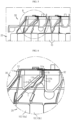
- FIG. 1 is a view for describing a conventional battery module structure.
- FIG. 2 is an enlarged view of a portion A shown in FIG. 1 .
- a conventional battery module is shown, in which a cell stack structure 2 is formed by stacking a plurality of bidirectional drawn-out battery cells 1 and a bus bar frame assembly 3 is combined to each of both sides of the cell stack structure.
- electrode leads 1a respectively included in a pair of adjacent battery cells 1 may be drawn out through one lead hole 3a formed in the bus bar frame assembly 3 to be combined to a same bus bar 3b.
- the electrode lead 1a provided in the battery cell 1 located at the left among the pair of adjacent battery cells 1 faces a boundary portion 1d between a lead film 1b and a pouch case 1c provided in the battery cell 1 located at the right.
- the electrode lead 1a provided in the battery cell 1 located at the left may contact the boundary portion 1d between the lead film 1b and the pouch case 1c provided in the battery cell 1 located at the right.
- a positive electrode lead is formed of an aluminum (Al) material and a negative electrode lead is formed of a copper (Cu) material.
- Al aluminum
- Cu copper
- an insulating tape may be attached to each of the negative electrode lead 1a and the boundary portion 1d between the lead film 1b and the pouch case 1c, which face each other, but when the insulating tape is attached, a component (the insulating tape) for insulation is added and an insulating tape attaching process needs to be added in terms of processes, and thus there is a loss in terms of productivity.
- the present disclosure is designed to solve the problems of the related art, and therefore the present disclosure is directed to providing a battery module having a structure capable of preventing damage to a battery cell caused by interference between a pair of neighboring battery cells commonly combined to one bus bar among a plurality of bus bars included in a bus bar frame assembly.
- the present disclosure is also directed to providing a battery pack including such a battery module and a vehicle including such a battery pack.
- a battery module including: a cell stack structure in which a plurality of battery cells including a first battery cell and a second battery cell neighboring each other are stacked, each battery cell comprising an electrode assembly, a pair of electrode leads, a pouch case and a lead film, the pouch case comprising an accommodation portion and a sealing portion, the sealing portion being formed on the circumference of the pouch case, the sealing portion being located in a direction where an electrode lead is drawn out, being referred to as a terrace portion; the lead film surrounding a part of the electrode lead, and a portion of the lead film being disposed between the electrode lead and the sealing portion, and the remaining portion of the lead film being exposed to the outside of the pouch case; and a bus bar frame assembly combined to at least one side of the cell stack structure and including a plurality of lead drawing holes from which electrode leads included in the plurality of battery cells are drawn out, wherein an electrode lead of a first polarity included in the first battery cell and an electrode lead of the first
- a bending direction in the first bent portion and a bending direction in the second bent portion are opposite directions.
- the bending direction in the first bent portion of the first battery cell is a direction approaching the second battery cell and the bending direction in the second bent portion of the first battery cell is a direction receding from the second battery cell.
- the bending direction in the first bent portion of the second battery cell is a direction receding from the first battery cell and the bending direction in the second bent portion of the second battery cell is a direction approaching the first battery cell.
- Bending angles of the first bent portion and the second bent portion are in a range of 30° to 50°.
- Bending angles of the first bent portion and the second bent portion may be the same.
- the first battery cell and the second battery cell may each include the electrode lead of the first polarity and an electrode lead of a second polarity.
- the first polarity may be a negative polarity and the second polarity may be a positive polarity.
- the first polarity may be a positive polarity and the second polarity may be a negative polarity.
- a battery pack including a plurality of the battery modules according to an embodiment of the present disclosure described above.
- a vehicle including the battery pack according to an embodiment of the present disclosure described above.
- an aluminum layer exposed at an end portion of a pouch case can be prevented from contacting an electrode lead, in particular, a negative electrode lead, of a neighboring battery cell. Accordingly, anode connection can be prevented and as a result, a problem in which sealing and insulating performances are weakened because the aluminum layer exposed at the end portion of the pouch case is oxidized can be solved.
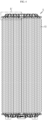
- FIG. 3 is a front view of a battery module according to an embodiment of the present disclosure.
- FIG. 4 is a cross-sectional view taken along a line IV-IV' of FIG. 3 .
- FIG. 5 is a cross-sectional view of an internal structure of a battery module according to an embodiment of the present disclosure and is an enlarged view of a portion B' of FIG. 3 .
- FIG. 6 is an enlarged view of a portion B of FIG. 5 .
- FIG. 7 is a perspective view of a battery cell applied to a battery module, according to an embodiment of the present disclosure, and
- FIG. 8 is an enlarged view of a portion C of FIG. 7 .
- a battery module 5 includes a cell stack structure 20 in which a plurality of battery cells 10 are stacked, and a bus bar frame assembly 30 provided on at least one side of the cell stack structure 20.
- a pouch type battery cell may be applied as the battery cell 10.
- a pouch type battery cell may be a bidirectional drawn-out battery cell in which a pair of electrode leads 11 including an electrode lead of a first polarity and an electrode lead of a second polarity are drawn-out in opposite directions, and a plurality of the pouch type battery cells may be stacked while facing each other to form one cell stack structure.
- the first polarity may be a negative polarity and the second polarity may be a positive polarity.
- the first polarity may be a positive polarity and the second polarity may be a negative polarity.
- the cell stack structure 20 may be arranged such that the electrode lead 11 included in each battery cell 10 extends along a direction perpendicular to the ground.
- each battery cell 10 may be erectly arranged such that a side surface is placed on the ground.
- the bus bar frame assembly 30 is combined to at least one side of the cell stack structure 20, and includes a bus bar frame 31 and a plurality of bus bars 32 fixedly installed at the bus bar frame 31.
- the bus bar frame 31 is arranged on at least one side of the cell stack structure 20 and includes a plurality of lead drawing holes 31a through which the electrode lead 11 of the battery cell 10 is drawn-out to the outside of the battery module 5.
- the plurality of battery cells 10 form a group of two, and the electrode leads 11 included in the pair of battery cells 10 in the same group are drawn-out to the outside through the same lead drawing hole 31a.
- the pair of electrode leads 11 drawn-out to the outside through the lead drawing hole 31a are attached to the same bus bar 32 via welding or the like.
- the pair of electrode leads 11 in the same group have the same polarity.
- the pair of electrode leads 11 have the first polarity, i.e., the negative polarity.
- the battery cell 10 includes an electrode assembly (not shown), the pair of electrode leads 11, the pouch case 12, and the lead film 13.
- the electrode assembly has a form in which a positive electrode, a separation film, and a negative electrode are sequentially stacked at least one or more times, or a form in which a stacked structure formed via stacking is wound.
- the pair of electrode leads 11 extend in opposite directions by being connected respectively to a positive electrode tab and a negative electrode tab included in the electrode assembly.
- the electrode lead 11 connected to the positive electrode tab functions as a positive electrode lead 11a having the second polarity
- the electrode lead 11 connected to the negative electrode tab functions as a negative electrode lead 11b having the first polarity.
- the electrode lead 11 is drawn-out to the outside of the pouch case 12 through a sealing portion 12b described later.
- the pouch case 12 may be formed of a pouch film in which a resin layer, a metal layer, and a resin layer are sequentially stacked, and includes an accommodating portion 12a in which the electrode assembly is accommodated and the sealing portion 12b extending to the outside from the circumference of the accommodating portion 12a.
- the metal layer may be formed of an aluminum material.
- the sealing portion 12b located in a direction where the electrode lead 11 is drawn out will hereinafter referred to as a terrace portion T.
- the first bent portion B1 and the second bent portion B2 are bent in opposite directions, and bending angles ⁇ are the same in the range of about 30° to about 50°.
- the bending angle ⁇ may be defined as an angle at which the negative electrode lead 11b is bent with respect to a surface in which the negative electrode lead 11b extends in a direction where the negative electrode lead 11b is drawn-out.
- a distance d1 from the first bent portion B1 to an end portion of the sealing portion 12b, i.e., to the boundary portion P between the lead film 13 and the sealing portion 12b is about 2.5 mm to about 3.5 mm
- a distance d2 from the boundary portion P between the lead film 13 and the sealing portion 12b to the second bent portion B2 is about 0.5 mm to about 1.5 mm.
- the pair of negative electrode leads 11b drawn-out through the same lead drawing hole 31a have the shape bent in the same direction at the same location.
- the battery cell 10 located relatively at the left will be referred to as a first battery cell 10a and the battery cell 10 located relatively at the right will be referred to as a second battery cell 10b.
- the second bent portion B2 of the first battery cell 10a is located at a location corresponding to the terrace portion T of the second battery cell 10b and is located further below the first bent portion B1 of the second battery cell 10b.
- the first bent portion B1 of the second battery cell 10b is formed at a location corresponding to a region of the first battery cell 10a where the lead film 13 exposed to the outside of the terrace portion T is formed.
- a portion where a contact occurs first is the lead film 13 exposed to the outside of the terrace portion T of the first battery cell 10a and the first bent portion B1 of the second battery cell 10b.
- a portion where a contact occurs first is the second bent portion B2 of the first battery cell 10a and the terrace portion T of the second battery cell 10b.
- the terrace portion T of the second battery cell 10b first contacts the second bent portion B2 of the first battery cell 10a due to the shape of the second bent portion B2 of the first battery cell 10a.
- the boundary portion P between the lead film 13 and the terrace portion T of the second battery cell 10b no longer moves towards the first battery cell 10a. Accordingly, a phenomenon in which the negative electrode lead 1 1b of the first battery cell 10a contacts the boundary portion P between the lead film 13 and the terrace portion T of the second battery cell 10b is prevented.
- a lithium-aluminum alloy when a lithium-aluminum alloy is formed because an aluminum layer exposed at an end portion of a pouch case is oxidized due to anode connection, the lithium-aluminum alloy continuously grows via a contact with an electrolyte solution inside a battery cell, and thus a sealing performance of the pouch case is weakened. Accordingly, when moisture present in the external air of the battery cell penetrates into the battery cell, the penetrated moisture and the electrolyte solution react with each other, thereby generating a material such as hydrofluoric acid (HF ( )).
- HF ( ) hydrofluoric acid
- the hydrofluoric acid deteriorates a solid electrolyte interphase (SEI) film that is the important part of the battery cell, thereby deteriorating the performance of the battery cell, and also causes generation of a carbon dioxide (Co 2 ) gas, thereby adversely affecting battery cell swelling. Also, because a hydrogen (H 2 ) gas is generated according to electrolysis of the penetrated moisture, the battery cell swelling further deteriorates. According to the present disclosure, because anode connection is prevented, the sealing performance of the pouch case 12 is maintained, and as a result, penetration of the moisture present in the external air of the battery cell is fundamentally blocked. Accordingly, satisfactory results are exhibited in terms of damage prevention of the battery cell 10, such as SEI film maintenance, cell swelling prevention, and the like.
- SEI solid electrolyte interphase
- the bending angle ⁇ between the first bent portion B1 and the second bent portion B2 is about 30° to about 50°.
- Such a bending angle ⁇ is in an optimum range for effectively preventing the negative electrode lead 11b included in the first battery cell 10a located relatively at the left among the neighboring first and second battery cells 10a and 10b from contacting the boundary portion P between the lead film 13 and the terrace portion T of the second battery cell 10b located relatively at the right, while preventing deterioration of sealability of the first and second battery cells 10a and 10b.
- the battery module 5 due to the bent shapes of the negative electrode leads 11b included in the pair of adjacent first and second battery cells 10a and 10b, a phenomenon in which the negative electrode lead 11b of one battery cell contacts the boundary portion P between the lead film 13 and the terrace portion T of a neighboring battery cell may be prevented, and thus damage to the battery cell may be prevented.
- the present disclosure does not exclude the application of a bent shape described above to the positive electrode lead 11a.
- a material of a positive electrode lead is aluminum and a material of a negative electrode lead is copper, and thus when an aluminum layer is used as a metal layer of a pouch case, oxidation of the aluminum layer is problematic when the negative lead and the aluminum layer exposed at an end portion of the pouch case contact each other.
- the positive electrode lead may be manufactured of an aluminum material.
- the aluminum layer may be oxidized when not only the negative electrode lead but also the positive electrode lead contacts the aluminum layer exposed at the end portion of the pouch case.
- the phenomenon in which the positive electrode lead 11a of one battery cell contacts the boundary portion P between the lead film 13 and the terrace portion T of the neighboring battery cell may be prevented, thereby preventing the damage to the battery cell.
- a bent portion in at least one electrode lead among a negative electrode lead and a positive electrode lead damage to a battery cell caused by interference between a pair of neighboring battery cells commonly combined to one of a plurality of bus bars included in a bus bar frame assembly may be prevented without having to apply an additional component, such as an insulating tape. Because an additional component is not applied, manufacturing of a battery module and battery pack is simplified and a defect rate is reduced. As a result, a yield rate is increased and thus manufacturing costs of the battery module and battery pack may be reduced. Because existing battery module manufacturing processes are used as they are except for forming a bent portion, the performance of the battery module may be secured relatively without having to change processes. Because a battery cell itself uses existing manufacturing processes as they are, there is no need to change processes or adjust mass production processes.
- the bending angle ⁇ of an electrode lead such as a negative electrode lead or a positive electrode lead, may be formed within a certain range, and as a first bent portion of the electrode lead is formed at a terrace portion, causing bending of a sealed portion, occurrence of an adverse effect, such as sealability deterioration or the like, in a battery cell should be avoided.
- An appropriate range of a bending angle and occurrence of a side effect were confirmed via experiments. Insulation voltage, insulation resistance, and high voltage (HV) insulation experiments were performed on various battery cells with a bending angle range of 20° to 60° for a negative electrode lead, and adhesive and overcharge venting patterns were compared with a comparative example where a negative electrode lead was not bent.
- HV high voltage
- samples with bending angles of 20°, 30°, 40°, 50°, and 60° were prepared to perform the insulation voltage, insulation resistance, and HV insulation experiments.
- An insulation voltage is a voltage measured between an aluminum metal layer of a pouch film exposed externally through an end portion of a terrace portion of a negative electrode lead of a battery cell, and a positive electrode lead of the battery cell. Occurrence of anode connection is determined by measuring the insulation voltage.
- a reference voltage determining pass/fail for example, several V, was determined, and upon determining pass when the measured insulation voltage is equal to or lower than the reference voltage and fail when the measured insulation voltage is higher than the reference voltage, fail occurred in the sample with the bending angle of 60°. Accordingly, it was determined that the bending angle corresponding to 60° is an excessive bending angle.
- Insulation resistance is resistance measured between an aluminum metal layer of a pouch film exposed externally through an end portion of a terrace portion of a negative electrode lead of a battery cell, and a positive electrode lead of the battery cell.
- An insulation performance of the battery cell is determined when such insulation resistance is measured.
- Reference resistance determining pass/fail for example, several M ⁇ , was determined, and upon determining pass when the measured insulation resistance is equal to or greater than the reference resistance and fail when the measured insulation resistance is smaller than the reference resistance, fail occurred in the sample with the bending angle of 60°. Accordingly, it was determined that the bending angle corresponding to 60° is an excessive bending angle.
- the HV insulation experiment is performed by measuring resistance while applying a high voltage between an electrode lead and a surface of a pouch case. An insulation performance of the surface of the pouch case and a sealing portion of the electrode lead may be checked via such an HV insulation experiment.
- the bending angle ⁇ was in a range of 20° to 60°, it was confirmed that there is no abnormality in the insulation performance of the surface of the pouch case and the sealing portion of the electrode lead. Accordingly, it was verified that the bending of the negative electrode lead as in the present disclosure does not affect the insulation performance of the surface of the pouch case and the sealing portion of the electrode lead.
- Adhesive forces of the samples with the bending angles of 20°, 30°, 40°, 50°, and 60° and the comparative example were compared.
- the adhesive force was evaluated by measuring a force when the negative electrode lead is pulled and separated from the battery cell.
- the adhesive forces at levels similar to the comparative example were confirmed for all samples. Thus, it was verified that the bending of the negative electrode lead as in the present disclosure does not affect the adhesive force of the negative electrode lead.
- FIG. 11 is a schematic view of a battery pack according to the present disclosure.
- a battery pack 100 may include at least the plurality of battery modules 5 according to the previous embodiment, and a pack case 110 packaging the plurality of battery modules 5. Also, the battery pack 100 according to the present disclosure may further include, in addition to the battery module 5 and the pack case 110, various devices for controlling charging and discharging of the battery module 5, such as a battery management system (BMS), a current sensor, a fuse, and the like. Since the battery pack 100 according to the current embodiment includes the battery module 5 of the previous embodiment, the battery pack 100 includes all advantages of the battery module 5 of the previous embodiment.
- BMS battery management system
- the battery module 5 or battery pack 100 may be used while maintaining an excellent performance for a long time because battery cell performance deterioration is prevented, and in particular, is suitable to be used as a power source of a medium or large device that requires a long cycle characteristic and a high rate characteristic.
- the medium or large device include a power tool moving upon receiving driving power by an electric motor; an electric car such as an electric vehicle (EV), a hybrid electric vehicle (HEV), or plug-in hybrid electric vehicle (PHEV); an electric two-wheeled vehicle, such as an E-bike or an E-scooter; an electric golf cart; and an energy storage system (ESS), but are not limited thereto.
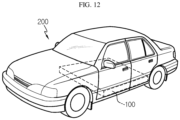
- FIG. 12 is a schematic view of a vehicle according to the present disclosure.
- a vehicle 200 may include the battery pack 100 of the previous embodiment.
- Such a vehicle 200 may be an EV, an HEV, or another vehicle including the battery pack 100 as a fuel source.
- the vehicle 200 since the vehicle 200 according to the current embodiment includes the battery pack 100 of the previous embodiment, the vehicle 200 includes all advantages of the battery pack 100 of the previous embodiment.
- the battery pack 100 may be included in, in addition to the vehicle 200, a power storage device or another device or equipment using the battery pack 100 as an energy source.
- the vehicle 200 may be an EV.
- the battery pack 100 may be used as an electric energy source driving the vehicle 200 by providing driving power to a motor of the EV.
- the battery pack 100 may be manufactured to have a high nominal voltage equal to or greater than 100 V.
- a nominal voltage of the battery pack 100 may be adjusted to 270 V.
- the battery pack 100 may be charged or discharged by an inverter according to driving of a motor and/or internal combustion engine.
- the battery pack 100 may be charged by a regenerative charging device combined to a break.
- the battery pack 100 may be electrically connected to a motor of the vehicle 200 via the inverter.
Landscapes
- Chemical & Material Sciences (AREA)
- Chemical Kinetics & Catalysis (AREA)
- Electrochemistry (AREA)
- General Chemical & Material Sciences (AREA)
- Battery Mounting, Suspending (AREA)
- Connection Of Batteries Or Terminals (AREA)
Description
- The present disclosure relates to a battery module having a structure capable of preventing battery cell damage, and a battery pack including the same, and more particularly, to a battery module having a structure capable of preventing damage to a battery cell caused by interference between a pair of neighboring battery cells commonly combined to one bus bar among a plurality of bus bars included in a bus bar frame assembly, and a battery pack including the battery module. The present disclosure also relates to a vehicle including such a battery pack.
- The present application claims priority to
Korean Patent Application No. 10-2018-0129071 filed on October 26, 2018 - Secondary batteries are widely used not only for small apparatuses, such as portable electronic devices, but also for medium and large apparatuses, such as vehicles and power storage apparatuses. When the secondary batteries are used for the medium and large apparatuses, a battery module, in which a large number of battery cells of the secondary batteries are electrically connected, is used to increase the capacity and output. In particular, pouch type battery cells including a pouch case are widely used for such medium and large apparatuses because of easy stacking.
- In order for the battery cells to be electrically connected inside the battery module, electrode leads of the battery cells may be connected to each other and connected portions may be welded to maintain such connected states. Furthermore, the battery module may have parallel and/or serial electric connection between the battery cells, and in this regard, one end portions of the electrode leads may contact and be fixed to a bus bar for electric connection between the battery cells, via welding or the like.
-
FIG. 1 is a view for describing a conventional battery module structure.FIG. 2 is an enlarged view of a portion A shown inFIG. 1 . - Referring to
FIG. 1 , a conventional battery module is shown, in which a cell stack structure 2 is formed by stacking a plurality of bidirectional drawn-outbattery cells 1 and a busbar frame assembly 3 is combined to each of both sides of the cell stack structure. - In such a conventional battery module,
electrode leads 1a respectively included in a pair ofadjacent battery cells 1 may be drawn out through onelead hole 3a formed in the busbar frame assembly 3 to be combined to asame bus bar 3b. - In this case, as shown in
FIG. 2 , theelectrode lead 1a provided in thebattery cell 1 located at the left among the pair ofadjacent battery cells 1 faces aboundary portion 1d between alead film 1b and a pouch case 1c provided in thebattery cell 1 located at the right. - Thus, according to relative movement of the pair of
battery cells 1, theelectrode lead 1a provided in thebattery cell 1 located at the left may contact theboundary portion 1d between thelead film 1b and the pouch case 1c provided in thebattery cell 1 located at the right. - In most cases, a positive electrode lead is formed of an aluminum (Al) material and a negative electrode lead is formed of a copper (Cu) material. When such a contact phenomenon occurs in the negative electrode lead, an aluminum layer exposed at an end portion of the pouch case 1c contacts the
negative electrode lead 1a of the neighboringbattery cell 1, and in this case, the aluminum layer exposed at the end portion of the pouch case 1c is oxidized, thereby causing an anode connection phenomenon in which sealing and insulating performances are weakened. - In order to prevent the occurrence of the anode connection phenomenon, an insulating tape may be attached to each of the
negative electrode lead 1a and theboundary portion 1d between thelead film 1b and the pouch case 1c, which face each other, but when the insulating tape is attached, a component (the insulating tape) for insulation is added and an insulating tape attaching process needs to be added in terms of processes, and thus there is a loss in terms of productivity. - Accordingly, there is an urgent need for a method for preventing anode connection described above without having to use an additional material.
- Further prior art is described in
EP 3 340 338 A1 - The present disclosure is designed to solve the problems of the related art, and therefore the present disclosure is directed to providing a battery module having a structure capable of preventing damage to a battery cell caused by interference between a pair of neighboring battery cells commonly combined to one bus bar among a plurality of bus bars included in a bus bar frame assembly.
- The present disclosure is also directed to providing a battery pack including such a battery module and a vehicle including such a battery pack.
- However, the technical problems to be solved by the present disclosure are not limited thereto, and other unmentioned objects will become apparent to one of ordinary skill in the art from the description of the present disclosure below.
- In one aspect of the present disclosure, there is provided a battery module according to
claim 1, including: a cell stack structure in which a plurality of battery cells including a first battery cell and a second battery cell neighboring each other are stacked, each battery cell comprising an electrode assembly, a pair of electrode leads, a pouch case and a lead film, the pouch case comprising an accommodation portion and a sealing portion, the sealing portion being formed on the circumference of the pouch case, the sealing portion being located in a direction where an electrode lead is drawn out, being referred to as a terrace portion; the lead film surrounding a part of the electrode lead, and a portion of the lead film being disposed between the electrode lead and the sealing portion, and the remaining portion of the lead film being exposed to the outside of the pouch case; and a bus bar frame assembly combined to at least one side of the cell stack structure and including a plurality of lead drawing holes from which electrode leads included in the plurality of battery cells are drawn out, wherein an electrode lead of a first polarity included in the first battery cell and an electrode lead of the first polarity included in the second battery cell are externally drawn out through a same lead drawing hole, and wherein the electrode lead of the first polarity of the first battery cell and the electrode lead of the first polarity of the second battery cell have shapes bent in a same direction at a same location and each include a first bent portion formed on a terrace portion and a second bent portion formed in a region where a lead film is formed. - A bending direction in the first bent portion and a bending direction in the second bent portion are opposite directions.
- The bending direction in the first bent portion of the first battery cell is a direction approaching the second battery cell and the bending direction in the second bent portion of the first battery cell is a direction receding from the second battery cell.
- The bending direction in the first bent portion of the second battery cell is a direction receding from the first battery cell and the bending direction in the second bent portion of the second battery cell is a direction approaching the first battery cell.
- The second bent portion of the first battery cell is formed at a location corresponding to the terrace portion of the second battery cell.
- The second bent portion of the first battery cell is located further below the first bent portion of the second battery cell.
- The first bent portion of the second battery cell is formed at a location corresponding to the region where the lead film of the first battery cell is formed.
- Bending angles of the first bent portion and the second bent portion are in a range of 30° to 50°.
- Bending angles of the first bent portion and the second bent portion may be the same.
- The first battery cell and the second battery cell may each include the electrode lead of the first polarity and an electrode lead of a second polarity. The first polarity may be a negative polarity and the second polarity may be a positive polarity. Alternatively, the first polarity may be a positive polarity and the second polarity may be a negative polarity.
- In another aspect of the present disclosure, there is provided a battery pack including a plurality of the battery modules according to an embodiment of the present disclosure described above.
- In another aspect of the present disclosure, there is provided a vehicle including the battery pack according to an embodiment of the present disclosure described above.
- According to an aspect of the present disclosure, just by forming a bent portion in an electrode lead, damage to a battery cell caused by interference between a pair of neighboring battery cells commonly combined to one bus bar among a plurality of bus bars included in a bus bar frame assembly can be prevented without having to apply an additional component such as an insulating tape.
- According to an aspect of the present disclosure, an aluminum layer exposed at an end portion of a pouch case can be prevented from contacting an electrode lead, in particular, a negative electrode lead, of a neighboring battery cell. Accordingly, anode connection can be prevented and as a result, a problem in which sealing and insulating performances are weakened because the aluminum layer exposed at the end portion of the pouch case is oxidized can be solved.
- According to an aspect of the present disclosure, since there is no application of an additional component, manufacturing of a battery module and battery pack is simplified and a defect rate is reduced. As a result, a yield rate can be increased, thereby reducing manufacturing costs of the battery module and battery pack.
- According to another aspect of the present disclosure, a battery pack including such a battery module and a vehicle including such a battery pack are provided. The battery pack and the vehicle have the advantages of the battery module according to the present disclosure. Since a battery cell is prevented from being damaged in the battery module of the present disclosure, the battery pack and vehicle including such a battery module can be used for a long time without deterioration of performance of the battery cell.
- The accompanying drawings illustrate a preferred embodiment of the present disclosure and together with the foregoing disclosure, serve to provide further understanding of the technical features of the present disclosure, and thus, the present disclosure is not construed as being limited to the drawing.
-
FIG. 1 is a view for describing a conventional battery module structure; -
FIG. 2 is an enlarged view of a portion A shown inFIG. 1 ; -
FIG. 3 is a front view of a battery module according to an embodiment of the present disclosure; -
FIG. 4 is a cross-sectional view taken along a line IV-IV' ofFIG. 3 ; -
FIG. 5 is a cross-sectional view of an internal structure of a battery module according to an embodiment of the present disclosure and is an enlarged view of a portion B' ofFIG. 3 ; -
FIG. 6 is an enlarged view of a portion B ofFIG. 5 ; -
FIG. 7 is a perspective view of a battery cell applied to a battery module, according to an embodiment of the present disclosure; -
FIG. 8 is an enlarged view of a portion C ofFIG. 7 ; -
FIG. 9 is a view for describing a mechanism in which interference between adjacent battery cells is prevented when a battery cell located at the left moves with respect to a partial region of the battery module ofFIG. 6 ; -
FIG. 10 is a view for describing a mechanism in which interference between adjacent battery cells is prevented when a battery cell located at the right moves with respect to the partial region of the battery module ofFIG. 6 ; -
FIG. 11 is a schematic view of a battery pack according to the present disclosure; and -
FIG. 12 is a schematic view of a vehicle according to the present disclosure. - Hereinafter, preferred embodiments of the present disclosure will be described in detail with reference to the accompanying drawings. Prior to the description, it should be understood that the terms used in the specification and the appended claims should not be construed as limited to general and dictionary meanings, but interpreted based on the meanings and concepts corresponding to technical aspects of the present disclosure on the basis of the principle that the inventor is allowed to define terms appropriately for the best explanation. Therefore, the description proposed herein is just a preferable example for the purpose of illustrations only, not intended to limit the scope of the disclosure, so it should be understood that other equivalents and modifications could be made thereto without departing from the scope of the disclosure.
- First, a structure of a battery module according to an embodiment of the present disclosure will be described with reference to
FIGS. 3 through 8 . -
FIG. 3 is a front view of a battery module according to an embodiment of the present disclosure.FIG. 4 is a cross-sectional view taken along a line IV-IV' ofFIG. 3 .FIG. 5 is a cross-sectional view of an internal structure of a battery module according to an embodiment of the present disclosure and is an enlarged view of a portion B' ofFIG. 3 .FIG. 6 is an enlarged view of a portion B ofFIG. 5 .FIG. 7 is a perspective view of a battery cell applied to a battery module, according to an embodiment of the present disclosure, andFIG. 8 is an enlarged view of a portion C ofFIG. 7 . - First, referring to
FIGS. 3 through 6 , abattery module 5 according to an embodiment of the present disclosure includes acell stack structure 20 in which a plurality ofbattery cells 10 are stacked, and a busbar frame assembly 30 provided on at least one side of thecell stack structure 20. - For example, a pouch type battery cell may be applied as the
battery cell 10. Also, such a pouch type battery cell may be a bidirectional drawn-out battery cell in which a pair of electrode leads 11 including an electrode lead of a first polarity and an electrode lead of a second polarity are drawn-out in opposite directions, and a plurality of the pouch type battery cells may be stacked while facing each other to form one cell stack structure. The first polarity may be a negative polarity and the second polarity may be a positive polarity. Alternatively, the first polarity may be a positive polarity and the second polarity may be a negative polarity. - The
cell stack structure 20 may be arranged such that theelectrode lead 11 included in eachbattery cell 10 extends along a direction perpendicular to the ground. In other words, eachbattery cell 10 may be erectly arranged such that a side surface is placed on the ground. - The
battery cell 10 has a shape in which theelectrode lead 11 is bent from a certain portion. Such a bent shape of theelectrode lead 11 may prevent theelectrode lead 11 included in onebattery cell 10 from contacting a boundary portion P between apouch case 12 and alead film 13 of thebattery cell 10 adjacent thereto, thereby preventing theelectrode lead 11 and an aluminum layer of thepouch case 12 from contacting each other. A detailed structure of thebattery cell 10 and the bent shape of theelectrode lead 11 will be described in detail later with reference toFIGS. 7 and 8 . - The bus
bar frame assembly 30 is combined to at least one side of thecell stack structure 20, and includes abus bar frame 31 and a plurality ofbus bars 32 fixedly installed at thebus bar frame 31. - The
bus bar frame 31 is arranged on at least one side of thecell stack structure 20 and includes a plurality oflead drawing holes 31a through which theelectrode lead 11 of thebattery cell 10 is drawn-out to the outside of thebattery module 5. The plurality ofbattery cells 10 form a group of two, and the electrode leads 11 included in the pair ofbattery cells 10 in the same group are drawn-out to the outside through the samelead drawing hole 31a. - Also, the pair of electrode leads 11 drawn-out to the outside through the
lead drawing hole 31a are attached to thesame bus bar 32 via welding or the like. In this case, the pair of electrode leads 11 in the same group have the same polarity. For example, the pair of electrode leads 11 have the first polarity, i.e., the negative polarity. - The
bus bar frame 31 may include a plurality of lead guides 31b formed under thelead drawing hole 31a to guide theelectrode lead 11 to extend in a direction from a lower portion of thelead drawing hole 31a towards thelead drawing hole 31a. - Next, the detailed structure of the
battery cell 10 and the bent shape of theelectrode lead 11 applied to the present disclosure will be described in detail with reference toFIGS. 7 and 8 together withFIG. 6 . - First, referring to
FIG. 7 , thebattery cell 10 includes an electrode assembly (not shown), the pair of electrode leads 11, thepouch case 12, and thelead film 13. - The electrode assembly has a form in which a positive electrode, a separation film, and a negative electrode are sequentially stacked at least one or more times, or a form in which a stacked structure formed via stacking is wound.
- The pair of electrode leads 11 extend in opposite directions by being connected respectively to a positive electrode tab and a negative electrode tab included in the electrode assembly. In this case, the
electrode lead 11 connected to the positive electrode tab functions as apositive electrode lead 11a having the second polarity and theelectrode lead 11 connected to the negative electrode tab functions as anegative electrode lead 11b having the first polarity. Theelectrode lead 11 is drawn-out to the outside of thepouch case 12 through a sealingportion 12b described later. - The
pouch case 12 may be formed of a pouch film in which a resin layer, a metal layer, and a resin layer are sequentially stacked, and includes anaccommodating portion 12a in which the electrode assembly is accommodated and the sealingportion 12b extending to the outside from the circumference of theaccommodating portion 12a. The metal layer may be formed of an aluminum material. Before the sealingportion 12b is formed via thermal fusion or the like, an electrolyte, usually an electrolyte solution, is injected into thepouch case 12, together with the electrode assembly. - Meanwhile, among the sealing
portion 12b formed on the circumference of thepouch case 12, the sealingportion 12b located in a direction where theelectrode lead 11 is drawn out will hereinafter referred to as a terrace portion T. - The
lead film 13 surrounds a part of theelectrode lead 11, and a portion of thelead film 13 is disposed between theelectrode lead 11 and the sealingportion 12b of thepouch case 12 and the remaining portion of thelead film 13 is exposed to the outside of the sealingportion 12b of thepouch case 12. Thelead film 13 is applied to prevent a sealing force of the sealingportion 12b from being weakened due to an insufficient adhesive force between theelectrode lead 11 and thepouch case 12. - Referring to
FIG. 8 , thenegative electrode lead 11b among the pair of electrode leads 11 included in thebattery cell 10 is bent two times at different locations along a length direction. In particular, thenegative electrode lead 11b includes a first bent portion B1 formed on the terrace portion T and a second bent portion B2 formed inside a region of the sealingportion 12b where the externally exposedlead film 13 is located. - The first bent portion B1 and the second bent portion B2 are bent in opposite directions, and bending angles θ are the same in the range of about 30° to about 50°. The bending angle θ may be defined as an angle at which the
negative electrode lead 11b is bent with respect to a surface in which thenegative electrode lead 11b extends in a direction where thenegative electrode lead 11b is drawn-out. A distance d1 from the first bent portion B1 to an end portion of the sealingportion 12b, i.e., to the boundary portion P between thelead film 13 and the sealingportion 12b is about 2.5 mm to about 3.5 mm, and a distance d2 from the boundary portion P between thelead film 13 and the sealingportion 12b to the second bent portion B2 is about 0.5 mm to about 1.5 mm. - Referring back to
FIG. 6 , the pair of negative electrode leads 11b drawn-out through the samelead drawing hole 31a have the shape bent in the same direction at the same location. Hereinafter, for convenience of description, among the pair ofbattery cells 10 shown inFIG. 6 , thebattery cell 10 located relatively at the left will be referred to as afirst battery cell 10a and thebattery cell 10 located relatively at the right will be referred to as asecond battery cell 10b. - A bending direction at the first bent portion B1 formed in the
first battery cell 10a is a direction approaching thesecond battery cell 10b, and a bending direction at the second bent portion B2 of thefirst battery cell 10a is a direction receding from thesecond battery cell 10b. Also, a bending direction of the first bent portion B1 of thesecond battery cell 10b is a direction receding from thefirst battery cell 10a, and a bending direction at the second bent portion B2 of thesecond battery cell 10b is a direction approaching thefirst battery cell 10a. - Due to such bending directions and formed locations of the first and second bent portions B1 and B2, the second bent portion B2 of the
first battery cell 10a is located at a location corresponding to the terrace portion T of thesecond battery cell 10b and is located further below the first bent portion B1 of thesecond battery cell 10b. - Also, the first bent portion B1 of the
second battery cell 10b is formed at a location corresponding to a region of thefirst battery cell 10a where thelead film 13 exposed to the outside of the terrace portion T is formed. - Hereinafter, a cell damage preventing mechanism according to a bent structure of the
negative electrode lead 11b described above will be described with reference toFIGS. 9 and10 . -
FIG. 9 is a view for describing a mechanism in which interference between adjacent battery cells is prevented when a battery cell located at the left moves with respect to a partial region of the battery module ofFIG. 6 . Also,FIG. 10 is a view for describing a mechanism in which interference between adjacent battery cells is prevented when a battery cell located at the right moves with respect to the partial region of the battery module ofFIG. 6 . - First, referring to
FIG. 9 , a case in which interference occurs when thenegative electrode lead 11b of thefirst battery cell 10a moves towards thenegative electrode lead 1 1b of thesecond battery cell 10b along a direction indicated by an arrow is shown. - When the
negative electrode lead 11b of thefirst battery cell 10a moves towards thenegative electrode lead 11b of thesecond battery cell 10b, a portion where a contact occurs first is thelead film 13 exposed to the outside of the terrace portion T of thefirst battery cell 10a and the first bent portion B1 of thesecond battery cell 10b. - When the
negative electrode lead 11b of thefirst battery cell 10a moves in a direction towards thesecond battery cell 10b, thelead film 13 exposed to the outside of the terrace portion T of thefirst battery cell 10a first contacts the first bent portion B1 of thesecond battery cell 10b due to the shape of the first bent portion B1 of thesecond battery cell 10b. - Also, due to the first interference between the
lead film 13 of thefirst battery cell 10a and the first bent portion B1 of thesecond battery cell 10b, thenegative electrode lead 11b of thefirst battery cell 10a no longer moves towards thesecond battery cell 10b. Accordingly, a phenomenon in which thenegative electrode lead 11b of thefirst battery cell 10a contacts the boundary portion P between thelead film 13 and the terrace portion T of thesecond battery cell 10b is prevented. - As such, when the phenomenon in which the
negative electrode lead 11b of thefirst battery cell 10a contacts the boundary portion P between thelead film 13 and the terrace portion T of thesecond battery cell 10b is prevented, an anode connection phenomenon occurred when an aluminum metal layer of a pouch film exposed to the outside through an end portion of the terrace portion T contacts thenegative electrode lead 11b may be previously blocked. - Next, referring to
FIG. 10 , a case in which interference occurs when thenegative electrode lead 1 1b of thesecond battery cell 10b moves towards thenegative electrode lead 1 1b of thefirst battery cell 10a along a direction indicated by an arrow is shown. - When the
negative electrode lead 11b of thesecond battery cell 10b moves towards thenegative electrode lead 11b of thefirst battery cell 10a, a portion where a contact occurs first is the second bent portion B2 of thefirst battery cell 10a and the terrace portion T of thesecond battery cell 10b. - When the
negative electrode lead 11b of thesecond battery cell 10b moves in a direction towards thefirst battery cell 10a, the terrace portion T of thesecond battery cell 10b first contacts the second bent portion B2 of thefirst battery cell 10a due to the shape of the second bent portion B2 of thefirst battery cell 10a. - Also, due to the first interference between the second bent portion B2 of the
first battery cell 10a and the terrace portion T of thesecond battery cell 10b, the boundary portion P between thelead film 13 and the terrace portion T of thesecond battery cell 10b no longer moves towards thefirst battery cell 10a. Accordingly, a phenomenon in which thenegative electrode lead 1 1b of thefirst battery cell 10a contacts the boundary portion P between thelead film 13 and the terrace portion T of thesecond battery cell 10b is prevented. - As such, when the phenomenon in which the
negative electrode lead 11b of thefirst battery cell 10a contacts the boundary portion P between thelead film 13 and the terrace portion T of thesecond battery cell 10b is prevented, an anode connection phenomenon occurred when an aluminum metal layer of a pouch film exposed to the outside through an end portion of the terrace portion T contacts thenegative electrode lead 1 1b may be previously blocked. - In particular, when a lithium-aluminum alloy is formed because an aluminum layer exposed at an end portion of a pouch case is oxidized due to anode connection, the lithium-aluminum alloy continuously grows via a contact with an electrolyte solution inside a battery cell, and thus a sealing performance of the pouch case is weakened. Accordingly, when moisture present in the external air of the battery cell penetrates into the battery cell, the penetrated moisture and the electrolyte solution react with each other, thereby generating a material such as hydrofluoric acid (HF ()). The hydrofluoric acid deteriorates a solid electrolyte interphase (SEI) film that is the important part of the battery cell, thereby deteriorating the performance of the battery cell, and also causes generation of a carbon dioxide (Co2) gas, thereby adversely affecting battery cell swelling. Also, because a hydrogen (H2) gas is generated according to electrolysis of the penetrated moisture, the battery cell swelling further deteriorates. According to the present disclosure, because anode connection is prevented, the sealing performance of the

pouch case 12 is maintained, and as a result, penetration of the moisture present in the external air of the battery cell is fundamentally blocked. Accordingly, satisfactory results are exhibited in terms of damage prevention of thebattery cell 10, such as SEI film maintenance, cell swelling prevention, and the like. - Meanwhile, as described above, the bending angle θ between the first bent portion B1 and the second bent portion B2 is about 30° to about 50°. Such a bending angle θ is in an optimum range for effectively preventing the
negative electrode lead 11b included in thefirst battery cell 10a located relatively at the left among the neighboring first andsecond battery cells lead film 13 and the terrace portion T of thesecond battery cell 10b located relatively at the right, while preventing deterioration of sealability of the first andsecond battery cells - In other words, when the bending angle θ is formed less than about 30°, a distance between the boundary portion P between the
lead film 13 and the terrace portion T of thesecond battery cell 10b and thenegative electrode lead 1 1b of thefirst battery cell 10a may not be sufficiently obtained. Accordingly, thenegative electrode lead 11b of thefirst battery cell 10a may contact the boundary portion P between thelead film 13 and the terrace portion T of thesecond battery cell 10b before occurrence of first interference by the first bent portion B1 or the second bent portion B2. - Also, when the bending angle θ exceeds about 50°, sealability and insulation of the first and
second battery cells lead film 13 bend excessively, resulting in delamination of a metal layer and a resin layer inside thepouch case 12, thereby generating a partial gap in the sealingportion 12b of thepouch case 12, and thus the sealability may deteriorate and the insulation between the metal layers of thepouch case 12 may also deteriorate. As described above, in thebattery module 5 according to the present disclosure, due to the bent shapes of the negative electrode leads 11b included in the pair of adjacent first andsecond battery cells negative electrode lead 11b of one battery cell contacts the boundary portion P between thelead film 13 and the terrace portion T of a neighboring battery cell may be prevented, and thus damage to the battery cell may be prevented. - Also, the present disclosure does not exclude the application of a bent shape described above to the
positive electrode lead 11a. In most cases, a material of a positive electrode lead is aluminum and a material of a negative electrode lead is copper, and thus when an aluminum layer is used as a metal layer of a pouch case, oxidation of the aluminum layer is problematic when the negative lead and the aluminum layer exposed at an end portion of the pouch case contact each other. However, the positive electrode lead may be manufactured of an aluminum material. Alternatively, when an electrode lead of another material is used, the aluminum layer may be oxidized when not only the negative electrode lead but also the positive electrode lead contacts the aluminum layer exposed at the end portion of the pouch case. Thus, by applying a bent structure described above to thepositive electrode lead 11a, the phenomenon in which thepositive electrode lead 11a of one battery cell contacts the boundary portion P between thelead film 13 and the terrace portion T of the neighboring battery cell may be prevented, thereby preventing the damage to the battery cell. - As such, according to the present disclosure, by forming a bent portion in at least one electrode lead among a negative electrode lead and a positive electrode lead, damage to a battery cell caused by interference between a pair of neighboring battery cells commonly combined to one of a plurality of bus bars included in a bus bar frame assembly may be prevented without having to apply an additional component, such as an insulating tape. Because an additional component is not applied, manufacturing of a battery module and battery pack is simplified and a defect rate is reduced. As a result, a yield rate is increased and thus manufacturing costs of the battery module and battery pack may be reduced. Because existing battery module manufacturing processes are used as they are except for forming a bent portion, the performance of the battery module may be secured relatively without having to change processes. Because a battery cell itself uses existing manufacturing processes as they are, there is no need to change processes or adjust mass production processes.
- Meanwhile, as described above, the bending angle θ of an electrode lead, such as a negative electrode lead or a positive electrode lead, may be formed within a certain range, and as a first bent portion of the electrode lead is formed at a terrace portion, causing bending of a sealed portion, occurrence of an adverse effect, such as sealability deterioration or the like, in a battery cell should be avoided. An appropriate range of a bending angle and occurrence of a side effect were confirmed via experiments. Insulation voltage, insulation resistance, and high voltage (HV) insulation experiments were performed on various battery cells with a bending angle range of 20° to 60° for a negative electrode lead, and adhesive and overcharge venting patterns were compared with a comparative example where a negative electrode lead was not bent.
- First, samples with bending angles of 20°, 30°, 40°, 50°, and 60° were prepared to perform the insulation voltage, insulation resistance, and HV insulation experiments.
- An insulation voltage is a voltage measured between an aluminum metal layer of a pouch film exposed externally through an end portion of a terrace portion of a negative electrode lead of a battery cell, and a positive electrode lead of the battery cell. Occurrence of anode connection is determined by measuring the insulation voltage. A reference voltage determining pass/fail, for example, several V, was determined, and upon determining pass when the measured insulation voltage is equal to or lower than the reference voltage and fail when the measured insulation voltage is higher than the reference voltage, fail occurred in the sample with the bending angle of 60°. Accordingly, it was determined that the bending angle corresponding to 60° is an excessive bending angle.
- Insulation resistance is resistance measured between an aluminum metal layer of a pouch film exposed externally through an end portion of a terrace portion of a negative electrode lead of a battery cell, and a positive electrode lead of the battery cell. An insulation performance of the battery cell is determined when such insulation resistance is measured. Reference resistance determining pass/fail, for example, several MΩ, was determined, and upon determining pass when the measured insulation resistance is equal to or greater than the reference resistance and fail when the measured insulation resistance is smaller than the reference resistance, fail occurred in the sample with the bending angle of 60°. Accordingly, it was determined that the bending angle corresponding to 60° is an excessive bending angle.
- It was determined that a preferable range of a bending angle was 30° to 50° considering results of the above experiments and other factors described above.
- The HV insulation experiment is performed by measuring resistance while applying a high voltage between an electrode lead and a surface of a pouch case. An insulation performance of the surface of the pouch case and a sealing portion of the electrode lead may be checked via such an HV insulation experiment. Reference resistance determining pass/fail while applying a high voltage of tens of V, for example, hundreds of MΩ, was determined, and upon determining pass when the measured insulation resistance is equal to or greater than the reference resistance and fail when the measured insulation resistance is smaller than the reference resistance, all samples were determined to be pass. When the bending angle θ was in a range of 20° to 60°, it was confirmed that there is no abnormality in the insulation performance of the surface of the pouch case and the sealing portion of the electrode lead. Accordingly, it was verified that the bending of the negative electrode lead as in the present disclosure does not affect the insulation performance of the surface of the pouch case and the sealing portion of the electrode lead.
- Adhesive forces of the samples with the bending angles of 20°, 30°, 40°, 50°, and 60° and the comparative example were compared. The adhesive force was evaluated by measuring a force when the negative electrode lead is pulled and separated from the battery cell. The adhesive forces at levels similar to the comparative example were confirmed for all samples. Thus, it was verified that the bending of the negative electrode lead as in the present disclosure does not affect the adhesive force of the negative electrode lead.
- Overcharge venting patterns of the sample with the bending angle of 40° and the comparative example were compared. Upon observing time until venting, venting pressure, and a shape change of the sealing portion of the negative electrode lead while charging the battery cells at a constant current of a predetermined current at 100% state of charge (SoC), the sample with the bending angle of 40° had a level similar to the comparative example. Thus, it was verified that the bending of the negative electrode lead does not weaken an overcharge venting performance.
- Through results of such experiments, it was determined that bending of an electrode lead as proposed in the present disclosure does not affect insulation performances of a surface of a pouch case and a sealing portion of the electrode lead, does not affect an adhesive force of the electrode lead, and does not weaken an overcharge venting performance.
- Meanwhile, a battery pack according to an embodiment of the present disclosure is implemented in a form of including a plurality of battery modules according to an embodiment of the present disclosure described above.
FIG. 11 is a schematic view of a battery pack according to the present disclosure. - Referring to
FIG. 11 , abattery pack 100 may include at least the plurality ofbattery modules 5 according to the previous embodiment, and apack case 110 packaging the plurality ofbattery modules 5. Also, thebattery pack 100 according to the present disclosure may further include, in addition to thebattery module 5 and thepack case 110, various devices for controlling charging and discharging of thebattery module 5, such as a battery management system (BMS), a current sensor, a fuse, and the like. Since thebattery pack 100 according to the current embodiment includes thebattery module 5 of the previous embodiment, thebattery pack 100 includes all advantages of thebattery module 5 of the previous embodiment. - The
battery module 5 orbattery pack 100 according to the present disclosure may be used while maintaining an excellent performance for a long time because battery cell performance deterioration is prevented, and in particular, is suitable to be used as a power source of a medium or large device that requires a long cycle characteristic and a high rate characteristic. Examples of the medium or large device include a power tool moving upon receiving driving power by an electric motor; an electric car such as an electric vehicle (EV), a hybrid electric vehicle (HEV), or plug-in hybrid electric vehicle (PHEV); an electric two-wheeled vehicle, such as an E-bike or an E-scooter; an electric golf cart; and an energy storage system (ESS), but are not limited thereto. - Also, a vehicle according to an embodiment of the present disclosure is implemented in a form of including a battery pack according to an embodiment of the present disclosure described above.
FIG. 12 is a schematic view of a vehicle according to the present disclosure. - Referring to
FIG. 12 , avehicle 200 may include thebattery pack 100 of the previous embodiment. Such avehicle 200 may be an EV, an HEV, or another vehicle including thebattery pack 100 as a fuel source. - Since the
vehicle 200 according to the current embodiment includes thebattery pack 100 of the previous embodiment, thevehicle 200 includes all advantages of thebattery pack 100 of the previous embodiment. Thebattery pack 100 may be included in, in addition to thevehicle 200, a power storage device or another device or equipment using thebattery pack 100 as an energy source. - Preferably, the
vehicle 200 may be an EV. Thebattery pack 100 may be used as an electric energy source driving thevehicle 200 by providing driving power to a motor of the EV. In this case, thebattery pack 100 may be manufactured to have a high nominal voltage equal to or greater than 100 V. In case of an HEV, a nominal voltage of thebattery pack 100 may be adjusted to 270 V. - The
battery pack 100 may be charged or discharged by an inverter according to driving of a motor and/or internal combustion engine. Thebattery pack 100 may be charged by a regenerative charging device combined to a break. Thebattery pack 100 may be electrically connected to a motor of thevehicle 200 via the inverter. - Such a
vehicle 200 includes thebattery pack 100 according to the present disclosure, and thebattery pack 100 includes thebattery module 5 in which battery cell damage is prevented as described above. Accordingly, a performance of thebattery pack 100 is maintained for a long time and such abattery pack 100 is used for a long time, and thus thevehicle 200 including thebattery pack 100 may be easily operated and maintained and used for a long time.
Claims (6)
- A battery module (5) comprising:a cell stack structure (20) in which a plurality of battery cells (10) including a first battery cell (10a) and a second battery cell (10b) neighboring each other are stacked, each battery cell (10) comprising an electrode assembly, a pair of electrode leads (11), a pouch case (12) and a lead film (13),the pouch case (12) comprising an accommodation portion (12a) and a sealing portion (12b), the sealing portion (12b) being formed on the circumference of the pouch case (12), the sealing portion (12b) being located in a direction where an electrode lead (11) is drawn out, being referred to as a terrace portion (T); the lead film (13) surrounding a part of the electrode lead (11), and a portion of the lead film (13) being disposed between the electrode lead (11) and the sealing portion (12b), and the remaining portion of the lead film (13) being exposed to the outside of the pouch case (12); anda bus bar frame assembly (30) combined to at least one side of the cell stack structure (20) and comprising a plurality of lead drawing holes (31a) from which electrode leads (11) included in the plurality of battery cells (10) are drawn out,wherein an electrode lead (11b) of a first polarity included in the first battery cell (10a) and an electrode lead (11b) of the first polarity included in the second battery cell (10b) are externally drawn out through a same lead drawing hole (31a), andwherein the electrode lead (11b) of the first polarity of the first battery cell (10a) and the electrode lead (11b) of the first polarity of the second battery cell (10b) have shapes bent in a same direction at a same location and each comprise a first bent portion (B1) formed on a terrace portion (T) and a second bent portion (B2) formed in a region where a lead film (13) is formed,wherein a bending direction in the first bent portion (B1) and a bending direction in the second bent portion (B2) are opposite directions,wherein the bending direction in the first bent portion (B1) of the first battery cell (10a) is a direction approaching the second battery cell (10b) and the bending direction in the second bent portion (B2) of the first battery cell (10a) is a direction receding from the second battery cell (10b),wherein the bending direction in the first bent portion (B1) of the second battery cell (10b) is a direction receding from the first battery cell (10a) and the bending direction in the second bent portion (B2) of the second battery cell (10b) is a direction approaching the first battery cell (10a),wherein bending angles (θ) of the first bent portion (B1) and the second bent portion (B2) are 30° to 50°,characterized in thatthe second bent portion (B2) of the first battery cell (10a) is formed at a location corresponding to the terrace portion (T) of the second battery cell (10b),wherein the second bent portion (B2) of the first battery cell (10a) is located further below the first bent portion (B1) of the second battery cell (10b),wherein the first bent portion (B1) of the second battery cell (10b) is formed at a location corresponding to the region where the lead film (13) of the first battery cell (10a) is formed.
- The battery module of claim 1, wherein bending angles (θ) of the first bent portion and the second bent portion are the same.
- The battery module (5) of claim 1, wherein the first battery cell (10a) and the second battery cell (10b) each comprise the electrode lead (11b) of the first polarity and an electrode lead (11a) of a second polarity, wherein the first polarity is a negative polarity and the second polarity is a positive polarity.
- The battery module (5) of claim 1, wherein the first battery cell (10a) and the second battery cell (10b) each comprise the electrode lead (11a) of the first polarity and an electrode lead (11b) of a second polarity, wherein the first polarity is a positive polarity and the second polarity is a negative polarity.
- A battery pack (100) comprising a plurality of the battery modules (5) according to any one of claims 1 to 4.
- A vehicle (200) comprising the battery pack (100) according to claim 5.
Applications Claiming Priority (2)
| Application Number | Priority Date | Filing Date | Title |
|---|---|---|---|
| KR20180129071 | 2018-10-26 | ||
| PCT/KR2019/014065 WO2020085815A1 (en) | 2018-10-26 | 2019-10-24 | Battery module having structure capable of preventing battery cell damage, and battery pack and vehicle comprising battery module |
Publications (3)
| Publication Number | Publication Date |
|---|---|
| EP3767706A1 EP3767706A1 (en) | 2021-01-20 |
| EP3767706A4 EP3767706A4 (en) | 2021-06-02 |
| EP3767706B1 true EP3767706B1 (en) | 2023-09-27 |
Family
ID=70330653
Family Applications (1)
| Application Number | Title | Priority Date | Filing Date |
|---|---|---|---|
| EP19876373.2A Active EP3767706B1 (en) | 2018-10-26 | 2019-10-24 | Battery module having structure capable of preventing battery cell damage, and battery pack and vehicle comprising battery module |
Country Status (6)
| Country | Link |
|---|---|
| US (1) | US12261325B2 (en) |
| EP (1) | EP3767706B1 (en) |
| JP (1) | JP7170735B2 (en) |
| KR (1) | KR102359798B1 (en) |
| CN (1) | CN111630689B (en) |
| WO (1) | WO2020085815A1 (en) |
Families Citing this family (7)
| Publication number | Priority date | Publication date | Assignee | Title |
|---|---|---|---|---|
| KR102779614B1 (en) * | 2019-03-12 | 2025-03-10 | 주식회사 엘지에너지솔루션 | Battery module and method of manufacturing the same |
| CN113764791B (en) * | 2020-05-18 | 2023-04-07 | 比亚迪股份有限公司 | Electricity core subassembly, battery package and car |
| US11984611B2 (en) | 2021-08-17 | 2024-05-14 | Beta Air, Llc | Stack battery pack for electric vertical take-off and landing aircraft |
| EP4539209A3 (en) | 2021-09-27 | 2025-07-30 | QuantumScape Battery, Inc. | Electrochemical stack and method of assembly thereof |
| KR102598670B1 (en) * | 2022-04-22 | 2023-11-06 | 에스케이온 주식회사 | Battery module |
| KR20240041534A (en) * | 2022-09-23 | 2024-04-01 | 주식회사 엘지에너지솔루션 | Break-prevented battery module |
| EP4636916A1 (en) * | 2024-04-16 | 2025-10-22 | LG Energy Solution, Ltd. | A method for assembling a battery module or battery pack and corresponding battery module |
Family Cites Families (27)
| Publication number | Priority date | Publication date | Assignee | Title |
|---|---|---|---|---|
| JP2003272572A (en) * | 2002-03-20 | 2003-09-26 | Dainippon Printing Co Ltd | Battery outer package and battery packaging method |
| EP2002495B1 (en) * | 2006-04-03 | 2015-09-09 | LG Chem, Ltd. | Lithium secondary battery improved safety and capacity |
| KR20120040447A (en) * | 2010-10-19 | 2012-04-27 | 주식회사 엘지화학 | Secondary battery of improved insulating properties |
| JP5625899B2 (en) * | 2010-12-28 | 2014-11-19 | 株式会社豊田自動織機 | battery |
| TWM420107U (en) * | 2011-08-22 | 2012-01-01 | Chang Hong Energy Technology Co Ltd | Electrical storage device |
| JP2013182677A (en) * | 2012-02-29 | 2013-09-12 | Kyocera Corp | Laminate type power storage device |
| KR101937171B1 (en) * | 2012-03-06 | 2019-01-10 | 엘지전자 주식회사 | Battery Pack |
| KR101474393B1 (en) * | 2012-09-19 | 2014-12-19 | 주식회사 엘지화학 | Battery pack |
| KR20140093424A (en) | 2013-01-18 | 2014-07-28 | 타이코에이엠피(유) | Battery module |
| JP6011876B2 (en) * | 2013-09-13 | 2016-10-19 | 株式会社オートネットワーク技術研究所 | Power storage module |
| KR101747397B1 (en) * | 2013-09-25 | 2017-06-14 | 주식회사 엘지화학 | Battery Module Having Electrode Lead with Damping Structure |
| EP2894695A3 (en) * | 2013-11-05 | 2015-12-02 | Tyco Electronics Amp Korea Ltd. | A battery cell connecting board |
| US10396334B2 (en) * | 2014-03-31 | 2019-08-27 | Lg Chem, Ltd. | Battery module and battery pack comprising same |
| KR101735512B1 (en) | 2014-04-01 | 2017-05-15 | 주식회사 엘지화학 | Secondary battery with improved structure of electrode lead and Method for manufacturing the same |
| KR102401752B1 (en) * | 2015-09-30 | 2022-05-25 | 삼성에스디아이 주식회사 | Secondary battery |
| KR102047482B1 (en) | 2015-10-30 | 2019-12-02 | 주식회사 엘지화학 | Battery module and battery pack including the same |
| KR102056875B1 (en) | 2015-11-10 | 2019-12-17 | 주식회사 엘지화학 | Battery module and battery pack including the same |
| KR102645178B1 (en) | 2016-01-05 | 2024-03-06 | 에스케이온 주식회사 | Secondary battery |
| JP6680881B2 (en) * | 2016-02-11 | 2020-04-15 | エルジー・ケム・リミテッド | Battery module |
| KR102034208B1 (en) | 2016-03-03 | 2019-10-18 | 주식회사 엘지화학 | Battery module, battery pack the battery module and vehicle comprising the battery pack |
| KR102106999B1 (en) | 2016-04-25 | 2020-05-06 | 주식회사 엘지화학 | Battery Cell with Improved Insulative Performance of Electrode Lead and Excellent Productivity on Standardized Structure and Battery Pack Comprising the Same |
| US11088410B2 (en) | 2016-12-23 | 2021-08-10 | Sk Innovation Co., Ltd. | Battery module |
| KR102117859B1 (en) | 2016-12-23 | 2020-06-02 | 에스케이이노베이션 주식회사 | Battery module |
| KR102313058B1 (en) | 2017-03-23 | 2021-10-18 | 주식회사 엘지에너지솔루션 | Secondary Battery Cell with Less Modification of External Form of Battery Case |
| KR102331066B1 (en) * | 2017-04-06 | 2021-11-25 | 삼성에스디아이 주식회사 | Battery pack |
| KR101962746B1 (en) | 2017-05-25 | 2019-03-28 | 기드온 주식회사 | Stand type speening plaything |
| KR102258819B1 (en) * | 2017-11-24 | 2021-05-31 | 주식회사 엘지에너지솔루션 | Battery Module with improved electrical connection safety |
-
2019
- 2019-10-24 CN CN201980009169.4A patent/CN111630689B/en active Active
- 2019-10-24 JP JP2020543772A patent/JP7170735B2/en active Active
- 2019-10-24 WO PCT/KR2019/014065 patent/WO2020085815A1/en not_active Ceased
- 2019-10-24 EP EP19876373.2A patent/EP3767706B1/en active Active
- 2019-10-24 US US16/964,540 patent/US12261325B2/en active Active
- 2019-10-24 KR KR1020190132948A patent/KR102359798B1/en active Active
Also Published As
| Publication number | Publication date |
|---|---|
| CN111630689A (en) | 2020-09-04 |
| JP2021514529A (en) | 2021-06-10 |
| US20210036295A1 (en) | 2021-02-04 |
| WO2020085815A1 (en) | 2020-04-30 |
| EP3767706A1 (en) | 2021-01-20 |
| US12261325B2 (en) | 2025-03-25 |
| KR102359798B1 (en) | 2022-02-08 |
| JP7170735B2 (en) | 2022-11-14 |
| CN111630689B (en) | 2022-11-04 |
| EP3767706A4 (en) | 2021-06-02 |
| KR20200047402A (en) | 2020-05-07 |
Similar Documents
| Publication | Publication Date | Title |
|---|---|---|
| EP3767706B1 (en) | Battery module having structure capable of preventing battery cell damage, and battery pack and vehicle comprising battery module | |
| US20240405294A1 (en) | Secondary battery, electronic device, and power tool | |
| JP7251686B2 (en) | Secondary batteries, electronic devices and power tools | |
| US20080241687A1 (en) | Nonaqueous electrolyte battery, battery pack and vehicle | |
| US20230335805A1 (en) | Secondary battery, electronic equipment, and electric tool | |
| US20140272488A1 (en) | Secondary battery having zigzag-shaped sealing part | |
| US12463275B2 (en) | Electrode assembly including plastic member applied to electrode tabs-lead coupling portion and secondary battery including the same | |
| US12046777B2 (en) | Secondary battery, battery pack, electronic device, electric tool, and electric vehicle | |
| US20230335780A1 (en) | Secondary battery, electronic equipment, and electric tool | |
| US20230163433A1 (en) | Secondary battery, electronic equipment, and electric tool | |
| US20240405293A1 (en) | Secondary battery, electronic device, and electric tool | |
| US20230093575A1 (en) | Lithium ion battery, battery pack, electric vehicle, and energy storage device | |
| US12451522B2 (en) | Secondary battery, electronic device, and power tool | |
| EP4187662B1 (en) | Battery | |
| US20230327217A1 (en) | Secondary battery, electronic equipment, and electric tool | |
| US20220367882A1 (en) | Secondary battery, electronic device, and power tool | |
| US20230299436A1 (en) | Secondary battery, electronic equipment, and electric tool | |
| KR101527256B1 (en) | Secondary battery | |
| US12580279B2 (en) | Secondary battery, electronic equipment, and electric tool | |
| US20240332600A1 (en) | Stack manufacturing method | |
| US20230335804A1 (en) | Secondary battery, electronic equipment, and electric tool | |
| US20260112654A1 (en) | Secondary battery, battery pack, and electronic device | |
| JP2003317804A (en) | Lithium ion secondary battery, battery module, and assembled battery | |
| KR101236579B1 (en) | Pouch-type secondary battery | |
| CN116745950A (en) | Secondary batteries, electronic equipment and power tools |
Legal Events
| Date | Code | Title | Description |
|---|---|---|---|
| STAA | Information on the status of an ep patent application or granted ep patent |
Free format text: STATUS: THE INTERNATIONAL PUBLICATION HAS BEEN MADE |
|
| PUAI | Public reference made under article 153(3) epc to a published international application that has entered the european phase |
Free format text: ORIGINAL CODE: 0009012 |
|
| STAA | Information on the status of an ep patent application or granted ep patent |
Free format text: STATUS: REQUEST FOR EXAMINATION WAS MADE |
|
| 17P | Request for examination filed |
Effective date: 20201014 |
|
| AK | Designated contracting states |
Kind code of ref document: A1 Designated state(s): AL AT BE BG CH CY CZ DE DK EE ES FI FR GB GR HR HU IE IS IT LI LT LU LV MC MK MT NL NO PL PT RO RS SE SI SK SM TR |
|
| AX | Request for extension of the european patent |
Extension state: BA ME |
|
| A4 | Supplementary search report drawn up and despatched |
Effective date: 20210503 |
|
| RIC1 | Information provided on ipc code assigned before grant |
Ipc: H01M 50/557 20210101AFI20210427BHEP Ipc: H01M 50/502 20210101ALI20210427BHEP Ipc: H01M 50/50 20210101ALI20210427BHEP Ipc: H01M 50/20 20210101ALI20210427BHEP Ipc: H01M 50/211 20210101ALI20210427BHEP Ipc: H01M 50/507 20210101ALI20210427BHEP Ipc: H01M 50/512 20210101ALI20210427BHEP Ipc: H01M 50/588 20210101ALI20210427BHEP |
|
| RAP1 | Party data changed (applicant data changed or rights of an application transferred) |
Owner name: LG ENERGY SOLUTION LTD. |
|
| DAV | Request for validation of the european patent (deleted) | ||
| DAX | Request for extension of the european patent (deleted) | ||
| RAP3 | Party data changed (applicant data changed or rights of an application transferred) |
Owner name: LG ENERGY SOLUTION, LTD. |
|
| REG | Reference to a national code |
Ref legal event code: R079 Free format text: PREVIOUS MAIN CLASS: H01M0002200000 Ref country code: DE Ref document number: 602019038407 Country of ref document: DE Ipc: H01M0050557000 |
|
| GRAP | Despatch of communication of intention to grant a patent |
Free format text: ORIGINAL CODE: EPIDOSNIGR1 |
|
| RIC1 | Information provided on ipc code assigned before grant |
Ipc: H01M 50/178 20210101ALI20230515BHEP Ipc: H01M 50/211 20210101ALI20230515BHEP Ipc: H01M 50/50 20210101ALI20230515BHEP Ipc: H01M 50/588 20210101ALI20230515BHEP Ipc: H01M 50/512 20210101ALI20230515BHEP Ipc: H01M 50/553 20210101ALI20230515BHEP Ipc: H01M 50/507 20210101ALI20230515BHEP Ipc: H01M 50/502 20210101ALI20230515BHEP Ipc: H01M 50/557 20210101AFI20230515BHEP |
|
| STAA | Information on the status of an ep patent application or granted ep patent |
Free format text: STATUS: GRANT OF PATENT IS INTENDED |
|
| INTG | Intention to grant announced |
Effective date: 20230622 |
|
| P01 | Opt-out of the competence of the unified patent court (upc) registered |
Effective date: 20230706 |
|
| GRAS | Grant fee paid |
Free format text: ORIGINAL CODE: EPIDOSNIGR3 |
|
| GRAA | (expected) grant |
Free format text: ORIGINAL CODE: 0009210 |
|
| STAA | Information on the status of an ep patent application or granted ep patent |
Free format text: STATUS: THE PATENT HAS BEEN GRANTED |
|
| AK | Designated contracting states |
Kind code of ref document: B1 Designated state(s): AL AT BE BG CH CY CZ DE DK EE ES FI FR GB GR HR HU IE IS IT LI LT LU LV MC MK MT NL NO PL PT RO RS SE SI SK SM TR |
|
| REG | Reference to a national code |
Ref country code: GB Ref legal event code: FG4D |
|
| REG | Reference to a national code |
Ref country code: CH Ref legal event code: EP |
|
| REG | Reference to a national code |
Ref country code: DE Ref legal event code: R096 Ref document number: 602019038407 Country of ref document: DE |
|
| REG | Reference to a national code |
Ref country code: IE Ref legal event code: FG4D |
|
| REG | Reference to a national code |
Ref country code: LT Ref legal event code: MG9D |
|
| PG25 | Lapsed in a contracting state [announced via postgrant information from national office to epo] |
Ref country code: GR Free format text: LAPSE BECAUSE OF FAILURE TO SUBMIT A TRANSLATION OF THE DESCRIPTION OR TO PAY THE FEE WITHIN THE PRESCRIBED TIME-LIMIT Effective date: 20231228 |
|
| PG25 | Lapsed in a contracting state [announced via postgrant information from national office to epo] |
Ref country code: SE Free format text: LAPSE BECAUSE OF FAILURE TO SUBMIT A TRANSLATION OF THE DESCRIPTION OR TO PAY THE FEE WITHIN THE PRESCRIBED TIME-LIMIT Effective date: 20230927 Ref country code: RS Free format text: LAPSE BECAUSE OF FAILURE TO SUBMIT A TRANSLATION OF THE DESCRIPTION OR TO PAY THE FEE WITHIN THE PRESCRIBED TIME-LIMIT Effective date: 20230927 Ref country code: NO Free format text: LAPSE BECAUSE OF FAILURE TO SUBMIT A TRANSLATION OF THE DESCRIPTION OR TO PAY THE FEE WITHIN THE PRESCRIBED TIME-LIMIT Effective date: 20231227 Ref country code: LV Free format text: LAPSE BECAUSE OF FAILURE TO SUBMIT A TRANSLATION OF THE DESCRIPTION OR TO PAY THE FEE WITHIN THE PRESCRIBED TIME-LIMIT Effective date: 20230927 Ref country code: LT Free format text: LAPSE BECAUSE OF FAILURE TO SUBMIT A TRANSLATION OF THE DESCRIPTION OR TO PAY THE FEE WITHIN THE PRESCRIBED TIME-LIMIT Effective date: 20230927 Ref country code: HR Free format text: LAPSE BECAUSE OF FAILURE TO SUBMIT A TRANSLATION OF THE DESCRIPTION OR TO PAY THE FEE WITHIN THE PRESCRIBED TIME-LIMIT Effective date: 20230927 Ref country code: GR Free format text: LAPSE BECAUSE OF FAILURE TO SUBMIT A TRANSLATION OF THE DESCRIPTION OR TO PAY THE FEE WITHIN THE PRESCRIBED TIME-LIMIT Effective date: 20231228 Ref country code: FI Free format text: LAPSE BECAUSE OF FAILURE TO SUBMIT A TRANSLATION OF THE DESCRIPTION OR TO PAY THE FEE WITHIN THE PRESCRIBED TIME-LIMIT Effective date: 20230927 |
|
| REG | Reference to a national code |
Ref country code: NL Ref legal event code: MP Effective date: 20230927 |
|
| REG | Reference to a national code |
Ref country code: AT Ref legal event code: MK05 Ref document number: 1616331 Country of ref document: AT Kind code of ref document: T Effective date: 20230927 |
|
| PG25 | Lapsed in a contracting state [announced via postgrant information from national office to epo] |
Ref country code: NL Free format text: LAPSE BECAUSE OF FAILURE TO SUBMIT A TRANSLATION OF THE DESCRIPTION OR TO PAY THE FEE WITHIN THE PRESCRIBED TIME-LIMIT Effective date: 20230927 |
|
| PG25 | Lapsed in a contracting state [announced via postgrant information from national office to epo] |
Ref country code: IS Free format text: LAPSE BECAUSE OF FAILURE TO SUBMIT A TRANSLATION OF THE DESCRIPTION OR TO PAY THE FEE WITHIN THE PRESCRIBED TIME-LIMIT Effective date: 20240127 |
|
| PG25 | Lapsed in a contracting state [announced via postgrant information from national office to epo] |
Ref country code: AT Free format text: LAPSE BECAUSE OF FAILURE TO SUBMIT A TRANSLATION OF THE DESCRIPTION OR TO PAY THE FEE WITHIN THE PRESCRIBED TIME-LIMIT Effective date: 20230927 |
|
| PG25 | Lapsed in a contracting state [announced via postgrant information from national office to epo] |
Ref country code: ES Free format text: LAPSE BECAUSE OF FAILURE TO SUBMIT A TRANSLATION OF THE DESCRIPTION OR TO PAY THE FEE WITHIN THE PRESCRIBED TIME-LIMIT Effective date: 20230927 |
|
| PG25 | Lapsed in a contracting state [announced via postgrant information from national office to epo] |
Ref country code: SM Free format text: LAPSE BECAUSE OF FAILURE TO SUBMIT A TRANSLATION OF THE DESCRIPTION OR TO PAY THE FEE WITHIN THE PRESCRIBED TIME-LIMIT Effective date: 20230927 Ref country code: RO Free format text: LAPSE BECAUSE OF FAILURE TO SUBMIT A TRANSLATION OF THE DESCRIPTION OR TO PAY THE FEE WITHIN THE PRESCRIBED TIME-LIMIT Effective date: 20230927 Ref country code: IS Free format text: LAPSE BECAUSE OF FAILURE TO SUBMIT A TRANSLATION OF THE DESCRIPTION OR TO PAY THE FEE WITHIN THE PRESCRIBED TIME-LIMIT Effective date: 20240127 Ref country code: ES Free format text: LAPSE BECAUSE OF FAILURE TO SUBMIT A TRANSLATION OF THE DESCRIPTION OR TO PAY THE FEE WITHIN THE PRESCRIBED TIME-LIMIT Effective date: 20230927 Ref country code: EE Free format text: LAPSE BECAUSE OF FAILURE TO SUBMIT A TRANSLATION OF THE DESCRIPTION OR TO PAY THE FEE WITHIN THE PRESCRIBED TIME-LIMIT Effective date: 20230927 Ref country code: CZ Free format text: LAPSE BECAUSE OF FAILURE TO SUBMIT A TRANSLATION OF THE DESCRIPTION OR TO PAY THE FEE WITHIN THE PRESCRIBED TIME-LIMIT Effective date: 20230927 Ref country code: AT Free format text: LAPSE BECAUSE OF FAILURE TO SUBMIT A TRANSLATION OF THE DESCRIPTION OR TO PAY THE FEE WITHIN THE PRESCRIBED TIME-LIMIT Effective date: 20230927 Ref country code: PT Free format text: LAPSE BECAUSE OF FAILURE TO SUBMIT A TRANSLATION OF THE DESCRIPTION OR TO PAY THE FEE WITHIN THE PRESCRIBED TIME-LIMIT Effective date: 20240129 Ref country code: SK Free format text: LAPSE BECAUSE OF FAILURE TO SUBMIT A TRANSLATION OF THE DESCRIPTION OR TO PAY THE FEE WITHIN THE PRESCRIBED TIME-LIMIT Effective date: 20230927 |
|
| PG25 | Lapsed in a contracting state [announced via postgrant information from national office to epo] |
Ref country code: PL Free format text: LAPSE BECAUSE OF FAILURE TO SUBMIT A TRANSLATION OF THE DESCRIPTION OR TO PAY THE FEE WITHIN THE PRESCRIBED TIME-LIMIT Effective date: 20230927 Ref country code: IT Free format text: LAPSE BECAUSE OF FAILURE TO SUBMIT A TRANSLATION OF THE DESCRIPTION OR TO PAY THE FEE WITHIN THE PRESCRIBED TIME-LIMIT Effective date: 20230927 |
|
| REG | Reference to a national code |
Ref country code: CH Ref legal event code: PL |
|
| REG | Reference to a national code |
Ref country code: BE Ref legal event code: MM Effective date: 20231031 |
|
| PG25 | Lapsed in a contracting state [announced via postgrant information from national office to epo] |
Ref country code: LU Free format text: LAPSE BECAUSE OF NON-PAYMENT OF DUE FEES Effective date: 20231024 |
|
| PG25 | Lapsed in a contracting state [announced via postgrant information from national office to epo] |
Ref country code: LU Free format text: LAPSE BECAUSE OF NON-PAYMENT OF DUE FEES Effective date: 20231024 |
|
| REG | Reference to a national code |
Ref country code: DE Ref legal event code: R097 Ref document number: 602019038407 Country of ref document: DE |
|
| PG25 | Lapsed in a contracting state [announced via postgrant information from national office to epo] |
Ref country code: MC Free format text: LAPSE BECAUSE OF FAILURE TO SUBMIT A TRANSLATION OF THE DESCRIPTION OR TO PAY THE FEE WITHIN THE PRESCRIBED TIME-LIMIT Effective date: 20230927 |
|
| PG25 | Lapsed in a contracting state [announced via postgrant information from national office to epo] |
Ref country code: DK Free format text: LAPSE BECAUSE OF FAILURE TO SUBMIT A TRANSLATION OF THE DESCRIPTION OR TO PAY THE FEE WITHIN THE PRESCRIBED TIME-LIMIT Effective date: 20230927 |
|
| PG25 | Lapsed in a contracting state [announced via postgrant information from national office to epo] |
Ref country code: CH Free format text: LAPSE BECAUSE OF NON-PAYMENT OF DUE FEES Effective date: 20231031 |
|
| PG25 | Lapsed in a contracting state [announced via postgrant information from national office to epo] |
Ref country code: MC Free format text: LAPSE BECAUSE OF FAILURE TO SUBMIT A TRANSLATION OF THE DESCRIPTION OR TO PAY THE FEE WITHIN THE PRESCRIBED TIME-LIMIT Effective date: 20230927 Ref country code: DK Free format text: LAPSE BECAUSE OF FAILURE TO SUBMIT A TRANSLATION OF THE DESCRIPTION OR TO PAY THE FEE WITHIN THE PRESCRIBED TIME-LIMIT Effective date: 20230927 Ref country code: CH Free format text: LAPSE BECAUSE OF NON-PAYMENT OF DUE FEES Effective date: 20231031 |
|
| PLBE | No opposition filed within time limit |
Free format text: ORIGINAL CODE: 0009261 |
|
| STAA | Information on the status of an ep patent application or granted ep patent |
Free format text: STATUS: NO OPPOSITION FILED WITHIN TIME LIMIT |
|
| PG25 | Lapsed in a contracting state [announced via postgrant information from national office to epo] |
Ref country code: BE Free format text: LAPSE BECAUSE OF NON-PAYMENT OF DUE FEES Effective date: 20231031 |
|
| 26N | No opposition filed |
Effective date: 20240628 |
|
| PG25 | Lapsed in a contracting state [announced via postgrant information from national office to epo] |
Ref country code: IE Free format text: LAPSE BECAUSE OF NON-PAYMENT OF DUE FEES Effective date: 20231024 |
|
| PG25 | Lapsed in a contracting state [announced via postgrant information from national office to epo] |
Ref country code: SI Free format text: LAPSE BECAUSE OF FAILURE TO SUBMIT A TRANSLATION OF THE DESCRIPTION OR TO PAY THE FEE WITHIN THE PRESCRIBED TIME-LIMIT Effective date: 20230927 |
|
| PG25 | Lapsed in a contracting state [announced via postgrant information from national office to epo] |
Ref country code: SI Free format text: LAPSE BECAUSE OF FAILURE TO SUBMIT A TRANSLATION OF THE DESCRIPTION OR TO PAY THE FEE WITHIN THE PRESCRIBED TIME-LIMIT Effective date: 20230927 Ref country code: IE Free format text: LAPSE BECAUSE OF NON-PAYMENT OF DUE FEES Effective date: 20231024 |
|
| PG25 | Lapsed in a contracting state [announced via postgrant information from national office to epo] |
Ref country code: BG Free format text: LAPSE BECAUSE OF FAILURE TO SUBMIT A TRANSLATION OF THE DESCRIPTION OR TO PAY THE FEE WITHIN THE PRESCRIBED TIME-LIMIT Effective date: 20230927 |
|
| PG25 | Lapsed in a contracting state [announced via postgrant information from national office to epo] |
Ref country code: BG Free format text: LAPSE BECAUSE OF FAILURE TO SUBMIT A TRANSLATION OF THE DESCRIPTION OR TO PAY THE FEE WITHIN THE PRESCRIBED TIME-LIMIT Effective date: 20230927 |
|
| PG25 | Lapsed in a contracting state [announced via postgrant information from national office to epo] |
Ref country code: CY Free format text: LAPSE BECAUSE OF FAILURE TO SUBMIT A TRANSLATION OF THE DESCRIPTION OR TO PAY THE FEE WITHIN THE PRESCRIBED TIME-LIMIT; INVALID AB INITIO Effective date: 20191024 |
|
| PG25 | Lapsed in a contracting state [announced via postgrant information from national office to epo] |
Ref country code: HU Free format text: LAPSE BECAUSE OF FAILURE TO SUBMIT A TRANSLATION OF THE DESCRIPTION OR TO PAY THE FEE WITHIN THE PRESCRIBED TIME-LIMIT; INVALID AB INITIO Effective date: 20191024 |
|
| PGFP | Annual fee paid to national office [announced via postgrant information from national office to epo] |
Ref country code: GB Payment date: 20250922 Year of fee payment: 7 |
|
| PGFP | Annual fee paid to national office [announced via postgrant information from national office to epo] |
Ref country code: FR Payment date: 20250925 Year of fee payment: 7 |
|
| PG25 | Lapsed in a contracting state [announced via postgrant information from national office to epo] |
Ref country code: TR Free format text: LAPSE BECAUSE OF FAILURE TO SUBMIT A TRANSLATION OF THE DESCRIPTION OR TO PAY THE FEE WITHIN THE PRESCRIBED TIME-LIMIT Effective date: 20230927 |
|
| PGFP | Annual fee paid to national office [announced via postgrant information from national office to epo] |
Ref country code: DE Payment date: 20250922 Year of fee payment: 7 |