EP3764720B1 - Trägerauswahlverfahren, benutzergerät und computerspeichermedium - Google Patents
Trägerauswahlverfahren, benutzergerät und computerspeichermedium Download PDFInfo
- Publication number
- EP3764720B1 EP3764720B1 EP18909916.1A EP18909916A EP3764720B1 EP 3764720 B1 EP3764720 B1 EP 3764720B1 EP 18909916 A EP18909916 A EP 18909916A EP 3764720 B1 EP3764720 B1 EP 3764720B1
- Authority
- EP
- European Patent Office
- Prior art keywords
- resource
- carrier
- grant
- target
- priority
- Prior art date
- Legal status (The legal status is an assumption and is not a legal conclusion. Google has not performed a legal analysis and makes no representation as to the accuracy of the status listed.)
- Active
Links
Images

Classifications
-
- H—ELECTRICITY
- H04—ELECTRIC COMMUNICATION TECHNIQUE
- H04W—WIRELESS COMMUNICATION NETWORKS
- H04W72/00—Local resource management
- H04W72/50—Allocation or scheduling criteria for wireless resources
- H04W72/56—Allocation or scheduling criteria for wireless resources based on priority criteria
- H04W72/566—Allocation or scheduling criteria for wireless resources based on priority criteria of the information or information source or recipient
- H04W72/569—Allocation or scheduling criteria for wireless resources based on priority criteria of the information or information source or recipient of the traffic information
-
- H—ELECTRICITY
- H04—ELECTRIC COMMUNICATION TECHNIQUE
- H04W—WIRELESS COMMUNICATION NETWORKS
- H04W4/00—Services specially adapted for wireless communication networks; Facilities therefor
- H04W4/30—Services specially adapted for particular environments, situations or purposes
- H04W4/40—Services specially adapted for particular environments, situations or purposes for vehicles, e.g. vehicle-to-pedestrians [V2P]
-
- H—ELECTRICITY
- H04—ELECTRIC COMMUNICATION TECHNIQUE
- H04W—WIRELESS COMMUNICATION NETWORKS
- H04W72/00—Local resource management
- H04W72/02—Selection of wireless resources by user or terminal
-
- H—ELECTRICITY
- H04—ELECTRIC COMMUNICATION TECHNIQUE
- H04W—WIRELESS COMMUNICATION NETWORKS
- H04W72/00—Local resource management
- H04W72/04—Wireless resource allocation
- H04W72/044—Wireless resource allocation based on the type of the allocated resource
- H04W72/0446—Resources in time domain, e.g. slots or frames
-
- H—ELECTRICITY
- H04—ELECTRIC COMMUNICATION TECHNIQUE
- H04W—WIRELESS COMMUNICATION NETWORKS
- H04W72/00—Local resource management
- H04W72/04—Wireless resource allocation
- H04W72/044—Wireless resource allocation based on the type of the allocated resource
- H04W72/0453—Resources in frequency domain, e.g. a carrier in FDMA
-
- H—ELECTRICITY
- H04—ELECTRIC COMMUNICATION TECHNIQUE
- H04W—WIRELESS COMMUNICATION NETWORKS
- H04W72/00—Local resource management
- H04W72/20—Control channels or signalling for resource management
- H04W72/23—Control channels or signalling for resource management in the downlink direction of a wireless link, i.e. towards a terminal
-
- H—ELECTRICITY
- H04—ELECTRIC COMMUNICATION TECHNIQUE
- H04W—WIRELESS COMMUNICATION NETWORKS
- H04W72/00—Local resource management
- H04W72/50—Allocation or scheduling criteria for wireless resources
- H04W72/54—Allocation or scheduling criteria for wireless resources based on quality criteria
- H04W72/542—Allocation or scheduling criteria for wireless resources based on quality criteria using measured or perceived quality
-
- H—ELECTRICITY
- H04—ELECTRIC COMMUNICATION TECHNIQUE
- H04W—WIRELESS COMMUNICATION NETWORKS
- H04W72/00—Local resource management
- H04W72/50—Allocation or scheduling criteria for wireless resources
- H04W72/56—Allocation or scheduling criteria for wireless resources based on priority criteria
-
- H—ELECTRICITY
- H04—ELECTRIC COMMUNICATION TECHNIQUE
- H04W—WIRELESS COMMUNICATION NETWORKS
- H04W74/00—Wireless channel access
- H04W74/08—Non-scheduled access, e.g. ALOHA
- H04W74/0808—Non-scheduled access, e.g. ALOHA using carrier sensing, e.g. carrier sense multiple access [CSMA]
-
- H—ELECTRICITY
- H04—ELECTRIC COMMUNICATION TECHNIQUE
- H04W—WIRELESS COMMUNICATION NETWORKS
- H04W92/00—Interfaces specially adapted for wireless communication networks
- H04W92/16—Interfaces between hierarchically similar devices
- H04W92/18—Interfaces between hierarchically similar devices between terminal devices
-
- H—ELECTRICITY
- H04—ELECTRIC COMMUNICATION TECHNIQUE
- H04W—WIRELESS COMMUNICATION NETWORKS
- H04W72/00—Local resource management
- H04W72/50—Allocation or scheduling criteria for wireless resources
- H04W72/52—Allocation or scheduling criteria for wireless resources based on load
-
- H—ELECTRICITY
- H04—ELECTRIC COMMUNICATION TECHNIQUE
- H04W—WIRELESS COMMUNICATION NETWORKS
- H04W8/00—Network data management
- H04W8/22—Processing or transfer of terminal data, e.g. status or physical capabilities
- H04W8/24—Transfer of terminal data
Definitions
- the present invention relates to the field of information processing technologies, and in particular, to a method for resource allocation for sidelink transmission, user equipment (UE), and a computer storage medium.
- UE user equipment
- An Internet of Vehicles system is a sidelink (SL) transmission technology based on LTE-D2D, and has higher spectral efficiency and a lower transmission delay.
- V2X Internet of Vehicles technology
- a vehicle terminal uses a sensing + reservation transmission manner. The vehicle terminal obtains an available transmission resource set in a resource pool through sensing. The terminal randomly selects a resource from the set to transmit data.
- eV2X is extended to a multicarrier scenario, that is, UE may simultaneously receive and transmit data on more than one carrier. This leads to a problem of how to perform carrier selection.
- EP 3273634 A1 relates to a transmitting device for transmitting vehicular data via a sidelink interface to one or more receiving devices.
- the transmitting device performs autonomous radio resource allocation for transmitting the vehicular data via the sidelink interface.
- An application layer generates the vehicular data and forwards the vehicular data together with a priority indication and one or more quality of service parameters to a transmission layer responsible for transmission of the vehicular data via the sidelink interface.
- the transmission layer performs autonomous radio resource allocation based on the received priority indication and the one or more quality of service parameters.
- the transmission layer transmits the vehicular data via the sidelink interface to the one or more receiving devices according to the performed autonomous radio resource allocation.
- embodiments of the present invention provide a method for resource allocation for sidelink transmission, UE, and a computer storage medium.
- a method for resource allocation for sidelink transmission provided in an embodiment of the present invention is applied to UE and defined in claim 1.
- a computer storage medium provided in an embodiment of the present invention is defined in claim 14.
- resource selection can be performed for target data according to a priority of the target data, and then data transmission between UEs is performed on a selected resource of a carrier. In this way, a problem of how to receive and transmit data when UE performs multi-carrier data transmission can be resolved.
- Step 101 Select, for target data, a resource on a target carrier according to a first preset criterion, where the first preset criterion includes at least: preferentially selecting the resource for high-priority target data.
- Step 102 Perform data transmission between UEs based on the selected resource of the target carrier.
- a manner of determining a priority of the target data may include at least one of the following:
- the high priority is represented by using a PPPP, that is, a lower PPPP value represents a higher priority.
- the high priority may be represented by using copying/non-copying data. That is, for a specific bearer for performing a PDCP copy operation (that is, the bearer is divided into two logical channels, serving two PDCP PDU copies of the bearer). Only after to-be-transmitted data of one logical channel is completely allocated, data is allocated to the other logical channel.
- the UE determines a first logical channel and a second logical channel in the two logical channels. Priorities of the two logical channels may be determined according to whether there is to-be-transmitted data in a logical channel. For example, a logical channel in which there is to-be-transmitted data may be defined as a high-priority logical channel; otherwise, defined as a low-priority logical channel.
- the user may allocate, from carriers outside the first carrier set, a carrier to to-be-transmitted data of the other logical channel having a low priority.
- That the target address of a high-priority logical channel corresponds to high-priority data may be determined according to priorities of different target addresses.
- a priority of target data is determined based on a priority of a logical channel.
- a logical channel associated with a data packet priority means that each logical channel is associated with one data packet priority value PPPP. Such an association relationship is determined by the UE, and different logical channels may be associated with a same PPPP.
- the high data packet priority PPPP means that a lower PPPP value represents a higher priority.
- the first preset criterion further includes at least one of the following:
- the method further includes: selecting, for low-priority data, a first resource on a first carrier, and subsequently selecting, for high-priority data, a second resource on a second carrier.
- the method further includes: determining whether the first resource and the second resource are in conflict; and if the second resource is in conflict with the first resource, preferentially transmitting the second resource, and discarding the first resource.
- a sequence of resource allocation performed on high-priority or low-priority target data may be set according to an actual situation.
- the manner described above is a manner in which the low-priority data is allocated a resource first and then the high-priority data is allocated a resource. In this manner, whether the two resources are in conflict needs to be further determined. If the two resources are in conflict, a low-priority resource needs to be discarded, and a high-priority resource is transmitted.
- Another manner is: selecting, for high-priority data, a first resource on a first carrier, and subsequently selecting, for low-priority data, a second resource on a second carrier that is not in conflict with the first resource on the first carrier.
- a method for determining whether the resources are in conflict may include at least one of the following:
- the first resource is a resource grant 1
- the second resource is a resource grant 2
- a time-frequency resource of the resource grant 1 and a time-frequency resource of the resource grant 2 are in a same position in time domain and on different carriers, the user is required to have a capability of simultaneously performing sending on a plurality of carriers, and the multicarrier sending capability supports a band combination of a carrier 1 and a carrier 2.
- the user may support sending of the resource grant 1 and the resource grant 2 through switching a single-carrier transmitter to different carriers, but this requires a time interval between the time-frequency resources that are selected on the resource grant 1 and the resource grant 2 to be sufficiently long, to meet switching delay requirements of the user on different carriers.
- the UE needs to determine that the resource grant 1 and the resource grant 2 meet a peak-to-average ratio requirement.
- the foregoing first preset criterion and the conflict determining may further cause a case in which no suitable resource is selected finally, and then the following processing needs to be performed:
- Step 201 Initialize an existing resource grant as an invalid resource grant, and initialize a valid resource grant set to be empty.
- Step 202 A user checks whether there is data to be transmitted currently, and if yes, performs step 203; otherwise, exits.
- Step 203 Select target data in to-be-transmitted data, and initialize a first carrier set as a carrier set corresponding to a service to which a target address belongs and a highest data packet priority.
- the selecting target data in to-be-transmitted data may include: according to a logical channel prioritization criterion, preferentially selecting a target address having a highest data packet priority associated with a logical channel including to-be-transmitted data, and preferentially selecting, at the target address, to-be-transmitted data having a highest data packet priority.
- Step 204 Determine whether there is an invalid resource grant in the first carrier set, for example, determine whether there is an existing invalid resource grant in the current first carrier set, and if yes, perform step 205, and if not, perform step 206.
- Step 205 Determine whether the currently existing invalid resource grant meets conditions of carrier reselection and/or resource reselection, and if yes, perform step 206, and if not, directly use the resource grant, and perform step 208.
- Step 206 Perform carrier selection according to a first preset criterion, select a target resource on a selected carrier, and generate a resource grant for the selected target resource on the target carrier, and if the resource grant can be generated, perform step 207; or if the resource grant is not generated, skip current data.
- the performing carrier selection according to a first preset criterion includes: performing carrier selection based on CBR measurement values of carriers in the first carrier set. For example, the user selects a carrier having a CBR less than a specific threshold, where the threshold varies for different PPPPs; or the user selects a carrier having a smallest CBR, and when there is an invalid resource grant, a CBR measurement value of the target carrier is less than a preset offset of a current carrier measurement value; otherwise, the user maintains a carrier in which the current invalid resource grant is located unchanged.
- the performing carrier selection according to a first preset criterion may further include:
- the performing carrier selection according to a first preset criterion may further include: selecting, for low-priority data, a first resource grant on a first carrier, and subsequently selecting, for high-priority data, a second resource grant on a second carrier; determining whether the first resource grant and the second resource grant are in conflict; and if the second resource grant is in conflict with the first resource grant, preferentially transmitting the second resource grant, and discarding the first resource grant.
- a first resource grant on a first carrier may be selected for high-priority data, and subsequently a second resource grant that is on a second carrier and is not in conflict with the first resource grant on the first carrier may be selected for low-priority data.
- the determining whether the two resource grants are in conflict includes:
- a resource grant When a resource grant can be generated for the target carrier, the resource grant is determined to be used, and a MAC PDU is generated; otherwise, the target carrier is removed from the first carrier set.
- a specific process is: if a resource grant can be generated, determining that the resource grant is to be used, and performing step 208; otherwise, removing the target carrier from the first carrier set.
- the skipping the target data means that for a current time, no resource is selected for a logical channel to which the target data belongs, and/or a target address to which the target data belongs; however, resources may still be selected for other logical channels than the logical channel to which the target data belongs, and/or other target addresses than the target address to which the target data belongs for transmission, even if the other logical channels than the logical channel to which the target data belongs, and/or the other target addresses than the target address to which the target data belongs have priorities less than a priority of the logical channel to which the target data belongs, and/or the target address to which the target data belongs.
- Step 207 Mark the used resource grant as a valid resource grant, generate a MAC PDU, and remove related data from a cache.
- the determining whether to remove the target carrier from the first carrier set may be understood as: when no available resource is found on a carrier, the carrier may be removed.
- a basis may be, for example, determining that the target carrier is to be removed from the carrier set if a quantity of valid resource grants on a current carrier is greater than or equal to a CBR threshold, where the (valid) resource grants on the current carrier reach or exceed a CBR limit; or removing the target carrier from the carrier set if valid resource grants on a current carrier reach a supported resource grant quantity, where the (valid) resource grants on the current carrier reach a resource grants quantity supportable by the user, and subsequently, returning to step 202.
- resource selection can be performed for target data according to a priority of the target data, and then data transmission between UEs is performed on a selected resource of a carrier. In this way, a problem of how to receive and transmit data when UE performs multicarrier data transmission can be resolved.
- the UE includes:
- a manner of determining a priority of the target data includes the following:
- the high priority is represented by using PPPP, that is, a lower PPPP value represents a higher priority.
- the high priority may be represented by using copying/non-copying data. That is, for a specific bearer for performing a PDCP copy operation (that is, the bearer is divided into two logical channels, serving two PDCP PDU copies of the bearer). Only after to-be-transmitted data of one logical channel is completely allocated, data is allocated to the other logical channel.
- the UE determines a first logical channel and a second logical channel in the two logical channels. Priorities of the two logical channels may be determined according to whether there is to-be-transmitted data in a logical channel. For example, a logical channel in which there is to-be-transmitted data may be defined as a high-priority logical channel; otherwise, a logical channel may be defined as a low-priority logical channel.
- the user may allocate, from carriers outside the first carrier set, a carrier to to-be-transmitted data of the other logical channel having a low priority.
- That the target address of a high-priority logical channel corresponds to high-priority data may be determined according to priorities of different target addresses.
- a priority of target data is determined based on a priority of a logical channel.
- a logical channel associated with a data packet priority means that each logical channel is associated with one data packet priority value PPPP. Such an association relationship is determined by the UE, and different logical channels may be associated with a same PPPP.
- the high data packet priority PPPP means that a lower PPPP value represents a higher priority.
- the first preset criterion further includes at least one of the following:
- the processing unit 31 selects, for low-priority data, a first resource on a first carrier, and subsequently selects, for high-priority data, a second resource on a second carrier; determines whether the first resource and the second resource are in conflict; and if the second resource is in conflict with the first resource, preferentially transmits the second resource, and discards the first resource.
- a sequence of resource allocation performed on high-priority or low-priority target data may be set according to an actual situation.
- the manner described above is a manner in which the low-priority data is allocated a resource first and then the high-priority data is allocated a resource. In this manner, whether the two resources are in conflict needs to be further determined. If the two resources are in conflict, a low-priority resource needs to be discarded, and a high-priority resource is transmitted.
- Another manner is: the processing unit 31 selecting, for high-priority data, a first resource on a first carrier, and subsequently selecting, for low-priority data, a second resource on a second carrier that is not in conflict with the first resource on the first carrier.
- a method for determining whether the resources are in conflict may include at least one of the following:
- the user is required to have a capability of simultaneously performing sending transmitting on a plurality of carriers, and the multicarrier sending capability supports a band combination of a carrier 1 and a carrier 2.
- the user may support sending of the resource grant 1 and the resource grant 2 through switching a single-carrier transmitter to different carriers, but this requires a time interval between the time-frequency resources that are selected on the resource grant 1 and the resource grant 2 to be sufficiently long, to meet handover switching requirements of the user on different carriers.
- the UE needs to determine that the resource grant 1 and the resource grant 2 meet a peak-to-average ratio requirement.
- the foregoing first preset criterion and the conflict determining may further cause a case in which no suitable resource is selected finally, and then the following processing needs to be performed:
- a processing flow in this embodiment is further described below.
- UE performs the following steps in each time unit to perform resource selection:
- a processing unit 31 initializes an existing resource grant as an invalid resource grant, and initializes a valid grant set to be empty.
- a user checks whether there is data to be transmitted currently, and if yes, performs step 203; otherwise, exits.
- the processing unit 31 selects target data in to-be-transmitted data, and initializes a first carrier set as a carrier set corresponding to a service to which a target address belongs and a highest data packet priority.
- the selecting target data in to-be-transmitted data include: according to a logical channel prioritization criterion, preferentially selecting a target address having a highest data packet priority associated with a logical channel including to-be-transmitted data, and preferentially selecting, at the target address, to-be-transmitted data having a highest data packet priority.
- the processing unit 31 determines whether there is an invalid resource grant. For example, the processing unit 31 determines whether there is an existing invalid resource grant in the current first carrier set, and if yes, determines whether the currently existing invalid resource grant meets conditions of carrier reselection and/or resource reselection, and if not, performs carrier selection based on CBR measurement values of carriers; otherwise, directly uses the resource grant, generates a MAC PDU, and removes the authorized resource from a cache.
- the processing unit 31 determines whether the currently existing invalid resource grant meets conditions of carrier reselection and/or resource reselection, and if yes, performs carrier selection based on CBR measurement values of carriers; otherwise, directly uses the resource grant; and if the resource grant is not directly used, marks a used resource grant as a valid resource grant, generates a MAC PDU, and removes related data from the cache.
- the performing carrier selection based on CBR measurement values of carriers; otherwise, directly using the resource grant, generating a MAC PDU, and removing the authorized resource from a cache is: performing carrier selection based on CBR measurement values of carriers. For example, the user selects a carrier having a CBR less than a specific threshold, where the threshold varies for different PPPPs; or the user selects a carrier having a smallest CBR, and when there is an invalid resource grant, a CBR measurement value of the target carrier is less than a preset offset of a current carrier measurement value; otherwise, the user maintains a carrier in which the current invalid resource grant is located unchanged.
- the processing unit 31 performs carrier selection according to a first preset criterion, selects a target resource on a selected carrier, and generates a resource grant for the selected target resource on the target carrier; performs resource selection on the selected carrier, and generates resource grant, where the resource grant should not be in conflict with a grant in the valid resource grant set; and if the resource grant is not generated, skips current data.
- the performing carrier selection according to a first preset criterion includes: performing carrier selection based on CBR measurement values of carriers in the first carrier set. For example, the user selects a carrier having a CBR less than a specific threshold, where the threshold varies for different PPPPs; or the user selects a carrier having a smallest CBR, and when there is an invalid resource grant, a CBR measurement value of the target carrier is less than a preset offset of a current carrier measurement value; otherwise, the user maintains a carrier in which the current invalid resource grant is located unchanged.
- the performing carrier selection according to a first preset criterion may further include:
- the performing carrier selection according to a first preset criterion may further include: selecting, for low-priority data, a first resource grant on a first carrier, and subsequently selecting, for high-priority data, a second resource grant on a second carrier; determining whether the first resource grant and the second resource grant are in conflict; and if the second resource grant is in conflict with the first resource grant, preferentially transmitting the second resource grant, and discarding the first resource grant.
- a first resource grant on a first carrier may be selected for high-priority data, and subsequently a second resource grant that is on a second carrier and is not in conflict with the first resource grant on the first carrier may be selected for low-priority data.
- the determining whether the two resource grants are in conflict includes:
- a resource grant When a resource grant can be generated for the target carrier, the resource grant is determined to be used, and a MAC PDU is generated; otherwise, the target carrier is removed from the first carrier set.
- a specific process is: if a resource grant can be generated, determining that the resource grant is to be used; otherwise, removing the target carrier from the first carrier set.
- the skipping the target data means that for a current time, no resource is selected for a logical channel to which the target data belongs, and/or a target address to which the target data belongs; however, resources may still be selected for other logical channels than the logical channel to which the target data belongs, and/or other target addresses than the target address to which the target data belongs for transmission, even if the other logical channels than the logical channel to which the target data belongs, and/or the other target addresses than the target address to which the target data belongs have priorities less than a priority of the logical channel to which the target data belongs, and/or the target address to which the target data belongs.
- the processing unit 31 marks the used resource grant as a valid grant, generates a MAC PDU, and removes related data from the cache.
- the determining whether to remove the target carrier from the first carrier set may be understood as: when no available resource is found on a carrier, the carrier may be removed.
- a basis may be, for example, determining that the target carrier is to be removed from the carrier set if a quantity of valid resource grants on a current carrier is greater than or equal to a CBR threshold, where the (valid) resource grants on the current carrier reach or exceed a CBR limit; or removing the target carrier from the carrier set if valid resource grants on a current carrier reach a supported resource grant quantity, where the (valid) resource grants on the current carrier reach a resource grant quantity supportable by the user.
- a vehicle terminal uses a sensing + reservation transmission manner.
- the vehicle terminal obtains an available transmission resource set in a resource pool through sensing.
- the terminal randomly selects an SL (bypass) resource from the set to transmit data.
- SL bypass
- the terminal generally uses a semi-static transmission manner. That is, after selecting a transmission resource, the terminal continually uses the resource in a plurality of transmission cycles, thereby reducing probabilities of resource reselection and resource conflict.
- resource selection can be performed for target data according to a priority of the target data, and then data transmission between UEs is performed on a selected resource of a carrier. In this way, a problem of how to receive and transmit data when UE performs multicarrier data transmission can be resolved.
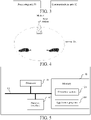
- An embodiment of the present invention further provides a hardware composition architecture of UE.
- the UE includes at least one processor 41, a memory 42, and at least one network interface 43. All the components are coupled together by using a bus system 44.
- the bus system 44 is configured to implement connection and communication between the components.
- the bus system 44 further includes a power supply bus, a control bus, and a status signal bus in addition to a data bus.
- various types of buses in FIG. 5 are marked as the bus system 44.
- the memory 42 in this embodiment of the present invention may be a volatile memory or a nonvolatile memory, or may include a volatile memory and a nonvolatile memory.
- the memory 42 stores the following elements: an executable module or a data structure, or a subset thereof, or an extended set thereof: an operating system 421 and an application program 422.
- the processor 41 is configured to process the method steps in the invention. Details are not described herein again.
- An embodiment of the present invention provides a computer storage medium.
- the computer storage medium stores a computer executable instruction, and when executed, the computer executable instruction implements the method steps in the invention.
- the apparatus may alternatively be stored in a computer-readable storage medium.
- the computer software product is stored in a storage medium and includes several instructions for instructing a computer device (which may be a personal computer, a server, a network device, or the like) to perform all or some of the methods described in the embodiments of the present invention.
- the foregoing storage medium includes: any medium that can store program code, such as a USB flash drive, a removable hard disk, a read-only memory (ROM), a magnetic disk, or a compact disc.
- program code such as a USB flash drive, a removable hard disk, a read-only memory (ROM), a magnetic disk, or a compact disc.
- an embodiment of the present invention further provides a computer storage medium storing a computer program, and the computer program is configured to perform a data scheduling method in this embodiment of the present invention.
Landscapes
- Engineering & Computer Science (AREA)
- Computer Networks & Wireless Communication (AREA)
- Signal Processing (AREA)
- Quality & Reliability (AREA)
- Databases & Information Systems (AREA)
- Mobile Radio Communication Systems (AREA)
Claims (14)
- Verfahren zur Ressourcenzuweisung für Sidelink-Übertragung, das auf Benutzerausrüstung, UE, angewandt wird, wobei das Verfahren Folgendes umfasst:Auswählen eines logischen Kanals mit hoher Priorität aus logischen Kanälen, die zu einer Zieladresse gehören, wobei die Priorität des logischen Kanals mit einer ProSE-Pro-Paket-Priorität, PPPP, assoziiert ist und der logische Kanal mit hoher Priorität mit einer hohen PPPP assoziiert ist, undZuweisen von Ressourcen für zu übertragende Daten in dem logischen Kanal mit hoher Priorität,dadurch gekennzeichnet, dass es ferner Folgendes umfasst:Bestimmen, ob eine ungültige Ressourcenbewilligung besteht, wobei die ungültige Ressourcenbewilligung durch Initialisierung einer bestehenden Ressourcenbewilligung als eine ungültige Ressourcenbewilligung und ferner durch Initialisierung einer gültigen Bewilligung, die als leer eingestellt ist, erzielt wird, undwenn eine ungültige Ressourcenbewilligung besteht, Bestimmen, ob die ungültige Ressourcenbewilligung Bedingungen einer Trägerneuauswahl und/oder Ressourcenneuauswahl erfüllt, oderwenn keine ungültige Ressourcenbewilligung besteht, Durchführen einer Trägerauswahl basierend auf Messwerten eines Kanalauslastungsverhältnisses, CBR, von Trägern.
- Verfahren nach Anspruch 1, wobei die Zieladresse ein Ziel (Destination) ist, das den logischen Kanal mit der hohen Priorität aufweist.
- Verfahren nach Anspruch 1 oder 2, wobei die zugewiesenen Ressourcen mit einem Zielträger assoziiert sind.
- Verfahren nach Anspruch 3, wobei ein CBR-Messwert des Zielträgers unter einem Grenzwert liegt.
- Verfahren nach Anspruch 3, wobei es dem Zielträger ermöglicht wird, einen Dienst der zu übertragenden Daten mitzuführen.
- Verfahren nach Anspruch 3, wobei der Zielträger einen ersten und einen zweiten Träger umfasst und wobei das Verfahren ferner Folgendes umfasst:nach dem Zuweisen einer ersten Ressource auf dem ersten Träger für die zu übertragenden Daten in dem logischen Kanal mit der hohen Priorität,Zuweisen einer zweiten Ressource auf dem zweiten Träger, die nicht in Konflikt mit der ersten Ressource auf dem ersten Träger steht, für die zu übertragenden Daten in dem logischen Kanal mit der niedrigen Priorität.
- Verfahren nach Anspruch 6, wobei das Verfahren ferner Folgendes umfasst:Bestimmen, ob die erste Ressource und die zweite Ressource in Konflikt stehen, unddas Bestimmen, ob die erste Ressource und die zweite Ressource in Konflikt stehen, mindestens eines des Folgenden umfasst:wenn sich die erste Ressource auf dem ersten Träger und die zweite Ressource auf dem zweiten Träger in einem Zeitbereich an der gleichen Position befinden und der erste Träger und der zweite Träger unterschiedlich sind und die UE eine Mehrträgersendefähigkeit aufweist und die Mehrträgersendefähigkeit eine Bandkombination des ersten Trägers und des zweiten Trägers unterstützt, Bestimmen, dass die erste Ressource und die zweite Ressource nicht in Konflikt stehen, oder wenn die UE keine Mehrträgersendefähigkeit aufweist oder die Mehrträgersendefähigkeit keine Bandkombination des ersten Trägers und des zweiten Trägers unterstützt, Bestimmen, dass die erste Ressource und die zweite Ressource in Konflikt stehen,wenn sich die erste Ressource auf dem ersten Träger und die zweite Ressource auf dem zweiten Träger in einem Zeitbereich an verschiedenen Positionen befinden und der erste Träger und der zweite Träger unterschiedlich sind, wenn ein Zeitintervall zwischen der ersten Ressource auf dem ersten Träger und der zweiten Ressource auf dem zweiten Träger größer als ein voreingestellter Zeitgrenzwert ist, Bestimmen, dass der erste Ressource und die zweite Ressource nicht in Konflikt stehen, oder wenn ein Zeitintervall zwischen der ersten Ressource auf dem ersten Träger und der zweiten Ressource auf dem zweiten Träger kleiner oder gleich einem voreingestellten Zeitgrenzwert ist, Bestimmen, dass die erste Ressource und die zweite Ressource in Konflikt stehen, oderwenn sich die erste Ressource auf dem ersten Träger und die zweite Ressource auf dem zweiten Träger auf einem gleichen Träger befinden, wenn eine Zeitfrequenzressource der ersten Ressource auf dem ersten Träger und eine Zeitfrequenzressource der zweiten Ressource auf dem zweiten Träger eine voreingestellte Anforderung an ein Höchstwert-Durchschnitt-Verhältnis erfüllen, Bestimmen, dass die erste Ressource und die zweite Ressource nicht in Konflikt stehen, oder wenn eine Zeitfrequenzressource der ersten Ressource auf dem ersten Träger und eine Zeitfrequenzressource der zweiten Ressource auf dem zweiten Träger eine voreingestellte Anforderung an ein Höchstwert-Durchschnitt-Verhältnis nicht erfüllen, Bestimmen, dass die erste Ressource und die zweite Ressource in Konflikt stehen.
- Verfahren nach Anspruch 1, wobei das Bestimmen, ob die ungültige Ressourcenbewilligung Bedingungen der Trägerneuauswahl und/oder Ressourcenneuauswahl erfüllt, ferner Folgendes umfasst:
Durchführen von Trägerauswahl basierend auf den CBR-Messwerten der Träger, wenn die Bedingungen erfüllt sind, sonst Verwenden der Ressourcenbewilligung und Erzeugen einer MAC-PDU. - Verfahren nach Anspruch 8, wobei das Durchführen von Trägerauswahl basierend auf den CBR-Messwerten der Träger mindestens eines des Folgenden umfasst:Auswählen eines Träger, der ein CBR unter einem voreingestellten CBR-Grenzwert aufweist, wobei der CBR-Grenzwert mit der PPPP assoziiert ist, oderAuswählen eines Trägers mit dem kleinsten CBR.
- Verfahren nach Anspruch 9, ferner Folgendes umfassend:
Erzeugen einer Ressourcenbewilligung für den ausgewählten Zielträger. - Benutzerausrüstung, UE, Folgendes umfassend:eine Verarbeitungseinheit (31), die für Folgendes konfiguriert ist: Auswählen eines logischen Kanals mit hoher Priorität aus logischen Kanälen, die zu einer Zieladresse gehören, wobei die Priorität des logischen Kanals mit einer ProSE-Pro-Paket-Priorität, PPPP, assoziiert ist und der logische Kanal mit hoher Priorität mit einer hohen PPPP assoziiert ist, und Zuweisen von Ressourcen für zu übertragende Daten in dem logischen Kanal mit hoher Priorität,dadurch gekennzeichnet, dass die Verarbeitungseinheit (31) ferner für Folgendes konfiguriert ist:Bestimmen, ob eine ungültige Ressourcenbewilligung besteht, wobei die ungültige Ressourcenbewilligung durch Initialisierung einer bestehenden Ressourcenbewilligung als eine ungültige Ressourcenbewilligung und ferner durch Initialisierung einer gültigen Bewilligung, die als leer eingestellt ist, erzielt wird, undwenn eine ungültige Ressourcenbewilligung besteht, Bestimmen, ob die ungültige Ressourcenbewilligung Bedingungen einer Trägerneuauswahl und/oder Ressourcenneuauswahl erfüllt, oderwenn keine ungültige Ressourcenbewilligung besteht, Durchführen einer Trägerauswahl basierend auf Messwerten eines Kanalauslastungsverhältnisses, CBR, von Trägern.
- UE nach Anspruch 11, wobei die Zieladresse ein Ziel (Destination) ist, das den logischen Kanal mit der hohen Priorität aufweist.
- Benutzerausrüstung, UE, Folgendes umfassend: einen Prozessor (41) und einen Speicher (42), der dafür konfiguriert ist, ein Computerprogramm zu speichern, das auf dem Prozessor ausführbar ist, wobei
der Prozessor (41) dafür konfiguriert ist, die Schritte des Verfahrens nach einem der Ansprüche 1 bis 10 auszuführen, wenn das Computerprogramm läuft. - Computerspeichermedium, wobei das Computerspeichermedium einen computerausführbaren Befehl speichert und der computerausführbare Befehl bei Ausführen die Schritte des Verfahrens nach einem der Ansprüche 1 bis 10 umsetzt.
Priority Applications (1)
| Application Number | Priority Date | Filing Date | Title |
|---|---|---|---|
| EP22188206.1A EP4120780A1 (de) | 2018-03-15 | 2018-03-15 | Trägerauswahlverfahren, benutzergerät und computerspeichermedium |
Applications Claiming Priority (1)
| Application Number | Priority Date | Filing Date | Title |
|---|---|---|---|
| PCT/CN2018/079188 WO2019174008A1 (zh) | 2018-03-15 | 2018-03-15 | 一种载波选择方法、用户设备及计算机存储介质 |
Related Child Applications (2)
| Application Number | Title | Priority Date | Filing Date |
|---|---|---|---|
| EP22188206.1A Division EP4120780A1 (de) | 2018-03-15 | 2018-03-15 | Trägerauswahlverfahren, benutzergerät und computerspeichermedium |
| EP22188206.1A Division-Into EP4120780A1 (de) | 2018-03-15 | 2018-03-15 | Trägerauswahlverfahren, benutzergerät und computerspeichermedium |
Publications (3)
| Publication Number | Publication Date |
|---|---|
| EP3764720A1 EP3764720A1 (de) | 2021-01-13 |
| EP3764720A4 EP3764720A4 (de) | 2021-01-27 |
| EP3764720B1 true EP3764720B1 (de) | 2022-09-07 |
Family
ID=67908501
Family Applications (2)
| Application Number | Title | Priority Date | Filing Date |
|---|---|---|---|
| EP18909916.1A Active EP3764720B1 (de) | 2018-03-15 | 2018-03-15 | Trägerauswahlverfahren, benutzergerät und computerspeichermedium |
| EP22188206.1A Pending EP4120780A1 (de) | 2018-03-15 | 2018-03-15 | Trägerauswahlverfahren, benutzergerät und computerspeichermedium |
Family Applications After (1)
| Application Number | Title | Priority Date | Filing Date |
|---|---|---|---|
| EP22188206.1A Pending EP4120780A1 (de) | 2018-03-15 | 2018-03-15 | Trägerauswahlverfahren, benutzergerät und computerspeichermedium |
Country Status (7)
| Country | Link |
|---|---|
| US (2) | US10999859B2 (de) |
| EP (2) | EP3764720B1 (de) |
| JP (1) | JP7130764B6 (de) |
| KR (1) | KR102555051B1 (de) |
| CN (2) | CN111787627B (de) |
| AU (1) | AU2018412959B2 (de) |
| WO (1) | WO2019174008A1 (de) |
Families Citing this family (11)
| Publication number | Priority date | Publication date | Assignee | Title |
|---|---|---|---|---|
| US11013054B2 (en) | 2019-04-12 | 2021-05-18 | Ofinno, Llc | UE-assistance to support multiple systems based on frequency band combinations |
| KR102910843B1 (ko) * | 2019-12-13 | 2026-01-12 | 베이징 시아오미 모바일 소프트웨어 컴퍼니 리미티드 | 데이터 처리 방법 및 장치, 통신 기기 및 저장 매체 |
| CN113055938B (zh) * | 2019-12-27 | 2023-03-28 | 大唐移动通信设备有限公司 | 一种资源分配方法、设备、装置及计算机存储介质 |
| CN114374955A (zh) * | 2020-10-15 | 2022-04-19 | 维沃移动通信有限公司 | 传输方法、优先级定义方法、装置及通信设备 |
| CN114465700B (zh) * | 2020-11-09 | 2024-10-18 | 上海朗帛通信技术有限公司 | 一种被用于无线通信的节点中的方法和装置 |
| US12175286B2 (en) | 2021-06-10 | 2024-12-24 | Bank Of America Corporation | Application priority recommendation and adjustment based on linear regression and machine learning |
| US11252036B1 (en) | 2021-06-10 | 2022-02-15 | Bank Of America Corporation | System for evaluating and tuning resources for anticipated demands |
| US11704609B2 (en) | 2021-06-10 | 2023-07-18 | Bank Of America Corporation | System for automatically balancing anticipated infrastructure demands |
| US12026554B2 (en) | 2021-07-27 | 2024-07-02 | Bank Of America Corporation | Query-response system for identifying application priority |
| US12014210B2 (en) | 2021-07-27 | 2024-06-18 | Bank Of America Corporation | Dynamic resource allocation in a distributed system |
| WO2023087253A1 (en) * | 2021-11-19 | 2023-05-25 | Lenovo (Beijing) Limited | Resource selection of sidelink ca |
Family Cites Families (14)
| Publication number | Priority date | Publication date | Assignee | Title |
|---|---|---|---|---|
| US8638815B2 (en) * | 2010-01-08 | 2014-01-28 | Blackberry Limited | Method and apparatus for logical channel prioritization for uplink carrier aggregation |
| CN102547871B (zh) * | 2012-02-07 | 2015-07-29 | 华为技术有限公司 | 一种d2d通信中的资源协商方法及设备 |
| EP3051736B1 (de) | 2015-01-30 | 2020-04-29 | Panasonic Intellectual Property Corporation of America | Priorisierung im Verfahren zur logischen Kanalpriorisierung für logische Sidelink-Kanäle in ProSe-Direktkommunikationen |
| WO2016175639A1 (ko) * | 2015-04-30 | 2016-11-03 | 엘지전자 주식회사 | 무선 통신 시스템에서 단말에 의해 수행되는 d2d 동작 방법 및 상기 방법을 이용하는 단말 |
| CN106211331A (zh) * | 2015-05-05 | 2016-12-07 | 中兴通讯股份有限公司 | 资源配置的方法和装置 |
| CN106470387A (zh) * | 2015-08-19 | 2017-03-01 | 北京信威通信技术股份有限公司 | 一种d2d通信中的资源调度方法 |
| EP3206452B1 (de) * | 2016-02-10 | 2019-10-16 | Panasonic Intellectual Property Corporation of America | Prioritätsoptimierte lte prose sidelink-datenübertragung im fall von autonomer ressourcenzuweisung |
| EP3244677B1 (de) * | 2016-05-13 | 2020-04-29 | Panasonic Intellectual Property Corporation of America | Verbesserter mechanismus zur qos-implementierung in der fahrzeugkommunikation |
| EP3273634A1 (de) | 2016-07-18 | 2018-01-24 | Panasonic Intellectual Property Corporation of America | Verbesserte unterstützung der dienstqualität für v2x-übertragungen |
| TWI619403B (zh) * | 2016-07-18 | 2018-03-21 | 智易科技股份有限公司 | 移動式區域網路管理系統、方法與電腦可讀取儲存裝置 |
| CN107645710A (zh) * | 2016-07-20 | 2018-01-30 | 普天信息技术有限公司 | 一种v2x业务的传输方法 |
| EP3499992A4 (de) * | 2016-08-10 | 2020-03-25 | NTT DoCoMo, Inc. | Benutzervorrichtung und kommunikationsverfahren |
| WO2018029382A1 (en) * | 2016-08-12 | 2018-02-15 | Telefonaktiebolaget Lm Ericsson (Publ) | Systems and methods of handling collisions between multiple semi-persistent grants |
| EP3649819B1 (de) * | 2017-07-25 | 2022-09-07 | LG Electronics Inc. | Verfahren und vorrichtung zur auswahl eines trägers |
-
2018
- 2018-03-15 EP EP18909916.1A patent/EP3764720B1/de active Active
- 2018-03-15 AU AU2018412959A patent/AU2018412959B2/en active Active
- 2018-03-15 WO PCT/CN2018/079188 patent/WO2019174008A1/zh not_active Ceased
- 2018-03-15 CN CN202010575905.7A patent/CN111787627B/zh active Active
- 2018-03-15 KR KR1020207028790A patent/KR102555051B1/ko active Active
- 2018-03-15 EP EP22188206.1A patent/EP4120780A1/de active Pending
- 2018-03-15 JP JP2020549030A patent/JP7130764B6/ja active Active
- 2018-03-15 CN CN201880067479.7A patent/CN111247859A/zh active Pending
-
2020
- 2020-07-17 US US16/932,346 patent/US10999859B2/en active Active
-
2021
- 2021-03-31 US US17/219,652 patent/US11632772B2/en active Active
Also Published As
| Publication number | Publication date |
|---|---|
| EP3764720A4 (de) | 2021-01-27 |
| JP2021518683A (ja) | 2021-08-02 |
| CN111787627A (zh) | 2020-10-16 |
| JP7130764B2 (ja) | 2022-09-05 |
| AU2018412959A1 (en) | 2020-10-22 |
| CN111787627B (zh) | 2023-10-31 |
| KR102555051B1 (ko) | 2023-07-12 |
| WO2019174008A1 (zh) | 2019-09-19 |
| US11632772B2 (en) | 2023-04-18 |
| EP4120780A1 (de) | 2023-01-18 |
| US10999859B2 (en) | 2021-05-04 |
| JP7130764B6 (ja) | 2022-10-04 |
| US20200351911A1 (en) | 2020-11-05 |
| EP3764720A1 (de) | 2021-01-13 |
| KR20200130719A (ko) | 2020-11-19 |
| US20210219311A1 (en) | 2021-07-15 |
| CN111247859A (zh) | 2020-06-05 |
| AU2018412959B2 (en) | 2023-12-21 |
Similar Documents
| Publication | Publication Date | Title |
|---|---|---|
| US11632772B2 (en) | Method for resource allocation and apparatus | |
| CN101411240B (zh) | 移动通信系统中的上行链路资源分配 | |
| JP2009525644A5 (de) | ||
| ZA200610811B (en) | QOS differentiation for WCOIUIA services mapped onto an E-DCH channel | |
| JP6253446B2 (ja) | 無線基地局装置、無線移動局装置および無線通信方法 | |
| HK40000614A (en) | Uplink resource allocation in a mobile communication system | |
| HK40000614B (en) | Uplink resource allocation in a mobile communication system | |
| HK1234546A (en) | Uplink resource allocation in a mobile communication system | |
| HK1234579A (en) | Uplink resource allocation in a mobile communication system | |
| HK1233413A (en) | Uplink resource allocation in a mobile communication system | |
| HK1234546A1 (en) | Uplink resource allocation in a mobile communication system | |
| HK1234579A1 (en) | Uplink resource allocation in a mobile communication system | |
| HK1233413A1 (en) | Uplink resource allocation in a mobile communication system | |
| HK1233412A (en) | Uplink resource allocation in a mobile communication system | |
| HK1233412A1 (en) | Uplink resource allocation in a mobile communication system |
Legal Events
| Date | Code | Title | Description |
|---|---|---|---|
| STAA | Information on the status of an ep patent application or granted ep patent |
Free format text: STATUS: THE INTERNATIONAL PUBLICATION HAS BEEN MADE |
|
| PUAI | Public reference made under article 153(3) epc to a published international application that has entered the european phase |
Free format text: ORIGINAL CODE: 0009012 |
|
| STAA | Information on the status of an ep patent application or granted ep patent |
Free format text: STATUS: REQUEST FOR EXAMINATION WAS MADE |
|
| 17P | Request for examination filed |
Effective date: 20201005 |
|
| AK | Designated contracting states |
Kind code of ref document: A1 Designated state(s): AL AT BE BG CH CY CZ DE DK EE ES FI FR GB GR HR HU IE IS IT LI LT LU LV MC MK MT NL NO PL PT RO RS SE SI SK SM TR |
|
| AX | Request for extension of the european patent |
Extension state: BA ME |
|
| A4 | Supplementary search report drawn up and despatched |
Effective date: 20210113 |
|
| RIC1 | Information provided on ipc code assigned before grant |
Ipc: H04W 72/12 20090101AFI20201222BHEP Ipc: H04W 72/14 20090101ALN20201222BHEP Ipc: H04W 8/24 20090101ALN20201222BHEP |
|
| DAV | Request for validation of the european patent (deleted) | ||
| DAX | Request for extension of the european patent (deleted) | ||
| STAA | Information on the status of an ep patent application or granted ep patent |
Free format text: STATUS: EXAMINATION IS IN PROGRESS |
|
| 17Q | First examination report despatched |
Effective date: 20210928 |
|
| REG | Reference to a national code |
Ref country code: DE Ref legal event code: R079 Ref document number: 602018040524 Country of ref document: DE Free format text: PREVIOUS MAIN CLASS: H04W0072100000 Ipc: H04W0072120000 |
|
| GRAP | Despatch of communication of intention to grant a patent |
Free format text: ORIGINAL CODE: EPIDOSNIGR1 |
|
| STAA | Information on the status of an ep patent application or granted ep patent |
Free format text: STATUS: GRANT OF PATENT IS INTENDED |
|
| RIC1 | Information provided on ipc code assigned before grant |
Ipc: H04W 8/24 20090101ALN20220304BHEP Ipc: H04W 72/14 20090101ALN20220304BHEP Ipc: H04W 72/12 20090101AFI20220304BHEP |
|
| INTG | Intention to grant announced |
Effective date: 20220329 |
|
| GRAS | Grant fee paid |
Free format text: ORIGINAL CODE: EPIDOSNIGR3 |
|
| GRAA | (expected) grant |
Free format text: ORIGINAL CODE: 0009210 |
|
| STAA | Information on the status of an ep patent application or granted ep patent |
Free format text: STATUS: THE PATENT HAS BEEN GRANTED |
|
| AK | Designated contracting states |
Kind code of ref document: B1 Designated state(s): AL AT BE BG CH CY CZ DE DK EE ES FI FR GB GR HR HU IE IS IT LI LT LU LV MC MK MT NL NO PL PT RO RS SE SI SK SM TR |
|
| REG | Reference to a national code |
Ref country code: GB Ref legal event code: FG4D |
|
| REG | Reference to a national code |
Ref country code: CH Ref legal event code: EP Ref country code: AT Ref legal event code: REF Ref document number: 1518094 Country of ref document: AT Kind code of ref document: T Effective date: 20220915 |
|
| REG | Reference to a national code |
Ref country code: DE Ref legal event code: R096 Ref document number: 602018040524 Country of ref document: DE |
|
| REG | Reference to a national code |
Ref country code: IE Ref legal event code: FG4D |
|
| REG | Reference to a national code |
Ref country code: LT Ref legal event code: MG9D |
|
| REG | Reference to a national code |
Ref country code: NL Ref legal event code: MP Effective date: 20220907 |
|
| PG25 | Lapsed in a contracting state [announced via postgrant information from national office to epo] |
Ref country code: SE Free format text: LAPSE BECAUSE OF FAILURE TO SUBMIT A TRANSLATION OF THE DESCRIPTION OR TO PAY THE FEE WITHIN THE PRESCRIBED TIME-LIMIT Effective date: 20220907 Ref country code: RS Free format text: LAPSE BECAUSE OF FAILURE TO SUBMIT A TRANSLATION OF THE DESCRIPTION OR TO PAY THE FEE WITHIN THE PRESCRIBED TIME-LIMIT Effective date: 20220907 Ref country code: NO Free format text: LAPSE BECAUSE OF FAILURE TO SUBMIT A TRANSLATION OF THE DESCRIPTION OR TO PAY THE FEE WITHIN THE PRESCRIBED TIME-LIMIT Effective date: 20221207 Ref country code: LV Free format text: LAPSE BECAUSE OF FAILURE TO SUBMIT A TRANSLATION OF THE DESCRIPTION OR TO PAY THE FEE WITHIN THE PRESCRIBED TIME-LIMIT Effective date: 20220907 Ref country code: LT Free format text: LAPSE BECAUSE OF FAILURE TO SUBMIT A TRANSLATION OF THE DESCRIPTION OR TO PAY THE FEE WITHIN THE PRESCRIBED TIME-LIMIT Effective date: 20220907 Ref country code: FI Free format text: LAPSE BECAUSE OF FAILURE TO SUBMIT A TRANSLATION OF THE DESCRIPTION OR TO PAY THE FEE WITHIN THE PRESCRIBED TIME-LIMIT Effective date: 20220907 |
|
| REG | Reference to a national code |
Ref country code: AT Ref legal event code: MK05 Ref document number: 1518094 Country of ref document: AT Kind code of ref document: T Effective date: 20220907 |
|
| PG25 | Lapsed in a contracting state [announced via postgrant information from national office to epo] |
Ref country code: HR Free format text: LAPSE BECAUSE OF FAILURE TO SUBMIT A TRANSLATION OF THE DESCRIPTION OR TO PAY THE FEE WITHIN THE PRESCRIBED TIME-LIMIT Effective date: 20220907 Ref country code: GR Free format text: LAPSE BECAUSE OF FAILURE TO SUBMIT A TRANSLATION OF THE DESCRIPTION OR TO PAY THE FEE WITHIN THE PRESCRIBED TIME-LIMIT Effective date: 20221208 |
|
| PG25 | Lapsed in a contracting state [announced via postgrant information from national office to epo] |
Ref country code: SM Free format text: LAPSE BECAUSE OF FAILURE TO SUBMIT A TRANSLATION OF THE DESCRIPTION OR TO PAY THE FEE WITHIN THE PRESCRIBED TIME-LIMIT Effective date: 20220907 Ref country code: RO Free format text: LAPSE BECAUSE OF FAILURE TO SUBMIT A TRANSLATION OF THE DESCRIPTION OR TO PAY THE FEE WITHIN THE PRESCRIBED TIME-LIMIT Effective date: 20220907 Ref country code: PT Free format text: LAPSE BECAUSE OF FAILURE TO SUBMIT A TRANSLATION OF THE DESCRIPTION OR TO PAY THE FEE WITHIN THE PRESCRIBED TIME-LIMIT Effective date: 20230109 Ref country code: ES Free format text: LAPSE BECAUSE OF FAILURE TO SUBMIT A TRANSLATION OF THE DESCRIPTION OR TO PAY THE FEE WITHIN THE PRESCRIBED TIME-LIMIT Effective date: 20220907 Ref country code: CZ Free format text: LAPSE BECAUSE OF FAILURE TO SUBMIT A TRANSLATION OF THE DESCRIPTION OR TO PAY THE FEE WITHIN THE PRESCRIBED TIME-LIMIT Effective date: 20220907 Ref country code: AT Free format text: LAPSE BECAUSE OF FAILURE TO SUBMIT A TRANSLATION OF THE DESCRIPTION OR TO PAY THE FEE WITHIN THE PRESCRIBED TIME-LIMIT Effective date: 20220907 |
|
| PG25 | Lapsed in a contracting state [announced via postgrant information from national office to epo] |
Ref country code: SK Free format text: LAPSE BECAUSE OF FAILURE TO SUBMIT A TRANSLATION OF THE DESCRIPTION OR TO PAY THE FEE WITHIN THE PRESCRIBED TIME-LIMIT Effective date: 20220907 Ref country code: PL Free format text: LAPSE BECAUSE OF FAILURE TO SUBMIT A TRANSLATION OF THE DESCRIPTION OR TO PAY THE FEE WITHIN THE PRESCRIBED TIME-LIMIT Effective date: 20220907 Ref country code: IS Free format text: LAPSE BECAUSE OF FAILURE TO SUBMIT A TRANSLATION OF THE DESCRIPTION OR TO PAY THE FEE WITHIN THE PRESCRIBED TIME-LIMIT Effective date: 20230107 Ref country code: EE Free format text: LAPSE BECAUSE OF FAILURE TO SUBMIT A TRANSLATION OF THE DESCRIPTION OR TO PAY THE FEE WITHIN THE PRESCRIBED TIME-LIMIT Effective date: 20220907 |
|
| REG | Reference to a national code |
Ref country code: DE Ref legal event code: R097 Ref document number: 602018040524 Country of ref document: DE |
|
| P01 | Opt-out of the competence of the unified patent court (upc) registered |
Effective date: 20230412 |
|
| PG25 | Lapsed in a contracting state [announced via postgrant information from national office to epo] |
Ref country code: NL Free format text: LAPSE BECAUSE OF FAILURE TO SUBMIT A TRANSLATION OF THE DESCRIPTION OR TO PAY THE FEE WITHIN THE PRESCRIBED TIME-LIMIT Effective date: 20220907 Ref country code: AL Free format text: LAPSE BECAUSE OF FAILURE TO SUBMIT A TRANSLATION OF THE DESCRIPTION OR TO PAY THE FEE WITHIN THE PRESCRIBED TIME-LIMIT Effective date: 20220907 |
|
| PLBE | No opposition filed within time limit |
Free format text: ORIGINAL CODE: 0009261 |
|
| STAA | Information on the status of an ep patent application or granted ep patent |
Free format text: STATUS: NO OPPOSITION FILED WITHIN TIME LIMIT |
|
| PG25 | Lapsed in a contracting state [announced via postgrant information from national office to epo] |
Ref country code: DK Free format text: LAPSE BECAUSE OF FAILURE TO SUBMIT A TRANSLATION OF THE DESCRIPTION OR TO PAY THE FEE WITHIN THE PRESCRIBED TIME-LIMIT Effective date: 20220907 |
|
| 26N | No opposition filed |
Effective date: 20230608 |
|
| PG25 | Lapsed in a contracting state [announced via postgrant information from national office to epo] |
Ref country code: SI Free format text: LAPSE BECAUSE OF FAILURE TO SUBMIT A TRANSLATION OF THE DESCRIPTION OR TO PAY THE FEE WITHIN THE PRESCRIBED TIME-LIMIT Effective date: 20220907 |
|
| PG25 | Lapsed in a contracting state [announced via postgrant information from national office to epo] |
Ref country code: MC Free format text: LAPSE BECAUSE OF FAILURE TO SUBMIT A TRANSLATION OF THE DESCRIPTION OR TO PAY THE FEE WITHIN THE PRESCRIBED TIME-LIMIT Effective date: 20220907 |
|
| REG | Reference to a national code |
Ref country code: CH Ref legal event code: PL |
|
| REG | Reference to a national code |
Ref country code: BE Ref legal event code: MM Effective date: 20230331 |
|
| PG25 | Lapsed in a contracting state [announced via postgrant information from national office to epo] |
Ref country code: LU Free format text: LAPSE BECAUSE OF NON-PAYMENT OF DUE FEES Effective date: 20230315 |
|
| REG | Reference to a national code |
Ref country code: IE Ref legal event code: MM4A |
|
| PG25 | Lapsed in a contracting state [announced via postgrant information from national office to epo] |
Ref country code: LI Free format text: LAPSE BECAUSE OF NON-PAYMENT OF DUE FEES Effective date: 20230331 Ref country code: IE Free format text: LAPSE BECAUSE OF NON-PAYMENT OF DUE FEES Effective date: 20230315 Ref country code: CH Free format text: LAPSE BECAUSE OF NON-PAYMENT OF DUE FEES Effective date: 20230331 |
|
| PG25 | Lapsed in a contracting state [announced via postgrant information from national office to epo] |
Ref country code: BE Free format text: LAPSE BECAUSE OF NON-PAYMENT OF DUE FEES Effective date: 20230331 |
|
| PG25 | Lapsed in a contracting state [announced via postgrant information from national office to epo] |
Ref country code: IT Free format text: LAPSE BECAUSE OF FAILURE TO SUBMIT A TRANSLATION OF THE DESCRIPTION OR TO PAY THE FEE WITHIN THE PRESCRIBED TIME-LIMIT Effective date: 20220907 |
|
| PG25 | Lapsed in a contracting state [announced via postgrant information from national office to epo] |
Ref country code: BG Free format text: LAPSE BECAUSE OF FAILURE TO SUBMIT A TRANSLATION OF THE DESCRIPTION OR TO PAY THE FEE WITHIN THE PRESCRIBED TIME-LIMIT Effective date: 20220907 |
|
| PG25 | Lapsed in a contracting state [announced via postgrant information from national office to epo] |
Ref country code: BG Free format text: LAPSE BECAUSE OF FAILURE TO SUBMIT A TRANSLATION OF THE DESCRIPTION OR TO PAY THE FEE WITHIN THE PRESCRIBED TIME-LIMIT Effective date: 20220907 |
|
| PGFP | Annual fee paid to national office [announced via postgrant information from national office to epo] |
Ref country code: DE Payment date: 20250313 Year of fee payment: 8 |
|
| PGFP | Annual fee paid to national office [announced via postgrant information from national office to epo] |
Ref country code: FR Payment date: 20250313 Year of fee payment: 8 |
|
| PGFP | Annual fee paid to national office [announced via postgrant information from national office to epo] |
Ref country code: GB Payment date: 20250313 Year of fee payment: 8 |
|
| PG25 | Lapsed in a contracting state [announced via postgrant information from national office to epo] |
Ref country code: CY Free format text: LAPSE BECAUSE OF FAILURE TO SUBMIT A TRANSLATION OF THE DESCRIPTION OR TO PAY THE FEE WITHIN THE PRESCRIBED TIME-LIMIT; INVALID AB INITIO Effective date: 20180315 |
|
| PG25 | Lapsed in a contracting state [announced via postgrant information from national office to epo] |
Ref country code: HU Free format text: LAPSE BECAUSE OF FAILURE TO SUBMIT A TRANSLATION OF THE DESCRIPTION OR TO PAY THE FEE WITHIN THE PRESCRIBED TIME-LIMIT; INVALID AB INITIO Effective date: 20180315 |
|
| PG25 | Lapsed in a contracting state [announced via postgrant information from national office to epo] |
Ref country code: TR Free format text: LAPSE BECAUSE OF FAILURE TO SUBMIT A TRANSLATION OF THE DESCRIPTION OR TO PAY THE FEE WITHIN THE PRESCRIBED TIME-LIMIT Effective date: 20220907 |