EP3758684B1 - Soft gel compositions and capsules made from the same - Google Patents
Soft gel compositions and capsules made from the same Download PDFInfo
- Publication number
- EP3758684B1 EP3758684B1 EP19711211.3A EP19711211A EP3758684B1 EP 3758684 B1 EP3758684 B1 EP 3758684B1 EP 19711211 A EP19711211 A EP 19711211A EP 3758684 B1 EP3758684 B1 EP 3758684B1
- Authority
- EP
- European Patent Office
- Prior art keywords
- weight
- percent
- film
- plant
- forming composition
- Prior art date
- Legal status (The legal status is an assumption and is not a legal conclusion. Google has not performed a legal analysis and makes no representation as to the accuracy of the status listed.)
- Active
Links
Images
Classifications
-
- A—HUMAN NECESSITIES
- A61—MEDICAL OR VETERINARY SCIENCE; HYGIENE
- A61K—PREPARATIONS FOR MEDICAL, DENTAL OR TOILETRY PURPOSES
- A61K9/00—Medicinal preparations characterised by special physical form
- A61K9/48—Preparations in capsules, e.g. of gelatin, of chocolate
- A61K9/50—Microcapsules having a gas, liquid or semi-solid filling; Solid microparticles or pellets surrounded by a distinct coating layer, e.g. coated microspheres, coated drug crystals
- A61K9/5005—Wall or coating material
- A61K9/5015—Organic compounds, e.g. fats, sugars
-
- A—HUMAN NECESSITIES
- A61—MEDICAL OR VETERINARY SCIENCE; HYGIENE
- A61K—PREPARATIONS FOR MEDICAL, DENTAL OR TOILETRY PURPOSES
- A61K47/00—Medicinal preparations characterised by the non-active ingredients used, e.g. carriers or inert additives; Targeting or modifying agents chemically bound to the active ingredient
- A61K47/06—Organic compounds, e.g. natural or synthetic hydrocarbons, polyolefins, mineral oil, petrolatum or ozokerite
- A61K47/26—Carbohydrates, e.g. sugar alcohols, amino sugars, nucleic acids, mono-, di- or oligo-saccharides; Derivatives thereof, e.g. polysorbates, sorbitan fatty acid esters or glycyrrhizin
-
- A—HUMAN NECESSITIES
- A61—MEDICAL OR VETERINARY SCIENCE; HYGIENE
- A61K—PREPARATIONS FOR MEDICAL, DENTAL OR TOILETRY PURPOSES
- A61K47/00—Medicinal preparations characterised by the non-active ingredients used, e.g. carriers or inert additives; Targeting or modifying agents chemically bound to the active ingredient
- A61K47/30—Macromolecular organic or inorganic compounds, e.g. inorganic polyphosphates
- A61K47/36—Polysaccharides; Derivatives thereof, e.g. gums, starch, alginate, dextrin, hyaluronic acid, chitosan, inulin, agar or pectin
-
- A—HUMAN NECESSITIES
- A61—MEDICAL OR VETERINARY SCIENCE; HYGIENE
- A61K—PREPARATIONS FOR MEDICAL, DENTAL OR TOILETRY PURPOSES
- A61K9/00—Medicinal preparations characterised by special physical form
- A61K9/48—Preparations in capsules, e.g. of gelatin, of chocolate
- A61K9/4816—Wall or shell material
-
- A—HUMAN NECESSITIES
- A61—MEDICAL OR VETERINARY SCIENCE; HYGIENE
- A61K—PREPARATIONS FOR MEDICAL, DENTAL OR TOILETRY PURPOSES
- A61K9/00—Medicinal preparations characterised by special physical form
- A61K9/48—Preparations in capsules, e.g. of gelatin, of chocolate
- A61K9/50—Microcapsules having a gas, liquid or semi-solid filling; Solid microparticles or pellets surrounded by a distinct coating layer, e.g. coated microspheres, coated drug crystals
- A61K9/5005—Wall or coating material
- A61K9/5021—Organic macromolecular compounds
- A61K9/5036—Polysaccharides, e.g. gums, alginate; Cyclodextrin
-
- A—HUMAN NECESSITIES
- A61—MEDICAL OR VETERINARY SCIENCE; HYGIENE
- A61K—PREPARATIONS FOR MEDICAL, DENTAL OR TOILETRY PURPOSES
- A61K9/00—Medicinal preparations characterised by special physical form
- A61K9/48—Preparations in capsules, e.g. of gelatin, of chocolate
- A61K9/50—Microcapsules having a gas, liquid or semi-solid filling; Solid microparticles or pellets surrounded by a distinct coating layer, e.g. coated microspheres, coated drug crystals
- A61K9/5005—Wall or coating material
- A61K9/5063—Compounds of unknown constitution, e.g. material from plants or animals
-
- A—HUMAN NECESSITIES
- A61—MEDICAL OR VETERINARY SCIENCE; HYGIENE
- A61K—PREPARATIONS FOR MEDICAL, DENTAL OR TOILETRY PURPOSES
- A61K9/00—Medicinal preparations characterised by special physical form
- A61K9/48—Preparations in capsules, e.g. of gelatin, of chocolate
- A61K9/50—Microcapsules having a gas, liquid or semi-solid filling; Solid microparticles or pellets surrounded by a distinct coating layer, e.g. coated microspheres, coated drug crystals
- A61K9/5089—Processes
Definitions
- the present disclosure generally relates to film-forming compositions and capsules formed from such compositions, including processes for using such compositions to make capsules.
- the film-forming compositions are free of animal products and carrageenan.
- Soft gel capsules provide a useful means of packaging and delivering various compounds, including nutritional supplements and various drug compounds.
- Gelatin has been commonly used to make the films that encapsulate such active ingredients.
- Gelatin is a hydrolyzed protein obtained from heating animal bones or cartilage under heat and pressure in the presence of water. But the use of gelatin suffers from certain drawbacks. For example, some people may object to consuming products made from ingredients of animal origin, either for ethical or religious reasons. And, because of its animal origins, there is some risk that gelatin may carry prions of certain animal-borne diseases.
- JP1997025228 relates to coating of seamless capsules using agar and a water soluble polymer such as alginic acid.
- US20130302309A1 relates to non-animal soft capsule shell compositions comprising an antioxidant and a disintegration aid.
- US20150297528A1 relates to hydroxypropyl starch vacant capsules and processes for producing them.
- EP1598062A1 relates to compositions comprising modified starch and carrageenan suitable for use in manufacturing soft capsules.
- WO0191721A2 relates to film-forming compositions comprising starch derivatives, plasticizer and hydrocolloid gum.
- compositions disclosed herein provide an improved material that are suitable for use in encapsulating soft gel capsules and that do not necessarily require the inclusion of gelatin or carrageenans.
- the resulting capsules show suitably low cracking during packaging and do not stick together to any substantial degree during storage.
- the disclosure provides film-forming compositions, the compositions comprising: (a) from 1 to 10 percent by weight of a hydroxyalkylated plant starch, optionally in combination with a plant sugar, wherein when the hydroxyalkylated plant starch is in combination with a plant sugar the total amount of hydroxyalkylated plant starch and plant sugar may be from 1 to 60 percent by weight; (b) from 1 to 30 percent by weight agar; and (c) from 30 to 80 percent by weight water; wherein the percents by weight are based on the total weight of the film-forming compositions.
- the disclosure provides soft capsules, comprising: (a) a fill material; and (b) an outer shell encapsulating the fill material, wherein the outer shell is formed by encapsulating the fill material with the film-forming composition of the first aspect (or any embodiments thereof).
- the disclosure provides methods of forming a soft capsule, the methods comprising: (a) providing the film-forming composition of the first aspect (or any embodiments thereof) and a fill material; and (b) encapsulating the fill material within the film-forming composition to form a sealed capsule.
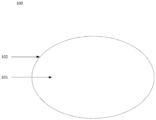
- FIG. 1 shows an illustrative embodiment of a soft gel capsule disclosed herein.
- introduction refers to any disposition of a substance of a mixture of substances with another substance or mixture of substances to form a new mixture of substances.
- the introduction can result in a chemical reaction occurring, such that new covalent interactions are formed between atoms.
- the introduction does not result in a chemical reaction occurring.
- non-covalent interactions may form between certain substances.
- mixture refers broadly to any combining of two or more compositions.
- the two or more compositions need not have the same physical state; thus, solids can be “mixed” with liquids, e.g., to form a slurry, suspension, or solution. Further, these terms do not require any degree of homogeneity or uniformity of composition. This, such “mixtures” can be homogeneous or heterogeneous, or can be uniform or non-uniform. Further, the terms do not require the use of any particular equipment to carry out the mixing, such as an industrial mixer.
- optional event means that the subsequently described event(s) may or may not occur. In some embodiments, the optional event does not occur. In some other embodiments, the optional event does occur one or more times.
- the term "provide” or “providing” is to be given its broadest reasonable interpretation, and does not imply that items are provided in a particular way or manner. For example, a technician who arranges certain items for use in conducting a test or experiment is engaged in the act of providing. Moreover, when providing two or more items, the two or more items need not be part of a common package or kit or from a common source.
- Carrageenan or “carrageenans” refers to one or more members of a family of linear sulfated polysaccharides derived from red algae, and any salts thereof, including, but not limited to, alpha-carrageenan, beta-carrageenan, gamma-carrageenan, delta-carrageenan, kappa-carrageenan, mu-carrageenan, nu-carrageenan, iota-carrageenan, lambda-carrageenan, theta-carrageenan, and any salts thereof.
- Carrageenan compositions usually have a weight-average molecular weight ranging from 200,000 to 800,000 Da, as determined by gel permeation chromatography.
- agar refers to one or more members of a family of compounds derived from polysaccharide agarose, which forms the cell walls of algae called agarophytes. In most instances, agar includes a mixture of two polysaccharides: agarose and agaropectin, with agarose making up a higher proportion of the mixture.
- Agarose is a linear polymer, made up of repeating units of agarobiose, a disaccharide made up of D-galactose and 3,6-anhydro-L-galactopyranose.
- Agaropectin is a heterogeneous mixture of smaller molecules that occur in lesser amounts, and is made up of alternating units of D-galactose and L-galactose heavily modified with acidic side-groups, such as sulfate and pyruvate.
- the disclosure provides film-forming compositions, the compositions comprising: (a) from 1 to 10 percent by weight of a hydroxyalkylated plant starch, optionally in combination with a plant sugar, wherein when the hydroxyalkylated plant starch is in combination with a plant sugar the total amount of hydroxyalkylated plant starch and plant sugar is from 1 to 60 percent by weight; (b) from 1 to 30 percent by weight agar; and (c) from 30 to 80 percent by weight water; wherein the percents by weight are based on the total weight of the film-forming compositions.
- the film-forming compositions disclosed herein include hydroxyalkylated plant starch. Any suitable kind of hydroxyalkylated plant starch can be used.
- the hydroxyalkylated plant starch is a hydroxymethylated plant starch, a hydroxyethylated plant starch, a hydroxypropylated plant starch, or some combination thereof.
- the plant starch can be derived from any suitable plant.
- the hydroxyalkylated plant starch is a hydroxyethylated plant starch, which is a hydroxyethylated starch of plants selected from the group consisting of: beans (including favas, lentils, mung beans, peas, and chickpeas), wheat, potatoes, cassava, tapioca, corn, soybeans, peas, rice, acorns, arrowroot, arracacha, bananas, barley, breadfruit, buckwheat, canna, colacasia, katakuri, kudzu, malanga, millet, oats, oca, polynesian arrowroot, sago, sorghum, sweet potatoes, rye, taro, chestnuts, water chestnuts and yams, and any combinations thereof.
- beans including favas, lentils, mung beans, peas, and chickpeas
- wheat including favas, lentils, mung beans,
- the hydroxyalkylated plant starch is a hydroxypropylated plant starch, which is a hydroxypropylated starch of plants selected from the group consisting of: beans (including favas, lentils, mung beans, peas, and chickpeas), wheat, potatoes, cassava, tapioca, corn, soybeans, peas, rice, acorns, arrowroot, arracacha, bananas, barley, breadfruit, buckwheat, canna, colacasia, katakuri, kudzu, malanga, millet, oats, oca, polynesian arrowroot, sago, sorghum, sweet potatoes, rye, taro, chestnuts, water chestnuts and yams, and any combinations thereof.
- beans including favas, lentils, mung beans, peas, and chickpeas
- wheat including favas, lentils, mung beans, pea
- the hydroxyalkylated plant starch is a hydroxyalkylated tapioca starch, such as those described in U.S. Patent Application Publication No. 2015/0297528 .
- the hydroxyalkylated plant starch is a hydroxyethylated tapioca starch or a hydroxypropylated tapioca starch.
- the hydroxyalkylated plant starch is a hydroxypropylated tapioca starch.
- the aforementioned hydroxyalkylated plant starch can make up from 1 to 10 percent by weight, or from 1 to 7 percent by weight, or from 2 to 7 percent by weight, or from 2 to 6 percent by weight, or from 3 to 5 percent by weight, of the film-forming composition, based on the total weight of the film-forming composition.
- the hydroxyalkylated plant starch makes up about 1.0 percent by weight, or about 2.0 percent by weight, or about 3.0 percent by weight, or about 4.0 percent by weight, or about 5.0 percent by weight, or about 6.0 percent by weight, or about 7.0 percent by weight, or about 8.0 percent by weight, or about 9.0 percent by weight, or about 10.0 percent by weight, of the film-forming composition, based on the total weight of the film-forming composition.
- the film-forming compositions disclosed herein also comprise one or more sugars, such as a plant sugar.
- a plant sugar Any suitable plant sugars can be used, such as a pentose, a hexose, or any dimers thereof, with either L or D enantiomers of the sugar being suitable.
- the plant sugar is a hexose, which is selected from the group consisting of: allose, altrose, glucose, mannose, gulose, idose, galactose, talose, psicose, fructose, sorbose, tagatose, any dimers of the foregoing, and any combinations thereof.
- the plant sugar is a dextrose, such as tapioca dextrose.
- the aforementioned plant sugar can make up any suitable proportion of the film-forming composition.
- the plant sugar makes up from 1 to 60 percent by weight, or from 1 to 30 percent by weight, or from 1 to 20 percent by weight, or from 1 to 10 percent by weight, or from 1 to 7 percent by weight, or from 2 to 7 percent by weight, or from 2 to 6 percent by weight, or from 3 to 5 percent by weight, of the film-forming composition, based on the total weight of the film-forming composition.
- the plant sugar makes up about 1.0 percent by weight, or about 2.0 percent by weight, or about 3.0 percent by weight, or about 4.0 percent by weight, or about 5.0 percent by weight, or about 6.0 percent by weight, or about 7.0 percent by weight, or about 8.0 percent by weight, or about 9.0 percent by weight, or about 10.0 percent by weight, of the film-forming composition, based on the total weight of the film-forming composition.
- the total amount of hydroxyalkylated plant starch and plant sugar makes up from 1 to 60 percent by weight, or from 1 to 30 percent by weight, or from 1 to 20 percent by weight, or from 1 to 10 percent by weight, or from 1 to 7 percent by weight, or from 2 to 7 percent by weight, or from 2 to 6 percent by weight, or from 3 to 5 percent by weight, of the film-forming composition, based on the total weight of the film-forming composition.
- the film-forming compositions can include suitable amounts of plasticizers.
- Any suitable plasticizer or combination of plasticizers can be used, including, but not limited to low-molecular-weight polyols, sugar alcohols, and the like. Low-molecular weight polyols have a molecular weight of less than about 200 g/mol.
- the film-forming compositions include one or more low-molecular-weight polyols, e.g., polyols having from 2 to 6, or from 2 to 5, or from 2 to 4 carbon atoms.
- low-molecular-weight polyols include, but are not limited to ethylene glycol, 1,3-propylene glycol, 1,2-propylene glycol, glycerin, glycerol, or combinations thereof.
- Such polyols can be included in any suitable amount.
- the film-forming compositions include from 1 to 15 percent by weight, or from 3 to 15 percent by weight, or from 5 to 15 percent by weight, or from 6 to 12 percent by weight, or from 7 to 11 percent by weight, or from 6 to 10 percent by weight, of low-molecular-weight polyols.
- the film-forming compositions include one or more sugar alcohols.
- Any suitable sugar alcohol can be used, including, but not limited to maltitol, sorbitol, xylitol, erythritol, isomalt, or combinations thereof.
- Such sugar alcohols can be included in the film-forming compositions in any suitable amount.
- the film-forming compositions include from 1 to 15 percent by weight, or from 3 to 15 percent by weight, or from 5 to 15 percent by weight, or from 5 to 10 percent by weight, or from 3 to 10 percent by weight, or from 3 to 15 percent by weight, of sugar alcohols.
- the film-forming compositions can include plant starch.
- plant starch include, but are not limited to, a starch from plants selected from the group consisting of: beans (including favas, lentils, mung beans, peas, and chickpeas), wheat, potatoes, cassava, tapioca, corn, soybeans, peas, rice, acorns, arrowroot, arracacha, bananas, barley, breadfruit, buckwheat, canna, colacasia, katakuri, kudzu, malanga, millet, oats, oca, polynesian arrowroot, sago, sorghum, sweet potatoes, rye, taro, chestnuts, water chestnuts and yams, and any combinations thereof.
- beans including favas, lentils, mung beans, peas, and chickpeas
- wheat including favas, lentils, mung beans, peas, and chickpe
- the film-forming composition includes one or more phosphoglycerides.
- phosphoglycerides include lecithin.
- the film-forming compositions include one or more additives, such as surfactants, colorants, pigments, flavoring agents, stabilizers, preservatives, buffers, polymer ingredients (e.g., pullulan, furcelleran, etc.), and the like.
- additives such as surfactants, colorants, pigments, flavoring agents, stabilizers, preservatives, buffers, polymer ingredients (e.g., pullulan, furcelleran, etc.), and the like.
- the film-forming composition comprises from 2 to 7 percent by weight of a hydroxyalkylated plant starch, from 2 to 7 percent by weight of a plant sugar, from 15 to 25 percent by weight of agar, from 5 to 10 percent by weight of a polyol, and from about 2 to 12 percent by weight of a sugar alcohol, based on the total weight of the composition.
- the film-forming composition comprises from 2 to 7 percent by weight of a modified tapioca starch, from 2 to 7 percent by weight of a tapioca dextrose, from 15 to 25 percent by weight of agar, from 5 to 10 percent by weight of glycerol, and from about 2 to 12 percent by weight of a sorbitol, based on the total weight of the composition.
- the film-forming composition may be free or substantially free of products derived from animals.
- the composition comprises no more than 5 percent by weight, or no more than 3 percent by weight, or no more than 1 percent by weight, or no more than 0.5 percent by weight, or no more than 0.2 percent by weight, of products derived from animals, based on the total weight of the composition.
- the film-forming composition may be free or substantially free of carrageenan.
- the composition comprises no more than 1 percent by weight, or no more than 0.5 percent by weight, or no more than 0.2 percent by weight, or no more than 0.1 percent by weight, of carrageenan, based on the total weight of the composition.
- the disclosure provides methods of forming a soft capsule, the methods comprising: (a) providing the film-forming composition according to any of the embodiments disclosed above in accordance with the appended claims, and a fill material; and (b) encapsulating the fill material within the film-forming composition to form a sealed capsule.
- the fill material is an oil, a hydrophilic liquid, or an emulsion.
- Various hydrophobic or hydrophilic active agents can be included within such oils, hydrophilic liquids, or emulsions.
- Suitable fill materials include, but are not limited to, foods, food extracts, vitamins, minerals, supplements, nutraceuticals, pharmaceuticals, and the like.
- the encapsulating can be carried out by any suitable process, such as those set forth in the relevant literature.
- the encapsulating is carried out by a rotary die process, followed by drying.
- the resulting encapsulant has a shell thickness ranging from 0.01 cm to 0.25 cm.
- encapsulation machines may be equipped with high volume blowers for the outside of the ribbons to aid in water removal.
- encapsulation dies may require a deeper outer pocket design to accommodate thicker than normal shell material ribbons.
- standard rotary die encapsulation machines may use additional modifications to accommodate the specific properties of the formulation. Modifications may include but are not limited to die roll heaters, die cooling air, ribbon heaters, capsule cooling air, modified tumble dryers, or capsule cooling liquid baths
- the disclosure provides soft capsules, comprising: (a) a fill material; and (b) an outer shell encapsulating the fill material, wherein the outer shell is formed by encapsulating the fill material with the film-forming composition described according to any of the embodiments set forth above in accordance with the appended claims.
- the disclosure provides soft capsules, comprising: (a) a fill material; and (b) an outer shell encapsulating the fill material, wherein the outer shell is formed by encapsulating the fill material with a film forming composition according to any of the embodiments set forth above in accordance with the appended claims.
- compositional makeup of the outer shell for such aspects are similar to those for the film-forming compositions described above, except that amounts for the non-water ingredients is higher due to evaporation of water during the encapsulating process and subsequent drying steps.
- the various embodiments set forth for the ingredients of the film-forming compositions also apply with respect to the outer shell, except that different weight percents for the ingredients may apply.
- the outer shell comprises from 1 to 60 percent by weight, or from 1 to 50 percent by weight, or from 1 to 40 percent by weight, or from 1 to 30 percent by weight, of a hydroxyalkylated plant starch (according to any of the embodiments set forth above), based on the total weight of the composition.
- the outer shell comprises from 1 to 50 percent by weight, or from 1 to 40 percent by weight, or from 1 to 30 percent by weight, or from 1 to 20 percent by weight, of a plant sugar (according to any of the embodiments set forth above), based on the total weight of the composition.
- the outer shell can include suitable amounts of plasticizers. Any suitable plasticizer or combination of plasticizers can be used, including, but not limited to low-molecular-weight polyols, sugar alcohols, and the like.
- the outer shell further comprises from 1 to 20 percent by weight, or from 3 to 20 percent by weight, or from 5 to 20 percent by weight, of low-molecular-weight polyols (according to any of the embodiments set forth above).
- the outer shell further comprises from 1 to 20 percent by weight, or from 3 to 20 percent by weight, or from 5 to 20 percent by weight, of sugar alcohols (according to any of the embodiments set forth above).
- the outer shell comprises no more than 5 percent by weight, or no more than 3 percent by weight, or no more than 1 percent by weight, or no more than 0.5 percent by weight, or no more than 0.2 percent by weight, of products derived from animals, based on the total weight of the composition.
- the outer shell comprises no more than 1 percent by weight, or no more than 0.5 percent by weight, or no more than 0.2 percent by weight, or no more than 0.1 percent by weight, of carrageenan, based on the total weight of the composition.
- FIG. 1 shows a drawing of a soft gel capsule 100 of certain embodiments disclosed herein.
- the soft gel capsule comprises an inner portion 101 that includes a fill material, and which is encapsulated by an outer shell 102 .
- a film-forming composition having the composition set forth in Table 1 was made, wherein the ingredients were mixed together by standard means.
- Table 1 Ingredient Amount (weight percent) Modified tapioca starch 2.2 Tapioca dextrose 2.2 Agar 17.8 Glycerol 8.9 Anhydrous sorbitol (76% solution) 8.9 Water remainder
- Table 2 Ingredient Amount (weight percent) Modified tapioca starch 4.9 Tapioca dextrose 4.9 Agar 19.8 Glycerol 7.3 Anhydrous sorbitol (76% solution) 3.1 Water remainder
- Soft-gel capsules were formed and dried using conventional techniques using the film-forming composition of Example 1, Table 1, which was compared to soft-gel capsules formed from compositions formed from animal gelatin, FMC Marine Gel (containing carrageenan), and modified tapioca starch (Er-Kang).
- the soft-gel shell materials of each type were tested for puncture strength, deformation at break, and capsule burst strength. Results are shown in Table 3.
- the puncture strength uses a dried film of the test polymer and measures the minimum force, when applied to a stylus at a constant strain rate, that is necessary to puncture the film.
- the deformation at break measures the minimum distance of deformation that is necessary to cause the film to break.
- the capsule burst strength measures the minimum force, when applied via a flat surface at a constant strain rate, that is necessary to rupture the dried capsule.
- the film puncture test and capsule burst test use an Instron, Texture Analyzer, or similar testing machine in compression mode.
Landscapes
- Health & Medical Sciences (AREA)
- Chemical & Material Sciences (AREA)
- Life Sciences & Earth Sciences (AREA)
- Pharmacology & Pharmacy (AREA)
- Epidemiology (AREA)
- Medicinal Chemistry (AREA)
- Animal Behavior & Ethology (AREA)
- General Health & Medical Sciences (AREA)
- Public Health (AREA)
- Veterinary Medicine (AREA)
- Engineering & Computer Science (AREA)
- Bioinformatics & Cheminformatics (AREA)
- Inorganic Chemistry (AREA)
- Oil, Petroleum & Natural Gas (AREA)
- Chemical Kinetics & Catalysis (AREA)
- General Chemical & Material Sciences (AREA)
- Molecular Biology (AREA)
- Botany (AREA)
- Zoology (AREA)
- Biochemistry (AREA)
- Medicinal Preparation (AREA)
- General Preparation And Processing Of Foods (AREA)
- Compositions Of Macromolecular Compounds (AREA)
- Biophysics (AREA)
Description
- The present disclosure generally relates to film-forming compositions and capsules formed from such compositions, including processes for using such compositions to make capsules. In some embodiments, the film-forming compositions are free of animal products and carrageenan.
- Soft gel capsules provide a useful means of packaging and delivering various compounds, including nutritional supplements and various drug compounds. Gelatin has been commonly used to make the films that encapsulate such active ingredients. Gelatin is a hydrolyzed protein obtained from heating animal bones or cartilage under heat and pressure in the presence of water. But the use of gelatin suffers from certain drawbacks. For example, some people may object to consuming products made from ingredients of animal origin, either for ethical or religious reasons. And, because of its animal origins, there is some risk that gelatin may carry prions of certain animal-borne diseases.
- Significant efforts have been made in developing replacements for gelatin in making soft gel capsules. Such compositions often use carrageenans, which are linear sulfated polysaccharides extracted from red algae. And while such carrageenan-based films provide a suitable replacement for gelatin-based films, concerns have arisen over inflammation-related side-effects that some people may experience in connection with ingesting carrageenans.
- Therefore, there is a need to continue developing film-forming compositions that are suitable for use in making soft gel capsules and that do not require the use of gelatin or carrageenans.
-
JP1997025228 -
US20130302309A1 relates to non-animal soft capsule shell compositions comprising an antioxidant and a disintegration aid. -
US20150297528A1 relates to hydroxypropyl starch vacant capsules and processes for producing them. -
EP1598062A1 relates to compositions comprising modified starch and carrageenan suitable for use in manufacturing soft capsules. -
WO0191721A2 - The compositions disclosed herein provide an improved material that are suitable for use in encapsulating soft gel capsules and that do not necessarily require the inclusion of gelatin or carrageenans. In many embodiments, the resulting capsules show suitably low cracking during packaging and do not stick together to any substantial degree during storage.
- In a first aspect, the disclosure provides film-forming compositions, the compositions comprising: (a) from 1 to 10 percent by weight of a hydroxyalkylated plant starch, optionally in combination with a plant sugar, wherein when the hydroxyalkylated plant starch is in combination with a plant sugar the total amount of hydroxyalkylated plant starch and plant sugar may be from 1 to 60 percent by weight; (b) from 1 to 30 percent by weight agar; and (c) from 30 to 80 percent by weight water; wherein the percents by weight are based on the total weight of the film-forming compositions.
- In a second aspect, the disclosure provides soft capsules, comprising: (a) a fill material; and (b) an outer shell encapsulating the fill material, wherein the outer shell is formed by encapsulating the fill material with the film-forming composition of the first aspect (or any embodiments thereof).
- In a third aspect, the disclosure provides methods of forming a soft capsule, the methods comprising: (a) providing the film-forming composition of the first aspect (or any embodiments thereof) and a fill material; and (b) encapsulating the fill material within the film-forming composition to form a sealed capsule.
- Further aspects and embodiments of the disclosure are set forth in the following drawings, detailed description, and claims.
- The following drawings are provided for purposes of illustrating various embodiments of the compositions and methods disclosed herein. The drawings are provided for illustrative purposes only, and are not intended to describe any preferred compositions or preferred methods, or to serve as a source of any limitations on the scope of the claimed inventions.
-
FIG. 1 shows an illustrative embodiment of a soft gel capsule disclosed herein. - The invention is set out in the appended set of claims. The following description recites various aspects and embodiments of the inventions disclosed herein. No particular embodiment is intended to define the scope of the invention. Rather, the embodiments provide non-limiting examples of various compositions, and methods that are included within the scope of the claimed inventions. The description is to be read from the perspective of one of ordinary skill in the art. Therefore, information that is well known to the ordinarily skilled artisan is not necessarily included.
- The following terms and phrases have the meanings indicated below, unless otherwise provided herein. This disclosure may employ other terms and phrases not expressly defined herein. Such other terms and phrases shall have the meanings that they would possess within the context of this disclosure to those of ordinary skill in the art. In some instances, a term or phrase may be defined in the singular or plural. In such instances, it is understood that any term in the singular may include its plural counterpart and vice versa, unless expressly indicated to the contrary.
- As used herein, the singular forms "a," "an," and "the" include plural referents unless the context clearly dictates otherwise. For example, reference to "a substituent" encompasses a single substituent as well as two or more substituents, and the like.
- As used herein, "for example," "for instance," "such as," or "including" are meant to introduce examples that further clarify more general subject matter. Unless otherwise expressly indicated, such examples are provided only as an aid for understanding embodiments illustrated in the present disclosure, and are not meant to be limiting in any fashion. Nor do these phrases indicate any kind of preference for the disclosed embodiment.
- As used herein, "introduce" or "introduction" refers to any disposition of a substance of a mixture of substances with another substance or mixture of substances to form a new mixture of substances. In some instances, the introduction can result in a chemical reaction occurring, such that new covalent interactions are formed between atoms. In other instances, however, the introduction does not result in a chemical reaction occurring. In some such instances, non-covalent interactions may form between certain substances.
- As used herein, "mix" or "mixed" or "mixture" refers broadly to any combining of two or more compositions. The two or more compositions need not have the same physical state; thus, solids can be "mixed" with liquids, e.g., to form a slurry, suspension, or solution. Further, these terms do not require any degree of homogeneity or uniformity of composition. This, such "mixtures" can be homogeneous or heterogeneous, or can be uniform or non-uniform. Further, the terms do not require the use of any particular equipment to carry out the mixing, such as an industrial mixer.
- As used herein, "optionally" means that the subsequently described event(s) may or may not occur. In some embodiments, the optional event does not occur. In some other embodiments, the optional event does occur one or more times.
- As used herein, "comprise" or "comprises" or "comprising" or "comprised of" refer to groups that are open, meaning that the group can include additional members in addition to those expressly recited. For example, the phrase, "comprises A" means that A must be present, but that other members can be present too. The terms "include," "have," and "composed of" and their grammatical variants have the same meaning. In contrast, "consist of" or "consists of" or "consisting of" refer to groups that are closed. For example, the phrase "consists of A" means that A and only A is present.
- As used herein, "or" is to be given its broadest reasonable interpretation, and is not to be limited to an either/or construction. Thus, the phrase "comprising A or B" means that A can be present and not B, or that B is present and not A, or that A and B are both present. Further, if A, for example, defines a class that can have multiple members, e.g., A1 and A2, then one or more members of the class can be present concurrently.
- As used herein, the term "provide" or "providing" is to be given its broadest reasonable interpretation, and does not imply that items are provided in a particular way or manner. For example, a technician who arranges certain items for use in conducting a test or experiment is engaged in the act of providing. Moreover, when providing two or more items, the two or more items need not be part of a common package or kit or from a common source.
- As used herein, "carrageenan" or "carrageenans" refers to one or more members of a family of linear sulfated polysaccharides derived from red algae, and any salts thereof, including, but not limited to, alpha-carrageenan, beta-carrageenan, gamma-carrageenan, delta-carrageenan, kappa-carrageenan, mu-carrageenan, nu-carrageenan, iota-carrageenan, lambda-carrageenan, theta-carrageenan, and any salts thereof. Carrageenan compositions usually have a weight-average molecular weight ranging from 200,000 to 800,000 Da, as determined by gel permeation chromatography.
- As used herein, "agar" refers to one or more members of a family of compounds derived from polysaccharide agarose, which forms the cell walls of algae called agarophytes. In most instances, agar includes a mixture of two polysaccharides: agarose and agaropectin, with agarose making up a higher proportion of the mixture. Agarose is a linear polymer, made up of repeating units of agarobiose, a disaccharide made up of D-galactose and 3,6-anhydro-L-galactopyranose. Agaropectin is a heterogeneous mixture of smaller molecules that occur in lesser amounts, and is made up of alternating units of D-galactose and L-galactose heavily modified with acidic side-groups, such as sulfate and pyruvate.
- Other terms are defined in other portions of this description, even though not included in this subsection.
- In at least one aspect, the disclosure provides film-forming compositions, the compositions comprising: (a) from 1 to 10 percent by weight of a hydroxyalkylated plant starch, optionally in combination with a plant sugar, wherein when the hydroxyalkylated plant starch is in combination with a plant sugar the total amount of hydroxyalkylated plant starch and plant sugar is from 1 to 60 percent by weight; (b) from 1 to 30 percent by weight agar; and (c) from 30 to 80 percent by weight water; wherein the percents by weight are based on the total weight of the film-forming compositions.
- The film-forming compositions disclosed herein include hydroxyalkylated plant starch. Any suitable kind of hydroxyalkylated plant starch can be used. In some embodiments, the hydroxyalkylated plant starch is a hydroxymethylated plant starch, a hydroxyethylated plant starch, a hydroxypropylated plant starch, or some combination thereof. Moreover, the plant starch can be derived from any suitable plant. For example, in some embodiments, the hydroxyalkylated plant starch is a hydroxyethylated plant starch, which is a hydroxyethylated starch of plants selected from the group consisting of: beans (including favas, lentils, mung beans, peas, and chickpeas), wheat, potatoes, cassava, tapioca, corn, soybeans, peas, rice, acorns, arrowroot, arracacha, bananas, barley, breadfruit, buckwheat, canna, colacasia, katakuri, kudzu, malanga, millet, oats, oca, polynesian arrowroot, sago, sorghum, sweet potatoes, rye, taro, chestnuts, water chestnuts and yams, and any combinations thereof. In some other embodiments, the hydroxyalkylated plant starch is a hydroxypropylated plant starch, which is a hydroxypropylated starch of plants selected from the group consisting of: beans (including favas, lentils, mung beans, peas, and chickpeas), wheat, potatoes, cassava, tapioca, corn, soybeans, peas, rice, acorns, arrowroot, arracacha, bananas, barley, breadfruit, buckwheat, canna, colacasia, katakuri, kudzu, malanga, millet, oats, oca, polynesian arrowroot, sago, sorghum, sweet potatoes, rye, taro, chestnuts, water chestnuts and yams, and any combinations thereof. In some embodiments, the hydroxyalkylated plant starch is a hydroxyalkylated tapioca starch, such as those described in
U.S. Patent Application Publication No. 2015/0297528 . In some further embodiments, the hydroxyalkylated plant starch is a hydroxyethylated tapioca starch or a hydroxypropylated tapioca starch. In some further such embodiments, the hydroxyalkylated plant starch is a hydroxypropylated tapioca starch. - The aforementioned hydroxyalkylated plant starch according to any of the embodiments set forth above, can make up from 1 to 10 percent by weight, or from 1 to 7 percent by weight, or from 2 to 7 percent by weight, or from 2 to 6 percent by weight, or from 3 to 5 percent by weight, of the film-forming composition, based on the total weight of the film-forming composition. In some embodiments, the hydroxyalkylated plant starch makes up about 1.0 percent by weight, or about 2.0 percent by weight, or about 3.0 percent by weight, or about 4.0 percent by weight, or about 5.0 percent by weight, or about 6.0 percent by weight, or about 7.0 percent by weight, or about 8.0 percent by weight, or about 9.0 percent by weight, or about 10.0 percent by weight, of the film-forming composition, based on the total weight of the film-forming composition.
- In some embodiments, the film-forming compositions disclosed herein also comprise one or more sugars, such as a plant sugar. Any suitable plant sugars can be used, such as a pentose, a hexose, or any dimers thereof, with either L or D enantiomers of the sugar being suitable. In some further embodiments, the plant sugar is a hexose, which is selected from the group consisting of: allose, altrose, glucose, mannose, gulose, idose, galactose, talose, psicose, fructose, sorbose, tagatose, any dimers of the foregoing, and any combinations thereof. In some embodiments, the plant sugar is a dextrose, such as tapioca dextrose.
- The aforementioned plant sugar according to any of the embodiments set forth above, can make up any suitable proportion of the film-forming composition. For example, in some embodiments, the plant sugar makes up from 1 to 60 percent by weight, or from 1 to 30 percent by weight, or from 1 to 20 percent by weight, or from 1 to 10 percent by weight, or from 1 to 7 percent by weight, or from 2 to 7 percent by weight, or from 2 to 6 percent by weight, or from 3 to 5 percent by weight, of the film-forming composition, based on the total weight of the film-forming composition. In some embodiments, the plant sugar makes up about 1.0 percent by weight, or about 2.0 percent by weight, or about 3.0 percent by weight, or about 4.0 percent by weight, or about 5.0 percent by weight, or about 6.0 percent by weight, or about 7.0 percent by weight, or about 8.0 percent by weight, or about 9.0 percent by weight, or about 10.0 percent by weight, of the film-forming composition, based on the total weight of the film-forming composition.
- In some examples, the total amount of hydroxyalkylated plant starch and plant sugar makes up from 1 to 60 percent by weight, or from 1 to 30 percent by weight, or from 1 to 20 percent by weight, or from 1 to 10 percent by weight, or from 1 to 7 percent by weight, or from 2 to 7 percent by weight, or from 2 to 6 percent by weight, or from 3 to 5 percent by weight, of the film-forming composition, based on the total weight of the film-forming composition.
- In some embodiments, the film-forming compositions can include suitable amounts of plasticizers. Any suitable plasticizer or combination of plasticizers can be used, including, but not limited to low-molecular-weight polyols, sugar alcohols, and the like. Low-molecular weight polyols have a molecular weight of less than about 200 g/mol.
- Thus, in some embodiments, the film-forming compositions include one or more low-molecular-weight polyols, e.g., polyols having from 2 to 6, or from 2 to 5, or from 2 to 4 carbon atoms. Non-limiting examples of low-molecular-weight polyols include, but are not limited to ethylene glycol, 1,3-propylene glycol, 1,2-propylene glycol, glycerin, glycerol, or combinations thereof. Such polyols can be included in any suitable amount. For example, in some embodiments, the film-forming compositions include from 1 to 15 percent by weight, or from 3 to 15 percent by weight, or from 5 to 15 percent by weight, or from 6 to 12 percent by weight, or from 7 to 11 percent by weight, or from 6 to 10 percent by weight, of low-molecular-weight polyols.
- And, in some embodiments, the film-forming compositions include one or more sugar alcohols. Any suitable sugar alcohol can be used, including, but not limited to maltitol, sorbitol, xylitol, erythritol, isomalt, or combinations thereof. Such sugar alcohols can be included in the film-forming compositions in any suitable amount. For example, in some embodiments, the film-forming compositions include from 1 to 15 percent by weight, or from 3 to 15 percent by weight, or from 5 to 15 percent by weight, or from 5 to 10 percent by weight, or from 3 to 10 percent by weight, or from 3 to 15 percent by weight, of sugar alcohols.
- In some embodiments, the film-forming compositions can include plant starch. Examples of plant starch include, but are not limited to, a starch from plants selected from the group consisting of: beans (including favas, lentils, mung beans, peas, and chickpeas), wheat, potatoes, cassava, tapioca, corn, soybeans, peas, rice, acorns, arrowroot, arracacha, bananas, barley, breadfruit, buckwheat, canna, colacasia, katakuri, kudzu, malanga, millet, oats, oca, polynesian arrowroot, sago, sorghum, sweet potatoes, rye, taro, chestnuts, water chestnuts and yams, and any combinations thereof.
- In some embodiments, the film-forming composition includes one or more phosphoglycerides. Non-limiting examples of such phosphoglycerides include lecithin.
- In some embodiments, the film-forming compositions include one or more additives, such as surfactants, colorants, pigments, flavoring agents, stabilizers, preservatives, buffers, polymer ingredients (e.g., pullulan, furcelleran, etc.), and the like.
- In some embodiments, the film-forming composition comprises from 2 to 7 percent by weight of a hydroxyalkylated plant starch, from 2 to 7 percent by weight of a plant sugar, from 15 to 25 percent by weight of agar, from 5 to 10 percent by weight of a polyol, and from about 2 to 12 percent by weight of a sugar alcohol, based on the total weight of the composition. In some embodiments, the film-forming composition comprises from 2 to 7 percent by weight of a modified tapioca starch, from 2 to 7 percent by weight of a tapioca dextrose, from 15 to 25 percent by weight of agar, from 5 to 10 percent by weight of glycerol, and from about 2 to 12 percent by weight of a sorbitol, based on the total weight of the composition.
- In some embodiments, it may be desirable that the film-forming composition be free or substantially free of products derived from animals. Thus, in some embodiments, the composition comprises no more than 5 percent by weight, or no more than 3 percent by weight, or no more than 1 percent by weight, or no more than 0.5 percent by weight, or no more than 0.2 percent by weight, of products derived from animals, based on the total weight of the composition.
- In some embodiments, it may be desirable that the film-forming composition be free or substantially free of carrageenan. Thus, in some embodiments, the composition comprises no more than 1 percent by weight, or no more than 0.5 percent by weight, or no more than 0.2 percent by weight, or no more than 0.1 percent by weight, of carrageenan, based on the total weight of the composition.
- The film-forming compositions disclosed above can be useful for forming an encapsulant for a soft-gel capsule. Thus in one or more aspects, the disclosure provides methods of forming a soft capsule, the methods comprising: (a) providing the film-forming composition according to any of the embodiments disclosed above in accordance with the appended claims, and a fill material; and (b) encapsulating the fill material within the film-forming composition to form a sealed capsule.
- Any suitable fill materials can be used. For example, in some embodiments, the fill material is an oil, a hydrophilic liquid, or an emulsion. Various hydrophobic or hydrophilic active agents can be included within such oils, hydrophilic liquids, or emulsions. Suitable fill materials include, but are not limited to, foods, food extracts, vitamins, minerals, supplements, nutraceuticals, pharmaceuticals, and the like.
- The encapsulating can be carried out by any suitable process, such as those set forth in the relevant literature. In some embodiments, the encapsulating is carried out by a rotary die process, followed by drying. In some embodiments, the resulting encapsulant has a shell thickness ranging from 0.01 cm to 0.25 cm. In some examples, encapsulation machines may be equipped with high volume blowers for the outside of the ribbons to aid in water removal. In some examples, encapsulation dies may require a deeper outer pocket design to accommodate thicker than normal shell material ribbons. In some cases, standard rotary die encapsulation machines may use additional modifications to accommodate the specific properties of the formulation. Modifications may include but are not limited to die roll heaters, die cooling air, ribbon heaters, capsule cooling air, modified tumble dryers, or capsule cooling liquid baths
- The processes described above can be used to make soft-gel capsules. In at least one aspect, the disclosure provides soft capsules, comprising: (a) a fill material; and (b) an outer shell encapsulating the fill material, wherein the outer shell is formed by encapsulating the fill material with the film-forming composition described according to any of the embodiments set forth above in accordance with the appended claims.
- In at least another aspect, the disclosure provides soft capsules, comprising: (a) a fill material; and (b) an outer shell encapsulating the fill material, wherein the outer shell is formed by encapsulating the fill material with a film forming composition according to any of the embodiments set forth above in accordance with the appended claims.
- The compositional makeup of the outer shell for such aspects are similar to those for the film-forming compositions described above, except that amounts for the non-water ingredients is higher due to evaporation of water during the encapsulating process and subsequent drying steps. Thus, the various embodiments set forth for the ingredients of the film-forming compositions also apply with respect to the outer shell, except that different weight percents for the ingredients may apply.
- In some embodiments, the outer shell comprises from 1 to 60 percent by weight, or from 1 to 50 percent by weight, or from 1 to 40 percent by weight, or from 1 to 30 percent by weight, of a hydroxyalkylated plant starch (according to any of the embodiments set forth above), based on the total weight of the composition.
- In some embodiments, the outer shell comprises from 1 to 50 percent by weight, or from 1 to 40 percent by weight, or from 1 to 30 percent by weight, or from 1 to 20 percent by weight, of a plant sugar (according to any of the embodiments set forth above), based on the total weight of the composition.
- In some embodiments, the outer shell can include suitable amounts of plasticizers. Any suitable plasticizer or combination of plasticizers can be used, including, but not limited to low-molecular-weight polyols, sugar alcohols, and the like.
- Thus, in some embodiments, the outer shell further comprises from 1 to 20 percent by weight, or from 3 to 20 percent by weight, or from 5 to 20 percent by weight, of low-molecular-weight polyols (according to any of the embodiments set forth above).
- And, in some embodiments, the outer shell further comprises from 1 to 20 percent by weight, or from 3 to 20 percent by weight, or from 5 to 20 percent by weight, of sugar alcohols (according to any of the embodiments set forth above).
- In some embodiments, the outer shell comprises no more than 5 percent by weight, or no more than 3 percent by weight, or no more than 1 percent by weight, or no more than 0.5 percent by weight, or no more than 0.2 percent by weight, of products derived from animals, based on the total weight of the composition.
- In some embodiments, the outer shell comprises no more than 1 percent by weight, or no more than 0.5 percent by weight, or no more than 0.2 percent by weight, or no more than 0.1 percent by weight, of carrageenan, based on the total weight of the composition.
-
FIG. 1 shows a drawing of asoft gel capsule 100 of certain embodiments disclosed herein. The soft gel capsule comprises aninner portion 101 that includes a fill material, and which is encapsulated by anouter shell 102. - A film-forming composition having the composition set forth in Table 1 was made, wherein the ingredients were mixed together by standard means.
Table 1 Ingredient Amount (weight percent) Modified tapioca starch 2.2 Tapioca dextrose 2.2 Agar 17.8 Glycerol 8.9 Anhydrous sorbitol (76% solution) 8.9 Water remainder Table 2 Ingredient Amount (weight percent) Modified tapioca starch 4.9 Tapioca dextrose 4.9 Agar 19.8 Glycerol 7.3 Anhydrous sorbitol (76% solution) 3.1 Water remainder - Soft-gel capsules were formed and dried using conventional techniques using the film-forming composition of Example 1, Table 1, which was compared to soft-gel capsules formed from compositions formed from animal gelatin, FMC Marine Gel (containing carrageenan), and modified tapioca starch (Er-Kang). The soft-gel shell materials of each type were tested for puncture strength, deformation at break, and capsule burst strength. Results are shown in Table 3. The puncture strength uses a dried film of the test polymer and measures the minimum force, when applied to a stylus at a constant strain rate, that is necessary to puncture the film. The deformation at break measures the minimum distance of deformation that is necessary to cause the film to break. The capsule burst strength measures the minimum force, when applied via a flat surface at a constant strain rate, that is necessary to rupture the dried capsule. The film puncture test and capsule burst test use an Instron, Texture Analyzer, or similar testing machine in compression mode.
Table 3 Puncture Strength (gm) Deformation at Break (mm) Capsule Burst Strength (kg) Example 1 60,664 8.8 51 Animal Gelatin 36,000 13.0 40-50 FMC Marine Gel 30,000 8.4 25 Mod. Tapioca Starch (Er-Kang) 47,000 12.3 30-45
Claims (15)
- A film-forming composition, the composition comprising:(a) from 1 to 10 percent by weight of a hydroxyalkylated plant starch, optionally in combination with a plant sugar, wherein when the hydroxyalkylated plant starch is in combination with a plant sugar the total amount of hydroxyalkylated plant starch and plant sugar is from 1 to 60 percent by weight;(b) from 1 to 30 percent by weight agar; and(c) from 30 to 80 percent by weight water;wherein the percents by weight are based on the total weight of the film-forming composition.
- The film-forming composition of claim 1, wherein the hydroxyalkylated plant starch is a hydroxyethylated plant starch, a hydroxypropylated plant starch, or a combination thereof.
- The film-forming composition of claim 1 or 2, wherein the hydroxyalkylated plant starch is a hydroxyethylated plant starch, which is a hydroxyethylated starch of plants selected from the group consisting of: beans, wheat, potatoes, cassava, tapioca, corn, soybeans, peas, rice, acorns, arrowroot, arracacha, bananas, barley, breadfruit, buckwheat, canna, colacasia, katakuri, kudzu, malanga, millet, oats, oca, polynesian arrowroot, sago, sorghum, sweet potatoes, rye, taro, chestnuts, water chestnuts and yams, and any combinations thereof.
- The film-forming composition of claim 1 or 2, wherein the hydroxyalkylated plant starch is a hydroxypropylated plant starch, which is a hydroxypropylated starch of plants selected from the group consisting of: beans, wheat, potatoes, cassava, tapioca, corn, soybeans, peas, rice, acorns, arrowroot, arracacha, bananas, barley, breadfruit, buckwheat, canna, colacasia, katakuri, kudzu, malanga, millet, oats, oca, polynesian arrowroot, sago, sorghum, sweet potatoes, rye, taro, chestnuts, water chestnuts and yams, and any combinations thereof.
- The film-forming composition of claim 4, wherein the hydroxyalkylated plant starch comprises hydroxypropylated tapioca starch.
- The film-forming composition of any one of claims 1-5, comprising from 1 to 30 percent by weight of a plant sugar, based on the total weight of the composition, optionally wherein the plant sugar is a pentose, a hexose, or any dimers thereof, and wherein when the plant sugar is a hexose, it optionally is selected from the group consisting of: allose, altrose, glucose, mannose, gulose, idose, galactose, talose, psicose, fructose, sorbose, tagatose, any dimers of the foregoing, and any combinations thereof.
- The film-forming composition of any one of claims 1-6, further comprising from 1 to 15 percent by weight of low-molecular-weight polyols, optionally wherein the low-molecular-weight polyols comprise ethylene glycol, 1,3-propylene glycol, 1,2-propylene glycol, glycerin, or combinations thereof.
- The film-forming composition of any one of claims 1-7, further comprising from 1 to 15 percent by weight of sugar alcohols, optionally wherein the sugar alcohols comprise maltitol, sorbitol, xylitol, erythritol, isomalt, or combinations thereof.
- The film-forming composition of any one of claims 1-8, further comprising one or more phosphoglycerides, optionally wherein the one or more phosphoglycerides comprise lecithin.
- The film-forming composition of any one of claims 1-9, wherein the composition comprises no more than 5 percent by weight of products derived from animals, based on the total weight of the composition.
- The film-forming composition of any one of claims 1-10, wherein the composition is substantially free of carrageenan.
- The film-forming composition of any one of claims 1-11, wherein the composition comprises from 2 to 7 percent by weight of the hydroxyalkylated plant starch, from 2 to 7 percent by weight of the plant sugar, from 15 to 25 percent by weight of the agar, and further comprising from 5 to 10 percent by weight of a polyol, and from about 2 to 12 percent by weight of a sugar alcohol, based on the total weight of the composition.
- The film-forming composition of claim 12, wherein the composition comprises from 2 to 7 percent by weight of a hydroxyalkylated tapioca starch, from 2 to 7 percent by weight of a tapioca dextrose, from 15 to 25 percent by weight of agar, from 5 to 10 percent by weight of glycerol, and from about 2 to 12 percent by weight of a sorbitol, based on the total weight of the composition.
- A soft capsule, comprising:(a) a fill material; and(b) an outer shell encapsulating the fill material, wherein the outer shell is formed by encapsulating the fill material with the film-forming composition of any one of claims 1 to 13.
- A method of forming a soft capsule, the method comprising:(a) providing the film-forming composition of any one of claims 1 to 13 and a fill material; and(b) encapsulating the fill material within the film-forming composition to form a sealed capsule.
Applications Claiming Priority (2)
| Application Number | Priority Date | Filing Date | Title |
|---|---|---|---|
| US201862637547P | 2018-03-02 | 2018-03-02 | |
| PCT/US2019/020144 WO2019169195A1 (en) | 2018-03-02 | 2019-02-28 | Soft gel compositions and capsules made from the same |
Publications (2)
| Publication Number | Publication Date |
|---|---|
| EP3758684A1 EP3758684A1 (en) | 2021-01-06 |
| EP3758684B1 true EP3758684B1 (en) | 2024-08-21 |
Family
ID=65767315
Family Applications (1)
| Application Number | Title | Priority Date | Filing Date |
|---|---|---|---|
| EP19711211.3A Active EP3758684B1 (en) | 2018-03-02 | 2019-02-28 | Soft gel compositions and capsules made from the same |
Country Status (8)
| Country | Link |
|---|---|
| US (3) | US11324702B2 (en) |
| EP (1) | EP3758684B1 (en) |
| JP (1) | JP7368388B2 (en) |
| KR (2) | KR102451376B1 (en) |
| AU (2) | AU2019228589B2 (en) |
| BR (1) | BR112020017900A2 (en) |
| CA (1) | CA3092968A1 (en) |
| WO (1) | WO2019169195A1 (en) |
Families Citing this family (3)
| Publication number | Priority date | Publication date | Assignee | Title |
|---|---|---|---|---|
| CN110075081A (en) * | 2019-06-12 | 2019-08-02 | 江苏艾兰得营养品有限公司 | Plant soft capsule and preparation method and application thereof |
| EP4504154A4 (en) | 2022-04-05 | 2026-03-25 | Captek Softgel Int Inc | Softgel capsules with a filling composition containing magnesium oxide |
| KR102626286B1 (en) * | 2023-04-18 | 2024-01-18 | 종근당건강 주식회사 | Composition for vegetable soft capsule shell and vegetable soft capsule shell prepared from the same |
Family Cites Families (15)
| Publication number | Priority date | Publication date | Assignee | Title |
|---|---|---|---|---|
| JP3879941B2 (en) * | 1995-07-13 | 2007-02-14 | エーザイ・アール・アンド・ディー・マネジメント株式会社 | Seamless soft capsule |
| EP1598062A1 (en) | 1999-07-07 | 2005-11-23 | R.P. Scherer Technologies, Inc. | Film forming compositions comprising modified starches and iota-carrageenan and methods for manufacturing soft capsules using same |
| US6528088B1 (en) * | 2000-06-01 | 2003-03-04 | A. E. Staley Manufacturing Co. | Highly flexible starch-based films |
| US6375981B1 (en) | 2000-06-01 | 2002-04-23 | A. E. Staley Manufacturing Co. | Modified starch as a replacement for gelatin in soft gel films and capsules |
| JP2003055198A (en) * | 2001-08-17 | 2003-02-26 | Toyo Capsule Kk | Soft capsule shell |
| US20030161872A1 (en) * | 2002-01-04 | 2003-08-28 | Gan-Lin Chen | Capsule for holding liquid-containing compositions and method for making the same |
| EP1553930A1 (en) * | 2002-10-22 | 2005-07-20 | Eastgate Investments Limited | Capsule and film-forming composition comprising gum arabic |
| JP2012051945A (en) * | 2003-11-21 | 2012-03-15 | Wakunaga Pharmaceut Co Ltd | Capsule, method for manufacturing the same, and capsule wall |
| JP2005170863A (en) * | 2003-12-12 | 2005-06-30 | Nippon Starch Chemical Co Ltd | Soft elastic capsule using starch composition, method for producing the same and automatic machine for producing the same |
| US20070292501A1 (en) * | 2006-06-05 | 2007-12-20 | Udell Ronald G | Chewable soft gelatin capsules |
| US8574624B2 (en) * | 2006-11-17 | 2013-11-05 | Corn Products Development, Inc. | Highly inhibited starch fillers for films and capsules |
| CH700543A2 (en) * | 2009-03-03 | 2010-09-15 | Innogel Ag | Film based on starch. |
| JP5597770B2 (en) * | 2011-04-20 | 2014-10-01 | サフン カプセル カンパニー, リミテッド | Non-animal soft capsule coating composition with improved disintegration and coating hardness |
| KR101411364B1 (en) * | 2012-03-16 | 2014-06-30 | 주식회사 서흥 | Soft capsule film composition using starch as main base material |
| CN103893772B (en) | 2014-04-21 | 2015-08-26 | 湖南尔康制药股份有限公司 | A kind of hydroxypropyl starch Capsules and preparation technology thereof |
-
2019
- 2019-02-28 JP JP2020568937A patent/JP7368388B2/en active Active
- 2019-02-28 CA CA3092968A patent/CA3092968A1/en active Pending
- 2019-02-28 KR KR1020207028192A patent/KR102451376B1/en active Active
- 2019-02-28 AU AU2019228589A patent/AU2019228589B2/en active Active
- 2019-02-28 KR KR1020227034123A patent/KR102576551B1/en active Active
- 2019-02-28 US US16/289,416 patent/US11324702B2/en active Active
- 2019-02-28 EP EP19711211.3A patent/EP3758684B1/en active Active
- 2019-02-28 WO PCT/US2019/020144 patent/WO2019169195A1/en not_active Ceased
- 2019-02-28 BR BR112020017900-0A patent/BR112020017900A2/en unknown
-
2022
- 2022-04-04 US US17/712,302 patent/US12042565B2/en active Active
- 2022-10-25 AU AU2022259745A patent/AU2022259745B2/en active Active
-
2024
- 2024-06-23 US US18/751,282 patent/US20240415779A1/en active Pending
Also Published As
| Publication number | Publication date |
|---|---|
| AU2022259745B2 (en) | 2024-06-13 |
| CA3092968A1 (en) | 2019-09-06 |
| KR20200139682A (en) | 2020-12-14 |
| BR112020017900A2 (en) | 2020-12-22 |
| JP2021516257A (en) | 2021-07-01 |
| KR20220139434A (en) | 2022-10-14 |
| US20240415779A1 (en) | 2024-12-19 |
| EP3758684A1 (en) | 2021-01-06 |
| US11324702B2 (en) | 2022-05-10 |
| US20220218620A1 (en) | 2022-07-14 |
| KR102451376B1 (en) | 2022-10-07 |
| JP7368388B2 (en) | 2023-10-24 |
| KR102576551B1 (en) | 2023-09-07 |
| WO2019169195A1 (en) | 2019-09-06 |
| US12042565B2 (en) | 2024-07-23 |
| US20190269623A1 (en) | 2019-09-05 |
| AU2019228589B2 (en) | 2022-07-28 |
| AU2022259745A1 (en) | 2022-12-01 |
| AU2019228589A1 (en) | 2020-10-22 |
Similar Documents
| Publication | Publication Date | Title |
|---|---|---|
| US20240415779A1 (en) | Soft gel compositions and capsules made from the same | |
| EP2600849B1 (en) | Film-forming composition for soft capsules | |
| EP2815745A1 (en) | Soft shell capsule and process for its manufacture | |
| DE60031825T2 (en) | FILM-FORMING COMPOSITIONS WITH MODIFIED STARCHES AND IOTA CARRAGEENAN AND METHOD FOR THE PRODUCTION OF SOFT CAPSULES USING THEM | |
| US6193999B1 (en) | Gum acacia substituted soft gelatin capsules | |
| EP1117736B2 (en) | Modified starch film compositions | |
| EP2937082A1 (en) | Film-forming composite used to make starch softgel capsules and the method to prepare it | |
| EP3964202A1 (en) | Film-forming composition containing gellan gum and starch, and application in soft capsule | |
| WO2012070577A1 (en) | Soft capsule coating | |
| EP1437129B2 (en) | Gelatin-free shaped bodies encapsulating a liquid filling | |
| EP4134072A1 (en) | Soft capsule shell and soft capsule | |
| EP1792939A1 (en) | Blends of gelling and non-gelling starches with gellan gums and plasticizer | |
| Yan et al. | Fabrication, functional properties, and potential applications of mixed gellan–polysaccharide systems: A review | |
| EP3010493B1 (en) | Gastro-resistant soft shell capsule and process for its manufacture | |
| JPS63164858A (en) | Outer coat of soft capsule | |
| RU2341250C2 (en) | Homogeneous thermal reversible gel film containing cappa-2-carraginan, and soft capsules produced thereof |
Legal Events
| Date | Code | Title | Description |
|---|---|---|---|
| STAA | Information on the status of an ep patent application or granted ep patent |
Free format text: STATUS: UNKNOWN |
|
| STAA | Information on the status of an ep patent application or granted ep patent |
Free format text: STATUS: THE INTERNATIONAL PUBLICATION HAS BEEN MADE |
|
| PUAI | Public reference made under article 153(3) epc to a published international application that has entered the european phase |
Free format text: ORIGINAL CODE: 0009012 |
|
| STAA | Information on the status of an ep patent application or granted ep patent |
Free format text: STATUS: REQUEST FOR EXAMINATION WAS MADE |
|
| 17P | Request for examination filed |
Effective date: 20201001 |
|
| AK | Designated contracting states |
Kind code of ref document: A1 Designated state(s): AL AT BE BG CH CY CZ DE DK EE ES FI FR GB GR HR HU IE IS IT LI LT LU LV MC MK MT NL NO PL PT RO RS SE SI SK SM TR |
|
| AX | Request for extension of the european patent |
Extension state: BA ME |
|
| DAV | Request for validation of the european patent (deleted) | ||
| DAX | Request for extension of the european patent (deleted) | ||
| STAA | Information on the status of an ep patent application or granted ep patent |
Free format text: STATUS: EXAMINATION IS IN PROGRESS |
|
| 17Q | First examination report despatched |
Effective date: 20230904 |
|
| GRAP | Despatch of communication of intention to grant a patent |
Free format text: ORIGINAL CODE: EPIDOSNIGR1 |
|
| STAA | Information on the status of an ep patent application or granted ep patent |
Free format text: STATUS: GRANT OF PATENT IS INTENDED |
|
| INTG | Intention to grant announced |
Effective date: 20240405 |
|
| GRAS | Grant fee paid |
Free format text: ORIGINAL CODE: EPIDOSNIGR3 |
|
| GRAA | (expected) grant |
Free format text: ORIGINAL CODE: 0009210 |
|
| STAA | Information on the status of an ep patent application or granted ep patent |
Free format text: STATUS: THE PATENT HAS BEEN GRANTED |
|
| P01 | Opt-out of the competence of the unified patent court (upc) registered |
Free format text: CASE NUMBER: APP_38672/2024 Effective date: 20240627 |
|
| AK | Designated contracting states |
Kind code of ref document: B1 Designated state(s): AL AT BE BG CH CY CZ DE DK EE ES FI FR GB GR HR HU IE IS IT LI LT LU LV MC MK MT NL NO PL PT RO RS SE SI SK SM TR |
|
| REG | Reference to a national code |
Ref country code: GB Ref legal event code: FG4D |
|
| REG | Reference to a national code |
Ref country code: CH Ref legal event code: EP |
|
| REG | Reference to a national code |
Ref country code: IE Ref legal event code: FG4D |
|
| REG | Reference to a national code |
Ref country code: DE Ref legal event code: R096 Ref document number: 602019057346 Country of ref document: DE |
|
| REG | Reference to a national code |
Ref country code: LT Ref legal event code: MG9D |
|
| REG | Reference to a national code |
Ref country code: NL Ref legal event code: MP Effective date: 20240821 |
|
| PG25 | Lapsed in a contracting state [announced via postgrant information from national office to epo] |
Ref country code: NO Free format text: LAPSE BECAUSE OF FAILURE TO SUBMIT A TRANSLATION OF THE DESCRIPTION OR TO PAY THE FEE WITHIN THE PRESCRIBED TIME-LIMIT Effective date: 20241121 |
|
| REG | Reference to a national code |
Ref country code: AT Ref legal event code: MK05 Ref document number: 1714844 Country of ref document: AT Kind code of ref document: T Effective date: 20240821 |
|
| PG25 | Lapsed in a contracting state [announced via postgrant information from national office to epo] |
Ref country code: NL Free format text: LAPSE BECAUSE OF FAILURE TO SUBMIT A TRANSLATION OF THE DESCRIPTION OR TO PAY THE FEE WITHIN THE PRESCRIBED TIME-LIMIT Effective date: 20240821 Ref country code: GR Free format text: LAPSE BECAUSE OF FAILURE TO SUBMIT A TRANSLATION OF THE DESCRIPTION OR TO PAY THE FEE WITHIN THE PRESCRIBED TIME-LIMIT Effective date: 20241122 Ref country code: PT Free format text: LAPSE BECAUSE OF FAILURE TO SUBMIT A TRANSLATION OF THE DESCRIPTION OR TO PAY THE FEE WITHIN THE PRESCRIBED TIME-LIMIT Effective date: 20241223 Ref country code: FI Free format text: LAPSE BECAUSE OF FAILURE TO SUBMIT A TRANSLATION OF THE DESCRIPTION OR TO PAY THE FEE WITHIN THE PRESCRIBED TIME-LIMIT Effective date: 20240821 Ref country code: PL Free format text: LAPSE BECAUSE OF FAILURE TO SUBMIT A TRANSLATION OF THE DESCRIPTION OR TO PAY THE FEE WITHIN THE PRESCRIBED TIME-LIMIT Effective date: 20240821 |
|
| PG25 | Lapsed in a contracting state [announced via postgrant information from national office to epo] |
Ref country code: BG Free format text: LAPSE BECAUSE OF FAILURE TO SUBMIT A TRANSLATION OF THE DESCRIPTION OR TO PAY THE FEE WITHIN THE PRESCRIBED TIME-LIMIT Effective date: 20240821 |
|
| PG25 | Lapsed in a contracting state [announced via postgrant information from national office to epo] |
Ref country code: LV Free format text: LAPSE BECAUSE OF FAILURE TO SUBMIT A TRANSLATION OF THE DESCRIPTION OR TO PAY THE FEE WITHIN THE PRESCRIBED TIME-LIMIT Effective date: 20240821 |
|
| PG25 | Lapsed in a contracting state [announced via postgrant information from national office to epo] |
Ref country code: AT Free format text: LAPSE BECAUSE OF FAILURE TO SUBMIT A TRANSLATION OF THE DESCRIPTION OR TO PAY THE FEE WITHIN THE PRESCRIBED TIME-LIMIT Effective date: 20240821 Ref country code: IS Free format text: LAPSE BECAUSE OF FAILURE TO SUBMIT A TRANSLATION OF THE DESCRIPTION OR TO PAY THE FEE WITHIN THE PRESCRIBED TIME-LIMIT Effective date: 20241221 |
|
| PG25 | Lapsed in a contracting state [announced via postgrant information from national office to epo] |
Ref country code: HR Free format text: LAPSE BECAUSE OF FAILURE TO SUBMIT A TRANSLATION OF THE DESCRIPTION OR TO PAY THE FEE WITHIN THE PRESCRIBED TIME-LIMIT Effective date: 20240821 |
|
| PG25 | Lapsed in a contracting state [announced via postgrant information from national office to epo] |
Ref country code: RS Free format text: LAPSE BECAUSE OF FAILURE TO SUBMIT A TRANSLATION OF THE DESCRIPTION OR TO PAY THE FEE WITHIN THE PRESCRIBED TIME-LIMIT Effective date: 20241121 Ref country code: ES Free format text: LAPSE BECAUSE OF FAILURE TO SUBMIT A TRANSLATION OF THE DESCRIPTION OR TO PAY THE FEE WITHIN THE PRESCRIBED TIME-LIMIT Effective date: 20240821 |
|
| PG25 | Lapsed in a contracting state [announced via postgrant information from national office to epo] |
Ref country code: RS Free format text: LAPSE BECAUSE OF FAILURE TO SUBMIT A TRANSLATION OF THE DESCRIPTION OR TO PAY THE FEE WITHIN THE PRESCRIBED TIME-LIMIT Effective date: 20241121 Ref country code: PT Free format text: LAPSE BECAUSE OF FAILURE TO SUBMIT A TRANSLATION OF THE DESCRIPTION OR TO PAY THE FEE WITHIN THE PRESCRIBED TIME-LIMIT Effective date: 20241223 Ref country code: PL Free format text: LAPSE BECAUSE OF FAILURE TO SUBMIT A TRANSLATION OF THE DESCRIPTION OR TO PAY THE FEE WITHIN THE PRESCRIBED TIME-LIMIT Effective date: 20240821 Ref country code: NO Free format text: LAPSE BECAUSE OF FAILURE TO SUBMIT A TRANSLATION OF THE DESCRIPTION OR TO PAY THE FEE WITHIN THE PRESCRIBED TIME-LIMIT Effective date: 20241121 Ref country code: NL Free format text: LAPSE BECAUSE OF FAILURE TO SUBMIT A TRANSLATION OF THE DESCRIPTION OR TO PAY THE FEE WITHIN THE PRESCRIBED TIME-LIMIT Effective date: 20240821 Ref country code: LV Free format text: LAPSE BECAUSE OF FAILURE TO SUBMIT A TRANSLATION OF THE DESCRIPTION OR TO PAY THE FEE WITHIN THE PRESCRIBED TIME-LIMIT Effective date: 20240821 Ref country code: IS Free format text: LAPSE BECAUSE OF FAILURE TO SUBMIT A TRANSLATION OF THE DESCRIPTION OR TO PAY THE FEE WITHIN THE PRESCRIBED TIME-LIMIT Effective date: 20241221 Ref country code: HR Free format text: LAPSE BECAUSE OF FAILURE TO SUBMIT A TRANSLATION OF THE DESCRIPTION OR TO PAY THE FEE WITHIN THE PRESCRIBED TIME-LIMIT Effective date: 20240821 Ref country code: GR Free format text: LAPSE BECAUSE OF FAILURE TO SUBMIT A TRANSLATION OF THE DESCRIPTION OR TO PAY THE FEE WITHIN THE PRESCRIBED TIME-LIMIT Effective date: 20241122 Ref country code: FI Free format text: LAPSE BECAUSE OF FAILURE TO SUBMIT A TRANSLATION OF THE DESCRIPTION OR TO PAY THE FEE WITHIN THE PRESCRIBED TIME-LIMIT Effective date: 20240821 Ref country code: ES Free format text: LAPSE BECAUSE OF FAILURE TO SUBMIT A TRANSLATION OF THE DESCRIPTION OR TO PAY THE FEE WITHIN THE PRESCRIBED TIME-LIMIT Effective date: 20240821 Ref country code: BG Free format text: LAPSE BECAUSE OF FAILURE TO SUBMIT A TRANSLATION OF THE DESCRIPTION OR TO PAY THE FEE WITHIN THE PRESCRIBED TIME-LIMIT Effective date: 20240821 Ref country code: AT Free format text: LAPSE BECAUSE OF FAILURE TO SUBMIT A TRANSLATION OF THE DESCRIPTION OR TO PAY THE FEE WITHIN THE PRESCRIBED TIME-LIMIT Effective date: 20240821 |
|
| PG25 | Lapsed in a contracting state [announced via postgrant information from national office to epo] |
Ref country code: RO Free format text: LAPSE BECAUSE OF FAILURE TO SUBMIT A TRANSLATION OF THE DESCRIPTION OR TO PAY THE FEE WITHIN THE PRESCRIBED TIME-LIMIT Effective date: 20240821 Ref country code: SM Free format text: LAPSE BECAUSE OF FAILURE TO SUBMIT A TRANSLATION OF THE DESCRIPTION OR TO PAY THE FEE WITHIN THE PRESCRIBED TIME-LIMIT Effective date: 20240821 Ref country code: DK Free format text: LAPSE BECAUSE OF FAILURE TO SUBMIT A TRANSLATION OF THE DESCRIPTION OR TO PAY THE FEE WITHIN THE PRESCRIBED TIME-LIMIT Effective date: 20240821 |
|
| PG25 | Lapsed in a contracting state [announced via postgrant information from national office to epo] |
Ref country code: EE Free format text: LAPSE BECAUSE OF FAILURE TO SUBMIT A TRANSLATION OF THE DESCRIPTION OR TO PAY THE FEE WITHIN THE PRESCRIBED TIME-LIMIT Effective date: 20240821 |
|
| PG25 | Lapsed in a contracting state [announced via postgrant information from national office to epo] |
Ref country code: CZ Free format text: LAPSE BECAUSE OF FAILURE TO SUBMIT A TRANSLATION OF THE DESCRIPTION OR TO PAY THE FEE WITHIN THE PRESCRIBED TIME-LIMIT Effective date: 20240821 |
|
| PG25 | Lapsed in a contracting state [announced via postgrant information from national office to epo] |
Ref country code: SK Free format text: LAPSE BECAUSE OF FAILURE TO SUBMIT A TRANSLATION OF THE DESCRIPTION OR TO PAY THE FEE WITHIN THE PRESCRIBED TIME-LIMIT Effective date: 20240821 |
|
| REG | Reference to a national code |
Ref country code: DE Ref legal event code: R097 Ref document number: 602019057346 Country of ref document: DE |
|
| PLBE | No opposition filed within time limit |
Free format text: ORIGINAL CODE: 0009261 |
|
| STAA | Information on the status of an ep patent application or granted ep patent |
Free format text: STATUS: NO OPPOSITION FILED WITHIN TIME LIMIT |
|
| 26N | No opposition filed |
Effective date: 20250522 |
|
| PG25 | Lapsed in a contracting state [announced via postgrant information from national office to epo] |
Ref country code: SE Free format text: LAPSE BECAUSE OF FAILURE TO SUBMIT A TRANSLATION OF THE DESCRIPTION OR TO PAY THE FEE WITHIN THE PRESCRIBED TIME-LIMIT Effective date: 20240821 |
|
| PG25 | Lapsed in a contracting state [announced via postgrant information from national office to epo] |
Ref country code: MC Free format text: LAPSE BECAUSE OF FAILURE TO SUBMIT A TRANSLATION OF THE DESCRIPTION OR TO PAY THE FEE WITHIN THE PRESCRIBED TIME-LIMIT Effective date: 20240821 |
|
| PG25 | Lapsed in a contracting state [announced via postgrant information from national office to epo] |
Ref country code: LU Free format text: LAPSE BECAUSE OF NON-PAYMENT OF DUE FEES Effective date: 20250228 |
|
| REG | Reference to a national code |
Ref country code: BE Ref legal event code: MM Effective date: 20250228 |
|
| PGFP | Annual fee paid to national office [announced via postgrant information from national office to epo] |
Ref country code: FR Payment date: 20251231 Year of fee payment: 8 |
|
| PG25 | Lapsed in a contracting state [announced via postgrant information from national office to epo] |
Ref country code: BE Free format text: LAPSE BECAUSE OF NON-PAYMENT OF DUE FEES Effective date: 20250228 |
|
| PG25 | Lapsed in a contracting state [announced via postgrant information from national office to epo] |
Ref country code: IE Free format text: LAPSE BECAUSE OF NON-PAYMENT OF DUE FEES Effective date: 20250228 |
|
| REG | Reference to a national code |
Ref country code: CH Ref legal event code: U11 Free format text: ST27 STATUS EVENT CODE: U-0-0-U10-U11 (AS PROVIDED BY THE NATIONAL OFFICE) Effective date: 20260301 |
|
| PGFP | Annual fee paid to national office [announced via postgrant information from national office to epo] |
Ref country code: GB Payment date: 20260106 Year of fee payment: 8 |
|
| PGFP | Annual fee paid to national office [announced via postgrant information from national office to epo] |
Ref country code: DE Payment date: 20260102 Year of fee payment: 8 |
|
| PGFP | Annual fee paid to national office [announced via postgrant information from national office to epo] |
Ref country code: IT Payment date: 20260122 Year of fee payment: 8 |
|
| PGFP | Annual fee paid to national office [announced via postgrant information from national office to epo] |
Ref country code: CH Payment date: 20260301 Year of fee payment: 8 |