EP3758130A1 - Aufnahmevorrichtung zur aufnahme und kühlung von einschubmodulen - Google Patents
Aufnahmevorrichtung zur aufnahme und kühlung von einschubmodulen Download PDFInfo
- Publication number
- EP3758130A1 EP3758130A1 EP19182406.9A EP19182406A EP3758130A1 EP 3758130 A1 EP3758130 A1 EP 3758130A1 EP 19182406 A EP19182406 A EP 19182406A EP 3758130 A1 EP3758130 A1 EP 3758130A1
- Authority
- EP
- European Patent Office
- Prior art keywords
- module
- plug
- housing
- heat
- receiving device
- Prior art date
- Legal status (The legal status is an assumption and is not a legal conclusion. Google has not performed a legal analysis and makes no representation as to the accuracy of the status listed.)
- Granted
Links
Images


Classifications
-
- H—ELECTRICITY
- H01—ELECTRIC ELEMENTS
- H01M—PROCESSES OR MEANS, e.g. BATTERIES, FOR THE DIRECT CONVERSION OF CHEMICAL ENERGY INTO ELECTRICAL ENERGY
- H01M10/00—Secondary cells; Manufacture thereof
- H01M10/60—Heating or cooling; Temperature control
- H01M10/65—Means for temperature control structurally associated with the cells
- H01M10/655—Solid structures for heat exchange or heat conduction
- H01M10/6552—Closed pipes transferring heat by thermal conductivity or phase transition, e.g. heat pipes
-
- H—ELECTRICITY
- H01—ELECTRIC ELEMENTS
- H01M—PROCESSES OR MEANS, e.g. BATTERIES, FOR THE DIRECT CONVERSION OF CHEMICAL ENERGY INTO ELECTRICAL ENERGY
- H01M50/00—Constructional details or processes of manufacture of the non-active parts of electrochemical cells other than fuel cells, e.g. hybrid cells
- H01M50/20—Mountings; Secondary casings or frames; Racks, modules or packs; Suspension devices; Shock absorbers; Transport or carrying devices; Holders
- H01M50/204—Racks, modules or packs for multiple batteries or multiple cells
- H01M50/207—Racks, modules or packs for multiple batteries or multiple cells characterised by their shape
- H01M50/213—Racks, modules or packs for multiple batteries or multiple cells characterised by their shape adapted for cells having curved cross-section, e.g. round or elliptic
-
- H—ELECTRICITY
- H01—ELECTRIC ELEMENTS
- H01M—PROCESSES OR MEANS, e.g. BATTERIES, FOR THE DIRECT CONVERSION OF CHEMICAL ENERGY INTO ELECTRICAL ENERGY
- H01M10/00—Secondary cells; Manufacture thereof
- H01M10/60—Heating or cooling; Temperature control
- H01M10/61—Types of temperature control
- H01M10/613—Cooling or keeping cold
-
- H—ELECTRICITY
- H01—ELECTRIC ELEMENTS
- H01M—PROCESSES OR MEANS, e.g. BATTERIES, FOR THE DIRECT CONVERSION OF CHEMICAL ENERGY INTO ELECTRICAL ENERGY
- H01M10/00—Secondary cells; Manufacture thereof
- H01M10/60—Heating or cooling; Temperature control
- H01M10/62—Heating or cooling; Temperature control specially adapted for specific applications
- H01M10/627—Stationary installations, e.g. power plant buffering or backup power supplies
-
- H—ELECTRICITY
- H01—ELECTRIC ELEMENTS
- H01M—PROCESSES OR MEANS, e.g. BATTERIES, FOR THE DIRECT CONVERSION OF CHEMICAL ENERGY INTO ELECTRICAL ENERGY
- H01M10/00—Secondary cells; Manufacture thereof
- H01M10/60—Heating or cooling; Temperature control
- H01M10/63—Control systems
- H01M10/635—Control systems based on ambient temperature
-
- H—ELECTRICITY
- H01—ELECTRIC ELEMENTS
- H01M—PROCESSES OR MEANS, e.g. BATTERIES, FOR THE DIRECT CONVERSION OF CHEMICAL ENERGY INTO ELECTRICAL ENERGY
- H01M10/00—Secondary cells; Manufacture thereof
- H01M10/60—Heating or cooling; Temperature control
- H01M10/65—Means for temperature control structurally associated with the cells
- H01M10/655—Solid structures for heat exchange or heat conduction
- H01M10/6551—Surfaces specially adapted for heat dissipation or radiation, e.g. fins or coatings
-
- H—ELECTRICITY
- H01—ELECTRIC ELEMENTS
- H01M—PROCESSES OR MEANS, e.g. BATTERIES, FOR THE DIRECT CONVERSION OF CHEMICAL ENERGY INTO ELECTRICAL ENERGY
- H01M10/00—Secondary cells; Manufacture thereof
- H01M10/60—Heating or cooling; Temperature control
- H01M10/65—Means for temperature control structurally associated with the cells
- H01M10/655—Solid structures for heat exchange or heat conduction
- H01M10/6556—Solid parts with flow channel passages or pipes for heat exchange
-
- H—ELECTRICITY
- H01—ELECTRIC ELEMENTS
- H01M—PROCESSES OR MEANS, e.g. BATTERIES, FOR THE DIRECT CONVERSION OF CHEMICAL ENERGY INTO ELECTRICAL ENERGY
- H01M10/00—Secondary cells; Manufacture thereof
- H01M10/60—Heating or cooling; Temperature control
- H01M10/65—Means for temperature control structurally associated with the cells
- H01M10/656—Means for temperature control structurally associated with the cells characterised by the type of heat-exchange fluid
- H01M10/6567—Liquids
-
- H—ELECTRICITY
- H01—ELECTRIC ELEMENTS
- H01M—PROCESSES OR MEANS, e.g. BATTERIES, FOR THE DIRECT CONVERSION OF CHEMICAL ENERGY INTO ELECTRICAL ENERGY
- H01M50/00—Constructional details or processes of manufacture of the non-active parts of electrochemical cells other than fuel cells, e.g. hybrid cells
- H01M50/20—Mountings; Secondary casings or frames; Racks, modules or packs; Suspension devices; Shock absorbers; Transport or carrying devices; Holders
- H01M50/251—Mountings; Secondary casings or frames; Racks, modules or packs; Suspension devices; Shock absorbers; Transport or carrying devices; Holders specially adapted for stationary devices, e.g. power plant buffering or backup power supplies
-
- H—ELECTRICITY
- H01—ELECTRIC ELEMENTS
- H01M—PROCESSES OR MEANS, e.g. BATTERIES, FOR THE DIRECT CONVERSION OF CHEMICAL ENERGY INTO ELECTRICAL ENERGY
- H01M50/00—Constructional details or processes of manufacture of the non-active parts of electrochemical cells other than fuel cells, e.g. hybrid cells
- H01M50/20—Mountings; Secondary casings or frames; Racks, modules or packs; Suspension devices; Shock absorbers; Transport or carrying devices; Holders
- H01M50/289—Mountings; Secondary casings or frames; Racks, modules or packs; Suspension devices; Shock absorbers; Transport or carrying devices; Holders characterised by spacing elements or positioning means within frames, racks or packs
-
- H—ELECTRICITY
- H01—ELECTRIC ELEMENTS
- H01M—PROCESSES OR MEANS, e.g. BATTERIES, FOR THE DIRECT CONVERSION OF CHEMICAL ENERGY INTO ELECTRICAL ENERGY
- H01M50/00—Constructional details or processes of manufacture of the non-active parts of electrochemical cells other than fuel cells, e.g. hybrid cells
- H01M50/50—Current conducting connections for cells or batteries
- H01M50/572—Means for preventing undesired use or discharge
- H01M50/574—Devices or arrangements for the interruption of current
- H01M50/583—Devices or arrangements for the interruption of current in response to current, e.g. fuses
-
- H—ELECTRICITY
- H01—ELECTRIC ELEMENTS
- H01M—PROCESSES OR MEANS, e.g. BATTERIES, FOR THE DIRECT CONVERSION OF CHEMICAL ENERGY INTO ELECTRICAL ENERGY
- H01M2220/00—Batteries for particular applications
- H01M2220/10—Batteries in stationary systems, e.g. emergency power source in plant
-
- Y—GENERAL TAGGING OF NEW TECHNOLOGICAL DEVELOPMENTS; GENERAL TAGGING OF CROSS-SECTIONAL TECHNOLOGIES SPANNING OVER SEVERAL SECTIONS OF THE IPC; TECHNICAL SUBJECTS COVERED BY FORMER USPC CROSS-REFERENCE ART COLLECTIONS [XRACs] AND DIGESTS
- Y02—TECHNOLOGIES OR APPLICATIONS FOR MITIGATION OR ADAPTATION AGAINST CLIMATE CHANGE
- Y02E—REDUCTION OF GREENHOUSE GAS [GHG] EMISSIONS, RELATED TO ENERGY GENERATION, TRANSMISSION OR DISTRIBUTION
- Y02E60/00—Enabling technologies; Technologies with a potential or indirect contribution to GHG emissions mitigation
- Y02E60/10—Energy storage using batteries
Definitions
- the invention relates to a receiving device for receiving and cooling at least one plug-in module which generates heat loss during operation.
- Energy storage cells are used to supply electrical consumers with electrical energy. During operation, energy storage cells generate heat loss, so that cooling of the energy storage cells is necessary in many cases. Most stationary battery storage systems use air cooling. Energy storage cells can be integrated in battery modules, which are accommodated in a 19-inch rack, for example. In addition to air-cooled battery modules, liquid-cooled battery modules are also used in a rack system. However, in conventional rack systems, the battery modules are individually connected to a coolant circuit. This makes changing battery modules and their maintenance much more difficult.
- this object is achieved by a receiving device having the features specified in claim 1.
- the invention accordingly creates a receiving device for receiving and cooling at least one plug-in module, which can be inserted into a corresponding receiving space of the receiving device for its operation and generates heat loss during its operation, which via one or more heat pipes attached to the plug-in module to at least one heat sink of the receiving device is transported.
- the receiving device allows a plug-in module to be exchanged easily without having to interrupt a cooling circuit.
- plug-in modules can be inserted into a corresponding receiving space of the receiving device and implemented again, so that the inspection and / or maintenance of the components provided in the plug-in module is facilitated.
- the heat pipes are attached to a housing of the plug-in module running parallel to an insertion direction with which the plug-in module is inserted into the corresponding receiving space of the receiving device.
- the heat pipes are attached to a housing of the plug-in module running transversely to the insertion direction with which the plug-in module is inserted into the receiving space.
- heat pipes can run both parallel and transversely to the Insertion direction be attached to a housing of the plug-in module.
- the heat pipes are materially attached to the housing of the plug-in module.
- the heat pipes are attached to the housing of the slide-in module with a force fit.
- the heat pipes are attached to the housing of the plug-in module in a form-fitting manner.
- the heat pipes have a cross section which increases continuously or in steps towards the cooling body of the receiving device.
- the heat pipes are attached to the housing of the plug-in module in a straight or meandering manner.
- the heat pipes are attached to an upper side and / or to an underside of the housing of the plug-in module.
- the heat pipes are attached to one or both side walls of the housing of the plug-in module.
- the housing of the plug-in module and / or the end faces of the heat pipes attached to it running parallel in the insertion direction are mechanically pressed against the cooling body of the receiving device with a contact force as soon as the plug-in module has been completely inserted into the receiving space of the receiving device.
- a mechanical slide-in module locking element generates a pressing force, in particular by means of a spring, with which the housing of the slide-in module and / or the end faces of heat pipes attached to it running parallel in the insertion direction are pressed against the heat sink of the receiving device as soon as the plug-in module has been completely inserted into the receiving space of the receiving device.
- At least one thermally conductive coupling element in particular an elastic coupling element, is provided on the heat sink, against which the housing of the plug-in module and / or the end faces in the insertion direction heat pipes attached parallel to this are pressed as soon as the plug-in module has been completely inserted into the receiving space of the receiving device in order to establish a thermal coupling between the housing of the plug-in module and the heat sink of the receiving device.
- the cooling body of the receiving device is a liquid-cooled cooling body that is cooled by means of a cooling liquid that flows through the cooling body.
- heat pipes installed running transversely to the insertion direction transport the heat loss from the insertion module to two laterally provided heat sinks of the receiving device.
- the heat pipes attached to the housing of the slide-in module transport the heat loss from the slide-in module with a thermal conductivity of more than 1000 W / mK.
- At least one temperature sensor is attached to the housing of the slide-in module, which monitors the housing temperature of the housing of the slide-in module and reports it to a local controller of the receiving erector or to a central controller.
- control pushes the slide-in module out of the receiving space of the receiving device by means of an actuator and / or by releasing the mechanical slide-in module locking element as soon as a critical temperature threshold is exceeded.
- the invention also provides an energy storage rack system for storing electrical energy with a receiving device for receiving at least one slide-in module according to the first aspect of the invention, wherein each slide-in module contains a plurality of energy storage cells.
- the invention also provides a vehicle with an electric motor which receives its supply energy from an energy storage rack system according to the second aspect of the invention.
- the invention also provides a computer rack system for operating computers with a receiving device for receiving at least one slide-in module according to the first aspect of the invention, each slide-in module containing a computer, in particular a server.
- the receiving device according to the invention for receiving and cooling at least one plug-in module can thus be used for energy storage cell modules as well as for modules which contain electrical power components.
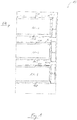
- the embodiment of the receiving device 10 shown there comprises a plurality of receiving spaces 12-i for receiving a corresponding number of plug-in modules 11-i.
- the receiving device 10 is provided for receiving three plug-in modules 11-1, 11-2, 11-3 arranged one above the other.
- the slide-in modules 11-i can each be introduced or pushed into corresponding receiving spaces 12-i of the receiving device 10 in an insertion direction ER.
- the plug-in modules 11-i generate heat loss Q during their operation. This heat loss Q is transported via one or more heat pipes 13 attached to the plug-in module 11 to at least one corresponding heat sink 14-i of the receiving device 10, as shown schematically in FIG Figure 1 shown.
- Each slide-in module 11-i shown has a housing, with heat pipes 13A, 13B being attached to the top and bottom of the housing, which transport the heat loss Q to a corresponding heat sink 14-i of the receiving device 10.
- the heat pipes 13 are attached to the housings 15 of the various plug-in modules 11-i each parallel to the insertion direction ER with which the relevant Slide-in modules 11-i are introduced into the corresponding receiving spaces 12-i.
- the insertion direction ER for inserting the plug-in modules 11-i is shown in FIG Figure 1 illustrated embodiment horizontally.
- the slide-in modules 11-i shown can each contain a multiplicity of energy storage cells, in particular battery cells.
- the plug-in modules 11-i form plug-in energy storage modules for the electrical supply of loads.
- heat loss Q is generated in the plug-in modules 11-i, which is transported via the housing 15 of the respective plug-in module 11-i and the heat pipes 13A, 13B attached to it to the respective heat sink 14-i of the receiving device 10 becomes.
- the plug-in modules 11-i can also contain electrical power components which generate heat loss Q during operation, which is transported away via the heat pipes 13 to the corresponding heat sinks 14.
- the heat pipes 13 can be attached to the housing 15 of the plug-in module 11-i in different ways.
- the heat pipes can be attached to the housing 15 of the plug-in module 11 in a materially bonded, force-fit or form-fit manner.
- the heat pipes 13 can have different cross-sections depending on the application.
- the cross-sections of the heat pipes 13A, 13B can be round, square, rectangular, triangular or oval, for example.
- the cross section of the heat pipes 13 in the direction of the relevant heat sink 14 of the receiving device 10 can increase continuously or in steps, as in FIG Figures 7, 8 shown schematically. As a result, the efficiency in the removal of the heat Q can be additionally increased.
- the heat pipes 13 can be straight be attached to the housing 15 of the corresponding plug-in module 11. In an alternative embodiment, the heat pipes 13 can also be attached to the housing 15 of the plug-in module 11 in a meandering manner. In one possible embodiment of the receiving device 10 according to the invention, the heat pipes 13 are attached to an upper side and / or lower side of the housing 15 of the plug-in module 11, as is also shown schematically in FIG Figure 1 shown. Furthermore, the heat pipes 13 can also be attached to one or both side walls of the housing 15 of the plug-in module 11.
- the housing 15 of the slide-in module 11 and / or the end faces of the heat pipes 13A, 13B attached to it running parallel in the slide-in direction ER are, in one possible embodiment, mechanically pressed against the heat sink 14 of the receiving device 10 with a pressing force as soon as the slide-in module 11 is largely completely inserted into the Receiving space 12 of the associated receiving device 10 has been introduced, as in FIG Figure 1 indicated schematically.
- the mechanical pressing force F can be generated by a mechanical locking element, in particular by means of a mechanical spring, with which the housing 15 of the insert element 11 and / or the end faces of heat pipes 13A, 13B attached to it running parallel in the insertion direction ER against the heat sink 14 of the receiving device 10 are pressed as soon as the plug-in module 11 has been completely inserted into the associated receiving space 12 of the receiving device 10.
- At least one thermally conductive coupling element can be provided on the heat sink 14, against which the housing 15 of the plug-in module 11 and / or the end faces of the heat pipes 13A, 13B, which run parallel to it in the insertion direction ER, are pressed as soon as the plug-in module 11 is completely in the receiving space 12 of the receiving device 10 is introduced in order to produce a good thermal coupling between the housing 15 of the plug-in module 11 and the heat sink 14 of the receiving device 10.
- the thermally conductive coupling element has an elastic coupling element consisting of elastic material.
- the heat sinks 14-i comprise liquid-cooled heat sinks. These are cooled by means of a cooling liquid that flows through the heat sink 14.
- the various cooling bodies 14-i can be connected to one another in series in a common cooling liquid circuit.
- each heat sink 14-i of the receiving device 10 can be provided in its own separate cooling circuit.
- heat pipes 13 can also be provided which run transversely to the insertion direction ER and which transport the heat loss Q of the insertion module 11 to two laterally provided heat sinks of the receiving device 10, as shown schematically in FIG Figure 3 shown.
- the heat pipes 13 attached to the housing 15 of the plug-in module 11 transport the heat loss Q of the plug-in module 11 with a thermal conductivity of preferably more than 1000 W / mK.
- At least one temperature sensor 18 is attached to each housing 15 of the plug-in module 11, which monitors the housing temperature T of the housing 15 of the plug-in module 11 and reports it to a local controller of the receiving device 10 and / or to a central control of a system.
- the controller can monitor the housing temperature T of the housing 15 of the plug-in module 11 and, if necessary, push it out of the corresponding receiving space 12 by means of an actuator and / or by releasing the mechanical plug-in module locking element as soon as a critical temperature threshold is exceeded.
- the receptacle device 10 shown serves to receive a plurality of plug-in modules 11, each of which contains, for example, a plurality of energy storage cells for supplying energy.
- the illustrated receiving device 10 thus forms an energy storage rack system for storing electrical energy with a multiplicity of energy storage cells which are integrated in various plug-in modules 11-i.
- electrical power components can be accommodated in the various plug-in modules 11-i, which generate heat loss Q during operation.
- These electrical power components can, for example, also be installed in computers, in particular in servers.
- the in Figure 1 The receptacle device 10 shown is accordingly a computer rack system for operating computers that are accommodated in various plug-in modules of the receptacle device 10.
- the illustrated receiving device 10 which forms a rack system, is particularly well suited to building scalable and maintenance-friendly battery storage for mobile and stationary applications.
- the energy store has several independent plug-in modules 11-i which are fastened in a special assembly frame.
- This mounting frame includes a corresponding number of receiving spaces 12-i.
- the various plug-in modules 11-i can be thermally coupled or temporarily connected to the corresponding heat sink 14 on their respective rear side of the housing or via their two end faces.
- a heat-conducting paste is provided between the end wall of the housing 15 of the plug-in module 11 and the corresponding heat sink 14. This thermal paste promotes heat dissipation and can also compensate for manufacturing tolerances.
- the thermal paste ensures optimal heat transfer.
- a pipe system through which cooling liquid flows, a cooling plate through which flow occurs or a hollow profile through which flow occurs can be provided as the cooling body 14.
- a mixture of water and coolant can be used as the coolant.
- Figure 2 shows a schematic sectional view of the cooling principle used.
- Figure 2 shows a schematic representation of an insert module 11 which is inserted into a corresponding receiving space 12.
- the in Figure 2 The illustrated embodiment, cylindrical energy storage cells or battery cells 1 are provided in the plug-in module 11, each having two electrical poles 2, 3.
- Each of the electrical energy storage cells 1-i has a first or positive electrical pole 2-i and a second or negative electrical pole 3-i.
- contact elements 4-i can also be provided at the positive poles 2-i of the electrical energy storage cells, for example in FIG Figure 9 shown.
- Contact elements 5-i can also be provided at the negative poles 3-i, as also in FIG Figure 9 shown.
- the contacting elements 4, 5 form connecting elements which have an elastic contacting means material which is preferably electrically and thermally conductive and an elastic deformation from the change in a linear expansion in a direction perpendicular to the contact surfaces of the battery poles of the energy storage cells 1-i can relate.
- circuit boards 7, 8 form the top and bottom of the housing 15 of the plug-in module 11.
- the circuit boards 7, 8 can, for example, as in FIG Figure 9 be structured.
- the plug-in module or the energy storage module 11, which contains the plurality of energy storage cells 1-i can be pushed from left to right in the insertion direction ER into the associated receiving space 12. At the end, the housing 15 is pressed against the corresponding heat sink 14.
- the printed circuit boards 7, 8 on the end face of the housing 15 can be angled at right angles and pressed as guide plates on the heat sink 14 as soon as the plug-in module 11 has been pushed completely into the corresponding receiving space 12.
- a heat-conducting paste layer 16 can be provided between the end face of the housing 15 and the heat sink 14 in order to dissipate the heat Q transported by the heat pipes 13A, 13B in the direction of the heat sink 14 to the heat sink 14.
- the provision of a layer of thermal paste 16 is optional.
- the end face of the housing 15 is pressed directly against the heat sink 14.
- a thermally conductive plastic layer for thermal coupling can be provided between the end face of the housing 15 and the cooling body 14.
- the heat pipes 13A, 13B are attached to the housing 15 of the plug-in module 11 parallel to the insertion direction ER and transport the dissipated heat Q away from the energy storage cells 1 in the direction of the corresponding heat sink 14.
- the heat pipes 13A, 13B have a uniform round cross-section.
- the heat pipes 13A, 13B can also have a cross section which increases continuously or in steps towards the heat sink 14 of the receiving device 10, as in FIG Figures 7, 8 shown schematically.
- the heat pipes 13A, 13B are attached to an upper side and to a lower side of the housing 15 of the plug-in module 11.
- the housing 15 of the plug-in module 11 is in the in Figure 2
- the illustrated embodiment is preferably pressed mechanically against the cooling body 14 with a contact force F as soon as the plug-in module 11 has been completely inserted into the receiving space 12 of the receiving device 10.
- the pressing force F can be generated, for example, by means of a plug-in module locking element which contains a spring element 17. Furthermore, the contact pressure F can also be achieved by screwing the housing 15 of the plug-in module 11 into the receiving space 12.
- the housing 15 of the slide-in module 11 is not screwed into the receiving space 12, but is releasably locked by means of the slide-in module locking element after the inserted position has been reached. By actuating this mechanical slide-in module locking element, a user can release a lock and push the slide-in module 11 out of the receiving device 10 against the insertion direction ER.
- the slide-in module 11 is mounted mechanically, for example by means of rollers, so that it can preferably be pushed back and forth horizontally within the receiving space 12, similar to a drawer.
- the insert module locking element which is attached to the front of the insert module 11, ensures a releasable locking, preferably at the same time a pressing force F the end face of the inserted housing 15 of the insert module 11 against the heat sink 14 presses to achieve optimal heat coupling.
- a thermally conductive coupling element can preferably be provided, against which the housing 15 of the plug-in module 11 and / or the end faces of the heat pipes attached parallel to it in the insertion direction ER are pressed with the contact force F. as soon as the slide-in module 11 has been completely inserted into the receiving space 12 of the receiving device 10 and is releasably locked by the mechanical slide-in module locking element.
- the mechanical slide-in module locking element can comprise a clip fastening, for example.
- the heat pipes 13 or heat pipes are attached to the outside of the housing surface, in particular to the top and bottom, as shown schematically in FIG Figure 2 shown.
- These passive heat exchangers use the enthalpy of vaporization of a working medium and achieve a thermal conductivity that is a multiple of that of a conventional metallic conductive material, in particular copper.
- the temperature gradient over the length of the heat pipes 13 does not exceed 3 to 4 Kelvin at the operating point, so that a uniform temperature control of the energy storage cells 1 contained in the plug-in module 11 is made possible.
- the heat pipes 13 also offer the significant advantage over conventional copper bars that they are much lighter are.
- the heat pipes 13 basically function independently of their position.
- the transfer power for transferring the heat depends on the installation angle ⁇ of the heat pipes 13.
- the installation angle ⁇ of the heat pipes 13 with respect to the horizontal insertion direction ER can be adapted to the respective application.
- the waste heat from the plug-in module 11 is absorbed over a large area via the heat pipes 13 and transported in the direction of the heat sink 14.
- a small temperature gradient ⁇ T of a few degrees Celsius forms over the length of the heat pipes 13 within the working area, which results in a very uniform temperature distribution for the energy storage cells 1 within the plug-in module 11.
- the receiving device 10 offers a very good thermal connection between the plug-in modules 11 and the respective heat sinks 14. Furthermore, the heat pipes 13 ensure uniform heat distribution in the plug-in module 11.
- the plug-in modules 11, in particular energy storage modules can be installed quickly and easily and also quickly and safely be replaced. Since the plug-in modules 11 can easily be pushed out of the corresponding receiving space 12 after releasing the plug-in module locking element against the insertion direction ER, the components built into the plug-in modules 11, in particular energy storage cells 1 or power components, can be quickly inspected, serviced or repaired by a user will.
- One or more temperature sensors can also be attached to the housing 15 of the plug-in module 11, which report the housing temperature T of the housing 15 of the plug-in module 11 to a local controller or to a central controller.
- the local or central controller can control or regulate the cooling provided by the heat sink 14 as a function of the reported temperature T, for example by means of a pump installed in the coolant circuit.
- the local or central control can automatically slide out the relevant slide-in module 11 when a critical temperature threshold value is exceeded, for example by means of an actuator and / or by releasing the mechanical slide-in module locking element, in order to prevent damage to the components contained in the slide-in module 11, in particular storage cells 1 or power components, to prevent.
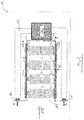
- FIG 3 shows a schematic view of an embodiment of a receiving device 10 with a two-part Cooling system.
- the heat sink 14 is flowed through by two separate cooling lines 19A, 19B.
- the end sections of the heat pipes 13A, 13B are thermally coupled to the surface of the heat sink 14 via angled heat conducting elements 20A, 20B.
- FIG 4 shows a plan view of a plug-in module 11 with six heat pipes 13-1 to 13-6 each provided in parallel.
- the distance between the heat pipes 13-i can vary depending on the application.
- the heat pipes 13-i are provided on the top or bottom of the plug-in module housing 15 and laid parallel to the insertion direction ER.
- FIG. 5 shows a schematic diagram for cooling by means of heat pipes 13 which are attached to the housing 15 of a plug-in module 11.
- the heat pipes 13-1, 13-2, 13-3, 13-4 absorb the emitted heat Q and transport it to the in Figure 5 schematically shown heat sink 14 through which a coolant flows.
- the heat pipes 13 are laid parallel to the insertion direction ER of the insertion module 11 running straight.
- the heat pipes 13 can also be laid on the housing 15 of the plug-in module 11 in a meandering shape.
- FIG. 11 shows a further schematic diagram of a possible embodiment in which an insert module 11 is cooled by means of heat pipes 13.
- three parallel arranged heat pipes 13-1, 13-2, 13-3 are laid transversely to the insertion direction ER and conduct the generated heat into two laterally attached heat sinks 14A, 14B, each of which is traversed by a cooling liquid.
- the Figures 1 to 6 heat pipes 13 shown can be detachably attached to the housing 15 of the plug-in module 11, for example clipped on. This allows the number and density of the heat pipes 13 to be adapted to the power loss of the components built into the plug-in module 11.
- the heat pipes 13 can also have different cross-sections.
- the heat pipes 13 have a cross section which increases continuously or in steps towards the cooling body 14, ie in the insertion direction ER, as in FIG Figures 7, 8 shown schematically.
- Figure 9 shows a particular embodiment in which the housing 15 of a plug-in module 11 is formed by opposing printed circuit boards 7, 8.
- the circuit boards 7, 8 each serve to separate an electrical current I received from the energy storage cells 1-i via contact elements from a heat flow Q ° s obtained via the contact elements. How to get out Figure 9 can see, starting from the end faces of the electrical storage cells 1-i, a heat flow Q ° s flows via the thermally conductive contact elements 4, 5 to the upper and lower circuit boards 7, 8.
- the circuit boards 7, 8 are constructed in such a way that they have one of an energy storage cell 1-i obtained via a contact element electrical current I from a via the same contact element Separate the heat flow Q ° s obtained.
- the frontal heat flow Q ° s is diverted directly to heat pipes 13A, 13B, which transport the absorbed heat to the cooling body 14 of the receiving device 10.
- the two circuit boards 7, 8 are made up of different layers.
- the upper circuit board 7 has a thermally conductive and electrically conductive first layer 7-1, which rests directly on the upper contact element 4-i. This first electrical layer 7-1 laterally dissipates the electrical current I flowing via the contact elements, as in FIG Figure 9 shown schematically.
- the electrically conductive and thermally conductive layer 7-1 transmits the heat flow Q ° s flowing via the contact elements 4-i to a second thermally conductive layer 7-2 of the circuit board 7.
- This second thermally conductive layer 7-2 of the circuit board 7 is the heat flow Q ° s received from the first layer 7-1 to the heat pipe 13A.
- the illustrated embodiment is between the first thermally and electrically conductive layer 7-1 and the second thermally conductive layer 7-2 of the circuit board 7, an electrically insulating intermediate layer 7-3, which is necessary if the second thermally conductive layer 7-2 is electrically conductive is.
- the thickness d1 of the first electrically and thermally conductive layer 7-1 is, for example, in a range from 20 to 500 ⁇ m .
- the thickness d2 of the second at least thermally conductive layer 7-2 can be in a range of, for example, 1 to 5 mm.
- the second thermally conductive layer 7-2 of the printed circuit board 7 is thicker than the first electrically and thermally conductive layer 7-1 of the first printed circuit board 7.
- the intermediate layer 7-3 preferably has a thickness d3 which, in a preferred embodiment, is relatively thin, the thickness d3 being smaller than the thickness d1 and the thickness d2 of the two remaining layers 7-1, 7-2 of the corresponding printed circuit board 7.
- the intermediate layer 7-3 consists of an electrically insulating material which, however, is thermally conductive so that the heat flow Q ° s can flow through it, as in FIG Figure 9 shown schematically.
- the lower circuit board 8 is constructed accordingly in order to transfer the heat flow Q ° s to the lower heat pipe 13B in the illustrated embodiment and at the same time to enable an electrical current flow I.
- the various energy storage cells 1-i can be used in a support structure 6 which, for example, consists of an electrically insulating plastic material.
- the material of the support structure 6 has a thermal conductivity, so that the heat present on the outer surfaces of the energy storage cells 1 - i can also flow away as a heat flow Q ° m via the support structure 6.
- Electrical fuse elements 9-1, 9-2 can be provided on one of the two electrically and thermally conductive layers 7-1, 8-1 of the circuit boards 7, 8.
- heat pipes 13 can also be integrated into the support structure 6 in order to dissipate a heat flow Q ° m via the housing 15 to the cooling body 14.
- the plug-in modules 11 with the energy storage cells 1 can be provided, for example, to drive an electric motor of a vehicle.
- the illustrated receiving device 10 is integrated in the housing of a vehicle or placed on a loading area of the vehicle.
- the receiving frame of the receiving device 10 consists of a refractory material.
- the housings 15 of the plug-in modules 11 are closed in order to dissipate heat both upwards and downwards to the cooling body 14.
- the housings 15 of the plug-in modules 11 have a cover on the upper side which can be easily removed in order to be able to inspect the structural elements or components integrated within the plug-in module 11.
- the housing 15 of the slide-in module 11 is open at the top, so that the slide-in module 11 forms a drawer, so to speak, the structural elements or components contained therein can be inspected and, if necessary, replaced by a user after the slide-in module 11 has been pushed out.
Landscapes
- Chemical & Material Sciences (AREA)
- Chemical Kinetics & Catalysis (AREA)
- Electrochemistry (AREA)
- General Chemical & Material Sciences (AREA)
- Engineering & Computer Science (AREA)
- Manufacturing & Machinery (AREA)
- Automation & Control Theory (AREA)
- Secondary Cells (AREA)
- Cooling Or The Like Of Electrical Apparatus (AREA)
- Battery Mounting, Suspending (AREA)
Abstract
Description
- Die Erfindung betrifft eine Aufnahmevorrichtung zur Aufnahme und Kühlung von mindestens einem Einschubmodul, das während eines Betriebes Verlustwärme erzeugt.
- Energiespeicherzellen dienen dazu, elektrische Verbraucher mit elektrischer Energie zu versorgen. Während des Betriebes erzeugen Energiespeicherzellen Verlustwärme, sodass in vielen Fällen eine Kühlung der Energiespeicherzellen erforderlich ist. Die meisten stationären Batteriespeicher nutzen dabei Luftkühlung. Energiespeicherzellen können in Batteriemodulen integriert sein, welche beispielsweise in einem 19-Zoll-Aufnahmerack untergebracht sind. Neben luftgekühlten Batteriemodulen werden auch flüssigkeitsgekühlte Batteriemodule in einem Racksystem verwendet. Allerdings wird bei herkömmlichen Racksystemen die Batteriemodule einzeln an einen Kühlflüssigkeitskreislauf angeschlossen. Dies erschwert erheblich den Wechsel von Batteriemodulen sowie deren Wartung.
- Es ist daher eine Aufgabe der vorliegenden Erfindung, eine Vorrichtung zur Kühlung von Einschubmodulen, insbesondere Energiespeichereinschubmodulen, zu schaffen, welche einerseits eine effiziente Kühlung der Einschubmodule bietet und andererseits einen einfachen Austausch bzw. Wartung von Einschubmodulen gestattet.
- Diese Aufgabe wird erfindungsgemäß durch eine Aufnahmevorrichtung mit den in Patentanspruch 1 angegebenen Merkmalen gelöst.
- Die Erfindung schafft demnach eine Aufnahmevorrichtung zur Aufnahme und Kühlung mindestens eines Einschubmoduls, das zu seinem Betrieb in einem entsprechenden Aufnahmeraum der Aufnahmevorrichtung einführbar ist und während seines Betriebes Verlustwärme erzeugt, die über ein oder mehrere an das Einschubmodul angebrachte Wärmerohre hin zu mindestens einem Kühlkörper der Aufnahmevorrichtung transportiert wird.
- Die erfindungsgemäße Aufnahmevorrichtung erlaubt einen einfachen Austausch eines Einschubmoduls, ohne dass eine Unterbrechung eines Kühlkreislaufs erforderlich wird.
- Ein weiterer Vorteil besteht darin, dass Einschubmodule in einen entsprechenden Aufnahmeraum der Aufnahmevorrichtung einführbar und wieder ausführbar sind, sodass die Inspektion und/oder Wartung der in dem Einschubmodul vorgesehenen Komponenten erleichtert wird.
- Bei einer möglichen Ausführungsform der erfindungsgemäßen Aufnahmevorrichtung sind die Wärmerohre an einem Gehäuse des Einschubmoduls parallel verlaufend zu einer Einschubrichtung angebracht, mit welcher das Einschubmodul in den entsprechenden Aufnahmeraum der Aufnahmevorrichtung eingeführt wird.
- Bei einer weiteren möglichen alternativen Ausführungsform der erfindungsgemäßen Aufnahmevorrichtung sind die Wärmerohre an einem Gehäuse des Einschubmoduls quer verlaufend zu der Einschubrichtung angebracht, mit welcher das Einschubmodul in den Aufnahmeraum eingeführt wird.
- Weiterhin können bei einer weiteren möglichen Ausführungsform Wärmerohre sowohl parallel als auch quer verlaufend zu der Einschubrichtung an einem Gehäuse des Einschubmoduls angebracht sein.
- Die Verwendung von Wärmerohren zur Ableitung der Wärme erlaubt einen besonders effizienten Transport bzw. Abführung der während des Betriebs entstehenden Verlustwärme.
- Bei einer weiteren möglichen Ausführungsform der erfindungsgemäßen Aufnahmevorrichtung werden die Wärmerohre stoffschlüssig an dem Gehäuse des Einschubmoduls angebracht.
- Bei einer weiteren möglichen Ausführungsform der erfindungsgemäßen Aufnahmevorrichtung werden die Wärmerohre kraftschlüssig an dem Gehäuse des Einschubmoduls angebracht.
- Bei einer weiteren möglichen Ausführungsform der erfindungsgemäßen Aufnahmevorrichtung werden die Wärmerohre formschlüssig an dem Gehäuse des Einschubmoduls angebracht.
- Bei einer weiteren möglichen Ausführungsform der erfindungsgemäßen Aufnahmevorrichtung weisen die Wärmerohre einen Querschnitt auf, der hin zu dem Kühlkörper der Aufnahmevorrichtung kontinuierlich oder stufenweise zunimmt.
- Hierdurch lässt sich die Effizienz des Wärmeabtransports zusätzlich steigern.
- Bei einer weiteren möglichen Ausführungsform der erfindungsgemäßen Aufnahmevorrichtung sind die Wärmerohre gerade verlaufend oder mäanderförmig verlaufend an dem Gehäuse des Einschubmoduls angebracht.
- Bei einer weiteren möglichen Ausführungsform der erfindungsgemäßen Aufnahmevorrichtung sind die Wärmerohre an einer Oberseite und/oder an einer Unterseite des Gehäuses des Einschubmoduls angebracht.
- Bei einer weiteren möglichen Ausführungsform der erfindungsgemäßen Aufnahmevorrichtung sind die Wärmerohre an einer oder beiden Seitenwänden des Gehäuses des Einschubmoduls angebracht.
- Bei einer weiteren möglichen Ausführungsform der erfindungsgemäßen Aufnahmevorrichtung werden das Gehäuse des Einschubmoduls und/oder Stirnflächen der daran in Einschubrichtung parallel verlaufend angebrachten Wärmerohre gegen den Kühlkörper der Aufnahmevorrichtung mit einer Anpresskraft mechanisch gepresst, sobald das Einschubmodul vollständig in den Aufnahmeraum der Aufnahmevorrichtung eingeführt worden ist.
- Bei einer weiteren möglichen Ausführungsform der erfindungsgemäßen Aufnahmevorrichtung erzeugt ein mechanisches Einschubmodul-Arretierelement eine Anpresskraft, insbesondere mittels einer Feder, mit welcher das Gehäuse des Einschubmoduls und/oder die Stirnseiten von daran in Einschubrichtung parallel verlaufend angebrachten Wärmerohren gegen den Kühlkörper der Aufnahmevorrichtung gepresst werden, sobald das Einschubmodul vollständig in den Aufnahmeraum der Aufnahmevorrichtung eingeführt worden ist.
- Bei einer weiteren möglichen Ausführungsform der erfindungsgemäßen Aufnahmevorrichtung ist an dem Kühlkörper mindestens ein thermisch leitendes Koppelelement, insbesondere ein elastisches Koppelelement, vorgesehen, gegen welches das Gehäuse des Einschubmoduls und/oder die Stirnseiten der in Einschubrichtung dazu parallel verlaufend angebrachten Wärmerohre gepresst werden, sobald das Einschubmodul vollständig in den Aufnahmeraum der Aufnahmevorrichtung eingeführt worden ist, um eine thermische Kopplung zwischen dem Gehäuse des Einschubmoduls und dem Kühlkörper der Aufnahmevorrichtung herzustellen.
- Bei einer weiteren möglichen Ausführungsform der erfindungsgemäßen Aufnahmevorrichtung ist der Kühlkörper der Aufnahmevorrichtung ein flüssigkeitsgekühlter Kühlkörper, der mittels einer Kühlflüssigkeit gekühlt wird, die den Kühlkörper durchströmt.
- Bei einer weiteren möglichen Ausführungsform der erfindungsgemäßen Aufnahmevorrichtung transportieren quer zu der Einschubrichtung verlaufend angebrachte Wärmerohre die Verlustwärme des Einschubmoduls zu zwei seitlich vorgesehenen Kühlkörpern der Aufnahmevorrichtung.
- Bei einer weiteren möglichen Ausführungsform der erfindungsgemäßen Aufnahmevorrichtung transportieren die an dem Gehäuse des Einschubmoduls angebrachten Wärmerohre die Verlustwärme des Einschubmoduls mit einer Wärmeleitfähigkeit von mehr als 1000 W/mK.
- Bei einer weiteren möglichen Ausführungsform der erfindungsgemäßen Aufnahmevorrichtung ist an dem Gehäuse des Einschubmoduls mindestens ein Temperatursensor angebracht, welcher die Gehäusetemperatur des Gehäuses des Einschubmoduls überwacht und an eine lokale Steuerung der Aufnahmeaufrichtung oder an eine zentrale Steuerung meldet.
- Bei einer weiteren möglichen Ausführungsvariante schiebt die Steuerung das Einschubmodul mittels eines Aktuators und/oder durch Lösen des mechanischen Einschubmodul-Arretierelementes aus dem Aufnahmeraum der Aufnahmevorrichtung heraus, sobald ein kritischer Temperaturschwellenwert überschritten wird.
- Die Erfindung schafft ferner gemäß einem weiteren Aspekt ein Energiespeicher-Racksystem zur Speicherung elektrischer Energie mit einer Aufnahmevorrichtung zur Aufnahme mindestens eines Einschubmoduls gemäß dem ersten Aspekt der Erfindung, wobei jedes Einschubmodul mehrere Energiespeicherzellen beinhaltet.
- Die Erfindung schafft ferner gemäß einem weiteren Aspekt ein Fahrzeug mit einem Elektromotor, der seine Versorgungsenergie von einem Energiespeicher-Racksystem gemäß dem zweiten Aspekt der Erfindung bezieht.
- Die Erfindung schafft ferner gemäß einem weiteren Aspekt ein Rechner-Racksystem zum Betreiben von Rechnern mit einer Aufnahmevorrichtung zur Aufnahme von mindestens einem Einschubmodul gemäß dem ersten Aspekt der Erfindung, wobei jedes Einschubmodul einen Rechner, insbesondere einen Server, beinhaltet.
- Die erfindungsgemäße Aufnahmevorrichtung zur Aufnahme und Kühlung mindestens eines Einschubmoduls kann somit für Energiespeicherzellenmodule als auch für Module, welche elektrische Leistungsbauelemente beinhalten, verwendet werden.
- Im Weiteren werden mögliche Ausführungsformen der erfindungsgemäßen Aufnahmevorrichtung zur Aufnahme und Kühlung von Einschubmodulen unter Bezugnahme auf die beigefügten Figuren näher erläutert.
- Es zeigen:
- Figur 1
- eine schematische Schnittansicht zur Darstellung eines Ausführungsbeispiels einer erfindungsgemäßen Aufnahmevorrichtung;
- Figur 2
- eine weitere schematische Schnittdarstellung zur Erläuterung der Funktionsweise einer erfindungsgemäßen Aufnahmevorrichtung;
- Figur 3
- eine Darstellung eines Ausführungsbeispiels einer erfindungsgemäßen Aufnahmevorrichtung mit einem zweiteiligen Kühlsystem;
- Figur 4
- eine Draufsicht auf ein Einschubmodul mit mehreren parallel zur Einschubrichtung vorgesehenen Wärmerohren zur Darstellung eines Ausführungsbeispiels einer erfindungsgemäßen Aufnahmevorrichtung;
- Figur 5
- eine Prinzipdarstellung einer Kühlung durch Wärmerohre mit schematisch dargestelltem Wärmefluss zur Erläuterung der Funktionsweise einer erfindungsgemäßen Aufnahmevorrichtung;
- Figur 6
- eine Prinzipdarstellung einer weiteren möglichen Kühlung durch Wärmerohre mit schematisch dargestelltem Wärmefluss zur Erläuterung der Funktionsweise eines weiteren Ausführungsbeispiels der erfindungsgemäßen Aufnahmevorrichtung;
- Figuren 7, 8
- schematische Darstellungen zur Erläuterung weiterer spezieller Ausführungsbeispiele der erfindungsgemäßen Aufnahmevorrichtung;
- Figur 9
- eine Schnittansicht zur Darstellung eines weiteren speziellen Ausführungsbeispiels einer erfindungsgemäßen Aufnahmevorrichtung.
- Wie man aus der schematischen Schnittansicht gemäß
Figur 1 erkennen kann, umfasst die dort dargestellte Ausführungsform der Aufnahmevorrichtung 10 mehrere Aufnahmeräume 12-i zur Aufnahme einer entsprechenden Anzahl von Einschubmodulen 11-i. Bei dem dargestellten exemplarischen Ausführungsbeispiel ist die Aufnahmevorrichtung 10 zur Aufnahme von drei übereinander angeordneten Einschubmodulen 11-1, 11-2, 11-3 vorgesehen. Die Einschubmodule 11-i können jeweils in einer Einschubrichtung ER in entsprechende Aufnahmeräume 12-i der Aufnahmevorrichtung 10 eingeführt bzw. hineingeschoben werden. Die Einschubmodule 11-i erzeugen während ihres Betriebes Verlustwärme Q. Diese Verlustwärme Q wird über ein oder mehrere an das Einschubmodul 11 angebrachte Wärmerohre 13 hin zu mindestens einem entsprechenden Kühlkörper 14-i der Aufnahmevorrichtung 10 transportiert, wie schematisch inFigur 1 dargestellt. Bei dem inFigur 1 dargestellten Ausführungsbeispiel verfügt jedes Einschubmodul 11-i über ein Gehäuse, wobei an der Ober- und Unterseite des Gehäuses jeweils Wärmerohre 13A, 13B angebracht sind, welche die Verlustwärme Q hin zu einem entsprechenden Kühlkörper 14-i der Aufnahmevorrichtung 10 transportieren. Bei dem inFigur 1 dargestellten Ausführungsbeispiel sind die Wärmerohre 13 an den Gehäusen 15 der verschiedenen Einschubmodule 11-i jeweils parallel zu der Einschubrichtung ER angebracht, mit welcher die betreffenden Einschubmodule 11-i in die entsprechenden Aufnahmeräume 12-i eingeführt werden. Die Einschubrichtung ER zum Einführen der Einschubmodule 11-i ist in dem inFigur 1 dargestellten Ausführungsbeispiel horizontal. Die inFigur 1 dargestellten Einschubmodule 11-i können jeweils eine Vielzahl von Energiespeicherzellen beinhalten, insbesondere Batteriezellen. Bei diesem Ausführungsbeispiel bilden die Einschubmodule 11-i Energiespeichereinschubmodule zur elektrischen Versorgung von Verbrauchern. Während des Betriebes der Energiespeichereinschubmodule 11-i wird Verlustwärme Q in den Einschubmodulen 11-i erzeugt, die über das Gehäuse 15 des jeweiligen Einschubmoduls 11-i und die daran angebrachten Wärmerohre 13A, 13B hin zu dem jeweiligen Kühlkörper 14-i der Aufnahmevorrichtung 10 transportiert wird. Alternativ oder zusätzlich können die Einschubmodule 11-i auch elektrische Leistungsbauelemente beinhalten, welche während Ihres Betriebes Verlustwärme Q erzeugen, die über die Wärmerohre 13 zu den entsprechenden Kühlkörpern 14 abtransportiert wird. - Die Wärmerohre 13 können in unterschiedlicher Weise an dem Gehäuse 15 des Einschubmoduls 11-i angebracht werden. Die Wärmerohre können stoffschlüssig, kraftschlüssig oder formschlüssig an dem Gehäuse 15 des Einschubmoduls 11 angebracht sein. Die Wärmerohre 13 können je nach Anwendungsfall unterschiedliche Querschnitte aufweisen. Die Querschnitte der Wärmerohre 13A, 13B können beispielsweise rund, quadratisch, rechteckig, dreiecksförmig oder oval sein. Darüber hinaus kann der Querschnitt der Wärmerohre 13 in Richtung hin zu dem betreffenden Kühlkörper 14 der Aufnahmevorrichtung 10 kontinuierlich oder stufenweise zunehmen, wie in den
Figuren 7, 8 schematisch dargestellt. Hierdurch kann die Effizienz beim Abtransport der Wärme Q zusätzlich erhöht werden. Die Wärmerohre 13 können bei einer möglichen Ausführungsform gerade verlaufend an dem Gehäuse 15 des entsprechenden Einschubmoduls 11 angebracht sein. Bei einer alternativen Ausführungsform können die Wärmerohre 13 auch mäanderförmig verlaufend an dem Gehäuse 15 des Einschubmoduls 11 angebracht sein. Bei einer möglichen Ausführungsform der erfindungsgemäßen Aufnahmevorrichtung 10 sind die Wärmerohre 13 an einer Oberseite und/oder Unterseite des Gehäuses 15 des Einschubmoduls 11 angebracht, wie auch schematisch inFigur 1 dargestellt. Weiterhin können die Wärmerohre 13 auch an einer oder beiden Seitenwänden des Gehäuses 15 des Einschubmoduls 11 angebracht werden. Das Gehäuse 15 des Einschubmoduls 11 und/oder die Stirnflächen der daran in Einschubrichtung ER parallel verlaufend angebrachten Wärmerohre 13A, 13B werden bei einer möglichen Ausführungsform gegen den Kühlkörper 14 der Aufnahmevorrichtung 10 mit einer Anpresskraft mechanisch F gepresst, sobald das Einschubmodul 11 weitestgehend vollständig in den Aufnahmeraum 12 der zugehörigen Aufnahmevorrichtung 10 eingeführt worden ist, wie inFigur 1 schematisch angedeutet. Bei einer Ausführungsvariante kann die mechanische Anpresskraft F durch ein mechanisches Arretierelement, insbesondere mittels einer mechanischen Feder, erzeugt werden, mit welcher das Gehäuse 15 des Einschubelements 11 und/oder die Stirnseiten von daran in Einschubrichtung ER parallel verlaufend angebrachten Wärmerohre 13A, 13B gegen den Kühlkörper 14 der Aufnahmevorrichtung 10 gepresst werden, sobald das Einschubmodul 11 vollständig in den zugehörigen Aufnahmeraum 12 der Aufnahmevorrichtung 10 eingeführt worden ist. Weiterhin kann an dem Kühlkörper 14 mindestens ein thermisch leitendes Koppelelement vorgesehen werden, gegen welches das Gehäuse 15 des Einschubmoduls 11 und/oder die Stirnseiten der in Einschubrichtung ER dazu parallel verlaufend angebrachten Wärmerohre 13A, 13B gepresst werden, sobald das Einschubmodul 11 vollständig in den Aufnahmeraum 12 der Aufnahmevorrichtung 10 eingeführt ist, um eine gute thermische Kopplung zwischen dem Gehäuse 15 des Einschubmoduls 11 und dem Kühlkörper 14 der Aufnahmevorrichtung 10 herzustellen. Bei einer bevorzugten Ausführungsform weist das thermisch leitende Koppelelement ein elastisches Koppelelement bestehend aus elastischem Material auf. - Bei einer möglichen Ausführungsform der erfindungsgemäßen Aufnahmevorrichtung 10 umfassen die Kühlkörper 14-i flüssigkeitsgekühlte Kühlkörper. Diese werden mittels einer Kühlflüssigkeit gekühlt, die den Kühlkörper 14 durchströmt. Die verschiedenen Kühlkörper 14-i können in einem gemeinsamen Kühlflüssigkeitskreislauf seriell miteinander verbunden sein. Alternativ kann jeder Kühlkörper 14-i der Aufnahmevorrichtung 10 in einem eigenen separaten Kühlkreislauf vorgesehen werden. Bei einer weiteren möglichen Ausführungsform der erfindungsgemäßen Aufnahmevorrichtung 10 können auch zu der Einschubrichtung ER quer verlaufend angebrachte Wärmerohre 13 vorgesehen sein, die die Verlustwärme Q des Einschubmoduls 11 zu zwei seitlich vorgesehenen Kühlkörpern der Aufnahmevorrichtung 10 transportieren, wie schematisch in
Figur 3 dargestellt. Die an dem Gehäuse 15 des Einschubmoduls 11 angebrachten Wärmerohre 13 transportieren die Verlustwärme Q des Einschubmoduls 11 mit einer Wärmeleitfähigkeit von vorzugsweise mehr als 1000 W/mK. - Bei einer möglichen Ausführungsform der in
Figur 1 schematisch dargestellten Aufnahmevorrichtung 10 ist an jedem Gehäuse 15 des Einschubmoduls 11 mindestens ein Temperatursensor 18 angebracht, welcher die Gehäusetemperatur T des Gehäuses 15 des Einschubmoduls 11 überwacht und an eine lokale Steuerung der Aufnahmevorrichtung 10 und/oder an eine zentrale Steuerung einer Anlage meldet. Bei einer Ausführungsvariante kann beispielsweise die Steuerung die Gehäusetemperatur T des Gehäuses 15 des Einschubmoduls 11 überwachen und ggf. mittels eines Aktuators und/oder durch Lösen des mechanischen Einschubmodul-Arretierelementes aus dem entsprechenden Aufnahmeraum 12 herausschieben, sobald ein kritischer Temperaturschwellenwert überschritten wird. - Die in
Figur 1 dargestellte Aufnahmevorrichtung 10 dient zur Aufnahme mehrerer Einschubmodule 11, die beispielsweise jeweils mehrere Energiespeicherzellen zur Energieversorgung beinhalten. Die inFigur 1 dargestellte Aufnahmevorrichtung 10 bildet bei dieser Ausführungsform somit ein Energiespeicher-Racksystem zur Speicherung elektrischer Energie mit einer Vielzahl von Energiespeicherzellen, welche in verschiedenen Einschubmodulen 11-i integriert sind. - Weiterhin können in den verschiedenen Einschubmodulen 11-i jeweils elektrische Leistungsbauelemente untergebracht werden, welche während des Betriebes Verlustwärme Q erzeugen. Diese elektrischen Leistungsbauelemente können beispielsweise auch in Rechnern verbaut sein, insbesondere in Servern. Bei dieser Ausführungsvariante bildet die in
Figur 1 dargestellte Aufnahmevorrichtung 10 demnach ein Rechner-Racksystem zum Betreiben von Rechnern, die in verschiedenen Einschubmodulen der Aufnahmevorrichtung 10 untergebracht sind. - Die in
Figur 1 dargestellte Aufnahmevorrichtung 10, welche ein Racksystem bildet, eignet sich insbesondere gut, um skalierbare und wartungsfreundliche Batteriespeicher für mobile und stationäre Anwendungen aufzubauen. Der Energiespeicher weist dabei mehrere eigenständige Einschubmodule 11-i auf, welche in einem speziellen Montagerahmen befestigt sind. Dieser Montagerahmen umfasst eine entsprechende Anzahl von Aufnahmeräumen 12-i. Die verschiedenen Einschubmodule 11-i können an ihrer jeweiligen Gehäuserückseite oder über ihre beiden Stirnflächen thermisch an den entsprechenden Kühlkörper 14 gekoppelt bzw. zeitweise angebunden werden. Bei einer möglichen Ausführungsform ist eine Wärmeleitpaste zwischen der Stirnwand des Gehäuses 15 des Einschubmoduls 11 und dem entsprechenden Kühlkörper 14 vorgesehen. Diese Wärmeleitpaste fördert den Wärmeabtransport und kann zudem Fertigungstoleranzen ausgleichen. Die Wärmeleitpaste sorgt für einen optimalen Wärmeübergang. Als Kühlkörper 14 kann ein von Kühlflüssigkeit durchströmtes Rohrsystem, eine durchströmte Kühlplatte oder ein durchströmtes Hohlprofil vorgesehen sein. Als Kühlflüssigkeit kann beispielsweise eine Mischung aus Wasser und Kühlerschutzmittel verwendet werden. -
Figur 2 zeigt eine schematische Schnittdarstellung des eingesetzten Kühlprinzips.Figur 2 zeigt eine schematische Darstellung für ein Einschubmodul 11, welches in einen entsprechenden Aufnahmeraum 12 eingeschoben ist. Bei dem inFigur 2 dargestellten Ausführungsbeispiel sind in dem Einschubmodul 11 zylindrische Energiespeicherzellen bzw. Batteriezellen 1 vorgesehen, die jeweils zwei elektrische Pole 2, 3 aufweisen. Jede der elektrischen Energiespeicherzelle 1-i weist einen ersten bzw. positiven elektrischen Pol 2-i und einen zweiten bzw. negativen elektrischen Pol 3-i auf. An den positiven Polen 2-i der elektrischen Energiespeicherzellen können bei einer möglichen Ausführungsform auch Kontaktelemente 4-i vorgesehen sein, wie beispielsweise inFigur 9 dargestellt. An den negativen Polen 3-i können ebenfalls Kontaktelemente 5-i vorgesehen sein, wie ebenfalls inFigur 9 dargestellt. Die Kontaktierungselemente 4, 5 bilden dabei Anbindungselemente, die ein elastisches Kontaktierungsmittelmaterial aufweisen, welches vorzugsweise elektrisch und thermisch leitfähig ist und eine elastische Verformung aus der Änderung einer Längenausdehnung in einer Richtung senkrecht zu den Kontaktoberflächen der Batteriepole der Energiespeicherzellen 1-i beziehen kann. Leiterplatten 7, 8 bilden bei einer möglichen Ausführungsform die Ober- und Unterseite des Gehäuses 15 des Einschubmoduls 11. Die Leiterplatten 7, 8 können beispielsweise wie inFigur 9 dargestellt strukturiert sein. Bei dem inFigur 2 dargestellten Ausführungsbeispiel kann das Einschubmodul bzw. das Energiespeichermodul 11, welches die Vielzahl von Energiespeicherzellen 1-i beinhaltet, von links nach rechts in Einschubrichtung ER in den zugehörigen Aufnahmeraum 12 hineingeschoben werden. Stirnseitig wird dabei das Gehäuse 15 gegen den entsprechenden Kühlkörper 14 gepresst. Bei dem inFigur 2 dargestellten Ausführungsbeispiel können die Leiterplatten 7, 8 an der Stirnseite des Gehäuses 15 rechtwinklig abgewinkelt vorgesehen sein und als Leitbleche an den Kühlkörper 14 gepresst werden, sobald das Einschubmodul 11 in den entsprechenden Aufnahmeraum 12 vollständig hineingeschoben worden ist. Zwischen der Stirnseite des Gehäuses 15 und dem Kühlkörper 14 kann bei einer möglichen Ausführungsform eine Wärmeleitpastenschicht 16 vorgesehen sein, um die von den Wärmerohren 13A, 13B in Richtung auf den Kühlkörper 14 hin transportierte Wärme Q an den Kühlkörper 14 abzuleiten. Das Vorsehen einer Wärmeleitpastenschicht 16 ist optional. Bei einer alternativen Ausführungsform wird die Stirnseite des Gehäuses 15 direkt gegen den Kühlkörper 14 gepresst. Weiterhin kann zwischen der Stirnseite des Gehäuses 15 und dem Kühlkörper 14 bei einer möglichen Ausführungsform eine wärmeleitfähige plastische Schicht zur thermischen Ankopplung vorgesehen werden. Bei der inFig. 2 dargestellten Ausführungsform sind die Wärmerohre 13A, 13B an dem Gehäuse 15 des Einschubmoduls 11 parallel zu der Einschubrichtung ER angebracht und transportieren die abgeführte Wärme Q weg von den Energiespeicherzellen 1 hin in Richtung zu dem entsprechenden Kühlkörper 14. Bei dem inFigur 2 dargestellten Ausführungsbeispiel weisen die Wärmerohre 13A, 13B einen gleichmäßigen runden Querschnitt auf. Alternativ können die Wärmerohre 13A, 13B auch einen Querschnitt aufweisen, der hin zu dem Kühlkörper 14 der Aufnahmevorrichtung 10 kontinuierlich oder stufenweise zunimmt, wie in denFiguren 7, 8 schematisch dargestellt. Bei der inFigur 2 dargestellten Ausführungsform sind die Wärmerohre 13A, 13B an einer Oberseite und an einer Unterseite des Gehäuses 15 des Einschubmoduls 11 angebracht. Das Gehäuse 15 des Einschubmoduls 11 wird bei der inFigur 2 dargestellten Ausführungsform vorzugsweise mit einer Anpresskraft F mechanisch gegen den Kühlkörper 14 gepresst, sobald das Einschubmodul 11 vollständig in den Aufnahmeraum 12 der Aufnahmevorrichtung 10 eingeführt worden ist. - Die Anpresskraft F kann beispielsweise mittels eines Einschubmodul-Arretierelementes erzeugt werden, welches ein Federelement 17 beinhaltet. Weiterhin kann die Anpresskraft F auch durch Verschraubung des Gehäuses 15 des Einschubmoduls 11 in den Aufnahmeraum 12 erreicht werden. Bei einer alternativen bevorzugten Ausführungsform wird das Gehäuse 15 des Einschubmoduls 11 nicht in den Aufnahmeraum 12 geschraubt, sondern mittels des Einschubmodul-Arretierelementes nach Erreichen der eingeschobenen Position lösbar arretiert. Durch Betätigen dieses mechanischen Einschubmodul-Arretierelementes kann ein Nutzer eine Arretierung lösen und das Einschubmodul 11 entgegen die Einschubrichtung ER heraus aus der Aufnahmevorrichtung 10 herausschieben. Bei einer möglichen Ausführungsform ist das Einschubmodul 11 mechanisch beispielsweise mittels Rollen gelagert, sodass es vorzugsweise horizontal innerhalb des Aufnahmeraums 12 ähnlich einer Schublade hin und her schiebbar ist. Sobald das Einschubmodul 11 vollständig in die Aufnahmevorrichtung 10 in Einschubrichtung ER eingeschoben worden ist, sorgt das Einschubmodul-Arretierelement, welches an der Vorderseite des Einschubmoduls 11 angebracht ist, für eine lösbare Arretierung, wobei vorzugsweise gleichzeitig eine Anpresskraft F die Stirnseite des eingeschobenen Gehäuses 15 des Einschubmoduls 11 gegen den Kühlkörper 14 presst, um eine optimale Wärmekopplung zu erreichen. Zwischen der Stirnseite des Gehäuses 15 und/oder der Stirnseite der Wärmerohre 13 kann vorzugsweise ein thermisch leitendes Koppelelement vorgesehen sein, gegen welches das Gehäuse 15 des Einschubmoduls 11 und/oder die Stirnseiten der in Einschubrichtung ER dazu parallel verlaufend angebrachten Wärmerohre mit der Anpresskraft F gepresst werden, sobald das Einschubmodul 11 vollständig in den Aufnahmeraum 12 der Aufnahmevorrichtung 10 eingeführt worden ist und durch das mechanische Einschubmodul-Arretierelement lösbar arretiert ist. Das mechanische Einschubmodul-Arretierelement kann beispielsweise eine Clipbefestigung umfassen.
- Um über das Einschubmodul 11 hinweg eine gleichmäßige Temperaturverteilung zu erreichen, werden die Wärmerohre 13 bzw. Heat Pipes außen an der Gehäuseoberfläche, insbesondere an der Ober- und Unterseite, angebracht, so wie schematisch in
Figur 2 dargestellt. Diese passiven Wärmeübertrager nutzen die Verdampfungsenthalpie eines Arbeitsmediums und erreichen eine Wärmeleitfähigkeit, die bei einem Vielfachen eines herkömmlichen metallischen Leitmaterials, insbesondere Kupfer, liegt. Der Temperaturgradient über die Länge der Wärmerohre 13 liegt im Betriebspunkt nicht über 3 bis 4 Kelvin, sodass eine gleichmäßige Temperierung der in dem Einschubmodul 11 enthaltenen Energiespeicherzellen 1 ermöglicht wird. Die Wärmerohre 13 bieten gegenüber herkömmlichen Kupferschienen zudem den wesentlichen Vorteil, dass sie wesentlich leichter sind. Durch die Nutzung der Kapillarwirkung zum Transport des Kondensats funktionieren die Wärmerohre 13 grundsätzlich unabhängig von Ihrer Lage. Die Übertragungsleistung zur Übertragung der Wärme hängt von dem Einbauwinkel α der Wärmerohre 13 ab. Der Einbauwinkel α der Wärmerohre 13 gegenüber der horizontalen Einschubrichtung ER kann dabei an den jeweiligen Anwendungsfall angepasst werden. Über die Wärmerohre 13 wird die Abwärme des Einschubmoduls 11 großflächig aufgenommen und in Richtung hin zu dem Kühlkörper 14 transportiert. Dabei bildet sich über die Länge der Wärmerohre 13 hinweg innerhalb des Arbeitsbereiches ein geringer Temperaturgradient ΔT von wenigen Grad Celsius aus, was eine sehr gleichmäßige Temperaturverteilung für die Energiespeicherzellen 1 innerhalb des Einschubmoduls 11 bewirkt. - Wie man aus der schematischen Schnittdarstellung gemäß
Figur 2 erkennen kann, sind im Gegensatz zu herkömmlichen Kühlsystem die verschiedenen Einschubmodule 11, insbesondere Energiespeichermodule, nicht direkt in einen Kühlmittelkreislauf eingebunden. Dadurch entfällt bei einem Austausch des Einschubmoduls 11, insbesondere bei einem Austausch eines Energiespeichermoduls, der Aufwand zur Montage von Kühlschläuchen. Ferner entfällt der Aufwand zum Entlüften eines Kühlkreislaufs. Demnach sind die notwendigen Montagezeiten bei einem Austausch eines Energiespeichermoduls bzw. Einschubmoduls 11 im Vergleich zu herkömmlich gekühlten Systemen wesentlich geringer. Ein weiterer Vorteil besteht darin, dass keine Verbindungselemente, insbesondere Schnellkupplungen, in einem Kühlmittelkreislauf bei der erfindungsgemäßen Aufnahmevorrichtung 10 eingesetzt werden. Hierdurch wird die Gefahr von Leckagen bzw. Gefahr von Austritt eines Kühlmittels signifikant reduziert. - Die erfindungsgemäße Aufnahmevorrichtung 10 bietet eine sehr gute Wärmeanbindung der Einschubmodule 11 an die jeweiligen Kühlkörper 14. Weiterhin sorgen die Wärmerohre 13 für eine gleichmäßige Wärmeverteilung in dem Einschubmodul 11. Die Einschubmodule 11, insbesondere Energiespeichermodule, können einfach und schnell installiert werden und zudem schnell und gefahrlos ausgetauscht werden. Da die Einschubmodule 11 in einfacher Weise aus dem entsprechenden Aufnahmeraum 12 nach Lösen des Einschubmodul-Arretierelementes entgegen die Einschubrichtung ER herausgeschoben werden können, können die in den Einschubmodulen 11 verbauten Bauelemente, insbesondere Energiespeicherzellen 1 oder Leistungsbauelemente, durch einen Nutzer schnell inspiziert, gewartet oder repariert werden.
- An dem Gehäuse 15 des Einschubmoduls 11 können auch ein oder mehrere Temperatursensoren angebracht werden, die die Gehäusetemperatur T des Gehäuses 15 des Einschubmoduls 11 an eine lokale Steuerung oder an eine zentrale Steuerung melden. Die lokale oder zentrale Steuerung kann in Abhängigkeit von der gemeldeten Temperatur T die durch den Kühlkörper 14 bereitgestellte Kühlung steuern bzw. regeln, beispielsweise durch eine in dem Kühlmittelkreislauf angebrachte Pumpe. Weiterhin kann die lokale oder zentrale Steuerung beispielsweise mittels eines Aktuators und/oder durch Lösen des mechanischen Einschubmodul-Arretierelementes das betreffende Einschubmodul 11 bei Überschreiten eines kritischen Temperaturschwellenwertes automatisch herausschieben, um eine Beschädigung der in dem Einschubmodul 11 enthaltenen Komponenten, insbesondere Speicherzellen 1 oder Leistungsbauelemente, zu verhindern.
-
Figur 3 zeigt schematisch eine Ansicht auf eine Ausführungsform einer Aufnahmevorrichtung 10 mit einem zweiteiligen Kühlsystem. Bei dieser Ausführungsvariante wird der Kühlkörper 14 durch zwei separate Kühlleitungen 19A, 19B durchströmt. Die Endabschnitte der Wärmerohre 13A, 13B sind über abgewinkelte Wärmeleitelemente 20A, 20B mit der Oberfläche des Kühlkörpers 14 thermisch gekoppelt. -
Figur 4 zeigt eine Draufsicht auf ein Einschubmodul 11 mit sechs jeweils parallel vorgesehenen Wärmerohren 13-1 bis 13-6. Der Abstand zwischen den Wärmerohren 13-i kann je nach Anwendungsfall variieren. Bei der inFigur 4 dargestellten Ausführungsform sind die Wärmerohre 13-i an der Ober- oder Unterseite des Einschubmodulgehäuses 15 vorgesehen und parallel zur Einschubrichtung ER verlegt. -
Figur 5 zeigt eine Prinzipdarstellung zur Kühlung mittels Wärmerohren 13, die an dem Gehäuse 15 eines Einschubmoduls 11 angebracht sind. Die Wärmerohre 13-1, 13-2, 13-3, 13-4 nehmen die abgegebene Wärme Q auf und transportieren sie hin zu dem inFigur 5 schematisch dargestellten Kühlkörper 14, der von einem Kühlmittel durchströmt wird. Bei der inFigur 5 dargestellten Ausführungsform sind die Wärmerohre 13 parallel zu der Einschubrichtung ER des Einschubmoduls 11 gerade verlaufend verlegt. Alternativ können die Wärmerohre 13 auch mäanderförmig verlegt auf dem Gehäuse 15 des Einschubmoduls 11 vorgesehen werden. -
Figur 6 zeigt eine weitere Prinzipdarstellung einer möglichen Ausführungsform, bei der ein Einschubmodul 11 mittels Wärmerohren 13 gekühlt wird. Bei der inFigur 6 dargestellten Ausführungsvariante sind drei parallel angeordnete Wärmerohre 13-1, 13-2, 13-3 quer zu der Einschubrichtung ER verlegt und leiten die erzeugte Wärme in zwei seitlich angebrachte Kühlkörper 14A, 14B ab, die jeweils durch eine Kühlflüssigkeit durchströmt werden. - Auch Kombinationen der beiden in den
Figuren 5, 6 dargestellten Ausführungsformen sind möglich. - Bei einer möglichen Ausführungsform können die in den
Figuren 1 bis 6 dargestellten Wärmerohre 13 lösbar an dem Gehäuse 15 des Einschubmoduls 11 angebracht werden, beispielsweise aufgeklippt werden. Dies erlaubt, die Anzahl und Dichte der Wärmerohre 13 an die Verlustleistung der in dem Einschubmodul 11 verbauten Bauelemente anzupassen. - Je nach Anwendungsfall können die Wärmerohre 13 auch unterschiedliche Querschnitte besitzen. Bei einer möglichen Ausführungsform weisen die Wärmerohre 13 einen Querschnitt auf, der hin zu dem Kühlkörper 14, d.h. in Einschubrichtung ER, kontinuierlich oder stufenweise zunimmt, wie in den
Figuren 7, 8 schematisch dargestellt. -
Figur 9 zeigt eine besondere Ausführungsform, bei der das Gehäuse 15 eines Einschubmoduls 11 durch gegenüberliegende Leiterplatten 7, 8 gebildet wird. Die Leiterplatten 7, 8 dienen dabei jeweils zur Trennung eines von den Energiespeicherzellen 1-i über Kontaktelemente erhaltenen elektrischen Stromes I von einem über die Kontaktelemente erhaltenen Wärmestrom Q°s. Wie man ausFigur 9 erkennen kann, fließt ausgehend von den Stirnseiten der elektrischen Speicherzellen 1-i ein Wärmestrom Q°s über die thermisch leitfähigen Kontaktelemente 4, 5 zu der oberen und unteren Leiterplatte 7, 8. Die Leiterplatten 7, 8 sind derart aufgebaut, dass sie einen von einer Energiespeicherzelle 1-i über ein Kontaktelement erhaltenen elektrischen Strom I von einem über das gleiche Kontaktelement erhaltenen Wärmestrom Q°s trennen. Der stirnseitige Wärmestrom Q°s wird direkt an Wärmerohre 13A, 13B abgeleitet, die die aufgenommene Wärme hin zu dem Kühlkörper 14 der Aufnahmevorrichtung 10 transportieren. - Zur Trennung des stirnseitigen Wärmestromes Q°s von dem elektrischen Strom I sind die beiden Leiterplatten 7, 8 aus verschiedenen Schichten aufgebaut. Die obere Leiterplatte 7 weist eine wärmeleitende und elektrisch leitende erste Schicht 7-1 auf, die direkt an dem oberen Kontaktelement 4-i anliegt. Diese erste elektrische Schicht 7-1 führt den über die Kontaktelemente fließenden elektrischen Strom I lateral ab, wie in
Figur 9 schematisch dargestellt. Darüber hinaus überträgt die elektrisch leitfähige und thermisch leitfähige Schicht 7-1 den über die Kontaktelemente 4-i jeweils fließenden Wärmestrom Q°s an eine zweite wärmeleitende Schicht 7-2 der Leiterplatte 7. Diese zweite thermisch leitfähige Schicht 7-2 der Leiterplatte 7 gibt den von der ersten Schicht 7-1 empfangenen Wärmestrom Q°s an das Wärmeleitrohr 13A ab. Bei dem inFigur 9 dargestellten Ausführungsbeispiel befindet sich zwischen der ersten thermisch und elektrisch leitfähigen Schicht 7-1 und der zweiten thermisch leitfähigen Schicht 7-2 der Leiterplatte 7 eine elektrisch isolierende Zwischenschicht 7-3, die notwendig ist, sofern die zweite thermisch leitfähige Schicht 7-2 elektrisch leitfähig ist. Die Dicke d1 der ersten elektrischen und thermisch leitfähigen Schicht 7-1 liegt beispielsweise in einem Bereich von 20 bis 500 µm. Die Dicke d2 der zweiten zumindest thermisch leitfähigen Schicht 7-2 kann in einem Bereich von beispielsweise 1 bis 5 mm liegen. Die zweite thermisch leitfähige Schicht 7-2 der Leiterplatte 7 ist bei einer bevorzugten Ausführungsform dicker als die erste elektrisch und thermisch leitfähige Schicht 7-1 der ersten Leiterplatte 7. Die dazwischenliegende Schicht 7-3 weist vorzugsweise eine Dicke d3 auf, die bei einer bevorzugten Ausführungsform relativ dünn ist, wobei die Dicke d3 kleiner als die Dicke d1 und die Dicke d2 der beiden übrigen Schichten 7-1, 7-2 der entsprechenden Leiterplatte 7 ist. Die Zwischenschicht 7-3 besteht aus einem elektrisch isolierenden Material, das jedoch thermisch leitfähig ist, sodass der Wärmestrom Q°s durch sie hindurchfließen kann, wie inFigur 9 schematisch dargestellt. Die untere Leiterplatte 8 ist entsprechend aufgebaut, um den Wärmestrom Q°s bei dem dargestellten Ausführungsbeispiel an das untere Wärmerohr 13B zu übertragen und gleichzeitig einen elektrischen Stromfluss I zu ermöglichen. Die verschiedenen Energiespeicherzellen 1-i können bei einer möglichen Ausführungsform in einer Tragestruktur 6 eingesetzt werden, die beispielsweise aus einem elektrisch isolierenden Kunststoffmaterial besteht. Bei einer bevorzugten Ausführungsform besitzt das Material der Tragestruktur 6 eine thermische Leitfähigkeit, sodass auch die an den Mantelflächen der Energiespeicherzellen 1-i vorhandene Wärme als Wärmestrom Q°m über die Tragestruktur 6 abfließen kann. - An einer der beiden elektrisch und thermisch leitfähigen Schichten 7-1, 8-1 der Leiterplatten 7, 8 können elektrische Sicherungselemente 9-1, 9-2 (zum Beispiel Schmelzsicherung) vorgesehen sein.
- Weitere Ausführungsformen der erfindungsgemäßen Aufnahmevorrichtung 10 sind möglich. Beispielsweise können bei einer Ausführungsvariante auch Wärmerohre 13 in die Tragestruktur 6 integriert werden, um einen Wärmestrom Q°m über das Gehäuse 15 an den Kühlkörper 14 abzuführen. Die Einschubmodule 11 mit den Energiespeicherzellen 1 können beispielsweise zum Antrieb eines Elektromotors eines Fahrzeuges vorgesehen sein. Bei dieser Ausführungsform ist die in
Figur 1 dargestellte Aufnahmevorrichtung 10 in dem Gehäuse eines Fahrzeuges integriert oder auf einer Ladefläche des Fahrzeuges aufgestellt. Der Aufnahmerahmen der Aufnahmevorrichtung 10 besteht bei einer möglichen Ausführungsform aus einem feuerfesten Material. Bei einer möglichen Ausführungsform sind die Gehäuse 15 der Einschubmodule 11 geschlossen, um sowohl nach oben als auch nach unten Wärme an den Kühlkörper 14 abzuführen. Bei einer möglichen Ausführungsvariante weisen die Gehäuse 15 der Einschubmodule 11 an der Oberseite einen Deckel auf, der in einfacher Weise abnehmbar ist, um die innerhalb des Einschubmoduls 11 integrierten Bauelemente bzw. Komponenten inspizieren zu können. Bei einer weiteren möglichen Ausführungsvariante ist das Gehäuse 15 des Einschubmoduls 11 oben offen, sodass das Einschubmodul 11 gewissermaßen eine Schublade bildet, deren darin enthaltenen Bauelemente bzw. Komponenten nach Herausschieben des Einschubmoduls 11 direkt von einem Nutzer inspizierbar und ggf. austauschbar sind. -
- 1
- Energiespeicherzelle
- 2
- erster Pol
- 3
- zweiter Pol
- 4,5
- Kontaktierungselemente
- 6
- Tragestruktur
- 7,8
- Leiterplatten
- 9
- elektrisches Sicherungselement
- 10
- Aufnahmevorrichtung
- 11
- Einschubmodul
- 12
- Aufnahmeraum
- 13
- Wärmeröhre
- 14
- Kühlkörper
- 15
- Einschubmodulgehäuse
- 16
- thermischer Koppelelement
- 17
- Arretierelement
- 18
- Temperatursensor
- 19A, 19B
- Kühlleitungen
- 20A,20B
- Wärmeleitelemente
Claims (15)
- Aufnahmevorrichtung (10) zur Aufnahme und Kühlung mindestens eines Einschubmoduls (11), das zu seinem Betrieb in einem entsprechenden Aufnahmeraum (12) der Aufnahmevorrichtung (10) einführbar ist und während seines Betriebes Verlustwärme (Q) erzeugt, die über ein oder mehrere an das Einschubmodul (11) angebrachte Wärmerohre (13) hin zu mindestens einem Kühlkörper (14) der Aufnahmevorrichtung (10) transportiert wird.
- Aufnahmevorrichtung nach Anspruch 1,
wobei die Wärmerohre (13) an einem Gehäuse des Einschubmoduls (11) parallel und/oder quer verlaufend zu einer Einschubrichtung, ER, angebracht sind, mit welcher das Einschubmodul (11) in den Aufnahmeraum (12) eingeführt wird. - Aufnahmevorrichtung nach Anspruch 1 oder 2,
wobei das Einschubmodul Energiespeicherzellen (1), insbesondere Batteriezellen, aufweist, an die ein elektrischer Verbraucher anschließbar ist und/oder elektrische Leistungsbauelemente aufweist, welche während des Betriebs Verlustwärme erzeugen. - Aufnahmevorrichtung nach einem der vorangehenden Ansprüche 1 bis 3,
wobei die Wärmerohre (13) stoffschlüssig, kraftschlüssig oder formschlüssig an dem Gehäuse des Einschubmoduls (11) angebracht sind. - Aufnahmevorrichtung nach einem der vorangehenden Ansprüche 1 bis 4,
wobei die Wärmerohre (13) einen Querschnitt aufweisen, der hin zu dem Kühlkörper (14) der Aufnahmevorrichtung (10) kontinuierlich oder stufenweise zunimmt. - Aufnahmevorrichtung nach einem der vorangehenden Ansprüche 1 bis 5,
wobei die Wärmerohre (13) gerade verlaufend oder mäanderförmig verlaufend an dem Gehäuse des Einschubmoduls (11) angebracht sind. - Aufnahmevorrichtung nach einem der vorangehenden Ansprüche 1 bis 6,
wobei Wärmerohre (13) an einer Oberseite und/oder Unterseite des Gehäuses des Einschubmoduls (11) angebracht sind. - Aufnahmevorrichtung nach einem der vorangehenden Ansprüche 1 bis 7,
wobei Wärmerohre (13) an einer oder beiden Seitenflächen des Gehäuses des Einschubmoduls (11) angebracht sind. - Aufnahmevorrichtung nach einem der vorangehenden Ansprüche 1 bis 8,
wobei das Gehäuse des Einschubmoduls (11) und/oder Stirnflächen der daran in Einschubrichtung, ER, parallel verlaufend angebrachten Wärmerohre (13) gegen den Kühlkörper (14) der Aufnahmevorrichtung (10) mit einer Anpresskraft mechanisch gepresst werden, sobald das Einschubmodul (11) vollständig in den Aufnahmeraum (12) der Aufnahmevorrichtung (10) eingeführt ist. - Aufnahmevorrichtung nach Anspruch 9,
wobei ein mechanisches Einschubmodul-Arretierelement eine Anpresskraft, insbesondere mittels einer Feder, erzeugt, mit welcher das Gehäuse des Einschubmoduls (11) und/oder die Stirnseiten von daran in Einschubrichtung, ER, parallel verlaufend angebrachten Wärmerohren (13) gegen den Kühlkörper (14) der Aufnahmevorrichtung (10) gepresst werden, sobald das Einschubmodul (11) vollständig in den Aufnahmeraum (12) der Aufnahmevorrichtung (10) eingeführt ist. - Aufnahmevorrichtung nach einem der vorangehenden Ansprüche,
wobei an dem Kühlkörper (14) mindestens ein thermisch leitendes Koppelelement, insbesondere ein elastisches Koppelelement, vorgesehen ist, gegen welches das Gehäuse des Einschubmoduls (11) und/oder die Stirnseiten der in Einschubrichtung, ER, dazu parallel verlaufend angebrachten Wärmerohre (13) gepresst werden, sobald das Einschubmodul (11) vollständig in den Aufnahmeraum (12) der Aufnahmevorrichtung (10) eingeführt ist, um eine thermische Kopplung zwischen dem Gehäuse des Einschubmoduls (11) und dem Kühlkörper (14) der Aufnahmevorrichtung (10) herzustellen. - Aufnahmevorrichtung nach einem der vorangehenden Ansprüche 1 bis 11,
wobei der Kühlkörper (14) ein flüssigkeitsgekühlter Kühlkörper ist, der mittels einer Kühlflüssigkeit gekühlt wird, die den Kühlkörper (14) durchströmt. - Aufnahmevorrichtung nach einem der vorangehenden Ansprüche 1 bis 12,
wobei zu der Einschubrichtung, ER, quer verlaufend angebrachte Wärmerohre (13) die Verlustwärme des Einschubmoduls (11) zu zwei seitlich vorgesehenen Kühlkörpern (14) der Aufnahmevorrichtung (10) transportieren. - Aufnahmevorrichtung nach einem der vorangehenden Ansprüche 1 bis 13,
wobei die an dem Gehäuse des Einschubmoduls (11) angebrachten Wärmerohre (13) die Verlustwärme des Einschubmoduls (11) mit einer Wärmeleitfähigkeit von mehr als 1000 W/mK transportieren. - Aufnahmevorrichtung nach einem der vorangehenden Ansprüche 1 bis 14,
wobei an dem Gehäuse des Einschubmoduls (11) mindestens ein Temperatursensor angebracht ist, welcher die Gehäusetemperatur des Gehäuses des Einschubmoduls (11) überwacht und an eine lokale und/oder zentrale Steuerung meldet.
Priority Applications (5)
| Application Number | Priority Date | Filing Date | Title |
|---|---|---|---|
| EP19182406.9A EP3758130B1 (de) | 2019-06-25 | 2019-06-25 | Aufnahmevorrichtung zur aufnahme und kühlung von einschubmodulen |
| PCT/EP2020/067951 WO2020260537A1 (de) | 2019-06-25 | 2020-06-25 | Aufnahmevorrichtung zur aufnahme und kühlung von einschubmodulen |
| CN202080047315.5A CN114080720B (zh) | 2019-06-25 | 2020-06-25 | 用于接收和冷却插入模块的接收装置 |
| US17/596,939 US12494529B2 (en) | 2019-06-25 | 2020-06-25 | Receiving device for receiving and cooling insertion modules |
| JP2021577158A JP7352663B2 (ja) | 2019-06-25 | 2020-06-25 | 挿入モジュールを収容及び冷却するための収容装置 |
Applications Claiming Priority (1)
| Application Number | Priority Date | Filing Date | Title |
|---|---|---|---|
| EP19182406.9A EP3758130B1 (de) | 2019-06-25 | 2019-06-25 | Aufnahmevorrichtung zur aufnahme und kühlung von einschubmodulen |
Publications (3)
| Publication Number | Publication Date |
|---|---|
| EP3758130A1 true EP3758130A1 (de) | 2020-12-30 |
| EP3758130C0 EP3758130C0 (de) | 2023-10-04 |
| EP3758130B1 EP3758130B1 (de) | 2023-10-04 |
Family
ID=67070679
Family Applications (1)
| Application Number | Title | Priority Date | Filing Date |
|---|---|---|---|
| EP19182406.9A Active EP3758130B1 (de) | 2019-06-25 | 2019-06-25 | Aufnahmevorrichtung zur aufnahme und kühlung von einschubmodulen |
Country Status (5)
| Country | Link |
|---|---|
| US (1) | US12494529B2 (de) |
| EP (1) | EP3758130B1 (de) |
| JP (1) | JP7352663B2 (de) |
| CN (1) | CN114080720B (de) |
| WO (1) | WO2020260537A1 (de) |
Cited By (1)
| Publication number | Priority date | Publication date | Assignee | Title |
|---|---|---|---|---|
| DE102022111460A1 (de) | 2022-05-09 | 2023-11-09 | Dr. Ing. H.C. F. Porsche Aktiengesellschaft | Batterieanordnung mit Kapillaranordnungen |
Families Citing this family (2)
| Publication number | Priority date | Publication date | Assignee | Title |
|---|---|---|---|---|
| US20250386458A1 (en) * | 2024-06-12 | 2025-12-18 | Raytheon Company | Electronics cooling system |
| CN120127275B (zh) * | 2025-03-12 | 2026-04-03 | 三峡大学 | 一种智能化自动调节式储能组合柜 |
Citations (5)
| Publication number | Priority date | Publication date | Assignee | Title |
|---|---|---|---|---|
| JP2011249225A (ja) * | 2010-05-28 | 2011-12-08 | Nippon Telegr & Teleph Corp <Ntt> | 蓄電池モジュール |
| DE102015202602A1 (de) * | 2015-02-12 | 2016-08-18 | Heliocentris Industry GmbH | Batterieschrank mit Leitblechanordnung, Leitblechanordnung für einen Batterieschrank und Verfahren zum Betreiben eines Batterieschranks |
| CN206524363U (zh) * | 2017-03-10 | 2017-09-26 | 上海船舶研究设计院(中国船舶工业集团公司第六0四研究院) | 一种船用相变温控蓄电池柜 |
| US20180042140A1 (en) * | 2015-03-31 | 2018-02-08 | Guangdong Shenling Air-conditioning Equipment Co., Ltd. | Server rack heat sink system with combination of liquid cooling device and auxiliary heat sink device |
| WO2018051712A1 (ja) * | 2016-09-16 | 2018-03-22 | 株式会社東芝 | 蓄電池モジュール、蓄電池ユニット、および車両用蓄電装置 |
Family Cites Families (16)
| Publication number | Priority date | Publication date | Assignee | Title |
|---|---|---|---|---|
| JP4079572B2 (ja) | 2000-04-14 | 2008-04-23 | 松下電器産業株式会社 | 電池パック |
| JP5427521B2 (ja) * | 2009-09-04 | 2014-02-26 | 株式会社マキタ | 電池パック |
| WO2011125505A1 (ja) | 2010-04-08 | 2011-10-13 | Jsr株式会社 | 蓄電デバイス |
| US9196938B2 (en) * | 2010-07-06 | 2015-11-24 | Samsung Sdi Co., Ltd. | Battery module |
| DE102013201052A1 (de) * | 2013-01-23 | 2014-07-24 | Robert Bosch Gmbh | Verfahren zum Herstellen eines Energiespeichers |
| DE102013216070A1 (de) * | 2013-08-14 | 2015-03-12 | Robert Bosch Gmbh | Halterung mindestens einer Batteriezelle |
| US9520587B2 (en) * | 2014-09-30 | 2016-12-13 | Johnson Controls Technology Company | Bus bar assembly carrier |
| DE102015108611A1 (de) * | 2015-06-01 | 2016-12-01 | Dr. Ing. H.C. F. Porsche Aktiengesellschaft | Fahrzeugkomponente |
| GB2542844B (en) * | 2015-10-01 | 2021-06-16 | Iceotope Group Ltd | An immersion cooling system |
| US10374272B1 (en) * | 2015-11-04 | 2019-08-06 | Boston Dynamics, Inc. | Battery thermal management system |
| DE102016202375A1 (de) * | 2016-02-17 | 2017-08-17 | Bayerische Motoren Werke Aktiengesellschaft | Batteriezellenmodul mit kühlelement |
| EP3419082B1 (de) * | 2016-04-01 | 2021-06-16 | LG Chem, Ltd. | Batteriemodul |
| KR102393886B1 (ko) | 2016-04-20 | 2022-05-02 | 코버스 에너지 인코포레이티드 | 배터리 셀 캐리어 및 다수의 배터리 셀 캐리어를 포함하는 스택 어셈블리용 엔클로저 |
| WO2017218218A1 (en) * | 2016-06-13 | 2017-12-21 | Pure Watercraft, Inc. | Batteries with thermal management |
| CN108807827A (zh) * | 2017-04-28 | 2018-11-13 | 比亚迪股份有限公司 | 一种电极引出片及电池 |
| KR20200104616A (ko) * | 2019-02-27 | 2020-09-04 | 에이치엘그린파워 주식회사 | 히트 파이프가 적용된 배터리 팩 |
-
2019
- 2019-06-25 EP EP19182406.9A patent/EP3758130B1/de active Active
-
2020
- 2020-06-25 WO PCT/EP2020/067951 patent/WO2020260537A1/de not_active Ceased
- 2020-06-25 CN CN202080047315.5A patent/CN114080720B/zh active Active
- 2020-06-25 JP JP2021577158A patent/JP7352663B2/ja active Active
- 2020-06-25 US US17/596,939 patent/US12494529B2/en active Active
Patent Citations (5)
| Publication number | Priority date | Publication date | Assignee | Title |
|---|---|---|---|---|
| JP2011249225A (ja) * | 2010-05-28 | 2011-12-08 | Nippon Telegr & Teleph Corp <Ntt> | 蓄電池モジュール |
| DE102015202602A1 (de) * | 2015-02-12 | 2016-08-18 | Heliocentris Industry GmbH | Batterieschrank mit Leitblechanordnung, Leitblechanordnung für einen Batterieschrank und Verfahren zum Betreiben eines Batterieschranks |
| US20180042140A1 (en) * | 2015-03-31 | 2018-02-08 | Guangdong Shenling Air-conditioning Equipment Co., Ltd. | Server rack heat sink system with combination of liquid cooling device and auxiliary heat sink device |
| WO2018051712A1 (ja) * | 2016-09-16 | 2018-03-22 | 株式会社東芝 | 蓄電池モジュール、蓄電池ユニット、および車両用蓄電装置 |
| CN206524363U (zh) * | 2017-03-10 | 2017-09-26 | 上海船舶研究设计院(中国船舶工业集团公司第六0四研究院) | 一种船用相变温控蓄电池柜 |
Cited By (1)
| Publication number | Priority date | Publication date | Assignee | Title |
|---|---|---|---|---|
| DE102022111460A1 (de) | 2022-05-09 | 2023-11-09 | Dr. Ing. H.C. F. Porsche Aktiengesellschaft | Batterieanordnung mit Kapillaranordnungen |
Also Published As
| Publication number | Publication date |
|---|---|
| US12494529B2 (en) | 2025-12-09 |
| US20220320629A1 (en) | 2022-10-06 |
| CN114080720B (zh) | 2023-08-25 |
| JP7352663B2 (ja) | 2023-09-28 |
| EP3758130C0 (de) | 2023-10-04 |
| CN114080720A (zh) | 2022-02-22 |
| JP2022538171A (ja) | 2022-08-31 |
| WO2020260537A1 (de) | 2020-12-30 |
| EP3758130B1 (de) | 2023-10-04 |
Similar Documents
| Publication | Publication Date | Title |
|---|---|---|
| DE3044314C2 (de) | Gehäuse zur Aufnahme von mit Wärme erzeugenden elektronischen Bauteilen bestückten gedruckten Schaltungen | |
| DE69005342T2 (de) | Zwischenstruktur zur Wärmeableitung vom elektrischen Modul. | |
| EP2446492B1 (de) | Vorrichtung zur spannungsversorgung eines kraftfahrzeugs mit einem kühlerblock | |
| EP4046231B1 (de) | Gehäusevorrichtung für traktionsbatterie mit fluidbasierter kühlung mit verdampfungsvorrichtung mit mikrokanälen | |
| EP2789046B1 (de) | Verfahren zum fertigen einer batterie, batterieanordnung und baukastensystem | |
| DE102012219693A1 (de) | Dimm-flüssigkeitskühlsystem, das durch benutzer gewartet werden kann | |
| EP3758130B1 (de) | Aufnahmevorrichtung zur aufnahme und kühlung von einschubmodulen | |
| EP1649736B1 (de) | Kühlvorrichtung für ein elektronisches bauelement, insbesondere für einen mikroprozessor | |
| DE102009010897A1 (de) | Entwärmung von Geräteeinschüben und Schaltschränken mit nach dem Kapillarprinzip arbeitenden Heatpipes | |
| WO2017060152A1 (de) | Antriebsbatteriebaugruppe | |
| DE102019200817A1 (de) | Kühleinrichtung zur Kühlung von Batteriezellen, Batterie und Kraftfahrzeug | |
| DE102016215851A1 (de) | Kühlvorrichtung für eine Batteriebaugruppe sowie Einheit aus einer Batteriebaugruppe und einer Kühlvorrichtung | |
| DE102017218248A1 (de) | Batteriezellen-Modul, Sekundär-Batterie und Kraftfahrzeug | |
| WO2017021018A1 (de) | Traktionsbatterie für ein kraftfahrzeug mit einer kühlvorrichtung | |
| DE4437971C2 (de) | Kühleinrichtung für elektrische Baugruppen | |
| DE102015108426B4 (de) | Vorrichtung zur Kühlung einer Batterie | |
| WO2023179963A1 (de) | Stationäre induktionsladeeinrichtung | |
| DE102008044645B3 (de) | Flugzeugsignalrechnersystem mit einer Mehrzahl von modularen Signalrechnereinheiten | |
| WO2012013615A1 (de) | Kühlbares batteriesystem, verfahren zum kühlen einer batterie sowie automobil mit kühlbarem batteriesystem | |
| WO2015176787A1 (de) | Energiespeicheranordnung, temperiereinrichtung und kraftfahrzeug | |
| DE102015218083A1 (de) | Kühlanordnung für eine elektronische Komponente | |
| EP2599370B1 (de) | Anordnung und energiespeicher mit einer anordnung zum temperieren, insbesondere kühlen, von wärmeerzeugenden bauelementen | |
| DE102007044634B4 (de) | Hochtemperatur-Polymer-Elektrolyt-Membran-Brennstoffzelle (HT-PEMFC) einschließlich Vorrichtungen zu deren Kühlung | |
| WO2016091427A1 (de) | Wärmeübertragendes ausgleichselement sowie elektrisch betreibbares fahrzeug mit derartigem ausgleichselement | |
| DE102019133187B4 (de) | Vorrichtung zum Kühlen zumindest eines wärmeerzeugenden, elektronischen Bauteils |
Legal Events
| Date | Code | Title | Description |
|---|---|---|---|
| PUAI | Public reference made under article 153(3) epc to a published international application that has entered the european phase |
Free format text: ORIGINAL CODE: 0009012 |
|
| STAA | Information on the status of an ep patent application or granted ep patent |
Free format text: STATUS: THE APPLICATION HAS BEEN PUBLISHED |
|
| AK | Designated contracting states |
Kind code of ref document: A1 Designated state(s): AL AT BE BG CH CY CZ DE DK EE ES FI FR GB GR HR HU IE IS IT LI LT LU LV MC MK MT NL NO PL PT RO RS SE SI SK SM TR |
|
| AX | Request for extension of the european patent |
Extension state: BA ME |
|
| STAA | Information on the status of an ep patent application or granted ep patent |
Free format text: STATUS: REQUEST FOR EXAMINATION WAS MADE |
|
| STAA | Information on the status of an ep patent application or granted ep patent |
Free format text: STATUS: EXAMINATION IS IN PROGRESS |
|
| 17P | Request for examination filed |
Effective date: 20210628 |
|
| RBV | Designated contracting states (corrected) |
Designated state(s): AL AT BE BG CH CY CZ DE DK EE ES FI FR GB GR HR HU IE IS IT LI LT LU LV MC MK MT NL NO PL PT RO RS SE SI SK SM TR |
|
| 17Q | First examination report despatched |
Effective date: 20210721 |
|
| GRAP | Despatch of communication of intention to grant a patent |
Free format text: ORIGINAL CODE: EPIDOSNIGR1 |
|
| STAA | Information on the status of an ep patent application or granted ep patent |
Free format text: STATUS: GRANT OF PATENT IS INTENDED |
|
| INTG | Intention to grant announced |
Effective date: 20230526 |
|
| GRAS | Grant fee paid |
Free format text: ORIGINAL CODE: EPIDOSNIGR3 |
|
| GRAA | (expected) grant |
Free format text: ORIGINAL CODE: 0009210 |
|
| STAA | Information on the status of an ep patent application or granted ep patent |
Free format text: STATUS: THE PATENT HAS BEEN GRANTED |
|
| AK | Designated contracting states |
Kind code of ref document: B1 Designated state(s): AL AT BE BG CH CY CZ DE DK EE ES FI FR GB GR HR HU IE IS IT LI LT LU LV MC MK MT NL NO PL PT RO RS SE SI SK SM TR |
|
| REG | Reference to a national code |
Ref country code: GB Ref legal event code: FG4D Free format text: NOT ENGLISH |
|
| REG | Reference to a national code |
Ref country code: CH Ref legal event code: EP |
|
| REG | Reference to a national code |
Ref country code: DE Ref legal event code: R096 Ref document number: 502019009533 Country of ref document: DE |
|
| REG | Reference to a national code |
Ref country code: IE Ref legal event code: FG4D Free format text: LANGUAGE OF EP DOCUMENT: GERMAN |
|
| U01 | Request for unitary effect filed |
Effective date: 20231004 |
|
| RAP4 | Party data changed (patent owner data changed or rights of a patent transferred) |
Owner name: INVENOX GMBH |
|
| U07 | Unitary effect registered |
Designated state(s): AT BE BG DE DK EE FI FR IT LT LU LV MT NL PT SE SI Effective date: 20231113 |
|
| REG | Reference to a national code |
Ref country code: NO Ref legal event code: T2 Effective date: 20231004 |
|
| PG25 | Lapsed in a contracting state [announced via postgrant information from national office to epo] |
Ref country code: GR Free format text: LAPSE BECAUSE OF FAILURE TO SUBMIT A TRANSLATION OF THE DESCRIPTION OR TO PAY THE FEE WITHIN THE PRESCRIBED TIME-LIMIT Effective date: 20240105 |
|
| PG25 | Lapsed in a contracting state [announced via postgrant information from national office to epo] |
Ref country code: IS Free format text: LAPSE BECAUSE OF FAILURE TO SUBMIT A TRANSLATION OF THE DESCRIPTION OR TO PAY THE FEE WITHIN THE PRESCRIBED TIME-LIMIT Effective date: 20240204 |
|
| PG25 | Lapsed in a contracting state [announced via postgrant information from national office to epo] |
Ref country code: ES Free format text: LAPSE BECAUSE OF FAILURE TO SUBMIT A TRANSLATION OF THE DESCRIPTION OR TO PAY THE FEE WITHIN THE PRESCRIBED TIME-LIMIT Effective date: 20231004 |
|
| PG25 | Lapsed in a contracting state [announced via postgrant information from national office to epo] |
Ref country code: IS Free format text: LAPSE BECAUSE OF FAILURE TO SUBMIT A TRANSLATION OF THE DESCRIPTION OR TO PAY THE FEE WITHIN THE PRESCRIBED TIME-LIMIT Effective date: 20240204 Ref country code: GR Free format text: LAPSE BECAUSE OF FAILURE TO SUBMIT A TRANSLATION OF THE DESCRIPTION OR TO PAY THE FEE WITHIN THE PRESCRIBED TIME-LIMIT Effective date: 20240105 Ref country code: ES Free format text: LAPSE BECAUSE OF FAILURE TO SUBMIT A TRANSLATION OF THE DESCRIPTION OR TO PAY THE FEE WITHIN THE PRESCRIBED TIME-LIMIT Effective date: 20231004 |
|
| PG25 | Lapsed in a contracting state [announced via postgrant information from national office to epo] |
Ref country code: RS Free format text: LAPSE BECAUSE OF FAILURE TO SUBMIT A TRANSLATION OF THE DESCRIPTION OR TO PAY THE FEE WITHIN THE PRESCRIBED TIME-LIMIT Effective date: 20231004 Ref country code: PL Free format text: LAPSE BECAUSE OF FAILURE TO SUBMIT A TRANSLATION OF THE DESCRIPTION OR TO PAY THE FEE WITHIN THE PRESCRIBED TIME-LIMIT Effective date: 20231004 Ref country code: HR Free format text: LAPSE BECAUSE OF FAILURE TO SUBMIT A TRANSLATION OF THE DESCRIPTION OR TO PAY THE FEE WITHIN THE PRESCRIBED TIME-LIMIT Effective date: 20231004 |
|
| REG | Reference to a national code |
Ref country code: DE Ref legal event code: R097 Ref document number: 502019009533 Country of ref document: DE |
|
| PGFP | Annual fee paid to national office [announced via postgrant information from national office to epo] |
Ref country code: CZ Payment date: 20240417 Year of fee payment: 6 |
|
| PG25 | Lapsed in a contracting state [announced via postgrant information from national office to epo] |
Ref country code: SK Free format text: LAPSE BECAUSE OF FAILURE TO SUBMIT A TRANSLATION OF THE DESCRIPTION OR TO PAY THE FEE WITHIN THE PRESCRIBED TIME-LIMIT Effective date: 20231004 |
|
| PG25 | Lapsed in a contracting state [announced via postgrant information from national office to epo] |
Ref country code: SM Free format text: LAPSE BECAUSE OF FAILURE TO SUBMIT A TRANSLATION OF THE DESCRIPTION OR TO PAY THE FEE WITHIN THE PRESCRIBED TIME-LIMIT Effective date: 20231004 Ref country code: SK Free format text: LAPSE BECAUSE OF FAILURE TO SUBMIT A TRANSLATION OF THE DESCRIPTION OR TO PAY THE FEE WITHIN THE PRESCRIBED TIME-LIMIT Effective date: 20231004 Ref country code: RO Free format text: LAPSE BECAUSE OF FAILURE TO SUBMIT A TRANSLATION OF THE DESCRIPTION OR TO PAY THE FEE WITHIN THE PRESCRIBED TIME-LIMIT Effective date: 20231004 |
|
| PGFP | Annual fee paid to national office [announced via postgrant information from national office to epo] |
Ref country code: NO Payment date: 20240522 Year of fee payment: 6 |
|
| U20 | Renewal fee for the european patent with unitary effect paid |
Year of fee payment: 6 Effective date: 20240701 |
|
| PLBE | No opposition filed within time limit |
Free format text: ORIGINAL CODE: 0009261 |
|
| STAA | Information on the status of an ep patent application or granted ep patent |
Free format text: STATUS: NO OPPOSITION FILED WITHIN TIME LIMIT |
|
| 26N | No opposition filed |
Effective date: 20240705 |
|
| PG25 | Lapsed in a contracting state [announced via postgrant information from national office to epo] |
Ref country code: MC Free format text: LAPSE BECAUSE OF FAILURE TO SUBMIT A TRANSLATION OF THE DESCRIPTION OR TO PAY THE FEE WITHIN THE PRESCRIBED TIME-LIMIT Effective date: 20231004 |
|
| PG25 | Lapsed in a contracting state [announced via postgrant information from national office to epo] |
Ref country code: IE Free format text: LAPSE BECAUSE OF NON-PAYMENT OF DUE FEES Effective date: 20240625 |
|
| PGFP | Annual fee paid to national office [announced via postgrant information from national office to epo] |
Ref country code: TR Payment date: 20250620 Year of fee payment: 7 |
|
| U20 | Renewal fee for the european patent with unitary effect paid |
Year of fee payment: 7 Effective date: 20250630 |
|
| PGFP | Annual fee paid to national office [announced via postgrant information from national office to epo] |
Ref country code: GB Payment date: 20250702 Year of fee payment: 7 |
|
| PGFP | Annual fee paid to national office [announced via postgrant information from national office to epo] |
Ref country code: CH Payment date: 20250714 Year of fee payment: 7 |
|
| PG25 | Lapsed in a contracting state [announced via postgrant information from national office to epo] |
Ref country code: CY Free format text: LAPSE BECAUSE OF FAILURE TO SUBMIT A TRANSLATION OF THE DESCRIPTION OR TO PAY THE FEE WITHIN THE PRESCRIBED TIME-LIMIT; INVALID AB INITIO Effective date: 20190625 |
|
| PG25 | Lapsed in a contracting state [announced via postgrant information from national office to epo] |
Ref country code: CZ Free format text: LAPSE BECAUSE OF NON-PAYMENT OF DUE FEES Effective date: 20250625 |
|
| PG25 | Lapsed in a contracting state [announced via postgrant information from national office to epo] |
Ref country code: HU Free format text: LAPSE BECAUSE OF FAILURE TO SUBMIT A TRANSLATION OF THE DESCRIPTION OR TO PAY THE FEE WITHIN THE PRESCRIBED TIME-LIMIT; INVALID AB INITIO Effective date: 20190625 |
|
| PG25 | Lapsed in a contracting state [announced via postgrant information from national office to epo] |
Ref country code: NO Free format text: LAPSE BECAUSE OF NON-PAYMENT OF DUE FEES Effective date: 20250630 |