EP3754166A1 - Brennkraftmaschine mit einem einen agr-kühler umfassenden kühlsystem - Google Patents
Brennkraftmaschine mit einem einen agr-kühler umfassenden kühlsystem Download PDFInfo
- Publication number
- EP3754166A1 EP3754166A1 EP20177332.2A EP20177332A EP3754166A1 EP 3754166 A1 EP3754166 A1 EP 3754166A1 EP 20177332 A EP20177332 A EP 20177332A EP 3754166 A1 EP3754166 A1 EP 3754166A1
- Authority
- EP
- European Patent Office
- Prior art keywords
- coolant
- cooling circuit
- combustion engine
- internal combustion
- cooler
- Prior art date
- Legal status (The legal status is an assumption and is not a legal conclusion. Google has not performed a legal analysis and makes no representation as to the accuracy of the status listed.)
- Granted
Links
Images


Classifications
-
- F—MECHANICAL ENGINEERING; LIGHTING; HEATING; WEAPONS; BLASTING
- F01—MACHINES OR ENGINES IN GENERAL; ENGINE PLANTS IN GENERAL; STEAM ENGINES
- F01P—COOLING OF MACHINES OR ENGINES IN GENERAL; COOLING OF INTERNAL-COMBUSTION ENGINES
- F01P3/00—Liquid cooling
- F01P3/20—Cooling circuits not specific to a single part of engine or machine
-
- F—MECHANICAL ENGINEERING; LIGHTING; HEATING; WEAPONS; BLASTING
- F01—MACHINES OR ENGINES IN GENERAL; ENGINE PLANTS IN GENERAL; STEAM ENGINES
- F01P—COOLING OF MACHINES OR ENGINES IN GENERAL; COOLING OF INTERNAL-COMBUSTION ENGINES
- F01P3/00—Liquid cooling
- F01P3/12—Arrangements for cooling other engine or machine parts
-
- F—MECHANICAL ENGINEERING; LIGHTING; HEATING; WEAPONS; BLASTING
- F01—MACHINES OR ENGINES IN GENERAL; ENGINE PLANTS IN GENERAL; STEAM ENGINES
- F01P—COOLING OF MACHINES OR ENGINES IN GENERAL; COOLING OF INTERNAL-COMBUSTION ENGINES
- F01P3/00—Liquid cooling
- F01P3/18—Arrangements or mounting of liquid-to-air heat-exchangers
-
- F—MECHANICAL ENGINEERING; LIGHTING; HEATING; WEAPONS; BLASTING
- F01—MACHINES OR ENGINES IN GENERAL; ENGINE PLANTS IN GENERAL; STEAM ENGINES
- F01P—COOLING OF MACHINES OR ENGINES IN GENERAL; COOLING OF INTERNAL-COMBUSTION ENGINES
- F01P7/00—Controlling of coolant flow
- F01P7/14—Controlling of coolant flow the coolant being liquid
- F01P7/16—Controlling of coolant flow the coolant being liquid by thermostatic control
- F01P7/165—Controlling of coolant flow the coolant being liquid by thermostatic control characterised by systems with two or more loops
-
- F—MECHANICAL ENGINEERING; LIGHTING; HEATING; WEAPONS; BLASTING
- F02—COMBUSTION ENGINES; HOT-GAS OR COMBUSTION-PRODUCT ENGINE PLANTS
- F02M—SUPPLYING COMBUSTION ENGINES IN GENERAL WITH COMBUSTIBLE MIXTURES OR CONSTITUENTS THEREOF
- F02M26/00—Engine-pertinent apparatus for adding exhaust gases to combustion-air, main fuel or fuel-air mixture, e.g. by exhaust gas recirculation [EGR] systems
- F02M26/13—Arrangement or layout of EGR passages, e.g. in relation to specific engine parts or for incorporation of accessories
- F02M26/22—Arrangement or layout of EGR passages, e.g. in relation to specific engine parts or for incorporation of accessories with coolers in the recirculation passage
- F02M26/23—Layout, e.g. schematics
- F02M26/28—Layout, e.g. schematics with liquid-cooled heat exchangers
-
- F—MECHANICAL ENGINEERING; LIGHTING; HEATING; WEAPONS; BLASTING
- F02—COMBUSTION ENGINES; HOT-GAS OR COMBUSTION-PRODUCT ENGINE PLANTS
- F02M—SUPPLYING COMBUSTION ENGINES IN GENERAL WITH COMBUSTIBLE MIXTURES OR CONSTITUENTS THEREOF
- F02M26/00—Engine-pertinent apparatus for adding exhaust gases to combustion-air, main fuel or fuel-air mixture, e.g. by exhaust gas recirculation [EGR] systems
- F02M26/13—Arrangement or layout of EGR passages, e.g. in relation to specific engine parts or for incorporation of accessories
- F02M26/22—Arrangement or layout of EGR passages, e.g. in relation to specific engine parts or for incorporation of accessories with coolers in the recirculation passage
- F02M26/29—Constructional details of the coolers, e.g. pipes, plates, ribs, insulation or materials
- F02M26/32—Liquid-cooled heat exchangers
-
- F—MECHANICAL ENGINEERING; LIGHTING; HEATING; WEAPONS; BLASTING
- F01—MACHINES OR ENGINES IN GENERAL; ENGINE PLANTS IN GENERAL; STEAM ENGINES
- F01P—COOLING OF MACHINES OR ENGINES IN GENERAL; COOLING OF INTERNAL-COMBUSTION ENGINES
- F01P3/00—Liquid cooling
- F01P3/18—Arrangements or mounting of liquid-to-air heat-exchangers
- F01P2003/182—Arrangements or mounting of liquid-to-air heat-exchangers with multiple heat-exchangers
-
- F—MECHANICAL ENGINEERING; LIGHTING; HEATING; WEAPONS; BLASTING
- F01—MACHINES OR ENGINES IN GENERAL; ENGINE PLANTS IN GENERAL; STEAM ENGINES
- F01P—COOLING OF MACHINES OR ENGINES IN GENERAL; COOLING OF INTERNAL-COMBUSTION ENGINES
- F01P7/00—Controlling of coolant flow
- F01P7/14—Controlling of coolant flow the coolant being liquid
- F01P2007/146—Controlling of coolant flow the coolant being liquid using valves
-
- F—MECHANICAL ENGINEERING; LIGHTING; HEATING; WEAPONS; BLASTING
- F01—MACHINES OR ENGINES IN GENERAL; ENGINE PLANTS IN GENERAL; STEAM ENGINES
- F01P—COOLING OF MACHINES OR ENGINES IN GENERAL; COOLING OF INTERNAL-COMBUSTION ENGINES
- F01P2060/00—Cooling circuits using auxiliaries
- F01P2060/08—Cabin heater
-
- F—MECHANICAL ENGINEERING; LIGHTING; HEATING; WEAPONS; BLASTING
- F01—MACHINES OR ENGINES IN GENERAL; ENGINE PLANTS IN GENERAL; STEAM ENGINES
- F01P—COOLING OF MACHINES OR ENGINES IN GENERAL; COOLING OF INTERNAL-COMBUSTION ENGINES
- F01P2060/00—Cooling circuits using auxiliaries
- F01P2060/16—Outlet manifold
-
- Y—GENERAL TAGGING OF NEW TECHNOLOGICAL DEVELOPMENTS; GENERAL TAGGING OF CROSS-SECTIONAL TECHNOLOGIES SPANNING OVER SEVERAL SECTIONS OF THE IPC; TECHNICAL SUBJECTS COVERED BY FORMER USPC CROSS-REFERENCE ART COLLECTIONS [XRACs] AND DIGESTS
- Y02—TECHNOLOGIES OR APPLICATIONS FOR MITIGATION OR ADAPTATION AGAINST CLIMATE CHANGE
- Y02T—CLIMATE CHANGE MITIGATION TECHNOLOGIES RELATED TO TRANSPORTATION
- Y02T10/00—Road transport of goods or passengers
- Y02T10/10—Internal combustion engine [ICE] based vehicles
- Y02T10/12—Improving ICE efficiencies
Definitions
- the invention relates to an internal combustion engine, in particular an internal combustion engine for a motor vehicle.
- the internal combustion engine comprises a cooling system which forms a first cooling circuit in which an internal combustion engine, an EGR cooler and preferably also a heating system heat exchanger are integrated.
- Internal combustion engines for motor vehicles generally have a cooling system in which a coolant is pumped into at least one cooling circuit by means of one or more coolant pumps and, in the process, thermal energy from components integrated in the cooling circuit or circuits, e.g. from an internal combustion engine of the internal combustion engine. This thermal energy is then released in at least one coolant cooler and usually temporarily in a heating heat exchanger to the ambient air, in the case of the heating heat exchanger to the ambient air provided for air conditioning the interior of the motor vehicle.
- exhaust gas recirculation can also be provided in order to keep the raw pollutant emissions of the internal combustion engine of the internal combustion engine as low as possible.
- Exhaust gas is branched off from an exhaust line of the internal combustion engine and introduced into a fresh gas line of the internal combustion engine, where it is mixed with air. This air / exhaust gas mixture is then fed to the internal combustion engine as fresh gas for combustion with fuel.
- Both high-pressure and low-pressure exhaust gas recirculation are known, in the case of low-pressure exhaust gas recirculation the exhaust gas being branched off from the exhaust system downstream of an exhaust gas turbine of an exhaust gas turbocharger and introduced into the exhaust gas system upstream of a fresh gas compressor of the exhaust gas turbocharger.
- an exhaust gas turbocharger In the case of high pressure exhaust gas recirculation, on the other hand, if an exhaust gas turbocharger is provided, the branching takes place upstream of the exhaust gas turbine and the introduction takes place downstream of the fresh gas compressor.
- a so-called EGR valve is integrated into an exhaust gas recirculation line provided for the transfer of exhaust gas from the exhaust gas line to the fresh gas line.
- an EGR cooler is usually also provided in such an exhaust gas recirculation line for cooling the exhaust gas routed via the exhaust gas recirculation line. This is intended to avoid negative effects of an excessively high temperature of the fresh gas on the combustion processes in the internal combustion engine and, in the case of low-pressure exhaust gas recirculation, thermal overloading of the fresh gas compressor.
- a cooling of exhaust gas by means of an EGR cooler can be done either directly or indirectly by means of ambient air, with indirect cooling in the EGR cooler a transfer of thermal energy from the exhaust gas to a liquid coolant, which is then re-cooled in a coolant cooler.
- the advantage of such an EGR cooler, which is cooled by means of a cooling liquid, lies in the realization of a high cooling capacity with a relatively small installation space.
- an EGR cooler After a cold start of an internal combustion engine, i. if this and in particular also the coolant present in a cooling system of the internal combustion engine has a temperature which is below a defined limit temperature and which in particular essentially corresponds to the ambient temperature, in an EGR cooler due to the direct exposure to the exhaust gas and the low thermal mass of the EGR cooler accumulate relatively large amounts of waste heat relatively quickly.
- an EGR cooler can also provide waste heat faster than the internal combustion engine of the internal combustion engine.
- This can be used to warm up the interior of a motor vehicle comprising the internal combustion engine as quickly as possible after a cold start of the internal combustion engine by transferring not only waste heat from the internal combustion engine but also waste heat from the EGR cooler in a so-called heating heat exchanger to air provided for temperature control of the interior becomes.
- it can make sense to design the cooling system of an internal combustion engine with a cooling circuit in which the internal combustion engine, a coolant pump, the EGR cooler and preferably also the heating system heat exchanger are integrated according to the type mentioned at the beginning.
- a disadvantage of such a cooling circuit can be that, when the internal combustion engine is at operating temperature and when it is operated with a relatively high power output, the internal combustion engine releases a relatively large amount of waste heat into the coolant, which then flows through the EGR cooler. In the EGR cooler, additional thermal energy can then be transferred to this coolant to a considerable extent. This could lead to local boiling of the coolant, as a result of which it could be irreversibly damaged.
- the maximum cooling capacity of the coolant cooler of such a cooling system is usually dimensioned so large that in these cases coolant that is so cold can be fed to the internal combustion engine that it is also in the EGR cooler, which is connected downstream of the internal combustion engine with regard to the cooling circuit under consideration , the coolant does not boil.
- this procedure is associated with the disadvantage that the cooling capacity of the coolant cooler for most operating states the internal combustion engine is oversized, which is associated not only with relatively high costs but also with a correspondingly large space requirement.
- the DE 10 2006 048 527 A1 discloses a cooling system for an internal combustion engine consisting of a main cooling circuit with at least one coolant cooler, a coolant pump and a thermostatic valve, the thermostatic valve only integrating the coolant cooler into the main circuit at a defined temperature of the coolant.
- the flow path between the coolant cooler and the thermostatic valve is designed with two separate flow paths, the first flow path leading from a first section of the radiator network of the coolant cooler directly to the thermostatic valve, while the second flow path leads from a second section of the radiator network of the coolant cooler via an electric pump and the EGR cooler to the thermostatic valve and the two sections of the radiator network are structurally separated from one another by a partition wall arranged in a water tank of the coolant radiator.
- the JP 2004-204828 A discloses an internal combustion engine with a cooling system, in which an EGR cooler is supplied with coolant via a first cooling circuit which is separated from a second cooling circuit in which an internal combustion engine of the internal combustion engine is integrated. A coolant cooler is integrated into each cooling circuit.
- This embodiment of the internal combustion engine is intended to prevent the cooling performance of the EGR cooler from being influenced by varying heating of the coolant flowing through the internal combustion engine.
- a comparable internal combustion engine is in the US 2007/0028902 A1 described.
- the WO 2012/079715 A1 discloses an internal combustion engine with a cooling system.
- This comprises a main cooler, an EGR cooler and a main control device which is arranged upstream of the internal combustion engine in the flow direction of the coolant.
- the EGR cooler can provide the required cooling capacity and, on the other hand, maximum operational reliability of the cooling system is possible, this also includes a secondary control device which is arranged after the EGR cooler in the flow direction of the coolant.
- an exhaust gas recirculation control device can also be provided, which is arranged upstream of the EGR cooler in the flow direction of the coolant.
- the invention was based on the object of avoiding a thermal overload of the EGR cooler and / or the coolant located therein in the simplest possible manner in an internal combustion engine of the type mentioned.
- an internal combustion engine with a cooling system that forms a first cooling circuit in which at least one internal combustion engine or at least one cooling duct of the internal combustion engine and an EGR cooler or a heat exchange side of such an EGR cooler are integrated.
- the EGR cooler is integrated into an exhaust gas recirculation line, which exits from an exhaust line through which exhaust gas can be discharged from the internal combustion engine and which opens into a fresh gas line via which fresh gas can be supplied to the internal combustion engine.
- an EGR valve for controlling the amount of exhaust gas to be returned via the exhaust gas recirculation line can also be integrated into this exhaust gas recirculation line.
- the at least one coolant cooler i. a heat exchanger provided exclusively for recooling the coolant, integrated and controllable, can be transferred into a section of the first cooling circuit located downstream (with respect to the flow direction of the coolant) of the internal combustion engine and upstream (with respect to the flow direction of the coolant) of the EGR cooler.
- the coolant cooler is integrated into this second cooling circuit, a temperature can be achieved for the coolant flowing therein which is at least when the temperature of the coolant in the first cooling circuit downstream of the internal combustion engine is so high that when exhaust gas recirculation is carried out at the same time the risk of thermal overloading of the EGR cooler and / or the coolant contained therein is lower.
- a method according to the invention provides that when a first limit value for the temperature which the coolant flowing in the first cooling circuit has inside the internal combustion engine or directly downstream of the internal combustion engine, coolant from the second cooling circuit is in such a way, i. in a correspondingly large volume flow, is transferred into the first cooling circuit that the temperature that the coolant has in the EGR cooler or downstream thereof is or remains below a second limit value.
- the section of the first cooling circuit into which the coolant can be transferred from the second cooling circuit is upstream (with respect to the flow direction of the coolant) of a coolant pump of the first cooling circuit, which is used to deliver the particularly liquid coolant is provided in at least the first cooling circuit is.
- a suction effect of the coolant pump can be used to transfer coolant from the second cooling circuit into the first cooling circuit.
- a heating heat exchanger is also integrated in the first cooling circuit, whereby the advantageous heating effect already described can be realized by means of the heating heat exchanger, in particular for an interior of a motor vehicle comprising such an internal combustion engine according to the invention.
- the EGR cooler and the heating heat exchanger are integrated into the first cooling circuit as components provided for heat exchange. This makes it possible to realize that waste heat that was transferred from the internal combustion engine and in particular from the EGR cooler to the coolant flowing in the first cooling circuit after a cold start of the internal combustion engine can only be used in the heating system heat exchanger and not also to others in the cooling system is transferred to integrated components.
- the heating heat exchanger can be activated particularly quickly after such a cold start.
- the second cooling circuit also integrates the internal combustion engine, with a connecting line, via which coolant can be transferred from the second cooling circuit into the first cooling circuit, exiting from a section of the second cooling circuit that is downstream of the coolant cooler and upstream of the Internal combustion engine is located.
- a connecting line via which coolant can be transferred from the second cooling circuit into the first cooling circuit, exiting from a section of the second cooling circuit that is downstream of the coolant cooler and upstream of the Internal combustion engine is located.
- the second cooling circuit integrates one or more additional heat exchangers that are not a coolant cooler and that are in particular a charge air cooler and / or a cooler of an exhaust gas turbocharger and / or a cooler a reducing agent metering device, by means of which a reducing agent can be introduced into the exhaust gas of the internal combustion engine 1.
- a charge air cooler is a heat exchanger that is integrated downstream (with respect to the flow direction of the fresh gas) of a fresh gas compressor in the fresh gas line of the internal combustion engine and through which the coolant flowing in the second cooling circuit (or one heat exchange side thereof) in the present case flows in order to bring about a cooling of the fresh gas which is also flowing through this (or another heat exchange side thereof) and which can have a relatively high temperature due to compression by means of the fresh gas compressor.
- the second cooling circuit is a low-temperature cooling circuit and the coolant cooler integrated therein is a low-temperature coolant cooler, so that the area in which the temperature of the coolant flowing therein is lower when the internal combustion engine is at operating temperature is lower than the area in which the temperature of the coolant is, which flows in a third cooling circuit, which integrates at least one high-temperature coolant cooler and the internal combustion engine.
- the second or third cooling circuit as well as the first cooling circuit, integrate the internal combustion engine, it can be provided that the same cooling channel is part of the first cooling circuit and part of the second or third cooling circuit. This allows an exchange of coolant between the internal combustion engine these cooling circuits take place. There is also the possibility that a first cooling channel is part of the first cooling circuit and a second cooling channel separated therefrom is part of the second or third cooling circuit, so that at least in the internal combustion engine no exchange of coolant can take place between these cooling circuits.
- the valve by means of which a transfer of coolant from the second cooling circuit into the first cooling circuit can be controlled, can advantageously be used, on the one hand, as a control valve that is actively controllable by means of a control device and thus adjustable with regard to the coolant passage, or as a thermostatic valve that adjusts automatically based on a temperature applied to it, or as a A combination of such a control valve and such a thermostatic valve can be formed.
- a configuration as a control valve is preferably provided, because this enables an optimized transfer of coolant from the second cooling circuit to the first cooling circuit at all times.
- An advantage of the design as a thermostatic valve can, however, lie in the relatively low costs for such a thermostatic valve and in the unnecessary active control.
- the valve is designed and integrated into the first cooling circuit in such a way that, if necessary, coolant originating exclusively from the second cooling circuit can be fed to the EGR cooler by means of it.
- coolant originating exclusively from the second cooling circuit can be fed to the EGR cooler by means of it.
- the valve can be designed as a rotary slide valve, for example, which can be integrated into the first cooling circuit, in particular in the region of the mouth of the connecting line that connects the second cooling circuit with the first cooling circuit.
- the internal combustion engine of an internal combustion engine can be a (self-igniting and quality-controlled) diesel engine or a (externally ignited and quantity-controlled) Otto engine or a combination of diesel and Otto engine, e.g. an internal combustion engine with homogeneous compression ignition.
- the internal combustion engine can be operated with any fuel that consists predominantly of hydrogen and / or hydrocarbons, in particular with a liquid fuel that is currently customary (i.e. with diesel fuel or gasoline) or with a fuel that is gaseous under ambient conditions (in particular with natural gas (CNG), LNG, LPG or hydrogen) are or can be operated.
- An internal combustion engine according to the invention can in particular be part of a motor vehicle.
- the internal combustion engine of the internal combustion engine can in particular be used for direct or indirect provision of the drive power for the motor vehicle can be provided.
- Such a motor vehicle can, in particular, be a wheel-based and not rail-bound motor vehicle (preferably a car or a truck).
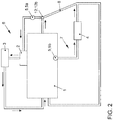
- the Figs. 1 to 3 show internal combustion engines according to the invention in greatly simplified representations and in various embodiments. These each include an internal combustion engine 1 and a cooling system. Furthermore, the internal combustion engines each include an EGR cooler 2, a heating heat exchanger 3, one or two coolant coolers 4 and two or three coolant pumps 5. All of these components are integrated into the cooling system and connected to one another in a fluid-conducting manner via coolant lines of the cooling system.
- the cooling system forms a first cooling circuit 6 into which the internal combustion engine 1 or a cooling channel thereof, a first coolant pump 5a, preferably an electric motor-driven coolant pump, the EGR cooler 2 (or a first heat exchange side thereof) and the heating heat exchanger 3 (or a first heat exchange side thereof ) are integrated.
- a second cooling circuit 7 is also provided, which also integrates the internal combustion engine 1, a second coolant pump 5b, which can be driven, for example, by the internal combustion engine 1 itself, and the coolant cooler 4. Downstream of the coolant cooler 4, a connecting line 8 leads from the second cooling circuit 7 of these internal combustion engines, which opens into a section of the first cooling circuit 6, the downstream of the internal combustion engine 1 and upstream of both the first coolant pump 5a and the EGR arranged downstream of this first coolant pump 5a. Cooler 2 is located.
- a second cooling circuit 7 of the internal combustion engines according to FIGS Fig. 1 and 2 corresponding cooling circuit 9 is also in the internal combustion engine according to FIG Fig. 3 provided, this representing a third cooling circuit 9 therein.
- a second cooling circuit 7 of this internal combustion engine according to FIG Fig. 3 is, however, one or more further heat exchangers 10, the / the
- a charge air cooler and / or a cooler of an exhaust gas turbocharger and / or a cooler of a reducing agent metering device can be integrated, as well as a further coolant cooler 4 and also a further, preferably electric motor-driven coolant pump 5c.
- the second cooling circuit 7 is a low-temperature cooling circuit
- the third cooling circuit 9 is a high-temperature cooling circuit in which the temperature of the coolant flowing therein is designed to be higher than the temperature of the coolant flowing in the low-temperature cooling circuit when the internal combustion engine is at operating temperature.
- the coolant cooler 4 of the second cooling circuit 7 of the internal combustion engine according to FIG Fig. 3 it is accordingly a low-temperature coolant cooler 4a and the coolant cooler 4 of the third cooling circuit 9 is a high-temperature coolant cooler 4b.
- a connecting line 8 is also provided, which in turn opens into a section of the first cooling circuit 6, which is located downstream of the internal combustion engine 1 and upstream of both the first coolant pump 5a and the EGR cooler 2.
- This connecting line 8 emerges from the second cooling circuit 7 and specifically directly downstream of the low-temperature coolant cooler 4b integrated in this second cooling circuit 7.
- an expansion tank 11 is also shown, which is connected in a fluid-conducting manner to the internal combustion engine 1 and specifically both to the first cooling circuit 6 and to the third cooling circuit 9 and, on the other hand, to the second cooling circuit 7.
- This expansion tank 11 represents a reservoir for the coolant of the cooling system and is used to compensate, in particular, temperature-related expansion of the coolant by changing the fill level of the coolant in the expansion tank 11.
- a compensating tank 11 can in particular be partially filled with the coolant and partially with a gas, it being possible to dispense with a structural separation of these two fluids when using a liquid coolant.
- expansion tank 11 can also be used in the internal combustion engines according to FIGS Fig. 1 and 2 may be provided, in which case the expansion tank 11 can preferably be connected in a fluid-conducting manner to both the first cooling circuit 6 and also to the second cooling circuit 7.
- the specific type of integration of the internal combustion engine 1, the EGR cooler 2 and the heating heat exchanger 3 in the respective first cooling circuit 6 of the internal combustion engines according to FIGS Figs. 1 to 3 has, inter alia, the advantage that after a cold start of the internal combustion engine, the coolant conveyed in the first cooling circuit 6 is both Transfer of waste heat from the internal combustion engine 1 as well as by a transfer of waste heat from the EGR cooler 2 is heated before this coolant flows into the heating heat exchanger 3, in which it is also heated by the heating heat exchanger 3 (or a second heat exchange side thereof) Air causes.
- the heating heat exchanger 3 can be implemented quickly after a cold start of the respective internal combustion engine.
- At least the respective second coolant pumps 5b which are in the second cooling circuits 7 of the internal combustion engines according to the Fig. 1 and 2 and in the third cooling circuit 9 of the internal combustion engine according to FIG Fig. 3 are integrated, not or not to operate effectively, so that the largest possible proportion of the waste heat generated by the internal combustion engine 1 can be transferred to the coolant flowing in the respective first cooling circuit 6.
- the fastest possible warming up of the internal combustion engine 1 itself can thereby be ensured.
- relatively cold coolant can in such a case be transferred from the respective second cooling circuit 7 of the internal combustion engine via the associated connecting line 8 into the associated first cooling circuit 6.
- a mixture temperature of the coolant can be set which is lower than the temperature of the coolant which is located in the respective first cooling circuit 6 directly downstream of the internal combustion engine 1.
- This relatively cold coolant then flows through the respective EGR cooler 2 and thereby prevents thermal overloading of this coolant in the EGR cooler 2 and / or the EGR cooler 2 itself.
- a quantity control when transferring coolant from the respective second cooling circuit 7 into the associated first cooling circuit 1 takes place by means of a valve 12, which in the internal combustion engines according to the Fig. 1 and 3 each as an actively controllable control valve 12a is formed, which is integrated into the respective connecting line 8.
- a thermostatic valve 12b is provided, which is arranged in the region of the mouth of the connecting line 8 in the first cooling circuit 6.
- Such an arrangement for the thermostat valve 12b is advantageous in that a so-called pilot flow of coolant, which flows in the first cooling circuit 6 from the internal combustion engine 1, can flow through it.
- This pilot flow is used to temper an expansion element of the thermostat valve 12b in order to realize an automatic opening of the thermostat valve 12b when a defined limit temperature of this coolant flowing in the first cooling circuit 6 and coming from the internal combustion engine 1 is exceeded.
- a thermostatic valve can also be used in the internal combustion engine according to FIG Fig. 3 are used.
Landscapes
- Engineering & Computer Science (AREA)
- Chemical & Material Sciences (AREA)
- Combustion & Propulsion (AREA)
- Mechanical Engineering (AREA)
- General Engineering & Computer Science (AREA)
- Exhaust-Gas Circulating Devices (AREA)
Abstract
Description
- Die Erfindung betrifft eine Brennkraftmaschine, insbesondere eine Brennkraftmaschine für ein Kraftfahrzeug. Die Brennkraftmaschine umfasst ein Kühlsystem, das einen ersten Kühlkreis ausbildet, in den ein Verbrennungsmotor ein AGR-Kühler und vorzugsweise auch ein Heizungswärmetauscher integriert sind.
- Brennkraftmaschinen für Kraftfahrzeuge weisen in der Regel ein Kühlsystem auf, in dem ein Kühlmittel mittels einer oder mehrerer Kühlmittelpumpen in mindestens einem Kühlkreis gepumpt wird und dabei Wärmeenergie von in den oder die Kühlkreise integrierten Komponenten, u.a. von einem Verbrennungsmotor der Brennkraftmaschine, aufnimmt. Diese Wärmeenergie wird anschließend in mindestens einem Kühlmittelkühler sowie üblicherweise zeitweise in einem Heizungswärmetauscher an die Umgebungsluft, im Fall des Heizungswärmetauschers an die zur Klimatisierung des Innenraums des Kraftfahrzeugs vorgesehene Umgebungsluft, abgegeben.
- Im Betrieb von Brennkraftmaschinen kann weiterhin eine Abgasrückführung vorgesehen sein, um die Schadstoffrohemissionen des Verbrennungsmotors der Brennkraftmaschine möglichst gering zu halten. Dabei wird Abgas aus einem Abgasstrang der Brennkraftmaschine abgezweigt und in einen Frischgasstrang der Brennkraftmaschine eingeleitet und dort mit Luft vermischt. Dieses Luft-Abgas-Gemisch wird dann dem Verbrennungsmotor als Frischgas für eine Verbrennung mit Kraftstoff zugeführt. Bekannt sind dabei sowohl Hochdruck- als auch Niederdruckabgasrückführungen, wobei im Fall einer Niederdruckabgasrückführung das Abgas stromab einer Abgasturbine eines Abgasturboladers aus dem Abgasstrang abgezweigt und stromauf eines Frischgasverdichters des Abgasturboladers in den Abgasstrang eingeleitet wird. Bei einer Hochdruckabgasrückführung erfolgt die Abzweigung dagegen, sofern ein Abgasturbolader vorgesehen ist, stromauf der Abgasturbine und die Einleitung stromab des Frischgasverdichters. Für eine Steuerung der Menge des rückgeführten Abgases ist in eine für die Überleitung von Abgas von dem Abgasstrang zu dem Frischgasstrang vorgesehene Abgasrückführleitung ein sogenanntes AGR-Ventil integriert. Weiterhin ist in eine solche Abgasrückführleitung üblicherweise auch noch ein AGR-Kühler zur Kühlung des über die Abgasrückführleitung geführten Abgases vorgesehen. Dadurch sollen negative Auswirkungen einer zu hohen Temperatur des Frischgases auf die Verbrennungsvorgänge in dem Verbrennungsmotor sowie im Fall einer Niederdruckabgasrückführung eine thermische Überlastung des Frischgasverdichters vermieden werden.
- Eine Kühlung von Abgas mittels eines AGR-Kühlers kann entweder direkt oder indirekt mittels Umgebungslufts erfolgen, wobei bei einer indirekten Kühlung in dem AGR-Kühler ein Übergang von Wärmeenergie von dem Abgas auf ein flüssiges Kühlmittel erfolgt, das dann in einem Kühlmittelkühler wieder rückgekühlt wird. Der Vorteil eines solchen mittels einer Kühlflüssigkeit gekühlten AGR-Kühlers liegt in der Realisierung einer hohen Kühlleistung bei relativ kleinem Bauraum.
- Nach einem Kaltstart einer Brennkraftmaschine, d.h. wenn diese und insbesondere auch das in einem Kühlsystem der Brennkraftmaschine vorhandene Kühlmittel eine Temperatur aufweist, die unterhalb einer definierten Grenztemperatur liegt und die insbesondere im Wesentlichen der Umgebungstemperatur entspricht, können in einem AGR-Kühler infolge der direkten Beaufschlagung mit dem Abgas sowie der geringen thermischen Masse des AGR-Kühlers relativ schnell relativ große Mengen an Abwärme anfallen. Dabei kann ein AGR-Kühler insbesondere auch schneller Abwärme als der Verbrennungsmotor der Brennkraftmaschine bereitstellen. Dies kann ausgenutzt werden, um möglichst schnell nach einem Kaltstart der Brennkraftmaschine ein Aufwärmen eines Innenraums eines die Brennkraftmaschine umfassenden Kraftfahrzeugs zu realisieren, indem nicht nur Abwärme des Verbrennungsmotors sondern auch Abwärme des AGR-Kühlers in einem sogenannten Heizungswärmetauscher auf zur Temperierung des Innenraums vorgesehene Luft übertragen wird. Vor diesem Hintergrund kann es sinnvoll sein, das Kühlsystem einer Brennkraftmaschine mit einem Kühlkreis auszugestalten, in den gemäß der eingangs genannten Art der Verbrennungsmotor, eine Kühlmittelpumpe, der AGR-Kühler und vorzugsweise auch der Heizungswärmetauscher integriert ist.
- Ein Nachteil eines solchen Kühlkreises kann darin liegen, dass bei einem betriebswarmen Verbrennungsmotor und bei dessen Betrieb mit relativ großer Leistungsabgabe von dem Verbrennungsmotor relativ viel Abwärme in das Kühlmittel abgegeben wird, das dann anschließend den AGR-Kühler durchströmt. In dem AGR-Kühler kann dann in erheblichem Maße zusätzliche Wärmeenergie in dieses Kühlmittel übertragen werden. Dies könnte zu einem lokalen Sieden des Kühlmittels führen, wodurch dieses irreversibel geschädigt werden könnte.
- Um dieses Problem zu vermeiden wird die maximale Kühlleistung des Kühlmittelkühlers eines solchen Kühlsystems üblicherweise so groß dimensioniert, dass in diesen Fällen dem Verbrennungsmotor so kaltes Kühlmittel zugeführt werden kann, dass es auch in dem AGR-Kühler, der dem Verbrennungsmotor hinsichtlich des betrachteten Kühlkreises nachgeschaltet ist, nicht zu einem Sieden des Kühlmittels kommt. Dieses Vorgehen geht jedoch mit dem Nachteil einher, dass die Kühlleistung des Kühlmittelkühlers für die meisten Betriebszustände der Brennkraftmaschine überdimensioniert ist, was nicht nur mit relativ hohen Kosten sondern auch mit einem entsprechend großen Bauraumbedarf einhergeht.
- Die
DE 10 2006 048 527 A1 offenbart ein Kühlsystem für eine Brennkraftmaschine bestehend aus einem Hauptkühlkreislauf mit zumindest einem Kühlmittelkühler, einer Kühlmittelpumpe und einem Thermostatventil, wobei das Thermostatventil den Kühlmittelkühler erst bei einer definierten Temperatur des Kühlmittels in den Hauptkreislauf einbindet. Um eine wirksame Absenkung der Kühlmitteltemperatur am Eintritt eines AGR-Kühlers zu erreichen, ist der Strömungsweg zwischen dem Kühlmittelkühler und dem Thermostatventil mit zwei separaten Strömungspfaden ausgestaltet ist, wobei der erste Strömungspfad von einem ersten Abschnitt des Kühlernetzes des Kühlmittelkühlers direkt zu dem Thermostatventil führt, während der zweite Strömungspfad von einem zweiten Abschnitt des Kühlernetzes des Kühlmittelkühlers über eine Elektropumpe und den AGR-Kühler zu dem Thermostatventil führt und wobei die beiden Abschnitte des Kühlernetzes durch eine in einem Wasserkasten des Kühlmittelkühlers angeordnete Trennwand baulich voneinander getrennt sind. - Die
JP 2004-204828 A US 2007/0028902 A1 beschrieben. - Die
WO 2012/079715 A1 offenbart eine Brennkraftmaschine mit einem Kühlsystem. Dieses umfasst einen Hauptkühler, einen AGR-Kühler sowie eine Hauptregeleinrichtung, welche in Strömungsrichtung des Kühlmittels vor der Brennkraftmaschine angeordnet ist. Damit einerseits der AGR-Kühler eine geforderte Kühlleistung erbringen kann und andererseits eine maximale Betriebssicherheit des Kühlsystems möglich ist, umfasst dieses noch eine Nebenregeleinrichtung, welche in Strömungsrichtung des Kühlmittels nach dem AGR-Kühler angeordnet ist. Ergänzend oder alternativ kann auch eine Abgasrückführregeleinrichtung vorgesehen sein, die in Strömungsrichtung des Kühlmittels vor dem AGR-Kühler angeordnet ist. - Der Erfindung lag die Aufgabe zugrunde, bei einer Brennkraftmaschine der eingangs genannten Art auf möglichst einfache Weise eine thermische Überlastung des AGR-Kühlers und/oder des darin befindlichen Kühlmittels zu vermeiden.
- Diese Aufgabe wird mittels einer Brennkraftmaschine gemäß dem Patentanspruch 1 gelöst. Ein Verfahren zum Betreiben einer solchen Brennkraftmaschine ist Gegenstand des Patentanspruchs 10. Vorteilhafte Ausgestaltungsformen der erfindungsgemäßen Brennkraftmaschine und bevorzugte Ausführungsformen des erfindungsgemäßen Verfahrens sind Gegenstände der weiteren Patentansprüche und/oder ergeben sich aus der nachfolgenden Beschreibung der Erfindung.
- Erfindungsgemäß ist eine Brennkraftmaschine mit einem Kühlsystem, das einen ersten Kühlkreis ausbildet, in den zumindest ein Verbrennungsmotor beziehungsweise mindestens einen Kühlkanal des Verbrennungsmotors und ein AGR-Kühler beziehungsweise eine Wärmetauschseite eines solchen AGR-Kühlers integriert sind. Der AGR-Kühler ist dabei in eine Abgasrückführleitung integriert, die aus einem Abgasstrang, über den Abgas von dem Verbrennungsmotor abgeführt werden kann, abgeht und die in einen Frischgasstrang, über den dem Verbrennungsmotor Frischgas zugeführt werden kann, mündet. In diese Abgasrückführleitung kann neben dem AGR-Kühler auch noch ein AGR-Ventil zur Steuerung der Menge des über die Abgasrückführleitung rückzuführenden Abgases integriert sein. Erfindungsgemäß ist vorgesehen, dass mittels eines Ventils Kühlmittel aus einem zweiten Kühlkreis des Kühlsystems, der zumindest einen Kühlmittelkühler, d.h. einen ausschließlich für eine Rückkühlung des Kühlmittels vorgesehenen Wärmetauscher, integriert, steuerbar in einen stromab (bezüglich der Strömungsrichtung des Kühlmittels) des Verbrennungsmotors und stromauf (bezüglich der Strömungsrichtung des Kühlmittels) des AGR-Kühlers gelegenen Abschnitt des ersten Kühlkreises überführbar ist.
- Dadurch, dass in diesen zweiten Kühlkreis der Kühlmittelkühler integriert ist, kann für das darin strömende Kühlmittel eine Temperatur realisiert werden, die zumindest dann, wenn die Temperatur des in dem ersten Kühlkreis stromab des Verbrennungsmotors befindlichen Kühlmittels so hoch ist, dass bei gleichzeitiger Durchführung einer Abgasrückführung die Gefahr einer thermischen Überlastung des AGR-Kühlers und/oder des darin befindlichen Kühlmittels besteht, niedriger ist. Durch ein Abzweigen eines Teils dieses relativ kalten Kühlmittels aus dem zweiten Kühlkreis und das Einleiten dieses Kühlmittels in den stromab des Verbrennungsmotors und stromauf des AGR-Kühlers gelegenen Abschnitt des ersten Kühlkreis kann eine relativ niedrige Temperatur des in den AGR-Kühler eintretenden Kühlmittels realisiert werden, wodurch trotz der relativ hohen Temperatur, die das Kühlmittel des ersten Kühlkreises unmittelbar stromab des Verbrennungsmotors aufweist, die Gefahr einer thermischen Überlastung des AGR-Kühlers und/oder des darin befindlichen Kühlmittels vermieden werden kann.
- Dementsprechend sieht ein erfindungsgemäßes Verfahren vor, dass bei einem Überschreiten eines ersten Grenzwerts für die Temperatur, die das in dem ersten Kühlkreis strömende Kühlmittels innerhalb des Verbrennungsmotors oder unmittelbar stromab des Verbrennungsmotors aufweist, Kühlmittel aus dem zweiten Kühlkreis derart, d.h. in einem entsprechend großen Mengenstrom, in den ersten Kühlkreis überführt wird, dass die Temperatur, die das Kühlmittel in dem AGR-Kühler oder stromab davon aufweist, unterhalb eines zweiten Grenzwert liegt beziehungsweise bleibt.
- Gemäß einer bevorzugten Ausgestaltungsform einer erfindungsgemäßen Brennkraftmaschine kann vorgesehen sein, dass der Abschnitt des ersten Kühlkreises, in den das Kühlmittel aus dem zweiten Kühlkreis überführbar ist, stromauf (bezüglich der Strömungsrichtung des Kühlmittels) einer Kühlmittelpumpe des ersten Kühlkreises, die zur Förderung des insbesondere flüssigen Kühlmittels in zumindest dem ersten Kühlkreis vorgesehen ist, liegt. Dadurch kann eine Saugwirkung der Kühlmittelpumpe genutzt werden, um Kühlmittel aus dem zweiten Kühlkreis in den ersten Kühlkreis zu überführen.
- Weiterhin bevorzugt kann vorgesehen sein, dass in den ersten Kühlkreis auch ein Heizungswärmetauscher integriert ist, wodurch die bereits beschriebene, vorteilhafte Heizwirkung mittels des Heizungswärmetauschers, insbesondere für einen Innenraum eines eine solche erfindungsgemäße Brennkraftmaschine umfassenden Kraftfahrzeugs, realisiert werden kann. Dabei kann es insbesondere auch vorteilhaft sein, dass in den ersten Kühlkreis ausschließlich der Verbrennungsmotor, der AGR-Kühler sowie der Heizungswärmetauscher als für einen Wärmetausch vorgesehene Komponenten integriert sind. Dadurch kann realisiert werden, dass Abwärme, die nach einem Kaltstart der Brennkraftmaschine von dem Verbrennungsmotor und insbesondere auch von dem AGR-Kühler auf das in dem ersten Kühlkreis strömende Kühlmittel übertragen wurde, ausschließlich in dem Heizungswärmetauscher genutzt werden kann und nicht zusätzlich auch auf andere in das Kühlsystem integrierte Komponenten übertragen wird. Dadurch kann eine besonders schnelle Wirksamkeit des Heizungswärmetauschers nach einem solchen Kaltstart realisiert werden.
- Gemäß einer bevorzugten Ausgestaltungsform kann vorgesehen sein, dass der zweite Kühlkreis auch den Verbrennungsmotor integriert, wobei eine Verbindungsleitung, über die Kühlmittel von dem zweiten Kühlkreis in den ersten Kühlkreis überführbar ist, aus einem Abschnitt des zweiten Kühlkreises abgeht, der stromab des Kühlmittelkühlers und stromauf des Verbrennungsmotors gelegen ist. Durch das Abzweigen von Kühlmittel aus dem zweiten Kühlkreis vorzugsweise möglichst unmittelbar stromab des Kühlmittelkühlers (d.h. zwischen dem Kühlmittelkühler und dem Abzweig liegt keine Funktionskomponente bzw. liegt ausschließlich ein ausschließlich zur Leitung des Kühlmittels vorgesehener Abschnitt des zweiten Kühlkreises) kann dieses beim Einleiten in den ersten Kühlkreis eine möglichst niedrige Temperatur aufweisen, so dass demnach auch eine möglichst geringe Mischungstemperatur des in den AGR-Kühler eintretenden Kühlmittels realisiert werden kann.
- Gemäß einer weiteren bevorzugten Ausgestaltungsform kann vorgesehen sein, dass der zweite Kühlkreis einen oder mehrere weiterer Wärmetauscher integriert, der/die kein(e) Kühlmittelkühler ist/sind und der/die insbesondere ein Ladeluftkühler und/oder ein Kühler eines Abgasturboladers und/oder ein Kühler einer Reduktionsmitteldosiervorrichtung, mittels der ein Reduktionsmittel in Abgas des Verbrennungsmotors 1 einbringbar ist, sein kann/können. Eine Verbindungsleitung, über die Kühlmittel von dem zweiten Kühlkreis in den ersten Kühlkreis überführbar ist, geht dann aus einem Abschnitt des zweiten Kühlkreises ab, der stromab, vorzugsweise unmittelbar stromab, oder stromauf des Kühlmittelkühlers gelegen ist.
- Bei einem Ladeluftkühler handelt es sich um einen Wärmetauscher, der stromab (bezüglich der Strömungsrichtung des Frischgases) eines Frischgasverdichters in den Frischgasstrang der Brennkraftmaschine integriert ist und der (beziehungsweise eine Wärmetauschseite davon) in dem vorliegenden Fall von dem in dem zweiten Kühlkreis strömenden Kühlmittel durchströmt wird, um eine Kühlung des diesen (beziehungsweise eine andere Wärmetauschseite davon) ebenfalls durchströmenden Frischgases, das aufgrund einer Verdichtung mittels des Frischgasverdichters eine relativ hohe Temperatur aufweisen kann, zu bewirken.
- Besonders bevorzugt kann dann noch vorgesehen sein, dass der zweite Kühlkreis ein Niedertemperaturkühlkreis und der darin integrierte Kühlmittelkühler ein Niedertemperaturkühlmittelkühler ist, so dass der Bereich, in dem die Temperatur des darin strömende Kühlmittels bei betriebswarmer Brennkraftmaschine liegt, niedriger ausgelegt ist als der Bereich, in dem die Temperatur des Kühlmittels liegt, das in einem dritten Kühlkreis, der zumindest einen Hochtemperaturkühlmittelkühler sowie den Verbrennungsmotor integriert, strömt. Infolge dieses relativ niedrigen Betriebstemperaturbereichs für das in dem Niedertemperaturkühlkreis strömende Kühlmittel besteht die Möglichkeit, Kühlmittel für ein Überführen in den ersten Kühlkreis auch stromauf des Niedertemperaturkühlmittelkühlers abzuzweigen.
- Sofern vorgesehen ist, dass der zweite oder der dritte Kühlkreis, wie auch der erste Kühlkreis, den Verbrennungsmotor integriert, kann einerseits vorgesehen sein, dass dabei derselbe Kühlkanal Teil des ersten Kühlkreises sowie Teil des zweiten oder dritten Kühlkreises ist. Dadurch kann innerhalb des Verbrennungsmotors ein Austausch von Kühlmittel zwischen diesen Kühlkreisen erfolgen. Ebenso besteht die Möglichkeit, dass ein erster Kühlkanal Teil des ersten Kühlkreises ist und ein davon separierter zweiter Kühlkanal Teil des zweiten oder dritten Kühlkreises ist, so dass dann zumindest in dem Verbrennungsmotor kein Austausch von Kühlmittel zwischen diesen Kühlkreisen erfolgen kann.
- Das Ventil, mittels dessen ein Überführen von Kühlmittel aus dem zweiten Kühlkreis in den ersten Kühlkreis steuerbar ist, kann in vorteilhafter Weise einerseits als aktiv mittels einer Steuerungsvorrichtung ansteuerbares damit hinsichtlich des Kühlmitteldurchlasses verstellbares Steuerventil oder als sich selbsttätig aufgrund einer daran anliegenden Temperatur einstellendes Thermostatventil oder als Kombination aus einem solchen Steuerventil und einem solchen Thermostatventil ausgebildet sein. Bevorzugt vorgesehen ist eine Ausgestaltung als Steuerventil, weil dadurch eine jederzeit optimierte Überführung von Kühlmittel aus dem zweiten Kühlkreis in den ersten Kühlkreis realisierbar ist. Ein Vorteil der Ausgestaltung als Thermostatventil kann jedoch in den relativ geringen Kosten für ein solches Thermostatventil und in der nicht erforderlichen aktiven Ansteuerung liegen.
- Weiterhin bevorzugt kann vorgesehen sein, dass das Ventil derart ausgebildet und in den ersten Kühlkreis integriert ist, dass mittels diesem bedarfsweise ausschließlich aus dem zweiten Kühlkreis stammendes Kühlmittel dem AGR-Kühler zuführbar ist. Auf diese Weise kann dem AGR-Kühler besonders kaltes Kühlmittel zugeführt und damit für diesen eine besonders hohe Kühlleistung realisiert werden. Für diesen Zweck kann das Ventil beispielsweise als Drehschieberventil ausgebildet sein, das insbesondere im Bereich der Mündung der Verbindungsleitung, die den zweiten Kühlkreis mit dem ersten Kühlkreis verbindet, in den ersten Kühlkreis integriert sein kann.
- Bei dem Verbrennungsmotor einer erfindungsgemäßen Brennkraftmaschine kann es sich um einen (selbstzündenden und qualitätsgeregelten) Dieselmotor oder um einen (fremdgezündeten und quantitätsgeregelten) Ottomotor oder um eine Kombination aus Diesel- und Ottomotor, z.B. um einen Verbrennungsmotor mit homogener Kompressionszündung, handeln. Der Verbrennungsmotor kann dabei grundsätzlich mit einem beliebigen Kraftstoff, der überwiegend aus Wasserstoff und/oder Kohlenwasserstoffen besteht, insbesondere mit einem derzeit üblichen Flüssigkraftstoff (d.h. mit Diesel-Kraftstoff oder Benzin) oder mit einem bei Umgebungsbedingungen gasförmigen Kraftstoff (insbesondere mit Erdgas (CNG), LNG, LPG oder Wasserstoff) betrieben werden beziehungsweise betreibbar sein.
- Eine erfindungsgemäße Brennkraftmaschine kann insbesondere Teil eines Kraftfahrzeugs sein. Dabei kann der Verbrennungsmotor der Brennkraftmaschine insbesondere zur direkten oder indirekten Bereitstellung der Antriebsleistung für das Kraftfahrzeug vorgesehen sein. Bei einem solchen Kraftfahrzeug kann es sich insbesondere um ein radbasiertes und nicht schienengebundenen Kraftfahrzeug (vorzugsweise ein PKW oder ein LKW) handeln.
- Die Erfindung wird nachfolgend anhand von in den Zeichnungen dargestellten Ausgestaltungsbeispielen näher erläutert. In den Zeichnungen zeigt:
- Fig. 1:
- eine erfindungsgemäße Brennkraftmaschine gemäß einer ersten Ausgestaltungsform;
- Fig. 2:
- eine erfindungsgemäße Brennkraftmaschine gemäß einer zweiten Ausgestaltungsform; und
- Fig. 3:
- eine erfindungsgemäße Brennkraftmaschine gemäß einer dritten Ausgestaltungsform.
- Die
Fig. 1 bis 3 zeigen in stark vereinfachten Darstellungen und in verschiedenen Ausgestaltungsformen erfindungsgemäße Brennkraftmaschinen. Diese umfassen jeweils einen Verbrennungsmotor 1 sowie ein Kühlsystem. Weiterhin umfassen die Brennkraftmaschinen jeweils einen AGR-Kühler 2, einen Heizungswärmetauscher 3, einen oder zwei Kühlmittelkühler 4 sowie zwei oder drei Kühlmittelpumpen 5. Sämtliche dieser Komponenten sind in das Kühlsystem integriert und dazu über Kühlmittelleitungen des Kühlsystems fluidleitend miteinander verbunden. Das Kühlsystem bildet einen ersten Kühlkreis 6 aus, in den der Verbrennungsmotor 1 beziehungsweise ein Kühlkanal davon, eine erste, vorzugsweise elektromotorisch antreibbare Kühlmittelpumpe 5a, der AGR-Kühler 2 (beziehungsweise eine erste Wärmetauschseite davon) sowie der Heizungswärmetauscher 3 (beziehungsweise eine erste Wärmetauschseite davon) integriert sind. - Bei den Brennkraftmaschinen gemäß den
Fig. 1 und2 ist weiterhin ein zweiter Kühlkreis 7 vorgesehen, der ebenfalls den Verbrennungsmotor 1, eine zweite Kühlmittelpumpe 5b, die beispielsweise von dem Verbrennungsmotor 1 selbst antreibbar ist, sowie den Kühlmittelkühler 4 integriert. Stromab des Kühlmittelkühlers 4 geht aus dem zweiten Kühlkreis 7 dieser Brennkraftmaschinen eine Verbindungsleitung 8 ab, die in einen Abschnitt des ersten Kühlkreises 6 mündet, der stromab des Verbrennungsmotors 1 und stromauf sowohl der ersten Kühlmittelpumpe 5a als auch des stromab dieser ersten Kühlmittelpumpe 5a angeordneten AGR-Kühlers 2 gelegen ist. - Ein dem zweiten Kühlkreis 7 der Brennkraftmaschinen gemäß den
Fig. 1 und2 entsprechender Kühlkreis 9 ist auch bei der Brennkraftmaschine gemäß derFig. 3 vorgesehen, wobei dieser darin einen dritten Kühlkreis 9 darstellt. In einen zweiten Kühlkreis 7 dieser Brennkraftmaschine gemäß derFig. 3 ist dagegen ein oder sind mehrere weitere Wärmetauscher 10, der/die beispielsweise ein Ladeluftkühler und/oder ein Kühler eines Abgasturboladers und/oder ein Kühler einer Reduktionsmitteldosiervorrichtung sein kann/können, sowie ein weiterer Kühlmittelkühler 4 und zudem eine weitere, vorzugsweise elektromotorisch antreibbar Kühlmittelpumpe 5c integriert. Vorgesehen ist, dass der zweite Kühlkreis 7 ein Niedertemperaturkühlkreis ist, während der dritte Kühlkreis 9 ein Hochtemperaturkühlkreis ist, in dem die Temperatur des darin strömenden Kühlmittels bei betriebswarmer Brennkraftmaschine höher liegend ausgelegt ist als die Temperatur des in dem Niedertemperaturkühlkreis strömenden Kühlmittels. Bei dem Kühlmittelkühler 4 des zweiten Kühlkreises 7 der Brennkraftmaschine gemäß derFig. 3 handelt es sich demnach um einen Niedertemperaturkühlmittelkühler 4a und bei dem Kühlmittelkühler 4 des dritten Kühlkreises 9 um einen Hochtemperaturkühlmittelkühler 4b. - Bei der Brennkraftmaschine gemäß der
Fig. 3 ist ebenfalls eine Verbindungsleitung 8 vorgesehen, die wiederum in einen Abschnitt des ersten Kühlkreises 6 mündet, der stromab des Verbrennungsmotors 1 und stromauf sowohl der ersten Kühlmittelpumpe 5a als auch des AGR-Kühlers 2 gelegen ist. Diese Verbindungsleitung 8 geht aus dem zweiten Kühlkreis 7 und konkret unmittelbar stromab des in diesen zweiten Kühlkreis 7 integrierten Niedertemperaturkühlmittelkühlers 4b ab. - In der
Fig. 3 ist weiterhin noch ein Ausgleichsbehälter 11 dargestellt, der einerseits mit dem Verbrennungsmotor 1 und dabei konkret sowohl mit dem ersten Kühlkreis 6 als auch mit dem dritten Kühlkreis 9, und andererseits mit dem zweiten Kühlkreis 7 fluidleitend verbunden ist. Dieser Ausgleichsbehälter 11 stellt ein Reservoir für das Kühlmittel des Kühlsystems dar und dient dazu, insbesondere temperaturbedingte Ausdehnungen des Kühlmittels durch eine Veränderung des Füllstands des Kühlmittels in dem Ausgleichsbehälter 11 auszugleichen. Dazu kann ein solcher Ausgleichsbehälter 11 insbesondere teilweise mit dem Kühlmittel und teilweise mit einem Gas gefüllt sein, wobei bei einer Verwendung eines flüssigen Kühlmittels auf eine strukturelle Trennung dieser beiden Fluide verzichtet werden kann. - Ein solcher Ausgleichsbehälter 11 kann auch bei den Brennkraftmaschinen gemäß den
Fig. 1 und2 vorgesehen sein, wobei dann der Ausgleichsbehälter 11 vorzugsweise sowohl mit dem ersten Kühlkreis 6 als auch mit dem zweiten Kühlkreis 7 fluidleitend verbunden sein kann. - Die konkrete Art der Integration des Verbrennungsmotors 1, des AGR-Kühlers 2 und des Heizungswärmetauschers 3 in den jeweiligen ersten Kühlkreis 6 der Brennkraftmaschinen gemäß den
Fig. 1 bis 3 weist u.a. den Vorteil auf, dass nach einem Kaltstart der Brennkraftmaschine das in dem ersten Kühlkreis 6 geförderte Kühlmittel sowohl durch einen Übergang von Abwärme von dem Verbrennungsmotor 1 als auch durch einen Übergang von Abwärme von dem AGR-Kühler 2 erwärmt wird, bevor dieses Kühlmittel in den Heizungswärmetauscher 3 strömt, in dem dieses ein Aufwärmen von den Heizungswärmetauscher 3 ebenfalls (beziehungsweise eine zweite Wärmetauschseite davon) durchströmende Luft bewirkt. Dadurch kann eine schnelle Wirksamkeit des Heizungswärmetauschers 3 nach einem Kaltstart der jeweiligen Brennkraftmaschine realisiert werden. Während einer solchen Aufwärmphase im Betrieb der Brennkraftmaschinen kann vorgesehen sein, zumindest die jeweiligen zweiten Kühlmittelpumpen 5b, die in die zweiten Kühlkreise 7 der Brennkraftmaschinen gemäß denFig. 1 und2 sowie in den dritten Kühlkreis 9 der Brennkraftmaschine gemäß derFig. 3 integriert sind, nicht oder nicht wirksam zu betreiben, so dass ein möglichst großer Anteil der von dem Verbrennungsmotor 1 erzeugten Abwärme auf das in dem jeweiligen ersten Kühlkreis 6 strömende Kühlmittel übertragen werden kann. Zudem kann dadurch ein möglichst schnelles Aufwärmen des Verbrennungsmotors 1 selbst gewährleistet werden. - Sofern der Verbrennungsmotor 1 der jeweiligen Brennkraftmaschine und damit auch das diesen durchströmende Kühlmittel eine definierte Betriebstemperatur erreicht hat, könnte es aufgrund der Integration sowohl des Verbrennungsmotors 1 als auch des AGR-Kühlers 2 in denselben (ersten) Kühlkreis 6 zu einer thermischen Überlastung des Kühlmittels in dem AGR-Kühler 2 oder auch des AGR-Kühlers 2 selbst kommen. Dies gilt insbesondere, wenn der jeweilige Verbrennungsmotor 1 mit relativ hoher Betriebslast betrieben wird, was mit relativ hohen Abgastemperaturen einhergehen kann, und gleichzeitig eine relativ hohe AGR-Rate eingestellt ist, so dass relativ große Massenströme an Abgas über den jeweiligen AGR-Kühler 2 (beziehungsweise eine zweite Wärmetauschseite davon) geführt werden. Um eine solche thermische Überlastung zu vermeiden, kann in einem solchen Fall relativ kaltes Kühlmittel aus dem jeweiligen zweiten Kühlkreis 7 der Brennkraftmaschinen über die dazugehörige Verbindungsleitung 8 in den dazugehörigen ersten Kühlkreis 6 überführt werden. Dadurch kann sich im Bereich der Mündung der Verbindungsleitung 8 eine Mischungstemperatur des Kühlmittels einstellen, die niedriger ist als die Temperatur des Kühlmittels, das sich in dem jeweiligen ersten Kühlkreis 6 unmittelbar stromab des Verbrennungsmotors 1 befindet. Dieses relativ kalte Kühlmittel durchströmt anschließend den jeweiligen AGR-Kühler 2 und verhindert dadurch eine thermische Überlastung dieses Kühlmittels in dem AGR Kühler 2 und/oder des AGR Kühlers 2 selbst.
- Eine Mengensteuerung bei einem Überführen von Kühlmittel aus dem jeweiligen zweiten Kühlkreis 7 in den dazugehörigen ersten Kühlkreis 1 erfolgt mittels eines Ventils 12, das bei den Brennkraftmaschinen gemäß den
Fig. 1 und3 jeweils als aktiv ansteuerbares Steuerventil 12a ausgebildet ist, das in die jeweilige Verbindungsleitung 8 integriert ist. Im Gegensatz dazu ist bei der Brennkraftmaschine gemäß derFig. 2 ein Thermostatventil 12b vorgesehen, das im Bereich der Mündung der Verbindungsleitung 8 in den ersten Kühlkreis 6 angeordnet ist. Eine solche Anordnung für das Thermostatventil 12b ist dahingehend vorteilhaft, dass dieses von einer sogenannten Pilotströmung von Kühlmittel, das in dem ersten Kühlkreis 6 strömend von dem Verbrennungsmotor 1 kommt, durchströmt werden kann. Diese Pilotströmung dient dazu, ein Dehnstoffelement des Thermostatventils 12b zu temperieren, um ein selbsttätiges Öffnen des Thermostatventils 12b bei einem Überschreiten einer definierten Grenztemperatur dieses in dem ersten Kühlkreis 6 strömenden und von dem Verbrennungsmotor 1 kommenden Kühlmittels zu realisieren. Ein solches Thermostatventil kann auch bei der Brennkraftmaschine gemäß derFig. 3 zum Einsatz kommen. -
- 1
- Verbrennungsmotor
- 2
- AGR-Kühler
- 3
- Heizungswärmetauscher
- 4
- Kühlmittelkühler
- 4a
- Niedertemperaturkühlmittelkühler
- 4b
- Hochtemperaturkühlmittelkühler
- 5
- Kühlmittelpumpe
- 5a
- erste Kühlmittelpumpe
- 5b
- zweite Kühlmittelpumpe
- 5c
- weitere Kühlmittelpumpe
- 6
- erster Kühlkreis
- 7
- zweiter Kühlkreis
- 8
- Verbindungsleitung
- 9
- dritter Kühlkreis
- 10
- weiterer Wärmetauscher
- 11
- Ausgleichsbehälter
- 12
- Ventil
- 12a
- Steuerventil
- 12b
- Thermostatventil
Claims (10)
- Brennkraftmaschine mit einem Kühlsystem, das einen ersten Kühlkreis (6) ausbildet, in den ein Verbrennungsmotor (1) und ein AGR-Kühler (2) integriert sind, dadurch gekennzeichnet, dass mittels eines Ventils (12) Kühlmittel aus einem zweiten Kühlkreis (7), der zumindest einen Kühlmittelkühler integriert, steuerbar in einen stromab des Verbrennungsmotors (1) und stromauf des AGR-Kühlers (2) gelegenen Abschnitt des ersten Kühlkreises (6) überführbar ist.
- Brennkraftmaschine gemäß Anspruch 1, dadurch gekennzeichnet, dass der Abschnitt des ersten Kühlkreises (8), in den das aus dem zweiten Kühlkreis (7) stammende Kühlmittel überführbar ist, stromauf einer Kühlmittelpumpe (5a) liegt.
- Brennkraftmaschine gemäß Anspruch 1 oder 2, dadurch gekennzeichnet, dass in den ersten Kühlkreis (6) auch ein Heizungswärmetauscher (3) integriert ist.
- Brennkraftmaschine gemäß einem der Ansprüche 1 bis 3, dadurch gekennzeichnet, dass auch der zweite Kühlkreis (7) den Verbrennungsmotor (1) integriert, wobei eine Verbindungsleitung (8), über die Kühlmittel von dem zweiten Kühlkreis (7) in den ersten Kühlkreis (6) überführbar ist, aus einem Abschnitt des zweiten Kühlkreises (7) abgeht, der stromab des Kühlmittelkühlers (4) und stromauf des Verbrennungsmotors (1) gelegen ist.
- Brennkraftmaschine gemäß einem der Ansprüche 1 bis 3, dadurch gekennzeichnet, dass der zweite Kühlkreis (7) einen weiteren Wärmetauscher (10) integriert, wobei eine Verbindungsleitung (8), über die Kühlmittel von dem zweiten Kühlkreis (7) in den ersten Kühlkreis (6) überführbar ist, aus einem Abschnitt des zweiten Kühlkreises (7) abgeht, der stromab oder stromauf des Kühlmittelkühlers (4) gelegen ist.
- Brennkraftmaschine gemäß Anspruch 5, dadurch gekennzeichnet, dass der zweite Kühlkreis (7) ein Niedertemperaturkühlkreis und der darin integrierte Kühlmittelkühler (4) ein Niedertemperaturkühlmittelkühler (4a) ist und dass ein dritter Kühlkreis (9) vorgesehen ist, der einen Hochtemperaturkühlmittelkühler (4b) sowie den Verbrennungsmotor (1) integriert.
- Brennkraftmaschine gemäß einem der vorhergehenden Ansprüche, dadurch gekennzeichnet, dass das Ventil (12) als Steuerventil (12a) und/oder als Thermostatventil (12b) ausgebildet ist.
- Brennkraftmaschine gemäß einem der vorhergehenden Ansprüche, dadurch gekennzeichnet, dass das Ventil (12) derart ausgebildet und in den ersten Kühlkreis (6) integriert ist, dass mittels diesem bedarfsweise ausschließlich aus dem zweiten Kühlkreis (7) stammendes Kühlmittel dem AGR-Kühler (2) zuführbar ist.
- Brennkraftmaschine gemäß Anspruch 8, dadurch gekennzeichnet, dass das Ventil (12) als Drehschieberventil ausgebildet ist.
- Verfahren zum Betreiben einer Brennkraftmaschine gemäß einem der vorhergehenden Ansprüche, dadurch gekennzeichnet, dass bei einem Überschreiten eines ersten Grenzwerts für die Temperatur, die das in dem ersten Kühlkreis (6) strömende Kühlmittels in dem Verbrennungsmotor (1) oder unmittelbar stromab des Verbrennungsmotors (1) aufweist, Kühlmittel aus dem zweiten Kühlkreis (7) derart in den ersten Kühlkreis (6) überführt wird, dass die Temperatur, die das Kühlmittel in dem AGR-Kühler (2) oder unmittelbar stromab davon aufweist, unterhalb eines zweiten Grenzwerts liegt.
Applications Claiming Priority (1)
| Application Number | Priority Date | Filing Date | Title |
|---|---|---|---|
| DE102019208959.3A DE102019208959A1 (de) | 2019-06-19 | 2019-06-19 | Brennkraftmaschine mit einem einen AGR-Kühler umfassenden Kühlsystem |
Publications (2)
| Publication Number | Publication Date |
|---|---|
| EP3754166A1 true EP3754166A1 (de) | 2020-12-23 |
| EP3754166B1 EP3754166B1 (de) | 2023-04-19 |
Family
ID=70921873
Family Applications (1)
| Application Number | Title | Priority Date | Filing Date |
|---|---|---|---|
| EP20177332.2A Active EP3754166B1 (de) | 2019-06-19 | 2020-05-29 | Brennkraftmaschine mit einem einen agr-kühler umfassenden kühlsystem |
Country Status (3)
| Country | Link |
|---|---|
| EP (1) | EP3754166B1 (de) |
| CN (1) | CN112112722B (de) |
| DE (1) | DE102019208959A1 (de) |
Citations (9)
| Publication number | Priority date | Publication date | Assignee | Title |
|---|---|---|---|---|
| DE10224063A1 (de) * | 2002-05-31 | 2003-12-11 | Daimler Chrysler Ag | Verfahren zur Wärmeregulierung einer Brennkraftmaschine für Fahrzeuge |
| WO2004022940A1 (en) * | 2002-09-04 | 2004-03-18 | Ford Global Technologies, Llc | Engine cooling systems |
| JP2004204828A (ja) | 2002-12-26 | 2004-07-22 | Sakura Shokai:Kk | エンジン排気ガスのNOx低減装置 |
| US20070028902A1 (en) | 2005-08-02 | 2007-02-08 | Toyota Jidosha Kabushiki Kaisha | EGR cooler system |
| FR2890697A1 (fr) * | 2005-09-13 | 2007-03-16 | Renault Sas | Moteur de vehicule comprenant un circuit de gaz recircules refroidis a basse temperature |
| DE102006048527A1 (de) | 2006-10-13 | 2008-04-17 | Volkswagen Ag | Kühlkreislauf für eine Brennkraftmaschine |
| DE102010035174A1 (de) * | 2010-08-23 | 2012-02-23 | Gm Global Technology Operations Llc (N.D.Ges.D. Staates Delaware) | Kühlsystem für ein Fahrzeug mit einem Abgasrückführungssystem und Verfahren zur Kühlung eines Fahrzeugs mit einem Abgasrückführungssystem |
| WO2012079715A1 (de) | 2010-12-18 | 2012-06-21 | Volkswagen Aktiengesellschaft | Kühlkreis für eine brennkraftmaschine mit einer abgasrückführung und verfahren zum betrieb einer brennkraftmaschine mit einem solchen kühlkreis |
| DE102010064472B3 (de) * | 2010-02-10 | 2015-05-13 | Ford Global Technologies, Llc | Verfahren zum Betrieb eines Kühlsystems und Kühlsystem |
Family Cites Families (1)
| Publication number | Priority date | Publication date | Assignee | Title |
|---|---|---|---|---|
| DE102010001752B4 (de) * | 2010-02-10 | 2012-06-21 | Ford Global Technologies, Llc | Kühlsystem |
-
2019
- 2019-06-19 DE DE102019208959.3A patent/DE102019208959A1/de active Pending
-
2020
- 2020-05-29 EP EP20177332.2A patent/EP3754166B1/de active Active
- 2020-06-19 CN CN202010564779.5A patent/CN112112722B/zh active Active
Patent Citations (9)
| Publication number | Priority date | Publication date | Assignee | Title |
|---|---|---|---|---|
| DE10224063A1 (de) * | 2002-05-31 | 2003-12-11 | Daimler Chrysler Ag | Verfahren zur Wärmeregulierung einer Brennkraftmaschine für Fahrzeuge |
| WO2004022940A1 (en) * | 2002-09-04 | 2004-03-18 | Ford Global Technologies, Llc | Engine cooling systems |
| JP2004204828A (ja) | 2002-12-26 | 2004-07-22 | Sakura Shokai:Kk | エンジン排気ガスのNOx低減装置 |
| US20070028902A1 (en) | 2005-08-02 | 2007-02-08 | Toyota Jidosha Kabushiki Kaisha | EGR cooler system |
| FR2890697A1 (fr) * | 2005-09-13 | 2007-03-16 | Renault Sas | Moteur de vehicule comprenant un circuit de gaz recircules refroidis a basse temperature |
| DE102006048527A1 (de) | 2006-10-13 | 2008-04-17 | Volkswagen Ag | Kühlkreislauf für eine Brennkraftmaschine |
| DE102010064472B3 (de) * | 2010-02-10 | 2015-05-13 | Ford Global Technologies, Llc | Verfahren zum Betrieb eines Kühlsystems und Kühlsystem |
| DE102010035174A1 (de) * | 2010-08-23 | 2012-02-23 | Gm Global Technology Operations Llc (N.D.Ges.D. Staates Delaware) | Kühlsystem für ein Fahrzeug mit einem Abgasrückführungssystem und Verfahren zur Kühlung eines Fahrzeugs mit einem Abgasrückführungssystem |
| WO2012079715A1 (de) | 2010-12-18 | 2012-06-21 | Volkswagen Aktiengesellschaft | Kühlkreis für eine brennkraftmaschine mit einer abgasrückführung und verfahren zum betrieb einer brennkraftmaschine mit einem solchen kühlkreis |
Also Published As
| Publication number | Publication date |
|---|---|
| EP3754166B1 (de) | 2023-04-19 |
| CN112112722B (zh) | 2023-02-21 |
| DE102019208959A1 (de) | 2020-12-24 |
| CN112112722A (zh) | 2020-12-22 |
Similar Documents
| Publication | Publication Date | Title |
|---|---|---|
| DE102009015656B4 (de) | Modulare Abgasrückführungsanlage, Motorsystem und Verfahren zum Kühlen eines Abgasrückführungsgasstroms | |
| DE102015216420B4 (de) | Kühlanordnung zur Ladeluftkühlung | |
| EP3417164B1 (de) | Brennkraftmaschine und verfahren zum betreiben einer brennkraftmaschine | |
| WO2017157754A1 (de) | Brennkraftmaschine und verfahren zum betreiben einer brennkraftmaschine | |
| WO2008064814A1 (de) | Betriebsverfahren für eine wahlweise mit flüssigem und gasförmigem kraftstoff betreibbare brennkraftmaschine und kraftstoffzuführsystem | |
| DE102010034131A1 (de) | Verfahren zur Regelung der Temperatur des Gassystems einer Brennkraftmaschine | |
| EP3530899A1 (de) | Kühlsystem und brennkraftmaschine | |
| DE19540591A1 (de) | Kühlmittelkreislauf für Kraftfahrzeuge | |
| DE102018104105A1 (de) | Brennkraftmaschine und Kraftfahrzeug | |
| EP3470638B1 (de) | Verfahren zum betreiben einer brennkraftmaschine, brennkraftmaschine und kraftfahrzeug | |
| EP3739180B1 (de) | Kühlkreislaufanordnung einer verbrennungskraftmaschine | |
| DE102017209484A1 (de) | Kühlvorrichtung, Kraftfahrzeug und Verfahren zum Betreiben einer Kühlvorrichtung | |
| EP3377740B1 (de) | Ladegaskühlkreis und verfahren zum temperieren von ladegas | |
| DE102014213042A1 (de) | System zur aktiven Konditionierung eines gasförmigen Ansaugfluids eines Verbrennungsmotors | |
| EP3754166B1 (de) | Brennkraftmaschine mit einem einen agr-kühler umfassenden kühlsystem | |
| WO2009053025A1 (de) | Vorrichtung und verfahren zur rückführung von abgas eines verbrennungsmotors | |
| WO2025031633A1 (de) | Thermomanagementsystem mit kühlmittelkreislauf und wärmeübertrager in thermischer wirkverbindung mit einem kältemittelkreislauf, verfahren zum betrieb eines solchen thermomanagementsystems und kraftfahrzeug mit einem solchen thermomanagementsystem | |
| DE102007019089A1 (de) | Abgaswärmetauscher, Abgaswärmetauschersystem, Brennkraftmotor und Verfahren zum Behandeln von Abgasen eines Brennkraftmotors | |
| EP2171245A1 (de) | Vorrichtung zur kühlung von rückgeführtem abgas eines verbrennungsmotors | |
| DE102006008826A1 (de) | Thermische Entdrosselung bei aufgeladenen Verbrennungsmotoren | |
| EP3470645A1 (de) | Verfahren zum betreiben einer brennkraftmaschine, brennkraftmaschine und kraftfahrzeug | |
| DE102020213031A1 (de) | Brennkraftmaschine mit einer temperierbaren Druckregelvorrichtung für einen gasförmigen Kraftstoff | |
| EP1727976B1 (de) | Brennkraftmaschine mit befeuchtungseinrichtung und wärmetauscher | |
| EP2278148A1 (de) | Brennkraftmaschine mit Abgasrückführung und Verfahren zum Betreiben einer derartigen Brennkraftmaschine | |
| EP3530900A1 (de) | Brennkraftmaschine und kraftfahrzeug |
Legal Events
| Date | Code | Title | Description |
|---|---|---|---|
| PUAI | Public reference made under article 153(3) epc to a published international application that has entered the european phase |
Free format text: ORIGINAL CODE: 0009012 |
|
| STAA | Information on the status of an ep patent application or granted ep patent |
Free format text: STATUS: THE APPLICATION HAS BEEN PUBLISHED |
|
| AK | Designated contracting states |
Kind code of ref document: A1 Designated state(s): AL AT BE BG CH CY CZ DE DK EE ES FI FR GB GR HR HU IE IS IT LI LT LU LV MC MK MT NL NO PL PT RO RS SE SI SK SM TR |
|
| AX | Request for extension of the european patent |
Extension state: BA ME |
|
| STAA | Information on the status of an ep patent application or granted ep patent |
Free format text: STATUS: REQUEST FOR EXAMINATION WAS MADE |
|
| 17P | Request for examination filed |
Effective date: 20210623 |
|
| RBV | Designated contracting states (corrected) |
Designated state(s): AL AT BE BG CH CY CZ DE DK EE ES FI FR GB GR HR HU IE IS IT LI LT LU LV MC MK MT NL NO PL PT RO RS SE SI SK SM TR |
|
| GRAP | Despatch of communication of intention to grant a patent |
Free format text: ORIGINAL CODE: EPIDOSNIGR1 |
|
| STAA | Information on the status of an ep patent application or granted ep patent |
Free format text: STATUS: GRANT OF PATENT IS INTENDED |
|
| INTG | Intention to grant announced |
Effective date: 20221207 |
|
| GRAS | Grant fee paid |
Free format text: ORIGINAL CODE: EPIDOSNIGR3 |
|
| GRAA | (expected) grant |
Free format text: ORIGINAL CODE: 0009210 |
|
| STAA | Information on the status of an ep patent application or granted ep patent |
Free format text: STATUS: THE PATENT HAS BEEN GRANTED |
|
| AK | Designated contracting states |
Kind code of ref document: B1 Designated state(s): AL AT BE BG CH CY CZ DE DK EE ES FI FR GB GR HR HU IE IS IT LI LT LU LV MC MK MT NL NO PL PT RO RS SE SI SK SM TR |
|
| REG | Reference to a national code |
Ref country code: GB Ref legal event code: FG4D Free format text: NOT ENGLISH |
|
| REG | Reference to a national code |
Ref country code: DE Ref legal event code: R096 Ref document number: 502020003008 Country of ref document: DE |
|
| REG | Reference to a national code |
Ref country code: CH Ref legal event code: EP |
|
| REG | Reference to a national code |
Ref country code: IE Ref legal event code: FG4D Free format text: LANGUAGE OF EP DOCUMENT: GERMAN |
|
| REG | Reference to a national code |
Ref country code: AT Ref legal event code: REF Ref document number: 1561329 Country of ref document: AT Kind code of ref document: T Effective date: 20230515 |
|
| P01 | Opt-out of the competence of the unified patent court (upc) registered |
Effective date: 20230524 |
|
| REG | Reference to a national code |
Ref country code: LT Ref legal event code: MG9D |
|
| REG | Reference to a national code |
Ref country code: NL Ref legal event code: MP Effective date: 20230419 |
|
| PG25 | Lapsed in a contracting state [announced via postgrant information from national office to epo] |
Ref country code: NL Free format text: LAPSE BECAUSE OF FAILURE TO SUBMIT A TRANSLATION OF THE DESCRIPTION OR TO PAY THE FEE WITHIN THE PRESCRIBED TIME-LIMIT Effective date: 20230419 |
|
| PG25 | Lapsed in a contracting state [announced via postgrant information from national office to epo] |
Ref country code: SE Free format text: LAPSE BECAUSE OF FAILURE TO SUBMIT A TRANSLATION OF THE DESCRIPTION OR TO PAY THE FEE WITHIN THE PRESCRIBED TIME-LIMIT Effective date: 20230419 Ref country code: PT Free format text: LAPSE BECAUSE OF FAILURE TO SUBMIT A TRANSLATION OF THE DESCRIPTION OR TO PAY THE FEE WITHIN THE PRESCRIBED TIME-LIMIT Effective date: 20230821 Ref country code: NO Free format text: LAPSE BECAUSE OF FAILURE TO SUBMIT A TRANSLATION OF THE DESCRIPTION OR TO PAY THE FEE WITHIN THE PRESCRIBED TIME-LIMIT Effective date: 20230719 Ref country code: ES Free format text: LAPSE BECAUSE OF FAILURE TO SUBMIT A TRANSLATION OF THE DESCRIPTION OR TO PAY THE FEE WITHIN THE PRESCRIBED TIME-LIMIT Effective date: 20230419 |
|
| PG25 | Lapsed in a contracting state [announced via postgrant information from national office to epo] |
Ref country code: RS Free format text: LAPSE BECAUSE OF FAILURE TO SUBMIT A TRANSLATION OF THE DESCRIPTION OR TO PAY THE FEE WITHIN THE PRESCRIBED TIME-LIMIT Effective date: 20230419 Ref country code: PL Free format text: LAPSE BECAUSE OF FAILURE TO SUBMIT A TRANSLATION OF THE DESCRIPTION OR TO PAY THE FEE WITHIN THE PRESCRIBED TIME-LIMIT Effective date: 20230419 Ref country code: LV Free format text: LAPSE BECAUSE OF FAILURE TO SUBMIT A TRANSLATION OF THE DESCRIPTION OR TO PAY THE FEE WITHIN THE PRESCRIBED TIME-LIMIT Effective date: 20230419 Ref country code: LT Free format text: LAPSE BECAUSE OF FAILURE TO SUBMIT A TRANSLATION OF THE DESCRIPTION OR TO PAY THE FEE WITHIN THE PRESCRIBED TIME-LIMIT Effective date: 20230419 Ref country code: IS Free format text: LAPSE BECAUSE OF FAILURE TO SUBMIT A TRANSLATION OF THE DESCRIPTION OR TO PAY THE FEE WITHIN THE PRESCRIBED TIME-LIMIT Effective date: 20230819 Ref country code: HR Free format text: LAPSE BECAUSE OF FAILURE TO SUBMIT A TRANSLATION OF THE DESCRIPTION OR TO PAY THE FEE WITHIN THE PRESCRIBED TIME-LIMIT Effective date: 20230419 Ref country code: GR Free format text: LAPSE BECAUSE OF FAILURE TO SUBMIT A TRANSLATION OF THE DESCRIPTION OR TO PAY THE FEE WITHIN THE PRESCRIBED TIME-LIMIT Effective date: 20230720 Ref country code: AL Free format text: LAPSE BECAUSE OF FAILURE TO SUBMIT A TRANSLATION OF THE DESCRIPTION OR TO PAY THE FEE WITHIN THE PRESCRIBED TIME-LIMIT Effective date: 20230419 |
|
| PG25 | Lapsed in a contracting state [announced via postgrant information from national office to epo] |
Ref country code: FI Free format text: LAPSE BECAUSE OF FAILURE TO SUBMIT A TRANSLATION OF THE DESCRIPTION OR TO PAY THE FEE WITHIN THE PRESCRIBED TIME-LIMIT Effective date: 20230419 |
|
| REG | Reference to a national code |
Ref country code: CH Ref legal event code: PL |
|
| PG25 | Lapsed in a contracting state [announced via postgrant information from national office to epo] |
Ref country code: SK Free format text: LAPSE BECAUSE OF FAILURE TO SUBMIT A TRANSLATION OF THE DESCRIPTION OR TO PAY THE FEE WITHIN THE PRESCRIBED TIME-LIMIT Effective date: 20230419 |
|
| PG25 | Lapsed in a contracting state [announced via postgrant information from national office to epo] |
Ref country code: MC Free format text: LAPSE BECAUSE OF FAILURE TO SUBMIT A TRANSLATION OF THE DESCRIPTION OR TO PAY THE FEE WITHIN THE PRESCRIBED TIME-LIMIT Effective date: 20230419 |
|
| REG | Reference to a national code |
Ref country code: DE Ref legal event code: R097 Ref document number: 502020003008 Country of ref document: DE |
|
| REG | Reference to a national code |
Ref country code: BE Ref legal event code: MM Effective date: 20230531 |
|
| PG25 | Lapsed in a contracting state [announced via postgrant information from national office to epo] |
Ref country code: SM Free format text: LAPSE BECAUSE OF FAILURE TO SUBMIT A TRANSLATION OF THE DESCRIPTION OR TO PAY THE FEE WITHIN THE PRESCRIBED TIME-LIMIT Effective date: 20230419 Ref country code: SK Free format text: LAPSE BECAUSE OF FAILURE TO SUBMIT A TRANSLATION OF THE DESCRIPTION OR TO PAY THE FEE WITHIN THE PRESCRIBED TIME-LIMIT Effective date: 20230419 Ref country code: RO Free format text: LAPSE BECAUSE OF FAILURE TO SUBMIT A TRANSLATION OF THE DESCRIPTION OR TO PAY THE FEE WITHIN THE PRESCRIBED TIME-LIMIT Effective date: 20230419 Ref country code: MC Free format text: LAPSE BECAUSE OF FAILURE TO SUBMIT A TRANSLATION OF THE DESCRIPTION OR TO PAY THE FEE WITHIN THE PRESCRIBED TIME-LIMIT Effective date: 20230419 Ref country code: LU Free format text: LAPSE BECAUSE OF NON-PAYMENT OF DUE FEES Effective date: 20230529 Ref country code: LI Free format text: LAPSE BECAUSE OF NON-PAYMENT OF DUE FEES Effective date: 20230531 Ref country code: EE Free format text: LAPSE BECAUSE OF FAILURE TO SUBMIT A TRANSLATION OF THE DESCRIPTION OR TO PAY THE FEE WITHIN THE PRESCRIBED TIME-LIMIT Effective date: 20230419 Ref country code: DK Free format text: LAPSE BECAUSE OF FAILURE TO SUBMIT A TRANSLATION OF THE DESCRIPTION OR TO PAY THE FEE WITHIN THE PRESCRIBED TIME-LIMIT Effective date: 20230419 Ref country code: CZ Free format text: LAPSE BECAUSE OF FAILURE TO SUBMIT A TRANSLATION OF THE DESCRIPTION OR TO PAY THE FEE WITHIN THE PRESCRIBED TIME-LIMIT Effective date: 20230419 Ref country code: CH Free format text: LAPSE BECAUSE OF NON-PAYMENT OF DUE FEES Effective date: 20230531 |
|
| PLBE | No opposition filed within time limit |
Free format text: ORIGINAL CODE: 0009261 |
|
| STAA | Information on the status of an ep patent application or granted ep patent |
Free format text: STATUS: NO OPPOSITION FILED WITHIN TIME LIMIT |
|
| REG | Reference to a national code |
Ref country code: IE Ref legal event code: MM4A |
|
| 26N | No opposition filed |
Effective date: 20240122 |
|
| PG25 | Lapsed in a contracting state [announced via postgrant information from national office to epo] |
Ref country code: IE Free format text: LAPSE BECAUSE OF NON-PAYMENT OF DUE FEES Effective date: 20230529 |
|
| PG25 | Lapsed in a contracting state [announced via postgrant information from national office to epo] |
Ref country code: IE Free format text: LAPSE BECAUSE OF NON-PAYMENT OF DUE FEES Effective date: 20230529 |
|
| PG25 | Lapsed in a contracting state [announced via postgrant information from national office to epo] |
Ref country code: SI Free format text: LAPSE BECAUSE OF FAILURE TO SUBMIT A TRANSLATION OF THE DESCRIPTION OR TO PAY THE FEE WITHIN THE PRESCRIBED TIME-LIMIT Effective date: 20230419 |
|
| PG25 | Lapsed in a contracting state [announced via postgrant information from national office to epo] |
Ref country code: SI Free format text: LAPSE BECAUSE OF FAILURE TO SUBMIT A TRANSLATION OF THE DESCRIPTION OR TO PAY THE FEE WITHIN THE PRESCRIBED TIME-LIMIT Effective date: 20230419 Ref country code: IT Free format text: LAPSE BECAUSE OF FAILURE TO SUBMIT A TRANSLATION OF THE DESCRIPTION OR TO PAY THE FEE WITHIN THE PRESCRIBED TIME-LIMIT Effective date: 20230419 Ref country code: BE Free format text: LAPSE BECAUSE OF NON-PAYMENT OF DUE FEES Effective date: 20230531 |
|
| PG25 | Lapsed in a contracting state [announced via postgrant information from national office to epo] |
Ref country code: BG Free format text: LAPSE BECAUSE OF FAILURE TO SUBMIT A TRANSLATION OF THE DESCRIPTION OR TO PAY THE FEE WITHIN THE PRESCRIBED TIME-LIMIT Effective date: 20230419 |
|
| PG25 | Lapsed in a contracting state [announced via postgrant information from national office to epo] |
Ref country code: BG Free format text: LAPSE BECAUSE OF FAILURE TO SUBMIT A TRANSLATION OF THE DESCRIPTION OR TO PAY THE FEE WITHIN THE PRESCRIBED TIME-LIMIT Effective date: 20230419 |
|
| PGFP | Annual fee paid to national office [announced via postgrant information from national office to epo] |
Ref country code: DE Payment date: 20250531 Year of fee payment: 6 |
|
| PGFP | Annual fee paid to national office [announced via postgrant information from national office to epo] |
Ref country code: GB Payment date: 20250520 Year of fee payment: 6 |
|
| PGFP | Annual fee paid to national office [announced via postgrant information from national office to epo] |
Ref country code: FR Payment date: 20250526 Year of fee payment: 6 |
|
| PGFP | Annual fee paid to national office [announced via postgrant information from national office to epo] |
Ref country code: AT Payment date: 20250721 Year of fee payment: 5 |
|
| PG25 | Lapsed in a contracting state [announced via postgrant information from national office to epo] |
Ref country code: CY Free format text: LAPSE BECAUSE OF FAILURE TO SUBMIT A TRANSLATION OF THE DESCRIPTION OR TO PAY THE FEE WITHIN THE PRESCRIBED TIME-LIMIT; INVALID AB INITIO Effective date: 20200529 |
|
| PG25 | Lapsed in a contracting state [announced via postgrant information from national office to epo] |
Ref country code: HU Free format text: LAPSE BECAUSE OF FAILURE TO SUBMIT A TRANSLATION OF THE DESCRIPTION OR TO PAY THE FEE WITHIN THE PRESCRIBED TIME-LIMIT; INVALID AB INITIO Effective date: 20200529 |
|
| PG25 | Lapsed in a contracting state [announced via postgrant information from national office to epo] |
Ref country code: TR Free format text: LAPSE BECAUSE OF FAILURE TO SUBMIT A TRANSLATION OF THE DESCRIPTION OR TO PAY THE FEE WITHIN THE PRESCRIBED TIME-LIMIT Effective date: 20230419 |