EP3752995B1 - Système de détection de coups de feu avec transmission sans fil chiffrée - Google Patents
Système de détection de coups de feu avec transmission sans fil chiffrée Download PDFInfo
- Publication number
- EP3752995B1 EP3752995B1 EP19711167.7A EP19711167A EP3752995B1 EP 3752995 B1 EP3752995 B1 EP 3752995B1 EP 19711167 A EP19711167 A EP 19711167A EP 3752995 B1 EP3752995 B1 EP 3752995B1
- Authority
- EP
- European Patent Office
- Prior art keywords
- sensor units
- control panel
- gunshot sensor
- audio data
- encrypted
- Prior art date
- Legal status (The legal status is an assumption and is not a legal conclusion. Google has not performed a legal analysis and makes no representation as to the accuracy of the status listed.)
- Active
Links
Images



Classifications
-
- G—PHYSICS
- G08—SIGNALLING
- G08B—SIGNALLING OR CALLING SYSTEMS; ORDER TELEGRAPHS; ALARM SYSTEMS
- G08B13/00—Burglar, theft or intruder alarms
- G08B13/16—Actuation by interference with mechanical vibrations in air or other fluid
- G08B13/1654—Actuation by interference with mechanical vibrations in air or other fluid using passive vibration detection systems
- G08B13/1672—Actuation by interference with mechanical vibrations in air or other fluid using passive vibration detection systems using sonic detecting means, e.g. a microphone operating in the audio frequency range
-
- G—PHYSICS
- G06—COMPUTING OR CALCULATING; COUNTING
- G06F—ELECTRIC DIGITAL DATA PROCESSING
- G06F16/00—Information retrieval; Database structures therefor; File system structures therefor
- G06F16/60—Information retrieval; Database structures therefor; File system structures therefor of audio data
- G06F16/61—Indexing; Data structures therefor; Storage structures
-
- G—PHYSICS
- G06—COMPUTING OR CALCULATING; COUNTING
- G06F—ELECTRIC DIGITAL DATA PROCESSING
- G06F21/00—Security arrangements for protecting computers, components thereof, programs or data against unauthorised activity
- G06F21/60—Protecting data
- G06F21/602—Providing cryptographic facilities or services
-
- G—PHYSICS
- G06—COMPUTING OR CALCULATING; COUNTING
- G06Q—INFORMATION AND COMMUNICATION TECHNOLOGY [ICT] SPECIALLY ADAPTED FOR ADMINISTRATIVE, COMMERCIAL, FINANCIAL, MANAGERIAL OR SUPERVISORY PURPOSES; SYSTEMS OR METHODS SPECIALLY ADAPTED FOR ADMINISTRATIVE, COMMERCIAL, FINANCIAL, MANAGERIAL OR SUPERVISORY PURPOSES, NOT OTHERWISE PROVIDED FOR
- G06Q50/00—Information and communication technology [ICT] specially adapted for implementation of business processes of specific business sectors, e.g. utilities or tourism
- G06Q50/10—Services
- G06Q50/26—Government or public services
- G06Q50/265—Personal security, identity or safety
-
- G—PHYSICS
- G07—CHECKING-DEVICES
- G07C—TIME OR ATTENDANCE REGISTERS; REGISTERING OR INDICATING THE WORKING OF MACHINES; GENERATING RANDOM NUMBERS; VOTING OR LOTTERY APPARATUS; ARRANGEMENTS, SYSTEMS OR APPARATUS FOR CHECKING NOT PROVIDED FOR ELSEWHERE
- G07C9/00—Individual registration on entry or exit
- G07C9/00174—Electronically operated locks; Circuits therefor; Nonmechanical keys therefor, e.g. passive or active electrical keys or other data carriers without mechanical keys
- G07C9/00182—Electronically operated locks; Circuits therefor; Nonmechanical keys therefor, e.g. passive or active electrical keys or other data carriers without mechanical keys operated with unidirectional data transmission between data carrier and locks
-
- G—PHYSICS
- G08—SIGNALLING
- G08B—SIGNALLING OR CALLING SYSTEMS; ORDER TELEGRAPHS; ALARM SYSTEMS
- G08B17/00—Fire alarms; Alarms responsive to explosion
-
- G—PHYSICS
- G08—SIGNALLING
- G08B—SIGNALLING OR CALLING SYSTEMS; ORDER TELEGRAPHS; ALARM SYSTEMS
- G08B17/00—Fire alarms; Alarms responsive to explosion
- G08B17/06—Electric actuation of the alarm, e.g. using a thermally-operated switch
-
- G—PHYSICS
- G08—SIGNALLING
- G08B—SIGNALLING OR CALLING SYSTEMS; ORDER TELEGRAPHS; ALARM SYSTEMS
- G08B19/00—Alarms responsive to two or more different undesired or abnormal conditions, e.g. burglary and fire, abnormal temperature and abnormal rate of flow
-
- G—PHYSICS
- G08—SIGNALLING
- G08B—SIGNALLING OR CALLING SYSTEMS; ORDER TELEGRAPHS; ALARM SYSTEMS
- G08B25/00—Alarm systems in which the location of the alarm condition is signalled to a central station, e.g. fire or police telegraphic systems
- G08B25/01—Alarm systems in which the location of the alarm condition is signalled to a central station, e.g. fire or police telegraphic systems characterised by the transmission medium
- G08B25/014—Alarm signalling to a central station with two-way communication, e.g. with signalling back
-
- G—PHYSICS
- G08—SIGNALLING
- G08B—SIGNALLING OR CALLING SYSTEMS; ORDER TELEGRAPHS; ALARM SYSTEMS
- G08B25/00—Alarm systems in which the location of the alarm condition is signalled to a central station, e.g. fire or police telegraphic systems
- G08B25/01—Alarm systems in which the location of the alarm condition is signalled to a central station, e.g. fire or police telegraphic systems characterised by the transmission medium
- G08B25/04—Alarm systems in which the location of the alarm condition is signalled to a central station, e.g. fire or police telegraphic systems characterised by the transmission medium using a single signalling line, e.g. in a closed loop
-
- G—PHYSICS
- G08—SIGNALLING
- G08B—SIGNALLING OR CALLING SYSTEMS; ORDER TELEGRAPHS; ALARM SYSTEMS
- G08B25/00—Alarm systems in which the location of the alarm condition is signalled to a central station, e.g. fire or police telegraphic systems
- G08B25/01—Alarm systems in which the location of the alarm condition is signalled to a central station, e.g. fire or police telegraphic systems characterised by the transmission medium
- G08B25/10—Alarm systems in which the location of the alarm condition is signalled to a central station, e.g. fire or police telegraphic systems characterised by the transmission medium using wireless transmission systems
-
- G—PHYSICS
- G08—SIGNALLING
- G08B—SIGNALLING OR CALLING SYSTEMS; ORDER TELEGRAPHS; ALARM SYSTEMS
- G08B25/00—Alarm systems in which the location of the alarm condition is signalled to a central station, e.g. fire or police telegraphic systems
- G08B25/14—Central alarm receiver or annunciator arrangements
-
- G—PHYSICS
- G08—SIGNALLING
- G08B—SIGNALLING OR CALLING SYSTEMS; ORDER TELEGRAPHS; ALARM SYSTEMS
- G08B29/00—Checking or monitoring of signalling or alarm systems; Prevention or correction of operating errors, e.g. preventing unauthorised operation
- G08B29/18—Prevention or correction of operating errors
- G08B29/185—Signal analysis techniques for reducing or preventing false alarms or for enhancing the reliability of the system
- G08B29/188—Data fusion; cooperative systems, e.g. voting among different detectors
-
- G—PHYSICS
- G08—SIGNALLING
- G08B—SIGNALLING OR CALLING SYSTEMS; ORDER TELEGRAPHS; ALARM SYSTEMS
- G08B29/00—Checking or monitoring of signalling or alarm systems; Prevention or correction of operating errors, e.g. preventing unauthorised operation
- G08B29/18—Prevention or correction of operating errors
- G08B29/20—Calibration, including self-calibrating arrangements
- G08B29/24—Self-calibration, e.g. compensating for environmental drift or ageing of components
-
- G—PHYSICS
- G08—SIGNALLING
- G08B—SIGNALLING OR CALLING SYSTEMS; ORDER TELEGRAPHS; ALARM SYSTEMS
- G08B7/00—Signalling systems according to more than one of groups G08B3/00 - G08B6/00; Personal calling systems according to more than one of groups G08B3/00 - G08B6/00
- G08B7/06—Signalling systems according to more than one of groups G08B3/00 - G08B6/00; Personal calling systems according to more than one of groups G08B3/00 - G08B6/00 using electric transmission, e.g. involving audible and visible signalling through the use of sound and light sources
- G08B7/066—Signalling systems according to more than one of groups G08B3/00 - G08B6/00; Personal calling systems according to more than one of groups G08B3/00 - G08B6/00 using electric transmission, e.g. involving audible and visible signalling through the use of sound and light sources guiding along a path, e.g. evacuation path lighting strip
-
- H—ELECTRICITY
- H04—ELECTRIC COMMUNICATION TECHNIQUE
- H04L—TRANSMISSION OF DIGITAL INFORMATION, e.g. TELEGRAPHIC COMMUNICATION
- H04L41/00—Arrangements for maintenance, administration or management of data switching networks, e.g. of packet switching networks
- H04L41/06—Management of faults, events, alarms or notifications
-
- H—ELECTRICITY
- H04—ELECTRIC COMMUNICATION TECHNIQUE
- H04L—TRANSMISSION OF DIGITAL INFORMATION, e.g. TELEGRAPHIC COMMUNICATION
- H04L9/00—Cryptographic mechanisms or cryptographic arrangements for secret or secure communications; Network security protocols
- H04L9/08—Key distribution or management, e.g. generation, sharing or updating, of cryptographic keys or passwords
- H04L9/0894—Escrow, recovery or storing of secret information, e.g. secret key escrow or cryptographic key storage
-
- H—ELECTRICITY
- H04—ELECTRIC COMMUNICATION TECHNIQUE
- H04L—TRANSMISSION OF DIGITAL INFORMATION, e.g. TELEGRAPHIC COMMUNICATION
- H04L9/00—Cryptographic mechanisms or cryptographic arrangements for secret or secure communications; Network security protocols
- H04L9/14—Cryptographic mechanisms or cryptographic arrangements for secret or secure communications; Network security protocols using a plurality of keys or algorithms
-
- H—ELECTRICITY
- H04—ELECTRIC COMMUNICATION TECHNIQUE
- H04W—WIRELESS COMMUNICATION NETWORKS
- H04W12/00—Security arrangements; Authentication; Protecting privacy or anonymity
- H04W12/03—Protecting confidentiality, e.g. by encryption
- H04W12/037—Protecting confidentiality, e.g. by encryption of the control plane, e.g. signalling traffic
-
- H—ELECTRICITY
- H04—ELECTRIC COMMUNICATION TECHNIQUE
- H04W—WIRELESS COMMUNICATION NETWORKS
- H04W4/00—Services specially adapted for wireless communication networks; Facilities therefor
- H04W4/02—Services making use of location information
- H04W4/029—Location-based management or tracking services
-
- H—ELECTRICITY
- H04—ELECTRIC COMMUNICATION TECHNIQUE
- H04W—WIRELESS COMMUNICATION NETWORKS
- H04W4/00—Services specially adapted for wireless communication networks; Facilities therefor
- H04W4/30—Services specially adapted for particular environments, situations or purposes
- H04W4/38—Services specially adapted for particular environments, situations or purposes for collecting sensor information
-
- H—ELECTRICITY
- H04—ELECTRIC COMMUNICATION TECHNIQUE
- H04W—WIRELESS COMMUNICATION NETWORKS
- H04W4/00—Services specially adapted for wireless communication networks; Facilities therefor
- H04W4/90—Services for handling of emergency or hazardous situations, e.g. earthquake and tsunami warning systems [ETWS]
-
- H—ELECTRICITY
- H04—ELECTRIC COMMUNICATION TECHNIQUE
- H04W—WIRELESS COMMUNICATION NETWORKS
- H04W56/00—Synchronisation arrangements
- H04W56/001—Synchronization between nodes
- H04W56/0015—Synchronization between nodes one node acting as a reference for the others
-
- H—ELECTRICITY
- H04—ELECTRIC COMMUNICATION TECHNIQUE
- H04W—WIRELESS COMMUNICATION NETWORKS
- H04W84/00—Network topologies
- H04W84/18—Self-organising networks, e.g. ad-hoc networks or sensor networks
-
- H—ELECTRICITY
- H04—ELECTRIC COMMUNICATION TECHNIQUE
- H04W—WIRELESS COMMUNICATION NETWORKS
- H04W84/00—Network topologies
- H04W84/18—Self-organising networks, e.g. ad-hoc networks or sensor networks
- H04W84/20—Leader-follower arrangements
Definitions
- a gunshot In confined areas, such as in a school or a private or public building, detecting and locating the source of gunshots is a complicated problem.
- a gunshot typically generates several sounds including the gunshot itself, the bullet's bow shockwave, noise from bullet impacts and noise of reflected gunshot sounds.
- numerous noises are generated in buildings that may be mistakenly identified as gunshots.
- a gunshot detection system including an array of acoustic sensors positioned in a pattern which enables signals from the sensors to be employed to not only detect the firing of a gunshot but to also locate the origin of the shot.
- One main requirement of such a system is the need to accurately distinguish between the sound produced from a gunshot and a host of other ambient sounds.
- a microphone is used to detect each sound, which is then amplified, converted to an electrical signal and then the electrical signal is compared with a threshold value above which a gunshot sound is expected to exceed.
- WO 2010/039130 relates to systems including audio download and/or noise incident location system features.
- Gunshot detection methods have also been proposed that can count the number of gunshots fired, particularly from an automatic or fast acting weapon.
- One such method is described in International Publication Number WO 2018/044556, published on March 8, 2018 and entitled “Method for Acoustically Counting Gunshots Fired Indoors.”
- an acoustic signature of captured noise is analyzed to accurately count how many shots are fired.
- the method can be employed to identify that the gun is an automatic or rapid fire weapon, which information can be provided to emergency personnel.
- gunshot detection system that can accurately determine where sensed events are located have been proposed.
- One such system is described in International Publication Number WO 2018/185723, published on October 11, 2018 and entitled “System and Method for Identifying and Locating Sensed Events.”
- a sensor network is employed to detect an event in the form of an audible signal.
- the event is time stamped and sent to a controller, which evaluates the event as either unique or a multiple detection using the sensor's time of alarm to determine which sensor activated first and to suppress subsequent alarms for the same event. This process is known as de-confliction.
- a gunshot detection system is a system as defined in claim 1.
- the gunshot sensor units encrypt the audio data before storing it and/or sending it to the control panel.
- the control panel can similarly store the encrypted audio data and decrypt the audio data before presenting it (e.g. via speakers) to an operator of the control panel.
- Encryption and decryption keys are used by the gunshot sensor units and the control panel to encrypt and decrypt the audio data. Encryption keys might be programmed at the control panel and distributed to the gunshot sensor units or generated by an outside program and used by the control panel.
- the control panel would also store decryption keys for decrypting the audio data from each of the different gunshot sensor units or request those keys from an outside system or source based on the security privileges of the operator of the control panel.
- An additional layer of end-to-end encryption is also provided.
- the gunshot sensor units and the control panel are equipped with encryption/decryption modules for encrypting and decrypting messages exchanged between the devices and/or one or both could be make requests for these services, which are then are processed outside the system. These messages might include the encrypted audio data.
- the encryption functionality can work with existing wired communication infrastructures for gunshot detection systems
- the gunshot sensor units and possibly even the control panel are equipped with wireless network interfaces for wirelessly communicating with each other over a communication network.
- the gunshot sensor units can monitor the communication network to discern network conditions.
- Compression modules of the gunshot sensor units are configured to compress the audio data before encryption based on the current network conditions.
- the gunshot sensor units might store the encrypted audio data in local nonvolatile storage of the gunshot sensor units, along with audio encryption keys that are used to encrypt the audio data.
- the control panel might store a symmetric decryption key or asymmetric decryption keys associated with each gunshot sensor unit in its nonvolatile memory, the decryption keys being used to decrypt the audio data.
- the control panel could distribute the symmetric or asymmetric audio encryption keys to the gunshot sensor units, periodically sending updated the audio encryption keys.
- the gunshot sensor units can generate messages including the encrypted audio data and further encrypt these messages via encryption/decryption modules of the gunshot sensor units.
- the control panel would similarly decrypt the messages via its own encryption decryption module before decrypting the encrypted audio data contained in the messages.
- the gunshot sensor units might wirelessly send the encrypted audio data over a communication network via wireless network interfaces.
- the invention features a method for detecting gunshots within a premises as set out in claim 10.
- the term “and/or” includes any and all combinations of one or more of the associated listed items. Further, the singular forms and the articles “a”, “an” and “the” are intended to include the plural forms as well, unless expressly stated otherwise. It will be further understood that the terms: includes, comprises, including and/or comprising, when used in this specification, specify the presence of stated features, integers, steps, operations, elements, and/or components, but do not preclude the presence or addition of one or more other features, integers, steps, operations, elements, components, and/or groups thereof. Further, it will be understood that when an element, including component or subsystem, is referred to and/or shown as being connected or coupled to another element, it can be directly connected or coupled to the other element or intervening elements may be present.
- Fig. 1 is a schematic diagram of an exemplary gunshot detection system 100.
- the gunshot detection system 100 monitors, detects and reports the occurrence of gunshots or other emergencies within a premises 50 such as a building (e.g. office, hospital, warehouse, retail establishment, shopping mall, school, multi-unit dwelling, government building).
- a building e.g. office, hospital, warehouse, retail establishment, shopping mall, school, multi-unit dwelling, government building.
- the premises 50 is a simplified floor example of a building with three areas 52, a lecture hall 52-1, classroom A 52-2, and classroom B 52-3.
- Two gunshot sensor units 130-1, 130-2 are located in the lecture hall 52-1, while one gunshot sensor unit 130-2 is located in classroom A 52-2, and one gunshot sensor unit 130-3 is located in classroom B 52-3.
- the gunshot detection system 100 includes gunshot sensor units 130, a control panel 116, and a communication network 111.
- the gunshot sensor units 130 detect conditions indicative of the gunshots or other emergencies and alert the control panel 116, which takes one or more responsive actions such as alerting building personnel, law enforcement, and/or a monitoring center, or collecting and presenting data pertaining to the detected gunshots to an operator of the control panel 116.
- the gunshot sensor units 130 and the control panel 116 communicate over the communication network 111.
- the gunshot sensor units 130 are distributed throughout the premises 50, for example, in areas 52 of the premises such as rooms, hallways, lobbies or stairways, to name a few examples.
- the gunshot sensor units 130 detect acoustic anomalies indicating potential gunshots and generate audio data depicting the acoustic anomalies.
- the gunshot sensor units 130 also generate event data based on and descriptive of the acoustic anomalies, encrypt the event data, and locally store and/or send the encrypted event data to the control panel 116.
- the gunshot sensor units 130 send the encrypted event data to the control panel 116 by sending messages containing the encrypted audio data. Whether or not they contain the encrypted audio data, these messages are themselves encrypted by the gunshot sensor units 130 before being sent.
- the gunshot sensor units 130 also decrypt incoming encrypted messages.
- the gunshot detection system 100 provides end-to-end encryption for communication links between the gunshot sensor unit 130 and the control panel 116.
- the event data includes audio data (e.g. digitized audio clips) depicting the acoustic anomalies, metadata including time information indicating when the acoustic anomalies started and/or stopped, duration information for the acoustic anomalies, the audio data depicting the acoustic anomalies, file information, and identification information for the gunshot sensor unit 130, and sensor data generated by the gunshot sensor unit 130.
- the event data can be locally stored, collected by the control panel 116, transferred to remote servers, and/or transferred to devices of law enforcement entities for forensic analysis, for example.
- control panel 116 directs the overall functionality of the gunshot detection system 100 by sending instructions (e.g. control messages) to be executed by the gunshot sensor units 130, receiving the event data from the gunshot sensor units 130 and taking the responsive actions based on the event data.
- the control panel 116 receives partial event data ( metadata indicating time and date information) from multiple gunshot sensor units 130 and perform a de-confliction process in order to determine which event data from the different sensor units 130 pertains to the same detected acoustic anomaly and which of the gunshot sensor units 130 is closest to the source of the acoustic anomaly based on, for example, which of the units first detected the acoustic anomaly.
- the control panel 116 then sends instructions to the gunshot sensor unit 130 closest to the source to send full event data (including a full audio data sample, environmental data, and other sensor data) to the control panel 116 for further processing and/or to be presented to the operator. Similar to the gunshot sensor units 130, the control panel 116 encrypts outgoing messages and decrypts incoming messages, and if any of the incoming messages contain encrypted audio data, the control panel 116 further decrypts the audio data before, for example, presenting the audio data to an operator of the control panel 116.
- full event data including a full audio data sample, environmental data, and other sensor data
- Fig. 2 is a block diagram showing an exemplary gunshot sensor unit 130.
- the gunshot sensor unit 130 includes a controller 200, local nonvolatile storage 202, a wired network interface 204-1, an anomaly detection microphone 206, an audio capture microphone 208, and an encryption/decryption module 213.
- the controller 200 executes firmware instructions and an operating system (OS) 201 and generally directs the functionality of the gunshot sensor unit 130.
- the controller 200 is small single-board computer.
- the controller is a microcontroller unit or a system on a chip (SoC), including one or more processor cores along with memory and programmable input/output peripherals such as analog to digital converts and digital to analog converters.
- SoC system on a chip
- the operating system 201 interfaces with the hardware components of the gunshot sensor unit 130 for access by an audio data encryption process 207, an audio data compression module 209, and a monitoring process 209, which are processes executing on top of the OS 201.
- the audio data encryption process 207 encrypts the audio data generated by the gunshot sensor unit 130.
- the audio data encryption process 207 encrypts the audio data using an audio encryption key 215 stored in the local nonvolatile storage 202.
- This audio encryption key 215 can be initially distributed and periodically updated by the control panel 116.
- the encryption keys are programmed into the hardware of the units, such as stored in read only memory (ROM).
- ROM read only memory
- ASIC application specific integrated circuit
- a Public-key, or asymmetric, encryption approach is used.
- the control panel disseminates its public key to the sensor units while retaining its private key.
- the sensor units then encrypt the audio data using the public key of the control panel, allowing only the control panel to decrypt the audio data using its private key.
- a symmetric encryption approach is used.
- the algorithms for cryptography use the same cryptographic keys for both encryption of the audio data and decryption of the audio data at the control panel.
- the audio encryption key 215 is unique for each different gunshot sensor unit 130, and all of the different decryption keys associated with the audio encryption keys 215 are stored by the control panel 116.
- the audio encryption key 215 is a "public key" associated with the control panel 116, the public key being known to the gunshot sensor units 130 allowing the gunshot sensor units 130 to encrypt the audio data such that only a "private key” counterpart to the public key known only to the control panel 116 can decrypt the audio data.
- control panel 116 might request audio encryption keys that were generated by a third party program, system, entity, and/or service, such as a cloud service executing on an application server accessible to the control panel 116 via a networks including one or more public network such as the internet. These encryption keys could then be distributed to the gunshot sensor units 130 and the control panel. These keys might be symmetric or asymmetric decryption keys.
- control panel 116 might request the decryption key(s) from the third party service before decrypting the encrypted audio data from the gunshot sensor units 130 or send the encrypted audio data directly to the third party service to be decrypted remotely.
- the third party service might be administered by a law enforcement entity, or the third party service might provide the decryption keys and/or decryption service only to law enforcement personnel, or to operators of the control panel 116 with superuser credentials, or in response to receiving a subpoena for the decrypted audio data, in examples.
- the monitoring process 211 monitors the communication network 111 and determines current network conditions by measuring and/or analyzing network performance metrics such as bandwidth, throughput, latency, jitter and/or error rate.
- the monitoring process 211 generates and sends network conditions information to the audio data compression module 209 based on the determined network conditions.
- the audio data compression module 209 compresses the audio data based on the network conditions of the communication network 111.
- the audio data compression module 209 might request and receive the network conditions information from the monitoring process 211 and compress the audio data based on the network conditions information.
- the audio compression module 209 uses data compression algorithms to encode the audio data using fewer bits than the originally generated audio data used. In one example, the audio compression module 209 might remove from the audio data or de-emphasize the accuracy of perceptually irrelevant information (e.g. pertaining to sounds that are difficult or impossible for humans to hear). Different compression methods might be used based on the network conditions indicated by the network conditions information.
- a lossy compression method resulting in compressed audio data with 5 to 20% of the originally generated audio data might be used when the network conditions information indicates a congested or unreliable connection.
- a lossless method resulting in compressed audio data with 50 to 60% of the originally generated audio data might be used when the network conditions information indicates a reliable connection.
- the audio data compression module 209 might even send the originally generated audio data without performing any data compression at all, based on the network conditions.
- the wired network interface 204-1 provides connectivity with the control panel 116 and possibly other devices via a wired link to the communication network 111, using a cable (e.g. twisted pair, coaxial, fiber optic) connected to a port of the wired network interface 204-1, for example.
- the network also provides power to the device, in many examples. Direct current (DC) is superimposed upon the data that is transmitted between the devices and other nodes on the network.
- DC Direct current
- the encryption/decryption module 213 encrypts and decrypts messages exchanged via the network interface 204 by the gunshot sensor units 130, the control panel 116 and/or other devices on the communication network 111. Specifically, the encryption/decryption module 213 encrypts outgoing messages to be sent by the gunshot sensor units 130 and decrypts incoming encrypted messages received by the gunshot sensor units 130. In one example, the encryption/decryption module 213 is implemented in hardware as an intervening chip between the controller 200 and the network interface 204. The encryption/decryption module 213 may include or be part of a secure cryptoprocessor with built in anti-tamper and other physical security measures. In another example, the encryption/decryption module, the operating system 201, audio data encryption process 207, audio data compression module 209, and/or the monitoring process 211 all execute on a secure cryptoprocessor, which also stores the encrypted audio data.
- the anomaly detection microphone 206 detects the acoustic anomalies, while the audio capture microphone 208 captures ambient sound and generates the audio data.
- both microphones 206, 208 are micro electro-mechanical system (MEMS) microphones having different sensitivity levels, and the controller 200 is configured to sample the microphones 206, 208 such that outputs from the microphones can be continuously analyzed in near real time for an acoustic signature.
- the anomaly detection microphone 206 has the lower sensitivity level and a high clipping level, while the audio capture microphone 208 has the higher sensitivity level.
- the audio capture microphone 208 continuously captures ambient sound, which is stored in a 9.9 second (for example) loop in a ring buffer of the controller 200.
- incoming acoustic signals from the anomaly detection microphone 206 are continuously analyzed to detect acoustic anomalies, particularly by searching the incoming acoustic signal for a peak amplitude level large enough to be at least preliminarily identified as a gunshot.
- the controller 200 analyzes the sound stored in the loop to confirm that the acoustic anomaly is a gunshot. If confirmed as gunshot, the controller stores the captured sound stored in the loop buffer 216, which would include the acoustic anomaly and the previously captured sound (up to 9.9 seconds, in this example) as audio data 214 in the local nonvolatile storage 202 associated with different event files 210 or instances of event data for different gunshot detection events, along with the metadata 212, which includes the time and data information for the events.
- the local nonvolatile storage 202 could be fixed storage such as flash memory, or removable storage such as an SD card, among other examples.
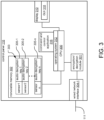
- Fig. 3 is a block diagram showing an exemplary control panel 116.
- the control panel 116 includes a central processing unit (CPU) 300, nonvolatile memory 302, a wired network interface 304-1, a display 310, and an encryption/decryption module 301.
- CPU central processing unit
- nonvolatile memory 302 nonvolatile memory
- wired network interface 304-1 wired network interface
- display 310 display 310
- encryption/decryption module 301 encryption/decryption module
- the wired network interface 304-1 provides connectivity with the gunshot sensor units 130 and possibly other devices via a wired link to the communication network 111.
- the control panel may also supply power to the units.
- the encryption/decryption module 301 encrypts and decrypts messages exchanged via the network interface 304 by the control panel 116, the gunshot sensor units 130 and/or other devices on the communication network 111. Specifically, the encryption/decryption module 301 encrypts outgoing messages to be sent by the control panel 116 and decrypts incoming encrypted messages received by the control panel 116.
- the CPU 300 executes firmware instructions and an operating system (OS) 312 and generally directs the functionality of the control panel 116.
- the OS 312 interfaces with the hardware components of the control panel 116 for access by a command and control application 316, which is a software process executing on top of the OS 312.
- the command and control application 316 in general, generates a graphical user interface (GUI) 318 that is rendered on the display 310 (e.g. touchscreen display) of the control panel 116.
- GUI graphical user interface
- the GUI 318 might present gunshot sensor unit information to an operator of the control panel 116 and receive input indicating selections of various options for controlling the gunshot sensor units 130 such as programming the encryption and/or decryption keys for the control panel 116 and/or the gunshot sensor units 130.
- the command and control application 316 might also be configured to decrypt the encrypted audio data received from the gunshot sensor units 130 and present the decrypted audio data (e.g. via speakers) based on input from the operator received via the GUI.
- the nonvolatile memory 302 stores the audio decryption keys 305 for decrypting the encrypted audio data received from the gunshot sensor units 130.
- the audio decryption keys 305 are stored in an audio decryption key table 303.
- the audio decryption key table 303 might include a series of audio, symmetric or asymmetric, decryption keys 305, with each of the keys being associated with a different one of the gunshot sensor units 130.
- the encrypted audio data received from the gunshot sensor units 130 are decrypted using the associated audio decryption keys 305.
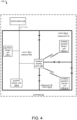
- Fig. 4 is a schematic diagram of an exemplary gunshot detection system 100 according to another embodiment including a hybrid network with wireless-capable gunshot sensor units 130-w.
- a wireless access point 105 of the premises 50 which might be, for example, a wireless router, connects to the wireless gunshot sensor units 130-w via wireless links.
- the wireless access point 105 provides connectivity between the wireless gunshot sensor units 130-w and the communication network 111.
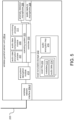
- Fig. 5 is a block diagram showing an exemplary wireless-capable gunshot sensor unit 130-w.
- the wireless-capable gunshot sensor unit 130-w includes a wireless network interface 204-2 and an antenna 205.
- the wireless network interface 204-2 provides connectivity with the control panel 116 and possibly other devices via a wireless link to the communication network 111 via the antenna 205.
- the wireless network interface 204-2 implements IEEE 802.11 standards, in one embodiment. It can use the 2.4 gigahertz UHF or 5.8 gigahertz SHF ISM radio bands.
- the wireless network interface 204-2 implements IEEE 802.15 standards, such as Bluetooth or Bluetooth Low Energy.
- the wireless network interface 204-2 could be used by the gunshot sensor units 130 to transmit encrypted audio data to handheld units (e.g. mobile computing devices) of law enforcement and/or other authorized entities.
- the wireless network interface 204-2 implements one or more standards associated with cellular technologies, such as Global System for Mobile communications (GSM) technologies in the range of 380 to 1900 MHz, Universal Mobile Telecommunications System (UMTS)/3G technologies in the range of 700 to 3500 MHz, Long Term Evolution (LTE) technologies in the range of 450 to 5900 MHz, and/or 5G technologies in the ranges of 600 to 4700 MHz or 24 to 39 GHz.
- GSM Global System for Mobile communications
- UMTS Universal Mobile Telecommunications System
- LTE Long Term Evolution
- 5G technologies in the ranges of 600 to 4700 MHz or 24 to 39 GHz.
- the gunshot sensor units 130 communicate via a distributed antenna system (DAS) implemented locally within the premises 50 or across a wider geographical area using the wireless network interface 204-2.
- the DAS might also be implemented in conjunction with an in-building cellular enhancement system for extending and distributing cellular signal of a mobile network within the premises 50.
- Fig. 6 is a block diagram showing an exemplary wireless-capable control panel 116-w.
- the wireless-capable control panel 116-w instead of the wired network interface 304-1, the wireless-capable control panel 116-w includes a wireless network interface 304-2 and an antenna 307.
- the wireless network interface 304-2 provides connectivity with the gunshot sensor units 130 and possibly other devices via a wireless link to the communication network 111 via the antenna 307.
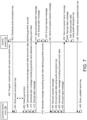
- Fig. 7 is a sequence diagram illustrating a process by which gunshot detection system encrypts and decrypts the audio data and messages exchanged between the gunshot sensor units 130 and the control panel 116. The following process could apply to both the wired and wireless embodiments of the gunshot sensor units 130.
- step 400 the control panel 116 is programmed with the encryption key(s) for encrypting the audio data, which the control panel 116 distributes to the gunshot sensor units 130 in step 402. But, in other examples, the sensor units are preprogrammed with the keys.
- step 404 the audio encryption keys are stored by the gunshot sensor units 130 in the local nonvolatile storage 202, for example.
- the gunshot sensor units 130 After a period of time (for example, a year or two after initial programming of the units), in step 406, the gunshot sensor units 130 detect gunshots, and, in step 408, the gunshot sensor units 130 generate and store in local nonvolatile storage 202 event data including audio data depicting acoustic anomalies (e.g. the gunshot sounds). Preferably, this audio data is first encrypted prior to being stored.
- step 410 the gunshot sensor units 130 generate alert messages indicating that the gunshots were detected. These alert messages include partial event data including metadata indicating the time and duration of the detected shots.
- this alert message is encrypted by the encryption/decryption module 213. The gunshot sensor units 130 send the encrypted alert messages to the control panel 116 in step 414.
- step 414 the control panel 116 decrypts the encrypted alert messages via the encryption/decryption module 301.
- step 420 the control panel 116 generates a request message requesting the audio data depicting the gunshot sounds. The control panel 116 then encrypts this request message in step 420 and sends the encrypted request message to the gunshot sensor units 130 in step 422.
- the gunshot sensor units 130 decrypt the encrypted request message via the encryption/decryption module 213.
- the gunshot sensor units 130 then encrypt the audio data, if not previously encrypted, using the stored audio encryption key 215 via the audio data encryption process 207.
- the gunshot sensor units 130 then generates a reply message containing the encrypted audio data in step 428 and encrypts the reply message in step 430 via the encryption/decryption module 213. This encrypted reply message is then sent by the gunshot sensor units 130 to the control panel 116 in step 432.
- step 434 the control panel 116 decrypts the encrypted reply message via the encryption/decryption module 301.
- the control panel 116 in step 436, also decrypts the audio data contained within the decrypted reply message using the audio decryption key 305 associated with the gunshot sensor units 130 from which the messages were sent. This audio data can then be presented, for example, via speakers of the control panel 116.
- step 438 the control panel 116 periodically sends updated audio encryption keys to the gunshot sensor units 130, and the gunshot sensor units 130 store the updated audio encryption keys in the local nonvolatile storage 202.
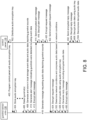
- Fig. 8 is a sequence diagram illustrating a process by which the gunshot sensor units 130 compress the audio data based on conditions of the communication network 111. As in Fig. 7 , this process could apply to both the wired and wireless embodiments of the gunshot sensor units 130.
- Steps 400 through 424 proceed as previously described, as the gunshot sensor units 130 detect gunshots, alert the control panel 116, and receive request messages to send the audio data.
- the gunshot sensor units determine network conditions of the communication network 111 via the monitoring process 211 and compress the audio data based on the network conditions via the audio data compression module 209.
- the compressed audio data is encrypted and sent to the control panel 116 as previously described.
- step 504 as appropriate based on the compression method used, the control panel 116 might then decompress the audio data.
- the gunshot sensor units 130 might encrypt the audio data, generate a message including the encrypted audio data, encrypt the message via the encryption/decryption module, and send the encrypted message to a third party cloud service (for example, executing on a service accessible to the gunshot sensor units 130 and/or control panel 116 only via a public network such as the internet).
- the third party cloud service might then process requests for the encrypted audio data from the control panel 116 or other devices.
Landscapes
- Engineering & Computer Science (AREA)
- Physics & Mathematics (AREA)
- General Physics & Mathematics (AREA)
- Business, Economics & Management (AREA)
- Computer Networks & Wireless Communication (AREA)
- Computer Security & Cryptography (AREA)
- Emergency Management (AREA)
- Signal Processing (AREA)
- Theoretical Computer Science (AREA)
- Health & Medical Sciences (AREA)
- Multimedia (AREA)
- General Health & Medical Sciences (AREA)
- Software Systems (AREA)
- Tourism & Hospitality (AREA)
- General Engineering & Computer Science (AREA)
- Databases & Information Systems (AREA)
- General Business, Economics & Management (AREA)
- Bioethics (AREA)
- Strategic Management (AREA)
- Computer Hardware Design (AREA)
- Development Economics (AREA)
- Educational Administration (AREA)
- Data Mining & Analysis (AREA)
- Economics (AREA)
- Human Resources & Organizations (AREA)
- Marketing (AREA)
- Primary Health Care (AREA)
- Environmental & Geological Engineering (AREA)
- Public Health (AREA)
- Alarm Systems (AREA)
- Mobile Radio Communication Systems (AREA)
- Emergency Alarm Devices (AREA)
- Telephonic Communication Services (AREA)
- Burglar Alarm Systems (AREA)
- Fire Alarms (AREA)
- Selective Calling Equipment (AREA)
- User Interface Of Digital Computer (AREA)
- Circuit For Audible Band Transducer (AREA)
Claims (13)
- Système de détection de coups de feu dans un bâtiment, le système comprenant :des unités de détection de coups de feu (130) pour détecter des coups de feu, chacune des unités de détection de coups de feu (130) comprenant un ou plusieurs microphones (206, 208) pour détecter des anomalies acoustiques et générer des données d'événement comportant des données audio représentant les anomalies acoustiques et un dispositif de commande (200) pour chiffrer les données d'événement comportant des données audio ; etun panneau de commande (116) pour recevoir les données d'événement chiffrées comportant des données audio en provenance des unités de détection de coups de feu (130), le panneau de commande (116) comprenant un dispositif de commande (300) pour déchiffrer les données d'événement chiffrées comportant des données audio,dans lequel le panneau de commande (116) est configuré pour recevoir des données d'événement partielles chiffrées, contenant des métadonnées comportant des informations temporelles indiquant quand les anomalies acoustiques détectées ont commencé et/ou se sont arrêtées et des informations de durée des anomalies acoustiques détectées, en provenance des unités de détection de coups de feu (130) et, sur la base des données d'événement partielles reçues, déterminer les données d'événement partielles qui se rapportent à la même anomalie acoustique détectée et l'unité parmi les unités de détection de coups de feu qui est la plus proche de la source de l'anomalie acoustique détectée, etdans lequel le panneau de commande (116) est configuré pour ordonner à l'unité de détection de coups de feu (130) la plus proche de la source de l'anomalie acoustique détectée d'envoyer des données d'événement complètes au panneau de commande (116) en vue de leur traitement ultérieur et/ou afin qu'elles soient présentées à un opérateur.
- Système selon la revendication 1, dans lequel les unités de détection de coups de feu (130) comprennent en outre un stockage non volatil local (202) pour stocker les données audio chiffrées.
- Système selon la revendication 1, dans lequel le panneau de commande (116) comprend en outre une mémoire non volatile (302) pour stocker des clés de déchiffrement audio (305) associées aux unités de détection de coups de feu (130), et le panneau de commande (116) est configuré pour déchiffrer les données audio provenant de chacune des unités de détection de coups de feu (130) en utilisant la clé de déchiffrement audio (305) associée.
- Système selon la revendication 1, dans lequel les unités de détection de coups de feu (130) comprennent en outre un stockage non volatil local (202) pour stocker des clés de chiffrement audio (215), et les unités de détection de coups de feu (130) sont configurées pour chiffrer les données audio en utilisant les clés de chiffrement audio stockées (215).
- Système selon la revendication 4, dans lequel le panneau de commande (116) est configuré pour distribuer les clés de chiffrement audio aux unités de détection de coups de feu (130).
- Système selon la revendication 4, dans lequel le panneau de commande (116) est configuré pour envoyer périodiquement des clés de chiffrement audio mises à jour aux unités de détection de coups de feu (130).
- Système selon la revendication 1, dans lequel les unités de détection de coups de feu (130) sont configurées pour générer des messages comportant les données audio chiffrées et chiffrer les messages par le biais de modules de chiffrement/déchiffrement (213) des unités de détection de coups de feu (130).
- Système selon la revendication 7, dans lequel le panneau de commande (116) est configuré pour déchiffrer les messages chiffrés par le biais d'un module de chiffrement/déchiffrement (301) du panneau de commande (116) avant de déchiffrer les données audio chiffrées contenues dans les messages.
- Système selon la revendication 1, dans lequel les unités de détection de coups de feu (130) comprennent des interfaces réseau sans fil (204) pour envoyer sans fil les données audio chiffrées au panneau de commande (116) par le biais d'un réseau de communication (111).
- Procédé de détection de coups de feu dans un bâtiment, le procédé comprenant :la détection, par des unités de détection de coups de feu (130), d'anomalies acoustiques,la génération, par les unités de détection de coups de feu (130), de données d'événement comportant des données audio représentant les anomalies acoustiques par le biais d'un ou de plusieurs microphones (208),le chiffrement, par les unités de détection de coups de feu (130), des données d'événement comportant des données audio, etla réception, par un panneau de commande (116), des données d'événement chiffrées comportant des données audio en provenance des unités de détection de coups de feu (130) et le déchiffrement par celui-ci des données d'événement chiffrées comportant des données audio,la réception, par le panneau de commande (116), de données d'événement partielles chiffrées contenant des métadonnées comportant des informations temporelles indiquant quand les anomalies acoustiques détectées ont commencé et/ou se sont arrêtées et des informations de durée des anomalies acoustiques détectées,en provenance des unités de détection de coups de feu (130) et, sur la base des données d'événement partielles reçues, la détermination des données d'événement partielles qui se rapportent à la même anomalie acoustique détectée et de l'unité parmi les unités de détection de coups de feu qui est la plus proche de la source de l'anomalie acoustique détectée, etle fait que le panneau de commande ordonne à l'unité de détection de coups de feu (130) la plus proche de la source de l'anomalie acoustique détectée d'envoyer des données d'événement complètes au panneau de commande (116) en vue de leur traitement ultérieur et/ou afin qu'elles soient présentées à un opérateur.
- Procédé selon la revendication 10, dans lequel les unités de détection de coups de feu (130) génèrent des messages comportant les données audio chiffrées et chiffrent les messages par le biais de modules de chiffrement/déchiffrement (213) des unités de détection de coups de feu (130).
- Procédé selon la revendication 11, comprenant en outre la réception, par le panneau de commande (116), des messages chiffrés et le déchiffrement des messages chiffrés par le biais d'un module de chiffrement/déchiffrement (301) du panneau de commande (116) avant le déchiffrement des données audio chiffrées contenues dans les messages.
- Procédé selon la revendication 10, comprenant en outre l'envoi sans fil, par les unités de détection de coups de feu (130), des données audio chiffrées au panneau de commande (116) par le biais d'interfaces réseau sans fil (204) des unités de détection de coups de feu (130) et d'un réseau de communication (111).
Applications Claiming Priority (3)
| Application Number | Priority Date | Filing Date | Title |
|---|---|---|---|
| US201862631296P | 2018-02-15 | 2018-02-15 | |
| US201862637161P | 2018-03-01 | 2018-03-01 | |
| PCT/IB2019/051204 WO2019159100A1 (fr) | 2018-02-15 | 2019-02-14 | Système de détection de coups de feu avec transmission sans fil chiffrée |
Publications (2)
| Publication Number | Publication Date |
|---|---|
| EP3752995A1 EP3752995A1 (fr) | 2020-12-23 |
| EP3752995B1 true EP3752995B1 (fr) | 2025-01-22 |
Family
ID=65520352
Family Applications (9)
| Application Number | Title | Priority Date | Filing Date |
|---|---|---|---|
| EP19711420.0A Pending EP3752998A1 (fr) | 2018-02-15 | 2019-02-14 | Système de détection de tir avec intégration du système d'alarme incendie |
| EP19707130.1A Active EP3752993B1 (fr) | 2018-02-15 | 2019-02-14 | Système de détection de tirs d'arme à feu avec conservation de données judiciaires, surveillance audio en direct et communication bidirectionnelle |
| EP19711419.2A Active EP3752997B1 (fr) | 2018-02-15 | 2019-02-14 | Système de détection de tir doué d'une modélisation et d'une surveillance de bruit ambiant |
| EP19710786.5A Pending EP3752994A1 (fr) | 2018-02-15 | 2019-02-14 | Système de détection de tir avec suivi d'emplacement |
| EP19711168.5A Active EP3752769B1 (fr) | 2018-02-15 | 2019-02-14 | Capteurs de détection de coups de feu incorporés dans des dispositifs de gestion de bâtiment |
| EP19711166.9A Pending EP3753138A1 (fr) | 2018-02-15 | 2019-02-14 | Système de détection de coups de feu avec architecture de synchronisation maître-esclave |
| EP19710785.7A Pending EP3753000A1 (fr) | 2018-02-15 | 2019-02-14 | Système de détection de coups de feu avec intégration de système de gestion de bâtiment |
| EP19711167.7A Active EP3752995B1 (fr) | 2018-02-15 | 2019-02-14 | Système de détection de coups de feu avec transmission sans fil chiffrée |
| EP19711418.4A Active EP3752996B8 (fr) | 2018-02-15 | 2019-02-14 | Protection anti-altération pour système de détection de tir |
Family Applications Before (7)
| Application Number | Title | Priority Date | Filing Date |
|---|---|---|---|
| EP19711420.0A Pending EP3752998A1 (fr) | 2018-02-15 | 2019-02-14 | Système de détection de tir avec intégration du système d'alarme incendie |
| EP19707130.1A Active EP3752993B1 (fr) | 2018-02-15 | 2019-02-14 | Système de détection de tirs d'arme à feu avec conservation de données judiciaires, surveillance audio en direct et communication bidirectionnelle |
| EP19711419.2A Active EP3752997B1 (fr) | 2018-02-15 | 2019-02-14 | Système de détection de tir doué d'une modélisation et d'une surveillance de bruit ambiant |
| EP19710786.5A Pending EP3752994A1 (fr) | 2018-02-15 | 2019-02-14 | Système de détection de tir avec suivi d'emplacement |
| EP19711168.5A Active EP3752769B1 (fr) | 2018-02-15 | 2019-02-14 | Capteurs de détection de coups de feu incorporés dans des dispositifs de gestion de bâtiment |
| EP19711166.9A Pending EP3753138A1 (fr) | 2018-02-15 | 2019-02-14 | Système de détection de coups de feu avec architecture de synchronisation maître-esclave |
| EP19710785.7A Pending EP3753000A1 (fr) | 2018-02-15 | 2019-02-14 | Système de détection de coups de feu avec intégration de système de gestion de bâtiment |
Family Applications After (1)
| Application Number | Title | Priority Date | Filing Date |
|---|---|---|---|
| EP19711418.4A Active EP3752996B8 (fr) | 2018-02-15 | 2019-02-14 | Protection anti-altération pour système de détection de tir |
Country Status (4)
| Country | Link |
|---|---|
| US (11) | US11468751B2 (fr) |
| EP (9) | EP3752998A1 (fr) |
| CA (9) | CA3091550A1 (fr) |
| WO (9) | WO2019159104A1 (fr) |
Families Citing this family (53)
| Publication number | Priority date | Publication date | Assignee | Title |
|---|---|---|---|---|
| US11538330B2 (en) * | 2016-11-03 | 2022-12-27 | Security USA Services, LLC | Emergency automated gunshot lockdown system (EAGL) |
| CA3091550A1 (fr) | 2018-02-15 | 2019-08-22 | Johnson Controls Fire Protection LP | Systeme de detection de coups de feu avec architecture de synchronisation maitre-esclave |
| KR102088158B1 (ko) * | 2018-08-06 | 2020-04-23 | 주식회사 코너스 | 총성인지기반 대피 안내 시스템 |
| US11587555B1 (en) * | 2018-09-26 | 2023-02-21 | Verily Life Sciences Llc | Recognizing hazard events based on sounds of in-home activities |
| US11694139B2 (en) * | 2018-11-13 | 2023-07-04 | International Business Machines Corporation | Dynamic assignment of tasks to internet connected devices |
| US11968323B2 (en) | 2018-12-21 | 2024-04-23 | Comcast Cable Communications, Llc | Device control based on signature |
| US12530731B2 (en) * | 2019-03-29 | 2026-01-20 | Fortinet, Inc. | Cloud-based artificial intelligence routing for emergency evacuation systems using Wi-Fi access points over data communication systems |
| US11455881B2 (en) * | 2019-05-10 | 2022-09-27 | David G. Tyson | Alarm and first responder systems, methods, and devices |
| CN114679916B (zh) * | 2019-05-21 | 2024-08-06 | Hid环球公司 | 物理访问控制系统和方法 |
| EP3977424A1 (fr) * | 2019-05-28 | 2022-04-06 | Utility Associates, Inc. | Systèmes et procédés de détection d'un tir d'arme à feu |
| US10861308B1 (en) | 2019-05-29 | 2020-12-08 | Siemens Industry, Inc. | System and method to improve emergency response time |
| US10796547B1 (en) | 2019-05-29 | 2020-10-06 | Siemens Industry, Inc. | System and method to improve emergency response time |
| US11810450B2 (en) * | 2019-06-06 | 2023-11-07 | Signify Holding B.V. | Emergency radio frequency-based sensing function |
| US11210910B2 (en) * | 2019-06-17 | 2021-12-28 | Ernest Eugene Williams | System and method for active shooter detection and evacuation guidance |
| US11193683B2 (en) * | 2019-12-31 | 2021-12-07 | Lennox Industries Inc. | Error correction for predictive schedules for a thermostat |
| DE102020200946A1 (de) | 2020-01-27 | 2021-07-29 | Fraunhofer-Gesellschaft zur Förderung der angewandten Forschung eingetragener Verein | Verfahren und Vorrichtung zur Erkennung von akustischen Anomalien |
| EP3863381B1 (fr) * | 2020-02-10 | 2025-07-02 | Tridonic GmbH & Co. KG | Détermination de l'état des rues par mesure acoustique |
| EP3872779A1 (fr) * | 2020-02-27 | 2021-09-01 | Axis AB | Procédé, logiciel et dispositif de formation d'un système d'alarme pour classer le son audio d'un événement |
| US11270574B2 (en) * | 2020-04-15 | 2022-03-08 | Honeywell International Inc. | Integrating location information in a fire control system |
| US11551534B2 (en) * | 2020-04-17 | 2023-01-10 | Oshkosh Corporation | Thermal management controls |
| US11538291B2 (en) | 2020-04-17 | 2022-12-27 | Oshkosh Corporation | Thermal management sensors |
| US11604178B2 (en) * | 2020-05-08 | 2023-03-14 | Qualcomm Incorporated | Carbon monoxide warning system and devices |
| US11521479B2 (en) * | 2020-05-08 | 2022-12-06 | Qualcomm Incorporated | Fire warning system and devices |
| US12501530B2 (en) | 2020-05-13 | 2025-12-16 | Ideal Industries Lighting Llc | Detection and identification of auditory events in distributed lighting networks |
| US11361654B2 (en) * | 2020-08-19 | 2022-06-14 | Honeywell International Inc. | Operating a fire system network |
| TWI752719B (zh) * | 2020-11-10 | 2022-01-11 | 一德金屬工業股份有限公司 | 緊急事故避難方法 |
| CN116458123A (zh) | 2020-11-13 | 2023-07-18 | 亚萨合莱有限公司 | 物联网系统中的安全元件阵列 |
| DE102020007273A1 (de) * | 2020-11-28 | 2022-06-02 | Volker Schmidt | Verfahren und Vorrichtung zur automatischen Erkennung und Klassifizierung von akustischen Signalen |
| US11450340B2 (en) * | 2020-12-07 | 2022-09-20 | Honeywell International Inc. | Methods and systems for human activity tracking |
| US11302163B1 (en) * | 2021-02-01 | 2022-04-12 | Halo Smart Solutions, Inc. | Gunshot detection device, system and method |
| US12361807B2 (en) | 2021-02-19 | 2025-07-15 | Tyco Fire & Security Gmbh | Security / automation system control panel graphical user interface |
| US12046121B2 (en) | 2021-02-19 | 2024-07-23 | Johnson Controls Tyco IP Holdings LLP | Security / automation system control panel with short range communication disarming |
| US12022574B2 (en) | 2021-02-19 | 2024-06-25 | Johnson Controls Tyco IP Holdings LLP | Security / automation system with cloud-communicative sensor devices |
| US12026243B2 (en) | 2021-02-19 | 2024-07-02 | Johnson Controls Tyco IP Holdings LLP | Facial recognition by a security / automation system control panel |
| US11961377B2 (en) * | 2021-02-19 | 2024-04-16 | Johnson Controls Tyco IP Holdings LLP | Security / automation system control panel with acoustic signature detection |
| US11765501B2 (en) * | 2021-03-10 | 2023-09-19 | Honeywell International Inc. | Video surveillance system with audio analytics adapted to a particular environment to aid in identifying abnormal events in the particular environment |
| US11133023B1 (en) * | 2021-03-10 | 2021-09-28 | V5 Systems, Inc. | Robust detection of impulsive acoustic event onsets in an audio stream |
| US11127273B1 (en) | 2021-03-15 | 2021-09-21 | V5 Systems, Inc. | Acoustic event detection using coordinated data dissemination, retrieval, and fusion for a distributed array of sensors |
| US11533709B2 (en) * | 2021-03-18 | 2022-12-20 | Motorola Solutions, Inc. | Device, system and method for transmitting notifications based on indications of effectiveness for previous notifications |
| IT202100007157A1 (it) * | 2021-03-24 | 2022-09-24 | Leonardo Spa | Sistema per rilevare e riconoscere anomalie acustiche e/o vibrazionali associate ad un sito da monitorare |
| US11928945B2 (en) * | 2021-04-06 | 2024-03-12 | George Bacon Brown | Techniques for active shooter response capability (ASRC)—community law enforcement |
| CN115865545A (zh) * | 2021-09-22 | 2023-03-28 | 帕西·西姆公司 | 多功能房间控制器 |
| US11940767B2 (en) * | 2022-03-10 | 2024-03-26 | Johnson Controls Tyco IP Holdings LLP | Systems and methods of operating a collaborative building network |
| US12406557B2 (en) | 2022-06-03 | 2025-09-02 | Shellback Survival Systems, Llc | Mobile gunshot detection devices and systems |
| US12142133B2 (en) * | 2022-07-25 | 2024-11-12 | SiemensIndustry, Inc. | Fire safety device address and location verification |
| US12131624B2 (en) * | 2022-08-25 | 2024-10-29 | Honeywell International Inc. | Maintenance prediction for devices of a fire system |
| WO2024103071A1 (fr) * | 2022-11-11 | 2024-05-16 | Kronish Ari | Systèmes de commutation d'éclairage configurés pour réagir à des tirs d'armes à feu et procédés d'utilisation |
| KR102700111B1 (ko) * | 2023-04-17 | 2024-08-29 | 국방과학연구소 | 센서 모사 방법 및 이를 수행하는 장치 |
| US12352884B2 (en) * | 2023-09-21 | 2025-07-08 | Eagl Technology, Inc. | Outdoor wireless gunshot locating system for securing sited assets |
| KR102681609B1 (ko) * | 2023-10-23 | 2024-07-05 | 주식회사 코너스 | 총성 감지에 기반하여 구분 공간 내의 인원들에게 최적 액션을 출력하는 스테이션 디바이스 및 이를 포함하는 시스템 |
| US12482343B2 (en) * | 2023-10-31 | 2025-11-25 | SimpliSafe, Inc. | Consolidated alarm screen |
| TWI880445B (zh) * | 2023-11-10 | 2025-04-11 | 一德金屬工業股份有限公司 | 發生槍擊事件時的各人員定位與追蹤方法 |
| US12444293B2 (en) | 2024-02-09 | 2025-10-14 | SimpliSafe, Inc. | Alarm platform with aggregated alarm events |
Family Cites Families (89)
| Publication number | Priority date | Publication date | Assignee | Title |
|---|---|---|---|---|
| JPS6081698A (ja) | 1983-10-07 | 1985-05-09 | 東京電力株式会社 | 電磁波を用いた監視および指令誘導システム |
| FI83140C (fi) | 1990-01-15 | 1991-05-27 | Sapal Security Ltd Oy | Kopplingssystem foer roekdetektorenheter. |
| US5504717A (en) * | 1994-05-27 | 1996-04-02 | Alliant Techsystems Inc. | System for effective control of urban environment security |
| US5973998A (en) | 1997-08-01 | 1999-10-26 | Trilon Technology, Llc. | Automatic real-time gunshot locator and display system |
| US7228429B2 (en) | 2001-09-21 | 2007-06-05 | E-Watch | Multimedia network appliances for security and surveillance applications |
| US7131136B2 (en) | 2002-07-10 | 2006-10-31 | E-Watch, Inc. | Comprehensive multi-media surveillance and response system for aircraft, operations centers, airports and other commercial transports, centers and terminals |
| US6970183B1 (en) * | 2000-06-14 | 2005-11-29 | E-Watch, Inc. | Multimedia surveillance and monitoring system including network configuration |
| US6552963B2 (en) | 2000-01-10 | 2003-04-22 | John Baranek | Firearm discharge detection device and warning system |
| JP3482439B2 (ja) * | 2000-02-21 | 2003-12-22 | 独立行政法人産業技術総合研究所 | 照明装置一体型集音装置 |
| US7586812B2 (en) | 2003-01-24 | 2009-09-08 | Shotspotter, Inc. | Systems and methods of identifying/locating weapon fire including return fire, targeting, laser sighting, and/or guided weapon features |
| US7676194B2 (en) | 2003-08-22 | 2010-03-09 | Rappaport Theodore S | Broadband repeater with security for ultrawideband technologies |
| US20050164630A1 (en) | 2003-11-19 | 2005-07-28 | Lawrence Kates | Repeater unit with flourescent ballast |
| US7190633B2 (en) | 2004-08-24 | 2007-03-13 | Bbn Technologies Corp. | Self-calibrating shooter estimation |
| US7277018B2 (en) | 2004-09-17 | 2007-10-02 | Incident Alert Systems, Llc | Computer-enabled, networked, facility emergency notification, management and alarm system |
| US7411865B2 (en) | 2004-12-23 | 2008-08-12 | Shotspotter, Inc. | System and method for archiving data from a sensor array |
| CA2621648C (fr) | 2005-09-06 | 2015-11-24 | Infraegis, Inc. | Detection de menaces et appareil de surveillance avec systeme d'affichage integre |
| US7558156B2 (en) | 2006-01-06 | 2009-07-07 | Agilent Technologies, Inc. | Acoustic location and enhancement |
| US8351297B2 (en) | 2006-10-05 | 2013-01-08 | Shotspotter, Inc. | Systems and methods of automated correlation of weapon fire data with monitored persons-of-interest/location data |
| JP4973380B2 (ja) * | 2007-08-13 | 2012-07-11 | トヨタ自動車株式会社 | 交通安全システム |
| US9338597B2 (en) * | 2007-12-06 | 2016-05-10 | Suhayya Abu-Hakima | Alert broadcasting to unconfigured communications devices |
| US8594976B2 (en) * | 2008-02-27 | 2013-11-26 | Abl Ip Holding Llc | System and method for streetlight monitoring diagnostics |
| US7986231B1 (en) * | 2008-09-16 | 2011-07-26 | Avaya Inc. | Acoustic sensor network |
| US9253560B2 (en) | 2008-09-16 | 2016-02-02 | Personics Holdings, Llc | Sound library and method |
| BRPI0823111A2 (pt) | 2008-09-30 | 2015-06-16 | Shotspotter Inc | Sistemas e métodos incluindo aspectos de transferência de áudio e/ou sistema de localização de incidente com ruído. |
| US8806632B2 (en) | 2008-11-17 | 2014-08-12 | Solarwinds Worldwide, Llc | Systems, methods, and devices for detecting security vulnerabilities in IP networks |
| US20100246669A1 (en) | 2009-03-25 | 2010-09-30 | Syclipse Technologies, Inc. | System and method for bandwidth optimization in data transmission using a surveillance device |
| US20100245583A1 (en) * | 2009-03-25 | 2010-09-30 | Syclipse Technologies, Inc. | Apparatus for remote surveillance and applications therefor |
| US8385154B2 (en) | 2009-04-27 | 2013-02-26 | Sri International | Weapon identification using acoustic signatures across varying capture conditions |
| US8977407B2 (en) | 2009-05-27 | 2015-03-10 | Honeywell International Inc. | Adaptive user interface for semi-automatic operation |
| CN102237996B (zh) | 2010-04-26 | 2014-03-19 | 中兴通讯股份有限公司 | 一种同步时钟的方法和时钟同步装置 |
| CA2823346A1 (fr) | 2010-12-30 | 2012-07-05 | Ambientz | Traitement d'informations a l'aide d'une population de dispositifs d'acquisition de donnees |
| TW201227489A (en) * | 2010-12-31 | 2012-07-01 | Hon Hai Prec Ind Co Ltd | System and method for processing image |
| US10178537B2 (en) | 2011-11-10 | 2019-01-08 | Sirengps, Llc | Emergency messaging system and method of responding to an emergency |
| CN102843205B (zh) | 2012-09-03 | 2015-08-12 | 杭州华三通信技术有限公司 | 一种基于精确时间协议的时间同步收敛的方法和装置 |
| GB2521802B (en) | 2012-10-30 | 2015-10-14 | Ibm | Reissue of crypographic credentials |
| US20140218518A1 (en) | 2013-02-04 | 2014-08-07 | James Oliver | Firearm Discharge Detection and Response System |
| US9621684B2 (en) | 2013-02-07 | 2017-04-11 | Under Armour, Inc. | Method and arrangement for monitoring physiological data |
| US9886833B2 (en) * | 2013-02-26 | 2018-02-06 | Onalert Guardian Systems, Inc. | System and method of automated gunshot emergency response system |
| US20140269199A1 (en) | 2013-03-14 | 2014-09-18 | Supervene LLC | System and method for detecting and responding to indoor shooters |
| GB2526465B (en) | 2013-03-15 | 2017-07-19 | Clear-Vu Lighting Llc | Task lighting system with alarm and dimming features |
| US10018981B2 (en) | 2013-03-15 | 2018-07-10 | Vivint, Inc. | Monitoring removal of an automation control panel |
| US9240114B2 (en) | 2013-03-31 | 2016-01-19 | Shotspotter, Inc. | Systems and methods associated with detection of indoor gunfire |
| WO2014186808A2 (fr) * | 2013-05-17 | 2014-11-20 | Barry Thornton | Circuit d'éclairage de secours pour sécurité et premiers intervenants |
| US10366589B2 (en) | 2013-09-03 | 2019-07-30 | Crotega, LLC | Building intruder defensive shield |
| US20150070166A1 (en) | 2013-09-09 | 2015-03-12 | Elwha Llc | System and method for gunshot detection within a building |
| US20150077550A1 (en) | 2013-09-17 | 2015-03-19 | Star Management Services, LLC | Sensor and data fusion |
| US9672727B1 (en) | 2013-11-05 | 2017-06-06 | Alarm.Com Incorporated | Handling duress input |
| US9875643B1 (en) | 2013-11-11 | 2018-01-23 | Shotspotter, Inc. | Systems and methods of emergency management involving location-based features and/or other aspects |
| US9432720B2 (en) | 2013-12-09 | 2016-08-30 | Empire Technology Development Llc | Localized audio source extraction from video recordings |
| US9286790B2 (en) | 2014-05-23 | 2016-03-15 | Emergency Alert Solutions Group, Llc | Lockdown apparatus for initiation of lockdown procedures at a facility during an emergency |
| US20150347079A1 (en) | 2014-05-29 | 2015-12-03 | LifeSaver Int'l Inc | Electronic device for determining when an officer is in a foot pursuit, a fight, has been incapacitated, or shots have been fired |
| WO2015191720A1 (fr) * | 2014-06-10 | 2015-12-17 | Rapid Response System I/P, Llc | Système et procédé d'intervention |
| US9811677B2 (en) * | 2014-07-03 | 2017-11-07 | Pure Storage, Inc. | Secure data replication in a storage grid |
| US10168125B2 (en) | 2014-09-02 | 2019-01-01 | Crotega, LLC | Sprayable composition for deterring intruders |
| US9679459B2 (en) | 2014-09-02 | 2017-06-13 | Crotega, LLC | Distracting module system |
| US10594983B2 (en) | 2014-12-10 | 2020-03-17 | Robert Bosch Gmbh | Integrated camera awareness and wireless sensor system |
| CN105989717B (zh) | 2015-02-15 | 2018-07-31 | 北京东土科技股份有限公司 | 一种智能交通的分布式冗余控制方法及系统 |
| US10089845B2 (en) | 2015-03-05 | 2018-10-02 | Battelle Memorial Institute | System and method of detecting and analyzing a threat in a confined environment |
| US10290195B2 (en) | 2015-03-05 | 2019-05-14 | Battelle Memorial Institute | System and method of detecting and analyzing a threat in a confined environment |
| US20170069190A1 (en) | 2015-06-19 | 2017-03-09 | MELE Associates, Inc.. | System and method for detecting and responding to a threat in or around a facility |
| US10068445B2 (en) | 2015-06-24 | 2018-09-04 | Google Llc | Systems and methods of home-specific sound event detection |
| US9819509B2 (en) | 2015-07-17 | 2017-11-14 | ARC Informatique | Systems and methods for location-based control of equipment and facility resources |
| US9642131B2 (en) | 2015-09-21 | 2017-05-02 | Taser International, Inc. | Event-based responder dispatch |
| EP3367808A4 (fr) | 2015-10-30 | 2019-06-05 | Evacusmart IP PTY LTD | Système de commande pour optimiser l'évacuation d'urgence de la cage d'escalier d'un bâtiment à plusieurs étages |
| US9888371B1 (en) | 2015-11-13 | 2018-02-06 | State Farm Mutual Automobile Insurance Company | Portable home and hotel security system |
| EP3403250A4 (fr) | 2016-01-11 | 2019-09-11 | Gregory A.M. Brown | Systèmes et procédés de détection, de dénombrement et de traçage de personnes et de biens |
| US10051349B2 (en) | 2016-04-05 | 2018-08-14 | Tyco Fire & Security Gmbh | Sensor based system and method for premises safety and operational profiling based on drift analysis |
| US10529221B2 (en) | 2016-04-19 | 2020-01-07 | Navio International, Inc. | Modular approach for smart and customizable security solutions and other applications for a smart city |
| US10586109B1 (en) | 2016-04-26 | 2020-03-10 | Shooter Detection Systems, LLC | Indoor gunshot detection with video analytics |
| US10830866B1 (en) * | 2016-04-26 | 2020-11-10 | Shooter Detection Systems, LLC | Testing of gunshot sensors |
| US10657800B1 (en) * | 2016-04-26 | 2020-05-19 | Shooter Detection Systems, LLC | Gunshot detection within an indoor environment |
| US9959747B1 (en) | 2016-05-26 | 2018-05-01 | The United States Of America As Represented By The Secretary Of The Air Force | Network for detection and monitoring of emergency situations |
| US10102732B2 (en) | 2016-06-28 | 2018-10-16 | Infinite Designs, LLC | Danger monitoring system |
| US10832565B2 (en) | 2016-08-29 | 2020-11-10 | Tyco Fire & Security Gmbh | System and method for acoustically identifying gunshots fired indoors |
| EP3504505A2 (fr) | 2016-08-29 | 2019-07-03 | Tyco Fire & Security GmbH | Procédé de comptage acoustique de coups de feu en intérieur |
| US20180122030A1 (en) | 2016-11-03 | 2018-05-03 | Security USA Services, LLC | Emergency automated gunshot lockdown system |
| US10257669B2 (en) | 2016-12-01 | 2019-04-09 | Kodiak Networks, Inc. | PTX data analytic engine notifying group list of detected risk event |
| US11636941B2 (en) | 2016-12-15 | 2023-04-25 | Conquer Your Addiction Llc | Dynamic and adaptive systems and methods for rewarding and/or disincentivizing behaviors |
| US10726697B2 (en) | 2017-02-08 | 2020-07-28 | The Lockout Co., Llc | Building lockdown system |
| US11423748B2 (en) | 2017-04-07 | 2022-08-23 | Tyco Fire & Security Gmbh | System and method for identifying and locating sensed events |
| US10558917B2 (en) * | 2017-04-20 | 2020-02-11 | Tyco Fire & Security Gmbh | Artificial intelligence and natural language processing based building and fire systems management system |
| US10436470B2 (en) * | 2017-07-18 | 2019-10-08 | Abb Schweiz Ag | Rule-based load shedding algorithm for building energy management |
| US10922992B2 (en) | 2018-01-09 | 2021-02-16 | V-Armed Inc. | Firearm simulation and training system and method |
| US10928244B2 (en) | 2018-01-10 | 2021-02-23 | Hdwb, Llc | Detection of discharge of projectile from firearm |
| CA3091550A1 (fr) | 2018-02-15 | 2019-08-22 | Johnson Controls Fire Protection LP | Systeme de detection de coups de feu avec architecture de synchronisation maitre-esclave |
| US11151852B2 (en) | 2018-05-12 | 2021-10-19 | AVIDEA Group, Inc. | Firearm discharge detection |
| US10741058B1 (en) | 2018-08-02 | 2020-08-11 | Brian Douglas Miller | Visual lockdown notification and alert device, electronic door stop remote broadcast device, silent broadcast signal-activated electronic door stop, and sound-activated remote release electronic door stop |
| EP3977424A1 (fr) | 2019-05-28 | 2022-04-06 | Utility Associates, Inc. | Systèmes et procédés de détection d'un tir d'arme à feu |
| US11664044B2 (en) | 2019-11-25 | 2023-05-30 | Qualcomm Incorporated | Sound event detection learning |
-
2019
- 2019-02-14 CA CA3091550A patent/CA3091550A1/fr active Pending
- 2019-02-14 CA CA3091327A patent/CA3091327A1/fr active Pending
- 2019-02-14 EP EP19711420.0A patent/EP3752998A1/fr active Pending
- 2019-02-14 EP EP19707130.1A patent/EP3752993B1/fr active Active
- 2019-02-14 CA CA3091318A patent/CA3091318A1/fr active Pending
- 2019-02-14 US US16/968,940 patent/US11468751B2/en active Active
- 2019-02-14 CA CA3091330A patent/CA3091330A1/fr active Pending
- 2019-02-14 EP EP19711419.2A patent/EP3752997B1/fr active Active
- 2019-02-14 EP EP19710786.5A patent/EP3752994A1/fr active Pending
- 2019-02-14 CA CA3091482A patent/CA3091482A1/fr active Pending
- 2019-02-14 WO PCT/IB2019/051208 patent/WO2019159104A1/fr not_active Ceased
- 2019-02-14 US US16/968,933 patent/US12027024B2/en active Active
- 2019-02-14 EP EP19711168.5A patent/EP3752769B1/fr active Active
- 2019-02-14 EP EP19711166.9A patent/EP3753138A1/fr active Pending
- 2019-02-14 WO PCT/IB2019/051205 patent/WO2019159101A1/fr not_active Ceased
- 2019-02-14 US US16/968,944 patent/US11361638B2/en active Active
- 2019-02-14 WO PCT/IB2019/051203 patent/WO2019159099A1/fr not_active Ceased
- 2019-02-14 CA CA3091552A patent/CA3091552A1/fr active Pending
- 2019-02-14 EP EP19710785.7A patent/EP3753000A1/fr active Pending
- 2019-02-14 US US16/968,932 patent/US11620887B2/en active Active
- 2019-02-14 US US16/968,936 patent/US11361636B2/en active Active
- 2019-02-14 WO PCT/IB2019/051210 patent/WO2019159106A1/fr not_active Ceased
- 2019-02-14 US US16/968,945 patent/US11361639B2/en active Active
- 2019-02-14 CA CA3091894A patent/CA3091894A1/fr active Pending
- 2019-02-14 EP EP19711167.7A patent/EP3752995B1/fr active Active
- 2019-02-14 US US16/968,937 patent/US11361637B2/en active Active
- 2019-02-14 WO PCT/IB2019/051204 patent/WO2019159100A1/fr not_active Ceased
- 2019-02-14 CA CA3091332A patent/CA3091332A1/fr active Pending
- 2019-02-14 WO PCT/IB2019/051209 patent/WO2019159105A1/fr not_active Ceased
- 2019-02-14 WO PCT/IB2019/051202 patent/WO2019159098A1/fr not_active Ceased
- 2019-02-14 WO PCT/IB2019/051207 patent/WO2019159103A1/fr not_active Ceased
- 2019-02-14 EP EP19711418.4A patent/EP3752996B8/fr active Active
- 2019-02-14 US US16/968,931 patent/US11170619B2/en active Active
- 2019-02-14 US US16/968,934 patent/US11545012B2/en active Active
- 2019-02-14 CA CA3091328A patent/CA3091328A1/fr active Pending
- 2019-02-14 WO PCT/IB2019/051206 patent/WO2019159102A1/fr not_active Ceased
-
2021
- 2021-10-01 US US17/491,562 patent/US11710391B2/en active Active
-
2024
- 2024-06-03 US US18/731,877 patent/US20240321070A1/en active Pending
Also Published As
Similar Documents
| Publication | Publication Date | Title |
|---|---|---|
| EP3752995B1 (fr) | Système de détection de coups de feu avec transmission sans fil chiffrée | |
| US10242556B2 (en) | Wearable smart router | |
| US20080280592A1 (en) | Wireless device monitoring methods, wireless device monitoring systems, and articles of manufacture | |
| KR20150098635A (ko) | 블루투스 및 하이브리드―모드 송신기들을 이용한 존재 검출 | |
| US20230344811A1 (en) | Distributed encryption | |
| EP3371986B1 (fr) | Procédé et appareil d'appariement de ressources | |
| US10856147B2 (en) | Identification information providing system, identification information providing apparatus, identification information providing method, and non-transitory recording medium | |
| US20180242157A1 (en) | Wireless communication apparatus, wireless communication system, evaluation method, and non-transitory computer readable medium storing program | |
| EP3852346A1 (fr) | Dispositif de commande de communication | |
| US20160162985A1 (en) | Occupancy monitoring for a remote short term housing rental | |
| US11137948B2 (en) | User equipment to capture identity information from rendering apparatuses | |
| WO2024153349A1 (fr) | Système de surveillance | |
| CN106897632A (zh) | 一种解密方法、系统、电子设备和解密设备 |
Legal Events
| Date | Code | Title | Description |
|---|---|---|---|
| STAA | Information on the status of an ep patent application or granted ep patent |
Free format text: STATUS: UNKNOWN |
|
| STAA | Information on the status of an ep patent application or granted ep patent |
Free format text: STATUS: THE INTERNATIONAL PUBLICATION HAS BEEN MADE |
|
| PUAI | Public reference made under article 153(3) epc to a published international application that has entered the european phase |
Free format text: ORIGINAL CODE: 0009012 |
|
| STAA | Information on the status of an ep patent application or granted ep patent |
Free format text: STATUS: REQUEST FOR EXAMINATION WAS MADE |
|
| 17P | Request for examination filed |
Effective date: 20200910 |
|
| AK | Designated contracting states |
Kind code of ref document: A1 Designated state(s): AL AT BE BG CH CY CZ DE DK EE ES FI FR GB GR HR HU IE IS IT LI LT LU LV MC MK MT NL NO PL PT RO RS SE SI SK SM TR |
|
| AX | Request for extension of the european patent |
Extension state: BA ME |
|
| DAV | Request for validation of the european patent (deleted) | ||
| DAX | Request for extension of the european patent (deleted) | ||
| STAA | Information on the status of an ep patent application or granted ep patent |
Free format text: STATUS: EXAMINATION IS IN PROGRESS |
|
| 17Q | First examination report despatched |
Effective date: 20221026 |
|
| RAP1 | Party data changed (applicant data changed or rights of an application transferred) |
Owner name: JOHNSON CONTROLS TYCO IP HOLDINGS LLP |
|
| RAP1 | Party data changed (applicant data changed or rights of an application transferred) |
Owner name: TYCO FIRE & SECURITY GMBH |
|
| GRAP | Despatch of communication of intention to grant a patent |
Free format text: ORIGINAL CODE: EPIDOSNIGR1 |
|
| STAA | Information on the status of an ep patent application or granted ep patent |
Free format text: STATUS: GRANT OF PATENT IS INTENDED |
|
| INTG | Intention to grant announced |
Effective date: 20241018 |
|
| GRAS | Grant fee paid |
Free format text: ORIGINAL CODE: EPIDOSNIGR3 |
|
| GRAA | (expected) grant |
Free format text: ORIGINAL CODE: 0009210 |
|
| STAA | Information on the status of an ep patent application or granted ep patent |
Free format text: STATUS: THE PATENT HAS BEEN GRANTED |
|
| AK | Designated contracting states |
Kind code of ref document: B1 Designated state(s): AL AT BE BG CH CY CZ DE DK EE ES FI FR GB GR HR HU IE IS IT LI LT LU LV MC MK MT NL NO PL PT RO RS SE SI SK SM TR |
|
| REG | Reference to a national code |
Ref country code: GB Ref legal event code: FG4D |
|
| REG | Reference to a national code |
Ref country code: CH Ref legal event code: EP |
|
| P01 | Opt-out of the competence of the unified patent court (upc) registered |
Free format text: CASE NUMBER: APP_359/2025 Effective date: 20250106 |
|
| REG | Reference to a national code |
Ref country code: IE Ref legal event code: FG4D |
|
| REG | Reference to a national code |
Ref country code: DE Ref legal event code: R096 Ref document number: 602019065056 Country of ref document: DE |
|
| REG | Reference to a national code |
Ref country code: NL Ref legal event code: MP Effective date: 20250122 |
|
| PG25 | Lapsed in a contracting state [announced via postgrant information from national office to epo] |
Ref country code: NL Free format text: LAPSE BECAUSE OF FAILURE TO SUBMIT A TRANSLATION OF THE DESCRIPTION OR TO PAY THE FEE WITHIN THE PRESCRIBED TIME-LIMIT Effective date: 20250122 |
|
| PG25 | Lapsed in a contracting state [announced via postgrant information from national office to epo] |
Ref country code: RS Free format text: LAPSE BECAUSE OF FAILURE TO SUBMIT A TRANSLATION OF THE DESCRIPTION OR TO PAY THE FEE WITHIN THE PRESCRIBED TIME-LIMIT Effective date: 20250422 |
|
| PG25 | Lapsed in a contracting state [announced via postgrant information from national office to epo] |
Ref country code: FI Free format text: LAPSE BECAUSE OF FAILURE TO SUBMIT A TRANSLATION OF THE DESCRIPTION OR TO PAY THE FEE WITHIN THE PRESCRIBED TIME-LIMIT Effective date: 20250122 |
|
| PG25 | Lapsed in a contracting state [announced via postgrant information from national office to epo] |
Ref country code: PL Free format text: LAPSE BECAUSE OF FAILURE TO SUBMIT A TRANSLATION OF THE DESCRIPTION OR TO PAY THE FEE WITHIN THE PRESCRIBED TIME-LIMIT Effective date: 20250122 |
|
| PGFP | Annual fee paid to national office [announced via postgrant information from national office to epo] |
Ref country code: DE Payment date: 20250528 Year of fee payment: 7 |
|
| PG25 | Lapsed in a contracting state [announced via postgrant information from national office to epo] |
Ref country code: ES Free format text: LAPSE BECAUSE OF FAILURE TO SUBMIT A TRANSLATION OF THE DESCRIPTION OR TO PAY THE FEE WITHIN THE PRESCRIBED TIME-LIMIT Effective date: 20250122 |
|
| PGFP | Annual fee paid to national office [announced via postgrant information from national office to epo] |
Ref country code: GB Payment date: 20250526 Year of fee payment: 7 |
|
| REG | Reference to a national code |
Ref country code: LT Ref legal event code: MG9D |
|
| PG25 | Lapsed in a contracting state [announced via postgrant information from national office to epo] |
Ref country code: NO Free format text: LAPSE BECAUSE OF FAILURE TO SUBMIT A TRANSLATION OF THE DESCRIPTION OR TO PAY THE FEE WITHIN THE PRESCRIBED TIME-LIMIT Effective date: 20250422 Ref country code: IS Free format text: LAPSE BECAUSE OF FAILURE TO SUBMIT A TRANSLATION OF THE DESCRIPTION OR TO PAY THE FEE WITHIN THE PRESCRIBED TIME-LIMIT Effective date: 20250522 |
|
| REG | Reference to a national code |
Ref country code: AT Ref legal event code: MK05 Ref document number: 1762050 Country of ref document: AT Kind code of ref document: T Effective date: 20250122 |
|
| PG25 | Lapsed in a contracting state [announced via postgrant information from national office to epo] |
Ref country code: HR Free format text: LAPSE BECAUSE OF FAILURE TO SUBMIT A TRANSLATION OF THE DESCRIPTION OR TO PAY THE FEE WITHIN THE PRESCRIBED TIME-LIMIT Effective date: 20250122 |
|
| PG25 | Lapsed in a contracting state [announced via postgrant information from national office to epo] |
Ref country code: PT Free format text: LAPSE BECAUSE OF FAILURE TO SUBMIT A TRANSLATION OF THE DESCRIPTION OR TO PAY THE FEE WITHIN THE PRESCRIBED TIME-LIMIT Effective date: 20250522 Ref country code: LV Free format text: LAPSE BECAUSE OF FAILURE TO SUBMIT A TRANSLATION OF THE DESCRIPTION OR TO PAY THE FEE WITHIN THE PRESCRIBED TIME-LIMIT Effective date: 20250122 |
|
| PGFP | Annual fee paid to national office [announced via postgrant information from national office to epo] |
Ref country code: FR Payment date: 20250526 Year of fee payment: 7 |
|
| PG25 | Lapsed in a contracting state [announced via postgrant information from national office to epo] |
Ref country code: BG Free format text: LAPSE BECAUSE OF FAILURE TO SUBMIT A TRANSLATION OF THE DESCRIPTION OR TO PAY THE FEE WITHIN THE PRESCRIBED TIME-LIMIT Effective date: 20250122 Ref country code: GR Free format text: LAPSE BECAUSE OF FAILURE TO SUBMIT A TRANSLATION OF THE DESCRIPTION OR TO PAY THE FEE WITHIN THE PRESCRIBED TIME-LIMIT Effective date: 20250423 |
|
| PG25 | Lapsed in a contracting state [announced via postgrant information from national office to epo] |
Ref country code: AT Free format text: LAPSE BECAUSE OF FAILURE TO SUBMIT A TRANSLATION OF THE DESCRIPTION OR TO PAY THE FEE WITHIN THE PRESCRIBED TIME-LIMIT Effective date: 20250122 |
|
| PG25 | Lapsed in a contracting state [announced via postgrant information from national office to epo] |
Ref country code: SE Free format text: LAPSE BECAUSE OF FAILURE TO SUBMIT A TRANSLATION OF THE DESCRIPTION OR TO PAY THE FEE WITHIN THE PRESCRIBED TIME-LIMIT Effective date: 20250122 |
|
| REG | Reference to a national code |
Ref country code: CH Ref legal event code: PL |
|
| PG25 | Lapsed in a contracting state [announced via postgrant information from national office to epo] |
Ref country code: SM Free format text: LAPSE BECAUSE OF FAILURE TO SUBMIT A TRANSLATION OF THE DESCRIPTION OR TO PAY THE FEE WITHIN THE PRESCRIBED TIME-LIMIT Effective date: 20250122 |
|
| PG25 | Lapsed in a contracting state [announced via postgrant information from national office to epo] |
Ref country code: DK Free format text: LAPSE BECAUSE OF FAILURE TO SUBMIT A TRANSLATION OF THE DESCRIPTION OR TO PAY THE FEE WITHIN THE PRESCRIBED TIME-LIMIT Effective date: 20250122 |
|
| PG25 | Lapsed in a contracting state [announced via postgrant information from national office to epo] |
Ref country code: MC Free format text: LAPSE BECAUSE OF FAILURE TO SUBMIT A TRANSLATION OF THE DESCRIPTION OR TO PAY THE FEE WITHIN THE PRESCRIBED TIME-LIMIT Effective date: 20250122 |
|
| PG25 | Lapsed in a contracting state [announced via postgrant information from national office to epo] |
Ref country code: LU Free format text: LAPSE BECAUSE OF NON-PAYMENT OF DUE FEES Effective date: 20250214 Ref country code: IT Free format text: LAPSE BECAUSE OF FAILURE TO SUBMIT A TRANSLATION OF THE DESCRIPTION OR TO PAY THE FEE WITHIN THE PRESCRIBED TIME-LIMIT Effective date: 20250122 |
|
| PG25 | Lapsed in a contracting state [announced via postgrant information from national office to epo] |
Ref country code: CH Free format text: LAPSE BECAUSE OF NON-PAYMENT OF DUE FEES Effective date: 20250228 |
|
| PG25 | Lapsed in a contracting state [announced via postgrant information from national office to epo] |
Ref country code: CZ Free format text: LAPSE BECAUSE OF FAILURE TO SUBMIT A TRANSLATION OF THE DESCRIPTION OR TO PAY THE FEE WITHIN THE PRESCRIBED TIME-LIMIT Effective date: 20250122 Ref country code: EE Free format text: LAPSE BECAUSE OF FAILURE TO SUBMIT A TRANSLATION OF THE DESCRIPTION OR TO PAY THE FEE WITHIN THE PRESCRIBED TIME-LIMIT Effective date: 20250122 |
|
| REG | Reference to a national code |
Ref country code: DE Ref legal event code: R097 Ref document number: 602019065056 Country of ref document: DE |
|
| PG25 | Lapsed in a contracting state [announced via postgrant information from national office to epo] |
Ref country code: RO Free format text: LAPSE BECAUSE OF FAILURE TO SUBMIT A TRANSLATION OF THE DESCRIPTION OR TO PAY THE FEE WITHIN THE PRESCRIBED TIME-LIMIT Effective date: 20250122 |
|
| PG25 | Lapsed in a contracting state [announced via postgrant information from national office to epo] |
Ref country code: SK Free format text: LAPSE BECAUSE OF FAILURE TO SUBMIT A TRANSLATION OF THE DESCRIPTION OR TO PAY THE FEE WITHIN THE PRESCRIBED TIME-LIMIT Effective date: 20250122 |
|
| PLBE | No opposition filed within time limit |
Free format text: ORIGINAL CODE: 0009261 |
|
| STAA | Information on the status of an ep patent application or granted ep patent |
Free format text: STATUS: NO OPPOSITION FILED WITHIN TIME LIMIT |
|
| REG | Reference to a national code |
Ref country code: BE Ref legal event code: MM Effective date: 20250228 |
|
| 26N | No opposition filed |
Effective date: 20251023 |
|
| PG25 | Lapsed in a contracting state [announced via postgrant information from national office to epo] |
Ref country code: BE Free format text: LAPSE BECAUSE OF NON-PAYMENT OF DUE FEES Effective date: 20250228 |
|
| PG25 | Lapsed in a contracting state [announced via postgrant information from national office to epo] |
Ref country code: IE Free format text: LAPSE BECAUSE OF NON-PAYMENT OF DUE FEES Effective date: 20250214 |