EP3752138B1 - Verbindungen und zusammensetzungen zur behandlung von neurodegenerativen und entzündlichen erkrankungen - Google Patents
Verbindungen und zusammensetzungen zur behandlung von neurodegenerativen und entzündlichen erkrankungen Download PDFInfo
- Publication number
- EP3752138B1 EP3752138B1 EP19710047.2A EP19710047A EP3752138B1 EP 3752138 B1 EP3752138 B1 EP 3752138B1 EP 19710047 A EP19710047 A EP 19710047A EP 3752138 B1 EP3752138 B1 EP 3752138B1
- Authority
- EP
- European Patent Office
- Prior art keywords
- compound
- phenyl
- aminomethyl
- hydroxy
- hydroxybenzamide
- Prior art date
- Legal status (The legal status is an assumption and is not a legal conclusion. Google has not performed a legal analysis and makes no representation as to the accuracy of the status listed.)
- Active
Links
- 0 *c(cc1)ccc1NC(c(ccc(*)c1)c1O)=O Chemical compound *c(cc1)ccc1NC(c(ccc(*)c1)c1O)=O 0.000 description 1
- UXWQXBSQQHAGMG-UHFFFAOYSA-N CC(C)(C)OC(NCc(cc1)ccc1N)=O Chemical compound CC(C)(C)OC(NCc(cc1)ccc1N)=O UXWQXBSQQHAGMG-UHFFFAOYSA-N 0.000 description 1
- MAKZVUKAUARICZ-UHFFFAOYSA-N CCc(cc1)ccc1NC([AlH2])=O Chemical compound CCc(cc1)ccc1NC([AlH2])=O MAKZVUKAUARICZ-UHFFFAOYSA-N 0.000 description 1
- GDIBZAIICMXGHA-UHFFFAOYSA-N NCc(cc1)ccc1NC([AlH2])=O Chemical compound NCc(cc1)ccc1NC([AlH2])=O GDIBZAIICMXGHA-UHFFFAOYSA-N 0.000 description 1
Images



Classifications
-
- A—HUMAN NECESSITIES
- A61—MEDICAL OR VETERINARY SCIENCE; HYGIENE
- A61K—PREPARATIONS FOR MEDICAL, DENTAL OR TOILETRY PURPOSES
- A61K31/00—Medicinal preparations containing organic active ingredients
- A61K31/16—Amides, e.g. hydroxamic acids
- A61K31/165—Amides, e.g. hydroxamic acids having aromatic rings, e.g. colchicine, atenolol, progabide
- A61K31/167—Amides, e.g. hydroxamic acids having aromatic rings, e.g. colchicine, atenolol, progabide having the nitrogen of a carboxamide group directly attached to the aromatic ring, e.g. lidocaine, paracetamol
-
- A—HUMAN NECESSITIES
- A61—MEDICAL OR VETERINARY SCIENCE; HYGIENE
- A61P—SPECIFIC THERAPEUTIC ACTIVITY OF CHEMICAL COMPOUNDS OR MEDICINAL PREPARATIONS
- A61P11/00—Drugs for disorders of the respiratory system
-
- A—HUMAN NECESSITIES
- A61—MEDICAL OR VETERINARY SCIENCE; HYGIENE
- A61P—SPECIFIC THERAPEUTIC ACTIVITY OF CHEMICAL COMPOUNDS OR MEDICINAL PREPARATIONS
- A61P25/00—Drugs for disorders of the nervous system
-
- A—HUMAN NECESSITIES
- A61—MEDICAL OR VETERINARY SCIENCE; HYGIENE
- A61P—SPECIFIC THERAPEUTIC ACTIVITY OF CHEMICAL COMPOUNDS OR MEDICINAL PREPARATIONS
- A61P25/00—Drugs for disorders of the nervous system
- A61P25/02—Drugs for disorders of the nervous system for peripheral neuropathies
-
- A—HUMAN NECESSITIES
- A61—MEDICAL OR VETERINARY SCIENCE; HYGIENE
- A61P—SPECIFIC THERAPEUTIC ACTIVITY OF CHEMICAL COMPOUNDS OR MEDICINAL PREPARATIONS
- A61P25/00—Drugs for disorders of the nervous system
- A61P25/14—Drugs for disorders of the nervous system for treating abnormal movements, e.g. chorea, dyskinesia
- A61P25/16—Anti-Parkinson drugs
-
- A—HUMAN NECESSITIES
- A61—MEDICAL OR VETERINARY SCIENCE; HYGIENE
- A61P—SPECIFIC THERAPEUTIC ACTIVITY OF CHEMICAL COMPOUNDS OR MEDICINAL PREPARATIONS
- A61P25/00—Drugs for disorders of the nervous system
- A61P25/28—Drugs for disorders of the nervous system for treating neurodegenerative disorders of the central nervous system, e.g. nootropic agents, cognition enhancers, drugs for treating Alzheimer's disease or other forms of dementia
-
- A—HUMAN NECESSITIES
- A61—MEDICAL OR VETERINARY SCIENCE; HYGIENE
- A61P—SPECIFIC THERAPEUTIC ACTIVITY OF CHEMICAL COMPOUNDS OR MEDICINAL PREPARATIONS
- A61P3/00—Drugs for disorders of the metabolism
- A61P3/08—Drugs for disorders of the metabolism for glucose homeostasis
- A61P3/10—Drugs for disorders of the metabolism for glucose homeostasis for hyperglycaemia, e.g. antidiabetics
-
- A—HUMAN NECESSITIES
- A61—MEDICAL OR VETERINARY SCIENCE; HYGIENE
- A61P—SPECIFIC THERAPEUTIC ACTIVITY OF CHEMICAL COMPOUNDS OR MEDICINAL PREPARATIONS
- A61P9/00—Drugs for disorders of the cardiovascular system
- A61P9/14—Vasoprotectives; Antihaemorrhoidals; Drugs for varicose therapy; Capillary stabilisers
-
- C—CHEMISTRY; METALLURGY
- C07—ORGANIC CHEMISTRY
- C07C—ACYCLIC OR CARBOCYCLIC COMPOUNDS
- C07C235/00—Carboxylic acid amides, the carbon skeleton of the acid part being further substituted by oxygen atoms
- C07C235/42—Carboxylic acid amides, the carbon skeleton of the acid part being further substituted by oxygen atoms having carbon atoms of carboxamide groups bound to carbon atoms of six-membered aromatic rings and singly-bound oxygen atoms bound to the same carbon skeleton
- C07C235/44—Carboxylic acid amides, the carbon skeleton of the acid part being further substituted by oxygen atoms having carbon atoms of carboxamide groups bound to carbon atoms of six-membered aromatic rings and singly-bound oxygen atoms bound to the same carbon skeleton with carbon atoms of carboxamide groups and singly-bound oxygen atoms bound to carbon atoms of the same non-condensed six-membered aromatic ring
- C07C235/58—Carboxylic acid amides, the carbon skeleton of the acid part being further substituted by oxygen atoms having carbon atoms of carboxamide groups bound to carbon atoms of six-membered aromatic rings and singly-bound oxygen atoms bound to the same carbon skeleton with carbon atoms of carboxamide groups and singly-bound oxygen atoms bound to carbon atoms of the same non-condensed six-membered aromatic ring with carbon atoms of carboxamide groups and singly-bound oxygen atoms, bound in ortho-position to carbon atoms of the same non-condensed six-membered aromatic ring
- C07C235/64—Carboxylic acid amides, the carbon skeleton of the acid part being further substituted by oxygen atoms having carbon atoms of carboxamide groups bound to carbon atoms of six-membered aromatic rings and singly-bound oxygen atoms bound to the same carbon skeleton with carbon atoms of carboxamide groups and singly-bound oxygen atoms bound to carbon atoms of the same non-condensed six-membered aromatic ring with carbon atoms of carboxamide groups and singly-bound oxygen atoms, bound in ortho-position to carbon atoms of the same non-condensed six-membered aromatic ring having the nitrogen atom of at least one of the carboxamide groups bound to a carbon atom of a six-membered aromatic ring
-
- C—CHEMISTRY; METALLURGY
- C07—ORGANIC CHEMISTRY
- C07C—ACYCLIC OR CARBOCYCLIC COMPOUNDS
- C07C235/00—Carboxylic acid amides, the carbon skeleton of the acid part being further substituted by oxygen atoms
- C07C235/42—Carboxylic acid amides, the carbon skeleton of the acid part being further substituted by oxygen atoms having carbon atoms of carboxamide groups bound to carbon atoms of six-membered aromatic rings and singly-bound oxygen atoms bound to the same carbon skeleton
- C07C235/66—Carboxylic acid amides, the carbon skeleton of the acid part being further substituted by oxygen atoms having carbon atoms of carboxamide groups bound to carbon atoms of six-membered aromatic rings and singly-bound oxygen atoms bound to the same carbon skeleton with carbon atoms of carboxamide groups bound to carbon atoms of six-membered aromatic rings being part of condensed ring systems and singly-bound oxygen atoms, bound to the same carbon skeleton
Definitions
- the present invention relates to compounds exhibiting kallikrein inhibitory activity and to compositions comprising at least one of these compounds for use in the treatment of diseases or disorders exhibiting dysregulation of kallikrein activity, in particular neurodegenerative and inflammatory diseases. .
- tissue kallikreins form a family of proteases present in at least six orders of mammals. They are involved in functions as diverse as the regulation of synaptic plasticity, neuron survival, memory acquisition, and vascular function.
- KLK6 kallikrein-6 or hK6
- KLK6 is the most abundant in the adult CNS. It is produced by neurons and by oligodendrocytes, and has a proteolytic activity similar to that of trypsin. KLK6 thus has a broad action and a central role in the brain and spinal cord.
- MS multiple sclerosis
- This chronic disease affects more than two million people worldwide, including 100,000 in France, with 3,000 to 5,000 new cases reported each year.
- MS is the most common neurological disorder and the leading cause of severe non-traumatic disability.
- MS is associated with an inflammatory reaction of the CNS which leads to a degradation of the myelin sheath surrounding the central axons and therefore to their demyelination.
- the consequences of this phenomenon are multiple: (i) nerve impulse transduction is impaired; (ii) neuronal suffering sets in, going as far as neurodegeneration; (iii) myelin debris would aggravate the inflammation phenomenon.
- KLK6 cerebrospinal fluid
- CSF cerebrospinal fluid
- KLK6 would be involved in the different components of the pathology: demyelination, neuroinflammation and axonal degeneration.
- the excess of KLK6 in patients with multiple sclerosis (MS) would lead to significant phenomena of neuroinflammation via two different pathways, that of the PAR receptors (Protease Activated Receptors) and that of the excessive cleavage of its substrates.
- the drugs currently marketed are disease-modifying treatments targeting the inflammatory aspects of the pathology.
- the object of the present invention is therefore to provide organic modulators of these targets, and in particular of KLK6.
- the present invention provides serine protease inhibitor compounds of interest in neurodegenerative pathologies and inflammation, based on a para -amidobenzylamine structure.
- CNS proteases Several of the most important CNS proteases are targeted: plasmin, tissue kallikrein (KLK1), and in particular kallikrein 6 (KLK6).
- KLK1 tissue kallikrein
- KLK6 kallikrein 6
- the inhibitory capacity as well as the action spectrum of compounds have been evaluated and effective reversible inhibitors of KLK6 have thus been identified.
- some of the compounds identified do not show toxicity towards primary neurons. These compounds are therefore of therapeutic interest in the neuroprotective and anti-inflammatory axis.
- the present invention provides a compound for use in the treatment of a disorder or disease linked to a disruption of the activity of at least one kallikrein, said compound having the following formula (I): in which : R5 represents a (C1-C6)alkyl radical and R6 represents a hydrogen atom; alternatively, R5 and R6 together form a ring with the two carbons of the phenyl ring to which they are attached to form a naphthyl group, optionally substituted by at least one halogen atom, an OH radical, (C1-C6)alkyl, (C1 -C6)alkoxy, -C(O) 2 R, or -N(R)C(O)R', where R and R' being independently a hydrogen atom or a (C1-C6)alkyl radical, the function amine which may have an aminoprotective group, or one of its pharmaceutically acceptable salts.
- R5 represents a (C1-C6)alkyl radical and R6 represents a hydrogen
- compositions in particular pharmaceutical compositions, comprising at least one compound of formula (I), in a pharmaceutically acceptable carrier, optionally in combination with at least one other therapeutic active ingredient.
- It also relates to the use of at least one compound of formula (I) for the preparation of a pharmaceutical composition intended for treating a disorder or a disease linked to a disruption of the activity of at least one kallikrein, such as multiple sclerosis.
- It also relates to compounds or compositions according to the invention for use as medicaments, in particular for treating neurodegenerative diseases, such as multiple sclerosis.
- the present invention relates to compounds of formula (I) as defined above, for use in the treatment of a disorder or a disease linked to a disruption of the activity of at least one kallikrein.
- alkyl denotes a saturated hydrocarbon radical, linear, branched or cyclic, halogenated or not, having more particularly from 1 to 6, preferably 1 to 4, carbon atoms.
- alkyl radicals mention may in particular be made of the methyl, ethyl, propyl, isopropyl, cyclopropyl, butyl, isobutyl, tert -butyl, pentyl, neopentyl, n-hexyl or cyclohexyl radical.
- Groups having one or two carbon atoms or having 1 to 4 carbon atoms are particularly preferred.
- Methyl and ethyl groups are particularly preferred.
- the alkyl radicals can be halogenated, and in particular perhalogenated, such as CF3.
- alkyloxy or alkoxy refers to an alkyl chain linked to the rest of the molecule through an oxygen atom.
- the alkyl chain corresponds to the definition given above.
- the compounds are of formula (I) in which R5 represents an alkyl radical of 1 to 6, preferably 1 to 4, carbon atoms.
- R5 is chosen from a methyl, ethyl, n-propyl, isopropyl, n-butyl and tert-butyl, in particular methyl, radical.
- R5 and R6 together form a ring with the two adjacent carbons of the phenyl ring to which they are attached to form a naphthyl group, optionally substituted by at least one halogen atom, an OH radical, (C1-C6 )alkyl, (C1-C6)alkoxy, -C(O) 2 R, or -N(R)C(O)R', where R, and R' being independently H or (C 1 -C 6 )alkyl, preferably at least one (C1-C6)alkyl or (C1-C6)alkoxy radical or a halogen atom.
- alkyl and alkoxy are as defined above.
- halogen atom is meant a chlorine, fluorine, bromine or iodine atom.
- the compound of formula (I) has an aminoprotective group on the amine function.
- aminoprotective group is meant a group of the type used in peptide synthesis, such as for example acyl groups, such as formyl, acetyl, propionyl, phenylacetyl, phenoxyacetyl, etc.; an alkoxycarbonyl group, such as tert-butoxycarbonyl (BOC), etc.; an alkoxyalkylcarbonyl group, such as methoxypropionyl, etc; a substituted alkoxycarbonyl group, such as trichloroethoxycarbonyl, etc.; a substituted alkylcarbonyl group, such as monochloromethylcarbonyl, monochloroethylcarbonyl, dichloromethylcarbonyl, trichloromethylcarbonyl, trichloroethylcarbonyl, trichloropropylcarbonyl, trifluoromethylcarbonyl, etc.; an arylalkoxycarbonyl group, such as benzyloxy
- the compounds of formula (I) also include optical and geometric isomers, racemates, tautomers, salts, hydrates and mixtures of compounds according to the invention.
- Compounds of formula (I) include pharmaceutically acceptable salts, in particular salts of inorganic and organic acids.
- inorganic acids include hydrochloric, hydrobromic, iodic, phosphoric acid, etc.
- organic acids include formic, acetic, trichloroacetic, trifluoroacetic, propionic, benzoic, cinnamic, citric, fumaric, maleic, methanesulfonic acid, etc.
- Other organic or inorganic acid addition salts include the pharmaceutically acceptable salts described in J.Pharm. Science. 1977, 66, 2 , and in the “Handbook of Pharmaceutical Salts: Properties, Selection, and Use” edited by P. Heinrich Stahl and Camille G. Wermuth 2002 .
- the salts are chosen from the maleate, the hydrochloride, the hydrobromide, and the methanesulfonate.
- the compound used is chosen from N-(4-(aminomethyl)phenyl)-1-hydroxy-2-naphthamide, N- (4-(aminomethyl)phenyl)-4-methyl-2-hydroxybenzamide , one of their salts, in particular the hydrochloride, or one of their amino-protected compounds.
- Another object of the invention is the compound N- (4-(aminomethyl)phenyl)-4-isopropyl-2-hydroxybenzamide, one of its salts, in particular the hydrochloride, or one of its amino-protected compounds.
- Another object of the present invention relates to a pharmaceutical composition
- a pharmaceutical composition comprising, in a pharmaceutically acceptable carrier, at least one compound of formula (I) as described above, optionally in combination with another therapeutic active ingredient.
- the pharmaceutical composition comprises the compound is chosen from N- (4-(aminomethyl)phenyl)-1-hydroxy-2-naphthamide and N- (4-(aminomethyl)phenyl)-4-methyl-2-hydroxybenzamide , more specifically N- (4-(aminomethyl)phenyl)-4-isopropyl-2-hydroxybenzamide.
- the invention also relates to the use of a compound as defined above for the preparation of a pharmaceutical composition intended for the implementation of a method for treating the human or animal body.
- compositions according to the invention advantageously comprise one or more pharmaceutically acceptable excipients or vehicles. Mention may be made, for example, of saline, physiological, isotonic, buffered solutions, etc., compatible with pharmaceutical use and known to those skilled in the art.
- the compositions can contain one or more agents or vehicles chosen from dispersants, solubilizers, stabilizers, preservatives, solvents, etc.
- the compounds or compositions according to the invention can be administered in different ways and in different forms.
- they can be injected orally or systemically, such as for example intravenously, intramuscularly, subcutaneously, transdermally, intra-arterially, etc.
- the compounds are usually packaged as liquid suspensions, which can be injected by means of syringes or infusions, for example.
- the flow rate and/or the dose injected can be adapted by those skilled in the art according to the patient, the pathology, the mode of administration, etc.
- the compounds are administered at doses which can vary between 1 ⁇ g and 2 g/administration, preferentially from 0.1 mg to 1 g/administration.
- the administrations can be daily or repeated several times a day, if necessary.
- composition according to the invention may additionally comprise at least one other agent or therapeutic active principle.
- the pharmaceutical composition according to the invention is more specifically for simultaneous, separate or sequential use or administration of the compound according to the invention and of at least one other agent or therapeutic active principle, in particular for the treatment of a disorder or a disease linked to a disruption of the activity of at least one kallikrein, and in particular kallikrein 6.
- a compound or a pharmaceutical composition according to the invention for the treatment of a disorder or a disease linked to a disruption of the activity of at least one kallikrein, and in particular the kallikrein 6.
- the compounds of formula (I) possess reversible inhibitory properties of kallikrein 6. They also exhibit non-negligible inhibitory properties with respect to plasmin and/or kallikrein tissue (KLK1). They also have the advantage of not being neurotoxic, in particular with respect to primary neurons and oligodendrocytes.
- the compound of formula (I) or the pharmaceutical composition according to the invention are particularly suitable for the treatment of inflammatory, neurodegenerative or neuroinflammatory diseases.
- the other therapeutic agent or active principle is advantageously a therapeutic agent or active ingredient suitable for the treatment as mentioned above, and in particular usable for a treatment of neurodegenerative or neuroinflammatory diseases of the central nervous system, or a treatment of diseases chosen from among the cerebral ischemia, multiple sclerosis, Parkinson's disease, Alzheimer's disease, spinal cord injury, lung inflammation, vascular complications, especially related to diabetes.
- treatment or “treating”, according to the invention is meant an improvement, a prophylaxis of the disorder or disease, or at least one of its symptoms. This includes the amelioration or prevention of at least one measurable physical parameter of the disorder or disease to be treated, which is not necessarily discernible in the subject.
- the terms “treating” or “treating” also refer to inhibiting or slowing the progression of the disease or disorder, or stabilizing one of the symptoms of the disease or disorder. It can also be a delay in the onset of at least one symptom of the disease or disorder.
- the compounds of the invention are administered as a preventive measure.
- the terms “treatment” or “treating” refer to reducing the risk of developing the disease or disorder.
- kallikrein 6 KLK6
- plasmin and tissue kallikrein KLK1
- PAR receptors Protease Activated Receptor
- reaction medium contains the buffer, 1 ⁇ L of recombinant enzyme, 1 ⁇ L of substrate and 1 ⁇ L of the test compound at 10 ⁇ M (in the control, 1 ⁇ L of DMSO).
- the inhibitor is deposited in the presence of the enzyme-buffer mixture for a pre-incubation of 15 minutes at 37°C.
- the enzymatic reaction is then triggered by the addition of the buffer-substrate mixture (100 ⁇ M).
- the Boc-QAR-AMC and Boc-PFR-AMC fluorogenic substrates were purchased from Bachem ® .
- the FRET substrates MBP1 (Abz-RPSQR ⁇ HATQ-EDDnp), MBP2 (Abz-HPAR ⁇ TAHQ-EDDnp), MBP3 (Abz-YGGR ⁇ ASDQ-EDDnp), PAR2 (Abz-SSKGR ⁇ SLIGQ-EDDnp) and PAR4 (Abz -LPAPR ⁇ GYPGQ-EDDnp) were purchased from GL Biochem ® .
- sequences of these peptide substrates reproduce the cleavage sites of the biological substrates of KLK6 (MBP, PAR2) and plasmin (PAR4) and have been custom synthesized. All the substrates were prepared at a concentration of 10 mM or 20 mM in 100% DMSO (Sigma- Aldrich® ) and stored at ambient temperature away from light.
- the same experimental protocol is used but in the presence of variable concentrations of the molecules to be tested before adding the synthetic substrate.
- the molecules tested generally insoluble in water, are dissolved beforehand in DMSO.
- the final percentage of DMSO in the measurement buffer is at most 3% (v/v) both in the control (no inhibitor) and in the presence of inhibitor, whatever the concentration of the latter.
- the percentage of inhibition varies according to the concentration of inhibitor according to equation 1.
- the adjustment of the experimental points to this equation allows the determination of the value of the IC 50 (Concentration of inhibitor allowing to inhibit 50% maximum enzyme activity).
- the fluorescence measurements of the enzymatic activities were carried out using a BMG FLUOstar multiwell plate reader spectrofluorimeter controlled by the Optima® software. The measurements are carried out in black flat-bottomed 96-well COSTAR plates. The mathematical and statistical processing of the data was carried out using Kaleidagraph ® software. The pH measurements of the buffers were carried out using a METTLER TOLEDO SevenCompactTM pH meter equipped with a thermal sensor and a calibration support.
- the reversibility of the inhibitory effect was analyzed by the dilution method. This method makes it possible to differentiate an irreversible covalent inhibitor from a reversible inhibitor.
- the enzyme and the inhibitor (or the DMSO negative control) are incubated for 15 minutes at 37° C. to allow the formation of the enzyme-inhibitor (EI) complex.
- the latter is then diluted to 100th in a buffer-substrate mixture then the measurement of the activity is launched over 30 minutes at 37°C.
- the initial rate obtained for the DMSO control represents 100% of the activity and serves as a reference for the quantification of the residual activity of the enzyme in the presence of the inhibitor.
- the concentration of the inhibitor is chosen, from the IC 50 curves, so that the enzyme is inhibited by more than 80% before dilution to be sure that the effect after dilution is not due to an effect of the inhibitor on the enzyme. If, after dilution, the activity is restored to more than 50%, the inhibitor is reversible.
- the inhibitor is placed in competition with the substrate with respect to the active site of the enzyme. The inhibitor is pre-incubated at different concentrations (1/4 IC 50 ; 1/2 IC 50 ; IC 50 ; 2 IC 50 ; 4 IC 50 ) with an enzyme-buffer mixture for 15 minutes to allow the formation of the EI complex . The reaction is launched over 30 minutes at 37° C. as soon as the buffer/substrate mixture is added. For the competitiveness experiment, several substrate concentrations are tested.
- the type of inhibition is determined by the Dixon method.
- the compounds were also evaluated on plasmin and on KLK1.
- the AMC buffers and substrates used are shown in Table 1.
- the molecules were tested to assess their possible inhibitory effect on the enzymatic activity of KLK1.
- the % inhibition were determined from the residual activity of the hydrolysis of the fluorogenic substrate Boc-PFR-AMC (100 ⁇ M) by KLK1 (1.6 nM) after 15 minutes of incubation at 37°C with each molecule at 10 ⁇ M.
- the results are presented in Table 4 below, all the inhibitors are reversible.
- the compounds according to the invention therefore effectively and reversibly inhibit KLK6, certain compounds also inhibit plasmin and/or KLK1.
- Example 3 Biological evaluations of the compounds - Studies on primary cultures of murine cortical neurons and on the line of mCherry rat oligodendrocytes
- Neurons were taken from stage E16 embryos of Swiss females.
- the cells are seeded at a density of 50,000 cells/well in previously coated sterile transparent 96-well plates.
- the cells are cultured for 48 hours in DMEM medium supplemented with 10% fetal calf serum (FCS), penicillin, streptomycin, N2 and B27, at 37° C. under a humid atmosphere with 5% CO 2 .
- FCS fetal calf serum
- penicillin penicillin
- streptomycin N2
- B27 fetal calf serum
- the cells are then placed in the presence of the compounds described above (10, 25 or 50 ⁇ M) or of the DMSO control then incubated for 48 h.
- the medium is then replaced with 100 ⁇ L of XTT (0.3 mg.mL ⁇ 1 ) in order to carry out the cell viability test.
- XTT is a derivative of tetrazolium salt whose reduction by mitochondrial dehydrogenases of viable cells causes a yellow-orange coloration to appear.
- the activity of the mitochondria is determined by measuring the absorbance at 485 nm.
- the percentage of cell survival is calculated by the ratio of the absorbance in the presence of the inhibitor relative to the control condition (DMSO). The molecule is considered cytotoxic when the percentage of cell survival is less than 80%.
- the line used is a cell line CG4, rat oligodendrocyte precursors (OPC), and doubly transduced by the GFP genes under the control of the CMV promoter and the mCherry marker under the control of a specific promoter of differentiated oligodendrocytes and mature.
- the mCherry marker is only expressed at the stage of differentiated oligodendrocytes and thus makes it possible to test compounds capable of inducing differentiation of OPCs.
- the cells were also labeled with Hoechst in order to assess their viability. The cells are cultured in the proliferation medium described by Louis et al. ( Louis et al., J Neurosci Res.
- DMEM/F12, B27, N1, biotin, laminin a differentiation medium
- the cells are treated with different concentrations of inhibitor for 72 hours in 96-well plates, then screened using an automated inverted microscope.
- the experimental controls used are a basal control containing only the differentiation medium and a positive control, 9-cis-retinoic acid, known for its effect in inducing differentiation of OPCs ( Huang et al., Nature Neuroscience 14, 45-53 (2011 )).
- the cytotoxicity of the compounds is evaluated by comparing the intensity of the Hoechst labeling for each experimental condition with respect to the basal control. A cytotoxic effect is assumed when this intensity decreases significantly.
- the effect of the compounds on the differentiation of the OPCs is evaluated.
- the intensity of the mCherry marker is quantified for each experimental condition with respect to the basal control.
- An effect in favor of differentiation results in a significant increase in mCherry fluorescence, unlike an effect against differentiation.
- the results are analyzed using the Mann-Whitney statistical test.
- KLK6 plays a role in the dynamics of the differentiation of OPCs ( Oligodendrocyte precursor cells). OPCs follow a maturation process after which they reach the final stage of mature myelinating oligodendrocytes. The excess of KLK6 has a double action on these cells. On the one hand, it induces a drastic reduction in the arborescence of oligodendrocytes, on the other, it induces a slowing down of the process of maturation of OPCs, significantly reducing the number of mature myelinating oligodendrocytes. Thus, in view of their pharmacological and biological profiles, compounds 3 and 4, according to the invention, seem particularly suitable for the treatment of disorders or diseases as defined above.
- Example 4 Biological evaluations of compounds 3 and 4 - Studies on primary cultures of rat oligodendrocyte precursors (OPCs)
- the primary cultures of glial cells are obtained from rat brains at P0/P1. After having sacrificed the animals and removed the meninges, the cerebral hemispheres are enzymatically dissociated using 0.25% trypsin for 5 minutes. After trypsin inactivation using DMEM + 10% fetal calf serum (FCS)/+1% Penicillin-Streptomycin and mechanical dissociation until homogenization, the cell suspension thus obtained is filtered using a 70 ⁇ m sieve. The cells are then placed in culture flasks substrated with poly-ornithine (100 ⁇ g/mL), containing a DMEM medium+10% fetal calf serum (FCS)/1% penicillin-streptomycin. The flasks are placed in an incubator (37°C, 5% CO2). The medium is renewed on the fourth day of culture then every two days for 10 to 14 days.
- FCS fetal calf serum
- the secondary cultures of oligodendrocytes are obtained from these cultures after two stages of agitation (250 rpm, 37° C.).
- the first shaking step of one hour eliminates the microglial cells, while the second shaking of 18 hours makes it possible to detach the oligodendrocyte progenitors (OPCs) from the astrocytic layer.
- OPCs oligodendrocyte progenitors
- the supernatant containing the cells is subjected to preferential adhesion steps in order to remove the microglial cells as well as the astrocytes which could compromise the purity of the culture.
- the purified OPCs are seeded on a poly-ornithine substrate at 100 ⁇ g/ml at a density of 1000 cells/cm 2 . After adhesion, the cells are left for 12 hours in a DMEM/F12 medium+2% B-27, 1% penicillin-streptomycin, bFGF (25 ng/ml) and PDGF-BB (10 ng/ml).
- MBP Myelin Basic Protein
- the cells were treated with compounds 3 and 4 (3 ⁇ M, 4 ⁇ M, 5 ⁇ M and 4 ⁇ M, 6 ⁇ M, 8 ⁇ M respectively).
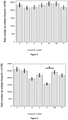
- compound 3 After quantification of the MBP labeling (MBP+ cells) compared to the basal control (A), compound 3 has an effect in favor of the differentiation of the OPCs at 5 ⁇ M (B).
- compound 4 At a concentration of 8 ⁇ M (C).
Landscapes
- Health & Medical Sciences (AREA)
- Chemical & Material Sciences (AREA)
- Organic Chemistry (AREA)
- Bioinformatics & Cheminformatics (AREA)
- Engineering & Computer Science (AREA)
- Medicinal Chemistry (AREA)
- Pharmacology & Pharmacy (AREA)
- Life Sciences & Earth Sciences (AREA)
- Animal Behavior & Ethology (AREA)
- General Health & Medical Sciences (AREA)
- Public Health (AREA)
- Veterinary Medicine (AREA)
- Neurosurgery (AREA)
- Biomedical Technology (AREA)
- Neurology (AREA)
- Chemical Kinetics & Catalysis (AREA)
- General Chemical & Material Sciences (AREA)
- Nuclear Medicine, Radiotherapy & Molecular Imaging (AREA)
- Diabetes (AREA)
- Hospice & Palliative Care (AREA)
- Epidemiology (AREA)
- Psychiatry (AREA)
- Pain & Pain Management (AREA)
- Pulmonology (AREA)
- Vascular Medicine (AREA)
- Cardiology (AREA)
- Heart & Thoracic Surgery (AREA)
- Psychology (AREA)
- Emergency Medicine (AREA)
- Endocrinology (AREA)
- Hematology (AREA)
- Obesity (AREA)
- Acyclic And Carbocyclic Compounds In Medicinal Compositions (AREA)
- Pharmaceuticals Containing Other Organic And Inorganic Compounds (AREA)
Claims (12)
- Verbindung zur Verwendung bei der Behandlung einer Störung oder einer Krankheit, die mit einer Fehlregulation der Aktivität von mindestens einem Kallikrein verbunden ist, wobei die Verbindung die folgende Formel (I) aufweist:
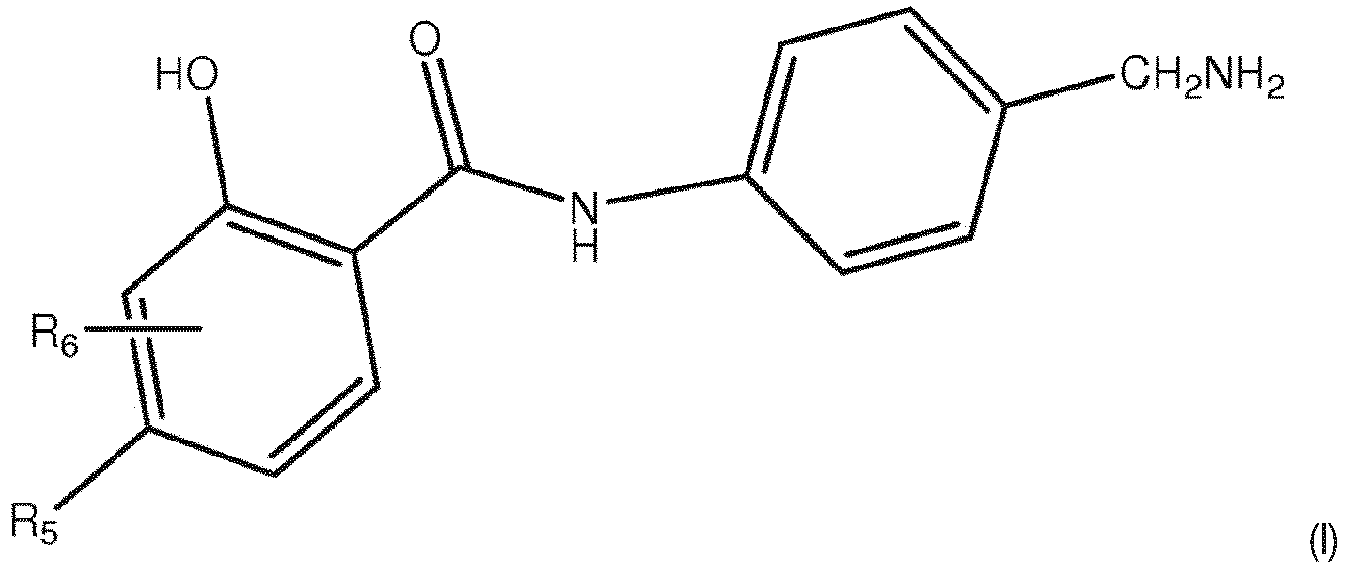 R5 einen (C1-C6)-Alkylrest darstellt und R6 ein Wasserstoffatom darstellt;alternativ R5 und R6 zusammen einen Ring mit den beiden Kohlenstoffen des Phenylrings, an den sie gebunden sind, bilden, um eine Naphthylgruppe zu bilden,die gegebenenfalls substituiert ist durch mindestens ein Halogenatom, ein OH, (C1-C6)-Alkyl, (C1-C6)-Alkoxy, -C(O)2R oder -N(R)C(O)R', wobei R und R' unabhängig voneinander ein Wasserstoffatom oder ein (C1-C6)-Alkylrest sind,vorzugsweise mindestens ein (C1-C6)-Alkyl, (C1-C6)-Alkoxy oder ein Halogenatom,wobei die Amin-Funktion möglicherweise eine Aminoschutzgruppe aufweist, odereines ihrer pharmazeutisch verträglichen Salze.
 - Verbindung zur Verwendung nach Anspruch 1, wobei R5 für einen Alkylrest steht, vorzugsweise ausgewählt aus einem Methyl-, Ethyl-, n-Propyl-, Isopropyl-, n-Butyl- und t-Butylrest, insbesondere Methyl.
- Verbindung zur Verwendung nach Anspruch 1, wobei die Verbindung ausgewählt ist aus:N-(4-(Aminomethyl)phenyl)-1-hydroxy-2-naphthamid,N-(4-(Aminomethyl)phenyl)-3-hydroxy-2-naphthamid,N-(4-(Aminomethyl)phenyl)-4-methyl-2-hydroxybenzamid,N-(4-(Aminomethyl)phenyl)-6-methoxy-1-hydroxy-2-naphthamid,N-(4-(Aminomethyl)phenyl)-4-isopropyl-2-hydroxybenzamid,und eines seiner Salze, insbesondere das Hydrochlorid, oder eine seiner aminogeschützten Verbindungen.
- Verbindung zur Verwendung nach Anspruch 1, wobei die Verbindung N-(4-(Aminomethyl)phenyl)-1-hydroxy-2-naphthamid, N-(4-(Aminomethyl)phenyl)-4-methyl-2-hydroxybenzamid ist, eines ihrer Salze, insbesondere das Hydrochlorid, oder eine ihrer aminogeschützten Verbindungen.
- Verbindung N-(4-(Aminomethyl)phenyl)-4-isopropyl-2-hydroxybenzamid, eines seiner Salze, insbesondere das Hydrochlorid, oder eine seiner aminogeschützten Verbindungen
- Pharmazeutische Zusammensetzung, umfassend in einem pharmazeutisch verträglichen Medium mindestens eine Verbindung der Formel (I), wie in einem der vorhergehenden Ansprüche definiert.
- Zusammensetzung nach Anspruch 6, wobei die Verbindung der Formel (I)N-(4-(Aminomethyl)phenyl)-1-hydroxy-2-naphthamid,N-(4-(Aminomethyl)phenyl)-3-hydroxy-2-naphthamid,N-(4-(Aminomethyl)phenyl)-4-methyl-2-hydroxybenzamid,N-(4-(Aminomethyl)phenyl)-6-methoxy-1-hydroxy-2-naphthamid,N-(4-(Aminomethyl)phenyl)-4-isopropyl-2-hydroxybenzamid,eines seiner Salze, insbesondere das Hydrochlorid, oder eine seiner aminogeschützten Verbindungen.
- Zusammensetzung nach Anspruch 6, wobei die Verbindung ausgewählt ist aus N-(4-(Aminomethyl)phenyl)-1-hydroxy-2-naphthamid und N-(4-(Aminomethyl)phenyl)-4-methyl-2-hydroxybenzamid, insbesondere N-(4-(Aminomethyl)phenyl)-4-isopropyl-2-hydroxybenzamid.
- Verbindung oder Zusammensetzung zur Verwendung nach einem der vorhergehenden Ansprüche, wobei die Störung oder Krankheit mit einer Störung der Aktivität von mindestens einem Kallikrein, das das Kallikrein 6 ist, verbunden ist.
- Verbindung oder Zusammensetzung zur Verwendung nach einem der vorhergehenden Ansprüche, zur Verwendung bei der Behandlung von entzündlichen, neurodegenerativen oder neuroinflammatorischen Erkrankungen des Zentralnervensystems.
- Verbindung oder Zusammensetzung zur Verwendung nach einem der vorhergehenden Ansprüche zur Verwendung bei der Behandlung einer Krankheit ausgewählt aus zerebraler Ischämie, Multipler Sklerose, Parkinson-Krankheit, Alzheimer-Krankheit, Markläsionen des Rückenmarks, Lungenentzündung, vaskulären Komplikationen, insbesondere im Zusammenhang mit Diabetes.
- Verbindung oder Zusammensetzung zur Verwendung nach einem der vorhergehenden Ansprüche zur Verwendung bei der Behandlung von Multipler Sklerose.
Applications Claiming Priority (2)
| Application Number | Priority Date | Filing Date | Title |
|---|---|---|---|
| FR1851206A FR3077729B1 (fr) | 2018-02-13 | 2018-02-13 | Composes et compositions pour le traitement de maladies neurodegeneratives et inflammatoires |
| PCT/FR2019/050321 WO2019158859A1 (fr) | 2018-02-13 | 2019-02-13 | Composés et compositions pour le traitement de maladies neurodégénératives et inflammatoires |
Publications (2)
| Publication Number | Publication Date |
|---|---|
| EP3752138A1 EP3752138A1 (de) | 2020-12-23 |
| EP3752138B1 true EP3752138B1 (de) | 2022-02-09 |
Family
ID=62092099
Family Applications (1)
| Application Number | Title | Priority Date | Filing Date |
|---|---|---|---|
| EP19710047.2A Active EP3752138B1 (de) | 2018-02-13 | 2019-02-13 | Verbindungen und zusammensetzungen zur behandlung von neurodegenerativen und entzündlichen erkrankungen |
Country Status (4)
| Country | Link |
|---|---|
| US (1) | US11541023B2 (de) |
| EP (1) | EP3752138B1 (de) |
| FR (1) | FR3077729B1 (de) |
| WO (1) | WO2019158859A1 (de) |
-
2018
- 2018-02-13 FR FR1851206A patent/FR3077729B1/fr active Active
-
2019
- 2019-02-13 US US16/968,890 patent/US11541023B2/en active Active
- 2019-02-13 WO PCT/FR2019/050321 patent/WO2019158859A1/fr not_active Ceased
- 2019-02-13 EP EP19710047.2A patent/EP3752138B1/de active Active
Non-Patent Citations (2)
| Title |
|---|
| DATABASE BIOSIS [online] BIOSCIENCES INFORMATION SERVICE, PHILADELPHIA, PA, US; March 2003 (2003-03-01), SCARISBRICK ISOBEL A: "Activity of a newly identified serine protease in central nervous system demyelination.", Database accession no. PREV200300249947 * |
| FASEB JOURNAL, vol. 17, no. 4-5, March 2003 (2003-03-01), FASEB MEETING ON EXPERIMENTAL BIOLOGY: TRANSLATING THE GENOME; SAN DIEGO, CA, USA; APRIL 11-15, 2003, pages Abstract No. 207.1, ISSN: 0892-6638 * |
Also Published As
| Publication number | Publication date |
|---|---|
| US11541023B2 (en) | 2023-01-03 |
| WO2019158859A1 (fr) | 2019-08-22 |
| FR3077729B1 (fr) | 2020-08-28 |
| US20210046026A1 (en) | 2021-02-18 |
| FR3077729A1 (fr) | 2019-08-16 |
| EP3752138A1 (de) | 2020-12-23 |
Similar Documents
| Publication | Publication Date | Title |
|---|---|---|
| EP3259246B1 (de) | Derivate von sobetirom | |
| KR960004858B1 (ko) | 프롤리날 유도체, 이의 제조방법 및 이를 함유하는 약제학적 조성물 | |
| EP1349576B1 (de) | Kombinierte verwendung von enzyminhibitoren zur therapie und prävention allergischer reaktionen vom typ i nach gell und coombs und zur therapie und prävention dermatologischer erkrankungen mit follikulären und epidermalen hyperkeratosen und einer verstärkten keratinozytenproliferation | |
| KR960001205B1 (ko) | 티아졸리딘 유도체 및 이의 제조방법 | |
| CA2517893C (fr) | Application a titre de medicaments de derives de cholest-4-en-3-one, compositions pharmaceutiques les renfermant, nouveaux derives et leur procede de preparation | |
| CN102159578A (zh) | 四氢咪唑并[1,5-a]吡嗪衍生物的盐,其制备方法及其在医药上的应用 | |
| EP2382206B1 (de) | Verbindungen und verfahren zur behandlung von schmerzen und anderen krankheiten | |
| FR2703050A1 (fr) | Nouveaux dérivés bicycliques azotés, leur procédé de préparation et les compositions pharmaceutiques qui les contiennent. | |
| US20150258091A1 (en) | Cyclic glycyl-2-allyl proline improves cognitive performance in impaired animals | |
| EP1493739A1 (de) | Thiophenderivate von Aminosäuren, Verfahren zu ihrer Herstellung und diese enthaltende Zusammensetzungen | |
| US20250367192A1 (en) | Bicyclic compounds and methods for their use in treating pitt hopkins syndrome | |
| EP0533516B1 (de) | 1-(Alkoxybenzyl)piperazineamide, Verfahren zu deren Herstellung und diese enthaltende pharmazeutische Zusammensetzungen | |
| EP1761507A1 (de) | 2,3-benzodiazepin-verbindungen als phosphodiesterase-hemmer | |
| HUP0103166A2 (hu) | Karbamát- és karbamidtartalmú készítmények, és neurotróf alkalmazásuk | |
| EP3752138A1 (de) | Verbindungen und zusammensetzungen zur behandlung von neurodegenerativen und entzündlichen erkrankungen | |
| KR20060101460A (ko) | 아미도메틸-치환1-(카르복시알킬)-시클로펜틸카보닐아미노-벤자제핀-n-아세트산 유도체, 그것의 제조를 위한 공정 및 중간체 생성물및 이들 화합물을 포함하는 의약품 | |
| JP2008019188A (ja) | 新規カルノシン誘導体及び組成物 | |
| US20210179543A1 (en) | Calpain-2 selective inhibitor compounds for treatment of glaucoma | |
| US7427611B2 (en) | Amidomethyl-substituted 1-(carboxyalkyl)-cyclopentyl-carbonylamino-benzazepine-N-acetic acid compounds, process and intermediate products for their preparation and pharmaceutical compositions containing them | |
| EP3994122B1 (de) | N-formylhydroxylamine als neprilysin (nep)-inhibitoren, insbesondere als mischinhibitoren von aminopeptidase n (apn) und neprilysin (nep) | |
| Hunziker et al. | Synthesis, Characterization, and in vivo Evaluation of a Novel Potent Autotaxin-Inhibitor. Front. Pharmacol. 12: 699535. doi: 10.3389/fphar. 2021.699535 | |
| US7452875B2 (en) | Amidomethyl-substituted 1-(carboxyalkyl) cyclopentyl-carbonylamino-benzazepine-N-acetic acid compounds, process and intermediate products for their preparation and pharmaceutical compositions containing them | |
| TWI522358B (zh) | 四氫咪唑并〔1,5-a〕吡衍生物的鹽,其製備方法及其在醫藥上的應用 | |
| HK1247182A1 (en) | Derivatives of sobetirome | |
| FR2817867A1 (fr) | Isocoumarines inhibitrices de la production de peptide amyloide, preparation, compositions les contenant et utilisations |
Legal Events
| Date | Code | Title | Description |
|---|---|---|---|
| STAA | Information on the status of an ep patent application or granted ep patent |
Free format text: STATUS: UNKNOWN |
|
| STAA | Information on the status of an ep patent application or granted ep patent |
Free format text: STATUS: THE INTERNATIONAL PUBLICATION HAS BEEN MADE |
|
| PUAI | Public reference made under article 153(3) epc to a published international application that has entered the european phase |
Free format text: ORIGINAL CODE: 0009012 |
|
| STAA | Information on the status of an ep patent application or granted ep patent |
Free format text: STATUS: REQUEST FOR EXAMINATION WAS MADE |
|
| 17P | Request for examination filed |
Effective date: 20200813 |
|
| AK | Designated contracting states |
Kind code of ref document: A1 Designated state(s): AL AT BE BG CH CY CZ DE DK EE ES FI FR GB GR HR HU IE IS IT LI LT LU LV MC MK MT NL NO PL PT RO RS SE SI SK SM TR |
|
| AX | Request for extension of the european patent |
Extension state: BA ME |
|
| DAV | Request for validation of the european patent (deleted) | ||
| DAX | Request for extension of the european patent (deleted) | ||
| GRAP | Despatch of communication of intention to grant a patent |
Free format text: ORIGINAL CODE: EPIDOSNIGR1 |
|
| STAA | Information on the status of an ep patent application or granted ep patent |
Free format text: STATUS: GRANT OF PATENT IS INTENDED |
|
| INTG | Intention to grant announced |
Effective date: 20211103 |
|
| GRAS | Grant fee paid |
Free format text: ORIGINAL CODE: EPIDOSNIGR3 |
|
| GRAA | (expected) grant |
Free format text: ORIGINAL CODE: 0009210 |
|
| STAA | Information on the status of an ep patent application or granted ep patent |
Free format text: STATUS: THE PATENT HAS BEEN GRANTED |
|
| AK | Designated contracting states |
Kind code of ref document: B1 Designated state(s): AL AT BE BG CH CY CZ DE DK EE ES FI FR GB GR HR HU IE IS IT LI LT LU LV MC MK MT NL NO PL PT RO RS SE SI SK SM TR |
|
| REG | Reference to a national code |
Ref country code: GB Ref legal event code: FG4D Free format text: NOT ENGLISH |
|
| REG | Reference to a national code |
Ref country code: CH Ref legal event code: EP Ref country code: AT Ref legal event code: REF Ref document number: 1467088 Country of ref document: AT Kind code of ref document: T Effective date: 20220215 |
|
| REG | Reference to a national code |
Ref country code: DE Ref legal event code: R096 Ref document number: 602019011495 Country of ref document: DE |
|
| REG | Reference to a national code |
Ref country code: IE Ref legal event code: FG4D Free format text: LANGUAGE OF EP DOCUMENT: FRENCH |
|
| REG | Reference to a national code |
Ref country code: LT Ref legal event code: MG9D |
|
| REG | Reference to a national code |
Ref country code: NL Ref legal event code: MP Effective date: 20220209 |
|
| REG | Reference to a national code |
Ref country code: AT Ref legal event code: MK05 Ref document number: 1467088 Country of ref document: AT Kind code of ref document: T Effective date: 20220209 |
|
| PG25 | Lapsed in a contracting state [announced via postgrant information from national office to epo] |
Ref country code: SE Free format text: LAPSE BECAUSE OF FAILURE TO SUBMIT A TRANSLATION OF THE DESCRIPTION OR TO PAY THE FEE WITHIN THE PRESCRIBED TIME-LIMIT Effective date: 20220209 Ref country code: RS Free format text: LAPSE BECAUSE OF FAILURE TO SUBMIT A TRANSLATION OF THE DESCRIPTION OR TO PAY THE FEE WITHIN THE PRESCRIBED TIME-LIMIT Effective date: 20220209 Ref country code: PT Free format text: LAPSE BECAUSE OF FAILURE TO SUBMIT A TRANSLATION OF THE DESCRIPTION OR TO PAY THE FEE WITHIN THE PRESCRIBED TIME-LIMIT Effective date: 20220609 Ref country code: NO Free format text: LAPSE BECAUSE OF FAILURE TO SUBMIT A TRANSLATION OF THE DESCRIPTION OR TO PAY THE FEE WITHIN THE PRESCRIBED TIME-LIMIT Effective date: 20220509 Ref country code: NL Free format text: LAPSE BECAUSE OF FAILURE TO SUBMIT A TRANSLATION OF THE DESCRIPTION OR TO PAY THE FEE WITHIN THE PRESCRIBED TIME-LIMIT Effective date: 20220209 Ref country code: LT Free format text: LAPSE BECAUSE OF FAILURE TO SUBMIT A TRANSLATION OF THE DESCRIPTION OR TO PAY THE FEE WITHIN THE PRESCRIBED TIME-LIMIT Effective date: 20220209 Ref country code: HR Free format text: LAPSE BECAUSE OF FAILURE TO SUBMIT A TRANSLATION OF THE DESCRIPTION OR TO PAY THE FEE WITHIN THE PRESCRIBED TIME-LIMIT Effective date: 20220209 Ref country code: ES Free format text: LAPSE BECAUSE OF FAILURE TO SUBMIT A TRANSLATION OF THE DESCRIPTION OR TO PAY THE FEE WITHIN THE PRESCRIBED TIME-LIMIT Effective date: 20220209 Ref country code: BG Free format text: LAPSE BECAUSE OF FAILURE TO SUBMIT A TRANSLATION OF THE DESCRIPTION OR TO PAY THE FEE WITHIN THE PRESCRIBED TIME-LIMIT Effective date: 20220509 |
|
| PG25 | Lapsed in a contracting state [announced via postgrant information from national office to epo] |
Ref country code: PL Free format text: LAPSE BECAUSE OF FAILURE TO SUBMIT A TRANSLATION OF THE DESCRIPTION OR TO PAY THE FEE WITHIN THE PRESCRIBED TIME-LIMIT Effective date: 20220209 Ref country code: LV Free format text: LAPSE BECAUSE OF FAILURE TO SUBMIT A TRANSLATION OF THE DESCRIPTION OR TO PAY THE FEE WITHIN THE PRESCRIBED TIME-LIMIT Effective date: 20220209 Ref country code: GR Free format text: LAPSE BECAUSE OF FAILURE TO SUBMIT A TRANSLATION OF THE DESCRIPTION OR TO PAY THE FEE WITHIN THE PRESCRIBED TIME-LIMIT Effective date: 20220510 Ref country code: FI Free format text: LAPSE BECAUSE OF FAILURE TO SUBMIT A TRANSLATION OF THE DESCRIPTION OR TO PAY THE FEE WITHIN THE PRESCRIBED TIME-LIMIT Effective date: 20220209 Ref country code: AT Free format text: LAPSE BECAUSE OF FAILURE TO SUBMIT A TRANSLATION OF THE DESCRIPTION OR TO PAY THE FEE WITHIN THE PRESCRIBED TIME-LIMIT Effective date: 20220209 |
|
| PG25 | Lapsed in a contracting state [announced via postgrant information from national office to epo] |
Ref country code: IS Free format text: LAPSE BECAUSE OF FAILURE TO SUBMIT A TRANSLATION OF THE DESCRIPTION OR TO PAY THE FEE WITHIN THE PRESCRIBED TIME-LIMIT Effective date: 20220609 |
|
| REG | Reference to a national code |
Ref country code: BE Ref legal event code: MM Effective date: 20220228 |
|
| PG25 | Lapsed in a contracting state [announced via postgrant information from national office to epo] |
Ref country code: SM Free format text: LAPSE BECAUSE OF FAILURE TO SUBMIT A TRANSLATION OF THE DESCRIPTION OR TO PAY THE FEE WITHIN THE PRESCRIBED TIME-LIMIT Effective date: 20220209 Ref country code: SK Free format text: LAPSE BECAUSE OF FAILURE TO SUBMIT A TRANSLATION OF THE DESCRIPTION OR TO PAY THE FEE WITHIN THE PRESCRIBED TIME-LIMIT Effective date: 20220209 Ref country code: RO Free format text: LAPSE BECAUSE OF FAILURE TO SUBMIT A TRANSLATION OF THE DESCRIPTION OR TO PAY THE FEE WITHIN THE PRESCRIBED TIME-LIMIT Effective date: 20220209 Ref country code: LU Free format text: LAPSE BECAUSE OF NON-PAYMENT OF DUE FEES Effective date: 20220213 Ref country code: EE Free format text: LAPSE BECAUSE OF FAILURE TO SUBMIT A TRANSLATION OF THE DESCRIPTION OR TO PAY THE FEE WITHIN THE PRESCRIBED TIME-LIMIT Effective date: 20220209 Ref country code: DK Free format text: LAPSE BECAUSE OF FAILURE TO SUBMIT A TRANSLATION OF THE DESCRIPTION OR TO PAY THE FEE WITHIN THE PRESCRIBED TIME-LIMIT Effective date: 20220209 Ref country code: CZ Free format text: LAPSE BECAUSE OF FAILURE TO SUBMIT A TRANSLATION OF THE DESCRIPTION OR TO PAY THE FEE WITHIN THE PRESCRIBED TIME-LIMIT Effective date: 20220209 |
|
| REG | Reference to a national code |
Ref country code: DE Ref legal event code: R097 Ref document number: 602019011495 Country of ref document: DE |
|
| PG25 | Lapsed in a contracting state [announced via postgrant information from national office to epo] |
Ref country code: MC Free format text: LAPSE BECAUSE OF FAILURE TO SUBMIT A TRANSLATION OF THE DESCRIPTION OR TO PAY THE FEE WITHIN THE PRESCRIBED TIME-LIMIT Effective date: 20220209 Ref country code: AL Free format text: LAPSE BECAUSE OF FAILURE TO SUBMIT A TRANSLATION OF THE DESCRIPTION OR TO PAY THE FEE WITHIN THE PRESCRIBED TIME-LIMIT Effective date: 20220209 |
|
| PLBE | No opposition filed within time limit |
Free format text: ORIGINAL CODE: 0009261 |
|
| STAA | Information on the status of an ep patent application or granted ep patent |
Free format text: STATUS: NO OPPOSITION FILED WITHIN TIME LIMIT |
|
| 26N | No opposition filed |
Effective date: 20221110 |
|
| PG25 | Lapsed in a contracting state [announced via postgrant information from national office to epo] |
Ref country code: IE Free format text: LAPSE BECAUSE OF NON-PAYMENT OF DUE FEES Effective date: 20220213 |
|
| PG25 | Lapsed in a contracting state [announced via postgrant information from national office to epo] |
Ref country code: SI Free format text: LAPSE BECAUSE OF FAILURE TO SUBMIT A TRANSLATION OF THE DESCRIPTION OR TO PAY THE FEE WITHIN THE PRESCRIBED TIME-LIMIT Effective date: 20220209 Ref country code: BE Free format text: LAPSE BECAUSE OF NON-PAYMENT OF DUE FEES Effective date: 20220228 |
|
| PG25 | Lapsed in a contracting state [announced via postgrant information from national office to epo] |
Ref country code: IT Free format text: LAPSE BECAUSE OF FAILURE TO SUBMIT A TRANSLATION OF THE DESCRIPTION OR TO PAY THE FEE WITHIN THE PRESCRIBED TIME-LIMIT Effective date: 20220209 |
|
| PG25 | Lapsed in a contracting state [announced via postgrant information from national office to epo] |
Ref country code: MK Free format text: LAPSE BECAUSE OF FAILURE TO SUBMIT A TRANSLATION OF THE DESCRIPTION OR TO PAY THE FEE WITHIN THE PRESCRIBED TIME-LIMIT Effective date: 20220209 Ref country code: CY Free format text: LAPSE BECAUSE OF FAILURE TO SUBMIT A TRANSLATION OF THE DESCRIPTION OR TO PAY THE FEE WITHIN THE PRESCRIBED TIME-LIMIT Effective date: 20220209 |
|
| PG25 | Lapsed in a contracting state [announced via postgrant information from national office to epo] |
Ref country code: HU Free format text: LAPSE BECAUSE OF FAILURE TO SUBMIT A TRANSLATION OF THE DESCRIPTION OR TO PAY THE FEE WITHIN THE PRESCRIBED TIME-LIMIT; INVALID AB INITIO Effective date: 20190213 |
|
| PG25 | Lapsed in a contracting state [announced via postgrant information from national office to epo] |
Ref country code: TR Free format text: LAPSE BECAUSE OF FAILURE TO SUBMIT A TRANSLATION OF THE DESCRIPTION OR TO PAY THE FEE WITHIN THE PRESCRIBED TIME-LIMIT Effective date: 20220209 |
|
| PG25 | Lapsed in a contracting state [announced via postgrant information from national office to epo] |
Ref country code: MT Free format text: LAPSE BECAUSE OF FAILURE TO SUBMIT A TRANSLATION OF THE DESCRIPTION OR TO PAY THE FEE WITHIN THE PRESCRIBED TIME-LIMIT Effective date: 20220209 |
|
| REG | Reference to a national code |
Ref country code: CH Ref legal event code: U11 Free format text: ST27 STATUS EVENT CODE: U-0-0-U10-U11 (AS PROVIDED BY THE NATIONAL OFFICE) Effective date: 20260331 |
|
| PGFP | Annual fee paid to national office [announced via postgrant information from national office to epo] |
Ref country code: GB Payment date: 20260225 Year of fee payment: 8 |
|
| PGFP | Annual fee paid to national office [announced via postgrant information from national office to epo] |
Ref country code: DE Payment date: 20260324 Year of fee payment: 8 |
|
| PGFP | Annual fee paid to national office [announced via postgrant information from national office to epo] |
Ref country code: FR Payment date: 20260227 Year of fee payment: 8 |
|
| PGFP | Annual fee paid to national office [announced via postgrant information from national office to epo] |
Ref country code: CH Payment date: 20260331 Year of fee payment: 8 |