EP3751797B1 - Verfahren und vorrichtung zum pushing einer anwendungsnachricht - Google Patents
Verfahren und vorrichtung zum pushing einer anwendungsnachricht Download PDFInfo
- Publication number
- EP3751797B1 EP3751797B1 EP20189068.8A EP20189068A EP3751797B1 EP 3751797 B1 EP3751797 B1 EP 3751797B1 EP 20189068 A EP20189068 A EP 20189068A EP 3751797 B1 EP3751797 B1 EP 3751797B1
- Authority
- EP
- European Patent Office
- Prior art keywords
- user device
- message
- user
- timely
- response rate
- Prior art date
- Legal status (The legal status is an assumption and is not a legal conclusion. Google has not performed a legal analysis and makes no representation as to the accuracy of the status listed.)
- Active
Links
Images


Classifications
-
- H—ELECTRICITY
- H04—ELECTRIC COMMUNICATION TECHNIQUE
- H04L—TRANSMISSION OF DIGITAL INFORMATION, e.g. TELEGRAPHIC COMMUNICATION
- H04L51/00—User-to-user messaging in packet-switching networks, transmitted according to store-and-forward or real-time protocols, e.g. e-mail
- H04L51/21—Monitoring or handling of messages
- H04L51/224—Monitoring or handling of messages providing notification on incoming messages, e.g. pushed notifications of received messages
-
- H—ELECTRICITY
- H04—ELECTRIC COMMUNICATION TECHNIQUE
- H04L—TRANSMISSION OF DIGITAL INFORMATION, e.g. TELEGRAPHIC COMMUNICATION
- H04L51/00—User-to-user messaging in packet-switching networks, transmitted according to store-and-forward or real-time protocols, e.g. e-mail
- H04L51/21—Monitoring or handling of messages
- H04L51/214—Monitoring or handling of messages using selective forwarding
-
- G—PHYSICS
- G06—COMPUTING OR CALCULATING; COUNTING
- G06F—ELECTRIC DIGITAL DATA PROCESSING
- G06F16/00—Information retrieval; Database structures therefor; File system structures therefor
- G06F16/90—Details of database functions independent of the retrieved data types
- G06F16/95—Retrieval from the web
- G06F16/955—Retrieval from the web using information identifiers, e.g. uniform resource locators [URL]
-
- G—PHYSICS
- G06—COMPUTING OR CALCULATING; COUNTING
- G06F—ELECTRIC DIGITAL DATA PROCESSING
- G06F16/00—Information retrieval; Database structures therefor; File system structures therefor
- G06F16/90—Details of database functions independent of the retrieved data types
- G06F16/95—Retrieval from the web
- G06F16/955—Retrieval from the web using information identifiers, e.g. uniform resource locators [URL]
- G06F16/9562—Bookmark management
-
- H—ELECTRICITY
- H04—ELECTRIC COMMUNICATION TECHNIQUE
- H04L—TRANSMISSION OF DIGITAL INFORMATION, e.g. TELEGRAPHIC COMMUNICATION
- H04L51/00—User-to-user messaging in packet-switching networks, transmitted according to store-and-forward or real-time protocols, e.g. e-mail
- H04L51/07—User-to-user messaging in packet-switching networks, transmitted according to store-and-forward or real-time protocols, e.g. e-mail characterised by the inclusion of specific contents
- H04L51/18—Commands or executable codes
-
- H—ELECTRICITY
- H04—ELECTRIC COMMUNICATION TECHNIQUE
- H04L—TRANSMISSION OF DIGITAL INFORMATION, e.g. TELEGRAPHIC COMMUNICATION
- H04L67/00—Network arrangements or protocols for supporting network services or applications
- H04L67/14—Session management
- H04L67/146—Markers for unambiguous identification of a particular session, e.g. session cookie or URL-encoding
-
- H—ELECTRICITY
- H04—ELECTRIC COMMUNICATION TECHNIQUE
- H04L—TRANSMISSION OF DIGITAL INFORMATION, e.g. TELEGRAPHIC COMMUNICATION
- H04L67/00—Network arrangements or protocols for supporting network services or applications
- H04L67/50—Network services
- H04L67/55—Push-based network services
Definitions
- the present application relates to the field of information processing technologies, and in particular, relates to a method and device for pushing an application message.
- smartphones usually have push notification functions.
- Various applications installed on smartphones usually send promotions or service messages such as merchandise promotion messages, viral videos, and information to users over the smartphones in batch, to increase click rate of the applications.
- promotions or service messages such as merchandise promotion messages, viral videos, and information to users over the smartphones in batch, to increase click rate of the applications.
- content to be pushed is selected and is sent in batch at a sending time designated by back-end configuration personnel, and all users receive the pushed content almost at the same time.
- US 2016/014057 describes a method and system for providing dynamically customized web push messages in a wireless network.
- the method comprises receiving at least one push message from at least one content provider, customizing the at least one push message based on one or more instructions stored in a gateway server, and pushing the at least one push message to at least one user device, based on the customization of the at least one push message at the gateway server.
- the system comprises at least one content provider, at least one push server, a gateway server, and at least one user device.
- US 2015/169698 describes methods and apparatuses of determining a time for sending information, wherein a method includes obtaining n1 time periods during which an information receiving party most often opens information based on a result of statistics collected in advance for information related behavior of the information receiving party; and determining an information sending time for the information receiving party using the n1 time periods.
- CN 102 801 817 describes a push method and an apparatus based on user context.
- the present application provides a method and device for pushing an application message, to alleviate a problem that an existing method for pushing messages in batch has a relatively low timely response rate.
- a first aspect of the present application provides a method for pushing an application message, including: for a user device group of the message to be sent to, dynamically determining, based on a timely-response rate and a correction scheme, an optimal time period for each user device in the user device group to respond to a message; and based on the optimal time period for each user device to respond to a message, separately sending, to a corresponding user device in the user device group, the message to be sent.
- the dynamically determining, based on a timely-response rate and a correction scheme, an optimal time period for each user device in the user device group to respond to a message includes the following: predetermining a time interval for collecting statistics on the timely-response rate; based on the predetermined time interval, collecting statistics on a number of messages that are received by and a number of messages that are responded to in time by each user device in each time interval; determining a timely-response rate of each user device in each time interval based on the number of messages that are received by and the number of messages that are responded to in time by each user device in each time interval; determining a time interval corresponding to a maximum value of the timely-response rate as the optimal time period; correcting the determined timely-response rate of each user device in each time interval by using the predetermined correction scheme, to minimize a fluctuation amplitude of the timely-response rate; and correspondingly determining a time interval corresponding to a maximum
- the method further includes the following: separately obtain time intervals corresponding to the multiple maximum values of the timely-response rate, and determine an earliest time interval as the optimal time period for the user device to respond to a message; or determine a time interval with an optimal network status as the optimal time period for the user device to respond to a message.
- the method further includes the following: detecting that the label of the message to be sent is a message label for real-time transmission; and sending, to each user device in the user device group in real time, the message to be sent.
- the separately sending, to a corresponding user device in the user device group, the message to be sent includes the following: :based on an identifier of each user device in the user device group, determining an identifier of a sending server corresponding to the identifier of each user device, so that the sending server sends, to the corresponding user device, the message to be sent.
- a second aspect of the present application provides a device for pushing an application message, including a plurality of modules configured to perform the method described above.
- the present application further provides an application back-end server, including the device for pushing an application message according to the second aspect.
- an optimal time period for each user device in the user device group to respond to a message is determined, that is, the highest-probability time period for tapping a message by each user is obtained.
- the message to be sent is separately sent to a corresponding user device in the user device group based on the optimal time period for each user device to respond to a message (that is, the highest-probability time period for tapping a message by the user), so that different users receive, at different time points, messages pushed by a system, thereby maximizing a probability of a user tapping a message.
- a time point preference for tapping a message by a user is considered, and a time point for receiving a message by the user is customized.
- a time point for pushing a message By customizing a time point for pushing a message, a probability of a user tapping a message is maximized, thereby improving effectiveness of the message in hitting a target user. Therefore, a problem that a method for pushing messages in batch in the existing technology has a relatively low timely-response rate can be alleviated.
- a change to a time point preference for tapping a message by a user can be further considered, and an optimal time period for a user device to respond to a message can be adaptively corrected, to ensure effectiveness of a message in hitting a target user.
- one day is divided into several time periods in the existing technology.
- the numbers of browsing times in different time periods are compared based on a number of message browsing times of a user in each time period.
- a time period with the largest number of browsing times is set as a time period of the highest priority.
- the inventor finds that the existing technology has the following problems:
- the time period of the highest priority only the time period with the largest number of browsing times of the user is set as an optimal time period.
- browsing by the user is subject to whether the message is received currently. It is possible that the user is idle at present but the terminal receives no message and the user does not perform browsing. Therefore, in the existing technology, the setting of the time period of the highest priority cannot accurately reflect a preference for tapping a message by the user.
- the user receives, only in the time period of the highest priority, a received message pushed by the terminal. When a habit of the user is changed, the time period of the highest priority cannot be adaptively adjusted.
- the terminal for example, a mobile phone
- the messages are generated not only by the operating systems but also by various application back ends, and it is difficult for the terminal to differentiate between messages with a high timeliness requirement and messages with a low timeliness requirement. For example, messages with a high timeliness requirement such as breaking news and a dynamic account reminder of a payment transaction need to be pushed by the terminal to the user immediately.
- setting the time period of the highest priority is lack of an adaptive-adjustment mechanism (which means inflexible), and cannot accurately reflect a preference for tapping a message by a user, and therefore the user can miss an important message requiring timeliness.
- a time point preference for tapping a message by each user is adaptively adjusted by using the adaptive-adjustment mechanism.
- a time point for receiving a message by a user can be customized.
- a message is pushed to the user at the customized time point for receiving a message by the user, and therefore a probability of the user tapping a message is maximized, improving effectiveness of the message in hitting a target user.
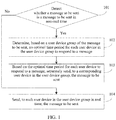
- FIG. 1 is a schematic flowchart illustrating a method for pushing an application message, according to an implementation of the present application. As shown in FIG. 1 , the method includes the following steps: 101: Detect whether a message to be sent is a message to be sent in non-real time.
- each message includes a message label.
- the message label includes a message label for non-real-time transmission and a message label for real-time transmission. Therefore, based on a message label included in the message, when the message label is the message label for non-real-time transmission, it can be determined that the message to be sent is a message to be sent in non-real time; or when the message label is the message label for real-time transmission, it can be determined that the message to be sent is a message to be sent in real time.
- step 102 When it is detected that the message to be sent is a message to be sent in non-real time, step 102 is executed.
- step 104 When it is detected that the message to be sent is a message to be sent in real time, step 104 is executed.
- 102 For a user device group of the message to be sent, dynamically determine, based on a timely-response rate and a correction scheme, an optimal time period for each user device in the user device group to respond to a message.
- the user device can be a smartphone, a PDA (tablet computer), a PC-tablet two-in-one, etc.
- the user device can have a wired network interface, and can also have a wireless network interface.
- TAOBAO an application (APP) in a mobile phone
- APP application
- a large number of user's mobile phones have TAOBAOAPP installed.
- the user's mobile phone is a type of user device. Therefore, in the implementation of the present invention, the user's mobile phones are referred to as a user device group.
- a time point preference for tapping a message by each user in a user group needs to be obtained in the implementation of the present invention. It is worthwhile to note that, when a user device receives the merchandise promotion message sent by the back end of TAOBAO APP, a user taps the merchandise promotion message by using the user device, that is, the user device responds to the merchandise promotion message. Therefore, the determining the optimal time period for each user device in the user device group to respond to a message in step 102is essentially obtaining the time point preference for tapping a message by each user in the user group.
- a time point for receiving a message by a user can be customized.
- a message is pushed to the user at the customized time point for receiving a message by the user, and therefore a probability of the user tapping a message is maximized, improving effectiveness of the message in hitting a target user.
- statistics can be collected on messages that are received by and messages that are tapped by each mobile user of TAOBAO (which is equivalent to a user device having mobile TAOBAO installed) in history (for example, in recent one year), to obtain through analysis the highest-probability time period for tapping a message by each mobile user of TAOBAO (which is equivalent to an optimal time period for responding to a message).
- step 102 references can be made to detailed descriptions in implementations shown in FIG. 2 and FIG. 3 .
- the back end of TAOBAO APP Based on the highest-probability time period for tapping a message by each mobile user of TAOBAO (which is equivalent to the optimal time period for responding to a message) obtained above through analysis, the back end of TAOBAO APP separately sends the merchandise promotion message to a corresponding mobile user of TAOBAO in the corresponding highest-probability time period (optimal time period). For example, assume that the highest-probability time period (optimal time period) obtained through analysis for user A to tap the merchandise promotion message sent by the back end of TAOBAO APP is from 12:00 to 12:10 at noon.
- the back end of TAOBAO APP sends the merchandise promotion message to a user device used by user A during 12:00 to 12:10 at noon so that user A can tap the message soon after receiving the message, thereby improving effectiveness of the message in hitting a target user.
- an optimal time period for each user device in the user device group to respond to a message is determined, that is, the highest-probability time period for tapping a message by each user is obtained.
- the message to be sent is separately sent to a corresponding user device in the user device group based on the optimal time period for each user device to respond to a message (that is, the highest-probability time period for tapping a message by the user), so that different users receive, at different time points, messages pushed by a system, thereby maximizing the probability of a user tapping a message.
- a time point preference for tapping a message by a user is fully considered, and a time point for receiving a message by the user is customized.
- a time point for pushing a message By customizing a time point for pushing a message, the probability of a user tapping a message is maximized, thereby improving effectiveness of the message in hitting a target user. Therefore, a problem that a method for pushing messages in batch in the existing technology has a relatively low timely-response rate can be alleviated.
- FIG. 2 is a schematic flowchart illustrating an implementation method of step 102 in the implementation shown in FIG. 1 .
- the determining an optimal time period for each user device in the user device group to respond to a message can include the following steps:
- 201 Predetermine a time interval for collecting statistics on a timely-response rate.
- statistics are collected on messages that are received by and messages that are tapped by a user in history.
- statistics can be collected on messages that are received by and messages that are tapped by the user in recent one year.
- statistics collection statistics are collected on a number of messages that are received by and a number of messages that are responded to in time by each user device in each time interval in recent one year.
- the timely-response rate of each user device in each time interval can be obtained by dividing the number of messages that are received by each user device in each time interval by the number of messages that are responded to in time by the user device in the time interval.
- a high timely-response rate in a certain time interval indicates a high probability of tapping a message in time after a user receives the message in the time interval. Therefore, based on the timely-response rate of each user device in each time interval obtained in step 203, the time interval corresponding to the maximum value of the timely-response rate can be determined as the optimal time period for the user device to respond to a message.
- FIG. 3 is a schematic flowchart illustrating another implementation method of step 102 in the implementation shown in FIG. 1 .
- Step 102 can include the following steps.
- statistics are collected on messages that are received by and messages that are tapped by a user in history.
- statistics can be collected on messages that are received by and messages that are tapped by the user in recent one year.
- statistics collection statistics are collected on a number of messages that are received by and a number of messages that are responded to in time by each user device in each time interval in recent one year.
- the timely-response rate of each user device in each time interval can be obtained by dividing the number of messages that are received by each user device in each time interval by the number of messages that are responded to in time by the user device in the time interval.
- the predetermined correction scheme can be performing correction by using the Wilson interval.
- a user receives 10 messages and taps 6 messages in time interval 1, and receives 100 messages and taps 60 messages in time interval 2.
- Calculated tapping probabilities are both 0.6.
- the tapping probabilities of the user in time interval 1 and time interval 2 are respectively 0.31 and 0.50 (a lower limit of a normal distribution confidence interval with a confidence value of 0.95), that is, it is considered that the tapping probability of time interval 2 that is calculated by using a frequency is more stable and has a smaller fluctuation amplitude.
- time intervals corresponding to the multiple maximum values of the timely-response rate can be separately obtained in the implementation of the present invention, and an earliest time interval can be determined as the optimal time period for the user device to respond to a message.
- a time interval with an optimal network status can further be determined as the optimal time period for the user device to respond to a message.
- FIG. 4 is a schematic flowchart illustrating a method for pushing an application message, according to an implementation of the present application.
- a time point preference for tapping a message by a user is changed.
- a user device group is randomly divided into groups based on a predetermined ratio. For one user device group, a message is pushed in an optimal time period for responding to a message. For another user device group, a message is pushed at a randomly selected time point. Then, effects of responding to the message by user devices in the two groups are compared.
- Detailed implementation includes the following steps: 401: Randomly divide the user device group into a first user device group and a second user device group based on a predetermined ratio.
- User A can possibly be assigned to the first user device group or the second user device group at each time of pushing.
- a timely-response rate difference threshold can further be predetermined in the implementation of the present invention.
- the difference between the timely-response rate of each user device in the first user device group in the optimal time period and the timely-response rate of each user device in the second user device group is less than or equal to the predetermined difference threshold, it indicates that the optimal time period for the user device to respond to a message obtained above through statistics collection has a problem, and needs to be re-determined.
- a timely-response rate threshold can further be predetermined in the implementation of the present invention.
- the optimal time period for the user device to respond to a message needs to be re-determined, and it indicates that a time point preference for tapping a message by a user of the user device is possibly changed.
- the optimal time period for the user device to respond to a message can be adjusted in time in the implementation of the present invention, thereby ensuring accuracy of the optimal time period for the user device to respond to a message.
- the user device group is randomly divided into groups based on the predetermined ratio. For one user device group, a message is pushed in an optimal time period for responding to a message. For another user device group, a message is pushed at a randomly selected time point. Then, effects of responding to the message by user devices in the two groups are compared. Based on the effect comparison or feedback information from the user devices in the two groups on a message pushing time, it is determined whether to re-calculate the optimal time period for the user devices to respond to a message. That a time point preference for tapping a message by a user is changed can be considered, and the optimal time period for the user device to respond to a message can be adaptively corrected, thereby ensuring effectiveness of a message in hitting a target user.
- FIG. 5 is a schematic diagram illustrating an implemented function of a method for pushing an application message, according to an implementation of the present application. As shown in FIG. 5 , the following steps are included:
- Step 1 Engine for calculating a user time point preference.
- the highest-probability time interval for tapping a message by a user is calculated based on messages that are received by and messages that are tapped by the user in history (recent one year).
- a method is as follows:
- Step 2 Select content to be sent and a user group.
- the content to be sent can be designated by business personnel or obtained through calculation by a system.
- the user group can include all the users or users filtered by using a tag, for example, users of 18 to 22 years old, female users, etc.
- Step 3 Send messages.
- the content to be sent and the user group are pushed to the message sending device. After optimal pushing time points of users are selected, the content to be sent is sent to the users at the optimal pushing time points of the users. The following is included:
- a time point preference for tapping a message by a user is fully considered, and a time point for receiving a message by the user is customized.
- a probability of a user tapping a message is maximized.
- a change to a time point preference for tapping a message by a user can be further considered, and an optimal time period for a user device to respond to a message can be adaptively corrected, to ensure effectiveness of a message in hitting a target user.
- FIG. 6 is a schematic structural diagram illustrating a device for pushing an application message, according to an implementation of the present application.
- the device includes the following: a detection module 60, configured to detect that a label of a message to be sent is a message label for non-real-time transmission; a determining module 61, configured to dynamically determine, based on a timely-response rate and a correction scheme, an optimal time period for each user device in a user device group to respond to a message for the user device group of the message to be sent; and a sending module 62, configured to separately send, to a corresponding user device in the user device group, the message to be sent, based on the optimal time period for each user device to respond to a message.
- a detection module 60 configured to detect that a label of a message to be sent is a message label for non-real-time transmission
- a determining module 61 configured to dynamically determine, based on a timely-response rate and a correction scheme, an optimal
- the device further includes the following: a predetermining module 63, configured to predetermine a time interval for collecting statistics on the timely-response rate; and a statistics analysis module 64, configured to collect, based on the time interval predetermined by the predetermining module, statistics on a number of messages that are received by and a number of messages that are responded to in time by each user device in each time interval; where the determining module 61 is configured to determine a timely-response rate of each user device in each time interval based on the number of messages that are received by and the number of messages that are responded to in time by each user device in each time interval, where the numbers are obtained by the statistics analysis module through statistics collection; and the determining module 61 is configured to determine, a time interval corresponding to a maximum value of the timely-response rate as the optimal time period.
- a predetermining module 63 configured to predetermine a time interval for collecting statistics on the timely-response rate
- a statistics analysis module 64 configured to collect, based
- the device further includes the following: a correction module 65, configured to correct, by using the predetermined correction scheme, the timely-response rate of each user device in each time interval, determined by the determining module, to minimize a fluctuation amplitude of the timely-response rate; where the determining module 61 is configured to determine, a time interval corresponding to a maximum value of the timely-response rate corrected by the correction module as the optimal time period.
- a correction module 65 configured to correct, by using the predetermined correction scheme, the timely-response rate of each user device in each time interval, determined by the determining module, to minimize a fluctuation amplitude of the timely-response rate
- the determining module 61 is configured to determine, a time interval corresponding to a maximum value of the timely-response rate corrected by the correction module as the optimal time period.
- the determining module 61 is further configured to separately obtain time intervals corresponding to the multiple maximum values of the timely-response rate, and determine an earliest time interval as the optimal time period for the user device to respond to a message; or determine a time interval with an optimal network status as the optimal time period for the user device to respond to a message.
- the device further includes the following: a group division module 66, configured to randomly divide the user device group into a first user device group and a second user device group based on a predetermined ratio; where the sending module 62 is further configured to separately send the message to a corresponding user device in the first user device group based on an optimal time period determined by the determining module for each user device in the first user device group to respond to a message; and the sending module 62 is further configured to randomly send, to each user device in the second user device group, the message to be sent.
- a group division module 66 configured to randomly divide the user device group into a first user device group and a second user device group based on a predetermined ratio
- the sending module 62 is further configured to separately send the message to a corresponding user device in the first user device group based on an optimal time period determined by the determining module for each user device in the first user device group to respond to a message
- the sending module 62 is further configured to randomly send, to each user device in the second user device group,
- the statistics analysis module 64 is further configured to collect statistics on a timely-response rate of each user device in the first user device group in the optimal time period and on a timely-response rate of each user device in the second user device group.
- the device further includes the following: a comparison module 67, configured to use the determining module 61 to re-determine the optimal time period for each user device in the user device group when it is found by comparison that a difference between the timely-response rate of each user device in the first user device group in the optimal time period and the timely-response rate of each user device in the second user device group is less than or equal to a predetermined difference threshold.
- a comparison module 67 configured to use the determining module 61 to re-determine the optimal time period for each user device in the user device group when it is found by comparison that a difference between the timely-response rate of each user device in the first user device group in the optimal time period and the timely-response rate of each user device in the second user device group is less than or equal to a predetermined difference threshold.
- the determining module 61 is further configured to re-determine the optimal time period for the user device to respond to a message, when determining that the user device group has a user device whose timely-response rate in the optimal time period is lower than a predetermined timely-response rate threshold.
- the detection module 60 is further configured to detect that the label of the message to be sent is a message label for real-time transmission; and the sending module 62 is further configured to send, to each user device in the user device group in real time, the message to be sent.
- a time point preference for tapping a message by a user is fully considered, and a time point for receiving a message by the user is customized.
- a probability of a user tapping a message is maximized.
- a change to a time point preference for tapping a message by a user can be further considered, and an optimal time period for a user device to respond to a message can be adaptively corrected, to ensure effectiveness of a message in hitting a target user.
- FIG. 7 is a schematic structural diagram illustrating an application back-end server, according to an implementation of the present application.
- the back-end server can have a wired network interface, and can also have a wireless network interface.
- the back-end server includes a memory 10, and one or more processors 11.
- the memory 10 stores an instruction for implementing the method for pushing a message in any of the implementations in FIG. 1 to FIG. 5 .
- the processor 11 can execute the following steps: detecting that a label of a message to be sent is a message label for non-real-time transmission; for a user device group of the message to be sent, dynamically determining, based on a timely-response rate and a correction scheme, an optimal time period for each user device in the user device group to respond to a message; and based on the optimal time period for each user device to respond to a message, separately sending, to a corresponding user device in the user device group, the message to be sent.
- the determining an optimal time period for each user device in the user device group to respond to a message includes the following: predetermining a time interval for collecting statistics on the timely-response rate; based on the predetermined time interval, collecting statistics on a number of messages that are received by and a number of messages that are responded to in time by each user device in each time interval; determining a timely-response rate of each user device in each time interval based on the number of messages that are received by and the number of messages that are responded to in time by each user device in each time interval; and determining a time interval corresponding to a maximum value of the timely-response rate as the optimal time period.
- the following steps are included: correcting the determined timely-response rate of each user device in each time interval by using the predetermined correction scheme, to minimize a fluctuation amplitude of the timely-response rate; and correspondingly determining a time interval corresponding to a maximum value of the corrected timely-response rate as the optimal time period.
- the processor 11 can further execute the following step: separately obtaining time intervals corresponding to the multiple maximum values of the timely-response rate, and determining an earliest time interval as the optimal time period for the user device to respond to a message; or determining a time interval with an optimal network status as the optimal time period for the user device to respond to a message.
- the processor 11 can further execute the following steps: dividing the user device group into a first user device group and a second user device group based on a predetermined ratio; based on an optimal time period for each user device in the first user device group to respond to a message, separately sending, to a corresponding user device in the first user device group, the message to be sent; randomly sending, to each user device in the second user device group, the message to be sent; and collecting statistics on a timely-response rate of each user device in the first user device group in the optimal time period and on a timely-response rate of each user device in the second user device group, and comparing the timely-response rates.
- the processor 11 can further execute the following step: when determining that the user device group has a user device whose timely-response rate in the optimal time period is lower than a predetermined timely-response rate threshold, re-determining the optimal time period for the user device to respond to a message.
- the separately sending, to a corresponding user device in the user device group, the message to be sent includes the following: based on an identifier of each user device in the user device group, determining an identifier of a sending server corresponding to the identifier of each user device, so that the sending server sends, to the corresponding user device, the message to be sent.
- the processor 11 can further execute the following steps: detecting that the label of the message to be sent is a message label for real-time transmission; and sending, to each user device in the user device group in real time, the message to be sent.
- a time point preference for tapping a message by a user is fully considered, and a time point for receiving a message by the user is customized.
- a probability of a user tapping a message is maximized.
- a change to a time point preference for tapping a message by a user can be further considered, and an optimal time period for a user device to respond to a message can be adaptively corrected, to ensure effectiveness of a message in hitting a target user.
- a computing device includes one or more processors (CPU), an input/output interface, a network interface, and a memory.
- the memory can include a non-persistent storage, a random access memory (RAM), a nonvolatile memory, and/or another form that are in a computer readable medium, for example, a read-only memory (ROM) or a flash memory (flash RAM).
- RAM random access memory
- flash RAM flash memory
- the memory is an example of the computer readable medium.
- the computer readable medium includes persistent, non-persistent, movable, and unmovable media that can implement information storage by using any method or technology.
- Information can be a computer readable instruction, a data structure, a program module, or other data.
- Examples of a computer storage medium include but are not limited to a phase-change random access memory (PRAM), a static random access memory (SRAM), a dynamic random access memory (DRAM) or another type of random access memory (RAM), a read-only memory (ROM), an electrically erasable programmable read-only memory (EEPROM), a flash memory or another memory technology, a compact disc read-only memory (CD-ROM), a digital versatile disc (DVD) or another optical storage, a magnetic cassette, a magnetic tape, a magnetic tape/magnetic disk memory or another magnetic storage device, or any other non-transmission medium that can be used to store information that can be accessed by a computing device.
- the computer readable medium does not include a non-transitory computer
- a first device is coupled to a second device
- the first device can be directly electrically coupled to the second device, or indirectly electrically coupled to the second device through other devices or coupling means.
Landscapes
- Engineering & Computer Science (AREA)
- Computer Networks & Wireless Communication (AREA)
- Signal Processing (AREA)
- Databases & Information Systems (AREA)
- Theoretical Computer Science (AREA)
- Data Mining & Analysis (AREA)
- Physics & Mathematics (AREA)
- General Engineering & Computer Science (AREA)
- General Physics & Mathematics (AREA)
- Information Transfer Between Computers (AREA)
- Telephonic Communication Services (AREA)
- User Interface Of Digital Computer (AREA)
Claims (6)
- Verfahren zum Pushen einer Anwendungsnachricht, ausgeführt auf einer Seite eines Anwendungs-Back-End-Servers, umfassend:für eine Benutzervorrichtungsgruppe der zu sendenden Nachricht, zufälliges Teilen (401) der Benutzervorrichtungsgruppe in eine erste Benutzervorrichtungsgruppe und eine zweite Benutzervorrichtungsgruppe basierend auf einem vorbestimmten Verhältnis;für die erste Benutzervorrichtungsgruppe, Bestimmen (402) einer optimalen Zeitperiode für jede Benutzervorrichtung in der ersten Benutzervorrichtungsgruppe zum Antworten auf eine Nachricht, gekennzeichnet durchVorbestimmen (301) eines Zeitintervalls zum Erfassen von Statistiken hinsichtlich einer Rate zeitgerechter Antworten,basierend auf dem vorbestimmten Zeitintervall, Erfassen (302) von Statistiken hinsichtlich einer Anzahl von Nachrichten, die durch jede Benutzervorrichtung in jedem Zeitintervall empfangen werden, und einer Anzahl von Nachrichten, auf die durch jede Benutzervorrichtung in jedem Zeitintervall rechtzeitig geantwortet wird,Bestimmen (303) einer jeweiligen Rate zeitgerechter Antworten jeder Benutzervorrichtung in jedem Zeitintervall basierend auf der Anzahl von Nachrichten, die durch jede Benutzervorrichtung in jedem Zeitintervall empfangen werden, und der Anzahl von Nachrichten, auf die durch jede Benutzervorrichtung in jedem Zeitintervall rechtzeitig geantwortet wird,Korrigieren (304) der bestimmten Rate zeitgerechter Antworten jeder Benutzervorrichtung in jedem Zeitintervall durch Verwenden eines vorbestimmten Korrekturschemas, um eine Fluktuationsamplitude der Rate zeitgerechter Antworten zu minimieren, undBestimmen (305) eines Zeitintervalls, das einem maximalen Wert der korrigierten Raten zeitgerechter Antworten entspricht, als die optimale Zeitperiode;basierend auf der optimalen Zeitperiode für jede Benutzervorrichtung in der ersten Benutzervorrichtungsgruppe zum Antworten auf eine Nachricht, separates Senden (403), an eine entsprechende Benutzervorrichtung in der ersten Benutzervorrichtungsgruppe, einer zu sendenden Nachricht;zufälliges Senden, an jede Benutzervorrichtung in der zweiten Benutzervorrichtungsgruppe, der zu sendenden Nachricht;Erfassen (404) von Statistiken hinsichtlich der jeweiligen Rate zeitgerechter Antworten jeder Benutzervorrichtung in der ersten Benutzervorrichtungsgruppe in der optimalen Zeitperiode und hinsichtlich der jeweiligen Rate zeitgerechter Antworten jeder Benutzervorrichtung in der zweiten Benutzervorrichtungsgruppe; underneutes Bestimmen (405) der optimalen Zeitperiode für jede Benutzervorrichtung in der Benutzervorrichtungsgruppe, wenn mittels Vergleich gefunden wird, dass eine Differenz zwischen der Rate zeitgerechter Antworten jeder Benutzervorrichtung in der ersten Benutzervorrichtungsgruppe in der optimalen Zeitperiode und der Rate zeitgerechter Antworten jeder Benutzervorrichtung in der zweiten Benutzervorrichtungsgruppe kleiner oder gleich einer vorbestimmten Differenzschwelle ist.
- Verfahren nach Anspruch 1, wobei das Verfahren, falls mehrere maximale Werte der Rate zeitgerechter Antworten der Benutzervorrichtung vorliegen, ferner Folgendes umfasst:
separates Erhalten von Zeitintervallen, die den mehreren maximalen Werten der Rate zeitgerechter Antworten entsprechen, und Bestimmen eines frühesten Zeitintervalls als die optimale Zeitperiode für die Benutzervorrichtung zum Antworten auf eine Nachricht; oder Bestimmen eines Zeitintervalls mit einem optimalen Netzwerkstatus als die optimale Zeitperiode für die Benutzervorrichtung zum Antworten auf eine Nachricht. - Verfahren nach einem der Ansprüche 1 bis 2, wobei das separate Senden, an eine entsprechende Benutzervorrichtung in der ersten Benutzervorrichtungsgruppe, der zu sendenden Nachricht Folgendes umfasst:
basierend auf einer Kennung jeder Benutzervorrichtung in der ersten Benutzervorrichtungsgruppe, Bestimmen einer Kennung eines sendenden Servers entsprechend der Kennung jeder Benutzervorrichtung, sodass der sendende Server die zu sendende Nachricht an die entsprechende Benutzervorrichtung sendet. - Verfahren nach Anspruch 1, ferner umfassend:
Detektieren (101), dass ein Label einer zu sendenden Nachricht ein Nachrichtenlabel für eine Nicht-Echtzeit-Übertragung ist. - Vorrichtung zum Pushen einer Anwendungsnachricht, die sich auf einer Seite eines Anwendungs-Back-End-Servers befindet, umfassend mehrere Module, ausgelegt zum Durchführen des Verfahrens nach einem der Ansprüche 1 bis 4.
- Anwendungs-Back-End-Server, umfassend:
die Vorrichtung zum Pushen einer Anwendungsnachricht nach Anspruch 5.
Applications Claiming Priority (3)
| Application Number | Priority Date | Filing Date | Title |
|---|---|---|---|
| CN201610584814.3A CN106899488B (zh) | 2016-07-22 | 2016-07-22 | 一种应用消息推送方法、装置 |
| EP17830480.4A EP3490198B1 (de) | 2016-07-22 | 2017-07-19 | Verfahren und vorrichtung zum pushing einer anwendungsnachricht |
| PCT/CN2017/093534 WO2018014846A1 (zh) | 2016-07-22 | 2017-07-19 | 一种应用消息推送方法、装置 |
Related Parent Applications (1)
| Application Number | Title | Priority Date | Filing Date |
|---|---|---|---|
| EP17830480.4A Division EP3490198B1 (de) | 2016-07-22 | 2017-07-19 | Verfahren und vorrichtung zum pushing einer anwendungsnachricht |
Publications (2)
| Publication Number | Publication Date |
|---|---|
| EP3751797A1 EP3751797A1 (de) | 2020-12-16 |
| EP3751797B1 true EP3751797B1 (de) | 2021-09-15 |
Family
ID=59190971
Family Applications (2)
| Application Number | Title | Priority Date | Filing Date |
|---|---|---|---|
| EP20189068.8A Active EP3751797B1 (de) | 2016-07-22 | 2017-07-19 | Verfahren und vorrichtung zum pushing einer anwendungsnachricht |
| EP17830480.4A Active EP3490198B1 (de) | 2016-07-22 | 2017-07-19 | Verfahren und vorrichtung zum pushing einer anwendungsnachricht |
Family Applications After (1)
| Application Number | Title | Priority Date | Filing Date |
|---|---|---|---|
| EP17830480.4A Active EP3490198B1 (de) | 2016-07-22 | 2017-07-19 | Verfahren und vorrichtung zum pushing einer anwendungsnachricht |
Country Status (10)
| Country | Link |
|---|---|
| US (2) | US10812607B2 (de) |
| EP (2) | EP3751797B1 (de) |
| JP (1) | JP6765500B2 (de) |
| KR (1) | KR102192877B1 (de) |
| CN (1) | CN106899488B (de) |
| ES (1) | ES2818610T3 (de) |
| PL (1) | PL3490198T3 (de) |
| SG (1) | SG11201900503VA (de) |
| TW (1) | TWI736633B (de) |
| WO (1) | WO2018014846A1 (de) |
Families Citing this family (16)
| Publication number | Priority date | Publication date | Assignee | Title |
|---|---|---|---|---|
| CN106899488B (zh) | 2016-07-22 | 2020-09-15 | 阿里巴巴集团控股有限公司 | 一种应用消息推送方法、装置 |
| US10505871B1 (en) * | 2017-11-30 | 2019-12-10 | Sandeep Jain | Future messaging maximizing contextual relevancy and minimizing information overload based distractions |
| CN109995798B (zh) * | 2017-12-29 | 2021-05-04 | Tcl科技集团股份有限公司 | 一种信息推送的方法及其设备 |
| CN108400929B (zh) * | 2018-02-08 | 2021-06-08 | 网易乐得科技有限公司 | 数据处理方法、装置、计算设备和介质 |
| US11240052B2 (en) * | 2018-06-19 | 2022-02-01 | International Business Machines Corporation | Facilitating communication in a collaborative environment |
| CN110971544B (zh) * | 2018-09-30 | 2023-07-07 | 北京国双科技有限公司 | 一种数据发送方法及装置 |
| CN109787884B (zh) * | 2019-01-02 | 2021-03-12 | 中国联合网络通信集团有限公司 | 一种消息推送方法和装置 |
| CN112217648B (zh) * | 2019-07-12 | 2022-07-08 | 腾讯科技(深圳)有限公司 | 一种消息群发的方法以及相关装置 |
| CN110445879A (zh) * | 2019-09-11 | 2019-11-12 | 上海二三四五网络科技有限公司 | 一种后台统一推送信息的控制方法及装置 |
| JP7438715B2 (ja) * | 2019-10-30 | 2024-02-27 | キヤノン株式会社 | 情報処理装置、制御方法及びプログラム |
| US11102622B1 (en) * | 2020-01-20 | 2021-08-24 | Noble Systems Corporation | Best time to send limited-content text messages to parties |
| CN112182366A (zh) * | 2020-09-15 | 2021-01-05 | 北京每日优鲜电子商务有限公司 | 信息推送方法、装置、电子设备和计算机可读介质 |
| US11112945B1 (en) | 2020-09-30 | 2021-09-07 | Snap Inc. | Content detection and transmission in response to receiving user interactions |
| US20220100351A1 (en) * | 2020-09-30 | 2022-03-31 | Snap Inc. | Media content transmission and management |
| CN112733012B (zh) * | 2020-12-30 | 2023-06-02 | 杭州网易再顾科技有限公司 | 一种执行用户触达的方法、装置、设备和介质 |
| KR102426621B1 (ko) * | 2021-09-29 | 2022-07-29 | 김민혁 | 애플리케이션이 설치되어 있는 클라이언트 단말에 대한 효율적인 푸시 알림 메시지의 발송을 처리하는 애플리케이션 서비스 서버 및 그 동작 방법 |
Family Cites Families (13)
| Publication number | Priority date | Publication date | Assignee | Title |
|---|---|---|---|---|
| US20090191902A1 (en) * | 2008-01-25 | 2009-07-30 | John Osborne | Text Scripting |
| KR100983545B1 (ko) * | 2008-06-25 | 2010-09-27 | 주식회사 케이티 | 모바일 푸시 서비스를 제공하기 위한 시스템 및 그 방법 |
| US9313800B2 (en) | 2009-06-23 | 2016-04-12 | Nokia Technologies Oy | Method and apparatus for optimizing energy consumption for wireless connectivity |
| CN103378978A (zh) * | 2012-04-16 | 2013-10-30 | 腾讯科技(深圳)有限公司 | 推送消息的方法和服务器 |
| CN102801817B (zh) * | 2012-09-07 | 2015-07-15 | 深圳市学之泉集团有限公司 | 基于用户上下文的推送方法及装置 |
| CN104703146B (zh) * | 2013-12-09 | 2019-03-08 | 腾讯科技(深圳)有限公司 | 信息推送方法、客户端及系统 |
| CN103685502B (zh) * | 2013-12-09 | 2017-07-25 | 腾讯科技(深圳)有限公司 | 一种消息推送方法、装置及系统 |
| CN104717120B (zh) * | 2013-12-13 | 2019-03-01 | 阿里巴巴集团控股有限公司 | 确定信息发送时间的方法和装置 |
| US20160014057A1 (en) * | 2014-07-08 | 2016-01-14 | Samsung Electronics Co., Ltd. | Method and system for providing dynamically customized web push messages in a wireless network |
| CN105099870B (zh) * | 2015-05-28 | 2019-02-15 | 努比亚技术有限公司 | 一种消息推送方法及装置 |
| US10291741B2 (en) * | 2015-10-26 | 2019-05-14 | Facebook, Inc. | Notification click-through rate (CTR) thresholds |
| CN105610929A (zh) * | 2015-12-24 | 2016-05-25 | 北京奇虎科技有限公司 | 一种个性化的数据推送方法和装置 |
| CN106899488B (zh) * | 2016-07-22 | 2020-09-15 | 阿里巴巴集团控股有限公司 | 一种应用消息推送方法、装置 |
-
2016
- 2016-07-22 CN CN201610584814.3A patent/CN106899488B/zh active Active
-
2017
- 2017-06-09 TW TW106119328A patent/TWI736633B/zh active
- 2017-07-19 KR KR1020197005197A patent/KR102192877B1/ko active Active
- 2017-07-19 JP JP2019503319A patent/JP6765500B2/ja active Active
- 2017-07-19 WO PCT/CN2017/093534 patent/WO2018014846A1/zh not_active Ceased
- 2017-07-19 SG SG11201900503VA patent/SG11201900503VA/en unknown
- 2017-07-19 ES ES17830480T patent/ES2818610T3/es active Active
- 2017-07-19 EP EP20189068.8A patent/EP3751797B1/de active Active
- 2017-07-19 PL PL17830480T patent/PL3490198T3/pl unknown
- 2017-07-19 EP EP17830480.4A patent/EP3490198B1/de active Active
-
2019
- 2019-01-22 US US16/254,329 patent/US10812607B2/en active Active
- 2019-12-20 US US16/723,676 patent/US10958749B2/en active Active
Also Published As
| Publication number | Publication date |
|---|---|
| JP2019523499A (ja) | 2019-08-22 |
| KR102192877B1 (ko) | 2020-12-23 |
| US20200128092A1 (en) | 2020-04-23 |
| PL3490198T3 (pl) | 2021-01-11 |
| EP3490198A4 (de) | 2019-07-24 |
| TWI736633B (zh) | 2021-08-21 |
| CN106899488A (zh) | 2017-06-27 |
| EP3490198B1 (de) | 2020-09-02 |
| CN106899488B (zh) | 2020-09-15 |
| JP6765500B2 (ja) | 2020-10-07 |
| US10958749B2 (en) | 2021-03-23 |
| SG11201900503VA (en) | 2019-02-27 |
| EP3751797A1 (de) | 2020-12-16 |
| EP3490198A1 (de) | 2019-05-29 |
| US20190173968A1 (en) | 2019-06-06 |
| KR20190028549A (ko) | 2019-03-18 |
| ES2818610T3 (es) | 2021-04-13 |
| US10812607B2 (en) | 2020-10-20 |
| TW201804826A (zh) | 2018-02-01 |
| WO2018014846A1 (zh) | 2018-01-25 |
Similar Documents
| Publication | Publication Date | Title |
|---|---|---|
| EP3490198B1 (de) | Verfahren und vorrichtung zum pushing einer anwendungsnachricht | |
| US10439937B2 (en) | Service addressing in distributed environment | |
| US10594641B2 (en) | Dynamic filter generation for message management systems | |
| US8774770B2 (en) | Methods and devices for prioritizing message threads | |
| US11895073B2 (en) | Systems and methods for triggering redisplay of a postponed message | |
| CN110071952A (zh) | 服务调用量的控制方法和装置 | |
| WO2016069951A1 (en) | Method and system of content caching and transmission | |
| HK1238431A1 (en) | Application message pushing method and apparatus | |
| HK1238431A (en) | Application message pushing method and apparatus | |
| KR102125117B1 (ko) | 데이터 전송 방법 및 시스템 | |
| HK1238431B (zh) | 一种应用消息推送方法、装置 | |
| KR20180047079A (ko) | 모니터링 결과의 이벤트 등급 결정 방법 및 장치 | |
| US11797958B2 (en) | Payment alert system and techniques based on geographic footprint | |
| CN111026458A (zh) | 一种应用程序退出时间设置方法及装置 | |
| CN112351072B (zh) | 一种消息推送方法及终端 | |
| WO2025177066A1 (zh) | 时间序列数据增强与故障预测模型训练 | |
| CN117251840A (zh) | 一种权限更新方法、装置、设备和介质 | |
| CN118245513A (zh) | 一种数据查询方法及装置 | |
| HK1230309A (en) | Method and device for displaying information | |
| HK1230309A1 (en) | Method and device for displaying information |
Legal Events
| Date | Code | Title | Description |
|---|---|---|---|
| PUAI | Public reference made under article 153(3) epc to a published international application that has entered the european phase |
Free format text: ORIGINAL CODE: 0009012 |
|
| STAA | Information on the status of an ep patent application or granted ep patent |
Free format text: STATUS: REQUEST FOR EXAMINATION WAS MADE |
|
| 17P | Request for examination filed |
Effective date: 20200731 |
|
| AC | Divisional application: reference to earlier application |
Ref document number: 3490198 Country of ref document: EP Kind code of ref document: P |
|
| AK | Designated contracting states |
Kind code of ref document: A1 Designated state(s): AL AT BE BG CH CY CZ DE DK EE ES FI FR GB GR HR HU IE IS IT LI LT LU LV MC MK MT NL NO PL PT RO RS SE SI SK SM TR |
|
| RAP1 | Party data changed (applicant data changed or rights of an application transferred) |
Owner name: ADVANCED NEW TECHNOLOGIES CO., LTD. |
|
| GRAP | Despatch of communication of intention to grant a patent |
Free format text: ORIGINAL CODE: EPIDOSNIGR1 |
|
| STAA | Information on the status of an ep patent application or granted ep patent |
Free format text: STATUS: GRANT OF PATENT IS INTENDED |
|
| INTG | Intention to grant announced |
Effective date: 20210528 |
|
| GRAS | Grant fee paid |
Free format text: ORIGINAL CODE: EPIDOSNIGR3 |
|
| GRAA | (expected) grant |
Free format text: ORIGINAL CODE: 0009210 |
|
| STAA | Information on the status of an ep patent application or granted ep patent |
Free format text: STATUS: THE PATENT HAS BEEN GRANTED |
|
| AC | Divisional application: reference to earlier application |
Ref document number: 3490198 Country of ref document: EP Kind code of ref document: P |
|
| AK | Designated contracting states |
Kind code of ref document: B1 Designated state(s): AL AT BE BG CH CY CZ DE DK EE ES FI FR GB GR HR HU IE IS IT LI LT LU LV MC MK MT NL NO PL PT RO RS SE SI SK SM TR |
|
| REG | Reference to a national code |
Ref country code: CH Ref legal event code: EP |
|
| REG | Reference to a national code |
Ref country code: DE Ref legal event code: R096 Ref document number: 602017046268 Country of ref document: DE |
|
| REG | Reference to a national code |
Ref country code: IE Ref legal event code: FG4D |
|
| REG | Reference to a national code |
Ref country code: AT Ref legal event code: REF Ref document number: 1431397 Country of ref document: AT Kind code of ref document: T Effective date: 20211015 |
|
| REG | Reference to a national code |
Ref country code: DE Ref legal event code: R079 Ref document number: 602017046268 Country of ref document: DE Free format text: PREVIOUS MAIN CLASS: H04L0012580000 Ipc: H04L0051000000 |
|
| REG | Reference to a national code |
Ref country code: LT Ref legal event code: MG9D |
|
| REG | Reference to a national code |
Ref country code: NL Ref legal event code: MP Effective date: 20210915 |
|
| PG25 | Lapsed in a contracting state [announced via postgrant information from national office to epo] |
Ref country code: RS Free format text: LAPSE BECAUSE OF FAILURE TO SUBMIT A TRANSLATION OF THE DESCRIPTION OR TO PAY THE FEE WITHIN THE PRESCRIBED TIME-LIMIT Effective date: 20210915 Ref country code: SE Free format text: LAPSE BECAUSE OF FAILURE TO SUBMIT A TRANSLATION OF THE DESCRIPTION OR TO PAY THE FEE WITHIN THE PRESCRIBED TIME-LIMIT Effective date: 20210915 Ref country code: BG Free format text: LAPSE BECAUSE OF FAILURE TO SUBMIT A TRANSLATION OF THE DESCRIPTION OR TO PAY THE FEE WITHIN THE PRESCRIBED TIME-LIMIT Effective date: 20211215 Ref country code: LT Free format text: LAPSE BECAUSE OF FAILURE TO SUBMIT A TRANSLATION OF THE DESCRIPTION OR TO PAY THE FEE WITHIN THE PRESCRIBED TIME-LIMIT Effective date: 20210915 Ref country code: HR Free format text: LAPSE BECAUSE OF FAILURE TO SUBMIT A TRANSLATION OF THE DESCRIPTION OR TO PAY THE FEE WITHIN THE PRESCRIBED TIME-LIMIT Effective date: 20210915 Ref country code: FI Free format text: LAPSE BECAUSE OF FAILURE TO SUBMIT A TRANSLATION OF THE DESCRIPTION OR TO PAY THE FEE WITHIN THE PRESCRIBED TIME-LIMIT Effective date: 20210915 Ref country code: NO Free format text: LAPSE BECAUSE OF FAILURE TO SUBMIT A TRANSLATION OF THE DESCRIPTION OR TO PAY THE FEE WITHIN THE PRESCRIBED TIME-LIMIT Effective date: 20211215 |
|
| REG | Reference to a national code |
Ref country code: AT Ref legal event code: MK05 Ref document number: 1431397 Country of ref document: AT Kind code of ref document: T Effective date: 20210915 |
|
| PG25 | Lapsed in a contracting state [announced via postgrant information from national office to epo] |
Ref country code: LV Free format text: LAPSE BECAUSE OF FAILURE TO SUBMIT A TRANSLATION OF THE DESCRIPTION OR TO PAY THE FEE WITHIN THE PRESCRIBED TIME-LIMIT Effective date: 20210915 Ref country code: GR Free format text: LAPSE BECAUSE OF FAILURE TO SUBMIT A TRANSLATION OF THE DESCRIPTION OR TO PAY THE FEE WITHIN THE PRESCRIBED TIME-LIMIT Effective date: 20211216 |
|
| PG25 | Lapsed in a contracting state [announced via postgrant information from national office to epo] |
Ref country code: AT Free format text: LAPSE BECAUSE OF FAILURE TO SUBMIT A TRANSLATION OF THE DESCRIPTION OR TO PAY THE FEE WITHIN THE PRESCRIBED TIME-LIMIT Effective date: 20210915 |
|
| PG25 | Lapsed in a contracting state [announced via postgrant information from national office to epo] |
Ref country code: IS Free format text: LAPSE BECAUSE OF FAILURE TO SUBMIT A TRANSLATION OF THE DESCRIPTION OR TO PAY THE FEE WITHIN THE PRESCRIBED TIME-LIMIT Effective date: 20220115 Ref country code: SM Free format text: LAPSE BECAUSE OF FAILURE TO SUBMIT A TRANSLATION OF THE DESCRIPTION OR TO PAY THE FEE WITHIN THE PRESCRIBED TIME-LIMIT Effective date: 20210915 Ref country code: SK Free format text: LAPSE BECAUSE OF FAILURE TO SUBMIT A TRANSLATION OF THE DESCRIPTION OR TO PAY THE FEE WITHIN THE PRESCRIBED TIME-LIMIT Effective date: 20210915 Ref country code: RO Free format text: LAPSE BECAUSE OF FAILURE TO SUBMIT A TRANSLATION OF THE DESCRIPTION OR TO PAY THE FEE WITHIN THE PRESCRIBED TIME-LIMIT Effective date: 20210915 Ref country code: PT Free format text: LAPSE BECAUSE OF FAILURE TO SUBMIT A TRANSLATION OF THE DESCRIPTION OR TO PAY THE FEE WITHIN THE PRESCRIBED TIME-LIMIT Effective date: 20220117 Ref country code: PL Free format text: LAPSE BECAUSE OF FAILURE TO SUBMIT A TRANSLATION OF THE DESCRIPTION OR TO PAY THE FEE WITHIN THE PRESCRIBED TIME-LIMIT Effective date: 20210915 Ref country code: NL Free format text: LAPSE BECAUSE OF FAILURE TO SUBMIT A TRANSLATION OF THE DESCRIPTION OR TO PAY THE FEE WITHIN THE PRESCRIBED TIME-LIMIT Effective date: 20210915 Ref country code: ES Free format text: LAPSE BECAUSE OF FAILURE TO SUBMIT A TRANSLATION OF THE DESCRIPTION OR TO PAY THE FEE WITHIN THE PRESCRIBED TIME-LIMIT Effective date: 20210915 Ref country code: EE Free format text: LAPSE BECAUSE OF FAILURE TO SUBMIT A TRANSLATION OF THE DESCRIPTION OR TO PAY THE FEE WITHIN THE PRESCRIBED TIME-LIMIT Effective date: 20210915 Ref country code: CZ Free format text: LAPSE BECAUSE OF FAILURE TO SUBMIT A TRANSLATION OF THE DESCRIPTION OR TO PAY THE FEE WITHIN THE PRESCRIBED TIME-LIMIT Effective date: 20210915 Ref country code: AL Free format text: LAPSE BECAUSE OF FAILURE TO SUBMIT A TRANSLATION OF THE DESCRIPTION OR TO PAY THE FEE WITHIN THE PRESCRIBED TIME-LIMIT Effective date: 20210915 |
|
| REG | Reference to a national code |
Ref country code: DE Ref legal event code: R097 Ref document number: 602017046268 Country of ref document: DE |
|
| PLBE | No opposition filed within time limit |
Free format text: ORIGINAL CODE: 0009261 |
|
| STAA | Information on the status of an ep patent application or granted ep patent |
Free format text: STATUS: NO OPPOSITION FILED WITHIN TIME LIMIT |
|
| PG25 | Lapsed in a contracting state [announced via postgrant information from national office to epo] |
Ref country code: DK Free format text: LAPSE BECAUSE OF FAILURE TO SUBMIT A TRANSLATION OF THE DESCRIPTION OR TO PAY THE FEE WITHIN THE PRESCRIBED TIME-LIMIT Effective date: 20210915 |
|
| 26N | No opposition filed |
Effective date: 20220616 |
|
| PG25 | Lapsed in a contracting state [announced via postgrant information from national office to epo] |
Ref country code: IT Free format text: LAPSE BECAUSE OF FAILURE TO SUBMIT A TRANSLATION OF THE DESCRIPTION OR TO PAY THE FEE WITHIN THE PRESCRIBED TIME-LIMIT Effective date: 20210915 |
|
| PG25 | Lapsed in a contracting state [announced via postgrant information from national office to epo] |
Ref country code: MC Free format text: LAPSE BECAUSE OF FAILURE TO SUBMIT A TRANSLATION OF THE DESCRIPTION OR TO PAY THE FEE WITHIN THE PRESCRIBED TIME-LIMIT Effective date: 20210915 |
|
| REG | Reference to a national code |
Ref country code: CH Ref legal event code: PL |
|
| GBPC | Gb: european patent ceased through non-payment of renewal fee |
Effective date: 20220719 |
|
| REG | Reference to a national code |
Ref country code: BE Ref legal event code: MM Effective date: 20220731 |
|
| PG25 | Lapsed in a contracting state [announced via postgrant information from national office to epo] |
Ref country code: LU Free format text: LAPSE BECAUSE OF NON-PAYMENT OF DUE FEES Effective date: 20220719 Ref country code: LI Free format text: LAPSE BECAUSE OF NON-PAYMENT OF DUE FEES Effective date: 20220731 Ref country code: FR Free format text: LAPSE BECAUSE OF NON-PAYMENT OF DUE FEES Effective date: 20220731 Ref country code: CH Free format text: LAPSE BECAUSE OF NON-PAYMENT OF DUE FEES Effective date: 20220731 |
|
| PG25 | Lapsed in a contracting state [announced via postgrant information from national office to epo] |
Ref country code: GB Free format text: LAPSE BECAUSE OF NON-PAYMENT OF DUE FEES Effective date: 20220719 Ref country code: BE Free format text: LAPSE BECAUSE OF NON-PAYMENT OF DUE FEES Effective date: 20220731 |
|
| P01 | Opt-out of the competence of the unified patent court (upc) registered |
Effective date: 20230521 |
|
| PG25 | Lapsed in a contracting state [announced via postgrant information from national office to epo] |
Ref country code: IE Free format text: LAPSE BECAUSE OF NON-PAYMENT OF DUE FEES Effective date: 20220719 |
|
| PG25 | Lapsed in a contracting state [announced via postgrant information from national office to epo] |
Ref country code: MK Free format text: LAPSE BECAUSE OF FAILURE TO SUBMIT A TRANSLATION OF THE DESCRIPTION OR TO PAY THE FEE WITHIN THE PRESCRIBED TIME-LIMIT Effective date: 20210915 Ref country code: CY Free format text: LAPSE BECAUSE OF FAILURE TO SUBMIT A TRANSLATION OF THE DESCRIPTION OR TO PAY THE FEE WITHIN THE PRESCRIBED TIME-LIMIT Effective date: 20210915 |
|
| PG25 | Lapsed in a contracting state [announced via postgrant information from national office to epo] |
Ref country code: HU Free format text: LAPSE BECAUSE OF FAILURE TO SUBMIT A TRANSLATION OF THE DESCRIPTION OR TO PAY THE FEE WITHIN THE PRESCRIBED TIME-LIMIT; INVALID AB INITIO Effective date: 20170719 |
|
| PG25 | Lapsed in a contracting state [announced via postgrant information from national office to epo] |
Ref country code: MT Free format text: LAPSE BECAUSE OF FAILURE TO SUBMIT A TRANSLATION OF THE DESCRIPTION OR TO PAY THE FEE WITHIN THE PRESCRIBED TIME-LIMIT Effective date: 20210915 |
|
| PGFP | Annual fee paid to national office [announced via postgrant information from national office to epo] |
Ref country code: DE Payment date: 20250528 Year of fee payment: 9 |
|
| PG25 | Lapsed in a contracting state [announced via postgrant information from national office to epo] |
Ref country code: TR Free format text: LAPSE BECAUSE OF FAILURE TO SUBMIT A TRANSLATION OF THE DESCRIPTION OR TO PAY THE FEE WITHIN THE PRESCRIBED TIME-LIMIT Effective date: 20210915 |
|
| PG25 | Lapsed in a contracting state [announced via postgrant information from national office to epo] |
Ref country code: SI Free format text: LAPSE BECAUSE OF FAILURE TO SUBMIT A TRANSLATION OF THE DESCRIPTION OR TO PAY THE FEE WITHIN THE PRESCRIBED TIME-LIMIT Effective date: 20210915 |