EP3751784A1 - Digitales signatursystem auf der basis einer cloud von dedizierten lokalen vorrichtungen - Google Patents
Digitales signatursystem auf der basis einer cloud von dedizierten lokalen vorrichtungen Download PDFInfo
- Publication number
- EP3751784A1 EP3751784A1 EP20161308.0A EP20161308A EP3751784A1 EP 3751784 A1 EP3751784 A1 EP 3751784A1 EP 20161308 A EP20161308 A EP 20161308A EP 3751784 A1 EP3751784 A1 EP 3751784A1
- Authority
- EP
- European Patent Office
- Prior art keywords
- signature
- security device
- private key
- security
- message
- Prior art date
- Legal status (The legal status is an assumption and is not a legal conclusion. Google has not performed a legal analysis and makes no representation as to the accuracy of the status listed.)
- Granted
Links
Images




Classifications
-
- H—ELECTRICITY
- H04—ELECTRIC COMMUNICATION TECHNIQUE
- H04L—TRANSMISSION OF DIGITAL INFORMATION, e.g. TELEGRAPHIC COMMUNICATION
- H04L9/00—Cryptographic mechanisms or cryptographic arrangements for secret or secure communications; Network security protocols
- H04L9/32—Cryptographic mechanisms or cryptographic arrangements for secret or secure communications; Network security protocols including means for verifying the identity or authority of a user of the system or for message authentication, e.g. authorization, entity authentication, data integrity or data verification, non-repudiation, key authentication or verification of credentials
- H04L9/3247—Cryptographic mechanisms or cryptographic arrangements for secret or secure communications; Network security protocols including means for verifying the identity or authority of a user of the system or for message authentication, e.g. authorization, entity authentication, data integrity or data verification, non-repudiation, key authentication or verification of credentials involving digital signatures
- H04L9/3255—Cryptographic mechanisms or cryptographic arrangements for secret or secure communications; Network security protocols including means for verifying the identity or authority of a user of the system or for message authentication, e.g. authorization, entity authentication, data integrity or data verification, non-repudiation, key authentication or verification of credentials involving digital signatures using group based signatures, e.g. ring or threshold signatures
-
- H—ELECTRICITY
- H04—ELECTRIC COMMUNICATION TECHNIQUE
- H04L—TRANSMISSION OF DIGITAL INFORMATION, e.g. TELEGRAPHIC COMMUNICATION
- H04L9/00—Cryptographic mechanisms or cryptographic arrangements for secret or secure communications; Network security protocols
- H04L9/32—Cryptographic mechanisms or cryptographic arrangements for secret or secure communications; Network security protocols including means for verifying the identity or authority of a user of the system or for message authentication, e.g. authorization, entity authentication, data integrity or data verification, non-repudiation, key authentication or verification of credentials
- H04L9/3247—Cryptographic mechanisms or cryptographic arrangements for secret or secure communications; Network security protocols including means for verifying the identity or authority of a user of the system or for message authentication, e.g. authorization, entity authentication, data integrity or data verification, non-repudiation, key authentication or verification of credentials involving digital signatures
-
- H—ELECTRICITY
- H04—ELECTRIC COMMUNICATION TECHNIQUE
- H04L—TRANSMISSION OF DIGITAL INFORMATION, e.g. TELEGRAPHIC COMMUNICATION
- H04L9/00—Cryptographic mechanisms or cryptographic arrangements for secret or secure communications; Network security protocols
- H04L9/002—Countermeasures against attacks on cryptographic mechanisms
Definitions
- Digital signatures employ systems that (a) authenticates a person signing the document is who they say they are when they sign and (b) validates that a signed document is authentic. In this manner, a person who is relying on the document can be certain that the document is authentic and the person who signed the document cannot deny that they signed it.
- These digital signature systems often use asymmetric cryptography which rely on a secret private key and a non-secret public key associated with an individual. To forge a signature, a malicious actor needs to obtain the secret key or spend the computational cost (if possible) of breaking the signature scheme (i.e. signing a message without having the private key).
- Attack tolerance to a digital signature system can be classified into mathematical tolerance (e.g., the ability to forge a digital signature by breaking the signature mathematically) or physical tolerance (e.g., tampering with a physical device to forge a signature). Generally, it is harder to improve physical tolerance.
- An example system for generating a digital signature includes a first security device, a second security device, and a computing device remote from the first and second security devices.
- the first security device stores a first private key, and in response to receiving a message, generates a first signature based on a message received from the computing device and the first private key.
- the second security device stores a second private key that was independently generated from the first private key and, in response to receiving the message, generates a second signature based on the message and the second private key.
- the computing device in response to receiving a request for the digital signature, sends the message to the first security device and the second security device.
- the computing device also, in responses to receiving the first signature and the second signature, generates a composite cryptographic signature based on the first signature and the second signature. Additionally, the computing device appends the composite cryptographic signature to a digital document.
- the first security device before generating the first signature, authenticates the signer based on a first input to the first security device.
- the second security device before generating the second signature, authenticates the signer based on a second input to the second security device.
- the first input is a different type of input than the second input
- the first security device generates the first private key and a first public key including a first public modulus.
- the second security device generates the second private key and a second public key including a second public modulus.
- the computing device generates the composite cryptographic signature further based on the first public module and the second public modulus.
- the computing device does not store a private key used to generate the composite cryptographic signature.
- the first security device and the second security device each are communicatively coupled to the computing device.
- the first security device is communicatively coupled to the computer device, and the second security device is communicatively coupled to the first security device.
- a common asymmetric cryptography system (sometimes referred to as a "public key cryptosystem") used for digital signatures is Rivest-Shamir-Adleman (RSA).
- RSA Rivest-Shamir-Adleman
- the first function is a Private Key Generation function ( f 1 ), which generates a private key 102 based on two distinct prime numbers p and q. The integers p and q are randomly chosen and are kept secret.
- the second function is a Public Key Generation function ( f 2 ) which generates a public key 104 based on the two prime numbers p and q.
- the public key 104 consists of a public modulus ( n ) and a public exponent ( e ).
- the public modulus ( n ) is calculated in accordance with Equation 1 below.
- the public exponent ( e ) is selected such that Equation 2 below is true.
- gcd is the greatest common divisor function that returns the largest positive integer that divides each of the inputs.
- the RSA cryptosystem uses a private exponent ( d ) to calculate the signature 108 of the message ( m ) 106.
- the private exponent ( d ) is calculated in accordance with Equation 3 below.
- d 1 e mod p ⁇ 1 q ⁇ 1
- the signature 108 of the message ( m ) 106 is ⁇ ( m ), which is calculated in accordance with Equation 4 below.
- ⁇ m m d mod n
- the RSA cryptosystem uses a fourth function ( f 4 ) based on the public modulus ( n ) and the public exponent ( e ).
- the signature ( ⁇ ) 108 is verified when Equation 5 below is true.
- ⁇ e mod n m
- Secure implementation of a signature scheme based on RSA requires that a signer (e.g., a person or group of persons) has sole control of functions f 1 , f 2 , and f 3 within a security parimeter.
- a device implementing the RSA signature scheme (a) executes f 1 and f 2 only once in a lifetime of the device; and (b) assures that only the authorized signer can execute function f 3 .
- the private key (e.g., the private key 102) must never leave the device. The device must always be capable of reliably authenticating the signer before executing f 3 .
- the security device requires, within the security perimeter, (a) computational power to computer the functions, (b) memory to store the keys, (c) input/output (I/O) devices, and (d) an authentication solution.
- the security perimeter may consist of separate electronics that each implement a partial functionality.
- the key generating functions f 1 , and f 2 may be implemented by one set of electronics
- the signing function f 3 may be implemented is a separate set of electronics.
- the cryptographic attack tolerance of a signature scheme (such as the RSA cryptosystem described above) is defined in terms of computational complexity theory and has mathematical and physical components.
- the measure of mathematical attack tolerance takes into account the computational resources (number of steps, memory in bits, program size, etc.) that is necessary to break the scheme (i.e., sign a message without having access to the private key).
- the computational cost of breaking the scheme is expressed as a security level.
- the security level is usually expressed in "bits.”
- N-bit security means that the malicious actor would have to perform 2 N operations to break the scheme.
- a signing scheme may have 128-bit or 256-bit security.
- the monetary cost of breaking the scheme is considered proportional with the computational cost.
- Physical attack tolerance of a security device refers to the cost of forging a signature without breaking the signature scheme mathematically (e.g., tampering with the security device).
- the mathematical and physical attack tolerance required for a signing scheme are derived from risk analysis and takes into account the application in which the signature solution is being used. Often, the physical design of security devices are a weakness in an RSA-based signing scheme.
- One approach to increasing physical attack tolerance is to require cooperation between multiple devices. In such an approach, a signature key (e.g., a master private key) is shared between several security devices. As such, a signature can only be created when the security devices cooperate. Attacking one device (e.g., physically tampering with one device, uncovering the portion of the master private key on one device, etc.) is insufficient to forge signatures.
- FIG. 1B One such approach is illustrated in FIG. 1B .
- a master private key 110 is split into two private key shares 112 and 114 (sometimes referred to as a Split-Key signing scheme).
- the master private key 110 is generated by a trusted dealer 116 who splits the master private key 110 with function f 10 to create a first private key share ( d' ) 112 and a second private key share ( d" ) 114.
- the trusted dealer 116 may split the master private key 110 for additive sharing or for multiplicative sharing.
- FIG. 1B illustrates the trusted dealer 116 splitting the master private key 110 for additive sharing.
- the trusted dealer 116 uses f 10 to derive the first private key share ( d ) 112 and the second private key share ( d" ) 114 based on the private exponent ( d ) of the master private key 110 in accordance to Equation 6 below.
- d ⁇ d ⁇ + d ⁇ mod ⁇ n When splitting for multiplicative sharing, the trusted dealer 116 uses f 10 to derive the first private key share ( d ) 112 and the second private key share ( d" ) 114 in accordance to Equation 7 below.
- the trusted dealer 116 transmits the first private key share ( d ) 112 to a first security device 118 and the second private key share ( d" ) to a second security device 120.
- the security devices 118 and 120 perform function f 3 with their respective private key shares to generate a first signature share ( ⁇ ') 122 and a second signature share ( ⁇ ") 124.
- the signature ( ⁇ ) 108 is generated with the first signature share ( ⁇ ' ) 122 and the second signature share ( ⁇ ") 124 with function f 11 .
- function f 11 is calculated in accordance with Equation 8 below.
- function f 11 is calculated in accordance with Equation 9 below.
- the generated signature 108 is used as describe above with the traditional RSA signing scheme.
- one of the private key shares is held by a mobile device (e.g., a smartphone) and the other private key share is held by a server cooperating in the signing scheme.
- the Split-Key signing scheme often requires a trusted dealer to split a master private key 110 into the signature shares 112 and 114 and then securely transmitting the signature shares 112 and 114 to the security devices. This introduces a third party.
- parties that act as the trusted dealer may be, in some circumstances, untrustworthy dealers that abuse their power to forge users' signatures. Additionally, trusted dealers become a single point of failure in the signing scheme. If a trusted dealer is compromised, all the master private keys it holds or generates are also compromised.
- the distributed generation of shares is used, where the first signature share ( ⁇ ' ) 122 and the second signature share ( ⁇ ") 124 and the common public key 104 are generated as the outcome of a multi-party cryptographic protocol (e.g., the multi-party cryptographic protocol ⁇ ) in which the master private key 110 never exists as a whole.
- a multi-party cryptographic protocol e.g., the multi-party cryptographic protocol ⁇
- Split Key implementations are very costly and inefficient compared the conventional RSA implementations.
- signature generation using cooperation between multiple devices can be implemented with a physical attack tolerance greater than the conventional RSA signer scheme without the computational inefficiency of a Split Key signing scheme (e.g., with the multi-party cryptographic protocol) or the issues surrounding using a trusted dealer.
- a composite signature instead of generating a set of signature shares dependent on either a master private key or a multi-party cryptographic protocol, a composite signature can be composed from individually generated signatures that are based on independently generated private keys. This is sometimes referred to as a Comp Key scheme.
- an independently generated private key is a private key that was not generated using any master private key or multi-party cryptographic protocol (e.g., as opposed to the private key shares of the Split Key signing scheme).
- the system includes two or more security devices each storing an independently generated private key that is associated with its own public key.
- the security devices may be any portable electronic device that is capable of (a) securely storing the independently generated private key, (b) receiving an input from a signer, (c) reliably authenticating the identity of the signer based on that input, (d) receiving a message to generate a signature, (e) generating the signature with the independently generated private key and the message, and (f) transmitting the signature to a computing device (e.g., a server, etc.) requesting the signature.
- a computing device e.g., a server, etc.
- the security devices may be smartphones, smart watches, tablet computers, jewelry with embedded electronics (e.g., bracelets, rings, broaches, etc.), smart cards (e.g., a credit card, an identification card, etc.), and/or an electronic hanko, etc.
- each security device is configured to physically receive an input (e.g., a biometric identifier such as a fingerprint, a password, etc.) from the signer independently from any other security device.
- each security device communicates with computing device (e.g., via a wireless connection to the Internet, etc.).
- one of the security devices acts as a primary device that communicates with the computing device (e.g., via a wireless connection to the Internet, etc.) while other security devices communicate with the primary device via a local area network (e.g., a wireless local area network, a Bluetooth® Low Energy connection, etc.) to communicate with the computing device.
- a local area network e.g., a wireless local area network, a Bluetooth® Low Energy connection, etc.
- the computing device receives the signatures from the security devices.
- the computing device generates a composite signature and then uses the composite signature to sign a digital document (e.g., a contract, an acceptance of a website's terms of service, a legal document, etc.).
- a digital document e.g., a contract, an acceptance of a website's terms of service, a legal document, etc.
- the computing device retrieves the public keys associated with the security devices and generates a composite public key. Using the composite public key, the computing device verifies whether the signature on a digital document is authentic.
- the mathematical attack resistance of the Comp Key signing scheme can be increased by increasing the bit length of the public modulus ( n ) (e.g., a 256-bit public modulus ( n ), a 2048-bit public modulus ( n ), etc.).
- the physical attack resistance of the signing scheme increases.
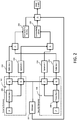
- FIG. 2 illustrates a system that employs composite-key key asymmetric cryptography that uses multiple private keys that are independent of each other.
- FIG. 2 illustrates a Comp Key signing scheme using a first security device 202 and a second security device 204 (e.g., security devices 300 as shown in FIGS. 3 and 4 below).
- the security devices 202 and 204 each independently generate a private key 206 and 208 using function f 1 (as described above).
- the security devices 202 and 204 each generate a public key 210 and 210 with a public modulus ( n ) (e.g., calculated in accordance with Equation 1 above) and a public exponent ( e ) (e.g., determined in accordance with Equation 2 above).
- n public modulus
- e public exponent
- the public keys 210 and 212 are transmitted to a remote computing device stored in a public key database associated with the corresponding security device.
- the security devices 202 and 204 receive a message 214 to use to generate a signature, after the security devices each independently authenticate the signer, the security devices 202 and 204 use function f 3 (as described above) to each independently generate a signature 216 and 218.
- a composite signature 220 is generated from the first signature ( ⁇ 1 ) 216 and the second signature ( ⁇ 2 ) 218.
- the composite signature ( ⁇ C ) 220 is generated with function f 6 in accordance with Equation 10 below.
- ⁇ c bn 1 ⁇ 1 + an 2 ⁇ 2 mod n 1 n 2
- n 1 is the public modulus of the first public key 210
- n 2 is the public modulus of the second public key 212.
- the composite signature ( ⁇ C ) 220 is appended to the digital document.
- the composite public modulus ( n C ) of the composite public key 222 is calculated using function f 5 in accordance with Equation 11 below.
- the composite public modulus ( n C ) of the composite public key 222 is based on the public modulus ( n 1 ) of the first public key 210 and the second public modulus ( n 2 ) of the second public key 212.
- n c n 1 n 2
- the signature ( ⁇ S ) associated with the signed digital document is verified with function f 4 (as described above).
- FIG. 3 illustrates a secure device 300 implementing a device-side portion of the Comp Key signing scheme of FIG. 2 .
- the security device 300 implements the functions f 1 , f 2 , and f 3 .
- the security device 300 includes a control interface 302 and a input/output (I/O) interface 304.
- the control interface 302 receives input from a signer 306 to authenticate the identity of the signer 306 before the security device 300 generates the signature 308.
- the I/O interface 304 communicates directly or indirectly with a computing device (e.g., the computing device 502 of FIGS. 5 and 6 below) to transmit the signature 308 and the public key 310, and receive the message 312 used to generate the signature 308.
- a computing device e.g., the computing device 502 of FIGS. 5 and 6 below
- FIG. 4 is a block diagram of electronic components 400 of the secure device of FIG. 3 .
- the electronic components 400 include the control interface 302, the I/O interface 304, a processor or controller 402, and memory 404, and a data bus 406 that connects the other electronic components.
- the control interface 302 provides a physical interface between the security device 300 and the signer 306.
- the control interface 302 may include a digital camera (e.g., for image capture, visual command recognition, facial recognition, iris recognition, etc.), a touch screen and/or keyboard (e.g., for input of credentials), an audio input device (e.g., a microphone for voice recognition, etc.), a biometric input device (e.g., a fingerprint scanner, etc.) and/or a biometric sensor (e.g., a pulse oximeter, a pulse sensor, etc.).
- the control interface 302 may include the touch screen and fingerprint identity sensor of a smart phone.
- the input from the signer 306 to the control interface 302 is used to authenticate the identity of the signer 206.
- more than one method of identifying and authenticating the signer 306 is included.
- the signer may need to provide both a fingerprint and a password.
- the control interface 302 may be different between two cooperating security devices 300.
- one security device 300 may have a camera to perform facial recognition and the other security device 300 may have a fingerprint scanner.
- the I/O interface 304 provides an interface to communicate with other devices to transmit the public key 310 and the signature 308 and receive the message 312.
- the I/O interface 304 includes communication controllers and antenna for one or more for standards-based networks (e.g., Global System for Mobile Communications (GSM), Universal Mobile Telecommunications System (UMTS), Long Term Evolution (LTE), Code Division Multiple Access (CDMA), WiMAX (IEEE 802.16m); Near Field Communication (NFC); local area wireless network (including IEEE 802.11 a/b/g/n/ac or others), Bluetooth® and Bluetooth® Low Energy, and Wireless Gigabit (IEEE 802.11ad), etc.).
- GSM Global System for Mobile Communications
- UMTS Universal Mobile Telecommunications System
- LTE Long Term Evolution
- CDMA Code Division Multiple Access
- WiMAX IEEE 802.16m
- NFC Near Field Communication
- local area wireless network including IEEE 802.11 a/b/g/n/ac or others), Bluetooth® and Bluetooth® Low Energy, and Wireless
- the I/O interface 304 directly or indirectly (e.g., via anther security device 300) communicates with an external network.
- the external network may be a public network, such as the Internet; a private network, such as an intranet; or combinations thereof, and may utilize a variety of networking protocols now available or later developed including, but not limited to, TCP/IP-based networking protocols.
- the processor or controller 402 may be any suitable processing device or set of processing devices such as, but not limited to: a microprocessor, a microcontroller-based platform, a suitable integrated circuit, one or more field programmable gate arrays (FPGAs), and/or one or more application-specific integrated circuits (ASICs).
- the memory 404 may be volatile memory, non-volatile memory, unalterable memory, read-only memory, and/or high-capacity storage devices (e.g., hard drives, solid state drives, etc). In some examples, the memory 404 includes multiple kinds of memory, particularly volatile memory and non-volatile memory. Additionally, the memory 404 may include secure memory (sometimes referred to as "cryptomemory”) which includes an embedded hardware encryption engine with its own authentication keys to securely store information.
- secure memory sometimes referred to as "cryptomemory” which includes an embedded hardware encryption engine with its own authentication keys to securely store information.
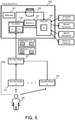
- FIGS. 5 and 6 illustrate systems implementing the Comp Key signing scheme of FIG. 2 using multiple security devices 300 of FIGS. 3 and 4 and a computing device 502.
- the security devices 300 communicate directly with the computing device 502.
- one of the security devices 300 communicates directly with the computing device 502 and the other security devices communicate indirectly with the computing device 502 via the directly connected security device 300.
- the security devices 300 are co-located and accessible to the signer 306, and (b) the computing device 502 is remote (e.g., is geographically removed from and is communicatively coupled to the security devices via an external network, such as the Internet).
- the security devices 300 implement functions f 1 , f 2 , and f 3 .
- the computing device 502 implements functions f 4 , f 5 , and f 6 .
- the security devices 300 use function f 1 to independently generate their respective private keys (e.g. the private keys 206 and 208 of FIG. 2 above) and function f 2 to generate their respective public keys 210 and 212.
- the public keys 210 and 212 are transmitted, via the I/O interface 304, to the computing device 502.
- a combiner 504 within the computing device 502 implements the function f 5 to combine the public keys 210 and 212 into a composite public key 222 and stored composite public key 222 in association with identifiers associated with the security devices 300 in a public key database (PKDB) 506.
- PKDB public key database
- the computing device stores the public keys 210 and 212 with identifiers associated with the security devices 300 and performs function f 5 when the composite public key 222 is needed.
- the computing device 502 sends a message (e.g., the message 214 of FIG. 2 above) to the security devices 300.
- the message may be an original message (e.g., the digital document to be signed) or a message digest computed from the original message by applying a cryptographic hash function (e.g., SHA-256, etc.) to the original message.
- a cryptographic hash function e.g., SHA-256, etc.
- the security devices 300 each generate a signature (e.g., the signatures 216 and 216 of FIG. 2 above) using function f 3 .
- the security devices 300 transmit the signatures 216 and 218 to the computing device 502.
- the combiner 508 implements function f 6 to combine the signatures 216 and 218 into a composite signature 220.
- the message and the composite signature 220 are appended to the document to be signed.
- the combiner 504 and the validator 508 represent different security perimeters within the computing device 502 that are executed on different controllers or processors. Alternatively, in some examples, the combiner 504 and the validator 508 may be executing within the same security perimeter within the computing device 502.
- a validator 506 within the computing device 502 implements function f 4 with the composite public key 510, the message, and the composite signature 220 appended to the digital document.
- FIG. 7 is a flowchart of a method to sign a digital document using the composite-key asymmetric cryptography of FIG. 2 , which may be implemented by the secure devices 300 of FIGS. 3, 4 , 5 and 6 and the computing device 502 of FIGS. 5 and 6 .
- the method may be perform when, for example, the computing device 502 receives a request to sign a digital document.
- ae first security device e.g., a security device 300 of FIGS. 3 and 4 above
- receives an input e.g., via the control interface 302 from the signer 306 and a message (e.g., via the I/O interface 304).
- the input is used to authenticate the identity of the signer 306.
- the input may be a fingerprint or a password.
- a second security device e.g., a security device 300 of FIGS. 3 and 4 above receives an input (e.g., via the control interface 302) from the signer 306 and a message (e.g., via the I/O interface 304).
- the first security device uses the input to authenticate the signer 306.
- the second security device uses the input to authenticate the signer 306.
- the method ends when the authentication is not successful. Otherwise, the method continues to bock 714.
- the method ends when the authentication is not successful. Otherwise, the method continues to bock 716.
- the first security device computes a first signature based on its independent private key.
- the first security device computes a second signature based on its independent private key.
- the first security device transmits the first signature to the computing device 502.
- the second security device transmits the second signature to the computing device 502.
- the computing device generates a composite signature using the first and second signatures.
- the computing device 502 appends the composite signature to the digital document.
- disjunctive is intended to include the conjunctive.
- definite or indefinite articles is not intended to indicate cardinality.
- a reference to “the” object or “a” and “an” object is intended to denote also one of a possible plurality of such objects.
- the conjunction “or” may be used to convey features that are simultaneously present instead of mutually exclusive alternatives. In other words, the conjunction “or” should be understood to include “and/or”.
- module and “unit” refer to hardware with circuitry to provide communication, control and/or monitoring capabilities, often in conjunction with sensors.
- Modules” and “units” may also include firmware that executes on the circuitry.
- the terms “includes,” “including,” and “include” are inclusive and have the same scope as “comprises,” “comprising,” and “comprise” respectively.
Landscapes
- Engineering & Computer Science (AREA)
- Computer Security & Cryptography (AREA)
- Computer Networks & Wireless Communication (AREA)
- Signal Processing (AREA)
- Mobile Radio Communication Systems (AREA)
- Storage Device Security (AREA)
Applications Claiming Priority (1)
| Application Number | Priority Date | Filing Date | Title |
|---|---|---|---|
| US16/442,141 US11601284B2 (en) | 2019-06-14 | 2019-06-14 | Digital signature system based on a cloud of dedicated local devices |
Publications (3)
| Publication Number | Publication Date |
|---|---|
| EP3751784A1 true EP3751784A1 (de) | 2020-12-16 |
| EP3751784B1 EP3751784B1 (de) | 2023-10-18 |
| EP3751784C0 EP3751784C0 (de) | 2023-10-18 |
Family
ID=69779900
Family Applications (1)
| Application Number | Title | Priority Date | Filing Date |
|---|---|---|---|
| EP20161308.0A Active EP3751784B1 (de) | 2019-06-14 | 2020-03-05 | Digitales signatursystem auf der basis einer cloud von dedizierten lokalen vorrichtungen |
Country Status (3)
| Country | Link |
|---|---|
| US (1) | US11601284B2 (de) |
| EP (1) | EP3751784B1 (de) |
| JP (2) | JP2020205577A (de) |
Families Citing this family (2)
| Publication number | Priority date | Publication date | Assignee | Title |
|---|---|---|---|---|
| US20250112786A1 (en) * | 2021-12-30 | 2025-04-03 | Levercode Ou | Method and system for generating digital signatures using universal composition |
| LU507229B1 (fr) * | 2024-05-15 | 2025-11-17 | Asymkey | Procédé asymétrique d'inscription de codes cryptographiques |
Citations (3)
| Publication number | Priority date | Publication date | Assignee | Title |
|---|---|---|---|---|
| US20100174909A1 (en) * | 2009-01-05 | 2010-07-08 | Memory Experts International Inc. | Data authentication using plural electronic keys |
| US20140164765A1 (en) * | 2011-05-13 | 2014-06-12 | Telefonica, S.A. | Procedure for a multiple digital signature |
| WO2018073685A1 (en) * | 2016-10-18 | 2018-04-26 | Cybernetica As | Composite digital signatures |
Family Cites Families (48)
| Publication number | Priority date | Publication date | Assignee | Title |
|---|---|---|---|---|
| US6279110B1 (en) * | 1997-11-10 | 2001-08-21 | Certicom Corporation | Masked digital signatures |
| JP3515408B2 (ja) * | 1999-02-15 | 2004-04-05 | 日本電信電話株式会社 | 時刻認証装置 |
| JP2001166687A (ja) * | 1999-09-29 | 2001-06-22 | Hitachi Software Eng Co Ltd | グループ署名生成方法及びシステム |
| WO2002073877A2 (en) * | 2001-03-09 | 2002-09-19 | Pascal Brandys | System and method of user and data verification |
| JP2003076270A (ja) * | 2001-09-04 | 2003-03-14 | Hitachi Software Eng Co Ltd | ディジタル署名方法 |
| US7366911B2 (en) * | 2001-12-11 | 2008-04-29 | Lucent Technologies Inc. | Methods and apparatus for computationally-efficient generation of secure digital signatures |
| JP2003323599A (ja) * | 2002-05-08 | 2003-11-14 | Nippon Telegr & Teleph Corp <Ntt> | スマートカード及びスマートカードシステム |
| US20040221158A1 (en) * | 2003-05-02 | 2004-11-04 | Secure Data In Motion, Inc. | Digital signature and verification system for conversational messages |
| JP4034743B2 (ja) * | 2004-01-23 | 2008-01-16 | 株式会社東芝 | 多重署名方法、装置、プログラム及びシステム |
| US7664957B2 (en) * | 2004-05-20 | 2010-02-16 | Ntt Docomo, Inc. | Digital signatures including identity-based aggregate signatures |
| CN101069381A (zh) * | 2004-11-29 | 2007-11-07 | 日本电气株式会社 | 签名与检验方法以及签名与检验装置 |
| US7694147B2 (en) * | 2006-01-03 | 2010-04-06 | International Business Machines Corporation | Hashing method and system |
| US8356182B2 (en) * | 2006-09-01 | 2013-01-15 | Nec Corporation | Electronic signature system and electronic signature verifying method |
| KR20080084480A (ko) * | 2007-03-16 | 2008-09-19 | 삼성전자주식회사 | 매개 모듈을 이용한 디바이스간의 상호 인증 방법 및 그시스템 |
| FR2922702B1 (fr) * | 2007-10-17 | 2010-02-26 | Airbus France | Securisation de fichiers informatiques telechargeables sur un aeronef basee sur l'identite d'entites, procede d'authenfication, systeme et aeronef associes |
| JP4764447B2 (ja) * | 2008-03-19 | 2011-09-07 | 株式会社東芝 | グループ署名システム、装置及びプログラム |
| US8775813B2 (en) * | 2010-02-26 | 2014-07-08 | Certicom Corp. | ElGamal signature schemes |
| US9401811B2 (en) * | 2010-08-24 | 2016-07-26 | Koninkijke Philips N.V. | Attribute-based digital signatures |
| EP2458812B1 (de) * | 2010-11-29 | 2016-09-14 | BlackBerry Limited | Server und Verfahren zum Signieren einer Mitteilung |
| US9282085B2 (en) * | 2010-12-20 | 2016-03-08 | Duo Security, Inc. | System and method for digital user authentication |
| US9065842B2 (en) * | 2011-12-22 | 2015-06-23 | Xerox Corporation | Methods and systems for authenticating electronic messages using client-generated encryption keys |
| KR102024531B1 (ko) * | 2012-12-14 | 2019-09-25 | 한국전자통신연구원 | 송신 메시지 연결성을 제공하는 익명 인증 및 키 합의 장치 및 방법 |
| WO2014112551A1 (ja) * | 2013-01-17 | 2014-07-24 | 日本電信電話株式会社 | 秘密鍵分割保管システム、分割保管装置、秘密鍵分割保管方法 |
| US10706132B2 (en) * | 2013-03-22 | 2020-07-07 | Nok Nok Labs, Inc. | System and method for adaptive user authentication |
| CN107636663A (zh) * | 2014-12-31 | 2018-01-26 | 威斯科数据安全国际有限公司 | 使用环境的位置相关物理属性的测量来保护应用的方法和装置 |
| US9641341B2 (en) * | 2015-03-31 | 2017-05-02 | Duo Security, Inc. | Method for distributed trust authentication |
| JP6345157B2 (ja) * | 2015-06-29 | 2018-06-20 | クラリオン株式会社 | 車載情報通信システム及び認証方法 |
| KR101977109B1 (ko) * | 2015-11-17 | 2019-08-28 | (주)마크애니 | 해시함수 기반의 대규모 동시 전자서명 서비스 시스템 및 그 방법 |
| KR102549272B1 (ko) * | 2016-05-17 | 2023-06-30 | 한국전자통신연구원 | 패스워드와 id 기반 서명을 이용한 인증 키 합의 방법 및 장치 |
| CN107579826B (zh) * | 2016-07-04 | 2022-07-22 | 华为技术有限公司 | 一种网络认证方法、中转节点及相关系统 |
| US10447664B2 (en) * | 2016-09-30 | 2019-10-15 | The Toronto-Dominion Bank | Information masking using certificate authority |
| TWI623894B (zh) * | 2016-11-24 | 2018-05-11 | 財團法人工業技術研究院 | 票券認證方法與票券認證裝置 |
| CN106533698A (zh) * | 2016-12-15 | 2017-03-22 | 北京三未信安科技发展有限公司 | 一种基于rsa的分布式门限签名方法与系统 |
| US10511445B1 (en) * | 2017-01-05 | 2019-12-17 | Amazon Technologies, Inc. | Signature compression for hash-based signature schemes |
| SG10201701044SA (en) * | 2017-02-09 | 2018-09-27 | Huawei Int Pte Ltd | System and method for computing private keys for self certified identity based signature schemes |
| SG11201913992XA (en) * | 2017-08-07 | 2020-01-30 | Visa Int Service Ass | Blockchain architecture with record security |
| JP6592851B2 (ja) * | 2017-09-05 | 2019-10-23 | 日本電信電話株式会社 | 匿名ブロードキャスト方法、鍵交換方法、匿名ブロードキャストシステム、鍵交換システム、通信装置、プログラム |
| CN111149324B (zh) * | 2017-09-21 | 2023-12-29 | Lg电子株式会社 | 用于管理具有链接值的数字证书的密码学方法和系统 |
| US10979221B2 (en) * | 2018-01-03 | 2021-04-13 | Arizona Board Of Regents On Behalf Of Northern Arizona University | Generation of keys of variable length from cryptographic tables |
| US10841086B2 (en) * | 2018-02-06 | 2020-11-17 | Wickr, Inc. | Facilitating communications using hybrid cryptography |
| US11240010B2 (en) * | 2018-02-12 | 2022-02-01 | Ripple Labs Inc. | Random oracles in open networks |
| US11263605B2 (en) * | 2018-03-22 | 2022-03-01 | R3 Llc | Weighted multiple authorizations |
| US11005664B2 (en) * | 2018-04-16 | 2021-05-11 | R3 Ltd. | Blockchain post-quantum signature scheme |
| EP3627363B1 (de) * | 2018-09-19 | 2026-03-25 | Vocalink International Limited | Informationsverarbeitungssystem, vorrichtung und verfahren |
| US11451406B2 (en) * | 2019-04-04 | 2022-09-20 | Moac Blockchain Tech Inc | Cross-chain messaging and message validation |
| US11343107B2 (en) * | 2019-04-26 | 2022-05-24 | ControlThings Oy Ab | System for method for secured logging of events |
| EP3639182B1 (de) * | 2019-04-29 | 2024-07-24 | Advanced New Technologies Co., Ltd. | Verfahren und vorrichtungen zur validierung von transaktionen in einem blockchain-system |
| US12388624B2 (en) * | 2019-05-08 | 2025-08-12 | Samsung Sds Co., Ltd. | Apparatus and method for sharing data |
-
2019
- 2019-06-14 US US16/442,141 patent/US11601284B2/en active Active
-
2020
- 2020-03-05 EP EP20161308.0A patent/EP3751784B1/de active Active
- 2020-04-10 JP JP2020070761A patent/JP2020205577A/ja active Pending
-
2025
- 2025-07-03 JP JP2025113255A patent/JP2025156351A/ja active Pending
Patent Citations (3)
| Publication number | Priority date | Publication date | Assignee | Title |
|---|---|---|---|---|
| US20100174909A1 (en) * | 2009-01-05 | 2010-07-08 | Memory Experts International Inc. | Data authentication using plural electronic keys |
| US20140164765A1 (en) * | 2011-05-13 | 2014-06-12 | Telefonica, S.A. | Procedure for a multiple digital signature |
| WO2018073685A1 (en) * | 2016-10-18 | 2018-04-26 | Cybernetica As | Composite digital signatures |
Also Published As
| Publication number | Publication date |
|---|---|
| EP3751784B1 (de) | 2023-10-18 |
| JP2020205577A (ja) | 2020-12-24 |
| JP2025156351A (ja) | 2025-10-14 |
| US20200396085A1 (en) | 2020-12-17 |
| EP3751784C0 (de) | 2023-10-18 |
| US11601284B2 (en) | 2023-03-07 |
Similar Documents
| Publication | Publication Date | Title |
|---|---|---|
| CN112637131B (zh) | 用户身份认证方法、装置、设备和存储介质 | |
| EP4091085B1 (de) | Digitales signatursystem anhand zuverlässiger server | |
| US9853816B2 (en) | Credential validation | |
| US12206792B2 (en) | Digital signature system using scalable servers | |
| JP4870155B2 (ja) | プライバシーが強化された電子パスポートの認証プロトコル | |
| US20130046984A1 (en) | Establishing a Secured Communication Session | |
| JP2025156351A (ja) | 一群の特定目的用ローカルデバイスに基づくデジタル署名システム | |
| US9860069B2 (en) | Group signature using a pseudonym | |
| EP3496331A1 (de) | Zweiparteien-signaturvorrichtung und -verfahren | |
| US20130104218A1 (en) | Method and system for securely accessing to protected resource | |
| US20200015078A1 (en) | Efficient and secure distributed signing protocol for mobile devices in wireless networks | |
| CN112738067B (zh) | 一种人脸识别方法、装置及设备 | |
| US20250112786A1 (en) | Method and system for generating digital signatures using universal composition | |
| CN103746802B (zh) | 一种基于协商密钥的数据处理方法和手机 | |
| CN110572257B (zh) | 基于身份的数据来源鉴别方法和系统 | |
| CN110838918A (zh) | 基于公钥池和签名偏移量的抗量子证书颁发方法及系统 | |
| Chande et al. | An improvement of a elliptic curve digital signature algorithm | |
| CN117176329A (zh) | 会话密钥的生成方法、装置、处理器及电子设备 | |
| Yahyapoor et al. | Presentation of a two-party key agreement protocol based on chaos | |
| EP3668038A1 (de) | Verfahren zur authentifizierung eines systems | |
| CN117035793A (zh) | 资源交易认证方法和装置、设备及存储介质 | |
| Fashoto et al. | Application of Digital Signature for Securing Communication Using RSA Scheme Based on MDS |
Legal Events
| Date | Code | Title | Description |
|---|---|---|---|
| PUAI | Public reference made under article 153(3) epc to a published international application that has entered the european phase |
Free format text: ORIGINAL CODE: 0009012 |
|
| STAA | Information on the status of an ep patent application or granted ep patent |
Free format text: STATUS: THE APPLICATION HAS BEEN PUBLISHED |
|
| AK | Designated contracting states |
Kind code of ref document: A1 Designated state(s): AL AT BE BG CH CY CZ DE DK EE ES FI FR GB GR HR HU IE IS IT LI LT LU LV MC MK MT NL NO PL PT RO RS SE SI SK SM TR |
|
| AX | Request for extension of the european patent |
Extension state: BA ME |
|
| STAA | Information on the status of an ep patent application or granted ep patent |
Free format text: STATUS: REQUEST FOR EXAMINATION WAS MADE |
|
| 17P | Request for examination filed |
Effective date: 20210615 |
|
| RBV | Designated contracting states (corrected) |
Designated state(s): AL AT BE BG CH CY CZ DE DK EE ES FI FR GB GR HR HU IE IS IT LI LT LU LV MC MK MT NL NO PL PT RO RS SE SI SK SM TR |
|
| STAA | Information on the status of an ep patent application or granted ep patent |
Free format text: STATUS: EXAMINATION IS IN PROGRESS |
|
| 17Q | First examination report despatched |
Effective date: 20211130 |
|
| GRAP | Despatch of communication of intention to grant a patent |
Free format text: ORIGINAL CODE: EPIDOSNIGR1 |
|
| STAA | Information on the status of an ep patent application or granted ep patent |
Free format text: STATUS: GRANT OF PATENT IS INTENDED |
|
| INTG | Intention to grant announced |
Effective date: 20230502 |
|
| GRAS | Grant fee paid |
Free format text: ORIGINAL CODE: EPIDOSNIGR3 |
|
| GRAA | (expected) grant |
Free format text: ORIGINAL CODE: 0009210 |
|
| STAA | Information on the status of an ep patent application or granted ep patent |
Free format text: STATUS: THE PATENT HAS BEEN GRANTED |
|
| AK | Designated contracting states |
Kind code of ref document: B1 Designated state(s): AL AT BE BG CH CY CZ DE DK EE ES FI FR GB GR HR HU IE IS IT LI LT LU LV MC MK MT NL NO PL PT RO RS SE SI SK SM TR |
|
| REG | Reference to a national code |
Ref country code: GB Ref legal event code: FG4D |
|
| REG | Reference to a national code |
Ref country code: CH Ref legal event code: EP |
|
| REG | Reference to a national code |
Ref country code: IE Ref legal event code: FG4D |
|
| REG | Reference to a national code |
Ref country code: DE Ref legal event code: R096 Ref document number: 602020019304 Country of ref document: DE |
|
| U01 | Request for unitary effect filed |
Effective date: 20231107 |
|
| U07 | Unitary effect registered |
Designated state(s): AT BE BG DE DK EE FI FR IT LT LU LV MT NL PT SE SI Effective date: 20231113 |
|
| PG25 | Lapsed in a contracting state [announced via postgrant information from national office to epo] |
Ref country code: GR Free format text: LAPSE BECAUSE OF FAILURE TO SUBMIT A TRANSLATION OF THE DESCRIPTION OR TO PAY THE FEE WITHIN THE PRESCRIBED TIME-LIMIT Effective date: 20240119 |
|
| PG25 | Lapsed in a contracting state [announced via postgrant information from national office to epo] |
Ref country code: IS Free format text: LAPSE BECAUSE OF FAILURE TO SUBMIT A TRANSLATION OF THE DESCRIPTION OR TO PAY THE FEE WITHIN THE PRESCRIBED TIME-LIMIT Effective date: 20240218 |
|
| PG25 | Lapsed in a contracting state [announced via postgrant information from national office to epo] |
Ref country code: ES Free format text: LAPSE BECAUSE OF FAILURE TO SUBMIT A TRANSLATION OF THE DESCRIPTION OR TO PAY THE FEE WITHIN THE PRESCRIBED TIME-LIMIT Effective date: 20231018 |
|
| PG25 | Lapsed in a contracting state [announced via postgrant information from national office to epo] |
Ref country code: IS Free format text: LAPSE BECAUSE OF FAILURE TO SUBMIT A TRANSLATION OF THE DESCRIPTION OR TO PAY THE FEE WITHIN THE PRESCRIBED TIME-LIMIT Effective date: 20240218 Ref country code: GR Free format text: LAPSE BECAUSE OF FAILURE TO SUBMIT A TRANSLATION OF THE DESCRIPTION OR TO PAY THE FEE WITHIN THE PRESCRIBED TIME-LIMIT Effective date: 20240119 Ref country code: ES Free format text: LAPSE BECAUSE OF FAILURE TO SUBMIT A TRANSLATION OF THE DESCRIPTION OR TO PAY THE FEE WITHIN THE PRESCRIBED TIME-LIMIT Effective date: 20231018 |
|
| PG25 | Lapsed in a contracting state [announced via postgrant information from national office to epo] |
Ref country code: RS Free format text: LAPSE BECAUSE OF FAILURE TO SUBMIT A TRANSLATION OF THE DESCRIPTION OR TO PAY THE FEE WITHIN THE PRESCRIBED TIME-LIMIT Effective date: 20231018 Ref country code: PL Free format text: LAPSE BECAUSE OF FAILURE TO SUBMIT A TRANSLATION OF THE DESCRIPTION OR TO PAY THE FEE WITHIN THE PRESCRIBED TIME-LIMIT Effective date: 20231018 Ref country code: NO Free format text: LAPSE BECAUSE OF FAILURE TO SUBMIT A TRANSLATION OF THE DESCRIPTION OR TO PAY THE FEE WITHIN THE PRESCRIBED TIME-LIMIT Effective date: 20240118 Ref country code: HR Free format text: LAPSE BECAUSE OF FAILURE TO SUBMIT A TRANSLATION OF THE DESCRIPTION OR TO PAY THE FEE WITHIN THE PRESCRIBED TIME-LIMIT Effective date: 20231018 |
|
| REG | Reference to a national code |
Ref country code: DE Ref legal event code: R097 Ref document number: 602020019304 Country of ref document: DE |
|
| PG25 | Lapsed in a contracting state [announced via postgrant information from national office to epo] |
Ref country code: CZ Free format text: LAPSE BECAUSE OF FAILURE TO SUBMIT A TRANSLATION OF THE DESCRIPTION OR TO PAY THE FEE WITHIN THE PRESCRIBED TIME-LIMIT Effective date: 20231018 |
|
| PG25 | Lapsed in a contracting state [announced via postgrant information from national office to epo] |
Ref country code: SK Free format text: LAPSE BECAUSE OF FAILURE TO SUBMIT A TRANSLATION OF THE DESCRIPTION OR TO PAY THE FEE WITHIN THE PRESCRIBED TIME-LIMIT Effective date: 20231018 |
|
| PG25 | Lapsed in a contracting state [announced via postgrant information from national office to epo] |
Ref country code: SM Free format text: LAPSE BECAUSE OF FAILURE TO SUBMIT A TRANSLATION OF THE DESCRIPTION OR TO PAY THE FEE WITHIN THE PRESCRIBED TIME-LIMIT Effective date: 20231018 Ref country code: SK Free format text: LAPSE BECAUSE OF FAILURE TO SUBMIT A TRANSLATION OF THE DESCRIPTION OR TO PAY THE FEE WITHIN THE PRESCRIBED TIME-LIMIT Effective date: 20231018 Ref country code: RO Free format text: LAPSE BECAUSE OF FAILURE TO SUBMIT A TRANSLATION OF THE DESCRIPTION OR TO PAY THE FEE WITHIN THE PRESCRIBED TIME-LIMIT Effective date: 20231018 Ref country code: CZ Free format text: LAPSE BECAUSE OF FAILURE TO SUBMIT A TRANSLATION OF THE DESCRIPTION OR TO PAY THE FEE WITHIN THE PRESCRIBED TIME-LIMIT Effective date: 20231018 |
|
| PLBE | No opposition filed within time limit |
Free format text: ORIGINAL CODE: 0009261 |
|
| STAA | Information on the status of an ep patent application or granted ep patent |
Free format text: STATUS: NO OPPOSITION FILED WITHIN TIME LIMIT |
|
| U21 | Renewal fee for the european patent with unitary effect paid with additional fee |
Year of fee payment: 5 Effective date: 20240729 |
|
| 26N | No opposition filed |
Effective date: 20240719 |
|
| REG | Reference to a national code |
Ref country code: CH Ref legal event code: PL |
|
| PG25 | Lapsed in a contracting state [announced via postgrant information from national office to epo] |
Ref country code: MC Free format text: LAPSE BECAUSE OF FAILURE TO SUBMIT A TRANSLATION OF THE DESCRIPTION OR TO PAY THE FEE WITHIN THE PRESCRIBED TIME-LIMIT Effective date: 20231018 |
|
| PG25 | Lapsed in a contracting state [announced via postgrant information from national office to epo] |
Ref country code: MC Free format text: LAPSE BECAUSE OF FAILURE TO SUBMIT A TRANSLATION OF THE DESCRIPTION OR TO PAY THE FEE WITHIN THE PRESCRIBED TIME-LIMIT Effective date: 20231018 |
|
| PG25 | Lapsed in a contracting state [announced via postgrant information from national office to epo] |
Ref country code: IE Free format text: LAPSE BECAUSE OF NON-PAYMENT OF DUE FEES Effective date: 20240305 |
|
| PG25 | Lapsed in a contracting state [announced via postgrant information from national office to epo] |
Ref country code: IE Free format text: LAPSE BECAUSE OF NON-PAYMENT OF DUE FEES Effective date: 20240305 Ref country code: CH Free format text: LAPSE BECAUSE OF NON-PAYMENT OF DUE FEES Effective date: 20240331 |
|
| U20 | Renewal fee for the european patent with unitary effect paid |
Year of fee payment: 6 Effective date: 20250327 |
|
| PG25 | Lapsed in a contracting state [announced via postgrant information from national office to epo] |
Ref country code: CY Free format text: LAPSE BECAUSE OF FAILURE TO SUBMIT A TRANSLATION OF THE DESCRIPTION OR TO PAY THE FEE WITHIN THE PRESCRIBED TIME-LIMIT; INVALID AB INITIO Effective date: 20200305 |
|
| PG25 | Lapsed in a contracting state [announced via postgrant information from national office to epo] |
Ref country code: HU Free format text: LAPSE BECAUSE OF FAILURE TO SUBMIT A TRANSLATION OF THE DESCRIPTION OR TO PAY THE FEE WITHIN THE PRESCRIBED TIME-LIMIT; INVALID AB INITIO Effective date: 20200305 |
|
| PG25 | Lapsed in a contracting state [announced via postgrant information from national office to epo] |
Ref country code: TR Free format text: LAPSE BECAUSE OF FAILURE TO SUBMIT A TRANSLATION OF THE DESCRIPTION OR TO PAY THE FEE WITHIN THE PRESCRIBED TIME-LIMIT Effective date: 20231018 |
|
| PGFP | Annual fee paid to national office [announced via postgrant information from national office to epo] |
Ref country code: GB Payment date: 20260327 Year of fee payment: 7 |
|
| U20 | Renewal fee for the european patent with unitary effect paid |
Year of fee payment: 7 Effective date: 20260327 |