EP3748952B1 - Bilddatenverarbeitungsverfahren und zugehörige vorrichtung - Google Patents
Bilddatenverarbeitungsverfahren und zugehörige vorrichtung Download PDFInfo
- Publication number
- EP3748952B1 EP3748952B1 EP19771799.4A EP19771799A EP3748952B1 EP 3748952 B1 EP3748952 B1 EP 3748952B1 EP 19771799 A EP19771799 A EP 19771799A EP 3748952 B1 EP3748952 B1 EP 3748952B1
- Authority
- EP
- European Patent Office
- Prior art keywords
- image data
- electronic device
- data
- image
- multiple pieces
- Prior art date
- Legal status (The legal status is an assumption and is not a legal conclusion. Google has not performed a legal analysis and makes no representation as to the accuracy of the status listed.)
- Active
Links
Images




Classifications
-
- H—ELECTRICITY
- H04—ELECTRIC COMMUNICATION TECHNIQUE
- H04N—PICTORIAL COMMUNICATION, e.g. TELEVISION
- H04N23/00—Cameras or camera modules comprising electronic image sensors; Control thereof
- H04N23/60—Control of cameras or camera modules
- H04N23/62—Control of parameters via user interfaces
-
- H—ELECTRICITY
- H04—ELECTRIC COMMUNICATION TECHNIQUE
- H04N—PICTORIAL COMMUNICATION, e.g. TELEVISION
- H04N23/00—Cameras or camera modules comprising electronic image sensors; Control thereof
- H04N23/60—Control of cameras or camera modules
- H04N23/698—Control of cameras or camera modules for achieving an enlarged field of view, e.g. panoramic image capture
-
- H—ELECTRICITY
- H04—ELECTRIC COMMUNICATION TECHNIQUE
- H04N—PICTORIAL COMMUNICATION, e.g. TELEVISION
- H04N5/00—Details of television systems
- H04N5/76—Television signal recording
-
- G—PHYSICS
- G06—COMPUTING OR CALCULATING; COUNTING
- G06T—IMAGE DATA PROCESSING OR GENERATION, IN GENERAL
- G06T5/00—Image enhancement or restoration
- G06T5/50—Image enhancement or restoration using two or more images, e.g. averaging or subtraction
-
- G—PHYSICS
- G06—COMPUTING OR CALCULATING; COUNTING
- G06T—IMAGE DATA PROCESSING OR GENERATION, IN GENERAL
- G06T7/00—Image analysis
-
- H—ELECTRICITY
- H04—ELECTRIC COMMUNICATION TECHNIQUE
- H04N—PICTORIAL COMMUNICATION, e.g. TELEVISION
- H04N23/00—Cameras or camera modules comprising electronic image sensors; Control thereof
- H04N23/57—Mechanical or electrical details of cameras or camera modules specially adapted for being embedded in other devices
-
- H—ELECTRICITY
- H04—ELECTRIC COMMUNICATION TECHNIQUE
- H04N—PICTORIAL COMMUNICATION, e.g. TELEVISION
- H04N23/00—Cameras or camera modules comprising electronic image sensors; Control thereof
- H04N23/60—Control of cameras or camera modules
- H04N23/667—Camera operation mode switching, e.g. between still and video, sport and normal or high- and low-resolution modes
-
- H—ELECTRICITY
- H04—ELECTRIC COMMUNICATION TECHNIQUE
- H04N—PICTORIAL COMMUNICATION, e.g. TELEVISION
- H04N23/00—Cameras or camera modules comprising electronic image sensors; Control thereof
- H04N23/95—Computational photography systems, e.g. light-field imaging systems
-
- H—ELECTRICITY
- H04—ELECTRIC COMMUNICATION TECHNIQUE
- H04N—PICTORIAL COMMUNICATION, e.g. TELEVISION
- H04N23/00—Cameras or camera modules comprising electronic image sensors; Control thereof
- H04N23/60—Control of cameras or camera modules
- H04N23/63—Control of cameras or camera modules by using electronic viewfinders
- H04N23/631—Graphical user interfaces [GUI] specially adapted for controlling image capture or setting capture parameters
Definitions
- Embodiments disclosed herein relate to techniques of processing image data.
- image processing techniques support various shooting modes such that a user may express various situations, and process a photograph taken by receiving a selection from a user for a relevant shooting mode.
- the user may express a desired concept by setting various shooting modes (e.g., panorama, surround or wide selfie).
- US 2013/0155205 A1 is concerned with image processing wherein it is checked whether the movement of a camera during image capturing is sufficient to generate a panoramic image and, if not, a warning is given to the user.
- US 2012/069141 A1 discloses a camera which is capable of automatic selection between two or more photography-based operation modes based on conditions defined by data associated with the movement of the camera.
- US 2013/093840 A1 is concerned with a camera capable of taking wide angle images, wherein, the camera determines whether a user has selected a wide imaging mode, displays a portion of the final composite image on a display section as a live-view image and, when movement of the camera is detected to be a normal direction, the camera performs "combining processing” for combining images captured up to this point, and when the movement direction is detected to be not a normal direction, the camera performs "special image processing".
- a user should set the intended shooting mode before taking a photograph. Accordingly, when the user fails to set a desired mode, a photograph should be inconveniently taken again to obtain a result. In addition, it is difficult to apply another shooting mode to image data obtained through shooting, so the user should take a photograph again to obtain the same image data.
- Various embodiments disclosed herein suggest a method, in which a photograph is taken by considering movement of a user and then processed such that photographs reflect a user intent, and a device for the same.
- the electronic device may obtain the image processing result to be matched with the user intent, after obtaining the image.
- the electronic device may re-process the obtained image thereafter by reflecting the user intent.
- FIG. 1A is a perspective view illustrating a front surface of a mobile electronic device, according to an embodiment.
- FIG. 1B is a perspective view illustrating a rear surface of an electronic device of FIG. 1A .
- an electronic device 100 may include a housing 110 including a first surface 110A (or front surface), a second surface 110B (or rear surface), and a side surface 110C surrounding the space between the first surface 110A and the second surface 110B.
- a housing may be referred to as the structure forming some of the first surface 110A, the second surface 110B, and the side surface 110C of FIG. 1A .
- the first surface 110A may include a front plate 102 (e.g., a glass plate or a polymer plate including various coating layers) having at least a portion substantially transparent.
- the second surface 110B may be formed through a rear plate 111 substantially opaque.
- the rear plate 111 may include, for example, coating or colored glass, ceramic, polymer, metal (e.g., aluminum, stainless steel (STS), or magnesium) or the combination of at least two of the above materials.
- the side surface 110C may include a side bezel structure (or "side member") 118 which is coupled to the front plate 102 and the rear plate 111, and includes metal and/or polymer.
- the rear plate 111 and the side bezel structure 118 may be formed integrally with each other and may include the same material (e.g., a metal material such as aluminum).
- the electronic device 100 includes at least one of a display 101, audio modules 103, 107 and 114, sensor modules 104 and 119, camera modules 105, 112 and 113, key input devices 115, 116, and 117, an indicator 106, or connector holes 108 and 109.
- the electronic device 100 may omit at least one (e.g., the key input device 115, 116, and 117, or the indicator 106) components or may additionally include other components.
- the display 101 may be exposed, for example, through a substantial portion of the front plate 102.
- the display 101 may be coupled or disposed adjacent to a touch sensing circuit, a pressure sensor to measure the intensity (pressure) of a touch, and/or a digitizer to detect the stylus pen based on an electromagnetic scheme.
- the audio modules 103, 107, and 114 may include the microphone hole 103 and the speaker holes 107 and 114.
- the microphone hole 103 may have a microphone disposed in the electronic device to obtain an external sound.
- the microphone hole 103 may have a plurality of microphones disposed in the electronic device to sense the direction of a sound.
- the speaker holes 107 and 114 may include the external speaker hole 107 and the receiver hole 114 for conversation.
- the speaker holes 107 and 114 and the microphone hole 103 may be implemented into one hole or a speaker may be included without the speaker holes 107 and 114 (e.g., a piezoelectric speaker).
- the sensor modules 104 and 119 may generate electrical signals or data values corresponding to an internal operating state or an external environment state of the electronic device 100.
- the sensor modules 104 and 119 may, for example, include the first sensor module 104 (e.g., a proximity sensor) and/or a second sensor module (e.g., a fingerprint sensor; not illustrated) disposed on the first surface 110A of the housing 110, and/or the third sensor module 119 (e.g., a HRM sensor) disposed on the second surface 110B of the housing 110.
- the fingerprint sensor may be disposed on the second surface 110B as well as the first surface 110A (e.g., the home key button 115) of the housing 110.
- the electronic device 100 may further include a sensor module (is not illustrated), for example, at least one of a gesture sensor, a gyro sensor, an air pressure sensor, a magnetic sensor, an acceleration sensor, a grip sensor, a color sensor, an infrared sensor, a biometric sensor, a temperature sensor, a humidity sensor, or the illuminance sensor 104.
- a sensor module for example, at least one of a gesture sensor, a gyro sensor, an air pressure sensor, a magnetic sensor, an acceleration sensor, a grip sensor, a color sensor, an infrared sensor, a biometric sensor, a temperature sensor, a humidity sensor, or the illuminance sensor 104.
- the camera modules 105, 112 and 113 may include the first camera device 105 disposed on the first surface 110A of the electronic device 100 and the second camera device 112 and/or the flash 113 disposed on the second surface 110B.
- the camera modules 105 and 112 may include at least one lens, an image sensor, and/or an image signal processor.
- the flash 113 may include, for example, a light emitting diode or a xenon lamp.
- at least two lenses (a wide angle lens, and a telephoto lens) and image sensors may be disposed on one surface of the electronic device 100.
- the key input devices 115, 116, and 117 may include the home key button 115 disposed on the first surface 110A of the housing 110, the touch pad 116 disposed around the home key button 115, and/or the side key button 117 disposed on the side surface 110C of housing 110.
- the electronic device 100 may not include some or an entire portion of the key input devices 115, 116, and 117, and the key input devices 115 , 116 , and 117 not included may be implemented in another form such as a soft key on the display 101.
- the indicator 106 may be, for example, disposed on the first surface 110A of the housing 110.
- the indicator 106 may provide, in the form of light, the state information of the electronic device 100, and may include a light emitting diode (LED).
- LED light emitting diode
- the connector holes 108 and 109 may include the first connector hole 108 to receive a connector (e.g., a USB connector) to transmit and receive power and/or data together with the external electronic device and/or the second connector hole (e.g., an ear-phone jack) 109 to receive a connector to transmit or receive an audio signal together with the external electronic.
- a connector e.g., a USB connector
- the second connector hole e.g., an ear-phone jack
- FIG. 2 is a block diagram illustrating a configuration of an electronic device, according to an embodiment.
- an electronic device 200 may include at least one of a processor 210, a camera 220, a sensor 230, a display 240, or a memory 250.
- the electronic device 200 may include components inside the housing (e.g., the housing 110 of FIG. 1 ).
- the components of the electronic device 200 may be modified to execute various embodiments disclosed therein. For example, some components of the electronic device 200 may be omitted, or the electronic device 200 may further include an additional input device or a communication circuit to obtain image data.
- the processor 210 may perform (or execute) various operations described herein or may control other components (e.g., the camera 220 or the display 240) for the various operations.
- the processor 210 may execute instructions stored in the memory 250.
- the processor 210 may, for example, include an application processor (AP) or an image signal processor.
- At least one camera 220 may be included.
- the electronic device may obtain various image data (e.g., a photograph or an image) through the camera 220.
- FIG. 2 illustrates that the camera 220 is disposed inside the electronic device 200, but the camera 220 may be an external component of the electronic device 200.
- the electronic device 200 may obtain the image data through the communication circuit in a wired manner or a wireless manner.
- the camera 220 may be electrically connected to the processor 210.
- the at least one sensor 230 may obtain data associated with the movement of the user and/or position data of the user.
- the electronic device may obtain data associated with the movement and/or the position data using the sensor 230.
- the data associated with the movement may be referred to as motion data.
- the at least one sensor 230 may include a sensor, such as an acceleration sensor or a geomagnetic sensor, to obtain the data associated with the movement of the user.
- the sensor 230 may further include at least one of a touch sensor or a pressure sensor.
- the electronic device may sense a user input through the touch sensor and/or the pressure sensor.
- the sensor 230 may be electrically connected to the processor 210. For example, the electronic device may obtain a long press input or a pressure input through the touch sensor and/or the pressure sensor.
- the display 240 may display the obtained image or display the processing result of the image data.
- the electronic device 200 may output an application (or a screen associated with the application) through the display 240.
- the display 240 may function as an input device.
- the display 240 may be implemented as a touch screen display including a touch panel, and the electronic device may obtain a user input through a touch sensor included in the touch panel.
- the display 240 may further include a pressure panel.
- the electronic device may obtain a user input through a pressure sensor included in the pressure panel.
- the electronic device 200 may obtain a user input through an input device separate from the display 240 or may obtain a user input through an input device outside the housing of the electronic device 200.
- the display 240 may be electrically connected to the processor 210.
- the memory 250 may store instructions for performing (or executing) various embodiments disclosed herein.
- the memory 250 may store an application (e.g., an application associated with a camera or an application associated with storing a photograph). Data obtained by the camera 220 and/or the sensor 230 may be stored in the memory 250.
- the processor 210 may execute the instructions or may read out data from the memory 250.
- FIGS. 3A and 3B are flowchart illustrating image processing operations of an electronic device, according to an embodiment.
- the electronic device may process the obtained image data based on the image data, and at least one of the position data or the motion data of the user. For example, the electronic device may determine an image data processing scheme based at least on the motion data of the user. Operations disclosed in the following description may be stored in the form of instructions in the memory and may be executed by the processor.
- FIG. 3A illustrates operations that an electronic device determines an image data processing scheme based at least on motion data, and processes the image data through the determined image data processing scheme
- FIG. 3B illustrates operations that an electronic device determines an image data processing scheme based at least on motion data and uses the relevant image data processing scheme through the confirmation of a user.
- the electronic device may obtain multiple pieces of image data and may obtain at least one of position data or motion data.
- the electronic device may obtain the multiple pieces of image data for a first time duration, and may obtain the position data and/or motion data through the sensor for the first time duration.
- the electronic device may obtain the position data and/or motion data while obtaining the multiple pieces of image data.
- the electronic device may obtain the position data through a sensor.
- the electronic device may obtain the position data using an acceleration sensor and/or a geomagnetic sensor.
- the electronic device may obtain raw data using the acceleration sensor and/or the geomagnetic sensor, and store the raw data in the memory.
- the raw data may include the position data.
- the raw data may be expressed in a (x, y, z) coordinate format.
- the electronic device may obtain reference data associated with a user motion in advance.
- the electronic device may obtain, in advance, reference data on a circle, a sphere, and/or X, Y, and Z axis movements to be stored in the memory.
- the electronic device may obtain the motion (or motion data) of the user by comparing the obtained data with the reference data.
- the electronic device may store data, which is obtained while executing the camera or an application associated with the camera, in the memory. For example, the electronic device may first store the obtained raw data in a RAM area of the memory.
- the electronic device may store the relevant data in a flash memory.
- the electronic device may reduce that the storage space of the memory is inefficiently used.
- the electronic device may determine the image data processing scheme for processing the multiple pieces of image data based on the motion data.
- the electronic device may obtain the motion data and may determine the image data processing scheme depending on the motion of the user recognized based on the motion data.
- the electronic device may obtain a first motion of the user while obtaining multiple pieces of first image data.
- the electronic device may determine a first image data processing scheme based on the first motion.
- the electronic device may obtain a second motion of the user while obtaining multiple pieces of second image data.
- the electronic device may determine a second image data processing scheme based on the second motion.
- the first motion is a motion of moving the electronic device on a straight line within a specified range
- the first image data processing scheme may correspond to a panorama processing scheme.
- the second motion is a motion of moving the electronic device in a circular or spherical shape
- the second image data processing scheme may correspond to a surround processing scheme.
- the electronic device may process the multiple pieces of image data using the position data.
- the electronic device may process the multiple pieces of image data, based on the position data as well as the multiple pieces of image data.
- the electronic device may determine the size of the multiple pieces of image data which are synthesized, based on the position data, or may determine a synthesizing sequence or a synthesizing point (or consecutive point) of the multiple pieces of the image data, based on the position data.
- the electronic device may process a plurality of images through the image processing scheme, which is determined based on the motion data, and the position data.
- the electronic device may determine the image processing scheme, and process the multiple pieces of image data through the determined image processing scheme by using the position data.
- the electronic device may process the multiple pieces of image data based on the continuity of the multiple pieces of image data.
- the electronic device may synthesize the multiple pieces of image data by comparing the motion data with the continuity between n th image data and n-1 th image data.
- the electronic device may identify the continuity between multiple pieces of image data using various schemes.
- the electronic device may obtain depth data using a component to identify the depth data, may identify the continuity between the multiple pieces of image data based on the depth data, and may synthesize the multiple pieces of image data.
- the electronic device may synthesize the multiple pieces of image data based on the depth data, color continuity between obtained image data, and/or the movement of an object.
- the component to identify the depth data may include, for example, at least two cameras or sensors.
- the electronic device may synthesize the multiple pieces of image data based on the likelihood of an object or the similar pattern to that of the object.
- the electronic device may synthesize an image based on the likelihood of the object or the similar pattern to that of the object, and position data of the object.
- the electronic device may analyze the movement of the object based on the likelihood of the object or the similar pattern to that of the object, and synthesize a plurality of images by synthesizing the position data obtained through the sensor.
- the electronic device may differently set a scheme of identifying the image continuity based on the included component. For example, when the electronic device includes a hardware component to obtain the depth data, the electronic device may synthesize multiple pieces of image data using the depth data, and when the electronic device does not include the hardware component, the electronic device may synthesize the multiple pieces of image data based on the likelihood of the object or the similar pattern to that of the object.
- the electronic device may output an image data processing result.
- the electronic device may output the image data processing result through the display.
- the electronic device may store processing results in the memory in response to generating multiple pieces of image data processing results.
- the electronic device may provide a UI for editing the image data processing result or a UI for processing multiple pieces of image data through a differ scheme.
- the electronic device may store the multiple pieces of image data and then process the image data.
- the electronic device may obtain multiple pieces of image data, and at least one of position data or motion data.
- the multiple pieces of image data may be data obtained in response to a specific input.
- the specific input may be a long press input or a pressure input.
- Operation 311 may be the same as or similar to operation 301 of FIG. 3A .
- the electronic device may determine a candidate image data processing scheme based on at least the motion data.
- Operation 313 may be the same as or similar to operation 303 of FIG. 3A .
- the candidate image data processing scheme may be at least one of panorama, surround or wide selfie.
- the image data processing scheme, which is determined, is used after the confirmation of the user. Accordingly, the image data processing scheme is named the candidate image data processing scheme, but used with the same meaning as or the similar meaning to the image data processing scheme determined in operation 303.
- the electronic device may display the candidate image data processing scheme on the display.
- the electronic device may display the candidate image data processing scheme as a guide provided to the user.
- the electronic device may obtain a user input through the display.
- the user input may be a user input associated with the candidate image data processing scheme.
- the user input may be, for example, a touch input.
- the candidate image data processing scheme may be determined as a processing scheme of the multiple pieces of image data depending on the user input.
- the electronic device may process the multiple pieces of image data using the position data.
- the electronic device may process the multiple pieces of image data through the image data processing scheme determined in operation 313.
- the electronic device may output the processing result of the multiple pieces of image data.
- Operation 321 may be the same as or similar to operation 307 of FIG. 3A .
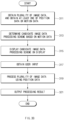
- FIG. 4 is a flowchart illustrating an image processing operation of an electronic device, according to an embodiment.
- the electronic device may determine whether image data including the same area is present in multiple pieces of photographed image data, and may process the multiple pieces of image data depending on the processing result. Operations disclosed in the following description may be stored in the form of instructions in the memory and may be executed by the processor.
- the electronic device may obtain multiple pieces of image data, and obtain position data. For example, the electronic device may obtain the multiple pieces of image data for a first time duration, and may obtain the position data through the sensor for the first time duration. In other words, the electronic device may obtain the position data associated with the image data while obtaining the image data.
- the electronic device may determine whether the at least two pieces of image data include the same area.
- the electronic device may determine whether multiple pieces of image data or some of the multiple pieces of image data include the same area.
- the electronic device may perform operation 405 when the multiple pieces of image data fail to include the same area, and perform operation 407 when the multiple pieces of image data include the same area.
- operation 407 may be performed to obtain image data to be used for the relevant area.
- the electronic device may determine the same area as being included.
- the electronic device may combine the multiple pieces of image data and the position data. For example, the electronic device may generate an image data processing result by synthesizing the multiple pieces of image data and the position data when processing the multiple pieces of image data. Operation 405 may be the same as or similar to operation 305 of FIG. 3A .
- the electronic device may obtain image data to be used for the same area.
- the electronic device may obtain image data of one of images including the same area.
- the electronic device may directly select one piece of image data or obtain the one piece of the image data through a user selection.
- the electronic device may determine that there are present several pieces of data obtained by photographing the same area, and select the best shot from the several pieces of data obtained by photographing the same area.
- the best shot may be, for example, image data that is sharper than other image data and suitable for a peripheral portion.
- the electronic device may display, on the display, at least two pieces of image data, which include the same area, to be selected by the user.
- the electronic device may obtain a user input for one of the at least two pieces of image data.
- the electronic device may display only data corresponding to the same area on the display.
- the electronic device may combine the image data obtained in operation 407, the multiple pieces of image data, and the position data.
- the electronic device may process the multiple pieces of image data by using the position data and one pieces of image data, which is obtained from image data including the same area (or duplicated area), and may generate an image data processing result.
- the electronic device may match the motion of the user with image data, based on position data obtained from the motion of the user.
- the electronic device may obtain or detect an area in which a user's motion is duplicated and/or an area duplicated in image data.
- the electronic device may synthesize the first image data to the third image data, but may use one of the first area or the second area in relation to the same area. For example, when the first area is selected in relation to the same area, the first image data or the first area may be used when synthesizing image data.
- the electronic device may synthesize at least a portion of the first image data (the first area and the remaining area except for the first area), at least a portion of the remaining area of the second image data except for the second area, and the third image data.
- the electronic device when processing the duplicated image, may process the duplicated image with priority.
- an image obtained first may have priority over an image obtained later.
- the electronic device may provide a guide through the display to obtain a selection for an image to be used for synthesizing.
- the electronic device may output a screen, which includes the guide including the duplicated image, to the display.
- the electronic device may obtain a selection from a user through the display, and may synthesize a plurality of images by using the duplicated area, which corresponds to the selection from the user, of the image.
- the electronic device may not use a duplicated area of another image which is not selected.
- the electronic device may synthesize the image data based on position data when synthesizing the image data. For example, the electronic device may determine the size of the multiple pieces of image data which are synthesized, based on the position data, or may determine a synthesizing sequence or a synthesizing point (or consecutive point) of the plurality of the image data based on the position data.
- the electronic device may compare the multiple pieces of image data with each other in the continuity and may perform synthesizing. According to an embodiment, the electronic device may identify the continuity between image data through various schemes.
- the electronic device may obtain depth data using a component to identify depth data, may identify the continuity between the multiple pieces of image data based on the depth data, and may synthesize the multiple pieces of image data. For example, the electronic device may identify the continuity between the multiple pieces of image data based on the depth data, continuous color between obtained image data, and/or the movement of an object.
- the depth data may be obtained using, for example, at least two cameras or sensors.
- the electronic device may identify the continuity between the multiple pieces of image data based on the likelihood of the object or the similar pattern to that of the object.
- the electronic device may synthesize an image based on the likelihood of the object or the similar pattern to that of the object, and position data of the object.
- the electronic device may differently set a scheme of identifying image continuity based on a hardware component. For example, when the electronic device includes a hardware component to obtain the depth data, the electronic device may obtain the continuity between multiple pieces of image data using the depth data, and when the electronic device does not include the hardware component, the electronic device may obtain the continuity between the multiple pieces of image data based on the likelihood of the object or the similar pattern to that of the object.
- the electronic device may output the image data processing result.
- the electronic device may output the image data processing result on the display.
- the electronic device may display a UI for allowing a user to edit the processing result or to process the multiple pieces of image data through different schemes, in addition to the outputting of the image data processing result on the display.
- the operations illustrated in FIG. 4 may be variously modified.
- the electronic device may further obtain motion data, and may perform operation 303 of FIG. 3A .
- operation 303 may be performed at various points of time.
- operation 303 may be performed between operation 403 and operation 401, between operation 407 and operation 409, or between operation 403 and operation 405.
- FIG. 5 is a flowchart illustrating an operation of an electronic device when a user executes an application, according to an embodiment.
- the electronic device may process the obtained image data based on image data and at least one of position data or motion data of the user. Operations disclosed in the following description may be stored in the form of instructions in the memory and may be executed by the processor.
- the electronic device may execute an application associated with the camera.
- the electronic device may execute the application associated with the camera, in response to a user input.
- the electronic device may provide a photographing guide through a display and obtain image data.
- the electronic device may provide the photographing guide on an execution screen of an application associated with the camera.
- the electronic device may obtain multiple pieces of image data in response to a user input through the application or for a time duration in which the user input is continuously made.
- the user input may be, for example, a long press input or a pressure input.
- the electronic device may obtain the long press input or the pressure input through a touch panel and/or a force touch panel.
- the electronic device may generate a specific pressure or more to trigger image photographing, and may obtain multiple pieces of image data while the pressure is maintained.
- the electronic device may store the obtained image data in a memory (e.g., the memory 250 of FIG. 2 ).
- the photographing guide may be selectively displayed on the display.
- the electronic device may set whether to display the photographing guide depending on the selection from the user.
- the electronic device may obtain sensing data using a sensor.
- the sensing data may include, for example, position data.
- the sensing data may further include motion data.
- the electronic device may enter an application associated with the stored image.
- the application may be a gallery application.
- the electronic device may process the obtained image data. In other words, the electronic device may perform image processing using the stored image.
- Operation 509, operation 511, operation 513, operation 515 and/or operation 517 may be the same as or similar to operation 403, operation 405, operation 407, operation 409 and/or operation 411 of FIG. 4 , respectively. To avoid the duplication of the description, the description of operations 509 to 517 will be omitted and may be understood by making reference to the description of FIG. 4 .
- FIG. 6 is a view illustrating a situation that an electronic device operates, according to an embodiment.
- the electronic device may obtain multiple pieces of image data and process the image data in a situation that the user moves statically or dynamically.
- a user may execute an application associated with a camera and photograph an object through a specific input while the application is executed.
- the specific input may be an input set to correspond to obtaining the multiple pieces of image data, which is similar to a log press.
- the electronic device may obtain multiple pieces of image data, motion data and/or position data in response to the user input, and process the multiple pieces of image data using the motion data and/or position data. For example, when a user takes a photograph while moving the electronic device from one point to another point, the electronic device may process image data to output a panorama shot in response to the movement.
- an electronic device may include an image obtaining device configured to obtain at least one pieces of image data, at least one sensor to sense movement of a user, a display, at least one processor electrically connected to the image obtaining device, the at least one sensor, and the display, and a memory electrically connected to the at least one processor to store instructions.
- the instructions when executed, cause the processor to obtain multiple pieces of first image data through the image obtaining device while obtaining data associated with a first movement of the user through the at least one sensor, obtain multiple pieces of second image data through the image obtaining device while obtaining data associated with a second movement of the user through the at least one sensor, process the multiple pieces of first image data through a first image processing scheme corresponding to the first movement and output a processing result through the display, and process the multiple pieces of second image data through a second image processing scheme corresponding to the second movement and different from the first image processing scheme, and output a processing result through the display.
- the instructions may cause, when executed, the processor to obtain position data while obtaining the data associated with the first movement through the sensor, and generate the multiple pieces of first image data based on the position data.
- the instructions may cause, when executed, the processor to synthesize the multiple pieces of first image data through the first image processing scheme, when the first movement is sensed.
- the multiple pieces of first image data may include first image data including a first area and second image data including a second area including an object identical to an object of the first area, and the instructions may cause, when executed, the processor to process the multiple pieces of first image data using one of the first area and the second area.
- the instructions may cause, when executed, the processor to allow the memory to store the at least one pieces of image data.
- the instructions may cause, when executed, the processor to allow the memory to store a processing result of the at least one pieces of image data.
- the multiple pieces of first image data may include third image data and fourth image data, and the multiple pieces of first image data may be processed based on continuity between the third image data and the fourth image data.
- the image obtaining device may include a camera.
- the instructions may cause, when executed, the processor to obtain the multiple pieces of first image data and the multiple pieces of second image data in response to a user input while an application associated with the camera is running on the display.
- the user input may correspond to a long press input through the display.
- the instructions may cause, when executed, the processor to obtain the first movement while the long press input is obtained.
- a method performed in an electronic device may include obtaining multiple pieces of image data, obtaining data associated with movement of a user through at least one sensor, determining a scheme for processing the multiple pieces of image data based on the data associated with the movement, and processing the multiple pieces of image data through the determined scheme for processing the multiple pieces of image data, and displaying, on a display, a processing result.
- the method may further include obtaining position data associated with the multiple pieces of image data, and processing the multiple pieces of image data based on the position data.
- the method may include determining whether at least two pieces of image data of the multiple pieces of image data include the same object, and obtaining one piece of image data of the at least two pieces of image data, when the at least two pieces of image data include the same object.
- the method may further include processing the multiple pieces of image data using data associated with the same object included in the one piece of image data.
- FIG. 7 is a block diagram of an electronic device in a network environment according to various embodiments.
- an electronic device 701 e.g., the electronic device 100 of FIG. 2
- the electronic device 701 may communicate with the electronic device 704 through the server 708.
- the electronic device 701 may include a processor 720, a memory 730, an input device 750, a sound output device 755, a display device 760, an audio module 770, a sensor module 776, an interface 777, a haptic module 779, a camera module 780, a power management module 788, a battery 789, a communication module 790, a subscriber identification module 796, and an antenna module 797.
- a processor 720 e.g., the memory 730, an input device 750, a sound output device 755, a display device 760, an audio module 770, a sensor module 776, an interface 777, a haptic module 779, a camera module 780, a power management module 788, a battery 789, a communication module 790, a subscriber identification module 796, and an antenna module 797.
- at least one e.g., the display device 760 or the camera module 780
- components of the electronic device 701 may be o
- some components may be integrated and implemented as in the case of the sensor module 776 (e.g., a fingerprint sensor, an iris sensor, or an illuminance sensor) embedded in the display device 760 (e.g., a display).
- the sensor module 776 e.g., a fingerprint sensor, an iris sensor, or an illuminance sensor
- the display device 760 e.g., a display
- the processor 720 may operate, for example, software (e.g., a program 740) to control at least one of other components (e.g., a hardware or software component) of the electronic device 701 connected to the processor 720 and may process and compute a variety of data.
- the processor 720 may load a command set or data, which is received from other components (e.g., the sensor module 776 or the communication module 790), into a volatile memory 732, may process the loaded command or data, and may store result data into a nonvolatile memory 734.
- the processor 720 may include a main processor 721 (e.g., a central processing unit or an application processor) and an auxiliary processor 723 (e.g., a graphic processing device, an image signal processor, a sensor hub processor, or a communication processor), which operates independently from the main processor 721, additionally or alternatively uses less power than the main processor 721, or is specified to a designated function.
- the auxiliary processor 723 may operate separately from the main processor 721 or embedded.
- the auxiliary processor 723 may control, for example, at least some of functions or states associated with at least one component (e.g., the display device 760, the sensor module 776, or the communication module 790) among the components of the electronic device 701 instead of the main processor 721 while the main processor 721 is in an inactive (e.g., sleep) state or together with the main processor 721 while the main processor 721 is in an active (e.g., an application execution) state.
- the auxiliary processor 723 e.g., the image signal processor or the communication processor
- the auxiliary processor 723 may be implemented as a part of another component (e.g., the camera module 780 or the communication module 790) that is functionally related to the auxiliary processor 723.
- the memory 730 may store a variety of data used by at least one component (e.g., the processor 720 or the sensor module 776) of the electronic device 701, for example, software (e.g., the program 740) and input data or output data with respect to commands associated with the software.
- the memory 730 may include the volatile memory 732 or the nonvolatile memory 734.
- the program 740 may be stored in the memory 730 as software and may include, for example, an operating system 742, a middleware 744, or an application 746.
- the input device 750 may be a device for receiving a command or data, which is used for a component (e.g., the processor 720) of the electronic device 701, from an outside (e.g., a user) of the electronic device 701 and may include, for example, a microphone, a mouse, or a keyboard.
- a component e.g., the processor 720
- an outside e.g., a user
- a keyboard e.g., a keyboard
- the sound output device 755 may be a device for outputting a sound signal to the outside of the electronic device 701 and may include, for example, a speaker used for general purposes, such as multimedia play or recordings play, and a receiver used only for receiving calls. According to an embodiment, the receiver and the speaker may be either integrally or separately implemented.
- the display device 760 may be a device for visually presenting information to the user of the electronic device 701 and may include, for example, a display, a hologram device, or a projector and a control circuit for controlling a corresponding device.
- the display device 760 may include a touch circuitry or a pressure sensor for measuring an intensity of pressure on the touch.
- the audio module 770 may convert a sound and an electrical signal in dual directions. According to an embodiment, the audio module 770 may obtain the sound through the input device 750 or may output the sound through an external electronic device (e.g., the electronic device 702 (e.g., a speaker or a headphone)) wired or wirelessly connected to the sound output device 755 or the electronic device 701.
- an external electronic device e.g., the electronic device 702 (e.g., a speaker or a headphone)
- the sensor module 776 may generate an electrical signal or a data value corresponding to an operating state (e.g., power or temperature) inside or an environmental state outside the electronic device 701.
- the sensor module 776 may include, for example, a gesture sensor, a gyro sensor, a barometric pressure sensor, a magnetic sensor, an acceleration sensor, a grip sensor, a proximity sensor, a color sensor, an infrared sensor, a biometric sensor, a temperature sensor, a humidity sensor, or an illuminance sensor.
- the interface 777 may support a designated protocol wired or wirelessly connected to the external electronic device (e.g., the electronic device 702).
- the interface 777 may include, for example, an HDMI (high-definition multimedia interface), a USB (universal serial bus) interface, an SD card interface, or an audio interface.
- a connecting terminal 778 may include a connector that physically connects the electronic device 701 to the external electronic device (e.g., the electronic device 702), for example, an HDMI connector, a USB connector, an SD card connector, or an audio connector (e.g., a headphone connector).
- the external electronic device e.g., the electronic device 702
- an HDMI connector e.g., a USB connector
- SD card connector e.g., an SD card connector
- an audio connector e.g., a headphone connector
- the haptic module 779 may convert an electrical signal to a mechanical stimulation (e.g., vibration or movement) or an electrical stimulation perceived by the user through tactile or kinesthetic sensations.
- the haptic module 779 may include, for example, a motor, a piezoelectric element, or an electric stimulator.
- the camera module 780 may shoot a still image or a video image.
- the camera module 780 may include, for example, at least one lens, an image sensor, an image signal processor, or a flash.
- the power management module 788 may be a module for managing power supplied to the electronic device 701 and may serve as at least a part of a power management integrated circuit (PMIC).
- PMIC power management integrated circuit
- the battery 789 may be a device for supplying power to at least one component of the electronic device 701 and may include, for example, a non-rechargeable (primary) battery, a rechargeable (secondary) battery, or a fuel cell.
- the communication module 790 may establish a wired or wireless communication channel between the electronic device 701 and the external electronic device (e.g., the electronic device 702, the electronic device 704, or the server 708) and support communication execution through the established communication channel.
- the communication module 790 may include at least one communication processor operating independently from the processor 720 (e.g., the application processor) and supporting the wired communication or the wireless communication.
- the communication module 790 may include a wireless communication module 792 (e.g., a cellular communication module, a short-range wireless communication module, or a global navigation satellite system (GNSS) communication module) or a wired communication module 794 (e.g., a local area network (LAN) communication module or a power line communication module) and may communicate with the external electronic device using a corresponding communication module among them through the first network 798 (e.g., the short-range communication network such as a Bluetooth, a WiFi direct, or an infrared data association (IrDA)) or the second network 799 (e.g., the long-distance wireless communication network such as a cellular network, an internet, or a computer network (e.g., LAN or WAN)).
- the above-mentioned various communication modules 790 may be implemented into one chip or into separate chips, respectively.
- the wireless communication module 792 may identify and authenticate the electronic device 701 using user information stored in the subscriber identification module 796 in the communication network.
- the antenna module 797 may include one or more antennas to transmit or receive the signal or power to or from an external source.
- the communication module 790 e.g., the wireless communication module 792
- Some components among the components may be connected to each other through a communication method (e.g., a bus, a general purpose input/output (GPIO), a serial peripheral interface (SPI), or a mobile industry processor interface (MIPI)) used between peripheral devices to exchange signals (e.g., a command or data) with each other.
- a communication method e.g., a bus, a general purpose input/output (GPIO), a serial peripheral interface (SPI), or a mobile industry processor interface (MIPI) used between peripheral devices to exchange signals (e.g., a command or data) with each other.
- the command or data may be transmitted or received between the electronic device 701 and the external electronic device 704 through the server 708 connected to the second network 799.
- Each of the electronic devices 702 and 704 may be the same or different types as or from the electronic device 701.
- all or some of the operations performed by the electronic device 701 may be performed by another electronic device or a plurality of external electronic devices.
- the electronic device 701 may request the external electronic device to perform at least some of the functions related to the functions or services, in addition to or instead of performing the functions or services by itself.
- the external electronic device receiving the request may carry out the requested function or the additional function and transmit the result to the electronic device 701.
- the electronic device 701 may provide the requested functions or services based on the received result as is or after additionally processing the received result.
- a cloud computing, distributed computing, or client-server computing technology may be used.
- the electronic device may be various types of devices.
- the electronic device may include, for example, at least one of a portable communication device (e.g., a smartphone), a computer device, a portable multimedia device, a mobile medical appliance, a camera, a wearable device, or a home appliance.
- a portable communication device e.g., a smartphone
- a computer device e.g
- a first”, “a second”, “the first”, or “the second”, used in herein may refer to various components regardless of the order and/or the importance, but do not limit the corresponding components.
- the above expressions are used merely for the purpose of distinguishing a component from the other components. It should be understood that when a component (e.g., a first component) is referred to as being (operatively or communicatively) "connected,” or “coupled,” to another component (e.g., a second component), it may be directly connected or coupled directly to the other component or any other component (e.g., a third component) may be interposed between them.
- module used herein may represent, for example, a unit including one or more combinations of hardware, software and firmware.
- module may be interchangeably used with the terms “logic”, “logical block”, “part” and “circuit”.
- the “module” may be a minimum unit of an integrated part or may be a part thereof.
- the “module” may be a minimum unit for performing one or more functions or a part thereof.
- the “module” may include an application-specific integrated circuit (ASIC).
- ASIC application-specific integrated circuit
- Various embodiments of the disclosure may be implemented by software (e.g., the program 740) including an instruction stored in a machine-readable storage media (e.g., an internal memory 736 or an external memory 738) readable by a machine (e.g., a computer).
- the machine may be a device that calls the instruction from the machine-readable storage media and operates depending on the called instruction and may include the electronic device (e.g., the electronic device 701).
- the processor e.g., the processor 720
- the processor may perform a function corresponding to the instruction directly or using other components under the control of the processor.
- the instruction may include a code generated or executed by a compiler or an interpreter.
- the machine-readable storage media may be provided in the form of non-transitory storage media.
- non-transitory is a limitation of the medium itself (i.e., tangible, not a signal) as opposed to a limitation on data storage persistency.
- the method according to various embodiments disclosed in the present disclosure may be provided as a part of a computer program product.
- the computer program product may be traded between a seller and a buyer as a product.
- the computer program product may be distributed in the form of machine-readable storage medium (e.g., a compact disc read only memory (CD-ROM)) or may be distributed only through an application store (e.g., a Play Store TM ).
- an application store e.g., a Play Store TM
- at least a portion of the computer program product may be temporarily stored or generated in a storage medium such as a memory of a manufacturer's server, an application store's server, or a relay server.
- Each component may include at least one of the above components, and a portion of the above sub-components may be omitted, or additional other sub-components may be further included.
- some components e.g., the module or the program
- Operations performed by a module, a programming, or other components according to various embodiments of the disclosure may be executed sequentially, in parallel, repeatedly, or in a heuristic method. Also, at least some operations may be executed in different sequences, omitted, or other operations may be added.
Landscapes
- Engineering & Computer Science (AREA)
- Multimedia (AREA)
- Signal Processing (AREA)
- Theoretical Computer Science (AREA)
- Computing Systems (AREA)
- General Physics & Mathematics (AREA)
- Physics & Mathematics (AREA)
- Human Computer Interaction (AREA)
- Computer Vision & Pattern Recognition (AREA)
- Studio Devices (AREA)
- User Interface Of Digital Computer (AREA)
- Apparatus For Radiation Diagnosis (AREA)
- Ultra Sonic Daignosis Equipment (AREA)
Claims (14)
- Elektronische Vorrichtung (200), umfassend:eine Bilderhaltvorrichtung, die eine Kamera (220) enthält, die so konfiguriert ist, dass sie mindestens einen Teil von Bilddaten erhält;mindestens einen Sensor (230) zum Erfassen einer Bewegung der elektronischen Vorrichtung (200) durch Erhalten von Bewegungsdaten;eine Anzeige (240);mindestens einen Prozessor (210), der elektrisch mit der Bilderhaltvorrichtung, dem mindestens einen Sensor (230) und der Anzeige (240) verbunden ist; undeinen Speicher (250), der elektrisch mit dem mindestens einen Prozessor (210) verbunden ist, um Instruktionen zu speichern,wobei die Instruktionen, wenn sie ausgeführt werden, den Prozessor (210) zu Folgendem veranlassen:Erhalten (301) mehrerer Teile von Bilddaten durch die Bilderhaltvorrichtung während des Erhaltens von Bewegungsdaten, die einer Bewegung der elektronischen Vorrichtung zugeordnet sind, durch den mindestens einen Sensor;Bestimmen (303) eines Bildverarbeitungsschemas basierend auf den Bewegungsdaten, wobeiein erstes Bildverarbeitungsschema bestimmt wird, wenn die Bewegungsdaten einer ersten Bewegung zugeordnet sind, undein zweites Bildverarbeitungsschema bestimmt wird, wenn die Bewegungsdaten einer zweiten Bewegung zugeordnet sind,wobei sich die zweite Bewegung von der ersten Bewegung unterscheidet und sich das zweite Bildverarbeitungsschema von dem ersten Bildverarbeitungsschema unterscheidet; undVerarbeiten (305) der mehreren Teile von Bilddaten, die während des Erhaltens von Bewegungsdaten erhalten wurden, durch das bestimmte Bildverarbeitungsschema und Ausgeben (307) eines Verarbeitungsergebnisses über die Anzeige;dadurch gekennzeichnet, dassdas bestimmte Bildverarbeitungsschema aus einer Gruppe ausgewählt wird, die ein Panoramabildverarbeitungsschema, ein Umgebungsbildverarbeitungsschema und ein breites Selfie-Bildverarbeitungsschema umfasst.
- Elektronische Vorrichtung (200) nach Anspruch 1, wobei die Instruktionen, wenn sie ausgeführt werden, den Prozessor (210) dazu veranlassen:Positionsdaten zu erhalten, während die der ersten Bewegung zugeordneten Daten durch den Sensor erhalten werden; unddie mehreren Teile der ersten Bilddaten auf der Grundlage der Positionsdaten zu erzeugen.
- Elektronische Vorrichtung (200) nach Anspruch 1, wobei die Instruktionen, wenn sie ausgeführt werden, den Prozessor (210) zu Folgendem veranlassen:
Synthetisieren der mehreren Teile der ersten Bilddaten durch das erste Bildverarbeitungsschema, wenn die erste Bewegung erfasst wird. - Elektronische Vorrichtung (200) nach Anspruch 1, wobei die mehreren Teile der ersten Bilddaten erste Bilddaten mit einem ersten Bereich und zweite Bilddaten mit einem zweiten Bereich, der ein Objekt enthält, das mit einem Objekt des ersten Bereichs identisch ist, enthalten, und
wobei die Instruktionen, wenn sie ausgeführt werden, den Prozessor (210) dazu veranlassen:
die mehreren Teile der ersten Bilddaten unter Verwendung eines des ersten Bereichs und des zweiten Bereichs zu verarbeiten. - Elektronische Vorrichtung (200) nach Anspruch 1, wobei die Instruktionen, wenn sie ausgeführt werden, den Prozessor (210) dazu veranlassen:
dem Speicher (250) zu ermöglichen, den mindestens einen Teil der Bilddaten zu speichern. - Elektronische Vorrichtung (200) nach Anspruch 5, wobei die Instruktionen, wenn sie ausgeführt werden, den Prozessor (210) dazu veranlassen:
dem Speicher (250) zu ermöglichen, ein Verarbeitungsergebnis des mindestens einen Teils der Bilddaten zu speichern. - Elektronische Vorrichtung (200) nach Anspruch 1, wobei die mehreren Teile der ersten Bilddaten dritte Bilddaten und vierte Bilddaten umfassen, und
wobei die mehreren Teile der ersten Bilddaten auf der Grundlage einer Kontinuität zwischen den dritten Bilddaten und den vierten Bilddaten verarbeitet werden. - Elektronische Vorrichtung (200) nach Anspruch 1, wobei die Instruktionen, wenn sie ausgeführt werden, den Prozessor (210) dazu veranlassen:
die mehreren Teile der ersten Bilddaten und die mehreren Teile der zweiten Bilddaten als Reaktion auf eine Benutzereingabe zu erhalten, während eine der Kamera zugeordnete Anwendung auf der Anzeige läuft. - Elektronische Vorrichtung (200) nach Anspruch 8, wobei die Benutzereingabe einer Eingabe durch langes Drücken über die Anzeige entspricht.
- Elektronische Vorrichtung (200) nach Anspruch 9, wobei die Instruktionen, wenn sie ausgeführt werden, den Prozessor dazu veranlassen:
die erste Bewegung zu erhalten, während die Eingabe durch langes Drücken erhalten wird. - Verfahren, das in einer elektronischen Vorrichtung (200) durchgeführt wird, umfassend:eine Bilderhaltvorrichtung, die eine Kamera (220) aufweist, die so konfiguriert ist, dass sie mindestens einen Teil von Bilddaten erhält;mindestens einen Sensor (230) zum Erfassen der Bewegung der elektronischen Vorrichtung (200) durch Erhalten von Bewegungsdaten;eine Anzeige (240);mindestens einen Prozessor (210), der elektrisch mit der Bilderhaltvorrichtung, dem mindestens einen Sensor (230) und der Anzeige (240) verbunden ist; undeinen Speicher (250), der elektrisch mit dem mindestens einen Prozessor (210) verbunden ist, um Instruktionen zu speichern, wobei das Verfahren umfasst:Erhalten (301) von mehreren Teilen von Bilddaten;Erhalten (301) von Bewegungsdaten, die der Bewegung der elektronischen Vorrichtung zugeordnet sind, durch mindestens einen Sensor, während die mehreren Teile der Bilddaten erhalten werden;Bestimmen (303) eines Schemas zum Verarbeiten der mehreren Teile der Bilddaten auf der Grundlage der Bewegungsdaten, wobei,ein erstes Bildverarbeitungsschema bestimmt wird, wenn die Bewegungsdaten einer ersten Bewegung zugeordnet sind,
undein zweites Bildverarbeitungsschema bestimmt wird, wenn die Bewegungsdaten einer zweiten Bewegung zugeordnet sind,wobei sich die zweite Bewegung von der ersten Bewegung unterscheidet und sich das zweite Bildverarbeitungsschema von dem ersten Bildverarbeitungsschema unterscheidet; undVerarbeiten (305) der mehreren Teile der Bilddaten, die während des Erhaltens von Bewegungsdaten durch das bestimmte Schema zum Verarbeiten der mehreren Teile der Bilddaten erhalten werden, und Anzeigen (307), auf einer Anzeige, eines Verarbeitungsergebnisses,dadurch gekennzeichnet, dassdas bestimmte Bildverarbeitungsschema aus einer Gruppe ausgewählt wird, die ein Panoramabildverarbeitungsschema, ein Umgebungsbildverarbeitungsschema und ein breites Selfie-Bildverarbeitungsschema umfasst. - Verfahren nach Anspruch 11, ferner umfassend:Erhalten von Positionsdaten, die den mehreren Teilen der Bilddaten zugeordnet sind; undVerarbeiten der mehreren Teile der Bilddaten auf der Grundlage der Positionsdaten.
- Verfahren nach Anspruch 11, ferner umfassend:Bestimmen, ob mindestens zwei Teile von Bilddaten der mehreren Teile der Bilddaten das gleiche Objekt enthalten; undErhalten von einem Teil der Bilddaten der mindestens zwei Teile der Bilddaten, wenn die mindestens zwei Teile der Bilddaten das gleiche Objekt enthalten.
- Verfahren nach Anspruch 13, ferner umfassend:
Verarbeiten der mehreren Teile der Bilddaten unter Verwendung von Daten, die demselben Objekt zugeordnet sind, das in dem einen Teil der Bilddaten enthalten ist.
Applications Claiming Priority (2)
| Application Number | Priority Date | Filing Date | Title |
|---|---|---|---|
| KR1020180032831A KR102710599B1 (ko) | 2018-03-21 | 2018-03-21 | 이미지 데이터 처리 방법 및 이를 위한 장치 |
| PCT/KR2019/003216 WO2019182340A1 (ko) | 2018-03-21 | 2019-03-20 | 이미지 데이터 처리 방법 및 이를 위한 장치 |
Publications (3)
| Publication Number | Publication Date |
|---|---|
| EP3748952A1 EP3748952A1 (de) | 2020-12-09 |
| EP3748952A4 EP3748952A4 (de) | 2021-03-17 |
| EP3748952B1 true EP3748952B1 (de) | 2024-05-08 |
Family
ID=67987969
Family Applications (1)
| Application Number | Title | Priority Date | Filing Date |
|---|---|---|---|
| EP19771799.4A Active EP3748952B1 (de) | 2018-03-21 | 2019-03-20 | Bilddatenverarbeitungsverfahren und zugehörige vorrichtung |
Country Status (5)
| Country | Link |
|---|---|
| US (1) | US11431900B2 (de) |
| EP (1) | EP3748952B1 (de) |
| KR (1) | KR102710599B1 (de) |
| CN (1) | CN111886853B (de) |
| WO (1) | WO2019182340A1 (de) |
Families Citing this family (1)
| Publication number | Priority date | Publication date | Assignee | Title |
|---|---|---|---|---|
| KR102864117B1 (ko) * | 2020-02-07 | 2025-09-25 | 삼성전자주식회사 | 전자 장치 및 전자 장치의 영상 처리 방법 |
Citations (2)
| Publication number | Priority date | Publication date | Assignee | Title |
|---|---|---|---|---|
| US20120069141A1 (en) * | 2009-05-11 | 2012-03-22 | Creative Technology Ltd | multimodal camera and a method for selecting an operation mode of a camera |
| US20130093840A1 (en) * | 2011-10-18 | 2013-04-18 | Casio Computer Co., Ltd. | Imaging device, imaging method and storage medium |
Family Cites Families (14)
| Publication number | Priority date | Publication date | Assignee | Title |
|---|---|---|---|---|
| FR2833797B1 (fr) | 2001-12-19 | 2004-02-13 | Thomson Licensing Sa | Procede d'estimation du mouvement dominant dans une sequence d'images |
| JP5434126B2 (ja) | 2009-02-19 | 2014-03-05 | カシオ計算機株式会社 | 撮像装置、撮像方法及び撮像プログラム |
| JP5352406B2 (ja) | 2009-09-30 | 2013-11-27 | 富士フイルム株式会社 | 合成画像作成方法ならびにそのプログラムおよび情報処理装置 |
| KR101685980B1 (ko) * | 2010-07-30 | 2016-12-13 | 엘지전자 주식회사 | 이동 단말기 및 그 제어방법 |
| JP2012068380A (ja) * | 2010-09-22 | 2012-04-05 | Sony Corp | 画像処理装置、撮像装置、および画像処理方法、並びにプログラム |
| KR101691833B1 (ko) | 2010-11-04 | 2017-01-09 | 엘지전자 주식회사 | 이동 단말기 및 이것의 영상 촬영 제어 방법 |
| KR102026717B1 (ko) * | 2013-02-08 | 2019-10-04 | 삼성전자 주식회사 | 사진 촬영 가이드 방법 및 이를 구현하는 휴대 단말 |
| KR102089432B1 (ko) | 2013-06-20 | 2020-04-14 | 엘지전자 주식회사 | 이동 단말기 및 이의 제어방법 |
| EP3105917B1 (de) | 2014-02-12 | 2019-10-30 | Sony Corporation | Verfahren zur darstellung von bildern |
| CA2848794C (en) | 2014-04-11 | 2016-05-24 | Blackberry Limited | Building a depth map using movement of one camera |
| JP6409366B2 (ja) | 2014-06-30 | 2018-10-24 | ブラザー工業株式会社 | 画像処理装置およびコンピュータプログラム |
| KR102222073B1 (ko) | 2014-08-29 | 2021-03-04 | 삼성전자주식회사 | 촬영 방법 및 전자 장치 |
| KR102576908B1 (ko) | 2016-02-16 | 2023-09-12 | 삼성전자주식회사 | 동적 파노라마 기능을 제공하는 방법 및 장치 |
| KR20180023326A (ko) | 2016-08-25 | 2018-03-07 | 삼성전자주식회사 | 전자 장치 및 이미지 센서로부터 획득된 이미지를 어플리케이션으로 전달하기 위한 방법 |
-
2018
- 2018-03-21 KR KR1020180032831A patent/KR102710599B1/ko active Active
-
2019
- 2019-03-20 WO PCT/KR2019/003216 patent/WO2019182340A1/ko not_active Ceased
- 2019-03-20 CN CN201980020061.5A patent/CN111886853B/zh active Active
- 2019-03-20 US US16/975,229 patent/US11431900B2/en active Active
- 2019-03-20 EP EP19771799.4A patent/EP3748952B1/de active Active
Patent Citations (2)
| Publication number | Priority date | Publication date | Assignee | Title |
|---|---|---|---|---|
| US20120069141A1 (en) * | 2009-05-11 | 2012-03-22 | Creative Technology Ltd | multimodal camera and a method for selecting an operation mode of a camera |
| US20130093840A1 (en) * | 2011-10-18 | 2013-04-18 | Casio Computer Co., Ltd. | Imaging device, imaging method and storage medium |
Also Published As
| Publication number | Publication date |
|---|---|
| EP3748952A1 (de) | 2020-12-09 |
| US11431900B2 (en) | 2022-08-30 |
| CN111886853B (zh) | 2022-10-11 |
| WO2019182340A1 (ko) | 2019-09-26 |
| US20200404172A1 (en) | 2020-12-24 |
| KR20190110858A (ko) | 2019-10-01 |
| EP3748952A4 (de) | 2021-03-17 |
| KR102710599B1 (ko) | 2024-09-27 |
| CN111886853A (zh) | 2020-11-03 |
Similar Documents
| Publication | Publication Date | Title |
|---|---|---|
| KR102925015B1 (ko) | 폴더블 전자 장치 및 상기 폴더블 전자 장치에서 정보를 표시하는 방법 | |
| KR102661614B1 (ko) | 화면 제공 방법 및 이를 지원하는 전자 장치 | |
| KR102088215B1 (ko) | 복수의 어플리케이션을 제어하기 위한 전자 장치 | |
| CN109426478B (zh) | 用于使用多个控制器控制电子设备的显示器的方法和设备 | |
| US11212377B2 (en) | Electronic device comprising camera device and method | |
| US11006024B2 (en) | Pop-up and rotational camera and electronic device including the same | |
| KR20200121151A (ko) | 슬라이딩 모듈을 포함하는 폴더블 전자 장치 및 제어 방법 | |
| CN112907725B (zh) | 图像生成、图像处理模型的训练、图像处理方法和装置 | |
| CN113064823B (zh) | 汽车的零部件功能测试方法、装置及计算机存储介质 | |
| KR102622564B1 (ko) | 전자 장치 및 전자 장치에서 디스플레이 동작 제어 방법 | |
| KR102785717B1 (ko) | 카메라를 포함하는 폴더블 전자 장치 | |
| KR20200005849A (ko) | 외부 전자 장치의 배터리를 충전하기 위한 전자 장치 및 그에 관한 방법 | |
| KR102617252B1 (ko) | 전자 장치 및 그 파노라마 촬영 모드 자동 전환 방법 | |
| KR20210098292A (ko) | 카메라를 포함하는 전자 장치 및 그 동작 방법 | |
| KR20190096189A (ko) | 시선에 기반한 관심 영역 검출 방법 및 이를 위한 전자 장치 | |
| KR102732966B1 (ko) | 휠 입력을 처리하는 전자 장치 및 이의 동작 방법 | |
| KR20190102715A (ko) | 컨트롤러와 접촉된 신체 부위에 따라 그래픽 객체를 다르게 표시하는 방법 및 전자 장치 | |
| CN111179628A (zh) | 自动驾驶车辆的定位方法、装置、电子设备及存储介质 | |
| KR102925502B1 (ko) | 사용자의 피부 상태를 측정하는 전자 장치와 이의 동작 방법 | |
| KR20200086570A (ko) | 이미지의 촬영 장소를 추천하는 전자 장치 및 방법 | |
| KR102512839B1 (ko) | 외부 장치의 자세 조정을 통해 복수의 카메라들을 이용하여 이미지를 획득하는 전자 장치 및 방법 | |
| KR20210045891A (ko) | 전자 장치 및 전자 장치의 화면 캡쳐 운용 방법 | |
| CN112396076A (zh) | 车牌图像生成方法、装置及计算机存储介质 | |
| KR20200044455A (ko) | 통신 주파수 대역에 기반하여 안테나 장치에 포함된 광도전성 물질의 전기적 상태를 변경하는 전자 장치 및 안테나 제어 방법 | |
| KR20200012542A (ko) | 전자 펜을 이용하여 동작 모드를 제어하기 위한 방법 및 그 전자 장치 |
Legal Events
| Date | Code | Title | Description |
|---|---|---|---|
| STAA | Information on the status of an ep patent application or granted ep patent |
Free format text: STATUS: THE INTERNATIONAL PUBLICATION HAS BEEN MADE |
|
| PUAI | Public reference made under article 153(3) epc to a published international application that has entered the european phase |
Free format text: ORIGINAL CODE: 0009012 |
|
| STAA | Information on the status of an ep patent application or granted ep patent |
Free format text: STATUS: REQUEST FOR EXAMINATION WAS MADE |
|
| 17P | Request for examination filed |
Effective date: 20200903 |
|
| AK | Designated contracting states |
Kind code of ref document: A1 Designated state(s): AL AT BE BG CH CY CZ DE DK EE ES FI FR GB GR HR HU IE IS IT LI LT LU LV MC MK MT NL NO PL PT RO RS SE SI SK SM TR |
|
| AX | Request for extension of the european patent |
Extension state: BA ME |
|
| A4 | Supplementary search report drawn up and despatched |
Effective date: 20210211 |
|
| RIC1 | Information provided on ipc code assigned before grant |
Ipc: G06T 7/00 20170101ALI20210205BHEP Ipc: H04N 5/225 20060101ALI20210205BHEP Ipc: H04N 5/232 20060101AFI20210205BHEP Ipc: G06T 5/50 20060101ALI20210205BHEP |
|
| DAV | Request for validation of the european patent (deleted) | ||
| DAX | Request for extension of the european patent (deleted) | ||
| STAA | Information on the status of an ep patent application or granted ep patent |
Free format text: STATUS: EXAMINATION IS IN PROGRESS |
|
| 17Q | First examination report despatched |
Effective date: 20220831 |
|
| REG | Reference to a national code |
Ref country code: DE Ref legal event code: R079 Free format text: PREVIOUS MAIN CLASS: H04N0005232000 Ref country code: DE Ref legal event code: R079 Ref document number: 602019051974 Country of ref document: DE Free format text: PREVIOUS MAIN CLASS: H04N0005232000 Ipc: H04N0023698000 |
|
| GRAP | Despatch of communication of intention to grant a patent |
Free format text: ORIGINAL CODE: EPIDOSNIGR1 |
|
| STAA | Information on the status of an ep patent application or granted ep patent |
Free format text: STATUS: GRANT OF PATENT IS INTENDED |
|
| RIC1 | Information provided on ipc code assigned before grant |
Ipc: H04N 23/80 20230101ALI20231120BHEP Ipc: H04N 23/698 20230101AFI20231120BHEP |
|
| INTG | Intention to grant announced |
Effective date: 20231206 |
|
| GRAS | Grant fee paid |
Free format text: ORIGINAL CODE: EPIDOSNIGR3 |
|
| GRAA | (expected) grant |
Free format text: ORIGINAL CODE: 0009210 |
|
| STAA | Information on the status of an ep patent application or granted ep patent |
Free format text: STATUS: THE PATENT HAS BEEN GRANTED |
|
| AK | Designated contracting states |
Kind code of ref document: B1 Designated state(s): AL AT BE BG CH CY CZ DE DK EE ES FI FR GB GR HR HU IE IS IT LI LT LU LV MC MK MT NL NO PL PT RO RS SE SI SK SM TR |
|
| REG | Reference to a national code |
Ref country code: GB Ref legal event code: FG4D |
|
| REG | Reference to a national code |
Ref country code: CH Ref legal event code: EP |
|
| REG | Reference to a national code |
Ref country code: DE Ref legal event code: R096 Ref document number: 602019051974 Country of ref document: DE |
|
| REG | Reference to a national code |
Ref country code: IE Ref legal event code: FG4D |
|
| REG | Reference to a national code |
Ref country code: LT Ref legal event code: MG9D |
|
| REG | Reference to a national code |
Ref country code: NL Ref legal event code: MP Effective date: 20240508 |
|
| PG25 | Lapsed in a contracting state [announced via postgrant information from national office to epo] |
Ref country code: IS Free format text: LAPSE BECAUSE OF FAILURE TO SUBMIT A TRANSLATION OF THE DESCRIPTION OR TO PAY THE FEE WITHIN THE PRESCRIBED TIME-LIMIT Effective date: 20240908 |
|
| PG25 | Lapsed in a contracting state [announced via postgrant information from national office to epo] |
Ref country code: BG Free format text: LAPSE BECAUSE OF FAILURE TO SUBMIT A TRANSLATION OF THE DESCRIPTION OR TO PAY THE FEE WITHIN THE PRESCRIBED TIME-LIMIT Effective date: 20240508 |
|
| PG25 | Lapsed in a contracting state [announced via postgrant information from national office to epo] |
Ref country code: FI Free format text: LAPSE BECAUSE OF FAILURE TO SUBMIT A TRANSLATION OF THE DESCRIPTION OR TO PAY THE FEE WITHIN THE PRESCRIBED TIME-LIMIT Effective date: 20240508 Ref country code: HR Free format text: LAPSE BECAUSE OF FAILURE TO SUBMIT A TRANSLATION OF THE DESCRIPTION OR TO PAY THE FEE WITHIN THE PRESCRIBED TIME-LIMIT Effective date: 20240508 |
|
| PG25 | Lapsed in a contracting state [announced via postgrant information from national office to epo] |
Ref country code: GR Free format text: LAPSE BECAUSE OF FAILURE TO SUBMIT A TRANSLATION OF THE DESCRIPTION OR TO PAY THE FEE WITHIN THE PRESCRIBED TIME-LIMIT Effective date: 20240809 |
|
| PG25 | Lapsed in a contracting state [announced via postgrant information from national office to epo] |
Ref country code: PT Free format text: LAPSE BECAUSE OF FAILURE TO SUBMIT A TRANSLATION OF THE DESCRIPTION OR TO PAY THE FEE WITHIN THE PRESCRIBED TIME-LIMIT Effective date: 20240909 |
|
| REG | Reference to a national code |
Ref country code: AT Ref legal event code: MK05 Ref document number: 1685960 Country of ref document: AT Kind code of ref document: T Effective date: 20240508 |
|
| PG25 | Lapsed in a contracting state [announced via postgrant information from national office to epo] |
Ref country code: NL Free format text: LAPSE BECAUSE OF FAILURE TO SUBMIT A TRANSLATION OF THE DESCRIPTION OR TO PAY THE FEE WITHIN THE PRESCRIBED TIME-LIMIT Effective date: 20240508 |
|
| PG25 | Lapsed in a contracting state [announced via postgrant information from national office to epo] |
Ref country code: ES Free format text: LAPSE BECAUSE OF FAILURE TO SUBMIT A TRANSLATION OF THE DESCRIPTION OR TO PAY THE FEE WITHIN THE PRESCRIBED TIME-LIMIT Effective date: 20240508 |
|
| PG25 | Lapsed in a contracting state [announced via postgrant information from national office to epo] |
Ref country code: AT Free format text: LAPSE BECAUSE OF FAILURE TO SUBMIT A TRANSLATION OF THE DESCRIPTION OR TO PAY THE FEE WITHIN THE PRESCRIBED TIME-LIMIT Effective date: 20240508 |
|
| PG25 | Lapsed in a contracting state [announced via postgrant information from national office to epo] |
Ref country code: PL Free format text: LAPSE BECAUSE OF FAILURE TO SUBMIT A TRANSLATION OF THE DESCRIPTION OR TO PAY THE FEE WITHIN THE PRESCRIBED TIME-LIMIT Effective date: 20240508 |
|
| PG25 | Lapsed in a contracting state [announced via postgrant information from national office to epo] |
Ref country code: LV Free format text: LAPSE BECAUSE OF FAILURE TO SUBMIT A TRANSLATION OF THE DESCRIPTION OR TO PAY THE FEE WITHIN THE PRESCRIBED TIME-LIMIT Effective date: 20240508 |
|
| PG25 | Lapsed in a contracting state [announced via postgrant information from national office to epo] |
Ref country code: PT Free format text: LAPSE BECAUSE OF FAILURE TO SUBMIT A TRANSLATION OF THE DESCRIPTION OR TO PAY THE FEE WITHIN THE PRESCRIBED TIME-LIMIT Effective date: 20240909 Ref country code: PL Free format text: LAPSE BECAUSE OF FAILURE TO SUBMIT A TRANSLATION OF THE DESCRIPTION OR TO PAY THE FEE WITHIN THE PRESCRIBED TIME-LIMIT Effective date: 20240508 Ref country code: NO Free format text: LAPSE BECAUSE OF FAILURE TO SUBMIT A TRANSLATION OF THE DESCRIPTION OR TO PAY THE FEE WITHIN THE PRESCRIBED TIME-LIMIT Effective date: 20240808 Ref country code: NL Free format text: LAPSE BECAUSE OF FAILURE TO SUBMIT A TRANSLATION OF THE DESCRIPTION OR TO PAY THE FEE WITHIN THE PRESCRIBED TIME-LIMIT Effective date: 20240508 Ref country code: LV Free format text: LAPSE BECAUSE OF FAILURE TO SUBMIT A TRANSLATION OF THE DESCRIPTION OR TO PAY THE FEE WITHIN THE PRESCRIBED TIME-LIMIT Effective date: 20240508 Ref country code: IS Free format text: LAPSE BECAUSE OF FAILURE TO SUBMIT A TRANSLATION OF THE DESCRIPTION OR TO PAY THE FEE WITHIN THE PRESCRIBED TIME-LIMIT Effective date: 20240908 Ref country code: HR Free format text: LAPSE BECAUSE OF FAILURE TO SUBMIT A TRANSLATION OF THE DESCRIPTION OR TO PAY THE FEE WITHIN THE PRESCRIBED TIME-LIMIT Effective date: 20240508 Ref country code: GR Free format text: LAPSE BECAUSE OF FAILURE TO SUBMIT A TRANSLATION OF THE DESCRIPTION OR TO PAY THE FEE WITHIN THE PRESCRIBED TIME-LIMIT Effective date: 20240809 Ref country code: FI Free format text: LAPSE BECAUSE OF FAILURE TO SUBMIT A TRANSLATION OF THE DESCRIPTION OR TO PAY THE FEE WITHIN THE PRESCRIBED TIME-LIMIT Effective date: 20240508 Ref country code: ES Free format text: LAPSE BECAUSE OF FAILURE TO SUBMIT A TRANSLATION OF THE DESCRIPTION OR TO PAY THE FEE WITHIN THE PRESCRIBED TIME-LIMIT Effective date: 20240508 Ref country code: BG Free format text: LAPSE BECAUSE OF FAILURE TO SUBMIT A TRANSLATION OF THE DESCRIPTION OR TO PAY THE FEE WITHIN THE PRESCRIBED TIME-LIMIT Effective date: 20240508 Ref country code: AT Free format text: LAPSE BECAUSE OF FAILURE TO SUBMIT A TRANSLATION OF THE DESCRIPTION OR TO PAY THE FEE WITHIN THE PRESCRIBED TIME-LIMIT Effective date: 20240508 Ref country code: RS Free format text: LAPSE BECAUSE OF FAILURE TO SUBMIT A TRANSLATION OF THE DESCRIPTION OR TO PAY THE FEE WITHIN THE PRESCRIBED TIME-LIMIT Effective date: 20240808 |
|
| PG25 | Lapsed in a contracting state [announced via postgrant information from national office to epo] |
Ref country code: DK Free format text: LAPSE BECAUSE OF FAILURE TO SUBMIT A TRANSLATION OF THE DESCRIPTION OR TO PAY THE FEE WITHIN THE PRESCRIBED TIME-LIMIT Effective date: 20240508 |
|
| PG25 | Lapsed in a contracting state [announced via postgrant information from national office to epo] |
Ref country code: EE Free format text: LAPSE BECAUSE OF FAILURE TO SUBMIT A TRANSLATION OF THE DESCRIPTION OR TO PAY THE FEE WITHIN THE PRESCRIBED TIME-LIMIT Effective date: 20240508 |
|
| PG25 | Lapsed in a contracting state [announced via postgrant information from national office to epo] |
Ref country code: CZ Free format text: LAPSE BECAUSE OF FAILURE TO SUBMIT A TRANSLATION OF THE DESCRIPTION OR TO PAY THE FEE WITHIN THE PRESCRIBED TIME-LIMIT Effective date: 20240508 |
|
| PG25 | Lapsed in a contracting state [announced via postgrant information from national office to epo] |
Ref country code: SK Free format text: LAPSE BECAUSE OF FAILURE TO SUBMIT A TRANSLATION OF THE DESCRIPTION OR TO PAY THE FEE WITHIN THE PRESCRIBED TIME-LIMIT Effective date: 20240508 Ref country code: RO Free format text: LAPSE BECAUSE OF FAILURE TO SUBMIT A TRANSLATION OF THE DESCRIPTION OR TO PAY THE FEE WITHIN THE PRESCRIBED TIME-LIMIT Effective date: 20240508 |
|
| PG25 | Lapsed in a contracting state [announced via postgrant information from national office to epo] |
Ref country code: SM Free format text: LAPSE BECAUSE OF FAILURE TO SUBMIT A TRANSLATION OF THE DESCRIPTION OR TO PAY THE FEE WITHIN THE PRESCRIBED TIME-LIMIT Effective date: 20240508 |
|
| PG25 | Lapsed in a contracting state [announced via postgrant information from national office to epo] |
Ref country code: SM Free format text: LAPSE BECAUSE OF FAILURE TO SUBMIT A TRANSLATION OF THE DESCRIPTION OR TO PAY THE FEE WITHIN THE PRESCRIBED TIME-LIMIT Effective date: 20240508 Ref country code: SK Free format text: LAPSE BECAUSE OF FAILURE TO SUBMIT A TRANSLATION OF THE DESCRIPTION OR TO PAY THE FEE WITHIN THE PRESCRIBED TIME-LIMIT Effective date: 20240508 Ref country code: RO Free format text: LAPSE BECAUSE OF FAILURE TO SUBMIT A TRANSLATION OF THE DESCRIPTION OR TO PAY THE FEE WITHIN THE PRESCRIBED TIME-LIMIT Effective date: 20240508 Ref country code: EE Free format text: LAPSE BECAUSE OF FAILURE TO SUBMIT A TRANSLATION OF THE DESCRIPTION OR TO PAY THE FEE WITHIN THE PRESCRIBED TIME-LIMIT Effective date: 20240508 Ref country code: DK Free format text: LAPSE BECAUSE OF FAILURE TO SUBMIT A TRANSLATION OF THE DESCRIPTION OR TO PAY THE FEE WITHIN THE PRESCRIBED TIME-LIMIT Effective date: 20240508 Ref country code: CZ Free format text: LAPSE BECAUSE OF FAILURE TO SUBMIT A TRANSLATION OF THE DESCRIPTION OR TO PAY THE FEE WITHIN THE PRESCRIBED TIME-LIMIT Effective date: 20240508 |
|
| PG25 | Lapsed in a contracting state [announced via postgrant information from national office to epo] |
Ref country code: IT Free format text: LAPSE BECAUSE OF FAILURE TO SUBMIT A TRANSLATION OF THE DESCRIPTION OR TO PAY THE FEE WITHIN THE PRESCRIBED TIME-LIMIT Effective date: 20240508 |
|
| REG | Reference to a national code |
Ref country code: DE Ref legal event code: R097 Ref document number: 602019051974 Country of ref document: DE |
|
| PLBE | No opposition filed within time limit |
Free format text: ORIGINAL CODE: 0009261 |
|
| STAA | Information on the status of an ep patent application or granted ep patent |
Free format text: STATUS: NO OPPOSITION FILED WITHIN TIME LIMIT |
|
| 26N | No opposition filed |
Effective date: 20250211 |
|
| PG25 | Lapsed in a contracting state [announced via postgrant information from national office to epo] |
Ref country code: SI Free format text: LAPSE BECAUSE OF FAILURE TO SUBMIT A TRANSLATION OF THE DESCRIPTION OR TO PAY THE FEE WITHIN THE PRESCRIBED TIME-LIMIT Effective date: 20240508 |
|
| PG25 | Lapsed in a contracting state [announced via postgrant information from national office to epo] |
Ref country code: SE Free format text: LAPSE BECAUSE OF FAILURE TO SUBMIT A TRANSLATION OF THE DESCRIPTION OR TO PAY THE FEE WITHIN THE PRESCRIBED TIME-LIMIT Effective date: 20240508 |
|
| PG25 | Lapsed in a contracting state [announced via postgrant information from national office to epo] |
Ref country code: MC Free format text: LAPSE BECAUSE OF FAILURE TO SUBMIT A TRANSLATION OF THE DESCRIPTION OR TO PAY THE FEE WITHIN THE PRESCRIBED TIME-LIMIT Effective date: 20240508 |
|
| REG | Reference to a national code |
Ref country code: CH Ref legal event code: H13 Free format text: ST27 STATUS EVENT CODE: U-0-0-H10-H13 (AS PROVIDED BY THE NATIONAL OFFICE) Effective date: 20251023 |
|
| PG25 | Lapsed in a contracting state [announced via postgrant information from national office to epo] |
Ref country code: LU Free format text: LAPSE BECAUSE OF NON-PAYMENT OF DUE FEES Effective date: 20250320 |
|
| GBPC | Gb: european patent ceased through non-payment of renewal fee |
Effective date: 20250320 |
|
| REG | Reference to a national code |
Ref country code: BE Ref legal event code: MM Effective date: 20250331 |
|
| PG25 | Lapsed in a contracting state [announced via postgrant information from national office to epo] |
Ref country code: GB Free format text: LAPSE BECAUSE OF NON-PAYMENT OF DUE FEES Effective date: 20250320 |
|
| PG25 | Lapsed in a contracting state [announced via postgrant information from national office to epo] |
Ref country code: FR Free format text: LAPSE BECAUSE OF NON-PAYMENT OF DUE FEES Effective date: 20250331 |
|
| PG25 | Lapsed in a contracting state [announced via postgrant information from national office to epo] |
Ref country code: BE Free format text: LAPSE BECAUSE OF NON-PAYMENT OF DUE FEES Effective date: 20250331 |
|
| PG25 | Lapsed in a contracting state [announced via postgrant information from national office to epo] |
Ref country code: CH Free format text: LAPSE BECAUSE OF NON-PAYMENT OF DUE FEES Effective date: 20250331 |
|
| PG25 | Lapsed in a contracting state [announced via postgrant information from national office to epo] |
Ref country code: IE Free format text: LAPSE BECAUSE OF NON-PAYMENT OF DUE FEES Effective date: 20250320 |
|
| PGFP | Annual fee paid to national office [announced via postgrant information from national office to epo] |
Ref country code: DE Payment date: 20260220 Year of fee payment: 8 |