EP3748498B1 - System and method for system for acquiring data - Google Patents
System and method for system for acquiring data Download PDFInfo
- Publication number
- EP3748498B1 EP3748498B1 EP20169685.3A EP20169685A EP3748498B1 EP 3748498 B1 EP3748498 B1 EP 3748498B1 EP 20169685 A EP20169685 A EP 20169685A EP 3748498 B1 EP3748498 B1 EP 3748498B1
- Authority
- EP
- European Patent Office
- Prior art keywords
- data
- data line
- functional
- safety
- lines
- Prior art date
- Legal status (The legal status is an assumption and is not a legal conclusion. Google has not performed a legal analysis and makes no representation as to the accuracy of the status listed.)
- Active
Links
Images



Classifications
-
- B—PERFORMING OPERATIONS; TRANSPORTING
- B60—VEHICLES IN GENERAL
- B60R—VEHICLES, VEHICLE FITTINGS, OR VEHICLE PARTS, NOT OTHERWISE PROVIDED FOR
- B60R11/00—Arrangements for holding or mounting articles, not otherwise provided for
- B60R11/04—Mounting of cameras operative during drive; Arrangement of controls thereof relative to the vehicle
-
- B—PERFORMING OPERATIONS; TRANSPORTING
- B60—VEHICLES IN GENERAL
- B60W—CONJOINT CONTROL OF VEHICLE SUB-UNITS OF DIFFERENT TYPE OR DIFFERENT FUNCTION; CONTROL SYSTEMS SPECIALLY ADAPTED FOR HYBRID VEHICLES; ROAD VEHICLE DRIVE CONTROL SYSTEMS FOR PURPOSES NOT RELATED TO THE CONTROL OF A PARTICULAR SUB-UNIT
- B60W50/00—Details of control systems for road vehicle drive control not related to the control of a particular sub-unit, e.g. process diagnostic or vehicle driver interfaces
- B60W50/04—Monitoring the functioning of the control system
-
- G—PHYSICS
- G06—COMPUTING OR CALCULATING; COUNTING
- G06F—ELECTRIC DIGITAL DATA PROCESSING
- G06F9/00—Arrangements for program control, e.g. control units
- G06F9/06—Arrangements for program control, e.g. control units using stored programs, i.e. using an internal store of processing equipment to receive or retain programs
- G06F9/30—Arrangements for executing machine instructions, e.g. instruction decode
- G06F9/38—Concurrent instruction execution, e.g. pipeline or look ahead
- G06F9/3885—Concurrent instruction execution, e.g. pipeline or look ahead using a plurality of independent parallel functional units
- G06F9/3893—Concurrent instruction execution, e.g. pipeline or look ahead using a plurality of independent parallel functional units controlled in tandem, e.g. multiplier-accumulator
- G06F9/3895—Concurrent instruction execution, e.g. pipeline or look ahead using a plurality of independent parallel functional units controlled in tandem, e.g. multiplier-accumulator for complex operations, e.g. multidimensional or interleaved address generators, macros
- G06F9/3897—Concurrent instruction execution, e.g. pipeline or look ahead using a plurality of independent parallel functional units controlled in tandem, e.g. multiplier-accumulator for complex operations, e.g. multidimensional or interleaved address generators, macros with adaptable data path
-
- G—PHYSICS
- G06—COMPUTING OR CALCULATING; COUNTING
- G06F—ELECTRIC DIGITAL DATA PROCESSING
- G06F9/00—Arrangements for program control, e.g. control units
- G06F9/06—Arrangements for program control, e.g. control units using stored programs, i.e. using an internal store of processing equipment to receive or retain programs
- G06F9/46—Multiprogramming arrangements
- G06F9/50—Allocation of resources, e.g. of the central processing unit [CPU]
- G06F9/5005—Allocation of resources, e.g. of the central processing unit [CPU] to service a request
- G06F9/5011—Allocation of resources, e.g. of the central processing unit [CPU] to service a request the resources being hardware resources other than CPUs, Servers and Terminals
- G06F9/5016—Allocation of resources, e.g. of the central processing unit [CPU] to service a request the resources being hardware resources other than CPUs, Servers and Terminals the resource being the memory
-
- G—PHYSICS
- G06—COMPUTING OR CALCULATING; COUNTING
- G06F—ELECTRIC DIGITAL DATA PROCESSING
- G06F9/00—Arrangements for program control, e.g. control units
- G06F9/06—Arrangements for program control, e.g. control units using stored programs, i.e. using an internal store of processing equipment to receive or retain programs
- G06F9/46—Multiprogramming arrangements
- G06F9/54—Interprogram communication
- G06F9/544—Buffers; Shared memory; Pipes
-
- G—PHYSICS
- G06—COMPUTING OR CALCULATING; COUNTING
- G06V—IMAGE OR VIDEO RECOGNITION OR UNDERSTANDING
- G06V10/00—Arrangements for image or video recognition or understanding
-
- B—PERFORMING OPERATIONS; TRANSPORTING
- B60—VEHICLES IN GENERAL
- B60W—CONJOINT CONTROL OF VEHICLE SUB-UNITS OF DIFFERENT TYPE OR DIFFERENT FUNCTION; CONTROL SYSTEMS SPECIALLY ADAPTED FOR HYBRID VEHICLES; ROAD VEHICLE DRIVE CONTROL SYSTEMS FOR PURPOSES NOT RELATED TO THE CONTROL OF A PARTICULAR SUB-UNIT
- B60W50/00—Details of control systems for road vehicle drive control not related to the control of a particular sub-unit, e.g. process diagnostic or vehicle driver interfaces
- B60W50/04—Monitoring the functioning of the control system
- B60W2050/041—Built in Test Equipment [BITE]
Definitions
- the present specification relates to a method of acquiring data, a computer program product for implementing the method, a system for acquiring data, and a vehicle including the system.
- MIPI CSI-2 Mobile Industry Processor Interface Camera Serial Interface 2
- ADC data embedded data
- Microcontroller video/radar receiver acquisition systems are expected to correctly handle the routing of data to different regions of memory even if the processing requirements of different data types and virtual channels differ.
- the number of buffers on such systems is generally same as the number of virtual channels multiplied by the number of supported data types. Additionally, safety data insertion via inter frame or intra frame packets/line by the external radar/video is becoming common, to identify faults in the data receiving communication channels, for system reliability over such links.
- the software itself may insert such safety lines/packets at the earliest point in the receiver acquisition path.
- Systems which support the insertion of safety lines without a buffer overhead do so by cropping the active data content.
- Systems which do not crop the active lines for replacing safety lines have a buffer overhead (over and above the actual functional buffers) to handle safety line processing.
- US 2019/0057051 Al describes a video device that includes: a host processor comprising at least one input video port configured to receive a plurality of video data signals that comprise video data and embedded data from a plurality of virtual channels in a received frame; and a memory operably coupled to the host processor and configured to receive and store video data.
- the host processor is configured to segregate the video data from the embedded data in the received frame and process the embedded data individually.
- US 2016/212456 A1 describes a system for receiving at least two data streams and providing a single input data stream to a MIPI's CSI Tx.
- the system includes a control logic configured to control reading of data stored in the buffers to a multiplexer, the read-side clock being a multiple of a frequency of a fixed frequency clock.
- the control logic is further configured to control the multiplexer to combine data read from each buffer that corresponds to a complete unit of data into a separate portion and multiplex the separate portions into the input data stream.
- the allocation of the circular buffers may be performed at system start-up.
- the at least one safety data line and the at least one functional data line may be received from an external component.
- the external component may, for instance be a RADAR system of a vehicle, or an external camera of the vehicle. There may be more than one external component.
- the at least one safety data line may be processed using a same functional path as a functional path used for processing the at least one received functional data line.
- the at least one safety data line is generated locally by software of the system. In such cases, the at least one safety data line is received/processed along a different data path to the data path used for processing the at least one received functional data line.
- the method includes performing a self-test routine (e.g. a Built-in-Self-Test (BIST) routine) in which test data is generated locally (e.g. by software of the system) and received along the aforementioned different data path along which the at least one safety data line is received.
- a self-test routine e.g. a Built-in-Self-Test (BIST) routine
- BIST Built-in-Self-Test
- the at least one safety data line may be received or generated while no functional data lines are being received.
- the one or more applications may include vehicle RADAR and/or an external camera of a vehicle.
- a computer program product on a carrier medium comprising program instructions for implementing the method of any of claims 1 to 5.
- a vehicle comprising the system of any of claims 7 to 10.
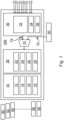
- Figure 1 shows the multiplexing of safety lines and functional lines using a configurable buffer architecture according to an embodiment of this disclosure.
- the system 100 in Figure 1 may include a processor and memory (e.g. Static Random Access Memory (SRAM)).
- the memory may store software including program instructions executable by the processor for implementing the methods described herein.
- the system 100 may be included in a vehicle such as a car, van or truck, for processing data relating to various applications. These applications may, for instance, include the processing of vehicle RADAR data and the processing of camera (e.g. an external camera) data such as video data.
- SRAM Static Random Access Memory
- the system in Figure 1 includes a number of functional blocks. These will be described below.
- Block 10 is operable to perform pixel processing and buffer management for the data to be processed.
- the pixel processing and buffer management block 10 includes a number of sub-blocks. These sub-blocks include a pixel processing and data type and virtual channel identification sub-block 12, an Advanced eXtensible Interface (AXI) handling sub-block 14, an active chirp/video data buffer management block 16 and an embedded/user defined buffer management sub-block 18.
- AXI Advanced eXtensible Interface
- Block 20 is an RX controller block for handling receipt of data according to one or more data types and virtual channels.
- the data types include RADAR data or video data as noted above.
- the RX controller block 20 may be configured to processes the received data according to the Mobile Industry Processor Interface Camera Serial Interface 2 (MIPICSI2) specification.
- MIPICSI2 Mobile Industry Processor Interface Camera Serial Interface 2
- the RX controller block 20 may include a number of sub-blocks. These sub-blocks may include a lane merging sub-block 22, a pixel formatting sub-block 24, a data cyclic redundancy check (CRC) sub-block 26 and an error correction code header (ECC) sub-block 28.
- sub-blocks may include a lane merging sub-block 22, a pixel formatting sub-block 24, a data cyclic redundancy check (CRC) sub-block 26 and an error correction code header (ECC) sub-block 28.
- CRC data cyclic redundancy check
- ECC error correction code header
- the system 100 may also include a multiplexer 70.
- the multiplexer is operable to multiplex safety data lines and functional data lines received from one or more external devices such as a vehicle RADAR system or video camera, before passing them on to the RX controller block 20.
- the multiplexer 70 may also be operable to receive and multiplex safety lines that are received from software 60 (e.g. Microcontroller software) of the system 100 with the functional data lines received from the external device(s).
- the multiplexer 70 may also be operable to receive and multiplex both safety lines and functional data lines that are received from software 60, e.g. as part of a Built In Self Test (BIST) procedure.
- BIST Built In Self Test
- the system 100 also includes a physical layer 30.
- the physical layer 30 may be compatible with the Mobile Industry Processor Interface (MIPI) DPHY physical layer standard.
- the physical layer 30 includes a plurality of lanes for the receipt of data from the external devices noted above. These lanes may include a number of RX data lanes 32. In the present embodiment, there are four such data lanes (for receiving differential data signals DP0, DN0, DP1, DN1, DP2, DN2, DP3, DN3), although in principle any number of data lanes may be provided.
- the physical layer 30 may also include a clock lane 34 associated with the data lanes 32. The clock lane 34 is operable to review differential clock signal CKP, CKN.
- the physical layer 30 may also include a calibration block 36 for calibration of the data lanes 32 and clock lane 34.
- the physical layer 30 is connected to the multiplexer 70, to allow the received data to be passed to the multiplexer 70 for multiplexing and subsequent provision to the RX controller block 20 and the pixel processing and buffer management block 10.
- the system 100 is operable to allocate a plurality of circular buffers in memory. These circular buffers are allocated according to a number of determined data type(s) and virtual channel(s).
- the circular buffers that are required for operation of the system may be determined at system start-up. The determination may be made on knowledge of the applications that will be required to be handled by the system 100. For instance, as noted above, the applications may include vehicle RADAR and an external camera of the vehicle. With knowledge of the applications that will be implemented, including knowledge of the data types and virtual channels that will be needed, the system 100 can accordingly allocate a required number of circular buffers in memory, for buffering the output of the multiplexer 70.
- the knowledge of the required applications may be stored in the memory of the system for retrieval at system start-up, and/or may be determined by interrogation of the external devices (e.g. vehicle RADAR system, external camera system) at system start-up.
- the circular buffers are allocated according to knowledge of the required applications at system start-up, only the required number of circular buffers may be allocated, reducing memory size requirements for the system. This may be compared, for instance, with an approach in which enough memory space must be provided in the system for circular buffers according to all possible applications, data types and virtual channels.
- N circular buffers are allocated. These circular buffers may include:
- buffers allocated in Figure 1 are just examples, and that any combination of buffers allocated according to data type and virtual channel is envisaged.
- the circular buffers are allocated in memory according to the determined data type(s) and virtual channel(s), e.g. at system start-up.
- one or more of the circular buffers is allocated to safety data lines.
- a plurality of circular buffers may in principle be allocated to safety line data, it is envisaged that in practice, for a given combination of data types and virtual channels, a single circular buffer may be allocated to safety line data. This can allow safety line processing for the various applications handled by the system to be accommodated in a manner that minimises memory space requirements for the allocation of the circular buffers. Irrespective of the number of circular buffers that are allocated to safety line data, the remining buffers would typically be allocated to functional data lines.
- the system 100 may store the data in the circular buffers according to the allocation of each buffer. For instance, this may involve storing functional data lines in a circular buffer allocated to functional data lines for that data type and virtual channel. This may also involve storing safety data lines in a (the) circular buffer allocated to safety data lines.
- the received data may be put into the circular buffers described herein following some processing, and data type and virtual channel identification.
- the circular buffers are located in the system memory. Typically, placing the received data in the circular buffers according to data type and virtual channel may be the final step performed by the pixel processing and buffer management block 10.
- Figure 2 shows a method 110 of acquiring data according to an embodiment of this disclosure.
- the system may determining one or more data types and virtual channels required for one or more applications as described above.
- the system 100 may allocate a plurality of circular buffers in memory according to the determined data type(s) and virtual channel(s), in which one or more of the circular buffers are allocated to safety data lines and in which the remaining circular buffers are allocated to functional data lines.
- the system 100 may storing at least one functional data line in a circular buffer allocated to functional data lines according to a data type and virtual channel of the functional data line.
- the system 100 may store at least one safety data line in a circular buffer allocated to safety data lines.
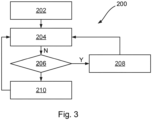
- Figure 3 shows a method 200 of handling safety lines according to an embodiment of this disclosure.
- step 202 the system shown in Figure 1 begins to receive data.
- the data may be associated for a range of applications, but for the purposes to this embodiment, it may be assumed that the data comprises data from an external device or devices such as a vehicle RADAR system or (e.g. video) camera system.
- the received data are written to the appropriate circular buffer in the memory.
- the pixel processing and buffer management block 10 may direct the received data to the relevant buffer based on virtual channel and data type identifiers that may be included in the data, according to the allocation of the circular buffers made at system start up. Any additional functionality (such as calibration data for the RADAR system) can also be accommodated by directing the received data to the appropriate buffer in this way.
- the system 100 may determine whether safety lines are present in the received data. As part of this determination, the system 100 may also determine the origin of the safety lines. If the safety lines are being inserted by software 60 (e.g. Microcontroller software) of the system 100, then the method may proceed to step 210. On the other hand, if the safety lines are being inserted by an (e.g. Mobile Industry Processor Interface Camera Serial Interface 2 (MIPICSI2) compliant) external device (such as a vehicle radar system or vehicle camera), the method may proceed to step 208.
- software 60 e.g. Microcontroller software
- MIPICSI2 Mobile Industry Processor Interface Camera Serial Interface 2
- step 208 since it has been determined that the safety lines are being inserted by an external device, then the RX controller block 20 allows the same path (see the PHY-Protocol Interface (PPI) path labelled 74 in Figure 1 ) as the path for functional data reception from the physical layer 30 to continue to be exercised for the receipt of the safety lines.
- PPI PHY-Protocol Interface
- the insertion of the safety lines may be implemented without requiring any of the active image data or RADAR data to be cropped.
- a separate buffer is allocated to be used for storing safety line data (to the buffer(s) used for functional data lines), cropping of the active image data or RADAR data can be avoided.
- step 210 since it has been determined that the safety lines are being inserted by system software, the RX controller block 20 chooses an alternate PHY-Protocol Interface (PPI) data path 72 shown in Figure 1 , for the receipt of the safety lines from the software 60.
- PPI PHY-Protocol Interface
- the insertion of the safety lines may be implemented without requiring any of the active image data or RADAR data to be cropped.
- a separate buffer is allocated to be used for storing safety line data (to the buffer(s) used for functional data lines), cropping of the active image data or RADAR data can be avoided
- step 208 or 210 the method may return to step 204, for the allocation of subsequent functional data to the appropriate circular buffer. Subsequently, the method may proceed once more to step 208 or step 210 if it is determined in again in step 206 that safety lines are present in the received data.
- Figure 4 shows a method 300 of handling safety lines with support for Built In Self Test (BIST) functionality according to another embodiment of this disclosure.
- BIST Built In Self Test
- the system shown in Figure 1 begins to receive data.
- the data may be associated for a range of applications, but for the purposes to this embodiment, it may be assumed that the data comprises data from an external device or devices such as a vehicle RADAR system or (e.g. video) camera system.
- the received data are written to the appropriate circular buffer in the memory.
- step 304 while the (e.g. MIPI DPHY) physical layer 30 is being initialised, software 60 or a built in Pseudo Random Number Generator (PRNG) can feed BIST data using the data path 72 in Figure 1 (i.e. the data path that was used for the insertion of software generated safety lines in the method of Figure 3 ). This data may be used for the self testing of the digital circuitry of the system 100.
- the data path 72 in Figure 1 i.e. the data path that was used for the insertion of software generated safety lines in the method of Figure 3 . This data may be used for the self testing of the digital circuitry of the system 100.
- step 304 initialisation of the system 100 including the physical layer 30 may be completed, and the normal operation of the system 100 may begin. Accordingly, the remainder of the method of Figure 3 may be similar to that described above in relation to Figure 3 .
- step 306 data received from one or more external devices (e.g. a vehicle RADAR system or a vehicle camera) are written to the appropriate circular buffer in the memory.
- the pixel processing and buffer management block 10 may direct the received data to the relevant buffer based on virtual channel and data type identifiers that may be included in the data, according to the allocation of the circular buffers made at system start up. Again, any additional functionality (such as calibration data for the RADAR system) can also be accommodated by directing the received data to the appropriate buffer in this way.
- the system 100 may determine whether safety lines are present in the received data. As part of this determination, the system 100 may also determine the origin of the safety lines. If the safety lines are being inserted by software 60 (e.g. Microcontroller software) of the system 100, then the method may proceed to step 312. On the other hand, if the safety lines are being inserted by an (e.g. Mobile Industry Processor Interface Camera Serial Interface 2 (MIPICSI2) compliant) external device (such as a vehicle radar system or vehicle camera), the method may proceed to step 310.
- software 60 e.g. Microcontroller software
- MIPICSI2 Mobile Industry Processor Interface Camera Serial Interface 2
- step 310 since it has been determined that the safety lines are being inserted by an external device, then the RX controller block 20 allows the same path (see the PHY-Protocol Interface (PPI) path labelled 74 in Figure 1 ) as the path for functional data reception from the physical layer 30 to continue to be exercised for the receipt of the safety lines. Because of the aforementioned allocation of the circular buffers in memory, the insertion of the safety lines may be implemented without requiring any of the active image data or RADAR data to be cropped.
- PPI PHY-Protocol Interface
- step 312 since it has been determined that the safety lines are being inserted by system software, the RX controller block 20 chooses an alternate PHY-Protocol Interface (PPI) data path 72 shown in Figure 1 , for the receipt of the safety lines from the software 60. Note that this is the same path that was used in step 304 for feeding the BIST data to the digital circuitry of the system 100.
- PPI PHY-Protocol Interface
- the method of Figure 4 can allow the system 100 to implement Built In Self Test (BIST) procedures in a manner that does not expressly require the provision of dedicated BIST logic. This is because the path 72 that is used during normal operation for the insertion of safety lines by the software 60 is re-used by the system for supplying BIST data from the software 60. This can increase the available chip space in or more integrated circuits of the system 100 and reduce the overall cost of the system 100.
- BIST Built In Self Test
- FIG. 5 shows a data packet 400.
- the packet 400 includes a frame start 410, a frame end 420, a packet header 402, a checksum portion 406 (which may also include a filler if required for the physical layer 30 (e.g. under DPHY)), and a payload.
- the payload includes a frame 404 of data.
- the frame 404 may for instance comprise RADAR data or video data received from a vehicle RADAR system or external camera of the vehicle.
- the frame 404 may also include a number of lines of embedded data 412, 414. In particular, zero or more lines of embedded data 412 may be included at the start of the frame 404 and zero or more lines of embedded data 414 may be included at the end of the frame 404.
- the embedded data 412, 414 may for instance comprise safety data lines or test data (BIST) lines of the kind described above.
- the payload data in each packet must be a multiple of some predetermined number of bits (e.g. 8 bits) in length.
- Line blanking of the packet is shown at 408, and frame blanking is shown by the arrow labelled 422.
- the lines of embedded data 412, 414 must be located at the start of the frame or at the end of the frame as noted above. This is because it is not possible to capture embedded data that is located in between lines of frame data 404. In the data packet 400 of Figure 5 , if embedded data were to be located in between active lines of frame data 404, then the actual RADAR data or video data may be overwritten when using a single buffer per virtual channel.
- Figure 6 shows a data packet 500 according to an embodiment of this disclosure.
- the data packet 500 in Figure 6 is similar in some ways to the data packet 400 shown in Figure 5 .
- the data packet 500 may include a frame start 510, a frame end 520, a packet header 502, a checksum portion 506 (which may also include a filler if required for the physical layer 30 (e.g. under DPHY)), and a payload.
- the payload includes a frame 504 of data.
- the frame 504 may for instance comprise RADAR data or video data received from a vehicle RADAR system or external camera of the vehicle.
- the payload data in each packet must be a multiple of some predetermined number of bits (e.g. 8 bits) in length.
- Line blanking of the packet is shown at 508, and frame blanking is shown by the arrow labelled 522.
- the frame 504 may also include a number of lines of embedded data 512, 514, 514, 518.
- the embedded data 512, 514, 514, 518 may for instance comprise safety data lines of the kind described above.
- Some (zero or more) lines of embedded data 512 may be included at the start of the frame 504 and some (zero or more) lines of embedded data 514 may be included at the end of the frame 504. Additionally, as can be seen in Figure 6 , some (zero or more) lines of embedded data 516, 518 may be included at locations with the frame data 504, i.e. neither at the start of the frame data (as per the embedded data 512) nor at the end of the frame data (as per the embedded data 514).
- embedded data e.g. lines of safety data, or test data
- This can be achieved by allocating more than one circular buffer to each virtual channel (i.e.
- a buffer for functional data and a buffer for safety line data. Maintaining separate buffers for different data types as described herein can allow the embedded data to be located anywhere in the frame, without the possibility of overwriting any data. This allocation of the circular buffers can be made at system start up as noted previously.
- the method includes determining one or more data types and virtual channels required for one or more applications.
- the method also includes allocating a plurality of circular buffers in memory according to the determined data type(s) and virtual channel(s).
- One or more of the circular buffers are allocated to safety data lines.
- the remaining circular buffers are allocated to functional data lines.
- the method further includes storing at least one functional data line in a circular buffer allocated to functional data lines according to a data type and virtual channel of the functional data line.
- the method also includes storing at least one safety data line in a circular buffer allocated to safety data lines.
Landscapes
- Engineering & Computer Science (AREA)
- Theoretical Computer Science (AREA)
- Software Systems (AREA)
- Physics & Mathematics (AREA)
- General Physics & Mathematics (AREA)
- General Engineering & Computer Science (AREA)
- Automation & Control Theory (AREA)
- Mechanical Engineering (AREA)
- Human Computer Interaction (AREA)
- Transportation (AREA)
- Multimedia (AREA)
- Traffic Control Systems (AREA)
Description
- The present specification relates to a method of acquiring data, a computer program product for implementing the method, a system for acquiring data, and a vehicle including the system.
- External camera or radar transmitters use MIPI CSI-2 (Mobile Industry Processor Interface Camera Serial Interface 2) virtual channel and data interleaving to send different video/radar data streams and types of data (ADC data, embedded data). Microcontroller video/radar receiver acquisition systems are expected to correctly handle the routing of data to different regions of memory even if the processing requirements of different data types and virtual channels differ.
- Traditionally, the number of buffers on such systems is generally same as the number of virtual channels multiplied by the number of supported data types. Additionally, safety data insertion via inter frame or intra frame packets/line by the external radar/video is becoming common, to identify faults in the data receiving communication channels, for system reliability over such links.
- In other systems, the software itself may insert such safety lines/packets at the earliest point in the receiver acquisition path. Systems which support the insertion of safety lines without a buffer overhead do so by cropping the active data content. Systems which do not crop the active lines for replacing safety lines have a buffer overhead (over and above the actual functional buffers) to handle safety line processing.
-
US 2019/0057051 Al describes a video device that includes: a host processor comprising at least one input video port configured to receive a plurality of video data signals that comprise video data and embedded data from a plurality of virtual channels in a received frame; and a memory operably coupled to the host processor and configured to receive and store video data. The host processor is configured to segregate the video data from the embedded data in the received frame and process the embedded data individually. -
US 2016/212456 A1 describes a system for receiving at least two data streams and providing a single input data stream to a MIPI's CSI Tx. The system includes a control logic configured to control reading of data stored in the buffers to a multiplexer, the read-side clock being a multiple of a frequency of a fixed frequency clock. The control logic is further configured to control the multiplexer to combine data read from each buffer that corresponds to a complete unit of data into a separate portion and multiplex the separate portions into the input data stream. - Aspects of the present disclosure are set out in the accompanying independent claims. Further features according to embodiments are set out in the dependent claims. Combinations of features from the dependent claims may be combined with features of the independent claims as appropriate and not merely as explicitly set out in the claims.
- According to an aspect of the present disclosure, there is provided a method according to claim 1.
- According to another aspect of the present disclosure, there is provided a system according to claim 7.
- By determining the one or more data types and virtual channels required for an application, and then allocating the circular buffers based on the determined data type(s) and virtual channel(s), there is no need to provide buffers in memory for all possible applications, data types and virtual channels. This may considerably reduce the memory space required for the provision of the buffers. Moreover, the provision of a dedicated buffer for safety data lines may allow the same functional path to be used to process the functional lines and safety lines, without cropping active lines in the received data.
- The allocation of the circular buffers may be performed at system start-up.
- The at least one safety data line and the at least one functional data line may be received from an external component. The external component may, for instance be a RADAR system of a vehicle, or an external camera of the vehicle. There may be more than one external component.
- The at least one safety data line may be processed using a same functional path as a functional path used for processing the at least one received functional data line.
- The at least one safety data line is generated locally by software of the system. In such cases, the at least one safety data line is received/processed along a different data path to the data path used for processing the at least one received functional data line.
- The method includes performing a self-test routine (e.g. a Built-in-Self-Test (BIST) routine) in which test data is generated locally (e.g. by software of the system) and received along the aforementioned different data path along which the at least one safety data line is received. Accordingly, embodiments of this disclosure can obviate the overhead associated providing the system with separate BIST logic.
- The at least one safety data line may be received or generated while no functional data lines are being received.
- The one or more applications may include vehicle RADAR and/or an external camera of a vehicle.
- According to a further aspect of the present disclosure, there is provided a computer program product on a carrier medium, comprising program instructions for implementing the method of any of claims 1 to 5.
- According to another aspect of the present disclosure, there is provided a vehicle comprising the system of any of claims 7 to 10.
- Embodiments of this disclosure will be described hereinafter, by way of example only, with reference to the accompanying drawings in which like reference signs relate to like elements and in which:
-
Figure 1 shows the multiplexing of safety lines and functional lines using a configurable buffer architecture according to an embodiment of this disclosure; -
Figure 2 shows a method of acquiring data according to an embodiment of this disclosure; -
Figure 3 shows a method of handling safety lines according to an embodiment of this disclosure; -
Figure 4 shows a method of handling safety lines with support for Built In Self Test (BIST) functionality according to another embodiment of this disclosure; -
Figure 5 shows a data packet; and -
Figure 6 shows a data packet according to an embodiment of this disclosure. - Embodiments of this disclosure are described in the following with reference to the accompanying drawings.
-
Figure 1 shows the multiplexing of safety lines and functional lines using a configurable buffer architecture according to an embodiment of this disclosure. - The
system 100 inFigure 1 may include a processor and memory (e.g. Static Random Access Memory (SRAM)). The memory may store software including program instructions executable by the processor for implementing the methods described herein. Thesystem 100 may be included in a vehicle such as a car, van or truck, for processing data relating to various applications. These applications may, for instance, include the processing of vehicle RADAR data and the processing of camera (e.g. an external camera) data such as video data. - The system in
Figure 1 includes a number of functional blocks. These will be described below. -
Block 10 is operable to perform pixel processing and buffer management for the data to be processed. In the present embodiment, the pixel processing andbuffer management block 10 includes a number of sub-blocks. These sub-blocks include a pixel processing and data type and virtualchannel identification sub-block 12, an Advanced eXtensible Interface (AXI)handling sub-block 14, an active chirp/video databuffer management block 16 and an embedded/user definedbuffer management sub-block 18. -
Block 20 is an RX controller block for handling receipt of data according to one or more data types and virtual channels. For instance, the data types include RADAR data or video data as noted above. In the present embodiment, theRX controller block 20 may be configured to processes the received data according to the Mobile Industry Processor Interface Camera Serial Interface 2 (MIPICSI2) specification. - The
RX controller block 20 may include a number of sub-blocks. These sub-blocks may include alane merging sub-block 22, apixel formatting sub-block 24, a data cyclic redundancy check (CRC)sub-block 26 and an error correction code header (ECC)sub-block 28. - The
system 100 may also include amultiplexer 70. As will be described below, the multiplexer is operable to multiplex safety data lines and functional data lines received from one or more external devices such as a vehicle RADAR system or video camera, before passing them on to theRX controller block 20. Themultiplexer 70 may also be operable to receive and multiplex safety lines that are received from software 60 (e.g. Microcontroller software) of thesystem 100 with the functional data lines received from the external device(s). Themultiplexer 70 may also be operable to receive and multiplex both safety lines and functional data lines that are received fromsoftware 60, e.g. as part of a Built In Self Test (BIST) procedure. - The
system 100 also includes aphysical layer 30. Thephysical layer 30 may be compatible with the Mobile Industry Processor Interface (MIPI) DPHY physical layer standard. Thephysical layer 30 includes a plurality of lanes for the receipt of data from the external devices noted above. These lanes may include a number ofRX data lanes 32. In the present embodiment, there are four such data lanes (for receiving differential data signals DP0, DN0, DP1, DN1, DP2, DN2, DP3, DN3), although in principle any number of data lanes may be provided. Thephysical layer 30 may also include aclock lane 34 associated with thedata lanes 32. Theclock lane 34 is operable to review differential clock signal CKP, CKN. Thephysical layer 30 may also include acalibration block 36 for calibration of thedata lanes 32 andclock lane 34. Thephysical layer 30 is connected to themultiplexer 70, to allow the received data to be passed to themultiplexer 70 for multiplexing and subsequent provision to theRX controller block 20 and the pixel processing andbuffer management block 10. - The
system 100 is operable to allocate a plurality of circular buffers in memory. These circular buffers are allocated according to a number of determined data type(s) and virtual channel(s). The circular buffers that are required for operation of the system may be determined at system start-up. The determination may be made on knowledge of the applications that will be required to be handled by thesystem 100. For instance, as noted above, the applications may include vehicle RADAR and an external camera of the vehicle. With knowledge of the applications that will be implemented, including knowledge of the data types and virtual channels that will be needed, thesystem 100 can accordingly allocate a required number of circular buffers in memory, for buffering the output of themultiplexer 70. The knowledge of the required applications may be stored in the memory of the system for retrieval at system start-up, and/or may be determined by interrogation of the external devices (e.g. vehicle RADAR system, external camera system) at system start-up. - Because the circular buffers are allocated according to knowledge of the required applications at system start-up, only the required number of circular buffers may be allocated, reducing memory size requirements for the system. This may be compared, for instance, with an approach in which enough memory space must be provided in the system for circular buffers according to all possible applications, data types and virtual channels.
- In the embodiment shown in
Figure 1 , N circular buffers are allocated. These circular buffers may include: - a first
circular buffer 50 in this example is allocated to active data processing in a first virtual channel; - a second
circular buffer 52 in this example is allocated to active data processing in a second virtual channel; - a third
circular buffer 54 in this example is allocated to embedded data processing in the first virtual channel; - an n-1th
circular buffer 56 in this example is allocated to safety line data processing in the first virtual channel; and - an Nth
circular buffer 58 in this example is allocated to user defined data processing in a third virtual channel. - It will be appreciated that the buffers allocated in
Figure 1 are just examples, and that any combination of buffers allocated according to data type and virtual channel is envisaged. - In accordance with embodiments of this disclosure, the circular buffers are allocated in memory according to the determined data type(s) and virtual channel(s), e.g. at system start-up. Typically, one or more of the circular buffers is allocated to safety data lines. Although a plurality of circular buffers may in principle be allocated to safety line data, it is envisaged that in practice, for a given combination of data types and virtual channels, a single circular buffer may be allocated to safety line data. This can allow safety line processing for the various applications handled by the system to be accommodated in a manner that minimises memory space requirements for the allocation of the circular buffers. Irrespective of the number of circular buffers that are allocated to safety line data, the remining buffers would typically be allocated to functional data lines.
- To process the incoming data, the
system 100 may store the data in the circular buffers according to the allocation of each buffer. For instance, this may involve storing functional data lines in a circular buffer allocated to functional data lines for that data type and virtual channel. This may also involve storing safety data lines in a (the) circular buffer allocated to safety data lines. The received data may be put into the circular buffers described herein following some processing, and data type and virtual channel identification. The circular buffers are located in the system memory. Typically, placing the received data in the circular buffers according to data type and virtual channel may be the final step performed by the pixel processing andbuffer management block 10. - To summarize,
Figure 2 shows amethod 110 of acquiring data according to an embodiment of this disclosure. Instep 102, the system may determining one or more data types and virtual channels required for one or more applications as described above. Instep 104, thesystem 100 may allocate a plurality of circular buffers in memory according to the determined data type(s) and virtual channel(s), in which one or more of the circular buffers are allocated to safety data lines and in which the remaining circular buffers are allocated to functional data lines. Instep 106, thesystem 100 may storing at least one functional data line in a circular buffer allocated to functional data lines according to a data type and virtual channel of the functional data line. Instep 108, thesystem 100 may store at least one safety data line in a circular buffer allocated to safety data lines. -
Figure 3 shows amethod 200 of handling safety lines according to an embodiment of this disclosure. - In
step 202, the system shown inFigure 1 begins to receive data. As noted previously, the data may be associated for a range of applications, but for the purposes to this embodiment, it may be assumed that the data comprises data from an external device or devices such as a vehicle RADAR system or (e.g. video) camera system. - In
step 204, the received data are written to the appropriate circular buffer in the memory. As part of this, the pixel processing andbuffer management block 10 may direct the received data to the relevant buffer based on virtual channel and data type identifiers that may be included in the data, according to the allocation of the circular buffers made at system start up. Any additional functionality (such as calibration data for the RADAR system) can also be accommodated by directing the received data to the appropriate buffer in this way. - In
step 206, thesystem 100 may determine whether safety lines are present in the received data. As part of this determination, thesystem 100 may also determine the origin of the safety lines. If the safety lines are being inserted by software 60 (e.g. Microcontroller software) of thesystem 100, then the method may proceed to step 210. On the other hand, if the safety lines are being inserted by an (e.g. Mobile Industry Processor Interface Camera Serial Interface 2 (MIPICSI2) compliant) external device (such as a vehicle radar system or vehicle camera), the method may proceed to step 208. - In
step 208, since it has been determined that the safety lines are being inserted by an external device, then theRX controller block 20 allows the same path (see the PHY-Protocol Interface (PPI) path labelled 74 inFigure 1 ) as the path for functional data reception from thephysical layer 30 to continue to be exercised for the receipt of the safety lines. Because of the aforementioned allocation of the circular buffers in memory, the insertion of the safety lines may be implemented without requiring any of the active image data or RADAR data to be cropped. In particular, because a separate buffer is allocated to be used for storing safety line data (to the buffer(s) used for functional data lines), cropping of the active image data or RADAR data can be avoided. - In
step 210, since it has been determined that the safety lines are being inserted by system software, theRX controller block 20 chooses an alternate PHY-Protocol Interface (PPI)data path 72 shown inFigure 1 , for the receipt of the safety lines from thesoftware 60. Again, because of the aforementioned allocation of the circular buffers in memory, the insertion of the safety lines may be implemented without requiring any of the active image data or RADAR data to be cropped. Again, because a separate buffer is allocated to be used for storing safety line data (to the buffer(s) used for functional data lines), cropping of the active image data or RADAR data can be avoided - Following
step step 206 that safety lines are present in the received data. -
Figure 4 shows amethod 300 of handling safety lines with support for Built In Self Test (BIST) functionality according to another embodiment of this disclosure. - In
step 302, the system shown inFigure 1 begins to receive data. As noted previously, the data may be associated for a range of applications, but for the purposes to this embodiment, it may be assumed that the data comprises data from an external device or devices such as a vehicle RADAR system or (e.g. video) camera system. The received data are written to the appropriate circular buffer in the memory. - In
step 304, while the (e.g. MIPI DPHY)physical layer 30 is being initialised,software 60 or a built in Pseudo Random Number Generator (PRNG) can feed BIST data using thedata path 72 inFigure 1 (i.e. the data path that was used for the insertion of software generated safety lines in the method ofFigure 3 ). This data may be used for the self testing of the digital circuitry of thesystem 100. - Following the Built In Self Testing procedure in
step 304, initialisation of thesystem 100 including thephysical layer 30 may be completed, and the normal operation of thesystem 100 may begin. Accordingly, the remainder of the method ofFigure 3 may be similar to that described above in relation toFigure 3 . - In
step 306, data received from one or more external devices (e.g. a vehicle RADAR system or a vehicle camera) are written to the appropriate circular buffer in the memory. As part of this, the pixel processing andbuffer management block 10 may direct the received data to the relevant buffer based on virtual channel and data type identifiers that may be included in the data, according to the allocation of the circular buffers made at system start up. Again, any additional functionality (such as calibration data for the RADAR system) can also be accommodated by directing the received data to the appropriate buffer in this way. - In
step 308, thesystem 100 may determine whether safety lines are present in the received data. As part of this determination, thesystem 100 may also determine the origin of the safety lines. If the safety lines are being inserted by software 60 (e.g. Microcontroller software) of thesystem 100, then the method may proceed to step 312. On the other hand, if the safety lines are being inserted by an (e.g. Mobile Industry Processor Interface Camera Serial Interface 2 (MIPICSI2) compliant) external device (such as a vehicle radar system or vehicle camera), the method may proceed to step 310. - In
step 310, since it has been determined that the safety lines are being inserted by an external device, then theRX controller block 20 allows the same path (see the PHY-Protocol Interface (PPI) path labelled 74 inFigure 1 ) as the path for functional data reception from thephysical layer 30 to continue to be exercised for the receipt of the safety lines. Because of the aforementioned allocation of the circular buffers in memory, the insertion of the safety lines may be implemented without requiring any of the active image data or RADAR data to be cropped. - In
step 312, since it has been determined that the safety lines are being inserted by system software, theRX controller block 20 chooses an alternate PHY-Protocol Interface (PPI)data path 72 shown inFigure 1 , for the receipt of the safety lines from thesoftware 60. Note that this is the same path that was used instep 304 for feeding the BIST data to the digital circuitry of thesystem 100. Again, because of the aforementioned allocation of the circular buffers in memory, the insertion of the safety lines may be implemented without requiring any of the active image data or RADAR data to be cropped. - The method of
Figure 4 can allow thesystem 100 to implement Built In Self Test (BIST) procedures in a manner that does not expressly require the provision of dedicated BIST logic. This is because thepath 72 that is used during normal operation for the insertion of safety lines by thesoftware 60 is re-used by the system for supplying BIST data from thesoftware 60. This can increase the available chip space in or more integrated circuits of thesystem 100 and reduce the overall cost of thesystem 100. -
Figure 5 shows adata packet 400. Thepacket 400 includes aframe start 410, aframe end 420, apacket header 402, a checksum portion 406 (which may also include a filler if required for the physical layer 30 (e.g. under DPHY)), and a payload. The payload includes aframe 404 of data. Theframe 404 may for instance comprise RADAR data or video data received from a vehicle RADAR system or external camera of the vehicle. Theframe 404 may also include a number of lines of embeddeddata data 412 may be included at the start of theframe 404 and zero or more lines of embeddeddata 414 may be included at the end of theframe 404. The embeddeddata - As shown by the arrow labelled 424 in
Figure 5 , the payload data in each packet must be a multiple of some predetermined number of bits (e.g. 8 bits) in length. Line blanking of the packet is shown at 408, and frame blanking is shown by the arrow labelled 422. - When a single circular buffer is used per virtual channel, the lines of embedded
data frame data 404. In thedata packet 400 ofFigure 5 , if embedded data were to be located in between active lines offrame data 404, then the actual RADAR data or video data may be overwritten when using a single buffer per virtual channel. -
Figure 6 shows adata packet 500 according to an embodiment of this disclosure. Thedata packet 500 inFigure 6 is similar in some ways to thedata packet 400 shown inFigure 5 . Accordingly, thedata packet 500 may include aframe start 510, aframe end 520, apacket header 502, a checksum portion 506 (which may also include a filler if required for the physical layer 30 (e.g. under DPHY)), and a payload. The payload includes aframe 504 of data. Again, theframe 504 may for instance comprise RADAR data or video data received from a vehicle RADAR system or external camera of the vehicle. As shown by the arrow labelled 524 inFigure 5 , the payload data in each packet must be a multiple of some predetermined number of bits (e.g. 8 bits) in length. Line blanking of the packet is shown at 508, and frame blanking is shown by the arrow labelled 522. - The
frame 504 may also include a number of lines of embeddeddata data - Some (zero or more) lines of embedded
data 512 may be included at the start of theframe 504 and some (zero or more) lines of embeddeddata 514 may be included at the end of theframe 504. Additionally, as can be seen inFigure 6 , some (zero or more) lines of embeddeddata frame data 504, i.e. neither at the start of the frame data (as per the embedded data 512) nor at the end of the frame data (as per the embedded data 514). Thus, in accordance with embodiments of this disclosure embedded data (e.g. lines of safety data, or test data) can be inserted between lines of functional data in theframe data 504. This can be achieved by allocating more than one circular buffer to each virtual channel (i.e. a buffer for functional data and a buffer for safety line data). Maintaining separate buffers for different data types as described herein can allow the embedded data to be located anywhere in the frame, without the possibility of overwriting any data. This allocation of the circular buffers can be made at system start up as noted previously. - Accordingly, there has been described a method of acquiring data, a computer program product for implementing the method, a system for acquiring data, and a vehicle including the system. The method includes determining one or more data types and virtual channels required for one or more applications. The method also includes allocating a plurality of circular buffers in memory according to the determined data type(s) and virtual channel(s). One or more of the circular buffers are allocated to safety data lines. The remaining circular buffers are allocated to functional data lines. The method further includes storing at least one functional data line in a circular buffer allocated to functional data lines according to a data type and virtual channel of the functional data line. The method also includes storing at least one safety data line in a circular buffer allocated to safety data lines.
Claims (11)
- A method (110) of acquiring data, the method comprising:determining one or more different data types and virtual channels required for one or more applications (102);allocating a plurality of separate circular buffers in memory according to the determined different data type(s) and virtual channel(s), in which one or more of the circular buffers are allocated to safety data lines and in which one or more of the remaining circular buffers are allocated to functional data lines (104);storing at least one functional data line in a said circular buffer allocated to functional data lines according to a data type and virtual channel of the functional data line (106); andstoring at least one safety data line in a said circular buffer allocated to safety data lines (108), wherein the at least one safety data line is generated locally by software and is received along a different data path to a data path used for processing the at least one received functional data line andperforming a self-test routine in which test data is generated locally and received along said different data path along which the at least one safety data line is received.
- The method of claim 1, wherein the at least one safety data line and the at least one functional data line are received from an external component.
- The method of claim 2, wherein the at least one safety data line is processed using a same functional path as a functional path used for processing the at least one received functional data line.
- The method of any preceding claim, wherein the at least one safety data line is received or generated while no functional data lines are being received.
- The method of any preceding claim, wherein the one or more applications include vehicle RADAR and/or an external camera of a vehicle.
- A computer program product on a carrier medium, comprising program instructions for implementing the method of any preceding claim.
- A system (100) for acquiring data, the system comprising:memory; anda processor operable to:determine one or more different data types and virtual channels required for one or more applications (102);allocate a plurality of separate circular buffers in the memory according to the determined different data type(s) and virtual channel(s), in which one or more of the circular buffers are allocated to safety data lines and in which one or more of the remaining circular buffers are allocated to functional data lines (104);store at least one functional data line in a said circular buffer allocated to functional data lines according to a data type and virtual channel of the functional data line (106); andstore at least one safety data line in a said circular buffer allocated to safety data lines (108), operable to generate the at least one safety data line locally and to process the at least one safety data line along a different data path to a data path used for processing the at least one received functional data line, andoperable to perform a self test routine in which test data is generated locally and processed along said different data path along which the at least one safety data line is processed.
- The system of claim 7, operable to receive the at least one safety data line and the at least one functional data line from an external component.
- The system of claim 8, operable to process the at least one safety data line and the at least one received functional data line using the same functional path.
- The system of any of claims 7 to 9, 9 to 4;, wherein the one or more applications include vehicle RADAR and/or an external camera of a vehicle.
- A vehicle comprising the system of any of claims 7 to 10
Applications Claiming Priority (1)
| Application Number | Priority Date | Filing Date | Title |
|---|---|---|---|
| IN201911021925 | 2019-06-03 |
Publications (2)
| Publication Number | Publication Date |
|---|---|
| EP3748498A1 EP3748498A1 (en) | 2020-12-09 |
| EP3748498B1 true EP3748498B1 (en) | 2025-05-14 |
Family
ID=70292760
Family Applications (1)
| Application Number | Title | Priority Date | Filing Date |
|---|---|---|---|
| EP20169685.3A Active EP3748498B1 (en) | 2019-06-03 | 2020-04-15 | System and method for system for acquiring data |
Country Status (2)
| Country | Link |
|---|---|
| US (1) | US11604686B2 (en) |
| EP (1) | EP3748498B1 (en) |
Families Citing this family (1)
| Publication number | Priority date | Publication date | Assignee | Title |
|---|---|---|---|---|
| US11693086B2 (en) * | 2019-06-28 | 2023-07-04 | Google Llc | Smart device with an integrated radar system |
Citations (1)
| Publication number | Priority date | Publication date | Assignee | Title |
|---|---|---|---|---|
| US20190057051A1 (en) * | 2017-08-18 | 2019-02-21 | Nxp Usa, Inc. | Video device and method for embedded data capture on a virtual channel |
Family Cites Families (8)
| Publication number | Priority date | Publication date | Assignee | Title |
|---|---|---|---|---|
| US6624767B1 (en) | 2000-09-06 | 2003-09-23 | Qualcomm, Incorporated | Data buffer structure for asynchronously received physical channels in a CDMA system |
| US7359325B1 (en) * | 2001-10-18 | 2008-04-15 | Network Equipment Technologies, Inc. | Method and apparatus for inserting empty memory cells into a data flow of network connections of a computer network |
| US7562168B1 (en) * | 2008-05-29 | 2009-07-14 | International Business Machines Corporation | Method of optimizing buffer usage of virtual channels of a physical communication link and apparatuses for performing the same |
| US8406245B2 (en) * | 2009-07-09 | 2013-03-26 | Qualcomm Incorporated | System and method of transmitting content from a mobile device to a wireless display |
| US10120446B2 (en) * | 2010-11-19 | 2018-11-06 | Apple Inc. | Haptic input device |
| US9491495B2 (en) * | 2015-01-16 | 2016-11-08 | Analog Devices Global | Method and apparatus for providing input to a camera serial interface transmitter |
| EP3244622B1 (en) | 2016-05-10 | 2020-07-08 | NXP USA, Inc. | System, encoder and decoder for verification of image sequences |
| US10747275B2 (en) * | 2017-09-21 | 2020-08-18 | Google Llc | Access to high frame-rate radar data via a circular buffer |
-
2020
- 2020-04-15 EP EP20169685.3A patent/EP3748498B1/en active Active
- 2020-05-26 US US16/883,240 patent/US11604686B2/en active Active
Patent Citations (1)
| Publication number | Priority date | Publication date | Assignee | Title |
|---|---|---|---|---|
| US20190057051A1 (en) * | 2017-08-18 | 2019-02-21 | Nxp Usa, Inc. | Video device and method for embedded data capture on a virtual channel |
Also Published As
| Publication number | Publication date |
|---|---|
| US11604686B2 (en) | 2023-03-14 |
| US20200379827A1 (en) | 2020-12-03 |
| EP3748498A1 (en) | 2020-12-09 |
Similar Documents
| Publication | Publication Date | Title |
|---|---|---|
| US5742361A (en) | Data demultiplexer | |
| US4695952A (en) | Dual redundant bus interface circuit architecture | |
| US8370558B2 (en) | Apparatus and method to merge and align data from distributed memory controllers | |
| US5592629A (en) | Apparatus and method for matching data rates to transfer data between two asynchronous devices | |
| US20010024456A1 (en) | MPEG re-multiplexer having multiple inputs and multiple outputs | |
| US7899953B2 (en) | Data transfer system | |
| US10891245B2 (en) | Video device and method for embedded data capture on a virtual channel | |
| US8868873B2 (en) | Reconfigurable memory system data strobes | |
| EP3671720B1 (en) | Real-time on-chip data transfer system | |
| JP2002507856A (en) | System and method for multiplexing serial links | |
| US7739435B2 (en) | System and method for enhancing I2C bus data rate | |
| US11604686B2 (en) | System and method for system for acquiring data | |
| US5790567A (en) | Parallel processing spacecraft communication system | |
| CN115833920B (en) | Transmission method and device for demodulation data | |
| US5600786A (en) | FIFO fail-safe bus | |
| EP1337924B1 (en) | Serial compressed bus interface having a reduced pin count | |
| EP4040735A1 (en) | Vehicle control device and data transfer control method | |
| US8855130B2 (en) | Method and apparatus for demultiplexing, merging, and duplicating packetized elementary stream/program stream/elementary stream data | |
| US20230115125A1 (en) | Video and audio signal processing chip, video and audio signal processing device including the same, and video and audio signal processing method | |
| US20040019712A1 (en) | Semiconductor device and method for controlling data transfer | |
| KR102717304B1 (en) | Sensor connection method and device of radar RFIC using network bus | |
| CN113051212A (en) | Graphics processor, data transmission method, data transmission device, electronic device, and storage medium | |
| US20010004752A1 (en) | Communication interface between processors and semiconductor integrated circuit apparatus | |
| KR101371512B1 (en) | Apparatus and method for high speed basedband data storage | |
| US20080247316A1 (en) | Method Circuit and System for Data Flow Control |
Legal Events
| Date | Code | Title | Description |
|---|---|---|---|
| PUAI | Public reference made under article 153(3) epc to a published international application that has entered the european phase |
Free format text: ORIGINAL CODE: 0009012 |
|
| STAA | Information on the status of an ep patent application or granted ep patent |
Free format text: STATUS: THE APPLICATION HAS BEEN PUBLISHED |
|
| AK | Designated contracting states |
Kind code of ref document: A1 Designated state(s): AL AT BE BG CH CY CZ DE DK EE ES FI FR GB GR HR HU IE IS IT LI LT LU LV MC MK MT NL NO PL PT RO RS SE SI SK SM TR |
|
| AX | Request for extension of the european patent |
Extension state: BA ME |
|
| STAA | Information on the status of an ep patent application or granted ep patent |
Free format text: STATUS: REQUEST FOR EXAMINATION WAS MADE |
|
| 17P | Request for examination filed |
Effective date: 20210609 |
|
| RBV | Designated contracting states (corrected) |
Designated state(s): AL AT BE BG CH CY CZ DE DK EE ES FI FR GB GR HR HU IE IS IT LI LT LU LV MC MK MT NL NO PL PT RO RS SE SI SK SM TR |
|
| STAA | Information on the status of an ep patent application or granted ep patent |
Free format text: STATUS: EXAMINATION IS IN PROGRESS |
|
| 17Q | First examination report despatched |
Effective date: 20220830 |
|
| REG | Reference to a national code |
Ref legal event code: R079 Free format text: PREVIOUS MAIN CLASS: G06F0009500000 Ref country code: DE Ref legal event code: R079 Ref document number: 602020051156 Country of ref document: DE Free format text: PREVIOUS MAIN CLASS: G06F0009500000 Ipc: B60W0050040000 |
|
| GRAP | Despatch of communication of intention to grant a patent |
Free format text: ORIGINAL CODE: EPIDOSNIGR1 |
|
| STAA | Information on the status of an ep patent application or granted ep patent |
Free format text: STATUS: GRANT OF PATENT IS INTENDED |
|
| RIC1 | Information provided on ipc code assigned before grant |
Ipc: G06F 9/50 20060101ALI20241118BHEP Ipc: G06F 9/54 20060101ALI20241118BHEP Ipc: B60W 50/04 20060101AFI20241118BHEP |
|
| INTG | Intention to grant announced |
Effective date: 20241203 |
|
| GRAS | Grant fee paid |
Free format text: ORIGINAL CODE: EPIDOSNIGR3 |
|
| GRAA | (expected) grant |
Free format text: ORIGINAL CODE: 0009210 |
|
| STAA | Information on the status of an ep patent application or granted ep patent |
Free format text: STATUS: THE PATENT HAS BEEN GRANTED |
|
| AK | Designated contracting states |
Kind code of ref document: B1 Designated state(s): AL AT BE BG CH CY CZ DE DK EE ES FI FR GB GR HR HU IE IS IT LI LT LU LV MC MK MT NL NO PL PT RO RS SE SI SK SM TR |
|
| REG | Reference to a national code |
Ref country code: GB Ref legal event code: FG4D |
|
| REG | Reference to a national code |
Ref country code: CH Ref legal event code: EP |
|
| REG | Reference to a national code |
Ref country code: IE Ref legal event code: FG4D |
|
| REG | Reference to a national code |
Ref country code: DE Ref legal event code: R096 Ref document number: 602020051156 Country of ref document: DE |
|
| REG | Reference to a national code |
Ref country code: NL Ref legal event code: MP Effective date: 20250514 |
|
| PG25 | Lapsed in a contracting state [announced via postgrant information from national office to epo] |
Ref country code: FI Free format text: LAPSE BECAUSE OF FAILURE TO SUBMIT A TRANSLATION OF THE DESCRIPTION OR TO PAY THE FEE WITHIN THE PRESCRIBED TIME-LIMIT Effective date: 20250514 Ref country code: PT Free format text: LAPSE BECAUSE OF FAILURE TO SUBMIT A TRANSLATION OF THE DESCRIPTION OR TO PAY THE FEE WITHIN THE PRESCRIBED TIME-LIMIT Effective date: 20250915 Ref country code: ES Free format text: LAPSE BECAUSE OF FAILURE TO SUBMIT A TRANSLATION OF THE DESCRIPTION OR TO PAY THE FEE WITHIN THE PRESCRIBED TIME-LIMIT Effective date: 20250514 |
|
| REG | Reference to a national code |
Ref country code: LT Ref legal event code: MG9D |
|
| PG25 | Lapsed in a contracting state [announced via postgrant information from national office to epo] |
Ref country code: GR Free format text: LAPSE BECAUSE OF FAILURE TO SUBMIT A TRANSLATION OF THE DESCRIPTION OR TO PAY THE FEE WITHIN THE PRESCRIBED TIME-LIMIT Effective date: 20250815 Ref country code: NO Free format text: LAPSE BECAUSE OF FAILURE TO SUBMIT A TRANSLATION OF THE DESCRIPTION OR TO PAY THE FEE WITHIN THE PRESCRIBED TIME-LIMIT Effective date: 20250814 |
|
| PG25 | Lapsed in a contracting state [announced via postgrant information from national office to epo] |
Ref country code: PL Free format text: LAPSE BECAUSE OF FAILURE TO SUBMIT A TRANSLATION OF THE DESCRIPTION OR TO PAY THE FEE WITHIN THE PRESCRIBED TIME-LIMIT Effective date: 20250514 Ref country code: NL Free format text: LAPSE BECAUSE OF FAILURE TO SUBMIT A TRANSLATION OF THE DESCRIPTION OR TO PAY THE FEE WITHIN THE PRESCRIBED TIME-LIMIT Effective date: 20250514 |
|
| REG | Reference to a national code |
Ref country code: AT Ref legal event code: MK05 Ref document number: 1794562 Country of ref document: AT Kind code of ref document: T Effective date: 20250514 |
|
| PG25 | Lapsed in a contracting state [announced via postgrant information from national office to epo] |
Ref country code: BG Free format text: LAPSE BECAUSE OF FAILURE TO SUBMIT A TRANSLATION OF THE DESCRIPTION OR TO PAY THE FEE WITHIN THE PRESCRIBED TIME-LIMIT Effective date: 20250514 |
|
| PG25 | Lapsed in a contracting state [announced via postgrant information from national office to epo] |
Ref country code: HR Free format text: LAPSE BECAUSE OF FAILURE TO SUBMIT A TRANSLATION OF THE DESCRIPTION OR TO PAY THE FEE WITHIN THE PRESCRIBED TIME-LIMIT Effective date: 20250514 |
|
| PG25 | Lapsed in a contracting state [announced via postgrant information from national office to epo] |
Ref country code: AT Free format text: LAPSE BECAUSE OF FAILURE TO SUBMIT A TRANSLATION OF THE DESCRIPTION OR TO PAY THE FEE WITHIN THE PRESCRIBED TIME-LIMIT Effective date: 20250514 |
|
| PG25 | Lapsed in a contracting state [announced via postgrant information from national office to epo] |
Ref country code: RS Free format text: LAPSE BECAUSE OF FAILURE TO SUBMIT A TRANSLATION OF THE DESCRIPTION OR TO PAY THE FEE WITHIN THE PRESCRIBED TIME-LIMIT Effective date: 20250814 |
|
| PG25 | Lapsed in a contracting state [announced via postgrant information from national office to epo] |
Ref country code: IS Free format text: LAPSE BECAUSE OF FAILURE TO SUBMIT A TRANSLATION OF THE DESCRIPTION OR TO PAY THE FEE WITHIN THE PRESCRIBED TIME-LIMIT Effective date: 20250914 |
|
| PG25 | Lapsed in a contracting state [announced via postgrant information from national office to epo] |
Ref country code: LV Free format text: LAPSE BECAUSE OF FAILURE TO SUBMIT A TRANSLATION OF THE DESCRIPTION OR TO PAY THE FEE WITHIN THE PRESCRIBED TIME-LIMIT Effective date: 20250514 |
|
| PG25 | Lapsed in a contracting state [announced via postgrant information from national office to epo] |
Ref country code: SM Free format text: LAPSE BECAUSE OF FAILURE TO SUBMIT A TRANSLATION OF THE DESCRIPTION OR TO PAY THE FEE WITHIN THE PRESCRIBED TIME-LIMIT Effective date: 20250514 Ref country code: DK Free format text: LAPSE BECAUSE OF FAILURE TO SUBMIT A TRANSLATION OF THE DESCRIPTION OR TO PAY THE FEE WITHIN THE PRESCRIBED TIME-LIMIT Effective date: 20250514 |
|
| PG25 | Lapsed in a contracting state [announced via postgrant information from national office to epo] |
Ref country code: CZ Free format text: LAPSE BECAUSE OF FAILURE TO SUBMIT A TRANSLATION OF THE DESCRIPTION OR TO PAY THE FEE WITHIN THE PRESCRIBED TIME-LIMIT Effective date: 20250514 |
|
| PG25 | Lapsed in a contracting state [announced via postgrant information from national office to epo] |
Ref country code: EE Free format text: LAPSE BECAUSE OF FAILURE TO SUBMIT A TRANSLATION OF THE DESCRIPTION OR TO PAY THE FEE WITHIN THE PRESCRIBED TIME-LIMIT Effective date: 20250514 |
|
| PG25 | Lapsed in a contracting state [announced via postgrant information from national office to epo] |
Ref country code: RO Free format text: LAPSE BECAUSE OF FAILURE TO SUBMIT A TRANSLATION OF THE DESCRIPTION OR TO PAY THE FEE WITHIN THE PRESCRIBED TIME-LIMIT Effective date: 20250514 Ref country code: SK Free format text: LAPSE BECAUSE OF FAILURE TO SUBMIT A TRANSLATION OF THE DESCRIPTION OR TO PAY THE FEE WITHIN THE PRESCRIBED TIME-LIMIT Effective date: 20250514 |
|
| PG25 | Lapsed in a contracting state [announced via postgrant information from national office to epo] |
Ref country code: IT Free format text: LAPSE BECAUSE OF FAILURE TO SUBMIT A TRANSLATION OF THE DESCRIPTION OR TO PAY THE FEE WITHIN THE PRESCRIBED TIME-LIMIT Effective date: 20250514 |
|
| REG | Reference to a national code |
Ref country code: DE Ref legal event code: R097 Ref document number: 602020051156 Country of ref document: DE |
|
| PLBE | No opposition filed within time limit |
Free format text: ORIGINAL CODE: 0009261 |
|
| STAA | Information on the status of an ep patent application or granted ep patent |
Free format text: STATUS: NO OPPOSITION FILED WITHIN TIME LIMIT |
|
| REG | Reference to a national code |
Ref country code: CH Ref legal event code: L10 Free format text: ST27 STATUS EVENT CODE: U-0-0-L10-L00 (AS PROVIDED BY THE NATIONAL OFFICE) Effective date: 20260325 |
|
| 26N | No opposition filed |
Effective date: 20260217 |