EP3745864B1 - Bakteriophagen zur dekontamination von lebensmitteln - Google Patents
Bakteriophagen zur dekontamination von lebensmitteln Download PDFInfo
- Publication number
- EP3745864B1 EP3745864B1 EP19704417.5A EP19704417A EP3745864B1 EP 3745864 B1 EP3745864 B1 EP 3745864B1 EP 19704417 A EP19704417 A EP 19704417A EP 3745864 B1 EP3745864 B1 EP 3745864B1
- Authority
- EP
- European Patent Office
- Prior art keywords
- ncimb
- phage
- deposited
- food
- phage deposited
- Prior art date
- Legal status (The legal status is an assumption and is not a legal conclusion. Google has not performed a legal analysis and makes no representation as to the accuracy of the status listed.)
- Active
Links
Images



Classifications
-
- A—HUMAN NECESSITIES
- A01—AGRICULTURE; FORESTRY; ANIMAL HUSBANDRY; HUNTING; TRAPPING; FISHING
- A01N—PRESERVATION OF BODIES OF HUMANS OR ANIMALS OR PLANTS OR PARTS THEREOF; BIOCIDES, e.g. AS DISINFECTANTS, AS PESTICIDES OR AS HERBICIDES; PEST REPELLANTS OR ATTRACTANTS; PLANT GROWTH REGULATORS
- A01N63/00—Biocides, pest repellants or attractants, or plant growth regulators containing microorganisms, viruses, microbial fungi, animals or substances produced by, or obtained from, microorganisms, viruses, microbial fungi or animals, e.g. enzymes or fermentates
-
- A—HUMAN NECESSITIES
- A01—AGRICULTURE; FORESTRY; ANIMAL HUSBANDRY; HUNTING; TRAPPING; FISHING
- A01N—PRESERVATION OF BODIES OF HUMANS OR ANIMALS OR PLANTS OR PARTS THEREOF; BIOCIDES, e.g. AS DISINFECTANTS, AS PESTICIDES OR AS HERBICIDES; PEST REPELLANTS OR ATTRACTANTS; PLANT GROWTH REGULATORS
- A01N63/00—Biocides, pest repellants or attractants, or plant growth regulators containing microorganisms, viruses, microbial fungi, animals or substances produced by, or obtained from, microorganisms, viruses, microbial fungi or animals, e.g. enzymes or fermentates
- A01N63/40—Viruses, e.g. bacteriophages
-
- A—HUMAN NECESSITIES
- A23—FOODS OR FOODSTUFFS; TREATMENT THEREOF, NOT COVERED BY OTHER CLASSES
- A23B—PRESERVATION OF FOODS, FOODSTUFFS OR NON-ALCOHOLIC BEVERAGES; CHEMICAL RIPENING OF FRUIT OR VEGETABLES
- A23B2/00—Preservation of foods or foodstuffs, in general
- A23B2/70—Preservation of foods or foodstuffs, in general by treatment with chemicals
- A23B2/725—Preservation of foods or foodstuffs, in general by treatment with chemicals in the form of liquids or solids
- A23B2/729—Organic compounds; Microorganisms; Enzymes
- A23B2/783—Microorganisms; Enzymes
-
- A—HUMAN NECESSITIES
- A23—FOODS OR FOODSTUFFS; TREATMENT THEREOF, NOT COVERED BY OTHER CLASSES
- A23B—PRESERVATION OF FOODS, FOODSTUFFS OR NON-ALCOHOLIC BEVERAGES; CHEMICAL RIPENING OF FRUIT OR VEGETABLES
- A23B4/00—Preservation of meat, sausages, fish or fish products
- A23B4/14—Preserving with chemicals not covered by groups A23B4/02 or A23B4/12
- A23B4/18—Preserving with chemicals not covered by groups A23B4/02 or A23B4/12 in the form of liquids or solids
- A23B4/20—Organic compounds; Microorganisms; Enzymes
- A23B4/22—Microorganisms; Enzymes; Antibiotics
-
- A—HUMAN NECESSITIES
- A23—FOODS OR FOODSTUFFS; TREATMENT THEREOF, NOT COVERED BY OTHER CLASSES
- A23B—PRESERVATION OF FOODS, FOODSTUFFS OR NON-ALCOHOLIC BEVERAGES; CHEMICAL RIPENING OF FRUIT OR VEGETABLES
- A23B7/00—Preservation of fruit or vegetables; Chemical ripening of fruit or vegetables
- A23B7/14—Preserving or ripening with chemicals not covered by group A23B7/08 or A23B7/10
- A23B7/153—Preserving or ripening with chemicals not covered by group A23B7/08 or A23B7/10 in the form of liquids or solids
- A23B7/154—Organic compounds; Microorganisms; Enzymes
- A23B7/155—Microorganisms; Enzymes ; Antibiotics
-
- C—CHEMISTRY; METALLURGY
- C12—BIOCHEMISTRY; BEER; SPIRITS; WINE; VINEGAR; MICROBIOLOGY; ENZYMOLOGY; MUTATION OR GENETIC ENGINEERING
- C12N—MICROORGANISMS OR ENZYMES; COMPOSITIONS THEREOF; PROPAGATING, PRESERVING, OR MAINTAINING MICROORGANISMS; MUTATION OR GENETIC ENGINEERING; CULTURE MEDIA
- C12N7/00—Viruses; Bacteriophages; Compositions thereof; Preparation or purification thereof
-
- A—HUMAN NECESSITIES
- A23—FOODS OR FOODSTUFFS; TREATMENT THEREOF, NOT COVERED BY OTHER CLASSES
- A23V—INDEXING SCHEME RELATING TO FOODS, FOODSTUFFS OR NON-ALCOHOLIC BEVERAGES AND LACTIC OR PROPIONIC ACID BACTERIA USED IN FOODSTUFFS OR FOOD PREPARATION
- A23V2002/00—Food compositions, function of food ingredients or processes for food or foodstuffs
-
- C—CHEMISTRY; METALLURGY
- C12—BIOCHEMISTRY; BEER; SPIRITS; WINE; VINEGAR; MICROBIOLOGY; ENZYMOLOGY; MUTATION OR GENETIC ENGINEERING
- C12N—MICROORGANISMS OR ENZYMES; COMPOSITIONS THEREOF; PROPAGATING, PRESERVING, OR MAINTAINING MICROORGANISMS; MUTATION OR GENETIC ENGINEERING; CULTURE MEDIA
- C12N2795/00—Bacteriophages
- C12N2795/00011—Details
- C12N2795/00031—Uses of virus other than therapeutic or vaccine, e.g. disinfectant
-
- C—CHEMISTRY; METALLURGY
- C12—BIOCHEMISTRY; BEER; SPIRITS; WINE; VINEGAR; MICROBIOLOGY; ENZYMOLOGY; MUTATION OR GENETIC ENGINEERING
- C12N—MICROORGANISMS OR ENZYMES; COMPOSITIONS THEREOF; PROPAGATING, PRESERVING, OR MAINTAINING MICROORGANISMS; MUTATION OR GENETIC ENGINEERING; CULTURE MEDIA
- C12N2795/00—Bacteriophages
- C12N2795/00011—Details
- C12N2795/10011—Details dsDNA Bacteriophages
- C12N2795/10111—Myoviridae
- C12N2795/10121—Viruses as such, e.g. new isolates, mutants or their genomic sequences
-
- C—CHEMISTRY; METALLURGY
- C12—BIOCHEMISTRY; BEER; SPIRITS; WINE; VINEGAR; MICROBIOLOGY; ENZYMOLOGY; MUTATION OR GENETIC ENGINEERING
- C12N—MICROORGANISMS OR ENZYMES; COMPOSITIONS THEREOF; PROPAGATING, PRESERVING, OR MAINTAINING MICROORGANISMS; MUTATION OR GENETIC ENGINEERING; CULTURE MEDIA
- C12N2795/00—Bacteriophages
- C12N2795/00011—Details
- C12N2795/10011—Details dsDNA Bacteriophages
- C12N2795/10111—Myoviridae
- C12N2795/10131—Uses of virus other than therapeutic or vaccine, e.g. disinfectant
-
- C—CHEMISTRY; METALLURGY
- C12—BIOCHEMISTRY; BEER; SPIRITS; WINE; VINEGAR; MICROBIOLOGY; ENZYMOLOGY; MUTATION OR GENETIC ENGINEERING
- C12N—MICROORGANISMS OR ENZYMES; COMPOSITIONS THEREOF; PROPAGATING, PRESERVING, OR MAINTAINING MICROORGANISMS; MUTATION OR GENETIC ENGINEERING; CULTURE MEDIA
- C12N2795/00—Bacteriophages
- C12N2795/00011—Details
- C12N2795/10011—Details dsDNA Bacteriophages
- C12N2795/10211—Podoviridae
- C12N2795/10221—Viruses as such, e.g. new isolates, mutants or their genomic sequences
-
- C—CHEMISTRY; METALLURGY
- C12—BIOCHEMISTRY; BEER; SPIRITS; WINE; VINEGAR; MICROBIOLOGY; ENZYMOLOGY; MUTATION OR GENETIC ENGINEERING
- C12N—MICROORGANISMS OR ENZYMES; COMPOSITIONS THEREOF; PROPAGATING, PRESERVING, OR MAINTAINING MICROORGANISMS; MUTATION OR GENETIC ENGINEERING; CULTURE MEDIA
- C12N2795/00—Bacteriophages
- C12N2795/00011—Details
- C12N2795/10011—Details dsDNA Bacteriophages
- C12N2795/10211—Podoviridae
- C12N2795/10231—Uses of virus other than therapeutic or vaccine, e.g. disinfectant
-
- C—CHEMISTRY; METALLURGY
- C12—BIOCHEMISTRY; BEER; SPIRITS; WINE; VINEGAR; MICROBIOLOGY; ENZYMOLOGY; MUTATION OR GENETIC ENGINEERING
- C12N—MICROORGANISMS OR ENZYMES; COMPOSITIONS THEREOF; PROPAGATING, PRESERVING, OR MAINTAINING MICROORGANISMS; MUTATION OR GENETIC ENGINEERING; CULTURE MEDIA
- C12N2795/00—Bacteriophages
- C12N2795/00011—Details
- C12N2795/10011—Details dsDNA Bacteriophages
- C12N2795/10311—Siphoviridae
- C12N2795/10321—Viruses as such, e.g. new isolates, mutants or their genomic sequences
-
- C—CHEMISTRY; METALLURGY
- C12—BIOCHEMISTRY; BEER; SPIRITS; WINE; VINEGAR; MICROBIOLOGY; ENZYMOLOGY; MUTATION OR GENETIC ENGINEERING
- C12N—MICROORGANISMS OR ENZYMES; COMPOSITIONS THEREOF; PROPAGATING, PRESERVING, OR MAINTAINING MICROORGANISMS; MUTATION OR GENETIC ENGINEERING; CULTURE MEDIA
- C12N2795/00—Bacteriophages
- C12N2795/00011—Details
- C12N2795/10011—Details dsDNA Bacteriophages
- C12N2795/10311—Siphoviridae
- C12N2795/10331—Uses of virus other than therapeutic or vaccine, e.g. disinfectant
Definitions
- Described herein are methods, compositions and uses which may be applied to the prevention, management and/or control of microorganisms that cause damage, disease, spoilage and/or or loss of food, including vegetable, fruit and other fresh produce.
- the invention exploits bacteriophages (or "phages") as a means to inactivate, kill or destroy microorganisms present on food and which are associated with, for example, disease, damage and spoilage (rotting).
- Fruit and vegetables including root vegetables/tubers and edible (salad) leaves) are particularly prone to microbial induced rotting and spoilage as in addition to any microorganisms which form part of their natural flora, freshly harvested fruit and vegetables can become contaminated with soil, compost and/or water, all of which may contain undesirable microorganisms, some of those microorgainsms being associated with spoilage and/or rotting of food.
- Seed may also be similarly effected - that is to say, seed may be contaminated with microorganisms (including bacteria); this contamination may occur in storage and/or in the field and can lead to disease in plants grown or germinated therefrom.
- Food which is prepared for sale and/or storage is subject to washing and other preparation procedures which are aimed at removing dirt, microorganisms and other contaminants. These procedures reduce the risk of the stored or packed food succumbing to microbial induced spoilage and/or rotting. For example, in the case of edible leaves prepared for sale as bagged "ready to use” salads, the leaves are washed prior to bagging. But in the event the water is contaminated, the bagged leaves may quickly spoil and/or rot.
- Washing and other preparation procedures may greatly reduce instances of spoilage and/or rotting in packaged and/or stored food but there is a need for additional processes which target those microorganisms often present on or in food and which are known to be associated with these problems.
- Hoogenkamp describes the use of bacteriophages to treat listeria-contaminated food products ("Your enemy's foe is your friend", Fleischelle International, no. 2, 1 January 2009, pages 44 to 49 ).
- Silva et al describe a study of the effect of bacteriophage P100 on strains of Listeria monocytogenes in artificially inoculated soft cheeses ("Control of Listeria moncytogenes growth in soft cheeses by bacteriophage P100", Brazilian Journal of Microbiology, 1 January 2014, pages 11 to 16 ).
- Luo et al describe a non-invasive real-time imaging approach to quantitatively measure interactions of bacteriophages with both the surface inoculated and the infiltrated model bacterial cells in leafy greens ("Quantitative real time measurements of bacteria-bacteriophage interactions in fresh lettuce leaves", Journal of Food Engineering, vol. 111, no. 1, 25 January 2012, pages 176 to 185 ).
- Leverentz et al describe investigations into the effect of lytic, Salmonella-specific phages on reducing Salmonella numbers in experimentally contaminated fresh-cut melons and apples stored at various temperatures ("Examination of Bacteriophage as a Biocontrol Method for Salmonella on Fresh-Cut Fruit: A Model Study", Journal of Food Protection, vol. 64, no.
- Mckenna et al describe an evaluation of a highly virulent and polyvalent Streptomyces phage to disinfest seed potato tubers artificially inoculated with a common scab-causing streptomycte ("Novel in vivo use of a polyvalent Steptomyces phage to disinfest Streptomcyes scabies-infected seed potatoes", Plant Pathology, vol. 50, no. 6, 1 December 2001, pages 666-675 ).
- Czajkowski provides a review to summarize recent research on bacteriophages infecting Pectobacterium spp. and Dickeya spp.
- EP0290295 A (Microbial Dev. Ltd) describes the use of bacteriophages for controlling unwanted fermentation of food-stuffs, especially silage and cheese, by bacteria.
- EP 1 930417 A (Nymox Pharmaceutical Corp.) describes a bacteriophage composition useful in treating food products to prevent bacterial contamination by Escherichia coli bacteria.
- a YouTube video describes SalmonelexTM and ListexTM P100 that comprise phages and buffered saline.
- Blackwell describes the potential use of bacteriophage to control potato soft rot development in store ("The Potential for Bacteriophage to Control Soft Rot Development in Store", AHDB Potato Storage Forum, 1 March 2016, pages 1 to 18 ).
- Marei et al describe that a lytic bacteriophage was found to control the soft rot disease of potato tubers caused by Pectobacterium carotovorum ("Biological Control of Pectobacterium carotovorum via specific lytic bacteriophage", J. Basic Appl. Sci. Res. vol. 7, 3 June 2017, pages 1 to 9 ).
- the present disclosure is based on the finding that phages and compositions comprising the same (including composition comprising one or more different phages), may be exploited as a means to decontaminate, purge or cleanse food of microorganisms.
- the presence of microorganisms in or on food can lead to, for example, disease, damage (loss of food), a shortening of shelf life, premature ripening, reduced yield, spoilage and/or rotting. Microbial contamination of food also represents a potential health risk, increasing the likelihood of food poisoning and the like.
- This disclosure provides methods, uses and compositions which may be exploited as a means to reduce or eliminate the presence of microorganisms on or in food and in turn, the various problems associated therewith.
- a first aspect provides a method of decontaminating food of one or more microorganisms, said method comprising contacting the food with one or more phages, wherein the phages are selected from the group consisting of:
- a second aspect provides a phage for use in a method of decontaminating food of one or more microorganisms wherein the phage is selected from the group consisting of:
- a third aspect provides a composition for the decontamination of food of one or more microorganisms, said composition comprising one or more phages, wherein the phages are selected from the group consisting of:
- a fourth aspect provides food and/or stored or packed food wherein the food has been treated with:
- the phages or a composition comprising the same may be useful in decontaminating plants and/or seed.
- Food which may be subject to the methods and uses described herein may include any food, food stuff and/or food product for human or animal consumption.
- the term "food” may embrace any manufactured, harvested, farmed or processed food, food stuff, produce or product.
- the term food may further be applied to any fresh produce as well as prepared and/or processed produce which has been stored or prepared for storage.
- the term food (or indeed the term "plants” as used herein) may encompass any plant or animal matter including, for example crops, cereals, dairy produce, meat, vegetables (including root vegetables), edible leaves (eg. herb or salad leaves), fruit, seeds, tubers, bulbs and the like.
- the term "food” may encompass, for example, cucumbers, tomatoes, tubers (e.g. potatoes), apples, oranges, bananas, carrots, sprouts, beetroots, turnips, cabbages, edible leaves (salad leaves including all types of lettuce, spinach, rocket, chard, endive, watercress) and any other type of vegetable or fruit.
- the invention may find application in treating or preventing spoilage and/or rotting of food, including perishable food stuffs.
- the various types of food to which this invention may be applied to shall be collectively referred to as "food”.
- Food in particular (freshly) harvested produce from fields is frequently contaminated with microorganisms which, if not removed, may present a risk to health and/or lead to (premature) spoilage of the food through rotting.
- certain microorganisms present in the environment and/or soil are known to promote rotting or spoilage in vegetables and root vegetables (including edible tubers and leaves) and therefore it would be advantageous to remove these microorganisms, or at least reduce or substantially reduce their presence as contaminants, before packaging these types of food for storage or sale.
- fruit and vegetables may be subject to a method or use of this invention or applied a composition of this invention so as to reduce the presence of microbial contaminants which might otherwise promote spoilage and/or rotting if not removed therefrom or destroyed, inactivated or killed.
- microorganism as used herein may include any microorganism which is part of the microbial flora of a particular type of food and/or any food borne microorganism.
- a food borne microorganism may be any microorganism naturally present in a food or on the surface thereof.
- microorganism may encompass microbial contaminants or "pathogens" of food.
- Microbial contaminants of food may be present as surface contaminants and/or as contaminants which have infected and/or penetrated the tissues and/or components of the food.
- the microbial contamination of food may occur as a consequence of contamination by, for example, soil or (contaminated) water (for example water used to wash during food processing and/or packaging procedures).
- Food borne microorganisms may be associated with spoilage, premature ripening and/or rotting of food - including, for example, perishable food stuffs and/or products, fruit, (root) vegetables and/or edible leaves.
- Food in particular, vegetables and/or edible leaves, may be prepared for sale in pre-packed bags.
- this type of food product may contain traces of soil and/or compost which provide a potential source of microbial contamination. While washing and other cleaning procedures may be used to remove microorganisms and potential sources of microbial contamination, microorganisms (contaminants or otherwise) which remain present on or in the food as it is packed, may result in spoilage and/or rotting of the food. Additionally or alternatively, the washing procedures used to prepare and process food (for example vegetables) for bagging, may inadvertently use contaminated water which could introduce a further source of microbial contamination. In addition to inducing spoilage etc., microbial contamination may further represent a potential risk to human health.
- decontamination encompasses any process aimed at reducing or eliminating the numbers of microorganisms (both those which naturally occur on the surface of the food and/or those which are contaminants) present on or in a given type of food.
- Standard food decontamination processes may comprise one or more washing or cleaning procedures which remove surface dirt and/or perhaps some surface microorganisms and/or microbial contamination.
- fruit and vegetables including edible leaves
- these procedures may not adequately remove microorganisms and thus, the compositions, methods and uses of this invention may be exploited as additional and/or alternative means for achieving the microbial decontamination of food.
- compositions described herein may not only be applied to food as it is processed for packing and/or storage, but also to crops as they are growing and even to seeds before they are planted. Indeed, food seed, crops and/or products, may be regularly treated with compositions of this invention so as to achieve regular decontamination.
- the decontamination of microorganisms present on or in food may take the form of the destruction, inactivation and/or killing of one or more microorganisms and/or the inactivation or killing of a proportion (for example about 0.001% to about 1%, about 10%, about 20%, about 30%, about 40%, about 50%, about 60%, about 65%, about 70%, about 75%, about 80%, about 85%, about 90%, about 95%, about 96%, about 97%, about 98%, about 99% or about 100%) of a population of food borne microorganisms.
- a proportion for example about 0.001% to about 1%, about 10%, about 20%, about 30%, about 40%, about 50%, about 60%, about 65%, about 70%, about 75%, about 80%, about 85%, about 90%, about 95%, about 96%, about 97%, about 98%, about 99% or about 100%
- the microbial flora of any given food may comprise isolated cells (individual microorganisms), colonies and/or spores. Additionally or alternatively, the contamination may take the form of one or more populations or biofilms, which populations or biofilms comprise one or more different microorganisms.
- the term "microbial flora" and any contaminating microorganisms may further comprise one or more microbial species representing, for example, a number of different microbial types.
- the microbial flora or any microbial contaminant of food may comprise different types, strains and/or species of bacteria, viruses, fungi and/or protozoa.
- the process of decontamination as described herein may encompass the inactivation, destruction and/or killing of any, all or a proportion (as described above) of the isolated microbial cells, microbial colonies, microbial biofilms and/or microbial populations
- compositions, methods and uses described herein may exploit one or more phage types specific for one or more of the microorganisms which make up the microbial flora of a food to be decontaminated.
- the phage types for use in this invention may be specific for one or more microorganisms associated with food damage, loss, spoilage and/or rotting.
- the phage used in the methods, compositions and uses described herein may each target one or more types of bacteria.
- the phages suitable for use according to this disclosure may be able to target a food borne microorganism (for example a food borne bacteria or food borne bacterial pathogen), in particular, those associated with spoilage, or rotting.
- a food borne microorganism for example a food borne bacteria or food borne bacterial pathogen
- Phages which target certain microorganisms may be said to exhibit an affinity or specificity for the microorganism. Suitable phages may exhibit a specificity and/or affinity for a particular microorganism(s). Without wishing to be bound by theory, phages for use according to this disclosure may infect a microorganism and subsequently (i.e. post infection) destroy, inhibit, kill and/or inactivate that microorganism. Phages suitable for use according to this disclosure may target certain bacteria and/or exhibit a specificity or affinity for those bacteria. In particular the phages may target and/or be specific to or have an affinity for, those bacteria which cause or are associated with, spoilage or rotting in food. Suitable phages may infect and subsequently lyse or otherwise destroy, inactivate or kill their target bacteria.
- Microorganisms which are infected by phages may be termed "host” microorganisms - that is they "host” the phages.
- phages for use in this disclosure may individually (or collectively) exhibit a host specificity which corresponds to those microorganisms known to be associated with food spoilage and/or rotting.
- lysogenic phages for use may include those that kill, inactivate and/or inhibit their target bacteria by first injecting their viral DNA or RNA and then replicating to induce microbial or bacterial cell death by, for example, lysis.
- Useful lysogenic phages may incorporate their nucleic acid (DNA or RNA) into the host and at some later stage (perhaps in response to a stress stimulus, for example UV light exposure) will replicate and cause bacterial cell death.
- Phages may be obtained (or are obtainable) by methods which identify phages with an ability to lyse (kill) certain microorganisms - in particular, those microorganisms (bacteria) which are associated with spoilage and/or rotting in food.
- Microorganisms which are associated with food spoilage and/or rotting may be isolated from samples of soil (or some other culture substrate), plant matter (roots, shoots, fruit, leaves, stems, seeds, buds ), tubers/root vegetables and/or water (water used in the growing of food and/or water used to wash food).
- Microorganisms associated with rotting and/or spoilage of food may also be isolated from samples of food which exhibit rot/spoilage symptoms.
- methods which identify phages may comprise, contacting a microorganism with a phage and/or phage composition and determining whether or not the phage and/or phage composition is able to lyse, kill or destroy the microorganism.
- the phage or phage composition may be referred to as a "test phage/composition".
- the microorganism may be a microorganism isolated from any of the samples described above. Phages which exhibit an ability to lyse (or are lysogenic) or kill/destroy food borne microorganisms and/or food spoilage associated microorganisms, may be used in the methods, uses and compositions described herein.
- compositions which are not only effective against food spoilage/rotting bacteria from a range of geographic areas, but also useful in treating or preventing spoilage in different varieties of the same food and different types of spoilage, disease and/or rotting (for example spoilage, disease and/or rotting with a variable microbial aetiology).
- a phage or phage composition may be modified and/or supplemented with additional phages of the same or different families to target the specific microorganisms of each geographical region.
- the disclosure may exploit single or multiple phage types, each phage exhibiting a specificity and/or affinity for a single or multiple different microorganism(s).
- a particular food exhibits a particular microbial flora or is likely to be affected by (a) specific microbial contaminant(s)
- any composition for use may be formulated so as to contain phage types which are specific to that flora and/or those contaminants.
- the phage for use may comprise one or more different phage types each with specificity or affinity for one or more of the relevant microorganisms.
- the microbial flora of food may comprise one or more genera of bacteria including (but not limited to) bacteria of the genera Pseudomonas, Acinetobacter, Moraxella, Erwinia, Pectobacterium, Dickeya and Escherichia (and other members of the Enterobacteriaceae ) .
- the disclosure may provide a means to prevent or reduce instances of for example, soft rot or blackleg/bacterial rots as caused by certain bacteria including, for example, those belonging to the genera Pectobacterium and Dickeya.
- the disclosure may be applied to the treatment or prevention of soft rot in, for example potatoes by decontamination of potatoes of bacteria of the genera Pectobacterium and Dickeya.
- suitable bacteriophages may inactivate and/or kill one or more target bacteria as described herein, including any which cause or contribute to (or are associated with) rotting and/or instances of soft rot in vegetables, including those belonging to the genera Pectobacterium and Dickeya.
- Phages that are suitable for use may be derived from one or more taxonomic groups. Where the use of bacteriophages is concerned, tailed-phages of the order Caudovirales may be used. For example, bacteriophages belonging to the families Myoviridae, Siphoviridae and Podoviridae may be used. According to the invention, phages within the scope of the second aspect described before (i.e. according to claim 2) are used.
- this general disclosure provides a method of decontaminating food of one or more bacteria, said method comprising contacting the food with one or more Myoviridae, Siphoviridae and/or Podoviridae bacteriophages.
- the method of decontaminating food comprises contacting the food with one or more phages according to the first aspect described before (i.e. the method is according to claim 1).
- this general disclosure provides phages for use in a method of decontaminating food of one or more bacteria, said method comprising contacting the food with one or more Myoviridae, Siphoviridae and Podoviridae bacteriophages.
- the phages for use in a method of decontaminating food comprise one or more phages according to the second aspect described before (i.e. phages according to claim 2), and said method comprises contacting the food with one or more of these phages according to the first aspect described above ( i.e. according to claim 1).
- the bacterial may include Pseudomonas, Pectobacterium and/or Dickeya species.
- compositions for the decontamination of food of one or more bacteria comprising one or more bacteriophages selected from the group consisting of Myoviridae, Siphoviridae and Podoviridae bacteriophages.
- the composition for the decontamination of food comprises one or more phages according to the third aspect described before (i.e. the composition is according to claim 3).
- bacteria against which the composition of this embodiment of the invention may be used may include Pseudomonas, Pectobacterium and/or Dickeya species.
- This disclosure may provide a method of decontaminating food of one or more bacteria, said method consisting essentially of, or consisting of, contacting the food with one or more Myoviridae, Siphoviridae and/or Podoviridae bacteriophages. Furthermore, the methods of this disclosure may include methods of decontaminating food of one or more bacteria, which methods consist essentially of, or consist of, contacting the food with one or more Myoviridae, Siphoviridae and Podoviridae bacteriophages.
- the pages employed in a method of decontaminating food of one or more bacteria are selected from the group consisting of (i) a phage deposited as NCIMB 42290; (ii) a phage deposited as NCIMB 42292; (iii) a phage deposited as NCIMB 42294; (iv) a phage deposited as NCIMB 42296; (v) a phage deposited as NCIMB 42298; (vi) a phage deposited as NCIMB 42300; (vii) a phage deposited as NCIMB 42302; (viii) a phage deposited as NCIMB 42304; (ix) a phage deposited as NCIMB 43321 ; (x) a phage deposited as NCIMB 43323; (xi) a phage deposited as NCIMB 43325; (xii) a phage deposited as NCIMB 43327; (xi
- compositions for the decontamination of food of one or more bacteria comprise one or more phages selected from the group consisting of (i) a phage deposited as NCIMB 42290; (ii) a phage deposited as NCIMB 42292; (iii) a phage deposited as NCIMB 42294; (iv) a phage deposited as NCIMB 42296; (v) a phage deposited as NCIMB 42298; (vi) a phage deposited as NCIMB 42300; (vii) a phage deposited as NCIMB 42302; (viii) a phage deposited as NCIMB 42304; (ix) a phage deposited as NCI
- compositions of this invention may be suitable for use preventing or reducing instances of rotting and/or spoilage in fruit and/or vegetables, including, for example, root vegetables, edible tubers (potatoes for example) and edible (salad) leaves.
- a method of preventing, treating or reducing instances of rot and/or spoilage in food may comprise the use of a composition described herein - said composition comprising one or more of the bacteriophages described herein.
- the invention may exploit one or more bacteriophages selected from the group consisting of:
- composition of this invention may comprise one, two or all three of the bacteriophages listed as (i), (ii) and (iii) above.
- composition according to the invention exploits one or more of the bacteriophages listed in tables 1 and 3a below.
- a composition according to the invention may comprise one or more of the bacteriophages listed as (1)-(xiii) below.
- composition according to the invention may exploit one or more of the bacteriophages listed in table 3b below.
- a composition according to the invention may comprise one or more of the bacteriophages listed as (1)-(4) below.
- compositions comprising one or more of the phages according to claim 2 are particularly useful as the microorganisms (for example bacteria) to which they are specific do not mutate sufficiently over time to render the composition useless and/or there are likely multiple attachment sites for the bacteriophages on the bacterial surface.
- microorganisms for example bacteria
- a composition of this disclosure may further comprise an excipient, diluent or buffer.
- a composition may comprise an amount of a formulated "phage buffer".
- the phages for use (one or more of those described herein) may be suspended in a volume of a suitable phage buffer.
- a useful phage buffer may comprise a buffer and one or more salts (for example inorganic salts).
- a useful phage buffer may comprise a volume of Tris, an amount of NaCl and MgSO 4 .
- a suitable formulation may be:
- the method, use and/or composition according to the invention may exploit at least two or at least three bacteriophages selected from the group consisting of bacteriophages (i) to (xiii) listed above and in Tables 3a and 3b below.
- the various uses, methods and compositions of the invention may exploit a "core phage mixture” comprising (or “consisting essentially” or “consisting” of), for example, bacteriophages APSPb1, APSPb2, APSDs1, APSPs1.
- the invention may further exploit one or more other phages/bacteriophages, including, for example one or more of the bacteriophages listed as (iii)-(vi), (viii) and (x)-(xiv). Phages or bacteriophages which are combined for use with a core phage/bacteriophage mixture of this invention may be referred to as "supplementary" phages/bacteriophages.
- composition of this invention may comprise four (for example the four bacteriophages identified as the "core-mix") bacteriophages.
- composition of this invention may comprise, consist essentially of consist of, an amount of each of the following bacteriophages:
- NCIMB National Collection of Industrial Food and Marine Bacteria
- NCIMB 42290, NCIM 42292, NCIMB 42294 and NCIMB 42296, NCIMB 42298, NCIMB 42300, NCIMB 42302, NCIMB 42304 made 14th September 2014.
- a composition comprising all eight of the abovementioned phages may be referred to as an "UK mix” or "eight phage mix”.
- composition of this invention may comprise, consist essentially of consist of, an amount of each of the following bacteriophages:
- NCIMB National Collection of Industrial Food and Marine Bacteria
- a composition of this type may be referred to as a "European phage mix".
- the European phage mix may optionally be supplemented with any other phage type described herein.
- a composition may comprise the "European mix" described above with amounts on one or more phages selected from the group consisting of:
- certain combinations of phages may be particularly useful and/or exhibit a synergistic effect. That is to say, that the decontaminating effect of a combination of different phage types is greater than the sum of the decontaminating effect of the individual phage types.
- the eight phages listed above can be used in an exemplary composition.
- the disclosure may further comprise compositions comprising one or more bacteriophages selected from the group consisting of the bacteriophages listed as (i)-(xiii) above.
- the invention may further provide compositions comprising at least two or at least three of the bacteriophages listed as (i)-(xiii) above.
- compositions of this invention may comprise a core mixture comprising (or “consisting essentially” or “consisting” of) bacteriophages APSPb1, APSPb2, APSDs1, APSPs1.
- compositions of this invention may be formulated for application to food, to plants (food plants) and or to seed.
- the composition may be provided as liquid formulations which may be poured, sprayed, dropped or wiped onto a food, plant and/or seed to be decontaminated.
- compositions comprising one phage type or two or more phage types.
- a composition of this invention may comprise any suitable concentration or amount of phage.
- the total phage content may be 10 2 pfu/ml, 10 3 pfu/ml, 10 4 pfu/ml, 10 5 pfu/ml, 10 6 pfu/ml, 10 7 pfu/ml, 10 8 pfu/ml or 10 9 pfu/ml 10 10 .
- suitable concentrations may be between about 10 4 pfu/ml and about 10 8 pfu/ml.
- compositions of this invention may be used during food processing procedures as a supplement to standard washing, cleaning and/or decontamination techniques.
- a food may be washed or cleaned in a composition of this invention, which composition comprises one or more phages (for example bacteriophages) of the type described herein.
- a composition of this invention (which composition comprises one or more bacteriophages) may be applied (by dropping, spraying or the like) to the food or food plant/seed.
- the method may further comprise a method of preparing food for storage or packing, said method comprising contacting a food to be stored or packed with one or more phage capable of inactivating, killing or destroying one or more microorganisms of the food microbial flora and/or a composition of this invention.
- contact may encompass contact between one or more phages and/or a composition of this invention under conditions which facilitate the infection of the relevant microorganisms with or by the phages.
- the conditions may also favour the replication of the phages within its host and/or the subsequent inactivation, lysis or killing thereof.
- Bacteriophage compositions may contain the core bacteriophage composition APSPb1, APSPb2, APSDs1, APSPs1. Some bacteriophage compositions can contain additional bacteriophages to increase the efficacy of the core bacteriophage composition in certain samples, for example in samples from a range of geographic areas, farms and processing factories as well as samples of different types and/or varieties of food.
- Phage for example bacteriophage
- Phage mixtures for use in this invention are selected by their ability to lyse (kill) bacteria isolated from samples (soil, plants, tubers, water) which exhibit rot symptoms.
- Bacteriophage compositions may be used to target potato soft rots caused by Pectobacterium & Dickeya spp., and/or in potato processing factories (post-harvest).
- the bacteriophage compositions could also be used in the field or in potato stores to prevent blackleg/bacterial rots.
- Bacteriophage compositions may be used to decontaminate salad produce (including washed and bagged salad leaves) of microorganisms which induce rot, including, for example, rots (such as blackleg) caused by Pseudomonas spp. and Pectobacterium spp.
- compositions described herein may be used to decontaminate a wide range of fresh produce of microorganisms which are associated with rot and spoilage.
- compositions of this invention which comprise bacteriophage mixtures may have increased activity, when compared to individual bacteriophage. Some bacteriophage may act synergistically.
- compositions of this invention may be provided as liquid formulations comprising buffer(s) and/or salts.
- the compositions may be diluted for use.
- Table 2- Composition of exemplar bacteriophage mixtures Target bacterial genus Core bacterioph age Supplement ary bacteriopha ge 1 Supplement ary bacteriopha ge 2 Supplement ary bacteriopha ge 3 Supplement ary bacteriopha ge 4 Supplement ary bacteriopha ge 5 Pectobacteri um APSPb1 APSPb3 APSPb4 APSPb5 APSPb6 APSPb7 Pectobacteri um APSPb2 Dickeya APSDs1 APSDs2 Pseudomon as APSPs1 APSPs2 APSPs3 APSPs4 APSPs5 Table 3a - Species targeted by each bacteriophage and microbiological deposit information for bacteriophage (and their hosts) employed in the examples and in compositions of this invention.
- APSPb7 NCIMB 42302* NCIMB 42303* UK water Dickeya solani APSDs1 (APS Ph 8) NCIMB 42304* NCIMB 42305* Non-UK Potato stem Pseudomonas fluorescens APS Ps1 (APS PF ⁇ 1) NCIMB 42520 y NCIMB 42519 y UK Bagged salad leaves Pseudomonas fluorescens APS Ps2 (APS PF ⁇ 2) NCIMB 42522 y NCIMB 42521 y UK Bagged salad leaves Pseudomonas fluorescens APS Ps3 (APS PF ⁇ 3) NCIMB 42524 y NCIMB 42523 y UK Bagged salad leaves Pseudomonas fluorescens APS Ps4 (APS PF ⁇ 4) NCIMB 42526 y NCIMB 42525 y UK Bagged salad leaves Pseudomonas fluorescens APS Ps5
- NCIMB National Collection of Industrial Food and Marine Bacteria
- NCIMB 43321, NCIM 43323, NCIMB 43325 and NCIMB 43327 made 19 th December 2018.
- Samples are processed by producing a homogenous suspension of bacteria in buffer, serially diluting and plating on selective microbiological media (crystal violet pectate medium for Pectobacterium spp. and King's B medium for Pseudomonas spp.).
- Liquid samples are diluted directly and solid samples are pulsified in buffer (MRD) before dilution.
- MRD buffer
- Bacteria are identified using standard microbiological tests (growth or appearance on selective agar, Gram staining etc.) and confirmed by PCR. Selected bacterial colonies are purified and used for subsequent bacteriophage screening.
- a range of environmental samples (inc. soil, water, plant material, digestate from waste processing, sewage, animal stomach contents etc.) were screened for the presence of bacteriophage by enrichment of the environmental samples with the target bacteria in liquid microbiological media. Following enrichment, samples are centrifuged or filtered to remove solid components and bacteria before being spotted against the target bacterial strains.
- a classic over-lay technique where the target bacteria are added to a layer of top agar overlaying an agar plate, provides a lawn on which bacteriophage enrichment mixes are spotted and instances of lysis (clearing of the bacteria) can be observed following overnight incubation at room temperature. Enrichment mixes which lyse the target bacteria are selected and individual bacteriophage can be isolated, picking individual plaques in top agar.
- Table 5 Testing of Bacteriophage mixes against Pectobacterium spp. isolated from tubers supplied from a single processing factory and tested against the core or supplemented core bacteriophage mixes Locati on of grower s Maris Piper % bacteria lysed by core bacterioph age compositio n % bacteria lysed by core bacteriopha ge compositio n + n supplement ary APSPb3 % bacteria lysed by core bacteriopha ge compositio n + supplement ary APSPb4 % bacteria lysed by core bacteriopha ge compositio n + supplement ary APSPb5 % bacteria lysed by core bacteriopha ge compositio + n + supplement ary APSPb6 % bacteria lysed by core bacteriopha ge compositio n + supplement ary APSPb7 Ontario nd Purpl e majes ty 60%
- Table 6 Testing of Bacteriophage mixes against Pectobacterium spp. isolated from a single variety of tubers supplied from two potato processing factories Locati on of grower s Varie ty % bacteria lysed by core bacterioph age compositio n % bacteria lysed by core bacteriopha ge composition + supplement ary APSPb3 % bacteria lysed by core bacteriopha ge composition + supplement ary APSPb4 % bacteria lysed by core bacteriopha ge composition + supplement ary APSPb5 % bacteria lysed by core bacteriopha ge composition + supplement ary APSPb6 % bacteria lysed by core bacteriopha ge composition + supplement ary APSPb7 Ontario nd Maris Piper 70% 70% nd 70% 70% 70% E. Englan d Maris Piper 60% 60% nd 60% 90% 80%
- Tubers were washed in water and either left with no treatment (wash barrel) or sprayed with a bacteriophage composition APS90 containing core bacteriophage + APSPb3 & APSPb5 at 10 6 pfu/ml. Numbers of Pectobacterium spp. were enumerated from tubers after 5 days storage at room temperature.
- Maris Piper tubers were treated with either no treatment, a water or bacteriophage spray (core + APSPb5 at 10 6 pfu/ml). The tubers were assessed for rot development after 1, 3 and 6 months cold storage at ⁇ 2.8°C.
- the number of rotten tubers treated with bacteriophage spray was lower than that of tubers stored without treatment or treated with a water spray.
- the difference in the number of rots is greater at longer storage times. This indicates that adding bacteriophage to tubers can increase the shelf life of said tubers when they are stored over a period of time.
- Maris Piper tubers were treated with either no treatment, water or bacteriophage (core + APSPb5) spray at 10 6 pfu/ml and stored for 1, 3 or 6 months at ⁇ 2.8°C.
- Tubers from part a) of the assessment were planted in glasshouses to determine blackleg levels in daughter plants. No effect of the bacteriophage was observed on emergence of the plants but stem number increased with phage treatment.
- Table 8 Prevention of blackleg by application of bacteriophage mixes to mother tuber prior to cold storage (1, 3 or 6 months pre-planting) Emergence Total number of stems Duration between treatment and planting No treatment Water Spray Bacteriopha ge spray No treatment Water Spray Bacteriopha ge spray After 1 month of storage 23 24 24 32 24 27 After 3 months of storage 24 24 24 55 50 65 After 6 months of storage 24 21 24 110 105 115
- Desiree were damaged and inoculated with water (negative control) or Pectobacterium spp. (10 6 cfu/ml, all other treatments) to contaminate the seed potatoes.
- bacteriophage mixes core + APSPb3, APSPb4 & APSPb5 at 10 6 (Dose 1), 10 7 (Dose 2) or 10 8 (Dose 3) pfu/ml were sprayed onto tubers and planted. The number of plants which developed blackleg was assessed following emergence.
- Tubers (Variety: Desiree) were inoculated with water (negative control) or Dickeya spp. (107 cfu/ml, all other treatments) to contaminate the seed potatoes. Immediately prior to planting, bacteriophage (core APSDs1 at 107 cfu/ml) was sprayed onto tubers and the treated tubers were planted. The number of plants which successfully emerged was assessed as a measure of disease prevention.
- Pseudomonas spp. bacteria were isolated from bagged salad samples from a UK salad processor. Bacteriophage were then isolated and tested against these isolates and the proportion of lysis calculated. Table 9 - Selecting a bacteriophage mix suitable for salad processing.
- adding one additional supplementary bacteriophage (APSPs2, APSPs3, APSPs4 or APSPs5) to the core bacteriophage composition leads to an increase in the efficacy of the treatment, measured in terms of increased % of lysed bacteria.
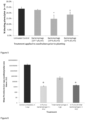
- Figure 3 shows Desiree seed treated damaged & inoculated with Pba (10 cfu/ml) and sprayed (until visibly damp) with bacteriophage the eight phage mix of this disclosure at final concentrations of 10 6 , 10 7 & 10 8 pfu/ml. Results show a significant reduction in seed-derived blackleg compared with positive control. Thus Blackleg may be reduced if seed is externally contaminated.
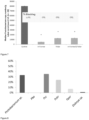
- Figure 4 shows pectobacterium loading in stolon end tissue of individual and combined FG 2 Rudolph samples by Q-PCR (copy number/g). Rudolf PB2 seed was treated with the eight phage mix at planting. Bacteriophage applied with a hand mister & allowed to dry before planting. Randomised block- 4 blocks, 1 plot of each treatment per block (98 tubers/plot). Seed contamination levels measured pre-planting.
- Figure 5 shows that there was a significant reduction in the % blackleg plants/plot and that while Bacteriophage treatment cannot completely reverse the effects of contaminated seed, it can reduce the expression of disease if environmental conditions are suitable.
- the data presented in Figures 6 and 7 looks at whether disease counts accurately reflect harvest seed quality.
- the data shows examples of bacteriophage treatment of potato seed leading to reduced bacterial loading in the progeny tubers over 2 generations: keeping potato seed clean of Pectobacterium (blackleg-causing bacteria) is very important, since very small amounts of disease ( ⁇ 0.5%) means that the crop can be downgraded, which represents a financial loss to the grower.
- a potato crop was treated with bacteriophage either at planting (in-furrow) or with a weekly foliar spray or a combination of both treatments in 2016.
- UK mix 8 UK phage mix ( composition comprising, consisting essentially of or consisting of:APSPb1 (deposited as NCIMB 42290); APSPb5 (deposited as NCIMB 42292); APSPb2 (deposited as NCIMB 42294); APSPb6 (deposited as NCIMB 42296); APSPb3 (deposited as NCIMB 42298); APSPb4 (deposited as NCIMB 42300); APSPb7 (deposited as NCIMB 42302); and APSDs1 (deposited as NCIMB 42304)).
- APSPb1 deposited as NCIMB 42290
- APSPb5 deposited as NCIMB 42292
- APSPb2 deposited as NCIMB 42294
- APSPb6 deposited as NCIMB 42296
- APSPb3 deposited as NCIMB 42298
- APSPb4 deposited as NCIMB 42300
- APSPb7 deposited as NCIMB 42302
- New European mix APS PH9 (Accession no: NCIMB 43321; APS PH10 (Accession no: NCIMB 43323; APS PH11 (Accession no: NCIMB 43325); APS PH12 (Accession no: NCIMB 43327; APS Ph3 (Accession No: NCIMB 42294); and APS Ph7 (Accession No: NCIMB 42302). Also see Figure 10.
Landscapes
- Life Sciences & Earth Sciences (AREA)
- Engineering & Computer Science (AREA)
- Chemical & Material Sciences (AREA)
- Zoology (AREA)
- Health & Medical Sciences (AREA)
- Wood Science & Technology (AREA)
- Microbiology (AREA)
- General Health & Medical Sciences (AREA)
- Virology (AREA)
- Polymers & Plastics (AREA)
- Food Science & Technology (AREA)
- Organic Chemistry (AREA)
- Genetics & Genomics (AREA)
- Bioinformatics & Cheminformatics (AREA)
- Biotechnology (AREA)
- Chemical Kinetics & Catalysis (AREA)
- General Chemical & Material Sciences (AREA)
- Immunology (AREA)
- Environmental Sciences (AREA)
- Dentistry (AREA)
- Medicinal Chemistry (AREA)
- Plant Pathology (AREA)
- Biomedical Technology (AREA)
- Pest Control & Pesticides (AREA)
- Biochemistry (AREA)
- General Engineering & Computer Science (AREA)
- Agronomy & Crop Science (AREA)
- Micro-Organisms Or Cultivation Processes Thereof (AREA)
- Food Preservation Except Freezing, Refrigeration, And Drying (AREA)
Claims (13)
- Verfahren zur Dekontamination von Lebensmitteln von einem Mikroorganismus oder mehreren Mikroorganismen, wobei das Verfahren das In-Berührung-Bringen des Nahrungs-/Lebensmittels mit einem oder mehreren Phagen umfasst,
wobei die Phagen aus der Gruppe ausgewählt sind bestehend aus:(i) einem Phagen, der als NCIMB 42290 hinterlegt worden ist;(ii) einem Phagen, der als NCIMB 42292 hinterlegt worden ist;(iii) einem Phagen, der als NCIMB 42294 hinterlegt worden ist;(iv) einem Phagen, der als NCIMB 42296 hinterlegt worden ist;(v) einem Phagen, der als NCIMB 42298 hinterlegt worden ist;(vi) einem Phagen, der als NCIMB 42300 hinterlegt worden ist;(vii) einem Phagen, der als NCIMB 42302 hinterlegt worden ist;(viii) einem Phagen, der als NCIMB 42304 hinterlegt worden ist;(ix) einem Phagen, der als NCIMB 43321 hinterlegt worden ist;(x) einem Phagen, der als NCIMB 43323 hinterlegt worden ist;(xi) einem Phagen, der als NCIMB 43325 hinterlegt worden ist;(xii) einem Phagen, der als NCIMB 43327 hinterlegt worden ist;(xiii) einem Phagen, der als NCIMB 42520 hinterlegt worden ist;(xiv) einem Phagen, der als NCIMB 42522 hinterlegt worden ist;(xv) einem Phagen, der als NCIMB 42524 hinterlegt worden ist;(xvi) einem Phagen, der als NCIMB 42526 hinterlegt worden ist; und(xvii) einem Phagen, der als NCIMB 42528 hinterlegt worden ist. - Phage zur Verwendung in einem Verfahren zur Dekontamination von Lebensmitteln von einem Mikroorganismus oder mehreren Mikroorganismen, wobei der Phage aus der Gruppe ausgewählt ist bestehend aus:(i) einem Phagen, der als NCIMB 42290 hinterlegt worden ist;(ii) einem Phagen, der als NCIMB 42292 hinterlegt worden ist;(iii) einem Phagen, der als NCIMB 42294 hinterlegt worden ist;(iv) einem Phagen, der als NCIMB 42296 hinterlegt worden ist;(v) einem Phagen, der als NCIMB 42298 hinterlegt worden ist;(vi) einem Phagen, der als NCIMB 42300 hinterlegt worden ist;(vii) einem Phagen, der als NCIMB 42302 hinterlegt worden ist;(viii) einem Phagen, der als NCIMB 42304 hinterlegt worden ist;(ix) einem Phagen, der als NCIMB 43321 hinterlegt worden ist;(x) einem Phagen, der als NCIMB 43323 hinterlegt worden ist;(xi) einem Phagen, der als NCIMB 43325 hinterlegt worden ist;(xii) einem Phagen, der als NCIMB 43327 hinterlegt worden ist;(xiii) einem Phagen, der als NCIMB 42520 hinterlegt worden ist;(xiv) einem Phagen, der als NCIMB 42522 hinterlegt worden ist;(xv) einem Phagen, der als NCIMB 42524 hinterlegt worden ist;(xvi) einem Phagen, der als NCIMB 42526 hinterlegt worden ist; und(xvii) einem Phagen, der als NCIMB 42528 hinterlegt worden ist.
- Zusammensetzung zur Dekontamination von Lebensmitteln von einem Mikroorganismus oder mehreren Mikroorganismen, wobei die Zusammensetzung einen oder mehrere Phagen umfasst, wobei die Phagen aus der Gruppe ausgewählt sind bestehend aus:(i) einem Phagen, der als NCIMB 42290 hinterlegt worden ist;(ii) einem Phagen, der als NCIMB 42292 hinterlegt worden ist;(iii) einem Phagen, der als NCIMB 42294 hinterlegt worden ist;(iv) einem Phagen, der als NCIMB 42296 hinterlegt worden ist;(v) einem Phagen, der als NCIMB 42298 hinterlegt worden ist;(vi) einem Phagen, der als NCIMB 42300 hinterlegt worden ist;(vii) einem Phagen, der als NCIMB 42302 hinterlegt worden ist;(viii) einem Phagen, der als NCIMB 42304 hinterlegt worden ist;(ix) einem Phagen, der als NCIMB 43321 hinterlegt worden ist;(x) einem Phagen, der als NCIMB 43323 hinterlegt worden ist;(xi) einem Phagen, der als NCIMB 43325 hinterlegt worden ist;(xii) einem Phagen, der als NCIMB 43327 hinterlegt worden ist;(xiii) einem Phagen, der als NCIMB 42520 hinterlegt worden ist;(xiv) einem Phagen, der als NCIMB 42522 hinterlegt worden ist;(xv) einem Phagen, der als NCIMB 42524 hinterlegt worden ist;(xvi) einem Phagen, der als NCIMB 42526 hinterlegt worden ist; und(xvii) einem Phagen, der als NCIMB 42528 hinterlegt worden ist.
- Verfahren nach Anspruch 1, wobei das Lebensmittel aus der Gruppe ausgewählt ist bestehend aus:(i) irgendeinem Nahrungs-/Lebensmittel, Nährmittel und/oder Nahrungs- /Lebensmittelprodukt für den menschlichen oder tierischen Verzehr;(ii) gefertigtem, geerntetem, landwirtschaftlich erzeugtem oder verarbeitetem Nahrungs-/Lebensmittel, Nährmittel, Erzeugnis oder Produkt;(iii) Nutzpflanzen;(iv) Zerealien(v) Molkereiprodukt;(vi) Fleisch;(vii) Gemüsen und Wurzelgemüsen;(viii) essbaren Blättern, Kräutern oder Salat;(ix) Obst;(x) Samen;(xi) Knollenfrüchten;(xii) Beutelsalat; und(xiii) Kartoffeln.
- Verfahren nach Anspruch 1 oder 4, wobei der Mikroorganismus/die Mikroorganismen Teil der Mikrobenflora des Lebensmittels ist/sind.
- Verfahren nach Anspruch 1 oder 4 bis 5, wobei der Mikroorganismus/die Mikroorganismen ein mikrobieller Kontaminant oder Pathogene des Lebensmittels ist/sind.
- Verfahren nach Anspruch 1 oder 4 bis 6, wobei der Mikroorganismus/die Mikroorganismen mit Verderb, vorzeitiger Reifung und/oder Verfaulen des Nahrungs-/Lebensmittels verbunden ist/sind
- Verfahren nach Anspruch 1 oder 4 bis 7, Phage nach Anspruch 2 oder Zusammensetzung nach Anspruch 3, wobei das Verfahren, der Phage oder die Zusammensetzung einen oder mehrere Phagentypen, der/die für einen Mikroorganismus oder mehrere Mikroorganismen spezifisch ist/sind, umfasst.
- Verfahren nach einem der Ansprüche 1 oder 4 bis 8, Phage nach Anspruch 2 oder 8 oder Zusammensetzung nach Anspruch 3 oder 8, wobei die Phagen Folgendes umfassen:(i) einen Phagen, der als NCIMB 42290 hinterlegt worden ist;(ii) einen Phagen, der als NCIMB 42292 hinterlegt worden ist;(iii) einen Phagen, der als NCIMB 42294 hinterlegt worden ist;(iv) einen Phagen, der als NCIMB 42296 hinterlegt worden ist;(v) einen Phagen, der als NCIMB 42298 hinterlegt worden ist;(vi) einen Phagen, der als NCIMB 42300 hinterlegt worden ist;(vii) einen Phagen, der als NCIMB 42302 hinterlegt worden ist; und(viii) einen Phagen, der als NCIMB 42304 hinterlegt worden ist;
- Verfahren nach einem der Ansprüche 1 oder 4 bis 8, Phage nach Anspruch 2 oder 8 oder Zusammensetzung nach Anspruch 3 oder 8, wobei die Phagen aus der Gruppe ausgewählt sind bestehend aus:(i) einem Phagen, der als NCIMB 43321 hinterlegt worden ist;(ii) einem Phagen, der als NCIMB 43323 hinterlegt worden ist;(iii) einem Phagen, der als NCIMB 43325 hinterlegt worden ist; und(iv) einem Phagen, der als NCIMB 43327 hinterlegt worden ist.
- Verfahren nach einem der Ansprüche 1 oder 4 bis 8, Phage nach Anspruch 2 oder 8 oder Zusammensetzung nach Anspruch 3 oder 8, wobei die Phagen Folgendes umfassen:(i) einen Phagen, der als NCIMB 43321 hinterlegt worden ist;(ii) einen Phagen, der als NCIMB 43323 hinterlegt worden ist;(iii) einen Phagen, der als NCIMB 43325 hinterlegt worden ist; und(iv) einen Phagen, der als NCIMB 43327 hinterlegt worden ist.
- Verfahren, Phage oder Zusammensetzung nach Anspruch 11, wobei die Phagen ferner den Phagen, der als NCIMB 42294 hinterlegt worden ist, und/oder den Phagen, der als Zugangsnummer NCIMB 42302 hinterlegt worden ist, umfassen.
- Lebensmittel und/oder gelagertes oder verpacktes /Lebensmittel umfassend einen oder mehrere Phagen, wie in den Ansprüchen 1-3 definiert, wobei das Lebensmittel behandelt worden ist mit:(i) dem Verfahren nach einem der Ansprüche 1 oder 4 bis 12;(ii) dem Phagen nach einem der Ansprüche 2 oder 8 bis 12; oder(iii) der Zusammensetzung nach einem der Ansprüche 3 oder 8 bis 12.
Applications Claiming Priority (2)
| Application Number | Priority Date | Filing Date | Title |
|---|---|---|---|
| GBGB1801596.6A GB201801596D0 (en) | 2018-01-31 | 2018-01-31 | Composition |
| PCT/GB2019/050273 WO2019150121A1 (en) | 2018-01-31 | 2019-01-31 | Bacteriophages for food decontamination |
Publications (3)
| Publication Number | Publication Date |
|---|---|
| EP3745864A1 EP3745864A1 (de) | 2020-12-09 |
| EP3745864B1 true EP3745864B1 (de) | 2024-01-24 |
| EP3745864C0 EP3745864C0 (de) | 2024-01-24 |
Family
ID=61558048
Family Applications (1)
| Application Number | Title | Priority Date | Filing Date |
|---|---|---|---|
| EP19704417.5A Active EP3745864B1 (de) | 2018-01-31 | 2019-01-31 | Bakteriophagen zur dekontamination von lebensmitteln |
Country Status (7)
| Country | Link |
|---|---|
| US (1) | US20210030031A1 (de) |
| EP (1) | EP3745864B1 (de) |
| ES (1) | ES2971664T3 (de) |
| GB (1) | GB201801596D0 (de) |
| IL (1) | IL276378B2 (de) |
| PL (1) | PL3745864T3 (de) |
| WO (1) | WO2019150121A1 (de) |
Cited By (1)
| Publication number | Priority date | Publication date | Assignee | Title |
|---|---|---|---|---|
| WO2025238109A3 (de) * | 2024-05-16 | 2026-02-19 | Tunap Gmbh & Co. Kg | Verfahren zur verringerung der bakteriellen last auf bzw. in einer klimaanlage |
Families Citing this family (3)
| Publication number | Priority date | Publication date | Assignee | Title |
|---|---|---|---|---|
| GB201901156D0 (en) * | 2019-01-28 | 2019-03-20 | Aps Biocontrol Ltd | Crop treatment |
| WO2024250022A1 (en) * | 2023-06-01 | 2024-12-05 | University Of Florida Research Foundation, Incorporated | Phage therapy utilizing a unique cocktail of pseudomonas aeruginosa phages |
| GB2631119A (en) | 2023-06-20 | 2024-12-25 | Innovia Films Ltd | Anti-bacterial article |
Family Cites Families (5)
| Publication number | Priority date | Publication date | Assignee | Title |
|---|---|---|---|---|
| EP0290295B1 (de) * | 1987-05-07 | 1992-08-05 | Microbial Developments Limited | Antimikrobische Zubereitungen |
| GB9809414D0 (en) * | 1998-05-02 | 1998-07-01 | Scottish Crop Research Inst | Method |
| US6461608B1 (en) * | 2000-11-22 | 2002-10-08 | Nymox Pharmaceutical Corporation | Bacteriophage composition useful in treating food products to prevent bacterial contamination |
| US9486007B2 (en) * | 2008-03-25 | 2016-11-08 | Ecolab Usa Inc. | Bacteriophage treatment for reducing and preventing bacterial contamination |
| KR101368333B1 (ko) * | 2013-02-01 | 2014-03-03 | 대한민국 | 박테리오파지 t10-1, my-1 및 이를 포함하는 채소 무름병 방제용 조성물 |
-
2018
- 2018-01-31 GB GBGB1801596.6A patent/GB201801596D0/en not_active Ceased
-
2019
- 2019-01-31 US US16/966,158 patent/US20210030031A1/en active Pending
- 2019-01-31 ES ES19704417T patent/ES2971664T3/es active Active
- 2019-01-31 EP EP19704417.5A patent/EP3745864B1/de active Active
- 2019-01-31 WO PCT/GB2019/050273 patent/WO2019150121A1/en not_active Ceased
- 2019-01-31 PL PL19704417.5T patent/PL3745864T3/pl unknown
-
2020
- 2020-07-29 IL IL276378A patent/IL276378B2/en unknown
Cited By (1)
| Publication number | Priority date | Publication date | Assignee | Title |
|---|---|---|---|---|
| WO2025238109A3 (de) * | 2024-05-16 | 2026-02-19 | Tunap Gmbh & Co. Kg | Verfahren zur verringerung der bakteriellen last auf bzw. in einer klimaanlage |
Also Published As
| Publication number | Publication date |
|---|---|
| GB201801596D0 (en) | 2018-03-14 |
| PL3745864T3 (pl) | 2024-04-15 |
| US20210030031A1 (en) | 2021-02-04 |
| EP3745864A1 (de) | 2020-12-09 |
| WO2019150121A1 (en) | 2019-08-08 |
| EP3745864C0 (de) | 2024-01-24 |
| ES2971664T3 (es) | 2024-06-06 |
| IL276378A (en) | 2020-09-30 |
| IL276378B2 (en) | 2023-06-01 |
Similar Documents
| Publication | Publication Date | Title |
|---|---|---|
| Żaczek et al. | Phages in the global fruit and vegetable industry | |
| Matthews | The produce contamination problem: causes and solutions | |
| Zhuang et al. | Fate of Salmonella montevideo on and in raw tomatoes as affected by temperature and treatment with chlorine | |
| RU2126210C1 (ru) | Штамм бактерий для предотвращения грибкового заболевания фруктов или овощей после сбора урожая и получения антибиотиков для ингибирования возбудителей вышеуказанных заболеваний (варианты), штамм бактерий для предотвращения грибкового заболевания фруктов или овощей после сбора урожая (варианты), водная суспензия микроорганизма для ингибирования возбудителей грибковых заболеваний фруктов и овощей после сбора урожая, способ предотвращения грибкового заболевания овощей и/или фруктов после сбора урожая, антибиотик, используемый для ингибирования возбудителя грибкового заболевания фруктов или овощей после сбора урожая | |
| EP3745864B1 (de) | Bakteriophagen zur dekontamination von lebensmitteln | |
| Jagannathan et al. | Bacteriophage-mediated control of pre-and post-harvest produce quality and safety | |
| Ye et al. | Evaluation of a biocontrol preparation consisting of Enterobacter asburiae JX1 and a lytic bacteriophage cocktail to suppress the growth of Salmonella Javiana associated with tomatoes | |
| Gautam et al. | Surface survival and internalization of Salmonella through natural cracks on developing cantaloupe fruits, alone or in the presence of the melon wilt pathogen Erwinia tracheiphila | |
| Zhao et al. | Biofilm-forming ability of Bacillus thuringiensis strains from biopesticides on polystyrene and their attachment on spinach | |
| Frelka et al. | Nuts and nut pastes | |
| Frelka | The influence of postharvest handling practices on the microbiota of English walnuts (Juglans regia L.) | |
| Bartz et al. | Salmonella and tomatoes | |
| Ling et al. | Preservation activity of Artemisia essential oils and a monomer in treating pepper bacterium and fungus diseases | |
| Villarreal Silva | Role of epiphytic bacteria in the colonization of fruits and leafy greens by foodborne bacterial pathogens | |
| Jung | Understanding and managing the risk from Salmonella on cucumbers | |
| Beuchat | Sampling, detection, and enumeration of pathogenic and spoilage microorganisms | |
| White | Pelargonic Acid Emulsion as a Postharvest Sanitizer to Reduce Salmonella Contamination on Tomatoes | |
| Jagannathan | Characterization and Use of Pathogen Specific Bacteriophages to Reduce the Viability of Escherichia Coli O157: H7 Contamination on Fresh Produce | |
| Hamilton | Characterization of the Apple Peel Microbiota: Bacterial and Fungal Components Under Environmental, Laboratory, and Storage Conditions | |
| Hur | Microbial indicator loads on blueberries affected by harvesting methods and suitability of selected food-grade materials for the modification of over-the-row machine harvesters | |
| Harness III | Sanitization Effectiveness of Alkaline-Dissolved Essential Oils as Organic Produce Washing Solutions | |
| Wong | Colonization and bacteriophage biocontrol of Salmonella on fresh produce | |
| Sharma et al. | Microbial safety of tropical and subtropical fruits | |
| Cui | Salmonella enterica and enterohemorrhagic escherichia coli on vegetable seeds–mechanism of attachment, fate during germination, and control | |
| Oh et al. | Analysis of pathogenic microorganism's contamination on cultivation environment of strawberry and tomato in Korea |
Legal Events
| Date | Code | Title | Description |
|---|---|---|---|
| STAA | Information on the status of an ep patent application or granted ep patent |
Free format text: STATUS: UNKNOWN |
|
| STAA | Information on the status of an ep patent application or granted ep patent |
Free format text: STATUS: THE INTERNATIONAL PUBLICATION HAS BEEN MADE |
|
| PUAI | Public reference made under article 153(3) epc to a published international application that has entered the european phase |
Free format text: ORIGINAL CODE: 0009012 |
|
| STAA | Information on the status of an ep patent application or granted ep patent |
Free format text: STATUS: REQUEST FOR EXAMINATION WAS MADE |
|
| 17P | Request for examination filed |
Effective date: 20200729 |
|
| AK | Designated contracting states |
Kind code of ref document: A1 Designated state(s): AL AT BE BG CH CY CZ DE DK EE ES FI FR GB GR HR HU IE IS IT LI LT LU LV MC MK MT NL NO PL PT RO RS SE SI SK SM TR |
|
| AX | Request for extension of the european patent |
Extension state: BA ME |
|
| DAV | Request for validation of the european patent (deleted) | ||
| DAX | Request for extension of the european patent (deleted) | ||
| STAA | Information on the status of an ep patent application or granted ep patent |
Free format text: STATUS: EXAMINATION IS IN PROGRESS |
|
| 17Q | First examination report despatched |
Effective date: 20210927 |
|
| REG | Reference to a national code |
Ref country code: DE Ref legal event code: R079 Free format text: PREVIOUS MAIN CLASS: A01N0063000000 Ipc: A01N0063400000 Ref country code: DE Ref legal event code: R079 Ref document number: 602019045543 Country of ref document: DE Free format text: PREVIOUS MAIN CLASS: A01N0063000000 Ipc: A01N0063400000 |
|
| RIC1 | Information provided on ipc code assigned before grant |
Ipc: A23L 3/3571 20060101ALI20230630BHEP Ipc: C12N 7/00 20060101ALI20230630BHEP Ipc: A23B 7/155 20060101ALI20230630BHEP Ipc: A23B 4/22 20060101ALI20230630BHEP Ipc: A01P 1/00 20060101ALI20230630BHEP Ipc: A01N 63/40 20200101AFI20230630BHEP |
|
| GRAP | Despatch of communication of intention to grant a patent |
Free format text: ORIGINAL CODE: EPIDOSNIGR1 |
|
| STAA | Information on the status of an ep patent application or granted ep patent |
Free format text: STATUS: GRANT OF PATENT IS INTENDED |
|
| INTG | Intention to grant announced |
Effective date: 20230814 |
|
| RAP3 | Party data changed (applicant data changed or rights of an application transferred) |
Owner name: APS BIOCONTROL LIMITED |
|
| GRAS | Grant fee paid |
Free format text: ORIGINAL CODE: EPIDOSNIGR3 |
|
| GRAA | (expected) grant |
Free format text: ORIGINAL CODE: 0009210 |
|
| STAA | Information on the status of an ep patent application or granted ep patent |
Free format text: STATUS: THE PATENT HAS BEEN GRANTED |
|
| AK | Designated contracting states |
Kind code of ref document: B1 Designated state(s): AL AT BE BG CH CY CZ DE DK EE ES FI FR GB GR HR HU IE IS IT LI LT LU LV MC MK MT NL NO PL PT RO RS SE SI SK SM TR |
|
| REG | Reference to a national code |
Ref country code: GB Ref legal event code: FG4D |
|
| REG | Reference to a national code |
Ref country code: CH Ref legal event code: EP |
|
| REG | Reference to a national code |
Ref country code: IE Ref legal event code: FG4D |
|
| REG | Reference to a national code |
Ref country code: DE Ref legal event code: R096 Ref document number: 602019045543 Country of ref document: DE |
|
| U01 | Request for unitary effect filed |
Effective date: 20240219 |
|
| RAP4 | Party data changed (patent owner data changed or rights of a patent transferred) |
Owner name: APS BIOCONTROL LIMITED |
|
| U07 | Unitary effect registered |
Designated state(s): AT BE BG DE DK EE FI FR IT LT LU LV MT NL PT SE SI Effective date: 20240228 |
|
| REG | Reference to a national code |
Ref country code: LT Ref legal event code: MG9D |
|
| REG | Reference to a national code |
Ref country code: ES Ref legal event code: FG2A Ref document number: 2971664 Country of ref document: ES Kind code of ref document: T3 Effective date: 20240606 |
|
| PG25 | Lapsed in a contracting state [announced via postgrant information from national office to epo] |
Ref country code: IS Free format text: LAPSE BECAUSE OF FAILURE TO SUBMIT A TRANSLATION OF THE DESCRIPTION OR TO PAY THE FEE WITHIN THE PRESCRIBED TIME-LIMIT Effective date: 20240524 |
|
| PG25 | Lapsed in a contracting state [announced via postgrant information from national office to epo] |
Ref country code: GR Free format text: LAPSE BECAUSE OF FAILURE TO SUBMIT A TRANSLATION OF THE DESCRIPTION OR TO PAY THE FEE WITHIN THE PRESCRIBED TIME-LIMIT Effective date: 20240425 |
|
| PG25 | Lapsed in a contracting state [announced via postgrant information from national office to epo] |
Ref country code: RS Free format text: LAPSE BECAUSE OF FAILURE TO SUBMIT A TRANSLATION OF THE DESCRIPTION OR TO PAY THE FEE WITHIN THE PRESCRIBED TIME-LIMIT Effective date: 20240424 Ref country code: HR Free format text: LAPSE BECAUSE OF FAILURE TO SUBMIT A TRANSLATION OF THE DESCRIPTION OR TO PAY THE FEE WITHIN THE PRESCRIBED TIME-LIMIT Effective date: 20240124 |
|
| PG25 | Lapsed in a contracting state [announced via postgrant information from national office to epo] |
Ref country code: RS Free format text: LAPSE BECAUSE OF FAILURE TO SUBMIT A TRANSLATION OF THE DESCRIPTION OR TO PAY THE FEE WITHIN THE PRESCRIBED TIME-LIMIT Effective date: 20240424 Ref country code: NO Free format text: LAPSE BECAUSE OF FAILURE TO SUBMIT A TRANSLATION OF THE DESCRIPTION OR TO PAY THE FEE WITHIN THE PRESCRIBED TIME-LIMIT Effective date: 20240424 Ref country code: IS Free format text: LAPSE BECAUSE OF FAILURE TO SUBMIT A TRANSLATION OF THE DESCRIPTION OR TO PAY THE FEE WITHIN THE PRESCRIBED TIME-LIMIT Effective date: 20240524 Ref country code: HR Free format text: LAPSE BECAUSE OF FAILURE TO SUBMIT A TRANSLATION OF THE DESCRIPTION OR TO PAY THE FEE WITHIN THE PRESCRIBED TIME-LIMIT Effective date: 20240124 Ref country code: GR Free format text: LAPSE BECAUSE OF FAILURE TO SUBMIT A TRANSLATION OF THE DESCRIPTION OR TO PAY THE FEE WITHIN THE PRESCRIBED TIME-LIMIT Effective date: 20240425 |
|
| U21 | Renewal fee for the european patent with unitary effect paid with additional fee |
Year of fee payment: 6 Effective date: 20240722 |
|
| REG | Reference to a national code |
Ref country code: CH Ref legal event code: PL |
|
| PG25 | Lapsed in a contracting state [announced via postgrant information from national office to epo] |
Ref country code: SM Free format text: LAPSE BECAUSE OF FAILURE TO SUBMIT A TRANSLATION OF THE DESCRIPTION OR TO PAY THE FEE WITHIN THE PRESCRIBED TIME-LIMIT Effective date: 20240124 |
|
| PG25 | Lapsed in a contracting state [announced via postgrant information from national office to epo] |
Ref country code: CH Free format text: LAPSE BECAUSE OF NON-PAYMENT OF DUE FEES Effective date: 20240131 |
|
| PG25 | Lapsed in a contracting state [announced via postgrant information from national office to epo] |
Ref country code: CZ Free format text: LAPSE BECAUSE OF FAILURE TO SUBMIT A TRANSLATION OF THE DESCRIPTION OR TO PAY THE FEE WITHIN THE PRESCRIBED TIME-LIMIT Effective date: 20240124 |
|
| REG | Reference to a national code |
Ref country code: DE Ref legal event code: R097 Ref document number: 602019045543 Country of ref document: DE |
|
| PG25 | Lapsed in a contracting state [announced via postgrant information from national office to epo] |
Ref country code: SK Free format text: LAPSE BECAUSE OF FAILURE TO SUBMIT A TRANSLATION OF THE DESCRIPTION OR TO PAY THE FEE WITHIN THE PRESCRIBED TIME-LIMIT Effective date: 20240124 |
|
| PG25 | Lapsed in a contracting state [announced via postgrant information from national office to epo] |
Ref country code: SM Free format text: LAPSE BECAUSE OF FAILURE TO SUBMIT A TRANSLATION OF THE DESCRIPTION OR TO PAY THE FEE WITHIN THE PRESCRIBED TIME-LIMIT Effective date: 20240124 Ref country code: SK Free format text: LAPSE BECAUSE OF FAILURE TO SUBMIT A TRANSLATION OF THE DESCRIPTION OR TO PAY THE FEE WITHIN THE PRESCRIBED TIME-LIMIT Effective date: 20240124 Ref country code: CZ Free format text: LAPSE BECAUSE OF FAILURE TO SUBMIT A TRANSLATION OF THE DESCRIPTION OR TO PAY THE FEE WITHIN THE PRESCRIBED TIME-LIMIT Effective date: 20240124 Ref country code: CH Free format text: LAPSE BECAUSE OF NON-PAYMENT OF DUE FEES Effective date: 20240131 |
|
| PG25 | Lapsed in a contracting state [announced via postgrant information from national office to epo] |
Ref country code: MC Free format text: LAPSE BECAUSE OF FAILURE TO SUBMIT A TRANSLATION OF THE DESCRIPTION OR TO PAY THE FEE WITHIN THE PRESCRIBED TIME-LIMIT Effective date: 20240124 |
|
| PG25 | Lapsed in a contracting state [announced via postgrant information from national office to epo] |
Ref country code: MC Free format text: LAPSE BECAUSE OF FAILURE TO SUBMIT A TRANSLATION OF THE DESCRIPTION OR TO PAY THE FEE WITHIN THE PRESCRIBED TIME-LIMIT Effective date: 20240124 |
|
| PLBE | No opposition filed within time limit |
Free format text: ORIGINAL CODE: 0009261 |
|
| STAA | Information on the status of an ep patent application or granted ep patent |
Free format text: STATUS: NO OPPOSITION FILED WITHIN TIME LIMIT |
|
| 26N | No opposition filed |
Effective date: 20241025 |
|
| PG25 | Lapsed in a contracting state [announced via postgrant information from national office to epo] |
Ref country code: IE Free format text: LAPSE BECAUSE OF NON-PAYMENT OF DUE FEES Effective date: 20240131 |
|
| U20 | Renewal fee for the european patent with unitary effect paid |
Year of fee payment: 7 Effective date: 20241220 |
|
| PG25 | Lapsed in a contracting state [announced via postgrant information from national office to epo] |
Ref country code: IE Free format text: LAPSE BECAUSE OF NON-PAYMENT OF DUE FEES Effective date: 20240131 |
|
| PGFP | Annual fee paid to national office [announced via postgrant information from national office to epo] |
Ref country code: ES Payment date: 20250206 Year of fee payment: 7 |
|
| PG25 | Lapsed in a contracting state [announced via postgrant information from national office to epo] |
Ref country code: RO Free format text: LAPSE BECAUSE OF FAILURE TO SUBMIT A TRANSLATION OF THE DESCRIPTION OR TO PAY THE FEE WITHIN THE PRESCRIBED TIME-LIMIT Effective date: 20240124 |
|
| PG25 | Lapsed in a contracting state [announced via postgrant information from national office to epo] |
Ref country code: CY Free format text: LAPSE BECAUSE OF FAILURE TO SUBMIT A TRANSLATION OF THE DESCRIPTION OR TO PAY THE FEE WITHIN THE PRESCRIBED TIME-LIMIT; INVALID AB INITIO Effective date: 20190131 |
|
| PG25 | Lapsed in a contracting state [announced via postgrant information from national office to epo] |
Ref country code: HU Free format text: LAPSE BECAUSE OF FAILURE TO SUBMIT A TRANSLATION OF THE DESCRIPTION OR TO PAY THE FEE WITHIN THE PRESCRIBED TIME-LIMIT; INVALID AB INITIO Effective date: 20190131 |
|
| PG25 | Lapsed in a contracting state [announced via postgrant information from national office to epo] |
Ref country code: TR Free format text: LAPSE BECAUSE OF FAILURE TO SUBMIT A TRANSLATION OF THE DESCRIPTION OR TO PAY THE FEE WITHIN THE PRESCRIBED TIME-LIMIT Effective date: 20240124 |
|
| PGFP | Annual fee paid to national office [announced via postgrant information from national office to epo] |
Ref country code: GB Payment date: 20251218 Year of fee payment: 8 |
|
| U20 | Renewal fee for the european patent with unitary effect paid |
Year of fee payment: 8 Effective date: 20251218 |
|
| PGFP | Annual fee paid to national office [announced via postgrant information from national office to epo] |
Ref country code: PL Payment date: 20251217 Year of fee payment: 8 |