EP3745342A1 - Data storage method, apparatus and device, data verification method, apparatus and device, and medium - Google Patents
Data storage method, apparatus and device, data verification method, apparatus and device, and medium Download PDFInfo
- Publication number
- EP3745342A1 EP3745342A1 EP19830218.4A EP19830218A EP3745342A1 EP 3745342 A1 EP3745342 A1 EP 3745342A1 EP 19830218 A EP19830218 A EP 19830218A EP 3745342 A1 EP3745342 A1 EP 3745342A1
- Authority
- EP
- European Patent Office
- Prior art keywords
- data
- node
- audit information
- target object
- target
- Prior art date
- Legal status (The legal status is an assumption and is not a legal conclusion. Google has not performed a legal analysis and makes no representation as to the accuracy of the status listed.)
- Pending
Links
Images


Classifications
-
- G—PHYSICS
- G06—COMPUTING OR CALCULATING; COUNTING
- G06F—ELECTRIC DIGITAL DATA PROCESSING
- G06F21/00—Security arrangements for protecting computers, components thereof, programs or data against unauthorised activity
- G06F21/60—Protecting data
- G06F21/64—Protecting data integrity, e.g. using checksums, certificates or signatures
-
- G—PHYSICS
- G06—COMPUTING OR CALCULATING; COUNTING
- G06F—ELECTRIC DIGITAL DATA PROCESSING
- G06F21/00—Security arrangements for protecting computers, components thereof, programs or data against unauthorised activity
- G06F21/60—Protecting data
- G06F21/62—Protecting access to data via a platform, e.g. using keys or access control rules
- G06F21/6218—Protecting access to data via a platform, e.g. using keys or access control rules to a system of files or objects, e.g. local or distributed file system or database
-
- G—PHYSICS
- G06—COMPUTING OR CALCULATING; COUNTING
- G06Q—INFORMATION AND COMMUNICATION TECHNOLOGY [ICT] SPECIALLY ADAPTED FOR ADMINISTRATIVE, COMMERCIAL, FINANCIAL, MANAGERIAL OR SUPERVISORY PURPOSES; SYSTEMS OR METHODS SPECIALLY ADAPTED FOR ADMINISTRATIVE, COMMERCIAL, FINANCIAL, MANAGERIAL OR SUPERVISORY PURPOSES, NOT OTHERWISE PROVIDED FOR
- G06Q30/00—Commerce
- G06Q30/018—Certifying business or products
-
- G—PHYSICS
- G06—COMPUTING OR CALCULATING; COUNTING
- G06F—ELECTRIC DIGITAL DATA PROCESSING
- G06F16/00—Information retrieval; Database structures therefor; File system structures therefor
- G06F16/20—Information retrieval; Database structures therefor; File system structures therefor of structured data, e.g. relational data
- G06F16/27—Replication, distribution or synchronisation of data between databases or within a distributed database system; Distributed database system architectures therefor
-
- G—PHYSICS
- G06—COMPUTING OR CALCULATING; COUNTING
- G06F—ELECTRIC DIGITAL DATA PROCESSING
- G06F3/00—Input arrangements for transferring data to be processed into a form capable of being handled by the computer; Output arrangements for transferring data from processing unit to output unit, e.g. interface arrangements
- G06F3/06—Digital input from, or digital output to, record carriers, e.g. RAID, emulated record carriers or networked record carriers
- G06F3/0601—Interfaces specially adapted for storage systems
- G06F3/0602—Interfaces specially adapted for storage systems specifically adapted to achieve a particular effect
- G06F3/0604—Improving or facilitating administration, e.g. storage management
-
- G—PHYSICS
- G06—COMPUTING OR CALCULATING; COUNTING
- G06F—ELECTRIC DIGITAL DATA PROCESSING
- G06F3/00—Input arrangements for transferring data to be processed into a form capable of being handled by the computer; Output arrangements for transferring data from processing unit to output unit, e.g. interface arrangements
- G06F3/06—Digital input from, or digital output to, record carriers, e.g. RAID, emulated record carriers or networked record carriers
- G06F3/0601—Interfaces specially adapted for storage systems
- G06F3/0602—Interfaces specially adapted for storage systems specifically adapted to achieve a particular effect
- G06F3/0614—Improving the reliability of storage systems
- G06F3/0619—Improving the reliability of storage systems in relation to data integrity, e.g. data losses, bit errors
-
- G—PHYSICS
- G06—COMPUTING OR CALCULATING; COUNTING
- G06F—ELECTRIC DIGITAL DATA PROCESSING
- G06F3/00—Input arrangements for transferring data to be processed into a form capable of being handled by the computer; Output arrangements for transferring data from processing unit to output unit, e.g. interface arrangements
- G06F3/06—Digital input from, or digital output to, record carriers, e.g. RAID, emulated record carriers or networked record carriers
- G06F3/0601—Interfaces specially adapted for storage systems
- G06F3/0628—Interfaces specially adapted for storage systems making use of a particular technique
- G06F3/0646—Horizontal data movement in storage systems, i.e. moving data in between storage devices or systems
- G06F3/0647—Migration mechanisms
- G06F3/0649—Lifecycle management
-
- G—PHYSICS
- G06—COMPUTING OR CALCULATING; COUNTING
- G06F—ELECTRIC DIGITAL DATA PROCESSING
- G06F3/00—Input arrangements for transferring data to be processed into a form capable of being handled by the computer; Output arrangements for transferring data from processing unit to output unit, e.g. interface arrangements
- G06F3/06—Digital input from, or digital output to, record carriers, e.g. RAID, emulated record carriers or networked record carriers
- G06F3/0601—Interfaces specially adapted for storage systems
- G06F3/0668—Interfaces specially adapted for storage systems adopting a particular infrastructure
- G06F3/067—Distributed or networked storage systems, e.g. storage area networks [SAN], network attached storage [NAS]
-
- G—PHYSICS
- G06—COMPUTING OR CALCULATING; COUNTING
- G06Q—INFORMATION AND COMMUNICATION TECHNOLOGY [ICT] SPECIALLY ADAPTED FOR ADMINISTRATIVE, COMMERCIAL, FINANCIAL, MANAGERIAL OR SUPERVISORY PURPOSES; SYSTEMS OR METHODS SPECIALLY ADAPTED FOR ADMINISTRATIVE, COMMERCIAL, FINANCIAL, MANAGERIAL OR SUPERVISORY PURPOSES, NOT OTHERWISE PROVIDED FOR
- G06Q30/00—Commerce
- G06Q30/018—Certifying business or products
- G06Q30/0185—Product, service or business identity fraud
-
- G—PHYSICS
- G06—COMPUTING OR CALCULATING; COUNTING
- G06Q—INFORMATION AND COMMUNICATION TECHNOLOGY [ICT] SPECIALLY ADAPTED FOR ADMINISTRATIVE, COMMERCIAL, FINANCIAL, MANAGERIAL OR SUPERVISORY PURPOSES; SYSTEMS OR METHODS SPECIALLY ADAPTED FOR ADMINISTRATIVE, COMMERCIAL, FINANCIAL, MANAGERIAL OR SUPERVISORY PURPOSES, NOT OTHERWISE PROVIDED FOR
- G06Q30/00—Commerce
- G06Q30/06—Buying, selling or leasing transactions
Definitions
- This application relates to the field of network technologies, and in particular, to a data storage method, a data verification method, an apparatus, a device, and a storage medium.
- block chain technologies an increasing quantity of services begin to use block chains as a storage medium for data storage and sharing.
- block chain technologies only traceability of data on a chain can be ensured.
- the data on the chain may not be real, that is, the data on the chain is not related to actual production and life. Therefore, such technologies are highly restricted and cannot assist in real production.
- Embodiments of this application provide a data storage method, a data verification method, an apparatus, a device, and a storage medium.
- a data storage method executed by a first node in a data storage system, including:
- a data verification method executed by any second node in a data storage system, a consensus mechanism being configured for a plurality of second nodes in the data storage system, the method including:
- a data storage apparatus including:
- a data verification apparatus including:
- a computer device including a processor and a memory, the memory storing at least one instruction, the instruction being loaded and executed by the processor to implement operations performed in the foregoing data storage method; or the instruction being loaded and executed by the processor to implement operations performed in the foregoing data verification method.
- a computer readable storage medium the storage medium storing at least one instruction, the instruction being loaded and executed by a processor to implement operations performed in the foregoing data storage method; or the instruction being loaded and executed by a processor to implement operations performed in the foregoing data verification method.
- a data storage system including a plurality of first nodes and a plurality of second nodes, a consensus mechanism being configured for the plurality of second nodes in the data storage system; each of the plurality of first nodes being configured to: obtain first data of a target object; obtain second data of the target object, the first data and the second data being data of different dimensions, the dimensions being information for measuring any aspect of the target object from generation to existence; store the first data and the second data of the target object in the first node, and obtain audit information of the first node, the audit information being used for indicating the data stored in the first node; and broadcast the audit information of the first node to the plurality of second nodes in the data storage system; each of the plurality of second nodes being configured to: receive the audit information of the first node, the audit information being used for indicating the data stored in the first node; verify the audit information based on target audit information of at least one target first node; broadcast a verification success notification in the data storage system in a case that the verification succeeds; and determine
- FIG. 1 is a schematic structural diagram of a data storage system according to an embodiment of this application.
- the system includes a plurality of first nodes 101 and a plurality of second nodes 102.
- Each of the plurality of first nodes is configured to: obtain first data of a target object; obtain second data of the target object, where the first data and the second data are data of different dimensions; store the first data and the second data of the target object in the first node, and obtain audit information of the first node, where the audit information is used for indicating the data stored in the first node; and broadcast the audit information of the first node to the plurality of second nodes in the data storage system.
- Each of the plurality of second nodes is configured to: receive the audit information of the first node, where the audit information is used for indicating the data stored in the first node; verify the audit information based on target audit information of at least one target first node; broadcast a verification success notification in the data storage system in a case that the verification succeeds; and determine that a consensus on the audit information is reached in a case that the received verification success notification meets a consensus success condition.
- the plurality of first nodes 101 may be nodes of different operating entities, and may be configured to store data related to production and transactions of the corresponding operating entities.
- Each of the first nodes 101 may store its own data in a database or blocks. If the data is stored in a database, each piece of data is indexed and stored in corresponding storage space based on the index. If the data is stored in blocks, different pieces of the data stored in the first node are correlated to some extent, and a block form similar to that in a block chain may be adopted to ensure that the data is tamper-proof.
- the plurality of first nodes 101 may constitute a basic data layer of the data storage system, and may also provide a data query function for the corresponding operating entities respectively, so as to trace transactions with other nodes and their own production activities. Specifically, the plurality of first nodes 101 may communicate with each other to perform transactions. For example, a first node 1 may transact with a first node 2 to perform a process such as a transfer, product delivery, and information exchange from an account corresponding to the first node 1 to an account corresponding to the first node 2, thereby completing a transaction with the first node 2. Certainly, the transaction may be completed online. In the actual transaction process, related offline transportation may also be involved. This is not limited in this embodiment of this application.
- the first node may alternatively be a proxy node of the operating entity, and is used for performing online transactions, data storage, and the like on behalf of one or more operating entities.
- the first node may store data separately for each operating entity and ensure data privacy of each operating entity by setting a key or the like.
- the plurality of second nodes 102 may be configured to verify the data generated by the plurality of first nodes during the production and transaction processes, and indicate authenticity of the data in the first nodes based on transaction results.
- the same block chain may be deployed for the plurality of second nodes 102, that is, the plurality of second nodes 102 may follow the same consensus mechanism. Specifically, the plurality of second nodes 102 may verify the data of the first node 101 separately, and then verify the data by consensus based on the consensus mechanism and the verification results of the plurality of second nodes 102.
- the plurality of second nodes 102 reach a consensus and determine that the data of the first node 101 is authentic. If the verification results do not meet the consensus success condition, the plurality of second nodes 101 fail to reach a consensus and determine that the data of the first node 101 is not authentic.
- a specific consensus mechanism adopted is not limited in this embodiment of this application.
- the plurality of first nodes 101 constitute the basic data layer of the data storage system and are configured to store their own data, while the plurality of second nodes 102 constitute an audit layer of the data storage system and are configured to provide a verification service for the plurality of first nodes 101.
- the data of the first nodes 101 may be isolated to some extent. For example, transaction data of the first node 1 is invisible to the first node 2, and the first node 1 may transmit a transaction request that carries account information to a second node.
- the data of the first nodes 101 is transparent or relatively transparent to the plurality of second nodes 102, that is, the second nodes 102 may obtain the data stored in the first nodes 101 or an eigenvalue (for example, a hash value) of the data. In this embodiment of this application, a specific process of obtaining the data or the eigenvalue is detailed later.
- the first node or the second node may be provided as any computer device.
- FIG. 2 is a schematic diagram of a computer device according to an embodiment of this application.
- the computer device 200 may vary greatly according to configuration or performance, and may include one or more processors (central processing units, CPU) 201 and one or more memories 202.
- the memory 202 stores at least one instruction each, where the at least one instruction is loaded and executed by the processors 201 to implement the data storage method or the data verification method provided in the following embodiments.
- the computer device may also have components such as a wired or wireless network interface, a keyboard, and an input/output interface for ease of input/output, and may further include other components for implementing functions of the device. Details are not provided herein.
- FIG. 3 is a flowchart of a data storage method according to an embodiment of this application.
- the data storage method may be applied to any of the first nodes in FIG. 1 .
- the method includes the following steps: S301: Obtain first data of a target object.
- the target object may be any product that can be transacted or circulated offline or online.
- the target object may be a tangible product, which may be obtained based on manual production or machine production.
- the tangible product may be food, a commodity, houseware, or a household appliance, which is not specifically limited in this embodiment of this application.
- the target object may alternatively be a bill product, that is, a product in a form of a bill.
- the target object may be a financial product such as stock, bond, or fund share.
- the target object may alternatively be a virtual product, that is, a product in a form of electronic data, which may correspond to an actual currency value or a virtual currency value.
- the currency value may not be fixed, but fluctuates according to market rules.
- the virtual product may be a financial product, such as an online fund product or an online stock product.
- the first data may be data of a dimension of the target object, where the dimension refers to information for measuring any aspect of the target object from generation to existence.
- the dimension may be a time dimension, a transaction dimension, or an environmental protection dimension.
- the time dimension may include an existence duration of the target object, a remaining time of the target object till its extinction, or a remaining time of the target object till its settlement or expiration.
- the transaction dimension may include transaction parties, a transaction amount, a transaction time, and the like of transaction behavior correlated with the target object from generation to existence.
- the environmental protection dimension may include emission or production of a hazardous substance, such as carbon emission, formaldehyde production, or industrial waste production.
- S302 Obtain second data of the target object, where the first data and the second data are data of different dimensions, and the dimensions are information for measuring any aspect of the target object from generation to existence.
- the second data may refer to data of a dimension different from that of the first data.
- the first data is data of the time dimension
- the second data may be data of the transaction dimension or the environmental protection dimension.
- S303 Store the first data and the second data of the target object in the first node.
- the first node may store data related to production or transactions of the node.
- the data may include information about any transaction occurring in a production or circulation phase of the target object corresponding to the node.
- the first node may correspondingly store the first data and the second data for ease of query.
- the first node may store the first data and the second data in one data item or related data items in a database of the first node, store the first data and the second data in one block, or store the first data and the second data in different blocks and identify them with the same data identifier for ease of query.
- the first node may cross-compare obtained data of at least two dimensions before storing the data and then perform the storage step S303 if the obtained data of the at least two dimensions matches each other.
- Data of different dimensions may conform to a function relationship. Therefore, the data of the at least two dimensions may be cross-compared based on a function relationship between the dimensions. If the data matches each other, the data may be stored. If the data does not match each other, the storage step is not performed. For example, there may be a function relationship between a life cycle and carbon emission. For example, if the life cycle is reduced by two days, the carbon emission needs to be increased by 10 units. If the multi-dimensional data does not meet the function relationship, it indicates that the data is incorrect, and the data does not match each other.
- the foregoing cross-comparison may be intended for data of any dimension provided in this embodiment of this application. That is, if the obtained data is the first data and the second data, the cross-comparison is performed based on the first data and the second data; if the obtained data is the first data, the second data, and third data, the cross-comparison is performed based on the first data, the second data, and the third data. Similarly, if the obtained data further includes other data, the cross-comparison is performed in accordance with the foregoing principle.
- the foregoing comparison is only a simple example of a specific comparison process. Other comparison processes may further be performed based on the multi-dimensional data, which is not limited in this embodiment of this application.
- each phase of the target object from production to circulation and each link of the phases are recorded from a plurality of perspectives, so as to closely correlate online data with real production and life. In this way, the online data is granted practical significance, and is no longer merely a simple expression of some virtual currency.
- data of a plurality of dimensions recorded by the first node corresponding to each phase is correlated with each other. Therefore, data in all phases and links may be verified with each other, and the data of the plurality of dimensions may also be verified with each other, so as to form a streaming seamless data chain. Data of each first node is stored in the node, thereby improving data security.
- the target object may go through a plurality of phases from production to circulation, and the phases may be divided according to actual requirements.
- food may go through a raw material production phase, a target object production phase, a transportation phase, a sales phase, and the like.
- the sales phase may further include different phases according to different sales modes. For example, if an e-commerce sales mode is used, the sales phase may include an e-commerce phase, a warehousing phase, a logistics phase, and a consumer phase. If a direct sales mode is used, the sales phase may include a launch phase and a consumer phase.
- any virtual product may go through a design phase, a trial run phase or a pre-sales phase, and a formal release phase.
- the first data of the target object includes an unspent life cycle output of the target object in a current phase
- the second data of the target object includes transaction data of the target object in the current phase
- the life cycle refers to a period from an original state of a target object to generation of the target object and then to expiration, end of service life, or exhaustion of the target object.
- a life cycle of food may be expressed as a shelf-life.
- a shelf-life of milk may be 30 days.
- a life cycle of a virtual product may be expressed as a validity period.
- a validity period of a financial product may be 60 days.
- a validity period of a software product may be expressed as a validity period of permission for use.
- a validity period of premium membership is one month.
- a life cycle of an electronic product may be expressed as an obsoleteness period or the number of times the electronic product is used. For example, a washing machine may become obsolete after five years or after being used 10,000 times.
- an unspent lift cycle output is a remainder of a life cycle of the target object at a current time point.
- the life cycle of the foregoing food is 30 days. If the food has been circulated for 10 days, the unspent lift cycle output of the food is 20 days. Consumption may occur in all phases of the target object and may have impact on use or existence of the target object. To record such impact, the unspent lift cycle output of the target object may be obtained.
- each phase of the target object may have a corresponding unspent lift cycle output, or only some phases of the target object may have corresponding unspent lift cycle outputs. This may be determined specifically according to a feature of the target object. For example, a target object with raw materials already has a corresponding unspent lift cycle output in a production phase of the raw materials. In subsequent phases, the unspent lift cycle output decreases based on the unspent lift cycle output in the production phase of the raw materials. For a target object without raw materials, the concept of life cycle may not occur until a specific phase. This is not limited in this embodiment of this application. It can be learned from the foregoing description that if a phase corresponding to the first node is a start phase of a life cycle, a value of the unspent lift cycle output is equal to a length of the life cycle.
- the unspent lift cycle output may be expressed in any time granularity.
- a specific time granularity used may be set according to a type of the target object.
- the unspent lift cycle output may further include the value of the unspent lift cycle output and a start time of the life cycle, so as to provide an intuitive time point to further express a sustainability or usability condition of the target object.
- the unspent lift cycle output of the target object in the current phase is a difference between an unspent lift cycle output in a previous phase and a time consumption of the current phase.
- the process of obtaining the unspent lift cycle output of the target object in the current phase may include: obtaining the unspent lift cycle output in the previous phase and the time consumption of the current phase, and then obtaining the difference between the unspent lift cycle output in the previous phase and the time consumption of the current phase as the unspent lift cycle output in the current phase.
- an unspent lift cycle output sent by a first node corresponding to the previous phase of the target object may be obtained.
- the unspent lift cycle output may be obtained when a transaction with the first node corresponding to the previous phase is completed, and is transmitted by the first node corresponding to the previous phase to a first node corresponding to the current phase.
- the first node corresponding to the previous phase may further transmit signature data, which is obtained by signing the unspent lift cycle output with a private key, and a public key of the first node corresponding to the previous phase.
- the time consumption of the current phase may be set according to a feature of the current phase.
- the phases may be correlated with links of different investment or expenditure activities, such as human resources, production, packaging, transportation, electric power supply, and water supply.
- the links may correspond to different time consumptions. Therefore, different phases may consume different periods of time, and time consumptions of links correlated with each phase need to be analyzed so as to determine a time consumption of the phase.
- the time consumption of each phase may be set according to experience or analysis on historical processing time of the phase.
- the time consumption of each phase may also be set according to analysis on historical processing time of each link correlated with the phase, so as to calculate an unspent lift cycle output more accurately.
- the time consumption of each phase may also be counted in real time to obtain a more authentic unspent lift cycle output based on real data.
- the transaction data of the target object in the current phase includes transaction data of the target object in each link of the current phase, and further includes signature data of the transaction data of the target object in each link of the current phase.
- the first node records transaction information about transactions occurring in all the links of the current phase, for example, an expense EX transferred from an account 1 of the first node to an account 2 of the node that undertakes transportation in the transportation link, and also obtains signature data provided by a counterparty in each link after the counterparty accepts the transaction.
- the signature data may be obtained by a first node of the counterparty by signing the transaction information with a private key.
- the signature data may be Sig_(EX(account 1 to account 2)).
- the counterparty may also return its public key together with the signature data, for ease of verification on the counterparty and the signature data.
- the first data of the target object includes a resource consumption surplus of the target object in the current phase
- the second data of the target object includes transaction data of the target object in the current phase
- Resource consumption may occur in all the phases of the target object and have impact on an environment. To limit such impact, such data needs to be recorded.
- Resource consumption refers to consumption of resources in a period from an original state of a target object to generation of the target object and then to expiration, end of service life, or exhaustion of the target object.
- impact may be expressed as an emission amount of an incidental substance resulting from consumption of resources by industrial production activities, such as an emission amount of carbon or formaldehyde.
- the resource consumption surplus of the target object in the current phase is a difference between a resource consumption surplus of a previous phase and a resource consumption amount of the current phase.
- the process of obtaining the resource consumption surplus of the target object in the current phase may include: obtaining the resource consumption surplus of a previous phase and the resource consumption amount of the current phase, and then obtaining the difference between the resource consumption surplus of the previous phase and the resource consumption amount of the current phase as the resource consumption surplus in the current phase.
- a resource consumption surplus transmitted by a first node corresponding to the previous phase of the target object may be obtained.
- the resource consumption surplus may be obtained when a transaction with the first node corresponding to the previous phase is completed, and may be transmitted by the first node corresponding to the previous phase to a first node corresponding to the current phase.
- the first node corresponding to the previous phase may further transmit signature data, which is obtained by signing the resource consumption surplus with a private key, and a public key of the first node corresponding to the previous phase.
- the resource consumption amount of the current phase is a sum of resource consumption amounts of the target object in all links of the current phase.
- the first node records information about transactions occurring in all links of the current phase and the resource consumption amounts obtained based on the transactions, for example, an expense EX transferred from an account 1 of the first node to an account 2 of the node that undertakes transportation in the transportation link, and also obtains a carbon emission amount CC provided by a counterparty in each link based on the transaction.
- the obtained signature data may be obtained by signing based on the transaction information and the resource consumption amount.
- the foregoing resource consumption surplus may be a resource consumption surplus normalized to a single target object.
- an unspent carbon transaction output may be an unspent carbon transaction output normalized to a single product.
- a resource consumption indicator may be set to guide actual generation.
- a carbon emission indicator may be set based on an upper limit of carbon emission specified in an international conference.
- the method further includes: obtaining, by the first node, third data of the target object, where the third data is correlated with the second data; and storing the third data of the target object in the first node while storing the first data and the second data of the target object in the first node.
- a dimension of the third data may be different from those of the first data and the second data.
- Generation of the third data may be correlated with generation of the second data.
- the second data may be the transaction data of the target object in the current phase and may be generated based on an investment or expenditure behavior in the generation or circulation process of the target object.
- the third data is also generated based on the investment or expenditure behavior in the generation or circulation process of the target object. With the generation of the second data, the corresponding third data may be generated.
- the second data does not necessarily have correlated third data, while the third data is definitely generated due to the generation of the second data.
- the third data is definitely generated due to the generation of the second data.
- both transaction parties conduct a capital transaction and complete a transaction in a corresponding resource consumption dimension (for example, a carbon emission amount of the seller is transferred to the buyer as a result of the transaction).
- the first node may store the first data, the second data, and the third data in one block, or store the first data, the second data, and the third data in different blocks and identify them with the same data identifier for ease of query.
- the second data and the third data may be stored in one block while the first data may be stored in another block, and the first data, the second data and the third data may be identified with the same data identifier. This is not limited in this embodiment of this application.
- the third data of the target object includes the resource consumption surplus of the target object in the current phase.
- the first data may be the unspent lift cycle output of the current phase
- the second data may be the transaction data of the current phase
- the third data may be the resource consumption surplus of the target object in the current phase, where the resource consumption surplus is an unspent carbon transaction output.
- the first node may further obtain audit information of the first node, where the audit information is used for indicating the data stored in the first node, and may broadcast the audit information of the first node to the plurality of second nodes in the data storage system.
- the foregoing step of obtaining the audit information of the first node may be performed before the storage of the first data and the second data, that is, after steps S301 and S302 are performed, the foregoing step of obtaining and broadcasting the audit information may be performed. Therefore, when a consensus acknowledgment notification is received, the step of storing the first data and the second data of the target object in the first node may be performed.
- the first node may also have a resource pool for temporarily storing data. That is, when the first data and the second data are obtained, they may be first stored in the resource pool of the first node. When a consensus acknowledgment notification transmitted by any second node is received, the first data and the second data stored in the resource pool are then stored in a preset storage space of the first node.
- the audit information includes the data stored in the first node; or the audit information includes data stored in the first node within a preset period of time.
- the audit information may be the data stored in the first node instead of an eigenvalue, so that the second node may obtain original transaction data, thereby greatly improving verification accuracy of the second node.
- the audit information includes an eigenvalue of the data stored in the first node; or the audit information includes an eigenvalue of data stored in the first node within a preset period of time.
- the data stored in the preset period of time may be data obtained by the first node in at least one production process instead of data obtained in only one production process, so as to prevent excessively frequent data transmission caused by a relatively large production scale or relatively high production frequency.
- the eigenvalue may be a hash value or any eigenvalue calculated based on an irreversible algorithm.
- the audit information is signature data obtained by the first node by signing the data stored in the first node with a private key of the first node.
- the signature informs the second node of a source node of the audit information.
- the audit information further includes a public key of the first node. The second node may perform verification based on the public key and the signature data to determine that the audit information comes from the first node, and may perform a specific verification process based on the eigenvalue or other data obtained after decompressing the signature data.
- the audit information further includes context signature data obtained by the first node by signing context information of the current phase with a private key, where the context information includes at least one of a timestamp, geographic address information, and network address information.
- the context information may provide information such as an occurrence time point and an occurrence environment corresponding to the data to be audited, thereby ensuring traceability of the data.
- FIG. 4 is a flowchart of a data verification method according to an embodiment of this application
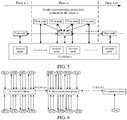
- FIG. 5 is a schematic diagram of a data correlation network in a data verification process according to an embodiment of this application.
- the data verification method includes the following steps: S401: A plurality of second nodes receive audit information of a first node. S402: Each of the second nodes obtains, based on the audit information, target audit information uploaded by at least one target first node. S403: Each of the second nodes compares the target audit information of the at least one target first node with the audit information.
- S404 The second node determines that the audit information passes the verification if the target audit information of the at least one target first node matches the audit information, and broadcasts a verification success notification to the plurality of second nodes.
- S405 The plurality of second nodes verify the audit information by consensus and determine that a consensus on the audit information is reached if the received verification success notification meets a consensus success condition.
- the second node receives the audit information of the first node, where the audit information is used for indicating data stored in the first node; verifies the audit information based on the target audit information of the at least one target first node; broadcasts the verification success notification in the data storage system if the audit information passes the verification; and determines that a consensus on the audit information is reached if the received verification success notification meets the consensus success condition.
- the second node may further transmit a consensus acknowledgment notification to the first node.
- the foregoing stored data may be first data and second data, or first data, second data, and third data, or second data and third data.
- the stored data may also be a combination of first data and third data, which is not limited in this embodiment of this application.
- the first nodes include the target first node, and the target first node is one of the plurality of first nodes.
- the target first node may refer to one or more nodes correlated with a current production activity of the first node.
- the target first node may be an upstream node of the first node in a production or circulation process of a target object, or the target first node may be a node (for example, a first node corresponding to a company that provides a transportation service for the first node) that participates in a production link (that is, a production element) of the first node. Therefore, the target audit information corresponding to the target node is used for indicating data stored by each target first node that transacts with the first node.
- the audit layer provides a verification function for each first node in the data storage system. Because the plurality of second nodes in the audit layer may obtain audit information of each first node, authenticity and accuracy of to-be-stored data may be determined by cross-comparing the audit information, thereby ensuring authenticity and accuracy of the data while ensuring security of the data.
- the second node may perform cross-comparison according to multi-dimensional data in the audit information provided by the first node. If the multi-dimensional data conforms to a preset function relationship, the second node determines that the audit information passes the verification. Therefore, the at least one target first node may alternatively be the first node, and the target audit information of the at least one target first node may alternatively be the audit information of the first node.
- that the second node verifies the audit information based on the target audit information of the at least one target first node includes: obtaining, by the second node according to the audit information, the target audit information uploaded by the at least one target first node, where the target audit information may refer to audit information uploaded by each target first node after performing a transaction with the first node; comparing, by the second node, the target audit information of the at least one target first node with the audit information, and determining that the audit information passes the verification if the target audit information of the at least one target first node matches the audit information.
- the obtaining, by the second node according to the audit information, the target audit information uploaded by the at least one target first node includes: obtaining, by the second node, a public key in at least one piece of signature data in the audit information; using, by the second node, a first node corresponding to the obtained public key as the at least one target first node; obtaining, according to the public key, audit information that includes the first node corresponding to the public key and using the audit information as the target audit information of the at least one target first node.
- the target audit information and the audit information are signatures of data eigenvalues instead of original data stored in the node.
- the comparison process may include: first, decompressing the signatures based on a public key of each node to obtain a target eigenvalue of the at least one target first node and an eigenvalue of the first node; then, determining whether the eigenvalue of the first node includes the target eigenvalue of the at least one target first node; if the eigenvalue of the first node includes the target eigenvalue of the at least one target first node, which indicates that transactions correspond to each other in a one-to-one manner and transaction contents also correspond to each other in a one-to-one to manner, determining that the target audit information of the at least one target first node matches the audit information; and determining that the audit information passes the verification if the target audit information of the at least one target first node matches the audit information.
- the audit information may be data stored in the first node with a signature
- the second node may cross-compare multi-dimensional data in audit information provided by different nodes. If the multi-dimensional data conforms to a preset function relationship, the second node determines that the target audit information of the at least one target first node matches the audit information, and determines that the audit information passes the verification if the target audit information of the at least one target first node matches the audit information.
- the at least one target first node is a counterparty of a transaction indicated by the audit information.
- the at least one target first node includes a node corresponding to each production element of the current phase and a node corresponding to the target object in a previous phase of the current phase.
- the method further includes: providing, by the first node, a barcode on a product produced in any phase, where an address to which the barcode is directed is used for providing at least one of latest first data of the target object and latest third data of the target object.
- the barcode may be in a form of a one-dimensional code, a two-dimensional code, or the like.
- the barcode may be directed to an address of a network resource, and data stored in the address may be updated according to first data of the current phase of the target object, so that at least one of the latest first data of the target object, the second data of the first node, and the latest third data of the first node may be obtained by scanning the code each time, thereby forming a pointer to data in the data storage system by using the barcode and correlating a real product with online data corresponding to the product. If the barcode is user-oriented, the second data related to transaction privacy may not be provided; if the barcode is audit-oriented, the second data of the target object may further be provided in the address to which the barcode is directed. For example, transaction data of a first node in a raw milk production phase may be provided, and specific data to be provided may be set according to actual requirements. This is not limited in this embodiment of this application.
- the data stored in the address may be updated by the first node.
- first data may be updated to the address.
- contents included in the address may include an update timestamp, and the first node may compare the update timestamp with a timestamp of to-be-uploaded first data. If the timestamp of the to-be-uploaded first data is later than the update timestamp, the first data is uploaded to overwrite first data that already exists in the address. If the timestamp of the to-be-uploaded first data is not later than the update timestamp, the first data is not uploaded.
- the data stored in the address may be updated by the second node. Specifically, the second node receives audit information of the first node, and uploads the audit information after a consensus is reached, to ensure that the first data stored in the address is authentic and reliable.
- the address of the network resource may be in a form of a uniform resource identifier (URI).
- URI uniform resource identifier
- a two-dimensional code may be printed or pasted on a package of raw milk upon delivery.
- the two-dimensional code is generated based on a target URI. After a user scans the code by using a terminal, the user is redirected to the target URI and sees that an unspent lift cycle output of the raw milk is 15 days.
- the target URI is used for storing an unspent carbon transaction output, the user may further view an unspent carbon transaction output of the raw milk through the target URI.
- the barcode may further provide network addresses of the plurality of second nodes.
- the terminal may transmit data obtained through scanning to the plurality of second nodes for verification. If the data passes the verification, a verification success notification may be returned, so that the user can learn that the data is authentic and accurate, and it can be ensured that the transactions are authentic and reliable.
- analysis may be performed according to different phases related to different target objects.
- Production elements of each phase may be broken down to form a data chain diagram, and corresponding resource consumption indicators may be set for each phase.
- a time consumption, a transaction amount, and a resource consumption amount may be determined for each phase according to a feature of each production element.
- Streaming expressions are used for the three types of data in each phase, following real correlations between the data in economic life. For example, an Unspent Carbon Transaction Output (UCXO), which means an unspent carbon transaction output, is correlated with an Unspent Transaction Output (UTXO) and an Unspent Life Cycle Output (UCLO), which means an unspent lift cycle output, to some extent.
- UCXO Unspent Carbon Transaction Output
- UTXO Unspent Transaction Output
- UCLO Unspent Life Cycle Output
- Life cycle consumption and value consumption inevitably lead to equivalent resource consumption, and UCLO is correlated with UCXO and UTXO to some extent. Resource consumption and value consumption are also inevitably equivalent to life cycle consumption. This potential connection makes data closely connected, forming a seamless data chain across the first nodes. Therefore, the data cannot be tampered with and has an actual data value.
- the basic data layer formed by the first nodes is correlated with each production element to form a seamless data link layer.
- the basic data layer is correlated with the audit layer to form a dual-layer data link structure. This ensures authenticity of data and tamper resistance of the data, thereby greatly improving security of the data.
- an implementation process of different phases of a dairy product from production to circulation and different links of each of the phases is used as an example for description, where the related resource consumption is carbon emission.
- An entire process of the dairy product may include the following phases: raw milk (A), dairy production (B), transportation (C), e-commerce (D), warehousing (E), logistics (F), and consumer (G).
- the raw milk may be transported and enter the dairy production phase.
- the dairy product may enter the e-commerce phase.
- the dairy product may enter the warehousing phase.
- the dairy product may enter the logistics phase.
- the logistics phase is completed, the dairy product may enter the consumer phase.
- production elements corresponding to different links involved may include: A.HP human resources, A.PL production line, A.PA packaging plant, A.VE transportation vehicle, A.EN electric power plant, and A.WA water plant.
- a node corresponding to an operating entity in the raw milk phase is represented by a first node A
- a first node in the dairy production phase is represented by a first node B.
- the first node A pays expenses of EX(A.HP), EX(A.PL), EX(A.PA), EX(A.VE), EX(A.EN), and EX(A.WA) respectively to production elements in each link of the raw milk production phase.
- the first node A obtains the following signature data and stores the data in the first node A:
- Pubkey() refers to a public key of a node
- Sig_EX(itoj) refers to signature data of EX paid by a node i to a node j
- Sig_CC(itoj) refers to signature data of CC transferred from the node i to the node j.
- the foregoing signature data indicates that when performing a capital transaction, the node A also completes a corresponding carbon emission transaction.
- the first node A obtains an unspent carbon transaction output of the raw milk phase according to a carbon emission indicator and carbon cost in the current phase, and stores the unspent carbon transaction output in the first node A.
- UCXO(A) is the unspent carbon transaction output in the raw milk phase and UCXO(Req) is an unspent carbon transaction output indicator of the entire process. This indicator, for example, may be broken down into a carbon emission quota of each economic link based on a total amount of carbon emission determined by an international conference or an industry standard.
- CC(A.HP) is the carbon cost for the human resources in the phase A and has a value equal to that of CC(HP2A).
- CC(A.PL) is the carbon cost for the production line in the phase A and has a value equal to that of CC(PL2A).
- CC(A.PA) is the carbon cost for the packaging plant in the phase A and has a value equal to that of CC(PA2A).
- CC(A.VE) is the carbon cost for the transportation vehicle in the phase A and has a value equal to that of CC(VE2A).
- CC(A.EN) is the carbon cost for the electric power plant in the phase A and has a value equal to that of CC(EN2A).
- CC(A.WA) is the carbon cost used for the water plant in the phase A and has a value equal to that of CC(WA2A).
- UCXO(A) may be a carbon emission margin normalized to a single product.
- the first node A transacts with the first node B and a manufacturer B pays payment available transaction EX(B2A) to a raw milk supplier A for raw milk. After the transaction is completed, the first node A may transmit the outputted unspent lift cycle output ULCO(A) of the raw milk to the first node B, obtain the following signature data, and store the data in the first node A:
- the first node A may cross-compare obtained data of at least two dimensions and then store the obtained data of the at least two dimensions if the data matches.
- the first node A obtains audit information of the first node A and broadcasts the audit information to the plurality of second nodes in the data storage system.
- the first node A generates a hash value of the stored data based on the stored data, and then signs the hash value based on a private key of the first node A to obtain signature data.
- the data includes an expenditure and an unspent carbon transaction output for each production element in each link of a phase corresponding to the first node A.
- the audit information may include the following content:
- the audit information may further include a public key Pubkey(A) of the first node A or context signature data obtained by the first node A by signing context information of the current phase with a private key, where the context information includes at least one of a timestamp, geographic address information, and network address information.
- the context signature data may be expressed as Sig(loc, timestamp, ip), where loc represents the geographic address information, timestamp represents the timestamp, and ip represents the network address information.
- the audit information including signature data is used as an example for description, and the signature data is obtained by signing stored signature data of the first node A based on the private key of the first node A.
- the audit information may further include the stored data of the first node A, that is, transaction information of the first node A in each link, so that the plurality of second nodes verify the audit information more intuitively by using original data of actual transactions.
- the plurality of second nodes After receiving the audit information, the plurality of second nodes verify the audit information by consensus. If a consensus is reached, the plurality of second nodes determine that the data stored by the first node A this time is authentic and accurate.
- the process of reaching a consensus may refer to that each of the second nodes obtains, based on the public key of each production element carried in the audit information, target audit information transmitted after the production element successfully transacts with the first node A, and verifies the audit information of the first node based on the target audit information of each production element. If the audit information is consistent, the audit information of the first node A passes the verification performed by the second node, and the second node broadcasts a verification success notification to other second nodes. If the verification success notification received by any second node meets a consensus success condition, it is determined that a consensus is reached.
- the foregoing process of verifying the audit information of the first node based on the audit information of each production element may include: obtaining, according to the audit information, target audit information uploaded by at least one target first node, where the target audit information refers to audit information uploaded by each target first node after performing a transaction with the first node; comparing the target audit information of the at least one target first node with the audit information, and determining that the audit information passes the verification if the target audit information of the at least one target first node is consistent with the audit information.
- the obtaining, according to the audit information, target audit information uploaded by at least one target first node includes: obtaining a public key in at least one piece of signature data in the audit information; using a first node corresponding to the obtained public key as the at least one target first node; obtaining, according to the public key of the first node, audit information that includes the public key of the first node from the audit information of the at least one target first node and using the obtained audit information as the target audit information of the at least one target first node.
- a transaction between the first node A and a first node PL corresponding to the production element PL is used as an example.
- the audit information of the first node A includes Sig_EX(PL2A) and Sig_CC(PL2A). If the transaction is real and accurate, the audit information of the first node PL includes Sig_EX(PL2A) and Sig_CC(PL2A). If the audit information is consistent after comparison, the transaction is real and transaction contents are accurate. If audit information between the first node A and all the production elements is consistent after similar comparison, the second node may determine that the audit information passes the verification. In this example, comparison is only performed on audit information of one production element. Actually, the second node may verify the audit information according to audit information uploaded by each production element and an upstream first node. A specific process is the same as that in the foregoing example, and details are not provided herein.
- the plurality of second nodes After receiving the audit information, the plurality of second nodes verify the audit information by consensus. If a consensus is not reached, the plurality of second nodes determine that the data stored by the first node A this time is problematic.
- the second node may record a data distortion event of the first node A for subsequent processing. If a quantity of data distortion events meets a condition, an operating entity corresponding to the first node may be marked as a discredited operating entity, or other processing may be performed for punishment and public announcement purposes.
- a specific manner adopted is not limited in this application.
- Each of the first nodes records information related to transactions performed by the node, such as transaction parties, transaction amounts, transaction locations, and transaction time points. Details are not provided in this embodiment of this application.
- production elements corresponding to different links involved may include: B.HP human resources, B.PL production line, B.PA packaging plant, B.VE transportation vehicle, B.EN electric power plant, and B.WA water plant.
- a first node in the dairy production phase is represented by the first node B. There may be the following processes:
- CC(B.HP) is the carbon cost for the human resources in the phase B
- CC(B.PL) is the carbon cost for the production line in the phase B
- CC(B.PA) is the carbon cost for the packaging plant in the phase B
- CC(B.VE) is the carbon cost for the transportation vehicle in the phase B
- CC(B.EN) is the carbon cost for the electric power plant in the phase B
- CC(B.WA) is the carbon cost for the water plant in the phase B.
- Numerical relationships between the foregoing amounts of used carbon emission are the same as those of the raw milk phase. Details are not provided herein.
- UCXO(B) may be an unspent carbon transaction output normalized to a single product.
- UTXO(B) UTXO(Cap) - ex(B.HP) - ex(B.PL) - ex(B.PA) - ex(B.VE) - ex(B.EN) - ex(B.WA).
- UTXO(Cap) is an unspent transaction output of the dairy production plant, which, for example, may correspond to an investment in the dairy production plant.
- ULCO(F) is an unspent lift cycle output of the dairy product when it arrives at the consumer through the logistics process D.
- the dairy product further includes a final phase, that is, the consumer phase G.
- the consumer phase G may also have a rated indicator UCXO(Ind) for individual unspent carbon transaction output, which, for example, may be a quota allocated to each individual based on G20's overall indicator for global carbon emission. Further, a two-dimensional code or the like may be marked on the package of the dairy product in this embodiment of this application.
- a consumer may obtain UCLO(F), that is, a remaining validity period, of the dairy product by scanning the code, and compare UCLO(F) with a shelf-life of the dairy product to determine whether the dairy product expires.
- the consumer may also obtain UCXO(F) corresponding to the consumer phase G, that is, an unspent carbon transaction output UCXO of the dairy product.
- UCXO(Ind) may be compared with UCXO(F) to determine whether the consumer's carbon consumption exceeds a limit, so as to adjust a rated indicator for the consumer's carbon consumption surplus based on the result. For example, if the consumer's carbon consumption does not exceed the limit within a preset period of time, the rated indicator for the consumer's carbon consumption surplus may be increased as a reward.
- the consumer's unspent carbon transaction output is UCXO(ind) + (UCXO(G) - UCXO(ave)), where UCXO(ave) is a preset average surplus. If a product consumed by the consumer has an unspent carbon transaction output higher than an industry average, the consumer's unspent carbon transaction output is increased; if the product consumed by the consumer has an unspent carbon transaction output lower than the industry average, the consumer's unspent carbon transaction output is reduced.
- consumer phase G also involves data storage. Specific principles are the same as those of the foregoing process, and details are not provided herein.
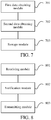
- FIG. 7 is a schematic structural diagram of a data storage apparatus according to an embodiment of this application.
- the apparatus is applied to a first node of a data storage system.
- the apparatus includes:
- the first data of the target object includes an unspent lift cycle output of the target object in a current phase
- the second data of the target object includes transaction data of the target object in the current phase
- the unspent lift cycle output of the target object in the current phase is a difference between an unspent lift cycle output of a previous phase and a time consumption of the current phase.
- the time consumption of the current phase may be set according to a feature of the current phase.
- the transaction data of the target object in the current phase includes transaction data of the target object in each link of the current phase.
- the transaction data of the target object in the current phase further includes signature data of the transaction data of the target object in each link of the current phase.
- the first data of the target object includes a resource consumption surplus of the target object in the current phase
- the second data of the target object includes transaction data of the target object in the current phase
- the apparatus further includes: a third data obtaining module, configured to obtain third data of the target object, where the third data is correlated with the first data and the second data.
- the storage module is further configured to store the third data of the target object in the first node while storing the first data and the second data of the target object in the first node.
- the third data of the target object includes the resource consumption surplus of the target object in the current phase.
- the resource consumption surplus of the target object in the current phase is a difference between a resource consumption surplus of the previous phase and a resource consumption amount of the current phase.
- the resource consumption amount of the current phase is a sum of resource consumption amounts of the target object in all links of the current phase.
- the resource consumption surplus is an unspent carbon transaction output.
- the apparatus further includes:
- the audit information includes the data stored in the first node.
- the audit information includes data stored in the first node within a preset period of time.
- the audit information includes an eigenvalue of the data stored in the first node.
- the audit information includes an eigenvalue of data stored in the first node within a preset period of time.
- an eigenvalue is a hash value.
- the audit information includes signature data, where the signature data is obtained by the first node by signing the data stored in the first node with a private key of the first node.
- the audit information further includes a public key of the first node.
- the audit information further includes context signature data obtained by the first node by signing context information of the current phase with a private key, where the context information includes at least one of a timestamp, geographic address information, and network address information.
- the storage module is configured to store the first data and the second data of the target object in a resource pool of the first node; and store the first data and the second data stored in the resource pool into a preset storage space of the first node when a consensus acknowledgment notification transmitted by any second node is received.
- the storage module is configured to store the first data and the second data of the target object in the first node when a consensus acknowledgment notification transmitted by any second node is received.
- the apparatus further includes a comparing module, where the comparing module is configured to cross-compare obtained data of at least two dimensions, and trigger the storage module to perform a storage step when the comparing module determines that the obtained data of the at least two dimensions matches each other.
- the apparatus further includes: a barcode module, configured to provide a barcode on a product produced in any phase, where an address to which the barcode is directed is used for providing at least one of latest first data of the target object, latest second data of the target object, or latest third data of the target object.
- a barcode module configured to provide a barcode on a product produced in any phase, where an address to which the barcode is directed is used for providing at least one of latest first data of the target object, latest second data of the target object, or latest third data of the target object.
- the barcode further provides network addresses of a plurality of second nodes so that a scanning terminal transmits scanned data to the plurality of second nodes for verification.
- FIG. 8 is a schematic structural diagram of a data verification apparatus according to an embodiment of this application.
- the apparatus is applied to any second node of a data storage system, where a consensus mechanism is configured for a plurality of second nodes in the data storage system.
- the apparatus includes:
- the verification module 802 is further configured to determine that a consensus on the audit information is reached in a case that the received verification success notification meets a consensus success condition.
- the transmitting module 802 is further configured to transmit a consensus acknowledgment notification to the first node in a case that a consensus on the audit information is reached.
- the target audit information is used for indicating data stored by each target first node that transacts with the first node.
- the verification module 802 is configured to: obtain, according to the audit information, target audit information uploaded by the at least one target first node, compare the target audit information of the at least one target first node with the audit information, and determine that the audit information passes the verification if the target audit information of the at least one target first node matches the audit information.
- the verification module 802 is configured to: obtain a public key in at least one piece of signature data in the audit information; use a first node corresponding to the obtained public key as the at least one target first node; obtain, according to the public key, audit information that includes the first node corresponding to the public key and use the audit information as the target audit information of the at least one target first node.
- the at least one target first node is a counterparty of a transaction indicated by the audit information.
- the at least one target first node includes a node corresponding to each production element of a current phase and a node corresponding to the target object in a previous phase of the current phase.
- a data storage system includes a plurality of first nodes and a plurality of second nodes, a consensus mechanism being configured for the plurality of second nodes in the data storage system; each of the plurality of first nodes being configured to: obtain first data of a target object; obtain second data of the target object, the first data and the second data being data of different dimensions; store the first data and the second data of the target object in the first node, and obtain audit information of the first node, the audit information being used for indicating the data stored in the first node; and broadcast the audit information of the first node to the plurality of second nodes in the data storage system; and each of the plurality of second nodes being configured to: receive the audit information of the first node, the audit information being used for indicating the data stored in the first node; verify the audit information based on target audit information of at least one target first node; broadcast a verification success notification in the data storage system in a case that the verification succeeds; and determine that a consensus on the
- a computer device includes a processor and a memory, the memory storing at least one instruction, the instruction being loaded and executed by the processor to implement the steps of the foregoing data storage method.
- the steps of the data storage method herein may be the steps of the data storage method in the foregoing embodiments.
- a computer readable storage medium stores at least one instruction, the instruction being loaded and executed by a processor to implement the steps of the foregoing data verification method.
- the steps of the data storage method herein may be the steps of the data storage method in the foregoing embodiments.
- a computer device includes a processor and a memory, the memory storing at least one instruction, the instruction being loaded and executed by the processor to implement the steps of the foregoing data verification method.
- the steps of the data verification method herein may be the steps of the data verification method in the foregoing embodiments.
- a computer readable storage medium stores at least one instruction, the instruction being loaded and executed by a processor to implement the steps of the foregoing data verification method.
- the steps of the data verification method herein may be the steps of the data verification method in the foregoing embodiment.
- a data storage system includes a plurality of first nodes and a plurality of second nodes, a consensus mechanism being configured for the plurality of second nodes in the data storage system; each of the plurality of first nodes being configured to: obtain first data of a target object; obtain second data of the target object, the first data and the second data being data of different dimensions, the dimensions being information for measuring any aspect of the target object from generation to existence; store the first data and the second data of the target object in the first node, and obtain audit information of the first node, the audit information being used for indicating the data stored in the first node; and broadcast the audit information of the first node to the plurality of second nodes in the data storage system; and each of the plurality of second nodes being configured to: receive the audit information of the first node, the audit information being used for indicating the data stored in the first node; verify the audit information based on target audit information of at least one target first node; broadcast a verification success notification in the data storage system in
Landscapes
- Engineering & Computer Science (AREA)
- Theoretical Computer Science (AREA)
- Business, Economics & Management (AREA)
- Physics & Mathematics (AREA)
- General Physics & Mathematics (AREA)
- General Engineering & Computer Science (AREA)
- Finance (AREA)
- Accounting & Taxation (AREA)
- Human Computer Interaction (AREA)
- Computer Security & Cryptography (AREA)
- Marketing (AREA)
- Strategic Management (AREA)
- General Business, Economics & Management (AREA)
- Development Economics (AREA)
- Economics (AREA)
- Databases & Information Systems (AREA)
- Entrepreneurship & Innovation (AREA)
- General Health & Medical Sciences (AREA)
- Health & Medical Sciences (AREA)
- Bioethics (AREA)
- Software Systems (AREA)
- Computer Hardware Design (AREA)
- Computing Systems (AREA)
- Data Mining & Analysis (AREA)
- Management, Administration, Business Operations System, And Electronic Commerce (AREA)
Abstract
Description
- This application claims priority to Chinese Patent Application No.
201810731377.2 - This application relates to the field of network technologies, and in particular, to a data storage method, a data verification method, an apparatus, a device, and a storage medium.
- With the development of block chain technologies, an increasing quantity of services begin to use block chains as a storage medium for data storage and sharing. However, during application of the block chain technologies, only traceability of data on a chain can be ensured. The data on the chain may not be real, that is, the data on the chain is not related to actual production and life. Therefore, such technologies are highly restricted and cannot assist in real production.
- Embodiments of this application provide a data storage method, a data verification method, an apparatus, a device, and a storage medium.
- A data storage method, executed by a first node in a data storage system, including:
- obtaining first data of a target object;
- obtaining second data of the target object, the first data and the second data being data of different dimensions, the dimensions being information for measuring any aspect of the target object from generation to existence; and
- storing the first data and the second data of the target object in the first node.
- A data verification method, executed by any second node in a data storage system, a consensus mechanism being configured for a plurality of second nodes in the data storage system, the method including:
- receiving audit information of a first node, the audit information being used for indicating data stored in the first node;
- verifying the audit information based on target audit information of at least one target first node;
- broadcasting a verification success notification in the data storage system in a case that the verification succeeds; and
- determining that a consensus on the audit information is reached in a case that the received verification success notification meets a consensus success condition.
- A data storage apparatus, including:
- a first data obtaining module, configured to obtain first data of a target object;
- a second data obtaining module, configured to obtain second data of the target object, the first data and the second data being data of different dimensions, the dimensions being information for measuring any aspect of the target object from generation to existence; and
- a storage module, configured to store the first data and the second data of the target object in a first node.
- A data verification apparatus, including:
- a receiving module, configured to receive audit information of a first node, the audit information being used for indicating data stored in the first node;
- a verification module, configured to verify the audit information based on target audit information of at least one target first node; and
- a transmitting module, configured to broadcast a verification success notification in the data storage system in a case that the verification succeeds;
- the verification module being further configured to determine that a consensus on the audit information is reached in a case that the received verification success notification meets a consensus success condition.
- A computer device, including a processor and a memory, the memory storing at least one instruction, the instruction being loaded and executed by the processor to implement operations performed in the foregoing data storage method; or the instruction being loaded and executed by the processor to implement operations performed in the foregoing data verification method.
- A computer readable storage medium, the storage medium storing at least one instruction, the instruction being loaded and executed by a processor to implement operations performed in the foregoing data storage method; or the instruction being loaded and executed by a processor to implement operations performed in the foregoing data verification method.
- A data storage system, including a plurality of first nodes and a plurality of second nodes, a consensus mechanism being configured for the plurality of second nodes in the data storage system;
each of the plurality of first nodes being configured to: obtain first data of a target object; obtain second data of the target object, the first data and the second data being data of different dimensions, the dimensions being information for measuring any aspect of the target object from generation to existence; store the first data and the second data of the target object in the first node, and obtain audit information of the first node, the audit information being used for indicating the data stored in the first node; and broadcast the audit information of the first node to the plurality of second nodes in the data storage system;
each of the plurality of second nodes being configured to: receive the audit information of the first node, the audit information being used for indicating the data stored in the first node; verify the audit information based on target audit information of at least one target first node; broadcast a verification success notification in the data storage system in a case that the verification succeeds; and determine that a consensus on the audit information is reached in a case that the received verification success notification meets a consensus success condition. - Details of one or more embodiments of this application are provided in the following accompanying drawings and description. Other features, objectives and advantages of this application will become more evident from the specification, the accompanying drawings and the claims.
- To describe the technical solutions in the embodiments of this application more clearly, the following briefly introduces the drawings required for descripting the embodiments. Apparently, the drawings in the following description show merely some embodiments of this application. Other drawings may further be derived from these drawings by a person of ordinary skill in the art without creative efforts.
-
FIG. 1 is a schematic structural diagram of a data storage system according to an embodiment of this application. -
FIG. 2 is a schematic diagram of a computer device according to an embodiment of this application. -
FIG. 3 is a flowchart of a data storage method according to an embodiment of this application. -
FIG. 4 is a flowchart of a data verification method according to an embodiment of this application. -
FIG. 5 is a schematic diagram of a data correlation network in a data verification process according to an embodiment of this application. -
FIG. 6 is a schematic diagram of different phases of a dairy product from production to circulation and an implementation process involved in different links in each phase according to an embodiment of this application. -
FIG. 7 is a schematic structural diagram of a data storage apparatus according to an embodiment of this application. -
FIG. 8 is a schematic structural diagram of a data verification apparatus according to an embodiment of this application. - To make the objectives, technical solutions and advantages of this application clearer, implementations of this application are described in further detail in the following with reference to the accompanying drawings.
-
FIG. 1 is a schematic structural diagram of a data storage system according to an embodiment of this application. The system includes a plurality offirst nodes 101 and a plurality ofsecond nodes 102. - Each of the plurality of first nodes is configured to: obtain first data of a target object; obtain second data of the target object, where the first data and the second data are data of different dimensions; store the first data and the second data of the target object in the first node, and obtain audit information of the first node, where the audit information is used for indicating the data stored in the first node; and broadcast the audit information of the first node to the plurality of second nodes in the data storage system.
- Each of the plurality of second nodes is configured to: receive the audit information of the first node, where the audit information is used for indicating the data stored in the first node; verify the audit information based on target audit information of at least one target first node; broadcast a verification success notification in the data storage system in a case that the verification succeeds; and determine that a consensus on the audit information is reached in a case that the received verification success notification meets a consensus success condition.
- The plurality of
first nodes 101 may be nodes of different operating entities, and may be configured to store data related to production and transactions of the corresponding operating entities. Each of thefirst nodes 101 may store its own data in a database or blocks. If the data is stored in a database, each piece of data is indexed and stored in corresponding storage space based on the index. If the data is stored in blocks, different pieces of the data stored in the first node are correlated to some extent, and a block form similar to that in a block chain may be adopted to ensure that the data is tamper-proof. The plurality offirst nodes 101 may constitute a basic data layer of the data storage system, and may also provide a data query function for the corresponding operating entities respectively, so as to trace transactions with other nodes and their own production activities. Specifically, the plurality offirst nodes 101 may communicate with each other to perform transactions. For example, afirst node 1 may transact with a first node 2 to perform a process such as a transfer, product delivery, and information exchange from an account corresponding to thefirst node 1 to an account corresponding to the first node 2, thereby completing a transaction with the first node 2. Certainly, the transaction may be completed online. In the actual transaction process, related offline transportation may also be involved. This is not limited in this embodiment of this application. In addition, the first node may alternatively be a proxy node of the operating entity, and is used for performing online transactions, data storage, and the like on behalf of one or more operating entities. When acting as a proxy node of one or more operating entities, the first node may store data separately for each operating entity and ensure data privacy of each operating entity by setting a key or the like. - The plurality of
second nodes 102 may be configured to verify the data generated by the plurality of first nodes during the production and transaction processes, and indicate authenticity of the data in the first nodes based on transaction results. The same block chain may be deployed for the plurality ofsecond nodes 102, that is, the plurality ofsecond nodes 102 may follow the same consensus mechanism. Specifically, the plurality ofsecond nodes 102 may verify the data of thefirst node 101 separately, and then verify the data by consensus based on the consensus mechanism and the verification results of the plurality ofsecond nodes 102. If the verification results meet a consensus success condition (for example, over 2/3 of all the second nodes verify the data successfully), the plurality ofsecond nodes 102 reach a consensus and determine that the data of thefirst node 101 is authentic. If the verification results do not meet the consensus success condition, the plurality ofsecond nodes 101 fail to reach a consensus and determine that the data of thefirst node 101 is not authentic. A specific consensus mechanism adopted is not limited in this embodiment of this application. - The plurality of
first nodes 101 constitute the basic data layer of the data storage system and are configured to store their own data, while the plurality ofsecond nodes 102 constitute an audit layer of the data storage system and are configured to provide a verification service for the plurality offirst nodes 101. The data of thefirst nodes 101 may be isolated to some extent. For example, transaction data of thefirst node 1 is invisible to the first node 2, and thefirst node 1 may transmit a transaction request that carries account information to a second node. The data of thefirst nodes 101 is transparent or relatively transparent to the plurality ofsecond nodes 102, that is, thesecond nodes 102 may obtain the data stored in thefirst nodes 101 or an eigenvalue (for example, a hash value) of the data. In this embodiment of this application, a specific process of obtaining the data or the eigenvalue is detailed later. - The first node or the second node may be provided as any computer device. For example,
FIG. 2 is a schematic diagram of a computer device according to an embodiment of this application. Thecomputer device 200 may vary greatly according to configuration or performance, and may include one or more processors (central processing units, CPU) 201 and one ormore memories 202. Thememory 202 stores at least one instruction each, where the at least one instruction is loaded and executed by theprocessors 201 to implement the data storage method or the data verification method provided in the following embodiments. Certainly, the computer device may also have components such as a wired or wireless network interface, a keyboard, and an input/output interface for ease of input/output, and may further include other components for implementing functions of the device. Details are not provided herein. -
FIG. 3 is a flowchart of a data storage method according to an embodiment of this application. The data storage method may be applied to any of the first nodes inFIG. 1 . Referring toFIG. 3 , the method includes the following steps:
S301: Obtain first data of a target object. - The target object may be any product that can be transacted or circulated offline or online. The target object may be a tangible product, which may be obtained based on manual production or machine production. For example, the tangible product may be food, a commodity, houseware, or a household appliance, which is not specifically limited in this embodiment of this application. The target object may alternatively be a bill product, that is, a product in a form of a bill. For example, the target object may be a financial product such as stock, bond, or fund share. Certainly, the target object may alternatively be a virtual product, that is, a product in a form of electronic data, which may correspond to an actual currency value or a virtual currency value. The currency value may not be fixed, but fluctuates according to market rules. For example, the virtual product may be a financial product, such as an online fund product or an online stock product.
- The first data may be data of a dimension of the target object, where the dimension refers to information for measuring any aspect of the target object from generation to existence. For example, the dimension may be a time dimension, a transaction dimension, or an environmental protection dimension. The time dimension may include an existence duration of the target object, a remaining time of the target object till its extinction, or a remaining time of the target object till its settlement or expiration. The transaction dimension may include transaction parties, a transaction amount, a transaction time, and the like of transaction behavior correlated with the target object from generation to existence. The environmental protection dimension may include emission or production of a hazardous substance, such as carbon emission, formaldehyde production, or industrial waste production.
- S302: Obtain second data of the target object, where the first data and the second data are data of different dimensions, and the dimensions are information for measuring any aspect of the target object from generation to existence.
- The second data may refer to data of a dimension different from that of the first data. For example, if the first data is data of the time dimension, the second data may be data of the transaction dimension or the environmental protection dimension.
- S303: Store the first data and the second data of the target object in the first node.
- The first node may store data related to production or transactions of the node. The data may include information about any transaction occurring in a production or circulation phase of the target object corresponding to the node.
- During data storage, the first node may correspondingly store the first data and the second data for ease of query. For example, the first node may store the first data and the second data in one data item or related data items in a database of the first node, store the first data and the second data in one block, or store the first data and the second data in different blocks and identify them with the same data identifier for ease of query.
- In some embodiments, the first node may cross-compare obtained data of at least two dimensions before storing the data and then perform the storage step S303 if the obtained data of the at least two dimensions matches each other. Data of different dimensions may conform to a function relationship. Therefore, the data of the at least two dimensions may be cross-compared based on a function relationship between the dimensions. If the data matches each other, the data may be stored. If the data does not match each other, the storage step is not performed. For example, there may be a function relationship between a life cycle and carbon emission. For example, if the life cycle is reduced by two days, the carbon emission needs to be increased by 10 units. If the multi-dimensional data does not meet the function relationship, it indicates that the data is incorrect, and the data does not match each other.
- The foregoing cross-comparison may be intended for data of any dimension provided in this embodiment of this application. That is, if the obtained data is the first data and the second data, the cross-comparison is performed based on the first data and the second data; if the obtained data is the first data, the second data, and third data, the cross-comparison is performed based on the first data, the second data, and the third data. Similarly, if the obtained data further includes other data, the cross-comparison is performed in accordance with the foregoing principle. Certainly, the foregoing comparison is only a simple example of a specific comparison process. Other comparison processes may further be performed based on the multi-dimensional data, which is not limited in this embodiment of this application.
- In this embodiment of this application, data of different dimensions of a target object is obtained, each phase of the target object from production to circulation and each link of the phases are recorded from a plurality of perspectives, so as to closely correlate online data with real production and life. In this way, the online data is granted practical significance, and is no longer merely a simple expression of some virtual currency. Further, in the embodiments of this application, data of a plurality of dimensions recorded by the first node corresponding to each phase is correlated with each other. Therefore, data in all phases and links may be verified with each other, and the data of the plurality of dimensions may also be verified with each other, so as to form a streaming seamless data chain. Data of each first node is stored in the node, thereby improving data security.
- The target object may go through a plurality of phases from production to circulation, and the phases may be divided according to actual requirements. For example, food may go through a raw material production phase, a target object production phase, a transportation phase, a sales phase, and the like. The sales phase may further include different phases according to different sales modes. For example, if an e-commerce sales mode is used, the sales phase may include an e-commerce phase, a warehousing phase, a logistics phase, and a consumer phase. If a direct sales mode is used, the sales phase may include a launch phase and a consumer phase. In another example, any virtual product may go through a design phase, a trial run phase or a pre-sales phase, and a formal release phase.
- Based on the embodiment shown in
FIG. 3 , in some embodiments, the first data of the target object includes an unspent life cycle output of the target object in a current phase, and the second data of the target object includes transaction data of the target object in the current phase. - The life cycle refers to a period from an original state of a target object to generation of the target object and then to expiration, end of service life, or exhaustion of the target object. A life cycle of food may be expressed as a shelf-life. For example, a shelf-life of milk may be 30 days. A life cycle of a virtual product may be expressed as a validity period. For example, a validity period of a financial product may be 60 days. A validity period of a software product may be expressed as a validity period of permission for use. For example, a validity period of premium membership is one month. A life cycle of an electronic product may be expressed as an obsoleteness period or the number of times the electronic product is used. For example, a washing machine may become obsolete after five years or after being used 10,000 times. Based on the foregoing description of the life cycle, it can be learned that an unspent lift cycle output is a remainder of a life cycle of the target object at a current time point. For example, the life cycle of the foregoing food is 30 days. If the food has been circulated for 10 days, the unspent lift cycle output of the food is 20 days. Consumption may occur in all phases of the target object and may have impact on use or existence of the target object. To record such impact, the unspent lift cycle output of the target object may be obtained.
- In some embodiments, each phase of the target object may have a corresponding unspent lift cycle output, or only some phases of the target object may have corresponding unspent lift cycle outputs. This may be determined specifically according to a feature of the target object. For example, a target object with raw materials already has a corresponding unspent lift cycle output in a production phase of the raw materials. In subsequent phases, the unspent lift cycle output decreases based on the unspent lift cycle output in the production phase of the raw materials. For a target object without raw materials, the concept of life cycle may not occur until a specific phase. This is not limited in this embodiment of this application. It can be learned from the foregoing description that if a phase corresponding to the first node is a start phase of a life cycle, a value of the unspent lift cycle output is equal to a length of the life cycle.
- In some embodiments, the unspent lift cycle output may be expressed in any time granularity. A specific time granularity used may be set according to a type of the target object. In some embodiments, the unspent lift cycle output may further include the value of the unspent lift cycle output and a start time of the life cycle, so as to provide an intuitive time point to further express a sustainability or usability condition of the target object.
- In some embodiments, the unspent lift cycle output of the target object in the current phase is a difference between an unspent lift cycle output in a previous phase and a time consumption of the current phase.
- The process of obtaining the unspent lift cycle output of the target object in the current phase may include: obtaining the unspent lift cycle output in the previous phase and the time consumption of the current phase, and then obtaining the difference between the unspent lift cycle output in the previous phase and the time consumption of the current phase as the unspent lift cycle output in the current phase.
- For the first nodes, before processing of the current phase is started, an unspent lift cycle output sent by a first node corresponding to the previous phase of the target object may be obtained. The unspent lift cycle output may be obtained when a transaction with the first node corresponding to the previous phase is completed, and is transmitted by the first node corresponding to the previous phase to a first node corresponding to the current phase. When transmitting the unspent lift cycle output, the first node corresponding to the previous phase may further transmit signature data, which is obtained by signing the unspent lift cycle output with a private key, and a public key of the first node corresponding to the previous phase.
- In some embodiments, the time consumption of the current phase may be set according to a feature of the current phase. The phases may be correlated with links of different investment or expenditure activities, such as human resources, production, packaging, transportation, electric power supply, and water supply. The links may correspond to different time consumptions. Therefore, different phases may consume different periods of time, and time consumptions of links correlated with each phase need to be analyzed so as to determine a time consumption of the phase. Certainly, in some embodiments, the time consumption of each phase may be set according to experience or analysis on historical processing time of the phase. Certainly, the time consumption of each phase may also be set according to analysis on historical processing time of each link correlated with the phase, so as to calculate an unspent lift cycle output more accurately. In some embodiments, the time consumption of each phase may also be counted in real time to obtain a more authentic unspent lift cycle output based on real data.
- In some embodiments, the transaction data of the target object in the current phase includes transaction data of the target object in each link of the current phase, and further includes signature data of the transaction data of the target object in each link of the current phase. The first node records transaction information about transactions occurring in all the links of the current phase, for example, an expense EX transferred from an
account 1 of the first node to an account 2 of the node that undertakes transportation in the transportation link, and also obtains signature data provided by a counterparty in each link after the counterparty accepts the transaction. The signature data may be obtained by a first node of the counterparty by signing the transaction information with a private key. For example, the signature data may be Sig_(EX(account 1 to account 2)). Optionally, the counterparty may also return its public key together with the signature data, for ease of verification on the counterparty and the signature data. - In some embodiments, the first data of the target object includes a resource consumption surplus of the target object in the current phase, and the second data of the target object includes transaction data of the target object in the current phase.
- Resource consumption may occur in all the phases of the target object and have impact on an environment. To limit such impact, such data needs to be recorded.
- Resource consumption refers to consumption of resources in a period from an original state of a target object to generation of the target object and then to expiration, end of service life, or exhaustion of the target object. For example, for an industrial product, such impact may be expressed as an emission amount of an incidental substance resulting from consumption of resources by industrial production activities, such as an emission amount of carbon or formaldehyde.
- In some embodiments, the resource consumption surplus of the target object in the current phase is a difference between a resource consumption surplus of a previous phase and a resource consumption amount of the current phase.
- The process of obtaining the resource consumption surplus of the target object in the current phase may include: obtaining the resource consumption surplus of a previous phase and the resource consumption amount of the current phase, and then obtaining the difference between the resource consumption surplus of the previous phase and the resource consumption amount of the current phase as the resource consumption surplus in the current phase.
- For the first nodes, before processing of the current phase is started, a resource consumption surplus transmitted by a first node corresponding to the previous phase of the target object may be obtained. The resource consumption surplus may be obtained when a transaction with the first node corresponding to the previous phase is completed, and may be transmitted by the first node corresponding to the previous phase to a first node corresponding to the current phase. When transmitting the resource consumption surplus, the first node corresponding to the previous phase may further transmit signature data, which is obtained by signing the resource consumption surplus with a private key, and a public key of the first node corresponding to the previous phase.
- In some embodiments, the resource consumption amount of the current phase is a sum of resource consumption amounts of the target object in all links of the current phase. The first node records information about transactions occurring in all links of the current phase and the resource consumption amounts obtained based on the transactions, for example, an expense EX transferred from an
account 1 of the first node to an account 2 of the node that undertakes transportation in the transportation link, and also obtains a carbon emission amount CC provided by a counterparty in each link based on the transaction. Correspondingly, the obtained signature data may be obtained by signing based on the transaction information and the resource consumption amount. - The foregoing resource consumption surplus may be a resource consumption surplus normalized to a single target object. For example, an unspent carbon transaction output may be an unspent carbon transaction output normalized to a single product. For any type of target object, a resource consumption indicator may be set to guide actual generation. For example, a carbon emission indicator may be set based on an upper limit of carbon emission specified in an international conference.
- In some embodiments, the method further includes: obtaining, by the first node, third data of the target object, where the third data is correlated with the second data; and storing the third data of the target object in the first node while storing the first data and the second data of the target object in the first node.
- A dimension of the third data may be different from those of the first data and the second data. Generation of the third data may be correlated with generation of the second data. The second data may be the transaction data of the target object in the current phase and may be generated based on an investment or expenditure behavior in the generation or circulation process of the target object. The third data is also generated based on the investment or expenditure behavior in the generation or circulation process of the target object. With the generation of the second data, the corresponding third data may be generated.
- The second data does not necessarily have correlated third data, while the third data is definitely generated due to the generation of the second data. For example, when any expenditure behavior occurs, both transaction parties conduct a capital transaction and complete a transaction in a corresponding resource consumption dimension (for example, a carbon emission amount of the seller is transferred to the buyer as a result of the transaction).
- During data storage, the first node may store the first data, the second data, and the third data in one block, or store the first data, the second data, and the third data in different blocks and identify them with the same data identifier for ease of query. Certainly, the second data and the third data may be stored in one block while the first data may be stored in another block, and the first data, the second data and the third data may be identified with the same data identifier. This is not limited in this embodiment of this application.
- In some embodiments, the third data of the target object includes the resource consumption surplus of the target object in the current phase. For example, the first data may be the unspent lift cycle output of the current phase, the second data may be the transaction data of the current phase, and the third data may be the resource consumption surplus of the target object in the current phase, where the resource consumption surplus is an unspent carbon transaction output.
- In some embodiments, the first node may further obtain audit information of the first node, where the audit information is used for indicating the data stored in the first node, and may broadcast the audit information of the first node to the plurality of second nodes in the data storage system.
- For the first node, the foregoing step of obtaining the audit information of the first node may be performed before the storage of the first data and the second data, that is, after steps S301 and S302 are performed, the foregoing step of obtaining and broadcasting the audit information may be performed. Therefore, when a consensus acknowledgment notification is received, the step of storing the first data and the second data of the target object in the first node may be performed.
- In some embodiments, the first node may also have a resource pool for temporarily storing data. That is, when the first data and the second data are obtained, they may be first stored in the resource pool of the first node. When a consensus acknowledgment notification transmitted by any second node is received, the first data and the second data stored in the resource pool are then stored in a preset storage space of the first node.
- In some embodiments, the audit information includes the data stored in the first node; or the audit information includes data stored in the first node within a preset period of time. In this implementation, the audit information may be the data stored in the first node instead of an eigenvalue, so that the second node may obtain original transaction data, thereby greatly improving verification accuracy of the second node.
- In some embodiments, the audit information includes an eigenvalue of the data stored in the first node; or the audit information includes an eigenvalue of data stored in the first node within a preset period of time. The data stored in the preset period of time may be data obtained by the first node in at least one production process instead of data obtained in only one production process, so as to prevent excessively frequent data transmission caused by a relatively large production scale or relatively high production frequency.
- The eigenvalue may be a hash value or any eigenvalue calculated based on an irreversible algorithm.
- In some embodiments, the audit information is signature data obtained by the first node by signing the data stored in the first node with a private key of the first node. The signature informs the second node of a source node of the audit information. In some embodiments, the audit information further includes a public key of the first node. The second node may perform verification based on the public key and the signature data to determine that the audit information comes from the first node, and may perform a specific verification process based on the eigenvalue or other data obtained after decompressing the signature data.
- In some embodiments, the audit information further includes context signature data obtained by the first node by signing context information of the current phase with a private key, where the context information includes at least one of a timestamp, geographic address information, and network address information. The context information may provide information such as an occurrence time point and an occurrence environment corresponding to the data to be audited, thereby ensuring traceability of the data.
- For the second nodes at the audit layer, data interactions shown in
FIG. 4 andFIG. 5 may occur.FIG. 4 is a flowchart of a data verification method according to an embodiment of this application;FIG. 5 is a schematic diagram of a data correlation network in a data verification process according to an embodiment of this application. As shown inFIG. 4 , the data verification method includes the following steps: S401: A plurality of second nodes receive audit information of a first node. S402: Each of the second nodes obtains, based on the audit information, target audit information uploaded by at least one target first node. S403: Each of the second nodes compares the target audit information of the at least one target first node with the audit information. S404: The second node determines that the audit information passes the verification if the target audit information of the at least one target first node matches the audit information, and broadcasts a verification success notification to the plurality of second nodes. S405: The plurality of second nodes verify the audit information by consensus and determine that a consensus on the audit information is reached if the received verification success notification meets a consensus success condition. - Referring to
FIG. 4 andFIG. 5 , the second node receives the audit information of the first node, where the audit information is used for indicating data stored in the first node; verifies the audit information based on the target audit information of the at least one target first node; broadcasts the verification success notification in the data storage system if the audit information passes the verification; and determines that a consensus on the audit information is reached if the received verification success notification meets the consensus success condition. When a consensus on the audit information is reached, the second node may further transmit a consensus acknowledgment notification to the first node. - The foregoing stored data may be first data and second data, or first data, second data, and third data, or second data and third data. Certainly, according to different data requirements, the stored data may also be a combination of first data and third data, which is not limited in this embodiment of this application.
- The first nodes include the target first node, and the target first node is one of the plurality of first nodes. The target first node may refer to one or more nodes correlated with a current production activity of the first node. For example, the target first node may be an upstream node of the first node in a production or circulation process of a target object, or the target first node may be a node (for example, a first node corresponding to a company that provides a transportation service for the first node) that participates in a production link (that is, a production element) of the first node. Therefore, the target audit information corresponding to the target node is used for indicating data stored by each target first node that transacts with the first node.
- In the embodiments of this application, the audit layer provides a verification function for each first node in the data storage system. Because the plurality of second nodes in the audit layer may obtain audit information of each first node, authenticity and accuracy of to-be-stored data may be determined by cross-comparing the audit information, thereby ensuring authenticity and accuracy of the data while ensuring security of the data.
- In some embodiments, the second node may perform cross-comparison according to multi-dimensional data in the audit information provided by the first node. If the multi-dimensional data conforms to a preset function relationship, the second node determines that the audit information passes the verification. Therefore, the at least one target first node may alternatively be the first node, and the target audit information of the at least one target first node may alternatively be the audit information of the first node.
- In some embodiments, that the second node verifies the audit information based on the target audit information of the at least one target first node includes: obtaining, by the second node according to the audit information, the target audit information uploaded by the at least one target first node, where the target audit information may refer to audit information uploaded by each target first node after performing a transaction with the first node; comparing, by the second node, the target audit information of the at least one target first node with the audit information, and determining that the audit information passes the verification if the target audit information of the at least one target first node matches the audit information.
- The obtaining, by the second node according to the audit information, the target audit information uploaded by the at least one target first node includes: obtaining, by the second node, a public key in at least one piece of signature data in the audit information; using, by the second node, a first node corresponding to the obtained public key as the at least one target first node; obtaining, according to the public key, audit information that includes the first node corresponding to the public key and using the audit information as the target audit information of the at least one target first node.
- In a process comparing the target audit information of the at least one target first node with the audit information of the first node by the second node, in some embodiments, the target audit information and the audit information are signatures of data eigenvalues instead of original data stored in the node. In this case, the comparison process may include: first, decompressing the signatures based on a public key of each node to obtain a target eigenvalue of the at least one target first node and an eigenvalue of the first node; then, determining whether the eigenvalue of the first node includes the target eigenvalue of the at least one target first node; if the eigenvalue of the first node includes the target eigenvalue of the at least one target first node, which indicates that transactions correspond to each other in a one-to-one manner and transaction contents also correspond to each other in a one-to-one to manner, determining that the target audit information of the at least one target first node matches the audit information; and determining that the audit information passes the verification if the target audit information of the at least one target first node matches the audit information.
- In some embodiments, the audit information may be data stored in the first node with a signature, and the second node may cross-compare multi-dimensional data in audit information provided by different nodes. If the multi-dimensional data conforms to a preset function relationship, the second node determines that the target audit information of the at least one target first node matches the audit information, and determines that the audit information passes the verification if the target audit information of the at least one target first node matches the audit information.
- In some embodiments, the at least one target first node is a counterparty of a transaction indicated by the audit information.
- In some embodiments, the at least one target first node includes a node corresponding to each production element of the current phase and a node corresponding to the target object in a previous phase of the current phase.
- In some embodiments, the method further includes: providing, by the first node, a barcode on a product produced in any phase, where an address to which the barcode is directed is used for providing at least one of latest first data of the target object and latest third data of the target object. The barcode may be in a form of a one-dimensional code, a two-dimensional code, or the like. The barcode may be directed to an address of a network resource, and data stored in the address may be updated according to first data of the current phase of the target object, so that at least one of the latest first data of the target object, the second data of the first node, and the latest third data of the first node may be obtained by scanning the code each time, thereby forming a pointer to data in the data storage system by using the barcode and correlating a real product with online data corresponding to the product. If the barcode is user-oriented, the second data related to transaction privacy may not be provided; if the barcode is audit-oriented, the second data of the target object may further be provided in the address to which the barcode is directed. For example, transaction data of a first node in a raw milk production phase may be provided, and specific data to be provided may be set according to actual requirements. This is not limited in this embodiment of this application.
- The data stored in the address may be updated by the first node. Using update of the first data as an example, when any first node completes a transaction, first data may be updated to the address. Certainly, contents included in the address may include an update timestamp, and the first node may compare the update timestamp with a timestamp of to-be-uploaded first data. If the timestamp of the to-be-uploaded first data is later than the update timestamp, the first data is uploaded to overwrite first data that already exists in the address. If the timestamp of the to-be-uploaded first data is not later than the update timestamp, the first data is not uploaded. Alternatively, the data stored in the address may be updated by the second node. Specifically, the second node receives audit information of the first node, and uploads the audit information after a consensus is reached, to ensure that the first data stored in the address is authentic and reliable.
- The address of the network resource may be in a form of a uniform resource identifier (URI).
- For example, if the first data is an unspent lift cycle output during production of a dairy product, a two-dimensional code may be printed or pasted on a package of raw milk upon delivery. The two-dimensional code is generated based on a target URI. After a user scans the code by using a terminal, the user is redirected to the target URI and sees that an unspent lift cycle output of the raw milk is 15 days. Alternatively, if the target URI is used for storing an unspent carbon transaction output, the user may further view an unspent carbon transaction output of the raw milk through the target URI.
- Certainly, the barcode may further provide network addresses of the plurality of second nodes. The terminal may transmit data obtained through scanning to the plurality of second nodes for verification. If the data passes the verification, a verification success notification may be returned, so that the user can learn that the data is authentic and accurate, and it can be ensured that the transactions are authentic and reliable.
- In the implementation of this application, analysis may be performed according to different phases related to different target objects. Production elements of each phase may be broken down to form a data chain diagram, and corresponding resource consumption indicators may be set for each phase. In addition, a time consumption, a transaction amount, and a resource consumption amount may be determined for each phase according to a feature of each production element. Streaming expressions are used for the three types of data in each phase, following real correlations between the data in economic life. For example, an Unspent Carbon Transaction Output (UCXO), which means an unspent carbon transaction output, is correlated with an Unspent Transaction Output (UTXO) and an Unspent Life Cycle Output (UCLO), which means an unspent lift cycle output, to some extent. Life cycle consumption and value consumption inevitably lead to equivalent resource consumption, and UCLO is correlated with UCXO and UTXO to some extent. Resource consumption and value consumption are also inevitably equivalent to life cycle consumption. This potential connection makes data closely connected, forming a seamless data chain across the first nodes. Therefore, the data cannot be tampered with and has an actual data value.
- Further, the basic data layer formed by the first nodes is correlated with each production element to form a seamless data link layer. In addition, the basic data layer is correlated with the audit layer to form a dual-layer data link structure. This ensures authenticity of data and tamper resistance of the data, thereby greatly improving security of the data.
- Referring to
FIG. 6 , an implementation process of different phases of a dairy product from production to circulation and different links of each of the phases is used as an example for description, where the related resource consumption is carbon emission. - First of all, some terms appearing in the subsequent detailed descriptions are introduced as follows:
- CC: Carbon Cost
- ULCO: Unspent Life Cycle Output
- EX: expense
- Then, the phases of the dairy product are introduced. An entire process of the dairy product may include the following phases: raw milk (A), dairy production (B), transportation (C), e-commerce (D), warehousing (E), logistics (F), and consumer (G). Based on the foregoing process from production to circulation, after being produced, the raw milk may be transported and enter the dairy production phase. After the dairy production is completed, the dairy product may enter the e-commerce phase. After being released in the e-commerce phase, the dairy product may enter the warehousing phase. When being ordered, the dairy product may enter the logistics phase. After the logistics phase is completed, the dairy product may enter the consumer phase.
- In the raw milk phase A, it is assumed that production elements corresponding to different links involved may include: A.HP human resources, A.PL production line, A.PA packaging plant, A.VE transportation vehicle, A.EN electric power plant, and A.WA water plant. A node corresponding to an operating entity in the raw milk phase is represented by a first node A, and a first node in the dairy production phase is represented by a first node B. There may be the following processes:
1. The first node A pays expenses of EX(A.HP), EX(A.PL), EX(A.PA), EX(A.VE), EX(A.EN), and EX(A.WA) respectively to production elements in each link of the raw milk production phase. After the transactions are completed, the first node A obtains the following signature data and stores the data in the first node A: - Hash signatures Sig_EX(HP2A) and Sig_CC(HP2A) indicating that HP accepts A's transaction, and a public key Pubkey(HP) of HP;
- Hash signatures Sig_EX(PL2A) and Sig_CC(PL2A) indicating that PL accepts A's transaction, and a public key Pubkey(PL) of PL;
- Hash signatures Sig_EX(PA2A) and Sig_CC(PA2A) indicating that PA accepts A's transaction, and a public key Pubkey(PA) of PA;
- Hash signatures Sig_EX(VE2A) and Sig_CC(VE2A) indicating that VE accepts A's transaction, and a public key Pubkey(VE) of VE;
- Hash signatures Sig_EX(EN2A) and Sig_CC(EN2A) indicating that EN accepts A's transaction, and a public key Pubkey(EN) of EN; and
- Hash signatures Sig_EX(WA2A) and Sig_CC(WA2A) indicating that WA accepts A's transaction, and a public key Pubkey(WA) of WA.
- Pubkey() refers to a public key of a node, Sig_EX(itoj) refers to signature data of EX paid by a node i to a node j, and Sig_CC(itoj) refers to signature data of CC transferred from the node i to the node j. The foregoing signature data indicates that when performing a capital transaction, the node A also completes a corresponding carbon emission transaction.
- 2. The first node A obtains an unspent carbon transaction output of the raw milk phase according to a carbon emission indicator and carbon cost in the current phase, and stores the unspent carbon transaction output in the first node A.
- The unspent carbon transaction output may be specifically calculated using the following formula:

- UCXO(A) is the unspent carbon transaction output in the raw milk phase and UCXO(Req) is an unspent carbon transaction output indicator of the entire process. This indicator, for example, may be broken down into a carbon emission quota of each economic link based on a total amount of carbon emission determined by an international conference or an industry standard. CC(A.HP) is the carbon cost for the human resources in the phase A and has a value equal to that of CC(HP2A). CC(A.PL) is the carbon cost for the production line in the phase A and has a value equal to that of CC(PL2A). CC(A.PA) is the carbon cost for the packaging plant in the phase A and has a value equal to that of CC(PA2A). CC(A.VE) is the carbon cost for the transportation vehicle in the phase A and has a value equal to that of CC(VE2A). CC(A.EN) is the carbon cost for the electric power plant in the phase A and has a value equal to that of CC(EN2A). CC(A.WA) is the carbon cost used for the water plant in the phase A and has a value equal to that of CC(WA2A).
- Optionally, UCXO(A) may be a carbon emission margin normalized to a single product.
- 3. The first node A transacts with the first node B and a manufacturer B pays payment available transaction EX(B2A) to a raw milk supplier A for raw milk. After the transaction is completed, the first node A may transmit the outputted unspent lift cycle output ULCO(A) of the raw milk to the first node B, obtain the following signature data, and store the data in the first node A:
- Hash signatures Sig_ULCO(A2B), Sig_EX(BtoA), and Sig_CC(BtoA), indicating that B accepts A's raw milk, and public key Pubkey(B) of B
- Sig_ULCO(itoj) is signature data obtained after the node j signs ULCO of a target object provided by the node i to the node j.
- In any of the foregoing processes 1, 2, and 3, the first node A may cross-compare obtained data of at least two dimensions and then store the obtained data of the at least two dimensions if the data matches.
- 4. The first node A obtains audit information of the first node A and broadcasts the audit information to the plurality of second nodes in the data storage system.
- Specifically, the first node A generates a hash value of the stored data based on the stored data, and then signs the hash value based on a private key of the first node A to obtain signature data. The data includes an expenditure and an unspent carbon transaction output for each production element in each link of a phase corresponding to the first node A. For example, the audit information may include the following content:
- Sig((Sig_EX(HP2A), Sig_CC(HP2A), Pubkey(HP),
- Sig_EX(PL2A), Sig_CC(PL2A), Pubkey(PL),
- Sig_EX(PA2A), Sig_CC(PA2A), Pubkey(PA),
- Sig_EX(VE2A), Sig_CC(VE2A), Pubkey(VE),
- Sig_EX(EN2A), Sig_CC(EN2A), Pubkey(EN),
- Sig_EX(WA2A), Sig_CC(WA2A), Pubkey(WA),
- Sig_ULCO(A2B), Pubkey(B))
- Optionally, in addition to the foregoing contents, the audit information may further include a public key Pubkey(A) of the first node A or context signature data obtained by the first node A by signing context information of the current phase with a private key, where the context information includes at least one of a timestamp, geographic address information, and network address information. The context signature data may be expressed as Sig(loc, timestamp, ip), where loc represents the geographic address information, timestamp represents the timestamp, and ip represents the network address information.
- In this example, the audit information including signature data is used as an example for description, and the signature data is obtained by signing stored signature data of the first node A based on the private key of the first node A. In another embodiment, the audit information may further include the stored data of the first node A, that is, transaction information of the first node A in each link, so that the plurality of second nodes verify the audit information more intuitively by using original data of actual transactions.
- 5. After receiving the audit information, the plurality of second nodes verify the audit information by consensus. If a consensus is reached, the plurality of second nodes determine that the data stored by the first node A this time is authentic and accurate.
- The process of reaching a consensus may refer to that each of the second nodes obtains, based on the public key of each production element carried in the audit information, target audit information transmitted after the production element successfully transacts with the first node A, and verifies the audit information of the first node based on the target audit information of each production element. If the audit information is consistent, the audit information of the first node A passes the verification performed by the second node, and the second node broadcasts a verification success notification to other second nodes. If the verification success notification received by any second node meets a consensus success condition, it is determined that a consensus is reached.
- In some embodiments, the foregoing process of verifying the audit information of the first node based on the audit information of each production element may include: obtaining, according to the audit information, target audit information uploaded by at least one target first node, where the target audit information refers to audit information uploaded by each target first node after performing a transaction with the first node; comparing the target audit information of the at least one target first node with the audit information, and determining that the audit information passes the verification if the target audit information of the at least one target first node is consistent with the audit information. The obtaining, according to the audit information, target audit information uploaded by at least one target first node includes: obtaining a public key in at least one piece of signature data in the audit information; using a first node corresponding to the obtained public key as the at least one target first node; obtaining, according to the public key of the first node, audit information that includes the public key of the first node from the audit information of the at least one target first node and using the obtained audit information as the target audit information of the at least one target first node.
- A transaction between the first node A and a first node PL corresponding to the production element PL is used as an example. The audit information of the first node A includes Sig_EX(PL2A) and Sig_CC(PL2A). If the transaction is real and accurate, the audit information of the first node PL includes Sig_EX(PL2A) and Sig_CC(PL2A). If the audit information is consistent after comparison, the transaction is real and transaction contents are accurate. If audit information between the first node A and all the production elements is consistent after similar comparison, the second node may determine that the audit information passes the verification. In this example, comparison is only performed on audit information of one production element. Actually, the second node may verify the audit information according to audit information uploaded by each production element and an upstream first node. A specific process is the same as that in the foregoing example, and details are not provided herein.
- 6. After receiving the audit information, the plurality of second nodes verify the audit information by consensus. If a consensus is not reached, the plurality of second nodes determine that the data stored by the first node A this time is problematic.
- Specifically, if a consensus is not reached, the data stored in the first node A is not consistent with authentic data, indicating that the data stored in the first node A may be faked. Therefore, the second node may record a data distortion event of the first node A for subsequent processing. If a quantity of data distortion events meets a condition, an operating entity corresponding to the first node may be marked as a discredited operating entity, or other processing may be performed for punishment and public announcement purposes. A specific manner adopted is not limited in this application.
- Each of the first nodes records information related to transactions performed by the node, such as transaction parties, transaction amounts, transaction locations, and transaction time points. Details are not provided in this embodiment of this application.
- In the production phase B, it is assumed that production elements corresponding to different links involved may include: B.HP human resources, B.PL production line, B.PA packaging plant, B.VE transportation vehicle, B.EN electric power plant, and B.WA water plant. A first node in the dairy production phase is represented by the first node B. There may be the following processes:
- 1. The first node B transacts with the first node A and obtains an unspent lift cycle output ULCO(B) of the dairy product. For example, the dairy product expires after six months and an obtained unspent carbon transaction output is UCXO(A).
- 2. The first node B pays EX(B.HP), EX(B.PL), EX(B.PA), EX(B.VE), EX(B.EN), and EX(B.WA) respectively to production elements in each link of the raw milk production. After the transactions are completed, the first node B obtains the following signature data and stores the data in the first node B:
- Hash signatures Sig_EX(HP2B) and Sig_CC(HP2B) indicating that HP accepts B's transaction, and a public key Pubkey(HP) of HP;
- Hash signatures Sig_EX(PL2B) and Sig_CC(PL2B) indicating that PL accepts B's transaction, and a public key Pubkey(PL) of PL;
- Hash signatures Sig_EX(PA2B) and Sig_CC(PA2B) indicating that PA accepts B's transaction, and a public key Pubkey(PA) of PA;
- Hash signatures Sig_EX(VE2B) and Sig_CC(VE2B) indicating that VE accepts B's transaction, and public key Pubkey(VE) of VE;
- Hash signatures Sig_EX(EN2B) and Sig_CC(EN2B) indicating that EN accepts B's transaction, and public key Pubkey(EN) of EN;
- Hash signatures Sig_EX(WA2B) and Sig_CC(WA2B) indicating that WA accepts B's transaction, and public key Pubkey(WA) of WA.
- After the transactions are completed, an unspent carbon transaction output in this phase may further be calculated using the following formula: UCXO(B) = UCXO(A) - CC(B.HP) - CC(B.PL) - CC(B.PA) - CC(B.VE) - CC(B.EN) - CC(B.WA).
- CC(B.HP) is the carbon cost for the human resources in the phase B, CC(B.PL) is the carbon cost for the production line in the phase B, CC(B.PA) is the carbon cost for the packaging plant in the phase B, CC(B.VE) is the carbon cost for the transportation vehicle in the phase B, CC(B.EN) is the carbon cost for the electric power plant in the phase B, and CC(B.WA) is the carbon cost for the water plant in the phase B. Numerical relationships between the foregoing amounts of used carbon emission are the same as those of the raw milk phase. Details are not provided herein. Optionally, UCXO(B) may be an unspent carbon transaction output normalized to a single product.
- An unspent capital output in the dairy production phase is calculated using the following formula: UTXO(B) = UTXO(Cap) - ex(B.HP) - ex(B.PL) - ex(B.PA) - ex(B.VE) - ex(B.EN) - ex(B.WA).
- UTXO(Cap) is an unspent transaction output of the dairy production plant, which, for example, may correspond to an investment in the dairy production plant.
- 3. The first node B transacts with a first node C and outputs ULCO(B) to the first node C, so that after the production is completed, the B.VE transportation vehicle is used to complete the transportation. Accordingly, the first node B records the following information:
Hash signatures Sig_ULCO(B2C), Sig_EX(BtoC), and Sig_CC(BtoC) indicating that C accepts B's dairy product, and a public key Pubkey(C) of C.
The first node B may transact with the first node C at any moment prior to the transportation. An e-commerce company C pays payment available transaction EX(D2B) to the manufacturer B for the dairy product. Then, the first node B stores information related to the transaction. - 4. The first node B obtains audit information of the first node B and broadcasts the audit information to the plurality of second nodes in the data storage system. For example, the audit information may include the following content:
- Sig((Sig_EX(HP2B), Sig_CC(HP2B), Pubkey(HP),
- Sig_EX(PL2B), Sig_CC(PL2B), Pubkey(PL),
- Sig_EX(PA2B), Sig_CC(PA2B), Pubkey(PA),
- Sig_EX(VE2B), Sig_CC(VE2B), Pubkey(VE),
- Sig_EX(EN2B), Sig_CC(EN2B), Pubkey(EN),
- Sig_EX(WA2B), Sig_CC(WA2B), Pubkey(WA),
- Sig_ULCO(B2C), Pubkey(C))
- Optionally, other information included in the audit information is similar to that in the previous phase and is not described herein. Similarly, all phases of the dairy product may have the same bookkeeping process as described above. Details are not provided herein.
- ULCO(F) is an unspent lift cycle output of the dairy product when it arrives at the consumer through the logistics process D.
- The dairy product further includes a final phase, that is, the consumer phase G. The consumer phase G may also have a rated indicator UCXO(Ind) for individual unspent carbon transaction output, which, for example, may be a quota allocated to each individual based on G20's overall indicator for global carbon emission. Further, a two-dimensional code or the like may be marked on the package of the dairy product in this embodiment of this application. In the consumer phase G, a consumer may obtain UCLO(F), that is, a remaining validity period, of the dairy product by scanning the code, and compare UCLO(F) with a shelf-life of the dairy product to determine whether the dairy product expires. Certainly, based on different data stored in the address corresponding to the two-dimensional code, the consumer may also obtain UCXO(F) corresponding to the consumer phase G, that is, an unspent carbon transaction output UCXO of the dairy product. When the consumer buys products with different unspent carbon transaction outputs, a UCXO of the consumer is affected. In this phase, UCXO(Ind) may be compared with UCXO(F) to determine whether the consumer's carbon consumption exceeds a limit, so as to adjust a rated indicator for the consumer's carbon consumption surplus based on the result. For example, if the consumer's carbon consumption does not exceed the limit within a preset period of time, the rated indicator for the consumer's carbon consumption surplus may be increased as a reward.
- For example, the consumer's unspent carbon transaction output is UCXO(ind) + (UCXO(G) - UCXO(ave)), where UCXO(ave) is a preset average surplus. If a product consumed by the consumer has an unspent carbon transaction output higher than an industry average, the consumer's unspent carbon transaction output is increased; if the product consumed by the consumer has an unspent carbon transaction output lower than the industry average, the consumer's unspent carbon transaction output is reduced.
- Certainly, the consumer phase G also involves data storage. Specific principles are the same as those of the foregoing process, and details are not provided herein.
-
FIG. 7 is a schematic structural diagram of a data storage apparatus according to an embodiment of this application. The apparatus is applied to a first node of a data storage system. Referring toFIG. 7 , the apparatus includes: - a first
data obtaining module 701, configured to obtain first data of a target object; - a second
data obtaining module 702, configured to obtain second data of the target object, the first data and the second data being data of different dimensions, the dimensions being information for measuring any aspect of the target object from generation to existence; and - a
storage module 703, configured to store the first data and the second data of the target object in the first node. - In some embodiments, the first data of the target object includes an unspent lift cycle output of the target object in a current phase, and the second data of the target object includes transaction data of the target object in the current phase.
- In some embodiments, the unspent lift cycle output of the target object in the current phase is a difference between an unspent lift cycle output of a previous phase and a time consumption of the current phase.
- In some embodiments, the time consumption of the current phase may be set according to a feature of the current phase.
- In some embodiments, the transaction data of the target object in the current phase includes transaction data of the target object in each link of the current phase.
- In some embodiments, the transaction data of the target object in the current phase further includes signature data of the transaction data of the target object in each link of the current phase.
- In some embodiments, the first data of the target object includes a resource consumption surplus of the target object in the current phase, and the second data of the target object includes transaction data of the target object in the current phase.
- In some embodiments, the apparatus further includes:
a third data obtaining module, configured to obtain third data of the target object, where the third data is correlated with the first data and the second data. - The storage module is further configured to store the third data of the target object in the first node while storing the first data and the second data of the target object in the first node.
- In some embodiments, the third data of the target object includes the resource consumption surplus of the target object in the current phase.
- In some embodiments, the resource consumption surplus of the target object in the current phase is a difference between a resource consumption surplus of the previous phase and a resource consumption amount of the current phase.
- In some embodiments, the resource consumption amount of the current phase is a sum of resource consumption amounts of the target object in all links of the current phase.
- In some embodiments, the resource consumption surplus is an unspent carbon transaction output.
- In some embodiments, the apparatus further includes:
- an audit information obtaining module, configured to receive audit information of the first node, where the audit information is used for indicating the data stored in the first node; and
- a transmitting module, configured to broadcast the audit information of the first node to a plurality of second nodes in the data storage system.
- In some embodiments, the audit information includes the data stored in the first node.
- In some embodiments, the audit information includes data stored in the first node within a preset period of time.
- In some embodiments, the audit information includes an eigenvalue of the data stored in the first node.
- In some embodiments, the audit information includes an eigenvalue of data stored in the first node within a preset period of time.
- In some embodiments, an eigenvalue is a hash value.
- In some embodiments, the audit information includes signature data, where the signature data is obtained by the first node by signing the data stored in the first node with a private key of the first node.
- In some embodiments, the audit information further includes a public key of the first node.
- In some embodiments, the audit information further includes context signature data obtained by the first node by signing context information of the current phase with a private key, where the context information includes at least one of a timestamp, geographic address information, and network address information.
- In some embodiments, the storage module is configured to store the first data and the second data of the target object in a resource pool of the first node; and store the first data and the second data stored in the resource pool into a preset storage space of the first node when a consensus acknowledgment notification transmitted by any second node is received.
- In some embodiments, the storage module is configured to store the first data and the second data of the target object in the first node when a consensus acknowledgment notification transmitted by any second node is received.
- In some embodiments, the apparatus further includes a comparing module, where the comparing module is configured to cross-compare obtained data of at least two dimensions, and trigger the storage module to perform a storage step when the comparing module determines that the obtained data of the at least two dimensions matches each other.
- In some embodiments, the apparatus further includes:
a barcode module, configured to provide a barcode on a product produced in any phase, where an address to which the barcode is directed is used for providing at least one of latest first data of the target object, latest second data of the target object, or latest third data of the target object. - In some embodiments, the barcode further provides network addresses of a plurality of second nodes so that a scanning terminal transmits scanned data to the plurality of second nodes for verification.
-
FIG. 8 is a schematic structural diagram of a data verification apparatus according to an embodiment of this application. The apparatus is applied to any second node of a data storage system, where a consensus mechanism is configured for a plurality of second nodes in the data storage system. Referring toFIG. 8 , the apparatus includes: - a
receiving module 801, configured to receive audit information of a first node, the audit information being used for indicating data stored in the first node; - a
verification module 802, configured to verify the audit information based on target audit information of at least one target first node; and - a
transmitting module 803, configured to broadcast a verification success notification in the data storage system in a case that the verification succeeds. - The
verification module 802 is further configured to determine that a consensus on the audit information is reached in a case that the received verification success notification meets a consensus success condition. - In some embodiments, the transmitting
module 802 is further configured to transmit a consensus acknowledgment notification to the first node in a case that a consensus on the audit information is reached. The target audit information is used for indicating data stored by each target first node that transacts with the first node. - In some embodiment, the
verification module 802 is configured to:
obtain, according to the audit information, target audit information uploaded by the at least one target first node, compare the target audit information of the at least one target first node with the audit information, and determine that the audit information passes the verification if the target audit information of the at least one target first node matches the audit information. - In some embodiments, the
verification module 802 is configured to: obtain a public key in at least one piece of signature data in the audit information; use a first node corresponding to the obtained public key as the at least one target first node; obtain, according to the public key, audit information that includes the first node corresponding to the public key and use the audit information as the target audit information of the at least one target first node. - In some embodiments, the at least one target first node is a counterparty of a transaction indicated by the audit information.
- In some embodiments, the at least one target first node includes a node corresponding to each production element of a current phase and a node corresponding to the target object in a previous phase of the current phase.
- In some embodiments, a data storage system is provided. The system includes a plurality of first nodes and a plurality of second nodes, a consensus mechanism being configured for the plurality of second nodes in the data storage system;
each of the plurality of first nodes being configured to: obtain first data of a target object; obtain second data of the target object, the first data and the second data being data of different dimensions; store the first data and the second data of the target object in the first node, and obtain audit information of the first node, the audit information being used for indicating the data stored in the first node; and broadcast the audit information of the first node to the plurality of second nodes in the data storage system; and
each of the plurality of second nodes being configured to: receive the audit information of the first node, the audit information being used for indicating the data stored in the first node; verify the audit information based on target audit information of at least one target first node; broadcast a verification success notification in the data storage system in a case that the verification succeeds; and determine that a consensus on the audit information is reached in a case that the received verification success notification meets a consensus success condition. - All the foregoing optional technical solutions may be combined in any way to form an optional embodiment of this disclosure, and details are not described herein.
- In some embodiments, a computer device is provided. The computer device includes a processor and a memory, the memory storing at least one instruction, the instruction being loaded and executed by the processor to implement the steps of the foregoing data storage method. The steps of the data storage method herein may be the steps of the data storage method in the foregoing embodiments.
- In some embodiments, a computer readable storage medium is provided. The storage medium stores at least one instruction, the instruction being loaded and executed by a processor to implement the steps of the foregoing data verification method. The steps of the data storage method herein may be the steps of the data storage method in the foregoing embodiments.
- In some embodiments, a computer device is provided. The computer device includes a processor and a memory, the memory storing at least one instruction, the instruction being loaded and executed by the processor to implement the steps of the foregoing data verification method. The steps of the data verification method herein may be the steps of the data verification method in the foregoing embodiments.
- In some embodiments, a computer readable storage medium is provided. The storage medium stores at least one instruction, the instruction being loaded and executed by a processor to implement the steps of the foregoing data verification method. The steps of the data verification method herein may be the steps of the data verification method in the foregoing embodiment.
- In some embodiments, a data storage system is provided. The system includes a plurality of first nodes and a plurality of second nodes, a consensus mechanism being configured for the plurality of second nodes in the data storage system;
each of the plurality of first nodes being configured to: obtain first data of a target object; obtain second data of the target object, the first data and the second data being data of different dimensions, the dimensions being information for measuring any aspect of the target object from generation to existence; store the first data and the second data of the target object in the first node, and obtain audit information of the first node, the audit information being used for indicating the data stored in the first node; and broadcast the audit information of the first node to the plurality of second nodes in the data storage system; and
each of the plurality of second nodes being configured to: receive the audit information of the first node, the audit information being used for indicating the data stored in the first node; verify the audit information based on target audit information of at least one target first node; broadcast a verification success notification in the data storage system in a case that the verification succeeds; and determine that a consensus on the audit information is reached in a case that the received verification success notification meets a consensus success condition.
Claims (21)
- A data storage method, executed by a first node in a data storage system, comprising:obtaining first data of a target object;obtaining second data of the target object, the first data and the second data being data of different dimensions, the dimensions being information for measuring any aspect of the target object from generation to existence; andstoring the first data and the second data of the target object in the first node.
- The method according to claim 1, wherein the first data of the target object comprises an unspent lift cycle output of the target object in a current phase, and the second data of the target object comprises transaction data of the target object in the current phase.
- The method according to claim 1, wherein the first data of the target object comprises a resource consumption surplus of the target object in a current phase, and the second data of the target object comprises transaction data of the target object in the current phase.
- The method according to any one of claims 1 to 3, further comprising:obtaining third data of the target object, wherein the third data is correlated with the first data and the second data, andstoring the third data of the target object in the first node while storing the first data and the second data of the target object in the first node.
- The method according to claim 4, wherein the third data of the target object comprises the resource consumption surplus of the target object in the current phase.
- The method according to claim 3, wherein the resource consumption surplus is an unspent carbon transaction output.
- The method according to claim 1, further comprising:obtaining audit information of the first node, wherein the audit information is used for indicating the data stored in the first node; andbroadcasting the audit information of the first node to a plurality of second nodes in the data storage system.
- The method according to claim 7, wherein the audit information comprises data stored in the first node within a preset period of time.
- The method according to claim 7, wherein the audit information further comprises context signature data obtained by the first node by signing context information of a current phase with a private key, the context information comprising at least one of a timestamp, geographic address information, and network address information.
- The method according to claim 7, wherein the storing the first data and the second data of the target object in the first node comprises:storing the first data and the second data of the target object in a resource pool of the first node, andstoring the first data and the second data stored in the resource pool into a preset storage space of the first node in a case that a consensus acknowledgment notification transmitted by any of the second nodes is received.
- The method according to claim 1, further comprising:
cross-comparing obtained data of at least two dimensions and performing a storage operation in a case that the obtained data of the at least two dimensions matches each other. - The method according to claim 4, further comprising:
providing a barcode on a product produced in any phase, wherein an address to which the barcode is directed is used for providing at least one of latest first data, latest second data, and latest third data of the target object. - The method according to claim 12, wherein the barcode further provides network addresses of a plurality of second node, so that a scanning terminal transmits scanned data to the second nodes for verification.
- A data verification method, executed by any second node in a data storage system, a consensus mechanism being configured for a plurality of second nodes in the data storage system, the method comprising:receiving audit information of a first node, the audit information being used for indicating data stored in the first node;verifying the audit information based on target audit information of at least one target first node;broadcasting a verification success notification in the data storage system in a case that the verification succeeds; anddetermining that a consensus on the audit information is reached in a case that the received verification success notification meets a consensus success condition.
- The method according to claim 14, wherein the target audit information is used for indicating data stored by each target first node that transacts with the first node; and
the method further comprises: transmitting a consensus acknowledgment notification to the first node in a case that a consensus on the audit information is reached. - The method according to claim 14, wherein the verifying the audit information based on target audit information of at least one target first node comprises:obtaining, according to the audit information, the target audit information uploaded by the at least one target first node; andcomparing the target audit information of the at least one target first node with the audit information, and determining that the audit information passes the verification in a case that the target audit information of the at least one target first node matches the audit information.
- A data storage apparatus, comprising:a first data obtaining module, configured to obtain first data of a target object;a second data obtaining module, configured to obtain second data of the target object, the first data and the second data being data of different dimensions, the dimensions being information for measuring any aspect of the target object from generation to existence; anda storage module, configured to store the first data and the second data of the target object in a first node.
- A data verification apparatus, comprising:a receiving module, configured to receive audit information of a first node, the audit information being used for indicating data stored in the first node;a verification module, configured to verify the audit information based on target audit information of at least one target first node; anda transmitting module, configured to broadcast a verification success notification in the data storage system in a case that the verification succeeds;the verification module being further configured to determine that a consensus on the audit information is reached in a case that the received verification success notification meets a consensus success condition.
- A computer device, comprising a processor and a memory, the memory storing at least one instruction, the instruction being loaded and executed by the processor to implement the data storage method according to any one of claims 1 to 13; or the instruction being loaded and executed by the processor to implement the data verification method according to any one of claims 14 to 16.
- A computer readable storage medium, the storage medium storing at least one instruction, the instruction being loaded and executed by a processor to implement the data storage method according to any one of claims 1 to 13; or the instruction being loaded and executed by a processor to implement the data verification method according to any one of claims 14 to 16.
- A data storage system, comprising a plurality of first nodes and a plurality of second nodes, a consensus mechanism being configured for the plurality of second nodes in the data storage system;
each of the plurality of first nodes being configured to: obtain first data of a target object; obtain second data of the target object, the first data and the second data being data of different dimensions, the dimensions being information for measuring any aspect of the target object from generation to existence; store the first data and the second data of the target object in the first node, and obtain audit information of the first node, the audit information being used for indicating the data stored in the first node; and broadcast the audit information of the first node to the plurality of second nodes in the data storage system; and
each of the plurality of second nodes being configured to: receive the audit information of the first node, the audit information being used for indicating the data stored in the first node; verify the audit information based on target audit information of at least one target first node; broadcast a verification success notification in the data storage system in a case that the verification succeeds; and determine that a consensus on the audit information is reached in a case that the received verification success notification meets a consensus success condition.
Applications Claiming Priority (2)
| Application Number | Priority Date | Filing Date | Title |
|---|---|---|---|
| CN201810731377.2A CN110750811B (en) | 2018-07-05 | 2018-07-05 | Data storage method, data verification method, device, equipment and medium |
| PCT/CN2019/092410 WO2020007209A1 (en) | 2018-07-05 | 2019-06-21 | Data storage method, apparatus and device, data verification method, apparatus and device, and medium |
Publications (2)
| Publication Number | Publication Date |
|---|---|
| EP3745342A1 true EP3745342A1 (en) | 2020-12-02 |
| EP3745342A4 EP3745342A4 (en) | 2020-12-02 |
Family
ID=69059892
Family Applications (1)
| Application Number | Title | Priority Date | Filing Date |
|---|---|---|---|
| EP19830218.4A Pending EP3745342A4 (en) | 2018-07-05 | 2019-06-21 | DATA STORAGE METHOD, DEVICE AND DEVICE, DATA REVIEW METHOD, DEVICE AND DEVICE AND MEDIUM |
Country Status (5)
| Country | Link |
|---|---|
| US (1) | US11914730B2 (en) |
| EP (1) | EP3745342A4 (en) |
| JP (1) | JP7066096B2 (en) |
| CN (3) | CN110750811B (en) |
| WO (1) | WO2020007209A1 (en) |
Families Citing this family (9)
| Publication number | Priority date | Publication date | Assignee | Title |
|---|---|---|---|---|
| CN111832046B (en) * | 2020-07-02 | 2024-02-23 | 中通服创发科技有限责任公司 | Trusted data certification method based on blockchain technology |
| KR102337673B1 (en) * | 2020-07-16 | 2021-12-09 | (주)휴먼스케이프 | System for verifying data access and Method thereof |
| CN113377805B (en) * | 2021-08-13 | 2021-11-12 | 腾讯科技(深圳)有限公司 | Data query method and device, electronic equipment and computer readable storage medium |
| US20230060916A1 (en) * | 2021-08-27 | 2023-03-02 | Vendia, Inc. | Efficient execution of blockchain smart contracts using cloud resource primitives |
| CN114493159B (en) * | 2021-12-31 | 2024-01-12 | 苏州浪潮智能科技有限公司 | A node location verification method and device based on MES system |
| US20230325841A1 (en) * | 2022-04-07 | 2023-10-12 | Gen Digital Inc. | Systems and methods for detecting websites that perpetrate at least one of scams or frauds |
| CN115248691A (en) * | 2022-07-25 | 2022-10-28 | 中国银行股份有限公司 | Data checking method and device |
| CN115619547A (en) * | 2022-09-06 | 2023-01-17 | 中国联合网络通信集团有限公司 | Transaction method, block chain network, electronic device, computer readable medium |
| CN118691385B (en) * | 2024-08-23 | 2024-12-24 | 中国电信股份有限公司 | Data verification method, device and electronic equipment |
Family Cites Families (30)
| Publication number | Priority date | Publication date | Assignee | Title |
|---|---|---|---|---|
| JP2003044662A (en) | 2001-07-26 | 2003-02-14 | Mitsubishi Electric Corp | Home server and inventory management system using it |
| JP2008243110A (en) * | 2007-03-29 | 2008-10-09 | Hitachi Ltd | Fuel environmental impact material emission evaluation system |
| US20090157510A1 (en) * | 2007-11-07 | 2009-06-18 | Ken Pridmore | Method of Tracking and Redeeming Consumer Carbon Emission Credits |
| US8427318B2 (en) | 2008-11-24 | 2013-04-23 | International Business Machines Corporation | Method and system for carbon value tracking and labeling |
| US20160098723A1 (en) * | 2014-10-01 | 2016-04-07 | The Filing Cabinet, LLC | System and method for block-chain verification of goods |
| WO2016112099A1 (en) * | 2015-01-08 | 2016-07-14 | Eos Climate, Inc. | System and method for differentiating commodities based on environmental impact |
| US11488147B2 (en) * | 2015-07-14 | 2022-11-01 | Fmr Llc | Computationally efficient transfer processing and auditing apparatuses, methods and systems |
| US20170228731A1 (en) * | 2016-02-09 | 2017-08-10 | Fmr Llc | Computationally Efficient Transfer Processing and Auditing Apparatuses, Methods and Systems |
| CN105608588A (en) * | 2016-01-04 | 2016-05-25 | 布比(北京)网络技术有限公司 | Tracing record processing method and apparatus |
| CN105975770A (en) * | 2016-04-29 | 2016-09-28 | 中国南方电网有限责任公司电网技术研究中心 | Construction method of carbon emission quota allocation model for power generation under the inter-provincial carbon trading mechanism |
| EP3455802A1 (en) * | 2016-05-13 | 2019-03-20 | De La Rue International Limited | Methods and systems for processing assets |
| US10198325B2 (en) * | 2016-05-24 | 2019-02-05 | Mastercard International Incorporated | Method and system for desynchronization recovery for permissioned blockchains using bloom filters |
| EP3472720B1 (en) * | 2016-07-14 | 2023-10-04 | Digital Asset (Switzerland) GmbH | Digital asset architecture |
| US10586210B2 (en) * | 2016-11-30 | 2020-03-10 | International Business Machines Corporation | Blockchain checkpoints and certified checkpoints |
| CN107018125B (en) * | 2017-02-17 | 2019-08-09 | 阿里巴巴集团控股有限公司 | A block chain system, data storage method and device |
| US10755226B1 (en) * | 2017-02-24 | 2020-08-25 | EMC IP Holding Company LLC | Information management system using blockchain functionalities |
| US10521604B2 (en) * | 2017-03-17 | 2019-12-31 | Labyrinth Research Llc | Unified control of privacy-impacting devices |
| CN107124403A (en) * | 2017-04-14 | 2017-09-01 | 朱清明 | The generation method and computing device of common recognition block in block chain |
| US11924322B2 (en) * | 2017-05-16 | 2024-03-05 | Arm Ltd. | Blockchain for securing and/or managing IoT network-type infrastructure |
| CN107577694B (en) * | 2017-07-14 | 2020-04-24 | 创新先进技术有限公司 | Data processing method and device based on block chain |
| KR101871468B1 (en) * | 2017-08-02 | 2018-06-26 | 조진한 | Block-chain based total system for managing history of agricultural, marine and livestock products |
| CN107506917A (en) * | 2017-08-16 | 2017-12-22 | 北京盛世博创信息技术有限公司 | A kind of tracking and system of carbon circulation information |
| CN107493340B (en) * | 2017-08-23 | 2020-02-11 | 广州市易彩乐网络科技有限公司 | Data distribution verification method, device and system in block chain network |
| CN107578337A (en) * | 2017-08-28 | 2018-01-12 | 杭州云象网络技术有限公司 | A kind of intelligence based on block chain intelligence contract technology, which is thrown, cares for product trustship method |
| CN107911373B (en) * | 2017-11-24 | 2019-09-06 | 中钞信用卡产业发展有限公司杭州区块链技术研究院 | A blockchain rights management method and system |
| CN108226390A (en) * | 2017-12-08 | 2018-06-29 | 赫普科技发展(北京)有限公司 | A kind of block chain carbon emission monitoring device and monitoring system |
| US11588833B2 (en) * | 2017-12-26 | 2023-02-21 | Agency For Science, Technology And Research | Tracing traffic in the internet |
| CN107944892A (en) * | 2017-12-28 | 2018-04-20 | 上海唯链信息科技有限公司 | A kind of milk supply traceability system based on block chain technology |
| CN108108487B (en) * | 2018-01-10 | 2019-11-22 | 杭州复杂美科技有限公司 | A kind of common recognition method of block chain |
| US11063745B1 (en) * | 2018-02-13 | 2021-07-13 | EMC IP Holding Company LLC | Distributed ledger for multi-cloud service automation |
-
2018
- 2018-07-05 CN CN201810731377.2A patent/CN110750811B/en active Active
- 2018-07-05 CN CN202110737422.7A patent/CN113408008B/en active Active
- 2018-07-05 CN CN202110738205.XA patent/CN113408009B/en active Active
-
2019
- 2019-06-21 JP JP2020562577A patent/JP7066096B2/en active Active
- 2019-06-21 WO PCT/CN2019/092410 patent/WO2020007209A1/en not_active Ceased
- 2019-06-21 EP EP19830218.4A patent/EP3745342A4/en active Pending
-
2020
- 2020-08-12 US US16/991,977 patent/US11914730B2/en active Active
Also Published As
| Publication number | Publication date |
|---|---|
| US11914730B2 (en) | 2024-02-27 |
| WO2020007209A1 (en) | 2020-01-09 |
| EP3745342A4 (en) | 2020-12-02 |
| CN113408008A (en) | 2021-09-17 |
| JP7066096B2 (en) | 2022-05-13 |
| CN113408008B (en) | 2022-12-30 |
| US20200372167A1 (en) | 2020-11-26 |
| CN110750811B (en) | 2021-05-25 |
| CN113408009A (en) | 2021-09-17 |
| JP2021524084A (en) | 2021-09-09 |
| CN110750811A (en) | 2020-02-04 |
| CN113408009B (en) | 2022-12-06 |
Similar Documents
| Publication | Publication Date | Title |
|---|---|---|
| US11914730B2 (en) | Data storage method, apparatus and device, data verification method, apparatus and device, and medium | |
| CN111125773B (en) | Method, device, equipment and medium for processing customs declaration information based on block chain | |
| CN108805656A (en) | Supply-demand mode method, platform, system and computer readable storage medium | |
| CN112907244A (en) | Data processing method, device and equipment based on block chain and readable storage medium | |
| CN111444209A (en) | Data processing method, device, equipment and medium based on block chain | |
| CN109685612A (en) | Order information generation method and device | |
| CN111311277A (en) | Bill processing method and device based on block chain network and related equipment | |
| KR101799235B1 (en) | Assurance system and method for escrow service | |
| CN110866817A (en) | Loan processing method, loan processing device, loan processing server and computer-readable storage medium | |
| EP4135259B1 (en) | Delegated off-chain payments using cryptocurrencies | |
| CN108346091A (en) | Online transaction control method, device, server and storage medium | |
| CN111489126B (en) | Cross-border transportation method, device and hardware equipment based on blockchain | |
| CN112418819A (en) | Block chain system for integrity management of building enterprise | |
| CN118627996A (en) | Coal storage and transportation base material management system based on blockchain | |
| Hawashin et al. | Enhancing sustainability in dairy industry: Blockchain-based waste reduction | |
| US20250069078A1 (en) | Recording blockchain transactions | |
| KR102265151B1 (en) | B2b online shopping mall system for automated customs clearance and control method thereof | |
| CA2995865A1 (en) | Electronic-certificate-based transaction method and system | |
| HK40051862A (en) | Data processing method, device, equipment and medium | |
| CN117592986A (en) | Transaction methods, devices, equipment, systems and storage media | |
| HK40051863B (en) | Data processing method, device, equipment and medium | |
| HK40020392A (en) | Data storage method, data verification method, device, equipment and medium | |
| HK40020392B (en) | Data storage method, data verification method, device, equipment and medium | |
| HK40051862B (en) | Data processing method, device, equipment and medium | |
| HK40051863A (en) | Data processing method, device, equipment and medium |
Legal Events
| Date | Code | Title | Description |
|---|---|---|---|
| STAA | Information on the status of an ep patent application or granted ep patent |
Free format text: STATUS: THE INTERNATIONAL PUBLICATION HAS BEEN MADE |
|
| PUAI | Public reference made under article 153(3) epc to a published international application that has entered the european phase |
Free format text: ORIGINAL CODE: 0009012 |
|
| STAA | Information on the status of an ep patent application or granted ep patent |
Free format text: STATUS: REQUEST FOR EXAMINATION WAS MADE |
|
| 17P | Request for examination filed |
Effective date: 20200824 |
|
| A4 | Supplementary search report drawn up and despatched |
Effective date: 20201104 |
|
| AK | Designated contracting states |
Kind code of ref document: A1 Designated state(s): AL AT BE BG CH CY CZ DE DK EE ES FI FR GB GR HR HU IE IS IT LI LT LU LV MC MK MT NL NO PL PT RO RS SE SI SK SM TR |
|
| AX | Request for extension of the european patent |
Extension state: BA ME |
|
| DAV | Request for validation of the european patent (deleted) | ||
| DAX | Request for extension of the european patent (deleted) | ||
| STAA | Information on the status of an ep patent application or granted ep patent |
Free format text: STATUS: EXAMINATION IS IN PROGRESS |
|
| 17Q | First examination report despatched |
Effective date: 20220202 |
|
| RAP3 | Party data changed (applicant data changed or rights of an application transferred) |
Owner name: TENCENT TECHNOLOGY (SHENZHEN) COMPANY LIMITED |