EP3743309B1 - Headrest with loudspeaker for vehicle seat - Google Patents
Headrest with loudspeaker for vehicle seat Download PDFInfo
- Publication number
- EP3743309B1 EP3743309B1 EP19702820.2A EP19702820A EP3743309B1 EP 3743309 B1 EP3743309 B1 EP 3743309B1 EP 19702820 A EP19702820 A EP 19702820A EP 3743309 B1 EP3743309 B1 EP 3743309B1
- Authority
- EP
- European Patent Office
- Prior art keywords
- loudspeaker
- headrest
- chamber
- cover
- way
- Prior art date
- Legal status (The legal status is an assumption and is not a legal conclusion. Google has not performed a legal analysis and makes no representation as to the accuracy of the status listed.)
- Active
Links
Images



Classifications
-
- B—PERFORMING OPERATIONS; TRANSPORTING
- B60—VEHICLES IN GENERAL
- B60N—SEATS SPECIALLY ADAPTED FOR VEHICLES; VEHICLE PASSENGER ACCOMMODATION NOT OTHERWISE PROVIDED FOR
- B60N2/00—Seats specially adapted for vehicles; Arrangement or mounting of seats in vehicles
- B60N2/80—Head-rests
- B60N2/879—Head-rests with additional features not related to head-rest positioning, e.g. heating or cooling devices or loudspeakers
-
- B—PERFORMING OPERATIONS; TRANSPORTING
- B60—VEHICLES IN GENERAL
- B60R—VEHICLES, VEHICLE FITTINGS, OR VEHICLE PARTS, NOT OTHERWISE PROVIDED FOR
- B60R11/00—Arrangements for holding or mounting articles, not otherwise provided for
- B60R11/02—Arrangements for holding or mounting articles, not otherwise provided for for radio sets, television sets, telephones, or the like; Arrangement of controls thereof
- B60R11/0217—Arrangements for holding or mounting articles, not otherwise provided for for radio sets, television sets, telephones, or the like; Arrangement of controls thereof for loud-speakers
-
- G—PHYSICS
- G10—MUSICAL INSTRUMENTS; ACOUSTICS
- G10K—SOUND-PRODUCING DEVICES; METHODS OR DEVICES FOR PROTECTING AGAINST, OR FOR DAMPING, NOISE OR OTHER ACOUSTIC WAVES IN GENERAL; ACOUSTICS NOT OTHERWISE PROVIDED FOR
- G10K11/00—Methods or devices for transmitting, conducting or directing sound in general; Methods or devices for protecting against, or for damping, noise or other acoustic waves in general
- G10K11/16—Methods or devices for protecting against, or for damping, noise or other acoustic waves in general
- G10K11/175—Methods or devices for protecting against, or for damping, noise or other acoustic waves in general using interference effects; Masking sound
- G10K11/178—Methods or devices for protecting against, or for damping, noise or other acoustic waves in general using interference effects; Masking sound by electro-acoustically regenerating the original acoustic waves in anti-phase
-
- H—ELECTRICITY
- H04—ELECTRIC COMMUNICATION TECHNIQUE
- H04R—LOUDSPEAKERS, MICROPHONES, GRAMOPHONE PICK-UPS OR LIKE ACOUSTIC ELECTROMECHANICAL TRANSDUCERS; ELECTRIC HEARING AIDS; PUBLIC ADDRESS SYSTEMS
- H04R1/00—Details of transducers, loudspeakers or microphones
- H04R1/02—Casings; Cabinets ; Supports therefor; Mountings therein
- H04R1/025—Arrangements for fixing loudspeaker transducers, e.g. in a box, furniture
-
- G—PHYSICS
- G10—MUSICAL INSTRUMENTS; ACOUSTICS
- G10K—SOUND-PRODUCING DEVICES; METHODS OR DEVICES FOR PROTECTING AGAINST, OR FOR DAMPING, NOISE OR OTHER ACOUSTIC WAVES IN GENERAL; ACOUSTICS NOT OTHERWISE PROVIDED FOR
- G10K2210/00—Details of active noise control [ANC] covered by G10K11/178 but not provided for in any of its subgroups
- G10K2210/10—Applications
- G10K2210/128—Vehicles
- G10K2210/1282—Automobiles
-
- G—PHYSICS
- G10—MUSICAL INSTRUMENTS; ACOUSTICS
- G10K—SOUND-PRODUCING DEVICES; METHODS OR DEVICES FOR PROTECTING AGAINST, OR FOR DAMPING, NOISE OR OTHER ACOUSTIC WAVES IN GENERAL; ACOUSTICS NOT OTHERWISE PROVIDED FOR
- G10K2210/00—Details of active noise control [ANC] covered by G10K11/178 but not provided for in any of its subgroups
- G10K2210/30—Means
- G10K2210/321—Physical
- G10K2210/3221—Headrests, seats or the like, for personal ANC systems
-
- H—ELECTRICITY
- H04—ELECTRIC COMMUNICATION TECHNIQUE
- H04R—LOUDSPEAKERS, MICROPHONES, GRAMOPHONE PICK-UPS OR LIKE ACOUSTIC ELECTROMECHANICAL TRANSDUCERS; ELECTRIC HEARING AIDS; PUBLIC ADDRESS SYSTEMS
- H04R1/00—Details of transducers, loudspeakers or microphones
- H04R1/20—Arrangements for obtaining desired frequency or directional characteristics
- H04R1/22—Arrangements for obtaining desired frequency or directional characteristics for obtaining desired frequency characteristic only
- H04R1/28—Transducer mountings or enclosures modified by provision of mechanical or acoustic impedances, e.g. resonator, damping means
- H04R1/2807—Enclosures comprising vibrating or resonating arrangements
- H04R1/2815—Enclosures comprising vibrating or resonating arrangements of the bass reflex type
- H04R1/2819—Enclosures comprising vibrating or resonating arrangements of the bass reflex type for loudspeaker transducers
-
- H—ELECTRICITY
- H04—ELECTRIC COMMUNICATION TECHNIQUE
- H04R—LOUDSPEAKERS, MICROPHONES, GRAMOPHONE PICK-UPS OR LIKE ACOUSTIC ELECTROMECHANICAL TRANSDUCERS; ELECTRIC HEARING AIDS; PUBLIC ADDRESS SYSTEMS
- H04R1/00—Details of transducers, loudspeakers or microphones
- H04R1/20—Arrangements for obtaining desired frequency or directional characteristics
- H04R1/32—Arrangements for obtaining desired frequency or directional characteristics for obtaining desired directional characteristic only
- H04R1/34—Arrangements for obtaining desired frequency or directional characteristics for obtaining desired directional characteristic only by using a single transducer with sound reflecting, diffracting, directing or guiding means
- H04R1/345—Arrangements for obtaining desired frequency or directional characteristics for obtaining desired directional characteristic only by using a single transducer with sound reflecting, diffracting, directing or guiding means for loudspeakers
-
- H—ELECTRICITY
- H04—ELECTRIC COMMUNICATION TECHNIQUE
- H04R—LOUDSPEAKERS, MICROPHONES, GRAMOPHONE PICK-UPS OR LIKE ACOUSTIC ELECTROMECHANICAL TRANSDUCERS; ELECTRIC HEARING AIDS; PUBLIC ADDRESS SYSTEMS
- H04R2499/00—Aspects covered by H04R or H04S not otherwise provided for in their subgroups
- H04R2499/10—General applications
- H04R2499/13—Acoustic transducers and sound field adaptation in vehicles
-
- H—ELECTRICITY
- H04—ELECTRIC COMMUNICATION TECHNIQUE
- H04R—LOUDSPEAKERS, MICROPHONES, GRAMOPHONE PICK-UPS OR LIKE ACOUSTIC ELECTROMECHANICAL TRANSDUCERS; ELECTRIC HEARING AIDS; PUBLIC ADDRESS SYSTEMS
- H04R5/00—Stereophonic arrangements
- H04R5/02—Spatial or constructional arrangements of loudspeakers
- H04R5/023—Spatial or constructional arrangements of loudspeakers in a chair, pillow
Definitions
- the present patent application for industrial invention relates to a headrest with loudspeaker for a vehicle seat.
- Audio systems for vehicles which comprise a plurality of diffusers that operate at medium and high frequencies, with the addition of a subwoofer, i.e. a diffuser specialized for low frequencies.
- Diffusers for medium-high frequencies are usually disposed on or near the doors of the vehicle, for example on the dashboard.
- the subwoofer can be only housed in a large compartment, such as the vehicle trunk or under the seats.
- said systems can be used to eliminate or muffle environmental noise, such as the rolling of the vehicle wheels on the road or the noise of the engine. It has been demonstrated that, being mainly composed of low frequencies, the best way to eliminate said noise is by using a subwoofer.
- the vehicle comprises a noise reduction system comprising one or more microphones in order to detect the environmental noise.
- the noise reduction system comprises a control unit, called Digital Signal Processor (DSP) that receives and processes the electrical signal detected by the microphone in order to generate a signal and send it to the subwoofer, in such a way that the subwoofer can generate a counternoise that cancels the environmental noise.
- DSP Digital Signal Processor
- Said noise reduction systems are impaired by the fact that the counternoise generated by the subwoofer reaches the ears of the user with a delay caused by the distance between the subwoofer and the ear of the user. Consequently, the counternoise cannot effectively cancel the environmental noise in the vehicle compartment. Such a delay considerably reduces the capability of the Digital Signal Processor to generate the correct counternoise at the right moment.
- Audio systems are known, which also comprise loudspeakers in the headrests of the vehicle, in addition to the diffusers in the doors and to the subwoofer in the vehicle trunk. Such audio systems can generate a noise with surround effect.
- the loudspeakers in the headrest are loudspeakers for medium-high frequencies used to diffuse music with surround effect.
- a traditional subwoofer cannot be disposed in the headrest because of its large volume.
- EP3072733 discloses an acoustic device disposed in a headrest.
- the purpose of the present invention is to overcome the drawbacks of the prior art by devising a headrest for vehicles that contains a loudspeaker of subwoofer type that is suitable for reproducing the low frequencies and can be used in music applications and in noise cancellation applications.
- Another purpose is to disclose a headrest for vehicles that is comfortable, reliable and safe for the user in case of accident.
- the headrest of the invention is suitable for being fastened to a vehicle seat.
- Said headrest comprises a front half-body against which the head of a user is rested.
- the front half-body has a concavity.
- the headrest of the invention comprises a back half-body connected to the front half-body.
- the back half-body comprises a concavity directed towards the concavity of the front half-body, in such a way that the two half-bodies form a chamber.
- the back half-body comprises a back wall with a through wall provided with an edge that defines an annular seat.
- the headrest of the invention comprises a reinforcing frame connected to at least one of the two half-bodies and intended to be fixed to the vehicle seat.
- the headrest of the invention comprises a loudspeaker of subwoofer type in order to operate at low frequencies.
- the loudspeaker has at least one membrane.
- the loudspeaker is disposed in the seat of the back half-body in such a way to define a front chamber defined by the front half-body, the back half-body and the membrane of the loudspeaker.
- the headrest according to the invention comprises a cover disposed behind the back half-body in such a way to cover said loudspeaker at least partially and form a back chamber defined by the cover, by the back wall of the back half-body and by the membrane of the loudspeaker.
- the front chamber and the back chamber act as speaker for the loudspeaker, in such a way that the loudspeaker can operate as subwoofer at low frequencies.
- a headrest according to the invention is disclosed, which is generally indicated with reference numeral (100).
- the headrest (100) is suitable for being fastened to a vehicle seat.
- the headrest (100) comprises a front half-body (1) where the head of a user is rested, and a back half-body (2) connected to the front half-body (1) by means of connection means (C).
- connection means (C) comprise screws and fixing blocks.
- the two half-bodies (1, 2) are concave.
- the concavity of the front half-body (1) is directed towards the concavity of the back half-body (2), in such a way to form a chamber.
- a reinforcing frame (5) is partially disposed in the chamber between the two half-bodies.
- the reinforcing frame (5) has a "U-bent" tubular shape.
- the reinforcing frame (5) comprises two rectilinear sections (50) that protrude in lower position from the two half-bodies, and a connecting section (51) disposed in the chamber between the two half-bodies.
- the rectilinear sections (50) of the reinforcing frame are suitable for being inserted inside holes of a vehicle seat, in such a way to fasten the headrest (100) to the seat.
- the reinforcing frame (5) can comprise at least one rod connected in lower position to a half-body or to both half-bodies.
- the back half-body (2) comprises a back wall (25) wherein a through hole (26) is obtained and defined by an edge that defines an annular seat (20) suitable for receiving and supporting a loudspeaker (3).
- the through hole (26) is suitably dimensioned in such a way that the loudspeaker (3) completely covers said through hole (26).
- the headrest (100) comprises a cover (4) disposed behind the back half-body (2).
- the cover (4) is fixed to the back wall (25) of the back half-body in such a way to cover the loudspeaker, at least partially.
- the cover (4) can be also connected to the loudspeaker (3) to support the loudspeaker.
- the cover (4) has a disc-like shape.
- the cover (4) comprises:
- Shanks (47) protrude from the peripheral portion of the cover towards the back half-body (2). Said shanks (47) are provided with through holes in order to receive screw means (V) to fix the cover (4) to the back half-body (2).
- the lateral wall (43) comprises an edge (44) suitable for touching against the back wall of the back half-body (2).
- the back half-body (2) comprises threaded holes (23) to receive screw means (V) that pass through the shanks (47) of the cover.
- the loudspeaker (3) is of subwoofer type and operates at low frequencies, i.e. at frequencies from 20Hz and 300Hz, preferably lower than 50Hz.
- the loudspeaker (3) has an acoustic volume lower than 6 liters and a mobile mass higher than 20 g.
- the loudspeaker (3) can be a subwoofer of standard type comprising:
- the basket (30) has a peripheral edge (35) from which perforated fixing portions (36) protrude, touching the shank (47) of the cover (4) and being crossed by the screw means (V).
- the shanks (47) act as fixing elements of the loudspeaker and as spacers to space the cover of the loudspeaker, maintaining the peripheral edge (35) of the basket at a distance from the cover (4).
- the basket (30) is inserted in the annular seat (20) of the back half-body.
- the magnetic unit (32) is fixed to a central edge (37) of the basket. Therefore the magnetic unit (32) and a portion of the basket (30) are disposed in the chamber between the two half-bodies.
- the back wall (25) of the back half-body and the membrane (31) act as partition between the front chamber (A) and the back chamber (P).
- the front chamber (A) and the back chamber (P) act as speaker for the loudspeaker (3) and permit using the loudspeaker (3) as subwoofer at low frequencies without the need of a cumbersome speaker.
- Such a speaker can be configured with different types of acoustic loads in low frequency.
- Figs. 4 and 7 show a first type of acoustic load called "fourth order bandpass", wherein the cover (4) comprises a sound diffusion pipe (41) that protrudes in lower position from the cover (4).
- the sound diffuser pipe (41) is bent in such a way to pass under the back half-body (2), ending in correspondence of the front half-body (1).
- the sound diffuser pipe (41) communicates with the back chamber (P) in such a way that the sound emitted by the loudspeaker (3) is conveyed into the sound diffuser pipe (41) and diffused near the ears of the user.
- the front chamber (A) and the back chamber (P) are insulated.
- Fig. 8 shows a second type of acoustic load, called "interport", which differs from the first type of acoustic load because the back half-body (2) comprises a hole (22), in such a way that the front chamber (A) and the back chamber (P) are in communication.
- Fig. 9 shows a third type of acoustic load, called “dual reflex", which differs from the first type of acoustic load because the front half-body (1) comprises a hole (12), in such a way that the front chamber (A) is in communication with the exterior.
- Fig. 10 shows a fourth type of acoustic load that differs from the first type of acoustic load because the front half-body (1) and the back half-body (2) comprise a hole (12, 22), in such a way that the front chamber (A) is in communication with the exterior and the back chamber (P) is in communication with the front chamber (A).
- Fig. 11 shows a fifth type of acoustic load, called “closed box", wherein the cover (4) comprises an opening (45) suitable for letting the sound out from the back chamber (P) towards the back of the headrest (100).
- the front chamber (A) and the back chamber (P) are insulated.
- Fig. 12 shows a sixth type of acoustic load, called "bass reflex", which differs from the fifth type of acoustic load because the back half-body (2) comprises a hole (22), in such a way that the front chamber (A) and the back chamber (P) are in communication.
- the headrest (100) can comprise a subwoofer loudspeaker (103) of ultraflat type.
- a type of loudspeaker is disclosed in WO2012/171846 .
- Said loudspeaker (103) comprises:
- the case (130) comprises two half-bodies (130a) and (130b) that are coupled in such a way to enclose the magnetic unit (132).
- the loudspeaker (103) is disposed in the annular seat (20) of the back half-body (2) in such a way that the front membrane (131a) is directed towards the front half-body (1) and the back membrane (131b) is directed towards the cover (4).
- the front chamber (A) is defined by the front half-body (1), by the back half-body (2) and by the front membrane (131a).
- the back chamber (P) is defined by the cover (4), by the back wall (25) of the back half-body (2) and by the back membrane (131b) of the loudspeaker.
- the loudspeaker (103) does not need a basket, and therefore it has a smaller volume than the standard loudspeaker (3). In this way, compact headrests with low thickness can be obtained.
- the headrest with the ultraflat loudspeaker (103) is easier to design than the headrest with the standard loudspeaker (3).
- the annular case (130) of the ultraflat loudspeaker (103) can be disposed in such a way that the opening of said case is disposed in the area where the user normally rests his or her head.
- the standard loudspeaker (3) has a cumbersome basket (30) disposed in axial direction and provided with reinforcing elements. Such a type of basket protrudes relative to the reinforcing frame (5). Therefore, such a type of basket may be dangerous in case of accidents.
- the ultraflat loudspeaker (103) does not have a basket and is provided with a close, compact case that is safe in case of accident. Moreover, the head of the user can be protected by disposing the case (130) behind the connecting section (51) of the reinforcing frame.
- the ultraflat loudspeaker because of the very low thickness of the ultraflat loudspeaker, two ultraflat loudspeakers can be disposed in mechanically opposition, i.e. one in front of the other, in push-push configuration.
- the vibration caused by the mobile masses of the loudspeakers can be cancelled in real time without having to process the signals, introducing a delay in the generation of the environmental noise.
- the loudspeaker in the headrest (100) can be connected to a stereo system for music diffusion or can be connected to a control unit (not shown in the figures) to eliminate the environmental noise.
- the headrest (100) optionally comprises at least one microphone (M) disposed inside a seat of the headrest (100) obtained in the front, in the back and/or on the side of the headrest (100).
- the microphone (M) can be disposed inside a seat obtained in one of the two half-bodies or on the cover (4) or on the sound diffusion pipe (41) that protrudes in lower position from the cover (4).
- the microphone (M) can be used for audio applications, such as for example to generate a feedback audio signal for equalization, for telephone communication and/or for the detection of voice controls given by the user.
- the microphone (M) can be connected to the control unit in order to cancel the environmental noise.
- the microphone (M) detects the environmental noise and generates an electrical signal that is transmitted to the control unit.
- the control unit is provided with a Digital Signal Processor (DSP) that processes the electrical signal transmitted by the microphone (M) and transmits a signal to the loudspeaker, in such a way that the loudspeaker emits a counternoise that cancels the environmental noise.
- DSP Digital Signal Processor
- the counternoise generated by the loudspeaker reaches the ears of the user without delay. Being disposed in the headrest (100) near the ears of the user, the microphone (M) captures the environmental noise exactly as it is perceived by the ears of the user. Consequently, the loudspeaker can generate a counternoise that effectively cancels the environmental noise perceived by the user without delay.
- the headrest (100) comprises an array of microphones (M) suitable for being configured in such a way to obtain a noise capturing system.
- the microphones (M) of the array can be disposed on the headrest (100) according to different configurations.
- the array of microphones can comprise:
- the array of microphones comprises microphones (M) disposed:
- one or more microphones (M) of the array of microphones can be disposed on the cover (4).
- one or more microphones (M) can be disposed on the lateral wall (43) of the cover, on the sides of the sound diffusion pipe (41) and/or in the mouth of the sound diffusion pipe (41).
- said microphones (M) can be also used to capture sounds coming from the passenger sitting on the seat where the headrest (100) is connected.
- the control unit can use the most suitable configuration of such microphones in order to perform the various functions of the microphones.
- the microphones can be used as "directive" microphones to capture sounds coming from specific sources, such as for example the user sitting on the seat where the headrest (100) is connected, or as environmental microphones in order to capture the environmental noise perceived around the headrest (100).
- Such advantages are possible because the microphones (M) are disposed in the headrest (100) near the mouth and the ears of the user.
- the array of microphones is also mechanically versatile.
- the microphones can be arranged in different positions on the headrest (100). Because of the versatile position of the array of microphones, the design of the headrest (100) has no aesthetic or mechanical constraints.
Landscapes
- Engineering & Computer Science (AREA)
- Mechanical Engineering (AREA)
- Physics & Mathematics (AREA)
- Acoustics & Sound (AREA)
- Aviation & Aerospace Engineering (AREA)
- Transportation (AREA)
- Signal Processing (AREA)
- Multimedia (AREA)
- Fittings On The Vehicle Exterior For Carrying Loads, And Devices For Holding Or Mounting Articles (AREA)
- Details Of Audible-Bandwidth Transducers (AREA)
- Chair Legs, Seat Parts, And Backrests (AREA)
Description
- The present patent application for industrial invention relates to a headrest with loudspeaker for a vehicle seat.
- Audio systems for vehicles are known, which comprise a plurality of diffusers that operate at medium and high frequencies, with the addition of a subwoofer, i.e. a diffuser specialized for low frequencies. Diffusers for medium-high frequencies are usually disposed on or near the doors of the vehicle, for example on the dashboard. On the contrary, being very cumbersome, the subwoofer can be only housed in a large compartment, such as the vehicle trunk or under the seats.
- In addition to being used for listening to music, said systems can be used to eliminate or muffle environmental noise, such as the rolling of the vehicle wheels on the road or the noise of the engine. It has been demonstrated that, being mainly composed of low frequencies, the best way to eliminate said noise is by using a subwoofer.
- In view of the above, the vehicle comprises a noise reduction system comprising one or more microphones in order to detect the environmental noise.
- The noise reduction system comprises a control unit, called Digital Signal Processor (DSP) that receives and processes the electrical signal detected by the microphone in order to generate a signal and send it to the subwoofer, in such a way that the subwoofer can generate a counternoise that cancels the environmental noise.
- Said noise reduction systems are impaired by the fact that the counternoise generated by the subwoofer reaches the ears of the user with a delay caused by the distance between the subwoofer and the ear of the user. Consequently, the counternoise cannot effectively cancel the environmental noise in the vehicle compartment. Such a delay considerably reduces the capability of the Digital Signal Processor to generate the correct counternoise at the right moment.
- Audio systems are known, which also comprise loudspeakers in the headrests of the vehicle, in addition to the diffusers in the doors and to the subwoofer in the vehicle trunk. Such audio systems can generate a noise with surround effect.
- Because of the reduced space where they can be disposed, the loudspeakers in the headrest are loudspeakers for medium-high frequencies used to diffuse music with surround effect. In fact, a traditional subwoofer cannot be disposed in the headrest because of its large volume.
-
EP3072733 discloses an acoustic device disposed in a headrest. - The purpose of the present invention is to overcome the drawbacks of the prior art by devising a headrest for vehicles that contains a loudspeaker of subwoofer type that is suitable for reproducing the low frequencies and can be used in music applications and in noise cancellation applications.
- Another purpose is to disclose a headrest for vehicles that is comfortable, reliable and safe for the user in case of accident.
- These purposes are achieved according to the invention with the characteristics of the appended
independent claim 1. - Advantageous embodiments appear from the dependent claims.
- The headrest of the invention is suitable for being fastened to a vehicle seat. Said headrest comprises a front half-body against which the head of a user is rested. The front half-body has a concavity.
- The headrest of the invention comprises a back half-body connected to the front half-body. The back half-body comprises a concavity directed towards the concavity of the front half-body, in such a way that the two half-bodies form a chamber. The back half-body comprises a back wall with a through wall provided with an edge that defines an annular seat.
- The headrest of the invention comprises a reinforcing frame connected to at least one of the two half-bodies and intended to be fixed to the vehicle seat.
- The headrest of the invention comprises a loudspeaker of subwoofer type in order to operate at low frequencies. The loudspeaker has at least one membrane. The loudspeaker is disposed in the seat of the back half-body in such a way to define a front chamber defined by the front half-body, the back half-body and the membrane of the loudspeaker.
- The headrest according to the invention comprises a cover disposed behind the back half-body in such a way to cover said loudspeaker at least partially and form a back chamber defined by the cover, by the back wall of the back half-body and by the membrane of the loudspeaker.
- The front chamber and the back chamber act as speaker for the loudspeaker, in such a way that the loudspeaker can operate as subwoofer at low frequencies.
- Additional features of the invention will appear clearer from the detailed description below, which refers to merely illustrative, not limiting embodiments, which are shown in the appended drawings, wherein:
-
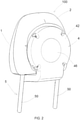
Fig. 1 is an axonometric view of a headrest according to the invention; -
Fig. 2 is an axonometric view of the headrest ofFig. 1 seen from the back; -
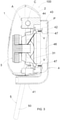
Fig. 3 is a section of the filter ofFig. 1 taken along the plane III-III ofFig. 1 ; -
Fig. 4 is an exploded axonometric view of the headrest ofFig. 1 , with a standard loudspeaker; -
Fig. 5 is an exploded axonometric view of the headrest ofFig. 1 , with an ultraflat loudspeaker; -
Fig. 6 is an exploded axonometric view of the ultraflat loudspeaker ofFig. 5 ; -
Figs. 7 to 12 are diagrammatic side views that show different configurations of the headrest according to the invention in order to obtain different acoustic loads; -
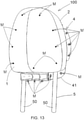
Fig. 13 is an axonometric view of a headrest according to the invention, comprising microphones. - With reference to
Figs. 1 to 4 , a headrest according to the invention is disclosed, which is generally indicated with reference numeral (100). - The headrest (100) is suitable for being fastened to a vehicle seat. The headrest (100) comprises a front half-body (1) where the head of a user is rested, and a back half-body (2) connected to the front half-body (1) by means of connection means (C). Advantageously, the connection means (C) comprise screws and fixing blocks.
- The two half-bodies (1, 2) are concave. The concavity of the front half-body (1) is directed towards the concavity of the back half-body (2), in such a way to form a chamber.
- A reinforcing frame (5) is partially disposed in the chamber between the two half-bodies. The reinforcing frame (5) has a "U-bent" tubular shape. The reinforcing frame (5) comprises two rectilinear sections (50) that protrude in lower position from the two half-bodies, and a connecting section (51) disposed in the chamber between the two half-bodies. The rectilinear sections (50) of the reinforcing frame are suitable for being inserted inside holes of a vehicle seat, in such a way to fasten the headrest (100) to the seat. Alternatively, the reinforcing frame (5) can comprise at least one rod connected in lower position to a half-body or to both half-bodies.
- With reference to
Fig. 4 , the back half-body (2) comprises a back wall (25) wherein a through hole (26) is obtained and defined by an edge that defines an annular seat (20) suitable for receiving and supporting a loudspeaker (3). The through hole (26) is suitably dimensioned in such a way that the loudspeaker (3) completely covers said through hole (26). - The headrest (100) comprises a cover (4) disposed behind the back half-body (2). The cover (4) is fixed to the back wall (25) of the back half-body in such a way to cover the loudspeaker, at least partially. Optionally, the cover (4) can be also connected to the loudspeaker (3) to support the loudspeaker. The cover (4) has a disc-like shape.
- The cover (4) comprises:
- a concave central portion (46) with outward concavity;
- a planar peripheral portion (42), and
- a cylindrical lateral wall (43) that protrudes from the front of the peripheral portion (42).
- Shanks (47) protrude from the peripheral portion of the cover towards the back half-body (2). Said shanks (47) are provided with through holes in order to receive screw means (V) to fix the cover (4) to the back half-body (2).
- The lateral wall (43) comprises an edge (44) suitable for touching against the back wall of the back half-body (2).
- The back half-body (2) comprises threaded holes (23) to receive screw means (V) that pass through the shanks (47) of the cover.
- The loudspeaker (3) is of subwoofer type and operates at low frequencies, i.e. at frequencies from 20Hz and 300Hz, preferably lower than 50Hz. The loudspeaker (3) has an acoustic volume lower than 6 liters and a mobile mass higher than 20 g.
- The loudspeaker (3) can be a subwoofer of standard type comprising:
- a basket (30) with a truncated-conical shape in such a way to define a seat;
- a magnetic unit (32) fixed to the basket (30) and suitable for generating a magnetic field,
- a mobile coil disposed in the seat of the basket (30) and centered in an air gap of the magnetic unit;
- a membrane (31) (shown in
Figs. 3 and7 ) connected to the basket (30) and to the mobile coil, and - at least one centering device fixed to the mobile coil and to the basket.
- The basket (30) has a peripheral edge (35) from which perforated fixing portions (36) protrude, touching the shank (47) of the cover (4) and being crossed by the screw means (V). In view of the above, the shanks (47) act as fixing elements of the loudspeaker and as spacers to space the cover of the loudspeaker, maintaining the peripheral edge (35) of the basket at a distance from the cover (4). The basket (30) is inserted in the annular seat (20) of the back half-body.
- The magnetic unit (32) is fixed to a central edge (37) of the basket. Therefore the magnetic unit (32) and a portion of the basket (30) are disposed in the chamber between the two half-bodies.
- After mounting the loudspeaker (3) and the cover (4), the following is obtained:
- a front chamber (A) formed between the two half-bodies and the membrane (31) of the loudspeaker,
- a back chamber (P) formed by the cover (4), by the membrane (31) of the loudspeaker and by the back wall (25) of the back half-body (2).
- The back wall (25) of the back half-body and the membrane (31) act as partition between the front chamber (A) and the back chamber (P).
- Therefore, the front chamber (A) and the back chamber (P) act as speaker for the loudspeaker (3) and permit using the loudspeaker (3) as subwoofer at low frequencies without the need of a cumbersome speaker. Such a speaker can be configured with different types of acoustic loads in low frequency.
-
Figs. 4 and7 show a first type of acoustic load called "fourth order bandpass", wherein the cover (4) comprises a sound diffusion pipe (41) that protrudes in lower position from the cover (4). The sound diffuser pipe (41) is bent in such a way to pass under the back half-body (2), ending in correspondence of the front half-body (1). The sound diffuser pipe (41) communicates with the back chamber (P) in such a way that the sound emitted by the loudspeaker (3) is conveyed into the sound diffuser pipe (41) and diffused near the ears of the user. In such a case, the front chamber (A) and the back chamber (P) are insulated. -
Fig. 8 shows a second type of acoustic load, called "interport", which differs from the first type of acoustic load because the back half-body (2) comprises a hole (22), in such a way that the front chamber (A) and the back chamber (P) are in communication. -
Fig. 9 shows a third type of acoustic load, called "dual reflex", which differs from the first type of acoustic load because the front half-body (1) comprises a hole (12), in such a way that the front chamber (A) is in communication with the exterior. -
Fig. 10 shows a fourth type of acoustic load that differs from the first type of acoustic load because the front half-body (1) and the back half-body (2) comprise a hole (12, 22), in such a way that the front chamber (A) is in communication with the exterior and the back chamber (P) is in communication with the front chamber (A). -
Fig. 11 shows a fifth type of acoustic load, called "closed box", wherein the cover (4) comprises an opening (45) suitable for letting the sound out from the back chamber (P) towards the back of the headrest (100). In such a case, the front chamber (A) and the back chamber (P) are insulated. -
Fig. 12 shows a sixth type of acoustic load, called "bass reflex", which differs from the fifth type of acoustic load because the back half-body (2) comprises a hole (22), in such a way that the front chamber (A) and the back chamber (P) are in communication. - With reference to
Figs. 5 and 6 , as an alternative to the loudspeaker (3) of standard type, the headrest (100) can comprise a subwoofer loudspeaker (103) of ultraflat type. Such a type of loudspeaker is disclosed inWO2012/171846 . - Said loudspeaker (103) comprises:
- a case (130) having a flat annular shape and comprising an annular seat;
- an annular magnetic unit (132) disposed in the annular seat of the case;
- a coil (133) surrounded by the case (130);
- a front membrane (131a) fixed to a front side of the case (130) and
- a back membrane (131b) fixed to a back side of the case (130).
- The case (130) comprises two half-bodies (130a) and (130b) that are coupled in such a way to enclose the magnetic unit (132).
- The loudspeaker (103) is disposed in the annular seat (20) of the back half-body (2) in such a way that the front membrane (131a) is directed towards the front half-body (1) and the back membrane (131b) is directed towards the cover (4). In such a case, the front chamber (A) is defined by the front half-body (1), by the back half-body (2) and by the front membrane (131a). Instead, the back chamber (P) is defined by the cover (4), by the back wall (25) of the back half-body (2) and by the back membrane (131b) of the loudspeaker.
- Because of said structure, the loudspeaker (103) does not need a basket, and therefore it has a smaller volume than the standard loudspeaker (3). In this way, compact headrests with low thickness can be obtained.
- Moreover, the headrest with the ultraflat loudspeaker (103) is easier to design than the headrest with the standard loudspeaker (3). In fact, the annular case (130) of the ultraflat loudspeaker (103) can be disposed in such a way that the opening of said case is disposed in the area where the user normally rests his or her head.
- It must be noted that the standard loudspeaker (3) has a cumbersome basket (30) disposed in axial direction and provided with reinforcing elements. Such a type of basket protrudes relative to the reinforcing frame (5). Therefore, such a type of basket may be dangerous in case of accidents.
- Instead, the ultraflat loudspeaker (103) does not have a basket and is provided with a close, compact case that is safe in case of accident. Moreover, the head of the user can be protected by disposing the case (130) behind the connecting section (51) of the reinforcing frame.
- Furthermore, because of the very low thickness of the ultraflat loudspeaker, two ultraflat loudspeakers can be disposed in mechanically opposition, i.e. one in front of the other, in push-push configuration. In view of the above, the vibration caused by the mobile masses of the loudspeakers can be cancelled in real time without having to process the signals, introducing a delay in the generation of the environmental noise.
- The loudspeaker in the headrest (100) can be connected to a stereo system for music diffusion or can be connected to a control unit (not shown in the figures) to eliminate the environmental noise.
- With reference to
Fig. 13 , the headrest (100) optionally comprises at least one microphone (M) disposed inside a seat of the headrest (100) obtained in the front, in the back and/or on the side of the headrest (100). In particular, the microphone (M) can be disposed inside a seat obtained in one of the two half-bodies or on the cover (4) or on the sound diffusion pipe (41) that protrudes in lower position from the cover (4). - The microphone (M) can be used for audio applications, such as for example to generate a feedback audio signal for equalization, for telephone communication and/or for the detection of voice controls given by the user.
- The microphone (M) can be connected to the control unit in order to cancel the environmental noise. The microphone (M) detects the environmental noise and generates an electrical signal that is transmitted to the control unit. The control unit is provided with a Digital Signal Processor (DSP) that processes the electrical signal transmitted by the microphone (M) and transmits a signal to the loudspeaker, in such a way that the loudspeaker emits a counternoise that cancels the environmental noise. Because of the fact that the loudspeaker is in the headrest (100), the counternoise generated by the loudspeaker reaches the ears of the user without delay. Being disposed in the headrest (100) near the ears of the user, the microphone (M) captures the environmental noise exactly as it is perceived by the ears of the user. Consequently, the loudspeaker can generate a counternoise that effectively cancels the environmental noise perceived by the user without delay.
- Advantageously, the headrest (100) comprises an array of microphones (M) suitable for being configured in such a way to obtain a noise capturing system.
- The microphones (M) of the array can be disposed on the headrest (100) according to different configurations.
- For example, the array of microphones can comprise:
- a first set of microphones disposed inside seats obtained in upper position on the front and/or the back half-body;
- a second set of microphones disposed inside seats obtained in lower position on the front and/or the back half-body;
- a third set of microphones disposed inside seats obtained on a first side of the front and/or the back half-body;
- a fourth set of microphones disposed inside seats obtained on a second side of the front and/or the back half-body.
- Alternatively, the array of microphones comprises microphones (M) disposed:
- inside seats obtained in frontal position around a peripheral portion on the front and/or the back half-body;
- inside seats obtained in lateral position on the front and/or the back half-body.
- Alternatively or additionally, one or more microphones (M) of the array of microphones can be disposed on the cover (4). For example, one or more microphones (M) can be disposed on the lateral wall (43) of the cover, on the sides of the sound diffusion pipe (41) and/or in the mouth of the sound diffusion pipe (41).
- Because of the fact that an array of microphones is disposed on the headrest, not only the environmental noise perceived by the user sitting on the seat where the headrest (100) is connected can be captured, but also the environmental noise perceived near the headrest (100).
- Moreover, said microphones (M) can be also used to capture sounds coming from the passenger sitting on the seat where the headrest (100) is connected.
- The control unit can use the most suitable configuration of such microphones in order to perform the various functions of the microphones. In particular, the microphones can be used as "directive" microphones to capture sounds coming from specific sources, such as for example the user sitting on the seat where the headrest (100) is connected, or as environmental microphones in order to capture the environmental noise perceived around the headrest (100). Such advantages are possible because the microphones (M) are disposed in the headrest (100) near the mouth and the ears of the user.
- In addition to being electronically versatile, the array of microphones is also mechanically versatile. In fact, the microphones can be arranged in different positions on the headrest (100). Because of the versatile position of the array of microphones, the design of the headrest (100) has no aesthetic or mechanical constraints.
- Numerous variations and modifications can be made to the present embodiments of the invention, which are within the reach of an expert of the field, falling within the scope of the invention which is defined by the appended claims.
Claims (14)
- Headrest (100) suitable for being fastened to a vehicle seat, comprising:- a front half-body (1) against which the head of a user is intended to rest; said front half-body (1) having a concavity;- a back half-body (2) connected to the front half-body (1); said back half-body (2) having a concavity that faces the concavity of the front half-body (1), in such a way that the two half-bodies (1, 2) form a chamber; said back half-body (2) comprising a back wall (25) with a through hole (26) having an edge that defines an annular seat (20);- a reinforcing frame (5) connected to at least one of the two half-bodies (1, 2) and intended to be fixed to the vehicle seat;- a loudspeaker (3; 103) of subwoofer type to operate at low frequencies; said loudspeaker (3; 103) having at least one membrane (31; 131a, 131b); said loudspeaker (3; 103) being disposed in the annular seat (20) of the back half-body (2) in such a way to form a front chamber (A) defined by the front half-body (1), by the back half-body (2) and by the membrane (31; 131a) of the loudspeaker,- a cover (4) disposed behind the back half-body (2) in such a way to cover said loudspeaker (3; 103) at least partially and form a back chamber (P) defined by the cover (4), by the back wall (25) of the back half-body (2) and by the membrane (31; 131b) of the loudspeaker;said front chamber (A) and said back chamber (P) acting as speaker for the loudspeaker (3; 103), in such a way that the loudspeaker can operate as subwoofer at low frequencies.
- The headrest (100) of claim 1, wherein said cover (4) is connected both to the back half-body (2) and to the loudspeaker (3; 103) in such a way to support the loudspeaker (3; 103).
- The headrest (100) of claim 2, wherein said cover (4) comprises shanks (47) that protrude towards said back half-body (2), acting as fixing elements of the loudspeaker and as spacers to space out the cover from the loudspeaker.
- The headrest (100) of any one of the preceding claims, wherein said cover (4) comprises a sound diffuser pipe (41) that protrudes in lower position from the cover; said sound diffuser pipe (41) being in communication with the back chamber (P) in such a way that the sound emitted by the loudspeaker (3; 103) is conveyed into the sound diffuser pipe (41).
- The headrest (100) of claim 4, wherein said sound diffuser pipe (41) is bent in such a way to pass under the back half-body (2), ending in correspondence of the front half-body (1).
- The headrest (100) of claims 4 and 5, wherein the front half-body (1) comprises a hole (12), in such a way that the front chamber (A) is in communication with the exterior.
- The headrest (100) of any one of claims 1 to 3, wherein said cover (4) comprises an opening (45) suitable for emitting the sound from the back chamber (P) towards the back of the headrest (100).
- The headrest (100) of any one of claims 4 to 7, wherein the back half-body (2) comprises a hole (22), in such a way that the front chamber (A) is in communication with the back chamber (B).
- The headrest (100) of any one of the preceding claims, wherein the loudspeaker (3, 103) operates at a frequency comprised between 20Hz and 300Hz; said loudspeaker (3; 103) having an acoustic volume that is lower than 6 liters.
- The headrest (100) of any one of the preceding claims, wherein said loudspeaker (3) comprises:- a basket (30) with a truncated-conical shape in such a way to define a seat;- a magnetic unit (32) fixed to the basket (30) and suitable for generating a magnetic field,- a mobile coil disposed in the seat of the basket (30) and centered in an air gap of the magnetic unit, and- at least one centering device fixed to the mobile coil and to the basket.
- The headrest (100) of any one of claims 1 to 9, wherein said loudspeaker (103) comprises:- a case (130) having a flat annular shape and comprising an annular seat;- an annular magnetic unit (132) disposed in the annular seat of the case, and- a coil (133) surrounded by the case (130);said at least one membrane comprising:- a front membrane (131a) fixed to a front side of the case (130) and- a back membrane (131b) fixed to a back side of the case (130);said front chamber (A) being defined by the front half-body (1), by the back half-body (2) and by the front membrane (131a); said back chamber (P) being defined by the cover (4), by the back wall (25) of the back half-body (2) and by the back membrane (131b) of the loudspeaker.
- The headrest (100) of claim 11, wherein the case (130) of the loudspeaker (103) is disposed behind the reinforcing frame (5).
- The headrest (100) of claim 11 or 12, comprising two loudspeakers (103) disposed one in front of the other one.
- The headrest (100) of any one of the preceding claims, wherein the headrest (100) comprises one or more microphones (M) disposed inside seats obtained in the headrest (100).
Applications Claiming Priority (2)
| Application Number | Priority Date | Filing Date | Title |
|---|---|---|---|
| IT201800001720A IT201800001720A1 (en) | 2018-01-24 | 2018-01-24 | HEADREST FOR VEHICLE SEAT WITH SPEAKER. |
| PCT/EP2019/051473 WO2019145283A1 (en) | 2018-01-24 | 2019-01-22 | Headrest with loudspeaker for vehicle seat |
Publications (2)
| Publication Number | Publication Date |
|---|---|
| EP3743309A1 EP3743309A1 (en) | 2020-12-02 |
| EP3743309B1 true EP3743309B1 (en) | 2022-03-09 |
Family
ID=62002317
Family Applications (1)
| Application Number | Title | Priority Date | Filing Date |
|---|---|---|---|
| EP19702820.2A Active EP3743309B1 (en) | 2018-01-24 | 2019-01-22 | Headrest with loudspeaker for vehicle seat |
Country Status (6)
| Country | Link |
|---|---|
| US (1) | US11345266B2 (en) |
| EP (1) | EP3743309B1 (en) |
| JP (1) | JP2021510990A (en) |
| CN (1) | CN111655537B (en) |
| IT (1) | IT201800001720A1 (en) |
| WO (1) | WO2019145283A1 (en) |
Families Citing this family (16)
| Publication number | Priority date | Publication date | Assignee | Title |
|---|---|---|---|---|
| US12043154B2 (en) * | 2019-12-11 | 2024-07-23 | Adient Us Llc | Backrest for a vehicle seat |
| JP7439649B2 (en) * | 2020-06-01 | 2024-02-28 | トヨタ紡織株式会社 | vehicle headrest |
| KR102812510B1 (en) * | 2020-07-31 | 2025-05-27 | 현대자동차주식회사 | Vehicle and method for controlling thereof |
| CN112037751A (en) * | 2020-08-05 | 2020-12-04 | 上海蔚来汽车有限公司 | Vehicle and active noise reduction control system, method, memory and control device thereof |
| US11813970B2 (en) * | 2020-09-02 | 2023-11-14 | Continental Engineering Services Gmbh | Seating means with actuators for sound emission |
| FR3115504B1 (en) * | 2020-10-22 | 2022-10-14 | Focal Jmlab | SOUND HEADRESTS AND ASSOCIATED SEAT |
| DE102021115982A1 (en) * | 2021-06-21 | 2022-12-22 | Bayerische Motoren Werke Aktiengesellschaft | Vehicle seat with a headrest |
| US20250332974A1 (en) * | 2021-09-29 | 2025-10-30 | Ts Tech Co., Ltd. | Vehicle seat |
| CN114339496A (en) * | 2021-12-20 | 2022-04-12 | 潍坊歌尔丹拿电子科技有限公司 | Headrests and Vehicles |
| JP2023172818A (en) * | 2022-05-24 | 2023-12-06 | テイ・エス テック株式会社 | vehicle seat |
| JP2024032330A (en) * | 2022-08-29 | 2024-03-12 | アルプスアルパイン株式会社 | sound equipment |
| JP2024119504A (en) * | 2023-02-22 | 2024-09-03 | アルプスアルパイン株式会社 | Sound equipment |
| WO2025065620A1 (en) * | 2023-09-28 | 2025-04-03 | 深圳引望智能技术有限公司 | Seat, headrest and vehicle |
| WO2025199723A1 (en) * | 2024-03-26 | 2025-10-02 | 瑞声光电科技(常州)有限公司 | Vehicle-mounted headrest |
| WO2026018552A1 (en) * | 2024-07-19 | 2026-01-22 | パナソニックIpマネジメント株式会社 | Speaker system and seat system |
| US20260070494A1 (en) * | 2024-09-12 | 2026-03-12 | Harman Becker Automotive Systems, Inc. | Speaker enclosure, speaker assembly, and seat assembly |
Family Cites Families (16)
| Publication number | Priority date | Publication date | Assignee | Title |
|---|---|---|---|---|
| USRE33423E (en) * | 1984-07-02 | 1990-11-06 | Irvin Automotive Products, Inc. | Vanity mirror or vehicle accessory assembly and mounting apparatus therefor |
| US6389146B1 (en) * | 2000-02-17 | 2002-05-14 | American Technology Corporation | Acoustically asymmetric bandpass loudspeaker with multiple acoustic filters |
| JP4221807B2 (en) * | 1999-03-26 | 2009-02-12 | ソニー株式会社 | Kelton type speaker |
| JP2002335597A (en) * | 2001-05-09 | 2002-11-22 | Citizen Electronics Co Ltd | Combination speaker |
| JP2005159914A (en) * | 2003-11-27 | 2005-06-16 | Sony Corp | Vehicle audio equipment |
| JP2008178050A (en) * | 2006-12-21 | 2008-07-31 | Onkyo Corp | Speaker system and game machine having the same |
| BR112013002306B1 (en) * | 2010-07-30 | 2021-05-25 | Fraunhofer -Gesellschaft Zur Föerderung Der Angewandten Forschung E.V. | headrest speaker arrangement |
| ITPD20110191A1 (en) * | 2011-06-13 | 2012-12-14 | Maurizio Servadio | THIN ELECTROMECHANICAL / ELECTROACOUSTIC TRANSDUCER |
| JP5955079B2 (en) * | 2012-04-25 | 2016-07-20 | アルパイン株式会社 | Speaker device |
| US9327628B2 (en) * | 2013-05-31 | 2016-05-03 | Bose Corporation | Automobile headrest |
| CN105745119B (en) * | 2013-11-19 | 2020-05-12 | 歌乐株式会社 | Headrest device and sound collecting device |
| US9403454B2 (en) * | 2014-11-17 | 2016-08-02 | Bose Corporation | External attachments for speakers in seats |
| US10271119B2 (en) * | 2015-02-14 | 2019-04-23 | Delta Tooling Co., Ltd. | Headrest having speaker |
| CN105835734B (en) * | 2016-03-19 | 2019-02-01 | 汉得利(常州)电子股份有限公司 | Novel on-vehicle vibration radiation headrest surround sound system |
| CN105831862A (en) * | 2016-05-07 | 2016-08-10 | 常州大果智能科技有限公司 | Helmet |
| US10796682B2 (en) * | 2017-07-11 | 2020-10-06 | Ford Global Technologies, Llc | Quiet zone for handsfree microphone |
-
2018
- 2018-01-24 IT IT201800001720A patent/IT201800001720A1/en unknown
-
2019
- 2019-01-22 WO PCT/EP2019/051473 patent/WO2019145283A1/en not_active Ceased
- 2019-01-22 JP JP2020540373A patent/JP2021510990A/en active Pending
- 2019-01-22 CN CN201980009767.1A patent/CN111655537B/en active Active
- 2019-01-22 US US16/961,179 patent/US11345266B2/en active Active
- 2019-01-22 EP EP19702820.2A patent/EP3743309B1/en active Active
Also Published As
| Publication number | Publication date |
|---|---|
| CN111655537B (en) | 2023-02-03 |
| BR112020014536A2 (en) | 2020-12-08 |
| US11345266B2 (en) | 2022-05-31 |
| IT201800001720A1 (en) | 2019-07-24 |
| CN111655537A (en) | 2020-09-11 |
| WO2019145283A1 (en) | 2019-08-01 |
| JP2021510990A (en) | 2021-04-30 |
| US20210061152A1 (en) | 2021-03-04 |
| EP3743309A1 (en) | 2020-12-02 |
Similar Documents
| Publication | Publication Date | Title |
|---|---|---|
| EP3743309B1 (en) | Headrest with loudspeaker for vehicle seat | |
| CN105745119B (en) | Headrest device and sound collecting device | |
| US10157606B2 (en) | Automatic noise control | |
| JP4264068B2 (en) | Acoustic wave induction in vehicles | |
| JP5118205B2 (en) | Vehicle audio system with components mounted on the door | |
| EP3226580B1 (en) | Automatic noise control for a vehicle seat | |
| WO2010048239A1 (en) | Noise modifying overhead audio system | |
| JPH05344584A (en) | Acoustic device | |
| US20040105565A1 (en) | Loudspeaker system with extended bass response | |
| US11627394B2 (en) | Loudspeaker assembly for providing audio external to a vehicle | |
| KR102187061B1 (en) | Hands-free calling device for emergency notification system | |
| US11375303B2 (en) | Near to the ear subwoofer | |
| JP2016011005A (en) | Acoustic device | |
| CN114339496A (en) | Headrests and Vehicles | |
| EP4111444A1 (en) | Narrowband cancellation | |
| BR112020014536B1 (en) | HEADREST WITH SPEAKER FOR VEHICLE SEAT | |
| US11381920B1 (en) | Loudspeaker with acoustically transparent spider | |
| CN116890724A (en) | Seat with microphone for vehicle | |
| EP3086568B1 (en) | Vehicle sound system and related assembly | |
| JP2024118157A (en) | Audio capture device | |
| JP2009273069A (en) | Noise canceling device and noise canceling method | |
| JP2011166580A (en) | Sound input/output system | |
| JPH0558498U (en) | In-vehicle speaker system |
Legal Events
| Date | Code | Title | Description |
|---|---|---|---|
| STAA | Information on the status of an ep patent application or granted ep patent |
Free format text: STATUS: UNKNOWN |
|
| STAA | Information on the status of an ep patent application or granted ep patent |
Free format text: STATUS: THE INTERNATIONAL PUBLICATION HAS BEEN MADE |
|
| PUAI | Public reference made under article 153(3) epc to a published international application that has entered the european phase |
Free format text: ORIGINAL CODE: 0009012 |
|
| STAA | Information on the status of an ep patent application or granted ep patent |
Free format text: STATUS: REQUEST FOR EXAMINATION WAS MADE |
|
| 17P | Request for examination filed |
Effective date: 20200708 |
|
| AK | Designated contracting states |
Kind code of ref document: A1 Designated state(s): AL AT BE BG CH CY CZ DE DK EE ES FI FR GB GR HR HU IE IS IT LI LT LU LV MC MK MT NL NO PL PT RO RS SE SI SK SM TR |
|
| AX | Request for extension of the european patent |
Extension state: BA ME |
|
| DAV | Request for validation of the european patent (deleted) | ||
| DAX | Request for extension of the european patent (deleted) | ||
| GRAP | Despatch of communication of intention to grant a patent |
Free format text: ORIGINAL CODE: EPIDOSNIGR1 |
|
| STAA | Information on the status of an ep patent application or granted ep patent |
Free format text: STATUS: GRANT OF PATENT IS INTENDED |
|
| INTG | Intention to grant announced |
Effective date: 20211221 |
|
| GRAS | Grant fee paid |
Free format text: ORIGINAL CODE: EPIDOSNIGR3 |
|
| GRAA | (expected) grant |
Free format text: ORIGINAL CODE: 0009210 |
|
| STAA | Information on the status of an ep patent application or granted ep patent |
Free format text: STATUS: THE PATENT HAS BEEN GRANTED |
|
| AK | Designated contracting states |
Kind code of ref document: B1 Designated state(s): AL AT BE BG CH CY CZ DE DK EE ES FI FR GB GR HR HU IE IS IT LI LT LU LV MC MK MT NL NO PL PT RO RS SE SI SK SM TR |
|
| REG | Reference to a national code |
Ref country code: CH Ref legal event code: EP Ref country code: AT Ref legal event code: REF Ref document number: 1473867 Country of ref document: AT Kind code of ref document: T Effective date: 20220315 |
|
| REG | Reference to a national code |
Ref country code: IE Ref legal event code: FG4D |
|
| REG | Reference to a national code |
Ref country code: DE Ref legal event code: R096 Ref document number: 602019012356 Country of ref document: DE |
|
| REG | Reference to a national code |
Ref country code: LT Ref legal event code: MG9D |
|
| REG | Reference to a national code |
Ref country code: NL Ref legal event code: MP Effective date: 20220309 |
|
| PG25 | Lapsed in a contracting state [announced via postgrant information from national office to epo] |
Ref country code: SE Free format text: LAPSE BECAUSE OF FAILURE TO SUBMIT A TRANSLATION OF THE DESCRIPTION OR TO PAY THE FEE WITHIN THE PRESCRIBED TIME-LIMIT Effective date: 20220309 Ref country code: RS Free format text: LAPSE BECAUSE OF FAILURE TO SUBMIT A TRANSLATION OF THE DESCRIPTION OR TO PAY THE FEE WITHIN THE PRESCRIBED TIME-LIMIT Effective date: 20220309 Ref country code: NO Free format text: LAPSE BECAUSE OF FAILURE TO SUBMIT A TRANSLATION OF THE DESCRIPTION OR TO PAY THE FEE WITHIN THE PRESCRIBED TIME-LIMIT Effective date: 20220609 Ref country code: LT Free format text: LAPSE BECAUSE OF FAILURE TO SUBMIT A TRANSLATION OF THE DESCRIPTION OR TO PAY THE FEE WITHIN THE PRESCRIBED TIME-LIMIT Effective date: 20220309 Ref country code: HR Free format text: LAPSE BECAUSE OF FAILURE TO SUBMIT A TRANSLATION OF THE DESCRIPTION OR TO PAY THE FEE WITHIN THE PRESCRIBED TIME-LIMIT Effective date: 20220309 Ref country code: BG Free format text: LAPSE BECAUSE OF FAILURE TO SUBMIT A TRANSLATION OF THE DESCRIPTION OR TO PAY THE FEE WITHIN THE PRESCRIBED TIME-LIMIT Effective date: 20220609 |
|
| REG | Reference to a national code |
Ref country code: AT Ref legal event code: MK05 Ref document number: 1473867 Country of ref document: AT Kind code of ref document: T Effective date: 20220309 |
|
| PG25 | Lapsed in a contracting state [announced via postgrant information from national office to epo] |
Ref country code: LV Free format text: LAPSE BECAUSE OF FAILURE TO SUBMIT A TRANSLATION OF THE DESCRIPTION OR TO PAY THE FEE WITHIN THE PRESCRIBED TIME-LIMIT Effective date: 20220309 Ref country code: GR Free format text: LAPSE BECAUSE OF FAILURE TO SUBMIT A TRANSLATION OF THE DESCRIPTION OR TO PAY THE FEE WITHIN THE PRESCRIBED TIME-LIMIT Effective date: 20220610 Ref country code: FI Free format text: LAPSE BECAUSE OF FAILURE TO SUBMIT A TRANSLATION OF THE DESCRIPTION OR TO PAY THE FEE WITHIN THE PRESCRIBED TIME-LIMIT Effective date: 20220309 |
|
| PG25 | Lapsed in a contracting state [announced via postgrant information from national office to epo] |
Ref country code: NL Free format text: LAPSE BECAUSE OF FAILURE TO SUBMIT A TRANSLATION OF THE DESCRIPTION OR TO PAY THE FEE WITHIN THE PRESCRIBED TIME-LIMIT Effective date: 20220309 |
|
| PG25 | Lapsed in a contracting state [announced via postgrant information from national office to epo] |
Ref country code: SM Free format text: LAPSE BECAUSE OF FAILURE TO SUBMIT A TRANSLATION OF THE DESCRIPTION OR TO PAY THE FEE WITHIN THE PRESCRIBED TIME-LIMIT Effective date: 20220309 Ref country code: SK Free format text: LAPSE BECAUSE OF FAILURE TO SUBMIT A TRANSLATION OF THE DESCRIPTION OR TO PAY THE FEE WITHIN THE PRESCRIBED TIME-LIMIT Effective date: 20220309 Ref country code: RO Free format text: LAPSE BECAUSE OF FAILURE TO SUBMIT A TRANSLATION OF THE DESCRIPTION OR TO PAY THE FEE WITHIN THE PRESCRIBED TIME-LIMIT Effective date: 20220309 Ref country code: PT Free format text: LAPSE BECAUSE OF FAILURE TO SUBMIT A TRANSLATION OF THE DESCRIPTION OR TO PAY THE FEE WITHIN THE PRESCRIBED TIME-LIMIT Effective date: 20220711 Ref country code: ES Free format text: LAPSE BECAUSE OF FAILURE TO SUBMIT A TRANSLATION OF THE DESCRIPTION OR TO PAY THE FEE WITHIN THE PRESCRIBED TIME-LIMIT Effective date: 20220309 Ref country code: EE Free format text: LAPSE BECAUSE OF FAILURE TO SUBMIT A TRANSLATION OF THE DESCRIPTION OR TO PAY THE FEE WITHIN THE PRESCRIBED TIME-LIMIT Effective date: 20220309 Ref country code: CZ Free format text: LAPSE BECAUSE OF FAILURE TO SUBMIT A TRANSLATION OF THE DESCRIPTION OR TO PAY THE FEE WITHIN THE PRESCRIBED TIME-LIMIT Effective date: 20220309 Ref country code: AT Free format text: LAPSE BECAUSE OF FAILURE TO SUBMIT A TRANSLATION OF THE DESCRIPTION OR TO PAY THE FEE WITHIN THE PRESCRIBED TIME-LIMIT Effective date: 20220309 |
|
| PG25 | Lapsed in a contracting state [announced via postgrant information from national office to epo] |
Ref country code: PL Free format text: LAPSE BECAUSE OF FAILURE TO SUBMIT A TRANSLATION OF THE DESCRIPTION OR TO PAY THE FEE WITHIN THE PRESCRIBED TIME-LIMIT Effective date: 20220309 Ref country code: IS Free format text: LAPSE BECAUSE OF FAILURE TO SUBMIT A TRANSLATION OF THE DESCRIPTION OR TO PAY THE FEE WITHIN THE PRESCRIBED TIME-LIMIT Effective date: 20220709 Ref country code: AL Free format text: LAPSE BECAUSE OF FAILURE TO SUBMIT A TRANSLATION OF THE DESCRIPTION OR TO PAY THE FEE WITHIN THE PRESCRIBED TIME-LIMIT Effective date: 20220309 |
|
| REG | Reference to a national code |
Ref country code: DE Ref legal event code: R097 Ref document number: 602019012356 Country of ref document: DE |
|
| PLBE | No opposition filed within time limit |
Free format text: ORIGINAL CODE: 0009261 |
|
| STAA | Information on the status of an ep patent application or granted ep patent |
Free format text: STATUS: NO OPPOSITION FILED WITHIN TIME LIMIT |
|
| PG25 | Lapsed in a contracting state [announced via postgrant information from national office to epo] |
Ref country code: DK Free format text: LAPSE BECAUSE OF FAILURE TO SUBMIT A TRANSLATION OF THE DESCRIPTION OR TO PAY THE FEE WITHIN THE PRESCRIBED TIME-LIMIT Effective date: 20220309 |
|
| 26N | No opposition filed |
Effective date: 20221212 |
|
| PG25 | Lapsed in a contracting state [announced via postgrant information from national office to epo] |
Ref country code: SI Free format text: LAPSE BECAUSE OF FAILURE TO SUBMIT A TRANSLATION OF THE DESCRIPTION OR TO PAY THE FEE WITHIN THE PRESCRIBED TIME-LIMIT Effective date: 20220309 |
|
| REG | Reference to a national code |
Ref country code: CH Ref legal event code: PL |
|
| PG25 | Lapsed in a contracting state [announced via postgrant information from national office to epo] |
Ref country code: LU Free format text: LAPSE BECAUSE OF NON-PAYMENT OF DUE FEES Effective date: 20230122 |
|
| REG | Reference to a national code |
Ref country code: BE Ref legal event code: MM Effective date: 20230131 |
|
| PG25 | Lapsed in a contracting state [announced via postgrant information from national office to epo] |
Ref country code: LI Free format text: LAPSE BECAUSE OF NON-PAYMENT OF DUE FEES Effective date: 20230131 Ref country code: CH Free format text: LAPSE BECAUSE OF NON-PAYMENT OF DUE FEES Effective date: 20230131 |
|
| PG25 | Lapsed in a contracting state [announced via postgrant information from national office to epo] |
Ref country code: BE Free format text: LAPSE BECAUSE OF NON-PAYMENT OF DUE FEES Effective date: 20230131 |
|
| PG25 | Lapsed in a contracting state [announced via postgrant information from national office to epo] |
Ref country code: IE Free format text: LAPSE BECAUSE OF NON-PAYMENT OF DUE FEES Effective date: 20230122 |
|
| PG25 | Lapsed in a contracting state [announced via postgrant information from national office to epo] |
Ref country code: MC Free format text: LAPSE BECAUSE OF FAILURE TO SUBMIT A TRANSLATION OF THE DESCRIPTION OR TO PAY THE FEE WITHIN THE PRESCRIBED TIME-LIMIT Effective date: 20220309 |
|
| PG25 | Lapsed in a contracting state [announced via postgrant information from national office to epo] |
Ref country code: MC Free format text: LAPSE BECAUSE OF FAILURE TO SUBMIT A TRANSLATION OF THE DESCRIPTION OR TO PAY THE FEE WITHIN THE PRESCRIBED TIME-LIMIT Effective date: 20220309 |
|
| PG25 | Lapsed in a contracting state [announced via postgrant information from national office to epo] |
Ref country code: CY Free format text: LAPSE BECAUSE OF FAILURE TO SUBMIT A TRANSLATION OF THE DESCRIPTION OR TO PAY THE FEE WITHIN THE PRESCRIBED TIME-LIMIT; INVALID AB INITIO Effective date: 20190122 |
|
| PG25 | Lapsed in a contracting state [announced via postgrant information from national office to epo] |
Ref country code: HU Free format text: LAPSE BECAUSE OF FAILURE TO SUBMIT A TRANSLATION OF THE DESCRIPTION OR TO PAY THE FEE WITHIN THE PRESCRIBED TIME-LIMIT; INVALID AB INITIO Effective date: 20190122 |
|
| PG25 | Lapsed in a contracting state [announced via postgrant information from national office to epo] |
Ref country code: TR Free format text: LAPSE BECAUSE OF FAILURE TO SUBMIT A TRANSLATION OF THE DESCRIPTION OR TO PAY THE FEE WITHIN THE PRESCRIBED TIME-LIMIT Effective date: 20220309 |
|
| PGFP | Annual fee paid to national office [announced via postgrant information from national office to epo] |
Ref country code: GB Payment date: 20260126 Year of fee payment: 8 |
|
| PGFP | Annual fee paid to national office [announced via postgrant information from national office to epo] |
Ref country code: DE Payment date: 20260127 Year of fee payment: 8 |
|
| PGFP | Annual fee paid to national office [announced via postgrant information from national office to epo] |
Ref country code: IT Payment date: 20251211 Year of fee payment: 8 |
|
| PGFP | Annual fee paid to national office [announced via postgrant information from national office to epo] |
Ref country code: FR Payment date: 20260126 Year of fee payment: 8 |