EP3742518B1 - Method and device for manufacturing safety vent of cap plate for secondary battery, method for manufacturing cap plate using method for manufacturing safety vent, and cap plate for secondary battery manufactured by method for manufacturing cap plate - Google Patents
Method and device for manufacturing safety vent of cap plate for secondary battery, method for manufacturing cap plate using method for manufacturing safety vent, and cap plate for secondary battery manufactured by method for manufacturing cap plate Download PDFInfo
- Publication number
- EP3742518B1 EP3742518B1 EP19741553.2A EP19741553A EP3742518B1 EP 3742518 B1 EP3742518 B1 EP 3742518B1 EP 19741553 A EP19741553 A EP 19741553A EP 3742518 B1 EP3742518 B1 EP 3742518B1
- Authority
- EP
- European Patent Office
- Prior art keywords
- safety vent
- plate
- forming
- cap plate
- manufacturing
- Prior art date
- Legal status (The legal status is an assumption and is not a legal conclusion. Google has not performed a legal analysis and makes no representation as to the accuracy of the status listed.)
- Active
Links
Images






Classifications
-
- B—PERFORMING OPERATIONS; TRANSPORTING
- B21—MECHANICAL METAL-WORKING WITHOUT ESSENTIALLY REMOVING MATERIAL; PUNCHING METAL
- B21D—WORKING OR PROCESSING OF SHEET METAL OR METAL TUBES, RODS OR PROFILES WITHOUT ESSENTIALLY REMOVING MATERIAL; PUNCHING METAL
- B21D28/00—Shaping by press-cutting; Perforating
- B21D28/24—Perforating, i.e. punching holes
- B21D28/26—Perforating, i.e. punching holes in sheets or flat parts
-
- B—PERFORMING OPERATIONS; TRANSPORTING
- B21—MECHANICAL METAL-WORKING WITHOUT ESSENTIALLY REMOVING MATERIAL; PUNCHING METAL
- B21J—FORGING; HAMMERING; PRESSING METAL; RIVETING; FORGE FURNACES
- B21J13/00—Details of machines for forging, pressing, or hammering
- B21J13/02—Dies or mountings therefor
-
- B—PERFORMING OPERATIONS; TRANSPORTING
- B21—MECHANICAL METAL-WORKING WITHOUT ESSENTIALLY REMOVING MATERIAL; PUNCHING METAL
- B21J—FORGING; HAMMERING; PRESSING METAL; RIVETING; FORGE FURNACES
- B21J13/00—Details of machines for forging, pressing, or hammering
- B21J13/08—Accessories for handling work or tools
- B21J13/14—Ejecting devices
-
- B—PERFORMING OPERATIONS; TRANSPORTING
- B21—MECHANICAL METAL-WORKING WITHOUT ESSENTIALLY REMOVING MATERIAL; PUNCHING METAL
- B21J—FORGING; HAMMERING; PRESSING METAL; RIVETING; FORGE FURNACES
- B21J5/00—Methods for forging, hammering, or pressing; Special equipment or accessories therefor
- B21J5/02—Die forging; Trimming by making use of special dies ; Punching during forging
-
- B—PERFORMING OPERATIONS; TRANSPORTING
- B21—MECHANICAL METAL-WORKING WITHOUT ESSENTIALLY REMOVING MATERIAL; PUNCHING METAL
- B21K—MAKING FORGED OR PRESSED METAL PRODUCTS, e.g. HORSE-SHOES, RIVETS, BOLTS OR WHEELS
- B21K23/00—Making other articles
-
- B—PERFORMING OPERATIONS; TRANSPORTING
- B23—MACHINE TOOLS; METAL-WORKING NOT OTHERWISE PROVIDED FOR
- B23D—PLANING; SLOTTING; SHEARING; BROACHING; SAWING; FILING; SCRAPING; LIKE OPERATIONS FOR WORKING METAL BY REMOVING MATERIAL, NOT OTHERWISE PROVIDED FOR
- B23D15/00—Shearing machines or shearing devices cutting by blades which move parallel to themselves
- B23D15/06—Sheet shears
-
- H—ELECTRICITY
- H01—ELECTRIC ELEMENTS
- H01M—PROCESSES OR MEANS, e.g. BATTERIES, FOR THE DIRECT CONVERSION OF CHEMICAL ENERGY INTO ELECTRICAL ENERGY
- H01M50/00—Constructional details or processes of manufacture of the non-active parts of electrochemical cells other than fuel cells, e.g. hybrid cells
- H01M50/10—Primary casings; Jackets or wrappings
- H01M50/147—Lids or covers
- H01M50/148—Lids or covers characterised by their shape
- H01M50/15—Lids or covers characterised by their shape for prismatic or rectangular cells
-
- H—ELECTRICITY
- H01—ELECTRIC ELEMENTS
- H01M—PROCESSES OR MEANS, e.g. BATTERIES, FOR THE DIRECT CONVERSION OF CHEMICAL ENERGY INTO ELECTRICAL ENERGY
- H01M50/00—Constructional details or processes of manufacture of the non-active parts of electrochemical cells other than fuel cells, e.g. hybrid cells
- H01M50/30—Arrangements for facilitating escape of gases
- H01M50/342—Non-re-sealable arrangements
- H01M50/3425—Non-re-sealable arrangements in the form of rupturable membranes or weakened parts, e.g. pierced with the aid of a sharp member
-
- H—ELECTRICITY
- H01—ELECTRIC ELEMENTS
- H01M—PROCESSES OR MEANS, e.g. BATTERIES, FOR THE DIRECT CONVERSION OF CHEMICAL ENERGY INTO ELECTRICAL ENERGY
- H01M50/00—Constructional details or processes of manufacture of the non-active parts of electrochemical cells other than fuel cells, e.g. hybrid cells
- H01M50/50—Current conducting connections for cells or batteries
- H01M50/572—Means for preventing undesired use or discharge
- H01M50/574—Devices or arrangements for the interruption of current
- H01M50/578—Devices or arrangements for the interruption of current in response to pressure
-
- H—ELECTRICITY
- H01—ELECTRIC ELEMENTS
- H01M—PROCESSES OR MEANS, e.g. BATTERIES, FOR THE DIRECT CONVERSION OF CHEMICAL ENERGY INTO ELECTRICAL ENERGY
- H01M2200/00—Safety devices for primary or secondary batteries
- H01M2200/20—Pressure-sensitive devices
-
- Y—GENERAL TAGGING OF NEW TECHNOLOGICAL DEVELOPMENTS; GENERAL TAGGING OF CROSS-SECTIONAL TECHNOLOGIES SPANNING OVER SEVERAL SECTIONS OF THE IPC; TECHNICAL SUBJECTS COVERED BY FORMER USPC CROSS-REFERENCE ART COLLECTIONS [XRACs] AND DIGESTS
- Y02—TECHNOLOGIES OR APPLICATIONS FOR MITIGATION OR ADAPTATION AGAINST CLIMATE CHANGE
- Y02E—REDUCTION OF GREENHOUSE GAS [GHG] EMISSIONS, RELATED TO ENERGY GENERATION, TRANSMISSION OR DISTRIBUTION
- Y02E60/00—Enabling technologies; Technologies with a potential or indirect contribution to GHG emissions mitigation
- Y02E60/10—Energy storage using batteries
Definitions
- the present invention relates to a method and device for manufacturing a safety vent of a cap plate for a secondary battery, a method for manufacturing the cap plate using the method for manufacturing the safety vent, and the cap plate for the secondary battery manufactured by the method for manufacturing the cap plate, so as to easily mold a safety vent by only once or two times of forging processes,
- the solutions include a safety vent that is used in the battery to release gas generated in the battery to the outside at a predetermined pressure or more.
- the safety vent is usually formed in a cap plate of the secondary battery.
- the valve which is ruptured due to an internal pressure when an abnormal pressure occurs in the battery and discharging gas in the battery, is provided in the cap plate of the secondary battery.
- the conventional battery cap plate manufacturing method includes a first process of preparing a plate that is a metal material for a cap plate, a second process of seating the plate at a center so as to be spaced apart from fixing frames on both sides at regular intervals, a third process of primarily pressurizing the plate mechanically with a hammer at 180 tons to 300 tons from the top so that a groove is formed in a predetermined shape and the plate is stretched to both sides, a fourth process of secondarily pressurizing the plate mechanically with the hammer at 200 tons to 280 tons from the top to deeply form the groove, so that the plate is stretched to the both sides and comes into close contact with the fixing frames, and a fifth process of tertiarily pressurizing the plate mechanically with the hammer at 180 tons to 290 tons from the top, so that a cap plate formed with a safety vent integrally thin at the plate portion formed with the groove.
- the groove is formed through a forging process performed three times or more, and the safety vent is formed to have a thin thickness at a lower portion thereof, so that a forged hardening occurs at the thin portion of the safety vent due to the forging by three times or more, thereby causing a defect often in which the hardness of the safety vent is excessively high.
- the conventional battery cap plate manufacturing method is required to perform the forging process at least three times to form the safety vent, thereby increasing a unit price for producing the cap plate due the increase of the number of forging times.
- the present invention is provided to solve the above conventional problems.
- An object of the present invention is to provide a method and device for manufacturing a safety vent of a cap plate for a secondary battery, a method for manufacturing the cap plate using the method for manufacturing the safety vent, and the cap plate for the secondary battery manufactured by the method for manufacturing the cap plate, so as to prevent a forming defect of the safety vent in which a vent plate has an excessive hardness, by preventing a forged hardening from occurring in the vent plate formed at a lower portion of the safety vent during forging by simply forming the safety vent using only once or two times of forging processes.
- another object of the present invention is to enable a safety vent to be forged while minimizing a forging torque by moving and discharging a material downward while forming the safety vent by moving down an upper elevating mold.
- Another object of the present invention is to improve the productivity of manufacturing a cap plate by simply forming a safety vent with only once or two times of forging processes.
- the "method for manufacturing a safety vent of a cap plate for a secondary battery” includes: a safety vent forming step in which a material plate of a cap plate is put on a top surface of a lower forming portion of a press, which includes a lower forming portion formed with a long elongated hole extending back and forth and provided therein with a lower elevating mold that defines a peripheral discharge part,, and an upper forming portion provided therein with an upper elevating mold, a material is discharged to the peripheral discharge part to form a discharge material portion while forming a safety vent having a groove shape and formed at a lower portion thereof with a vent plate through downward movement of the upper forming portion and the upper elevating mold and upward movement of the lower elevating mold, and the safety vent is formed by moving up the upper forming portion and the upper elevating mold and moving down the lower elevating mold; a discharge material portion cutting and removing step in which the safety vent formed with the material plate is put on the top
- the upper forming portion and the upper elevating mold are moved down and the lower elevating mold is simultaneously moved up, or the lower elevating mold is moved up after the upper forming portion and the upper elevating mold are moved down, so that the safety vent is formed.
- the cutting device of the "method for manufacturing a safety vent of a cap plate for a secondary battery” includes an internal cutting member positioned inside the discharge material portion, formed with slant blade portions at front, rear, left and right edges of an upper periphery of the cutting device, and configured to be movable in front, rear, left, and right directions through a driving device.
- the internal cutting member sequentially moves in a left direction and returns, moves in a right direction and returns, moves in a front direction and returns, and moves in a rear direction and returns so as to cut the upper portion of the discharge material portion.
- a forged hardening is prevented from occurring in the vent plate formed at the lower portion of the safety vent during forging by simply forming the safety vent using only once or two times of forging processes, so that a forming defect of a safety vent in which a vent plate has an excessive hardness can be prevented.
- forging of the safety vent is facilitated while a forging torque is minimized by moving and discharging the material downward while forming the safety vent by moving down the upper elevating mold, so that power energy can be reduced when the safety vent is forged.
- the safety vent is simply formed by only once or two times of forging processes, so that the productivity of manufacturing the cap plate can be improved.
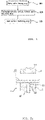
- FIG. 1 is a process diagram showing a method for manufacturing a safety vent according to the present invention.
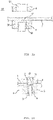
- FIG. 2 shows views illustrating a safety vent forming step of the method for manufacturing the safety vent according to the present invention.
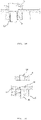
- FIG. 3 shows views illustrating a discharge material portion cutting and removing step the method for manufacturing the safety vent according to the present invention.
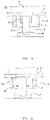
- FIG. 4 shows views illustrating a cutting device configured according to another embodiment of the present invention.
- FIG. 5 shows views illustrating a safety vent forming step of the method for manufacturing the safety vent according to the present invention.
- the method for manufacturing a safety vent of a cap plate for a secondary battery is configured to form a safety vent 2 in a material plate 1 of a cap plate, and includes a safety vent forming step 100, a discharge material portion cutting and removing step 200, and a lower surface flattening step 300.
- a material plate 1 serving as a material of the cap plate is put on a top surface of a lower forming portion 5 of a press P including the lower forming portion 5 formed therein with a peripheral discharge part 52, accommodated therein with a lower elevating mold D2, and formed with a long elongated hole 51 rearward and forward, and an upper forming portion 4 provided therein with an upper elevating mold D1.
- the safety vent 2 is formed by returning and raising the upper forming portion 4 and the upper elevating mold D1 and returning and lowering the lower elevating mold D2.
- the safety vent 2 may be formed by simultaneously lowering the upper forming portion 4 and the upper elevating mold D1 and raising the lower elevating mold D2 such that the safety vent is formed in one time of forging.
- the safety vent 2 may be formed by raising the lower elevating mold D2 after lowering the upper forming portion 4 and the upper elevating mold D1 such that compressive loads applied to the upper forming portion 4 and the lower forming portion 5 are distributed and reduced.
- the discharge material portion cutting and removing step 200 proceeds after the safety vent forming step 100 is performed.
- the safety vent 2 formed with the material plate 1 is put on the top surface of the lower forming portion 5 of the press P having the lower forming portion 5 formed with a discharge material portion insertion hole 53 accommodating a cutting device 6 for cutting an upper portion of the discharge material portion 3, so that the discharge material portion 3 of the material plate 1 is inserted into the discharge material portion insertion hole 53.
- the upper portion of the discharge material portion 3 is cut by operating the cutting device 6 for the discharge material portion so as to remove the discharge material portion 3.
- a residual material part 31 at the upper portion of the discharge material portion 3 remains on a bottom surface of the material plate 1.
- the upper forming portion 4 constituting the press P may be moved down to further press the top surface of the material plate 1, such that the material plate 1 put on the top surface of the lower forming portion 5 is more firmly fixed to the top surface of the lower forming portion 5.
- the cutting device 6 may include an internal cutting member 61 positioned inside the discharge material portion 3, formed with slant blade portions C at front, rear, left and right edges of an upper periphery of the cutting device, and provided to be movable in front, rear, left, and right directions through a driving device M, so as to sequentially cut the discharge material portion 3.
- a driving device M so as to sequentially cut the discharge material portion 3.
- various driving devices using a cylinder, a motor or the like are generally known for the driving device M configured to move the internal cutting member 61 in the front, rear, left, and right directions, the detailed description will be omitted.
- the internal cutting member 61 sequentially moves in the left direction and returns, moves in the right direction and returns, moves in the front direction and returns, and moves in the rear direction and returns so as to cut the upper portion of the discharge material portion 3, so as to sequentially cut the discharge material portion 3.
- the cutting device 6 may include front, rear, left, and right cutting members 62a, 62b, 62c, and 62d positioned at front, rear, left and right outer sides of the discharge material portion 3, formed at each upper inner edge thereof with a slant blade portion C, and sequentially moved inward and outward one by one through the driving device M to cut the upper portion of the discharge material portion 3, such that the upper portion of the discharge material portion 3 is cut in an inward direction from the outside.
- the bottom surface of the material plate is formed into a flat surface by forging the residual material part 31 remaining on the bottom surface of the material plate 1 in the discharge material portion cutting and removing step 200.
- the lower surface flattening forming step 300 proceeds after the discharge material portion cutting and removing step 200 is performed, in which, after the material plate 1 from which the upper portion of the discharge material portion 3 is cut is put on the top surface of the lower forming portion 5 of the press P including the lower forming portion 5 having a flat surface and the upper forming portion 4 formed on a lower portion thereof with a safety vent insertion part 41, the bottom surface of the material plate 1 is flattened by moving down the upper forming portion 4, and the upper forming portion 4 is moved up.
- the safety vent 2 may be simply formed even by only one time of forging process in which the upper forming portion 4 and the upper elevating mold D1 are moved down and the lower elevating mold D2 is simultaneously moved up, or two forging processes in which the upper forming portion 4 and the upper elevating mold D1 are moved down and then the lower elevating mold D2 is moved up.
- the method for manufacturing the safety vent of the cap plate of the present invention is the useful invention, in which a forged hardening is prevented from occurring in a vent plate 21 formed at a lower portion of the safety vent 2 during forging by simply forming the safety vent 2 through only once or two times of forging processes, so that a forming defect of a safety vent 2 in which a vent plate 21 has an excessive hardness can be prevented.
- the number of forgings to form the safety vent 2 according to the present invention is only one or two, the forged hardening of the bent plate, which conventionally occurs when the forging is performed three times or more, rarely occurs because the safety vent 2 of the present invention is forged once or two times.
- the method for manufacturing a safety vent of a cap plate of the present invention is the useful invention, since forging of the safety vent 2 is facilitated while a forging torque is minimized by moving and discharging the material downward while forming the safety vent 2 by moving down the upper elevating mold D1 so that power energy can be reduced when the safety vent 2 is forged.
- the device for manufacturing the safety vent of the cap plate for the secondary battery according to the present invention is used for the above-described method for manufacturing the safety vent of the cap plate.
- the device for manufacturing a safety vent of a cap plate includes a safety vent forming portion 10 including a lower forming portion 5 formed therein with a peripheral discharge part 52, accommodated therein with a lower elevating mold D2, and formed with a long elongated hole 51 rearward and forward, and an upper forming portion 4 disposed over the lower forming portion 5 so as to be movable up and down and provided therein with an upper elevating mold D1 so as to be movable up and down.
- the device for manufacturing the safety vent includes a discharge material portion cutting portion 20 accommodated therein with a cutting device 6 configured to cut the discharge material portion 3, and having a lower forming portion 5 formed with a discharge material portion insertion hole 53, and a lower surface flattening portion 30 including a lower forming portion 5 having a flat upper surface and an upper forming portion 4 formed at a lower portion thereof with a safety vent insertion part 41.
- the safety vent forming portion 10, the discharge material portion cutting portion 20, and the lower surface flattening portion 30 may be sequentially provided at one press P according to a moving sequence of the material plate 1, or may be provided at a plurality of presses P one by one.
- FIG. 6 shows views illustrating a method for manufacturing a cap plate of a first embodiment according to the present invention.
- the method for manufacturing a safety vent of a cap plate for a secondary battery of the first embodiment according to the present invention uses the above-described method for manufacturing the safety vent of the cap plate as shown in FIGS. 1 to 6 , and is presumed to include all of the above-described method for manufacturing the safety vent of the cap plate.
- the material plate 1 supplied during the safety vent forming step 100 is formed of a long plates extending laterally, and the safety vent forming step 100, the discharge material portion cutting and removing step 200, and the lower surface flattening forming step 300 are successively performed by continuously moving the long material plate 1 one-by-one pitch.
- the sequence proceeds such that the long material plate 1 descends, ascends, and move by every one pitch.
- a plurality of moving pin holes into which elevating and moving pins are inserted are formed in front and rear of the material plate 1, and then the long material plate 1 is moved by every one pitch. Since the above configuration of moving the long material plate 1 by every one pitch is already applied and generally used in a forging press P, the descriptions for detailed configurations and operations will be omitted. Accordingly, before the material plate 1 is supplied, a plurality of moving pin holes (not shown) are perforated at the front and rear of the long material plate 1 moved by every one pitch.
- a post-forging forming step further proceeds in which, after the lower surface flattening forming step proceeds, at least one time of forging process of forging another configuration formed in the cap plate is performed by operating the press P.
- a material plate cutting step proceeds in which the material plate 1 formed therein with the configuration different from a configuration of the safety vent 2 is cut into a rectangular shape as the cap plate by operating the press P, so that the cap plate is manufactured.
- a rivet mount portion consisting essentially of a fluid inlet hole and a rivet hole is required to be forged and formed.
- a terminal plate or component fixing holes may be further molded through forging according to a type of the cap plate.
- the method for manufacturing the cap plate of the first embodiment according to the present invention is the useful invention, since the cap plate is simply manufactured by cutting the long material plate 1 after simply forming the safety vent 2 through only once or two times of forging processes as described above so that the productivity of manufacturing the cap plate can be improved.
- the cap plate according to the present invention can be manufactured by a simple process through the above-described method for manufacturing the cap plate according to the first embodiment.
- FIG. 7 shows views illustrating a method for manufacturing a cap plate of a second embodiment according to the present invention.
- the method for manufacturing a safety vent of a cap plate for a secondary battery of the second embodiment according to the present invention uses the above-described method for manufacturing the safety vent of the cap plate as shown in FIGS. 1 , 3 to 5 , and 7 , and is presumed to include all of the above-described method for manufacturing the safety vent of the cap plate.
- the material plate 1 supplied in the safety vent forming step 100 is formed of a rectangular material plate 1 having a rectangular periphery and elongated in the front and rear directions.
- a tight protruding part 54 is further formed on a periphery of the upper portion of the lower forming portion 5 so that the periphery of the rectangular material plate 1 comes into close contact.
- a tight protruding part 54 is further formed on a periphery of the upper portion of the lower forming portion 5 so that the periphery of the rectangular material plate 1 comes into close contact.
- a post-forging forming step further proceeds in which a configuration different from a configuration of the safety vent 2 is formed by operating the press P by putting the formed rectangular material plate 1 into the next forging process.
- the cap plate is manufactured.
- a rivet mount portion consisting essentially of a fluid inlet hole and a rivet hole is required to be forged and formed.
- a terminal plate or component fixing holes may be further molded through forging according to a type of the cap plate.
- the method for manufacturing the cap plate of the second embodiment according to the present invention is the useful invention, since the cap plate is simply manufactured through the post-forging forming step after simply forming the safety vent 2 using only once or two times of forging processes as described above, so that the productivity of manufacturing a cap plate can be improved.
- the cap plate according to the present invention can be manufactured by a simple process through the above-described method for manufacturing the cap plate according to the second embodiment.
Landscapes
- Engineering & Computer Science (AREA)
- Mechanical Engineering (AREA)
- Chemical & Material Sciences (AREA)
- Chemical Kinetics & Catalysis (AREA)
- Electrochemistry (AREA)
- General Chemical & Material Sciences (AREA)
- Gas Exhaust Devices For Batteries (AREA)
- Forging (AREA)
- Sealing Battery Cases Or Jackets (AREA)
Description
- The present invention relates to a method and device for manufacturing a safety vent of a cap plate for a secondary battery, a method for manufacturing the cap plate using the method for manufacturing the safety vent, and the cap plate for the secondary battery manufactured by the method for manufacturing the cap plate, so as to easily mold a safety vent by only once or two times of forging processes,
- In general, various solutions have been proposed to ensure the safety of a secondary battery, in which the solutions include a safety vent that is used in the battery to release gas generated in the battery to the outside at a predetermined pressure or more.
- In addition, the safety vent is usually formed in a cap plate of the secondary battery. In other words, the valve, which is ruptured due to an internal pressure when an abnormal pressure occurs in the battery and discharging gas in the battery, is provided in the cap plate of the secondary battery.
- First, a battery cap plate manufacturing method that constitutes "BATTERY CAP PLATE HAVING SAFETY VENT FOR ELECTRIC VEHICLE AND MANUFACTURING METHOD THEREOF" (hereinafter, referred to as a "conventional battery cap plate manufacturing method") of
Korean Registered Patent No. 1043577 - The conventional battery cap plate manufacturing method includes a first process of preparing a plate that is a metal material for a cap plate, a second process of seating the plate at a center so as to be spaced apart from fixing frames on both sides at regular intervals, a third process of primarily pressurizing the plate mechanically with a hammer at 180 tons to 300 tons from the top so that a groove is formed in a predetermined shape and the plate is stretched to both sides, a fourth process of secondarily pressurizing the plate mechanically with the hammer at 200 tons to 280 tons from the top to deeply form the groove, so that the plate is stretched to the both sides and comes into close contact with the fixing frames, and a fifth process of tertiarily pressurizing the plate mechanically with the hammer at 180 tons to 290 tons from the top, so that a cap plate formed with a safety vent integrally thin at the plate portion formed with the groove.
- However, when the cap plate is manufactured through the battery cap plate manufacturing method in the above manner, the groove is formed through a forging process performed three times or more, and the safety vent is formed to have a thin thickness at a lower portion thereof, so that a forged hardening occurs at the thin portion of the safety vent due to the forging by three times or more, thereby causing a defect often in which the hardness of the safety vent is excessively high.
- In addition, the conventional battery cap plate manufacturing method is required to perform the forging process at least three times to form the safety vent, thereby increasing a unit price for producing the cap plate due the increase of the number of forging times.
- "BATTERY CAP PLATE HAVING SAFETY VENT FOR ELECTRIC VEHICLE AND MANUFACTURING METHOD THEREOF" of
Korean Registered Patent No. 1043577 (registered June 16, 2011 - The present invention is provided to solve the above conventional problems.
- An object of the present invention is to provide a method and device for manufacturing a safety vent of a cap plate for a secondary battery, a method for manufacturing the cap plate using the method for manufacturing the safety vent, and the cap plate for the secondary battery manufactured by the method for manufacturing the cap plate, so as to prevent a forming defect of the safety vent in which a vent plate has an excessive hardness, by preventing a forged hardening from occurring in the vent plate formed at a lower portion of the safety vent during forging by simply forming the safety vent using only once or two times of forging processes.
- In addition, another object of the present invention is to enable a safety vent to be forged while minimizing a forging torque by moving and discharging a material downward while forming the safety vent by moving down an upper elevating mold.
- In addition, another object of the present invention is to improve the productivity of manufacturing a cap plate by simply forming a safety vent with only once or two times of forging processes.
- The "method for manufacturing a safety vent of a cap plate for a secondary battery" according to the present invention to achieve the above-mentioned objects includes: a safety vent forming step in which a material plate of a cap plate is put on a top surface of a lower forming portion of a press, which includes a lower forming portion formed with a long elongated hole extending back and forth and provided therein with a lower elevating mold that defines a peripheral discharge part,, and an upper forming portion provided therein with an upper elevating mold, a material is discharged to the peripheral discharge part to form a discharge material portion while forming a safety vent having a groove shape and formed at a lower portion thereof with a vent plate through downward movement of the upper forming portion and the upper elevating mold and upward movement of the lower elevating mold, and the safety vent is formed by moving up the upper forming portion and the upper elevating mold and moving down the lower elevating mold; a discharge material portion cutting and removing step in which the safety vent formed with the material plate is put on the top surface of the lower forming portion of the press having the lower forming portion formed with a discharge material portion insertion hole accommodating a cutting device for cutting an upper portion of the discharge material portion, so that the discharge material portion of the material plate is inserted into the discharge material portion insertion hole, and the upper portion of the discharge material portion is cut by operating the cutting device for the discharge material portion so as to remove the discharge material portion; and a lower surface flattening forming step in which the material plate from which the upper portion of the discharge material portion is cut is put on the top surface of the lower forming portion of the press including the lower forming portion having a flat surface and the upper forming portion formed on a lower portion thereof with a safety vent insertion part, and then the bottom surface of the material plate is flattened by moving down the upper forming portion and the upper forming portion is moved up.
- In addition, in the safety vent forming step of the "method for manufacturing a safety vent of a cap plate for a secondary battery" according to the present invention, the upper forming portion and the upper elevating mold are moved down and the lower elevating mold is simultaneously moved up, or the lower elevating mold is moved up after the upper forming portion and the upper elevating mold are moved down, so that the safety vent is formed.
- In addition, the cutting device of the "method for manufacturing a safety vent of a cap plate for a secondary battery" according to the present invention includes an internal cutting member positioned inside the discharge material portion, formed with slant blade portions at front, rear, left and right edges of an upper periphery of the cutting device, and configured to be movable in front, rear, left, and right directions through a driving device. In the discharge material portion cutting and removing step, the internal cutting member sequentially moves in a left direction and returns, moves in a right direction and returns, moves in a front direction and returns, and moves in a rear direction and returns so as to cut the upper portion of the discharge material portion.
- According to the present invention configured in the above manner, a forged hardening is prevented from occurring in the vent plate formed at the lower portion of the safety vent during forging by simply forming the safety vent using only once or two times of forging processes, so that a forming defect of a safety vent in which a vent plate has an excessive hardness can be prevented.
- In addition, according to the present invention, forging of the safety vent is facilitated while a forging torque is minimized by moving and discharging the material downward while forming the safety vent by moving down the upper elevating mold, so that power energy can be reduced when the safety vent is forged.
- In addition, according to the present invention, the safety vent is simply formed by only once or two times of forging processes, so that the productivity of manufacturing the cap plate can be improved.
-
-
FIG. 1 is a process diagram showing a method for manufacturing a safety vent according to the present invention. -
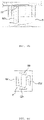
FIG. 2 shows a safety vent forming step of the method for manufacturing the safety vent according to the present invention.-
FIGS. 2a and2b are front and side sectional views showing before forming of the safety vent, -
FIGS. 2c and2d are front and side sectional views showing a state of forming the safety vent by operating upper and lower elevating molds, -
FIGS. 2e and2f are front and side sectional views showing a state in which the upper and lower elevating molds return upward and downward, and -
FIG. 2g is a schematic perspective view showing the safety vent formed together with a discharge material portion.
-
-
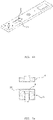
FIG. 3 shows a discharge material portion cutting and removing step of the method for manufacturing the safety vent according to the present invention.-
FIG. 3a is a side sectional view showing a state before cutting, -
FIG. 3b is a side sectional view showing a cut state, and -
FIG. 3c is a schematic plan view showing the top of an internal cutting member.
-
-
FIG. 4 shows a cutting device configured according to another embodiment of the present invention.-
FIG. 4a is a side sectional view showing a state before the discharge material portion is cut, -
FIG. 4b is a side sectional view showing a state in which the discharge material is cut, and -
FIG. 4c is a schematic plan view showing front, rear, left and right cutting members when viewed from the top.
-
-
FIG. 5 shows a lower surface flattening forming step of the method for manufacturing the safety vent according to the present invention.-
FIGS. 5a and 5b are front and side sectional views showing a state after flattening a lower surface, and -
FIG. 5C is a schematic perspective view showing a safety vent that is finally formed.
-
-
FIG. 6 shows a method for manufacturing a cap plate of a first embodiment according to the present invention.-
FIG. 6a is a front sectional view showing a material plate cutting step, and -
FIG. 6b is a perspective view showing a cap plate that is finally manufactured.
-
-
FIG. 7 shows the method for manufacturing the cap plate of the first embodiment according to the present invention.-
FIGS. 7a and7b are front and side sectional views showing a state before forming the safety vent, -
FIGS. 7c and7d are front and side sectional views showing a state of forming a safety vent by operating upper and lower elevating molds, -
FIGS. 7e and7f are front and side sectional views showing a state of performing a lower surface flattening forming step, and -
FIG. 7g is a perspective view showing a plate material in which the safety vent is formed.
-
- Hereinafter, exemplary embodiments of the present invention will be described in detail with reference to the accompanying drawings. However, it should be understood that the present invention may be implemented in various different forms and is not limited to the described embodiments.
-
FIG. 1 is a process diagram showing a method for manufacturing a safety vent according to the present invention.FIG. 2 shows views illustrating a safety vent forming step of the method for manufacturing the safety vent according to the present invention.FIG. 3 shows views illustrating a discharge material portion cutting and removing step the method for manufacturing the safety vent according to the present invention.FIG. 4 shows views illustrating a cutting device configured according to another embodiment of the present invention. In addition,FIG. 5 shows views illustrating a safety vent forming step of the method for manufacturing the safety vent according to the present invention. - As shown in the drawings, the method for manufacturing a safety vent of a cap plate for a secondary battery according to the present invention is configured to form a
safety vent 2 in amaterial plate 1 of a cap plate, and includes a safetyvent forming step 100, a discharge material portion cutting and removingstep 200, and a lowersurface flattening step 300. - First, in the safety
vent forming step 100, as shown inFIGS. 1 and2 , amaterial plate 1 serving as a material of the cap plate is put on a top surface of a lower formingportion 5 of a press P including the lower formingportion 5 formed therein with aperipheral discharge part 52, accommodated therein with a lower elevating mold D2, and formed with a longelongated hole 51 rearward and forward, and an upper formingportion 4 provided therein with an upper elevating mold D1. - Then, after the material is discharged to the
peripheral discharge part 52 to form adischarge material portion 3 while asafety vent 2 is formed in a groove shape to have avent plate 21 at a lower portion of thematerial plate 1 by lowering the upper formingportion 4 and the upper elevating mold D1 and raising the lower elevating mold D2, thesafety vent 2 is formed by returning and raising the upper formingportion 4 and the upper elevating mold D1 and returning and lowering the lower elevating mold D2. - In addition, in the safety
vent forming step 100, thesafety vent 2 may be formed by simultaneously lowering the upper formingportion 4 and the upper elevating mold D1 and raising the lower elevating mold D2 such that the safety vent is formed in one time of forging. - In addition, in the safety
vent forming step 100, thesafety vent 2 may be formed by raising the lower elevating mold D2 after lowering the upper formingportion 4 and the upper elevating mold D1 such that compressive loads applied to the upper formingportion 4 and the lower formingportion 5 are distributed and reduced. - Next, as shown in
FIGS. 1 to 3 , the discharge material portion cutting and removingstep 200 proceeds after the safetyvent forming step 100 is performed. First, thesafety vent 2 formed with thematerial plate 1 is put on the top surface of the lower formingportion 5 of the press P having the lower formingportion 5 formed with a discharge materialportion insertion hole 53 accommodating acutting device 6 for cutting an upper portion of thedischarge material portion 3, so that thedischarge material portion 3 of thematerial plate 1 is inserted into the discharge materialportion insertion hole 53. Then, the upper portion of thedischarge material portion 3 is cut by operating thecutting device 6 for the discharge material portion so as to remove thedischarge material portion 3. - In addition, in the discharge material portion cutting and removing
step 200, aresidual material part 31 at the upper portion of thedischarge material portion 3 remains on a bottom surface of thematerial plate 1. - In addition, in the discharge material portion cutting and removing
step 200, the upper formingportion 4 constituting the press P may be moved down to further press the top surface of thematerial plate 1, such that thematerial plate 1 put on the top surface of the lower formingportion 5 is more firmly fixed to the top surface of the lower formingportion 5. - The
cutting device 6 may include aninternal cutting member 61 positioned inside thedischarge material portion 3, formed with slant blade portions C at front, rear, left and right edges of an upper periphery of the cutting device, and provided to be movable in front, rear, left, and right directions through a driving device M, so as to sequentially cut thedischarge material portion 3. In addition, since various driving devices using a cylinder, a motor or the like are generally known for the driving device M configured to move theinternal cutting member 61 in the front, rear, left, and right directions, the detailed description will be omitted. - Further, in the discharge material portion cutting and removing
step 200, it is most preferable that theinternal cutting member 61 sequentially moves in the left direction and returns, moves in the right direction and returns, moves in the front direction and returns, and moves in the rear direction and returns so as to cut the upper portion of thedischarge material portion 3, so as to sequentially cut thedischarge material portion 3. - In addition, as shown in
FIG. 4 , thecutting device 6 may include front, rear, left, and right cuttingmembers discharge material portion 3, formed at each upper inner edge thereof with a slant blade portion C, and sequentially moved inward and outward one by one through the driving device M to cut the upper portion of thedischarge material portion 3, such that the upper portion of thedischarge material portion 3 is cut in an inward direction from the outside. - In addition, since various driving devices using a cylinder, a motor or the like are generally known for the driving device M configured to move each of the front, rear, left, and right cutting
members - Next, as shown in
FIGS. 1 and5 , in the lower surfaceflattening forming step 300, the bottom surface of the material plate is formed into a flat surface by forging theresidual material part 31 remaining on the bottom surface of thematerial plate 1 in the discharge material portion cutting and removingstep 200. - In other words, the lower surface
flattening forming step 300 proceeds after the discharge material portion cutting and removingstep 200 is performed, in which, after thematerial plate 1 from which the upper portion of thedischarge material portion 3 is cut is put on the top surface of the lower formingportion 5 of the press P including the lower formingportion 5 having a flat surface and the upper formingportion 4 formed on a lower portion thereof with a safetyvent insertion part 41, the bottom surface of thematerial plate 1 is flattened by moving down the upper formingportion 4, and the upper formingportion 4 is moved up. - Thus, in the method for manufacturing the safety vent of the cap plate according to the present invention, the
safety vent 2 may be simply formed even by only one time of forging process in which the upper formingportion 4 and the upper elevating mold D1 are moved down and the lower elevating mold D2 is simultaneously moved up, or two forging processes in which the upper formingportion 4 and the upper elevating mold D1 are moved down and then the lower elevating mold D2 is moved up. - Therefore, the method for manufacturing the safety vent of the cap plate of the present invention is the useful invention, in which a forged hardening is prevented from occurring in a
vent plate 21 formed at a lower portion of thesafety vent 2 during forging by simply forming thesafety vent 2 through only once or two times of forging processes, so that a forming defect of asafety vent 2 in which avent plate 21 has an excessive hardness can be prevented. - In other words, since the number of forgings to form the
safety vent 2 according to the present invention is only one or two, the forged hardening of the bent plate, which conventionally occurs when the forging is performed three times or more, rarely occurs because thesafety vent 2 of the present invention is forged once or two times. - In addition, the method for manufacturing a safety vent of a cap plate of the present invention is the useful invention, since forging of the
safety vent 2 is facilitated while a forging torque is minimized by moving and discharging the material downward while forming thesafety vent 2 by moving down the upper elevating mold D1 so that power energy can be reduced when thesafety vent 2 is forged. - Meanwhile, as shown in
FIG. 2 , the device for manufacturing the safety vent of the cap plate for the secondary battery according to the present invention is used for the above-described method for manufacturing the safety vent of the cap plate. - Accordingly, the device for manufacturing a safety vent of a cap plate according to the present invention includes a safety
vent forming portion 10 including a lower formingportion 5 formed therein with aperipheral discharge part 52, accommodated therein with a lower elevating mold D2, and formed with a longelongated hole 51 rearward and forward, and an upper formingportion 4 disposed over the lower formingportion 5 so as to be movable up and down and provided therein with an upper elevating mold D1 so as to be movable up and down. - In addition, the device for manufacturing the safety vent according to the present invention includes a discharge material
portion cutting portion 20 accommodated therein with acutting device 6 configured to cut thedischarge material portion 3, and having a lower formingportion 5 formed with a discharge materialportion insertion hole 53, and a lowersurface flattening portion 30 including a lower formingportion 5 having a flat upper surface and an upper formingportion 4 formed at a lower portion thereof with a safetyvent insertion part 41. - In addition, the safety
vent forming portion 10, the discharge materialportion cutting portion 20, and the lowersurface flattening portion 30 may be sequentially provided at one press P according to a moving sequence of thematerial plate 1, or may be provided at a plurality of presses P one by one. -
FIG. 6 shows views illustrating a method for manufacturing a cap plate of a first embodiment according to the present invention. - The method for manufacturing a safety vent of a cap plate for a secondary battery of the first embodiment according to the present invention uses the above-described method for manufacturing the safety vent of the cap plate as shown in
FIGS. 1 to 6 , and is presumed to include all of the above-described method for manufacturing the safety vent of the cap plate. - Accordingly, in the method for manufacturing the cap plate of the first embodiment according to the present invention, the
material plate 1 supplied during the safetyvent forming step 100 is formed of a long plates extending laterally, and the safetyvent forming step 100, the discharge material portion cutting and removingstep 200, and the lower surfaceflattening forming step 300 are successively performed by continuously moving thelong material plate 1 one-by-one pitch. - In other words, when the
long material plate 1 is moved by every one pitch, the sequence proceeds such that thelong material plate 1 descends, ascends, and move by every one pitch. In the case that thelong material plate 1 is moved by one pitch as in the above manner, a plurality of moving pin holes into which elevating and moving pins are inserted are formed in front and rear of thematerial plate 1, and then thelong material plate 1 is moved by every one pitch. Since the above configuration of moving thelong material plate 1 by every one pitch is already applied and generally used in a forging press P, the descriptions for detailed configurations and operations will be omitted. Accordingly, before thematerial plate 1 is supplied, a plurality of moving pin holes (not shown) are perforated at the front and rear of thelong material plate 1 moved by every one pitch. - In addition, according to the method for manufacturing the cap plate of the first embodiment according to the present invention, a post-forging forming step further proceeds in which, after the lower surface flattening forming step proceeds, at least one time of forging process of forging another configuration formed in the cap plate is performed by operating the press P. After the post-forging forming step is performed, a material plate cutting step proceeds in which the
material plate 1 formed therein with the configuration different from a configuration of thesafety vent 2 is cut into a rectangular shape as the cap plate by operating the press P, so that the cap plate is manufactured. - In other words, in the post-forging forming step, a rivet mount portion consisting essentially of a fluid inlet hole and a rivet hole is required to be forged and formed. In addition, a terminal plate or component fixing holes may be further molded through forging according to a type of the cap plate.
- Accordingly, the method for manufacturing the cap plate of the first embodiment according to the present invention is the useful invention, since the cap plate is simply manufactured by cutting the
long material plate 1 after simply forming thesafety vent 2 through only once or two times of forging processes as described above so that the productivity of manufacturing the cap plate can be improved. - Therefore, the cap plate according to the present invention can be manufactured by a simple process through the above-described method for manufacturing the cap plate according to the first embodiment.
-
FIG. 7 shows views illustrating a method for manufacturing a cap plate of a second embodiment according to the present invention. - The method for manufacturing a safety vent of a cap plate for a secondary battery of the second embodiment according to the present invention uses the above-described method for manufacturing the safety vent of the cap plate as shown in
FIGS. 1 ,3 to 5 , and7 , and is presumed to include all of the above-described method for manufacturing the safety vent of the cap plate. - Thus, according to the method for manufacturing the cap plate of the second embodiment according to the present invention, the
material plate 1 supplied in the safetyvent forming step 100 is formed of arectangular material plate 1 having a rectangular periphery and elongated in the front and rear directions. In the safetyvent forming step 100, when therectangular material plate 1 is forged, a tight protrudingpart 54 is further formed on a periphery of the upper portion of the lower formingportion 5 so that the periphery of therectangular material plate 1 comes into close contact. In the lower surfaceflattening forming step 300, when therectangular material plate 1 is forged, a tight protrudingpart 54 is further formed on a periphery of the upper portion of the lower formingportion 5 so that the periphery of therectangular material plate 1 comes into close contact. - In addition, according to the method for manufacturing the cap plate of the second embodiment according to the present invention, after the lower surface
flattening forming step 300 proceeds, a post-forging forming step further proceeds in which a configuration different from a configuration of thesafety vent 2 is formed by operating the press P by putting the formedrectangular material plate 1 into the next forging process. Thus, the cap plate is manufactured. - In other words, in the post-forging forming step, a rivet mount portion consisting essentially of a fluid inlet hole and a rivet hole is required to be forged and formed. In addition, a terminal plate or component fixing holes may be further molded through forging according to a type of the cap plate.
- Accordingly, the method for manufacturing the cap plate of the second embodiment according to the present invention is the useful invention, since the cap plate is simply manufactured through the post-forging forming step after simply forming the
safety vent 2 using only once or two times of forging processes as described above, so that the productivity of manufacturing a cap plate can be improved. - Therefore, the cap plate according to the present invention can be manufactured by a simple process through the above-described method for manufacturing the cap plate according to the second embodiment.
- Although the preferred embodiment of the present invention has been described above, the present invention may use various changes, modifications, and equivalents. It is obvious that the present invention may be applied in the same manner by appropriately modifying the above embodiments. Therefore, the above description does not limit the scope of the invention as defined by the limitations of the following claims.
- Although the detailed description of the present invention has been described exemplary embodiments, it shall be apparent to a person having ordinary skill in the art that various modifications are available without departing from the scope of the invention.
-
- 1: Material plate 2: Safety vent
- 21: Vent plate 3: Discharge material portion 31: Residual material part 4: Upper forming portion 41: Safety vent insertion part 5: Lower forming portion 51: Elongated hole 52: Peripheral discharge part 53: Discharge material portion insertion hole 54: Tight protruding part 6: Cutting device
- 61: Internal cutting member
- 62a, 62b, 62c, 62d: Front, rear, left and right cutting members C: Slant blade portion D1: Upper elevating mold D2: Lower elevating mold P: Press
Claims (7)
- A method for manufacturing a safety vent of a cap plate for a secondary battery, the method comprising:a safety vent forming step (100) in which a material plate of a cap plate is put on a top surface of a lower forming portion of a press, which includes a lower forming portion formed with a long elongated hole extending back and forth and provided therein with a lower elevating mold that defines a peripheral discharge part,, and an upper forming portion provided therein with an upper elevating mold, a material is discharged to the peripheral discharge part to form a discharge material portion while forming a safety vent having a groove shape and formed at a lower portion thereof with a vent plate through downward movement of the upper forming portion and the upper elevating mold and upward movement of the lower elevating mold, and the safety vent is formed through upward movement of the upper forming portion and the upper elevating mold and downward movement of the lower elevating mold;a discharge material portion cutting and removing step (200) in which the discharge material portion of the material plate is inserted into a discharge material portion insertion hole by putting the safety vent material plate formed with the safety vent onto the top surface of the lower forming portion of the press having the lower forming portion formed with the discharge material portion insertion hole accommodating a cutting device for cutting an upper portion of the discharge material portion, and the upper portion of the discharge material portion is cut by operating the cutting device for the discharge material portion so as to remove the discharge material portion; anda lower surface flattening forming step (300) in which the material plate from which the upper portion of the discharge material portion is cut is put on the top surface of the lower forming portion of the press having the lower forming portion with a flat top surface and the upper forming portion formed at a lower portion thereof with a safety vent insertion part,a bottom surface of the material plate is flattened through downward movement of the upper forming portion, and the upper forming portion is moved up.
- The method of claim 1, wherein, the safety vent forming step (100) includes moving down the upper forming portion and the upper elevating mold and simultaneously moving up the lower elevating mold, or moving up the lower elevating mold after moving down the upper forming portion and the upper elevating mold.
- The method of claim 1, wherein the cutting device includes an internal cutting member positioned inside the discharge material portion, formed with slant blade portions at front, rear, left and right edges of an upper periphery of the cutting device, and configured to be movable in front, rear, left, and right directions through a driving device,
wherein, in the discharge material portion cutting and removing step (200), the internal cutting member sequentially moves in the left direction and returns, moves in the right direction and returns, moves in the front direction and returns, and moves in the rear direction and returns so as to cut the upper portion of the discharge material portion. - The method of claim 1, wherein the cutting device includes front, rear, left, and right cutting members positioned at front, rear, left and right sides out of the discharge material portion, formed at each upper inner edge thereof with a slant blade portion, and sequentially moved inward and outward one by one by the driving device to cut the upper portion of the discharge material portion.
- A device for manufacturing a safety vent of a cap plate for a secondary battery, the device comprising:a safety vent forming portion including a lower forming portion formed therein with a peripheral discharge part, accommodated therein with a lower elevating mold, and formed with a long elongated hole rearward and forward, and an upper forming portion disposed over the lower forming portion so as to be movable up and down and provided therein with an upper elevating mold so as to be movable up and down;a discharge material portion cutting portion having a lower forming portion formed with a discharge material portion insertion hole accommodating a cutting device for cutting a discharge material portion; anda lower surface flattening portion including a lower forming portion having a flat upper surface and an upper forming portion formed at a lower portion thereof with a safety vent insertion part, whereinthe safety vent forming portion, the discharge material portion cutting portion, and the lower surface flattening portion are sequentially provided at one press or provided at a plurality of presses one by one.
- A method for manufacturing a cap plate for a secondary battery, the method comprising the method for manufacturing a safety vent of a cap plate of any one of claims 1, wherein
the material plate supplied in the safety vent forming step (100) is formed of a long plate extending laterally, the safety vent forming step (100), the discharge material portion cutting and removing step (200), and the lower surface flattening forming step (300) are successively performed by continuously moving the long material plate one-by-one pitch, a post-forging forming step further proceeds in which a forging process of forging another configuration formed in the cap plate is performed at least one time by operating the press after the lower surface flattening forming step 300 proceeds, and a material plate cutting step is further performed in which the material plate formed therein with the configuration different from a configuration of the safety vent is cut into a rectangular shape corresponding to a shape of the cap plate by operating the press after the post-forging forming step is performed. - A method for manufacturing a cap plate for a secondary battery, the method comprising the method for manufacturing the safety vent of the cap plate of any one of claims 1, wherein
the material plate supplied in the safety vent forming step is formed of a rectangular material plate having a rectangular periphery and elongated in front and rear directions, a tight protruding part is further formed on a periphery of the upper portion of the lower forming portion so that the periphery of the rectangular material plate comes into close contact with the tight protruding part when the rectangular material plate is forged in the safety vent forming step, a tight protruding part is further formed on a periphery of the upper portion of the lower forming portion so that the periphery of the rectangular material plate comes into close contact with the tight protruding part when the rectangular material plate is forged in the lower surface flattening forming step, and a post-forging forming step further proceeds in which a configuration different from a configuration of the safety vent is formed by operating the press by putting the formed rectangular material plate into a next forging process after the lower surface flattening forming step proceeds.
Applications Claiming Priority (2)
| Application Number | Priority Date | Filing Date | Title |
|---|---|---|---|
| KR1020180006536A KR101947986B1 (en) | 2018-01-18 | 2018-01-18 | Secondary battery cap plate safety vent manufacturing method and manufacturing apparatus, and cap plate manufacturing method using safety vent manufacturing method, and Secondary battery cap plate manufactured by the cap plate manufacturing method |
| PCT/KR2019/000586 WO2019143098A1 (en) | 2018-01-18 | 2019-01-15 | Method and device for manufacturing safety vent of cap plate for secondary battery, method for manufacturing cap plate using method for manufacturing safety vent, and cap plate for secondary battery manufactured by method for manufacturing cap plate |
Publications (3)
| Publication Number | Publication Date |
|---|---|
| EP3742518A1 EP3742518A1 (en) | 2020-11-25 |
| EP3742518A4 EP3742518A4 (en) | 2021-11-17 |
| EP3742518B1 true EP3742518B1 (en) | 2022-11-30 |
Family
ID=66657228
Family Applications (1)
| Application Number | Title | Priority Date | Filing Date |
|---|---|---|---|
| EP19741553.2A Active EP3742518B1 (en) | 2018-01-18 | 2019-01-15 | Method and device for manufacturing safety vent of cap plate for secondary battery, method for manufacturing cap plate using method for manufacturing safety vent, and cap plate for secondary battery manufactured by method for manufacturing cap plate |
Country Status (7)
| Country | Link |
|---|---|
| US (1) | US11858024B2 (en) |
| EP (1) | EP3742518B1 (en) |
| JP (1) | JP6929470B2 (en) |
| KR (1) | KR101947986B1 (en) |
| CN (1) | CN111630685B (en) |
| HU (1) | HUE060698T2 (en) |
| WO (1) | WO2019143098A1 (en) |
Families Citing this family (4)
| Publication number | Priority date | Publication date | Assignee | Title |
|---|---|---|---|---|
| DE102020206441A1 (en) * | 2020-05-25 | 2021-11-25 | Mahle International Gmbh | Process for the production of a multi-part cooling plate |
| KR102368696B1 (en) * | 2021-08-09 | 2022-02-28 | 주식회사 파인디앤씨 | A cap-plate with one-piece vent for secondary battery and secondary battery used it |
| CN114985594B (en) * | 2022-08-04 | 2022-10-28 | 宁波震裕汽车部件有限公司 | Lithium battery top cover plate and explosion-proof valve mounting hole forming process thereof |
| KR20250134462A (en) * | 2024-03-04 | 2025-09-11 | 삼성에스디아이 주식회사 | Press die apparatus and press die method using the same |
Family Cites Families (24)
| Publication number | Priority date | Publication date | Assignee | Title |
|---|---|---|---|---|
| JPH11250885A (en) * | 1998-02-26 | 1999-09-17 | Toshiba Corp | Battery safety valve, method of manufacturing the same, and battery |
| JP2000311663A (en) * | 1999-04-28 | 2000-11-07 | Matsushita Electric Ind Co Ltd | Molding device for valve body for sealing plate |
| JP2001023595A (en) * | 1999-07-08 | 2001-01-26 | Matsushita Electric Ind Co Ltd | Explosion-proof safety valve for sealed battery and its manufacturing method |
| JP4486223B2 (en) * | 2000-06-16 | 2010-06-23 | 三菱重工業株式会社 | Method for forming safety valve of non-aqueous electrolyte secondary battery and non-aqueous electrolyte secondary battery |
| JP2002063888A (en) * | 2000-08-22 | 2002-02-28 | Alps Electric Co Ltd | Sealing component with safety valve, and its manufacturing method |
| JP2004111155A (en) * | 2002-09-17 | 2004-04-08 | Alps Electric Co Ltd | Battery safety device and method of manufacturing the same |
| JP4219661B2 (en) * | 2002-11-22 | 2009-02-04 | パナソニック株式会社 | Battery sealing plate |
| JP5198723B2 (en) * | 2005-06-13 | 2013-05-15 | 冨士発條株式会社 | Sealing plate for sealed battery |
| JP5204973B2 (en) * | 2006-12-21 | 2013-06-05 | 株式会社ゼロム | Safety valve structure for secondary battery and manufacturing method thereof |
| JP5623089B2 (en) * | 2010-01-28 | 2014-11-12 | 冨士発條株式会社 | Battery sealing plate, method for manufacturing the sealing plate, and manufacturing mold |
| US9287539B2 (en) * | 2010-10-13 | 2016-03-15 | Soode Nagano Co., Ltd. | Manufacturing method for battery case lid including explosion-proof valve |
| KR101043577B1 (en) | 2011-01-14 | 2011-06-22 | 주식회사 범천정밀 | Battery cap plate with safety valve for electric vehicle and its manufacturing method |
| US8828569B2 (en) * | 2011-05-09 | 2014-09-09 | Nippon Steel & Sumitomo Metal Corporation | Battery can for storage battery |
| JP5656745B2 (en) * | 2011-05-31 | 2015-01-21 | 日立オートモティブシステムズ株式会社 | Square battery |
| KR101370855B1 (en) * | 2012-02-20 | 2014-03-12 | 주식회사 엘지화학 | Notching Device for Removal of Scrap and Secondary Battery Manufactured Using the Same |
| US8991232B2 (en) * | 2012-07-17 | 2015-03-31 | Sanyo Electric Co., Ltd. | Sealing plate for prismatic secondary battery, method for producing the same, and prismatic secondary battery using the same |
| JP5675864B2 (en) * | 2013-02-04 | 2015-02-25 | 日新製鋼株式会社 | Battery safety valve manufacturing method and manufacturing apparatus |
| KR101416520B1 (en) * | 2013-02-18 | 2014-07-09 | (주)영하이테크 | Cap plate for secondary batteries having vent structure and manufacturing mathod of it |
| JP2015015098A (en) * | 2013-07-03 | 2015-01-22 | 株式会社神戸製鋼所 | Battery case and method of forming safety valve for battery case |
| KR101471958B1 (en) * | 2013-08-16 | 2014-12-11 | (주)영하이테크 | Manufacturing mathod of cap plate for secondary batteries having vent structure and using cap plate of it |
| JP5928434B2 (en) * | 2013-10-31 | 2016-06-01 | Smk株式会社 | Cold forging method and explosion-proof valve for thin-walled parts |
| KR101792568B1 (en) * | 2014-03-31 | 2017-11-01 | 주식회사 엘지화학 | Method for Preparation of Battery Case Using Extruding and Deep Drawing |
| KR101488876B1 (en) * | 2014-05-20 | 2015-02-04 | 주식회사 범천정밀 | Forging apparatus for materials |
| KR101657147B1 (en) * | 2016-02-24 | 2016-09-30 | 주식회사 범천정밀 | Apparatus and method for forging |
-
2018
- 2018-01-18 KR KR1020180006536A patent/KR101947986B1/en active Active
-
2019
- 2019-01-15 CN CN201980009110.5A patent/CN111630685B/en active Active
- 2019-01-15 HU HUE19741553A patent/HUE060698T2/en unknown
- 2019-01-15 US US16/963,155 patent/US11858024B2/en active Active
- 2019-01-15 WO PCT/KR2019/000586 patent/WO2019143098A1/en not_active Ceased
- 2019-01-15 EP EP19741553.2A patent/EP3742518B1/en active Active
- 2019-01-15 JP JP2020540343A patent/JP6929470B2/en active Active
Also Published As
| Publication number | Publication date |
|---|---|
| EP3742518A1 (en) | 2020-11-25 |
| KR101947986B1 (en) | 2019-05-31 |
| WO2019143098A1 (en) | 2019-07-25 |
| US11858024B2 (en) | 2024-01-02 |
| CN111630685B (en) | 2022-07-08 |
| CN111630685A (en) | 2020-09-04 |
| EP3742518A4 (en) | 2021-11-17 |
| US20210121933A1 (en) | 2021-04-29 |
| JP6929470B2 (en) | 2021-09-01 |
| HUE060698T2 (en) | 2023-04-28 |
| JP2021511965A (en) | 2021-05-13 |
Similar Documents
| Publication | Publication Date | Title |
|---|---|---|
| US11858024B2 (en) | Method and device for manufacturing safety vent of cap plate for secondary battery, method for manufacturing cap plate using method for manufacturing safety vent, and cap plate for secondary battery manufactured by method for manufacturing cap plate | |
| US9149854B2 (en) | Stamping apparatus | |
| US9757787B2 (en) | Metal plate stamping method and stamping apparatus | |
| CN105081057B (en) | Method and apparatus for manufacturing laminated iron core | |
| JP6197136B1 (en) | Method for manufacturing cup structure | |
| CN107983833B (en) | Punching and blanking composite die and punching and blanking method | |
| EP3459651B1 (en) | Forging method and forging apparatus | |
| KR101258154B1 (en) | Can for cylindrical―type battery and method of the same | |
| JPH08215769A (en) | Pressing method and pressing device | |
| KR20080102033A (en) | Method for manufacturing extruded forged parts using back pressure cold forming device | |
| JPH10211540A (en) | Manufacture of hexagonal headed bolt | |
| US6748787B1 (en) | Method of producing workpiece having irregular cross section by stamping thin plate into thick plate | |
| JP2004174542A (en) | Press processing method for metal sheet material | |
| US20110139572A1 (en) | Method For Manufacturing Steel Plate-Shaped Component, Pole Parking, And Cold Forging Die | |
| KR101267817B1 (en) | Mini spring exact vent structure for tire vulcanizing mold | |
| JP3583614B2 (en) | Gear manufacturing method | |
| CN210045932U (en) | Cross axle forges lower mould | |
| CN211839815U (en) | Automobile chassis front beam roller bracket die | |
| JPH1099926A (en) | Cold welding method and mold | |
| CN109128696B (en) | Automobile part structure and production process thereof | |
| KR102780468B1 (en) | Battery can for electric vehicle and manufacturing method thereof | |
| JP2006043719A (en) | Element for continuously variable transmission and method for manufacturing the same | |
| CN217252087U (en) | Stamping thinning die | |
| CN222873260U (en) | Stamping device for rivet production and rivet production equipment | |
| CN211839772U (en) | Automobile chassis front beam inner side reinforcing plate die |
Legal Events
| Date | Code | Title | Description |
|---|---|---|---|
| STAA | Information on the status of an ep patent application or granted ep patent |
Free format text: STATUS: THE INTERNATIONAL PUBLICATION HAS BEEN MADE |
|
| PUAI | Public reference made under article 153(3) epc to a published international application that has entered the european phase |
Free format text: ORIGINAL CODE: 0009012 |
|
| STAA | Information on the status of an ep patent application or granted ep patent |
Free format text: STATUS: REQUEST FOR EXAMINATION WAS MADE |
|
| 17P | Request for examination filed |
Effective date: 20200817 |
|
| AK | Designated contracting states |
Kind code of ref document: A1 Designated state(s): AL AT BE BG CH CY CZ DE DK EE ES FI FR GB GR HR HU IE IS IT LI LT LU LV MC MK MT NL NO PL PT RO RS SE SI SK SM TR |
|
| AX | Request for extension of the european patent |
Extension state: BA ME |
|
| DAV | Request for validation of the european patent (deleted) | ||
| DAX | Request for extension of the european patent (deleted) | ||
| RAP1 | Party data changed (applicant data changed or rights of an application transferred) |
Owner name: BCGEN CO., LTD. |
|
| REG | Reference to a national code |
Ref country code: DE Ref legal event code: R079 Ref document number: 602019022566 Country of ref document: DE Free format text: PREVIOUS MAIN CLASS: H01M0002120000 Ipc: H01M0050150000 |
|
| A4 | Supplementary search report drawn up and despatched |
Effective date: 20211014 |
|
| RIC1 | Information provided on ipc code assigned before grant |
Ipc: B21J 5/02 20060101ALI20211008BHEP Ipc: B21K 23/00 20060101ALI20211008BHEP Ipc: B21J 13/14 20060101ALI20211008BHEP Ipc: B23D 15/06 20060101ALI20211008BHEP Ipc: H01M 50/15 20210101AFI20211008BHEP |
|
| GRAP | Despatch of communication of intention to grant a patent |
Free format text: ORIGINAL CODE: EPIDOSNIGR1 |
|
| STAA | Information on the status of an ep patent application or granted ep patent |
Free format text: STATUS: GRANT OF PATENT IS INTENDED |
|
| INTG | Intention to grant announced |
Effective date: 20220610 |
|
| GRAS | Grant fee paid |
Free format text: ORIGINAL CODE: EPIDOSNIGR3 |
|
| GRAA | (expected) grant |
Free format text: ORIGINAL CODE: 0009210 |
|
| STAA | Information on the status of an ep patent application or granted ep patent |
Free format text: STATUS: THE PATENT HAS BEEN GRANTED |
|
| AK | Designated contracting states |
Kind code of ref document: B1 Designated state(s): AL AT BE BG CH CY CZ DE DK EE ES FI FR GB GR HR HU IE IS IT LI LT LU LV MC MK MT NL NO PL PT RO RS SE SI SK SM TR |
|
| REG | Reference to a national code |
Ref country code: CH Ref legal event code: EP Ref country code: GB Ref legal event code: FG4D |
|
| REG | Reference to a national code |
Ref country code: AT Ref legal event code: REF Ref document number: 1535381 Country of ref document: AT Kind code of ref document: T Effective date: 20221215 |
|
| REG | Reference to a national code |
Ref country code: IE Ref legal event code: FG4D |
|
| REG | Reference to a national code |
Ref country code: DE Ref legal event code: R096 Ref document number: 602019022566 Country of ref document: DE |
|
| REG | Reference to a national code |
Ref country code: SE Ref legal event code: TRGR |
|
| REG | Reference to a national code |
Ref country code: LT Ref legal event code: MG9D |
|
| REG | Reference to a national code |
Ref country code: NL Ref legal event code: MP Effective date: 20221130 |
|
| PG25 | Lapsed in a contracting state [announced via postgrant information from national office to epo] |
Ref country code: PT Free format text: LAPSE BECAUSE OF FAILURE TO SUBMIT A TRANSLATION OF THE DESCRIPTION OR TO PAY THE FEE WITHIN THE PRESCRIBED TIME-LIMIT Effective date: 20230331 Ref country code: NO Free format text: LAPSE BECAUSE OF FAILURE TO SUBMIT A TRANSLATION OF THE DESCRIPTION OR TO PAY THE FEE WITHIN THE PRESCRIBED TIME-LIMIT Effective date: 20230228 Ref country code: LT Free format text: LAPSE BECAUSE OF FAILURE TO SUBMIT A TRANSLATION OF THE DESCRIPTION OR TO PAY THE FEE WITHIN THE PRESCRIBED TIME-LIMIT Effective date: 20221130 Ref country code: FI Free format text: LAPSE BECAUSE OF FAILURE TO SUBMIT A TRANSLATION OF THE DESCRIPTION OR TO PAY THE FEE WITHIN THE PRESCRIBED TIME-LIMIT Effective date: 20221130 Ref country code: ES Free format text: LAPSE BECAUSE OF FAILURE TO SUBMIT A TRANSLATION OF THE DESCRIPTION OR TO PAY THE FEE WITHIN THE PRESCRIBED TIME-LIMIT Effective date: 20221130 |
|
| REG | Reference to a national code |
Ref country code: HU Ref legal event code: AG4A Ref document number: E060698 Country of ref document: HU |
|
| REG | Reference to a national code |
Ref country code: AT Ref legal event code: MK05 Ref document number: 1535381 Country of ref document: AT Kind code of ref document: T Effective date: 20221130 |
|
| PG25 | Lapsed in a contracting state [announced via postgrant information from national office to epo] |
Ref country code: RS Free format text: LAPSE BECAUSE OF FAILURE TO SUBMIT A TRANSLATION OF THE DESCRIPTION OR TO PAY THE FEE WITHIN THE PRESCRIBED TIME-LIMIT Effective date: 20221130 Ref country code: PL Free format text: LAPSE BECAUSE OF FAILURE TO SUBMIT A TRANSLATION OF THE DESCRIPTION OR TO PAY THE FEE WITHIN THE PRESCRIBED TIME-LIMIT Effective date: 20221130 Ref country code: LV Free format text: LAPSE BECAUSE OF FAILURE TO SUBMIT A TRANSLATION OF THE DESCRIPTION OR TO PAY THE FEE WITHIN THE PRESCRIBED TIME-LIMIT Effective date: 20221130 Ref country code: IS Free format text: LAPSE BECAUSE OF FAILURE TO SUBMIT A TRANSLATION OF THE DESCRIPTION OR TO PAY THE FEE WITHIN THE PRESCRIBED TIME-LIMIT Effective date: 20230330 Ref country code: HR Free format text: LAPSE BECAUSE OF FAILURE TO SUBMIT A TRANSLATION OF THE DESCRIPTION OR TO PAY THE FEE WITHIN THE PRESCRIBED TIME-LIMIT Effective date: 20221130 Ref country code: GR Free format text: LAPSE BECAUSE OF FAILURE TO SUBMIT A TRANSLATION OF THE DESCRIPTION OR TO PAY THE FEE WITHIN THE PRESCRIBED TIME-LIMIT Effective date: 20230301 |
|
| PG25 | Lapsed in a contracting state [announced via postgrant information from national office to epo] |
Ref country code: NL Free format text: LAPSE BECAUSE OF FAILURE TO SUBMIT A TRANSLATION OF THE DESCRIPTION OR TO PAY THE FEE WITHIN THE PRESCRIBED TIME-LIMIT Effective date: 20221130 |
|
| PG25 | Lapsed in a contracting state [announced via postgrant information from national office to epo] |
Ref country code: SM Free format text: LAPSE BECAUSE OF FAILURE TO SUBMIT A TRANSLATION OF THE DESCRIPTION OR TO PAY THE FEE WITHIN THE PRESCRIBED TIME-LIMIT Effective date: 20221130 Ref country code: RO Free format text: LAPSE BECAUSE OF FAILURE TO SUBMIT A TRANSLATION OF THE DESCRIPTION OR TO PAY THE FEE WITHIN THE PRESCRIBED TIME-LIMIT Effective date: 20221130 Ref country code: EE Free format text: LAPSE BECAUSE OF FAILURE TO SUBMIT A TRANSLATION OF THE DESCRIPTION OR TO PAY THE FEE WITHIN THE PRESCRIBED TIME-LIMIT Effective date: 20221130 Ref country code: DK Free format text: LAPSE BECAUSE OF FAILURE TO SUBMIT A TRANSLATION OF THE DESCRIPTION OR TO PAY THE FEE WITHIN THE PRESCRIBED TIME-LIMIT Effective date: 20221130 Ref country code: CZ Free format text: LAPSE BECAUSE OF FAILURE TO SUBMIT A TRANSLATION OF THE DESCRIPTION OR TO PAY THE FEE WITHIN THE PRESCRIBED TIME-LIMIT Effective date: 20221130 Ref country code: AT Free format text: LAPSE BECAUSE OF FAILURE TO SUBMIT A TRANSLATION OF THE DESCRIPTION OR TO PAY THE FEE WITHIN THE PRESCRIBED TIME-LIMIT Effective date: 20221130 |
|
| PG25 | Lapsed in a contracting state [announced via postgrant information from national office to epo] |
Ref country code: SK Free format text: LAPSE BECAUSE OF FAILURE TO SUBMIT A TRANSLATION OF THE DESCRIPTION OR TO PAY THE FEE WITHIN THE PRESCRIBED TIME-LIMIT Effective date: 20221130 Ref country code: AL Free format text: LAPSE BECAUSE OF FAILURE TO SUBMIT A TRANSLATION OF THE DESCRIPTION OR TO PAY THE FEE WITHIN THE PRESCRIBED TIME-LIMIT Effective date: 20221130 |
|
| REG | Reference to a national code |
Ref country code: DE Ref legal event code: R097 Ref document number: 602019022566 Country of ref document: DE Ref country code: CH Ref legal event code: PL |
|
| PG25 | Lapsed in a contracting state [announced via postgrant information from national office to epo] |
Ref country code: LU Free format text: LAPSE BECAUSE OF NON-PAYMENT OF DUE FEES Effective date: 20230115 |
|
| REG | Reference to a national code |
Ref country code: BE Ref legal event code: MM Effective date: 20230131 |
|
| PLBE | No opposition filed within time limit |
Free format text: ORIGINAL CODE: 0009261 |
|
| STAA | Information on the status of an ep patent application or granted ep patent |
Free format text: STATUS: NO OPPOSITION FILED WITHIN TIME LIMIT |
|
| GBPC | Gb: european patent ceased through non-payment of renewal fee |
Effective date: 20230228 |
|
| PG25 | Lapsed in a contracting state [announced via postgrant information from national office to epo] |
Ref country code: LI Free format text: LAPSE BECAUSE OF NON-PAYMENT OF DUE FEES Effective date: 20230131 Ref country code: CH Free format text: LAPSE BECAUSE OF NON-PAYMENT OF DUE FEES Effective date: 20230131 |
|
| 26N | No opposition filed |
Effective date: 20230831 |
|
| PG25 | Lapsed in a contracting state [announced via postgrant information from national office to epo] |
Ref country code: SI Free format text: LAPSE BECAUSE OF FAILURE TO SUBMIT A TRANSLATION OF THE DESCRIPTION OR TO PAY THE FEE WITHIN THE PRESCRIBED TIME-LIMIT Effective date: 20221130 Ref country code: BE Free format text: LAPSE BECAUSE OF NON-PAYMENT OF DUE FEES Effective date: 20230131 |
|
| PG25 | Lapsed in a contracting state [announced via postgrant information from national office to epo] |
Ref country code: GB Free format text: LAPSE BECAUSE OF NON-PAYMENT OF DUE FEES Effective date: 20230228 |
|
| PG25 | Lapsed in a contracting state [announced via postgrant information from national office to epo] |
Ref country code: IE Free format text: LAPSE BECAUSE OF NON-PAYMENT OF DUE FEES Effective date: 20230115 Ref country code: GB Free format text: LAPSE BECAUSE OF NON-PAYMENT OF DUE FEES Effective date: 20230228 |
|
| PG25 | Lapsed in a contracting state [announced via postgrant information from national office to epo] |
Ref country code: IT Free format text: LAPSE BECAUSE OF FAILURE TO SUBMIT A TRANSLATION OF THE DESCRIPTION OR TO PAY THE FEE WITHIN THE PRESCRIBED TIME-LIMIT Effective date: 20221130 |
|
| PG25 | Lapsed in a contracting state [announced via postgrant information from national office to epo] |
Ref country code: MC Free format text: LAPSE BECAUSE OF FAILURE TO SUBMIT A TRANSLATION OF THE DESCRIPTION OR TO PAY THE FEE WITHIN THE PRESCRIBED TIME-LIMIT Effective date: 20221130 |
|
| PG25 | Lapsed in a contracting state [announced via postgrant information from national office to epo] |
Ref country code: MC Free format text: LAPSE BECAUSE OF FAILURE TO SUBMIT A TRANSLATION OF THE DESCRIPTION OR TO PAY THE FEE WITHIN THE PRESCRIBED TIME-LIMIT Effective date: 20221130 |
|
| PG25 | Lapsed in a contracting state [announced via postgrant information from national office to epo] |
Ref country code: BG Free format text: LAPSE BECAUSE OF FAILURE TO SUBMIT A TRANSLATION OF THE DESCRIPTION OR TO PAY THE FEE WITHIN THE PRESCRIBED TIME-LIMIT Effective date: 20221130 |
|
| PG25 | Lapsed in a contracting state [announced via postgrant information from national office to epo] |
Ref country code: BG Free format text: LAPSE BECAUSE OF FAILURE TO SUBMIT A TRANSLATION OF THE DESCRIPTION OR TO PAY THE FEE WITHIN THE PRESCRIBED TIME-LIMIT Effective date: 20221130 |
|
| PG25 | Lapsed in a contracting state [announced via postgrant information from national office to epo] |
Ref country code: CY Free format text: LAPSE BECAUSE OF FAILURE TO SUBMIT A TRANSLATION OF THE DESCRIPTION OR TO PAY THE FEE WITHIN THE PRESCRIBED TIME-LIMIT; INVALID AB INITIO Effective date: 20190115 |
|
| PG25 | Lapsed in a contracting state [announced via postgrant information from national office to epo] |
Ref country code: TR Free format text: LAPSE BECAUSE OF FAILURE TO SUBMIT A TRANSLATION OF THE DESCRIPTION OR TO PAY THE FEE WITHIN THE PRESCRIBED TIME-LIMIT Effective date: 20221130 |
|
| PGFP | Annual fee paid to national office [announced via postgrant information from national office to epo] |
Ref country code: HU Payment date: 20260115 Year of fee payment: 8 |
|
| PGFP | Annual fee paid to national office [announced via postgrant information from national office to epo] |
Ref country code: SE Payment date: 20260115 Year of fee payment: 8 |
|
| PGFP | Annual fee paid to national office [announced via postgrant information from national office to epo] |
Ref country code: DE Payment date: 20260120 Year of fee payment: 8 |
|
| PGFP | Annual fee paid to national office [announced via postgrant information from national office to epo] |
Ref country code: FR Payment date: 20260115 Year of fee payment: 8 |