EP3737928B1 - Determining fluid flow characteristics of porous mediums - Google Patents
Determining fluid flow characteristics of porous mediums Download PDFInfo
- Publication number
- EP3737928B1 EP3737928B1 EP19738994.3A EP19738994A EP3737928B1 EP 3737928 B1 EP3737928 B1 EP 3737928B1 EP 19738994 A EP19738994 A EP 19738994A EP 3737928 B1 EP3737928 B1 EP 3737928B1
- Authority
- EP
- European Patent Office
- Prior art keywords
- wettability
- fluid
- local
- rock sample
- pressure
- Prior art date
- Legal status (The legal status is an assumption and is not a legal conclusion. Google has not performed a legal analysis and makes no representation as to the accuracy of the status listed.)
- Active
Links
Images




Classifications
-
- G—PHYSICS
- G01—MEASURING; TESTING
- G01N—INVESTIGATING OR ANALYSING MATERIALS BY DETERMINING THEIR CHEMICAL OR PHYSICAL PROPERTIES
- G01N13/00—Investigating surface or boundary effects, e.g. wetting power; Investigating diffusion effects; Analysing materials by determining surface, boundary, or diffusion effects
-
- G—PHYSICS
- G01—MEASURING; TESTING
- G01N—INVESTIGATING OR ANALYSING MATERIALS BY DETERMINING THEIR CHEMICAL OR PHYSICAL PROPERTIES
- G01N15/00—Investigating characteristics of particles; Investigating permeability, pore-volume or surface-area of porous materials
- G01N15/08—Investigating permeability, pore-volume, or surface area of porous materials
- G01N15/082—Investigating permeability by forcing a fluid through a sample
- G01N15/0826—Investigating permeability by forcing a fluid through a sample and measuring fluid flow rate, i.e. permeation rate or pressure change
-
- G—PHYSICS
- G01—MEASURING; TESTING
- G01N—INVESTIGATING OR ANALYSING MATERIALS BY DETERMINING THEIR CHEMICAL OR PHYSICAL PROPERTIES
- G01N23/00—Investigating or analysing materials by the use of wave or particle radiation, e.g. X-rays or neutrons, not covered by groups G01N3/00 – G01N17/00, G01N21/00 or G01N22/00
- G01N23/02—Investigating or analysing materials by the use of wave or particle radiation, e.g. X-rays or neutrons, not covered by groups G01N3/00 – G01N17/00, G01N21/00 or G01N22/00 by transmitting the radiation through the material
- G01N23/04—Investigating or analysing materials by the use of wave or particle radiation, e.g. X-rays or neutrons, not covered by groups G01N3/00 – G01N17/00, G01N21/00 or G01N22/00 by transmitting the radiation through the material and forming images of the material
- G01N23/046—Investigating or analysing materials by the use of wave or particle radiation, e.g. X-rays or neutrons, not covered by groups G01N3/00 – G01N17/00, G01N21/00 or G01N22/00 by transmitting the radiation through the material and forming images of the material using tomography, e.g. computed tomography [CT]
-
- G—PHYSICS
- G01—MEASURING; TESTING
- G01N—INVESTIGATING OR ANALYSING MATERIALS BY DETERMINING THEIR CHEMICAL OR PHYSICAL PROPERTIES
- G01N33/00—Investigating or analysing materials by specific methods not covered by groups G01N1/00 - G01N31/00
- G01N33/24—Earth materials
-
- G—PHYSICS
- G01—MEASURING; TESTING
- G01N—INVESTIGATING OR ANALYSING MATERIALS BY DETERMINING THEIR CHEMICAL OR PHYSICAL PROPERTIES
- G01N33/00—Investigating or analysing materials by specific methods not covered by groups G01N1/00 - G01N31/00
- G01N33/24—Earth materials
- G01N33/241—Earth materials for hydrocarbon content
-
- G—PHYSICS
- G06—COMPUTING OR CALCULATING; COUNTING
- G06F—ELECTRIC DIGITAL DATA PROCESSING
- G06F30/00—Computer-aided design [CAD]
- G06F30/20—Design optimisation, verification or simulation
-
- G—PHYSICS
- G06—COMPUTING OR CALCULATING; COUNTING
- G06F—ELECTRIC DIGITAL DATA PROCESSING
- G06F30/00—Computer-aided design [CAD]
- G06F30/20—Design optimisation, verification or simulation
- G06F30/28—Design optimisation, verification or simulation using fluid dynamics, e.g. using Navier-Stokes equations or computational fluid dynamics [CFD]
-
- G—PHYSICS
- G06—COMPUTING OR CALCULATING; COUNTING
- G06F—ELECTRIC DIGITAL DATA PROCESSING
- G06F2111/00—Details relating to CAD techniques
- G06F2111/10—Numerical modelling
Definitions
- Two-phase relative permeability describes how easily one fluid can be moved through a porous medium in the presence of another fluid. It is an important characteristic of hydrocarbon reservoir rocks and a crucial input to oil and gas reservoir modeling and simulation activities.
- wettability is used as measure a fluid's tendency to stick to (or wet) surfaces compared to a second fluid in the same pore space that is the tendency of one fluid to spread on or adhere to a solid surface in the presence of other immiscible fluids.
- wettability is the tendency of a reservoir rock surface to preferentially contact a particular fluid in a multiphase or two-phase fluid system.
- Relative permeability, and multi-phase flow through porous media in general, is dependent on various characteristics of the fluid-fluid-rock system, including rock surface properties, physical properties of each fluid, and flow conditions.
- One flow characteristic is the non-dimensional "Capillary number” (Ca) that represents the ratio of viscous forces to capillary forces.
- Capillary number (Ca) is usually defined as the superficial fluid velocity times the viscosity of a reference fluid divided by the fluid-fluid interfacial tension.
- Another characteristic is "wettability”, which represents a preference of a rock surface for one fluid over another one, and is manifested as a measurable property known as contact angle. Wettability is often classified as water-wet (average contact angle 0-90 degrees), neutral-wet ( ⁇ 90 degrees), oil-wet (90-180 degrees), or some variation thereof such as strongly water-wet or weakly oil-wet.
- Wettability has a strong influence on multi-phase flow behavior in porous material, such as oil and water, oil and gas, or water and gas flowing through reservoir rock.
- Reservoir rocks (unlike man-made materials) tend to have spatially varying wettability, i.e., the contact angle varies from location to location on the surfaces within the pore space of a rock.
- the contact angle distribution is a result of the mineral composition and the geological history of a hydrocarbon-bearing rock as well as surface texture, chemical composition of fluids (e.g., water, oil) in contact with the rock, etc.
- rock samples When rock samples are extracted from oil/gas reservoirs during the drilling process, they are often contaminated with mud and other fluids and chemicals.
- a common lab test procedure is to first clean the rock and then attempt to restore the rock's natural (pre-extraction) wettability.
- This process of attempting to reestablish a fluid phase distribution and wettability distribution (e.g., contact angles) representative of the subsurface reservoir conditions is referred to as "aging.”
- a typical aging procedure would involve cleaning the rock sample of contaminants and treating the rock sample with chemicals that induce a water-wet condition.
- the sample is next saturated with brine, and in a procedure referred to as “drainage", oil is pushed in (hence brine is pushed out) using estimated reservoir conditions of temperature and pressure.
- This system is then "aged” for a period of time, e.g. 4 weeks, allowing wettability alteration to occur, presumably in a fashion similar enough to what had occurred in the real subsurface rock formation so that a realistic wetting condition is restored.
- WO 2016/159807 A1 discloses a method for determining equilibrium wettability of an interface between a void space and a solid phase (mineral matrix, mineral skeleton) of a rock sample in the condition in which the rock is in the stratum after formation of an oil-and-gas field, but before the rock was subjected to man-induced impacts.
- a computer implemented method for determining a wettability alteration of a physical rock sample in the presence of at least two fluids according to claim 1 is disclosed.
- Wettability has a strong influence on multi-phase flow behavior in porous material, such as oil and water, oil and gas, or water and gas flowing through reservoir rock
- reservoir rocks can be extracted from oil/gas reservoirs during the drilling process cleaned to measure physical, chemical and geometric properties that are modeled.
- the modeled rock samples undergo simulated aging and wettability alterations rather than subjecting the samples to the conventional laboratory procedures to obtain two-phase relative permeability curves or capillary pressure curves.
- the disclosed process of computational "aging” and "wettability alterations” can be performed in a much shorter period of time in comparison to the "aging" times in, e.g. 4 weeks, for the physical laboratory approaches mentioned above.
- a system 10 for simulating to numerically simulate the wettability restoration or "aging" process representative of the subsurface reservoir conditions, i.e., "numerical aging” is shown.
- the system 10 in this implementation is based on a client-server or cloud based architecture and includes a server system 12 implemented as a massively parallel computing system 12 (stand alone or cloud-based) and a client system 14.
- the server system 12 includes memory 18, a bus system 11, interfaces 20 (e.g., user interfaces/network interfaces/display or monitor interfaces, etc.) and a processing device 24.
- a numerical aging engine 32 that operates on a digital representation of a physical rock sample that digitally represents a pore space and grain space of the digital representation of the physical material, e. g., a physical rock sample (digital rock sample). Also in memory is a simulation engine 34 that simulates wettability alteration.
- the digital representation of the physical rock sample can be a third party application that is executed on a different system than server 12.
- the system 10 merely requires the digital representation of a physical rock sample 32' to have the numerical aging engine digitally prepare the digital representation of a physical rock sample.
- One approach to providing the digital representation 32' of the rock sample is to obtain the representation 32', for example, from a 3D image generated from a micro CT scan of the rock sample.
- the memory 18 also stores parameters used by the engine 32, such as grain surface properties obtained by assigning mineral types 33a to the grains to determine the surface properties for each of those mineral types, and surface texture and roughness properties.
- the memory 18 also stores parameters such as fluid properties 33b, e.g., fluid density and viscosity of each expected fluid, (e.g., two or more of water, gas, oil) and fluid-fluid interfacial tension properties.
- the memory 18 also stores parameters such as chemical composition data 33c of the fluids and affinity data 33d of the fluid components for the particular mineral types.
- the memory 18 also stores disjoining pressure 33e for each mineral type in combination with the fluids, and a selected 33f aging time used by the aging engine 32. In addition, reservoir pressure and temperature data are also stored.
- the mineral types evaluated can be those found or expected at the actual site of the reservoir.
- the simulation engine 34 includes a module 34a to set up the rock sample simulation environment, a module 34b to perform a drainage simulation, and a module 34c to calculate local curvature of surfaces in the pore space.
- the system 10 accesses a data repository 38 that stores 2D and/or 3D meshes, coordinate systems, and libraries that can be used for drainage simulations using any well-known computational technique such as computational fluid dynamics or the so called Lattice Boltzmann method.
- a process 40 for numerical aging retrieves 41 the digital representation of the pore space and grain space of a rock sample sets up input parameters and conditions, e.g., initial, and boundary conditions, determines 42 grain surface properties by assigning mineral types to the grains and determining surface properties for mineral type, determines 44 fluid density and viscosity of each fluid, and fluid-fluid interfacial tension determines 46 disjoining pressure for each mineral type in combination with the fluids and ages the digital representation of the rock for a time interval by performing a wettability alteration 60 ( FIG. 3 ).
- input parameters and conditions e.g., initial, and boundary conditions
- the process 40 determines an amount of change 48 of the, e.g., local curvature, contact angle, etc., from a prior iteration of the wettability alteration process 60, and compares the amount to a threshold change amount.
- Grain surface properties include surface texture, more commonly referred to as surface "roughness" properties that will have an effect on contact angle.
- the process 60 repeats 49a using a subsequent drainage simulation under specified conditions ( FIG. 3 ). If the change is insignificant the process 40 can exit 49b or set up 52 a subsequent iteration of the rock sample simulation environment assigning a subsequent set of input parameters.
- the subsequent iteration 52 of the rock sample simulation can be used to change any of the elements of FIG. 2 , as illustrated by the bracket 54.
- wettability is used as measure a fluid's tendency to stick to (or wet) surfaces compared to a second fluid. That is “wettability” is the tendency of one fluid to spread on or adhere to a solid surface in the presence of other immiscible fluids. In the petroleum context, wettability is the tendency of a reservoir rock surface to preferentially contact a particular fluid in a multiphase or two-phase fluid system. Wettability can be influenced by an amount penetration of one fluid through another fluid, so as to cause a film breakage (i.e., the breakdown of the ability of a film of the first fluid to protect a surface from the second fluid.
- the wettability alteration process discussed below is used to simulate the effect that one fluid has on another fluid over time increments and surface and/or pore surface increments.
- the process 60 sets up the rock sample simulation environment and assigns input parameters as specified above.
- the rock sample simulation environment includes the digital representation 32' of the pore space and grain space of the rock sample represented in the memory as a set of nodes 32" that have associated therewith the assigned input parameters as needed for wettability simulation.
- the 3D image generated from a micro CT scan of the rock sample can be digitized and represented, e.g., as a graph structure in memory with the graph having nodes and leafs, e.g., on a pixel by pixel basis (or groups of pixels). Pores can be identified by relative contrast levels.
- the process may execute a best-path algorithm (for example, using the Dijkstra method) to find pore lengths. The best path may be considered the centerline for the pore.
- the process identifies a contrast level for each node / pixel on the centerlines and can filter high-frequency values of contrast level, the process may use other filtering and/or spatial smoothing techniques to filter high frequency values.
- the nodes can be annotated with input parameters needed for wettability simulation.
- Other representation can be of voxels.
- the rock simulation environment is modeled as a collection of voxels.
- a triangulated mesh image process (a type of polygon mesh used in computer graphics, which comprises a set of triangles connected by common edges or corners) and segmentation mesh construction can be used to represent the surface of the rock sample in the simulation environment, and fluid is represented by voxels that are allowed to be 'cut.' The voxels are cut to conform the voxels to the mesh.
- Each voxel cell is assigned attributes.
- the process 60 performs a drainage simulation 64 to establish a fluid phase distribution for user-specified conditions (that can be representative of either laboratory and/or reservoir conditions), such conditions including pressure and temperature of the reservoir.
- the drainage simulation is iteratively perform on portions of the rock sample. Most often, the rock sample is initially uniformly water-wet, but other initial wettability definitions are possible.
- the process can access, e.g., 3D meshes and coordinate systems, which together with libraries are used to simulate drainage using any well-known computational technique such as computational fluid dynamics or the so called Lattice Boltzmann method.
- the simulation will establish fluid phase distribution for user-specified conditions through the rock sample representation 32'.
- the process 60 performs a local curvature calculation 66 at every surface in the rock sample representation 32', e.g., exterior surfaces and interior pore surfaces. From the local curvature calculations, the process 60 calculates 68 local capillary pressure at each surface location and determines 70 whether water-film breakage may occur at the surface, by comparing local capillary pressure to the sum of geometric induced, curvature-based pressure and disjoining pressure. For very small pores, the disjoining pressure effect due to a very large curvature will outweigh the effect of a material based disjoining pressure. In that case, only the curvature of the pore space is of significance. This scenario may happen in clay or in shale type formations.
- the curvature of the surface of the rock is calculated using differential geometry.
- One particular tool is "VTK” (Visualization Toolkit an open-source, freely available software system for 3D computer graphics.)
- Other tools, etc. could be used as well as other techniques could be used.
- Differential geometry is also discussed in Optimizing 3D Triangulations Using Discrete Curvature Analysis Nira Dyn, et al. (2001) (obtained from https://www.inf.usi.ch/hormann/papers/Dyn.2001.OTU.pdf ).
- the process 60 calculates 71 a spatial distribution of wettability by taking a subset of surface locations eligible for water-film breakage and locations in contact with the non-wetting phase which is obtained after drainage simulation and determines 72, a degree of wettability alteration based on the chemical composition of the local fluid and the aging time, with longer aging times likely resulting in more oil-wet (larger) contact angles compared to shorter aging times.
- the process can then classify the wettability as water-wet (average contact angle 0-90 degrees), neutral-wet ( ⁇ 90 degrees), oil-wet (90-180 degrees).
- the wettability alteration simulation can be a slow, dynamic process that occurs over small discrete time intervals.
- each surface element is tested to determine whether an alteration to, e.g., the contact angle occurred and determine the amount of the alteration.
- the history of the spatial expansion of the wettability alteration thus is captured as well.
- the process measures the applied local pressure and compares that with the sum of the curvature based local pressure and the disjoining pressure. If film breakage occurs, the process modifies the local wettability classification.
- the process measures the time that a second fluid, e.g., oil has been in contact with a surface element, and modifies the wettability classification correspondingly.
- the process continues with displacement simulation, e.g. relative permeability, by injection of a fluid or a capillary pressure increase of pressure during drainage.
- the process is performed where a final pressure represents reservoir pressure as described above or can be subdivided into several drainage pressure iterations where wettability alteration is carried out after each step followed by pressure ramp-up.
- the process 60 can thereafter allow the fluid phases to redistribute due to the modified surface wettability and repeat the process 60 until there is no or an insignificant (empirically or predetermined) amount of change in wettability.
- the process provides 74 a numerical prediction of surface wettability alteration and resulting spatial distribution of wettability in the form of the calculated contact angle at each surface location.
- a discrete surface element and one or more fluid elements are in communication, enabling local wettability determinations to depend on the local properties of mineral type, fluid properties, fluid composition (e.g. presence of asphaltenes), capillary pressure, and disjoining pressure.
- the slow dynamic wettability alteration allows non-wetting fluid to intrude into very small pores, because the wettability can be changed in such a way that capillary pressure does not need to be overcome.
- the process 60 could also be used within a relative permeability simulation to predict, for example, wettability alteration that occurs during a physical relative permeability lab experiment (these can take months so some further alteration of wettability is possible even if a wettability restoration protocol was performed).
- Achieving a force balance is the basic mechanism that defines a qualification rule for a wettability alteration.
- the qualification rule for a wettability alteration involves three forces:
- the force balance requirement for film rupture can be expressed as: P P > P V + P D or the capillary pressure is greater than the curvature based pressure plus the disjoining pressure or P P ⁇ P V > P D or the capillary pressure minus the curvature based pressure is greater than the disjoining pressure.
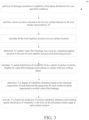
- the verification process provides a verification of the wettability calculation of FIG. 2 , by use 82 of a measure of the wettability of a rock sample in the form of a wettability index, such as Amott index and USBM method (United States Bureau of Mines) index that are experimentally determined We. These values are used to verify and/or calibrate the predicted wettability distribution resulting from the numerical aging process 40 of FIG. 2 .
- the Amott test is a well-known empirical wettability measurement for reservoir cores in petroleum engineering that combines two spontaneous imbibition measurements and two forced displacement measurements and defines two different indices, the Amott water index and the Amott oil index obtained from core analysis experiments.
- the wettability index simulation process 80 performs 84 a numerical aging simulation based on estimated input parameters (see above) to provide simulation results. The process uses the simulation results to determine 86 predicted values of the wettability index Wp. The wettability index simulation process 80 compares 88 the predicted values to experimentally measured values We (from 82) and when the values do not match 90, Wp ⁇ We ⁇ T sufficiently within a user defined tolerance T.
- the user defined tolerance on the match can be empirically or numerically determined based on tolerances of attributed to the experimental determination of the wettability index and/or tolerances on characteristics used in determining predictions, etc.
- the process 80 iteratively modifies 92 one or more of the input parameter values to the numerical aging simulation process 40, and repeats 94 the numerical aging simulation process 40 until the values from the numerical aging simulation 40 agree 96 ( Wp ⁇ We ⁇ T ) with those from the experimental values indicating verification 98.
- the parameter values are one or more grain surface properties 33a' obtained by engine 33a that assigns mineral types to the grains and determines the surface properties for each of those mineral types, parameters such as fluid properties 33b, e.g., fluid density and viscosity of each expected fluid and fluid-fluid interfacial tension properties, chemical composition data of the fluids and affinity data of the fluid components for the particular mineral surfaces and the disjoining pressure for each mineral type. Iterative modification is accomplished by the system 10 incrementing one or more of the parameter values by a defined incremental value. Both the parameter value that is incremented and the incremental value amount can be system determined or user determined.
- fluid properties 33b e.g., fluid density and viscosity of each expected fluid and fluid-fluid interfacial tension properties
- chemical composition data of the fluids and affinity data of the fluid components for the particular mineral surfaces e.g., chemical composition data of the fluids and affinity data of the fluid components for the particular mineral surfaces and the disjoining pressure for each mineral type. Iterative modification is
- FIGS. 5 and 5A these prior art figures depict conventional understandings of oil blob and brine providing pinned contact angles conventions for an illustrative rock sample portion. (Taken from A Pore-Level Scenario for the Development of Mixed-Wettability in Oil Reservoirs, by A. R. Kovscek et al DOE/BC-9200106 Distribution DE92 001062 September 1992 prepared for U.S. Department of Energy.)
- Embodiments of the subject matter and the functional operations described in this specification can be implemented in digital electronic circuitry, tangibly-embodied computer software or firmware, computer hardware (including the structures disclosed in this specification and their structural equivalents), or in combinations of one or more of them.
- Embodiments of the subject matter described in this specification can be implemented as one or more computer programs (i.e., one or more modules of computer program instructions encoded on a tangible non-transitory program carrier for execution by, or to control the operation of, data processing apparatus).
- the computer storage medium can be a machine-readable storage device, a machine-readable storage substrate, a random or serial access memory device, or a combination of one or more of them.
- a computer program which may also be referred to or described as a program, software, a software application, a module, a software module, a script, or code, can be written in any form of programming language, including compiled or interpreted languages, or declarative or procedural languages, and it can be deployed in any form, including as a stand-alone program or as a module, component, subroutine, or other unit suitable for use in a computing environment.
- a computer program may, but need not, correspond to a file in a file system.
- a program can be stored in a portion of a file that holds other programs or data (e.g., one or more scripts stored in a markup language document, in a single file dedicated to the program in question, or in multiple coordinated files (e.g., files that store one or more modules, sub-programs, or portions of code)).
- a computer program can be deployed so that the program is executed on one computer or on multiple computers that are located at one site or distributed across multiple sites and interconnected by a data communication network.
- Computers suitable for the execution of a computer program can be based on general or special purpose microprocessors or both, or any other kind of central processing unit.
- a central processing unit will receive instructions and data from a read-only memory or a random access memory or both.
- the essential elements of a computer are a central processing unit for performing or executing instructions and one or more memory devices for storing instructions and data.
- a computer will also include, or be operatively coupled to receive data from or transfer data to, or both, one or more mass storage devices for storing data (e.g., magnetic, magneto-optical disks, or optical disks), however, a computer need not have such devices.
- Computer-readable media suitable for storing computer program instructions and data include all forms of non-volatile memory on media and memory devices, including by way of example semiconductor memory devices (e.g., EPROM, EEPROM, and flash memory devices), magnetic disks (e.g., internal hard disks or removable disks), magneto-optical disks, and CD-ROM and DVD-ROM disks.
- semiconductor memory devices e.g., EPROM, EEPROM, and flash memory devices
- magnetic disks e.g., internal hard disks or removable disks
- magneto-optical disks e.g., CD-ROM and DVD-ROM disks.
- the processor and the memory can be supplemented by, or incorporated in, special purpose logic circuitry.
Landscapes
- Physics & Mathematics (AREA)
- Engineering & Computer Science (AREA)
- General Physics & Mathematics (AREA)
- Life Sciences & Earth Sciences (AREA)
- Chemical & Material Sciences (AREA)
- Health & Medical Sciences (AREA)
- Analytical Chemistry (AREA)
- Biochemistry (AREA)
- General Health & Medical Sciences (AREA)
- Immunology (AREA)
- Pathology (AREA)
- Theoretical Computer Science (AREA)
- Geometry (AREA)
- Fluid Mechanics (AREA)
- General Engineering & Computer Science (AREA)
- Evolutionary Computation (AREA)
- Computer Hardware Design (AREA)
- Geology (AREA)
- Food Science & Technology (AREA)
- Dispersion Chemistry (AREA)
- Medicinal Chemistry (AREA)
- Remote Sensing (AREA)
- General Life Sciences & Earth Sciences (AREA)
- Environmental & Geological Engineering (AREA)
- Nuclear Medicine, Radiotherapy & Molecular Imaging (AREA)
- Pulmonology (AREA)
- Algebra (AREA)
- Computing Systems (AREA)
- Radiology & Medical Imaging (AREA)
- Pure & Applied Mathematics (AREA)
- Mathematical Analysis (AREA)
- Mathematical Physics (AREA)
- Mathematical Optimization (AREA)
- Management, Administration, Business Operations System, And Electronic Commerce (AREA)
Applications Claiming Priority (2)
| Application Number | Priority Date | Filing Date | Title |
|---|---|---|---|
| US201862615701P | 2018-01-10 | 2018-01-10 | |
| PCT/US2019/013079 WO2019140108A1 (en) | 2018-01-10 | 2019-01-10 | Determining fluid flow characteristics of porous mediums |
Publications (4)
| Publication Number | Publication Date |
|---|---|
| EP3737928A1 EP3737928A1 (en) | 2020-11-18 |
| EP3737928A4 EP3737928A4 (en) | 2021-03-03 |
| EP3737928C0 EP3737928C0 (en) | 2025-01-01 |
| EP3737928B1 true EP3737928B1 (en) | 2025-01-01 |
Family
ID=67139489
Family Applications (1)
| Application Number | Title | Priority Date | Filing Date |
|---|---|---|---|
| EP19738994.3A Active EP3737928B1 (en) | 2018-01-10 | 2019-01-10 | Determining fluid flow characteristics of porous mediums |
Country Status (5)
| Country | Link |
|---|---|
| US (1) | US11714040B2 (cg-RX-API-DMAC10.html) |
| EP (1) | EP3737928B1 (cg-RX-API-DMAC10.html) |
| JP (1) | JP7360390B2 (cg-RX-API-DMAC10.html) |
| CN (1) | CN111936841B (cg-RX-API-DMAC10.html) |
| WO (1) | WO2019140108A1 (cg-RX-API-DMAC10.html) |
Families Citing this family (15)
| Publication number | Priority date | Publication date | Assignee | Title |
|---|---|---|---|---|
| AU2018212812A1 (en) | 2017-01-26 | 2019-08-15 | Dassault Systemes Simulia Corp. | Multi-phase flow visualizations based on fluid occupation time |
| US11530598B2 (en) | 2018-08-21 | 2022-12-20 | Dassault Systemes Simulia Corp. | Determination of oil removed by gas via miscible displacement in reservoir rock |
| US11613984B2 (en) * | 2019-09-04 | 2023-03-28 | Dassault Systemes Simulia Corp. | Determination of hydrocarbon mobilization potential for enhanced oil recovery |
| EP3846065A1 (en) * | 2019-12-30 | 2021-07-07 | Dassault Systèmes | 3d modeled object of a physical prototype of a product |
| EP4139667B1 (en) * | 2020-04-22 | 2024-10-16 | Shell Internationale Research Maatschappij B.V. | Method for estimating fluid saturation of a rock |
| US11847391B2 (en) | 2020-06-29 | 2023-12-19 | Dassault Systemes Simulia Corp. | Computer system for simulating physical processes using surface algorithm |
| US11907625B2 (en) | 2020-12-29 | 2024-02-20 | Dassault Systemes Americas Corp. | Computer simulation of multi-phase and multi-component fluid flows including physics of under-resolved porous structures |
| US12002159B2 (en) | 2021-06-09 | 2024-06-04 | Dassault Systemes Americas Corp. | Prediction of mechanical properties of sedimentary rocks based on a grain to grain parametric cohesive contact model |
| CN114088585B (zh) * | 2021-11-15 | 2022-08-12 | 中国石油大学(北京) | 一种页岩润湿角预测模型建立的方法、装置、设备及介质 |
| US12044121B2 (en) | 2021-11-23 | 2024-07-23 | Saudi Arabian Oil Company | In-situ wettability measurement using multiple partitioning tracers |
| US12650372B2 (en) * | 2022-06-09 | 2026-06-09 | University Of Wyoming | Method and system for automated in-situ capillary pressure and wettabilty characterization of porous media |
| CN115952612B (zh) * | 2022-10-19 | 2025-04-29 | 上海交通大学 | 一种空间轴承多孔保持架关键特征参数设计方法 |
| CN115406806B (zh) * | 2022-11-02 | 2023-04-11 | 山东省中地易采石油技术有限责任公司 | 一种致密油气藏两相渗流实验的计量装置 |
| CN116754437A (zh) * | 2023-04-11 | 2023-09-15 | 中国石油大学(华东) | 矿物表面接触角确定方法、系统、电子设备及存储介质 |
| CN121031470B (zh) * | 2025-11-03 | 2026-02-17 | 昆明理工大学 | 宾汉浆液扩散路径的柱半球形渗透半径确定方法及系统 |
Citations (4)
| Publication number | Priority date | Publication date | Assignee | Title |
|---|---|---|---|---|
| US20100156901A1 (en) * | 2008-12-22 | 2010-06-24 | Electronics And Telecommunications Research Institute | Method and apparatus for reconstructing 3d model |
| US20120310614A1 (en) * | 2010-02-12 | 2012-12-06 | Bp Exploration Operating Company Limited | Method and system for predicting the effect of microbes injected into an oil-bearing reservoir |
| US20140343858A1 (en) * | 2013-05-16 | 2014-11-20 | Exa Corporation | Mass exchange model for relative permeability simulation |
| US20170198573A1 (en) * | 2015-12-17 | 2017-07-13 | Baker Hughes Incorporated | Fluid blocking analysis and chemical evalution |
Family Cites Families (102)
| Publication number | Priority date | Publication date | Assignee | Title |
|---|---|---|---|---|
| US3818757A (en) | 1972-05-05 | 1974-06-25 | Saratoga Sys Inc | Dual path ultrasonic fluid flow metering system and method |
| GB2066466A (en) | 1979-12-03 | 1981-07-08 | Water Res Centre | Ultrasonic Flow Measurement |
| US4498134A (en) | 1982-01-26 | 1985-02-05 | Hughes Aircraft Company | Segregator functional plane for use in a modular array processor |
| US4507726A (en) | 1982-01-26 | 1985-03-26 | Hughes Aircraft Company | Array processor architecture utilizing modular elemental processors |
| US4729098A (en) | 1985-06-05 | 1988-03-01 | General Electric Company | System and method employing nonlinear interpolation for the display of surface structures contained within the interior region of a solid body |
| US4831519A (en) | 1985-12-12 | 1989-05-16 | Itt Corporation | Cellular array processor with variable nesting depth vector control by selective enabling of left and right neighboring processor cells |
| US4809202A (en) | 1985-12-27 | 1989-02-28 | Thinking Machines Corporation | Method and apparatus for simulating systems described by partial differential equations |
| JPH0648486B2 (ja) | 1986-10-08 | 1994-06-22 | 日本電気株式会社 | ベクトルデ−タ処理装置 |
| US4933895A (en) | 1987-07-10 | 1990-06-12 | Hughes Aircraft Company | Cellular array having data dependent processing capabilities |
| JP2635617B2 (ja) | 1987-09-29 | 1997-07-30 | 株式会社東芝 | 半導体素子特性評価用の直交格子点の発生方法 |
| US4989166A (en) | 1988-07-12 | 1991-01-29 | Hitachi, Ltd. | Method for synthesizing analysis model and flow analysis system |
| US5038302A (en) | 1988-07-26 | 1991-08-06 | The Research Foundation Of State University Of New York | Method of converting continuous three-dimensional geometrical representations into discrete three-dimensional voxel-based representations within a three-dimensional voxel-based system |
| US5159690A (en) | 1988-09-30 | 1992-10-27 | Massachusetts Institute Of Technology | Multidimensional cellular data array processing system which separately permutes stored data elements and applies transformation rules to permuted elements |
| JPH03276071A (ja) | 1990-03-27 | 1991-12-06 | Yoshiomi Kondo | 流体及び電磁流体の物理量予測方法 |
| CA2082511C (en) | 1990-05-09 | 2002-09-10 | Thomas W. Beck | Polyvinylidene fluoride membrane |
| US5377129A (en) | 1990-07-12 | 1994-12-27 | Massachusetts Institute Of Technology | Particle interaction processing system |
| WO1992001993A1 (en) | 1990-07-12 | 1992-02-06 | Massachusetts Institute Of Technology | A fluid dynamics parallel processor |
| IE69192B1 (en) | 1990-12-21 | 1996-08-21 | Hitachi Europ Ltd | A method of generating partial differential equations for simulation a simulation method and a method of generating simulation programs |
| US5069065A (en) * | 1991-01-16 | 1991-12-03 | Mobil Oil Corporation | Method for measuring wettability of porous rock |
| US5442733A (en) | 1992-03-20 | 1995-08-15 | The Research Foundation Of State University Of New York | Method and apparatus for generating realistic images using a discrete representation |
| JP3426647B2 (ja) | 1992-06-24 | 2003-07-14 | 日本電信電話株式会社 | 3次元トポグラフィシミュレーションのための一般化されたソリッドモデリング |
| US5361385A (en) | 1992-08-26 | 1994-11-01 | Reuven Bakalash | Parallel computing system for volumetric modeling, data processing and visualization |
| US5424963A (en) | 1992-11-25 | 1995-06-13 | Photon Research Associates, Inc. | Molecular dynamics simulation method and apparatus |
| US5848260A (en) | 1993-12-10 | 1998-12-08 | Exa Corporation | Computer system for simulating physical processes |
| US5606517A (en) | 1994-06-08 | 1997-02-25 | Exa Corporation | Viscosity reduction in physical process simulation |
| US5548694A (en) | 1995-01-31 | 1996-08-20 | Mitsubishi Electric Information Technology Center America, Inc. | Collision avoidance system for voxel-based object representation |
| US5640335A (en) | 1995-03-23 | 1997-06-17 | Exa Corporation | Collision operators in physical process simulation |
| US5605517A (en) | 1995-11-21 | 1997-02-25 | General Motors Corporation | Multi-speed power transmission |
| US5953239A (en) | 1997-12-29 | 1999-09-14 | Exa Corporation | Computer simulation of physical processes |
| US7209873B1 (en) | 1999-09-03 | 2007-04-24 | Kliegel James R | Method of analyzing and computing anisotropic turbulent flows |
| US6318156B1 (en) | 1999-10-28 | 2001-11-20 | Micro Motion, Inc. | Multiphase flow measurement system |
| US6928399B1 (en) | 1999-12-03 | 2005-08-09 | Exxonmobil Upstream Research Company | Method and program for simulating a physical system using object-oriented programming |
| US6516080B1 (en) | 2000-04-05 | 2003-02-04 | The Board Of Trustees Of The Leland Stanford Junior University | Numerical method of estimating physical properties of three-dimensional porous media |
| FR2811760B1 (fr) | 2000-07-17 | 2002-09-13 | Inst Francais Du Petrole | Methode pour modeliser des deplacements de fluides dans un milieu poreux tenant compte d'effets d'hysteresis |
| US6915245B1 (en) | 2000-09-14 | 2005-07-05 | General Atomics | Method of simulating a fluid by advection of a time-weighted equilibrium distribution function |
| FR2844355B1 (fr) * | 2002-09-11 | 2005-03-25 | Inst Francais Du Petrole | Methode de mesure de la mouillabilite de roches par resonnance magnetique nucleaire |
| US7379852B2 (en) | 2004-02-18 | 2008-05-27 | Chevron U.S.A. Inc. | N-phase interface tracking method utilizing unique enumeration of microgrid cells |
| EP1729151B1 (en) * | 2005-05-27 | 2011-06-29 | Services Petroliers Schlumberger | Method and apparatus for measuring the wettability of geological formations |
| FR2886742B1 (fr) | 2005-06-02 | 2007-07-27 | Inst Francais Du Petrole | Methode de changement d'echelle des permeabilites absolues pour construire un modele de simulation d'ecoulement |
| US20070016389A1 (en) | 2005-06-24 | 2007-01-18 | Cetin Ozgen | Method and system for accelerating and improving the history matching of a reservoir simulation model |
| US7716028B2 (en) * | 2006-05-24 | 2010-05-11 | Schlumberger Technology Corporation | Method for modeling a reservoir using a 3D wettability map generated from a wettability logging tool |
| US7590514B1 (en) | 2006-05-24 | 2009-09-15 | Livermore Software Technology Corporation | Method and system for simulating inflation of an enclosed volume with flexible boundary using gas particles |
| US20080012853A1 (en) * | 2006-07-14 | 2008-01-17 | William Geiger | Generating mesh from implicit surface |
| US7558714B2 (en) | 2006-08-10 | 2009-07-07 | Exa Corporation | Computer simulation of physical processes |
| WO2008021531A2 (en) | 2006-08-17 | 2008-02-21 | University Of Massachusetts | Stabilized emulsions, methods of preparation, and related reduced fat foods |
| US7983886B2 (en) | 2007-09-10 | 2011-07-19 | Chevron U.S.A. Inc. | Methods for performing simulation of surfactant flooding of a hydrocarbon reservoir |
| CA2724031A1 (en) * | 2008-05-23 | 2009-11-26 | The Australian National University | Image data processing |
| MX2010011148A (es) | 2008-06-25 | 2010-11-05 | Schlumberger Technology Bv | Metodo para estimar la permeabilidad de formaciones usando mediciones por lapsos de tiempo. |
| GB2462261A (en) | 2008-07-28 | 2010-02-03 | Fujitsu Ltd | Method, apparatus and computer program for simulating behaviou r of thermodynamic systems |
| EP2346964A2 (en) | 2008-10-10 | 2011-07-27 | Velocys, Inc. | Process and apparatus employing microchannel process technology |
| US8155377B2 (en) | 2008-11-24 | 2012-04-10 | Ingrain, Inc. | Method for determining rock physics relationships using computer tomographic images thereof |
| CN101556687A (zh) | 2009-04-23 | 2009-10-14 | 上海交通大学 | 微细通道内两相流的三维可视化系统及方法 |
| US20100312535A1 (en) | 2009-06-08 | 2010-12-09 | Chevron U.S.A. Inc. | Upscaling of flow and transport parameters for simulation of fluid flow in subsurface reservoirs |
| EP2452165A1 (en) | 2009-07-07 | 2012-05-16 | Siemens AG | Apparatus and method for measuring multi-phase fluid flow |
| US9575203B2 (en) * | 2009-12-16 | 2017-02-21 | Bp Exploration Operating Company Limited | Method for measuring rock wettability |
| JP2011191848A (ja) | 2010-03-12 | 2011-09-29 | Toyota Central R&D Labs Inc | 拡散現象解析方法、拡散現象解析装置およびプログラム |
| CA2801386A1 (en) | 2010-06-15 | 2011-12-22 | Exxonmobil Upstream Research Company | Method and system for stabilizing formulation methods |
| US8412501B2 (en) | 2010-06-16 | 2013-04-02 | Foroil | Production simulator for simulating a mature hydrocarbon field |
| US8757871B2 (en) | 2010-08-16 | 2014-06-24 | The Board Of Trustees Of The University Of Illinois | Particle dynamics microscopy using temperature jump and probe anticorrelation/correlation techniques |
| CN102383783B (zh) | 2010-09-03 | 2015-06-17 | 中国石油化工股份有限公司 | 一种分析缝洞型油藏孔洞间油水流动特征的方法 |
| WO2012039811A1 (en) | 2010-09-20 | 2012-03-29 | Exxonmobil Upstream Research Company | Flexible and adaptive formulations for complex reservoir simulations |
| US8768628B2 (en) * | 2010-10-20 | 2014-07-01 | Shawket Ghedan | Rise in core wettability characterization method |
| WO2012071090A1 (en) | 2010-11-23 | 2012-05-31 | Exxonmobil Upstream Research Company | Variable discretization method for flow simulation on complex geological models |
| US8645070B2 (en) * | 2010-11-24 | 2014-02-04 | Chevron U.S.A. Inc. | System and method for estimating fluid distribution in a subterranean reservoir |
| US8583411B2 (en) | 2011-01-10 | 2013-11-12 | Saudi Arabian Oil Company | Scalable simulation of multiphase flow in a fractured subterranean reservoir as multiple interacting continua |
| US9051825B2 (en) | 2011-01-26 | 2015-06-09 | Schlumberger Technology Corporation | Visualizing fluid flow in subsurface reservoirs |
| CN102174888B (zh) * | 2011-03-03 | 2012-05-23 | 康志勇 | 一种基于储集岩岩性参数的地层数据处理方法 |
| US9507047B1 (en) | 2011-05-10 | 2016-11-29 | Ingrain, Inc. | Method and system for integrating logging tool data and digital rock physics to estimate rock formation properties |
| EP2732135B1 (en) | 2011-07-12 | 2016-08-24 | Ingrain, Inc. | Method for simulating fractional multi-phase/multi-component flow through porous media |
| US9037440B2 (en) | 2011-11-09 | 2015-05-19 | Exa Corporation | Computer simulation of fluid flow and acoustic behavior |
| US10360324B2 (en) | 2011-12-09 | 2019-07-23 | Dassault Systemes Simulia Corp. | Computer simulation of physical processes |
| AU2012369161B2 (en) | 2012-02-10 | 2015-05-28 | Landmark Graphics Corporation | Systems and methods for estimating fluid breakthrough times at producing well locations |
| US20130317791A1 (en) | 2012-04-26 | 2013-11-28 | Conocophillips Company | Hydrodynamic slug flow model |
| CA2873722C (en) | 2012-05-14 | 2017-03-21 | Landmark Graphics Corporation | Method and system of predicting future hydrocarbon production |
| MX2014013895A (es) | 2012-05-14 | 2015-05-08 | Landmark Graphics Corp | Metodo y sistema para mostrar una representacion grafica de parametros de produccion de hidrocarburos. |
| US9140117B2 (en) | 2012-07-13 | 2015-09-22 | Ingrain, Inc. | Method for evaluating relative permeability for fractional multi-phase, multi-component fluid flow through porous media |
| US9619592B2 (en) | 2012-08-31 | 2017-04-11 | Schlumberger Technology Corporation | Analysis of enhanced oil recovery (EOR) processes for naturally-fractured reservoirs |
| WO2015030837A1 (en) | 2013-08-27 | 2015-03-05 | Halliburton Energy Services, Inc. | Simulating fluid leak-off and flow-back in a fractured subterranean |
| WO2015017571A1 (en) | 2013-07-30 | 2015-02-05 | Heartflow, Inc. | Method and system for modeling blood flow with boundary conditions for optimized diagnostic performance |
| US10762252B2 (en) | 2013-07-31 | 2020-09-01 | Dassault Systemes Simulia Corp. | Temperature coupling algorithm for hybrid thermal lattice boltzmann method |
| EP3030888B1 (en) * | 2013-08-06 | 2023-07-05 | BP Corporation North America Inc. | Image-based direct numerical simulation of petrophysical properties under simulated stress and strain conditions |
| AR097342A1 (es) | 2013-08-15 | 2016-03-09 | Univ Texas | Sistema alcalino tolerante a cationes minerales multivalentes para eor química |
| US9377392B2 (en) | 2013-09-05 | 2016-06-28 | Proptester, Inc. | Methods and systems for testing fluids on crushed formation materials under conditions of stress |
| US9910173B2 (en) | 2013-11-15 | 2018-03-06 | Schlumberger Technology Corporation | Saturation end-point adjustment |
| US20150141303A1 (en) | 2013-11-18 | 2015-05-21 | The Board Of Regents Of The University Of Oklahoma | Binary and ternary surfactant blends for enhanced oil recovery in reservoir brines with extremely high total dissolved solids |
| US9797225B2 (en) | 2013-11-27 | 2017-10-24 | Saudi Arabian Oil Company | Data compression of hydrocarbon reservoir simulation grids |
| CN103698102B (zh) | 2013-12-17 | 2016-08-17 | 哈尔滨工程大学 | 一种管束间高温高压汽液两相流型实验装置及流型判别方法 |
| CN106233146B (zh) | 2014-03-18 | 2020-09-01 | 达索系统西姆利亚公司 | 用于评估多相流动模拟的流体团块跟踪 |
| FR3023316B1 (fr) | 2014-07-04 | 2016-08-19 | Ifp Energies Now | Procede d'exploitation d'un gisement petrolier a partir d'une technique de positionnement des puits a forer |
| US10557783B2 (en) * | 2015-03-27 | 2020-02-11 | Schlumberger Technology Corporation | Method for determining equilibrium wettability of an interface between a void space and a solid phase of a rock sample |
| US10169498B2 (en) | 2015-04-14 | 2019-01-01 | California Institute Of Technology | Particle-based simulation through power diagrams |
| WO2016178934A1 (en) | 2015-05-01 | 2016-11-10 | Schlumberger Technology Corporation | Multiphase flow in porous media |
| CN105910996A (zh) | 2016-04-07 | 2016-08-31 | 昆明理工大学 | 一种利用rgb颜色模型确定多相流混合时间的方法 |
| CN109478207B (zh) | 2016-06-22 | 2023-12-05 | 地质探索系统公司 | 具有裂缝网络的储层模拟的可视化 |
| AU2018212812A1 (en) | 2017-01-26 | 2019-08-15 | Dassault Systemes Simulia Corp. | Multi-phase flow visualizations based on fluid occupation time |
| US10691846B2 (en) * | 2017-03-01 | 2020-06-23 | International Business Machines Corporation | Capillary network simulations based on a low-dimensional representation of porous media |
| EP3710555A1 (en) | 2017-11-14 | 2020-09-23 | Total S.A. | Surfactant composition for the reinjection of produced water |
| US10830713B2 (en) | 2017-11-20 | 2020-11-10 | DigiM Solution LLC | System and methods for computing physical properties of materials using imaging data |
| US20190203593A1 (en) * | 2017-12-29 | 2019-07-04 | Shawn Fullmer | Method and System for Modeling in a Subsurface Region |
| US11530598B2 (en) | 2018-08-21 | 2022-12-20 | Dassault Systemes Simulia Corp. | Determination of oil removed by gas via miscible displacement in reservoir rock |
| US11613984B2 (en) | 2019-09-04 | 2023-03-28 | Dassault Systemes Simulia Corp. | Determination of hydrocarbon mobilization potential for enhanced oil recovery |
| US11847391B2 (en) | 2020-06-29 | 2023-12-19 | Dassault Systemes Simulia Corp. | Computer system for simulating physical processes using surface algorithm |
-
2019
- 2019-01-09 US US16/243,285 patent/US11714040B2/en active Active
- 2019-01-10 EP EP19738994.3A patent/EP3737928B1/en active Active
- 2019-01-10 WO PCT/US2019/013079 patent/WO2019140108A1/en not_active Ceased
- 2019-01-10 JP JP2020538656A patent/JP7360390B2/ja active Active
- 2019-01-10 CN CN201980012848.7A patent/CN111936841B/zh active Active
Patent Citations (4)
| Publication number | Priority date | Publication date | Assignee | Title |
|---|---|---|---|---|
| US20100156901A1 (en) * | 2008-12-22 | 2010-06-24 | Electronics And Telecommunications Research Institute | Method and apparatus for reconstructing 3d model |
| US20120310614A1 (en) * | 2010-02-12 | 2012-12-06 | Bp Exploration Operating Company Limited | Method and system for predicting the effect of microbes injected into an oil-bearing reservoir |
| US20140343858A1 (en) * | 2013-05-16 | 2014-11-20 | Exa Corporation | Mass exchange model for relative permeability simulation |
| US20170198573A1 (en) * | 2015-12-17 | 2017-07-13 | Baker Hughes Incorporated | Fluid blocking analysis and chemical evalution |
Also Published As
| Publication number | Publication date |
|---|---|
| US20190212241A1 (en) | 2019-07-11 |
| WO2019140108A1 (en) | 2019-07-18 |
| EP3737928A1 (en) | 2020-11-18 |
| EP3737928C0 (en) | 2025-01-01 |
| JP7360390B2 (ja) | 2023-10-12 |
| US11714040B2 (en) | 2023-08-01 |
| EP3737928A4 (en) | 2021-03-03 |
| CN111936841A (zh) | 2020-11-13 |
| JP2021510419A (ja) | 2021-04-22 |
| CN111936841B (zh) | 2023-11-17 |
Similar Documents
| Publication | Publication Date | Title |
|---|---|---|
| US11714040B2 (en) | Determining fluid flow characteristics of porous mediums | |
| Golparvar et al. | A comprehensive review of pore scale modeling methodologies for multiphase flow in porous media | |
| AU2011283192B2 (en) | Methods and systems for machine-learning based simulation of flow | |
| AU2011283193B2 (en) | Methods and systems for machine-learning based simulation of flow | |
| CN103827698B (zh) | 集群三维油藏物性不确定性建模 | |
| CN105393110A (zh) | 在模拟应力和应变条件下的岩石物理属性的基于图像的直接数值模拟 | |
| US20160306074A1 (en) | Tuning digital core analysis to laboratory results | |
| AU2011283190A1 (en) | Methods and systems for machine-learning based simulation of flow | |
| EP2599030A1 (en) | Methods and systems for machine-learning based simulation of flow | |
| JP2021038646A (ja) | 石油増進回収のための炭化水素可動化の可能性の決定 | |
| US20190203593A1 (en) | Method and System for Modeling in a Subsurface Region | |
| EP3400546B1 (en) | Effective permeability upscaling for a discrete fracture network | |
| WO2004083827A1 (en) | Method and system for predicting the apparent flow conductivity of a heterogeneous medium | |
| WO2019118715A1 (en) | Method and system for modeling a subsurface region | |
| Chang et al. | Benchmark problems for subsurface flow uncertainty quantification | |
| Foroughi et al. | Investigating the permeability–porosity relation of percolation-based porous media using the lattice Boltzmann method | |
| US20240411048A1 (en) | System and self-learning method for the interpretation of petrophysical parameters | |
| Assis et al. | Sensitivity analysis of hydraulic properties of naturally fractured reservoirs | |
| US10209402B2 (en) | Grid cell pinchout for reservoir simulation | |
| CN121279164A (zh) | 用于在计算机辅助设计模型中数字模拟多尺度流体流动的计算机系统 | |
| Golparvar et al. | Advances in Geo-Energy Research | |
| Mohajerani et al. | International Journal of Rock Mechanics & Mining Sciences | |
| Stalgorova | Core and field scale modeling of miscible injection processes in fractured porous media using Random Walk and Particle Tracking methods | |
| Lange et al. | Assisted History-matching for the Characterization and Recovery Optimization of Fractured Reservoirs Using Connectivity Analysis (SPE 154392) | |
| BR112015029284B1 (pt) | Simulação numérica direta de propriedades petrofísicas baseada em imagens sob condições simuladas de estresse e deformação |
Legal Events
| Date | Code | Title | Description |
|---|---|---|---|
| STAA | Information on the status of an ep patent application or granted ep patent |
Free format text: STATUS: THE INTERNATIONAL PUBLICATION HAS BEEN MADE |
|
| PUAI | Public reference made under article 153(3) epc to a published international application that has entered the european phase |
Free format text: ORIGINAL CODE: 0009012 |
|
| STAA | Information on the status of an ep patent application or granted ep patent |
Free format text: STATUS: REQUEST FOR EXAMINATION WAS MADE |
|
| 17P | Request for examination filed |
Effective date: 20200708 |
|
| AK | Designated contracting states |
Kind code of ref document: A1 Designated state(s): AL AT BE BG CH CY CZ DE DK EE ES FI FR GB GR HR HU IE IS IT LI LT LU LV MC MK MT NL NO PL PT RO RS SE SI SK SM TR |
|
| AX | Request for extension of the european patent |
Extension state: BA ME |
|
| RIN1 | Information on inventor provided before grant (corrected) |
Inventor name: CROUSE, BERND Inventor name: FREED, DAVID M. Inventor name: ISLAM, ASHRAFUL |
|
| REG | Reference to a national code |
Ref country code: DE Ref legal event code: R079 Free format text: PREVIOUS MAIN CLASS: G01N0013000000 Ipc: G01N0015080000 Ref country code: DE Ref legal event code: R079 Ref document number: 602019064257 Country of ref document: DE Free format text: PREVIOUS MAIN CLASS: G01N0013000000 Ipc: G01N0015080000 |
|
| A4 | Supplementary search report drawn up and despatched |
Effective date: 20210202 |
|
| RIC1 | Information provided on ipc code assigned before grant |
Ipc: G01N 13/00 20060101ALI20210127BHEP Ipc: G01N 23/046 20180101ALI20210127BHEP Ipc: G06F 30/20 20200101ALI20210127BHEP Ipc: G06F 111/10 20200101ALI20210127BHEP Ipc: G01N 33/24 20060101ALI20210127BHEP Ipc: G01N 15/08 20060101AFI20210127BHEP |
|
| DAV | Request for validation of the european patent (deleted) | ||
| DAX | Request for extension of the european patent (deleted) | ||
| RIN1 | Information on inventor provided before grant (corrected) |
Inventor name: ISLAM, ASHRAFUL Inventor name: FREED, DAVID M. Inventor name: CROUSE, BERND |
|
| STAA | Information on the status of an ep patent application or granted ep patent |
Free format text: STATUS: EXAMINATION IS IN PROGRESS |
|
| 17Q | First examination report despatched |
Effective date: 20220921 |
|
| RAP1 | Party data changed (applicant data changed or rights of an application transferred) |
Owner name: DASSAULT SYSTEMES AMERICAS CORP. |
|
| GRAP | Despatch of communication of intention to grant a patent |
Free format text: ORIGINAL CODE: EPIDOSNIGR1 |
|
| STAA | Information on the status of an ep patent application or granted ep patent |
Free format text: STATUS: GRANT OF PATENT IS INTENDED |
|
| INTG | Intention to grant announced |
Effective date: 20240808 |
|
| GRAS | Grant fee paid |
Free format text: ORIGINAL CODE: EPIDOSNIGR3 |
|
| GRAA | (expected) grant |
Free format text: ORIGINAL CODE: 0009210 |
|
| STAA | Information on the status of an ep patent application or granted ep patent |
Free format text: STATUS: THE PATENT HAS BEEN GRANTED |
|
| AK | Designated contracting states |
Kind code of ref document: B1 Designated state(s): AL AT BE BG CH CY CZ DE DK EE ES FI FR GB GR HR HU IE IS IT LI LT LU LV MC MK MT NL NO PL PT RO RS SE SI SK SM TR |
|
| REG | Reference to a national code |
Ref country code: GB Ref legal event code: FG4D |
|
| REG | Reference to a national code |
Ref country code: CH Ref legal event code: EP |
|
| REG | Reference to a national code |
Ref country code: DE Ref legal event code: R096 Ref document number: 602019064257 Country of ref document: DE |
|
| REG | Reference to a national code |
Ref country code: IE Ref legal event code: FG4D |
|
| U01 | Request for unitary effect filed |
Effective date: 20250114 |
|
| U07 | Unitary effect registered |
Designated state(s): AT BE BG DE DK EE FI FR IT LT LU LV MT NL PT RO SE SI Effective date: 20250121 |
|
| U20 | Renewal fee for the european patent with unitary effect paid |
Year of fee payment: 7 Effective date: 20250122 |
|
| PG25 | Lapsed in a contracting state [announced via postgrant information from national office to epo] |
Ref country code: PL Free format text: LAPSE BECAUSE OF FAILURE TO SUBMIT A TRANSLATION OF THE DESCRIPTION OR TO PAY THE FEE WITHIN THE PRESCRIBED TIME-LIMIT Effective date: 20250101 |
|
| PG25 | Lapsed in a contracting state [announced via postgrant information from national office to epo] |
Ref country code: ES Free format text: LAPSE BECAUSE OF FAILURE TO SUBMIT A TRANSLATION OF THE DESCRIPTION OR TO PAY THE FEE WITHIN THE PRESCRIBED TIME-LIMIT Effective date: 20250101 |
|
| PG25 | Lapsed in a contracting state [announced via postgrant information from national office to epo] |
Ref country code: NO Free format text: LAPSE BECAUSE OF FAILURE TO SUBMIT A TRANSLATION OF THE DESCRIPTION OR TO PAY THE FEE WITHIN THE PRESCRIBED TIME-LIMIT Effective date: 20250401 Ref country code: IS Free format text: LAPSE BECAUSE OF FAILURE TO SUBMIT A TRANSLATION OF THE DESCRIPTION OR TO PAY THE FEE WITHIN THE PRESCRIBED TIME-LIMIT Effective date: 20250501 |
|
| PG25 | Lapsed in a contracting state [announced via postgrant information from national office to epo] |
Ref country code: HR Free format text: LAPSE BECAUSE OF FAILURE TO SUBMIT A TRANSLATION OF THE DESCRIPTION OR TO PAY THE FEE WITHIN THE PRESCRIBED TIME-LIMIT Effective date: 20250101 |
|
| PG25 | Lapsed in a contracting state [announced via postgrant information from national office to epo] |
Ref country code: GR Free format text: LAPSE BECAUSE OF FAILURE TO SUBMIT A TRANSLATION OF THE DESCRIPTION OR TO PAY THE FEE WITHIN THE PRESCRIBED TIME-LIMIT Effective date: 20250402 |
|
| PG25 | Lapsed in a contracting state [announced via postgrant information from national office to epo] |
Ref country code: CZ Free format text: LAPSE BECAUSE OF FAILURE TO SUBMIT A TRANSLATION OF THE DESCRIPTION OR TO PAY THE FEE WITHIN THE PRESCRIBED TIME-LIMIT Effective date: 20250101 |
|
| REG | Reference to a national code |
Ref country code: CH Ref legal event code: PL |
|
| PG25 | Lapsed in a contracting state [announced via postgrant information from national office to epo] |
Ref country code: SM Free format text: LAPSE BECAUSE OF FAILURE TO SUBMIT A TRANSLATION OF THE DESCRIPTION OR TO PAY THE FEE WITHIN THE PRESCRIBED TIME-LIMIT Effective date: 20250101 |
|
| PG25 | Lapsed in a contracting state [announced via postgrant information from national office to epo] |
Ref country code: MC Free format text: LAPSE BECAUSE OF FAILURE TO SUBMIT A TRANSLATION OF THE DESCRIPTION OR TO PAY THE FEE WITHIN THE PRESCRIBED TIME-LIMIT Effective date: 20250101 |
|
| PG25 | Lapsed in a contracting state [announced via postgrant information from national office to epo] |
Ref country code: CH Free format text: LAPSE BECAUSE OF NON-PAYMENT OF DUE FEES Effective date: 20250131 |
|
| PG25 | Lapsed in a contracting state [announced via postgrant information from national office to epo] |
Ref country code: SK Free format text: LAPSE BECAUSE OF FAILURE TO SUBMIT A TRANSLATION OF THE DESCRIPTION OR TO PAY THE FEE WITHIN THE PRESCRIBED TIME-LIMIT Effective date: 20250101 |
|
| PLBE | No opposition filed within time limit |
Free format text: ORIGINAL CODE: 0009261 |
|
| STAA | Information on the status of an ep patent application or granted ep patent |
Free format text: STATUS: NO OPPOSITION FILED WITHIN TIME LIMIT |
|
| 26N | No opposition filed |
Effective date: 20251002 |
|
| PGFP | Annual fee paid to national office [announced via postgrant information from national office to epo] |
Ref country code: GB Payment date: 20251211 Year of fee payment: 8 |
|
| PG25 | Lapsed in a contracting state [announced via postgrant information from national office to epo] |
Ref country code: IE Free format text: LAPSE BECAUSE OF NON-PAYMENT OF DUE FEES Effective date: 20250110 |
|
| U20 | Renewal fee for the european patent with unitary effect paid |
Year of fee payment: 8 Effective date: 20251218 |
|
| PG25 | Lapsed in a contracting state [announced via postgrant information from national office to epo] |
Ref country code: CY Free format text: LAPSE BECAUSE OF FAILURE TO SUBMIT A TRANSLATION OF THE DESCRIPTION OR TO PAY THE FEE WITHIN THE PRESCRIBED TIME-LIMIT Effective date: 20250101 |
|
| PG25 | Lapsed in a contracting state [announced via postgrant information from national office to epo] |
Ref country code: TR Free format text: LAPSE BECAUSE OF FAILURE TO SUBMIT A TRANSLATION OF THE DESCRIPTION OR TO PAY THE FEE WITHIN THE PRESCRIBED TIME-LIMIT Effective date: 20250101 |
|
| PG25 | Lapsed in a contracting state [announced via postgrant information from national office to epo] |
Ref country code: RS Free format text: LAPSE BECAUSE OF FAILURE TO SUBMIT A TRANSLATION OF THE DESCRIPTION OR TO PAY THE FEE WITHIN THE PRESCRIBED TIME-LIMIT Effective date: 20250101 |