EP3736365A1 - Outdoor knitted sheet, in particular with a screening and/or sunbreak function, and method for producing the same - Google Patents
Outdoor knitted sheet, in particular with a screening and/or sunbreak function, and method for producing the same Download PDFInfo
- Publication number
- EP3736365A1 EP3736365A1 EP19173025.8A EP19173025A EP3736365A1 EP 3736365 A1 EP3736365 A1 EP 3736365A1 EP 19173025 A EP19173025 A EP 19173025A EP 3736365 A1 EP3736365 A1 EP 3736365A1
- Authority
- EP
- European Patent Office
- Prior art keywords
- outdoor
- outdoor sheet
- fabric
- yarns
- sheet
- Prior art date
- Legal status (The legal status is an assumption and is not a legal conclusion. Google has not performed a legal analysis and makes no representation as to the accuracy of the status listed.)
- Granted
Links
Images





Classifications
-
- D—TEXTILES; PAPER
- D04—BRAIDING; LACE-MAKING; KNITTING; TRIMMINGS; NON-WOVEN FABRICS
- D04B—KNITTING
- D04B1/00—Weft knitting processes for the production of fabrics or articles not dependent on the use of particular machines; Fabrics or articles defined by such processes
- D04B1/14—Other fabrics or articles characterised primarily by the use of particular thread materials
- D04B1/16—Other fabrics or articles characterised primarily by the use of particular thread materials synthetic threads
-
- D—TEXTILES; PAPER
- D04—BRAIDING; LACE-MAKING; KNITTING; TRIMMINGS; NON-WOVEN FABRICS
- D04B—KNITTING
- D04B15/00—Details of, or auxiliary devices incorporated in, weft knitting machines, restricted to machines of this kind
- D04B15/88—Take-up or draw-off devices for knitting products
- D04B15/90—Take-up or draw-off devices for knitting products for flat-bed knitting machines
-
- D—TEXTILES; PAPER
- D10—INDEXING SCHEME ASSOCIATED WITH SUBLASSES OF SECTION D, RELATING TO TEXTILES
- D10B—INDEXING SCHEME ASSOCIATED WITH SUBLASSES OF SECTION D, RELATING TO TEXTILES
- D10B2505/00—Industrial
- D10B2505/18—Outdoor fabrics, e.g. tents, tarpaulins
Definitions
- the present invention relates to an outdoor sheet, in particular with a screening or sunbreak function.
- the product according to the present invention finds its main application in the field of garden furniture or more generally of outdoor furniture, as well as it may involve a plurality of other fields linked to specific applications such as the building industry, the setting up and securing of sports structures and/or facilities, or still advertising.
- the invention also relates to a production method for producing the above outdoor sheet.
- Said manufactured products are known with different names depending on their specific use destination, for instance they are called screening sheets or sunbreak sheets, or still blackout sheets.
- these products can be assimilated to a single type, characterized by the considerable size development - they are mainly marketed in 10 or more-meter rollers - and by their predisposition to outdoor use.
- all of the sheets with said features are identified in the present application with the generic expression of outdoor sheet.
- the outdoor sheets with a screening and sunbreak function stand out from the actual curtains, which have a shelter function from bad weather as well as from the sun.
- the curtains are typically made of waterproof and airtight fabrics, are solidly anchored to the ground by rigid structures and in any case are withdrawn in the event of strong winds.
- the outdoor sheets with a screening and sunbreak function are made of airtight fabrics, so that the effect of wind drag on such structures, often permanently installed, is minimal.
- the outdoor sheets currently in use when not made of non-woven fabric, are mostly fabrics made of polyethylene monofilament.
- a further limit of the outdoor sheets currently on the market relates to their toughness and resistance to bad weather. These features, although selected to avoid rapid deterioration, still seem to be improvable in order to extend the useful life of the manufactured product.
- the problem underlying the present invention is thus to provide an outdoor sheet which overcomes the previously outlined drawbacks with reference to the prior art, and which is particularly suitable for exhibiting a graphic representation on its surface through jacquard or interlay weaving of yarns of different colour.
- an outdoor sheet suitable for exposure in outdoor environments with a screening and/or sunbreak function, comprising isotactic polypropylene yarns - preferably continuous filament yarns - defining a fabric.
- said yarns of unusual toughness and easily treatable to allow the prolonged exposure to bad weather and/or sunlight, allows adopting processing techniques - in particular the jacquard or interlay weaving - which allow making a polychrome weave reproducing a graphic pattern and/or a representation.
- the isotactic polypropylene which constitutes the yarn may be conveniently added with U.V. stabilizers to prevent the photochemical degradation of the outdoor sheet.
- the yarn may also be conveniently subjected to air-jet texturing.
- the yarn can also undergo an appropriate flame retardant treatment.
- the denomination "outdoor sheet” herein means a fabric of considerable size having in particular a prevailing lateral dimension greater than 2 meters or 2.5 meters, preferably greater than 5 meters. These sheets can reach considerable dimensions, up to 40 meters or even 80 meters in length.
- the fabric constituting the outdoor sheet is designed to be stretched and hung in a plurality of attachment points along its outer perimeter.
- the outdoor sheet may comprise a plurality of slots or analogous attachment means - for instance: clips clamped on a ribbed edge of the fabric - at said plurality of attachment points.
- the polypropylene yarns constituting the fabric are two or more yarns of different colours. These yarns are interwoven in a jacquard or interlay manner so as to define polychrome graphisms on the surface of said sheet.
- the present invention also relates to a production method for producing an outdoor sheet of the above type. Said method provides for:
- the preparation of the knitting machine appears particularly critical since the textile machines on the market at the filing date of the invention do not seem to be capable of performing continuous processing over long lengths (greater than the previously identified 2 meters) on the polypropylene yarn, due to the high tenacity and inelasticity thereof.
- the above step of preparing the knitting machine may be defined by a step of adapting a knitting machine for traditional yarns through changes suitable for the mechanical features of the isotactic polypropylene yarn.
- the machine used to make the manufactured product according to the invention may adopt one or more of the above measures and may derive both from the adaptation of an existing machine and from an ad hoc redesign.
- an outdoor sheet according to the present invention which exhibits different graphic decorations in the different figures, is generically indicated with reference number 1.
- the outdoor sheet 1 is packaged and marketed in rolls of variable height between 50 cm and 210 cm, of length approximately equal to 25-30 m. In the above figures, it is shown placed above a fence grid G stretched between poles P.
- the application of the outdoor sheet 1 occurs in a per se known manner, for instance it is fixed through a clip or binding wire to an existing fence or railing.
- a plurality of slots or analogous attachment devices may be made or variably applied on the perimeter thereof.
- the outdoor sheet 1 is mainly defined by a fabric made by knitting, in particular of the jacquard or interlay type, of continuous filament yarns made of isotactic polypropylene, possibly added with U.V. ray-stabilizers and/or other additives known in the art.
- polychrome yarns suitably knitted allows making various drawings with a decorative, informative or advertising function on at least one main exposition face.
- the production method for producing said outdoor sheet uses a knitting machine 10, in particular an electronic straight machine with needle-by-needle selection.
- the polypropylene yarn has mechanical features which are very different from those of the traditional yarns, and its weaving on considerable extensions (25-30 meters) is completely impractical with machines that are designed for the standard processing. For this reason, several changes have been conceived to make the machine able to produce the outdoor sheet 1 according to the present invention.
- a first series of changes to the knitting machine 10 relates to the cam system (camming 100) mounted on a carriage that performs the mesh transfer from a needle bed to the other.
- the three out-of-action alignment cams 101 have been lowered, so as to decrease the pressure of the needle on the fabric. In this way, the bending and possible breakage of the needles themselves due to the exceptional tenacity of the polypropylene yarn are avoided.
- the mesh-gradation cams 102 have been modified by eliminating the traditional step which allows the double gradation in known machines and thus creating a plane for more than two - preferably at least five - needles in line in the stitch. This change is justified because, in the processing of the outdoor sheet with polypropylene yarn, the double gradation is not necessary, whereas the cam is subjected to a greater effort and undergoes a higher wear.
- Another change to the knitting machine 10 relates to the take-down rollers 201 of the take-up mechanism 200, illustrated in figure 6 .
- rollers have a rigid plastic core on which a rubber sleeve is glued, whose outer surface has longitudinal grooves in relief to improve adherence.
- take-down rollers 201 of the modified type, which figure 7 shows a photographic representation of.
- Said take-down rollers 201 still have a rigid plastic core 202 above which an elastomer sleeve 203 having a smooth outer surface adheres.
- the elastomer used in the sleeve 203 is further suitably chosen so as to ensure, by coupling with isotactic polypropylene, a friction coefficient which is higher than that of the rubber sleeve of traditional rollers.
- a further change aimed at making the draw more effective in light of the aforementioned mechanical characteristics of polypropylene, relates to the take-up counter-roll mechanism illustrated in figures 8 and 9 .
- the change made only relates to the displacement of the holes 302 of the pressing cam 301 of the counter-roll, wherein the area identified with reference A suggests the entity of said displacement - illustrated only by way of non-limiting example.
- Still another change relates to the motorization of the take-up mechanism 200, traditionally made by a single motor.
- the take-up mechanism 200 is conveniently separated into two sections actuated by a right draw motor 400d, illustrated in figure 10 , and by a left draw motor 400s, visible in figure 11 , respectively.
- This improvement ensures a better draw on the take-up pole and allows a finer adjustment.
- the modified knitting machine 10 provides a first and a second auxiliary feeder 400, placed at the two lateral ends of the machine, respectively.
- ceramic cannulas 601 are advantageously adopted to guide the yarn exiting from the reel 600, thus avoiding the knotting of the latter.
- the ceramic cannulas 601 may be placed in the rear part of the machine 10, and the reel 600 may be placed directly on the ground rather than on the reel holder table as usual.
- the ceramic cannulas 601 may be mounted directly on the thread tensions with the reel 600 placed horizontally rather than vertically.
- a first advantage of the outdoor sheet according to the present invention relates to the unprecedented possibility of creating polychrome decorations and graphisms of any complexity and size, which are durable over time without fading.
- a further advantage of the outdoor sheet according to the present invention relates to the high toughness and resistance to bad weather and sun exposure.
- Another advantage derives from the high washability of the outdoor sheet according to the present invention.
- Still another advantage lies in the relative lightness of the outdoor sheet according to the present invention, due to the relatively low specific weight of polypropylene.
Landscapes
- Engineering & Computer Science (AREA)
- Textile Engineering (AREA)
- Knitting Of Fabric (AREA)
- Woven Fabrics (AREA)
- Knitting Machines (AREA)
Abstract
Description
- The present invention relates to an outdoor sheet, in particular with a screening or sunbreak function.
- The product according to the present invention finds its main application in the field of garden furniture or more generally of outdoor furniture, as well as it may involve a plurality of other fields linked to specific applications such as the building industry, the setting up and securing of sports structures and/or facilities, or still advertising.
- The invention also relates to a production method for producing the above outdoor sheet.
- Large-sized tight weave sheets or networks are traditionally used in several outer applications, in general with a function of visual screen or meteorological shelter of public or private areas, such as for instance gardens or terraces.
- Said manufactured products are known with different names depending on their specific use destination, for instance they are called screening sheets or sunbreak sheets, or still blackout sheets. Anyway, besides the different names, these products can be assimilated to a single type, characterized by the considerable size development - they are mainly marketed in 10 or more-meter rollers - and by their predisposition to outdoor use. For reasons of clarity and terminological consistency, all of the sheets with said features are identified in the present application with the generic expression of outdoor sheet.
- It should be pointed out that the outdoor sheets with a screening and sunbreak function stand out from the actual curtains, which have a shelter function from bad weather as well as from the sun. In fact, the curtains are typically made of waterproof and airtight fabrics, are solidly anchored to the ground by rigid structures and in any case are withdrawn in the event of strong winds. Conversely, the outdoor sheets with a screening and sunbreak function are made of airtight fabrics, so that the effect of wind drag on such structures, often permanently installed, is minimal.
- It is worth pointing out that both the previously identified features - size development and outdoor use - define substantial constraints for the design of outdoor sheets, which are not always easy to be simultaneously respected.
- In the specific case of said fabrics, for instance, the yarns with resistance features necessary for outdoor exposure are often unsuitable for continuous processing over considerable lengths.
- In light of said requirements, the outdoor sheets currently in use, when not made of non-woven fabric, are mostly fabrics made of polyethylene monofilament.
- However, these products, though substantially meeting the need as evidenced by their explosive diffusion, appear to be perfectible under several aspects.
- First of all, it is noticed how the outdoor sheets currently in use are proposed in predominantly monochromatic versions due to the limits imposed by the textile technology used, which in turn is dictated by the yarn features necessary for outdoor use. At least, yarns of different shades are used for weft and warp so as to achieve a shaded effect, or the sheet is divided into different longitudinal chromatic lines or bands.
- On the other hand, given the materials and machines currently used in the field, outdoor sheets having polychrome patterns, decorations or drawings, made during the formation of the fabric by means of interwoven yarns of different colors, are not available on the market nor technically feasible.
- By the way, making polychrome drawings or other patterns would represent a considerable added value for the concerned product. First of all, let us think about the obvious ornamental applications: in the typical use of the sheet as a garden fence, for example, a graphic decoration would make the use of a covering hedge, which is traditionally used for aesthetic pleasantness reasons, superfluous. Instead, other possible applications derive from the informational or advertising value that can be conveyed through the graphic representation.
- To date, the aforementioned drawings or patterns can only be printed above the sheet; however, this technique does not ensure a lasting drawing, especially if the sheet is continuously and directly exposed to the action of atmospheric agents.
- A further limit of the outdoor sheets currently on the market relates to their toughness and resistance to bad weather. These features, although selected to avoid rapid deterioration, still seem to be improvable in order to extend the useful life of the manufactured product.
- The problem underlying the present invention is thus to provide an outdoor sheet which overcomes the previously outlined drawbacks with reference to the prior art, and which is particularly suitable for exhibiting a graphic representation on its surface through jacquard or interlay weaving of yarns of different colour.
- According to the present invention this problem is solved by an outdoor sheet, suitable for exposure in outdoor environments with a screening and/or sunbreak function, comprising isotactic polypropylene yarns - preferably continuous filament yarns - defining a fabric.
- The use of said yarns, of unusual toughness and easily treatable to allow the prolonged exposure to bad weather and/or sunlight, allows adopting processing techniques - in particular the jacquard or interlay weaving - which allow making a polychrome weave reproducing a graphic pattern and/or a representation.
- The isotactic polypropylene which constitutes the yarn may be conveniently added with U.V. stabilizers to prevent the photochemical degradation of the outdoor sheet.
- The yarn may also be conveniently subjected to air-jet texturing.
- The yarn can also undergo an appropriate flame retardant treatment.
- It is still noticed that the denomination "outdoor sheet" herein means a fabric of considerable size having in particular a prevailing lateral dimension greater than 2 meters or 2.5 meters, preferably greater than 5 meters. These sheets can reach considerable dimensions, up to 40 meters or even 80 meters in length.
- Another feature typical of outdoor sheets, given the great extent and permanent or semi-permanent installation in an outdoor environment, is their airtightness, to avoid the potential sail effect in case of strong winds.
- The fabric constituting the outdoor sheet is designed to be stretched and hung in a plurality of attachment points along its outer perimeter. For this purpose, the outdoor sheet may comprise a plurality of slots or analogous attachment means - for instance: clips clamped on a ribbed edge of the fabric - at said plurality of attachment points.
- As above stated, the polypropylene yarns constituting the fabric are two or more yarns of different colours. These yarns are interwoven in a jacquard or interlay manner so as to define polychrome graphisms on the surface of said sheet.
- The present invention also relates to a production method for producing an outdoor sheet of the above type. Said method provides for:
- preparing a straight or circular knitting machine for the jacquard and/or interlay weaving, suitably modified for the use of polypropylene yarns;
- feeding said knitting machine with a plurality of isotactic polypropylene yarns;
- making a fabric of said outdoor sheet with the aid of said knitting machine and starting from said isotactic polypropylene yarns.
- The preparation of the knitting machine appears particularly critical since the textile machines on the market at the filing date of the invention do not seem to be capable of performing continuous processing over long lengths (greater than the previously identified 2 meters) on the polypropylene yarn, due to the high tenacity and inelasticity thereof.
- Thus, the above step of preparing the knitting machine may be defined by a step of adapting a knitting machine for traditional yarns through changes suitable for the mechanical features of the isotactic polypropylene yarn.
- These changes, widely discussed in the specific embodiment example hereinafter reported and directed to a straight knitting machine, may in particular relate to a reconfiguration of the camming, a replacement of the take-down rollers, a displacement of the holes in the pressing cam of the take-up counter-roll, a reconfiguration of the motorization of the draw and/or the adoption of specific yarn-feeding measures.
- The machine used to make the manufactured product according to the invention may adopt one or more of the above measures and may derive both from the adaptation of an existing machine and from an ad hoc redesign.
- The features and advantages of the product and method according to the present invention will become clearer from the following description of an embodiment example thereof made with reference to the enclosed drawings given by way of non-limiting example.
-
-
Figures 1-4 represent perspective views of outdoor sheets according to the present invention, each bearing a different graphic decoration, applied above a fence grid. -
Figure 5 represents the modified camming of a straight knitting machine for the production of an outdoor sheet according to the present invention. -
Figure 6 represents the take-up mechanism of the straight knitting machine used for the production of an outdoor sheet according to the present invention. -
Figure 7 represents a photographic representation of a take-down roller modified according to the present invention of the take-up mechanism offigure 6 . -
Figure 8 represents the take-up counter-roller mechanism of the straight knitting machine used for the production of an outdoor sheet according to the present invention. -
Figure 9 represents a sectional view according to the plane B-B offigure 8 . -
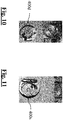
Figure 10 shows a photographic representation of a draw motor of a right portion of the take-up mechanism of the straight knitting machine used for the production of an outdoor sheet according to the present invention. -
Figure 11 shows a photographic representation of a draw motor of a left portion of the take-up mechanism of the straight knitting machine used for the production of an outdoor sheet according to the present invention. -
Figure 12 shows a photographic representation of a side detail of the straight knitting machine used for the production of an outdoor sheet according to the present invention. -
Figures 13 and 14 schematically show details of the yarn-feeding system of the straight knitting machine used for the production of an outdoor sheet according to the present invention. - With reference to the enclosed
figures 1-4 , an outdoor sheet according to the present invention, which exhibits different graphic decorations in the different figures, is generically indicated withreference number 1. - The
outdoor sheet 1 is packaged and marketed in rolls of variable height between 50 cm and 210 cm, of length approximately equal to 25-30 m. In the above figures, it is shown placed above a fence grid G stretched between poles P. - The application of the
outdoor sheet 1 occurs in a per se known manner, for instance it is fixed through a clip or binding wire to an existing fence or railing. In order to facilitate the attachment of theoutdoor sheet 1, a plurality of slots or analogous attachment devices may be made or variably applied on the perimeter thereof. - The
outdoor sheet 1 is mainly defined by a fabric made by knitting, in particular of the jacquard or interlay type, of continuous filament yarns made of isotactic polypropylene, possibly added with U.V. ray-stabilizers and/or other additives known in the art. - As visible in the various
figures 1-4 , the use of polychrome yarns suitably knitted allows making various drawings with a decorative, informative or advertising function on at least one main exposition face. - The production method for producing said outdoor sheet uses a
knitting machine 10, in particular an electronic straight machine with needle-by-needle selection. - The polypropylene yarn has mechanical features which are very different from those of the traditional yarns, and its weaving on considerable extensions (25-30 meters) is completely impractical with machines that are designed for the standard processing. For this reason, several changes have been conceived to make the machine able to produce the
outdoor sheet 1 according to the present invention. - These changes are hereinafter illustrated with reference to an electronic straight machine model of the Full-Jacquard Interlay type in three technical ways for the production of simple or fully-fashioned knitwear, with double draw system, high rollers and main section roller; in particular, reference can be made to the RIMACH J 439 E 12 model, which is indicated only by way of example.
- A first series of changes to the
knitting machine 10 relates to the cam system (camming 100) mounted on a carriage that performs the mesh transfer from a needle bed to the other. - The changes made to the
camming 100 are discussed with reference tofigure 5 , wherein the traditional conformation is illustrated in dashed line whereas the modified conformation is represented in full line. - Firstly, the three out-of-
action alignment cams 101 have been lowered, so as to decrease the pressure of the needle on the fabric. In this way, the bending and possible breakage of the needles themselves due to the exceptional tenacity of the polypropylene yarn are avoided. - Secondly, the mesh-
gradation cams 102 have been modified by eliminating the traditional step which allows the double gradation in known machines and thus creating a plane for more than two - preferably at least five - needles in line in the stitch. This change is justified because, in the processing of the outdoor sheet with polypropylene yarn, the double gradation is not necessary, whereas the cam is subjected to a greater effort and undergoes a higher wear. - Another change to the
knitting machine 10 relates to the take-downrollers 201 of the take-upmechanism 200, illustrated infigure 6 . - Traditionally, these rollers have a rigid plastic core on which a rubber sleeve is glued, whose outer surface has longitudinal grooves in relief to improve adherence.
- These rollers are replaced by take-down
rollers 201 of the modified type, whichfigure 7 shows a photographic representation of. Said take-downrollers 201 still have a rigidplastic core 202 above which anelastomer sleeve 203 having a smooth outer surface adheres. - However, the integration of the two elements is not made with adhesive, but through molding, thus ensuring a much higher tightness degree.
Dovetail clutches 204 of theelastomer sleeve 203 penetrate thecore 202 further improving the structural cohesion. - The elastomer used in the
sleeve 203 is further suitably chosen so as to ensure, by coupling with isotactic polypropylene, a friction coefficient which is higher than that of the rubber sleeve of traditional rollers. - In fact, the applicant noticed that the polypropylene mesh, in addition to being more rigid than the traditional polyethylene meshes, also has a lower roughness than these. Therefore, using the traditional traction rollers two problems are encountered: the slippage due to insufficient grip and the potential detachment of the outer sleeve due to the resistance of the material. The above described measures solve both the aforementioned problems.
- A further change, aimed at making the draw more effective in light of the aforementioned mechanical characteristics of polypropylene, relates to the take-up counter-roll mechanism illustrated in
figures 8 and 9 . - Here, the change made only relates to the displacement of the
holes 302 of thepressing cam 301 of the counter-roll, wherein the area identified with reference A suggests the entity of said displacement - illustrated only by way of non-limiting example. - Still another change, partially illustrated by the photographic representations of
figures 10 and 11 , relates to the motorization of the take-upmechanism 200, traditionally made by a single motor. - In the modified machine, the take-up
mechanism 200 is conveniently separated into two sections actuated by aright draw motor 400d, illustrated infigure 10 , and by aleft draw motor 400s, visible infigure 11 , respectively. - This improvement ensures a better draw on the take-up pole and allows a finer adjustment.
- Finally, a last series of changes relates to the yarn feeding. In fact, given the relative toughness of the polypropylene yarn compared to those traditionally used, the criticality of a smooth feeding is evident.
- For this reason, the modified
knitting machine 10 provides a first and a second auxiliary feeder 400, placed at the two lateral ends of the machine, respectively. - Moreover, as schematically illustrated in the enclosed
figures 13 and 14 ,ceramic cannulas 601 are advantageously adopted to guide the yarn exiting from thereel 600, thus avoiding the knotting of the latter. In this case, theceramic cannulas 601 may be placed in the rear part of themachine 10, and thereel 600 may be placed directly on the ground rather than on the reel holder table as usual. Alternatively, theceramic cannulas 601 may be mounted directly on the thread tensions with thereel 600 placed horizontally rather than vertically. - A first advantage of the outdoor sheet according to the present invention relates to the unprecedented possibility of creating polychrome decorations and graphisms of any complexity and size, which are durable over time without fading.
- A further advantage of the outdoor sheet according to the present invention relates to the high toughness and resistance to bad weather and sun exposure.
- Another advantage derives from the high washability of the outdoor sheet according to the present invention.
- Still another advantage lies in the relative lightness of the outdoor sheet according to the present invention, due to the relatively low specific weight of polypropylene.
- The above described invention may undergo variants and changes, all appreciated by the skilled person, and as such all falling within the scope of protection defined by the following claims.
Claims (15)
- Outdoor sheet (1) with a screening and/or sunbreak function, comprising a fabric made of isotactic polypropylene yarns suitable for exposure in outdoor environments, wherein at least the prevailing lateral dimension of said fabric exceeds 2 meters, wherein said polypropylene yarns are a plurality of yarns of different colours interwoven in a jacquard or interlay manner so as to define polychrome drawings or patterns on the surface of said outdoor sheet.
- Outdoor sheet (1) according to claim 1, wherein the prevailing dimension of said fabric is greater than 2.5 meters.
- Outdoor sheet (1) according to one of the previous claims, wherein the prevailing dimension of said fabric is greater than 5 meters.
- Outdoor sheet (1) according to claim 3, wherein said fabric is airtight.
- Outdoor sheet (1) according to one of the previous claims, wherein said polypropylene yarns are continuous filament yarns.
- Outdoor sheet (1) according to claim 5, wherein said polypropylene yarns are subjected to air-jet texturing.
- Outdoor sheet (1) according to one of the previous claims, wherein said isotactic polypropylene yarns are added with U.V. stabilizers.
- Outdoor sheet (1) according to one of the previous claims, wherein said fabric is arranged to be stretched and hung in a plurality of attachment points along its outer perimeter.
- Outdoor sheet (1) according to claim 8, comprising a plurality of slots or analogous attachment points at said plurality of attachment points.
- Production method for producing an outdoor sheet (1) according to one of claims 1-9, comprising:preparing a knitting machine (10) for the jacquard and/or interlay weaving, suitably adapted for using polypropylene yarns;feeding said knitting machine with a plurality of isotactic polypropylene yarns;making a fabric of said outdoor sheet (1) with the aid of said knitting machine and starting from said isotactic polypropylene yarns.
- Production method according to claim 10, wherein said knitting machine (10) is of the straight type.
- Production method according to claim 11, wherein said machine comprises a cam system (100) mounted on a carriage that performs the transferring of the meshes from one needle bed to another of the machine itself, said cam system (100) comprising out-of-action alignment cams (101) and mesh-gradation cams (102), wherein the latter have a flat work profile without a step.
- Production method according to one of claims 11 or 12, wherein said machine comprises a take-up mechanism (200) provided with take-down rollers (201) with a rigid plastic core (202) above which an elastomer sleeve (203) with a smooth outer surface is co-molded.
- Production method according to one of claims 11-13, said machine comprises a take-up mechanism (200) separated into two sections which are actuated by a right draw motor (400d) and by a left draw motor (400s), respectively.
- Production method according to claim 10, wherein said knitting machine (10) is of the circular type.
Priority Applications (2)
| Application Number | Priority Date | Filing Date | Title |
|---|---|---|---|
| ES19173025T ES2956012T3 (en) | 2019-05-07 | 2019-05-07 | Outdoor knitted sheet, in particular with a shielding and/or sun protection function, and method for producing the same |
| EP19173025.8A EP3736365B1 (en) | 2019-05-07 | 2019-05-07 | Outdoor knitted sheet, in particular with a screening and/or sunbreak function, and method for producing the same |
Applications Claiming Priority (1)
| Application Number | Priority Date | Filing Date | Title |
|---|---|---|---|
| EP19173025.8A EP3736365B1 (en) | 2019-05-07 | 2019-05-07 | Outdoor knitted sheet, in particular with a screening and/or sunbreak function, and method for producing the same |
Publications (2)
| Publication Number | Publication Date |
|---|---|
| EP3736365A1 true EP3736365A1 (en) | 2020-11-11 |
| EP3736365B1 EP3736365B1 (en) | 2023-05-24 |
Family
ID=67070525
Family Applications (1)
| Application Number | Title | Priority Date | Filing Date |
|---|---|---|---|
| EP19173025.8A Active EP3736365B1 (en) | 2019-05-07 | 2019-05-07 | Outdoor knitted sheet, in particular with a screening and/or sunbreak function, and method for producing the same |
Country Status (2)
| Country | Link |
|---|---|
| EP (1) | EP3736365B1 (en) |
| ES (1) | ES2956012T3 (en) |
Citations (6)
| Publication number | Priority date | Publication date | Assignee | Title |
|---|---|---|---|---|
| US781253A (en) * | 1900-11-14 | 1905-01-31 | George D Whitcomb Co | Knitting-machine. |
| EP0217432A1 (en) * | 1985-09-04 | 1987-04-08 | Atelier De Construction Steiger S.A. | Cam unit for a flat bed knitting machine, and knitting machine equipped with said cam unit |
| US5635270A (en) * | 1995-04-19 | 1997-06-03 | American Weavers, L.L.C. | Woven polypropylene fabric with frayed edges |
| GB2316955A (en) * | 1996-09-05 | 1998-03-11 | Pai Lung Machinery Mill Co Ltd | A fabric rolling-up device with automatic torque increase circuit. |
| US20140030949A1 (en) * | 2011-12-21 | 2014-01-30 | Sattler Ag | Textile fabrics with color effect |
| US20170073859A1 (en) * | 2015-09-16 | 2017-03-16 | International Textile Group, Inc. | Outdoor Cover Product with Stretch Properties |
-
2019
- 2019-05-07 EP EP19173025.8A patent/EP3736365B1/en active Active
- 2019-05-07 ES ES19173025T patent/ES2956012T3/en active Active
Patent Citations (6)
| Publication number | Priority date | Publication date | Assignee | Title |
|---|---|---|---|---|
| US781253A (en) * | 1900-11-14 | 1905-01-31 | George D Whitcomb Co | Knitting-machine. |
| EP0217432A1 (en) * | 1985-09-04 | 1987-04-08 | Atelier De Construction Steiger S.A. | Cam unit for a flat bed knitting machine, and knitting machine equipped with said cam unit |
| US5635270A (en) * | 1995-04-19 | 1997-06-03 | American Weavers, L.L.C. | Woven polypropylene fabric with frayed edges |
| GB2316955A (en) * | 1996-09-05 | 1998-03-11 | Pai Lung Machinery Mill Co Ltd | A fabric rolling-up device with automatic torque increase circuit. |
| US20140030949A1 (en) * | 2011-12-21 | 2014-01-30 | Sattler Ag | Textile fabrics with color effect |
| US20170073859A1 (en) * | 2015-09-16 | 2017-03-16 | International Textile Group, Inc. | Outdoor Cover Product with Stretch Properties |
Also Published As
| Publication number | Publication date |
|---|---|
| EP3736365B1 (en) | 2023-05-24 |
| ES2956012T3 (en) | 2023-12-11 |
Similar Documents
| Publication | Publication Date | Title |
|---|---|---|
| US7415845B1 (en) | Window shade | |
| CN102312310B (en) | Terylene jacquard blackout face fabric | |
| AU2017203191B2 (en) | Outdoor fabric | |
| US4608290A (en) | Stable selvage intermediate for weft inserted warp knit draperies | |
| JP6909261B2 (en) | How to make spiral embroidery gold thread products | |
| JP2022553975A (en) | shading net | |
| CN101694033A (en) | Method for weaving coating terylene industrial yarn doup structure sunshade screen | |
| US11408100B2 (en) | Terry fabric with faux dobby and methods of making terry fabric with faux dobby | |
| CN202809111U (en) | Light-proof polyester fabric | |
| EP3736365B1 (en) | Outdoor knitted sheet, in particular with a screening and/or sunbreak function, and method for producing the same | |
| CN104921580A (en) | Digital technology based weaving and printing combined design style curtain and manufacturing method thereof | |
| US5950457A (en) | Warp knit, weft inserted backlit sign substrate fabric | |
| CN113550057B (en) | Knitting method of knitted tassels and knitted fabric | |
| CN208309064U (en) | Elastic webbing with multiple development | |
| CN205893529U (en) | Shutter Plane Ladder Belt | |
| KR101915616B1 (en) | manufacturing methods of fabric with the overlapping pattern for blind and fabric thereby and blinds | |
| CN210759560U (en) | Waterproof jacquard woven fabric | |
| CN204039640U (en) | Braiding decoration painting | |
| KR100984116B1 (en) | Curtain having embellishment onto mesh | |
| CN223232514U (en) | A new type of curtain fabric | |
| KR20050083371A (en) | Manufacturing method of cut file fabric using filament yarn or metallic thread | |
| CN205711362U (en) | Creel and the warp sizing machine containing creel | |
| CN204112035U (en) | A kind of Tufting machine | |
| JP3240520U (en) | blackout cloth | |
| CN2824770Y (en) | Thread woven curtain |
Legal Events
| Date | Code | Title | Description |
|---|---|---|---|
| PUAI | Public reference made under article 153(3) epc to a published international application that has entered the european phase |
Free format text: ORIGINAL CODE: 0009012 |
|
| STAA | Information on the status of an ep patent application or granted ep patent |
Free format text: STATUS: THE APPLICATION HAS BEEN PUBLISHED |
|
| AK | Designated contracting states |
Kind code of ref document: A1 Designated state(s): AL AT BE BG CH CY CZ DE DK EE ES FI FR GB GR HR HU IE IS IT LI LT LU LV MC MK MT NL NO PL PT RO RS SE SI SK SM TR |
|
| AX | Request for extension of the european patent |
Extension state: BA ME |
|
| STAA | Information on the status of an ep patent application or granted ep patent |
Free format text: STATUS: REQUEST FOR EXAMINATION WAS MADE |
|
| 17P | Request for examination filed |
Effective date: 20210510 |
|
| RBV | Designated contracting states (corrected) |
Designated state(s): AL AT BE BG CH CY CZ DE DK EE ES FI FR GB GR HR HU IE IS IT LI LT LU LV MC MK MT NL NO PL PT RO RS SE SI SK SM TR |
|
| GRAP | Despatch of communication of intention to grant a patent |
Free format text: ORIGINAL CODE: EPIDOSNIGR1 |
|
| STAA | Information on the status of an ep patent application or granted ep patent |
Free format text: STATUS: GRANT OF PATENT IS INTENDED |
|
| INTG | Intention to grant announced |
Effective date: 20220927 |
|
| GRAJ | Information related to disapproval of communication of intention to grant by the applicant or resumption of examination proceedings by the epo deleted |
Free format text: ORIGINAL CODE: EPIDOSDIGR1 |
|
| STAA | Information on the status of an ep patent application or granted ep patent |
Free format text: STATUS: REQUEST FOR EXAMINATION WAS MADE |
|
| GRAP | Despatch of communication of intention to grant a patent |
Free format text: ORIGINAL CODE: EPIDOSNIGR1 |
|
| STAA | Information on the status of an ep patent application or granted ep patent |
Free format text: STATUS: GRANT OF PATENT IS INTENDED |
|
| INTC | Intention to grant announced (deleted) | ||
| INTG | Intention to grant announced |
Effective date: 20221207 |
|
| GRAS | Grant fee paid |
Free format text: ORIGINAL CODE: EPIDOSNIGR3 |
|
| GRAA | (expected) grant |
Free format text: ORIGINAL CODE: 0009210 |
|
| STAA | Information on the status of an ep patent application or granted ep patent |
Free format text: STATUS: THE PATENT HAS BEEN GRANTED |
|
| AK | Designated contracting states |
Kind code of ref document: B1 Designated state(s): AL AT BE BG CH CY CZ DE DK EE ES FI FR GB GR HR HU IE IS IT LI LT LU LV MC MK MT NL NO PL PT RO RS SE SI SK SM TR |
|
| REG | Reference to a national code |
Ref country code: GB Ref legal event code: FG4D |
|
| REG | Reference to a national code |
Ref country code: CH Ref legal event code: EP |
|
| REG | Reference to a national code |
Ref country code: DE Ref legal event code: R096 Ref document number: 602019029180 Country of ref document: DE |
|
| REG | Reference to a national code |
Ref country code: AT Ref legal event code: REF Ref document number: 1569534 Country of ref document: AT Kind code of ref document: T Effective date: 20230615 |
|
| REG | Reference to a national code |
Ref country code: IE Ref legal event code: FG4D |
|
| REG | Reference to a national code |
Ref country code: NL Ref legal event code: FP |
|
| REG | Reference to a national code |
Ref country code: LT Ref legal event code: MG9D |
|
| REG | Reference to a national code |
Ref country code: AT Ref legal event code: MK05 Ref document number: 1569534 Country of ref document: AT Kind code of ref document: T Effective date: 20230524 |
|
| PG25 | Lapsed in a contracting state [announced via postgrant information from national office to epo] |
Ref country code: SE Free format text: LAPSE BECAUSE OF FAILURE TO SUBMIT A TRANSLATION OF THE DESCRIPTION OR TO PAY THE FEE WITHIN THE PRESCRIBED TIME-LIMIT Effective date: 20230524 Ref country code: PT Free format text: LAPSE BECAUSE OF FAILURE TO SUBMIT A TRANSLATION OF THE DESCRIPTION OR TO PAY THE FEE WITHIN THE PRESCRIBED TIME-LIMIT Effective date: 20230925 Ref country code: NO Free format text: LAPSE BECAUSE OF FAILURE TO SUBMIT A TRANSLATION OF THE DESCRIPTION OR TO PAY THE FEE WITHIN THE PRESCRIBED TIME-LIMIT Effective date: 20230824 Ref country code: AT Free format text: LAPSE BECAUSE OF FAILURE TO SUBMIT A TRANSLATION OF THE DESCRIPTION OR TO PAY THE FEE WITHIN THE PRESCRIBED TIME-LIMIT Effective date: 20230524 |
|
| P01 | Opt-out of the competence of the unified patent court (upc) registered |
Effective date: 20231009 |
|
| PG25 | Lapsed in a contracting state [announced via postgrant information from national office to epo] |
Ref country code: RS Free format text: LAPSE BECAUSE OF FAILURE TO SUBMIT A TRANSLATION OF THE DESCRIPTION OR TO PAY THE FEE WITHIN THE PRESCRIBED TIME-LIMIT Effective date: 20230524 Ref country code: PL Free format text: LAPSE BECAUSE OF FAILURE TO SUBMIT A TRANSLATION OF THE DESCRIPTION OR TO PAY THE FEE WITHIN THE PRESCRIBED TIME-LIMIT Effective date: 20230524 Ref country code: LV Free format text: LAPSE BECAUSE OF FAILURE TO SUBMIT A TRANSLATION OF THE DESCRIPTION OR TO PAY THE FEE WITHIN THE PRESCRIBED TIME-LIMIT Effective date: 20230524 Ref country code: LT Free format text: LAPSE BECAUSE OF FAILURE TO SUBMIT A TRANSLATION OF THE DESCRIPTION OR TO PAY THE FEE WITHIN THE PRESCRIBED TIME-LIMIT Effective date: 20230524 Ref country code: IS Free format text: LAPSE BECAUSE OF FAILURE TO SUBMIT A TRANSLATION OF THE DESCRIPTION OR TO PAY THE FEE WITHIN THE PRESCRIBED TIME-LIMIT Effective date: 20230924 Ref country code: HR Free format text: LAPSE BECAUSE OF FAILURE TO SUBMIT A TRANSLATION OF THE DESCRIPTION OR TO PAY THE FEE WITHIN THE PRESCRIBED TIME-LIMIT Effective date: 20230524 Ref country code: GR Free format text: LAPSE BECAUSE OF FAILURE TO SUBMIT A TRANSLATION OF THE DESCRIPTION OR TO PAY THE FEE WITHIN THE PRESCRIBED TIME-LIMIT Effective date: 20230825 |
|
| REG | Reference to a national code |
Ref country code: ES Ref legal event code: FG2A Ref document number: 2956012 Country of ref document: ES Kind code of ref document: T3 Effective date: 20231211 |
|
| PG25 | Lapsed in a contracting state [announced via postgrant information from national office to epo] |
Ref country code: FI Free format text: LAPSE BECAUSE OF FAILURE TO SUBMIT A TRANSLATION OF THE DESCRIPTION OR TO PAY THE FEE WITHIN THE PRESCRIBED TIME-LIMIT Effective date: 20230524 |
|
| PG25 | Lapsed in a contracting state [announced via postgrant information from national office to epo] |
Ref country code: SK Free format text: LAPSE BECAUSE OF FAILURE TO SUBMIT A TRANSLATION OF THE DESCRIPTION OR TO PAY THE FEE WITHIN THE PRESCRIBED TIME-LIMIT Effective date: 20230524 |
|
| PG25 | Lapsed in a contracting state [announced via postgrant information from national office to epo] |
Ref country code: SM Free format text: LAPSE BECAUSE OF FAILURE TO SUBMIT A TRANSLATION OF THE DESCRIPTION OR TO PAY THE FEE WITHIN THE PRESCRIBED TIME-LIMIT Effective date: 20230524 Ref country code: SK Free format text: LAPSE BECAUSE OF FAILURE TO SUBMIT A TRANSLATION OF THE DESCRIPTION OR TO PAY THE FEE WITHIN THE PRESCRIBED TIME-LIMIT Effective date: 20230524 Ref country code: RO Free format text: LAPSE BECAUSE OF FAILURE TO SUBMIT A TRANSLATION OF THE DESCRIPTION OR TO PAY THE FEE WITHIN THE PRESCRIBED TIME-LIMIT Effective date: 20230524 Ref country code: EE Free format text: LAPSE BECAUSE OF FAILURE TO SUBMIT A TRANSLATION OF THE DESCRIPTION OR TO PAY THE FEE WITHIN THE PRESCRIBED TIME-LIMIT Effective date: 20230524 Ref country code: DK Free format text: LAPSE BECAUSE OF FAILURE TO SUBMIT A TRANSLATION OF THE DESCRIPTION OR TO PAY THE FEE WITHIN THE PRESCRIBED TIME-LIMIT Effective date: 20230524 Ref country code: CZ Free format text: LAPSE BECAUSE OF FAILURE TO SUBMIT A TRANSLATION OF THE DESCRIPTION OR TO PAY THE FEE WITHIN THE PRESCRIBED TIME-LIMIT Effective date: 20230524 |
|
| REG | Reference to a national code |
Ref country code: DE Ref legal event code: R097 Ref document number: 602019029180 Country of ref document: DE |
|
| PLBE | No opposition filed within time limit |
Free format text: ORIGINAL CODE: 0009261 |
|
| STAA | Information on the status of an ep patent application or granted ep patent |
Free format text: STATUS: NO OPPOSITION FILED WITHIN TIME LIMIT |
|
| 26N | No opposition filed |
Effective date: 20240227 |
|
| PG25 | Lapsed in a contracting state [announced via postgrant information from national office to epo] |
Ref country code: SI Free format text: LAPSE BECAUSE OF FAILURE TO SUBMIT A TRANSLATION OF THE DESCRIPTION OR TO PAY THE FEE WITHIN THE PRESCRIBED TIME-LIMIT Effective date: 20230524 |
|
| PG25 | Lapsed in a contracting state [announced via postgrant information from national office to epo] |
Ref country code: SI Free format text: LAPSE BECAUSE OF FAILURE TO SUBMIT A TRANSLATION OF THE DESCRIPTION OR TO PAY THE FEE WITHIN THE PRESCRIBED TIME-LIMIT Effective date: 20230524 |
|
| PG25 | Lapsed in a contracting state [announced via postgrant information from national office to epo] |
Ref country code: BG Free format text: LAPSE BECAUSE OF FAILURE TO SUBMIT A TRANSLATION OF THE DESCRIPTION OR TO PAY THE FEE WITHIN THE PRESCRIBED TIME-LIMIT Effective date: 20230524 |
|
| PG25 | Lapsed in a contracting state [announced via postgrant information from national office to epo] |
Ref country code: BG Free format text: LAPSE BECAUSE OF FAILURE TO SUBMIT A TRANSLATION OF THE DESCRIPTION OR TO PAY THE FEE WITHIN THE PRESCRIBED TIME-LIMIT Effective date: 20230524 |
|
| PG25 | Lapsed in a contracting state [announced via postgrant information from national office to epo] |
Ref country code: MC Free format text: LAPSE BECAUSE OF FAILURE TO SUBMIT A TRANSLATION OF THE DESCRIPTION OR TO PAY THE FEE WITHIN THE PRESCRIBED TIME-LIMIT Effective date: 20230524 |
|
| PG25 | Lapsed in a contracting state [announced via postgrant information from national office to epo] |
Ref country code: LU Free format text: LAPSE BECAUSE OF NON-PAYMENT OF DUE FEES Effective date: 20240507 |
|
| PG25 | Lapsed in a contracting state [announced via postgrant information from national office to epo] |
Ref country code: MC Free format text: LAPSE BECAUSE OF FAILURE TO SUBMIT A TRANSLATION OF THE DESCRIPTION OR TO PAY THE FEE WITHIN THE PRESCRIBED TIME-LIMIT Effective date: 20230524 Ref country code: LU Free format text: LAPSE BECAUSE OF NON-PAYMENT OF DUE FEES Effective date: 20240507 |
|
| REG | Reference to a national code |
Ref country code: BE Ref legal event code: MM Effective date: 20240531 |
|
| PG25 | Lapsed in a contracting state [announced via postgrant information from national office to epo] |
Ref country code: IE Free format text: LAPSE BECAUSE OF NON-PAYMENT OF DUE FEES Effective date: 20240507 |
|
| PG25 | Lapsed in a contracting state [announced via postgrant information from national office to epo] |
Ref country code: BE Free format text: LAPSE BECAUSE OF NON-PAYMENT OF DUE FEES Effective date: 20240531 |
|
| PGFP | Annual fee paid to national office [announced via postgrant information from national office to epo] |
Ref country code: NL Payment date: 20250423 Year of fee payment: 7 |
|
| PGFP | Annual fee paid to national office [announced via postgrant information from national office to epo] |
Ref country code: DE Payment date: 20250428 Year of fee payment: 7 |
|
| PGFP | Annual fee paid to national office [announced via postgrant information from national office to epo] |
Ref country code: GB Payment date: 20250425 Year of fee payment: 7 Ref country code: ES Payment date: 20250603 Year of fee payment: 7 |
|
| PGFP | Annual fee paid to national office [announced via postgrant information from national office to epo] |
Ref country code: IT Payment date: 20250520 Year of fee payment: 7 |
|
| PGFP | Annual fee paid to national office [announced via postgrant information from national office to epo] |
Ref country code: FR Payment date: 20250424 Year of fee payment: 7 |
|
| PGFP | Annual fee paid to national office [announced via postgrant information from national office to epo] |
Ref country code: CH Payment date: 20250601 Year of fee payment: 7 |
|
| PG25 | Lapsed in a contracting state [announced via postgrant information from national office to epo] |
Ref country code: CY Free format text: LAPSE BECAUSE OF FAILURE TO SUBMIT A TRANSLATION OF THE DESCRIPTION OR TO PAY THE FEE WITHIN THE PRESCRIBED TIME-LIMIT; INVALID AB INITIO Effective date: 20190507 |
|
| PG25 | Lapsed in a contracting state [announced via postgrant information from national office to epo] |
Ref country code: HU Free format text: LAPSE BECAUSE OF FAILURE TO SUBMIT A TRANSLATION OF THE DESCRIPTION OR TO PAY THE FEE WITHIN THE PRESCRIBED TIME-LIMIT; INVALID AB INITIO Effective date: 20190507 |