EP3733577A1 - Elevator car assignment based on a detected number of waiting passengers - Google Patents
Elevator car assignment based on a detected number of waiting passengers Download PDFInfo
- Publication number
- EP3733577A1 EP3733577A1 EP19218184.0A EP19218184A EP3733577A1 EP 3733577 A1 EP3733577 A1 EP 3733577A1 EP 19218184 A EP19218184 A EP 19218184A EP 3733577 A1 EP3733577 A1 EP 3733577A1
- Authority
- EP
- European Patent Office
- Prior art keywords
- elevator
- elevator cars
- passengers
- cars
- landing
- Prior art date
- Legal status (The legal status is an assumption and is not a legal conclusion. Google has not performed a legal analysis and makes no representation as to the accuracy of the status listed.)
- Granted
Links
Images

Classifications
-
- B—PERFORMING OPERATIONS; TRANSPORTING
- B66—HOISTING; LIFTING; HAULING
- B66B—ELEVATORS; ESCALATORS OR MOVING WALKWAYS
- B66B1/00—Control systems of elevators in general
- B66B1/24—Control systems with regulation, i.e. with retroactive action, for influencing travelling speed, acceleration, or deceleration
- B66B1/2408—Control systems with regulation, i.e. with retroactive action, for influencing travelling speed, acceleration, or deceleration where the allocation of a call to an elevator car is of importance, i.e. by means of a supervisory or group controller
-
- B—PERFORMING OPERATIONS; TRANSPORTING
- B66—HOISTING; LIFTING; HAULING
- B66B—ELEVATORS; ESCALATORS OR MOVING WALKWAYS
- B66B5/00—Applications of checking, fault-correcting, or safety devices in elevators
- B66B5/0006—Monitoring devices or performance analysers
- B66B5/0012—Devices monitoring the users of the elevator system
-
- B—PERFORMING OPERATIONS; TRANSPORTING
- B66—HOISTING; LIFTING; HAULING
- B66B—ELEVATORS; ESCALATORS OR MOVING WALKWAYS
- B66B1/00—Control systems of elevators in general
- B66B1/02—Control systems without regulation, i.e. without retroactive action
- B66B1/06—Control systems without regulation, i.e. without retroactive action electric
-
- B—PERFORMING OPERATIONS; TRANSPORTING
- B66—HOISTING; LIFTING; HAULING
- B66B—ELEVATORS; ESCALATORS OR MOVING WALKWAYS
- B66B1/00—Control systems of elevators in general
- B66B1/34—Details, e.g. call counting devices, data transmission from car to control system, devices giving information to the control system
- B66B1/3415—Control system configuration and the data transmission or communication within the control system
- B66B1/3423—Control system configuration, i.e. lay-out
-
- B—PERFORMING OPERATIONS; TRANSPORTING
- B66—HOISTING; LIFTING; HAULING
- B66B—ELEVATORS; ESCALATORS OR MOVING WALKWAYS
- B66B1/00—Control systems of elevators in general
- B66B1/34—Details, e.g. call counting devices, data transmission from car to control system, devices giving information to the control system
- B66B1/3415—Control system configuration and the data transmission or communication within the control system
- B66B1/3446—Data transmission or communication within the control system
-
- B—PERFORMING OPERATIONS; TRANSPORTING
- B66—HOISTING; LIFTING; HAULING
- B66B—ELEVATORS; ESCALATORS OR MOVING WALKWAYS
- B66B1/00—Control systems of elevators in general
- B66B1/34—Details, e.g. call counting devices, data transmission from car to control system, devices giving information to the control system
- B66B1/3476—Load weighing or car passenger counting devices
-
- B—PERFORMING OPERATIONS; TRANSPORTING
- B66—HOISTING; LIFTING; HAULING
- B66B—ELEVATORS; ESCALATORS OR MOVING WALKWAYS
- B66B1/00—Control systems of elevators in general
- B66B1/34—Details, e.g. call counting devices, data transmission from car to control system, devices giving information to the control system
- B66B1/46—Adaptations of switches or switchgear
- B66B1/468—Call registering systems
-
- B—PERFORMING OPERATIONS; TRANSPORTING
- B66—HOISTING; LIFTING; HAULING
- B66B—ELEVATORS; ESCALATORS OR MOVING WALKWAYS
- B66B2201/00—Aspects of control systems of elevators
- B66B2201/20—Details of the evaluation method for the allocation of a call to an elevator car
- B66B2201/222—Taking into account the number of passengers present in the elevator car to be allocated
-
- B—PERFORMING OPERATIONS; TRANSPORTING
- B66—HOISTING; LIFTING; HAULING
- B66B—ELEVATORS; ESCALATORS OR MOVING WALKWAYS
- B66B2201/00—Aspects of control systems of elevators
- B66B2201/40—Details of the change of control mode
- B66B2201/405—Details of the change of control mode by input of special passenger or passenger group
-
- B—PERFORMING OPERATIONS; TRANSPORTING
- B66—HOISTING; LIFTING; HAULING
- B66B—ELEVATORS; ESCALATORS OR MOVING WALKWAYS
- B66B2201/00—Aspects of control systems of elevators
- B66B2201/40—Details of the change of control mode
- B66B2201/46—Switches or switchgear
- B66B2201/4607—Call registering systems
- B66B2201/4661—Call registering systems for priority users
- B66B2201/4669—Call registering systems for priority users using passenger condition detectors
Definitions
- Elevator systems have proven useful for carrying people among different levels within buildings. Over the years different technologies have been introduced allowing people to place calls or requests for elevator service. Traditional hall call buttons allow an individual to place a call by indicating a desire to be carried up or down from a particular floor. An elevator car travels to that floor in response to the hall call and once on board, the passenger uses a car operating panel to indicate an intended destination. Some more modern systems allow a passenger to place a request for elevator service including the intended destination using an input device that is located outside of the elevator cars. A variety of dispatching algorithms are known for assigning elevator cars to such requests.
- An illustrative example method of controlling an elevator system includes detecting a number of passengers waiting for elevator service at a landing, detecting an available passenger capacity of a plurality of elevator cars, respectively, and assigning at least one of the elevator cars to travel to the landing to provide elevator service to the passengers based on the detected number of passengers and the available passenger capacity of the at least one of the elevator cars.
- An example embodiment having one or more features of the method of the previous paragraph includes determining an intended destination of the passengers that board the at least one of the elevator cars, wherein the intended destination includes at least one floor; and preventing the at least one of the elevator cars from stopping at any floor other than the determined intended destination until all of the passengers exit the at least one of the elevator cars.
- detecting the number of passengers waiting for elevator service at the landing comprises using at least one detector situated outside of the elevator cars and detecting the available passenger capacity of the elevator cars comprises using a plurality of detectors respectively situated inside the elevator cars.
- the at least one detector situated outside the elevator cars comprises a first camera; the plurality of detectors respectively situated inside the elevator cars each comprise a second camera; detecting the number of passengers is based on image information provided by the first camera; and detecting the available passenger capacity of the respective elevator cars is based on image information provided by the second cameras, respectively.
- detecting the available passenger capacity of the elevator cars comprises determining an amount of unoccupied space within the elevator cars, respectively.
- An example embodiment having one or more features of the method of any of the previous paragraphs includes determining how many of the passengers board the at least one of the elevator cars from the landing and determining whether any passengers exit the at least one of elevator cars at the landing.
- assigning the at least one of the elevator cars comprises assigning only one of the elevator cars when the available passenger capacity of the only one of the elevator cars is at least as large as a capacity needed to accommodate the number of passengers or assigning more than one of the elevator cars when the capacity needed to accommodate the number of passengers is greater than the available passenger capacity of any of the elevator cars.
- An example embodiment having one or more features of the method of any of the previous paragraphs includes identifying at least one of the passengers waiting for elevator service and wherein assigning the at least one elevator car is based at least in part on an identity of the identified at least one of the passengers.
- assigning the at least one of the elevator cars includes at least one of prioritizing assigning an empty one of the elevator cars over assigning another one of the elevator cars that includes at least one passenger and prioritizing assigning one of the elevator cars to provide the elevator service over assigning the one of the elevator cars to travel to a different landing to provide other elevator service to at least one other passenger.
- assigning the at least one of the elevator cars is based on the available passenger capacity of the at least one of the elevator cars being greater than an amount of space required to accommodate the detected number of passengers.
- An illustrative example elevator system includes a plurality of elevator cars; at least one detector situated at a landing, the at least one detector being configured to detect a number of passengers waiting for elevator service at the landing; a plurality of car capacity detectors respectively associated with the elevator cars, the car capacity detectors being configured to detect an available passenger capacity of the elevator cars, respectively; and a controller configured to assign at least one of the elevator cars to travel to the landing to provide elevator service to the passengers based on the detected number of passengers and the available passenger capacity of the at least one of the elevator cars.
- the controller is configured to determine an intended destination of the passengers that board the at least one of the elevator cars at the landing, wherein the intended destination includes at least one floor; and prevent the at least one of the elevator cars from stopping at any floor other than the determined intended destination until all of the passengers exit the at least one of the elevator cars.
- the at least one detector situated at the landing comprises a first camera
- the at least one car capacity detector comprises a second camera
- the controller uses image information provided by the first camera to determine the number of passengers waiting for elevator service at the landing
- the controller uses image information provided by the second camera to determine the available passenger capacity
- the controller is configured to determine the available passenger capacity of the elevator cars, respectively, by determining an amount of unoccupied space within the elevator cars, respectively.
- the controller is configured to determine a number of passengers that board or exit the at least one of the elevator cars at the landing based on information from at least one of the car capacity detector associated with the at least one of the elevator cars and the at least one detector situated at the landing.
- the controller is configured to assign only one of the elevator cars when the available passenger capacity of the only one of the elevator cars is at least as large as a capacity needed to accommodate the number of passengers or assign more than one of the elevator cars when the capacity needed to accommodate the number of passengers is greater than the available passenger capacity of any of the elevator cars.
- the controller is configured to identify at least one of the passengers waiting for elevator service and assign the at least one of the elevator cars based at least in part on an identity of the identified one of the passengers.
- the controller is configured to assign the at least one of the elevator cars by at least one of prioritizing one of the elevator cars that is empty over another one of the elevator cars that includes at least one passenger and prioritizing assigning one of the elevator cars to provide the elevator service over assigning the one of the elevator cars to travel to a different landing to provide other elevator service to at least one other passenger.
- the controller is configured to assign a lowest possible number of elevator cars to provide the elevator service to the passengers.
- the controller is configured to assign the at least one of the elevator cars based on the available capacity of the at least one of the elevator cars being greater than an amount of space required to accommodate the detected number of passengers.
- Figure 1 schematically illustrates selected portions of an example elevator system 20 including a plurality of elevator cars 22, 24, 26 and 28.
- a detector 30 is configured to detect a number of passengers 32 waiting for elevator service at a landing 34.
- the detector 30 in an example embodiment comprises a camera.
- the detector 30 may be a thermal sensor, a two-dimensional or three-dimensional depth sensor, pressure mats, a radar sensor, or a weight sensor. Those skilled in the art that have the benefit of this description will realize what type of sensor to use for their particular implementation.
- the detector 30 includes a processor that is configured to process image information from the camera to provide an output indicating the number of passengers 32 waiting for elevator service.
- a controller 40 is configured to assign at least one of the elevator cars 22-28 to provide elevator service to the passengers 32.
- the controller 40 utilizes information regarding an available passenger capacity of the respective elevator cars 22-28 for purposes of determining which car or cars to assign to provide service to the passengers 32.
- the controller 40 is a computing device dedicated to assigning elevator cars to calls in some embodiments. In others, the controller 40 is part of a device that performs several elevator system control functions.
- At least one detector 42 is associated with each of the elevator cars 22-28.
- the detectors 42 respectively comprise a camera.
- the detectors 42 may be a thermal sensor, a two-dimensional or three-dimensional depth sensor, pressure mats, a radar sensor, or a weight sensor.
- the controller 40 is configured to process image information from the detectors 42 for determining an available passenger capacity or an unoccupied area within the respective elevator cars 22-28.
- the controller 40 is configured to assign at least one of the elevator cars 22-28 based upon the detected number of passengers 32 and the available passenger capacity of the elevator cars 22-28, respectively.
- Known image processing techniques are used in some example embodiments for determining the number of passengers waiting at the landing 34 and for determining the available passenger capacity within the elevator cars 22-28.
- the controller 40 is configured to provide a specialized type of elevator service on floors that include a landing 34 with a detector 30 for detecting the number of passengers 32 waiting for elevator service.
- the specialized type of elevator service can provide premium elevator access to individuals on such floors compared to others where passengers place a call for elevator service by pressing a traditional hall call button.
- An example feature of a specialized type of service includes prioritizing assigning empty elevator cars over other cars that have at least one passenger already on board. Assigning empty elevator cars provides an enhanced passenger experience by avoiding a feeling of being crowded in an elevator car and minimizes the number of stops between the landing 34 and the intended destination.
- Another aspect of specialized service in an example embodiment includes faster dispatching time by assigning elevator cars to provide service to passengers waiting on a floor with a detector 30 before assigning a car to a call placed on another floor.
- Some example embodiments include minimizing the number of stops of an elevator car carrying the passengers 32 until those passengers reach their intended destination. This example feature reduces the time passengers who receive specialized service spend on an elevator.
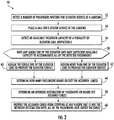
- the flowchart diagram 50 of Figure 2 summarizes an example approach for controlling elevator system operation.
- the detector 30 detects at least one passenger 32 waiting for elevator service at the landing 34.
- the detector 30 communicates information regarding the detected number of passengers or image information to the controller 40.
- the controller 40 automatically places a call for elevator service at the landing 54.
- a hall call fixture is available for at least one of the passengers 32 to place a call for elevator service.
- the detector 30 automatically places a call for elevator service upon detecting at least one passenger waiting at the landing 34.
- the respective detectors 42 detect the available passenger capacity of the corresponding elevator cars 22-28.
- Each detector 42 provides information to the controller 40 indicating or corresponding to the available passenger capacity in the corresponding car.
- the controller 40 uses available space or area information regarding each of the cars 22-28 to determine the respective available passenger capacities.
- the elevator car 22 is empty and, therefore, has a maximum possible available passenger capacity.
- the elevator car 26 already has one passenger on board and, therefore, has somewhat less available passenger capacity compared to the elevator car 22.
- the elevator cars 28 and 24, respectively, have increased numbers of passengers and have less available passenger capacity under the circumstances schematically illustrated in Figure 1 .
- the controller 40 in this example embodiment is configured to prioritize assigning empty elevator cars whenever available.
- the controller 40 attempts to assign as few of the elevator cars as possible to serve the passengers 32 waiting at the landing 34. This allows such passengers to travel together on the same elevator car when the number of passengers waiting at the landing 34 can comfortably fit within a single car. If more than one car is needed, a reduced or minimized number of assigned cars allows the waiting passengers to board one of the assigned cars at the same time or at least reduces the amount of time one passenger remains waiting after another has boarded a car and left the landing 34.
- the controller 40 determines whether any single one of the elevator cars 22-28 has sufficient available capacity to accommodate all of the detected passengers 32.
- the elevator cars 22 and 26 each have available passenger capacity that is at least as large as the capacity needed to accommodate the number of passengers 32 detected by the detector 30. Under such circumstances, the controller 40 assigns one of the elevators cars 22 or 26 to provide elevator service to the passengers 32. In an embodiment where an empty elevator car is prioritized as a first choice, the elevator car 22 would be assigned by the controller 40. In an embodiment where the fastest dispatch time is considered important, the controller 40 will determine which of the elevator cars 22 or 26 will be able to arrive at the landing 34 first.
- the controller 40 assigns more than one of the elevator cars to provide the elevator service at 62 in Figure 2 .
- Such an assignment may include prioritizing empty elevator cars or fastest dispatch time, or both.
- the controller 40 is configured to prefer the fewest number of elevator cars possible and the assignment at 60 would be made whenever possible instead of the assignment at 62.
- the controller 40 may cause more than one of the elevator cars to arrive at the landing 34.
- the car doors are controlled so that all of the assigned cars become available to the passengers 32 at the same time even if the cars arrive at different times. Controlling the doors in this way allows all of the passengers 32 to leave the landing 34 together.
- the controller 40 determines how many passengers 32 board the assigned car based on updates of information from the detector 30, updated information from the detector 42 of the assigned car, or both. At 64, the controller 40 dynamically updates the passenger count for keeping track of changes in the available passenger capacity of the elevators cars.
- the controller 40 determines the intended destination of the passengers at 66.
- the intended destination may be a single floor that all of the passengers 32 on board the assigned elevator car intend to reach. Under some scenarios, different passengers will have different desired or intended destinations.
- the controller 40 controls movement of the assigned car and future assignments of that car to prevent that car from stopping at any floor that is not the intended destination of at least one of the passengers 32 on board that car until all of the passengers 32 have exited that car.
- the passengers 32 experience premium service because they do not have to stop at any floor that is not an intended destination of at least one of those passengers. For situations where all of the passengers 32 intend to travel from the landing 34 to a single destination, the passenger experience and elevator system efficiency tend to be maximized.
- Some embodiments include identifying at least one of the passengers 32 waiting for elevator service. Passengers may be identified based on detecting a portable credential device, such as a smart card or RFID chip, carried by one or more of them. In some embodiments, the detector 30 obtains visual image information and known facial recognition techniques allow for identifying a waiting passenger. Assigning an elevator car in such an embodiment can be based at least in part on the identity of the identified passenger or passengers. For example, some passengers may have special accommodation requirements or may be provided special service, such as always having an empty elevator car arrive to pick them up.
- Assigning at least one of the elevator cars based on the available capacity and an amount of space required to accommodate the detected number of passengers facilitates providing enhanced elevator service for such passengers.
- the car assignment is based on the available passenger capacity being greater than an amount of space required to accommodate the detected number of passengers, those passengers will not feel crowded within the elevator car.
Landscapes
- Engineering & Computer Science (AREA)
- Automation & Control Theory (AREA)
- Computer Networks & Wireless Communication (AREA)
- Mechanical Engineering (AREA)
- Elevator Control (AREA)
- Indicating And Signalling Devices For Elevators (AREA)
Abstract
Description
- Elevator systems have proven useful for carrying people among different levels within buildings. Over the years different technologies have been introduced allowing people to place calls or requests for elevator service. Traditional hall call buttons allow an individual to place a call by indicating a desire to be carried up or down from a particular floor. An elevator car travels to that floor in response to the hall call and once on board, the passenger uses a car operating panel to indicate an intended destination. Some more modern systems allow a passenger to place a request for elevator service including the intended destination using an input device that is located outside of the elevator cars. A variety of dispatching algorithms are known for assigning elevator cars to such requests.
- One way in which such systems do not meet the expectations of some passengers is that the elevator car assigned to their call may be crowded and may make multiple stops along the way to their intended destination. It would be advantageous to provide improved service to at least certain passengers.
- An illustrative example method of controlling an elevator system includes detecting a number of passengers waiting for elevator service at a landing, detecting an available passenger capacity of a plurality of elevator cars, respectively, and assigning at least one of the elevator cars to travel to the landing to provide elevator service to the passengers based on the detected number of passengers and the available passenger capacity of the at least one of the elevator cars.
- An example embodiment having one or more features of the method of the previous paragraph includes determining an intended destination of the passengers that board the at least one of the elevator cars, wherein the intended destination includes at least one floor; and preventing the at least one of the elevator cars from stopping at any floor other than the determined intended destination until all of the passengers exit the at least one of the elevator cars.
- In an example embodiment having one or more features of the method of any of the previous paragraphs, detecting the number of passengers waiting for elevator service at the landing comprises using at least one detector situated outside of the elevator cars and detecting the available passenger capacity of the elevator cars comprises using a plurality of detectors respectively situated inside the elevator cars.
- In an example embodiment having one or more features of the method of any of the previous paragraphs, the at least one detector situated outside the elevator cars comprises a first camera; the plurality of detectors respectively situated inside the elevator cars each comprise a second camera; detecting the number of passengers is based on image information provided by the first camera; and detecting the available passenger capacity of the respective elevator cars is based on image information provided by the second cameras, respectively.
- In an example embodiment having one or more features of the method of any of the previous paragraphs, detecting the available passenger capacity of the elevator cars comprises determining an amount of unoccupied space within the elevator cars, respectively.
- An example embodiment having one or more features of the method of any of the previous paragraphs includes determining how many of the passengers board the at least one of the elevator cars from the landing and determining whether any passengers exit the at least one of elevator cars at the landing.
- In an example embodiment having one or more features of the method of any of the previous paragraphs, assigning the at least one of the elevator cars comprises assigning only one of the elevator cars when the available passenger capacity of the only one of the elevator cars is at least as large as a capacity needed to accommodate the number of passengers or assigning more than one of the elevator cars when the capacity needed to accommodate the number of passengers is greater than the available passenger capacity of any of the elevator cars.
- An example embodiment having one or more features of the method of any of the previous paragraphs includes identifying at least one of the passengers waiting for elevator service and wherein assigning the at least one elevator car is based at least in part on an identity of the identified at least one of the passengers.
- In an example embodiment having one or more features of the method of any of the previous paragraphs, assigning the at least one of the elevator cars includes at least one of prioritizing assigning an empty one of the elevator cars over assigning another one of the elevator cars that includes at least one passenger and prioritizing assigning one of the elevator cars to provide the elevator service over assigning the one of the elevator cars to travel to a different landing to provide other elevator service to at least one other passenger.
- In an example embodiment having one or more features of the method of any of the previous paragraphs, assigning the at least one of the elevator cars is based on the available passenger capacity of the at least one of the elevator cars being greater than an amount of space required to accommodate the detected number of passengers.
- An illustrative example elevator system includes a plurality of elevator cars; at least one detector situated at a landing, the at least one detector being configured to detect a number of passengers waiting for elevator service at the landing; a plurality of car capacity detectors respectively associated with the elevator cars, the car capacity detectors being configured to detect an available passenger capacity of the elevator cars, respectively; and a controller configured to assign at least one of the elevator cars to travel to the landing to provide elevator service to the passengers based on the detected number of passengers and the available passenger capacity of the at least one of the elevator cars.
- In an example embodiment having one or more features of the elevator system of the previous paragraph, the controller is configured to determine an intended destination of the passengers that board the at least one of the elevator cars at the landing, wherein the intended destination includes at least one floor; and prevent the at least one of the elevator cars from stopping at any floor other than the determined intended destination until all of the passengers exit the at least one of the elevator cars.
- In an example embodiment having one or more features of the elevator system of any of the previous paragraphs, the at least one detector situated at the landing comprises a first camera, the at least one car capacity detector comprises a second camera, the controller uses image information provided by the first camera to determine the number of passengers waiting for elevator service at the landing, and the controller uses image information provided by the second camera to determine the available passenger capacity.
- In an example embodiment having one or more features of the elevator system of any of the previous paragraphs, the controller is configured to determine the available passenger capacity of the elevator cars, respectively, by determining an amount of unoccupied space within the elevator cars, respectively.
- In an example embodiment having one or more features of the elevator system of any of the previous paragraphs, the controller is configured to determine a number of passengers that board or exit the at least one of the elevator cars at the landing based on information from at least one of the car capacity detector associated with the at least one of the elevator cars and the at least one detector situated at the landing.
- In an example embodiment having one or more features of the elevator system of any of the previous paragraphs, the controller is configured to assign only one of the elevator cars when the available passenger capacity of the only one of the elevator cars is at least as large as a capacity needed to accommodate the number of passengers or assign more than one of the elevator cars when the capacity needed to accommodate the number of passengers is greater than the available passenger capacity of any of the elevator cars.
- In an example embodiment having one or more features of the elevator system of any of the previous paragraphs, the controller is configured to identify at least one of the passengers waiting for elevator service and assign the at least one of the elevator cars based at least in part on an identity of the identified one of the passengers.
- In an example embodiment having one or more features of the elevator system of any of the previous paragraphs, the controller is configured to assign the at least one of the elevator cars by at least one of prioritizing one of the elevator cars that is empty over another one of the elevator cars that includes at least one passenger and prioritizing assigning one of the elevator cars to provide the elevator service over assigning the one of the elevator cars to travel to a different landing to provide other elevator service to at least one other passenger.
- In an example embodiment having one or more features of the elevator system of any of the previous paragraphs, the controller is configured to assign a lowest possible number of elevator cars to provide the elevator service to the passengers.
- In an example embodiment having one or more features of the elevator system of any of the previous paragraphs, the controller is configured to assign the at least one of the elevator cars based on the available capacity of the at least one of the elevator cars being greater than an amount of space required to accommodate the detected number of passengers.
- The various features and advantages of at least one disclosed example embodiment will become apparent to those skilled in the art from the following detailed description. The drawings that accompany the detailed description can be briefly described as follows.
-
-
Figure 1 schematically illustrates selected portions of an example elevator system. -
Figure 2 is a flowchart diagram summarizing an example approach for providing elevator service. -
Figure 1 schematically illustrates selected portions of anexample elevator system 20 including a plurality ofelevator cars detector 30 is configured to detect a number ofpassengers 32 waiting for elevator service at alanding 34. Thedetector 30 in an example embodiment comprises a camera. In some embodiments, thedetector 30 may be a thermal sensor, a two-dimensional or three-dimensional depth sensor, pressure mats, a radar sensor, or a weight sensor. Those skilled in the art that have the benefit of this description will realize what type of sensor to use for their particular implementation. In some embodiments thedetector 30 includes a processor that is configured to process image information from the camera to provide an output indicating the number ofpassengers 32 waiting for elevator service. - A
controller 40 is configured to assign at least one of the elevator cars 22-28 to provide elevator service to thepassengers 32. Thecontroller 40 utilizes information regarding an available passenger capacity of the respective elevator cars 22-28 for purposes of determining which car or cars to assign to provide service to thepassengers 32. Thecontroller 40 is a computing device dedicated to assigning elevator cars to calls in some embodiments. In others, thecontroller 40 is part of a device that performs several elevator system control functions. - In
Figure 1 , at least onedetector 42 is associated with each of the elevator cars 22-28. In an example embodiment, thedetectors 42 respectively comprise a camera. In some embodiments, thedetectors 42 may be a thermal sensor, a two-dimensional or three-dimensional depth sensor, pressure mats, a radar sensor, or a weight sensor. Those skilled in the art that have the benefit of this description will realize what type of sensor to use for their particular implementation. Thecontroller 40 is configured to process image information from thedetectors 42 for determining an available passenger capacity or an unoccupied area within the respective elevator cars 22-28. Thecontroller 40 is configured to assign at least one of the elevator cars 22-28 based upon the detected number ofpassengers 32 and the available passenger capacity of the elevator cars 22-28, respectively. - Known image processing techniques are used in some example embodiments for determining the number of passengers waiting at the
landing 34 and for determining the available passenger capacity within the elevator cars 22-28. - In an example embodiment, the
controller 40 is configured to provide a specialized type of elevator service on floors that include alanding 34 with adetector 30 for detecting the number ofpassengers 32 waiting for elevator service. The specialized type of elevator service can provide premium elevator access to individuals on such floors compared to others where passengers place a call for elevator service by pressing a traditional hall call button. - An example feature of a specialized type of service includes prioritizing assigning empty elevator cars over other cars that have at least one passenger already on board. Assigning empty elevator cars provides an enhanced passenger experience by avoiding a feeling of being crowded in an elevator car and minimizes the number of stops between the
landing 34 and the intended destination. Another aspect of specialized service in an example embodiment includes faster dispatching time by assigning elevator cars to provide service to passengers waiting on a floor with adetector 30 before assigning a car to a call placed on another floor. Some example embodiments include minimizing the number of stops of an elevator car carrying thepassengers 32 until those passengers reach their intended destination. This example feature reduces the time passengers who receive specialized service spend on an elevator. - The flowchart diagram 50 of
Figure 2 summarizes an example approach for controlling elevator system operation. At 52, thedetector 30 detects at least onepassenger 32 waiting for elevator service at thelanding 34. Thedetector 30 communicates information regarding the detected number of passengers or image information to thecontroller 40. At 54, thecontroller 40 automatically places a call for elevator service at thelanding 54. In some embodiments, a hall call fixture is available for at least one of thepassengers 32 to place a call for elevator service. In other embodiments, thedetector 30 automatically places a call for elevator service upon detecting at least one passenger waiting at thelanding 34. - At 56, the
respective detectors 42 detect the available passenger capacity of the corresponding elevator cars 22-28. Eachdetector 42 provides information to thecontroller 40 indicating or corresponding to the available passenger capacity in the corresponding car. In this example embodiment, thecontroller 40 uses available space or area information regarding each of the cars 22-28 to determine the respective available passenger capacities. Using the illustration ofFigure 1 as an example, theelevator car 22 is empty and, therefore, has a maximum possible available passenger capacity. The elevator car 26 already has one passenger on board and, therefore, has somewhat less available passenger capacity compared to theelevator car 22. Theelevator cars Figure 1 . Thecontroller 40 in this example embodiment is configured to prioritize assigning empty elevator cars whenever available. - In some embodiments the
controller 40 attempts to assign as few of the elevator cars as possible to serve thepassengers 32 waiting at thelanding 34. This allows such passengers to travel together on the same elevator car when the number of passengers waiting at the landing 34 can comfortably fit within a single car. If more than one car is needed, a reduced or minimized number of assigned cars allows the waiting passengers to board one of the assigned cars at the same time or at least reduces the amount of time one passenger remains waiting after another has boarded a car and left thelanding 34. - At 58 in
Figure 2 , thecontroller 40 determines whether any single one of the elevator cars 22-28 has sufficient available capacity to accommodate all of the detectedpassengers 32. InFigure 1 , theelevator cars 22 and 26 each have available passenger capacity that is at least as large as the capacity needed to accommodate the number ofpassengers 32 detected by thedetector 30. Under such circumstances, thecontroller 40 assigns one of theelevators cars 22 or 26 to provide elevator service to thepassengers 32. In an embodiment where an empty elevator car is prioritized as a first choice, theelevator car 22 would be assigned by thecontroller 40. In an embodiment where the fastest dispatch time is considered important, thecontroller 40 will determine which of theelevator cars 22 or 26 will be able to arrive at the landing 34 first. - Assuming none of the elevator cars 22-28 by itself has enough capacity to accommodate all of the
passengers 32, thecontroller 40 assigns more than one of the elevator cars to provide the elevator service at 62 inFigure 2 . Such an assignment may include prioritizing empty elevator cars or fastest dispatch time, or both. In some embodiments, thecontroller 40 is configured to prefer the fewest number of elevator cars possible and the assignment at 60 would be made whenever possible instead of the assignment at 62. - In some embodiments, when there is no single car capable of accommodating all of the
passengers 32 waiting at thelanding 34, thecontroller 40 may cause more than one of the elevator cars to arrive at thelanding 34. In some embodiments, the car doors are controlled so that all of the assigned cars become available to thepassengers 32 at the same time even if the cars arrive at different times. Controlling the doors in this way allows all of thepassengers 32 to leave thelanding 34 together. - Once the assigned elevator car (or cars) arrives at the
landing 34, thecontroller 40 determines howmany passengers 32 board the assigned car based on updates of information from thedetector 30, updated information from thedetector 42 of the assigned car, or both. At 64, thecontroller 40 dynamically updates the passenger count for keeping track of changes in the available passenger capacity of the elevators cars. - Once the
passengers 32 are on board the assigned car or cars, thecontroller 40 determines the intended destination of the passengers at 66. The intended destination may be a single floor that all of thepassengers 32 on board the assigned elevator car intend to reach. Under some scenarios, different passengers will have different desired or intended destinations. At 68, thecontroller 40 controls movement of the assigned car and future assignments of that car to prevent that car from stopping at any floor that is not the intended destination of at least one of thepassengers 32 on board that car until all of thepassengers 32 have exited that car. By preventing any new hall calls from being assigned to that car, thepassengers 32 experience premium service because they do not have to stop at any floor that is not an intended destination of at least one of those passengers. For situations where all of thepassengers 32 intend to travel from the landing 34 to a single destination, the passenger experience and elevator system efficiency tend to be maximized. - Some embodiments include identifying at least one of the
passengers 32 waiting for elevator service. Passengers may be identified based on detecting a portable credential device, such as a smart card or RFID chip, carried by one or more of them. In some embodiments, thedetector 30 obtains visual image information and known facial recognition techniques allow for identifying a waiting passenger. Assigning an elevator car in such an embodiment can be based at least in part on the identity of the identified passenger or passengers. For example, some passengers may have special accommodation requirements or may be provided special service, such as always having an empty elevator car arrive to pick them up. - Assigning at least one of the elevator cars based on the available capacity and an amount of space required to accommodate the detected number of passengers facilitates providing enhanced elevator service for such passengers. When the car assignment is based on the available passenger capacity being greater than an amount of space required to accommodate the detected number of passengers, those passengers will not feel crowded within the elevator car.
- The preceding description is illustrative rather than limiting in nature. Variations and modifications to the disclosed examples may become apparent to those skilled in the art that do not necessarily depart from the essence of this invention. The scope of legal protection given to this invention can only be determined by studying the following claims.
Claims (15)
- A method of controlling an elevator system including a plurality of elevator cars, the method comprising:detecting a number of passengers waiting for elevator service at a landing;detecting an available passenger capacity of the elevator cars, respectively; andassigning at least one of the elevator cars to travel to the landing to provide elevator service to the passengers based on the detected number of passengers and the available passenger capacity of the at least one of the elevator cars.
- The method of claim 1, comprising
determining an intended destination of the passengers that board the at least one of the elevator cars, wherein the intended destination includes at least one floor; and
preventing the at least one of the elevator cars from stopping at any floor other than the determined intended destination until all of the passengers exit the at least one of the elevator cars. - The method of claim 1 or 2, wherein
detecting the number of passengers waiting for elevator service at the landing comprises using at least one detector situated outside of the elevator cars; and
detecting the available passenger capacity of the elevator cars comprises using a plurality of detectors respectively situated inside the elevator cars. - The method of claim 3, whereinthe at least one detector situated outside the elevator cars comprises a first camera;the plurality of detectors respectively situated inside the elevator cars each comprise a second camera;detecting the number of passengers is based on image information provided by the first camera; anddetecting the available passenger capacity of the respective elevator cars is based on image information provided by the second cameras, respectively,wherein detecting the available passenger capacity of the elevator cars preferably comprises determining an amount of unoccupied space within the elevator cars, respectively.
- The method of any preceding claim, comprising
determining how many of the passengers board the at least one of the elevator cars from the landing; and
determining whether any passengers exit the at least one of elevator cars at the landing. - The method of any preceding claim, wherein assigning the at least one of the elevator cars comprises
assigning only one of the elevator cars when the available passenger capacity of the only one of the elevator cars is at least as large as a capacity needed to accommodate the number of passengers; or
assigning more than one of the elevator cars when the capacity needed to accommodate the number of passengers is greater than the available passenger capacity of any of the elevator cars. - The method of any preceding claim, comprising identifying at least one of the passengers waiting for elevator service and wherein assigning the at least one elevator car is based at least in part on an identity of the identified at least one of the passengers.
- The method of any preceding claim, wherein assigning the at least one of the elevator cars includes at least one of
prioritizing assigning an empty one of the elevator cars over assigning another one of the elevator cars that includes at least one passenger; and
prioritizing assigning one of the elevator cars to provide the elevator service over assigning the one of the elevator cars to travel to a different landing to provide other elevator service to at least one other passenger. - The method of any preceding claim, wherein assigning the at least one of the elevator cars is based on the available passenger capacity of the at least one of the elevator cars being greater than an amount of space required to accommodate the detected number of passengers.
- An elevator system, comprising:a plurality of elevator cars;at least one detector situated at a landing, the at least one detector being configured to detect a number of passengers waiting for elevator service at the landing;a plurality of car capacity detectors respectively associated with the elevator cars, the car capacity detectors being configured to detect an available passenger capacity of the elevator cars, respectively; anda controller configured to assign at least one of the elevator cars to travel to the landing to provide elevator service to the passengers based on the detected number of passengers and the available passenger capacity of the at least one of the elevator cars.
- The elevator system of claim 10, wherein the controller is configured to
determine an intended destination of the passengers that board the at least one of the elevator cars at the landing, wherein the intended destination includes at least one floor; and
prevent the at least one of the elevator cars from stopping at any floor other than the determined intended destination until all of the passengers exit the at least one of the elevator cars. - The elevator system of claim 10 or 11, whereinthe at least one detector situated at the landing comprises a first camera;the at least one car capacity detector comprises a second camera;the controller uses image information provided by the first camera to determine the number of passengers waiting for elevator service at the landing; andthe controller uses image information provided by the second camera to determine the available passenger capacity,wherein preferably the controller is configured to determine the available passenger capacity of the elevator cars, respectively, by determining an amount of unoccupied space within the elevator cars, respectively.
- The elevator system of any of claims 10 to 12, wherein the controller is configured to determine a number of passengers that board or exit the at least one of the elevator cars at the landing based on information from at least one of the car capacity detector associated with the at least one of the elevator cars and the at least one detector situated at the landing, and/or
wherein the controller is configured to assign only one of the elevator cars when the available passenger capacity of the only one of the elevator cars is at least as large as a capacity needed to accommodate the number of passengers; or assign more than one of the elevator cars when the capacity needed to accommodate the number of passengers is greater than the available passenger capacity of any of the elevator cars. - The elevator system of any of claims 10 to 13, wherein the controller is configured to
identify at least one of the passengers waiting for elevator service; and assign the at least one of the elevator cars based at least in part on an identity of the identified one of the passengers,
and/or
wherein the controller is configured to assign the at least one of the elevator cars based on the available capacity of the at least one of the elevator cars being greater than an amount of space required to accommodate the detected number of passengers. - The elevator system of any of claims 10 to 14, wherein the controller is configured to assign the at least one of the elevator cars by at least one ofprioritizing one of the elevator cars that is empty over another one of the elevator cars that includes at least one passenger; andprioritizing assigning one of the elevator cars to provide the elevator service over assigning the one of the elevator cars to travel to a different landing to provide other elevator service to at least one other passenger,wherein preferably the controller is configured to assign a lowest possible number of elevator cars to provide the elevator service to the passengers.
Applications Claiming Priority (1)
| Application Number | Priority Date | Filing Date | Title |
|---|---|---|---|
| US16/387,668 US11724909B2 (en) | 2019-04-18 | 2019-04-18 | Elevator car assignment based on a detected number of waiting passengers |
Publications (2)
| Publication Number | Publication Date |
|---|---|
| EP3733577A1 true EP3733577A1 (en) | 2020-11-04 |
| EP3733577B1 EP3733577B1 (en) | 2023-07-05 |
Family
ID=69410959
Family Applications (1)
| Application Number | Title | Priority Date | Filing Date |
|---|---|---|---|
| EP19218184.0A Active EP3733577B1 (en) | 2019-04-18 | 2019-12-19 | Elevator car assignment based on a detected number of waiting passengers |
Country Status (3)
| Country | Link |
|---|---|
| US (1) | US11724909B2 (en) |
| EP (1) | EP3733577B1 (en) |
| CN (1) | CN111824885B (en) |
Families Citing this family (10)
| Publication number | Priority date | Publication date | Assignee | Title |
|---|---|---|---|---|
| CN110510486B (en) * | 2018-05-21 | 2023-03-14 | 奥的斯电梯公司 | Elevator door control system, elevator system and elevator door control method |
| US11554931B2 (en) * | 2018-08-21 | 2023-01-17 | Otis Elevator Company | Inferred elevator car assignments based on proximity of potential passengers |
| US11209832B2 (en) * | 2019-08-18 | 2021-12-28 | Cobalt Robotics Inc. | Elevator interactions by mobile robot |
| EP4078619A4 (en) * | 2019-12-17 | 2024-01-24 | Vayyar Imaging Ltd | Systems and methods for preventing viral transmission |
| US20210362978A1 (en) * | 2020-05-20 | 2021-11-25 | Otis Elevator Company | Passenger waiting assessment system |
| US11866296B2 (en) * | 2020-12-14 | 2024-01-09 | Vayyar Imaging Ltd. | Systems and methods for managing cabins with automatic doors |
| US20220185625A1 (en) * | 2020-12-15 | 2022-06-16 | Abacus Sensor, Inc. | Camera-based sensing devices for performing offline machine learning inference and computer vision |
| US12428259B2 (en) * | 2021-03-18 | 2025-09-30 | International Business Machines Corporation | Occupant-based intelligent elevator actions |
| WO2023281631A1 (en) * | 2021-07-06 | 2023-01-12 | 三菱電機ビルソリューションズ株式会社 | Elevator control system and control method |
| WO2024221138A1 (en) * | 2023-04-23 | 2024-10-31 | 通力电梯有限公司 | Elevator system |
Citations (5)
| Publication number | Priority date | Publication date | Assignee | Title |
|---|---|---|---|---|
| JP2002302348A (en) * | 2001-04-04 | 2002-10-18 | Mitsubishi Electric Corp | Elevator control device |
| WO2016073067A1 (en) * | 2014-11-03 | 2016-05-12 | Otis Elevator Company | Elevator passenger tracking control and call cancellation system |
| EP3076247A1 (en) * | 2015-04-03 | 2016-10-05 | Otis Elevator Company | Sensor fusion for passenger conveyance control |
| EP3106416A1 (en) * | 2015-06-16 | 2016-12-21 | Otis Elevator Company | Elevator system and control method thereof |
| EP3228569A1 (en) * | 2016-04-06 | 2017-10-11 | Otis Elevator Company | Destination dispatch dynamic tuning |
Family Cites Families (16)
| Publication number | Priority date | Publication date | Assignee | Title |
|---|---|---|---|---|
| CH693065A5 (en) | 1994-08-30 | 2003-02-14 | Inventio Ag | Elevator installation. |
| JP4636643B2 (en) | 1999-01-29 | 2011-02-23 | インベンテイオ・アクテイエンゲゼルシヤフト | How to use the elevator equipment |
| JP2000289947A (en) | 1999-04-09 | 2000-10-17 | Inventio Ag | Method for communication with transportation system |
| US6202799B1 (en) | 1999-07-02 | 2001-03-20 | Otis Elevator Company | Processing and registering automatic elevator cell destinations |
| ATE312048T1 (en) | 2000-05-01 | 2005-12-15 | Inventio Ag | SYSTEM AND METHOD FOR GUIDING A USER IN A BUILDING |
| SG96697A1 (en) | 2001-09-20 | 2003-06-16 | Inventio Ag | System for transportation of persons/goods in elevator installations and/or escalators, method of operating such a system, control device and computer program product for commanding such a system |
| EP1666398B1 (en) | 2004-12-01 | 2013-06-19 | Inventio AG | Method for transporting passengers in a building |
| US8387757B2 (en) | 2008-03-31 | 2013-03-05 | Otis Elevator Company | Elevator car assignment control strategy with passenger group separation and future serviceability features |
| CN105565097B (en) * | 2013-12-03 | 2018-09-14 | 大连大学 | Patronage display system in elevator |
| JP6317176B2 (en) * | 2014-05-19 | 2018-04-25 | 株式会社日立製作所 | Elevator group management system and method |
| CN106744089B (en) * | 2015-11-25 | 2020-06-26 | 腾讯科技(深圳)有限公司 | Elevator control method and device |
| CN107304017B (en) * | 2016-04-21 | 2021-06-25 | 奥的斯电梯公司 | Call operation based on wrist wearable intelligent device |
| CN106276438B (en) * | 2016-08-28 | 2019-01-04 | 杨凯杰 | A kind of elevator scheduling method |
| US10259683B2 (en) * | 2017-02-22 | 2019-04-16 | Otis Elevator Company | Method for controlling an elevator system |
| US11383954B2 (en) * | 2018-06-26 | 2022-07-12 | Otis Elevator Company | Super group architecture with advanced building wide dispatching logic |
| US11661307B2 (en) * | 2019-04-01 | 2023-05-30 | Otis Elevator Company | Crowd sensing for elevator systems |
-
2019
- 2019-04-18 US US16/387,668 patent/US11724909B2/en active Active
- 2019-12-19 EP EP19218184.0A patent/EP3733577B1/en active Active
- 2019-12-30 CN CN201911393690.0A patent/CN111824885B/en active Active
Patent Citations (5)
| Publication number | Priority date | Publication date | Assignee | Title |
|---|---|---|---|---|
| JP2002302348A (en) * | 2001-04-04 | 2002-10-18 | Mitsubishi Electric Corp | Elevator control device |
| WO2016073067A1 (en) * | 2014-11-03 | 2016-05-12 | Otis Elevator Company | Elevator passenger tracking control and call cancellation system |
| EP3076247A1 (en) * | 2015-04-03 | 2016-10-05 | Otis Elevator Company | Sensor fusion for passenger conveyance control |
| EP3106416A1 (en) * | 2015-06-16 | 2016-12-21 | Otis Elevator Company | Elevator system and control method thereof |
| EP3228569A1 (en) * | 2016-04-06 | 2017-10-11 | Otis Elevator Company | Destination dispatch dynamic tuning |
Also Published As
| Publication number | Publication date |
|---|---|
| CN111824885B (en) | 2022-03-29 |
| CN111824885A (en) | 2020-10-27 |
| US20200331723A1 (en) | 2020-10-22 |
| EP3733577B1 (en) | 2023-07-05 |
| US11724909B2 (en) | 2023-08-15 |
Similar Documents
| Publication | Publication Date | Title |
|---|---|---|
| US11724909B2 (en) | Elevator car assignment based on a detected number of waiting passengers | |
| CN114955754B (en) | Control device for elevator and management device for moving body | |
| US10259683B2 (en) | Method for controlling an elevator system | |
| CN101821186B (en) | Refuge supporting device of elevator | |
| US9126806B2 (en) | Elevator system with distributed dispatching | |
| US12421076B2 (en) | Elevator call registration when a car is full | |
| EP2558392B1 (en) | Elevator dispatch control to avoid passenger confusion | |
| CN110844722B (en) | Elevator car assignment based on proximity inference of potential passengers | |
| JP6567074B2 (en) | Elevator group management control device and group management control method | |
| US20210179385A1 (en) | Method of prioritizing passenger travel in an elevator | |
| EP4008658A1 (en) | Elevator car space allocation based on detecting voices of potential passengers | |
| CN113213285A (en) | Elevator system | |
| US7549517B2 (en) | Elevator car dispatching including passenger destination information and a fuzzy logic algorithm | |
| CN105000439B (en) | Group management elevator device | |
| JP2017001802A (en) | Elevator control device and elevator control method | |
| CN111731955B (en) | Handling multiple elevator service requests | |
| KR100909312B1 (en) | Group management control device of elevator | |
| JP2022096424A (en) | Group management device for elevator | |
| CN108298390B (en) | Group elevator system | |
| JP7790853B1 (en) | Group management device | |
| JP7618863B1 (en) | Elevator control method and elevator control program | |
| JP2018193236A (en) | Elevator group management system | |
| HK1173711B (en) | Elevator system with distributed dispatching |
Legal Events
| Date | Code | Title | Description |
|---|---|---|---|
| PUAI | Public reference made under article 153(3) epc to a published international application that has entered the european phase |
Free format text: ORIGINAL CODE: 0009012 |
|
| STAA | Information on the status of an ep patent application or granted ep patent |
Free format text: STATUS: THE APPLICATION HAS BEEN PUBLISHED |
|
| AK | Designated contracting states |
Kind code of ref document: A1 Designated state(s): AL AT BE BG CH CY CZ DE DK EE ES FI FR GB GR HR HU IE IS IT LI LT LU LV MC MK MT NL NO PL PT RO RS SE SI SK SM TR |
|
| AX | Request for extension of the european patent |
Extension state: BA ME |
|
| STAA | Information on the status of an ep patent application or granted ep patent |
Free format text: STATUS: REQUEST FOR EXAMINATION WAS MADE |
|
| 17P | Request for examination filed |
Effective date: 20210504 |
|
| RBV | Designated contracting states (corrected) |
Designated state(s): AL AT BE BG CH CY CZ DE DK EE ES FI FR GB GR HR HU IE IS IT LI LT LU LV MC MK MT NL NO PL PT RO RS SE SI SK SM TR |
|
| GRAP | Despatch of communication of intention to grant a patent |
Free format text: ORIGINAL CODE: EPIDOSNIGR1 |
|
| STAA | Information on the status of an ep patent application or granted ep patent |
Free format text: STATUS: GRANT OF PATENT IS INTENDED |
|
| INTG | Intention to grant announced |
Effective date: 20221007 |
|
| GRAJ | Information related to disapproval of communication of intention to grant by the applicant or resumption of examination proceedings by the epo deleted |
Free format text: ORIGINAL CODE: EPIDOSDIGR1 |
|
| STAA | Information on the status of an ep patent application or granted ep patent |
Free format text: STATUS: REQUEST FOR EXAMINATION WAS MADE |
|
| GRAP | Despatch of communication of intention to grant a patent |
Free format text: ORIGINAL CODE: EPIDOSNIGR1 |
|
| STAA | Information on the status of an ep patent application or granted ep patent |
Free format text: STATUS: GRANT OF PATENT IS INTENDED |
|
| INTC | Intention to grant announced (deleted) | ||
| GRAS | Grant fee paid |
Free format text: ORIGINAL CODE: EPIDOSNIGR3 |
|
| INTG | Intention to grant announced |
Effective date: 20230227 |
|
| GRAA | (expected) grant |
Free format text: ORIGINAL CODE: 0009210 |
|
| STAA | Information on the status of an ep patent application or granted ep patent |
Free format text: STATUS: THE PATENT HAS BEEN GRANTED |
|
| AK | Designated contracting states |
Kind code of ref document: B1 Designated state(s): AL AT BE BG CH CY CZ DE DK EE ES FI FR GB GR HR HU IE IS IT LI LT LU LV MC MK MT NL NO PL PT RO RS SE SI SK SM TR |
|
| REG | Reference to a national code |
Ref country code: CH Ref legal event code: EP |
|
| REG | Reference to a national code |
Ref country code: AT Ref legal event code: REF Ref document number: 1584689 Country of ref document: AT Kind code of ref document: T Effective date: 20230715 |
|
| REG | Reference to a national code |
Ref country code: DE Ref legal event code: R096 Ref document number: 602019032065 Country of ref document: DE |
|
| REG | Reference to a national code |
Ref country code: IE Ref legal event code: FG4D |
|
| REG | Reference to a national code |
Ref country code: LT Ref legal event code: MG9D |
|
| REG | Reference to a national code |
Ref country code: NL Ref legal event code: MP Effective date: 20230705 |
|
| REG | Reference to a national code |
Ref country code: AT Ref legal event code: MK05 Ref document number: 1584689 Country of ref document: AT Kind code of ref document: T Effective date: 20230705 |
|
| PG25 | Lapsed in a contracting state [announced via postgrant information from national office to epo] |
Ref country code: NL Free format text: LAPSE BECAUSE OF FAILURE TO SUBMIT A TRANSLATION OF THE DESCRIPTION OR TO PAY THE FEE WITHIN THE PRESCRIBED TIME-LIMIT Effective date: 20230705 |
|
| PG25 | Lapsed in a contracting state [announced via postgrant information from national office to epo] |
Ref country code: GR Free format text: LAPSE BECAUSE OF FAILURE TO SUBMIT A TRANSLATION OF THE DESCRIPTION OR TO PAY THE FEE WITHIN THE PRESCRIBED TIME-LIMIT Effective date: 20231006 |
|
| PG25 | Lapsed in a contracting state [announced via postgrant information from national office to epo] |
Ref country code: ES Free format text: LAPSE BECAUSE OF FAILURE TO SUBMIT A TRANSLATION OF THE DESCRIPTION OR TO PAY THE FEE WITHIN THE PRESCRIBED TIME-LIMIT Effective date: 20230705 |
|
| PG25 | Lapsed in a contracting state [announced via postgrant information from national office to epo] |
Ref country code: IS Free format text: LAPSE BECAUSE OF FAILURE TO SUBMIT A TRANSLATION OF THE DESCRIPTION OR TO PAY THE FEE WITHIN THE PRESCRIBED TIME-LIMIT Effective date: 20231105 |
|
| PG25 | Lapsed in a contracting state [announced via postgrant information from national office to epo] |
Ref country code: SE Free format text: LAPSE BECAUSE OF FAILURE TO SUBMIT A TRANSLATION OF THE DESCRIPTION OR TO PAY THE FEE WITHIN THE PRESCRIBED TIME-LIMIT Effective date: 20230705 Ref country code: RS Free format text: LAPSE BECAUSE OF FAILURE TO SUBMIT A TRANSLATION OF THE DESCRIPTION OR TO PAY THE FEE WITHIN THE PRESCRIBED TIME-LIMIT Effective date: 20230705 Ref country code: PT Free format text: LAPSE BECAUSE OF FAILURE TO SUBMIT A TRANSLATION OF THE DESCRIPTION OR TO PAY THE FEE WITHIN THE PRESCRIBED TIME-LIMIT Effective date: 20231106 Ref country code: NO Free format text: LAPSE BECAUSE OF FAILURE TO SUBMIT A TRANSLATION OF THE DESCRIPTION OR TO PAY THE FEE WITHIN THE PRESCRIBED TIME-LIMIT Effective date: 20231005 Ref country code: LV Free format text: LAPSE BECAUSE OF FAILURE TO SUBMIT A TRANSLATION OF THE DESCRIPTION OR TO PAY THE FEE WITHIN THE PRESCRIBED TIME-LIMIT Effective date: 20230705 Ref country code: LT Free format text: LAPSE BECAUSE OF FAILURE TO SUBMIT A TRANSLATION OF THE DESCRIPTION OR TO PAY THE FEE WITHIN THE PRESCRIBED TIME-LIMIT Effective date: 20230705 Ref country code: IS Free format text: LAPSE BECAUSE OF FAILURE TO SUBMIT A TRANSLATION OF THE DESCRIPTION OR TO PAY THE FEE WITHIN THE PRESCRIBED TIME-LIMIT Effective date: 20231105 Ref country code: HR Free format text: LAPSE BECAUSE OF FAILURE TO SUBMIT A TRANSLATION OF THE DESCRIPTION OR TO PAY THE FEE WITHIN THE PRESCRIBED TIME-LIMIT Effective date: 20230705 Ref country code: GR Free format text: LAPSE BECAUSE OF FAILURE TO SUBMIT A TRANSLATION OF THE DESCRIPTION OR TO PAY THE FEE WITHIN THE PRESCRIBED TIME-LIMIT Effective date: 20231006 Ref country code: FI Free format text: LAPSE BECAUSE OF FAILURE TO SUBMIT A TRANSLATION OF THE DESCRIPTION OR TO PAY THE FEE WITHIN THE PRESCRIBED TIME-LIMIT Effective date: 20230705 Ref country code: ES Free format text: LAPSE BECAUSE OF FAILURE TO SUBMIT A TRANSLATION OF THE DESCRIPTION OR TO PAY THE FEE WITHIN THE PRESCRIBED TIME-LIMIT Effective date: 20230705 Ref country code: AT Free format text: LAPSE BECAUSE OF FAILURE TO SUBMIT A TRANSLATION OF THE DESCRIPTION OR TO PAY THE FEE WITHIN THE PRESCRIBED TIME-LIMIT Effective date: 20230705 |
|
| PG25 | Lapsed in a contracting state [announced via postgrant information from national office to epo] |
Ref country code: PL Free format text: LAPSE BECAUSE OF FAILURE TO SUBMIT A TRANSLATION OF THE DESCRIPTION OR TO PAY THE FEE WITHIN THE PRESCRIBED TIME-LIMIT Effective date: 20230705 |
|
| REG | Reference to a national code |
Ref country code: DE Ref legal event code: R097 Ref document number: 602019032065 Country of ref document: DE |
|
| PG25 | Lapsed in a contracting state [announced via postgrant information from national office to epo] |
Ref country code: SM Free format text: LAPSE BECAUSE OF FAILURE TO SUBMIT A TRANSLATION OF THE DESCRIPTION OR TO PAY THE FEE WITHIN THE PRESCRIBED TIME-LIMIT Effective date: 20230705 Ref country code: RO Free format text: LAPSE BECAUSE OF FAILURE TO SUBMIT A TRANSLATION OF THE DESCRIPTION OR TO PAY THE FEE WITHIN THE PRESCRIBED TIME-LIMIT Effective date: 20230705 Ref country code: EE Free format text: LAPSE BECAUSE OF FAILURE TO SUBMIT A TRANSLATION OF THE DESCRIPTION OR TO PAY THE FEE WITHIN THE PRESCRIBED TIME-LIMIT Effective date: 20230705 Ref country code: DK Free format text: LAPSE BECAUSE OF FAILURE TO SUBMIT A TRANSLATION OF THE DESCRIPTION OR TO PAY THE FEE WITHIN THE PRESCRIBED TIME-LIMIT Effective date: 20230705 Ref country code: CZ Free format text: LAPSE BECAUSE OF FAILURE TO SUBMIT A TRANSLATION OF THE DESCRIPTION OR TO PAY THE FEE WITHIN THE PRESCRIBED TIME-LIMIT Effective date: 20230705 Ref country code: SK Free format text: LAPSE BECAUSE OF FAILURE TO SUBMIT A TRANSLATION OF THE DESCRIPTION OR TO PAY THE FEE WITHIN THE PRESCRIBED TIME-LIMIT Effective date: 20230705 |
|
| PLBE | No opposition filed within time limit |
Free format text: ORIGINAL CODE: 0009261 |
|
| STAA | Information on the status of an ep patent application or granted ep patent |
Free format text: STATUS: NO OPPOSITION FILED WITHIN TIME LIMIT |
|
| PG25 | Lapsed in a contracting state [announced via postgrant information from national office to epo] |
Ref country code: IT Free format text: LAPSE BECAUSE OF FAILURE TO SUBMIT A TRANSLATION OF THE DESCRIPTION OR TO PAY THE FEE WITHIN THE PRESCRIBED TIME-LIMIT Effective date: 20230705 |
|
| 26N | No opposition filed |
Effective date: 20240408 |
|
| PG25 | Lapsed in a contracting state [announced via postgrant information from national office to epo] |
Ref country code: SI Free format text: LAPSE BECAUSE OF FAILURE TO SUBMIT A TRANSLATION OF THE DESCRIPTION OR TO PAY THE FEE WITHIN THE PRESCRIBED TIME-LIMIT Effective date: 20230705 |
|
| REG | Reference to a national code |
Ref country code: CH Ref legal event code: PL |
|
| PG25 | Lapsed in a contracting state [announced via postgrant information from national office to epo] |
Ref country code: LU Free format text: LAPSE BECAUSE OF NON-PAYMENT OF DUE FEES Effective date: 20231219 |
|
| PG25 | Lapsed in a contracting state [announced via postgrant information from national office to epo] |
Ref country code: MC Free format text: LAPSE BECAUSE OF FAILURE TO SUBMIT A TRANSLATION OF THE DESCRIPTION OR TO PAY THE FEE WITHIN THE PRESCRIBED TIME-LIMIT Effective date: 20230705 |
|
| GBPC | Gb: european patent ceased through non-payment of renewal fee |
Effective date: 20231219 |
|
| REG | Reference to a national code |
Ref country code: BE Ref legal event code: MM Effective date: 20231231 |
|
| PG25 | Lapsed in a contracting state [announced via postgrant information from national office to epo] |
Ref country code: MC Free format text: LAPSE BECAUSE OF FAILURE TO SUBMIT A TRANSLATION OF THE DESCRIPTION OR TO PAY THE FEE WITHIN THE PRESCRIBED TIME-LIMIT Effective date: 20230705 Ref country code: LU Free format text: LAPSE BECAUSE OF NON-PAYMENT OF DUE FEES Effective date: 20231219 |
|
| REG | Reference to a national code |
Ref country code: IE Ref legal event code: MM4A |
|
| PG25 | Lapsed in a contracting state [announced via postgrant information from national office to epo] |
Ref country code: IE Free format text: LAPSE BECAUSE OF NON-PAYMENT OF DUE FEES Effective date: 20231219 |
|
| PG25 | Lapsed in a contracting state [announced via postgrant information from national office to epo] |
Ref country code: GB Free format text: LAPSE BECAUSE OF NON-PAYMENT OF DUE FEES Effective date: 20231219 |
|
| PG25 | Lapsed in a contracting state [announced via postgrant information from national office to epo] |
Ref country code: BE Free format text: LAPSE BECAUSE OF NON-PAYMENT OF DUE FEES Effective date: 20231231 |
|
| PG25 | Lapsed in a contracting state [announced via postgrant information from national office to epo] |
Ref country code: CH Free format text: LAPSE BECAUSE OF NON-PAYMENT OF DUE FEES Effective date: 20231231 |
|
| PG25 | Lapsed in a contracting state [announced via postgrant information from national office to epo] |
Ref country code: IE Free format text: LAPSE BECAUSE OF NON-PAYMENT OF DUE FEES Effective date: 20231219 Ref country code: GB Free format text: LAPSE BECAUSE OF NON-PAYMENT OF DUE FEES Effective date: 20231219 Ref country code: CH Free format text: LAPSE BECAUSE OF NON-PAYMENT OF DUE FEES Effective date: 20231231 Ref country code: BE Free format text: LAPSE BECAUSE OF NON-PAYMENT OF DUE FEES Effective date: 20231231 |
|
| PG25 | Lapsed in a contracting state [announced via postgrant information from national office to epo] |
Ref country code: BG Free format text: LAPSE BECAUSE OF FAILURE TO SUBMIT A TRANSLATION OF THE DESCRIPTION OR TO PAY THE FEE WITHIN THE PRESCRIBED TIME-LIMIT Effective date: 20230705 |
|
| PG25 | Lapsed in a contracting state [announced via postgrant information from national office to epo] |
Ref country code: BG Free format text: LAPSE BECAUSE OF FAILURE TO SUBMIT A TRANSLATION OF THE DESCRIPTION OR TO PAY THE FEE WITHIN THE PRESCRIBED TIME-LIMIT Effective date: 20230705 |
|
| PG25 | Lapsed in a contracting state [announced via postgrant information from national office to epo] |
Ref country code: CY Free format text: LAPSE BECAUSE OF FAILURE TO SUBMIT A TRANSLATION OF THE DESCRIPTION OR TO PAY THE FEE WITHIN THE PRESCRIBED TIME-LIMIT; INVALID AB INITIO Effective date: 20191219 |
|
| PG25 | Lapsed in a contracting state [announced via postgrant information from national office to epo] |
Ref country code: HU Free format text: LAPSE BECAUSE OF FAILURE TO SUBMIT A TRANSLATION OF THE DESCRIPTION OR TO PAY THE FEE WITHIN THE PRESCRIBED TIME-LIMIT; INVALID AB INITIO Effective date: 20191219 |
|
| PG25 | Lapsed in a contracting state [announced via postgrant information from national office to epo] |
Ref country code: TR Free format text: LAPSE BECAUSE OF FAILURE TO SUBMIT A TRANSLATION OF THE DESCRIPTION OR TO PAY THE FEE WITHIN THE PRESCRIBED TIME-LIMIT Effective date: 20230705 |
|
| PGFP | Annual fee paid to national office [announced via postgrant information from national office to epo] |
Ref country code: DE Payment date: 20251126 Year of fee payment: 7 |
|
| PGFP | Annual fee paid to national office [announced via postgrant information from national office to epo] |
Ref country code: FR Payment date: 20251120 Year of fee payment: 7 |