EP3733447B1 - Kindersicherheitssitz mit auslösbarem gurtbandspannungsmechanismus - Google Patents
Kindersicherheitssitz mit auslösbarem gurtbandspannungsmechanismus Download PDFInfo
- Publication number
- EP3733447B1 EP3733447B1 EP19172419.4A EP19172419A EP3733447B1 EP 3733447 B1 EP3733447 B1 EP 3733447B1 EP 19172419 A EP19172419 A EP 19172419A EP 3733447 B1 EP3733447 B1 EP 3733447B1
- Authority
- EP
- European Patent Office
- Prior art keywords
- deflector
- seat
- force
- child safety
- safety seat
- Prior art date
- Legal status (The legal status is an assumption and is not a legal conclusion. Google has not performed a legal analysis and makes no representation as to the accuracy of the status listed.)
- Active
Links
Images




Classifications
-
- B—PERFORMING OPERATIONS; TRANSPORTING
- B60—VEHICLES IN GENERAL
- B60R—VEHICLES, VEHICLE FITTINGS, OR VEHICLE PARTS, NOT OTHERWISE PROVIDED FOR
- B60R22/00—Safety belts or body harnesses in vehicles
- B60R22/10—Safety belts or body harnesses in vehicles specially adapted for children or animals
- B60R22/105—Safety belts or body harnesses in vehicles specially adapted for children or animals for children
-
- B—PERFORMING OPERATIONS; TRANSPORTING
- B60—VEHICLES IN GENERAL
- B60N—SEATS SPECIALLY ADAPTED FOR VEHICLES; VEHICLE PASSENGER ACCOMMODATION NOT OTHERWISE PROVIDED FOR
- B60N2/00—Seats specially adapted for vehicles; Arrangement or mounting of seats in vehicles
- B60N2/24—Seats specially adapted for vehicles; Arrangement or mounting of seats in vehicles for particular purposes or particular vehicles
- B60N2/26—Seats specially adapted for vehicles; Arrangement or mounting of seats in vehicles for particular purposes or particular vehicles for children
- B60N2/28—Seats readily mountable on, and dismountable from, existing seats or other parts of the vehicle
- B60N2/2803—Adaptations for seat belts
-
- B—PERFORMING OPERATIONS; TRANSPORTING
- B60—VEHICLES IN GENERAL
- B60N—SEATS SPECIALLY ADAPTED FOR VEHICLES; VEHICLE PASSENGER ACCOMMODATION NOT OTHERWISE PROVIDED FOR
- B60N2/00—Seats specially adapted for vehicles; Arrangement or mounting of seats in vehicles
- B60N2/24—Seats specially adapted for vehicles; Arrangement or mounting of seats in vehicles for particular purposes or particular vehicles
- B60N2/26—Seats specially adapted for vehicles; Arrangement or mounting of seats in vehicles for particular purposes or particular vehicles for children
- B60N2/28—Seats readily mountable on, and dismountable from, existing seats or other parts of the vehicle
- B60N2/2803—Adaptations for seat belts
- B60N2/2812—Adaptations for seat belts for securing the child to the child seat
-
- B—PERFORMING OPERATIONS; TRANSPORTING
- B60—VEHICLES IN GENERAL
- B60N—SEATS SPECIALLY ADAPTED FOR VEHICLES; VEHICLE PASSENGER ACCOMMODATION NOT OTHERWISE PROVIDED FOR
- B60N2/00—Seats specially adapted for vehicles; Arrangement or mounting of seats in vehicles
- B60N2/24—Seats specially adapted for vehicles; Arrangement or mounting of seats in vehicles for particular purposes or particular vehicles
- B60N2/26—Seats specially adapted for vehicles; Arrangement or mounting of seats in vehicles for particular purposes or particular vehicles for children
- B60N2/28—Seats readily mountable on, and dismountable from, existing seats or other parts of the vehicle
- B60N2/2803—Adaptations for seat belts
- B60N2/2816—Adaptations for seat belts with additional belt accessories, e.g. belt tension detectors
-
- B—PERFORMING OPERATIONS; TRANSPORTING
- B60—VEHICLES IN GENERAL
- B60N—SEATS SPECIALLY ADAPTED FOR VEHICLES; VEHICLE PASSENGER ACCOMMODATION NOT OTHERWISE PROVIDED FOR
- B60N2/00—Seats specially adapted for vehicles; Arrangement or mounting of seats in vehicles
- B60N2/24—Seats specially adapted for vehicles; Arrangement or mounting of seats in vehicles for particular purposes or particular vehicles
- B60N2/26—Seats specially adapted for vehicles; Arrangement or mounting of seats in vehicles for particular purposes or particular vehicles for children
- B60N2/28—Seats readily mountable on, and dismountable from, existing seats or other parts of the vehicle
- B60N2/2803—Adaptations for seat belts
- B60N2/2818—Adaptations for seat belts characterised by guiding means for children belts
-
- B—PERFORMING OPERATIONS; TRANSPORTING
- B60—VEHICLES IN GENERAL
- B60N—SEATS SPECIALLY ADAPTED FOR VEHICLES; VEHICLE PASSENGER ACCOMMODATION NOT OTHERWISE PROVIDED FOR
- B60N2/00—Seats specially adapted for vehicles; Arrangement or mounting of seats in vehicles
- B60N2/24—Seats specially adapted for vehicles; Arrangement or mounting of seats in vehicles for particular purposes or particular vehicles
- B60N2/26—Seats specially adapted for vehicles; Arrangement or mounting of seats in vehicles for particular purposes or particular vehicles for children
- B60N2/28—Seats readily mountable on, and dismountable from, existing seats or other parts of the vehicle
- B60N2/2821—Seats readily mountable on, and dismountable from, existing seats or other parts of the vehicle having a seat and a base part
-
- B—PERFORMING OPERATIONS; TRANSPORTING
- B60—VEHICLES IN GENERAL
- B60N—SEATS SPECIALLY ADAPTED FOR VEHICLES; VEHICLE PASSENGER ACCOMMODATION NOT OTHERWISE PROVIDED FOR
- B60N2/00—Seats specially adapted for vehicles; Arrangement or mounting of seats in vehicles
- B60N2/24—Seats specially adapted for vehicles; Arrangement or mounting of seats in vehicles for particular purposes or particular vehicles
- B60N2/26—Seats specially adapted for vehicles; Arrangement or mounting of seats in vehicles for particular purposes or particular vehicles for children
- B60N2/28—Seats readily mountable on, and dismountable from, existing seats or other parts of the vehicle
- B60N2/2869—Seats readily mountable on, and dismountable from, existing seats or other parts of the vehicle rotatable about a vertical axis
-
- B—PERFORMING OPERATIONS; TRANSPORTING
- B60—VEHICLES IN GENERAL
- B60N—SEATS SPECIALLY ADAPTED FOR VEHICLES; VEHICLE PASSENGER ACCOMMODATION NOT OTHERWISE PROVIDED FOR
- B60N2/00—Seats specially adapted for vehicles; Arrangement or mounting of seats in vehicles
- B60N2/24—Seats specially adapted for vehicles; Arrangement or mounting of seats in vehicles for particular purposes or particular vehicles
- B60N2/26—Seats specially adapted for vehicles; Arrangement or mounting of seats in vehicles for particular purposes or particular vehicles for children
- B60N2/28—Seats readily mountable on, and dismountable from, existing seats or other parts of the vehicle
- B60N2/2884—Seats readily mountable on, and dismountable from, existing seats or other parts of the vehicle with protection systems against abnormal g-forces
-
- B—PERFORMING OPERATIONS; TRANSPORTING
- B60—VEHICLES IN GENERAL
- B60N—SEATS SPECIALLY ADAPTED FOR VEHICLES; VEHICLE PASSENGER ACCOMMODATION NOT OTHERWISE PROVIDED FOR
- B60N2/00—Seats specially adapted for vehicles; Arrangement or mounting of seats in vehicles
- B60N2/24—Seats specially adapted for vehicles; Arrangement or mounting of seats in vehicles for particular purposes or particular vehicles
- B60N2/26—Seats specially adapted for vehicles; Arrangement or mounting of seats in vehicles for particular purposes or particular vehicles for children
- B60N2/28—Seats readily mountable on, and dismountable from, existing seats or other parts of the vehicle
- B60N2/2887—Fixation to a transversal anchorage bar, e.g. isofix
-
- B—PERFORMING OPERATIONS; TRANSPORTING
- B60—VEHICLES IN GENERAL
- B60R—VEHICLES, VEHICLE FITTINGS, OR VEHICLE PARTS, NOT OTHERWISE PROVIDED FOR
- B60R21/00—Arrangements or fittings on vehicles for protecting or preventing injuries to occupants or pedestrians in case of accidents or other traffic risks
- B60R21/01—Electrical circuits for triggering passive safety arrangements, e.g. airbags, safety belt tighteners, in case of vehicle accidents or impending vehicle accidents
- B60R21/013—Electrical circuits for triggering passive safety arrangements, e.g. airbags, safety belt tighteners, in case of vehicle accidents or impending vehicle accidents including means for detecting collisions, impending collisions or roll-over
-
- B—PERFORMING OPERATIONS; TRANSPORTING
- B60—VEHICLES IN GENERAL
- B60R—VEHICLES, VEHICLE FITTINGS, OR VEHICLE PARTS, NOT OTHERWISE PROVIDED FOR
- B60R22/00—Safety belts or body harnesses in vehicles
- B60R22/18—Anchoring devices
- B60R22/26—Anchoring devices secured to the seat
-
- B—PERFORMING OPERATIONS; TRANSPORTING
- B60—VEHICLES IN GENERAL
- B60R—VEHICLES, VEHICLE FITTINGS, OR VEHICLE PARTS, NOT OTHERWISE PROVIDED FOR
- B60R22/00—Safety belts or body harnesses in vehicles
- B60R22/34—Belt retractors, e.g. reels
- B60R22/343—Belt retractors, e.g. reels with electrically actuated locking means
-
- B—PERFORMING OPERATIONS; TRANSPORTING
- B60—VEHICLES IN GENERAL
- B60R—VEHICLES, VEHICLE FITTINGS, OR VEHICLE PARTS, NOT OTHERWISE PROVIDED FOR
- B60R22/00—Safety belts or body harnesses in vehicles
- B60R22/34—Belt retractors, e.g. reels
- B60R22/36—Belt retractors, e.g. reels self-locking in an emergency
- B60R22/40—Belt retractors, e.g. reels self-locking in an emergency responsive only to vehicle movement
-
- B—PERFORMING OPERATIONS; TRANSPORTING
- B60—VEHICLES IN GENERAL
- B60R—VEHICLES, VEHICLE FITTINGS, OR VEHICLE PARTS, NOT OTHERWISE PROVIDED FOR
- B60R22/00—Safety belts or body harnesses in vehicles
- B60R22/34—Belt retractors, e.g. reels
- B60R22/44—Belt retractors, e.g. reels with means for reducing belt tension during use under normal conditions
-
- B—PERFORMING OPERATIONS; TRANSPORTING
- B61—RAILWAYS
- B61D—BODY DETAILS OR KINDS OF RAILWAY VEHICLES
- B61D33/00—Seats
- B61D33/0007—Details; Accessories
-
- B—PERFORMING OPERATIONS; TRANSPORTING
- B61—RAILWAYS
- B61D—BODY DETAILS OR KINDS OF RAILWAY VEHICLES
- B61D33/00—Seats
- B61D33/0092—Safety seats, e.g. comprising safety locking means; Seats for children
-
- B—PERFORMING OPERATIONS; TRANSPORTING
- B63—SHIPS OR OTHER WATERBORNE VESSELS; RELATED EQUIPMENT
- B63B—SHIPS OR OTHER WATERBORNE VESSELS; EQUIPMENT FOR SHIPPING
- B63B29/00—Accommodation for crew or passengers not otherwise provided for
- B63B29/02—Cabins or other living spaces; Construction or arrangement thereof
- B63B29/04—Furniture peculiar to vessels
-
- B—PERFORMING OPERATIONS; TRANSPORTING
- B64—AIRCRAFT; AVIATION; COSMONAUTICS
- B64D—EQUIPMENT FOR FITTING IN OR TO AIRCRAFT; FLIGHT SUITS; PARACHUTES; ARRANGEMENT OR MOUNTING OF POWER PLANTS OR PROPULSION TRANSMISSIONS IN AIRCRAFT
- B64D11/00—Passenger or crew accommodation; Flight-deck installations not otherwise provided for
- B64D11/06—Arrangements of seats, or adaptations or details specially adapted for aircraft seats
- B64D11/0612—Arrangements of seats, or adaptations or details specially adapted for aircraft seats specially adapted for children
-
- B—PERFORMING OPERATIONS; TRANSPORTING
- B64—AIRCRAFT; AVIATION; COSMONAUTICS
- B64D—EQUIPMENT FOR FITTING IN OR TO AIRCRAFT; FLIGHT SUITS; PARACHUTES; ARRANGEMENT OR MOUNTING OF POWER PLANTS OR PROPULSION TRANSMISSIONS IN AIRCRAFT
- B64D11/00—Passenger or crew accommodation; Flight-deck installations not otherwise provided for
- B64D11/06—Arrangements of seats, or adaptations or details specially adapted for aircraft seats
- B64D11/062—Belts or other passenger restraint means for passenger seats
-
- B—PERFORMING OPERATIONS; TRANSPORTING
- B63—SHIPS OR OTHER WATERBORNE VESSELS; RELATED EQUIPMENT
- B63B—SHIPS OR OTHER WATERBORNE VESSELS; EQUIPMENT FOR SHIPPING
- B63B29/00—Accommodation for crew or passengers not otherwise provided for
- B63B29/02—Cabins or other living spaces; Construction or arrangement thereof
- B63B29/04—Furniture peculiar to vessels
- B63B2029/043—Seats; Arrangements thereof on vessels
Definitions
- the present invention relates to child safety seats for use in passenger vehicles such as automobiles. Disclosed are a child safety seat, a method of operating a child safety seat and a computer program product for performing a method of operating a child safety seat.
- the child safety seat may be placed on and/or attached to a seat of the vehicle comprising anchorage points to which the child safety seat can be connected.
- the child safety seat may comprise locking mechanisms that make use of or are based on the conventional ISOFIX locking mechanism (or ISOFIX attachments).
- ISOFIX attachments are adapted to engage with corresponding anchorage points that are arranged in a line behind the area of the inflection point in which the seat surface of the vehicle seat borders on the seat backrest of the vehicle seat on which the child safety seat is to be installed.
- Embodiments may have the beneficial effect of implementing an effective and efficient latch mechanism.
- a ratchet may allow movement of the deflector coupled to the first toothed element from the second to the first position in order to store elastic energy in the elastic mechanism without interference from the latch mechanism.
- the unrestricted direction of the ratchet may allow for such a movement from the second to the first position, while a movement in the opposite, restricted direction may be prevented.
- a movement of the deflector coupled to the first toothed element toward the second position may effectively be blocked by the pawl engaging the first toothed element.
- the force-transmitting element comprises a pull cable.
- Embodiments may have the beneficial effect of providing a flexible and space-saving force-transmitting element.
- the pull cable may, for example, be implemented in the form of a Bowden cable, a flexible cable used to transmit mechanical force, for example, a pulling force, via the movement of an inner cable relative to a hollow outer cable housing.
- the outer cable housing may be of composite construction, comprising an inner lining, a longitudinally incompressible layer such as a helical winding or a sheaf of steel wire, and a protective outer covering. For example, a linear movement of the inner cable may be used to transmit a pulling force.
- the rebound bar is arranged on the child safety seat so as to be rotatable about an axis and is releasably fixable in a plurality of positions, wherein the lever mechanism is operable due to the rotation.
- the elastic element may then be loaded by pressing the rebound bar of the child safety seat against the backrest of the vehicle seat.
- the child safety seat further comprises a supporting base and a seat element, which provides seating for the child in the seat.
- the seat element is mounted rotatably relative to the supporting base, and the motion force results from the rotation of the seat element relative to the supporting base.
- Embodiments may have the beneficial effect of providing an easier handling of the child safety seat, in particular to facilitate the buckling of the child into the safety seat.
- a child buckled into the seat element may be adjusted in an orientation that increases child protection.
- the child may be positioned in an orientation facing contrary to the direction of movement of the vehicle in which the child safety seat is mounted.
- the child may be pressed into the seat element rather than being pressed in a direction out of the seat element.
- the reaching of the driving position by the seat element may be detected using a sensor element, for example, a micro-switch.
- the sensor may, for example, comprise a push-button switch or an optical switch.
- the sensor element may send a signal indicating the driving position being reached to the electromechanical actuator and/or a control unit controlling the electromechanical actuator.
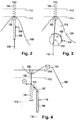
- Fig. 1 shows a schematic drawing of a triggerable harness belt tensioning mechanism comprised by a child safety seat 100.
- the mechanism shown in Fig. 1 may, for example, be comprised by a backrest of a seat element of the child safety seat 100.
- the child safety seat 100 comprises a deflector 102.
- the deflector 102 is coupled to an elastic mechanism 104.
- the deflector 102 depicted has the form of a bar.
- the deflector 102 may have any geometrical form suitable to connect the same, for example, permanently, with a harness belt 106 as well as a latch mechanism.
- the latch mechanism comprises a toothed element 108 connected with the deflector 102.
- pawl 118 Upon receipt of a trigger signal, pawl 118 is disengaged from toothed element 108 via a release mechanism (not shown), allowing the arm 128 and the deflector 102 to freely rotate around rotational axis 129 and forcing them from the first position 114 into the second position 112 by the elastic mechanism 104.
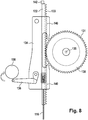
- the rolling element 126 may be supplemented or replaced by a force-transmitting element directly coupled to the arm 128.
- the reaching of the driving position may be determined directly, based on monitoring the relative position of the seat element to the supporting base or indirectly by detecting the toothed element 132 reaching a position corresponding to the seat element reaching the driving position.
- the signal may be received by a control unit (not shown) controlling the electromechanical actuator 138 to move the lever 136 using a control signal.
- the electromechanical actuator 138 may, for example, comprise an electric drive.
- the sensor element 142 may send the sensor signal directly to the electromechanical actuator 138.
- the sensor signal may control or trigger the electromechanical actuator 138 to move the lever 136.
- a mechanical forced guidance coupled to the rotation may be implemented, for example, a pull cable.
- the latch mechanism is adapted for blocking (in the blocking position) the deflector against a movement toward the second position and for releasing (in the release position) the deflector for a movement induced by the forcing toward the second position.
- a release mechanism of the child safety seat is adapted for transferring the latch mechanism from the blocking position to the release position upon receiving a trigger signal.
Landscapes
- Engineering & Computer Science (AREA)
- Mechanical Engineering (AREA)
- Aviation & Aerospace Engineering (AREA)
- Health & Medical Sciences (AREA)
- Child & Adolescent Psychology (AREA)
- General Health & Medical Sciences (AREA)
- Transportation (AREA)
- Chemical & Material Sciences (AREA)
- Combustion & Propulsion (AREA)
- Ocean & Marine Engineering (AREA)
- Seats For Vehicles (AREA)
Claims (16)
- Kindersicherheitssitz (100), umfassend:• einen integralen Hosenträgergurt (106) zum Zurückhalten eines Kindes in dem Kindersicherheitssitz (100),• einen Ablenker (102) für den Hosenträgergurt (106),• einen elastischen Mechanismus (104), der dafür ausgelegt ist, den Ablenker (102) aus einer ersten Position (114) in eine zweite Position (112) zu zwingen, wobei der Hosenträgergurt (106) durch den Ablenker (102) geführt wird, wobei aufgrund der Führung durch den Ablenker (102) die Länge des Hosenträgergurts (106), die verfügbar ist, um das Kind anzuschnallen, in der zweiten Position (112) kürzer ist als in der ersten Position (114),• einen Verrastungsmechanismus, der zwischen einer Blockierposition und einer Freigabeposition verstellbar ist, wobei der Verrastungsmechanismus dafür ausgelegt ist, in der Blockierposition eine Bewegung des Ablenkers (102) in Richtung auf die zweite Position (112) zu blockieren und in der Freigabeposition eine Bewegung des Ablenkers (102), die dadurch hervorgerufen wird, dass eine Bewegung in Richtung auf die zweite Position (112) erzwungen wird, freizugeben,• einen Freigabemechanismus, der dafür ausgelegt ist, den Verrastungsmechanismus aus der Blockierposition in die Freigabeposition zu verstellen, nachdem er ein Auslösesignal empfangen hat,dadurch gekennzeichnet, dass er ferner umfasst:• ein Kraftübertragungselement (116), das mit einem Bewegungselement (130) gekoppelt ist, wobei das Kraftübertragungselement (116) dafür ausgelegt ist, eine Bewegungskraft, die den Ablenker (102) aus der zweiten Position (112) in die erste Position (114) zwingt, zu übertragen, wobei das Kraftübertragungselement (116) optional ein Zugseil umfasst.
- Kindersicherheitssitz (100) nach Anspruch 1, wobei der Verrastungsmechanismus ein erstes gezahntes Element (108) und eine Sperrklinke (118) umfasst, wobei der Ablenker (102) mit dem ersten gezahnten Element (108) gekoppelt ist, wobei der Verrastungsmechanismus durch Ineingriffbringen und Außereingriffbringen der Sperrklinke (118) mit bzw. von dem ersten gezahnten Element (108) zwischen der Blockierposition und der Freigabeposition verstellbar ist.
- Kindersicherheitssitz (100) nach Anspruch 2, wobei das erste gezahnte Element (108) und die Sperrklinke (118) eine Knarre bilden und/oder das erste gezahnte Element (108) mehrere Zähne (109) umfasst, wobei die Sperrklinke (118) dafür ausgelegt ist, einen Eingriff mit unterschiedlichen von den Zähnen (109) durchzuführen.
- Kindersicherheitssitz (100) nach einem der vorangehenden Ansprüche, wobei der Freigabemechanismus einen Antrieb (124) umfasst, wobei der Antrieb (124) mit dem Verrastungsmechanismus gekoppelt ist.
- Kindersicherheitssitz (100) nach Anspruch 2 und 4, wobei der Antrieb (124) durch eine erste Kupplung mit der Sperrklinke (118) gekoppelt ist, wobei der Antrieb (124) optional dafür ausgelegt ist, die Sperrklinke (118) unter Verwendung der ersten Kupplung über einen Hebelarm (120) der Sperrklinke (118) zwischen verschiedenen Drehpositionen um eine Achse (115) zu drehen, wobei das Ineingriff- und Außereingriffbringen der Sperrklinke (118) mit bzw. von dem ersten gezahnten Element (108) durch die verschiedenen Drehpositionen der Sperrklinke (118) bewirkt wird.
- Kindersicherheitssitz (100) nach einem der vorangehenden Ansprüche, wobei der Ablenker (102) an einem Arm (128) angeordnet ist, der um eine erste Achse (129) drehbar ist, wobei der Kindersicherheitssitz (100) ferner einen Wälzkörper (126) umfasst, der mit dem Kraftübertragungselement (116) gekoppelt ist und exzentrisch um eine zweite Achse montiert ist, wobei der Wälzkörper (126) dafür ausgelegt ist, sich während einer Drehung des Wälzkörpers (126) um die zweite Achse (127) auf dem Arm (128) zu wälzen, wobei die Drehung auf die Bewegungskraft zurückgeht, wobei der Ablenker (102) aufgrund des Wälzens aus der zweiten Position (112) in die erste Position (114) verstellbar ist.
- Kindersicherheitssitz (100) nach Anspruch 6, wobei der Wälzkörper (126) und der Arm auf solche Weise geformt sind, dass bei Überschreitung einer vordefinierten Drehungsausrichtung des Wälzkörpers (126) der Arm (128) frei um die erste Achse (126) drehbar ist, um den Ablenker (102) aus der ersten Position (114) in die zweite Position (112) verstellen zu können, wobei vorzugsweise aufgrund der Drehung des Wälzkörpers (126) aus einer Anfangswälzausrichtung in eine Endwälzausrichtung in einer Drehrichtung der Ablenker (102) aus der zweiten Position (112) in die erste Position (114) verstellbar ist, wobei die vordefinierte Drehungsausrichtung aus einer Fortsetzung der Drehbewegung in der Bewegungsrichtung über die Endwälzausrichtung hinaus resultiert.
- Kindersicherheitssitz (100) nach einem der vorangehenden Ansprüche, ferner einen Entkopplungsmechanismus umfassend, der dafür ausgelegt ist, das Entkoppeln des Kraftübertragungselements (116) von dem Bewegungselement (130) automatisch zu erzwingen, nachdem der Ablenker (102) die erste Position (114) erreicht hat, wobei der Entkopplungsmechanismus optional ferner dafür ausgelegt ist, das Kraftübertragungselement (116) automatisch wieder mit dem Bewegungselement (130) zu koppeln, nachdem der Ablenker (102) die zweite Position (112) erreicht hat.
- Kindersicherheitssitz (100) nach einem der vorangehenden Ansprüche wobei das Bewegungselement (130) von irgendeinem bereitgestellt wird von• einem bewegbaren Hebel, der außerhalb einer Sitzschale (209) des Kindersicherheitssitzes (100) angeordnet ist, wobei optional der Kindersicherheitssitz (100) ferner eine Rückstellstange (204) umfasst, wobei die Rückstellstange (204) dafür ausgelegt ist, starr an dem Sitz fixiert zu werden und ein Widerlager in Bezug auf den Fahrzeugsitz zu bilden, auf dem der Kindersicherheitssitz (100) installiert werden soll, wobei der Hebel von der Rückstellstange (204) bereitgestellt wird,• einem Abschnitt des Hosenträgergurts (106),• einer Antriebswelle eines Motors.
- Kindersicherheitssitz (100) nach einem der vorangehenden Ansprüche, ferner eine stützende Basis (200) und ein Sitzelement (201) umfassend, wobei das Sitzelement (201) eine Sitzgelegenheit für das Kind in dem Sitz bereitstellt, wobei das Sitzelement (201) drehbar in Bezug auf die stützende Basis (200) montiert ist, wobei die Bewegungskraft aus der Drehung des Sitzelements (201) in Bezug auf die stützende Basis (200) resultiert.
- Kindersicherheitssitz (100) nach Anspruch 10, wobei das Sitzelement (201) horizontal zwischen einer Einstiegsposition und einer Fahrposition drehbar ist, wobei sich die Einstiegsposition und die Fahrposition zumindest durch einen Drehwinkel von 45 Grad, vorzugsweise von mindestens 80 Grad voneinander unterscheiden, wobei die Bewegungskraft aus der Drehung des Sitzelements (201) in Bezug auf die stützende Basis (200) zwischen der Einstiegsposition und der Fahrposition resultiert, wobei der Entkopplungsmechanismus optional dafür ausgelegt ist, die Kraftentkopplung des Kraftübertragungselements (116) von dem Bewegungselement (130) durchzuführen, nachdem das Sitzelement (201) die Fahrposition erreicht hat.
- Kindersicherheitssitz (100) nach einem der vorangehenden Ansprüche 10-11, wobei das Bewegungselement (130) in einer starren Position an der stützenden Basis (200) angeordnet ist, wobei das Kraftübertragungselement (116) optional eine Antriebswelle umfasst, wobei die stützende Basis (200) das Bewegungselement (130) umfasst.
- Kindersicherheitssitz (100) nach Anspruch 2 und einem der vorangehenden Ansprüche 10-11, wobei das Kraftübertragungselement (116) ein zweites gezahntes Element (132) aufweist, das Bewegungselement (130) ein Zahnrad umfasst, das dafür ausgelegt ist, mit dem zweiten gezahnten Element (132) verzahnt zu werden und ein Drehmoment, das aus der Drehung des Sitzelements (201) resultiert, auf das zweite gezahnte Element (132) zu übertragen.
- Kindersicherheitssitz (100) nach Anspruch 13, wobei der Entkopplungsmechanismus dafür ausgelegt ist, die Kraftentkopplung durch Außereingriffbringen des zweiten gezahnten Elements (132) von dem Zahnrad durchzuführen, wobei optional der Entkopplungsmechanismus zur Durchführung der Kraftentkopplung irgendeines von einem elektromechanischen Aktor (138) und einer mechanisch erzwungenen Führung, die mit der Drehung des Sitzelements (201) gekoppelt ist, umfasst, oder
der Entkopplungsmechanismus ferner eine Steuereinheit umfasst, wobei die Steuereinheit dafür ausgelegt ist, den elektromechanischen Aktor (128) so zu steuern, dass das zweite gezahnte Element (132) als Reaktion darauf, dass der Ablenker (102) die zweite Position (112) eingenommen hat, mit dem Zahnrad in Eingriff gebracht wird. - Verfahren zum Betätigen eines Kindersicherheitssitzes (100), umfassend:• einen integralen Hosenträgergurt (106) zum Zurückhalten eines Kindes in dem Kindersicherheitssitz (100),• einen Ablenker (102) für den Hosenträgergurt (106),• einen elastischen Mechanismus (104), der dafür ausgelegt ist, den Ablenker (102) aus einer ersten Position (114) in eine zweite Position (112) zu zwingen, wobei der Hosenträgergurt (106) durch den Ablenker (102) geführt wird, wobei aufgrund der Führung durch den Ablenker (102) die Länge des Hosenträgergurts (106), die verfügbar ist, um das Kind anzuschnallen, in der ersten Position (114) kürzer ist als in der zweiten Position (112),• einen Verrastungsmechanismus, der zwischen einer Blockierposition und einer Freigabeposition verstellbar ist, wobei der Verrastungsmechanismus dafür ausgelegt ist, in der Blockierposition eine Bewegung des Ablenkers (102) in Richtung auf die zweite Position (112) zu blockieren und in der Freigabeposition eine Bewegung des Ablenkers (102), die dadurch hervorgerufen wird, dass eine Bewegung in Richtung auf die zweite Position (112) erzwungen wird, freizugeben,• einen Freigabemechanismus, der dafür ausgelegt ist, den Verrastungsmechanismus aus der Blockierposition in die Freigabeposition zu verstellen, nachdem er ein Auslösesignal empfangen hat, und• ein Kraftübertragungselement (116), das mit einem Bewegungselement (130) gekoppelt ist, wobei das Kraftübertragungselement (116) dafür ausgelegt ist, eine Bewegungskraft, die den Ablenker (102) aus der zweiten Position (112) in die erste Position (114) zwingt, zu übertragen, wobei das Kraftübertragungselement (116) optional ein Zugseil umfasst,wobei das Verfahren umfasst:• Empfangen eines Auslösesignals,• Verstellen des Verrastungsmechanismus in die Freigabeposition.
- Computerprogrammprodukt, computerausführbare Befehle umfassend zur Durchführung des Verfahrens nach Anspruch 2 an dem Kindersicherheitssitz (100) nach Anspruch 14.
Priority Applications (6)
| Application Number | Priority Date | Filing Date | Title |
|---|---|---|---|
| EP19172419.4A EP3733447B1 (de) | 2019-05-02 | 2019-05-02 | Kindersicherheitssitz mit auslösbarem gurtbandspannungsmechanismus |
| EP21206151.9A EP3998175B1 (de) | 2019-05-02 | 2019-05-02 | Kindersicherheitssitz mit auslösbarem gurtbandspannungsmechanismus |
| ES19172419T ES2903200T3 (es) | 2019-05-02 | 2019-05-02 | Asiento de seguridad para niños con mecanismo tensor de cinturón de arnés activable |
| CN202010355668.3A CN111873865B (zh) | 2019-05-02 | 2020-04-29 | 具有可触发的束带张紧机构的儿童安全座椅 |
| AU2020202864A AU2020202864B2 (en) | 2019-05-02 | 2020-04-30 | Child safety seat with a triggerable harness belt tensioning mechanism |
| US16/864,390 US11332049B2 (en) | 2019-05-02 | 2020-05-01 | Child safety seat with a triggerable harness belt tensioning mechanism |
Applications Claiming Priority (1)
| Application Number | Priority Date | Filing Date | Title |
|---|---|---|---|
| EP19172419.4A EP3733447B1 (de) | 2019-05-02 | 2019-05-02 | Kindersicherheitssitz mit auslösbarem gurtbandspannungsmechanismus |
Related Child Applications (2)
| Application Number | Title | Priority Date | Filing Date |
|---|---|---|---|
| EP21206151.9A Division EP3998175B1 (de) | 2019-05-02 | 2019-05-02 | Kindersicherheitssitz mit auslösbarem gurtbandspannungsmechanismus |
| EP21206151.9A Division-Into EP3998175B1 (de) | 2019-05-02 | 2019-05-02 | Kindersicherheitssitz mit auslösbarem gurtbandspannungsmechanismus |
Publications (2)
| Publication Number | Publication Date |
|---|---|
| EP3733447A1 EP3733447A1 (de) | 2020-11-04 |
| EP3733447B1 true EP3733447B1 (de) | 2021-12-08 |
Family
ID=66397068
Family Applications (2)
| Application Number | Title | Priority Date | Filing Date |
|---|---|---|---|
| EP19172419.4A Active EP3733447B1 (de) | 2019-05-02 | 2019-05-02 | Kindersicherheitssitz mit auslösbarem gurtbandspannungsmechanismus |
| EP21206151.9A Active EP3998175B1 (de) | 2019-05-02 | 2019-05-02 | Kindersicherheitssitz mit auslösbarem gurtbandspannungsmechanismus |
Family Applications After (1)
| Application Number | Title | Priority Date | Filing Date |
|---|---|---|---|
| EP21206151.9A Active EP3998175B1 (de) | 2019-05-02 | 2019-05-02 | Kindersicherheitssitz mit auslösbarem gurtbandspannungsmechanismus |
Country Status (5)
| Country | Link |
|---|---|
| US (1) | US11332049B2 (de) |
| EP (2) | EP3733447B1 (de) |
| CN (1) | CN111873865B (de) |
| AU (1) | AU2020202864B2 (de) |
| ES (1) | ES2903200T3 (de) |
Families Citing this family (5)
| Publication number | Priority date | Publication date | Assignee | Title |
|---|---|---|---|---|
| DE202012102471U1 (de) * | 2012-06-18 | 2012-09-07 | Cybex Gmbh | Kindersitz zur Anbringung auf einem Kraftfahrzeugsitz |
| CN114194084B (zh) * | 2020-09-17 | 2024-07-12 | 宝钜瑞士股份有限公司 | 儿童安全座椅 |
| US12447875B2 (en) * | 2021-01-29 | 2025-10-21 | Evenflo Company, Inc. | Top tether damper for child car seat |
| CN120963491A (zh) * | 2021-10-15 | 2025-11-18 | 明门(中国)幼童用品有限公司 | 底座组件以及儿童汽车安全座椅 |
| DE102022004343A1 (de) | 2021-12-06 | 2023-06-07 | Mercedes-Benz Group AG | Verbesserter Kindersicherheitssitz für Fahrzeuge |
Family Cites Families (8)
| Publication number | Priority date | Publication date | Assignee | Title |
|---|---|---|---|---|
| US4342483A (en) * | 1980-03-24 | 1982-08-03 | Juichiro Takada | Child safety seat for vehicles |
| JPS61120627U (de) * | 1985-01-18 | 1986-07-30 | ||
| US20070228787A1 (en) * | 2006-04-04 | 2007-10-04 | Said Nakhla | Harness pretensioning device for child safety seat |
| DE102009017601B4 (de) * | 2009-04-16 | 2011-06-22 | RECARO GmbH & Co. KG, 73230 | Fahrzeugkindersitz |
| US8474907B2 (en) * | 2009-07-05 | 2013-07-02 | Graco Children's Products Inc. | Car seat installation and recline mechanism |
| US8262161B2 (en) * | 2010-05-04 | 2012-09-11 | Cosco Management, Inc. | Child restraint for vehicle |
| EP3112209B1 (de) * | 2015-07-03 | 2017-05-17 | Przemyslowy Instytut Motoryzacji | Kindersicherheitssitz mit einer vorrichtung zum vorspannen von integrierten sicherheitsgurten zum zurückhalten eines kindes im sitz |
| CN107539173B (zh) * | 2016-06-23 | 2021-06-25 | 瑞典雄霸安全制品有限公司 | 具有锁定机构的束带系统 |
-
2019
- 2019-05-02 EP EP19172419.4A patent/EP3733447B1/de active Active
- 2019-05-02 EP EP21206151.9A patent/EP3998175B1/de active Active
- 2019-05-02 ES ES19172419T patent/ES2903200T3/es active Active
-
2020
- 2020-04-29 CN CN202010355668.3A patent/CN111873865B/zh active Active
- 2020-04-30 AU AU2020202864A patent/AU2020202864B2/en active Active
- 2020-05-01 US US16/864,390 patent/US11332049B2/en active Active
Also Published As
| Publication number | Publication date |
|---|---|
| EP3998175B1 (de) | 2024-10-23 |
| US20200346613A1 (en) | 2020-11-05 |
| US11332049B2 (en) | 2022-05-17 |
| AU2020202864A1 (en) | 2020-11-19 |
| EP3998175A1 (de) | 2022-05-18 |
| AU2020202864B2 (en) | 2025-05-29 |
| ES2903200T3 (es) | 2022-03-31 |
| CN111873865A (zh) | 2020-11-03 |
| EP3733447A1 (de) | 2020-11-04 |
| CN111873865B (zh) | 2024-09-27 |
Similar Documents
| Publication | Publication Date | Title |
|---|---|---|
| US11332049B2 (en) | Child safety seat with a triggerable harness belt tensioning mechanism | |
| EP3738820B1 (de) | Kindersicherheitssitz mit einem motorisierten gurtstraffer | |
| US10882489B2 (en) | Vehicle seatbelt device | |
| CN111231790B (zh) | 车辆座椅 | |
| EP3363691B1 (de) | Steuerungssystem für begrenzer von variabler kraft für fahrzeug | |
| CN107215304B (zh) | 车辆的乘员保护装置 | |
| US20100123348A1 (en) | Seat belt retractor and seat belt apparatus having the same | |
| KR102320388B1 (ko) | 리트랙터 프리텐셔너 조립체 | |
| US7360795B2 (en) | Torsion bar load limiter and pretensioner for seat belt system | |
| EP1445155A1 (de) | Sicherheitsgurtsystem | |
| KR102758225B1 (ko) | 비상 텐셔닝 모듈이 적용된 시트벨트 리트랙터 | |
| CN100439160C (zh) | 座椅安全带预紧器 | |
| EP3323671A1 (de) | Verfahren zur reduzierung der abbremsungswerte, die auf den körper eines kraftfahrzeuginsassen während eines unfalls wirken, und sicherer kraftfahrzeugsitz, in dem dieses verfahren verwendet wird | |
| JP7329379B2 (ja) | シートベルトリトラクタ及びシートベルト装置 | |
| JP2011156934A (ja) | 乗員保護装置 | |
| CN119659434B (zh) | 基于座椅坐垫滑动的乘员碰撞安全防护装置及车辆 | |
| JP7412894B2 (ja) | シートベルトリトラクタ及びシートベルト装置 | |
| US6352305B1 (en) | Vehicle seat equipped with a device providing protection against impacts from the rear | |
| JP2024141635A (ja) | 乗員拘束装置 | |
| JP2003112545A (ja) | 車両用ヘッドレスト装置 | |
| JP2006182326A (ja) | シートベルト装置 | |
| JP2001114070A (ja) | 車両用シートベルト装置及び車両衝突時の乗員保護方法 | |
| JPH0627381U (ja) | シートベルト装置 |
Legal Events
| Date | Code | Title | Description |
|---|---|---|---|
| PUAI | Public reference made under article 153(3) epc to a published international application that has entered the european phase |
Free format text: ORIGINAL CODE: 0009012 |
|
| STAA | Information on the status of an ep patent application or granted ep patent |
Free format text: STATUS: THE APPLICATION HAS BEEN PUBLISHED |
|
| AK | Designated contracting states |
Kind code of ref document: A1 Designated state(s): AL AT BE BG CH CY CZ DE DK EE ES FI FR GB GR HR HU IE IS IT LI LT LU LV MC MK MT NL NO PL PT RO RS SE SI SK SM TR |
|
| AX | Request for extension of the european patent |
Extension state: BA ME |
|
| STAA | Information on the status of an ep patent application or granted ep patent |
Free format text: STATUS: REQUEST FOR EXAMINATION WAS MADE |
|
| 17P | Request for examination filed |
Effective date: 20210304 |
|
| RBV | Designated contracting states (corrected) |
Designated state(s): AL AT BE BG CH CY CZ DE DK EE ES FI FR GB GR HR HU IE IS IT LI LT LU LV MC MK MT NL NO PL PT RO RS SE SI SK SM TR |
|
| RIC1 | Information provided on ipc code assigned before grant |
Ipc: B60N 2/28 20060101AFI20210526BHEP |
|
| GRAP | Despatch of communication of intention to grant a patent |
Free format text: ORIGINAL CODE: EPIDOSNIGR1 |
|
| STAA | Information on the status of an ep patent application or granted ep patent |
Free format text: STATUS: GRANT OF PATENT IS INTENDED |
|
| INTG | Intention to grant announced |
Effective date: 20210727 |
|
| GRAS | Grant fee paid |
Free format text: ORIGINAL CODE: EPIDOSNIGR3 |
|
| GRAA | (expected) grant |
Free format text: ORIGINAL CODE: 0009210 |
|
| STAA | Information on the status of an ep patent application or granted ep patent |
Free format text: STATUS: THE PATENT HAS BEEN GRANTED |
|
| RBV | Designated contracting states (corrected) |
Designated state(s): AL AT BG CY CZ DE DK EE ES FI FR GB GR HR HU IS IT LT LV MK NL NO PL PT RO RS SE SI SK SM TR |
|
| AK | Designated contracting states |
Kind code of ref document: B1 Designated state(s): AL AT BG CY CZ DE DK EE ES FI FR GB GR HR HU IS IT LT LV MK NL NO PL PT RO RS SE SI SK SM TR |
|
| REG | Reference to a national code |
Ref country code: GB Ref legal event code: FG4D |
|
| REG | Reference to a national code |
Ref country code: AT Ref legal event code: REF Ref document number: 1453520 Country of ref document: AT Kind code of ref document: T Effective date: 20211215 |
|
| REG | Reference to a national code |
Ref country code: DE Ref legal event code: R096 Ref document number: 602019009813 Country of ref document: DE |
|
| REG | Reference to a national code |
Ref country code: SE Ref legal event code: TRGR |
|
| REG | Reference to a national code |
Ref country code: ES Ref legal event code: FG2A Ref document number: 2903200 Country of ref document: ES Kind code of ref document: T3 Effective date: 20220331 |
|
| REG | Reference to a national code |
Ref country code: LT Ref legal event code: MG9D |
|
| REG | Reference to a national code |
Ref country code: NL Ref legal event code: MP Effective date: 20211208 |
|
| PG25 | Lapsed in a contracting state [announced via postgrant information from national office to epo] |
Ref country code: RS Free format text: LAPSE BECAUSE OF FAILURE TO SUBMIT A TRANSLATION OF THE DESCRIPTION OR TO PAY THE FEE WITHIN THE PRESCRIBED TIME-LIMIT Effective date: 20211208 Ref country code: LT Free format text: LAPSE BECAUSE OF FAILURE TO SUBMIT A TRANSLATION OF THE DESCRIPTION OR TO PAY THE FEE WITHIN THE PRESCRIBED TIME-LIMIT Effective date: 20211208 Ref country code: FI Free format text: LAPSE BECAUSE OF FAILURE TO SUBMIT A TRANSLATION OF THE DESCRIPTION OR TO PAY THE FEE WITHIN THE PRESCRIBED TIME-LIMIT Effective date: 20211208 Ref country code: BG Free format text: LAPSE BECAUSE OF FAILURE TO SUBMIT A TRANSLATION OF THE DESCRIPTION OR TO PAY THE FEE WITHIN THE PRESCRIBED TIME-LIMIT Effective date: 20220308 |
|
| REG | Reference to a national code |
Ref country code: AT Ref legal event code: MK05 Ref document number: 1453520 Country of ref document: AT Kind code of ref document: T Effective date: 20211208 |
|
| PG25 | Lapsed in a contracting state [announced via postgrant information from national office to epo] |
Ref country code: NO Free format text: LAPSE BECAUSE OF FAILURE TO SUBMIT A TRANSLATION OF THE DESCRIPTION OR TO PAY THE FEE WITHIN THE PRESCRIBED TIME-LIMIT Effective date: 20220308 Ref country code: LV Free format text: LAPSE BECAUSE OF FAILURE TO SUBMIT A TRANSLATION OF THE DESCRIPTION OR TO PAY THE FEE WITHIN THE PRESCRIBED TIME-LIMIT Effective date: 20211208 Ref country code: HR Free format text: LAPSE BECAUSE OF FAILURE TO SUBMIT A TRANSLATION OF THE DESCRIPTION OR TO PAY THE FEE WITHIN THE PRESCRIBED TIME-LIMIT Effective date: 20211208 Ref country code: GR Free format text: LAPSE BECAUSE OF FAILURE TO SUBMIT A TRANSLATION OF THE DESCRIPTION OR TO PAY THE FEE WITHIN THE PRESCRIBED TIME-LIMIT Effective date: 20220309 |
|
| PG25 | Lapsed in a contracting state [announced via postgrant information from national office to epo] |
Ref country code: NL Free format text: LAPSE BECAUSE OF FAILURE TO SUBMIT A TRANSLATION OF THE DESCRIPTION OR TO PAY THE FEE WITHIN THE PRESCRIBED TIME-LIMIT Effective date: 20211208 |
|
| PG25 | Lapsed in a contracting state [announced via postgrant information from national office to epo] |
Ref country code: SM Free format text: LAPSE BECAUSE OF FAILURE TO SUBMIT A TRANSLATION OF THE DESCRIPTION OR TO PAY THE FEE WITHIN THE PRESCRIBED TIME-LIMIT Effective date: 20211208 Ref country code: SK Free format text: LAPSE BECAUSE OF FAILURE TO SUBMIT A TRANSLATION OF THE DESCRIPTION OR TO PAY THE FEE WITHIN THE PRESCRIBED TIME-LIMIT Effective date: 20211208 Ref country code: RO Free format text: LAPSE BECAUSE OF FAILURE TO SUBMIT A TRANSLATION OF THE DESCRIPTION OR TO PAY THE FEE WITHIN THE PRESCRIBED TIME-LIMIT Effective date: 20211208 Ref country code: PT Free format text: LAPSE BECAUSE OF FAILURE TO SUBMIT A TRANSLATION OF THE DESCRIPTION OR TO PAY THE FEE WITHIN THE PRESCRIBED TIME-LIMIT Effective date: 20220408 Ref country code: EE Free format text: LAPSE BECAUSE OF FAILURE TO SUBMIT A TRANSLATION OF THE DESCRIPTION OR TO PAY THE FEE WITHIN THE PRESCRIBED TIME-LIMIT Effective date: 20211208 Ref country code: CZ Free format text: LAPSE BECAUSE OF FAILURE TO SUBMIT A TRANSLATION OF THE DESCRIPTION OR TO PAY THE FEE WITHIN THE PRESCRIBED TIME-LIMIT Effective date: 20211208 |
|
| PG25 | Lapsed in a contracting state [announced via postgrant information from national office to epo] |
Ref country code: PL Free format text: LAPSE BECAUSE OF FAILURE TO SUBMIT A TRANSLATION OF THE DESCRIPTION OR TO PAY THE FEE WITHIN THE PRESCRIBED TIME-LIMIT Effective date: 20211208 Ref country code: AT Free format text: LAPSE BECAUSE OF FAILURE TO SUBMIT A TRANSLATION OF THE DESCRIPTION OR TO PAY THE FEE WITHIN THE PRESCRIBED TIME-LIMIT Effective date: 20211208 |
|
| REG | Reference to a national code |
Ref country code: DE Ref legal event code: R097 Ref document number: 602019009813 Country of ref document: DE |
|
| PG25 | Lapsed in a contracting state [announced via postgrant information from national office to epo] |
Ref country code: IS Free format text: LAPSE BECAUSE OF FAILURE TO SUBMIT A TRANSLATION OF THE DESCRIPTION OR TO PAY THE FEE WITHIN THE PRESCRIBED TIME-LIMIT Effective date: 20220408 |
|
| PLBE | No opposition filed within time limit |
Free format text: ORIGINAL CODE: 0009261 |
|
| STAA | Information on the status of an ep patent application or granted ep patent |
Free format text: STATUS: NO OPPOSITION FILED WITHIN TIME LIMIT |
|
| PG25 | Lapsed in a contracting state [announced via postgrant information from national office to epo] |
Ref country code: DK Free format text: LAPSE BECAUSE OF FAILURE TO SUBMIT A TRANSLATION OF THE DESCRIPTION OR TO PAY THE FEE WITHIN THE PRESCRIBED TIME-LIMIT Effective date: 20211208 Ref country code: AL Free format text: LAPSE BECAUSE OF FAILURE TO SUBMIT A TRANSLATION OF THE DESCRIPTION OR TO PAY THE FEE WITHIN THE PRESCRIBED TIME-LIMIT Effective date: 20211208 |
|
| 26N | No opposition filed |
Effective date: 20220909 |
|
| PG25 | Lapsed in a contracting state [announced via postgrant information from national office to epo] |
Ref country code: SI Free format text: LAPSE BECAUSE OF FAILURE TO SUBMIT A TRANSLATION OF THE DESCRIPTION OR TO PAY THE FEE WITHIN THE PRESCRIBED TIME-LIMIT Effective date: 20211208 |
|
| PG25 | Lapsed in a contracting state [announced via postgrant information from national office to epo] |
Ref country code: IT Free format text: LAPSE BECAUSE OF FAILURE TO SUBMIT A TRANSLATION OF THE DESCRIPTION OR TO PAY THE FEE WITHIN THE PRESCRIBED TIME-LIMIT Effective date: 20211208 |
|
| PG25 | Lapsed in a contracting state [announced via postgrant information from national office to epo] |
Ref country code: MK Free format text: LAPSE BECAUSE OF FAILURE TO SUBMIT A TRANSLATION OF THE DESCRIPTION OR TO PAY THE FEE WITHIN THE PRESCRIBED TIME-LIMIT Effective date: 20211208 Ref country code: CY Free format text: LAPSE BECAUSE OF FAILURE TO SUBMIT A TRANSLATION OF THE DESCRIPTION OR TO PAY THE FEE WITHIN THE PRESCRIBED TIME-LIMIT Effective date: 20211208 |
|
| PG25 | Lapsed in a contracting state [announced via postgrant information from national office to epo] |
Ref country code: HU Free format text: LAPSE BECAUSE OF FAILURE TO SUBMIT A TRANSLATION OF THE DESCRIPTION OR TO PAY THE FEE WITHIN THE PRESCRIBED TIME-LIMIT; INVALID AB INITIO Effective date: 20190502 |
|
| PGFP | Annual fee paid to national office [announced via postgrant information from national office to epo] |
Ref country code: TR Payment date: 20240424 Year of fee payment: 6 |
|
| PGFP | Annual fee paid to national office [announced via postgrant information from national office to epo] |
Ref country code: DE Payment date: 20250519 Year of fee payment: 7 |
|
| PGFP | Annual fee paid to national office [announced via postgrant information from national office to epo] |
Ref country code: GB Payment date: 20250522 Year of fee payment: 7 Ref country code: ES Payment date: 20250616 Year of fee payment: 7 |
|
| PGFP | Annual fee paid to national office [announced via postgrant information from national office to epo] |
Ref country code: FR Payment date: 20250523 Year of fee payment: 7 |
|
| PGFP | Annual fee paid to national office [announced via postgrant information from national office to epo] |
Ref country code: SE Payment date: 20250522 Year of fee payment: 7 |