EP3733405A1 - Active energy ray-curable resin composition, antifogging/antifouling multilayer body and method for producing same, article, and antifogging method - Google Patents
Active energy ray-curable resin composition, antifogging/antifouling multilayer body and method for producing same, article, and antifogging method Download PDFInfo
- Publication number
- EP3733405A1 EP3733405A1 EP19875236.2A EP19875236A EP3733405A1 EP 3733405 A1 EP3733405 A1 EP 3733405A1 EP 19875236 A EP19875236 A EP 19875236A EP 3733405 A1 EP3733405 A1 EP 3733405A1
- Authority
- EP
- European Patent Office
- Prior art keywords
- fogging
- active energy
- fouling
- resin composition
- curable resin
- Prior art date
- Legal status (The legal status is an assumption and is not a legal conclusion. Google has not performed a legal analysis and makes no representation as to the accuracy of the status listed.)
- Withdrawn
Links
- 230000003373 anti-fouling effect Effects 0.000 title claims abstract description 240
- 239000011342 resin composition Substances 0.000 title claims abstract description 110
- 238000000034 method Methods 0.000 title claims description 34
- 238000004519 manufacturing process Methods 0.000 title claims description 8
- DCAYPVUWAIABOU-UHFFFAOYSA-N hexadecane Chemical compound CCCCCCCCCCCCCCCC DCAYPVUWAIABOU-UHFFFAOYSA-N 0.000 claims abstract description 78
- 239000000758 substrate Substances 0.000 claims abstract description 66
- 239000000178 monomer Substances 0.000 claims abstract description 64
- XLYOFNOQVPJJNP-UHFFFAOYSA-N water Substances O XLYOFNOQVPJJNP-UHFFFAOYSA-N 0.000 claims description 53
- NIXOWILDQLNWCW-UHFFFAOYSA-M Acrylate Chemical compound [O-]C(=O)C=C NIXOWILDQLNWCW-UHFFFAOYSA-M 0.000 claims description 42
- JOYRKODLDBILNP-UHFFFAOYSA-N Ethyl urethane Chemical compound CCOC(N)=O JOYRKODLDBILNP-UHFFFAOYSA-N 0.000 claims description 34
- 241000428199 Mustelinae Species 0.000 claims description 25
- 230000002209 hydrophobic effect Effects 0.000 claims description 25
- 229910052760 oxygen Inorganic materials 0.000 claims description 8
- 239000012298 atmosphere Substances 0.000 claims description 7
- 238000010792 warming Methods 0.000 claims description 7
- QVGXLLKOCUKJST-UHFFFAOYSA-N atomic oxygen Chemical compound [O] QVGXLLKOCUKJST-UHFFFAOYSA-N 0.000 claims description 6
- 238000004140 cleaning Methods 0.000 claims description 6
- 239000001301 oxygen Substances 0.000 claims description 6
- 230000001678 irradiating effect Effects 0.000 claims description 4
- 239000010410 layer Substances 0.000 description 154
- 238000005259 measurement Methods 0.000 description 30
- 238000012360 testing method Methods 0.000 description 29
- 239000002904 solvent Substances 0.000 description 23
- 239000003431 cross linking reagent Substances 0.000 description 20
- -1 sebum Substances 0.000 description 18
- ARXJGSRGQADJSQ-UHFFFAOYSA-N 1-methoxypropan-2-ol Chemical compound COCC(C)O ARXJGSRGQADJSQ-UHFFFAOYSA-N 0.000 description 16
- 238000001723 curing Methods 0.000 description 16
- 238000011156 evaluation Methods 0.000 description 16
- 239000011347 resin Substances 0.000 description 16
- 229920005989 resin Polymers 0.000 description 16
- 239000000126 substance Substances 0.000 description 16
- 230000000052 comparative effect Effects 0.000 description 15
- 238000007747 plating Methods 0.000 description 14
- 239000000463 material Substances 0.000 description 12
- UHESRSKEBRADOO-UHFFFAOYSA-N ethyl carbamate;prop-2-enoic acid Chemical compound OC(=O)C=C.CCOC(N)=O UHESRSKEBRADOO-UHFFFAOYSA-N 0.000 description 11
- 239000003999 initiator Substances 0.000 description 11
- YCKRFDGAMUMZLT-UHFFFAOYSA-N Fluorine atom Chemical compound [F] YCKRFDGAMUMZLT-UHFFFAOYSA-N 0.000 description 10
- 239000004721 Polyphenylene oxide Substances 0.000 description 10
- 229910052731 fluorine Inorganic materials 0.000 description 10
- 239000011737 fluorine Substances 0.000 description 10
- 239000000118 hair dye Substances 0.000 description 10
- 239000011248 coating agent Substances 0.000 description 9
- 238000000576 coating method Methods 0.000 description 9
- 239000000203 mixture Substances 0.000 description 9
- 229920000570 polyether Polymers 0.000 description 9
- 125000003647 acryloyl group Chemical group O=C([*])C([H])=C([H])[H] 0.000 description 8
- 125000001931 aliphatic group Chemical group 0.000 description 8
- 239000003513 alkali Substances 0.000 description 8
- 238000009472 formulation Methods 0.000 description 8
- QNODIIQQMGDSEF-UHFFFAOYSA-N (1-hydroxycyclohexyl)-phenylmethanone Chemical compound C=1C=CC=CC=1C(=O)C1(O)CCCCC1 QNODIIQQMGDSEF-UHFFFAOYSA-N 0.000 description 7
- 239000004676 acrylonitrile butadiene styrene Substances 0.000 description 7
- 229920002799 BoPET Polymers 0.000 description 6
- XECAHXYUAAWDEL-UHFFFAOYSA-N acrylonitrile butadiene styrene Chemical compound C=CC=C.C=CC#N.C=CC1=CC=CC=C1 XECAHXYUAAWDEL-UHFFFAOYSA-N 0.000 description 6
- 229920000122 acrylonitrile butadiene styrene Polymers 0.000 description 6
- 125000004432 carbon atom Chemical group C* 0.000 description 6
- 239000003599 detergent Substances 0.000 description 6
- 239000011521 glass Substances 0.000 description 6
- 239000012948 isocyanate Substances 0.000 description 6
- 229920003229 poly(methyl methacrylate) Polymers 0.000 description 6
- 239000004926 polymethyl methacrylate Substances 0.000 description 6
- 238000005406 washing Methods 0.000 description 6
- HVVWZTWDBSEWIH-UHFFFAOYSA-N [2-(hydroxymethyl)-3-prop-2-enoyloxy-2-(prop-2-enoyloxymethyl)propyl] prop-2-enoate Chemical compound C=CC(=O)OCC(CO)(COC(=O)C=C)COC(=O)C=C HVVWZTWDBSEWIH-UHFFFAOYSA-N 0.000 description 5
- 150000001252 acrylic acid derivatives Chemical class 0.000 description 5
- 125000003118 aryl group Chemical group 0.000 description 5
- 230000015572 biosynthetic process Effects 0.000 description 5
- 229910018487 Ni—Cr Inorganic materials 0.000 description 4
- BQCADISMDOOEFD-UHFFFAOYSA-N Silver Chemical compound [Ag] BQCADISMDOOEFD-UHFFFAOYSA-N 0.000 description 4
- VNNRSPGTAMTISX-UHFFFAOYSA-N chromium nickel Chemical compound [Cr].[Ni] VNNRSPGTAMTISX-UHFFFAOYSA-N 0.000 description 4
- 150000001875 compounds Chemical class 0.000 description 4
- 238000001035 drying Methods 0.000 description 4
- 239000003505 polymerization initiator Substances 0.000 description 4
- 239000005871 repellent Substances 0.000 description 4
- 229910052709 silver Inorganic materials 0.000 description 4
- 239000004332 silver Substances 0.000 description 4
- ZMXDDKWLCZADIW-UHFFFAOYSA-N N,N-Dimethylformamide Chemical compound CN(C)C=O ZMXDDKWLCZADIW-UHFFFAOYSA-N 0.000 description 3
- 239000006087 Silane Coupling Agent Substances 0.000 description 3
- 230000005856 abnormality Effects 0.000 description 3
- 125000002947 alkylene group Chemical group 0.000 description 3
- 125000003368 amide group Chemical group 0.000 description 3
- 229910003460 diamond Inorganic materials 0.000 description 3
- 239000010432 diamond Substances 0.000 description 3
- 239000012153 distilled water Substances 0.000 description 3
- 230000000694 effects Effects 0.000 description 3
- 239000000945 filler Substances 0.000 description 3
- 239000005357 flat glass Substances 0.000 description 3
- 150000002440 hydroxy compounds Chemical class 0.000 description 3
- 229910044991 metal oxide Inorganic materials 0.000 description 3
- 239000010702 perfluoropolyether Substances 0.000 description 3
- 239000008399 tap water Substances 0.000 description 3
- 235000020679 tap water Nutrition 0.000 description 3
- 150000005691 triesters Chemical class 0.000 description 3
- KAKZBPTYRLMSJV-UHFFFAOYSA-N Butadiene Chemical compound C=CC=C KAKZBPTYRLMSJV-UHFFFAOYSA-N 0.000 description 2
- RYGMFSIKBFXOCR-UHFFFAOYSA-N Copper Chemical compound [Cu] RYGMFSIKBFXOCR-UHFFFAOYSA-N 0.000 description 2
- IAZDPXIOMUYVGZ-UHFFFAOYSA-N Dimethylsulphoxide Chemical compound CS(C)=O IAZDPXIOMUYVGZ-UHFFFAOYSA-N 0.000 description 2
- PEDCQBHIVMGVHV-UHFFFAOYSA-N Glycerol Natural products OCC(O)CO PEDCQBHIVMGVHV-UHFFFAOYSA-N 0.000 description 2
- PXHVJJICTQNCMI-UHFFFAOYSA-N Nickel Chemical compound [Ni] PXHVJJICTQNCMI-UHFFFAOYSA-N 0.000 description 2
- 239000004743 Polypropylene Substances 0.000 description 2
- PPBRXRYQALVLMV-UHFFFAOYSA-N Styrene Chemical compound C=CC1=CC=CC=C1 PPBRXRYQALVLMV-UHFFFAOYSA-N 0.000 description 2
- HCHKCACWOHOZIP-UHFFFAOYSA-N Zinc Chemical compound [Zn] HCHKCACWOHOZIP-UHFFFAOYSA-N 0.000 description 2
- MPIAGWXWVAHQBB-UHFFFAOYSA-N [3-prop-2-enoyloxy-2-[[3-prop-2-enoyloxy-2,2-bis(prop-2-enoyloxymethyl)propoxy]methyl]-2-(prop-2-enoyloxymethyl)propyl] prop-2-enoate Chemical compound C=CC(=O)OCC(COC(=O)C=C)(COC(=O)C=C)COCC(COC(=O)C=C)(COC(=O)C=C)COC(=O)C=C MPIAGWXWVAHQBB-UHFFFAOYSA-N 0.000 description 2
- 230000000844 anti-bacterial effect Effects 0.000 description 2
- 238000009835 boiling Methods 0.000 description 2
- 229910052799 carbon Inorganic materials 0.000 description 2
- 239000003795 chemical substances by application Substances 0.000 description 2
- 239000000470 constituent Substances 0.000 description 2
- 229910052802 copper Inorganic materials 0.000 description 2
- 239000010949 copper Substances 0.000 description 2
- 239000002537 cosmetic Substances 0.000 description 2
- 230000006866 deterioration Effects 0.000 description 2
- MTHSVFCYNBDYFN-UHFFFAOYSA-N diethylene glycol Chemical compound OCCOCCO MTHSVFCYNBDYFN-UHFFFAOYSA-N 0.000 description 2
- 239000003759 ester based solvent Substances 0.000 description 2
- 239000004210 ether based solvent Substances 0.000 description 2
- 239000004744 fabric Substances 0.000 description 2
- 235000011187 glycerol Nutrition 0.000 description 2
- 229910052739 hydrogen Inorganic materials 0.000 description 2
- 125000002887 hydroxy group Chemical group [H]O* 0.000 description 2
- 150000002513 isocyanates Chemical class 0.000 description 2
- 239000007788 liquid Substances 0.000 description 2
- 229910001507 metal halide Inorganic materials 0.000 description 2
- 150000005309 metal halides Chemical class 0.000 description 2
- OTRIMLCPYJAPPD-UHFFFAOYSA-N methanol prop-2-enoic acid Chemical compound OC.OC.OC(=O)C=C.OC(=O)C=C OTRIMLCPYJAPPD-UHFFFAOYSA-N 0.000 description 2
- 239000012299 nitrogen atmosphere Substances 0.000 description 2
- 239000003960 organic solvent Substances 0.000 description 2
- WXZMFSXDPGVJKK-UHFFFAOYSA-N pentaerythritol Chemical compound OCC(CO)(CO)CO WXZMFSXDPGVJKK-UHFFFAOYSA-N 0.000 description 2
- 229920000642 polymer Polymers 0.000 description 2
- 229920001955 polyphenylene ether Polymers 0.000 description 2
- 229920001155 polypropylene Polymers 0.000 description 2
- 229920001296 polysiloxane Polymers 0.000 description 2
- 230000005855 radiation Effects 0.000 description 2
- 238000000985 reflectance spectrum Methods 0.000 description 2
- 210000002374 sebum Anatomy 0.000 description 2
- 229910052710 silicon Inorganic materials 0.000 description 2
- 239000010703 silicon Substances 0.000 description 2
- 239000000344 soap Substances 0.000 description 2
- 239000007787 solid Substances 0.000 description 2
- 238000004383 yellowing Methods 0.000 description 2
- 229910052725 zinc Inorganic materials 0.000 description 2
- 239000011701 zinc Substances 0.000 description 2
- MYWOJODOMFBVCB-UHFFFAOYSA-N 1,2,6-trimethylphenanthrene Chemical compound CC1=CC=C2C3=CC(C)=CC=C3C=CC2=C1C MYWOJODOMFBVCB-UHFFFAOYSA-N 0.000 description 1
- 239000012956 1-hydroxycyclohexylphenyl-ketone Substances 0.000 description 1
- KWVGIHKZDCUPEU-UHFFFAOYSA-N 2,2-dimethoxy-2-phenylacetophenone Chemical compound C=1C=CC=CC=1C(OC)(OC)C(=O)C1=CC=CC=C1 KWVGIHKZDCUPEU-UHFFFAOYSA-N 0.000 description 1
- PUGOMSLRUSTQGV-UHFFFAOYSA-N 2,3-di(prop-2-enoyloxy)propyl prop-2-enoate Chemical class C=CC(=O)OCC(OC(=O)C=C)COC(=O)C=C PUGOMSLRUSTQGV-UHFFFAOYSA-N 0.000 description 1
- YWEJNVNVJGORIU-UHFFFAOYSA-N 2-(2-hydroxyethoxy)ethyl 2-hydroxy-2-phenylacetate Chemical compound OCCOCCOC(=O)C(O)C1=CC=CC=C1 YWEJNVNVJGORIU-UHFFFAOYSA-N 0.000 description 1
- GJKGAPPUXSSCFI-UHFFFAOYSA-N 2-Hydroxy-4'-(2-hydroxyethoxy)-2-methylpropiophenone Chemical compound CC(C)(O)C(=O)C1=CC=C(OCCO)C=C1 GJKGAPPUXSSCFI-UHFFFAOYSA-N 0.000 description 1
- WMYINDVYGQKYMI-UHFFFAOYSA-N 2-[2,2-bis(hydroxymethyl)butoxymethyl]-2-ethylpropane-1,3-diol Chemical compound CCC(CO)(CO)COCC(CC)(CO)CO WMYINDVYGQKYMI-UHFFFAOYSA-N 0.000 description 1
- TXBCBTDQIULDIA-UHFFFAOYSA-N 2-[[3-hydroxy-2,2-bis(hydroxymethyl)propoxy]methyl]-2-(hydroxymethyl)propane-1,3-diol Chemical compound OCC(CO)(CO)COCC(CO)(CO)CO TXBCBTDQIULDIA-UHFFFAOYSA-N 0.000 description 1
- XMLYCEVDHLAQEL-UHFFFAOYSA-N 2-hydroxy-2-methyl-1-phenylpropan-1-one Chemical compound CC(C)(O)C(=O)C1=CC=CC=C1 XMLYCEVDHLAQEL-UHFFFAOYSA-N 0.000 description 1
- LWRBVKNFOYUCNP-UHFFFAOYSA-N 2-methyl-1-(4-methylsulfanylphenyl)-2-morpholin-4-ylpropan-1-one Chemical compound C1=CC(SC)=CC=C1C(=O)C(C)(C)N1CCOCC1 LWRBVKNFOYUCNP-UHFFFAOYSA-N 0.000 description 1
- BNCADMBVWNPPIZ-UHFFFAOYSA-N 2-n,2-n,4-n,4-n,6-n,6-n-hexakis(methoxymethyl)-1,3,5-triazine-2,4,6-triamine Chemical compound COCN(COC)C1=NC(N(COC)COC)=NC(N(COC)COC)=N1 BNCADMBVWNPPIZ-UHFFFAOYSA-N 0.000 description 1
- NLHHRLWOUZZQLW-UHFFFAOYSA-N Acrylonitrile Chemical compound C=CC#N NLHHRLWOUZZQLW-UHFFFAOYSA-N 0.000 description 1
- ZAMOUSCENKQFHK-UHFFFAOYSA-N Chlorine atom Chemical compound [Cl] ZAMOUSCENKQFHK-UHFFFAOYSA-N 0.000 description 1
- VYZAMTAEIAYCRO-UHFFFAOYSA-N Chromium Chemical compound [Cr] VYZAMTAEIAYCRO-UHFFFAOYSA-N 0.000 description 1
- 229910000881 Cu alloy Inorganic materials 0.000 description 1
- 229920000877 Melamine resin Polymers 0.000 description 1
- FXHOOIRPVKKKFG-UHFFFAOYSA-N N,N-Dimethylacetamide Chemical compound CN(C)C(C)=O FXHOOIRPVKKKFG-UHFFFAOYSA-N 0.000 description 1
- SECXISVLQFMRJM-UHFFFAOYSA-N N-Methylpyrrolidone Chemical compound CN1CCCC1=O SECXISVLQFMRJM-UHFFFAOYSA-N 0.000 description 1
- 229920007019 PC/ABS Polymers 0.000 description 1
- 239000004793 Polystyrene Substances 0.000 description 1
- KWYUFKZDYYNOTN-UHFFFAOYSA-M Potassium hydroxide Chemical compound [OH-].[K+] KWYUFKZDYYNOTN-UHFFFAOYSA-M 0.000 description 1
- VYPSYNLAJGMNEJ-UHFFFAOYSA-N Silicium dioxide Chemical compound O=[Si]=O VYPSYNLAJGMNEJ-UHFFFAOYSA-N 0.000 description 1
- 229910001128 Sn alloy Inorganic materials 0.000 description 1
- 229910000831 Steel Inorganic materials 0.000 description 1
- ATJFFYVFTNAWJD-UHFFFAOYSA-N Tin Chemical compound [Sn] ATJFFYVFTNAWJD-UHFFFAOYSA-N 0.000 description 1
- ZJCCRDAZUWHFQH-UHFFFAOYSA-N Trimethylolpropane Chemical compound CCC(CO)(CO)CO ZJCCRDAZUWHFQH-UHFFFAOYSA-N 0.000 description 1
- DAKWPKUUDNSNPN-UHFFFAOYSA-N Trimethylolpropane triacrylate Chemical compound C=CC(=O)OCC(CC)(COC(=O)C=C)COC(=O)C=C DAKWPKUUDNSNPN-UHFFFAOYSA-N 0.000 description 1
- 238000003848 UV Light-Curing Methods 0.000 description 1
- SEEVRZDUPHZSOX-UHFFFAOYSA-N [1-[9-ethyl-6-(2-methylbenzoyl)carbazol-3-yl]ethylideneamino] acetate Chemical compound C=1C=C2N(CC)C3=CC=C(C(C)=NOC(C)=O)C=C3C2=CC=1C(=O)C1=CC=CC=C1C SEEVRZDUPHZSOX-UHFFFAOYSA-N 0.000 description 1
- 239000002253 acid Substances 0.000 description 1
- 230000002378 acidificating effect Effects 0.000 description 1
- 238000007754 air knife coating Methods 0.000 description 1
- 239000005456 alcohol based solvent Substances 0.000 description 1
- 125000003545 alkoxy group Chemical group 0.000 description 1
- 125000005037 alkyl phenyl group Chemical group 0.000 description 1
- 229910045601 alloy Inorganic materials 0.000 description 1
- 239000000956 alloy Substances 0.000 description 1
- 239000003849 aromatic solvent Substances 0.000 description 1
- MQDJYUACMFCOFT-UHFFFAOYSA-N bis[2-(1-hydroxycyclohexyl)phenyl]methanone Chemical compound C=1C=CC=C(C(=O)C=2C(=CC=CC=2)C2(O)CCCCC2)C=1C1(O)CCCCC1 MQDJYUACMFCOFT-UHFFFAOYSA-N 0.000 description 1
- 239000000919 ceramic Substances 0.000 description 1
- 239000000460 chlorine Substances 0.000 description 1
- 229910052801 chlorine Inorganic materials 0.000 description 1
- 229910052804 chromium Inorganic materials 0.000 description 1
- 239000011651 chromium Substances 0.000 description 1
- 230000003749 cleanliness Effects 0.000 description 1
- 229920006026 co-polymeric resin Polymers 0.000 description 1
- 239000003086 colorant Substances 0.000 description 1
- 238000009833 condensation Methods 0.000 description 1
- 230000005494 condensation Effects 0.000 description 1
- 238000007766 curtain coating Methods 0.000 description 1
- 230000007423 decrease Effects 0.000 description 1
- 230000003247 decreasing effect Effects 0.000 description 1
- 238000007607 die coating method Methods 0.000 description 1
- VFHVQBAGLAREND-UHFFFAOYSA-N diphenylphosphoryl-(2,4,6-trimethylphenyl)methanone Chemical compound CC1=CC(C)=CC(C)=C1C(=O)P(=O)(C=1C=CC=CC=1)C1=CC=CC=C1 VFHVQBAGLAREND-UHFFFAOYSA-N 0.000 description 1
- 238000007598 dipping method Methods 0.000 description 1
- 239000006185 dispersion Substances 0.000 description 1
- 238000010894 electron beam technology Methods 0.000 description 1
- RTZKZFJDLAIYFH-UHFFFAOYSA-N ether Substances CCOCC RTZKZFJDLAIYFH-UHFFFAOYSA-N 0.000 description 1
- 125000001301 ethoxy group Chemical group [H]C([H])([H])C([H])([H])O* 0.000 description 1
- 238000004299 exfoliation Methods 0.000 description 1
- 125000003709 fluoroalkyl group Chemical group 0.000 description 1
- VPVSTMAPERLKKM-UHFFFAOYSA-N glycoluril Chemical compound N1C(=O)NC2NC(=O)NC21 VPVSTMAPERLKKM-UHFFFAOYSA-N 0.000 description 1
- PCHJSUWPFVWCPO-UHFFFAOYSA-N gold Chemical compound [Au] PCHJSUWPFVWCPO-UHFFFAOYSA-N 0.000 description 1
- 229910052737 gold Inorganic materials 0.000 description 1
- 239000010931 gold Substances 0.000 description 1
- 238000007756 gravure coating Methods 0.000 description 1
- 239000011261 inert gas Substances 0.000 description 1
- 230000005865 ionizing radiation Effects 0.000 description 1
- ZFSLODLOARCGLH-UHFFFAOYSA-N isocyanuric acid Natural products OC1=NC(O)=NC(O)=N1 ZFSLODLOARCGLH-UHFFFAOYSA-N 0.000 description 1
- 239000005453 ketone based solvent Substances 0.000 description 1
- 239000005340 laminated glass Substances 0.000 description 1
- JDSHMPZPIAZGSV-UHFFFAOYSA-N melamine Chemical compound NC1=NC(N)=NC(N)=N1 JDSHMPZPIAZGSV-UHFFFAOYSA-N 0.000 description 1
- 229910052751 metal Inorganic materials 0.000 description 1
- 239000002184 metal Substances 0.000 description 1
- 125000000325 methylidene group Chemical group [H]C([H])=* 0.000 description 1
- 230000007935 neutral effect Effects 0.000 description 1
- 229910052759 nickel Inorganic materials 0.000 description 1
- 229910052757 nitrogen Inorganic materials 0.000 description 1
- 125000004433 nitrogen atom Chemical group N* 0.000 description 1
- 239000003921 oil Substances 0.000 description 1
- 238000005192 partition Methods 0.000 description 1
- 125000001997 phenyl group Chemical group [H]C1=C([H])C([H])=C(*)C([H])=C1[H] 0.000 description 1
- 229960003424 phenylacetic acid Drugs 0.000 description 1
- 239000003279 phenylacetic acid Substances 0.000 description 1
- 229910052698 phosphorus Inorganic materials 0.000 description 1
- 229920000233 poly(alkylene oxides) Polymers 0.000 description 1
- 229920002492 poly(sulfone) Polymers 0.000 description 1
- 229920001281 polyalkylene Polymers 0.000 description 1
- 229920001515 polyalkylene glycol Polymers 0.000 description 1
- 239000004417 polycarbonate Substances 0.000 description 1
- 229920000515 polycarbonate Polymers 0.000 description 1
- 229920001228 polyisocyanate Polymers 0.000 description 1
- 239000005056 polyisocyanate Substances 0.000 description 1
- 229920006380 polyphenylene oxide Polymers 0.000 description 1
- 229940072033 potash Drugs 0.000 description 1
- BWHMMNNQKKPAPP-UHFFFAOYSA-L potassium carbonate Substances [K+].[K+].[O-]C([O-])=O BWHMMNNQKKPAPP-UHFFFAOYSA-L 0.000 description 1
- 235000015320 potassium carbonate Nutrition 0.000 description 1
- 238000012545 processing Methods 0.000 description 1
- 125000002572 propoxy group Chemical group [*]OC([H])([H])C(C([H])([H])[H])([H])[H] 0.000 description 1
- 230000001012 protector Effects 0.000 description 1
- 238000007763 reverse roll coating Methods 0.000 description 1
- 230000035939 shock Effects 0.000 description 1
- 239000005368 silicate glass Substances 0.000 description 1
- 239000002356 single layer Substances 0.000 description 1
- 239000005361 soda-lime glass Substances 0.000 description 1
- 238000004528 spin coating Methods 0.000 description 1
- 238000005507 spraying Methods 0.000 description 1
- 239000010959 steel Substances 0.000 description 1
- 210000004243 sweat Anatomy 0.000 description 1
- 239000005341 toughened glass Substances 0.000 description 1
Images
Classifications
-
- C—CHEMISTRY; METALLURGY
- C03—GLASS; MINERAL OR SLAG WOOL
- C03C—CHEMICAL COMPOSITION OF GLASSES, GLAZES OR VITREOUS ENAMELS; SURFACE TREATMENT OF GLASS; SURFACE TREATMENT OF FIBRES OR FILAMENTS MADE FROM GLASS, MINERALS OR SLAGS; JOINING GLASS TO GLASS OR OTHER MATERIALS
- C03C17/00—Surface treatment of glass, not in the form of fibres or filaments, by coating
- C03C17/001—General methods for coating; Devices therefor
- C03C17/002—General methods for coating; Devices therefor for flat glass, e.g. float glass
-
- C—CHEMISTRY; METALLURGY
- C09—DYES; PAINTS; POLISHES; NATURAL RESINS; ADHESIVES; COMPOSITIONS NOT OTHERWISE PROVIDED FOR; APPLICATIONS OF MATERIALS NOT OTHERWISE PROVIDED FOR
- C09D—COATING COMPOSITIONS, e.g. PAINTS, VARNISHES OR LACQUERS; FILLING PASTES; CHEMICAL PAINT OR INK REMOVERS; INKS; CORRECTING FLUIDS; WOODSTAINS; PASTES OR SOLIDS FOR COLOURING OR PRINTING; USE OF MATERIALS THEREFOR
- C09D175/00—Coating compositions based on polyureas or polyurethanes; Coating compositions based on derivatives of such polymers
- C09D175/04—Polyurethanes
- C09D175/14—Polyurethanes having carbon-to-carbon unsaturated bonds
-
- C—CHEMISTRY; METALLURGY
- C03—GLASS; MINERAL OR SLAG WOOL
- C03C—CHEMICAL COMPOSITION OF GLASSES, GLAZES OR VITREOUS ENAMELS; SURFACE TREATMENT OF GLASS; SURFACE TREATMENT OF FIBRES OR FILAMENTS MADE FROM GLASS, MINERALS OR SLAGS; JOINING GLASS TO GLASS OR OTHER MATERIALS
- C03C17/00—Surface treatment of glass, not in the form of fibres or filaments, by coating
- C03C17/28—Surface treatment of glass, not in the form of fibres or filaments, by coating with organic material
-
- C—CHEMISTRY; METALLURGY
- C03—GLASS; MINERAL OR SLAG WOOL
- C03C—CHEMICAL COMPOSITION OF GLASSES, GLAZES OR VITREOUS ENAMELS; SURFACE TREATMENT OF GLASS; SURFACE TREATMENT OF FIBRES OR FILAMENTS MADE FROM GLASS, MINERALS OR SLAGS; JOINING GLASS TO GLASS OR OTHER MATERIALS
- C03C17/00—Surface treatment of glass, not in the form of fibres or filaments, by coating
- C03C17/34—Surface treatment of glass, not in the form of fibres or filaments, by coating with at least two coatings having different compositions
- C03C17/3405—Surface treatment of glass, not in the form of fibres or filaments, by coating with at least two coatings having different compositions with at least two coatings of organic materials
-
- C—CHEMISTRY; METALLURGY
- C08—ORGANIC MACROMOLECULAR COMPOUNDS; THEIR PREPARATION OR CHEMICAL WORKING-UP; COMPOSITIONS BASED THEREON
- C08F—MACROMOLECULAR COMPOUNDS OBTAINED BY REACTIONS ONLY INVOLVING CARBON-TO-CARBON UNSATURATED BONDS
- C08F283/00—Macromolecular compounds obtained by polymerising monomers on to polymers provided for in subclass C08G
- C08F283/006—Macromolecular compounds obtained by polymerising monomers on to polymers provided for in subclass C08G on to polymers provided for in C08G18/00
- C08F283/008—Macromolecular compounds obtained by polymerising monomers on to polymers provided for in subclass C08G on to polymers provided for in C08G18/00 on to unsaturated polymers
-
- C—CHEMISTRY; METALLURGY
- C08—ORGANIC MACROMOLECULAR COMPOUNDS; THEIR PREPARATION OR CHEMICAL WORKING-UP; COMPOSITIONS BASED THEREON
- C08F—MACROMOLECULAR COMPOUNDS OBTAINED BY REACTIONS ONLY INVOLVING CARBON-TO-CARBON UNSATURATED BONDS
- C08F290/00—Macromolecular compounds obtained by polymerising monomers on to polymers modified by introduction of aliphatic unsaturated end or side groups
- C08F290/02—Macromolecular compounds obtained by polymerising monomers on to polymers modified by introduction of aliphatic unsaturated end or side groups on to polymers modified by introduction of unsaturated end groups
- C08F290/06—Polymers provided for in subclass C08G
- C08F290/067—Polyurethanes; Polyureas
-
- C—CHEMISTRY; METALLURGY
- C09—DYES; PAINTS; POLISHES; NATURAL RESINS; ADHESIVES; COMPOSITIONS NOT OTHERWISE PROVIDED FOR; APPLICATIONS OF MATERIALS NOT OTHERWISE PROVIDED FOR
- C09D—COATING COMPOSITIONS, e.g. PAINTS, VARNISHES OR LACQUERS; FILLING PASTES; CHEMICAL PAINT OR INK REMOVERS; INKS; CORRECTING FLUIDS; WOODSTAINS; PASTES OR SOLIDS FOR COLOURING OR PRINTING; USE OF MATERIALS THEREFOR
- C09D5/00—Coating compositions, e.g. paints, varnishes or lacquers, characterised by their physical nature or the effects produced; Filling pastes
- C09D5/002—Priming paints
-
- G—PHYSICS
- G02—OPTICS
- G02B—OPTICAL ELEMENTS, SYSTEMS OR APPARATUS
- G02B1/00—Optical elements characterised by the material of which they are made; Optical coatings for optical elements
- G02B1/10—Optical coatings produced by application to, or surface treatment of, optical elements
- G02B1/18—Coatings for keeping optical surfaces clean, e.g. hydrophobic or photo-catalytic films
-
- C—CHEMISTRY; METALLURGY
- C03—GLASS; MINERAL OR SLAG WOOL
- C03C—CHEMICAL COMPOSITION OF GLASSES, GLAZES OR VITREOUS ENAMELS; SURFACE TREATMENT OF GLASS; SURFACE TREATMENT OF FIBRES OR FILAMENTS MADE FROM GLASS, MINERALS OR SLAGS; JOINING GLASS TO GLASS OR OTHER MATERIALS
- C03C2217/00—Coatings on glass
- C03C2217/70—Properties of coatings
- C03C2217/75—Hydrophilic and oleophilic coatings
Definitions
- the present invention relates to an anti-fogging and anti-fouling laminate that can be used in wet areas, a production method thereof, an article using the anti-fogging and anti-fouling laminate, an anti-fogging method using the anti-fogging and anti-fouling laminate, and an active energy ray curable resin composition applicable to formation of an anti-fogging and anti-fouling layer of the anti-fogging and anti-fouling laminate.
- An object of the present invention is to solve the conventionally existing problems and to achieve the following object. That is, an object of the present invention is to provide an anti-fogging and anti-fouling laminate excellent in all the anti-fouling property, the anti-fogging property, and the chemical resistance, a method for producing the anti-fogging and anti-fouling laminate, an article including the anti-fogging and anti-fouling laminate, and an active energy ray-curable resin composition applicable to formation of an anti-fogging and anti-fouling layer of the anti-fogging and anti-fouling laminate.
- the present invention it is possible to solve the conventionally existing problems, to achieve the following object, and to provide an anti-fogging and anti-fouling laminate excellent in all the anti-fouling property, the anti-fogging property, and the chemical resistance, a method for producing the anti-fogging and anti-fouling laminate, an article including the anti-fogging and anti-fouling laminate, and an active energy ray-curable resin composition applicable to formation of an anti-fogging and anti-fouling layer of the anti-fogging and anti-fouling laminate.
- An anti-fogging and anti-fouling laminate of the present invention includes at least a substrate and an anti-fogging and anti-fouling layer, and further includes other members such as a primer layer if necessary.
- the anti-fogging and anti-fouling laminate has the following characteristics.
- the anti-fogging and anti-fouling laminate includes an anti-fogging and anti-fouling layer having a flat surface.
- a hexadecane contact angle of the anti-fogging and anti-fouling layer is 10° or less.
- the anti-fogging and anti-fouling layer is a cured product of an active energy ray-curable resin composition.
- the active energy ray-curable resin composition includes a hydrophilic monomer.
- the anti-fogging and anti-fouling laminate is excellent in all the anti-fouling property, the anti-fogging property, and the chemical resistance when it has the aforementioned characteristics.
- the substrate is not particularly limited and may be appropriately selected depending on the intended purpose. Examples thereof include substrates made of a resin and inorganic substrates.
- the substrate is, for example, a substrate used in a wet area.
- Equipment for wet areas which includes such a substrate, is for example, equipment that has a function of supplying water, a function of draining water, and a function of supplying and draining water, and is required to be maintained to be hygienic. Examples thereof include water closets, dishwashers, washing machines, kitchen sinks, wash basins, lavatories, and bathtubs.
- Examples of the inorganic substrate include metallic substrates, substrates made of glass, and substrates made of ceramic.
- metal of the metallic substrate examples include copper, copper alloys, zinc, and steel.
- the substrate made of glass is not particularly limited and may be appropriately selected depending on the intended purpose. Examples thereof include silica glass (silicate glass), soda-lime glass, and potash glass.
- the substrate made of glass may be tempered glass, laminated glass, and heat-resistant glass.
- a shape of the substrate made of glass is typically a form of plate, but may be any form such as a form of sheet and a form of curvature.
- a material of the substrate made of a resin is not particularly limited and may be appropriately selected depending on the intended purpose. Examples thereof include acrylonitrile-butadiene-styrene (ABS), polycarbonate (PC), polymethyl methacrylate (PMMA), polystyrene (PS), polypropylene (PP), modified polyphenylene ether (m-PPE), and PC/ABS alloy.
- ABS acrylonitrile-butadiene-styrene
- PC polycarbonate
- PMMA polymethyl methacrylate
- PS polystyrene
- PS polypropylene
- PP polypropylene
- m-PPE modified polyphenylene ether
- PC/ABS alloy PC/ABS alloy.
- a shape of the substrate is not particularly limited and may be appropriately selected depending on the intended purpose.
- a surface of the substrate (surface at a side of the anti-fogging and anti-fouling layer) may have glossiness.
- matte patterns, hear lines, spin, and diamond cut may be applied.
- the surface of the substrate may be subjected to plating.
- the plating include nickel plating, chromium plating, tin plating, tin alloy plating, zinc plating, copper plating, gold plating, and silver plating. These may be applied to form a single layer or may be applied in combination to form a plurality of layers.
- the primer layer may be provided between the substrate and the anti-fogging and anti-fouling layer.
- an average thickness of the primer layer is preferably 0.5 ⁇ m or more, more preferably from 1 ⁇ m to 20 ⁇ m, still more preferably from 1 ⁇ m to 10 ⁇ m, particularly preferably from 2 ⁇ m to 5 ⁇ m.
- the average thickness of the primer layer falling within the preferable range hardly decreases the adhesiveness and can prevent exfoliation of the anti-fogging and anti-fouling layer even when it is exposed to a high-temperature vapor (e.g., 60°C or more), a thermal shock (for example, a drastic change from -20°C to 80°C), and an alkaline detergent.
- a high-temperature vapor e.g., 60°C or more
- a thermal shock for example, a drastic change from -20°C to 80°C
- an alkaline detergent for example, a drastic change from -20°C to 80°C
- the average thickness can be determined by the following method.
- the thickness of the primer layer is measured at any 10 portions using F20 film thickness measurement system (available from Filmetrics Japan, Inc.). An average of the measurements is defined as the average film thickness.
- the primer layer can be formed by, for example, coating the active energy ray curable resin composition. That is, the primer layer is a cured product obtained by, for example, curing the active energy ray curable resin composition with active energy rays.
- the active energy ray curable resin composition is, for example, an active energy ray curable resin composition that includes at least urethane (meth)acrylate and a photopolymerization initiator and further includes other components such as a solvent if necessary.
- the urethane (meth)acrylate is not particularly limited and may be appropriately selected depending on the intended purpose. Examples thereof include aliphatic urethane (meth)acrylates and aromatic urethane (meth)acrylates. Among them, aliphatic urethane (meth)acrylates are preferable.
- photopolymerization initiator examples include specific examples of the photopolymerization initiator that will be exemplified in the description of the below-described anti-fogging and anti-fouling layer.
- Specific examples of the solvent include specific examples of the solvent that will be exemplified in the description of the below-described anti-fogging and anti-fouling layer.
- the active energy ray-curable resin composition further includes a tri- or more functional (meth)acrylate.
- the tri- or more functional (meth)acrylate include pentaerythritol tri(meth)acrylate, trimethylolpropane tri(meth)acrylate, trimethylolpropane ethoxy tri(meth)acrylate, glycerin ethoxy tri(meth)acrylate, glycerin propoxy tri(meth)acrylate, isocyanuric acid ethoxy tri(meth)acrylate, pentaerythritol tetra(meth)acrylate, pentaerythritol alkoxy tetra(meth)acrylate, ditrimethylolpropane tetra(meth)acrylate, and dipentaerythritol hexa(meth)acrylate.
- alkoxy examples include ethoxy and propoxy.
- a method of the coating is not particularly limited and may be appropriately selected depending on the intended purpose. Examples thereof include wire bar coating, blade coating, spin coating, reverse roll coating, die coating, spray coating, roll coating, gravure coating, microgravure coating, lip coating, air knife coating, curtain coating, the comma coat method, and the dipping method.
- a hexadecane contact angle of the anti-fogging and anti-fouling layer is 10° or less.
- the anti-fogging and anti-fouling layer is a cured product of an active energy ray-curable resin composition.
- the anti-fogging and anti-fouling layer has a flat surface.
- the phrase "having a flat surface” means that the surface does not have intentionally formed convex portions or concave portions.
- the anti-fogging and anti-fouling laminate when the anti-fogging and anti-fouling layer is formed (when the cured product is formed), fine convex portions or concave portions formed through physical processing are not formed on the surface.
- aqueous stains and/or oily stains e.g., ink of permanent markers, finger prints, sweat, and cosmetics such as foundation cosmetics and UV protectors
- stains and/or oily stains e.g., ink of permanent markers, finger prints, sweat, and cosmetics such as foundation cosmetics and UV protectors
- the stains can be easily removed with a sheet of tissue paper.
- a surface free energy of the anti-fogging and anti-fouling layer is preferably 30 mJ/m 2 or more but 65 mJ/m 2 or less.
- a water contact angle of the anti-fogging and anti-fouling layer is 30° or more but 90° or less.
- Martens hardness of the anti-fogging and anti-fouling layer is preferably 200 N/mm 2 or more.
- a coefficient of kinetic friction of the anti-fogging and anti-fouling layer is preferably 0.90 or less.
- the hexadecane contact angle is 10° or less, more preferably 9° or less, particularly preferably 8° or less.
- the lower limit of the hexadecane contact angle is not particularly limited and may be appropriately selected depending on the intended purpose.
- the hexadecane contact angle is preferably 1° or more, more preferably 3° or more.
- the hexadecane contact angle is measured using, for example, an automatic contact angle meter DM-501 (available from Kyowa Interface Science Co., Ltd.) under the following conditions.
- Amount of hexadecane added dropwise 1 ⁇ L
- Measurement temperature 25°C
- a surface energy of the anti-fogging and anti-fouling layer is not particularly limited and may be appropriately selected depending on the intended purpose.
- the surface energy is preferably 30 mJ/m 2 or more but 65 mJ/m 2 or less, more preferably 30 mJ/m 2 or more but 55 mJ/m 2 or less, particularly preferably 35 J/m 2 or more but 45 mJ/m 2 or less.
- the surface energy can be measured by, for example, the following method.
- the surface energy is calculated by the method of Kaelble-Uy by measuring contact angles of water and hexadecane using an automatic contact angle meter DM-501 (available from Kyowa Interface Science Co., Ltd.).
- Kaelble-Uy is a method for quantitatively determining a surface energy y of a solid.
- the water contact angle is not particularly limited and may be appropriately selected depending on the intended purpose.
- the water contact angle is preferably 30° or more but 90° or less, more preferably 45° or more but 85° or less, particularly preferably 60° or more but 75° or less.
- the Martens hardness of the anti-fogging and anti-fouling layer is not particularly limited and may be appropriately selected depending on the intended purpose.
- the Martens hardness is preferably 200 N/mm 2 or more, and is, for example, 200 N/mm 2 or more but 300 N/mm 2 or less.
- the Martens hardness of the anti-fogging and anti-fouling layer can be measured by, for example, the following method.
- a coefficient of kinetic friction of the anti-fogging and anti-fouling layer is not particularly limited and may be appropriately selected depending on the intended purpose.
- the coefficient of kinetic friction is preferably 0.90 or less.
- the coefficient of kinetic friction is, for example, 0.10 or more but 0.40 or less, and 0.15 or more but 0.30 or less.
- the coefficient of kinetic friction of the anti-fogging and anti-fouling layer can be measured by, for example, the following method.
- the coefficient of kinetic friction is measured using Triboster TS501 (available from Kyowa Interface Science Co., Ltd). Then, BEMCOT (registered trademark) M-3II (available from Asahi Kasei Corp.) is attached to a surface contact piece with a piece of double-sided tape. Then, the measurement is performed twelve times under the following conditions: measurement load of 50 g/cm 2 ; measurement speed of 1.7 mm/s; and measurement distance of 20 mm. An average of the measurements is defined as the "coefficient of kinetic friction".
- the anti-fogging and anti-fouling layer has the Martens hardness of 200 N/mm 2 or more and the coefficient of kinetic friction of 0.40 or less, the anti-fogging and anti-fouling layer is hardly scratched. Therefore, even when the anti-fogging and anti-fouling layer is repeatedly cleaned for a long period of time, scratches or marks are hardly left, the anti-fouling property and the appearance remain unchanged, and the durability is high. As a result, the scratch resistance is excellent and stains of a hair dye hardly adhere thereto.
- the anti-fogging and anti-fouling layer is a cured product of the active energy ray-curable resin composition.
- the active energy ray-curable resin composition includes a hydrophilic monomer.
- the active energy ray-curable resin composition is preferably free of a hydrophobic monomer.
- the active energy ray-curable resin composition preferably includes a bi- or more functional urethane (meth)acrylate.
- the active energy ray-curable resin composition preferably includes a crosslinking agent.
- the active energy ray-curable resin composition may include, for example, a polymerization initiator and a solvent.
- the hydrophilic monomer includes a hydrophilic group and a (meth)acryloyl group.
- hydrophilic group examples include a polyether group, a hydroxyl group, and an amide group.
- the amide group refers to -CO-NH- group. Even when a monomer includes -O-CO-NH- group, such a monomer belongs to the hydrophilic monomer.
- polyether in the polyether group examples include polyalkylene glycol, polyalkylene oxide, polyalkylene alkyl phenyl ether, polyphenylene oxide, polysulfone, and chlorinated polyether.
- the number of carbon atoms of the alkylene group in the polyether is preferably 1 or more but 12 or less, more preferably 1 or more but 6 or less. Specific examples thereof include methylene (the number of carbon atoms: 1), 1,2-ethylene (the number of carbon atoms: 2), 1,3-propylene (the number of carbon atoms: 3), 1,2-propylene (the number of carbon atoms: 3), and 1,4-butylene (the number of carbon atoms: 4).
- the alkylene group in the polyether may be composed of two or more kinds of the aforementioned alkylene groups.
- the hydrophilic monomer may be a commercially available product.
- the commercially available product include: UV-3535 [polyether having a (meth)acryloyl group (UV reactive group-containing modified polyether)] (available from BYK); and FTERGENT 602A and FTERGENT 681 (available from NEOS COMPANY LIMITED).
- FTERGENT 681 (available from NEOS COMPANY LIMITED) includes a hydroxyl group and an amide group, and is generally described as an oligomer containing a fluorine-containing group, a hydrophilic group/lipophilic group, and a UV reactive group.
- Inclusion of the hydrophilic monomer in the active energy ray-curable resin composition achieves an excellent chemical resistance and can suppress deterioration even when an alkaline detergent is used.
- Inclusion of a (meth)acrylate group makes it possible to fix the active energy ray-curable resin composition on the surface through UV curing, can maintain functions even when cleaning is repeatedly performed, and can maintain the visibility, the appearance, and the cleanliness for a long period of time.
- An amount of the hydrophilic monomer in the active energy ray-curable resin composition is not particularly limited and may be appropriately selected depending on the intended purpose.
- the amount thereof is preferably more than 0% by mass but 10% by mass or less, more preferably 0.001% by mass or more but 10% by mass or less, still more preferably 0.001% by mass or more but 5.0% by mass or less, yet more preferably 0.01% by mass or more but 5.0% by mass or less, particularly preferably 0.01% by mass or more but 3.0% by mass or less, relative to non-volatile matter of the active energy ray-curable resin composition.
- the amount thereof When the amount thereof is less than 0.001% by mass, the anti-fouling property becomes insufficient, variations in film thickness in the plane become large, and the appearance may be deteriorated due to uneven interference. When the amount thereof is more than 10% by mass, the hardness of the cured product may become insufficient.
- bi- or more functional urethane (meth)acrylate examples include aliphatic urethane (meth)acrylates and aromatic urethane (meth)acrylates.
- the bi- or more functional urethane (meth)acrylate does not have a structure derived from polysiloxane.
- the active energy ray-curable resin composition includes the bi- or more functional urethane (meth)acrylate
- the hardness can be imparted to the cured product and the anti-fogging and anti-fouling layer can be prevented from being contaminated by a colorant.
- the bi- or more functional urethane (meth)acrylate is a material including an urethane bond and two or more (meth)acryloyl groups in one molecule.
- the material can be used without any particular limitation.
- the bi- or more functional urethane (meth)acrylate can be obtained by, for example, reacting a hydroxy compound having at least two (meth)acryloyl groups with isocyanate.
- isocyanate examples include polyisocyanate.
- the aliphatic urethane (meth)acrylate can be obtained by, for example, reacting a hydroxy compound having at least two (meth)acryloyl groups with an aliphatic isocyanate.
- Examples of the aliphatic isocyanate include aliphatic diisocyanates and aliphatic triisocyanates.
- the aromatic urethane (meth)acrylate can be obtained by, for example, reacting a hydroxy compound having at least two (meth)acryloyl groups with an aromatic isocyanate.
- aromatic isocyanate include aromatic diisocyanates and aromatic triisocyanates.
- An amount of the bi- or more functional urethane (meth)acrylate in the active energy ray-curable resin composition is preferably 40% by mass or more but 95% by mass or less relative to non-volatile matter in the active energy ray-curable resin composition.
- the crosslinking agent is a bi-or more functional (meth)acrylate.
- crosslinking agent may be a tri- or more functional (meth)acrylate.
- the crosslinking agent has an acryl equivalent of less than 400.
- the crosslinking agent is different from the hydrophilic monomer, the bi- or more functional urethane (meth)acrylate, and the hydrophobic monomer.
- the crosslinking agent is free of fluorine and silicon.
- the acryl equivalent means mass of a monomer per 1 mol of a (meth)acryl group, and can be obtained by dividing a molecular weight of the monomer by the number of (meth)acryl groups [may be referred to as a (meth)acryloyl group] per one molecule of the monomer.
- An amount of the crosslinking agent in the active energy ray-curable resin composition is not particularly limited and may be appropriately selected depending on the intended purpose.
- the amount thereof is preferably 5% by mass or more but 60% by mass or less, more preferably 15% by mass or more but 50% by mass or less, relative to non-volatile matter in the active energy ray-curable resin composition.
- a total amount of the bi- or more functional urethane (meth)acrylate and the crosslinking agent in the active energy ray-curable resin composition is not particularly limited and may be appropriately selected depending on the intended purpose.
- the total amount thereof is preferably 70% by mass or more but 99% by mass or less, more preferably 80% by mass or more but 98% by mass or less, particularly preferably 90% by mass or more but 97% by mass or less, relative to the non-volatile matter in the active energy ray-curable resin composition.
- the total amount of the bi- or more functional urethane (meth)acrylate and the crosslinking agent in the active energy ray-curable resin composition is not particularly limited and may be appropriately selected depending on the intended purpose.
- the total amount thereof is preferably 75% by mass or more but less than 100% by mass, more preferably 85% by mass or more but 99.999% by mass or less, particularly preferably 95% by mass or more but 99.99% by mass or less, relative to a total amount of monomers in the active energy ray-curable resin composition.
- the total amount of monomers in the active energy ray-curable resin composition does not exceed 100% by mass.
- the hydrophobic monomer includes a water-repellent molecular structure.
- the water-repellent molecular structure of the present invention include structures including fluorine or silicon. Specific examples thereof include fluoroalkyl structures, perfluoropolyether structures, and dimethylsiloxane structures.
- the active energy ray-curable resin composition includes the hydrophobic monomer, it is difficult for a hexadecane contact angle of the anti-fogging and anti-fouling layer to be 10° or less.
- a bi- or more functional urethane (meth)acrylate having a structure derived from polysiloxane belongs to the hydrophobic monomer among the bi- or more functional urethane (meth)acrylate and the hydrophobic monomer.
- the hydrophilic monomer includes a hydrophilic group and a (meth)acryloyl group.
- a monomer corresponds to the hydrophilic monomer and the hydrophobic monomer, such a monomer corresponds to the hydrophilic monomer in the present invention. That is, the hydrophobic monomer does not include the hydrophilic group and has the water-repellent molecular structure.
- FTERGENT 681 (available from NEOS COMPANY LIMITED, oligomer containing a fluorine-containing group, a hydrophilic group/lipophilic group, and a UV reactive group) belongs to the hydrophilic monomer, not to the hydrophobic monomer, in the present invention.
- the hydrophobic monomer is, for example, (meth)acrylate. That is, the hydrophobic monomer is, for example, (meth)acrylate having a water-repellent molecular structure.
- the hydrophobic monomer is preferably (meth)acrylate including a perfluoropolyether group.
- Compounds including repeating units of -(O-CF 2 CF 2 )-, - (O-CF 2 CF 2 CF 2 )-, or -(O-CF 2 C(CF 3 )F)- as a perfluoropolyether group are preferable.
- Examples of a commercially available product of the hydrophobic monomer include BYK-UV3500 (available from BYK), Fclear KD3510UV (available from KANTO DENKA KOGYO CO., LTD.), EBECRYL 8110 (available from DAICEL-ALLNEX LTD.), DAC-HP (available from DAIKIN INDUSTRIES, LTD), Fluorolink AD1700 (available from Solvay Specialty Polymers), Fluorolink MD700 (available from Solvay Specialty Polymers), CN4000 (available from SARTOMER), and KY-1203 (available from Shin-Etsu Chemical Co., Ltd.).
- BYK-UV3500 available from BYK
- Fclear KD3510UV available from KANTO DENKA KOGYO CO., LTD.
- EBECRYL 8110 available from DAICEL-ALLNEX LTD.
- DAC-HP available from DAIKIN INDUSTRIES, LTD
- Fluorolink AD1700 available from
- photopolymerization initiator examples include photoradical polymerization initiators, photo-acid generating agents, bisazido compounds, hexamethoxymethylmelamine, and tetramethoxy glycoluril.
- the photoradical polymerization initiator is not particularly limited and may be appropriately selected depending on the intended purpose. Examples thereof are presented as follows.
- the photopolymerization initiator preferably includes no nitrogen atom as a constituent element in order to prevent yellowing in appearance.
- the photopolymerization initiator preferably includes only C, H, and O, or only C, H, P, and O, as constituent elements.
- An amount of the photopolymerization initiator in the active energy ray curable resin composition is not particularly limited and may be appropriately selected depending on the intended purpose. However, the amount thereof is preferably 0.1% by mass or more but 10% by mass or less, more preferably 0.1% by mass or more but 5% by mass or less, particularly preferably 1% by mass or more but 5% by mass or less, relative to non-volatile matter of the active energy ray-curable resin composition.
- the solvent is not particularly limited and may be appropriately selected depending on the intended purpose. Examples thereof include organic solvents.
- organic solvent examples include aromatic solvents, alcohol-based solvents, ester-based solvents, ketone-based solvents, glycol ether-based solvents, glycol ether ester-based solvents, chlorine-based solvents, ether-based solvents, N-methylpyrrolidone, dimethylformamide, dimethylsulfoxide, and dimethylacetamide.
- a solvent having a boiling point of 80°C or more is preferable for the purpose of obtaining an anti-fogging and anti-fouling layer having more excellent appearance.
- Examples of the solvent having a boiling point of 80°C or more include propylene glycol monomethylether.
- An amount of the solvent in the active energy ray curable resin composition is not particularly limited and may be appropriately selected depending on the intended purpose.
- the active energy ray curable resin composition is cured by irradiation of active energy rays.
- the active energy rays are not particularly limited and may be appropriately selected depending on the intended purpose. Examples thereof include electron beams, ultraviolet rays, infrared rays, laser beams, visible rays, ionizing radiation (e.g., X rays, ⁇ rays, ⁇ rays, and ⁇ rays), microwave, and highfrequency wave.
- An average thickness of the anti-fogging and anti-fouling layer is not particularly limited and may be appropriately selected depending on the intended purpose.
- the average thickness thereof is preferably 1 ⁇ m or more, more preferably 1 ⁇ m or more but 15 ⁇ m or less.
- the average thickness is determined by the following method.
- the film thickness of the anti-fogging and anti-fouling layer is measured at any 10 portions using F20 film thickness measurement system (available from Filmetrics Japan, Inc.). An average of the measurements is defined as the average film thickness.
- the substrate is a mirror
- b* value of reflection hue in the anti-fogging and anti-fouling layer is 5 or less, in the anti-fogging and anti-fouling laminate.
- the b* value of reflection hue can be measured by, for example, the following method.
- the 5° regular reflectance spectrum is measured using UV-Visible/NIR Spectrophotometer UH4150 (available from Hitachi High-Tech Science Corporation) within the rage of from 340 nm to 800 nm, followed by calculating the reflection b*.
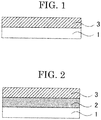
- FIG. 1 is a schematic cross-sectional view of an example of an anti-fogging and anti-fouling laminate of the present invention.
- the anti-fogging and anti-fouling laminate of FIG. 1 includes a substrate 1 and an anti-fogging and anti-fouling layer 3.
- FIG. 2 is a schematic cross-sectional view of another example of an anti-fogging and anti-fouling laminate of the present invention.
- the anti-fogging and anti-fouling laminate of FIG. 2 includes a substrate 1, a primer layer 2, and an anti-fogging and anti-fouling layer 3.
- a method of the present invention for producing an anti-fogging and anti-fouling laminate includes at least an anti-fogging and anti-fouling layer forming step, preferably includes a primer layer forming step, and further includes other steps if necessary.
- the method of the present invention for producing an anti-fogging and anti-fouling laminate is a suitable method for producing the anti-fogging and anti-fouling laminate of the present invention.
- the primer layer forming step is not particularly limited and may be appropriately selected depending on the intended purpose, so long as it is a step of forming the primer layer. Examples thereof include a step where an active energy ray curable resin composition for forming a primer layer is coated on the substrate, followed by irradiating it with ultraviolet rays, to form the primer layer.
- the anti-fogging and anti-fouling layer forming step is not particularly limited and may be appropriately selected depending on the intended purpose, so long as it is a step of irradiating, with ultraviolet rays, an uncured layer formed of the active energy ray curable resin composition under an atmosphere having an oxygen concentration of less than 0.1% by volume, to form the anti-fogging and anti-fouling layer.
- Irradiation of ultraviolet rays under the atmosphere having an oxygen concentration of less than 0.1% by volume when the anti-fogging and anti-fouling layer is formed makes the curability excellent. As a result, an anti-fogging and anti-fouling layer having a low coefficient of kinetic friction can be obtained.
- Examples of the atmosphere having an oxygen concentration of less than 0.1% by volume include inert gas atmospheres such as nitrogen atmosphere.
- An active energy ray-curable resin composition of the present invention includes at least a hydrophilic monomer, preferably includes a bi- or more functional urethane (meth)acrylate, and further includes other components such as a crosslinking agent, a polymerization initiator, and a solvent if necessary.
- the active energy ray-curable resin composition is free of a hydrophobic monomer.
- An amount of the hydrophilic monomer in the active energy ray-curable resin composition is more than 0% by mass but 10% by mass or less relative to non-volatile matter of the active energy ray-curable resin composition.
- hydrophilic monomer, the bi- or more functional urethane (meth)acrylate, the crosslinking agent, the hydrophobic monomer, the photopolymerization initiator, and the solvent are the same as the details of the hydrophilic monomer, the bi- or more functional urethane (meth)acrylate, the crosslinking agent, the hydrophobic monomer, the photopolymerization initiator, and the solvent in the description of the anti-fogging and anti-fouling layer of the anti-fogging and anti-fouling laminate. The same is applicable to preferable embodiments.
- An anti-fogging and anti-fouling layer having a flat surface which is obtained by curing the active energy ray-curable resin composition with active energy rays, preferably has a hexadecane contact angle of 10° or less.
- hexadecane contact angle Details and preferable embodiments of the hexadecane contact angle are the same as the details and the preferable embodiments of the hexadecane contact angle of the anti-fogging and anti-fouling layer of the anti-fogging and anti-fouling laminate of the present invention.
- An anti-fogging and anti-fouling layer having a flat surface which is obtained by curing the active energy ray-curable resin composition with active energy rays, preferably has a surface free energy of 30 mJ/m 2 or more but 65 mJ/m 2 or less.
- An anti-fogging and anti-fouling layer having a flat surface which is obtained by curing the active energy ray-curable resin composition with active energy rays, preferably has a water contact angle of 30° or more but 90° or less.
- An anti-fogging and anti-fouling layer having a flat surface which is obtained by curing the active energy ray-curable resin composition with active energy rays, preferably has Martens hardness of 200 N/mm 2 or more.
- An anti-fogging and anti-fouling layer having a flat surface which is obtained by curing the active energy ray-curable resin composition with active energy rays, preferably has a coefficient of kinetic friction of 0.90 or less.
- the b* value of reflection hue in an anti-fogging and anti-fouling layer having a flat surface is preferably 5 or less, the anti-fogging and anti-fouling layer being obtained by curing the active energy ray-curable resin composition on a mirror that is a substrate with active energy rays.
- An article of the present invention includes the anti-fogging and anti-fouling laminate of the present invention, and further includes other members if necessary.
- the article is not particularly limited and may be appropriately selected depending on the intended purpose.
- the article is preferably such equipment for wet areas that the anti-fogging and anti-fouling laminate of the present invention can exhibit its effects.
- the equipment for wet areas include equipment that has, for example, a function of supplying water, a function of draining water, and a function of supplying and draining water and is required to be maintained to be hygienic. Specific examples thereof include water closets, dishwashers, washing machines, kitchen sinks, wash basins, lavatories, and bathtubs.
- the anti-fogging and anti-fouling laminate may be formed on a part of the article for wet areas or may be formed on the whole article for wet areas.
- an anti-fogging method of the present invention is an anti-fogging method for improving an anti-fogging property of the anti-fogging and anti-fouling layer by warming the anti-fogging and anti-fouling laminate of the present invention to a temperature equal to or higher than normal temperature.
- the reason why the warming improves the anti-fogging property is because the warming suppresses condensation on the surface of the anti-fogging and anti-fouling layer and moisture is effectively repeatedly absorbed and released.
- Examples of the method of the warming include a method by maintaining an atmosphere to 30°C or more and a method by applying hot water of 30°C or more to the anti-fogging and anti-fouling layer.
- Another aspect of the anti-fogging method of the present invention is an anti-fogging method where the anti-fogging and anti-fouling layer of the anti-fogging and anti-fouling laminate of the present invention is cleaned to maintain an anti-fogging property of the anti-fogging and anti-fouling layer.
- a method of the cleaning is not particularly limited and may be appropriately selected depending on the intended purpose. Examples thereof include wiping with a sponge. Examples of the sponge include commercially available urethane sponges and melamine sponges. When the sponge is used for the wiping, the sponge may be wetted with tap water or a detergent (e.g., commercially available neutral detergents, alkaline detergents, and acidic detergents) may be applied to the sponge.
- a detergent e.g., commercially available neutral detergents, alkaline detergents, and acidic detergents
- the film thickness of the anti-fogging and anti-fouling layer and the film thickness of the primer layer were measured at any 10 portions using F20 film thickness measurement system (available from Filmetrics Japan, Inc.). An average of the measurements was defined as the average film thickness.
- the cross-cut test was performed according to JIS K5400. The number of squares that remained without being peeled per 100 squares was counted.
- the surface energy was calculated by the method of Kaelble-Uy by measuring contact angles of water and hexadecane using an automatic contact angle meter DM-501 (available from Kyowa Interface Science Co., Ltd.).
- the coefficient of kinetic friction was measured using Triboster TS501 (available from Kyowa Interface Science Co., Ltd). Then, BEMCOT (registered trademark) M-3II (available from Asahi Kasei Corp.) was attached to a surface contact piece with a piece of double-sided tape. Then, the measurement was performed twelve times under the following conditions: measurement load of 50 g/cm 2 ; measurement speed of 1.7 mm/s; and measurement distance of 20 mm. An average of the measurements was defined as the "coefficient of kinetic friction".
- test sample was visually observed, and was evaluated based on the following evaluation criteria.
- Test sample was sprayed to a test sample, followed by drying at 50°C. This step was repeated 60 times.
- the test sample was wiped with urethane sponge (yellow side of Scotch-Brite antibacterial urethane sponge scourer S-21KS, available from 3M) wetted with water. Then, the test sample was visually observed and was evaluated based on the following evaluation criteria.
- urethane sponge yellow side of Scotch-Brite antibacterial urethane sponge scourer S-21KS, available from 3M
- test sample was wiped with urethane sponge (yellow side of Scotch-Brite antibacterial urethane sponge scourer S-21KS, available from 3M) wetted with water at a load of 300 gf/cm 2 15.000 times back and forth. Then, the test sample was visually observed and was evaluated based on the following evaluation criteria.
- urethane sponge yellow side of Scotch-Brite antibacterial urethane sponge scourer S-21KS, available from 3M
- a mold removing agent (Kabikiller, available from Johnson Company, Limited) was applied to a test sample, and the test sample was left to stand for 24 hours.
- the test sample was washed with water, followed by wiping it with a clean cloth to evaluate the surface free energy and the coefficient of kinetic friction.
- the appearance and the removability of scale were evaluated based on the following evaluation criteria.
- Bigen Men's SPEEDY IIS available from Hoyu Co., Ltd. was applied to a test sample, and the test sample was left to stand for 24 hours. The test sample was washed with water, and was wiped with a clean cloth. Then, the test sample was visually observed and was evaluated based on the following evaluation criteria.
- a mirror used in a bathroom (mirror where a film of silver had been formed on a float plate glass, average thickness of 5 mm, substrate No. A) was used.
- Each active energy ray-curable resin composition having formulation presented in Table 2-1-1 was coated on the substrate for wet area so that the average thickness after drying and curing would be 4 ⁇ m. After coating, the active energy ray-curable resin composition was dried in an oven of 80°C for 2 minutes. A metal halide lamp was used to emit ultraviolet rays at a radiation dose of 500 mJ/cm 2 in the air atmosphere to form a primer resin layer.
- Each active energy ray-curable resin composition having formulation presented in Table 2-1-1 was coated on the primer resin layer so that the average thickness after drying and curing would be 4 ⁇ m. After coating, the active energy ray-curable resin composition was dried in an oven of 80°C for 2 minutes. A metal halide lamp was used to emit ultraviolet rays at a radiation dose of 500 mJ/cm 2 in a nitrogen atmosphere (oxygen concentration of less than 1.0% by volume), followed by curing an anti-fogging and anti-fouling layer, to obtain an anti-fogging and anti-fouling laminate.
- An anti-fogging and anti-fouling laminate was obtained in the same manner as in Example 1 except that the formulations of the active energy ray-curable resin compositions and the film thickness of each layer were changed to those presented in Table 2-1-1.
- Example 1 In addition, the formulations of the active energy ray-curable resin compositions in Example 1 were changed to those presented in Table 2-1-1.
- An anti-fogging and anti-fouling laminate was obtained in the same manner as in Example 1 except for the above.
- the primer resin layer was not formed, and the formulation of the active energy ray-curable resin composition of which the anti-fogging and anti-fouling layer was formed and the film thickness of the anti-fogging and anti-fouling layer were changed to those presented in Table 2-1-2.
- An anti-fogging and anti-fouling laminate was obtained in the same manner as in Example 1 except for the above.
- the primer resin layer was not formed, and the formulation of the active energy ray-curable resin composition of which the anti-fogging and anti-fouling layer was formed and the film thickness of the anti-fogging and anti-fouling layer were changed to those presented in Table 2-1-2.
- An anti-fogging and anti-fouling laminate was obtained in the same manner as in Example 1 except for the above.
- the primer resin layer was not formed, and the formulation of the active energy ray-curable resin composition of which the anti-fogging and anti-fouling layer was formed and the film thickness of the anti-fogging and anti-fouling layer were changed to those presented in Table 2-1-2.
- An anti-fogging and anti-fouling laminate was obtained in the same manner as in Example 1 except for the above.
- Each anti-fogging and anti-fouling laminate was obtained in the same manner as in Example 1 except that the formulations of the active energy ray-curable resin compositions were changed to those presented in Table 2-2.
- the mirror used in a bathroom (mirror where a film of silver had been formed on a float plate glass, average thickness of 5 mm) (substrate No. A), which was used in Example 1, was evaluated without forming the primer layer and the anti-fogging and anti-fouling layer. Results are presented in Table 2-2.
- Active energy ray-curable resin composition Anti-fogging and anti-fouling layer (part(s) by mass) Hydrophilic monomer BYK-UV3535 - 1 - FTERGENT 681 0.01 - 0.3 Hydrophobic monomer Fclear KD3510UV - - - EBECRYL 8110 - - - Bi-or more functional urethane acrylate KRM8200 80 - - MU9500 - - - - Miramer PU610 - 90 55 CN975 - - - Crosslinking agent A-DPH 20 - - A-TMM-3 - - 20 A-DCP - 10 25 Photo initiator Irgacure 184 3 3 3 3 Solvent PGME 200 200 200 Primer layer (part(s) by mass) Presence or absence of primer layer Absence Absence Absence Urethane acrylate UT5181 - - - PETA A-TMM-3L - - -
- ABS acrylonitrile•butadiene•styrene copolymer resin
- the anti-fogging and anti-fouling laminates of Examples 1 to 6 were excellent in all the anti-fogging property (visibility after shower), the anti-fouling property (removability of scale), and the chemical resistance (alkali resistance and resistance to hair dye). In addition, the anti-fogging and anti-fouling laminates were also excellent in the scratch resistance.
- the anti-fogging and anti-fouling laminate of the present invention can be suitably used in, for example, water closets, toilet seat members (e.g., toilet seats, toilet lids, nozzles, and nozzle covers), dishwashers, washing machines, kitchen sinks, members of kitchen hood, workbenches, wash basins, lavatories, bathtub main bodies, bathtub aprons, window materials, partitions, wall materials, floor materials, faucet parts, faucets, shower heads, shower bars, hoses, racks, holders, handrails, window frames, door frames, metallic fittings for drainage, drainage ports, and mirrors, which are equipment of wet areas (e.g., washrooms, bathrooms, kitchens, toilets, cookeries, and food plants).
- toilet seat members e.g., toilet seats, toilet lids, nozzles, and nozzle covers
- dishwashers washing machines
- kitchen sinks members of kitchen hood
- workbenches wash basins
- lavatories lavatories
- bathtub main bodies bathtub a
Landscapes
- Chemical & Material Sciences (AREA)
- Organic Chemistry (AREA)
- Chemical Kinetics & Catalysis (AREA)
- Life Sciences & Earth Sciences (AREA)
- Engineering & Computer Science (AREA)
- Materials Engineering (AREA)
- General Chemical & Material Sciences (AREA)
- Geochemistry & Mineralogy (AREA)
- Physics & Mathematics (AREA)
- Wood Science & Technology (AREA)
- Health & Medical Sciences (AREA)
- Medicinal Chemistry (AREA)
- Polymers & Plastics (AREA)
- Optics & Photonics (AREA)
- General Physics & Mathematics (AREA)
- Laminated Bodies (AREA)
- Macromonomer-Based Addition Polymer (AREA)
- Paints Or Removers (AREA)
Abstract
Description
- The present invention relates to an anti-fogging and anti-fouling laminate that can be used in wet areas, a production method thereof, an article using the anti-fogging and anti-fouling laminate, an anti-fogging method using the anti-fogging and anti-fouling laminate, and an active energy ray curable resin composition applicable to formation of an anti-fogging and anti-fouling layer of the anti-fogging and anti-fouling laminate.
- In a member used in wet areas such as bathroom, washroom, toilet, and kitchen, adhesion of tap water, soap, sebum, and oil stains (e.g., solvent ink) and drying of its adhesion products are repeated. As a result, scale, soap scum, sebum stain, and solvent ink adhere to the member. When a chemical such as a hair dye used in a wet area adheres to the member, the member is dyed. It is difficult to remove these stains through the regular cleaning, which results in deterioration of the appearance and the hygiene.
- Therefore, in order to prevent stains from remaining on the surface of a wet area member, such techniques that an anti-fouling property is imparted to the surface of the wet area member have been proposed (for example, see
PTL 1 to PTL 4). - However, in these proposed techniques, there was a problem that it is difficult to achieve all the anti-fouling property, the anti-fogging property, and the chemical resistance.
-
-
PTL 1 Japanese Patent Application Laid-Open (JP-A) No. 2012-144695 - PTL 2 Japanese Patent No.
6133022 -
PTL 3 Japanese Patent Application Laid-Open (JP-A) No. 2016-172923 - PTL 4 Japanese Patent Application Laid-Open (
JP-A) No. 2009-243233 - An object of the present invention is to solve the conventionally existing problems and to achieve the following object. That is, an object of the present invention is to provide an anti-fogging and anti-fouling laminate excellent in all the anti-fouling property, the anti-fogging property, and the chemical resistance, a method for producing the anti-fogging and anti-fouling laminate, an article including the anti-fogging and anti-fouling laminate, and an active energy ray-curable resin composition applicable to formation of an anti-fogging and anti-fouling layer of the anti-fogging and anti-fouling laminate.
- Means for solving the problems are as follows. That is,
- <1> An anti-fogging and anti-fouling laminate including:
- a substrate; and
- an anti-fogging and anti-fouling layer on the substrate, the anti-fogging and anti-fouling layer having a flat surface,
- wherein a hexadecane contact angle of the anti-fogging and anti-fouling layer is 10° or less,
- the anti-fogging and anti-fouling layer is a cured product of an active energy ray-curable resin composition, and
- the active energy ray-curable resin composition includes a hydrophilic monomer.
- <2> The anti-fogging and anti-fouling laminate according to <1>, further including:
a primer layer between the substrate and the anti-fogging and anti-fouling layer. - <3> The anti-fogging and anti-fouling laminate according to <1> or <2>,
wherein the active energy ray-curable resin composition is free of a hydrophobic monomer. - <4> The anti-fogging and anti-fouling laminate according to any one of <1> to <3>,
wherein an amount of the hydrophilic monomer is more than 0% by mass but 10% by mass or less relative to non-volatile matter of the active energy ray-curable resin composition. - <5> The anti-fogging and anti-fouling laminate according to any one of <1> to <4>,
wherein the active energy ray-curable resin composition includes a bi- or more functional urethane (meth)acrylate. - <6> The anti-fogging and anti-fouling laminate according to any one of <1> to <5>,
wherein a surface free energy of the anti-fogging and anti-fouling layer is 30 mJ/m2 or more but 65 mJ/m2 or less. - <7> The anti-fogging and anti-fouling laminate according to any one of <1> to <6>,
wherein a water contact angle of the anti-fogging and anti-fouling layer is 30° or more but 90° or less. - <8> The anti-fogging and anti-fouling laminate according to any one of <1> to <7>,
wherein Martens hardness of the anti-fogging and anti-fouling layer is 200 N/mm2 or more. - <9> The anti-fogging and anti-fouling laminate according to any one of <1> to <8>,
wherein a coefficient of kinetic friction of the anti-fogging and anti-fouling layer is 0.90 or less. - <10> The anti-fogging and anti-fouling laminate according to any one of <1> to <9>,
wherein the substrate is a mirror, and
b* value of reflection hue in the anti-fogging and anti-fouling layer is 5 or less. - <11> An article including:
the anti-fogging and anti-fouling laminate according to any one of <1> to <10> on a surface of the article. - <12> A method for producing the anti-fogging and anti-fouling laminate according to any one of <1> to <10>, the method including:
irradiating an uncured layer formed of the active energy ray-curable resin composition with ultraviolet rays under an atmosphere having an oxygen concentration of less than 1.0% by volume to form the anti-fogging and anti-fouling layer. - <13> An anti-fogging method including:
warming the anti-fogging and anti-fouling laminate according to any one of <1> to <10> to a temperature equal to or higher than normal temperature to improve an anti-fogging property of the anti-fogging and anti-fouling layer. - <14> An anti-fogging method including:
cleaning the anti-fogging and anti-fouling layer of the anti-fogging and anti-fouling laminate according to any one of <1> to <10> to maintain an anti-fogging property of the anti-fogging and anti-fouling layer. - <15> An active energy ray-curable resin composition including:
- a hydrophilic monomer,
- wherein the active energy ray-curable resin composition is free of a hydrophobic monomer, and
- an amount of the hydrophilic monomer is more than 0% by mass but 10% by mass or less relative to non-volatile matter of the active energy ray-curable resin composition.
- <16> The active energy ray-curable resin composition according to <15>, further including:
a bi- or more functional urethane (meth)acrylate. - <17> The active energy ray-curable resin composition according to <15> or <16>,
wherein an anti-fogging and anti-fouling layer having a flat surface, which is obtained by curing the active energy ray-curable resin composition with active energy rays, has a hexadecane contact angle of 10° or less. - <18> The active energy ray-curable resin composition according to any one of <15> to <17>,
wherein an anti-fogging and anti-fouling layer having a flat surface, which is obtained by curing the active energy ray-curable resin composition with active energy rays, has a surface free energy of 30 mJ/m2 or more but 65 mJ/m2 or less. - <19> The active energy ray-curable resin composition according to any one of <15> to <18>,
wherein an anti-fogging and anti-fouling layer having a flat surface, which is obtained by curing the active energy ray-curable resin composition with active energy rays, has a water contact angle of 30° or more but 90° or less. - <20> The active energy ray-curable resin composition according to any one of <15> to <19>,
wherein an anti-fogging and anti-fouling layer having a flat surface, which is obtained by curing the active energy ray-curable resin composition with active energy rays, has Martens hardness of 200 N/mm2 or more. - <21> The active energy ray-curable resin composition according to any one of <15> to <20>,
wherein an anti-fogging and anti-fouling layer having a flat surface, which is obtained by curing the active energy ray-curable resin composition with active energy rays, has a coefficient of kinetic friction of 0.90 or less. - <22> The active energy ray-curable resin composition according to any one of <15> to <21>,
wherein b* value of reflection hue in an anti-fogging and anti-fouling layer having a flat surface is 5 or less, the anti-fogging and anti-fouling layer being obtained by curing the active energy ray-curable resin composition on a mirror that is a substrate with active energy rays. - According to the present invention, it is possible to solve the conventionally existing problems, to achieve the following object, and to provide an anti-fogging and anti-fouling laminate excellent in all the anti-fouling property, the anti-fogging property, and the chemical resistance, a method for producing the anti-fogging and anti-fouling laminate, an article including the anti-fogging and anti-fouling laminate, and an active energy ray-curable resin composition applicable to formation of an anti-fogging and anti-fouling layer of the anti-fogging and anti-fouling laminate.
-
-
FIG. 1 is a schematic cross-sectional view of an example of an anti-fogging and anti-fouling laminate of the present invention; and -
FIG. 2 is a schematic cross-sectional view of another example of an anti-fogging and anti-fouling laminate of the present invention. - An anti-fogging and anti-fouling laminate of the present invention includes at least a substrate and an anti-fogging and anti-fouling layer, and further includes other members such as a primer layer if necessary.
- The anti-fogging and anti-fouling laminate has the following characteristics.
- The anti-fogging and anti-fouling laminate includes an anti-fogging and anti-fouling layer having a flat surface.
- A hexadecane contact angle of the anti-fogging and anti-fouling layer is 10° or less.
- The anti-fogging and anti-fouling layer is a cured product of an active energy ray-curable resin composition.
- The active energy ray-curable resin composition includes a hydrophilic monomer.
- The anti-fogging and anti-fouling laminate is excellent in all the anti-fouling property, the anti-fogging property, and the chemical resistance when it has the aforementioned characteristics.
- The substrate is not particularly limited and may be appropriately selected depending on the intended purpose. Examples thereof include substrates made of a resin and inorganic substrates.
- The substrate is, for example, a substrate used in a wet area. Equipment for wet areas, which includes such a substrate, is for example, equipment that has a function of supplying water, a function of draining water, and a function of supplying and draining water, and is required to be maintained to be hygienic. Examples thereof include water closets, dishwashers, washing machines, kitchen sinks, wash basins, lavatories, and bathtubs.
- Examples of the inorganic substrate include metallic substrates, substrates made of glass, and substrates made of ceramic.
- Examples of metal of the metallic substrate include copper, copper alloys, zinc, and steel.
- The substrate made of glass is not particularly limited and may be appropriately selected depending on the intended purpose. Examples thereof include silica glass (silicate glass), soda-lime glass, and potash glass.
- The substrate made of glass may be tempered glass, laminated glass, and heat-resistant glass.
- A shape of the substrate made of glass is typically a form of plate, but may be any form such as a form of sheet and a form of curvature.
- A material of the substrate made of a resin is not particularly limited and may be appropriately selected depending on the intended purpose. Examples thereof include acrylonitrile-butadiene-styrene (ABS), polycarbonate (PC), polymethyl methacrylate (PMMA), polystyrene (PS), polypropylene (PP), modified polyphenylene ether (m-PPE), and PC/ABS alloy.
- A shape of the substrate is not particularly limited and may be appropriately selected depending on the intended purpose.
- A surface of the substrate (surface at a side of the anti-fogging and anti-fouling layer) may have glossiness.
- To the surface of the substrate, matte patterns, hear lines, spin, and diamond cut may be applied.
- The surface of the substrate may be subjected to plating. Examples of the plating include nickel plating, chromium plating, tin plating, tin alloy plating, zinc plating, copper plating, gold plating, and silver plating. These may be applied to form a single layer or may be applied in combination to form a plurality of layers.
- In order to improve adhesiveness between the anti-fogging and anti-fouling layer and the substrate, the primer layer may be provided between the substrate and the anti-fogging and anti-fouling layer.
- When the primer layer is thin, an effect of improving adhesiveness is insufficient. Therefore, an average thickness of the primer layer is preferably 0.5 µm or more, more preferably from 1 µm to 20 µm, still more preferably from 1 µm to 10 µm, particularly preferably from 2 µm to 5 µm.
- The average thickness of the primer layer falling within the preferable range hardly decreases the adhesiveness and can prevent exfoliation of the anti-fogging and anti-fouling layer even when it is exposed to a high-temperature vapor (e.g., 60°C or more), a thermal shock (for example, a drastic change from -20°C to 80°C), and an alkaline detergent.
- The average thickness can be determined by the following method.
- The thickness of the primer layer is measured at any 10 portions using F20 film thickness measurement system (available from Filmetrics Japan, Inc.). An average of the measurements is defined as the average film thickness.
- The primer layer can be formed by, for example, coating the active energy ray curable resin composition. That is, the primer layer is a cured product obtained by, for example, curing the active energy ray curable resin composition with active energy rays. The active energy ray curable resin composition is, for example, an active energy ray curable resin composition that includes at least urethane (meth)acrylate and a photopolymerization initiator and further includes other components such as a solvent if necessary.
- The urethane (meth)acrylate is not particularly limited and may be appropriately selected depending on the intended purpose. Examples thereof include aliphatic urethane (meth)acrylates and aromatic urethane (meth)acrylates. Among them, aliphatic urethane (meth)acrylates are preferable.
- Specific examples of the photopolymerization initiator include specific examples of the photopolymerization initiator that will be exemplified in the description of the below-described anti-fogging and anti-fouling layer.
- Specific examples of the solvent include specific examples of the solvent that will be exemplified in the description of the below-described anti-fogging and anti-fouling layer.
- Preferably, the active energy ray-curable resin composition further includes a tri- or more functional (meth)acrylate. Examples of the tri- or more functional (meth)acrylate include pentaerythritol tri(meth)acrylate, trimethylolpropane tri(meth)acrylate, trimethylolpropane ethoxy tri(meth)acrylate, glycerin ethoxy tri(meth)acrylate, glycerin propoxy tri(meth)acrylate, isocyanuric acid ethoxy tri(meth)acrylate, pentaerythritol tetra(meth)acrylate, pentaerythritol alkoxy tetra(meth)acrylate, ditrimethylolpropane tetra(meth)acrylate, and dipentaerythritol hexa(meth)acrylate.
- Examples of the alkoxy include ethoxy and propoxy.
- A method of the coating is not particularly limited and may be appropriately selected depending on the intended purpose. Examples thereof include wire bar coating, blade coating, spin coating, reverse roll coating, die coating, spray coating, roll coating, gravure coating, microgravure coating, lip coating, air knife coating, curtain coating, the comma coat method, and the dipping method.
- A hexadecane contact angle of the anti-fogging and anti-fouling layer is 10° or less.
- The anti-fogging and anti-fouling layer is a cured product of an active energy ray-curable resin composition.
- The anti-fogging and anti-fouling layer has a flat surface. Here, the phrase "having a flat surface" means that the surface does not have intentionally formed convex portions or concave portions. For example, regarding the anti-fogging and anti-fouling laminate, when the anti-fogging and anti-fouling layer is formed (when the cured product is formed), fine convex portions or concave portions formed through physical processing are not formed on the surface.
- When the surface of the anti-fogging and anti-fouling layer does not have fine convex portions or concave portions, aqueous stains and/or oily stains (e.g., ink of permanent markers, finger prints, sweat, and cosmetics such as foundation cosmetics and UV protectors) hardly adhere to the surface. In addition, even if these stains adhere thereto, the stains can be easily removed with a sheet of tissue paper.
- A surface free energy of the anti-fogging and anti-fouling layer is preferably 30 mJ/m2 or more but 65 mJ/m2 or less.
- A water contact angle of the anti-fogging and anti-fouling layer is 30° or more but 90° or less.
- Martens hardness of the anti-fogging and anti-fouling layer is preferably 200 N/mm2 or more.
- A coefficient of kinetic friction of the anti-fogging and anti-fouling layer is preferably 0.90 or less.
- The hexadecane contact angle is 10° or less, more preferably 9° or less, particularly preferably 8° or less. The lower limit of the hexadecane contact angle is not particularly limited and may be appropriately selected depending on the intended purpose. For example, the hexadecane contact angle is preferably 1° or more, more preferably 3° or more.
- The hexadecane contact angle is measured using, for example, an automatic contact angle meter DM-501 (available from Kyowa Interface Science Co., Ltd.) under the following conditions.
Amount of hexadecane added dropwise=1 µL
Measurement temperature=25°C
Twenty seconds after hexadecane is added dropwise, the contact angle is measured at any 10 portions on a test sample, and an average of the measurements is defined as the "hexadecane contact angle". - A surface energy of the anti-fogging and anti-fouling layer is not particularly limited and may be appropriately selected depending on the intended purpose. The surface energy is preferably 30 mJ/m2 or more but 65 mJ/m2 or less, more preferably 30 mJ/m2 or more but 55 mJ/m2 or less, particularly preferably 35 J/m2 or more but 45 mJ/m2 or less.
- The surface energy can be measured by, for example, the following method.
- The surface energy is calculated by the method of Kaelble-Uy by measuring contact angles of water and hexadecane using an automatic contact angle meter DM-501 (available from Kyowa Interface Science Co., Ltd.).
- The water contact angle is measured under the following conditions.
Amount of distilled water added dropwise=2 µL
Measurement temperature=25°C
Five seconds after water is added dropwise, the contact angle is measured at any 10 portions on a test sample, and an average of the measurements is defined as the "water contact angle". - The hexadecane contact angle is measured under the following conditions.
Amount of hexadecane added dropwise=1 µL
Measurement temperature=25°C
Twenty seconds after hexadecane is added dropwise, the contact angle is measured at any 10 portions on a test sample, and an average of the measurements is defined as the "hexadecane contact angle". - The theoretical formula of Kaelble-Uy is a method for quantitatively determining a surface energy y of a solid.
- In the theoretical formula of Kaelble-Uy, assuming that the surface energy y is composed of a dispersion component γd and a polar component γp, the total surface free energy y is represented by the following Formula (1).

- The following formula (2) is satisfied, where a surface energy on the surface of liquid is represented by γL, the surface of the solid is represented by ys, and the contact angle is represented by θ.

- Therefore, two kinds of liquids whose component γL is known are used to measure the respective contact angles θ, and simultaneous equations in connection with γS d and yS p are solved to determine yS.
- The water contact angle is not particularly limited and may be appropriately selected depending on the intended purpose. The water contact angle is preferably 30° or more but 90° or less, more preferably 45° or more but 85° or less, particularly preferably 60° or more but 75° or less.
- The water contact angle is measured using, for example, an automatic contact angle meter DM-501 (available from Kyowa Interface Science Co., Ltd.) under the following conditions.
Amount of distilled water added dropwise=2 µL
Measurement temperature=25°C
Five seconds after water is added dropwise, the contact angle is measured at any 10 portions on a test sample, and an average of the measurements is defined as the "water contact angle". - The Martens hardness of the anti-fogging and anti-fouling layer is not particularly limited and may be appropriately selected depending on the intended purpose. The Martens hardness is preferably 200 N/mm2 or more, and is, for example, 200 N/mm2 or more but 300 N/mm2 or less.
- The Martens hardness of the anti-fogging and anti-fouling layer can be measured by, for example, the following method.
- The Martens hardness of the anti-fogging and anti-fouling layer in the anti-fogging and anti-fouling laminate is measured using PICODENTOR HM500 (available from Fischer Instruments) under the following conditions.
Load=1 mN/20 s
Needle=diamond cone having a face angle of 136°
The Martens hardness is measured at any 10 portions and an average of the measurements is defined as the "Martens hardness". - A coefficient of kinetic friction of the anti-fogging and anti-fouling layer is not particularly limited and may be appropriately selected depending on the intended purpose. The coefficient of kinetic friction is preferably 0.90 or less. The coefficient of kinetic friction is, for example, 0.10 or more but 0.40 or less, and 0.15 or more but 0.30 or less.
- The coefficient of kinetic friction of the anti-fogging and anti-fouling layer can be measured by, for example, the following method.
- The coefficient of kinetic friction is measured using Triboster TS501 (available from Kyowa Interface Science Co., Ltd). Then, BEMCOT (registered trademark) M-3II (available from Asahi Kasei Corp.) is attached to a surface contact piece with a piece of double-sided tape. Then, the measurement is performed twelve times under the following conditions: measurement load of 50 g/cm2; measurement speed of 1.7 mm/s; and measurement distance of 20 mm. An average of the measurements is defined as the "coefficient of kinetic friction".
- When the anti-fogging and anti-fouling layer has the Martens hardness of 200 N/mm2 or more and the coefficient of kinetic friction of 0.40 or less, the anti-fogging and anti-fouling layer is hardly scratched. Therefore, even when the anti-fogging and anti-fouling layer is repeatedly cleaned for a long period of time, scratches or marks are hardly left, the anti-fouling property and the appearance remain unchanged, and the durability is high. As a result, the scratch resistance is excellent and stains of a hair dye hardly adhere thereto.
- The anti-fogging and anti-fouling layer is a cured product of the active energy ray-curable resin composition.
- The active energy ray-curable resin composition includes a hydrophilic monomer.
- The active energy ray-curable resin composition is preferably free of a hydrophobic monomer.
- The active energy ray-curable resin composition preferably includes a bi- or more functional urethane (meth)acrylate.
- The active energy ray-curable resin composition preferably includes a crosslinking agent.
- The active energy ray-curable resin composition may include, for example, a polymerization initiator and a solvent.
- The hydrophilic monomer includes a hydrophilic group and a (meth)acryloyl group.
- Examples of the hydrophilic group include a polyether group, a hydroxyl group, and an amide group. The amide group refers to -CO-NH- group. Even when a monomer includes -O-CO-NH- group, such a monomer belongs to the hydrophilic monomer.
- Examples of the polyether in the polyether group include polyalkylene glycol, polyalkylene oxide, polyalkylene alkyl phenyl ether, polyphenylene oxide, polysulfone, and chlorinated polyether.
- The number of carbon atoms of the alkylene group in the polyether is preferably 1 or more but 12 or less, more preferably 1 or more but 6 or less. Specific examples thereof include methylene (the number of carbon atoms: 1), 1,2-ethylene (the number of carbon atoms: 2), 1,3-propylene (the number of carbon atoms: 3), 1,2-propylene (the number of carbon atoms: 3), and 1,4-butylene (the number of carbon atoms: 4). The alkylene group in the polyether may be composed of two or more kinds of the aforementioned alkylene groups.
- The hydrophilic monomer may be a commercially available product. Examples of the commercially available product include: UV-3535 [polyether having a (meth)acryloyl group (UV reactive group-containing modified polyether)] (available from BYK); and FTERGENT 602A and FTERGENT 681 (available from NEOS COMPANY LIMITED).
- Here, FTERGENT 681 (available from NEOS COMPANY LIMITED) includes a hydroxyl group and an amide group, and is generally described as an oligomer containing a fluorine-containing group, a hydrophilic group/lipophilic group, and a UV reactive group.
- Inclusion of the hydrophilic monomer in the active energy ray-curable resin composition achieves an excellent chemical resistance and can suppress deterioration even when an alkaline detergent is used. Inclusion of a (meth)acrylate group makes it possible to fix the active energy ray-curable resin composition on the surface through UV curing, can maintain functions even when cleaning is repeatedly performed, and can maintain the visibility, the appearance, and the cleanliness for a long period of time.
- An amount of the hydrophilic monomer in the active energy ray-curable resin composition is not particularly limited and may be appropriately selected depending on the intended purpose. The amount thereof is preferably more than 0% by mass but 10% by mass or less, more preferably 0.001% by mass or more but 10% by mass or less, still more preferably 0.001% by mass or more but 5.0% by mass or less, yet more preferably 0.01% by mass or more but 5.0% by mass or less, particularly preferably 0.01% by mass or more but 3.0% by mass or less, relative to non-volatile matter of the active energy ray-curable resin composition. When the amount thereof is less than 0.001% by mass, the anti-fouling property becomes insufficient, variations in film thickness in the plane become large, and the appearance may be deteriorated due to uneven interference. When the amount thereof is more than 10% by mass, the hardness of the cured product may become insufficient.
- Examples of the bi- or more functional urethane (meth)acrylate include aliphatic urethane (meth)acrylates and aromatic urethane (meth)acrylates.
- The bi- or more functional urethane (meth)acrylate does not have a structure derived from polysiloxane.
- When the active energy ray-curable resin composition includes the bi- or more functional urethane (meth)acrylate, the hardness can be imparted to the cured product and the anti-fogging and anti-fouling layer can be prevented from being contaminated by a colorant.
- The bi- or more functional urethane (meth)acrylate is a material including an urethane bond and two or more (meth)acryloyl groups in one molecule. The material can be used without any particular limitation.
- The bi- or more functional urethane (meth)acrylate can be obtained by, for example, reacting a hydroxy compound having at least two (meth)acryloyl groups with isocyanate.
- Examples of the isocyanate include polyisocyanate.
- The aliphatic urethane (meth)acrylate can be obtained by, for example, reacting a hydroxy compound having at least two (meth)acryloyl groups with an aliphatic isocyanate. Examples of the aliphatic isocyanate include aliphatic diisocyanates and aliphatic triisocyanates.
- The aromatic urethane (meth)acrylate can be obtained by, for example, reacting a hydroxy compound having at least two (meth)acryloyl groups with an aromatic isocyanate. Examples of the aromatic isocyanate include aromatic diisocyanates and aromatic triisocyanates.
- An amount of the bi- or more functional urethane (meth)acrylate in the active energy ray-curable resin composition is preferably 40% by mass or more but 95% by mass or less relative to non-volatile matter in the active energy ray-curable resin composition.
- The crosslinking agent is a bi-or more functional (meth)acrylate. When crosslinking agent may be a tri- or more functional (meth)acrylate.
- The crosslinking agent has an acryl equivalent of less than 400.
- The crosslinking agent is different from the hydrophilic monomer, the bi- or more functional urethane (meth)acrylate, and the hydrophobic monomer.
- The crosslinking agent is free of fluorine and silicon.
- The acryl equivalent means mass of a monomer per 1 mol of a (meth)acryl group, and can be obtained by dividing a molecular weight of the monomer by the number of (meth)acryl groups [may be referred to as a (meth)acryloyl group] per one molecule of the monomer.
- Here, examples of the crosslinking agent and their acryl equivalents are presented below.
Table 1 Material Molecular weight Number of acryl groups per one molecule Acryl equivalent Crosslinking agent A-TMM-3 298 3 99.3 A-TMPT 296 3 98.7 A-TMMT 352 4 88 A-DPH 578 6 96.3 A-GLY-9E 811 3 270.3 EBECRYL 40 571 4 142.8 A-DCP 304 2 152 - Details of the crosslinking agents presented in Table 1 are as follows.
- A-TMM-3: Pentaerythritol triacrylate (triester: 37%), available from Shin Nakamura Chemical Co., Ltd.
- A-TMPT: Trimethylolpropane triacrylate, available from Shin Nakamura Chemical Co., Ltd.
- A-TMMT: Pentaerythritol tetraacrylate, available from Shin Nakamura Chemical Co., Ltd.
- A-DPH: Dipentaerythritol hexaacrylate, available from Shin Nakamura Chemical Co., Ltd.
- A-GLY-9E: Ethoxylated glycerin triacrylate (EO: 9 mol), available from Shin Nakamura Chemical Co., Ltd.
- EBECRYL 40: Pentaerythritol alkoxy tetraacrylate, available from DAICEL-ALLNEX LTD.
- A-DCP: Tricylodecane dimethanol diacrylate, available from Shin Nakamura Chemical Co., Ltd.
- An amount of the crosslinking agent in the active energy ray-curable resin composition is not particularly limited and may be appropriately selected depending on the intended purpose. The amount thereof is preferably 5% by mass or more but 60% by mass or less, more preferably 15% by mass or more but 50% by mass or less, relative to non-volatile matter in the active energy ray-curable resin composition.
- A total amount of the bi- or more functional urethane (meth)acrylate and the crosslinking agent in the active energy ray-curable resin composition is not particularly limited and may be appropriately selected depending on the intended purpose. The total amount thereof is preferably 70% by mass or more but 99% by mass or less, more preferably 80% by mass or more but 98% by mass or less, particularly preferably 90% by mass or more but 97% by mass or less, relative to the non-volatile matter in the active energy ray-curable resin composition.
- The total amount of the bi- or more functional urethane (meth)acrylate and the crosslinking agent in the active energy ray-curable resin composition is not particularly limited and may be appropriately selected depending on the intended purpose. The total amount thereof is preferably 75% by mass or more but less than 100% by mass, more preferably 85% by mass or more but 99.999% by mass or less, particularly preferably 95% by mass or more but 99.99% by mass or less, relative to a total amount of monomers in the active energy ray-curable resin composition.
- Note that, the total amount of monomers in the active energy ray-curable resin composition does not exceed 100% by mass.
- The hydrophobic monomer includes a water-repellent molecular structure. Examples of the water-repellent molecular structure of the present invention include structures including fluorine or silicon. Specific examples thereof include fluoroalkyl structures, perfluoropolyether structures, and dimethylsiloxane structures.
- When the active energy ray-curable resin composition includes the hydrophobic monomer, it is difficult for a hexadecane contact angle of the anti-fogging and anti-fouling layer to be 10° or less.
- Note that, a bi- or more functional urethane (meth)acrylate having a structure derived from polysiloxane belongs to the hydrophobic monomer among the bi- or more functional urethane (meth)acrylate and the hydrophobic monomer.
- Here, the hydrophilic monomer includes a hydrophilic group and a (meth)acryloyl group. When a monomer corresponds to the hydrophilic monomer and the hydrophobic monomer, such a monomer corresponds to the hydrophilic monomer in the present invention. That is, the hydrophobic monomer does not include the hydrophilic group and has the water-repellent molecular structure.
- For example, FTERGENT 681 (available from NEOS COMPANY LIMITED, oligomer containing a fluorine-containing group, a hydrophilic group/lipophilic group, and a UV reactive group) belongs to the hydrophilic monomer, not to the hydrophobic monomer, in the present invention.
- The hydrophobic monomer is, for example, (meth)acrylate. That is, the hydrophobic monomer is, for example, (meth)acrylate having a water-repellent molecular structure.
- The hydrophobic monomer is preferably (meth)acrylate including a perfluoropolyether group. Compounds including repeating units of -(O-CF2CF2)-, - (O-CF2CF2CF2)-, or -(O-CF2C(CF3)F)- as a perfluoropolyether group are preferable.
- Examples of a commercially available product of the hydrophobic monomer include BYK-UV3500 (available from BYK), Fclear KD3510UV (available from KANTO DENKA KOGYO CO., LTD.), EBECRYL 8110 (available from DAICEL-ALLNEX LTD.), DAC-HP (available from DAIKIN INDUSTRIES, LTD), Fluorolink AD1700 (available from Solvay Specialty Polymers), Fluorolink MD700 (available from Solvay Specialty Polymers), CN4000 (available from SARTOMER), and KY-1203 (available from Shin-Etsu Chemical Co., Ltd.).
- Examples of the photopolymerization initiator include photoradical polymerization initiators, photo-acid generating agents, bisazido compounds, hexamethoxymethylmelamine, and tetramethoxy glycoluril.
- The photoradical polymerization initiator is not particularly limited and may be appropriately selected depending on the intended purpose. Examples thereof are presented as follows.
- 1-Hydroxy-cyclohexyl-phenyl-ketone
- 2-Hydroxy-1-{4-[4-(2-hydroxy-2-methyl-propionyl)-benzil]phenyl}-2-methyl-propan-1-one
- 2,2-Dimethoxy-1,2-diphenylethan-1-one
- 2-Hydroxy-2-methyl-1-phenyl-propan-1-one
- 1-[4-(2-Hydroxy-ethoxy)-phenyl]-2-hydroxy-2-methyl-1-propan-1-one
- Mixture of oxy-phenyl-acetic acid 2-[2-oxo-2-phenyl-acetoxy-ethoxy]-ethyl ester and oxy-phenyl-acetic acid 2-[2-hydroxy-ethoxy]-ethyl ester
- 2,4,6-Trimethylbenzoyl-diphenyl-phosphine oxide
- 2-Methyl-1-(4-methylthiophenyl)-2-morpholinopropan-1-one
- Ethanone,1-[9-ethyl-6-(2-methylbenzoyl)-9H-carbazol-3-yl]-, 1-(O-acetyloxime)
- The photopolymerization initiator preferably includes no nitrogen atom as a constituent element in order to prevent yellowing in appearance.
- Meanwhile, in order to prevent yellowing in appearance, the photopolymerization initiator preferably includes only C, H, and O, or only C, H, P, and O, as constituent elements.
- An amount of the photopolymerization initiator in the active energy ray curable resin composition is not particularly limited and may be appropriately selected depending on the intended purpose. However, the amount thereof is preferably 0.1% by mass or more but 10% by mass or less, more preferably 0.1% by mass or more but 5% by mass or less, particularly preferably 1% by mass or more but 5% by mass or less, relative to non-volatile matter of the active energy ray-curable resin composition.
- The solvent is not particularly limited and may be appropriately selected depending on the intended purpose. Examples thereof include organic solvents.
- Examples of the organic solvent include aromatic solvents, alcohol-based solvents, ester-based solvents, ketone-based solvents, glycol ether-based solvents, glycol ether ester-based solvents, chlorine-based solvents, ether-based solvents, N-methylpyrrolidone, dimethylformamide, dimethylsulfoxide, and dimethylacetamide.
- As the solvent, a solvent having a boiling point of 80°C or more is preferable for the purpose of obtaining an anti-fogging and anti-fouling layer having more excellent appearance.
- Examples of the solvent having a boiling point of 80°C or more include propylene glycol monomethylether.
- An amount of the solvent in the active energy ray curable resin composition is not particularly limited and may be appropriately selected depending on the intended purpose.
- The active energy ray curable resin composition is cured by irradiation of active energy rays. The active energy rays are not particularly limited and may be appropriately selected depending on the intended purpose. Examples thereof include electron beams, ultraviolet rays, infrared rays, laser beams, visible rays, ionizing radiation (e.g., X rays, α rays, β rays, and γ rays), microwave, and highfrequency wave.
- An average thickness of the anti-fogging and anti-fouling layer is not particularly limited and may be appropriately selected depending on the intended purpose. The average thickness thereof is preferably 1 µm or more, more preferably 1 µm or more but 15 µm or less.
- The average thickness is determined by the following method.
- The film thickness of the anti-fogging and anti-fouling layer is measured at any 10 portions using F20 film thickness measurement system (available from Filmetrics Japan, Inc.). An average of the measurements is defined as the average film thickness.
- Preferably, the substrate is a mirror, and b* value of reflection hue in the anti-fogging and anti-fouling layer is 5 or less, in the anti-fogging and anti-fouling laminate. The b* value of reflection hue can be measured by, for example, the following method.
- The 5° regular reflectance spectrum is measured using UV-Visible/NIR Spectrophotometer UH4150 (available from Hitachi High-Tech Science Corporation) within the rage of from 340 nm to 800 nm, followed by calculating the reflection b*.
- Here, one example of the anti-fogging and anti-fouling laminate will be described.
-
FIG. 1 is a schematic cross-sectional view of an example of an anti-fogging and anti-fouling laminate of the present invention. - The anti-fogging and anti-fouling laminate of
FIG. 1 includes asubstrate 1 and an anti-fogging andanti-fouling layer 3. -
FIG. 2 is a schematic cross-sectional view of another example of an anti-fogging and anti-fouling laminate of the present invention. - The anti-fogging and anti-fouling laminate of
FIG. 2 includes asubstrate 1, aprimer layer 2, and an anti-fogging andanti-fouling layer 3. - A method of the present invention for producing an anti-fogging and anti-fouling laminate includes at least an anti-fogging and anti-fouling layer forming step, preferably includes a primer layer forming step, and further includes other steps if necessary.
- The method of the present invention for producing an anti-fogging and anti-fouling laminate is a suitable method for producing the anti-fogging and anti-fouling laminate of the present invention.
- The primer layer forming step is not particularly limited and may be appropriately selected depending on the intended purpose, so long as it is a step of forming the primer layer. Examples thereof include a step where an active energy ray curable resin composition for forming a primer layer is coated on the substrate, followed by irradiating it with ultraviolet rays, to form the primer layer.
- The anti-fogging and anti-fouling layer forming step is not particularly limited and may be appropriately selected depending on the intended purpose, so long as it is a step of irradiating, with ultraviolet rays, an uncured layer formed of the active energy ray curable resin composition under an atmosphere having an oxygen concentration of less than 0.1% by volume, to form the anti-fogging and anti-fouling layer.
- Irradiation of ultraviolet rays under the atmosphere having an oxygen concentration of less than 0.1% by volume when the anti-fogging and anti-fouling layer is formed makes the curability excellent. As a result, an anti-fogging and anti-fouling layer having a low coefficient of kinetic friction can be obtained.
- Examples of the atmosphere having an oxygen concentration of less than 0.1% by volume include inert gas atmospheres such as nitrogen atmosphere.
- An active energy ray-curable resin composition of the present invention includes at least a hydrophilic monomer, preferably includes a bi- or more functional urethane (meth)acrylate, and further includes other components such as a crosslinking agent, a polymerization initiator, and a solvent if necessary.
- The active energy ray-curable resin composition is free of a hydrophobic monomer.
- An amount of the hydrophilic monomer in the active energy ray-curable resin composition is more than 0% by mass but 10% by mass or less relative to non-volatile matter of the active energy ray-curable resin composition.
- Details of the hydrophilic monomer, the bi- or more functional urethane (meth)acrylate, the crosslinking agent, the hydrophobic monomer, the photopolymerization initiator, and the solvent are the same as the details of the hydrophilic monomer, the bi- or more functional urethane (meth)acrylate, the crosslinking agent, the hydrophobic monomer, the photopolymerization initiator, and the solvent in the description of the anti-fogging and anti-fouling layer of the anti-fogging and anti-fouling laminate. The same is applicable to preferable embodiments.
- An anti-fogging and anti-fouling layer having a flat surface, which is obtained by curing the active energy ray-curable resin composition with active energy rays, preferably has a hexadecane contact angle of 10° or less.
- Details and preferable embodiments of the hexadecane contact angle are the same as the details and the preferable embodiments of the hexadecane contact angle of the anti-fogging and anti-fouling layer of the anti-fogging and anti-fouling laminate of the present invention.
- An anti-fogging and anti-fouling layer having a flat surface, which is obtained by curing the active energy ray-curable resin composition with active energy rays, preferably has a surface free energy of 30 mJ/m2 or more but 65 mJ/m2 or less.
- Details and preferable embodiments of the surface free energy are the same as the details and the preferable embodiments of the surface free energy of the anti-fogging and anti-fouling layer of the anti-fogging and anti-fouling laminate of the present invention.
- An anti-fogging and anti-fouling layer having a flat surface, which is obtained by curing the active energy ray-curable resin composition with active energy rays, preferably has a water contact angle of 30° or more but 90° or less.
- Details and preferable embodiments of the water contact angle are the same as the details and the preferable embodiments of the water contact angle of the anti-fogging and anti-fouling layer of the anti-fogging and anti-fouling laminate of the present invention.
- An anti-fogging and anti-fouling layer having a flat surface, which is obtained by curing the active energy ray-curable resin composition with active energy rays, preferably has Martens hardness of 200 N/mm2 or more.
- Details and preferable embodiments of the Martens hardness are the same as the details and the preferable embodiments of the Martens hardness of the anti-fogging and anti-fouling layer of the anti-fogging and anti-fouling laminate of the present invention.
- An anti-fogging and anti-fouling layer having a flat surface, which is obtained by curing the active energy ray-curable resin composition with active energy rays, preferably has a coefficient of kinetic friction of 0.90 or less.
- Details and preferable embodiments of the coefficient of kinetic friction are the same as the details and the preferable embodiments of the coefficient of kinetic friction of the anti-fogging and anti-fouling layer of the anti-fogging and anti-fouling laminate of the present invention.
- The b* value of reflection hue in an anti-fogging and anti-fouling layer having a flat surface is preferably 5 or less, the anti-fogging and anti-fouling layer being obtained by curing the active energy ray-curable resin composition on a mirror that is a substrate with active energy rays.
- Details and preferable embodiments of the b* value of reflection hue are the same as the details and the preferable embodiments of the b* value of the reflection hue of the anti-fogging and anti-fouling layer of the anti-fogging and anti-fouling laminate of the present invention.
- An article of the present invention includes the anti-fogging and anti-fouling laminate of the present invention, and further includes other members if necessary.
- The article is not particularly limited and may be appropriately selected depending on the intended purpose. The article is preferably such equipment for wet areas that the anti-fogging and anti-fouling laminate of the present invention can exhibit its effects. Examples of the equipment for wet areas include equipment that has, for example, a function of supplying water, a function of draining water, and a function of supplying and draining water and is required to be maintained to be hygienic. Specific examples thereof include water closets, dishwashers, washing machines, kitchen sinks, wash basins, lavatories, and bathtubs.
- The anti-fogging and anti-fouling laminate may be formed on a part of the article for wet areas or may be formed on the whole article for wet areas.
- One aspect of an anti-fogging method of the present invention is an anti-fogging method for improving an anti-fogging property of the anti-fogging and anti-fouling layer by warming the anti-fogging and anti-fouling laminate of the present invention to a temperature equal to or higher than normal temperature.
- Warming the anti-fogging and anti-fouling layer to a temperature equal to or higher than normal temperature improves a fogging property, and can prevent cloudiness of the anti-fogging and anti-fouling layer for a certain time or longer.
- It is believed that the reason why the warming improves the anti-fogging property is because the warming suppresses condensation on the surface of the anti-fogging and anti-fouling layer and moisture is effectively repeatedly absorbed and released.
- Examples of the method of the warming include a method by maintaining an atmosphere to 30°C or more and a method by applying hot water of 30°C or more to the anti-fogging and anti-fouling layer.
- Another aspect of the anti-fogging method of the present invention is an anti-fogging method where the anti-fogging and anti-fouling layer of the anti-fogging and anti-fouling laminate of the present invention is cleaned to maintain an anti-fogging property of the anti-fogging and anti-fouling layer.
- When scale or oily stains are attached on the surface of the anti-fogging and anti-fouling layer, the anti-fogging property is decreased. Therefore, cleaning the anti-fogging and anti-fouling layer makes it possible to maintain the anti-fogging property of the anti-fogging and anti-fouling layer.
- A method of the cleaning is not particularly limited and may be appropriately selected depending on the intended purpose. Examples thereof include wiping with a sponge. Examples of the sponge include commercially available urethane sponges and melamine sponges. When the sponge is used for the wiping, the sponge may be wetted with tap water or a detergent (e.g., commercially available neutral detergents, alkaline detergents, and acidic detergents) may be applied to the sponge.
- Hereinafter, the present invention will be described by way of Examples. However, the present invention should not be construed as being limited to these Examples.
- The film thickness of the anti-fogging and anti-fouling layer and the film thickness of the primer layer were measured at any 10 portions using F20 film thickness measurement system (available from Filmetrics Japan, Inc.). An average of the measurements was defined as the average film thickness.
- The cross-cut test was performed according to JIS K5400. The number of squares that remained without being peeled per 100 squares was counted.
- When the squares were not peeled (100 squares per 100 squares remained), such a case was presented as "100/100". When all the squares were peeled (no square remained per 100 squares), such a case was presented as "0/100".
- The surface energy was calculated by the method of Kaelble-Uy by measuring contact angles of water and hexadecane using an automatic contact angle meter DM-501 (available from Kyowa Interface Science Co., Ltd.).
- The water contact angle was measured under the following conditions.
Amount of distilled water added dropwise=2 µL
Measurement temperature=25°C
Five seconds after water was added dropwise, the contact angle was measured at any 10 portions on a test sample, and an average of the measurements was defined as the "water contact angle". - The hexadecane contact angle was measured under the following conditions.
Amount of hexadecane added dropwise=1 µL
Measurement temperature=25°C
Twenty seconds after hexadecane was added dropwise, the contact angle was measured at any 10 portions on a test sample, and an average of the measurements was defined as the "hexadecane contact angle". - The Martens hardness of a test sample was measured using PICODENTOR HM500 (available from Fischer Instruments) under the following conditions.
Load=1 mN/20 s
Needle=diamond cone having a face angle of 136°
The Martens hardness was measured at any 10 portions and an average of the measurements was defined as the "Martens hardness". - The coefficient of kinetic friction was measured using Triboster TS501 (available from Kyowa Interface Science Co., Ltd). Then, BEMCOT (registered trademark) M-3II (available from Asahi Kasei Corp.) was attached to a surface contact piece with a piece of double-sided tape. Then, the measurement was performed twelve times under the following conditions: measurement load of 50 g/cm2; measurement speed of 1.7 mm/s; and measurement distance of 20 mm. An average of the measurements was defined as the "coefficient of kinetic friction".
- In the case of a mirror, shower of hot water was applied to a leaned test sample for 3 seconds. Then, the test sample was visually observed, and was evaluated based on the following evaluation criteria.
- Good: The visibility was good.
- Bad: Many drops of water remained, which interfered the visibility.
- Tap water was sprayed to a test sample, followed by drying at 50°C. This step was repeated 60 times. The test sample was wiped with urethane sponge (yellow side of Scotch-Brite antibacterial urethane sponge scourer S-21KS, available from 3M) wetted with water. Then, the test sample was visually observed and was evaluated based on the following evaluation criteria.
- Good: Scale could be cleaned and removed. No scratch was found.
- Bad: Scale remained or some scratches were found.
- A test sample was wiped with urethane sponge (yellow side of Scotch-Brite antibacterial urethane sponge scourer S-21KS, available from 3M) wetted with water at a load of 300 gf/cm2 15.000 times back and forth. Then, the test sample was visually observed and was evaluated based on the following evaluation criteria.
- Good: The test sample had no abnormality.
- Bad: The test sample was scratched.
- A mold removing agent (Kabikiller, available from Johnson Company, Limited) was applied to a test sample, and the test sample was left to stand for 24 hours. The test sample was washed with water, followed by wiping it with a clean cloth to evaluate the surface free energy and the coefficient of kinetic friction. In addition, the appearance and the removability of scale were evaluated based on the following evaluation criteria.
- Good: The test sample had no abnormality.
- Bad: The test sample was scratched or the film thereof was peeled.
- Good: Scale could be cleaned and removed. No scratch was found.
- Bad: Scale remained or some scratches were found.
- Bigen Men's SPEEDY IIS (available from Hoyu Co., Ltd.) was applied to a test sample, and the test sample was left to stand for 24 hours. The test sample was washed with water, and was wiped with a clean cloth. Then, the test sample was visually observed and was evaluated based on the following evaluation criteria.
- Good: The test sample had no abnormality.
- Bad: The test sample was dyed.
- In the case of a mirror, a test sample was measured for the 5° regular reflectance spectrum using UV-Visible/NIR Spectrophotometer UH4150 (available from Hitachi High-Tech Science Corporation) within the rage of from 340 nm to 800 nm, followed by calculating the reflection a* and the reflection b*.
- For a substrate for wet area, a mirror used in a bathroom (mirror where a film of silver had been formed on a float plate glass, average thickness of 5 mm, substrate No. A) was used.
- Each active energy ray-curable resin composition having formulation presented in Table 2-1-1 was coated on the substrate for wet area so that the average thickness after drying and curing would be 4 µm. After coating, the active energy ray-curable resin composition was dried in an oven of 80°C for 2 minutes. A metal halide lamp was used to emit ultraviolet rays at a radiation dose of 500 mJ/cm2 in the air atmosphere to form a primer resin layer.
- Each active energy ray-curable resin composition having formulation presented in Table 2-1-1 was coated on the primer resin layer so that the average thickness after drying and curing would be 4 µm. After coating, the active energy ray-curable resin composition was dried in an oven of 80°C for 2 minutes. A metal halide lamp was used to emit ultraviolet rays at a radiation dose of 500 mJ/cm2 in a nitrogen atmosphere (oxygen concentration of less than 1.0% by volume), followed by curing an anti-fogging and anti-fouling layer, to obtain an anti-fogging and anti-fouling laminate.
- The prepared anti-fogging and anti-fouling laminate was evaluated as described above. Results are presented in Table 2-1-1.
- An anti-fogging and anti-fouling laminate was obtained in the same manner as in Example 1 except that the formulations of the active energy ray-curable resin compositions and the film thickness of each layer were changed to those presented in Table 2-1-1.
- The prepared anti-fogging and anti-fouling laminate was evaluated as described above. Results are presented in Table 2-1-1.
- The substrate for wet area in Example 1 was changed to an ABS plate (thickness=3 mm) (substrate No. B) used for washing metallic fittings, which had been subjected to a nickel chromium plating.
- In addition, the formulations of the active energy ray-curable resin compositions in Example 1 were changed to those presented in Table 2-1-1.
- An anti-fogging and anti-fouling laminate was obtained in the same manner as in Example 1 except for the above.
- The prepared anti-fogging and anti-fouling laminate was evaluated as described above. Results are presented in Table 2-1-1.
- The substrate for wet area in Example 1 was changed to a PMMA plate (thickness=3 mm) (substrate No. C) used for a door surface material of a bathroom.
- Furthermore, the primer resin layer was not formed, and the formulation of the active energy ray-curable resin composition of which the anti-fogging and anti-fouling layer was formed and the film thickness of the anti-fogging and anti-fouling layer were changed to those presented in Table 2-1-2.
- An anti-fogging and anti-fouling laminate was obtained in the same manner as in Example 1 except for the above.
- The prepared anti-fogging and anti-fouling laminate was evaluated as described above. Results are presented in Table 2-1-2.
- The substrate for wet area in Example 1 was changed to an m-PPE plate (thickness=3 mm) (substrate No. D) used for a toilet seat member.
- Furthermore, the primer resin layer was not formed, and the formulation of the active energy ray-curable resin composition of which the anti-fogging and anti-fouling layer was formed and the film thickness of the anti-fogging and anti-fouling layer were changed to those presented in Table 2-1-2.
- An anti-fogging and anti-fouling laminate was obtained in the same manner as in Example 1 except for the above.
- The prepared anti-fogging and anti-fouling laminate was evaluated as described above. Results are presented in Table 2-1-2.
- The substrate for wet area in Example 1 was changed to an m-PPE plate (thickness=3 mm) (substrate No. E) used for a toilet seat member.
- Furthermore, the primer resin layer was not formed, and the formulation of the active energy ray-curable resin composition of which the anti-fogging and anti-fouling layer was formed and the film thickness of the anti-fogging and anti-fouling layer were changed to those presented in Table 2-1-2.
- An anti-fogging and anti-fouling laminate was obtained in the same manner as in Example 1 except for the above.
- The prepared anti-fogging and anti-fouling laminate was evaluated as described above. Results are presented in Table 2-1-2.
- Each anti-fogging and anti-fouling laminate was obtained in the same manner as in Example 1 except that the formulations of the active energy ray-curable resin compositions were changed to those presented in Table 2-2.
- The prepared anti-fogging and anti-fouling laminate was evaluated as described above. Results are presented in Table 2-2.
- The mirror used in a bathroom (mirror where a film of silver had been formed on a float plate glass, average thickness of 5 mm) (substrate No. A), which was used in Example 1, was evaluated without forming the primer layer and the anti-fogging and anti-fouling layer. Results are presented in Table 2-2.
- A DLC-coated mirror used in a bathroom (thickness=5 mm) (No. F) was evaluated. Results are presented in Table 2-3-1.
- A mirror (thickness=5 mm) (No. G) used in a bathroom, which had been coated with a fluorine-containing silane coupling agent, was evaluated. Results are presented in Table 2-3-1.
- A mirror (thickness=5 mm) (No. H) used in a bathroom, which had been coated with a metallic oxide filler, was evaluated. Results are presented in Table 2-3-1.
- The ABS plate used in Example 2 (thickness=3 mm) (substrate No. B) used for washing metallic fittings, which had been subjected to a nickel chromium plating, was evaluated without forming the primer layer and the anti-fogging and anti-fouling layer. Results are presented in Table 2-3-2.
- A PET film (No. I) used in a washroom or bathroom, which had been coated with a hydrophilic resin, was evaluated. Results are presented in Table 2-3-2.
- A PET film (No. J) used in a washroom or bathroom, which had been coated with a water-absorbable resin, was evaluated. Results are presented in Table 2-3-2.
Table 2-1-1 Ex. 1 Ex. 2 Ex. 3 Active energy ray-curable resin composition Anti-fogging and anti-fouling layer (part(s) by mass) Hydrophilic monomer BYK-UV3535 0.3 - 0.1 FTERGENT 681 - 0.5 - Hydrophobic monomer Fclear KD3510UV - - - EBECRYL 8110 - - - Bi-or more functional urethane acrylate KRM8200 60 - - MU9500 - 50 - Miramer PU610 - - - CN975 - - 70 Crosslinking agent A-DPH 40 - - A-TMM-3 - 25 - A-DCP - 25 30 Photoinitiator Irgacure 184 3 3 3 Solvent PGME 200 200 200 Primer layer (part(s) by mass) Presence or absence of primer layer Presence Presence Presence Urethane acrylate UT5181 65 60 50 PETA A-TMM-3L 35 40 50 Photoinitiator Irgacure 184 3 3 3 Solvent PGME 200 200 200 Substrate No. A No. A No. B Average film thickness µm Primer layer 4 4 4 Anti-fogging and anti-fouling layer 4 3 4 Adhesiveness 100/100 100/100 100/100 Surface free energy (mJ/m2) 38 42 38 Water contact angle (°) 72 66 72 Hexadecane contact angle (°) 5 6 5 Martens hardness (N/mm2) 250 210 210 Coefficient of kinetic friction 0.17 0.16 0.20 Visibility after shower Good Good - Evaluation results Removability of scale Good Good Good Scratch resistance Good Good Good Alkali resistance Surface free energy (mJ/m2) 56 54 55 Water contact angle (°) 44 47 46 Hexadecane contact angle (°) 6 5 5 Coefficient of kinetic friction 0.69 0.63 0.68 Appearance Good Good Good Removability of scale Good Good Good Resistance to hair dye Good Good Good Reflection hue Reflection a* -2.7 -2.7 - Reflection b* 2.1 2.1 - Table 2-1-2 Ex. 4 Ex. 5 Ex. 6 Active energy ray-curable resin composition Anti-fogging and anti-fouling layer (part(s) by mass) Hydrophilic monomer BYK-UV3535 - 1 - FTERGENT 681 0.01 - 0.3 Hydrophobic monomer Fclear KD3510UV - - - EBECRYL 8110 - - - Bi-or more functional urethane acrylate KRM8200 80 - - MU9500 - - - Miramer PU610 - 90 55 CN975 - - - Crosslinking agent A-DPH 20 - - A-TMM-3 - - 20 A-DCP - 10 25 Photo initiator Irgacure 184 3 3 3 Solvent PGME 200 200 200 Primer layer (part(s) by mass) Presence or absence of primer layer Absence Absence Absence Urethane acrylate UT5181 - - - PETA A-TMM-3L - - - Photoinitiator Irgacure 184 - - - Solvent PGME - - - Substrate No. C No. D No. E Average film thickness µm Primer layer - - - Anti-fogging and anti-fouling layer 6 1 4 Adhesiveness 100/100 100/100 100/100 Surface free energy (mJ/m2) 42 38 42 Water contact angle (°) 66 72 66 Hexadecane contact angle (°) 6 5 6 Martens hardness (N/mm2) 230 230 210 Coefficient of kinetic friction 0.17 0.16 0.16 Visibility after shower - - - Removability of scale Good Good Good Evaluation results Scratch resistance Good Good Good Alkali resistance Surface free energy (mJ/m2) 55 56 54 Water contact angle (°) 46 45 47 Hexadecane contact angle (°) 5 6 5 Coefficient of kinetic friction 0.65 0.66 0.70 Appearance Good Good Good Removability of scale Good Good Good Resistance to hair dye Good Good Good Reflection hue Reflection a* - - - Reflection b* - - - Table 2-2 Comp. Ex. 1 Comp. Ex. 2 Comp. Ex. 3 Active energy ray-curable resin composition Anti-fogging and anti-fouling layer (part(s) by mass) Hydrophilic monomer BYK-UV3535 - - - FTERGENT 681 - - - Hydrophobic monomer Fclear KD3510UV 1 - - EBECRYL 8110 - 1 - Bi-or more functional urethane acrylate KRM8200 65 60 - MU9500 - - - Miramer PU610 - - - CN975 - - - Crosslinking agent A-DPH - 40 - A-TMM-3 35 - - A-DCP - - - Photoinitiator Irgacure 184 3 3 - Solvent PGME 200 200 - Primer layer (part(s) by mass) Presence or absence of primer layer Presence Presence - Urethane acrylate UT5181 70 65 - PETA A-TMM-3L 30 35 - Photoinitiator Irgacure 184 3 3 - Solvent PGME 200 200 - Evaluation results Substrate No. A No. A No. A Average film thickness µm Primer layer 4 4 - Anti-fogging and anti-fouling layer 4 4 - Adhesiveness 100/100 100/100 - Surface free energy (mJ/m2) 26 14 - Water contact angle (°) 96 111 - Hexadecane contact angle (°) 28 67 - Martens hardness (N/mm2) 240 250 3,400 Coefficient of kinetic friction 0.31 0.22 0.90 Visibility after shower Bad Bad Good Removability of scale Good Good Bad Scratch resistance Good Good Good Alkali resistance Surface free energy (mJ/m2) - - - Water contact angle (°) 66 79 - Hexadecane contact angle (°) - - - Coefficient of kinetic friction - - - Appearance Good Good Good Removability of scale Bad Bad Bad Resistance to hair dye Good Good Good Reflection hue Reflection a* -2.7 -2.7 -2.9 Reflection b* 2.1 2.1 2.0 Table 2-3-1 Comp. Ex. 4 Comp. Ex. 5 Comp. Ex. 6 No. F No. G No. H Mirror coated with DLC Mirror coated with fluorine-containing silane coupling agent Mirror coated with metallic oxide filler Average film thickness µm Anti-fouling layer - - - Adhesiveness 100/100 100/100 100/100 Surface free energy (mJ/m2) 40 14 64 Water contact angle (°) 69 111 31 Hexadecane contact angle (°) 8 69 4 Martens hardness (N/mm2) 3,600 3,400 - Coefficient of kinetic friction 0.77 0.076 0.59 Visibility after shower Good Bad Good Removability of scale Good Good Bad Evaluation results Scratch resistance Good Good Good Alkali resistance Surface free energy (mJ/m2) 69 29 - Water contact angle (°) 21 79 - Hexadecane contact angle (°) 5 48 - Coefficient of kinetic friction 1.7 - - Appearance Good Good Good Removability of scale Bad Bad Bad Resistance to hair dye Good Good Good Reflection hue Reflection a* -1.9 -2.7 -2.7 Reflection b* 7.9 2.1 2.0 Table 2-3-2 Comp. Ex. 7 Comp. Ex. 8 Comp. Ex. 9 No. B No. I No. J ABS plate subjected to nickel chromium plating PET film coated with hydrophilic resin PET film coated with water-absorbable resin Average film thickness µm Anti-fouling layer - 3 8 Adhesiveness - 100/100 100/100 Surface free energy (mJ/m2) 44 66 55 Water contact angle (°) 62 26 45 Hexadecane contact angle (°) 4 12 5 Martens hardness (N/mm2) 5,300 - 50 Coefficient of kinetic friction 0.10 0.24 0.52 Visibility after shower - - - Removability of scale Bad Bad Bad Evaluation results Scratch resistance Good Good Bad Alkali resistance Surface free energy (mJ/m2) - - - Water contact angle (°) - - - Hexadecane contact angle (°) - - - Coefficient of kinetic friction - - - Appearance Good Good Bad Removability of scale Bad Bad Bad Resistance to hair dye Good Good Bad Reflection hue Reflection a* - - - Reflection b* - - - - Details of the substrates are as follows.
- Substrate for wet area No. A: Mirror where a film of silver had been formed on a float plate glass, average thickness of 5 mm
- Substrate for wet area No. B: ABS plate (thickness=3 mm) used for washing metallic fittings, which had been subjected to a nickel chromium plating
-
- Substrate for wet area No. C: PMMA plate (thickness=3 mm) used for a door surface material for a bathroom
-
- Substrate for wet area No. D: m-PPE plate (thickness=3 mm) used for a toilet seat member
-
- Substrate for wet area No. E: ABS plate (thickness=3 mm) used for a toilet seat member
- Details of mirrors and the like evaluated in Comparative Examples are as follows.
- No. F: DLC-coated mirror (thickness=5 mm) used in a bathroom
- No. G: Mirror (thickness=5 mm) used in a bathroom, which had been coated with a fluorine-containing silane coupling agent
- No. H: Mirror (thickness=5 mm) used in a bathroom, which had been coated with a metallic oxide filler
- No. I: PET film used in a washroom or bathroom, which had been coated with a hydrophilic resin
- No. J: PET film used in a washroom or bathroom, which had been coated with a water-absorbable resin
- Details of the materials described in Tables 2-1-1, 2-1-2, and 2-2 are as follows.
-
- BYK-UV3535: UV reactive group-containing modified polyether, silicone-free, available from BYK
- FTERGENT 681: Oligomer containing a fluorine-containing group, a hydrophilic group/lipophilic group, and a UV reactive group, available from NEOS COMPANY LIMITED
-
- Fclear KD3510UV: Fluorine-containing group, UV reactive group-containing compound, available from KANTO DENKA KOGYO CO., LTD.
- EBECRYL 8110: Fluorine-containing group, UV reactive group-containing compound, available from DAICEL-ALLNEX LTD.
-
- KRM8200: Aliphatic urethane acrylate, available from DAICEL-ALLNEX LTD.
- MU9500: Aliphatic urethane acrylate, available from Miwon Specialty Chemical
- Miramer PU610: Aliphatic urethane acrylate, available from Miwon Specialty Chemical
- CN975: Aromatic urethane acrylate, available from SARTOMER <<Crosslinking agent>>
- A-DPH: Dipentaerythritol hexaacrylate, available from Shin Nakamura Chemical Co., Ltd.
- A-TMM-3: Pentaerythritol triacrylate (triester: 37%), available from Shin Nakamura Chemical Co., Ltd.
- A-DCP: Tricylodecane dimethanol diacrylate, available from Shin Nakamura Chemical Co., Ltd.
-
- Irgacure 184: Available from BASF
-
- PGME: propylene glycol monomethylether
-
- UT5181: Available from Nippon Synthetic Chemical Industry Co., Ltd.
-
- A-TMM-3L: Available from Shin Nakamura Chemical Co., Ltd., pentaerythritol triacrylate (triester: about 55%)
- The anti-fogging and anti-fouling laminates of Examples 1 to 6 were excellent in all the anti-fogging property (visibility after shower), the anti-fouling property (removability of scale), and the chemical resistance (alkali resistance and resistance to hair dye). In addition, the anti-fogging and anti-fouling laminates were also excellent in the scratch resistance.
- Meanwhile, in Comparative Examples 1 and 2, the anti-fogging property (visibility after shower) and the chemical resistance (alkali resistance) were poor.
- In Comparative Example 3, the anti-fouling property (removability of scale) and the chemical resistance (alkali resistance) were poor.
- In Comparative Example 4, the chemical resistance (alkali resistance) was poor.
- In Comparative Example 5, the anti-fogging property (visibility after shower) and the chemical resistance (alkali resistance) were poor.
- In Comparative Examples 6 to 8, the anti-fouling property (removability of scale) and the chemical resistance (alkali resistance) were poor.
- In Comparative Example 9, the anti-fouling property (removability of scale) and the chemical resistance (alkali resistance and resistance to hair dye) were poor.
- The anti-fogging and anti-fouling laminate of the present invention can be suitably used in, for example, water closets, toilet seat members (e.g., toilet seats, toilet lids, nozzles, and nozzle covers), dishwashers, washing machines, kitchen sinks, members of kitchen hood, workbenches, wash basins, lavatories, bathtub main bodies, bathtub aprons, window materials, partitions, wall materials, floor materials, faucet parts, faucets, shower heads, shower bars, hoses, racks, holders, handrails, window frames, door frames, metallic fittings for drainage, drainage ports, and mirrors, which are equipment of wet areas (e.g., washrooms, bathrooms, kitchens, toilets, cookeries, and food plants).
-
- 1
- substrate
- 2
- primer layer
- 3
- anti-fogging and anti-fouling layer
Claims (22)
- An anti-fogging and anti-fouling laminate comprising:a substrate; andan anti-fogging and anti-fouling layer on the substrate, the anti-fogging and anti-fouling layer having a flat surface,wherein a hexadecane contact angle of the anti-fogging and anti-fouling layer is 10° or less,the anti-fogging and anti-fouling layer is a cured product of an active energy ray-curable resin composition, andthe active energy ray-curable resin composition includes a hydrophilic monomer.
- The anti-fogging and anti-fouling laminate according to claim 1, further comprising:
a primer layer between the substrate and the anti-fogging and anti-fouling layer. - The anti-fogging and anti-fouling laminate according to claim 1 or 2,
wherein the active energy ray-curable resin composition is free of a hydrophobic monomer. - The anti-fogging and anti-fouling laminate according to any one of claims 1 to 3,
wherein an amount of the hydrophilic monomer is more than 0% by mass but 10% by mass or less relative to non-volatile matter of the active energy ray-curable resin composition. - The anti-fogging and anti-fouling laminate according to any one of claims 1 to 4,
wherein the active energy ray-curable resin composition includes a bi- or more functional urethane (meth)acrylate. - The anti-fogging and anti-fouling laminate according to any one of claims 1 to 5,
wherein a surface free energy of the anti-fogging and anti-fouling layer is 30 mJ/m2 or more but 65 mJ/m2 or less. - The anti-fogging and anti-fouling laminate according to any one of claims 1 to 6,
wherein a water contact angle of the anti-fogging and anti-fouling layer is 30° or more but 90° or less. - The anti-fogging and anti-fouling laminate according to any one of claims 1 to 7,
wherein Martens hardness of the anti-fogging and anti-fouling layer is 200 N/mm2 or more. - The anti-fogging and anti-fouling laminate according to any one of claims 1 to 8,
wherein a coefficient of kinetic friction of the anti-fogging and anti-fouling layer is 0.90 or less. - The anti-fogging and anti-fouling laminate according to any one of claims 1 to 9,
wherein the substrate is a mirror, and
b* value of reflection hue in the anti-fogging and anti-fouling layer is 5 or less. - An article comprising:
the anti-fogging and anti-fouling laminate according to any one of claims 1 to 10 on a surface of the article. - A method for producing the anti-fogging and anti-fouling laminate according to any one of claims 1 to 10, the method comprising:
irradiating an uncured layer formed of the active energy ray-curable resin composition with ultraviolet rays under an atmosphere having an oxygen concentration of less than 1.0% by volume to form the anti-fogging and anti-fouling layer. - An anti-fogging method comprising:
warming the anti-fogging and anti-fouling laminate according to any one of claims 1 to 10 to a temperature equal to or higher than normal temperature to improve an anti-fogging property of the anti-fogging and anti-fouling layer. - An anti-fogging method comprising:
cleaning the anti-fogging and anti-fouling layer of the anti-fogging and anti-fouling laminate according to any one of claims 1 to 10 to maintain an anti-fogging property of the anti-fogging and anti-fouling layer. - An active energy ray-curable resin composition comprising:a hydrophilic monomer,wherein the active energy ray-curable resin composition is free of a hydrophobic monomer, andan amount of the hydrophilic monomer is more than 0% by mass but 10% by mass or less relative to non-volatile matter of the active energy ray-curable resin composition.
- The active energy ray-curable resin composition according to claim 15, further comprising:
a bi- or more functional urethane (meth)acrylate. - The active energy ray-curable resin composition according to claim 15 or 16,
wherein an anti-fogging and anti-fouling layer having a flat surface, which is obtained by curing the active energy ray-curable resin composition with active energy rays, has a hexadecane contact angle of 10° or less. - The active energy ray-curable resin composition according to any one of claims 15 to 17,
wherein an anti-fogging and anti-fouling layer having a flat surface, which is obtained by curing the active energy ray-curable resin composition with active energy rays, has a surface free energy of 30 mJ/m2 or more but 65 mJ/m2 or less. - The active energy ray-curable resin composition according to any one of claims 15 to 18,
wherein an anti-fogging and anti-fouling layer having a flat surface, which is obtained by curing the active energy ray-curable resin composition with active energy rays, has a water contact angle of 30° or more but 90° or less. - The active energy ray-curable resin composition according to any one of claims 15 to 19,
wherein an anti-fogging and anti-fouling layer having a flat surface, which is obtained by curing the active energy ray-curable resin composition with active energy rays, has Martens hardness of 200 N/mm2 or more. - The active energy ray-curable resin composition according to any one of claims 15 to 20,
wherein an anti-fogging and anti-fouling layer having a flat surface, which is obtained by curing the active energy ray-curable resin composition with active energy rays, has a coefficient of kinetic friction of 0.90 or less. - The active energy ray-curable resin composition according to any one of claims 15 to 21,
wherein b* value of reflection hue in an anti-fogging and anti-fouling layer having a flat surface is 5 or less, the anti-fogging and anti-fouling layer being obtained by curing the active energy ray-curable resin composition on a mirror that is a substrate with active energy rays.
Applications Claiming Priority (2)
| Application Number | Priority Date | Filing Date | Title |
|---|---|---|---|
| JP2018199821A JP6529654B1 (en) | 2018-10-24 | 2018-10-24 | Active energy ray curable resin composition, antifogging antifouling laminate, method for producing the same, article, and antifogging method |
| PCT/JP2019/040996 WO2020085218A1 (en) | 2018-10-24 | 2019-10-17 | Active energy ray-curable resin composition, antifogging/antifouling multilayer body and method for producing same, article, and antifogging method |
Publications (2)
| Publication Number | Publication Date |
|---|---|
| EP3733405A1 true EP3733405A1 (en) | 2020-11-04 |
| EP3733405A4 EP3733405A4 (en) | 2021-08-25 |
Family
ID=66821626
Family Applications (1)
| Application Number | Title | Priority Date | Filing Date |
|---|---|---|---|
| EP19875236.2A Withdrawn EP3733405A4 (en) | 2018-10-24 | 2019-10-17 | Active energy ray-curable resin composition, antifogging/antifouling multilayer body and method for producing same, article, and antifogging method |
Country Status (5)
| Country | Link |
|---|---|
| US (1) | US11898053B2 (en) |
| EP (1) | EP3733405A4 (en) |
| JP (1) | JP6529654B1 (en) |
| CN (1) | CN111741846B (en) |
| WO (1) | WO2020085218A1 (en) |
Families Citing this family (3)
| Publication number | Priority date | Publication date | Assignee | Title |
|---|---|---|---|---|
| KR102708994B1 (en) | 2019-06-27 | 2024-09-23 | 가부시키가이샤 리코 | Optical devices, image display devices and ophthalmic devices |
| CN112409915A (en) * | 2020-12-21 | 2021-02-26 | 广州市奈森化工有限公司 | Hydrophilic oleophobic antifogging photocureable coating and preparation method thereof |
| WO2025249398A1 (en) * | 2024-05-31 | 2025-12-04 | 株式会社レゾナック | Active energy ray-curable water/oil-repellent composition, and water/oil-repellent base material |
Family Cites Families (18)
| Publication number | Priority date | Publication date | Assignee | Title |
|---|---|---|---|---|
| JPS55104264A (en) | 1979-02-05 | 1980-08-09 | Teijin Ltd | Bezyl ketal derivative |
| JPS6133022U (en) | 1984-07-28 | 1986-02-28 | 武司 藤尾 | Ordinary eyeglass frame hinge |
| JP4000698B2 (en) * | 1998-12-28 | 2007-10-31 | 日本油脂株式会社 | Anti-reflective touch panel, manufacturing method |
| JP4229228B2 (en) * | 2002-10-25 | 2009-02-25 | 日本合成化学工業株式会社 | Urethane (meth) acrylate compound and active energy ray-curable resin composition using the same |
| JP2004307579A (en) * | 2003-04-03 | 2004-11-04 | Mitsubishi Chemicals Corp | Active energy ray-curable coating composition and molded article having a cured film obtained from the composition |
| JP2009243233A (en) | 2008-03-31 | 2009-10-22 | Toto Ltd | Faucet fitting |
| JP2010095569A (en) * | 2008-10-14 | 2010-04-30 | Mitsubishi Chemicals Corp | Active energy ray-curable resin composition, cured material and article |
| JP2012144695A (en) | 2010-09-14 | 2012-08-02 | Central Glass Co Ltd | Antifouling article and production method therefor, and embrocation for forming antifouling layer |
| JP2012072212A (en) * | 2010-09-27 | 2012-04-12 | Panasonic Corp | Photocurable composition, and base material with coating layer |
| JP2013076029A (en) * | 2011-09-30 | 2013-04-25 | Tdk Corp | Hard coat agent composition and hard coat film using the same |
| JP6133022B2 (en) | 2012-07-25 | 2017-05-24 | 株式会社Lixil | Water-related members |
| JP6057121B2 (en) * | 2012-11-02 | 2017-01-11 | Dic株式会社 | Active energy ray curable composition, cured product thereof and article having cured coating film thereof |
| JP2015028097A (en) * | 2013-07-30 | 2015-02-12 | 株式会社ティ−アンドケイ東華 | Curable composition, coating composition containing the same, and contamination prevention method |
| JP6272740B2 (en) * | 2014-08-20 | 2018-01-31 | 株式会社ネオス | Surface modifier |
| KR102436748B1 (en) * | 2014-12-09 | 2022-08-26 | 니뽄 세이시 가부시끼가이샤 | Hard coat film |
| EP3059330A1 (en) | 2015-02-23 | 2016-08-24 | Toto Ltd. | Wet area member |
| WO2016175054A1 (en) * | 2015-04-28 | 2016-11-03 | デクセリアルズ株式会社 | Active energy ray-curable resin composition, antifogging antifouling laminate, article, method for producing same, and antifouling method |
| JP2017030347A (en) | 2015-04-28 | 2017-02-09 | デクセリアルズ株式会社 | Active energy ray-curable resin composition, antifogging and antifouling laminate, article, method for producing the same, and antifouling method |
-
2018
- 2018-10-24 JP JP2018199821A patent/JP6529654B1/en active Active
-
2019
- 2019-10-17 EP EP19875236.2A patent/EP3733405A4/en not_active Withdrawn
- 2019-10-17 US US16/961,766 patent/US11898053B2/en active Active
- 2019-10-17 CN CN201980013959.XA patent/CN111741846B/en active Active
- 2019-10-17 WO PCT/JP2019/040996 patent/WO2020085218A1/en not_active Ceased
Also Published As
| Publication number | Publication date |
|---|---|
| JP2020066158A (en) | 2020-04-30 |
| CN111741846A (en) | 2020-10-02 |
| US20210363383A1 (en) | 2021-11-25 |
| EP3733405A4 (en) | 2021-08-25 |
| US11898053B2 (en) | 2024-02-13 |
| WO2020085218A1 (en) | 2020-04-30 |
| JP6529654B1 (en) | 2019-06-12 |
| CN111741846B (en) | 2023-03-10 |
Similar Documents
| Publication | Publication Date | Title |
|---|---|---|
| US11898053B2 (en) | Active energy ray-curable resin composition, anti-fogging and anti-fouling laminate, method for producing same, article, and anti-fogging method | |
| EP3960443B1 (en) | Stacked body and production method therefor | |
| JP6823741B2 (en) | Active energy ray-curable resin composition for water circulation, antifouling laminate for water circulation, its manufacturing method, and articles for water circulation | |
| JP2012144695A (en) | Antifouling article and production method therefor, and embrocation for forming antifouling layer | |
| CN110582402A (en) | Active energy ray-curable resin composition, anti-fogging and antifouling laminate, method for producing the same, article, and method for anti-fogging | |
| CN107531029A (en) | Active energy line curing resin composition, antifog antifouling layered product, article and its manufacture method and anti-fouling method | |
| US10987899B2 (en) | Active energy ray curable resin composition, laminate, manufacturing method thereof, and product | |
| JP7351378B2 (en) | sanitary equipment parts | |
| EP3756887A1 (en) | Active energy ray curable resin composition, antifogging antifouling laminate, and manufacturing method, article, and antifogging method thereof | |
| HK40029218A (en) | Active energy ray-curable resin composition, antifogging/antifouling multilayer body and method for producing same, article, and antifogging method | |
| HK40029218B (en) | Active energy ray-curable resin composition, antifogging/antifouling multilayer body and method for producing same, article, and antifogging method | |
| US20190367140A1 (en) | Active Energy Ray Curable Resin Composition for Use Around Water, Anti-Fouling Laminate for Use Around Water, Method for Manufacturing Same, and Product for Use Around Water | |
| JPWO2019177120A1 (en) | Base material with membrane | |
| CN111433293A (en) | Coating composition and hydrophilic member | |
| JP6518374B2 (en) | Active energy ray curable resin composition, laminate, method for producing the same, and article | |
| HK40013003A (en) | Active energy ray curable resin composition for use around water, anti-fouling laminate for use around water, method for manufacturing the same, and product | |
| CN110538854A (en) | Active energy ray-curable resin composition for water-use sites, antifouling laminate for water-use sites, method for producing same, and article | |
| JP2009197145A (en) | Kitchen, washstand and bathroom member coated with fluorocopolymer | |
| JP7180762B2 (en) | Sanitary equipment parts | |
| JP7228811B2 (en) | Paint compositions and coated products | |
| JP7124909B2 (en) | Sanitary equipment parts | |
| JP7498428B2 (en) | Water-related equipment | |
| JP7127737B2 (en) | Sanitary equipment parts | |
| JP2024103000A (en) | Copolymer, hydrophilic oil-repellent composition, hydrophilic oil-repellent film, hydrophilic oil-repellent laminate, and article | |
| JP7456240B2 (en) | Water equipment |
Legal Events
| Date | Code | Title | Description |
|---|---|---|---|
| STAA | Information on the status of an ep patent application or granted ep patent |
Free format text: STATUS: THE INTERNATIONAL PUBLICATION HAS BEEN MADE |
|
| PUAI | Public reference made under article 153(3) epc to a published international application that has entered the european phase |
Free format text: ORIGINAL CODE: 0009012 |
|
| STAA | Information on the status of an ep patent application or granted ep patent |
Free format text: STATUS: REQUEST FOR EXAMINATION WAS MADE |
|
| 17P | Request for examination filed |
Effective date: 20200707 |
|
| AK | Designated contracting states |
Kind code of ref document: A1 Designated state(s): AL AT BE BG CH CY CZ DE DK EE ES FI FR GB GR HR HU IE IS IT LI LT LU LV MC MK MT NL NO PL PT RO RS SE SI SK SM TR |
|
| AX | Request for extension of the european patent |
Extension state: BA ME |
|
| A4 | Supplementary search report drawn up and despatched |
Effective date: 20210727 |
|
| RIC1 | Information provided on ipc code assigned before grant |
Ipc: B32B 27/00 20060101AFI20210721BHEP Ipc: B32B 7/022 20190101ALI20210721BHEP Ipc: B32B 27/30 20060101ALI20210721BHEP Ipc: C08F 290/06 20060101ALI20210721BHEP Ipc: C03C 17/00 20060101ALI20210721BHEP Ipc: C03C 17/28 20060101ALI20210721BHEP Ipc: C03C 17/34 20060101ALI20210721BHEP |
|
| DAV | Request for validation of the european patent (deleted) | ||
| DAX | Request for extension of the european patent (deleted) | ||
| STAA | Information on the status of an ep patent application or granted ep patent |
Free format text: STATUS: EXAMINATION IS IN PROGRESS |
|
| 17Q | First examination report despatched |
Effective date: 20220803 |
|
| GRAP | Despatch of communication of intention to grant a patent |
Free format text: ORIGINAL CODE: EPIDOSNIGR1 |
|
| STAA | Information on the status of an ep patent application or granted ep patent |
Free format text: STATUS: GRANT OF PATENT IS INTENDED |
|
| INTG | Intention to grant announced |
Effective date: 20231214 |
|
| STAA | Information on the status of an ep patent application or granted ep patent |
Free format text: STATUS: THE APPLICATION IS DEEMED TO BE WITHDRAWN |
|
| 18D | Application deemed to be withdrawn |
Effective date: 20240416 |