EP3730380B1 - Control method for dynamic coupling and separation of train - Google Patents
Control method for dynamic coupling and separation of train Download PDFInfo
- Publication number
- EP3730380B1 EP3730380B1 EP18894348.4A EP18894348A EP3730380B1 EP 3730380 B1 EP3730380 B1 EP 3730380B1 EP 18894348 A EP18894348 A EP 18894348A EP 3730380 B1 EP3730380 B1 EP 3730380B1
- Authority
- EP
- European Patent Office
- Prior art keywords
- train
- coupling
- information
- coupled
- cab
- Prior art date
- Legal status (The legal status is an assumption and is not a legal conclusion. Google has not performed a legal analysis and makes no representation as to the accuracy of the status listed.)
- Active
Links
Images

Classifications
-
- B—PERFORMING OPERATIONS; TRANSPORTING
- B61—RAILWAYS
- B61L—GUIDING RAILWAY TRAFFIC; ENSURING THE SAFETY OF RAILWAY TRAFFIC
- B61L15/00—Indicators provided on the vehicle or train for signalling purposes
- B61L15/0054—Train integrity supervision, e.g. end-of-train [EOT] devices
-
- B—PERFORMING OPERATIONS; TRANSPORTING
- B61—RAILWAYS
- B61L—GUIDING RAILWAY TRAFFIC; ENSURING THE SAFETY OF RAILWAY TRAFFIC
- B61L15/00—Indicators provided on the vehicle or train for signalling purposes
- B61L15/0072—On-board train data handling
-
- B—PERFORMING OPERATIONS; TRANSPORTING
- B61—RAILWAYS
- B61G—COUPLINGS; DRAUGHT AND BUFFING APPLIANCES
- B61G7/00—Details or accessories
-
- B—PERFORMING OPERATIONS; TRANSPORTING
- B61—RAILWAYS
- B61L—GUIDING RAILWAY TRAFFIC; ENSURING THE SAFETY OF RAILWAY TRAFFIC
- B61L15/00—Indicators provided on the vehicle or train for signalling purposes
- B61L15/0018—Communication with or on the vehicle or train
-
- B—PERFORMING OPERATIONS; TRANSPORTING
- B61—RAILWAYS
- B61L—GUIDING RAILWAY TRAFFIC; ENSURING THE SAFETY OF RAILWAY TRAFFIC
- B61L15/00—Indicators provided on the vehicle or train for signalling purposes
- B61L15/0081—On-board diagnosis or maintenance
-
- B—PERFORMING OPERATIONS; TRANSPORTING
- B61—RAILWAYS
- B61L—GUIDING RAILWAY TRAFFIC; ENSURING THE SAFETY OF RAILWAY TRAFFIC
- B61L27/00—Central railway traffic control systems; Trackside control; Communication systems specially adapted therefor
- B61L27/04—Automatic systems, e.g. controlled by train; Change-over to manual control
-
- B—PERFORMING OPERATIONS; TRANSPORTING
- B61—RAILWAYS
- B61L—GUIDING RAILWAY TRAFFIC; ENSURING THE SAFETY OF RAILWAY TRAFFIC
- B61L2201/00—Control methods
Definitions
- the disclosure relates to the field of signal control of urban rail transit, in particular, to a control method for supporting dynamic coupling and uncoupling of a train. Specifically, the present disclosure relates to a control method for supporting dynamic coupling and uncoupling of a train of the generic type as defined in the generic pat of claim 1.
- Document WO 96/06766 A1 discloses a method of the generic type as specified above. Specifically, the document discloses a scheduling system and a method for moving plural objects through a multipath system described as a freight railway scheduling system. The achievable movement plan may be used to assist in the control of, or to automatically control, the movement of trains through the system.
- the passenger flow of urban rail transit lines is usually unevenly distributed in time, and there are obvious peaks of passenger flow during the commuting hours during workdays.
- more trains need to be invested during peak hours to improve operational capacity.
- the number of trains in operation is generally reduced to avoid waste of resources caused by empty trains.
- this mode of operation will cause passengers to wait too long during off-peak hours and reduce their satisfaction.
- the line will be designed as a "Y" branch to solve the problem of uneven distribution of passenger flow in the space, i.e., running separately in the suburban section and running in common in the city section. That is to say, the trains depart separately to the two end points leading to the branch, such as Lines 10 and 11 in Shanghai.
- the interval between trains on the branch road is also long.
- due to the limitation of the interval of trains running with the same lines it is not possible to solve the problem of intervals being too long for the branch roads by increasing the number of running trains even during peak hours.
- a method that can solve the uneven distribution of passenger flow in time and space, and can shorten the running interval of off-peak periods or branch roads adopts mixed operation with trains with different compositions. Specifically, a train with 8 or 6 long compositions during peak hours is used, but during off-peak hours, a train with long composition is uncoupled into a train with two 4 or 3 short compositions for running. In this way, the passenger load factor can be increased without excessively prolonging the waiting time of passengers and waste of resources caused by empty train running can be avoided while ensuring the operation intervals.
- a train with two short compositions can be coupled to be a train with long composition on the common line section for running, and uncoupled into a train with two short compositions at the branch station, respectively for heading to different destinations.
- the reason why the above operating model cannot be implemented is that the existing train control system for urban rail transit does not support dynamic train coupling and uncoupling operations, that is, the composition of running trains must be fixed. And the reason is that in the on-board controller, parameter information such as the length of the train and the distance from the transponder antenna to the head of the train need to be stored in advance, which cannot be changed during the running. If there is a change on the composition of the train, the data of the on-board controller must be recorded to ensure that the information used in the controller is consistent with the actual train, otherwise the calculation for the train position will be wrong and serious safety problems will be caused.
- An object of the disclosure is to provide a control method for supporting dynamic coupling and uncoupling of a train with high security, high reliability and high degree of automation so as to overcome the above shortcomings in the prior art.
- an on-board signal system may automatically recognize a train coupling status and load a matching configuration for automatic driving and safety protection of the train.
- the method will also ensure that the train stops safely, and then latest composition information is stored and used.
- the off-line configuration in the step B includes an "uncoupling configuration", a “coupling configuration of driver's cab 1", and a “coupling configuration of driver's cab 2".
- the three sets of input signals in the step C are, respectively, "Train not coupled (ANS)”, “Driver's cab 1 coupled (ACS1)”, and “Driver's cab 2 coupled (ACS2)", for ensuring that true coupling statuses of the train are accurately reflected.
- the storage device supports on-line reading and writing; the stored coupling status information is security-encoded, and the verification is required for the correctness of the encoded information when the information is read to ensure the security of the system.
- FLASH on a board is selected for a storage medium, and the off-line configuration includes information such as a corresponding train length, a distance from a transponder antenna to an end of the train, and a traction braking characteristic of the train under different composition statuses.
- the on-board signal system collects three sets of hard-wired signal inputs from the train in real time, including a signal indicating that the train is not coupled, a signal indicating that the driver's cab 1 is coupled, and a signal indicating that the driver's cab 2 is coupled.
- the present invention has the following advantages:
- a structure of an on-board controller supporting dynamic coupling and uncoupling of a train includes a storage device storing train coupling status information, a medium FLASH storing three on-line data, and a CPU performing on-board signaling functions.
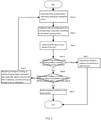
- FIG. 2 a flow chart showing operation of the disclosure is illustrated, which is specifically described as below:
- the above steps further include the following characteristics:
- Bcheck x r kx + X L ⁇ B x if Bcheck x is equal to 0, it means that the verification is successful; if Bcheck x is not equal to 0, it means that the verification is failed, and the initialization fails and the program will exit.
- the possible off-line configuration in the train composition may have three kinds, including an "uncoupling configuration", a “coupling configuration of driver's cab 1", and a “coupling configuration of driver's cab 2".
- the three sets of input signals have to be provided separately by the train using different relays, and the three sets of inputs represent, respectively, "Train not coupled (ANS)", “Driver's cab 1 coupled (ACS1)”, and “Driver's cab 2 coupled (ACS2)", for ensuring that true coupling statuses of the train are accurately reflected.
- ANS Train not coupled
- ACS1 Driver's cab 1 coupled
- ACS2 Driver's cab 2 coupled
- the determining whether the train coupling status is proper according to the collected signals in the step D has a determination logic shown in a table as below: Combination No. Three Collected Sets of Train Coupling Signals Coupling Status ANS ACS1 ACS2 1 0 0 0 Improper 2 0 0 1 Driver's cab 2 Coupled 3 0 1 0 Driver's cab 1 Coupled 4 0 1 1 Improper 5 1 0 0 Not Coupled 6 1 0 1 Improper 7 1 1 0 Improper 8 1 1 1 Improper
- the disclosure has been successfully applied to the signal system provided by CASCO Signal Co., Ltd. for the LRT project in Addis Ababa, Ethiopia.
Landscapes
- Engineering & Computer Science (AREA)
- Mechanical Engineering (AREA)
- Health & Medical Sciences (AREA)
- Biomedical Technology (AREA)
- General Health & Medical Sciences (AREA)
- Train Traffic Observation, Control, And Security (AREA)
- Electric Propulsion And Braking For Vehicles (AREA)
Description
- The disclosure relates to the field of signal control of urban rail transit, in particular, to a control method for supporting dynamic coupling and uncoupling of a train. Specifically, the present disclosure relates to a control method for supporting dynamic coupling and uncoupling of a train of the generic type as defined in the generic pat of claim 1.
- Document
WO 96/06766 A1 - Document
US 8,755,957 B2 discloses method for securing a control system and a secured control system of a multi-unit vehicle, wherein the control system has a device for determining a composition of the multi-unit vehicle for autonomously determining the composition of the multi-unit vehicle and generating composition data. - The passenger flow of urban rail transit lines is usually unevenly distributed in time, and there are obvious peaks of passenger flow during the commuting hours during workdays. In order to transport the stranded passengers in the station to the destination as soon as possible, more trains need to be invested during peak hours to improve operational capacity. However, in other time periods, the number of trains in operation is generally reduced to avoid waste of resources caused by empty trains. However, this mode of operation will cause passengers to wait too long during off-peak hours and reduce their satisfaction.
- In addition, for lines connecting suburban new towns and city centers, the line will be designed as a "Y" branch to solve the problem of uneven distribution of passenger flow in the space, i.e., running separately in the suburban section and running in common in the city section. That is to say, the trains depart separately to the two end points leading to the branch, such as Lines 10 and 11 in Shanghai. In this case, the interval between trains on the branch road is also long. And, due to the limitation of the interval of trains running with the same lines, it is not possible to solve the problem of intervals being too long for the branch roads by increasing the number of running trains even during peak hours.
- A method that can solve the uneven distribution of passenger flow in time and space, and can shorten the running interval of off-peak periods or branch roads adopts mixed operation with trains with different compositions. Specifically, a train with 8 or 6 long compositions during peak hours is used, but during off-peak hours, a train with long composition is uncoupled into a train with two 4 or 3 short compositions for running. In this way, the passenger load factor can be increased without excessively prolonging the waiting time of passengers and waste of resources caused by empty train running can be avoided while ensuring the operation intervals. For "Y"-shaped lines, a train with two short compositions can be coupled to be a train with long composition on the common line section for running, and uncoupled into a train with two short compositions at the branch station, respectively for heading to different destinations.
- However, the reason why the above operating model cannot be implemented is that the existing train control system for urban rail transit does not support dynamic train coupling and uncoupling operations, that is, the composition of running trains must be fixed. And the reason is that in the on-board controller, parameter information such as the length of the train and the distance from the transponder antenna to the head of the train need to be stored in advance, which cannot be changed during the running. If there is a change on the composition of the train, the data of the on-board controller must be recorded to ensure that the information used in the controller is consistent with the actual train, otherwise the calculation for the train position will be wrong and serious safety problems will be caused.
- Therefore, a problem remains in how to determine the train coupling status safely and reliably, and load and use configuration parameters that match the current train coupling status correctly and automatically is the key to achieve control on dynamic coupling and uncoupling of the train.
- An object of the disclosure is to provide a control method for supporting dynamic coupling and uncoupling of a train with high security, high reliability and high degree of automation so as to overcome the above shortcomings in the prior art. According to the method, an on-board signal system may automatically recognize a train coupling status and load a matching configuration for automatic driving and safety protection of the train. During the running, if the composition status of the train changes, the method will also ensure that the train stops safely, and then latest composition information is stored and used.
- The purpose of the disclosure is implemented by the technical solution defined in claim 1.
- Preferably, the coupling status information stored in the step A is encoded; assuming that xindicates a non-encoded coupling status, and the encoding format used is as follows:


after the coupling information is read from a storage device, a verification is required for the correctness of the information with a verification algorithm as below:
- According to the invention, the off-line configuration in the step B includes an "uncoupling configuration", a "coupling configuration of driver's cab 1", and a "coupling configuration of driver's
cab 2". - According to the invention, the three sets of input signals in the step C are, respectively, "Train not coupled (ANS)", "Driver's cab 1 coupled (ACS1)", and "Driver's
cab 2 coupled (ACS2)", for ensuring that true coupling statuses of the train are accurately reflected. - Preferably, for the storage of on-line coupling status information with security coding, the storage device supports on-line reading and writing; the stored coupling status information is security-encoded, and the verification is required for the correctness of the encoded information when the information is read to ensure the security of the system.
- Preferably, for the storage of the three sets of off-line configurations, FLASH on a board is selected for a storage medium, and the off-line configuration includes information such as a corresponding train length, a distance from a transponder antenna to an end of the train, and a traction braking characteristic of the train under different composition statuses.
- According to the invention, the on-board signal system collects three sets of hard-wired signal inputs from the train in real time, including a signal indicating that the train is not coupled, a signal indicating that the driver's cab 1 is coupled, and a signal indicating that the driver's
cab 2 is coupled. - Compared with the prior art, the present invention has the following advantages:
- 1) the disclosure enables mixed operation of a train with long compositions and a train with short compositions and on-line coupling and uncoupling, wherein manual recording of configurations is not required before and after the composition changes, which greatly improves the operation efficiency;
- 2) the on-board controller may determine the changes of the train coupling status in real time through the train input information to ensure that the train parameter configurations used are consistent with the actual coupling status and the positioning of the train may be always calculated correctly;
- 3) through expansion of the input of the coupling status from the train, many and more flexible formation modes may be supported.
-
-
Fig.1 is a view of the structure of the disclosure; -
Fig. 2 is a flow chart showing operation of the disclosure. - The technical solutions in the embodiments of the present invention will be clearly and completely described hereafter in connection with the drawings in the embodiments of the present invention. It is apparent that the described embodiments are only a part of the embodiments of the present invention, but not the whole. Based on the embodiments of the present invention, all the other embodiments obtained by those of ordinary skill in the art without inventive effort are within the scope of the present invention.
- As shown in
Fig. 1 , a structure of an on-board controller supporting dynamic coupling and uncoupling of a train includes a storage device storing train coupling status information, a medium FLASH storing three on-line data, and a CPU performing on-board signaling functions. - As shown in
Fig. 2 , a flow chart showing operation of the disclosure is illustrated, which is specifically described as below: - step A, acquiring stored coupling status information during an initialization phase;
- step B, loading an off-line configuration of a corresponding composition according to the stored coupling status;
- step C, through interfacing with the train, collecting three sets of input signals related to the coupling;
- step D, determining whether a train coupling status is proper according to the collected signals, then turning to step E if yes and turning to step F if no;
- step E, determining whether a current coupling status is consistent with the off-line configuration used in the step B, then performing step H if yes and performing step G if no;
- step F, requesting emergency braking, and reporting an alarming error;
- step G, requesting emergency braking, re-writing coupling status information with codes after determining that the train is stationary, and then turning to the step A for re-initialization;
- step H, performing other functions of the signal system;
- The above steps further include the following characteristics:
For the step A, the coupling information stored in the step A is encoded; assuming that xindicates a non-encoded coupling status, and the encoding format used is as follows:

after the coupling information is read from a storage device, a verification is required for the correctness of the information with a verification algorithm as below:
- For the step B, the possible off-line configuration in the train composition may have three kinds, including an "uncoupling configuration", a "coupling configuration of driver's cab 1", and a "coupling configuration of driver's
cab 2". - For the step C, the three sets of input signals have to be provided separately by the train using different relays, and the three sets of inputs represent, respectively, "Train not coupled (ANS)", "Driver's cab 1 coupled (ACS1)", and "Driver's
cab 2 coupled (ACS2)", for ensuring that true coupling statuses of the train are accurately reflected. - For the step D, the determining whether the train coupling status is proper according to the collected signals in the step D has a determination logic shown in a table as below:
Combination No. Three Collected Sets of Train Coupling Signals Coupling Status ANS ACS1 ACS2 1 0 0 0 Improper 2 0 0 1 Driver's cab 2 Coupled3 0 1 0 Driver's cab 1 Coupled 4 0 1 1 Improper 5 1 0 0 Not Coupled 6 1 0 1 Improper 7 1 1 0 Improper 8 1 1 1 Improper - The disclosure has been successfully applied to the signal system provided by CASCO Signal Co., Ltd. for the LRT project in Addis Ababa, Ethiopia.
- What is mentioned above is only the specific implementation of the present invention, but does not limit the protection scope of the present invention.
- Therefore, the scope of the present invention should be determined by the scope of the claims.
Claims (7)
- A control method for supporting dynamic coupling and uncoupling of a train (1) by an on-board signal system, wherein an on-board controller (2) stores on-line coupling status information with security coding and pre-stores off-line configurations while collecting hard-wired input signals from the train in real time and performing corresponding controls, the method comprising steps of:step A, acquiring stored coupling status information during an initialization phase;step B, loading an off-line configuration of a corresponding composition according to the stored coupling status;step C, collecting input signals related to the coupling;step D, determining whether a train coupling status is proper according to the collected signals, then turning to step E if yes and turning to step F if no;step E, determining whether a current coupling status is consistent with the off-line configuration used in the step B, then performing step H if yes and performing step G if no;step F, requesting emergency braking, and reporting an alarming error;step G, requesting emergency braking, re-writing coupling status information with codes after determining that the train is stationary, and then turning to the step A for re-initialization;step H, performing other functions of the signal system; characterized in that:the on-board controller stores on-line coupling status information with security coding and pre-stores three sets of off-line configurations while collecting three sets of hard-wired input signals from the train in real time and performing corresponding controls;in step C, three sets of input signals related to the coupling are collected; andin step D, the determining whether the train coupling status is proper according to the collected signals has a determination logic shown in a table as below, wherein combinations 2, 3, and 5 are proper, and the rest are improper:
Combination No. Three Collected Sets of Train Coupling Signals Coupling Status ANS ACS1 ACS2 1 0 0 0 Improper 2 0 0 1 Driver's cab 2 Coupled 3 0 1 0 Driver's cab 1 Coupled 4 0 1 1 Improper 5 1 0 0 Not Coupled 6 1 0 1 Improper 7 1 1 0 Improper 8 1 1 1 Improper - The method according to claim 1, wherein the coupling status information stored in the step A is encoded; assuming that xindicates a non-encoded coupling status, and the encoding format used is as follows:


after the coupling information is read from a storage device, a verification is required for the correctness of the information with a verification algorithm as below:
- The method according to claim 1, wherein the off-line configuration in the step B comprises an "uncoupling configuration", a "coupling configuration of driver's cab 1", and a "coupling configuration of driver's cab 2".
- The method according to claim 1, wherein the three sets of input signals in the step C are "Train not coupled (ANS)", "Driver's cab 1 coupled (ACS1)", and "Driver's cab 2 coupled (ACS2)", for ensuring that true coupling statuses of the train are accurately reflected.
- The method according to claim 1, wherein for the storage of on-line coupling status information with security coding, the storage device supports on-line reading and writing; the stored coupling status information is security-encoded, and the verification is required for the correctness of the encoded information when the information is read to ensure the security of the system.
- The method according to claim 1, wherein for the storage of the three sets of off-line configurations, FLASH on a board is selected for a storage medium, and the off-line configuration comprises information such as a corresponding train length, a distance from a transponder antenna to an end of the train, and a traction braking characteristic of the train under different composition statuses.
- The method according to claim 1, wherein the on-board signal system collects three sets of hard-wired signal inputs from the train in real time, comprising a signal indicating that the train is not coupled, a signal indicating that the driver's cab 1 is coupled, and a signal indicating that the driver's cab 2 is coupled.
Priority Applications (1)
| Application Number | Priority Date | Filing Date | Title |
|---|---|---|---|
| RS20220342A RS63160B1 (en) | 2017-12-27 | 2018-10-31 | PROCEDURE FOR CONTROLLING DYNAMIC CONNECTION AND SEPARATION OF TRAINS |
Applications Claiming Priority (2)
| Application Number | Priority Date | Filing Date | Title |
|---|---|---|---|
| CN201711450032.1A CN108163012B (en) | 2017-12-27 | 2017-12-27 | A control method supporting dynamic connection and decoupling of trains |
| PCT/CN2018/112833 WO2019128452A1 (en) | 2017-12-27 | 2018-10-31 | Control method for dynamic coupling and separation of train |
Publications (3)
| Publication Number | Publication Date |
|---|---|
| EP3730380A1 EP3730380A1 (en) | 2020-10-28 |
| EP3730380A4 EP3730380A4 (en) | 2021-01-20 |
| EP3730380B1 true EP3730380B1 (en) | 2022-03-16 |
Family
ID=62518794
Family Applications (1)
| Application Number | Title | Priority Date | Filing Date |
|---|---|---|---|
| EP18894348.4A Active EP3730380B1 (en) | 2017-12-27 | 2018-10-31 | Control method for dynamic coupling and separation of train |
Country Status (5)
| Country | Link |
|---|---|
| US (1) | US11767043B2 (en) |
| EP (1) | EP3730380B1 (en) |
| CN (1) | CN108163012B (en) |
| RS (1) | RS63160B1 (en) |
| WO (1) | WO2019128452A1 (en) |
Families Citing this family (23)
| Publication number | Priority date | Publication date | Assignee | Title |
|---|---|---|---|---|
| CN108163012B (en) | 2017-12-27 | 2019-12-03 | 卡斯柯信号有限公司 | A control method supporting dynamic connection and decoupling of trains |
| CN112440832B (en) * | 2019-08-28 | 2022-02-22 | 湖南华宏铁路高新科技开发有限公司 | Method and system for deducing grouping and sequencing linkage of contact net operation vehicle |
| CN112441089B (en) * | 2019-08-30 | 2022-03-18 | 比亚迪股份有限公司 | Train dispatching control method, platform and system, intelligent carriage and medium |
| CN110936983B (en) * | 2019-11-25 | 2022-01-28 | 卡斯柯信号有限公司 | Automatic train coupling method for rail transit |
| CN111267915A (en) * | 2020-02-28 | 2020-06-12 | 卡斯柯信号有限公司 | A safety detection method for the marshalling state of urban rail transit vehicles |
| CN111874008B (en) * | 2020-05-26 | 2021-09-03 | 卡斯柯信号有限公司 | Method for realizing flexible grouping operation of urban rail transit |
| CN111766809B (en) * | 2020-06-30 | 2022-04-19 | 通号城市轨道交通技术有限公司 | Control method for train of train and vehicle-mounted controller |
| CN111994097B (en) * | 2020-08-19 | 2021-11-12 | 交控科技股份有限公司 | Y-shaped line dynamic de-editing method and system based on collaborative formation |
| CN112061140B (en) * | 2020-08-25 | 2021-12-07 | 通号城市轨道交通技术有限公司 | Train on-line connection and disconnection method |
| CN112208583B (en) * | 2020-08-25 | 2022-06-17 | 通号城市轨道交通技术有限公司 | Train coupling control method and system |
| CN111923931B (en) * | 2020-10-15 | 2020-12-29 | 北京全路通信信号研究设计院集团有限公司 | A method and system for dynamic marshalling and unmarshalling of trains based on ad hoc network |
| CN113771918B (en) * | 2021-09-14 | 2023-10-20 | 重庆交通大学 | Automatic driving control method for high-speed train to cope with dynamic passenger flow |
| CN113734246B (en) * | 2021-09-26 | 2022-09-02 | 交控科技股份有限公司 | Vehicle coupling control method, device and system |
| CN114802357B (en) * | 2022-03-29 | 2023-08-25 | 卡斯柯信号有限公司 | Safety identification method, device, equipment and medium for multi-train connection state |
| EP4504573B1 (en) * | 2022-04-06 | 2026-01-21 | Voith Patent GmbH | Decoupling system, automatic draught coupling and rail vehicle with an automatic draught coupling with a decoupling system of this type, and method for decoupling an automatic coupling that is mechanically coupled to a counter draught coupling |
| CN114940195B (en) * | 2022-05-31 | 2023-03-31 | 中国铁路通信信号股份有限公司 | Train operation safety protection method and system |
| CN115285173B (en) * | 2022-06-22 | 2023-08-25 | 卡斯柯信号有限公司 | Realization method, equipment and medium of train automatic phase separation based on CBTC |
| CN115303331A (en) * | 2022-06-30 | 2022-11-08 | 卡斯柯信号有限公司 | Safety detection method, equipment and medium for rail transit multi-marshalling train coupling |
| CN115437352A (en) * | 2022-09-26 | 2022-12-06 | 中国铁道科学研究院集团有限公司 | Automatic servicing method and device for motor train unit |
| CN115743062A (en) * | 2022-11-29 | 2023-03-07 | 中车大连机车车辆有限公司 | Emergency braking control method for slave control motor train unit of motor train unit and corresponding motor train unit |
| CN116238561B (en) * | 2023-02-10 | 2025-06-17 | 浙江众合科技股份有限公司 | A method for judging the legality of coupled train marshaling combination |
| CN117002579B (en) * | 2023-07-25 | 2026-02-27 | 卡斯柯信号有限公司 | A method, device and medium for dynamic loading of data from coupled trains |
| CN117755342B (en) * | 2023-12-25 | 2024-09-03 | 中车青岛四方车辆研究所有限公司 | Low-cost equidistant-operation flexible grouping rail transit train system |
Family Cites Families (19)
| Publication number | Priority date | Publication date | Assignee | Title |
|---|---|---|---|---|
| US5623413A (en) * | 1994-09-01 | 1997-04-22 | Harris Corporation | Scheduling system and method |
| US6891805B2 (en) * | 2001-02-06 | 2005-05-10 | Telephonics Corporation | Communications system |
| US20020105916A1 (en) * | 2001-02-06 | 2002-08-08 | Bill Smith | Method and apparatus for allocating funtions in an electronics system |
| US20060005739A1 (en) * | 2001-03-27 | 2006-01-12 | Kumar Ajith K | Railroad system comprising railroad vehicle with energy regeneration |
| US20040133411A1 (en) * | 2003-01-08 | 2004-07-08 | Derrick Babb | Automated Transit System |
| CA2454988A1 (en) * | 2004-01-07 | 2005-07-07 | Alstom Canada Inc. | System for deploying ip over an existing or a new two conductor cable on-board rail vehicles |
| US7458545B1 (en) * | 2005-07-22 | 2008-12-02 | Liontech Trains Llc | System for sending commands to train cars based on location in train |
| US7826938B2 (en) * | 2005-12-22 | 2010-11-02 | Mitsubishi Electric Research Laboratories, Inc. | System for tracking railcars in a railroad environment |
| AU2009316336A1 (en) * | 2008-11-24 | 2010-05-27 | General Electronic Company | Control system and method for controlling movement of an off-highway vehicle |
| DE102010035302C5 (en) * | 2010-08-16 | 2015-04-23 | Alstom Transport Technologies | Method and device for monitoring an operating state of a coupling device |
| CA2818605A1 (en) * | 2010-11-23 | 2012-05-31 | Siemens Sas | Method for securing a control system of a reconfigurable multi-unit vehicle, and secured control system |
| CN102602433B (en) * | 2011-01-20 | 2017-05-10 | 上海稳得新能源科技有限公司 | Rail transit combination-separation combined transport method |
| CN202163460U (en) * | 2011-08-04 | 2012-03-14 | 中国北车股份有限公司大连电力牵引研发中心 | Re-connection light rail vehicle based on field bus |
| US8942868B2 (en) * | 2012-12-31 | 2015-01-27 | Thales Canada Inc | Train end and train integrity circuit for train control system |
| CN203623659U (en) * | 2013-08-30 | 2014-06-04 | 深圳市远望谷信息技术股份有限公司 | Device for detecting brake performance of marshaling trains |
| CN104477214B (en) | 2014-09-19 | 2017-02-15 | 成都可益轨道技术有限公司 | Intelligent electric terminal based train length and vehicle information automatic identification system |
| CN104787048B (en) | 2015-04-10 | 2017-03-29 | 长春轨道客车股份有限公司 | A kind of more flexible electric rail car group grouping method |
| CN106476846B (en) * | 2016-10-20 | 2018-01-30 | 中车青岛四方车辆研究所有限公司 | Heavy Haul Freight Train organizing apparatus, grouping method and Electronically Controlled Pneumatic Brake Systems |
| CN108163012B (en) | 2017-12-27 | 2019-12-03 | 卡斯柯信号有限公司 | A control method supporting dynamic connection and decoupling of trains |
-
2017
- 2017-12-27 CN CN201711450032.1A patent/CN108163012B/en active Active
-
2018
- 2018-10-31 RS RS20220342A patent/RS63160B1/en unknown
- 2018-10-31 US US16/958,643 patent/US11767043B2/en active Active
- 2018-10-31 EP EP18894348.4A patent/EP3730380B1/en active Active
- 2018-10-31 WO PCT/CN2018/112833 patent/WO2019128452A1/en not_active Ceased
Also Published As
| Publication number | Publication date |
|---|---|
| WO2019128452A1 (en) | 2019-07-04 |
| EP3730380A1 (en) | 2020-10-28 |
| EP3730380A4 (en) | 2021-01-20 |
| US20200369304A1 (en) | 2020-11-26 |
| CN108163012B (en) | 2019-12-03 |
| RS63160B1 (en) | 2022-05-31 |
| US11767043B2 (en) | 2023-09-26 |
| CN108163012A (en) | 2018-06-15 |
Similar Documents
| Publication | Publication Date | Title |
|---|---|---|
| EP3730380A1 (en) | Control method for dynamic coupling and separation of train | |
| CN109677466B (en) | A lightweight train automatic control system for China's heavy-haul railways | |
| CN107709136B (en) | Method and device for determining driving authorization for a rail vehicle | |
| CN112519836A (en) | Automatic train operation system switching method and system | |
| US8190314B2 (en) | System, method, and computer software code for linking a plurality of powered systems having different linking protocols to operate as a single powered system | |
| EA020012B1 (en) | A system and method for remotely controlling the movement of a series of connected vehicles | |
| CN107235054B (en) | Freight train departure method based on CBTC (communication based train control) system and CBTC system | |
| US20020107616A1 (en) | Method and system for upgrading software for controlling locomotives | |
| CN114802357A (en) | Safety identification method, device, equipment and medium for multi-train coupling state | |
| CN114407972A (en) | Suburban railway vehicle-mounted equipment switching method and system | |
| RU2705035C1 (en) | Method and system for controlling rolling stock during thrusting and breaking from railroads hump yard | |
| US20090048725A1 (en) | Train crew management and security system | |
| CN111776019B (en) | Train turning back method and system | |
| CN111086541B (en) | Ground data processing method based on CTCS-1 grade and vehicle-mounted equipment | |
| CN117622257A (en) | In-station parking control method and control system for long-distance marshalling freight trains | |
| CN115140128B (en) | Train operation method and device suitable for non-fixed grouping | |
| CN108502484A (en) | The control method of steel coil transportation equipment | |
| CN103991464B (en) | Train security system | |
| CN116691781B (en) | Train control system switching method and system | |
| CN116001862A (en) | Train passenger clearing control method and device | |
| CN117360581A (en) | Control method of decoupling train, on-board controller and decoupling train | |
| CN116161082B (en) | Method, system, storage medium and equipment for dispatching rail transit operation vehicle | |
| CN114940197A (en) | Train operation control method and device | |
| CN113428193A (en) | Method and device for processing station field diagram state based on RFID | |
| CN117022383B (en) | Dynamic virtual de-compiling method for failure of rail transit communication |
Legal Events
| Date | Code | Title | Description |
|---|---|---|---|
| STAA | Information on the status of an ep patent application or granted ep patent |
Free format text: STATUS: THE INTERNATIONAL PUBLICATION HAS BEEN MADE |
|
| PUAI | Public reference made under article 153(3) epc to a published international application that has entered the european phase |
Free format text: ORIGINAL CODE: 0009012 |
|
| STAA | Information on the status of an ep patent application or granted ep patent |
Free format text: STATUS: REQUEST FOR EXAMINATION WAS MADE |
|
| 17P | Request for examination filed |
Effective date: 20200720 |
|
| AK | Designated contracting states |
Kind code of ref document: A1 Designated state(s): AL AT BE BG CH CY CZ DE DK EE ES FI FR GB GR HR HU IE IS IT LI LT LU LV MC MK MT NL NO PL PT RO RS SE SI SK SM TR |
|
| AX | Request for extension of the european patent |
Extension state: BA ME |
|
| A4 | Supplementary search report drawn up and despatched |
Effective date: 20201223 |
|
| RIC1 | Information provided on ipc code assigned before grant |
Ipc: B61L 23/00 20060101AFI20201217BHEP Ipc: B61L 15/00 20060101ALI20201217BHEP |
|
| DAV | Request for validation of the european patent (deleted) | ||
| DAX | Request for extension of the european patent (deleted) | ||
| GRAP | Despatch of communication of intention to grant a patent |
Free format text: ORIGINAL CODE: EPIDOSNIGR1 |
|
| STAA | Information on the status of an ep patent application or granted ep patent |
Free format text: STATUS: GRANT OF PATENT IS INTENDED |
|
| INTG | Intention to grant announced |
Effective date: 20211108 |
|
| GRAS | Grant fee paid |
Free format text: ORIGINAL CODE: EPIDOSNIGR3 |
|
| GRAA | (expected) grant |
Free format text: ORIGINAL CODE: 0009210 |
|
| STAA | Information on the status of an ep patent application or granted ep patent |
Free format text: STATUS: THE PATENT HAS BEEN GRANTED |
|
| AK | Designated contracting states |
Kind code of ref document: B1 Designated state(s): AL AT BE BG CH CY CZ DE DK EE ES FI FR GB GR HR HU IE IS IT LI LT LU LV MC MK MT NL NO PL PT RO RS SE SI SK SM TR |
|
| REG | Reference to a national code |
Ref country code: GB Ref legal event code: FG4D |
|
| REG | Reference to a national code |
Ref country code: CH Ref legal event code: EP Ref country code: DE Ref legal event code: R096 Ref document number: 602018032501 Country of ref document: DE |
|
| REG | Reference to a national code |
Ref country code: RO Ref legal event code: EPE |
|
| REG | Reference to a national code |
Ref country code: IE Ref legal event code: FG4D |
|
| REG | Reference to a national code |
Ref country code: AT Ref legal event code: REF Ref document number: 1475695 Country of ref document: AT Kind code of ref document: T Effective date: 20220415 |
|
| REG | Reference to a national code |
Ref country code: LT Ref legal event code: MG9D |
|
| REG | Reference to a national code |
Ref country code: NL Ref legal event code: MP Effective date: 20220316 |
|
| PG25 | Lapsed in a contracting state [announced via postgrant information from national office to epo] |
Ref country code: SE Free format text: LAPSE BECAUSE OF FAILURE TO SUBMIT A TRANSLATION OF THE DESCRIPTION OR TO PAY THE FEE WITHIN THE PRESCRIBED TIME-LIMIT Effective date: 20220316 Ref country code: NO Free format text: LAPSE BECAUSE OF FAILURE TO SUBMIT A TRANSLATION OF THE DESCRIPTION OR TO PAY THE FEE WITHIN THE PRESCRIBED TIME-LIMIT Effective date: 20220616 Ref country code: LT Free format text: LAPSE BECAUSE OF FAILURE TO SUBMIT A TRANSLATION OF THE DESCRIPTION OR TO PAY THE FEE WITHIN THE PRESCRIBED TIME-LIMIT Effective date: 20220316 Ref country code: HR Free format text: LAPSE BECAUSE OF FAILURE TO SUBMIT A TRANSLATION OF THE DESCRIPTION OR TO PAY THE FEE WITHIN THE PRESCRIBED TIME-LIMIT Effective date: 20220316 Ref country code: BG Free format text: LAPSE BECAUSE OF FAILURE TO SUBMIT A TRANSLATION OF THE DESCRIPTION OR TO PAY THE FEE WITHIN THE PRESCRIBED TIME-LIMIT Effective date: 20220616 |
|
| REG | Reference to a national code |
Ref country code: AT Ref legal event code: MK05 Ref document number: 1475695 Country of ref document: AT Kind code of ref document: T Effective date: 20220316 |
|
| REG | Reference to a national code |
Ref country code: HU Ref legal event code: AG4A Ref document number: E058395 Country of ref document: HU |
|
| PG25 | Lapsed in a contracting state [announced via postgrant information from national office to epo] |
Ref country code: LV Free format text: LAPSE BECAUSE OF FAILURE TO SUBMIT A TRANSLATION OF THE DESCRIPTION OR TO PAY THE FEE WITHIN THE PRESCRIBED TIME-LIMIT Effective date: 20220316 Ref country code: GR Free format text: LAPSE BECAUSE OF FAILURE TO SUBMIT A TRANSLATION OF THE DESCRIPTION OR TO PAY THE FEE WITHIN THE PRESCRIBED TIME-LIMIT Effective date: 20220617 Ref country code: FI Free format text: LAPSE BECAUSE OF FAILURE TO SUBMIT A TRANSLATION OF THE DESCRIPTION OR TO PAY THE FEE WITHIN THE PRESCRIBED TIME-LIMIT Effective date: 20220316 |
|
| PG25 | Lapsed in a contracting state [announced via postgrant information from national office to epo] |
Ref country code: NL Free format text: LAPSE BECAUSE OF FAILURE TO SUBMIT A TRANSLATION OF THE DESCRIPTION OR TO PAY THE FEE WITHIN THE PRESCRIBED TIME-LIMIT Effective date: 20220316 |
|
| PG25 | Lapsed in a contracting state [announced via postgrant information from national office to epo] |
Ref country code: SM Free format text: LAPSE BECAUSE OF FAILURE TO SUBMIT A TRANSLATION OF THE DESCRIPTION OR TO PAY THE FEE WITHIN THE PRESCRIBED TIME-LIMIT Effective date: 20220316 Ref country code: SK Free format text: LAPSE BECAUSE OF FAILURE TO SUBMIT A TRANSLATION OF THE DESCRIPTION OR TO PAY THE FEE WITHIN THE PRESCRIBED TIME-LIMIT Effective date: 20220316 Ref country code: PT Free format text: LAPSE BECAUSE OF FAILURE TO SUBMIT A TRANSLATION OF THE DESCRIPTION OR TO PAY THE FEE WITHIN THE PRESCRIBED TIME-LIMIT Effective date: 20220718 Ref country code: ES Free format text: LAPSE BECAUSE OF FAILURE TO SUBMIT A TRANSLATION OF THE DESCRIPTION OR TO PAY THE FEE WITHIN THE PRESCRIBED TIME-LIMIT Effective date: 20220316 Ref country code: EE Free format text: LAPSE BECAUSE OF FAILURE TO SUBMIT A TRANSLATION OF THE DESCRIPTION OR TO PAY THE FEE WITHIN THE PRESCRIBED TIME-LIMIT Effective date: 20220316 Ref country code: CZ Free format text: LAPSE BECAUSE OF FAILURE TO SUBMIT A TRANSLATION OF THE DESCRIPTION OR TO PAY THE FEE WITHIN THE PRESCRIBED TIME-LIMIT Effective date: 20220316 Ref country code: AT Free format text: LAPSE BECAUSE OF FAILURE TO SUBMIT A TRANSLATION OF THE DESCRIPTION OR TO PAY THE FEE WITHIN THE PRESCRIBED TIME-LIMIT Effective date: 20220316 |
|
| PG25 | Lapsed in a contracting state [announced via postgrant information from national office to epo] |
Ref country code: PL Free format text: LAPSE BECAUSE OF FAILURE TO SUBMIT A TRANSLATION OF THE DESCRIPTION OR TO PAY THE FEE WITHIN THE PRESCRIBED TIME-LIMIT Effective date: 20220316 Ref country code: IS Free format text: LAPSE BECAUSE OF FAILURE TO SUBMIT A TRANSLATION OF THE DESCRIPTION OR TO PAY THE FEE WITHIN THE PRESCRIBED TIME-LIMIT Effective date: 20220716 Ref country code: AL Free format text: LAPSE BECAUSE OF FAILURE TO SUBMIT A TRANSLATION OF THE DESCRIPTION OR TO PAY THE FEE WITHIN THE PRESCRIBED TIME-LIMIT Effective date: 20220316 |
|
| REG | Reference to a national code |
Ref country code: DE Ref legal event code: R097 Ref document number: 602018032501 Country of ref document: DE |
|
| PLBE | No opposition filed within time limit |
Free format text: ORIGINAL CODE: 0009261 |
|
| STAA | Information on the status of an ep patent application or granted ep patent |
Free format text: STATUS: NO OPPOSITION FILED WITHIN TIME LIMIT |
|
| PG25 | Lapsed in a contracting state [announced via postgrant information from national office to epo] |
Ref country code: DK Free format text: LAPSE BECAUSE OF FAILURE TO SUBMIT A TRANSLATION OF THE DESCRIPTION OR TO PAY THE FEE WITHIN THE PRESCRIBED TIME-LIMIT Effective date: 20220316 |
|
| 26N | No opposition filed |
Effective date: 20221219 |
|
| PG25 | Lapsed in a contracting state [announced via postgrant information from national office to epo] |
Ref country code: SI Free format text: LAPSE BECAUSE OF FAILURE TO SUBMIT A TRANSLATION OF THE DESCRIPTION OR TO PAY THE FEE WITHIN THE PRESCRIBED TIME-LIMIT Effective date: 20220316 |
|
| PG25 | Lapsed in a contracting state [announced via postgrant information from national office to epo] |
Ref country code: MC Free format text: LAPSE BECAUSE OF FAILURE TO SUBMIT A TRANSLATION OF THE DESCRIPTION OR TO PAY THE FEE WITHIN THE PRESCRIBED TIME-LIMIT Effective date: 20220316 |
|
| REG | Reference to a national code |
Ref country code: CH Ref legal event code: PL |
|
| REG | Reference to a national code |
Ref country code: BE Ref legal event code: MM Effective date: 20221031 |
|
| PG25 | Lapsed in a contracting state [announced via postgrant information from national office to epo] |
Ref country code: LU Free format text: LAPSE BECAUSE OF NON-PAYMENT OF DUE FEES Effective date: 20221031 |
|
| PG25 | Lapsed in a contracting state [announced via postgrant information from national office to epo] |
Ref country code: LI Free format text: LAPSE BECAUSE OF NON-PAYMENT OF DUE FEES Effective date: 20221031 Ref country code: IT Free format text: LAPSE BECAUSE OF FAILURE TO SUBMIT A TRANSLATION OF THE DESCRIPTION OR TO PAY THE FEE WITHIN THE PRESCRIBED TIME-LIMIT Effective date: 20220316 Ref country code: CH Free format text: LAPSE BECAUSE OF NON-PAYMENT OF DUE FEES Effective date: 20221031 |
|
| PG25 | Lapsed in a contracting state [announced via postgrant information from national office to epo] |
Ref country code: BE Free format text: LAPSE BECAUSE OF NON-PAYMENT OF DUE FEES Effective date: 20221031 |
|
| PG25 | Lapsed in a contracting state [announced via postgrant information from national office to epo] |
Ref country code: IE Free format text: LAPSE BECAUSE OF NON-PAYMENT OF DUE FEES Effective date: 20221031 |
|
| PG25 | Lapsed in a contracting state [announced via postgrant information from national office to epo] |
Ref country code: CY Free format text: LAPSE BECAUSE OF FAILURE TO SUBMIT A TRANSLATION OF THE DESCRIPTION OR TO PAY THE FEE WITHIN THE PRESCRIBED TIME-LIMIT Effective date: 20220316 |
|
| PG25 | Lapsed in a contracting state [announced via postgrant information from national office to epo] |
Ref country code: MK Free format text: LAPSE BECAUSE OF FAILURE TO SUBMIT A TRANSLATION OF THE DESCRIPTION OR TO PAY THE FEE WITHIN THE PRESCRIBED TIME-LIMIT Effective date: 20220316 |
|
| PG25 | Lapsed in a contracting state [announced via postgrant information from national office to epo] |
Ref country code: MT Free format text: LAPSE BECAUSE OF FAILURE TO SUBMIT A TRANSLATION OF THE DESCRIPTION OR TO PAY THE FEE WITHIN THE PRESCRIBED TIME-LIMIT Effective date: 20220316 |
|
| PGFP | Annual fee paid to national office [announced via postgrant information from national office to epo] |
Ref country code: GB Payment date: 20250911 Year of fee payment: 8 |
|
| PGFP | Annual fee paid to national office [announced via postgrant information from national office to epo] |
Ref country code: FR Payment date: 20250908 Year of fee payment: 8 |
|
| PGFP | Annual fee paid to national office [announced via postgrant information from national office to epo] |
Ref country code: RO Payment date: 20250929 Year of fee payment: 8 |
|
| PGFP | Annual fee paid to national office [announced via postgrant information from national office to epo] |
Ref country code: HU Payment date: 20250929 Year of fee payment: 8 |
|
| PG25 | Lapsed in a contracting state [announced via postgrant information from national office to epo] |
Ref country code: TR Free format text: LAPSE BECAUSE OF FAILURE TO SUBMIT A TRANSLATION OF THE DESCRIPTION OR TO PAY THE FEE WITHIN THE PRESCRIBED TIME-LIMIT Effective date: 20220316 |
|
| PGFP | Annual fee paid to national office [announced via postgrant information from national office to epo] |
Ref country code: DE Payment date: 20250910 Year of fee payment: 8 |
|
| PGFP | Annual fee paid to national office [announced via postgrant information from national office to epo] |
Ref country code: RS Payment date: 20251002 Year of fee payment: 8 |