EP3728429B1 - Foaming composition - Google Patents
Foaming composition Download PDFInfo
- Publication number
- EP3728429B1 EP3728429B1 EP17935409.7A EP17935409A EP3728429B1 EP 3728429 B1 EP3728429 B1 EP 3728429B1 EP 17935409 A EP17935409 A EP 17935409A EP 3728429 B1 EP3728429 B1 EP 3728429B1
- Authority
- EP
- European Patent Office
- Prior art keywords
- foaming
- weight
- article
- composition according
- antioxidant
- Prior art date
- Legal status (The legal status is an assumption and is not a legal conclusion. Google has not performed a legal analysis and makes no representation as to the accuracy of the status listed.)
- Active
Links
Classifications
-
- C—CHEMISTRY; METALLURGY
- C08—ORGANIC MACROMOLECULAR COMPOUNDS; THEIR PREPARATION OR CHEMICAL WORKING-UP; COMPOSITIONS BASED THEREON
- C08J—WORKING-UP; GENERAL PROCESSES OF COMPOUNDING; AFTER-TREATMENT NOT COVERED BY SUBCLASSES C08B, C08C, C08F, C08G or C08H
- C08J9/00—Working-up of macromolecular substances to porous or cellular articles or materials; After-treatment thereof
- C08J9/04—Working-up of macromolecular substances to porous or cellular articles or materials; After-treatment thereof using blowing gases generated by a previously added blowing agent
- C08J9/06—Working-up of macromolecular substances to porous or cellular articles or materials; After-treatment thereof using blowing gases generated by a previously added blowing agent by a chemical blowing agent
-
- C—CHEMISTRY; METALLURGY
- C08—ORGANIC MACROMOLECULAR COMPOUNDS; THEIR PREPARATION OR CHEMICAL WORKING-UP; COMPOSITIONS BASED THEREON
- C08J—WORKING-UP; GENERAL PROCESSES OF COMPOUNDING; AFTER-TREATMENT NOT COVERED BY SUBCLASSES C08B, C08C, C08F, C08G or C08H
- C08J9/00—Working-up of macromolecular substances to porous or cellular articles or materials; After-treatment thereof
- C08J9/0014—Use of organic additives
- C08J9/0023—Use of organic additives containing oxygen
-
- C—CHEMISTRY; METALLURGY
- C08—ORGANIC MACROMOLECULAR COMPOUNDS; THEIR PREPARATION OR CHEMICAL WORKING-UP; COMPOSITIONS BASED THEREON
- C08J—WORKING-UP; GENERAL PROCESSES OF COMPOUNDING; AFTER-TREATMENT NOT COVERED BY SUBCLASSES C08B, C08C, C08F, C08G or C08H
- C08J9/00—Working-up of macromolecular substances to porous or cellular articles or materials; After-treatment thereof
- C08J9/0014—Use of organic additives
- C08J9/0028—Use of organic additives containing nitrogen
-
- C—CHEMISTRY; METALLURGY
- C08—ORGANIC MACROMOLECULAR COMPOUNDS; THEIR PREPARATION OR CHEMICAL WORKING-UP; COMPOSITIONS BASED THEREON
- C08J—WORKING-UP; GENERAL PROCESSES OF COMPOUNDING; AFTER-TREATMENT NOT COVERED BY SUBCLASSES C08B, C08C, C08F, C08G or C08H
- C08J9/00—Working-up of macromolecular substances to porous or cellular articles or materials; After-treatment thereof
- C08J9/0095—Mixtures of at least two compounding ingredients belonging to different one-dot groups
-
- C—CHEMISTRY; METALLURGY
- C08—ORGANIC MACROMOLECULAR COMPOUNDS; THEIR PREPARATION OR CHEMICAL WORKING-UP; COMPOSITIONS BASED THEREON
- C08J—WORKING-UP; GENERAL PROCESSES OF COMPOUNDING; AFTER-TREATMENT NOT COVERED BY SUBCLASSES C08B, C08C, C08F, C08G or C08H
- C08J9/00—Working-up of macromolecular substances to porous or cellular articles or materials; After-treatment thereof
- C08J9/04—Working-up of macromolecular substances to porous or cellular articles or materials; After-treatment thereof using blowing gases generated by a previously added blowing agent
- C08J9/06—Working-up of macromolecular substances to porous or cellular articles or materials; After-treatment thereof using blowing gases generated by a previously added blowing agent by a chemical blowing agent
- C08J9/10—Working-up of macromolecular substances to porous or cellular articles or materials; After-treatment thereof using blowing gases generated by a previously added blowing agent by a chemical blowing agent developing nitrogen, the blowing agent being a compound containing a nitrogen-to-nitrogen bond
-
- C—CHEMISTRY; METALLURGY
- C08—ORGANIC MACROMOLECULAR COMPOUNDS; THEIR PREPARATION OR CHEMICAL WORKING-UP; COMPOSITIONS BASED THEREON
- C08J—WORKING-UP; GENERAL PROCESSES OF COMPOUNDING; AFTER-TREATMENT NOT COVERED BY SUBCLASSES C08B, C08C, C08F, C08G or C08H
- C08J9/00—Working-up of macromolecular substances to porous or cellular articles or materials; After-treatment thereof
- C08J9/04—Working-up of macromolecular substances to porous or cellular articles or materials; After-treatment thereof using blowing gases generated by a previously added blowing agent
- C08J9/06—Working-up of macromolecular substances to porous or cellular articles or materials; After-treatment thereof using blowing gases generated by a previously added blowing agent by a chemical blowing agent
- C08J9/10—Working-up of macromolecular substances to porous or cellular articles or materials; After-treatment thereof using blowing gases generated by a previously added blowing agent by a chemical blowing agent developing nitrogen, the blowing agent being a compound containing a nitrogen-to-nitrogen bond
- C08J9/102—Azo-compounds
-
- C—CHEMISTRY; METALLURGY
- C08—ORGANIC MACROMOLECULAR COMPOUNDS; THEIR PREPARATION OR CHEMICAL WORKING-UP; COMPOSITIONS BASED THEREON
- C08J—WORKING-UP; GENERAL PROCESSES OF COMPOUNDING; AFTER-TREATMENT NOT COVERED BY SUBCLASSES C08B, C08C, C08F, C08G or C08H
- C08J9/00—Working-up of macromolecular substances to porous or cellular articles or materials; After-treatment thereof
- C08J9/04—Working-up of macromolecular substances to porous or cellular articles or materials; After-treatment thereof using blowing gases generated by a previously added blowing agent
- C08J9/06—Working-up of macromolecular substances to porous or cellular articles or materials; After-treatment thereof using blowing gases generated by a previously added blowing agent by a chemical blowing agent
- C08J9/10—Working-up of macromolecular substances to porous or cellular articles or materials; After-treatment thereof using blowing gases generated by a previously added blowing agent by a chemical blowing agent developing nitrogen, the blowing agent being a compound containing a nitrogen-to-nitrogen bond
- C08J9/102—Azo-compounds
- C08J9/103—Azodicarbonamide
-
- C—CHEMISTRY; METALLURGY
- C08—ORGANIC MACROMOLECULAR COMPOUNDS; THEIR PREPARATION OR CHEMICAL WORKING-UP; COMPOSITIONS BASED THEREON
- C08J—WORKING-UP; GENERAL PROCESSES OF COMPOUNDING; AFTER-TREATMENT NOT COVERED BY SUBCLASSES C08B, C08C, C08F, C08G or C08H
- C08J9/00—Working-up of macromolecular substances to porous or cellular articles or materials; After-treatment thereof
- C08J9/04—Working-up of macromolecular substances to porous or cellular articles or materials; After-treatment thereof using blowing gases generated by a previously added blowing agent
- C08J9/06—Working-up of macromolecular substances to porous or cellular articles or materials; After-treatment thereof using blowing gases generated by a previously added blowing agent by a chemical blowing agent
- C08J9/10—Working-up of macromolecular substances to porous or cellular articles or materials; After-treatment thereof using blowing gases generated by a previously added blowing agent by a chemical blowing agent developing nitrogen, the blowing agent being a compound containing a nitrogen-to-nitrogen bond
- C08J9/104—Hydrazines; Hydrazides; Semicarbazides; Semicarbazones; Hydrazones; Derivatives thereof
- C08J9/105—Hydrazines; Hydrazides; Semicarbazides; Semicarbazones; Hydrazones; Derivatives thereof containing sulfur
-
- C—CHEMISTRY; METALLURGY
- C08—ORGANIC MACROMOLECULAR COMPOUNDS; THEIR PREPARATION OR CHEMICAL WORKING-UP; COMPOSITIONS BASED THEREON
- C08J—WORKING-UP; GENERAL PROCESSES OF COMPOUNDING; AFTER-TREATMENT NOT COVERED BY SUBCLASSES C08B, C08C, C08F, C08G or C08H
- C08J9/00—Working-up of macromolecular substances to porous or cellular articles or materials; After-treatment thereof
- C08J9/16—Making expandable particles
-
- C—CHEMISTRY; METALLURGY
- C08—ORGANIC MACROMOLECULAR COMPOUNDS; THEIR PREPARATION OR CHEMICAL WORKING-UP; COMPOSITIONS BASED THEREON
- C08J—WORKING-UP; GENERAL PROCESSES OF COMPOUNDING; AFTER-TREATMENT NOT COVERED BY SUBCLASSES C08B, C08C, C08F, C08G or C08H
- C08J9/00—Working-up of macromolecular substances to porous or cellular articles or materials; After-treatment thereof
- C08J9/22—After-treatment of expandable particles; Forming foamed products
- C08J9/228—Forming foamed products
-
- C—CHEMISTRY; METALLURGY
- C08—ORGANIC MACROMOLECULAR COMPOUNDS; THEIR PREPARATION OR CHEMICAL WORKING-UP; COMPOSITIONS BASED THEREON
- C08K—Use of inorganic or non-macromolecular organic substances as compounding ingredients
- C08K5/00—Use of organic ingredients
- C08K5/04—Oxygen-containing compounds
- C08K5/10—Esters; Ether-esters
- C08K5/101—Esters; Ether-esters of monocarboxylic acids
- C08K5/105—Esters; Ether-esters of monocarboxylic acids with phenols
-
- C—CHEMISTRY; METALLURGY
- C08—ORGANIC MACROMOLECULAR COMPOUNDS; THEIR PREPARATION OR CHEMICAL WORKING-UP; COMPOSITIONS BASED THEREON
- C08K—Use of inorganic or non-macromolecular organic substances as compounding ingredients
- C08K5/00—Use of organic ingredients
- C08K5/04—Oxygen-containing compounds
- C08K5/13—Phenols; Phenolates
-
- C—CHEMISTRY; METALLURGY
- C08—ORGANIC MACROMOLECULAR COMPOUNDS; THEIR PREPARATION OR CHEMICAL WORKING-UP; COMPOSITIONS BASED THEREON
- C08K—Use of inorganic or non-macromolecular organic substances as compounding ingredients
- C08K5/00—Use of organic ingredients
- C08K5/04—Oxygen-containing compounds
- C08K5/13—Phenols; Phenolates
- C08K5/134—Phenols containing ester groups
- C08K5/1345—Carboxylic esters of phenolcarboxylic acids
-
- C—CHEMISTRY; METALLURGY
- C08—ORGANIC MACROMOLECULAR COMPOUNDS; THEIR PREPARATION OR CHEMICAL WORKING-UP; COMPOSITIONS BASED THEREON
- C08K—Use of inorganic or non-macromolecular organic substances as compounding ingredients
- C08K5/00—Use of organic ingredients
- C08K5/16—Nitrogen-containing compounds
- C08K5/17—Amines; Quaternary ammonium compounds
- C08K5/18—Amines; Quaternary ammonium compounds with aromatically bound amino groups
-
- C—CHEMISTRY; METALLURGY
- C08—ORGANIC MACROMOLECULAR COMPOUNDS; THEIR PREPARATION OR CHEMICAL WORKING-UP; COMPOSITIONS BASED THEREON
- C08K—Use of inorganic or non-macromolecular organic substances as compounding ingredients
- C08K5/00—Use of organic ingredients
- C08K5/49—Phosphorus-containing compounds
- C08K5/51—Phosphorus bound to oxygen
- C08K5/52—Phosphorus bound to oxygen only
- C08K5/524—Esters of phosphorous acids, e.g. of H3PO3
- C08K5/526—Esters of phosphorous acids, e.g. of H3PO3 with hydroxyaryl compounds
-
- C—CHEMISTRY; METALLURGY
- C08—ORGANIC MACROMOLECULAR COMPOUNDS; THEIR PREPARATION OR CHEMICAL WORKING-UP; COMPOSITIONS BASED THEREON
- C08L—COMPOSITIONS OF MACROMOLECULAR COMPOUNDS
- C08L31/00—Compositions of homopolymers or copolymers of compounds having one or more unsaturated aliphatic radicals, each having only one carbon-to-carbon double bond, and at least one being terminated by an acyloxy radical of a saturated carboxylic acid, of carbonic acid or of a haloformic acid; Compositions of derivatives of such polymers
- C08L31/02—Homopolymers or copolymers of esters of monocarboxylic acids
- C08L31/04—Homopolymers or copolymers of vinyl acetate
-
- C—CHEMISTRY; METALLURGY
- C08—ORGANIC MACROMOLECULAR COMPOUNDS; THEIR PREPARATION OR CHEMICAL WORKING-UP; COMPOSITIONS BASED THEREON
- C08L—COMPOSITIONS OF MACROMOLECULAR COMPOUNDS
- C08L91/00—Compositions of oils, fats or waxes; Compositions of derivatives thereof
- C08L91/06—Waxes
-
- C—CHEMISTRY; METALLURGY
- C08—ORGANIC MACROMOLECULAR COMPOUNDS; THEIR PREPARATION OR CHEMICAL WORKING-UP; COMPOSITIONS BASED THEREON
- C08J—WORKING-UP; GENERAL PROCESSES OF COMPOUNDING; AFTER-TREATMENT NOT COVERED BY SUBCLASSES C08B, C08C, C08F, C08G or C08H
- C08J2201/00—Foams characterised by the foaming process
- C08J2201/02—Foams characterised by the foaming process characterised by mechanical pre- or post-treatments
- C08J2201/026—Crosslinking before of after foaming
-
- C—CHEMISTRY; METALLURGY
- C08—ORGANIC MACROMOLECULAR COMPOUNDS; THEIR PREPARATION OR CHEMICAL WORKING-UP; COMPOSITIONS BASED THEREON
- C08J—WORKING-UP; GENERAL PROCESSES OF COMPOUNDING; AFTER-TREATMENT NOT COVERED BY SUBCLASSES C08B, C08C, C08F, C08G or C08H
- C08J2201/00—Foams characterised by the foaming process
- C08J2201/02—Foams characterised by the foaming process characterised by mechanical pre- or post-treatments
- C08J2201/03—Extrusion of the foamable blend
-
- C—CHEMISTRY; METALLURGY
- C08—ORGANIC MACROMOLECULAR COMPOUNDS; THEIR PREPARATION OR CHEMICAL WORKING-UP; COMPOSITIONS BASED THEREON
- C08J—WORKING-UP; GENERAL PROCESSES OF COMPOUNDING; AFTER-TREATMENT NOT COVERED BY SUBCLASSES C08B, C08C, C08F, C08G or C08H
- C08J2323/00—Characterised by the use of homopolymers or copolymers of unsaturated aliphatic hydrocarbons having only one carbon-to-carbon double bond; Derivatives of such polymers
- C08J2323/02—Characterised by the use of homopolymers or copolymers of unsaturated aliphatic hydrocarbons having only one carbon-to-carbon double bond; Derivatives of such polymers not modified by chemical after treatment
- C08J2323/04—Homopolymers or copolymers of ethene
- C08J2323/08—Copolymers of ethene
-
- C—CHEMISTRY; METALLURGY
- C08—ORGANIC MACROMOLECULAR COMPOUNDS; THEIR PREPARATION OR CHEMICAL WORKING-UP; COMPOSITIONS BASED THEREON
- C08J—WORKING-UP; GENERAL PROCESSES OF COMPOUNDING; AFTER-TREATMENT NOT COVERED BY SUBCLASSES C08B, C08C, C08F, C08G or C08H
- C08J2331/00—Characterised by the use of copolymers of compounds having one or more unsaturated aliphatic radicals, each having only one carbon-to-carbon double bond, and at least one being terminated by an acyloxy radical of a saturated carboxylic acid, or carbonic acid, or of a haloformic acid
- C08J2331/02—Characterised by the use of omopolymers or copolymers of esters of monocarboxylic acids
- C08J2331/04—Homopolymers or copolymers of vinyl acetate
-
- C—CHEMISTRY; METALLURGY
- C08—ORGANIC MACROMOLECULAR COMPOUNDS; THEIR PREPARATION OR CHEMICAL WORKING-UP; COMPOSITIONS BASED THEREON
- C08K—Use of inorganic or non-macromolecular organic substances as compounding ingredients
- C08K2201/00—Specific properties of additives
- C08K2201/014—Additives containing two or more different additives of the same subgroup in C08K
-
- C—CHEMISTRY; METALLURGY
- C08—ORGANIC MACROMOLECULAR COMPOUNDS; THEIR PREPARATION OR CHEMICAL WORKING-UP; COMPOSITIONS BASED THEREON
- C08K—Use of inorganic or non-macromolecular organic substances as compounding ingredients
- C08K5/00—Use of organic ingredients
- C08K5/0008—Organic ingredients according to more than one of the "one dot" groups of C08K5/01 - C08K5/59
- C08K5/0025—Crosslinking or vulcanising agents; including accelerators
-
- C—CHEMISTRY; METALLURGY
- C08—ORGANIC MACROMOLECULAR COMPOUNDS; THEIR PREPARATION OR CHEMICAL WORKING-UP; COMPOSITIONS BASED THEREON
- C08K—Use of inorganic or non-macromolecular organic substances as compounding ingredients
- C08K5/00—Use of organic ingredients
- C08K5/0008—Organic ingredients according to more than one of the "one dot" groups of C08K5/01 - C08K5/59
- C08K5/005—Stabilisers against oxidation, heat, light, ozone
-
- C—CHEMISTRY; METALLURGY
- C08—ORGANIC MACROMOLECULAR COMPOUNDS; THEIR PREPARATION OR CHEMICAL WORKING-UP; COMPOSITIONS BASED THEREON
- C08K—Use of inorganic or non-macromolecular organic substances as compounding ingredients
- C08K5/00—Use of organic ingredients
- C08K5/04—Oxygen-containing compounds
- C08K5/05—Alcohols; Metal alcoholates
-
- C—CHEMISTRY; METALLURGY
- C08—ORGANIC MACROMOLECULAR COMPOUNDS; THEIR PREPARATION OR CHEMICAL WORKING-UP; COMPOSITIONS BASED THEREON
- C08K—Use of inorganic or non-macromolecular organic substances as compounding ingredients
- C08K5/00—Use of organic ingredients
- C08K5/04—Oxygen-containing compounds
- C08K5/14—Peroxides
-
- C—CHEMISTRY; METALLURGY
- C08—ORGANIC MACROMOLECULAR COMPOUNDS; THEIR PREPARATION OR CHEMICAL WORKING-UP; COMPOSITIONS BASED THEREON
- C08K—Use of inorganic or non-macromolecular organic substances as compounding ingredients
- C08K5/00—Use of organic ingredients
- C08K5/16—Nitrogen-containing compounds
- C08K5/17—Amines; Quaternary ammonium compounds
-
- C—CHEMISTRY; METALLURGY
- C08—ORGANIC MACROMOLECULAR COMPOUNDS; THEIR PREPARATION OR CHEMICAL WORKING-UP; COMPOSITIONS BASED THEREON
- C08K—Use of inorganic or non-macromolecular organic substances as compounding ingredients
- C08K5/00—Use of organic ingredients
- C08K5/49—Phosphorus-containing compounds
- C08K5/51—Phosphorus bound to oxygen
- C08K5/53—Phosphorus bound to oxygen bound to oxygen and to carbon only
- C08K5/5313—Phosphinic compounds, e.g. R2=P(:O)OR'
-
- C—CHEMISTRY; METALLURGY
- C08—ORGANIC MACROMOLECULAR COMPOUNDS; THEIR PREPARATION OR CHEMICAL WORKING-UP; COMPOSITIONS BASED THEREON
- C08K—Use of inorganic or non-macromolecular organic substances as compounding ingredients
- C08K5/00—Use of organic ingredients
- C08K5/49—Phosphorus-containing compounds
- C08K5/51—Phosphorus bound to oxygen
- C08K5/53—Phosphorus bound to oxygen bound to oxygen and to carbon only
- C08K5/5317—Phosphonic compounds, e.g. R—P(:O)(OR')2
Definitions
- This invention relates to a foaming composition, comprising at least one ethylene-vinyl acetate (EVA) copolymer; at least one foaming agent; at least one peroxide compound; at least one polyamine; at least one crosslinking enhancer; at least one primary antioxidant; and at least one secondary antioxidant; the content of the crosslinking enhancer is from 0.1 to 3% by weight based on the total weight of the composition.
- EVA ethylene-vinyl acetate
- a foaming article made by curing the foaming composition in the temperature range of 80 to 120°C according to the present invention exhibits high initial volume expansion ratio at the baking window from 130 to 200°C and shows excellent stability after storage.
- Foaming materials have been widely used in noise control applications at many places in automotive, airplanes as well as building acoustics.
- a foaming article made from a foaming composition comprising foaming material, such as ethylene-vinyl acetate (EVA) copolymer
- foaming material such as ethylene-vinyl acetate (EVA) copolymer
- EVA ethylene-vinyl acetate copolymer
- the foaming article made from the existing foaming composition exhibits good volume expansion during the current foaming process.
- the current baking window requires high energy inputs and does not meet with the global trend of energy saving.
- WO 2017/102996 A1 discloses a thermally expandable composition that shows excellent properties in terms of expansion stability over a wide temperature range and that can be expanded at temperatures below 150°C and is especially suitable for baffle and/or reinforcement elements.
- the composition comprises a crosslinkable polymer, an antioxidant, a chemical blowing agent and a specific activator.
- foaming composition and a foaming article made from the foaming composition which is able to expand sufficiently at a lower temperature baking window from 130 to 150°C.
- the foaming article is desired to be also applicable to the existing automotive production lines with the baking window from 160 to 200°C.
- the present invention relates to a foaming composition, comprising:
- a foaming article made from the foaming composition exhibits high initial volume expansion ratio at the baking window from 130 to 200°C and shows excellent stability after storage under a condition of 40°C and 50% RH for 6 months.
- the present invention also relates to a foaming article made by curing the foaming composition in the temperature range of 80 to 120°C, and preferably in the temperature range of 95 to 105°C.
- the present invention also relates to a foaming article made from the foaming composition by the steps of:
- the present invention also relates to a foamed article made from the foaming composition.
- the present invention also relates to a foamed article made from the foaming article.
- the present invention also relates to a vehicle comprising a vehicle part filled with the foamed article, wherein the vehicle part may be a pillar, a door or a vehicle body.
- the EVA copolymer of the present invention refers to any common EVA copolymer, preferably having a vinyl acetate (VA) content of 12% by weight or more and a melt index of 2 to 25 grams per 10 minutes at 190°C/2.16kg, and more preferably having a VA content of 18% to 30% by weight and a melt index of 2.5 to 15 grams per 10 minutes at 190°C/2.16kg measured by ASTM D1238.
- VA vinyl acetate
- VA vinyl acetate
- the amount of EVA copolymer in the foaming composition of the invention is from 45% to 70%, and preferably from 50% to 60% by weight based on the total weight of the composition.
- the foaming agent of the present invention refers to any common foaming agent, and may be selected from 4,4'-oxybis(benzenesulfonyl hydrazide) (OBSH), azodicarbonamide, diisopropyl azodicarboxylate and any combination thereof.
- OBSH 4,4'-oxybis(benzenesulfonyl hydrazide)
- azodicarbonamide diisopropyl azodicarboxylate
- the foaming agent prefers to be OBSH.
- foaming agents examples include, for example, OBSH from IMCD Australia Limited; and OBSH from Western Reserve Chemical.
- the amount of the foaming agent of the invention is from 15 to 30%, and preferably from 20 to 25% by weight based on the total weight of the composition.
- the peroxide compound of the present invention refers to any common peroxide compound and preferably organic peroxides.
- the peroxide compound functions as a crosslinking agent for the crosslinking of EVA copolymer.
- peroxide compounds examples include but not limited to 2,5-dimethyl-2,5-di(tert-butylperoxy) hexane, tert-butyl peroxybenzoate, benzoyl peroxide, di(tert-butylperoxyisopropyl) benzene, dicumyl peroxide, 1,1-di(t-butylperoxy)-3,3,5 -trimethylcyclohexane, butyl 4,4-bis(tert-butyldioxy) valerate and any combination thereof.
- Examples of commercially available peroxide compounds are DCP40 from Arkema; and Varox 231XL from Vanderbilt Chemicals;
- the amount of the peroxide compound is from 0.1 to 10%, preferably from 0.2 to 6% and more preferably from 1.5 to 3% by weight based on the total weight of the composition.
- the polyamine of the present invention refers to any common polyamine and functions as a crosslinking agent for the crosslinking of EVA copolymer.
- polyamine examples include but not limited to diethyltoluenediamine, chlorodiaminobenzene, diethanolamine, diisopropanolamine, triethanolamine, tripropanolamine, 1 ,6- hexanediamine and any combination thereof.
- polyamine for example, is Fujicure-FXR-1090FA from T&K Toka.
- the amount of the polyamine is from 0.001% to 2%, and preferably from 0.005% to 0.5% by weight based on the total weight of the composition.
- the crosslinking enhancer of the present invention refers to any common crosslinking enhancer which is able to induce foaming at lower temperature.
- the crosslinking enhancer includes but not limited to trimethylolpropane trimethacrylate, zinc diethyl dithiocarbamate, di(morpholin-4-yl) disulphide, dipentamethylenethiuram tetrasulfide and any combination thereof.
- crosslinking enhancers examples include SR350 from Sartomer; and VISIOMER TMPTMA from Evonik.
- the amount of the crosslinking enhancer is from 0.1% to 3%, and preferably from 1% to 2% by weight based on the total weight of the composition.
- the primary antioxidant of the present invention functions as hydrogen atom donors in the conversion of peroxy radical oxidation intermediates to nonradical hydroperoxides and prevents the EVA copolymer from degradation.
- the primary antioxidant is a phenolic antioxidant.
- the primary antioxidant prefers to be a hindered phenolic antioxidant.
- Examples of the primary antioxidants include but not limited to pentaerythrityl-tetrakis[3-(3,5-di-tert-butyl-4-hydroxyphenyl)-propionate], octadecyl 3-(3,5-di-tert-butyl-4-hydroxyphenyl)propionate, 3,3'-Bis(3,5-di-tert-butyl-4-hydroxyphenyl)-N,N'-hexamethylenedipropionamide and any combination thereof.
- Examples of commercially available primary antioxidants are, for example, Irganox 1010 from Ciba; Irganox L107 from Ciba; and Irganox L109 from Ciba.
- the amount of the primary antioxidant is from 0.04 to 10%, and preferably from 0.05% to 6% by weight based on the total weight of the composition.
- the secondary antioxidant of the present invention is different from the primary antioxidant and works together with the primary antioxidant to further remove the hydroperoxides so that the hydroperoxides will not decompose to form new initiating radicals for oxidation.
- the secondary antioxidant is selected from a phosphorus containing oxidant, a sulfurous containing oxidant and any combination thereof.
- the secondary antioxidant is selected from phosphite, phosphonate and any combination thereof.
- secondary antioxidants include but not limited to bis(2,4-ditertbutylphenyl)pentaerytritol diphosphate, tris(2,4-ditert-butylphenyl) phosphite, and combinations thereof.
- secondary antioxidant for example, is Irgafos 168 from BASF.
- the amount of the secondary antioxidant is from 0.01% to 2%, and preferably from 0.05% to 0.5% by weight based on the total weight of the composition.
- the foaming composition may further optionally include other additives, such as at least one wax, at least one adhesive promoter, at least one filler, at least one lubricant, at least one dye and any combination thereof.
- the foaming composition may optionally include at least one wax.
- the wax is a microcrystalline wax with a melting temperature of 90 to 100°C.
- Examples of commercially available wax are, for example, Microsere 5999A from The International Group; and BE SQUARE 185 Amber Wax from Petrolite Corp..
- the foaming composition may optionally include at least one adhesive promoter.
- the adhesive promoter includes but not limited to terpolymer of ethylene, acrylic ester and maleic anhydride. Examples of commercially available adhesive promoter are, for example, Bondine HX 8290 Arkema; and Lotader Bondine HX 8290 from Arkema France INC.
- the foaming composition may optionally include at least one filler.
- the filler includes but not limited to silica, mica, and talc.
- Commercially available filler is, for example, Talc 1250 from Beijing Lanning Talc factory.
- the foaming composition may optionally include at least one lubricant.
- the lubricant includes but not limited to fatty alcohols and their dicarboxylic acid esters, fatty acid esters of short-chain alcohols, fatty acids, fatty acid amides.
- Commercially available lubricant is, for example, stearic acid from Changzhou Chemical Co., LTD.
- the foaming composition may optionally include at least one dye.
- the dye is carbon black. Commercially available dye is, for example, Monarch 580 from Cabot corporation.
- the foaming composition comprises:
- a foaming article of the present invention may be made by curing the foaming composition in the temperature range of 80 to 120°C, and preferably in the temperature range of 95 to 105°C.
- the foaming article may be prepared by the steps of:
- a foamed article of the present invention may be prepared by heating the foaming articles in a temperature range from 130 to 200°C.
- the foaming article may be heated from 10 to 120 minutes, preferably from 20 to 60 minutes, and most preferably from 30 to 40 minutes.
- the initial volume expansion ratio (R) of the foaming article may be determined by the steps of:
- the volume expansion ratio (Rs) of the foaming article after storage may be determined by the steps of:
- the foaming article of the present invention has preferably an initial volume expansion ratio (R) equal to or greater than 2400% after being heated at the temperature of 150°C.
- the foaming article of the present invention has preferably an initial volume expansion ratio (R) equal to or greater than 750% after being heated at the temperature of 140°C.
- the foaming article of the present invention has preferable an initial volume expansion ratio (R) equal to or greater than 360% after being heated at the temperature of 130°C.
- the foaming article of the present invention has preferable a volume expansion ratio (Rs) greater than or equal to the initial volume expansion ratio (R) after being stored under a condition of 40°C and 50% RH for 6 months.
- the foaming article of the present invention has preferable a change of volume expansion ratio (Rc) of at least 5%, at least 12%, at least 22%, or at least 26% when the foaming article is stored under a condition of 40°C and 50% RH for 6 months and then heated at the temperature of 140°C.
- Rc change of volume expansion ratio
- the initial volume expansion ratio (R) of the foaming article was obtained by:
- the volume expansion ratio (Rs) of the foaming article after storage was obtained by:
- Foaming composition samples were prepared according to Table 1A and 1B, by mixing the components selected from:
- Example 7-9 are comparative examples respectively without polyamine, primary and secondary antioxydants. All of the foaming articles obtained in Example 1 to 4 had high initial volume expansion ratio (R) in the baking window of 130 to 200°C and showed good stability after 6 months' storage under a condition of 40°C and 50% RH.
- R initial volume expansion ratio
- Example 5 When the content of the crosslinking enhancer was high as shown in Example 5, the foaming article was not expanded sufficiently across the baking window of 130 to 200°C compared with the foaming articles in Example 1 to 4.
- the foaming articles made from the foaming compositions expanded to a less extent across the baking window of 130 to 200°C compared with the foaming articles obtained in Example 1 to 4. Furthermore, the volume expansion ratio (Rs) of the foaming articles in Example 6 and 7 was smaller than the initial volume expansion ratio (R) after 6 months' storage under a condition of 40°C and 50% RH.
- the foaming articles made from the foaming compositions expanded to a less extent across the baking window of 130 to 200°C compared with the foaming articles obtained in Example 1 to 4. Furthermore, the volume expansion ratio (Rs) of the foaming articles in Example 8 and 9 was smaller than the initial volume expansion ratio (R) after 6 months' storage under a condition of 40°C and 50% RH. Table 2A.
- Example 2 Volume expansion ratio (R) of foaming article Volume expansion ratio (R) Example 1
- Example 2 Example 3
- Example 4 Example 5
- Example 6 130°C 400% 360% 400% 360% 150% 150% 140°C 800% 900% 750% 850% 720% 320% 150°C 2600% 2500% 2500% 2400% 500% 1300% 160°C 2800% 2700% 2700% 2600% 500% 1500% 170°C 2800% 2700% 2700% 2600% 320% 1500% 180°C 2800% 2700% 2700% 2600% 1200% 1100% 190°C 2400% 2500% 2400% 2400% 100% 850% 200°C 2200% 2100% 2100% 2100% 50% 800% Table 2B.
- Volume expansion ratio (R) of foaming article Volume expansion ratio (R) Example 7
- Example 8 Example 9 130°C 150% 100% 50% 140°C 420% 400% 400% 150°C 1400% 1600% 1600% 160°C 1600% 1800% 1800% 170°C 1600% 1800% 1800% 180°C 1200% 1800% 1800% 190°C 950% 1050% 1050% 200°C 800% 650% 550% Table 3A.
- Example 1 Volume expansion ratio (Rs) of foaming article after 6 months' storage Volume expansion ratio after storage (Rs)
- Example 2 Example 3
- Example 4 Example 5
- Example 6 130°C 400% 360% 400% 360% 150% 50% 140°C 900% 1100% 950% 900% 720% 320% 150°C 2600% 2500% 2500% 2500% 500% 900% 160°C 2800% 2700% 2700% 500% 1000% 170°C 2800% 2700% 2700% 2700% 320% 1000% 180°C 2800% 2700% 2700% 2700% 1200% 1000% 190°C 2400% 2500% 2400% 2400% 100% 710% 200°C 2200% 2100% 2100% 2100% 50% 500% Table 3B.
- the volume expansion ratio (Rs) of the foaming articles after storage in Example 1 to 4 was at least the same of the initial volume expansion ratio (R) indicating that the foaming articles were stable after 6 month's storage under the condition of 40°C and 50% RH. It was further found that the volume expansion ratio (Rs) of the foaming article after storage was significantly larger than the initial volume expansion ratio (R) when the foaming articles were heated at the temperature of 140°C in Example 1 to 4 as shown in Table 4. For instance, the change of volume expansion ratio (Rc) of the foaming article after storage could reach up to 26.7% in Example 3.
Landscapes
- Chemical & Material Sciences (AREA)
- Health & Medical Sciences (AREA)
- Chemical Kinetics & Catalysis (AREA)
- Medicinal Chemistry (AREA)
- Polymers & Plastics (AREA)
- Organic Chemistry (AREA)
- Materials Engineering (AREA)
- Engineering & Computer Science (AREA)
- General Chemical & Material Sciences (AREA)
- Emergency Medicine (AREA)
- Oil, Petroleum & Natural Gas (AREA)
- Compositions Of Macromolecular Compounds (AREA)
- Manufacture Of Porous Articles, And Recovery And Treatment Of Waste Products (AREA)
Description
- This invention relates to a foaming composition, comprising at least one ethylene-vinyl acetate (EVA) copolymer; at least one foaming agent; at least one peroxide compound; at least one polyamine; at least one crosslinking enhancer; at least one primary antioxidant; and at least one secondary antioxidant; the content of the crosslinking enhancer is from 0.1 to 3% by weight based on the total weight of the composition. A foaming article made by curing the foaming composition in the temperature range of 80 to 120°C according to the present invention exhibits high initial volume expansion ratio at the baking window from 130 to 200°C and shows excellent stability after storage.
- Foaming materials have been widely used in noise control applications at many places in automotive, airplanes as well as building acoustics.
- For the application in automotive, normally a foaming article made from a foaming composition comprising foaming material, such as ethylene-vinyl acetate (EVA) copolymer, is heated at a baking window from 160 to 200°C depending on the production line of the automotive. The foaming article made from the existing foaming composition exhibits good volume expansion during the current foaming process. However, the current baking window requires high energy inputs and does not meet with the global trend of energy saving.
-
WO 2017/102996 A1 discloses a thermally expandable composition that shows excellent properties in terms of expansion stability over a wide temperature range and that can be expanded at temperatures below 150°C and is especially suitable for baffle and/or reinforcement elements. The composition comprises a crosslinkable polymer, an antioxidant, a chemical blowing agent and a specific activator. - Therefore, there is a need for developing a foaming composition, and a foaming article made from the foaming composition which is able to expand sufficiently at a lower temperature baking window from 130 to 150°C. The foaming article is desired to be also applicable to the existing automotive production lines with the baking window from 160 to 200°C.
- The present invention relates to a foaming composition, comprising:
- (a) at least one EVA copolymer;
- (b) at least one foaming agent;
- (c) at least one peroxide compound;
- (d) at least one polyamine;
- (e) at least one crosslinking enhancer;
- (f) at least one primary antioxidant, the primary antioxidant being a phenolic antioxidant; and
- (g) at least one secondary antioxidant, the auxiliary antioxidant being selected from phosphorus-containing antioxidants, sulfur-containing antioxidants, and any combination thereof;
- A foaming article made from the foaming composition exhibits high initial volume expansion ratio at the baking window from 130 to 200°C and shows excellent stability after storage under a condition of 40°C and 50% RH for 6 months.
- The present invention also relates to a foaming article made by curing the foaming composition in the temperature range of 80 to 120°C, and preferably in the temperature range of 95 to 105°C.
- The present invention also relates to a foaming article made from the foaming composition by the steps of:
- a) mixing the components of the foaming composition to form a homogeneous mixture in the temperature of 15 to 55°C;
- b) obtaining foaming granules by graining the homogeneous mixture by extrusion in the temperature of 90 to 100°C; and
- c) forming the foaming article from the foaming granules by injection molding in the temperature of 95 to 105°C.
- The present invention also relates to a foamed article made from the foaming composition.
- The present invention also relates to a foamed article made from the foaming article.
- The present invention also relates to a vehicle comprising a vehicle part filled with the foamed article, wherein the vehicle part may be a pillar, a door or a vehicle body.
- In the following passages the present invention is described in more detail. Each aspect so described may be combined with any other aspect or aspects unless clearly indicated to the contrary. In particular, any feature indicated as being preferred or advantageous may be combined with any other feature or features indicated as being preferred or advantageous.
- In the context of the present invention, the terms used are to be construed in accordance with the following definitions, unless a context dictates otherwise.
- As used herein, the singular forms "a", "an" and "the" include both singular and plural referents unless the context clearly dictates otherwise.
- The terms "comprising", "comprises" and "comprised of" as used herein are synonymous with "including", "includes" or "containing", "contains", and are inclusive or open-ended and do not exclude additional, non-recited members, elements or process steps.
- The recitation of numerical end points includes all numbers and fractions subsumed within the respective ranges, as well as the recited end points.
- Unless otherwise defined, all terms used in the disclosing the invention, including technical and scientific terms, have the meaning as commonly understood by one of the ordinary skill in the art to which this invention belongs to. By means of further guidance, term definitions are included to better appreciate the teaching of the present invention.
- The EVA copolymer of the present invention refers to any common EVA copolymer, preferably having a vinyl acetate (VA) content of 12% by weight or more and a melt index of 2 to 25 grams per 10 minutes at 190°C/2.16kg, and more preferably having a VA content of 18% to 30% by weight and a melt index of 2.5 to 15 grams per 10 minutes at 190°C/2.16kg measured by ASTM D1238. Examples of commercially available EVA copolymers are, for example, Elvax 250 from Dupont; Elvax 260 from Dupont; and Elvax 460 from Dupont.
- In some embodiments of the present invention, the amount of EVA copolymer in the foaming composition of the invention is from 45% to 70%, and preferably from 50% to 60% by weight based on the total weight of the composition.
- The foaming agent of the present invention refers to any common foaming agent, and may be selected from 4,4'-oxybis(benzenesulfonyl hydrazide) (OBSH), azodicarbonamide, diisopropyl azodicarboxylate and any combination thereof.
- In some embodiments of the present invention, the foaming agent prefers to be OBSH.
- Examples of commercially available foaming agents are, for example, OBSH from IMCD Australia Limited; and OBSH from Western Reserve Chemical.
- In some embodiments of the present invention, the amount of the foaming agent of the invention is from 15 to 30%, and preferably from 20 to 25% by weight based on the total weight of the composition.
- The peroxide compound of the present invention refers to any common peroxide compound and preferably organic peroxides. The peroxide compound functions as a crosslinking agent for the crosslinking of EVA copolymer.
- Examples of the peroxide compounds include but not limited to 2,5-dimethyl-2,5-di(tert-butylperoxy) hexane, tert-butyl peroxybenzoate, benzoyl peroxide, di(tert-butylperoxyisopropyl) benzene, dicumyl peroxide, 1,1-di(t-butylperoxy)-3,3,5 -trimethylcyclohexane, butyl 4,4-bis(tert-butyldioxy) valerate and any combination thereof.
- Examples of commercially available peroxide compounds, for example, are DCP40 from Arkema; and Varox 231XL from Vanderbilt Chemicals;
- In some embodiments of the present invention, the amount of the peroxide compound is from 0.1 to 10%, preferably from 0.2 to 6% and more preferably from 1.5 to 3% by weight based on the total weight of the composition.
- The polyamine of the present invention refers to any common polyamine and functions as a crosslinking agent for the crosslinking of EVA copolymer.
- Examples of the polyamine include but not limited to diethyltoluenediamine, chlorodiaminobenzene, diethanolamine, diisopropanolamine, triethanolamine, tripropanolamine, 1 ,6- hexanediamine and any combination thereof.
- Commercially available polyamine, for example, is Fujicure-FXR-1090FA from T&K Toka.
- In some embodiments of the present invention, the amount of the polyamine is from 0.001% to 2%, and preferably from 0.005% to 0.5% by weight based on the total weight of the composition.
- The crosslinking enhancer of the present invention refers to any common crosslinking enhancer which is able to induce foaming at lower temperature. The crosslinking enhancer includes but not limited to trimethylolpropane trimethacrylate, zinc diethyl dithiocarbamate, di(morpholin-4-yl) disulphide, dipentamethylenethiuram tetrasulfide and any combination thereof.
- Examples of commercially available crosslinking enhancers are, for example, SR350 from Sartomer; and VISIOMER TMPTMA from Evonik.
- In some embodiments of the present invention, the amount of the crosslinking enhancer is from 0.1% to 3%, and preferably from 1% to 2% by weight based on the total weight of the composition.
- The primary antioxidant of the present invention functions as hydrogen atom donors in the conversion of peroxy radical oxidation intermediates to nonradical hydroperoxides and prevents the EVA copolymer from degradation. The primary antioxidant is a phenolic antioxidant.
- In some embodiments of the present invention, the primary antioxidant prefers to be a hindered phenolic antioxidant.
- Examples of the primary antioxidants include but not limited to pentaerythrityl-tetrakis[3-(3,5-di-tert-butyl-4-hydroxyphenyl)-propionate], octadecyl 3-(3,5-di-tert-butyl-4-hydroxyphenyl)propionate, 3,3'-Bis(3,5-di-tert-butyl-4-hydroxyphenyl)-N,N'-hexamethylenedipropionamide and any combination thereof.
- Examples of commercially available primary antioxidants are, for example, Irganox 1010 from Ciba; Irganox L107 from Ciba; and Irganox L109 from Ciba.
- In some embodiments of the present invention, the amount of the primary antioxidant is from 0.04 to 10%, and preferably from 0.05% to 6% by weight based on the total weight of the composition.
- The secondary antioxidant of the present invention is different from the primary antioxidant and works together with the primary antioxidant to further remove the hydroperoxides so that the hydroperoxides will not decompose to form new initiating radicals for oxidation. The secondary antioxidant is selected from a phosphorus containing oxidant, a sulfurous containing oxidant and any combination thereof.
- In some embodiments of the present invention, the secondary antioxidant is selected from phosphite, phosphonate and any combination thereof.
- Examples of the secondary antioxidants include but not limited to bis(2,4-ditertbutylphenyl)pentaerytritol diphosphate, tris(2,4-ditert-butylphenyl) phosphite, and combinations thereof.
- Commercially available secondary antioxidant, for example, is Irgafos 168 from BASF.
- In some embodiments of the present invention, the amount of the secondary antioxidant is from 0.01% to 2%, and preferably from 0.05% to 0.5% by weight based on the total weight of the composition.
- In some embodiments of the present invention, the foaming composition may further optionally include other additives, such as at least one wax, at least one adhesive promoter, at least one filler, at least one lubricant, at least one dye and any combination thereof.
- In some embodiments of the present invention, the foaming composition may optionally include at least one wax. Preferably, the wax is a microcrystalline wax with a melting temperature of 90 to 100°C. Examples of commercially available wax are, for example, Microsere 5999A from The International Group; and BE SQUARE 185 Amber Wax from Petrolite Corp..
- In some embodiments of the present invention, the foaming composition may optionally include at least one adhesive promoter. The adhesive promoter includes but not limited to terpolymer of ethylene, acrylic ester and maleic anhydride. Examples of commercially available adhesive promoter are, for example, Bondine HX 8290 Arkema; and Lotader Bondine HX 8290 from Arkema France INC.
- In some embodiments of the present invention, the foaming composition may optionally include at least one filler. The filler includes but not limited to silica, mica, and talc. Commercially available filler is, for example, Talc 1250 from Beijing Lanning Talc factory.
- In some embodiments of the present invention, the foaming composition may optionally include at least one lubricant. The lubricant includes but not limited to fatty alcohols and their dicarboxylic acid esters, fatty acid esters of short-chain alcohols, fatty acids, fatty acid amides. Commercially available lubricant is, for example, stearic acid from Changzhou Chemical Co., LTD.
- In some embodiments of the present invention, the foaming composition may optionally include at least one dye. Preferably, the dye is carbon black. Commercially available dye is, for example, Monarch 580 from Cabot corporation.
- In a preferred embodiment, the foaming composition comprises:
- (a) from 45 to 70 % by weight of at least one EVA copolymer;
- (b) from 15 to 30% by weight of at least one foaming agent;
- (c) from 0.1 to 10% by weight of at least one peroxide compound;
- (d) from 0.001 to 2% by weight of at least one polyamine;
- (e) from 0.1 to 3% by weight of at least one crosslinking enhancer;
- (f) from 0.04 to 10% by weight of at least one primary antioxidant being a phenolic antioxidant; and
- (g) from 0.01 to 2% by weight of at least one secondary, the auxiliary antioxidant being selected from phosphorus-containing antioxidants, sulfur-containing antioxidants, and any combination thereof the weight percentages of all components add up to 100% by weight and the content of the crosslinking enhancer is more preferably from 1 to 2% by weight based on the total weight of the composition.
- A foaming article of the present invention may be made by curing the foaming composition in the temperature range of 80 to 120°C, and preferably in the temperature range of 95 to 105°C.
- In some embodiments of the present invention, the foaming article may be prepared by the steps of:
- a) mixing the components of the foaming composition to form a homogeneous mixture in the temperature of 15 to 55°C;
- b) obtaining foaming granules by graining the homogeneous mixture by extrusion in the temperature of 90 to 100°C; and
- c) forming foaming articles from the foaming granules by injection molding in the temperature of 95 to 105°C.
- A foamed article of the present invention may be prepared by heating the foaming articles in a temperature range from 130 to 200°C. In some embodiments of the present invention, the foaming article may be heated from 10 to 120 minutes, preferably from 20 to 60 minutes, and most preferably from 30 to 40 minutes.
- In the present invention, the initial volume expansion ratio (R) of the foaming article may be determined by the steps of:
- (a) measuring the volume of the forming articles (Vi);
- (b) obtaining foamed articles by heating the foaming articles in a temperature range from 130 to 200°C;
- (c) cooling the foamed articles to room temperature;
- (d) measuring the volume of the foamed articles (Vf); and
- (e) calculating the initial volume expansion ratio (R) of foaming article by the formula of R= Vf/Vi.
- In the present invention, the volume expansion ratio (Rs) of the foaming article after storage may be determined by the steps of:
- (a) measuring the volume of the forming articles (Vi);
- (b) storing the foaming articles under a condition of 40°C and 50% RH for 6 months;
- (c) obtaining foamed articles by heating the foaming articles after storage in a temperature range from 130 to 200°C;
- (d) cooling the foamed articles to room temperature;
- (e) measuring the volume of the foamed articles (Vs); and
- (f) calculating the volume expansion ratio (Rs) of foaming article after storage by the formula of

- In the present invention, the change of volume expansion ratio (Rc) of the foaming article after storage may be determined by the steps of:
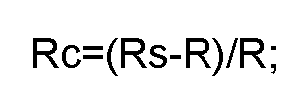
- wherein Rc = the change of volume expansion ratio;
- Rs = the volume expansion ratio of the foaming article after storage; and
- R = the initial volume expansion ratio of the foaming article.
- The foaming article of the present invention has preferably an initial volume expansion ratio (R) equal to or greater than 2400% after being heated at the temperature of 150°C.
- The foaming article of the present invention has preferably an initial volume expansion ratio (R) equal to or greater than 750% after being heated at the temperature of 140°C.
- The foaming article of the present invention has preferable an initial volume expansion ratio (R) equal to or greater than 360% after being heated at the temperature of 130°C.
- The foaming article of the present invention has preferable a volume expansion ratio (Rs) greater than or equal to the initial volume expansion ratio (R) after being stored under a condition of 40°C and 50% RH for 6 months.
- The foaming article of the present invention has preferable a change of volume expansion ratio (Rc) of at least 5%, at least 12%, at least 22%, or at least 26% when the foaming article is stored under a condition of 40°C and 50% RH for 6 months and then heated at the temperature of 140°C.
- The present invention will be further described and illustrated in detail with reference to the following examples. The examples are intended to assist one skilled in the art to better understand and practice the present invention, however, are not intended to restrict the scope of the present invention. All numbers in the examples are based on weight unless otherwise stated.
- The initial volume expansion ratio (R) of the foaming article was obtained by:
- (a) mixing the components of the foaming composition to form a homogeneous mixture at the temperature of 35°C;
- (b) obtaining foaming granules by graining the homogeneous mixture with an extruding machine (MTS 50, Nanjing DETENG Machinery Co.,Ltd) at the temperature of 95°C;
- (c) forming foaming articles in a plate shape with a thickness of 3 mm from the foaming granules by injection molding under the temperature of 95 to 105°C;
- (d) measuring the volume of the forming articles (Vi) by water displacement method;
- (e) obtaining foamed articles by placing the foaming articles in ovens with baking temperatures from 130 to 200°C and heating the foaming articles for 30 minutes;
- (f) cooling the foamed articles at room temperature for 24 hours;
- (g) measuring the volume of the foamed articles (Vf) by water displacement method; and
- (h) calculating the initial volume expansion ratio of foaming article (R) by the formula of R= Vf/Vi.
- The volume expansion ratio (Rs) of the foaming article after storage was obtained by:
- (a) measuring the volume of the forming articles (Vi) by water displacement method;
- (b) storing the foaming articles under a condition of 40°C and 50% RH for 6 months;
- (c) obtaining foamed articles by placing the foaming articles after storage in ovens with baking temperatures from 130 to 200°C and heating the foaming articles for 30 minutes;
- (d) cooling the foamed articles at room temperature for 24 hours;
- (e) measuring the volume of the foamed articles (Vs) by water displacement method; and
- (f) calculating the volume expansion ratio (Rs) of foaming article by the formula of Rs= Vs/Vi.
- The change of volume expansion ratio (Rc) of the foaming article after storage was calculated by the formula of Rc=(Rs-R)/R;
- wherein Rc = the change of volume expansion ratio;
- Rs = the volume expansion ratio of the foaming article after storage; and
- R = the initial volume expansion ratio of the foaming article.
- Foaming composition samples were prepared according to Table 1A and 1B, by mixing the components selected from:
- EVA 250 (Elvax 250, from Dupont Company);
- EVA 260 (Elvax 260, from Dupont Company);
- EVA 460 (Elvax 460, from Dupont Company);
- 4,4'-oxybis(benzenesulfonyl hydrazide) (OBSH, from IMCD);
- trimethylolpropane trimethacrylate (SR350, from Sartomer);
- dicumyl peroxide (DCP40, from Arkema);
- n-butyl 4,4-bis(tert-butylperoxy) valerate (Varox 231XL, from Vanderbilt Chemicals);
- modified polyamine (Fujicure-FXR-1090FA, from T&K Toka);
- pentaerythrityl-tetrakis[3-(3,5-di-tert-butyl-4-hydroxyphenyl)-propionate] (Irganox 1010, from Ciba);
- tris(2,4-di-tert-butylphenyl) phosphite (Irgafos 168, from BASF);
- phenolic antioxidant (Irganox L 109, from Ciba);
- phenolic antioxidant (Irganox L107, from Ciba);
- terpolymer of ethylene, acrylic ester and maleic anhydride (Bondine HX 8290, Arkema);
- wax (Microsere 5999A, from The International Group);
- stearic acid (Stearic Acid, from Changzhou Chemical Co., LTD);
- talc (Talc 1250, from Beijing Lanning Talc factory); and
- carbon black (Monarch 580, from Cabot Corporation).
- In Table 2A, 2B, 3A and 3B, the performance of the foaming articles made from the foaming compositions in Example 1 to 9 Examples 7-9 are comparative examples respectively without polyamine, primary and secondary antioxydants. All of the foaming articles obtained in Example 1 to 4 had high initial volume expansion ratio (R) in the baking window of 130 to 200°C and showed good stability after 6 months' storage under a condition of 40°C and 50% RH.
- When the content of the crosslinking enhancer was high as shown in Example 5, the foaming article was not expanded sufficiently across the baking window of 130 to 200°C compared with the foaming articles in Example 1 to 4.
- When only a peroxide compound or a polyamine was presented in the foaming composition as shown in Examples 6 and 7, the foaming articles made from the foaming compositions expanded to a less extent across the baking window of 130 to 200°C compared with the foaming articles obtained in Example 1 to 4. Furthermore, the volume expansion ratio (Rs) of the foaming articles in Example 6 and 7 was smaller than the initial volume expansion ratio (R) after 6 months' storage under a condition of 40°C and 50% RH.
- When only the primary or secondary antioxidant was presented in the foaming composition as shown in Examples 8 and 9, (comparative examples) the foaming articles made from the foaming compositions expanded to a less extent across the baking window of 130 to 200°C compared with the foaming articles obtained in Example 1 to 4. Furthermore, the volume expansion ratio (Rs) of the foaming articles in Example 8 and 9 was smaller than the initial volume expansion ratio (R) after 6 months' storage under a condition of 40°C and 50% RH.
Table 2A. Volume expansion ratio (R) of foaming article Volume expansion ratio (R) Example 1 Example 2 Example 3 Example 4 Example 5 Example 6 130°C 400% 360% 400% 360% 150% 150% 140°C 800% 900% 750% 850% 720% 320% 150°C 2600% 2500% 2500% 2400% 500% 1300% 160°C 2800% 2700% 2700% 2600% 500% 1500% 170°C 2800% 2700% 2700% 2600% 320% 1500% 180°C 2800% 2700% 2700% 2600% 1200% 1100% 190°C 2400% 2500% 2400% 2400% 100% 850% 200°C 2200% 2100% 2100% 2100% 50% 800% Table 2B. Volume expansion ratio (R) of foaming article Volume expansion ratio (R) Example 7 Example 8 Example 9 130°C 150% 100% 50% 140°C 420% 400% 400% 150°C 1400% 1600% 1600% 160°C 1600% 1800% 1800% 170°C 1600% 1800% 1800% 180°C 1200% 1800% 1800% 190°C 950% 1050% 1050% 200°C 800% 650% 550% Table 3A. Volume expansion ratio (Rs) of foaming article after 6 months' storage Volume expansion ratio after storage (Rs) Example 1 Example 2 Example 3 Example 4 Example 5 Example 6 130°C 400% 360% 400% 360% 150% 50% 140°C 900% 1100% 950% 900% 720% 320% 150°C 2600% 2500% 2500% 2500% 500% 900% 160°C 2800% 2700% 2700% 2700% 500% 1000% 170°C 2800% 2700% 2700% 2700% 320% 1000% 180°C 2800% 2700% 2700% 2700% 1200% 1000% 190°C 2400% 2500% 2400% 2400% 100% 710% 200°C 2200% 2100% 2100% 2100% 50% 500% Table 3B. Volume expansion ratio (Rs) of foaming article after 6 months' storage Volume expansion ratio after storage (Rs) Example 7 Example 8 Example 9 130°C 50% 50% 50% 140°C 320% 320% 320% 150°C 700% 800% 800% 160°C 900% 900% 900% 170°C 1000% 900% 900% 180°C 1000% 600% 550% 190°C 700% 340% 440% 200°C 400% 300% 300% - It was found that the volume expansion ratio (Rs) of the foaming articles after storage in Example 1 to 4 was at least the same of the initial volume expansion ratio (R) indicating that the foaming articles were stable after 6 month's storage under the condition of 40°C and 50% RH. It was further found that the volume expansion ratio (Rs) of the foaming article after storage was significantly larger than the initial volume expansion ratio (R) when the foaming articles were heated at the temperature of 140°C in Example 1 to 4 as shown in Table 4. For instance, the change of volume expansion ratio (Rc) of the foaming article after storage could reach up to 26.7% in Example 3. This suggested that the foaming article made by the foaming composition in the present invention could be stored for a much longer time if the foaming article was to be heated at the temperature of 140°C.
Table 4. Change of volume expansion ratio (Rc) of the foaming article after 6 months' storage The change of volume expansion ratio (Rc) Example 1 Example 2 Example 3 Example 4 140°C 12.5% 22.2% 26.7% 5.9%
| Components | Weight % | |||||
| Example 1 | Example 2 | Example 3 | Example 4 | Example 5 | Example 6 | |
| Elvax 250 | 5 | 5 | 5 | 3 | 5 | 5 |
| Elvax 260 | 3 | 3 | 3 | 2 | 3 | 3 |
| Elvax 460 | 46 | 44 | 42 | 45 | 46 | 46 |
| OBSH | 25 | 21 | 21 | 15 | 25 | 25 |
| SR350 | 0.2 | 1 | 2 | 3 | 4 | 2 |
| DCP40 | 0.05 | 1 | 2 | 3 | 2 | |
| Varox 231XL | 0.2 | 0.5 | 1 | 3 | 1 | |
| Fujicure-FXR-1090FA | 0.005 | 0.1 | 0.5 | 1 | 0.5 | 0.5 |
| Irganox 1010 | 0.05 | 0.5 | 0.5 | 2 | 0.5 | 0.5 |
| Irgafos 168 | 0.05 | 0.5 | 0.5 | 2 | 0.5 | 0.5 |
| Irganox L 109 | 0.05 | 0.5 | 0.5 | 2 | 0.5 | 0.5 |
| Irganox L 107 | 0.05 | 0.5 | 0.5 | 2 | 0.5 | 0.5 |
| Bondine HX 8290 | 15 | 15 | 14 | 12 | ||
| Microsere 5999A | 1 | 3 | 3 | 2.2 | 3 | 3 |
| Stearic acid | 0.30 | 0.3 | 0.3 | 0.3 | 0.3 | 0.3 |
| Talc 1250 | 3.545 | 3.6 | 3.7 | 2 | 7.7 | 12.7 |
| Monarch 580 | 0.5 | 0.5 | 0.5 | 0.5 | 0.5 | 0.5 |
| Components | Weight % | ||
| Example 7 | Example 8 | Example 9 | |
| Elvax 250 | 5 | 5 | 5 |
| Elvax 260 | 3 | 3 | 3 |
| Elvax 460 | 46 | 45 | 46 |
| OBSH | 25 | 24 | 25 |
| SR350 | 2 | 2 | 2 |
| DCP40 | 2 | 2 | 2 |
| Varox 231XL | 2 | 1 | 1 |
| Fujicure-FXR-1090FA | 0.5 | 0.5 | |
| Irganox 1010 | 0.5 | 0.5 | |
| Irgafos 168 | 0.5 | 0.5 | |
| Irganox L 109 | 0.5 | 0.5 | |
| Irganox L 107 | 0.5 | 0.5 | |
| Bondine HX 8290 | |||
| Microsere 5999A | 3 | 3 | 3 |
| Stearic acid | 0.3 | 0.3 | 0.3 |
| Talc 1250 | 9.2 | 13.2 | 10.2 |
| Monarch 580 | 0.5 | 0.5 | 0.5 |
Claims (12)
- A foaming composition comprising:(a) at least one ethylene-vinyl acetate (EVA) copolymer;(b) at least one foaming agent;(c) at least one peroxide compound;(d) at least one polyamine;(e) at least one crosslinking enhancer;(f) at least one primary antioxidant, the primary antioxidant being a phenolic antioxidant; and(g) at least one secondary antioxidant, the auxiliary antioxidant being selected from phosphorus-containing antioxidants, sulfur-containing antioxidants, and any combination thereof;wherein the content of the crosslinking enhancer is from 0.1 to 3% by weight based on the total weight of the composition.
- The foaming composition according to claim 1, wherein the foaming agent is selected from 4,4'-oxybis(benzenesulfonyl hydrazide), azodicarbonamide, diisopropyl azodicarboxylate and any combination thereof.
- The foaming composition according to claim 1 or 2, wherein the peroxide compound is an organic peroxide compound and preferably selected from 2,5-dimethyl-2,5-di(tertbutylperoxy) hexane, tert-butyl peroxybenzoate, benzoyl peroxide, di(tertbutylperoxyisopropyl) benzene, dicumyl peroxide, 1,1-di(t-butylperoxy)-3,3,5-trimethylcyclohexane, butyl 4,4-bis(tert-butyldioxy) valerate, and any combination thereof.
- The foaming composition according to any one of the proceeding claims, wherein the crosslinking enhancer is selected from trimethylolpropane trimethacrylate, zinc diethyl dithiocarbamate, di(morpholin-4-yl) disulphide, dipentamethylenethiuram tetrasulfide and any combination thereof.
- The foaming composition according to any one of the proceeding claims, wherein the primary antioxidant is a hindered phenolic antioxidant.
- The foaming composition according to any one of the proceeding claims, further comprising optional additives selected from at least one adhesive promoter, at least one filler, at least one lubricant, at least one wax, at least one dye and any combination thereof.
- The foaming composition according to any one of the proceeding claims, comprising:(a) from 45 to 70 % by weight of at least one EVA copolymer;(b) from 15 to 30% by weight of at least one foaming agent;(c) from 0.1 to 10% by weight of at least one peroxide compound;(d) from 0.001 to 2% by weight of at least one polyamine;(e) from 0.1 to 3% by weight of at least one crosslinking enhancer;(f) from 0.04 to 10% by weight of at least one primary antioxidant; and(g) from 0.01 to 2% by weight of at least one secondary antioxidant;wherein the weight percentages of all components add up to 100% by weight and the content of the crosslinking enhancer is preferably from 1 to 2% by weight based on the total weight of the composition.
- A foaming article made by curing the foaming composition according to any one of the proceeding claims in the temperature of 80 to 120°C, and preferably in the temperature of 95 to 105°C.
- A foaming article made from the foaming composition according to any one of the proceeding claims by the steps of:a) mixing the components of the foaming composition to form a homogeneous mixture in the temperature of 15 to 55°C;b) obtaining foaming granules by graining the homogeneous mixture by extrusion in the temperature of 90 to 100°C; andc) forming the foaming article from the foaming granules by injection molding in the temperature of 95 to 105°C.
- The foaming article according to claim 9 or 10, having a change of volume expansion ratio (Rc) of at least 5% after the foaming article is stored under a condition of 40°C and 50% RH for 6 months and heated at the temperature of 140°C for 30 minutes.
- A foamed article made from the foaming composition according to any one of claims 1 to 7.
- A vehicle comprising a vehicle part filled with the foamed article according to claim 11.
Applications Claiming Priority (1)
| Application Number | Priority Date | Filing Date | Title |
|---|---|---|---|
| PCT/CN2017/118000 WO2019119417A1 (en) | 2017-12-22 | 2017-12-22 | Foaming composition |
Publications (3)
| Publication Number | Publication Date |
|---|---|
| EP3728429A1 EP3728429A1 (en) | 2020-10-28 |
| EP3728429A4 EP3728429A4 (en) | 2021-07-28 |
| EP3728429B1 true EP3728429B1 (en) | 2025-02-19 |
Family
ID=66992939
Family Applications (1)
| Application Number | Title | Priority Date | Filing Date |
|---|---|---|---|
| EP17935409.7A Active EP3728429B1 (en) | 2017-12-22 | 2017-12-22 | Foaming composition |
Country Status (6)
| Country | Link |
|---|---|
| US (1) | US11643518B2 (en) |
| EP (1) | EP3728429B1 (en) |
| KR (1) | KR102570808B1 (en) |
| CN (1) | CN111511820B (en) |
| ES (1) | ES3014924T3 (en) |
| WO (1) | WO2019119417A1 (en) |
Families Citing this family (1)
| Publication number | Priority date | Publication date | Assignee | Title |
|---|---|---|---|---|
| EP4116363A1 (en) * | 2021-07-06 | 2023-01-11 | Henkel AG & Co. KGaA | Thermally expandable compositions comprising wax |
Citations (16)
| Publication number | Priority date | Publication date | Assignee | Title |
|---|---|---|---|---|
| US3920591A (en) * | 1974-07-18 | 1975-11-18 | Stepan Chemical Co | Low-density polyester resin foams and method of preparation |
| US4289856A (en) | 1978-11-14 | 1981-09-15 | The Toyo Rubber Industry Co., Ltd. | Process for preparing non-yellowing integral-skinned polyurethane foam using a polyol having a functionality of 4 to 8 |
| EP0036561A2 (en) | 1980-03-12 | 1981-09-30 | The Dow Chemical Company | Foamable olefin polymer compositions stabilized with certain naphthyl amine compounds, foaming process using them and foam article produced |
| EP0135027A2 (en) | 1983-07-22 | 1985-03-27 | Du Pont-Mitsui Polychemicals Co., Ltd. | Polymer composition |
| JPH07173316A (en) | 1993-12-21 | 1995-07-11 | Sekisui Chem Co Ltd | Expandable resin composition |
| DE19981164T1 (en) | 1998-06-04 | 2000-09-07 | Sumitomo Chemical Co | Polymer composition for powder molding, powder therefrom, foamed article and method for producing the foamed article |
| KR20050087967A (en) * | 2004-02-28 | 2005-09-01 | 동서대학교산학협력단 | Bio-degradable mid-sole compounds and therefor |
| WO2008034755A1 (en) | 2006-09-20 | 2008-03-27 | Henkel Ag & Co. Kgaa | Solid expandable compositions |
| US20080269364A1 (en) | 2007-04-24 | 2008-10-30 | Nitto Denko Corporation | Filling foam composition, foam filling member, and filling foam |
| CN101838416A (en) | 2010-02-05 | 2010-09-22 | 上海子元汽车零部件有限公司 | Expandable master batch, expandable material and manufacturing method thereof |
| CN102807702A (en) | 2012-07-27 | 2012-12-05 | 苏州市兴吴工程塑胶有限公司 | Novel formula of modified foamed ethylene-vinyl acetate (EVA) plastic |
| WO2013017536A1 (en) | 2011-08-01 | 2013-02-07 | Henkel Ag & Co. Kgaa | Thermally hardenable preparations |
| US20140030539A1 (en) | 2011-04-14 | 2014-01-30 | Nitto Denko Corporation | Foaming composition for filling and sealing, foaming member for filling and sealing, and foam for filling and sealing |
| KR20150024741A (en) | 2013-08-27 | 2015-03-09 | 삼성토탈 주식회사 | Composition for preparing Ethylene Vinyl Acetate Copolymer, Ethylene Vinyl Acetate Copolymer, and Method of manufacturing thereof |
| WO2017102996A1 (en) | 2015-12-18 | 2017-06-22 | Sika Technology Ag | Heat expandable foam for low temperature cure |
| CN107418066A (en) | 2017-08-10 | 2017-12-01 | 青阳县吉祥塑胶有限公司 | A kind of environmentally friendly EVA expanded materials |
Family Cites Families (7)
| Publication number | Priority date | Publication date | Assignee | Title |
|---|---|---|---|---|
| US4331779A (en) | 1979-02-22 | 1982-05-25 | The Dow Chemical Co. | Ethylenic polymer foams having improved dimensional stability |
| US7249415B2 (en) | 2003-06-26 | 2007-07-31 | Zephyros, Inc. | Method of forming members for sealing or baffling |
| WO2007117663A2 (en) * | 2006-04-06 | 2007-10-18 | Dow Global Technologies, Inc. | Expandable polyolefin compositions and insulated vehicle parts containing expanded polyolefin compositions |
| CN102181091B (en) | 2011-04-19 | 2013-05-01 | 三友(天津)高分子技术有限公司 | Adhesive and modified EVA (ethylene vinyl acetute) foaming composite for automobiles |
| JP2012233132A (en) * | 2011-05-09 | 2012-11-29 | Nitto Denko Corp | Thermally expandable resin composition, thermally expandable resin sheet, foam and method for producing the same |
| CN103788463A (en) | 2012-11-02 | 2014-05-14 | 合肥杰事杰新材料股份有限公司 | EVA foam material and preparation method thereof |
| CN103351448B (en) | 2013-06-28 | 2015-12-23 | 中国科学院青岛生物能源与过程研究所 | A kind of High-temperature resistance lithium ion secondary battery adhesive and preparation method |
-
2017
- 2017-12-22 CN CN201780097793.5A patent/CN111511820B/en active Active
- 2017-12-22 KR KR1020207021171A patent/KR102570808B1/en active Active
- 2017-12-22 ES ES17935409T patent/ES3014924T3/en active Active
- 2017-12-22 WO PCT/CN2017/118000 patent/WO2019119417A1/en not_active Ceased
- 2017-12-22 EP EP17935409.7A patent/EP3728429B1/en active Active
-
2020
- 2020-06-19 US US16/906,340 patent/US11643518B2/en active Active
Patent Citations (21)
| Publication number | Priority date | Publication date | Assignee | Title |
|---|---|---|---|---|
| US3920591A (en) * | 1974-07-18 | 1975-11-18 | Stepan Chemical Co | Low-density polyester resin foams and method of preparation |
| US4289856A (en) | 1978-11-14 | 1981-09-15 | The Toyo Rubber Industry Co., Ltd. | Process for preparing non-yellowing integral-skinned polyurethane foam using a polyol having a functionality of 4 to 8 |
| US4289856B1 (en) | 1978-11-14 | 1984-10-02 | ||
| EP0036561A2 (en) | 1980-03-12 | 1981-09-30 | The Dow Chemical Company | Foamable olefin polymer compositions stabilized with certain naphthyl amine compounds, foaming process using them and foam article produced |
| EP0135027A2 (en) | 1983-07-22 | 1985-03-27 | Du Pont-Mitsui Polychemicals Co., Ltd. | Polymer composition |
| US4517317A (en) | 1983-07-22 | 1985-05-14 | Du Pont-Mitsui Polychemicals Co., Ltd. | Polymer composition |
| JPH07173316A (en) | 1993-12-21 | 1995-07-11 | Sekisui Chem Co Ltd | Expandable resin composition |
| DE19981164T1 (en) | 1998-06-04 | 2000-09-07 | Sumitomo Chemical Co | Polymer composition for powder molding, powder therefrom, foamed article and method for producing the foamed article |
| US6534167B1 (en) | 1998-06-04 | 2003-03-18 | Sumitomo Chemical Company, Limited | Polymer composition for power molding, power thereof, foamed object, and process for producing foamed object |
| KR20050087967A (en) * | 2004-02-28 | 2005-09-01 | 동서대학교산학협력단 | Bio-degradable mid-sole compounds and therefor |
| WO2008034755A1 (en) | 2006-09-20 | 2008-03-27 | Henkel Ag & Co. Kgaa | Solid expandable compositions |
| US20090239962A1 (en) * | 2006-09-20 | 2009-09-24 | Henkel Ag & Co. Kgaa | Solid expandable compositions |
| US20080269364A1 (en) | 2007-04-24 | 2008-10-30 | Nitto Denko Corporation | Filling foam composition, foam filling member, and filling foam |
| CN101838416A (en) | 2010-02-05 | 2010-09-22 | 上海子元汽车零部件有限公司 | Expandable master batch, expandable material and manufacturing method thereof |
| US20140030539A1 (en) | 2011-04-14 | 2014-01-30 | Nitto Denko Corporation | Foaming composition for filling and sealing, foaming member for filling and sealing, and foam for filling and sealing |
| WO2013017536A1 (en) | 2011-08-01 | 2013-02-07 | Henkel Ag & Co. Kgaa | Thermally hardenable preparations |
| CN102807702A (en) | 2012-07-27 | 2012-12-05 | 苏州市兴吴工程塑胶有限公司 | Novel formula of modified foamed ethylene-vinyl acetate (EVA) plastic |
| KR20150024741A (en) | 2013-08-27 | 2015-03-09 | 삼성토탈 주식회사 | Composition for preparing Ethylene Vinyl Acetate Copolymer, Ethylene Vinyl Acetate Copolymer, and Method of manufacturing thereof |
| CN104419056A (en) | 2013-08-27 | 2015-03-18 | 三星Total株式会社 | Composition used for preparing EVA copolymer, EVA copolymer and preparation method of EVA copolymer |
| WO2017102996A1 (en) | 2015-12-18 | 2017-06-22 | Sika Technology Ag | Heat expandable foam for low temperature cure |
| CN107418066A (en) | 2017-08-10 | 2017-12-01 | 青阳县吉祥塑胶有限公司 | A kind of environmentally friendly EVA expanded materials |
Also Published As
| Publication number | Publication date |
|---|---|
| US11643518B2 (en) | 2023-05-09 |
| KR20200103058A (en) | 2020-09-01 |
| WO2019119417A1 (en) | 2019-06-27 |
| EP3728429A4 (en) | 2021-07-28 |
| ES3014924T3 (en) | 2025-04-28 |
| CN111511820A (en) | 2020-08-07 |
| KR102570808B1 (en) | 2023-08-28 |
| EP3728429A1 (en) | 2020-10-28 |
| US20200317881A1 (en) | 2020-10-08 |
| CN111511820B (en) | 2023-09-01 |
Similar Documents
| Publication | Publication Date | Title |
|---|---|---|
| US11192995B2 (en) | Heat expandable foam for low temperature cure | |
| KR102107870B1 (en) | Thermally expandable formulations | |
| CA2192584A1 (en) | Heat-resistant rubber compositions | |
| US11365310B2 (en) | Thermally expandable composition with reduced odor formation | |
| JP6609650B2 (en) | Thermoplastic elastomer composition for crosslinked foam and use thereof | |
| US11643518B2 (en) | Foaming composition | |
| CN104558809A (en) | Thermo-oxidative-aging-resistant polypropylene composite and preparation method thereof | |
| EP3137659B1 (en) | Polymer foams | |
| EP3395883A1 (en) | Injection molded body of polypropylene resin composition | |
| JP6735531B2 (en) | Modified polyethylene composition for three-dimensional network structure and three-dimensional network structure | |
| JP2018154815A (en) | Modified polyolefin composition and crosslinked polyolefin composition | |
| US20030087085A1 (en) | Polymer composition for powder molding, powder thereof, foamed articles, and method for producing foamed article | |
| JP2001081222A (en) | Crosslinked polyolefin resin foam and method for producing the same | |
| JPH1160772A (en) | Rubber-like olefin-based soft resin cross-linked foam | |
| JP4720204B2 (en) | Method for producing thermoplastic elastomer composition | |
| JP2016219320A (en) | Protective material for cable connection part and cable connection part | |
| JPH02255738A (en) | Partially crosslinked thermoplastic elastomer foamed product and its production | |
| JP2932740B2 (en) | Ethylene-propylene copolymer rubber composition for hot air crosslinking | |
| CN105542293A (en) | Car body cavity filling material and preparation method thereof | |
| JPH05214142A (en) | Composition for elastomer crosslinked foam | |
| JPH044236A (en) | Polyolefin composition for crosslinked foam | |
| US20230080499A1 (en) | Pre-cured product for thermaly expandable compositions | |
| KR20100051996A (en) | Composition for decotile bottom layer | |
| JPS60231747A (en) | Thermoplastic elastomer | |
| JP2023166277A (en) | Polyolefin crosslinked foam |
Legal Events
| Date | Code | Title | Description |
|---|---|---|---|
| STAA | Information on the status of an ep patent application or granted ep patent |
Free format text: STATUS: THE INTERNATIONAL PUBLICATION HAS BEEN MADE |
|
| PUAI | Public reference made under article 153(3) epc to a published international application that has entered the european phase |
Free format text: ORIGINAL CODE: 0009012 |
|
| STAA | Information on the status of an ep patent application or granted ep patent |
Free format text: STATUS: REQUEST FOR EXAMINATION WAS MADE |
|
| 17P | Request for examination filed |
Effective date: 20200608 |
|
| AK | Designated contracting states |
Kind code of ref document: A1 Designated state(s): AL AT BE BG CH CY CZ DE DK EE ES FI FR GB GR HR HU IE IS IT LI LT LU LV MC MK MT NL NO PL PT RO RS SE SI SK SM TR |
|
| AX | Request for extension of the european patent |
Extension state: BA ME |
|
| DAV | Request for validation of the european patent (deleted) | ||
| DAX | Request for extension of the european patent (deleted) | ||
| A4 | Supplementary search report drawn up and despatched |
Effective date: 20210630 |
|
| RIC1 | Information provided on ipc code assigned before grant |
Ipc: C08J 9/06 20060101AFI20210624BHEP Ipc: C08L 31/04 20060101ALI20210624BHEP Ipc: C08K 5/14 20060101ALI20210624BHEP Ipc: C08K 5/17 20060101ALI20210624BHEP Ipc: C08K 5/103 20060101ALI20210624BHEP Ipc: C08K 5/40 20060101ALI20210624BHEP Ipc: C08K 5/39 20060101ALI20210624BHEP Ipc: C08K 5/378 20060101ALI20210624BHEP Ipc: C08K 5/13 20060101ALI20210624BHEP Ipc: C08K 5/49 20060101ALI20210624BHEP Ipc: C08K 5/36 20060101ALI20210624BHEP Ipc: C08J 9/10 20060101ALI20210624BHEP Ipc: C08J 9/232 20060101ALI20210624BHEP Ipc: C08K 5/00 20060101ALI20210624BHEP Ipc: C08K 5/134 20060101ALI20210624BHEP Ipc: C08K 5/18 20060101ALI20210624BHEP Ipc: C08J 9/00 20060101ALI20210624BHEP Ipc: C08J 9/16 20060101ALI20210624BHEP Ipc: C08J 9/228 20060101ALI20210624BHEP |
|
| STAA | Information on the status of an ep patent application or granted ep patent |
Free format text: STATUS: EXAMINATION IS IN PROGRESS |
|
| 17Q | First examination report despatched |
Effective date: 20220428 |
|
| P01 | Opt-out of the competence of the unified patent court (upc) registered |
Effective date: 20230530 |
|
| GRAP | Despatch of communication of intention to grant a patent |
Free format text: ORIGINAL CODE: EPIDOSNIGR1 |
|
| STAA | Information on the status of an ep patent application or granted ep patent |
Free format text: STATUS: GRANT OF PATENT IS INTENDED |
|
| INTG | Intention to grant announced |
Effective date: 20240911 |
|
| RIN1 | Information on inventor provided before grant (corrected) |
Inventor name: CHEN, QI Inventor name: ZHANG, XINYU |
|
| GRAS | Grant fee paid |
Free format text: ORIGINAL CODE: EPIDOSNIGR3 |
|
| GRAA | (expected) grant |
Free format text: ORIGINAL CODE: 0009210 |
|
| STAA | Information on the status of an ep patent application or granted ep patent |
Free format text: STATUS: THE PATENT HAS BEEN GRANTED |
|
| AK | Designated contracting states |
Kind code of ref document: B1 Designated state(s): AL AT BE BG CH CY CZ DE DK EE ES FI FR GB GR HR HU IE IS IT LI LT LU LV MC MK MT NL NO PL PT RO RS SE SI SK SM TR |
|
| REG | Reference to a national code |
Ref country code: GB Ref legal event code: FG4D |
|
| REG | Reference to a national code |
Ref country code: CH Ref legal event code: EP |
|
| REG | Reference to a national code |
Ref country code: IE Ref legal event code: FG4D |
|
| REG | Reference to a national code |
Ref country code: DE Ref legal event code: R096 Ref document number: 602017087951 Country of ref document: DE |
|
| REG | Reference to a national code |
Ref country code: SK Ref legal event code: T3 Ref document number: E 46166 Country of ref document: SK |
|
| REG | Reference to a national code |
Ref country code: NL Ref legal event code: MP Effective date: 20250219 |
|
| PG25 | Lapsed in a contracting state [announced via postgrant information from national office to epo] |
Ref country code: RS Free format text: LAPSE BECAUSE OF FAILURE TO SUBMIT A TRANSLATION OF THE DESCRIPTION OR TO PAY THE FEE WITHIN THE PRESCRIBED TIME-LIMIT Effective date: 20250519 |
|
| PG25 | Lapsed in a contracting state [announced via postgrant information from national office to epo] |
Ref country code: FI Free format text: LAPSE BECAUSE OF FAILURE TO SUBMIT A TRANSLATION OF THE DESCRIPTION OR TO PAY THE FEE WITHIN THE PRESCRIBED TIME-LIMIT Effective date: 20250219 |
|
| PG25 | Lapsed in a contracting state [announced via postgrant information from national office to epo] |
Ref country code: PL Free format text: LAPSE BECAUSE OF FAILURE TO SUBMIT A TRANSLATION OF THE DESCRIPTION OR TO PAY THE FEE WITHIN THE PRESCRIBED TIME-LIMIT Effective date: 20250219 |
|
| REG | Reference to a national code |
Ref country code: LT Ref legal event code: MG9D |
|
| PG25 | Lapsed in a contracting state [announced via postgrant information from national office to epo] |
Ref country code: NO Free format text: LAPSE BECAUSE OF FAILURE TO SUBMIT A TRANSLATION OF THE DESCRIPTION OR TO PAY THE FEE WITHIN THE PRESCRIBED TIME-LIMIT Effective date: 20250519 Ref country code: IS Free format text: LAPSE BECAUSE OF FAILURE TO SUBMIT A TRANSLATION OF THE DESCRIPTION OR TO PAY THE FEE WITHIN THE PRESCRIBED TIME-LIMIT Effective date: 20250619 |
|
| PG25 | Lapsed in a contracting state [announced via postgrant information from national office to epo] |
Ref country code: NL Free format text: LAPSE BECAUSE OF FAILURE TO SUBMIT A TRANSLATION OF THE DESCRIPTION OR TO PAY THE FEE WITHIN THE PRESCRIBED TIME-LIMIT Effective date: 20250219 |
|
| PG25 | Lapsed in a contracting state [announced via postgrant information from national office to epo] |
Ref country code: HR Free format text: LAPSE BECAUSE OF FAILURE TO SUBMIT A TRANSLATION OF THE DESCRIPTION OR TO PAY THE FEE WITHIN THE PRESCRIBED TIME-LIMIT Effective date: 20250219 |
|
| PG25 | Lapsed in a contracting state [announced via postgrant information from national office to epo] |
Ref country code: PT Free format text: LAPSE BECAUSE OF FAILURE TO SUBMIT A TRANSLATION OF THE DESCRIPTION OR TO PAY THE FEE WITHIN THE PRESCRIBED TIME-LIMIT Effective date: 20250620 Ref country code: LV Free format text: LAPSE BECAUSE OF FAILURE TO SUBMIT A TRANSLATION OF THE DESCRIPTION OR TO PAY THE FEE WITHIN THE PRESCRIBED TIME-LIMIT Effective date: 20250219 |
|
| PG25 | Lapsed in a contracting state [announced via postgrant information from national office to epo] |
Ref country code: BG Free format text: LAPSE BECAUSE OF FAILURE TO SUBMIT A TRANSLATION OF THE DESCRIPTION OR TO PAY THE FEE WITHIN THE PRESCRIBED TIME-LIMIT Effective date: 20250219 Ref country code: GR Free format text: LAPSE BECAUSE OF FAILURE TO SUBMIT A TRANSLATION OF THE DESCRIPTION OR TO PAY THE FEE WITHIN THE PRESCRIBED TIME-LIMIT Effective date: 20250520 |
|
| REG | Reference to a national code |
Ref country code: AT Ref legal event code: MK05 Ref document number: 1768250 Country of ref document: AT Kind code of ref document: T Effective date: 20250219 |
|
| PG25 | Lapsed in a contracting state [announced via postgrant information from national office to epo] |
Ref country code: SE Free format text: LAPSE BECAUSE OF FAILURE TO SUBMIT A TRANSLATION OF THE DESCRIPTION OR TO PAY THE FEE WITHIN THE PRESCRIBED TIME-LIMIT Effective date: 20250219 |
|
| PG25 | Lapsed in a contracting state [announced via postgrant information from national office to epo] |
Ref country code: SM Free format text: LAPSE BECAUSE OF FAILURE TO SUBMIT A TRANSLATION OF THE DESCRIPTION OR TO PAY THE FEE WITHIN THE PRESCRIBED TIME-LIMIT Effective date: 20250219 |
|
| PG25 | Lapsed in a contracting state [announced via postgrant information from national office to epo] |
Ref country code: DK Free format text: LAPSE BECAUSE OF FAILURE TO SUBMIT A TRANSLATION OF THE DESCRIPTION OR TO PAY THE FEE WITHIN THE PRESCRIBED TIME-LIMIT Effective date: 20250219 |
|
| PG25 | Lapsed in a contracting state [announced via postgrant information from national office to epo] |
Ref country code: AT Free format text: LAPSE BECAUSE OF FAILURE TO SUBMIT A TRANSLATION OF THE DESCRIPTION OR TO PAY THE FEE WITHIN THE PRESCRIBED TIME-LIMIT Effective date: 20250219 |
|
| PG25 | Lapsed in a contracting state [announced via postgrant information from national office to epo] |
Ref country code: EE Free format text: LAPSE BECAUSE OF FAILURE TO SUBMIT A TRANSLATION OF THE DESCRIPTION OR TO PAY THE FEE WITHIN THE PRESCRIBED TIME-LIMIT Effective date: 20250219 |
|
| PG25 | Lapsed in a contracting state [announced via postgrant information from national office to epo] |
Ref country code: RO Free format text: LAPSE BECAUSE OF FAILURE TO SUBMIT A TRANSLATION OF THE DESCRIPTION OR TO PAY THE FEE WITHIN THE PRESCRIBED TIME-LIMIT Effective date: 20250219 |
|
| REG | Reference to a national code |
Ref country code: DE Ref legal event code: R026 Ref document number: 602017087951 Country of ref document: DE |
|
| PLBI | Opposition filed |
Free format text: ORIGINAL CODE: 0009260 |
|
| PLAX | Notice of opposition and request to file observation + time limit sent |
Free format text: ORIGINAL CODE: EPIDOSNOBS2 |
|
| 26 | Opposition filed |
Opponent name: SIKA TECHNOLOGY AG Effective date: 20251119 |
|
| PGFP | Annual fee paid to national office [announced via postgrant information from national office to epo] |
Ref country code: DE Payment date: 20251211 Year of fee payment: 9 |
|
| PGFP | Annual fee paid to national office [announced via postgrant information from national office to epo] |
Ref country code: GB Payment date: 20251219 Year of fee payment: 9 |
|
| PGFP | Annual fee paid to national office [announced via postgrant information from national office to epo] |
Ref country code: IT Payment date: 20251223 Year of fee payment: 9 |
|
| PGFP | Annual fee paid to national office [announced via postgrant information from national office to epo] |
Ref country code: FR Payment date: 20251229 Year of fee payment: 9 |
|
| PGFP | Annual fee paid to national office [announced via postgrant information from national office to epo] |
Ref country code: TR Payment date: 20251217 Year of fee payment: 9 |
|
| PGFP | Annual fee paid to national office [announced via postgrant information from national office to epo] |
Ref country code: CZ Payment date: 20251218 Year of fee payment: 9 |
|
| PGFP | Annual fee paid to national office [announced via postgrant information from national office to epo] |
Ref country code: SK Payment date: 20251218 Year of fee payment: 9 |
|
| PGFP | Annual fee paid to national office [announced via postgrant information from national office to epo] |
Ref country code: ES Payment date: 20260130 Year of fee payment: 9 |