EP3723962B1 - Vorrichtung und verfahren zum behandeln von behältnissen mit fahrerlosen-transportsystem - Google Patents
Vorrichtung und verfahren zum behandeln von behältnissen mit fahrerlosen-transportsystem Download PDFInfo
- Publication number
- EP3723962B1 EP3723962B1 EP18815645.9A EP18815645A EP3723962B1 EP 3723962 B1 EP3723962 B1 EP 3723962B1 EP 18815645 A EP18815645 A EP 18815645A EP 3723962 B1 EP3723962 B1 EP 3723962B1
- Authority
- EP
- European Patent Office
- Prior art keywords
- transport system
- container
- tools
- processing apparatus
- driverless transport
- Prior art date
- Legal status (The legal status is an assumption and is not a legal conclusion. Google has not performed a legal analysis and makes no representation as to the accuracy of the status listed.)
- Active
Links
Images

Classifications
-
- B—PERFORMING OPERATIONS; TRANSPORTING
- B29—WORKING OF PLASTICS; WORKING OF SUBSTANCES IN A PLASTIC STATE IN GENERAL
- B29C—SHAPING OR JOINING OF PLASTICS; SHAPING OF MATERIAL IN A PLASTIC STATE, NOT OTHERWISE PROVIDED FOR; AFTER-TREATMENT OF THE SHAPED PRODUCTS, e.g. REPAIRING
- B29C49/00—Blow-moulding, i.e. blowing a preform or parison to a desired shape within a mould; Apparatus therefor
- B29C49/42—Component parts, details or accessories; Auxiliary operations
- B29C49/48—Moulds
-
- B—PERFORMING OPERATIONS; TRANSPORTING
- B65—CONVEYING; PACKING; STORING; HANDLING THIN OR FILAMENTARY MATERIAL
- B65B—MACHINES, APPARATUS OR DEVICES FOR, OR METHODS OF, PACKAGING ARTICLES OR MATERIALS; UNPACKING
- B65B59/00—Arrangements to enable machines to handle articles of different sizes, to produce packages of different sizes, to vary the contents of packages, to handle different types of packaging material, or to give access for cleaning or maintenance purposes
- B65B59/04—Machines constructed with readily-detachable units or assemblies, e.g. to facilitate maintenance
-
- B—PERFORMING OPERATIONS; TRANSPORTING
- B65—CONVEYING; PACKING; STORING; HANDLING THIN OR FILAMENTARY MATERIAL
- B65B—MACHINES, APPARATUS OR DEVICES FOR, OR METHODS OF, PACKAGING ARTICLES OR MATERIALS; UNPACKING
- B65B3/00—Packaging plastic material, semiliquids, liquids or mixed solids and liquids, in individual containers or receptacles, e.g. bags, sacks, boxes, cartons, cans, or jars
- B65B3/02—Machines characterised by the incorporation of means for making the containers or receptacles
- B65B3/022—Making containers by moulding of a thermoplastic material
-
- B—PERFORMING OPERATIONS; TRANSPORTING
- B65—CONVEYING; PACKING; STORING; HANDLING THIN OR FILAMENTARY MATERIAL
- B65C—LABELLING OR TAGGING MACHINES, APPARATUS, OR PROCESSES
- B65C9/00—Details of labelling machines or apparatus
- B65C9/0062—Interchangeable modules, e.g. applicator heads with label magazines and glue rollers
-
- B—PERFORMING OPERATIONS; TRANSPORTING
- B67—OPENING, CLOSING OR CLEANING BOTTLES, JARS OR SIMILAR CONTAINERS; LIQUID HANDLING
- B67C—CLEANING, FILLING WITH LIQUIDS OR SEMILIQUIDS, OR EMPTYING, OF BOTTLES, JARS, CANS, CASKS, BARRELS, OR SIMILAR CONTAINERS, NOT OTHERWISE PROVIDED FOR; FUNNELS
- B67C7/00—Concurrent cleaning, filling, and closing of bottles; Processes or devices for at least two of these operations
- B67C7/0073—Sterilising, aseptic filling and closing
-
- B—PERFORMING OPERATIONS; TRANSPORTING
- B29—WORKING OF PLASTICS; WORKING OF SUBSTANCES IN A PLASTIC STATE IN GENERAL
- B29C—SHAPING OR JOINING OF PLASTICS; SHAPING OF MATERIAL IN A PLASTIC STATE, NOT OTHERWISE PROVIDED FOR; AFTER-TREATMENT OF THE SHAPED PRODUCTS, e.g. REPAIRING
- B29C49/00—Blow-moulding, i.e. blowing a preform or parison to a desired shape within a mould; Apparatus therefor
- B29C49/42—Component parts, details or accessories; Auxiliary operations
- B29C49/48—Moulds
- B29C2049/4856—Mounting, exchanging or centering moulds or parts thereof
- B29C2049/4858—Exchanging mould parts, e.g. for changing the mould size or geometry for making different products in the same mould
-
- B—PERFORMING OPERATIONS; TRANSPORTING
- B29—WORKING OF PLASTICS; WORKING OF SUBSTANCES IN A PLASTIC STATE IN GENERAL
- B29C—SHAPING OR JOINING OF PLASTICS; SHAPING OF MATERIAL IN A PLASTIC STATE, NOT OTHERWISE PROVIDED FOR; AFTER-TREATMENT OF THE SHAPED PRODUCTS, e.g. REPAIRING
- B29C49/00—Blow-moulding, i.e. blowing a preform or parison to a desired shape within a mould; Apparatus therefor
- B29C49/42—Component parts, details or accessories; Auxiliary operations
- B29C49/48—Moulds
- B29C2049/4879—Moulds characterised by mould configurations
- B29C2049/4881—Moulds characterised by mould configurations having a mandrel or core e.g. two mould halves with a core in-between
-
- B—PERFORMING OPERATIONS; TRANSPORTING
- B29—WORKING OF PLASTICS; WORKING OF SUBSTANCES IN A PLASTIC STATE IN GENERAL
- B29L—INDEXING SCHEME ASSOCIATED WITH SUBCLASS B29C, RELATING TO PARTICULAR ARTICLES
- B29L2031/00—Other particular articles
- B29L2031/712—Containers; Packaging elements or accessories, Packages
-
- B—PERFORMING OPERATIONS; TRANSPORTING
- B67—OPENING, CLOSING OR CLEANING BOTTLES, JARS OR SIMILAR CONTAINERS; LIQUID HANDLING
- B67C—CLEANING, FILLING WITH LIQUIDS OR SEMILIQUIDS, OR EMPTYING, OF BOTTLES, JARS, CANS, CASKS, BARRELS, OR SIMILAR CONTAINERS, NOT OTHERWISE PROVIDED FOR; FUNNELS
- B67C3/00—Bottling liquids or semiliquids; Filling jars or cans with liquids or semiliquids using bottling or like apparatus; Filling casks or barrels with liquids or semiliquids
- B67C3/02—Bottling liquids or semiliquids; Filling jars or cans with liquids or semiliquids using bottling or like apparatus
- B67C3/22—Details
- B67C2003/221—Automatic exchange of components
-
- B—PERFORMING OPERATIONS; TRANSPORTING
- B67—OPENING, CLOSING OR CLEANING BOTTLES, JARS OR SIMILAR CONTAINERS; LIQUID HANDLING
- B67C—CLEANING, FILLING WITH LIQUIDS OR SEMILIQUIDS, OR EMPTYING, OF BOTTLES, JARS, CANS, CASKS, BARRELS, OR SIMILAR CONTAINERS, NOT OTHERWISE PROVIDED FOR; FUNNELS
- B67C3/00—Bottling liquids or semiliquids; Filling jars or cans with liquids or semiliquids using bottling or like apparatus; Filling casks or barrels with liquids or semiliquids
- B67C3/02—Bottling liquids or semiliquids; Filling jars or cans with liquids or semiliquids using bottling or like apparatus
- B67C3/22—Details
- B67C2003/227—Additional apparatus related to blow-moulding of the containers, e.g. a complete production line forming filled containers from preforms
Definitions
- the present invention relates to a device and a method for treating containers and in particular plastic containers.
- container treatment devices for producing and/or processing plastic containers have been known from the prior art for a long time.
- a large number of different container types can usually be treated with one container treatment device.
- the container treatment device has a number of interchangeable format parts and/or tools in order to treat or produce the respective container type, which must be exchanged accordingly as soon as another container is to be produced.
- the format parts and tools required for the new container must be made available at the container treatment facility for setting up container treatment machines or for changing over to a different type of container. This is usually done on pallets, chassis, format part wagons or similar devices, which are stored in interim storage until they are used and are brought to the set-up location using forklifts or lifting trucks. This is usually done manually by the plant operator or plant personnel.
- the provision usually takes place during the set-up process or in one Set-up operation of the machine, i.e. when the machine is at a standstill, which means that the set-up process is unnecessarily lengthened, since the operator first has to fetch the new format parts from the store, then has to carry out the changeover and then has to bring the exchanged format parts back to the store .
- the operator often provides it during production, which means that he has to leave the operating location or the running machine. If a malfunction or the like occurs on the machine during this period, it is not possible to react to it in good time, which results in an increased loss of production. If the new format parts and tools were to be provided by other personnel, additional personnel and organizational effort would be required.
- US2017182679A1 discloses an apparatus and a method according to the preambles of the independent claims.
- US2015251366A1 reveals changing robots. Further devices and methods are described in US2011078979A1 , US2013224323A1 and JPH07100833A.
- the present invention is therefore based on the object of providing a device and a method with which the format parts and/or tools can be provided particularly effectively and with which the set-up times for the systems can be significantly reduced. According to the invention, these objects are achieved by the subject matter of the independent claims. Advantageous embodiments and developments are the subject of the dependent claims.
- the present invention is directed to a device and a method according to the independent claims.
- the device according to the invention and also the method according to the invention therefore have the particular advantages that the automatic provision of the format parts to the container treatment device by the driverless transport system means that the set-up times can be significantly reduced and there is also less operator workload, resulting in higher availability and lower overall operating costs can be reached.
- these can also be transferred to the driverless transport system, hereinafter also referred to as AGV, without a separate carrying means, which can also result in cost savings.
- AGV that may already be available can also be used with little additional effort, which means that personnel costs can be saved.
- the format parts are therefore preferably made available directly to the container treatment device in good time during production, so that the format parts are already available at the machine at the start of the set-up process.
- the conversion can also be started during ongoing operation, which can significantly reduce the downtime of the system. For example, a test run can be carried out to check the format parts for assignment and completeness.
- the container treatment device is selected from a group of treatment devices which include a heating device for heating the containers, a shaping device for shaping the containers, a labeling device for labeling the containers, a filling device for filling the containers, a closing device for closing containers, contains a packaging device for packaging the containers, a transport device for transporting the containers, a sterilization device for sterilizing the containers or the like.
- the format parts and/or tools that have to be exchanged when switching to a different container type are preferably blow moulds, holding devices, transport mandrels, filling heads, filling nozzles, blowing nozzles, sterilization nozzles, packaging materials, closures, stretch rods, guide rails, holding mandrels, holding clips and the like.
- the format parts and/or tools can be brought to a predetermined working position of the container treatment device by means of the driverless transport system, this working position being the setup access.
- the set-up access is preferably an opening or a lock in a wall of the container treatment device, through which an exchange or a change of the format parts can be carried out.
- the driverless transport system particularly preferably has a location detection device in order to localize the work position or the set-up access.
- a transmission device can also be arranged at the corresponding position on the container treatment device, which transmit device communicates with the location detection device of the AGVS.
- the travel path can preferably also be specified for the AGV via the control device and/or the AGV can have an optical recognition system in order to recognize the working position and approach it accordingly.
- the transport system also has a drive device, which is preferably a battery, an accumulator or an electric or pneumatic drive.
- the format parts and/or tools are arranged on a support frame which can be picked up and/or put down by the driverless transport system.
- the format parts and/or tools for setting up are therefore arranged on carrying frames that can be picked up directly by the AGV.
- These carrying frames can be, for example, pallet-like frames or the like.
- the AGV is preferably a self-propelled lift truck.
- the AGV is advantageously designed at least like a pallet truck.
- all other possible configurations of the carrying frame are also conceivable, such as frames with rollers.
- the format parts and tools are preferably arranged ready to hand on the support frame, such as a perforated plate or the like, so that no time is required to search for the parts.
- This arrangement on the support frame can be done manually by an operator or by the driverless transport system itself, which has at least one robot arm with a gripping device for gripping the format parts.
- the support frames can also advantageously have lifting devices or support rollers, so that the support frame can be positioned closer to the set-up location of the machine.
- the lifting devices or support rollers preferably also enable simpler pick-up and delivery by the FTS, in which case the FTS can preferably also have corresponding lifting devices or support rollers for this purpose.
- the device has a large number of container treatment devices and the format parts and/or tools can be brought to the large number of container treatment devices by means of the driverless transport system.
- the driverless transport system can therefore be moved freely between a large number of container treatment devices or can be moved on a rail system.
- the rail system preferably runs between the individual container treatment devices, it being possible for the route to be specified for the transport system via the control device.
- the free travel path can also be specified for the AGVS via the control device.
- the travel path can also be adjusted and changed manually, so that changing circumstances can be responded to quickly can be reacted to.
- the AGV preferably has at least one and preferably multiple sensors to detect objects or people in the roadway.
- a single driverless transport system is particularly preferably provided for a large number of container treatment devices.
- the driverless transport system can therefore preferably be controlled in such a way that, for example, it first brings new blow molds to the forming device and then fetches the next format parts, for example holding devices, and brings them to the transport device.
- the driverless transport system can preferably be controlled in such a way that the format parts are first brought to that container treatment device where the changing process takes the longest.
- the driverless transport system can preferably be controlled in such a way that, for example, after the last container of this type has been treated in the forming device, the new blow molds are already present here and can be exchanged, but the labeling or filling, etc. of the containers can continue unhindered .
- the production of the new type of container can already begin while, for example, the new packaging still has to be delivered to the packaging facility or the old type of container is still being packaged here. Accordingly, the driverless transport system can be controlled in such a way that the production of the containers can be continued in a particularly effective manner despite the changeover to a new type of container.
- the at least one container treatment device is assigned a changing robot for exchanging and/or exchanging the format parts, with the driverless transport system and the changing robot communicating with one another and/or the driverless transport system and the changing robot being able to contact one another via a contact point. It is therefore possible for the driverless transport system to be connected to the robot or to be able to dock onto the robot.
- at least one contact point is preferably arranged on the changing robot and the driverless transport system, these contact points preferably being corresponding connection points which enable a positive and/or non-positive connection between the robot and the driverless transport system.
- the support frame, the driverless transport system, the changing robot and the container treatment device each have a corresponding contact point, so that the support frame, the driverless transport system, the change robot and the container treatment device can each be contacted with one another.
- the respective contact points are particularly preferably designed in such a way that the support frame and the driverless transport system can be contacted with the changing robot and the container treatment device.
- the driverless transport system and the changing robot and/or the carrying frame and the changing robot and/or the driverless transport system and the container treatment device and/or the carrying frame and the container treatment device can preferably be connected to one another in such a way that the robot takes over the format parts and/or tools can and particularly preferably can make the change of mold parts.
- the present invention therefore not only enables automatic delivery of the format parts to the container treatment device, but also automatic changing of the format parts.
- the changing robot preferably has at least one gripping device in order to grip the format parts and/or tools.
- the robot preferably has at least two and particularly preferably a large number of gripping devices.
- the robot can therefore, for example, use a gripping device to grip the format part to be replaced and then immediately insert the new format part with a different or similar gripping device in order to enable the format parts to be exchanged particularly quickly.
- the AGV itself could also preferably replace the format parts, with at least one robot arm being arranged on the AGV for this purpose.
- the driverless transport system could also be designed in such a way that, for example, blow molds can be made available directly for changing with a changing robot in a robot cell.
- the robot is advantageously arranged in such a way that it can, for example, change the blow mold on the forming device and can also, for example, also replace the holding mandrels or clamps on the heating device.
- the changing robot preferably carries out the exchange of the format parts on at least two container treatment devices.
- the changing robot can preferably be localized via the location detection device of the driverless transport system.
- each container treatment system is particularly preferably provided with its own changing robot and the AGV supplies all container treatment devices with the format parts and/or tools.
- the carrying frame has at least one sensor and/or at least one fixing edge in order to position the carrying frame in relation to the changing robot.
- the carrying frame particularly preferably has at least two sensors and/or fixing edges.
- a barcode, RFID chip or the like can be arranged on the carrying frame, which can be recognized by the driverless transport system. This makes it possible for the driverless transport system to recognize the carrying frame that is currently required in the warehouse and bring it to the container treatment facility.
- This barcode or RFID chip can also be used to assign or identify the carrying frame and the container treatment device to one another.
- the driverless transport system can preferably also identify the location of the corresponding carrying frame via the location detection device.
- control device of the driverless transport system is coupled to a control device of the at least one container treatment device.
- the container treatment device can preferably independently, i.e. without the intervention of an operator, send a signal to the driverless transport system when new format parts and/or tools are required.
- the driverless transport system is therefore informed when a change must be made or in which production stage the container treatment device is currently and also which container type is to be produced next, so that the driverless transport system can provide the required format parts and/or tools in good time .
- the time of the change and also the travel path of the transport system can preferably be controlled via the control device of the driverless transport system.
- the control device of the driverless transport system can advantageously be controlled by a system operator and/or by the container treatment device itself.
- the present invention is also directed to a method for treating containers and in particular plastic containers, with at least one container treatment device which has at least one set-up access at which format parts and/or tools are exchanged in a set-up operation, with the format parts and /or tools are brought to the at least one container treatment device with a transport system.
- the transport system is a driverless transport system that automatically brings the format parts and/or tools to at least one container treatment device.
- a changing robot arranged on the at least one container treatment device removes the format parts and/or tools arranged on a support frame from the support frame and exchanges or exchanges the format parts and/or tools. Accordingly, it is further proposed that not only is the format parts made available automatically, but essentially the entire changing process is carried out automatically.
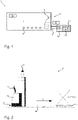
- FIG 1 shows a schematic representation of a device 1 according to the invention for handling containers 10 with a driverless transport system 6a.
- the device 1 has a container treatment device 2 , with the driverless transport system 6a being able to contact the container treatment device via a contact point 18 in this embodiment.
- This contact point 18 is preferably arranged in the vicinity of a working position 12 at which the changing process takes place. Accordingly, the driverless transport system 6a, as shown in the figures 2 and 4 can be seen, a contact point 18 corresponding thereto.
- the reference number 5 designates a set-up access of the container treatment device 2.
- driverless transport system 6a has received a carrying frame 15, which is indicated by the dashed lines.
- Format parts 7 and tools 8 for converting the container treatment device 2 are arranged on the support frame 15 .
- the container treatment device 2 has a control device 23 which is preferably coupled to a control device 22 of the support frame 15 .
- the reference number 17 designates a changing robot which can grip the format parts 7 and tools 8 for converting the container treatment device 2 .
- the second changing robot 17 shown in dashed lines makes it clear that it could also be preferable for the changing robot to be arranged inside the container treatment device 2 .
- FIG 2 shows a schematic representation of a first embodiment of a driverless transport system 6a.
- the driverless transport system 6a is designed as a lift truck with forks 35, which are moved under the support frame 15 in a direction of movement x in order to pick it up.
- the format parts 7 and tools 8 are arranged schematically on the support frame 15 .
- the reference number 18 in turn designates the contact point via which the driverless transport system 6a can be contacted with the container treatment device 2 . However, it could also be preferable for this contact point 18 to be arranged on the support frame 15 and for the support frame to be able to be contacted with the container treatment device accordingly.
- the driverless transport system also has an orientation device 32, via which the driverless transport system 6a can locate the container treatment device 2 and also the carrying frame 15.
- the reference number 37 designates a handle, via which the driverless transport system 6a can also be moved manually if necessary.
- FIG 3 shows a schematic representation of a second embodiment of a driverless transport system 6a. It can be seen that there is another frame 40 below the support frame 15, which has support rollers 25, via which the support frame 15 can be pushed onto the driverless transport system 6a in the direction of movement x. Support rollers 26 are also arranged on driverless transport system 6a itself.
- the reference number 32 again designates the location detection device.
- the driverless transport system 6a in this representation has sensors 30 on, so that the driverless transport system 6a can recognize people or objects that are in the roadway.
- FIG 4 shows a schematic representation of a further embodiment of a driverless transport system 6a.
- the driverless transport system 6a is moved under the support frame 15 in this representation and can be moved in the lifting direction h by means of a lifting device 29 in order to receive the support frame 15 .
- the support frame 15 itself preferably also has such a lifting device 28 so that the support frame 15 can also be moved in the lifting direction h.
- Reference number 36 designates receiving elements for receiving and holding the carrying frame 15.
Landscapes
- Engineering & Computer Science (AREA)
- Mechanical Engineering (AREA)
- Manufacturing & Machinery (AREA)
- Warehouses Or Storage Devices (AREA)
Description
- Die vorliegende Erfindung bezieht sich auf eine Vorrichtung und ein Verfahren zum Behandeln von Behältnissen und insbesondere Kunststoffbehältnissen. Derartige Behälterbehandlungseinrichtungen zum Herstellen und/oder Bearbeiten von Kunststoffbehältnissen sind aus dem Stand der Technik seit langem bekannt. Dabei können mit einer Behälterbehandlungseinrichtung üblicherweise eine Vielzahl von unterschiedlichen Behältertypen behandelt werden. Hierzu weist die Behälterbehandlungseinrichtung eine Reihe von austauschbaren Formatteilen und/oder Werkzeugen auf, um den jeweiligen Behältertyp zu behandeln bzw. herzustellen, welche entsprechend ausgetauscht werden müssen, sobald ein anderer Behälter hergestellt werden soll.
- Für das Rüsten von Behälterbehandlungsmaschinen bzw. für die Umstellung auf einen anderen Behältertyp müssen die für den neuen Behälter benötigten Formatteile und Werkzeuge an der Behälterbehandlungseinrichtung bereitgestellt werden. Dies erfolgt üblicherweise auf Paletten, Fahrgestellen, Formatteilwägen oder ähnlichen Einrichtungen, welche bis zum Einsatz in Zwischenlagern gelagert werden und mittels Staplern oder Hubwägen zum Rüstort verbracht werden. Dies geschieht üblicherweise manuell, durch den Anlagenbediener bzw. das Anlagenpersonal.
- Für die Bereitstellung der neuen Formatteile und Werkzeuge ist demnach Personaleinsatz erforderlich. Zudem erfolgt die Bereitstellung meist während dem Rüstprozess bzw. in einem Rüstbetrieb der Maschine, d.h. beim Stillstand der Maschine, was dazu führt, dass der Rüstprozess unnötig verlängert wird, da der Bediener zuerst die neuen Formatteile aus dem Lager holen muss, anschließend die Umrüstung vornehmen muss und dann die ausgetauschten Formatteile wieder ins Lager zurück bringen muss. Um diese Stillstandzeit möglichst gering zu halten erfolgt die Bereitstellung häufig während der Produktion durch den Bediener, was dazu führt, dass dieser den Bedienort bzw. die laufende Maschine verlassen muss. Falls in diesem Zeitraum eine Störung oder dergleichen an der Maschine auftritt kann nicht rechtzeitig auf diese reagiert werden, wodurch ein erhöhter Produktionsausfall entsteht. Würde die Bereitstellung der neuen Formatteile und Werkzeuge durch anderes Personal erfolgen, wäre ein zusätzlicher Personal- und Organisationsaufwand erforderlich.
-
US2017182679A1 offenbart eine Vorrichtung und ein Verfahren nach den Oberbegriffen der unabhängigen Ansprüchen.US2015251366A1 offenbart Wechselroboter. Weitere Vorrichtungen und Verfahren werden inUS2011078979A1 ,US2013224323A1 und JPH07100833A offenbart. - Der vorliegenden Erfindung liegt daher die Aufgabe zugrunde, eine Vorrichtung und ein Verfahren bereitzustellen, mit der/mit dem die Formatteile und/oder Werkzeuge besonders effektiv bereitgestellt werden können und mit welcher/mit welchem die Rüstzeiten für die Anlagen erheblich reduziert werden können. Diese Aufgaben werden erfindungsgemäß durch die Gegenstände der unabhängigen Ansprüche erreicht. Vorteilhafte Ausführungsformen und Weiterbildungen sind Gegenstand der Unteransprüche.
- Die vorliegende Erfindung ist dabei auf eine Vorrichtung und ein Verfahren nach den unabhängigen Ansprüchen gerichtet.
- Die erfindungsgemäße Vorrichtung und auch das erfindungsgemäße Verfahren haben demnach insbesondere die Vorteile, dass durch das automatische Bereitstellen der Formatteile an der Behälterbehandlungseinrichtung durch das fahrerlose-Transportsystem die Rüstzeiten erheblich verkürzt werden können und zudem eine geringerer Bedienerbelastung vorliegt, wodurch eine höhere Verfügbarkeit und insgesamt geringere Gesamtbetriebskosten erreicht werden können. Je nach Art oder Anzahl der Formatteile und Werkzeuge können diese unter Umständen auch ohne separates Tragmittel an das fahrerlose-Transportsystem, im Folgenden auch mit FTS bezeichnet, übergeben werden, wodurch ebenfalls eine Kosteneinsparung erreicht werden kann. Daneben kann auch ein gegebenenfalls bereits vorhandenes FTS mit geringem Zusatz-Aufwand zusätzlich genutzt werden, wodurch Personalaufwand eingespart werden kann.
- Die Bereitstellung der Formatteile erfolgt demnach bevorzugt während der Produktion so rechtzeitig direkt an die Behälterbehandlungseinrichtung, dass die Formatteile bei Beginn des Rüstprozesses bereits an der Maschine bereit stehen. Unter Umständen kann auch während des laufenden Betriebs bereits mit der Umrüstung begonnen werden, wodurch die Stillstandzeit der Anlage erheblich reduziert werden kann. So kann beispielsweise ein Testlauf zur Überprüfung der Formatteile bezüglich Zuordnung und Vollständigkeit erfolgen.
- In einer bevorzugten Ausführungsform ist die Behälterbehandlungseinrichtung aus einer Gruppe von Behandlungseinrichtungen ausgewählt, welche eine Erwärmungseinrichtung zum Erwärmen der Behältnisse, eine Umformungseinrichtung zum Umformen der Behältnisse, eine Etikettiereinrichtung zum Etikettieren der Behältnisse, eine Fülleinrichtung zum Füllen der Behältnisse, einen Verschließer zum Verschließen von Behältnissen, eine Verpackungseinrichtung zum Verpacken der Behältnisse, eine Transporteinrichtung zum Transportieren der Behältnisse, eine Sterilisationseinrichtung zum Sterilisieren der Behältnisse oder dergleichen enthält.
- Bei den Formatteilen und/oder Werkzeugen, welche bei Umstellung auf einen anderen Behältertyp ausgetauscht werden müssen, handelt es sich bevorzugt um Blasformen, Halteeinrichtungen, Transportdorne, Füllköpfe, Fülldüsen, Blasdüsen, Sterilisationsdüsen, Verpackungsmaterialien, Verschlüsse, Reckstangen, Führungsschienen, Haltedorne, Halteklammern und dergleichen.
- Bei einer bevorzugten Ausführungsform sind die Formatteile und/oder Werkzeuge mittels des fahrerlosen-Transportsystems zu einer vorgegebenen Arbeitsposition der Behälterbehandlungseinrichtung bringbar, wobei es sich bei dieser Arbeitsposition um den Rüstzugang handelt. Bei dem Rüstzugang handelt es sich bevorzugt um eine Öffnung oder eine Schleuse in einer Wandung der Behälterbehandlungseinrichtung durch welche hindurch ein Austausch bzw. ein Wechsel der Formatteile vorgenommen werden kann. Besonders bevorzugt weist das fahrerlose-Transportsystem eine Ortserfassungseinrichtung auf, um die Arbeitsposition bzw. den Rüstzugang zu lokalisieren. Hierfür kann beispielsweise auch an der entsprechenden Position an der Behälterbehandlungseinrichtung eine Sendeeinrichtung angeordnet sein, welche mit der Ortserfassungseinrichtung des FTS kommuniziert. Darüber hinaus kann dem FTS der Verfahrweg bevorzugt auch über die Steuerungseinrichtung vorgegeben werden und/oder das FTS weit ein optisches Erkennungssystem auf, um die Arbeitsposition zu erkennen und entsprechend anzufahren.
- Das Transportsystem weist weiterhin eine Antriebseinrichtung auf, bei welcher es sich bevorzugt um eine Batterie, einen Akku oder einen elektrischen oder pneumatischen Antrieb handelt.
- Bei einer weiteren bevorzugten Ausführungsform sind die Formatteile und/oder Werkzeuge auf einem Tragegestell angeordnet, welches von dem fahrerlosen-Transportsystem aufnehmbar und/oder ablegbar ist. Die Formatteile und/oder Werkzeuge für das Rüsten werden demnach auf Tragegestellen angeordnet, die direkt von dem FTS aufgenommen werden können. Bei diesen Tragegestellen kann es sich beispielsweise um palettenartige Gestelle oder dergleichen handeln. Dementsprechend handelt es sich bei dem FTS bevorzugt um einen selbstfahrenden Hubwagen. Vorteilhaft ist das FTS zumindest hubwagenartig ausgebildet. Denkbar sind allerdings auch alle anderen möglichen Ausgestaltungen des Tragegestells, wie beispielsweise Gestelle mit Rollen.
- Die Formatteile und Werkzeuge sind dabei bevorzugt griffbereit an dem Tragegestell, wie beispielsweise einen Lochblech oder ähnlichem, angeordnet, so dass keine Zeit für das Suchen der Teile benötigt wird. Diese Anordnung auf dem Tragegestell kann dabei manuell durch einen Bediener oder durch das fahrerlose-Transportsystem selbst erfolgen, wobei dieses hierzu wenigstens einen Roboterarm mit Greifeinrichtung zum Greifen der Formatteile aufweist. Wie in den Figuren näher beschrieben wird, können die Tragegestelle darüber hinaus vorteilhaft auch Hubeinrichtungen oder Tragrollen aufweisen, so dass das Tragegestell näher am Rüstort der Maschine positioniert werden kann. Bevorzugt wird durch die Hubeinrichtungen oder Tragrollen auch eine einfachere Aufnahme und Abgabe durch das FTS ermöglicht, wobei hierzu bevorzugt auch das FTS entsprechende Hubeinrichtungen oder Tragrollen aufweisen kann.
- Bei einer besonders bevorzugten Ausführungsform weist die Vorrichtung eine Vielzahl von Behälterbehandlungseinrichtungen auf und mittels des fahrerlosen-Transportsystems sind die Formatteile und/oder Werkzeuge zu der Vielzahl von Behälterbehandlungseinrichtungen bringbar. Besonders bevorzugt ist das fahrerlose-Transportsystem demnach zwischen einer Vielzahl von Behälterbehandlungseinrichtungen frei verfahrbar oder auf einem Schienensystem verfahrbar. Das Schienensystem verläuft dabei bevorzugt zwischen den einzelnen Behälterbehandlungseinrichtungen, wobei der Weg dem Transportsystem über die Steuerungseinrichtung vorgegeben werden kann. Entsprechend kann auch der freie Verfahrweg dem FTS über die Steuerungseinrichtung vorgegeben werden. Bevorzugt kann der Verfahrweg auch manuell angepasst und verändert werden, so dass schnell auf sich ändernde Umstände reagiert werden kann. Das FTS weist dabei bevorzugt wenigstens einen und bevorzugt mehrere Sensoren auf, um Gegenstände oder Personen, die sich in der Fahrbahn befinden, zu erkennen.
- Besonders bevorzugt ist demnach ein einziges fahrerloses-Transportsystem für eine Vielzahl von Behälterbehandlungseinrichtungen vorgesehen. Das fahrerlose-Transportsystem kann demnach bevorzugt derart gesteuert werden, so dass es beispielsweise zuerst neue Blasformen zu der Umformungseinrichtung bringt und anschließend die nächsten Formatteile, beispielsweise Halteeinrichtungen holt und zu der Transporteinrichtung bringt. Dabei kann das fahrerlose-Transportsystem bevorzugt derart gesteuert werden, dass zuerst die Formatteile an diejenige Behälterbehandlungseinrichtung gebracht werden, bei der der Wechselvorgang am längsten dauert. Darüber hinaus kann das fahrerlose-Transportsystem bevorzugt derart gesteuert werden, dass beispielsweise nach der Behandlung des letzten Behältnisses dieses Typs in der Umformungseinrichtung die neuen Blasformen hier bereits vorhanden sind und ausgetauscht werden können, die Etikettierung oder Befüllung, etc. der Behältnisse jedoch ungehindert weiterlaufen kann. Dementsprechend kann mit der Produktion des neuen Behältertyps auch schon begonnen werden, während beispielsweise in der Verpackungseinrichtung die neuen Verpackungen erst noch angeliefert werden müssen bzw. der alte Behältertyp hier noch verpackt wird. Das fahrerlose-Transportsystem kann demnach derart angesteuert werden, so dass die Produktion der Behältnisse trotz der Umstellung auf einen neuen Behältertyp in besonders effektiver Weise weitergeführt werden kann.
- Erfindungsgemäss ist der wenigstens einen Behälterbehandlungseinrichtung ein Wechselroboter zum Auswechseln und/oder Austauschen der Formatteile zugeordnet, wobei das fahrerlose-Transportsystem und der Wechselroboter in Kommunikationsverbindung zueinander stehen und/oder das fahrerlose-Transportsystem und der Wechselroboter über eine Kontaktstelle miteinander kontaktierbar sind. Es ist daher möglich, dass das fahrerlose-Transportsystem mit dem Roboter verbunden wird bzw. an den Roboter andocken kann. Hierzu ist bevorzugt an dem Wechselroboter und dem fahrerlosen-Transportsystem jeweils wenigstens eine Kontaktstelle angeordnet, wobei es sich bei diesen Kontaktstellen bevorzugt um korrespondierende Verbindungsstellen handelt, welche eine form- und/oder kraftschlüssige Verbindung zwischen dem Roboter und dem fahrerlosen-Transportsystem ermöglichen.
- Bevorzugt weist das Tragegestell, das fahrerlose-Transportsystem, der Wechselroboter und die Behälterbehandlungseinrichtung jeweils eine entsprechende Kontaktstelle auf, so dass das Tragegestell, das fahrerlose-Transportsystem, der Wechselroboter und die Behälterbehandlungseinrichtung jeweils miteinander kontaktierbar sind. Besonders bevorzugt sind die jeweiligen Kontaktstellen jedoch derart ausgebildet, so dass das Tragegestell und das fahrerlose-Transportsystem mit dem Wechselroboter und der Behälterbehandlungseinrichtung kontaktierbar sind.
- Das fahrerlose-Transportsystem und der Wechselroboter und/oder das Tragegestell und der Wechselroboter und/oder das fahrerlose-Transportsystem und die Behälterbehandlungseinrichtung und/oder das Tragegestell und die Behälterbehandlungseinrichtung sind dabei bevorzugt derart miteinander verbindbar, dass der Roboter die Formateile und/oder Werkzeuge übernehmen kann und besonders bevorzugt den Wechsel der Formteile vornehmen kann. Die vorliegende Erfindung ermöglicht demnach nicht nur eine automatische Anlieferung der Formatteile zu der Behälterbehandlungseinrichtung, sondern zudem auch ein automatisches Wechseln der Formatteile. Hierzu weist der Wechselroboter bevorzugt wenigstens eine Greifeinrichtung auf, um die Formatteile und/oder Werkzeuge zu greifen. Bevorzugt weist der Roboter wenigstens zwei und besonders bevorzugt eine Vielzahl von Greifeinrichtungen auf. Der Roboter kann demnach beispielswiese mit einer Greifeinrichtung das auszuwechselnde Formatteil greifen und mit einer anderen oder dergleichen Greifeinrichtung anschließend gleich das neue Formatteil einsetzen, um einen besonders schnellen Austausch der Formatteile zu ermöglichen. Auch könnte bevorzugt das FTS selbst das Auswechseln der Formatteile vornehmen, wobei hierzu wenigstens ein Roboterarm an dem FTS angeordnet ist.
- Denkbar wäre bevorzugt allerdings auch, dass das fahrerlose-Transportsystem das Tragegestell lediglich in dem Arbeitsbereich des Roboters abstellt und dieser die Formatteile dann greift oder das fahrerlose-Transportsystem die Formatteile an den Roboter übergibt oder auch, dass das Austauschen der Formatteile manuell über beispielsweise einen Manipulator erfolgt. Darüber hinaus könnten die Tragegestelle auch derart ausgeführt sein, dass beispielsweise Blasformen direkt für den Wechsel mit einem Wechselroboter in einer Roboterzelle bereitgestellt werden können. Vorteilhaft ist der Roboter derart angeordnet, so dass dieser beispielsweise den Blasformenwechsel an der Umformungseinrichtung vornehmen kann und zusätzlich beispielsweise auch die Haltedorne oder -klammern an der Erwärmungseinrichtung auswechseln kann. Demnach führt der Wechselroboter bevorzugt an wenigstens zwei Behälterbehandlungseinrichtungen den Austausch der Formatteile aus. Bevorzugt ist der Wechselroboter über die Ortserfassungseinrichtung des fahrerlosen-Transportsystems lokalisierbar. Besonders bevorzugt ist jedoch an jeder Behälterbehandlungsanlage ein eigener Wechselroboter vorhanden und das FTS versorgt alle Behälterbehandlungseinrichtungen mit den Formatteilen und/oder Werkzeugen.
- Bei einer weiteren bevorzugten Ausführungsform weist das Tragegestell mindestens einen Sensor und/oder mindestens eine Fixierkante auf, um das Tragegestell gegenüber dem Wechselroboter zu positionieren. Besonders bevorzugt weist das Tragegestell wenigstens zwei Sensoren und/oder Fixierkanten auf. Dadurch kann bei ungenauer bzw. unzentrierter Bereitstellung die Position des Tragegestells zum Wechselroboter durch den Roboter selbst, beispielsweise durch Anfahren der Sensoren oder Fixkanten, ermittelt und berücksichtigt werden. Bevorzugt kann das Tragegestell hierdurch auch fixiert werden.
- Daneben wäre es bevorzugt auch denkbar, dass an dem Tragegestell ein Barcode, RFID-Chip oder ähnliches angeordnet ist, welcher von dem fahrerlosen-Transportsystem erkennbar ist. Dadurch ist es möglich, dass das fahrerlose-Transportsystem das gerade benötigte Tragegestell im Lager erkennt und an die Behälterbehandlungseinrichtung bringt. Dieser Barcode bzw. RFID-Chip kann zudem auch dazu dienen, das Tragegestell und die Behälterbehandlungseinrichtung einander zuzuordnen oder zu identifizieren. Bevorzugt kann das fahrerlose-Transportsystem über die Ortserfassungseinrichtung auch den Ort des entsprechenden Tragegestells identifizieren.
- Bei einer weiteren bevorzugten Ausführungsform ist die Steuerungseinrichtung des fahrerlosen-Transportsystems mit einer Steuerungseinrichtung der wenigstens einen Behälterbehandlungseinrichtung gekoppelt. Hierdurch kann die Behälterbehandlungseinrichtung bevorzugt selbstständig, d.h. ohne Eingriff eines Bedieners, ein Signal an das fahrerlose-Transportsystem abgeben, wenn neue Formatteile und/oder Werkzeuge benötigt werden. Dem fahrerlosen-Transportsystem wird demnach mitgeteilt, wann ein Wechsel vorgenommen werden muss bzw. in welchem Produktionsstadium sich die Behälterbehandlungseinrichtung gerade befindet und auch welcher Behältertyp als nächstes produziert werden soll, so dass das fahrerlose-Transportsystem rechtzeitig die benötigten Formatteile und/oder Werkzeuge bereitstellen kann.
- Bevorzugt kann demnach über die Steuerungseinrichtung des fahrerlosen-Transportsystems der Zeitpunkt des Wechsels als auch der Verfahrweg des Transportsystems gesteuert werden. Vorteilhaft kann die Steuerungseinrichtung des fahrerlosen-Transportsystems durch einen Anlagenbediener angesteuert werden und/oder durch die Behälterbehandlungseinrichtung selbst.
- Die vorliegende Erfindung ist weiterhin auch auf ein Verfahren zum Behandeln von Behältnissen und insbesondere Kunststoffbehältnissen gerichtet, mit wenigstens einer Behälterbehandlungseinrichtung, welche wenigstens einen Rüstzugang aufweist, an welchen in einem Rüstbetrieb Formatteile und/oder Werkzeuge ausgewechselt werden, wobei die für den Wechselvorgang benötigten Formatteile und/oder Werkzeuge mit einem Transportsystem zu der wenigstens einen Behälterbehandlungseinrichtung gebracht werden.
- Erfindungsgemäß handelt es sich bei dem Transportsystem um ein fahrerloses-Transportsystem, welches die Formatteile und/oder Werkzeuge automatisch zu wenigstens einer Behälterbehandlungseinrichtung bringt.
- Es wird daher auch verfahrensseitig vorgeschlagen, dass bei Umstellung der Behälterbehandlungseinrichtung auf einen neuen Behältertyp, die hierfür benötigten Formatteile mittels eines autonom verfahrbaren Transportsystems bereitgestellt werden, so dass ohne zusätzlichen Personaleinsatz eine besonders effektive Umrüstung bei geringer Stillstandzeit der Anlage ermöglicht wird.
- Bei einem bevorzugten Verfahren entnimmt ein an der wenigstens einen Behälterbehandlungseinrichtung angeordneter Wechselroboter die auf einem Tragegestell angeordneten Formatteile und/oder Werkzeuge von dem Tragegestell und führt das Austauschen oder Auswechseln der Formatteile und/oder Werkzeuge durch. Es wird demnach weiterhin vorgeschlagen, dass nicht nur das Bereitstellen der Formatteile automatisch erfolgt, sondern im Wesentlichen der gesamte Wechselvorgang automatisch durchgeführt wird.
- Weitere Vorteile und Ausführungsformen ergeben sich aus den beigefügten Zeichnungen:
Darin zeigen: - Fig. 1
- eine schematische Darstellung einer erfindungsgemäßen Vorrichtung zum Behandeln von Behältnissen;
- Fig. 2
- eine schematische Darstellung einer ersten Ausführungsform eines fahrerlosen-Transportsystems;
- Fig. 3
- eine schematische Darstellung einer zweiten Ausführungsform eines fahrerlosen-Transportsystems; und
- Fig. 4
- eine schematische Darstellung einer weiteren Ausführungsform eines fahrerlosen-Transportsystems.
-
Figur 1 zeigt eine schematische Darstellung einer erfindungsgemäßen Vorrichtung 1 zum Behandeln von Behältnissen 10 mit einem fahrerlosen-Transportsystem 6a. Die Vorrichtung 1 weist dabei eine Behälterbehandlungseinrichtung 2 auf, wobei in dieser Ausführungsform das fahrerlose-Transportsystem 6a die Behälterbehandlungseinrichtung über eine Kontaktstelle 18 kontaktieren kann. Diese Kontaktstelle 18 ist dabei bevorzugt in der Nähe einer Arbeitsposition 12, an der der Wechselprozess stattfindet angeordnet. Entsprechend weist auch das fahrerlose-Transportsystem 6a, wie aus denFiguren 2 und4 erkennbar ist, eine hierzu korrespondierende Kontaktstelle 18 auf. Das Bezugszeichen 5 kennzeichnet einen Rüstzugang der Behälterbehandlungseinrichtung 2. - Das fahrerlose-Transportsystem 6a hat dabei in dieser Darstellung ein Tragegestell 15 aufgenommen, welches durch die gestrichelten Linien angedeutet ist. An dem Tragegestell 15 sind dabei Formateile 7 und Werkzeuge 8 für die Umrüstung der Behälterbehandlungseinrichtung 2 angeordnet. Die Behälterbehandlungseinrichtung 2 weist dabei eine Steuerungseinrichtung 23 auf, welche bevorzugt mit einer Steuerungseinrichtung 22 des Tragegestells 15 gekoppelt ist.
- Das Bezugszeichen 17 kennzeichnet einen Wechselroboter, welcher die Formatteile 7 und Werkzeuge 8 zum Umrüsten der Behälterbehandlungseinrichtung 2 greifen kann. Dabei wird durch den zweiten gestrichelt dargestellte Wechselroboter 17 verdeutlicht, dass es bevorzugt auch sein könnte, dass der Wechselroboter innerhalb der Behälterbehandlungseinrichtung 2 angeordnet ist.
-
Figur 2 zeigt eine schematische Darstellung einer ersten Ausführungsform eines fahrerlosen-Transportsystems 6a. Das fahrerlose-Transportsystem 6a ist dieser Ausführungsform als Hubwagen mit Gabeln 35 ausgebildet, welche in einer Bewegungsrichtung x unter das Traggestell 15 gefahren werden, um dieses aufzunehmen. Auf dem Tragegestell 15 sind schematisch die Formateile 7 und Werkezuge 8 angeordnet. Das Bezugszeichen 18 kennzeichnet dabei wiederum die Kontaktstelle über welche das fahrerlose-Transportsystem 6a mit der Behälterbehandlungseinrichtung 2 kontaktierbar ist. Bevorzugt könnte es allerdings auch sein, dass diese Kontaktstelle 18 an dem Tragegestell 15 angeordnet ist und entsprechend das Tragegestell mit der Behälterbehandlungseinrichtung kontaktierbar ist. Das fahrerlose-Transportsystem weist weiterhin eine Orientierungseinrichtung 32 auf, über welche das fahrerlose-Transportsystem 6a die Behälterbehandlungseinrichtung 2 und auch das Tragegestell 15 lokalisieren kann. Das Bezugszeichen 37 kennzeichnet einen Haltegriff, über welchen das fahrerlose-Transportsystem 6a bei Bedarf auch manuell verschoben werden kann. -
Figur 3 zeigt eine schematische Darstellung einer zweiten Ausführungsform eines fahrerlosen-Transportsystems 6a. Dabei ist erkennbar, dass hier unterhalb des Tragegestells 15 ein weiteres Gestell 40 vorhanden ist, welches Tragrollen 25 aufweist, über welche das Tragegestell 15 in der Bewegungsrichtung x auf das fahrerlose-Transportsystem 6a geschoben werden kann. An dem fahrerlosen-Transportsystem 6a selbst sind dabei ebenfalls Tragrollen 26 angeordnet. Das Bezugszeichen 32 kennzeichnet wiederum die Ortserfassungseinrichtung. Weiterhin weist das fahrerlose-Transportsystem 6a in dieser Darstellung Sensoren 30 auf, so dass das fahrerlose-Transportsystem 6a Personen oder Gegenstände die sich in der Fahrbahn befinden erkennen kann. -
Figur 4 zeigt eine schematische Darstellung einer weiteren Ausführungsform eines fahrerlosen-Transportsystems 6a. Das fahrerlose-Transportsystem 6a wird in dieser Darstellung unter das Tragegestell 15 gefahren und ist zur Aufnahme des Tragegestells 15 über eine Hubeinrichtung 29 in der Hubrichtung h bewegbar. Bevorzugt weist auch das Tragegestell 15 selbst eine derartige Hubeinrichtung 28 auf, so dass auch das Tragegestell 15 in der Hubrichtung h bewegbar ist. Das Bezugszeichen 36 kennzeichnet Aufnahmeelemente zum Aufnehmen und Halten des Tragegestells 15. -
- 1
- Vorrichtung
- 2
- Behälterbehandlungseinrichtung
- 5
- Rüstzugang
- 6
- Transportsystem
- 6a
- fahrerloses-Transportsystem
- 7
- Formatteile
- 8
- Werkzeuge
- 10
- Behältnisse
- 12
- Arbeitsposition
- 15
- Tragegestell
- 17
- Wechselroboter
- 18
- Kontaktstelle
- 22
- Steuerungseinrichtung des fahrerlosen-Transportsystems 6a
- 23
- Steuerungseinrichtung der Behälterbehandlungseinrichtung 2
- 25
- Tragrollen des Tragegestells 15
- 26
- Tragrollen des fahrerlosen-Transportsystems 6a
- 28
- Hubeinrichtung des Tragegestells 15
- 29
- Hubeinrichtung des fahrerlosen-Transportsystems 6a
- 30
- Sensoren
- 32
- Ortserfassungseinrichtung
- 35
- Gabel
- 36
- Aufnahmeelemente
- 37
- Haltegriff
- 40
- Gestell
- h
- Hubbewegung
- x
- Bewegungsrichtung
Claims (10)
- Vorrichtung (1) zum Behandeln von Behältnissen (10) und insbesondere Kunststoffbehältnissen, mit wenigstens einer Behälterbehandlungseinrichtung (2), welche wenigstens einen Rüstzugang (5) aufweist, an welchen in einem Rüstbetrieb Formatteile (7) und/oder Werkzeuge (8) auswechselbar sind und mit einem Transportsystem (6), mittels welchem die Formatteile (7) und/oder Werkzeuge (8) zu der wenigstens einen Behälterbehandlungseinrichtung (2) bringbar sind, wobei es sich bei dem Transportsystem (6) um ein fahrerloses-Transportsystem (6a) handelt, mittels welchem die Formatteile (7) und/oder Werkzeuge (8) automatisch zu wenigstens einer Behälterbehandlungseinrichtung (2) bringbar sind, dadurch gekennzeichnet, dass der wenigstens einen Behälterbehandlungseinrichtung (2) ein Wechselroboter (17) zum Auswechseln und/oder Austauschen der Formatteile (7) und/oder Werkzeuge (8) zugeordnet ist, wobei das fahrerlose-Transportsystem (6a) und der Wechselroboter (17) in Kommunikationsverbindung zueinander stehen und das fahrerlose-Transportsystem (6a) und der Wechselroboter (17) über eine Kontaktstelle (18) miteinander kontaktierbar sind.
- Vorrichtung (1) nach Anspruch 1,
dadurch gekennzeichnet, dass
die Behälterbehandlungseinrichtung (2) aus einer Gruppe von Behandlungseinrichtungen ausgewählt ist, welche eine Erwärmungseinrichtung zum Erwärmen der Behältnisse, eine Umformungseinrichtung zum Umformen der Behältnisse, eine Etikettiereinrichtung zum Etikettieren der Behältnisse, eine Fülleinrichtung zum Füllen der Behältnisse, einen Verschließer zum Verschließen von Behältnissen, eine Verpackungseinrichtung zum Verpacken der Behältnisse, ein Transporteinrichtung zum Transportieren der Behältnisse, eine Sterilisationseinrichtung zum Sterilisieren der Behältnisse oder dergleichen enthält. - Vorrichtung (1) nach wenigstens einem der vorhergehenden Ansprüche,
dadurch gekennzeichnet, dass
die Formatteile (7) und/oder Werkzeuge (8) mittels des fahrerlosen-Transportsystems (6a) zu einer vorgegebenen Arbeitsposition (12) der Behälterbehandlungseinrichtung (2) bringbar sind, wobei es sich bei dieser Arbeitsposition (12) um den Rüstzugang (5) handelt. - Vorrichtung (1) nach wenigstens einem der vorhergehenden Ansprüche,
dadurch gekennzeichnet, dass
die Formatteile (7) und/oder Werkzeuge (8) auf einem Tragegestell (15) angeordnet sind, welches von dem fahrerlosen-Transportsystem (6a) aufnehmbar und/oder ablegbar ist. - Vorrichtung (1) nach wenigstens einem der vorhergehenden Ansprüche,
dadurch gekennzeichnet, dass
die Vorrichtung (1) eine Vielzahl von Behälterbehandlungseinrichtungen (2) aufweist und mittels des fahrerlosen-Transportsystems (6a) die Formatteile (7) und/oder Werkzeuge (8) zu der Vielzahl von Behälterbehandlungseinrichtungen (2) bringbar sind. - Vorrichtung (1) nach Anspruch 5,
dadurch gekennzeichnet, dass
das fahrerlose-Transportsystem (6a) zwischen einer Vielzahl von Behälterbehandlungseinrichtungen (2) frei verfahrbar ist oder auf einem Schienensystem verfahrbar ist. - Vorrichtung (1) nach wenigstens einem der vorhergehenden Ansprüche,
dadurch gekennzeichnet, dass
das Tragegestell (15) mindestens einen Sensor und/oder mindestens eine Fixierkante aufweist, um das Tragegestell (15) gegenüber dem Wechselroboter (17) zu positionieren. - Vorrichtung (1) nach wenigstens einem der vorhergehenden Ansprüche,
dadurch gekennzeichnet, dass
eine Steuerungseinrichtung (22) des fahrerlosen-Transportsystems (6a) mit einer Steuerungseinrichtung (23) der wenigstens einen Behälterbehandlungseinrichtung (2) gekoppelt ist. - Verfahren zum Behandeln von Behältnissen (10) und insbesondere Kunststoffbehältnissen, mit wenigstens einer Behälterbehandlungseinrichtung (2), welche wenigstens einen Rüstzugang (5) aufweist, an welchen in einem Rüstbetrieb Formatteile (7) und/oder Werkzeuge (8) ausgewechselt werden, wobei die für den Wechselvorgang benötigten Formatteile (7) und/oder Werkzeuge (8) mit einem Transportsystem (6) zu der wenigstens einen Behälterbehandlungseinrichtung (2) gebracht werden, wobei es sich bei dem Transportsystem (6) um ein fahrerloses-Transportsystem (6a) handelt, welches die Formatteile (7) und/oder Werkzeuge (8) automatisch zu wenigstens einer Behälterbehandlungseinrichtung (2) bringt, dadurch gekennzeichnet, dass der wenigstens einen Behälterbehandlungseinrichtung (2) ein Wechselroboter (17) zum Auswechseln und/oder Austauschen der Formatteile (7) und/oder Werkzeuge (8) zugeordnet ist, wobei das fahrerlose-Transportsystem (6a) und der Wechselroboter (17) in Kommunikationsverbindung zueinander stehen und das fahrerlose-Transportsystem (6a) und der Wechselroboter (17) über eine Kontaktstelle (18) miteinander kontaktierbar sind.
- Verfahren nach Anspruch 9,
dadurch gekennzeichnet, dass
ein an der wenigstens einen Behälterbehandlungseinrichtung (2) angeordneter Wechselroboter (17) die auf einem Tragegestell (15) angeordneten Formatteile (7) und/oder Werkzeuge (8) von dem Tragegestell (15) entnimmt und das Austauschen oder Auswechseln der Formatteile (7) und/oder Werkzeuge (8) durchführt.
Priority Applications (1)
| Application Number | Priority Date | Filing Date | Title |
|---|---|---|---|
| SI201830774T SI3723962T1 (sl) | 2017-12-13 | 2018-12-06 | Naprava in postopek za obdelavo vsebnikov s transportnim sistemom brez voznika |
Applications Claiming Priority (2)
| Application Number | Priority Date | Filing Date | Title |
|---|---|---|---|
| DE102017129847.9A DE102017129847A1 (de) | 2017-12-13 | 2017-12-13 | Vorrichtung und Verfahren zum Behandeln von Behältnissen mit fahrerlosen-Transportsystem |
| PCT/EP2018/083746 WO2019115331A1 (de) | 2017-12-13 | 2018-12-06 | Vorrichtung und verfahren zum behandeln von behältnissen mit fahrerlosen-transportsystem |
Publications (2)
| Publication Number | Publication Date |
|---|---|
| EP3723962A1 EP3723962A1 (de) | 2020-10-21 |
| EP3723962B1 true EP3723962B1 (de) | 2022-07-13 |
Family
ID=64661364
Family Applications (1)
| Application Number | Title | Priority Date | Filing Date |
|---|---|---|---|
| EP18815645.9A Active EP3723962B1 (de) | 2017-12-13 | 2018-12-06 | Vorrichtung und verfahren zum behandeln von behältnissen mit fahrerlosen-transportsystem |
Country Status (6)
| Country | Link |
|---|---|
| US (1) | US11505352B2 (de) |
| EP (1) | EP3723962B1 (de) |
| CN (1) | CN213321656U (de) |
| DE (1) | DE102017129847A1 (de) |
| SI (1) | SI3723962T1 (de) |
| WO (1) | WO2019115331A1 (de) |
Families Citing this family (8)
| Publication number | Priority date | Publication date | Assignee | Title |
|---|---|---|---|---|
| DE102018126708A1 (de) * | 2018-10-25 | 2020-04-30 | Krones Ag | Vorrichtung und Verfahren zum Behandeln von Behältnissen mit fahrerlosem Transportsystem und Transportsystem zum Entleeren und/oder Austauschen eines Sammelbehälters |
| IT201900022554A1 (it) * | 2019-11-29 | 2021-05-29 | Fedegari Autoclavi | Apparato per il riempimento di contenitori in ambiente sterile |
| DE202020104538U1 (de) | 2020-08-06 | 2021-11-19 | Krones Aktiengesellschaft | Etikettiermaschine |
| DE102021125133A1 (de) | 2021-09-28 | 2023-03-30 | Krones Aktiengesellschaft | Mobiler Roboter und Verfahren zum Etikettenrollenwechsel an einem Etikettieraggregat |
| FR3138420A1 (fr) * | 2022-07-28 | 2024-02-02 | Sidel Participations | Interface, procédé et système de supervision de l'approvisionnement en consommables de postes d'une ligne de production |
| DE102022125324A1 (de) | 2022-09-30 | 2024-04-04 | Krones Aktiengesellschaft | Anlage zum Herstellen von Kunststoffbehältnissen mit universal einsetzbarem Wechselroboter und Verfahren hierzu |
| EP4610021A1 (de) * | 2024-03-01 | 2025-09-03 | B. Braun Melsungen AG | Verfahren und system zur herstellung von behältern zur bewässerungsanwendung auf einer produktionslinie zur herstellung von infusionsbehältern |
| DE102024131999A1 (de) * | 2024-11-04 | 2026-05-07 | Krones Aktiengesellschaft | Maschinenkonfiguration und Verfahren zum Lokalisieren von Formatteilen, die sich entfernt von einer Behälterbehandlungsanlage befinden |
Family Cites Families (13)
| Publication number | Priority date | Publication date | Assignee | Title |
|---|---|---|---|---|
| DE4242925A1 (de) * | 1992-12-18 | 1994-06-23 | Khs Masch & Anlagenbau Ag | Transporteinrichtung für Maschinen zum Behandeln von Flaschen o. dgl. Behälter |
| JPH07100833A (ja) * | 1993-10-05 | 1995-04-18 | Shinko Electric Co Ltd | 金型交換用無人搬送台車 |
| IT1312135B1 (it) * | 1999-01-11 | 2002-04-09 | Gd Spa | Macchina automatica per la lavorazione di articoli dell'industria deltabacco. |
| ITBO20060244A1 (it) * | 2006-04-05 | 2007-10-06 | Ima Spa | Sistema e metodo per trasferire e movimentare elementi di una macchina automatica confezionatrice. |
| DE102009039700A1 (de) * | 2009-09-02 | 2011-03-10 | Krones Ag | Magazinvorrichtung zur Aufbewahrung von Blasformen |
| DE102009044163A1 (de) * | 2009-10-01 | 2011-04-07 | Krones Ag | Verfahren zum Auswechseln von Werkzeugen bei einem Verpackungs- und Lagersystem, Computerprogramm hierzu und Verpackungs- und Lagersystem |
| DE102011054890A1 (de) * | 2011-10-28 | 2013-05-02 | Krones Aktiengesellschaft | Behälterbehandlungsanlage und Handhabungsvorrichtung |
| DE102013113077A1 (de) * | 2013-11-26 | 2015-05-28 | Krones Ag | Blasformmaschine mit Blasformwechselroboter mit zusätzlicher Behandlungsfunktion |
| DE102014103159A1 (de) | 2014-03-10 | 2015-09-24 | Krones Ag | Vorrichtung und Verfahren zum Umformen von Kunststoffvorformlingen zu Kunststoffbehältnissen mit automatischer Wechseleinrichtung für Garniturenteile |
| DE102015119320A1 (de) * | 2015-11-10 | 2017-05-11 | Krones Aktiengesellschaft | System zum Gruppieren und/oder Verteilen von Stückgütern sowie Verfahren zum Verrichten von Manipulationsaufgaben im Bereich einer Arbeitsstrecke mit wenigstens einer Handhabungseinrichtung |
| DE102016205255A1 (de) * | 2016-03-30 | 2017-10-05 | Krones Aktiengesellschaft | Modulsystem zum Umgang mit Getränkebehältnissen und entsprechendes Verfahren hierfür |
| DE202016102752U1 (de) * | 2016-05-24 | 2017-08-25 | Kuka Systems Gmbh | Fertigungsstation |
| IT201600094153A1 (it) * | 2016-09-20 | 2018-03-20 | Gd Spa | Impianto automatico di confezionamento di prodotti alimentari |
-
2017
- 2017-12-13 DE DE102017129847.9A patent/DE102017129847A1/de not_active Withdrawn
-
2018
- 2018-12-06 SI SI201830774T patent/SI3723962T1/sl unknown
- 2018-12-06 US US16/768,901 patent/US11505352B2/en active Active
- 2018-12-06 EP EP18815645.9A patent/EP3723962B1/de active Active
- 2018-12-06 WO PCT/EP2018/083746 patent/WO2019115331A1/de not_active Ceased
- 2018-12-06 CN CN201890001397.8U patent/CN213321656U/zh active Active
Also Published As
| Publication number | Publication date |
|---|---|
| US11505352B2 (en) | 2022-11-22 |
| DE102017129847A1 (de) | 2019-06-27 |
| WO2019115331A1 (de) | 2019-06-20 |
| CN213321656U (zh) | 2021-06-01 |
| US20210163167A1 (en) | 2021-06-03 |
| SI3723962T1 (sl) | 2022-11-30 |
| EP3723962A1 (de) | 2020-10-21 |
Similar Documents
| Publication | Publication Date | Title |
|---|---|---|
| EP3723962A1 (de) | Vorrichtung und verfahren zum behandeln von behältnissen mit fahrerlosen-transportsystem | |
| EP3638616B1 (de) | Behälterbehandlungsanlage mit mobilem roboter zum bauteilwechsel | |
| EP2918391B1 (de) | Vorrichtung und verfahren zum umformen von kunststoffvorformlingen zu kunststoffbehältnissen mit automatischer wechseleinrichtung für garniturenteile | |
| EP3047959B1 (de) | Magazinvorrichtung zur aufbewahrung von blasformen | |
| EP2878424B1 (de) | Blasformmaschine mit Blasformwechselroboter mit zusätzlicher Behandlungsfunktion | |
| EP3620422B1 (de) | Fahrerloser transporter | |
| EP3863806A1 (de) | Modulares robotersystem für eine behälterverarbeitungsanlage | |
| EP3715047A2 (de) | Anordnung zur bearbeitung von werkstücken | |
| EP2878425A1 (de) | Blasformmaschine mit Wechselroboter und Verfahren zu deren Betrieb | |
| DE202009012532U1 (de) | Wechselsystem für Behälter | |
| DE102017109818A1 (de) | Ladeportal | |
| EP2226253B1 (de) | Handhabungs- und/oder Packmaschine zur Handhabung von Verpackungsgütern und Verfahren zu deren Steuerung | |
| WO2020249768A1 (de) | Spulenkörper-transportfahrzeug, spulmaschinenanlage, verfahren zum austausch einer spule gegen eine spulenhülse an einer spulmaschine und software mit steuerlogik | |
| DE102016106360A1 (de) | System und Verfahren zum Handhaben von Artikeln wie Getränkebehältnissen oder dergleichen | |
| DE102021209011A1 (de) | Produktionseinrichtung | |
| EP3294523B1 (de) | Wechsel von blasformen bei blasformmaschinen | |
| EP4344851B1 (de) | Anlage zum herstellen von kunststoffbehältnissen mit universal einsetzbarem wechselroboter und verfahren hierzu | |
| AT526152B1 (de) | Fertigungsanlage | |
| DE102018126708A1 (de) | Vorrichtung und Verfahren zum Behandeln von Behältnissen mit fahrerlosem Transportsystem und Transportsystem zum Entleeren und/oder Austauschen eines Sammelbehälters | |
| DE102024131999A1 (de) | Maschinenkonfiguration und Verfahren zum Lokalisieren von Formatteilen, die sich entfernt von einer Behälterbehandlungsanlage befinden | |
| DE102024130552A1 (de) | Endeffektor mit einer die Bild- oder Datenerfassungsvorrichtung, Kommissionierroboter und Verfahren zum Steuern eines Kommissionierroboters | |
| WO2024132020A1 (de) | System und verfahren zum automatisierten transport von produktionsgütern |
Legal Events
| Date | Code | Title | Description |
|---|---|---|---|
| STAA | Information on the status of an ep patent application or granted ep patent |
Free format text: STATUS: UNKNOWN |
|
| STAA | Information on the status of an ep patent application or granted ep patent |
Free format text: STATUS: THE INTERNATIONAL PUBLICATION HAS BEEN MADE |
|
| PUAI | Public reference made under article 153(3) epc to a published international application that has entered the european phase |
Free format text: ORIGINAL CODE: 0009012 |
|
| STAA | Information on the status of an ep patent application or granted ep patent |
Free format text: STATUS: REQUEST FOR EXAMINATION WAS MADE |
|
| 17P | Request for examination filed |
Effective date: 20200626 |
|
| AK | Designated contracting states |
Kind code of ref document: A1 Designated state(s): AL AT BE BG CH CY CZ DE DK EE ES FI FR GB GR HR HU IE IS IT LI LT LU LV MC MK MT NL NO PL PT RO RS SE SI SK SM TR |
|
| AX | Request for extension of the european patent |
Extension state: BA ME |
|
| DAV | Request for validation of the european patent (deleted) | ||
| DAX | Request for extension of the european patent (deleted) | ||
| GRAP | Despatch of communication of intention to grant a patent |
Free format text: ORIGINAL CODE: EPIDOSNIGR1 |
|
| STAA | Information on the status of an ep patent application or granted ep patent |
Free format text: STATUS: GRANT OF PATENT IS INTENDED |
|
| RIC1 | Information provided on ipc code assigned before grant |
Ipc: B67C 3/22 20060101ALN20220223BHEP Ipc: B65C 9/00 20060101ALN20220223BHEP Ipc: B65B 59/04 20060101ALN20220223BHEP Ipc: B29C 31/00 20060101ALI20220223BHEP Ipc: B29C 49/48 20060101AFI20220223BHEP |
|
| INTG | Intention to grant announced |
Effective date: 20220314 |
|
| GRAS | Grant fee paid |
Free format text: ORIGINAL CODE: EPIDOSNIGR3 |
|
| GRAA | (expected) grant |
Free format text: ORIGINAL CODE: 0009210 |
|
| STAA | Information on the status of an ep patent application or granted ep patent |
Free format text: STATUS: THE PATENT HAS BEEN GRANTED |
|
| AK | Designated contracting states |
Kind code of ref document: B1 Designated state(s): AL AT BE BG CH CY CZ DE DK EE ES FI FR GB GR HR HU IE IS IT LI LT LU LV MC MK MT NL NO PL PT RO RS SE SI SK SM TR |
|
| REG | Reference to a national code |
Ref country code: CH Ref legal event code: EP |
|
| REG | Reference to a national code |
Ref country code: DE Ref legal event code: R096 Ref document number: 502018010158 Country of ref document: DE |
|
| REG | Reference to a national code |
Ref country code: AT Ref legal event code: REF Ref document number: 1504051 Country of ref document: AT Kind code of ref document: T Effective date: 20220815 |
|
| REG | Reference to a national code |
Ref country code: IE Ref legal event code: FG4D Free format text: LANGUAGE OF EP DOCUMENT: GERMAN |
|
| REG | Reference to a national code |
Ref country code: LT Ref legal event code: MG9D |
|
| REG | Reference to a national code |
Ref country code: NL Ref legal event code: MP Effective date: 20220713 |
|
| PG25 | Lapsed in a contracting state [announced via postgrant information from national office to epo] |
Ref country code: SE Free format text: LAPSE BECAUSE OF FAILURE TO SUBMIT A TRANSLATION OF THE DESCRIPTION OR TO PAY THE FEE WITHIN THE PRESCRIBED TIME-LIMIT Effective date: 20220713 Ref country code: RS Free format text: LAPSE BECAUSE OF FAILURE TO SUBMIT A TRANSLATION OF THE DESCRIPTION OR TO PAY THE FEE WITHIN THE PRESCRIBED TIME-LIMIT Effective date: 20220713 Ref country code: PT Free format text: LAPSE BECAUSE OF FAILURE TO SUBMIT A TRANSLATION OF THE DESCRIPTION OR TO PAY THE FEE WITHIN THE PRESCRIBED TIME-LIMIT Effective date: 20221114 Ref country code: NO Free format text: LAPSE BECAUSE OF FAILURE TO SUBMIT A TRANSLATION OF THE DESCRIPTION OR TO PAY THE FEE WITHIN THE PRESCRIBED TIME-LIMIT Effective date: 20221013 Ref country code: NL Free format text: LAPSE BECAUSE OF FAILURE TO SUBMIT A TRANSLATION OF THE DESCRIPTION OR TO PAY THE FEE WITHIN THE PRESCRIBED TIME-LIMIT Effective date: 20220713 Ref country code: LV Free format text: LAPSE BECAUSE OF FAILURE TO SUBMIT A TRANSLATION OF THE DESCRIPTION OR TO PAY THE FEE WITHIN THE PRESCRIBED TIME-LIMIT Effective date: 20220713 Ref country code: LT Free format text: LAPSE BECAUSE OF FAILURE TO SUBMIT A TRANSLATION OF THE DESCRIPTION OR TO PAY THE FEE WITHIN THE PRESCRIBED TIME-LIMIT Effective date: 20220713 Ref country code: FI Free format text: LAPSE BECAUSE OF FAILURE TO SUBMIT A TRANSLATION OF THE DESCRIPTION OR TO PAY THE FEE WITHIN THE PRESCRIBED TIME-LIMIT Effective date: 20220713 Ref country code: ES Free format text: LAPSE BECAUSE OF FAILURE TO SUBMIT A TRANSLATION OF THE DESCRIPTION OR TO PAY THE FEE WITHIN THE PRESCRIBED TIME-LIMIT Effective date: 20220713 |
|
| PG25 | Lapsed in a contracting state [announced via postgrant information from national office to epo] |
Ref country code: PL Free format text: LAPSE BECAUSE OF FAILURE TO SUBMIT A TRANSLATION OF THE DESCRIPTION OR TO PAY THE FEE WITHIN THE PRESCRIBED TIME-LIMIT Effective date: 20220713 Ref country code: IS Free format text: LAPSE BECAUSE OF FAILURE TO SUBMIT A TRANSLATION OF THE DESCRIPTION OR TO PAY THE FEE WITHIN THE PRESCRIBED TIME-LIMIT Effective date: 20221113 Ref country code: HR Free format text: LAPSE BECAUSE OF FAILURE TO SUBMIT A TRANSLATION OF THE DESCRIPTION OR TO PAY THE FEE WITHIN THE PRESCRIBED TIME-LIMIT Effective date: 20220713 Ref country code: GR Free format text: LAPSE BECAUSE OF FAILURE TO SUBMIT A TRANSLATION OF THE DESCRIPTION OR TO PAY THE FEE WITHIN THE PRESCRIBED TIME-LIMIT Effective date: 20221014 |
|
| REG | Reference to a national code |
Ref country code: DE Ref legal event code: R097 Ref document number: 502018010158 Country of ref document: DE |
|
| PG25 | Lapsed in a contracting state [announced via postgrant information from national office to epo] |
Ref country code: SM Free format text: LAPSE BECAUSE OF FAILURE TO SUBMIT A TRANSLATION OF THE DESCRIPTION OR TO PAY THE FEE WITHIN THE PRESCRIBED TIME-LIMIT Effective date: 20220713 Ref country code: RO Free format text: LAPSE BECAUSE OF FAILURE TO SUBMIT A TRANSLATION OF THE DESCRIPTION OR TO PAY THE FEE WITHIN THE PRESCRIBED TIME-LIMIT Effective date: 20220713 Ref country code: DK Free format text: LAPSE BECAUSE OF FAILURE TO SUBMIT A TRANSLATION OF THE DESCRIPTION OR TO PAY THE FEE WITHIN THE PRESCRIBED TIME-LIMIT Effective date: 20220713 Ref country code: CZ Free format text: LAPSE BECAUSE OF FAILURE TO SUBMIT A TRANSLATION OF THE DESCRIPTION OR TO PAY THE FEE WITHIN THE PRESCRIBED TIME-LIMIT Effective date: 20220713 |
|
| PLBE | No opposition filed within time limit |
Free format text: ORIGINAL CODE: 0009261 |
|
| STAA | Information on the status of an ep patent application or granted ep patent |
Free format text: STATUS: NO OPPOSITION FILED WITHIN TIME LIMIT |
|
| PG25 | Lapsed in a contracting state [announced via postgrant information from national office to epo] |
Ref country code: SK Free format text: LAPSE BECAUSE OF FAILURE TO SUBMIT A TRANSLATION OF THE DESCRIPTION OR TO PAY THE FEE WITHIN THE PRESCRIBED TIME-LIMIT Effective date: 20220713 Ref country code: EE Free format text: LAPSE BECAUSE OF FAILURE TO SUBMIT A TRANSLATION OF THE DESCRIPTION OR TO PAY THE FEE WITHIN THE PRESCRIBED TIME-LIMIT Effective date: 20220713 |
|
| 26N | No opposition filed |
Effective date: 20230414 |
|
| P01 | Opt-out of the competence of the unified patent court (upc) registered |
Effective date: 20230523 |
|
| PG25 | Lapsed in a contracting state [announced via postgrant information from national office to epo] |
Ref country code: AL Free format text: LAPSE BECAUSE OF FAILURE TO SUBMIT A TRANSLATION OF THE DESCRIPTION OR TO PAY THE FEE WITHIN THE PRESCRIBED TIME-LIMIT Effective date: 20220713 |
|
| REG | Reference to a national code |
Ref country code: CH Ref legal event code: PL |
|
| GBPC | Gb: european patent ceased through non-payment of renewal fee |
Effective date: 20221206 |
|
| REG | Reference to a national code |
Ref country code: BE Ref legal event code: MM Effective date: 20221231 |
|
| PG25 | Lapsed in a contracting state [announced via postgrant information from national office to epo] |
Ref country code: LU Free format text: LAPSE BECAUSE OF NON-PAYMENT OF DUE FEES Effective date: 20221206 |
|
| PG25 | Lapsed in a contracting state [announced via postgrant information from national office to epo] |
Ref country code: LI Free format text: LAPSE BECAUSE OF NON-PAYMENT OF DUE FEES Effective date: 20221231 Ref country code: IE Free format text: LAPSE BECAUSE OF NON-PAYMENT OF DUE FEES Effective date: 20221206 Ref country code: GB Free format text: LAPSE BECAUSE OF NON-PAYMENT OF DUE FEES Effective date: 20221206 Ref country code: CH Free format text: LAPSE BECAUSE OF NON-PAYMENT OF DUE FEES Effective date: 20221231 |
|
| PG25 | Lapsed in a contracting state [announced via postgrant information from national office to epo] |
Ref country code: BE Free format text: LAPSE BECAUSE OF NON-PAYMENT OF DUE FEES Effective date: 20221231 |
|
| PG25 | Lapsed in a contracting state [announced via postgrant information from national office to epo] |
Ref country code: CY Free format text: LAPSE BECAUSE OF FAILURE TO SUBMIT A TRANSLATION OF THE DESCRIPTION OR TO PAY THE FEE WITHIN THE PRESCRIBED TIME-LIMIT Effective date: 20220713 |
|
| PG25 | Lapsed in a contracting state [announced via postgrant information from national office to epo] |
Ref country code: MK Free format text: LAPSE BECAUSE OF FAILURE TO SUBMIT A TRANSLATION OF THE DESCRIPTION OR TO PAY THE FEE WITHIN THE PRESCRIBED TIME-LIMIT Effective date: 20220713 Ref country code: HU Free format text: LAPSE BECAUSE OF FAILURE TO SUBMIT A TRANSLATION OF THE DESCRIPTION OR TO PAY THE FEE WITHIN THE PRESCRIBED TIME-LIMIT; INVALID AB INITIO Effective date: 20181206 |
|
| PG25 | Lapsed in a contracting state [announced via postgrant information from national office to epo] |
Ref country code: MC Free format text: LAPSE BECAUSE OF FAILURE TO SUBMIT A TRANSLATION OF THE DESCRIPTION OR TO PAY THE FEE WITHIN THE PRESCRIBED TIME-LIMIT Effective date: 20220713 |
|
| PG25 | Lapsed in a contracting state [announced via postgrant information from national office to epo] |
Ref country code: MC Free format text: LAPSE BECAUSE OF FAILURE TO SUBMIT A TRANSLATION OF THE DESCRIPTION OR TO PAY THE FEE WITHIN THE PRESCRIBED TIME-LIMIT Effective date: 20220713 |
|
| PG25 | Lapsed in a contracting state [announced via postgrant information from national office to epo] |
Ref country code: BG Free format text: LAPSE BECAUSE OF FAILURE TO SUBMIT A TRANSLATION OF THE DESCRIPTION OR TO PAY THE FEE WITHIN THE PRESCRIBED TIME-LIMIT Effective date: 20220713 |
|
| PG25 | Lapsed in a contracting state [announced via postgrant information from national office to epo] |
Ref country code: MT Free format text: LAPSE BECAUSE OF FAILURE TO SUBMIT A TRANSLATION OF THE DESCRIPTION OR TO PAY THE FEE WITHIN THE PRESCRIBED TIME-LIMIT Effective date: 20220713 |
|
| REG | Reference to a national code |
Ref country code: AT Ref legal event code: MM01 Ref document number: 1504051 Country of ref document: AT Kind code of ref document: T Effective date: 20231206 |
|
| PG25 | Lapsed in a contracting state [announced via postgrant information from national office to epo] |
Ref country code: AT Free format text: LAPSE BECAUSE OF NON-PAYMENT OF DUE FEES Effective date: 20231206 |
|
| PG25 | Lapsed in a contracting state [announced via postgrant information from national office to epo] |
Ref country code: TR Free format text: LAPSE BECAUSE OF FAILURE TO SUBMIT A TRANSLATION OF THE DESCRIPTION OR TO PAY THE FEE WITHIN THE PRESCRIBED TIME-LIMIT Effective date: 20220713 |
|
| PGFP | Annual fee paid to national office [announced via postgrant information from national office to epo] |
Ref country code: DE Payment date: 20251104 Year of fee payment: 8 |
|
| PGFP | Annual fee paid to national office [announced via postgrant information from national office to epo] |
Ref country code: IT Payment date: 20251121 Year of fee payment: 8 |
|
| PGFP | Annual fee paid to national office [announced via postgrant information from national office to epo] |
Ref country code: FR Payment date: 20251110 Year of fee payment: 8 |
|
| PGFP | Annual fee paid to national office [announced via postgrant information from national office to epo] |
Ref country code: SI Payment date: 20251113 Year of fee payment: 8 |
|
| PGFP | Annual fee paid to national office [announced via postgrant information from national office to epo] |
Ref country code: AT Payment date: 20260410 Year of fee payment: 5 |