EP3722338A1 - Multiblock copolymer production method - Google Patents
Multiblock copolymer production method Download PDFInfo
- Publication number
- EP3722338A1 EP3722338A1 EP18885710.6A EP18885710A EP3722338A1 EP 3722338 A1 EP3722338 A1 EP 3722338A1 EP 18885710 A EP18885710 A EP 18885710A EP 3722338 A1 EP3722338 A1 EP 3722338A1
- Authority
- EP
- European Patent Office
- Prior art keywords
- group
- compound
- component
- multicomponent copolymer
- producing
- Prior art date
- Legal status (The legal status is an assumption and is not a legal conclusion. Google has not performed a legal analysis and makes no representation as to the accuracy of the status listed.)
- Pending
Links
- 238000004519 manufacturing process Methods 0.000 title description 21
- 229920006030 multiblock copolymer Polymers 0.000 title 1
- -1 olefin compound Chemical class 0.000 claims abstract description 185
- 229920001577 copolymer Polymers 0.000 claims abstract description 138
- 125000004432 carbon atom Chemical group C* 0.000 claims abstract description 54
- JRZJOMJEPLMPRA-UHFFFAOYSA-N olefin Natural products CCCCCCCC=C JRZJOMJEPLMPRA-UHFFFAOYSA-N 0.000 claims abstract description 53
- 239000000203 mixture Substances 0.000 claims abstract description 46
- VGGSQFUCUMXWEO-UHFFFAOYSA-N Ethene Chemical compound C=C VGGSQFUCUMXWEO-UHFFFAOYSA-N 0.000 claims abstract description 40
- 239000005977 Ethylene Substances 0.000 claims abstract description 40
- 239000002685 polymerization catalyst Substances 0.000 claims abstract description 36
- 238000000034 method Methods 0.000 claims abstract description 35
- 150000001875 compounds Chemical class 0.000 claims abstract description 32
- 229910052761 rare earth metal Inorganic materials 0.000 claims abstract description 13
- 238000006116 polymerization reaction Methods 0.000 claims description 37
- RRHGJUQNOFWUDK-UHFFFAOYSA-N Isoprene Chemical compound CC(=C)C=C RRHGJUQNOFWUDK-UHFFFAOYSA-N 0.000 claims description 31
- 150000002430 hydrocarbons Chemical group 0.000 claims description 25
- LIKMAJRDDDTEIG-UHFFFAOYSA-N 1-hexene Chemical compound CCCCC=C LIKMAJRDDDTEIG-UHFFFAOYSA-N 0.000 claims description 24
- 238000007334 copolymerization reaction Methods 0.000 claims description 21
- KWKAKUADMBZCLK-UHFFFAOYSA-N 1-octene Chemical compound CCCCCCC=C KWKAKUADMBZCLK-UHFFFAOYSA-N 0.000 claims description 19
- 239000002904 solvent Substances 0.000 claims description 19
- IJGRMHOSHXDMSA-UHFFFAOYSA-N Atomic nitrogen Chemical compound N#N IJGRMHOSHXDMSA-UHFFFAOYSA-N 0.000 claims description 17
- 125000003454 indenyl group Chemical group C1(C=CC2=CC=CC=C12)* 0.000 claims description 15
- 239000002879 Lewis base Substances 0.000 claims description 14
- 150000007527 lewis bases Chemical class 0.000 claims description 14
- 229910052751 metal Inorganic materials 0.000 claims description 14
- 125000000058 cyclopentadienyl group Chemical group C1(=CC=CC1)* 0.000 claims description 13
- ZSWFCLXCOIISFI-UHFFFAOYSA-N cyclopentadiene Chemical group C1C=CC=C1 ZSWFCLXCOIISFI-UHFFFAOYSA-N 0.000 claims description 12
- 125000003983 fluorenyl group Chemical group C1(=CC=CC=2C3=CC=CC=C3CC12)* 0.000 claims description 12
- 125000004435 hydrogen atom Chemical group [H]* 0.000 claims description 12
- 229910052706 scandium Inorganic materials 0.000 claims description 12
- SIXSYDAISGFNSX-UHFFFAOYSA-N scandium atom Chemical compound [Sc] SIXSYDAISGFNSX-UHFFFAOYSA-N 0.000 claims description 12
- 125000003368 amide group Chemical group 0.000 claims description 11
- 230000007935 neutral effect Effects 0.000 claims description 11
- 150000007944 thiolates Chemical group 0.000 claims description 11
- KAKZBPTYRLMSJV-UHFFFAOYSA-N Butadiene Chemical compound C=CC=C KAKZBPTYRLMSJV-UHFFFAOYSA-N 0.000 claims description 10
- 125000005843 halogen group Chemical group 0.000 claims description 10
- 125000003808 silyl group Chemical group [H][Si]([H])([H])[*] 0.000 claims description 10
- XUIMIQQOPSSXEZ-UHFFFAOYSA-N Silicon Chemical compound [Si] XUIMIQQOPSSXEZ-UHFFFAOYSA-N 0.000 claims description 9
- 150000004703 alkoxides Chemical group 0.000 claims description 9
- 229910052747 lanthanoid Inorganic materials 0.000 claims description 9
- 150000002602 lanthanoids Chemical class 0.000 claims description 9
- TVMXDCGIABBOFY-UHFFFAOYSA-N n-Octanol Natural products CCCCCCCC TVMXDCGIABBOFY-UHFFFAOYSA-N 0.000 claims description 9
- 230000000737 periodic effect Effects 0.000 claims description 9
- 229910052698 phosphorus Inorganic materials 0.000 claims description 9
- 239000011574 phosphorus Substances 0.000 claims description 9
- 229910052710 silicon Inorganic materials 0.000 claims description 9
- 239000010703 silicon Substances 0.000 claims description 9
- 229910052727 yttrium Inorganic materials 0.000 claims description 9
- VWQVUPCCIRVNHF-UHFFFAOYSA-N yttrium atom Chemical compound [Y] VWQVUPCCIRVNHF-UHFFFAOYSA-N 0.000 claims description 9
- OAICVXFJPJFONN-UHFFFAOYSA-N Phosphorus Chemical compound [P] OAICVXFJPJFONN-UHFFFAOYSA-N 0.000 claims description 8
- NINIDFKCEFEMDL-UHFFFAOYSA-N Sulfur Chemical compound [S] NINIDFKCEFEMDL-UHFFFAOYSA-N 0.000 claims description 8
- 125000002015 acyclic group Chemical group 0.000 claims description 8
- QVGXLLKOCUKJST-UHFFFAOYSA-N atomic oxygen Chemical compound [O] QVGXLLKOCUKJST-UHFFFAOYSA-N 0.000 claims description 8
- 229910052757 nitrogen Inorganic materials 0.000 claims description 8
- 239000001301 oxygen Substances 0.000 claims description 8
- 229910052760 oxygen Inorganic materials 0.000 claims description 8
- 239000011593 sulfur Substances 0.000 claims description 8
- 229910052717 sulfur Inorganic materials 0.000 claims description 8
- 150000008040 ionic compounds Chemical class 0.000 claims description 6
- 239000004711 α-olefin Substances 0.000 claims description 6
- 150000002366 halogen compounds Chemical class 0.000 claims description 5
- 150000002902 organometallic compounds Chemical class 0.000 claims description 4
- 239000004215 Carbon black (E152) Substances 0.000 claims description 3
- 150000001338 aliphatic hydrocarbons Chemical class 0.000 claims description 3
- 150000004945 aromatic hydrocarbons Chemical class 0.000 claims description 3
- 229930195733 hydrocarbon Natural products 0.000 claims description 3
- YXFVVABEGXRONW-UHFFFAOYSA-N Toluene Chemical compound CC1=CC=CC=C1 YXFVVABEGXRONW-UHFFFAOYSA-N 0.000 description 69
- 239000000243 solution Substances 0.000 description 38
- 239000000178 monomer Substances 0.000 description 36
- 229910001220 stainless steel Inorganic materials 0.000 description 32
- 239000010935 stainless steel Substances 0.000 description 32
- OKKJLVBELUTLKV-UHFFFAOYSA-N Methanol Chemical compound OC OKKJLVBELUTLKV-UHFFFAOYSA-N 0.000 description 30
- 239000003054 catalyst Substances 0.000 description 26
- WYURNTSHIVDZCO-UHFFFAOYSA-N Tetrahydrofuran Chemical compound C1CCOC1 WYURNTSHIVDZCO-UHFFFAOYSA-N 0.000 description 24
- 125000001183 hydrocarbyl group Chemical group 0.000 description 21
- KFZMGEQAYNKOFK-UHFFFAOYSA-N Isopropanol Chemical compound CC(C)O KFZMGEQAYNKOFK-UHFFFAOYSA-N 0.000 description 20
- 230000015572 biosynthetic process Effects 0.000 description 19
- 238000006243 chemical reaction Methods 0.000 description 19
- 238000003786 synthesis reaction Methods 0.000 description 18
- GPNYZBKIGXGYNU-UHFFFAOYSA-N 2-tert-butyl-6-[(3-tert-butyl-5-ethyl-2-hydroxyphenyl)methyl]-4-ethylphenol Chemical compound CC(C)(C)C1=CC(CC)=CC(CC=2C(=C(C=C(CC)C=2)C(C)(C)C)O)=C1O GPNYZBKIGXGYNU-UHFFFAOYSA-N 0.000 description 16
- 229920001971 elastomer Polymers 0.000 description 16
- 125000003118 aryl group Chemical group 0.000 description 15
- 150000002738 metalloids Chemical group 0.000 description 15
- 239000005060 rubber Substances 0.000 description 15
- 229920002554 vinyl polymer Polymers 0.000 description 15
- 125000002496 methyl group Chemical group [H]C([H])([H])* 0.000 description 12
- YLQBMQCUIZJEEH-UHFFFAOYSA-N tetrahydrofuran Natural products C=1C=COC=1 YLQBMQCUIZJEEH-UHFFFAOYSA-N 0.000 description 12
- 150000001336 alkenes Chemical class 0.000 description 10
- 125000001997 phenyl group Chemical group [H]C1=C([H])C([H])=C(*)C([H])=C1[H] 0.000 description 10
- 125000001424 substituent group Chemical group 0.000 description 10
- MCULRUJILOGHCJ-UHFFFAOYSA-N triisobutylaluminium Chemical compound CC(C)C[Al](CC(C)C)CC(C)C MCULRUJILOGHCJ-UHFFFAOYSA-N 0.000 description 10
- 239000012299 nitrogen atmosphere Substances 0.000 description 9
- YBYIRNPNPLQARY-UHFFFAOYSA-N 1H-indene Natural products C1=CC=C2CC=CC2=C1 YBYIRNPNPLQARY-UHFFFAOYSA-N 0.000 description 8
- 238000005859 coupling reaction Methods 0.000 description 8
- 125000001495 ethyl group Chemical group [H]C([H])([H])C([H])([H])* 0.000 description 8
- YNPNZTXNASCQKK-UHFFFAOYSA-N phenanthrene Chemical compound C1=CC=C2C3=CC=CC=C3C=CC2=C1 YNPNZTXNASCQKK-UHFFFAOYSA-N 0.000 description 8
- LFQSCWFLJHTTHZ-UHFFFAOYSA-N Ethanol Chemical compound CCO LFQSCWFLJHTTHZ-UHFFFAOYSA-N 0.000 description 7
- 125000001797 benzyl group Chemical group [H]C1=C([H])C([H])=C(C([H])=C1[H])C([H])([H])* 0.000 description 7
- 150000001768 cations Chemical class 0.000 description 7
- 229910052736 halogen Inorganic materials 0.000 description 7
- 150000002367 halogens Chemical class 0.000 description 7
- TWRXJAOTZQYOKJ-UHFFFAOYSA-L Magnesium chloride Chemical compound [Mg+2].[Cl-].[Cl-] TWRXJAOTZQYOKJ-UHFFFAOYSA-L 0.000 description 6
- 229910052782 aluminium Inorganic materials 0.000 description 6
- 238000004140 cleaning Methods 0.000 description 6
- 150000001993 dienes Chemical group 0.000 description 6
- 239000002184 metal Substances 0.000 description 6
- 238000000425 proton nuclear magnetic resonance spectrum Methods 0.000 description 6
- JIAARYAFYJHUJI-UHFFFAOYSA-L zinc dichloride Chemical compound [Cl-].[Cl-].[Zn+2] JIAARYAFYJHUJI-UHFFFAOYSA-L 0.000 description 6
- 239000011572 manganese Substances 0.000 description 5
- 238000002844 melting Methods 0.000 description 5
- 230000008018 melting Effects 0.000 description 5
- 239000000047 product Substances 0.000 description 5
- 125000004805 propylene group Chemical group [H]C([H])([H])C([H])([*:1])C([H])([H])[*:2] 0.000 description 5
- 125000000026 trimethylsilyl group Chemical group [H]C([H])([H])[Si]([*])(C([H])([H])[H])C([H])([H])[H] 0.000 description 5
- RTZKZFJDLAIYFH-UHFFFAOYSA-N Diethyl ether Chemical compound CCOCC RTZKZFJDLAIYFH-UHFFFAOYSA-N 0.000 description 4
- 239000002841 Lewis acid Substances 0.000 description 4
- YRKCREAYFQTBPV-UHFFFAOYSA-N acetylacetone Chemical compound CC(=O)CC(C)=O YRKCREAYFQTBPV-UHFFFAOYSA-N 0.000 description 4
- 125000001931 aliphatic group Chemical group 0.000 description 4
- SIPUZPBQZHNSDW-UHFFFAOYSA-N bis(2-methylpropyl)aluminum Chemical compound CC(C)C[Al]CC(C)C SIPUZPBQZHNSDW-UHFFFAOYSA-N 0.000 description 4
- 229940052810 complex b Drugs 0.000 description 4
- 230000008878 coupling Effects 0.000 description 4
- 238000010168 coupling process Methods 0.000 description 4
- MWKFXSUHUHTGQN-UHFFFAOYSA-N decan-1-ol Chemical compound CCCCCCCCCCO MWKFXSUHUHTGQN-UHFFFAOYSA-N 0.000 description 4
- 238000009826 distribution Methods 0.000 description 4
- 150000002469 indenes Chemical class 0.000 description 4
- 150000007517 lewis acids Chemical group 0.000 description 4
- 238000005259 measurement Methods 0.000 description 4
- 229910001507 metal halide Inorganic materials 0.000 description 4
- 150000005309 metal halides Chemical class 0.000 description 4
- QQONPFPTGQHPMA-UHFFFAOYSA-N propylene Natural products CC=C QQONPFPTGQHPMA-UHFFFAOYSA-N 0.000 description 4
- 125000000999 tert-butyl group Chemical group [H]C([H])([H])C(*)(C([H])([H])[H])C([H])([H])[H] 0.000 description 4
- JLTRXTDYQLMHGR-UHFFFAOYSA-N trimethylaluminium Chemical compound C[Al](C)C JLTRXTDYQLMHGR-UHFFFAOYSA-N 0.000 description 4
- QTBSBXVTEAMEQO-UHFFFAOYSA-N Acetic acid Chemical compound CC(O)=O QTBSBXVTEAMEQO-UHFFFAOYSA-N 0.000 description 3
- BTBUEUYNUDRHOZ-UHFFFAOYSA-N Borate Chemical compound [O-]B([O-])[O-] BTBUEUYNUDRHOZ-UHFFFAOYSA-N 0.000 description 3
- WKBOTKDWSSQWDR-UHFFFAOYSA-N Bromine atom Chemical group [Br] WKBOTKDWSSQWDR-UHFFFAOYSA-N 0.000 description 3
- 229910021380 Manganese Chloride Inorganic materials 0.000 description 3
- GLFNIEUTAYBVOC-UHFFFAOYSA-L Manganese chloride Chemical compound Cl[Mn]Cl GLFNIEUTAYBVOC-UHFFFAOYSA-L 0.000 description 3
- ZMANZCXQSJIPKH-UHFFFAOYSA-N Triethylamine Chemical compound CCN(CC)CC ZMANZCXQSJIPKH-UHFFFAOYSA-N 0.000 description 3
- 239000002253 acid Substances 0.000 description 3
- OBETXYAYXDNJHR-UHFFFAOYSA-N alpha-ethylcaproic acid Natural products CCCCC(CC)C(O)=O OBETXYAYXDNJHR-UHFFFAOYSA-N 0.000 description 3
- 150000001450 anions Chemical class 0.000 description 3
- 229910052801 chlorine Inorganic materials 0.000 description 3
- ORTQZVOHEJQUHG-UHFFFAOYSA-L copper(II) chloride Chemical compound Cl[Cu]Cl ORTQZVOHEJQUHG-UHFFFAOYSA-L 0.000 description 3
- 239000013078 crystal Substances 0.000 description 3
- 230000000694 effects Effects 0.000 description 3
- MGDOJPNDRJNJBK-UHFFFAOYSA-N ethylaluminum Chemical compound [Al].C[CH2] MGDOJPNDRJNJBK-UHFFFAOYSA-N 0.000 description 3
- 150000002220 fluorenes Chemical class 0.000 description 3
- 125000003800 germyl group Chemical group [H][Ge]([H])([H])[*] 0.000 description 3
- 125000000959 isobutyl group Chemical group [H]C([H])([H])C([H])(C([H])([H])[H])C([H])([H])* 0.000 description 3
- 229910001629 magnesium chloride Inorganic materials 0.000 description 3
- 239000011565 manganese chloride Substances 0.000 description 3
- 235000002867 manganese chloride Nutrition 0.000 description 3
- 229940099607 manganese chloride Drugs 0.000 description 3
- 229910052752 metalloid Inorganic materials 0.000 description 3
- VLKZOEOYAKHREP-UHFFFAOYSA-N n-Hexane Chemical compound CCCCCC VLKZOEOYAKHREP-UHFFFAOYSA-N 0.000 description 3
- NIHNNTQXNPWCJQ-UHFFFAOYSA-N o-biphenylenemethane Natural products C1=CC=C2CC3=CC=CC=C3C2=C1 NIHNNTQXNPWCJQ-UHFFFAOYSA-N 0.000 description 3
- 125000001181 organosilyl group Chemical group [SiH3]* 0.000 description 3
- 229920000642 polymer Polymers 0.000 description 3
- 238000001228 spectrum Methods 0.000 description 3
- 125000003638 stannyl group Chemical group [H][Sn]([H])([H])* 0.000 description 3
- VOITXYVAKOUIBA-UHFFFAOYSA-N triethylaluminium Chemical compound CC[Al](CC)CC VOITXYVAKOUIBA-UHFFFAOYSA-N 0.000 description 3
- 125000000391 vinyl group Chemical group [H]C([*])=C([H])[H] 0.000 description 3
- 239000011592 zinc chloride Substances 0.000 description 3
- 235000005074 zinc chloride Nutrition 0.000 description 3
- OBETXYAYXDNJHR-SSDOTTSWSA-M (2r)-2-ethylhexanoate Chemical compound CCCC[C@@H](CC)C([O-])=O OBETXYAYXDNJHR-SSDOTTSWSA-M 0.000 description 2
- VXNZUUAINFGPBY-UHFFFAOYSA-N 1-Butene Chemical compound CCC=C VXNZUUAINFGPBY-UHFFFAOYSA-N 0.000 description 2
- 239000005968 1-Decanol Substances 0.000 description 2
- ZGEGCLOFRBLKSE-UHFFFAOYSA-N 1-Heptene Chemical compound CCCCCC=C ZGEGCLOFRBLKSE-UHFFFAOYSA-N 0.000 description 2
- NBHBNYRLTADHQY-UHFFFAOYSA-N 1-benzyl-1h-indene Chemical compound C1=CC2=CC=CC=C2C1CC1=CC=CC=C1 NBHBNYRLTADHQY-UHFFFAOYSA-N 0.000 description 2
- 238000005160 1H NMR spectroscopy Methods 0.000 description 2
- SDJHPPZKZZWAKF-UHFFFAOYSA-N 2,3-dimethylbuta-1,3-diene Chemical compound CC(=C)C(C)=C SDJHPPZKZZWAKF-UHFFFAOYSA-N 0.000 description 2
- YIWUKEYIRIRTPP-UHFFFAOYSA-N 2-ethylhexan-1-ol Chemical compound CCCCC(CC)CO YIWUKEYIRIRTPP-UHFFFAOYSA-N 0.000 description 2
- CMAOLVNGLTWICC-UHFFFAOYSA-N 2-fluoro-5-methylbenzonitrile Chemical compound CC1=CC=C(F)C(C#N)=C1 CMAOLVNGLTWICC-UHFFFAOYSA-N 0.000 description 2
- BGLQFLIZWKWFBT-UHFFFAOYSA-N 3-benzyl-1h-indene Chemical compound C=1CC2=CC=CC=C2C=1CC1=CC=CC=C1 BGLQFLIZWKWFBT-UHFFFAOYSA-N 0.000 description 2
- OAOABCKPVCUNKO-UHFFFAOYSA-N 8-methyl Nonanoic acid Chemical compound CC(C)CCCCCCC(O)=O OAOABCKPVCUNKO-UHFFFAOYSA-N 0.000 description 2
- QGZKDVFQNNGYKY-UHFFFAOYSA-O Ammonium Chemical compound [NH4+] QGZKDVFQNNGYKY-UHFFFAOYSA-O 0.000 description 2
- XKRFYHLGVUSROY-UHFFFAOYSA-N Argon Chemical compound [Ar] XKRFYHLGVUSROY-UHFFFAOYSA-N 0.000 description 2
- UXVMQQNJUSDDNG-UHFFFAOYSA-L Calcium chloride Chemical compound [Cl-].[Cl-].[Ca+2] UXVMQQNJUSDDNG-UHFFFAOYSA-L 0.000 description 2
- RWNKSTSCBHKHTB-UHFFFAOYSA-N Hexachloro-1,3-butadiene Chemical compound ClC(Cl)=C(Cl)C(Cl)=C(Cl)Cl RWNKSTSCBHKHTB-UHFFFAOYSA-N 0.000 description 2
- VEXZGXHMUGYJMC-UHFFFAOYSA-N Hydrochloric acid Chemical compound Cl VEXZGXHMUGYJMC-UHFFFAOYSA-N 0.000 description 2
- ISWSIDIOOBJBQZ-UHFFFAOYSA-N Phenol Chemical compound OC1=CC=CC=C1 ISWSIDIOOBJBQZ-UHFFFAOYSA-N 0.000 description 2
- 239000004698 Polyethylene Substances 0.000 description 2
- PPBRXRYQALVLMV-UHFFFAOYSA-N Styrene Chemical compound C=CC1=CC=CC=C1 PPBRXRYQALVLMV-UHFFFAOYSA-N 0.000 description 2
- QAOWNCQODCNURD-UHFFFAOYSA-N Sulfuric acid Chemical compound OS(O)(=O)=O QAOWNCQODCNURD-UHFFFAOYSA-N 0.000 description 2
- YSMRWXYRXBRSND-UHFFFAOYSA-N TOTP Chemical compound CC1=CC=CC=C1OP(=O)(OC=1C(=CC=CC=1)C)OC1=CC=CC=C1C YSMRWXYRXBRSND-UHFFFAOYSA-N 0.000 description 2
- 125000002723 alicyclic group Chemical group 0.000 description 2
- 125000003545 alkoxy group Chemical group 0.000 description 2
- WDIHJSXYQDMJHN-UHFFFAOYSA-L barium chloride Chemical compound [Cl-].[Cl-].[Ba+2] WDIHJSXYQDMJHN-UHFFFAOYSA-L 0.000 description 2
- 229910001626 barium chloride Inorganic materials 0.000 description 2
- UHOVQNZJYSORNB-MZWXYZOWSA-N benzene-d6 Chemical compound [2H]C1=C([2H])C([2H])=C([2H])C([2H])=C1[2H] UHOVQNZJYSORNB-MZWXYZOWSA-N 0.000 description 2
- WPYMKLBDIGXBTP-UHFFFAOYSA-N benzoic acid Chemical compound OC(=O)C1=CC=CC=C1 WPYMKLBDIGXBTP-UHFFFAOYSA-N 0.000 description 2
- LWBPNIJBHRISSS-UHFFFAOYSA-L beryllium dichloride Chemical compound Cl[Be]Cl LWBPNIJBHRISSS-UHFFFAOYSA-L 0.000 description 2
- KPWJBEFBFLRCLH-UHFFFAOYSA-L cadmium bromide Chemical compound Br[Cd]Br KPWJBEFBFLRCLH-UHFFFAOYSA-L 0.000 description 2
- YKYOUMDCQGMQQO-UHFFFAOYSA-L cadmium dichloride Chemical compound Cl[Cd]Cl YKYOUMDCQGMQQO-UHFFFAOYSA-L 0.000 description 2
- OKIIEJOIXGHUKX-UHFFFAOYSA-L cadmium iodide Chemical compound [Cd+2].[I-].[I-] OKIIEJOIXGHUKX-UHFFFAOYSA-L 0.000 description 2
- 239000001110 calcium chloride Substances 0.000 description 2
- 229910001628 calcium chloride Inorganic materials 0.000 description 2
- 238000001460 carbon-13 nuclear magnetic resonance spectrum Methods 0.000 description 2
- 125000001309 chloro group Chemical group Cl* 0.000 description 2
- 239000007822 coupling agent Substances 0.000 description 2
- 239000012043 crude product Substances 0.000 description 2
- 125000004122 cyclic group Chemical group 0.000 description 2
- VTZJFPSWNQFPCQ-UHFFFAOYSA-N dibutylaluminum Chemical compound CCCC[Al]CCCC VTZJFPSWNQFPCQ-UHFFFAOYSA-N 0.000 description 2
- HJXBDPDUCXORKZ-UHFFFAOYSA-N diethylalumane Chemical compound CC[AlH]CC HJXBDPDUCXORKZ-UHFFFAOYSA-N 0.000 description 2
- JJSGABFIILQOEY-UHFFFAOYSA-M diethylalumanylium;bromide Chemical compound CC[Al](Br)CC JJSGABFIILQOEY-UHFFFAOYSA-M 0.000 description 2
- YNLAOSYQHBDIKW-UHFFFAOYSA-M diethylaluminium chloride Chemical compound CC[Al](Cl)CC YNLAOSYQHBDIKW-UHFFFAOYSA-M 0.000 description 2
- HGQSXVKHVMGQRG-UHFFFAOYSA-N dioctyltin Chemical compound CCCCCCCC[Sn]CCCCCCCC HGQSXVKHVMGQRG-UHFFFAOYSA-N 0.000 description 2
- USIUVYZYUHIAEV-UHFFFAOYSA-N diphenyl ether Chemical compound C=1C=CC=CC=1OC1=CC=CC=C1 USIUVYZYUHIAEV-UHFFFAOYSA-N 0.000 description 2
- LQZZUXJYWNFBMV-UHFFFAOYSA-N dodecan-1-ol Chemical compound CCCCCCCCCCCCO LQZZUXJYWNFBMV-UHFFFAOYSA-N 0.000 description 2
- JFICPAADTOQAMU-UHFFFAOYSA-L ethylaluminum(2+);dibromide Chemical compound CC[Al](Br)Br JFICPAADTOQAMU-UHFFFAOYSA-L 0.000 description 2
- UAIZDWNSWGTKFZ-UHFFFAOYSA-L ethylaluminum(2+);dichloride Chemical compound CC[Al](Cl)Cl UAIZDWNSWGTKFZ-UHFFFAOYSA-L 0.000 description 2
- 239000007789 gas Substances 0.000 description 2
- 238000005227 gel permeation chromatography Methods 0.000 description 2
- 230000006872 improvement Effects 0.000 description 2
- 238000004898 kneading Methods 0.000 description 2
- KWGKDLIKAYFUFQ-UHFFFAOYSA-M lithium chloride Chemical compound [Li+].[Cl-] KWGKDLIKAYFUFQ-UHFFFAOYSA-M 0.000 description 2
- GLDOVTGHNKAZLK-UHFFFAOYSA-N octadecan-1-ol Chemical compound CCCCCCCCCCCCCCCCCCO GLDOVTGHNKAZLK-UHFFFAOYSA-N 0.000 description 2
- WWZKQHOCKIZLMA-UHFFFAOYSA-N octanoic acid Chemical compound CCCCCCCC(O)=O WWZKQHOCKIZLMA-UHFFFAOYSA-N 0.000 description 2
- 150000002894 organic compounds Chemical class 0.000 description 2
- 125000000538 pentafluorophenyl group Chemical group FC1=C(F)C(F)=C(*)C(F)=C1F 0.000 description 2
- YWAKXRMUMFPDSH-UHFFFAOYSA-N pentene Chemical compound CCCC=C YWAKXRMUMFPDSH-UHFFFAOYSA-N 0.000 description 2
- XYFCBTPGUUZFHI-UHFFFAOYSA-O phosphonium Chemical compound [PH4+] XYFCBTPGUUZFHI-UHFFFAOYSA-O 0.000 description 2
- 229920000573 polyethylene Polymers 0.000 description 2
- 238000003825 pressing Methods 0.000 description 2
- 239000002994 raw material Substances 0.000 description 2
- 230000035484 reaction time Effects 0.000 description 2
- 230000002194 synthesizing effect Effects 0.000 description 2
- 229920001897 terpolymer Polymers 0.000 description 2
- SQBBHCOIQXKPHL-UHFFFAOYSA-N tributylalumane Chemical compound CCCC[Al](CCCC)CCCC SQBBHCOIQXKPHL-UHFFFAOYSA-N 0.000 description 2
- RXJKFRMDXUJTEX-UHFFFAOYSA-N triethylphosphine Chemical compound CCP(CC)CC RXJKFRMDXUJTEX-UHFFFAOYSA-N 0.000 description 2
- YWWDBCBWQNCYNR-UHFFFAOYSA-N trimethylphosphine Chemical compound CP(C)C YWWDBCBWQNCYNR-UHFFFAOYSA-N 0.000 description 2
- RIOQSEWOXXDEQQ-UHFFFAOYSA-N triphenylphosphine Chemical compound C1=CC=CC=C1P(C=1C=CC=CC=1)C1=CC=CC=C1 RIOQSEWOXXDEQQ-UHFFFAOYSA-N 0.000 description 2
- VNDYJBBGRKZCSX-UHFFFAOYSA-L zinc bromide Chemical compound Br[Zn]Br VNDYJBBGRKZCSX-UHFFFAOYSA-L 0.000 description 2
- UAYWVJHJZHQCIE-UHFFFAOYSA-L zinc iodide Chemical compound I[Zn]I UAYWVJHJZHQCIE-UHFFFAOYSA-L 0.000 description 2
- ALSTYHKOOCGGFT-KTKRTIGZSA-N (9Z)-octadecen-1-ol Chemical compound CCCCCCCC\C=C/CCCCCCCCO ALSTYHKOOCGGFT-KTKRTIGZSA-N 0.000 description 1
- PMJHHCWVYXUKFD-SNAWJCMRSA-N (E)-1,3-pentadiene Chemical compound C\C=C\C=C PMJHHCWVYXUKFD-SNAWJCMRSA-N 0.000 description 1
- WRIDQFICGBMAFQ-UHFFFAOYSA-N (E)-8-Octadecenoic acid Natural products CCCCCCCCCC=CCCCCCCC(O)=O WRIDQFICGBMAFQ-UHFFFAOYSA-N 0.000 description 1
- VNPQQEYMXYCAEZ-UHFFFAOYSA-N 1,2,3,4-tetramethylcyclopenta-1,3-diene Chemical compound CC1=C(C)C(C)=C(C)C1 VNPQQEYMXYCAEZ-UHFFFAOYSA-N 0.000 description 1
- YJTKZCDBKVTVBY-UHFFFAOYSA-N 1,3-Diphenylbenzene Chemical group C1=CC=CC=C1C1=CC=CC(C=2C=CC=CC=2)=C1 YJTKZCDBKVTVBY-UHFFFAOYSA-N 0.000 description 1
- VTPNYMSKBPZSTF-UHFFFAOYSA-N 1-ethenyl-2-ethylbenzene Chemical compound CCC1=CC=CC=C1C=C VTPNYMSKBPZSTF-UHFFFAOYSA-N 0.000 description 1
- NVZWEEGUWXZOKI-UHFFFAOYSA-N 1-ethenyl-2-methylbenzene Chemical compound CC1=CC=CC=C1C=C NVZWEEGUWXZOKI-UHFFFAOYSA-N 0.000 description 1
- XHUZSRRCICJJCN-UHFFFAOYSA-N 1-ethenyl-3-ethylbenzene Chemical compound CCC1=CC=CC(C=C)=C1 XHUZSRRCICJJCN-UHFFFAOYSA-N 0.000 description 1
- JZHGRUMIRATHIU-UHFFFAOYSA-N 1-ethenyl-3-methylbenzene Chemical compound CC1=CC=CC(C=C)=C1 JZHGRUMIRATHIU-UHFFFAOYSA-N 0.000 description 1
- WHFHDVDXYKOSKI-UHFFFAOYSA-N 1-ethenyl-4-ethylbenzene Chemical compound CCC1=CC=C(C=C)C=C1 WHFHDVDXYKOSKI-UHFFFAOYSA-N 0.000 description 1
- CVBUKMMMRLOKQR-UHFFFAOYSA-N 1-phenylbutane-1,3-dione Chemical compound CC(=O)CC(=O)C1=CC=CC=C1 CVBUKMMMRLOKQR-UHFFFAOYSA-N 0.000 description 1
- WQQVJVRRHCTWPP-UHFFFAOYSA-N 1-propan-2-yl-9h-fluorene Chemical compound C1C2=CC=CC=C2C2=C1C(C(C)C)=CC=C2 WQQVJVRRHCTWPP-UHFFFAOYSA-N 0.000 description 1
- MWQKURVBJZAOSC-UHFFFAOYSA-N 1-propan-2-ylcyclopenta-1,3-diene Chemical compound CC(C)C1=CC=CC1 MWQKURVBJZAOSC-UHFFFAOYSA-N 0.000 description 1
- LTMRRSWNXVJMBA-UHFFFAOYSA-L 2,2-diethylpropanedioate Chemical compound CCC(CC)(C([O-])=O)C([O-])=O LTMRRSWNXVJMBA-UHFFFAOYSA-L 0.000 description 1
- REJGDSCBQPJPQT-UHFFFAOYSA-N 2,4,6-tri-tert-butylaniline Chemical group CC(C)(C)C1=CC(C(C)(C)C)=C(N)C(C(C)(C)C)=C1 REJGDSCBQPJPQT-UHFFFAOYSA-N 0.000 description 1
- MVMYJQKKCVQHEN-UHFFFAOYSA-N 2,6-bis(2,2-dimethylpropyl)aniline Chemical group CC(C)(C)CC1=CC=CC(CC(C)(C)C)=C1N MVMYJQKKCVQHEN-UHFFFAOYSA-N 0.000 description 1
- WKBALTUBRZPIPZ-UHFFFAOYSA-N 2,6-di(propan-2-yl)aniline Chemical group CC(C)C1=CC=CC(C(C)C)=C1N WKBALTUBRZPIPZ-UHFFFAOYSA-N 0.000 description 1
- RZSUJIUTUGMZPG-UHFFFAOYSA-N 2,6-ditert-butylaniline Chemical group CC(C)(C)C1=CC=CC(C(C)(C)C)=C1N RZSUJIUTUGMZPG-UHFFFAOYSA-N 0.000 description 1
- JKFYKCYQEWQPTM-UHFFFAOYSA-N 2-azaniumyl-2-(4-fluorophenyl)acetate Chemical compound OC(=O)C(N)C1=CC=C(F)C=C1 JKFYKCYQEWQPTM-UHFFFAOYSA-N 0.000 description 1
- LQIIEHBULBHJKX-UHFFFAOYSA-N 2-methylpropylalumane Chemical compound CC(C)C[AlH2] LQIIEHBULBHJKX-UHFFFAOYSA-N 0.000 description 1
- BSBXLZYWGGAVHD-UHFFFAOYSA-N 2-phenyl-1h-indene Chemical compound C=1C2=CC=CC=C2CC=1C1=CC=CC=C1 BSBXLZYWGGAVHD-UHFFFAOYSA-N 0.000 description 1
- CSJQUZQDQFTZEM-UHFFFAOYSA-N 2-tert-butyl-6-propan-2-ylaniline Chemical group CC(C)C1=CC=CC(C(C)(C)C)=C1N CSJQUZQDQFTZEM-UHFFFAOYSA-N 0.000 description 1
- LQJBNNIYVWPHFW-UHFFFAOYSA-N 20:1omega9c fatty acid Natural products CCCCCCCCCCC=CCCCCCCCC(O)=O LQJBNNIYVWPHFW-UHFFFAOYSA-N 0.000 description 1
- HNNQYHFROJDYHQ-UHFFFAOYSA-N 3-(4-ethylcyclohexyl)propanoic acid 3-(3-ethylcyclopentyl)propanoic acid Chemical compound CCC1CCC(CCC(O)=O)C1.CCC1CCC(CCC(O)=O)CC1 HNNQYHFROJDYHQ-UHFFFAOYSA-N 0.000 description 1
- JSGBMBUQOFDHDN-UHFFFAOYSA-N 3-benzyl-2-phenyl-1h-indene Chemical compound C=1C=CC=CC=1CC(C1=CC=CC=C1C1)=C1C1=CC=CC=C1 JSGBMBUQOFDHDN-UHFFFAOYSA-N 0.000 description 1
- JKPZFTZOIXITST-UHFFFAOYSA-N 3-methyl-2-phenyl-1h-indene Chemical compound C1C2=CC=CC=C2C(C)=C1C1=CC=CC=C1 JKPZFTZOIXITST-UHFFFAOYSA-N 0.000 description 1
- UPMLOUAZCHDJJD-UHFFFAOYSA-N 4,4'-Diphenylmethane Diisocyanate Chemical compound C1=CC(N=C=O)=CC=C1CC1=CC=C(N=C=O)C=C1 UPMLOUAZCHDJJD-UHFFFAOYSA-N 0.000 description 1
- JLBJTVDPSNHSKJ-UHFFFAOYSA-N 4-Methylstyrene Chemical compound CC1=CC=C(C=C)C=C1 JLBJTVDPSNHSKJ-UHFFFAOYSA-N 0.000 description 1
- TXQHJLUVWZNSLH-UHFFFAOYSA-N 5-ethenyl-2,5-dimethylcyclohexa-1,3-diene Chemical compound CC1(C=C)CC=C(C=C1)C TXQHJLUVWZNSLH-UHFFFAOYSA-N 0.000 description 1
- ZCYVEMRRCGMTRW-UHFFFAOYSA-N 7553-56-2 Chemical group [I] ZCYVEMRRCGMTRW-UHFFFAOYSA-N 0.000 description 1
- QSBYPNXLFMSGKH-UHFFFAOYSA-N 9-Heptadecensaeure Natural products CCCCCCCC=CCCCCCCCC(O)=O QSBYPNXLFMSGKH-UHFFFAOYSA-N 0.000 description 1
- LNQAPPHSMZHLOR-UHFFFAOYSA-N 9h-fluoren-1-yl(trimethyl)silane Chemical compound C12=CC=CC=C2CC2=C1C=CC=C2[Si](C)(C)C LNQAPPHSMZHLOR-UHFFFAOYSA-N 0.000 description 1
- PAYRUJLWNCNPSJ-UHFFFAOYSA-N Aniline Chemical group NC1=CC=CC=C1 PAYRUJLWNCNPSJ-UHFFFAOYSA-N 0.000 description 1
- 239000005711 Benzoic acid Substances 0.000 description 1
- CPELXLSAUQHCOX-UHFFFAOYSA-M Bromide Chemical compound [Br-] CPELXLSAUQHCOX-UHFFFAOYSA-M 0.000 description 1
- MWNYVOAAXJAMCA-UHFFFAOYSA-N C(C1=CC=CC=C1)C1C(=C(C2=CC=CC=C12)[Si](C)(C)C(C)(C)C)[Sc]C([Si](C)(C)C)[Si](C)(C)C Chemical compound C(C1=CC=CC=C1)C1C(=C(C2=CC=CC=C12)[Si](C)(C)C(C)(C)C)[Sc]C([Si](C)(C)C)[Si](C)(C)C MWNYVOAAXJAMCA-UHFFFAOYSA-N 0.000 description 1
- NGWLEYYPJWKJLB-UHFFFAOYSA-N CC(C)(C)CC1=CC=CC(C(C)(C)C)=C1N Chemical group CC(C)(C)CC1=CC=CC(C(C)(C)C)=C1N NGWLEYYPJWKJLB-UHFFFAOYSA-N 0.000 description 1
- RQBRNZBPHWRRMI-UHFFFAOYSA-N CC(C)C1=CC=CC(CC(C)(C)C)=C1N Chemical group CC(C)C1=CC=CC(CC(C)(C)C)=C1N RQBRNZBPHWRRMI-UHFFFAOYSA-N 0.000 description 1
- UNMYWSMUMWPJLR-UHFFFAOYSA-L Calcium iodide Chemical compound [Ca+2].[I-].[I-] UNMYWSMUMWPJLR-UHFFFAOYSA-L 0.000 description 1
- OKTJSMMVPCPJKN-UHFFFAOYSA-N Carbon Chemical compound [C] OKTJSMMVPCPJKN-UHFFFAOYSA-N 0.000 description 1
- 229910052684 Cerium Inorganic materials 0.000 description 1
- ZAMOUSCENKQFHK-UHFFFAOYSA-N Chlorine atom Chemical compound [Cl] ZAMOUSCENKQFHK-UHFFFAOYSA-N 0.000 description 1
- XDTMQSROBMDMFD-UHFFFAOYSA-N Cyclohexane Chemical compound C1CCCCC1 XDTMQSROBMDMFD-UHFFFAOYSA-N 0.000 description 1
- ROSDSFDQCJNGOL-UHFFFAOYSA-N Dimethylamine Chemical group CNC ROSDSFDQCJNGOL-UHFFFAOYSA-N 0.000 description 1
- 229910052688 Gadolinium Inorganic materials 0.000 description 1
- 229910003767 Gold(III) bromide Inorganic materials 0.000 description 1
- 229910052689 Holmium Inorganic materials 0.000 description 1
- WRQNANDWMGAFTP-UHFFFAOYSA-N Methylacetoacetic acid Chemical compound COC(=O)CC(C)=O WRQNANDWMGAFTP-UHFFFAOYSA-N 0.000 description 1
- FXHOOIRPVKKKFG-UHFFFAOYSA-N N,N-Dimethylacetamide Chemical compound CN(C)C(C)=O FXHOOIRPVKKKFG-UHFFFAOYSA-N 0.000 description 1
- JLTDJTHDQAWBAV-UHFFFAOYSA-N N,N-dimethylaniline Chemical compound CN(C)C1=CC=CC=C1 JLTDJTHDQAWBAV-UHFFFAOYSA-N 0.000 description 1
- WHNWPMSKXPGLAX-UHFFFAOYSA-N N-Vinyl-2-pyrrolidone Chemical compound C=CN1CCCC1=O WHNWPMSKXPGLAX-UHFFFAOYSA-N 0.000 description 1
- 238000005481 NMR spectroscopy Methods 0.000 description 1
- 229910052779 Neodymium Inorganic materials 0.000 description 1
- GRYLNZFGIOXLOG-UHFFFAOYSA-N Nitric acid Chemical compound O[N+]([O-])=O GRYLNZFGIOXLOG-UHFFFAOYSA-N 0.000 description 1
- 239000005642 Oleic acid Substances 0.000 description 1
- ZQPPMHVWECSIRJ-UHFFFAOYSA-N Oleic acid Natural products CCCCCCCCC=CCCCCCCCC(O)=O ZQPPMHVWECSIRJ-UHFFFAOYSA-N 0.000 description 1
- GMPDOIGGGXSAPL-UHFFFAOYSA-N Phenyl vinyl sulfide Chemical compound C=CSC1=CC=CC=C1 GMPDOIGGGXSAPL-UHFFFAOYSA-N 0.000 description 1
- 239000004793 Polystyrene Substances 0.000 description 1
- 229910052777 Praseodymium Inorganic materials 0.000 description 1
- XZQYTGKSBZGQMO-UHFFFAOYSA-I Rhenium(V) chloride Inorganic materials Cl[Re](Cl)(Cl)(Cl)Cl XZQYTGKSBZGQMO-UHFFFAOYSA-I 0.000 description 1
- 229910052772 Samarium Inorganic materials 0.000 description 1
- 229910021607 Silver chloride Inorganic materials 0.000 description 1
- 229910021612 Silver iodide Inorganic materials 0.000 description 1
- 235000021355 Stearic acid Nutrition 0.000 description 1
- ATJFFYVFTNAWJD-UHFFFAOYSA-N Tin Chemical compound [Sn] ATJFFYVFTNAWJD-UHFFFAOYSA-N 0.000 description 1
- 229910021627 Tin(IV) chloride Inorganic materials 0.000 description 1
- 239000007983 Tris buffer Substances 0.000 description 1
- 238000012644 addition polymerization Methods 0.000 description 1
- 230000002411 adverse Effects 0.000 description 1
- 150000008431 aliphatic amides Chemical group 0.000 description 1
- XAGFODPZIPBFFR-UHFFFAOYSA-N aluminium Chemical compound [Al] XAGFODPZIPBFFR-UHFFFAOYSA-N 0.000 description 1
- PQLAYKMGZDUDLQ-UHFFFAOYSA-K aluminium bromide Chemical compound Br[Al](Br)Br PQLAYKMGZDUDLQ-UHFFFAOYSA-K 0.000 description 1
- VMPVEPPRYRXYNP-UHFFFAOYSA-I antimony(5+);pentachloride Chemical compound Cl[Sb](Cl)(Cl)(Cl)Cl VMPVEPPRYRXYNP-UHFFFAOYSA-I 0.000 description 1
- 229910052786 argon Inorganic materials 0.000 description 1
- 125000002029 aromatic hydrocarbon group Chemical group 0.000 description 1
- 125000003710 aryl alkyl group Chemical group 0.000 description 1
- 239000012298 atmosphere Substances 0.000 description 1
- NKQIMNKPSDEDMO-UHFFFAOYSA-L barium bromide Chemical compound [Br-].[Br-].[Ba+2] NKQIMNKPSDEDMO-UHFFFAOYSA-L 0.000 description 1
- 229910001620 barium bromide Inorganic materials 0.000 description 1
- SGUXGJPBTNFBAD-UHFFFAOYSA-L barium iodide Chemical compound [I-].[I-].[Ba+2] SGUXGJPBTNFBAD-UHFFFAOYSA-L 0.000 description 1
- 229910001638 barium iodide Inorganic materials 0.000 description 1
- 229940075444 barium iodide Drugs 0.000 description 1
- 235000010233 benzoic acid Nutrition 0.000 description 1
- KCXMKQUNVWSEMD-UHFFFAOYSA-N benzyl chloride Chemical compound ClCC1=CC=CC=C1 KCXMKQUNVWSEMD-UHFFFAOYSA-N 0.000 description 1
- 229940073608 benzyl chloride Drugs 0.000 description 1
- DAMJCWMGELCIMI-UHFFFAOYSA-N benzyl n-(2-oxopyrrolidin-3-yl)carbamate Chemical compound C=1C=CC=CC=1COC(=O)NC1CCNC1=O DAMJCWMGELCIMI-UHFFFAOYSA-N 0.000 description 1
- PBKYCFJFZMEFRS-UHFFFAOYSA-L beryllium bromide Chemical compound [Be+2].[Br-].[Br-] PBKYCFJFZMEFRS-UHFFFAOYSA-L 0.000 description 1
- 229910001621 beryllium bromide Inorganic materials 0.000 description 1
- 229910001627 beryllium chloride Inorganic materials 0.000 description 1
- JUCWKFHIHJQTFR-UHFFFAOYSA-L beryllium iodide Chemical compound [Be+2].[I-].[I-] JUCWKFHIHJQTFR-UHFFFAOYSA-L 0.000 description 1
- 229910001639 beryllium iodide Inorganic materials 0.000 description 1
- ICKSOVDWLBHVCG-UHFFFAOYSA-N bis(4-methylpentyl)alumane Chemical compound C(CCC(C)C)[AlH]CCCC(C)C ICKSOVDWLBHVCG-UHFFFAOYSA-N 0.000 description 1
- 238000009835 boiling Methods 0.000 description 1
- 229910052796 boron Inorganic materials 0.000 description 1
- GDTBXPJZTBHREO-UHFFFAOYSA-N bromine Substances BrBr GDTBXPJZTBHREO-UHFFFAOYSA-N 0.000 description 1
- 229910052794 bromium Inorganic materials 0.000 description 1
- NZIXICKPQWIFAU-UHFFFAOYSA-K bromo(dimethyl)alumane;dibromo(methyl)alumane Chemical compound C[Al](C)Br.C[Al](Br)Br NZIXICKPQWIFAU-UHFFFAOYSA-K 0.000 description 1
- 238000012662 bulk polymerization Methods 0.000 description 1
- QQHRHLXGCZWTDK-UHFFFAOYSA-L butylaluminum(2+);dibromide Chemical compound [Br-].[Br-].CCCC[Al+2] QQHRHLXGCZWTDK-UHFFFAOYSA-L 0.000 description 1
- SHOVVTSKTTYFGP-UHFFFAOYSA-L butylaluminum(2+);dichloride Chemical compound CCCC[Al](Cl)Cl SHOVVTSKTTYFGP-UHFFFAOYSA-L 0.000 description 1
- 229940075417 cadmium iodide Drugs 0.000 description 1
- 229910001622 calcium bromide Inorganic materials 0.000 description 1
- WGEFECGEFUFIQW-UHFFFAOYSA-L calcium dibromide Chemical compound [Ca+2].[Br-].[Br-] WGEFECGEFUFIQW-UHFFFAOYSA-L 0.000 description 1
- 229910001640 calcium iodide Inorganic materials 0.000 description 1
- 229940046413 calcium iodide Drugs 0.000 description 1
- 229910052799 carbon Inorganic materials 0.000 description 1
- 150000001728 carbonyl compounds Chemical class 0.000 description 1
- 230000003197 catalytic effect Effects 0.000 description 1
- GWXLDORMOJMVQZ-UHFFFAOYSA-N cerium Chemical compound [Ce] GWXLDORMOJMVQZ-UHFFFAOYSA-N 0.000 description 1
- 239000007795 chemical reaction product Substances 0.000 description 1
- 239000003795 chemical substances by application Substances 0.000 description 1
- 239000000460 chlorine Substances 0.000 description 1
- HYZXMVILOKSUKA-UHFFFAOYSA-K chloro(dimethyl)alumane;dichloro(methyl)alumane Chemical compound C[Al](C)Cl.C[Al](Cl)Cl HYZXMVILOKSUKA-UHFFFAOYSA-K 0.000 description 1
- RCTYPNKXASFOBE-UHFFFAOYSA-M chloromercury Chemical compound [Hg]Cl RCTYPNKXASFOBE-UHFFFAOYSA-M 0.000 description 1
- 239000012141 concentrate Substances 0.000 description 1
- 238000009833 condensation Methods 0.000 description 1
- 230000005494 condensation Effects 0.000 description 1
- 238000012790 confirmation Methods 0.000 description 1
- GBRBMTNGQBKBQE-UHFFFAOYSA-L copper;diiodide Chemical compound I[Cu]I GBRBMTNGQBKBQE-UHFFFAOYSA-L 0.000 description 1
- OJOSABWCUVCSTQ-UHFFFAOYSA-N cyclohepta-2,4,6-trienylium Chemical compound C1=CC=C[CH+]=C[CH]1 OJOSABWCUVCSTQ-UHFFFAOYSA-N 0.000 description 1
- RJYMRRJVDRJMJW-UHFFFAOYSA-L dibromomanganese Chemical compound Br[Mn]Br RJYMRRJVDRJMJW-UHFFFAOYSA-L 0.000 description 1
- RJGHQTVXGKYATR-UHFFFAOYSA-L dibutyl(dichloro)stannane Chemical compound CCCC[Sn](Cl)(Cl)CCCC RJGHQTVXGKYATR-UHFFFAOYSA-L 0.000 description 1
- VJRUISVXILMZSL-UHFFFAOYSA-M dibutylalumanylium;chloride Chemical compound CCCC[Al](Cl)CCCC VJRUISVXILMZSL-UHFFFAOYSA-M 0.000 description 1
- HPNMFZURTQLUMO-UHFFFAOYSA-N diethylamine Chemical group CCNCC HPNMFZURTQLUMO-UHFFFAOYSA-N 0.000 description 1
- CPDVHGLWIFENDJ-UHFFFAOYSA-N dihexylalumane Chemical compound C(CCCCC)[AlH]CCCCCC CPDVHGLWIFENDJ-UHFFFAOYSA-N 0.000 description 1
- UAOMVDZJSHZZME-UHFFFAOYSA-N diisopropylamine Chemical group CC(C)NC(C)C UAOMVDZJSHZZME-UHFFFAOYSA-N 0.000 description 1
- BEPAFCGSDWSTEL-UHFFFAOYSA-N dimethyl malonate Chemical compound COC(=O)CC(=O)OC BEPAFCGSDWSTEL-UHFFFAOYSA-N 0.000 description 1
- ZGMHEOLLTWPGQX-UHFFFAOYSA-M dimethylalumanylium;bromide Chemical compound C[Al](C)Br ZGMHEOLLTWPGQX-UHFFFAOYSA-M 0.000 description 1
- JGHYBJVUQGTEEB-UHFFFAOYSA-M dimethylalumanylium;chloride Chemical compound C[Al](C)Cl JGHYBJVUQGTEEB-UHFFFAOYSA-M 0.000 description 1
- 229910001873 dinitrogen Inorganic materials 0.000 description 1
- GNPSMYTXIPVJDU-UHFFFAOYSA-N dioctylalumane Chemical compound C(CCCCCCC)[AlH]CCCCCCCC GNPSMYTXIPVJDU-UHFFFAOYSA-N 0.000 description 1
- HCWOVPZEAFLXPL-UHFFFAOYSA-N diphenyl propanedioate Chemical compound C=1C=CC=CC=1OC(=O)CC(=O)OC1=CC=CC=C1 HCWOVPZEAFLXPL-UHFFFAOYSA-N 0.000 description 1
- XOCWTYIVWYOSGQ-UHFFFAOYSA-N dipropylalumane Chemical compound C(CC)[AlH]CCC XOCWTYIVWYOSGQ-UHFFFAOYSA-N 0.000 description 1
- 238000001035 drying Methods 0.000 description 1
- 239000000806 elastomer Substances 0.000 description 1
- 238000007720 emulsion polymerization reaction Methods 0.000 description 1
- YCUBDDIKWLELPD-UHFFFAOYSA-N ethenyl 2,2-dimethylpropanoate Chemical compound CC(C)(C)C(=O)OC=C YCUBDDIKWLELPD-UHFFFAOYSA-N 0.000 description 1
- 125000001301 ethoxy group Chemical group [H]C([H])([H])C([H])([H])O* 0.000 description 1
- XYIBRDXRRQCHLP-UHFFFAOYSA-N ethyl acetoacetate Chemical compound CCOC(=O)CC(C)=O XYIBRDXRRQCHLP-UHFFFAOYSA-N 0.000 description 1
- WUOIAOOSKMHJOV-UHFFFAOYSA-N ethyl(diphenyl)phosphane Chemical compound C=1C=CC=CC=1P(CC)C1=CC=CC=C1 WUOIAOOSKMHJOV-UHFFFAOYSA-N 0.000 description 1
- 239000000706 filtrate Substances 0.000 description 1
- 229910052731 fluorine Inorganic materials 0.000 description 1
- 125000001153 fluoro group Chemical group F* 0.000 description 1
- 238000010528 free radical solution polymerization reaction Methods 0.000 description 1
- UIWYJDYFSGRHKR-UHFFFAOYSA-N gadolinium atom Chemical compound [Gd] UIWYJDYFSGRHKR-UHFFFAOYSA-N 0.000 description 1
- 238000012685 gas phase polymerization Methods 0.000 description 1
- 230000014509 gene expression Effects 0.000 description 1
- FDWREHZXQUYJFJ-UHFFFAOYSA-M gold monochloride Chemical compound [Cl-].[Au+] FDWREHZXQUYJFJ-UHFFFAOYSA-M 0.000 description 1
- OVWPJGBVJCTEBJ-UHFFFAOYSA-K gold tribromide Chemical compound Br[Au](Br)Br OVWPJGBVJCTEBJ-UHFFFAOYSA-K 0.000 description 1
- ILPNRWUGFSPGAA-UHFFFAOYSA-N heptane-2,4-dione Chemical compound CCCC(=O)CC(C)=O ILPNRWUGFSPGAA-UHFFFAOYSA-N 0.000 description 1
- 125000000623 heterocyclic group Chemical group 0.000 description 1
- 125000004836 hexamethylene group Chemical group [H]C([H])([*:2])C([H])([H])C([H])([H])C([H])([H])C([H])([H])C([H])([H])[*:1] 0.000 description 1
- 125000004051 hexyl group Chemical group [H]C([H])([H])C([H])([H])C([H])([H])C([H])([H])C([H])([H])C([H])([H])* 0.000 description 1
- KJZYNXUDTRRSPN-UHFFFAOYSA-N holmium atom Chemical compound [Ho] KJZYNXUDTRRSPN-UHFFFAOYSA-N 0.000 description 1
- 150000004678 hydrides Chemical class 0.000 description 1
- 239000011261 inert gas Substances 0.000 description 1
- 239000002198 insoluble material Substances 0.000 description 1
- 230000010354 integration Effects 0.000 description 1
- 229910052740 iodine Inorganic materials 0.000 description 1
- 125000002510 isobutoxy group Chemical group [H]C([H])([H])C([H])(C([H])([H])[H])C([H])([H])O* 0.000 description 1
- 239000012948 isocyanate Substances 0.000 description 1
- 238000002955 isolation Methods 0.000 description 1
- QXJSBBXBKPUZAA-UHFFFAOYSA-N isooleic acid Natural products CCCCCCCC=CCCCCCCCCC(O)=O QXJSBBXBKPUZAA-UHFFFAOYSA-N 0.000 description 1
- 125000001449 isopropyl group Chemical group [H]C([H])([H])C([H])(*)C([H])([H])[H] 0.000 description 1
- 239000007791 liquid phase Substances 0.000 description 1
- OTCKOJUMXQWKQG-UHFFFAOYSA-L magnesium bromide Chemical compound [Mg+2].[Br-].[Br-] OTCKOJUMXQWKQG-UHFFFAOYSA-L 0.000 description 1
- 229910001623 magnesium bromide Inorganic materials 0.000 description 1
- 235000011147 magnesium chloride Nutrition 0.000 description 1
- BLQJIBCZHWBKSL-UHFFFAOYSA-L magnesium iodide Chemical compound [Mg+2].[I-].[I-] BLQJIBCZHWBKSL-UHFFFAOYSA-L 0.000 description 1
- 229910001641 magnesium iodide Inorganic materials 0.000 description 1
- QWYFOIJABGVEFP-UHFFFAOYSA-L manganese(ii) iodide Chemical compound [Mn+2].[I-].[I-] QWYFOIJABGVEFP-UHFFFAOYSA-L 0.000 description 1
- 239000000463 material Substances 0.000 description 1
- NGYIMTKLQULBOO-UHFFFAOYSA-L mercury dibromide Chemical compound Br[Hg]Br NGYIMTKLQULBOO-UHFFFAOYSA-L 0.000 description 1
- QKEOZZYXWAIQFO-UHFFFAOYSA-M mercury(1+);iodide Chemical compound [Hg]I QKEOZZYXWAIQFO-UHFFFAOYSA-M 0.000 description 1
- 125000000956 methoxy group Chemical group [H]C([H])([H])O* 0.000 description 1
- XBKBZMOLSULOEA-UHFFFAOYSA-L methylaluminum(2+);dibromide Chemical compound C[Al](Br)Br XBKBZMOLSULOEA-UHFFFAOYSA-L 0.000 description 1
- YSTQWZZQKCCBAY-UHFFFAOYSA-L methylaluminum(2+);dichloride Chemical compound C[Al](Cl)Cl YSTQWZZQKCCBAY-UHFFFAOYSA-L 0.000 description 1
- 125000006606 n-butoxy group Chemical group 0.000 description 1
- 125000004108 n-butyl group Chemical group [H]C([H])([H])C([H])([H])C([H])([H])C([H])([H])* 0.000 description 1
- GOQYKNQRPGWPLP-UHFFFAOYSA-N n-heptadecyl alcohol Natural products CCCCCCCCCCCCCCCCCO GOQYKNQRPGWPLP-UHFFFAOYSA-N 0.000 description 1
- 125000004123 n-propyl group Chemical group [H]C([H])([H])C([H])([H])C([H])([H])* 0.000 description 1
- 125000001624 naphthyl group Chemical group 0.000 description 1
- QEFYFXOXNSNQGX-UHFFFAOYSA-N neodymium atom Chemical compound [Nd] QEFYFXOXNSNQGX-UHFFFAOYSA-N 0.000 description 1
- 125000001971 neopentyl group Chemical group [H]C([*])([H])C(C([H])([H])[H])(C([H])([H])[H])C([H])([H])[H] 0.000 description 1
- 229910017604 nitric acid Inorganic materials 0.000 description 1
- 229910017464 nitrogen compound Inorganic materials 0.000 description 1
- 150000002830 nitrogen compounds Chemical class 0.000 description 1
- QIQXTHQIDYTFRH-UHFFFAOYSA-N octadecanoic acid Chemical compound CCCCCCCCCCCCCCCCCC(O)=O QIQXTHQIDYTFRH-UHFFFAOYSA-N 0.000 description 1
- OQCDKBAXFALNLD-UHFFFAOYSA-N octadecanoic acid Natural products CCCCCCCC(C)CCCCCCCCC(O)=O OQCDKBAXFALNLD-UHFFFAOYSA-N 0.000 description 1
- GJYXGIIWJFZCLN-UHFFFAOYSA-N octane-2,4-dione Chemical compound CCCCC(=O)CC(C)=O GJYXGIIWJFZCLN-UHFFFAOYSA-N 0.000 description 1
- 125000002347 octyl group Chemical group [H]C([*])([H])C([H])([H])C([H])([H])C([H])([H])C([H])([H])C([H])([H])C([H])([H])C([H])([H])[H] 0.000 description 1
- ZQPPMHVWECSIRJ-KTKRTIGZSA-N oleic acid Chemical compound CCCCCCCC\C=C/CCCCCCCC(O)=O ZQPPMHVWECSIRJ-KTKRTIGZSA-N 0.000 description 1
- 235000021313 oleic acid Nutrition 0.000 description 1
- 229940055577 oleyl alcohol Drugs 0.000 description 1
- XMLQWXUVTXCDDL-UHFFFAOYSA-N oleyl alcohol Natural products CCCCCCC=CCCCCCCCCCCO XMLQWXUVTXCDDL-UHFFFAOYSA-N 0.000 description 1
- NFHFRUOZVGFOOS-UHFFFAOYSA-N palladium;triphenylphosphane Chemical compound [Pd].C1=CC=CC=C1P(C=1C=CC=CC=1)C1=CC=CC=C1.C1=CC=CC=C1P(C=1C=CC=CC=1)C1=CC=CC=C1.C1=CC=CC=C1P(C=1C=CC=CC=1)C1=CC=CC=C1.C1=CC=CC=C1P(C=1C=CC=CC=1)C1=CC=CC=C1 NFHFRUOZVGFOOS-UHFFFAOYSA-N 0.000 description 1
- WQIQNKQYEUMPBM-UHFFFAOYSA-N pentamethylcyclopentadiene Chemical compound CC1C(C)=C(C)C(C)=C1C WQIQNKQYEUMPBM-UHFFFAOYSA-N 0.000 description 1
- 125000000951 phenoxy group Chemical group [H]C1=C([H])C([H])=C(O*)C([H])=C1[H] 0.000 description 1
- PFENPVAFZTUOOM-UHFFFAOYSA-N phenyl 3-oxobutanoate Chemical compound CC(=O)CC(=O)OC1=CC=CC=C1 PFENPVAFZTUOOM-UHFFFAOYSA-N 0.000 description 1
- WVDDGKGOMKODPV-ZQBYOMGUSA-N phenyl(114C)methanol Chemical compound O[14CH2]C1=CC=CC=C1 WVDDGKGOMKODPV-ZQBYOMGUSA-N 0.000 description 1
- UHZYTMXLRWXGPK-UHFFFAOYSA-N phosphorus pentachloride Chemical compound ClP(Cl)(Cl)(Cl)Cl UHZYTMXLRWXGPK-UHFFFAOYSA-N 0.000 description 1
- FAIAAWCVCHQXDN-UHFFFAOYSA-N phosphorus trichloride Chemical compound ClP(Cl)Cl FAIAAWCVCHQXDN-UHFFFAOYSA-N 0.000 description 1
- 230000000704 physical effect Effects 0.000 description 1
- PMJHHCWVYXUKFD-UHFFFAOYSA-N piperylene Natural products CC=CC=C PMJHHCWVYXUKFD-UHFFFAOYSA-N 0.000 description 1
- 230000037048 polymerization activity Effects 0.000 description 1
- 230000000379 polymerizing effect Effects 0.000 description 1
- 229920002223 polystyrene Polymers 0.000 description 1
- PUDIUYLPXJFUGB-UHFFFAOYSA-N praseodymium atom Chemical compound [Pr] PUDIUYLPXJFUGB-UHFFFAOYSA-N 0.000 description 1
- 230000008569 process Effects 0.000 description 1
- 125000002572 propoxy group Chemical group [*]OC([H])([H])C(C([H])([H])[H])([H])[H] 0.000 description 1
- 125000001436 propyl group Chemical group [H]C([*])([H])C([H])([H])C([H])([H])[H] 0.000 description 1
- OBRKWFIGZSMARO-UHFFFAOYSA-N propylalumane Chemical compound [AlH2]CCC OBRKWFIGZSMARO-UHFFFAOYSA-N 0.000 description 1
- 239000002516 radical scavenger Substances 0.000 description 1
- 238000007363 ring formation reaction Methods 0.000 description 1
- KZUNJOHGWZRPMI-UHFFFAOYSA-N samarium atom Chemical compound [Sm] KZUNJOHGWZRPMI-UHFFFAOYSA-N 0.000 description 1
- 125000005920 sec-butoxy group Chemical group 0.000 description 1
- 125000002914 sec-butyl group Chemical group [H]C([H])([H])C([H])([H])C([H])(*)C([H])([H])[H] 0.000 description 1
- 238000007086 side reaction Methods 0.000 description 1
- ADZWSOLPGZMUMY-UHFFFAOYSA-M silver bromide Chemical compound [Ag]Br ADZWSOLPGZMUMY-UHFFFAOYSA-M 0.000 description 1
- 229940045105 silver iodide Drugs 0.000 description 1
- HKZLPVFGJNLROG-UHFFFAOYSA-M silver monochloride Chemical compound [Cl-].[Ag+] HKZLPVFGJNLROG-UHFFFAOYSA-M 0.000 description 1
- 239000007790 solid phase Substances 0.000 description 1
- 239000008117 stearic acid Substances 0.000 description 1
- 239000000126 substance Substances 0.000 description 1
- 238000010557 suspension polymerization reaction Methods 0.000 description 1
- 125000004213 tert-butoxy group Chemical group [H]C([H])([H])C(O*)(C([H])([H])[H])C([H])([H])[H] 0.000 description 1
- KXLQKNLVPVYVKX-UHFFFAOYSA-J tetrabromorhenium Chemical compound Br[Re](Br)(Br)Br KXLQKNLVPVYVKX-UHFFFAOYSA-J 0.000 description 1
- UXMRNSHDSCDMLG-UHFFFAOYSA-J tetrachlororhenium Chemical compound Cl[Re](Cl)(Cl)Cl UXMRNSHDSCDMLG-UHFFFAOYSA-J 0.000 description 1
- KGKLLWHEYDUTBF-UHFFFAOYSA-J tetraiodorhenium Chemical compound I[Re](I)(I)I KGKLLWHEYDUTBF-UHFFFAOYSA-J 0.000 description 1
- CZDYPVPMEAXLPK-UHFFFAOYSA-N tetramethylsilane Chemical compound C[Si](C)(C)C CZDYPVPMEAXLPK-UHFFFAOYSA-N 0.000 description 1
- HPGGPRDJHPYFRM-UHFFFAOYSA-J tin(iv) chloride Chemical compound Cl[Sn](Cl)(Cl)Cl HPGGPRDJHPYFRM-UHFFFAOYSA-J 0.000 description 1
- XJDNKRIXUMDJCW-UHFFFAOYSA-J titanium tetrachloride Chemical compound Cl[Ti](Cl)(Cl)Cl XJDNKRIXUMDJCW-UHFFFAOYSA-J 0.000 description 1
- 125000003944 tolyl group Chemical group 0.000 description 1
- 229910052723 transition metal Inorganic materials 0.000 description 1
- 150000003624 transition metals Chemical class 0.000 description 1
- STCOOQWBFONSKY-UHFFFAOYSA-N tributyl phosphate Chemical compound CCCCOP(=O)(OCCCC)OCCCC STCOOQWBFONSKY-UHFFFAOYSA-N 0.000 description 1
- IMFACGCPASFAPR-UHFFFAOYSA-N tributylamine Chemical compound CCCCN(CCCC)CCCC IMFACGCPASFAPR-UHFFFAOYSA-N 0.000 description 1
- TUQOTMZNTHZOKS-UHFFFAOYSA-N tributylphosphine Chemical compound CCCCP(CCCC)CCCC TUQOTMZNTHZOKS-UHFFFAOYSA-N 0.000 description 1
- ZIYNWDQDHKSRCE-UHFFFAOYSA-N tricyclohexylalumane Chemical compound C1CCCCC1[Al](C1CCCCC1)C1CCCCC1 ZIYNWDQDHKSRCE-UHFFFAOYSA-N 0.000 description 1
- ZMANZCXQSJIPKH-UHFFFAOYSA-O triethylammonium ion Chemical compound CC[NH+](CC)CC ZMANZCXQSJIPKH-UHFFFAOYSA-O 0.000 description 1
- ORYGRKHDLWYTKX-UHFFFAOYSA-N trihexylalumane Chemical compound CCCCCC[Al](CCCCCC)CCCCCC ORYGRKHDLWYTKX-UHFFFAOYSA-N 0.000 description 1
- GCZKMPJFYKFENV-UHFFFAOYSA-K triiodogold Chemical compound I[Au](I)I GCZKMPJFYKFENV-UHFFFAOYSA-K 0.000 description 1
- 125000000025 triisopropylsilyl group Chemical group C(C)(C)[Si](C(C)C)(C(C)C)* 0.000 description 1
- LTOKKZDSYQQAHL-UHFFFAOYSA-N trimethoxy-[4-(oxiran-2-yl)butyl]silane Chemical compound CO[Si](OC)(OC)CCCCC1CO1 LTOKKZDSYQQAHL-UHFFFAOYSA-N 0.000 description 1
- VEUUNIUMKJTBJB-UHFFFAOYSA-N trimethyl-(2,3,4,5-tetramethylcyclopenta-2,4-dien-1-yl)silane Chemical compound CC1=C(C)C(C)=C(C)C1[Si](C)(C)C VEUUNIUMKJTBJB-UHFFFAOYSA-N 0.000 description 1
- GETQZCLCWQTVFV-UHFFFAOYSA-O trimethylammonium Chemical compound C[NH+](C)C GETQZCLCWQTVFV-UHFFFAOYSA-O 0.000 description 1
- LFXVBWRMVZPLFK-UHFFFAOYSA-N trioctylalumane Chemical compound CCCCCCCC[Al](CCCCCCCC)CCCCCCCC LFXVBWRMVZPLFK-UHFFFAOYSA-N 0.000 description 1
- JOJQVUCWSDRWJE-UHFFFAOYSA-N tripentylalumane Chemical compound CCCCC[Al](CCCCC)CCCCC JOJQVUCWSDRWJE-UHFFFAOYSA-N 0.000 description 1
- XZZNDPSIHUTMOC-UHFFFAOYSA-N triphenyl phosphate Chemical compound C=1C=CC=CC=1OP(OC=1C=CC=CC=1)(=O)OC1=CC=CC=C1 XZZNDPSIHUTMOC-UHFFFAOYSA-N 0.000 description 1
- CNWZYDSEVLFSMS-UHFFFAOYSA-N tripropylalumane Chemical compound CCC[Al](CCC)CCC CNWZYDSEVLFSMS-UHFFFAOYSA-N 0.000 description 1
- ANEFWEBMQHRDLH-UHFFFAOYSA-N tris(2,3,4,5,6-pentafluorophenyl) borate Chemical compound FC1=C(F)C(F)=C(F)C(F)=C1OB(OC=1C(=C(F)C(F)=C(F)C=1F)F)OC1=C(F)C(F)=C(F)C(F)=C1F ANEFWEBMQHRDLH-UHFFFAOYSA-N 0.000 description 1
- POHPFVPVRKJHCR-UHFFFAOYSA-N tris(2,3,4,5,6-pentafluorophenyl)alumane Chemical compound FC1=C(F)C(F)=C(F)C(F)=C1[Al](C=1C(=C(F)C(F)=C(F)C=1F)F)C1=C(F)C(F)=C(F)C(F)=C1F POHPFVPVRKJHCR-UHFFFAOYSA-N 0.000 description 1
- GIIXTFIYICRGMZ-UHFFFAOYSA-N tris(2,3-dimethylphenyl)phosphane Chemical compound CC1=CC=CC(P(C=2C(=C(C)C=CC=2)C)C=2C(=C(C)C=CC=2)C)=C1C GIIXTFIYICRGMZ-UHFFFAOYSA-N 0.000 description 1
- COIOYMYWGDAQPM-UHFFFAOYSA-N tris(2-methylphenyl)phosphane Chemical compound CC1=CC=CC=C1P(C=1C(=CC=CC=1)C)C1=CC=CC=C1C COIOYMYWGDAQPM-UHFFFAOYSA-N 0.000 description 1
- RTAKQLTYPVIOBZ-UHFFFAOYSA-N tritert-butylalumane Chemical compound CC(C)(C)[Al](C(C)(C)C)C(C)(C)C RTAKQLTYPVIOBZ-UHFFFAOYSA-N 0.000 description 1
- KPGXUAIFQMJJFB-UHFFFAOYSA-H tungsten hexachloride Chemical compound Cl[W](Cl)(Cl)(Cl)(Cl)Cl KPGXUAIFQMJJFB-UHFFFAOYSA-H 0.000 description 1
- 238000004073 vulcanization Methods 0.000 description 1
- 229940102001 zinc bromide Drugs 0.000 description 1
- 229960001939 zinc chloride Drugs 0.000 description 1
Images


Classifications
-
- C—CHEMISTRY; METALLURGY
- C08—ORGANIC MACROMOLECULAR COMPOUNDS; THEIR PREPARATION OR CHEMICAL WORKING-UP; COMPOSITIONS BASED THEREON
- C08F—MACROMOLECULAR COMPOUNDS OBTAINED BY REACTIONS ONLY INVOLVING CARBON-TO-CARBON UNSATURATED BONDS
- C08F210/00—Copolymers of unsaturated aliphatic hydrocarbons having only one carbon-to-carbon double bond
- C08F210/16—Copolymers of ethene with alpha-alkenes, e.g. EP rubbers
- C08F210/18—Copolymers of ethene with alpha-alkenes, e.g. EP rubbers with non-conjugated dienes, e.g. EPT rubbers
-
- C—CHEMISTRY; METALLURGY
- C08—ORGANIC MACROMOLECULAR COMPOUNDS; THEIR PREPARATION OR CHEMICAL WORKING-UP; COMPOSITIONS BASED THEREON
- C08F—MACROMOLECULAR COMPOUNDS OBTAINED BY REACTIONS ONLY INVOLVING CARBON-TO-CARBON UNSATURATED BONDS
- C08F210/00—Copolymers of unsaturated aliphatic hydrocarbons having only one carbon-to-carbon double bond
- C08F210/16—Copolymers of ethene with alpha-alkenes, e.g. EP rubbers
-
- B—PERFORMING OPERATIONS; TRANSPORTING
- B60—VEHICLES IN GENERAL
- B60C—VEHICLE TYRES; TYRE INFLATION; TYRE CHANGING; CONNECTING VALVES TO INFLATABLE ELASTIC BODIES IN GENERAL; DEVICES OR ARRANGEMENTS RELATED TO TYRES
- B60C1/00—Tyres characterised by the chemical composition or the physical arrangement or mixture of the composition
-
- C—CHEMISTRY; METALLURGY
- C08—ORGANIC MACROMOLECULAR COMPOUNDS; THEIR PREPARATION OR CHEMICAL WORKING-UP; COMPOSITIONS BASED THEREON
- C08F—MACROMOLECULAR COMPOUNDS OBTAINED BY REACTIONS ONLY INVOLVING CARBON-TO-CARBON UNSATURATED BONDS
- C08F2420/00—Metallocene catalysts
- C08F2420/03—Cp or analog not bridged to a non-Cp X ancillary neutral donor
-
- C—CHEMISTRY; METALLURGY
- C08—ORGANIC MACROMOLECULAR COMPOUNDS; THEIR PREPARATION OR CHEMICAL WORKING-UP; COMPOSITIONS BASED THEREON
- C08F—MACROMOLECULAR COMPOUNDS OBTAINED BY REACTIONS ONLY INVOLVING CARBON-TO-CARBON UNSATURATED BONDS
- C08F2420/00—Metallocene catalysts
- C08F2420/07—Heteroatom-substituted Cp, i.e. Cp or analog where at least one of the substituent of the Cp or analog ring is or contains a heteroatom
-
- C—CHEMISTRY; METALLURGY
- C08—ORGANIC MACROMOLECULAR COMPOUNDS; THEIR PREPARATION OR CHEMICAL WORKING-UP; COMPOSITIONS BASED THEREON
- C08F—MACROMOLECULAR COMPOUNDS OBTAINED BY REACTIONS ONLY INVOLVING CARBON-TO-CARBON UNSATURATED BONDS
- C08F2800/00—Copolymer characterised by the proportions of the comonomers expressed
- C08F2800/20—Copolymer characterised by the proportions of the comonomers expressed as weight or mass percentages
-
- C—CHEMISTRY; METALLURGY
- C08—ORGANIC MACROMOLECULAR COMPOUNDS; THEIR PREPARATION OR CHEMICAL WORKING-UP; COMPOSITIONS BASED THEREON
- C08F—MACROMOLECULAR COMPOUNDS OBTAINED BY REACTIONS ONLY INVOLVING CARBON-TO-CARBON UNSATURATED BONDS
- C08F4/00—Polymerisation catalysts
- C08F4/42—Metals; Metal hydrides; Metallo-organic compounds; Use thereof as catalyst precursors
- C08F4/44—Metals; Metal hydrides; Metallo-organic compounds; Use thereof as catalyst precursors selected from light metals, zinc, cadmium, mercury, copper, silver, gold, boron, gallium, indium, thallium, rare earths or actinides
- C08F4/60—Metals; Metal hydrides; Metallo-organic compounds; Use thereof as catalyst precursors selected from light metals, zinc, cadmium, mercury, copper, silver, gold, boron, gallium, indium, thallium, rare earths or actinides together with refractory metals, iron group metals, platinum group metals, manganese, rhenium technetium or compounds thereof
- C08F4/62—Refractory metals or compounds thereof
- C08F4/64—Titanium, zirconium, hafnium or compounds thereof
- C08F4/659—Component covered by group C08F4/64 containing a transition metal-carbon bond
- C08F4/65908—Component covered by group C08F4/64 containing a transition metal-carbon bond in combination with an ionising compound other than alumoxane, e.g. (C6F5)4B-X+
Definitions
- This disclosure relates to a method of producing a multicomponent copolymer.
- Rubber products such as tires, conveyor belts, vibration-insulating rubbers, and seismic isolation rubbers
- high durability such as fracture resistance, wear resistance, and crack growth resistance
- weather resistance In order to meet such requirements, various rubber components and rubber compositions have been developed.
- WO 2012/014455 A1 describes a copolymer of a conjugated diene compound and a non-conjugated olefin in which a cis-1,4 bond content of a conjugated diene moiety (moiety derived from the conjugated diene compound) is greater than 70.5 mol% and a non-conjugated olefin content is 10 mol% or more.
- PTL 1 also describes using this copolymer to produce a rubber having good crack growth resistance and good weather resistance.
- this copolymer is a binary copolymer obtained by polymerizing one kind of conjugated diene compound and one kind of non-conjugated olefin compound and tends to have an increased crystallinity due to an increase in the content of the non-conjugated olefin moiety which contributes to the improvement of weather resistance.
- the increase in crystallinity of the copolymer may deteriorate the physical properties as an elastomer and may impair the workability during the production of, for example, rubber compositions and rubber products using this copolymer (especially in a kneading process during the production of rubber compositions).
- a multicomponent copolymer having a moiety derived from a conjugated diene compound, a moiety derived from ethylene, and a moiety derived from a non-conjugated olefin compound having 3 to 10 carbon atoms, which is a polymer that solves the above-mentioned problems of binary copolymers, contributes to the improvement of durability and weather resistance of rubber compositions and rubber products, and has low crystallinity and excellent workability.
- the method of producing a multicomponent copolymer of the present disclosure is a method of producing a multicomponent copolymer, in which ethylene, a non-conjugated olefin compound having 3 to 10 carbon atoms, and a conjugated diene compound are copolymerized to produce a multicomponent copolymer, including a step of copolymerizing the ethylene, the non-conjugated olefin compound, and the conjugated diene compound, in the presence of a polymerization catalyst composition containing a rare earth element compound (component (A)) represented by the following general formula (I): (where M is a scandium, yttrium or lanthanoid element; Cp is a group selected from the group consisting of a cyclopentadienyl group, an indenyl group, a fluorenyl group, and derivatives thereof; X and X' are a hydrogen atom, a halogen atom, an alk
- the method of producing a multicomponent copolymer of one embodiment of the present disclosure is a method of producing a multicomponent copolymer of using at least ethylene, a non-conjugated olefin compound having 3 to 10 carbon atoms, and a conjugated diene compound as monomers and copolymerizing them.
- the "multicomponent copolymer” refers to a copolymer obtained by copolymerizing at least three kinds of monomers. That is, the multicomponent copolymer obtained by copolymerizing ethylene, a non-conjugated olefin compound having 3 to 10 carbon atoms, and a conjugated diene compound means a copolymer obtained by copolymerizing at least ethylene, at least one kind of non-conjugated olefin compound having 3 to 10 carbon atoms, and at least one kind of conjugated diene compound.
- a terpolymer for example, can be suitably produced. This is because terpolymers not only are less likely to cause side reactions during production but also has high industrial demand and versatility.
- the main chain refers to a long chain connecting bonding terminals of respective units in the copolymer.
- the "main chain” does not include any branched moiety (i.e., pendant group) not bonded to an adjacent unit in respective units in the copolymer.
- the "main chain” of the obtained multicomponent copolymer does not include any aromatic ring in units derived from the aromatic vinyl compound in the multicomponent copolymer.
- an aromatic ring in the units derived from the aromatic vinyl compound in the multicomponent copolymer is not included in the main chain of the multicomponent copolymer as long as it is not bonded to an adjacent unit.
- the main chain consists only of an acyclic structure means that the main chain does not contain any aliphatic ring structure, aromatic ring structure or heterocyclic structure.
- the main chain in order to produce a multicomponent copolymer having a main chain consisting only of an acyclic structure, the main chain can be formed by subjecting ethylene, a non-conjugated olefin compound having 3 to 10 carbon atoms, and a conjugated diene compound to addition polymerization without a cyclization reaction during the copolymerization.
- NMR is used as a main measuring means for confirming whether or not the main chain of the copolymer consists only of an acyclic structure.
- a peak derived from a cyclic structure for example, a peak appearing at 10 ppm to 24 ppm for a three- to five-membered alicyclic structure
- the main chain of the copolymer consists only of an acyclic structure.
- the main chain may consist only of a straight chain or may have a side chain.
- the production method of the present embodiment includes a step (polymerization step) of copolymerizing ethylene, a non-conjugated olefin compound having 3 to 10 carbon atoms, and a conjugated diene compound, in the presence of a polymerization catalyst composition containing a rare earth element compound (component (A)) represented by the following general formula (I):
- component (A) represented by the following general formula (I):
- M is a scandium, yttrium or lanthanoid element
- Cp is a group selected from the group consisting of a cyclopentadienyl group, an indenyl group, a fluorenyl group, and derivatives thereof
- X and X' are a hydrogen atom, a halogen atom, an alkoxide group, a thiolate group, an amide group, a silyl group, or a hydrocarbon group having 1 to 20 carbon atoms, where the hydrocarbon group having 1 to
- the production method of the present embodiment may appropriately include other steps such as a coupling step or a cleaning step if necessary.
- the polymerization catalyst composition may further contain, if necessary, an organometallic compound (component (B)), an ionic compound (component (C)), a halogen compound (component (D)), an aluminoxane (component (G)), a solvent, and the like. These components will be described later.
- a non-conjugated olefin compound having 3 to 10 carbon atoms is used as a monomer.
- the non-conjugated olefin compound having 3 to 10 carbon atoms is not particularly limited, and examples thereof include ⁇ -olefins such as propylene, 1-butene, 1-pentene, 1-hexene, 1-heptene, or 1-octene; and heteroatom-substituted alkene compounds such as vinyl pivalate, 1-phenylthioethene, or N-vinylpyrrolidone.
- the non-conjugated olefin compound is not particularly limited and may be the above-mentioned non-conjugated olefin compounds. Among these, it is preferably an acyclic non-conjugated olefin compound, more preferably an ⁇ -olefin, and still more preferably at least one selected from the group consisting of 1-hexene and 1-octene.
- ⁇ -olefins such as 1-hexene and 1-octene have a double bond at the ⁇ -position of the olefin, they can be efficiently polymerized with ethylene and a conjugated diene compound and can further reduce the crystallinity of the produced multicomponent copolymer to further improve the weather resistance of rubber compositions and rubber products, such as tires, using the multicomponent copolymer.
- ⁇ -olefins, especially 1-hexene and 1-octene are readily available and can be used to reduce production costs.
- the non-conjugated olefin compound may be used alone or in combination of two or more.
- a conjugated diene compound is used as a monomer.
- the conjugated diene compound is not particularly limited, and, for example, it is preferably a conjugated diene compound having 4 to 8 carbon atoms.
- Specific examples of the conjugated diene compound include 1,3-butadiene, isoprene, 1,3-pentadiene, and 2,3-dimethylbutadiene. Among these, it is preferably at least one selected from the group consisting of 1,3-butadiene and isoprene.
- 1,3-butadiene and/or isoprene as the conjugated diene compound can effectively improve the durability of rubber compositions and rubber products, such as tires, using the produced multicomponent copolymer.
- 1,3-butadiene and isoprene are readily available and can be used to reduce production costs.
- the conjugated diene compound may be used alone or in combination of two or more.
- other monomers examples include aromatic vinyl compounds such as styrene, o-methylstyrene, m-methylstyrene, p-methylstyrene, o,p-dimethylstyrene, o-ethylstyrene, m-ethylstyrene, and p-ethylstyrene.
- aromatic vinyl compounds such as styrene, o-methylstyrene, m-methylstyrene, p-methylstyrene, o,p-dimethylstyrene, o-ethylstyrene, m-ethylstyrene, and p-ethylstyrene.
- the other monomers may be used alone or in combination of two or more.
- the polymerization catalyst composition contains the component (A), that is, a rare earth element compound represented by the following general formula (I): (where M is a scandium, yttrium or lanthanoid element; Cp is a group selected from the group consisting of a cyclopentadienyl group, an indenyl group, a fluorenyl group, and derivatives thereof; X and X' are a hydrogen atom, a halogen atom, an alkoxide group, a thiolate group, an amide group, a silyl group, or a hydrocarbon group having 1 to 20 carbon atoms, where the hydrocarbon group having 1 to 20 carbon atoms may have a group containing silicon, oxygen, nitrogen, sulfur, or phosphorus at a terminal or between terminals; X and X' may be the same with or different from each other; a and b are each independently an integer from 0 to 3, where a + b ⁇ 1; L is a neutral Lewis base;
- the central metal M in the above general formula (I) is a scandium, yttrium or lanthanoid element.
- the lanthanoid element includes 15 elements with atomic numbers 57 to 71 and may be any of them.
- Preferred examples of the central metal M include samarium (Sm), neodymium (Nd), praseodymium (Pr), gadolinium (Gd), cerium (Ce), holmium (Ho), scandium (Sc), and yttrium (Y).
- the Cp in the above general formula (I) may be a derivative having a cyclopentadienyl ring, an indenyl ring or a fluorenyl ring as a basic skeleton and having any one or more substituents.
- a derivative of an indenyl group can be represented by C 9 H 7-A R A or C 9 H 11-A R A .
- A is the number of substituents on the substituted indenyl group and is an integer of 1 to 7 or 1 to 11.
- A is preferably 2 or more and is preferably present on a five-membered ring of a substituted indenyl group.
- R is a substituent, and each R is preferably independently a hydrocarbyl group or a metalloid group.
- the hydrocarbyl group have 1 to 20 carbon atoms, further preferable that the hydrocarbyl group have 1 to 10 carbon atoms, and still more preferable that the hydrocarbyl group have 1 to 8 carbon atoms.
- Preferred specific examples of the hydrocarbyl group include a methyl group, an ethyl group, a tert-butyl group, a cyclopentanyl group, a phenyl group, and a benzyl group.
- at least one R be an aromatic group such as a phenyl group or a benzyl group.
- the metalloid in the metalloid group include germyl (Ge), stannyl (Sn), and silyl (Si).
- the metalloid group preferably has a hydrocarbyl group which is similar to the hydrocarbyl group described above.
- the metalloid group include a trimethylsilyl group, a t-butyldimethylsilyl group, and a benzyldimethylsilyl group.
- the substituted indenyl include 2-phenylindenyl, 2-methylindenyl, 1-methyl-2-phenylindenyl, 1,3-bis(t-butyldimethylsilyl)indenyl, 1-ethyl-2-phenylindenyl, and 1-benzyl-2-phenylindenyl.
- the substituted indenyl may have phenanthrene.
- a derivative of a cyclopentadienyl group may be represented by C 5 H 5-A R A .
- A is the number of substituents on the substituted cyclopentadienyl group and is an integer of 1 to 4.
- A is preferably 2 or more.
- R is a substituent, and each R is preferably independently a hydrocarbyl group or a metalloid group. It is more preferable that the hydrocarbyl group have 1 to 20 carbon atoms, further preferable that the hydrocarbyl group have 1 to 10 carbon atoms, and still more preferable that the hydrocarbyl group have 1 to 8 carbon atoms.
- the hydrocarbyl group include a methyl group, an ethyl group, a tert-butyl group, a cyclopentanyl group, a phenyl group, and a benzyl group.
- at least one R be an aromatic group such as a phenyl group or a benzyl group.
- A is 2 or more, or R has a bulky substituent such as an aromatic group, Cp becomes further bulky, and the monomers to be polymerized approach the central metal M of the compound represented by the general formula (I) from the X side or X' side because of steric hindrance.
- the vinyl portion of the non-conjugated olefin compound can be easily introduced.
- metalloid in the metalloid group include germyl (Ge), stannyl (Sn), and silyl (Si).
- the metalloid group preferably has a hydrocarbyl group which is similar to the hydrocarbyl group described above. Specific examples of the metalloid group include a trimethylsilyl group, a t-butyldimethylsilyl group, and a benzyldimethylsilyl group.
- substituted cyclopentadienyl examples include one represented by the following general formula: (where R' is a methyl group or an ethyl group, and R is a hydrogen atom, a methyl group or an ethyl group).
- the substituted cyclopentadienyl may have phenanthrene.
- a derivative of a fluorenyl group may be represented by C 13 H 9-A R A or C 13 H 17-A R A .
- A is the number of substituents on the substituted fluorenyl group and is an integer of 1 to 9 or 1 to 17.
- A is preferably 2 or more.
- R is a substituent, and each R is preferably independently a hydrocarbyl group or a metalloid group. It is preferable that the hydrocarbyl group have 1 to 20 carbon atoms, more preferable that the hydrocarbyl group have 1 to 10 carbon atoms, and still more preferable that the hydrocarbyl group have 1 to 8 carbon atoms.
- the hydrocarbyl group include a methyl group, an ethyl group, a tert-butyl group, a cyclopentanyl group, a phenyl group, and a benzyl group.
- at least one R be an aromatic group such as a phenyl group or a benzyl group.
- A is 2 or more, or R has a bulky substituent such as an aromatic group, Cp becomes further bulky, and the monomers to be polymerized approach the central metal M of the compound represented by the general formula (I) from the X side or X' side because of steric hindrance.
- the vinyl portion of the non-conjugated olefin compound can be easily introduced.
- metalloid in the metalloid group include germyl (Ge), stannyl (Sn), and silyl (Si).
- the metalloid group preferably has a hydrocarbyl group which is similar to the hydrocarbyl group described above. Specific examples of the metalloid group include a trimethylsilyl group, a t-butyldimethylsilyl group, and a benzyldimethylsilyl group.
- the substituted fluorenyl may have phenanthrene.
- the X and X' in the above general formula (I) are a hydrogen atom, a halogen atom, an alkoxide group, a thiolate group, an amide group, a silyl group, or a hydrocarbon group having 1 to 20 carbon atoms. Note that X and X' may be the same with or different from each other.
- halogen atom examples include a fluorine atom, a chlorine atom, a bromine atom, and an iodine atom. Among these, a chlorine atom or a bromine atom is preferred.
- alkoxide group examples include aliphatic alkoxy groups such as a methoxy group, an ethoxy group, a propoxy group, a n-butoxy group, an isobutoxy group, a sec-butoxy group, and a tert-butoxy group; and aryl oxide groups such as a phenoxy group, a 2,6-di-tert-butylphenoxy group, a 2,6-diisopropylphenoxy group, a 2,6-dineopentylphenoxy group, a 2-tert-butyl-6-isopropylphenoxy group, a 2-tert-butyl-6-neopentylphenoxy group, and a 2-isopropyl-6-neopentylphenoxy group.
- a 2,6-di-tert-butylphenoxy group is preferred.
- thiolate group examples include aliphatic thiolate groups such as a thiomethoxy group, a thioethoxy group, a thiopropoxy group, a thio-n-butoxy group, a thioisobutoxy group, a thio-sec-butoxy group, and a thio-tert-butoxy group; and aryl thiolate groups such as a thiophenoxy group, a 2,6-di-tert-butylthiophenoxy group, a 2,6-diisopropylthiophenoxy group, a 2,6-dineopentylthiophenoxy group, a 2-tert-butyl-6-isopropylthiophenoxy group, a 2-tert-butyl-6-thioneopentylphenoxy group, a 2-isopropyl-6-thioneopentylphenoxy group, and a 2,4,6-triisopropylthiophenoxy group.
- amide group examples include aliphatic amide groups such as a dimethylamide group, a diethylamide group, and a diisopropylamide group; aryl amide groups such as a phenylamide group, a 2,6-di-tert-butylphenylamide group, a 2,6-diisopropylphenylamide group, a 2,6-dineopentylphenylamide group, a 2-tert-butyl-6-isopropylphenylamide group, a 2-tert-butyl-6-neopentylphenylamide group, a 2-isopropyl-6-neopentylphenylamide group, and a 2,4,6-tri-tert-butylphenylamide group; and bistrialkylsilyl amide groups such as a bistrimethylsilylamide group. Among these, a bistrimethylsilylamide group is preferred.
- silyl group examples include a trimethylsilyl group, a tris(trimethylsilyl)silyl group, a bis(trimethylsilyl)methylsilyl group, a trimethylsilyl(dimethyl)silyl group, and a triisopropylsilyl(bistrimethylsilyl)silyl group.
- a tris(trimethylsilyl)silyl group is preferred.
- hydrocarbon group having 1 to 20 carbon atoms include aliphatic hydrocarbon groups having a linear chain structure or a branched structure such as a methyl group, an ethyl group, a n-propyl group, an isopropyl group, a n-butyl group, an isobutyl group, a sec-butyl group, a tert-butyl group, a neopentyl group, a hexyl group, and an octyl group; aromatic hydrocarbon groups such as a phenyl group, a tolyl group, and a naphthyl group; and aralkyl groups such as a benzyl group.
- the hydrocarbon group having 1 to 20 carbon atoms may have a group containing silicon, oxygen, nitrogen, sulfur, or phosphorus at a terminal or between terminals.
- Examples of the silicon-containing group include a trimethylsilyl group. That is, X and X' may be, for example, a (trimethylsilyl)methyl group, or a (bistrimethylsilyl)methyl group. Among these, a methyl group, an ethyl group, an isobutyl group, and a (trimethylsilyl)methyl group are preferred.
- the L in the above general formula (I) is a neutral Lewis base.
- the neutral Lewis base L include tetrahydrofuran (THF), diethyl ether, dimethylaniline, trimethylphosphine, lithium chloride, neutral olefins, and neutral diolefins.
- THF tetrahydrofuran
- diethyl ether dimethylaniline
- trimethylphosphine lithium chloride
- neutral olefins lithium chloride
- neutral olefins neutral diolefins
- neutral diolefins neutral diolefins.
- the component (A) can be prepared as follows, for example. That is, the component (A) can be prepared by synthesizing a rare earth element compound (component (E)) represented by the following general formula (III) and a cyclopentadiene skeleton-containing compound (component (F)) having a group selected from the group consisting of a cyclopentadienyl group, an indenyl group and a fluorenyl group: (where M is a scandium, yttrium or lanthanoid element; X, X', and X" are a hydrogen atom, a halogen atom, an alkoxide group, a thiolate group, an amide group, a silyl group, or a hydrocarbon group having 1 to 20 carbon atoms, where the hydrocarbon group having 1 to 20 carbon atoms may have a group containing silicon, oxygen, nitrogen, sulfur, or phosphorus at a terminal or between terminals; X, X', and
- the cyclopentadiene skeleton-containing compound (component (F)) is at least one compound selected from the group consisting of substituted or unsubstituted cyclopentadiene, substituted or unsubstituted indene, and substituted or unsubstituted fluorene.
- the component (F) is preferably substituted cyclopentadiene, substituted indene, or substituted fluorene, and more preferably substituted indene. This advantageously increases the bulk of the polymerization catalyst, so that the reaction time can be shortened and the reaction temperature can be increased. Further, this provides a large number of conjugated electrons, so that the catalytic activity in the reaction system can be further improved.
- substituted cyclopentadiene examples include pentamethylcyclopentadiene, tetramethylcyclopentadiene, isopropylcyclopentadiene, and trimethylsilyl-tetramethylcyclopentadiene.
- substituted indene examples include 2-phenyl-1H-indene, 3-benzyl-1H-indene, 3-methyl-2-phenyl-1H-indene, 3-benzyl-2-phenyl-1H-indene, and 1-benzyl -1H-indene. Particularly, 3-benzyl-1H-indene and 1-benzyl-1H-indene are preferred from the viewpoint of reducing molecular weight distribution.
- substituted fluorene examples include trimethylsilylfluorene and isopropylfluorene.
- the polymerization catalyst composition preferably further contains a component (B), that is, an organometallic compound (component (B)) represented by the following general formula (II): ZR 1 e R 2 f R 3 g (II) (where Z is a metallic element selected from the group consisting of elements of Group 1, Group 2, Group 12, and Group 13 of the periodic table; R 1 and R 2 are a hydrocarbon group having 1 to 10 carbon atoms, or a hydrogen atom; R 3 is a hydrocarbon group having 1 to 10 carbon atoms; R 1 , R 2 , and R 3 may be the same with or different from each other; when Z is a metallic element of Group 1 of the periodic table, e is 1, and f and g both are 0; when Z is a metallic element of Group 2 or Group 12 of the periodic table, e and f both are 1, and g is 0; and when Z is a metallic element of Group 13 of the periodic table, e, f, and g are all 1).
- the component (B) is preferably an organic aluminum compound represented by the general formula (II-2): AlR 1 R 2 R 3 (II-2) (where R 1 and R 2 are a hydrocarbon group having 1 to 10 carbon atoms, or a hydrogen atom; R 3 is a hydrocarbon group having 1 to 10 carbon atoms; and R 1 , R 2 , and R 3 may be the same with or different from each other).
- organic aluminum compound examples include trimethylaluminum, triethylaluminum, tri-n-propylaluminum, triisopropylaluminum, tri-n-butylaluminum, triisobutylaluminum, tri-t-butylaluminum, tripentylaluminum, trihexylaluminum, tricyclohexylaluminum, trioctylaluminum; diethylaluminum hydride, di-n-propylaluminum hydride, di-n-butylaluminum hydride, diisobutylaluminum hydride, dihexylaluminum hydride, diisohexylaluminum hydride, dioctylaluminum hydride, diisooctylaluminum hydride; ethylaluminum dihydride, n-propylaluminum dihydride, and isobutylaluminum dihydride
- triethylaluminum, triisobutylaluminum, diethylaluminum hydride, and diisobutylaluminum hydride are preferred, and diisobutylaluminum hydride is more preferred.
- the organic aluminum compound may be used alone or in combination of two or more.
- the ratio (molar ratio) of the content of the component (B) to the content of the component (A) in the polymerization catalyst composition is preferably 3 or more, and more preferably 5 or more, and preferably 50 or less, more preferably 40 or less, and further preferably 30 or less.
- the polymerization catalyst composition preferably further contains an ionic compound (component (C)).
- component (C) an ionic compound
- each monomer other than ethylene can be efficiently copolymerized with ethylene.
- the component (C) may be used alone or in combination of two or more.
- component (C) examples include ionic compounds composed of a non-coordinating anion and a cation.
- non-coordinating anion examples include tetravalent boron anions such as tetraphenylborate, tetrakis(monofluorophenyl)borate, tetrakis(difluorophenyl)borate, tetrakis(trifluorophenyl)borate, tetrakis(tetrafluorophenyl)borate, tetrakis(pentafluorophenyl)borate, tetrakis(tetrafluoromethylphenyl)borate, tetrakis(pentafluorophenyl)borate, tetra(tolyl)borate, tetra(xylyl)borate, (triphenyl, pentafluorophenyl)borate, [tris(pentafluorophenyl), phenyl]borate, and tridecahydride-7,8-dicarbaundecaborate.
- Examples of the cation include a carbonium cation, an oxonium cation, an ammonium cation, a phosphonium cation, a cycloheptatrienyl cation, a ferrocenium cation having a transition metal, and a trityl cation.
- the carbonium cation include trisubstituted carbonium cations such as a triphenylcarbonium cation and a tri(substituted phenyl)carbonium cation. More specifically, examples of the tri(substituted phenyl)carbonyl cation include a tri(methylphenyl)carbonium cation and a tri(dimethylphenyl)carbonium cation.
- ammonium cation examples include trialkylammonium cations such as a trimethylammonium cation, a triethylammonium cation, a tripropylammonium cation, and a tributylammonium cation (e.g.
- N,N-dialkylanilinium cations such as a N,N-dimethylanilinium cation, a N,N-diethylanilinium cation, and a N,N-2,4,6-pentamethylanilinium cation
- dialkylammonium cations such as a diisopropylammonium cation and a dicyclohexylammonium cation.
- phosphonium cation examples include triarylphosphonium cations such as a triphenylphosphonium cation, a tri(methylphenyl)phosphonium cation, and a tri(dimethylphenyl)phosphonium cation.
- the ionic compound is preferably a compound obtained by combining a non-coordinating anion and a cation each selected from the above-mentioned ones.
- Preferred specific examples thereof include N,N-dimethylanilinium tetrakis(pentafluorophenyl)borate, triphenylcarbonium tetrakis(pentafluorophenyl)borate, and trityl tetrakis(pentafluorophenyl)borate.
- the ratio (molar ratio) of the content of the component (C) to the content of the component (A) in the polymerization catalyst composition is preferably 0.1 or more, more preferably 0.5 or more, and further preferably 0.7 or more, and preferably 2.0 or less, more preferably 1.5 or less, and further preferably 1.3 or less.
- the polymerization catalyst composition may further contain a halogen compound (component (D)).
- component (D) a halogen compound
- the halogen compound include a halogen-containing compound that is a Lewis acid (hereinafter also referred to as "component (D-1)"), a complex compound of a metal halide and a Lewis base (hereinafter also referred to as “component (D-2)”), and an organic compound containing active halogen (hereinafter also referred to as "component (D-3)").
- component (D) may be used alone or in combination of two or more.
- Examples of the component (D-1) include halogen-containing compounds containing elements of Group 3, Group 4, Group 5, Group 6, Group 8, Group 13, Group 14, or Group 15 of the periodic table. Particularly, an aluminum halide or an organometallic halide is preferred.
- halogen-containing compound that is a Lewis acid examples include titanium tetrachloride, tungsten hexachloride, tri(pentafluorophenyl)borate, methylaluminum dibromide, methylaluminum dichloride, ethylaluminum dibromide, ethylaluminum dichloride, butylaluminum dibromide, butylaluminum dichloride, dimethylaluminum bromide, dimethylaluminum chloride, diethylaluminum bromide, diethylaluminum chloride, dibutylaluminum bromide, dibutylaluminum chloride, methylaluminum sesquibromide, methylaluminum sesquichloride, ethylaluminum sesquibromide, ethylaluminum sesquichloride, aluminum tribromide, tri(pentafluorophenyl)aluminum, dibut
- ethylaluminum dichloride ethylaluminum dibromide, diethylaluminum chloride, diethylaluminum bromide, ethylaluminum sesquichloride, and ethylaluminum sesquibromide are preferred.
- the halogen is preferably chlorine or bromine.
- the halogen-containing compound that is a Lewis acid may be used alone or in combination of two or more.
- Examples of the metal halide used in the component (D-2) include beryllium chloride, beryllium bromide, beryllium iodide, magnesium chloride, magnesium bromide, magnesium iodide, calcium chloride, calcium bromide, calcium iodide, barium chloride, barium bromide, barium iodide, zinc chloride, zinc bromide, zinc iodide, cadmium chloride, cadmium bromide, cadmium iodide, mercury chloride, mercury bromide, mercury iodide, manganese chloride, manganese bromide, manganese iodide, rhenium chloride, rhenium bromide, rhenium iodide, copper chloride, copper iodide, silver chloride, silver bromide, silver iodide, gold chloride, gold iodide, and gold bromide.
- the Lewis base used in the component (D-2) is preferably a phosphorus compound, a carbonyl compound, a nitrogen compound, an ether compound, or an alcohol.
- examples thereof include tributyl phosphate, tri-2-ethylhexyl phosphate, triphenyl phosphate, tricresyl phosphate, triethylphosphine, tributylphosphine, triphenylphosphine, diethylphosphino ethane, diphenylphosphino ethane, acetylacetone, benzoylacetone, propionitrileacetone, valerylacetone, ethylacetylacetone, methyl acetoacetate, ethyl acetoacetate, phenyl acetoacetate, dimethyl malonate, diethyl malonate, diphenyl malonate, acetic acid, octanoic acid, 2-ethylhexanoi
- tri-2-ethylhexyl phosphate, tricresyl phosphate, acetylacetone, 2-ethylhexanoic acid, versatic acid, 2-ethylhexyl alcohol, 1-decanol, and lauryl alcohol are preferred.
- the number of moles of the Lewis base is at a ratio of 0.01 moles to 30 moles and preferably 0.5 moles to 10 moles with respect to 1 mole of the metal halide.
- Using the reaction product of the Lewis base can reduce the amount of metal remaining in the copolymer.
- the complex compound of a metal halide and a Lewis base may be used alone or in combination of two or more.
- Examples of the component (D-3) include benzyl chloride.
- the organic compound containing active halogen (component (D-3)) may be used alone or in combination of two or more.
- the polymerization catalyst composition may further contain an aluminoxane (component (G)).
- the aluminoxane is a compound obtained by contacting an organic aluminum compound with a condensation agent. Examples thereof include a chain aluminoxane or a cyclic aluminoxane having a repeating unit represented by the general formula (-Al(R')O-) (where R' is a hydrocarbon group having 1 to 10 carbon atoms, some of the hydrocarbon groups may be substituted with a halogen atom and/or an alkoxy group, and the degree of polymerization of the repeating unit is preferably 5 or more and more preferably 10 or more).
- R' examples include a methyl group, an ethyl group, a propyl group, and an isobutyl group. Among these, a methyl group is preferred.
- examples of the organic aluminum compound used as a raw material of the aluminoxane include trialkylaluminum such as trimethylaluminum, triethylaluminum and triisobutylaluminum, and mixtures thereof. Among these, trimethylaluminum is particularly preferred.
- the aluminoxane may suitably be an aluminoxane using a mixture of trimethylaluminum and tributylaluminum as a raw material, for example.
- the element ratio Al/M of the element M constituting the component (A) and the aluminum element Al constituting the aluminoxane be about 10 to 1000.
- the polymerization catalyst composition may contain a solvent.
- the solvent is not particularly limited as long as it is inert in the polymerization reaction, and examples thereof include an aromatic hydrocarbon solvent, an aliphatic hydrocarbon solvent, and an alicyclic hydrocarbon solvent.
- the aromatic hydrocarbon solvent include toluene
- examples of the aliphatic hydrocarbon solvent include hexane
- examples of the alicyclic hydrocarbon solvent include cyclohexane.
- the solvent may be used alone or in combination of two or more. Among these, it is preferable to use toluene as the solvent.
- monomers including ethylene, a non-conjugated olefin compound having 3 to 10 carbon atoms, and a conjugated diene compound are copolymerized in the presence of the above-mentioned polymerization catalyst composition.
- any polymerization method such as solution polymerization, suspension polymerization, liquid phase bulk polymerization, emulsion polymerization, gas phase polymerization, or solid phase polymerization may be used.
- the polymerization step may be performed at one stage or multiple stages of two or more stages.
- a one-stage polymerization step refers to a step of simultaneously reacting to polymerize all kinds of monomers to be copolymerized.
- a multi-stage polymerization step refers to a step of first reacting some or all of one or two kinds of monomers to form a polymer (first polymerization stage), and then performing one or more stages of polymerization of adding the remaining kinds of monomers and the reminder of the one or two kinds of monomers to polymerize the monomers (second polymerization stage to final polymerization stage).
- the polymerization catalyst composition In the presence of the polymerization catalyst composition, it is possible to control the microstructure in the produced multicomponent copolymer by controlling the charging order of each monomer, the charging amount of each monomer, and other reaction conditions.
- the polymerization step is preferably performed in an atmosphere of an inert gas, preferably nitrogen gas or argon gas.
- the polymerization temperature of the polymerization step is not particularly limited. However, it is preferably in a range of, for example, -100 °C to 200 °C, and it may be about room temperature.
- the polymerization step is preferably performed under pressure in a range of 0.1 MPa to 10.0 MPa so as to allow the non-conjugated olefin compound to be sufficiently introduced into the polymerization reaction system.
- the reaction time of the polymerization step is not particularly limited and may be in a range of, for example, 1 second to 10 days, which may be selected as appropriate depending on the conditions such as the microstructure desired for the resulting multicomponent copolymer; the type, charging amount, and addition order of each monomer; the type of components of the polymerization catalyst composition; and the polymerization temperature.
- a terminator such as methanol, ethanol, and isopropanol may be used to stop the reaction.
- ethylene which is one of the monomers, is a gas at room temperature and normal pressure, it can usually be introduced into the polymerization system by pressing it at an arbitrary pressure.
- the pressure for pressing the ethylene is not particularly limited. However, from an industrial viewpoint, it is preferably 0.05 MPa or more and more preferably 0.1 MPa or more, and preferably 2.5 MPa or less and more preferably 2.0 MPa or less.
- the ratio (molar ratio) of the charging amount of the non-conjugated olefin compound to the amount of the component (A) in the polymerization system is preferably 1,000 or more, more preferably 3,000 or more, and further preferably 5,000 or more, and preferably 100,000 or less, more preferably 70,000 or less, and further preferably 50,000 or less.
- the ratio (molar ratio) of the charging amount of the conjugated diene compound to the amount of the component (A) in the polymerization system is preferably 100 or more, more preferably 300 or more, and further preferably 500 or more, and preferably 70,000 or less, more preferably 60,000 or less, and further preferably 50,000 or less.
- the component (A) may be previously prepared and contained in the polymerization catalyst composition or may be synthesized in the polymerization system in which the copolymerization is performed during the polymerization step. That is, in one embodiment, it is possible to previously blend the materials for preparing the component (A) in a polymerization catalyst composition, and synthesize the component (A) in the polymerization catalyst composition when all the monomers are copolymerized in the presence of the polymerization catalyst composition.
- component (E) described above which is a rare earth element compound represented by the following general formula (III)
- component (F) described above which is a cyclopentadiene skeleton-containing compound having a group selected from the group consisting of a cyclopentadienyl group, an indenyl group, and a fluorenyl group
- component (A) from the component (E) and the component (F) in the polymerization catalyst composition when all the monomers are copolymerized in the presence of the polymerization catalyst composition:
- M is a scandium, yttrium or lanthanoid element
- X, X', and X" are a hydrogen atom, a halogen atom, an alkoxide group, a thiolate group, an amide group, a silyl group, or a hydrocarbon group having 1 to 20 carbon atoms, where the hydrocarbon group
- the coupling step is a step of performing a reaction (coupling reaction) to modify at least part (for example, a terminal) of a polymer chain of the copolymer obtained in the polymerization step.
- the coupling reaction can increase the number-average molecular weight (Mn).
- the coupling reaction is preferably performed when the polymerization reaction is fully completed.
- the coupling agent used in the coupling reaction is not particularly limited and may be selected as appropriate depending on the purpose. Examples thereof include tin-containing compounds such as bis(maleic acid-1-octadecyl)dioctyltin; isocyanate compounds such as 4,4'-diphenylmethane diisocyanate; and alkoxysilane compounds such as glycidylpropyltrimethoxysilane.
- the coupling agent may be used alone or in combination of two or more. Among these, bis(maleic acid-1-octadecyl)dioctyltin is preferred in terms of reaction efficiency and low gel formation.
- the cleaning step is a step of cleaning the copolymer after the polymerization step or the coupling step.
- the cleaning step can suitably reduce catalyst residue in the copolymer.
- the medium used in the cleaning is not particularly limited and may be selected as appropriate depending on the purpose. Examples of the medium include methanol, ethanol, and isopropanol.
- an acid for example, hydrochloric acid, sulfuric acid, nitric acid
- the amount of acid added is preferably 15 mol% or less with respect to the solvent. When it is more than 15 mol%, the acid remains in the copolymer, which may adversely affect reactions in subsequent kneading and vulcanization processes.
- Synthesized copolymers were measured and evaluated according to the following procedure.
- a toluene solution (20 ml) was added to the residue after drying, and the mixture was stirred under reduced pressure to remove low-boiling point substances (THF, toluene, Me 4 Si). Then, this procedure was repeated until complete conversion of [1,3-(tBuMe 2 Si) 2 C 9 H 6 ] and [Sc(CH 2 SiMe 3 ) 3 (THF)] by 1 H-NMR measurement was observed, and a crude product was obtained. Toluene was added to the obtained crude product, and insoluble materials were filtered off.
- THF low-boiling point substances
- a complex A which was a colorless crystal, specifically a 1,3-bis(t-butyldimethylsilyl)indeny[bis(trimethylsilyl)methyl] scandium complex [1,3-(tBuMe 2 Si) 2 C 9 H 5 ]Sc(CH 2 SiMe 3 ) 2 (THF) (yield: 0.200 g, 71.4 %), as the component (A).
- the 1 H-NMR spectrum of the complex A is illustrated in FIG. 1 for reference.
- complex B was performed in the same procedure as in the synthesis of the complex A except that [(1-C 6 H 5 CH 2 Me 2 Si-3-C 5 H 9 )C 9 H 6 ] (0.147 g, 0.442 mmol) was used as the component (F).
- a complex B which was an orange oily residue, specifically a (1-benzyldimethylsilyl-3-cyclopentane)indenyl[bis(trimethylsilyl)methyl] scandium complex [(1-C 6 H 5 CH 2 Me 2 Si-3-C 5 H 9 )C 9 H 5 ]Sc[(CH 2 SiMe 3 ) 2 ](THF) (yield: 0.243 g, 88 %) was isolated as the component (A).
- a complex C which was orange and was a dark orange oily residue (almost quantitative), specifically a (1-benzyl-3-t-butyldimethylsilyl)indenyl[bis(trimethylsilyl)methyl] scandium complex [(1-C 6 H 5 CH 2 -3-tBuMe 2 Si)C 9 H 5 ]Sc[(CH 2 SiMe 3 ) 2 ](THF) (yield: 0.264 g, 89 %) was isolated as the component (A).
- complex D was performed in the same procedure as in the synthesis of the complex A except that [1-(C 6 H 5 CH 2 Me 2 Si)C 17 H 11 ] (0.162g, 0.443mmol) was used as the component (F).
- a complex D which was orange and was a dark orange oily residue (almost quantitative), specifically a (1-benzyldimethylsilyl)cyclopenta[1]phenanthrene[bis(trimethylsilyl)methyl] scandium complex [1-(C6H 5 CH 2 Me 2 Si)C 17 H 10 ]Sc[(CH 2 SiMe 3 ) 2 ](THF) (yield: 0.264 g, 91 %) was isolated as the component (A).
- a 2000 mL pressure-resistant stainless-steel reactor was sufficiently dried, and 50.0 g (0.59 mol) of 1-hexene as a non-conjugated olefin compound and 250 g of toluene were added to the reactor.
- a catalyst D (19.7 mg, 0.03 mmol) as the component (A), trityl tetrakis(pentafluorophenyl)borate [Ph 3 CB(C 6 F 5 ) 4 ] (27.6 mg, 0.03 mmol) as the component (C), and 0.50 mmol of triisobutylaluminum as the component (B) were charged in a glovebox under a nitrogen atmosphere, and 20 mL of toluene was added to obtain a catalyst solution.
- the obtained catalyst solution was added to the pressure-resistant stainless-steel reactor and heated to 40 °C. Next, 80 g of a monomer solution containing 20 g (0.29 mol) of isoprene as a conjugated diene compound was introduced into the pressure-resistant stainless-steel reactor, and copolymerization was performed under ethylene pressure (0.22 MPa) for 110 minutes.
- a 2000 mL pressure-resistant stainless-steel reactor was sufficiently dried, and 50.0 g (0.59 mol) of 1-hexene as a non-conjugated olefin compound and 250 g of toluene were added to the reactor.
- a catalyst B (18.7 mg, 0.03 mmol) as the component (A), trityl tetrakis(pentafluorophenyl)borate [Ph 3 CB(C 6 F 5 ) 4 ] (27.6 mg, 0.03 mmol) as the component (C), and 0.35 mmol of triisobutylaluminum as the component (B) were charged in a glovebox under a nitrogen atmosphere, and 20 mL of toluene was added to obtain a catalyst solution.
- the obtained catalyst solution was added to the pressure-resistant stainless-steel reactor and heated to 40 °C. Next, 69 g of a monomer solution containing 17 g (0.249 mol) of isoprene as a conjugated diene compound was introduced into the pressure-resistant stainless-steel reactor, and copolymerization was performed under ethylene pressure (0.22 MPa) for 155 minutes.
- a 2000 mL pressure-resistant stainless-steel reactor was sufficiently dried, and 50.0 g (0.59 mol) of 1-hexene as a non-conjugated olefin compound and 250 g of toluene were added to the reactor.
- a catalyst A (18.7 mg, 0.03 mmol) as the component (A), trityl tetrakis(pentafluorophenyl)borate [Ph 3 CB(C 6 F 5 ) 4 ] (27.6 mg, 0.03 mmol) as the component (C), and 0.50 mmol of triisobutylaluminum as the component (B) were charged in a glovebox under a nitrogen atmosphere, and 20 mL of toluene was added to obtain a catalyst solution.
- the obtained catalyst solution was added to the pressure-resistant stainless-steel reactor and heated to 40 °C. Next, 69 g of a monomer solution containing 17 g (0.249 mol) of isoprene as a conjugated diene compound was introduced into the pressure-resistant stainless-steel reactor, and copolymerization was performed under ethylene pressure (0.15 MPa) for 60 minutes.
- a 2000 mL pressure-resistant stainless-steel reactor was sufficiently dried, and 50.0 g (0.59 mol) of 1-hexene as a non-conjugated olefin compound and 250 g of toluene were added to the reactor.
- a catalyst C (18.3 mg, 0.03 mmol) as the component (A), trityl tetrakis(pentafluorophenyl)borate [Ph 3 CB(C 6 F 5 ) 4 ] (27.6 mg, 0.03 mmol) as the component (C), and 0.50 mmol of triisobutylaluminum as the component (B) were charged in a glovebox under a nitrogen atmosphere, and 20 mL of toluene was added to obtain a catalyst solution.
- the obtained catalyst solution was added to the pressure-resistant stainless-steel reactor and heated to 40 °C. Next, 69 g of a monomer solution containing 28 g (0.41 mol) of isoprene as a conjugated diene compound was introduced into the pressure-resistant stainless-steel reactor, and copolymerization was performed under ethylene pressure (0.15 MPa) for 110 minutes.
- a 2000 mL pressure-resistant stainless-steel reactor was sufficiently dried, and 33 g (0.39 mol) of 1-hexene as a non-conjugated olefin compound and 270 g of toluene were added to the reactor.
- a catalyst C (18.3 mg, 0.03 mmol) as the component (A), trityl tetrakis(pentafluorophenyl)borate [Ph 3 CB(C 6 F 5 ) 4 ] (27.6 mg, 0.03 mmol) as the component (C), and 0.50 mmol of triisobutylaluminum as the component (B) were charged in a glovebox under a nitrogen atmosphere, and 20 mL of toluene was added to obtain a catalyst solution.
- the obtained catalyst solution was added to the pressure-resistant stainless-steel reactor and heated to 40 °C. Next, 60 g of a monomer solution containing 15 g (0.22 mol) of isoprene as a conjugated diene compound was introduced into the pressure-resistant stainless-steel reactor, and copolymerization was performed under ethylene pressure (0.15 MPa) for 60 minutes.
- a 2000 mL pressure-resistant stainless-steel reactor was sufficiently dried, and 40 g (0.36 mol) of 1-octene as a non-conjugated olefin compound and 340 g of toluene were added to the reactor.
- a catalyst C (18.3 mg, 0.03 mmol) as the component (A), trityl tetrakis(pentafluorophenyl)borate [Ph 3 CB(C 6 F 5 ) 4 ] (27.6 mg, 0.03 mmol) as the component (C), and 0.50 mmol of triisobutylaluminum as the component (B) were charged in a glovebox under a nitrogen atmosphere, and 20 mL of toluene was added to obtain a catalyst solution.
- the obtained catalyst solution was added to the pressure-resistant stainless-steel reactor and heated to 40 °C. Next, 78 g of a monomer solution containing 20 g (0.29 mol) of isoprene as a conjugated diene compound was introduced into the pressure-resistant stainless-steel reactor, and copolymerization was performed under ethylene pressure (0.15 MPa) for 120 minutes.
- a 2000 mL pressure-resistant stainless-steel reactor was sufficiently dried, and 40 g (0.36 mol) of 1-octene as a non-conjugated olefin compound and 340 g of toluene were added to the reactor.
- a catalyst C (18.3 mg, 0.03 mmol) as the component (A), trityl tetrakis(pentafluorophenyl)borate [Ph 3 CB(C 6 F 5 ) 4 ] (27.6 mg, 0.03 mmol) as the component (C), and 0.50 mmol of triisobutylaluminum as the component (B) were charged in a glovebox under a nitrogen atmosphere, and 20 mL of toluene was added to obtain a catalyst solution.
- the obtained catalyst solution was added to the pressure-resistant stainless-steel reactor and heated to 40 °C. Next, 224 g of a monomer solution containing 56 g (0.82 mol) of isoprene as a conjugated diene compound was introduced into the pressure-resistant stainless-steel reactor, and copolymerization was performed under ethylene pressure (0.30 MPa) for 120 minutes.
- a 2000 mL pressure-resistant stainless-steel reactor was sufficiently dried, and 300 g of toluene was added to the reactor to dissolve 60 g (1.43 mol) of propylene as a non-conjugated olefin compound.
- a catalyst D 33.0 mg, 0.05 mmol as the component (A)
- trityl tetrakis(pentafluorophenyl)borate [Ph 3 CB(C 6 F 5 ) 4 ] (51.
- the obtained catalyst solution was added to the pressure-resistant stainless-steel reactor and heated to 40 °C. Next, 21 g of a monomer solution containing 5.3 g (0.08 mol) of isoprene as a conjugated diene compound was introduced into the pressure-resistant stainless-steel reactor, and copolymerization was performed under ethylene pressure (0.22 MPa) for 40 minutes.
- the synthesized copolymers were each subjected to 13 C-NMR spectrum measurement.
- the measurement used hexachlorobutadiene as a solvent.
- No peak (10 ppm to 24 ppm) derived from carbon forming a three-to five-membered alicyclic structure was observed in the 13 C-NMR spectrum of any of the copolymers. In this way, it was confirmed that the main chain of the synthesized copolymer consisted only of an acyclic structure.
- the percentages of ethylene unit, non-conjugated olefin unit and conjugated diene unit (isoprene unit) in each synthesized copolymer, and the 1,4 bond content and the 3,4-vinyl bond content in the conjugated diene unit were determined from the percentage of the integrated value of each peak in the 1 H-NMR spectrum (100 °C, d-tetrachloroethane standard: 6 ppm). Specifically, the following peak integration values of I 1 to I 4 were determined from the 1 H-NMR spectrum, and the percentages and the contents were determined according to the following expressions for each kind of non-conjugated olefin compound (propylene, 1-hexene, 1-octene) used.
- the obtained molar ratio value was converted into a mass ratio. Further, for the 3,4-vinyl bond content, the mass ratio in the copolymer was also determined. The results are listed in Table 1. Note that the 1,2-vinyl bond content of each of the synthesized copolymers was 0 %.
- the 1 H-NMR spectrum of the copolymer G is illustrated in FIG. 2 for reference.
- I 1 from the peak integrated value of 4.90 ppm to 5.20 ppm (1,4-bond)
- I 2 from the peak integrated value of 4.50 ppm to 4.90 ppm (3,4-vinyl bond)
- I 3 from the peak integrated value of 0.80 ppm to 2.40 ppm
- I 4 from the peak integrated value of 0.80 ppm to 1.1 ppm (olefin methyl)
- the polystyrene-equivalent number-average molecular weight (Mn) and weight-average molecular weight (Mw) and the molecular weight distribution (Mw/Mn) of each synthesized copolymer were determined by gel permeation chromatography [GPC: HLC-8220GPC/HT manufactured by Tosoh Corporation, column: two of GMH HR -H(S)HT manufactured by Tosoh Corporation), detector: a differential refractometer (RI)] based on monodispersed polystyrene. The measurement temperature was 40 °C. The results are listed in Table 1.
- the DSC spectrum of each synthesized copolymer was determined using a differential scanning calorimeter (DSC, "DSCQ2000" manufactured by TA Instruments Japan Inc.), and the melting point (Tm) of each copolymer was measured according to JIS K 7121-1987.
- the degree of crystallinity of each copolymer was measured. Specifically, the crystal melting energy of polyethylene consisting of 100 % of crystal components and the melting peak energy of each copolymer were measured by DSC, and the degree of crystallinity was calculated from the energy ratio between polyethylene and each copolymer.
Landscapes
- Chemical & Material Sciences (AREA)
- Health & Medical Sciences (AREA)
- Chemical Kinetics & Catalysis (AREA)
- Medicinal Chemistry (AREA)
- Polymers & Plastics (AREA)
- Organic Chemistry (AREA)
- Engineering & Computer Science (AREA)
- Mechanical Engineering (AREA)
- Transition And Organic Metals Composition Catalysts For Addition Polymerization (AREA)
- Polymerization Catalysts (AREA)
- Addition Polymer Or Copolymer, Post-Treatments, Or Chemical Modifications (AREA)
Abstract
Description
- This disclosure relates to a method of producing a multicomponent copolymer.
- Rubber products (such as tires, conveyor belts, vibration-insulating rubbers, and seismic isolation rubbers) are generally required to have high durability (such as fracture resistance, wear resistance, and crack growth resistance) and weather resistance. In order to meet such requirements, various rubber components and rubber compositions have been developed.
- For example,
WO 2012/014455 A1 (PTL 1) describes a copolymer of a conjugated diene compound and a non-conjugated olefin in which a cis-1,4 bond content of a conjugated diene moiety (moiety derived from the conjugated diene compound) is greater than 70.5 mol% and a non-conjugated olefin content is 10 mol% or more.PTL 1 also describes using this copolymer to produce a rubber having good crack growth resistance and good weather resistance. - PTL 1:
WO 2012/014455 A1 - However, this copolymer is a binary copolymer obtained by polymerizing one kind of conjugated diene compound and one kind of non-conjugated olefin compound and tends to have an increased crystallinity due to an increase in the content of the non-conjugated olefin moiety which contributes to the improvement of weather resistance. The increase in crystallinity of the copolymer may deteriorate the physical properties as an elastomer and may impair the workability during the production of, for example, rubber compositions and rubber products using this copolymer (especially in a kneading process during the production of rubber compositions).
- It may be conceivable to provide a multicomponent copolymer having a moiety derived from a conjugated diene compound, a moiety derived from ethylene, and a moiety derived from a non-conjugated olefin compound having 3 to 10 carbon atoms, which is a polymer that solves the above-mentioned problems of binary copolymers, contributes to the improvement of durability and weather resistance of rubber compositions and rubber products, and has low crystallinity and excellent workability. However, a method with which such a multicomponent copolymer can be produced by copolymerizing ethylene, a non-conjugated olefin compound having 3 to 10 carbon atoms, and a conjugated diene compound has not been reported
- It could thus be helpful to provide a method of producing a multicomponent copolymer, in which ethylene, a non-conjugated olefin compound having 3 to 10 carbon atoms, and a conjugated diene compound are copolymerized to produce a multicomponent copolymer.
- The method of producing a multicomponent copolymer of the present disclosure is a method of producing a multicomponent copolymer, in which ethylene, a non-conjugated olefin compound having 3 to 10 carbon atoms, and a conjugated diene compound are copolymerized to produce a multicomponent copolymer, including a step of copolymerizing the ethylene, the non-conjugated olefin compound, and the conjugated diene compound, in the presence of a polymerization catalyst composition containing a rare earth element compound (component (A)) represented by the following general formula (I):

- According to the present disclosure, it is possible to provide a method of producing a multicomponent copolymer, in which ethylene, a non-conjugated olefin compound having 3 to 10 carbon atoms, and a conjugated diene compound are copolymerized to produce a multicomponent copolymer.
- In the accompanying drawings:
-
FIG. 1 is a 1H-NMR spectrum of the component (A) used in the method of producing a multicomponent copolymer of one embodiment of the present disclosure; -
FIG. 2 is a 1H-NMR spectrum of a multicomponent copolymer produced with the method of producing a multicomponent copolymer of one embodiment of the present disclosure; and -
FIG. 3 is a DSC spectrum of a multicomponent copolymer produced with the method of producing a multicomponent copolymer of one embodiment of the present disclosure. - The following describes the present disclosure in detail based on embodiments.
- The method of producing a multicomponent copolymer of one embodiment of the present disclosure (hereinafter, it may be referred to as "the production method of the present embodiment") is a method of producing a multicomponent copolymer of using at least ethylene, a non-conjugated olefin compound having 3 to 10 carbon atoms, and a conjugated diene compound as monomers and copolymerizing them.
- In the present specification, the "multicomponent copolymer" refers to a copolymer obtained by copolymerizing at least three kinds of monomers. That is, the multicomponent copolymer obtained by copolymerizing ethylene, a non-conjugated olefin compound having 3 to 10 carbon atoms, and a conjugated diene compound means a copolymer obtained by copolymerizing at least ethylene, at least one kind of non-conjugated olefin compound having 3 to 10 carbon atoms, and at least one kind of conjugated diene compound. According to the production method of the present embodiment, a terpolymer, for example, can be suitably produced. This is because terpolymers not only are less likely to cause side reactions during production but also has high industrial demand and versatility.
- For the multicomponent copolymer produced with the production method of the present embodiment, it is preferable that the main chain consist only of an acyclic structure. In the present specification, the "main chain" refers to a long chain connecting bonding terminals of respective units in the copolymer. The "main chain" does not include any branched moiety (i.e., pendant group) not bonded to an adjacent unit in respective units in the copolymer. For example, when an aromatic vinyl compound is used as a monomer, the "main chain" of the obtained multicomponent copolymer does not include any aromatic ring in units derived from the aromatic vinyl compound in the multicomponent copolymer. In other words, an aromatic ring in the units derived from the aromatic vinyl compound in the multicomponent copolymer is not included in the main chain of the multicomponent copolymer as long as it is not bonded to an adjacent unit.
- In addition, "the main chain consists only of an acyclic structure" means that the main chain does not contain any aliphatic ring structure, aromatic ring structure or heterocyclic structure. In the production method of the present embodiment, in order to produce a multicomponent copolymer having a main chain consisting only of an acyclic structure, the main chain can be formed by subjecting ethylene, a non-conjugated olefin compound having 3 to 10 carbon atoms, and a conjugated diene compound to addition polymerization without a cyclization reaction during the copolymerization. Note that NMR is used as a main measuring means for confirming whether or not the main chain of the copolymer consists only of an acyclic structure. Specifically, when a peak derived from a cyclic structure (for example, a peak appearing at 10 ppm to 24 ppm for a three- to five-membered alicyclic structure) is not observed in the main chain, it means that the main chain of the copolymer consists only of an acyclic structure.
- Further, in the multicomponent copolymer produced with the production method of the present embodiment, the main chain may consist only of a straight chain or may have a side chain.
- The production method of the present embodiment includes a step (polymerization step) of copolymerizing ethylene, a non-conjugated olefin compound having 3 to 10 carbon atoms, and a conjugated diene compound, in the presence of a polymerization catalyst composition containing a rare earth element compound (component (A)) represented by the following general formula (I):

- The following describes the monomers used in the production method of the present embodiment.
- In the production method of the present embodiment, a non-conjugated olefin compound having 3 to 10 carbon atoms is used as a monomer. The non-conjugated olefin compound having 3 to 10 carbon atoms is not particularly limited, and examples thereof include α-olefins such as propylene, 1-butene, 1-pentene, 1-hexene, 1-heptene, or 1-octene; and heteroatom-substituted alkene compounds such as vinyl pivalate, 1-phenylthioethene, or N-vinylpyrrolidone. The non-conjugated olefin compound is not particularly limited and may be the above-mentioned non-conjugated olefin compounds. Among these, it is preferably an acyclic non-conjugated olefin compound, more preferably an α-olefin, and still more preferably at least one selected from the group consisting of 1-hexene and 1-octene. Because α-olefins such as 1-hexene and 1-octene have a double bond at the α-position of the olefin, they can be efficiently polymerized with ethylene and a conjugated diene compound and can further reduce the crystallinity of the produced multicomponent copolymer to further improve the weather resistance of rubber compositions and rubber products, such as tires, using the multicomponent copolymer. In addition, α-olefins, especially 1-hexene and 1-octene, are readily available and can be used to reduce production costs. The non-conjugated olefin compound may be used alone or in combination of two or more.
- In the production method of the present embodiment, a conjugated diene compound is used as a monomer. The conjugated diene compound is not particularly limited, and, for example, it is preferably a conjugated diene compound having 4 to 8 carbon atoms. Specific examples of the conjugated diene compound include 1,3-butadiene, isoprene, 1,3-pentadiene, and 2,3-dimethylbutadiene. Among these, it is preferably at least one selected from the group consisting of 1,3-butadiene and isoprene. Using 1,3-butadiene and/or isoprene as the conjugated diene compound can effectively improve the durability of rubber compositions and rubber products, such as tires, using the produced multicomponent copolymer. In addition, 1,3-butadiene and isoprene are readily available and can be used to reduce production costs. The conjugated diene compound may be used alone or in combination of two or more.
- In the production method of the present embodiment, other monomers than those mentioned above may be used. Examples of the other monomers include aromatic vinyl compounds such as styrene, o-methylstyrene, m-methylstyrene, p-methylstyrene, o,p-dimethylstyrene, o-ethylstyrene, m-ethylstyrene, and p-ethylstyrene. The other monomers may be used alone or in combination of two or more. However, in the production method of the present embodiment, it is preferable not to use other monomers (only ethylene, a non-conjugated olefin compound having 3 to 10 carbon atoms, and a conjugated diene compound are used as monomers).
- Next, the components of the polymerization catalyst composition used in the production method of the present embodiment will be described.
- The polymerization catalyst composition contains the component (A), that is, a rare earth element compound represented by the following general formula (I):

- The central metal M in the above general formula (I) is a scandium, yttrium or lanthanoid element. The lanthanoid element includes 15 elements with atomic numbers 57 to 71 and may be any of them. Preferred examples of the central metal M include samarium (Sm), neodymium (Nd), praseodymium (Pr), gadolinium (Gd), cerium (Ce), holmium (Ho), scandium (Sc), and yttrium (Y).
- The Cp in the above general formula (I) may be a derivative having a cyclopentadienyl ring, an indenyl ring or a fluorenyl ring as a basic skeleton and having any one or more substituents.
- A derivative of an indenyl group (a substituted indenyl group) can be represented by C9H7-ARA or C9H11-ARA. As used herein, A is the number of substituents on the substituted indenyl group and is an integer of 1 to 7 or 1 to 11. A is preferably 2 or more and is preferably present on a five-membered ring of a substituted indenyl group. Further, R is a substituent, and each R is preferably independently a hydrocarbyl group or a metalloid group. It is more preferable that the hydrocarbyl group have 1 to 20 carbon atoms, further preferable that the hydrocarbyl group have 1 to 10 carbon atoms, and still more preferable that the hydrocarbyl group have 1 to 8 carbon atoms. Preferred specific examples of the hydrocarbyl group include a methyl group, an ethyl group, a tert-butyl group, a cyclopentanyl group, a phenyl group, and a benzyl group. Among these, it is preferable that at least one R be an aromatic group such as a phenyl group or a benzyl group. When A is 2 or more, or R has a bulky substituent such as an aromatic group, Cp becomes further bulky, and the monomers to be polymerized approach the central metal M of the compound represented by the general formula (I) from the X side or X' side because of steric hindrance. As a result, the vinyl portion of the non-conjugated olefin compound can be easily introduced. On the other hand, examples of metalloid in the metalloid group include germyl (Ge), stannyl (Sn), and silyl (Si). In addition, the metalloid group preferably has a hydrocarbyl group which is similar to the hydrocarbyl group described above. Specific examples of the metalloid group include a trimethylsilyl group, a t-butyldimethylsilyl group, and a benzyldimethylsilyl group. Specific examples of the substituted indenyl include 2-phenylindenyl, 2-methylindenyl, 1-methyl-2-phenylindenyl, 1,3-bis(t-butyldimethylsilyl)indenyl, 1-ethyl-2-phenylindenyl, and 1-benzyl-2-phenylindenyl. The substituted indenyl may have phenanthrene.
- A derivative of a cyclopentadienyl group (substituted cyclopentadienyl group) may be represented by C5H5-ARA. As used herein, A is the number of substituents on the substituted cyclopentadienyl group and is an integer of 1 to 4. A is preferably 2 or more. Further, R is a substituent, and each R is preferably independently a hydrocarbyl group or a metalloid group. It is more preferable that the hydrocarbyl group have 1 to 20 carbon atoms, further preferable that the hydrocarbyl group have 1 to 10 carbon atoms, and still more preferable that the hydrocarbyl group have 1 to 8 carbon atoms. Preferred specific examples of the hydrocarbyl group include a methyl group, an ethyl group, a tert-butyl group, a cyclopentanyl group, a phenyl group, and a benzyl group. Among these, it is preferable that at least one R be an aromatic group such as a phenyl group or a benzyl group. When A is 2 or more, or R has a bulky substituent such as an aromatic group, Cp becomes further bulky, and the monomers to be polymerized approach the central metal M of the compound represented by the general formula (I) from the X side or X' side because of steric hindrance. As a result, the vinyl portion of the non-conjugated olefin compound can be easily introduced. On the other hand, examples of metalloid in the metalloid group include germyl (Ge), stannyl (Sn), and silyl (Si). In addition, the metalloid group preferably has a hydrocarbyl group which is similar to the hydrocarbyl group described above. Specific examples of the metalloid group include a trimethylsilyl group, a t-butyldimethylsilyl group, and a benzyldimethylsilyl group. Specific examples of the substituted cyclopentadienyl include one represented by the following general formula:

- A derivative of a fluorenyl group (substituted fluorenyl group) may be represented by C13H9-ARA or C13H17-ARA. As used herein, A is the number of substituents on the substituted fluorenyl group and is an integer of 1 to 9 or 1 to 17. A is preferably 2 or more. Further, R is a substituent, and each R is preferably independently a hydrocarbyl group or a metalloid group. It is preferable that the hydrocarbyl group have 1 to 20 carbon atoms, more preferable that the hydrocarbyl group have 1 to 10 carbon atoms, and still more preferable that the hydrocarbyl group have 1 to 8 carbon atoms. Preferred specific examples of the hydrocarbyl group include a methyl group, an ethyl group, a tert-butyl group, a cyclopentanyl group, a phenyl group, and a benzyl group. Among these, it is preferable that at least one R be an aromatic group such as a phenyl group or a benzyl group. When A is 2 or more, or R has a bulky substituent such as an aromatic group, Cp becomes further bulky, and the monomers to be polymerized approach the central metal M of the compound represented by the general formula (I) from the X side or X' side because of steric hindrance. As a result, the vinyl portion of the non-conjugated olefin compound can be easily introduced. On the other hand, examples of metalloid in the metalloid group include germyl (Ge), stannyl (Sn), and silyl (Si). In addition, the metalloid group preferably has a hydrocarbyl group which is similar to the hydrocarbyl group described above. Specific examples of the metalloid group include a trimethylsilyl group, a t-butyldimethylsilyl group, and a benzyldimethylsilyl group. The substituted fluorenyl may have phenanthrene.
- The X and X' in the above general formula (I) are a hydrogen atom, a halogen atom, an alkoxide group, a thiolate group, an amide group, a silyl group, or a hydrocarbon group having 1 to 20 carbon atoms. Note that X and X' may be the same with or different from each other.
- Examples of the halogen atom include a fluorine atom, a chlorine atom, a bromine atom, and an iodine atom. Among these, a chlorine atom or a bromine atom is preferred.
- Examples of the alkoxide group include aliphatic alkoxy groups such as a methoxy group, an ethoxy group, a propoxy group, a n-butoxy group, an isobutoxy group, a sec-butoxy group, and a tert-butoxy group; and aryl oxide groups such as a phenoxy group, a 2,6-di-tert-butylphenoxy group, a 2,6-diisopropylphenoxy group, a 2,6-dineopentylphenoxy group, a 2-tert-butyl-6-isopropylphenoxy group, a 2-tert-butyl-6-neopentylphenoxy group, and a 2-isopropyl-6-neopentylphenoxy group. Among these, a 2,6-di-tert-butylphenoxy group is preferred.
- Examples of the thiolate group include aliphatic thiolate groups such as a thiomethoxy group, a thioethoxy group, a thiopropoxy group, a thio-n-butoxy group, a thioisobutoxy group, a thio-sec-butoxy group, and a thio-tert-butoxy group; and aryl thiolate groups such as a thiophenoxy group, a 2,6-di-tert-butylthiophenoxy group, a 2,6-diisopropylthiophenoxy group, a 2,6-dineopentylthiophenoxy group, a 2-tert-butyl-6-isopropylthiophenoxy group, a 2-tert-butyl-6-thioneopentylphenoxy group, a 2-isopropyl-6-thioneopentylphenoxy group, and a 2,4,6-triisopropylthiophenoxy group. Among these, a 2,4,6-triisopropylthiophenoxy group is preferred.
- Examples of the amide group include aliphatic amide groups such as a dimethylamide group, a diethylamide group, and a diisopropylamide group; aryl amide groups such as a phenylamide group, a 2,6-di-tert-butylphenylamide group, a 2,6-diisopropylphenylamide group, a 2,6-dineopentylphenylamide group, a 2-tert-butyl-6-isopropylphenylamide group, a 2-tert-butyl-6-neopentylphenylamide group, a 2-isopropyl-6-neopentylphenylamide group, and a 2,4,6-tri-tert-butylphenylamide group; and bistrialkylsilyl amide groups such as a bistrimethylsilylamide group. Among these, a bistrimethylsilylamide group is preferred.
- Examples of the silyl group include a trimethylsilyl group, a tris(trimethylsilyl)silyl group, a bis(trimethylsilyl)methylsilyl group, a trimethylsilyl(dimethyl)silyl group, and a triisopropylsilyl(bistrimethylsilyl)silyl group. Among these, a tris(trimethylsilyl)silyl group is preferred.
- Specific examples of the hydrocarbon group having 1 to 20 carbon atoms include aliphatic hydrocarbon groups having a linear chain structure or a branched structure such as a methyl group, an ethyl group, a n-propyl group, an isopropyl group, a n-butyl group, an isobutyl group, a sec-butyl group, a tert-butyl group, a neopentyl group, a hexyl group, and an octyl group; aromatic hydrocarbon groups such as a phenyl group, a tolyl group, and a naphthyl group; and aralkyl groups such as a benzyl group. Further, the hydrocarbon group having 1 to 20 carbon atoms may have a group containing silicon, oxygen, nitrogen, sulfur, or phosphorus at a terminal or between terminals.
- Examples of the silicon-containing group include a trimethylsilyl group. That is, X and X' may be, for example, a (trimethylsilyl)methyl group, or a (bistrimethylsilyl)methyl group. Among these, a methyl group, an ethyl group, an isobutyl group, and a (trimethylsilyl)methyl group are preferred.
- The L in the above general formula (I) is a neutral Lewis base. Examples of the neutral Lewis base L include tetrahydrofuran (THF), diethyl ether, dimethylaniline, trimethylphosphine, lithium chloride, neutral olefins, and neutral diolefins. When the component (A) includes a plurality of neutral Lewis bases L, the neutral Lewis bases L may be the same with or different from each other.
- The component (A) can be prepared as follows, for example. That is, the component (A) can be prepared by synthesizing a rare earth element compound (component (E)) represented by the following general formula (III) and a cyclopentadiene skeleton-containing compound (component (F)) having a group selected from the group consisting of a cyclopentadienyl group, an indenyl group and a fluorenyl group:

- Note that specific examples and preferred examples of M, X, X', and L in the formula (III) are the same as those described above for the formula (I), and specific examples and preferred examples of X" are the same as those described above for X and X'.
- The cyclopentadiene skeleton-containing compound (component (F)) is at least one compound selected from the group consisting of substituted or unsubstituted cyclopentadiene, substituted or unsubstituted indene, and substituted or unsubstituted fluorene. Particularly, the component (F) is preferably substituted cyclopentadiene, substituted indene, or substituted fluorene, and more preferably substituted indene. This advantageously increases the bulk of the polymerization catalyst, so that the reaction time can be shortened and the reaction temperature can be increased. Further, this provides a large number of conjugated electrons, so that the catalytic activity in the reaction system can be further improved.
- Examples of the substituted cyclopentadiene include pentamethylcyclopentadiene, tetramethylcyclopentadiene, isopropylcyclopentadiene, and trimethylsilyl-tetramethylcyclopentadiene.
- Examples of the substituted indene include 2-phenyl-1H-indene, 3-benzyl-1H-indene, 3-methyl-2-phenyl-1H-indene, 3-benzyl-2-phenyl-1H-indene, and 1-benzyl -1H-indene. Particularly, 3-benzyl-1H-indene and 1-benzyl-1H-indene are preferred from the viewpoint of reducing molecular weight distribution.
- Examples of the substituted fluorene include trimethylsilylfluorene and isopropylfluorene.
- The polymerization catalyst composition preferably further contains a component (B), that is, an organometallic compound (component (B)) represented by the following general formula (II):
ZR1 eR2 fR3 g (II)
(where Z is a metallic element selected from the group consisting of elements ofGroup 1,Group 2,Group 12, and Group 13 of the periodic table; R1 and R2 are a hydrocarbon group having 1 to 10 carbon atoms, or a hydrogen atom; R3 is a hydrocarbon group having 1 to 10 carbon atoms; R1, R2, and R3 may be the same with or different from each other; when Z is a metallic element ofGroup 1 of the periodic table, e is 1, and f and g both are 0; when Z is a metallic element ofGroup 2 orGroup 12 of the periodic table, e and f both are 1, and g is 0; and when Z is a metallic element of Group 13 of the periodic table, e, f, and g are all 1). The component (B) controls the molecular weight and functions as a scavenger. When the polymerization catalyst composition contains the component (B), the polymerization activity can be further improved. The component (B) may be used alone or in combination of two or more. - The component (B) is preferably an organic aluminum compound represented by the general formula (II-2):
AlR1R2R3 (II-2)
(where R1 and R2 are a hydrocarbon group having 1 to 10 carbon atoms, or a hydrogen atom; R3 is a hydrocarbon group having 1 to 10 carbon atoms; and R1, R2, and R3 may be the same with or different from each other). - Examples of the organic aluminum compound include trimethylaluminum, triethylaluminum, tri-n-propylaluminum, triisopropylaluminum, tri-n-butylaluminum, triisobutylaluminum, tri-t-butylaluminum, tripentylaluminum, trihexylaluminum, tricyclohexylaluminum, trioctylaluminum; diethylaluminum hydride, di-n-propylaluminum hydride, di-n-butylaluminum hydride, diisobutylaluminum hydride, dihexylaluminum hydride, diisohexylaluminum hydride, dioctylaluminum hydride, diisooctylaluminum hydride; ethylaluminum dihydride, n-propylaluminum dihydride, and isobutylaluminum dihydride. Particularly, triethylaluminum, triisobutylaluminum, diethylaluminum hydride, and diisobutylaluminum hydride are preferred, and diisobutylaluminum hydride is more preferred. The organic aluminum compound may be used alone or in combination of two or more.
- From the viewpoint of reaction activity, the ratio (molar ratio) of the content of the component (B) to the content of the component (A) in the polymerization catalyst composition (the ratio of the amount of the component (B) to the amount of the component (A) in the polymerization system) is preferably 3 or more, and more preferably 5 or more, and preferably 50 or less, more preferably 40 or less, and further preferably 30 or less.
- The polymerization catalyst composition preferably further contains an ionic compound (component (C)). When the polymerization catalyst composition contains the component (C), each monomer other than ethylene can be efficiently copolymerized with ethylene. The component (C) may be used alone or in combination of two or more.
- Examples of the component (C) include ionic compounds composed of a non-coordinating anion and a cation.
- Examples of the non-coordinating anion include tetravalent boron anions such as tetraphenylborate, tetrakis(monofluorophenyl)borate, tetrakis(difluorophenyl)borate, tetrakis(trifluorophenyl)borate, tetrakis(tetrafluorophenyl)borate, tetrakis(pentafluorophenyl)borate, tetrakis(tetrafluoromethylphenyl)borate, tetrakis(pentafluorophenyl)borate, tetra(tolyl)borate, tetra(xylyl)borate, (triphenyl, pentafluorophenyl)borate, [tris(pentafluorophenyl), phenyl]borate, and tridecahydride-7,8-dicarbaundecaborate. Preferred examples thereof include tetrakis(pentafluorophenyl)borate.
- Examples of the cation include a carbonium cation, an oxonium cation, an ammonium cation, a phosphonium cation, a cycloheptatrienyl cation, a ferrocenium cation having a transition metal, and a trityl cation.
- Specific examples of the carbonium cation include trisubstituted carbonium cations such as a triphenylcarbonium cation and a tri(substituted phenyl)carbonium cation. More specifically, examples of the tri(substituted phenyl)carbonyl cation include a tri(methylphenyl)carbonium cation and a tri(dimethylphenyl)carbonium cation.
- Specific examples of the ammonium cation include trialkylammonium cations such as a trimethylammonium cation, a triethylammonium cation, a tripropylammonium cation, and a tributylammonium cation (e.g. a tri(n-butyl)ammonium cation); N,N-dialkylanilinium cations such as a N,N-dimethylanilinium cation, a N,N-diethylanilinium cation, and a N,N-2,4,6-pentamethylanilinium cation; and dialkylammonium cations such as a diisopropylammonium cation and a dicyclohexylammonium cation.
- Specific examples of the phosphonium cation include triarylphosphonium cations such as a triphenylphosphonium cation, a tri(methylphenyl)phosphonium cation, and a tri(dimethylphenyl)phosphonium cation.
- Therefore, the ionic compound is preferably a compound obtained by combining a non-coordinating anion and a cation each selected from the above-mentioned ones. Preferred specific examples thereof include N,N-dimethylanilinium tetrakis(pentafluorophenyl)borate, triphenylcarbonium tetrakis(pentafluorophenyl)borate, and trityl tetrakis(pentafluorophenyl)borate.
- From the viewpoint of reaction activity, the ratio (molar ratio) of the content of the component (C) to the content of the component (A) in the polymerization catalyst composition (the ratio of the amount of the component (C) to the amount of the component (A) in the polymerization system) is preferably 0.1 or more, more preferably 0.5 or more, and further preferably 0.7 or more, and preferably 2.0 or less, more preferably 1.5 or less, and further preferably 1.3 or less.
- The polymerization catalyst composition may further contain a halogen compound (component (D)). When the polymerization catalyst composition contains the component (D), it is possible to further increase the cis-1,4 bond content in the units derived from the conjugated diene compound. Examples of the halogen compound include a halogen-containing compound that is a Lewis acid (hereinafter also referred to as "component (D-1)"), a complex compound of a metal halide and a Lewis base (hereinafter also referred to as "component (D-2)"), and an organic compound containing active halogen (hereinafter also referred to as "component (D-3)"). The component (D) may be used alone or in combination of two or more.
- Examples of the component (D-1) include halogen-containing compounds containing elements of
Group 3,Group 4,Group 5,Group 6,Group 8, Group 13, Group 14, or Group 15 of the periodic table. Particularly, an aluminum halide or an organometallic halide is preferred. - Examples of the halogen-containing compound that is a Lewis acid include titanium tetrachloride, tungsten hexachloride, tri(pentafluorophenyl)borate, methylaluminum dibromide, methylaluminum dichloride, ethylaluminum dibromide, ethylaluminum dichloride, butylaluminum dibromide, butylaluminum dichloride, dimethylaluminum bromide, dimethylaluminum chloride, diethylaluminum bromide, diethylaluminum chloride, dibutylaluminum bromide, dibutylaluminum chloride, methylaluminum sesquibromide, methylaluminum sesquichloride, ethylaluminum sesquibromide, ethylaluminum sesquichloride, aluminum tribromide, tri(pentafluorophenyl)aluminum, dibutyltin dichloride, tin tetrachloride, phosphorus trichloride, phosphorus pentachloride, antimony trichloride, and antimony pentachloride. Particularly, ethylaluminum dichloride, ethylaluminum dibromide, diethylaluminum chloride, diethylaluminum bromide, ethylaluminum sesquichloride, and ethylaluminum sesquibromide are preferred.
- The halogen is preferably chlorine or bromine.
- The halogen-containing compound that is a Lewis acid (component (D-1)) may be used alone or in combination of two or more.
- Examples of the metal halide used in the component (D-2) include beryllium chloride, beryllium bromide, beryllium iodide, magnesium chloride, magnesium bromide, magnesium iodide, calcium chloride, calcium bromide, calcium iodide, barium chloride, barium bromide, barium iodide, zinc chloride, zinc bromide, zinc iodide, cadmium chloride, cadmium bromide, cadmium iodide, mercury chloride, mercury bromide, mercury iodide, manganese chloride, manganese bromide, manganese iodide, rhenium chloride, rhenium bromide, rhenium iodide, copper chloride, copper iodide, silver chloride, silver bromide, silver iodide, gold chloride, gold iodide, and gold bromide. Particularly, magnesium chloride, calcium chloride, barium chloride, zinc chloride, manganese chloride, and copper chloride are preferred, and magnesium chloride, zinc chloride, manganese chloride, and copper chloride are further preferred.
- The Lewis base used in the component (D-2) is preferably a phosphorus compound, a carbonyl compound, a nitrogen compound, an ether compound, or an alcohol. Examples thereof include tributyl phosphate, tri-2-ethylhexyl phosphate, triphenyl phosphate, tricresyl phosphate, triethylphosphine, tributylphosphine, triphenylphosphine, diethylphosphino ethane, diphenylphosphino ethane, acetylacetone, benzoylacetone, propionitrileacetone, valerylacetone, ethylacetylacetone, methyl acetoacetate, ethyl acetoacetate, phenyl acetoacetate, dimethyl malonate, diethyl malonate, diphenyl malonate, acetic acid, octanoic acid, 2-ethylhexanoic acid, oleic acid, stearic acid, benzoic acid, naphthenic acid, versatic acid, triethylamine, N,N-dimethylacetamide, tetrahydrofuran, diphenyl ether, 2-ethylhexyl alcohol, oleyl alcohol, stearyl alcohol, phenol, benzyl alcohol, 1-decanol, and lauryl alcohol. Particularly, tri-2-ethylhexyl phosphate, tricresyl phosphate, acetylacetone, 2-ethylhexanoic acid, versatic acid, 2-ethylhexyl alcohol, 1-decanol, and lauryl alcohol are preferred.
- In the reaction, the number of moles of the Lewis base is at a ratio of 0.01 moles to 30 moles and preferably 0.5 moles to 10 moles with respect to 1 mole of the metal halide. Using the reaction product of the Lewis base can reduce the amount of metal remaining in the copolymer.
- The complex compound of a metal halide and a Lewis base (component (D-2)) may be used alone or in combination of two or more.
- Examples of the component (D-3) include benzyl chloride.
- The organic compound containing active halogen (component (D-3)) may be used alone or in combination of two or more.
- The polymerization catalyst composition may further contain an aluminoxane (component (G)). The aluminoxane is a compound obtained by contacting an organic aluminum compound with a condensation agent. Examples thereof include a chain aluminoxane or a cyclic aluminoxane having a repeating unit represented by the general formula (-Al(R')O-) (where R' is a hydrocarbon group having 1 to 10 carbon atoms, some of the hydrocarbon groups may be substituted with a halogen atom and/or an alkoxy group, and the degree of polymerization of the repeating unit is preferably 5 or more and more preferably 10 or more). Here, specific examples of R' include a methyl group, an ethyl group, a propyl group, and an isobutyl group. Among these, a methyl group is preferred. In addition, examples of the organic aluminum compound used as a raw material of the aluminoxane include trialkylaluminum such as trimethylaluminum, triethylaluminum and triisobutylaluminum, and mixtures thereof. Among these, trimethylaluminum is particularly preferred. Further, the aluminoxane may suitably be an aluminoxane using a mixture of trimethylaluminum and tributylaluminum as a raw material, for example.
- With respect to the content of the aluminoxane in the polymerization catalyst composition, it is preferable that the element ratio Al/M of the element M constituting the component (A) and the aluminum element Al constituting the aluminoxane be about 10 to 1000.
- The polymerization catalyst composition may contain a solvent. The solvent is not particularly limited as long as it is inert in the polymerization reaction, and examples thereof include an aromatic hydrocarbon solvent, an aliphatic hydrocarbon solvent, and an alicyclic hydrocarbon solvent. Examples of the aromatic hydrocarbon solvent include toluene, examples of the aliphatic hydrocarbon solvent include hexane, and examples of the alicyclic hydrocarbon solvent include cyclohexane. The solvent may be used alone or in combination of two or more. Among these, it is preferable to use toluene as the solvent.
- In the polymerization step of the production method of the present embodiment, monomers including ethylene, a non-conjugated olefin compound having 3 to 10 carbon atoms, and a conjugated diene compound are copolymerized in the presence of the above-mentioned polymerization catalyst composition. In the polymerization step, any polymerization method such as solution polymerization, suspension polymerization, liquid phase bulk polymerization, emulsion polymerization, gas phase polymerization, or solid phase polymerization may be used. The polymerization step may be performed at one stage or multiple stages of two or more stages. A one-stage polymerization step refers to a step of simultaneously reacting to polymerize all kinds of monomers to be copolymerized. A multi-stage polymerization step refers to a step of first reacting some or all of one or two kinds of monomers to form a polymer (first polymerization stage), and then performing one or more stages of polymerization of adding the remaining kinds of monomers and the reminder of the one or two kinds of monomers to polymerize the monomers (second polymerization stage to final polymerization stage).
- In the presence of the polymerization catalyst composition, it is possible to control the microstructure in the produced multicomponent copolymer by controlling the charging order of each monomer, the charging amount of each monomer, and other reaction conditions.
- In the production method of the present disclosure, the polymerization step is preferably performed in an atmosphere of an inert gas, preferably nitrogen gas or argon gas. The polymerization temperature of the polymerization step is not particularly limited. However, it is preferably in a range of, for example, -100 °C to 200 °C, and it may be about room temperature. The polymerization step is preferably performed under pressure in a range of 0.1 MPa to 10.0 MPa so as to allow the non-conjugated olefin compound to be sufficiently introduced into the polymerization reaction system. The reaction time of the polymerization step is not particularly limited and may be in a range of, for example, 1 second to 10 days, which may be selected as appropriate depending on the conditions such as the microstructure desired for the resulting multicomponent copolymer; the type, charging amount, and addition order of each monomer; the type of components of the polymerization catalyst composition; and the polymerization temperature. Further, in the polymerization step, a terminator such as methanol, ethanol, and isopropanol may be used to stop the reaction.
- Because ethylene, which is one of the monomers, is a gas at room temperature and normal pressure, it can usually be introduced into the polymerization system by pressing it at an arbitrary pressure. The pressure for pressing the ethylene is not particularly limited. However, from an industrial viewpoint, it is preferably 0.05 MPa or more and more preferably 0.1 MPa or more, and preferably 2.5 MPa or less and more preferably 2.0 MPa or less.
- From the viewpoint of obtaining a desired non-conjugated olefin content in the copolymer, the ratio (molar ratio) of the charging amount of the non-conjugated olefin compound to the amount of the component (A) in the polymerization system is preferably 1,000 or more, more preferably 3,000 or more, and further preferably 5,000 or more, and preferably 100,000 or less, more preferably 70,000 or less, and further preferably 50,000 or less.
- From the viewpoint of obtaining a desired non-conjugated olefin content in the copolymer, the ratio (molar ratio) of the charging amount of the conjugated diene compound to the amount of the component (A) in the polymerization system is preferably 100 or more, more preferably 300 or more, and further preferably 500 or more, and preferably 70,000 or less, more preferably 60,000 or less, and further preferably 50,000 or less.
- The component (A) may be previously prepared and contained in the polymerization catalyst composition or may be synthesized in the polymerization system in which the copolymerization is performed during the polymerization step. That is, in one embodiment, it is possible to previously blend the materials for preparing the component (A) in a polymerization catalyst composition, and synthesize the component (A) in the polymerization catalyst composition when all the monomers are copolymerized in the presence of the polymerization catalyst composition. More specifically, it is possible to previously blend the component (E) described above, which is a rare earth element compound represented by the following general formula (III), and the component (F) described above, which is a cyclopentadiene skeleton-containing compound having a group selected from the group consisting of a cyclopentadienyl group, an indenyl group, and a fluorenyl group, in a polymerization catalyst composition, and synthesize the component (A) from the component (E) and the component (F) in the polymerization catalyst composition when all the monomers are copolymerized in the presence of the polymerization catalyst composition:

- The coupling step is a step of performing a reaction (coupling reaction) to modify at least part (for example, a terminal) of a polymer chain of the copolymer obtained in the polymerization step. The coupling reaction can increase the number-average molecular weight (Mn). The coupling reaction is preferably performed when the polymerization reaction is fully completed.
- The coupling agent used in the coupling reaction is not particularly limited and may be selected as appropriate depending on the purpose. Examples thereof include tin-containing compounds such as bis(maleic acid-1-octadecyl)dioctyltin; isocyanate compounds such as 4,4'-diphenylmethane diisocyanate; and alkoxysilane compounds such as glycidylpropyltrimethoxysilane. The coupling agent may be used alone or in combination of two or more. Among these, bis(maleic acid-1-octadecyl)dioctyltin is preferred in terms of reaction efficiency and low gel formation.
- The cleaning step is a step of cleaning the copolymer after the polymerization step or the coupling step. The cleaning step can suitably reduce catalyst residue in the copolymer. The medium used in the cleaning is not particularly limited and may be selected as appropriate depending on the purpose. Examples of the medium include methanol, ethanol, and isopropanol. When a compound derived from a Lewis acid is used as a polymerization catalyst, it is possible to add an acid (for example, hydrochloric acid, sulfuric acid, nitric acid) to these solvents before use.
- The amount of acid added is preferably 15 mol% or less with respect to the solvent. When it is more than 15 mol%, the acid remains in the copolymer, which may adversely affect reactions in subsequent kneading and vulcanization processes.
- The following describes the present disclosure in more detail with reference to Examples. However, the present disclosure is not limited to the following Examples.
- Synthesized copolymers were measured and evaluated according to the following procedure.
- In a glovebox under a nitrogen atmosphere, a toluene solution (10 ml) of [1,3-(tBuMe2Si)2C9H6] (0.152 g, 0.441 mmol), which was used as the component (F), was dropped in a toluene solution (10 ml) of [Sc(CH2SiMe3)3(THF)] (0.260 g, 0.577 mmol), which was used as the component (E), at room temperature over 10 minutes and stirred for 2 hours to obtain a solution. The solution was then dried under reduced pressure. A toluene solution (20 ml) was added to the residue after drying, and the mixture was stirred under reduced pressure to remove low-boiling point substances (THF, toluene, Me4Si). Then, this procedure was repeated until complete conversion of [1,3-(tBuMe2Si)2C9H6] and [Sc(CH2SiMe3)3(THF)] by 1H-NMR measurement was observed, and a crude product was obtained. Toluene was added to the obtained crude product, and insoluble materials were filtered off. Next, the filtrate was concentrated, and the concentrate was cooled to -30 °C to isolate a complex A, which was a colorless crystal, specifically a 1,3-bis(t-butyldimethylsilyl)indeny[bis(trimethylsilyl)methyl] scandium complex [1,3-(tBuMe2Si)2C9H5]Sc(CH2SiMe3)2(THF) (yield: 0.200 g, 71.4 %), as the component (A).
- The 1H-NMR spectrum of the complex A is illustrated in
FIG. 1 for reference.
1H-NMR(C6D6, δ/ppm): 7.79 (d, 2H, aromatic), 7.47 (s, 1H, aromatic), 6.90 (d, 2H, aromatic), 3.36 (br, 4H, THF), 1.13 (br, 4H, THF), 0.87 (s, 18H, tBuSix2), 0.60 (d, 12H, Me2Six2), 0.25 (d, 12H, Me3Six3), -0.091 (dd, 4H, CH2x2)
- The synthesis of complex B was performed in the same procedure as in the synthesis of the complex A except that [(1-C6H5CH2Me2Si-3-C5H9)C9H6] (0.147 g, 0.442 mmol) was used as the component (F). A complex B, which was an orange oily residue, specifically a (1-benzyldimethylsilyl-3-cyclopentane)indenyl[bis(trimethylsilyl)methyl] scandium complex [(1-C6H5CH2Me2Si-3-C5H9)C9H5]Sc[(CH2SiMe3)2](THF) (yield: 0.243 g, 88 %) was isolated as the component (A).

- The synthesis of complex C was performed in the same procedure as in the synthesis of the complex A except that [(1-C6H5CH2-3-tBuMe2Si)C9H6](0.142g, 0.443mmol) was used as the component (F). A complex C, which was orange and was a dark orange oily residue (almost quantitative), specifically a (1-benzyl-3-t-butyldimethylsilyl)indenyl[bis(trimethylsilyl)methyl] scandium complex [(1-C6H5CH2-3-tBuMe2Si)C9H5]Sc[(CH2SiMe3)2](THF) (yield: 0.264 g, 89 %) was isolated as the component (A).

- The synthesis of complex D was performed in the same procedure as in the synthesis of the complex A except that [1-(C6H5CH2Me2Si)C17H11] (0.162g, 0.443mmol) was used as the component (F). A complex D, which was orange and was a dark orange oily residue (almost quantitative), specifically a (1-benzyldimethylsilyl)cyclopenta[1]phenanthrene[bis(trimethylsilyl)methyl] scandium complex [1-(C6H5CH2Me2Si)C17H10]Sc[(CH2SiMe3)2](THF) (yield: 0.264 g, 91 %) was isolated as the component (A).

- A 2000 mL pressure-resistant stainless-steel reactor was sufficiently dried, and 50.0 g (0.59 mol) of 1-hexene as a non-conjugated olefin compound and 250 g of toluene were added to the reactor. On the other hand, a catalyst D (19.7 mg, 0.03 mmol) as the component (A), trityl tetrakis(pentafluorophenyl)borate [Ph3CB(C6F5)4] (27.6 mg, 0.03 mmol) as the component (C), and 0.50 mmol of triisobutylaluminum as the component (B) were charged in a glovebox under a nitrogen atmosphere, and 20 mL of toluene was added to obtain a catalyst solution.
- The obtained catalyst solution was added to the pressure-resistant stainless-steel reactor and heated to 40 °C. Next, 80 g of a monomer solution containing 20 g (0.29 mol) of isoprene as a conjugated diene compound was introduced into the pressure-resistant stainless-steel reactor, and copolymerization was performed under ethylene pressure (0.22 MPa) for 110 minutes.
- After the copolymerization, 1 mL of an isopropanol solution containing 5 mass% of 2,2'-methylene-bis(4-ethyl-6-t-butylphenol) (NS-5) was added to the pressure-resistant stainless-steel reactor to stop the reaction, and a large amount of methanol was further used to separate a copolymer. The copolymer was vacuum dried at 50 °C to obtain a copolymer A. The yield of the obtained copolymer A was 70 g.
- A 2000 mL pressure-resistant stainless-steel reactor was sufficiently dried, and 50.0 g (0.59 mol) of 1-hexene as a non-conjugated olefin compound and 250 g of toluene were added to the reactor. On the other hand, a catalyst B (18.7 mg, 0.03 mmol) as the component (A), trityl tetrakis(pentafluorophenyl)borate [Ph3CB(C6F5)4] (27.6 mg, 0.03 mmol) as the component (C), and 0.35 mmol of triisobutylaluminum as the component (B) were charged in a glovebox under a nitrogen atmosphere, and 20 mL of toluene was added to obtain a catalyst solution.
- The obtained catalyst solution was added to the pressure-resistant stainless-steel reactor and heated to 40 °C. Next, 69 g of a monomer solution containing 17 g (0.249 mol) of isoprene as a conjugated diene compound was introduced into the pressure-resistant stainless-steel reactor, and copolymerization was performed under ethylene pressure (0.22 MPa) for 155 minutes.
- After the copolymerization, 1 mL of an isopropanol solution containing 5 mass% of 2,2'-methylene-bis(4-ethyl-6-t-butylphenol) (NS-5) was added to the pressure-resistant stainless-steel reactor to stop the reaction, and a large amount of methanol was further used to separate a copolymer. The copolymer was vacuum dried at 50 °C to obtain a copolymer B. The yield of the obtained copolymer B was 63 g.
- A 2000 mL pressure-resistant stainless-steel reactor was sufficiently dried, and 50.0 g (0.59 mol) of 1-hexene as a non-conjugated olefin compound and 250 g of toluene were added to the reactor. On the other hand, a catalyst A (18.7 mg, 0.03 mmol) as the component (A), trityl tetrakis(pentafluorophenyl)borate [Ph3CB(C6F5)4] (27.6 mg, 0.03 mmol) as the component (C), and 0.50 mmol of triisobutylaluminum as the component (B) were charged in a glovebox under a nitrogen atmosphere, and 20 mL of toluene was added to obtain a catalyst solution.
- The obtained catalyst solution was added to the pressure-resistant stainless-steel reactor and heated to 40 °C. Next, 69 g of a monomer solution containing 17 g (0.249 mol) of isoprene as a conjugated diene compound was introduced into the pressure-resistant stainless-steel reactor, and copolymerization was performed under ethylene pressure (0.15 MPa) for 60 minutes.
- After the copolymerization, 1 mL of an isopropanol solution containing 5 mass% of 2,2'-methylene-bis(4-ethyl-6-t-butylphenol) (NS-5) was added to the pressure-resistant stainless-steel reactor to stop the reaction, and a large amount of methanol was further used to separate a copolymer. The copolymer was vacuum dried at 50 °C to obtain a copolymer C. The yield of the obtained copolymer C was 50 g.
- A 2000 mL pressure-resistant stainless-steel reactor was sufficiently dried, and 50.0 g (0.59 mol) of 1-hexene as a non-conjugated olefin compound and 250 g of toluene were added to the reactor. On the other hand, a catalyst C (18.3 mg, 0.03 mmol) as the component (A), trityl tetrakis(pentafluorophenyl)borate [Ph3CB(C6F5)4] (27.6 mg, 0.03 mmol) as the component (C), and 0.50 mmol of triisobutylaluminum as the component (B) were charged in a glovebox under a nitrogen atmosphere, and 20 mL of toluene was added to obtain a catalyst solution.
- The obtained catalyst solution was added to the pressure-resistant stainless-steel reactor and heated to 40 °C. Next, 69 g of a monomer solution containing 28 g (0.41 mol) of isoprene as a conjugated diene compound was introduced into the pressure-resistant stainless-steel reactor, and copolymerization was performed under ethylene pressure (0.15 MPa) for 110 minutes.
- After the copolymerization, 1 mL of an isopropanol solution containing 5 mass% of 2,2'-methylene-bis(4-ethyl-6-t-butylphenol) (NS-5) was added to the pressure-resistant stainless-steel reactor to stop the reaction, and a large amount of methanol was further used to separate a copolymer. The copolymer was vacuum dried at 50 °C to obtain a copolymer D. The yield of the obtained copolymer D was 48 g.
- A 2000 mL pressure-resistant stainless-steel reactor was sufficiently dried, and 33 g (0.39 mol) of 1-hexene as a non-conjugated olefin compound and 270 g of toluene were added to the reactor. On the other hand, a catalyst C (18.3 mg, 0.03 mmol) as the component (A), trityl tetrakis(pentafluorophenyl)borate [Ph3CB(C6F5)4] (27.6 mg, 0.03 mmol) as the component (C), and 0.50 mmol of triisobutylaluminum as the component (B) were charged in a glovebox under a nitrogen atmosphere, and 20 mL of toluene was added to obtain a catalyst solution.
- The obtained catalyst solution was added to the pressure-resistant stainless-steel reactor and heated to 40 °C. Next, 60 g of a monomer solution containing 15 g (0.22 mol) of isoprene as a conjugated diene compound was introduced into the pressure-resistant stainless-steel reactor, and copolymerization was performed under ethylene pressure (0.15 MPa) for 60 minutes.
- After the copolymerization, 1 mL of an isopropanol solution containing 5 mass% of 2,2'-methylene-bis(4-ethyl-6-t-butylphenol) (NS-5) was added to the pressure-resistant stainless-steel reactor to stop the reaction, and a large amount of methanol was further used to separate a copolymer. The copolymer was vacuum dried at 50 °C to obtain a copolymer E. The yield of the obtained copolymer E was 40 g.
- A 2000 mL pressure-resistant stainless-steel reactor was sufficiently dried, and 40 g (0.36 mol) of 1-octene as a non-conjugated olefin compound and 340 g of toluene were added to the reactor. On the other hand, a catalyst C (18.3 mg, 0.03 mmol) as the component (A), trityl tetrakis(pentafluorophenyl)borate [Ph3CB(C6F5)4] (27.6 mg, 0.03 mmol) as the component (C), and 0.50 mmol of triisobutylaluminum as the component (B) were charged in a glovebox under a nitrogen atmosphere, and 20 mL of toluene was added to obtain a catalyst solution.
- The obtained catalyst solution was added to the pressure-resistant stainless-steel reactor and heated to 40 °C. Next, 78 g of a monomer solution containing 20 g (0.29 mol) of isoprene as a conjugated diene compound was introduced into the pressure-resistant stainless-steel reactor, and copolymerization was performed under ethylene pressure (0.15 MPa) for 120 minutes.
- After the copolymerization, 1 mL of an isopropanol solution containing 5 mass% of 2,2'-methylene-bis(4-ethyl-6-t-butylphenol) (NS-5) was added to the pressure-resistant stainless-steel reactor to stop the reaction, and a large amount of methanol was further used to separate a copolymer. The copolymer was vacuum dried at 50 °C to obtain a copolymer F. The yield of the obtained copolymer F was 65 g.
- A 2000 mL pressure-resistant stainless-steel reactor was sufficiently dried, and 40 g (0.36 mol) of 1-octene as a non-conjugated olefin compound and 340 g of toluene were added to the reactor. On the other hand, a catalyst C (18.3 mg, 0.03 mmol) as the component (A), trityl tetrakis(pentafluorophenyl)borate [Ph3CB(C6F5)4] (27.6 mg, 0.03 mmol) as the component (C), and 0.50 mmol of triisobutylaluminum as the component (B) were charged in a glovebox under a nitrogen atmosphere, and 20 mL of toluene was added to obtain a catalyst solution.
- The obtained catalyst solution was added to the pressure-resistant stainless-steel reactor and heated to 40 °C. Next, 224 g of a monomer solution containing 56 g (0.82 mol) of isoprene as a conjugated diene compound was introduced into the pressure-resistant stainless-steel reactor, and copolymerization was performed under ethylene pressure (0.30 MPa) for 120 minutes.
- After the copolymerization, 1 mL of an isopropanol solution containing 5 mass% of 2,2'-methylene-bis(4-ethyl-6-t-butylphenol) (NS-5) was added to the pressure-resistant stainless-steel reactor to stop the reaction, and a large amount of methanol was further used to separate a copolymer. The copolymer was vacuum dried at 50 °C to obtain a copolymer G. The yield of the obtained copolymer G was 70 g.
- A 2000 mL pressure-resistant stainless-steel reactor was sufficiently dried, and 300 g of toluene was added to the reactor to dissolve 60 g (1.43 mol) of propylene as a non-conjugated olefin compound. On the other hand, a catalyst D (33.0 mg, 0.05 mmol) as the component (A), trityl tetrakis(pentafluorophenyl)borate [Ph3CB(C6F5)4] (51. 0 mg, 0.055 mmol) as the component (C), and 1.0 mmol of diisobutylaluminum hydride as the component (B) were charged in a glovebox under a nitrogen atmosphere, and 20 mL of toluene was added to obtain a catalyst solution.
- The obtained catalyst solution was added to the pressure-resistant stainless-steel reactor and heated to 40 °C. Next, 21 g of a monomer solution containing 5.3 g (0.08 mol) of isoprene as a conjugated diene compound was introduced into the pressure-resistant stainless-steel reactor, and copolymerization was performed under ethylene pressure (0.22 MPa) for 40 minutes.
- After the copolymerization, 1 mL of an isopropanol solution containing 5 mass% of 2,2'-methylene-bis(4-ethyl-6-t-butylphenol) (NS-5) was added to the pressure-resistant stainless-steel reactor to stop the reaction, and a large amount of methanol was further used to separate a copolymer. The copolymer was vacuum dried at 50 °C to obtain a copolymer H. The yield of the obtained copolymer H was 38 g.
- The synthesized copolymers were each subjected to 13C-NMR spectrum measurement. The measurement used hexachlorobutadiene as a solvent. No peak (10 ppm to 24 ppm) derived from carbon forming a three-to five-membered alicyclic structure was observed in the 13C-NMR spectrum of any of the copolymers. In this way, it was confirmed that the main chain of the synthesized copolymer consisted only of an acyclic structure.
- The percentages of ethylene unit, non-conjugated olefin unit and conjugated diene unit (isoprene unit) in each synthesized copolymer, and the 1,4 bond content and the 3,4-vinyl bond content in the conjugated diene unit were determined from the percentage of the integrated value of each peak in the 1H-NMR spectrum (100 °C, d-tetrachloroethane standard: 6 ppm). Specifically, the following peak integration values of I1 to I4 were determined from the 1H-NMR spectrum, and the percentages and the contents were determined according to the following expressions for each kind of non-conjugated olefin compound (propylene, 1-hexene, 1-octene) used. Then, for the percentages of the ethylene unit, the non-conjugated olefin unit and the conjugated diene unit, the obtained molar ratio value was converted into a mass ratio. Further, for the 3,4-vinyl bond content, the mass ratio in the copolymer was also determined. The results are listed in Table 1. Note that the 1,2-vinyl bond content of each of the synthesized copolymers was 0 %.
- The 1H-NMR spectrum of the copolymer G is illustrated in
FIG. 2 for reference. - I1: from the peak integrated value of 4.90 ppm to 5.20 ppm (1,4-bond) I2: from the peak integrated value of 4.50 ppm to 4.90 ppm (3,4-vinyl bond) I3: from the peak integrated value of 0.80 ppm to 2.40 ppm I4: from the peak integrated value of 0.80 ppm to 1.1 ppm (olefin methyl)
-
- percentage of isoprene unit (Ip) [mol%] = (12I1 + 6I2) / (3I3 - 9I1 - 3I2 - 2I4) × 100
- 1,4 bond content [mol%] = 2I1 / (2I1 + I2)
- 3,4-vinyl bond content [mol%] = 100 - (1,4 bond content)
- percentage of propylene unit (Pp) [mol%] = 4I4 / (3I3 - 9I1 - 3I2 - 2I4) × 100
- percentage of ethylene unit (Et) [mol%] = 100 - (Ip) - (Pp)
-
- percentage of isoprene unit (Ip) [mol%] = (12I1 + 6I2) / (3I3 - 9I1 - 3I2 - 8I4) × 100
- 1,4 bond content [mol%] = 2I1 / (2I1 + I2)
- 3,4-vinyl bond content [mol%] = 100 - (1,4 bond content)
- percentage of 1-hexene unit (Hx) [mol%] = 4I4 / (3I3 - 9I1 - 3I2 - 8I4) × 100
- percentage of ethylene unit (Et) [mol%] = 100 - (Ip) - (Hx)
-
- percentage of isoprene unit (Ip) [mol%] = (12I1 + 6I2) / (3I3 - 9I1 - 3I2 - 12I4) × 100
- 1,4 bond content [mol%] = 2I1 / (2I1 + I2)
- 3,4-vinyl bond content [mol%] = 100 - (1,4 bond content)
- percentage of 1-octene unit (Oc) [mol%] = 4I4 / (3I3 - 9I1 - 3I2 - 12I4) × 100
- percentage of ethylene unit (Et) [mol%] = 100 - (Ip) - (Oc)
- The polystyrene-equivalent number-average molecular weight (Mn) and weight-average molecular weight (Mw) and the molecular weight distribution (Mw/Mn) of each synthesized copolymer were determined by gel permeation chromatography [GPC: HLC-8220GPC/HT manufactured by Tosoh Corporation, column: two of GMHHR-H(S)HT manufactured by Tosoh Corporation), detector: a differential refractometer (RI)] based on monodispersed polystyrene. The measurement temperature was 40 °C. The results are listed in Table 1.
- The DSC spectrum of each synthesized copolymer was determined using a differential scanning calorimeter (DSC, "DSCQ2000" manufactured by TA Instruments Japan Inc.), and the melting point (Tm) of each copolymer was measured according to JIS K 7121-1987.
- In addition, the degree of crystallinity of each copolymer was measured. Specifically, the crystal melting energy of polyethylene consisting of 100 % of crystal components and the melting peak energy of each copolymer were measured by DSC, and the degree of crystallinity was calculated from the energy ratio between polyethylene and each copolymer.
- The results are listed in Table 1. The DSC spectrum of the copolymer G is illustrated in
FIG. 3 for reference.Table 1 Copolymer A Copolymer B Copolymer C Copolymer D Copolymer E Copolymer F Copolymer G Copolymer H Non-conjugated olefin compound 1-hexene 1-hexene 1-hexene 1-hexene 1-hexene 1-octene 1-octene propylene Rare earth element compound (component (A)) Complex D Complex B Complex A Complex C Complex C Complex C Complex C Complex D Ethylene pressure [MPa] 0.22 0.22 0.15 0.15 0.15 0.15 0.3 0.22 Polymerization time [min] 110 155 60 110 60 120 120 40 Yield [g] 70 63 50 48 40 65 70 38 Number-average molecular weight (Mn) [×103] 39 45 9.5 45 56 31 87 10 Weight-average molecular weight (Mw) [×103] 116 129 46 179 146 107 344 23 Molecular weight distribution (Mw/Mn) 3.33 2.85 4.85 3.9 2.6 3.37 3.94 2.5 Percentage of non-conjugated olefin unit [mass%] 19.3 10.8 34.7 18.7 15.3 24.9 11.8 27.5 Percentage of conjugated diene unit [mass%] 15.5 7.3 3.8 23.1 19.4 8.3 26.6 6.7 Percentage of ethylene unit [mass%] 65.2 81.8 61.5 58.1 65.4 66.9 61.6 65.8 3,4-Vinyl bond content [mol%] 56.6 37.4 43.9 58.5 53.7 50.8 54.5 38.6 3,4-Vinyl bond content (in copolymer) [mass%] 8.8 2.7 1.7 13.5 10.4 4.2 14.5 2.6 Melting point (Tm) [°C] 104.8 109.1 83.3 56.6 82.9 71.6 102.9 87 Degree of crystallinity [%] 18.7 36.5 10.3 8.7 16.3 20.1 18.9 1.6 - It is understood from the above that, by using a polymerization catalyst composition containing at least the component (A), it is possible to produce a multicomponent copolymer by copolymerizing ethylene, a non-conjugated olefin compound having 3 to 10 carbon atoms, and a conjugated diene compound.
INDUSTRIAL APPLICABILITY
According to the present disclosure, it is possible to provide a method of producing a multicomponent copolymer, in which ethylene, a non-conjugated olefin compound having 3 to 10 carbon atoms, and a conjugated diene compound are copolymerized to produce a multicomponent copolymer.
Claims (12)
- A method of producing a multicomponent copolymer, in which ethylene, a non-conjugated olefin compound having 3 to 10 carbon atoms, and a conjugated diene compound are copolymerized to produce a multicomponent copolymer, comprising a step of copolymerizing the ethylene, the non-conjugated olefin compound, and the conjugated diene compound, in the presence of a polymerization catalyst composition containing a rare earth element compound, which is referred to as component (A), represented by the following general formula (I):

- The method of producing a multicomponent copolymer according to claim 1, wherein the polymerization catalyst composition further contains an organometallic compound, which is referred to as component (B), represented by the following general formula (II):
ZR1 eR2 fR3 g (II)
where Z is a metallic element selected from the group consisting of elements of Group 1, Group 2, Group 12, and Group 13 of the periodic table; R1 and R2 are a hydrocarbon group having 1 to 10 carbon atoms, or a hydrogen atom; R3 is a hydrocarbon group having 1 to 10 carbon atoms; R1, R2, and R3 may be the same with or different from each other; when Z is a metallic element of Group 1 of the periodic table, e is 1, and f and g both are 0; when Z is a metallic element of Group 2 or Group 12 of the periodic table, e and f both are 1, and g is 0; and when Z is a metallic element of Group 13 of the periodic table, e, f, and g are all 1. - The method of producing a multicomponent copolymer according to claim 1 or 2, wherein the polymerization catalyst composition further contains an ionic compound, which is referred to as component (C).
- The method of producing a multicomponent copolymer according to any one of claims 1 to 3, wherein the polymerization catalyst composition further contains a halogen compound, which is referred to as component (D).
- The method of producing a multicomponent copolymer according to any one of claims 1 to 4, wherein the polymerization catalyst composition further contains an aluminoxane, which is referred to as component (G).
- The method of producing a multicomponent copolymer according to any one of claims 1 to 5, wherein the multicomponent copolymer has a main chain consisting only of an acyclic structure.
- The method of producing a multicomponent copolymer according to any one of claims 1 to 6, wherein the non-conjugated olefin compound is an α-olefin.
- The method of producing a multicomponent copolymer according to claim 7, wherein the α-olefin is at least one selected from the group consisting of 1-hexene and 1-octene.
- The method of producing a multicomponent copolymer according to any one of claims 1 to 8, wherein the conjugated diene compound is at least one selected from the group consisting of 1,3-butadiene and isoprene.
- The method of producing a multicomponent copolymer according to any one of claims 1 to 9, wherein the polymerization catalyst composition contains at least one solvent selected from the group consisting of an aromatic hydrocarbon solvent, an aliphatic hydrocarbon solvent, and an alicyclic hydrocarbon solvent.
- The method of producing a multicomponent copolymer according to any one of claims 1 to 10, wherein the rare earth element compound, which is component (A), is synthesized in a polymerization system in which copolymerization is performed.
- The method of producing a multicomponent copolymer according to claim 11, wherein the rare earth element compound, which is component (A), is synthesized from a rare earth element compound, which is referred to as component (E), and a cyclopentadiene skeleton-containing compound having a group selected from the group consisting of a cyclopentadienyl group, an indenyl group, and a fluorenyl group, which is referred to as component (F), in a polymerization system in which copolymerization is performed, where the component (E) is a rare earth element compound represented by the following general formula (III):
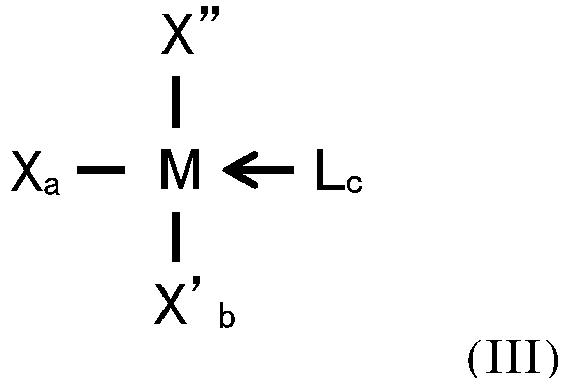
Applications Claiming Priority (2)
| Application Number | Priority Date | Filing Date | Title |
|---|---|---|---|
| JP2017233818A JP7002310B2 (en) | 2017-12-05 | 2017-12-05 | Method for producing multiple copolymer |
| PCT/JP2018/035185 WO2019111494A1 (en) | 2017-12-05 | 2018-09-21 | Multiblock copolymer production method |
Publications (2)
| Publication Number | Publication Date |
|---|---|
| EP3722338A1 true EP3722338A1 (en) | 2020-10-14 |
| EP3722338A4 EP3722338A4 (en) | 2021-09-08 |
Family
ID=66750153
Family Applications (1)
| Application Number | Title | Priority Date | Filing Date |
|---|---|---|---|
| EP18885710.6A Pending EP3722338A4 (en) | 2017-12-05 | 2018-09-21 | Multiblock copolymer production method |
Country Status (4)
| Country | Link |
|---|---|
| US (1) | US11286319B2 (en) |
| EP (1) | EP3722338A4 (en) |
| JP (1) | JP7002310B2 (en) |
| WO (1) | WO2019111494A1 (en) |
Cited By (2)
| Publication number | Priority date | Publication date | Assignee | Title |
|---|---|---|---|---|
| EP3988583A4 (en) * | 2019-06-21 | 2023-08-02 | Bridgestone Corporation | Method for producing copolymer |
| WO2025129179A1 (en) * | 2023-12-15 | 2025-06-19 | Braskem S.A. | Free radical ethylene/terpene copolymers |
Families Citing this family (1)
| Publication number | Priority date | Publication date | Assignee | Title |
|---|---|---|---|---|
| JP7517978B2 (en) * | 2020-12-22 | 2024-07-17 | 株式会社ブリヂストン | Copolymer, rubber composition, resin composition, tire and resin product |
Family Cites Families (13)
| Publication number | Priority date | Publication date | Assignee | Title |
|---|---|---|---|---|
| US5721185A (en) * | 1991-06-24 | 1998-02-24 | The Dow Chemical Company | Homogeneous olefin polymerization catalyst by abstraction with lewis acids |
| IT1275812B1 (en) * | 1995-10-27 | 1997-10-17 | Enichem Spa | ACTIVATED CATALYTIC SYSTEM FOR THE (CO) POLYMERIZATION OF ALPHA-OLEFINS |
| US6174974B1 (en) | 1996-07-05 | 2001-01-16 | Bayer Aktiengesellschaft | Method for producing thermoplastic elastomers |
| FR2858817B1 (en) | 2003-08-13 | 2006-02-03 | Michelin Soc Tech | CATALYTIC SYSTEM FOR OBTAINING CONJUGATED (S) / MONO-OLEFINE (S) DIENE (S) COPOLYMERS AND COPOLYMERS |
| WO2006004068A1 (en) | 2004-07-02 | 2006-01-12 | Riken | Polymerization catalyst compositions containing metallocene complexes and polymers produced by using the same |
| BRPI0711436B1 (en) * | 2006-05-09 | 2018-04-17 | Riken | METALOCENE COMPLEX, POLYMERIZATION CATALYST COMPOSITION, AND METHODS OF PRODUCING AN ADDITION POLYMER |
| JP5557835B2 (en) * | 2009-03-30 | 2014-07-23 | 三井化学株式会社 | Copolymer of olefin and conjugated diene and method for producing the same |
| EP2599802B1 (en) | 2010-07-30 | 2015-09-30 | Bridgestone Corporation | Copolymer of conjugated diene compounds and non-conjugated olefins, rubber composition, cross-linked rubber composition, and tyre |
| JP5557710B2 (en) | 2010-11-30 | 2014-07-23 | 株式会社ブリヂストン | Copolymer |
| EP2671895B1 (en) | 2011-02-04 | 2020-01-08 | Bridgestone Corporation | Copolymer of conjugated diene compound and non-conjugated olefin, rubber composition, rubber composition for tire tread, crosslinked rubber composition and tire |
| KR102004567B1 (en) | 2012-02-06 | 2019-07-26 | 다이니폰 인사츠 가부시키가이샤 | Sealing sheet for solar cell |
| CN104177529B (en) | 2014-07-24 | 2016-11-02 | 大连理工大学 | Ternary rare earth ethylene propylene rubber and preparation method thereof |
| JP6713759B2 (en) * | 2015-12-03 | 2020-06-24 | 株式会社ブリヂストン | Method for producing multi-component copolymer and multi-component copolymer |
-
2017
- 2017-12-05 JP JP2017233818A patent/JP7002310B2/en active Active
-
2018
- 2018-09-21 WO PCT/JP2018/035185 patent/WO2019111494A1/en not_active Ceased
- 2018-09-21 US US16/767,714 patent/US11286319B2/en active Active
- 2018-09-21 EP EP18885710.6A patent/EP3722338A4/en active Pending
Cited By (3)
| Publication number | Priority date | Publication date | Assignee | Title |
|---|---|---|---|---|
| EP3988583A4 (en) * | 2019-06-21 | 2023-08-02 | Bridgestone Corporation | Method for producing copolymer |
| US12152096B2 (en) | 2019-06-21 | 2024-11-26 | Bridgestone Corporation | Method for manufacturing copolymer |
| WO2025129179A1 (en) * | 2023-12-15 | 2025-06-19 | Braskem S.A. | Free radical ethylene/terpene copolymers |
Also Published As
| Publication number | Publication date |
|---|---|
| WO2019111494A1 (en) | 2019-06-13 |
| US20210002398A1 (en) | 2021-01-07 |
| JP2019099722A (en) | 2019-06-24 |
| US11286319B2 (en) | 2022-03-29 |
| JP7002310B2 (en) | 2022-02-04 |
| EP3722338A4 (en) | 2021-09-08 |
Similar Documents
| Publication | Publication Date | Title |
|---|---|---|
| US11214639B2 (en) | Copolymer, rubber composition, resin composition, tire and resin product | |
| WO2019171679A1 (en) | Copolymer, method for producing copolymer, rubber composition and tire | |
| JP2013155257A (en) | Rubber composition and tire | |
| JP6527748B2 (en) | Method for producing isobutylene polymer | |
| US11286319B2 (en) | Method of producing multicomponent copolymer | |
| JPWO2017064860A1 (en) | Multi-component copolymer, rubber composition, crosslinked rubber composition and rubber article | |
| US12152096B2 (en) | Method for manufacturing copolymer | |
| JP7041585B2 (en) | Method for producing polymerization catalyst and copolymer | |
| EP3722337B1 (en) | Copolymer, rubber composition, resin composition, tire and resin product | |
| JP7160620B2 (en) | Copolymer, method for producing copolymer, rubber composition and tire | |
| US12122861B2 (en) | Multi-component copolymer, rubber composition, resin composition, tire, and resin product | |
| JP7009307B2 (en) | Method for producing polymerization catalyst and copolymer | |
| EP3584263B1 (en) | Multicomponent copolymer, rubber composition, and rubber article | |
| US11236185B2 (en) | Copolymer, production method for copolymer, rubber composition, and tire | |
| JP5557642B2 (en) | Copolymer of conjugated diene compound and non-conjugated olefin | |
| US9688798B2 (en) | Method for manufacturing a hydroxy group terminated olefin or conjugated diene polymer | |
| JP2019099720A (en) | Copolymer, rubber composition, resin composition, tire, and resin product |
Legal Events
| Date | Code | Title | Description |
|---|---|---|---|
| STAA | Information on the status of an ep patent application or granted ep patent |
Free format text: STATUS: THE INTERNATIONAL PUBLICATION HAS BEEN MADE |
|
| PUAI | Public reference made under article 153(3) epc to a published international application that has entered the european phase |
Free format text: ORIGINAL CODE: 0009012 |
|
| STAA | Information on the status of an ep patent application or granted ep patent |
Free format text: STATUS: REQUEST FOR EXAMINATION WAS MADE |
|
| 17P | Request for examination filed |
Effective date: 20200521 |
|
| AK | Designated contracting states |
Kind code of ref document: A1 Designated state(s): AL AT BE BG CH CY CZ DE DK EE ES FI FR GB GR HR HU IE IS IT LI LT LU LV MC MK MT NL NO PL PT RO RS SE SI SK SM TR |
|
| AX | Request for extension of the european patent |
Extension state: BA ME |
|
| DAV | Request for validation of the european patent (deleted) | ||
| DAX | Request for extension of the european patent (deleted) | ||
| REG | Reference to a national code |
Ref country code: DE Ref legal event code: R079 Free format text: PREVIOUS MAIN CLASS: C08F0210020000 Ipc: C08F0004520000 |
|
| A4 | Supplementary search report drawn up and despatched |
Effective date: 20210806 |
|
| RIC1 | Information provided on ipc code assigned before grant |
Ipc: C08K 3/04 20060101ALN20210802BHEP Ipc: C08F 4/659 20060101ALN20210802BHEP Ipc: B60C 1/00 20060101ALI20210802BHEP Ipc: C08F 210/16 20060101ALI20210802BHEP Ipc: C08F 4/52 20060101AFI20210802BHEP |
|
| STAA | Information on the status of an ep patent application or granted ep patent |
Free format text: STATUS: EXAMINATION IS IN PROGRESS |
|
| 17Q | First examination report despatched |
Effective date: 20230213 |