EP3722146A1 - Lock mechanism for rotary component control - Google Patents
Lock mechanism for rotary component control Download PDFInfo
- Publication number
- EP3722146A1 EP3722146A1 EP19212855.1A EP19212855A EP3722146A1 EP 3722146 A1 EP3722146 A1 EP 3722146A1 EP 19212855 A EP19212855 A EP 19212855A EP 3722146 A1 EP3722146 A1 EP 3722146A1
- Authority
- EP
- European Patent Office
- Prior art keywords
- collar
- lock mechanism
- recline
- rotational position
- bearings
- Prior art date
- Legal status (The legal status is an assumption and is not a legal conclusion. Google has not performed a legal analysis and makes no representation as to the accuracy of the status listed.)
- Granted
Links
Images






Classifications
-
- B—PERFORMING OPERATIONS; TRANSPORTING
- B60—VEHICLES IN GENERAL
- B60N—SEATS SPECIALLY ADAPTED FOR VEHICLES; VEHICLE PASSENGER ACCOMMODATION NOT OTHERWISE PROVIDED FOR
- B60N2/00—Seats specially adapted for vehicles; Arrangement or mounting of seats in vehicles
- B60N2/90—Details or parts not otherwise provided for
- B60N2/919—Positioning and locking mechanisms
- B60N2/933—Positioning and locking mechanisms rotatable
- B60N2/938—Positioning and locking mechanisms rotatable and provided with braking systems
-
- B—PERFORMING OPERATIONS; TRANSPORTING
- B64—AIRCRAFT; AVIATION; COSMONAUTICS
- B64D—EQUIPMENT FOR FITTING IN OR TO AIRCRAFT; FLIGHT SUITS; PARACHUTES; ARRANGEMENT OR MOUNTING OF POWER PLANTS OR PROPULSION TRANSMISSIONS IN AIRCRAFT
- B64D11/00—Passenger or crew accommodation; Flight-deck installations not otherwise provided for
- B64D11/06—Arrangements of seats, or adaptations or details specially adapted for aircraft seats
- B64D11/0639—Arrangements of seats, or adaptations or details specially adapted for aircraft seats with features for adjustment or converting of seats
- B64D11/064—Adjustable inclination or position of seats
-
- B—PERFORMING OPERATIONS; TRANSPORTING
- B60—VEHICLES IN GENERAL
- B60N—SEATS SPECIALLY ADAPTED FOR VEHICLES; VEHICLE PASSENGER ACCOMMODATION NOT OTHERWISE PROVIDED FOR
- B60N2/00—Seats specially adapted for vehicles; Arrangement or mounting of seats in vehicles
- B60N2/02—Seats specially adapted for vehicles; Arrangement or mounting of seats in vehicles the seat or part thereof being movable, e.g. adjustable
- B60N2/20—Seats specially adapted for vehicles; Arrangement or mounting of seats in vehicles the seat or part thereof being movable, e.g. adjustable the back-rest being tiltable, e.g. to permit easy access
-
- B—PERFORMING OPERATIONS; TRANSPORTING
- B60—VEHICLES IN GENERAL
- B60N—SEATS SPECIALLY ADAPTED FOR VEHICLES; VEHICLE PASSENGER ACCOMMODATION NOT OTHERWISE PROVIDED FOR
- B60N2/00—Seats specially adapted for vehicles; Arrangement or mounting of seats in vehicles
- B60N2/02—Seats specially adapted for vehicles; Arrangement or mounting of seats in vehicles the seat or part thereof being movable, e.g. adjustable
- B60N2/22—Seats specially adapted for vehicles; Arrangement or mounting of seats in vehicles the seat or part thereof being movable, e.g. adjustable the back-rest being adjustable
- B60N2/2227—Seats specially adapted for vehicles; Arrangement or mounting of seats in vehicles the seat or part thereof being movable, e.g. adjustable the back-rest being adjustable and provided with braking systems
-
- B—PERFORMING OPERATIONS; TRANSPORTING
- B60—VEHICLES IN GENERAL
- B60N—SEATS SPECIALLY ADAPTED FOR VEHICLES; VEHICLE PASSENGER ACCOMMODATION NOT OTHERWISE PROVIDED FOR
- B60N2/00—Seats specially adapted for vehicles; Arrangement or mounting of seats in vehicles
- B60N2/02—Seats specially adapted for vehicles; Arrangement or mounting of seats in vehicles the seat or part thereof being movable, e.g. adjustable
- B60N2/22—Seats specially adapted for vehicles; Arrangement or mounting of seats in vehicles the seat or part thereof being movable, e.g. adjustable the back-rest being adjustable
- B60N2/224—Stepwise movement mechanisms, e.g. ratchets
-
- B—PERFORMING OPERATIONS; TRANSPORTING
- B60—VEHICLES IN GENERAL
- B60N—SEATS SPECIALLY ADAPTED FOR VEHICLES; VEHICLE PASSENGER ACCOMMODATION NOT OTHERWISE PROVIDED FOR
- B60N2/00—Seats specially adapted for vehicles; Arrangement or mounting of seats in vehicles
- B60N2/62—Thigh-rests
-
- B—PERFORMING OPERATIONS; TRANSPORTING
- B60—VEHICLES IN GENERAL
- B60N—SEATS SPECIALLY ADAPTED FOR VEHICLES; VEHICLE PASSENGER ACCOMMODATION NOT OTHERWISE PROVIDED FOR
- B60N2/00—Seats specially adapted for vehicles; Arrangement or mounting of seats in vehicles
- B60N2/75—Arm-rests
- B60N2/763—Arm-rests adjustable
- B60N2/767—Angle adjustment
-
- B—PERFORMING OPERATIONS; TRANSPORTING
- B60—VEHICLES IN GENERAL
- B60N—SEATS SPECIALLY ADAPTED FOR VEHICLES; VEHICLE PASSENGER ACCOMMODATION NOT OTHERWISE PROVIDED FOR
- B60N2/00—Seats specially adapted for vehicles; Arrangement or mounting of seats in vehicles
- B60N2/90—Details or parts not otherwise provided for
- B60N2/919—Positioning and locking mechanisms
- B60N2/933—Positioning and locking mechanisms rotatable
- B60N2/943—Stepwise movement mechanisms, e.g. ratchets
-
- B—PERFORMING OPERATIONS; TRANSPORTING
- B64—AIRCRAFT; AVIATION; COSMONAUTICS
- B64D—EQUIPMENT FOR FITTING IN OR TO AIRCRAFT; FLIGHT SUITS; PARACHUTES; ARRANGEMENT OR MOUNTING OF POWER PLANTS OR PROPULSION TRANSMISSIONS IN AIRCRAFT
- B64D11/00—Passenger or crew accommodation; Flight-deck installations not otherwise provided for
- B64D11/06—Arrangements of seats, or adaptations or details specially adapted for aircraft seats
- B64D11/0638—Arrangements of seats, or adaptations or details specially adapted for aircraft seats with foldable tables, trays or cup holders
-
- B—PERFORMING OPERATIONS; TRANSPORTING
- B64—AIRCRAFT; AVIATION; COSMONAUTICS
- B64D—EQUIPMENT FOR FITTING IN OR TO AIRCRAFT; FLIGHT SUITS; PARACHUTES; ARRANGEMENT OR MOUNTING OF POWER PLANTS OR PROPULSION TRANSMISSIONS IN AIRCRAFT
- B64D11/00—Passenger or crew accommodation; Flight-deck installations not otherwise provided for
- B64D11/06—Arrangements of seats, or adaptations or details specially adapted for aircraft seats
- B64D11/0639—Arrangements of seats, or adaptations or details specially adapted for aircraft seats with features for adjustment or converting of seats
- B64D11/0643—Adjustable foot or leg rests
-
- B—PERFORMING OPERATIONS; TRANSPORTING
- B64—AIRCRAFT; AVIATION; COSMONAUTICS
- B64D—EQUIPMENT FOR FITTING IN OR TO AIRCRAFT; FLIGHT SUITS; PARACHUTES; ARRANGEMENT OR MOUNTING OF POWER PLANTS OR PROPULSION TRANSMISSIONS IN AIRCRAFT
- B64D11/00—Passenger or crew accommodation; Flight-deck installations not otherwise provided for
- B64D11/06—Arrangements of seats, or adaptations or details specially adapted for aircraft seats
- B64D11/0639—Arrangements of seats, or adaptations or details specially adapted for aircraft seats with features for adjustment or converting of seats
- B64D11/0644—Adjustable arm rests
-
- F—MECHANICAL ENGINEERING; LIGHTING; HEATING; WEAPONS; BLASTING
- F16—ENGINEERING ELEMENTS AND UNITS; GENERAL MEASURES FOR PRODUCING AND MAINTAINING EFFECTIVE FUNCTIONING OF MACHINES OR INSTALLATIONS; THERMAL INSULATION IN GENERAL
- F16B—DEVICES FOR FASTENING OR SECURING CONSTRUCTIONAL ELEMENTS OR MACHINE PARTS TOGETHER, e.g. NAILS, BOLTS, CIRCLIPS, CLAMPS, CLIPS OR WEDGES; JOINTS OR JOINTING
- F16B2/00—Friction-grip releasable fastenings
- F16B2/02—Clamps, i.e. with gripping action effected by positive means other than the inherent resistance to deformation of the material of the fastening
- F16B2/16—Clamps, i.e. with gripping action effected by positive means other than the inherent resistance to deformation of the material of the fastening using rollers or balls
-
- B—PERFORMING OPERATIONS; TRANSPORTING
- B60—VEHICLES IN GENERAL
- B60N—SEATS SPECIALLY ADAPTED FOR VEHICLES; VEHICLE PASSENGER ACCOMMODATION NOT OTHERWISE PROVIDED FOR
- B60N2/00—Seats specially adapted for vehicles; Arrangement or mounting of seats in vehicles
- B60N2/75—Arm-rests
- B60N2/753—Arm-rests movable to an inoperative position
-
- B—PERFORMING OPERATIONS; TRANSPORTING
- B60—VEHICLES IN GENERAL
- B60N—SEATS SPECIALLY ADAPTED FOR VEHICLES; VEHICLE PASSENGER ACCOMMODATION NOT OTHERWISE PROVIDED FOR
- B60N2/00—Seats specially adapted for vehicles; Arrangement or mounting of seats in vehicles
- B60N2/80—Head-rests
- B60N2/806—Head-rests movable or adjustable
- B60N2/838—Tiltable
- B60N2/841—Tiltable characterised by their locking devices
-
- B—PERFORMING OPERATIONS; TRANSPORTING
- B60—VEHICLES IN GENERAL
- B60N—SEATS SPECIALLY ADAPTED FOR VEHICLES; VEHICLE PASSENGER ACCOMMODATION NOT OTHERWISE PROVIDED FOR
- B60N2/00—Seats specially adapted for vehicles; Arrangement or mounting of seats in vehicles
- B60N2/90—Details or parts not otherwise provided for
- B60N2/919—Positioning and locking mechanisms
- B60N2002/952—Positioning and locking mechanisms characterised by details of the locking system
-
- B—PERFORMING OPERATIONS; TRANSPORTING
- B60—VEHICLES IN GENERAL
- B60N—SEATS SPECIALLY ADAPTED FOR VEHICLES; VEHICLE PASSENGER ACCOMMODATION NOT OTHERWISE PROVIDED FOR
- B60N3/00—Arrangements or adaptations of other passenger fittings, not otherwise provided for
- B60N3/001—Arrangements or adaptations of other passenger fittings, not otherwise provided for of tables or trays
-
- Y—GENERAL TAGGING OF NEW TECHNOLOGICAL DEVELOPMENTS; GENERAL TAGGING OF CROSS-SECTIONAL TECHNOLOGIES SPANNING OVER SEVERAL SECTIONS OF THE IPC; TECHNICAL SUBJECTS COVERED BY FORMER USPC CROSS-REFERENCE ART COLLECTIONS [XRACs] AND DIGESTS
- Y10—TECHNICAL SUBJECTS COVERED BY FORMER USPC
- Y10T—TECHNICAL SUBJECTS COVERED BY FORMER US CLASSIFICATION
- Y10T403/00—Joints and connections
- Y10T403/59—Manually releaseable latch type
- Y10T403/591—Manually releaseable latch type having operating mechanism
- Y10T403/592—Ball detent
Definitions
- Vehicle seats such as aircraft passenger seats are commonly equipped with rotating components.
- seats may be equipped with one or more of backrests that pivot between upright and reclined positions, leg rests that pivot between stowed and deployed positions, armrests that pivot between stowed and deployed positions, etc.
- a backrest for example, is usually pivotally-mounted between seat-assembly frame members fixed to the floor of an aircraft, and the recline angle of a backrest can typically be controlled for the comfort, convenience, and safety of an occupant passenger.
- a leg rest for example, is usually pivotally-mounted to a forward end of a seat bottom and is typically angularly adjustable for the comfort of an occupant passenger.
- An armrest for example, is usually pivotally-mounted to a stationary frame member and is typically adjustable between stowed and deployed positions for comfort and for seat ingress and egress of an occupant passenger.
- the stationary component may be stationary seat assembly component and the rotating component may be a pivoting seat assembly component, like a backrest, a leg rest, or an arm rest, for example.
- the manual recline collar 62 abuts the base plate 40 of the outer shaft 26 and surrounds the slotted ring 38.
- the manual recline collar 62 has a first end for abutting the base plate 40.
- the first end of the manual recline collar 62 has pivot limit gaps 86, each of which receives a respective stop tab 88 that extends from the base plate 40 ( FIG. 2 , 4 ).
- the manual recline collar 62 is pivotal around the slotted ring 38 in a rotational range defined by engagement of the stop tabs 88 with opposing circumferential ends of the pivot limit gaps 86.
- the manual recline collar 62 can be pivoted between a recline-locked position and a recline-unlocked position.
- Each recline control groove 76 ( FIG. 6 ) has groove sections interconnecting the multiple index positions, each of which defines a terminus of its corresponding control groove directed toward the second longitudinal end 55 of the control ring 56.
- a linear first groove section 101 extends longitudinally and terminates at the first index position 81.
- a helical second groove section 102 extends longitudinally and circumferentially and terminates at the second index position 82.
- a helical third groove section 103 in similarity with the helical second groove section 102, extends longitudinally and circumferentially and terminates at the third index position 83.
- Movement of the trigger arm 160 causes the first link 154 to draw the first end of the second link 156 radially outward, causing the second link the pull the shifting tab 150 and automatic release collar 130 to the release position.
- an inertial mass 162 is mounted on the trigger arm 160 such that inertial forces can prompt the release of the automatic release collar 130.
- the automatic release device 152 causes pivoting of the automatic release collar 130 from the locked position to the release position upon forward movement of the intertial mass 162 relative to the inner shaft 30 under such emergency circumstances such as rapid aircraft decelerations and impacts. This may precede an aft-seated passenger imparting forces upon the backrest. Thus, by this feature, the backrest may be released to pivot forward as or before a passenger strikes the backrest from behind.
- An assembly bushing 180 maintains the inner shaft 30 in alignment and assembly with the outer shaft 26.
- An annular lip 182 within the first end 134 of the inner shaft 30 receives and engages the assembly bushing 180.
- the assembly bushing 180 receives the longitudinal end 50 of the central shaft 36 and helps to maintain alignment of the inner shaft 30 and outer shaft 26 while permitting the inner shaft 30 to pivot as the rotary lock mechanism 20 operates.
- the circumferential locking groove 48 of the central shaft 36 extends longitudinally beyond the assembly bushing 180 with sufficient tolerance to permit the lock ring 52 to snap into the locking groove 48 in the assembled mechanism ( FIG. 2 ), trapping the assembly bushing 180 and other components therewith on the central shaft 36 while permitting the above-described pivotal movements.
Landscapes
- Engineering & Computer Science (AREA)
- Aviation & Aerospace Engineering (AREA)
- Mechanical Engineering (AREA)
- Transportation (AREA)
- General Engineering & Computer Science (AREA)
- Chairs For Special Purposes, Such As Reclining Chairs (AREA)
- Seats For Vehicles (AREA)
Abstract
Description
- Vehicle seats such as aircraft passenger seats are commonly equipped with rotating components. For example, seats may be equipped with one or more of backrests that pivot between upright and reclined positions, leg rests that pivot between stowed and deployed positions, armrests that pivot between stowed and deployed positions, etc. A backrest, for example, is usually pivotally-mounted between seat-assembly frame members fixed to the floor of an aircraft, and the recline angle of a backrest can typically be controlled for the comfort, convenience, and safety of an occupant passenger. A leg rest, for example, is usually pivotally-mounted to a forward end of a seat bottom and is typically angularly adjustable for the comfort of an occupant passenger. An armrest, for example, is usually pivotally-mounted to a stationary frame member and is typically adjustable between stowed and deployed positions for comfort and for seat ingress and egress of an occupant passenger.
- Conventional mechanisms for the rotary control of such components include push button actuators coupled to remote locking devices such as gas springs, wherein actuating the actuator releases the remote locking device allowing the component to be repositioned. Such conventional mechanisms are disadvantageous in that they require separate mounting locations for the actuator and the remote locking device, are prone to failure, and are not able to incorporate secondary functions.
- Accordingly, what is needed is a new control mechanism for rotating components that overcomes the disadvantages of conventional mechanisms.
- To achieve the foregoing and other advantages, according to a first aspect, the present invention provides a lock mechanism for rotary control including an outer shaft attachable to a stationary component, the outer shaft having a slotted ring defining capture slots and an interior annular space, a control ring having a first end disposed in the annular space, an inner shaft attachable to a rotating component, the rotating component configured to rotate relative to the stationary component, and the inner shaft engaged with a second end of the control ring, a first collar rotatably disposed around the slotted ring, the first collar having a plurality of release recesses, and a plurality of first bearings respectively retained within the capture slots beneath the first collar. In a first rotational position of the first collar, the plurality of release recesses align with the capture slots to rotationally disengage the rotating and stationary components, In a second rotational position of the first collar, the plurality of release recesses misalign with the capture slots to rotationally engage the rotating and stationary components.
- In some embodiments, the stationary component may be stationary seat assembly component and the rotating component may be a pivoting seat assembly component, like a backrest, a leg rest, or an arm rest, for example.
- In some embodiments, in the first rotational position of the first collar, the first bearings may be partially offset from the capture slots toward the control ring; and, in the second rotational position of the first collar, the first bearings can partially offset from the capture slots toward the first collar.
- In some embodiments, the outer shaft may include a central shaft, and the interior annular space may be defined between the central shaft and the slotted ring.
- In some embodiments, the central shaft may have a longitudinal end that extends beyond the slotted ring and is received by the inner shaft.
- In some embodiments, the lock mechanism may include a second collar rotatably disposed around an end of the inner shaft, wherein in a first rotational position of the second collar the inner shaft is non-rotationally engaged with the second end of the control ring, and in a second rotational position of the second collar the inner shaft is rotationally disengaged from the second end of the control ring.
- In some embodiments, the lock mechanism may further include a plurality of second bearings respectively retained within capture holes in the end of the inner shaft beneath the second collar, wherein, in the first rotational position of the second collar, the second bearings are partially offset from the capture holes toward the control ring; and, in the second rotational position of the second collar, the second bearings can partially offset from the capture holes toward the second collar.
- In some embodiments, the lock mechanism may further include a manual control device engaging the first collar and operable to move the first collar between a first rotational position and a second rotational position thereof.
- In some embodiments, the lock mechanism may further include an automatic release device engaging the second collar and operable to move the second collar between a first rotational position and a second rotational position thereof.
- In some embodiments, the automatic release device may include an inertial mass on a trigger arm movable by inertial forces to move the second collar to the second rotational position.
- In some embodiments, the lock mechanism may further include an arm pivotally-mounted on the inner shaft.
- In some embodiments, the control ring may have helical grooves in which the first bearings are movable against the forces of springs, when the first collar is in the first rotational position, by a force to overcome the springs thereby permitting the rotating component to rotate relative to the stationary component.
- According to a second aspect, the present invention provides a passenger seat assembly including a stationary frame member, a rotating component configured to rotate relative to the stationary frame member, and a lock mechanism according to the first aspect of the invention, wherein the stationary frame member is the stationary component beneath the first collar. In a first rotational position of the first collar the plurality of release recesses align with the capture slots to rotationally disengage the stationary frame member and rotating component. In a second rotational position of the first collar, the plurality of release recesses misalign with the capture slots to rotationally engage the stationary frame member and the rotating component.
- In some embodiments, the rotating component may be a backrest, a leg rest, or an armrest.
- In some embodiments, in the first rotational position of the first collar the first bearings are partially offset from the capture slots toward the control ring; and, in the second rotational position of the first collar the first bearings can partially offset from the capture slots toward the first collar.
- In some embodiments, the lock mechanism further includes a manual control device engaging the first collar and operable to move the first collar between first rotational position and second rotational position thereof.
- Embodiments of the present invention may include one or more or any combination of the above aspects, features and configurations.
- The present invention may be better understood when consideration is given to the following detailed description thereof. Such description makes reference to the included drawings, which are not necessarily to scale, and in which some features may be exaggerated, and some features may be omitted or may be represented schematically in the interest of clarity. Like reference numbers in the drawings may represent and refer to the same or similar element, feature, or function. In the drawings:
-
FIG. 1 is a front elevation view of a passenger seat assembly including a multi-functional rotary lock mechanism according to the present invention; -
FIG. 2 is a perspective view of a rotary lock mechanism according to the present invention; -
FIG. 3 is another perspective view of the rotary lock mechanism ofFIG. 2 ; -
FIG. 4 is an exploded perspective view of the rotary lock mechanism ofFIG. 3 ; -
FIG. 5 is a perspective view of the inner shaft and outer shaft of the rotary lock mechanism shown in partial assembly of the rotary lock mechanism; -
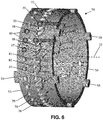
FIG. 6 is a perspective view of the control ring of the rotary lock mechanism showing several separately purposed bearings for illustration of their respective functions; -
FIG. 7 is an enlarged perspective view of the manual recline collar of the rotary lock mechanism; -
FIG. 8 is a side view of several components of the rotary lock mechanism shown for illustration of manual recline features; -
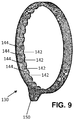
FIG. 9 is an enlarged perspective view of the automatic release collar of the rotary lock mechanism; -
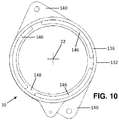
FIG. 10 is an enlarged side view of the inner shaft of the rotary lock mechanism; -
FIG. 11 is a side view of several components of the rotary lock mechanism shown for illustration of locked positions of the automatic release collar and an automatic release device; -
FIG. 12 is a side view of the components ofFIG. 11 shown for illustration of release positions of the automatic release collar and automatic release device; -
FIG. 13 is a perspective view of several components of the rotary lock mechanism shown for illustration of a first position of a table support arm; and -
FIG. 14 is a perspective view of several components of the rotary lock mechanism shown for illustration of a second position of the table support arm. - The present invention is described hereinafter with reference to the accompanying drawings in which exemplary embodiments are shown. However, the present invention may be embodied in many different forms and is limited by the appended claims only. The invention should not be construed as limited any further to the representative embodiments set forth herein.
- A multi-functional rotary lock mechanism according to the present invention can be used, for example, as a seat recline mechanism for an aircraft passenger seat assembly as shown in
FIG. 1 . Other uses include, but are not limited to, leg rest rotary control, armrest rotary control, and rotary control of other components that are a part of or are separate from a seat. For illustrative purposes, the rotary lock mechanism is shown mounted between a first seat assembly component, referenced as astationary frame member 32, and a second seat assembly component by way of exemplary example, referenced as apivoting backrest 34. Thebackrest 34 of the seat assembly is pivotable about a horizontal pivot axis under control of the rotary lock mechanism by several modes. While the rotary lock mechanism is described and shown herein with reference to a pivoting backrest, it is understood that the rotary lock mechanism may be utilized to control motion between a stationary component (e.g., frame member) and a rotating component (e.g., leg rest, armrest), or between two rotating components. - Under manual control, for example by a passenger, the rotary lock mechanism permits the
backrest 34 to be manually reclined. Upon use of a manually actuated recline control device, a user can adjust the recline angle of thebackrest 34 to an upright position, a partial reclined position, and a maximum reclined position. A manual override feature permits the recline setting to be overcome by force imparted on thebackrest 34, for example by a passing attendant, to return thebackrest 34 to the upright position, for example for taxi-take-off, and landing (TTOL) operations. The manual override feature also serves as an optional breakover feature in the event of an aft-seated passenger impacting a backrest. By permitting a reclined backrest to return to upright under force, injury to an aft-seated passenger may be avoided or at least reduced by energy dissipation as the backrest returns toward upright. - A further breakover feature facilitates an automatic inertial release to permit the backrest to pivot forward under such emergency circumstances such as rapid aircraft decelerations and impacts. The further breakover feature is intended to normally prevent the
backrest 34 from pivoting forward past an upright position toward the seat pan, while allowing this movement if sufficient inertial forces due to deceleration or impact occur. The automatic inertial release feature is activated by inertial forces upon the passenger seat assembly, which may precede an aft-seated passenger imparting forces upon a backrest. Thus, by this feature, the backrest may be released to pivot forward as or before a passenger strikes the backrest from behind. - Optionally, the rotary mechanism may also supports a tray table or other structure by way of rotatably engaging a component such as a table support arm. Thus, multiple functions for use in a passenger seat assembly are facilitated by the multi-functional rotary lock mechanism when mounted between the pivoting
backrest 34 andstationary frame member 32 of an aircraft passenger seat assembly as shown inFIG. 1 . - Referring to
FIGS. 2-3 , a non-limiting example of a multi-functional rotary lock mechanism is shown generally atreference numeral 20. As shown in the exploded perspective view ofFIG. 4 , some components of the components of the rotary lock mechanism are aligned along apivot axis 22, which defines a rotational axis around which relative movement occurs in a pivoting joint facilitated by therotary lock mechanism 20. While each component of thefriction mechanism 20 could be described as having a separate axis, thepivot axis 22 is referenced in several of the other drawings for convenience, with the understanding that the respective axes of the components of the friction mechanism are aligned upon assembly. Thus, thepivot axis 22 serves as a reference line in these descriptions. Thepivot axis 22 is shown as a cross in views taken along the axis. - Terms such as radially outward refer to features directed away from the
pivot axis 22. Terms such as circumferential refer to features spaced or extended around the pivot axis. Terms such as longitudinal refer to features extending along or parallel to thepivot axis 22. Some components that are aligned along the pivot axis in the assembled mechanism are shown inFIG. 4 as offset for illustrative purpose to show their approximate longitudinal positions relative to other parts with which they are associated or on which they are mounted. - A first shaft at a first
longitudinal end 24 of therotary lock mechanism 20 is referenced as anouter shaft 26. A second shaft at a secondlongitudinal end 28 of therotary lock mechanism 20 is referenced as aninner shaft 30. In use, therotary lock mechanism 20 is to be connected at the opposite longitudinal ends to respective structures between which relative pivotal motion is to be controllably permitted. In the example ofFIG. 1 , theouter shaft 26 is connected to the stationary component that is embodied as astationary frame member 32 and theinner shaft 30 is connected to the rotating component, embodied as pivotingbackrest 34. Theouter shaft 26 includes a longitudinally extending cylindricalcentral shaft 36 concentrically surrounded by a slottedring 38, both of which are connected to abase plate 40 that is generally planar and perpendicular to thepivot axis 22. Thebase plate 40 has mountingholes 42 by which theouter shaft 26 can be non-rotationally attached to a fixed structure, such as theframe member 32 ofFIG. 1 , using fasteners, such as thebolts 44 as illustrated. An interiorannular space 35 is defined between the central shaft 36 a slottedring 38. The slotted ring concentrically surrounds thecentral shaft 36 from thebase plate 40 to thelongitudinal end 46 of the slottedring 38 opposite thebase plate 40. Thecentral shaft 36 extends longitudinally beyond the slottedring 38 to engage certain other components of therotary lock mechanism 20. Acircumferential locking groove 48 defined near thelongitudinal end 50 of thecentral shaft 36 receives alock ring 52 in the assembled mechanism to retain certain components on thecentral shaft 36. - In keeping with the example of
FIG. 1 , in which theouter shaft 26 is connected to thestationary frame member 32, the outer shaft serves as a fixed frame of reference in these descriptions, whereas theinner shaft 30 is controllably permitted to partially rotate relative to theouter shaft 26. A firstlongitudinal end 54 of acontrol ring 56 is received in theannular space 35 of the outer shaft between thecentral shaft 36 and slottedring 38. Thecontrol ring 56 abuts thebase plate 40 within theannular space 35. First-end tabs 58 (FIGS. 3-5 ) that extend from the first end of thecontrol ring 56 are received by respective circumferentially arcuate slots 60 (FIGS. 3 ,5 ) in thebase plate 40. The arcuate lengths of theslots 60 relative to smaller circumferential dimensions of the first-end tabs 58 permit thecontrol ring 56 to pivot relative to theouter shaft 26 within a limited recline range corresponding to the range of recline available to thebackrest 34 in the example ofFIG. 1 . - As briefly described above, the
rotary lock mechanism 20 has both manually controlled recline and override features, by which the recline position of abackrest 34 can be adjusted, and an automatic release feature, which permits the backrest to pivot forward under such emergency circumstances. The manual recline and override features are described before the automatic release feature in the following. - Under manual control, the
control ring 56 is non-rotationally engaged with theinner shaft 30, and partial rotations of thecontrol ring 56 relative to theouter shaft 26 correspond to adjustment of the recline angle of thebackrest 34. Rotation of theinner shaft 30 relative to theouter shaft 26 is selectively controlled by use of a first collar, referenced as themanual recline collar 62. Partial rotations of the manual recline collar 62 (FIG. 4 ) lock and unlock thecontrol ring 56 for partial rotation relative to theouter shaft 26 within the recline range. - As shown in
FIG. 5 , linear and longitudinally extending recline-bearing capture slots 64 are uniformly spaced circumferentially around thecontrol ring 56. Eachcapture slot 64 is closed at its first end directed toward thebase plate 40 and at its second end directed toward thelongitudinal end 46 of the slottedring 38. Eachcapture slot 64 is defined through the slottedring 38, permitting a respective first bearing, referenced as a recline bearing 70, within eachslot 64 to partially offset radially inward from the slot toward thecontrol ring 56 or partially offset radially outward from the slot toward themanual recline collar 62. Therecline bearings 70 are dimensioned to remain partially within the capture slots in either partially offset position. Therecline bearings 70 are shown as ball bearings in the illustrated example. - Each recline bearing 70 is captured radially beneath the
manual recline collar 62 within arespective capture slot 64 with a respectivelinear bias spring 72 that persistently presses the recline bearing 70 toward the second end of the slot. With therecline bearings 70 maintained at the second end of thecapture slots 64, the rotational position of themanual recline collar 62 determines whether thecontrol ring 56 can rotate relative to the slottedring 38 according to whether therecline bearings 70 are pressed inward to engage thecontrol ring 56 or permitted to offset outward to disengage thecontrol ring 56. These features relate to manual recline control, with reference to the pivotingbackrest 34 ofFIG. 1 . -
FIG. 6 showsseveral recline bearings 70 engaged with thecontrol ring 56 without the outer ring for illustration purposes. Thecontrol ring 56 has reclinecontrol grooves 76 in one-to-one correspondence with therecline bearings 70 and thecapture slots 64 of the slottedring 38. Therecline control grooves 76 are uniformly spaced circumferentially around the exterior of thecontrol ring 56. Eachrecline control groove 76 has multiple index positions for receiving the respective recline bearing 70 and corresponding to indexed pivotal positions of thecontrol ring 56 relative to theouter shaft 26. In the illustrated example, eachrecline control groove 76 has afirst index position 81, asecond index position 82, and athird index position 83, corresponding respectively to increasingly rotated positions of thecontrol ring 56 relative to theouter shaft 26. In the example ofFIG. 1 , the index positions 81-83 correspond respectively to the upright position, the partial reclined position, and the maximum reclined position, of thebackrest 34 relative to theframe member 32 of the seat assembly. - In the assembled
rotary lock mechanism 20, (FIG. 3 ), themanual recline collar 62 abuts thebase plate 40 of theouter shaft 26 and surrounds the slottedring 38. As shown inFIG. 7 , themanual recline collar 62 has a first end for abutting thebase plate 40. The first end of themanual recline collar 62 haspivot limit gaps 86, each of which receives arespective stop tab 88 that extends from the base plate 40 (FIG. 2 ,4 ). Themanual recline collar 62 is pivotal around the slottedring 38 in a rotational range defined by engagement of thestop tabs 88 with opposing circumferential ends of thepivot limit gaps 86. Themanual recline collar 62 can be pivoted between a recline-locked position and a recline-unlocked position. - The second end of the
manual recline collar 62 has reclinerecesses 90 in one-to-one correspondence with therecline bearings 70 and thecapture slots 64 of the slottedring 38 of theouter shaft 26. The recline recesses 90 are uniformly spaced circumferentially around the interior of themanual recline collar 62 and are separated by radially inward facing lock surfaces 92 that engage therecline bearings 70 when themanual recline collar 62 is in a first rotational position, termed as the recline-locking position, as shown inFIG. 8 . The recline recesses 90 have ramped edges leading to the lock surfaces 92 to facilitate smooth transition of the recline bearings. -
FIG. 8 shows thecontrol ring 56,recline bearings 70, andmanual recline collar 62 without theouter shaft 26. In the assembledrotary lock mechanism 20, the slottedring 38 of the outer shaft is radially positioned between thecontrol ring 56 and themanual recline collar 62, with thecapture slots 64 retaining therecline bearings 70. In the recline-locked position of themanual recline collar 62 shown inFIG. 8 , the lock surfaces 92 align with thecapture slots 64 of the slottedring 38 and press therecline bearings 70 inward, which are thereby offset radially inward and engage therecline control grooves 76 of thecontrol ring 56. As long as therecline bearings 70 are maintained as offset inward by themanual recline collar 62, and at the second ends of thecapture slots 64 by the linear bias springs 72, each recline bearing 70 engages a respectiverecline control groove 76 at thefirst index position 81,second index position 82, orthird index position 83. - In a second rotational position of the
manual recline collar 62, termed as the recline-unlocked position, the recline recesses 90 align with thecapture slots 64 of the slottedring 38, thus permitting therecline bearings 70 to offset radially outward into the recline recesses 90 and escape therecline control grooves 76 of thecontrol ring 56. This disengages therecline bearings 70 from thecontrol ring 56 and permits thecontrol ring 56 to rotate relative to theouter shaft 26 within the recline range. As thecontrol ring 56 rotates, the index positions of control grooves of thecontrol ring 56 align selectively with the reline bearings. For example, starting in the upright position of thebackrest 34, the first index positions 81 of thecontrol grooves 76 align with therecline bearings 70. Upon rotation of thecontrol ring 56 by a first reclining increment 91 (FIG. 6 ), the second index positions 82 align with therecline bearings 70 and thebackrest 34 is moved from the upright position to the partial reclined position. Upon rotation of thecontrol ring 56 by a second reclining increment 92 (FIG. 8 ), the third index positions 83 align with therecline bearings 70 and thebackrest 34 is moved from the partial reclined position to the maximum reclined position. These rotations of thecontrol ring 56 referenced as thefirst increment 91 andsecond increment 92 inFIG. 6 are correlated respectively with repositioning of therecline bearings 70 relative to thecontrol ring 56 with afirst reclining step 93 from thefirst index position 81 and asecond reclining step 94 to thethird index position 83. Thebackrest 34 can be returned from the maximum reclined position to the partial reclined position or upright position by reversing the movements of thecontrol ring 56 as long as themanual recline collar 62 is maintained in the recline-unlocked position. - The
manual recline collar 62 is biased toward the recline-locked position for stable use. This maintains thebackrest 34 in any selected recline or upright position. The adjustment of thebackrest 34 may be perceived by a passenger as direct from the upright position to the maximum reclined position without stopping at the partial reclined position. Upon return of themanual recline collar 62 to the recline locked position, thecontrol ring 56 settles into a position in which one of the index positions of the control grooves align with the respective recline control bearings and thebackrest 34 locks into its corresponding recline position. - While various other ways of pivoting the
manual recline collar 62 are within the scope of these descriptions, a shiftingbracket 106 extends radially outward from the illustrated manual recline collar 62 (FIG. 7 ) for use in pivoting the collar between the recline-locked position and the recline-unlocked position.FIG. 8 shows a particular example of arecline control device 108 engaging themanual recline collar 62 by way of the shiftingbracket 106. The recline control device includes aBowden cable 110 having a first end engaged with themanual recline collar 62 and the outer shaft 26 (FIG. 2 ), and a second end engaged with a manually actuated levered device 112 (FIG. 6 ). At the first end of the Bowden cable, a flexibleinner cable 114 engages the shiftingbracket 106 and anouter cable housing 116 engages a fixedbracket 118 connected to thebase plate 40 of theouter shaft 26. At the second end of theBowden cable 110, thelevered device 112 is used to transmit mechanical force to the first end by manual actuation of abutton 120 that rocks a lever and moves of theinner cable 114 relative to thecable housing 116. As theinner cable 114 is pulled relative to the cable housing at the second end of the Bowden cable, themanual recline collar 62 is rotated relative to theouter shaft 26 from the recline-locked position to the recline-unlocked position. Themanual recline collar 62 is biased toward the recline-locked position by aspring 122 surrounding theinner cable 114 between the shiftingbracket 106 and fixedbracket 118, maintaining thebackrest 34 in any selected recline or upright position. - As described above, with the
recline bearings 70 maintained at the second ends of thecapture slots 64, the manually controlled rotational position of themanual recline collar 62 determines whether thecontrol ring 56 can rotate relative to theouter shaft 26. However, the linear bias springs 72 that press therecline bearings 70 toward the longitudinal end of the outer shaft can be overcome. This relates to a manual override feature that permits a recline setting to be overcome, by force, to return thebackrest 34 to an upright position without use of therecline control device 108. - Each recline control groove 76 (
FIG. 6 ) has groove sections interconnecting the multiple index positions, each of which defines a terminus of its corresponding control groove directed toward the secondlongitudinal end 55 of thecontrol ring 56. A linearfirst groove section 101 extends longitudinally and terminates at thefirst index position 81. A helicalsecond groove section 102 extends longitudinally and circumferentially and terminates at thesecond index position 82. A helicalthird groove section 103, in similarity with the helicalsecond groove section 102, extends longitudinally and circumferentially and terminates at thethird index position 83. The end of each groove section directed toward thefirst end 54 of thecontrol ring 56 is joined to each adjacent groove section, permitting the associated recline bearing 70 to travel within the control groove among the index positions, with the longitudinal component of any such travel affecting the length of thelinear bias spring 72 that persistently presses the recline bearing 70 toward the index positions. Relative to the slottedring 38 of theouter shaft 26, each recline bearing 70 can travel linearly, longitudinally in particular, due to the capture of each recline bearing 70 within a respective capture slot 64 (FIG. 5 ). The travel of therecline bearings 70 within the helical second and third groove sections correspond to pivoting movement of thecontrol ring 56 relative to theouter shaft 26. - The manual override feature, by which a recline setting can be overcome by force imparted, for example, on the
backrest 34 inFIG. 1 to return thebackrest 34 to an upright position, is facilitated by the helical groove sections and spring-biasedrecline bearings 70. Starting in the maximum recline position of thebackrest 34, the third index positions 83 (FIG. 6 ) of thecontrol grooves 76 align with therecline bearings 70. Sufficient torque applied to thecontrol ring 56 by way of sufficient force on thebackrest 34 toward the partial reclined position causes thelinear springs 72 to be overcome as thecontrol ring 56 is rotated by afirst uprighting increment 95 to align the second index positions 82 with therecline bearings 70. With continued or additional force on thebackrest 34 toward the upright position, thecontrol ring 56 can be further rotated by asecond uprighting increment 96 to align the first index positions 81 with therecline bearings 70. - These manual override adjustments occur with the
manual recline collar 62 in the recline-locked position ofFIG. 8 . The lock surfaces of themanual recline collar 62 align with thecapture slots 64 of the slottedring 38 and press therecline bearings 70 inward, which are thereby offset radially inward and engage therecline control grooves 76 of thecontrol ring 56. The rotations of thecontrol ring 56 referenced as thefirst uprighting increment 95 andsecond uprighting increment 96 inFIG. 6 are correlated respectively with repositioning of therecline bearings 70 relative to thecontrol ring 56 by amovement 97 along the helicalthird groove section 103 and amovement 98 along the helicalsecond groove section 102. The uprightingincrements backrest 34, are in a rotational direction opposite that of thereclining increments backrest 34. - To prompt the uprighting increments, force applied to the
backrest 34 is converted to torque about thepivot axis 22, and the torque is converted to linear force upon therecline bearings 70 by thehelical groove sections first groove 101 section extends longitudinally, and thus rotation beyond thesecond uprighting increment 96 inFIG. 6 is prevented as thebackrest 34 reaches the upright position. Furthermore, the helicalsecond groove section 102 and helicalthird groove section 103 extend circumferentially in a common direction from thesecond index position 82 andthird index position 83, respectively, to facilitate only one-way conversion of torque to force on therecline bearings 70 and linear bias springs 72. The override feature thus operates to permit uprighting rotation of thecontrol ring 56 relative to theouter shaft 26 in response to uprighting forces on thebackrest 34, while preventing rotation in reverse and preventing thebackrest 34 from being further reclined from any given recline setting without use of therecline control device 108. Movement beyond the recline range is further prevented by the first-end tabs 58 of thecontrol ring 56 in therespective slots 60 in thebase plate 40 of the outer shaft. - The
recline control grooves 76 have arcuate walls accommodating the radii of therecline bearings 70 and facilitating thefirst reclining step 93 and asecond reclining step 94 when themanual recline collar 62 is in the recline-unlocked position, and facilitating theoverride uprighting movements manual recline collar 62 is in the recline-locked position. - The manual override feature, by which a recline setting can be overcome by force, permits a backrest to be returned to upright without use of the
recline control device 108, whether the force be imparted by a passing airline attendant prepping an occupied or unoccupied seat assembly for use, or whether the force be imparted by an aft-seated passenger impacting the backrest. By permitting a reclined backrest to return to upright under force, the override feature also serves as a breakover feature to prevent or reduce injury to an aft-seated passenger by energy dissipation as the backrest returns toward upright. - Throughout the above described manual reclining and manual override functions of the multi-functional
rotary lock mechanism 20, thecontrol ring 56 is considered as non-rotationally engaged with theinner shaft 30. Thus, as thecontrol ring 56 is permitted to partially rotate about thepivot axis 22 relative to theouter shaft 26, theinner shaft 30 rotates with thecontrol ring 56. In the example ofFIG. 1 , this corresponds to thebackrest 34, to which theinner shaft 30 is connected, pivoting relative to theframe member 32 to which theouter shaft 26 is connected. Therotary lock mechanism 20 further has an automatic breakover release feature, which permits thebackrest 34 to pivot forward under emergency circumstances despite the position of thecontrol ring 56. - In particular, the position of a second collar, referenced as the
automatic release collar 130, determines whether thecontrol ring 56 can rotate relative to theinner shaft 30. A ring of lock notches 78 (FIG. 6 ) is defined between the ring ofrecline control grooves 76 and thesecond end 55 of thecontrol ring 56. Thelock notches 78 are uniformly spaced circumferentially around the exterior of thecontrol ring 56 in one-to-one correspondence with second bearings, referenced asautomatic release bearings 80. Therelease bearings 80 are shown as ball bearings in the illustrated example. - The
inner shaft 30 has alongitudinally extending cylinder 132 with afirst end 134 for attachment to a pivotal structure such as thebackrest 34 ofFIG. 1 and asecond end 136 near which a ring of capture holes 138 is defined. Mountingplates 140, which extend radially outward from thefirst end 134, have mounting holes by which theinner shaft 30 can be non-rotationally attached to a pivoting structure, such as the pivotingbackrest 34 ofFIG. 1 , using fasteners, such as bolts as illustrated. - The capture holes 138 are uniformly spaced circumferentially in one-to-one correspondence with the
automatic release bearings 80 and locknotches 78, which are radially beneath theautomatic release collar 130. Each capture hole is defined through thesecond end 136 of thecylinder 132, permitting a respective release bearing 80 within eachcapture hole 138 to offset radially inward from the hole toward thecontrol ring 56 or offset radially outward from the hole toward themanual recline collar 62. Therelease bearings 80 are dimensioned to remain partially within the capture holes 138 in either offset position. The rotational position of theautomatic release collar 130 determines whether thecontrol ring 56 can rotate relative to theinner shaft 30 according to whether therelease bearings 80 are pressed inward to engage thecontrol ring 56 or permitted to offset outward to disengage from thecontrol ring 56. - In the assembled
rotary lock mechanism 20, (FIG. 3 ), theautomatic release collar 130 is positioned longitudinally adjacent themanual recline collar 62. Thesecond end 55 of the control ring 56 (FIG. 6 ) is received within thesecond end 136 of thecylinder 132 of theinner shaft 30, which abuts the longitudinal end of the slottedring 38 of theouter shaft 26 as shown inFIG. 5 . Therelease collar 130 is pivotally mounted on the second end of the cylinder surrounding the capture holes 138. Therelease collar 130 has release recesses 142 in one-to-one correspondence with therelease bearings 80 and the capture holes 138. The release recesses 142 are uniformly spaced circumferentially around the interior of therelease collar 130 and are separated by radially inward facing lock surfaces 144 that engage therelease bearings 80 when therelease collar 130 is in the locked position as shown inFIG. 11 . The release recesses 142 have ramped walls leading to the lock surfaces 144 to facilitate transition of therelease bearing 80. - In the locked position of the automatic release collar 130 (
FIG. 11 ), the lock surfaces align with the capture holes 138 of theinner shaft 30 and press therelease bearings 80 inward, which are thereby offset radially inward and engage thelock notches 78 of the control ring 56 (FIG. 6 ). As long as therelease bearings 80 engage thecontrol ring 56, theinner shaft 30 andcontrol ring 56 are non-rotationally engaged. - The
automatic release collar 130 can be pivoted from the locked position (FIG. 11 ) to a release position (FIG. 12 ). In the release position of therelease collar 130, the release recesses 142 align with the capture holes 138 of theinner shaft 30, thus permitting therelease bearings 80 to offset radially outward into the release recesses 142 and escape thelock notches 78 of thecontrol ring 56. This disengages therelease bearings 80 from thecontrol ring 56 and permits thecontrol ring 56 to rotate relative to theinner shaft 30 within a limited release rotation range. - Second-end tabs 59 (
FIGS. 3-5 ) that extend longitudinally from thesecond end 55 of thecontrol ring 56 limit the release rotation range by engaging theinner shaft 30. Each second-end tab 59 is received by a respective arcuate track 146 (FIG. 10 ) defined in anannular lip 148 within thesecond end 136 of theinner shaft 30. The arcuate lengths of thetracks 146 relative to the dimensions of the second-end tabs 59 permit thecontrol ring 56 to pivot relative to theinner shaft 30 within the release rotation range corresponding to a pivotal range available to thebackrest 34 upon release of thecontrol ring 56 from theinner shaft 30 by theautomatic release collar 130. These automatic release features permit the backrest to pivot forward under such emergency circumstances such as rapid aircraft decelerations and impacts, preventing or reducing the likelihood of a passenger striking abackrest 34 from behind with enough force to cause serious injury. In at least one embodiment, the release rotation range predetermined by engagement of the second-end tabs 59 with thetracks 146 permits thebackrest 34 to move forward beyond the upright position but stops the backrest from reaching a seat pan of a seat assembly under breakover conditions. - While various other ways of pivoting the
automatic release collar 130 are within the scope of these descriptions, a shifting tab 150 (FIG. 9 ) extends radially outward from theautomatic release collar 130 for use in pivoting the collar between the locked position (FIG. 11 ) and the release position (FIG. 12 ).FIGS. 2 and11-12 shows a particular example of anautomatic release device 152 engaging therelease collar 130 by way of the shiftingtab 150. Theautomatic release device 152 includes afirst link 154 and asecond link 156 that cooperatively position theautomatic release collar 130. - A parallel pair of
hinge plates 158 extends radially from the exterior of the cylinder of theinner shaft 30. Thefirst link 154 is pivotally mounted at its first end to theinner shaft 30 between thehinge plates 158. A second end offirst link 154 is pivotally attached to a first end of thesecond link 156. Atrigger arm 160 extends from the first end of thefirst link 154. A second end of thesecond link 156 is pivotally attached to theshifting tab 150 of theautomatic release collar 130. When theautomatic release collar 130 is in the locked position, thetrigger arm 160 extends radially from thefirst link 154. Movement of thetrigger arm 160 causes thefirst link 154 to draw the first end of thesecond link 156 radially outward, causing the second link the pull theshifting tab 150 andautomatic release collar 130 to the release position. In the illustrated embodiment, aninertial mass 162 is mounted on thetrigger arm 160 such that inertial forces can prompt the release of theautomatic release collar 130. In particular, theautomatic release device 152 causes pivoting of theautomatic release collar 130 from the locked position to the release position upon forward movement of theintertial mass 162 relative to theinner shaft 30 under such emergency circumstances such as rapid aircraft decelerations and impacts. This may precede an aft-seated passenger imparting forces upon the backrest. Thus, by this feature, the backrest may be released to pivot forward as or before a passenger strikes the backrest from behind. - The
rotary lock mechanism 20 includes atorsion spring 166 that persistently biases theinner shaft 30 relative to theouter shaft 26 to a relative pivotal position corresponding to the upright position of thebackrest 34 in the example ofFIG. 1 . A first end of the torsion spring has a radially inward extending segment 168 (FIG. 3 ) that non-rotationally engages theouter shaft 26, particularly by use of acable tie 170 as illustrated inFIG. 3 or other fastener. A second end of thetorsion spring 166 has a radially outward extendingsegment 172 that engages theinner shaft 30 via a stop tab 174 (FIG. 2 ) that extends longitudinally from thefirst end 134 of theinner shaft 30. Thetorsion spring 166 has a helical coil positioned concentrically within thecentral shaft 36. Thetorsion spring 166 returns or assists thebackrest 34 to its upright position when themanual recline collar 62 permits. - An interior bushing 176 (
FIG. 4 ) has a cylindrical body positioned concentrically between the inner cylindrical wall of thecentral shaft 36 and the helical coil of thetorsion spring 166 to facilitate deformations of the coil and protect thecentral shaft 36 as therotary lock mechanism 20 operates. Theinterior bushing 176 has anannular lip 178 that extends from the cylindrical body and pivotally engages theinner shaft 30 helping maintain alignment of theinner shaft 30 andouter shaft 26. - An
assembly bushing 180 maintains theinner shaft 30 in alignment and assembly with theouter shaft 26. Anannular lip 182 within thefirst end 134 of theinner shaft 30 receives and engages theassembly bushing 180. Theassembly bushing 180 receives thelongitudinal end 50 of thecentral shaft 36 and helps to maintain alignment of theinner shaft 30 andouter shaft 26 while permitting theinner shaft 30 to pivot as therotary lock mechanism 20 operates. Thecircumferential locking groove 48 of thecentral shaft 36 extends longitudinally beyond theassembly bushing 180 with sufficient tolerance to permit thelock ring 52 to snap into the lockinggroove 48 in the assembled mechanism (FIG. 2 ), trapping theassembly bushing 180 and other components therewith on thecentral shaft 36 while permitting the above-described pivotal movements. - The multi-functional
rotary lock mechanism 20 furthermore serves as a pivotal mount for a third seat assembly component, such as a table behind thebackrest 34 in the example ofFIG. 1 . A support arm, referenced as a table support arm 184, is shown inFIG. 13 in a first pivotal position corresponding to deployment of a table behind thebackrest 34 in the example ofFIG. 1 .FIG. 14 shows the table support arm in a second pivotal position corresponding to stowing of a table. As shown inFIG. 4 the arm 184 includes alinear portion 186 that extends radially to support a table. A mountinghook 188 is connected to the linear portion to engage the exterior of the cylinder of theinner shaft 30. Anengagement tooth 190 extends radially inward from a terminal end of the mounting hook. - A circumferentially extending first engagement slot 37 (
FIG. 13 ) is defined through thecentral shaft 36, and a circumferentially extending second engagement slot 31 (FIG. 5 ) is defined through the cylinder of theinner shaft 30. Thefirst engagement slot 37 is a feature of theouter shaft 26, and so, in the example ofFIG. 1 , thefirst engagement slot 37 is stationary with theframe member 32 of the seat assembly. A forward end of thefirst engagement slot 37 limits the maximum deployment angle of the table support arm. Thesecond engagement slot 31 pivots with theinner shaft 30 as thebackrest 34 is reclined and returned toward upright. By engaging thetooth 190 as the table support arm is returned toward upright, a rearward end of thesecond engagement slot 31 limits the pivotal range available to the table support arm to correspond to the current recline angle of thebackrest 34. This feature prevents the table support arm from passing thebackrest 34 in their return toward upright. - While the foregoing description provides embodiments of the invention by way of example only, it is envisioned that, within the scope of the invention as defined in the appended claims, other embodiments may perform similar functions and/or achieve similar results. Any and all such equivalent embodiments and examples are within the scope of the present invention and are intended to be covered by the appended claims.
Claims (13)
- A lock mechanism (20) for controlling a rotating component (34), comprising:an outer shaft (26) attachable to a stationary component (32), the outer shaft (26) having a slotted ring (38) defining capture slots (64) and an interior annular space (35);a control ring (56) having a first end disposed in the annular space (35);an inner shaft (30) attachable to a rotating component (34), the rotating component (34) configured to rotate relative to the stationary component (32), and the inner shaft (30) engaged with a second end (55) of the control ring (56);a first collar (62) rotatably disposed around the slotted ring (38), the first collar (62) having a plurality of release recesses (142); anda plurality of first bearings (70) respectively retained within the capture slots (64) beneath the first collar (62),wherein:in a first rotational position of the first collar (62), the plurality of release recesses (142) align with the capture slots (64) to rotationally disengage the rotating and stationary components (32, 34); andin a second rotational position of the first collar (62), the plurality of release recesses (142) misalign with the capture slots (64) to rotationally engage the rotating and stationary components (32, 34).
- The lock mechanism according to claim 1, wherein the stationary component is a stationary seat assembly component (32) and the rotating component, is a pivoting seat assembly component, like a backrest (34), a leg rest, or an armrest.
- The lock mechanism according to claim 1 or 2, wherein in the first rotational position of the first collar (62), the first bearings (70) are partially offset from the capture slots (64) toward the control ring (56); and, in the second rotational position of the first collar (62), the first bearings (70) can partially offset from the capture slots (64) toward the first collar (62).
- The lock mechanism according to one or more of the preceding claims, wherein the outer shaft (26) comprises a central shaft (36), and the interior annular space (35) is defined between the central shaft (36) and the slotted ring (38).
- The lock mechanism according to claim 4, wherein the central shaft (36) has a longitudinal end (50) that extends beyond the slotted ring (38) and is received by the inner shaft (30).
- The lock mechanism according to one or more of the preceding claims, further comprising a second collar (130) rotatably disposed around an end of the inner shaft (30), wherein:in a first rotational position of the second collar (130), the inner shaft (30) is non-rotationally engaged with the second end (55) of the control ring (56); andin a second rotational position of the second collar (130), the inner shaft (30) is rotationally disengaged from the second end (55) of the control ring (56).
- The lock mechanism according to claim 6, further comprising a plurality of second bearings (80) respectively retained within capture holes (138) in the end of the inner shaft (30) beneath the second collar (130), wherein, in the first rotational position of the second collar (130), the second bearings (80) are partially offset from the capture holes (138) toward the control ring (56); and, in the second rotational position of the second collar (130), the second bearings (80) can partially offset from the capture holes (138) toward the second collar (130).
- The lock mechanism according to claim 6 or 7, further comprising a manual control device engaging the first collar (62) and operable to move the first collar (62) between a first rotational position and a second rotational position thereof.
- The lock mechanism according to one or more of the preceding claims 6-8, further comprising an automatic release device (152) engaging the second collar (130) and operable to move the second collar (130) between a first rotational position and a second rotational position thereof.
- The lock mechanism according to claim 9, wherein the automatic release device (152) comprises an inertial mass (162) on a trigger arm (166) movable by inertial forces to move the second collar (130) to the second rotational position.
- The lock mechanism according to one or more of the preceding claims, further comprising an arm (184) pivotally-mounted on the inner shaft (30).
- The lock mechanism according to one or more of the preceding claims, wherein the control ring (56) has helical grooves (76) in which the first bearings (70) are movable against the forces of springs (72), when the first collar (62) is in the first rotational position, by a force to overcome the springs (72) thereby permitting the rotating component (34) to rotate relative to the stationary component (32).
- A passenger seat assembly, comprising:a stationary frame member (32);a rotating component (34) configured to rotate relative to the stationary frame member (32); anda lock mechanism (20) according to one or more of the preceding claims, wherein the stationary frame member (32) is the stationary component and wherein the pivoting backrest (34) is the rotating component.
Applications Claiming Priority (1)
| Application Number | Priority Date | Filing Date | Title |
|---|---|---|---|
| US16/380,268 US10994644B2 (en) | 2019-04-10 | 2019-04-10 | Lock mechanism for rotary component control |
Publications (2)
| Publication Number | Publication Date |
|---|---|
| EP3722146A1 true EP3722146A1 (en) | 2020-10-14 |
| EP3722146B1 EP3722146B1 (en) | 2022-09-28 |
Family
ID=68762591
Family Applications (1)
| Application Number | Title | Priority Date | Filing Date |
|---|---|---|---|
| EP19212855.1A Active EP3722146B1 (en) | 2019-04-10 | 2019-12-02 | Lock mechanism for rotary component control |
Country Status (4)
| Country | Link |
|---|---|
| US (1) | US10994644B2 (en) |
| EP (1) | EP3722146B1 (en) |
| CN (1) | CN111806697B (en) |
| CA (1) | CA3062220A1 (en) |
Cited By (2)
| Publication number | Priority date | Publication date | Assignee | Title |
|---|---|---|---|---|
| EP4019326A1 (en) * | 2020-12-28 | 2022-06-29 | B/E Aerospace, Inc. | Rotary recline mechanism |
| WO2024105269A1 (en) * | 2022-11-18 | 2024-05-23 | Recaro Aircraft Seating Gmbh & Co. Kg | Passenger seat device |
Families Citing this family (7)
| Publication number | Priority date | Publication date | Assignee | Title |
|---|---|---|---|---|
| KR102031263B1 (en) * | 2019-04-19 | 2019-10-11 | 주식회사 우보테크 | Tilting Device for Armrest |
| US11833930B2 (en) | 2021-05-11 | 2023-12-05 | Textron Innovations Inc. | Seat backrest inertial locking system |
| CN114148515B (en) * | 2021-12-30 | 2025-12-19 | 张晓军 | Unmanned aerial vehicle with anticollision structure |
| DE102022210402B4 (en) * | 2022-09-30 | 2024-12-24 | Bos Gmbh & Co. Kg | armrest assembly, assembly and vehicle seat structure |
| CN115593289B (en) * | 2022-10-26 | 2024-05-03 | 重庆长安汽车股份有限公司 | Tertiary gliding vice instrument board assembly and vehicle |
| CN120116834B (en) * | 2025-05-14 | 2025-07-15 | 江苏恩迪汽车系统有限公司 | Automobile seat and leg support adjusting mechanism thereof |
| CN120819328B (en) * | 2025-09-15 | 2025-11-21 | 阿奥艾斯能源科技成都有限公司 | A multi-channel electro-hydraulic quick-connect device (MQC) for ROV operation. |
Citations (6)
| Publication number | Priority date | Publication date | Assignee | Title |
|---|---|---|---|---|
| US6343808B1 (en) * | 2000-12-11 | 2002-02-05 | Lenn Jianq Co., Ltd. | Trailer fastening device |
| EP1398270A1 (en) * | 2002-09-11 | 2004-03-17 | Structural Design & Analysis S.A. en abrégé SD&A S.A. | Shoulder belt-type aircraft seat comprising an energy absorbing device |
| FR2910088A1 (en) * | 2006-12-19 | 2008-06-20 | Sicma Aero Seat | Articulation mechanism for armchair of motor vehicle, has annular shaped part movably mounted in rotation partially around armchair and armrest, where blocking units of annular part and control units are placed outside of fixed element |
| US20130249257A1 (en) * | 2012-03-23 | 2013-09-26 | B/E Aerospace, Inc. | Passenger seat recline and tray table support mechanism |
| EP2897491A1 (en) * | 2012-09-20 | 2015-07-29 | Steelcase Inc. | Chair back mechanism and control assembly |
| US20180346125A1 (en) * | 2017-05-31 | 2018-12-06 | Rockwell Collins, Inc. | Seat Back Breakover with Dynamically Triggered Actuator |
Family Cites Families (36)
| Publication number | Priority date | Publication date | Assignee | Title |
|---|---|---|---|---|
| FR2102514A6 (en) * | 1970-08-06 | 1972-04-07 | Cousin Et Cie Ets | |
| US4431231A (en) | 1981-10-16 | 1984-02-14 | Golan Industries Ltd. | Reclinable-seat and foldable-table assembly |
| JP3080140B2 (en) | 1995-11-08 | 2000-08-21 | 池田物産株式会社 | Internal tooth type reclining device |
| JP3948086B2 (en) | 1997-12-02 | 2007-07-25 | アイシン精機株式会社 | Seat reclining device |
| CA2316259C (en) | 1998-01-28 | 2003-07-08 | Bertrand Faure Components Ltd. | Rotary recliner control mechanism for multifunction vehicle seat applications |
| US6494531B1 (en) * | 1999-08-04 | 2002-12-17 | Hoon Y. Kim | Vehicle seat for reversible occupant travel |
| DE10217873B4 (en) * | 2001-04-23 | 2008-08-14 | Aisin Seiki K.K., Kariya | joint fitting |
| US6883869B2 (en) * | 2003-03-10 | 2005-04-26 | Porter Group, Llc | Vehicle seat back recliner |
| US6938957B2 (en) * | 2003-04-07 | 2005-09-06 | Decrane Aircraft Seating Company, Inc. | Rotation lock mechanism for aircraft seat |
| KR100458316B1 (en) | 2004-03-18 | 2004-11-26 | (주)엠알 | reclining equipment for vehicle seat |
| US7422280B2 (en) * | 2006-04-07 | 2008-09-09 | Windsor Machine & Stamping Limited | Foldable headrest assembly |
| CA2666254A1 (en) | 2006-10-12 | 2008-04-17 | Johnson Controls Technology Company | Rotary recliner mechanism |
| DE102007042604B4 (en) * | 2006-11-17 | 2014-09-25 | Johnson Controls Gmbh | Vehicle seat with a tilt adjuster with free-pivoting functionality |
| US7748778B1 (en) * | 2007-03-22 | 2010-07-06 | B/E Aerospace, Inc. | Inertia lock apparatus |
| DE102007025327B4 (en) * | 2007-05-31 | 2012-06-06 | Lear Corporation | Vehicle seat assembly |
| US9784295B2 (en) * | 2007-08-31 | 2017-10-10 | The Blanchard Patent Holding Company, Llc | Fastener and assembly utilizing the same |
| US7703852B2 (en) * | 2007-12-03 | 2010-04-27 | Lear Corporation | Heavy duty reclining mechanism for vehicle seats |
| US7950740B2 (en) * | 2008-10-23 | 2011-05-31 | B/E Aerospace, Inc. | Seat swivel with brake for infinite rotational position adjustment |
| JP5448642B2 (en) * | 2009-08-21 | 2014-03-19 | アイシン精機株式会社 | Electric retractable vehicle seat locking device |
| PL2585338T3 (en) * | 2010-06-22 | 2017-06-30 | Johnson Controls Components Gmbh & Co. Kg | Recliner system for a vehicle seat |
| DE102011018658B4 (en) * | 2011-04-21 | 2012-11-22 | Keiper Gmbh & Co. Kg | Locking device of a folding backrest of a seat |
| US9102248B2 (en) * | 2011-09-08 | 2015-08-11 | Magna Seating Inc. | Quick adjust continuously engaged recliner |
| US8740297B1 (en) * | 2011-10-27 | 2014-06-03 | Boston Whaler, Inc. | Seat with reversible seat back |
| KR101294472B1 (en) * | 2012-06-28 | 2013-08-16 | 주식회사다스 | A pumping device of seat for a vehicle |
| DE102012015294B4 (en) * | 2012-07-31 | 2015-02-12 | Johnson Controls Gmbh | Adjustable vehicle seat |
| JP6050641B2 (en) * | 2012-09-18 | 2016-12-21 | シロキ工業株式会社 | Seat reclining device |
| FR3006637B1 (en) * | 2013-06-10 | 2015-07-17 | Faurecia Sieges Automobile | ARTICULATION MECHANISM AND VEHICLE SEAT COMPRISING SUCH A MECHANISM |
| US9181758B2 (en) * | 2013-10-31 | 2015-11-10 | Leroy G. Hetager | Diamond core drill wire line latch assembly |
| DE102014204558B4 (en) * | 2014-01-10 | 2023-10-26 | Adient Us Llc | Vehicle seat |
| US9573499B2 (en) * | 2014-03-18 | 2017-02-21 | Bae Industries, Inc. | Headrest dump assembly integrated into a seatback |
| WO2016071742A1 (en) * | 2014-11-07 | 2016-05-12 | Kongsberg Automotive Ab | Actuating device for actuating a cable |
| US9376078B1 (en) * | 2015-01-20 | 2016-06-28 | Ford Global Technologies, Llc | Seat mechanism inertia locking system |
| US10391904B2 (en) * | 2016-09-08 | 2019-08-27 | Ford Global Technologies, Llc | Inertia latch for a vehicle armrest using a spring loaded cam |
| US10315540B2 (en) * | 2016-12-06 | 2019-06-11 | Ford Global Technologies, Llc | Inertia stop link for stadium style seat cushion stowed positioning |
| US11498684B2 (en) * | 2018-12-19 | 2022-11-15 | Ami Industries, Inc. | Self-stowage assembly for a seat |
| US11077948B2 (en) * | 2019-04-10 | 2021-08-03 | B/E Aerospace, Inc. | Rotary backrest recline mechanism |
-
2019
- 2019-04-10 US US16/380,268 patent/US10994644B2/en active Active
- 2019-11-21 CA CA3062220A patent/CA3062220A1/en active Pending
- 2019-11-28 CN CN201911191211.7A patent/CN111806697B/en active Active
- 2019-12-02 EP EP19212855.1A patent/EP3722146B1/en active Active
Patent Citations (6)
| Publication number | Priority date | Publication date | Assignee | Title |
|---|---|---|---|---|
| US6343808B1 (en) * | 2000-12-11 | 2002-02-05 | Lenn Jianq Co., Ltd. | Trailer fastening device |
| EP1398270A1 (en) * | 2002-09-11 | 2004-03-17 | Structural Design & Analysis S.A. en abrégé SD&A S.A. | Shoulder belt-type aircraft seat comprising an energy absorbing device |
| FR2910088A1 (en) * | 2006-12-19 | 2008-06-20 | Sicma Aero Seat | Articulation mechanism for armchair of motor vehicle, has annular shaped part movably mounted in rotation partially around armchair and armrest, where blocking units of annular part and control units are placed outside of fixed element |
| US20130249257A1 (en) * | 2012-03-23 | 2013-09-26 | B/E Aerospace, Inc. | Passenger seat recline and tray table support mechanism |
| EP2897491A1 (en) * | 2012-09-20 | 2015-07-29 | Steelcase Inc. | Chair back mechanism and control assembly |
| US20180346125A1 (en) * | 2017-05-31 | 2018-12-06 | Rockwell Collins, Inc. | Seat Back Breakover with Dynamically Triggered Actuator |
Cited By (3)
| Publication number | Priority date | Publication date | Assignee | Title |
|---|---|---|---|---|
| EP4019326A1 (en) * | 2020-12-28 | 2022-06-29 | B/E Aerospace, Inc. | Rotary recline mechanism |
| US11919425B2 (en) | 2020-12-28 | 2024-03-05 | B/E Aerospace, Inc. | Rotary recline mechanism |
| WO2024105269A1 (en) * | 2022-11-18 | 2024-05-23 | Recaro Aircraft Seating Gmbh & Co. Kg | Passenger seat device |
Also Published As
| Publication number | Publication date |
|---|---|
| CN111806697B (en) | 2024-04-26 |
| EP3722146B1 (en) | 2022-09-28 |
| US20200324676A1 (en) | 2020-10-15 |
| CA3062220A1 (en) | 2020-10-10 |
| CN111806697A (en) | 2020-10-23 |
| US10994644B2 (en) | 2021-05-04 |
Similar Documents
| Publication | Publication Date | Title |
|---|---|---|
| EP3722146B1 (en) | Lock mechanism for rotary component control | |
| US5320413A (en) | Vehicle seat assembly with linear actuator | |
| US7159945B2 (en) | Detent fitting for a vehicle seat, especially for a seat of a motor vehicle | |
| US20080030061A1 (en) | Multi-position adjustment mechanism | |
| US20080036260A1 (en) | Cable operated slider for vehicle seats | |
| US10239423B2 (en) | Tip and slide system for a vehicle seat | |
| US20130270884A1 (en) | Recliner mechanism with dump feature | |
| CN111094064B (en) | Deployable table assembly | |
| CN107791901B (en) | Reclining and sliding system for vehicle seat | |
| US20090243362A1 (en) | Vehicle seat assembly capable of performing easy entry with full memory | |
| EP3722147B1 (en) | Rotary backrest recline mechanism | |
| US6726282B2 (en) | Seat adjustment and dumping system with cable spool memory | |
| CN212950263U (en) | Backrest pivot fitting for a seat and seat for a vehicle | |
| EP4253242A1 (en) | Energy harvesting recline button for aircraft seating | |
| US11919425B2 (en) | Rotary recline mechanism | |
| AU770244B2 (en) | Memory system for seat back recliner | |
| EP4504559B1 (en) | High latch assembly with disc recliner | |
| US6890035B2 (en) | Disc recliner dump lock | |
| CA2812408A1 (en) | Recliner mechanism with dump feature |
Legal Events
| Date | Code | Title | Description |
|---|---|---|---|
| PUAI | Public reference made under article 153(3) epc to a published international application that has entered the european phase |
Free format text: ORIGINAL CODE: 0009012 |
|
| STAA | Information on the status of an ep patent application or granted ep patent |
Free format text: STATUS: THE APPLICATION HAS BEEN PUBLISHED |
|
| AK | Designated contracting states |
Kind code of ref document: A1 Designated state(s): AL AT BE BG CH CY CZ DE DK EE ES FI FR GB GR HR HU IE IS IT LI LT LU LV MC MK MT NL NO PL PT RO RS SE SI SK SM TR |
|
| AX | Request for extension of the european patent |
Extension state: BA ME |
|
| STAA | Information on the status of an ep patent application or granted ep patent |
Free format text: STATUS: REQUEST FOR EXAMINATION WAS MADE |
|
| 17P | Request for examination filed |
Effective date: 20210407 |
|
| RBV | Designated contracting states (corrected) |
Designated state(s): AL AT BE BG CH CY CZ DE DK EE ES FI FR GB GR HR HU IE IS IT LI LT LU LV MC MK MT NL NO PL PT RO RS SE SI SK SM TR |
|
| RIC1 | Information provided on ipc code assigned before grant |
Ipc: F16B 21/16 20060101ALN20220426BHEP Ipc: B60N 3/00 20060101ALN20220426BHEP Ipc: B64D 11/06 20060101ALI20220426BHEP Ipc: B60N 2/90 20180101ALI20220426BHEP Ipc: B60N 2/22 20060101ALI20220426BHEP Ipc: B60N 2/20 20060101AFI20220426BHEP |
|
| GRAP | Despatch of communication of intention to grant a patent |
Free format text: ORIGINAL CODE: EPIDOSNIGR1 |
|
| STAA | Information on the status of an ep patent application or granted ep patent |
Free format text: STATUS: GRANT OF PATENT IS INTENDED |
|
| INTG | Intention to grant announced |
Effective date: 20220613 |
|
| GRAS | Grant fee paid |
Free format text: ORIGINAL CODE: EPIDOSNIGR3 |
|
| GRAA | (expected) grant |
Free format text: ORIGINAL CODE: 0009210 |
|
| STAA | Information on the status of an ep patent application or granted ep patent |
Free format text: STATUS: THE PATENT HAS BEEN GRANTED |
|
| AK | Designated contracting states |
Kind code of ref document: B1 Designated state(s): AL AT BE BG CH CY CZ DE DK EE ES FI FR GB GR HR HU IE IS IT LI LT LU LV MC MK MT NL NO PL PT RO RS SE SI SK SM TR |
|
| REG | Reference to a national code |
Ref country code: GB Ref legal event code: FG4D |
|
| REG | Reference to a national code |
Ref country code: CH Ref legal event code: EP |
|
| REG | Reference to a national code |
Ref country code: AT Ref legal event code: REF Ref document number: 1521039 Country of ref document: AT Kind code of ref document: T Effective date: 20221015 |
|
| REG | Reference to a national code |
Ref country code: DE Ref legal event code: R096 Ref document number: 602019019991 Country of ref document: DE |
|
| REG | Reference to a national code |
Ref country code: IE Ref legal event code: FG4D |
|
| REG | Reference to a national code |
Ref country code: LT Ref legal event code: MG9D |
|
| PG25 | Lapsed in a contracting state [announced via postgrant information from national office to epo] |
Ref country code: SE Free format text: LAPSE BECAUSE OF FAILURE TO SUBMIT A TRANSLATION OF THE DESCRIPTION OR TO PAY THE FEE WITHIN THE PRESCRIBED TIME-LIMIT Effective date: 20220928 Ref country code: RS Free format text: LAPSE BECAUSE OF FAILURE TO SUBMIT A TRANSLATION OF THE DESCRIPTION OR TO PAY THE FEE WITHIN THE PRESCRIBED TIME-LIMIT Effective date: 20220928 Ref country code: NO Free format text: LAPSE BECAUSE OF FAILURE TO SUBMIT A TRANSLATION OF THE DESCRIPTION OR TO PAY THE FEE WITHIN THE PRESCRIBED TIME-LIMIT Effective date: 20221228 Ref country code: LV Free format text: LAPSE BECAUSE OF FAILURE TO SUBMIT A TRANSLATION OF THE DESCRIPTION OR TO PAY THE FEE WITHIN THE PRESCRIBED TIME-LIMIT Effective date: 20220928 Ref country code: LT Free format text: LAPSE BECAUSE OF FAILURE TO SUBMIT A TRANSLATION OF THE DESCRIPTION OR TO PAY THE FEE WITHIN THE PRESCRIBED TIME-LIMIT Effective date: 20220928 Ref country code: FI Free format text: LAPSE BECAUSE OF FAILURE TO SUBMIT A TRANSLATION OF THE DESCRIPTION OR TO PAY THE FEE WITHIN THE PRESCRIBED TIME-LIMIT Effective date: 20220928 |
|
| REG | Reference to a national code |
Ref country code: NL Ref legal event code: MP Effective date: 20220928 |
|
| REG | Reference to a national code |
Ref country code: AT Ref legal event code: MK05 Ref document number: 1521039 Country of ref document: AT Kind code of ref document: T Effective date: 20220928 |
|
| PG25 | Lapsed in a contracting state [announced via postgrant information from national office to epo] |
Ref country code: HR Free format text: LAPSE BECAUSE OF FAILURE TO SUBMIT A TRANSLATION OF THE DESCRIPTION OR TO PAY THE FEE WITHIN THE PRESCRIBED TIME-LIMIT Effective date: 20220928 Ref country code: GR Free format text: LAPSE BECAUSE OF FAILURE TO SUBMIT A TRANSLATION OF THE DESCRIPTION OR TO PAY THE FEE WITHIN THE PRESCRIBED TIME-LIMIT Effective date: 20221229 |
|
| PG25 | Lapsed in a contracting state [announced via postgrant information from national office to epo] |
Ref country code: SM Free format text: LAPSE BECAUSE OF FAILURE TO SUBMIT A TRANSLATION OF THE DESCRIPTION OR TO PAY THE FEE WITHIN THE PRESCRIBED TIME-LIMIT Effective date: 20220928 Ref country code: RO Free format text: LAPSE BECAUSE OF FAILURE TO SUBMIT A TRANSLATION OF THE DESCRIPTION OR TO PAY THE FEE WITHIN THE PRESCRIBED TIME-LIMIT Effective date: 20220928 Ref country code: PT Free format text: LAPSE BECAUSE OF FAILURE TO SUBMIT A TRANSLATION OF THE DESCRIPTION OR TO PAY THE FEE WITHIN THE PRESCRIBED TIME-LIMIT Effective date: 20230130 Ref country code: ES Free format text: LAPSE BECAUSE OF FAILURE TO SUBMIT A TRANSLATION OF THE DESCRIPTION OR TO PAY THE FEE WITHIN THE PRESCRIBED TIME-LIMIT Effective date: 20220928 Ref country code: CZ Free format text: LAPSE BECAUSE OF FAILURE TO SUBMIT A TRANSLATION OF THE DESCRIPTION OR TO PAY THE FEE WITHIN THE PRESCRIBED TIME-LIMIT Effective date: 20220928 Ref country code: AT Free format text: LAPSE BECAUSE OF FAILURE TO SUBMIT A TRANSLATION OF THE DESCRIPTION OR TO PAY THE FEE WITHIN THE PRESCRIBED TIME-LIMIT Effective date: 20220928 |
|
| PG25 | Lapsed in a contracting state [announced via postgrant information from national office to epo] |
Ref country code: SK Free format text: LAPSE BECAUSE OF FAILURE TO SUBMIT A TRANSLATION OF THE DESCRIPTION OR TO PAY THE FEE WITHIN THE PRESCRIBED TIME-LIMIT Effective date: 20220928 Ref country code: PL Free format text: LAPSE BECAUSE OF FAILURE TO SUBMIT A TRANSLATION OF THE DESCRIPTION OR TO PAY THE FEE WITHIN THE PRESCRIBED TIME-LIMIT Effective date: 20220928 Ref country code: IS Free format text: LAPSE BECAUSE OF FAILURE TO SUBMIT A TRANSLATION OF THE DESCRIPTION OR TO PAY THE FEE WITHIN THE PRESCRIBED TIME-LIMIT Effective date: 20230128 Ref country code: EE Free format text: LAPSE BECAUSE OF FAILURE TO SUBMIT A TRANSLATION OF THE DESCRIPTION OR TO PAY THE FEE WITHIN THE PRESCRIBED TIME-LIMIT Effective date: 20220928 |
|
| REG | Reference to a national code |
Ref country code: DE Ref legal event code: R097 Ref document number: 602019019991 Country of ref document: DE |
|
| PG25 | Lapsed in a contracting state [announced via postgrant information from national office to epo] |
Ref country code: NL Free format text: LAPSE BECAUSE OF FAILURE TO SUBMIT A TRANSLATION OF THE DESCRIPTION OR TO PAY THE FEE WITHIN THE PRESCRIBED TIME-LIMIT Effective date: 20220928 Ref country code: AL Free format text: LAPSE BECAUSE OF FAILURE TO SUBMIT A TRANSLATION OF THE DESCRIPTION OR TO PAY THE FEE WITHIN THE PRESCRIBED TIME-LIMIT Effective date: 20220928 |
|
| P01 | Opt-out of the competence of the unified patent court (upc) registered |
Effective date: 20230608 |
|
| PG25 | Lapsed in a contracting state [announced via postgrant information from national office to epo] |
Ref country code: DK Free format text: LAPSE BECAUSE OF FAILURE TO SUBMIT A TRANSLATION OF THE DESCRIPTION OR TO PAY THE FEE WITHIN THE PRESCRIBED TIME-LIMIT Effective date: 20220928 |
|
| REG | Reference to a national code |
Ref country code: CH Ref legal event code: PL |
|
| PLBE | No opposition filed within time limit |
Free format text: ORIGINAL CODE: 0009261 |
|
| STAA | Information on the status of an ep patent application or granted ep patent |
Free format text: STATUS: NO OPPOSITION FILED WITHIN TIME LIMIT |
|
| REG | Reference to a national code |
Ref country code: BE Ref legal event code: MM Effective date: 20221231 |
|
| PG25 | Lapsed in a contracting state [announced via postgrant information from national office to epo] |
Ref country code: LU Free format text: LAPSE BECAUSE OF NON-PAYMENT OF DUE FEES Effective date: 20221202 |
|
| 26N | No opposition filed |
Effective date: 20230629 |
|
| PG25 | Lapsed in a contracting state [announced via postgrant information from national office to epo] |
Ref country code: LI Free format text: LAPSE BECAUSE OF NON-PAYMENT OF DUE FEES Effective date: 20221231 Ref country code: IE Free format text: LAPSE BECAUSE OF NON-PAYMENT OF DUE FEES Effective date: 20221202 Ref country code: CH Free format text: LAPSE BECAUSE OF NON-PAYMENT OF DUE FEES Effective date: 20221231 |
|
| PG25 | Lapsed in a contracting state [announced via postgrant information from national office to epo] |
Ref country code: SI Free format text: LAPSE BECAUSE OF FAILURE TO SUBMIT A TRANSLATION OF THE DESCRIPTION OR TO PAY THE FEE WITHIN THE PRESCRIBED TIME-LIMIT Effective date: 20220928 Ref country code: BE Free format text: LAPSE BECAUSE OF NON-PAYMENT OF DUE FEES Effective date: 20221231 |
|
| PG25 | Lapsed in a contracting state [announced via postgrant information from national office to epo] |
Ref country code: CY Free format text: LAPSE BECAUSE OF FAILURE TO SUBMIT A TRANSLATION OF THE DESCRIPTION OR TO PAY THE FEE WITHIN THE PRESCRIBED TIME-LIMIT Effective date: 20220928 |
|
| PG25 | Lapsed in a contracting state [announced via postgrant information from national office to epo] |
Ref country code: MK Free format text: LAPSE BECAUSE OF FAILURE TO SUBMIT A TRANSLATION OF THE DESCRIPTION OR TO PAY THE FEE WITHIN THE PRESCRIBED TIME-LIMIT Effective date: 20220928 Ref country code: IT Free format text: LAPSE BECAUSE OF FAILURE TO SUBMIT A TRANSLATION OF THE DESCRIPTION OR TO PAY THE FEE WITHIN THE PRESCRIBED TIME-LIMIT Effective date: 20220928 Ref country code: HU Free format text: LAPSE BECAUSE OF FAILURE TO SUBMIT A TRANSLATION OF THE DESCRIPTION OR TO PAY THE FEE WITHIN THE PRESCRIBED TIME-LIMIT; INVALID AB INITIO Effective date: 20191202 |
|
| PG25 | Lapsed in a contracting state [announced via postgrant information from national office to epo] |
Ref country code: MC Free format text: LAPSE BECAUSE OF FAILURE TO SUBMIT A TRANSLATION OF THE DESCRIPTION OR TO PAY THE FEE WITHIN THE PRESCRIBED TIME-LIMIT Effective date: 20220928 |
|
| PG25 | Lapsed in a contracting state [announced via postgrant information from national office to epo] |
Ref country code: MC Free format text: LAPSE BECAUSE OF FAILURE TO SUBMIT A TRANSLATION OF THE DESCRIPTION OR TO PAY THE FEE WITHIN THE PRESCRIBED TIME-LIMIT Effective date: 20220928 |
|
| PG25 | Lapsed in a contracting state [announced via postgrant information from national office to epo] |
Ref country code: BG Free format text: LAPSE BECAUSE OF FAILURE TO SUBMIT A TRANSLATION OF THE DESCRIPTION OR TO PAY THE FEE WITHIN THE PRESCRIBED TIME-LIMIT Effective date: 20220928 |
|
| PG25 | Lapsed in a contracting state [announced via postgrant information from national office to epo] |
Ref country code: MT Free format text: LAPSE BECAUSE OF FAILURE TO SUBMIT A TRANSLATION OF THE DESCRIPTION OR TO PAY THE FEE WITHIN THE PRESCRIBED TIME-LIMIT Effective date: 20220928 |
|
| PG25 | Lapsed in a contracting state [announced via postgrant information from national office to epo] |
Ref country code: TR Free format text: LAPSE BECAUSE OF FAILURE TO SUBMIT A TRANSLATION OF THE DESCRIPTION OR TO PAY THE FEE WITHIN THE PRESCRIBED TIME-LIMIT Effective date: 20220928 |
|
| PGFP | Annual fee paid to national office [announced via postgrant information from national office to epo] |
Ref country code: DE Payment date: 20251126 Year of fee payment: 7 |
|
| PGFP | Annual fee paid to national office [announced via postgrant information from national office to epo] |
Ref country code: GB Payment date: 20251120 Year of fee payment: 7 |
|
| PGFP | Annual fee paid to national office [announced via postgrant information from national office to epo] |
Ref country code: FR Payment date: 20251120 Year of fee payment: 7 |