EP3716705B1 - Verfahren zur bestimmung von übertragungsressourcen, endgerätevorrichtung und netzwerkvorrichtung - Google Patents
Verfahren zur bestimmung von übertragungsressourcen, endgerätevorrichtung und netzwerkvorrichtung Download PDFInfo
- Publication number
- EP3716705B1 EP3716705B1 EP17934963.4A EP17934963A EP3716705B1 EP 3716705 B1 EP3716705 B1 EP 3716705B1 EP 17934963 A EP17934963 A EP 17934963A EP 3716705 B1 EP3716705 B1 EP 3716705B1
- Authority
- EP
- European Patent Office
- Prior art keywords
- resource
- overlapping
- target
- available
- terminal device
- Prior art date
- Legal status (The legal status is an assumption and is not a legal conclusion. Google has not performed a legal analysis and makes no representation as to the accuracy of the status listed.)
- Active
Links
Images



Classifications
-
- H—ELECTRICITY
- H04—ELECTRIC COMMUNICATION TECHNIQUE
- H04W—WIRELESS COMMUNICATION NETWORKS
- H04W72/00—Local resource management
- H04W72/04—Wireless resource allocation
- H04W72/044—Wireless resource allocation based on the type of the allocated resource
-
- H—ELECTRICITY
- H04—ELECTRIC COMMUNICATION TECHNIQUE
- H04W—WIRELESS COMMUNICATION NETWORKS
- H04W72/00—Local resource management
- H04W72/04—Wireless resource allocation
- H04W72/044—Wireless resource allocation based on the type of the allocated resource
- H04W72/0446—Resources in time domain, e.g. slots or frames
-
- H—ELECTRICITY
- H04—ELECTRIC COMMUNICATION TECHNIQUE
- H04W—WIRELESS COMMUNICATION NETWORKS
- H04W72/00—Local resource management
- H04W72/02—Selection of wireless resources by user or terminal
-
- H—ELECTRICITY
- H04—ELECTRIC COMMUNICATION TECHNIQUE
- H04L—TRANSMISSION OF DIGITAL INFORMATION, e.g. TELEGRAPHIC COMMUNICATION
- H04L27/00—Modulated-carrier systems
- H04L27/26—Systems using multi-frequency codes
- H04L27/2601—Multicarrier modulation systems
- H04L27/2602—Signal structure
- H04L27/2605—Symbol extensions, e.g. Zero Tail, Unique Word [UW]
- H04L27/2607—Cyclic extensions
-
- H—ELECTRICITY
- H04—ELECTRIC COMMUNICATION TECHNIQUE
- H04L—TRANSMISSION OF DIGITAL INFORMATION, e.g. TELEGRAPHIC COMMUNICATION
- H04L5/00—Arrangements affording multiple use of the transmission path
- H04L5/003—Arrangements for allocating sub-channels of the transmission path
- H04L5/0048—Allocation of pilot signals, i.e. of signals known to the receiver
-
- H—ELECTRICITY
- H04—ELECTRIC COMMUNICATION TECHNIQUE
- H04W—WIRELESS COMMUNICATION NETWORKS
- H04W72/00—Local resource management
- H04W72/04—Wireless resource allocation
- H04W72/044—Wireless resource allocation based on the type of the allocated resource
- H04W72/0453—Resources in frequency domain, e.g. a carrier in FDMA
-
- H—ELECTRICITY
- H04—ELECTRIC COMMUNICATION TECHNIQUE
- H04W—WIRELESS COMMUNICATION NETWORKS
- H04W72/00—Local resource management
- H04W72/04—Wireless resource allocation
- H04W72/11—Semi-persistent scheduling
-
- H—ELECTRICITY
- H04—ELECTRIC COMMUNICATION TECHNIQUE
- H04W—WIRELESS COMMUNICATION NETWORKS
- H04W72/00—Local resource management
- H04W72/04—Wireless resource allocation
- H04W72/115—Grant-free or autonomous transmission
-
- H—ELECTRICITY
- H04—ELECTRIC COMMUNICATION TECHNIQUE
- H04W—WIRELESS COMMUNICATION NETWORKS
- H04W72/00—Local resource management
- H04W72/20—Control channels or signalling for resource management
- H04W72/23—Control channels or signalling for resource management in the downlink direction of a wireless link, i.e. towards a terminal
-
- H—ELECTRICITY
- H04—ELECTRIC COMMUNICATION TECHNIQUE
- H04W—WIRELESS COMMUNICATION NETWORKS
- H04W72/00—Local resource management
- H04W72/50—Allocation or scheduling criteria for wireless resources
- H04W72/53—Allocation or scheduling criteria for wireless resources based on regulatory allocation policies
-
- H—ELECTRICITY
- H04—ELECTRIC COMMUNICATION TECHNIQUE
- H04W—WIRELESS COMMUNICATION NETWORKS
- H04W88/00—Devices specially adapted for wireless communication networks, e.g. terminals, base stations or access point devices
- H04W88/02—Terminal devices
-
- H—ELECTRICITY
- H04—ELECTRIC COMMUNICATION TECHNIQUE
- H04W—WIRELESS COMMUNICATION NETWORKS
- H04W72/00—Local resource management
- H04W72/04—Wireless resource allocation
Definitions
- the disclosure relates to the technical field of communications, and particularly to methods for determining transmission resources, a terminal device and a network device.
- a present 5th Generation (5G) system has introduced Ultra-reliable Low Latency Communication (URLLC), which has a feature that ultra-reliable (for example, 99.999%) transmission is achieved with an extremely low latency (for example, 1 ms).
- URLLC Ultra-reliable Low Latency Communication
- the concept of grant free is put forward to achieve such a goal.
- the grant free can adopt a preconfigured or a semi-persistently resource configuration so that a terminal device can transmit data on configured resources according to service requirements.
- the technology can avoid a Schedule Request (SR) process and a Buffer Status Report (BSR) process, thereby increasing an effective transmission time of the terminal device.
- SR Schedule Request
- BSR Buffer Status Report
- the 5G system notifies a time slot format in a semi-static or dynamic way in order to support a flexible configuration of uplink resources and downlink resources.
- the terminal device receives a signaling to obtain Slot Format related Information (SFI), and determines a situation of uplink time-domain resources and downlink time-domain resources in each time slot, such as the number of time-domain symbols and their locations.
- SFI Slot Format related Information
- the 5G system has also introduced the concept of Bandwidth Part (BWP).
- BWP Bandwidth Part
- the system bandwidth supported by a New Radio (NR) system is much greater than the maximum system bandwidth of 20 MHz of a Long Term Evolution (LTE) system.
- Some terminal devices may not support an entirety of the system bandwidth due to their limited capabilities, thus the concept of BWP is introduced, which can furthermore improve the scheduling efficiency.
- a network device can configure one or more BWPs for the terminal device, but only one BWP is activated at one time and used for data transmission.
- the semi-statically configured transmission resources may not adapt to an actual situation of transmission resources, and there may be conflicts in resource configuration, particularly in the case that the SFI is dynamically indicated.
- Implementations of the disclosure provide methods for determining transmission resources, a terminal device and a network device, which can avoid conflicts in resource configuration.
- a first aspect provides a method for determining transmission resources, which includes the following operations: at least one first resource in a target time unit is determined, the at least one first resource being for carrying at least one of grant-free data or semi-persistently scheduled data; resource information is received from a network device, the resource information indicating a resource allocation in the target time unit; an available resource is determined among the at least one first resource according to the resource information; and transmission of at least one of the grant-free data or semi-persistently scheduled data is performed via the available resource with the network device.
- a terminal device determines, using resources configured by a network device, an available resource among at least one first resource configured for transmission of grant-free data and/or semi-persistently scheduled data in a target time unit, and uses the available resource for transmission of the grant-free data and/or semi-persistently scheduled data.
- the semi-statically configured grant-free transmission resources are enabled to better adapt to an actual situation of the transmission resources, especially a situation in which time-domain and frequency-domain resources are dynamically indicated, thereby it is possible to avoid conflicts in the resource allocation.
- the operation that the at least one first resource is determined in the target time unit may include the following operation: a configuration signaling is received from the network device, the configuration signaling indicating the at least one first resource.
- the resource information may be configured to indicate at least one bandwidth part and/or a slot format of the target time unit.
- the operation that the available resource is determined among the at least one first resource according to the resource information may include the following operations: at least one second resource is determined in the target time unit according to the resource information, the at least one second resource having a same target feature as a target feature of the at least one first resource; and the available resource is determined among an overlapping resource between the at least one first resource and the at least one second resource.
- the target feature may include at least one of: a transmission direction, a subcarrier spacing or a cyclic prefix length.
- the operation that the available resource is determined among the overlapping resources between the at least one first resource and the at least one second resource may include the following operation: when a target overlapping resource in at least one overlapping resource between the at least one first resource and the at least one second resource satisfies a preset condition, the target overlapping resource is determined as the available resource.
- each of the at least one overlapping resource may include at least one time-domain symbol
- the preset condition may include: the target overlapping resource is determined as the available resource when a number of the at least one time-domain symbol included in the target overlapping resource is greater than or equal to a preset value.
- the preset value may be equal to a number of the time-domain symbols included in one of the at least one first resource.
- the method may further include the following operation: configuration information is received from the network device, the configuration information indicating the preset value.
- the at least one overlapping resource may include a resource occupied by a reference signal
- the preset condition may include: the overlapping resource is determined as the available resource when the target overlapping resource includes the resource occupied by the reference signal and the reference signal includes part or all of reference signals corresponding to a target antenna interface, the target antenna interface being an antenna interface of at least one antenna interface configured for transmission of the grant-free data and/or semi-persistently scheduled data.
- the at least one first resource may include a first sub-resource and a second sub-resource, the first sub-resource is adjacent to the second sub-resource in time domain or frequency domain, the first sub-resource includes a resource occupied by a first reference signal and the second sub-resource includes a resource occupied by a second reference signal;
- the preset condition may include: a first target overlapping resource and a second target overlapping resource are determined as the available resource when the first target overlapping resource does not include the resource occupied by the first reference signal or includes part of the resource occupied by the first reference signal and when the second target overlapping resource includes all or part of the resource occupied by the second reference signal, herein the target overlapping resource includes the first target overlapping resource and the second target overlapping resource, the first target overlapping resource being an overlapping resource between the first sub-resource and the at least one second resource, and the second target overlapping resource being an overlapping resource between the second sub
- the first reference signal and the second reference signal may be used for join channel estimation.
- the terminal device determines, using the resources configured by the network device, the available resource among at least one first resource configured for transmission of the grant-free data and/or the semi-persistently scheduled data in a target time unit, and uses the available resource for transmission of the grant-free data and/or semi-persistently scheduled data.
- the semi-statically configured grant-free transmission resources are enabled to better adapt to an actual situation of the transmission resources, especially a situation in which time-domain and frequency-domain resources are dynamically indicated, thereby it is possible to avoid conflicts in the resource allocation.
- a second aspect provides a method for determining transmission resources, which includes the following operations: at least one first resource in a target time unit is determined, the at least one first resource being for carrying grant-free data and/or semi-persistently scheduled data; a resource allocation of a terminal device in the target time unit is determined; an available resource is determined among the at least one first resource according to the resource allocation; and transmission of the grant-free data and/or semi-persistently scheduled data is performed via the available resource with the terminal device.
- a network device configures a resource for a terminal device, so that the network device and the terminal device determine an available resource among at least one first resource configured for transmission of the grant-free data and/or the semi-persistently scheduled data in the target time unit, and use the available resource for transmission of the grant-free data and/or the semi-persistently scheduled data.
- semi-statically configured grant-free transmission resources are enabled to better adapt to an actual situation of the transmission resources, especially a situation in which time-domain and frequency-domain resources are dynamically indicated, thereby it is possible to avoid conflicts in the resource allocation.
- the method may further include the following operation: a configuration signaling is transmitted to the terminal device, the configuration signaling indicating the at least one first resource.
- the method may further include the following operation: resource information is transmitted to the terminal device, the resource information indicating the resource allocation.
- the resource information may be configured to indicate at least one of: at least one bandwidth part, or a slot format of the target time unit.
- the operation that the available resource is determined among the at least one first resource according to the resource allocation may include the following operations: at least one second resource is determined in the target time unit according to the resource allocation, the at least one second resource having a same target feature as a target feature of the at least one first resource; and the available resource is determined among an overlapping resource between the at least one first resource and the at least one second resource.
- the target feature may include at least one of: a transmission direction, a subcarrier spacing or a cyclic prefix length.
- the operation that the available resource is determined among the overlapping resource between the at least one first resource and the at least one second resource may include the following operation: when a target overlapping resource in at least one overlapping resource between the at least one first resource and the at least one second resource satisfies a preset condition, the target overlapping resource is determined as the available resource.
- each of the at least one overlapping resource may include at least one time-domain symbol
- the preset condition includes: the target overlapping resource is determined as the available resource when a number of the at least one time-domain symbol included in the target overlapping resource is greater than or equal to a preset value.
- the preset value may be equal to a number of the time-domain symbols included in one of the at least one first resource.
- the method further may include the following operation: configuration information is transmitted to the terminal device, the configuration information indicating the preset value.
- the at least one overlapping resource may include a resource occupied by a reference signal
- the preset condition may include: the overlapping resource is determined as the available resource when the target overlapping resource includes the resource occupied by the reference signal and the reference signal includes part or all of reference signals corresponding to a target antenna interface, the target antenna interface being an antenna interface of at least one antenna interface configured for transmission of at least one of the grant-free data or semi-persistently scheduled data.
- the at least one first resource may include a first sub-resource and a second sub-resource, the first sub-resource is adjacent to the second sub-resource in time domain or frequency domain, the first sub-resource includes a resource occupied by a first reference signal and the second sub-resource includes a resource occupied by a second reference signal;
- the preset condition may include: a first target overlapping resource and a second target overlapping resource are determined as the available resource when the first target overlapping resource does not include the resource occupied by the first reference signal or includes part of the resource occupied by the first reference signal and when the second target overlapping resource includes all or part of the resource occupied by the second reference signal, herein the target overlapping resource includes the first target overlapping resource and the second target overlapping resource, the first target overlapping resource being an overlapping resource between the first sub-resource and the at least one second resource, and the second target overlapping resource being an overlapping resource between the second sub-resource and the at least one second
- the first reference signal and the second reference signal may be used for joint channel estimation.
- the network device configures the resource for the terminal device, so that the network device and the terminal device determine the available resource among at least one first resource configured for transmission of the grant-free data and/or the semi-persistently scheduled data in the target time unit, and use the available resource for transmission of the grant-free data and/or the semi-persistently scheduled data.
- semi-statically configured grant-free transmission resources are enabled to better adapt to an actual situation of the transmission resources, especially a situation in which time-domain and frequency-domain resources are dynamically indicated, thereby it is possible to avoid the conflicts in the resource allocation.
- a third aspect provides a terminal device, which is configured to perform the method of any possible implementation in the first aspect or the second aspect.
- the terminal device includes units for performing the method of any possible implementation in the first aspect or the second aspect.
- a fourth aspect provides a network device, which is configured to perform the method of any possible implementation in the first aspect or the second aspect.
- the network device includes units for performing the method of any possible implementation in the first aspect or the second aspect.
- a fifth aspect provides a terminal device which includes a memory unit and a processor.
- the memory unit is configured to store instructions and the processor is configured to execute the instructions stored in the memory, and when the processor executes the instructions stored in the memory, the processor is configured to perform the method of any possible implementation in the first aspect or the second aspect.
- a sixth aspect provides a network device which includes a memory unit and a processor.
- the memory unit is configured to store instructions and the processor is configured to execute the instructions stored in the memory, and when the processor executes the instructions stored in the memory, the processor is configured to perform the method of any possible implementation in the first aspect or the second aspect..
- a seventh aspect provides a computer readable medium which is configured to store computer programs and the computer programs include instructions configured to execute the method of any possible implementation in the first aspect or the second aspect.
- An eighth aspect provides a computer readable medium which is configured to store computer programs and the computer programs include instructions configured to execute the method of any possible implementation in the first aspect or the second aspect.
- a ninth aspect provides a computer program product including instructions that, when run on a computer, cause the computer to perform the method for determining transmission resources of any possible implementation in the first aspect or the second aspect.
- the computer program product may be run on the terminal device of the third aspect.
- a tenth aspect provides a computer program product including instructions that, when run on a computer, cause the computer to perform the method for determining transmission resources of any possible implementation in the first aspect or the second aspect.
- the computer program product may be run on the network device of the fourth aspect.
- GSM Global System of Mobile Communication
- CDMA Code Division Multiple Access
- WCDMA Wideband Code Division Multiple Access
- GPRS General Packet Radio Service
- LTE Long Term Evolution
- FDD Frequency Division Duplex
- TDD Time Division Duplex
- UMTS Universal Mobile Telecommunication System
- WiMAX Worldwide Interoperability for Microwave Access
- the terminal device may be a User Equipment (UE), an access terminal, a user unit, a user station, a mobile station, a mobile platform, a remote station, a remote terminal, a mobile device, a user terminal, a terminal, a wireless communication device, a user proxy or a user device.
- UE User Equipment
- the terminal can also be a cell phone, a cordless telephone, a Session Initiation Protocol (SIP) telephone, a Wireless Local Loop (WLL) station, a Personal Digital Assistant (PDA), a handheld device with a wireless communication function, a computing device, another processing device connected to a wireless modem, a vehicle-mounted device, a wearable device, a terminal device in the future 5G network, a terminal device in the future evolved PLMN or the like.
- the terminal device is not limited to those described above in implementations of the disclosure.
- the network device may be a device communicating with a terminal device.
- the network device may be a Base Transceiver Station (BTS) in the GSMC or the CDMA system, may also be a Node B (NB) in the WCDMA system, and may further be an Evolutional Node B (eNB or eNodeB) in the LTE system or a wireless controller in a Cloud Radio Access Network (CRAN) scenario.
- the network device may be a relay station, an access point, a vehicle-mounted device, a wearable device, a network-side device in a future 5G network, a network device in a future evolved Public Land Mobile Network (PLMN) or the like.
- PLMN Public Land Mobile Network
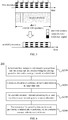
- FIG. 1 is a schematic flowchart illustrating a method 100 for determining transmission resources according to an implementation of the disclosure.
- the method 100 may be performed by a terminal device.
- the method 100 includes the following operations: S110, at least one first resource is determined in a target time unit, the at least one first resource being for carrying at least one of grant-free data or semi-persistently scheduled data; S120, resource information is received from a network device, the resource information indicating a resource allocation in the target time unit; S130, an available resource is determined among the at least one first resource according to the resource information; and S140, transmission of at least one of the grant-free data or semi-persistently scheduled data is performed via the available resource with the network device.
- the terminal device determines the at least one first resource in the target time unit, which specifically includes the following operation: the terminal device receives a configuration signaling from the network device, the configuration signaling indicating the at least one first resource.
- the at least one first resource may be for carrying grant-free data and/or semi-persistently scheduled data.
- the first way is to (semi-statically) configure the grant-free resources using a Radio Resource Control (RRC) signaling which can include time-domain and frequency-domain resources, reference symbol information, modulation and coding schemes, and power control parameters.
- RRC Radio Resource Control
- Another way is to configure the grant free resources using a method combining the RRC signaling and a physical layer signaling.
- the RRC signaling configuration includes a time-domain resource cycle and power control parameters
- the physical layer signaling includes frequency-domain resources, reference symbol information, and modulation and coding schemes.
- the at least one first resource may be configured by using any one of the above ways, but implementations of the disclosure are not limited thereto.
- the at least one first resource may be a cyclic resource or a non-cyclic resource.
- the terminal device determines the at least one first resource, each one of which can include at least one time-domain symbol and the numbers of the time-domain symbols included in each of the at least one first resource may be same or different.
- a cycle of the at least one first resource is 4 time-domain symbols.
- FIG. 2 illustrates 7 first resources included in the at least one first resource: 1 to 7 respectively; each first resource includes two time-domain symbols and any two adjacent first resources are separated by two time-domain symbols.
- the first resources 1 to 4 correspond to a slot 1 and the first resources 5 to 7 correspond to a slot 2.
- the target time unit is the slot 1
- the at least one first resource includes 4 first resources, which are first resources 1 to 4 in FIG. 2 , in the target time unit.
- the time-domain symbol may be an Orthogonal Frequency Division Multiplexing (OFDM) symbol.
- OFDM Orthogonal Frequency Division Multiplexing
- the at least one resource may be an uplink resource or a downlink resource, in other words, the first resource may be configured for transmission of uplink data or downlink data, but implementations of the disclosure are not limited thereto.
- the terminal device can receive, from the network device, resource information configured to indicate a resource allocation in the target time unit.
- the resource information may be configured to indicate at least one Bandwidth Part (BWP) and/or the resource information may be configured to indicate a slot format of the target time unit.
- BWP Bandwidth Part
- the terminal device can receive, from the network device, a configuration signaling for carrying the resource information.
- the configuration signaling may be a RRC signaling, but implementations of the disclosure are not limited thereto.
- the resource information may be configured to indicate at least one BWP.
- the network device can configure one or more BWPs for the terminal device, but in general situations, the terminal device can activate only one BWP each time, and the resource information may be configured to indicate the activated BWP.
- the resource information may be configured to indicate other BWP(s), but implementations of the disclosure are not limited thereto.
- any one BWP indicated by the resource information can include three parameters: a numerology, a center frequency point and a bandwidth.
- the numerology can represent a Subcarrier Spacing (SCS); the bandwidth is less than or equal to a maximum system bandwidth.
- SCS Subcarrier Spacing
- the resource information can also be configured to indicate the slot format in the target time unit.
- the slot format can include positions and a number of the time-domain symbols included in the target time unit.
- the terminal device can determine the resource allocation, which includes the BWP of the terminal device and the slot format, according to the resource information, and then determine at least one second resource in the target time unit, which is allocated by the network device for the terminal device and which may be an uplink resource or a downlink resource, so that the terminal device can use the at least one second resource for transmission of data with the network device.
- the terminal device determines an available resource among the at least one first resource according to the resource information.
- the terminal can determine at least one second resource in the target time unit, which corresponds to the resource information, and can further determine a target feature of the at least one second resource and a target feature of the at least one first resource; when the target feature of the at least one first resource is same as the target feature of the at least one second resource, at least one overlapping resource between the at least one first resource and the at least second resource is determined and the available resource is determined among the at least one overlapping resource.
- the terminal device can determine whether a target overlapping resource in the at least one overlapping resource is the available resource according to a preset condition, herein, the target overlapping resource is any one resource of the at least one overlapping resource.
- the target feature can include at least one of: a transmission direction, a subcarrier spacing or a cyclic prefix length.
- the transmission direction is that both the at least one first resource and the at least one second resource are used for an uplink transmission or a downlink transmission.
- each of the at least one overlapping resource can include at least one time-domain symbol.
- a preset condition used by the terminal device in determining whether a target overlapping resource among the at least one overlapping resource is the available resource can include: the target overlapping resource may be determined as the available resource when a number of the at least one time-domain symbol included in the target overlapping resource is greater than or equal to a preset value.
- the preset value in the preset condition may be set according to an actual situation.
- the preset value may be set in advance.
- the terminal device receives, from the network device, configuration information configured to indicate the preset value, and the terminal device determines the preset value according to the configuration information.
- the preset value can also be determined by the terminal device according to the number of the time-domain symbols included in one of the at least one first resource.
- the numbers of the time-domain symbols included in the at least one first symbol may be the same from one another, and the preset value may be equal to the number of the time-domain symbols included in each of the at least one first resource.
- the numbers of the time-domain symbols included in the at least one first resource can also be different from one another, in this case, the preset value may be equal to a maximum value of the numbers of the time-domain symbols included in the at least one first resource or a minimum value of the numbers of the time-domain symbols included in the at least one first resource.
- the maximum value is a number of time-domain symbols included in a first resource including a maximum number of the time-domain symbols, among the at least one first resource; and the minimum value is a number of time-domain symbols included in a first resource including a minimum number of the time-domain symbols, among the at least one first resource; or the preset value may also be equal to a number of the time-domain symbols included in the first resource corresponding to the target overlapping resource.
- FIG. 2 assuming that the target time unit includes a slot 1 and a slot 2 and each slot includes 14 time-domain symbols, such as for example OFDM symbols; in addition, FIG. 2 also illustrates 7 first resources, which are respectively numbered 1 to 7 and included in the at least one first resource in the target time unit, and two second resources, which are respectively numbered 1 and 2and included in the target time unit.
- the 7 first resources and the 2 second resources are used for the uplink transmission and are all uplink resources, and the preset condition is set as: if the number of the time-domain symbols included in the target overlapping resource among the multiple overlapping resources between the 7 first resources and the 2 second resources is greater than or equal to the preset value, the target overlapping resource is determined as the available resource.
- each of the 7 first resources includes same number of time-domain symbols, for example, each first resource includes two OFDM symbols
- the preset value in the preset condition may be equal to the number of the time-domain symbols included in each first resource, that is to say, the preset value is equal to two OFDM symbols.
- the target overlapping resource may be determined as the available resource.
- an overlapping part between the first resource 5 and two second resources is the target overlapping resource, and the number of the time-domain symbols included in the target overlapping resource is less than two OFDM symbols, as a result, the target overlapping resource does not belong to the available resource.
- the overlapping resources between the 7 first resources and the 2 second resources, which are determined as the available resources are resources corresponding to the first resources 2, 3, 4, 6 and 7.
- the preset value may be set as the maximum value or the minimum value of the numbers of the time-domain symbols included in the at least one first resource or the preset value can also be set as a size of the first resource corresponding to the target overlapping resource.
- the overlapping part between the first resource 5 and the two resources is the target overlapping resource. Because the target overlapping resource is merely a part of the first resource 5, in other words, the number of the time-domain symbols included in the target overlapping resource is less than the number of the time-domain symbols included in the first resource 5. As a result, the target overlapping resource corresponding to the part of the first resource 5 does not belong to the available resource.
- the at least one first resource includes a resource occupied by a reference signal in the target time unit; and accordingly, at least one overlapping resource can also include the resource occupied by the reference signal, and accordingly the preset condition that the terminal device determines whether the target overlapping resource among the at least one overlapping resource is the available resource can include: if the target overlapping resource among the at least one overlapping resource includes the resource occupied by the reference signal and the reference signal includes part or all of reference signals corresponding to a target antenna interface, then the target overlapping resource is determined as the available resource and the target antenna interface is an antenna interface of at least one antenna interface configured for transmission of the grant-free data and/or the semi-persistently scheduled data.
- the target overlapping resource includes the resource occupied by the reference signal and the reference symbol includes part of the reference signals corresponding to the target antenna interface
- the part of the reference signals may also be used for implementing channel estimation.
- FIG. 3 illustrates 7 first resources, which are respectively numbered 1 to 7 and included in the at least one first resource in the target time unit, and two second resources, which are respectively numbered 1 and 2 and included in the target time unit.
- the 7 first resources and the 2 second resources are all used for the uplink transmission and are all uplink resources.
- the 7 first resources each include resources occupied by a reference signal, which are illustrated as the parts in black blocks in each first resource.
- the preset condition is set as: if a target overlapping resource among multiple overlapping resources between the 7 first resources and the 2 second resources includes the reference signal and the reference signal includes all of reference signals corresponding to a target antenna interface, then the target overlapping resource is determined as the available resource.
- the overlapping part between the first resource and two second resources includes an entirety of the first resource 2, in other words, the target overlapping resource is the entirety of the first resource 2 and includes the resource occupied by all the reference signals in the first resource 2.
- the target overlapping resource corresponding to the first resource 2 may be determined as the available resource.
- an overlapping part between the first resource 4 and the two second resources merely includes a left half part of the first resource 4, in other words, the target overlapping resource is the left half part of the first resource 4, but the target overlapping resource includes a resource occupied by all reference signals in the first resource 4.
- the target overlapping resource corresponding to the first resource 4 is determined as the available resource, that is to say, the available resource is merely the left half part of the first resource 4.
- an overlapping part between the first resource 4 and the two second resources merely includes a right half part of the first resource 5, in other words, the target overlapping resource is the right half part of the first resource 5, but the target overlapping resource does not include a resource occupied by all reference signals in the first resource 5.
- the target overlapping resource corresponding to the first resource 5 does not belong to the available resource, that is to say, the available resource does not include the first resource 5.
- each available resource includes the resource occupied by the reference signal and the reference signal includes all of reference signals of the corresponding antenna interface.
- a target time unit includes a slot 1 which includes 14 time-domain symbols, such as for example OFDM symbols; in addition, herein assuming that a terminal device merely activates one BWP as illustrated in FIG. 4 , one second resource numbered 1 may be determined according to the target time unit and the BWP.
- Fig 4 illustrates 4 first resources, which are respectively numbered 1 to 4 and included in at least one first resources; the 4 first resources and the 1 second resources are all used for an uplink transmission and are all uplink resources.
- the 4 first resources each include resources occupied by a reference signal, which are illustrated as the parts in black blocks in each first resource.
- the preset condition is set as: if a target overlapping resource among multiple overlapping resources between the 4 first resources and the 1 second resources includes the reference signal and the reference signal includes part or all of reference signals corresponding to a target antenna interface, then the target overlapping resource is determined as an available resource.
- an overlapping resource between the first resource 3 and the second resource is a lower half part of the first resource 3, in other words, the target overlapping resource corresponding to the first resource 3 is the lower half part of the first resource 3. Because the target overlapping resource includes the resource occupied by the reference signal and the reference signal includes part of the reference signals in the first resource 3, the target overlapping resource corresponding to the first resource 3 is determined as the available resource.
- the lower half parts of the first resource 2 can all be determined as the available resource. It is to be understood that as the available resource merely includes the resource occupied by part of the reference signals, the part of the reference signals can also be used for implementing channel estimation.
- the preset condition can include: if a first target overlapping resource does not include the resource occupied by the first reference signal or includes part of the resource occupied by the first reference signal and if a second target overlapping resource includes all or part of the resource occupied by the second reference signal, then the first target overlapping resource and the second target overlapping resource are all determined as the available resource, the first target overlapping resource being an overlapping resource between the first sub-resource and the at least one second resource, and the second target overlapping resource being an overlapping resource between the second sub-resource and the at least one second resource.
- the second reference signal is used to estimate a channel corresponding to the first target overlapping resource and/or a channel corresponding to the second target overlapping resource.
- the first target overlapping resource includes part of the resource occupied by the first reference signal and the second target overlapping resource includes all or part of the resource occupied by the second reference signal, then the first reference signal and the second reference signal are used for joint estimation of the channel corresponding to the first target overlapping resource and/or the channel corresponding to the second target overlapping resource.
- FIG. 5 assuming that a target time unit includes a slot 1 which includes 14 time-domain symbols, such as for example OFDM symbols; in addition, FIG. 4 illustrates 7 first resources, which are numbered 1 to 7 respectively and included in at least one first resource in the target time unit and the 7 first resources are continuous in the time domain; the target time unit also includes one second resource, and the 7 first resources and 1 second resource are all used for an uplink transmission and are all uplink resources, and the 7 first resources each include resources occupied by a reference signal, which are illustrated as the parts in black blocks in each first resource.
- an overlapping resource between the first resource 2 among the 7 first resources and the second resource does not include the resource occupied by the reference signal
- the first resource 2 may be a first sub-resource
- the overlapping resource between the first resource 2 and the second resource is namely the first target overlapping resource that does not include the resource occupied by the reference signal.
- An overlapping resource between the first resource 3, which is adjacent to the first resource 2, among the 7 first resources and the second resource includes the resource occupied by the reference signal and includes the resource occupied by all the corresponding reference signals.
- the first resource 3 may be a second sub-resource, and an overlapping resource between the first resource 3 and the second resource is namely the second target overlapping resource that includes an entirety of the first resource 3, then the second target overlapping resource includes the resource occupied by all the reference signals in the first resource 3.
- both the first target overlapping resource and the second target overlapping resource may be determined as an available resource. Because the first target overlapping resource is adjacent to the second target overlapping resource in the time domain, the reference signal carried in the second target overlapping resource can be used to perform channel estimation of a signal which is carried in the first target overlapping resource and a signal which is carried in the second target overlapping resource.
- a terminal device determines the available resource among the first resources using the above method, and then performs transmission of grant-free data and/or semi-persistently scheduled data via the available resource with a network device in operation S140.
- the terminal device determines the available resource using the above method and transmits the grant-free data and/or the semi-persistently scheduled data to the network device via the available resource.
- the network device can determine the available resource so as to receive the grant-free data and/or semi-persistently scheduled data from the terminal device via the available resource.
- the available resource is the downlink resource
- the terminal device determines the available resource using the above method and receives the grant-free data and/or the semi-persistently scheduled data from the network device via the available resource.
- the network can determine the available resource so as to transmit the grant-free data and/or the semi-persistently scheduled data to the terminal device via the available device.
- the terminal device determines, using the resources configured by the network device, the available resource among the at least one first resource configured for transmission of the grant-free data and/or the semi-persistently scheduled data in the target time unit, and uses the available resource for transmission of the grant-free data and/or the semi-persistently scheduled data.
- the semi-statically configured grant-free transmission resources are enabled to better adapt to an actual situation of the transmission resources, especially a situation in which time-domain and frequency-domain resources are dynamically indicated, thereby it is possible to avoid conflicts in the resource allocation.
- the method for determining transmission resources according to the implementation of the disclosure is described in detail from a perspective of the terminal device with reference to FIG. 1 to FIG. 5 .
- the method for determining transmission resources according to the implementations of the disclosure will be described from a perspective of the network device with reference to FIG. 6 .
- FIG. 6 is a schematic flowchart illustrating a method 200 for determining transmission resources according to an implementation of the disclosure.
- the method 200 may be performed by a network device.
- the method 200 includes the following operations: S210, at least one first resource is determined in a target time unit, the at least one first resource being for carrying at least one of grant-free data or semi-persistently scheduled data; S220, a resource allocation of a terminal device is determined in the target time unit; S230, an available resource is determined among the at least one first resource according to the resource allocation; S240, transmission of at least one of the grant-free data or semi-persistently scheduled data is performed via the available resource with the terminal device.
- a network device configures a resource for a terminal device, so that the network device and the network device to determine an available resource among at least one first resource configured for transmission of grant-free data and/or semi-persistently scheduled data in a target time unit, and use the available resource for transmission of the grant-free data and/or the semi-persistently scheduled data.
- the semi-statically configured grant-free transmission resources are enabled to better adapt to an actual situation of the transmission resources, especially a situation in which time-domain and frequency-domain resources are dynamically indicated, thereby it is possible to avoid conflicts in the resource allocation.
- the method further includes the following operation: a configuration signaling, which is configured to indicate the at least one first resource, is transmitted to the terminal device.
- the method further includes the following operation: resource information, which is configured to indicate a resource allocation, is transmitted to the terminal device.
- the resource information indicates at least one bandwidth part and/or a slot format of the target time unit.
- the operation that the available resource is determined among the at least one first resource according to the resource allocation includes the following operations: at least one second resource is determined in the target time unit according to the resource allocation, the at least one second resource having a same target feature as a target feature of the at least one first resource; and the available resource is determined among an overlapping resource between the at least one first resource and the at least one second resource.
- the target carrier includes at least one of: a transmission direction, a subcarrier spacing or a cyclic prefix length.
- the operation that the available resource is determined among the overlapping resource between the at least one first resource and the at least one second resource includes the following operation: when a target overlapping resource in at least one overlapping resource between the at least one first resource and the at least one second resource satisfies a preset condition, the target overlapping resource is determined as the available resource.
- each of the at least one overlapping resource includes at least one time-domain symbol and the preset condition includes: the target overlapping resource is determined as the available resource when a number of the at least one time-domain symbol included in the target overlapping resource is greater than or equal to a preset value.
- the preset value is equal to a number of the time-domain symbols included in one of the at least one first resource.
- the method also includes the following operation: the configuration information, which is configured to indicate the preset value, is transmitted to the terminal device.
- the at least one overlapping resource includes the resource occupied by the reference signal and the preset condition includes: the overlapping resource is determined as the available resource when the target overlapping resource includes the resource occupied by the reference signal and the reference signal includes part or all of reference signals corresponding to a target antenna interface, the target antenna interface being an antenna interface of at least one antenna interface configured for transmission of the grant-free data and/or the semi-persistently scheduled data.
- the at least one first resource includes a first sub-resource and a second sub-resource, the first sub-resource is adjacent to the second sub-resource in time domain or frequency domain, the first sub-resource includes a resource occupied by a first reference signal and the second sub-resource includes a resource occupied by a second reference signal.
- the preset condition includes: a first target overlapping resource and a second target overlapping resource are determined as the available resource when the first target overlapping resource does not include the resource occupied by the first reference signal or includes part of the resource occupied by the first reference signal and when the second target overlapping resource includes all or part of the resource occupied by the second reference signal.
- the target overlapping resource includes the first target overlapping resource and the second target overlapping resource, and the first target overlapping resource is an overlapping resource between the first sub-resource and the at least one second resource, and the second target overlapping resource is an overlapping resource between the second sub-resource and the at least one second resource.
- the first reference signal and the second reference signal are used for joint channel estimation.
- the network device in the method 200 can correspond to the network device in method 100, and the terminal device in the method 200 can correspond to the terminal device in the method 100, which will not be elaborated here.
- the network device configures the resource for a terminal device, so that the network device and the network device to determine the available resource among at least one first resource configured for transmission of the grant-free data and/or the semi-persistently scheduled data in the target time unit, and use the available resource for transmission of the grant-free data and/or the semi-persistently scheduled data.
- the semi-statically configured grant-free transmission resource are enabled to better adapt to the actual situation of the transmission resources, especially the situation in which time-domain and frequency-domain resources are dynamically indicated, thereby it is possible to avoid conflicts in the resource allocation.
- a magnitude of a sequence number of each process does not mean an execution sequence, the execution sequence of each process should be determined according to its function and an internal logic, and an implementation process of the implementation of the disclosure should not be limited.
- the term "and/or" is only an association relationship describing associated objects and represents that three relationships may exist.
- a and/or B may represent three conditions, i.e., independent existence of A, existence of both A and B and independent existence of B.
- the character "/" in the disclosure usually represents that previous and next associated objects form an "or" relationship.
- the method for determining transmission resources according to the implementation of the disclosure is described in detail with reference to FIG. 1 to FIG. 6 , the terminal device and the network device in some implementations of the disclosure will be described with reference to FIG. 7 to FIG. 10 .
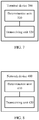
- a terminal device 300 includes a determination unit 310 and a transceiving unit 320.
- the determination unit 310 is configured to determine at least one first resource for carrying grant-free data and/or semi-persistently scheduled data, in a target time unit;
- the transceiving unit 320 is configured to receive resource information, which is configured to indicate a resource allocation in the target time unit, from a network device;
- the determination unit 310 is also use to determine an available resource among the at least one first resource according to the resource information;
- the transceiving unit 320 is also configured for transmission of the grant-free data and/or the semi-persistently scheduled data via the available resource with the network device.
- a terminal device in some implementations of the disclosure determines, using resources configured by a network device, the available resource among the at least one first resource configured for transmission of the grant-free data and/or the semi-persistently scheduled data in a target time unit, and uses the available resource for transmission of the grant-free data and/or the semi-persistently scheduled data.
- semi-statically configured grant-free transmission resources are enabled to better adapt to an actual situation of the transmission resources, especially the situation in which time-domain and frequency-domain resources are dynamically indicated, thereby it is possible to avoid conflicts in the resource allocation.
- the transceiving unit 320 is specifically configured to receive, from the terminal device, a configuration signaling configured to indicate the at least one first resource.
- the resource information indicates at least one bandwidth part and/or a slot format of the target time unit.
- the determination unit 310 is specifically configured to determine at least one second resource in the target time unit according to the resource information, the at least one second resource having a same target feature as a target feature of the at least one first resource; and determine the available resource among an overlapping resource between the at least one first resource and the at least one second resource.
- the target carrier includes at least one of: a transmission direction, a subcarrier spacing or a cyclic prefix length.
- the determination unit 310 is specifically configured to determine target overlapping resources as the available resource when the target overlapping resources in the at least one overlapping resource between the at least one first resource and the at least one second resource satisfy a preset condition.
- each of the at least one overlapping resource includes at least one time-domain symbol and the preset condition includes: the target overlapping resource is determined as the available resource when a number of the at least one time-domain symbol included in the target overlapping resource is greater than or equal to a preset value.
- the preset value is equal to a number of the time-domain symbols included in one of the at least one first resource.
- the transceiving unit 320 is specifically configured to receive, from the network device, configuration information configured to indicate the preset value.
- the at least one overlapping resource includes the resource occupied by a reference signal and the preset condition includes: the overlapping resource is determined as the available resource when the target overlapping resource includes the resource occupied by the reference signal and the reference signal includes part or all of reference signals corresponding to a target antenna interface, the target antenna interface being an antenna interface of at least one antenna interface configured for transmission of the grant-free data and/or the semi-persistently scheduled data.
- the at least one first resource includes a first sub-resource and a second sub-resource, the first sub-resource is adjacent to the second sub-resource in time domain or frequency domain, the first sub-resource includes a resource occupied by a first reference signal and the second sub-resource includes a resource occupied by a second reference signal.
- the preset condition includes: a first target overlapping resource and a second target overlapping resource are determined as the available resource when the first target overlapping resource does not include the resource occupied by the first reference signal or includes part of the resource occupied by the first reference signal and when the second target overlapping resource includes all or part of the resource occupied by the second reference signal.
- the target overlapping resource includes the first target overlapping resource and the second target overlapping resource, and the first target overlapping resource is an overlapping resource between the first sub-resource and the at least one second resource, and the second target overlapping resource is an overlapping resource between the second sub-resource and the at least one second resource.
- the first reference signal and the second reference signal are used for joint channel estimation.
- the terminal device 300 can execute the method 100 in some implementations of the disclosure and the above and other operations and/or functions of each unit in the terminal device 300 are respectively configured to implement corresponding process of the terminal device in each method of FIG. 1 to FIG. 6 , which will not be elaborated for the sake of brevity.
- a terminal device in some implementations of the disclosure determines, using resources configured by a network device, the available resource among the at least one first resource configured for transmission of the grant-free data and/or the semi-persistently scheduled data in a target time unit, and uses the available resource for transmission of the grant-free data and/or the semi-persistently scheduled data.
- the semi-statically configured grant-free transmission resources are enabled to better adapt to an actual situation of the transmission resources, especially the situation in which time-domain and frequency-domain resources are dynamically indicated, thereby it is possible to avoid conflicts in the resource allocation.
- a network device 400 includes a determination unit 410 and a transceiving unit 420.
- the determination unit 410 is configured to determine at least one first resource in a target time unit, wherein the at least one first resource is for carrying at least one of grant-free data or semi-persistently scheduled data; the determination unit 410 is also configured to determine a resource allocation of a terminal device in the target time unit; the determination unit 410 is also configured to determine available resource among at least one first resource according to the resource allocation; the transceiving unit 420 is configured for transmission of at least one of the grant-free data or the semi-persistently scheduled data via the available resource with the network device.
- the network device in some implementations of the disclosure configures a resource for the network device, so that the network device and the terminal device determine the available resource among the at least one first resource configured for transmission of the grant-free data and/or the semi-persistently scheduled data in a target time unit, and use the available resource for transmission of the grant-free data and/or the semi-persistently scheduled data.
- the semi-statically configured grant-free transmission resources are enabled to better adapt to an actual situation of the transmission resources, especially the situation in which time-domain and frequency-domain resources are dynamically indicated, thereby it is possible to avoid conflicts in the resource allocation.
- the transceiving unit 420 is specifically configured to transmit a configuration signaling which is configured to indicate the at least one first resource, to the terminal device after the determination unit 410 determines the at least one first resource in the target time unit.
- the transceiving unit 420 is specifically configured to transmit resource information, which is configured to indicate the resource allocation, to the terminal device after the determination unit 410 determines resources configured for the terminal device in the target time unit.
- the resource information indicates at least one bandwidth part and/or a slot format of the target time unit.
- the determination unit 410 is specifically configured to determine at least one second resource in the target time unit according to the resource allocation, the at least one second resource having a same target feature as a target feature of the at least one first resource and determine the available resource among an overlapping resource between the at least one first resource and the at least one second resource.
- the target carrier includes at least one of: a transmission direction, a subcarrier spacing or a cyclic prefix length.
- the determination unit 410 is specifically configured to determine a target overlapping resource as the available resource when the target overlapping resources in the at least one overlapping resource between the at least one first resource and the at least one second resource satisfy a preset condition.
- each of the at least one overlapping resource includes at least one time-domain symbol and the preset condition includes: the target overlapping resource is determined as the available resource when a number of the at least one time-domain symbol included in the target overlapping resource is greater than or equal to a preset value.
- the preset value is equal to a number of the time-domain symbols included in one of the at least one first resource.
- the network device also does the following operation: configuration information, which is configured to indicate the preset value, is transmitted to the terminal device.
- the at least one overlapping resource includes the resource occupied by the reference signal and the preset condition includes: the overlapping resource is determined as the available resource when the target overlapping resource includes the resource occupied by the reference signal and the reference signal includes part or all of reference signals corresponding to a target antenna interface, the target antenna interface being an antenna interface of at least one antenna interface configured for transmission of the grant-free data and/or the semi-persistently scheduled data.
- the at least one first resource includes a first sub-resource and a second sub-resource, the first sub-resource is adjacent to the second sub-resource in time domain or frequency domain, the first sub-resource includes a resource occupied by a first reference signal and the second sub-resource includes a resource occupied by a second reference signal.
- the preset condition includes: a first target overlapping resource and a second target overlapping resource are determined as the available resource when the first target overlapping resource does not include the resource occupied by the first reference signal or includes part of the resource occupied by the first reference signal and when the second target overlapping resource includes all or part of the resource occupied by the second reference signal.
- the target overlapping resource includes the first target overlapping resource and the second target overlapping resource, and the first target overlapping resource is an overlapping resource between the first sub-resource and the at least one second resource, and the second target overlapping resource is an overlapping resource between the second sub-resource and the at least one second resource.
- the first reference signal and the second reference signal are used for joint channel estimation.
- the terminal device 400 can execute the method 200 in some implementations of the disclosure and the above and other operations and/or functions of each unit in the terminal device 400 are respectively configured to implement corresponding process of the terminal device in each method of FIG. 1 to FIG. 6 , which will not be elaborated for the sake of brevity.
- the network device in some implementations of the disclosure configures a resource for the network device, so that the network device and the terminal device determine the available resource among the at least one first resource, which is configured for transmission of the grant-free data and/or the semi-persistently scheduled data, in a target time unit, and use the available resource for transmission of the grant-free data and/or the semi-persistently scheduled data.
- the semi-statically configured grant-free transmission resources are enabled to better adapt to an actual situation of the transmission resources, especially the situation in which time-domain and frequency-domain resources are dynamically indicated, thereby it is possible to avoid conflicts in the resource allocation.
- FIG. 9 is a schematic block diagram of a terminal device 500 according to an implementation of the disclosure.
- the terminal device 500 includes a processor 510 and a transceiver 520, and the processor 510 connects to the transceiver 520.
- the terminal device 500 also includes a memory 530, which connects to the processor 510.
- the processor 510, the memory 530, the transceiver 520 communicate with each other via an internal connection line to transfer and/or control a data signal.
- the memory 530 may be configured to store instructions, and the processor 510 is configured to execute the instructions stored in the memory 530 to control information or the signal transmitted by the transceiver 520.
- the processor 510 is configured to determine at least one first resource in a target time unit, and the at least one first resource is for carrying grant-free data and/or semi-persistently scheduled data.
- the transceiver 520 is configured to receive, from the network device, resource information configured to indicate a resource allocation in the target time unit.
- the processor 519 is also configured to determine an available resource among the at least one first resource according to the resource information.
- the transceiver 520 is also configured for transmission of the grant-free data and/or semi-persistently scheduled data via the available resource with the network device.
- a terminal device in some implementations of the disclosure determines, using resources configured by a network device, the available resource among the at least one first resource, which is configured for transmission of the grant-free data and/or the semi-persistently scheduled data, in a target time unit, and uses the available resource for transmission of the grant-free data and/or the semi-persistently scheduled data.
- semi-statically configured grant-free transmission resources are enabled to better adapt to an actual situation of the transmission resources, especially the situation in which time-domain and frequency-domain resources are dynamically indicated, thereby it is possible to avoid conflicts in the resource allocation.
- the transceiver 520 is also configured to receive, from the network device, a configuration signaling configured to indicate the at least one first resource.
- the resource information indicates at least one bandwidth part and/or a slot format of the target time unit.
- the processor 510 is also configured to determine at least one second resource in the target time unit according to the resource information, the at least one second resource having a same target feature as a target feature of the at least one first resource and determine the available resource among an overlapping resource between the at least one first resource and the at least one second resource.
- the target feature includes at least one of: a transmission direction, a subcarrier spacing or a cyclic prefix length.
- the processor 510 is also configured to determine target overlapping resources as the available resource when the target overlapping resources in the at least one overlapping resource between the at least one first resource and the at least one second resource satisfy a preset condition.
- each of the at least one overlapping resource includes at least one time-domain symbol and the preset condition includes: the target overlapping resource is determined as the available resource when a number of the at least one time-domain symbol included in the target overlapping resource is greater than or equal to a preset value.
- the preset value is equal to a number of the time-domain symbols included in one of the at least one first resource.
- the transceiver 520 is also configured to receive, from the network device, configuration information configured to indicate the preset value.
- the at least one overlapping resource includes a resource occupied by a reference signal and the preset condition includes: the overlapping resource is determined as the available resource when the target overlapping resource includes the resource occupied by the reference signal and the reference signal includes part or all of reference signals corresponding to a target antenna interface, the target antenna interface being an antenna interface of at least one antenna interface configured for transmission of the grant-free data and/or semi-persistently scheduled data.
- the at least one first resource includes a first sub-resource and a second sub-resource, the first sub-resource is adjacent to the second sub-resource in time domain or frequency domain, the first sub-resource includes a resource occupied by a first reference signal and the second sub-resource includes a resource occupied by a second reference signal.
- the preset condition includes: a first target overlapping resource and a second target overlapping resource are determined as the available resource when the first target overlapping resource does not include the resource occupied by the first reference signal or includes part of the resource occupied by the first reference signal and when the second target overlapping resource includes all or part of the resource occupied by the second reference signal.
- the target overlapping resource includes the first target overlapping resource and the second target overlapping resource, and the first target overlapping resource is an overlapping resource between the first sub-resource and the at least one second resource, and the second target overlapping resource is an overlapping resource between the second sub-resource and the at least one second resource.
- the first reference signal and the second reference signal are used for joint channel estimation.
- the terminal device 500 can correspond to the terminal device 300 in some implementations of the disclosure, and can execute a corresponding main body in the method 100 according to the implementation of the disclosure, and the above and other operations and/or functions of each unit in the terminal device 500 are respectively configured to implement corresponding process of the terminal device in each method of FIG. 1 to FIG. 6 , which will not be elaborated for the sake of brevity.
- the terminal device determines, using the resources configured by the network device, the available resource among the at least one first resource, which is configured for transmission of the grant-free data and/or the semi-persistently scheduled data, in a target time unit, and uses the available resource for transmission of the grant-free data and/or the semi-persistently scheduled data.
- the semi-statically configured grant-free transmission resources are enabled to better adapt to an actual situation of the transmission resources, especially the situation in which time-domain and frequency-domain resources are dynamically indicated, thereby it is possible to avoid conflicts in the resource allocation.
- FIG. 10 is a schematic block diagram of a network device 600 according to an implementation of the disclosure.
- the network device 600 includes a processor 610 and a transceiver 620 and the processor 610 is connected to the transceiver 620.
- the network device 600 also includes a memory 630, which is connected to the processor 610.
- the processor 610, the memory 630, the transceiver 620 communicate with each other via an internal connection line to transfer and/or control a data signal.
- the memory 630 may be configured to store instructions, and the processor 610 is configured to execute the instructions stored in the memory 630 to control information or the signal transmitted by the transceiver 620.
- the processor 610 is configured to determine at least one first resource, which is for carrying grant-free data and/or semi-persistently scheduled data, in a target time unit, determine a resource allocation of the terminal device in the target time unit and determine an available resource among the at least one first resource; the transceiver 620 is configured for transmission of the grant-free data and/or semi-persistently scheduled data via the available resource with the terminal device.
- the network device in some implementations of the disclosure configures a resource for the network device, so that the network device and the terminal device determine the available resource among the at least one first resource, which is configured for transmission of the grant-free data and/or the semi-persistently scheduled data, in a target time unit, and use the available resource for transmission of the grant-free data and/or the semi-persistently scheduled data.
- semi-statically configured grant-free transmission resources are enabled to better adapt to an actual situation of the transmission resources, especially the situation in which time-domain and frequency-domain resources are dynamically indicated, thereby it is possible to avoid conflicts in the resource allocation.
- the transceiver 620 is also configured to transmit a configuration signaling, which is configured to indicate the at least one first resource, to the terminal device after the processor 610 determines the at least one first resource in the target time unit.
- the transceiver 620 is also configured to transmit resource information, which is configured to indicate the resource allocation, to the terminal device after the determination unit determines resources configured for the terminal device in the target time unit.
- the resource information indicates at least one bandwidth part and/or a slot format of the target time unit.
- the processor 610 is configured to determine at least one second resource in the target time unit according to the resource allocation, the at least one second resource having a same target feature as a target feature of the at least one first resource and determine the available resource among an overlapping resource between the at least one first resource and the at least one second resource.
- the target feature includes at least one of: a transmission direction, a subcarrier spacing or a cyclic prefix length.
- the processor 610 is configured to determine a target overlapping resource as the available resource when the target overlapping resources in the at least one overlapping resource between the at least one first resource and the at least one second resource satisfy a preset condition.
- each of the at least one overlapping resource includes at least one time-domain symbol and the preset condition includes: the target overlapping resource is determined as the available resource when a number of the at least one time-domain symbol included in the target overlapping resource is greater than or equal to a preset value.
- the preset value is equal to a number of the time-domain symbols included in one of the at least one first resource.
- the network device also does the following operation: configuration information, which is configured to indicate the preset value, is transmitted to the terminal device.
- the at least one overlapping resource includes a resource occupied by a reference signal and the preset condition includes: the overlapping resource is determined as the available resource when the target overlapping resource includes the resource occupied by the reference signal and the reference signal includes part or all of reference signals corresponding to a target antenna interface, the target antenna interface being an antenna interface of at least one antenna interface configured for transmission of the grant-free data and/or semi-persistently scheduled data.
- the at least one first resource includes a first sub-resource and a second sub-resource, the first sub-resource is adjacent to the second sub-resource in time domain or frequency domain, the first sub-resource includes a resource occupied by a first reference signal and the second sub-resource includes a resource occupied by a second reference signal.
- the preset condition includes: a first target overlapping resource and a second target overlapping resource are determined as the available resource when the first target overlapping resource does not include the resource occupied by the first reference signal or includes part of the resource occupied by the first reference signal and when the second target overlapping resource includes all or part of the resource occupied by the second reference signal.
- the target overlapping resource includes the first target overlapping resource and the second target overlapping resource, and the first target overlapping resource is an overlapping resource between the first sub-resource and the at least one second resource, and the second target overlapping resource is an overlapping resource between the second sub-resource and the at least one second resource.
- the first reference signal and the second reference signal are used for joint channel estimation.
- the network device 600 can correspond to the network device 400 in some implementations of the disclosure, and can execute a corresponding main body in the method 200 according to the implementation of the disclosure, and the above and other operations and/or functions of each unit in the network device 600 are respectively configured to implement corresponding process of the network device in each method of FIG. 1 to FIG. 6 , which will not be elaborated for the sake of brevity.
- the network device in some implementations of the disclosure configures a resource for the network device, so that the network device and the terminal device determine the available resource among the at least one first resource, which is configured for transmission of the grant-free data and/or the semi-persistently scheduled data, in a target time unit, and use the available resource for transmission of the grant-free data and/or the semi-persistently scheduled data.
- the semi-statically configured grant-free transmission resources are enabled to better adapt to an actual situation of the transmission resources, especially the situation in which time-domain and frequency-domain resources are dynamically indicated, thereby it is possible to avoid conflicts in the resource allocation.
- the processor may be an integrated circuit chip with a signal processing capability. In an implementation process, each operation of the method implementations may be completed by an integrated logical circuit of hardware in the processor or an instruction in a software form.
- the processor may be a universal processor, a Digital Signal Processor (DSP), an Application Specific Integrated Circuit (ASIC), a Field Programmable Gate Array (FPGA) or another programmable logical device, discrete gate or transistor logical device and discrete hardware component.
- DSP Digital Signal Processor
- ASIC Application Specific Integrated Circuit
- FPGA Field Programmable Gate Array
- Each method, operation and logical block diagram disclosed in some implementations of the disclosure may be implemented or executed.
- the universal processor may be a microprocessor or the processor may also be any conventional processor and the like.
- the operations of the methods disclosed in combination with the implementations of the disclosure may be directly embodied to be executed and completed by a hardware decoding processor or executed and completed by a combination of hardware and software modules in the decoding processor.
- the software module may be located in a mature storage medium in this field such as a Random Access Memory (RAM), a flash memory, a Read-Only Memory (ROM), a Programmable ROM (PROM) or Electrically Erasable PROM (EEPROM) and a register.
- RAM Random Access Memory
- ROM Read-Only Memory
- PROM Electrically Erasable PROM
- the storage medium is located in a memory, and the processor reads information in the memory, and completes the operations of the methods in combination with hardware.
- the memory in some implementations of the disclosure may be a volatile memory or a nonvolatile memory, or may include both the volatile and nonvolatile memories.
- the nonvolatile memory may be a read only memory (ROM), a programmable ROM (PROM), an Erasable PROM (EPROM), an electrically EPROM (EEPROM) or a flash memory.
- the volatile memory may be a random access memory (RAM), and is used as an external high-speed cache.
- RAMs in various forms may be adopted, such as a Static RAM (SRAM), a Dynamic RAM (DRAM), a Synchronous DRAM (SDRAM), a Double Data Rate SDRAM (DDRSDRAM), an Enhanced SDRAM (ESDRAM), a Synchlink DRAM (SLDRAM) and a Direct Rambus RAM (DR RAM).
- SRAM Static RAM
- DRAM Dynamic RAM
- SDRAM Synchronous DRAM
- DDRSDRAM Double Data Rate SDRAM
- ESDRAM Enhanced SDRAM
- SLDRAM Synchlink DRAM
- DR RAM Direct Rambus RAM
- the disclosed system, device and method may be implemented in another manner.
- the device implementation described above is only schematic, and for example, division of the units is only logic function division, and other division manners may be adopted during practical implementation. For example, multiple units or components may be combined or integrated into another system, or some characteristics may be neglected executed.
- coupling or direct coupling or communication connection between each displayed or discussed component may be indirect coupling or communication connection, implemented through some interfaces, of the device or the units, and may be electrical and mechanical or adopt other forms.
- the units described as separate parts may or may not be physically separated, and parts displayed as units may or may not be physical units, and namely may be located in the same place, or may also be distributed to multiple network units. Part or all of the units may be selected to achieve the purpose of the solutions of the implementations according to a practical requirement.
- each function unit in each implementation of the disclosure may be integrated into a processing unit, each unit may also exist independently, and two or more than two unit may also be integrated into a unit.
- the function When being implemented in form of software function unit and sold or used as an independent product, the function may also be stored in a computer-readable storage medium.
- the technical solutions of the disclosure substantially or parts making contributions to a conventional art may be embodied in form of software product, and the computer software product is stored in a storage medium, including a plurality of instructions configured to enable a piece of computer device (which may be a personal computer, a server, network device or the like) to execute all or part of the operations of the method in each implementation of the disclosure.
- the abovementioned storage medium includes: various media capable of storing program codes such as a U disk, a mobile hard disk, a ROM, a RAM, a magnetic disk or an optical disk.
Landscapes
- Engineering & Computer Science (AREA)
- Signal Processing (AREA)
- Computer Networks & Wireless Communication (AREA)
- Mobile Radio Communication Systems (AREA)
- Data Exchanges In Wide-Area Networks (AREA)
Claims (18)
- Verfahren (100) zum Bestimmen von Übertragungsressourcen,
wobei das Verfahren von einer Endgerätevorrichtung durchgeführt wird, wobei das Verfahren umfasst:Bestimmen (S110) wenigstens einer ersten Ressource in einem Schlitz, wobei die wenigstens eine erste Ressource für das Transportieren von wenigstens einem von bewilligungsfreien Daten oder semipersistent geplanten Daten vorgesehen ist;Empfangen (S120) von Ressourceninformationen von einer Netzvorrichtung, wobei die Ressourceninformationen ein Schlitzformat des Schlitzes angeben;Bestimmen (S130) einer verfügbaren Ressource aus wenigstens einer ersten Ressource in dem Schlitz gemäß den Ressourceninformationen; undDurchführen (S140) einer Übertragung von wenigstens einem von den bewilligungsfreien Daten oder den semipersistent geplanten Daten über die verfügbare Ressource mit der Netzvorrichtung,wobei das Bestimmen der verfügbaren Ressource aus der wenigstens einen ersten Ressource in dem Schlitz gemäß den Ressourceninformationen umfasst:Bestimmen wenigstens einer zweiten Ressource in dem Schlitz gemäß den Ressourceninformationen, wobei die wenigstens eine zweite Ressource dasselbe Zielmerkmal aufweist wie ein Zielmerkmal der wenigstens einen ersten Ressource; undBestimmen der verfügbaren Ressource aus einer überlappenden Ressource zwischen der wenigstens einen ersten Ressource und der wenigstens einen zweiten Ressource,wobei das Verfahren dadurch gekennzeichnet ist, dass:
das Bestimmen der verfügbaren Ressource aus den überlappenden Ressourcen zwischen der wenigstens einen ersten Ressource und der wenigstens einen zweiten Ressource umfasst:wenn eine überlappende Zielressource in wenigstens einer überlappenden Ressource zwischen der wenigstens einen ersten Ressource und der wenigstens einen zweiten Ressource eine voreingestellte Bedingung erfüllt, Bestimmen der überlappenden Zielressource als die verfügbare Ressource,wobei jede der wenigstens einen überlappenden Ressource(n) wenigstens ein Zeitdomänensymbol umfasst und wobei die voreingestellte Bedingung umfasst:
Bestimmen der überlappenden Zielressource als die verfügbare Ressource, wenn die Menge der ein oder mehreren Zeitdomänensymbole, die in der überlappenden Zielressource enthalten sind, größer als ein voreingestellter Wert ist. - Verfahren gemäß Anspruch 1, wobei das Zielmerkmal eine Übertragungsrichtung umfasst.
- Verfahren gemäß Anspruch 2, wobei die Übertragungsrichtung eine Uplink-Übertragung ist.
- Verfahren gemäß Anspruch 1, wobei der voreingestellte Wert gleich der Menge der Zeitdomänensymbole ist, die in einer der wenigstens einen ersten Ressource(n) enthalten sind.
- Verfahren gemäß Anspruch 1, ferner umfassend:
vor dem Empfangen der Ressourceninformationen von der Netzvorrichtung, Empfangen einer Konfigurationssignalisierung von der Netzvorrichtung, wobei die Konfigurationssignalisierung die wenigstens eine erste Ressource angibt. - Endgerätevorrichtung (300), wobei die Endgerätevorrichtung umfasst:eine Sendeempfangseinheit (320), die dafür ausgelegt ist, Ressourceninformationen von einer Netzvorrichtung zu empfangen, wobei die Ressourceninformationen ein Schlitzformat eines Schlitzes angeben;eine Bestimmungseinheit (310), die dafür ausgelegt ist, eine verfügbare Ressource aus wenigstens einer ersten Ressource in dem Schlitz gemäß den Ressourceninformationen zu bestimmen,wobei die Sendeempfangseinheit (320) ferner dafür ausgelegt ist, eine Übertragung von wenigstens einem von den bewilligungsfreien Daten oder den semipersistent geplanten Daten über die verfügbare Ressource mit der Netzvorrichtung durchzuführen,wobei die Bestimmungseinheit (310) insbesondere dafür ausgelegt ist:wenigstens eine zweite Ressource in dem Schlitz gemäß den Ressourceninformationen zu bestimmen, wobei die wenigstens eine zweite Ressource dasselbe Zielmerkmal aufweist wie ein Zielmerkmal der wenigstens einen ersten Ressource; unddie verfügbare Ressource aus einer überlappenden Ressource zwischen der wenigstens einen ersten Ressource und der wenigstens einen zweiten Ressource zu bestimmen,wobei die Endgerätevorrichtung dadurch gekennzeichnet ist, dass:
die Bestimmungseinheit (310) insbesondere dafür ausgelegt ist:wenn eine überlappende Zielressource in wenigstens einer überlappenden Ressource zwischen der wenigstens einen ersten Ressource und der wenigstens einen zweiten Ressource eine voreingestellte Bedingung erfüllt, die überlappende Zielressource als die verfügbare Ressource zu bestimmen,wobei jede der wenigstens einen überlappenden Ressource(n) wenigstens ein Zeitdomänensymbol umfasst und wobei die voreingestellte Bedingung umfasst:
Bestimmen der überlappenden Zielressource als die verfügbare Ressource, wenn die Menge der ein oder mehreren Zeitdomänensymbole, die in der überlappenden Zielressource enthalten sind, größer als ein voreingestellter Wert ist. - Endgerätevorrichtung (300) gemäß Anspruch 6, wobei das Zielmerkmal eine Übertragungsrichtung umfasst.
- Endgerätevorrichtung (300) gemäß Anspruch 7, wobei die Übertragungsrichtung eine Uplink-Übertragung ist.
- Endgerätevorrichtung (300) gemäß Anspruch 6, wobei der voreingestellte Wert gleich der Menge der Zeitdomänensymbole ist, die in einer der wenigstens einen ersten Ressource(n) enthalten sind.
- Endgerätevorrichtung (300) gemäß Anspruch 6, wobei die Sendeempfangseinheit (320) ferner dafür ausgelegt ist:
vor dem Empfangen der Ressourceninformationen von der Netzvorrichtung eine Konfigurationssignalisierung von der Netzvorrichtung zu empfangen, wobei die Konfigurationssignalisierung die wenigstens eine erste Ressource angibt. - Verfahren (200) zum Bestimmen von Übertragungsressourcen, wobei das Verfahren von einer Netzvorrichtung durchgeführt wird und umfasst:Übertragen von Ressourceninformationen an eine Endgerätevorrichtung, wobei die Ressourceninformationen ein Zeitschlitzformat eines Zeitschlitzes angeben;Bestimmen (S230) einer verfügbaren Ressource aus wenigstens einer ersten Ressource in dem Zeitschlitz gemäß den Ressourceninformationen; und Durchführen (S240) einer Übertragung von wenigstens einem von den bewilligungsfreien Daten oder semipersistent geplanten Daten über die verfügbare Ressource mit der Endgerätevorrichtung,wobei das Bestimmen der verfügbaren Ressource aus der wenigstens einen ersten Ressource in dem Zeitschlitz gemäß den Ressourceninformationen umfasst:Bestimmen wenigstens einer zweiten Ressource in dem Zeitschlitz gemäß den Ressourceninformationen, wobei die wenigstens eine zweite Ressource dasselbe Zielmerkmal aufweist wie ein Zielmerkmal der wenigstens einen ersten Ressource; undBestimmen der verfügbaren Ressource aus einer überlappenden Ressource zwischen der wenigstens einen ersten Ressource und der wenigstens einen zweiten Ressource,wobei das Verfahren dadurch gekennzeichnet ist, dass:
das Bestimmen der verfügbaren Ressource aus der überlappenden Ressource zwischen der wenigstens einen ersten Ressource und der wenigstens einen zweiten Ressource umfasst:wenn eine überlappende Zielressource in wenigstens einer überlappenden Ressource zwischen der wenigstens einen ersten Ressource und der wenigstens einen zweiten Ressource eine voreingestellte Bedingung erfüllt, Bestimmen der überlappenden Zielressource als die verfügbare Ressource,wobei jede der wenigstens einen überlappenden Ressource(n) wenigstens ein Zeitdomänensymbol umfasst und die voreingestellte Bedingung umfasst:
Bestimmen der überlappenden Zielressource als die verfügbare Ressource, wenn die Menge der ein oder mehreren Zeitdomänensymbole, die in der überlappenden Zielressource enthalten sind, größer als ein voreingestellter Wert ist. - Verfahren gemäß Anspruch 11, wobei das Zielmerkmal eine Übertragungsrichtung umfasst.
- Verfahren gemäß Anspruch 12, wobei die Übertragungsrichtung eine Uplink-Übertragung ist.
- Verfahren gemäß Anspruch 11, wobei der voreingestellte Wert gleich der Menge der Zeitdomänensymbole ist, die in einer der wenigstens einen ersten Ressource(n) enthalten sind.
- Netzvorrichtung (400), umfassend:eine Sendeempfangseinheit (420), die dafür ausgelegt ist, Ressourceninformationen an eine Endgerätevorrichtung zu übertragen, wobei die Ressourceninformationen ein Zeitschlitzformat eines Zeitschlitzes angeben; undeine Bestimmungseinheit (410), die dafür ausgelegt ist, eine verfügbare Ressource aus wenigstens einer ersten Ressource in dem Zeitschlitz gemäß den Ressourceninformationen zu bestimmen,wobei die Sendeempfangseinheit (420) ferner dafür ausgelegt ist, eine Übertragung von wenigstens einem von den bewilligungsfreien Daten oder den semipersistent geplanten Daten über die verfügbare Ressource mit der Endgerätevorrichtung durchzuführen,wobei die Bestimmungseinheit (410) insbesondere dafür ausgelegt ist:wenigstens eine zweite Ressource in dem Zeitschlitz gemäß den Ressourceninformationen zu bestimmen, wobei die wenigstens eine zweite Ressource dasselbe Zielmerkmal aufweist wie ein Zielmerkmal der wenigstens einen ersten Ressource; unddie verfügbare Ressource aus einer überlappenden Ressource zwischen der wenigstens einen ersten Ressource und der wenigstens einen zweiten Ressource zu bestimmen,wobei die Netzvorrichtung dadurch gekennzeichnet ist, dass:
die Bestimmungseinheit (410) insbesondere dafür ausgelegt ist:wenn eine überlappende Zielressource in der wenigstens einer überlappenden Ressource zwischen der wenigstens einen ersten Ressource und der wenigstens einen zweiten Ressource eine voreingestellte Bedingung erfüllt, die überlappende Zielressource als die verfügbare Ressource zu bestimmen,wobei jede der wenigstens einen überlappenden Ressource(n) wenigstens ein Zeitdomänensymbol umfasst und die voreingestellt Bedingung umfasst:
Bestimmen der überlappenden Zielressource als die verfügbare Ressource, wenn die Menge der ein oder mehreren Zeitdomänensymbole, die in der überlappenden Zielressource enthalten sind, größer als ein voreingestellter Wert ist. - Netzvorrichtung (400) gemäß Anspruch 15, wobei das Zielmerkmal eine Übertragungsrichtung umfasst.
- Netzvorrichtung (400) gemäß Anspruch 16, wobei die Übertragungsrichtung eine Uplink-Übertragung ist.
- Netzvorrichtung (400) gemäß Anspruch 15, wobei der voreingestellte Wert gleich der Menge der Zeitdomänensymbole ist, die in einer der wenigstens einen ersten Ressource(n) enthalten sind.
Priority Applications (1)
| Application Number | Priority Date | Filing Date | Title |
|---|---|---|---|
| EP21195142.1A EP3965505B1 (de) | 2017-12-14 | 2017-12-14 | Verfahren zur bestimmung von übertragungsressourcen, endgerätevorrichtung und netzwerkvorrichtung |
Applications Claiming Priority (1)
| Application Number | Priority Date | Filing Date | Title |
|---|---|---|---|
| PCT/CN2017/116236 WO2019113897A1 (zh) | 2017-12-14 | 2017-12-14 | 确定传输资源的方法、终端设备和网络设备 |
Related Child Applications (1)
| Application Number | Title | Priority Date | Filing Date |
|---|---|---|---|
| EP21195142.1A Division EP3965505B1 (de) | 2017-12-14 | 2017-12-14 | Verfahren zur bestimmung von übertragungsressourcen, endgerätevorrichtung und netzwerkvorrichtung |
Publications (3)
| Publication Number | Publication Date |
|---|---|
| EP3716705A1 EP3716705A1 (de) | 2020-09-30 |
| EP3716705A4 EP3716705A4 (de) | 2020-10-28 |
| EP3716705B1 true EP3716705B1 (de) | 2021-10-06 |
Family
ID=66818818
Family Applications (2)
| Application Number | Title | Priority Date | Filing Date |
|---|---|---|---|
| EP17934963.4A Active EP3716705B1 (de) | 2017-12-14 | 2017-12-14 | Verfahren zur bestimmung von übertragungsressourcen, endgerätevorrichtung und netzwerkvorrichtung |
| EP21195142.1A Active EP3965505B1 (de) | 2017-12-14 | 2017-12-14 | Verfahren zur bestimmung von übertragungsressourcen, endgerätevorrichtung und netzwerkvorrichtung |
Family Applications After (1)
| Application Number | Title | Priority Date | Filing Date |
|---|---|---|---|
| EP21195142.1A Active EP3965505B1 (de) | 2017-12-14 | 2017-12-14 | Verfahren zur bestimmung von übertragungsressourcen, endgerätevorrichtung und netzwerkvorrichtung |
Country Status (12)
| Country | Link |
|---|---|
| US (2) | US10993229B2 (de) |
| EP (2) | EP3716705B1 (de) |
| JP (1) | JP7197586B2 (de) |
| KR (1) | KR20200095555A (de) |
| CN (2) | CN111096014B (de) |
| AU (1) | AU2017442494A1 (de) |
| BR (1) | BR112020011721A2 (de) |
| CA (1) | CA3085485C (de) |
| MX (1) | MX2020006211A (de) |
| RU (1) | RU2752245C1 (de) |
| SG (1) | SG11202005538VA (de) |
| WO (1) | WO2019113897A1 (de) |
Families Citing this family (8)
| Publication number | Priority date | Publication date | Assignee | Title |
|---|---|---|---|---|
| CN110445521B (zh) * | 2018-05-04 | 2022-12-27 | 华为技术有限公司 | 信息传输方法及设备 |
| CN110495209B (zh) * | 2019-06-25 | 2023-11-14 | 小米通讯技术有限公司 | 确定无线资源的方法及装置 |
| WO2021056593A1 (zh) * | 2019-09-29 | 2021-04-01 | 华为技术有限公司 | 通信方法、设备及系统 |
| WO2021217382A1 (zh) * | 2020-04-27 | 2021-11-04 | 华为技术有限公司 | 信道跟踪方法及装置 |
| EP4152708B1 (de) * | 2020-05-27 | 2024-05-15 | Huawei Technologies Co., Ltd. | Kommunikationsverfahren und kommunikationsvorrichtung |
| CN114641070B (zh) * | 2020-12-16 | 2025-05-13 | 中国移动通信有限公司研究院 | 数据传输方法、装置及相关设备 |
| US12150123B2 (en) * | 2021-04-05 | 2024-11-19 | Sharp Kabushiki Kaisha | User equipments, base stations, and methods |
| KR20230161813A (ko) * | 2022-05-19 | 2023-11-28 | 삼성전자주식회사 | 네트워크 장비 내의 컴퓨팅과 결합된 차세대 이동통신 시스템을 위한 방법 및 장치 |
Family Cites Families (24)
| Publication number | Priority date | Publication date | Assignee | Title |
|---|---|---|---|---|
| EP2166804A1 (de) * | 2008-09-17 | 2010-03-24 | Panasonic Corporation | Deaktivierung semipersistenter Ressourcenzuweisungen in einem mobilen Kommunikationsnetz |
| CN102083209B (zh) * | 2010-02-11 | 2014-03-12 | 电信科学技术研究院 | 多载波系统中的数据传输方法、系统和设备 |
| CN102158973B (zh) * | 2010-02-11 | 2013-11-20 | 电信科学技术研究院 | 半持续调度、传输及处理方法、系统和设备 |
| US9258807B2 (en) * | 2010-05-03 | 2016-02-09 | Intel Deutschland Gmbh | Communication network device, communication terminal, and communication resource allocation methods |
| CN102056174B (zh) * | 2010-12-16 | 2014-03-12 | 大唐移动通信设备有限公司 | 一种资源调度的方法、装置和基站 |
| CN102595600B (zh) * | 2011-01-17 | 2014-12-31 | 华为技术有限公司 | 半静态调度方法、用户设备及网络设备 |
| CN102932934B (zh) * | 2011-08-08 | 2016-01-20 | 普天信息技术研究院有限公司 | 一种同时进行半静态调度业务和动态调度业务的方法 |
| US9681430B2 (en) * | 2012-10-29 | 2017-06-13 | Telefonaktiebolaget Lm Ericsson (Publ) | Methods and arrangements for semi-persistent scheduling |
| CN110191511A (zh) | 2014-03-19 | 2019-08-30 | 华为技术有限公司 | 半静态调度sps的方法和装置 |
| CN106211332B (zh) | 2015-05-05 | 2021-08-17 | 中兴通讯股份有限公司 | 资源分配的方法和装置 |
| CN106851744B (zh) * | 2015-12-03 | 2023-04-28 | 华为技术有限公司 | 无线通信的方法和装置 |
| CN111328150B (zh) * | 2015-12-24 | 2023-04-07 | 上海朗帛通信技术有限公司 | 一种无线通信中的调度方法和装置 |
| WO2017156787A1 (zh) * | 2016-03-18 | 2017-09-21 | 广东欧珀移动通信有限公司 | 通信方法、终端设备和网络设备 |
| WO2017164698A1 (ko) | 2016-03-25 | 2017-09-28 | 엘지전자(주) | 무선 통신 시스템에서 무선 자원을 할당 받는 방법 및 이를 위한 장치 |
| CN107347212B (zh) * | 2016-05-05 | 2019-11-12 | 普天信息技术有限公司 | V2v场景中的资源分配方法及装置 |
| EP3413650B1 (de) | 2016-05-11 | 2023-05-17 | Guangdong Oppo Mobile Telecommunications Corp., Ltd. | D2d-kommunikationsverfahren und d2d-vorrichtung |
| CN108282879B (zh) * | 2017-01-06 | 2022-11-18 | 中兴通讯股份有限公司 | 数据传输方法及装置 |
| CN108282883B (zh) * | 2017-01-06 | 2020-03-24 | 电信科学技术研究院 | 一种信息传输方法及装置 |
| KR102108467B1 (ko) * | 2017-04-18 | 2020-05-08 | 엘지전자 주식회사 | 무선 통신 시스템에서의 레이트 매칭 방법 및 이를 위한 장치 |
| CN109150424B (zh) * | 2017-06-15 | 2021-09-07 | 华为技术有限公司 | 参考信号、消息的传输方法、传输资源确定方法和装置 |
| CN109152078B (zh) * | 2017-06-16 | 2022-01-04 | 大唐移动通信设备有限公司 | 上行控制信道的发送方法、接收方法、装置、终端及基站 |
| CN109217998B (zh) * | 2017-07-07 | 2021-05-14 | 华为技术有限公司 | 数据传输方法、发送设备和接收设备 |
| CN109391419B (zh) * | 2017-08-11 | 2021-08-20 | 华为技术有限公司 | 一种无线通信方法及装置 |
| US20190159238A1 (en) * | 2017-11-21 | 2019-05-23 | Electronics And Telecommunications Research Institute | Method for providing low latency service in communication system and apparatus for the same |
-
2017
- 2017-12-14 CN CN201780094566.7A patent/CN111096014B/zh active Active
- 2017-12-14 MX MX2020006211A patent/MX2020006211A/es unknown
- 2017-12-14 EP EP17934963.4A patent/EP3716705B1/de active Active
- 2017-12-14 EP EP21195142.1A patent/EP3965505B1/de active Active
- 2017-12-14 WO PCT/CN2017/116236 patent/WO2019113897A1/zh not_active Ceased
- 2017-12-14 SG SG11202005538VA patent/SG11202005538VA/en unknown
- 2017-12-14 KR KR1020207020078A patent/KR20200095555A/ko not_active Withdrawn
- 2017-12-14 RU RU2020122549A patent/RU2752245C1/ru active
- 2017-12-14 JP JP2020531906A patent/JP7197586B2/ja active Active
- 2017-12-14 AU AU2017442494A patent/AU2017442494A1/en not_active Abandoned
- 2017-12-14 CN CN202010386925.XA patent/CN111642015B/zh active Active
- 2017-12-14 CA CA3085485A patent/CA3085485C/en active Active
- 2017-12-14 BR BR112020011721-8A patent/BR112020011721A2/pt not_active IP Right Cessation
-
2020
- 2020-06-09 US US16/897,077 patent/US10993229B2/en active Active
-
2021
- 2021-03-30 US US17/217,984 patent/US11678310B2/en active Active
Also Published As
| Publication number | Publication date |
|---|---|
| CN111096014A (zh) | 2020-05-01 |
| SG11202005538VA (en) | 2020-07-29 |
| EP3716705A1 (de) | 2020-09-30 |
| CN111096014B (zh) | 2025-03-18 |
| CA3085485A1 (en) | 2019-06-20 |
| CA3085485C (en) | 2023-01-24 |
| JP7197586B2 (ja) | 2022-12-27 |
| KR20200095555A (ko) | 2020-08-10 |
| EP3965505B1 (de) | 2025-02-26 |
| RU2752245C1 (ru) | 2021-07-23 |
| WO2019113897A1 (zh) | 2019-06-20 |
| US10993229B2 (en) | 2021-04-27 |
| US11678310B2 (en) | 2023-06-13 |
| MX2020006211A (es) | 2020-08-31 |
| BR112020011721A2 (pt) | 2020-11-17 |
| US20210219289A1 (en) | 2021-07-15 |
| US20200305155A1 (en) | 2020-09-24 |
| EP3716705A4 (de) | 2020-10-28 |
| JP2021512522A (ja) | 2021-05-13 |
| CN111642015A (zh) | 2020-09-08 |
| EP3965505A1 (de) | 2022-03-09 |
| AU2017442494A1 (en) | 2020-07-30 |
| CN111642015B (zh) | 2022-09-02 |
Similar Documents
| Publication | Publication Date | Title |
|---|---|---|
| US11229046B2 (en) | Data transmission method and terminal | |
| US10952207B2 (en) | Method for transmitting data, terminal device and network device | |
| US11678310B2 (en) | Method for determining transmission resources, terminal device and network device | |
| EP3934356B1 (de) | Datenübertragungsverfahren, endgerätevorrichtung und netzwerkvorrichtung | |
| US20180324786A1 (en) | Resource determination for uplink control channel for wireless networks | |
| AU2016414454B2 (en) | Method and terminal device for transmitting data | |
| KR20210151233A (ko) | 데이터 전송 방법, 단말기 디바이스 및 네트워크 디바이스 | |
| US11558865B2 (en) | Resource indication method, base station and terminal | |
| US20210250965A1 (en) | Method, terminal device and network device for transmitting channels | |
| EP3879901B1 (de) | Verfahren und vorrichtung zur srs-übertragung | |
| US11991684B2 (en) | Data transmission method and apparatus | |
| JP7269299B2 (ja) | 通信方法、端末及びネットワーク機器 |
Legal Events
| Date | Code | Title | Description |
|---|---|---|---|
| STAA | Information on the status of an ep patent application or granted ep patent |
Free format text: STATUS: THE INTERNATIONAL PUBLICATION HAS BEEN MADE |
|
| PUAI | Public reference made under article 153(3) epc to a published international application that has entered the european phase |
Free format text: ORIGINAL CODE: 0009012 |
|
| STAA | Information on the status of an ep patent application or granted ep patent |
Free format text: STATUS: REQUEST FOR EXAMINATION WAS MADE |
|
| 17P | Request for examination filed |
Effective date: 20200624 |
|
| AK | Designated contracting states |
Kind code of ref document: A1 Designated state(s): AL AT BE BG CH CY CZ DE DK EE ES FI FR GB GR HR HU IE IS IT LI LT LU LV MC MK MT NL NO PL PT RO RS SE SI SK SM TR |
|
| AX | Request for extension of the european patent |
Extension state: BA ME |
|
| A4 | Supplementary search report drawn up and despatched |
Effective date: 20200929 |
|
| RIC1 | Information provided on ipc code assigned before grant |
Ipc: H04W 88/02 20090101ALI20200923BHEP Ipc: H04W 72/04 20090101AFI20200923BHEP |
|
| DAV | Request for validation of the european patent (deleted) | ||
| DAX | Request for extension of the european patent (deleted) | ||
| GRAP | Despatch of communication of intention to grant a patent |
Free format text: ORIGINAL CODE: EPIDOSNIGR1 |
|
| STAA | Information on the status of an ep patent application or granted ep patent |
Free format text: STATUS: GRANT OF PATENT IS INTENDED |
|
| INTG | Intention to grant announced |
Effective date: 20210624 |
|
| GRAS | Grant fee paid |
Free format text: ORIGINAL CODE: EPIDOSNIGR3 |
|
| GRAA | (expected) grant |
Free format text: ORIGINAL CODE: 0009210 |
|
| STAA | Information on the status of an ep patent application or granted ep patent |
Free format text: STATUS: THE PATENT HAS BEEN GRANTED |
|
| AK | Designated contracting states |
Kind code of ref document: B1 Designated state(s): AL AT BE BG CH CY CZ DE DK EE ES FI FR GB GR HR HU IE IS IT LI LT LU LV MC MK MT NL NO PL PT RO RS SE SI SK SM TR |
|
| REG | Reference to a national code |
Ref country code: GB Ref legal event code: FG4D |
|
| REG | Reference to a national code |
Ref country code: CH Ref legal event code: EP Ref country code: AT Ref legal event code: REF Ref document number: 1437374 Country of ref document: AT Kind code of ref document: T Effective date: 20211015 |
|
| REG | Reference to a national code |
Ref country code: IE Ref legal event code: FG4D |
|
| REG | Reference to a national code |
Ref country code: DE Ref legal event code: R096 Ref document number: 602017047421 Country of ref document: DE |
|
| REG | Reference to a national code |
Ref country code: LT Ref legal event code: MG9D |
|
| REG | Reference to a national code |
Ref country code: NL Ref legal event code: MP Effective date: 20211006 |
|
| REG | Reference to a national code |
Ref country code: AT Ref legal event code: MK05 Ref document number: 1437374 Country of ref document: AT Kind code of ref document: T Effective date: 20211006 |
|
| PG25 | Lapsed in a contracting state [announced via postgrant information from national office to epo] |
Ref country code: RS Free format text: LAPSE BECAUSE OF FAILURE TO SUBMIT A TRANSLATION OF THE DESCRIPTION OR TO PAY THE FEE WITHIN THE PRESCRIBED TIME-LIMIT Effective date: 20211006 Ref country code: LT Free format text: LAPSE BECAUSE OF FAILURE TO SUBMIT A TRANSLATION OF THE DESCRIPTION OR TO PAY THE FEE WITHIN THE PRESCRIBED TIME-LIMIT Effective date: 20211006 Ref country code: FI Free format text: LAPSE BECAUSE OF FAILURE TO SUBMIT A TRANSLATION OF THE DESCRIPTION OR TO PAY THE FEE WITHIN THE PRESCRIBED TIME-LIMIT Effective date: 20211006 Ref country code: BG Free format text: LAPSE BECAUSE OF FAILURE TO SUBMIT A TRANSLATION OF THE DESCRIPTION OR TO PAY THE FEE WITHIN THE PRESCRIBED TIME-LIMIT Effective date: 20220106 Ref country code: AT Free format text: LAPSE BECAUSE OF FAILURE TO SUBMIT A TRANSLATION OF THE DESCRIPTION OR TO PAY THE FEE WITHIN THE PRESCRIBED TIME-LIMIT Effective date: 20211006 |
|
| PG25 | Lapsed in a contracting state [announced via postgrant information from national office to epo] |
Ref country code: IS Free format text: LAPSE BECAUSE OF FAILURE TO SUBMIT A TRANSLATION OF THE DESCRIPTION OR TO PAY THE FEE WITHIN THE PRESCRIBED TIME-LIMIT Effective date: 20220206 Ref country code: SE Free format text: LAPSE BECAUSE OF FAILURE TO SUBMIT A TRANSLATION OF THE DESCRIPTION OR TO PAY THE FEE WITHIN THE PRESCRIBED TIME-LIMIT Effective date: 20211006 Ref country code: PT Free format text: LAPSE BECAUSE OF FAILURE TO SUBMIT A TRANSLATION OF THE DESCRIPTION OR TO PAY THE FEE WITHIN THE PRESCRIBED TIME-LIMIT Effective date: 20220207 Ref country code: PL Free format text: LAPSE BECAUSE OF FAILURE TO SUBMIT A TRANSLATION OF THE DESCRIPTION OR TO PAY THE FEE WITHIN THE PRESCRIBED TIME-LIMIT Effective date: 20211006 Ref country code: NO Free format text: LAPSE BECAUSE OF FAILURE TO SUBMIT A TRANSLATION OF THE DESCRIPTION OR TO PAY THE FEE WITHIN THE PRESCRIBED TIME-LIMIT Effective date: 20220106 Ref country code: NL Free format text: LAPSE BECAUSE OF FAILURE TO SUBMIT A TRANSLATION OF THE DESCRIPTION OR TO PAY THE FEE WITHIN THE PRESCRIBED TIME-LIMIT Effective date: 20211006 Ref country code: LV Free format text: LAPSE BECAUSE OF FAILURE TO SUBMIT A TRANSLATION OF THE DESCRIPTION OR TO PAY THE FEE WITHIN THE PRESCRIBED TIME-LIMIT Effective date: 20211006 Ref country code: HR Free format text: LAPSE BECAUSE OF FAILURE TO SUBMIT A TRANSLATION OF THE DESCRIPTION OR TO PAY THE FEE WITHIN THE PRESCRIBED TIME-LIMIT Effective date: 20211006 Ref country code: GR Free format text: LAPSE BECAUSE OF FAILURE TO SUBMIT A TRANSLATION OF THE DESCRIPTION OR TO PAY THE FEE WITHIN THE PRESCRIBED TIME-LIMIT Effective date: 20220107 Ref country code: ES Free format text: LAPSE BECAUSE OF FAILURE TO SUBMIT A TRANSLATION OF THE DESCRIPTION OR TO PAY THE FEE WITHIN THE PRESCRIBED TIME-LIMIT Effective date: 20211006 |
|
| REG | Reference to a national code |
Ref country code: DE Ref legal event code: R097 Ref document number: 602017047421 Country of ref document: DE |
|
| PG25 | Lapsed in a contracting state [announced via postgrant information from national office to epo] |
Ref country code: SM Free format text: LAPSE BECAUSE OF FAILURE TO SUBMIT A TRANSLATION OF THE DESCRIPTION OR TO PAY THE FEE WITHIN THE PRESCRIBED TIME-LIMIT Effective date: 20211006 Ref country code: SK Free format text: LAPSE BECAUSE OF FAILURE TO SUBMIT A TRANSLATION OF THE DESCRIPTION OR TO PAY THE FEE WITHIN THE PRESCRIBED TIME-LIMIT Effective date: 20211006 Ref country code: RO Free format text: LAPSE BECAUSE OF FAILURE TO SUBMIT A TRANSLATION OF THE DESCRIPTION OR TO PAY THE FEE WITHIN THE PRESCRIBED TIME-LIMIT Effective date: 20211006 Ref country code: MC Free format text: LAPSE BECAUSE OF FAILURE TO SUBMIT A TRANSLATION OF THE DESCRIPTION OR TO PAY THE FEE WITHIN THE PRESCRIBED TIME-LIMIT Effective date: 20211006 Ref country code: EE Free format text: LAPSE BECAUSE OF FAILURE TO SUBMIT A TRANSLATION OF THE DESCRIPTION OR TO PAY THE FEE WITHIN THE PRESCRIBED TIME-LIMIT Effective date: 20211006 Ref country code: DK Free format text: LAPSE BECAUSE OF FAILURE TO SUBMIT A TRANSLATION OF THE DESCRIPTION OR TO PAY THE FEE WITHIN THE PRESCRIBED TIME-LIMIT Effective date: 20211006 Ref country code: CZ Free format text: LAPSE BECAUSE OF FAILURE TO SUBMIT A TRANSLATION OF THE DESCRIPTION OR TO PAY THE FEE WITHIN THE PRESCRIBED TIME-LIMIT Effective date: 20211006 |
|
| REG | Reference to a national code |
Ref country code: CH Ref legal event code: PL |
|
| PLBE | No opposition filed within time limit |
Free format text: ORIGINAL CODE: 0009261 |
|
| STAA | Information on the status of an ep patent application or granted ep patent |
Free format text: STATUS: NO OPPOSITION FILED WITHIN TIME LIMIT |
|
| 26N | No opposition filed |
Effective date: 20220707 |
|
| REG | Reference to a national code |
Ref country code: BE Ref legal event code: MM Effective date: 20211231 |
|
| PG25 | Lapsed in a contracting state [announced via postgrant information from national office to epo] |
Ref country code: LU Free format text: LAPSE BECAUSE OF NON-PAYMENT OF DUE FEES Effective date: 20211214 Ref country code: IE Free format text: LAPSE BECAUSE OF NON-PAYMENT OF DUE FEES Effective date: 20211214 Ref country code: AL Free format text: LAPSE BECAUSE OF FAILURE TO SUBMIT A TRANSLATION OF THE DESCRIPTION OR TO PAY THE FEE WITHIN THE PRESCRIBED TIME-LIMIT Effective date: 20211006 |
|
| PG25 | Lapsed in a contracting state [announced via postgrant information from national office to epo] |
Ref country code: SI Free format text: LAPSE BECAUSE OF FAILURE TO SUBMIT A TRANSLATION OF THE DESCRIPTION OR TO PAY THE FEE WITHIN THE PRESCRIBED TIME-LIMIT Effective date: 20211006 Ref country code: BE Free format text: LAPSE BECAUSE OF NON-PAYMENT OF DUE FEES Effective date: 20211231 |
|
| PG25 | Lapsed in a contracting state [announced via postgrant information from national office to epo] |
Ref country code: LI Free format text: LAPSE BECAUSE OF NON-PAYMENT OF DUE FEES Effective date: 20211231 Ref country code: CH Free format text: LAPSE BECAUSE OF NON-PAYMENT OF DUE FEES Effective date: 20211231 |
|
| PG25 | Lapsed in a contracting state [announced via postgrant information from national office to epo] |
Ref country code: IT Free format text: LAPSE BECAUSE OF FAILURE TO SUBMIT A TRANSLATION OF THE DESCRIPTION OR TO PAY THE FEE WITHIN THE PRESCRIBED TIME-LIMIT Effective date: 20211006 |
|
| P01 | Opt-out of the competence of the unified patent court (upc) registered |
Effective date: 20230412 |
|
| PG25 | Lapsed in a contracting state [announced via postgrant information from national office to epo] |
Ref country code: CY Free format text: LAPSE BECAUSE OF FAILURE TO SUBMIT A TRANSLATION OF THE DESCRIPTION OR TO PAY THE FEE WITHIN THE PRESCRIBED TIME-LIMIT Effective date: 20211006 |
|
| PG25 | Lapsed in a contracting state [announced via postgrant information from national office to epo] |
Ref country code: HU Free format text: LAPSE BECAUSE OF FAILURE TO SUBMIT A TRANSLATION OF THE DESCRIPTION OR TO PAY THE FEE WITHIN THE PRESCRIBED TIME-LIMIT; INVALID AB INITIO Effective date: 20171214 |
|
| PG25 | Lapsed in a contracting state [announced via postgrant information from national office to epo] |
Ref country code: MK Free format text: LAPSE BECAUSE OF FAILURE TO SUBMIT A TRANSLATION OF THE DESCRIPTION OR TO PAY THE FEE WITHIN THE PRESCRIBED TIME-LIMIT Effective date: 20211006 |
|
| PG25 | Lapsed in a contracting state [announced via postgrant information from national office to epo] |
Ref country code: MT Free format text: LAPSE BECAUSE OF FAILURE TO SUBMIT A TRANSLATION OF THE DESCRIPTION OR TO PAY THE FEE WITHIN THE PRESCRIBED TIME-LIMIT Effective date: 20211006 |
|
| PG25 | Lapsed in a contracting state [announced via postgrant information from national office to epo] |
Ref country code: TR Free format text: LAPSE BECAUSE OF FAILURE TO SUBMIT A TRANSLATION OF THE DESCRIPTION OR TO PAY THE FEE WITHIN THE PRESCRIBED TIME-LIMIT Effective date: 20211006 |
|
| PGFP | Annual fee paid to national office [announced via postgrant information from national office to epo] |
Ref country code: DE Payment date: 20251212 Year of fee payment: 9 |
|
| PGFP | Annual fee paid to national office [announced via postgrant information from national office to epo] |
Ref country code: GB Payment date: 20251211 Year of fee payment: 9 |
|
| PGFP | Annual fee paid to national office [announced via postgrant information from national office to epo] |
Ref country code: FR Payment date: 20251212 Year of fee payment: 9 |