EP3716653B1 - Kopfverfolgung für system mit parametrischem binauralem ausgang - Google Patents
Kopfverfolgung für system mit parametrischem binauralem ausgang Download PDFInfo
- Publication number
- EP3716653B1 EP3716653B1 EP20157296.3A EP20157296A EP3716653B1 EP 3716653 B1 EP3716653 B1 EP 3716653B1 EP 20157296 A EP20157296 A EP 20157296A EP 3716653 B1 EP3716653 B1 EP 3716653B1
- Authority
- EP
- European Patent Office
- Prior art keywords
- dominant
- audio component
- mix
- signal
- determining
- Prior art date
- Legal status (The legal status is an assumption and is not a legal conclusion. Google has not performed a legal analysis and makes no representation as to the accuracy of the status listed.)
- Active
Links
Images


Classifications
-
- H—ELECTRICITY
- H04—ELECTRIC COMMUNICATION TECHNIQUE
- H04S—STEREOPHONIC SYSTEMS
- H04S7/00—Indicating arrangements; Control arrangements, e.g. balance control
- H04S7/30—Control circuits for electronic adaptation of the sound field
- H04S7/302—Electronic adaptation of stereophonic sound system to listener position or orientation
- H04S7/303—Tracking of listener position or orientation
- H04S7/304—For headphones
-
- H—ELECTRICITY
- H04—ELECTRIC COMMUNICATION TECHNIQUE
- H04S—STEREOPHONIC SYSTEMS
- H04S3/00—Systems employing more than two channels, e.g. quadraphonic
-
- G—PHYSICS
- G10—MUSICAL INSTRUMENTS; ACOUSTICS
- G10L—SPEECH ANALYSIS TECHNIQUES OR SPEECH SYNTHESIS; SPEECH RECOGNITION; SPEECH OR VOICE PROCESSING TECHNIQUES; SPEECH OR AUDIO CODING OR DECODING
- G10L19/00—Speech or audio signals analysis-synthesis techniques for redundancy reduction, e.g. in vocoders; Coding or decoding of speech or audio signals, using source filter models or psychoacoustic analysis
- G10L19/008—Multichannel audio signal coding or decoding using interchannel correlation to reduce redundancy, e.g. joint-stereo, intensity-coding or matrixing
-
- H—ELECTRICITY
- H04—ELECTRIC COMMUNICATION TECHNIQUE
- H04R—LOUDSPEAKERS, MICROPHONES, GRAMOPHONE PICK-UPS OR LIKE ACOUSTIC ELECTROMECHANICAL TRANSDUCERS; ELECTRIC HEARING AIDS; PUBLIC ADDRESS SYSTEMS
- H04R5/00—Stereophonic arrangements
- H04R5/033—Headphones for stereophonic communication
-
- H—ELECTRICITY
- H04—ELECTRIC COMMUNICATION TECHNIQUE
- H04S—STEREOPHONIC SYSTEMS
- H04S3/00—Systems employing more than two channels, e.g. quadraphonic
- H04S3/002—Non-adaptive circuits, e.g. manually adjustable or static, for enhancing the sound image or the spatial distribution
- H04S3/004—For headphones
-
- H—ELECTRICITY
- H04—ELECTRIC COMMUNICATION TECHNIQUE
- H04S—STEREOPHONIC SYSTEMS
- H04S3/00—Systems employing more than two channels, e.g. quadraphonic
- H04S3/008—Systems employing more than two channels, e.g. quadraphonic in which the audio signals are in digital form, i.e. employing more than two discrete digital channels
-
- H—ELECTRICITY
- H04—ELECTRIC COMMUNICATION TECHNIQUE
- H04S—STEREOPHONIC SYSTEMS
- H04S2400/00—Details of stereophonic systems covered by H04S but not provided for in its groups
- H04S2400/01—Multi-channel, i.e. more than two input channels, sound reproduction with two speakers wherein the multi-channel information is substantially preserved
-
- H—ELECTRICITY
- H04—ELECTRIC COMMUNICATION TECHNIQUE
- H04S—STEREOPHONIC SYSTEMS
- H04S2400/00—Details of stereophonic systems covered by H04S but not provided for in its groups
- H04S2400/11—Positioning of individual sound objects, e.g. moving airplane, within a sound field
-
- H—ELECTRICITY
- H04—ELECTRIC COMMUNICATION TECHNIQUE
- H04S—STEREOPHONIC SYSTEMS
- H04S2420/00—Techniques used stereophonic systems covered by H04S but not provided for in its groups
- H04S2420/01—Enhancing the perception of the sound image or of the spatial distribution using head related transfer functions [HRTF's] or equivalents thereof, e.g. interaural time difference [ITD] or interaural level difference [ILD]
-
- H—ELECTRICITY
- H04—ELECTRIC COMMUNICATION TECHNIQUE
- H04S—STEREOPHONIC SYSTEMS
- H04S2420/00—Techniques used stereophonic systems covered by H04S but not provided for in its groups
- H04S2420/03—Application of parametric coding in stereophonic audio systems
Definitions
- the present invention provides for a system and a computer-readable storage medium for an improved form of parametric binaural output when optionally utilizing headtracking.
- ISO/IEC 14496-3 2009 - Information technology -- Coding of audio-visual objects - - Part 3: Audio, 2009 .
- the content creation, coding, distribution and reproduction of audio content is traditionally channel based. That is, one specific target playback system is envisioned for content throughout the content ecosystem. Examples of such target playback systems are mono, stereo, 5.1, 7.1, 7.1.4, and the like.
- down-mixing or up-mixing can be applied.
- 5.1 content can be reproduced over a stereo playback system by employing specific known down-mix equations.
- Another example is playback of stereo content over a 7.1 speaker setup, which may comprise a so-called up-mixing process that could or could not be guided by information present in the stereo signal such as used by so-called matrix encoders such as Dolby Pro Logic.
- information on the original position of signals before down-mixing can be signaled implicitly by including specific phase relations in the down-mix equations, or said differently, by applying complex-valued down-mix equations.
- LtRt Vinton et al. 2015.
- the resulting (stereo) down-mix signal can be reproduced over a stereo loudspeaker system, or can be up-mixed to loudspeaker setups with surround and/or height speakers.
- the intended location of the signal can be derived by an up-mixer from the inter-channel phase relationships. For example, in an LtRt stereo representation, a signal that is out-of-phase (e.g., has an inter-channel waveform normalized cross-correlation coefficient close to -1) should ideally be reproduced by one or more surround speakers, while a positive correlation coefficient (close to +1) indicates that the signal should be reproduced by speakers in front of the listener.
- up-mixing algorithms and strategies have been developed that differ in their strategies to recreate a multi-channel signal from the stereo down-mix.
- the normalized cross-correlation coefficient of the stereo waveform signals is tracked as a function of time, while the signal(s) are steered to the front or rear speakers depending on the value of the normalized cross-correlation coefficient. This approach works well for relatively simple content in which only one auditory object is present simultaneously.
- More advanced up-mixers are based on statistical information that is derived from specific frequency regions to control the signal flow from stereo input to multi-channel output (Gundry 2001, Vinton et al. 2015).
- a signal model based on a steered or dominant component and a stereo (diffuse) residual signal can be employed in individual time/frequency tiles as disclosed in EP1070438 .
- a direction (in azimuth, possibly augmented with elevation) angle is estimated as well, and subsequently the dominant component signal is steered to one or more loudspeakers to reconstruct the (estimated) position during playback.
- matrix encoders and decoders/up-mixers are not limited to channel-based content. Recent developments in the audio industry are based on audio objects rather than channels, in which one or more objects consist of an audio signal and associated metadata indicating, among other things, its intended position as a function of time. For such object-based audio content, matrix encoders can be used as well, as outlined in Vinton et al. 2015. In such a system, object signals are down-mixed into a stereo signal representation with down-mix coefficients that are dependent on the object positional metadata.
- the up-mixing and reproduction of matrix-encoded content is not necessarily limited to playback on loudspeakers.
- the representation of a steered or dominant component consisting of a dominant component signal and (intended) position allows reproduction on headphones by means of convolution with head-related impulse responses (HRIRs) (Wightman et al, 1989).
- HRIRs head-related impulse responses
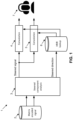
- the dominant component signal is convolved 4, 5 by means of a pair of HRIRs derived from a lookup 6 based on the dominant component direction, to compute an output signal for headphone playback 7 such that the play back signal is perceived as coming from the direction that was determined by the dominant component analysis stage 3.
- This scheme can be applied on wide-band signals as well as on individual subbands, and can be augmented with dedicated processing of residual (or diffuse) signals in various ways.
- matrix encoders are very suitable for distribution to and reproduction on AV receivers, but can be problematic for mobile applications requiring low transmission data rates and low power consumption.
- matrix encoders and decoders rely on fairly accurate inter-channel phase relationships of the signals that are distributed from matrix encoder to decoder.
- the distribution format should be largely waveform preserving.
- Such dependency on waveform preservation can be problematic in bit-rate constrained conditions, in which audio codecs employ parametric methods rather than waveform coding tools to obtain a better audio quality. Examples of such parametric tools that are generally known not to be waveform preserving are often referred to as spectral band replication, parametric stereo, spatial audio coding, and the like as implemented in MPEG-4 audio codecs (ISO/IEC 14496-3:2009).
- the up-mixer consists of analysis and steering (or HRIR convolution) of signals.
- HRIR convolution For powered devices, such as AV receivers, this generally does not cause problems, but for battery-operated devices such as mobile phones and tablets, the computational complexity and corresponding memory requirements associated with these processes are often undesirable because of their negative impact on battery life.
- audio latency is undesirable because (1) it requires video delays to maintain audio-video lip sync requiring a significant amount of memory and processing power, and (2) may cause asynchrony / latency between head movements and audio rendering in the case of head tracking.
- the matrix-encoded down-mix may also not sound optimal on stereo loudspeakers or headphones, due to the potential presence of strong out-of-phase signal components.
- the operations further include determining an estimate of a residual mix being the initial output presentation less a rendering of either the dominant audio component or the estimate thereof.
- the operations can also include generating an anechoic binaural mix of the channel or object based input audio, and determining an estimate of a residual mix, wherein the estimate of the residual mix can be the anechoic binaural mix less a rendering of either the dominant audio component or the estimate thereof.
- the operations can include determining a series of residual matrix coefficients for mapping the initial output presentation to the estimate of the residual mix.
- the initial output presentation can comprise a headphone or loudspeaker presentation.
- the channel or object based input audio can be time and frequency tiled and the encoding step can be repeated for a series of time steps and a series of frequency bands.
- the initial output presentation can comprise a stereo speaker mix.
- the encoded audio signal further can include a series of residual matrix coefficients representing a residual audio signal and the step of reconstructing further can comprise (c1) applying the residual matrix coefficients to the initial output presentation to reconstruct the residual component estimate.
- the residual component estimate can be reconstructed by subtracting the rendered binauralized estimated dominant component from the initial output presentation.
- the step of rendering can include an initial rotation of the estimated dominant component in accordance with an input headtracking signal indicating the head orientation of an intended listener.
- Embodiments provide a system to represent object or channel based audio content that is (1) compatible with stereo playback, (2) allows for binaural playback including head tracking, (3) is of a low decoder complexity, and (4) does not rely on but is nevertheless compatible with matrix encoding.
- an analysis of the dominant component is provided in the encoder rather than the decoder/renderer.
- the audio stream is then augmented with metadata indicating the direction of the dominant component, and information as to how the dominant component(s) can be obtained from an associated down-mix signal.
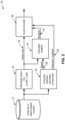
- Fig. 2 illustrates one form of an encoder 20 of an embodiment not forming part of the invention.
- Object or channel-based content 21 is subjected to an analysis 23 to determine a dominant component(s).
- This analysis may take place as a function of time and frequency (assuming the audio content is broken up into time tiles and frequency subtiles).
- the result of this process is a dominant component signal 26 (or multiple dominant component signals), and associated position(s) or direction(s) information 25.
- weights are estimated 24 and output 27 to allow reconstruction of the dominant component signal(s) from a transmitted down-mix.
- This down-mix generator 22 does not necessarily have to adhere to LtRt down-mix rules, but could be a standard ITU (LoRo) down-mix using non-negative, real-valued down-mix coefficients.
- the output down-mix signal 29, the weights 27, and the position data 25 are packaged by an audio encoder 28 and prepared for distribution.
- the audio decoder reconstructs the down-mix signal.
- the signal is input 31 and unpacked by the audio decoder 32 into down-mix signal, weights and direction of the dominant components.
- the dominant component estimation weights are used to reconstruct 34 the steered component(s), which are rendered 36 using transmitted position or direction data.
- the position data may optionally be modified 33 dependent on head rotation or translation information 38.
- the reconstructed dominant component(s) may be subtracted 35 from the down-mix.
- there is a subtraction of the dominant component(s) within the down-mix path but alternatively, this subtraction may also occur at the encoder, as described below.
- the dominant component output may first be rendered using the transmitted position or direction data prior to subtraction. This optional rendering stage 39 is shown in Fig. 3 .
- Fig. 4 shows one form of encoder 40 for processing object-based (e.g. Dolby Atmos) audio content.
- the audio objects are originally stored as Atmos objects 41 and are initially split into time and frequency tiles using a hybrid complex-valued quadrature mirror filter (HCQMF) bank 42.
- the input object signals can be denoted by x i [n] when we omit the corresponding time and frequency indices; the corresponding position within the current frame is given by unit vector p i , and index i refers to the object number, and index n refers to time (e.g., sub band sample index).
- the input object signals x i [n] are an example for channel or object based input audio.
- the binaural mix Y (y l , y r ) may be created by convolution using head-related impulse responses (HRIRs).
- HRIRs head-related impulse responses
- the weights w l,d , w r,d are an example for dominant audio component weighting factors for mapping the initial output presentation (e.g., z l , z r ) to the dominant audio component (e.g., d ⁇ [n]).
- MMSE minimum mean-square error
- w 1,1 w 1,2 w 2,1 w 2,2 R zz + ⁇ I ⁇ 1 R z y ⁇ with R ab the covariance matrix between signals for representation a and representation b, and ⁇ a regularization parameter.
- the prediction coefficients or weights w i,j are an example of residual matrix coefficients for mapping the initial output presentation (e.g., z l , z r ) to the estimate of the residual binaural mix ⁇ l , ⁇ r .
- the above expression may be subjected to additional level constraints to overcome any prediction losses.
- the encoder outputs the following information:
- the stereo mix z l , z r (exemplarily embodying the initial output presentation);
- the coefficients to estimate the dominant component w l,d , w r,d (exemplarily embodying the dominant audio component weighting factors);
- the residual weights w i,j (exemplarily embodying the residual matrix coefficients).
- the encoder may be adapted to detect multiple dominant components, determine weights and directions for each of the multiple dominant components, render and subtract each of the multiple dominant components from anechoic binaural mix Y, and then determine the residual weights after each of the multiple dominant components has been subtracted from the anechoic binaural mix Y.
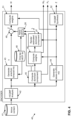
- Fig. 5 illustrates one form of decoder/renderer 60 in more detail.
- the decoder/renderer 60 applies a process aiming at reconstructing the binaural mix y l , y r for output to listener 71 from the unpacked input information z l , z r ; w l,d , w r,d ; p D ; w i,j .
- the stereo mix z l , z r is an example of a first audio representation
- the prediction coefficients or weights w i,j and/or the direction / position p D of the dominant component signal d ⁇ are examples of additional audio transformation data.
- the stereo down-mix is split into time/frequency tiles using a suitable filterbank or transform 61, such as the HCQMF analysis bank 61.
- Other transforms such as a discrete Fourier transform, (modified) cosine or sine transform, time-domain filterbank, or wavelet transforms may equally be applied as well.
- the estimated dominant component signal d ⁇ [n] is an example of an auxiliary signal.
- this step may be said to correspond to creating one or more auxiliary signal(s) based on said first audio representation and received transformation data.
- This dominant component signal is subsequently rendered 65 and modified 68 with HRTFs 69 based on the transmitted position/direction data p D , possibly modified (rotated) based on information obtained from a head tracker 62.
- the total anechoic binaural output is an example of a second audio representation. Hence, this step may be said to correspond to creating a second audio representation consisting of a combination
- each dominant signal may be rendered and added to the reconstructed residual signal.
- the output signals ⁇ l , ⁇ r should be very close (in terms of root-mean-square error) to the reference binaural signals y l , y r as long as d ⁇ n ⁇ d n
- the effective operation to construct the anechoic binaural presentation from the stereo presentation consists of a 2x2 matrix 70, in which the matrix coefficients are dependent on transmitted information w l,d , w r,d ; p D ; w i,j and head tracker rotation and/or translation.
- these objects can be excluded from (1) dominant component direction analysis, and (2) dominant component signal prediction. As a result, these objects will be converted from stereo to binaural through the coefficients w i,j and therefore not be affected by any head rotation or translation.
- objects can be set to a ⁇ pass through' mode, which means that in the binaural presentation, they will be subjected to amplitude panning rather than HRIR convolution. This can be obtained by simply using amplitude-panning gains for the coefficients H .,i instead of the one-tap HRTFs or any other suitable binaural processing.
- the decoder 60 described with reference to Fig. 5 has an output signal that consists of a rendered dominant component direction plus the input signal matrixed by matrix coefficients w i,j .
- the latter coefficients can be derived in various ways, for example:
- the signals ⁇ l , ⁇ r may be subject to a so-called up-mixer, reconstructing more than 2 signals by means of statistical analysis of these signals at the decoder, following by binaural rendering of the resulting up-mixed signals.
- the methods described can also be applied in a system in which the transmitted signal Z is a binaural signal.
- the decoder 60 of Fig. 5 remains as is, while the block labeled ⁇ Generate stereo (LoRo) mix' 44 in Fig. 4 should be replaced by a ⁇ Generate anechoic binaural mix' 43 ( Fig. 4 ) which is the same as the block producing the signal pair Y.
- other forms of mixes can be generated in accordance with requirements.
- This approach can be extended with methods to reconstruct one or more FDN input signal(s) from the transmitted stereo mix that consists of a specific subset of objects or channels.
- the approach can be extended with multiple dominant components being predicted from the transmitted stereo mix, and being rendered at the decoder side. There is no fundamental limitation of predicting only one dominant component for each time/frequency tile. In particular, the number of dominant components may differ in each time/frequency tile.
- any one of the terms comprising, comprised of or which comprises is an open term that means including at least the elements/features that follow, but not excluding others.
- the term comprising, when used in the claims should not be interpreted as being limitative to the means or elements or steps listed thereafter.
- the scope of the expression a device comprising A and B should not be limited to devices consisting only of elements A and B.
- Any one of the terms including or which includes or that includes as used herein is also an open term that also means including at least the elements/features that follow the term, but not excluding others. Thus, including is synonymous with and means comprising.
- exemplary is used in the sense of providing examples, as opposed to indicating quality. That is, an "exemplary embodiment” is an embodiment provided as an example, as opposed to necessarily being an embodiment of exemplary quality.
- Coupled when used in the claims, should not be interpreted as being limited to direct connections only.
- the terms “coupled” and “connected,” along with their derivatives, may be used. It should be understood that these terms are not intended as synonyms for each other.
- the scope of the expression a device A coupled to a device B should not be limited to devices or systems wherein an output of device A is directly connected to an input of device B. It means that there exists a path between an output of A and an input of B which may be a path including other devices or means.
- Coupled may mean that two or more elements are either in direct physical or electrical contact, or that two or more elements are not in direct contact with each other but yet still co-operate or interact with each other.
Landscapes
- Engineering & Computer Science (AREA)
- Physics & Mathematics (AREA)
- Acoustics & Sound (AREA)
- Signal Processing (AREA)
- Multimedia (AREA)
- Computational Linguistics (AREA)
- Health & Medical Sciences (AREA)
- Audiology, Speech & Language Pathology (AREA)
- Human Computer Interaction (AREA)
- Mathematical Physics (AREA)
- Stereophonic System (AREA)
- Golf Clubs (AREA)
- Measurement Of The Respiration, Hearing Ability, Form, And Blood Characteristics Of Living Organisms (AREA)
- Massaging Devices (AREA)
- Stereophonic Arrangements (AREA)
Claims (2)
- System, das zum Kodieren von kanal- oder objektbasiertem Eingangsaudio (21) zur Wiedergabe konfiguriert ist, wobei das System umfasst:
einen oder mehrere Prozessoren, die angepasst sind, um Vorgänge durchzuführen, umfassend:Rendern des kanal- oder objektbasierten Eingangsaudios (21) in eine anfängliche Ausgabepräsentation, wobei die anfängliche Ausgabepräsentation einen Stereo-Lautsprecher-Mix umfasst;Bestimmen (23) einer Schätzung einer dominanten Audiokomponente (26) aus dem kanal- oder objektbasierten Eingangsaudio (21), wobei das Bestimmen beinhaltet:Bestimmen (24) einer Reihe dominanter Audiokomponentengewichtungsfaktoren (27) zum Abbilden der anfänglichen Ausgabepräsentation in die dominante Audiokomponente; undBestimmen der Schätzung einer dominanten Audiokomponente (26) basierend auf den dominanten Audiokomponentengewichtungsfaktoren (27) und der anfänglichen Ausgabepräsentation;Bestimmen einer Schätzung einer dominanten Audiokomponentenrichtung oder - position (25); undKodieren der anfänglichen Ausgabepräsentation, der dominanten Audiokomponentengewichtungsfaktoren (21) und mindestens einer aus der dominanten Audiokomponentenrichtung oder -position als das kodierte Signal zur Wiedergabe. - Computerlesbares Speichermedium, das Anweisungen speichert, die, wenn sie von einem oder mehreren Prozessoren ausgeführt werden, den einen oder die mehreren Prozessoren veranlassen, Vorgänge durchzuführen, umfassend:Rendern des kanal- oder objektbasierten Eingangsaudios (21) in eine anfängliche Ausgabepräsentation, umfassend einen Stereo-Lautsprecher-Mix;Bestimmen (23) einer Schätzung einer dominanten Audiokomponente (26) aus dem kanal- oder objektbasierten Eingangsaudio (21), wobei das Bestimmen beinhaltet:Bestimmen (24) einer Reihe dominanter Audiokomponentengewichtungsfaktoren (27) zum Abbilden der anfänglichen Ausgabepräsentation in die dominante Audiokomponente; undBestimmen der Schätzung einer dominanten Audiokomponente (26) basierend auf den dominanten Audiokomponentengewichtungsfaktoren (27) und der anfänglichen Ausgabepräsentation;Bestimmen einer Schätzung einer dominanten Audiokomponentenrichtung oder - position (25); undKodieren der anfänglichen Ausgabepräsentation, der dominanten Audiokomponentengewichtungsfaktoren (21) und mindestens einer aus der dominanten Audiokomponentenrichtung oder -position als das kodierte Signal zur Wiedergabe.
Priority Applications (2)
| Application Number | Priority Date | Filing Date | Title |
|---|---|---|---|
| EP23176131.3A EP4236375B1 (de) | 2015-11-17 | 2016-11-17 | Kopfverfolgung für system mit parametrischem binauralem ausgang |
| EP25201222.4A EP4657895A3 (de) | 2015-11-17 | 2016-11-17 | Headtracking für parametrisches binaurales ausgangssystem und verfahren |
Applications Claiming Priority (4)
| Application Number | Priority Date | Filing Date | Title |
|---|---|---|---|
| US201562256462P | 2015-11-17 | 2015-11-17 | |
| EP15199854 | 2015-12-14 | ||
| PCT/US2016/062497 WO2017087650A1 (en) | 2015-11-17 | 2016-11-17 | Headtracking for parametric binaural output system and method |
| EP16806384.0A EP3378239B1 (de) | 2015-11-17 | 2016-11-17 | Parametrisches binaurales ausgangssystem und verfahren |
Related Parent Applications (1)
| Application Number | Title | Priority Date | Filing Date |
|---|---|---|---|
| EP16806384.0A Division EP3378239B1 (de) | 2015-11-17 | 2016-11-17 | Parametrisches binaurales ausgangssystem und verfahren |
Related Child Applications (2)
| Application Number | Title | Priority Date | Filing Date |
|---|---|---|---|
| EP25201222.4A Division EP4657895A3 (de) | 2015-11-17 | 2016-11-17 | Headtracking für parametrisches binaurales ausgangssystem und verfahren |
| EP23176131.3A Division EP4236375B1 (de) | 2015-11-17 | 2016-11-17 | Kopfverfolgung für system mit parametrischem binauralem ausgang |
Publications (2)
| Publication Number | Publication Date |
|---|---|
| EP3716653A1 EP3716653A1 (de) | 2020-09-30 |
| EP3716653B1 true EP3716653B1 (de) | 2023-06-07 |
Family
ID=55027285
Family Applications (4)
| Application Number | Title | Priority Date | Filing Date |
|---|---|---|---|
| EP16806384.0A Active EP3378239B1 (de) | 2015-11-17 | 2016-11-17 | Parametrisches binaurales ausgangssystem und verfahren |
| EP25201222.4A Pending EP4657895A3 (de) | 2015-11-17 | 2016-11-17 | Headtracking für parametrisches binaurales ausgangssystem und verfahren |
| EP23176131.3A Active EP4236375B1 (de) | 2015-11-17 | 2016-11-17 | Kopfverfolgung für system mit parametrischem binauralem ausgang |
| EP20157296.3A Active EP3716653B1 (de) | 2015-11-17 | 2016-11-17 | Kopfverfolgung für system mit parametrischem binauralem ausgang |
Family Applications Before (3)
| Application Number | Title | Priority Date | Filing Date |
|---|---|---|---|
| EP16806384.0A Active EP3378239B1 (de) | 2015-11-17 | 2016-11-17 | Parametrisches binaurales ausgangssystem und verfahren |
| EP25201222.4A Pending EP4657895A3 (de) | 2015-11-17 | 2016-11-17 | Headtracking für parametrisches binaurales ausgangssystem und verfahren |
| EP23176131.3A Active EP4236375B1 (de) | 2015-11-17 | 2016-11-17 | Kopfverfolgung für system mit parametrischem binauralem ausgang |
Country Status (15)
| Country | Link |
|---|---|
| US (2) | US10362431B2 (de) |
| EP (4) | EP3378239B1 (de) |
| JP (1) | JP6740347B2 (de) |
| KR (3) | KR20250107956A (de) |
| CN (3) | CN121151789A (de) |
| AU (2) | AU2016355673B2 (de) |
| BR (2) | BR122020025280B1 (de) |
| CA (2) | CA3080981C (de) |
| CL (1) | CL2018001287A1 (de) |
| ES (2) | ES3049768T3 (de) |
| IL (1) | IL259348B (de) |
| MY (1) | MY188581A (de) |
| SG (1) | SG11201803909TA (de) |
| UA (1) | UA125582C2 (de) |
| WO (1) | WO2017087650A1 (de) |
Families Citing this family (25)
| Publication number | Priority date | Publication date | Assignee | Title |
|---|---|---|---|---|
| WO2017035281A2 (en) | 2015-08-25 | 2017-03-02 | Dolby International Ab | Audio encoding and decoding using presentation transform parameters |
| CA3080981C (en) * | 2015-11-17 | 2023-07-11 | Dolby Laboratories Licensing Corporation | Headtracking for parametric binaural output system and method |
| WO2018152004A1 (en) * | 2017-02-15 | 2018-08-23 | Pcms Holdings, Inc. | Contextual filtering for immersive audio |
| WO2019067620A1 (en) * | 2017-09-29 | 2019-04-04 | Zermatt Technologies Llc | SPEECH REDUCTION AUDIO MIXING |
| US11004457B2 (en) * | 2017-10-18 | 2021-05-11 | Htc Corporation | Sound reproducing method, apparatus and non-transitory computer readable storage medium thereof |
| US11172318B2 (en) | 2017-10-30 | 2021-11-09 | Dolby Laboratories Licensing Corporation | Virtual rendering of object based audio over an arbitrary set of loudspeakers |
| CA3168579C (en) * | 2018-04-09 | 2026-03-31 | Dolby International Ab | Methods, apparatus and systems for three degrees of freedom (3dof+) extension of mpeg-h 3d audio |
| US11032662B2 (en) | 2018-05-30 | 2021-06-08 | Qualcomm Incorporated | Adjusting audio characteristics for augmented reality |
| TWI683582B (zh) * | 2018-09-06 | 2020-01-21 | 宏碁股份有限公司 | 增益動態調節之音效控制方法及音效輸出裝置 |
| EP3900394A1 (de) | 2018-12-21 | 2021-10-27 | FRAUNHOFER-GESELLSCHAFT zur Förderung der angewandten Forschung e.V. | Tonwiedergabe-/simulationssystem und verfahren zur simulation einer tonwiedergabe |
| CN111615044B (zh) * | 2019-02-25 | 2021-09-14 | 宏碁股份有限公司 | 声音信号的能量分布修正方法及其系统 |
| CN119653301A (zh) * | 2019-06-12 | 2025-03-18 | 谷歌有限责任公司 | 三维音频源空间化 |
| US11076257B1 (en) * | 2019-06-14 | 2021-07-27 | EmbodyVR, Inc. | Converting ambisonic audio to binaural audio |
| GB2586214A (en) * | 2019-07-31 | 2021-02-17 | Nokia Technologies Oy | Quantization of spatial audio direction parameters |
| GB2586586A (en) * | 2019-08-16 | 2021-03-03 | Nokia Technologies Oy | Quantization of spatial audio direction parameters |
| JP7286876B2 (ja) | 2019-09-23 | 2023-06-05 | ドルビー ラボラトリーズ ライセンシング コーポレイション | 変換パラメータによるオーディオ符号化/復号化 |
| TWI884996B (zh) | 2019-10-30 | 2025-06-01 | 美商杜拜研究特許公司 | 使用方向性元資料之多通道音頻編碼及解碼 |
| WO2022046533A1 (en) * | 2020-08-27 | 2022-03-03 | Apple Inc. | Stereo-based immersive coding (stic) |
| US11750745B2 (en) * | 2020-11-18 | 2023-09-05 | Kelly Properties, Llc | Processing and distribution of audio signals in a multi-party conferencing environment |
| EP4285360A1 (de) * | 2021-01-29 | 2023-12-06 | Nokia Technologies Oy | Bestimmung der codierung räumlicher audioparameter und zugehörige decodierung |
| WO2022173986A1 (en) | 2021-02-11 | 2022-08-18 | Nuance Communications, Inc. | Multi-channel speech compression system and method |
| CN113035209B (zh) * | 2021-02-25 | 2023-07-04 | 北京达佳互联信息技术有限公司 | 三维音频获取方法和三维音频获取装置 |
| US12250534B2 (en) * | 2022-11-11 | 2025-03-11 | Bang & Olufsen A/S | Adaptive sound scene rotation |
| WO2026006293A1 (en) * | 2024-06-24 | 2026-01-02 | Dolby Laboratories Licensing Corporation | Transmission of interactive audio content |
| CN118660266A (zh) * | 2024-07-05 | 2024-09-17 | 北京朗德科技有限公司 | 一种空间声场的重构方法与系统 |
Citations (1)
| Publication number | Priority date | Publication date | Assignee | Title |
|---|---|---|---|---|
| EP1070438B1 (de) * | 1998-04-07 | 2006-10-18 | Dolby Laboratories Licensing Corporation | Verfahren und system zur räumlichen kodierung mit niedriger bitrate |
Family Cites Families (34)
| Publication number | Priority date | Publication date | Assignee | Title |
|---|---|---|---|---|
| AUPO316296A0 (en) * | 1996-10-23 | 1996-11-14 | Lake Dsp Pty Limited | Dithered binaural system |
| JP4627880B2 (ja) | 1997-09-16 | 2011-02-09 | ドルビー ラボラトリーズ ライセンシング コーポレイション | リスナーの周囲にある音源の空間的ひろがり感を増強するためのステレオヘッドホンデバイス内でのフィルタ効果の利用 |
| JPH11220797A (ja) * | 1998-02-03 | 1999-08-10 | Sony Corp | ヘッドホン装置 |
| JP4088725B2 (ja) * | 1998-03-30 | 2008-05-21 | ソニー株式会社 | オーディオ再生装置 |
| US6839438B1 (en) | 1999-08-31 | 2005-01-04 | Creative Technology, Ltd | Positional audio rendering |
| WO2001023104A2 (en) | 1999-09-29 | 2001-04-05 | 1...Limited | Method and apparatus to direct sound using an array of output transducers |
| US7660424B2 (en) | 2001-02-07 | 2010-02-09 | Dolby Laboratories Licensing Corporation | Audio channel spatial translation |
| US7076204B2 (en) | 2001-10-30 | 2006-07-11 | Unwired Technology Llc | Multiple channel wireless communication system |
| GB0419346D0 (en) * | 2004-09-01 | 2004-09-29 | Smyth Stephen M F | Method and apparatus for improved headphone virtualisation |
| JP2006270649A (ja) * | 2005-03-24 | 2006-10-05 | Ntt Docomo Inc | 音声・音響信号処理装置およびその方法 |
| DE602006016017D1 (de) | 2006-01-09 | 2010-09-16 | Nokia Corp | Steuerung der dekodierung binauraler audiosignale |
| US20090052703A1 (en) | 2006-04-04 | 2009-02-26 | Aalborg Universitet | System and Method Tracking the Position of a Listener and Transmitting Binaural Audio Data to the Listener |
| US8379868B2 (en) * | 2006-05-17 | 2013-02-19 | Creative Technology Ltd | Spatial audio coding based on universal spatial cues |
| US7876903B2 (en) | 2006-07-07 | 2011-01-25 | Harris Corporation | Method and apparatus for creating a multi-dimensional communication space for use in a binaural audio system |
| KR100917843B1 (ko) | 2006-09-29 | 2009-09-18 | 한국전자통신연구원 | 다양한 채널로 구성된 다객체 오디오 신호의 부호화 및복호화 장치 및 방법 |
| KR101012259B1 (ko) | 2006-10-16 | 2011-02-08 | 돌비 스웨덴 에이비 | 멀티채널 다운믹스된 객체 코딩의 개선된 코딩 및 파라미터 표현 |
| JP5133401B2 (ja) | 2007-04-26 | 2013-01-30 | ドルビー・インターナショナル・アクチボラゲット | 出力信号の合成装置及び合成方法 |
| GB2467247B (en) * | 2007-10-04 | 2012-02-29 | Creative Tech Ltd | Phase-amplitude 3-D stereo encoder and decoder |
| US8509454B2 (en) * | 2007-11-01 | 2013-08-13 | Nokia Corporation | Focusing on a portion of an audio scene for an audio signal |
| US9100766B2 (en) * | 2009-10-05 | 2015-08-04 | Harman International Industries, Inc. | Multichannel audio system having audio channel compensation |
| KR101567461B1 (ko) * | 2009-11-16 | 2015-11-09 | 삼성전자주식회사 | 다채널 사운드 신호 생성 장치 |
| US8587631B2 (en) | 2010-06-29 | 2013-11-19 | Alcatel Lucent | Facilitating communications using a portable communication device and directed sound output |
| US8767968B2 (en) | 2010-10-13 | 2014-07-01 | Microsoft Corporation | System and method for high-precision 3-dimensional audio for augmented reality |
| US9552840B2 (en) | 2010-10-25 | 2017-01-24 | Qualcomm Incorporated | Three-dimensional sound capturing and reproducing with multi-microphones |
| WO2012093352A1 (en) * | 2011-01-05 | 2012-07-12 | Koninklijke Philips Electronics N.V. | An audio system and method of operation therefor |
| CN104054126B (zh) * | 2012-01-19 | 2017-03-29 | 皇家飞利浦有限公司 | 空间音频渲染和编码 |
| EP2665208A1 (de) * | 2012-05-14 | 2013-11-20 | Thomson Licensing | Verfahren und Vorrichtung zur Komprimierung und Dekomprimierung einer High Order Ambisonics-Signaldarstellung |
| WO2014053875A1 (en) | 2012-10-01 | 2014-04-10 | Nokia Corporation | An apparatus and method for reproducing recorded audio with correct spatial directionality |
| EP2743922A1 (de) * | 2012-12-12 | 2014-06-18 | Thomson Licensing | Verfahren und Vorrichtung zur Komprimierung und Dekomprimierung einer High Order Ambisonics-Signaldarstellung für ein Schallfeld |
| CN105378826B (zh) | 2013-05-31 | 2019-06-11 | 诺基亚技术有限公司 | 音频场景装置 |
| EP4421617A3 (de) * | 2013-10-31 | 2024-11-06 | Dolby Laboratories Licensing Corporation | Binaurales rendering für kopfhörer mit metadatenverarbeitung |
| EP3251116A4 (de) * | 2015-01-30 | 2018-07-25 | DTS, Inc. | System und verfahren zur erfassung, codierung, verteilung und decodierung von immersivem audio |
| WO2017035281A2 (en) | 2015-08-25 | 2017-03-02 | Dolby International Ab | Audio encoding and decoding using presentation transform parameters |
| CA3080981C (en) * | 2015-11-17 | 2023-07-11 | Dolby Laboratories Licensing Corporation | Headtracking for parametric binaural output system and method |
-
2016
- 2016-11-17 CA CA3080981A patent/CA3080981C/en active Active
- 2016-11-17 CA CA3005113A patent/CA3005113C/en active Active
- 2016-11-17 UA UAA201806682A patent/UA125582C2/uk unknown
- 2016-11-17 BR BR122020025280-4A patent/BR122020025280B1/pt active IP Right Grant
- 2016-11-17 AU AU2016355673A patent/AU2016355673B2/en active Active
- 2016-11-17 KR KR1020257021926A patent/KR20250107956A/ko active Pending
- 2016-11-17 KR KR1020187014045A patent/KR102586089B1/ko active Active
- 2016-11-17 BR BR112018010073-0A patent/BR112018010073B1/pt active IP Right Grant
- 2016-11-17 CN CN202511343987.1A patent/CN121151789A/zh active Pending
- 2016-11-17 EP EP16806384.0A patent/EP3378239B1/de active Active
- 2016-11-17 CN CN202110229741.7A patent/CN113038354B/zh active Active
- 2016-11-17 EP EP25201222.4A patent/EP4657895A3/de active Pending
- 2016-11-17 CN CN201680075037.8A patent/CN108476366B/zh active Active
- 2016-11-17 US US15/777,058 patent/US10362431B2/en active Active
- 2016-11-17 ES ES23176131T patent/ES3049768T3/es active Active
- 2016-11-17 WO PCT/US2016/062497 patent/WO2017087650A1/en not_active Ceased
- 2016-11-17 ES ES20157296T patent/ES2950001T3/es active Active
- 2016-11-17 SG SG11201803909TA patent/SG11201803909TA/en unknown
- 2016-11-17 EP EP23176131.3A patent/EP4236375B1/de active Active
- 2016-11-17 JP JP2018525387A patent/JP6740347B2/ja active Active
- 2016-11-17 EP EP20157296.3A patent/EP3716653B1/de active Active
- 2016-11-17 KR KR1020237033651A patent/KR102829373B1/ko active Active
- 2016-11-17 MY MYPI2018701852A patent/MY188581A/en unknown
-
2018
- 2018-05-11 CL CL2018001287A patent/CL2018001287A1/es unknown
- 2018-05-14 IL IL259348A patent/IL259348B/en active IP Right Grant
-
2019
- 2019-07-18 US US16/516,121 patent/US10893375B2/en active Active
-
2020
- 2020-01-22 AU AU2020200448A patent/AU2020200448B2/en active Active
Patent Citations (1)
| Publication number | Priority date | Publication date | Assignee | Title |
|---|---|---|---|---|
| EP1070438B1 (de) * | 1998-04-07 | 2006-10-18 | Dolby Laboratories Licensing Corporation | Verfahren und system zur räumlichen kodierung mit niedriger bitrate |
Also Published As
Similar Documents
| Publication | Publication Date | Title |
|---|---|---|
| US10893375B2 (en) | Headtracking for parametric binaural output system and method | |
| US9351070B2 (en) | Positional disambiguation in spatial audio | |
| US10978079B2 (en) | Audio encoding and decoding using presentation transform parameters | |
| EP3569000B1 (de) | Dynamische entzerrung zur unterdrückung des nebensprechens | |
| JP6964703B2 (ja) | パラメトリック・バイノーラル出力システムおよび方法のための頭部追跡 | |
| RU2818687C2 (ru) | Система и способ слежения за движением головы для получения параметрического бинаурального выходного сигнала | |
| HK1260955A1 (en) | Parametric binaural output system and method | |
| HK1260955B (en) | Parametric binaural output system and method | |
| McCormack | Real-time microphone array processing for sound-field analysis and perceptually motivated reproduction |
Legal Events
| Date | Code | Title | Description |
|---|---|---|---|
| PUAI | Public reference made under article 153(3) epc to a published international application that has entered the european phase |
Free format text: ORIGINAL CODE: 0009012 |
|
| STAA | Information on the status of an ep patent application or granted ep patent |
Free format text: STATUS: THE APPLICATION HAS BEEN PUBLISHED |
|
| AC | Divisional application: reference to earlier application |
Ref document number: 3378239 Country of ref document: EP Kind code of ref document: P |
|
| AK | Designated contracting states |
Kind code of ref document: A1 Designated state(s): AL AT BE BG CH CY CZ DE DK EE ES FI FR GB GR HR HU IE IS IT LI LT LU LV MC MK MT NL NO PL PT RO RS SE SI SK SM TR |
|
| STAA | Information on the status of an ep patent application or granted ep patent |
Free format text: STATUS: REQUEST FOR EXAMINATION WAS MADE |
|
| 17P | Request for examination filed |
Effective date: 20210330 |
|
| RBV | Designated contracting states (corrected) |
Designated state(s): AL AT BE BG CH CY CZ DE DK EE ES FI FR GB GR HR HU IE IS IT LI LT LU LV MC MK MT NL NO PL PT RO RS SE SI SK SM TR |
|
| RIC1 | Information provided on ipc code assigned before grant |
Ipc: H04S 3/00 20060101AFI20220118BHEP |
|
| GRAP | Despatch of communication of intention to grant a patent |
Free format text: ORIGINAL CODE: EPIDOSNIGR1 |
|
| STAA | Information on the status of an ep patent application or granted ep patent |
Free format text: STATUS: GRANT OF PATENT IS INTENDED |
|
| INTG | Intention to grant announced |
Effective date: 20220307 |
|
| RAP3 | Party data changed (applicant data changed or rights of an application transferred) |
Owner name: DOLBY LABORATORIES LICENSING CORP. Owner name: DOLBY INTERNATIONAL AB |
|
| GRAJ | Information related to disapproval of communication of intention to grant by the applicant or resumption of examination proceedings by the epo deleted |
Free format text: ORIGINAL CODE: EPIDOSDIGR1 |
|
| STAA | Information on the status of an ep patent application or granted ep patent |
Free format text: STATUS: REQUEST FOR EXAMINATION WAS MADE |
|
| GRAP | Despatch of communication of intention to grant a patent |
Free format text: ORIGINAL CODE: EPIDOSNIGR1 |
|
| STAA | Information on the status of an ep patent application or granted ep patent |
Free format text: STATUS: GRANT OF PATENT IS INTENDED |
|
| INTC | Intention to grant announced (deleted) | ||
| INTG | Intention to grant announced |
Effective date: 20220810 |
|
| RAP3 | Party data changed (applicant data changed or rights of an application transferred) |
Owner name: DOLBY LABORATORIES LICENSING CORP. Owner name: DOLBY INTERNATIONAL AB |
|
| GRAJ | Information related to disapproval of communication of intention to grant by the applicant or resumption of examination proceedings by the epo deleted |
Free format text: ORIGINAL CODE: EPIDOSDIGR1 |
|
| STAA | Information on the status of an ep patent application or granted ep patent |
Free format text: STATUS: REQUEST FOR EXAMINATION WAS MADE |
|
| GRAP | Despatch of communication of intention to grant a patent |
Free format text: ORIGINAL CODE: EPIDOSNIGR1 |
|
| STAA | Information on the status of an ep patent application or granted ep patent |
Free format text: STATUS: GRANT OF PATENT IS INTENDED |
|
| INTC | Intention to grant announced (deleted) | ||
| INTG | Intention to grant announced |
Effective date: 20230103 |
|
| RAP3 | Party data changed (applicant data changed or rights of an application transferred) |
Owner name: DOLBY LABORATORIES LICENSING CORPORATION Owner name: DOLBY INTERNATIONAL AB |
|
| GRAS | Grant fee paid |
Free format text: ORIGINAL CODE: EPIDOSNIGR3 |
|
| GRAA | (expected) grant |
Free format text: ORIGINAL CODE: 0009210 |
|
| STAA | Information on the status of an ep patent application or granted ep patent |
Free format text: STATUS: THE PATENT HAS BEEN GRANTED |
|
| AC | Divisional application: reference to earlier application |
Ref document number: 3378239 Country of ref document: EP Kind code of ref document: P |
|
| AK | Designated contracting states |
Kind code of ref document: B1 Designated state(s): AL AT BE BG CH CY CZ DE DK EE ES FI FR GB GR HR HU IE IS IT LI LT LU LV MC MK MT NL NO PL PT RO RS SE SI SK SM TR |
|
| REG | Reference to a national code |
Ref country code: GB Ref legal event code: FG4D |
|
| P01 | Opt-out of the competence of the unified patent court (upc) registered |
Effective date: 20230428 |
|
| REG | Reference to a national code |
Ref country code: CH Ref legal event code: EP Ref country code: AT Ref legal event code: REF Ref document number: 1578282 Country of ref document: AT Kind code of ref document: T Effective date: 20230615 |
|
| REG | Reference to a national code |
Ref country code: DE Ref legal event code: R096 Ref document number: 602016080255 Country of ref document: DE |
|
| REG | Reference to a national code |
Ref country code: NL Ref legal event code: FP |
|
| REG | Reference to a national code |
Ref country code: LT Ref legal event code: MG9D |
|
| REG | Reference to a national code |
Ref country code: ES Ref legal event code: FG2A Ref document number: 2950001 Country of ref document: ES Kind code of ref document: T3 Effective date: 20231004 |
|
| PG25 | Lapsed in a contracting state [announced via postgrant information from national office to epo] |
Ref country code: SE Free format text: LAPSE BECAUSE OF FAILURE TO SUBMIT A TRANSLATION OF THE DESCRIPTION OR TO PAY THE FEE WITHIN THE PRESCRIBED TIME-LIMIT Effective date: 20230607 Ref country code: NO Free format text: LAPSE BECAUSE OF FAILURE TO SUBMIT A TRANSLATION OF THE DESCRIPTION OR TO PAY THE FEE WITHIN THE PRESCRIBED TIME-LIMIT Effective date: 20230907 |
|
| REG | Reference to a national code |
Ref country code: AT Ref legal event code: MK05 Ref document number: 1578282 Country of ref document: AT Kind code of ref document: T Effective date: 20230607 |
|
| PG25 | Lapsed in a contracting state [announced via postgrant information from national office to epo] |
Ref country code: RS Free format text: LAPSE BECAUSE OF FAILURE TO SUBMIT A TRANSLATION OF THE DESCRIPTION OR TO PAY THE FEE WITHIN THE PRESCRIBED TIME-LIMIT Effective date: 20230607 Ref country code: LV Free format text: LAPSE BECAUSE OF FAILURE TO SUBMIT A TRANSLATION OF THE DESCRIPTION OR TO PAY THE FEE WITHIN THE PRESCRIBED TIME-LIMIT Effective date: 20230607 Ref country code: LT Free format text: LAPSE BECAUSE OF FAILURE TO SUBMIT A TRANSLATION OF THE DESCRIPTION OR TO PAY THE FEE WITHIN THE PRESCRIBED TIME-LIMIT Effective date: 20230607 Ref country code: HR Free format text: LAPSE BECAUSE OF FAILURE TO SUBMIT A TRANSLATION OF THE DESCRIPTION OR TO PAY THE FEE WITHIN THE PRESCRIBED TIME-LIMIT Effective date: 20230607 Ref country code: GR Free format text: LAPSE BECAUSE OF FAILURE TO SUBMIT A TRANSLATION OF THE DESCRIPTION OR TO PAY THE FEE WITHIN THE PRESCRIBED TIME-LIMIT Effective date: 20230908 |
|
| PG25 | Lapsed in a contracting state [announced via postgrant information from national office to epo] |
Ref country code: FI Free format text: LAPSE BECAUSE OF FAILURE TO SUBMIT A TRANSLATION OF THE DESCRIPTION OR TO PAY THE FEE WITHIN THE PRESCRIBED TIME-LIMIT Effective date: 20230607 |
|
| PG25 | Lapsed in a contracting state [announced via postgrant information from national office to epo] |
Ref country code: SK Free format text: LAPSE BECAUSE OF FAILURE TO SUBMIT A TRANSLATION OF THE DESCRIPTION OR TO PAY THE FEE WITHIN THE PRESCRIBED TIME-LIMIT Effective date: 20230607 |
|
| PG25 | Lapsed in a contracting state [announced via postgrant information from national office to epo] |
Ref country code: IS Free format text: LAPSE BECAUSE OF FAILURE TO SUBMIT A TRANSLATION OF THE DESCRIPTION OR TO PAY THE FEE WITHIN THE PRESCRIBED TIME-LIMIT Effective date: 20231007 |
|
| PG25 | Lapsed in a contracting state [announced via postgrant information from national office to epo] |
Ref country code: SM Free format text: LAPSE BECAUSE OF FAILURE TO SUBMIT A TRANSLATION OF THE DESCRIPTION OR TO PAY THE FEE WITHIN THE PRESCRIBED TIME-LIMIT Effective date: 20230607 Ref country code: SK Free format text: LAPSE BECAUSE OF FAILURE TO SUBMIT A TRANSLATION OF THE DESCRIPTION OR TO PAY THE FEE WITHIN THE PRESCRIBED TIME-LIMIT Effective date: 20230607 Ref country code: RO Free format text: LAPSE BECAUSE OF FAILURE TO SUBMIT A TRANSLATION OF THE DESCRIPTION OR TO PAY THE FEE WITHIN THE PRESCRIBED TIME-LIMIT Effective date: 20230607 Ref country code: PT Free format text: LAPSE BECAUSE OF FAILURE TO SUBMIT A TRANSLATION OF THE DESCRIPTION OR TO PAY THE FEE WITHIN THE PRESCRIBED TIME-LIMIT Effective date: 20231009 Ref country code: IS Free format text: LAPSE BECAUSE OF FAILURE TO SUBMIT A TRANSLATION OF THE DESCRIPTION OR TO PAY THE FEE WITHIN THE PRESCRIBED TIME-LIMIT Effective date: 20231007 Ref country code: EE Free format text: LAPSE BECAUSE OF FAILURE TO SUBMIT A TRANSLATION OF THE DESCRIPTION OR TO PAY THE FEE WITHIN THE PRESCRIBED TIME-LIMIT Effective date: 20230607 Ref country code: CZ Free format text: LAPSE BECAUSE OF FAILURE TO SUBMIT A TRANSLATION OF THE DESCRIPTION OR TO PAY THE FEE WITHIN THE PRESCRIBED TIME-LIMIT Effective date: 20230607 Ref country code: AT Free format text: LAPSE BECAUSE OF FAILURE TO SUBMIT A TRANSLATION OF THE DESCRIPTION OR TO PAY THE FEE WITHIN THE PRESCRIBED TIME-LIMIT Effective date: 20230607 |
|
| PG25 | Lapsed in a contracting state [announced via postgrant information from national office to epo] |
Ref country code: PL Free format text: LAPSE BECAUSE OF FAILURE TO SUBMIT A TRANSLATION OF THE DESCRIPTION OR TO PAY THE FEE WITHIN THE PRESCRIBED TIME-LIMIT Effective date: 20230607 |
|
| REG | Reference to a national code |
Ref country code: DE Ref legal event code: R097 Ref document number: 602016080255 Country of ref document: DE |
|
| PLBE | No opposition filed within time limit |
Free format text: ORIGINAL CODE: 0009261 |
|
| STAA | Information on the status of an ep patent application or granted ep patent |
Free format text: STATUS: NO OPPOSITION FILED WITHIN TIME LIMIT |
|
| PG25 | Lapsed in a contracting state [announced via postgrant information from national office to epo] |
Ref country code: DK Free format text: LAPSE BECAUSE OF FAILURE TO SUBMIT A TRANSLATION OF THE DESCRIPTION OR TO PAY THE FEE WITHIN THE PRESCRIBED TIME-LIMIT Effective date: 20230607 |
|
| PG25 | Lapsed in a contracting state [announced via postgrant information from national office to epo] |
Ref country code: SI Free format text: LAPSE BECAUSE OF FAILURE TO SUBMIT A TRANSLATION OF THE DESCRIPTION OR TO PAY THE FEE WITHIN THE PRESCRIBED TIME-LIMIT Effective date: 20230607 |
|
| 26N | No opposition filed |
Effective date: 20240308 |
|
| PG25 | Lapsed in a contracting state [announced via postgrant information from national office to epo] |
Ref country code: SI Free format text: LAPSE BECAUSE OF FAILURE TO SUBMIT A TRANSLATION OF THE DESCRIPTION OR TO PAY THE FEE WITHIN THE PRESCRIBED TIME-LIMIT Effective date: 20230607 |
|
| REG | Reference to a national code |
Ref country code: CH Ref legal event code: PL |
|
| PG25 | Lapsed in a contracting state [announced via postgrant information from national office to epo] |
Ref country code: MC Free format text: LAPSE BECAUSE OF FAILURE TO SUBMIT A TRANSLATION OF THE DESCRIPTION OR TO PAY THE FEE WITHIN THE PRESCRIBED TIME-LIMIT Effective date: 20230607 |
|
| PG25 | Lapsed in a contracting state [announced via postgrant information from national office to epo] |
Ref country code: LU Free format text: LAPSE BECAUSE OF NON-PAYMENT OF DUE FEES Effective date: 20231117 |
|
| PG25 | Lapsed in a contracting state [announced via postgrant information from national office to epo] |
Ref country code: CH Free format text: LAPSE BECAUSE OF NON-PAYMENT OF DUE FEES Effective date: 20231130 |
|
| PG25 | Lapsed in a contracting state [announced via postgrant information from national office to epo] |
Ref country code: MC Free format text: LAPSE BECAUSE OF FAILURE TO SUBMIT A TRANSLATION OF THE DESCRIPTION OR TO PAY THE FEE WITHIN THE PRESCRIBED TIME-LIMIT Effective date: 20230607 Ref country code: LU Free format text: LAPSE BECAUSE OF NON-PAYMENT OF DUE FEES Effective date: 20231117 Ref country code: CH Free format text: LAPSE BECAUSE OF NON-PAYMENT OF DUE FEES Effective date: 20231130 |
|
| REG | Reference to a national code |
Ref country code: BE Ref legal event code: MM Effective date: 20231130 |
|
| REG | Reference to a national code |
Ref country code: IE Ref legal event code: MM4A |
|
| PG25 | Lapsed in a contracting state [announced via postgrant information from national office to epo] |
Ref country code: IE Free format text: LAPSE BECAUSE OF NON-PAYMENT OF DUE FEES Effective date: 20231117 |
|
| PG25 | Lapsed in a contracting state [announced via postgrant information from national office to epo] |
Ref country code: BE Free format text: LAPSE BECAUSE OF NON-PAYMENT OF DUE FEES Effective date: 20231130 |
|
| PG25 | Lapsed in a contracting state [announced via postgrant information from national office to epo] |
Ref country code: IE Free format text: LAPSE BECAUSE OF NON-PAYMENT OF DUE FEES Effective date: 20231117 Ref country code: BE Free format text: LAPSE BECAUSE OF NON-PAYMENT OF DUE FEES Effective date: 20231130 |
|
| PG25 | Lapsed in a contracting state [announced via postgrant information from national office to epo] |
Ref country code: BG Free format text: LAPSE BECAUSE OF FAILURE TO SUBMIT A TRANSLATION OF THE DESCRIPTION OR TO PAY THE FEE WITHIN THE PRESCRIBED TIME-LIMIT Effective date: 20230607 |
|
| PG25 | Lapsed in a contracting state [announced via postgrant information from national office to epo] |
Ref country code: BG Free format text: LAPSE BECAUSE OF FAILURE TO SUBMIT A TRANSLATION OF THE DESCRIPTION OR TO PAY THE FEE WITHIN THE PRESCRIBED TIME-LIMIT Effective date: 20230607 |
|
| PG25 | Lapsed in a contracting state [announced via postgrant information from national office to epo] |
Ref country code: CY Free format text: LAPSE BECAUSE OF FAILURE TO SUBMIT A TRANSLATION OF THE DESCRIPTION OR TO PAY THE FEE WITHIN THE PRESCRIBED TIME-LIMIT; INVALID AB INITIO Effective date: 20161117 |
|
| PG25 | Lapsed in a contracting state [announced via postgrant information from national office to epo] |
Ref country code: HU Free format text: LAPSE BECAUSE OF FAILURE TO SUBMIT A TRANSLATION OF THE DESCRIPTION OR TO PAY THE FEE WITHIN THE PRESCRIBED TIME-LIMIT; INVALID AB INITIO Effective date: 20161117 |
|
| PGFP | Annual fee paid to national office [announced via postgrant information from national office to epo] |
Ref country code: NL Payment date: 20251022 Year of fee payment: 10 |
|
| PG25 | Lapsed in a contracting state [announced via postgrant information from national office to epo] |
Ref country code: TR Free format text: LAPSE BECAUSE OF FAILURE TO SUBMIT A TRANSLATION OF THE DESCRIPTION OR TO PAY THE FEE WITHIN THE PRESCRIBED TIME-LIMIT Effective date: 20230607 |
|
| PGFP | Annual fee paid to national office [announced via postgrant information from national office to epo] |
Ref country code: DE Payment date: 20251022 Year of fee payment: 10 |
|
| PGFP | Annual fee paid to national office [announced via postgrant information from national office to epo] |
Ref country code: GB Payment date: 20251023 Year of fee payment: 10 |
|
| PGFP | Annual fee paid to national office [announced via postgrant information from national office to epo] |
Ref country code: IT Payment date: 20251022 Year of fee payment: 10 |
|
| PGFP | Annual fee paid to national office [announced via postgrant information from national office to epo] |
Ref country code: FR Payment date: 20251022 Year of fee payment: 10 |
|
| PGFP | Annual fee paid to national office [announced via postgrant information from national office to epo] |
Ref country code: ES Payment date: 20251201 Year of fee payment: 10 |