EP3715847A1 - A method and reagents for the diagnosis of sars-cov-2 - Google Patents
A method and reagents for the diagnosis of sars-cov-2 Download PDFInfo
- Publication number
- EP3715847A1 EP3715847A1 EP20158626.0A EP20158626A EP3715847A1 EP 3715847 A1 EP3715847 A1 EP 3715847A1 EP 20158626 A EP20158626 A EP 20158626A EP 3715847 A1 EP3715847 A1 EP 3715847A1
- Authority
- EP
- European Patent Office
- Prior art keywords
- antibody
- seq
- sars
- cov
- infection
- Prior art date
- Legal status (The legal status is an assumption and is not a legal conclusion. Google has not performed a legal analysis and makes no representation as to the accuracy of the status listed.)
- Pending
Links
Classifications
-
- G—PHYSICS
- G01—MEASURING; TESTING
- G01N—INVESTIGATING OR ANALYSING MATERIALS BY DETERMINING THEIR CHEMICAL OR PHYSICAL PROPERTIES
- G01N33/00—Investigating or analysing materials by specific methods not covered by groups G01N1/00 - G01N31/00
- G01N33/48—Biological material, e.g. blood, urine; Haemocytometers
- G01N33/50—Chemical analysis of biological material, e.g. blood, urine; Testing involving biospecific ligand binding methods; Immunological testing
- G01N33/53—Immunoassay; Biospecific binding assay; Materials therefor
- G01N33/569—Immunoassay; Biospecific binding assay; Materials therefor for microorganisms, e.g. protozoa, bacteria, viruses
- G01N33/56983—Viruses
-
- C—CHEMISTRY; METALLURGY
- C07—ORGANIC CHEMISTRY
- C07K—PEPTIDES
- C07K14/00—Peptides having more than 20 amino acids; Gastrins; Somatostatins; Melanotropins; Derivatives thereof
- C07K14/005—Peptides having more than 20 amino acids; Gastrins; Somatostatins; Melanotropins; Derivatives thereof from viruses
-
- G—PHYSICS
- G01—MEASURING; TESTING
- G01N—INVESTIGATING OR ANALYSING MATERIALS BY DETERMINING THEIR CHEMICAL OR PHYSICAL PROPERTIES
- G01N33/00—Investigating or analysing materials by specific methods not covered by groups G01N1/00 - G01N31/00
- G01N33/48—Biological material, e.g. blood, urine; Haemocytometers
- G01N33/50—Chemical analysis of biological material, e.g. blood, urine; Testing involving biospecific ligand binding methods; Immunological testing
- G01N33/53—Immunoassay; Biospecific binding assay; Materials therefor
- G01N33/569—Immunoassay; Biospecific binding assay; Materials therefor for microorganisms, e.g. protozoa, bacteria, viruses
-
- C—CHEMISTRY; METALLURGY
- C12—BIOCHEMISTRY; BEER; SPIRITS; WINE; VINEGAR; MICROBIOLOGY; ENZYMOLOGY; MUTATION OR GENETIC ENGINEERING
- C12N—MICROORGANISMS OR ENZYMES; COMPOSITIONS THEREOF; PROPAGATING, PRESERVING, OR MAINTAINING MICROORGANISMS; MUTATION OR GENETIC ENGINEERING; CULTURE MEDIA
- C12N2770/00—MICROORGANISMS OR ENZYMES; COMPOSITIONS THEREOF; PROPAGATING, PRESERVING, OR MAINTAINING MICROORGANISMS; MUTATION OR GENETIC ENGINEERING; CULTURE MEDIA ssRNA viruses positive-sense
- C12N2770/00011—Details
- C12N2770/20011—Coronaviridae
- C12N2770/20022—New viral proteins or individual genes, new structural or functional aspects of known viral proteins or genes
-
- G—PHYSICS
- G01—MEASURING; TESTING
- G01N—INVESTIGATING OR ANALYSING MATERIALS BY DETERMINING THEIR CHEMICAL OR PHYSICAL PROPERTIES
- G01N2333/00—Assays involving biological materials from specific organisms or of a specific nature
- G01N2333/005—Assays involving biological materials from specific organisms or of a specific nature from viruses
- G01N2333/08—RNA viruses
- G01N2333/165—Coronaviridae, e.g. avian infectious bronchitis virus
Definitions
- the present invention relates to a method for diagnosing a SARS-CoV-2 infection comprising the step of detecting the presence or absence of an antibody to SEQ ID NO1, preferably preferably IgA class antibody, in a sample from a subject, a method for the differential diagnosis of a coronavirus infection, a use of an antibody to SEQ ID NO1, preferably IgA class antibody for diagnosing a SARS-CoV-2 infection or for the differential diagnosis of a coronavirus infection, preferably for distinguishing between a SARS-CoV-2, MERS and NL63, 229E, OC43 and HKU1 infection, and a kit comprising a polypeptide comprising SEQ ID NO1 or a variant thereof, preferably coated to a diagnostically useful carrier and one or more, preferably all reagents from the group comprising an antibody to SEQ ID NO1, a washing buffer, a means for detecting the presence of an antibody, preferably IgA class antibody, preferably a secondary antibody binding specifically to IgA class antibodies
- coronavirus Study Group recognized it as a sister to severe acute respiratory syndrome coronaviruses (SARS-CoVs) and labeled it as severe acute respiratory syndrome coronavirus 2 (SARS-CoV-2).
- SARS-CoV-2 is generally less pathogenic than SARS-CoV and Middle East respiratory syndrome coronavirus (MERS-CoV), it has a relatively high transmissibility. Since symptoms may be mild and may be confused with a cold, there is the danger that patients are unaware that they have been infected and may help the virus spread further.
- MERS-CoV Middle East respiratory syndrome coronavirus
- WO14045254 discloses assays for diagnosing a MERS infection.
- IgG could be detected as early as four days after the onset of a SARS infection, simultaneously or one day earlier than IgM and IgA ( Hsue, P. R., Huang, L. M., Chen, P. J., Kao, C. L., and Yang P. C. (2004) Chronological evolution of IgM, IgA, IgG and neutralization antibodies after infection with SARS-associated coronavirus, Clinical Microbiology and Infection, 10(12), 1062-1066 .
- PCR-based assays have several shortcomings.
- a sample from the upper respiratory tract of the patient is required. Improper recovery of such a sample may lead to false-negative results.
- the results may not reflect the disease status of the patient. Therefore, a serological assay would be desirable.
- a problem underlying the present invention is to provide an assay and reagents for the early serological detection of SARS-CoV-2.
- Another problem underlying the present invention is to provide an assay that may be used to distinguish known coronavirus infections.
- the problem is solved by a method for diagnosing a SARS-CoV-2 infection comprising the step of detecting the presence or absence of an to SEQ ID NO1, preferably IgM, IgG or IgA class antibody, more preferably IgA class antibody, in a sample from a subject.
- the problem is solved by a method for the differential diagnosis of a coronavirus infection, preferably for distinguishing between a SARS-CoV; preferably SARS-CoV-2; MERS, NL63, 229E, OC43 and HKU1 infection, comprising the step of detecting the presence or absence of an antibody to SEQ ID NO1 in a sample from a subject, preferably an IgA and/or IgG class antibody, more preferably an IgA class antibody.
- the presence of an IgG and/or IgM class antibody to SEQ ID NO1 is detected in addition to an IgA class antibody to SEQ ID NO1.
- the sample is a blood sample, preferably selected from the group comprising whole blood, serum or plasma.
- the antibody is detected using a labeled secondary antibody, preferably binding to IgA class antibodies.
- the antibody preferably IgA class antibody
- the antibody is detected using a method selected from the group comprising colorimetry, immunofluorescence, detection of enzymatic activity, chemiluminscence and radioactivity.
- the infection is detected at an early stage.
- the problem is solved by a use of an antibody to SEQ ID NO1, preferably IgA class antibody, for diagnosing a SARS-CoV-2 infection or for the differential diagnosis of a coronavirus infection, preferably for distinguishing between a SARS-CoV-2, MERS, NL63, 229E, OC43 and HKU1 infection.
- an antibody to SEQ ID NO1 preferably IgA class antibody
- the use is for the early diagnosis of a SARS-CoV-2 infection.
- a kit comprising a polypeptide comprising SEQ ID NO1 or a variant thereof, preferably coated to a diagnostically useful carrier and one or more, preferably all reagents from the group comprising an antibody to SEQ ID NO1, a washing buffer, a means for detecting the presence of an antibody to SEQ ID NO1, preferably an IgA class antibody, preferably a secondary antibody binding specifically to IgA class antibodies, preferably comprising a detectable label, and a dilution buffer.
- the diagnostically useful carrier is selected from the group comprising a bead, preferably a paramagnetic bead, a test strip, a microtiter plate, a membrane, preferably from the group comprising western blot, line blot and dot blot, a lateral flow device, a glass surface, a slide, a microarray and a biochip and is preferably a microtiter plate.
- the kit comprises two or more, preferably three or more calibrators.
- each calibrator is a recombinant antibody binding to SEQ ID NO1 which is preferably recognized by a secondary antibody binding to IgA class antibodies.
- the problem is solved by a use of a polypeptide comprising SEQ ID NO1 or a variant thereof or an antibody to SEQ ID NO1, preferably IgA class antibody, for the manufacture of a diagnostic kit.
- the problem is solved by a use of a recombinant antibody binding to SEQ ID NO1 which is preferably recognized by a secondary antibody binding to IgA class antibodies as a calibrator for the early diagnosis of a SARS-CoV-2 infection.
- the present invention is based on the inventors' surprising finding that antibodies against SEQ ID NO1 can be detected at an early stage of the infection, with IgA class antibodies becoming detectable earlier than IgG antibodies. Also, there is no cross reactivity with a range of antibodies in samples from patients infected with other coronaviruses.
- the term "diagnosis”, as used herein, refers to any kind of procedure aiming to obtain information instrumental in the assessment whether a patient suffers or is likely or more likely than the average or a comparative subject, the latter preferably having similar symptoms, to suffer from certain a disease or disorder in the past, at the time of the diagnosis or in the future, to find out how the disease is progressing or is likely to progress in the future or to evaluate the responsiveness of a patient with regard to a treatment.
- the term “diagnosis” comprises not only diagnosing, but also prognosticating and/or monitoring the course of a disease or disorder. The subject is likely or more likely to suffer from a SARS-CoV-2 infection if an IgA and/or IgG and/or IgM antibody to SEQ ID NO1 is detected in samples from them.
- the sample is preferably a mammalian, more preferably a human sample.
- diagnosis does preferably not imply that the diagnostic methods or agents according to the present invention will be definitive and sufficient to finalize the diagnosis on the basis of a single test, let alone parameter, but may refer to a contribution to what is referred to as a "differential diagnosis", i.e. a systematic diagnostic procedure considering the likelihood of a range of possible conditions on the basis of a range of diagnostic parameters.
- a patient preferably one already suspected to have a coronavirus infection, suffers from a SARS, preferably SARS-CoV-1 and/or SARS-CoV-2 infection, or another coronavirus infection, preferably from the group comprising MERS, NL63, 229E, OC43 and HKU1.
- SARS-CoV-2 refers to a virus characterized by the genome deposited on GenBank under accession code MN908947 and derivatives thereof having at least 80, preferably 85, preferably 88, preferably 90, preferably 91, preferably 92, preferably 93, preferably 94, preferably 95, preferably 96, preferably 97, preferably 98, preferably 99, preferably 99.5, preferably 99.8, preferably 99.9 or 99.99 percent sequence identity over the entire genome nucleotide sequence. All data base entries used herein correspond to the version online at the earliest priority or filing data of the application.
- diagnosis means that the method or product or use may be used for aiding in the diagnosis of a disease or identifying a subject a risk of suffering from a disease.
- diagnosis may also refer to a method or agent used to choose the most promising treatment regime for a patient. In other words, the method or agent may relate to selecting a treatment regimen for a subject.
- the method according to the present invention comprises the step providing the diagnostically useful carrier and a sample from a patient suspected of being infected, preferably a mammalian, more preferably a human patient.
- the carrier is coated with the polypeptide comprising SEQ ID NO1 or variant thereof.
- the carrier may then be contacted with the sample under conditions allowing for binding of any antibodies to the polypeptide comprising SEQ ID NO1 or variant thereof.
- the sample may then be removed and the carrier with the cell may be washed to remove any remaining sample.
- a secondary antibody or similar reagent or means binding to the antibody and carrying a detectable label may then be contacted with the carrier under conditions allowing formation of a complex between any bound antibody and the secondary antibody.
- the carrier may be washed then to remove non-bound secondary antibody.
- the presence of the autoantibody is detected by checking whether the secondary antibody may be detected.
- the method is used more than once to examine samples from the same patient, preferably on different days.
- the presence or absence of antibodies may be detected on a daily basis over one or two weeks.
- at least 2, 3, 4, 5, 6, 7, 8, 9 or 10 samples are examined on different days.
- the method and reagents according to the present invention may also be used for screening the potency and the usefulness of an antiviral drug.
- the method and reagents according to the present invention may also be used for screening whether donated blood is contaminated with coronavirus.
- the antibody to be detected binds preferably specifically to SEQ ID NO1.
- Specific binding preferably means that the binding reaction is stronger than a binding reaction characterized by a dissociation constant of 1 x 10 -5 M, more preferably 1 x 10 -7 M, more preferably 1 x 10 -8 M, more preferably 1 x 10 -9 M, more preferably 1 x 10 -10 M, more preferably 1 x 10 -11 M, more preferably 1 x 10 -12 M, as determined by surface plasmon resonance using Biacore equipment at 25 °C in PBS buffer at pH 7.
- teachings of the present invention may not only be carried out using polypeptides having the exact sequences referred to in this application explicitly, for example by function, name, sequence or accession number, or implicitly, but also using variants of such polypeptides.
- the term "variant”, as used herein, may refer to at least one fragment of the full length sequence referred to or a polypeptide comprising said fragment, more specifically to one or more amino acid or nucleic acid sequences which are, relative to the full-length sequence, truncated at one or both termini by one or more amino acids.
- a fragment comprises or encodes for a peptide having at least 10, 15, 25, 50, 75, 100, 150, 200, 250, 300, 400, 500 or 600 successive amino acids of the original sequence or for a variant thereof.
- SEQ ID NO12 is an exemplary fragment that may be used.
- the term "variant" relates not only to at least one fragment, but also a polypeptide or a fragment thereof comprising amino acid sequences, preferably a fragment comprising at least 25, more preferably 50, more preferably 200 successive amino acids, that are at least 40, 50, 60, 70, 75, 80, 85, 90, 92, 94, 95, 96, 97, 98 or 99 % identical to the reference amino acid sequence referred to or the fragment thereof, wherein amino acids other than those essential for the biological activity, for example the ability to bind specifically to an antibody of interest, or the fold or structure of the polypeptide are deleted or substituted and/or one or more such essential amino acids are replaced in a conservative manner and/or amino acids are added or deleted such that the biological activity of the polypeptide is at least partially preserved.
- the state of the art comprises various methods that may be used to align two given nucleic acid or amino acid sequences and to calculate the degree of identity, see for example Arthur Lesk (2008), Introduction to bioinformatics, Oxford University Press, 2008, 3rd editi on.
- the ClustalW software Larkin, M. A., Blackshields, G., Brown, N. P., Chenna, R., McGettigan, P. A., McWilliam, H., Valentin, F., Wallace, I. M., Wilm, A., Lopez, R., Thompson, J. D., Gibson, T. J., Higgins, D. G. (2007): Clustal W and Clustal X version 2.0. Bioinformatics, 23, 2947-2948 ) is used applying default settings.
- SARS-CoV-2-related publications on specific amino acid sequences such as Beal et al. may aid the skilled one in designing variants ( Beal, J., Mitechell, T., Wyschogrod, W., Manthey, J, and Clore, A. (2020) Highly Distinguished Amino Acid Sequences of 2019-nCoV (Wuhan Coronavirus) doi: https://doi.org/10.1101/2020.01.31.929497 , as well as publications relating to SARS-CoV, for example Hua, R., Zhou, Y., Wang, Y., Hua, Y and Tong, T.
- SARS-CoV spike protein BBR 319, 929-935 , wherein homologous epitopes may be found and SARS-CoV-2 epitopes be identified on account of their homology.
- possible epitopes may be derived from SEQ ID NO5.
- variants may, in addition, comprise chemical modifications, for example labels such as isotopic labels or detectable labels or covalent modifications such as glycosylation, phosphorylation, acetylation, decarboxylation, citrullination, hydroxylation and the like.
- labels such as isotopic labels or detectable labels
- covalent modifications such as glycosylation, phosphorylation, acetylation, decarboxylation, citrullination, hydroxylation and the like.
- variants may also be generated by way of fusion with other known polypeptides or variants thereof, for example artificial linkers, affinity tags, other antigens and the like.
- SEQ ID NO3 is a fusion protein according to the present invention.
- the variant of the polypeptide has biological activity.
- biological activity is the ability to bind to the respective antibody.
- it comprises an epitope having the ability or has itself the ability to bind to an antibody to SEQ ID NO1, preferably an IgA class antibody to SEQ ID NO1, preferably from a sample from a patient suffering from SARS-CoV-2, wherein more preferably the epitope comprises a sequence comprising at least 5, 6, 7 or 8 amino acid residues.
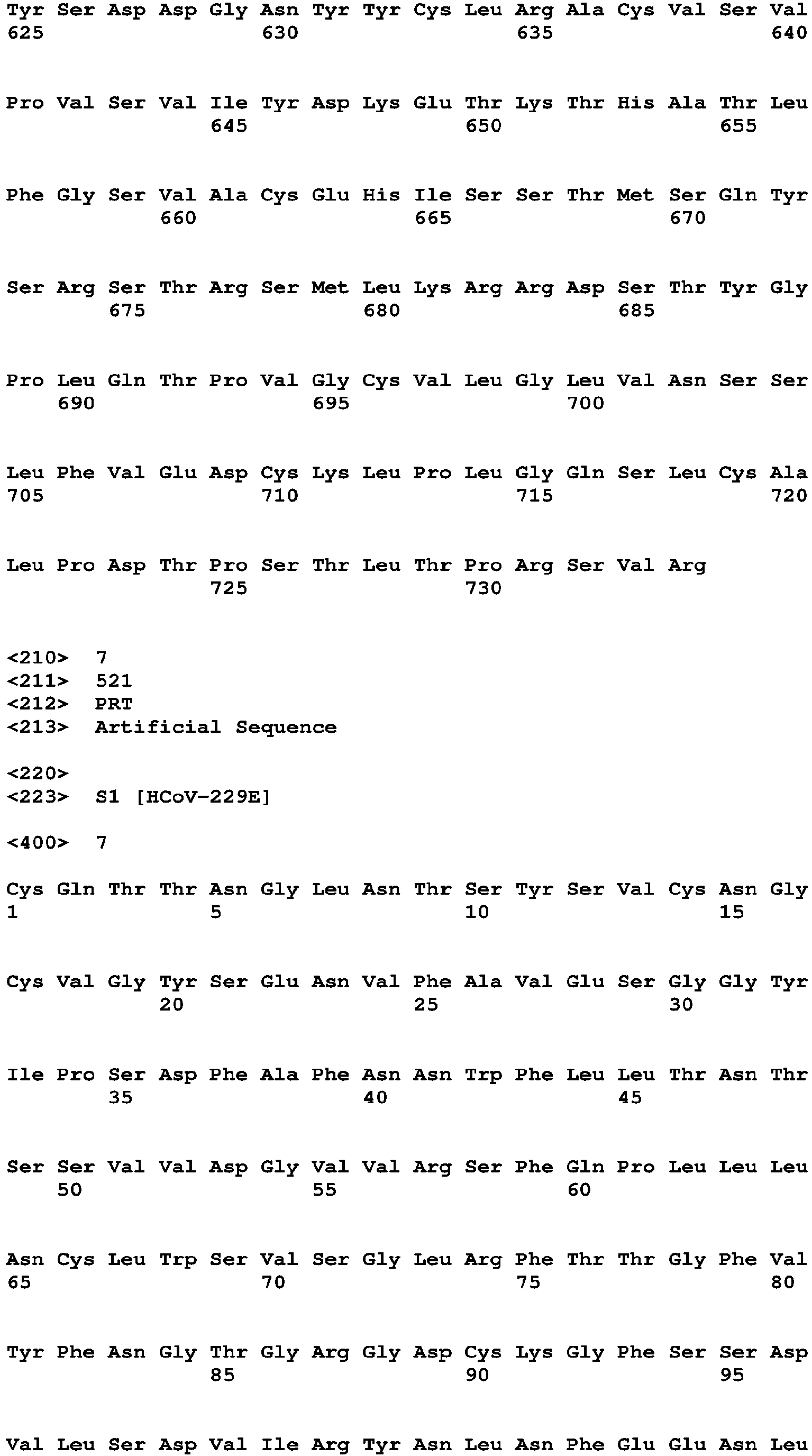
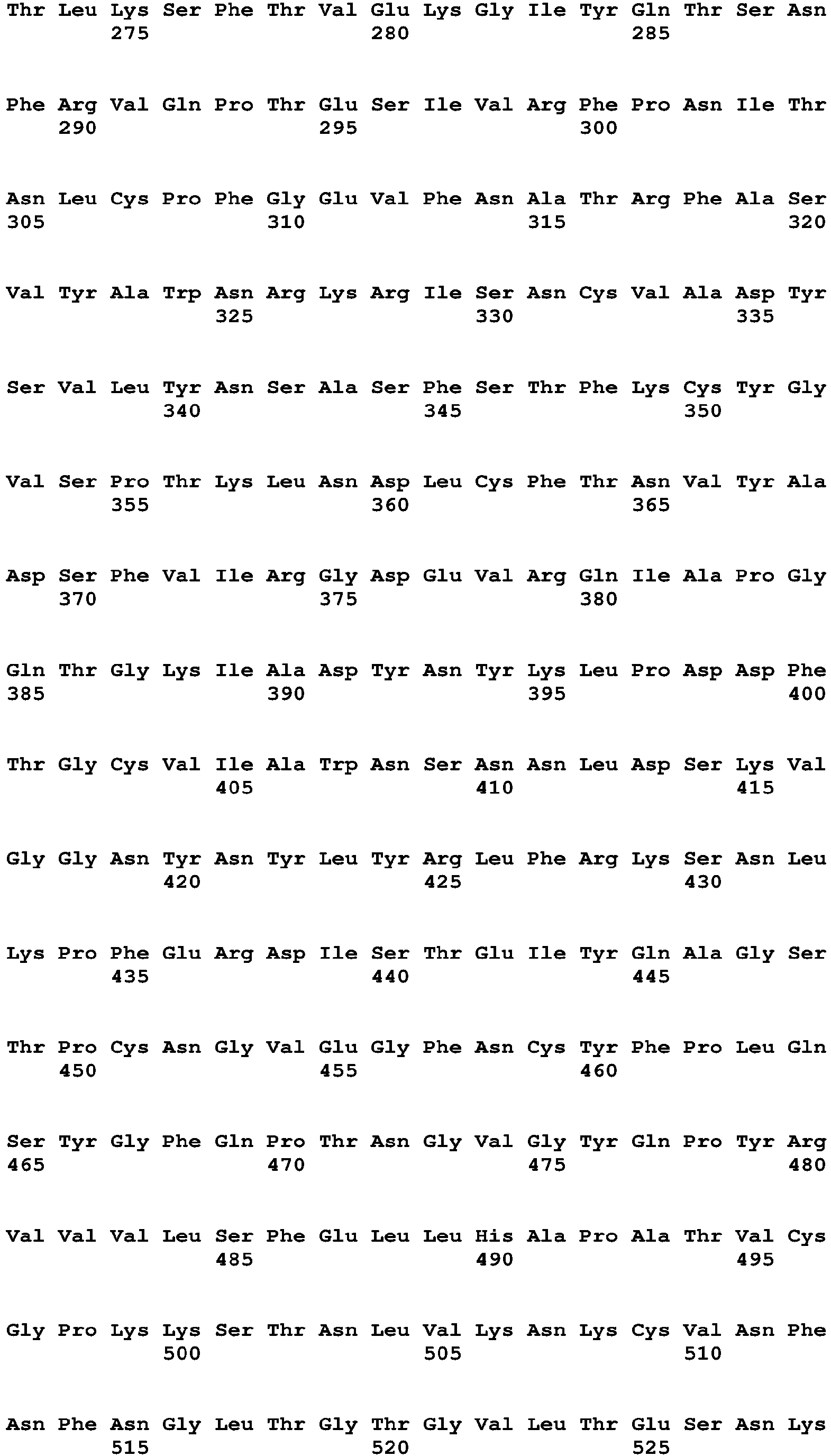
- SEQ ID NO1 from other coronaviruses, preferably from the group comprising MERS (SEQ ID NO6), NL63 (SEQ ID NO10), 229E (SEQ ID NO7), OC43 (SEQ ID NO8) and HKU1 (SEQ ID NO9), more preferably from the group comprising SARS-CoV-1 (SEQ ID NO11), MERS NL63, 229E, OC43 and HKU1.
- the detection of the antibody or complex for the prognosis, diagnosis, methods or kit according to the present invention comprises the use of a method selected from the group comprising immunodiffusion techniques, immunoelectrophoretic techniques, light scattering immunoassays, agglutination techniques, labeled immunoassays such as those from the group comprising radiolabeled immunoassays, enzyme immunoassays such as colorimetric assays, chemiluminscence immunoassays and immunofluorescence techniques.
- the complex is detected using a method selected from the group comprising immunodiffusion techniques, immunoelectrophoretic techniques, light scattering immunoassays, agglutination techniques, labeled immunoassays from the group comprising radiolabeled immunoassays, chemiluminscence immunoassays and immunofluorescence techniques.
- a method selected from the group comprising immunodiffusion techniques, immunoelectrophoretic techniques, light scattering immunoassays, agglutination techniques, labeled immunoassays from the group comprising radiolabeled immunoassays, chemiluminscence immunoassays and immunofluorescence techniques.
- the test format is an ELISA and a microtiter plate comprising wells is used as a diagnostically useful carrier.
- a secondary antibody is an antibody binding to all antibodies from an antibody class, preferably a human antibody class, preferably IgA and/or IgG and/or IgM antibodies, preferably IgA. Secondary antibodies typically recognize the constant domain of said class. A wide range of them is commercially available.
- the SARS-CoV-2 infection may be detected at increased sensitivity at an early stage, preferably 5 or fewer days after the onset of disease symptoms.
- the diagnostically useful carrier is preferably selected from the group comprising a glass slide, preferably for microscopy, a biochip, a microtiter plate, a lateral flow device, a test strip, a membrane, preferably a line blot, a chromatography column and a bead, preferably a microtiter plate.
- a polypeptide preferably the polypeptide comprising SEQ ID NO1 or a variant thereof may be a recombinant protein, wherein the term "recombinant”, as used herein, refers to a polypeptide produced using genetic engineering approaches at any stage of the production process, for example by fusing a nucleic acid encoding the polypeptide to a strong promoter for overexpression in cells or tissues or by engineering the sequence of the polypeptide itself.
- the person skilled in the art is familiar with methods for engineering nucleic acids and polypeptides encoded (for example, described in Sambrook, J., Fritsch, E. F. and Maniatis, T. (1989), Molecular Cloning, CSH or in Brown T. A.
- polypeptide is an isolated polypeptide, wherein the term "isolated” means that the polypeptide has been enriched compared to its state upon production using a biotechnological or synthetic approach and is preferably pure, i.e.
- polypeptide in the respective liquid consists of said polypeptide as judged by SDS polyacrylamide gel electrophoresis followed by Coomassie blue staining and visual inspection.
- any polypeptide on a carrier used as a means to capture an antibody is pure.
- a secondary antibody comprising a detectable label may be used to detect IgA and/or IgG and/or IgM, preferably IgA class antibodies to SEQ ID NO1.
- the label is selected from the group comprising a fluorescent, a radioactive or an enzymatically active label, preferably one catalyzing a colorimetric reaction.
- FITC or another fluorescein derivative may be used as a fluorescent label.
- a protein having peroxidase activity may be used as an enzymatically active label.
- the secondary antibody recognizes mammalian, more preferably human antibodies.
- the secondary antibody is a monoclonal antibody.
- a kit according to the present invention comprises a polypeptide comprising SEQ ID NO1 or a variant thereof, preferably coated to a diagnostically useful carrier, more preferably a microtiter plate, and one or more, preferably all reagents from the group comprising a calibrator, a positive control, a negative control, a wash buffer, a means for detecting the presence of antibody to SEQ ID NO1, preferably an IgA class antibody, preferably a secondary antibody binding specifically antibodies, more preferably IgA class antibodies, wherein the secondary antibody may comprise a detectable label, a sample buffer, a detection solution, preferably a chromogen/substrate solution, a stop solution and a protective foil.
- a calibrator is a reagent that binds to a polypeptide comprising SEQ ID NO1 or a variant thereof and is preferably recognized by secondary antibodies recognizing IgA class antibodies.
- the calibrator may be an IgA antibody to SEQ ID NO1.
- a positive control is a solution comprising a compound such as antibody to SEQ ID NO1, preferably from the group comprising IgA, IgG and IgM class antibodies, more preferably IgA, from the sample of a patient suffering from SARS-coV-2 at an amount that a positive result is obtained using the method according to the present invention.
- a negative control is a reagent that lacks such a compound and could comprise serum from a healthy person.
- a wash buffer may be used to wash the microtiter plate after the incubation to remove unspecific antibodies and could be PBS.
- the means for detecting the presence of an antibody could be a secondary antibody binding to the antibody class to be detected, preferably human IgA class antibodies, and is labeled, preferably with an enzyme, more preferably with an enzyme having peroxidase activity.
- the sample buffer may be used to dilute patient sample and may be PBS.
- the detection solution may yield a signal in the presence of the labeled secondary antibody and is preferably a color-developing solution and more preferably 3,3',5, 5' tetramethylbenzidine/H2O2.
- the stop solution may be added to a reaction to stop the reaction of the detection solution and may comprise a strong acid, preferably 0.5 M sulphuric acid.
- the protective foil may be place on top of the microtiter plate to avoid evaporation.
- the present invention comprises a range of novel nucleic acid and polypeptide sequences, more specifically SEQ ID NO5 (possible epitope) NLKPFERDISTE
- samples containing various coronaviruses were available, including 18 samples from patients infected with MERS, three samples from patients infected with SARS-CoV-1, four patients with NL63, three patients with 229E, six patients with OC43 and three patients with HKU1.
- SEQID NO2 was expressed in HEK293T cells using standard cloning of SEQ ID NO4 into the pTriEx-1 plasmid with an artificial signal sequence and a C-terminal His tag, resulting in the expression of SEQ ID NO2 and, after removal of the signal peptide, SEQ ID NO3.
- Transfected cells were cultures at 37°C and 8.5% CO2 in Dulbecco's modified eagle's medium with 10% fetal calf serum, 100 U/ml penicillin and 0.1 mg/ml streptomycin for three to five days. Cells were harvested, resuspended in 20 mM Tris-HCl pH 7.4, 10% (w/v) sucrose, 5 mM EDTA, 1 mM PMSF and stored at -80°C until further use.
- SEQ ID NO3 cell culture supernatant was adjusted to 5 mmol/l tris chloride pH 8.0, 164 mmol/l sodium chloride, 50 mmol/l magnesium chloride, 20 mmol/l imidazole, 0,1% Triton X-100, cleared by centrifugation for 30 minutes at 17,600xg, 4°C, applied to Nickel Rapid Run (Agarose Bead Technologies, Miami, FL, USA) equilibrated with 5 mmol/l tris chloride pH 8.0, 300 mmol/l sodium chloride, 20 mmol/l imidazole and eluted by increasing the imidazole concentration to 150 mmol/l. All fractions containing SEQ ID NO3 were pooled and concentrated by ultrafiltration (VivaSpin, Sartorius, Göttingen, Germany). The final preparation was stored at -80°C until further use.
- SEQ ID NO3 The final protein preparation of SEQ ID NO3 was treated with or without 16 mmol/l dithio-treitol and incubated at 70°C or at room temperature for 10 minutes, followed by SDS gel electrophoresis and Coomassie staining.
- Protein identity was verified by mass spectrometry.
- the purified protein was diluted in PBS to final concentrations of approximately 1.5 ⁇ g/ml and used to coat ELISA microtiter plates (Nunc, Roskilde, Denmark) overnight.
- the results show that antibodies to SEQ ID NO1 may be used to diagnose an SARS-CoV-2 infection in samples from human patients.
Landscapes
- Health & Medical Sciences (AREA)
- Life Sciences & Earth Sciences (AREA)
- Chemical & Material Sciences (AREA)
- Immunology (AREA)
- Engineering & Computer Science (AREA)
- Molecular Biology (AREA)
- Biomedical Technology (AREA)
- Hematology (AREA)
- Virology (AREA)
- Urology & Nephrology (AREA)
- Biochemistry (AREA)
- Medicinal Chemistry (AREA)
- General Health & Medical Sciences (AREA)
- Food Science & Technology (AREA)
- Organic Chemistry (AREA)
- Cell Biology (AREA)
- Physics & Mathematics (AREA)
- Analytical Chemistry (AREA)
- Biotechnology (AREA)
- Tropical Medicine & Parasitology (AREA)
- General Physics & Mathematics (AREA)
- Pathology (AREA)
- Microbiology (AREA)
- Biophysics (AREA)
- Genetics & Genomics (AREA)
- Proteomics, Peptides & Aminoacids (AREA)
- Gastroenterology & Hepatology (AREA)
- Peptides Or Proteins (AREA)
- Medicines Containing Antibodies Or Antigens For Use As Internal Diagnostic Agents (AREA)
- Apparatus Associated With Microorganisms And Enzymes (AREA)
Abstract
Description
- The present invention relates to a method for diagnosing a SARS-CoV-2 infection comprising the step of detecting the presence or absence of an antibody to SEQ ID NO1, preferably preferably IgA class antibody, in a sample from a subject, a method for the differential diagnosis of a coronavirus infection, a use of an antibody to SEQ ID NO1, preferably IgA class antibody for diagnosing a SARS-CoV-2 infection or for the differential diagnosis of a coronavirus infection, preferably for distinguishing between a SARS-CoV-2, MERS and NL63, 229E, OC43 and HKU1 infection, and a kit comprising a polypeptide comprising SEQ ID NO1 or a variant thereof, preferably coated to a diagnostically useful carrier and one or more, preferably all reagents from the group comprising an antibody to SEQ ID NO1, a washing buffer, a means for detecting the presence of an antibody, preferably IgA class antibody, preferably a secondary antibody binding specifically to IgA class antibodies, preferably comprising a detectable label, and a dilution buffer.
- At the end of 2019, a rising number of pneumonia patients with unknown pathogen emerged from Wuhan, the capital of Hubei province, China, to nearly the entirety of China. A novel coronavirus was isolated and based on its phylogeny, taxonomy and established practice, the Coronavirus Study Group (CSG) recognized it as a sister to severe acute respiratory syndrome coronaviruses (SARS-CoVs) and labeled it as severe acute respiratory syndrome coronavirus 2 (SARS-CoV-2).
- Although SARS-CoV-2 is generally less pathogenic than SARS-CoV and Middle East respiratory syndrome coronavirus (MERS-CoV), it has a relatively high transmissibility. Since symptoms may be mild and may be confused with a cold, there is the danger that patients are unaware that they have been infected and may help the virus spread further.
- Corman et al. published a real time RT-PCR based assay for the detection of SARS-CoV-2 (Corman et al. (2020) Diagnostic detection of 2019-nCoV by real-time RT-PCR, https://www.who.int/docs/default-source/coronaviruse/protocol-v2-1.pdf?sfvrsn=a9ef618c 2).
-
WO14045254 - Hsueh et al., reported that IgG could be detected as early as four days after the onset of a SARS infection, simultaneously or one day earlier than IgM and IgA (Hsue, P. R., Huang, L. M., Chen, P. J., Kao, C. L., and Yang P. C. (2004) Chronological evolution of IgM, IgA, IgG and neutralization antibodies after infection with SARS-associated coronavirus, Clinical Microbiology and Infection, 10(12), 1062-1066.
- However, PCR-based assays have several shortcomings. In particular, a sample from the upper respiratory tract of the patient is required. Improper recovery of such a sample may lead to false-negative results. Moreover, the results may not reflect the disease status of the patient. Therefore, a serological assay would be desirable.
- Therefore, a problem underlying the present invention is to provide an assay and reagents for the early serological detection of SARS-CoV-2.
- Another problem underlying the present invention is to provide an assay that may be used to distinguish known coronavirus infections.
- The problems are solved by the subject matter of the independent and dependent claims.
- In a first aspect, the problem is solved by a method for diagnosing a SARS-CoV-2 infection comprising the step of detecting the presence or absence of an to SEQ ID NO1, preferably IgM, IgG or IgA class antibody, more preferably IgA class antibody, in a sample from a subject.
- In a second aspect, the problem is solved by a method for the differential diagnosis of a coronavirus infection, preferably for distinguishing between a SARS-CoV; preferably SARS-CoV-2; MERS, NL63, 229E, OC43 and HKU1 infection, comprising the step of detecting the presence or absence of an antibody to SEQ ID NO1 in a sample from a subject, preferably an IgA and/or IgG class antibody, more preferably an IgA class antibody.
- In a preferred embodiment, the presence of an IgG and/or IgM class antibody to SEQ ID NO1 is detected in addition to an IgA class antibody to SEQ ID NO1.
- In a preferred embodiment, the sample is a blood sample, preferably selected from the group comprising whole blood, serum or plasma.
- In a preferred embodiment, the antibody is detected using a labeled secondary antibody, preferably binding to IgA class antibodies.
- In a preferred embodiment, the antibody, preferably IgA class antibody, is detected using a method selected from the group comprising colorimetry, immunofluorescence, detection of enzymatic activity, chemiluminscence and radioactivity.
- In a preferred embodiment, the infection is detected at an early stage.
- In a 3rd aspect, the problem is solved by a use of an antibody to SEQ ID NO1, preferably IgA class antibody, for diagnosing a SARS-CoV-2 infection or for the differential diagnosis of a coronavirus infection, preferably for distinguishing between a SARS-CoV-2, MERS, NL63, 229E, OC43 and HKU1 infection.
- In a preferred embodiment, the use is for the early diagnosis of a SARS-CoV-2 infection.
- In a 4th aspect, the problem is solved by a kit comprising a polypeptide comprising SEQ ID NO1 or a variant thereof, preferably coated to a diagnostically useful carrier and one or more, preferably all reagents from the group comprising an antibody to SEQ ID NO1, a washing buffer, a means for detecting the presence of an antibody to SEQ ID NO1, preferably an IgA class antibody, preferably a secondary antibody binding specifically to IgA class antibodies, preferably comprising a detectable label, and a dilution buffer.
- In a preferred embodiment, the diagnostically useful carrier is selected from the group comprising a bead, preferably a paramagnetic bead, a test strip, a microtiter plate, a membrane, preferably from the group comprising western blot, line blot and dot blot, a lateral flow device, a glass surface, a slide, a microarray and a biochip and is preferably a microtiter plate.
- In a preferred embodiment, the kit comprises two or more, preferably three or more calibrators.
- In a preferred embodiment, each calibrator is a recombinant antibody binding to SEQ ID NO1 which is preferably recognized by a secondary antibody binding to IgA class antibodies.
- In a 6th aspect, the problem is solved by a use of a polypeptide comprising SEQ ID NO1 or a variant thereof or an antibody to SEQ ID NO1, preferably IgA class antibody, for the manufacture of a diagnostic kit.
- In a 7th aspect, the problem is solved by a use of a recombinant antibody binding to SEQ ID NO1 which is preferably recognized by a secondary antibody binding to IgA class antibodies as a calibrator for the early diagnosis of a SARS-CoV-2 infection.
- The present invention is based on the inventors' surprising finding that antibodies against SEQ ID NO1 can be detected at an early stage of the infection, with IgA class antibodies becoming detectable earlier than IgG antibodies. Also, there is no cross reactivity with a range of antibodies in samples from patients infected with other coronaviruses.
- In a preferred embodiment, the term "diagnosis", as used herein, refers to any kind of procedure aiming to obtain information instrumental in the assessment whether a patient suffers or is likely or more likely than the average or a comparative subject, the latter preferably having similar symptoms, to suffer from certain a disease or disorder in the past, at the time of the diagnosis or in the future, to find out how the disease is progressing or is likely to progress in the future or to evaluate the responsiveness of a patient with regard to a treatment. In other words, the term "diagnosis" comprises not only diagnosing, but also prognosticating and/or monitoring the course of a disease or disorder. The subject is likely or more likely to suffer from a SARS-CoV-2 infection if an IgA and/or IgG and/or IgM antibody to SEQ ID NO1 is detected in samples from them.
- The sample is preferably a mammalian, more preferably a human sample.
- Therefore, the term "diagnosis" does preferably not imply that the diagnostic methods or agents according to the present invention will be definitive and sufficient to finalize the diagnosis on the basis of a single test, let alone parameter, but may refer to a contribution to what is referred to as a "differential diagnosis", i.e. a systematic diagnostic procedure considering the likelihood of a range of possible conditions on the basis of a range of diagnostic parameters. According to the invention, it can be distinguished if a patient, preferably one already suspected to have a coronavirus infection, suffers from a SARS, preferably SARS-CoV-1 and/or SARS-CoV-2 infection, or another coronavirus infection, preferably from the group comprising MERS, NL63, 229E, OC43 and HKU1. In a preferred embodiment, the term "SARS-CoV-2", as used herein, refers to a virus characterized by the genome deposited on GenBank under accession code MN908947 and derivatives thereof having at least 80, preferably 85, preferably 88, preferably 90, preferably 91, preferably 92, preferably 93, preferably 94, preferably 95, preferably 96, preferably 97, preferably 98, preferably 99, preferably 99.5, preferably 99.8, preferably 99.9 or 99.99 percent sequence identity over the entire genome nucleotide sequence. All data base entries used herein correspond to the version online at the earliest priority or filing data of the application.
- In a preferred embodiment, the term "diagnosis" means that the method or product or use may be used for aiding in the diagnosis of a disease or identifying a subject a risk of suffering from a disease. The term "diagnosis" may also refer to a method or agent used to choose the most promising treatment regime for a patient. In other words, the method or agent may relate to selecting a treatment regimen for a subject.
- In a preferred embodiment, the method according to the present invention comprises the step providing the diagnostically useful carrier and a sample from a patient suspected of being infected, preferably a mammalian, more preferably a human patient. The carrier is coated with the polypeptide comprising SEQ ID NO1 or variant thereof. The carrier may then be contacted with the sample under conditions allowing for binding of any antibodies to the polypeptide comprising SEQ ID NO1 or variant thereof. The sample may then be removed and the carrier with the cell may be washed to remove any remaining sample. A secondary antibody or similar reagent or means binding to the antibody and carrying a detectable label may then be contacted with the carrier under conditions allowing formation of a complex between any bound antibody and the secondary antibody. The carrier may be washed then to remove non-bound secondary antibody. Finally, the presence of the autoantibody is detected by checking whether the secondary antibody may be detected.
- In a preferred embodiment, the method is used more than once to examine samples from the same patient, preferably on different days. For example, the presence or absence of antibodies may be detected on a daily basis over one or two weeks. In a preferred embodiment, at least 2, 3, 4, 5, 6, 7, 8, 9 or 10 samples are examined on different days.
- The method and reagents according to the present invention may also be used for screening the potency and the usefulness of an antiviral drug.
- The method and reagents according to the present invention may also be used for screening whether donated blood is contaminated with coronavirus.
- The antibody to be detected binds preferably specifically to SEQ ID NO1. Specific binding preferably means that the binding reaction is stronger than a binding reaction characterized by a dissociation constant of 1 x 10⁻⁵ M, more preferably 1 x 10⁻⁷ M, more preferably 1 x 10⁻⁸ M, more preferably 1 x 10⁻⁹ M, more preferably 1 x 10⁻¹⁰ M, more preferably 1 x 10-11 M, more preferably 1 x 10-12 M, as determined by surface plasmon resonance using Biacore equipment at 25 °C in PBS buffer at pH 7.
- The teachings of the present invention may not only be carried out using polypeptides having the exact sequences referred to in this application explicitly, for example by function, name, sequence or accession number, or implicitly, but also using variants of such polypeptides.
- In a preferred embodiment, the term "variant", as used herein, may refer to at least one fragment of the full length sequence referred to or a polypeptide comprising said fragment, more specifically to one or more amino acid or nucleic acid sequences which are, relative to the full-length sequence, truncated at one or both termini by one or more amino acids. Such a fragment comprises or encodes for a peptide having at least 10, 15, 25, 50, 75, 100, 150, 200, 250, 300, 400, 500 or 600 successive amino acids of the original sequence or for a variant thereof. For example, SEQ ID NO12 is an exemplary fragment that may be used.
- In another preferred embodiment, the term "variant" relates not only to at least one fragment, but also a polypeptide or a fragment thereof comprising amino acid sequences, preferably a fragment comprising at least 25, more preferably 50, more preferably 200 successive amino acids, that are at least 40, 50, 60, 70, 75, 80, 85, 90, 92, 94, 95, 96, 97, 98 or 99 % identical to the reference amino acid sequence referred to or the fragment thereof, wherein amino acids other than those essential for the biological activity, for example the ability to bind specifically to an antibody of interest, or the fold or structure of the polypeptide are deleted or substituted and/or one or more such essential amino acids are replaced in a conservative manner and/or amino acids are added or deleted such that the biological activity of the polypeptide is at least partially preserved. The state of the art comprises various methods that may be used to align two given nucleic acid or amino acid sequences and to calculate the degree of identity, see for example Arthur Lesk (2008), Introduction to bioinformatics, Oxford University Press, 2008, 3rd edition. In a preferred embodiment, the ClustalW software (Larkin, M. A., Blackshields, G., Brown, N. P., Chenna, R., McGettigan, P. A., McWilliam, H., Valentin, F., Wallace, I. M., Wilm, A., Lopez, R., Thompson, J. D., Gibson, T. J., Higgins, D. G. (2007): Clustal W and Clustal X version 2.0. Bioinformatics, 23, 2947-2948) is used applying default settings.
- SARS-CoV-2-related publications on specific amino acid sequences such as Beal et al. may aid the skilled one in designing variants (Beal, J., Mitechell, T., Wyschogrod, W., Manthey, J, and Clore, A. (2020) Highly Distinguished Amino Acid Sequences of 2019-nCoV (Wuhan Coronavirus) doi: https://doi.org/10.1101/2020.01.31.929497, as well as publications relating to SARS-CoV, for example Hua, R., Zhou, Y., Wang, Y., Hua, Y and Tong, T. (2004) Identification of two antigenic epitopes on SARS-CoV spike protein, BBR 319, 929-935, wherein homologous epitopes may be found and SARS-CoV-2 epitopes be identified on account of their homology. For example, possible epitopes may be derived from SEQ ID NO5.
- In a preferred embodiment, variants may, in addition, comprise chemical modifications, for example labels such as isotopic labels or detectable labels or covalent modifications such as glycosylation, phosphorylation, acetylation, decarboxylation, citrullination, hydroxylation and the like. The person skilled in the art is familiar with methods for the modification of polypeptides. Moreover, variants may also be generated by way of fusion with other known polypeptides or variants thereof, for example artificial linkers, affinity tags, other antigens and the like. For example, SEQ ID NO3 is a fusion protein according to the present invention.
- The variant of the polypeptide has biological activity. In a preferred embodiment such biological activity is the ability to bind to the respective antibody. In a preferred embodiment it comprises an epitope having the ability or has itself the ability to bind to an antibody to SEQ ID NO1, preferably an IgA class antibody to SEQ ID NO1, preferably from a sample from a patient suffering from SARS-CoV-2, wherein more preferably the epitope comprises a sequence comprising at least 5, 6, 7 or 8 amino acid residues. More preferably, it does not bind specifically to homologues of SEQ ID NO1 from other coronaviruses, preferably from the group comprising MERS (SEQ ID NO6), NL63 (SEQ ID NO10), 229E (SEQ ID NO7), OC43 (SEQ ID NO8) and HKU1 (SEQ ID NO9), more preferably from the group comprising SARS-CoV-1 (SEQ ID NO11), MERS NL63, 229E, OC43 and HKU1.
- The detection of the antibody or complex for the prognosis, diagnosis, methods or kit according to the present invention comprises the use of a method selected from the group comprising immunodiffusion techniques, immunoelectrophoretic techniques, light scattering immunoassays, agglutination techniques, labeled immunoassays such as those from the group comprising radiolabeled immunoassays, enzyme immunoassays such as colorimetric assays, chemiluminscence immunoassays and immunofluorescence techniques. In a preferred embodiment, the complex is detected using a method selected from the group comprising immunodiffusion techniques, immunoelectrophoretic techniques, light scattering immunoassays, agglutination techniques, labeled immunoassays from the group comprising radiolabeled immunoassays, chemiluminscence immunoassays and immunofluorescence techniques. The person skilled in the art is familiar with these methods, which are also described in the state of the art, for example in Zane, H. D. (2001): Immunology - Theoretical & Practical Concepts in Laboratory Medicine, W. B. Saunders Company, in particular in Chapter 14. Preferably the test format is an ELISA and a microtiter plate comprising wells is used as a diagnostically useful carrier.
- In a preferred embodiment, a secondary antibody is an antibody binding to all antibodies from an antibody class, preferably a human antibody class, preferably IgA and/or IgG and/or IgM antibodies, preferably IgA. Secondary antibodies typically recognize the constant domain of said class. A wide range of them is commercially available.
- According to the present invention, the SARS-CoV-2 infection may be detected at increased sensitivity at an early stage, preferably 5 or fewer days after the onset of disease symptoms.
- The diagnostically useful carrier is preferably selected from the group comprising a glass slide, preferably for microscopy, a biochip, a microtiter plate, a lateral flow device, a test strip, a membrane, preferably a line blot, a chromatography column and a bead, preferably a microtiter plate.
- According to the present invention, a polypeptide, preferably the polypeptide comprising SEQ ID NO1 or a variant thereof may be a recombinant protein, wherein the term "recombinant", as used herein, refers to a polypeptide produced using genetic engineering approaches at any stage of the production process, for example by fusing a nucleic acid encoding the polypeptide to a strong promoter for overexpression in cells or tissues or by engineering the sequence of the polypeptide itself. The person skilled in the art is familiar with methods for engineering nucleic acids and polypeptides encoded (for example, described in Sambrook, J., Fritsch, E. F. and Maniatis, T. (1989), Molecular Cloning, CSH or in Brown T. A. (1986), Gene Cloning - an introduction, Chapman & Hall) and for producing and purifying native or recombinant polypeptides (for example Handbooks "Strategies for Protein Purification", "Antibody Purification", published by GE Healthcare Life Sciences, and in Burgess, R. R., Deutscher, M. P. (2009): Guide to Protein Purification). In another preferred embodiment, the polypeptide is an isolated polypeptide, wherein the term "isolated" means that the polypeptide has been enriched compared to its state upon production using a biotechnological or synthetic approach and is preferably pure, i.e. at least 60, 70, 80, 90, 95 or 99 percent of the polypeptide in the respective liquid consists of said polypeptide as judged by SDS polyacrylamide gel electrophoresis followed by Coomassie blue staining and visual inspection. Preferably any polypeptide on a carrier used as a means to capture an antibody is pure.
- A secondary antibody comprising a detectable label may be used to detect IgA and/or IgG and/or IgM, preferably IgA class antibodies to SEQ ID NO1. In a preferred embodiment, the label is selected from the group comprising a fluorescent, a radioactive or an enzymatically active label, preferably one catalyzing a colorimetric reaction. FITC or another fluorescein derivative may be used as a fluorescent label. A protein having peroxidase activity may be used as an enzymatically active label. Preferably the secondary antibody recognizes mammalian, more preferably human antibodies. Preferably the secondary antibody is a monoclonal antibody.
- In a preferred embodiment, a kit according to the present invention comprises a polypeptide comprising SEQ ID NO1 or a variant thereof, preferably coated to a diagnostically useful carrier, more preferably a microtiter plate, and one or more, preferably all reagents from the group comprising a calibrator, a positive control, a negative control, a wash buffer, a means for detecting the presence of antibody to SEQ ID NO1, preferably an IgA class antibody, preferably a secondary antibody binding specifically antibodies, more preferably IgA class antibodies, wherein the secondary antibody may comprise a detectable label, a sample buffer, a detection solution, preferably a chromogen/substrate solution, a stop solution and a protective foil.
- In a preferred embodiment, a calibrator is a reagent that binds to a polypeptide comprising SEQ ID NO1 or a variant thereof and is preferably recognized by secondary antibodies recognizing IgA class antibodies. The calibrator may be an IgA antibody to SEQ ID NO1. In a preferred embodiment, a positive control is a solution comprising a compound such as antibody to SEQ ID NO1, preferably from the group comprising IgA, IgG and IgM class antibodies, more preferably IgA, from the sample of a patient suffering from SARS-coV-2 at an amount that a positive result is obtained using the method according to the present invention. A negative control is a reagent that lacks such a compound and could comprise serum from a healthy person. A wash buffer may be used to wash the microtiter plate after the incubation to remove unspecific antibodies and could be PBS. The means for detecting the presence of an antibody could be a secondary antibody binding to the antibody class to be detected, preferably human IgA class antibodies, and is labeled, preferably with an enzyme, more preferably with an enzyme having peroxidase activity. The sample buffer may be used to dilute patient sample and may be PBS. The detection solution may yield a signal in the presence of the labeled secondary antibody and is preferably a color-developing solution and more preferably 3,3',5, 5' tetramethylbenzidine/H2O2. The stop solution may be added to a reaction to stop the reaction of the detection solution and may comprise a strong acid, preferably 0.5 M sulphuric acid. The protective foil may be place on top of the microtiter plate to avoid evaporation.
- The present invention comprises a range of novel nucleic acid and polypeptide sequences, more specifically


 SEQ ID NO5 (possible epitope)
NLKPFERDISTE


- The present invention is further illustrated by the following examples, sequences and figures from which further features, embodiments, aspects and advantages of the present invention may be taken. All methods and materials similar or equivalent to those described herein can be used in the practice or testing of the present invention, with suitable methods and materials being described herein. All publications, patent applications, patents, and other references mentioned herein are incorporated by reference in their entirety.
- Eight samples from patients tested SARS-coV-2 positive by PCR as described by Corman et al. (Corman et al. (2020) Diagnostic detection of 2019-nCoV by real-time RT-PCR, https://www.who.int/docs/default-source/coronaviruse/protocol-v2-1.pdf?sfvrsn=a9ef618c 2), which were obtained 6 to 14 days after the infection and 14 samples from such patients obtained at an earlier time point after the infection were available.
- In addition, a range of samples containing various coronaviruses was available, including 18 samples from patients infected with MERS, three samples from patients infected with SARS-CoV-1, four patients with NL63, three patients with 229E, six patients with OC43 and three patients with HKU1.
- SEQID NO2 was expressed in HEK293T cells using standard cloning of SEQ ID NO4 into the pTriEx-1 plasmid with an artificial signal sequence and a C-terminal His tag, resulting in the expression of SEQ ID NO2 and, after removal of the signal peptide, SEQ ID NO3. Transfected cells were cultures at 37°C and 8.5% CO2 in Dulbecco's modified eagle's medium with 10% fetal calf serum, 100 U/ml penicillin and 0.1 mg/ml streptomycin for three to five days. Cells were harvested, resuspended in 20 mM Tris-HCl pH 7.4, 10% (w/v) sucrose, 5 mM EDTA, 1 mM PMSF and stored at -80°C until further use.
- To prepare SEQ ID NO3, cell culture supernatant was adjusted to 5 mmol/l tris chloride pH 8.0, 164 mmol/l sodium chloride, 50 mmol/l magnesium chloride, 20 mmol/l imidazole, 0,1% Triton X-100, cleared by centrifugation for 30 minutes at 17,600xg, 4°C, applied to Nickel Rapid Run (Agarose Bead Technologies, Miami, FL, USA) equilibrated with 5 mmol/l tris chloride pH 8.0, 300 mmol/l sodium chloride, 20 mmol/l imidazole and eluted by increasing the imidazole concentration to 150 mmol/l. All fractions containing SEQ ID NO3 were pooled and concentrated by ultrafiltration (VivaSpin, Sartorius, Göttingen, Germany). The final preparation was stored at -80°C until further use.
- The final protein preparation of SEQ ID NO3 was treated with or without 16 mmol/l dithio-treitol and incubated at 70°C or at room temperature for 10 minutes, followed by SDS gel electrophoresis and Coomassie staining.
- Protein identity was verified by mass spectrometry.
- For use in microtiter ELISA the purified protein was diluted in PBS to final concentrations of approximately 1.5 µg/ml and used to coat ELISA microtiter plates (Nunc, Roskilde, Denmark) overnight.
- Samples were diluted 1:101 in IgG sample buffer, applied to microtiter plates and incubated as described for commercial EUROIMMUN ELISA Test-Kits, using reagents commercially available (e.g. EI 2260-9601 G/A). The manual of EI 2260-9601 G/A was followed. In brief: 60 min at 37 °C; 3 washing steps using washing buffer; addition of 100 µl of peroxidase-labelled anti-human IgG conjugate (rabbit) or anti-human IgA conjugate (rabbit) per well; incubation for 30 min at 37 °C; 3 washing steps using EUROIMMUN washing buffer; addition of 100 µl of chromogen/substrate solution (TMB/H2O2) per well; incubation for 30 min at room temperature; addition of 100 µl stop-solution (0.5 M sulfuric acid); measurement of optical density at 450 nm against 630 nm as a reference.
- Calibration was carried out using commercially available calibrators (product number EI 2606-9601 A, EUROIMMUN Medizinische Labordiagnostika AG). A ratio was calculated by dividing extinction of the control or patient sample by the extinction of the calibrator. Results below 0.8 were considered negative, results between 0.8 and 1.1 borderline, and results of more than 1.1 positive.
- The primary data are shown in Table 1:


- The results show that antibodies to SEQ ID NO1 may be used to diagnose an SARS-CoV-2 infection in samples from human patients.
- Comparison of the data obtained with secondary antibodies recognizing IgG and IgA class antibodies shows that the detection of IgA antibodies is more sensitive: 4/14 patient samples taken at an earlier stage of the infection, before six days post onset of illness, could be correctly identified as positive when IgA class antibodies were detected, while the detection of IgG in the same samples gave negative results.
- Both assays showed cross-reactivity with samples from SARS-CoV-1 patients, but virtually none of the samples from patients infected with MERS, NL63, 229E, OC43 and HKU1.





Claims (15)
- A method for diagnosing a SARS-CoV-2 infection comprising the step of detecting the presence or absence of an antibody to SEQ ID NO1, preferably IgA class antibody, in a sample from a subject.
- A method for the differential diagnosis of a coronavirus infection, preferably for distinguishing between a SARS-CoV; preferably SARS-CoV-2; MERS, NL63, 229E, OC43 and HKU1 infection, comprising the step of detecting the presence or absence of an antibody to SEQ ID NO1 in a sample from a subject, preferably an IgA and/or IgG class antibody, more preferably an IgA class antibody.
- The method according to any of claims 1 or 2, wherein the presence of an IgG and/or IgM class antibody to SEQ ID NO1 is detected in addition to an IgA class antibody to SEQ ID NO1.
- The method according to any of claims 1 to 3, wherein the sample is a blood sample, preferably selected from the group comprising whole blood, serum or plasma.
- The method according to any of claims 1 to 4, wherein an IgA class antibody to SEQ ID NO1 is detected using a labeled secondary antibody, preferably binding to IgA class antibodies.
- The method according to any of claims 1 to 5, wherein the IgA antibody is detected using a method selected from the group comprising colorimetry, immunofluorescence, detection of enzymatic activity, chemiluminscence and radioactivity.
- The method according to any of claims 1 to 6, wherein the infection is detected at an early stage.
- A use of an antibody to SEQ ID NO1, preferably IgA class antibody, for diagnosing a SARS-CoV-2 infection or for the differential diagnosis of a coronavirus infection, preferably for distinguishing between a SARS-CoV, preferably SARS-CoV-2, MERS and NL63, 229E, OC43 and HKU1 infection.
- The use according to claim 8, wherein the use is for the early diagnosis of a SARS-CoV-2 infection.
- A kit comprising a polypeptide comprising SEQ ID NO1 or a variant thereof, preferably coated to a diagnostically useful carrier and one or more, preferably all reagents from the group comprising an antibody to SEQ ID NO1, a washing buffer, a means for detecting the presence of antibody to SEQ ID NO1, preferably an IgA class antibody, preferably a secondary antibody binding specifically to IgA class antibodies, preferably comprising a detectable label, and a dilution buffer.
- The kit according to claim 10, wherein the diagnostically useful carrier is selected from the group comprising a bead, preferably a paramagnetic bead, a test strip, a microtiter plate, a membrane, preferably from the group comprising western blot, line blot and dot blot, a lateral flow device, a glass surface, a slide, a microarray and a biochip and is preferably a microtiter plate.
- The kit according to claim 10 or 11, wherein the kit comprises two or more, preferably three or more calibrators.
- The kit according to claim 12, wherein each calibrator is a recombinant antibody binding to SEQ ID NO1 which is preferably recognized by a secondary antibody binding to IgA class antibodies.
- A use of a polypeptide comprising SEQ ID NO1 or a variant thereof or an antibody to SEQ ID NO1, preferably an IgA class antibody, for the manufacture of a diagnostic kit.
- A use of a recombinant antibody binding to SEQ ID NO1 which is preferably recognized by a secondary antibody binding to IgA class antibodies as a calibrator for the early diagnosis of a SARS-CoV-2 infection.
Priority Applications (33)
| Application Number | Priority Date | Filing Date | Title |
|---|---|---|---|
| LTEP20215445.6T LT3869199T (en) | 2020-02-20 | 2020-02-20 | A method and reagents for the diagnosis of sars-cov-2 |
| HRP20220373TT HRP20220373T1 (en) | 2020-02-20 | 2020-02-20 | A method and reagents for the diagnosis of sars-cov-2 |
| HUE20215445A HUE058338T2 (en) | 2020-02-20 | 2020-02-20 | A method and reagents for the diagnosis of sars-cov-2 |
| EP20215513.1A EP3869200A1 (en) | 2020-02-20 | 2020-02-20 | A method and reagents for the diagnosis of sars-cov-2 |
| ES20215445T ES2910184T3 (en) | 2020-02-20 | 2020-02-20 | A procedure and reagents for the diagnosis of SARS-CoV-2 |
| EP20215445.6A EP3869199B1 (en) | 2020-02-20 | 2020-02-20 | A method and reagents for the diagnosis of sars-cov-2 |
| DE20158626.0T DE20158626T1 (en) | 2020-02-20 | 2020-02-20 | METHODS AND REAGENTS FOR DIAGNOSING SARS-COV-2 |
| PT202154456T PT3869199T (en) | 2020-02-20 | 2020-02-20 | A method and reagents for the diagnosis of sars-cov-2 |
| EP20158626.0A EP3715847A1 (en) | 2020-02-20 | 2020-02-20 | A method and reagents for the diagnosis of sars-cov-2 |
| ES20158626T ES2788459T1 (en) | 2020-02-20 | 2020-02-20 | Method and reagents for the diagnosis of SARS-CoV-2 |
| SI202030035T SI3869199T1 (en) | 2020-02-20 | 2020-02-20 | A method and reagents for the diagnosis of sars-cov-2 |
| PL20215445T PL3869199T3 (en) | 2020-02-20 | 2020-02-20 | A method and reagents for the diagnosis of sars-cov-2 |
| DK20215445.6T DK3869199T3 (en) | 2020-02-20 | 2020-02-20 | Method and reagents for diagnosing SARS-CoV-2 |
| DE202020105117.2U DE202020105117U1 (en) | 2020-02-20 | 2020-09-04 | Reagents and uses in diagnosing SARS-CoV-2 infection |
| DE202020105116.4U DE202020105116U1 (en) | 2020-02-20 | 2020-09-04 | Reagents and uses in diagnosing SARS-CoV-2 infection |
| BR102021003012A BR102021003012A2 (en) | 2020-02-19 | 2021-02-18 | Methods for diagnosing sars-cov-2 infection, kit and uses |
| RU2021134819A RU2021134819A (en) | 2020-02-19 | 2021-02-19 | METHODS AND REAGENTS FOR DIAGNOSTICS OF SARS-COV-2 INFECTION |
| US17/180,616 US20210190797A1 (en) | 2020-02-19 | 2021-02-19 | Methods and reagents for diagnosis of SARS-CoV-2 infection |
| KR1020217042841A KR102570713B1 (en) | 2020-02-19 | 2021-02-19 | Methods and reagents for diagnosis of SARS-CoV-2 infection |
| ES21158065T ES2822295T1 (en) | 2020-02-19 | 2021-02-19 | Methods and reagents for the diagnosis of SARS-CoV-2 infection |
| SG11202112544XA SG11202112544XA (en) | 2020-02-19 | 2021-02-19 | Methods and reagents for diagnosis of sars-cov-2 infection |
| DE21158065.9T DE21158065T1 (en) | 2020-02-19 | 2021-02-19 | METHODS AND REAGENTS FOR DIAGNOSING SARS-COV-2 INFECTION |
| AU2021223701A AU2021223701B2 (en) | 2020-02-19 | 2021-02-19 | Methods and reagents for diagnosis of SARS-CoV-2 infection |
| CA3109607A CA3109607C (en) | 2020-02-19 | 2021-02-19 | Methods and reagents for diagnosis of sars-cov-2 infection |
| EP21158065.9A EP3809137A1 (en) | 2020-02-19 | 2021-02-19 | Methods and reagents for diagnosis of sars-cov-2 infection |
| JP2021025434A JP7022969B2 (en) | 2020-02-19 | 2021-02-19 | Methods and Reagents for Diagnosing SARS-CoV-2 Infections |
| DE202021100842.3U DE202021100842U1 (en) | 2020-02-19 | 2021-02-19 | Methods and reagents for diagnosing SARS-CoV-2 infection |
| EP22152107.3A EP3978927A3 (en) | 2020-02-19 | 2021-02-19 | Methods and reagents for diagnosis of sars-cov-2 infection |
| CN202180001126.9A CN113557431A (en) | 2020-02-19 | 2021-02-19 | Methods and reagents for diagnosing SARS-CoV-2 infection |
| PCT/EP2021/054113 WO2021165448A1 (en) | 2020-02-19 | 2021-02-19 | Methods and reagents for diagnosis of sars-cov-2 infection |
| MX2022010234A MX2022010234A (en) | 2020-02-19 | 2021-02-19 | Methods and reagents for diagnosis of sars-cov-2 infection. |
| IL295754A IL295754A (en) | 2020-02-19 | 2021-02-19 | Methods and reagents for diagnosis of sars-cov-2 infection |
| ZA2023/00650A ZA202300650B (en) | 2020-02-19 | 2023-01-16 | Methods and reagents for diagnosis of sars-cov-2 infection |
Applications Claiming Priority (1)
| Application Number | Priority Date | Filing Date | Title |
|---|---|---|---|
| EP20158626.0A EP3715847A1 (en) | 2020-02-20 | 2020-02-20 | A method and reagents for the diagnosis of sars-cov-2 |
Related Child Applications (2)
| Application Number | Title | Priority Date | Filing Date |
|---|---|---|---|
| EP20215445.6A Division EP3869199B1 (en) | 2020-02-20 | 2020-02-20 | A method and reagents for the diagnosis of sars-cov-2 |
| EP20215513.1A Division EP3869200A1 (en) | 2020-02-20 | 2020-02-20 | A method and reagents for the diagnosis of sars-cov-2 |
Publications (1)
| Publication Number | Publication Date |
|---|---|
| EP3715847A1 true EP3715847A1 (en) | 2020-09-30 |
Family
ID=69726444
Family Applications (3)
| Application Number | Title | Priority Date | Filing Date |
|---|---|---|---|
| EP20215445.6A Active EP3869199B1 (en) | 2020-02-20 | 2020-02-20 | A method and reagents for the diagnosis of sars-cov-2 |
| EP20158626.0A Pending EP3715847A1 (en) | 2020-02-19 | 2020-02-20 | A method and reagents for the diagnosis of sars-cov-2 |
| EP20215513.1A Withdrawn EP3869200A1 (en) | 2020-02-20 | 2020-02-20 | A method and reagents for the diagnosis of sars-cov-2 |
Family Applications Before (1)
| Application Number | Title | Priority Date | Filing Date |
|---|---|---|---|
| EP20215445.6A Active EP3869199B1 (en) | 2020-02-20 | 2020-02-20 | A method and reagents for the diagnosis of sars-cov-2 |
Family Applications After (1)
| Application Number | Title | Priority Date | Filing Date |
|---|---|---|---|
| EP20215513.1A Withdrawn EP3869200A1 (en) | 2020-02-20 | 2020-02-20 | A method and reagents for the diagnosis of sars-cov-2 |
Country Status (10)
| Country | Link |
|---|---|
| EP (3) | EP3869199B1 (en) |
| DE (1) | DE20158626T1 (en) |
| DK (1) | DK3869199T3 (en) |
| ES (2) | ES2788459T1 (en) |
| HR (1) | HRP20220373T1 (en) |
| HU (1) | HUE058338T2 (en) |
| LT (1) | LT3869199T (en) |
| PL (1) | PL3869199T3 (en) |
| PT (1) | PT3869199T (en) |
| SI (1) | SI3869199T1 (en) |
Cited By (23)
| Publication number | Priority date | Publication date | Assignee | Title |
|---|---|---|---|---|
| CN111848753A (en) * | 2020-07-20 | 2020-10-30 | 中国科学院过程工程研究所 | Novel coronavirus epitope and its application |
| CN112251414A (en) * | 2020-10-12 | 2021-01-22 | 中国科学院苏州纳米技术与纳米仿生研究所 | A kind of hybridoma cell line, its preparation method and application |
| CN112379090A (en) * | 2021-01-07 | 2021-02-19 | 北京百普赛斯生物科技股份有限公司 | Novel coronavirus antibody detection kit and preparation method and application thereof |
| CN112415189A (en) * | 2021-01-22 | 2021-02-26 | 北京百普赛斯生物科技股份有限公司 | Magnetic bead coupled with novel coronavirus S2 protein, and preparation method and application thereof |
| CN112946261A (en) * | 2021-01-14 | 2021-06-11 | 广州中医药大学顺德医院(佛山市顺德区中医院) | Novel coronavirus neutralizing antibody detection kit based on trimer S protein RBD-ACE2 binding competition |
| EP3855186A2 (en) | 2020-05-15 | 2021-07-28 | Euroimmun Medizinische Labordiagnostika AG | A method for determining the efficacy of a sars-cov-2 vaccine |
| CN113238046A (en) * | 2021-04-30 | 2021-08-10 | 深圳迈瑞生物医疗电子股份有限公司 | Kit for detecting coronavirus antibody and detection method of coronavirus antibody |
| CN113278067A (en) * | 2021-02-09 | 2021-08-20 | 武汉中生毓晋生物医药有限责任公司 | Preparation method of novel coronavirus porcine immunoglobulin |
| WO2021186029A1 (en) * | 2020-03-20 | 2021-09-23 | Deutsches Krebsforschungszentrum | Sars spike peptides and uses thereof |
| WO2021224493A1 (en) * | 2020-05-07 | 2021-11-11 | Senseutics Limited | Method for detecting corona virus |
| WO2021222988A1 (en) * | 2020-05-07 | 2021-11-11 | Griffith University | Cell entry-modulating agents and uses therefor |
| EP3913369A1 (en) * | 2020-05-20 | 2021-11-24 | Diesse Diagnostica Senese S.p.a. | Method for inactivating sars-cov-2 and uses thereof |
| WO2021232714A1 (en) * | 2020-05-18 | 2021-11-25 | 博奥赛斯(天津)生物科技有限公司 | Enzyme-linked immunosorbent assay test kit for novel coronavirus igm antibody |
| DE102020125915B3 (en) | 2020-10-02 | 2022-03-03 | Institut für Molekulare Diagnostik und Bioanalytik | IMMUNDIAGNOSTIC MEANS AND METHODS FOR DETECTION AND DIFFERENTIATION OF CORONAVIRUS INFECTIONS |
| CN114231497A (en) * | 2022-02-24 | 2022-03-25 | 广州伯尼兹生物科技有限公司 | Monoclonal antibody hybridoma cell line for expressing novel coronavirus S1 protein and neutralizing active antibody |
| CN114371159A (en) * | 2021-05-19 | 2022-04-19 | 南京医科大学第二附属医院 | RNA biochip and preparation method and application thereof |
| WO2022085905A1 (en) * | 2020-10-23 | 2022-04-28 | 주식회사 와이바이오로직스 | Antibody binding specifically to sars-cov-2 spike protein and use thereof |
| WO2022109751A1 (en) * | 2020-11-27 | 2022-06-02 | The University Of Western Ontario | Point-of-care testing for sars-cov antibodies |
| WO2022104002A3 (en) * | 2020-11-12 | 2022-06-23 | Tscan Therapeutics, Inc. | Sars-cov-2 immunodominant peptide constructs and uses thereof |
| WO2022134241A1 (en) * | 2020-12-21 | 2022-06-30 | 杭州宝临生物科技有限公司 | Method for predicting novel coronavirus neutralizing antibody titers and kit therefor |
| WO2022133255A3 (en) * | 2020-12-18 | 2022-07-21 | The Scripps Research Institute | Immunogenic compositions |
| WO2022159834A1 (en) * | 2021-01-22 | 2022-07-28 | La Jolla Institute For Immunology | Chimeric anti-coronavirus spike protein antibodies |
| CN117801098A (en) * | 2020-08-19 | 2024-04-02 | 重庆医科大学 | New coronavirus RBD specific monoclonal antibody and application |
Families Citing this family (2)
| Publication number | Priority date | Publication date | Assignee | Title |
|---|---|---|---|---|
| BR102021003012A2 (en) | 2020-02-19 | 2021-11-30 | Univ Berlin Charite | Methods for diagnosing sars-cov-2 infection, kit and uses |
| SI3869199T1 (en) | 2020-02-20 | 2022-05-31 | Euroimmun Medizinische Labordiagnostika Ag | A method and reagents for the diagnosis of sars-cov-2 |
Citations (9)
| Publication number | Priority date | Publication date | Assignee | Title |
|---|---|---|---|---|
| WO2005010034A1 (en) | 2003-07-21 | 2005-02-03 | Government Of The United States Of America As Represented By The Sercretary Of The Department Of Health And Human Services National Institutes Of Health | Soluble fragments of the sars-cov spike glycoprotein |
| WO2005032487A2 (en) | 2003-10-06 | 2005-04-14 | The Brigham And Women's Hospital, Inc. | Angiotensin-converting enzyme-2 as a receptor for the sars coronavirus |
| US20050112559A1 (en) * | 2003-09-29 | 2005-05-26 | The Chinese University Of Hong Kong | Compositions and methods for diagnosing and preventing severe acute respiratory syndrome (SARS) |
| WO2005118813A2 (en) * | 2004-06-04 | 2005-12-15 | Institut Pasteur | Nucleic acids, polypeptides, methods of expression, and immunogenic compositions associated with sars corona virus spike protein |
| WO2006085933A2 (en) * | 2004-06-17 | 2006-08-17 | Becton, Dickinson And Company | Immunogenic domains of sars coronavirus |
| US20060188519A1 (en) * | 2004-06-14 | 2006-08-24 | To Cheung | Peptides, antibodies, and methods for the diagnosis of SARS |
| US20080213284A1 (en) | 2004-01-09 | 2008-09-04 | National Health Research Institutes, A Taiwanese Corporation | Receptor binding polypeptides |
| WO2014045254A2 (en) | 2012-09-23 | 2014-03-27 | Erasmus University Medical Center Rotterdam | Human betacoronavirus lineage c and identification of n-terminal dipeptidyl peptidase as its virus receptor |
| EP3869199B1 (en) | 2020-02-20 | 2022-02-09 | EUROIMMUN Medizinische Labordiagnostika AG | A method and reagents for the diagnosis of sars-cov-2 |
-
2020
- 2020-02-20 SI SI202030035T patent/SI3869199T1/en unknown
- 2020-02-20 LT LTEP20215445.6T patent/LT3869199T/en unknown
- 2020-02-20 ES ES20158626T patent/ES2788459T1/en active Pending
- 2020-02-20 EP EP20215445.6A patent/EP3869199B1/en active Active
- 2020-02-20 HR HRP20220373TT patent/HRP20220373T1/en unknown
- 2020-02-20 PL PL20215445T patent/PL3869199T3/en unknown
- 2020-02-20 HU HUE20215445A patent/HUE058338T2/en unknown
- 2020-02-20 ES ES20215445T patent/ES2910184T3/en active Active
- 2020-02-20 EP EP20158626.0A patent/EP3715847A1/en active Pending
- 2020-02-20 DE DE20158626.0T patent/DE20158626T1/en active Pending
- 2020-02-20 PT PT202154456T patent/PT3869199T/en unknown
- 2020-02-20 EP EP20215513.1A patent/EP3869200A1/en not_active Withdrawn
- 2020-02-20 DK DK20215445.6T patent/DK3869199T3/en active
Patent Citations (9)
| Publication number | Priority date | Publication date | Assignee | Title |
|---|---|---|---|---|
| WO2005010034A1 (en) | 2003-07-21 | 2005-02-03 | Government Of The United States Of America As Represented By The Sercretary Of The Department Of Health And Human Services National Institutes Of Health | Soluble fragments of the sars-cov spike glycoprotein |
| US20050112559A1 (en) * | 2003-09-29 | 2005-05-26 | The Chinese University Of Hong Kong | Compositions and methods for diagnosing and preventing severe acute respiratory syndrome (SARS) |
| WO2005032487A2 (en) | 2003-10-06 | 2005-04-14 | The Brigham And Women's Hospital, Inc. | Angiotensin-converting enzyme-2 as a receptor for the sars coronavirus |
| US20080213284A1 (en) | 2004-01-09 | 2008-09-04 | National Health Research Institutes, A Taiwanese Corporation | Receptor binding polypeptides |
| WO2005118813A2 (en) * | 2004-06-04 | 2005-12-15 | Institut Pasteur | Nucleic acids, polypeptides, methods of expression, and immunogenic compositions associated with sars corona virus spike protein |
| US20060188519A1 (en) * | 2004-06-14 | 2006-08-24 | To Cheung | Peptides, antibodies, and methods for the diagnosis of SARS |
| WO2006085933A2 (en) * | 2004-06-17 | 2006-08-17 | Becton, Dickinson And Company | Immunogenic domains of sars coronavirus |
| WO2014045254A2 (en) | 2012-09-23 | 2014-03-27 | Erasmus University Medical Center Rotterdam | Human betacoronavirus lineage c and identification of n-terminal dipeptidyl peptidase as its virus receptor |
| EP3869199B1 (en) | 2020-02-20 | 2022-02-09 | EUROIMMUN Medizinische Labordiagnostika AG | A method and reagents for the diagnosis of sars-cov-2 |
Non-Patent Citations (42)
| Title |
|---|
| "A full range of activity-proven SARS-CoV-2 proteins are available from stock. ", 19 February 2020 (2020-02-19), XP055910521, Retrieved from the Internet <URL:https://xueqiu.com/5828850316/141595088> |
| "Anti-MERS-CoV ELISA (IgG)", TEST INSTRUCTION, 18 August 2017 (2017-08-18), pages 1 - 8, XP055910476 |
| "Anti-MERS-CoV-ELISA und -IFT: Weltweit erste kommerzielle Tests für den Nachweis von Antikörpern gegen MERS-Corona-Viren beim Menschen und Kamelen", 9 March 2015 (2015-03-09), XP055910515, Retrieved from the Internet <URL:https://www.euroimmun.de/de/neuigkeiten/news/anti-mers-cov-elisa-und-ift-erste-kommerzielle-tests/> |
| "Anti-SARS-CoV-2-ELISA (IgA)", TESTANLEITUNG, 23 March 2020 (2020-03-23), pages 1 - 12, XP055910461 |
| "Anti-SARS-CoV-2-ELISA (IgG)", TESTANLEITUNG, 23 March 2020 (2020-03-23), pages 1 - 12, XP055910453 |
| "Handbooks Strategies for Protein Purification'', Antibody Purification", 2009, GE HEALTHCARE LIFE SCIENCES, AND IN BURGESS |
| "Medizinische Virologie Grundlagen, Diagnostik, Prevention und Therapie viraler Erkrankungen", 1 January 2010, THIEME, article DOERR HANS W., WOLFRAM H. GERLICH: "Medizinische Virologie Grundlagen, Diagnostik, Prevention und Therapie viraler Erkrankungen", pages: 506, XP093244882 |
| ANONYMOUS: "SARS-CoV-2 (2019-nCoV, COVID-19) Antigens", NORDIC BIOSITE, 25 February 2020 (2020-02-25), pages 1 - 5, XP055801384, Retrieved from the Internet <URL:https://www.nordicbiosite.com/news/sars-cov-2-2019-ncov-antigens> |
| ANONYMOUS: "Snibe received CE Mark for MAGLUMI® SARS-CoV-2 S-RBD IgG, a brand new solution for assessing the COVID-19 patients' immunity", SHENZEN NEW INDUSTRIES BIOMEDICAL ENGINEERING CO., LTD., 16 July 2020 (2020-07-16), pages 1 - 3, XP055801424, Retrieved from the Internet <URL:https://www.snibe.com/zh_en/en_newsView.aspx?id=647> |
| ANONYMOUS: "The world's first 2019-nCoV (SARS-CoV-2) CLIA Kits received CE mark", SHENZEN NEW INDUSTRIES BIOMEDICAL ENGINEERING CO., LTD., 6 March 2020 (2020-03-06), pages 1 - 5, XP055801409, Retrieved from the Internet <URL:https://www.snibe.com/zh_en/en_newsView.aspx?id=576> |
| ANONYMOUS: "Wantai SARS-CoV-2 Diagnostics, WANTAI SARS-CoV-2 Ab ELISA / ELISA for Total Antibody to SARS-CoV-2", BEIJING WANTAI BIOLOGICAL PHARMACY ENTERPRISE CO. LTD.,, 1 August 2020 (2020-08-01), pages 1 - 3, XP055801396 |
| ANONYMOUS: "Wantai SARS-CoV-2 Diagnostics, WANTAI SARS-CoV-2 Ab ELISA / ELISA for Total Antibody to SARS-CoV-2.", BEIJING WANTAI BIOLOGICAL PHARMACY ENTERPRISE CO. LTD.,, 1 August 2020 (2020-08-01), pages 1 - 3, XP055801396 |
| ARTHUR LESK: "Introduction to bioinformatics", 2008, OXFORD UNIVERSITY PRESS |
| BEAL, J.MITECHELL, T.WYSCHOGROD, W.MANTHEY, JCLORE, A., HIGHLY DISTINGUISHED AMINO ACID SEQUENCES OF 2019-NCOV (WUHAN CORONAVIRUS, 2020 |
| BROWN T. A.: "Gene Cloning - an introduction", 1986, CHAPMAN & HALL |
| CHAN ET AL.: "Genomic characterization of the 2019 novel human-pathogenic coronavirus isolated from a patient with atypical pneumonia after visiting Wuhan", EMERGING MICROBES & INFECTIONS, vol. 9, no. 1, 2020, pages 221 - 236, XP055785644 |
| CORMAN ET AL., DIAGNOSTIC DETECTION OF 2019-NCOV BY REAL-TIME RT-PCR, 2020, Retrieved from the Internet <URL:https://www.who.int/docs/default-source/coronaviruse/protocol-v2-1.pdf?sfvrsn=a9ef618c2> |
| DATABASE NUCLEOTIDE NCBI; "Wuhan seafood market pneumonia virus isolate Wuhan-Hu-1, complete genome", XP055801361, Database accession no. MN908947.2 |
| DATABASE Nucleotide NCBI; 14 January 2020 (2020-01-14), "Wuhan seafood market pneumonia virus isolate Wuhan-Hu-1, complete genome", XP055801361, Database accession no. MN908947 |
| FAN WU ET AL.: "A new coronavirus associated with human respiratory disease in China", NATURE, vol. 579, February 2020 (2020-02-01), pages 265 - 269, XP037060203 |
| HSUE, P. R.HUANG, L. M.CHEN, P. J.KAO, C. L.YANG P. C.: "Chronological evolution of IgM, IgA, IgG and neutralization antibodies after infection with SARS-associated coronavirus", CLINICAL MICROBIOLOGY AND INFECTION, vol. 10, no. 12, 2004, pages 1062 - 1066 |
| HUA, R.ZHOU, Y.WANG, Y.HUA, YTONG, T.: "Identification of two antigenic epitopes on SARS-CoV spike protein", BBR, vol. 319, 2004, pages 929 - 935, XP004512527, DOI: 10.1016/j.bbrc.2004.05.066 |
| JIANG ET AL.: "An emerging coronavirus causing pneumonia outbreak in Wuhan, China: calling for developing therapeutic and prophylactic strategies", EMERGING MICROBES & INFECTIONS, vol. 9, no. 1, 2020, pages 275 - 277, XP055785642 |
| LARKIN, M. A.BLACKSHIELDS, G.BROWN, N. P.CHENNA, R.MCGETTIGAN, P. A.MCWILLIAM, H.VALENTIN, F.WALLACE, I. M.WILM, A.LOPEZ, R.: "Clustal W and Clustal X version 2.0", BIOINFORMATICS, vol. 23, 2007, pages 2947 - 2948 |
| LASSAUNIERE ET AL.: "Evaluation of nine commercial SARS-CoV-2 immunoassays", MEDRXIV, April 2020 (2020-04-01), pages 1 - 15, XP055779188 |
| LIU CHENQUANCI: "Shenzhen Third People's Hospital re-issued new coronavirus antibody test kit thatcan detect "false negative"", DAILY ECONOMIC NEWS, 16 February 2020 (2020-02-16), pages 3pp, XP055801378, Retrieved from the Internet <URL:https://new.qq.com/omn/20200216/20200216A0PK7Y00.html?pc> |
| MEYER B ET AL.: "Serological assays for emerging coronaviruses: challenges and pitfalls", VIRUS RES., vol. 194, 23 March 2014 (2014-03-23), pages 175 - 183, XP029105622, DOI: 10.1016/j.virusres.2014.03.018 |
| MICHAEL LETKOVINCENT MUNSTER: "Functional assessment of cell entry and receptor usage for lineage B - coronaviruses, including 2019-nCoV", NATURE MICROBIOLOGY, vol. 5, no. 4, 24 February 2020 (2020-02-24), pages 562 - 569, XP037078966 |
| PENG ZHOU: "A pneumonia outbreak associated with a new coronavirus of probable bat origin", NATURE, vol. 579, 3 February 2020 (2020-02-03), pages 270 - 273, XP037296454, DOI: 10.1038/s41586-020-2012-7 |
| ROUJIAN LU: "Genomic characterisation and epidemiology of 2019 novel coronavirus: implications for virus origins and receptor binding", THE LANCET, vol. 395, 22 February 2020 (2020-02-22), pages 565 - 574, XP055740615 |
| SAMBROOK, J.FRITSCH, E. F.MANIATIS, T.: "Molecular Cloning", 1989, CSH |
| SCHUMANN FLORIAN, LUDEMANN DAGNY: "Coronavirus: Kritik an Corona-Studie aus Heinsberg ", ZEIT ONLINE, 10 April 2020 (2020-04-10), XP055910530, Retrieved from the Internet <URL:https://www.zeit.de/wissen/gesundheit/2020-04/heinsberg-studie-coronavirus-hendrik-streeck-storymachine-kai-diekmann?utm_referrer=https://www.google.com/> |
| SHAOLI ET AL.: "Analysis of the first cluster of cases in a family of novel coronavirus pneumonia in Gansu Province (English translation)", CHINESE JOURNAL OF PREVENTIVE MEDICINE, 2020, XP055785663 |
| SINO BIOLOGICAL: "SARS-CoV-2 (2019-nCoV) Spike S1-His Recombinant", MATERICAL SAFETY DATA SHEET, 15 January 2020 (2020-01-15), XP055785650 |
| THE NATIVE ANTIGEN COMPANY: "Novel Coronavirus Antigens Now Available", 11 February 2020 (2020-02-11), XP055785776, Retrieved from the Internet <URL:http://thenativeantigencompany.com/novel-coronavirus-antigens-now-available/> |
| THE NATIVE ANTIGEN COMPANY: "Novel Coronavirus Antigens Now Available", 11 February 2020 (2020-02-11), XP055910443, Retrieved from the Internet <URL:https://thenativeantigencompany.com/novel-coronavirus-antigens-now-available/> |
| TRAUGOTT ET AL., INFECT DIS., July 2020 (2020-07-01), pages 362 - 366 |
| WU F ET AL.: "A new coronavirus associated with human respiratory disease in China", NATURE, vol. 579, no. 7798, 3 February 2020 (2020-02-03), pages 265 - 269, XP037099569, DOI: 10.1038/s41586-020-2008-3 |
| XIAO ET AL.: "Evolving status of the 2019 novel coronavirus infection: Proposal of conventional serologic assays for disease diagnosis and infection monitoring", JOURNAL OF MEDICAL VIROLOGY, vol. 92, no. 5, May 2020 (2020-05-01), pages 464 - 467, XP055785764 |
| ZANE, H. D.: "Immunology - Theoretical & Practical Concepts in Laboratory Medicine", 2001, W. B. SAUNDERS COMPANY |
| ZHAO ET AL.: "Development and evaluation of an enzyme-linked immunosorbent assay for detection of antibodies against the spike protein of SARS-coronavirus", JOURNAL OF CLINICAL VIROLOGY, vol. 33, 2005, pages 12 - 18, XP004813076 |
| ZHOU ET AL.: "A pneumonia outbreak associated with a new coronavirus of probable bat origin", NATURE, vol. 579, no. 7798, 2020, pages 270 - 273, XP037060207 |
Cited By (33)
| Publication number | Priority date | Publication date | Assignee | Title |
|---|---|---|---|---|
| WO2021186029A1 (en) * | 2020-03-20 | 2021-09-23 | Deutsches Krebsforschungszentrum | Sars spike peptides and uses thereof |
| WO2021222988A1 (en) * | 2020-05-07 | 2021-11-11 | Griffith University | Cell entry-modulating agents and uses therefor |
| WO2021224493A1 (en) * | 2020-05-07 | 2021-11-11 | Senseutics Limited | Method for detecting corona virus |
| WO2021229078A1 (en) | 2020-05-15 | 2021-11-18 | Euroimmun Medizinische Labordiagnostika Ag | A method for determining the efficacy of a sars-cov-2 vaccine |
| EP3855186A2 (en) | 2020-05-15 | 2021-07-28 | Euroimmun Medizinische Labordiagnostika AG | A method for determining the efficacy of a sars-cov-2 vaccine |
| WO2021232714A1 (en) * | 2020-05-18 | 2021-11-25 | 博奥赛斯(天津)生物科技有限公司 | Enzyme-linked immunosorbent assay test kit for novel coronavirus igm antibody |
| WO2021233977A1 (en) * | 2020-05-20 | 2021-11-25 | Diesse Diagnostica Senese S.P.A. | Method for inactivating sars-cov-2 and its use for detecting antibodies |
| EP3913369A1 (en) * | 2020-05-20 | 2021-11-24 | Diesse Diagnostica Senese S.p.a. | Method for inactivating sars-cov-2 and uses thereof |
| CN111848753B (en) * | 2020-07-20 | 2022-03-15 | 中国科学院过程工程研究所 | Novel coronavirus epitope and application thereof |
| CN111848753A (en) * | 2020-07-20 | 2020-10-30 | 中国科学院过程工程研究所 | Novel coronavirus epitope and its application |
| CN117986358A (en) * | 2020-08-19 | 2024-05-07 | 重庆医科大学 | SARS-CoV-2 RBD-specific monoclonal antibodies and their applications |
| CN117801098A (en) * | 2020-08-19 | 2024-04-02 | 重庆医科大学 | New coronavirus RBD specific monoclonal antibody and application |
| CN117986358B (en) * | 2020-08-19 | 2025-01-24 | 重庆医科大学 | SARS-CoV-2 RBD-specific monoclonal antibodies and their applications |
| CN117801098B (en) * | 2020-08-19 | 2025-01-28 | 重庆医科大学 | SARS-CoV-2 RBD-specific monoclonal antibodies and their applications |
| WO2022069704A2 (en) | 2020-10-02 | 2022-04-07 | Institut Für Molekulare Diagnostik Und Bioanalytik (Imdb) Ggmbh | Immunodiagnostic agents and methods for the detection and differentiation of coronavirus infections |
| DE102020125915B3 (en) | 2020-10-02 | 2022-03-03 | Institut für Molekulare Diagnostik und Bioanalytik | IMMUNDIAGNOSTIC MEANS AND METHODS FOR DETECTION AND DIFFERENTIATION OF CORONAVIRUS INFECTIONS |
| CN112251414A (en) * | 2020-10-12 | 2021-01-22 | 中国科学院苏州纳米技术与纳米仿生研究所 | A kind of hybridoma cell line, its preparation method and application |
| WO2022085905A1 (en) * | 2020-10-23 | 2022-04-28 | 주식회사 와이바이오로직스 | Antibody binding specifically to sars-cov-2 spike protein and use thereof |
| WO2022104002A3 (en) * | 2020-11-12 | 2022-06-23 | Tscan Therapeutics, Inc. | Sars-cov-2 immunodominant peptide constructs and uses thereof |
| WO2022109751A1 (en) * | 2020-11-27 | 2022-06-02 | The University Of Western Ontario | Point-of-care testing for sars-cov antibodies |
| WO2022133255A3 (en) * | 2020-12-18 | 2022-07-21 | The Scripps Research Institute | Immunogenic compositions |
| WO2022134241A1 (en) * | 2020-12-21 | 2022-06-30 | 杭州宝临生物科技有限公司 | Method for predicting novel coronavirus neutralizing antibody titers and kit therefor |
| CN112379090B (en) * | 2021-01-07 | 2021-04-16 | 北京百普赛斯生物科技股份有限公司 | Novel coronavirus antibody detection kit and preparation method and application thereof |
| CN112379090A (en) * | 2021-01-07 | 2021-02-19 | 北京百普赛斯生物科技股份有限公司 | Novel coronavirus antibody detection kit and preparation method and application thereof |
| CN112946261A (en) * | 2021-01-14 | 2021-06-11 | 广州中医药大学顺德医院(佛山市顺德区中医院) | Novel coronavirus neutralizing antibody detection kit based on trimer S protein RBD-ACE2 binding competition |
| CN112415189A (en) * | 2021-01-22 | 2021-02-26 | 北京百普赛斯生物科技股份有限公司 | Magnetic bead coupled with novel coronavirus S2 protein, and preparation method and application thereof |
| WO2022159834A1 (en) * | 2021-01-22 | 2022-07-28 | La Jolla Institute For Immunology | Chimeric anti-coronavirus spike protein antibodies |
| CN112415189B (en) * | 2021-01-22 | 2021-03-30 | 北京百普赛斯生物科技股份有限公司 | Magnetic bead coupled with novel coronavirus S2 protein, and preparation method and application thereof |
| CN113278067A (en) * | 2021-02-09 | 2021-08-20 | 武汉中生毓晋生物医药有限责任公司 | Preparation method of novel coronavirus porcine immunoglobulin |
| CN113238046A (en) * | 2021-04-30 | 2021-08-10 | 深圳迈瑞生物医疗电子股份有限公司 | Kit for detecting coronavirus antibody and detection method of coronavirus antibody |
| CN114371159B (en) * | 2021-05-19 | 2023-11-07 | 南京医科大学第二附属医院 | RNA biochip, preparation method and application thereof |
| CN114371159A (en) * | 2021-05-19 | 2022-04-19 | 南京医科大学第二附属医院 | RNA biochip and preparation method and application thereof |
| CN114231497A (en) * | 2022-02-24 | 2022-03-25 | 广州伯尼兹生物科技有限公司 | Monoclonal antibody hybridoma cell line for expressing novel coronavirus S1 protein and neutralizing active antibody |
Also Published As
| Publication number | Publication date |
|---|---|
| SI3869199T1 (en) | 2022-05-31 |
| EP3869199B1 (en) | 2022-02-09 |
| EP3869200A1 (en) | 2021-08-25 |
| DE20158626T1 (en) | 2020-12-10 |
| DK3869199T3 (en) | 2022-03-07 |
| HRP20220373T1 (en) | 2022-05-13 |
| LT3869199T (en) | 2022-07-11 |
| PL3869199T3 (en) | 2022-05-30 |
| EP3869199A1 (en) | 2021-08-25 |
| ES2788459T1 (en) | 2020-10-21 |
| ES2910184T3 (en) | 2022-05-11 |
| HUE058338T2 (en) | 2022-07-28 |
| PT3869199T (en) | 2022-03-02 |
Similar Documents
| Publication | Publication Date | Title |
|---|---|---|
| EP3869199B1 (en) | A method and reagents for the diagnosis of sars-cov-2 | |
| EP3855186B1 (en) | A method for determining the efficacy of a sars-cov-2 vaccine | |
| CN114258490A (en) | Detection of SARSR-COV antibodies | |
| US20210190797A1 (en) | Methods and reagents for diagnosis of SARS-CoV-2 infection | |
| EP3420357B1 (en) | An immunoassay for the diagnosis of zika viral infection | |
| KR102019008B1 (en) | A method for detecting mers coronavirus using mers coronavirus nucleocapsid fusion protein | |
| WO2021179371A1 (en) | Novel coronavirus n-s dominant epitope fusion protein, preparation method therefor and application thereof, expression protein, microorganism, application thereof and kit | |
| EP2488872B1 (en) | Methods for prrsv detection | |
| TW201300421A (en) | Reagents and methods for PRRSV detection | |
| CN103059109B (en) | Mycoplasma pneumonia antigen, preparation method and immunodetection kit | |
| EP1894005B1 (en) | Methods and compositions for detecting herpes simplex virus type 2 | |
| US20220026428A1 (en) | Detection of antibodies to sarsr-cov | |
| CN106397551A (en) | Treponema pallidum infection dependent antigens and kits and applications thereof | |
| JP7523129B2 (en) | Method and kit for identifying Helicobacter pylori strains | |
| CN102590505A (en) | Reagent kit for detecting immunoglobulin m (IgM) AlphaLISA for resisting enterovirus71 capsid protein1 | |
| WO2019162454A1 (en) | Assay for the diagnosis of viral infections | |
| EP3530668A1 (en) | A novel assay for the diagnosis of viral infections | |
| CN103146714A (en) | A tandem recombinant expression method of Mycobacterium tuberculosis CFP10 antigen protein and its application in tuberculosis detection | |
| WO2008034297A1 (en) | Method of detecting antibodies against a series of human immunodeficiency virus proteins | |
| CN103146715A (en) | A tandem recombinant expression method of Mycobacterium tuberculosis ESAT6 antigen protein and its application in tuberculosis detection | |
| Davaakhuu et al. | Development of serological assay for detection of antibodies in the N protein of SARS-CoV-2 in human sera in Mongolia | |
| BR102022017576B1 (en) | SYNTHETIC PEPTIDES P.SC2.ORF9B.27 AND P.SC2.ORF8.50 AND THEIR USE IN IMMUNOLOGICAL DIAGNOSIS OF COVID-19 | |
| CN119804861A (en) | An indirect ELISA detection method based on African swine fever virus D250R protein | |
| HK40037839A (en) | Detection of sarsr-cov antibodies | |
| JP2016191581A (en) | Detection method of trypanosome infection |
Legal Events
| Date | Code | Title | Description |
|---|---|---|---|
| PUAI | Public reference made under article 153(3) epc to a published international application that has entered the european phase |
Free format text: ORIGINAL CODE: 0009012 |
|
| STAA | Information on the status of an ep patent application or granted ep patent |
Free format text: STATUS: THE APPLICATION HAS BEEN PUBLISHED |
|
| AK | Designated contracting states |
Kind code of ref document: A1 Designated state(s): AL AT BE BG CH CY CZ DE DK EE ES FI FR GB GR HR HU IE IS IT LI LT LU LV MC MK MT NL NO PL PT RO RS SE SI SK SM TR |
|
| AX | Request for extension of the european patent |
Extension state: BA ME |
|
| TPAC | Observations filed by third parties |
Free format text: ORIGINAL CODE: EPIDOSNTIPA |
|
| REG | Reference to a national code |
Ref country code: ES Ref legal event code: BA2A Ref document number: 2788459 Country of ref document: ES Kind code of ref document: T1 Effective date: 20201021 |
|
| TPAC | Observations filed by third parties |
Free format text: ORIGINAL CODE: EPIDOSNTIPA |
|
| TPAC | Observations filed by third parties |
Free format text: ORIGINAL CODE: EPIDOSNTIPA |
|
| REG | Reference to a national code |
Ref country code: DE Ref legal event code: R210 |
|
| REG | Reference to a national code |
Ref country code: AT Ref legal event code: EECC Ref document number: AT T Effective date: 20201215 |
|
| TPAC | Observations filed by third parties |
Free format text: ORIGINAL CODE: EPIDOSNTIPA |
|
| STAA | Information on the status of an ep patent application or granted ep patent |
Free format text: STATUS: REQUEST FOR EXAMINATION WAS MADE |
|
| TPAB | Information related to observations by third parties deleted |
Free format text: ORIGINAL CODE: EPIDOSDTIPA |
|
| TPAC | Observations filed by third parties |
Free format text: ORIGINAL CODE: EPIDOSNTIPA |
|
| TPAC | Observations filed by third parties |
Free format text: ORIGINAL CODE: EPIDOSNTIPA |
|
| TPAC | Observations filed by third parties |
Free format text: ORIGINAL CODE: EPIDOSNTIPA |
|
| 17P | Request for examination filed |
Effective date: 20210329 |
|
| RBV | Designated contracting states (corrected) |
Designated state(s): AL AT BE BG CH CY CZ DE DK EE ES FI FR GB GR HR HU IE IS IT LI LT LU LV MC MK MT NL NO PL PT RO RS SE SI SK SM TR |
|
| STAA | Information on the status of an ep patent application or granted ep patent |
Free format text: STATUS: EXAMINATION IS IN PROGRESS |
|
| 17Q | First examination report despatched |
Effective date: 20210618 |
|
| RIN1 | Information on inventor provided before grant (corrected) |
Inventor name: STEINHAGEN, KATJA Inventor name: MESSING, CLAUDIA Inventor name: LATTWEIN, ERIK Inventor name: STIBA, KONSTANZE Inventor name: LINDHORST, FABIAN Inventor name: NEUGEBAUER, EVA Inventor name: MUELLER, MARCEL Inventor name: CORMAN, VICTOR |
|
| TPAC | Observations filed by third parties |
Free format text: ORIGINAL CODE: EPIDOSNTIPA |
|
| TPAC | Observations filed by third parties |
Free format text: ORIGINAL CODE: EPIDOSNTIPA |
|
| TPAC | Observations filed by third parties |
Free format text: ORIGINAL CODE: EPIDOSNTIPA |
|
| TPAC | Observations filed by third parties |
Free format text: ORIGINAL CODE: EPIDOSNTIPA |
|
| TPAC | Observations filed by third parties |
Free format text: ORIGINAL CODE: EPIDOSNTIPA |